
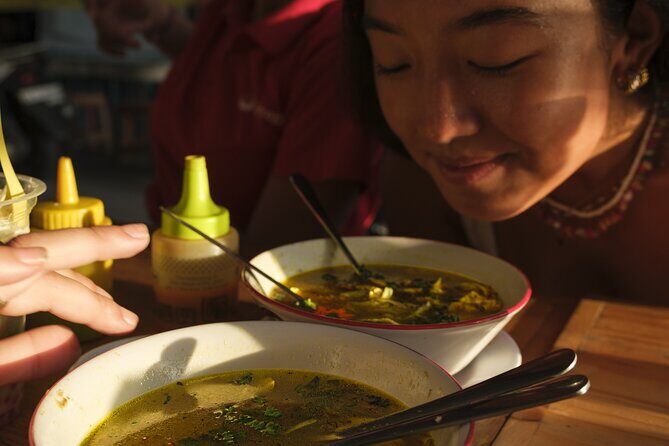
Taste & Explore Bali: Denpasar Street Food & Historic Sites
Pencil this one in for when you want Bali that is not all beaches and selfies. This Denpasar tour mixes street food with historic landmarks in a tight 3-hour loop that feels like a local evening plan. I like that it’s built around real vendors, with food prepared at the places you visit. One thing to think about: the focus is local gastronomy, including pork, so it is not a fit for everyone’s diet.
My favorite part is the way you get both flavors and context. You start at Pura Agung Jagatnatha, then hit Puputan Square and colonial-era monuments before heading into the markets. It’s also a small group thing, with up to 12 people, so you’re not stuck herding cats while trying to decide what to order.
The other reality check is simple: the tour includes tastings, not unlimited eating. You might want to budget a little extra if you’re the type who always wants one more snack after the main bites.
In This Review
- Key Things You’ll Enjoy on This Denpasar Tour
- Denpasar After 4 PM: Street Food Meets Real Landmarks
- Pura Agung Jagatnatha: A Sacred Start in the City’s Middle
- Puputan Square and Patung Catur Muka: History Written into the Streets
- Jalan Gajah Mada: Where Babi Guling and Bakso Take Center Stage
- Badung Market Night Market: Jaje Bali Snacks in the Real Food Zone
- NADHI Heritage Coffee: Hot or Iced, Then You’re Done
- Price and Portion Reality: Is It Worth $45?
- Who This Tour Is Perfect For (And Who Should Skip It)
- Getting the Most Out of 3 Hours With Your Guide
- Should You Book Taste & Explore Bali: Denpasar Street Food & Historic Sites?
- FAQ
- What is the duration of the tour?
- How much does the tour cost?
- What time does the tour start?
- Where does the tour start and end?
- How many people are on the tour?
- What food and drinks are included?
- Is this tour vegetarian or vegan friendly?
- Is this tour suitable for gluten allergies?
- Can children join?
- Is the meeting point easy to reach without a car?
Key Things You’ll Enjoy on This Denpasar Tour
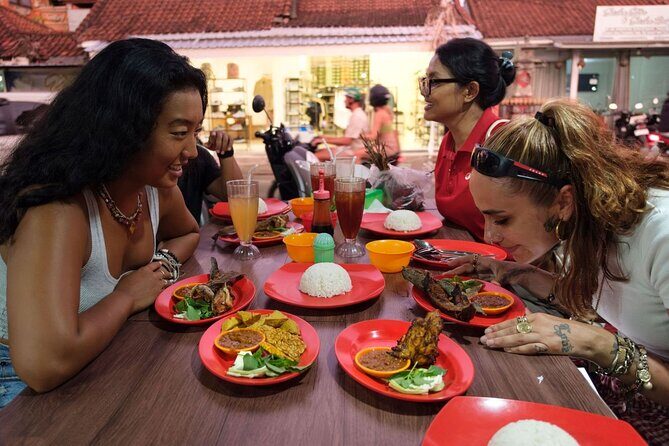
- Small-group pacing (up to 12) that keeps you moving but not rushing
- Temple + history stops that frame what you taste, not just where you eat
- Babi Guling included, a dish tied to ceremonies rather than everyday convenience
- Local vendors who sell the food for a living, plus support for local stalls
- Badung night-market snacks like Jaje Bali alongside familiar comfort food
- A final Arabica coffee stop at NADHI Heritage (hot or iced)
Denpasar After 4 PM: Street Food Meets Real Landmarks
This tour starts at 4:00 pm, which is a great time to experience Denpasar because the day’s heat eases and markets start to feel alive. You’ll be on foot for the cultural part, then you’ll shift into food-stop mode where the pace is less about sightseeing and more about making smart choices quickly.
What I like about the structure is the balance. You’re not just walking past temples while someone talks in the background. You stop, look, learn the basics, then you eat. That makes the whole evening easier to connect with, especially if Bali’s food scene feels overwhelming on your own.
Also, the tour is designed for a smaller group, with a maximum of 12 travelers. That matters more than people expect. In crowded food markets, you want enough space to ask questions and enough time to actually taste what you paid for.
Pura Agung Jagatnatha: A Sacred Start in the City’s Middle
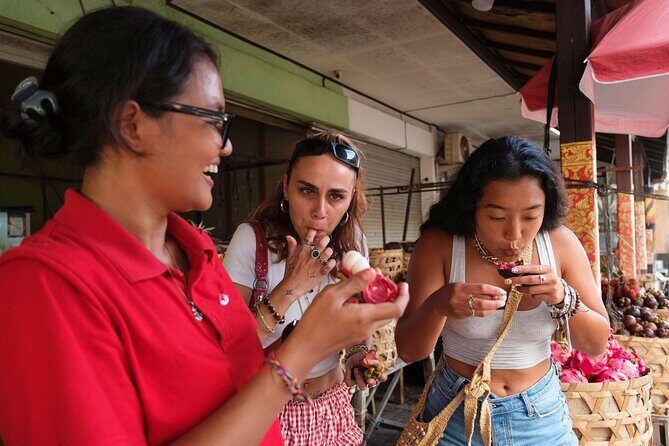
Your first stop is Pura Agung Jagatnatha, Bali’s central Hindu temple in Denpasar. Even if you’re not deeply into religious architecture, you’ll feel the difference immediately. This is not a tourist-only backdrop. It’s a living sacred site with local life around it.
You’ll have about 15 minutes here, and admission is listed as free. That short window is intentional: it’s enough to get your bearings and notice details, without turning the visit into a rushed chore.
Two practical tips for this part:
- Keep your expectations modest. This is a quick orientation stop, not a long guided temple immersion.
- Bring patience. Sacred spaces are slower by nature than street markets. You’re there to observe and learn, not to speed-run photos.
If you enjoy travel where you can feel the culture working around you, this start sets a good tone. It also makes the later food stops feel less random, because you’ll understand why certain dishes connect to ceremonies.
Puputan Square and Patung Catur Muka: History Written into the Streets
Next up is the symbolic heart area: Puputan Square. This stop is about reflection, specifically around Bali’s 1906 resistance against colonial rule. It’s the kind of history marker that can sit quietly if you don’t have context, so a guided explanation helps you read what you’re seeing.
Right around here, you’ll also see Patung Catur Muka, the four-faced god statue. You’ll get time to take photos and to connect the iconography to what you’re being told. You’ll also encounter colonial-era landmarks like the Nederlandsch-Indië Sokkelklok and related monuments as part of the walking route.
You’re allotted about 15 minutes for this whole historic block. That’s enough to:
- understand the main story points,
- snap a few photos without blocking others,
- and mentally switch gears from history into food.
One consideration: if you prefer pure food focus with minimal talking, you might find this part slightly heavier than you want. But if you like your street food tours to include meaning, this is a strong pairing.
Jalan Gajah Mada: Where Babi Guling and Bakso Take Center Stage
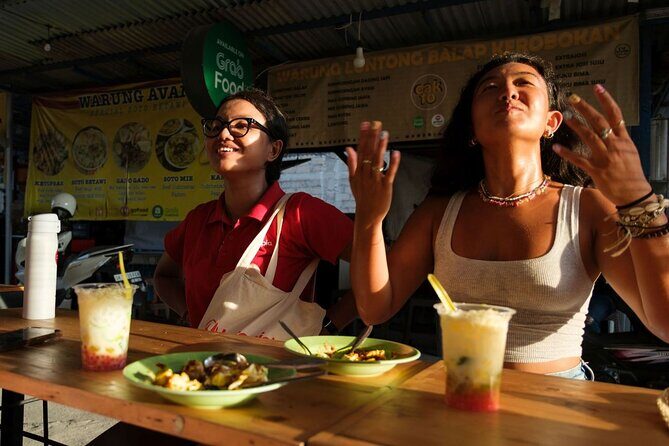
After the history pieces, you’ll head to Jalan Gajah Mada, a heritage street lined with local shops and colonial-era buildings. This is where the tour really turns into what you came for: eating your way through Denpasar.
You’ll have about 30 minutes in this section, and the food plan is clear. Two highlights are included:
- Babi Guling (Balinese roasted suckling pig)
- Bakso (meatball soup)
Here’s why that matters: the tour doesn’t treat Babi Guling like a generic menu item. It’s traditionally tied to ceremonies. So tasting it on a food walk gives you a glimpse of Balinese culture in a way that feels more than just delicious.
A quick food reality check: Babi Guling often comes with crispy skin and rich flavors, and it can be quite satisfying. Bakso is usually the comforting counterweight—warm, savory, and easy to keep eating even if you’re still processing all the new sights.
If you’re sensitive to pork, you’ll need to skip this tour. And if you’re sensitive to strong flavors or you don’t like trying unfamiliar foods, I’d be cautious. The point here is authenticity, not gentle compromise.
Badung Market Night Market: Jaje Bali Snacks in the Real Food Zone
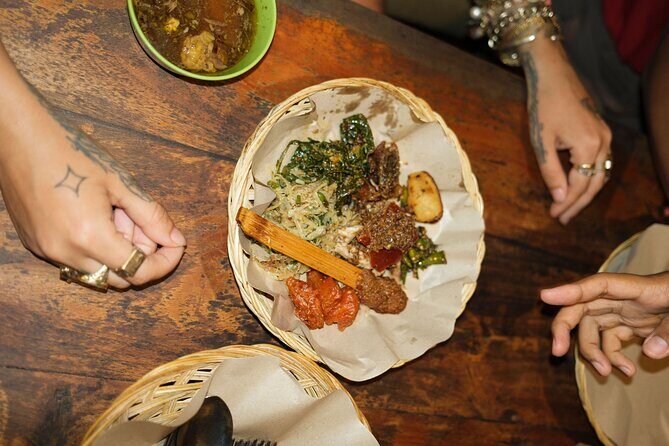
Then you’ll move into Badung Market Dempasar Bali for a 30-minute street-food stretch. This is where the atmosphere does some of the work for you. You’re surrounded by local sellers, and you’re eating in the same places locals use.
The tour specifically calls out traditional Jaje Bali snacks. These are colorful, dessert-style bites, often made from ingredients like rice flour and coconut. The exact variety changes, but the idea stays the same: you’re tasting the lighter, sweeter side of Balinese street food that you might never notice if you only order big meals.
This is also where the tour’s community angle shows up. The experience is designed to support 4 to 6 local food stalls, with food prepared at the venues you visit and vendors who sell food for a living. In practice, that means your money is more likely to go straight to the people cooking and selling rather than being absorbed by a far-away middleman.
What to do during this part:
- Don’t overthink it. Pick what’s offered and focus on small comparison bites.
- Ask what the snack is and what it’s usually eaten with, even if your stomach is already voting for the next bite.
One practical note: markets are local environments. Expect some noise, some crowding, and the kind of tight movement that makes a small group helpful. It’s also a short stop, so you’ll want to be ready to taste quickly.
NADHI Heritage Coffee: Hot or Iced, Then You’re Done
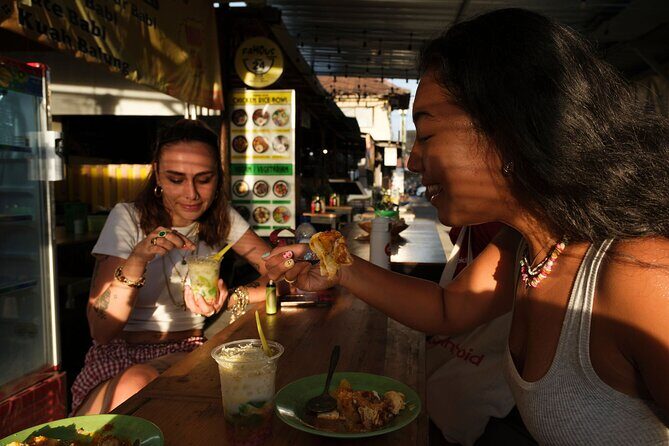
To finish, you’ll head to NADHI Heritage for coffee—authentic Indonesian Arabica, served either hot or iced. You get about 30 minutes here, which gives you enough time to slow down after the walking and snacking.
This stop works well as a final chapter. Street-food tours can leave you with sugar plus smoke plus spicy notes. Coffee helps reset your palate. It’s also a chance to ask follow-up questions with less pressure than in a market line.
If you’re the kind of person who likes a souvenir that isn’t clutter, coffee is a simple one. You get to taste it fresh, then you can decide if you want to buy beans later in your trip.
Price and Portion Reality: Is It Worth $45?
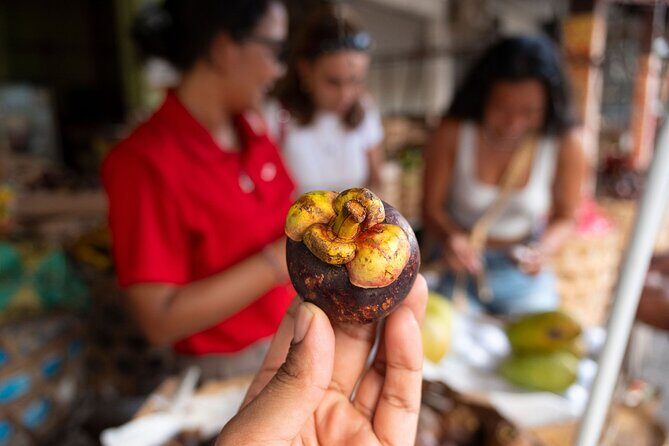
The price is $45 per person, and it’s listed as about a 3-hour experience with mobile ticket entry and a small group of up to 12.
For value, here’s what you’re really paying for:
- guided walking between multiple key sights,
- included tastings of Babi Guling and Bakso,
- included snack sampling at a market (like Jaje Bali),
- and an included coffee at the end.
You do not get unlimited food or extra drinks, so if you’re a heavy eater, you may still spend money during the tour. That’s not a bad thing—it’s normal in street food settings where portions vary and you may want one extra bite you didn’t plan for.
My take: at $45, this is a good deal if you want a guided route. If you’re traveling with local friends who can take you around, you might do this cheaper on your own. But most solo travelers and couples end up paying for convenience anyway, and that’s where the guide and small-group structure earn their keep.
Who This Tour Is Perfect For (And Who Should Skip It)

This tour is a strong fit if you want:
- authentic street food in Denpasar rather than curated restaurant stops,
- a mix of culture and food in one evening,
- and a small-group setup that keeps things from feeling like chaos.
It’s also especially good if you enjoy food with a story. Babi Guling isn’t served the same way everywhere, and tasting it in this context helps you understand why it matters.
Where it may not work:
- The tour cannot cater to vegetarian, vegan, or gluten allergy/intolerance needs, since the stops are authentic local places.
- It’s best for adults and older children. Children under 6 are not permitted.
- If you don’t eat pork, this tour is an easy no.
If you’re flexible and you like trying new foods with guided context, you’ll likely leave happy. If your diet is restricted, you’ll spend the whole time hoping for alternatives that aren’t part of the plan.
Getting the Most Out of 3 Hours With Your Guide
This kind of tour lives or dies by the guide, because you’ll be moving fast and making quick choices at food stalls. In this experience, guides can include names like Putra, Lena, Srix, and Irfan, so you can expect the energy to be friendly and conversational.
To get more out of your evening:
- Ask one practical question at each stop. What is this made from? How is it usually eaten? What should I notice about the flavor?
- Try not to treat this as a checklist. If something looks great, go for it, even if it wasn’t your first guess.
- Stay aware of timing. You’ll have short windows at each location, so be ready when your group is ready.
Also, keep the tour’s “local life” focus in mind. You’re not only consuming food—you’re learning how daily routines, market selling, and sacred sites connect in Denpasar.
Should You Book Taste & Explore Bali: Denpasar Street Food & Historic Sites?
Book it if you want a compact night in Denpasar that combines temples, history, and food you’ll remember. The included tastings are the core, and the route makes sense: you learn why certain cultural details matter, then you taste dishes that connect to those traditions.
Skip it if you can’t eat pork, need vegetarian/vegan options, or need gluten-free accommodations. Also skip it if you’re looking for a purely relaxed, long sit-down dinner tour. This is walking plus markets plus guided stops, with a realistic street-food pace.
If you fit the sweet spot, this is one of those trips that gives you more than a meal. You get a way of seeing the city. And that’s hard to beat for $45.
FAQ
What is the duration of the tour?
The tour lasts about 3 hours.
How much does the tour cost?
The price is $45.00 per person.
What time does the tour start?
It starts at 4:00 pm.
Where does the tour start and end?
It starts at Agung Jagatnatha Temple (Jl. Surapati No.7, Dangin Puri, Kec. Denpasar Tim., Kota Denpasar, Bali 80232) and ends at Nadhi Heritage at Jl. Gajah Mada No.122, Pemecutan, Kec. Denpasar Bar., Kota Denpasar, Bali 80231.
How many people are on the tour?
The tour has a maximum group size of 12 travelers.
What food and drinks are included?
You’ll taste Babi Guling and Bakso, sample traditional Jaje Bali snacks, and have Indonesian Arabica coffee (hot or iced).
Is this tour vegetarian or vegan friendly?
No. The tour cannot cater to vegetarian or vegan diets.
Is this tour suitable for gluten allergies?
No. The tour can’t accommodate gluten allergies/intolerances.
Can children join?
Children under 6 are not permitted.
Is the meeting point easy to reach without a car?
The start is described as near public transportation, which should make it easier to get to.
More Food Experiences

More Tour Reviews





More Seminyak Tours
Seminyak Tours: how the alternatives stack up
 ★ 5.0
★ 5.0Bali Full-Day Traditional Village Sightseeing Trip All Inclusive
 ★ 5.0
★ 5.0Experts Bali Driver : Best Bali Private Driver for Tour in Bali




The lists this tour appears in