Ubud Arts & Crafts Tour
If you want Bali beyond temples, this route does it. You’ll move from Celuk’s jewelry workshops to Mas woodcarvers, then land in Ubud’s art scene for a focused look at Balinese making and selling.
I especially like the hands-on feel of seeing craftsmen work, not just shopping after the fact. I also like that the tour is tight and timed well—about 4 hours—so you get context without losing the whole morning.
One possible drawback: you’ll likely spend time at higher-end galleries in Ubud, so if you’re price-focused, plan to compare before you buy.
In This Review
- Key points to know before you go
- Why Celuk and Mas make the Ubud day worth it
- Price and timing: does $50 buy real value?
- Celuk Village silver and gold: where jewelry is more than a souvenir
- Mas Carving Center: hand-chiseled wood and ritual masks
- Ubud art market stop: how paintings tell the next part of the story
- How to shop smarter when the tour includes top-end galleries
- Group size, pickup, and the day’s pace
- What you’ll learn (even if you don’t buy anything)
- Who this tour suits best—and who might skip it
- Should you book the Ubud Arts & Crafts Tour?
- FAQ
- What’s the duration of the Ubud Arts & Crafts Tour?
- What stops are included on the tour?
- Is hotel pickup and drop-off included?
- Is food included in the price?
- Are admission tickets included for the stops?
- How soon can I cancel for a full refund?
Key points to know before you go
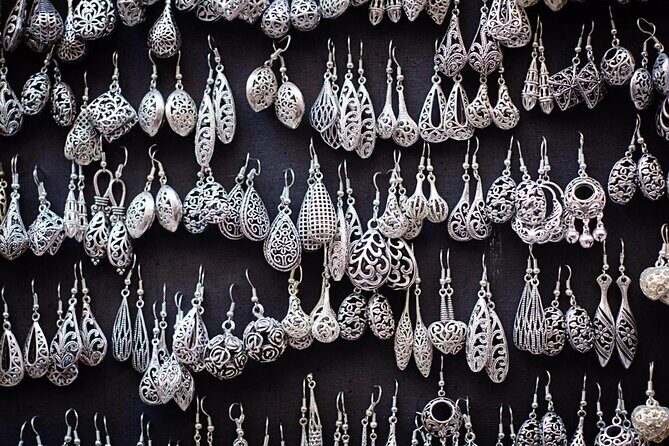
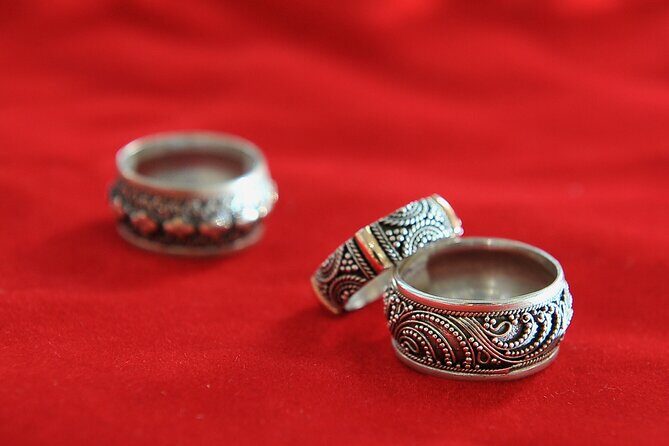
- Celuk Village jewelry workshops: watch silversmiths and goldsmiths work through the creation process
- Mas woodcarving by hand: see naturalistic forms and myth characters, including masks for ritual dance
- Ubud art market stop: traditional and contemporary paintings with guided context
- Small group size: a max of 15 travelers keeps the tour from feeling like cattle-herding
- Pickup and drop-off included: easier for mornings if you’re staying in Kuta, Seminyak, Sanur, Jimbaran, or Nusa Dua
- Admission tickets included: each stop comes with its own ticket, so you’re not hunting for add-ons
Why Celuk and Mas make the Ubud day worth it
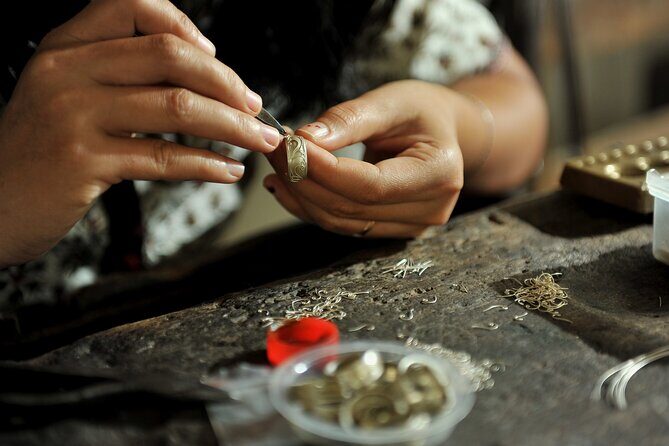
This tour works because it follows how craft changes by place. Celuk is about metal—design to metalwork—while Mas is about wood and carving style. Then Ubud is where the product becomes a bigger story: art, design tastes, and how buyers connect with makers.
If you’re used to Bali as a beach-and-temple trip, this is the refreshing left turn. It shows why these crafts look the way they do: the tools, the methods, and the cultural reasons behind motifs.
It also helps if you want something visual for your travel photos, but not the usual tourist snapshots. You’ll be looking at real work happening in real shops—rings, brooches, carved masks, and painting styles—so your photos feel earned.
Price and timing: does $50 buy real value?
At $50 per person for about 4 hours, this is priced like a “guided concentration” tour. You’re paying for transportation, a coach ride between villages, and a guide to interpret what you’re seeing—especially helpful when you don’t know the difference between styles at first glance.
The timing matters. Starting around 8:30am means you’re catching the morning workflow in craft centers, not just the showroom version of craft. It also keeps you from losing your whole day to shopping stops.
You’ll also want to know what’s not included. Meals and drinks are not included, even though you may find time to eat during the tour. If lunch is part of your plan, budget for it separately.
Celuk Village silver and gold: where jewelry is more than a souvenir
Celuk Village is famous for silver and gold workshops, and the best part here is watching the process take shape. With your guide, you’ll see artisans create detailed pieces—think rings, brooches, and other wearable art—right in the workshops and galleries.
What you should look for is how much is hand-driven. Even when pieces end up sold as finished products, the steps reflect family workshop life: design decisions, shaping, and refinement done piece by piece. That context changes how you shop later, because you start recognizing craftsmanship instead of just evaluating shine.
This is also one of the places where you’ll hear how jewelry fits Balinese life. Your guide will point out why certain designs are chosen and how families of jewelers pass skills down. If you’re the type who wants to understand what you’re buying before you buy it, this stop is the heart of the tour.
Practical caution: Celuk is a craft center, but it’s also a shopping ecosystem. Bring patience and expect some pitch. If you’re serious about a piece, ask questions about what makes it different in style or workmanship—not just what it costs.
Mas Carving Center: hand-chiseled wood and ritual masks
Mas Village is where the woodcarving culture becomes obvious. You’ll spend time with expert carvers and see the distinctive Mas style—often recognized for naturalistic forms and also for characters drawn from Hindu mythology.
The detail I’d focus on here is the masks. These aren’t only decor; masks connect to traditional dance performances and ritual ceremonies. When you understand the role, the carving choices make more sense: expressions, proportions, and the way faces are stylized.
Another smart angle: watch for the contrast between myth-based subjects and more natural shapes. Mas carvers are known for a recognizable aesthetic, but the variety within that style is what keeps the stop from feeling repetitive.
There’s also a “craft skill” lesson baked in. You’ll learn about the history of woodcarving on the island and why Mas became a recognizable name. Even if you don’t become an instant woodcarving expert, you’ll leave with enough context to spot style cues when you’re shopping later in Ubud.
Ubud art market stop: how paintings tell the next part of the story
After metal and wood, Ubud brings you to the art-world layer. This stop centers on a strong Ubud shop/gallery experience with guided interpretation, and you’ll see both traditional and contemporary paintings.
This is useful because Balinese crafts aren’t isolated from modern art markets. In Ubud, you’ll likely notice how local makers and international painters coexist, and how that influences what gets produced and how it’s displayed.
If you’re trying to understand Bali as a whole, Ubud is the “why” part. Your guide will explain what makes Balinese art distinctive and how the scene developed around artists and buyers.
What to expect in practical terms: time to browse with context, plus a chance to compare what you saw earlier. Jewelry and woodcarving can pull you in with craftsmanship. Paintings and galleries can pull you in with design tastes and storytelling.
And here’s the shopping reality check: you might feel pressure to buy at higher-end stores first. If you’re shopping for a painting, don’t rush. If you’re price hunting, it can pay to compare later in other parts of Bali.
How to shop smarter when the tour includes top-end galleries
This is where a little strategy saves money. The tour may guide you toward higher-quality shops, which can be great if you want a curated experience. But it can also mean you’re seeing the pricier end of the market earlier than you’d like.
My advice: treat the tour stops as research, not just purchase stops—especially for silver. Walk in with a plan: what kind of metalwork or what painting style you’re looking for.
Then:
- Ask how the craft is made, not only what the piece is called.
- Compare similar items while you still have time with the guide.
- If you find a piece you like, get a clear breakdown of what you’re paying for (design, finish, and workmanship).
One helpful note from real-world experience with this kind of tour flow: you can sometimes find the same or similar items for less in areas with more competition. You don’t need to boycott the tour shops—just don’t let the first price be the final price.
Group size, pickup, and the day’s pace

With a maximum of 15 travelers, this tour usually feels manageable. You’ll have enough room to ask questions, and your guide can keep you on track without feeling like you’re constantly waiting for the next person.
Pickup is a big plus. You can get hotel pickup and drop-off from major areas like Kuta, Seminyak, Sanur, Jimbaran, and the Nusa Dua side. That matters on Bali, where traffic can turn “short” distances into long days.
The coach ride also shapes your experience. You’re not zigzagging randomly; you’re moving as a group along a craft-focused route. That keeps the tour coherent, and it leaves you with a finished picture rather than scattered browsing.
The tour starts around 8:30am. If you’re sensitive to early starts, plan to sleep well the night before and grab water before pickup if you can.
What you’ll learn (even if you don’t buy anything)
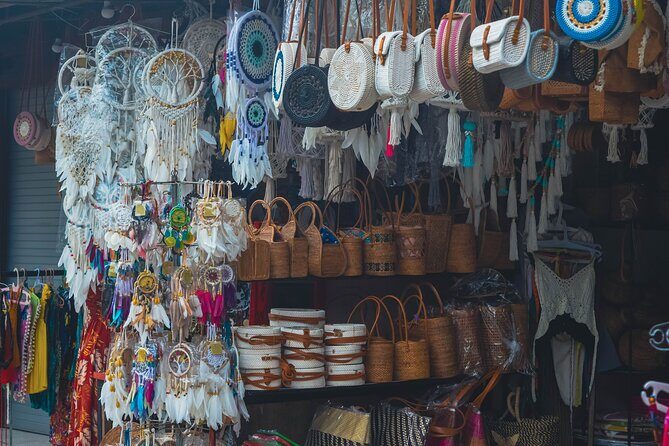
This tour is built around explanation. The value isn’t only in the objects—it’s in understanding how Balinese craft becomes recognizable.
In Celuk, you learn about jewelry as a process that takes time, not just a product that appears magically. In Mas, you learn about how carving style connects to subjects like mythology and masks for ceremonial dance. In Ubud, you learn how paintings reflect both tradition and contemporary influence, and how art centers turn local craft into a broader cultural language.
If you’re the kind of traveler who likes to “get it” quickly, you’ll appreciate the guided structure. And if you’re shopping, you’ll feel more confident because you’re not staring at items with zero context.
Even if you go home empty-handed, you’ll leave with a sharper eye. That means your next museum or shop stop won’t be confusing or purely decorative.
Who this tour suits best—and who might skip it
This tour is a strong fit if you want:
- A guided, time-efficient craft day in Ubud
- A look at both metalwork and woodcarving, plus art galleries
- Enough structure to understand what you’re seeing while still getting to browse
It’s also ideal if you’re not trying to do a full island circuit on your first Bali days. You get a lot of craft culture in a half-day, which helps you decide where you might want to spend more time afterward.
Who might consider another option: if you hate shopping at galleries or you prefer to roam independently without a set route, this may feel too structured. You’ll still browse, but the stops are the stops.
Also, if you want the cheapest prices possible for big-ticket items, you’ll likely need extra comparison outside the guided stops.
Should you book the Ubud Arts & Crafts Tour?
I’d book this if you want a focused, craft-centered morning that actually explains Bali’s making process. The Celuk and Mas combination is the real win: you’re seeing how craftsmanship looks when it’s active, not only when it’s packaged for visitors. The Ubud art stop then ties it together with painting styles and a sense of why the scene developed where it did.
If you’re a shopper, go in with a comparison mindset. You can still buy great pieces, but don’t let the first store set your final decision. Plan to ask questions, check workmanship, and pace your purchases.
If you’re deciding where to base yourself in Bali, it’s worth noting that Ubud itself can make a bigger impression than expected. After seeing how the art scene plays out, you may wish you had stayed closer for more evenings and browsing time.
FAQ
What’s the duration of the Ubud Arts & Crafts Tour?
The tour runs for about 4 hours.
What stops are included on the tour?
You’ll visit Celuk Village, Mas Carving Center, and an art stop in Ubud.
Is hotel pickup and drop-off included?
Yes. Pickup and drop-off are included from major hotels in areas like Kuta, Seminyak, Sanur, Jimbaran, and Nusa Dua.
Is food included in the price?
No. Food and drinks are not included.
Are admission tickets included for the stops?
Yes. Admission tickets are included for each of the listed stops.
How soon can I cancel for a full refund?
You can cancel for a full refund if you cancel at least 24 hours before the experience’s start time.