
Ubud Cultural and Historical Guided Tour with Transfer
Temples, tombs, and spring water in one day. This guided route strings together village life, cave carvings, and water rituals around Ubud, so you are not just snapping photos—you are following a story of how Balinese communities remember the past. You will see Ubud cultural sites and the spring-water cleansing rituals at Tirta Empul.
I especially like two things. First, the day mixes house compounds and village temples (Batuan) with major monuments like Gunung Kawi, so the culture feels lived-in, not museum-like. Second, you get an English-speaking driver/guide who helps you understand what you are looking at, and the tour has a good reputation for staying patient when timing gets messy, like guide Kadek who was noted for waiting when a schedule slipped.
One consideration: it is a 10-hour day, and several entrances cost extra even though the basics are handled for you. Plan for the added temple and site fees, and keep your energy up for the early start (8:30 am).
In This Review
- Key highlights you should actually care about
- A 10-hour Ubud circuit that moves fast, but not randomly
- Batuan Traditional House and Puseh Batuan Temple: village life first
- Goa Gajah (Elephant Cave): 11th-century carvings and ritual water
- Gunung Kawi (Mount Kawi): memorial rock cuts and the Anak Wungsu era
- Tirta Empul: the spring-water temple where cleansing is the point
- Gunung Kawi Sebatu: a quieter temple with Vishnu connections
- Price and value from Seminyak: what you pay and what you should budget
- Transfer, timing, and how to make the day feel easier
- Who should book this Ubud historical guided tour?
- Should you book it?
- FAQ
- FAQ
- What time does the tour start?
- How long is the Ubud Cultural and Historical Guided Tour with Transfer?
- Where is the tour located for pickup?
- Is the tour private or shared?
- What is included in the tour price?
- Are meals included?
- Which entrance fees are not included?
- Is the Batuan stop free?
- Do I get a ticket on my phone?
- Is there free cancellation?
Key highlights you should actually care about
- A private, group-only tour with only your group in the vehicle
- AC transport plus bottled water to make temple hopping less painful
- Batuan house compound and Khayangan Tiga temples in one neighborhood
- Goa Gajah and Gunung Kawi: 11th-century sites with stone-carved meaning
- Tirta Empul spring-water pools focused on cleansing rituals
- Entrance fees add up, but one stop (Batuan traditional house) is free
A 10-hour Ubud circuit that moves fast, but not randomly
This is a full-day tour that runs about 10 hours, starting at 8:30 am. It is built as a logical loop through the Ubud area: you begin with a traditional house compound in Batuan, then move through major temple and historical sites, ending with the quieter Gunung Kawi Sebatu Temple. The pacing matters because it shapes what you will get out of each stop.
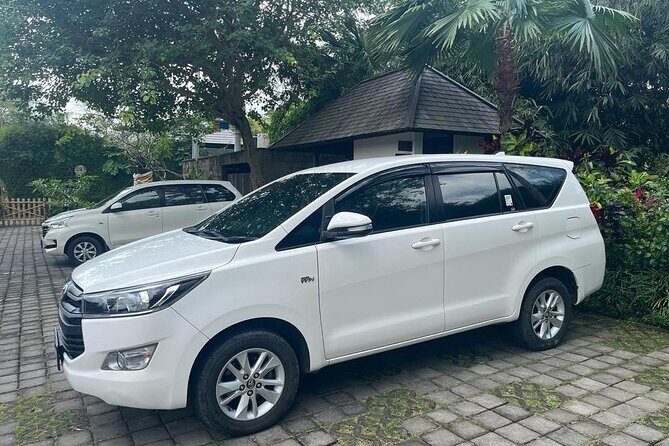
You have air-conditioned comfort, parking fees are covered, and you travel with an English-speaking guide/driver. That sounds simple, but on Bali roads, it makes a real difference. You spend less time negotiating, and more time actually watching, asking questions, and pausing when something grabs your attention.
If you are the type who likes structure—clear stops, clear time on-site—this format fits. If you hate tight schedules and want to linger for hours, you might feel rushed at temples and caves where people often want longer photo time.
Batuan Traditional House and Puseh Batuan Temple: village life first
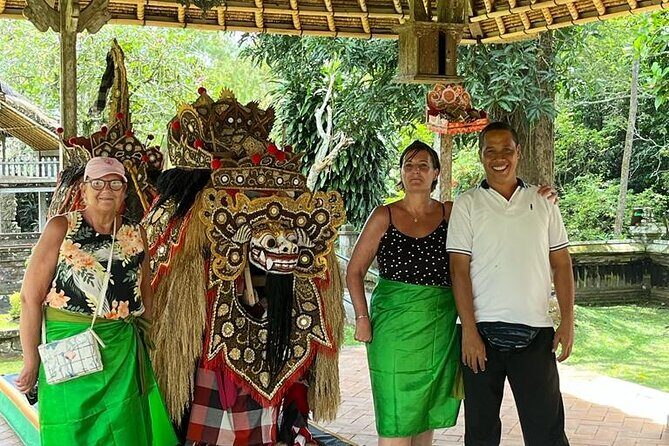
The day starts at Batuan, in Batuan Village (Sukawati District, Gianyar Regency). Your first stop is a traditional house compound associated with the Gung Aji family, sometimes called Bali Traditional House Gung Aji by foreigners. It is a one-hour visit, and the admission ticket is listed as free, which is a nice early win for value.
Why this stop matters: it changes your frame. Instead of starting at grand monuments, you begin with a household setting. You get a sense of how Balinese daily life connects to sacred spaces and family heritage. That matters later when you see temple complexes, because the idea of religion living in the rhythm of community becomes easier to grasp.
From there, you go to Puseh Batuan Temple. This is described as a local village temple, part of a set of three major temples in a village known as Khayangan Tiga, dedicated to the protector god Wisnu. The stop runs about 1 hour 30 minutes, and admission is not included.
What to expect here: a temple visit that is more about understanding the role of a village shrine than about hunting for iconic statues. If you are someone who likes learning why a place exists, this kind of stop usually feels rewarding. If you only want the most famous postcard scenes, you may need your guide’s explanation to fully appreciate what you are seeing.
Goa Gajah (Elephant Cave): 11th-century carvings and ritual water
Next up is Elephant Cave, also called Goa Gajah. This is a two-hour stop, and entrance is not included. The site is described as a cave built in the 11th century by the king of Udayana, and the name is connected to a small river nearby called Lua Gajah.
The cave itself is the headline, but the details around it help the whole place make sense. There is mention of a bathing area in front of the built place, with six figures inside. Even if you are not focused on stone-carving history, this kind of ritual context makes the site feel purposeful rather than random.
Value tip: Goa Gajah is often busy because it is famous, but a guide who explains the story will help you see beyond the obvious. Use the time to look slowly. The cave area rewards that.
A practical note: because the entrance fee is not included (listed as IDR 50,000 per person), you will want cash ready or a plan to pay on arrival. The tour includes bottled water, but it does not include a meal, so this is one of those days where you should think about snacks if you tend to get hungry.
Gunung Kawi (Mount Kawi): memorial rock cuts and the Anak Wungsu era
After Goa Gajah, you head to Gunung Kawi, also called Mount Kawi Temple. This is about 1 hour 30 minutes on-site, and again entrance is not included. The background given here is that the complex was built in the 11th century when Bali was ruled by Anak Wungsu, the son of Udayana King.
The most striking feature is that Gunung Kawi consists of 10 memorial rock-cut temples carved into stone. Rock-cut memorials are different from typical temple buildings, because they feel like someone chose to carve memory directly into the environment.
Why your guide matters here: without explanation, it is easy to treat the site like scenery. With guidance, you start thinking about what a memorial space means and why stone carving would be used for remembrance. It is one of those places where a bit of historical context can turn your photos from pretty to meaningful.
You might also notice how the route keeps switching between “big monument energy” and “ritual water energy.” That rhythm keeps the day from feeling like one long temple line.
Tirta Empul: the spring-water temple where cleansing is the point
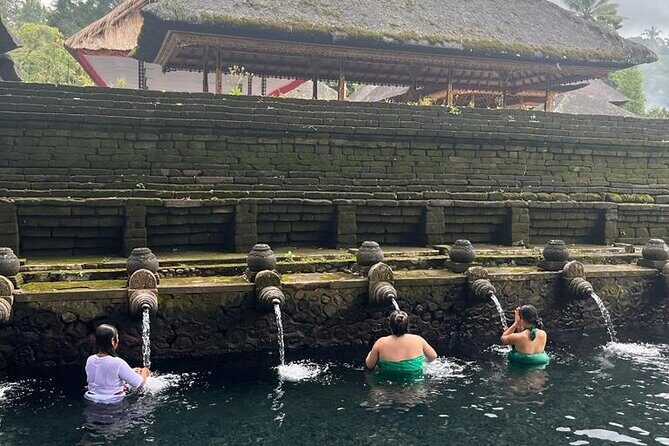
Your next stop is Tirta Empul, the Spring Water Temple near Gunung Kawi, in the Tampaksiring area. This stop runs about 2 hours, and entrance is not included. The key detail: Tirta Empul is built around the springs and special bathing pools.
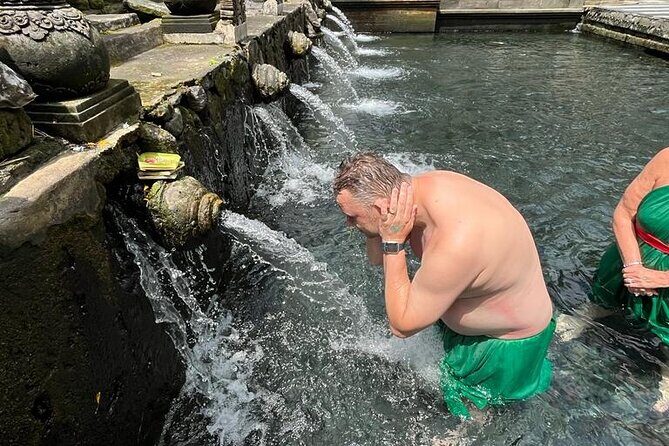
If you want the clearest explanation of why Balinese sacred sites can feel different from many other religious places, Tirta Empul is where you get it. The inner courtyard has clear slate-like surfaces around the bathing areas fed by the springs. The entire design supports cleansing rituals.
What to do with your time: watch first, then participate only if it feels appropriate for your comfort level. Some people just observe and take notes; others join in. Either way, the lesson is the same: this is not just about seeing water. It is about how water is used as part of ritual life.
One more value point: because the entrance fee is listed at IDR 50,000 per person and is not included, budget a bit ahead. This is also a good stop to re-check your energy, because you are still moving to another temple afterward.
Gunung Kawi Sebatu: a quieter temple with Vishnu connections
The day finishes with Gunung Kawi Sebatu Temple. This stop is around 2 hours, and entrance is not included (listed as IDR 30,000 per person). The build date is not exactly known, but historical records in the tour description say it was built for worship of the gods, especially Lord Vishnu, on orders connected to authority in that era.
This temple often feels like the calmer chapter of the route. Compared with Tirta Empul’s well-known bathing pools, Gunung Kawi Sebatu can feel less like a main event and more like a reflective place. That is a good thing if you want your last hours to feel slower instead of more rushed.
If your feet are tired, this is still a worthwhile finish because it gives your brain time to settle. You are not just checking off sites; you are closing the loop on Vishnu connections you started to hear about earlier in the day with Khayangan Tiga and Wisnu.
Price and value from Seminyak: what you pay and what you should budget
The tour price is $45.91 per person, with an approximate duration of 10 hours. At this price, you are paying for transport, guide support, and the structure that bundles multiple sites into one day.
Included in the price:
- Air-conditioned vehicle
- Parking fees
- English-speaking driver tour guide
- Bottled water
Not included:
- Meal
- Entrance fees at most stops (Batuan traditional house is free)
Here is the entrance-fee picture based on the tour details:
- Tirta Empul Temple: IDR 50,000
- Gunung Kawi Sebatu Temple: IDR 30,000
- Puseh Batuan Temple: IDR 30,000
- Elephant Cave: IDR 50,000
- Mount Kawi, Pakrisan River: IDR 50,000
That totals IDR 210,000 per person in additional entrance fees for the non-free stops. One stop (Batuan Traditional House Compound) is free, which helps your budget.
So is it good value? For a full-day route with multiple major sites plus AC transport and an English-speaking guide, the price can feel fair—especially when you compare it to doing these stops one by one with separate tickets and more coordination. The only time it stops being a deal is if you are a strict “I only want the included stuff” budget traveler and you hate paying extra on-site.
Transfer, timing, and how to make the day feel easier
The tour is in Seminyak area with pickup offered, and it starts at 8:30 am. You can expect a long day because the itinerary includes several 1.5- to 2-hour stops plus travel time between them.
Here is how to make it easier on yourself:
- Wear comfortable shoes you can use on uneven temple ground.
- Bring a light plan for food since meals are not included.
- Keep some cash ready for the entrance fees, since those are listed as payable per person.
- If you have a smartwatch or phone, set reminders so you do not lose track of time between sites.
One thing I like about this setup: it is described as a private tour/activity where only your group participates. That means you usually get more breathing room than the big group bus experience. A guide can also tailor pacing if your group is slower or faster.
Who should book this Ubud historical guided tour?
This tour is a strong fit if you:
- Want one guided day that connects several Ubud-region spiritual and historical stops
- Like learning context, not just taking photos
- Prefer organized transport from Seminyak with English-speaking guidance
- Want a mix of household culture, temples, caves, memorial rock carvings, and spring-water cleansing rituals
It might be less ideal if you:
- Want a no-additional-fees day (because multiple entrances are not included)
- Hate early starts and long time in a vehicle
- Prefer very slow travel with lots of free time in each place
Should you book it?
I think this is a smart booking when your goal is depth without complexity: you want to see Batuan, Goa Gajah, Gunung Kawi, Tirta Empul, and Gunung Kawi Sebatu in one shot, with an English-speaking guide helping you connect the dots. The value comes from the bundled route, the AC comfort, and the fact that the day is built to teach you what the sites mean—not just where they are.
If you can handle extra entrance fees and you are okay with a full 10-hour schedule, I would book it. If you want a slower pace or everything included, you may want to look for options with either fewer stops or fully inclusive entrance tickets.
FAQ
FAQ
What time does the tour start?
The tour starts at 8:30 am.
How long is the Ubud Cultural and Historical Guided Tour with Transfer?
It runs about 10 hours.
Where is the tour located for pickup?
The tour location is Seminyak, and pickup is offered.
Is the tour private or shared?
It is private. Only your group will participate.
What is included in the tour price?
Included features are an air-conditioned vehicle, parking fees, an English-speaking driver tour guide, and bottled water.
Are meals included?
No, meals are not included.
Which entrance fees are not included?
Entrance fees are not included for Tirta Empul Temple (IDR 50,000), Gunung Kawi Sebatu Temple (IDR 30,000), Puseh Batuan Temple (IDR 30,000), Elephant Cave (IDR 50,000), and Mount Kawi, Pakrisan River (IDR 50,000).
Is the Batuan stop free?
Yes. The Batuan Traditional House Compound stop lists admission as free.
Do I get a ticket on my phone?
Yes, there is a mobile ticket.
Is there free cancellation?
Yes, free cancellation is available. You can cancel up to 24 hours in advance for a full refund.
More Tour Reviews



More Seminyak Tours
More Ubud Tours


Ubud Tours: how the alternatives stack up

 ★ 5.0
★ 5.0Ubud: Monkey Forest, Jungle Swing, Rice Terrace, and Water Temple

The lists this tour appears in