
Ubud Private Tour: Monkey Forest – Tirta Empul Temple
A full Ubud day, tightly packed and easy. This private tour strings together Ubud’s most famous sights with comfortable hotel pickup and an air-conditioned car, so you spend less time figuring out roads and more time looking at carvings, water temples, and rice terraces. The day’s range is the point: from monkeys and temple ponds to a waterfall drop and a night market dinner.
I especially like the door-to-door convenience. When you start with pickup and end with drop-off, the schedule feels smoother, and your guide can keep the pace in a way that works for your group. I also love the service style—Gusti (a guide named in a standout review) was described as friendly, customer-focused, and patient, with no rushing when people wanted extra time.
One thing to consider: entry fees can add up, and the tour’s details separate what’s included (Price A) from what may be charged separately for specific stops. If you’re counting every dollar, double-check whether admission tickets are truly covered for Monkey Forest, Tegalalang Rice Terrace, Tirta Empul, Elephant Cave, and Tegenungan Waterfall.
In This Review
- Key things to know before you go
- Private Day Tour Flow in Ubud: pickup, comfort, and pacing
- Monkey Forest Sanctuary: temple carvings and monkey-and-temple energy
- Tegalalang Rice Terrace: the Instagram-famous view that still earns time
- Tirta Empul Temple: holy spring water and ritual purification
- Elephant Cave (Goa Gajah): cave relics, bathing pools, and gardens
- Tegenungan Waterfall: a 20-meter drop and a second-level surprise
- Gianyar Street Night Market: your flexible food stop and casual shopping
- Price and tickets: how to judge the $35 value fairly
- Who this tour fits best in Ubud
- Should you book this Ubud private tour?
- FAQ
- How long is the Ubud private tour?
- Is hotel pickup and drop-off included?
- Is the transportation air-conditioned?
- What attractions are included in the day?
- Are entrance tickets included?
- Is bottled water provided?
- Is this tour private or shared?
- What’s the cancellation policy?
Key things to know before you go
- Private vehicle + hotel pickup: fewer logistics headaches and a calmer day.
- Big-name Ubud mix in 8–10 hours: temple water, rice terraces, a waterfall, and a cave.
- Gusti-style pacing: the best reviews highlight a patient, not-rushed approach.
- Admission fees need a quick check: you may pay for some entries on the day.
- Night market for food and low-stress dinner time: one hour for snacks, eats, and casual shopping.
- All-inclusive option exists: if you want fewer money moments, choose that.
Private Day Tour Flow in Ubud: pickup, comfort, and pacing
This is built for one group at a time. That matters in Ubud, where travel between sites can eat up your day if you’re doing it solo or on buses with strict schedules. Your tour includes round-trip hotel transfers and travel in a private air-conditioned vehicle, plus bottled water.
Timing is also realistic. The tour runs about 8 to 10 hours, with time at each stop ranging from 30 minutes to around 1 hour. That doesn’t sound long on paper, but it’s the right length for a “greatest hits” day—enough to see what you came for without turning the trip into a full-day marathon.
And yes, the guide experience can make or break a day like this. One of the most positive reviews singled out Gusti, praising him for being customer focused, friendly, and patient, and for not rushing when the group wanted to linger. For you, that usually means: if you want a slower look at carvings or more time near a view, you’re not likely to be yanked onward every 5 minutes.
Monkey Forest Sanctuary: temple carvings and monkey-and-temple energy
Your first major stop is the Sacred Monkey Forest Sanctuary. This isn’t just a “look at monkeys” detour. It’s tied to a temple setting, with carved artwork and sculptures woven into the sanctuary space. The monkeys are part of the show—free to move through the area, while you navigate your way around them.
What makes this stop worth planning for: you get culture plus spectacle in one place. The sanctuary setting gives you more context than a zoo-style encounter, and the temple elements help explain why this place matters locally.
Ticket note: entry is listed separately as IDR 80,000 (not included in the “not included” category). So if you don’t choose the all-inclusive style, expect to handle it on your own.
A practical consideration: this is a busy photo-and-snack stop, and it can feel chaotic if you arrive when crowds peak. Your guide’s job here is valuable—staying calm, guiding your route, and helping your group get the photos you came for without feeling like you’re constantly dodging people.
Tegalalang Rice Terrace: the Instagram-famous view that still earns time

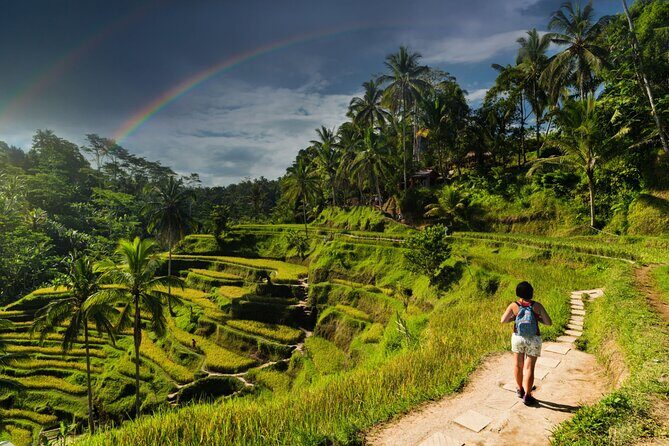
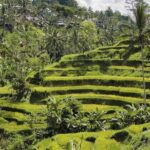
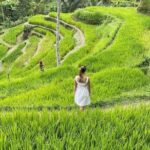
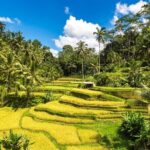
Next comes Tegalalang Rice Terrace, the Ubud rice terrace you’ve probably seen in countless photos. It’s famous for a reason: the terraced fields are genuinely striking, and the viewpoints give you that stepped green pattern that reads instantly from any angle.
Yes, it’s touristy. But “touristy” doesn’t automatically mean “not worth it.” In this case, the terraces themselves are the star, and they still look impressive even with the crowd. Plan on using this time for what the place does best: walking to a couple viewpoints, grabbing your favorite framing, and letting the scene do the work.
Ticket note: entry is listed as IDR 10,000 (also not included in the not-included list). If your goal is to stay under budget, treat this as one more small fee to factor in—or choose the all-inclusive option to reduce on-the-spot payments.
Also, keep your expectations realistic. This is a working agricultural area with paths and viewpoints. If you want “quiet nature meditation time,” you might not get it here. If you want a top Ubud sight with easy photo access, it’s a solid use of time.
Tirta Empul Temple: holy spring water and ritual purification

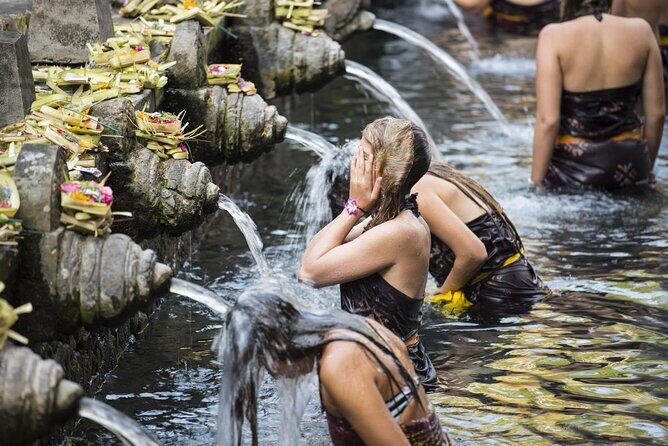
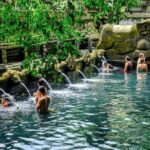
At Tirta Empul Temple—known locally as Pura Tirta Empul—you’re stepping into a water-focused place of meaning. The temple is in the Manukaya village area near Tampaksiring. The big idea is the holy spring: a spring that gives out fresh water regularly.
Locally, Balinese Hindus consider this water holy (described as amritha) and use it for ritual purification. That’s the key context. You’re not just looking at a pond—you’re seeing a site connected to daily and spiritual practice.
This stop can feel moving in a quiet way, especially if you slow down and watch how the water and temple spaces are arranged. The guided element helps too, because it’s easier to understand what you’re seeing when someone explains the purpose behind the scenes.
Ticket note: entry is listed as IDR 50,000 (not included in the not-included list).
A gentle consideration: you’ll likely be around people in different states of focus—some there for ritual steps, others there to view. Respect matters more than anything. Your best move is to follow your guide’s direction and keep your behavior steady and quiet.
Elephant Cave (Goa Gajah): cave relics, bathing pools, and gardens
Then you head to Goa Gajah, commonly called the Elephant Cave because it’s associated with the nearby Elephant River. This stop is described as a mysterious cave setting with relics and ancient bathing pools, surrounded by green rice paddies and gardens.
What you’re looking at here is a mix of natural space and archaeological remnants. Even without a deep background, the setting gives you a sense of age and atmosphere. The ancient bathing pools are the standout detail—this isn’t only a dark cave walk. It’s a site where the water-and-structure concept is part of the story.
Ticket note: entry is listed as IDR 50,000 (not included in the not-included list). Plan for that cost unless your package includes admissions.
Practical reality: caves can mean uneven ground and cooler, dimmer interiors. If your feet are picky, wear shoes you trust. And if you want photos, aim for steady, calm timing—this place can be popular and moving slowly in a cave environment is easier than trying to rush.
Tegenungan Waterfall: a 20-meter drop and a second-level surprise
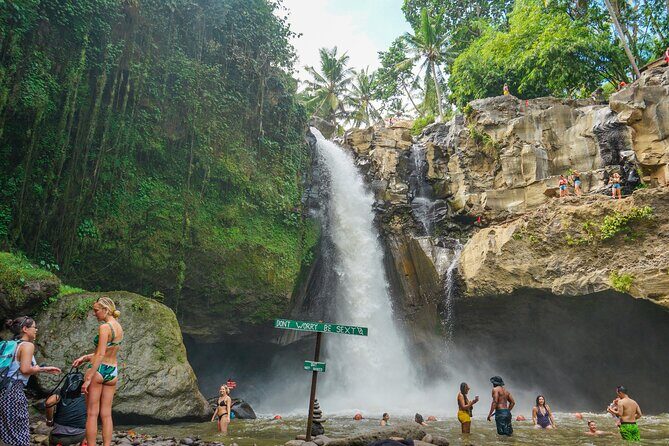
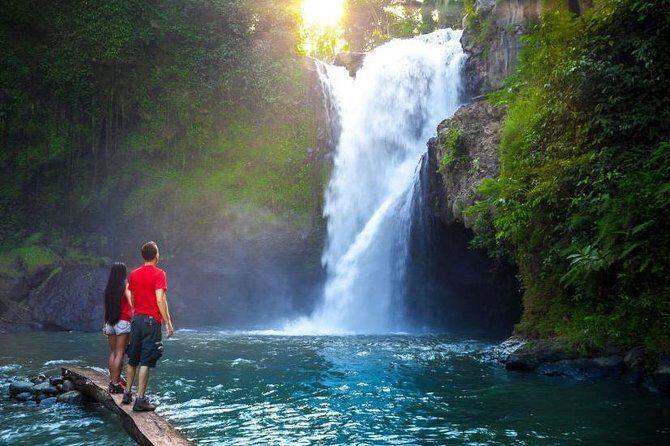
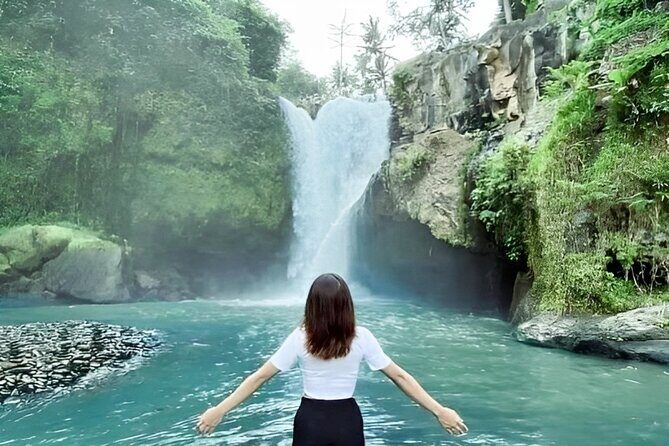
From temple and cave history to open-air nature: Tegenungan Waterfall. The description is vivid—white water foams down over black stone cliffs into a pool below. The height is given at around 20 meters (about 66 feet), which is plenty for impressive waterfall photos without needing Everest-level hiking.
What makes this stop more than a quick point-and-shoot: there’s more to see. The site includes climbable cliffs, a smaller “secret” waterfall, food stalls, and a grotto that houses a sacred spring.
Ticket note: entry is listed as IDR 20,000 (not included in the not-included list).
A consideration for your day planning: waterfalls can mean messy surfaces near the base. If you’re wearing light footwear or sandals, think twice. Even if you’re not planning to get wet, you’ll appreciate traction on slick areas. Your guide can help you find safer spots to look from.
Gianyar Street Night Market: your flexible food stop and casual shopping
After dark (or as night starts to settle in), you’ll head to Gianyar Street Night Market. This is the “take a breath and eat” part of the day. The market’s hours are listed roughly between 4 or 5 pm and up to 12 am, depending on the season.
What you do here: snack, taste, and wander. The market has Balinese and Indonesian delicacies at reasonable prices, plus traditional clothing for sale. It’s also the kind of place where you can try a few items without committing to a full sit-down meal.
Tour pacing detail: your time here is about 1 hour. That’s enough to cover a few stalls, try some savory bites, and grab something sweet if that’s your style.
A practical suggestion: go in hungry. With only an hour, you’ll enjoy it more if you treat it like a tasting run, not a full shopping expedition. If you’re interested in clothing or gifts, set aside a little mental budget for that too—this stop is partly food, partly local shopping.
Price and tickets: how to judge the $35 value fairly
The tour price is listed at $35 per person, and it’s typically booked about 26 days in advance. That pricing is where the real value question lives: you’re paying for private transport, a guide, and the structure to hit several Ubud highlights without sorting routes.
But entry fees matter. Here’s what’s explicitly listed for admissions (not included in the not-included category):
- Monkey Forest: IDR 80,000
- Tegalalang: IDR 10,000
- Tirta Empul: IDR 50,000
- Elephant Cave: IDR 50,000
- Tegenungan Waterfall: IDR 20,000
Add those up and the total comes to IDR 210,000 in entry fees across the main paid stops (not counting the night market, which doesn’t list an admission fee). Your final out-of-pocket cost depends on whether your option includes Admission tickets (Price A) or you’re covering the rest separately.
So here’s the way I’d think about value:
- If your package truly covers admissions, $35 looks like a strong deal for a full day of transport plus multiple sites.
- If admissions are mostly on you, the tour still buys you the convenience of private driving and guidance, but your total day spend will jump once you add IDR 80k, 50k, 50k, and so on.
Also, you get bottled water and a private, air-conditioned vehicle. In Ubud heat, that alone can be worth the difference between “cheap transport” and “comfortable day.”
Who this tour fits best in Ubud
This one is a great match if you want a greatest-hits Ubud day with minimal planning. It’s especially good for:
- Couples or small groups who want privacy and an easy rhythm
- First-timers who want to see Monkey Forest, a water temple, a rice terrace, a cave, and a waterfall all in one hit
- Travelers who’d rather pay for convenience than spend time coordinating multiple tickets and ride schedules
It may be less ideal if you:
- Want long stays at each site (this day gives shorter “hits,” not slow wander days)
- Need a fully flexible schedule with no fixed time windows (your time at each stop is structured)
- Are extremely budget-sensitive and would rather skip higher entry-fee attractions
Should you book this Ubud private tour?
I’d book it if you want a smooth, efficient Ubud day with private comfort and a guide who won’t bulldoze your pace. The best indicator is service quality—Gusti was specifically praised for being friendly, patient, and flexible, with no rushing.
Before you pay, do one quick check: confirm whether your option includes the admissions for the paid stops (Monkey Forest, Tegalalang, Tirta Empul, Elephant Cave, Tegenungan). If you choose the all-inclusive style, you remove most of the money-and-ticket friction. If you don’t, budget for roughly IDR 210,000 across those main sites.
If your goal is a one-day sampler of Ubud’s major icons, this private format is the practical way to do it.
FAQ
How long is the Ubud private tour?
The tour duration is listed as about 8 to 10 hours.
Is hotel pickup and drop-off included?
Yes. Hotel pick up and return transfers are included.
Is the transportation air-conditioned?
Yes. The private transportation is described as an air-conditioned vehicle.
What attractions are included in the day?
The tour includes Sacred Monkey Forest Sanctuary, Tegalalang Rice Terrace, Tirta Empul Temple, Elephant Cave (Goa Gajah), Tegenungan Waterfall, and the Gianyar Street Night Market.
Are entrance tickets included?
Admission tickets are included as Admission tickets (Price A), but entrance fees for specific stops are listed under not included (Monkey Forest, Tegalalang Rice Terrace, Tirta Empul Temple, Elephant Cave, and Tegenungan Waterfall). Check which admission package you’re selecting.
Is bottled water provided?
Yes. Bottled water is included.
Is this tour private or shared?
It’s a private tour/activity, and only your group participates.
What’s the cancellation policy?
Free cancellation is offered. You can cancel up to 24 hours in advance for a full refund. The experience also requires good weather.
More Monkey Forest Tours



More Tirta Empul Temple Tours
More Ubud Tours



Monkey Forest Tours: how the alternatives stack up
 ★ 5.0
★ 5.0Ubud: Monkey Forest, Jungle Swing, Rice Terrace, and Water Temple




The lists this tour appears in