
Balinese Cooking Class with Traditional Market Tour
Morning markets set the tone in Ubud. This hands-on Balinese cooking class starts with a traditional market run, then moves to an organic garden for herb prep, before you cook and eat a full meal in an open kitchen. I especially like how it connects everyday Balinese food shopping to the flavors you’ll actually taste.
I love the door-to-door pickup that keeps the morning simple, and I love the stone mortar work where you make spice pastes the old-school way. It’s not just watching someone cook. You’re doing the chopping, grinding, and cooking yourself.
The main catch is the early start. You begin around 7:30am, and the whole experience is about 6 hours from pickup to drop-off, so plan a calm night after.
In This Review
- Key highlights worth your morning
- Why the 7:30am market visit matters in Ubud
- Traditional compound home cooking starts with what you pick
- Organic garden herbs and the stuff behind the flavor
- Spice pastes on a stone mortar: the real lesson
- Cooking in an open kitchen and making it your meal
- Transfers, group size, and the pace of the full day
- Price in context: is $58.16 good value?
- Who should book this Ubud cooking class?
- Should you book this market-to-kitchen experience?
- FAQ
- What time does the tour start in Ubud?
- How long is the full experience from pickup to drop-off?
- When does the traditional market visit happen?
- Is hotel pickup and drop-off included?
- How big is the group for this cooking class?
- How many dishes do you eat?
- What’s included besides the cooking and lunch?
- What is the cancellation policy for a full refund?
Key highlights worth your morning
- 7:30am market tour: shop with your guide during the cooler morning hours
- Organic garden herbs: you’ll learn and use well-grown herbs and spices before cooking
- Stone mortar + chopping block: two classic Balinese spice-prep methods
- Full hands-on cooking: paste and sauce prep is part of the work, not a side step
- 5-course lunch + dessert: you’ll eat what you make in a traditional open kitchen
- Small-group feel: class size is set to keep the attention personal (up to 12)
Why the 7:30am market visit matters in Ubud
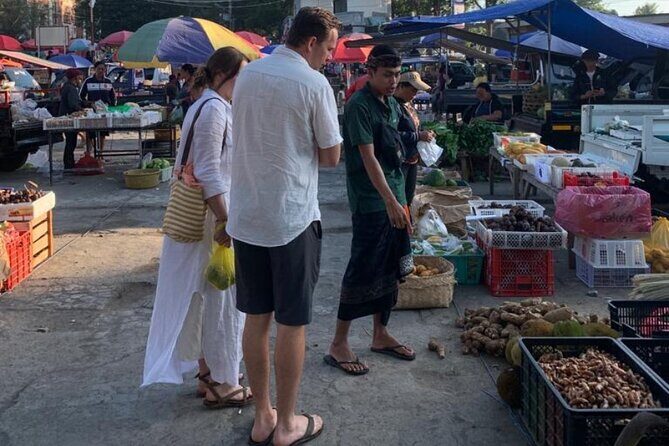
The day starts early, and that’s a good thing. Between the start time of 7:30am and the market window from about 7:30am to 8:00am, you get a cooler, calmer introduction to Balinese food life. You’re not just buying ingredients on autopilot. You’re seeing how people actually choose vegetables, fruits, and everyday items before cooking.
This first stop also sets your cooking mindset. Market shopping becomes the story behind the meal. When you later grind spices or make a sauce, you’ll understand why those ingredients matter and how they fit together. That’s where the class feels cultural instead of purely instructional.
One small practical note: markets involve walking, looking up close, and moving with other people. Wear shoes you can stay comfortable in. Bring a light layer if you’re sensitive to morning cool temps, but don’t overpack—this is a mobile, active morning.
Traditional compound home cooking starts with what you pick
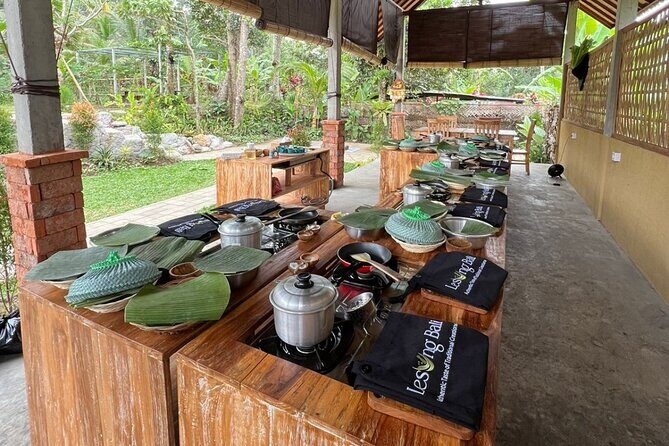
After the market, you move into the kitchen environment where Balinese cooking makes sense. You’ll cook in a traditional compound-style setting, then eat in an open kitchen setup. That matters because Balinese cooking is sensory: smells from spices, heat from cooking right in front of you, and lots of hands-on prep.
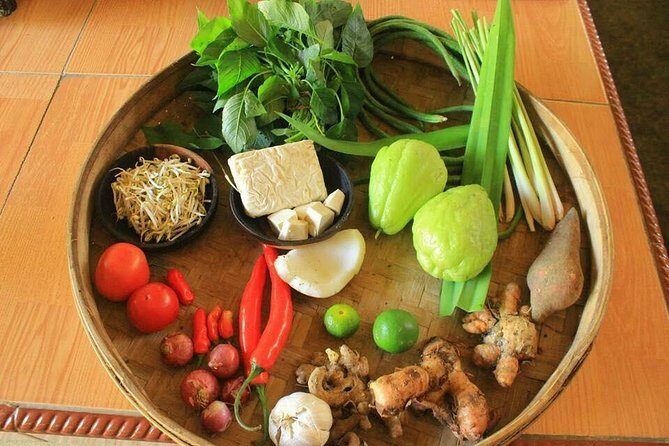
I like that the market visit isn’t just a photo stop. You’re there to take advantage of the cooler outdoor hours to buy the cooking needs. That gives the rest of the day a clear purpose. You already have the ingredients, so your cooking feels like it’s building toward lunch instead of starting from scratch.
In at least one version of this experience, guides like Ron have explained different vegetables and fruit, along with Balinese traditions tied to food. Another guide named Nyoman has escorted people around the traditional market and helped connect what you see to what you’ll cook later. You might not have the same guide, but the format is the same: explanation while you shop, then that knowledge becomes real-time cooking.
Organic garden herbs and the stuff behind the flavor
Next comes the organic garden experience—simple, but important. You’ll get introduced to well-grown herbs and spices and then use that learning as you begin preparation. This is where you’ll start noticing the building blocks behind the final dishes.
Balinese flavor comes from combinations and technique as much as from any single ingredient. The class focuses on the hands-on work that turns raw ingredients into usable paste and sauces. That means you’re not waiting for someone else to do the “real” part. You’ll be part of it from the start.
You’ll also get welcome drink and snack during the experience, plus bottled water. It sounds minor, but in a long morning it helps you stay present instead of running on adrenaline.
Spice pastes on a stone mortar: the real lesson
Here’s the heart of the class: processing food with traditional utensils and techniques. You’ll learn about paste and sauce preparation, which is one of the most interesting—and frankly one of the most important—parts of Balinese cooking.
The class uses two spice-prep approaches:
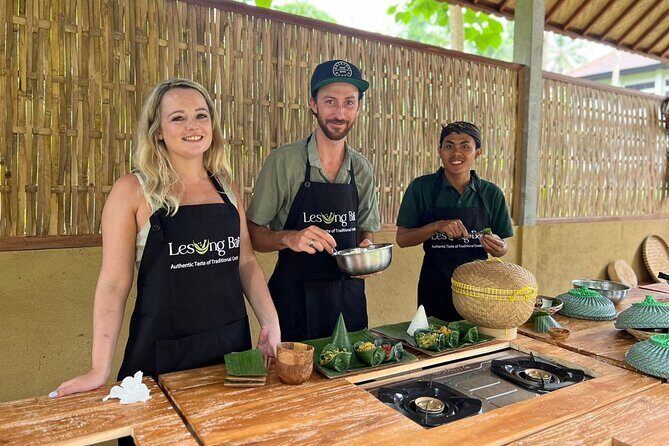
- Chopped spice prep on a wooden chopping block
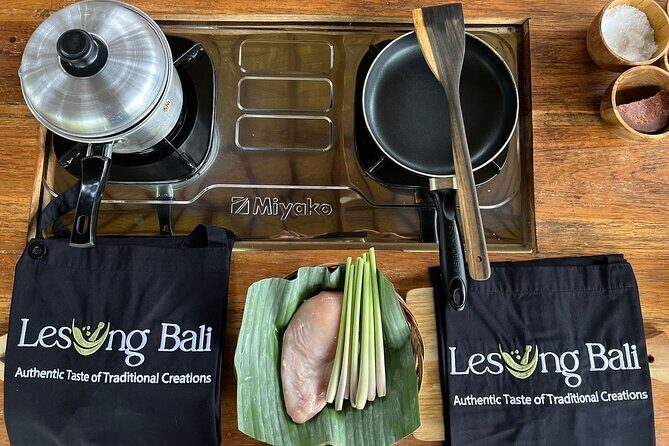
- Ground spice prep using a stone mortar
Both methods show up in Balinese dishes, and getting practice with both helps you understand why texture matters. When spices are chopped, you get one kind of texture. When spices are ground, you get another. That changes how the paste behaves in cooking and how it contributes to the final flavor.
The best part is timing and teamwork with your instructor. You’re not just doing chores. Your cooking instructor teaches you the steps, and you follow along as you prepare and cook. The work is hands-on and done by you, not a demo you watch from the sidelines.
Cooking in an open kitchen and making it your meal
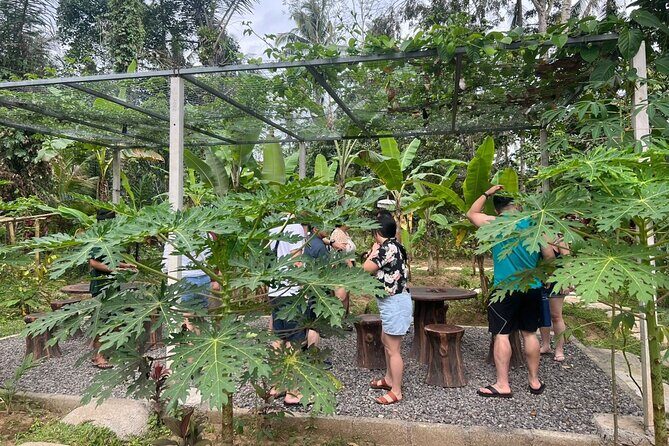
Once you begin cooking, you’ll be working through multiple dishes using techniques you practiced earlier. The learning stays practical and physical: chopping, grinding, mixing, and cooking in sequence.
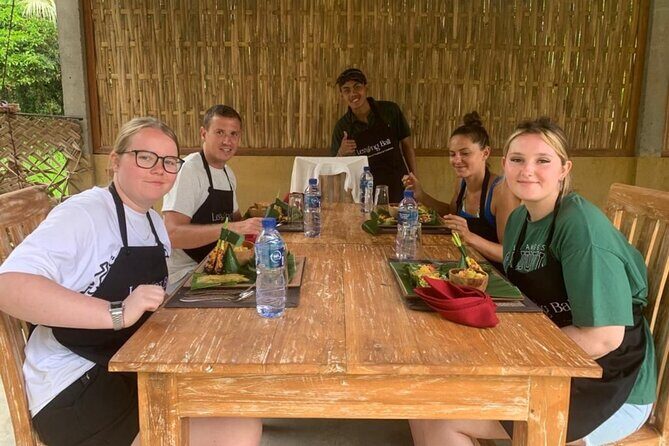
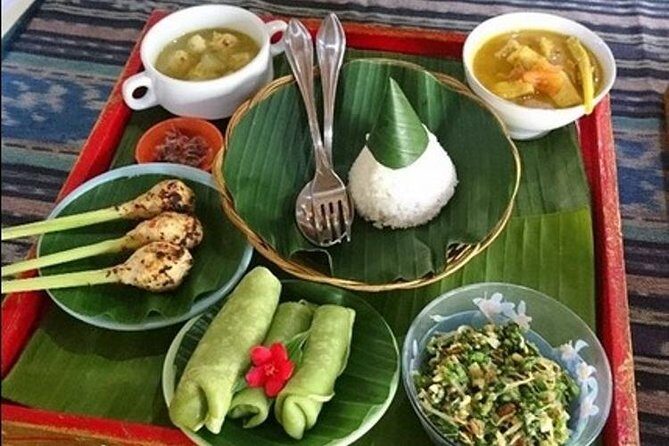
Then lunch arrives—your reward, and also your test. You’ll enjoy a 5-course lunch plus 1 dessert, with each dish prepared by you. The lunch is served in a traditional open kitchen setting, so you’re eating in the same environment where the cooking happened. That connection makes the meal feel more meaningful than a “show up, eat, leave” format.
If you’re thinking of skipping breakfast, don’t. One of the standout pieces from this experience is how filling the meal is. The class is described as full-on, and the lunch can be hard to finish. Come hungry, pace yourself, and plan to enjoy leftovers only if you truly have willpower.
Transfers, group size, and the pace of the full day
This is built for convenience. Hotel pickup and drop-off are included, and it’s door-to-door round-trip transfer service. That helps a lot in Ubud, where getting around can eat up your energy.
The timing works like this:
- Start time is 7:30am
- Market visit starts around 7:30am to 8:00am
- Cooking class duration is about 2 hours 30 minutes
- The full experience is about 6 hours total from pickup to drop-off
That gap between class time and total time is normal for a morning tour with transfers. Just plan your day with the full 6-hour block in mind. If you’ve scheduled something tight later, consider moving it to the afternoon.
Group size is also a factor in the quality of attention. The experience is set up for small groups—up to 4 to 12 people—and there’s a maximum of 6 people per booking, while the class can accommodate up to 12 participants. In plain terms: you’ll likely feel like a small group, but you’re not guaranteed total privacy. Still, the format is designed so the instructor can keep things moving while watching your prep.
Price in context: is $58.16 good value?
At $58.16 per person, this isn’t a bargain cooking class. It’s also not overpriced for what you get. The value comes from the full package: market visit, garden intro, hands-on cooking, and a lunch you can’t fake.
Here’s what’s included that supports the price:
- Hotel pickup and drop-off
- Traditional market visit
- Welcome drink and snack
- Cooking instructor guidance
- Lunch of all the dishes you made plus 5 dishes and 1 dessert
- Certificate of cooking class
- Bottled water
Optional expenses aren’t included, so if you choose to buy extra items beyond the planned ingredients, that’s on you. But for the core experience, you’re paying for a complete morning and meal, not just a recipe lecture.
For me, the key value point is that you leave with actual cooking practice—especially the spice paste techniques. That’s harder to get from cheaper classes that are mostly demonstration.
Who should book this Ubud cooking class?
This class fits best if you like food that connects to place. You want to see ingredients come from a traditional market, learn about herbs and spices in an organic garden, and then cook in a way that feels grounded in real technique.
It also suits you if you appreciate structured hands-on work. The stone mortar and chopping-block prep is a clear activity, not a vague “try this if you want” moment.
If you’re the type who needs a slow day, this may feel too active. Between the early start, market walking, and full-on cooking prep, it’s a morning that asks for energy. On the other hand, if you enjoy learning by doing, it’s one of the most satisfying ways to spend a Ubud day.
Should you book this market-to-kitchen experience?
I think you should book it if you want a Balinese cooking day that starts with real ingredient shopping and ends with a meal you cooked yourself—not just a watched demonstration. The market + organic garden + stone mortar prep creates a strong chain of understanding, and the included 5-course lunch and dessert makes it feel genuinely complete.
Skip it if your schedule can’t handle a 7:30am start or if you dislike being hands-on for several hours. Otherwise, this is a solid choice for an authentic Ubud food experience with pickup convenience and a clear payoff at lunch.
FAQ
What time does the tour start in Ubud?
The experience starts at 7:30am.
How long is the full experience from pickup to drop-off?
It’s approximately 6 hours from pickup till drop-off.
When does the traditional market visit happen?
The traditional market visit starts around 7:30am and runs to about 8:00am.
Is hotel pickup and drop-off included?
Yes. Hotel pickup and drop-off are included.
How big is the group for this cooking class?
The class accommodates up to 12 participants, with a maximum of 6 people per booking.
How many dishes do you eat?
You’ll have a lunch featuring 5 dishes and 1 dessert, and you eat what you made.
What’s included besides the cooking and lunch?
Included items are a visit to the traditional market, welcome drink and snack, cooking instructor, bottled water, and a certificate of the cooking class.
What is the cancellation policy for a full refund?
You can cancel up to 24 hours in advance of the experience start time for a full refund.
More Tour Reviews






More Balinese Cooking Classes


More Ubud Tours
Ubud Tours: how the alternatives stack up


 ★ 5.0
★ 5.0Ubud: Monkey Forest, Jungle Swing, Rice Terrace, and Water Temple




The lists this tour appears in