
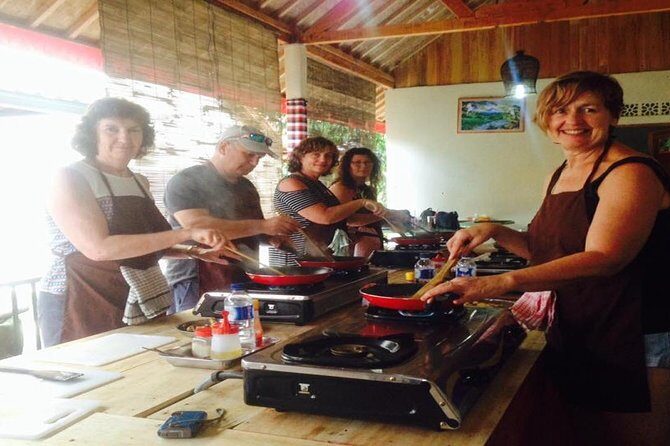
From Ubud : Ubud Balinese cooking class with Market tour
Your stomach will remember this. This Ubud experience blends a small food-focused outing with hands-on cooking, led by Wayan Aris and his team. I like how the flow starts at the traditional market and then moves straight into learning the Balinese spice paste that drives most of the dishes.
I love the fact it’s a small group (max 12). You also get a buffet lunch made from what you cook, plus a PDF set of the 9 recipes to copy later.
One possible drawback: the food can be quite spicy. If you prefer mild flavors, tell them early so you can manage the chili level without losing the class.
In This Review
- Key Things I Think You’ll Really Like
- A 5-Hour Ubud Food Tour That Actually Teaches You to Cook
- Morning Market and Tampaksiring Rice Paddies (If You Choose Morning)
- Afternoon Option Adds Canang Offerings
- Welcome Drink, AC Pickup, and the Small-Group Advantage
- Spice Paste: The Skill That Makes Everything Taste Right
- Cooking 9 Balinese Recipes: What You’ll Likely Make
- A note on spice level
- The Buffet Lunch and How It Fits the Learning
- PDF Recipe Copies: Your Real Souvenir
- What’s Included (and What You Might Pay Extra)
- Timing and Pace: Morning vs Afternoon Choices
- Who This 58-Dollar Class Fits Best
- Quick “Should You Book It?” Checklist
- FAQ
- How long is the Ubud Balinese cooking class with market tour?
- Is hotel pickup and drop-off included?
- What’s included in the class?
- Does the market visit happen every day?
- Do you make canang offerings?
- Is vegetarian food available?
Key Things I Think You’ll Really Like
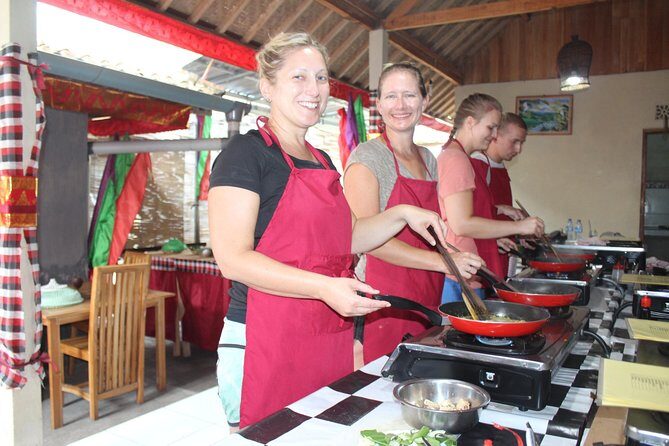
- Market-first flavor prep: The morning option includes a traditional market stop, then you cook with what you saw.
- Rice paddies break: Morning tours add a scenic rice paddies visit that keeps it from feeling like just a cooking workshop.
- Spice paste as the core skill: Learn the base sauce/paste method that shows up across multiple dishes.
- 9 recipes, not 2 or 3: You make a full set of Balinese dishes (including items like fried tempe and Balinese chicken).
- Recipe PDF to take home: You get a copy of all 9 recipes, so the class doesn’t end when you leave.
- Ubud-center pickup only: Pickup and drop-off are included for Ubud center, with extra charges outside that area.
A 5-Hour Ubud Food Tour That Actually Teaches You to Cook
This class isn’t just about watching someone else cook. The whole point is learning the building blocks of Balinese flavor, then using them right away while you’re still in the same kitchen rhythm.
At around 5 hours total, you’ll move through a mini itinerary: welcome drink, a market and paddies option (morning class), hands-on prep, cooking a full batch of dishes, then a buffet meal. You’ll also get AC transport and hotel pickup/drop-off within Ubud center, which makes the day feel easy instead of stressful.
The practical value here is simple: you leave knowing how to balance flavors using a spice paste base, not just repeating one recipe you can’t adapt.
Morning Market and Tampaksiring Rice Paddies (If You Choose Morning)
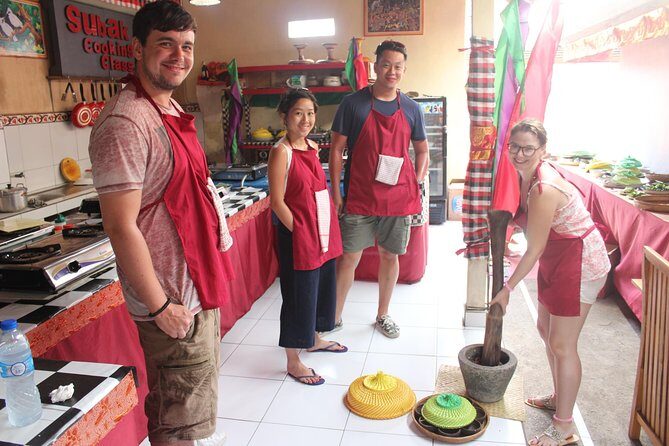
If you book the morning class, you’ll start with a local traditional market visit in the Tampaksiring village area. This is more than a quick photo stop. It’s your ingredient context lesson—how foods are chosen and how everyday market items become cooking basics in Balinese kitchens.
You’ll also visit rice paddies in the morning option. It’s a short break from kitchen intensity and gives you a visual sense of where ingredients and farm rhythms fit into island life. Even if you’re focused on food, the scenery time matters because it cools your brain down before you start chopping, grinding, and frying.
In the small-group format, you’ll likely get more chances to ask questions than you would on a bigger bus-style tour. And since the tour runs through Wayan Aris’s operation, the day often feels like you’re joining a local family routine rather than being herded through stations.
Afternoon Option Adds Canang Offerings
If you go with the afternoon class, one of the scheduled differences is making offering canang. That’s not just a cultural add-on. It changes the day’s rhythm by adding a hands-on step tied to Balinese everyday practice before you move into cooking.
Practically, this means you’ll still get the full cooking session (the spice paste and the 9-recipe set), but you’ll arrive at it through a different doorway. If you like learning how food culture connects to daily life and rituals, the afternoon route gives you that extra layer.
If you prefer to keep things strictly ingredient-and-flavor based, the morning choice might feel more aligned. Either way, you get the core cooking skills.
Welcome Drink, AC Pickup, and the Small-Group Advantage
The tour is designed to feel straightforward from start to finish. You’re picked up from your hotel (for hotels in Ubud center), you get an air-conditioned vehicle ride, and you start with a welcome drink with cold ice tea. Bottled water is included too.
That may sound basic, but in Ubud heat and traffic, it matters. It gives you energy for the hands-on cooking part instead of arriving sweaty and behind schedule.
The group limit is capped at 12. That size is the sweet spot for cooking classes. It’s big enough that you’re not alone, but small enough that instructors can guide you without constantly losing track of your questions.
Spice Paste: The Skill That Makes Everything Taste Right
Here’s the heart of the class: you start by making Balinese spice paste and using it as the base sauce for multiple dishes. That means you’re not just learning one method. You’re learning the flavor engine.
In a lot of cooking experiences, the lesson ends at the ingredient list. Here, you learn how the paste becomes the start point. Once you understand that, you can better follow along with taste adjustments, even if you later cook at home with different brands or spice strengths.
You’ll then use that paste across a 9-recipe lineup. That repetition is the point. The more times you see the paste used, the faster it clicks as a technique instead of a one-time trick.
Cooking 9 Balinese Recipes: What You’ll Likely Make
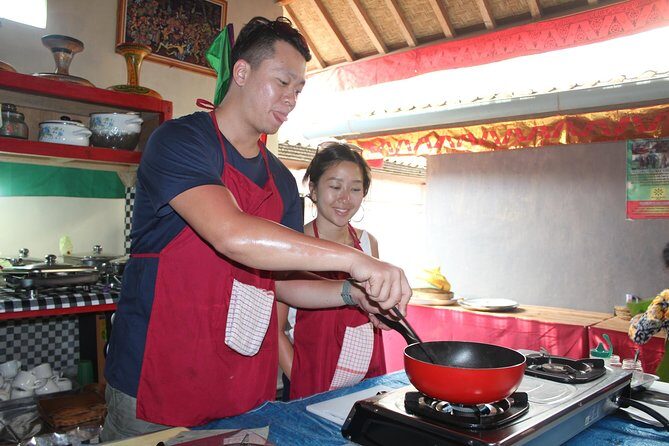
This is a hands-on class where you start cooking and keep cooking. The session builds toward a buffet lunch at a Balinese house, using the dishes you prepare.
The dishes specifically mentioned include:
- Fried tempe
- Balinese chicken
- Vegetable soup
And you’ll make additional dishes beyond those listed, for a total of 9 recipes.
What I like about this structure is that it covers different cooking styles: frying, savory protein prep, and soup-style comfort. You also practice in a sequence that keeps you moving from prep to cook to taste, which helps you understand how each dish should look and smell at different stages.
A note on spice level
Balinese food often leans bold on chili. One downside you should consider: some people find it too spicy even if they like heat. If you want it milder, say something early, and be clear about your comfort level. The sooner you adjust, the less likely you are to feel stuck halfway through the meal.
The Buffet Lunch and How It Fits the Learning
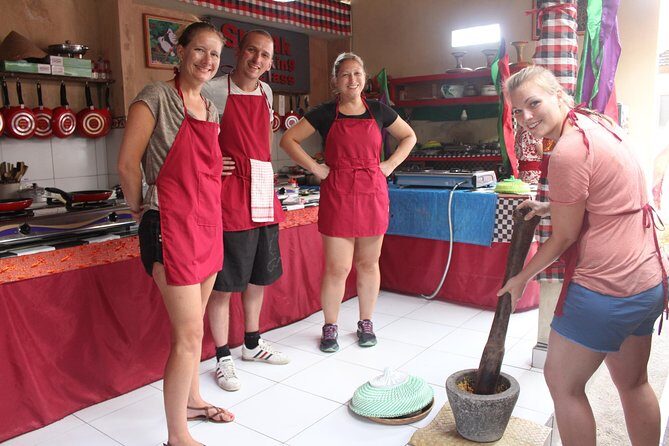
After you cook, you eat. The day ends with a buffet lunch at a Balinese house featuring the food you prepared. This is where the class becomes a full-circle experience: you cook it, then you taste it as a meal, not as a snack.
A buffet format also helps you notice differences between dishes. You’ll often taste the same spice paste base translated into different textures and flavors. That comparison helps you learn what to aim for next time.
Because you’re eating what you cooked, you don’t have to guess whether your earlier steps worked. You get immediate feedback in the simplest way: taste.
PDF Recipe Copies: Your Real Souvenir
Most cooking classes give you memories. This one also gives you a PDF set of recipes—9 copies of the Balinese food recipes.
That’s valuable because it turns the class into something you can repeat. When you’re back home, you can look up the list again and recreate the flow rather than relying on vague recollection of flavors and steps.
In terms of value, this matters more than it sounds. A $58 cooking class becomes easier to justify when you leave with tools you’ll actually use.
What’s Included (and What You Might Pay Extra)
The included pieces are clear and helpful:
- Hotel pickup and drop-off within Ubud center only
- AC vehicle and a local guide/driver
- Welcome drink with cold ice tea and bottled water
- Food tasting and buffet lunch (the details note buffet dinner or dinner too, but the meal element is clearly part of the experience)
- A copy of all 9 recipes via PDF
- Air-conditioned transportation
Things to keep in mind:
- Traditional market visit is only for the morning class.
- Alcoholic drinks are not included and are available to purchase.
- Outside the Ubud area pickup/drop-off requires additional charges. The tour notes that if you want pickup beyond Ubud, you should request it.
- Bring cash for any small extras or extra transport costs if you’re outside the included pickup zone.
- If you’re vegetarian, put in the request 1 day before the class.
That last point is the one you should not ignore. Vegetarian needs can affect ingredient choices, so communicate early.
Timing and Pace: Morning vs Afternoon Choices
You’re choosing more than a time of day. You’re choosing the order of experiences.
Morning classes focus on:
- Traditional market visit
- Rice paddies visit
- Then the cooking session
Afternoon classes swap in:
- Canang offering making
- Then the cooking session
Both still include the spice paste lesson and the 9-recipe cooking day. So the main decision is whether you want the market-and-farm storyline first, or you’d rather start with the offering step.
One consideration: the cooking experience can feel fast for some people, especially if you want slow, methodical instruction. If you get flustered in rushed kitchens, consider arriving ready to focus and asking your questions right away rather than saving them for the end.
Who This 58-Dollar Class Fits Best
This is a great fit if you:
- Want to learn Balinese basics through real technique, not just tasting
- Prefer a small group experience (max 12)
- Want a meal you helped make, followed by recipe support you can use later
- Like families and practical cultural learning mixed together
It also works well for families because the session is structured and ends with food you can share. The multiple dishes make it easier for different palates to find something enjoyable.
Who should think twice:
- If you need very mild food, be proactive about chili comfort.
- If you’re the type who learns only when instruction feels unhurried, you may want to mentally prepare for a lively pace.
Quick “Should You Book It?” Checklist
Book it if you want:
- A 9-recipe cooking class with spice paste skills
- Market and rice paddies time (morning) or canang offering making (afternoon)
- A take-home set of recipes in PDF form
Skip or adjust your expectations if:
- You struggle with spicy food and don’t plan to communicate early
- You dislike fast-paced instruction and want a slower, more laid-back class
My take: for the price, this is strong value because you’re not just eating. You’re learning a repeatable method, getting a full dish set, and leaving with instructions you can use again.
FAQ
How long is the Ubud Balinese cooking class with market tour?
It runs about 5 hours.
Is hotel pickup and drop-off included?
Yes, pickup and drop-off are included for Ubud center. If you’re outside Ubud center, you’ll need to request it and pay additional charges.
What’s included in the class?
You’ll get welcome drink (cold ice tea), bottled water, food tasting, a buffet meal, an air-conditioned vehicle, a local guide/driver, and a PDF copy of the 9 recipes. Bottled water and noted inclusions are part of the tour package.
Does the market visit happen every day?
No. The traditional market visit is only included for the morning class.
Do you make canang offerings?
If you take the afternoon class, making offering canang is part of the itinerary.
Is vegetarian food available?
You can request vegetarian in advance. You need to put the request 1 day before the class.
More Tour Reviews




More Balinese Cooking Classes
More Ubud Tours
Ubud Tours: how the alternatives stack up

 ★ 5.0
★ 5.0Ubud: Monkey Forest, Jungle Swing, Rice Terrace, and Water Temple


The lists this tour appears in