
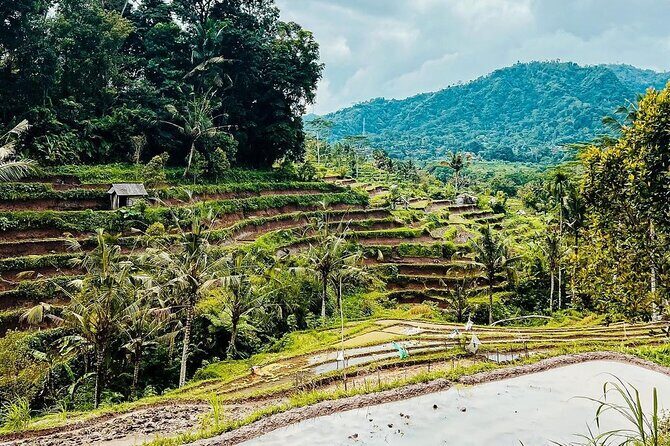
Sidemen Trekking: A Walk from a Different Perspective
Sidemen has better views than you expect. This small-group, 2-hour walk sends you from Pasar Sidemen into working rice paddies, using irrigation-side paths and a hanging wooden bridge, all with Mount Agung showing up in the background. It’s rural Bali in motion, not a quick photo stop.
I love that the route feels like you’re moving through real village life—up and down lanes, past spots where locals pray, and through the terraces along paths most visitors never find. I also love the guide’s stories, the kind you hear from locals like Adidas or Darya, including how farming works and how crops link to daily meals and offerings.
One possible drawback: the footpaths can be narrow and sometimes slick or muddy, so you need solid balance and shoes that can get dirty.
Key things that make this trek work
- Small group (max 10) keeps the walk calm and easy to follow
- Mount Agung viewpoints appear more than once as you change elevations
- Irrigation-path walking means you’re on the same routes farmers use
- Hanging wooden bridge adds a memorable crossing without making things “extreme”
- Local prayer temple stops give context beyond the rice views
- Warung Ume Anyar is a smart, built-in recovery meal break
In This Review
- Sidemen Trekking in Plain Terms: Why This Is a Better Bali Morning
- Price and What You Actually Get for $13.75
- Meeting at Pasar Sidemen and Finding the Shop on Time
- The First Walk Segment: From Market Energy to Rice-Field Silence
- Rice Terrace Viewpoints Built for Farmers, Not Bus Tours
- Following Irrigation Paths and Crossing the Hanging Bridge
- Temples, Prayer, and the Stuff That’s Hard to Photograph
- The Real Walking Condition: Easy Effort, Serious Footing
- The Finish at Warung Ume Anyar: Build the Rest of Your Day
- Transport After the Trek: Avoid the “Wait Around in Sidemen” Trap
- Who Should Book This Trek (and Who Might Want a Different Plan)
- Should You Book Sidemen Trekking? My Quick Decision Rule
- FAQ
- How long is the Sidemen trekking walk?
- How much does this tour cost?
- What’s included in the price?
- Where do I meet the guide?
- Where does the trek end?
- Do I get hotel pickup and drop-off?
- What should I bring?
- What fitness level do I need?
- Can I explore the market before the trek?
- Is free cancellation available?
- What if the weather is bad?
Sidemen Trekking in Plain Terms: Why This Is a Better Bali Morning
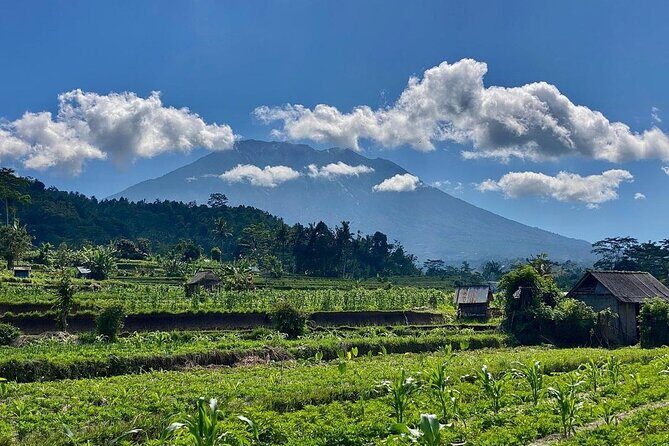
This is the kind of Sidemen walk that makes you slow down. You’re not racing through “attractions.” Instead, you’re following practical paths across rice terraces where water management and foot traffic shape the route. The big payoff is a different perspective of Sidemen: you see village rhythms from walking height, not from a scooter viewpoint.
At $13.75 per person for about 2 hours, it’s also good value for Bali. You’re paying for (1) local guidance, (2) an off-road route, and (3) a structured morning walk you can do without hiring a private driver to chase viewpoints. Bottled water is included, too, so you’re not scrambling for basics at the start.
Just be honest with yourself about the walking style. The trek is described as an easy, relaxed walk in overall effort, but many stretches are on narrow, elevated paths. If you’ve ever slipped on a wet terrace edge, you’ll understand why your footwear matters here.
Price and What You Actually Get for $13.75

For the money, you get three practical advantages.
First, the guide helps you move through the “no clear steps / small trails” parts safely and efficiently. This is not a marked hiking trail. It’s a network of farmer-used routes, and the guide keeps you on the right lines without turning it into guesswork.
Second, you get a real pacing plan for photos and explanations. Most walks around Bali either become a photo line or a long lecture. Here, you’re walking and pausing naturally—views of the terraces, then context about what you’re seeing.
Third, you get a built-in end point. The trek finishes at Warung Ume Anyar in Ogang Village, a recommended spot to relax and have a drink or meal after. That reduces the “what now?” problem that ruins good mornings.
You do not get hotel pickup or drop-off. You’ll need to handle transport on your own, which is the main “cost” besides the price.
Meeting at Pasar Sidemen and Finding the Shop on Time
The start is Pasar Sidemen (Sidemen Traditional Market), and the meeting spot is specific: you meet at the shop with the sign Upa Boga.
This matters more than you might think. Market areas can be confusing early in the day, especially if you’re arriving with a driver who drops you at the general market entrance. Give yourself a little buffer to confirm you’re at the right shop sign.
If you’re staying in Sidemen, the guidance is clear: arrange transport through your hotel. Grab is available, but some hotels in Sidemen only allow drop-off, not pickup. That’s the kind of detail that can turn a calm morning into a waiting game.
The First Walk Segment: From Market Energy to Rice-Field Silence
You start in the traditional market and village area of Sidemen, then head up toward the rice paddies. This part is where the tour shifts tone: market noise gives way to water sounds, footpaths, and views opening up as you gain elevation.
You’ll walk on paths that aren’t always obvious from street level. That’s why guides are the whole point. Without local direction, you’d miss the best angles of the terraces and possibly cut across areas you’re not meant to cross.
You’re also moving in a direction that brings Mount Agung into view. It’s not just one postcard moment. As the route changes, you get repeated glimpses of the volcano framed by terraces and village rooftops.
Rice Terrace Viewpoints Built for Farmers, Not Bus Tours

Once you’re on the terrace paths, the experience is about perspective. You’re seeing rice from above, along the side, and in the “in-between” spaces where water is managed.
The big compliment I’d repeat in your planning notes: this is where Sidemen gets real. It’s not only about pretty greens. It’s about how the system works—how irrigation routes shape paths, how terraces hold water, and how daily life fits around growing cycles.
In the drier months you might see different stages than in wet-season growth, and your guide may explain what’s happening now. One review highlighted seasonal knowledge around December: seeing harvested fields and learning what comes next for planting and local uses. If your trip overlaps a harvest window, you’ll likely get a richer story than you’d get on a random day.
Following Irrigation Paths and Crossing the Hanging Bridge

A standout moment is the irrigation-way walking. Instead of “hiking through scenery,” you’re essentially walking alongside the logic of the landscape—following water’s route, then stepping onto narrow paths that farmers use.
At some point, you’ll pass through a hanging wooden bridge that’s fit for both motorbikes and humans. It’s the kind of crossing that makes you pay attention to footing and timing, and it gives the walk an actual “event,” not just continuous scenery.
This is also a good time to remember the practical tips you’ll hear throughout the trek: stay aware of your step, because narrow edges and damp sections can be slippery.
Temples, Prayer, and the Stuff That’s Hard to Photograph
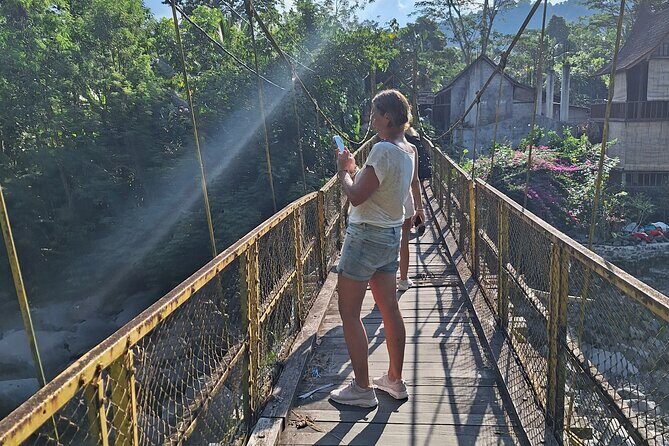
Along the way you’ll pass through a village area and a temple used for local praying. This stop isn’t just a cultural checkbox. It helps explain why agriculture, religion, and daily schedules are linked in Bali villages.
You’ll usually get explanation as you go—why offerings matter, how flowers are used, and how Hindu practice sits inside everyday routine. That’s the contrast with many Bali tours where cultural sights feel disconnected from how people live.
There’s also a fun side to these explanations. Some guides point out small surprises like big spiders near farm areas, or the practical details behind how people work the fields.
The Real Walking Condition: Easy Effort, Serious Footing
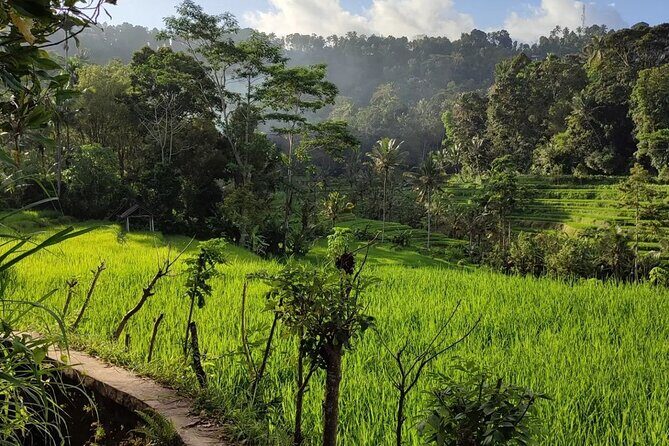
Here’s the honest balance: the trek is described as not taxing, but it still asks for moderate physical fitness and good balance.
Why? Not because the route is a big mountain climb. It’s because portions are:
- narrow
- elevated
- sometimes slippery
- often muddy enough that you’ll care about footwear
So yes, wear hiking shoes or boots. The tour specifically asks for hiking boots/shoes, plus a sun hat, sunscreen, and sunglasses. If you show up in flip-flops, you’ll probably regret it within the first terrace stretch.
Also, plan your pace. Expect frequent stops for photos and explanations, and treat the terrace paths like you’d treat stairs on a rainy day. Move slower than you think you need to.
The Finish at Warung Ume Anyar: Build the Rest of Your Day

The trek ends at Warung Ume Anyar Restaurant in Ogang Village. This isn’t a random end point. It’s an easy place to recover, cool down, and get food or a drink.
Timing is another reason this works. The activity runs around 2 to 2.5 hours from start to finish, so you can plan lunch after without needing to guess where you’ll land.
If you need to go back to the start point for any reason, there’s an option: you can walk back about 3 km along the main road, roughly 30–40 minutes. Most people won’t do this, but it’s good to know there’s an exit plan.
Transport After the Trek: Avoid the “Wait Around in Sidemen” Trap
Because there’s no hotel pickup, your post-trek logistics matter.
The recommended approach is simple: arrange transport in advance so someone can pick you up around 2–2.5 hours after the trek starts. Grab exists, but there are only a few drivers in the area, and some drivers may request offline payment or extra payment.
If you’re using a private driver, ask them to meet you at the finish point, not somewhere vague near the road. The more specific your plan, the less time you waste.
Who Should Book This Trek (and Who Might Want a Different Plan)
This trek is a great match if you:
- want a rural Sidemen experience rather than a town-stroll
- like walking with a guide who explains what you’re seeing
- enjoy views of Mount Agung from a less crowded angle
- want a morning plan that feels authentic but doesn’t require super-hard fitness
It may feel less ideal if you:
- dislike narrow, elevated paths with possible mud or slipperiness
- want a fully “easy and wide” walking route
- need guaranteed hotel pickup (you’ll manage transport yourself)
Good shoes solve a lot. Balance solves the rest.
Also, the group size caps at 10 travelers, so it’s friendlier for people who don’t want to be part of a loud parade.
Should You Book Sidemen Trekking? My Quick Decision Rule
Book it if you want a morning in Sidemen that feels connected to how people actually live and grow food—rice terraces, irrigation routes, village lanes, a temple stop, and Mount Agung views that show up naturally as you walk.
Skip it if your ideal Bali day is mostly wide paths, easy stroller-level walking, and zero attention to footing. This trek asks you to pay attention to where you step. It’s still relaxed effort-wise, just not “sit-and-glide” relaxed.
If you do book, prepare well: sun protection, sturdy shoes, and a pre-planned ride from Warung Ume Anyar. You’ll get a calm, honest rural Bali experience for a very reasonable price.
FAQ
How long is the Sidemen trekking walk?
It lasts about 2 hours, and the guidance also notes you should plan around 2 to 2.5 hours total for the activity and pickup timing.
How much does this tour cost?
The price listed is $13.75 per person.
What’s included in the price?
Bottled water is included.
Where do I meet the guide?
Meet at Pasar Sidemen (Sidemen Traditional Market), at the shop with the sign Upa Boga.
Where does the trek end?
The trek ends at Warung Ume Anyar Restaurant in Ogang Village.
Do I get hotel pickup and drop-off?
No. Hotel pick-up and drop-off are not included, so you’ll need to arrange your own transport.
What should I bring?
Bring a sun hat, hiking boots/shoes, sunscreen, and sunglasses.
What fitness level do I need?
The tour is for travelers with moderate physical fitness. You should also be ready for narrow paths and balance checks along the rice terraces.
Can I explore the market before the trek?
Yes. Pasar Sidemen is open from 5:00 AM to 10:00 AM. If you want to explore it, booking a morning session is recommended.
Is free cancellation available?
Yes, free cancellation is available up to 24 hours in advance for a full refund.
What if the weather is bad?
The experience requires good weather. If it’s canceled due to poor weather, you’ll be offered a different date or a full refund.
More Walking Tours




More Tour Reviews




More Ubud Tours
Ubud Tours: how the alternatives stack up


 ★ 5.0
★ 5.0Ubud: Monkey Forest, Jungle Swing, Rice Terrace, and Water Temple




The lists this tour appears in