Canyoning Bali : Anahata CANYON (Adventure, discovery, nature)

Canyoning Bali : Anahata CANYON (Adventure, discovery, nature) - The full day rhythm: Ubud pickup, basecamp prep, and the short hike-in

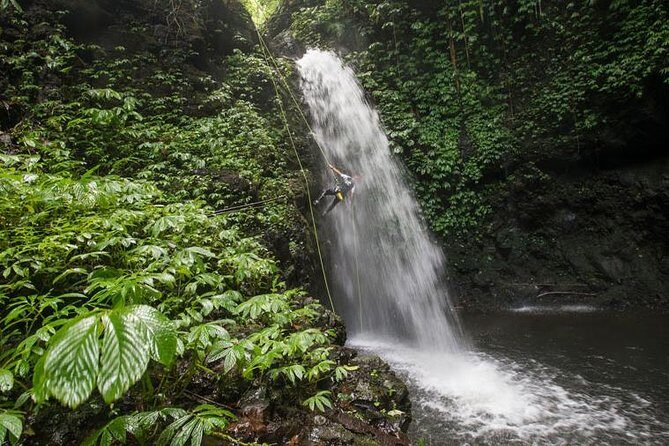
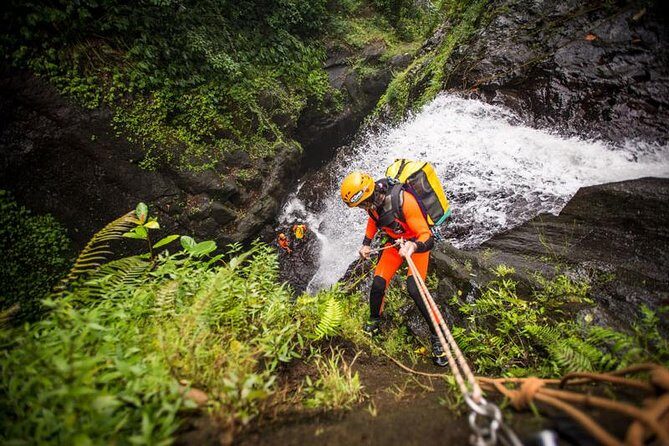
Canyoning in Bali is pure adrenaline. Anahata CANYON is a demanding, real-deal descent through jungle canyon walls, with open-sky rappels up top and a narrower, deeper gorge called Excalibur for more technical rope moves. I especially like the professional, safety-first vibe and the fact that everything key is all-inclusive—gear, training, breakfast, and lunch—so you can focus on the descent, not logistics. Guides like Jess and Rama also bring high energy, and they keep the mood fun while you’re learning what to do next.

One thing to consider: Anahata is not a casual splash. You need a good level of fitness, swim ability is compulsory, and the day works best if you’re comfortable with teamwork on rope sections. It’s also strictly for people over 18.

Key points to know before you go
Canyoning Bali : Anahata CANYON (Adventure, discovery, nature) - Key points to know before you go

  • ICOpro initiation training before you start so you know how to move and behave on the rope
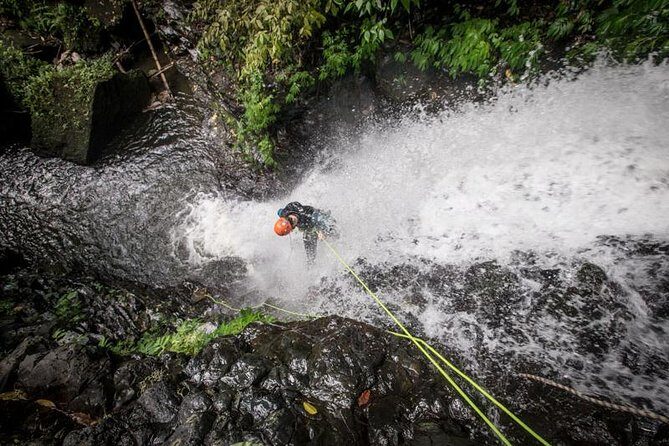
  • 15 rappels up to 35m, plus 7 jumps (up to 8m) and 3 slides (up to 8m)
  • Excalibur gorge: narrow, deep, and built for both jumps and technical rappelling
  • Breakfast and lunch included, with vegetarian or vegan options
  • Free photos and video, plus a shower kit at basecamp afterward
  • Small-group feel (max 6 people) and teamwork matters because of the nature of the descent

Anahata CANYON: why this Bali canyoning feels like a real adventure

If you want Bali that goes beyond beach views, Anahata is a strong pick. This is not just a quick “walk to a waterfall.” It’s a sustained, hands-on canyon descent where you repeatedly switch between trekking, rope work, and water sections—so the day stays active.

What makes Anahata different is the variety of terrain. The upper part is more open and sunny, and you’ll handle rappels there (up to 35m). Then the canyon narrows and deepens in the Excalibur section, where the setting gets more technical. That mix matters because it keeps you engaged: you’re not just repeating one type of challenge.

Also, the guides Jess and Rama (and their team) set the tone early. The trip doesn’t feel sloppy or chaotic. It feels like you’re being coached. That’s a big deal in canyoning, where small mistakes can turn into big problems.

Safety briefing that actually prepares you for the rope
Canyoning Bali : Anahata CANYON (Adventure, discovery, nature) - Safety briefing that actually prepares you for the rope
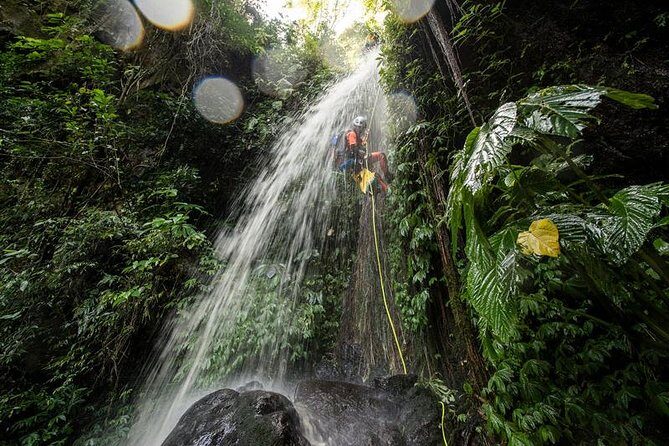
The best part of this tour isn’t the water—it’s the lead-up. At basecamp you do registration, then you get light breakfast and coffee/tea, and most importantly, you get canyon initiation training with ICOpro standards.

Why you should care: canyoning punishes guesswork. You can’t just wing it when you’re clipped in, suspended, and moving through a waterfall line. The training helps you understand what you’re doing before you’re committed to the route.

You’ll also be outfitted with all canyoning equipment using ICOpro and CE-standard gear, including high-performance canyoning rope (international standard, from Korda’s). In plain terms, this is the kind of gear and briefing that makes the day feel controlled—even when the drops are exciting.

On top of that, you’re supervised by an ICOpro instructor and assistant team. The small-group size (max 6 people) helps here too. More attention per person usually means a calmer experience.

The full day rhythm: Ubud pickup, basecamp prep, and the short hike-in
Canyoning Bali : Anahata CANYON (Adventure, discovery, nature) - The full day rhythm: Ubud pickup, basecamp prep, and the short hike-in
The experience runs about 6 hours total. The day starts with hotel pickup from a specified area in Ubud, then you drive to basecamp.

Here’s the rhythm you’ll feel:

1) Pickup and arrival at basecamp

2) Registration, coffee/tea, and light breakfast

3) Equipment fitting and initiation training

4) A short drive to the start point (about 10 minutes in a local small truck)

5) A downhill approach to the river

6) The main descent in the canyon

7) Back to basecamp for shower, lunch, and photos/video

After the truck ride, you’ll hike downhill briefly—think around 5 to 15 minutes depending on the situation and pacing. You’ll reach the river and then the canyoning gets real quickly.

One practical tip: when you’re nervous, you tend to move too fast. With this kind of trip, moving at the pace of the group and following instructions is the fastest way to feel confident.

From sunny rappels to Excalibur’s narrow technical gorge

Anahata has two main “moods,” and you feel the change.

Upper section: open and sunny rappels

The top part features nice rappels, up to 35m high. It’s described as open and sunny, which matters. In practical terms, you’re not constantly in total darkness or thick mist. This is one reason the upper section can be a good confidence builder.

There’s also a seasonal note: this upper section can be dry during the dry season. That doesn’t automatically mean less fun. It usually just changes how much you get soaked and how the falls interact with you.

Excalibur section: narrow and deep for jumps and technical rappels

Then you move into Excalibur, a narrow and deep gorge with its own rhythm. Here you’ll find jumps (up to 8m) and more technical rappelling. If you like rope work, this part is where the trip rewards you.

It’s also where teamwork matters. The canyon’s layout means you’re often moving through a sequence where timing, positioning, and spacing are important. You’re an integral part of the team system, not just an individual doing stunts.

The action lineup: 15 rappels, 7 jumps, and 3 slides

This tour is built around variety, not a single stunt.

You can expect:

  • Rappels: 15 total, up to 35m
  • Jumps: 7 total, up to 8m
  • Slides: 3 total, up to 8m

In a day like this, those numbers help you understand the workload. You’re not doing one rappel and calling it a win. You’ll repeat “gear up, move, re-check, descend” many times.

Two more notes that matter for how you prep:

  • Swimming is compulsory. That’s not optional. Plan to feel comfortable in water, at least enough to keep going when you get into the swim segments.
  • You’ll be trekking between water actions. So this is both an athletic and technical day.

If you’re fit but not a swimmer, that mismatch is a problem here. If you’re fit and calm in water, the experience becomes a lot more enjoyable because you’re not fighting panic.

What you’ll do during the descent: slides, jumps, and waterfall rappelling

Once you arrive at the river, your time turns into a series of short challenges. Expect sections where you’re swimming, then transitioning into sliding or jumping, then gearing up for rappelling again.

Water experiences can be unpredictable, because the canyon environment is the boss. That’s another reason the training matters: it teaches you how to handle your body and attention while you move from one technique to the next.

Also, don’t just focus downward. A good safety habit is looking around and above you as you go, because canyon routes are about spatial awareness. The guides encourage building a mental map of the route as you experience it.

Food, showers, and included comfort after you get muddy

One thing I like about this trip is that it doesn’t treat recovery like an afterthought.

You get:

  • Tasty breakfast at basecamp (vegetarian or vegan available)
  • Lunch back at basecamp after the descent (also vegetarian/vegan available)
  • Fresh fruits
  • Tea/coffee/water and snacks during the day
  • Shower / shampoo / soap / towel at basecamp

That last part is underrated. After hours in wet gear, a real shower and towel make a huge difference. You’ll feel more human for the drive back to Ubud, instead of spending the rest of the afternoon dealing with sticky hair and soaked clothes.

The $350 value: what you’re really paying for
Canyoning Bali : Anahata CANYON (Adventure, discovery, nature) - The $350 value: what you’re really paying for
At $350, this isn’t a budget “activity ticket.” But the value makes sense when you look at what’s included.

You’re getting:

  • Pickup and drop-off within the specified area
  • All canyoning equipment (ICOpro and CE-standard) and branded technical gear
  • The ICOpro initiation training before you start
  • Supervision by an ICOpro instructor and assistant team
  • Breakfast, lunch, snacks, tea/coffee/water, and fresh fruit
  • Accident insurance up to USD 10,000 per person
  • Free photos and video

You’re also getting something harder to price: guided rope work with professional supervision. When a trip includes 35m rappels plus jumps, the safety coaching and gear matter more than a low sticker price.

What could affect value for you: you’ll need to bring personal items like swimwear and sunscreen, and the tour doesn’t include a camera USB/memory card for photos. If you don’t already have those, plan for them.

Pickup, timing, and the small-group feel (max 6)

This tour caps at 6 travelers, and that changes the mood. You’re less likely to feel rushed, and the guides can pay closer attention to each person’s pacing and confidence.

The schedule is also straightforward:

  • Approx. 6 hours total
  • A short truck ride (about 10 minutes) to the start point after basecamp training
  • Brief approach hike before you reach the river
  • Return to basecamp for shower, lunch, and media

If you’re the type who likes your day organized but still adventurous, this structure helps. You know when action starts, when it slows down, and when you’re eating and cleaning up.

What to bring and what to expect with gear and clothing

The tour includes equipment, but you still need to show up ready to move.

Bring:

  • Swimwear (required by the nature of the day)
  • Sunscreen
  • A way to handle personal items and essentials
  • Personal expenses money (not included)

If you want to keep your photos, remember: free photos and video are provided, but you’ll need your own camera/USB/memory card if you plan to save or transfer beyond what’s offered.

Wear:

  • Something you can get wet and move in.
  • You’ll be in wet conditions for a large portion of the descent.

Also, you’ll be asked for your name, age, height (cm), weight (kg), and shoe size. That’s normal for sizing and safety checks.

Who this canyoning trip is best for

Book Anahata if:

  • You want a technical canyoning day, not a light nature walk
  • You’re comfortable with rope work and want guided instruction
  • You can swim and you’re willing to handle water sections without freezing
  • You’re in good enough shape to handle repeated descending segments plus trekking

Consider skipping (or picking a different style of tour) if:

  • Swimming in open canyon conditions makes you uneasy
  • You prefer low-intensity activities
  • You’re looking for something gentle and mostly scenic

The trip is also strictly over 18, so it’s not designed for younger participants.

Weather and safety reality check

This experience requires good weather. If conditions are poor, you’ll be offered a different date or a full refund. That matters because canyoning routes depend on conditions you can’t fully control from your hotel.

One practical planning idea: keep the rest of your day flexible around this trip. When the route changes due to conditions, it’s easier to stay calm if you’re not rushing to catch a hard reservation right after.

Should you book Anahata CANYON with Adventure and Spirit?

If you want a canyoning experience that feels like a proper adventure—real rappels, real jumps, and real coaching—Anahata is an excellent match. The combination of ICOpro training, professional supervision, and an included food-and-recovery plan makes it feel complete, not like an activity you have to assemble yourself.

But be honest with yourself about two things: your swim comfort and your fitness level. If those are solid, you’ll likely love the mix of technical rope work and wild canyon scenery through the day.

If those aren’t your strengths yet, you might still have fun in Bali—but not in this specific canyon.

FAQ

How long is the Anahata canyoning trip?

It’s about 6 hours, including the descent and the approach/return time.

Is pickup included from Ubud hotels?

Yes. Pickup and drop-off are offered from/to accommodation in a specified area.

What’s included in the price?

The tour includes all canyoning equipment, ICOpro initiation training, supervision, breakfast and lunch (vegetarian or vegan options), fruits, tea/coffee/water and snacks, shower/shampoo/soap/towel, accident insurance up to USD 10,000 per person, and free photos and video.

What is not included?

Alcoholic beverages, personal expenses, swimwear, change of clothes, sunscreen, camera and USB or memory card for photos, and any additional transport surcharge where applicable.

Do I need to know how to swim?

Yes. Swim ability is compulsory.

How many rappels, jumps, and slides are there?

There are 15 rappels (up to 35m), 7 jumps (up to 8m), and 3 slides (up to 8m).

How do the canyon sections differ?

The upper section has nice rappels and is open and sunny (it can be dry in the dry season). The Excalibur section is a narrow, deep gorge with jumps and technical rappels.

What kind of training do I get before starting?

At basecamp you get canyon initiation training with ICOpro standards so you know what to do in the canyon.

What is the age and fitness requirement?

You must be strictly over 18. You should have a moderate physical fitness level, and because swimming is required, water comfort is important.

What happens if the weather is bad?

The tour requires good weather. If it’s canceled due to poor weather, you’ll be offered a different date or a full refund.


Half Day Bali Shopping Art Village Private Tour

Half Day Bali Shopping Art Village Private Tour - Tohpati Village Batik Weaving Center: Seeing Cloth Become Art

Batik, silver, and wood carving in one morning. This half-day private tour is built around Bali’s craft towns in the Ubud area, with time to see how items are made and then shop at the source. I especially like the batik weaving process you can watch at Tohpati, and the fact that lunch is included right in the middle of the route.

You’ll get a focused run through several specialties—fabric art in Tohpati, metalwork in Celuk, painting in Batuan, and detailed wood carving in the Mas area—so you’re not doing random stops that feel disconnected. The main thing to consider is that this is a shopping-forward itinerary, meaning you’ll spend most of your time inside craft galleries and showrooms rather than on temple sightseeing or long scenic walks.

Key highlights at a glance

Half Day Bali Shopping Art Village Private Tour - Key highlights at a glance

  • Tohpati Batik stop with time to see the process and buy batik on-site
  • Celuk silver and gold craft village focused on metalwork you can browse directly
  • Batuan painting crafts for all styles, with a lighter admission setup
  • Mas wood carving center known for fine carving and decorative curves
  • Set Indonesian lunch with vegetarian option so you don’t have to plan a meal

Half-Day Private Tour From Seminyak: What 5–6 Hours Means

Half Day Bali Shopping Art Village Private Tour - Half-Day Private Tour From Seminyak: What 5–6 Hours Means
This is a private tour starting at 8:30am, lasting about 5 to 6 hours. You’ll be in and out of several craft centers—one hour each at the main stops—so the pace is efficient. I like that structure because you still feel like you saw a real slice of Bali craft culture without turning the day into a full marathon.

Because it’s private, your group sets the tone. The tour is designed for one group only, which usually means you can ask questions without feeling like you’re competing for attention in a crowded bus. If you’re staying in Seminyak, the pickup offering is also a big quality-of-life win: you’re not spending time figuring out transport across a spread of villages.

One small practical note: since this is built around shopping villages, you should wear something comfortable and plan to carry whatever you buy. The tour includes a route that’s easy to follow, but it can’t control how heavy your souvenirs get.

Tohpati Village Batik Weaving Center: Seeing Cloth Become Art

Half Day Bali Shopping Art Village Private Tour - Tohpati Village Batik Weaving Center: Seeing Cloth Become Art
Tohpati is the batik stop, and it’s the one that sets the tone for the whole tour. You’ll visit a batik art gallery in Tohpati Village where you can see the process of making batik and buy existing batik there. The admission ticket is included at this stop, which makes it feel like a true “experience visit,” not just a quick photo stop.

What I like about a batik-focused stop is the payoff. Batik is not only about a pretty pattern; you’re seeing the craft behind the look. Even if you’re not an expert, watching how the work is done helps you shop with more confidence later—because you’ll recognize what’s labor-intensive versus what looks more basic.

Practical tip: when you’re browsing, take a moment to look at the overall finish and how the design is applied. If a piece has multiple colors or complex patterns, it tends to take more effort to produce. If you find something you love, ask about how it’s made (your guide can help translate questions), and try to compare a couple of options before you decide.

Celuk Silver Craft Village: Browsing Metalwork at the Source

Next up is Celuk Village, a place famous for gold and silver crafting. Here, you’ll visit a silver craft art gallery and get time to see the kind of work the village is known for. Admission ticket is included at this stop, so again, you’re paying for access rather than just walking past shopfronts.

Celuk’s appeal is that it’s very specific. Instead of “souvenirs everywhere,” you get a concentrated look at metalwork—what styles exist, how pieces are finished, and what kinds of items are common. If you like jewelry, small gift items, or decorative pieces, this is the stop where your shopping instinct usually kicks in.

A helpful way to shop smarter: decide your target before you start (ring, pendant, earrings, or a display piece), then compare at least two or three designs. The best value usually comes from matching what you like visually with what the item is trying to do—some pieces are meant to be delicate and detailed, while others are more bold and statement-heavy.

Batuan Village Painting Crafts: A Thousand-Year Creative Thread

Half Day Bali Shopping Art Village Private Tour - Batuan Village Painting Crafts: A Thousand-Year Creative Thread
Batuan Village is the painting stop. You’ll spend about an hour here, and the admission ticket is listed as free for this part of the route. The village is described as a long-time center of Balinese artwork and handicrafts, and you can also see or buy painting crafts in all kinds of styles.

I like Batuan in the lineup because it breaks up the “wearable crafts” theme. After batik and silver, painting gives you something different—something you can frame, gift, or hang at home. It also tends to be easier to choose if you’re not sure what you want yet, because you’re browsing art styles rather than a single craft category.

What to do once you’re there: don’t rush. Spend a few minutes watching for your own taste pattern—are you drawn to color, subject matter, or the general style? If you buy art, think about where it will live at home, not just how cool it looks in a gallery. Paintings also tend to be easier to pack than heavy wood pieces, which matters if you’re building a souvenir haul.

Mas Ubud Wood Carving Center: Finding the Fine Details

Half Day Bali Shopping Art Village Private Tour - Mas Ubud Wood Carving Center: Finding the Fine Details
Then you head to Mas, known for Balinese wood carving handicrafts. The description highlights the village focus on wood carving and mentions the lekak—those flowing, carved curves that make Balinese patterns look so graceful. Admission ticket is included at this stop, and you’ll have about an hour to see and shop.

This is the part of the tour where quality shows quickly. With wood carving, you’ll often see the difference between mass-produced items and pieces where someone has actually taken time on the contours and texture. Even if you don’t know the terminology, your eyes can tell when a carving has clean edges and careful finishing.

Practical buying tip: if you’re considering a larger piece, check its size and how it will travel. This tour moves through multiple stops in a half day; you don’t want to fall in love with something heavy and awkward unless you already know how you’ll carry it.

Ubud Lunch Break: A Set Indonesian Meal With Vegetarian Choice

Half Day Bali Shopping Art Village Private Tour - Ubud Lunch Break: A Set Indonesian Meal With Vegetarian Choice
After the craft stops, the tour includes lunch at a restaurant in the Ubud area. The lunch is described as Indonesian food served as a set menu, and vegetarian and non-vegetarian options are available.

I like that this lunch is built into the schedule. With half-day tours, the risk is always the same: you arrive hungry, you eat something random, and then you’re distracted during the best parts. Here, lunch is scheduled in the middle, so you can reset and keep your energy for the final stretch.

If you’re vegetarian, it’s reassuring that the option is explicitly available. If you have food preferences beyond that (spice level, allergies), you’ll still want to communicate directly with your guide before ordering.

Shopping Strategy: How to Get Value Instead of Random Souvenirs

Half Day Bali Shopping Art Village Private Tour - Shopping Strategy: How to Get Value Instead of Random Souvenirs
This tour is built for shopping, but you can shop with a plan. Before you buy anything, I’d recommend doing two quick passes in your mind: first, decide what category you want (fabric, metal, painting, wood). Second, set a rough budget per category so you don’t accidentally spend more just because the items are beautiful.

Because the tour groups similar crafts together—batik in Tohpati, silver in Celuk, painting in Batuan, wood carving in Mas—you can compare within a category more easily than if you were shopping on your own across dozens of shops. That makes the $45 per person value feel more direct: you’re paying for time, transport, and guided access to multiple craft specialties in one morning.

Also, keep your expectations realistic. Even with a guided route, you won’t have the time to deep-study every item in every gallery. Aim for a short list of favorites, then buy what you truly like. Otherwise you end up with “maybe” purchases that don’t match your taste back home.

Who This Tour Fits Best (And Who Might Skip It)

Half Day Bali Shopping Art Village Private Tour - Who This Tour Fits Best (And Who Might Skip It)
I think this is a strong fit if you:

  • Want an efficient half-day art village route from Seminyak
  • Like craft shopping but also want to see the process, not just the final product
  • Prefer a private setup where you can ask questions and move at your group’s pace
  • Enjoy Indonesian crafts like batik, silver, paintings, and wood carving

You might want a different plan if you mainly came for temples, waterfalls, or long scenic time. This itinerary is focused on galleries, workshops, and purchasing—so it’s not designed for a classic “see the sights” Bali day.

Should You Book This Half-Day Bali Shopping Art Village Private Tour?

If you like Bali crafts and you want a concentrated route, I’d say yes. For $45 per person, you’re getting pickup, a private group experience, multiple craft villages in one window, and a set lunch with vegetarian option. The structure also makes it easier to shop with confidence because you’re seeing how each craft category works and then buying directly at the source.

Book it if you want that sweet spot: educational and practical, without turning your day into a full travel day. Skip it only if your ideal Bali half day is mostly temples and scenery. In this one, shopping is the point.

FAQ

What is the duration of the Half Day Bali Shopping Art Village Private Tour?

The tour runs about 5 to 6 hours.

What time does the tour start?

The start time is 8:30am.

Is pickup available?

Yes, pickup is offered.

Is this tour private or shared with other groups?

This is a private tour/activity, so only your group participates.

What stops are included on the route?

You’ll visit Tohpati Village for a batik art gallery, Celuk Village for silver crafting, Batuan for painting crafts, and Mas Ubud for wood carving, with lunch included during the route.

Is lunch included, and can I get a vegetarian meal?

Lunch is included and vegetarian food is available. The lunch is described as a set Indonesian menu with vegetarian and non-vegetarian options.

Are admission tickets included for all stops?

Admission ticket is included at Tohpati Village, Celuk Village, and Mas Carving Center. Batuan and Ubud are listed as admission free.

How much does the tour cost?

The price is $45.00 per person.

What is the cancellation policy?

Free cancellation is available up to 24 hours in advance for a full refund. If you cancel less than 24 hours before the start time, the amount paid is not refunded.

Bali Airport Pickup Transfer to Ubud Area (Private)

Bali Airport Pickup Transfer to Ubud Area (Private) - Timing and the Real Drive Time Into Ubud

Leaving the airport stress behind is possible. This private transfer from Bali Ngurah Rai to Ubud is built for an easy start: you’re met at arrival with a sign showing your name, then guided straight to an air-conditioned car. I especially like the no-mixed-group setup, meaning it’s just you and your travel mates in the vehicle, not a busload of strangers.

Two more good things matter on real trips: the driver helps with your luggage, and you can reach the team by WhatsApp after booking if anything changes. One thing to keep in mind is timing: the drive is about 1.5 to 2 hours and can stretch depending on Bali traffic.

Key Highlights at a Glance

  • Name-card meet-up at Bali Ngurah Rai: easier arrivals, less hunting around.
  • Private car for up to 4: you control the pace without adding other passengers.
  • A/C vehicle plus parking and fuel included: fewer extras to worry about.
  • Driver support for new-to-Ubud arrivals: helpful if you don’t know where your hotel is.
  • Flexible detours by request: you can ask for a quick stop while en route.
  • No onboard WiFi: plan to download anything important before pickup.

From Bali Airport to Ubud Without the Runaround

Bali Airport Pickup Transfer to Ubud Area (Private) - From Bali Airport to Ubud Without the Runaround
If your first Bali day starts with customs, bags, and a swarm of drivers trying to guess your destination, a private airport pickup is a relief. This one is straightforward: you land at Bali Ngurah Rai Airport (Denpasar), and the service meets you there with a driver holding a sign with your name. That small detail saves you time and mental energy, especially if you arrive tired or with a few suitcases.

Then the driver helps with luggage and gets you to your private A/C vehicle. The trip is designed to feel like transportation, not a complicated tour. You’re not waiting around at an office; you’re moving from arrival to Ubud with the least fuss possible.

For many people, the “why” here is simple: Ubud is not next door. A smooth transfer sets the tone for everything after that first shower and change of clothes.

Private Means It’s Just Your Group

Bali Airport Pickup Transfer to Ubud Area (Private) - Private Means It’s Just Your Group
The biggest value of this transfer is that it’s private. The car serves only you and your travel mates, with no other guests joining along the way. For families, couples, and small groups, that makes the experience feel calmer and more predictable.

It also means you can spread out the way you need. If someone is checking flight details on a phone, or you’ve got a pile of bags, you’re not working around other passengers. You also get more practical flexibility if your timing is slightly off—like if baggage claim runs long.

The service is priced per group up to 4, which matters because it can work out like a bargain once you split the cost with your travel buddy. If you’re traveling solo, you’ll still get the same private setup, but you may find the per-person value depends on who else is in your group.

Timing and the Real Drive Time Into Ubud

Bali Airport Pickup Transfer to Ubud Area (Private) - Timing and the Real Drive Time Into Ubud
Expect around 1.5 to 2 hours for the drive from the airport to Ubud, depending on traffic. In Bali, traffic can turn even a simple route into a slow crawl. So the best move is to plan your arrival day with a little slack rather than booking a tight schedule right afterward.

This is also why “private” can feel better than shared options. When you’re not managing multiple drop-offs, the driver can keep things moving toward your hotel area.

The service opening hours run Monday through Sunday from 4:00 AM to 11:30 PM, so you’ve got a wide window for most flight schedules. If you land late at night or early in the morning, you’re still within the listed operating times, which is a comfort factor when you’re trying to avoid last-minute taxi uncertainty.

What the Driver Actually Does (And Why It Helps)

A good airport transfer is more than a car. It’s the moment-to-moment support that keeps things from turning annoying.

Here’s what you should expect:

  • You’re greeted at the airport arrival area with a name sign
  • The driver assists with luggage
  • You’re taken directly to Ubud (Gianyar Regency, Bali)

The service also notes that if you have zero knowledge of the Ubud area, tell the driver (or your hotel details) and they’ll help you reach your accommodation. That’s a big deal if you’re the kind of traveler who hates asking strangers for directions right after landing.

From the driver side, names like Putu and Harry show up in past experiences, and they’re described as friendly, careful in chaotic traffic, and responsive with updates. That matches what you want in this moment: calm confidence and clear communication.

Included Comforts Versus Small Missing Pieces

This transfer includes the core items you actually care about after a flight:

  • Air-conditioned vehicle
  • Private transportation
  • Parking fees
  • Fuel

It also includes a mobile ticket, and you receive confirmation at the time of booking. So you’re not guessing what comes next once you land.

One item you should know upfront: there’s no WiFi on board. If you rely on your phone for directions, messaging, or flight updates, download what you need before pickup. Also, consider saving your hotel address in your phone offline, just in case signal isn’t great during parts of the drive.

Flexibility: Stops, Detours, and Quick Food Wins

This transfer gives you room to adjust. If you want a quick stop for a local restaurant meal or a detour to a nearby attraction, you can ask. The driver is stated to be happy to accommodate requests like that.

Now, a practical note: adding stops can affect the total arrival time. Since the base trip is about 1.5 to 2 hours, build in extra time if you’re planning something on the way. But even a short food break can turn a stressful landing day into a smoother one.

This flexibility is especially helpful if:

  • your flight lands at a hungry hour
  • you want to stretch your legs before getting to your hotel
  • your group arrives at different times and you want to coordinate

Value for Money: Why This Price Can Work

At $31.93 per group (up to 4), this is priced like a practical airport solution rather than a premium limousine experience. The value comes from what’s included and what’s avoided.

What you’re getting:

  • a private car, not a shared ride
  • A/C comfort
  • parking and fuel handled
  • direct airport-to-Ubud transport
  • luggage help and driver support

What you avoid:

  • time wasted negotiating at the airport
  • uncertainty about finding transport after baggage claim
  • the stress of managing multiple stops and drop-offs

The “best use” scenario is when you’ve got two to four people splitting the cost. If it’s just one traveler, the private benefit still matters, but you’ll likely compare it against standard taxis. If your priority is easy arrival and getting to your hotel fast, this setup tends to feel worth it.

Also, booking is described as averaging about 5 days in advance. That usually means the service is easy to plan, but I’d still reserve early when possible—especially around busy seasons or if you’re arriving during a high-demand time window.

Arrival in Ubud: The End Point and the First Steps

Your drop-off is Ubud, Gianyar Regency, Bali. Once you’re dropped, you can move right into the first things that matter on day one: check-in, a shower, and a meal.

The service says the driver can assist you to reach your hotel, particularly if you’re not familiar with the area. In real life, that support can save time you’d otherwise spend circling around or asking for directions after travel fatigue.

One small practical tip: when you book, provide the details requested—your personal information and flight number. That’s what helps the driver line up your arrival and meet you smoothly at the airport.

Should You Book This Private Airport Pickup to Ubud?

You should book this transfer if you want your first Bali hours to feel calm and controlled. It’s a good fit for:

  • couples and families who prefer a private car
  • small groups of up to four who want no extra passengers
  • travelers who land with tired legs and bags
  • anyone who could use help finding their way in Ubud

I would skip or reconsider if you’re extremely flexible about timing and don’t mind a bit of airport taxi chaos. Also, remember there’s no WiFi, so don’t plan to rely on connectivity during the ride.

If your goal is simple—airport to Ubud with minimal stress—this service hits the mark: name-card meet-up, luggage help, A/C comfort, private ride, and a driver who can guide you even if you’re new to the area.

FAQ

Where does the pickup happen?

Pickup starts at Bali Ngurah Rai Airport (Denpasar, Indonesia).

Where do I get dropped off?

The transfer ends in Ubud, Gianyar Regency, Bali, Indonesia.

Is this a shared transfer?

No. This is a private transfer, so only your group travels in the car.

How many people can be in the group?

The service is priced for a group of up to 4 people.

How long does the drive take?

The trip takes about 1.5 to 2 hours, depending on traffic.

What time is the service available?

It runs Monday through Sunday from 4:00 AM to 11:30 PM.

What’s included in the price?

Included are an A/C vehicle, private transportation, parking fees, and fuel.

Is WiFi provided during the ride?

No. WiFi on board is not included.

What details do I need to provide when booking?

You should provide your personal information and flight number.

Can the driver accommodate stops on the way to Ubud?

Yes. You can request detours or a quick stop for a meal during the transfer.

Is cancellation free?

Yes. Free cancellation is available up to 24 hours in advance for a full refund.

Bali Shore Excursions Cruise Dock In Bali

Bali Shore Excursions Cruise Dock In Bali - Stop 1: Sari Amerta Batik Collection and Handmade Weaving

Your cruise day, but make it cultural.

This private Bali shore excursion takes you off the beach circuit and into real daily-life moments around Ubud: batik and weaving work, a Batuan village temple, and a photo-stopping run to Tegenungan Waterfall. It’s designed to fit ship schedules with timed transfers, so you spend time seeing, not waiting.

I especially like the hands-on stops for shopping and observing craft traditions. You’ll browse batik textiles at Sari Amerta Batik Collection and then branch into the art villages around Ubud, including the silver-and-painting style work tied to Celuk, plus wood carving and art painting areas like Mas. The other thing I really appreciate is that you’re not crammed into a crowded bus day—you’re in your own private group with an English-speaking driver.

One consideration: this is a culture-and-crafts route, not a long sit-down food day. There’s no lunch included, and the waterfall stop is short, so if you want lots of time to linger, plan to treat it as a quick photo-and-walk moment.

Key things I’d zero in on before you book

Bali Shore Excursions Cruise Dock In Bali - Key things I’d zero in on before you book

  • Timed private port transfers from Pelabuhan Benoa so your itinerary matches your cruise window
  • Craft villages around Ubud with stops tied to batik, silver work, and wood carving areas
  • Tegenungan Waterfall photos with a focused, low-stress timeframe
  • Temple visit in Batuan centered on Hindu traditions and how the community follows the Hindu calendar
  • Entrance tickets included for most stops, with Celuk listed as admission free
  • Private group format with an English-speaking driver in a private vehicle

From Benoa Port To Ubud Crafts: How This Excursion Fits Your Ship Day

Bali Shore Excursions Cruise Dock In Bali - From Benoa Port To Ubud Crafts: How This Excursion Fits Your Ship Day
This shore excursion starts at Pelabuhan Benoa Denpasar Selatan, with the stated start time at 9:00 am. The whole point is to get you into Bali’s cultural side without eating up your precious dock time with transfers on your own.

Because the duration is listed as 1 to 8 hours (approx.), you should expect that the schedule you experience will be shaped by your ship’s timing. That flexibility matters on Bali shore days, where traffic can shift quickly and you don’t want your “must-do” stops turning into a rush.

You’ll also have a private setup: only your group participates. In practice, that means your driver can pace the day to the time you have—especially useful when the itinerary includes multiple short culture stops rather than one long sightseeing block.

Private, Timed Transfers: The Real Value of a “No-Worry” Port Route

A big reason people choose a private port excursion is simple: getting back on the ship is the whole game. This tour includes hassle-free 2-way private port transfers, timed to your vessel.

That timing is where the value shows up. If you tried to arrange the same sequence—Ubud craft stops, a Batuan temple visit, and Tegenungan Waterfall—from your own planning, you’d be juggling transport windows and admission timing. Here, the driver and vehicle are already built into the plan, and the stops are listed with ticket inclusions.

You’re also getting transport by private vehicle and an English-speaking driver. That combination helps when you want clear explanations for what you’re seeing—especially at religious and community sites like the Batuan temple.

Stop 1: Sari Amerta Batik Collection and Handmade Weaving

Bali Shore Excursions Cruise Dock In Bali - Stop 1: Sari Amerta Batik Collection and Handmade Weaving
Your first organized stop is Sari Amerta Batik Collection, and it includes the admission ticket. The time listed is 30 minutes, so this is a “see it, understand it, and shop if you want” stop rather than a deep workshop.

What I like about leading with batik here is that it gives you an immediate Bali lens: textiles and pattern-making are more than souvenirs. Batik is a craft language—materials, dyes, and repeated design work—and shopping early lets you compare pieces without the fatigue that comes later.

Practical tip: if you’re serious about buying batik or weaving items, treat this as your main shopping moment. You’ll only have limited windows later in the day at other art villages, so decide what you really want before you scatter your budget.

Stop 2: Puseh Batuan Temple and Hindu Daily-Life Lessons

Bali Shore Excursions Cruise Dock In Bali - Stop 2: Puseh Batuan Temple and Hindu Daily-Life Lessons
Next up is Puseh Batuan Temple, again with an admission ticket included and a 30-minute visit slot. This stop focuses on how temples fit into everyday Balinese life.

The key detail is what the visit is aiming to teach: Hindu traditions and rituals, plus the Hindu calendar and how it guides community practice. That’s the kind of context that turns a temple photo from a quick snapshot into something you understand.

The likely drawback? Religious sites can have rules around dress and behavior, and you’ll have less time than you’d want if you start asking lots of questions. Bring your curiosity, but also stay flexible for the way the visit unfolds at a working village temple.

Stop 3: A Local Home Visit in Batuan

Bali Shore Excursions Cruise Dock In Bali - Stop 3: A Local Home Visit in Batuan
After the temple, you’ll visit a local house and learn about daily life and Balinese culture. The itinerary doesn’t list a specific time here, but it’s framed as a direct look at how people live, not just another scenic stop.

This is where a private excursion can feel more meaningful than a typical big-group bus day. In a compact schedule, a home visit is a quick but powerful reminder that “culture” isn’t a museum—it’s people living their routines, hosting visitors, and practicing beliefs in ordinary spaces.

What to expect: you’ll likely have a guided explanation of what you see and how everyday life connects to local traditions. If you’re photographing, stay respectful and follow any guidance from your driver for what’s okay to capture.

Stop 4: Tegenungan Waterfall Without the Beach-Crowd Stress

Bali Shore Excursions Cruise Dock In Bali - Stop 4: Tegenungan Waterfall Without the Beach-Crowd Stress
Then comes Tegenungan Waterfall—green, natural, and not far from Ubud—with an included admission ticket and a 30-minute window.

This is the stop most people picture first, and it’s also the one most likely to feel rushed if you go in expecting a long hike. The upside is that you still get the payoff: a strong waterfall photo opportunity and the chance to experience a lush, moving backdrop without losing your whole afternoon.

Practical reality check: water areas often mean slippery footing and damp surfaces. Wear footwear that can handle uneven ground, and don’t plan on lingering in one spot for long. Treat it like a focused photo walk and a short refresh.

Also, since this is timed inside a port-day itinerary, you’ll want to be ready to move when your driver signals it’s time to continue.

Celuk Village and the Art Village Trail: Silver, Painting, and Wood Carving

Bali Shore Excursions Cruise Dock In Bali - Celuk Village and the Art Village Trail: Silver, Painting, and Wood Carving
Your final major stop is Celuk Village. It’s listed for 1 hour and notes that admission is free.

This part of the day is all about art villages and what they’re known for:

  • Celuk for silver making
  • Batuan art painting connections
  • Mas (Ubud) for wood carving

That mix matters. Instead of treating souvenirs as random shopping stops, you’re seeing how different creative crafts cluster in distinct villages. It’s the kind of structure that helps you shop with intention: you can choose what matches your taste and also compare craftsmanship across different makers.

One small consideration: since you’re hopping among craft areas, you may see similar-looking items at different price points. That’s normal. If you care about value, look closely at finishing, consistency, and how the item is made—not just the design.

What $40 Buys You: Tickets, Transport, and the Cruise-Day “Stress Tax”

Bali Shore Excursions Cruise Dock In Bali - What $40 Buys You: Tickets, Transport, and the Cruise-Day “Stress Tax”
At $40.00 per person, this excursion is priced like a budget-friendly way to cover a lot of ground. What makes that price feel fair is that it includes:

  • Driver with English-speaking driver
  • Transport by private vehicle
  • All fees and taxes
  • Entrance ticket(s)

And then there are the practical inclusions inside the itinerary:

  • Sari Amerta Batik Collection: ticket included
  • Puseh Batuan Temple: ticket included
  • Tegenungan Waterfall: ticket included
  • Celuk Village: admission listed as free
  • The local home visit is part of the cultural program (no specific ticket noted)

What’s not included is equally important for planning:

  • Lunch
  • Alcoholic drinks (available to purchase)

So the “value equation” here is: you’re paying to remove logistics headaches and get transport plus multiple admissions. If you rented a scooter, called taxis, and handled ticket lines yourself, you’d spend time and energy—and probably still struggle with timing.

The one place where you’ll want to plan: food. Since lunch isn’t included, you’ll need to either eat before you go, grab something after, or budget time for a quick meal stop if your ship schedule allows.

Who This Tour Is Best For (and Who Might Want Something Different)

This excursion fits best if you want:

  • A culture-focused day that’s not only beaches
  • Craft shopping with context (batik, silver, painting, wood carving areas)
  • A short but meaningful temple and village life experience
  • A fast route to Tegenungan Waterfall that still respects your port schedule

It’s also a strong choice for visitors who don’t want to wrestle with transportation. Private port transfers timed to your ship are the big win.

If you’re the type who loves long downtime, beach time, or you want hours at one site, you might find the stop lengths feel tight. But if you want a “see a lot, learn a lot, still make your ship” day, this format is built for you.

A Note on Guides and Real-World Driver Quality

One of the best pieces of evidence for this kind of tour is driver quality. In past feedback tied to the operator, Sergio was praised as an excellent driver who knew every place visited. That matters because good driving in Bali isn’t only about comfort—it’s about keeping timing on track so your waterfall stop stays on schedule and your temple visit doesn’t get cut short.

You’re buying more than a vehicle. You’re buying local navigation and clear explanations, especially when you move from craft workshops to a working village temple.

Should You Book This Shore Excursion?

I’d book it if you want your cruise day to feel distinctly Balinese: crafts, rituals, and a waterfall photo, all in a private format with timed port transfers. The $40 price makes sense because you’re getting multiple included admissions plus transportation handled for you.

I’d think twice if you’re hoping for a long, relaxed day at one location or if you hate the idea of a waterfall stop being relatively short. You’ll also want to be ready to handle lunch yourself.

If your top priority is a well-paced cultural hit that keeps the ship schedule front and center, this is a smart match.

FAQ

Is this tour private?

Yes. It’s listed as a private tour/activity, so only your group participates.

Where does the tour start?

The meeting point is Pelabuhan Benoa Denpasar Selatan, located on Jl. Raya Pelabuhan Benoa No.9, Pedungan, Denpasar Selatan, Bali. Start time is listed as 9:00 am.

What’s included in the price?

Included are the English-speaking driver, transport by private vehicle, all fees and taxes, and entrance tickets (with Celuk listed as admission free).

What is not included?

Lunch and alcoholic drinks are not included (alcoholic drinks are available to purchase).

How long is the excursion?

The duration is listed as 1 to 8 hours (approx.), depending on your day and ship timing.

What’s the cancellation policy?

Free cancellation is available up to 24 hours in advance for a full refund. Cancel less than 24 hours before the start time and the amount paid is not refunded.

Bali Quad Bike ATV with Flying Fox

Bali Quad Bike ATV with Flying Fox - Getting There: Kuta Pickup vs Ubud Pickup (And Why Drive Time Matters)

Bali quad bikes hit different. This ATV and flying fox outing turns your morning into a guided ride through the countryside and then adds a jungle zipline, all wrapped up with practical extras like showers, towels, and lunch. I really like that it’s built as a one-stop package with round-trip hotel transfers so you’re not juggling taxis all morning.

One thing to keep in mind: the schedule is tight, so the ATV block is about 1.5 hours and the zipline portion is likely short. Also, if you’re staying in Kuta, plan for a longer drive time to the activity area before you even start riding.

Key Things I’d Focus On Before You Go

Bali Quad Bike ATV with Flying Fox - Key Things I’d Focus On Before You Go

  • Guided ATV training and safety gear so you’re not guessing how to handle the bike
  • Hotel pickup and drop-off from Kuta (earlier) and Ubud (later) to reduce hassle
  • A real, timed schedule that packs ATV time, zipline time, shower, and lunch into one day
  • Included buffet lunch plus changing rooms so you can rinse off and actually feel human afterward
  • Small-tour feel for Bali with a maximum of 45 people on board
  • Bring the right basics (sun cream, flip flops, spare clothes) to avoid the usual “where’s my towel?” scramble

ATV + Flying Fox in Bali: The Six Hours in Plain English

Bali Quad Bike ATV with Flying Fox - ATV + Flying Fox in Bali: The Six Hours in Plain English
This tour is built for people who want adrenaline without the planning headache. You start with pickup and a quick welcome drink, then you get geared up for ATV riding, followed by a flying fox zipline over the jungle. After that, you get a shower, towels, and changing rooms, then you eat a buffet lunch before heading back.

The experience is very “do it, then do the next thing.” That can feel energizing if you’re on vacation with limited time. If you’re hoping for long, slow countryside wandering, this won’t be that kind of day. It’s more like: safety brief, ride hard, zip once, refuel, go back.

Also note the tour is listed as a shared tour. That’s usually what keeps the price reasonable, but it also means there may be waiting at handoffs (gear, lineup, and transitions). In practice, you’ll get through it—just don’t expect an empty, private route.

Getting There: Kuta Pickup vs Ubud Pickup (And Why Drive Time Matters)

Bali Quad Bike ATV with Flying Fox - Getting There: Kuta Pickup vs Ubud Pickup (And Why Drive Time Matters)
Pickup timing depends on where you’re staying:

  • Kuta area: pickup around 8:00am
  • Ubud area: pickup around 8:30am

The Kuta pickup starts earlier, and that’s usually because you may be traveling farther. In plain terms: you’ll spend more time in the car if you’re based in Kuta, then you’ll arrive, get briefed, and start moving. If you’re based in Ubud, you’ll likely get going sooner.

This matters because your “fun time” isn’t only the ATV and zipline. You also lose time to transfers and setup. The tour is about 6 hours total, so that earlier pickup is part of the deal. If you hate long mornings in a vehicle, try to schedule this on a day when you’re not already drained from beach time or heavy sightseeing.

Morning Setup: Welcome Drink, Safety Gear, and Training

Bali Quad Bike ATV with Flying Fox - Morning Setup: Welcome Drink, Safety Gear, and Training
The morning typically flows like this:

  • Welcome drink around 9:30am (tea/coffee)
  • Gear prep and safety guideline around 9:45am
  • ATV time starts around 10:00am

I like how the safety part is built into the beginning. You’ll get assistance with equipment and a guide-led walkthrough. Even if you’ve ridden ATVs before, a refresher is a good thing—because these rides usually blend uneven ground, dirt turns, and sudden changes in traction.

Expect the guide to lead the way and keep the group together. That’s not just about safety—it also helps you avoid getting separated and lost in the countryside. The tour includes insurance, and you’re also provided all equipment, so you won’t be scrambling for boots or a helmet rental.

The ATV Ride: 1.5 Hours of Dirt Courses and Countryside Views

Your core riding block is about 10:00am to 11:30am, or roughly 1.5 hours on the quad bike. This is the part most people remember, and for good reason: it’s physical, noisy, and genuinely fun.

What you’re likely doing during this time:

  • Follow a guide through dirt courses
  • Ride past countryside settings, including farming-village style areas
  • Practice turns and throttle control while staying with the group

Here’s a practical way to set expectations. The ride is long enough to get the “I’m doing this for real” feeling, but it’s not a half-day expedition. If you want a slow, scenic drive with lots of photo stops, plan to take what you can during the ride and use your camera during brief stops or safe moments.

Also, think about your body. ATV riding isn’t gentle. Your legs and core do work even when you’re sitting. Wear comfortable clothes you don’t mind getting dusty. The tour will provide the basics, but your outfit is on you.

Flying Fox Zipline: The Jungle Fly (Not a Full Daylong Adventure)

Bali Quad Bike ATV with Flying Fox - Flying Fox Zipline: The Jungle Fly (Not a Full Daylong Adventure)
After the ATV portion, the schedule continues to the zipline. You’ll head over around 12:30pm, and the day keeps moving toward shower, lunch, and return pickup.

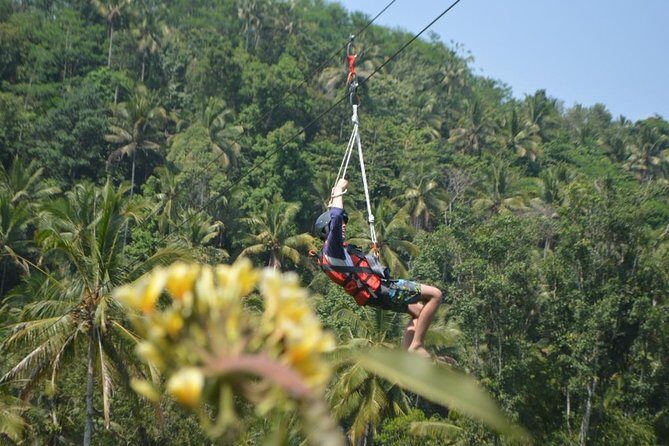
A key consideration: the zipline experience is short and straightforward rather than a huge, multi-part obstacle setup. So I’d book this if you’re excited about one main zipline moment and not if you’re specifically chasing a long, multi-course aerial park.

Still, even a short zipline can be a great change of pace. ATV riding is all speed and bumps; ziplining gives you a clean break where you can focus on posture, breath, and getting a good view. Bring your camera if you want quick proof shots, but also remember you may be moving toward the next stop fast—don’t pack your camera so deeply that it takes forever to reach.

Shower, Changing Rooms, and Buffet Lunch: The Recovery Block

You finish the adventure and then hit the “cool down” phase. Around 1:00pm, you’ll get a shower and lunch (buffet). The tour includes towels and changing rooms, which is genuinely helpful in Bali where it’s easy to show up in the wrong clothes and spend the rest of the day sticky.

This is one of the better-value parts of the package. Lots of activities toss in “water” and call it a day. Here, the shower and changing room are part of the plan, so you’re not stuck in your riding clothes on the drive back.

Buffet lunch is included, and that’s important for a budget day. You won’t have to find food immediately after you’re sweaty. Just keep it simple: eat enough to recover, drink water if it’s available, and don’t overdo spicy foods if your stomach is already a little jumpy from riding.

Then you’ll head back toward your hotel around 1:45pm.

Transfers Done Right: Pickup Instructions You Should Actually Follow

Bali Quad Bike ATV with Flying Fox - Transfers Done Right: Pickup Instructions You Should Actually Follow
This is one of those tours where your small effort pays off big. They ask you to provide:

  • Your hotel/room number/right place for pickup
  • A contact number that’s easy to reach

If you’ve ever had a driver hunt for you in a busy area, you know why this matters. Give clear pickup details so the handoff is quick and you don’t burn vacation time waiting.

It’s also listed as being near public transportation, but you really shouldn’t need to use it. The point of the tour is that you get picked up and returned without doing the extra work yourself.

What to Bring (So You Don’t Pay for the Wrong Things Later)

The tour asks you to bring:

  • Your camera
  • Sun cream
  • Changing clothes
  • Some cash
  • A small backpack
  • Flip flops

That list is solid. I’d add one personal tip: pack your changing clothes so you can access them after the ATV. Don’t bury them under layers of sunscreen and chargers.

What’s not included:

  • Personal photo/video costs
  • Alcoholic drinks
  • Other personal expenses

So yes, you might pay for add-ons on site. If you’d rather keep it simple, set a small budget for any extra photos or videos you decide you want.

Price and Value: Why $80 Can Be a Fair Deal in Bali

The price is listed as $80.00 per person, and it includes a lot of the “hidden costs” that often pop up later: transfers, equipment, guide time, lunch, towels, shower, and changing rooms. It also includes insurance.

Here’s how to judge value from a practical traveler point of view:

  • If you’d otherwise pay separately for a guided ATV, a zipline, and transportation, the package starts to look reasonable fast.
  • The inclusions help you avoid spending time—and money—figuring out what to do next.
  • The schedule is efficient: ATV, zipline, wash up, and lunch in one run.

Is it the cheapest way to do adrenaline in Bali? Maybe not. But it’s designed to be easy. And in Bali, “easy” is worth money when you’re short on time.

Also, booking is often done around 21 days in advance on average, so if you want a specific date, don’t leave it too late.

Who This Tour Suits Best (And Who Should Rethink It)

This is a good fit if you:

  • Want a guided ATV ride rather than DIY
  • Like the idea of pairing ATV + zipline in one day
  • Prefer a package with shower and lunch already included
  • Can handle driving time from Kuta (or arrive earlier in the morning)

It may not be ideal if you:

  • Want a long, multi-hour ATV expedition with lots of stops
  • Hate shared-tour timing and waiting during transitions
  • Are sensitive to the idea of dust and physical exertion from an ATV ride

Practical Timing Tips for a Smooth Day

A day like this can feel rushed if you don’t plan your expectations. Here’s what helps:

  • Eat something light before pickup, if your schedule allows. You’ll have a long gap until lunch.
  • Bring sun protection early. You’re outside during the ride and you’ll likely spend time outdoors waiting for gear.
  • Keep your valuables minimal. A small backpack is mentioned for a reason.
  • Use the included towel and changing room. Don’t assume you can “just rinse quickly” somewhere else.

Should You Book Bali Quad Bike ATV with Flying Fox?

I’d book this tour if you want a straightforward Bali adrenaline day with minimal logistics. The big wins are the guided ATV setup, the fact that the package includes transfers, and the practical recovery tools—shower, towel, changing rooms, and lunch—that make the experience feel complete.

I wouldn’t book it if your top priority is a long ATV journey or a massive zipline course. This is more of a hit-and-run adventure: ride, zip, refuel, return.

If that schedule matches your mood, it’s a solid choice for a first-time ATV/zipline combo in Bali.

FAQ

What’s the duration of the tour?

The duration is listed as about 6 hours.

Where does pickup happen?

Pickup is offered in the Kuta area around 8:00am, and in the Ubud area around 8:30am.

What time do the ATV activities start?

The ATV session is scheduled for about 10:00am to 11:30am.

Is lunch included?

Yes. Lunch is included after the shower, and it’s a buffet.

What’s included besides the ATV and zipline?

Included items are equipment, a professional guide, hotel pickup/drop-off, insurance, towel, shower, changing rooms, and lunch.

What should I bring with me?

Bring a camera, sun cream, changing clothes, some cash, a small backpack, and flip flops.

What isn’t included in the price?

Personal photo/video costs, alcoholic drinks, and other personal expenses aren’t included.

How big is the group?

The maximum group size is listed as 45 travelers, and the program is shared.

Ayung River Rafting Ubud

Ayung River Rafting Ubud - Ayung River Rafting near Ubud: jungle banks and that waterfall moment

Your rafting starts with a climb.

This Ayung River Rafting Ubud trip puts you on a jungle-lined river with expert guides, a hidden waterfall stop, and even a chance to cool off in the water. I like that the day isn’t just about getting splashed—it’s guided, with attention to safety and river know-how. Lunch is also included, which makes the price feel more fair. One thing to weigh first: the route involves serious stairs at the start (around 450 steps down) and a long climb back up (around 250 steps).

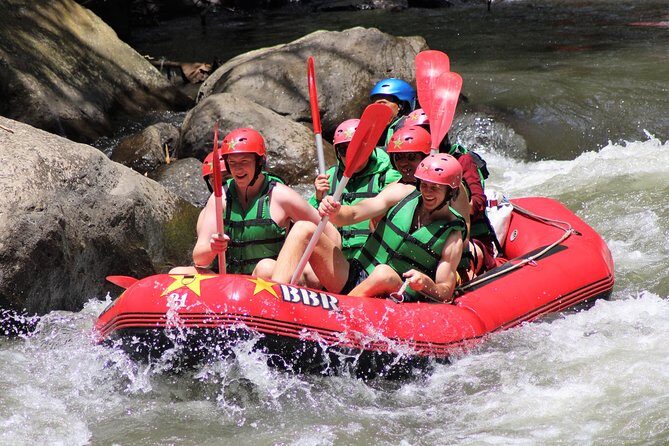
In the morning, you’ll get picked up around 8:30 am and head to the start point north of Ubud, with the private experience set up for just your group. You’ll wear the provided safety equipment and get instruction before you hit the rapids, plus you’ll spend about two hours actually rafting as part of an overall ~5-hour outing.

Key takeaways

  • Jungle scenery plus a hidden waterfall stop that breaks up the ride
  • Guides who prioritize step-by-step support, including names like Bagus and Yusand
  • About two hours on the river inside a roughly five-hour total experience
  • Lunch included, so you don’t have to hunt for food after getting wet
  • Big stair climb to and from the water, so plan based on your comfort level

Ayung River Rafting near Ubud: jungle banks and that waterfall moment

Ayung River Rafting Ubud - Ayung River Rafting near Ubud: jungle banks and that waterfall moment
Ayung River rafting is famous for a reason: you get a real dose of green scenery without needing to leave the Ubud area. The river runs through jungle-flanked surroundings, and your guide adds context so it feels less like you’re just holding on and more like you’re actually moving through the place. You’ll see river bends framed by trees, and the vibe is outdoorsy in the best way—sun, shade, and moving water all in one morning.

The most memorable part is usually the hidden waterfall stop. It gives the raft ride a natural rhythm: you’re not just going straight from start to finish. When the boat pauses for that waterfall moment, you get a breather and a chance to take in the scenery at river level. It’s also where the trip shifts from pure thrill to “wow, this is why I’m here.”

One more detail I appreciate is that the tour is built around short breaks. The description includes the chance to stop for a cooling dip, and the overall ride can swing from calmer sections to more bumpy ones. That matters because it keeps the experience fun for different comfort levels in the same boat.

The 8:30 pickup and ~5-hour flow: what your morning feels like

This is an early-morning plan, which is great in Bali because you get cooler air and better energy before midday heat. Pickup is at 8:30 am from your place, then you ride direct to the start point in the northern part of Ubud. The tour start time is listed as 9:00 am, so you can think of it as a short transfer, then getting geared up and ready.

From there, the rafting time is about two hours on the scenic Ayung River. That’s a healthy amount of time—long enough to feel like a true adventure, not so long that everyone gets exhausted and cranky. You’ll also have time for the key stops: instruction, the waterfall moment, and the chance to cool off.

Plan your expectations around the overall ~5-hour length. The length isn’t just “sitting around”—it’s the full rhythm of getting to the river, gearing up, rafting for about two hours, then making your way back. The return part includes the big climb back up from the river area, which is where some people feel it most.

If you hate rushing, you’ll still be fine, because the schedule is built around a steady flow: pick up, travel in, rafting, then back out. If you need a super late start, this won’t be the right fit.

Two hours of rapids: splashes, bumpy sections, and optional dips

The Ayung River sections you’ll ride are the classic mix: manageable rapids paired with moments that feel more intense. The ride can be calm or bumpy depending on the stretch, and that variety is part of what makes the day enjoyable. You don’t have to be a daredevil to have fun, but you also won’t feel like you’re floating the whole time.

A big selling point is that you’re not just thrown into the current. You get safety equipment and instruction first, guided by trained staff on the river. That gives you a better sense of how to brace, where to look, and when to expect the raft to lurch. It’s also why the trip tends to work well for families—when the guide’s got control of the moment, the experience stays playful instead of scary.

You’ll likely notice that there are splash zones, especially around the waterfall stop area. One of the standout details from the day is how those water moments can be especially exciting for kids and first-timers—wet, happy chaos, with guidance right there.

One practical note: if you’re hoping for a lot of swimming, the tour data describes the chance to stop for a cooling dip. It doesn’t promise you’ll do full-on swimming in every section, so think of it as an optional break when conditions allow, not a guaranteed pool day.

Stairs, sun, and comfort: plan for the 450 down and 250 up

Here’s the part I want you to take seriously: getting to the river involves a lot of steps. One guide from this route is linked to a specific reality check from past participants—about 450 steps down at the start and about 250 steps up when you’re finished.

That doesn’t mean you shouldn’t go. It means you should judge the day honestly. If you’re comfortable with moderate-to-heavy walking on uneven ground, you’ll probably be fine. If stairs are a problem, you might want to reconsider or at least ask the operator questions before booking.

Sun matters too. You’re rafting outdoors for hours in Bali-style conditions, so you’ll want protection. Even if you get wet, sun still reaches you when you’re in open stretches. Bring a waterproof solution for your phone, and don’t rely on having everything dry again right away after the raft ride.

For comfort, keep your expectations simple: this is a wet activity with physical stairs. Dress for getting soaked and prioritize secure footwear. If you bring anything you can’t afford to lose, treat it like it will get wet.

Guides and safety gear: why step-by-step support makes the trip better

This tour leans hard on guidance. You get safety equipment and instruction, and you’re accompanied by expert guides along the way. That matters because rafting on moving water isn’t the place for guesswork. Good guidance helps you stay calm, read the river, and enjoy the ride instead of worrying about what comes next.

The human side is a real highlight. From the guide and driver team referenced with names like Bagus, Yusand, and Nyoman, the pattern is consistent: people receive support at each stage—especially when someone doesn’t feel 100% on the day. That kind of attention isn’t just nice; it’s what turns rafting from a risky-feeling activity into a confident outing.

If you’re traveling with kids, this is a plus. The tour setup is described as friendly for most travelers, and family experiences work best when a guide can manage both safety and the fun factor. The same is true for first-timers. You don’t want your guide disappearing when you’re nervous. You want a clear plan and steady coaching.

Finally, the river learning part is part of the value. The tour description mentions insight into the river ecology. That turns the rafting into more than a thrill ride. You’ll still get excitement—but you’ll also come away with a little more understanding of the environment you’re moving through.

Lunch included: how to eat so you feel good on the water

Lunch being included is one of those “small detail, big quality” items. You’re outdoors, you’re getting active, and you’re likely going to be wet for a good chunk of the day. Having food taken care of means you can focus on the ride.

What I’d do for your stomach: keep breakfast sensible and not overly heavy. If you go too greasy or too spicy, you might feel it once the raft starts moving more aggressively. If you eat light and steady, you’ll be happier during the two-hour rafting block.

If you have dietary restrictions, the provided info doesn’t specify accommodations. So treat lunch as included but not necessarily tailored. If that matters for you, message the provider when booking and ask what they can handle.

Also: after rafting, you’ll be dealing with dampness and possible lingering sun exposure. Having lunch and a planned end-to-the-day rhythm helps a lot compared to doing rafting first and food later in a rushed search.

Private tour for your group: how that changes the day in practice

Even though this is an adventure activity, it’s set up as a private tour/activity, meaning only your group participates. For many people, that’s the biggest quality upgrade: you’re not blending into a large crowd and waiting for group pacing.

Private also changes the communication flow. When you have a smaller group, you’re more likely to get clear instruction and quick adjustments if someone’s nervous or needs reassurance. That’s also why step-by-step support stands out so much here—the guide can focus where it’s needed.

There’s also mention of group discounts and a mobile ticket, which suggests the booking experience is designed to be simple for groups, couples, or families. The mobile ticket detail is useful if you want a paper-free day. Still, don’t assume you can forget everything; confirm what you need to show at check-in.

Is private rafting worth it? If you value comfort, easier pacing, and attention from the guide, it often is. If you’re traveling solo and price is everything, you might compare options—but based on what’s included here, this setup is easy to feel good about.

Price and value of $41.29: what you’re really paying for

At $41.29 per person, the price lands in the zone where you want to see real inclusions—and this tour does that. You’re paying for more than just the raft ride.

Here’s what that money covers:

  • pickup around 8:30 am from your place and the drive to the start point
  • safety equipment and instruction
  • lunch included
  • about two hours on the Ayung River with expert guidance

So the value isn’t just time on water. It’s the full “morning package” that removes hassles—transport, gear, and food. That’s also why it tends to feel like a practical buy, especially if you’re staying in Ubud and don’t want to coordinate transportation and logistics yourself.

Could there be extra costs? The tour data says personal expenses aren’t included. That means you’ll still want spending money for things like snacks, drinks, or souvenirs if you choose to buy them. But the core experience costs are covered.

If you want the safest decision with your wallet, plan for what you’ll need before you go: water, sun protection, and a plan for keeping valuables safe. The better you prepare, the more the $41.29 feels like a deal.

Should you book Ayung River Rafting Ubud?

If you want a classic Bali adventure that’s close to Ubud, this is a strong pick. The combo of jungle scenery, a hidden waterfall stop, safety gear with instruction, and lunch included makes it feel complete for the money. Add the private group format, and the day tends to run smoother than big-crowd rafting.

Book it if:

  • you’re comfortable with outdoor stairs and walking (that 450 down and 250 up is the key reality check)
  • you want guided rafting rather than DIY
  • you’d enjoy a day that includes a scenic break like a waterfall moment, not only adrenaline

Skip it or ask more questions first if:

  • stairs and steep climbs are difficult for you
  • you’re looking for a mostly calm, lounging water day rather than rapids and splashes

If that stair challenge is within your comfort range, you’ll likely leave feeling like you got the real Ayung experience—wet, happy, and well looked after by the team.

FAQ

What time does pickup happen for Ayung River Rafting near Ubud?

Pickup is at about 8:30 am at your place, and you’ll drive to the start point in the northern part of Ubud. The listed start time is 9:00 am.

How long is the whole tour?

The total experience is about 5 hours. Rafting on the Ayung River takes around 2 hours.

Is lunch included?

Yes. Lunch is included in the cost of the tour.

Is this a private tour?

Yes. It’s set up as a private tour/activity, so only your group participates.

What’s included and what’s not included?

Included: pickup, safety equipment and instruction, lunch, and the rafting experience on the Ayung River. Not included: personal expenses.

Can I get a full refund if I cancel?

Yes. Cancellation is free, as long as you cancel at least 24 hours before the experience start time for a full refund.

Private Experience: Bali Village Tour

Private Experience: Bali Village Tour - Door-to-door pickup and the practical rhythm of the day

Eight hours, four classic stops, one good ride. This Bali Village Tour in Ubud mixes scenery with real daily life, built around Jatiluwih rice terraces and time spent with locals in their communities. You also get a village lunch and a plantation stop, so it’s not just temples and photos.

Two things I like a lot. First, the service feels practical and human, with door-to-door round-trip transfers and a guided route that keeps the day moving. Second, the package includes the basics that usually add up fast: bottled water, lunch, and admission tickets for the scheduled stops.

One possible drawback: the day runs full and early. If you’re not comfortable cycling or you hate a packed itinerary, you’ll need to manage your energy because this is a long, active 8-hour loop.

Key points to know before you go

Private Experience: Bali Village Tour - Key points to know before you go

  • Pedal through Jatiluwih rice terraces: The highlight is a bike-powered way to see Bali’s famous fields.
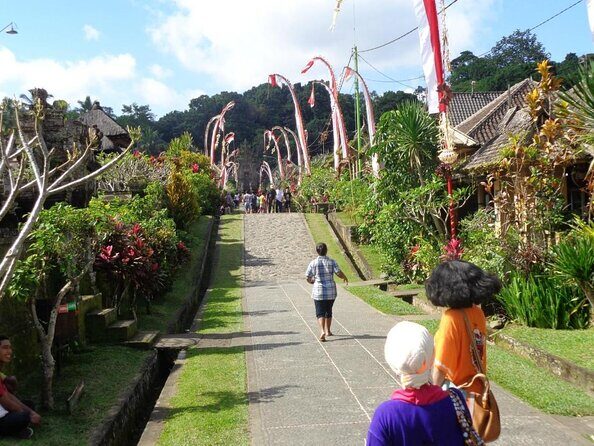
  • Penglipuran Village compounds: You’ll walk through a traditional village layout and get a feel for older Balinese life.
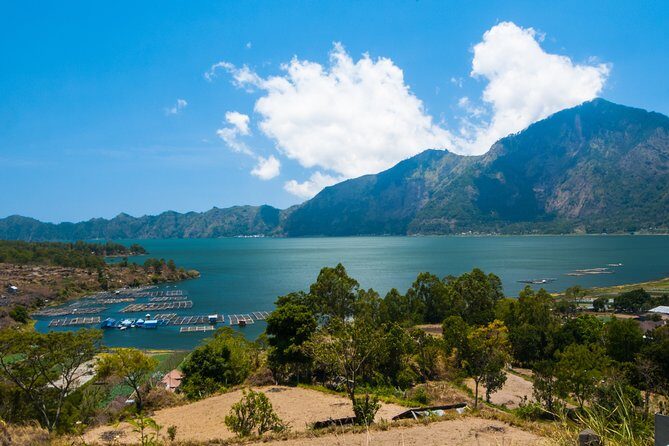
  • Kintamani volcano views for lunch: Expect a dramatic backdrop when you eat.
  • Tirta Empul purification spring: You’ll witness local cleansing practices at one of Bali’s important temples.
  • Tegalalang rice terrace time: Short, scenic stop for farming views and photos.
  • Guides and drivers with strong English: People have been impressed with drivers like Hamdan, Astika, Yudi, and Wayne for being friendly, punctual, and helpful with photos.

A pedal-powered Bali day in Ubud (and why it works)

This tour is designed for people who want Bali to feel tangible, not like a checklist. Yes, you’ll hit major sights, but the rhythm is what makes it work. You start with cultural stops, then you move into temple and terrace time, all with guiding to explain what you’re seeing.

The big idea is simple: cycle where possible, then slow down to watch how people actually live. Rice terraces look great from roads, but riding through the working view changes the angle completely. It’s also a fun way to cover ground without turning the day into a parking-lot shuffle.

Price and what $52 covers in real terms

Private Experience: Bali Village Tour - Price and what $52 covers in real terms
At $52 per person, you’re buying an 8-hour experience that includes more than “a driver and a ticket.” You get hotel pickup and drop-off, transport in an air-conditioned minivan, bottled water, and lunch. On top of that, all fees and taxes are included, and admission tickets are included for the stops in the plan.

In Bali, paying separately for transport plus entry plus lunch can eat your budget quickly. Here, the value is mostly in the bundling: you’re not spending your mental energy figuring out how to connect sites, and you’re not nickel-and-diming admissions one by one.

This also reads well if you’re traveling in a small group. The tour is private, meaning only your group participates, and there are group discounts offered. So if you’re splitting costs, the per-person value can feel even better.

Door-to-door pickup and the practical rhythm of the day

Private Experience: Bali Village Tour - Door-to-door pickup and the practical rhythm of the day
The tour starts at 8:00 am and runs about 8 hours. That early start matters because these areas get crowded and hot as the morning moves on. It also helps you get decent light for photos before the sun fully decides to bake everything.

You’ll travel in an air-conditioned minivan, which is a relief in Ubud traffic and between viewpoints. The route includes door-to-door transfers, so you’re not hunting for a meeting spot and hoping the timing works out.

A small detail that’s worth your attention: this is listed as a private activity. In practice, that means you’re less likely to feel rushed by strangers’ pace. The tradeoff is that the day can still be full—your group sets the energy level, but the timing stays structured.

Penglipuran Village: old compound life, not just a quick photo stop

Private Experience: Bali Village Tour - Penglipuran Village: old compound life, not just a quick photo stop
Penglipuran Village is the first stop in the plan, and it’s a strong start. You’ll see preserved Balinese architecture starting from the front house gate and inside the compound layout. This is one of those places where the village plan tells you how daily life used to be organized—family space, pathways, and courtyard-style living.

What I like about this kind of stop is that it’s not only about scenery. You’re learning how people shape their spaces, and the village is known for being one of the cleanest, which helps the visit feel calm rather than chaotic.

The main consideration here is time and attention. This stop is about getting the details right—slow your pace, look at the layout, and let your guide frame what you’re seeing. If you sprint for photos, you’ll miss the point.

Kintamani Highland: Batur volcano views and a lunch break that actually feels useful

Next comes Kintamani Highland, with Batur volcano and the lake view. The tour gives you a block of time (about 1 hour 30 minutes) and positions lunch right in the middle of that viewpoint. In other words, you’re not eating while parked on the edge of a highway.

This is a good moment to reset. After village and travel, you get a scenic pause that feels like a reward, not a detour. And because lunch is included, you don’t have to decide on the fly where to eat or what looks open.

The one practical thing to plan for: weather can change quickly up in the highlands. If clouds roll in, the view can shift dramatically. That’s not a downside exactly, but it does mean you should keep your schedule flexible and trust your guide if they adjust timing.

Tirta Empul: seeing purification in a living religious site

Private Experience: Bali Village Tour - Tirta Empul: seeing purification in a living religious site
Tirta Empul Temple is one of Bali’s important temples, and it’s built around the holy spring used for purification. The tour includes time here (about 1 hour), and you’ll see Balinese people bless their full body in the spring. The site is also described as a place where people ask for healthy life.

This stop works well because it’s more than “look at a temple.” You’re observing a living practice—people come for spiritual cleansing, and that context changes how you experience the space. Even if you don’t fully know the tradition, you can still respect the purpose.

Two tips for handling this respectfully. First, keep your volume down and follow your guide’s lead on what you can photograph and from where. Second, remember that many people treat this like a sincere ritual. A little patience goes a long way.

Jatiluwih rice terraces: the cycling highlight that turns views into an experience

The tour’s centerpiece is cycling through Jatiluwih rice terraces, which are often described as Bali’s most beautiful rice terraces. The reason this is such a good choice is simple: you see working farmland from a closer perspective than you get from a bus window or a lookout.

Pedal power also changes your pace. Instead of rushing past in a vehicle, you can pause for photos, enjoy the curves of the terraces, and notice how the fields shape the paths people take through the area. It’s the kind of “small scale” sightseeing that makes Bali feel real.

This part also matches why the tour includes guiding and local access. Rice terraces are beautiful, but understanding how they fit into village life takes someone telling you what you’re looking at. Even if you only catch a few explanations, you’ll walk away with a better sense of what these terraces mean.

One consideration: cycling outdoors can be tiring in Bali’s heat. If you’re planning this around another big day (like beaches or long hikes), keep your energy in mind and dress for a long time outside.

Tegalalang rice terrace: fast, photogenic, and good for understanding farming rhythms

Ubud is packed with rice-field views, and Tegalalang is one of the most famous spots. Your stop here is shorter (about 45 minutes), so it’s best treated as a photo-and-perspective break rather than a long exploration.

What makes it worthwhile is the combination of timing and context. You’re not just seeing terraces for the first time—you’ve already been through village and temple stops, and you’ve already cycled the Jatiluwih fields. By the time you reach Tegalalang, you’re more likely to notice farming patterns rather than only snap pictures.

If you dislike crowds or hate hurried photo stops, you might feel the time pressure here. Still, 45 minutes is often enough for the best angles and a few slower looks if you plan your photos smart.

Lunch, bottled water, and the small comforts that matter

Lunch is included, plus bottled water. That sounds basic, but it’s one of the main quality-of-life improvements on a long day. When lunch is built in, you don’t lose time hunting for a place, and you avoid the stress of figuring out what’s open.

The tour also includes a village restaurant lunch and a plantation stop. That combo makes the day feel more rounded: you’re seeing how food and land connect to daily life, not only visiting the most Instagram-friendly views.

The value angle: these are the costs and time sinks that can turn an otherwise great day into a grind. Here, they’re included, so your energy stays on the actual experience.

Guides and drivers: what makes this tour feel smooth

The biggest repeated win here is service quality. People have highlighted clean, comfortable vehicles and drivers who are careful and punctual. There’s also strong praise for English communication, which is huge in Bali when you want clear explanations and an easy back-and-forth.

Names you might hear associated with this service include Hamdan, Astika, Yudi, and Wayne. The common thread is friendliness plus practical guidance. One person described their guide as making the day fun and exciting, and another noted help with taking amazing pictures.

That matters because good guiding isn’t only about knowing facts. It’s about helping you time your visits, understand what you’re seeing, and get your photos without turning the experience into chaos.

Who should book this Bali Village Tour

This tour is a great fit if you want a guided day that balances scenery with culture. You’ll like it if you enjoy village life, don’t mind being on the move, and want a structured route that includes lunch, water, and entry fees.

It’s also ideal if you want a private experience with hotel pickup and drop-off, especially if you’d rather avoid coordinating transport yourself.

It might not be your best choice if you want a slow, unstructured day. This is an 8-hour plan with multiple stops, and the cycling element means you should be comfortable spending time outdoors.

Should you book it?

Book this Bali Village Tour if you want an efficient, well-supported day in Ubud that covers a lot of meaning: traditional village life, temple ritual viewing, and the rice terraces—especially the Jatiluwih cycling centerpiece. The $52 price feels more reasonable when you factor in pickup, lunch, bottled water, transport, and included admission tickets.

Skip it (or choose another style of tour) if your ideal Bali day is totally relaxed with minimal schedule. Between the early start and the active parts, you’ll likely feel the day is full, even if the guiding helps you stay comfortable.

If you match the pace, you’ll come away with more than photos. You’ll have a sense of how Bali’s farming landscapes and daily life connect—seen from the ground, not just from behind glass.

FAQ

What time does the tour start?

The tour start time is 8:00 am.

How long is the Bali Village Tour?

The duration is approximately 8 hours.

Is this a private tour?

Yes. It’s a private tour/activity, meaning only your group participates.

What’s included in the price?

The tour includes bottled water, lunch, hotel pickup and drop-off, air-conditioned minivan transport, and all fees and taxes.

Are admission tickets included?

Admission tickets are included for the listed stops on the itinerary.

Where does the tour go?

The itinerary includes Penglipuran Village, Kintamani Highland, Tirta Empul Temple, and Tegalalang Rice Terrace. The overall experience also centers on cycling through Jatiluwih rice terraces.

Is there a mobile ticket?

Yes, a mobile ticket is included.

What’s the cancellation policy?

You can cancel for a full refund up to 24 hours in advance of the experience start time. If you cancel less than 24 hours before, the amount paid is not refunded.

Is pickup and drop-off provided?

Yes. Hotel pickup and drop-off are included, with door-to-door round-trip transfers.

Ubud Silver Jewelry Making Class with Temple, Monkey Forest

Ubud Silver Jewelry Making Class with Temple, Monkey Forest - Batuan Temple: carvings you can slow down with

A silver day in Ubud feels like two trips in one. This is a hands-on silver jewelry making class paired with big Ubud hits: a classic Balinese temple in Batuan, the Sacred Monkey Forest, and a scenic break at Tegenungan Waterfall. I like that the day is organized around real activities, not just drive-by photos. I also like the private transportation with pickup, so you spend less time figuring out buses and more time doing the fun parts. The one thing to consider is that it’s a full day (about 8 to 9 hours), and lunch isn’t included, so you’ll want to plan your food timing.

The class itself is practical and guided, with an instructor showing you the full process from shaping to finishing, and you get silver to work with (the listing mentions 8 grams, while the class stop description also notes 10 grams—plan around the lower number if you’re budget-minded). Between stops, your English-speaking driver keeps the rhythm steady, and the private format means you can move at a pace that works for your group.

Key things I’d flag before you go

Ubud Silver Jewelry Making Class with Temple, Monkey Forest - Key things I’d flag before you go

  • A real jewelry workshop, not a quick demo
  • Pickup from major Bali areas plus private transport
  • Batuan Temple for classic carvings and a calmer feel than the busiest spots
  • Monkey Forest with a stated headcount and a clear forest size (about 700 macaques in 12.5 hectares)
  • Tegenungan Waterfall with a cooling-off option if conditions allow

Silver Jewelry Making Class at Bali Artika: what you’re actually doing

Ubud Silver Jewelry Making Class with Temple, Monkey Forest - Silver Jewelry Making Class at Bali Artika: what you’re actually doing
This is the day’s centerpiece, and it’s built around making something, not just watching. At Bali Artika Silver, your instructor walks you through the steps of creating your piece, covering the key stages from shaping through decorating and finishing. The listing is clear that you’ll work with silver provided for the workshop, and the goal is a piece you can make for yourself or as a gift.

Why this matters: Ubud has plenty of shopping, but a workshop like this teaches you what goes into the look—so your final product feels earned. Even if you’ve never held a jewelry tool before, the structure helps you avoid the usual tourist-trap problem of vague instructions and a rushed finish.

Time-wise, you’re looking at about 2 hours for the class, with entry ticket included as part of the day plan. That’s a comfortable length: enough time to learn the process and still keep momentum for the temple and nature stops later.

One practical note: since the tour includes silver weight in the listing, it’s worth choosing a simple design if you’re the type who gets nervous with too many options. You can still end up with something you’ll be proud to wear, but you don’t want to spend the whole session second-guessing your first sketch.

Batuan Temple: carvings you can slow down with

Ubud Silver Jewelry Making Class with Temple, Monkey Forest - Batuan Temple: carvings you can slow down with
After the workshop, you switch gears to a traditional Hindu temple in the classical Balinese style, known for elaborate carvings. This stop is about 1 hour, with admission included, so you can see the details without feeling like your day is being swallowed by one site.

Why Batuan Temple works in the middle of the day: you’ve just done something hands-on and creative, then you get a chance to reset your brain with visual detail and quieter observation. Also, it’s a nice contrast to Monkey Forest, where the focus can become very much about the animals and crowds.

What to expect here is mostly about looking—architecture, carvings, and the feel of a living sacred space. If you’re the kind of person who enjoys paying attention to symmetry and ornamentation, this is a good stop to linger in small pockets rather than sprinting through.

A small practical reality: temple visits in Bali can involve respectful clothing rules. The listing doesn’t spell them out, so you’ll want to be prepared with something you can use appropriately for a temple environment.

Sacred Monkey Forest Sanctuary: seeing macaques without losing your head

Ubud Silver Jewelry Making Class with Temple, Monkey Forest - Sacred Monkey Forest Sanctuary: seeing macaques without losing your head
Then comes the big nature-and-chaos-famous stop: the Sacred Monkey Forest Sanctuary. You get about 1 hour here, and the listing gives you useful expectations: it’s around 700 Balinese long-tailed macaques and the sanctuary covers 12.5 hectares.

That headcount is the key—this is not a quiet wildlife walk. It’s a real forest with animals roaming in a way that can be funny, intense, and sometimes a little chaotic if you’re not paying attention. I like that the time is capped. You get to experience it without turning the day into a long, tiring animal-behavior marathon.

How to keep it enjoyable:

  • Keep your valuables secure and avoid dangling items.
  • Stay alert around macaques, especially if they get close.
  • Don’t try to out-stare them or surprise them for photos. It tends to go badly for everyone.

Also, plan your energy. The forest walk includes pathways inside the sanctuary. With a driver timing the day, you can still enjoy it without rushing, but you’ll feel better if you treat it as an active visit. Comfortable shoes matter.

And one more practical point: the listing calls this a new experience in Ubud. If you’re already a Bali veteran, you’ll recognize Monkey Forest as a classic. If it’s your first time, it’s a high-impact sight that gives your day a “wow” factor fast.

Tegenungan Waterfall: a bright reset and a possible swim

Ubud Silver Jewelry Making Class with Temple, Monkey Forest - Tegenungan Waterfall: a bright reset and a possible swim
The final sight stop is Tegenungan Waterfall, with about 1 hour on site. You’ll get to admire the lush green surroundings and enjoy the refreshing spray. And yes, the listing says you can take a swim if you wish.

This stop is great at the end of a day like this because the tone changes again: after temple walking and the monkey forest’s energy, the waterfall gives you a chance to breathe. It’s also where your senses get the easiest payoff—cool mist, sound of water, and a scenic break from inland pacing.

Practical reality: if you want to swim, treat it as optional and only do it if the area feels safe and conditions are right. The listing doesn’t promise it will always be swim-ready, and water levels can change. Even without swimming, the spray alone makes it worth the stop.

Also consider timing for photos. With only 1 hour, you’ll want to arrive ready—camera in hand, mind open, and don’t overthink “perfect moments.” This is one of those places where the experience is the photos.

Price and value: what $72 gets you in a private format

Ubud Silver Jewelry Making Class with Temple, Monkey Forest - Price and value: what $72 gets you in a private format
At $72 per person, this sits in the “worth it if you value convenience” category. Here’s why: you’re paying not only for entrances and the jewelry workshop, but also for the private, all-day transportation piece and an English-speaking guide/driver.

For a full day (about 8–9 hours) that includes:

  • Pickup from multiple Bali areas (Kuta, Seminyak, Canggu, Legian, Jimbaran, Nusa Dua, Sanur)
  • Private transportation
  • Mineral water
  • All entry tickets included
  • A guided silver jewelry class with silver provided

…you’re buying time and reducing friction. In Bali, the biggest cost for many people isn’t just money—it’s time and stress. This tour is basically built to protect you from both.

A fair consideration: the class is hands-on, and silver jewelry making isn’t “free.” The price includes materials to work with and instruction time, which is the part that takes real effort to schedule and deliver well. So the $72 isn’t just sightseeing; it’s more like a workshop plus an organized day plan.

Also, note the lunch gap. Since lunch isn’t included, you’ll either pay out of pocket or plan to eat during gaps. That’s normal for Bali day trips, but it affects how you judge value.

If you compare this to piecing together separate taxis, entrance fees, and a workshop reservation, the private package often ends up feeling cheaper than it looks—especially if you want a smooth day without coordinating multiple vendors.

Day pacing and pickup: how to keep the day from feeling rushed

Ubud Silver Jewelry Making Class with Temple, Monkey Forest - Day pacing and pickup: how to keep the day from feeling rushed
Because it’s private and includes pickup, this tour is best for people who don’t want to piece together logistics in Ubud traffic. Your driver/guide is in English, and the day runs long enough that you’ll want a good start.

The order also makes sense:

1) Workshop first while your brain is fresh

2) Temple for a calmer look

3) Monkey Forest for the big animal moment

4) Waterfall to end with a cooling break

A practical packing list for a day like this:

  • Comfortable walking shoes (Monkey Forest paths can be uneven)
  • A small bag you can keep close (for valuables around monkeys)
  • A light layer (temple areas and shaded walks can feel cooler)
  • Basic swim gear if you want the option at Tegenungan Waterfall
  • Cash or card for snacks since lunch isn’t included

You’ll also appreciate the stated “near public transportation,” but since pickup is included, you don’t need to rely on it. Still, it’s a nice safety net if anything runs late.

Who this tour suits best (and who might want a different plan)

Ubud Silver Jewelry Making Class with Temple, Monkey Forest - Who this tour suits best (and who might want a different plan)
This works especially well if you want:

  • A hands-on activity in Bali, not just sightseeing
  • A private day with English-speaking help and smooth transport
  • A single itinerary that hits craft + culture + wildlife + nature

It may be less ideal if:

  • You want a slow, no-pressure day with lots of extra time at each stop
  • You hate full-day schedules (about 8–9 hours) and don’t want to handle lunch on your own
  • You’re sensitive to animal interactions, even though you’re only there for about 1 hour at Monkey Forest

If you’re traveling as a couple, this kind of private schedule often feels great. If you’re with friends, it’s also a solid way to share one guide and one ride, instead of each person plotting their own route.

Should you book the Ubud silver jewelry class with Monkey Forest and Tegenungan Waterfall?

Ubud Silver Jewelry Making Class with Temple, Monkey Forest - Should you book the Ubud silver jewelry class with Monkey Forest and Tegenungan Waterfall?
I’d book it if you want a day that feels practical and complete: you get a real workshop, plus three classic Ubud-style stops that cover culture, wildlife, and nature. The private transport and included entry tickets reduce decision fatigue, and the jewelry class adds a reason to remember the trip beyond photos.

Skip it only if you’re hoping for a very relaxed pace or if lunch not being included would stress you out. For most people, though, this is a strong value setup: craft in the morning, culture in the middle, wild monkeys and a waterfall at the end—and a driver doing the hard part so you can focus on enjoying the day.

FAQ

How long is the Ubud Silver Jewelry Making Class with Temple, Monkey Forest, and Tegenungan Waterfall?

It runs about 8 to 9 hours.

What is the total price per person?

The price is $72.00 per person.

Is pickup included, and where does it pick up from?

Yes. Pickup service is included from guest accommodation in Kuta, Seminyak, Canggu, Legian, Jimbaran, Nusa Dua, and Sanur.

What do I get for the silver jewelry class?

Your class includes silver to work with (the class details list 10 grams, while the included items list 8 grams) and an instructor guides you through the process.

Are entry tickets to the temple, Monkey Forest, and waterfall included?

Yes. All entry tickets are included.

Is lunch included in the tour price?

No. Lunch is not included.

Is this tour private?

Yes. It’s described as private, meaning only your group participates.

What if the weather is bad?

This experience requires good weather. If it’s canceled due to poor weather, you’ll be offered a different date or a full refund.

Is there a cancellation deadline?

You can cancel for a full refund up to 24 hours in advance of the experience start time.

Final note on fit

If your ideal Bali day includes a real activity plus a structured itinerary, this one is built for you. Just come ready for a full day and plan for lunch, and you’ll get a memorable mix of making, seeing, and cooling off.

Mount Batur Sunrise Jeep Private Tour With Breakfast

Mount Batur Sunrise Jeep Private Tour With Breakfast - The early schedule: pickup, drive, and your sunrise window

The day starts in the dark. This Mount Batur sunrise jeep tour from Ubud is built for a first-glimpse sunrise moment, plus a warm breakfast waiting at the top. I love how the whole thing runs on a tight schedule, and that the guide handles the logistics so you can just focus on the view.

You’ll also love the “active volcano” feel without the hiking grind. You ride up by jeep, then spend time around the sunrise point before exploring the black lava and black sand area. One thing to consider: the pickup comes at about 3:00am, so plan for a serious early alarm.

I like that it’s a true private setup for your group, not a crowded shuffle. With hotel pickup and return, entrance tickets, a mineral water bottle, and a local guide included, this is one of those tours where the price mostly covers the hard parts. It runs about 10 hours total, so it’s a full morning commitment that pays off fast.

Key highlights worth planning around

Mount Batur Sunrise Jeep Private Tour With Breakfast - Key highlights worth planning around

  • 2–3:00am pickup: you’re moving while most of Bali is still sleeping
  • Sunrise at around 6:00am from Mount Batur’s sunrise point
  • Breakfast + mineral water included after you catch the light
  • Black lava and black sand exploration near Gunung Batur
  • Guide-led, photo-friendly timing (our guide Anton was ready to help with photos)

Why this Mount Batur sunrise jeep works so well from Ubud

Mount Batur Sunrise Jeep Private Tour With Breakfast - Why this Mount Batur sunrise jeep works so well from Ubud
If you only have one morning in the Batur area, this is the kind of tour that makes it count. You’re not wasting daylight on long setup steps or waiting around. Instead, the plan is built around that narrow window when the sky starts to change and the volcano scene becomes worth it.

The jeep part matters too. You get the “we’re going up a volcano” feeling without needing to line up for hours or manage a tough climb. That’s especially helpful if you want the experience but still want your legs to feel human afterward.

And breakfast is not an afterthought here. Starting before sunrise means you’re likely hungry by the time you reach the viewing spot, and having a meal included turns the early wake-up into something practical, not just scenic suffering.

The early schedule: pickup, drive, and your sunrise window

Mount Batur Sunrise Jeep Private Tour With Breakfast - The early schedule: pickup, drive, and your sunrise window
Your morning starts with a hotel pickup around 3:00am. Depending on your exact schedule, you may see a 2 or 3:00am pickup listed when you book, but the idea stays the same: you’re heading out in the dark to arrive before sunrise.

The drive up is timed so you reach the start point around 5:00am, then begin the jeep journey. From there, you aim to arrive at the sunrise point at about 5:45am, which gives you enough time to settle, look around, and get set before the first real light shows up.

Sunrise is planned for around 6:00am. That timing is why this tour feels different from random day excursions. You’re watching the sky change with the volcano in frame, not just trying to catch a nice photo somewhere after the sun has already risen.

After sunrise, you transition into exploration and then head back. By 9:00am, you’re back at the hotel, which is a big deal if you still want to do something later in Ubud that same day.

Jeep time on Mount Batur: black lava roads and the sunrise point

Mount Batur Sunrise Jeep Private Tour With Breakfast - Jeep time on Mount Batur: black lava roads and the sunrise point
There’s a specific thrill to being driven up Mount Batur in the pre-dawn hours. The jeep ride helps you get to the right altitude and viewing area without turning it into an all-out hike. It’s also a good match for mixed groups since the tour is designed for most people to participate.

At about 5:45am, you arrive at the sunrise viewpoint at roughly 1,560 meters. That elevation is part of why the air and views feel sharp and different from lower valleys. You’ll be in a setting dominated by volcanic terrain, so even before sunrise fully hits, the surroundings start looking dramatic.

Once the sun comes up, you move into the exploration phase around the black lava and black sand areas near Gunung Batur. This is where the volcano theme becomes real. It’s not just “pretty mountain in the distance.” It’s textured ground, dark volcanic rock, and a stark landscape that makes photos look like they were taken somewhere much wilder than Bali.

One small practical note: because this is a volcano environment, the ground can be uneven and the terrain is volcanic by nature. The tour is planned to be manageable, but it’s still outdoors and not an indoor museum stop.

Breakfast with sunrise: what’s included and why timing matters

Mount Batur Sunrise Jeep Private Tour With Breakfast - Breakfast with sunrise: what’s included and why timing matters
Breakfast is included, and it comes right at the moment when you actually want it. When you wake up at 3:00am, food later in the day can feel like a reward you forgot to schedule. Here, the meal is timed so you get energy after you watch the sunrise and before you start the rest of the morning.

Mineral water is also included. This matters more than it sounds, because early mornings can make you feel off even if you’re not doing heavy exercise. Having water on hand keeps you comfortable during the waiting and the photo time.

If you’re the kind of person who likes to eat while the day is still fresh, this tour fits your style. You’re not rushing out after breakfast to find a cafe. You’re already in the experience, with food and logistics handled.

Your local guide: Anton’s photo help and the value of clear logistics

The tour relies heavily on the local guide and driver to make the early timing work. This is not a “figure it out yourself” situation. From pickup through the jeep portion and the return, the guide handles the flow so you don’t lose time hunting for meeting points or guessing what’s next.

In my experience with this kind of sunrise outing, the guide’s role is what turns it from chaos into smooth. And it shows here. Our guide Anton was on time and spoke passionately about Indonesia, which is more than just small talk. He also helped with photos constantly, staying ready when the timing was right.

That’s a big deal for sunrise tours. Lighting changes fast. If you’re trying to line up your own photos, you can miss the best moment. A guide who is actively helping you get the shot means you’re more likely to walk away with pictures you’ll actually keep.

Price and logistics: what you’re really paying for at $70

The listed price is $70 per person for a tour that lasts about 10 hours. At first glance, sunrise jeep tours can feel pricey, but the cost breakdown here makes more sense once you look at what’s included.

Included items:

  • Hotel pickup and return
  • All entrance tickets
  • Breakfast
  • Mineral water
  • Local guide
  • Private group (only your group participates)

Not included:

  • Lunch

So the real value is that you’re paying for the early-morning transportation, the guide, the entrance access, and the meal timing. You’re also not carrying the mental load of planning a sunrise trip around an active volcano. That’s worth something when you’re in Ubud and you’d rather spend your limited time experiencing rather than organizing.

Lunch being excluded is normal for a morning tour like this. You’ll likely want to plan a post-tour meal back in Ubud.

Also, the tour notes mobile tickets and group discounts as features. If you’re booking as a group, it’s smart to ask whether those discounts apply based on group size, since the tour is described as private for your group.

Entrance tickets and timing: why the schedule feels tight

This tour runs on an efficiency model. Arrive early, watch sunrise, explore, then return before the late morning. That tight schedule is exactly how sunrise tours stay worth it.

You head from the start point up to the sunrise location, arrive around 5:45am, watch sunrise around 6:00am, then explore volcanic ground after that. By 8:30am you’re back to the start point, and around 9:00am you’re back at your hotel.

This matters because volcano mornings can shift. Clouds, rain, or other weather can affect conditions. When the plan is well executed, you still get the key moments without losing the whole day.

Weather matters on Mount Batur: when plans can change

Mount Batur Sunrise Jeep Private Tour With Breakfast - Weather matters on Mount Batur: when plans can change
Sunrise experiences depend on conditions, and this one explicitly requires good weather. If weather turns the experience into a poor visibility situation, the tour can be canceled.

The upside is what happens next: if it’s canceled due to poor weather, you’ll be offered a different date or a full refund. That’s a fair approach, because sunrise on a volcano isn’t something you can fake with good intentions.

If you’re planning other activities later that day, keep some flexibility in mind. Sunrise tours are best when you can roll with a schedule change.

Who should book this sunrise breakfast jeep tour

This is a great fit if you:

  • Want sunrise views without a long, demanding climb
  • Like having a guide-led plan so you don’t waste time coordinating
  • Want a full morning experience that ends by 9:00am
  • Enjoy photography and want help getting the timing right (our guide Anton was focused on photos)

It’s also described as something most travelers can participate in. That suggests the activity level is generally manageable for a wide range of people, especially compared to more intense summit hikes.

If you’re sensitive to early mornings, the main consideration is the pickup around 3:00am. If you can handle the alarm, you’ll likely love how fast this tour turns “sleepy” into “wow.”

Should you book Mount Batur Sunrise Jeep With Breakfast?

Yes, I’d book it if you want the classic Mount Batur sunrise experience with minimal hassle. The combination of hotel pickup, all entrance tickets, a real morning breakfast, and a local guide makes it feel like an organized, low-stress way to get to the heart of the volcano scenery.

Skip it only if you know you won’t handle the early start, or if your schedule won’t tolerate a potential weather-related change. If you’re in Ubud and you want one memorable morning that feels properly Balinese and genuinely different from a beach day, this is a strong choice.

FAQ

What time is pickup for the Mount Batur sunrise jeep tour?

Pickup is scheduled for about 3:00am. Some schedules may list 2 or 3:00am depending on booking details.

When do you arrive at the sunrise spot?

You arrive at the sunrise point around 5:45am, with sunrise planned for about 6:00am.

How long is the tour?

The total time is about 10 hours.

Is breakfast included?

Yes. Breakfast is included, along with mineral water.

Do you include entrance tickets?

Yes. All entrance tickets are included.

Is lunch included?

No. Lunch is not included.

Is this tour private?

Yes. It’s described as a private tour/activity, meaning only your group participates.

What happens if the weather is poor?

The experience requires good weather. If it’s canceled due to poor weather, you’ll be offered a different date or a full refund.

Do I get a mobile ticket?

Yes. The tour features mobile ticket delivery, and you receive confirmation at the time of booking.

Day Trip Snorkeling in Tulamben – Explore Liberty Wreck (pick up in South Bali)

Day Trip Snorkeling in Tulamben - Explore Liberty Wreck (pick up in South Bali) - South Bali pickup to Tulamben: your first taste of “easy mode”

Snorkel the Liberty Wreck in one day.

This trip is interesting because it links a quick South Bali morning pickup to Tulamben, a small east-coast village best known for the USAT Liberty wreck and the sea life around it. You also get a practical setup: calm conditions most of the time, beach access, and a short check-in before you head out. One useful bonus is that the operator runs from a fixed center in Tulamben, so your guide knows the local reef routine.

I really like two things here: small groups (max 8) that keep attention high, and the fact that the wreck’s top is only a few meters down, which usually makes the experience more approachable for snorkelers. One thing to consider is the schedule is a long day: you’re out about 7 hours, and the drive back takes roughly 2.5 hours.

Key highlights you’ll feel right away

Day Trip Snorkeling in Tulamben - Explore Liberty Wreck (pick up in South Bali) - Key highlights you’ll feel right away

  • Small group sizes (up to 8 people) mean more hands-on help and less waiting around
  • USAT Liberty wreck access from shore keeps the logistics simple
  • Two shoreline snorkeling sessions give you more time on the water without rushing
  • Guide-led confidence for first-timers shows up in real feedback, including patient instruction
  • The wreck is shallow at the top (a few meters), which is a big deal for visibility and comfort

Why Tulamben and the USAT Liberty work for a day trip

Day Trip Snorkeling in Tulamben - Explore Liberty Wreck (pick up in South Bali) - Why Tulamben and the USAT Liberty work for a day trip
If you’re short on time in Bali but still want a real wow-factor underwater scene, Tulamben is hard to beat. The USAT Liberty wreck sits here and has become famous for good reasons: it attracts marine life, it’s a landmark for photographers, and it’s set up in a way that many snorkelers can enjoy without needing complicated gear.

What I like is how the tour is built for day-trip reality. You’re not dealing with a long boat ride, and you’re not trying to cram multiple neighborhoods into one morning. Instead, the focus stays on Tulamben’s coast and the wreck area, plus a practical second water session later in the day.

There’s also a subtle advantage to going with a team that lives locally. When your guides are based on site, they’re usually more aware of day-to-day conditions—current, visibility, and what’s actively around the structure—so the trip stays fluid instead of rigid.

South Bali pickup to Tulamben: your first taste of “easy mode”

Day Trip Snorkeling in Tulamben - Explore Liberty Wreck (pick up in South Bali) - South Bali pickup to Tulamben: your first taste of “easy mode”
Your day begins with an early pickup from the South Bali area, around 07:30 to 08:00. Then you roll to Tulamben, arriving around 10:00 to 10:30. That timing matters because it gives you enough daylight for two shoreline sessions and still leaves time for lunch and a comfortable return drive.

Expect an air-conditioned vehicle and a group format limited to eight travelers. That size is more than just a comfort factor—it changes how the day feels. With fewer people, your guide can explain gear setup clearly and help you troubleshoot before you enter the water.

One more practical note: you’re doing this from Seminyak/South Bali, so you’re trading a bit of “on the road” time for a focused underwater goal. If you’re the type who likes your vacation days packed, you’ll probably be happy. If you hate long car rides, you might feel the early start.

10:30–11:00: briefing and gear check that sets you up for calm water

Day Trip Snorkeling in Tulamben - Explore Liberty Wreck (pick up in South Bali) - 10:30–11:00: briefing and gear check that sets you up for calm water
Around 10:30 to 11:00, you get a short briefing and check your snorkeling gear. This is the part that decides whether your experience feels smooth or stressful, especially if it’s your first time with snorkeling equipment in open water.

The tour is designed around the idea that Tulamben conditions are generally calm, and many sites can be reached from shore. That combination helps beginners because you’re not learning your gear while you’re also fighting big waves or complicated entry methods.

From the feedback I’ve seen about this operator, the guides tend to be patient with beginners and keep the tone reassuring. That matters a lot in a setting where people might be excited—and a little nervous—about how the wreck will look once they’re in the water.

Stop in Tulamben: your first shoreline snorkeling session (about 11:00)

At about 11:00, you head into the first shoreline snorkeling session. Here’s what you’re aiming for: the USAT Liberty wreck and the surrounding marine life that gathers around it. The tour plan is built around shoreline access, so you’re not waiting for boat schedules or maneuvering through transfers.

Also, the wreck’s top is only a few meters deep. For you, that usually translates into two good things:

  • You can often see more structure with less time sinking down.
  • Your comfort level tends to be higher because you’re not committing to a deep swim just to enjoy the main scene.

During this first session, I’d treat it like “get your bearings” time. Move at an easy pace, watch how you feel with fins and mask, and don’t rush toward the coolest-looking part right away. When you settle into the rhythm early, the rest of the day feels like a bonus instead of a checklist.

Lunch in Tulamben: using the break to reset (and avoid the afternoon scramble)

Lunch lands around 12:30. This is more than just food. It’s your reset window for gear (rinsing, checking straps, keeping your mask from drying too tightly), and it’s also when your body catches up after the morning car ride and water session.

Tulamben is a working coastal area rather than a resort bubble, which can be a good thing. You’ll likely find a local restaurant stop that’s convenient for the group schedule, and you can recharge without spending the afternoon traveling.

Practical tip: if you’re prone to getting chilly right after water, keep a light layer handy. Even if the day feels warm, water time plus AC in the vehicle can make you feel cold during the ride back or while you wait for the next session.

Second shoreline session at 13:30: more time for marine life and photo chances

You’re back in the water around 13:30 for the second shoreline snorkeling session. This second slot is valuable because marine life and visibility aren’t always identical from one time window to another. You may also find that you’re more relaxed the second time, which lets you actually look instead of just focus on survival-mode snorkeling.

Tulamben is known not only for the Liberty wreck, but also for additional nearby underwater areas in the broader region. The tour doesn’t market a long multi-site circuit in this day format, but two separate shoreline sessions in the same area usually gives you a chance to see more than one angle or route around the wreck zone.

If you’re into underwater photography, this is the time to experiment a bit. Try different head positions, angle your body slightly, and give your mask time to clear before you commit to a shot. The wreck area is popular for photographers for a reason: the structure gives you a natural anchor for compositions, and the life around it changes what you’ll notice moment to moment.

What shallow wreck access means for comfort and expectations

Day Trip Snorkeling in Tulamben - Explore Liberty Wreck (pick up in South Bali) - What shallow wreck access means for comfort and expectations
The USAT Liberty is the headline, and the fact that the top sits only a few meters down is a big deal for snorkelers. You generally get more of the wreck’s shape without needing advanced swimming skills or extended time underwater.

That said, shallow still isn’t the same as effortless. You’ll be in open water, wearing equipment, and moving with fins. If you’re moderately fit and comfortable with basic swimming, you’re in the right category for this style of day trip. If you’re worried, ask the guide during the briefing to show you how they prefer the group to enter and move.

Here’s the “real life” way to think about it: your main goal is to enjoy the wreck and life around it at an easy pace. If your plan is to race everywhere, you’ll likely burn energy and lose the calm, curious feeling that makes wreck areas so fun.

Guides on site: why local experience shows up in the vibe

One of the best things about this tour is the way it’s run from a fixed base in Tulamben. That means the guides are immersed in the local conditions and know how the reef typically behaves around the wreck. For you, that often translates into a smoother day: better timing, better route choices, and clearer guidance when you’re trying to stay comfortable in a new environment.

Real feedback also points to the human side of guiding—calm instruction and patience for beginners. Names like Fabio show up in the positive stories, including praise for making people feel safe and steady while sharing marine life and coral growth. Another guide, Pak Kadek, is mentioned for helping someone spot a whitetip shark close up near Jemeluk Wall during their first time back in the water after covid. That kind of detail matters because it suggests the guides are actually watching and guiding, not just moving people through a checklist.

You shouldn’t book this expecting guarantees of specific animals. But you can reasonably expect that the team is paying attention and trying to put you in good spots.

Price and value: why $75 can make sense here

At $75 per person for a full day (about 7 hours), this tour can represent solid value—especially if you compare it to the cost of getting to Tulamben on your own plus paying separately for lunch and snorkeling gear.

Here’s what’s included:

  • Pickup with an air-conditioned vehicle
  • Snorkeling equipment use
  • Lunch in Tulamben
  • Community contributions plus porter and parking/park fees

What costs extra:

  • Underwater GoPro rental
  • Full dive equipment with a dive computer rental (if you were to go beyond snorkeling)

For most people booking a snorkel day, the included gear and lunch are the biggest value drivers. You’re not paying for basic necessities, and the schedule is timed so you get two water sessions instead of a short hit-and-run.

If you already have snorkeling gear and you don’t care about structured timing, you might be able to piece together a cheaper DIY plan. But if you want someone to handle transportation, timing, and a guided approach from shore, this price starts to look fair.

Who this tour fits best (and who should consider something else)

This day trip is a great match if you:

  • Want the Liberty Wreck area without staying overnight in Tulamben
  • Are a beginner or returning snorkeler who prefers a structured plan
  • Like calm, shore-based water access
  • Appreciate a small group (up to 8 people)

It might be less ideal if you:

  • Dislike early mornings or long road time from South Bali
  • Want a flexible, pick-your-own schedule day
  • Plan to bring a lot of extra gear and don’t want to deal with packing for the day

If you’re traveling as a couple, the small group setup can feel especially good because you’ll get more attention without the day turning into a crowd situation.

Should you book the Tulamben Liberty snorkeling day trip?

I think it’s worth booking if your priority is simple: you want a well-organized shot at seeing the USAT Liberty wreck from shore, with two separate sessions and a calm, beginner-friendly rhythm. The combination of small groups, included gear, lunch, and local guidance from Tulamben makes the day feel focused rather than chaotic.

I’d hesitate only if you’re very sensitive to long car rides or you dislike early starts. Also, if you care about renting an underwater GoPro, budget for it since it’s not included.

If you want one strong, practical Bali day that doesn’t require scuba training or a complex itinerary, this is the kind of tour that delivers what it promises: water time around the Liberty Wreck, with real guidance and a schedule that leaves you back in South Bali the same day.

FAQ

What time does pickup happen from South Bali?

Pickup is scheduled around 07:30 to 08:00 from hotels in the South Bali area.

How long is the day trip?

The tour runs for about 7 hours (approx.).

How many snorkeling sessions are included?

You’ll do two shoreline snorkeling sessions: one around 11:00 and another around 13:30.

Is lunch included?

Yes. Lunch is included and served around 12:30 in Tulamben.

Is snorkeling equipment included?

Yes. Snorkeling equipment is included for use during the tour.

What’s the maximum group size?

The maximum group size is 8 travelers.

What’s not included in the price?

An underwater GoPro is available for rental, but it’s not included. Full dive equipment with a dive computer is also not included for rent.

Is this tour weather-dependent, and can I cancel?

The experience requires good weather. If it’s canceled due to poor weather, you’ll be offered a different date or a full refund. You can cancel for a full refund up to 24 hours in advance of the start time.

Full-Day Island-Hopping Tour from Bali

Full-Day Island-Hopping Tour from Bali - Sanur to Nusa Lembongan: Your Fast Boat Start

Golden water days start early.

This full-day island-hopping tour is built around two islands that feel worlds apart: Nusa Lembongan for snorkeling and easy beach time, and Nusa Penida for bigger ocean drama, including the famous Devil’s Tears. You’ll get a morning boat ride from Sanur, hit several snorkeling spots depending on sea conditions, then finish with island viewpoints and a buffet lunch.

Two things I especially like about this setup are the practical pacing (equipment prep, guide-led snorkeling, then a real meal) and the fact that transfers cover a big chunk of Bali—so you’re not wasting your day hunting transport. The big catch to keep in mind: snorkeling and exact locations can change with the weather and swell, and there are extra fees on top of the tour price for marine conservation and harbor-related costs.

Key Highlights (The Stuff That Actually Matters)

Full-Day Island-Hopping Tour from Bali - Key Highlights (The Stuff That Actually Matters)

  • Guided snorkeling plan that adapts to swell (and aims for Manta Bay when conditions are right)
  • Nusa Lembongan + Nusa Penida in one day, with both calm-time beaches and big-wave viewpoints
  • Buffet lunch included with drinks (juice/tea/coffee) to keep energy up
  • Door-to-boat transfers from major south Bali areas plus central Ubud
  • Smallish group cap (up to 50), so it feels less like a cattle run than some day trips

Island-Hopping From Bali: How the Day Flows

Full-Day Island-Hopping Tour from Bali - Island-Hopping From Bali: How the Day Flows
Expect an early start. The meeting time is 7:30 am, and pickup is typically around 07:30–08:00 depending on where you’re staying. The day is organized for one main rhythm: drive to Sanur, fast boat to Lembongan, snorkeling session(s), island touring on Lembongan, then the return boat back to Sanur and your driver waiting to drop you off.

In return, you’re paying for logistics as much as scenery. This is not “just a boat ticket.” It’s a full-day chain: pickup, boat transfers, a host/escort, snorkeling gear, an on-water guide, and a buffet meal. For $121.80 per person (typically booked about a week in advance), the value comes from not having to coordinate half a dozen moving parts yourself.

Sanur to Nusa Lembongan: Your Fast Boat Start

Full-Day Island-Hopping Tour from Bali - Sanur to Nusa Lembongan: Your Fast Boat Start
Your morning begins at Sanur Beach, where you board a boat for about a 30-minute ride to Nusa Lembongan. Along the way, you get ocean views and the outline of neighboring islands like Nusa Ceningan—nice because it helps you mentally switch from Bali’s traffic-brain to island time.

This first leg matters more than you might think. When you do island hopping on your own, the hardest part is usually scheduling the boat and fitting it around snorkeling timing. Here, the day is built around the boat rhythm, so you’re less likely to lose time waiting around.

Snorkeling on Lembongan and Penida: Gear, Guide, and Where Mantas Fit In

Full-Day Island-Hopping Tour from Bali - Snorkeling on Lembongan and Penida: Gear, Guide, and Where Mantas Fit In
Once you arrive on Nusa Lembongan, the tour sets you up fast. You’ll get a welcome drink, and staff help with the practical side: towel, fins, snorkel, and mask, plus mineral water. Then you’re placed with a snorkeling guide.

Your snorkeling block is built to last roughly 3 hours total, with the actual locations depending on the day’s sea conditions. That weather-based flexibility is important here, because Nusa Penida can get rough. The tour’s plan works in two modes:

  • When conditions are good: Manta Bay, Crystal Bay, and Toyapakeh (on Nusa Penida).
  • When swell is big: Gamat Bay or Ceningan Point, Toyapakeh Wall, and Mangrove Point.

The big “maybe” highlight is manta rays. The tour’s itinerary points to Manta Bay when weather allows. Real talk: sea life sightings can’t be guaranteed, so your best strategy is to treat this as a chance, not a promise—and to show up ready to snorkel, not just to take photos.

What you should expect in the water

You’ll be guided to spots off the islands while you use the included gear. The tour also notes that the exact snorkeling spots are weather dependent. That’s the difference between a smooth day and a frustrating one: a company that plans for swell rather than forcing the same itinerary no matter what.

Lunch on Lembongan: Real Food After Real Swims

After snorkeling, you head back to Lembongan for a buffet lunch of Indonesian food. The day keeps you fueled with lunch plus drinks—juice, tea, and coffee are included. The snorkeling stop notes that the lunch also includes 1 soft drink.

This matters because the day combines boat time, salt air, and physical activity. If lunch is bland or tiny, it shows up fast as crankiness (and sunburn recovery problems). A buffet also helps if your snorkeling group finishes at slightly different times—you don’t have to wait for a single plated meal.

Dream Beach and Devil’s Tears: Wave Power on Lembongan

After lunch and cleanup, the tour shifts from snorkeling to viewpoints. First stop is Dream Beach, which connects to Devil’s Tears. It’s a quick, easy change of pace after time in the water and gear.

Then comes Devil’s Tears, where waves hit the rock and blast water dramatically. This is one of those places where the scenery is doing all the work—you’re mostly here to watch, listen, and feel how loud the ocean can be.

And here’s a practical safety note that you should treat seriously: the tour warns to be careful taking photos in the splash zone at Devil’s Tears and not to get too close to the cliff. People do slip or misjudge footing when they’re chasing the perfect shot. Don’t let “one great photo” overrule basic safety.

A final panorama point rounds out the island tour. Around 15:30, the day winds down and you head back to Sanur.

The Return Trip: Back to Sanur, Back to Your Bed

After the last viewpoint, the boat escorts you back to Sanur, and then your driver is waiting to drop you off at your hotel. If you’re staying in Kuta, Legian, Seminyak, central Jimbaran, Nusa Dua, Sanur, or central Ubud, this matters a lot: it reduces end-of-day stress when you’re tired and sun-warmed.

The full-day timing is roughly 8 hours, give or take with sea conditions and how the snorkeling group flows.

Price and Value: What You’re Really Paying For

Full-Day Island-Hopping Tour from Bali - Price and Value: What You’re Really Paying For
At $121.80 per person, this tour isn’t the cheapest way to do Nusa Lembongan and Nusa Penida. But it isn’t just “transport + food,” either.

You’re paying for:

  • Round-trip boat transfers (Bali → Lembongan, then back via Sanur)
  • Hotel pickup and drop-off across a wide area
  • Snorkeling equipment plus a snorkeling guide
  • A host/escort during the day
  • Lunch and included drinks

What’s extra (and you should plan for it):

  • Marine protected conservation fee: Rp100,000 adult / Rp50,000 child for snorkeling/diving
  • Harbor fees and conservation tax are mentioned as your expense
  • Optional water activities like banana boat/kayaks
  • Souvenir photos and alcoholic drinks

You’ll want cash for the conservation fee, since the tour specifically asks you to prepare cash for it. This is the kind of small detail that can turn into a hassle if you’re relying on card only.

Who This Tour Suits Best

This one fits best if you want a guided, full-day route that hits the most famous Nusa spots without you building the plan yourself.

You’ll likely enjoy it if:

  • You’re comfortable swimming (the tour says you should have swimming knowledge)
  • You want guided snorkeling with gear handled for you
  • You’re okay with itinerary changes based on sea conditions
  • You like a day that mixes ocean time with viewpoints and food

It might be a rough match if:

  • You have heart complaints, asthma, or other serious medical conditions (the tour notes it’s not recommended)
  • You’re extremely sensitive to language barriers. One past experience criticized the group setup and English-speaking support. If language precision matters, I’d treat this as a “confirm ahead” moment, not a hope-and-pray situation.

Practical Tips Before You Go (So the Day Stays Fun)

Bring the basics the tour asks for, because the island sun is no joke:

  • sunscreen
  • changing clothes
  • swimsuit
  • towel
  • money for drinks at the restaurant

Also, plan for the fact that your snorkeling plan may shift if swell is bigger. Pack for that reality: water-friendly footwear can help keep your footing steady between shore time and photo stops.

Finally, at Devil’s Tears, follow the safety note and keep your distance from the cliff edge. Salt air and adrenaline can make people forget basic balance.

Should You Book This Nusa Lembongan and Nusa Penida Day Trip?

Book it if you want a one-day, guided hit list: Lembongan snorkeling setup, Penida snorkel options (including Manta Bay when conditions allow), Dream Beach, Devil’s Tears, and a buffet lunch—all with pickup and drop-off handled.

Skip it or reconsider if:

  • You need a guaranteed snorkeling route regardless of weather
  • You want a very small group with tightly controlled language support
  • Your health makes snorkeling/boating a risk (the tour flags heart/asthma concerns)

If your goal is to see the islands efficiently and you’re flexible about sea conditions, this tour is a strong way to make the most of one day in Bali’s island zone.

FAQ

What islands are visited on this full-day tour?

You visit Nusa Lembongan and Nusa Penida. The day also includes stops like Dream Beach (connected to Devil’s Tears) and Devil’s Tears with a panorama point.

How long is the tour and when does it start?

The tour lasts about 8 hours. It starts around 7:30 am with hotel pickup typically between 07:30 and 08:00.

Where do you get picked up from?

Pickup is available from Kuta, Legian, Seminyak, central Jimbaran, Nusa Dua, Sanur, and central Ubud.

Is snorkeling gear included, and do you have a guide?

Yes. Snorkeling equipment is included, and you’re accompanied by a snorkeling guide during the snorkeling stops.

Where will I snorkel, and can I see manta rays?

Snorkeling depends on weather and sea conditions. When conditions are good, the plan includes Manta Bay, Crystal Bay, and Toyapakeh on Nusa Penida. If sea conditions are rougher, locations may switch to spots such as Gamat Bay or Ceningan Point, plus Toyapakeh Wall and Mangrove Point. Manta rays are described as possible if conditions permit.

What lunch is included?

You get a buffet lunch with Indonesian food, plus included drinks such as juice, tea, and coffee, and the lunch includes 1 soft drink.

What fees are not included in the tour price?

You’ll pay harbor fees and a marine protected conservation fee on your own. The conservation fee is Rp100,000 per adult and Rp50,000 per child for snorkeling/diving.

Is lunch and drinks included besides the buffet?

Yes. Lunch includes the buffet plus juice, tea, and coffee. Alcoholic drinks are not included and are available to purchase.

Is there a minimum age or swimming requirement?

Yes. The minimum age is 4 years, and you should have knowledge of swimming. The tour is also noted as not recommended for participants with heart complaints, asthma, or other serious medical conditions.

What happens if weather is bad or you need to cancel?

The itinerary is subject to change based on weather conditions, since snorkeling depends on sea conditions. If the experience is canceled due to poor weather, you’ll be offered a different date or a full refund. You can cancel for a full refund up to 24 hours before the start time.

Private Tour: Amazing Sekumpul Waterfall and Ulun Danu Temple

Private Tour: Amazing Sekumpul Waterfall and Ulun Danu Temple - Price and logistics: what $76.93 gets you (and why it can be fair value)

North Bali is a whole different vibe. This private 10-hour loop is built around three big stops, with a door-to-door plan that keeps you from wasting the day fighting traffic. You start early at 6:00 am, hike down toward the falls at Sekumpul, then swing by Wanagiri’s photo spots over the lake, and finish at the famed Ulun Danu Bratan temple on Beratan Lake.

I like the way this tour handles the hard parts for you. A local guide at the waterfall helps you get close to Sekumpul without guessing, and you get an authentic Balinese lunch at a traditional restaurant. Past days with guides like Kantun, Tumara, Bagus, and Surya have stood out for smooth care and hands-on help, including getting good photos.

One thing to consider: you’ll need solid legs. Sekumpul includes a path and steep stairs down to the stream, plus walking over stones and water. If your fitness level is shaky, plan carefully and wear proper footwear.

Quick hits

Private Tour: Amazing Sekumpul Waterfall and Ulun Danu Temple - Quick hits

  • Private, door-to-door transfers from Ubud area, using an air-conditioned minivan
  • Sekumpul Waterfall with a short hike and help from a local guide at the falls
  • Wanagiri Hidden Hills for the bird nest, swing, and wide lake views (plus tickets included)
  • Ulun Danu Bratan Temple on Beratan Lake, set up for photos and storytelling about the water goddess Dewi Dan… (Dewi Danu)
  • Admission tickets included across all stops, plus bottled water and local lunch
  • Guides who focus on photos and explanations, with examples including Kantun, Tumara, Bagus, and Surya

North Bali starting at 6:00 am: why this timing works

Private Tour: Amazing Sekumpul Waterfall and Ulun Danu Temple - North Bali starting at 6:00 am: why this timing works
This tour runs about 10 hours, and the 6:00 am start is not random. Morning light is often better for photos, and the roads through the north part of the island are less tiring before the day heats up. You’ll also feel less rushed because the schedule is built around getting to the waterfall while you still have energy.

The big win is that you’re not doing a long self-drive day and guessing where to park, which road to take, and how long each stop will really take. A private setup means you can focus on the sights, not the logistics.

You can also breathe easier because you’re riding with hotel pickup and drop-off. For a day that includes stairs and uneven ground, that matters.

Price and logistics: what $76.93 gets you (and why it can be fair value)

Private Tour: Amazing Sekumpul Waterfall and Ulun Danu Temple - Price and logistics: what $76.93 gets you (and why it can be fair value)
At $76.93 per person, this is priced like a real private day, not a bargain bus tour. The value is in what’s wrapped in:

  • Private tour for your group only
  • Transport by air-conditioned minivan
  • Hotel pickup and drop-off
  • Bottled water
  • Local lunch at a traditional restaurant
  • Local guide at the waterfall
  • Admission tickets included for the stops
  • All taxes, fees, and handling charges

Alcoholic drinks are not included, so if you want beer or cocktails later, you’ll pay separately.

The main reason this can feel like good value is simple: you’re paying once for transportation, entry, and the one-on-the-ground help at Sekumpul. Many days in Bali start cheaper, then nickel-and-dime you with parking fees, separate tickets, and the kind of “local guide” that’s really just a taxi driver. Here, at least the waterfall part includes a local guide, and the tickets are included for all the planned stops.

There’s also a minimum of 02 people per booking, so it works best if you’re traveling with a partner or a small group. If you’re solo, this specific setup may not fit your dates.

Sekumpul Waterfall: the hike is the point, and the stairs are real

Sekumpul is the center of the day. The plan is to reach the trail area in about 35 minutes, then hike for around 2 hours total at the waterfall. And yes, it’s physical.

What makes Sekumpul special is how close you can get to the falls. You’ll walk over stones and water to move nearer, and you’ll go down a very steep set of stairs toward the stream. This is not a quick stroll and a scenic viewpoint.

That’s why having a local guide helps. He or she can point you toward the best route for getting close safely and make the experience feel more guided than rugged. It also changes your pace. Instead of stopping every few minutes to figure out the next step, you keep moving and focus on the sound, the spray, and the shapes of the water.

A practical tip: plan your footing before you arrive. Since the path involves stones and water, wear shoes with real grip. If you’re the type who hates wet rock underfoot, this might be a day to take slow and accept that the closest view may be the safest view.

If you’re excited for photos, you’ll be rewarded, but expect it to be more about action and atmosphere than polished, dry-land shots.

Wanagiri Hidden Hills: bird nests, swings, and twin-lake views

After the waterfall, the pace shifts. The stop at Wanagiri Hidden Hills is about 1 hour, and it’s built for photography. This is one of those places where you’ll see the props first: a bird nest setup, a swing, and viewpoints looking over the lake.

The tour’s promise here is big views over the twin lakes. If you like wide panoramas, this is the stretch where you’ll pause, look out, then look down at the photo spots and decide how much effort you want to put into getting the shot.

What I like about using Wanagiri as a mid-day stop is the contrast. Sekumpul is water, steep stairs, and real walking. Wanagiri is open air and structured viewpoints. You’re likely to feel your legs again here, but you’re not dealing with the same kind of slippery descent.

The drawback is also simple: the time is tight. You get about an hour, so you won’t have half a day to wander slowly. If you’re the kind of photographer who needs multiple angles, pick your must-do spots first, then fill in the rest.

Admission tickets are included, so you don’t get hit with extra entry fees right when you’re ready to hop into photo mode.

Ulun Danu Bratan Temple: the water temple that looks like it floats

The last major stop is Pura Ulun Danu Bratan, a temple on Beratan Lake. The tour includes about 1 hour here, plus admission.

This is a favorite because the setting does half the work for you. The temple is known for appearing like it floats on the lake, which makes it great for photos from shore and from the viewpoints around the water. It’s also meaningful in how it connects to Bali’s worship of water.

The temple is tied to devotion to the water, lake, and river goddess, listed as Dewi Danu in your tour info. Even if you don’t read every inscription, the idea is clear once you’re there: water is treated as sacred, not just scenery.

One thing to keep in mind: temples are active places of worship. Even when the goal is photography, keep your behavior respectful, dress appropriately, and give yourself time to slow down. This is a good ending to the day because it’s calmer than hiking and less frantic than photo-stop hopping.

Guides and photo help: why the people matter on a day like this

The difference between a so-so day and a great one often comes down to the guide and driver. The tour information includes examples of guides like Kantun, Tumara, Bagus, and Surya, and the common thread is hands-on support.

Kantun is specifically described as exceptional, including guiding guests and taking really great pictures, plus sharing Balinese culture along the way. Tumara is noted for making the day feel taken care of with the waterfalls and the overall flow landing well. Bagus is described as helpful and able to guide the day with solid context. Surya is praised for being kind and supportive, making custom days feel smooth and full.

You shouldn’t assume any one guide is guaranteed for every departure, but this track record is a good sign. For a day with steep stairs, transfers, and multiple stops, having someone who can anticipate what you need makes the day more relaxing.

It also means you’re more likely to come away with better photos, not just random snapshots.

Value check: does this private north Bali loop fit your style?

Private Tour: Amazing Sekumpul Waterfall and Ulun Danu Temple - Value check: does this private north Bali loop fit your style?
If you want a day where you can say yes to three major sights without turning it into a full-time logistics job, this tour fits well. It’s especially suitable if:

  • you want private door-to-door transport from Ubud
  • you want tickets included so you can move straight into each stop
  • you care about Sekumpul but don’t want to figure everything out on your own
  • you like photography and enjoy structured photo stops like Wanagiri

It’s not a perfect match if you dislike physical hiking. The Sekumpul portion includes a steep stair descent and walking over stones and water. You don’t need to be an athlete, but you do need to be ready to move carefully.

Also, if you hate early mornings, note that the tour starts at 6:00 am. You’ll be up before the day gets loud. The upside is that your whole route is less rushed.

On the comfort side, you’ll ride in an air-conditioned minivan, and bottled water is included. Alcohol isn’t included, so plan any drinks around what’s available where you stop.

Who should book this day, and who might skip

Private Tour: Amazing Sekumpul Waterfall and Ulun Danu Temple - Who should book this day, and who might skip
Book it if you want north Bali in one shot, with a plan that reduces friction. This works well for couples, friends, and small groups that prefer private time and fewer surprises.

You’ll also enjoy it if you want a balance of:

  • action (Sekumpul waterfall hike)
  • playful views (Wanagiri bird nest and swing spots)
  • cultural payoff (Ulun Danu Bratan on the lake)

Consider skipping or choosing a gentler plan if you have limited mobility or you know you struggle with steep stairs. Even with a guide, you’ll still be going down and moving around rocky, wet areas.

Should you book this private Sekumpul–Wanagiri–Ulun Danu Bratan tour?

If your priority is a stress-free north Bali day with transport, tickets, lunch, and real help at Sekumpul, I think this is a smart pick. The price looks fair for what’s included, and the itinerary hits the big three that most people come to this region for.

Just be honest with yourself about the Sekumpul hike. If you’re comfortable taking it slow on steep stairs and wet stones, you’ll likely feel rewarded. If that sounds like your personal nightmare, you may enjoy north Bali more with a less stair-heavy plan.

FAQ

What time does the tour start?

The start time is 6:00 am.

How long is this private tour?

It runs for about 10 hours.

Is this tour private?

Yes. It’s a private tour, and only your group participates.

Is hotel pickup and drop-off included?

Yes, hotel pickup and drop-off are included.

Are admission tickets included for the stops?

Yes. Admission tickets are included for Sekumpul Waterfall, Wanagiri Hidden Hills, and Ulun Danu Bratan Temple.

Is lunch included?

Yes. A local lunch at a traditional restaurant is included.

Do I get bottled water?

Yes. Bottled water is included.

Do I need strong physical fitness for this tour?

The tour info says travelers should have a strong physical fitness level, because the Sekumpul Waterfall part includes steep stairs and walking over stones and water.

Is alcohol included, and can I cancel for free?

Alcoholic drinks are not included. The experience offers free cancellation: you can cancel up to 24 hours in advance for a full refund. If you cancel less than 24 hours before the start time, the amount paid is not refunded.

Infinity Bali Rafting Ubud Combine 1,5 hrs Quad Bike

Infinity Bali Rafting Ubud Combine 1,5 hrs Quad Bike - Getting to the river: what your “start” really looks like

Two thrills, one Bali day. This Ubud combo strings together Ayung River rafting (with a guide) and an ATV ride through the countryside near rice terraces and Balinese villages. You’ll spend real time on the water, then swap wet gear for a helmet and boots to cruise muddy tracks and viewpoints above the river.

I particularly like that the rafting portion is built around a scenic stretch—stone carvings, waterfalls, and wildlife-style jungle moments—while still staying active and hands-on with your guide. I also like the ATV side for the variety: rice paddies, bamboo areas, and riverside views that feel like you’re seeing parts of Bali most people skip. One thing to watch: the day depends on tight timing and pickup accuracy, and the river is class III with the possibility of harder class IV conditions during rainy season.

Key things to know before you go

Infinity Bali Rafting Ubud Combine 1,5 hrs Quad Bike - Key things to know before you go

  • Ayung River is the star, class III and sometimes class IV in rainy season
  • You get two adrenaline styles: white-water rafting plus ATV riding in one package
  • Guides matter a lot—some groups are led by Billy, Gung Wira, or Gede
  • ATV rules are age-dependent (solo requires age 16; tandem can work with an adult)
  • With transfers, the total day can stretch close to 9 hours from pickup to drop-off
  • Good weather matters because the experience can be rescheduled or refunded

Why this Ubud combo feels like more than a checklist

Infinity Bali Rafting Ubud Combine 1,5 hrs Quad Bike - Why this Ubud combo feels like more than a checklist
This isn’t a single activity with a short “bonus.” It’s two separate experiences that both need energy, attention, and the right gear. That’s why the pacing works: you start on the river when you’re fresh, then you move to the ATV once you’ve warmed up, dried slightly, and had a meal break.

You also get a classic Bali mix of natural action and local scenery. The Ayung River segment is about moving through rapids with a guide who reads the water. The ATV segment shifts you onto land-based tracks where your guide steers you past rice paddies, bamboo, and villages rather than just doing a loop near town.

Getting to the river: what your “start” really looks like

Infinity Bali Rafting Ubud Combine 1,5 hrs Quad Bike - Getting to the river: what your “start” really looks like
Your rafting day begins at the Infinity Bali Adventure side, near Ubud. You’ll generally drive to the river start point, and in some cases you’ll transfer from the office area by car for about 10 minutes, then walk down toward the water through lush surroundings.

This walk part is useful. It’s not just scenery time—it helps you understand what kind of terrain you’ll be moving over while carrying gear and staying focused. If you like having a clear path to follow, the better-organized guides often keep everyone together before you get on the boats.

One practical tip: wear footwear that won’t hate water and mud. You’ll be in a wet environment soon, and you’ll also want to move comfortably after the walk.

Rafting the Ayung: class III thrills, waterfall-and-stones scenery

The Ayung River is Bali’s biggest and longest river, and your rafting stretch is designed to take about 2 hours. The water level and difficulty can change—it’s class III, and it may turn into class IV during rainy season. That means your “fun” level depends a bit on timing and weather, not just the booking.

What makes this rafting segment memorable is the mix of motion and stopping points for scenery. You’re not just splashing through rapids; you’re also gliding by waterfalls and seeing stone carving details along the river corridor. If you care about wildlife and plants, you’ll likely catch those moments between rapids too.

The guide’s role is huge. Some groups have been led by Billy, described as a safety-first, humor-forward river veteran with around eight years of experience on the Ayung. Another guide name that comes up is Gung Wira, known for clear briefing and keeping energy up. With guides like that, you tend to feel more in control when the water gets busier.

A realistic rafting expectation

You should be ready for wet, cold-ish splashes, a workout pace with paddling, and the need to listen quickly when your guide calls moves. If you’re sensitive to rougher water, ask how conditions look on the day before you commit to maximum intensity.

Buffet lunch break: fuel for the ATV session

Infinity Bali Rafting Ubud Combine 1,5 hrs Quad Bike - Buffet lunch break: fuel for the ATV session
After the rafting segment, you’ll have a buffet lunch before you switch to the ATV gear. This matters because the ATV ride is physical too. You’ll need leg stamina for gripping, balancing, and staying alert on uneven tracks.

Buffet style is also practical in Bali touring. It usually keeps the pace moving without turning lunch into a long sit-down event. You’ll likely be deciding quickly what you can eat, drink, and digest comfortably before the helmet goes on.

If you tend to get car-sick or motion-sick, keep lunch simple. Don’t load up on heavy spice and then jump straight into bumpy terrain.

The ATV ride: 1.5 hours of quad time through paddies and villages

Infinity Bali Rafting Ubud Combine 1,5 hrs Quad Bike - The ATV ride: 1.5 hours of quad time through paddies and villages
The ATV portion is about 1.5 hours of riding on an all-terrain vehicle, led by a guide. The track is described as challenging but suitable for all skill levels, which is good news if you’ve never ridden before.

Expect a route that mixes open scenery and tighter bits of track: rice fields, bamboo areas, and riverside views, with traditional Balinese villages alongside the route. It’s one reason the combo works. Rafting shows you Bali from the water; the ATV shows you the same area from land, at a speed where you still notice details.

Solo vs tandem: how to choose without messing up your plans

The rules here are straightforward but strict:

  • Solo means you ride the quad yourself, and the minimum age is 16.
  • Tandem means one driver and one passenger on the same quad.
  • Tandem bookings must be in multiples of 2 (2, 4, 6, 8 travelers).
  • Children age 7–16 must ride with an adult present as the passenger in tandem.

So if your group includes teenagers under 16, you’ll want to plan tandem units from the start. It’s also worth deciding who actually wants to drive. If you want maximum adrenaline, solo is the best match. If you want the ride but less responsibility, tandem is the calmer option.

Transfers and timing: why your “4 to 5 hours” can balloon

Infinity Bali Rafting Ubud Combine 1,5 hrs Quad Bike - Transfers and timing: why your “4 to 5 hours” can balloon
The standard duration is listed as about 4 to 5 hours for the core activities. But if you choose with transfers, the full day can be close to 9 hours from pickup to drop-off.

That time gap is normal for Ubud area tours. Roads, meeting points, and waiting for the right rafting/ATV slot all add up. The practical move: treat the “4 to 5 hours” as the activity window and treat “with transfers” as the day-planning number.

One caution from real-world experience: pickup and meeting times can make or break the day. There’s at least one case of a driver not picking someone up even though pickup was supposed to be included, plus a wrong meeting time that led to a long wait. You can’t control every operator detail, but you can control your side—confirm your pickup time and location clearly, and arrive early enough that you’re not standing there hungry and nervous.

Safety and gear: the parts you should take seriously

Infinity Bali Rafting Ubud Combine 1,5 hrs Quad Bike - Safety and gear: the parts you should take seriously
You’ll wear a helmet and boots for the ATV ride. On rafting day, you’ll be on water with a guide and in a river corridor known for class III conditions (and class IV possibilities in rainy season). That’s why good physical fitness is listed as a requirement.

So what does “strong physical fitness” mean in practice?

  • You can handle paddling and quick movements during rafting.
  • You can mount and ride an ATV while balancing with your body.
  • You can handle wet gear and short periods of discomfort without panicking.

If you’re bringing kids, the minimum age allowed for the adventure is 5. But you still need to match the child to the correct ride type. A 6-year-old can’t automatically do solo ATV; it’s about tandem setup and adult presence for ages 7–16.

The guides: the difference between chaotic and calm

Infinity Bali Rafting Ubud Combine 1,5 hrs Quad Bike - The guides: the difference between chaotic and calm
This kind of combo lives or dies by the guide who manages the group. The names that show up in guide feedback are Billy, Gung Wira, and Gede.

  • Billy is described as professional, funny, and deeply experienced on the river, which tends to help everyone stay confident when the current picks up.
  • Gung Wira is tied to a very organized start: briefing, timing, and making the rainforest-to-river walk feel guided rather than random.
  • Gede is mentioned as friendly and helpful, including assistance after the session when everyone is tired.

Even if the route and times are the same on paper, guides control the feel: the energy level, how fast you understand what to do, and how safe you feel doing it.

Value: is $20 a fair deal for two activities?

At about $20 per person, this combo can feel like strong value—because you’re effectively paying for two guided activities, not just one. You also get admission tickets included for both rafting and the ATV segment, plus lunch and the basic gear setup for the ATV ride.

The “value math” comes down to what you would otherwise spend if you booked separately:

  • White-water rafting with guide time and a full setup often costs more than half of a day’s budget on its own.
  • An ATV ride in Ubud usually isn’t cheap either, especially when it includes guide leadership and a real track.

Where value can slip is when the day runs longer due to transfers, or when you end up spending time waiting because pickup timing isn’t clean. If you confirm pickup and are early, the pricing looks more convincing.

Also, because it’s a private tour/activity, you’re not sharing your experience with random strangers from another bus. That can be a big deal if you prefer group pacing that works for you.

Who should book this (and who should pass)

This combo suits you if you want action and variety in one Ubud day. It’s a good match for:

  • People who like active travel and don’t mind getting wet
  • Travelers who enjoy guides who manage safety while keeping things fun
  • Groups where at least some members will actually ride the ATV (rather than watching)

You might want to skip or adjust if:

  • You’re uncomfortable with rough water potential in rainy season
  • You don’t have the fitness for paddling and riding over bumpy terrain
  • Your group can’t handle strict tandem rules and age constraints for ATV

If you want a lower-stress day, you could still choose rafting-only or ATV-only options (the combo is built with that flexibility).

Should you book Infinity Bali Rafting Ubud + ATV?

I’d book this if your goal is a full-throttle day in Ubud—rafting on the Ayung followed by real quad time through rice paddies and countryside tracks. The guide-driven setup is the real selling point, and when you land with the right guide style, the day feels smooth and safe rather than messy.

Don’t book on autopilot. Do these two things first:

  1. Confirm your pickup time and location in writing and be there early.
  2. Be honest about your group’s fitness and comfort with wet, choppy water and an ATV that can be physically demanding.

If that checks out, this is the kind of combo that can leave you talking about two different Bali worlds in a single day: river rapids and countryside quads.

FAQ

FAQ

How much does the Infinity Bali rafting and ATV combo cost?

It’s listed at $20.00 per person.

Where does the tour take place?

The experience is in Ubud, Indonesia.

How long is the trip?

The main experience duration is about 4 to 5 hours. If you choose the package with transfers, the total time from pickup to drop-off is approximately 9 hours.

What is included in the package?

Admission tickets are included for both the rafting and the ATV ride, and a buffet lunch is part of the overall flow.

Is pickup available?

Pickup is offered as an option, with door-to-door round-trip transfers available. Drop-off returns to the original pickup point.

Do I need to be fit for this tour?

Yes. The tour requires travelers with a strong physical fitness level.

What is the minimum age to join?

The minimum age allowed for the adventure is 5 years.

Can children ride the ATV?

Solo ATV requires a minimum age of 16. Tandem means one driver and one passenger on the quad. Children ages 7–16 must have an adult present for the passenger tandem ride.

What is the difference between solo and tandem ATV rides?

Solo means you ride the quad yourself. Tandem means there is a driver and a passenger on one quad, and tandem bookings must be in multiples of 2.

How hard is the rafting on the Ayung River?

It’s class III and may rise to class IV during rainy season.

What if the weather is bad?

The experience requires good weather. If it’s canceled due to poor weather, you’ll be offered a different date or a full refund.
What are the cancellation rules?

Free cancellation is available, and you can cancel up to 24 hours in advance for a full refund. If you cancel less than 24 hours before the start time, the amount you paid won’t be refunded.

Best Bali Snorkeling at Blue Lagoon Beach: All-Inclusive

Best Bali Snorkeling at Blue Lagoon Beach: All-Inclusive - The Private Pickup From Seminyak (and Beyond)

Calm water, colorful fish, two stops. This all-inclusive snorkeling plan pairs Blue Lagoon Beach’s protected, sandy-bottom waters with a second session at Tanjung Jepun in Amuk Bay, guided by a professional instructor.

I love that you get the full setup without hassle: private transport, traditional boat transfers, and snorkeling gear like mask, fins, and a life jacket. I also like the “you’ll feel human afterward” extras, especially lunch plus shower and changing room facilities.

One thing to plan around: the experience requires good weather, and you’ll be out for about 6 to 7 hours with transfer time between spots.

Key Highlights Worth Your Time

Best Bali Snorkeling at Blue Lagoon Beach: All-Inclusive - Key Highlights Worth Your Time

  • Private tour vehicle for your group: no mixing in the car from pickup to drop-off.
  • Two snorkeling spots with real time in the water: you’ll snorkel at both locations, not just a quick photo stop.
  • Protected Blue Lagoon bay: gentle conditions make it a strong choice for first-time snorkelers.
  • Amuk Bay’s Tanjung Jepun: corals and fish life in another different underwater scene.
  • Comfort included: shower/changing rooms and a set-menu lunch are part of the package.
  • Great value for a guided, all-inclusive outing: gear, transfers, tax and services are covered in the price.

Blue Lagoon and Tanjung Jepun: Why This Snorkeling Route Works

Best Bali Snorkeling at Blue Lagoon Beach: All-Inclusive - Blue Lagoon and Tanjung Jepun: Why This Snorkeling Route Works
Blue Lagoon Beach is the kind of place that helps you get your bearings fast. It’s a sheltered bay with a gentle sandy bottom, so you can focus on the coral reef and the fish instead of fighting rough conditions.

Then you shift to Tanjung Jepun in Amuk Bay, which adds variety without turning your day into an all-day logistics circus. One stop gives you a calm introduction; the other keeps things interesting with more coral and fish life.

This route also makes sense for underwater photographers. The corals and smaller marine details are the sort of scene where macro-style shots can pay off, not just wide-angle “wow” photos.

The Private Pickup From Seminyak (and Beyond)

Best Bali Snorkeling at Blue Lagoon Beach: All-Inclusive - The Private Pickup From Seminyak (and Beyond)
The tour starts with pickup and drop-off from a long list of Bali areas, including Seminyak (and nearby neighborhoods like Kerobokan, Canggu, and more). If you’re based around Ubud, Sanur, Denpasar, Nusa Dua, Pecatu, Jimbaran, Tuban, Kuta, or Legian, you should still have a convenient option.

You’ll travel in a private vehicle with only your group in it. That matters more than people expect because it keeps your start time smoother and your questions easier to handle on the way out.

Dress code is smart casual. I’d treat that as: wear clothes you can get sandy, then plan to change after snorkeling since changing rooms are included.

Stop 1: Blue Lagoon Beach and Its Calm, Coral-Forward Snorkeling

Blue Lagoon Beach sits near the main Padang Bai beach and the local harbor. That location is useful because it usually means straightforward access for boat transfers.

In the water, you’re looking at a protected bay with a gentle sandy bottom. That combo is a big reason this spot works well as a first serious snorkel day: you spend less time worrying about balance and more time watching the reef.

The coral reef here is where you can realistically expect fish variety. The tour description highlights sightings like angelfish and moray eels, and snorkeling culture in Bali often means you’ll get close enough to study fish behavior rather than just glance at color from far away.

How to use your time well: bring your camera and be ready for small moments—fish peeking out from coral structure and the kinds of close-up scenes that turn into your best photos. A life jacket is included, which helps you feel steady while you work on framing.

Between Spots: Boat Transfers and What to Expect

Best Bali Snorkeling at Blue Lagoon Beach: All-Inclusive - Between Spots: Boat Transfers and What to Expect
You’ll use traditional boat transfers to reach the snorkeling areas. That’s part of the appeal, but it also means you’ll want basic readiness: sun protection, water-friendly clothes, and a change of clothes for later.

The tour includes all snorkeling equipment (mask, fins, and life jacket), so you don’t need to hunt down rentals or worry about getting the wrong size. You just show up, get fitted, and go.

Transfer time also explains the overall schedule. The total day runs about 6 to 7 hours, so you’re not stuck traveling for half a day before you even reach the water.

Stop 2: Tanjung Jepun in Amuk Bay for More Corals and Fish

Best Bali Snorkeling at Blue Lagoon Beach: All-Inclusive - Stop 2: Tanjung Jepun in Amuk Bay for More Corals and Fish
Tanjung Jepun is the second snorkeling stop, also in Amuk Bay. If Blue Lagoon is your calm starter course, Tanjung Jepun is your payoff stop for underwater variety.

Here, the underwater scene is described as a colorful mix of corals and teeming fish life. Translation: you’re not only looking for one reef patch. You’ll likely see different coral formations and more chances to spot fish moving through the structure.

This is the part of the day that tends to please people who want more than “one good moment.” With two snorkeling sessions, you’ve got a better chance of matching what you see with what you enjoy most—whether that’s fish variety, coral textures, or photography angles.

Professional Instruction and Why It Matters

Best Bali Snorkeling at Blue Lagoon Beach: All-Inclusive - Professional Instruction and Why It Matters
This tour includes a professional snorkeling instructor. Even if you’re an okay swimmer, having someone guide you makes a difference, mainly in how you move in the water and how you approach the reef without getting flustered.

Instruction is also one of the reasons snorkeling here feels comfortable for a wide range of participants. The tour says most travelers can participate, with minimum age 5 and maximum age 60. That wide band suggests the activity is paced to be doable for many people, not only hardcore snorkel experts.

If you’re bringing a camera, an instructor can also help you position yourself safely and consistently—so your photos come out sharper and you spend less time fighting for a good angle.

What’s Included (and the Real Value Behind It)

Best Bali Snorkeling at Blue Lagoon Beach: All-Inclusive - What’s Included (and the Real Value Behind It)
A big part of the $60 price is what it covers. You’re not just paying for a guide and a spot on a boat. The package includes:

  • Private tour vehicle (your group only in the car)
  • Professional snorkeling instructor
  • Traditional boat transfers to the snorkeling spots
  • All snorkeling equipment (mask, fins, life jacket)
  • Snorkeling time at two different spots
  • Shower and changing room facilities
  • Lunch set menu
  • Tax and services

That’s the value story. It reduces the usual Bali stress: gear rental hassles, unclear lunch arrangements, and the uncomfortable feeling that you might be missing something important.

Vegetarian lunch is available if you ask when booking. That’s a small detail, but it can make the day much smoother if you eat differently.

Lunch, Showers, and the Comfort Factor You’ll Thank Yourself For

Best Bali Snorkeling at Blue Lagoon Beach: All-Inclusive - Lunch, Showers, and the Comfort Factor You’ll Thank Yourself For
Snorkeling can turn into a sweaty, sandy mess if you don’t plan for cleanup. This tour includes shower and changing room facilities, plus a lunch set menu.

In practice, that means you’re not stuck waiting until you get back to your hotel to feel decent again. It also helps you recover energy between the two water sessions.

The food comes up positively in the feedback I’ve seen. People note the lunch as delicious, and that fits with the idea that this is an all-in day, not a “good luck with your own snacks” situation.

For camera users, lunch time and breaks are also where you can rinse, reset, and get ready for the second snorkeling spot without rushing.

Price and Scheduling: Is $60 a Smart Deal?

For many Bali activities, the low headline price can get eaten up by extras. Here, the price includes equipment, transfers, instruction, snorkeling time at two locations, lunch, and the comfort facilities, plus tax and services.

That puts the $60 closer to a true all-inclusive day rather than a pay-more-later situation. And since the tour is private for your group in the vehicle, you’re getting a bit of individualized attention that shared tours often can’t match.

Timing is also worth considering. The experience notes an average booking window of about 25 days in advance. If you’re traveling in peak season or have a tight itinerary, booking ahead is smart.

Also, confirmation is received at booking time, which reduces uncertainty. And because the activity requires good weather, it’s one of those plans you should keep flexible in your overall schedule.

Who This Tour Suits Best

This is a strong match if you want a guided snorkeling day that’s organized enough to feel easy, but still feels like you got out and did something meaningful.

It’s especially good for:

  • People who like clear plans: two snorkeling spots, included equipment, and a real lunch.
  • Underwater photographers: calm waters at Blue Lagoon plus coral and fish variety at Tanjung Jepun.
  • Families or groups within the age limits (5 to 60) who want an instructor-led experience.

It may be less ideal if you’re sensitive to being out for 6 to 7 hours or if your trip has fixed, non-negotiable timing, since the tour depends on good weather.

Tips to Make Your Day Go Smoothly

You’ll be happiest if you show up prepared rather than improvise.

Bring:

  • Sunscreen
  • A camera
  • Change of clothes

Wear:

  • Smart casual clothing you don’t mind getting wet or sandy before the changing rooms

And keep this in mind: snorkel days are weather-driven. If conditions aren’t right, the tour will adjust—good to know when you’re planning around other activities.

One more practical detail: you’re snorkeling in two spots with boat transfers, so having your essentials easy to grab (sunscreen, camera, a simple way to keep valuables dry) helps a lot. Your time in the water is the goal. The rest is just support.

Should You Book This Blue Lagoon Snorkeling Tour?

If your main goal is a guided snorkeling day with two real underwater locations, included gear, lunch, and shower/changing rooms, I think this is a solid booking. The snorkeling format is built to give you variety without a complicated day, and the feedback commonly points to the fish variety and friendliness of the team. In one account, the driver named Gatra was singled out as especially great, which tells me the land side of the day tends to run well, not just the water side.

Book it if:

  • You want calm snorkeling at Blue Lagoon and then another spot for more coral and fish life
  • You’d rather pay once and have everything handled
  • You appreciate instructor guidance and included comfort

Skip it (or consider an alternative) if:

  • You’re set on extremely short excursions
  • Weather flexibility is not possible for you
  • Your schedule can’t handle a 6 to 7 hour day

FAQ

What is included in the snorkeling gear?

The tour includes all snorkeling equipment: mask, fins, and a life jacket.

How long does the tour take?

The experience runs about 6 to 7 hours.

Do I get to snorkel at more than one spot?

Yes. You snorkel at two different spots using traditional boat transfers.

Is lunch included, and is there a vegetarian option?

Lunch set menu is included, and vegetarian option is available if you advise at booking.

What age range is allowed?

The minimum age allowed is 5 years, and the maximum age allowed is 60 years.

Where does pickup and drop-off happen?

Pickup and drop-off are offered from many areas across Bali, including Ubud, Sanur, Denpasar, Tanjung Benoa, Nusa Dua, Pecatu, Jimbaran, Tuban, Kuta, Legian, Seminyak, Kerobokan, and Canggu.

If you tell me where you’re staying in Bali (and your dates), I can help you judge whether the pickup area and timing make sense for your day.

Private Full-Day Tour: Ubud and Uluwatu Temple Trip

Private Full-Day Tour: Ubud and Uluwatu Temple Trip - Monkey Forest and Ubud Palace: culture stops that don’t feel rushed

One day, three big Bali moments. This Private Full-Day Tour lines up Ubud’s classic green-side highlights with Uluwatu’s cliff temples, plus the Kecak Fire Dance and a sunset-style dinner plan in Jimbaran. I like that you get real time at each stop (not just photos from the bus), and I also like the included tickets and set meals that take planning pressure off your day. In one recent account of this same tour, the guide Raka even texted to confirm he’d arrive on time—useful in Bali traffic chaos.

The only real trade-off is the clock: it runs about 11–12 hours, so you’ll feel it if you start late or don’t like long stretches in the car. With a sunset temple stop and a fire dance show, this day works best when you’re ready to go with the flow.

Key highlights to look forward to

Private Full-Day Tour: Ubud and Uluwatu Temple Trip - Key highlights to look forward to

  • Private, air-conditioned pickup and drop-off from many Bali beach areas, so you’re not sharing time or space.
  • Tegenungan Waterfall for an hour with admission included, a great photo window if you go in with good expectations.
  • Sacred Monkey Forest Sanctuary visit for an up-close look at long-tailed macaques (gray, as listed).
  • Uluwatu Temple in the late-day mood, when it’s a top-time stop and crowds tend to form.
  • Kecak and Fire Dance with tickets included, a memorable Bali performance to anchor the trip.
  • Jimbaran seafood dinner (if selected) in a set-menu format, plus vegetarian and non-seafood options available.

Private day from Seminyak: comfort, timing, and how the day moves

This is a private tour, meaning it’s just your group in the vehicle. That matters in Bali, because travel time is real. You’ll ride in an air-conditioned car with a professional English-speaking driver who also acts as your guide through the day’s flow. If you’ve dealt with stressy transfers before, you’ll appreciate that you’re not coordinating multiple vehicles or trying to keep a larger group together.

Pickup and drop-off are available from a long list of areas, including Seminyak (where this tour starts for many bookings), plus Canggu, Kuta, Denpasar, Sanur, Nusa Dua, Jimbaran, Tuban, and others. The tour description also says pickup/drop-off is from Ubud hotels/villas in particular, so you have some flexibility depending on where you’re staying.

In practical terms, your “day plan” starts with when you’re picked up. The tour runs about 11–12 hours, and the itinerary includes several locations that typically feel busiest later in the day—especially the cliff-side temple. Plan to be ready for heat and humidity, and pack light but smart. The tour notes smart casual dress, plus sunscreen and a camera.

Stop 1: Tegenungan Waterfall for a fast, satisfying photo window

Private Full-Day Tour: Ubud and Uluwatu Temple Trip - Stop 1: Tegenungan Waterfall for a fast, satisfying photo window
Tegenungan Waterfall is first on the list, and you get about 1 hour there, with admission included. That hour is enough for photos, a walk around the main viewing areas, and time to cool down a bit before you head back into the vehicle.

What I like about starting here is the pacing. Waterfalls are usually best when the light and the energy are still fresh—before the day stretches long. Also, Tegenungan is one of those Bali sights that’s popular for a reason: the waterfall is a classic “instant wow” moment that works even if you’re not a hardcore waterfall person.

The consideration: because it’s a top attraction, you should expect it to be popular. Your goal, then, is to show up ready to enjoy it quickly rather than treating it like a quiet nature retreat.

Monkey Forest and Ubud Palace: culture stops that don’t feel rushed

Private Full-Day Tour: Ubud and Uluwatu Temple Trip - Monkey Forest and Ubud Palace: culture stops that don’t feel rushed
Next up is Sacred Monkey Forest Sanctuary, listed at about 1 hour with admission included. The big draw here is the setting: 27 lush acres and a home to over 400 long-tailed macaques. The tour explicitly includes time to interact with the gray macaques, so you’re not just peeking from a distance—you’ll be close enough to notice their behavior and movement.

This is one of those visits where your expectations matter. The experience isn’t about learning a single “museum fact.” It’s more about being in a living sanctuary where animals are part of the landscape and the temples and paths are part of the experience. If you’re traveling with kids or you love animals, this stop tends to land well.

Then you shift to the Ubud Royal Palace, with about 30 minutes on the schedule. The palace visit is ticketed and it’s the kind of stop that gives you context for how Ubud functioned historically—without demanding a half day. Even in a short time, you can appreciate why this area became a cultural hub.

Lunch in Ubud: the practical reset built into the day

Some tours add food as an afterthought. This one builds in set menu lunch (included), and it’s part of the reason the day feels doable even though it’s packed. With set meals, you spend less time hunting for a restaurant and more time staying on track for the late-day highlights.

The key detail for planning: this tour says vegetarian option is available, as long as you advise at booking. It also notes non-seafood dinner option is available for the later Jimbaran meal. So if your food needs are specific, you’re not stuck trying to negotiate last-minute.

Also, the description says the schedule can be flexible based on your request. That’s good if you want a little more time at a stop—or if you need a short break. When you’re doing a full day like this, flexibility is often the difference between feeling rushed and feeling in control.

Padang Padang Beach: a scenic breather before the cliffside day

Private Full-Day Tour: Ubud and Uluwatu Temple Trip - Padang Padang Beach: a scenic breather before the cliffside day
After Ubud, the itinerary adds Padang Padang Beach for about 1 hour, with admission included. The description calls it one of Bali’s famous beaches, known for white sand and waves. It also mentions it sits by a white stone hill and is a surf point, which hints at why you’ll see plenty of ocean action.

This stop works as a breather—mentally and physically. You go from greenery and cultural sites to an open-sky, ocean-facing reset. If you’re the type who likes to break up a sightseeing day with one “view-based” stop, this fits well.

The consideration: beach time is never long on a day like this. You’ll likely get enough time to enjoy the sand and ocean views, but not enough time to treat it like a full beach day. If you’re chasing a long swim, you’ll want separate beach time on another day.

Uluwatu Temple at sunset: crowds, views, and why the timing matters

Uluwatu Temple is where your day shifts into its most dramatic mode. The schedule includes about 1 hour there, with entrance ticket included. The tour notes that it’s especially popular around sunset time and that it can be very crowded by tourists every day.

That “crowded” note is important because it changes how you should enjoy the stop. You’re not going to get a quiet temple experience. Instead, you go for the combination of setting and timing: the cliffs, the ocean below, and the fact that this temple is a top Bali sunset showpiece.

Plan your mindset accordingly: arrive ready to share space, keep your expectations practical, and focus on views and temple atmosphere rather than expecting empty pathways. If you’re a first-time Bali visitor, Uluwatu is the kind of place that can make the whole day feel worthwhile.

Kecak and Fire Dance: the performance that anchors the late day

Private Full-Day Tour: Ubud and Uluwatu Temple Trip - Kecak and Fire Dance: the performance that anchors the late day
Right after Uluwatu, the itinerary includes Kecak and Fire Dance for about 1 hour, with tickets included. This is the cultural performance side of the Uluwatu experience, and it’s specifically framed as a Kecak with fire.

The tour description also provides context about the origins: it mentions that Kecak was developed into performing arts from a village area in Gianyar (Bona is mentioned), and positions the performance as part of Bali cultural expression. Even if you don’t know the story going in, the structure of the show—voices, rhythms, and the visual impact of fire—tends to make it land as a memorable finale to a sightseeing day.

The practical tip here is simple: if you’re sensitive to long standing or late-day heat, bring that into your planning. This stop is a strong reason to do this tour as scheduled rather than breaking your day into smaller chunks.

Jimbaran Beach seafood dinner: set-menu convenience with a sunset vibe

To close the day, you head to Jimbaran Beach for a seafood dinner. The itinerary lists about 1 hour, with admission included and a dinner package described as fresh grilled seafood under beautiful panorama, as part of the Jimbaran Bay area.

Here’s the fine print that matters for value: the included section says set menu seafood dinner (if option selected). So if you’re booking and you want seafood, make sure your option matches what you want. The tour also states a non-seafood dinner option is available, and vegetarian is available as well (not for every meal type, but vegetarian is clearly supported).

This dinner stop is one of the places where the “private day” model helps. You’re not hunting for a restaurant and hoping it lines up with the end of your temple schedule. You’re finishing where the tour plan expects you to finish, and that makes the evening feel smoother—even after a long day.

Price and value: what you’re paying for at $100 per person

At $100 per person, this is not a budget “grab and go” tour. You’re paying for several things that add up:

  • Private vehicle and driver (so your time isn’t impacted by other groups).
  • Air-conditioned comfort for a long ride day.
  • Entrance tickets and Kecak dance tickets included.
  • Set menu lunch and potentially set menu seafood dinner if selected.

That last point is the sneaky value driver. When tickets and meals are handled, you reduce planning friction and avoid surprise costs at each stop. It’s also easier to keep the day moving without detours.

If you compare it to piecing together transport plus tickets plus a show yourself, this tour can be a straightforward value choice—especially when you’re staying around Seminyak and want pickup and drop-off done for you.

Who should book this tour, and who might rethink it

This tour is a good fit if you want a single-day highlight circuit that covers Ubud, a waterfall, a monkey forest, Uluwatu, Kecak, and Jimbaran dinner. It’s also a strong choice if you don’t want to deal with coordinating multiple bookings and timing yourself.

It may not be the best fit if you:

  • Hate long days (again, you’re looking at 11–12 hours).
  • Want a slow, quiet temple visit without crowds (Uluwatu is explicitly described as crowded at busy times).
  • Prefer beach time that’s more than an hour, since Padang Padang is short here.

One more planning note: bring sunscreen and a camera, and dress smart casual. The itinerary includes multiple outdoor stops, and your comfort will make a bigger difference than people expect.

Should you book this Ubud and Uluwatu temple trip?

If your ideal Bali day includes a mix of temples, culture, one big nature stop, a major performance, and an end-of-day meal, yes, this is worth considering. The private setup, included tickets, and set meals make it feel like a “handled for you” day instead of a DIY scramble.

I’d especially recommend it if you’re staying around Seminyak (or nearby pickup zones) and you want a guided way to connect Ubud and Uluwatu without guessing transport timing. If you book, I’d advise you to confirm your meal preferences at booking (vegetarian and non-seafood options are noted) and be ready for a schedule that leans into the sunset energy.

FAQ

Where does pickup and drop-off happen?

Pickup and drop-off are offered from hotel or villa locations in Seminyak, and also in areas including Ubud, Sanur, Denpasar, Tanjung Benoa, Nusa Dua, Jimbaran, Tuban, Kuta, Legian, Kerobokan, and Canggu.

How long is the full-day tour?

The duration is listed as about 11 to 12 hours.

Is the tour really private?

Yes. It’s a private tour, so only your group participates, and you won’t have other participants in the vehicle.

What’s included in the price?

The tour includes a private air-conditioned vehicle, a professional English-speaking driver/guide, entrance tickets and Kecak dance tickets, set menu lunch, set menu seafood dinner if the option is selected, petrol and parking, taxes and service, plus hotel/villa pickup and drop-off.

Is lunch and dinner included for everyone?

Lunch is included as a set menu. Dinner is described as a set menu seafood dinner if the seafood option is selected. The tour also states non-seafood dinner options are available.

What should I wear and bring?

Dress code is smart casual. Bring sunscreen and a camera.

What if the weather is bad or I need to cancel?

The experience requires good weather. If it’s canceled due to poor weather, you’ll be offered a different date or a full refund. You can cancel up to 24 hours in advance for a full refund.