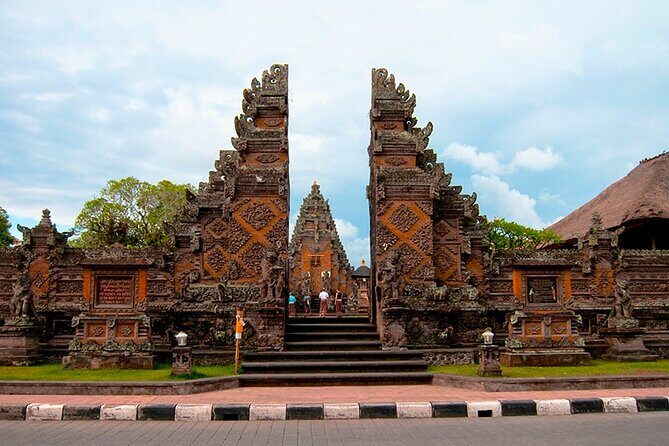
A Guide to Poppies Lane Kuta

Poppies Lane is named after Poppies Restaurant, which opened on 12 January 1973. The story is a bit messier than the usual telling. Two former owners of a California restaurant called Poppies took a holiday in Bali in 1972, met two old friends called George and Bob, and the four of them got into business with a Balinese woman named Zenik (everyone calls her Jenik) Sukenny who was already running a small streetside warung off what was then a dirt track behind Kuta Beach. They expanded her kitchen, added a bamboo bar, and one of them, John, dug out a garden with ponds and winding paths. The previous California owners, who had named their place after the state flower, gave their blessing for the name to live on. Within months the three travellers had wandered off, and Zenik kept the place running. The dirt track later became a proper street, named after the restaurant, and is now Jalan Poppies Lane 1.

Entrance to Poppies Lane 1 in Kuta Bali next to Circle K minimart
The mouth of Poppies Lane 1 off Jalan Pantai Kuta, with the Circle K that everyone uses as a meeting point. Photo: Panoramio (archived) / CC BY 3.0 (via Wikimedia Commons)

The restaurant is still there. The narrow gang (alley) it sits on has filled and emptied a hundred times since, has weathered two Bali bombings, the 2008 financial crisis, the COVID-19 shutdown that emptied Kuta for two years, and the post-2024 wave of tourism that has shoved most of the surf-traveler scene up the coast to Canggu. But if you walk the lane at 6 a.m., before the bars on Jalan Legian start unloading the night before and before the warung ibus light their stoves, you can still see why this is where the original Bali surf-traveler scene took root. It is narrow. It is shaded. It smells of frangipani and last night’s kretek (clove cigarettes). The lane bends. You hear roosters. You can imagine, with very little effort, a 1970s overlander stepping off a bus from Java with a damaged surfboard and asking around for a cheap room.

Poppies Lane 1 and Poppies Lane 2: how the geography actually works

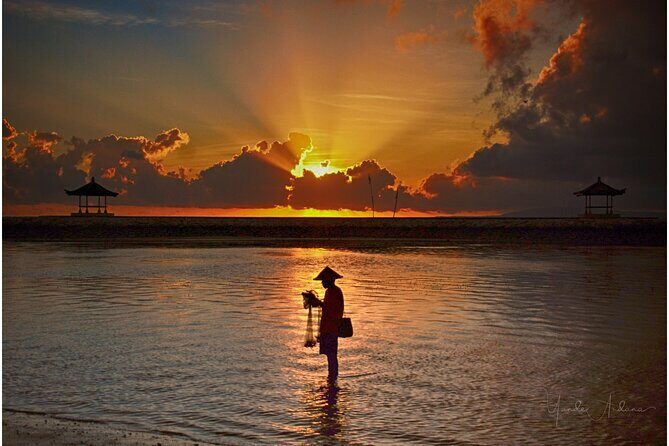
Older man walking on a Bali beach at sunrise with sandals in hand
Walk Kuta Beach at 6 a.m. and the sand belongs to the early surfers and a couple of beach cleaners. The bars on Legian don’t unload until about eight.

Two lanes, parallel to each other, run from Jalan Legian (the main north-south party drag) west to Jalan Pantai Kuta (the beach road). They are short. Walking either one end-to-end takes about eight minutes if you don’t stop, and you will stop, because the lane is too narrow for two scooters to pass cleanly and you’ll be flattening yourself against a homestay wall every thirty seconds.

Poppies Lane 1 (Jalan Poppies I) is the original, the one named after the restaurant. It runs from the Legian roundabout area down to the beach road, with Poppies Restaurant about two thirds of the way down. This is the busier of the two by day, with most of the surf shops, the long-running cafes, and the souvenir stalls.

Poppies Lane 2 (Jalan Poppies II) sits about 200m north and runs roughly parallel. It is even narrower, more residential at the eastern end, and used to be where the lowest-budget homestays clustered (the first four Poppies cottages were built here in 1974/75, before the bigger Poppies Bali hotel went up across from the restaurant on Lane 1 in 1980/81). Lane 2 is also the noisier of the two at night because the back of Sky Garden Nightclub spills onto the eastern end. The lane that I’d actually pick for sleep is Lane 1, west half, past the restaurant.

Both are dead-ends for cars, by design and by chaos. Scooters and pedestrians only. There is no continuous footpath, just whatever uneven bit of cement is in front of each warung or homestay. If it has rained the night before the lanes will have shallow puddles and you should walk slowly because the local stray dogs (Kuta has a lot of them) sleep in the dry patches.

The genuine reasons to stay on Poppies

Pantai Kuta beach at golden hour with crowd silhouettes
Kuta Beach is a ten-minute walk from anywhere on Poppies. Show up by 5 p.m. for a flat patch of sand. Photo: Stepgun / CC BY-SA 4.0 (via Wikimedia Commons)

The pitch hasn’t really changed in 50 years. You stay on Poppies because:

  • It is cheap. Walk-in rooms with breakfast, fan-cooled, in a clean homestay still go for Rp 200,000 to Rp 450,000 (about $13 to $29 USD) a night if you ask in person. Online prices are usually higher. The cheap ones are not on Booking.com.
  • The beach is ten minutes on foot. Anywhere on either lane to the sand at Pantai Kuta. No moped needed, no Grab needed.
  • Kuta nightlife is five minutes away. Sky Garden, the Bounty, Bounty Discotheque, all on Jalan Legian. You walk there, you walk back, you do not negotiate a midnight ride.
  • Bemo Corner (the intersection where Jalan Pantai Kuta meets Jalan Bakung Sari) sits at the south end of the Poppies area. From here you can flag a metered Grab car or moped, walk to Discovery Mall and the southern end of the beach in 12 minutes, or get a bemo (the shared minibus, though most travellers now skip these) up the coast.
  • It is walkable in a way that almost nothing else in south Bali is. Seminyak you need a scooter for. Canggu you need a scooter for. Ubud you need a scooter for. Poppies you need feet for.

The genuine reasons not to

Crowd along Kuta Beach with umbrellas at sunset
The Kuta sunset crowd is reliably big, reliably cheerful, and reliably leaves a lot of plastic behind.

It would be dishonest to skip the downsides. There is a reason a lot of repeat Bali travellers don’t come back to this part of the island.

The noise is real. Sky Garden and the Bounty pump music until 3 a.m. on weekends, and on Lane 2 you will hear a thumping low-end bass even with the windows shut. If you are a light sleeper, ask for a room at the western half of either lane (further from Jalan Legian, closer to the beach), pay an extra Rp 100k for an air-conditioned room, and shut the windows.

Kuta itself has gotten run-down in spots. The footpath on Jalan Legian is in poor shape, sections are flooded after monsoon, and the strip of cheap tattoo parlours, cigarette warungs, and timeshare touts on the main road has not been refreshed in a decade. If you came to Bali for elegant cafes and eucalyptus-scented yoga studios, you came to the wrong neighbourhood. Try Canggu, Berawa, or Pererenan.

The beach itself has a rubbish problem after monsoon (roughly November through March), when the currents wash plastic onto the sand from across the strait. Volunteers from the Bali Sea Turtle Society and a rotating cast of NGO clean-ups do their best, but on a bad morning you’ll see a brown high-tide line of bottle caps and noodle wrappers. Locals have largely stopped pretending this isn’t a thing. Plan to swim in dry season (April to October) or to walk further south past Kuta into Tuban for cleaner water.

Where to actually stay (the real budget reality)

Inside an Indonesian warung sharing snacks at a wooden counter
Most Poppies homestays are run out of a family compound. The room costs you Rp 250k. The hospitality is free.
Three tiers, in increasing price.

The walk-in homestays. If you turn up on Lane 1 or Lane 2 with a backpack and ask “ada kamar?” (any rooms?) at three or four signs that say kamar or homestay, you will find a clean fan room with breakfast for Rp 200k to Rp 350k. Air-con bumps it to Rp 350k to Rp 450k. These places do not all have websites. Some have a single Booking.com listing that is more expensive than the door rate. The trick is to book one night online to get off the airport, then walk the lanes the next morning. I’d point you to specific names but the operators turn over fast and the recommendation rots in six months.

Mid-range hostels and small hotels. Bread and Jam Hostel is on a quieter side gang off the Lane 2 area, modern boutique style, with private twin rooms and dorm beds. Borough Capsule Hostel up on Legian has the airport-shuttle convenience that matters if your flight gets in late. The Pavilion (the original wing, not the 2015 extension which is reportedly worse) is a long-running budget boutique with a pool that you can sometimes book through Agoda for under $30. Stay away from any “boutique” room above Rp 600k that doesn’t include the pool, the breakfast, and air-con. At that price you should be in Sanur or Seminyak.

Poppies Cottages I, the old-school original. The four cottages built in 1974/75 on Lane 2 are still operational in their original form. Poppies Bali, the larger hotel built across from the restaurant in 1980/81, has 20 cottages set in a serious garden with a bougainvillea-framed pool that was added in 1987. Rates are Rp 1.5 million to Rp 3 million depending on the season, which is properly mid-range, not budget. If you want the Poppies experience, this is the real version, and it pays for itself in atmosphere. Reservations through their website, not the discount aggregators, get you the best room placement. Worth knowing the cottages were renovated in 1996, 2006, 2017 and most recently 2022. This is not faded grandeur, it is functional grandeur.

If hostels in general aren’t your thing and you want the cheap Bali stay without the noise, the calmer alternative is to skip Kuta entirely and go to Sanur. The room rate is Rp 50k or so higher, you get the sunrise side of the island, and you sleep through the night. But you also lose the ten-minute beach walk and the five-minute nightlife walk, so it depends what you want.

Eating on the lanes

Sate skewers on charcoal at an Indonesian street stall
The Bemo Corner satay carts come out around 6 p.m. and run until they sell out, usually before 11.

Three categories: the long-running expat-friendly cafes on the lanes themselves, the small warungs that change hands but never disappear, and the food at Bemo Corner.

Made’s Warung, actually two restaurants now (the original near Kuta beach and a second branch in Seminyak), has been on Poppies-area maps since the late 1960s when Made started serving Western breakfasts to surfers from a wooden stall. It is no longer a single warung; it is a proper restaurant, the menu is bigger than it needs to be, and prices are double what you’d pay at a true street warung. But the nasi campur is consistent, the staff still wear the same checked shirts, and at 9 a.m. it is the quietest spot for a quiet breakfast on the strip. If you want to read more about the dish, my history of nasi goreng and where to eat it in Bali walks through the warung scene in more detail.

Aromas Cafe (vegetarian, Lane 1) does big breakfast plates with eggs and avocado, the kind of thing Australian backpackers crave on the third day. Take is a tiny Japanese place at the southern end that has been there forever, does a passable katsu-don for Rp 65k and a salmon teriyaki set for Rp 95k that comes out fast. Ketupat on Lane 1 is the closest thing to a proper Indonesian-fine-dining option in this neighbourhood, set in a garden, mid-range pricing (mains Rp 80-150k), and it gets full at 8 p.m. Book ahead.

Smiling sate vendor grilling skewers at a Bali street stall
Local sate vendors pop up around Bemo Corner from late afternoon. Rp 25k for ten skewers and rice is the going rate.

For genuinely cheap food, walk to Bemo Corner. From late afternoon you’ll find sate ayam carts (chicken skewers, peanut sauce, lontong rice cake), nasi goreng warungs, soto ayam (chicken broth) carts, and the whole rotating cast of Indonesian street eats. A plate of nasi goreng with a fried egg is Rp 18-25k. Sate ayam with rice is Rp 25-30k for ten skewers. Es teh manis (sweet iced tea) is Rp 5k. If you want to eat for a week on Rp 200k a day, this is how. The sambal at the cart with the green awning at the southern Bemo Corner is genuinely spicy; ask for “sedikit sambal” (a little) the first time.

One real warning. Avoid ice in places that look brand new and clearly serve mostly tourists, especially on Jalan Legian itself. Ice at proper warungs is usually delivered in standardised cubes from a bag from a freezer, which is fine; the suspicious stuff is the broken-up block of ice in upmarket-looking bars where the staff are using a hammer. The full breakdown of how to avoid Bali belly is in the Bali health guide, but the short version: peeled, cooked, or bottled.

Kuta Beach access from Poppies

Lone surfer paddling out at Kuta Beach Bali on a clear day
Mid-morning is when you’ll get the cleanest waves at Kuta. After 11 the chop and the tour-bus crowd both pick up.

Walk west on either lane to the beach road (Jalan Pantai Kuta). Cross. You’re on the sand. The whole exercise from a Lane 1 homestay is between eight and twelve minutes depending on where you started.
The beach itself is roughly five kilometres long if you count the connected stretches of Tuban (south, near the airport), Kuta (the famous bit, in front of you), Legian (a kilometre north of Poppies), and Seminyak (further north again, where the beach clubs cluster). The Kuta section in front of Poppies is the section everyone Instagrams, with the soft sand bar that produces the long mellow waves the surf schools love.
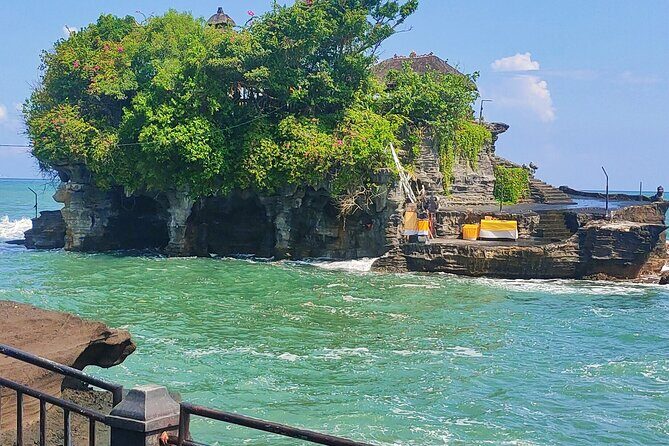
Board hire from the beach vendors runs Rp 50,000 to Rp 80,000 a day, more if you want a leash and rashguard included. The vendors are generally on the level but the price always opens at “Rp 100k” so haggle politely. They will hold your bag while you surf. Tip them Rp 20k when you give the board back.

Sunset at Kuta is the local ritual. By 5:30 p.m. the sand fills up. Vendors push beanbags at Rp 50k for two hours including a Bintang. The sun drops behind the horizon at roughly 6:30 p.m. year-round (8 degrees south of the equator means very little seasonal variation), and the whole strip applauds when it touches the water. It is a cliche and it is also pleasant. For sunset photographs the south end of the beach is less crowded.

Surf schools at Poppies

Beginner surfer riding a small Kuta-style wave on a long board
Kuta is a beginner wave. The drop is forgiving, the bottom is soft sand, and your group instructor will push you onto your first ten waves.

The genuine reason the surf schools cluster here is not nostalgia, it is the wave. Kuta’s break is sand-bottom, slow, and forgiving, and at low to mid tide it produces the kind of soft long waves that beginners need. You will not bash a reef. You will get pushed around by a chop you weren’t expecting. You will make it up onto your knees on lesson 2 and onto your feet on lesson 3 if your instructor is any good.

The big three on the lanes:

  • Pro Surf School on Jalan Pantai Kuta, group lessons Rp 600-750k for a half day, includes board, rashguard, instructor in the water with a 1:3 ratio. They have been running since the early 2000s and the head instructors are local Kuta surfers who actually surf when they’re not teaching.
  • Rip Curl School of Surf at the Hard Rock Hotel side, more polished, more expensive (Rp 850k-1.1M), and you get the Rip Curl-branded gear and a video review. Worth it if you want a souvenir, less worth it if you want maximum water time.
  • Odysseys Surf School, slightly south near Tuban, intermediate-friendly with smaller class sizes. Worth it if you’ve already had a beginner lesson somewhere and want to progress.

Surf school injuries do happen. The most common are reef cuts (not at Kuta itself, but if your school takes a van trip to Padang Padang or Balangan as a “level two” lesson) and ear infections from constant water. The Bali health guide has the practical detail on what to do for surfer’s ear and where to go for stitches.

The crowd reality

Bali surfer carrying his board at golden hour silhouetted against the waves
Kuta still pulls a surf-traveller flow, but the crowd skews younger and louder than it did in the 1990s.

Be straight about who you’ll be sharing this with. Kuta in 2026 is younger, partier, and more Australian-skewed than just about any other part of Bali. The 18-25 year-old gap-year flow comes through here. The 21st-birthday-trip groups come through here. The Western Australian school-leavers (the “schoolies”) arrive in numbers in late November and December. The Indian and Chinese package-holiday tour groups stay here because the airport is close. Surfers who actually live in Bali long-term mostly do not stay here; they’re in Canggu, Pererenan, or up in the Bukit.

That doesn’t mean the lanes themselves feel like a frat party. Plenty of solo-traveller backpackers in their thirties and forties stay on Poppies because the price is right and the location works. The yoga-and-green-juice crowd skips it for Ubud, which is fine. The cliff-villa-and-rooftop-bar crowd skips it for Uluwatu and Seminyak, which is also fine. What’s left on Poppies is people who are passing through, people who are surfing, and people who like a cheap clean room they can walk to from the beach.

Using Kuta as a base

Airplane descending over Kuta Bali coastline with traditional jukung boats below
Ngurah Rai Airport’s runway runs out into the bay south of Kuta. Window seats on the right of an inbound flight get this.

Kuta is the airport-area choice for a first night. Ngurah Rai International is a 15-minute Grab from Bemo Corner if traffic is light, 25 minutes if it isn’t. Coming off a 7-hour flight from Sydney or a 14-hour from Europe, the last thing you want to do is then drive 90 minutes to Ubud. Stay one night in Kuta, sleep, do the longer trip in the morning. The full breakdown of routes and which airlines into Bali are worth the upgrade is in the flights to Bali guide.

From Poppies, the practical day-trip ranges:

  • The Bukit beaches (Padang Padang, Bingin, Balangan, Suluwban, Pandawa) are 30-45 minutes south by Grab car or scooter. A full day trip is the right move; rent a moped from your homestay for Rp 60-80k. The full beach catalogue is in the south Bali beaches roundup.
  • Ubud is 90 minutes in normal traffic and two hours when it isn’t. Full-day private driver Rp 600-800k for four to six people, which is cheaper than four Grabs.
  • Tanah Lot for sunset is 45 minutes northwest, probably better skipped if you’re already on the Kuta sunset.
  • Sanur is 25 minutes east by Grab if you want a different beach for a half day. Easier from here, the boats to Nusa Lembongan and Nusa Penida go from Sanur Beach.
  • Seminyak and Canggu are 20 and 35 minutes north respectively. Worth a beach-club afternoon, especially if you want the Seminyak sunset bar scene without staying there.

Transport from Bemo Corner

Mopeds parked in rows at Kuta Beach in Bali
Most Poppies homestays will rent you a moped for Rp 60-80k a day. Wear the helmet. Bring your home licence with an international permit. Photo: Photowiki1 / CC BY-SA 4.0 (via Wikimedia Commons)

Bemo Corner is the practical transport hub. From here:

  • Grab is the default. Use the app, not the unmetered street taxi, ever. Airport pickup is roughly Rp 60-80k. Seminyak is Rp 35-55k. Canggu Rp 70-100k. Ubud Rp 250-350k. Surge pricing kicks in around 10 p.m. on weekends.
  • Gojek is the same idea, slightly cheaper for short rides, with the moped-taxi (GoRide) option that beats traffic but you don’t want it with luggage.
  • Metered Bluebird taxis are the legit street alternative if your phone is dead. Insist on “argo” (meter). The drivers in front of the malls or on Jalan Legian who quote a fixed price for the airport are double the meter rate.
  • Bemos (the original shared minibus, hence the name “Bemo Corner”) barely run any more. Don’t plan on them.
  • Scooter rental from your homestay is Rp 60-80k a day. Honda Scoopy or Vario, automatic. Ask for the helmet (most don’t volunteer it). You need to be carrying your home country licence and an international driving permit if Indonesian police stop you. Enforcement of the IDP requirement was ramped up in late 2024 and can mean an Rp 250-500k “fine” on the spot if you don’t have one.

Practical tips for first-timers on Poppies

Bali back lane at dusk with a woman walking and moped passing
The Poppies side gangs at night are mostly safe but quiet. Carry your bag across your body, not on the road shoulder.

A short list of things that catch first-timers off-guard. None are deal-breakers but knowing them up front saves money and aggravation.

Don’t take an unmetered taxi. If a driver outside Discovery Mall or in front of the Hard Rock quotes you “Rp 200k to Sky Garden”, which is a five-minute walk, smile and walk on. Use Grab or Gojek for everything. Even short rides. The Bluebird metered taxi guys are okay, but only the ones who put the meter on without being asked.

Watch for moped-snatch in the back gangs at night. Two men on a scooter, the back rider grabs your bag from your shoulder as they pass. It is very rare on the main lanes, more common in the unlit cuts between Lane 1 and Lane 2. Carry your bag across your body so the strap can’t slide off, walk on the inside of the lane (not the shoulder), and if you’re staying out late take Grab back to the western end of the lane and walk the last bit toward your homestay.

The legitimate massage parlours have signs in English on the lanes themselves. Plus or minus Rp 100-150k for an hour-long Balinese massage is the going rate. The “spas” with no menu, no price list, and a tout in the doorway who follows you down the street are something else and you can probably guess what. Just say no thanks and keep moving.

Timeshare touts on the main road. A friendly Australian-accented guy will try to engage you on Jalan Legian about a “free champagne breakfast” or a “scratch card you’ve won”. This is a 90-minute timeshare presentation pitch. Polite “no thanks, not interested” works fine. Don’t take the scratch card.

The 2024 Bali tourism levy. All foreign tourists pay Rp 150,000 (about $9.50 USD) on arrival, payable online via the Love Bali portal before you fly or at the airport on arrival. It is a one-time payment per visit. Have the QR code ready or stand in the levy queue at Ngurah Rai. The money is supposed to fund cultural-heritage maintenance and waste management.

Kembali, the bottle return system, isn’t a thing here. Refill stations exist (look for the “Refill Bali” signs at some of the cafes; Aromas has one) where you can refill a bottle for Rp 5-10k instead of buying a new plastic one. On a week-long trip that’s twenty plastic bottles you don’t add to the rubbish problem. Bring a reusable bottle.

The Poppies sunset hour

Kuta Beach sunset with red and purple sky over the ocean
From Lane 1 you walk west, cross the beach road, and you’ve got fifteen minutes to find sand before the colour goes.

If you do nothing else on a Poppies stay, do this at least once. Walk out of your homestay around 5:45 p.m., follow Lane 1 west to Jalan Pantai Kuta, cross the beach road, and get onto the sand. Don’t rent a beanbag the first time; just walk barefoot south along the high-tide line until the crowd thins out a bit. Sit. Watch.

Sunset waves at Kuta Beach with two surfers in the line-up
The last surfers stay out until the sky goes orange. The water is warm, around 27 degrees year-round.

The colour does what it does, the surfers stay in until they can’t see the sets coming, and the kite vendors and the bracelet sellers do a slow patrol up and down the sand. Around 6:50 p.m., once the sun has dropped, the crowd starts walking back to the bars. Walk with them. Stop at the Bemo Corner satay cart on the way for a Rp 25k dinner. Take it back to your homestay, eat it on the steps, and feel the heat of the day finally come off the lane.
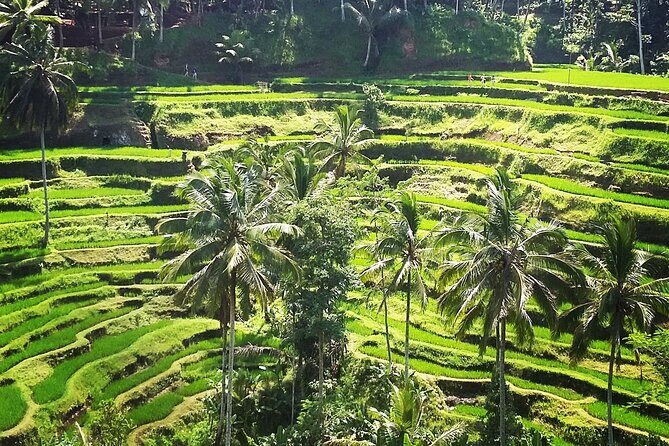
That is what Poppies is for. It has not been the cool part of Bali for at least fifteen years. It is, however, still the cheapest way to be a few minutes from a long beach and the loudest sunset bar strip on the island, and the lane itself still smells like 1973 if you wake up early enough. The travellers who built the original Poppies didn’t stick around. Zenik did, and so did the lane, and so, against all the odds, did the restaurant on the corner. It is still there. You can have a Henry Wallbanger at the bar and watch the garden ponds the way Alistair Speirs did in 1979 and a thousand surfers did before him.
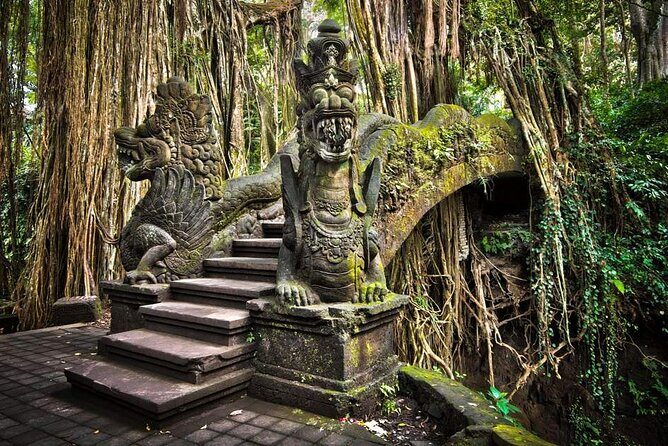

For the wider Kuta strip and how it stacks up against Sanur, Seminyak, and Canggu as a base for a week in Bali, see the where to stay in Bali category for the area-by-area comparison.

Bali Health and Safety: Bali Belly, Vaccines, and Hospitals

Bali belly is not a 50/50 lottery. About 70% of cases trace back to three habits, all of them avoidable, and most travellers who get hit have done at least one of them within the previous 24 hours. The other 30% gets you on a slow build over a few days from cumulative low-level contamination. Either way, it is not the universe rolling dice on your holiday.

Friends sharing snacks at an Indonesian warung table
The hook is the warung, not the pretty hotel restaurant. The food is usually safer than you think and tastier than the resort version, you just need to know what to look for.

I have eaten my way through five trips to Bali across the better part of fifteen years, ranging from a backpacker stretch on Poppies Lane in 2011 to a six-week working stint in Canggu more recently. I got Bali belly twice. The first time was day three of trip one, and I can still pinpoint the salad. The second time was a longer working trip and I am genuinely not sure which meal did it. What I will tell you is what worked across the rest of those weeks of warung lunches, ice in coconuts, and all the things the safety blogs tell you not to do, and what to actually carry with you and what to do when it goes wrong anyway.

This is not medical advice. I am a traveller who has read the CDC and UK NHS guidance, talked to a few apotek (pharmacy) staff in Sanur and Ubud, and learned by getting it wrong. For your specific health history and trip length, see a travel doctor six to eight weeks before you fly. For the hospital phone numbers, the cost of a helicopter off Nusa Penida, and which warungs are actually safe, read on.

What actually causes Bali belly

Traditional roadside warung in Bali with Bintang and Aqua signage
A roadside warung outside Tabanan. Signed-up Aqua water on the wall is a quiet quality cue, and so is the open-front layout where you can see the kitchen. Photo via Wikimedia Commons (CC BY-SA 3.0)

The medical name is travellers’ diarrhoea. The CDC estimates that 30 to 70% of travellers to high-risk regions pick it up on a typical two-week trip, and bacteria are the culprit in roughly 80 to 90% of cases. The usual suspects are E. coli (especially the enterotoxigenic strain, ETEC), Campylobacter, Salmonella, and Shigella. Norovirus runs a strong second, and parasites like Giardia show up in the smaller subset of cases that drag on for more than a week.

The catalogue of how it actually gets into you, in order of how often I see it cause trouble:

  • Ice made from tap water. The classic. A coconut on a cart in Kuta, a bin of crushed ice the vendor scoops your drink out of, an iced coffee at a small warung. If the ice did not come from a sealed bag of factory kubus (cube) ice, treat it as suspect. Bigger places filter their own and freeze it in trays, and that is fine. Roadside vendors with a single block of ice on a chopping board, that block was made from tap water on someone’s back porch.
  • Salads and raw vegetables washed in tap water. The lettuce in your gado-gado, the raw cucumber on the side of a sambal matah dish, the herbs in your fresh spring rolls. The vegetable is fine, the rinse water is the problem. Cooked vegetables are safe. Raw is the gamble.
  • Sambal that has been sitting out. Especially at warungs that put a tray of small bowls on each table and refill them. Sambal is fresh chilli paste with shallot, lime, and oil. Left at room temperature in 32°C heat for hours, it is a bacteria farm. The first scoop of the day is fine. The 4 p.m. scoop is the one that gets you.
  • Raw or undercooked seafood. Sushi at a hotel restaurant with proper cold chain is one thing, sushi at a small place that buys yesterday’s tuna from a back-of-bike vendor is another. The Jimbaran beachfront grills are generally fine because everything is cooked over coconut husks at high heat, but order it cooked through, not pink in the middle.
  • Buffet food kept lukewarm. Hotel breakfast buffets are usually the worst single source if the warmer trays are not actually warm. Always check the eggs are hot, not tepid. The pancakes are safer than the cut fruit.
  • Tap water by accident. Brushing teeth, rinsing your toothbrush, the gulp in the shower. Most travellers tighten up about drinking water then casually rinse their mouth from the bathroom tap. Use the bottle you have in your room.

What does not usually cause it: spice. People blame the chilli for the diarrhoea on day three and they are wrong. A spicy nasi goreng at a clean place will not give you Bali belly, even if it gives you a hot afternoon. The capsaicin can make a sensitive stomach uncomfortable, but that is a different feeling. Bali belly is a wet, urgent, please-no-traffic-jam feeling. If you can tell the difference, you know which one you have.

Indonesian food stall display with multiple cooked dishes sitting in white bowls
The display-tray model. Pretty, photogenic, and the older the dish on top of that pile, the more risk it carries. Pick the bottom of the pile or the freshest restocked tray.

Prevention rules that actually work

Indonesian fruit vendor with mangosteens, salaks, and tropical fruit at a traditional market
Pasar Badung in Denpasar at 7 a.m. The mangosteens and salak you peel yourself are the safest fruit on the island. The pre-cut watermelon at a stall, less so.

The standard advice is “boil it, peel it, cook it, or forget it” and I think that is mostly right, but it is also too cautious for a real trip where you actually want to eat the local food. Here is the version I follow:

  • Bottled water for everything you swallow. Brushing teeth included. The Aqua brand is everywhere, a 1.5L bottle is around Rp 6,000 to Rp 8,000 (about $0.40 to $0.55) at the corner shop. Refill stations at homestays charge Rp 5,000 to Rp 10,000 for a 19L jug refill if you brought a refillable bottle, which is the move for longer stays. Check the seal on any bottle you buy. If the cap clicks when you twist, it is fine. If it does not, reject it.
  • Ice only at upmarket places. Beach clubs, hotel restaurants, sit-down cafes in Seminyak and Ubud, generally fine. Coconut on the beach with ice scooped from a polystyrene box at a warung, no. If you really want the iced coffee at a small place, ask: esnya dari kubus? (is the ice from cubes, meaning bagged factory ice). If they show you a sealed bag from the freezer, you are good. If they shrug, skip it.
  • Peel-or-cooked-or-bottled fruit. Mangosteens (peel), bananas (peel), pineapple (you watch them peel), salak (peel). Pre-cut watermelon and papaya at a stall, the knife and the rinse water and the open air are the problem, not the fruit. Whole fruit at the supermarket is fine if you wash it with bottled water and peel it.
  • Read the warung queue as a quality signal. A warung packed with locals at lunchtime is turning over food fast and has reputation to protect. Warung Mak Beng in Sanur, the one with the queue out the door for ikan goreng, is exactly this kind of place. An empty warung at 2 p.m. with food sitting in trays since 11 a.m. is the opposite. Empty plus tourist-targeted is the red flag combination.
  • Cooked-and-hot beats fresh-and-cold every time when you are unsure. A bowl of soto ayam at a stall is safer than the same stall’s gado-gado. The boiling broth has done your sterilising for you.
  • Carry hand sanitiser and use it before you eat. A small bottle in the day bag, applied before you pick up a piece of nasi campur. Maybe half the cases of Bali belly travel up your own hand from a doorknob, not down through the food.

The real tradeoff: if you follow every rule strictly you will miss some of the best food on the island. If you ignore them all you will probably get sick. I have come to think of it as a budget. Spend it on the things that are worth it (the babi guling at Ibu Oka in Ubud is worth the calculated risk of a salad), skip the things that are not (the iced coffee from a cart on the way to the beach, the lukewarm pad thai at a tourist trap with no queue).

When it happens anyway: treatment

Open first aid kit with travel medical supplies and oral rehydration sachets
What I now carry: oralit sachets, loperamide, paracetamol, ciprofloxacin (only after a doctor consult at home), antihistamine, antiseptic wipes, hydrocortisone cream, plasters. The whole thing is the size of a sandwich.

Most cases resolve on their own in 1 to 3 days. The thing that makes you feel actually awful for the first 24 hours is dehydration, not the bug. Fix the dehydration, the rest gets manageable.

The protocol I use:

  • Oral rehydration first. Walk to the nearest apotek (pharmacy, you will see the green cross sign) and buy a strip of oralit sachets. They cost about Rp 2,000 each (around $0.13). Mix one sachet in 200ml of bottled water, drink it slowly over 30 minutes. Repeat after every loose stool and every vomit. The sodium-glucose ratio is what makes your gut absorb fluid even when it is in chaos. Plain water alone does not work as well.
  • Boring food, small portions. White rice, plain crackers, banana, plain toast. Avoid dairy, fried food, alcohol, coffee, fruit juice, and anything with sambal. The BRAT diet (banana, rice, applesauce, toast) is the baseline.
  • Loperamide carefully. Brand name Imodium. It stops the diarrhoea by paralysing your gut, which is useful if you have a four-hour van transfer to the airport but counterproductive if your body is trying to flush a bug out. Use it for travel days only, or for night sleep. Do not use it if you have a fever or blood in your stool, because then the bug needs to come out, not stay in.
  • Sleep and rehydrate, do not push through. Cancel the day. Read a book. Most cases that drag on do so because the traveller went for a planned snorkel trip on day two and the dehydration cascaded. One full rest day costs you nothing and saves you three.
  • Coconut water (kelapa muda) is genuinely useful. Buy from a stall where you watch them open the coconut, drink straight, no ice. The natural electrolyte mix is close to oralit. Avoid the bottled coconut water with added sugar, which makes the diarrhoea worse.

The 24-hour rule that I actually use: if you are no better after 24 hours of sensible rehydration, see a doctor. If at any point you have any of these, see a doctor immediately, do not wait the 24 hours:

  • Blood or mucus in the stool
  • Fever above 38.5°C (101.3°F) for more than a few hours
  • Dizziness when you stand up, dark concentrated urine, or no urine for more than 8 hours (signs of significant dehydration)
  • Severe abdominal pain that is not just cramping
  • Vomiting that prevents you from keeping any fluid down for more than 4 hours

The hospitals listed below all have English-speaking doctors and 24-hour emergency. None of them will judge you for a stomach bug. They see twenty of these a week.

The apotek over the counter, and what to be careful with

Apotek Ari Medika pharmacy storefront in Ubud Bali with mopeds parked outside
Apotek Ari Medika in Ubud, opening hours 07:00 to 22:00. Smaller apoteks like this one keep the basics behind the counter, ask for what you need by name. Photo: CEphoto, Uwe Aranas / Wikimedia Commons (CC BY-SA 3.0)

The Indonesian pharmacy system is a lot more permissive than what most Western travellers are used to. A lot of medication is available without a prescription that you would need a doctor for at home. This is convenient and also a place to be careful.

What you can buy off the shelf at most apoteks (Apotek K-24 is a 24-hour chain you will see across Bali, Guardian and Watson’s are the larger Western-style chains in Seminyak and the malls):

  • Oralit. Oral rehydration sachets, around Rp 2,000 each. Buy a strip of ten, you will use them.
  • Neo Entrostop. An attapulgite-based anti-diarrhoeal that binds toxins in the gut. Around Rp 15,000 for a strip. Less aggressive than loperamide and worth knowing about.
  • Loperamide (Imodium, generic versions). Around Rp 25,000 to Rp 40,000 for a strip.
  • Paracetamol (parasetamol) and ibuprofen. The full Western range, often cheaper than at home. Useful for the dehydration headache and the body aches that come with viral cases.
  • Antihistamines. Cetirizine (Cetin, Cetirizine OGB) for the inevitable mosquito reaction is around Rp 15,000.
  • Antiseptic and bandages. Betadine, plasters, gauze, alcohol wipes. Buy more than you think you need, the moped-burn from the hot exhaust is a real Bali souvenir.
  • Antibiotics including ciprofloxacin and azithromycin. These are sold over the counter at most Indonesian apoteks. This is convenient, and risky. The convenient bit is obvious. The risky bit is that taking antibiotics for a viral or self-limiting bacterial gastro is bad for your gut microbiome long term, contributes to antibiotic resistance, and is often the wrong drug for the bug. If your home doctor wrote you a prescription before the trip “in case”, great, follow that. If not, see a doctor on the island before self-prescribing antibiotics. The medical clinics charge Rp 200,000 to Rp 500,000 for a consultation and that is money worth spending before you take a five-day course of cipro for what was probably a 36-hour viral thing.

What to be careful of: do not stockpile antibiotics for the next trip. Do not use the antibiotic that worked for your friend last year. If you are pregnant, breastfeeding, on regular medication, or have any chronic condition, see a doctor not a pharmacy counter. The apotek staff are pharmacists and they do their best, but they will not always have the time or the language to ask the right intake questions.

Vaccinations, and the conversation to have with your travel doctor

Pharmacist arranging medicine bottles in a pharmacy cabinet
Travel vaccinations get booked at home, six to eight weeks before you fly. Some of them need multiple doses spaced over a month, so do not leave it to the week before.

Plain reminder, this is a travel blog, not medical advice. Book a travel doctor consultation at home, six to eight weeks before you fly, with your full health record in front of them. The summary below is what I have heard most consistently from CDC and UK NHS guidance and from travel-doctor friends, current as of 2025. None of it is a substitute for that consultation.

No vaccinations are legally required to enter Bali for travellers from most countries. The exception is a yellow fever certificate, which is required only if you are arriving from a country with active yellow fever transmission (parts of sub-Saharan Africa, parts of South America). Indonesia has no yellow fever.

Routine vaccines, check these are current

  • MMR (measles, mumps, rubella). Indonesia, including Bali, still reports measles outbreaks. Two lifetime doses recommended. Check your records.
  • DTP (diphtheria, tetanus, pertussis). Tetanus booster within the last ten years is the standard. The reef cuts and the moped grazes will thank you.
  • Polio. Wild polio has been documented in parts of Indonesia in recent years. Adult booster if your travel doctor flags it.

Recommended for most Bali travellers

  • Hepatitis A. Spread through contaminated food and water, which is exactly the Bali transmission route for everything. Travel-clinic consensus is that almost every Bali traveller should be vaccinated, including the ones staying at five-star resorts.
  • Typhoid. Same transmission route, more relevant if you plan to eat at warungs (which you should) or stay outside the big tourist zones. Available as an injection or as oral capsules.

Worth a conversation, depending on your trip

  • Rabies. Bali has a documented rabies presence in dog and monkey populations. The pre-exposure series is two or three doses. Worth discussing if you will be riding a moped (the bite risk is more from stray dogs near the road than from monkeys), staying in rural areas, or doing anything that puts you near animals. The post-exposure protocol if you do get bitten is much simpler if you have had the pre-exposure shots, and the rabies immunoglobulin is not always easily available in Bali. The Monkey Forest in Ubud bites are real, the staff are calm about them, and the standard advice is to get to a clinic the same day for the post-exposure follow-up.
  • Japanese encephalitis (JE). A mosquito-borne illness. The standard recommendation is for stays longer than a month or significant time in rural areas near rice fields and pig farms. For a two-week resort holiday in Seminyak, most travel doctors do not push it.
  • Hepatitis B. Relevant if you might have medical or dental treatment, tattoos, or piercings on the island. Many people already have this from childhood schedules in their home country.
  • Dengue. The Qdenga vaccine is approved in Indonesia for ages 6 to 45. Two doses three months apart, which makes it more practical for expats and digital nomads than for short-trip holidaymakers. For a typical holiday, mosquito prevention is the standard play.
  • Malaria. The risk in Bali’s main tourist areas is very low, and antimalarials are not generally recommended for a standard Bali trip. If you are heading to remote parts of Indonesia (Papua, parts of Sulawesi), the conversation changes.

Travel insurance, and the helicopter off Nusa Penida

Travel medical supplies and bandages from a travel first aid kit
The single most expensive Bali travel claim I have heard about was a moped accident on Nusa Penida that needed a helicopter to Denpasar. The bill was in the tens of thousands of US dollars. Read the policy.

Get insurance. The blanket recommendation. But the more important version is read the policy carefully for the two things that actually matter in Bali.

Medical evacuation coverage. The bigger Bali hospitals are in Denpasar, Sanur, and Kuta. If something serious happens to you in Amed, on Nusa Penida, or up at Mount Batur for the sunrise hike, getting you to a hospital is not a 20-minute Grab. It can be a one-hour ambulance, a two-hour boat, or in the genuinely bad cases a helicopter. The helicopter off Nusa Penida is the example everyone cites because the costs run into the tens of thousands of US dollars and a lot of basic policies do not include it. If you are staying in Amed for the diving or doing anything around the Nusa islands, check the medical evacuation cap on your policy. SafetyWing, World Nomads, and the bigger insurers all sell explicit evacuation coverage.

Moped exclusions. This is the trap that catches more tourists than anything else. Most Western travel-insurance policies will not cover a moped accident unless your home country licence has a motorcycle endorsement on it (UK call it Cat A, Australia call it an R licence, US varies by state). It does not matter that you rented the bike legally in Bali with a passport scan and a bored shop owner. If your home licence is for a car only, the policy does not cover you, and a hospital stay for a moped collarbone in Bali is yours to pay. The workarounds: get the international moped endorsement at home before you fly (a couple of weekend lessons), buy a separate moped-specific add-on from your travel insurer (some sell them for an extra premium), or do not ride. The Grab and Gojek bike-taxi apps cost almost nothing and get you everywhere. I switched to those a few trips ago and have not regretted it once.

While we are on the subject, a few real numbers from the Bali traveller-claim brochures my insurer sent me last year:

  • Moped accident, hospital stay, plate and screws in a wrist: roughly $3,000 to $8,000 USD.
  • Helicopter evacuation Nusa Penida to Denpasar: $20,000 to $40,000 USD.
  • Three days in BIMC Kuta for severe dengue with IV fluids: $2,000 to $4,000 USD.
  • Repatriation flight back to home country in a medical-equipped seat: $30,000 to $80,000 USD.

Insurance. Check the small print. Read the moped clause twice.

Hospitals by area, and what to do in an emergency

Doctor with stethoscope on examination table in a clinic
BIMC and Siloam are the two names every long-term Bali traveller knows. Both have English-speaking doctors and direct billing arrangements with most international insurers.

The emergency number for ambulance in Indonesia is 112. Save it. The ambulance response in the touristy parts of south Bali is reasonable, in the more remote areas it is not, and you may be better off getting a Grab or your hotel to drive you to the nearest hospital. The major hospitals all have their own phone numbers worth saving in your contacts before you arrive.

The foreign-friendly options, the ones with English-speaking doctors and direct insurance billing for the major international insurers:

  • BIMC Kuta. Jl Bypass Ngurah Rai 100X, Kuta. Tel +62 361 761263. The closest of the foreign-oriented hospitals to the airport and to the Kuta-Legian-Seminyak strip. 24-hour ER, dental, ambulance, dive medicine. This is where most insurance companies will direct you for the south Bali resort areas.
  • BIMC Nusa Dua. Kawasan ITDC Blok D, Nusa Dua. Tel +62 361 3000911. The sister facility, more convenient if you are staying in Nusa Dua, Tanjung Benoa, or Jimbaran. Also handles dive emergencies and has a hyperbaric chamber.
  • Siloam Hospitals Bali (Denpasar). Jl Sunset Road 818, Kuta (despite the Denpasar branding it is on the Sunset Road). Tel +62 361 779900. The big Indonesian private chain, large facility with a full range of specialists. English-speaking staff in the main departments. Often the best option for anything more complex than a stomach bug.
  • Kasih Ibu Hospital Denpasar. Jl Teuku Umar 120, Denpasar. Tel +62 361 3003333. Indonesian private hospital with international patient department. Often a better price point than the BIMC clinics for a consult, with most of the same equipment.
  • Sanglah General Hospital (RSUP Prof Ngoerah). Jl Diponegoro, Denpasar. The public general hospital, cheapest care on the island, but English-language coverage is patchier. Good for serious-emergency stabilisation, less ideal for routine care if you have insurance covering the private alternatives.

What to expect at the foreign-friendly clinics: you will be seen quickly (often inside 20 minutes for a non-emergency walk-in), the doctor will speak good English, the consultation is Rp 400,000 to Rp 800,000 (about $26 to $52), an IV drip with anti-emetic for severe Bali belly is typically Rp 1,500,000 to Rp 3,000,000 (about $97 to $195), and they handle the insurance paperwork directly with your provider. Bring your passport and your insurance card. Most accept credit cards.

The remote-area reality: if you are based in Amed for the diving, the nearest decent hospital is Karangasem (about 45 minutes), and the BIMC and Siloam options are at least 90 minutes by car. If you are on Nusa Penida or Nusa Lembongan, the local clinic handles minor things but anything serious means a boat back to Sanur and an ambulance from the pier. This is the dive-trip and remote-village factor that the south Bali resort-and-spa travellers do not have to think about, and it is the main reason the medical evacuation line on your insurance matters.

Dental work, the genuine Bali bargain

Dental clinic patient receiving routine dental check-up in a modern surgery
Bali dental clinics serve a steady stream of dental tourists from Australia and Singapore. The price difference is real, and the quality at the established clinics is genuinely good.

This is the one health-related thing in Bali that is both real value and worth planning around. A filling at a reputable Bali clinic runs about Rp 450,000 to Rp 900,000 (about $30 to $60). A crown is around Rp 3,000,000 to Rp 6,000,000 ($200 to $400). A full implant package, including the post and crown, can come in around $1,500 to $3,000, which is a fraction of the equivalent in Australia, the UK, or the US.

The catch is the clinics are not all the same. The dental tourism scene in Bali has a lot of new entrants and a few that have been operating for decades. The standard advice from the digital-nomad community in Canggu is to use the clinics that have a long online review history and that publish their dentists’ qualifications. Bali Dental Clinic in Sanur, Bali Dental Centre, and BIA Dental Centre in Seminyak are the names that come up most often when I ask in the working-Bali Telegram groups, but please do your own due-diligence research and read recent reviews. I am not endorsing any specific clinic, just naming the ones that get mentioned most.

Practical: book your appointment a few days into the trip rather than for day one, so you have a buffer if you are jet-lagged or have stomach trouble. Bring a copy of any recent X-rays or dental records from your home dentist. For a crown or implant, plan a return trip three to six months later for the final fitting, or stay long enough for the full sequence (usually two to three weeks). Hepatitis B vaccination is a sensible addition before any procedure that involves blood, see the vaccinations section.

Mosquito-borne illness, mostly dengue

Aedes aegypti mosquito biting human skin, the dengue and Zika vector
The Aedes aegypti, the dengue carrier. It bites during the day, not at night, and breeds in any standing water including the saucer under your hotel-room flowerpot.

Dengue is the main one and it is genuinely present in Bali, including the tourist areas, including the dry season. The wet-season peak runs roughly January to March and the case numbers spike then, but cases happen year-round. The vector is the Aedes aegypti mosquito, which bites during daylight hours (this is the important behavioural detail) and breeds in any standing water from a few millimetres up.

The symptoms come on fast and feel like a flu with extra ankle pain. High fever, severe headache especially behind the eyes, muscle and joint pain that some travellers describe as “breakbone fever”, a rash that appears a few days in. There is no specific treatment, the protocol is rest, fluids, paracetamol for fever and pain, and absolutely not aspirin or ibuprofen, because dengue can cause platelet count to drop and those drugs increase bleeding risk. Most cases resolve in a week, the worry is the small fraction that progress to severe dengue (haemorrhagic symptoms, plasma leakage, dangerous fluid loss). If you have any second-illness pattern (felt fine for a day after the fever broke and then worse again), get to a hospital. The hospitals listed above are well-practised at dengue management.

Prevention is mosquito avoidance:

  • DEET-based repellent. 30 to 50% DEET, applied morning and afternoon. Permethrin-treated clothing is more effective for long-stay travellers. The natural alternatives (lemon eucalyptus, picaridin) work for shorter durations and need more frequent reapplication.
  • Long sleeves and trousers at dawn and dusk. Even though Aedes is a daytime biter, the other species that carry chikungunya, JE, and (rarely in Bali) malaria, are dawn and dusk biters. Cover up.
  • Air-conditioned room or screened windows. Mosquitoes do not love AC.
  • No standing water near where you sleep. The flowerpot saucer, the bird bath at the villa, the unused bucket on the balcony. Tip them out.
  • Mosquito coil at dusk. The cheap green coils at any minimart work, the smell takes some getting used to.

Other mosquito-borne things present in Bali but much less common: chikungunya (similar to dengue, joint pain lasts longer), Zika (mostly mild but matters if you are pregnant), Japanese encephalitis (rare in tourist areas, see the vaccination section). Malaria risk in Bali itself is very low.

Sun, and how badly you can underestimate it

Couple silhouette on Kuta Beach Bali at sunset
The sunset at Kuta is the safe time to be on the beach without a hat. The 11 a.m. version of the same view will fry you in 20 minutes.

Bali sits 8° south of the equator. The UV index reaches 11+ on a normal sunny day, which is the same scale that puts most of Northern Europe at 6 in midsummer. The sun in Bali at midday in February is doing the same thing to your skin as a tanning bed. I am not being dramatic. I have seen the sunburn on day-one tourists who lay on the beach at Seminyak from 11 a.m. to 1 p.m. without sunscreen because it was overcast and “didn’t feel that hot”. They came back to the beach club in the afternoon already medium rare.

What works:

  • SPF 50+ broad-spectrum sunscreen. Reapply every two hours, more if you swim. The factor matters less than the reapplication.
  • Hat with a brim and a long-sleeved rash vest for snorkelling or surfing. A rash vest with UPF 50 protection is more effective than any sunscreen on the bits it covers, and you will not have to reapply.
  • Reef-safe sunscreen at certain spots. Some of the snorkel and dive sites around the south Bali beaches and around the Nusa islands now require oxybenzone-free and octinoxate-free sunscreens. Bring a tube of reef-safe with you, the local options are limited and overpriced.
  • Stay out of direct sun 11 a.m. to 3 p.m. This is the genuine Balinese local advice. Even the sunbathers are under umbrellas in the middle of the day. Find a beach club, a cafe, a temple visit, or take a long lunch.
  • Hydrate, including electrolytes. The sweat you lose in 30°C with 80% humidity is not just water. The same oralit sachets you bought for Bali belly do double duty for heat exhaustion.

Heat exhaustion symptoms (lightheaded, nauseated, cold and clammy skin despite the heat, no sweating) are an “out of the sun, into the AC, fluids” emergency. Heat stroke (confusion, dry hot skin, fast pulse, body temperature over 40°C) is a 112 ambulance emergency.

Other practical things

Plastic bottled mineral water on a soft background
Aqua, Le Minerale, Pristine. Any sealed brand at the corner shop. The 19L refill jugs at homestays are the same factory water for less plastic.

Drinking water

You already know. Bottled or filter-station refills only. Aqua is the dominant brand, Le Minerale is the cheaper alternative, both are everywhere. The tap water in Bali is not treated to drinking standard. Brushing teeth with tap water is a debate I will not settle here, the cautious traveller uses bottled water for that too, the long-stay resident often does not bother and is fine. Your gut tolerance, your call.

Food handling at street stalls

Read the queue. Read the turnover. Read the open kitchen. The best street food in Bali is at stalls where the food is cooked to order in front of you (sate, martabak, the soup stalls) and the worst is at trays of fried things that have been sitting for hours. The presence of locals eating at the stall is a strong positive signal. The absence of locals at a tourist-area stall is a strong negative one. Apply the rule consistently and you will eat well.

Alcohol, and the arak warning

The local beer Bintang is fine. Imported wines and spirits at proper bars and restaurants are fine. The arak warning is the one to know about: arak is the local rice spirit, and a small number of unscrupulous producers have cut it with methanol, which causes blindness or death. The cases are rare and almost always involve cheap unlabelled bottles at small bars in the tourist strips. Stick to brand-name spirits at established venues, do not buy unlabelled bottles, do not order suspiciously cheap cocktails. Real arak from a known producer (look for Iwak Arak, Dewi Sri Arak) is fine in proper bottles.

Road safety brief

The biggest health risk in Bali for foreign tourists is mopeds, full stop. Bali had 100+ tourist deaths from moped accidents in 2024. The roads are crowded, narrow, and unforgiving, the helmets at rental shops are often the cheap shells that do nothing in a real crash, and the moped-snatch culture in Kuta and Canggu is real. If you are going to ride, bring or buy a proper helmet (the upgrades are sold at every minimart, around Rp 250,000 to Rp 400,000), wear long sleeves and trousers and proper shoes (not flip-flops), do not ride drunk, do not ride at night unless you absolutely have to, and check that your insurance covers you (see the moped exclusion section above). If you are not confident, do not ride. The Grab and Gojek bike-taxis are cheap and safer because the drivers do this for a living.

Stray dogs and monkeys

Do not pet stray dogs. Do not feed monkeys. The Monkey Forest in Ubud is the high-incident location for monkey bites and scratches. Take off any visible jewellery, sunglasses, or food before you enter. If a monkey grabs you, do not pull away (you will lose), drop whatever they want, walk away calmly. If you are bitten or scratched, wash the wound thoroughly with soap and water for 15 minutes, then go to a clinic the same day for the post-exposure rabies follow-up. The big private hospitals all carry the post-exposure vaccine.

The first-night arrival kit

What I now keep in the carry-on:

  • 10 oralit sachets (or a pack of similar from home)
  • Strip of loperamide (10 tablets is enough)
  • Paracetamol and ibuprofen
  • Antihistamine tablets
  • 50 SPF sunscreen, reef-safe
  • 30% DEET repellent
  • Hand sanitiser
  • Plasters and a small tube of antiseptic
  • Any prescription medication in original packaging with the pharmacy label
  • A printed copy of the insurance policy and the emergency phone number

Most of this you can buy on the island for less, but the first-night version of you is jet-lagged and might not want to find an apotek before bed.

What actually happens, most of the time

Sunrise over Sanur Beach Bali with traditional jukung outrigger boats
Sanur at 6 a.m. The light is good, the air is cool, the day is open. Most Bali health stories end here, with no drama at all. Photo: Danang Trihartanto / Wikimedia Commons (CC BY-SA 4.0)

Most travellers come to Bali, eat at warungs, drink the bottled water, pay attention to the sun, and have nothing more dramatic to report than a slightly windy first 24 hours. The serious incidents almost always involve a moped at night or a complacent attitude to the salad on day three. Get the vaccinations sorted at home, buy real insurance with the moped clause checked, pack the small first-night kit, and apply the prevention rules without being paranoid about them. The food is too good and the island is too generous to spend the trip worried.

If you do get hit, you have got the apotek on the corner, oralit for Rp 2,000 a sachet, and a hospital that has seen this every day for twenty years. The system works. Drink the water. Sleep the day. The next day will be fine.

Amed, Bali: The East Coast Bali Most Travelers Skip

Bali is Canggu and Seminyak. That’s what Instagram says. Drive two hours northeast from the airport and you find a coast that still has fishing jukungs (traditional outrigger boats) hauled up on black sand beaches at dawn, salt being raked into wooden troughs by hand, and a pair of dive sites that have been on Lonely Planet’s radar for thirty years and still aren’t crowded. That’s Amed. Seven small fishing villages strung along a 14-kilometre stretch of coastline in Karangasem regency, Mount Agung behind you, the Lombok Strait in front, and almost no one in the water before 8 a.m.

Golden hour over Amed bay with Mt Agung silhouette
Golden hour at Jemeluk Bay. The fishermen are already out by the time the sun lifts over the Lombok Strait. Photo: Wawansatriawan_bali / CC BY-SA 4.0 (via Wikimedia Commons)

I went the first time because I’d booked four nights in Ubud and gotten Ubud-tired by the second morning. A driver quoted Rp 800,000 (about $50) for the run east. I took it, stayed eight nights, and have made two return trips since. This guide is what those three visits taught me.

Where Amed Actually Is (and Why It’s Plural)

The name “Amed” gets used loosely. Strictly, Amed is one village. In practice, “Amed” means the whole stretch from Culik in the north down to Aas in the south: roughly 14 kilometres of coast on one main road, with a sequence of small bays and villages along the way (Jemeluk, Bunutan, Lipah, Lehan, Selang, Banyuning, Aas). Each has its own beach, personality, and short list of warungs. None is more than a few minutes’ scooter ride from the next.

Amed sunrise landscape with Mt Agung in distance
The classic east-coast view: village rooftops in the foreground, Agung in the back, water full of jukungs at anchor. Photo: Marklchaves / CC BY-SA 4.0 (via Wikimedia Commons)

From south Bali, plan on three hours from Kuta or Seminyak, three and a half from Canggu, 2.5 from Ubud if traffic cooperates. There’s no Grab or Gojek out here and taxis don’t roam, so you arrange transport before you arrive or you don’t move once you’re here. Most travelers book a private driver for the run (Rp 700,000-900,000 / about $44-57 one way), then rent a scooter on arrival (Rp 70,000-100,000 / about $4.40-6.30 per day) or use the hotel’s driver for day trips. If you’re flying in fresh, our flights to Bali guide covers connection logistics so you actually arrive with the energy to do this drive.

Why You’d Bother Going This Far

Two reasons, mostly. First, the diving. The USAT Liberty wreck at Tulamben (twenty minutes north of Amed Beach) is one of the best shore-accessible wreck dives anywhere. Second, the absence of south-Bali atmosphere. No nightlife to speak of, no clubs, no rooftop bars charging Rp 250,000 (about $16) for a beer, no DJs, no influencer studios. You’ll have dinner at a beachfront warung and be in bed by 10 p.m. because you’re getting up at 5:45 to dive or watch jukungs head out.

Mt Agung profile dominating the inland horizon at Amed
Agung from inland of the coast road. On a clear morning the whole 3,031m profile is right there.

You’d also bother because of what’s on the way back: Tirta Gangga, Pura Lempuyang, Sidemen, and Padangbai string into a north-east loop that takes a couple of unhurried days. More on that further down.

The USAT Liberty Wreck: The History Most Guides Get Half-Right

You’ll see this dive site in every Bali roundup. Most articles tell you it was sunk by a Japanese torpedo in WWII and now sits 30m down at Tulamben. Roughly correct, but the actual story is better.

Diver beside the coral-encrusted USAT Liberty shipwreck at Tulamben
A diver beside the Liberty’s coral-covered hull. The shallowest sections are at about 5m, the deepest at 30. Photo: G_patkar / CC BY-SA 3.0 (via Wikimedia Commons)

The ship was built in Philadelphia in 1918 as a cargo vessel called the SS Liberty Glo. After the US entered WWII, the navy commissioned her as the USAT Liberty, an armed transport carrying rubber and railway parts from Australia toward the Philippines. On 11 January 1942, the Japanese submarine I-166 hit her with a torpedo in the Lombok Strait. She didn’t sink. USS Paul Jones and the Dutch HNLMS Van Ghent towed her toward Singaraja, but Singaraja was already under enemy occupation, so the crew beached her at Tulamben. There she sat for twenty-one years, slowly being stripped for scrap.

What put her underwater was Mount Agung. The 1963 eruption killed thousands of people and produced enough seismic and lahar movement to push the Liberty off the beach and break her hull in two. She now lies parallel to the shore at Tulamben, between 5m and 30m below the surface, only 40m from a black-pebble beach. You don’t need a boat. You walk in.

Sea anemone growing on the USAT Liberty wreck at Tulamben
One of the magnificent sea anemones colonising the Liberty. Marine biologists count over 400 fish species on the wreck. Photo: Bernard DUPONT / CC BY-SA 4.0 (via Wikimedia Commons)

Open Water cert is enough to see most of the wreck; Advanced gets you the full thing including the swim-throughs at the bow. Visibility 15-20m, currents mild. PADI fun-dive packages run Rp 700,000-1,200,000 (about $44-76) for two dives with gear. Discover Scuba intro (never-dived-before) gets you to the shallowest sections in an afternoon for Rp 1,200,000-1,500,000 (about $76-95). Multi-day Open Water certification is Rp 5,500,000-6,500,000 (about $345-410). Local tip: dive before 9 a.m. or after 3 p.m. Day-tripper buses from south Bali arrive 9:30-10. At 6:30 a.m. you might have it almost to yourself.

The Japanese Wreck at Jemeluk: Snorkellers Welcome

The other wreck people talk about is the so-called Japanese Wreck in Banyuning Bay, ten minutes north of Amed Beach. Real talk: nobody actually knows what ship this is, or whether it’s Japanese. Divers found a single Japanese-style toilet during early surveys and the name stuck. The wreck is small (around 25m long) and the top sits just a few metres below the surface, which makes it freediveable and snorkel-friendly. No tank required.

Underwater shipwreck remains with marine life
The Japanese Wreck is small enough to snorkel and the visibility is usually decent. Bring a dry bag, you’ll want your camera.

Standard access is Kawi Karma Beach Restaurant. Rp 25,000 (about $1.60) entry includes parking, a drink, and use of their toilets and outdoor showers; mask and fin rental is another Rp 25,000 each. The wreck is colonised by hard and soft corals; expect schools of cardinal fish, damsels, and trumpetfish on the swim across.

Snorkelling Off the Beach (No Boat, No Tour)

This is what makes Amed different from almost everywhere else in Bali. The reef starts a few metres from the sand. You walk in, you swim, you’re over coral. No boat, no schedule, no group, no upsell. Two best entries:

Yellowfin goatfish on Jemeluk Wall, Amed Bay
Yellowfin goatfish on the Jemeluk wall. The drop-off is a 15-minute swim from the south end of the bay. Photo: Bernard DUPONT / CC BY-SA 4.0 (via Wikimedia Commons)

Jemeluk Bay. The crescent-shaped bay just north of Amed Beach. Calm water inside, an underwater shrine local divers placed to encourage coral growth, and a vertical drop-off at the south end where you can see straight down a wall to about 45m. The shrine buoy washed away; ask staff at Green Leaf Cafe to point it out. Snorkel rental on the beach is Rp 30,000-50,000 (about $1.90-3.20) per day.

Lipah Beach. Halfway between Amed Beach and the Japanese Wreck. Park free at Vienna Beach Resort and walk through. The reef is shallow, good for less confident swimmers, with sea turtles regularly sighted in the morning.

Scuba diver exploring coral reef in Bali
Macro life is the other reason divers come back. The Pyramids site has artificial reef columns crawling with shrimp and small octopus.

One safety thing the brochures don’t mention: stonefish. They sit camouflaged on rocks in the shallow entries. You won’t tread on one in clean sand, but at the rocky entries (Lipah and the Japanese Wreck) shuffle your feet rather than stepping. If you do get spined, hot water (as hot as you can stand) breaks down the toxin. Closest hospital is in Amlapura, about 45 minutes south.

The Salt Farms: Watch How It’s Actually Made

Amed has been producing sea salt for hundreds of years; the Karangasem royals used it. The technique: salt water carried up from the sea in shoulder yokes, poured over coarse black sand spread on a packed-earth bed, sun-dried, then collected, re-dissolved in concentrated brine, and evaporated again in hollowed-out palm-trunk troughs lined up on the beach. The result is a clean-tasting, faintly mineral salt that has earned a Geographical Indication designation from the Indonesian government, the local equivalent of an AOC mark.

Traditional Balinese salt farmer working wooden evaporation troughs at sunset
A salt farmer at the Amed Salt Centre, working the wooden troughs at sunset. They produce around 38 tons a year between them. Photo: Surya Edy Gautama / CC BY-SA 4.0 (via Wikimedia Commons)

Amed Salt Centre is free to visit (donation expected). The catch: salt is only made in the dry season. Between November and March you’ll see the troughs but nobody working them. In July you’ll get a salt farmer, often an ibu (older woman) in her sixties, raking and pouring at sunrise or just before sunset. Buy direct, sealed in a small banana leaf parcel for Rp 20,000-30,000 (about $1.30-1.90). Best souvenir from Bali you’ll bring home.

Salt farmers harvesting traditional salt at sunrise
The carry yokes are heavier than they look. Watch for ten minutes and you’ll have new respect for what Rp 30,000 of salt represents.

Mount Agung From Amed

Agung is 3,031 metres tall and dominates the inland view from anywhere in Amed. On a clear morning, before cloud builds at the summit, you can see the whole profile from your hotel balcony. Last erupted 2017-2019; the exclusion zone has been lifted but the summit climb is guided-only (the PVMBG geological agency updates the alert level). Climbs leave around midnight from Pura Pasar Agung and reach the rim before sunrise. Rp 1,200,000-1,800,000 (about $76-114) per person depending on group size.

Gunung Agung volcano profile from a Bali viewpoint
Agung from inland Karangasem. The 1963 eruption is what gave Amed its black sand beaches and pushed the Liberty wreck off Tulamben.

If you don’t want to climb it, scooter up to one of the inland viewpoints. Bukit Cinta (“Love Hill”) is a 30-minute ride from Amed Beach: an unmarked platform with a framed view of Agung over rice terraces. Free, bring repellent (the mosquitoes are vicious). Lahangan Sweet is more set up for visitors with a paid platform (Rp 50,000 / about $3.20), a swing, a photographer-for-hire booth, and a small warung. Get there well before sunrise; the road is rocky and the last section is best walked.

Sunrise on the Beach

This is the genuinely good Bali moment that everyone tells you about and undersells. The water turns coral, then orange, then a thin gold line on the horizon as the sun pushes up out of the Lombok Strait. Fishermen go out at the same time, sails up, jukungs in silhouette against it. Nobody else on the beach. No entry fee, no queue, no Instagram setup. Black sand, coffee from your homestay’s kitchen, the village waking up.

Fishing jukungs hauled up on the black sand beach in Amed village
Sunrise off Jemeluk village. Boats land their catch around 6:30 a.m. and head straight to the warungs. Photo: Marklchaves / CC BY-SA 4.0 (via Wikimedia Commons)

Best beaches for sunrise: anywhere along Jemeluk, Lipah, or Amed Beach proper. Sun rises slightly south of east in the dry season; face roughly toward Lombok. Up at 5:45, sunrise around 6:10-6:25.

Where to Stay: No Five-Stars (and That’s the Point)

Nothing in Amed is a tower hotel. No Marriotts, no chains, no club lounges. What you get is a long sequence of small dive lodges, family homestays, and a few small villa complexes, mostly oriented to the water. Picking the right stretch matters more than picking a specific property because everything is spread out along that one coastal road.

Black volcanic sand beach in Bali with foam-line waves
Black sand close-up. It’s volcanic, fine-grained, and gets seriously hot in midday sun. Reef shoes help.

Jemeluk Bay is the best base if snorkelling matters and you want decent restaurants in walking distance. Sunset Point bar is up the hill behind. Budget homestays here run Rp 350,000-500,000 (about $22-32); mid-range villas Rp 1,000,000-1,800,000 (about $63-114). Lipah Beach is quieter and spread out with a cluster of dive resorts. Selang and Banyuning further south are the quietest stretches; plan to drive everywhere. Tulamben twenty minutes north makes more sense than Amed proper if you’re here only to dive the Liberty: cheaper rooms, dive shops right there, in the water at 6:30 a.m. without driving.

One booking note. Well-rated places fill up two to three weeks ahead in dry season (May-October). The cheapest beachfront homestays often don’t show on the big platforms. If you find a room you like, message direct via WhatsApp where possible; you’ll often get a better rate than the Booking listing.

Eating in Amed

Lean grilled fish. Most of what you’ll eat came off a jukung that morning. The classic order is ikan bakar (grilled whole fish), usually mahi-mahi, snapper, or barracuda, brushed with sambal kecap manis and served with rice, fried morning glory, and sambal matah. Rp 90,000-150,000 (about $5.70-9.50) at a family warung; Rp 180,000-250,000 (about $11-16) at the bay-view restaurants where you’re paying for the view.

Traditional jukung outrigger fishing boat resting on Amed pebble beach
The boats are made by hand in the same villages that fish from them. The bamboo outriggers keep them stable in the morning chop.

Warung staples (nasi campur, nasi goreng, mie goreng, sate ayam) run Rp 25,000-50,000 (about $1.60-3.20) at the inland spots where dive guides eat lunch, less than the price of a beer in Seminyak. Our piece on Indonesian nasi goreng history and the best warungs in Bali goes into the dish in detail; Amed is where you’ll eat the village version.

Price warning: beachfront warungs in Jemeluk have started charging Seminyak-adjacent prices for straightforward local food. The view is the upcharge. For the cheap meal, walk a block back from the road. The smaller warungs without English signs are where dive guides eat.

Day Trips: The East Bali Loop

Amed is also a good base for stringing together the Karangasem cultural sites. Most travelers do these on the drive in or the drive back rather than standalone, because the loop covers a lot of ground. A driver for a full day runs Rp 700,000-900,000 (about $44-57) for 8-10 hours including all driving.

Pura Lempuyang (the “Gates of Heaven”)

The famous candi bentar gates at Pura Lempuyang, east Bali
The famous gates at Pura Lempuyang Luhur. The “reflection” in every Instagram photo is a man with a small mirror held under the lens. There is no lake. Photo: Julia Kado / CC BY-SA 4.0 (via Wikimedia Commons)

The truth the Instagram captions never mention: there is no lake. The “reflection” is created by a temple worker holding a piece of mirror glass under your phone camera. You queue one to four hours (often four in peak season), pay Rp 55,000 (about $3.50) entry, and you get four-to-six minutes on the platform. Only worshippers walk through the actual temple complex. I went once, for the absurdity of the queue and the trick. I would not go again. Lahangan Sweet has its own split gate, no queue, and an actual view of Agung instead of a mirror.

Tirta Gangga Water Palace

Tirta Gangga water palace, the royal Karangasem garden complex
The central fountain at Tirta Gangga. Get there by 8 a.m. for the koi ponds before the bus tours arrive. Photo: Bair175 / CC BY-SA 3.0 (via Wikimedia Commons)

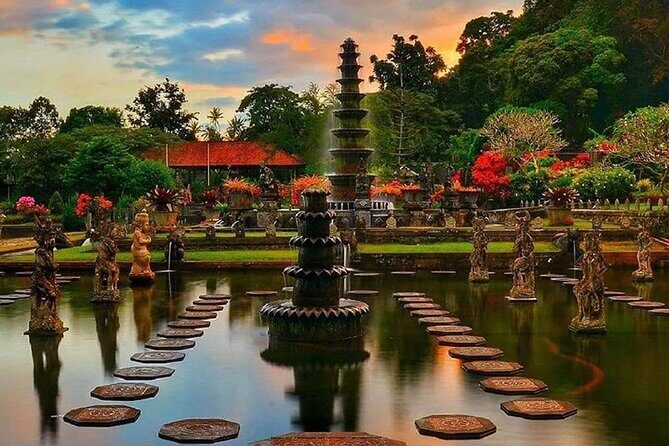
Built in 1946 by the last raja of Karangasem, named after the Ganges. Most of the original was destroyed in the 1963 Agung eruption and rebuilt. Today: fountains, ponds, and stepping-stone trails over koi-filled water. Entry Rp 50,000 (about $3.20); fish food Rp 5,000 a packet from the stall outside (vendors inside charge eight times that). One-hour visit. Pairs naturally with Lempuyang. Indonesia.travel has the background detail.

Taman Ujung

The other Karangasem water palace, less visited than Tirta Gangga, built 1909-1921 by the same royal family. A Dutch architect was involved, so the buildings mix Balinese forms with European symmetry. Three ponds, viewpoint, fewer crowds. Entry Rp 100,000 (about $6.30). I prefer it to Tirta Gangga.

Sidemen

Sidemen valley rice terraces in east Bali
Sidemen valley, the slower rice-paddy alternative to Tegalalang. About an hour’s drive south of Amed. Photo: Paul Arps / CC BY 2.0 (via Wikimedia Commons)

An hour south of Amed, Sidemen (pronounced see-deh-men) is a quiet rice-terrace valley with Agung as the inland backdrop. It’s what Tegalalang was twenty years ago: green, slow, no tour buses, dotted with small homestays and a couple of good viewpoint cafes. If you have a third Amed night to spare, lose one and add Sidemen. Pairs naturally with the north coast as a quiet-Bali road trip; our Singsing Waterfall guide for Lovina covers the north-coast sibling.

Padangbai (and Onward to the Gilis)

Padangbai harbour with ferries and Gili-bound fast boats
Padangbai harbour. The Gili-bound fast boats leave between 8 a.m. and 1 p.m. Book direct at the dock for the best price. Photo: Magul / CC BY-SA 4.0 (via Wikimedia Commons)

An hour south of Amed, Padangbai is the fast-boat port for the Gilis and the slow-ferry port for Lombok. If your trip continues to the Gilis, Amed makes a logical staging point: drive down in the morning, catch the 9:30 or 11:30 fast boat, be on Gili Air or Trawangan by lunch. Tickets run Rp 350,000-700,000 (about $22-44) one way. Padangbai itself is also a respectable dive base (Blue Lagoon and Jepun).

The Cultural Bit Worth Knowing

Amed is Balinese Hindu like the rest of the island: daily canang sari offerings on doorsteps, weekly temple ceremonies, the same Galungan / Kuningan / Nyepi calendar. Homestay families will quietly invite you to a ceremony if there’s one happening at their banjar during your stay. Sarong, sash, modest top; follow your host’s lead. Our primer on Balinese Hinduism covers the framework. Amed was historically salt-and-fishing rather than temple-tourism like central Bali, so the village structure is tighter and the relationship with visitors is more direct than in Ubud or Seminyak. The dive shop owner who takes you out on Tuesday will recognise you on Friday and ask how the rest of your week has been.

Macro and Muck Diving (For the Geeks)

Wunderpus octopus on a Tulamben dive site
A wunderpus octopus on a Tulamben muck-dive site. The black volcanic sand is what makes the macro photography work.

The macro is a quietly serious draw. Black sand at Tulamben and Seraya is classic muck-diving substrate. Pygmy seahorses on the gorgonian fans on the Liberty. Wunderpus, mimic octopus, ghost pipefish, frogfish, harlequin shrimp all show up regularly. Other sites people rave about: Coral Garden (south of the Liberty, easy shore entry, ridiculous fish density), The Drop Off (vertical wall from 5m to past 60m), The Pyramids off Jemeluk (artificial concrete pyramids grown into reef columns).

Doto nudibranch on hydroids, Tulamben
Nudibranchs everywhere on the macro sites. Slow down. Look at the hydroids. They’re crawling.

Most shops will build a 3-dive day across the Liberty, Coral Garden, and Drop Off for Rp 1,200,000-1,500,000 (about $76-95) including gear, transport, and a guide. Night dives on the Liberty are reportedly some of the best in Indonesia.

Practical Notes

Cash. ATMs in Amed Beach and Jemeluk are moody and sometimes empty. Pull cash in Ubud or Sanur before driving up. Warungs and small homestays don’t take card.

Wi-Fi. Cafe Wi-Fi is fine for basic streaming. Working remotely, get a Telkomsel SIM; there are blackspots between villages.

Tourism levy. Indonesia introduced a Rp 150,000 (about $9.50) one-time tourism levy in February 2024, paid via the LoveBali portal before you fly or in person at DPS arrivals. It’s valid for your full stay. Keep your QR receipt because some site entries ask to see it.

When to go. Dry season May-October is best for diving, with July-August the calmest. April and November are shoulder months with thinner crowds. December-March is wet season but Amed gets less rain than south Bali and rates drop. Book ahead in July-August and over Christmas.

Aerial view of traditional fishing boats lined up on a beach in Bali
The whole village’s fleet, hauled up. Each colour pattern represents a banjar.

How long to stay. Three nights is a working minimum (one to dive, one for the loop, one for nothing). Five nights is the happy length. I’ve stayed eight twice and didn’t get bored. One-night stops usually leave wishing they’d given it longer.

What to skip. Pre-arranged “snorkel tours” sold from south Bali. They charge 4-5x what you’d pay arranging directly in Amed for what you can do for free off the beach. Talk to boat owners on the sand instead: a sunrise jukung trip with a local fisherman runs Rp 200,000-300,000 (about $13-19) per person, and they’ll take you out fishing or to a snorkel spot of your choice.

Final Take

Amed is not for everyone. If you came to Bali for beach clubs, brunch culture, or the influencer pilgrimage circuit, you’ll be unhappy here. There’s none of that. If you came for the early mornings, the water, the salt, the volcano, and the version of Bali that still has a working fishing fleet hauling out before dawn, drive the three hours and stay five nights. The diving alone is worth the trip. The sunrise on the second morning is what makes you book a return visit.

View of Mt Agung from a wooden deck in east Bali
The view from a sunrise deck above Jemeluk. This is what most of your photos from Amed will look like, eventually.

If you want more of the same energy in a different corner of the island, the north coast around Lovina is the natural follow-up. Our beaches and nature category has the rest of the quiet-Bali roundups. For now: get the driver booked, the dive package shortlisted, and pack reef shoes.

Ngaben: The Balinese Cremation Ceremony

The procession came around the corner of a side road off Jalan Raya Andong in Ubud and I almost walked straight into it. Twenty men under a bamboo platform, the platform carrying a tower maybe four metres tall painted in red and gold, the family in white walking ahead, the gamelan in the back of an open-bed truck. I had been on the way to lunch and stopped because there was no choice. Two Australian tourists nearby were filming on their phones from the front. A woman in white came over, said something quietly, and the phones went down. The procession moved past, the tower swaying with each step, and the road that had been a road thirty seconds earlier was now somebody’s funeral.

Ngaben pelebon procession with bade tower carried by family bearers in Bali
A pelebon procession in Ubud. The tower is heavy enough that bearers swap out every few hundred metres. Photo: shankar s. / CC BY 2.0 (via Wikimedia Commons)

What I had stumbled into is called ngaben (eng-AH-ben), the Balinese cremation ceremony. What I want to do here is the thing nobody quite did when I started reading about it: explain what is actually happening, why it matters this much to the family, and how to be near one without making it about you.

This is the most important ceremony in this person’s life. It is also, very often, the most expensive and most logistically complicated week the family will undertake for a decade. If you are in Bali while one is happening near you, you are watching something the family has saved for, planned for, and prayed for. Treat it that way.

Ngaben is a cremation, but mostly it is a release

The English word “cremation” gets the mechanism right and the meaning wrong. Ngaben comes from api, meaning fire, and the point of the fire is not to dispose of a body. The point is to free the soul, called atman or atma, from the physical shell holding it.

Balinese Hindu cosmology teaches that the body is built from panca mahabhuta, the five great elements: earth, water, fire, air, and ether. When somebody dies, those five elements are still bound up in the body, holding the soul to the material world. Burning is the only ritual considered powerful enough to break the bond and return each element to where it came from. The soul, once freed, can either reincarnate into a new body, very often a newborn in the same family line, or in rare cases reach moksha, full liberation from the cycle of rebirth.

Ngaben pyre symbolic procession returning the five elements to the universe Bali
The fire returns the five elements to the universe. The white cloth is a guide rope for the soul. Photo: Nyengendadi / CC BY-SA 4.0 (via Wikimedia Commons)

This is the bit that tripped me up the first time I read about it. The funeral does not look like a Western funeral because it is not really a funeral. It is closer to a launch ceremony. There is grief, there is family in white, there is incense, but there is also gamelan music loud enough to feel in your chest, kids running, and the deliberate festive atmosphere the Balinese consider the correct send-off. Open weeping is discouraged. The teaching is that tears can become a hurdle, slowing the soul down at the moment it needs to be free.

If you have read the Balinese Hinduism guide on this site, you will recognise where ngaben sits in the larger framework. Balinese ritual life is organised into five categories of sacred duty called Panca Yadnya, and the category that contains ngaben is Pitra Yadnya, sacrifices for the ancestors. The event is, in Balinese eyes, the family discharging a debt to the dead. It is not optional. Skipping it is considered a failure of duty so serious that families will go into debt or wait years for the right communal ceremony rather than not do it.

The wadah and the lembu, or how to read the procession

Two objects do most of the visual work in a ngaben procession, and once you can name them you can read what is going on.

The first is the wadah, sometimes called the bade: the multi-tiered tower you see being carried. Built from bamboo, wood, paper, gold leaf and dyed cloth in the weeks before the ceremony, it is a model of the Balinese cosmos. At the base sit a turtle and two snakes, representing the underworld. Above that comes a section painted with leafy forests, the world of humans. At the top sits a small pagoda called a meru, representing heaven, the realm the soul is travelling toward.

Wadah bade cremation tower being carried through Bonyoh village Karangasem Bali
A smaller wadah on its way through Bonyoh village in Karangasem. The dust kicks up when bearers break into a half-run. Photo: Imadedana / CC BY-SA 4.0 (via Wikimedia Commons)

The number of tiers signals the family’s social standing and the spiritual weight of the deceased. A regular family ngaben might use a one-tier or three-tier tower. A royal cremation, called pelebon, can run to nine tiers and stand ten or fifteen metres tall, which is why royal ceremonies need bamboo bracing crews and electrical workers to lift cables along the route.

The second object is the lembu, the bull-shaped sarcophagus that receives the body for burning. The bull is not random. It is Nandi, the mount of Shiva, and Shiva in Balinese Hinduism is the destroyer-transformer aspect of the divine, the god most directly associated with the dissolution of form. Putting the body inside Nandi for cremation is, conceptually, handing the deceased directly to Shiva for the next stage of the journey.

Decorated red lembu bull sarcophagus with ceremonial umbrellas before ngaben Bali
A red lembu waiting on its bamboo platform. The colour and ornamentation usually take a banjar’s craftsmen weeks of work. Photo: shankar s. / CC BY-SA 2.0 (via Wikimedia Commons)

Caste reads off the lembu too. A white bull is traditional for a Brahmana, the priest caste. Black bulls or, in some regions, lions and deer are used for other castes. Smaller animal effigies appear depending on village tradition: gold-painted bulls, fantasy beasts called singha with lion bodies and elephant trunks. None of it is decorative. Each form encodes who the deceased was.

The procession through the village is meant to be confusing

The first time you watch a procession move through narrow village lanes, the route looks chaotic. Bearers run a few metres, stop, hoist the tower up and down, spin it through a half-turn, then run another stretch. At every intersection they spin the tower again, sometimes a full three rotations.

The chaos is the point. The route is being deliberately disordered to confuse the soul, which at this stage is loose between the body and the cosmos. If the soul could remember the way back to the family compound, the belief goes, it might try to return and become trapped on earth as an unhappy spirit. Spinning the tower at intersections breaks its sense of direction. The spirit, disoriented, looks up to the meru at the top of the tower and travels onward instead.

Ceremonial Balinese funeral procession with locals carrying an ornate white bull effigy through a village street
A white bull lembu under bougainvillea. The bearers will spin the platform a half-turn at the next junction.

The gamelan that walks behind the procession is a specific percussion ensemble called gamelan beleganjur, sometimes translated as “battle gamelan”. The original purpose was to scare off demons along the route. The cymbals and gongs are played at a marching pace, slightly off-beat, deliberately chaotic. It is the sound that, if you are anywhere in the village, will tell you a procession is coming before you see it.

Gamelan beleganjur musicians in white seated at ngaben procession Bali
A gamelan beleganjur ensemble waiting under a banyan tree before the procession sets off. Photo: shankar s. / CC BY 2.0 (via Wikimedia Commons)

The setra: where the burning happens

Every Balinese village has a setra, a dedicated cremation ground usually on the seaward edge of the village in line with the temple of the dead, the Pura Dalem. They tend to be open fields with permanent bamboo structures, ash-darkened ground, and a few bale shelters for priests and family.

The wadah arrives. Bearers lower it onto a pavilion. The body, wrapped in white cloth and accompanied by holy water and offerings, is transferred from the tower into the lembu. The priest, called a pemangku for village ceremonies or a pedanda for the full Brahmin priesthood, performs the final mantras. Family members place small personal items inside the lembu: a favourite shirt, prayer beads, photos.

Balinese pemangku priest in white holding traditional offerings during a ceremony
A pemangku in his white headcloth, offering basket in hand. The bamboo handle is for sprinkling holy water onto the lembu before the fire is lit.

Then comes the fire. Traditionally the priest lights a sacred torch and the lembu is set alight from underneath. In modern practice many families use a propane blowtorch to get the fire going quickly and reliably. It is not disrespect, it is a practical concession to wet-season humidity and the ritual calendar’s time windows.

Lembu bull effigy fully burning during a Balinese ngaben cremation ritual
The lembu fully alight. The white cloth on the bamboo overhead is a baldachin protecting the priest’s working space. Photo: shankar s. / CC BY 2.0 (via Wikimedia Commons)

The burning takes hours. Family members stay throughout, sometimes singing, often quiet, occasionally sharing food. Other villagers rotate in and out. The wadah, used for the procession but not the actual cremation, is broken up and burned alongside, returning all of its symbolism to ash.

Burning ngaben pyre with cremation tower elements in a Bali village setra
Mid-afternoon at a village setra. The crowd gradually thins as the fire burns down, but family stay. Photo: Krisnayuda3 / CC BY 4.0 (via Wikimedia Commons)

By evening the lembu is reduced to ash, charred bamboo and a small pile of bones. The family returns the following day to collect the ash, place it in a yellow coconut shell or similar container, and prepare for the next stage.

Twelve days later: the nyekah and the dispersal

The fire is not the end. Twelve days after the cremation, in most traditions, the family performs nyekah, the dispersal ceremony. The collected ashes are carried in procession to the sea or, if the village is far inland, to a flowing river that reaches the sea.

The procession is smaller than the cremation parade and quieter, immediate family rather than the whole village. At the water, the priest performs further mantras and the container of ash is poured into the surf. Returning the elements to the ocean completes the cycle. The body’s earth and water rejoin earth and water, the fire has done its work, and the soul, now fully unbound, is free.

Ngaben procession at the sea Nusa Penida Bali with bade tower carried into shallow water
A coastal village ngaben on Nusa Penida. The tower is taken into the shallows for the final dispersal. Photo: Imadedana / CC BY-SA 4.0 (via Wikimedia Commons)

Some families perform an additional rite weeks or months later called memukur, in which a small effigy of the deceased is consecrated and burned. This ceremony elevates the soul to the status of a deified ancestor who can be petitioned and remembered at family temple anniversaries. From that point on, the deceased is no longer a recently-departed individual but an ancestor of the family line, addressed at every family ceremony for generations.

What it actually costs, and why ngaben massal exists

A solo ngaben is expensive. The wadah and lembu have to be commissioned and built. The priest receives a fee. The gamelan has to be paid. The whole village turns up to help and they need to be fed, sometimes for two or three days. Offerings, called banten, are crafted by the women of the family for weeks using fresh flowers, palm leaves, fruit, rice cakes, and small symbolic items, and the materials add up.

Balinese canang sari offering with flowers, rice and incense on dark stone
Banten in their simplest daily form, a canang sari. A ngaben ceremony will use thousands of these plus much larger offerings.

The cost band you will hear quoted is roughly Rp 30 million to Rp 150 million (about $1,900 to $9,500) for a private family ngaben, with the upper end much higher again for elaborate ceremonies. That is a serious sum in a country where the average rural Balinese family income is a small fraction of that figure per year.

Which is why ngaben massal exists. A mass communal ceremony, organised by the local community council called the banjar, gathers families across the village who have lost loved ones in the past few years. They share the wadah, the priest, the gamelan, the offerings, and the catering. A single ngaben massal might process and cremate twenty or fifty bodies on the same day, dropping the cost per family to roughly Rp 5 to 10 million (about $320 to $640) per individual.

Ngaben massal mass communal cremation ceremony at Padangtegal Ubud Bali with multiple wadah towers
A ngaben massal at Padangtegal in Ubud. Each tower carries a separate family’s deceased; the village runs the ceremony every five to ten years. Photo: Kochiana / CC BY-SA 4.0 (via Wikimedia Commons)

This is why you will sometimes hear that a body has been temporarily buried for years before the cremation. The family is not neglecting the dead. They are waiting for the next ngaben massal so the ceremony can happen properly without bankrupting them. The temporary grave at the village Pura Dalem is a holding state, not a final resting place. When the ceremony comes, the bones are exhumed, cleaned, and brought to the cremation ground. Banjars typically organise a ngaben massal every five to ten years; in larger villages, every two or three.

Bali group cremation ceremony 2013 ngaben massal multiple pyres at sunset
Late afternoon at a group cremation. Multiple pyres burn at once during a ngaben massal; the smoke is part of the ritual atmosphere, not an accident. Photo: Daniel Hoherd / CC BY 2.0 (via Wikimedia Commons)

Royal pelebon: when ngaben becomes a public event

A small fraction of cremations are royal ceremonies, called pelebon rather than ngaben, and these are scaled up to a degree that has to be seen to be understood. Royal pelebon use towers of nine tiers or more, lembu the size of small trucks, processions involving thousands of bearers working in shifts, and crowds of tens of thousands lining the route. The Ubud royal family has held several over the past two decades and each has made international news.

If a pelebon is happening during your stay you will know about it. The local press, your hotel, your driver, and the warung ibu down the road will all mention it. Schools close. Roads close. The whole town turns out. These are the only ngaben that come close to being a public spectacle, and even then it is a public ritual, not entertainment. Behave accordingly.

So can you actually attend, and how?

Mostly you do not attend in any active sense. Mostly you witness. There is a meaningful difference.

If you happen to be in a village when a ceremony is happening, observe from the side, give the family room, and let the procession move past you the way the locals do. Do not follow it into the cremation ground unless you are explicitly invited. Most cremations are private family affairs even if the procession is on a public road, and most family members are happy for respectful onlookers to witness from the edges as long as the onlookers behave.

Balinese ngaben procession with ceremonial red umbrellas and bearers in white
Onlookers standing back from the procession. Note the distance the umbrella-bearers maintain from the actual route.

If you are invited to a private ngaben, usually because you are connected to the family or the homestay where you are staying, you go in proper dress, you bring a small donation, and you follow the lead of the family and the priest at every step. Mass ngaben and royal pelebon are by their nature more public; the rules of respect do not change because the crowd is bigger.

Respectful-observer rules I wish someone had told me first

These are not Western etiquette politeness. They are specific things the family will notice and that other Balinese onlookers will, quietly, judge you for if you get them wrong.

Dress. White or muted dark colours, never bright resort wear. Cover shoulders and knees. If you are close to the ceremony, a sarong and sash are required, the same as for entering any temple. Sarong shops near the procession rent or sell them for around Rp 50,000 to Rp 150,000 (about $3 to $10).

Stand lower than the family and the priest. Spiritual hierarchy in Bali is partly literal. Your head should never be above the head of a priest, a family elder, or any of the bearers carrying the deceased. Don’t climb a wall for a better photo.

Do not photograph the body. This includes the moment the body is transferred from the wadah to the lembu, and the body once it has been placed inside. The procession itself is photographable from a respectful distance with the family’s tacit agreement; the body is not.

Ask before photographing the family. Wide procession shots of the bearers, the gamelan, the tower in motion are usually fine. Close-up portraits of grieving family members are not, unless someone has nodded yes.

No drones. Ever. A drone over a ngaben procession is the single fastest way to get every Balinese person within a kilometre furious with you. The airspace above a soul-release ritual is not yours to fly through.

Black and white image of crowd at a Balinese offering ceremony in white dress
If you are close enough to the family that you are part of the crowd, you are close enough to be in white. The dress code matters.

Do not step over offerings. Banten on the ground are altars. Step around them, never over. Do not point your foot at a priest, an offering, or any sacred object.

Stay quiet during the prayers. Conversation during processions and meal breaks is normal; conversation during the priest’s mantras is not.

Donate quietly. Most ceremonies have a discreet donation box near the entrance. Rp 50,000 to Rp 100,000 (about $3 to $6) is a normal amount; more if you have been personally invited. Hand it over with two hands, no fuss, no photo.

Leave when asked, immediately. If anyone, family or banjar volunteer, indicates you should leave or move, you do, without negotiation. There may be a stage of the ritual that is not for outsiders.

How to know one is happening before you walk into it

Ngaben do not run on a published calendar. The date for each ceremony is chosen by the priest in consultation with the family, based on the 210-day Balinese pawukon calendar and the auspicious days within it. The short version: you will not know in advance unless someone local tells you.

Which means the practical advice is to ask around. If you are staying in a village in the Ubud area, in Gianyar, in Bangli, in Karangasem, or any of the older inland villages, mention to your homestay host or driver that you are interested in seeing a procession respectfully if one is happening. They will often know what is on in the next week.

Balinese gamelan musicians playing percussion instruments at a village ceremony
Gamelan groups rehearse for ceremonies in the days before. If you hear a beleganjur ensemble practising in the late afternoon, a procession is coming up.

Other clues. White and yellow cloth tied around banjar gates often signals an upcoming ceremony. The sound of gamelan rehearsal in the late afternoon, a few days running, is a strong sign a procession is being prepared. Asking at a warung is an underrated tactic; the ibu who has been there forty years knows the village calendar better than any guidebook. Order a plate of nasi goreng, eat slowly, and ask politely whether there are any upacara coming up.

What you might see if you stay long enough

If you spend more than a week or two in Bali, especially outside the south coast bubble, the odds of stumbling into a procession get high. Across the island, with hundreds of villages and the long delays between death and cremation, there are ngaben happening somewhere most weeks of the year.

The most likely first encounter is a small village procession: a modest wadah, a smaller lembu, perhaps fifty people in white walking ahead, the gamelan in a pickup truck, scooters held up behind. Ten or fifteen minutes to pass. Busy rather than solemn. A ngaben massal, when one happens, is bigger by an order of magnitude: multiple wadah lined up at the assembly point, several lembu in different colours, gamelan ensembles from three or four villages combined, a crowd in the thousands.

Balinese woman in yellow kebaya praying by the sea with offerings on a stone platform
The sea is where the cycle ends, twelve days after the fire. Offerings are usually left at the water’s edge by individual family members.

“Should I even be here?”

I have thought about this question every time I have been near a ngaben and I have not arrived at a clean answer. The family is grieving. The ceremony is sacred. The tourist on the corner taking phone photos is, on the face of it, an intrusion.

What I have settled on is this. The Balinese themselves treat ngaben as a public ritual in the sense that the procession runs on a public road and the village setra is open ground. Locals from neighbouring villages turn up and watch all the time. An outsider who behaves the way the locals do is, in my experience and in what Balinese friends have told me, considered a respectful witness to something that is, by religious design, communal.

Balinese temple altar with fruit offerings smoke and priest in white during ceremony
The offerings table at a ceremony. Even the food laid out for guests is part of the ritual structure, not catering.

The line gets crossed when the witness becomes the consumer. The selfie taken with a burning lembu in the background. The drone overhead. The tourist who grabs at the procession to get to the front. A camera shoved in a child’s face. These are the things I have seen go wrong and they have always made me wince.

Ngaben is one of the moments when Bali shows you what it really runs on. The temples and the rice terraces and the beach clubs are surface. The thing underneath is a community that has chosen to spend a meaningful chunk of its time and money and labour on the proper release of its dead, and that does this not as a tourist performance but as the central duty of being Balinese. If you can stand at the side of a road and witness that without making it about yourself, you are doing the right thing.

Ngaben sits inside the broader category of Balinese sacred duty I touched on at the top. The culture archive on this site covers Galungan, Nyepi, melukat purification, and the temple system that all of it operates within. If you are still in the early planning stages, the flights to Bali primer handles the logistics of getting here, and the things to do archive rounds out the rest.

Should you stumble into a procession on your way to dinner, the way I did off Jalan Raya Andong, my advice is this. Stop. Move to the side. Take your hat off. Watch. Be quiet. When it has passed, walk on. The family will have been doing this for weeks before you arrived and they will be doing it for days after you leave. Your job is to be a small, respectful presence at the edge of something that is not yours.

Munduk, Bali: The Mountain Village Most Travelers Skip

Munduk village highland view across forested ridges in north Bali

Forget Tegalalang. Drive an extra ninety minutes north of Ubud and you get the rice terraces, the temperature drop, four working waterfalls in one valley, a lake temple that’s actually on a lake, and almost no one else. That’s Munduk. It sits at about 800 metres in the central highlands of Bali, the air is cool enough at night that I sleep under a blanket, and the village itself has roughly the population of a busy Canggu coffee shop.

Munduk village highland view across forested ridges in north Bali
The view from a homestay balcony just above Munduk village. The cloud sits below you, not above. Photo: Mike Dickison / CC BY 4.0 (via Wikimedia Commons)

I came up here the first time on a scooter from Lovina and almost turned back twice on the climb. I’m glad I didn’t. Here’s the order I’d visit the waterfalls, the truth about Pura Ulun Danu Beratan versus the Handara Gate (one is gorgeous; the other is a paid photo prop outside a golf course), and the routes that make Munduk part of a longer Bali trip rather than a fiddly detour.

Why Munduk Beats the South for a Few Days

Sea of clouds over the Bali highlands near Munduk at sunrise
Mornings up here look like this until about 8 a.m., then the cloud burns off and you see the volcano lines.

Munduk is a banjar (village hamlet) in Banjar district, Buleleng Regency, in the cool central spine of Bali. The drive in tells you a lot. You climb past clove trees, then coffee, then a band of forest where the temperature drops and the satay vendors start wearing little jackets. By the Twin Lakes viewpoint at 1,200 metres, your scooter mirror has fogged up.

What makes it different is the absence of the Bali tourist machine. No bracelet stalls, no aggressive massage touts, no beach clubs. Six warungs on the main road, two western-leaning cafes, a couple of mini-markets, a petrol station the size of a closet. Nights are quiet enough that you hear the gamelan rehearsing two valleys over.

The trade-off is that everything is spread out. You’ll need a scooter (Rp 100,000 / about $6.50 a day from most homestays), a private driver (Rp 700,000 to 900,000 from south Bali for the day, including waterfall stops), or a day-trip tour from Ubud or Canggu. No Grab or Gojek runs up here, so once you arrive, those three options are it.

The Cool-Weather Reality (Pack a Fleece, Yes Really)

Night temperatures drop to about 17-19°C in the dry season, lower in July and August. After three months of sweating in Canggu, that feels properly cold. Bring a light fleece. Many homestays don’t have heaters or hot showers (mine had neither the first time and I didn’t sleep well). If you run cold, ask the booking page directly: “is there hot water and a blanket?”

It also rains. A lot. Even in the dry months you’ll get afternoon showers through the canopy. Bring a small rain shell, dry-bag your phone, and assume your shoes will be wet.

The Four Munduk Waterfalls (in the Order I’d Visit Them)

Munduk Tutub waterfall plunging through a narrow cliff face into a pool
Air Terjun Munduk itself, also called Red Coral by some signs. Quieter than Banyumala, just as photogenic. Photo: Stefan Fussan / CC BY-SA 3.0 (via Wikimedia Commons)

There are technically more than four waterfalls (air terjun, “falling water”, on every sign you’ll see). Locals will list eight or nine if you ask. Four of them are actually worth a half day each. The rest are nice if you happen to be passing.

1. Munduk Falls + Melanting Falls (do these together)

These two share a single trailhead, about a four-minute scooter ride from the centre of Munduk village. Park at the marked lot, pay Rp 20,000 / about $1.30 entry, and walk the path that splits after about 200 metres. Right takes you to Munduk Waterfall, also signposted as Red Coral or just Air Terjun Munduk. The fall is about 25 metres tall, plunges into a small pool, and there’s enough spray that you’ll get damp standing on the viewing rock.

Munduk Melanting waterfall basin with foliage and shallow pool
Melanting basin in the late morning. The light is best between 10 and noon when the sun gets over the canopy. Photo: Jean-Marie Hullot / CC BY 3.0 (via Wikimedia Commons)

Walk back to the split and go left for Melanting. About 15 minutes down a stepped path with handrails for the steeper bits. The fall here is wider and you can stand close to the basin. There’s a small warung at the top selling kopi (coffee) and instant noodles. Both falls together are an easy two hours.

2. Banyumala Twin Falls

Banyumala Twin Waterfall, two parallel cascades over a moss-covered cliff into a green pool
Banyumala at maybe 9 a.m. on a Tuesday. By 11 there will be twenty people in the water. Photo: Made agus devayana / CC BY-SA 4.0 (via Wikimedia Commons)

This is the famous one, and it deserves the fame. Two parallel cascades pour over a green cliff into a pool you can swim in. Entry is Rp 50,000 / about $3.20. The road to the parking lot is the worst part of the trip; expect potholes the size of dinner plates and a final dirt section that any scooter can manage but won’t enjoy. From the parking, it’s about a 15-minute walk down a stone-stepped path. Some of the steps are loose and there’s a stretch with a railing missing entirely. Wear shoes with grip.

Bamboo footbridge over a stream below Banyumala waterfall
The bamboo bridge at the base. There’s a small platform here that gives you the classic shot if you’re patient enough to wait people out. Photo: Chainwit. / CC BY-SA 4.0 (via Wikimedia Commons)

The pool itself comes up to about waist height. The current under the falls is strong but you can wade to the side. Get here before 9 a.m. on a weekday and you might have it to yourself. By midday on a weekend it’s the busiest spot in the highlands, full stop.

3. Sekumpul (the one to make a real day of)

Trail descending the gorge towards Sekumpul Waterfall in north Bali
Halfway down to Sekumpul. Take the local guide, even if you think you don’t need one; the river crossings are not obvious. Photo: Ciousmagz / CC BY-SA 3.0 (via Wikimedia Commons)

Sekumpul is half an hour east of Munduk, closer to Singaraja than to the lakes, but everyone bundles it into a Munduk trip and so should you. It’s a complex of seven falls, the tallest about 80 metres. The hike down is around 25 minutes and includes a knee-deep river crossing in the wet season. There’s a contentious local rule that you must take a guide from the official ticket office (Rp 125,000 / about $8 per person for the Sekumpul + Hidden Falls combo). I get the controversy, but the trail is genuinely confusing and the guide gets you closer to the spray than you’d manage on your own.

Plan four hours minimum here. The view of the main falls from the lower platform is, no exaggeration, one of the best things I’ve seen anywhere in Indonesia. Bring water and snacks; the warungs at the bottom run out of cold drinks by lunchtime.

4. Aling-Aling (only if you like jumping off things)

Further north towards the coast, Aling-Aling is a four-tier system where the main falls are sacred and swimming is forbidden. The lower tiers include a 5-metre natural slide, a 10-metre jump, and a 15-metre jump the guides will let you try if they think you can handle it. Not for everyone (not for me on a hangover), but a good day out for the brave.

If you want the same cascade vibe at lower elevation and less of a hike, the Singsing Waterfalls near Lovina are a 40-minute drive down the mountain and pair with a sunset back at the coast.

The Lakes and Pura Ulun Danu Beratan

Pura Ulun Danu Beratan eleven-tier meru tower at the edge of Lake Bratan
The 11-tier meru tower of Pura Ulun Danu Beratan. The reflection only works at sunrise on a still day. Photo: Abizar Al Ghifari / CC BY-SA 4.0 (via Wikimedia Commons)

Pura Ulun Danu Beratan is the floating-temple shot you’ve seen on a thousand Bali postcards and on the back of the Rp 50,000 banknote. It’s a real working temple, dedicated to Dewi Danu (the lake goddess) and built on a small rocky outcrop in Lake Bratan. The 11-tiered meru tower in the photos is for Shiva, the smaller 3-tier one is for Brahma. There’s a quick primer on the temple-architecture vocabulary and the Hindu side of all of this in our Balinese Hinduism guide; worth a skim before you visit.

Entry is Rp 75,000 / about $4.80 for foreigners. The grounds open at 7 a.m. Get there at opening or an hour before sunset; midday is harsh light, busloads of tour groups, and a queue at every photo spot. It’s at Bedugul, about a 30-minute drive from Munduk village.

Traditional jukung outrigger boats on Lake Bratan with mist over the water
Lake Bratan early morning. The little jukung outriggers belong to local fishermen who’ll take you out for about Rp 100,000 an hour.

You can rent a jukung (small outrigger canoe) for an hour from a couple of guys at the temple side of the lake, which is genuinely lovely if there’s no breeze. Negotiate; expect to start around Rp 150,000 and settle near Rp 100,000 / about $6.50.

Lake Buyan and Lake Tamblingan (the Twin Lakes)

Lake Buyan seen from a forested viewpoint with surrounding ridges
Lake Buyan from one of the unmarked viewpoints along the road. Stop at any pull-off; they all look like this.

The Twin Lakes (Buyan and Tamblingan) sit a few kilometres further on from Bratan. The famous viewpoint is on the Wanagiri side and yes, it’s the spot with the heart-shaped wooden frames you’ve seen on Instagram. Half of them charge Rp 50,000 to stand on a platform. The view itself is free if you stop at one of the unmarked pull-offs along the road. Same lakes, no queue, no man with a snake on his shoulder asking for a photo tip.

Pura Ulun Danu Tamblingan with moss-covered stone gates under low cloud
Pura Ulun Danu Tamblingan. Almost no one comes here. It’s a 15-minute walk from the lakeshore and it’s one of my favourite quiet spots in north Bali. Photo: Chainwit. / CC BY-SA 4.0 (via Wikimedia Commons)

If you want a temple experience without the queue, walk down to Pura Ulun Danu Tamblingan on the Tamblingan lakeshore. The gates are mossy, the grounds are usually empty, and the only sound is birds. Donation-based entry, sash provided at the gate.

The Handara Gate: Skip Unless You Really Want the Photo

Handara Gate Bali entrance with mountains and a lone visitor walking through
The Handara Gate. The reflection in most Instagram shots is a small mirror held under the camera. Photo: Shankara42 / CC BY-SA 4.0 (via Wikimedia Commons)

The Handara Gate is the entrance to a golf course and resort. It has no religious meaning, no temple behind it, no story beyond looking dramatic. Entry to take a photo is Rp 30,000 to 100,000 depending on the day and how busy they are. The famous “reflection” you see in every photo is created by the staff holding a small mirror flat under the camera lens. There’s almost always a queue.

If you must, go at 7 a.m. when it opens and the light is soft and the queue is short. Otherwise, skip it. The 20 minutes you’ll spend here are 20 minutes you don’t get to spend at Tamblingan.

Trekking and the Coffee/Clove Plantations

Coffee cherries ripening on the branch in a Bali highland plantation
Coffee cherries up at the Munduk altitude take seven to nine months to ripen. The kopi here is genuinely good.

Munduk’s altitude makes it one of the few parts of Bali that grows real coffee, plus cloves, cocoa, and vanilla. The whole hillside is a working plantation. Most homestays can arrange a 2-3 hour walking tour for Rp 100,000 to 200,000 per person, usually with the homestay’s uncle as guide, which is what you want. You walk through clove trees that smell unbelievably strong underfoot, see the coffee cherries on the branch, and finish at a roastery where a small bag is Rp 50,000.

For longer walks, two routes stand out: the rice-paddy + jungle loop (about 2.5 hours, easy, starts behind Warung Classic, drops through terraces and climbs back through forest, no other tourists) and the lake circuit (about 5 hours around Lake Tamblingan on fishermen’s paths, take a guide because the trail is unmarked in places).

Where to Stay in Munduk

There are no five-star resorts, and that’s the point. The accommodation tier here is homestay, eco-lodge, and a small handful of boutique places. I’ve stayed at three different ones across my visits and these are the categories you’ll be choosing between.

Budget homestays sit around Rp 200,000 to 400,000 / about $13 to $26 a night, usually with a basic Indonesian breakfast (mie goreng or banana pancakes), shared or private bathroom, no heater, sometimes hot water. Maliana Homestay in the village centre is a good example. Aditya Homestay also gets consistently good word-of-mouth. The location matters less than you’d think; everywhere in central Munduk is a short scooter ride from everywhere else.

Mid-range eco-lodges run Rp 800,000 to 2,000,000 / about $52 to $130. Puri Lumbung Cottages is the well-known one, set on a ridge above the village with rice-paddy views and a sunset bar that closes inconveniently at 5:30 p.m. Lesong Hotel is a quieter mid-range option on the rice paddies.

Boutique splurge: Munduk Moding Plantation is the famous one, with the infinity pool overlooking the valley that you’ve seen on every “instagrammable Bali” list. Rooms run Rp 3,000,000 to 5,000,000 / about $195 to $325 a night. They also sell day passes (around Rp 500,000) which include pool access and lunch, a reasonable compromise if you want the photo without the spend. Munduk Cabin is the other splurge option, with treehouse-style rooms above the canopy.

Whatever you pick, book ahead. Munduk has limited beds and the good ones sell out a month or more in advance for the dry-season weeks (June-September).

Eating in Munduk: Highland Warungs Beat Beach Clubs

Plate of nasi goreng with a fried egg, sate skewers, and iced tea at a Munduk warung
Warung Made’s nasi goreng. The egg is the test; if the yolk runs when you cut it, you’re at a good warung.

The food scene is small and excellent in places, mediocre in others. The good warungs are the ones run by an ibu (mother/auntie) who does all the cooking herself, which means slow service and proper food. The bad ones are the ones with laminated photo menus and waiters who hand you a tablet.

The places I keep going back to:

  • Warung Made: ridge-side, panoramic view, best Indonesian curry I’ve had in the highlands. Try the ayam betutu (slow-cooked spiced chicken) if it’s on.
  • Warung Classic: the sunset warung. Get there at 5 p.m., order a Bintang and the cap cai (mixed stir-fry vegetables), watch the light hit Lovina below.
  • Warung D’Munduk: smaller, cheaper, the family running it will remember you on day two.
  • Eco Cafe 2: a one-woman operation. Long waits, real espresso, potato croquettes with peanut sauce that I think about months later.

Expect Rp 30,000 to 60,000 / about $2 to $4 for nasi goreng or mie goreng with a drink. If you’ve never had nasi goreng done properly, our history of nasi goreng piece is good background; the highland warung version with home-fried krupuk is a long way from the airport-lounge one.

Vegan and strict-vegetarian options are essentially zero. Most warungs will adapt a dish (gado-gado, tempe goreng) if you say “tanpa daging, tanpa ayam, tanpa terasi” (without meat, chicken, shrimp paste), but expect a shared cooking surface.

Combining Munduk with Lovina (and Why You Should)

Silhouette of palm trees and a person at sunset on Lovina Beach in north Bali
Lovina at 6 p.m. The dolphin-watching boats leave at 5:30 a.m. the next morning if you’re committed. Photo: Andreia from Lisboa / CC BY 2.0 (via Wikimedia Commons)

Lovina is a 50-minute drive down the mountain on the north coast. Black volcanic sand, calmer water than the south, and a town that’s sleepy in a good way. Two nights Munduk and one Lovina gives you cool mountains, waterfalls, a proper beach, and the optional 5:30 a.m. dolphin-watching boat from Lovina pier. The dolphins are a coin flip and the boats can crowd each other; ask your accommodation for a captain who runs solo trips.

Traditional fishing jukung boats lined up on Lovina Beach in Bali
The fishing jukungs at Lovina. They go out at dawn and come back with the morning catch around 8 a.m.

The combination works because the drive down is short, the contrast between mountain and coast is total, and the north coast still has that quieter feel of Bali pre-2010. If you’ve already read about Singsing Waterfall near Lovina, the trailhead is on the way back up to Munduk and slots into the same day easily.

Combining Munduk with Sidemen (the Quiet-Bali Loop)

Sidemen rice paddy with a single coconut palm and surrounding hills in east Bali
Sidemen rice paddies. About three hours from Munduk by car, no good public transport between them. Photo: Paul Arps / CC BY 2.0 (via Wikimedia Commons)

The longer pairing is Munduk plus Sidemen, in east Bali. Both are quiet, both are mountain-adjacent, both run on homestays rather than resorts. The drive takes 3 to 4 hours via Bedugul and Klungkung; hire a private driver (Rp 800,000 for the transfer) and break it up with a stop at Pura Besakih on the way.

This loop is the antidote to a Canggu-and-Seminyak Bali trip. Three nights Munduk, three nights Sidemen, no party scene, no traffic, no beach club. If you’re in Bali for two weeks and want a real reset, build the second week around it.

Getting to Munduk From the South

From the airport (Ngurah Rai / DPS) or south Bali, you’ve got three realistic options. A private driver for the full day, with stops, runs Rp 700,000 to 900,000 / about $45 to $58 with petrol included. A scooter from Canggu (90 minutes) or Ubud (2 hours) is free if you already have a rental, but the climb is winding and steep; don’t attempt it if your scooter experience is “I drove around Sanur for an afternoon”. A day-trip tour from south Bali is around Rp 500,000 to 800,000 per person and covers Munduk Falls plus Banyumala or Sekumpul plus the lake temple, but you don’t get to slow down.

If you’re still planning the connection from your home airport, the flights to Bali primer covers the routing. Worth one night’s recovery in Canggu or Ubud before you tackle the mountain road.

A Suggested Two-Day Itinerary

Jatiluwih rice terraces with palms in the central Bali highlands
Jatiluwih on the way up. If you have time, take the longer route via the World Heritage rice terraces.

Two days is the minimum that justifies the drive. Three is better. Here’s what I’d do with two:

Day 1. Drive up from south Bali via Jatiluwih (the World Heritage rice terraces, 90 minutes longer than the direct route but worth it). Lunch at Batu Karu Kopi above the terraces. Continue to Munduk, check into the homestay, do the Munduk Falls + Melanting combo in the afternoon while the light is good. Dinner at Warung Made, sleep early.

Day 2. Up at 6 a.m. for Pura Ulun Danu Beratan at opening (you’ll have it almost to yourself for the first hour). Breakfast at one of the cafes overlooking Lake Bratan. Drive to Banyumala for the swim before the crowds. Late lunch in the village. Afternoon at Tamblingan or, if you’re keen, Sekumpul (it’ll be a long day). Sunset at Warung Classic. Drive back to south Bali the next morning, or push down to Lovina for night three.

Fees, Hours, and the Rest of the Practical Bits

Quick reference, current as of late 2025-early 2026:

  • Munduk Falls + Melanting Falls: Rp 20,000 entry, dawn to about 6 p.m.
  • Banyumala Twin Falls: Rp 50,000, opens 7 a.m.
  • Sekumpul: Rp 125,000 with mandatory guide for the basic combo, more for extended routes
  • Aling-Aling: Rp 125,000 for the jump-and-slide route with guide
  • Pura Ulun Danu Beratan: Rp 75,000, 7 a.m. to 7 p.m., sash and sarong included
  • Pura Ulun Danu Tamblingan: donation, gate is open during daylight
  • Handara Gate: Rp 30,000 to 100,000 (price changes)
  • Wanagiri Hidden Hills swing/photo platforms: Rp 50,000 each, often per person per platform
  • Indonesian Tourism Levy: Rp 150,000 per visitor, paid online via the LoveBali app or at arrival, valid for the whole trip (introduced February 2024)
Caution slippery roads sign on a wet jungle trail near Munduk waterfalls
The sign at the Munduk Falls trailhead. They mean it. Photo: Mike Dickison / CC BY 4.0 (via Wikimedia Commons)

Cash matters up here. There’s an ATM at the petrol station and another in Bedugul, but both run out on weekends. Pull what you’ll need before leaving the south. Most warungs and homestays don’t take card.

Phone signal is patchy. Telkomsel works best, Indosat second. Download the offline Google Maps area before you set off; you will lose signal in the gorges.

What to Pack Specifically for Munduk

Beyond your normal Bali kit: a light fleece for the nights, quick-dry trousers (not jeans), trail shoes or sandals with proper grip, a rain shell, a dry-bag for your phone, a swimsuit you don’t mind getting muddy, and more cash than you think.

The Verdict

Most Bali trips are built around the south. Canggu, Seminyak, Uluwatu, two days in Ubud. Munduk asks you to take three days off that itinerary and drive into the cold mountains instead. It’s not for first-timers who came for beach clubs and surf lessons.

But for anyone on a second trip, or anyone who’s already done the south and felt like they’d seen the brochure version, this is the antidote. Real waterfalls. A lake temple at sunrise. A working coffee plantation a five-minute walk from your bed. Cool nights and quiet mornings. A village where the warung ibu remembers what you ordered yesterday.

Bring a fleece. Take the long road via Jatiluwih. Skip the Handara Gate unless the mirror trick really matters. Spend a few hours at Tamblingan with no one else around. For more on the north Bali coast and the cascades you can pair with a Munduk run, the beaches and nature archive has the related pieces.

How to Fly to Bali in 2026

There are no direct flights to Bali from North America or most of Europe. So here is the one number that matters: connect through Singapore (SIN) or Doha (DOH), not Jakarta (CGK), and you save four to six hours and one less domestic transfer that almost nobody warns you about. That is the article in one sentence. The rest is the why, the when, the cost, and the things you find out the hard way at 3 a.m. local time.

Emirates 777 on final approach to DPS over Bali fishing jukungs at sunset
Late-afternoon arrivals from the Middle East come in low over the Jimbaran fishing fleet. If your seat is on the right side flying in from Doha or Dubai, ask for a window.

I have done the Bali run six different ways across four trips. Singapore Airlines from JFK via Frankfurt and SIN. Qatar from London via Doha. Cathay from LAX via HKG. KLM from Amsterdam via Singapore. The cheap one through Kuala Lumpur on AirAsia, which I will not do again. And the slow one via Jakarta on Garuda, which is also off my list. The price spread between best and worst was about 35 percent. The time spread was nearly twelve hours. So you will want to read past the headline fare on Skyscanner before you book.

Where you actually land: Ngurah Rai (DPS)

DPS Bali airport terminal exterior with traditional red Balinese gateway
The international terminal entrance at DPS. The candi bentar split-gate motif on the right is the first thing the island shows you. Photo: Pinterpandai / CC BY-SA 3.0 (via Wikimedia Commons)

Bali has one international airport. It is officially I Gusti Ngurah Rai International Airport (DPS), named after a Balinese resistance leader killed by the Dutch in 1946. Locals just call it Ngurah Rai or sometimes Bandara. It sits on the narrow isthmus between the south coast and the Bukit peninsula, in the Tuban area just south of Kuta, and the runway juts out into the sea on a reclaimed strip. If you fly in at golden hour from the east or south, the descent is the best window seat on the trip.

Functionally there are two terminals: international (T2) and domestic (T1). They sit next to each other and you can walk between them in about ten minutes if you know what you are doing, which the airport’s wayfinding does not always make obvious. The international terminal is the one with the dramatic curved wave roof and the candi bentar (the traditional Balinese split-gate, in italics on first use, then plain) over the entrance.

Inside DPS international terminal Bali with curved roof
Arrivals concourse on the international side. The roof is meant to evoke a Balinese pendopo pavilion, and after a 14-hour flight it is genuinely calming. Photo: Ardfeb / CC BY-SA 4.0 (via Wikimedia Commons)

One quirk worth knowing on arrival: the immigration hall has banks of e-gates for visa-on-arrival e-visa holders and a second set of counters for the in-person visa-on-arrival queue. The e-gate line is dramatically faster, sometimes 5 minutes versus 90, so it is worth doing the e-visa step before you board. More on that below.

Direct routes by region (the real list, 2025)

Aerial view of Super Air Jet aircraft at DPS Bali airport apron
DPS apron from the air. Super Air Jet, Lion Group’s premium-economy brand, is one of the workhorses on Indonesian domestic.

Direct service to DPS has expanded since 2023, but the geography hasn’t moved. Bali is a long way from anywhere outside Asia and Oceania. Here is the real list, broken by region. Specific carriers and frequencies change, so check Skyscanner or Google Flights for the day you actually want to fly.

Intra-Asia (the easy ones)

From within Asia, you have plenty of direct options:

  • Jakarta (CGK): Garuda Indonesia, Citilink, Lion Air, Batik, Pelita, Super Air Jet. Over 25 flights daily, every hour or two. Roughly 1h50.
  • Singapore (SIN): Singapore Airlines, Scoot, Jetstar Asia, AirAsia. Several daily, 2h35.
  • Kuala Lumpur (KUL): AirAsia, Malaysia Airlines, Batik Air. Multiple daily, 3h.
  • Bangkok (BKK): Thai Airways, AirAsia, Vietjet. Daily, 4h.
  • Hong Kong (HKG): Cathay Pacific, sometimes Hong Kong Airlines. Daily, around 5h.
  • Tokyo (NRT): Garuda. Daily, around 7h. (ANA and JAL do not currently fly DPS, which surprises people.)
  • Seoul (ICN): Korean Air, Asiana, Garuda. Daily-ish, 7h.
  • Taipei (TPE): China Airlines, EVA Air. Daily, around 5h.
  • Shanghai (PVG), Guangzhou (CAN), Shenzhen (SZX): China Eastern, China Southern, Xiamen Airlines. Schedules less stable post-COVID, so verify before counting on it.
  • Manila (MNL): Philippine Airlines, Cebu Pacific. Daily, 4h30.

Middle East (the long-haul connector tier)

Qatar Airways Boeing 777 at airport
The Doha hub via Qatar’s 777 fleet is genuinely good for Bali. Hamad International is one of the few transit airports where 6 hours feels civilised.

From or via the Gulf, you have three solid options:

  • Doha (DOH): Qatar Airways. Daily, 9h. This is the one to book from London, Manchester, Edinburgh and most of Europe.
  • Dubai (DXB): Emirates. Daily, 9h. Slightly longer total trip from most European origins because DXB is further than DOH, but the lounge is famous.
  • Abu Dhabi (AUH): Etihad, codeshare with Garuda. Less frequent, sometimes routed via Singapore, so check the actual itinerary.

Oceania (the easy ones from down south)

If you are coming from Australia or New Zealand, Bali is basically a long domestic flight:

  • Perth (PER): 3h35
  • Darwin (DRW): 3h10
  • Brisbane (BNE): 6h
  • Sydney (SYD), Melbourne (MEL): 6h20
  • Adelaide (ADL): 5h30
  • Cairns (CNS): 5h30
  • Auckland (AKL): 8h via direct on Air New Zealand seasonally; otherwise SYD or MEL connection.

Carriers from Oceania include Jetstar, Virgin Australia, Qantas, Garuda Indonesia, AirAsia X, and Batik Air Malaysia. Aussies also get the most aggressive sale fares of any market into Bali; PER round-trips can drop into the low AU$300s on Jetstar in shoulder season.

The reality from North America and most of Europe

Singapore Airlines A350 in flight
Singapore’s A350 is the workhorse of the LAX-SIN-DPS routing, and the cabin is the most comfortable economy I have flown intercontinental.

This is the section that actually changes how you book. There are no direct flights to Bali from anywhere in the continental US, Canada, the UK, or most of mainland Europe. Not yet, and probably not for the foreseeable future, despite Garuda periodically announcing a Los Angeles route that never quite materialises. Every single itinerary is one or two stops, somewhere in Asia or the Middle East.

That changes the calculation. Instead of comparing direct vs connecting, you are comparing connection points. And the connection point matters enormously, because:

  • Two stops is significantly worse than one stop for total travel time and stress, and the price difference is rarely worth it.
  • Some hubs are pleasant to transit (Doha, Singapore, Hong Kong); others are punishing (Beijing PEK transit visa rules, Manila MNL terminal-change confusion).
  • The final leg from your hub to DPS is what determines whether you arrive at midnight or 6 a.m., which then determines whether you spend Rp 500,000 on a hotel room you barely sleep in.

Why connecting through Jakarta is almost always the wrong move

Soekarno-Hatta Airport Jakarta with Mt Salak in the distance
Soekarno-Hatta from the air, with Mt Salak in the background. CGK has the most domestic Bali flights of any hub. It is also the worst place to transfer if you can avoid it.

Here is the thing that travel agents and naive booking engines will not tell you. Yes, on paper, Jakarta has the most flights to Bali. Garuda alone runs almost two dozen daily. Lion Air and Citilink run more. From a search engine’s perspective, CGK looks like the obvious connection.

It is not. Here is what actually happens when you connect through CGK from a long-haul international flight:

  1. You land at CGK Terminal 3 international arrivals.
  2. You clear Indonesian immigration in Jakarta even though Bali is your final destination. This is a real queue, sometimes 60-90 minutes during peak.
  3. You collect your bags from the international carousel.
  4. You walk or shuttle (signs vary in clarity) to the domestic check-in for your CGK-DPS leg.
  5. You re-check your bags, clear domestic security, and wait at the gate.
  6. You fly the final two-hour leg.
  7. You collect bags again at DPS and clear customs.

That is two immigration stamps, two baggage claims, and a domestic transfer that adds 4-6 hours minimum to a trip that was already 18+ hours. The fare is rarely cheaper than just flying SIN-DPS or KUL-DPS instead. And if your inbound long-haul is delayed, you almost certainly miss the domestic connection because separate tickets do not protect each other.

The exception: if you are flying Garuda end-to-end on a single ticket from a city Garuda serves direct (like Tokyo NRT, Seoul ICN, or Sydney), and they are routing you via CGK on their own metal with through-checked bags. Then it is fine. Otherwise pick a different hub.

The hubs that actually work for Bali

If you are flying from outside Asia, these are the connection points that make sense, ranked roughly by how often I would pick them.

Singapore (SIN) on Singapore Airlines or Scoot

SIN-DPS is 2h35, with several flights a day on Singapore Airlines, Scoot (the budget arm), Jetstar Asia, and AirAsia. Singapore Airlines runs a long-haul network that hits the US (LAX, SFO, JFK, ORD, IAH, EWR, SEA), the UK (LHR, MAN), and most of mainland Europe. The transit experience at Changi is genuinely good: terminal 2 has the Jewel waterfall, you can take a free city tour if your layover is over five hours, and the showers are affordable. Total time from JFK or LHR to DPS via SIN is typically 22-25 hours including layover.

Best for: most of Europe, and the US East Coast and West Coast.

Doha (DOH) on Qatar Airways

DOH-DPS is 9h, daily, on Qatar’s 777 or 787. Qatar’s network out of Doha is enormous: most of Europe, most of the US East Coast, much of South America, and a heavy African presence. Hamad International Airport is one of the better transit airports anywhere; the Al Mourjan business lounge is iconic, and even the public terminal is comfortable. Total LHR-DOH-DPS or LGW-DOH-DPS is around 21 hours.

Best for: the UK, most of Europe, and the US East Coast.

Hong Kong (HKG) on Cathay Pacific

HKG-DPS is around 5h, daily on Cathay. HKG is well-connected from the US West Coast (LAX, SFO, ORD, JFK, EWR, BOS, IAD, YVR) and from London. The Cathay business cabin and the Pier lounge are both highly regarded. Total time from SFO via HKG is roughly 21-23 hours.

Best for: the US West Coast and Canada.

Seoul (ICN) on Korean Air or Asiana

ICN-DPS is about 7h, daily on Korean Air (SkyTeam) and several times a week on Asiana (Star Alliance). Seoul is a strong hub from US West Coast cities and from JFK, ORD, IAD, ATL, SEA. ICN is consistently rated one of the best airports in the world for transits.

Best for: US West Coast, JFK, and anyone collecting SkyTeam or Star Alliance miles.

Tokyo (NRT) on Garuda Indonesia

NRT-DPS is direct on Garuda, daily. Tokyo is well served from the US (LAX, SFO, JFK, ORD, IAH, SEA) on Delta, ANA, JAL, United, and others. ANA and JAL do not fly direct to Bali themselves, but you can fly them to NRT or HND, then connect to Garuda for the final leg. The ANA cabin is famously good. Total LAX-NRT-DPS is around 22 hours.

Best for: anyone with ANA, JAL, or United miles, and travellers who want to add a few days in Tokyo to the trip.

Kuala Lumpur (KUL) on AirAsia or Malaysia Airlines

KUL-DPS is about 3h, multiple daily on AirAsia and Malaysia Airlines. Often the cheapest connection from Europe via the AirAsia X long-haul network from London Stansted or Manchester. The catch: separate tickets and budget-airline baggage rules mean you really need to plan the layover. AirAsia X has had famously inconsistent schedules; double-check the day you fly.

Best for: Europe travellers who want the absolute cheapest fare and have time on the ground at KUL.

When to book: best months for fares

Sunset on Kuta Beach Bali with people on the sand
Kuta sunset in early November. Shoulder season, half the crowd, fares 30 percent under July prices.

Bali fares move on a few overlapping calendars: Indonesian school holidays, Australian holidays, Chinese New Year, Japanese Golden Week, and the southern-hemisphere summer rush around Christmas and New Year. The cheapest weeks consistently are:

  • February to early April: low season for international, the tail of the wet season. Fewer flights are full. Wet-season weather is mostly afternoon thunderstorms, not all-day rain, so the trade-off is real but workable.
  • October to mid-November: shoulder season. Dry weather is back, the Australian summer rush hasn’t kicked in, and Northern Hemisphere school holidays are over.

The cheapest weeks to avoid:

  • July to August: peak season. Australian and European summer holidays. Fares from London or Sydney can double versus shoulder.
  • December 25 to January 5: holiday peak. Worst of the year. From Sydney during Christmas week, you can pay AU$1,200+ for what costs AU$450 in October.
  • Chinese New Year week (varies, late Jan to mid-Feb): regional Asian fares spike on intra-Asia routes.
  • Indonesian Eid holiday (varies): Jakarta-Bali domestic flights become impossible to find at any price for about a week. If you are connecting via CGK during Eid, build in a day buffer or pick a different hub.

Book three to four months in advance for shoulder season; six months for July-August or Christmas. Tuesday-Wednesday departures are typically cheaper than Friday-Sunday by 10-20 percent.

What it actually costs (rough fare bands)

Specific fares date the moment you publish them, so these are the bands you should expect to see in shoulder season for round-trip economy. Peak season pushes the upper end. Sales push the lower end. Premium cabins are 3-5x economy.

  • London to Bali: GBP 600-1,200 economy round-trip. Qatar via DOH and Singapore Airlines via SIN are the consistent best-value full-service options. AirAsia X via KUL can drop into the GBP 450 range if you pack light.
  • Amsterdam to Bali: EUR 650-1,400. KLM via SIN is the obvious option (codeshare with Singapore Airlines), but Qatar via DOH is often cheaper.
  • New York (JFK) to Bali: USD 1,100-1,800. Singapore Airlines direct JFK-FRA-SIN-DPS is comfortable. Cathay via HKG is sometimes a few hundred cheaper. Qatar via DOH is the third option.
  • Los Angeles (LAX) to Bali: USD 1,000-1,500. Singapore Airlines via NRT-SIN, EVA via TPE, Korean via ICN, Cathay via HKG are all competitive. China Eastern and China Southern via PVG/CAN are usually cheapest but the layover experience is rough.
  • Sydney to Bali: AU$450-1,000. Jetstar, Virgin Australia, Garuda. Direct flights so it is a straight comparison.
  • Tokyo (NRT) to Bali: JPY 50,000-100,000 round-trip on Garuda direct.
  • Singapore to Bali: SGD 170-360. Genuinely cheap if you find yourself in Singapore on the way back from somewhere else and want to tack on a Bali week.

For points and miles, the sweet spot is Singapore Airlines KrisFlyer (Amex Membership Rewards transfer partner) for premium cabin, or Aeroplan / United for Star Alliance saver awards. Expect 38,000-45,000 miles each way in economy from the US to DPS, and 88,000-120,000 in business. Qatar via Avios is also routinely good value out of Europe.

The Indonesian Tourism Levy (Rp 150,000)

Indonesian rupiah notes including 100,000 IDR pink and 10,000 purple bills
The pink ones are 100,000 rupiah (about $6.50). You will pay the tourism levy with one of these and a half. Or do it from your couch before you fly.

Since 14 February 2024, every foreign visitor entering Bali has had to pay an International Tourist Levy of Rp 150,000 (about $9.50 / GBP 7.50), one-time, valid for the duration of your trip. This is not the visa fee. It is separate. Every foreign tourist pays it, including infants, including people transiting from Jakarta to Bali on a domestic flight, including everyone who is not a permit holder (KITAP, KITAS, diplomatic visa, student visa, golden visa, or crew).

The levy was introduced under Bali Provincial Regulation No. 6 of 2023. The official line is that the money funds three things: cultural preservation (temple maintenance, ceremony support, traditional arts), environmental protection (waste management, beach cleanup, marine conservation), and tourism infrastructure. Locals I have spoken with are skeptical about how transparently the funds are used, which is fair, but the levy itself is real and required.

Pay it before you fly (the only sensible option)

Two ways to pay:

  1. Online via the official Love Bali platform at lovebali.baliprov.go.id, or via the Love Bali mobile app. You enter passport details, arrival date, and pay by card or QRIS. You get a QR code voucher emailed within minutes (check spam). Print it or save it offline. This is what to do.
  2. At the airport on arrival. There are dedicated counters in the international arrivals area at DPS that take cashless payment only. The queue can be 30-60 minutes during peak arrivals. Skip this if at all possible.

Two warnings worth flagging. First: the only legitimate website is lovebali.baliprov.go.id (note the .go.id government domain). There are several scam sites that look identical and charge inflated fees, sometimes Rp 500,000-1,000,000. If you Google it, double-check the URL. Second: pay in IDR if your card supports it, not in your home currency. The platform’s fixed exchange rate is sometimes worse than your card’s.

While you are sorting out the practical bits, the Travel Tips section has a few more pieces worth reading before you fly.

Visa: visa-on-arrival, e-VOA, or visa-exempt

A passport with multiple visa stamps held open
What your passport will look like after a few Indonesia entries. Bali stamps go on the right page, customs stickers on the left.

As of 2025, citizens of about 90 countries can get a visa on arrival (VOA) or an electronic visa on arrival (e-VOA) for Bali. This is the most common path. The list includes the US, UK, Canada, Australia, New Zealand, all EU member states, Singapore, Malaysia, Japan, South Korea, India, Brazil, the UAE, and many others. ASEAN passport holders (Brunei, Cambodia, Laos, Malaysia, Myanmar, Philippines, Singapore, Thailand, Vietnam) can enter visa-free under the regional bilateral agreement.

Key facts as I understand them right now (verify on the official Indonesian e-visa portal, evisa.imigrasi.go.id, before you fly because policy moves):

  • Visa fee: Rp 500,000 (about $32). Payable in IDR, USD, or by card.
  • Validity: 30 days from entry, extendable once for another 30 days for an additional Rp 500,000.
  • Passport rule: minimum six months validity beyond your departure date from Indonesia. This is enforced. They check.
  • Onward ticket: a return or onward flight ticket is technically required. Spot-checked rather than universally enforced, but I would not gamble on it.
  • e-VOA: pay online before you fly at evisa.imigrasi.go.id and you get a PDF with a QR code. Use the e-gates at DPS instead of the manual VOA queue. Saves an hour easily.
  • Electronic customs declaration: also mandatory, fill it out at ecd.beacukai.go.id within three days before arrival. Brings up your QR code at customs.
  • Overstay penalty: Rp 1,000,000 per day. Add it up before you decide to wing it.

For longer stays (remote work, retirement, surf seasons that bleed into months), you are looking at the B211A visit visa (60 days, extendable twice), the new E33G remote-worker visa, the Second Home Visa, or the KITAS work permit if you are actually being employed locally. All are beyond the scope of a flight article, but it is worth knowing they exist before you assume you can just keep extending VOAs forever (you cannot).

Getting from DPS to where you are actually staying

Bali traffic with mopeds and minivan in Kuta area
The 5 p.m. Kuta-to-Seminyak crawl. What looks like a fifteen-minute drive on Google Maps will take you forty-five if you arrive at the wrong time of day.

The airport-to-accommodation transfer is where Bali first tries to charge you a tourist tax of its own. The fares vary wildly depending on whether you negotiate, prebook, or just walk out and use Grab. Here is what you should expect.

Grab (the rideshare app)

Grab is the Southeast Asian Uber. It works at DPS, but with a quirk: the airport doesn’t allow Grab pickup at the curb directly, the result of a long-running dispute with the licensed taxi mafia. You walk from arrivals to the designated Grab pickup zone (signposted, but ten minutes from the terminal). Expected fares from DPS:

  • To Kuta or Legian: Rp 70,000-120,000 (about $4.50-7.50). 15-30 minutes depending on traffic.
  • To Seminyak: Rp 100,000-180,000 (about $6.50-11.50). 25-50 minutes.
  • To Canggu: Rp 150,000-250,000 ($9.50-16). 40-90 minutes. Canggu traffic is genuinely the worst.
  • To Sanur: Rp 100,000-160,000 ($6.50-10). 25-45 minutes.
  • To Ubud: Rp 250,000-400,000 ($16-25.50). 60-90 minutes.
  • To Uluwatu: Rp 150,000-250,000 ($9.50-16). 40-60 minutes.
  • To Nusa Dua: Rp 100,000-180,000 ($6.50-11.50). 20-30 minutes.

The Grab app in Indonesia accepts foreign credit cards and is in English. Download and create the account before you fly so you are not fighting the airport WiFi after a 14-hour journey. Gojek is the local rival and works similarly; either is fine.

Bluebird taxi

The licensed taxi at DPS is Bluebird (the actual blue sedan ones, not the imitators wearing similar paint jobs). Metered, generally fair, marginally pricier than Grab. From DPS to Seminyak you might pay Rp 150,000-220,000. Worth knowing about for late-night arrivals when Grab pickup at the designated zone feels less appealing. Bluebird also has its own app (My Blue Bird) which is reliable.

Hotel transfer

Almost every hotel will offer to arrange airport pickup. The fare is typically 50-100 percent above Grab. From DPS to Ubud, hotel transfer might be Rp 600,000-800,000 versus Grab at Rp 300,000-400,000. The exception: villas in Canggu, Uluwatu, or Sidemen where signage is poor and the driver knowing the place matters. For a first arrival into somewhere remote, the hotel transfer overpayment is sometimes worth it. For Kuta or Seminyak, just take Grab.

The wild card: red taxi mafia

Outside the airport you will be approached by drivers offering “official airport taxi” for “a special price.” It is rarely a special price. They will quote Rp 350,000 to Kuta, which is roughly four times what Grab charges. Decline politely, walk to the Grab pickup zone, and use the app. The fare is not the only reason; the drivers also have a track record of routing through “their friend’s gold shop” or “a quick Pak’s spice plantation” before getting you to the hotel.

The first few hours after landing

Plate of nasi goreng with prawn satay fried egg and prawn crackers at a Bali warung
The standard recovery meal: nasi goreng (Indonesian fried rice, in italics first, then plain) with a fried egg, sate skewers, kerupuk crackers, and an Es Teh Manis (sweet iced tea). Rp 35,000 / about $2.20 at any decent warung.

If you have been awake for 24 hours and your only goal is to not collapse before sunset local time, the move is: eat something hot, drink water, do not nap. The standard cure is a plate of nasi goreng at the first warung (small family-run eatery, in italics first use, then plain) you pass. Rp 30,000-50,000, comes out in five minutes, sets you right. Your hotel restaurant will charge Rp 90,000-180,000 for the same plate; do not pay the markup unless you are too jet-lagged to walk.

If you land late and want to sleep, fine. If you land in the morning, force yourself to stay up until at least 9 p.m. Get a swim in the ocean in the late afternoon; the cold-water shock is genuinely useful for resetting the body clock.

While you are settling in, it is worth knowing what the offerings on the dashboard, the morning chants from the banjar, and the small palm-leaf baskets at every doorway actually mean. The Balinese Hindu cultural framework shapes daily life on the island in ways that are easy to walk past for the first few days.

What to skip and what to splurge on

Garuda Indonesia Boeing 737 cabin interior with teal seat covers
Garuda’s regional cabin. Comfortable enough on a 1h50 hop from CGK or NRT. The full-service in-flight meal on what feels like a domestic flight is a small pleasure.

A few opinions from someone who has done this trip more times than I want to count.

Skip: the airport SIM card desk. The kiosks at DPS arrivals charge double what you pay at any phone shop in Kuta the next morning, and an eSIM (Airalo, Holafly, GigSky) is faster, cheaper, and active before you walk out of the terminal. Skip the airport ATMs unless you have to (they have lower limits and worse rates than the BCA ATMs in town). Skip pre-buying transport vouchers from your hotel before you have looked at Grab fares.

Splurge: on lounge access if your layover is over four hours, particularly at SIN, DOH, HKG, or NRT. The PriorityPass or Plaza Premium fee is genuinely worth it if you want to land in Bali functional rather than wrecked. Splurge on premium economy if it is within reach for a 14-hour leg; the leg-room-and-recline difference is large.

Genuinely worth booking ahead: a fast-track immigration service if you are arriving on a Saturday-morning peak slot (Bali Premium Pass and similar, about $30-50). Saves you an hour to ninety minutes when six wide-body flights land in a 30-minute window.

Putting it all together: a sample cheap Bali itinerary from London

For concrete grounding, here is what a no-frills first-timer trip from London might look like at the cheap end.

  • Book Qatar Airways London-Doha-Denpasar in early November for around GBP 700 round-trip economy. Tuesday departure, Thursday return.
  • Pay the Indonesian Tourism Levy online: Rp 150,000.
  • Apply for the e-VOA online: Rp 500,000.
  • Fill the electronic customs declaration the day before flying: free.
  • Land at DPS around 5 p.m. local. E-gate immigration in 5 minutes.
  • Grab from DPS pickup zone to a Seminyak homestay: Rp 130,000.
  • First dinner at a warung: Rp 40,000 nasi goreng, Rp 10,000 Bintang.
  • Total before accommodation, day one: about GBP 720 plus the in-country bits, which is roughly the price of a long-weekend in Lisbon.

The trip is worth doing properly. The bit nobody tells you is that the flight is the largest single decision and it is the one you have most leverage over. Pick the right hub, fly in shoulder season, do the visa and levy paperwork before you board, and the rest is mostly easier than you think. Then once you are on the ground, the real work starts: figuring out which beach, which warung, which morning ceremony to wander past. The Things to Do section has some starting points.

One last note on what changes

Indonesia tweaks visa rules, the tourism levy amount, and the airport’s fast-track services more often than most countries. The big things (DPS being the only international airport, no direct flights from North America or most of Europe, Qatar via DOH and Singapore Airlines via SIN being your best long-haul options, the levy being a real and required Rp 150,000) are stable. Specific fees and processes shift quarterly. Cross-check the current state on the official sites before you fly: lovebali.baliprov.go.id for the levy, evisa.imigrasi.go.id for the visa, ecd.beacukai.go.id for the customs declaration. Not the look-alike scam ones.

And if you are reading this as someone about to take their first long-haul flight to Indonesia, here is the only travel advice I have not put in any of the practical sections above: when the wheels touch down at Ngurah Rai and the cabin smells of sugarcane and faint frangipani through the door seal, you have already done the hard part. The rest is just figuring out where to put your bags down.

Balinese Hinduism: A Traveler’s Guide to Agama Hindu Dharma

Six in the morning in Sanur, and I’m watching an ibu in a kebaya bend down on the kerb outside her warung to set down a small palm-leaf tray. There’s a marigold on top, a smear of red rice, a cracker still in its wrapper, and a single stick of incense already smoking. She wafts the smoke upward with her right hand, mutters something I can’t make out, and walks back inside. Two metres away her son is hosing down the pavement; the offering will be stepped on, swept off, possibly eaten by the cafe dog within the hour. She’ll make another one tomorrow at sunrise, and the day after, and every day until she dies.

That tray is called canang sari (essence basket), and what I just described isn’t decoration or folklore. It’s the daily front line of a religion that the woman herself, if you asked, would name Agama Hindu Dharma (Hindu Dharma religion). Most travel writing flattens it to “Bali is Hindu” and moves on. The longer you stay, the more you realise the religion behind what you’re watching is older, weirder, and far more specific than the word “Hinduism” suggests on its own.

Two canang sari offerings stacked on a stone shrine in Bali, with incense smoking and flowers, rice and a small cracker on top
The morning canang sari, photographed before anyone has had a chance to step on it. The cracker on top is a recent addition; small treats for the spirits are very Balinese.

What “Balinese Hinduism” actually means

Bali is the only Hindu-majority province in Indonesia, in a country where Hindus make up just 1.7% of the population. About 87% of Balinese identify as Hindu, which works out to roughly 3.8 million people on the island, and they are the largest single concentration of Hindus in Indonesia. The religion has an official state name, Agama Hindu Dharma, and a national council called Parisada Hindu Dharma Indonesia that handles theology and ritual standards. So far, so tidy.

It gets complicated when you start asking how Balinese Hinduism actually relates to the Hinduism practised in India. The honest answer is: not very directly. Hindu and Buddhist ideas began arriving in the Indonesian archipelago from around the first century CE, mostly via Java rather than straight from India, and they were grafted onto a much older Austronesian layer of ancestor worship, animism, and sacred-landscape beliefs. Those older beliefs were never really displaced. They were folded in. You see them most clearly in the Bali Aga villages of the central highlands, where the temple Pura Pucak Penulisan still venerates squatting ancestral statues that have been dated to roughly 2,000 years old.

The shape you see today was largely set after the collapse of the Hindu-Javanese Majapahit empire. In 1343 Majapahit’s Prime Minister Gajah Mada conquered Bali, and over the next two centuries Javanese aristocracy, Old Javanese (Kawi) literature, temple architecture, and Brahmanical ritual flowed across. As Islam rose on Java in the 15th and 16th centuries, more Hindu courts, priests, and artists fled east. The most influential, the priest Dang Hyang Nirartha, arrived in 1492 and reshaped the priesthood; he popularised the empty stone-throne padmasana shrine you see in temples all over the island.

The strangest chapter is more recent. In 1952 the new Indonesian Ministry of Religion decided that to count as an officially recognised religion you needed a single supreme god, a holy book, codified law, and a prophet. Balinese Hindus were declared “people without a religion” and theoretically up for conversion. They didn’t accept it. Through a series of student exchanges with India and a long internal debate, they reframed Balinese Hinduism as monotheistic, articulated Sang Hyang Widhi Wasa as a single supreme principle, and got Hindu Dharma formally recognised in 1958. So when you read that the Balinese worship “one supreme god behind many manifestations”, that wording is partly theology and partly a 20th-century compromise with Indonesian state law. Both things are true at once.

The supreme god, the trimurti, and the cast of thousands

The supreme being is Sang Hyang Widhi Wasa (the Divine Ordainer of the Universe), sometimes shortened to Acintya, “the unimaginable”. Officially he is the source of everything; in practice, very little daily worship is directed at him by name. Most ritual life is aimed at the manifestations.

The big three are the trimurti: Brahma the creator (red, the south), Wisnu the preserver (Vishnu in Indian Hinduism, blue or green, the north), and Siwa the destroyer-transformer (Shiva, white, the east). In Bali, Siwa often holds the central position because of the Shaivite priesthood Nirartha set up. Beyond the trimurti you get a sprawling pantheon, plus deities you won’t find in India at all. Dewi Sri (the rice goddess) is the one to know if you spend any time in the rice terraces; she predates Hinduism’s arrival but has been gently aligned with Lakshmi over the centuries, and farmers still build small bamboo shrines to her in the paddies.

Then there are Hyang (spirits of mountains, trees, springs, and rivers), Bhatara Kala (god of time and dangerous transitions), Rangda the witch-queen locked in eternal combat with the lion-like protector Barong in dance dramas, and Bhoma, the wide-mouthed face guarding temple gates and front doors. And there are the deified ancestors, Bhatara Kawitan, founders of family lines venerated at clan temples and (in the Balinese view) still capable of influencing the lives of the living.

If that sounds polytheistic, the official answer is technically no, because everything is a manifestation of Sang Hyang Widhi. The lived answer is that the cast is enormous and people have favourites, and that’s the point.

The five duties: Panca Yadnya

The framework that organises ritual life is the Panca Yadnya, the five sacred sacrifices. Yadnya means a sincere offering, not just goods on a tray; the labour and intention count as much as the materials. Every ceremony you watch in Bali fits into one of these five.

  • Dewa Yadnya, offerings to gods and deities. The temple-festival side: Galungan, Saraswati, Pagerwesi, the temple-anniversary odalan.
  • Pitra Yadnya, duty toward ancestors and the dead, including the ngaben cremations and family-shrine offerings to remembered ancestors.
  • Manusa Yadnya, the human life-cycle: birth rituals, the first 105 days when a baby may not touch the ground, the otonan 210-day birthday, the puberty metatah tooth-filing, weddings.
  • Resi Yadnya, the duty to support priests and religious teachers.
  • Bhuta Yadnya, offerings to the lower spirits and chaotic forces. This is why you see segehan, small offerings on banana-leaf squares, scattered on the ground at thresholds and crossroads. You’re feeding the rough crowd so they don’t make trouble.

That fifth one is quietly the most interesting. Most religions try to expel the malevolent forces. Balinese Hinduism feeds them. The whole worldview is balance between sekala (the seen) and niskala (the unseen), and between constructive and destructive energies, not the elimination of one side. The same family that sets out a beautiful canang sari at the household shrine in the morning will toss a rougher segehan, with a splash of arak, on the ground at the gate to keep the bhuta fed. It isn’t superstition tacked onto religion. It is the religion.

Two calendars, no Diwali

Bali runs on two religious calendars at once, and you need to roughly understand both or you’ll never know what’s happening on a given day.

The first is the Pawukon, a 210-day cycle made up of ten concurrent week systems running from one to ten days long. Most temple anniversaries (odalan), Galungan, Kuningan, Saraswati, Pagerwesi, and the Tumpek series are calculated off the Pawukon. Because 210 days fits inside a solar year more than once, festivals like Galungan happen twice in some calendar years. In 2026, Galungan falls on 17 June and Kuningan on 27 June; in 2027 it’s 13 January and 23 January.

The second is the Saka, a lunar calendar inherited from India and roughly 78 years behind the Western year. It governs Nyepi, the Day of Silence, which marks Saka new year and falls each March. In 2026 Nyepi is on 19 March; in 2027 it’s 9 March. There’s no Diwali in Bali, by the way. Galungan is the rough functional equivalent (good over evil, ancestors visiting), but the calendar is different and the rituals are completely Balinese.

Galungan and Kuningan: the ancestors come home

Tall arching bamboo penjor pole decorated with palm fronds and offerings, installed at the side of a road in Ubud during Galungan
If you arrive in Bali and see arched bamboo poles like this lining every village road, you’re inside the Galungan window. The penjor goes up the day before and stays for over a month. Photo by Tigerente / Wikimedia Commons (CC BY-SA 4.0).

Galungan is the most important annual festival and the easiest to miss as a traveller because no single day is the spectacle. It’s a ten-day stretch celebrating the victory of dharma over adharma, with the ancestral spirits descending to visit the family compounds and returning to heaven on Kuningan, ten days later.

The visible sign is the penjor: bamboo poles three or four metres tall, bent at the top under the weight of palm-leaf decorations, rice cakes, and small offerings, planted in front of every Hindu household up and down the village road. The day before Galungan is Penampahan, when families slaughter pigs and chickens for the feast. The day after is Manis Galungan, family-visiting day. Then Kuningan itself, marked by yellow rice (kuning means yellow) offerings and prayers in the morning before noon.

If your trip overlaps with Galungan, drive a back road through any village in the morning to see the penjor properly. And if you’re invited to a family compound, accept; this is the one week of the year when Balinese family life is at its most welcoming and most concentrated.

Nyepi and the night of the ogoh-ogoh

A large papier-mache ogoh-ogoh demon effigy carried on a bamboo platform by men in red shirts during a Bali parade
An ogoh-ogoh on parade the evening before Nyepi. Each banjar makes its own; the bigger and uglier, the better. They’re burned later that night so the demons inside have nothing to come back to. Photo by FaizAttariqi / Wikimedia Commons (CC BY-SA 4.0).

If Galungan is the festival you might miss, Nyepi is the one you cannot. The Day of Silence runs 06:00 to 06:00 the next morning and the entire island shuts down: no flights in or out, the airport closes, all roads close, no fires or electric lights at night, no work, no travel, no entertainment. The only people on the streets are the pecalang, customary security men in black-and-white check sarongs who patrol to make sure nobody breaks the rules. Tourists are not exempt. You can do as you like inside your hotel with the curtains drawn but you cannot leave. Two Polish nationals were deported in 2023 for ignoring this. Don’t be them.

The day before is the spectacle. In the afternoon every banjar parades its ogoh-ogoh, a giant papier-mache demon built over a bamboo frame and decorated with cloth, paint, and tinsel. They’re hauled around the streets to draw out evil spirits, then burned in cemeteries that night so the spirits have nothing to inhabit. Younger Balinese spend weeks building these and the artistry has become genuinely impressive; some of the better ones get bought by museums afterward.

Three to four days before Nyepi is Melasti, the procession to the sea. Long lines of villagers in white walk to the nearest beach, carrying the sacred objects from their temples on canopied litters, to be cleansed in salt water. The 2026 Nyepi date is 19 March; Melasti runs in the days before.

The Day of Silence itself is genuinely something. With every motorbike off the road and the airport closed, Bali becomes the quietest tropical island on earth. The night sky over Ubud or Sidemen on Nyepi is among the best stargazing of any populated place I’ve been. Just don’t try to walk to a viewpoint to see it; you’ll get a polite escort back to your room.

Saraswati, Pagerwesi, and the Tumpek series

Beyond Galungan and Nyepi, the Pawukon throws up a steady drip of smaller festivals across the year. Saraswati (Saturday in the last week of the Pawukon) honours the goddess of knowledge. Books and lontar manuscripts are blessed at home and at school. The reading-of-books-is-not-allowed rule for the day itself is one of those Balinese paradoxes; the books are for honouring, not for use. Four days later comes Pagerwesi, the “iron fence” day, when people fortify themselves spiritually against negative forces. Quieter, more inward, mostly spent in prayer.

The Tumpek series runs through the Pawukon every 35 days and dedicates a Saturday to a different category of beings. Tumpek Landep blesses metal objects, originally weapons and now cars, motorbikes, and laptops; if your scooter has fresh palm-leaf decorations on the handlebars one morning, that’s why. Tumpek Uduh (also called the Green Festival) blesses trees and plants. Tumpek Kandang blesses livestock and pets, the day when you see Balinese farmers feeding their cattle special offerings and city dogs in temporary tinsel collars.

The temple system: every village has three, every coast has its own

The split candi bentar gateway at Pura Lempuyang in east Bali, framing the cloudy mountain landscape between the two stone halves
Pura Lempuyang in the east, one of the directional temples that anchor the island’s spiritual perimeter. The famous photo with the mountain reflected in a “lake” between the gates is staged with a mirror under the camera; the actual view is this one and it’s better.

The conservative count is over 20,000 temples on the island. Bali has no real shortage of pura. They aren’t congregational in the church sense; people come for festivals and family rites, not weekly services, and most of the time a temple is empty except for the resident priests and the daily housekeeping.

The basic template you’ll see in every traditional village is the kahyangan tiga, the three village temples. Pura Puseh is the temple of origin, dedicated to the ancestors and the village founders. Pura Desa is the central village temple, used for community ceremonies. Pura Dalem, often near the cemetery on the seaward (kelod) side of the village, is dedicated to Durga and the chthonic forces; it handles death rites and the spirits of the recently dead. Three temples per village times the number of villages on Bali is most of how you get to 20,000.

Above the village level is the sad kahyangan, the six (or by some counts nine) directional great temples that anchor the spiritual geography of the island. The list varies but commonly includes Pura Besakih (the mother temple, on Mount Agung), Pura Lempuyang (east, with the famous “Heaven Gate”), Pura Goa Lawah (the bat cave on the southeast coast), Pura Luhur Uluwatu (southwest, on the cliff), Pura Luhur Batukaru (west, on Mount Batukaru), and Pura Pusering Jagat (centre, in Pejeng).

Pura Besakih, the mother temple

Besakih is the holiest temple in Bali, a complex of 23 separate temples spread over six terraced levels on the southwest slope of Mount Agung at almost 1,000 metres elevation. Stone bases at several of the temples resemble megalithic stepped pyramids and have been dated to at least 2,000 years old; the site was almost certainly sacred long before Hinduism arrived. By the 15th century Besakih was the state temple of the Gelgel dynasty. The story locals tell is the 1963 Mount Agung eruption: the lava flows came within metres of the temple complex but missed it. People took it as a sign the gods wanted to demonstrate power without destroying what the faithful had built.

Be honest before you visit. Besakih has had a long-running problem with illegal levies; foreign tourists at the gate are sometimes asked for an additional 50 USD or 200,000 IDR (about $13) over and above the official entry, with fictional charges for cleaning, sarong rental, and “compulsory” guides. Pay the official entrance ticket of around Rp 60,000 / about $4 for foreigners, decline anything else, and don’t engage if someone follows you up the path. The view of the meru towers stepped up the volcano is worth the visit if you can get past the touts.

Sea temples and mountain temples: the kaja-kelod axis

Pura Tanah Lot temple silhouetted on its rocky tidal islet at sunset, with orange sky and the Indian Ocean in the background
Tanah Lot at sunset. Be there an hour before dusk in dry season and you can usually find a spot on the western cliff away from the main viewing area; the temple itself is closed to non-Hindus.

The Balinese cosmos is organised on a single axis: kaja (toward the mountains, sacred) and kelod (toward the sea, less sacred and home to chaotic forces). Mountains are where the gods live. The sea is where the demons end up. So you get pairs of temples; sea temples that contain and balance the kelod forces, and mountain temples that honour the high gods.

The famous sea temples are Pura Tanah Lot on its rocky islet and Pura Luhur Uluwatu on the southwest cliffs. Tanah Lot at sunset is the iconic photograph; come early in dry season and stay through dusk. Uluwatu pairs well with the Kecak fire dance at sunset (tourist-targeted but uses real ceremonial form). Watch out for the Uluwatu monkeys; they steal sunglasses and phones and they know exactly what they’re worth.

On the mountain side, beyond Besakih, there’s Pura Lempuyang in the east (the Heaven Gate temple), Pura Ulun Danu Beratan on Lake Beratan in the central highlands (the photogenic shrine that appears on the Rp 50,000 note), and Pura Luhur Batukaru on the western volcano.

Subak water temples

One temple type easy to miss is the subak, which manages irrigation of the rice terraces. Subak is a UNESCO-recognised system that coordinates water sharing between rice fields through a network of small temples and democratic farmer councils. It’s one of the most concrete expressions of Tri Hita Karana (the three causes of well-being: harmony with the divine, with people, with nature) in Balinese life. If you walk through the rice terraces in Jatiluwih or above Sidemen, the small thatched shrines you see in the paddies are subak temples. Don’t enter, don’t sit on the rice bunds beside them, and don’t disturb the offerings.

Daily and lifecycle ritual: from canang sari to ngaben

The morning canang sari

Back to the offering on the kerb. Canang sari is the simplest daily offering and you’ll see thousands every day if you know where to look. The basket is woven from a strip of palm leaf folded and pinned with bamboo. Inside go layers of materials, each with meaning: betel leaf, betel nut, gambier, lime, and a little tobacco at the base, symbolising the trimurti through colour. Then a cross of flowers in four directions: white east (Iswara), red south (Brahma), yellow west (Mahadeva), blue or green north (Wisnu). On top, a few grains of rice, sometimes a small biscuit, a coin or paper note for the “essence” (sari) of the offering, and a stick of incense to carry the prayer upward.

The making takes ten or fifteen minutes per offering. A typical Balinese household sets out fifteen to twenty every morning at the family shrine, the kitchen, the well, the gates, and the main pathways, plus more on Kajeng-Keliwon (every fifteen days), full and new moon, and the major festivals. The labour is enormous and almost entirely done by the women of the household. Good Balinese-Hindu mothers teach daughters to weave canang baskets from about age eight.

The other small offering you’ll see, on the ground at thresholds and crossroads, is segehan: a banana-leaf square with a few rice grains, salt, and sometimes a splash of arak or a scrap of meat for the bhuta. Don’t step over either kind. Walk around. If you accidentally crush one, don’t make a fuss; the offering’s essence has already gone up with the smoke anyway. Just be more careful next time. Larger ceremonies use larger offerings: banten is the generic word, banten gede the elaborate palm-leaf towers a metre tall packed with cooked food and fruit and flowers that women carry on their heads to temple festivals. Daksina is a particular cylindrical offering used at major rites.

Melukat and tirta: holy water everywhere

Worshippers and visitors standing in the spring water of Pura Tirta Empul in Bali, queuing under a row of stone water spouts during melukat purification
The melukat queue at Tirta Empul. Each spout has its own purpose; locals know which to skip (the last one or two are for the dead). Wear a green or yellow swim sarong and bring a change of clothes. Photo by Chainwit. / Wikimedia Commons (CC BY 4.0).

Balinese Hinduism is sometimes called Agama Tirtha, the religion of holy water. Tirtha is a specific category of consecrated water, made by priests through mantra and mudra (ritual hand gestures), used to bless people, objects, and the dead. Ordinary water is yeh in Low Balinese; tirtha is the High Balinese word, deliberately different because the substance is different.

The signature water ritual you can witness or take part in is melukat, ritual purification. The most famous spot is Pura Tirta Empul near Tampaksiring (about 45 minutes north of Ubud), where you queue along a line of stone spouts in the spring-fed pool and bow under each one in sequence, head first then face. Ask a local for the order. The last one or two spouts are reserved for cleansing after a death and you skip them if nobody you love has died recently. Wear a yellow or green sarong (provided for around Rp 25,000, about $1.60), take it seriously even if you’re not Hindu, and leave your menstrual cycle out of it (a real cultural rule, not optional).

The north coast around Lovina has a quieter melukat tradition. Springs at Banyuwedang, small temple pools near Singsing Waterfall, and the Buddhist springs at the Brahma Vihara Arama near Banjar all see local melukat at certain times of year. Far fewer tour buses, much closer to the real thing.

Ngaben: the cremation

A wadah cremation tower carried in procession during a Balinese ngaben ceremony, with mourners in white and black ceremonial dress
A ngaben procession in Ubud. The tower is rotated three times at every major crossroad to confuse the lower-realm spirits trying to claim the soul. Photo by trezy humanoiz from Denpasar / Wikimedia Commons (CC BY 2.0).

Of all the rites in Bali, the cremation is the most important, the most expensive, and the most likely to feel strange to a Western traveller. Ngaben (also called pelebon for the higher castes) is the ceremony that releases the soul from the body so it can move to the upper realm and eventually be reborn. The body itself is not the point. It’s a temporary container; burning it cleanly is what matters.

Because the rite is expensive, smaller families often bury the dead temporarily in the cemetery near the pura dalem and wait until they can pool funds, or join other families for a mass cremation that splits the cost. When the day comes, a wadah (a multi-tiered tower of bamboo, paper, and cloth) and often a lembu (a hollow black bull-shaped sarcophagus) are built in the days beforehand. The body is washed, dressed, carried in procession with gamelan musicians playing the martial beleganjur rhythm, and at every crossroads the wadah is rotated three full turns to confuse the lower-realm spirits trying to grab the soul. At the cremation ground the body is transferred from the wadah into the lembu and the whole thing is burned. Twelve days later the family collects the ashes, packs them into a coconut shell, and scatters them at the sea or a river.

If you happen on a public ngaben, watch from a respectful distance. Don’t block the procession, don’t photograph close-up faces of the family, don’t climb anything to get a better angle. The mood is genuinely not solemn in a Western funeral sense; the families I’ve seen are more focused than mournful, because the work is to send the soul on properly. Crying is considered to slow the soul’s departure. So if it looks weirdly cheerful, that’s the religious reasoning, not disrespect.

Other lifecycle rites you might encounter: the otonan (210-day Pawukon birthday, the first being a major event when the child is finally allowed to touch the ground), the metatah tooth-filing in adolescence (the six upper canine teeth are filed flat to symbolise control over the six base human emotions), and weddings, which run several days. Foods like nasi kuning and sate are core to ceremonial meals; for the deeper history of rice and fried-rice variants in Indonesian sacred and daily food, see our nasi goreng article.

Caste in modern Bali

A row of Balinese women dressed in matching gold and red traditional kebaya at a temple in Bali
Ceremonial dress for women at a temple festival, kebaya top with sash, sarong and hair tied up. The colours and the tightness of the sash matter; loose ones are rude.

Bali has a caste system, but it doesn’t work the way Indian caste does and it has lost most of its social bite over the past century. The categories, called wangsa or varna, are four: Brahmana (priestly families who supply the high pedanda priests), Satria (royal and noble lines), Wesia (administrators and merchants, never large in Bali), and Sudra, which is everyone else and accounts for around 90% of the population.

The most visible trace today is in personal names. Sudra Balinese typically use first-born names like Wayan, Putu, or Gede; second-born Made or Kadek; third-born Nyoman or Komang; fourth-born Ketut, after which the cycle repeats. Brahmana names start with Ida Bagus (men) and Ida Ayu (women). Satria use Cokorda, Anak Agung, or Dewa. “Wayan” turns up everywhere because at least a quarter of the population starts there.

What caste does not do in Bali, in the way it still does in parts of India, is determine occupation, restrict marriage absolutely, or exclude anyone from the religion. Sudra Balinese have always fully participated in temple worship and ritual life. Inter-caste marriage is common. Reformist movements in the 20th century pushed hard to widen the priesthood beyond hereditary Brahmana families and largely succeeded. Caste in Bali today is mostly a cultural and family-history identity, not a hierarchy.

How to behave at a ceremony, as a respectful guest

Three people in white ceremonial Balinese dress standing on the shore at Umeanyar Beach during a Melasti procession in north Bali
Worshippers at Umeanyar Beach during Melasti, the procession to the sea before Nyepi. White is the colour to wear if you’re attending; coloured tops are rude. Photo by Aryakori / Wikimedia Commons (CC BY-SA 4.0).

If you’re invited to or come across a temple ceremony as a traveller, a few real rules to follow.

Sarong and sash, always. Inside any temple you need a sarong (kamen) covering the lower body and a sash (selendang) tied at the waist. Most tourist-admitting temples provide both at the entrance for a small donation (Rp 10,000-30,000, around 60 cents to $2). If you’ll be visiting temples regularly, buy your own at Sukawati, Klungkung, or Ubud markets; Rp 50,000-100,000 ($3-6) and you’ll use it constantly. Shoulders and knees covered. Hair tied up for women.

White or modest colours for ceremonies. White tops are most respectful with darker sarongs. Avoid bright reds and oranges in temple grounds; those are reserved for specific deities. Avoid all black at non-funeral events.

Menstruating women should not enter the inner courtyard of a temple. A real cultural rule, not a preference, based on the idea that any blood is impure in temple space. Most large tourist temples don’t ask, but the rule still officially applies; sit out and wait outside if it’s a small village temple where you’re conspicuous.

Never stand higher than a priest, the offerings, or anyone praying. If a procession passes, sit or kneel. Don’t shoot from above looking down at people in prayer. Drone photography of ceremonies is increasingly resented by Balinese and sometimes banned outright by the local banjar.

Don’t photograph the actual prayer or holy water. The Kramaning Sembah moment, when the priest rings the bell and worshippers raise flowers in cupped hands, is private. Watch, don’t shoot. Same for the receiving of tirtha and bija (the water-soaked rice grains pressed onto the forehead). Walk around prayer rows, never through them. Step around offerings, not over them.

Donate at the offerings box, not in someone’s hand. Most temples have a wooden box near the inner gate. Rp 20,000-50,000 ($1.50-3.50) is reasonable, more if there’s an active ceremony. Ignore anyone outside the box asking for “guide fees” unless you specifically want a guide.

For more on specific celebrations, dance forms, and what to expect by region, the culture section goes deeper. For itinerary planning around the major temples, see things to do.

Where to actually see this religion in everyday life

You don’t need to chase the famous temples to encounter Balinese Hinduism. The village temples and household compounds are where the religion lives. A few easier observations:

  • Walk any village road between 06:00 and 08:00 and you’ll see canang sari being placed everywhere. Sanur, Ubud back streets, Sidemen, Munduk, the sleepy north around Lovina.
  • If your trip overlaps with Galungan or Kuningan, drive a back road from Ubud to Bedulu or Sidemen to Klungkung in the morning. The penjor lining the road for kilometres is one of the great everyday sights of Bali.
  • For temple festivals (odalan) on a 210-day cycle, the schedule is hard to predict unless you’re staying with a local family. Ask whoever runs your homestay; they’ll know what’s happening at the village temple that week and walk you through the etiquette.
  • Tirta Empul gets two thousand visitors a day at peak. For melukat without the queue, ask in Ubud about the smaller springs at Pura Beji Sangsit (north coast) or Sebatu (north of Ubud).
  • Cremations are unpredictable but a guide or driver can tell you if there’s a public ngaben on. The big Cokorda royal cremations in Ubud are spectacular and televised.

The thing the brochures get wrong about Bali is that they sell you the sunsets and the beach clubs and let you believe the religion is local colour, a temple silhouette behind your cocktail. Spend a fortnight here and you see it the other way around. The clubs and cafes are a thin layer over a working ritual society where every doorstep, mountain, spring, rice paddy, and name still has a place in a long-evolved cosmology. Notice it, walk around the offerings, and leave the priest’s bell to do its work.

Singsing Waterfall, Lovina: How to Visit

You hear the falls before you see them. I came up the back road from Lovina on a rented Honda Scoopy, the smell of wet jungle thick after a morning shower, kecak frogs ringing from somewhere in the rice fields below. Five kilometres inland, past two warungs and a slumbering temple dog, the road dips and the engine drops to a whisper, and underneath it there it is: a soft hiss, the kind that sounds like tape static, then a drumming as I get closer. That is Singsing. Lovina sits down at sea level and most travellers don’t bother climbing the back roads to find it, which is exactly why you should.

This is not a guide written from a tour brochure. So here is how to get to Singsing Waterfall without paying the inflated tour-driver price, what to actually expect when you arrive, and which combinations make it worth a half-day rather than a quick stop.

Cascading waterfall in a north Bali jungle valley
The interior of Buleleng regency is wetter, greener, and far quieter than the south of the island. Singsing sits in a forested hill like this one, about five kilometres inland from Lovina.

Where Singsing actually is

Singsing Waterfall sits in Banjar sub-district of Buleleng regency, on Bali’s north coast, roughly five kilometres west of Lovina along the main Singaraja-Seririt road. The signed turn-off (Jalan Singsing) climbs about another kilometre south through the village of Temukus to a small parking area at the trailhead. If you punch “Singsing Waterfall” into Google Maps you will get there, just be aware there is a totally different “Singsing” near Tabanan in the south, so triple-check that the pin sits in Buleleng before you set off. The pin you want shows the GPS coordinates roughly 8°11′ S, 115°00′ E. If your map app puts you in Tabanan, you’ve got the wrong one.

The falls themselves are two cascades about a hundred metres apart, each maybe twelve metres high. Locals call the first one Singsing 1 and the upper one Singsing 2. Some maps and signs spell it “Sing Sing” as two words, others “Singsing” as one. I am going with “Singsing” throughout because that is how Google Maps and the Buleleng regency tourism office spell it. If you’ve only got time for one, the lower fall is easier and prettier in dry season; the upper one is bigger and worth the extra slog if it’s been raining.

Getting there without overpaying

A rider on a scooter in front of green Bali rice fields
Hire a scooter in Lovina for around Rp 70,000 a day (about $4.50) and you can ride to the falls in fifteen minutes. A driver from south Bali will quote you twenty times that for a return trip.

From Lovina (the cheap, sensible option)

If you are already staying in Lovina or Singaraja, this is a non-issue. Rent a scooter for the day, almost every guesthouse in Lovina has one or knows someone who does. Expect to pay roughly Rp 70,000 to Rp 100,000 per day (about $4.50 to $6.30) for a basic Honda Scoopy or Vario, plus around Rp 20,000 of petrol from a Pertamini roadside seller. The ride from central Lovina is fifteen minutes if you go gently. Take the main coast road west toward Seririt, pass the big Krisna souvenir hangar, look for the brown tourism sign on the inland side, and turn left up the lane to Temukus. The road is paved the whole way.

If you don’t want to drive yourself, a local ojek (motorbike taxi) from Lovina will run you maybe Rp 50,000 to Rp 75,000 each way. Tell them to wait, agree the return price up front, and you’ve got a three-hour outing for under Rp 200,000. Grab and Gojek work patchily this far north of Denpasar; don’t count on them.

From south Bali (Kuta, Seminyak, Canggu, Ubud)

This is where it gets expensive. You are looking at three to three and a half hours by car each way, depending on traffic and whether you go over the mountains via Bedugul or around the long coast road through Tabanan. A private driver for the day will quote Rp 700,000 to Rp 1,200,000 (around $44 to $76), which is reasonable filling a back seat with three friends and combining stops. Poor value for one waterfall.

Real advice: don’t come north for Singsing alone. Build it into a Lovina overnight (the dolphin tour the next morning justifies the bed), or skip Singsing and visit a closer south-Bali waterfall like Tegenungan or Tibumana from Ubud.

The day-tour combo trap

Tour operators in Kuta and Seminyak sell “North Bali Waterfall Tour” packages bundling Singsing with Sekumpul, Gitgit, the Banjar hot springs, and a dolphin breakfast for around Rp 850,000 per person. The value depends on how many waterfalls you actually want in one day. Two is plenty. Four becomes a tour-bus march. Ask up front what entrance fees aren’t included, and what time the pickup is (a 5 a.m. pickup is brutal).

Entrance fees, parking, and the donation question

There is officially no entrance fee at Singsing Waterfall, which makes it one of the cheapest falls on the island and one reason it stays uncrowded. What you actually pay:

  • Parking, around Rp 5,000 (about $0.30) for a scooter, slightly more for a car. Cash to the attendant in the small kiosk at the trailhead.
  • An informal “donation” of Rp 10,000 to Rp 20,000 if a local volunteer is at the path entrance maintaining the trail. This goes to the village banjar, the community council, and pays for keeping the trail clear and the rubbish picked up. I always pay it.
  • A guide, optional, around Rp 50,000 to Rp 100,000 if you want one to take you up to the upper fall. I have done it both ways. With a guide is safer in wet season, alone is fine in dry season if you have decent shoes and pay attention.

One charge that is not part of the falls but applies to being on Bali at all: the Bali tourism levy (officially Pungutan Wisatawan Asing, foreign tourist levy), introduced 14 February 2024. Every foreign visitor pays Rp 150,000 (about $10) per visit, ideally before arrival via lovebali.baliprov.go.id. You get a QR code by email. Domestic tourists are exempt. It does not directly affect the cost of the falls but it is a real cost that did not exist a few years ago.

The trail to Singsing 1 (the lower fall)

A walking trail through dense Bali greenery
The path down to the lower fall is short but slick after rain. Wear actual shoes, not flip-flops.

From the parking area, the path is signposted in faded paint to the right of the small bale banjar (the village’s open-walled community pavilion). You walk past a couple of warungs, then drop into a forested gully on a stepped path of dark volcanic stone. It is steep in two short sections and slippery in three more. Total walking time, ten to fifteen minutes downhill.

The first thing that hits you, before the fall comes into view, is the noise gradient. You go from frogs and chickens at the top to a thudding white roar at the bottom in maybe four minutes. Then a turn in the path opens out and Singsing 1 is right in front of you: a narrow plume off a black basalt cliff face, falling into a pool the colour of green tea. The pool is not as pristine as Instagram filters suggest. The colour comes from minerals (some say mild sulphur, in keeping with the geothermal area around Banjar), and there is usually a film of leaves and pollen on the surface. I would still swim in it. I have. It’s fine.

Better than the swim is sitting on a flat rock and just listening for fifteen minutes. I came at 8 a.m. on a Tuesday and had the place entirely to myself for forty minutes. By 10 a.m. it was busier, by noon there were maybe twelve people. Mornings are the right call.

The trail to Singsing 2 (the upper fall)

Up from the lower pool, the path continues. This is the part most day-trippers skip. It is a steeper track that takes another fifteen to twenty minutes uphill and a final scramble over wet rocks to a taller fall set in a tighter amphitheatre of jungle. The pool at the base is deeper and better for an actual swim, around chest height in the middle.

The path here is harder and the warning is real. After recent rain, the rocks are like wet glass and there are sections where a slip would mean a long, ugly fall. This is where I would take the local guide, and where the Rp 50,000 is well spent. If the upper fall has dried to a trickle in late August and September, turn back at the lower one.

When to go

Bali has two seasons, wet (roughly November to March) and dry (April to October). Each has tradeoffs at Singsing.

  • End of wet season, late February to early April: maximum water volume, both falls full, pools deep, jungle electric green. Slippery but manageable.
  • Early dry season, May and June: still good flow, much drier path, fewer mosquitoes. The best overall window.
  • Peak dry season, July to early September: lower flow, especially at Singsing 2 which can become a thin trickle. Lower pool still swimmable. Singsing stays quieter than south Bali falls because so few tourists make it up here.
  • Wet season, December and January: storms and a real risk of the path closing. Check with your guesthouse the morning of.

For time of day, the answer is always early. Be at the parking area by 8 a.m., at the lower fall by 8.15, swim before 9, hike the upper fall before 10. From mid-morning the light drops behind the cliff and the trickle of European tourists picks up.

What to bring

This is a short walk and a small fall, not a serious trek, but the basics matter:

  • Shoes with grip. Not flip-flops. Old running shoes you do not mind getting wet are perfect.
  • A dry bag or zip-loc for your phone. You will get spray on you near both falls.
  • Swimwear under your clothes, plus a sarong or quick-dry towel. No proper changing rooms.
  • At least a litre of water per person.
  • Small notes for parking, the donation, and a cold drink at the warung at the top on the way back.
  • Mosquito repellent in wet season.
  • A small bag for your own rubbish. The path is clean because visitors carry their plastic out.

The touts at the entrance, and what to actually say

The most annoying part of Singsing is not the trail. It is the small group of self-appointed “guides” hanging around the parking area trying to upsell. The opening line is usually that the path is “very dangerous” and you “must take a guide” for both falls. The path is not very dangerous to the lower fall. You do not have to take a guide if you have any hiking experience.

What works: a polite tidak, terima kasih (no, thank you), a smile, and continue walking. If you genuinely want a guide for the upper fall, agree the price up front, around Rp 50,000 to Rp 75,000 for both falls. If you do not want one, you are not being rude by saying no. Pay the parking attendant and the trail-maintenance volunteer regardless. Skipping the guide is fine. Skipping parking is mean.

Photography notes

You are shooting in deep shade in a tight gully, so the rules are different from a beach or rice-terrace shoot. Morning light between about 8 and 10 is when a thin shaft of sun reaches the lower pool through the canopy. Lock your white balance manually, the auto setting in tropical shade tends to go too cool. For long-exposure silky-water shots you will need an ND filter. Phone cameras handle this scene surprisingly well now, just step back from the spray. The classic shot is the lower fall framed by the overhanging vines on the right. The cliché shot is a person in swimwear standing in the middle of the pool.

Food and water before and after

There is no proper restaurant at Singsing itself. The two warungs at the trailhead sell bottled water, packaged snacks, instant noodles, and cold soft drinks. Useful, but not lunch.

Eat in Lovina before or after. Warung Bu Ana on the main road serves some of the best satay on this stretch of coast and a plate of nasi campur (mixed rice with three or four small dishes) for around Rp 25,000. La Costa Beach Lounge in central Lovina does ikan bakar (grilled fish) for Rp 80,000 to Rp 120,000, fresh from the dawn catch. For a cheap and proudly unspecial meal, any small warung along Jalan Raya Lovina will plate you up nasi goreng for Rp 20,000 to Rp 30,000 and the kind of sambal that makes you sweat a bit.

What to combine Singsing with

Singsing on its own takes about ninety minutes including the walk down and back. To make a real morning or half-day out of it, pair it with one or two of these. All are within a fifteen-minute drive.

Banjar Hot Springs (Air Panas Banjar)

Entrance to Banjar Hot Springs in north Bali, with souvenir stalls and visitors
The entrance to Banjar Hot Springs is humble, but the three terraced pools fed by carved dragon-mouth spouts are worth the small price. Bring a dry change of clothes. Photo by Jorge Lascar / Wikimedia Commons (CC BY-SA 2.0)

Ten minutes by scooter from Singsing, in the hills behind the village of Banjar, sit three terraced pools fed by mineral-rich, lukewarm sulphur water that pours out of carved stone dragon mouths. Entrance is around Rp 20,000 to Rp 30,000 for foreigners, depending on season. The water is not screaming hot, more bath-warm, but the smell of the sulphur and the sound of the carved dragons is fantastic. Locals come for the supposed skin-healing properties. Get there before noon, after that it fills up with bus tours.

If you want to follow the local way, some of the older Balinese still do a kind of melukat (a Hindu purification ritual) at hot or cool springs in this region. The ritual is not performed at Banjar specifically, but the sense that water is sacred and not just for swimming runs through every local interaction with these places. Be quiet and respectful. There is more on those traditions in our piece on Bali’s Hindu religion.

Brahma Vihara Arama Buddhist Monastery

Buddha statue at Brahma Vihara Arama monastery in Banjar, Bali
Brahma Vihara Arama is the largest Buddhist temple complex on Hindu-majority Bali. Sarong required, no entrance fee, donation expected. Photo by Eric Bajart / Wikimedia Commons (CC BY-SA 3.0)

Five minutes from the hot springs and tucked into a hillside above the village of Banjar Tegehe is the largest Buddhist temple complex in overwhelmingly Hindu Bali, Brahma Vihara Arama. Built in the 1970s, it includes a small replica of Borobudur, a meditation pavilion that is sometimes used for retreats, and gardens you can wander through quietly for an hour. Sarong is required at the entrance, they lend you one. There is no formal entrance fee but there is a donation box and Rp 20,000 to Rp 50,000 is expected.

It is genuinely tranquil and a good cultural counterpoint to a morning of waterfall and water. If you have any interest in the layered religious history of north Bali, an hour here will tell you more than a guidebook. For a wider read on what you are walking through, see our culture section.

Munduk and the Melanting / Banyumala falls

A tall waterfall in the jungle near Munduk, north Bali
If Singsing is the warm-up, Munduk is the main event. About thirty minutes uphill from Lovina, the cooler highland air alone is worth the drive. Photo by jmhullot / Wikimedia Commons (CC BY 3.0)

If Singsing left you wanting more waterfall, drive thirty minutes uphill into the cool highlands of Munduk and you have a string of bigger, more dramatic falls. Melanting and Munduk Tutub waterfalls are the easiest to reach, both around Rp 20,000 entrance, both involving a fifteen to twenty minute walk down and back. Banyumala Twin Waterfalls, slightly further, is one of the most photographed falls in north Bali for good reason. Sekumpul, about an hour east, is the biggest fall on the island at around 80 metres, but the trek down is steep enough that I would treat it as its own day trip rather than a Singsing add-on.

The Munduk drive is also worth doing for itself. You climb out of coastal heat into clove and coffee plantations, the air drops five degrees, and you pass two of the three holy lakes (Tamblingan and Buyan) on the way back if you loop south. There is more on north Bali nature trips in our beaches and nature section.

Lovina the night before, or the morning after

Sunset over a calm Lovina beach, north Bali
Lovina sunsets are quieter than the south coast equivalents, no beach clubs and no thumping bass. Photo by ind1go / Wikimedia Commons (CC BY 2.0)

The case for staying a night in Lovina is partly the falls and partly the dolphins. Lovina has a jukung (traditional outrigger fishing boat) tradition of dawn dolphin tours. The spectacle gets criticised online as too chaotic, with too many boats chasing the same pod, but early in the season (March, April, May) and mid-week, it is calm and lovely. A shared boat costs around Rp 100,000 per person, a private one Rp 200,000 to Rp 250,000 for up to four. Departure is 6 a.m. sharp from the beach in front of the dolphin statue. Back on the sand by 9 a.m.

Hotels in Lovina range from cheap (Suka Suka Homestay, around Rp 250,000 with breakfast) through mid-range (Lovina Beach Resort, Bagus Beach Resort, around Rp 700,000 to Rp 1,200,000) up to The Damai at around Rp 3,000,000. The owner at Suka Suka brings you tea in the morning and tells you which warungs to go to.

Dolphins, not just for show

Dolphins jumping near a Lovina jukung boat at sunrise
Early in shoulder season the dolphin pods are smaller and the boats fewer. Mid-week is calmer than weekends.

Three things to know. The dolphins are wild, sometimes you see fifty in a pod, sometimes none, treat it as a sunrise boat ride that occasionally features cetaceans. Push back politely if your skipper races other boats to chase a pod, responsible operators hold position. The boats are open-air outriggers and the temperature drops in dry season, bring a fleece. I forgot once and did not forget twice.

The Tugu Belanda detour for history nerds

If you walk past the upper fall and continue uphill on Jalan Singsing for another twenty minutes (or drive it), you reach the Tugu Belanda, a roughly fifteen-metre white obelisk built by the Dutch colonial administration to commemorate the soldiers who died in the Banjar war of 1868. The original obelisk was destroyed in the 1950s as an Indonesian nationalist statement, then rebuilt in 1992 as a record of Balinese resistance rather than Dutch glory. There are no plaques in English. Worth the half-hour if you read Indonesian or use a phone translator. If not, you are not missing the falls.

Things people get wrong about Singsing

  • “There is a Rp 50,000 entrance fee.” There is not. There is parking and an optional donation. If anyone charges Rp 50,000 to enter, you are being scammed by an opportunist.
  • “It is the most beautiful waterfall in Bali.” It isn’t. It’s a small, pretty, accessible waterfall that’s good for a quiet morning. If you’ve only got one day for waterfalls and you’re coming from the south, drive to Sekumpul or Banyumala instead.
  • “You need a 4×4 to get there.” You need a scooter or a normal car. The road is paved.

A practical itinerary if you only have one morning

One morning in north Bali, starting from a Lovina hotel:

  • 5.45 a.m.: walk five minutes to the dolphin statue.
  • 6.00 a.m.: dolphin tour departs. About two hours on the water.
  • 8.15 a.m.: back on the beach, breakfast at the hotel.
  • 9.30 a.m.: ride fifteen minutes to Singsing. Park, hike, swim.
  • 11.00 a.m.: ride ten minutes to Banjar Hot Springs.
  • 12.30 p.m.: ride five minutes to Brahma Vihara Arama.
  • 1.45 p.m.: back to Lovina, lunch at La Costa or Warung Bu Ana.
  • 3.00 p.m.: nap. You earned it.

That is aggressive, and you will have seen dolphins, two waterfalls, a hot springs, and a Buddhist temple by the time south Bali tourists are finishing breakfast. For the relaxed version, drop the temple or the hot springs, add a slow lunch.

Stop if

Skip Singsing if you’ve only got three days in Bali and you’re based in the south; the maths doesn’t work. Skip it in heavy December storms, the trail genuinely closes sometimes. And skip the upper fall if you are travelling with small kids or have any knee issue, the lower one is enough.

Otherwise, set a 6 a.m. alarm in Lovina, eat a banana, hire a scooter, and go. The road is short, the parking is cheap, the falls are quiet, and that combination is harder to find on Bali than it used to be. For more on what to do in this part of the island, see our things to do section.

The History of Nasi Goreng (And Where to Eat It in Bali)

Just before dawn on 17 August 1945, in a Japanese admiral’s house on what is now Jalan Imam Bonjol in Jakarta, three men sat down to eat nasi goreng (Indonesian fried rice). Sukarno, Mohammad Hatta and Ahmad Soebardjo had been up most of the night drafting the proclamation that would declare Indonesia independent from Dutch rule. It was the fasting month of Ramadan, and the plate in front of them was sahur (the meal eaten before sunrise, before the day’s fast begins). A few hours later, Sukarno would walk out and read the proclamation aloud. Indonesia would be a country. The dish on his plate that morning is the same one I order from a kaki lima cart in a Sanur back-gang for Rp 25,000 (about $1.60), and the same one a beach club in Seminyak will charge me Rp 165,000 for, and it has more history packed into a wok than most national flags.

Nasi goreng with chicken, shrimp, sliced cucumber, tomato, kerupuk and a fried egg in a cast iron skillet, Jakarta style
Standard warung-style nasi goreng with the works: chicken, shrimp, kerupuk, cucumber, sambal, fried egg on top. This is the istimewa version, meaning the one with the egg.

This article is mostly history because nasi goreng deserves it. Indonesia made it the national dish in 2018, CNN’s readers voted it the second most delicious food on earth in 2011 (behind Padang’s rendang, in case you were wondering), and there are at least 104 documented regional variants according to a Gadjah Mada University food researcher. None of that is a recipe. If you want a recipe, fifty thousand bloggers have you covered. What you probably haven’t read is the actual story of how leftover rice from a 10th-century Hokkien trader’s pot turned into a dish that gets served at state dinners, drafted independence proclamations, and now sits on every Bali menu from Kuta beach shacks to the Mandapa. So let’s get into it. Then I’ll tell you the only thing that actually matters about eating it in Bali, which is where to go and what to ask for.

Fried Rice Before It Was Indonesian

Nasi goreng is, structurally, a Chinese dish. That isn’t controversial; the Wikipedia entry says so, every Indonesian food historian I read says so, and the technique that makes it work, fast stir-frying in a Chinese carbon-steel wok, comes from the Ming dynasty. The wok itself, the high-heat method, and the principle that you should never throw away cooked rice all arrived in the Indonesian archipelago with Chinese traders.

Tomato and egg sizzling in a black carbon steel wok over an outdoor stove with steam rising
The wok is the unsung hero of nasi goreng. Without that thin, conductive carbon steel and the screaming heat it can hold, you don’t get the smoky wok hei flavour that makes the dish work.

The trade route is the part that often gets glossed over. Chinese maritime expansion really kicked off during the Tang dynasty, between the 7th and 10th centuries CE, when ships out of Guangzhou and later Quanzhou started running regular routes to ports across Java, Sumatra, the Malay Peninsula, Borneo, the southern Philippines and what is now Vietnam. By the time the Srivijaya empire was at its peak around the 10th century, trade between China and the Indonesian archipelago was a permanent feature of the region. It intensified again under the Majapahit empire in the 15th century. Chinese traders weren’t just dropping off ceramics and silk and sailing home; they were settling. Hokkien, Cantonese, Hakka and Teochew communities planted themselves in port cities like Batavia (the Dutch name for what is now Jakarta), Semarang, Medan, Malacca, Penang, Singapore and Manila. They built temples, they ran businesses, and crucially for our purposes, they cooked.

Among the dishes they brought were stir-fried noodles (which became mie goreng), dumplings, stir-fried vegetables, and fried rice. Soy sauce came with them too, dating back to 2nd-century CE China; without that ingredient, you don’t get the dark base note that anchors the flavour of nasi goreng to this day. But the most important thing the Hokkien settlers introduced, in my opinion, was a cultural attitude: don’t throw away cooked food. In Chinese custom, food waste is taboo, and refrigeration didn’t exist. So the night’s leftover rice was reheated for breakfast the next morning. Frying it was the safest way to do that in a tropical climate, because the high heat kills the dangerous bacteria that grow on cooked rice at room temperature. (This, incidentally, is why your overnight rice from the warung never makes you sick. The wok takes care of it.)

That practice of frying yesterday’s rice for breakfast is the seed crystal. Local cooks watched it, adapted it, and started doing it themselves. From there it had a thousand years to evolve.

The First Written Mention, and a Theory Nobody Likes

The earliest written reference to fried rice in the Indonesian archipelago appears in Serat Centhini, an enormous early-19th-century Javanese encyclopedia of stories, customs and recipes compiled in the court of Surakarta. The dish there is called sekul goreng (the Javanese term for fried rice). According to the food historian Harry Nazarudin, the sekul goreng in Serat Centhini isn’t quite what we eat today. It uses no soy sauce, and it’s served as one component of a larger meal rather than a dish on its own. The closest modern equivalent is the gagrak Sundanese style of fried rice, which leans savoury rather than sweet.

A farmer in a conical hat carrying harvested rice stalks across a paddy field in Java
Rice from Java, where the dish was first written down. The Serat Centhini mention from the early 1800s is our earliest hard evidence in writing.

That early form of fried rice still tracks with the Chinese-origin story. But there’s a counter-theory, and it’s worth taking seriously because the academic who proposed it, Fadly Rahman of Padjajaran University, is one of the most respected food historians in Indonesia. Rahman argues that there isn’t actually any hard evidence nasi goreng is native to Indonesia, and that one branch of it might descend not from Chinese fried rice but from Middle Eastern pilaf, the rice cooked in seasoned broth that you find from Iran across to North Africa.

The exhibit Rahman points to is nasi goreng kambing, the Betawi (Jakarta) variant made with mutton or goat. Kambing nasi goreng uses minyak samin, which is ghee, and a heavy hit of warm spices: cardamom, cumin, cloves. Those are pilaf ingredients. They’re the same combination that Arab traders, who had a long presence in coastal Java and Sumatra, would have cooked at home. The Betawi neighbourhood of Tanah Abang has had an Arab-Indonesian community for centuries, and that’s exactly where you find the best kambing nasi goreng in Jakarta. It’s a clean line. Whether you accept the full pilaf-origin theory or just see kambing as a parallel Arab branch on a mostly Chinese tree, the point stands: nasi goreng is layered. Pinning it on one origin culture flattens what actually happened.

Local Adaptation, and the Sauce That Changed Everything

The dish became Indonesian, properly, when local cooks added kecap manis, a syrupy sweet soy sauce thick with palm sugar. Soy sauce has been in Asia since the Han dynasty in 2nd-century China, and it travelled with Chinese migration. But Indonesians took the basic salty soy and dosed it with palm sugar (gula aren from the sugar palm or gula jawa from coconut palm, depending on the region) until it ran like molasses. That’s the ingredient that gives nasi goreng its colour, its sticky texture, and the smoky-sweet caramel note when it hits a hot wok. Without kecap manis the dish is basically Chinese fried rice with extra chilli. With it, you have something the rest of Asia recognises as not theirs.

Two bottles of ABC brand Indonesian soy sauce, the red label sweet kecap manis on the left and the green label salty kecap asin on the right
ABC kecap manis on the left, kecap asin on the right. The sweet one is what does the heavy lifting. Caramelises on the wok and gives the rice that dark, sticky coat. Photo: Jdmtdktdht / CC BY-SA 3.0 (via Wikimedia Commons)

The other Indonesian addition was the seasoning paste, what’s called bumbu. The basic bumbu for nasi goreng is shallot, garlic, candlenut, fresh chilli and shrimp paste (terasi in Indonesian, belacan in Malay), pounded together in a stone mortar. That last ingredient is the one most non-Indonesians never quite expect. Terasi smells aggressive when raw. Cooked into hot oil at the start of the stir-fry, it transforms into a deep, oceany umami that you can’t get any other way. It’s the third pillar, after the wok-fried rice and the kecap manis, of what makes a Javanese nasi goreng taste the way it tastes. Skip the terasi and you’ve made fried rice, not nasi goreng.

By the 19th century, colonial-era records from European visitors describe fried rice as a daily staple in Javanese and Malay households. Children ate it for breakfast. Workers ate it on the way to the fields. Vendors carried it on shoulder poles down the streets of Batavia. By the early 20th century, Dutch-Indonesian cookbooks were including recipes for it. The dish had stopped being a Chinese loan and become Indonesian property.

Colonial Documentation: 1918 and 1925

The first time nasi goreng shows up in mainstream Indonesian literature is 1918, in Student Hidjo by Marco Kartodikromo, a serial novel that ran in the Sinar Hindia newspaper. The dish is mentioned matter-of-factly as part of daily life. By that point, Marco was a journalist agitating for Indonesian nationalism and writing in Malay rather than Dutch, so the mention itself is a small political act. Nasi goreng was an everyday Indonesian thing, not a colonial import. Putting it on the page in a Malay-language newspaper marked it as part of an Indies identity that was distinct from the Dutch one.

Seven years later, in 1925, a Dutch household cookbook called Groot Nieuw Volledig Oost Indisch Kookboek (“Great New Complete East Indian Cookbook”) came out in The Hague. It included a recipe for nasi goreng. Dutch families in the Indies had been eating Indonesian food for decades, often cooked by babu (Indonesian household staff). What the cookbook did was send those recipes back to the Netherlands. By the 1930s a recognisably Dutch-Indonesian version of the dish was being eaten in Amsterdam dining rooms.

Black and white archival photo of a Dutch family seated at a table in colonial Java being served by an Indonesian waiter
A Dutch family in the colonial Indies, served by an Indonesian household worker. The rijsttafel, literally rice table, was the staged colonial banquet that introduced Indonesian dishes to the Dutch palate. Photo: F.W.M. Kerchman, Tropenmuseum / CC BY-SA 3.0 (via Wikimedia Commons)

The Dutch took the dish further than just adopting it. They invented their own version, often made with butter and bacon or other pork at the base, which is the standard recipe in older Indo-Dutch cookbooks even now. And then there’s the nasischijf, which is the kind of detail you find in food history that you can’t make up: a deep-fried croquette, breadcrumbed on the outside, filled with nasi goreng, sold in Dutch fast-food shops as a snack alongside the famous frikandel. It’s nasi goreng turned into a fish-and-chip-shop item. There is also a song, Geef Mij Maar Nasi Goreng (“Just Give Me Nasi Goreng”), recorded in 1979 by the Indo-Dutch performer Wieteke van Dort under the stage name Tante Lien. It’s a sentimental number about Indo-Dutch repatriates in the Netherlands missing the food they grew up on. It still gets played on Dutch oldies stations.

How the Dish Travelled Outside Asia

Three diaspora routes took nasi goreng beyond Indonesia, all of them tied to colonial movement of people.

The first goes to Sri Lanka, where the Sri Lankan Malay community brought a version of the dish in the 18th and 19th centuries. The Sri Lankan Malays are descendants of Malay-speaking soldiers and exiles brought to Ceylon by the Dutch when they ruled both Sri Lanka and the Indonesian archipelago. They settled, kept their language and food, and the result is a Sri Lankan nasi goreng (Sinhala: නාසි ගොරේන්) that’s a little different: it leans more on oyster sauce, uses ginger more aggressively, and gets garnished with a sliced omelette on top.

The second goes to Suriname, in South America, where the Dutch ran a colonial plantation economy. Between 1890 and 1939, around 33,000 Javanese contract workers were shipped to Suriname to work the sugar fields after the abolition of slavery. They stayed. Their descendants are still there, and Surinamese-Javanese culture is one of the strongest threads in the country today. Surinamese nasi goreng is its own thing now: the rice is often cooked separately from the meat, served with moksi meti (a mixed roast of pork, chicken and Chinese-style red pork), and accompanied by atjar (pickled vegetables) and bakabana (fried plantain). The dish is so embedded that in Suriname, the word nasi on a menu just means fried rice; you don’t need to say goreng.

The third route, the Netherlands, came after Indonesian independence. When the Dutch lost their colony in 1949, around 300,000 Indo-Dutch (people of mixed Dutch-Indonesian ancestry) repatriated to the Netherlands over the following decade. They opened restaurants. They taught their Dutch neighbours how to cook with shallot and chilli and kecap manis. Today every Dutch supermarket sells bottled boemboe (the bumbu paste in pre-made form) and frozen nasi goreng in foil trays, and a substantial chunk of Dutch take-away is what Dutch people call “Chinees-Indisch”, the slightly Cantonese-influenced Indonesian food that the Dutch consider a national comfort cuisine. In Flanders, “nasi goreng” is now a generic term for any fried rice. The dish has been so thoroughly absorbed that most Dutch people don’t think of it as foreign any more.

17 August 1945: The Sahur That Made a Country

Back to that opening scene, because it deserves more space. By August 1945, Japan had occupied Indonesia for three and a half years. The Allied surrender came on 15 August. Indonesian nationalists who had been waiting for exactly this moment moved fast. On the night of the 16th, a group of younger revolutionaries kidnapped Sukarno and Hatta and took them to Rengasdengklok, west of Jakarta, to pressure them into declaring independence before the Allied forces returned to reinstall the Dutch. By late evening, after negotiation, the leaders were brought back to Jakarta, to the residence of Vice-Admiral Tadashi Maeda, a Japanese naval officer who had been quietly sympathetic to Indonesian independence. They worked through the early hours of 17 August on the proclamation text.

Black and white photograph of Sukarno at a microphone reading the Indonesian proclamation of independence in 1945, surrounded by associates
Sukarno reading the proclamation of independence on the morning of 17 August 1945. He had eaten nasi goreng for sahur a few hours earlier.

It was Ramadan. The men were fasting. The meal eaten before dawn, before the fast resumes, is sahur, and what they ate that night, according to multiple Indonesian historical accounts, was nasi goreng. Sukarno reportedly said the dish was made by Maeda’s household staff. By dawn the proclamation was finished. A few hours later Sukarno read it from the porch of his home on Jalan Pegangsaan Timur 56. The republic was born. There is no national myth about that morning’s plate of food in the way Americans have a myth about Washington’s cherry tree, but it’s the kind of detail that ought to be on a coin somewhere.

From the New York World’s Fair to a National Dish

After independence, Sukarno used food strategically. At the 1964 New York World’s Fair, the Indonesian pavilion ran an “Indonesian Theater Restaurant” where visitors were introduced to nasi goreng, sate, gado-gado and a handful of other dishes the new government wanted Americans to associate with the country. Howard Palfrey Jones, the US ambassador to Indonesia during Sukarno’s later years, wrote in his memoir Indonesia: The Possible Dream that the nasi goreng cooked by Hartini, one of Sukarno’s wives, was the best he had ever tasted. (Hartini was famously a strong cook. The detail about her nasi goreng has become a kind of soft trivia in Indonesian foodie circles.)

Through the 1970s and 80s, nasi goreng became the de facto national dish in everything but name. Every Indonesian household made it. Every Indonesian restaurant overseas put it on the menu. Bumbu brands in the supermarket sold pre-made nasi goreng paste in sachets, so you could throw together a passable version in five minutes. Convenience stores started selling frozen microwave versions. By the time CNN International ran an online poll in 2011 asking 35,000 readers to vote on the world’s 50 most delicious foods, nasi goreng came in at number two, behind Padang’s rendang. It also placed Indonesia at number one and number two on the same list, which not even France can claim.

In 2018, the Indonesian government finally made it official. The Ministry of Tourism designated five national dishes: rendang, sate, soto, gado-gado, and nasi goreng. Five was the number; nasi goreng was on the list. There are 17,000 islands in Indonesia and at least 800 ethnic groups, so picking five dishes was a political exercise as much as a culinary one. That nasi goreng made it tells you how universal the dish has become. Whether you’re Acehnese in the far north of Sumatra or Papuan in the far east, you grew up eating it.

Diplomasi Nasi Goreng

The dish has its own political vocabulary now. Diplomasi nasi goreng, “nasi goreng diplomacy”, refers to a meeting where political opponents are softened up over a plate of fried rice. The phrase was popularised by Megawati Sukarnoputri (Sukarno’s daughter, herself a former president) in July 2019, when she invited her old rival Prabowo Subianto to her house for dinner. They had just fought a bitter election campaign against each other. She fed him nasi goreng. After the meeting she was quoted saying, with characteristic dryness, that “fortunately for women politicians, there is a tool for melting men’s hearts, which is called nasi goreng politics, which turns out to be effective.” It became a national meme. The dish that fed Sukarno in 1945 was now feeding his daughter’s political reconciliation seventy-four years later. You can read this as cute, or as continuity, or as Indonesian politicians being unusually self-aware about food symbolism. I read it as all three.

104 Variants, and Why You’ll Eat Different Versions in Different Places

According to Dwi Larasatie, a culinary expert at Gadjah Mada University, there are 104 documented types of nasi goreng across Indonesia. Of those, 36 have a clearly traceable region of origin and 59 are considered “developed” variants where the lineage is too tangled to trace. The remaining 9 use base ingredients that aren’t even strictly rice (some include noodles, barley, or corn). Java alone has 20 sub-styles, from west to east: Sundanese, Betawi, Semarangan, Yogyanese, East Javanese, and so on.

A plate of nasi goreng kampung village style with rice, kerupuk, fried egg and sliced cucumber on patterned paper
Nasi goreng kampung, the no-frills village version. Rice, kecap, salt, pepper, an egg, kerupuk on the side. This is what most warungs serve when you don’t specify. Photo: Supardisahabu / CC BY-SA 4.0 (via Wikimedia Commons)

A handful are worth knowing if you’re going to eat your way around Indonesia. Nasi goreng Jawa is the default most travellers encounter: sweet from kecap manis, mid-spicy, fried egg on top. Nasi goreng Sunda, from West Java, is more savoury and less sweet, with a stronger hit of garlic and shallot. Nasi goreng Betawi is the Jakarta version, often served as kambing with goat or mutton, ghee, and the warm-spice profile that points back to Arab-Indonesian influence. Nasi goreng merah, “red fried rice”, comes from Makassar in South Sulawesi: no kecap manis at all, the colour and flavour from tomato and chilli sauce. Eastern Indonesia generally goes red rather than brown. Nasi goreng kampung, “village fried rice”, leans Malaysian now but has roots across the archipelago: anchovies (ikan bilis), water spinach, shrimp paste, smoky and aggressive. And nasi goreng pete, made with petai stinky beans, is the variant you don’t start with unless you already know you like the bean.

Cross the border and you find more. Malaysian nasi goreng branches into belacan (heavy on shrimp paste), kunyit (turmeric-yellow), mamak (Indian-Muslim with curry spices), and Pattaya below. Singaporean hawker centres serve a sambal-driven Malay version, a soy-driven Chinese version, and a curry-spiced Indian-Muslim version, often metres apart in the same food court. Bruneian nasi goreng includes versions made with belutak (a traditional beef sausage) and one called pulau Brunei, “floating fried rice”, plated to look like an island in a sea of sauce.

Nasi goreng pattaya, a parcel of fried rice wrapped in a thin omelette and drizzled with chilli sauce, served on a white plate
Nasi goreng Pattaya: the rice wrapped in a thin omelette like a savoury crepe. Mostly a Malaysian thing, common at mamak shops in Kuala Lumpur and Penang.

The point is that there is no single nasi goreng. Every region has improvised on the basic structure: pre-cooked rice, hot oil, bumbu, kecap or its substitute, protein, accompaniments. Indonesians sometimes call it the most “democratic” dish for that reason: no rigid recipe, you do what you want.

The Anatomy of a Plate

So what is on a standard plate of nasi goreng when you order one? Strip it down and you get four layers.

The base is day-old rice. Fresh rice is too wet; it clumps in the wok and turns mushy. Yesterday’s rice has dried out enough to take the heat without falling apart. Most warungs cook a giant pot of rice in the morning, eat it through the day, and the leftovers become the next morning’s nasi goreng. This is also why home-cooked nasi goreng often tastes better than restaurant versions: it’s the actual leftover-rice principle in action.

The flavour layer is the bumbu, ground at the start, fried in oil until aromatic, plus kecap manis added near the end so it caramelises against the wok rather than burning. Get those two right and you’ve got nasi goreng.

The protein is whatever is around. Shredded chicken, prawns, beef strips, salted fish (ikan asin), Spam-like luncheon meat in some versions, just a fried egg in the cheapest form. The dish absorbs whatever you have.

A patterned bowl of nasi goreng topped with a sunny side up egg, prawn crackers and pickled vegetables, viewed from directly above
The fried egg on top is so standard it has its own naming convention. Add an egg and the dish becomes nasi goreng istimewa, special. Most warungs charge a few thousand rupiah extra for it.

And the toppings: krupuk (rice or prawn crackers, sometimes the colourful red and green ones, always added at the end so they stay crisp), bawang goreng (deep-fried shallots scattered on top), sliced cucumber and tomato for freshness, acar (vinegar-pickled cucumber, carrot and shallot), and a fried egg either scrambled into the rice or slapped on top sunny-side up. The egg-on-top version has its own name: nasi goreng istimewa, “special” nasi goreng. If a warung menu lists nasi goreng at Rp 25,000 and nasi goreng istimewa at Rp 28,000, the only difference is the egg.

You’ll also be asked, at any decent warung, two questions. Pedas? “Spicy?” The expected answer is some version of “ya” (yes), with optional levels: sedikit (a little), sedang (medium), pedas (hot), pedas banget (extremely hot). Don’t say no unless you actually mean it. A nasi goreng with no chilli is missing one of its main notes. The cook will use proportional amounts of fresh red cabai (chilli) or sambal paste accordingly. The second question: Telur ceplok atau telur dadar? “Egg sunny-side up or omelette-style?” Sunny-side up is the more common request, and the runny yolk doubles as a sauce. Omelette-folded is dryer but easier to eat with a spoon.

Where to Eat Nasi Goreng in Bali

The practical part is short. Nasi goreng is on every restaurant menu in Bali, and the price spread is wider than almost any dish I can think of: Rp 20,000 (~$1.30) at a kaki lima cart and Rp 220,000 (~$14) at a five-star hotel for, broadly, the same food. What you pay for is the chair. I’m naming areas and types of place rather than specific warungs, because warungs close, change owners, get rediscovered by Instagram and become unbearable, then become quietly good again. The pattern is what matters. (For more on the Bali food scene, our Food and Drink section is where to dig in.)

Kaki Lima Carts in Residential Gangs

A group of friends eating at a small Indonesian warung at night with food packets stacked on the wooden counter
The kaki lima cart at the end of a residential gang is the cheapest, often the best version. The vendor cooks each plate to order; you eat squatting on a plastic stool.

Kaki lima means “five legs”: three from the vendor’s wooden cart and two from the cook. The carts roll into residential gang (back lanes) in the late afternoon, the cook fires up a portable wok over a gas burner, and you eat standing or on a plastic stool. Nasi goreng telur (with egg) runs Rp 20,000-30,000 (~$1.30-2.00). The food is excellent because the volume is high and nobody is trying to impress anyone. Look for clusters of locals on plastic stools; that’s the signal. Strong areas: Sanur back-gangs around Jalan Danau Tamblingan and the smaller lanes inland; Denpasar proper, especially Jalan Hayam Wuruk and Jalan Diponegoro after dark; Ubud’s residential edges, fifteen minutes’ walk from the central market; and Canggu’s quieter side roads off Jalan Batu Bolong toward Berawa.

Warung Lunches and Family Restaurants

A glass-fronted warung counter in Bali with rows of metal trays of Indonesian food kept warm under a fluorescent light
The classic Bali warung: a glass case of pre-cooked dishes plus a wok in the back making the fried items to order. Nasi goreng is always on the menu.

One tier up is a proper warung with tables, family-run, kitchen often visible. Prices run Rp 25,000-45,000 (~$1.60-2.90). The ones that take it seriously cook each plate to order in a separate wok; if they pull a portion from a pre-made tray it’s fine but not great. Strong areas: Ubud, where the rice-belt position means rice culture runs deep, especially the warungs around Tegallalang and Penestanan; Sidemen, where the east-Bali rice valley has basically no tourist pressure (Rp 25k nasi goreng with a Mount Agung view); Munduk and the Lovina villages in the far north (after a morning at the Singsing waterfalls outside Lovina, the warungs back in town do a Rp 30k version that beats anything in Seminyak); and Amed, on the east coast, where the seafood-leaning version with prawns from the morning catch is the right call.

Beach Grills in Jimbaran

Jimbaran is the dedicated stop for seafood-driven nasi goreng. The beach grills along Muaya and Kedonganan buy off the morning fishing boats, then grill prawns, squid, snapper and clams over coconut-shell coals through the evening. Order nasi goreng seafood or udang (prawn) for the heavy prawn-loaded version with smoky char from the grill kitchen. Rp 65,000-120,000 (~$4-7.50), more with grilled fish on the side. Feet in the sand at sunset, plastic chairs, queue of taxis at the entrance. Touristy, but the food is good and the ritual is the point.

Hotel Restaurants and Beach Clubs

Every hotel in Bali has nasi goreng on the menu, and price scales with the room rate. A Rp 65,000 (~$4) plate at a mid-range Sanur or Ubud hotel is almost always good and often great. The Rp 120-180k versions at four-star resorts are usually fine, sometimes excellent. The Rp 200k-plus versions at beach clubs and luxury hotels (Potato Head, Ku De Ta, Mandapa, COMO) are paying for the chair and the cocktail you’ll order alongside. I’ll say the quiet bit out loud: nasi goreng at a Seminyak rooftop or a Canggu beach club costs Rp 150-220k (~$9.50-14) and, honestly, isn’t better than the Rp 35k Sanur warung version. The plating is fancier, the garnish includes some microgreen that has nothing to do with Indonesian food, and you pay for the view. That’s fine if you went for the view. If you went for the nasi goreng, you’re in the wrong place.

A smiling Indonesian street vendor grilling sate skewers over hot coals at a Bali market stall
The street vendor cooking to order, late afternoon, plastic stools out. The setup I genuinely look for. The fact that it’s also the cheapest is a happy accident.

The best plate of nasi goreng I’ve ever had in Bali was Rp 22,000 from a kaki lima cart on a side road in Sanur at 10:30 p.m., eaten standing up because the stools were full. The rice had wok hei. The egg was running. The sambal made my eyes water in a way that felt diagnostic. The dish is also woven into daily life beyond the eating: plates of it set out as banten offerings on temple steps during festivals, smoke from kitchens in the lanes around Balinese Hindu ceremonies, leftovers in the kitchen at dawn after a Galungan family lunch. (Our Culture section goes deeper into the practices.) Treat it accordingly.

One Last Thing

If you only remember one piece of advice from this whole article, make it this: order it istimewa, with the egg on top, and ask for it pedas sedang, medium-spicy, the first time. Then adjust up or down depending on what shows up. If the cook seems pleased that you asked, you’re at the right warung. If they look bored, walk to the next one. The dish is too old and too good to settle for the wrong version of it.