A calm temple day in Bali beats the chaos. This half-day private car route strings together Taman Ayun’s canal gates and Tanah Lot’s crashing-wave shrine. I love the slow, garden-style approach at Taman Ayun, from the bridge entry to the square pond fountain with nine jets for the Dewa Nawa Sanga. I also like that you get an English-speaking driver and included entrance tickets, so you spend time looking instead of negotiating. The one drawback: Tanah Lot can get crowded around peak sunset views, so plan for some waiting for the perfect frame.
You’ll start from Kuta and ride in a car with good AC, which matters on a hot day. Each stop is about an hour, so the pacing feels focused without turning into a sprint.
Key highlights you should care about

- Bridge entry and candi bentar gate at Taman Ayun set the tone immediately
- Nine water jets in the central fountain connect the layout to the Dewa Nawa Sanga
- Included entrance tickets for both temples keeps your spending simple
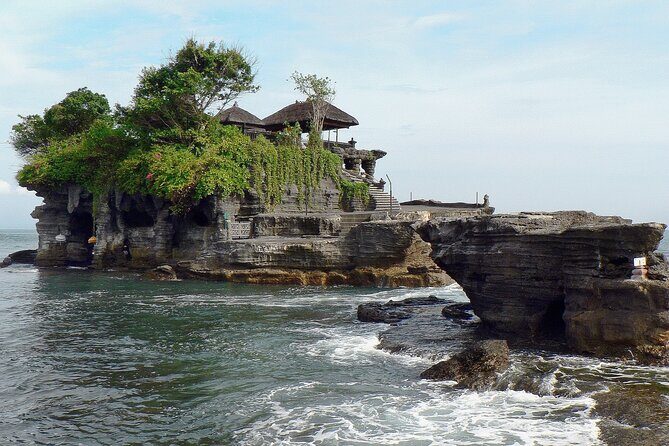
- Tanah Lot’s offshore outcrop makes the shoreline shrines and wave views the main event
- Driver-as-guide style: English communication plus patient help for photo stops
A half-day temple plan that actually feels like a break

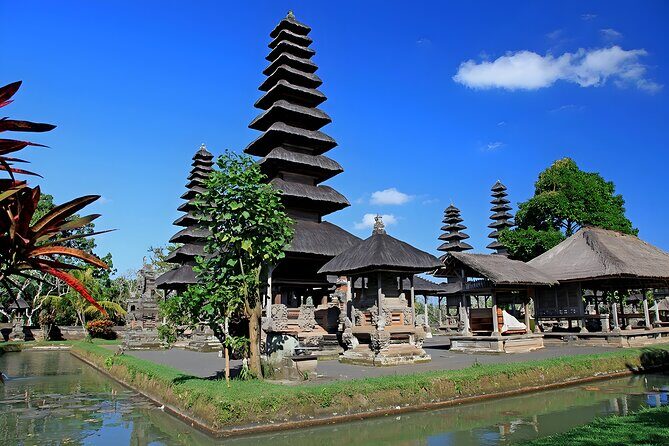
This is one of those Bali temple combinations that works because it changes the vibe twice. You go from the calm, engineered beauty of Pura Taman Ayun to the drama of Tanah Lot, where waves pound the rocks and the whole area is built around that view.
Taman Ayun sits near the village of Mengwi, about 8 km southwest of Ubud and roughly 18 km northwest of Denpasar. That means you’re not crossing the entire island for a single stop—you’re moving through a more local slice of Bali life. Then you shift to Tanah Lot, about 20 km northwest of Kuta, which is why it’s so common for western-side sightseeing.
The pacing is also sensible for a half-day: plan on about 6 hours total, with about 1 hour at each temple. That’s long enough to wander and take photos, but short enough that you won’t feel wrung out by midday heat.
From Kuta with a private car (and why that matters)
Pickup and drop-off are included from your hotel in Kuta, and you’ll be with a private car with good AC. In practice, that’s where a tour like this becomes good value. You’re not paying extra for taxis that may not be comfortable, and you’re not stuck figuring out transport timing between two temples that are both “icon stops.”
You also get a driver who can speak English as your guide. The difference is small but real: you can ask what to look for at each site and you don’t need to play phone-roulette with translation apps while you’re holding a sarong. Some drivers associated with this tour route—people like Nyoman, Putu, and Lolak—are specifically praised for being friendly and patient, especially when visitors want time for photos.
A note on the “private” part: it means only your group is participating. So if you’re traveling with family, friends, or you just want control over pace, you get it without negotiating with a crowd to share a van.
Entering Taman Ayun: bridge, canals, and the nine-jet fountain

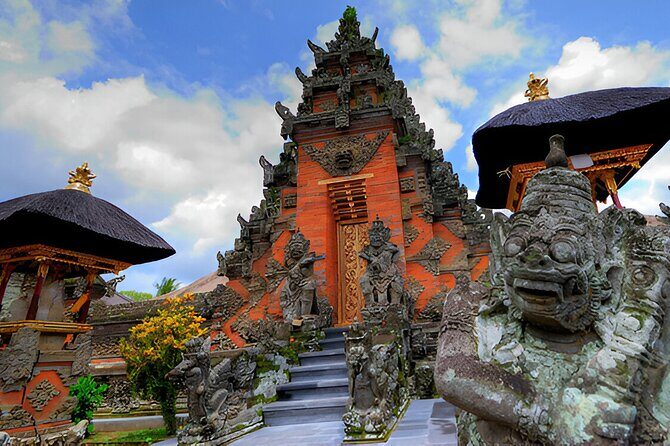
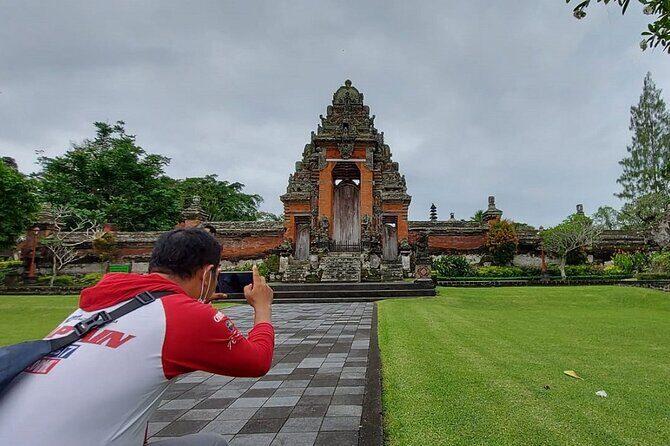
Taman Ayun is widely considered one of Bali’s most attractive temples, and it earns that reputation by feeling like a designed garden, not just a place with buildings. The temple is bordered by broad canals, and you can’t simply walk in anywhere. You enter via a bridge that leads to a richly ornamented candi bentar—the split gateway that signals you’re crossing into temple space.
From the gate, there’s a straight, paved footpath that guides you through well maintained gardens. You’ll pass a square pond with a fountain exactly at the center. Here’s the detail I really like: the fountain has nine water jets, and the placement is symbolic. Four jets align with the cardinal directions, four align with sub-cardinal points, and the ninth sits in the center. It’s a physical map of the Dewa Nawa Sanga, the nine main gods of Balinese belief.
That symbolism is what makes Taman Ayun more than “pretty temple photos.” The layout teaches you how to read the space. Even if you don’t know Balinese temple architecture, you’ll feel the logic of the garden: you’re guided forward, kept in a calm flow, and offered a focal point in the center.
Why the setting feels special in person
Taman Ayun was built in 1634 by the Raja of Mengwi, I Gusti Agung Putu. It’s also a Pura Kawiten, which means it’s a family temple. In other words, it honors deified ancestors of the Mengwi royal dynasty and important gods connected to other temples. That matters because it helps explain the tone: it’s not only about spectacle. It’s also about continuity and respect.
You’ll also notice how the canals and bridge entry create a separation from the outside world. You cross, pause, and then the experience becomes slower.
Practical watch-outs at Taman Ayun
- Wear shoes that handle a mix of stone and paved walkways. The route is walkable, but it’s not always “flip-flop friendly.”
- Plan for sun and hydration. Even though it’s a garden, you’ll still be outside on paths.
- Be ready for photo timing to depend on light and crowds. The fountain and central pond are popular photo spots.
Touring the temple grounds without rushing the sacred parts

You’ll typically have about an hour at Taman Ayun, and you can use that time in two different ways.
If you like photos, focus on the bridge-and-gate view first. That’s the moment when the whole layout clicks: canals framing the approach, the candi bentar as a visual anchor, then the paved path pulling your eye inward. After that, slow down for the central fountain. The nine jets are easier to appreciate when you stop moving and let your eyes adjust to the symmetry.
If you like cultural context, take the layout as your guide. This is a temple where the garden isn’t decoration. It’s part of how the space communicates meaning—through direction, center points, and controlled movement.
What your driver’s English skills help with
A good English-speaking driver doesn’t just point and smile. They can help you ask the right questions, like what you’re seeing in the gate structure and what the courtyard layout means for navigation. In this kind of half-day temple tour, that makes your time feel “used,” not merely spent.
The driver also helps you keep the day efficient between sites. You don’t want to waste time at the start of Tanah Lot searching for the best route when you’re only there for about an hour.
Tanah Lot: the offshore shrine, smaller shrines, and sunset timing

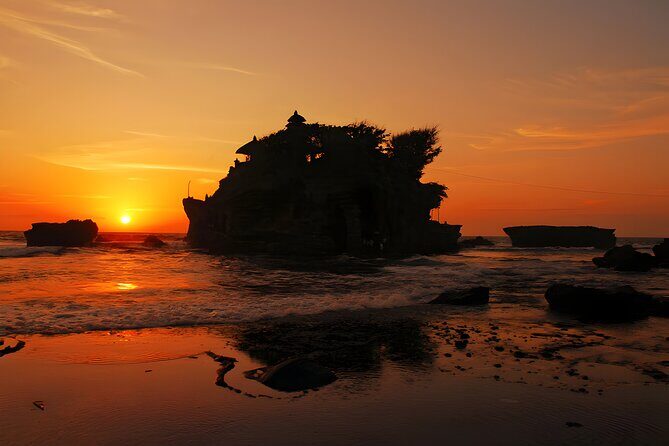
Tanah Lot is one of Bali’s most important landmarks, and it lives up to that reputation because of its setting. The Hindu shrine sits on top of an outcrop surrounded by waves that keep crashing against the rocks. From shore, it looks like a moment suspended above the ocean.
The complex includes more than one thing. Onshore you’ll find smaller shrines, plus visitor facilities like restaurants, shops, and a cultural park where regular dance performances happen. That mix is why Tanah Lot feels like both a sacred place and a scenic destination.
Tanah Lot is in Beraban village, Tabanan regency, about 20 km northwest of Kuta. It’s a popular inclusion on western and central sightseeing routes, so you should plan for energy—especially near popular times.
Sunset strategy that doesn’t wreck your day
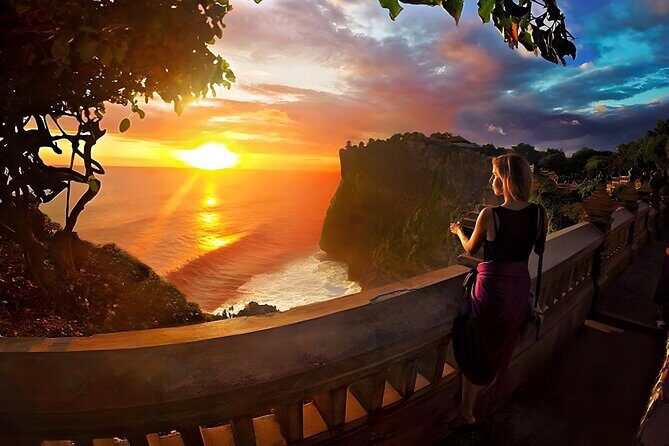
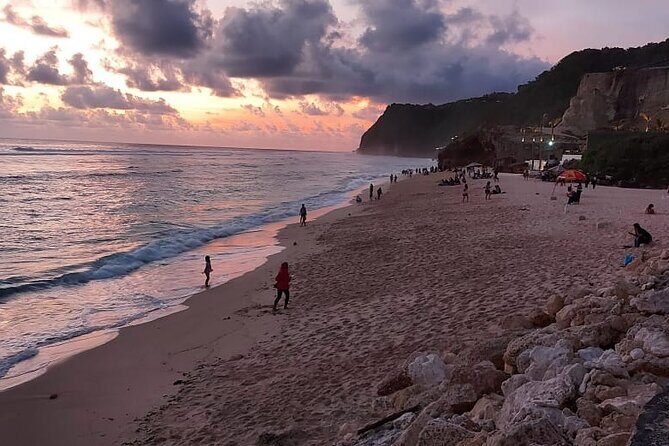
You should aim to come before sunset if you can. The reason is simple: the light changes fast, and the best wave-and-temple angles are often busy. One review detail I keep repeating to friends is that Tanah Lot is worth it precisely because sunset adds drama, but crowds make it easier to miss the calm.
So here’s the practical way to handle it:
- Arrive with time to walk and position yourself.
- Don’t wait until the last minute to get your bearings.
- Keep one plan for photos and another plan for just enjoying the shrine and wave sounds.
The complex details that people often skip
Inside the Tanah Lot area, there are additional sacred features. For example, the complex includes a sacred Snake Cave, which some visitors mention as an add-on once you’re already there. There’s also an assortment of smaller shrines, so it’s not only about the main outcrop view. If you like exploring, you can spend your hour moving through the onshore area first, then saving your best ocean view for later light.
Photo timing: where to spend your hour

Both temples offer photo moments, but they’re different kinds of pictures.
At Taman Ayun, the photos reward patience. Look for symmetry: the bridge approach, the gate framing, and the central pond fountain. The setting is designed for a walking rhythm, so don’t rush your way through.
At Tanah Lot, photos reward timing with a side of realism. It’s an iconic location, and people know it. You’ll likely see a lot of activity around the outcrop and shoreline. That doesn’t mean it’s not worth it; it means you should choose your angle early and avoid moving too much once you’ve found a place.
Also, keep your expectations flexible. The ocean and waves are constantly changing, so your “perfect shot” might happen sooner—or later—than you planned.
Price and value: why this $20 half-day can make sense

The listed price is $20, for a half-day around six hours including pickup and return, a private car with good AC, and entrance tickets for each attraction. There’s also a key condition: the tour package is at least 2 person travelers. That’s common for private-car arrangements, and it can be a good deal when shared.
Here’s how I judge value for a tour like this:
- You’re paying for convenience (hotel pickup/return in Kuta).
- You’re paying for transportation comfort (AC car).
- You’re paying for reduced friction (included tickets, mobile ticket).
- You’re paying for communication (English-speaking driver as guide).
What you’re not paying for: meals and optional personal expenses. So budget for water, snacks, and whatever you choose to buy at Tanah Lot’s onshore area.
One more value tip: entrance fees for foreign visitors can be higher on Bali’s tickets systems than local rates, so if a tour says tickets are included, double-check that both stops are covered. This package includes entrance tickets for each attraction, which is exactly what you want to avoid last-minute math.
Who this tour fits best

This works especially well if:
- You want two iconic temple stops without a full-day grind.
- You prefer a private setup where your group sets the pace.
- You care about getting the “big views” at Tanah Lot but still want the gentler garden experience of Taman Ayun.
- You like having an English-speaking driver who can help you navigate temple spaces efficiently.
It’s also a solid choice for couples and small groups. One clear theme in the experience feedback is satisfaction with the drivers being friendly, attentive, and patient—so if you’re someone who tends to take your time for photos, you’ll likely feel supported.
Should you book this Taman Ayun and Tanah Lot private tour?
If your goal is a high-value temple half-day that’s organized and not stressful, I’d book it. The best reasons are the combination: Taman Ayun’s symbolic garden layout (bridge entry, candi bentar gate, nine-jet fountain) paired with Tanah Lot’s offshore shrine drama. The included pickup, AC private car, English-speaking driver-as-guide, and entrance tickets make the day feel plug-and-play.
I’d only hesitate if you’re chasing the quietest experience at Tanah Lot. Sunset timing brings crowds, and you’ll need patience to get the best views. If that’s fine, this is a very practical way to see two of Bali’s most memorable temple moments in one compact day.
FAQ
What does the tour include?
Pickup from your hotel and back to your hotel, a private car with good AC, a driver who can speak English as your guide, and entrance tickets for each attraction are included.
How long is the tour?
It’s about 6 hours (approx.), with around 1 hour at each stop.
Is this tour private?
Yes. It’s a private tour/activity, and only your group participates.
Are entrance tickets included?
Yes. Entrance ticket(s) for each attraction are included, and you’ll use a mobile ticket.
Is meals included?
No. Meals fees and personal optional expenses are not included.
Can I cancel and get a full refund?
Yes. You can cancel up to 24 hours in advance for a full refund. If you cancel less than 24 hours before the experience starts, you won’t get a refund.


.jpg)
.jpg)
.jpg)
.jpg)
.jpg)
.jpg)
.jpg)
.jpg)


.jpg)
.jpg)
.jpg)
.jpg)
.jpg)
.jpg)
.jpg)
.jpg)


.jpg)
.jpg)
.jpg)
.jpg)
.jpg)
.jpg)
.jpg)
.jpg)