Telaga Waja White Water Rafting and Besakih Temple Tour

Telaga Waja White Water Rafting and Besakih Temple Tour - Telaga Waja white-water rafting: 3 hours of fun, safety, and scenery

One day in Bali, done right, beats two weeks of guesswork. This Telaga Waja White Water Rafting and Besakih Temple Tour strings together adrenaline and spirituality with a calm, well-timed rhythm: you ride the river in the morning, then move to some of the island’s most important sacred sites.

What I like most is how the tour balances action with comfort. You get 3 hours rafting with safety gear, towels, shower, and changing facilities, then a buffet lunch before heading into culture.

One thing to consider: it’s a long day, about 8 to 10 hours, and you’ll be in hot sun (even more if you’re snapping photos) before you reach the temples.

Key moments that make this tour worth your time
Telaga Waja White Water Rafting and Besakih Temple Tour - Key moments that make this tour worth your time

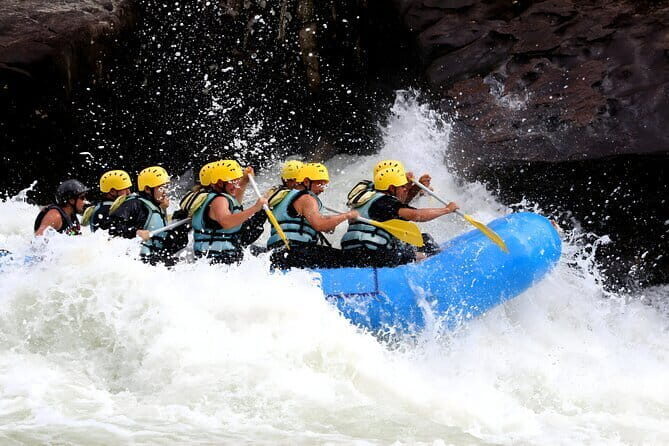
  • Telaga Waja rapids: 3 hours of white water that works for beginners and more experienced rafters
  • A built-in break on the river: time to reset, stretch, and get photos (with a photographer option)
  • Besakih in depth: Bali’s Mother Temple complex with 80+ temples, plus clear context from your guide/driver
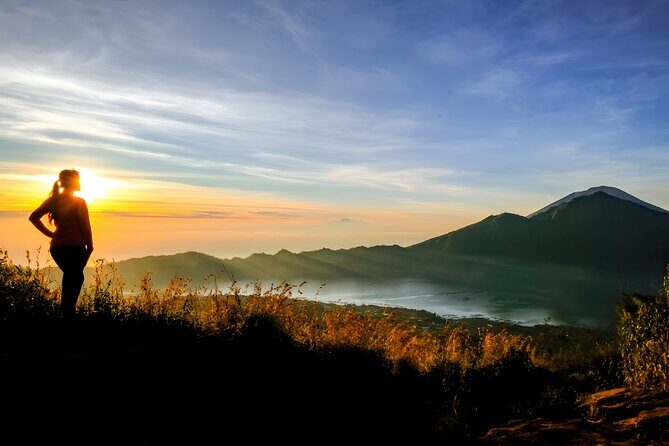
  • Bukit Jambul views: rice terraces with valley, harbor, and beach panoramas in eastern Bali
  • Kerta Gosa storytelling: two classic palace/temple structures, including a floating hall, tied to the Klungkung kingdom

Telaga Waja plus Besakih: the smart Bali combo

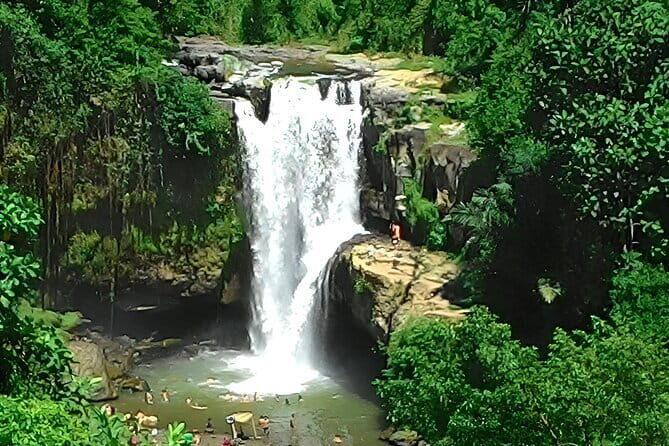
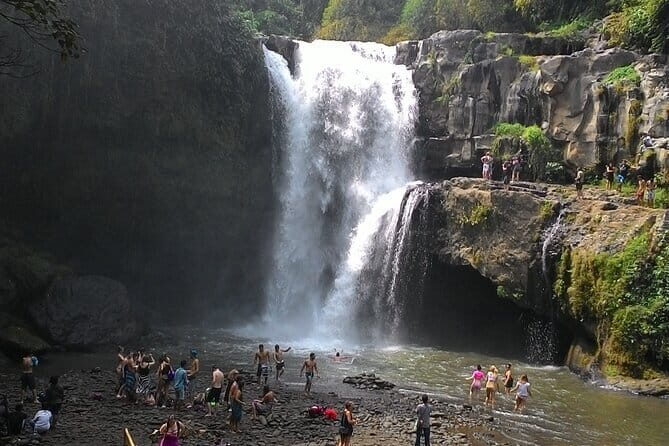
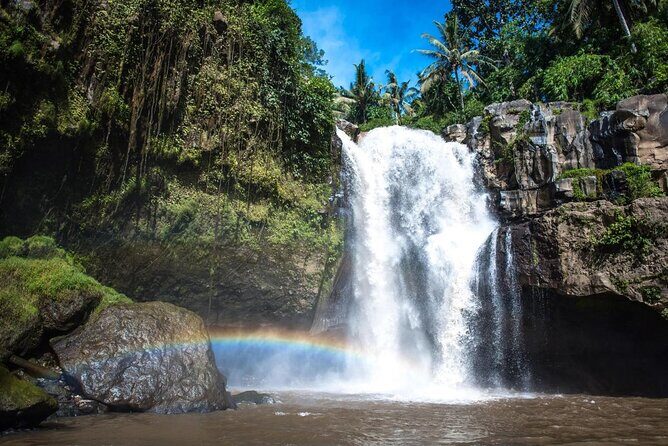
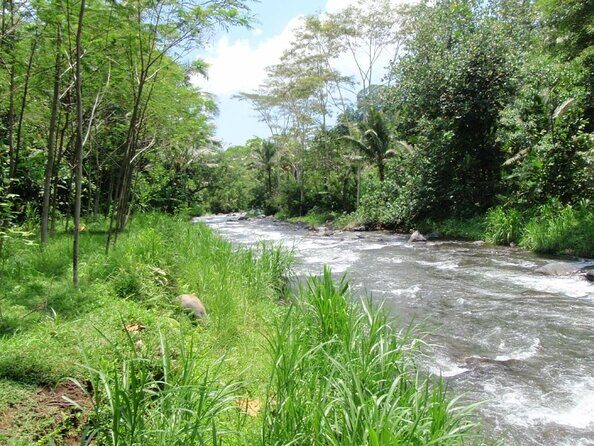
This is a classic Bali combination for a reason. You’re not just checking boxes. You start in nature—rain-forest scenery, rice fields, stone cliffs, and waterfalls along the Telaga Waja River—then you shift to one of the island’s most meaningful spiritual places: Besakih Temple.

The flow matters. White-water rafting can make you tired fast, so the schedule is built to get you finished, showered, fed, and then able to handle walking around temple grounds. If you’re the type who wants an active morning and a thoughtful afternoon, this pairing fits your day without feeling rushed.

How the day runs: 8 to 10 hours with pickup across much of southern Bali
Telaga Waja White Water Rafting and Besakih Temple Tour - How the day runs: 8 to 10 hours with pickup across much of southern Bali
The tour starts at 8:00 AM. From there, you’re in an air-conditioned vehicle, headed to Telaga Waja for your rafting session. Pickup and drop-off are offered from many areas, including Ubud, Seminyak, Sanur, Denpasar, Kuta/Legian/Tuban, Nusa Dua/Tanjung Benoa, Uluwatu, Jimbaran, Kerobokan, and Canggu.

That breadth is practical. It means you’re less likely to waste time meeting at some random central point. It also helps if your Bali plan has you moving between neighborhoods—this is one day where someone else handles the driving.

The trade-off is time. Expect a full-day schedule (listed as 8 to 10 hours) and plan for a “get ready early” morning. If you hate early starts, you’ll feel it by mid-afternoon—especially in warm weather.

Telaga Waja white-water rafting: 3 hours of fun, safety, and scenery
Telaga Waja White Water Rafting and Besakih Temple Tour - Telaga Waja white-water rafting: 3 hours of fun, safety, and scenery
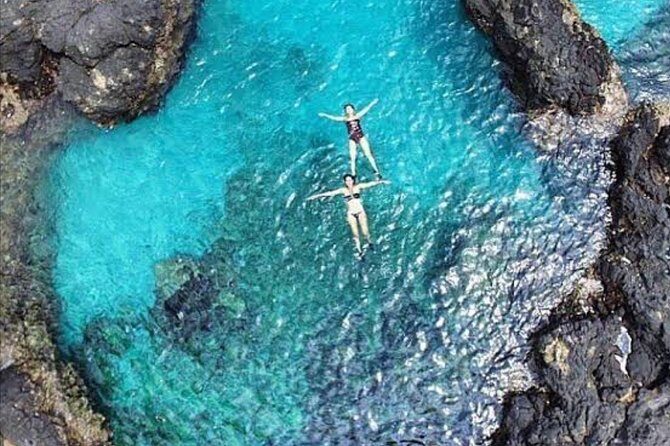
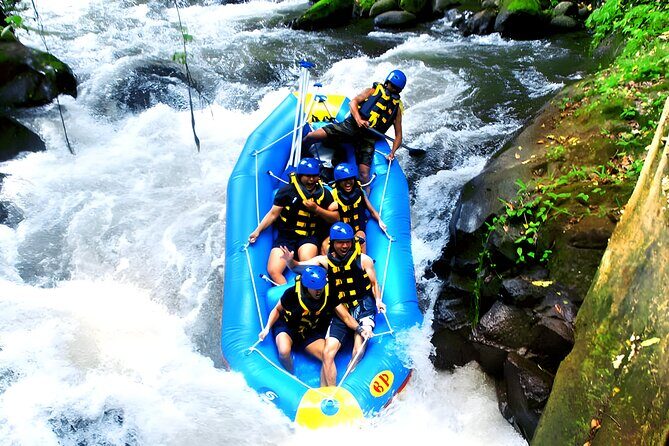
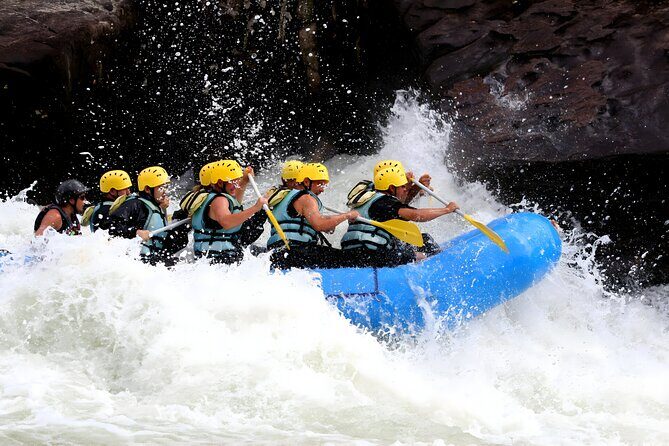
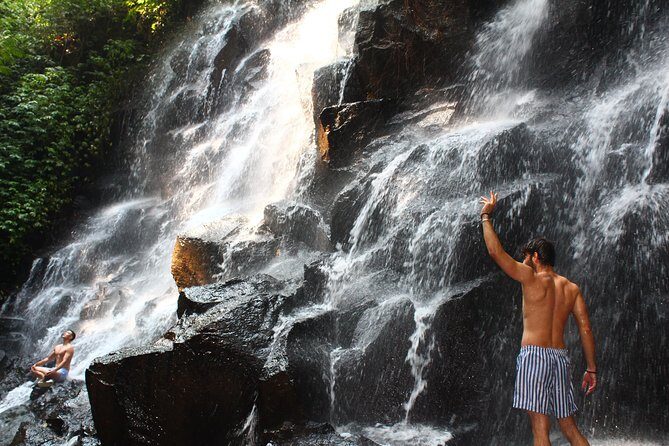
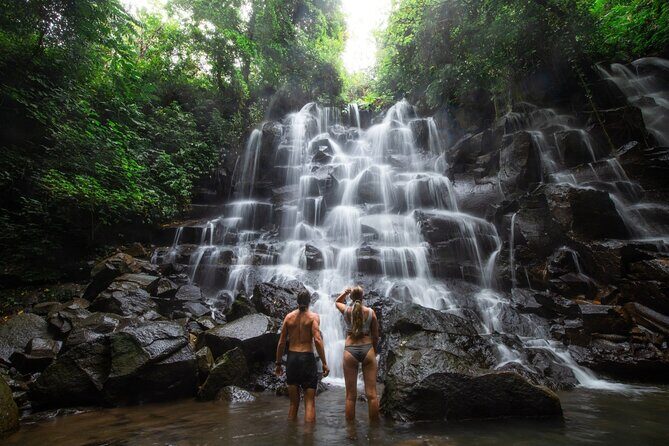
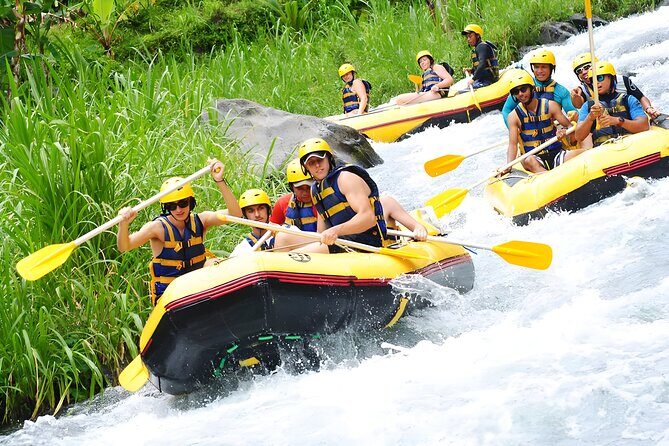
Telaga Waja rafting is set up for real variety. The route is described as accessible to beginners and professionals, which usually means the operator manages the day so most people can enjoy it safely. You’ll also get the big visual payoff: rain-forest scenery, rice fields, stone cliffs, and waterfall splashes.

A few details make this feel more complete than a short rafting ride:

  • Waterfall splash zones: in some sections, you get hit with extra water from falls.
  • Mid-rafting break: there’s time to take photos, reset, and enjoy the view before you continue.

You’ll have a professional river rafting guide, plus safety-approved equipment. The tour also includes towels, a shower, and changing room, so you’re not stuck figuring out how to “transition” from soaking wet to temple-ready.

If you’re worried about whether you can handle white water, this is one of the reasons Telaga Waja is popular: it’s presented as a place where beginners aren’t left out, while professionals still get the thrills.

What happens after rafting: towels, shower, and a buffet lunch that actually fuels you

After your rafting session, you’ll be served lunch at the rafting restaurant. The lunch is listed as a buffet, and it’s included in the price.

This sounds simple, but it matters. A buffet works well after active time because you can eat what you need, not what someone hands you. It also helps you recover before you start temple walking, where you’ll likely want steady energy and a calm mood.

Vegetarian travelers should note that a vegetarian option is available if you advise at booking. That’s a meaningful inclusion on an otherwise busy day.

One practical tip: treat lunch like part of your recovery plan. Don’t skip it to “save time,” because you’re about to head into places where you’ll be walking and taking in details.

Besakih Temple: Bali’s Mother Temple on the slopes of Mount Agung

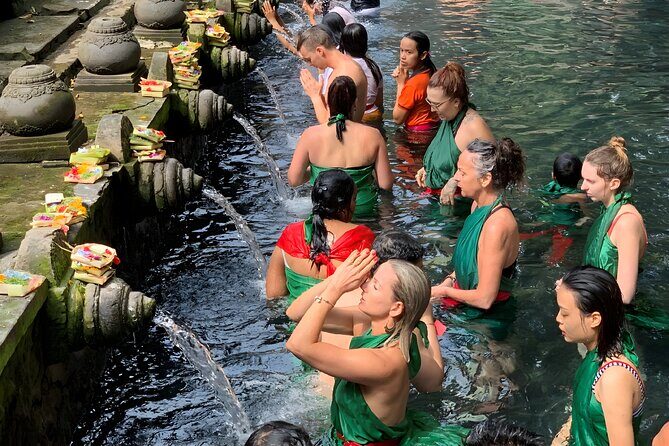
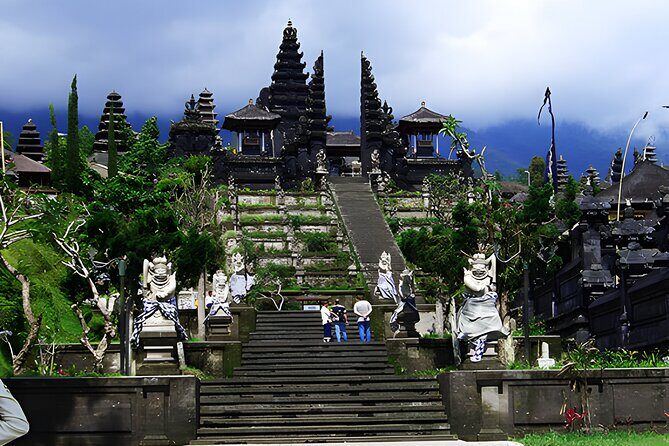
Besakih is one of those sites that feels important the moment you arrive. It’s called Bali’s Mother Temple and is described as the largest and holiest temple complex in Bali. It sits about 1,000 meters high on the southwestern slopes of Mount Agung, which gives it an impressive sense of place.

This isn’t a single building. The complex is said to include at least 86 temples, including the main site called Pura Penataran Agung (the Great Temple of State). You’ll spend about 1 hour here, with admission tickets included.

What I find useful for planning is understanding the experience type. Besakih is a sacred complex, so expect a mix of architecture, courtyards, and lots of visual symbolism. If you’re the kind of traveler who likes learning what you’re looking at, you’ll get extra value from your guide/driver’s explanations during the visit.

The setting also helps. The temple complex is described as being surrounded by scenic rice paddies, hills, mountains, streams, and more. So even if you focus mostly on buildings, the views do part of the work for you.

Bukit Jambul rice terraces and Kerta Gosa: views plus royal-era art

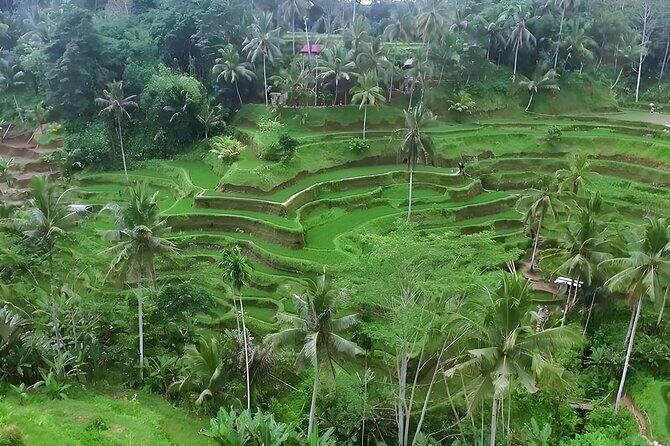
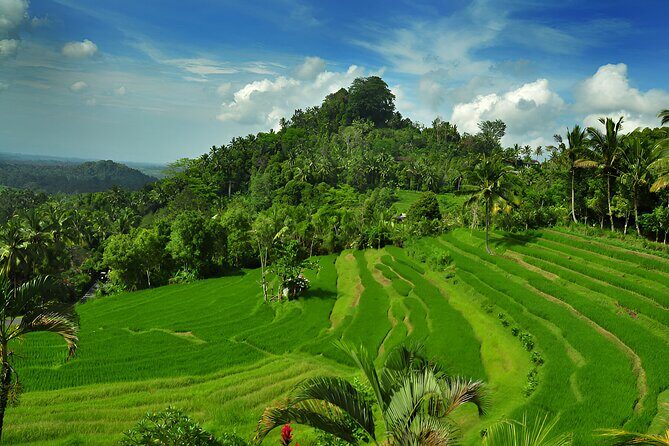
After Besakih, you’ll head to Bukit Jambul Rice Terrace, which is presented as one of the best rice terrace spots in eastern Bali. You’re in for panorama views—valley, harbor, and beach—along with a fresh tropical atmosphere.

This stop also includes access to local restaurants with Indonesian and international menu options nearby. Even if you don’t eat there (since lunch is already included), it’s nice to know you’ll have options for drinks or snacks if you want to extend your time.

You’ll spend about 1 hour at Bukit Jambul, with admission included.

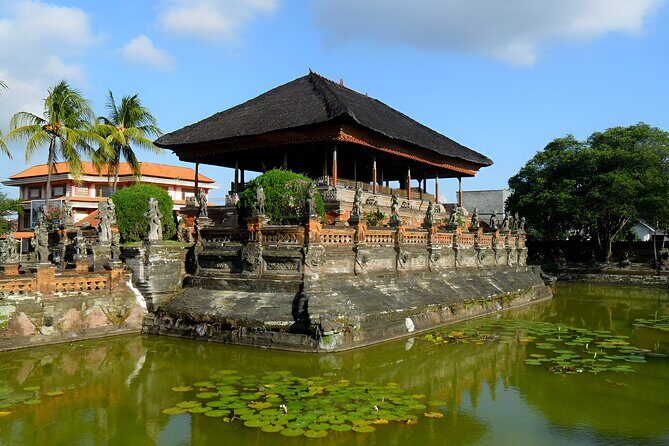
Then you finish at Kerta Gosa (Taman Wisata Kertha Gosa), a historical site connected to the Puri Semarapura royal palace in Klungkung. Here’s what makes this stop feel different from a simple temple stop:

  • Bale Kertha Gosa, a grand hall with ceilings filled with Kamasan or wayang-style paintings
  • Bale Kambang, a floating hall

The complex dates back to 1686, commissioned by Dewa Agung Jambe, ruler of the Klungkung kingdom. It has also undergone restorations, and it’s open to the public.

Spend time here if you like architecture and art. The painted ceilings and the floating-hall detail are the kind of things you’ll remember later when you’re looking at your photos back home.

Price and value: $80 for a full-day raft-and-temple package
Telaga Waja White Water Rafting and Besakih Temple Tour - Price and value: $80 for a full-day raft-and-temple package
At $80 per person, the value comes from the combination of activities and the number of items bundled into the day.

Here’s what’s included:

  • Air-conditioned vehicle
  • 3 hours rafting with a professional guide
  • Towels, shower, and changing room
  • Rafting insurance, tax, and services
  • All entrance tickets for the stops
  • Buffet lunch
  • English-speaking driver

What’s not included: alcohol, and any photo/video souvenir products (which you can purchase).

So the real question is: does this replace multiple tickets and separate tours? In practice, yes. You’re paying for a day that combines transport, one major adventure activity, and multiple paid cultural admissions.

If you were to do rafting and then add temple admissions and a separate guide/driver time, your costs often stack up fast. This package keeps that friction down.

What to pack and wear for a day that starts wet and ends cultural
Telaga Waja White Water Rafting and Besakih Temple Tour - What to pack and wear for a day that starts wet and ends cultural
This is the kind of day where your clothing choices change your comfort level.

Dress code is listed as smart casual. But remember: rafting happens first, so plan around water even if your outfit looks “temple appropriate” later.

Bring:

  • Sunscreen
  • Camera
  • Change of clothes

And wear something you can handle getting wet. The tour provides shower and changing facilities, which helps, but you’ll still want a dry set ready for the drive and the temple stops.

If you’re going to take photos, consider that the raft includes a mid-trip break and waterfall splash zones, so you’ll likely be taking pictures in changing light and sometimes wet conditions.

Who should book this tour, and who should think twice

This tour is best for:

  • People who want a real white-water rafting session but still want a schedule that includes meaningful culture afterward
  • Travelers who appreciate clear organization and an English-speaking driver guiding the day
  • Families and couples who want one package instead of multiple separate bookings

It’s less ideal if:

  • You dislike early mornings and long days (it runs about 8 to 10 hours)
  • You’re sensitive to physical activity. Rafting is listed as accessible to beginners, but it’s still an adventure, plus you’ll do temple walking after

Age range is 6 to 65, which sets expectations for how the operator likely manages the group.

Vegetarian travelers can also go for it, since a vegetarian option is available if you request it during booking.

Should you book Telaga Waja and Besakih in one day?

If you’re trying to design a Bali day that feels active, balanced, and efficient, this one makes sense. You get the adrenaline of Telaga Waja’s white water, then the spiritual weight of Besakih, then two additional stops that cover rice-terrace views and Kerta Gosa’s royal-era art and architecture.

Book it if:

  • You want one pickup-and-drive day covering multiple “must-see” experiences
  • You value included items like shower/changing access and buffet lunch
  • You’re okay with a full schedule and early start

Skip it if:

  • You want a slow, low-effort day with no white water
  • You’re not comfortable with the time commitment of 8 to 10 hours

FAQ

What time does the Telaga Waja rafting and Besakih tour start?

The start time is 8:00 AM.

Is pickup and drop-off included, and where does it operate?

Pickup and drop-off are offered from hotel or villa locations in many areas, including Ubud, Sanur, Denpasar, Tanjung Benoa, Nusa Dua, Uluwatu, Jimbaran, Tuban, Kuta, Legian, Seminyak, Kerobokan, and Canggu.

How long is the rafting part of the tour?

You’ll enjoy about 3 hours of rafting on the Telaga Waja River.

What’s included in the tour price besides rafting?

The tour includes buffet lunch, all entrance tickets, towels, shower and changing room, rafting insurance, and a driver/guide setup with an air-conditioned vehicle.

Can I request a vegetarian meal?

Yes. A vegetarian option is available, and you should advise at the time of booking.

What should I bring and wear?

Bring sunscreen, camera, and a change of clothes. Dress code is listed as smart casual.

What if weather is poor or I need to cancel?

The experience requires good weather. If it’s canceled due to poor weather, you’ll be offered a different date or a full refund. There is free cancellation, and you can cancel up to 24 hours in advance for a full refund.

Private Full-Day Tour: Tanah Lot and Uluwatu Temple Tour

Private Full-Day Tour: Tanah Lot and Uluwatu Temple Tour - Entering Taman Ayun Temple: A More Local Start

One day, three temples, one big sunset. This private full-day tour strings together Taman Ayun Temple, Tanah Lot, and Uluwatu with beach time and a sunset Kecak and Fire Dance right by the cliff temple. You also get a set-menu lunch and (with the option) a Jimbaran seafood dinner, all handled with private air-conditioned transport and an English-speaking driver.

Two things I love: the convenience of a private vehicle door-to-door and the way the day ends with the Kecak and Fire Dance experience at Uluwatu during sunset timing. One drawback to plan for: it’s a long outing (about 11–12 hours), and Uluwatu is very crowded around sunset, so you should expect the area to feel busy.

What really helps is the human touch. In the feedback I saw, a driver-guide named Nyoman was praised for pointing out photo spots and explaining local traditions as you go—exactly the kind of guidance that turns a checklist tour into something you actually remember.

Key Highlights You’ll Feel Immediately

Private Full-Day Tour: Tanah Lot and Uluwatu Temple Tour - Key Highlights You’ll Feel Immediately

  • Private transport with pickup and drop-off from Seminyak and many nearby areas, with only your group in the car
  • Three major temple stops: Taman Ayun, Tanah Lot, and Uluwatu
  • Padang Padang Beach stop for classic sand-and-surf scenery and a breather between temples
  • Sunset Kecak and Fire Dance next to Uluwatu Temple, timed for the evening mood
  • Set menu lunch and Jimbaran dinner option, so you’re not constantly hunting for food
  • Entrance tickets and Kecak dance ticket included, which makes the day smoother

How This Private Day Tour Works (And Why It’s Such a Time Saver)

Private Full-Day Tour: Tanah Lot and Uluwatu Temple Tour - How This Private Day Tour Works (And Why It’s Such a Time Saver)
This is built for people who want Bali highlights without the hassle of figuring out rides, ticket lines, and route gaps. You start with hotel or villa pickup in the Seminyak area (and a long list of other Bali locations), then spend the day moving in a private, air-conditioned vehicle.

The tour is private in the real sense: your group travels together and you’re not sharing the vehicle with strangers. That matters on Bali temple days. Traffic, parking, and entrance pacing can add up fast, so having your own transport schedule helps you keep the day from falling apart.

Also, you’re not stuck managing ticket logistics. Entrance tickets for the stops and the Kecak and Fire Dance ticket are included. You’ll still want your camera ready and sunscreen packed, but the money-and-paperwork part is handled.

One small planning note: this tour requires good weather. If conditions are poor, the experience can be canceled and you’ll be offered a different date or a full refund. That’s important because this day is designed around scenic coastal locations and a sunset performance.

Entering Taman Ayun Temple: A More Local Start

Private Full-Day Tour: Tanah Lot and Uluwatu Temple Tour - Entering Taman Ayun Temple: A More Local Start
The day kicks off at Taman Ayun Temple, described as a main site of worship among the Mengwi people, so it’s not just another “famous” stop—it’s tied to a specific community and reason for being. The tour information also notes that worship here means local people don’t need to travel far to reach major temples like Besakih.

What I like about starting here is the pacing. After pickup and getting oriented, you get a temple visit that sets the tone without immediately going straight to the most dramatic cliff-and-crowd scenery. You typically spend about an hour here, which is a good amount of time for seeing the grounds and soaking up the atmosphere without turning the day into a nonstop museum.

If you’re the kind of traveler who enjoys learning what a temple represents—who it serves, why it matters—Taman Ayun fits that mindset. You’ll likely appreciate how the driver frames the purpose of the stop before you move on to the more iconic photo locations.

Tanah Lot: The Outcrop Temple With Real Ocean Drama

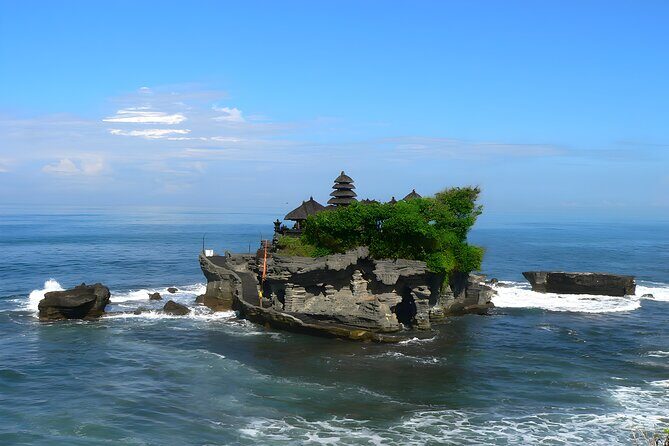
Next up is Tanah Lot, one of Bali’s best-known temple scenes. It’s described as an ancient Hindu shrine perched on an outcrop while waves crash below. That detail is the whole point: you’re not just visiting a temple, you’re watching the ocean work.

You’ll spend about an hour at Tanah Lot. In that window, it helps to prioritize viewpoints rather than trying to cover every angle. With a place like this, the best experience is standing back, watching the waves, and photographing the way the temple sits above the water.

Practical note: sea-spray and uneven ground are common around coastal temples. Wear footwear you’re comfortable walking in and take your time stepping around. This is also a good spot to use a bit of sunscreen now, since you’ll likely be out in open light for a while today.

Padang Padang Beach: Surf Energy and a Short Reset

Private Full-Day Tour: Tanah Lot and Uluwatu Temple Tour - Padang Padang Beach: Surf Energy and a Short Reset
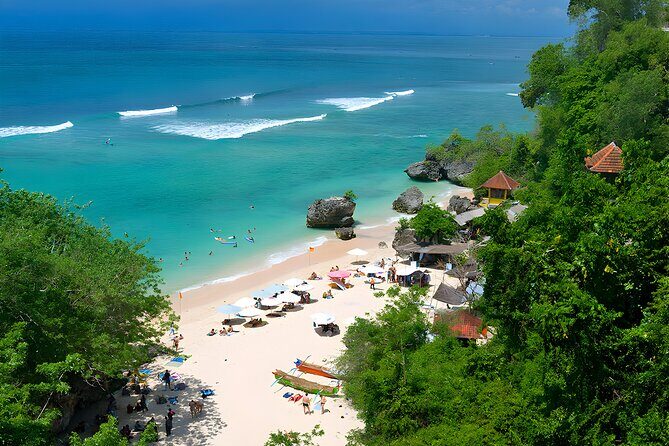
After temples, you get a beach break at Padang Padang Beach. The tour description highlights great waves and a white sandy stretch about 100 meters from north to south. It’s also noted as a surf point, with a white stone hill nearby.

This stop is about an hour, which is the right length to reset your eyes and your legs without losing the flow of the day. If your Bali trip tends to be mostly temples and viewpoints, this one adds a bit of movement and downtime. You’ll have space to breathe, walk, and take photos that feel different from temple carvings and sea cliffs.

Because the waves can be a big part of why people come here, keep an eye on conditions. If it’s windy or the sun is strong, grab shade when you can and don’t forget sunscreen.

Uluwatu Temple at Sunset Timing: Beautiful, Popular, and Busy

Private Full-Day Tour: Tanah Lot and Uluwatu Temple Tour - Uluwatu Temple at Sunset Timing: Beautiful, Popular, and Busy
Uluwatu Temple is the big evening anchor, and the tour is structured so you reach it at the time it shines most. The information specifically calls out that it’s very crowded by tourist everyday during sunset time. So yes, it’s worth planning for crowds—you won’t have it to yourself.

Uluwatu is also described as Pura Luhur Uluwatu, and the tour notes that it’s one of six key temples. Even if you don’t go deep into temple taxonomy, that phrase gives you a useful lens: this is a major spiritual landmark in Bali, not just a scenic stop.

You’ll spend about an hour at Uluwatu Temple itself. I’d treat this as two parts:

1) time to see the temple in its cliff setting

2) time to position yourself for the sunset performance afterward

If you’re hoping for great photos, arrive with a plan. Pick where you want to stand for the show, then shift your attention back to temple views for the earlier portion.

Also, with any cliff temple area, wind can hit hard in the evening. Bring a camera strap you trust and keep your belongings secure.

Kecak and Fire Dance Next to Uluwatu: The Moment Everyone Talks About

The highlight many people remember from this day is the Kecak and Fire Dance performance next to Uluwatu Temple as the sun sets. The tour information calls out that Kecak was first developed in Bona, Gianyar, and then evolved into a performing arts format.

You’ll have about an hour here, including the performance time. In practice, that usually means you’ll be there early enough to settle in, then watch the show as the light drops and the energy builds.

What makes this stop especially good in a private tour format is context. You’re not just watching something on autopilot. With an English-speaking driver-guide, you’re more likely to understand what you’re seeing—how the performance connects to Balinese culture and why it’s paired with this cliff-temple setting.

If you’re traveling with kids, this is also one of the better energy matches in Bali: it’s visually driven and doesn’t require reading. Just keep your expectations realistic—this is a live show and it’s popular, so you should expect a lively crowd.

Jimbaran Bay Dinner by Sunset: Where the Day Lands

After the temples and the show, the day closes at Jimbaran Bay with a set-menu seafood dinner package (when that option is selected). The tour info emphasizes fresh grilled seafood and a sunset panorama.

This is a smart finish for two reasons. First, it gives your body a chance to come down after hours of walking and watching. Second, Jimbaran’s format is made for ending a sightseeing day while the sky does its final work.

The tour also notes that a non-seafood dinner option is available. If seafood isn’t your thing, plan that change when you book so the set menu matches what you’ll actually eat.

Because this is a dinner included as a set menu, you won’t need to negotiate or hunt for a place at the last minute. You’ll just show up and eat, which is exactly what you want after an 11–12 hour day.

Timing, Comfort, and Getting Your Photos Without Losing Your Mind

An 11–12 hour day can be totally enjoyable, as long as you pace yourself. The best way to do that is to think in “blocks” rather than chasing every viewpoint.

  • Temple time: expect about an hour at each main stop
  • Beach time: about an hour at Padang Padang Beach
  • Performance time: about an hour for the Kecak and Fire Dance
  • Dinner time: included as a set menu when selected

Private transport helps you keep these blocks on track. You’re also in an air-conditioned vehicle, which matters in Bali heat.

For photos, pick your priorities early:

  • At Tanah Lot, focus on the outcrop-and-waves composition
  • At Uluwatu, prioritize your show viewpoint first, temple second
  • At Padang Padang, grab the beach line and wave action shots while you still have energy

And do yourself a favor: bring sunscreen and keep water handy. The tour asks you to bring sunscreen and a camera, which is a strong hint that you’ll be in open light enough times to justify it.

Price and Value: What You’re Really Paying For

At $100.00 per person, this private full-day tour isn’t trying to be the cheapest way to see Bali. Instead, the value comes from bundling what would be painful to organize yourself:

  • Private transportation with air-conditioning
  • Entrance tickets for the temple stops
  • Kecak and Fire Dance ticket
  • Set menu lunch
  • Set menu seafood dinner option at Jimbaran Bay (if selected)
  • Petrol, parking fees, plus tax and service

If you were booking these items separately—transport, tickets, show admission, meals—you’d spend more time coordinating and more energy managing details. Here, you buy a full-day plan and spend your mental bandwidth on enjoying it.

One thing to double-check for your own value math: the Jimbaran seafood dinner is included only if you select that dinner option. If you’re not selecting it, you’ll still get lunch and the sightseeing elements, but the total feel of the “full package” changes.

Who This Tour Fits Best (And Who Should Rethink It)

This tour is a great match if you want classic Bali highlights in one long day and you care about reducing logistics. It fits couples, families, and small groups who want a private, air-conditioned car and an English-speaking driver-guide handling the route.

It’s also a good fit if you like a structured evening: Uluwatu first, then the Kecak and Fire Dance at sunset timing, then dinner. That flow is built in, not something you have to stitch together after the fact.

If you prefer a slower pace—more time per location, fewer moves, and less crowd exposure—you might feel the day is packed. Uluwatu in particular is crowded at sunset time, and the entire itinerary is designed to hit multiple top sights rather than linger.

Should You Book This Private Tanah Lot and Uluwatu Tour?

Book it if you want a high-efficiency, private Bali day with major temple stops, a beach reset at Padang Padang, and a sunset performance that ends the day on a strong note. The included tickets and set meals are the kind of practical value that makes a long day feel manageable, not chaotic.

Hold off or choose a different plan if you hate crowds or you know you’ll struggle with an 11–12 hour day. Also, if you’re traveling in a period where weather is unpredictable, recognize that the experience requires good weather and can be moved or refunded.

FAQ

Is this tour private or shared?

This is a private tour, meaning only your group participates and you travel in a private vehicle.

How long is the tour?

The duration is about 11 to 12 hours.

What stops are included in the day?

You’ll visit Taman Ayun Temple, Tanah Lot, Padang Padang Beach, Uluwatu Temple, watch the Kecak and Fire Dance, and end with dinner at Jimbaran Bay.

Are entrance tickets included?

Yes. All entrance tickets and the Kecak dance ticket are included.

Do I get lunch and dinner?

You get a set menu lunch, and a set menu seafood dinner is included if the seafood dinner option is selected.

Is there an option for non-seafood or vegetarian meals?

A vegetarian option is available if you request it at booking. A non-seafood dinner option is also available if you advise at booking.

Do you pick up from Seminyak?

Yes. Pickup and drop-off are offered from hotel or villa locations in Seminyak, along with many other Bali areas.

What about pickup locations besides Seminyak?

Pickup is also listed for Ubud, Sanur, Denpasar, Tanjung Benoa, Nusa Dua, Jimbaran, Tuban, Kuta, Legian, Kerobokan, and Canggu.

What dress code should I wear?

The dress code is smart casual.

Is good weather required?

Yes, the experience requires good weather. If it’s canceled due to poor weather, you’ll be offered a different date or a full refund.

ATV Quad bike tour with Rice terraces & temple

ATV Quad bike tour with Rice terraces & temple - Tegalalang rice terraces: farmers, irrigation, and why the timing matters

Bali in one loud, scenic day. This ATV quad bike tour combines action in the countryside with Ubud sightseeing like Tegalalang rice terraces and a temple visit. The route is built around real Bali scenery: countryside tracks, jungle sections, rice paddies, and even waterfall views, all packed into a half-day feel.

I really like the balance here: you get an adrenaline ride, then calm, hands-on culture time where you learn how farmers work the land. In particular, I love the way Tegalalang is explained with farmers life and the manual irrigation system. The main drawback to plan for is no lunch included, so you’ll want to budget for food and keep your energy up.

Key things to know before you go

  • ATV ride hits multiple Bali settings: countryside, jungle trails, rice paddies, and waterfall scenery
  • Tegalalang is more than photos: you get a real explanation of farmers and manual irrigation
  • Elephant Cave (Goa Gajah) adds a history-story stop tied to an 11th-century Bindu temple
  • Pickup + private car transport keep the day moving without extra hassle
  • All entry tickets are included, so you’re not hunting down payments at each stop

How this Seminyak-to-Ubud day fits together

ATV Quad bike tour with Rice terraces & temple - How this Seminyak-to-Ubud day fits together
If you’re staying around Seminyak and you want something that feels like you changed places, this tour is a smart format. You spend your morning (or part of your day) moving between countryside adventure and Ubud culture in a single run, rather than juggling multiple bookings.

The tour is built as ATV quad bike + Ubud village touring, so you don’t just ride in circles. You’re guided through changing scenery, then you slow down for the rice terraces and a temple site. That rhythm matters in Bali, because it keeps the day from feeling like a single activity stretched too long.

Also, you’re not stuck doing it on a seat-of-your-pants schedule. You get pickup offered, a private car, and an English-speaking driver. On a 5 to 7 hour trip, those details help you spend more time where you want to be and less time figuring out timing.

ATV quad biking in Bali: what to expect on the track

ATV Quad bike tour with Rice terraces & temple - ATV quad biking in Bali: what to expect on the track
The ATV portion is the centerpiece, and it’s designed to give you the real countryside feel, not just a short loop. Expect a ride that blends countryside tracks with jungle-trek sections. You’ll also pass through areas associated with rice paddies, and the route includes waterfall scenery along the way.

One phrase in the tour description stands out: mad road. That’s not a promise of danger, but it’s a hint that some parts of the route can feel rough or busy compared with a smooth paved track. You should go into it ready for bumpy segments and the kind of riding where you keep your attention on the road ahead.

This is also where you’ll feel the “adventure” nature of Bali. If you like photos, you’ll get plenty of chances, but the best photos will come when you treat it like a ride first, photo second. If you’re the type who stops constantly to pose, you may feel rushed when the itinerary keeps you moving.

Finally, the ride time is about 2 hours. For a lot of people, that’s the sweet spot: long enough to feel like you did something real, short enough that the rest of the day still feels enjoyable.

Tegalalang rice terraces: farmers, irrigation, and why the timing matters

ATV Quad bike tour with Rice terraces & temple - Tegalalang rice terraces: farmers, irrigation, and why the timing matters
After the ATV, you switch gears to Ubud’s Tegalalang Rice Terrace area, one of Bali’s best-known terrace zones. The value here isn’t only the view. The tour is set up so someone explains what you’re looking at—especially how farmers live, work, and manage the land.

A key detail: you’ll hear about the manual irrigation system. That’s the kind of information that changes the way you see terraces. Instead of thinking of them as a backdrop, you start noticing how water control shapes the fields and farming schedules.

You’ll get around 2 hours here, which is long enough to do a relaxed walk and still keep the day from turning into endurance tourism. In practice, that means you can slow down, look at different terrace angles, and take photos without feeling like you’re sprinting through the place.

What to watch for: Tegalalang is outdoors. If the day is hot or wet, you may want to plan for comfort. Wear footwear you don’t mind getting dusty or muddy, and bring something to protect your phone/camera from splashes if the weather is unpredictable.

Elephant Cave temple stop: Goa Gajah and its 11th-century story

ATV Quad bike tour with Rice terraces & temple - Elephant Cave temple stop: Goa Gajah and its 11th-century story
Next comes a temple visit at Elephant Cave, also known as Goa Gajah. This stop is about 1 hour, and it’s built around a specific story.

The site is described as a Bindu temple, predicted to have been built in the 11th century. There’s also a discovery story: it was found by Dutch archeological researchers after being buried underground.

That mix—architecture plus a discovery narrative—gives this stop a different flavor than a quick photo stop. You’re not only looking at stone and carvings. You’re hearing why the site matters and how it resurfaced after being hidden.

Because this is a shorter stop, it works best if you treat it like a focused visit, not a long sit-down tour. If you go in curious, you’ll get more out of it. If you’re tired after the ATV, it still fits, since it doesn’t demand a full half-day of attention.

Also, remember that temples in Bali involve rules of behavior and respect. Even though your itinerary is adventure-forward, you’re still stepping into a sacred space. Take a moment to dress appropriately and keep your voice down.

Guide quality and the small-group feel that keeps things pleasant

This tour is private for your group, meaning it’s not a big free-for-all with strangers. That matters. With a private setup, the schedule feels more flexible, especially when you hit traffic around Ubud.

The review stories around guide service emphasize how guides manage the flow. I like that the tour uses English-speaking drivers, and the names that show up in the experience feedback are Wira and Ketut. In particular, Wira has been described as coming from Ubud and making sure the timing is good, plus sharing local culture context along the way.

Ketut shows up in another set of experiences, with travelers describing him as thoughtful and flexible—changing the order of stops to dodge traffic. Even if you don’t control the traffic, a good guide does what they can so you’re not losing the day sitting in a car.

If you’re the kind of traveler who hates feeling rushed, you’ll appreciate this format more than a rigid bus tour.

Price and value: why $45 can work (and when it won’t)

At $45 per person, this tour can be good value if you compare it to piecing everything together yourself. Here’s what the price covers based on the tour details:

  • Entrance ticket(s) included
  • Private car transport
  • Mineral water
  • English-speaking driver
  • Admission tickets for the ATV and the key sightseeing stops (each listed stop includes an admission ticket)

It also says group discounts may apply, and you receive a mobile ticket. That’s small stuff, but it reduces friction when you’re moving through Bali with limited patience for printed-paper chaos.

The main place your budget may feel the gap: lunch isn’t included. That’s not unusual for tours, but it’s the difference between a cheap feeling day and a day that costs more once you’re hungry. If you want predictable spending, plan for lunch before or during the tour gap with some money set aside.

Also, the tour is weather-dependent. It requires good weather, and if it’s canceled due to poor conditions, you’ll be offered a different date or a full refund. If your schedule is tight, that’s worth factoring in when you’re choosing which day to book.

Timing and comfort tips for a 5 to 7 hour run

Because the tour clocks in at about 5 to 7 hours, you should treat it like a full half-day commitment. That means you’ll want to arrive ready: hydrated (you do get mineral water), wearing clothes that can handle outdoor movement, and with the right mindset for an active ride.

Here’s practical stuff that usually makes a difference on ATV-and-temple days in Bali:

  • Wear closed-toe shoes you don’t mind getting dirty.
  • Bring a small change bag (wet wipes help).
  • Plan for sun and heat on the terrace walking section.
  • If rain hits, you’ll still visit, but comfort can drop quickly if you didn’t plan for it.

The itinerary pacing helps. You’re doing ATV first, then terraces, then a short temple stop. That order is logical because it gets the messy part out of the way before the slower walking and cultural visit.

If you’re taking photos, remember you’ll likely want to keep your phone safe during the ride phase. Even if you’re careful, nature and dust don’t ask permission.

Who should book this ATV Quad bike with rice terraces and temple tour

ATV Quad bike tour with Rice terraces & temple - Who should book this ATV Quad bike with rice terraces and temple tour
I’d book this if you want a single day that mixes adventure and culture without extra logistics. It’s a good fit for:

  • People staying in Seminyak who want Ubud highlights without planning
  • Travelers who want a real active experience, not just a scenic drive
  • Anyone who enjoys learning, especially around farming and irrigation at Tegalalang
  • Groups that like a private guide pace rather than a large crowd schedule

You might skip it if you don’t like bumpy outdoor activities or you’re looking for a totally relaxed day with minimal physical effort. Also, if you hate the idea of paying extra for lunch, this one might feel like it costs more once you’re hungry.

Should you book this tour?

ATV Quad bike tour with Rice terraces & temple - Should you book this tour?
If your idea of a great Bali day is getting out into the countryside, then spending time in Ubud with meaningful cultural context, I’d say yes. The value is strongest because key costs are covered—transport, entry tickets, and an English-speaking driver—while the most common budget surprise is simply lunch.

Book it if you can dress for an ATV ride and you’re okay with outdoor conditions affecting comfort. Skip it if you need a calm, low-movement itinerary or you’re trying to keep every cent accounted for with no extras.

FAQ

How long is the ATV quad bike with rice terraces and temple tour?

It runs about 5 to 7 hours total, with about 2 hours for the ATV, 2 hours at Tegalalang Rice Terrace, and about 1 hour at Elephant Cave.

Where does the tour take place?

The pickup is offered for this Seminyak-based experience, and the stops include ATV activity plus sightseeing in the Ubud area, including Tegalalang Rice Terrace and Elephant Cave.

What’s included in the price?

Entrance tickets, private car transport, mineral water, and an English-speaking driver are included.

Is lunch included?

No, lunch is not included. You’ll need to plan for your own food during the day.

Do I need good weather?

Yes. The tour requires good weather. If it’s canceled due to poor weather, you’ll be offered a different date or a full refund.

Are there admission tickets at each stop?

Yes. The tour includes admission ticket entry for the listed stops (ATV, Tegalalang Rice Terrace, and Elephant Cave).

Is pickup available?

Pickup is offered.

Is this a private tour?

Yes. This is a private tour/activity, and only your group participates.

What temple do you visit?

You visit Elephant Cave (Goa Gajah), described as a Bindu temple with a predicted 11th-century origin and a discovery story tied to Dutch archeological research.

All Inclusive Bali Blue Lagoon Snorkeling with Lunch and Transport

All Inclusive Bali Blue Lagoon Snorkeling with Lunch and Transport - Morning pickup and the day’s timing (what you should plan around)

Snorkeling in Padangbai feels like a full day reset. This trip strings together two snorkeling spots (Tanjung Jepun and Blue Lagoon) with a laid-back beach break, lunch, and a stop at a coffee plantation, all while you’re handled by pickup and transport. If you like seeing fish up close without rushing, the flow of the day is built for that.

What I like most: Tanjung Jepun is described as shallow enough for an easier first snorkeling stop, and the second water time at Blue Lagoon Beach is aimed at coral-and-fish viewing. One thing to consider: it’s a roughly 10-hour outing and it’s weather-dependent, so you’ll want to be flexible if the sea isn’t cooperating.

Key highlights worth your time

All Inclusive Bali Blue Lagoon Snorkeling with Lunch and Transport - Key highlights worth your time

  • Two snorkeling sites in one day: a first stop at Tanjung Jepun and a second at Blue Lagoon Beach
  • A lunch break built into the snorkeling route: lunch at Blue Lagoon Beach around 2:00 PM
  • A beach stop with sand-shielded views: Bias Tugel Beach at 3:00 PM
  • Coffee plantation timing: scheduled around 4:30 PM for a calmer finish
  • Private tour setup: only your group participates, which often makes the pace feel less crowded

A full day of Padangbai snorkeling, beaches, and coffee

All Inclusive Bali Blue Lagoon Snorkeling with Lunch and Transport - A full day of Padangbai snorkeling, beaches, and coffee
This is an all-day Bali plan based out of Seminyak, focused on water time near Padangbai. You’ll start early, head to Padangbai Beach, do two separate snorkeling windows, then shift into sand time, lunch, and a cultural-food stop at a coffee plantation.

The biggest value here is how the day is stacked. You’re not just paying for a single snorkel session. You get a first calmer snorkeling area (Tanjung Jepun), a second snorkeling beach known for coral and fish (Blue Lagoon Beach), and then downtime at Bias Tugel Beach. That mix works well if you get tired of one activity type too fast.

You’re also not left to figure out logistics. Pickup is offered, transport is included, and you get a mobile ticket. For a day that’s already full, removing driving and routing stress is a real comfort.

Morning pickup and the day’s timing (what you should plan around)

All Inclusive Bali Blue Lagoon Snorkeling with Lunch and Transport - Morning pickup and the day’s timing (what you should plan around)
The start time is listed as 8:30 AM, with hotel pickup noted for 9:00 AM. That’s not unusual in Bali—pickup times can be a little elastic depending on where you’re staying—so I’d treat 8:30 AM as the “be ready” marker.

The schedule then runs like this:

  • 10:30 AM arrival at Padangbai Beach
  • 10:45 AM snorkeling at Tanjung Jepun
  • 12:00 PM snorkeling at Blue Lagoon
  • 2:00 PM lunch
  • 3:00 PM Bias Tugel Beach
  • 4:30 PM coffee plantation
  • 5:30 PM return to your hotel

Why this matters: you get a clear rhythm—snorkel, snorkel, eat, relax—without long unexplained gaps. Still, it’s a long day. Even with transport handling the hard parts, you’re spending hours outside in sun and at the water’s edge, and it requires moderate physical fitness.

Also, it’s described as private, meaning only your group participates. Even so, expect that you’ll be sharing the general area with other people at busy times, especially around peak midday when many tours hit the coast.

Tanjung Jepun: the first snorkeling stop and why “not too deep” is a big deal

Your first water time is at Tanjung Jepun, starting at 10:45 AM. This stop is specifically described as having a depth that is not too deep, which can change the whole feel of snorkeling—especially on a first site of the day.

You’ll also get a more hands-on style of encounter. The description says Tanjung Jepun is unique for beautiful fish and that you can take fish by hand. I’d treat that as a “follow the moment with caution” situation rather than something to force. The practical takeaway is: this site is presented as fish-forward, with a calmer entry than deeper reefs.

What’s a possible drawback? If you’re expecting dramatic coral cliffs or long, deep swims, Tanjung Jepun sounds more like an accessible, fish-rich introduction. In other words, it may feel simpler than the second site—and that’s not a bad thing. It often helps your confidence before you move on to Blue Lagoon.

This first stop is also timed well. You’re arriving at Padangbai at 10:30 AM, then jumping into snorkeling about 15 minutes later. You’re not waiting around for hours to start—so energy stays high.

Blue Lagoon Beach: coral, fish, rough white sand, and lunch on schedule

The second snorkeling window starts at 12:00 PM at Blue Lagoon Beach. This is the tour’s “main event” water stop. Blue Lagoon Beach is described as a favorite snorkeling spot in Bali with perfect coral and beautiful fish.

If you love snorkeling for underwater scenery (not just for the act of snorkeling), this is the point in the day designed to deliver. The description also calls out underwater natural charm with beautiful fish, and the beach itself has large, rough white sand. That tells you the surface experience is likely more rugged than a smooth, resort beach. Plan for sand that’s textured and possibly a little gritty.

Then the timing shifts: lunch is scheduled around 2:00 PM at Blue Lagoon Beach. That’s smart. You eat after snorkeling while you’re still close to the beach setup, instead of trekking somewhere else and losing daylight.

A small practical consideration: going snorkeling first, then staying on the beach for lunch at midday sun can feel intense. If you’re the type who hates heat, pick shade whenever it’s available and treat lunch as a true reset, not just a snack.

Bias Tugel Beach at 3:00 PM: when the scenery is hidden by sand

All Inclusive Bali Blue Lagoon Snorkeling with Lunch and Transport - Bias Tugel Beach at 3:00 PM: when the scenery is hidden by sand
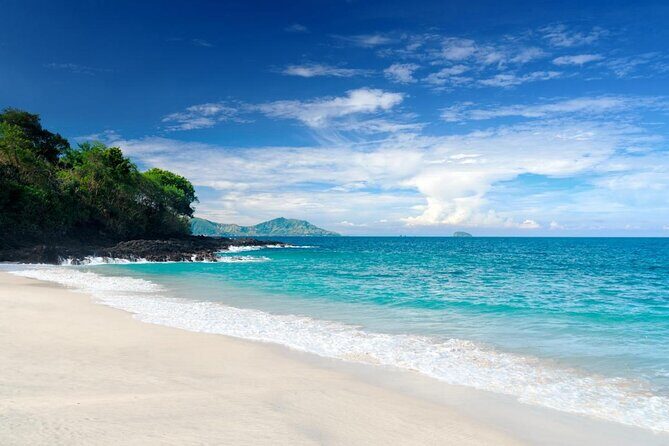
At 3:00 PM, you move to Bias Tugel Beach. The description calls it hidden by the sand of extraordinary beauty. That phrase matters. It suggests you’re not just looking at one obvious shoreline scene—you might find viewpoints or sand-shifted views once you get close and see how the coastline sits at that time of day.

Why this stop is valuable: after two snorkeling sessions and a midday lunch, it’s a gentle change of pace. You’re still outdoors, but you’re not back in the water immediately. You can take in the coastline and let your body cool down.

The only caution I’d flag is timing. Because it’s later in the day, you’ll want to be ready to enjoy it even if you’re a little tired. That’s not a reason to skip—just a reason to mentally budget your energy.

Coffee plantation around 4:30 PM: a calm finish with a local food angle

The day wraps with a coffee plantation stop around 4:30 PM, followed by returning to your hotel at 5:30 PM. The schedule implies this is a short, easy capstone, not a half-day excursion.

Why it’s a good fit: after saltwater, sand, and snorkeling gear logistics, you usually want something that’s low-effort and takes you away from constant water activity. A coffee plantation stop gives that shift, and it also connects the island’s food culture to something you can remember later.

What you should not expect from the data: the tour description doesn’t specify tasting, education level, or the duration of this stop. So treat it as a scheduled experience segment rather than a full seminar. If you care about a specific coffee activity, you’ll want to ask the provider at booking time what’s included.

Transport, private group time, and how this affects the experience

This tour is built around transport and a private tour/activity arrangement, so only your group participates. In practice, private doesn’t mean there are zero others on the beach—but it often means you’re not getting jumbled into larger groups with different skill levels and expectations.

That matters most when snorkeling is the center of the day. Timing between stops—Tanjung Jepun at 10:45 AM and Blue Lagoon at 12:00 PM—works better when your group is moving as a unit and you’re not waiting on scattered strangers.

You’ll also see group discounts listed, plus the tour is described as using a mobile ticket. That’s the kind of setup that tends to reduce friction: fewer paper tickets, and pricing that can be more flexible if you’re traveling with others.

Price and value: is $50 realistic for what you get?

All Inclusive Bali Blue Lagoon Snorkeling with Lunch and Transport - Price and value: is $50 realistic for what you get?
At $50.00 per person, the tour pricing looks aimed at good value rather than a premium private charter. The value argument here isn’t just the snorkeling—it’s the whole package.

You get:

  • Pickup offered from your hotel area in Seminyak
  • Transport to Padangbai Beach and between all the stops
  • Two snorkeling sessions (Tanjung Jepun and Blue Lagoon Beach)
  • Lunch at Blue Lagoon Beach
  • Bias Tugel Beach time
  • Coffee plantation stop
  • Return transport to your hotel

For many Bali day trips, you’d pay separate costs for transport, entrance, and food. So when a single price bundles transport + two major activities + lunch, it usually holds up better than “cheap” tours that charge you again once you’re on the island.

One nuance: the tour description also says travelers should have moderate physical fitness. That’s not a warning label so much as a clue that you’ll be moving between stops and spending time in water conditions that may require comfort and basic stamina.

Overall, with 4.7 out of 5 based on 3 reviews, the price-to-experience ratio looks reasonable—especially if you care about hitting both snorkeling areas in one long day.

What I’d pay attention to on the day of the tour

Here’s what the tour info tells you to watch, beyond just the schedule:

Weather is a real factor. The experience requires good weather. If it’s canceled due to poor weather, you’ll be offered a different date or a full refund. That’s important because snorkeling depends on sea conditions. If you’re traveling during the rainy season, don’t treat the plan as guaranteed.

The day is long. Roughly 10 hours, plus early morning pickup. This is best if you’re willing to commit for the full sequence rather than assuming you can bail halfway and still feel good.

First snorkeling stop is easier by design. Tanjung Jepun is described as not too deep, which suits people who want a less intimidating start.

Fish interaction is part of the appeal—handle it respectfully. The description says you can take fish by hand. Even if that’s part of the experience, be ready to follow the guide’s instructions and avoid actions that could stress marine life or damage coral (especially at the second site).

One more practical note from the info shared: on a national holiday period like Galungan, there can be misunderstandings with the tour operator. In the outcome described, the day still got finished as planned, but the takeaway for you is simple: double-check confirmations and stay responsive if communication changes near your departure date.

Who this Bali snorkeling day is best for

This trip is a strong match if:

  • you want two different snorkeling experiences instead of one
  • you like having lunch included right after a water session
  • you’d enjoy a mix of water time plus beach views at Bias Tugel
  • you prefer a private group feel, even on a popular island day

It’s likely not ideal if:

  • you’re prone to motion discomfort in boats or choppy water conditions (snorkeling is the focus, but sea conditions still affect what’s possible)
  • you hate long days with early starts and limited breaks between stops
  • you’re hoping for a super gentle, short outing

The “moderate physical fitness” note is key. This doesn’t sound like extreme trekking, but it does imply you’ll be active—getting in and out of the water and moving along the schedule.

Should you book this Blue Lagoon snorkeling tour?

I think you should book if you want a well-paced, all-day snorkeling plan that doesn’t make you choose between sites. Two snorkeling stops with lunch already built in is the kind of value that makes a morning start feel worth it. Add in Bias Tugel Beach and the coffee plantation, and you get more than just water time.

I’d pause and ask questions first if you’re sensitive to schedule changes or if your trip dates are right around a major holiday period. Also, if the weather looks questionable, keep your flexibility high—this one depends on conditions.

If your goal is a full Padangbai day that blends fish-and-coral snorkeling with beach scenery and an easy cultural finish, this is a clear contender.

FAQ

What’s the duration of this tour?

The tour is listed as approximately 10 hours.

Where does the snorkeling take place?

You do snorkeling at Tanjung Jepun and Blue Lagoon Beach (near Padangbai), with lunch at Blue Lagoon Beach.

Is hotel pickup included?

Pickup is offered, and transport is part of the experience.

When is lunch served?

Lunch is scheduled for about 2:00 PM at Blue Lagoon Beach.

Is this a private tour?

Yes, it’s listed as a private tour/activity, and only your group will participate.

What should my fitness level be?

The information says travelers should have a moderate physical fitness level.

What happens if weather is bad?

The experience requires good weather. If it’s canceled due to poor weather, you’ll be offered a different date or a full refund.

FAQ

How does cancellation work?

You can cancel for a full refund up to 24 hours before the experience’s start time. If you cancel less than 24 hours before, the amount paid is not refunded. Free cancellation is available until that cutoff, based on local time.

Private Car Van Charter Tour Bali

Private Car Van Charter Tour Bali - Meet the Driver: Friendly Service and Real Stop-Your-Day Flexibility

Bali, minus the hassle of planning. This private charter is built around an English-speaking driver who can take you to popular Bali sights and keep the day comfortable in a clean, A/C vehicle. Two things I like a lot: you get real flexibility (you can stop when you want), and the car setup feels cared for. One thing to watch: entrance fees and your meal are separate, so your day’s total cost depends on where you go.

What makes this work so well is the routing mindset. The driver can run a regular-style itinerary, or you can pick the places yourself, and then the plan stays in the same general direction/area for better efficiency. You’ll also receive a mobile ticket, which is handy when you’re moving around a lot.

This is priced per car (not per person) and the group size matters. Up to 6 people is the sweet spot for space and luggage, but the vehicle and luggage allowances depend on availability—so it’s worth packing with the limits in mind.

Key highlights to know before you book

Private Car Van Charter Tour Bali - Key highlights to know before you book

  • Hotel pickup and drop-off from Seminyak keeps the day simple.
  • English-speaking driver who manages the route and timing for you.
  • Flexible itinerary: regular circuit or your own mix of temples, beaches, and more.
  • Clean A/C vehicle (Suzuki APV/Avanza or similar) with parking fees included.
  • Entrance fees are variable (Rp 20k–150k per person) and meals aren’t included.

Private Van Charter From Seminyak: What You Really Pay For

Private Car Van Charter Tour Bali - Private Van Charter From Seminyak: What You Really Pay For
The headline price is $45.61 per group, for up to 6 people, with the tour duration running about 4 to 12 hours. Since it’s per car, the value improves fast once you’re traveling as a small group. If you’re solo, it’s still doable, but your per-person value won’t feel as strong as it does for a family or group of friends.

Here’s what that money covers, based on the tour info:

  • Air-conditioned vehicle
  • Petrol / BBM
  • Parking fees
  • An excellent taxi driver (not a certified tour guide)
  • Pickup and drop-off (from your hotel)

And here’s what it doesn’t include:

  • Meal (you’ll handle food on your own)
  • Entrance fees at each attraction (these vary by place)

So think of this charter as buying yourself time and control. You’re paying to avoid the daily puzzle of figuring out transport, sequencing sights, and losing hours to backtracking. That’s why route efficiency matters here: if you want multiple stops, the driver trying to keep everything in the same direction can help your day feel less rushed.

One more practical note: this activity is commonly booked about 61 days in advance on average. That’s not a guarantee, but it’s a good sign you should plan ahead if you’re traveling during busy periods.

Meet the Driver: Friendly Service and Real Stop-Your-Day Flexibility

Private Car Van Charter Tour Bali - Meet the Driver: Friendly Service and Real Stop-Your-Day Flexibility
This tour runs on one key ingredient: your driver. The setup is “driver-led,” not “guide-led.” Translation: you’ll get an English-speaking driver who can take you around and recommend places, but you should not expect a formal certified guiding experience.

That said, the reviews emphasize what matters in a private day:

  • The driver was very friendly
  • The car was very clean
  • The A/C was noticeably nice (a big deal in Bali)
  • You could stop when you want, which is great when you’re waiting out a queue or just want extra photos

In practice, this kind of flexibility turns a sightseeing day from strict and tiring into something more like a comfortable road trip with curated stops. If you’re the type who wants to linger at viewpoints or take a slow walk, you’ll likely appreciate having a driver who won’t act like every minute is scheduled.

Route Efficiency: How the Same-Direction Plan Saves Your Day

Private Car Van Charter Tour Bali - Route Efficiency: How the Same-Direction Plan Saves Your Day
One line from the tour description says the driver will manage trips so they stay in the same direction/area for efficiency. That’s smart, because Bali travel can feel like a moving target. Even if you’re not thinking about traffic charts, the simple reality is that bouncing around across town can steal energy.

With this charter, you can do it two ways:

  • Choose a regular-style list of popular spots, and the driver keeps things in a logical flow.
  • Tell the driver the places you want, and the driver manages the sequence to keep travel time more reasonable.

Either approach is designed to reduce the “we drove there and back again” problem. And since entrance fees are separate at each site, it’s also helpful to plan your day so you’re not hopping between far-flung attractions just to check boxes.

Tip for making this work: decide your priorities before you get in the car. If you love scenery, lead with views and nature. If you’re into temples or culture, mention that first. Then your driver can aim the route accordingly.

The Vehicle Reality in Seminyak: Suzuki APV, Avanza, and Luggage Limits

Your ride is listed as a Suzuki APV or Avanza (or similar) depending on availability. It’ll be air-conditioned, and the car color can vary (white, black, or silver).

The luggage rules are worth reading carefully, because they tell you how the car is expected to be packed:

  • 1–4 people with luggage
  • 5–6 people with only very small bags / little luggage
  • 7 people with no luggage

That means if your group has multiple suitcases, you should not assume everyone’s gear will fit comfortably. For most people, this is an easy fix: travel light, and use small day bags rather than bulky luggage.

Also, if cleanliness and comfort matter to you (they matter), the reviews specifically mention that the car was very clean and the A/C was great. That’s a strong signal because Bali heat can make a mediocre ride miserable.

Temple Visits: Plan for Variable Entrance Fees and Smart Timing

Temples are among the most popular stops included in the tour options. The key detail is that entrance fees vary by destination. The tour info gives a range of Rp 20k–150k per person depending on the site.

Since entrance fees aren’t included, your best move is budgeting based on how many attractions you stack in one day. If you’re doing multiple temples plus nature stops, the fees add up fast.

Also, temples often come with practical visit rules (dress expectations and ceremonial timing), but the specific requirements aren’t listed here. So I’d treat temples as a “be ready to adjust” stop. Bring something that covers shoulders/knees if you can, and expect that you may need a little patience around entry.

The payoff: temples are one of the most distinctive ways to see Bali beyond beaches. If you want a cultural anchor for your day, a temple stop is usually the best place to start carving out that sense of place.

Beaches and Watersport-Time Options

A nice beach is explicitly part of the available attraction categories. The idea is simple: get you to a coastal break without wasting time arranging separate transport.

Watersport is also mentioned as an activity option, but the details of which watersports or what’s included aren’t specified. So here’s the sensible way to handle it:

  • If you want watersports, ask your driver to help you understand what you’re paying for on the day.
  • Plan for a slightly flexible schedule, because weather and operating conditions can affect water activities.

For beach time, the private format shines. You can keep it short if you’re cooking for sunsets and dinner, or extend it if the beach vibe is exactly what you wanted. The review mentions the driver lets you stop when you want—beach time benefits from that most.

Volcano Views and Waterfalls: Nature Stops That Need a Flexible Day

Volcano view and waterfall visits are listed as possible stops. These are the kinds of places where timing matters, because clouds and rain can change visibility. Even without exact times provided, a flexible private charter gives you the ability to adjust plans if the conditions aren’t cooperating.

What I like about adding at least one nature stop (volcano view or waterfall) is balance. Temples and beaches are great, but nature breaks make the day feel less repetitive. You’re also more likely to end up with better photos, because the scenery is inherently different from the urban/restaurant loop.

One caution: nature stops can also mean you’ll want time for short walks and viewpoint pauses. If you’ve booked a shorter window (like 4 hours), I’d choose only one major nature-focused stop so the day doesn’t feel like sprinting.

Rice Terrace Views and Traditional Performances: Culture With a Plan

Private Car Van Charter Tour Bali - Rice Terrace Views and Traditional Performances: Culture With a Plan
Rice terrace views and traditional performance shows are both listed as popular experiences. This is where your driver’s role gets useful: you can choose whether you want more scenery or more culture, and you can set the balance based on your energy level.

Rice terraces are visually rewarding and usually pair well with a slower pace. They’re the kind of stop where you may want to step out for photos and take in the view without feeling rushed.

Traditional performance shows add a different kind of value. They tend to be more “sit down and experience” than “walk and wander,” so they can serve as a natural reset in the middle of a busy itinerary.

Since the tour doesn’t specify exact venues or showtimes, treat performances as something you’ll coordinate with your driver for timing. That’s another reason the same-direction routing matters: it can reduce the chances of arriving late or feeling stressed.

Low-Cost Shopping Stops Without the Hard Sell

Low cost shopping is mentioned in the tour’s list of possible activities. In a private charter format, shopping can be good if you control the time and don’t get dragged into a long detour.

The best way to keep this valuable is to decide what you want before you go. If you’re hunting for small souvenirs, snacks, or simple gifts, you can keep the stop quick. If you’re looking for specific items, tell your driver and ask them to point you toward options that match your budget.

Also, because this is not a licensed guide service, you’ll want to do your own shopping savvy. Compare prices where you can, and don’t feel pressured to buy right away.

Time Choices: Picking 4 Hours vs 12 Hours

The tour duration is approximate, ranging from 4 to 12 hours. That flexibility is helpful, but it also changes how you should plan.

If you’re booking around 4 hours, think “one area, two stops max.” Focus on one theme (temple + beach, or rice terraces + viewpoint) and keep travel time short.

If you’re booking toward the longer end (8–12 hours), you can layer in more categories: a temple, then a beach, then add a waterfall or volcano view, plus some shopping. Longer days tend to feel smoother because you can build in breaks and not feel like every stop is a sprint.

Either way, your driver can manage the route to keep things moving in a sensible order. Just remember that entrance fees depend on how many places you visit, so your total cost can rise with the number of stops.

What’s Included vs Not Included: The Budget Check That Matters

Here’s the simple budget reality:

  • Included: transport, AC, petrol, parking, driver
  • Not included: meals, and attraction entrance fees

Entrance fees are the big variable. The tour info gives a range of Rp 20k–150k per person depending on the site. If you’re visiting several attractions in one day, that range can turn into a meaningful line item.

So if you want better cost control, do this:

  • Pick your top 1–2 paid attractions you most want to experience.
  • Keep the rest of the day flexible with beaches, viewpoints, and shopping time where you might not have as many ticketed entries.

This is also why private charter pricing is often best for groups. When everyone shares the car cost, the remaining entrance fees are easier to absorb.

Should You Book This Private Car Van Charter in Seminyak?

Yes, if you want a day that’s flexible, comfortable, and easy to customize without juggling transport. It’s especially a good fit if your group is up to 6 people, you care about A/C and clean cars, and you like the idea of having a friendly, stop-when-you-want driver.

It might not be the best choice if you’re traveling ultra-light in the 5–6 or 7-person range and you expect lots of luggage space. And if you hate paying separate entrance fees and prefer everything bundled, you’ll want to think twice—this charter keeps transport simple, but the attractions add their own costs.

If your goal is a practical Bali day—temple, beach, nature views, and a bit of shopping—this charter approach is a smart way to do it.

FAQ

How long is the Private Car Van Charter Tour Bali?

The duration is about 4 to 12 hours, depending on how you plan your stops.

What’s the price and group size for this tour?

It’s $45.61 per group, up to 6 people.

Where does pickup and drop-off happen?

Pickup and drop-off are offered from your hotel.

Does the tour include an English-speaking driver?

Yes. The tour includes an excellent taxi driver who speaks English.

What vehicle will I ride in?

The car is listed as a Suzuki APV or Avanza (or similar) depending on availability, with comfortable AC. Car color may vary (white, black, or silver).

Are entrance fees included?

No. Entrance fees are not included, and they vary by location. The average range is Rp 20k–150k per person.

Is a meal included?

No meal is included.

Is this a private tour?

Yes. It’s private—only your group participates.

What’s the cancellation policy?

Free cancellation is offered. You can cancel up to 24 hours in advance for a full refund.
Banyumala Waterfall Tour

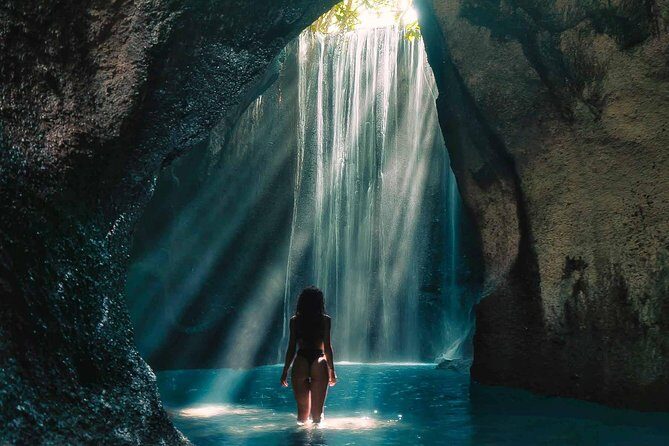
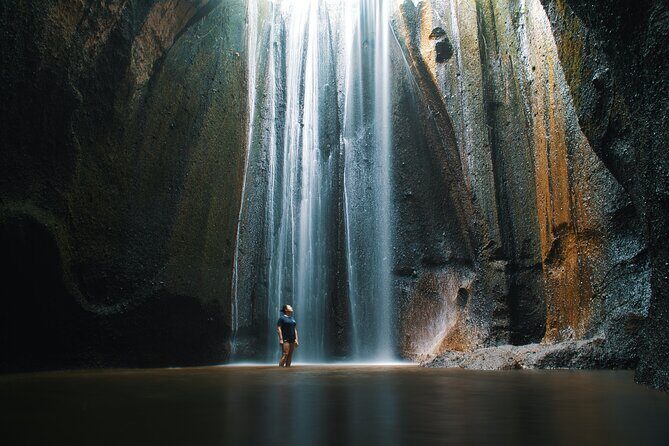
Banyumala Waterfall Tour - Stop 1: Banyumala Twin Waterfalls walk, cold water, and calm breaks

A day like this is built for photos and fresh air. This private tour keeps your Bali time efficient, hitting big scenic stops with an English-speaking driver, a/c comfort, and a route designed for the kind of moments you’ll actually want to share. I love the mix of waterfall nature at Banyumala and the temple-and-lake scenery at Ulun Danu Bratan, and I also love how the cold-water waterfall time feels like a real break from city life. One watch-out: entrance tickets aren’t included, and the water at Banyumala runs cold.

The pacing is also a big part of the value. You’re not bouncing around alone on a complicated schedule; you’re in a car with petrol, bottled water, and a driver who can keep the day moving. You’ll hit Wanagiri Hidden Hills for big “pose here” photo angles, then finish at a temple that sits on the lake, framed by green and smoky hills.

Key highlights you’ll care about

Banyumala Waterfall Tour - Key highlights you’ll care about

  • Private car + English-speaking driver so you can focus on the stops, not logistics
  • Banyumala Twin Waterfalls with a walk down toward the falls and a chance to cool off
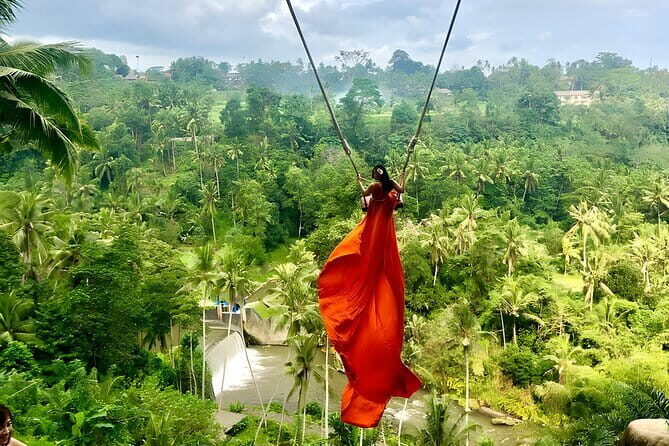
  • Wanagiri Hidden Hills built for Instagram-style angles like the bird-nest and swing spots
  • Ulun Danu Bratan Temple on the lake with a scenic background that’s great for photos
  • $44 price point for 10 hours with transport, petrol, and bottled water included

The real appeal: fast access to Bali’s top photo stops

If you’re in Seminyak and you want the good stuff without turning your day into a scavenger hunt, this tour format makes sense. You’re going direct to three major viewpoints and attractions—Banyumala Twin Waterfalls, Wanagiri Hidden Hills, and Ulun Danu Bratan Temple—so you can spend more time outside and less time figuring out where to go next.

What I like is that the day is built around two different moods. You get wet-and-wild nature time at Banyumala, then you switch to elevated photo stops at Wanagiri and a temple setting that feels calmer and more iconic.

The “private” part matters too. Even though it’s designed as a day tour for a group, you only share your car with your own group, not strangers.

Ride setup in plain terms: pickup, driver, and comfort

This is a pickup-friendly tour with private transportation in an air-conditioned vehicle. That’s not a small detail on Bali. A/tight day can get draining when you’re transferring between stops in the heat, and an a/c car helps you stay functional—especially on a roughly 10-hour outing.

You’re also not stuck with a driver who just drops you off. The driver is described as English speaking, and the service is set up so you’re guided through the day rather than left to fend for yourself.

One more practical plus: bottled water is included. On a long day, that saves you from the “did I remember to buy enough?” worry.

Stop 1: Banyumala Twin Waterfalls walk, cold water, and calm breaks

Banyumala Waterfall Tour - Stop 1: Banyumala Twin Waterfalls walk, cold water, and calm breaks
Banyumala Twin Waterfalls is the kind of place where the experience starts before you even reach the main view. You walk down toward the falls, spending time moving through the area and getting closer to that roar-you-can-feel type of sound.

The waterfalls here are described as twin falls, and the “down toward the waterfall” part matters because it turns the visit into an actual nature moment, not just standing at the edge for a quick shot. You’ll likely feel the air change as you get nearer, and the water noise makes the place feel alive.

Cold water comes up for a reason. You can swim or at least get in if you want that full-on experience. The water is cold, but it’s also the point. The simple “touch it, feel it, cool off” moment can be the best part of the day if you’re into doing rather than just watching.

There are also spots to relax along the way. That’s important because waterfalls can be intense. Taking a few minutes off from standing in one place helps you enjoy it more, and it gives you a break before the next scenery shift.

What to consider: since entrance tickets aren’t included, you should budget for that. Also, if you’re not comfortable with cold water, plan for watching and walking only.

Stop 2: Wanagiri Hidden Hills for bird-nest and swing photo angles

Wanagiri Hidden Hills is where the tour leans hard into the fun posing and big viewpoint vibes. This is the stop that reads like a photographer’s checklist: a bird nest photo spot, a swing, and overlooks where you can see the lake below.

The layout here is built for quick, dramatic shots. Even if you’re not trying to be a full-time photographer, you’ll probably find yourself stopping more often than you expected because there are multiple set-piece angles—each one giving you a different framing for the water and surrounding view.

This is also a good counterbalance to Banyumala. After moving down to the waterfalls, Wanagiri gives you a more open-feeling, higher viewpoint experience. You can slow down, look out, and reset.

Practical consideration: entrance tickets aren’t included again, so this is another place where your budget needs a little extra. And because Wanagiri is a lookout-style stop, plan to enjoy it at a pace that fits your comfort level with outdoor viewing areas.

Stop 3: Ulun Danu Bratan Temple on the lake (and why it photographs well)

Ulun Danu Bratan Temple is the final major “wow” stop, and it’s easy to see why it’s a top Bali photo target. The temple is described as floating on the lake of Beratan, with green and smoky hills in the background. That combination gives you both a subject and a built-in frame.

What I appreciate about this stop is the shift from active nature to a more grounded cultural setting. Banyumala is wet, loud, and close to the rock. Wanagiri is height and open views. Ulun Danu Bratan is about stillness and composition—temple lines against water, with the hills adding atmosphere.

This stop is also especially good if your camera likes layered scenes. You’ve got foreground structure, midground water, and background hills. Even simple phone photos can look strong when the scenery does half the work.

One consideration: like the other stops, entrance tickets aren’t included. Also, temple visits can be more weather-sensitive than pure viewpoints, so if the weather turns, your photos may look different than you expected.

Timing and pace: what 10 hours feels like in real life

This is set up as a roughly 10-hour tour starting at 8:00 am. That means you’ll likely move from stop to stop with enough time at each place to enjoy it, but you won’t have a whole day at any single location.

Each main stop is around an hour, which is a sweet spot if you want to see a lot without feeling rushed like a drive-by. At Banyumala, that hour can cover walking down, time near the falls, and optional water time. At Wanagiri, it gives you chances to try a few different photo angles—bird nest, swing, and viewpoint. At Ulun Danu Bratan, it’s long enough to take pictures from a couple of angles and soak in the lake setting.

If you like to linger, this schedule might feel “just enough.” Still, the trade-off is you get three distinct scenery styles in one day: waterfall nature, viewpoint posing, and temple-on-lake calm.

Price and value: how $44 holds up (and where you’ll pay extra)

The price is listed at $44, and it’s for a full-day route from Seminyak with private air-conditioned transportation. What makes it feel fair is what’s included: petrol plus driver, a/c vehicle, bottled water, and private transportation.

That’s a lot of the hidden cost you’d otherwise deal with when hiring a vehicle and driver on your own.

Where you should plan ahead: entrance tickets and lunch aren’t included. So think of the $44 as transport and guide time, not the cost of admission into the sites.

Also consider that the tour notes group discounts and a mobile ticket. If you’re traveling with friends, it may be worth checking whether the group discount brings the per-person cost down enough to make it even more attractive.

For $44, the value equation is strongest if you want convenience, comfort, and a driver who can keep the route flowing without turning your day into a transportation puzzle.

Who this Banyumala tour is best for

This works especially well if you fit one of these boxes:

  • You want a Bali highlights day from Seminyak without complicated planning
  • You like photography and want three very different “shot types” in one outing
  • You prefer the comfort of air-conditioned car transfer over long, sweaty transfers
  • You want a private day with only your group in the vehicle

It can also be a good match for people who want cultural context alongside scenery. In the feedback, drivers named Gede and Yann were praised for service-minded flexibility—Gede was described as accommodating, and Yann was praised for helpful experience and service.

If you’re the type who wants to spend half the day just sitting at one place, you might find this itinerary moves too fast. But if you want variety with a comfortable ride, this is a strong format.

A practical checklist from what actually matters

Since entrance tickets and lunch are not included, you’ll want to mentally separate the day into two budgets: transport/driver cost (covered) and site admissions plus food (on you).

Bring the essentials for the parts you actually want:

  • If you plan to get in the water at Banyumala, bring swimwear. The cold-water dip is part of why people come.
  • Wear shoes that handle walking on uneven ground, since Banyumala involves a walk down toward the falls.
  • Plan for photos across three settings: wet waterfall, elevated viewpoints, and a temple by the lake.

Should you book this Banyumala Waterfall Tour?

I’d book it if you’re short on time and you want a smooth, comfortable day that hits three high-impact stops: Banyumala Twin Waterfalls, Wanagiri Hidden Hills, and Ulun Danu Bratan Temple. The price is solid for what you get—private transport with petrol, an a/c vehicle, bottled water, and an English-speaking driver who can help the day run.

I’d think twice if you hate cold water, you’re not interested in a photography-heavy route, or you don’t want to pay extra for entrance tickets and lunch. Also, the experience needs good weather—so if the forecast looks rough, you’ll want to be flexible.

If you want an efficient Bali highlights day with real scenery variety, this one makes a lot of sense.

FAQ

What’s included in the Banyumala Waterfall Tour?

The tour includes petrol and a driver, an air-conditioned vehicle, bottled water, and private transportation.

Are entrance tickets included?

No. Entrance tickets are not included.

Is lunch included?

No. Lunch is not included.

What time does the tour start?

The start time is 8:00 am, and the duration is about 10 hours.

Do they offer pickup?

Yes, pickup is offered.

Is this tour private?

Yes. It’s a private tour/activity, so only your group participates.

Can I swim at Banyumala Twin Waterfalls?

You can go for a dip, but the water is cold. If you want to swim, bring a swimsuit.

What happens if the weather is bad?

The experience requires good weather. If it’s canceled due to poor weather, you’ll be offered a different date or a full refund.

How flexible is cancellation?

Free cancellation is available up to 24 hours in advance for a full refund.
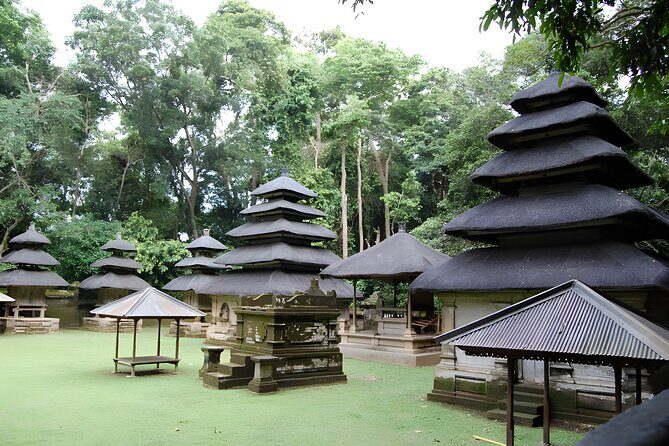
Seminyak Airport Transfer

Seminyak Airport Transfer - The comfort factor that matters: A/C plus real luggage space

Land in Bali, then relax.

This Seminyak airport transfer is designed to take the stress out of arrival day. I like the meet-and-greet with a driver holding your name at Bali International Ngurah Rai, and I also like that the vehicle comes with a large luggage space so you’re not playing Tetris with suitcases. One thing to consider: the ride is listed as about 1 to 2 hours, so traffic and pickup timing can stretch it on busier days.

The rest is refreshingly simple: you get door-to-door service from the airport to Seminyak hotels, in an air-conditioned car, for just your group. You’ll also have a mobile ticket, and you get confirmation at booking—so you’re not stuck hunting for details right when you land.

Key things that make this Seminyak transfer work

Seminyak Airport Transfer - Key things that make this Seminyak transfer work

  • Name-on-a-sign pickup at Ngurah Rai: you meet your driver at the arrival terminal with a sign board showing your name.
  • Large luggage room in every vehicle: built for comfort, especially if you’ve got multiple bags.
  • Air-conditioned, comfortable driving: the trip is set up for a smooth ride, not a sweaty scramble.
  • Door-to-door Seminyak drop-off: pickup and drop-off are handled to hotels across Seminyak.
  • Private for your group: only your group participates, so you’re not sharing the experience with strangers.
  • Drivers who share local info: from past experiences with drivers like Wayan Wirawan and Kadek Moyo, you may get helpful area tips and a friendly vibe on the way.

Seminyak Airport Transfer: the no-fuss start you’ll be grateful for

Seminyak Airport Transfer - Seminyak Airport Transfer: the no-fuss start you’ll be grateful for
Arriving in Bali can be chaotic fast—immigration lines, bags, taxi choices, and that moment where you wonder if you’re about to walk right past the wrong person. This transfer is built to shrink that chaos. You step out into the arrival area, spot your driver holding your name, and get moving without detours.

What makes it especially useful for Seminyak is how direct it is. You’re not doing a complicated loop or hunting for a pickup point after you’ve already been traveling. You’re going straight from Bali International Ngurah Rai Airport to your Seminyak hotel with an A/C vehicle and luggage space that’s meant for real trip gear.

The overall vibe here is comfort-first. Even the way the experience is described reads like someone planned it for the reality of arriving with bags, energy levels, and limited patience.

Stop 1 at Ngurah Rai: meeting your driver in the arrival terminal

Your first move is right at the airport: you meet your friendly English-speaking driver at the arrival terminal of Bali International Ngurah Rai.

Here’s what you can count on based on the details:

  • Your driver will have a sign board with your name.
  • There’s large space for luggage in the vehicle, so you’re not stuck crowding bags into awkward spots.
  • The idea is worry-free driving, meaning you don’t have to negotiate, guess routes, or bargain for help after a long flight.

One practical tip: when you land, keep your eyes on the arrival area flow. The service is built around you finding the driver quickly at the terminal, so once you have your bags, head straight for where you can spot the sign.

Also, the itinerary lists about 30 minutes for this airport stop. In reality, you’ll still spend some time gathering your things and moving from the terminal to pickup, but the service plan is clearly meant to keep the airport portion as smooth as possible.

The comfort factor that matters: A/C plus real luggage space

Seminyak Airport Transfer - The comfort factor that matters: A/C plus real luggage space
A transfer can be “easy” on paper and annoying in real life if the car is cramped or the bags don’t fit well. This one is specifically described as having large luggage room on every vehicle, which is a big deal when you’re traveling with more than one suitcase or you’ve got bulky items.

You also get an air-conditioned vehicle for the ride. That sounds obvious, but in Bali heat, it’s a comfort upgrade that you feel immediately—especially after you’ve already dealt with airport crowds.

From a value standpoint, this is where your money starts to make sense. You’re not just buying transportation. You’re buying:

  • less stress at the pickup point,
  • a vehicle that won’t turn into a luggage squeeze,
  • and a smoother start to your vacation.

If you’re the type who wants your first hour in Bali to feel like the vacation part—not the logistics part—this is the right angle.

Stop 2 in Seminyak: door-to-door drop-off at your hotel lobby

Once you reach Seminyak, the service switches from airport coordination to straight-up convenience. The plan is door-to-door pick up and drop off for hotels located in Seminyak.

What you’ll appreciate:

  • You’re handled from the hotel lobby in all area starting points.
  • Drop-off is built around your hotel location, not a generic meeting spot.
  • The ride stays comfortable in an A/C vehicle all the way to the end.

The itinerary lists another 30 minutes for the Seminyak stop. Again, actual driving time depends on timing and conditions, but the structure tells you the transfer is designed to be efficient. You’re not going to be stuck with long stops, extra errands, or unclear drop-off locations.

If you’re arriving late, with jet lag, or just tired of figuring things out, door-to-door is a big win. Seminyak is popular and busy, and being dropped at the correct hotel entrance saves time and energy you can spend on dinner, a beach walk, or getting settled.

Timing and what to realistically plan for (1 to 2 hours)

Seminyak Airport Transfer - Timing and what to realistically plan for (1 to 2 hours)
The duration is listed as 1 to 2 hours (approx.). That range matters because Bali traffic and airport flow can vary.

So here’s the smart way to plan:

  • Assume it can be closer to the higher end if you land during rush times.
  • If your hotel check-in is strict, give yourself a buffer.
  • Keep your first day flexible if you can.

The experience is structured into two main parts: the airport meet-up and the Seminyak hotel drop-off. That’s why it feels straightforward. You’re not juggling multiple locations; you’re moving from A to B with a driver who’s there for you.

Price and value: paying about $15.42 per person for a smooth landing

The price is $15.42 per person. It’s also described as offering group discounts, and the average booking happens around 13 days in advance, which suggests it’s a popular “plan ahead” item for arrival day.

How to think about value here:

  • You’re paying for a private arrival transfer that meets you at the terminal.
  • You get an A/C vehicle and luggage room—two practical quality upgrades that reduce frustration.
  • You get door-to-door handling to Seminyak hotels instead of managing pickup logistics yourself.

A private transfer can be a bargain when you split it with friends or family. Even if you’re traveling solo, it can still be worth it if you’d rather trade a little extra cost for fewer unknowns on arrival day.

If you’re the kind of traveler who likes to be efficient and avoid decision fatigue right after landing, this price feels like it’s buying convenience and comfort—not just a seat.

What the drivers bring to the ride: safe, friendly, and informative

The core job of the transfer is transportation. But the ride quality depends heavily on the driver’s style, and the feedback here is consistently upbeat.

A couple of names come through clearly:

  • Wayan Wirawan: described as driving very safely, jovial, and with a good sense of humor. One highlight was that he helped make the day feel easy and enjoyable.
  • Kadek Moyo: described as someone who asked what you wanted and showed cool places to go.

Even though this experience is fundamentally a transfer, that kind of driver energy can change how you feel about your first hours in Bali. A safe, friendly driver can help you get your bearings fast—and you may also pick up useful context about the area while you’re riding.

If you want a practical approach, here’s what to do: take a minute during the ride to ask simple questions about your next day’s plans, or what parts of Seminyak are best at certain times. You’re already in the car; you might as well use the local knowledge you’re paying for.

Who should book this Seminyak airport transfer

This transfer is a good match if:

  • you want private door-to-door pickup in Seminyak,
  • you’re arriving with luggage and want an easier setup,
  • you prefer a clear meeting point at the airport (your name on a sign helps),
  • you value A/C comfort right away,
  • you want something simple that fits most travel styles.

It also fits groups nicely because of the group discount angle and the fact that it’s private for your group. If you’re traveling with friends, family, or a small group, the value can climb quickly.

If you’re the ultra-budget type and don’t mind handling airport logistics yourself, you might choose differently. But if your priority is a calm arrival, this is exactly the kind of service that pays off in real time.

Small logistics that can save you time on arrival day

Even when the service is straightforward, a couple of details can help it go even smoother.

  • Watch for the name sign at the arrival terminal. This is how you connect fast with the driver.
  • Be ready with your hotel information for the Seminyak drop-off so the driver can take you to the correct lobby.
  • Plan for luggage. The vehicles are described as having large luggage space, but you’ll still want to keep small essentials easy to grab once you arrive.
  • Expect a quick transfer, not a tour bus. This is about getting you to Seminyak comfortably, not about multiple stops and sightseeing.

And one small mindset shift: treat the transfer as your first “settling-in” step. Once you’re dropped at the right hotel entrance, you’re back in vacation mode.

Should you book this Seminyak Airport Transfer?

Book it if you want a smooth, private ride from Ngurah Rai Airport to your Seminyak hotel with a driver meeting you at the arrival terminal, an English-speaking presence, A/C comfort, and room for luggage. If you like clean logistics—especially on day one—this is a solid choice.

Don’t book it if you’re okay with airport pickup uncertainty and you don’t care about comfort or luggage convenience. Also, if you’re extremely time-sensitive, remember the transfer is listed as 1 to 2 hours, so plan with a buffer.

Overall, this is the kind of service that makes your first Bali day feel less like problem-solving and more like vacation.

FAQ

FAQ

Where is the pickup point?

Pickup is from I Gusti Ngurah Rai International Airport, with the driver meeting you at the arrival terminal.

Will I know which driver to find?

Yes. The driver will hold a sign board with your name.

Is the transfer door-to-door in Seminyak?

Yes. It includes door-to-door pick up and drop off to hotels located in Seminyak.

Are the vehicles air-conditioned?

Yes. The transfer is provided in an air-conditioned vehicle.

Does it include luggage space?

Yes. Each vehicle is described as having large luggage space for comfort.

Is this private or shared?

This is private, so only your group participates.

Do I get an actual ticket or just a phone confirmation?

You’ll have a mobile ticket.

How long does the transfer take?

It’s listed as 1 to 2 hours (approx.).

Can I cancel for free?

Yes. You can cancel up to 24 hours in advance for a full refund. If cancellation is within 24 hours of the start time, the amount paid is not refunded.
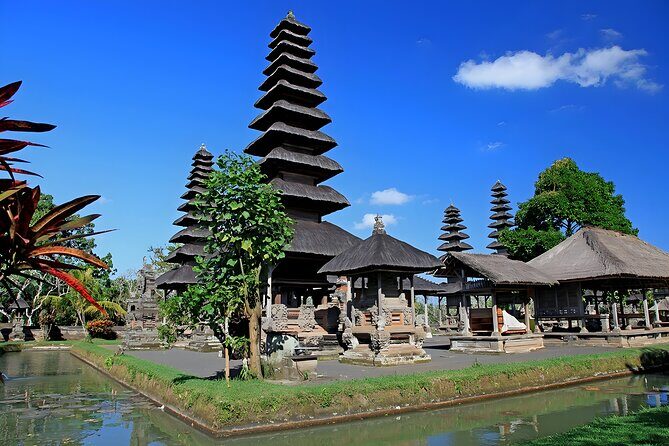
Bali Horse Riding, Waterfall, Rice Terrace, Lunch – All Inclusive

Bali Horse Riding, Waterfall, Rice Terrace, Lunch - All Inclusive - Tegenungan Waterfall: Built For Safe Footing

Bali packs a lot into a short time. This tour links Saba Beach horse riding, Tegenungan Waterfall, and the famous rice fields into one easy 8–10 hour plan with a guide and pickup.

I especially like that the ride starts with a real safety briefing from professional grooms before you’re on the horse. I also like how the day isn’t just sightseeing stops—it’s paced so you actually get time to look, walk, and take in each place.

One thing to consider is the activity pace and comfort demands: you’ll need sandals with no heels and you’re capped at 90 kg. If you’re looking for a slow, sit-everywhere kind of day, this one may feel a bit busy.

Key points worth knowing

Bali Horse Riding, Waterfall, Rice Terrace, Lunch - All Inclusive - Key points worth knowing

  • Saba Bay horse riding starts after an on-site safety briefing, using international standard equipment
  • Tegenungan Waterfall is reached via well-maintained concrete steps with safety rails
  • Tegalalang rice terraces include a view of Balinese farmers working the fields
  • Lunch with rice-terrace views happens at a multi-level elevated restaurant in Ceking village
  • Uma Pakel Agro Tourism lets you see multiple crops tied to coffee and tropical fruit
  • Optional art village time can include Celuk silver, Batubulan batik, or Mas wood carving

Morning Pickup And The Saba Beach Horse Ride

Bali Horse Riding, Waterfall, Rice Terrace, Lunch - All Inclusive - Morning Pickup And The Saba Beach Horse Ride

Your day kicks off around 8:30 am, with hotel pickup offered from areas like Kuta, Seminyak, Sanur, Nusa Dua, Tanjung Benoa, and Ubud. You travel by air-conditioned minivan, and that matters here—Bali traffic can be unpredictable, so having comfort and timing help your whole route.

The horse riding portion takes place at Saba Bay Stables near Saba Beach. Before you mount up, you get a full safety briefing from professional grooms. That’s not just a formality; it sets expectations for how the ride works and how to behave around the horses, which makes a big difference if you’re nervous or new to this.

On the ride itself, you’re guided along Saba Beach and then into the surrounding countryside. The route is designed for views: you’re meant to see seaside villages and temples, with Mount Agung and Nusa Penida mentioned as part of the overall scenery. Even if the weather isn’t perfect, the point is clear—you’re not riding in a blank paddock. You’re moving through the real visual Bali mix of coast and inland greenery.

A practical note: wear shoes or sandals with no heels. Heels can be risky around horses and slippery terrain. Also, bring a camera, but expect some shake if you’re shooting handheld while moving. A quick photo plan works better than trying to livestream the whole ride.

Tegenungan Waterfall: Built For Safe Footing

Bali Horse Riding, Waterfall, Rice Terrace, Lunch - All Inclusive - Tegenungan Waterfall: Built For Safe Footing

After the ride, the day shifts to Tegenungan Waterfall. This spot is popular, and that shows in the visitor infrastructure. The pathway is described as well maintained and safe, with concrete steps and a safety rail that runs you down toward the main waterfall area.

The time here is about one hour, which is just enough to get down, take a look, and walk around without feeling trapped. If your goal is photos, you’ll have time to find your angle—just remember that waterfall areas tend to be damp, so stick to grippy footwear.

What I like about this stop is that the “work” part (getting down safely) is handled by railings and steps. That means you can spend your energy on enjoying the view rather than worrying about your footing.

Tegalalang Rice Terraces: Watching Real Farming, Not Just Views

Bali Horse Riding, Waterfall, Rice Terrace, Lunch - All Inclusive - Tegalalang Rice Terraces: Watching Real Farming, Not Just Views

Next comes Tegalalang Rice Terrace. This is one of those places where the setting does half the storytelling for you. The terraces are described as precisely positioned on a hillside with hollowed rice fields, and the whole area is known for its distinctive look and viewpoint.

You’re given about an hour here, and the tour includes the chance to see Balinese farmers working in the fields. That’s an important difference. Instead of only standing and staring, you get a more grounded sense of how rice cultivation shapes the region.

You’ll also want to pace yourself. Terrace viewing areas can mean frequent walking on uneven ground and frequent stops for photos. Bring water and keep your shoulders out of the strongest sun, especially if you’re visiting during hotter hours (this tour starts in the morning, but Bali sun still moves fast).

Lunch In Ceking Village: Rice-View Food With A View Plan

Bali Horse Riding, Waterfall, Rice Terrace, Lunch - All Inclusive - Lunch In Ceking Village: Rice-View Food With A View Plan

Lunch is where the itinerary slows down in a good way. Instead of doing lunch in a random roadside spot, it’s set at a multi-level elevated restaurant in Ceking village (Tegallalang area). The menu is listed as Indonesian, and the big value is the setting: you can eat while looking over terraced rice fields and over the Sapat river valley, plus landscaped garden areas.

The lunch window is again about one hour. That’s long enough to eat without rushing, but not so long that the rest of the day feels cramped. If you like your meals with a view, this is one of the most satisfying parts of the whole experience.

Because lunch is included, you’re also insulated from one common Bali pain point: choosing food on the fly while you’re tired and hungry. Here, you get fed, you get a nice break, and you continue onward with less decision fatigue.

Uma Pakel Agro Tourism: Coffee Plantation And Tropical Crop Variety

Bali Horse Riding, Waterfall, Rice Terrace, Lunch - All Inclusive - Uma Pakel Agro Tourism: Coffee Plantation And Tropical Crop Variety

After lunch, you head to Uma Pakel Agro Tourism. This is the plantation stop, and it’s listed as free admission within the tour. The idea is to see the range of crops grown on the property, not just one product.

You’ll be exposed to robusta coffee, and you’ll also see tropical plantings like pineapple, salak (Balinese snack fruit), plain Balinese potatoes, and other fruit and tree crops such as fruit stars, cacao, jackfruit, and durian trees. Even if you don’t do a formal tasting (nothing is listed as required), the farm-style tour format tends to make it easier to connect what you see in Bali markets back to where it’s grown.

The time is about one hour, which is enough to get the overview and take photos without turning it into a half-day lecture. It’s also a good sensory break after the waterfall and rice terraces—plantation stops are usually calmer and more open.

Optional Art Village Time On The Way Back

Bali Horse Riding, Waterfall, Rice Terrace, Lunch - All Inclusive - Optional Art Village Time On The Way Back

On the return to your hotel, the itinerary allows for extra time for art villages, depending on time and your interests. The options listed are:

  • Celuk village for fine silver jewelry
  • Batubulan village for batik
  • Mas village for wood carving

This is a classic Bali add-on: it’s not just craft shopping. It’s more about seeing how specialized creative traditions are practiced. And since it’s optional and time-dependent, you’re not forced into buying anything.

If you enjoy watching artisans at work, this is the part of the day where you can get the most “slow down and look” vibe. If your feet are already tired from steps and terraces, you can keep your expectations realistic and focus on the one village stop that feels most relevant to you.

Price And What Makes $95 Feel Like Value

Bali Horse Riding, Waterfall, Rice Terrace, Lunch - All Inclusive - Price And What Makes $95 Feel Like Value

At $95 per person, this tour tries to bundle a lot: pickup, an English or Japanese speaking driver, an air-conditioned vehicle, bottled water, a guide, entrance fees, lunch, and activities that normally cost separately. You’re also getting international standard safety equipment for the horseback riding, plus a full safety briefing before you start.

For a day that includes multiple paid admissions plus a guided ride component, the value case is strong—especially if you’re staying in the pickup areas and you’d otherwise be paying for individual tickets and transport.

That said, it’s still a full schedule. The best “value per minute” is for people who like variety: coast views, a major waterfall, rice terraces, a plantation crop stop, and a potential craft village in one go.

Who This Tour Fits Best (And Who Might Skip)

Bali Horse Riding, Waterfall, Rice Terrace, Lunch - All Inclusive - Who This Tour Fits Best (And Who Might Skip)

This tour makes sense if you want a high-rotation Bali highlights day without spending your brain on logistics. It’s a good fit for:

  • first-timers who want Saba Beach + Tegenungan Waterfall + Tegalalang in one day
  • people who like guided context (the tour uses a professional guide, and the overall feedback highlights how well guides explain the journey through local transitions)
  • groups who prefer convenience: it’s private for your group, with hotel pickup and return

It might not be ideal if:

  • you have mobility limits tied to steps and walking (the waterfall uses concrete steps)
  • you need long downtime between stops
  • you’re very sensitive to sun and you don’t want to manage it with sunscreen and light clothing

Practical Tips So Your Day Feels Easy

A few things will help you get the most out of the day.

  • Bring sunscreen and plan for strong Bali sun, especially once you’re on terraces.
  • Wear shoes or sandals with no heels so the day stays stable, including near waterfalls and around horses.
  • Use long or short pants depending on comfort; the day includes outdoor walking and animal handling areas.
  • Keep a little cash for personal expenses, since only the listed inclusions are covered.
  • If you’re taking photos, remember you’ll be outdoors almost constantly, so charge devices and pack a power plan.

Also, the tour is a private group experience, so your timing is smoother than a chaotic public bus day. That’s one reason schedules like this can work without feeling totally frantic.

Should You Book Bali Charm’s All-Inclusive Horse, Waterfall, Rice Terrace Day?

I’d book this if you want a well-paced, all-in-one Bali day that doesn’t skip the classic hits. The standout is the way the tour stitches together the coast ride, a safe-feeling waterfall walk (thanks to rails and maintained steps), and the rice terraces with lunch in a view-focused restaurant.

Skip it if you want extreme relaxation or if you know you’ll feel stressed by steps, sun, and back-to-back outdoor time. Also double-check the 90 kg weight limit and bring footwear that won’t turn the day into a slipping contest.

If your ideal Bali day includes horses, waterfalls, rice terraces, and a coffee-agro stop with tropical crops, this is a strong match.

FAQ

What’s included in Bali Horse Riding, Waterfall, Rice Terrace, Lunch – All Inclusive?

It includes private return hotel transfer (from listed areas), a professional guide, international standard safety equipment, an Indonesian lunch with rice terrace views, entrance fees, an English or Japanese speaking driver, an air-conditioned minivan, and bottled water.

Where do you get picked up from?

Pickup is offered in areas including Kuta, Seminyak, Sanur, Nusa Dua, Tanjung Benoa, and Ubud.

How long is the tour?

It runs about 8 to 10 hours.

What time does the tour start?

The start time is 8:30 am.

What activities are part of the day?

The day includes Bali horse riding at Saba Beach, Tegenungan Waterfall, Tegalalang rice terraces (including lunch at Ceking village), Uma Pakel Agro Tourism, and optional stops at art villages such as Celuk, Batubulan, or Mas depending on time and interest.

Is the lunch included, and what kind of food is it?

Yes. Lunch is included and features an Indonesian menu served at a restaurant with rice terrace views.

Do I need to bring anything?

Yes. Bring shoes or sandals with no heels, a camera, long or short pants, and sunscreen. You should also budget extra money for personal expenses.

What is the weight limit for the horseback riding?

The maximum weight listed is 90 kg.

What’s the cancellation policy?

You can cancel for a full refund up to 24 hours before the experience’s start time. If you cancel less than 24 hours in advance, the amount is not refunded.

Mount Batur Sunrise Trekking with Professional Trekking Guide

Mount Batur Sunrise Trekking with Professional Trekking Guide - The 1:30–2:00am Start: What Your Night Needs to Look Like

Batur sunrise is early-morning magic with teeth. This trek on Bali’s active Mount Batur lets you watch the sun climb over Bali and sometimes even as far as Lombok, from the rim area. I like that this is set up as a private tour, so you skip the long hotel collection run and get direct, door-to-door pickup from places like Seminyak and Canggu. The one real drawback is the timing: you’re up around 1:30–2:00am, and your reward depends on clear skies.

What also wins here is the practical morning support. Your guide brings a flashlight, and breakfast is not just a snack stop but a simple meal timed for the crater-area vibe. If you’re lucky enough to get a driver like Hari Budi, the transfer can feel like a mini Q and A session, not dead time in the dark.

Finally, the experience is paced to be doable. You hike with a professional guide and can move at your own rhythm, but do expect the climb to feel busy at times since this is a popular sunrise route. Rain and cloud cover can blunt the view, though when the weather clears, the payoff can be stunning.

Key things to know before you go

Mount Batur Sunrise Trekking with Professional Trekking Guide - Key things to know before you go

  • Private, no extra hotel stops: you go straight from your villa or hotel area to the trailhead
  • Start time is serious: plan for pickup around 1:30am–2:00am
  • Flashlight and entrance included: you don’t need to source basic trekking gear or pay at the gate
  • Breakfast is volcano-steamed eggs: bread and banana round out the light meal
  • Hike is with a pro guide: you get support and a safer pace on an active volcano trail
  • Weather matters: the operator notes this needs good weather, and cloudy mornings can change what you see

Why Mount Batur Sunrise Feels Worth the Alarm Clock

Mount Batur Sunrise Trekking with Professional Trekking Guide - Why Mount Batur Sunrise Feels Worth the Alarm Clock
Mount Batur is one of Bali’s most famous active volcano hikes, and this sunrise format is why people do it. Starting in the dark means you’re not just hiking for scenery. You’re hiking for a moment: the first light spilling across the island, with the possibility of seeing even farther toward Lombok on a clear morning.

This tour is built around saving you effort before you even step on the mountain. The private setup matters on Bali because hotel pickups can turn a short plan into a half-day shuffle. Here, your ride is door-to-door, and the vehicle is air-conditioned, which helps you get through the early wake-up without feeling totally wrecked.

Also, it’s a full-morning activity in the way sunrise treks should be. The hike is not framed as a slow sightseeing walk. It’s a focused climb with a clear payoff, then a simple breakfast and return.

Private Pickup From Seminyak and Other Bali Areas

If you’re staying around Seminyak, Canggu, Kuta, Legian, Sanur, Jimbaran, Nusa Dua, or Ubud, you’ll likely appreciate how direct the logistics are. This tour includes pickup and drop-off service from a long list of common areas, including Seminyak and Denpasar, plus nearby hubs like Canggu and Ubud.

The big practical win is the “private” part. The vehicle is arranged so you’re only traveling with your group, not a big mix of strangers with random pickup times. That can change the whole vibe of a sunrise trek. Less waiting. Less guessing when you’ll actually leave.

From the experience side, the transfer can also be part of the fun. One driver example from past trips is Putra, described as comfortable and pleasant for the ride in and out. Another is Hari Budi, who was reported as friendly and informative during the drive from Ubud. Even if you don’t get the same person, the overall expectation is a guided-feeling transfer, not just transport.

The 1:30–2:00am Start: What Your Night Needs to Look Like

Mount Batur Sunrise Trekking with Professional Trekking Guide - The 1:30–2:00am Start: What Your Night Needs to Look Like
This trek lives or dies by timing. Your start time is listed as 1:30am, and the trip description also notes departures around 2:00am from your hotel. In plain terms: you should plan to be ready very early, with pickup happening before most people are done dreaming.

You’ll want to treat this like a real schedule, not a suggestion. Wear something warm for the cold early air, even if Bali feels hot later. Bring what you can layer, and be ready for a flashlight-led start.

The early hours are why private booking can feel like a “sleep later” perk. Since you’re not gathering other travelers, you’re less likely to get dragged into extra waiting time. Still, you’re waking up early either way. The upside is you get the volcano morning before the crowds and heat crank up.

Hike Time and Trail Reality on an Active Volcano

Mount Batur Sunrise Trekking with Professional Trekking Guide - Hike Time and Trail Reality on an Active Volcano
You’re looking at roughly 8 to 9 hours total for the full experience. The hike portion is commonly around 4 hours on the plan, and that fits the typical sunrise volcano rhythm: climb hard in the dark, reach the sunrise area, then descend after.

Here’s what you should expect from the trail. Mount Batur sunrise hiking is popular, so the ascent can feel busy. Even with a guide, you may end up in clusters of hikers, especially on narrower sections or steeper segments. The trick is to use your guide to set a comfortable pace so you’re not constantly dodging uphill bottlenecks.

The tour is built around having a professional trekking guide with you. That matters on an active volcano because the terrain can be uneven and traction changes with conditions. The guide also helps you time the climb so you’re not wasting energy too early. When the sun is still a promise, smart pacing is everything.

Your Guide, Flashlight, and How the Trek Is Supported

This experience includes a professional trekking guide, plus a flashlight. That’s a practical bundle, because you don’t want to do the morning hunt for gear when you should be focusing on the climb.

A flashlight also changes how the hike feels. It’s safer and calmer when you can see your footing. It also lets you take in what’s around you as you climb, even when it’s dark enough that everything looks the same.

What you’ll get from your guide is not just directions. It’s also the ability to hike at your own pace. The plan explicitly notes that you can hike with your personal guide and manage your speed. This is important if your group has different energy levels, or if you’re the type who likes steady breathing rather than power bursts.

One past group noted having a local girl look after them on the hike, which speaks to the on-the-ground support you can expect during the climb. Another noted the driver was great at answering questions on the way, which usually goes hand in hand with a friendly, informative guide team.

On the Way to the Summit: Passes You’ll Actually Notice

The ride and the approach route are part of the day, not filler. Your route includes passing a very famous volcano and a rice terrace on the way. Even if your focus is the sunrise summit, it’s nice to have a few visual checkpoints during the dark drive and early morning transition.

Because you’re picked up door-to-door and not stopping to collect many others, you should experience the route more smoothly. You’ll spend less time stuck watching the clock and more time preparing your body for the climb.

If you like a bit of context, pay attention during the transfer. In earlier trips, drivers like Hari Budi were reported as informative during the journey. That kind of talk can help you understand what you’re seeing and why the sunrise on Batur is such a thing.

The Breakfast at the Crater Rim: Volcano-Steamed Eggs

This is one of the most charming parts of the whole morning. The included breakfast is a light breakfast featuring volcano-cooked or steamed eggs, plus bread and banana. It’s simple, but it’s also timed to the moment you reach the crater-area area.

The eggs are the headline because it’s a real-world use of volcanic heat. You’re not just eating after the hike. You’re eating in the middle of the volcano story.

It’s also practical. After climbing in cooler early air, you’ll likely feel ready for something warm and filling enough to reset you. The tour includes bottled water, so you don’t have to solve hydration right there at the rim.

This is not a buffet brunch. Think light, quick, and functional, so you still have energy for the descent and return transfer.

Sunrise Views: When Clouds Win and When They Don’t

Mount Batur Sunrise Trekking with Professional Trekking Guide - Sunrise Views: When Clouds Win and When They Don’t
Sunrise on Mount Batur is famous for a reason. From the summit area, you’re positioned to see light roll across Bali. On good days, the view can stretch toward Lombok as well.

But here’s the reality check: this trek depends on weather. The operator explicitly notes that it requires good weather, and if it gets canceled due to poor conditions, you’re offered a different date or a full refund. That means the plan is serious about visibility.

Even when the morning starts with rain or heavy cloud, there can be improvement. One past trip described very rainy, cloudy conditions, but when it cleared up, the views were wonderful. That matches how sunrise trekking often goes: weather can shift fast, and the sky doesn’t always stay stubborn.

So I’d plan mentally for both outcomes. Go with the attitude that you’re here for a volcano morning trek, not guaranteed postcard weather.

Price and Value: Is $75 Per Person a Fair Deal?

At $75 per person, this isn’t a bargain-basement option, but it also isn’t priced like a luxury experience. What justifies the cost is the mix of included basics and the private logistics.

You get:

  • Private touring with only your group in the vehicle
  • Air-conditioned transport
  • Professional trekking guide
  • Entrance ticket and flashlight
  • Breakfast with volcano-steamed eggs plus bread and banana
  • Bottled water
  • Hotel/villa pickup and drop-off
  • Taxes and services included

If you’ve ever priced out sunrise treks separately, you know how quickly the costs stack up once you add transportation, guide fees, tickets, and food. Here, the package includes the core items you’d otherwise have to arrange yourself.

Group discounts are also listed as a feature. If you’re traveling with friends, ask how discounts apply to your exact group size. Private tours sometimes turn a small “expensive” into a very reasonable value once your group shares the ride.

Dress Code and What to Bring So You’re Not Miserable

This tour is serious about comfort because the start is early and the hike is physical. The dress code is: jacket, long pants, and hiking shoes.

Also bring:

  • Sunscreen
  • Camera

Even if it’s cool at 1:30am, the sun will rise, and you’ll likely be exposed once the light hits. Shoes matter most because you’ll be stepping over volcanic terrain. If your footwear is flexible but not grippy, you’ll feel it on the descent.

Who This Tour Suits Best

This is a strong fit if:

  • you want a private sunrise experience without extra pickup stops
  • you like guided hikes and don’t want to figure out tickets and basic gear
  • you want volcano-steamed eggs as part of the story, not just sightseeing photos

It’s also a good option if you’re short on vacation time. The schedule is focused, and you’re back after the sunrise and breakfast without lingering.

If you hate early starts or you get nervous on uneven terrain, consider it carefully. You can still do this with a guide, but you’ll need to respect the wake-up time and the trail conditions.

Should You Book This Mount Batur Sunrise Trek?

Book it if you want a simple, well-supported sunrise volcano hike with private transfers, included entry, and a guide who keeps the morning moving. The value is strongest when you’re comparing total convenience: pickup, flashlight, breakfast, and tickets are all part of the plan.

Skip or rethink it if you’re traveling with tight tolerance for early mornings, or if cloudy/rainy weather would make you feel disappointed. This tour is weather-dependent, and even though mornings can clear, you should be okay with the possibility of lower visibility.

If you’re on the fence, the best deciding factor is your priorities: do you want the sunrise moment badly enough to trade sleep for the early alarm?

FAQ

What time does the Mount Batur sunrise trek start?

The start time is listed as 1:30am. The trip description also notes the departure can be around 2:00am from your hotel, so expect pickup very early in the morning.

Is this a private tour?

Yes. It’s set up as a private tour where only you and your party participate in the vehicle, with no other participants in the car.

What is included in breakfast?

Breakfast is a light meal that includes volcano-steamed eggs, bread, and banana.

Do I need to buy the entrance ticket or a flashlight?

No. Mount Batur entrance ticket and a flashlight are included.

What should I wear and bring?

Wear a jacket, long pants, and hiking shoes. Bring sunscreen and a camera.

What happens if weather is bad?

This experience requires good weather. If it’s canceled due to poor weather, you’ll be offered a different date or a full refund.

Ubud Cultural and Historical Guided Tour with Transfer

Ubud Cultural and Historical Guided Tour with Transfer - Goa Gajah (Elephant Cave): 11th-century carvings and ritual water

Temples, tombs, and spring water in one day. This guided route strings together village life, cave carvings, and water rituals around Ubud, so you are not just snapping photos—you are following a story of how Balinese communities remember the past. You will see Ubud cultural sites and the spring-water cleansing rituals at Tirta Empul.

I especially like two things. First, the day mixes house compounds and village temples (Batuan) with major monuments like Gunung Kawi, so the culture feels lived-in, not museum-like. Second, you get an English-speaking driver/guide who helps you understand what you are looking at, and the tour has a good reputation for staying patient when timing gets messy, like guide Kadek who was noted for waiting when a schedule slipped.

One consideration: it is a 10-hour day, and several entrances cost extra even though the basics are handled for you. Plan for the added temple and site fees, and keep your energy up for the early start (8:30 am).

Key highlights you should actually care about

Ubud Cultural and Historical Guided Tour with Transfer - Key highlights you should actually care about

  • A private, group-only tour with only your group in the vehicle
  • AC transport plus bottled water to make temple hopping less painful
  • Batuan house compound and Khayangan Tiga temples in one neighborhood
  • Goa Gajah and Gunung Kawi: 11th-century sites with stone-carved meaning
  • Tirta Empul spring-water pools focused on cleansing rituals
  • Entrance fees add up, but one stop (Batuan traditional house) is free

A 10-hour Ubud circuit that moves fast, but not randomly

This is a full-day tour that runs about 10 hours, starting at 8:30 am. It is built as a logical loop through the Ubud area: you begin with a traditional house compound in Batuan, then move through major temple and historical sites, ending with the quieter Gunung Kawi Sebatu Temple. The pacing matters because it shapes what you will get out of each stop.

You have air-conditioned comfort, parking fees are covered, and you travel with an English-speaking guide/driver. That sounds simple, but on Bali roads, it makes a real difference. You spend less time negotiating, and more time actually watching, asking questions, and pausing when something grabs your attention.

If you are the type who likes structure—clear stops, clear time on-site—this format fits. If you hate tight schedules and want to linger for hours, you might feel rushed at temples and caves where people often want longer photo time.

Batuan Traditional House and Puseh Batuan Temple: village life first

Ubud Cultural and Historical Guided Tour with Transfer - Batuan Traditional House and Puseh Batuan Temple: village life first
The day starts at Batuan, in Batuan Village (Sukawati District, Gianyar Regency). Your first stop is a traditional house compound associated with the Gung Aji family, sometimes called Bali Traditional House Gung Aji by foreigners. It is a one-hour visit, and the admission ticket is listed as free, which is a nice early win for value.

Why this stop matters: it changes your frame. Instead of starting at grand monuments, you begin with a household setting. You get a sense of how Balinese daily life connects to sacred spaces and family heritage. That matters later when you see temple complexes, because the idea of religion living in the rhythm of community becomes easier to grasp.

From there, you go to Puseh Batuan Temple. This is described as a local village temple, part of a set of three major temples in a village known as Khayangan Tiga, dedicated to the protector god Wisnu. The stop runs about 1 hour 30 minutes, and admission is not included.

What to expect here: a temple visit that is more about understanding the role of a village shrine than about hunting for iconic statues. If you are someone who likes learning why a place exists, this kind of stop usually feels rewarding. If you only want the most famous postcard scenes, you may need your guide’s explanation to fully appreciate what you are seeing.

Goa Gajah (Elephant Cave): 11th-century carvings and ritual water

Ubud Cultural and Historical Guided Tour with Transfer - Goa Gajah (Elephant Cave): 11th-century carvings and ritual water
Next up is Elephant Cave, also called Goa Gajah. This is a two-hour stop, and entrance is not included. The site is described as a cave built in the 11th century by the king of Udayana, and the name is connected to a small river nearby called Lua Gajah.

The cave itself is the headline, but the details around it help the whole place make sense. There is mention of a bathing area in front of the built place, with six figures inside. Even if you are not focused on stone-carving history, this kind of ritual context makes the site feel purposeful rather than random.

Value tip: Goa Gajah is often busy because it is famous, but a guide who explains the story will help you see beyond the obvious. Use the time to look slowly. The cave area rewards that.

A practical note: because the entrance fee is not included (listed as IDR 50,000 per person), you will want cash ready or a plan to pay on arrival. The tour includes bottled water, but it does not include a meal, so this is one of those days where you should think about snacks if you tend to get hungry.

Gunung Kawi (Mount Kawi): memorial rock cuts and the Anak Wungsu era

After Goa Gajah, you head to Gunung Kawi, also called Mount Kawi Temple. This is about 1 hour 30 minutes on-site, and again entrance is not included. The background given here is that the complex was built in the 11th century when Bali was ruled by Anak Wungsu, the son of Udayana King.

The most striking feature is that Gunung Kawi consists of 10 memorial rock-cut temples carved into stone. Rock-cut memorials are different from typical temple buildings, because they feel like someone chose to carve memory directly into the environment.

Why your guide matters here: without explanation, it is easy to treat the site like scenery. With guidance, you start thinking about what a memorial space means and why stone carving would be used for remembrance. It is one of those places where a bit of historical context can turn your photos from pretty to meaningful.

You might also notice how the route keeps switching between “big monument energy” and “ritual water energy.” That rhythm keeps the day from feeling like one long temple line.

Tirta Empul: the spring-water temple where cleansing is the point

Ubud Cultural and Historical Guided Tour with Transfer - Tirta Empul: the spring-water temple where cleansing is the point
Your next stop is Tirta Empul, the Spring Water Temple near Gunung Kawi, in the Tampaksiring area. This stop runs about 2 hours, and entrance is not included. The key detail: Tirta Empul is built around the springs and special bathing pools.

If you want the clearest explanation of why Balinese sacred sites can feel different from many other religious places, Tirta Empul is where you get it. The inner courtyard has clear slate-like surfaces around the bathing areas fed by the springs. The entire design supports cleansing rituals.

What to do with your time: watch first, then participate only if it feels appropriate for your comfort level. Some people just observe and take notes; others join in. Either way, the lesson is the same: this is not just about seeing water. It is about how water is used as part of ritual life.

One more value point: because the entrance fee is listed at IDR 50,000 per person and is not included, budget a bit ahead. This is also a good stop to re-check your energy, because you are still moving to another temple afterward.

Gunung Kawi Sebatu: a quieter temple with Vishnu connections

The day finishes with Gunung Kawi Sebatu Temple. This stop is around 2 hours, and entrance is not included (listed as IDR 30,000 per person). The build date is not exactly known, but historical records in the tour description say it was built for worship of the gods, especially Lord Vishnu, on orders connected to authority in that era.

This temple often feels like the calmer chapter of the route. Compared with Tirta Empul’s well-known bathing pools, Gunung Kawi Sebatu can feel less like a main event and more like a reflective place. That is a good thing if you want your last hours to feel slower instead of more rushed.

If your feet are tired, this is still a worthwhile finish because it gives your brain time to settle. You are not just checking off sites; you are closing the loop on Vishnu connections you started to hear about earlier in the day with Khayangan Tiga and Wisnu.

Price and value from Seminyak: what you pay and what you should budget

The tour price is $45.91 per person, with an approximate duration of 10 hours. At this price, you are paying for transport, guide support, and the structure that bundles multiple sites into one day.

Included in the price:

  • Air-conditioned vehicle
  • Parking fees
  • English-speaking driver tour guide
  • Bottled water

Not included:

  • Meal
  • Entrance fees at most stops (Batuan traditional house is free)

Here is the entrance-fee picture based on the tour details:

  • Tirta Empul Temple: IDR 50,000
  • Gunung Kawi Sebatu Temple: IDR 30,000
  • Puseh Batuan Temple: IDR 30,000
  • Elephant Cave: IDR 50,000
  • Mount Kawi, Pakrisan River: IDR 50,000

That totals IDR 210,000 per person in additional entrance fees for the non-free stops. One stop (Batuan Traditional House Compound) is free, which helps your budget.

So is it good value? For a full-day route with multiple major sites plus AC transport and an English-speaking guide, the price can feel fair—especially when you compare it to doing these stops one by one with separate tickets and more coordination. The only time it stops being a deal is if you are a strict “I only want the included stuff” budget traveler and you hate paying extra on-site.

Transfer, timing, and how to make the day feel easier

The tour is in Seminyak area with pickup offered, and it starts at 8:30 am. You can expect a long day because the itinerary includes several 1.5- to 2-hour stops plus travel time between them.

Here is how to make it easier on yourself:

  • Wear comfortable shoes you can use on uneven temple ground.
  • Bring a light plan for food since meals are not included.
  • Keep some cash ready for the entrance fees, since those are listed as payable per person.
  • If you have a smartwatch or phone, set reminders so you do not lose track of time between sites.

One thing I like about this setup: it is described as a private tour/activity where only your group participates. That means you usually get more breathing room than the big group bus experience. A guide can also tailor pacing if your group is slower or faster.

Who should book this Ubud historical guided tour?

This tour is a strong fit if you:

  • Want one guided day that connects several Ubud-region spiritual and historical stops
  • Like learning context, not just taking photos
  • Prefer organized transport from Seminyak with English-speaking guidance
  • Want a mix of household culture, temples, caves, memorial rock carvings, and spring-water cleansing rituals

It might be less ideal if you:

  • Want a no-additional-fees day (because multiple entrances are not included)
  • Hate early starts and long time in a vehicle
  • Prefer very slow travel with lots of free time in each place

Should you book it?

I think this is a smart booking when your goal is depth without complexity: you want to see Batuan, Goa Gajah, Gunung Kawi, Tirta Empul, and Gunung Kawi Sebatu in one shot, with an English-speaking guide helping you connect the dots. The value comes from the bundled route, the AC comfort, and the fact that the day is built to teach you what the sites mean—not just where they are.

If you can handle extra entrance fees and you are okay with a full 10-hour schedule, I would book it. If you want a slower pace or everything included, you may want to look for options with either fewer stops or fully inclusive entrance tickets.

FAQ

FAQ

What time does the tour start?

The tour starts at 8:30 am.

How long is the Ubud Cultural and Historical Guided Tour with Transfer?

It runs about 10 hours.

Where is the tour located for pickup?

The tour location is Seminyak, and pickup is offered.

Is the tour private or shared?

It is private. Only your group will participate.

What is included in the tour price?

Included features are an air-conditioned vehicle, parking fees, an English-speaking driver tour guide, and bottled water.

Are meals included?

No, meals are not included.

Which entrance fees are not included?

Entrance fees are not included for Tirta Empul Temple (IDR 50,000), Gunung Kawi Sebatu Temple (IDR 30,000), Puseh Batuan Temple (IDR 30,000), Elephant Cave (IDR 50,000), and Mount Kawi, Pakrisan River (IDR 50,000).

Is the Batuan stop free?

Yes. The Batuan Traditional House Compound stop lists admission as free.

Do I get a ticket on my phone?

Yes, there is a mobile ticket.

Is there free cancellation?

Yes, free cancellation is available. You can cancel up to 24 hours in advance for a full refund.

Amazing 4 Day Bali Tour Packages

Amazing 4 Day Bali Tour Packages - Private Tour Setup: Pickup, English Support, and Mobile Tickets

Bali, packed into four well-paced days. What makes this route interesting is that you mix iconic sights with real island stops: rice terraces, temple compounds, coffee and chocolate tastings, plus waterfalls and cliff views. I especially like the private, pickup-based setup (less waiting, more control) and the steady English-speaking driver guidance that helps you move through Bali without the stress. One consideration: you’ll spend plenty of time in the car and on your feet, with moderate walks at places like waterfall areas and viewpoint climbs.

At about $282.43 per person for 4 days, this can be solid value if you want variety without DIY chaos. You’ll also get a mobile ticket and a trip plan that can be customized if you want to swap hotels around Kuta/Legian/Seminyak/Canggu/Jimbaran/Nusa Dua/Sanur/Denpasar/Ubud-style areas.

Key Highlights You’ll Feel Immediately

Amazing 4 Day Bali Tour Packages - Key Highlights You’ll Feel Immediately

  • Hotel pickup + private touring means your day runs on your schedule, not a bus timetable
  • Ubud day built for variety: art village, coffee, rice terraces, swing lunch, market time, and Tegenungan Falls
  • Temple + highland viewpoints on Day 2 with Tanah Lot and Beratan Lake Temple, then Wanagiri Hidden Hills
  • East Bali stops focus on big views: Lempuyang Temple and Tirta Gangga with an Agung volcano backdrop
  • Cliff and beach finale: Uluwatu Temple, then Jimbaran Beach seafood time to close the loop
  • Meals and entry tickets are part of the package for the stops where they’re listed as included

Seminyak as Your Starting Point: Why This Works

Amazing 4 Day Bali Tour Packages - Seminyak as Your Starting Point: Why This Works
Starting from Seminyak is smart because it puts you near Bali’s main “move-it-yourself” rhythm—restaurants, taxis, and easy connections—without forcing you into constant planning. This tour is designed around hitting the classic regions (Ubud and north/east Bali, then coast and south) in a way that keeps days purposeful.

On a 4-day trip, the biggest mistake is trying to cram in too many far-flung areas with no structure. Here, the route is grouped: Ubud in Day 1, temples/highlands in Day 2, east Bali in Day 3, and Nusa Dua/South Coast in Day 4. That kind of bundling matters. It doesn’t remove traffic reality, but it reduces the “why are we going back the same way again?” feeling.

Private Tour Setup: Pickup, English Support, and Mobile Tickets

Amazing 4 Day Bali Tour Packages - Private Tour Setup: Pickup, English Support, and Mobile Tickets
This is a private tour/activity, so it’s only your group in the vehicle. That matters more than it sounds. You can adjust your pace at coffee tastings, slow down at photo points, and ask questions without feeling like you’re holding up a packed bus lineup.

The driver is described as friendly and English-speaking, and the experience notes focus on guidance throughout the day. In practice, that usually means fewer awkward moments like:

  • trying to understand where to park or where the entrance is
  • figuring out the simplest order of stops
  • deciding what to do when you’re at a viewpoint with time constraints

There’s also pickup offered and the trip is tied to your accommodation (from the lobby/at the start meeting point). Start time is listed at 8:30am, while the first day pickup is described around 8am—so I’d treat the plan as an early-morning departure and build your morning routine around that.

And yes, you get a mobile ticket, which is convenient for keeping everything in one place.

Day 1: Ubud Art, Coffee, Rice Terraces, Swing Lunch, and Tegenungan Falls

Amazing 4 Day Bali Tour Packages - Day 1: Ubud Art, Coffee, Rice Terraces, Swing Lunch, and Tegenungan Falls
Day 1 is basically the Ubud greatest-hits sampler—culture, agriculture, and waterfalls—without turning into a whirlwind where you can’t tell one stop from the next.

Celuk Village (Art Village Stop)

You begin with a meet-and-greet and a first stop at Celuk Village, which is presented as an art village. The time here is short (about 45 minutes), so treat it as a quick “get oriented” chapter. You’ll likely come away with a better sense of why Ubud is known for crafts and creative work, even if you’re not shopping for anything specific.

Practical tip: wear something comfortable for walking, because a “short visit” in Ubud can still involve paths, entrances, and photo stops.

Puseh Batuan Temple (Traditional Life and Compound House Learning)

Next comes Puseh Batuan Temple, paired with learning about a traditional Balinese compound house and daily life activities. This is one of the more meaningful stops in a day full of scenery, because it shifts from “look at the view” to “understand the life.”

The visit runs about 45 minutes and includes admission ticket coverage.

Consideration: temples are active, living places. Keep your movements respectful and plan for some time spent observing rather than rushing.

Lumbung Sari House of Coffee (Taste the Local Stuff)

Then you hit Lumbung Sari House of Coffee, a Bali coffee plantation experience. This stop is about 30 minutes, but it’s built around sampling: you get complimentary coffee and tea, plus the chance to try Luwak coffee (listed as a popular coffee option).

This is a classic Bali stop, and it’s worth it if you like hands-on tastings. If you’re not a coffee person, you can still use the time for a quick taste of how local agriculture ties into tourism.

Tegalalang Rice Terrace (The Postcard Valley)

The day’s scenery centerpiece arrives with Tegalalang Rice Terrace, scheduled for about 1 hour. It’s in a valley and is described as giving a striking look over the terraces. This is one of those places where the photos are easy—but it’s also one of the few stops where you’ll genuinely appreciate the scale.

Wear shoes with grip. If you’ve got camera gear, bring it, but don’t forget you’ll be moving.

Uma Ceking Resto and Swing (Lunch with Views)

Lunch comes with an experience twist at Uma Ceking Resto and Swing (about 1 hour 30 minutes). The meal is a Balinese set menu with options listed such as crispy duck, Balinese rijsttafel (nasi campur), and fried rice set menu. The description makes it clear the lunch is paired with a green rice-terrace view, and the swing activity is part of the stop.

This is a good use of your “middle-of-day energy.” If you’re tired by the time you reach here, the meal and the scenery help reset you.

Ubud Traditional Art Market (Culture and Souvenirs)

Then you get Ubud Traditional Art Market, around 1 hour. This is one of those “walk and browse” blocks. Even if you’re not buying, it’s a chance to feel how Ubud functions beyond the viewpoint circuit.

Also mentioned is Ubud palace, so expect the area to connect you to central Ubud cultural energy.

Tegenungan Waterfall (Moderate Nature Stop)

You finish the day at Tegenungan Waterfall (about 1 hour). The description focuses on a green valley panorama and cascading water, and it’s noted as a moderate activity.

This is where you’ll want a quick reality check: if your legs are already feeling it, pace yourself. It’s still a short day, but waterfalls can involve steps and uneven ground.

Day 2: Tanah Lot, Beratan Lake Temple, Wanagiri Hidden Hills, and Pod Chocolate

Amazing 4 Day Bali Tour Packages - Day 2: Tanah Lot, Beratan Lake Temple, Wanagiri Hidden Hills, and Pod Chocolate
Day 2 is a mix of iconic temples and highland scenery—plus a sweet stop that makes the whole day feel less “all serious all day.”

Tanah Lot Temple (Scenic Sea-Temple Energy)

You start with Tanah Lot Temple, about 1 hour, described as one of Bali’s most scenic and most visited temples. It’s also noted as one of Bali’s six cardinal temples. In other words: this is a major stop.

The best way to enjoy Tanah Lot is to treat it as a viewpoint loop: take time to look from different angles rather than trying to snap one perfect photo and move on. If you like dramatic coastal settings, you’ll get your money’s worth here.

Lake Beratan / Ulun Danu Temple (Hills Around a Sacred Lake)

Next is Lake Beratan, with the Ulun Danu Temple at the lakeside. This comes with a 1-hour window and ticket included. The description emphasizes a lake setting and surrounding hills.

It’s one of Bali’s “breathing spaces.” The scenery feels calmer than dense city stops, and the lake environment gives the day some rhythm.

Mentari Restoran Buffet Lunch (A Straightforward Meal Break)

Lunch is at Mentari Restoran near the Beratan Lake Temple area—scheduled for about 45 minutes with an Indonesian buffet lunch included. This is a practical meal stop built for energy rather than culinary theatrics.

If you’ve got dietary needs, you might find options at a buffet easier than at a plated set menu, but the exact menu variety isn’t specified here—so think of it as a comfortable break, not a food tour.

Wanagiri Hidden Hills (Highland Viewpoints and Lake Backgrounds)

Then you head to Wanagiri Hidden Hills (about 45 minutes). It’s described as a popular Instagrammable selfie spot with large green panoramas and a lake background.

This stop is more about the viewpoint than a long walking experience. It’s also a good place to slow down and take in the “Bali isn’t flat” lesson.

Pod Chocolate Main Factory & Outlet (Sweet Science, Short Visit)

Before returning, there’s a Pod Chocolate Main Factory & Outlet stop in Mengwi, about 30 minutes. The focus is on experiencing the process of chocolate making, plus the outlet shopping opportunity.

This is one of those stops that adds personality to the day. If you’ve got any chocolate fan in your group, they’ll like this.

Day 3: Tukad Cepung Waterfall, Lempuyang Temple Views, and Tirta Gangga

Day 3 feels more “east Bali” and more panoramic. You’ll go from a waterfall stop into one of Bali’s most recognizable temple experiences, then finish with Tirta Gangga’s water palace gardens.

Tukad Cepung Waterfall (Waterfall Time, About an Hour)

You start with Tukad Cepung Waterfall around 1 hour, with admission included. The description places it in the north-eastern of Ubud (and mentions roughly 30 kilometers driving).

Waterfall stops are fun but practical: bring appropriate footwear and expect a bit of dampness. Even without getting soaked, you’ll likely deal with slippery spots.

Lempuyang Temple (Old Temple with View Temples)

Next comes Pura Luhur Lempuyang, described as one of Bali’s oldest and most highly regarded temples. You’ll spend around 2 hours here.

The stop description highlights temple views and the setting across the area, so plan to take your time. Two hours sounds long, but temple time adds up when you’re watching, walking, and waiting for the best angles.

Tirta Gangga Lunch with Agung Volcano Views (Maha Kencan)

Lunch is at Maha Kencan restaurant with green panoramic view and an Agung volcano view, scheduled for about 1 hour. This is a great mid-day setting because you can eat, relax your legs, and then shift into the gardens.

Even if you’re not a volcano-spotter, having the option to look across the landscape makes the break feel more like part of the experience and less like fuel stop.

Tirta Gangga Water Palace (Fish Ponds and Water Fountains)

Finally, you visit Tirta Gangga Water Palace for about 45 minutes (admission included). It’s described as a park with huge water fountains and wide fish ponds, built in 1948.

This is a calmer end to the day. After temples and waterfalls, a garden-water setting helps you exhale. It’s also a great place to take a slow stroll and enjoy details rather than rushing from one landmark to the next.

Day 4: Tanjung Benoa and Mengiat Beach, Uluwatu Cliffs, and Jimbaran Seafood Sunset Time

Amazing 4 Day Bali Tour Packages - Day 4: Tanjung Benoa and Mengiat Beach, Uluwatu Cliffs, and Jimbaran Seafood Sunset Time
Day 4 is the coast-and-cliff finale. You’ll shift from gardens and temples into beach time, then end with the South Bali sunset tradition at Jimbaran.

Tanjung Benoa (Beach Stop, Free Admission)

You start at Tanjung Benoa at about 9am, with 2 hours and free admission. It’s described as a beach in Badung regency.

This is a low-stress start. Use the time to stretch, get some sun, and reset. If you want a day that feels lighter than Day 3, this is it.

Mengiat Beach (White Sand and Clear Water)

Then you go to Mengiat Beach for about 1 hour 30 minutes. It’s described as having white sand and clear sea water, with calm waves.

This is ideal if you want to cool off at the end of a temple-heavy trip.

Uluwatu Temple (Cliffside Hindu Temple)

Next: Uluwatu Temple (about 1 hour, admission included). It’s positioned on a cliff bank in the south-west of Nusa Dua area, described as around 80 meters about sea level, with a small dry forest setting.

This is a classic Bali “wow” stop. The cliff setting means you’re there for the drama of the coast as much as for the temple itself.

Jimbaran Beach (Sand, Seafood, and Sunset Vibes)

You end at Jimbaran Beach for about 1 hour 30 minutes. The description focuses on white sand and the presence of many seafood restaurants with amazing sunset views.

Dinner is included in the overall package, so this ending fits naturally with the area’s food culture. Keep an eye on timing so you don’t miss sunset if you’re planning to stay for it.

Meals and Tickets: What’s Covered and What You Should Budget

The package includes Lunch (3) and Dinner, with admission tickets listed as included for many of the main stops. Some stops explicitly say free (like Tanjung Benoa), while other sites show admission ticket included.

What’s not included: personal expenses. That’s your souvenir spending, extra snacks, drinks, and anything you add on top of the scheduled stops.

My practical advice: budget small cash and a card buffer anyway. Even with lunch and dinner handled, you might want cold water, a snack between viewpoints, or a treat after a long day.

Price Check: Is $282.43 for 4 Days a Good Deal?

$282.43 per person for a 4-day private plan that includes hotel pickup, an English-speaking driver, meals, and entry tickets for a lot of stops can be good value—especially if you’d otherwise pay separately for:

  • private transport across multiple regions
  • individual guided assistance
  • timed meal stops where entry and service are handled

The route also covers a wide spread of Bali experiences: Ubud arts and agriculture, Tanah Lot and Beratan, east Bali temple and gardens, and then a coast finale with beach and cliff temples. For a short vacation, that range often costs more when you DIY it.

Where the “value” can feel less great is if you’re the type who wants only one or two themes (say, strictly beaches, or strictly hiking). This tour gives you a mix, so you get the best value if you actually want variety.

Who Should Book This 4-Day Seminyak Bali Tour

This is a strong fit if you:

  • want a private driver and less planning stress
  • like a route that mixes culture, scenery, and a few fun breaks (coffee tasting, swing lunch, chocolate stop)
  • prefer clear scheduling over building your own day with uncertain timing

It might be less ideal if you:

  • hate car days and want lots of pure downtime
  • have very limited mobility, since the trip includes temple visits and moderate nature walks
  • only want one kind of sightseeing (all beaches or all temples)

Should You Book This 4-Day Seminyak Bali Tour Package?

If your goal is to see a lot of Bali without micromanaging every detail, this package is an easy yes. The strongest selling points for me are the private setup, the way Day 1 and Day 3 balance culture with nature, and the coast finale that gives you a satisfying landing in Jimbaran.

Book it if you’re excited about waterfalls, rice terraces, and temple viewpoints, and you’re okay with early mornings and an active schedule.

Skip it only if you want deep slow travel with minimal driving. For a first Bali trip, this one hits the right notes.

FAQ

What is the price and duration of this 4-day Bali tour?

The tour is priced at $282.43 per person and runs for 4 days approximately.

Does the tour include hotel pickup in Seminyak or nearby areas?

Pickup is offered, and the tour can be customized for stays in multiple areas including Kuta, Legian, Seminyak, Canggu, Jimbaran, Nusa Dua, Sanur, Denpasar, and Ubud.

Is this tour private or shared with other people?

It’s a private tour/activity, and only your group will participate.

What time does the tour start?

The listed start time is 8:30am, and Day 1 pickup is described around 8am.

What meals are included?

Lunch is included three times, and dinner is included.

Are admission tickets included?

Admission tickets are included for many of the listed stops. Tanjung Benoa is listed as free, and other stops show admission ticket included.

Is free cancellation available?

Yes. You can cancel up to 24 hours in advance for a full refund.

Bali Water-Sports Adventure & Water Blow Visit (Private & All – Inclusive)

Bali Water-Sports Adventure & Water Blow Visit (Private & All - Inclusive) - Parasailing Over the Ocean: Views Plus a Different Kind of Thrill

Saltwater and thrills, neatly packed. This Bali water-sports half-day strings together three big-on-the-water activities in Benoa, then caps it with the iconic Water Blow splash-show for photos. I like that it’s structured like a clean, time-efficient experience: you get picked up, get your adrenaline, then slow down a bit with massage and a proper lunch break.

Also, I like the human touch. You’ll ride with an English-speaking guide, and the best part is how smoothly the day flows when someone coordinates timing, check-ins, and stops for you. I’ve seen examples of guides like Tri making the day feel personal and not rushed. One possible drawback: this is a weather-dependent day, so if the sea conditions are rough, you’ll want flexibility.

Key Highlights You Should Know Before You Go

Bali Water-Sports Adventure & Water Blow Visit (Private & All - Inclusive) - Key Highlights You Should Know Before You Go

  • Private hotel pickup from Seminyak (and drop-off back to your place) so you’re not figuring out transport
  • Jet ski + parasailing + banana boat in one half-day, with minimal waiting time
  • A foot massage built in for a calmer reset after the more physical rides
  • Water Blow photo stop timed for that dramatic ocean-meets-rock backdrop
  • English-speaking guidance with support that can include extra help like lots of photos and smooth coordination
  • Weather matters, because the ocean activities depend on good conditions

From Seminyak Pickup to Benoa Water-Sports Mode

The day starts with pickup from your hotel or villa in Seminyak, usually around 9:00 AM. That matters more than it sounds. In Bali traffic, getting a fixed pickup time plus a driver who knows where to go can save you stress before you even reach the coast.

You’ll head toward Benoa and typically arrive by about 10:30 AM, then begin the water-sports run. The whole thing is designed as a half-day circuit: quick transport, concentrated activities, then a return to Seminyak by roughly 3:30 PM. You’re buying time and momentum here. It’s not the kind of day where you’ll spread out and wander slowly.

What makes this tour feel especially practical is the “do it, then do it again” rhythm. You get one activity, move to the next, and then shift gears into recovery (massage) and comfort (lunch). It’s a nice way to stay active without turning the whole day into a logistics puzzle.

Jet Ski Time: The Fastest Way to Start Your Bali Splash Day

Bali Water-Sports Adventure & Water Blow Visit (Private & All - Inclusive) - Jet Ski Time: The Fastest Way to Start Your Bali Splash Day
The first big thrill stop is jet skiing, starting around 10:45 AM. This is the moment where you stop being a viewer and start being part of the ocean picture. Jet skis give you control and speed, and even if you’re not a speed-chaser, the motion is hard to forget.

This ride is also a great “anchor” activity for the day because it sets the pace for everything else. Once you’ve done the jet ski, the rest feels like bonuses rather than a second chance to get your adrenaline fix.

One thing to consider: you’ll want to plan for the fact that you’ll be in and around water for several hours. That means sunscreen, a hat you don’t mind getting wet, and swimwear that stays secure. If you bring a phone, use common-sense protection like a waterproof pouch so you’re not spending the afternoon worrying about gear.

Parasailing Over the Ocean: Views Plus a Different Kind of Thrill

Bali Water-Sports Adventure & Water Blow Visit (Private & All - Inclusive) - Parasailing Over the Ocean: Views Plus a Different Kind of Thrill
Right after the jet ski, you’ll move into parasailing around 11:20 AM. Parasailing is a different thrill than speeding across the waves. You trade motion for height, and suddenly the whole coast and water patterns become part of the experience.

This activity is popular for a reason. It’s one of those rare “same ocean, new perspective” moments. From above, you can see how close everything is—Benoa’s busy coastline, the way waves break, and the contrast between open water and shoreline. It’s also a ride that tends to make it easy to get great photos without needing to be a professional photographer.

Tip for your comfort: dress for wind. Even in warm weather, the air changes when you’re up high, and you’ll feel it more than you would on a boat ride.

Banana Boat Energy: Fun That Works for Most People

Bali Water-Sports Adventure & Water Blow Visit (Private & All - Inclusive) - Banana Boat Energy: Fun That Works for Most People
Next up is the banana boat ride around 11:00 AM. It’s usually more playful and bouncy than technical. You’ll get that group-energy vibe—laughing, splashing, and grabbing on while the boat gets tossed around a bit by the water.

Why this matters: banana boats are often the activity that balances a day like this. Jet ski and parasailing can feel very intense. The banana boat gives you motion and fun without the same height or solo control. For a mixed group—adventurous and less-adventurous people—this kind of pacing keeps everyone engaged.

It’s also a smart way to keep the day moving. You’re not waiting long stretches between thrills, and that keeps the experience from feeling dragged out.

Foot Massage and Lunch: The Smart Reset Between Ocean Thrills

After the rides, you’ll get a foot massage around 11:45 AM. I like including recovery time in a water-sports day. Your feet and legs do the work—standing, balancing, and getting bounced around on rides—and a massage is a nice way to treat that effort instead of ignoring it.

Then lunch starts around 12:00 PM. A real meal is a big value point here. Water activities can make you hungry fast, and if you’ve ever tried to fill the gap with snacks only, you know how quickly the afternoon can turn cranky. Lunch helps you keep your energy for the final photo stop.

This part of the day is what makes the tour feel “all-inclusive” in the practical sense. You’re not just doing activities—you’re also getting the downtime and fuel that makes the remaining hours enjoyable instead of exhausting.

Water Blow Photo Stop: When the Ocean Puts on a Show

You’ll head to Water Blow around 1:30 PM. This is the famous ocean blow-up spot: waves crash against rocky features, and you get that dramatic spray backdrop that looks great in photos.

The best thing about adding Water Blow later in the day is the emotional shift. After high-speed rides and a massage, you’re ready to stand, watch, and frame shots without juggling as much physical effort. It’s a calmer finale.

A practical suggestion: time your photos. The wave action can be intense in bursts, not steady like a wave generator. If you’re photographing, hold your position for short moments rather than sprinting around constantly. You’ll get better shots with less stress.

Timing and Flow: How the Half-Day Feels in Real Life

The day is built around a clear sequence:

  • Morning pickup from Seminyak (around 9:00 AM)
  • Arrival at Benoa (around 10:30 AM)
  • Jet ski, banana boat, parasailing in a tight run
  • Foot massage and lunch around midday
  • Water Blow in the early afternoon
  • Return to your hotel by about 3:30 PM

That structure is a huge part of the value. It’s not trying to cram the entire island into one day. Instead, it focuses on one coastline area and keeps your time efficient.

Group size also matters here. This is a private tour/activity, meaning it’s just your group. That typically makes scheduling feel easier and helps avoid the constant wait-and-hunt that can happen on larger shared tours.

One small consideration: because it’s private, the pace is still fast. If you’re looking for a slow, wandering day with lots of downtime, this might feel like too much momentum in one sitting. But if you want a fun, action-heavy half-day, the timing is a strong match.

Guide Quality: Why Tri and Drivers Matter More Than You Think

This tour leans heavily on coordination—transport, timing between water activities, and moving you to the right spots at the right moments. That’s why guide quality shows up in the experience so clearly.

In real feedback, drivers have reached out proactively after booking and arrived early, which sets the tone immediately. There’s also an emphasis on taking photos during parts of the day, so you’re not constantly handing your phone back and forth. In one case, the driver even adjusted the day with an extra coffee stop and helped make it feel smooth rather than random.

One detail I really appreciate: some guides do not pressure you for tips or create surprise costs. That’s not a guarantee for every situation, but it’s a helpful sign of the provider’s mindset.

If your guide is named Tri, that’s a bonus. The way he’s described—supportive from start to finish—fits exactly what you want on an active half-day.

Price and Value: What $127 Buys You in Benoa

At $127 per person, you’re paying for more than a single ride. You’re buying a coordinated half-day experience that includes three different water activities, plus foot massage and lunch, and then a guided transfer to Water Blow for photos.

The value here is the bundling. If you tried to piece these together independently in Bali—transport to Benoa, multiple providers, timing, and check-ins—you’d likely lose time and spend more in the process. Even if individual activities aren’t expensive on their own, the coordination costs add up fast.

The best “value check” for you: does the day match your travel style? If you want one or two thrill activities and you’re happy with DIY transport, you might find cheaper options. But if you want a clean flow from pickup to drop-off with lunch and massage included, this price is easier to justify.

What to Pack (So the Day Stays Fun)

Because this is water-heavy, pack for wet conditions and wind. You’ll want swimwear you’re comfortable staying in for hours, plus a change of clothes for after the rides. Sunscreen is non-negotiable—water reflection can make sunburn sneak up on you.

If you’re bringing electronics, plan to protect them. Even if you’re careful, sea spray and water splashes happen. A waterproof phone pouch or a dry bag helps you enjoy the moments without constant worry.

Also bring a little patience for the midday transition. You’re going from ocean to massage and then to lunch and photos, so having your basics organized makes the day feel smoother.

Who This Bali Water-Sports Day Is For

This works best for you if you:

  • Want an action-filled half-day without building logistics yourself
  • Like a mix of adrenaline and relaxation (rides, then massage and lunch)
  • Enjoy photos and a dramatic final stop at Water Blow
  • Prefer a private experience with an English-speaking guide

It may feel like too much if you:

  • Want a slow-paced day with long breaks
  • Get easily overwhelmed by back-to-back activities
  • Are hoping for a purely scenic tour without ocean rides

If you’re visiting Bali and only have a limited window, this tour is a practical “check the water-sports box” option without eating your entire day.

Should You Book This Tour?

Yes, I’d book it if you want a fast, fun, well-paced Bali water day with jet ski, banana boat, parasailing, plus a relaxing reset and a memorable photo location at Water Blow. The private pickup and drop-off from Seminyak makes the plan feel easy, and the way the day is structured helps you avoid that half-day feeling where you only do one thing.

Skip it only if you’re sensitive to weather changes or you’re not in the mood for an active schedule. Since the ocean activities depend on conditions, you’ll want flexibility in your travel plan.

If your goal is simple—get real Bali water action, then come home by mid-afternoon—this hits the mark.

FAQ

How long is the Bali Water-Sports Adventure & Water Blow visit?

It’s about 5 hours 30 minutes, running from pickup in the morning to return to your hotel in the mid-afternoon.

Does the tour include hotel pickup in Seminyak?

Yes. Pickup is offered from your hotel or villa, and you’ll also be dropped back off at the end of the tour.

What water sports are included?

You’ll do jet ski, banana boat, and parasailing in Benoa.

Is lunch included?

Yes. Lunch time is included in the schedule.

Do you get a massage on this tour?

Yes. A foot massage is included during the middle of the day.

Is this a private tour?

Yes. It’s private, and only your group will participate.

What if the weather is poor?

The experience requires good weather. If it’s canceled due to poor weather, you’ll be offered a different date or a full refund. You can also cancel up to 24 hours in advance for a full refund.
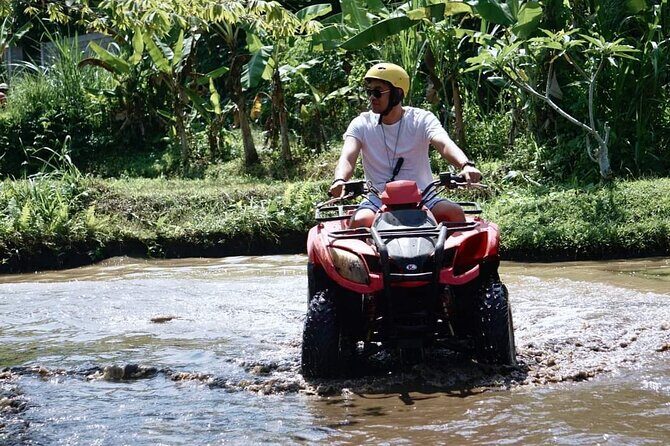
Ayung River Rafting and Ubud Waterfall Tour

Ayung River Rafting and Ubud Waterfall Tour - Private door-to-door pickup from Seminyak (and beyond)

Rafting plus temples in one day? It can work beautifully. This private, door-to-door outing pairs Class II–III Ayung River thrills with classic Ubud-area sights: Tegenungan Waterfall, Tegalalang Rice Terrace, and Tirta Empul Temple.

I love that the rafting part is led by a professional river guide and backed by safety gear, lockers, towels, and even a shower and changing room. I also like that the day includes a buffet lunch, so you’re not hunting for food between stops.

One consideration: this is a long 9–10 hour day, and the rafting means you’ll get wet, warm, and sandy. If you’re sun-sensitive or you hate being in damp clothes for even a short time, plan your after-rafting outfit carefully.

Key things to know before you go

Ayung River Rafting and Ubud Waterfall Tour - Key things to know before you go

  • Private door-to-door transfers: pickup and drop-off cover Seminyak and many nearby areas around south Bali.
  • Safety-first rafting: you get safety-approved equipment plus a professional guide on the water for Class II–III rapids.
  • A full day with set stop times: about 2 hours on the river, then Tegalalang (about 1 hour), Tirta Empul (about 1 hour), and Tegenungan (about 1.5 hours).
  • On-site comfort after rafting: lockers, towels, shower, and a changing area are included, which matters more than you think.
  • Guide-driven experience: names like Agung (driver/pickup) and rafting guides like Daddy and Putu show up in the feedback, and that lines up with what you want—calm, clear leadership.

Why this combo tour fits Bali so well

Ayung River Rafting and Ubud Waterfall Tour - Why this combo tour fits Bali so well
This itinerary works because it balances action with breathing room. You start with physical fun on the Ayung River, then shift to scenery and culture without rushing through everything at a sprint.

The key is pacing. Even with a full day, you’re getting dedicated time in each place: enough for photos and walking, not just a quick stop where you feel like you missed it all. That’s a win in Bali, where one bad timing choice can ruin a whole morning.

Private door-to-door pickup from Seminyak (and beyond)

Ayung River Rafting and Ubud Waterfall Tour - Private door-to-door pickup from Seminyak (and beyond)
You don’t just get a ride. You get a plan that starts at 8:00am and pulls you from your hotel or villa. This matters if you’re staying in Seminyak (or nearby Canggu, Kuta, Denpasar, Sanur, Uluwatu, Jimbaran, Nusa Dua, and more), because the Ubud-area traffic can turn a simple outing into a long, stressful one.

The vehicle is air-conditioned, so after rafting heat you’ll at least have a clean reset on the way back. Also, this is labeled a private tour in the vehicle, meaning it’s only your group in the car—no random seatmates filling up your space.

One practical tip: wear something that looks “smart casual,” but still won’t make you cry if it gets wet. Smart casual is doable here, as long as you bring a spare layer.

Ayung River rafting: Class II–III rapids, real guide support

Ayung River rafting is the headline. You’re on the water for about 2 hours, and the rapids are listed as Class II–III—meaning you should expect thrills, not pure survival-mode chaos.

You’ll want to lean into the “team sport” part of rafting. The best moments come when everyone listens, holds steady, and stops overthinking what’s next. With a professional river guide, you’re not left guessing.

Safety details are included in the basics:

  • safety-approved equipment
  • lockers and towels
  • shower and changing room

And on the human side, guides are specifically praised for being friendly and reassuring. I’ve seen names like Daddy and Putu tied to that vibe, which is exactly what you want when you’re about to get splashed for real.

If you’re traveling with kids, this is one of the calmer rafting grades you’ll find that still delivers. The minimum age listed is 5 years, so it’s family-friendly in the sense that it’s not aimed only at adults.

Dry season rafting on a “safe river” feel

Ayung River Rafting and Ubud Waterfall Tour - Dry season rafting on a “safe river” feel
The description for the rafting stop calls out that Ayung rafting during the dry season is great fun for the entire family. That’s useful because river conditions can change, and you want the day to feel like adventure, not a constant grind.

There’s also language around meandering down a safe river and enjoying wildlife while you go. So yes, you’ll hit rapids, but you’re not just going from white-water moment to white-water moment. You get stretches where you can look around and actually notice the surroundings.

If your ideal day includes both action and a chance to relax between hits, you’ll likely like this format.

Tegalalang Rice Terrace: a photo stop you can actually enjoy

After rafting, you’ll shift gears fast. The Tegalalang Rice Terrace stop is about 1 hour, and it’s built for dramatic views and strong Bali photos.

This is one of those places where the scenery does a lot of the work for you. Terraces spill down the slopes across the valley, and even if you’re not a hardcore photographer, you’ll find angles that look great without planning a whole shoot.

There’s also a human touch noted here: the area is described with local elders/farmers involved in what you see. That matters because the terrace isn’t just a background—it’s a working landscape tied to daily life.

Practical note: terraces often mean uneven ground and stairs. Wear shoes you can move in comfortably, even if you’re dressing “smart casual.”

Tirta Empul Temple: calm sacred springs, not just a viewpoint

Then you get a cultural pause at Tirta Empul Temple, about 1 hour. It’s described as one of Bali’s most famous places of interest, known for sacred springs from a holy mountain spring.

This isn’t a quick “look and leave” stop. The temple focus is the springs and the sacred setting, so treat it like a slower, respectful visit. If you’re the type who likes learning what people actually do at a site (not just standing near it), you’ll likely find this more satisfying than a typical photo stop.

What I’d do: use this hour to reset mentally after rafting. Your body will still feel the rafting day, and Tirta Empul’s slower pace gives you that needed break.

Tegenungan Waterfall: popular with locals for a reason

Finally, you’re at Tegenungan Waterfall for about 1 hour 30 minutes. It’s described as one of the most popular waterfall attractions in Bali, and importantly, locals visit too, not just tourists.

That’s a strong clue that the waterfall has broad appeal. It gives you enough time to get photos, enjoy the sound and mist (at least from the right spots), and not feel like you’re sprinting through the area.

Also, this stop tends to be where the whole day’s theme clicks. Earlier you had river action; now you’ve got water in a calmer, scenic form. It’s a nice emotional contrast.

Lunch at the rafting restaurant: included, simple, and time-smart

Ayung River Rafting and Ubud Waterfall Tour - Lunch at the rafting restaurant: included, simple, and time-smart
Your lunch is included and listed as a buffet. There’s also a vegetarian option available if you tell the operator at booking time.

What’s valuable here is not the menu fantasy—it’s the scheduling. After rafting, you don’t want to negotiate where to eat while everyone’s hungry and slightly damp. A buffet at the rafting restaurant keeps things moving and reduces decision fatigue.

If you do go for the vegetarian option, plan it ahead so your meal matches what you need. The tour data specifically says vegetarian is available with notice at booking.

Gear, lockers, towels, shower, and the change-of-clothes win

Here’s where this tour quietly scores points. You get lockers, towels, and a shower and changing room, plus safety-approved equipment for the rafting.

That combination makes a big difference if you’re doing photos and temple stops after. Many rafting tours leave you to figure out your own cleanup, then you’re stuck in damp clothes on the ride and at cultural sites. Here, you get the chance to reset.

What to bring (the practical stuff):

  • sunscreen
  • camera
  • change of clothes

Sunscreen is non-negotiable on Bali even when you think clouds will save you. You’ll also get splashed, so having your dry outfit ready is what keeps the rest of the day comfortable.

Dress code is smart casual. You’ll still want to wear something you don’t mind getting wet during rafting.

Price and value: is $80 per person fair?

At $80 per person, this tour isn’t positioned as a bare-bones rafting ticket. You’re paying for more than just “get on a raft and go.”

You’re getting:

  • private door-to-door transfers from your area
  • an air-conditioned vehicle
  • professional English-speaking driver/guide
  • private tour meaning only your party in the vehicle
  • rafting guide and included safety gear
  • lockers, towels, shower, changing room
  • entrance tickets for the listed stops
  • buffet lunch
  • rafting insurance

That’s the value equation. If you were to piece this together on your own, you’d spend time coordinating transport, pay separate entrance fees, and still need a rafting operator with gear and guide.

So while $80 isn’t the cheapest option, it’s not random pricing either. It’s paying for convenience, built-in logistics, and a full-day loop that keeps you from losing hours to planning.

If you’re a couple, a small family, or a group of friends traveling together, the private format can feel especially worth it.

Who should book this tour (and who might rethink it)

This is a strong choice if you want:

  • active fun without jumping to high-intensity rafting
  • a day that mixes nature and culture
  • door-to-door convenience from Seminyak or south Bali

It’s less ideal if you hate long travel days or you’re very sensitive to sun and getting wet. With the day running about 9–10 hours, you should go in knowing you’ll be on your feet, moving between spots, and likely feeling some fatigue after rafting.

Age limits listed are minimum 5 years and maximum 60 years, so it’s aimed at a fairly wide range, but still within safe boundaries set by the operator.

Should you book this Ayung River + Ubud-area tour?

I’d book it if you want a single-day plan that avoids stress. Private transfers plus included tickets and lunch means you spend your time enjoying the day, not sorting the day.

I’d also book it if you like the idea of a safety-led rafting experience (Class II–III) and then using the rest of the day for scenic and cultural stops that don’t require extra planning.

What might hold you back? Only two things really: the length of the day and the fact that rafting means you’ll get wet. If that’s fine for you, you’re set up for a memorable Bali day—water thrills up front, classic Ubud-area sights afterward.

If you want, tell me your exact hotel area in Bali and whether you’re traveling with kids. I can help you sanity-check how early pickup will feel and what to wear for rafting-to-temple comfort.

FAQ

What time does the tour start?

The start time is 8:00am.

How long is the Ayung River rafting and Ubud waterfall tour?

It runs about 9 to 10 hours.

Is this tour private?

Yes. It’s a private tour, and only your group participates in the vehicle.

Where is pickup and drop-off available?

Pickup and drop-off are offered from hotels or villas in Ubud and south Bali areas including Seminyak, Canggu, Kuta, Legian, Tuban, Jimbaran, Uluwatu, Nusa Dua, Tanjung Benoa, Sanur, Denpasar, and more.

What rafting level are you riding?

The Ayung River rapids are Class II–III.

What’s included in the tour price?

Included are private transfers, an air-conditioned vehicle, a professional English-speaking driver, 2 hours rafting with a professional rafting guide, safety-approved equipment, lockers, towels, shower and changing room, all entrance tickets, buffet lunch, and rafting insurance (plus tax and services).

Is lunch included, and can I request vegetarian?

Yes, lunch is included as a buffet. A vegetarian option is available if you advise at the time of booking.

What should I bring with me?

Bring sunscreen, a camera, and a change of clothes.

What are the age limits for the adventure?

The minimum age is 5, and the maximum age is 60.

What happens if weather is poor?

The experience requires good weather. If it’s canceled due to poor weather, you’ll be offered a different date or a full refund.

Can I get a full refund if I cancel?

Yes. You can cancel up to 24 hours in advance for a full refund. If you cancel less than 24 hours before the start time, the amount paid is not refunded.

Private Waterfall Tour Feature Tukad Cepung, Tibumana and Kanto Lampo

Private Waterfall Tour Feature Tukad Cepung, Tibumana and Kanto Lampo - Tibumana Waterfall: Clear Water, Swim Breaks, and Easy Photo Setup

Waterfalls, a plantation, and zero driving headaches. This private day lines up three Ubud-area falls—Tukad Cepung, Tibumana, and Kanto Lampo—so you can focus on photos, swimming, and scenery instead of maps and parking. I especially like that you get 2-way private transfers from most Ubud and south Bali hotels, handled by an English-speaking driver.

I also like the add-on at the end: Teba Sari Bali Agrotourism, where you learn about coffee and spices with a tasting. The one drawback to plan for is physical: to reach each waterfall you walk down stairs for about 10–20 minutes, and you’ll often step through river-stream access areas.

Key points at a glance

Private Waterfall Tour Feature Tukad Cepung, Tibumana and Kanto Lampo - Key points at a glance

  • Three waterfalls, one route: Tukad Cepung, Tibumana, and Kanto Lampo, scheduled back-to-back
  • Photo-friendly moments: Tukad Cepung is known for sunlight shining through the falls
  • Swim time at Tibumana: clear water and a spot that’s described as great for shooting photos
  • Kanto Lampo’s rock-cut look: water flows through cuts in the rock, so it’s visually different
  • Coffee and spice tasting included: Teba Sari Bali Agrotourism adds a calmer cultural stop
  • Private means simpler logistics: no navigating, no parking stress, and only your group in the vehicle

Three Waterfalls in One Day: Why This Route Works

This tour is built for people who want the Bali waterfall experience without the tiring bits. You’re not piecing together rides, searching for parking, or trying to guess timing between sights. Instead, you get an air-conditioned vehicle, a driver who can explain what you’re looking at, and a tight flow through three different waterfalls.

What makes this route feel efficient is the variety. Tukad Cepung gives you that classic look where light interacts with the falls. Tibumana shifts the mood toward relaxing and swimming. Then Kanto Lampo adds a distinctive texture because the water moves through rock cuts rather than a simple open drop.

You’ll be busy, though. This is an 8 to 10 hour day, and each stop includes time plus the walk down to access the viewpoints and bathing spots. If you’re hoping for a slow morning and long lunch break, you’ll need to adjust expectations.

Tukad Cepung: Sun Rays, River Steps, and Real-World Waterfall Access

Private Waterfall Tour Feature Tukad Cepung, Tibumana and Kanto Lampo - Tukad Cepung: Sun Rays, River Steps, and Real-World Waterfall Access
Tukad Cepung is the first stop, and it’s chosen for a reason: it’s known for sun ray effects shining through the waterfall. That detail matters because it’s not just about seeing a waterfall; it’s about seeing it from the right angle and at the right moment. You’ll spend about an hour here, including time to explore the river area with rock along the path before you reach the main viewpoint.

The access is part of the experience. Plan for stairs—about 10–20 minutes down to get to the waterfall areas. The tour also advises you to wear shorts and expect some water crossings because you’ll walk through river stream sections to reach the falls.

Practical tip: bring water shoes if you have them. Even if the main area doesn’t feel slippery, the approach can be. You’ll want something that helps you move confidently so you can spend your energy on photos instead of regaining balance every few steps.

Also, admission is included here, so you aren’t scrambling for tickets once you arrive. That’s a small thing, but on a long day it reduces friction.

Tibumana Waterfall: Clear Water, Swim Breaks, and Easy Photo Setup

Private Waterfall Tour Feature Tukad Cepung, Tibumana and Kanto Lampo - Tibumana Waterfall: Clear Water, Swim Breaks, and Easy Photo Setup
After Tukad Cepung, you head to Tibumana. This stop is described as having clear water flowing from the mountains, and it’s set up as a place where you can swim and take Instagram-style photos. You’ll get about 2 hours at Tibumana, which is enough time to both cool off and still have time to wander a bit.

The “swim-ready” angle changes how you should prepare. You’ll want a swimsuit you can actually stand in, plus a towel and a change of clothes for later. The tour also recommends bringing sunscreen, sunglasses, and a hat or cap—especially since you’re dealing with outdoor time and reflective water.

One thing to keep in mind: you’ll still deal with waterfall access walking (the general guidance for stairs applies across the stops). So even though the mood is calmer at Tibumana, your legs are still part of the schedule.

If you’re traveling with someone who loves water play while you focus more on the photos, Tibumana is a good compromise. You can set up for shots from the safer viewing areas while your travel partner takes a swim, then switch when you’re both ready.

Kanto Lampo: Rock-Cut Cascades and the Fun of Getting Closer

Kanto Lampo is where the water show gets visually different. Instead of a plain curtain, the water flows through rock cuts, and you can get closer to it. The area feels tranquil and green, and you’ll have about 2 hours here—plenty of time to move around and find angles.

This waterfall is often the one people remember for the texture. Rock-cut flow changes the way highlights bounce, and it gives your photos more layers than a single falling line. If you like waterfalls but also like variety in your pictures, this stop delivers.

Like the other falls, access involves stairs and some walking. The tour notes that getting to each waterfall requires walking down stairs around 10–20 minutes. That means you should treat footwear and clothing as part of your photo plan, not just comfort.

A small reality check: you’re spending a big chunk of your day outdoors. If weather is damp or unstable, the experience can feel slower or less comfortable than the photos promise. The tour is also described as requiring good weather, which is worth respecting.

Teba Sari Bali Agrotourism: Coffee and Spice Tasting After Wet Footsteps

Once your legs have had their waterfall workout, the tour shifts gears to a local plantation: Teba Sari Bali Agrotourism. This stop lasts about an hour and focuses on coffee and spices, including tasting.

Why this part works so well is timing. You’re done with the waterfalls—wet clothes, sand or water shoes, and the need for a breather. Then you move into a more structured experience where you can sit, taste, and learn at a comfortable pace.

The tour’s notes emphasize that you’ll learn about different types of coffee and other herbal drinks. That’s a good match for people who want more than just a quick souvenir purchase. You can also use the tasting as a way to judge what you might want to buy later.

One caution: you’ll still be in travel mode. Bring water and plan to rehydrate after the waterfall portion. The tasting is part of the fun, but it shouldn’t feel like a sprint.

Price and Logistics: Transfers, Private Time, and What Makes $44.47 Feel Reasonable

Private Waterfall Tour Feature Tukad Cepung, Tibumana and Kanto Lampo - Price and Logistics: Transfers, Private Time, and What Makes $44.47 Feel Reasonable
At $44.47 per person, this tour sits in the “one-day splurge, but still grounded” category—especially because it bundles a lot. You’re getting an air-conditioned vehicle, parking fees, fuel surcharge, and an English-speaking driver. Admission tickets are included for each waterfall, too.

Most importantly, you’re paying for the time savings. In Bali, the cost of effort can be more exhausting than the cost of money. A private plan means you spend your time at the sites instead of negotiating rides, figuring out where to park, or losing half an hour to wrong turns.

This tour is also private, meaning only your group participates. That can matter if you want to move at your pace, take photos without feeling rushed, or keep everyone synced for the stair walks and swim breaks.

Duration is about 8 to 10 hours, so it’s not a quick hit. But the schedule is spread across four meaningful stops: 1 hour at Tukad Cepung, 2 hours at Tibumana, 2 hours at Kanto Lampo, and 1 hour for Teba Sari Bali Agrotourism. The math works because you’re not cramming in extra filler.

What to Bring: The Small Items That Save Your Day

Private Waterfall Tour Feature Tukad Cepung, Tibumana and Kanto Lampo - What to Bring: The Small Items That Save Your Day
You’ll have a better time if you pack for wet conditions and photo sessions. The tour guidance is straightforward: wear shorts, and bring a change of clothes, water shoes, towel, sunscreen, sunglasses, and a hat or cap.

I’d add a couple practical habits from experience-style logic:

  • Keep your camera protected from splash when you’re moving between spots.
  • Bring a water bottle so you can keep sipping during the breaks.
  • Use petty cash if you want small purchases at the plantation or in the area.

A swimsuit is also strongly recommended. Even if you decide not to swim at every stop, you’ll have the option at Tibumana, where clear water and swimming are part of the pitch.

Guide Experience: English Speaking, Punctual, and Focused on Culture

A big part of Bali tours is how someone handles the day. A good driver doesn’t just transport you; they help you understand what you’re seeing and keep the schedule realistic.

In this case, the tour uses an English-speaking driver. People have highlighted drivers like Wira for arriving right on time and smoothly taking guests to the waterfalls. Others have praised Wayan for being generous and kind, plus for guiding them to many places beyond the core itinerary, including cultural sites and local food spots.

Even if your driver is different, the pattern is clear: you’re not getting a silent car ride. You’ll have someone who can explain what’s around you and help you get the most out of each stop.

Who This Tour Suits (and Who Should Rethink It)

This tour fits best if you want three distinct waterfalls in one day and you’re okay with walking stairs and stepping through river stream access areas. It’s a strong match for couples, small groups, and solo travelers who don’t want to navigate independently.

It’s not ideal if you have health conditions that could worsen with stimulation. The tour notes that pregnant women, people with high blood pressure, heart problems, asthma, or epilepsy should not participate. If that applies to you, it’s worth choosing a gentler plan.

Also, be honest about stamina. The stair walks are about 10–20 minutes per waterfall access. That’s doable for most people, but it’s not “sit at the edge and watch” tourism.

Should You Book This Private Waterfall and Coffee Tour?

Book it if you want a focused, value-minded day: three major Ubud-area waterfalls plus a coffee and spice stop, all handled by a private driver with English support and included admissions. It’s especially good if you care about photo variety—sun rays at Tukad Cepung, swim time at Tibumana, and rock-cut flow at Kanto Lampo.

Pass or choose a simpler plan if you hate stairs, don’t want wet footwear situations, or you’re sensitive to weather. Since the experience requires good weather, a rainy day can affect how comfortable (and photogenic) everything feels.

If you’re trying to cover “must-see waterfalls” efficiently while keeping the day relaxed, this private route is a smart way to do it.

FAQ

What waterfalls are included on this private tour?

The tour includes Tukad Cepung Waterfall, Tibumana Waterfall, and Kanto Lampo Waterfall.

How long is the tour?

The duration is about 8 to 10 hours.

Is hotel pickup and drop-off included?

Pickup and drop-off are offered from most Ubud and south Bali hotels.

Are admission tickets included for the waterfalls?

Yes. Admission tickets are included for each waterfall stop.

Is lunch included?

No, lunch is not included.

What should I bring for the waterfalls?

Bring a change of clothes, water shoes, a towel, sunscreen, sunglasses, a hat or cap, a water bottle, snacks, a swimsuit, a camera, and some petty cash. Wearing shorts is advised since you’ll walk through river stream access areas.

Is this tour private or shared?

This is a private tour/activity, so only your group participates.

Kuta District Shopping Trip with Spa Massage

Kuta District Shopping Trip with Spa Massage - The spa first: a 2-hour Balinese massage reset

Kuta can feel like a shopping mission. This private half-day plan makes it easier by pairing hotel-area pickup with a full 2-hour Balinese massage, then guiding you through the key Kuta-area malls and markets in one smooth run. I like that the shopping stops are practical and varied (from souvenir streets to bigger mall brands), and I also like that the day has an actual reset built in, not just photo stops and rushing.

One consideration: timing depends a lot on the driver and traffic. In at least one account, the driver named Haris arrived late and tried to rush the return, so the full mall list didn’t feel fully covered.

Quick hits before you go

Kuta District Shopping Trip with Spa Massage - Quick hits before you go

  • Private transport + hotel-area pickup: less time negotiating, more time shopping.
  • 2-hour traditional Balinese massage: a slow, long-pressure style meant for relaxation and muscle relief.
  • Big mall mix: Beachwalk, Discovery, and Lippo plus Kuta Square and Kuta Market.
  • Shopping with free admission stops: the included stops list admission as free.
  • Driver with basic English: enough for logistics and recommendations on the spot.

Kuta shopping without the taxi shuffle

Kuta District Shopping Trip with Spa Massage - Kuta shopping without the taxi shuffle
Kuta looks compact on the map, but walking is another story. Sidewalks can be inconsistent, streets get busy, and simple trips can turn into detours. If you’ve ever watched a taxi meter climb while you lug bags from one stop to the next, you’ll understand why a single planned run matters.

This is designed for you to shop without the constant question of how you’ll get to the next place. You start with pickup from many south Bali areas (including Seminyak and Canggu-style neighborhoods depending on where you’re staying), then you’re dropped off near your shopping route. That means you spend energy on choosing items instead of managing transport.

I also like that it’s structured as a private tour, so you’re not stuck waiting for other people’s shopping pace. One group, your schedule, and an air-conditioned vehicle to reset between stops.

The spa first: a 2-hour Balinese massage reset

Kuta District Shopping Trip with Spa Massage - The spa first: a 2-hour Balinese massage reset
The day begins with a spa massage center stop right after pickup. You get about 2 hours for the traditional full-body massage. The treatment is described as using rolling long-pressure energy, aimed at balancing and relaxing the mind. For your body, it’s positioned as muscle-pain relief and improved circulation.

Even if you don’t buy the language about toxins and healing power, the practical idea is solid: you arrive to the massage fresh from travel and cool down before you hit shopping crowds. If you tend to carry tension in your shoulders or lower back, this is a smart way to “spend” your energy first, then enjoy the rest of the day more comfortably.

One other benefit: when your tour includes a dedicated relaxation block, you’re less likely to feel like you missed something when shopping runs longer than expected. The massage is a real anchor, not a rushed add-on.

Beachwalk and Kuta Shopping Centre: your first real shopping test

Kuta District Shopping Trip with Spa Massage - Beachwalk and Kuta Shopping Centre: your first real shopping test
After the spa, you head to Beachwalk Shopping Center, then the tour ends around Kuta Shopping Centre / Kuta District. This is a good first shopping zone because it tends to feel like a bridge between casual browsing and more organized retail.

What you can expect:

  • Bali souvenirs and handmade crafts as a theme
  • A range from local brands to more international-style options
  • A place where you can compare items without feeling like every purchase requires a negotiation marathon

This stop is about pace. Plan to spend a little time just walking the floors and getting a sense of what’s priced like what. If you’re the type who buys after you see three or four similar items, you’ll like having Beachwalk early.

A quick practical tip: because you’ll later visit markets and other malls, keep your shopping priorities in mind. If you see your favorite craft or coffee product right away, grab it. If you only feel lukewarm, mark it mentally and keep going.

Kuta Market: where you shop differently

Kuta District Shopping Trip with Spa Massage - Kuta Market: where you shop differently
Kuta Market is a different vibe than a mall. It’s where you’ll likely feel more of the local shopping rhythm, and that can be fun if you enjoy variety and people-watching while you browse. You also usually get more “small find” potential here: practical items, gifts that don’t look like they came from every tourist shelf, and that chance to discover something oddly specific.

The trade-off is that markets can be slower for focused shopping. You might find yourself doing more comparison and more checking of quality. If you’re buying fragile items or items you don’t want to carry too long, factor that into how fast you move through this stop.

Kuta Square: a middle-ground stop for quick wins

Kuta District Shopping Trip with Spa Massage - Kuta Square: a middle-ground stop for quick wins
Kuta Square sits in that useful middle zone between market energy and mall comfort. The value of this stop is simple: it’s another chance to match what you want (souvenirs, gifts, and casual retail) with a layout that’s easier to navigate than a street market.

If you’re buying clothes or fashion-style items, this kind of mall-square stop can help because you can step in, check, and step out quickly without feeling trapped. For gift shopping, it’s also a good place to grab backups. Think of it as the stop where you fill gaps: one more set of snacks, another small souvenir, or an extra option if your earlier picks don’t work as well as you hoped.

Discovery Shopping Mall and Lippo Mall Kuta: more choice, more comparison

Two more hour-long stops round out the mall portion of the day: Discovery Shopping Mall and Lippo Mall Kuta. These are the kinds of places where you can shift your shopping from browsing-by-hunch to browsing-by-category.

Why these stops are worth your attention:

  • You can separate your shopping mentally. Coffee and snacks in one direction, fashion in another, souvenirs in another.
  • Bigger malls typically make it easier to compare multiple stores in one walking loop.
  • If you’re traveling with multiple people or shopping for different tastes, larger malls give everyone a fair chance.

At the same time, bigger malls can tempt you to wander. A good strategy is to choose what you’re hunting before you arrive. For example: set a budget, decide if you want mostly local crafts or more brand-style items, and aim to buy one “main” gift plus a few smaller add-ons. Then you’ll leave with more intention and less random spending.

Pickup routes across south Bali and the Ubud stretch

This tour covers a wide pickup and drop-off range, including areas like Kuta, Tuban, Legian, Jimbaran, Nusa Dua, Sanur, Seminyak, Canggu, Denpasar, Ubud, Tanah Lot, Tabanan, and Gianyar. That broad coverage matters if you’re not staying in the immediate Kuta zone.

Door-to-door transfers are also part of the value because Kuta-area taxi logistics can eat time. Even if you know where you’re going, traffic can shift your best route on the fly. The tour’s planning means you’re relying on one driver and one vehicle for the day, not juggling separate rides per stop.

One practical note I’d keep in mind: the operator reconfirms pickup time in advance, and you’ll want to be ready when they arrive. If you miss pickup windows, your shopping schedule can get squeezed fast when you’re also heading to a spa.

Price and time: whether $95.10 feels fair

At $95.10 per person for an approximately 6 to 8 hour private outing, the value depends on what you’d do on your own.

Here’s the math that matters:

  • You’re getting spa time (2 hours) that you wouldn’t have otherwise.
  • You’re also getting air-conditioned private transportation and direct transfer between multiple shopping areas.
  • Plus, you’re saving time from coordinating taxi rides and hauling shopping bags around.
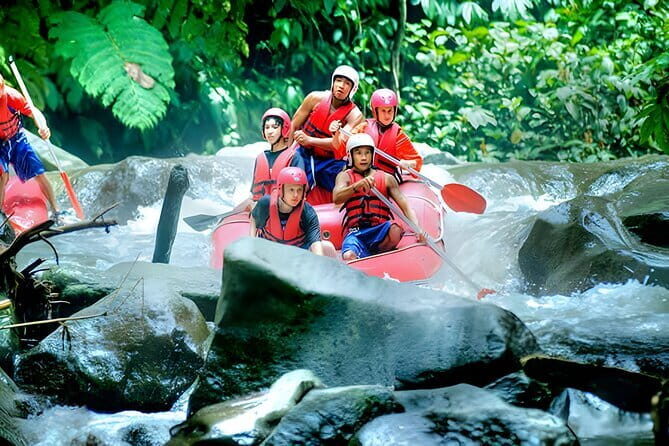
If you were planning to visit multiple malls and markets in one day, you’d likely pay for separate transport anyway. Bundle that with the massage, and the overall price can feel reasonable compared to paying for the day piece by piece.

The only real “don’t ignore this” angle is pacing. If traffic or driver timing runs tight, you could lose some of the shopping time you hoped for. The best defense is to go in with flexible shopping goals and a clear list of what you truly want.

Who this tour suits best (and who should rethink it)

This works especially well if:

  • You want a single-day shopping plan without transportation stress
  • You like the idea of shopping in both malls and markets
  • You’d enjoy a traditional Balinese massage before you spend time moving around
  • You’re staying across south Bali and want pickup without figuring out transfers

You might want to rethink it if:

  • You’re very strict about hitting every store and buying in a specific order.
  • You dislike any schedule pressure at all, since traffic can change the feel of a half-day plan.
  • You prefer a long, slow shopping day over structured stops.

It also fits couples or small groups well because it’s private, and everyone can shop at their pace without strangers slowing you down.

A quick “make the most of it” checklist

A little planning makes this day smoother:

  • Pick your top 3 shopping targets before pickup (example: coffee, crafts, fashion).
  • Bring a tote bag for anything you buy early, so you’re not scrambling later.
  • If you’re serious about shopping, decide which items you must buy, and let the rest be optional.
  • After the massage, expect a different energy level. Use it. Walk smart and don’t burn the best shopping time wandering.

Should you book Kuta District Shopping with a Spa Massage?

If you want organized Kuta shopping plus a real massage block in one day, I think it’s a strong match. The spa makes it feel more like a balanced Bali day rather than a pure retail sprint, and the mall mix gives you multiple chances to find gifts and everyday treats.

Just go in with one expectation managed: traffic and driver timing can influence how much shopping you fit in. If you’d like a worry-free day, keep your priorities clear and be ready to adapt if the schedule runs tighter than planned.
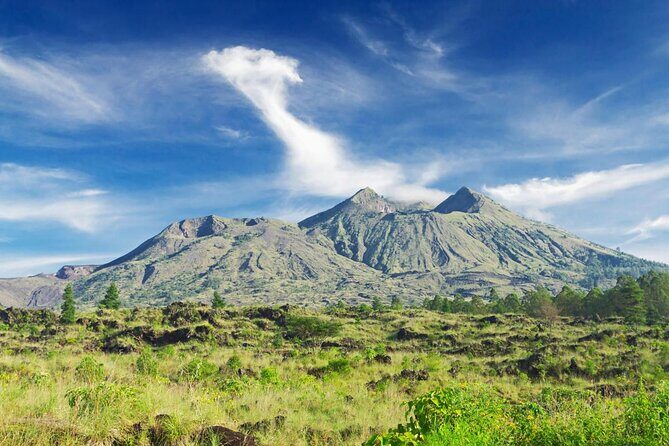
FAQ

What’s the duration of the tour?

It runs about 6 to 8 hours.
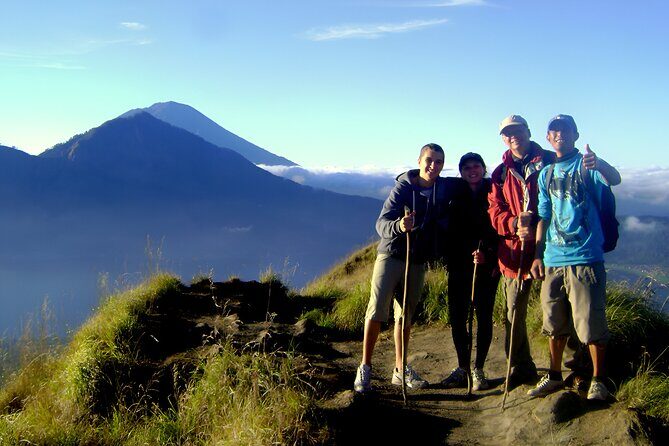
Where is the tour located?

It’s based in Seminyak and focuses on Kuta-area shopping spots.

Do you get hotel pickup and drop-off?

Yes. Pickup is offered, and the tour includes drop-off across a wide set of south Bali and Ubud-area locations.

What’s included in the price?

Spa massage, air-conditioned vehicle, private transportation, and a basic English speaking driver.

Is lunch included?

No. Lunch and dinner are not included.

Which shopping stops are included?

Beachwalk Shopping Center, Kuta Market, Kuta Square, Discovery Shopping Mall, and Lippo Mall Kuta (with the tour ending around Kuta Shopping Centre / Kuta District).

Are admission tickets included for the shopping stops?

The provided stops list admission ticket as free.

Is this tour private?

Yes. It’s private, with only your group participating.

How flexible is cancellation?

Free cancellation is available up to 24 hours before the experience starts for a full refund.