Ubud Monkey Forest, Holy Water Temple & Waterfalls Tours

Ubud Monkey Forest, Holy Water Temple & Waterfalls Tours - Ubud Monkey Forest Sanctuary: macaques, walking time, and photo energy

Ten hours in Ubud can feel fast.

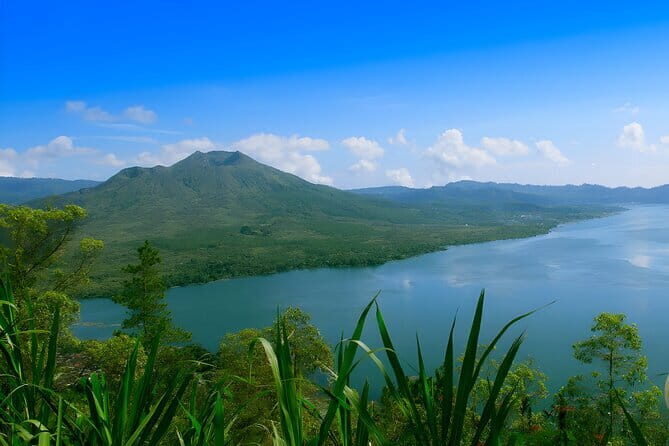
This private guided loop strings together Ubud Monkey Forest, Tegalalang Rice Terrace, Tirta Empul’s sacred springs, and two different waterfalls—Tukad Cepung and Tibumana—so you get nature and Hindu culture in one day without rushing between places on your own.

I like how the pacing is clear and site-by-site, so you know what you’re heading to next: macaques in the morning, rice farming around late morning, a purification ceremony around midday, then waterfalls through the afternoon. I also like the practical setup: private air-conditioned vehicle, pickup options from several Bali areas, and an English-speaking guide who can explain what you’re seeing and help tailor the day to your interests.

The main drawback is simple: it’s a full-day schedule. By the time you add the walk-ins at each stop, plus the afternoon waterfall timing, you’ll want to manage energy and expect a hot-weather day outdoors.

Key moments that make this tour worth your time

Ubud Monkey Forest, Holy Water Temple & Waterfalls Tours - Key moments that make this tour worth your time

  • Sacred water blessing at Tirta Empul: a hands-on Hindu purification at the temple springs
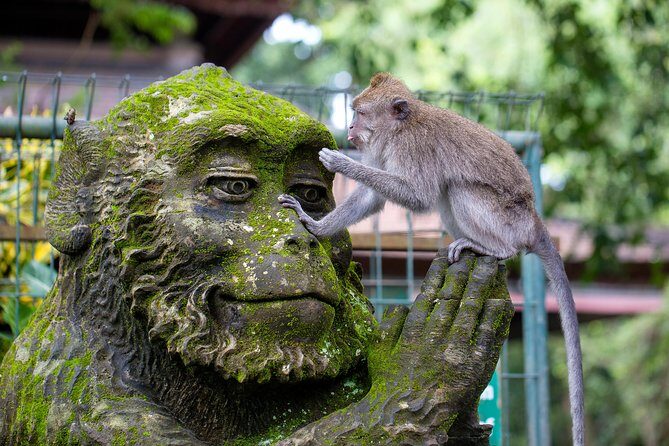
  • Ubud Monkey Forest visit: time to walk around and play with friendly macaques
  • Tegalalang Rice Terrace education: learn about rice cultivation and the irrigation system
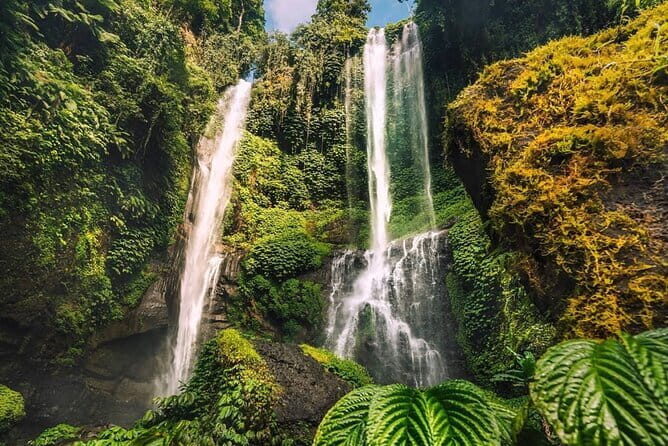
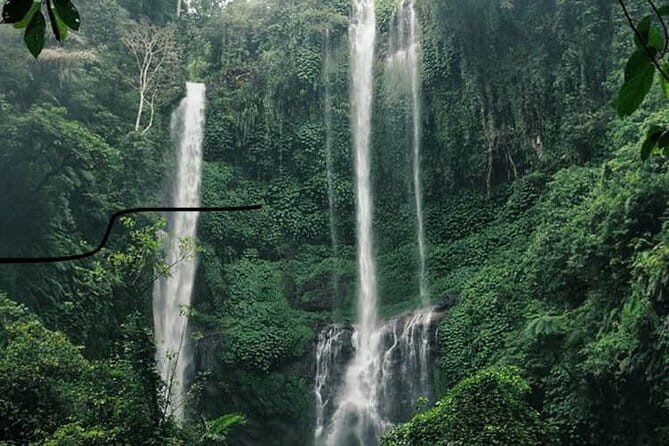
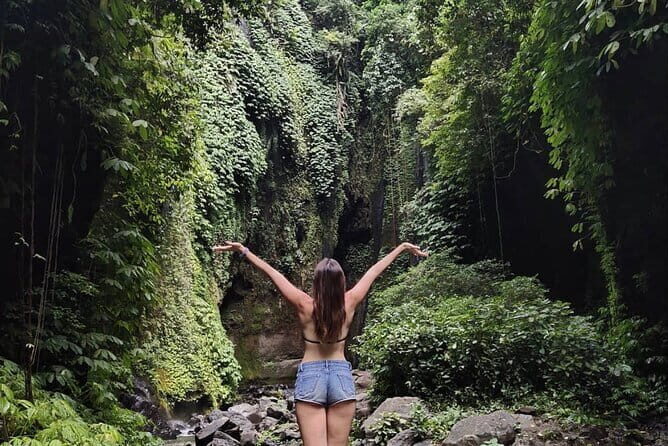
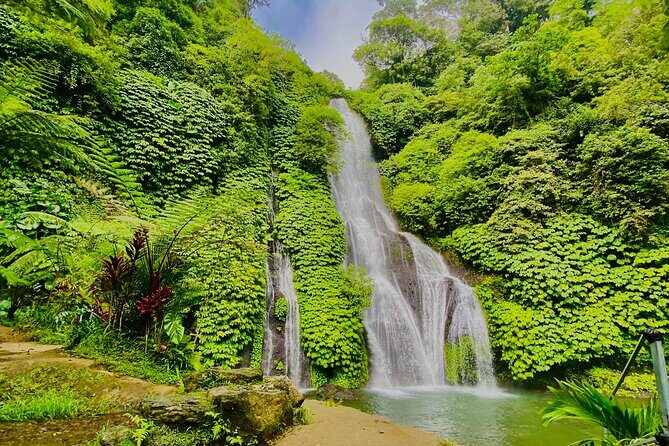
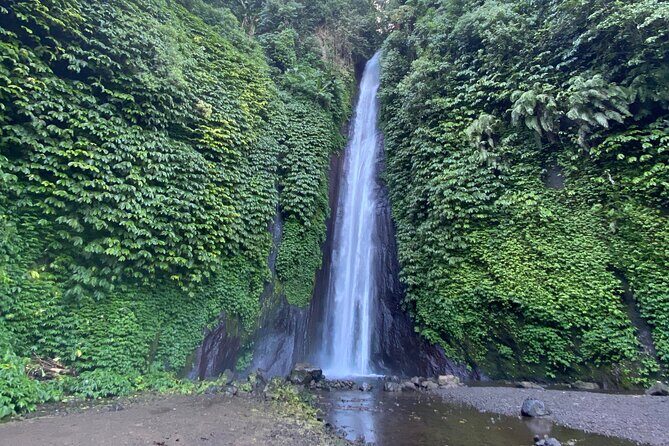
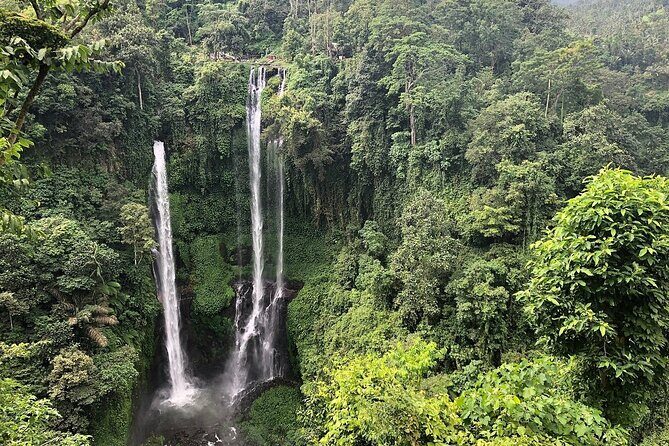
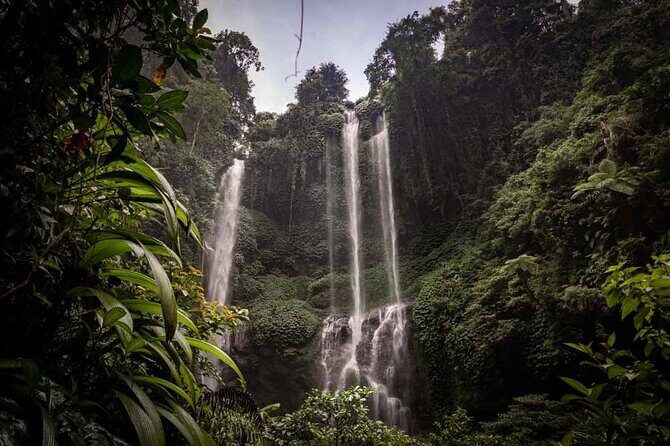
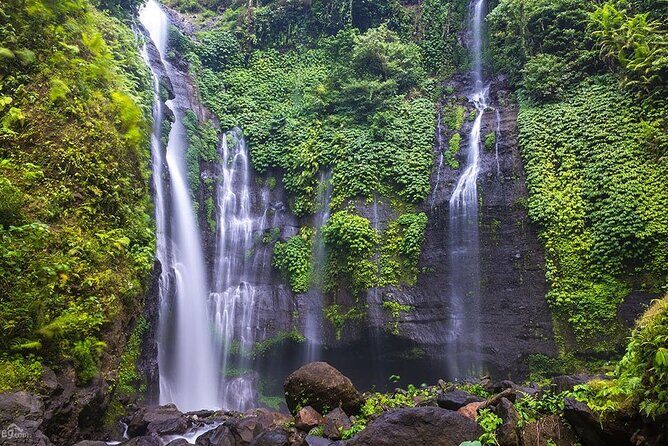
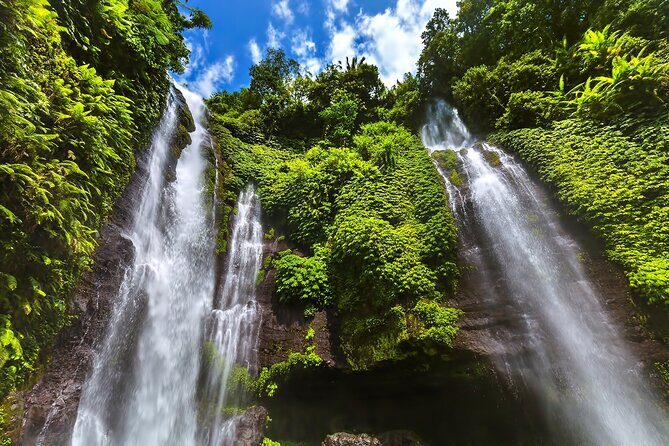
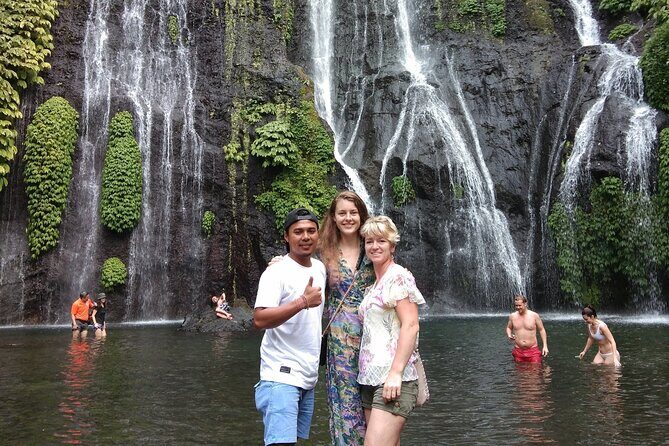
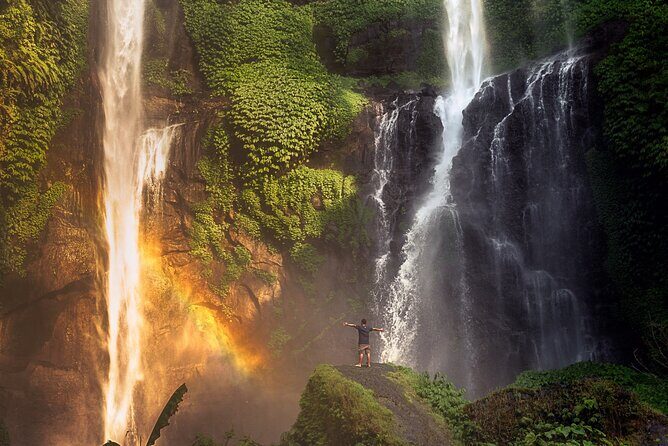
  • Two waterfalls with two very different vibes: Tukad Cepung’s cave-like photo spots plus Tibumana’s swim-friendly waterfall
  • Lunch break that’s built in: a set menu at Waroeng D’Yoni (when you choose the lunch option)

Ubud in one packed day: what you’re really signing up for
Ubud Monkey Forest, Holy Water Temple & Waterfalls Tours - Ubud in one packed day: what you’re really signing up for
This tour is built like a “greatest hits” circuit, but it doesn’t feel random. You start with monkeys and rice, switch gears to a temple ritual, then end with waterfalls that are different enough to keep your brain interested: one is known for photos inside a cave-like setting, and the other gives you a real chance to linger—right up to swimming.

Because it’s private, you’re not stuck with awkward group pacing. You can move at your own rhythm, ask questions, and focus on what you care about most—animals, agriculture, ceremony, or waterfalls. And since you’re in an air-conditioned vehicle with pickup, the hardest part is just showing up and being ready to walk.

The day is also structured to catch you at sensible times of day: Monkey Forest in the morning, rice terrace shortly after, Tirta Empul around late morning, then waterfall stops later when the light and temperatures can be more workable.

Ubud Monkey Forest Sanctuary: macaques, walking time, and photo energy
Ubud Monkey Forest, Holy Water Temple & Waterfalls Tours - Ubud Monkey Forest Sanctuary: macaques, walking time, and photo energy
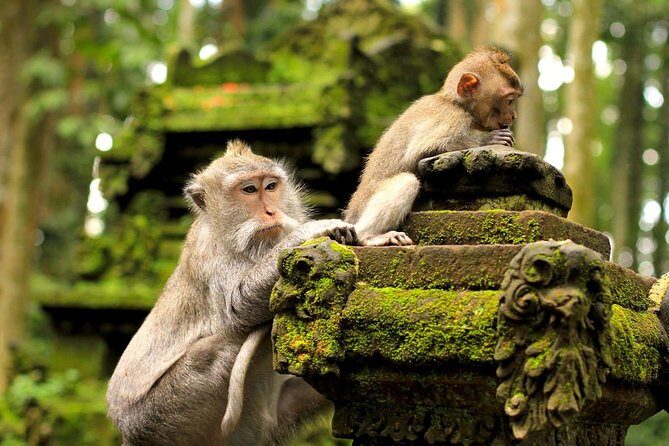
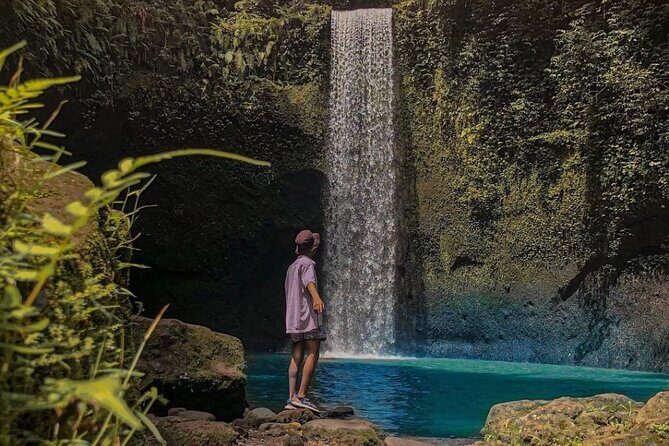
Your morning begins at Sacred Monkey Forest Sanctuary. The plan is straightforward: you’ll walk around and play with friendly monkeys for about an hour, with an admission ticket included on the stop.

Here’s the key to enjoying this part: treat it like a lively outdoor walk, not a “stand still and watch” attraction. Your time is limited, so move with purpose—pause when you see something cool, then keep going before you get stuck in one spot.

Also, remember this is a sanctuary setting, so you’ll be sharing the space with animals. That means you should keep your attention on your surroundings and your comfort level, especially if you’re the type who dislikes close animal encounters. If you’re okay with that, you’ll probably love how playful the macaques are.

A practical tip: go in ready for motion. An hour sounds long until you’re weaving through paths and reacting to what the monkeys do.

Tegalalang Rice Terrace: irrigation lessons you can actually use
Ubud Monkey Forest, Holy Water Temple & Waterfalls Tours - Tegalalang Rice Terrace: irrigation lessons you can actually use
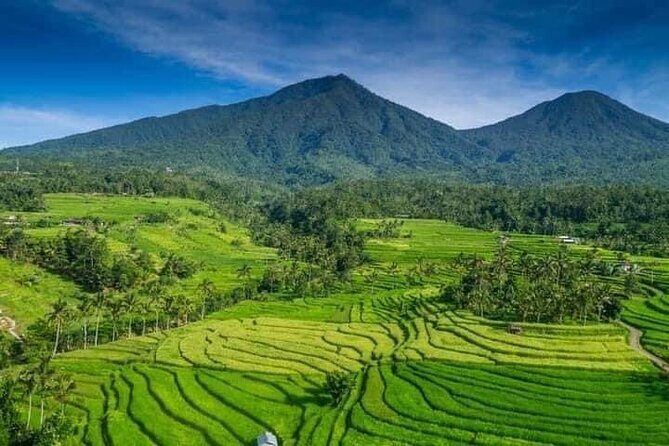
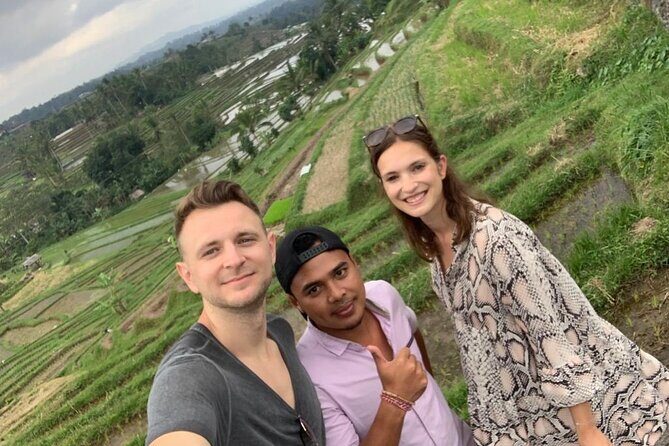
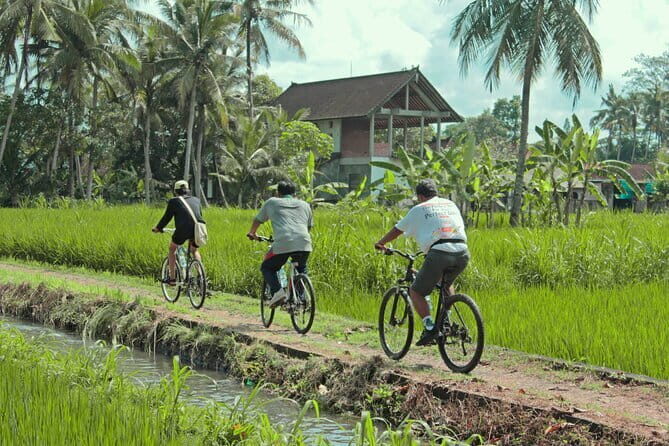
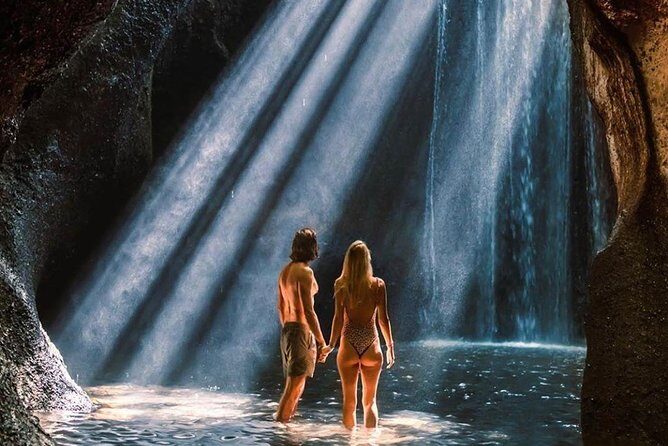
After the monkeys, you shift to farming history at Tegalalang Rice Terrace. You’ll spend about an hour here, learning about rice plantations and the irrigation system, plus taking in the layered terraces.

What I like about this stop is that it’s not only about views. The irrigation system is the point. Rice terraces in Bali aren’t just pretty stairs—they’re engineering built to move water where crops need it. When you understand that water flow, the landscape suddenly makes more sense, and the terraces become more than a photo backdrop.

You’ll also get a sense of why this area keeps showing up in Bali itineraries. It’s one of the ways the island’s agricultural culture feels visible in real life—people still use these terraces, and you’re seeing how water supports the cycle.

One consideration: it’s still outdoors and usually hot. Plan for sun and keep your own pace. If you want slow, take slow. If you’re more of a quick-look photographer, focus on the terraces first and save chatting for when you’re shaded.

Tirta Empul Temple: a Hindu purification you should approach respectfully

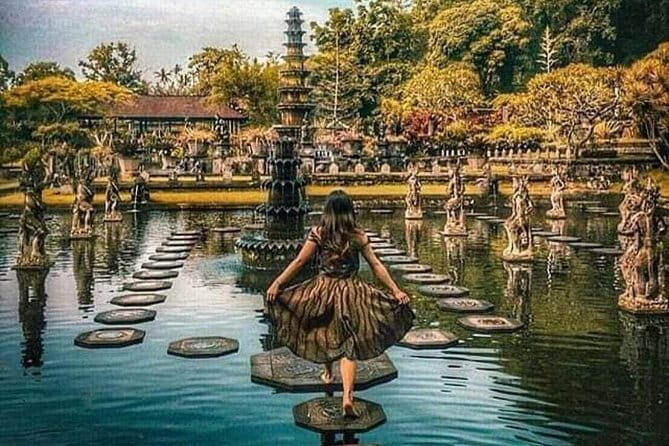
Next up is Tirta Empul Temple, scheduled for around 11:00am. This is the cultural anchor of the day: you’ll take part in purification on the holy water and learn Balinese culture during about an hour, with admission included.

This is not a casual photo stop. It’s a ritual space, and the value comes from understanding the meaning behind it and behaving like you belong. You’re there for a water blessing at the sacred springs, and that’s inherently personal and structured.

Even if you don’t know the ritual details ahead of time, you can still do two things well:

  • Listen closely to your guide’s explanations
  • Follow the flow of people already participating

It helps that your tour includes a guide with excellent English and a clear plan. You won’t be guessing what’s happening.

Culturally, Tirta Empul connects the dots between Bali’s daily life and its spiritual traditions. After you’ve seen monkeys and agriculture, this stop adds the “why” that ties it together—water isn’t only practical here. It also carries meaning.

Waroeng D’Yoni lunch: where the set menu can save your energy

Ubud Monkey Forest, Holy Water Temple & Waterfalls Tours - Waroeng D’Yoni lunch: where the set menu can save your energy
At about 1:00pm, you’ll take lunch at Waroeng D’Yoni. The tour uses a set menu at a local Indonesian restaurant, and this stop is about an hour.

This kind of lunch matters more than you might think on a day like this. When the schedule is tight, a set menu reduces decision fatigue. You’re also less likely to waste time hunting for food that fits your tastes, your budget, or your dietary needs.

If you’re choosing the lunch upgrade, it’s included as a set menu lunch. There’s also a vegetarian option available—just tell them when you book.

The only drawback is that you’re eating in the middle of a full schedule. That means it’s smart to eat like you’re fueling a hike: don’t go for something too heavy. You want energy for the afternoon, not a sleepy slump before waterfalls.

Tukad Cepung Waterfall: walking into the cave for photos

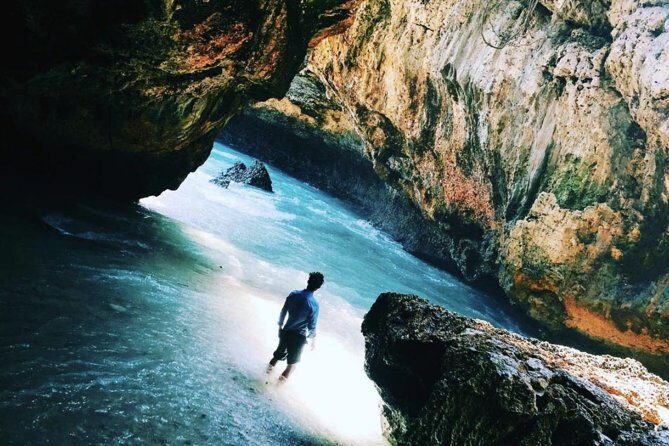
The first waterfall stop is Tukad Cepung around 3:00pm. You’ll walk through a small forest with coconut trees and bamboo and then move into the waterfall area that’s known for spectacular photos inside a cave-like setting. The stop is about an hour, and admission is included.

Tukad Cepung works because it’s not just “pretty water falling.” It’s a different kind of experience: the setting is more enclosed, so the waterfall viewing feels framed rather than open. That makes it a favorite for photos—especially for people who like dramatic lighting and unusual viewpoints.

What you should consider before going: since the waterfall spot is inside a cave area, the environment tends to feel darker and tighter than an open waterfall. Move carefully, give yourself time to find the best spots, and don’t rush through this section just because you’ve seen pictures online.

This stop also nicely breaks up the day. You go from rice terrace and temple ritual into a natural, sensory world—sound of water, cooler mist in shaded areas, and the earthy walk through coconut and bamboo.

Tibumana Waterfall: a classic finish with time to swim
Ubud Monkey Forest, Holy Water Temple & Waterfalls Tours - Tibumana Waterfall: a classic finish with time to swim
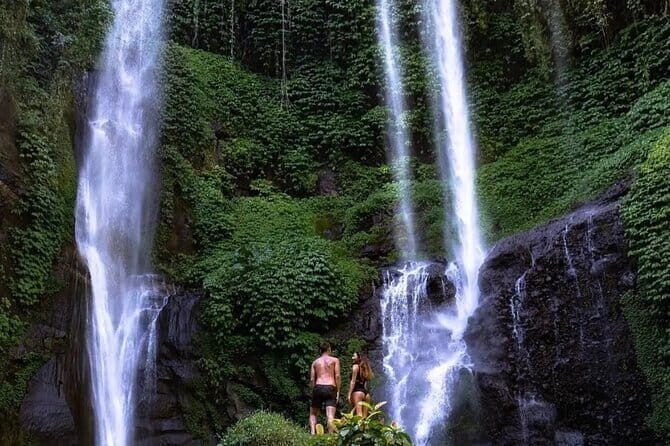
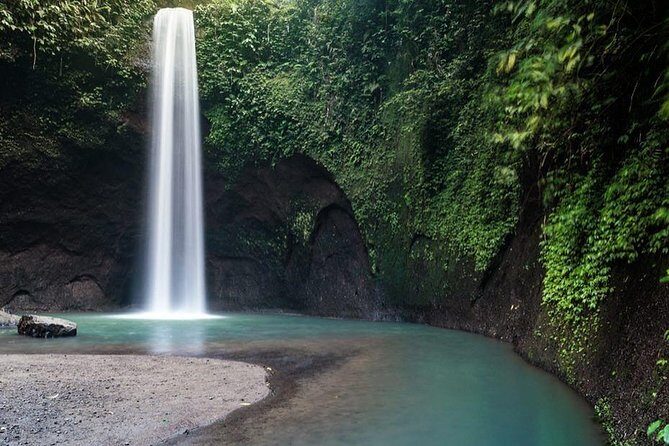
You’ll end with Tibumana Waterfall around 4:00pm. The plan is about an hour here, with admission included, and the standout detail: you can swim in it. The tour even calls out getting the best Instagram photos while enjoying the waterfall.

This is the payoff for staying until late afternoon. Tibumana tends to feel more like a “you’re here, slow down and enjoy it” stop. Swimming changes the tone. You’re not only watching water—you’re interacting with it, which makes the visit more memorable if you’re traveling for experiences, not just sights.

A practical note: if you want to swim, bring what you need to handle water comfortably. If you don’t swim, you can still enjoy the waterfall atmosphere and use the time to take photos and reset after the cave-style setting at Tukad Cepung.

The timing is also good for pacing. After a busy morning and early afternoon, this last stop gives you a gentler rhythm—especially compared to earlier “walk and learn” segments.

Price and value: what $33.25 means on a full-day private route

The base price is $33.25 per person, and the tour runs about 10 hours. That sounds affordable for a day that covers four major cultural/nature stops plus private transport.

Here’s where value really depends on your upgrade choices. The tour includes all ticket fees and a set menu lunch if you select the option. So if you want fewer surprises and less planning work, upgrade for tickets and lunch. You’ll get a clearer sense of what the day costs overall.

You also get a package feel: bottled water, an air-conditioned vehicle, and a private guide with English spoken well. Even if you’re not paying extra for lunch or tickets, you’re still buying time efficiency. Instead of coordinating separate rides and separate entry costs, you get a smooth route designed to hit Ubud’s top stops without juggling details.

Where the price might not fit you is if you already have entrances figured out and you’d rather do waterfalls without structure. This isn’t the cheapest option if you like to DIY everything. But for many people—especially those who want a guided, private day with meaningful cultural time—this is a solid value.

Where this tour fits best (and who might prefer something else)

This is a great match if you want a single, guided loop of Ubud’s big experiences:

  • families and couples who like structure
  • visitors who want a mix of culture and nature
  • people who’d rather ride in comfort than coordinate multiple transport legs
  • travelers who like being shown what matters, especially at Tirta Empul

It may feel less ideal if you’re a slow traveler who hates packed schedules. The day runs from about 9:00am to around late afternoon, and you’ll spend time walking at multiple stops. Also, if you dislike animal encounters entirely, the Monkey Forest segment could be stressful even if the monkeys are described as friendly.

The practical flow: timing, pickup, and how to be ready

The tour is designed to start around 9:00am, then move step-by-step with site visits. Pickup is offered, and transfers are available from Ubud and also from Kuta, Sanur, Canggu, Seminyak, Nusa Dua, and Jimbaran addresses.

If you’re choosing this tour, you’ll get the most out of it by preparing like it’s a full-day outing:

  • have comfortable shoes for walking
  • bring something for sun (it’s outdoors a lot)
  • decide ahead of time if you want the lunch and ticket upgrades (it changes what’s included)

You’ll also receive a mobile ticket, which is handy for keeping everything organized during a busy day.

Should you book this Ubud Monkey Forest, Holy Water Temple & Waterfalls Tour?

If you want one day that hits Monkey Forest, Tegalalang Rice Terrace, Tirta Empul’s sacred springs, and two waterfalls without constant logistics, I think this is an easy yes. The structure is clear, the stops complement each other, and the option for tickets plus lunch makes the day feel more complete and less “let me figure it out later.”

I’d especially recommend it if you care about the Tirta Empul purification part. That’s the kind of experience where a guide helps you understand what you’re participating in, and it changes how you experience the whole day.

If you’re the type who wants lots of free time or only wants nature (not ceremony), then you might prefer a lighter plan. But if your ideal Bali day is culture in the morning and waterfalls in the afternoon, this private Ubud tour fits the bill.

FAQ

How long is the Ubud Monkey Forest, Holy Water Temple & Waterfalls tour?

It runs about 10 hours.

What stops are included in the itinerary?

You’ll visit Sacred Monkey Forest Sanctuary, Tegalalang Rice Terrace, Tirta Empul Temple, Waroeng D’Yoni for lunch (at around 1:00pm), Tukad Cepung Waterfall, and Tibumana Waterfall.

Is pickup included?

Pickup is offered, and transfers are available from Ubud and several other Bali areas including Kuta, Sanur, Canggu, Seminyak, Nusa Dua, and Jimbaran.

Is lunch included?

Lunch is included only if you choose the option for a set menu lunch at Waroeng D’Yoni. A vegetarian option is available if you request it during booking.

Are entrance tickets included?

Admission and ticket fees are included only if you select the option that includes tickets.

Can I cancel for a full refund?

Free cancellation is available up to 24 hours before the experience starts for a full refund. If you cancel less than 24 hours before, the amount paid is not refunded.
Private driver and tours

Private driver and tours - Meet Nyoman and the WhatsApp advantage

A well-planned day in Bali starts here. This private driver setup gives you a simple way to tour Ubud and nearby spots with English-speaking Nyoman (or a trusted stand-in). The big win is flexibility: you can book a short hop, a half day, or stretch it up to a full day without feeling rushed.

What I like most is the personal touch behind the steering wheel. Nyoman has nearly 18 years in tourism hospitality, stays reachable by WhatsApp, and works hard to fit your exact requests. There is also real peace of mind in how he operates, including helpful trip coordination when plans evolve.

One thing to consider: this is best with solid weather. If conditions aren’t right for your chosen stops, your day may shift or be refunded, so plan with a little breathing room.

Key points at a glance

Private driver and tours - Key points at a glance

  • Nyoman is the main contact, reachable by WhatsApp for planning and updates
  • Totally customizable tours, from 1 hour to 15 hours
  • Private by design, only your group rides together
  • Pickup is available, starting in Ubud (Gianyar Regency)
  • English speaking driver experience and a car built for comfort
  • Weather can affect plans, with options to reschedule or refund

Why a private driver from Ubud changes the whole trip

Private driver and tours - Why a private driver from Ubud changes the whole trip
Ubud is a great base, but the logistics can get annoying fast. Traffic, unclear routes, and the hassle of figuring out timing can eat your energy. This private driver model is built for the exact problem: you choose where you want to go, and someone handles the driving so you can focus on the day.

The value here is not only transportation. It is the kind of service that helps you move between different parts of Bali without turning it into a second job. If you want an easy morning, a single must-see location, or a full-day mix of nature and culture, you can shape the schedule instead of forcing yourself into a rigid route.

And since this is a private setup, you do not have to align with other people’s pace. If your group is a little slower at photo stops or wants extra time at a viewpoint, you can usually adjust on the fly. That flexibility matters in Ubud, where timing is everything with temple visits, waterfalls, and popular photo areas.

Meet Nyoman and the WhatsApp advantage

Private driver and tours - Meet Nyoman and the WhatsApp advantage
This experience runs through one person: Nyoman, the Owner & Founder of Ubud Nature Private Driver & Tours. He is your primary point of contact and he is reachable via WhatsApp by calling or messaging. That means you are not stuck guessing. You can send your idea, ask questions, and confirm details without playing phone tag.

Nyoman also has nearly 18 years of tourism hospitality experience, plus a driver license and English speaking skills. In practice, that tends to translate to two helpful things:

  • You get clearer communication about timing and expectations.
  • You get safer decision-making on the road because you are working with someone used to guiding visitors.

There is also a smart backup system. If Nyoman is not available for your exact date/time, he will book a trusted and respected driver for you. That keeps things from falling apart if you are traveling on a busy day.

The Ubud pickup window and how it helps planning

The experience starts in Ubud, Gianyar Regency, Bali. That matters because it usually saves you time when you are already based in the Ubud area. The opening hours listed are Monday through Sunday, 8:00 AM to 6:00 PM.

If you are building a day around sunrise light, you might need to plan within that window. For late-afternoon plans, you may want to start early so the drive time does not eat your sunset views. But the good news is the tour duration is flexible.

You can book from 1 hour up to 15 hours (approximately). For many people, that means you can do one focused stop (a rice terrace or waterfall visit) or turn it into a full itinerary day with breaks and a calmer pace.

Custom days: how your itinerary can actually work

The biggest promise here is customization. Whether you only want one location or you want multiple stops, you can send the plan to Nyoman and get it arranged. The key is to think of the driver as your schedule partner, not just a taxi.

A realistic way to design your day is to group nearby experiences together. Ubud is easiest when you avoid constant backtracking. So if you are mixing nature and cultural moments, plan for:

  • one main nature stop (often a rice terrace area),
  • one waterfall or jungle-adjacent stop,
  • plus buffer time for photo breaks and bathroom stops.

From what you can request, the classic pairing is a rice terrace and waterfall tour from Ubud. That combination works because both give you that Bali sense of place in one day, and they usually fit together geographically better than random stand-alone picks.

Rice terraces and waterfalls: what to expect on that classic route

If you choose the rice terrace and waterfall style day, here is what you can reasonably expect. First, the rice terrace stop is typically where you slow down. It is about views, walking paths, and getting photos without feeling like you are sprinting. These areas can also be more sensitive to weather. If it has been raining, paths may be slick, and you will want comfy shoes and a bit of patience.

Then comes the waterfall part. Waterfalls can be spectacular but they also come with practical trade-offs. The walk to viewpoints can vary depending on conditions, and the most comfortable plan is usually to arrive when the light and foot traffic feel manageable. If weather is poor, the entire plan may need changing.

The upside of going this way with a private driver is simple: you are not stuck with a group schedule. You can choose how long to linger. If you want extra time for photos, you can ask. If you want to keep the day lighter, you can trim the stops.

When you want more than driving: help with bookings and connections

Private driver and tours - When you want more than driving: help with bookings and connections
This is not only point A to point B. Nyoman can also help you coordinate parts of the trip that are easy to miss when you are on your own.

One example from real use cases: he can help arrange additional trip steps like tours and ferries. If you need to connect from Bali to somewhere like the Gili Islands, you are not stuck finding everything alone at the last minute. In one situation, he helped coordinate a fast boat plan after coordinating a driver for the first leg of travel.

Even if you are not combining trips across islands, his value still shows up in the details. He has shared advice and recommendations that can guide your itinerary beyond the car ride. For instance, he can provide referrals for cooking classes and help point you toward healers if that is part of your interest.

So if your ideal trip is part sightseeing, part learning, and part adapting day to day, this setup can support that mindset.

Car comfort, English, and the real meaning of feeling safe

Comfort is not a luxury when you are doing longer drives. The car here is described as spacious in real use, which matters if you have multiple people, extra bags, or you just want a calmer ride between stops.

English communication is also a quiet but important benefit. An English speaking driver helps you understand where you are going and what to expect. It also makes it easier to negotiate timing if your group needs adjustments.

Safety shows up in how the service is described: on-time, trustworthy, and professional. For solo women or mixed groups, that matters because you can focus on the day instead of worrying about the ride. The private format also means you are not squeezed into an awkward shared-vehicle situation with strangers hovering around your plans.

Price and value: what $32 really means for you

Private driver and tours - Price and value: what $32 really means for you
The price shown starts at $32. The duration is 1 to 15 hours, so the cost you feel will depend on how much time you book and how many stops you pack in.

Here is how I think about value for this kind of service:

  • You are paying to remove stress and uncertainty (routes, timing, logistics).
  • You are paying for privacy and flexibility, which can be more valuable than squeezing in one more stop.
  • You are also paying for English communication and a driver with long tourism experience.

If you are only doing a single short stop, you might wonder if this is worth it versus a local transport option. But for a half-day or full day, private driving often becomes cost-effective because it lets you do a coherent itinerary without the time tax.

A smart move is to plan your hours around your actual energy. If you want fewer stops and more breathing room, book a shorter duration and use the freed time for relaxing between sights. Ubud days go better when you do not over-schedule.

Timing details that can save your day

A few practical notes will help you use this service well.

First, the start point is Ubud, Gianyar Regency. If you are staying outside that area, you will want to confirm the pickup arrangement so you are not surprised about the start time or travel length.

Second, the listed operating hours run until 6:00 PM. If you are planning a day that could run late, you will want to build a bit of buffer so you are not rushing the last stop.

Third, you get confirmation at booking time. That helps you lock in the plan instead of waiting around.

Finally, there is good support for last-minute changes. Nyoman does his best to accommodate requests, and the earlier you ask, the smoother things usually go. Still, last-minute planning is not painted as a problem if you are in a pinch.

Weather, minimum requirements, and what might change

This experience requires good weather. If your tour is canceled due to poor conditions, you are offered either a different date or a full refund. The reality is that waterfall and outdoor walking plans can be sensitive, so it is worth watching the forecast and building your day with a backup mindset.

There is also a minimum traveler requirement noted. Since this is private and only your group participates, this typically matters more when you are booking at unusual times or very short windows. If the minimum is not met, you would be offered an alternative date/experience or a full refund.

Who this driver setup is best for

This is a strong match when you want control. You’ll likely love it if:

  • You want a custom itinerary instead of a fixed tour.
  • You care about English communication and clear logistics.
  • You value privacy and a no-stress ride between scattered sights.
  • You want someone who can help organize more than just the car (like additional tour ideas or ferry connections).

It is also a good fit for people who are staying in the Ubud area for multiple days. One account described Nyoman as a go-to for an extended stay, which is exactly what a private driver arrangement is good for: repeat use, smoother planning, fewer surprises.

If you are the type who likes to explore on your own with zero structure, you might feel boxed in by the planning. But if you want your day to run on a sensible timeline, this setup helps you get it right without micromanaging.

Should you book this private driver in Ubud?

If you want a simpler Bali day with safer logistics, clear communication, and the freedom to adjust, I would book it. The service is built for flexible itineraries, and Nyoman’s WhatsApp access makes planning feel manageable instead of chaotic.

Book it if:

  • You are planning a classic rice terrace + waterfall day or a mix of Ubud stops
  • You want pickup support and a private car for your group
  • You want help shaping your schedule, not just being transported

Skip it if:

  • You prefer fully independent travel with no planning back-and-forth
  • Your dates are extremely tight and you cannot handle weather-based changes

If you do book, send your must-sees early, even if it is just a shortlist. The more specific you are about the vibe you want—nature first, culture first, or a relaxed pacing—the easier it is for Nyoman to build a day that actually fits you.

FAQ

How do I contact Nyoman to plan my tour?

You can reach Nyoman by WhatsApp, either by calling or messaging. He is the primary point of contact for arranging your customized tour.

Is this tour private or shared with other people?

It is private. Only your group participates, so you do not share the vehicle or schedule with other travelers.

Where does the tour start and how long can it be?

The tour starts in Ubud, Gianyar Regency, Bali, Indonesia. Duration can be booked from about 1 hour up to about 15 hours.

What are the operating hours?

The experience is available Monday through Sunday from 8:00 AM to 6:00 PM.

Do they offer pickup?

Yes, pickup is offered. The start location is listed as Ubud, Gianyar Regency, Bali.

What if the weather is bad or I need to cancel?

The experience requires good weather. If it is canceled due to poor weather, you will be offered a different date or a full refund. You can cancel for a full refund up to 24 hours in advance; within 24 hours, the amount paid is not refunded.

Uluwatu Instagram Tour: Unforgettable Beaches (Private & All-Inclusive)

Uluwatu Instagram Tour: Unforgettable Beaches (Private & All-Inclusive) - Getting there: pickup zones and how long the day will feel

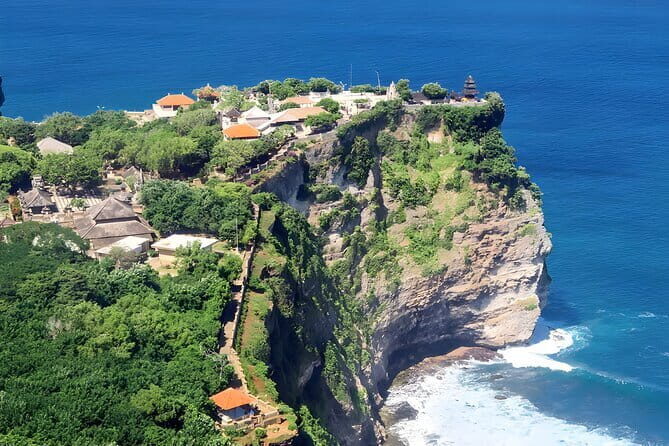
South Bali has a photo plan. This private, all-inclusive Uluwatu route strings together the Bukit Peninsula’s most camera-friendly coastline, plus Uluwatu’s temple area and the famous Kecak Fire Dance. You’ll move between beaches like Melasti and Green Bowl, then wrap it up with big dramatic views from the cliffs.

I love that the price bundles the boring stuff: lunch, water, transfers, and entrance fees. I also love the onboard Wi-Fi, so you can post as you go without dealing with roaming costs when traffic slows things down.

One thing to think about: this is an 8 to 10 hour day with serious walking, and Green Bowl Beach involves about 300 steps down and back up.

Key things you’ll notice on this Uluwatu Instagram tour

Uluwatu Instagram Tour: Unforgettable Beaches (Private & All-Inclusive) - Key things you’ll notice on this Uluwatu Instagram tour

  • All-in-one day package: lunch, water, transfers, and entrance tickets included
  • Onboard Wi-Fi: helps you share photos without roaming headaches
  • A beach-and-cliff hitting strategy: Suluban (Blue Point), Bingin, Karang Boma viewpoints, then more shoreline
  • Kecak Fire Dance included: a cultural stop that many people treat as the night’s anchor
  • Pace can flex: guides can adjust how long you stay at included sights based on crowd levels and your preferences

Why this Uluwatu Instagram route makes sense for your camera (and your schedule)

Uluwatu Instagram Tour: Unforgettable Beaches (Private & All-Inclusive) - Why this Uluwatu Instagram route makes sense for your camera (and your schedule)
If you’re coming to Bali to see beaches and you also want the Uluwatu “story arc,” this tour is built for that. You’re not just doing one beach and calling it a day. You’re bouncing between different coast angles of the Bukit Peninsula, where the cliffs and waves keep changing the look.

The private setup matters. It keeps the day from feeling like a cattle schedule. You’re with only your group, and pickup is offered from several common bases (Semenyak, Canggu, Jimbaran, and even central Ubud), which usually means less time fighting local transport.

And yes, it’s called an Instagram tour for a reason. The stops are chosen because the scenery is obvious on camera: dramatic shorelines, cliffside roads, and beaches with distinct visual “hooks” (caves, steps, white sand, and that iconic cliff-temple vibe).

Price and what you’re really getting for $127

At $127.00 per person, the headline number is only part of the story. The value here is that it bundles multiple costs that add up fast in Bali if you arrange them separately.

This package includes lunch, water, transfers, and entrance fees. It also includes admission tickets at included stops. When you’re doing a full southern loop with multiple attractions, those inclusions can be the difference between a smooth day and a day where you keep pulling out your wallet.

You also get onboard Wi-Fi. That may sound small, but if you’re trying to post in real time, it can save you both money and hassle. A lot of people run into roaming cost surprises. Here, the tour handles the basic “stay connected” need while you’re moving around.

Getting there: pickup zones and how long the day will feel

Uluwatu Instagram Tour: Unforgettable Beaches (Private & All-Inclusive) - Getting there: pickup zones and how long the day will feel
Plan on an 8 to 10 hour outing. That’s long enough to see a lot, but short enough that you can still enjoy dinner afterward (assuming you don’t book an overly ambitious sunset plan).

Pickup is offered from hotels and villas in:

  • Seminyak
  • Canggu
  • Jimbaran
  • Central Ubud

That range is useful because it reduces the “how do we get to Uluwatu” problem. Most people underestimate how much time transfers can eat on Bali days. With pickup arranged, you’re more likely to arrive at sights at a good time.

You’ll also get a mobile ticket, plus confirmation at booking. It’s the kind of detail that keeps you from spending precious minutes figuring out what you actually need at the gate.

The real itinerary: Suluban to Kecak Fire Dance, stop by stop

Uluwatu Instagram Tour: Unforgettable Beaches (Private & All-Inclusive) - The real itinerary: Suluban to Kecak Fire Dance, stop by stop
The day is paced like a best-of reel. You’ll hit multiple coastal scenes early, then layer in the cultural anchor.

Stop 1: Suluban Beach (Blue Point Beach)

Suluban Beach—also known as Blue Point Beach—is one of those places that feels like Bali is saving the best angles for later. It’s described as a hidden gem with clear blue water and natural beauty.

What you’ll enjoy here is contrast. From cliffside areas, the ocean looks sharp and graphic. That’s ideal for photos, but it also makes the beach feel like a payoff after the drive.

The practical angle: you’ll want footwear that’s comfortable. Even when the sand looks inviting, coastal paths can be uneven depending on conditions.

Stop 2: Bingin Beach

Bingin Beach is known for white sand and towering cliffs along the southwestern coast. In other words, the background is already a frame. You don’t have to “find” a view here—the view is the beach.

This stop is great if you want your Instagram feed to look like multiple editions of the same trip: cliffs, surf energy, and that clean shoreline look.

Stop 3: Karang Boma Cliff

Karang Boma Cliff shifts the day from “walk-on-sand” to “stand-and-scan.” You’ll get panoramic views over the Indian Ocean and the coastline.

This is a key pacing move. After beaches, the cliff viewpoint gives you a breather without losing scenery. It’s also where you can refresh your photos with wide angles and horizon shots.

Stop 4: Kecak and Fire Dance

Then the tour adds the cultural piece: Kecak Dance with the Fire Dance. This is performed by a large group of men known as the kecak choir, singing and chanting rhythmically.

This is one of those experiences where your timing and your expectations matter. The dance is a performance, not a casual show. If you want it, it’s a highlight. If you’re not feeling it that day, you may be able to adjust your time—some guests have skipped the dance show and still kept the rest of the day intact.

Tip for your planning brain: keep your phone charged. If you’re photographing both beaches and a performance, battery life will quietly become the real boss.

Melasti, Green Bowl, and Pandawa: the beach trio that makes this tour feel like a full Bukit Peninsula day

Uluwatu Instagram Tour: Unforgettable Beaches (Private & All-Inclusive) - Melasti, Green Bowl, and Pandawa: the beach trio that makes this tour feel like a full Bukit Peninsula day
After the cliff-and-dance segment, you move back into beaches and postcard angles.

Melasti Beach: cliffside road energy

Melasti Beach is described as unique, located below a high cliff with unspoiled blue sea views. The photo idea is obvious: cliff + ocean + that strong open-water look.

The route also includes passing a famous statue on the way to the beach. It’s a quick visual stop that can help your photo set feel more varied, not just “ocean all day.”

Green Bowl Beach: cave ending and the step workout

Green Bowl Beach is known for good waves and is reached by a stair descent of around 300 steps down the hill. It’s also noted for a caved ending and crystal water.

This stop is where you’ll decide how you like your vacations:

  • If you enjoy a bit of effort for great scenery, you’ll love it.
  • If you prefer easy walking, this one may feel like your legs are the entertainment.

Either way, the viewpoint-to-beach payoff is why people come. The cave ending can give your photos a sense of depth that flat beaches can’t match.

Pandawa Beach: the rolling-swell payoff

Pandawa Beach is part of the overall plan, described as having rolling swell. It fits the tour well because you already saw cliffs and dramatic coves, so the next visual can be wider, ocean-forward, and less “cave + steps.”

Some people treat this as the final reset spot—enough space to cool off and shift from sightseeing mode to vacation mode. One of the reviews specifically called the last stop a refreshing beach moment with swimming time, so if that’s your priority, save your energy for the end.

How the guides really affect the experience (and who you’ll likely end up with)

Uluwatu Instagram Tour: Unforgettable Beaches (Private & All-Inclusive) - How the guides really affect the experience (and who you’ll likely end up with)
A big part of why this tour works is the people driving it. Reviews highlight guides and drivers like Aprio, Yasa, Verry, and Ngurah Wijaya for doing more than just showing up.

You can expect a few consistent themes from the better-rated guides:

  • Flexibility when crowds shift
  • Clear English communication
  • Cultural context and stories about the area
  • Help with timing and photography so you get usable shots

One review mentioned that the guide spent hours explaining culture, history, and his personal experiences as a Balinese citizen. Another mentioned taking beautiful photos during the tour. That’s the difference between being carried around and actually getting a meaningful, well-timed day.

Also, guides seem willing to adjust details. For example, one review said they skipped the dance show but still had a solid tour day, with the guide flexible enough to route toward a souvenir market afterward. That suggests the driver is not treating the day like a strict script.

Photos without stress: using Wi-Fi and pacing your stops

Uluwatu Instagram Tour: Unforgettable Beaches (Private & All-Inclusive) - Photos without stress: using Wi-Fi and pacing your stops
The onboard Wi-Fi is a small feature that changes your stress level. When you’re touring, traffic and waiting happen. With Wi-Fi available in the vehicle, you’re less likely to feel stuck until you’re finally somewhere with good signal.

Here’s how I’d use it if I were planning your shots:

  • Post or send the first batch of photos after you leave the first beach stop, not at the end of the day.
  • Use cliff viewpoints for wide shots, then save your phone close-ups for beach areas where you can control backgrounds.
  • Keep your camera rhythm consistent. If you switch between too many styles—wide beach, then performance close-ups, then stair shots—it’s easy to miss the moment you wanted.

Also, remember that this is a long day. If you treat every stop like a photo assignment, you’ll burn out. The best photo days usually leave room for one or two “just enjoy it” moments, not only screen time.

All-inclusive comfort: lunch, water, transfers, and entrance fees

Uluwatu Instagram Tour: Unforgettable Beaches (Private & All-Inclusive) - All-inclusive comfort: lunch, water, transfers, and entrance fees
This is one of the biggest practical reasons to choose this tour. If you’re coordinating beaches in the south of Bali on your own, you’ll spend time on:

  • where to eat
  • how to pay for entrances
  • how to time transfers
  • how to cover water needs

Here, lunch and water are included. Entrance fees are included too, which removes a common annoyance: showing up at a site and realizing you need extra cash or another ticket step you didn’t plan for.

Transfers are included as well. That matters because Bukit Peninsula routes can be slower than they look on a map. Even the tour’s Wi-Fi is a hint that traffic is part of the day—so you can make the wait feel less wasted.

Who should book this Uluwatu Instagram Tour

This tour is a good fit if you:

  • Want multiple beaches in one day, not just one quick stop
  • Like dramatic coastline scenery and want photos that look like South Bali
  • Want both beach time and a cultural highlight with Kecak and Fire Dance
  • Appreciate an organized day where lunch, water, transfers, and entrances are handled

It’s also a smart choice if you’re staying around Seminyak, Canggu, Jimbaran, or central Ubud and don’t want to figure out logistics on your own.

If you dislike long days or strenuous walking, you might think twice because Green Bowl Beach includes that steep step descent.

Should you book this Uluwatu Instagram Tour?

I’d book it if your ideal Bali day is: sunrise-to-sunset scenery, a mix of beaches and viewpoints, and a performance that gives the trip a cultural backbone. The price feels easier to justify when you consider the included lunch, water, transfers, entrance fees, and Wi-Fi.

I’d hesitate if you know you’ll struggle with long sitting/walking time or if 300-step climbs and descents aren’t your thing. Also, if you’re looking for a slow, chill tour with minimal stops, this is more of a “see a lot” day.

If you want a practical, photo-friendly way to cover Uluwatu and the Bukit Peninsula in one go, this tour is built for that goal.

FAQ

How much is the Uluwatu Instagram Tour?

It costs $127.00 per person.

How long does the tour last?

The duration is about 8 to 10 hours.

Is this tour private?

Yes. It’s a private tour/activity, and only your group participates.

Does the tour include pickup, and where is pickup available?

Pickup is offered from hotels and villas in Seminyak, Canggu, Jimbaran, and central Ubud.

What’s included in the package?

The tour includes lunch, water, transfers, entrance fees, and onboard Wi-Fi. Admission tickets are included at the listed stops.

Which beaches and sights are included?

You’ll visit Suluban Beach (Blue Point Beach), Bingin Beach, Karang Boma Cliff, Kecak and Fire Dance, Melasti Beach, Green Bowl Beach, and Pandawa Beach. There are also passes by a famous statue and additional passing points depending on your hotel area.

Is Wi-Fi available during the tour?

Yes. Onboard Wi-Fi is included.

What’s the cancellation policy?

You can cancel for a full refund up to 24 hours before the experience starts. If you cancel less than 24 hours before, the amount paid is not refunded. Free cancellation is available as stated in the policy.
[All Inclusive] The Soul of Bali: Temples, Art & Traditions Tour

[All Inclusive] The Soul of Bali: Temples, Art & Traditions Tour - Stop 1: Tegalalang Rice Terrace and the Photo Spots That Actually Make Sense

You don’t need a full day to feel Bali’s culture. This half-day circuit around Ubud mixes rice-field views, temple stops, and a quieter waterfall walk, so your photos and your understanding both get fed. The UNESCO subak irrigation story also ties the sites together in a way that feels practical, not lecture-y.

Two things I really liked: the chance to photograph Tegalalang Rice Terrace in a classic cliffside setting, and the way the guide can adjust the pace and even add small extras. One review mentioned the host adapted the tour for their needs, and that kind of flexibility matters when you’re trying to avoid rushing through sacred places and crowded viewpoints.

The main thing to consider is the schedule is tight. You’ll see a lot in about 5 hours, and Suwat Waterfall involves going down a path (even though it’s described as easy), so wear comfy shoes if your legs aren’t thrilled about stairs and uneven ground.

Key highlights worth your time

[All Inclusive] The Soul of Bali: Temples, Art & Traditions Tour - Key highlights worth your time

  • Tegalalang Rice Terrace with admission included and lots of photo opportunities
  • Ubud Traditional Art Market for crafts and everyday local shopping
  • Goa Gajah (Elephant Cave) dating back to the 11th century
  • Suwat Waterfall on an easy-feeling path through bamboo and tropical foliage
  • Private guided experience with hotel pickup across Ubud and much of south Bali

A Half-Day That Mixes Rice Views, Art, Temples, and a Quiet Fall

This tour is built for people who want Bali in “chapters.” You start with the rice terraces and their famous cliffside outlook, then you pivot to crafts and temple culture, and you end with a waterfall that feels calmer than the most overbooked stops.

I like that it’s not only about ticking off attractions. The route connects agriculture, daily life, and spirituality. The rice terrace stop isn’t just scenery; it’s part of Bali’s famous water system story tied to the subak irrigation network, recognized by UNESCO.

You should also know you’re going in the “private tour” lane. Your group participates only with your guide, and transfers are offered from Ubud and several south Bali areas (like Seminyak, Kuta, Canggu, and Jimbaran). That reduces the typical hassle of figuring out timing, parking, and who’s doing what.

The vibe is also easy to manage. It’s about 5 hours, with each stop given a realistic block of time (an hour here, 45 minutes there). That pacing helps if you like photos, but also want time to actually look at details—like rock carvings at Suwat’s bottom.

Hotel Pickup Across Ubud and South Bali (So You Don’t Waste Your Morning)

[All Inclusive] The Soul of Bali: Temples, Art & Traditions Tour - Hotel Pickup Across Ubud and South Bali (So You Don’t Waste Your Morning)

Logistics make or break a short tour. What helps here is the included pickup service from many places: Ubud, and also Nusa Dua, Seminyak, Kuta, Legian, Canggu, and Jimbaran. That’s a big advantage if you’re staying outside Ubud’s center, because you won’t be hunting for transport at the last minute.

You’ll also get transfers that are described as hassle-free and private. In plain terms: you’re not trying to coordinate multiple rides or wait around for a group to assemble. For a 5-hour experience, cutting friction is worth real money.

You’ll receive confirmation at booking time, and you’ll use a mobile ticket. That matters because it lets you keep your day simple—no last-minute printouts.

Fitness wise, the tour asks for moderate physical readiness. The waterfall route is described as easy, but “easy” still means walking down a path and then dealing with the climb back up. If you have knee issues, plan for slower steps and bring shoes with grip.

Stop 1: Tegalalang Rice Terrace and the Photo Spots That Actually Make Sense

[All Inclusive] The Soul of Bali: Temples, Art & Traditions Tour - Stop 1: Tegalalang Rice Terrace and the Photo Spots That Actually Make Sense
Tegalalang Rice Terrace is the kind of place where your first instinct is to point your camera everywhere. The terraces are set on a cliff and framed by traditional rice-field patterns, so you get that classic layered look quickly.

You get about an hour here, and admission is included. That timing is useful because you don’t have to sprint between viewpoints. You can pause, move to a new angle, and then come back to the same spot to get a different light or perspective.

Here’s the practical tip: don’t treat it like a single photo stop. Use the hour to watch how the irrigation and terraces work visually. Even if you don’t know the terminology yet, you’ll start noticing how water and field layout shape the whole scene.

A drawback to flag: it’s famous, so you might feel busy around the most photographed areas. With a private guide, you can often do a better job picking where to stand and when to move, compared with a group that’s stuck flowing with the crowd.

If you’re doing this tour for culture as well as photos, use this first stop to set context. When you later hear about subak, the rice terraces will make more sense than if you saw them as just pretty scenery.

Stop 2: Ubud Traditional Art Market for Crafts, Not Just Souvenirs

[All Inclusive] The Soul of Bali: Temples, Art & Traditions Tour - Stop 2: Ubud Traditional Art Market for Crafts, Not Just Souvenirs
The Ubud Traditional Art Market stop is shorter—around 45 minutes—and admission is included. That’s long enough to browse without turning it into an all-day shopping mission.

What I like about this stop is that it’s framed as a society/economic center of Ubud, not just a tourist bazaar. You’re more likely to see the day-to-day rhythm of what locals buy, sell, and trade, even while you’re shopping.

You should expect a lot of options. One review highlighted that the market has too many choices for street shopping, which is accurate in spirit—there’s variety, and it can be a little decision-heavy. If you’re the type who hates decision fatigue, go in with a plan: pick one type of souvenir (like small art items) or one price range and stick to it.

Also, use your time wisely. In a half-day tour, the market is your chance to buy gifts or decorate your Bali memories without feeling like you missed the rest of the day. If you want to shop seriously, you might find you’ll want extra time beyond 45 minutes, so treat this as browsing with a chance to buy.

The upside of having a guide here: they can help you navigate what’s worth your attention and keep the experience moving at a comfortable pace.

Stop 3: Goa Gajah (Elephant Cave) Temple and Its 11th-Century Roots

[All Inclusive] The Soul of Bali: Temples, Art & Traditions Tour - Stop 3: Goa Gajah (Elephant Cave) Temple and Its 11th-Century Roots
After the terraces and market, you shift to a temple site: Goa Gajah, also known as Elephant Cave Temple. The site is described as dating back to the 11th century, which gives the visit a real sense of time depth.

The stop lasts about 45 minutes and includes admission. That’s enough time to take in the hillside setting and the sacred atmosphere without feeling trapped in a long temple loop.

A detail worth knowing: the temple was built on a hillside where two streams met to form a junction. Even if you don’t fully map the geography while you’re there, it’s a good reminder that many religious sites in Bali are tied to water, natural features, and the logic of the surrounding land.

What helps this stop is context from your guide. In reviews, guides like Komang and Wayan were praised for explaining things clearly and adapting the tour to needs. If you can ask questions, do it here. A few good answers can turn a “we saw a cave” moment into a “now I understand why it mattered” moment.

A consideration: temples require respect. Plan for slower steps, keep your shoulders and knees covered as needed, and follow whatever rules you see on-site. With a private guide, you’ll usually get clearer direction than if you arrive alone.

Stop 4: Suwat Waterfall, Bamboo Walk, and Rock Carvings

[All Inclusive] The Soul of Bali: Temples, Art & Traditions Tour - Stop 4: Suwat Waterfall, Bamboo Walk, and Rock Carvings
Suwat Waterfall is the quieter, less-discovered stop on the route. The walk down is described as easy, and it goes through a small bamboo forest and other tropical foliage along the way. In other words, you’re not doing a tough hike, but you are getting a real nature moment instead of only urban sightseeing.

You’ll have about an hour here, which usually gives you enough time to take photos, enjoy the view from different spots, and check out the details near the bottom. Admission is included.

At the bottom, you’ll find cool rock carvings and a big natural pool. That mix—waterfall plus rockwork plus a natural setting—makes Suwat feel like more than a quick stop.

One practical note: “easy walk” still means you’re going down and back up. If you’re sensitive to slippery stones, go slow. If rain is in the forecast, bring a plan for wet footing and consider how weather might affect your willingness to take photos and linger.

This is a great ending to the tour because it resets your brain. Rice terraces and markets are busy on your senses. A waterfall with a calmer path gives you a softer landing before you head back to hotel.

How the UNESCO Subak Story Fits the Whole Route

[All Inclusive] The Soul of Bali: Temples, Art & Traditions Tour - How the UNESCO Subak Story Fits the Whole Route
The tour is specifically framed around Bali’s subak irrigation system, recognized with UNESCO World Heritage status. That detail matters because it changes how you interpret what you’re seeing.

When you start at Tegalalang, the terrace layout is just visually impressive. But when your guide connects it to the water management system, you start to understand why rice terraces look the way they do, and why water isn’t just a resource—it’s part of how communities organize life.

That same idea carries over into the temple stop, too. Goa Gajah is tied to streams and natural water junctions, and many Balinese sacred sites have this kind of connection to the environment. It’s not random decoration; it’s a relationship.

Then you end at Suwat, where the waterfall and natural pool make the water theme physical. After that, the whole tour feels like a single theme expressed through different places: agriculture, art and daily commerce, spirituality, and nature.

I like tours that explain why sites exist, even briefly. This one doesn’t need to be a textbook. You just need a few clear links, and a good guide can handle that. The reviews praising guides like Komang and Wayan suggest you’re likely to get solid explanations without turning the day into homework.

Price and Timing: Is $50 Worth It for a Private 5-Hour Day?

[All Inclusive] The Soul of Bali: Temples, Art & Traditions Tour - Price and Timing: Is $50 Worth It for a Private 5-Hour Day?
$50 per person is the kind of price that makes you ask: what am I really getting? Here’s what’s supported by the tour details: private guided experience, hotel pickup across multiple areas, admission included for each listed stop, and a 5-hour time window that keeps you from wasting a whole day in transport.

For many short tours, the hidden cost is admissions plus the hassle of getting around. In this case, the admissions for Tegalalang Rice Terrace, Ubud Art Market, Goa Gajah, and Suwat Waterfall are included. That shifts the value in your favor.

Another value point is the private guide. Even within a short schedule, having one person to translate what you’re seeing—and adapt pace if needed—can make the difference between “I went places” and “I understood places.” Reviews repeatedly called out guides who were friendly and clear, and who could adjust.

Timing is also a value feature. With 5 hours, you can do this without sacrificing an entire day of lounging by your pool or exploring on your own. It’s half-day enough to keep your energy up, but structured enough to feel like a real itinerary instead of a loose plan.

The main consideration is choice limits. You can’t cover everything. If you’re the type who wants slow travel and lots of extra stops, you might later wish the tour was longer. But that’s not a failure. It’s the trade for keeping it short and focused.

Should You Book This Soul of Bali Tour?

If you want a smart first taste of Ubud—rice terraces, a traditional market, a historic temple site, and a quieter waterfall—this is a strong match. It also fits you if you care about how Bali’s water system and community life connect to what you see.

I’d especially recommend it if:

  • You’re staying in Ubud or south Bali and want pickup handled for you
  • You’d like admission tickets included rather than paying them one by one
  • You prefer a private guide and a paced, explain-what-you-see kind of day

Skip it (or be cautious) if:

  • You’re looking for a long, slow, unhurried exploration day
  • You’re worried about walking down and up at Suwat Waterfall
  • You want a lot of free time for shopping beyond the market stop

If you’re unsure, this tour is also a practical test-run. It gives you four varied stops in one coherent route, and a guide who can adapt helps you make the day feel personal rather than mechanical.

FAQ

How long is the tour?

The tour is approximately 5 hours.

What stops are included in the itinerary?

The tour includes Tegalalang Rice Terrace, Ubud Traditional Art Market, Elephant Cave (Goa Gajah), and Suwat Waterfall.

Are admission tickets included?

Yes. Admission tickets are included for the listed stops.

Is hotel pickup included, and from where?

Pickup is included for areas including Nusa Dua, Seminyak, Kuta, Legian, Canggu, Jimbaran, and Ubud.

Is this a private tour?

Yes. It’s a private tour/activity, and only your group participates.

What ticket method do I use?

The tour provides a mobile ticket.

Do I need a certain fitness level?

The tour notes a moderate physical fitness level is recommended.

What if the weather is bad?

The experience requires good weather. If canceled due to poor weather, you’ll be offered a different date or a full refund.

What is the cancellation window for a full refund?

You can cancel up to 24 hours in advance for a full refund, based on local time.

Bali Sekumpul with Fiji Waterfall & Bedugul Temple (Private Tour)

Bali Sekumpul with Fiji Waterfall & Bedugul Temple (Private Tour) - Pickup, drive time, and how the northern road trip feels

Northern Bali feels like a different planet. This private day trip strings together Sekumpul Waterfall and the famous lakeside Ulun Danu Bratan Temple, with an English-speaking driver who handles the long, twisty mountain roads. I especially like the calm pace: you get time at each stop instead of a rushed stop-and-sprint. One thing to plan for is the physical side at Sekumpul: stairs and wet ground are part of the deal, so pack accordingly.

You’ll also like the ease built in. Pickup and drop-off work from many Bali beach areas (including Seminyak and Ubud), and you’re traveling in an air-conditioned vehicle with bottled water. If you want northern Bali without the stress of navigation, parking, or a scooter ride, this is a smart, straightforward way to do it.

Key things I’d bank on

Bali Sekumpul with Fiji Waterfall & Bedugul Temple (Private Tour) - Key things I’d bank on

  • Early 08:00 start gives you solid daylight for waterfalls and the drive back
  • A dedicated waterfall portion at Sekumpul and Fiji, including a local guide option
  • Time to wander at each attraction instead of constant moving
  • Driver-first comfort on narrow roads, with flexibility for small stops
  • Most essentials covered (parking, local tax, and bottled water)
  • Extra clothes are not optional if you’re trying to stay comfortable

Price and what you really get for $55 a person

Bali Sekumpul with Fiji Waterfall & Bedugul Temple (Private Tour) - Price and what you really get for $55 a person
At $55 per person for a roughly 9-hour private tour, the value is mostly about what you don’t have to manage. You’re paying for an air-conditioned car, an English-speaking driver for the day, and the practical stuff that eats time on Bali road days: parking fees, local tax, and the logistics of reaching places that sit far north of the usual tourist grid.

The tour also comes with a clear fork in the details: entrance tickets can be included as an option. If you choose the option where entrance tickets are included, you’ll have guidance tied to those stops (Sekumpul & Fiji waterfall and Ulun Danu Temple are listed as covered). If you choose the option where tickets are excluded, you’ll want cash on hand, since the entry fee is listed as IDR 300,000 per person.

So for me, the price isn’t just the number. It’s the fact that you’re buying a stress-reduction package for a full day, with the long drives handled for you.

Pickup, drive time, and how the northern road trip feels

Bali Sekumpul with Fiji Waterfall & Bedugul Temple (Private Tour) - Pickup, drive time, and how the northern road trip feels
This tour is built for door-to-door convenience. Pickup and drop-off are available from Ubud, Seminyak, Legian, Kuta, Jimbaran, Sanur, Tanjung Benoa, and Nusa Dua. If you’re staying in one of those areas, you’re not dealing with meeting points or sorting out transport twice.

You start at 08:00 and head north early, passing scenic mountain roads along the way. In practical terms, that matters because Sekumpul’s access involves narrow, winding roads and a “slow down and go carefully” driving style. The driver is the main safety factor here: you get to sit back while someone focuses on the road, including the tricky approach paths.

One detail I like: the tour isn’t rigidly trapped in one pace. In guide feedback, drivers such as Ngurah are specifically mentioned for being helpful and allowing stops along the way and on the return trip. That kind of flexibility helps if you want a photo pull-over, a bathroom break, or a quick breather without derailing the whole day.

Sekumpul Waterfall: stairs, wet paths, and why early start helps

Bali Sekumpul with Fiji Waterfall & Bedugul Temple (Private Tour) - Sekumpul Waterfall: stairs, wet paths, and why early start helps
Sekumpul is the star of the northern Bali waterfall conversation, and you’ll feel that immediately. The first stop is Sekumpul Waterfall, starting with an early departure from your hotel at 08:00. The planned time at Sekumpul is about 1 hour, and admission is listed as ticket free within the provided plan.

Here’s the physical reality: the area involves getting down on foot to reach the waterfall viewpoint area. One guide-rated highlight points out you’ll need to walk a long way along a river valley route, and another notes it’s totally worth it but still strenuous because of the stairs. That means you should treat Sekumpul like an activity, not just a photo stop.

My practical advice for Sekumpul:

  • Wear shoes with grip. Wet stone and stairs turn into a slip-and-slide if your soles are too smooth.
  • Bring extra clothes. Even if you stay dry at the edges, you’ll likely pick up mist.
  • Expect to share the path with others, especially at peak times.

If you’re someone who likes nature but prefers not to sweat for every viewpoint, this is where you decide. If you’re okay with stairs and a good walking effort, Sekumpul is exactly the kind of Bali experience that pays off.

Fiji Waterfall: views, the single-track feel, and what to do with your time

Bali Sekumpul with Fiji Waterfall & Bedugul Temple (Private Tour) - Fiji Waterfall: views, the single-track feel, and what to do with your time
After Sekumpul, the schedule moves to Fiji Waterfall, with both waterfalls handled in sequence. The plan describes Fiji Waterfall as having an exotic view around it, and it also notes the location involves a single-track trekking stretch that connects with the Sekumpul waterfall area.

The stop time here is again around 1 hour, with admission listed as ticket free. What this means for you is that you’re not just getting one viewpoint and leaving. You’re given time to walk, look around, and actually take in what makes Fiji Waterfall feel distinct from Sekumpul.

A small but important detail: the tour design includes a local guide option for Sekumpul & Fiji waterfall. That’s meaningful because reaching the right spots around the waterfall access routes can be confusing if you’re going on your own. With a guide, you spend less time guessing and more time enjoying the view.

If you want to get the most out of the hour at Fiji, plan for two kinds of moments:

  • The first moment: quick orientation and finding the best angle for photos.
  • The second moment: lingering once you understand where the water spray is strongest and where the footing feels easiest.

That’s when the waterfall stops become a memory instead of a checklist item.

Ulun Danu Bratan Temple in Bedugul: your lake-side cultural pause

Bali Sekumpul with Fiji Waterfall & Bedugul Temple (Private Tour) - Ulun Danu Bratan Temple in Bedugul: your lake-side cultural pause
After the waterfalls, you move to Ulun Danu Bratan Temple in Bedugul, located on the western side of Bratan Lake. The scheduled time is about 35 minutes, and admission is listed as ticket free within the plan.

This stop is shorter by design, so I think of it as a calm reset between two active stretches. The temple is described as a significant complex and a famous picturesque landmark. That fits what you’ll want after waterfalls: a cultural moment with a clear sense of place, without needing to spend hours.

If you choose the entrance-tickets-included option, the plan indicates a guide can be part of the Ulun Danu Temple portion too. That can help you get more meaning from what you’re seeing in the limited time, especially if you like understanding why a site looks the way it does.

Dress-wise, the key is practicality. You’re coming straight from a wet nature area, so comfortable clothing and something that won’t make you fidget are your best friend.

Guides and drivers you can trust: flexible, safety-first, and helpful

Bali Sekumpul with Fiji Waterfall & Bedugul Temple (Private Tour) - Guides and drivers you can trust: flexible, safety-first, and helpful
The smoothest part of this tour for most people isn’t the attractions. It’s the human layer that makes the day feel easy.

Across guide experiences, names like Made, Dama, and Ngurah show up with a consistent theme: they’re attentive and help the day run well. Made is mentioned as both a careful driver and a guide who shares interesting facts about Balinese culture. Dama is described as sharing facts too and helping with logistics like photos. Ngurah is singled out for safe driving on narrow roads and for letting the group make stops along the way.

Even if you don’t care about narration, this matters. Northern Bali roads can get narrow, and the waterfall access requires correct timing and pacing. A good driver reduces stress, and a good guide reduces decision fatigue.

So look for these behaviors when you meet your team:

  • Clear explanations about what’s next and how long you’ll have
  • Confidence with roads and parking
  • Willingness to pause for small needs without drama

Food, timing, and staying comfortable all day

Bali Sekumpul with Fiji Waterfall & Bedugul Temple (Private Tour) - Food, timing, and staying comfortable all day
Food and drinks are not included. The tour states you can purchase meals and snacks along the way, which is the normal Bali style for day trips like this. I’d use that to your advantage: if you get hungry, don’t wait too long. The day already has early timing and active walking.

Bottled water is included, which is a nice baseline, especially for a hot day that starts early and includes stair walking.

Your biggest comfort variables are:

  • Hydration: water is provided, but you’ll still want to sip consistently.
  • Clothing: bring extra clothes, and also think in terms of layers you can change into after misty areas.
  • Footwear: grip matters more than style.

Also, keep in mind the flow of the day. You’re working from morning to afternoon across three main stops. When the waterfall portion gets active, your energy plan matters. If you pace yourself and take breaks when needed, the day stays fun.

Who should book this private tour (and who should pause)

Bali Sekumpul with Fiji Waterfall & Bedugul Temple (Private Tour) - Who should book this private tour (and who should pause)
This tour fits best if you want a northern Bali day that feels organized but still personal. It’s private, so it’s just your group. That alone helps if you’re traveling with friends, a partner, or anyone who doesn’t want the “everyone move now” rhythm.

You should book if:

  • You want Sekumpul and Fiji without arranging separate transport and directions
  • You’re comfortable with stairs and a wet, walking-heavy nature stop
  • You like the idea of a cultural pause at Ulun Danu Bratan Temple after the waterfalls

You might pause if:

  • Your mobility is limited or stairs/wet footing feel risky
  • You strongly prefer attractions where you can stay mostly on flat ground

This is one of those tours where the main trade-off is effort for payoff. If that trade works for you, the day can be unforgettable.

Should you book this Bali Sekumpul and Bedugul temple private tour?

If your dream Bali day includes dramatic waterfalls plus a lakeside temple, I’d call this a solid booking. The price-to-effort ratio is good because you’re paying for a full-day logistics team, not just a driver who drops you off and disappears.

I’d book particularly if:

  • You’re staying in Seminyak, Legian, Kuta, Sanur, or Ubud and want easy pickup
  • You want someone to handle the narrow-road driving so you can focus on the scenery
  • You’re willing to dress for wet walking and climb stairs at Sekumpul

Just go in with the right expectations: this is not a sit-on-a-patio day. It’s a walking-and-mist day, with a genuinely memorable northern Bali route.

FAQ

What time does the tour start?

The tour starts early at 08:00 am from your hotel, heading north to begin at Sekumpul Waterfall.

Where does the tour offer pickup and drop-off?

Pickup and drop-off are listed for Ubud, Seminyak, Legian, Kuta, Jimbaran, Sanur, Tanjung Benoa, and Nusa Dua.

How long is the tour?

The duration is listed as about 9 hours.

Is the tour private?

Yes. It’s a private tour, and only your group participates.

Are entrance tickets included?

Entrance tickets can be included as an option. If you choose the option where tickets are excluded, the entry fee is listed as IDR 300,000 per person, and you should prepare cash.

Is food included?

No. Food and drink are not included, but you can purchase them during the day.

What should I bring?

Bring extra clothes. You’ll be walking in waterfall areas where getting wet is part of the experience.

Gates of Heaven Tour: Tirta Gangga – Kanto Lampo Waterfall

Gates of Heaven Tour: Tirta Gangga - Kanto Lampo Waterfall - Tirta Gangga water gardens: palace romance without the museum vibe

Mountaintop heaven shots take effort, not luck. This tour is all about the Gates of Heaven photo moment plus easy hotel pickup and one-guide-one-car attention for the day. I also like the way it stacks the big visual stops—Tirta Gangga water gardens, a Candidasa lotus spot, then Kanto Lampo—for a full camera day. The main catch: the value depends on what you actually upgrade for, since some people reported mismatches around entrance fees, lunch, bottled water, and Wi‑Fi.

You’ll cover a lot of ground between Ubud and east Bali, with a total day running about 8 to 12 hours. The itinerary feels photo-focused, including a selfie line at Lempuyang Temple and a quick lotus lagoon moment. If you’re expecting a fully stocked, worry-free package, you’ll want to double-check inclusions before you go.

Weather matters here. Gates of Heaven is famous for misty Mt. Agung views, but the tour itself requires good weather to really deliver, and cloudy conditions can dull the payoff.

Key things to know before you go

Gates of Heaven Tour: Tirta Gangga - Kanto Lampo Waterfall - Key things to know before you go

  • Lempuyang Temple photo line is part of the experience: expect waiting for your shot at the main gateway view.
  • You ride in an air-conditioned private car with an English-speaking driver-guide and bottled water listed as included.
  • Tirta Gangga is a palace-and-water-garden layout from 1946: plan to wander the stone pathways and basins.
  • The lotus lagoon stop can be short and simple: you’ll want to be ready to move when you get there.
  • Kanto Lampo is the refresh break: the plan includes time at the waterfall, with a chance to swim.
  • Tickets and lunch can be confusing: tickets may be optional or upgraded, so confirm what’s covered in your booking.

The Gates of Heaven gateway: why the views are the whole point

Gates of Heaven Tour: Tirta Gangga - Kanto Lampo Waterfall - The Gates of Heaven gateway: why the views are the whole point
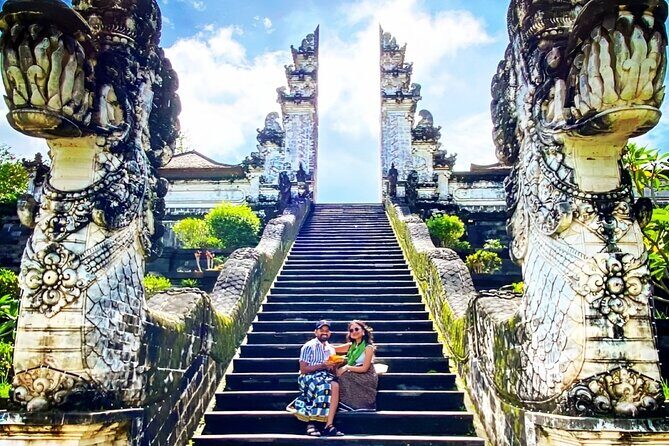
Lempuyang Temple is one of Bali’s most recognizable temple scenes, mainly because of the famous mountaintop gateway people call the Gates of Heaven. The layout is designed for that big reveal: you climb up, you get the wider view, and then you line up for the signature framed picture with the Mt. Agung backdrop.

This tour’s value is that it doesn’t leave you to figure out the day on your own. You start with pickup and a straightforward route to the temple area, then you get time on-site to climb to the upper points and handle the selfie line without chaos.

Practical note: the temple experience is not a quick stroll. You’ll be walking stairs, and you’ll want to bring your best “steady pace” energy rather than hoping for a casual photo loop. If you’re not comfortable with uneven steps and lots of up-and-down, plan to go slow, take breaks, and accept that you’re trading comfort for iconic scenery.

And here’s the key reality: the temple’s magic depends on weather. The tour is described as requiring good conditions, because the whole visual concept is mist and mountain views. When the sky is clear, the gateway picture hits harder. When it’s cloudy, you may still get a great temple scene, but the Mt. Agung payoff can be weaker.

How the selfie line works (and how to get better photos with less stress)

This is a tour built around one thing: the shot. At Lempuyang, you’ll join the photo setup line that people use to get their turn in front of the gateway frame.

You can make this part smoother by thinking like a photographer for 15 minutes, not like a tourist who just wants to be done. Show up ready: phone charged, camera settings sorted, and your outfit/hat situation decided before you reach the busiest spot. Then use your time in line efficiently—when you finally step into position, don’t start hunting for the right angle or rereading messages.

I also recommend you treat the line as a timed performance. If you’re trying to get multiple versions (wide shot, closer shot, different poses), do it in a planned sequence, not in a panic spiral. A private driver-guide helps, because they can guide you to where you need to be and how to keep your momentum.

One more thing: the tour format is private, so you’re not juggling the movement of a big bus group. That matters. You can move through the space more flexibly, and you’re less likely to be stuck waiting on strangers while your best light passes.

Tirta Gangga water gardens: palace romance without the museum vibe

Gates of Heaven Tour: Tirta Gangga - Kanto Lampo Waterfall - Tirta Gangga water gardens: palace romance without the museum vibe
After the mountaintop temple, the day shifts to Tirta Gangga, a former palace and water garden established in 1946 by the former king of Karangasem. This is where the tour turns from “stand and pose” into “wander and soak in details.”

I like Tirta Gangga because it’s visually satisfying in a calmer way than temple steps. You get multiple angles of basins, stone channels, and garden scenes, so you can take your time without feeling like you’re on a strict schedule every ten seconds. The tour allots a good block of time here—around two hours—which is enough to stroll, reframe photos, and still not feel rushed.

There’s also a practical benefit: you’re moving from higher-altitude, stair-heavy time into something flatter. That gives your legs a moment to reset. If you’re traveling with someone who cares less about temples but still wants photos, Tirta Gangga tends to please both sides—pretty scenery, easy walking, and lots of “walk-by-to-get-another-shot” opportunities.

A small caution: this is still a popular photo and sightseeing stop. Bring patience. If you hit it during a busy window, expect people to be moving through your frame. The best way to handle it is simple: take your first shot quickly, then go deeper into the complex for less crowded views.

Candidasa lotus lagoon: a quick photo stop you should plan for

Gates of Heaven Tour: Tirta Gangga - Kanto Lampo Waterfall - Candidasa lotus lagoon: a quick photo stop you should plan for
The lotus lagoon stop is designed for one thing: fast, bright photos. You’ll hit a lotus spot around Candidasa with about one hour to make it count.

Here’s the part you should calibrate expectations on. Even though the stop is included in the flow, it’s not described as a big, long-form garden experience with a full wander. The time is tight, and the approach can feel like a quick roadside-style stop for picture time. So arrive ready to shoot quickly, not expecting a slow scenic walk the whole hour.

To make this kind of stop work for you, I’d treat it like a mini mission:

  • Pick your background options fast.
  • Get the main photo first.
  • Then use the remaining time to try one alternate angle or pose.

If you’re the type who loves soft detail shots, lotus scenes can deliver. If you want a deeper cultural stop, this one may feel more like a photogenic waypoint than a must-see attraction on its own.

Also, keep an eye on the timing of the overall day. After Lempuyang and before Kanto Lampo, this lotus stop is partly a reset and partly a photo hit. If you run low on energy, do the photos efficiently and save your legs for the waterfall part.

Kanto Lampo waterfall: the payoff stop with swim potential

Gates of Heaven Tour: Tirta Gangga - Kanto Lampo Waterfall - Kanto Lampo waterfall: the payoff stop with swim potential
Kanto Lampo is where the itinerary goes from pretty to refreshing. The plan calls it a hidden-feeling waterfall experience and includes time at the waterfall with ticket included, plus an opportunity for swimming after the trip.

Waterfall stops are never totally predictable, because conditions can change. But the basic value is clear: you break up the day with motion, cool air, and the chance to get wet. That alone can make the long 8–12 hour route feel worth it.

Practical advice: bring footwear that can handle wet ground, and plan for getting your clothes/gear damp if you swim or splash around. You’ll have a short window, so don’t wait until you’re there to realize your shoes are wrong.

Photos here can be dramatic, but they also come with reality—mist, uneven footing, and a lot of people aiming for the same angles. I like waterfalls with time to move slightly and find your own viewpoint rather than treating it as one single photo perch. The tour gives about one hour at this stop, which is enough to enjoy the water and still keep the day moving.

Pricing and value: does $35 make sense for a private day?

Gates of Heaven Tour: Tirta Gangga - Kanto Lampo Waterfall - Pricing and value: does $35 make sense for a private day?
At $35 per person, this tour can look like a steal—especially because you’re paying for a private air-conditioned car, an English-speaking driver-guide, and a full-day route across multiple major stops. The price also benefits from group discounts and mobile ticket convenience.

But here’s the honest value check: some inclusions are optional, and some people felt the all-inclusive language didn’t match their expectations. In particular, there have been complaints about missing items like bottled water, lunch not being included when it was expected, and confusion around entrance fees and Wi‑Fi.

So I’d treat $35 as a starting point, not a guarantee that everything is automatically covered.

What to confirm before you book:

  • Whether entrance tickets are included or are part of an upgrade option.
  • Whether lunch is included in your specific option (it’s listed as optional).
  • Whether bottled water and Wi‑Fi are actually expected during your ride.
  • Whether any “souvenir photos” are an extra purchase at the sites.

One more point: the tour format is private, meaning you should get undivided attention rather than a driver juggling multiple stops for different groups. That’s where the money should feel justified—when your guide is helping you get where you need to be and keeping the day flowing.

If you’re okay with a photo-first itinerary and you verify what’s covered, the price can feel fair. If you want a fully packed meal-and-tickets bundle with zero questions, you may want to compare upgrade options carefully.

Transfers, timing, and comfort: what the long day feels like

Gates of Heaven Tour: Tirta Gangga - Kanto Lampo Waterfall - Transfers, timing, and comfort: what the long day feels like
The tour is built for convenience, with pickup offered from hotels in Ubud and much of south Bali and a private comfortable air-conditioned vehicle. That matters on Bali days like this, where distances add up and traffic can shift your schedule.

You should plan for a full day: 8 to 12 hours is a real commitment. You’ll be traveling, waiting a bit at photo points, walking stairs at Lempuyang, and then moving on to Tirta Gangga, the lotus lagoon, and finally Kanto Lampo.

This kind of schedule works best when you pack smart:

  • Have your essentials in a small day bag (water, sunscreen, a towel or quick dry item if you plan to swim).
  • Keep your charger ready—photo days drain batteries fast.
  • Be flexible with weather. Even if the itinerary is solid, visibility can change the overall impact.

On the comfort side, the tour lists free Wi‑Fi in the car, plus a bottle of mineral water and insurance. Yet some feedback suggested those items didn’t show up as expected. So I’d recommend you don’t plan on Wi‑Fi as your “must work” plan for messaging or uploading. Bring offline maps or just save your sharing for later.

Also, remember: this is a private tour, so the driver-guide can help with route flow and getting you to the right spots. That’s one reason private beats self-drive on this type of photo circuit.

Who should book this tour (and who might not love it)

Gates of Heaven Tour: Tirta Gangga - Kanto Lampo Waterfall - Who should book this tour (and who might not love it)
I’d point this tour toward people who want one efficient Bali day focused on iconic visuals. If you’re a photographer or you just love getting those dramatic “temple meets mountain” shots, Lempuyang is the headline, and everything after it supports that theme.

You’ll likely enjoy it if you:

  • Want a private car with hotel pickup.
  • Are okay with joining a photo line and waiting for your turn.
  • Prefer a smooth day with guided help between stops.

You might not love it if you:

  • Expect lunch and ticket costs to be automatically included for every option.
  • Want long, slow cultural exploration at every stop.
  • Dislike short photo stops that feel more like quick photo ops.

If you’re deciding between types of Bali tours, think of this one as a photo route with a driver, not a deep dive into fewer places.

Should you book the Gates of Heaven Tour to Tirta Gangga and Kanto Lampo?

Book it if your priority is the Gates of Heaven photo moment plus a full visual circuit in one day, and you’re willing to confirm exactly what’s included for tickets and optional add-ons. The best part of this experience is the combination of private convenience and multiple scenic “hit points,” with enough time at Tirta Gangga and Kanto Lampo to actually enjoy them.

Skip—or at least re-check the option—if you strongly want a guaranteed all-inclusive setup with lunch, entrances, water, and working Wi‑Fi handled without any questions. Some people have felt that the details didn’t match the expectations tied to the wording.

If your schedule is flexible, also consider the weather requirement. This tour is at its best when the sky and visibility cooperate, since the whole Gates of Heaven idea relies on those mountain views.

FAQ

How long is the tour?

The tour runs about 8 to 12 hours.

Where does pickup happen?

Pickup is offered from hotels in Ubud and much of south Bali.

Is this a private tour?

Yes. It’s private, so only your group participates.

What’s included in the car and guide service?

You get a private comfortable air-conditioned car, an English-speaking driver as your guide, bottle mineral water, insurance, and free Wi‑Fi is listed.

Are entrance tickets included?

Entrance ticket inclusion is optional, and there’s an upgrade option to include tickets. Kanto Lampo’s ticket is included in the plan, and other stops are listed as admission ticket free in the schedule.

Is lunch included?

Lunch is optional.

Can you swim at Kanto Lampo?

The plan includes time at Kanto Lampo and mentions swimming after the trip.

What if the weather is bad?

The experience requires good weather. If it’s canceled due to poor weather, you’ll be offered a different date or a full refund.

If you tell me your travel dates (and whether you’re staying in Ubud or further south), I can help you think through what to prioritize in your day and what to confirm in the booking.

Explore Munduk Customized 8 Hour Day Tour in North Bali

Explore Munduk Customized 8 Hour Day Tour in North Bali - Choosing Your Route: Munduk, Lakes, and Waterfalls vs. Temples and Rice Terraces

Munduk works best when you can steer it. This 8-hour North Bali tour lets you choose your own mix of highlights with an expert guide, so the day fits your pace instead of feeling like a stamp-collecting route. I really like the flexible itinerary and the way the guide adjusts stops around what you want to photograph and see. One thing to keep in mind: it’s weather-dependent, so if conditions are poor, your schedule may change.

Two small details made this style of tour feel worth it: you get pickup and private transport for your group, and the driver/guide can slow down for photos and explanations. In examples like Yudi helping a solo traveler take pictures and suggesting great shot locations, you can tell the best part isn’t just where you go, it’s how the day is handled.

If you’re hoping for a nonstop rush of stops, this isn’t that. You’ll spend time at fewer places, and you’ll want to plan for some walking at viewpoints and attractions—comfortable shoes are a smart call.

Key highlights you’ll care about most

Explore Munduk Customized 8 Hour Day Tour in North Bali - Key highlights you’ll care about most

  • Your day, your route: pick from themed options or build your own plan with the guide’s help
  • North Bali scenery with breathing room: lake viewpoints, waterfalls, temple stops, and countryside drives
  • Coffee tasting included: a free tasting with up to 8 coffee types
  • Private group logistics: only your group rides together, with pickup offered
  • Guides who take photo requests seriously: slowdowns for pictures and practical help for solo travelers

A Customized North Bali Day That Actually Feels Personal

Explore Munduk Customized 8 Hour Day Tour in North Bali - A Customized North Bali Day That Actually Feels Personal
North Bali has a lot of famous scenery, but the danger is doing it in a rush. This tour avoids that by letting you shape the day. You can go with a pre-built theme—like a Munduk-and-waterfalls focus—or mix elements from different routes. The guide then helps you turn that into a realistic itinerary for your interests, your energy level, and the timing of your pickup.

I like tours where you’re not forced to like everything on the list. Here, you can steer toward what makes you happy: waterfall time, lake viewpoints, a temple visit, big rice terrace views, or a coffee plantation stop. The result is a day that feels more like a conversation than a checklist.

Because this is a private tour/activity, the “flow” of the day belongs to your group. You’re not sharing the experience with strangers who have different priorities—like one person who wants museums and another who just wants to jump back in the car.

Pickup and Private Transport: How the Day Stays Comfortable

You’ll get pickup offered, and the tour includes private transportation. Depending on how many people book, you can request cars, and the transport is set up for your group rather than a random shuttle schedule.

In real-world pacing terms, this matters a lot in North Bali. The roads can take time, and stops often need flexibility. Guides in this tour style—like Edy, Dika, and Gedr from past experiences—are described as punctual and communicative, and that’s a big deal when you’re trying to see scenic places without losing your whole morning to logistics.

Also, you get mineral water during the day. That sounds small, but on an 8-hour outing, it helps you stay comfortable while you’re waiting for viewpoints, taking photos, or moving between stops.

Choosing Your Route: Munduk, Lakes, and Waterfalls vs. Temples and Rice Terraces

Explore Munduk Customized 8 Hour Day Tour in North Bali - Choosing Your Route: Munduk, Lakes, and Waterfalls vs. Temples and Rice Terraces
The tour’s structure gives you two clear ways to shape your day, plus the option to combine ideas.

Option style A: Munduk waterfalls plus lake viewpoints

One common route centers on Munduk, with time at waterfalls and scenery around the lakes. You typically get:

  • Munduk waterfalls
  • Twin lake views at Buyan and Tamblingan
  • Banyumala Twin Waterfalls
  • Coffee plantation exploration with a free tasting (up to 8 types)
  • Lunch at a local restaurant if you select it

This option is ideal if you want the day to feel like North Bali nature country. Expect misty views, dramatic water moments, and plenty of places to stop for photos.

A practical note: the “twin lake” viewpoints are great for sunrise or late-day light, but even in normal daytime conditions they’re worth the stop because they give you a wider sense of the region, not just one waterfall scene.

Option style B: Jatiluwih rice terraces plus Ulun Danu Beratan Temple

Another route style is more “culture + panorama.” You typically get:

  • Jatiluwih rice terraces
  • Ulun Danu Beratan Temple
  • Banyuwana Twin Waterfalls
  • Coffee plantation exploration with free tasting (up to 8 types)
  • Lunch if selected

This option is best when you want both big scenery and a religious/cultural landmark. Jatiluwih is especially good if you like long views and the feeling of countryside stretching out.

Ulun Danu Beratan Temple adds a different texture to the day. It’s not just a photo stop; the temple stop gives context to Balinese spiritual life and helps break up the nature-heavy hours.

If you’re trying to decide between these routes, ask yourself a simple question: do you want your day to feel primarily like a nature walk with waterfalls and lakes, or like a mix of countryside panoramas plus a key temple visit?

Munduk Waterfalls and Twin Lake Views: What You’re Really Buying

Explore Munduk Customized 8 Hour Day Tour in North Bali - Munduk Waterfalls and Twin Lake Views: What You’re Really Buying
The big draw of a Munduk-focused day is that it mixes dramatic water with calmer, wide landscape views. You’re not only looking down into one spot. You’ll also get a broader look at how the hills and water interact.

In the better-guided versions of this tour, the guide doesn’t just drive you to the main photo point and move on. Guides like Yudi are known for stopping wherever requested for pictures and helping a solo traveler take them. That kind of attention changes the feel of the day from rushed to relaxed.

And the twin lake viewpoints (Buyan and Tamblingan) do something that’s easy to miss if you’re in a hurry: they give your brain a “map.” Once you see the lake setting, the waterfalls and valley scenery make more sense. It helps you understand why people photograph this area the way they do.

Potential drawback: the timing of viewpoints can depend on weather and visibility. If it’s cloudy or rainy, your views might be muted. The good part is that the tour requires good weather, and if conditions are poor, you’ll be offered a different date or a full refund. That policy matters because North Bali scenery is heavily tied to atmosphere.

Banyumala and Banyuwana Twin Waterfalls: Plan for Photo Time

Explore Munduk Customized 8 Hour Day Tour in North Bali - Banyumala and Banyuwana Twin Waterfalls: Plan for Photo Time
Twin waterfalls are a common theme, and they’re the kind of place where your experience depends on how long you’re willing to hang around. The tour includes entrance tickets for selected destinations, and it schedules waterfall time as a core part of the day.

At these stops, I’d expect you to do three things:

  • Take in the view from the most accessible areas first
  • Decide if you want additional time closer to the falls
  • Pause for photos, especially if the guide suggests spots with better angles

The key here is pacing. People who get great days in this tour style often credit the guide’s willingness to let them take their time. Even when the itinerary is set, the day can still feel tailored—especially if you tell the guide you want more time at the falls or a slower photo rhythm.

One consideration: waterfalls can be slippery or wet, and paths can be uneven. Bring shoes you trust on wet surfaces. If you’re traveling with knee or mobility limits, tell your guide early so they can adjust where you spend time.

Jatiluwih Rice Terraces and Ulun Danu Beratan Temple: The “Why” Behind the Views

Explore Munduk Customized 8 Hour Day Tour in North Bali - Jatiluwih Rice Terraces and Ulun Danu Beratan Temple: The “Why” Behind the Views
If your route includes Jatiluwih rice terraces, you’re in for a different kind of scenery: long, open countryside views where the terraces roll across the hills. It’s the kind of place where a short stop can feel disappointing, because the scale is the point.

Pair that with Ulun Danu Beratan Temple and you get a classic North Bali balance: human-made agriculture and local spiritual sites beside the lake-and-mountain landscape. This is also a good day choice if you want variety—water, temple, terraces, and coffee tasting all in one trip.

A practical tip: for temple stops, you’ll want to be respectful with how you dress and move through the site. If your day includes time both at religious sites and nature viewpoints, plan clothing that works for both.

Coffee Plantation Tasting (Up to 8 Types): A Surprisingly Fun Stop

Explore Munduk Customized 8 Hour Day Tour in North Bali - Coffee Plantation Tasting (Up to 8 Types): A Surprisingly Fun Stop
One of the most consistently appealing add-ons in these routes is the coffee plantation exploration with a free tasting of up to 8 coffee types. This is the kind of stop that can either feel like a sales pitch or like a genuine introduction—so your guide matters.

In this tour style, the coffee tasting is built into the day rather than being thrown in at the last minute. That makes it feel like part of the experience, not a forced interruption. It’s also a nice break from outdoor walking time, especially if the weather is changeable.

What to expect here: you’ll get to try multiple coffee styles (up to 8 types, depending on what’s offered on the day). If you’re a coffee person, it’s an easy win. If you’re not, it still helps you understand the local food and drink culture, and it’s a relaxed way to end or center your day.

Price and Value: Why $46.11 Can Make Sense (If You Use It Right)

Explore Munduk Customized 8 Hour Day Tour in North Bali - Price and Value: Why $46.11 Can Make Sense (If You Use It Right)
At $46.11 per person, this tour can be great value, especially because it includes:

  • Private transportation (cars based on guest numbers)
  • Mineral water
  • Entrance tickets for destinations if that option is selected
  • Lunch if selected
  • An English speaking driver as your guide

The value equation depends on what you choose. If you plan to visit multiple ticketed sites (waterfalls, temples, terraces), those entrance costs can stack up quickly if you go DIY. With this tour, entrance tickets are included for selected destinations, which can reduce the mental load of paying at each stop.

Also, the private transport + pickup matters. North Bali distances can add up, and organizing multiple places in one day on your own takes time and planning.

Two quick ways to get your money’s worth:

  • Tell your guide your priorities before the day starts (especially photography spots and how long you want at each stop).
  • Pick a route theme that matches your day mood. If you want nature-heavy, choose the Munduk-and-waterfalls style. If you want more variety, go for the rice terrace + temple combo.

Guide Quality: Why Yudi, Edy, Dika, and Gedr Matter

When a tour is customizable, the guide becomes more than a driver. They’re your time manager, your translation bridge, and your source for what’s worth slowing down for.

From past experiences linked to this tour style, a few patterns stand out:

  • Yudi helped a solo traveler take photos and suggested good stop locations.
  • Gedr was praised for communication ahead of time, being on time for pickup, polite behavior, safe driving, and flexibility to change the plan.
  • Edy was noted as punctual, with a clean, reliable Toyota minivan and strong English.
  • Dika was described as well-organized, making sure the day included the Munduk highlights.

Even if your guide isn’t one of these names, the descriptions give you a good benchmark. Ask for help when it comes to photography. If you want specific angles, tell them up front. And if something doesn’t feel right once you’re there—too crowded, too rushed, not what you expected—this tour format is set up to adjust.

Timing, Weather, and Packing for an 8-Hour North Bali Day

This tour runs about 8 hours. That’s a solid length for a mix of waterfalls, viewpoints, and one or two major attractions without feeling like you’re disappearing into a whole travel day.

Weather is the big variable. The experience requires good weather, and if it’s canceled due to poor conditions, you’ll be offered another date or a full refund. That’s important because North Bali views can be very different in rain versus clear skies.

For packing, keep it simple:

  • Comfortable shoes for outdoor areas and wet ground
  • Light layers in case it cools near water or in misty conditions
  • A small day bag for water and your phone/camera

And if you’re traveling solo, this kind of tour is a good match because a guide can help you get photos when you ask.

Who This Tour Fits Best (and Who Might Want Something Else)

This customized day tour is a strong fit if you:

  • Want flexibility rather than a rigid bus schedule
  • Prefer private-group pacing
  • Like nature scenery but also want cultural balance (temple and/or terraces) depending on your route
  • Care about photo stops and explanations

It may be less ideal if you:

  • Want a fixed, highly structured timetable with zero changes
  • Dislike weather-related uncertainty (even with the policy, conditions can still affect what you see)
  • Have very limited mobility and don’t want any uneven footing at waterfalls or viewpoints

Should You Book This Munduk Customized 8 Hour Day Tour?

I’d book it if you want North Bali highlights with the freedom to choose what matters to you—especially waterfalls, lake views, and the option to add rice terraces and Ulun Danu Beratan Temple. At $46.11, the inclusion of private transport, pickup, mineral water, and ticket coverage for selected stops is a solid value setup.

Book it with confidence if you’ll communicate your priorities early. Ask for the best photo stops, tell the guide how much time you want at each location, and choose a route theme that matches your day mood. This is the kind of tour that works best when you treat it like your day, not a preset script.

FAQ

How long is the Munduk Customized 8 Hour Day Tour?

It lasts about 8 hours.

What does the tour cost per person?

The price is $46.11 per person.

Is pickup included?

Pickup is offered.

Is this a private tour?

Yes. It’s private, meaning only your group participates.

Can I customize my itinerary?

Yes. You can create your own itinerary with an expert guide, or select from pre-designed tour options.

Does the tour include entrance tickets?

Entrance tickets are included for the destination if you select an option that includes them.

Is lunch included?

Lunch is included if you select the lunch option.

Is there a coffee tasting?

Yes. The routes include exploring coffee plantations with a free tasting of up to 8 types of coffee.

What happens if the weather is bad?

The experience requires good weather. If it’s canceled due to poor weather, you’ll be offered a different date or a full refund.

Is cancellation free?

Yes, you can cancel for a full refund up to 24 hours before the experience’s start time.

(Note: You’ll receive confirmation at the time of booking, and the tour uses a mobile ticket.)

Half Day Ubud Tour: Ubud Unique Spots

Half Day Ubud Tour: Ubud Unique Spots - Sacred Monkey Forest Sanctuary: temple paths, macaques, and real-life unpredictability

Two kinds of wildlife, one afternoon. This Ubud tour pairs the Sacred Monkey Forest Sanctuary with the daily return of white herons in Petulu, timed for the classic evening flight. You’ll get hotel pickup and drop-off, an air-conditioned ride, and included entrance fees—so you can focus on the nature and the scenery.

I love the 5:30pm heron return timing. Being there when the flocks come back is what turns Petulu into more than just a pretty village. I also like the fact that the monkey sanctuary isn’t a zoo-style stop—it’s a living sacred site where long-tailed macaques roam around Hindu temples.

One consideration: the monkeys are described as temperamental, so you’ll need to listen to your guide’s safety briefing and stay alert. If you don’t want unpredictable animal energy around you, plan accordingly.

Key highlights worth planning around

Half Day Ubud Tour: Ubud Unique Spots - Key highlights worth planning around

  • Monkeys in a sacred forest: hundreds of free-roaming long-tailed macaques near Hindu temples
  • Petulu at the right hour: watching white herons return to their nesting areas around 5:30pm
  • Included beer with wildlife viewing: one cold bottle of Bintang beer for adults, plus bottled water
  • Small-group feel: maximum 15 travelers, and you may end up with a private setup when bookings are low
  • Guides with strong English show up: names like Ardana, Dika, Yogi, Udi, Komang, Diwa, and Eka have been praised in feedback

Sacred Monkey Forest and Petulu herons: a Ubud combo that actually makes sense

Half Day Ubud Tour: Ubud Unique Spots - Sacred Monkey Forest and Petulu herons: a Ubud combo that actually makes sense
This tour works because it pairs two wildlife experiences with very different vibes. First you’re in a thick, temple-and-trees kind of place with long-tailed macaques moving through the paths and courtyards. Then you shift to a calmer rhythm in Petulu, where the big moment is the evening flight of white herons returning to the forest around the village.

The Sacred Monkey Forest Sanctuary is the kind of stop that rewards attention. You’re not just looking at animals from behind glass. You’re walking through shaded paths under a network of trees while macaques share the area around Hindu temple spaces. That’s why it’s a good fit for outdoors lovers and people who enjoy slow, observational travel.

Then comes Petulu, which has a built-in time anchor: 5:30pm. That timing matters because heron watching is all about arrival and behavior patterns, not just seeing birds from a distance. If you want an experience that feels scheduled by nature instead of by a fixed showroom plan, this is that.

The 2pm start: how the timing shapes your afternoon

Your afternoon begins with hotel pickup around 2:00pm in an air-conditioned minivan. From there, you’re moving toward the Sacred Monkey Forest Sanctuary, then onward to Ubud’s traditional art market area, and finally north to Petulu Village for heron watching.

That flow is important for two reasons.

First, it prevents the afternoon from turning into one long traffic headache. You’ve got defined blocks of time—about an hour in the sanctuary, around 45 minutes for the market, and about an hour at Petulu—so you’re not wandering without a plan.

Second, the tour’s pacing sets you up for the 5:30pm moment. There’s enough time to reach Petulu and settle in before the flocks return. If you’ve ever arrived late to a timed wildlife moment, you’ll understand why this matters.

Also worth noting: the tour is sold with a maximum group size of 15 travelers, and it includes hotel pickup and drop-off. In at least one situation described in feedback, a booking with only two people resulted in a private tour feel. So you may get a more personal experience than you’d expect from a “half-day” label.

Sacred Monkey Forest Sanctuary: temple paths, macaques, and real-life unpredictability

Half Day Ubud Tour: Ubud Unique Spots - Sacred Monkey Forest Sanctuary: temple paths, macaques, and real-life unpredictability
The Sacred Monkey Forest Sanctuary is an easy “yes” in Ubud for anyone who likes nature that comes with a bit of story. The setting is thick forest, with Hindu temple elements worked right into the landscape. You’re there for a walk that mixes sightseeing with wildlife spotting: birds, lizards, butterflies, monkeys, and temple scenes all show up while you move along the shaded paths.

The big headline is the macaques. This sanctuary is home to more than 600 long-tailed macaques roaming freely. That number is the reason you can actually catch ongoing behavior—macaques moving through trees, hanging near temple areas, and crossing paths where you’re walking.

Before you start, your guide gives a safety briefing focused on how to behave around the monkeys. The key detail is in the wording: their behavior is described as temperamental. So the best advice is simple—listen closely at the briefing and follow the guide’s cues during your walk.

One more practical note: because the monkeys are part of the environment, photography is part of the fun, but you should expect “wildlife rules” to apply. Think of it as sharing the space, not controlling it.

If you’re the type of person who wants a quiet stroll with zero animal surprises, this might feel too lively. But if you like being in the middle of real nature and you can handle a little unpredictability, this is exactly the point.

Ubud Traditional Art Market: 45 minutes to browse, not to get lost

Half Day Ubud Tour: Ubud Unique Spots - Ubud Traditional Art Market: 45 minutes to browse, not to get lost
After the sanctuary, the route swings back toward Ubud for a stop at the traditional art market. This one is shorter—about 45 minutes—and the tour lists the market entry as free.

This is a useful timing choice. You’re already in Ubud’s core area, and the market stop gives you a chance to look for small souvenirs without turning your afternoon into a full retail detour. You can compare carvings, textiles, and small gifts quickly, then decide what’s worth bringing home.

Here’s how I’d approach the market part if I were planning this tour for myself: set a small budget and a clear idea of what you’re hunting for. In a place like this, time can evaporate fast, and 45 minutes is just enough for browsing and decision-making—nothing more.

Also, because the market stop happens before Petulu, you’re not stuck carrying heavy purchases while waiting for the birds. Keep your choices light if you can.

Petulu and the herons: waiting with a cold beer, then watching the sky do its thing

Half Day Ubud Tour: Ubud Unique Spots - Petulu and the herons: waiting with a cold beer, then watching the sky do its thing
Petulu Village is where the tour’s wildlife timing really earns its keep. You’ll arrive in time to watch white herons returning to their nesting spots. The schedule anchor is explicit: every evening at 5:30pm, flocks fly back to the forests around the village.

The experience is described as seasonal or migratory in character—so even if you’ve seen herons elsewhere, Petulu’s daily rhythm is what makes it special here. The other key element is that the tour includes a cold beer experience while you watch.

Included drink-wise, adults get one bottle of Bintang Beer, and bottled water is included as well. That matters more than it sounds. When you’re standing around for an animal event, you want basic comfort handled for you, especially later in the day.

What makes Petulu a strong stop for outdoors lovers is that it’s not framed as a “ride-by look.” You’re set up to observe behavior around the return flight. The timing is the whole show.

If you’re sensitive to waiting in one place, plan for that. Petulu is worth it because it’s short (about an hour on site), and the tour is designed so you’re there when the sky action happens.

Included value: what $38.98 really covers

Half Day Ubud Tour: Ubud Unique Spots - Included value: what $38.98 really covers
At $38.98 per person, the big question is whether this feels like a deal or an overpriced sightseeing loop. In this case, the value is in what’s bundled.

Your inclusions list:

  • Hotel/port pickup and drop-off
  • Transport in an air-conditioned minivan
  • All entrance fees
  • Bottled water
  • One bottle of Bintang Beer (adults only)
  • Mobile ticket

That combination is why the price can feel fair, even though you’re seeing just a few stops. Entrance fees and transportation are often the invisible budget-killers in Bali. Here, you’re already paying for them upfront.

It’s also a “less friction” kind of bargain. Instead of figuring out ticket lines, transit timing, and the best way to stitch the locations together, you get a structured sequence: sanctuary walk, market browsing block, and heron watching at the right hour.

The only clear non-inclusion is meals. No meals are listed, so you’ll want to plan food either before pickup or after you return for the evening.

A final value point: the tour is capped at 15 travelers. Smaller groups tend to move more smoothly through timed nature stops, and a private tour feel can happen when there are fewer bookings.

The guide factor: why names like Ardana, Udi, and Yogi matter

Half Day Ubud Tour: Ubud Unique Spots - The guide factor: why names like Ardana, Udi, and Yogi matter
In Bali, a good driver can be just transport. A good guide turns the day into something you remember. This tour’s reviews-style feedback pattern (without forcing it into a marketing speech) shows consistent praise for guides who know Ubud well and communicate clearly.

Specific names that come up with strong feedback include:

  • Ardana (praised for English and Bali knowledge)
  • Udi
  • Komang
  • Diwa
  • Yogi
  • Eka
  • Dika

You shouldn’t treat names as a guarantee. But they do hint at what you’ll want to look for when you confirm your booking: solid communication, punctual pickup, and clear guidance—especially important at the monkey sanctuary where the behavior is described as temperamental.

If you’re the type who likes context—why a temple is there, how the area fits into Balinese culture, what you’re seeing in plain terms—this tour is built to support that kind of experience. Your guide’s job isn’t just driving; it’s helping you behave safely around wildlife and see the sites intelligently.

Who this Ubud half-day tour fits best (and who should skip it)

Half Day Ubud Tour: Ubud Unique Spots - Who this Ubud half-day tour fits best (and who should skip it)
This tour fits best if you:

  • Prefer outdoor observation over museum-style sightseeing
  • Like wildlife encounters, especially when they happen in a real landscape (not behind glass)
  • Can appreciate a scheduled nature moment like the 5:30pm heron return
  • Want included essentials handled—pickup, transport, entrance fees, water, and a beer

You might rethink it if you:

  • Dislike animal unpredictability. The macaques are described as temperamental, and you’ll be asked to follow a safety briefing closely.
  • Want a meal included. No meals are listed, so you’ll need your own plan.

If you’re combining Ubud with beaches or other Bali stops, this is a good “bridge” day. It’s not too long, but it still feels like you left your resort and saw something that only works in this part of Bali.

What to watch for on the day

I’d treat this tour like a nature-and-timing outing, not a relaxed stroll with no logistics.

1) Be on time for pickup. The tour starts with a 2pm pickup, and the heron viewing is timed around 5:30pm, so delays can ripple. Confirm your pickup time clearly before the day starts.

2) Listen carefully during the monkey briefing. Since the macaques are described as temperamental, the guide safety briefing is not optional “extra.” It’s the difference between enjoying the forest and stressing about it.

3) Keep your items simple. You’ll be moving through a forest sanctuary and then into a viewing situation at Petulu. You want to avoid anything bulky that makes you feel clumsy when you’re trying to pay attention.

4) Plan food around the non-included meals. Since meals aren’t included, snack or eat before pickup if you think you’ll be hungry later.

Small prep makes the afternoon feel smooth.

Should you book Ubud Unique Spots with Hire Bali Driver?

I think this is a strong booking if you want an Ubud half-day that’s mostly outside and timed to actual wildlife behavior. The included entrance fees, hotel pickup/drop-off, A/C transport, and the drink support (bottled water plus a Bintang beer for adults) help it feel like you’re paying for a real plan, not a long list of “maybe we’ll see something.”

The main reason to hesitate is the monkey factor. If temperamental wildlife makes you uneasy, the Sacred Monkey Forest Sanctuary won’t be your calm moment. If you’re okay with following a safety briefing and sharing space with free-roaming animals, you’re set up for a memorable afternoon.

FAQ

What time does hotel pickup start?

Pickup is scheduled for 2:00pm.

How long is the tour?

The duration is listed as about 6 hours.

What are the main stops on this tour?

You visit the Sacred Monkey Forest Sanctuary, the Ubud Traditional Art Market, and Petulu Village for white heron watching.

Is the entrance fee included?

Yes. All entrance fees are included. The market stop is listed as free for admission.

What’s special about Petulu at the end?

You watch white herons return every evening at 5:30pm to their nesting spots around the village.

Are drinks included?

Yes. Bottled water is included, and adults get one bottle of Bintang Beer.

Are meals included?

No. Meals are not included.

How big is the group?

The tour has a maximum of 15 travelers and requires a minimum of 2 people per booking.

Can I cancel for a refund?

Yes. You can cancel up to 24 hours in advance for a full refund.

Is this tour suitable for most people?

The information provided says most travelers can participate.

Mount Batur Sunrise Jeep Tour

Mount Batur Sunrise Jeep Tour - Sunrise breakfast on the mountain: the payoff portion of the day

A mountain sunrise can feel like a maze of timing. This Mt. Batur tour keeps it simple: private 4WD jeep access to a sunrise spot below the summit, plus a warm-up breakfast before the big views. You also get the best kind of early-morning trade: instead of grinding up on foot, you ride through the Kintamani farming region and arrive ready to watch the sun break over Mt. Batur.

I especially like that you get a real volcano setting without the summit scramble—4WD takes you across the frozen lava fields linked to the 1843 and 1963 eruptions. I also like the practical touches: hotel transfer is included, and breakfast is part of the experience, not an afterthought. The main drawback is the early start and the weather factor—sunrise plans depend on good conditions, and the hot spring add-on has extra cost.

Key Things I’d Focus On

Mount Batur Sunrise Jeep Tour - Key Things I’d Focus On

  • Private jeep routing to help you avoid the worst of the crowd bottlenecks
  • Sunrise timing with a later-start feel compared with the traditional hike option
  • Breakfast included: banana sandwich, boiled egg, and a hot drink
  • Volcanic terrain stops including lava fields associated with the 1843 and 1963 eruptions
  • Batur Natural Hot Spring window for relaxation afterward (but entrance ticket isn’t included)

Why Jeep Sunrise on Mt. Batur Feels Like a Shortcut to the Real Thing

Mount Batur Sunrise Jeep Tour - Why Jeep Sunrise on Mt. Batur Feels Like a Shortcut to the Real Thing
The Mt. Batur sunrise experience is famous for a reason: the combo of crater activity, high-altitude air, and wide views over the Batur region is hard to fake. What this tour does well is reduce the effort without stripping away the volcano story. You’re still getting that volcanic scenery—lava fields, farms, and the sense you’re right next to something powerful.

You’ll ride through the Kintamani countryside by 4WD jeep, reaching an area on the east side of Mt. Batur where sunrise viewing is set up. Then you move through volcanic terrain tied to historic eruptions. That matters, because a sunrise spot by itself can feel like just a photo stop. Here, the route is part of the attraction.

One more thing I appreciate: this is a private group experience, meaning the tour is built around your party rather than lots of constant shuffling with strangers.

The Very Early Part: Ubud to the Jeep and the 3:30am Reality

Mount Batur Sunrise Jeep Tour - The Very Early Part: Ubud to the Jeep and the 3:30am Reality
This tour is designed for sunrise, so expect an early departure from Ubud. One account from a recent booking described a pickup at 3:30am from their hotel, with the early timing helping them secure a good spot instead of getting stuck behind other jeeps.

That time commitment is the trade. If you hate waking up while it’s still dark, you’ll feel it. But the reason it works is simple: sunrise viewing is time-sensitive, and jeeps that arrive later can get boxed in.

Also, plan for a long-ish morning overall—about 6 hours total. Even with the jeep doing the hard work, you’re still in motion, stopping, and then going straight into breakfast and sightseeing before the hot spring option.

Stop 1 on Mt. Batur: 4WD Through Kintamani Farms and Toward Frozen Lava

Mount Batur Sunrise Jeep Tour - Stop 1 on Mt. Batur: 4WD Through Kintamani Farms and Toward Frozen Lava
Your main focus is the first big viewing area near Mt. Batur at around 1,360 meters above sea level. The tour goes by 4WD jeep to the east side area used for sunrise, with the goal of getting you positioned for the light show. You’ll also be surrounded by the Kintamani region as you wait for the sun—so it’s not just sky and mountain; you’re watching the broader setting wake up.

Then the tour leans into what makes Mt. Batur special: the volcanic ground itself. After sunrise time, you’ll head into the volcanic terrain described as frozen lava fields from the 1843 and 1963 eruptions. Your guide navigates the jeeps through these areas, which is where the ride earns its keep. This is the part that turns the day from scenic to memorable.

A second highlight stop focuses on the 1963 lava flow. This is also where the experience becomes more than geology. As the vehicle moves through the lava fields, you’ll see local farmers working small plots and vegetable gardens nearby. It’s a useful contrast: the mountain is active and dramatic, but life continues at ground level.

The Breakfast That Keeps the Sunrise Plan Comfortable

Mount Batur Sunrise Jeep Tour - The Breakfast That Keeps the Sunrise Plan Comfortable
You’re not expected to show up hungry and cold. Breakfast is included and kept straightforward: banana sandwich, boiled egg, plus a hot drink (coffee, tea, or hot chocolate).

I like this setup for one key reason: you’re doing a high-effort timing challenge. Even if the jeep makes the day easier than the hike option, sunrise mornings still drain energy fast. A simple meal before sightseeing means you’re less likely to spend the morning thinking about food instead of the view.

It’s also a practical pacing tool. You can eat, hydrate, and then focus on the next transfer and viewpoint without the hassle of finding a place open at that hour.

Kintamani’s Extra Stop Energy: When the Guide Makes the Lava Make Sense

Mount Batur Sunrise Jeep Tour - Kintamani’s Extra Stop Energy: When the Guide Makes the Lava Make Sense
The jeep route works best when you understand what you’re looking at. This tour includes guidance as you move from one volcanic stop to the next—especially when you reach the 1963 lava flow area.

Even if you’re not a volcanology person, you’ll likely enjoy the way the guide connects the ground you’re riding over with what it means for the area’s shape and history. A good guide also helps with timing and comfort—keeping the group together, checking in, and adjusting when conditions change.

Some bookings specifically highlighted the guide’s patience and attention. In one example, a guide named Nyoman was described as patient and thorough about checking in with the group. That kind of on-the-ground focus matters early in the morning, when people are tired and schedules are tight.

Batur Natural Hot Spring: Your 1.5-Hour Reset With Lake Views

Mount Batur Sunrise Jeep Tour - Batur Natural Hot Spring: Your 1.5-Hour Reset With Lake Views
After the jeep and sightseeing portion, you get time at the Batur Natural Hot Spring. The session is about 1 hour 30 minutes, which is long enough to soak, loosen up, and still stay on schedule.

This stop is described as both relaxing and spa-like, with views connected to Batur Lake. For me, that’s the best match for a sunrise tour: you’ve done the cold-dark labor at the start, and now you end with warmth and stillness.

One important money note: the hot spring entrance ticket isn’t included. So you should expect an extra charge at this stage. If you’re trying to keep the budget tight, plan for that in advance.

Price and Value: What You Really Get for About $24.44

Mount Batur Sunrise Jeep Tour - Price and Value: What You Really Get for About $24.44
At $24.44 per person, this tour can feel like a steal once you look at what’s bundled. You’re not just paying for jeep seats. The included items cover the big logistical hurdles that normally add up on Bali tours:

  • Hotel transfer (pickup and drop-back to your hotel)
  • 4WD jeep with driver
  • Entrance ticket to Mt. Batur and the Kintamani area
  • Breakfast with a hot drink

That’s the value math. A lot of tours slice those pieces up separately, and then you end up paying more once you add tickets and transport. Here, the core plan is packaged so you can actually budget for the morning.

The private nature also matters. Private tours can cost more, so the fact that this is framed as private for your group helps the price feel more reasonable—especially if you’re traveling as a couple or small family and want the route to stay smooth.

A final value detail: the tour is popular enough that it’s commonly booked about 13 days in advance. If you’re traveling in peak periods, booking earlier usually helps you lock in the timing you want for sunrise.

Modular Add-Ons: Build the Day Without Overcomplicating It

Mount Batur Sunrise Jeep Tour - Modular Add-Ons: Build the Day Without Overcomplicating It
This experience is offered as a modular package. The base plan is a sunrise jeep tour with breakfast, and then you can upgrade by adding extras. Options mentioned include:

  • Transfers upgrades
  • A waterfall visit
  • Hot springs time
  • A black lava adventure
  • Other more options in the same upgrade style

If you’re the type who likes a full day and doesn’t want to coordinate separate drivers, upgrades can be worth it. If you prefer a lighter schedule, you can stick closer to the core sunrise experience and only add what fits your energy level.

My advice: choose add-ons based on what you want the day to feel like. If your goal is volcano focus plus recovery, keep it simple and plan on the hot spring time. If you want extra scenery, consider the waterfall or black lava style extension—just remember you’ll add time to your schedule after already committing to an early start.

Who This Tour Fits Best (and Who Should Think Twice)

This tour is a great match if you want a signature Bali Mt. Batur morning without the traditional hike grind. It’s also a strong choice if you’re traveling with parents, older relatives, or anyone who likes the view but not the steep physical effort.

It’s also for you if you value route intelligence. A jeep sunrise that includes stops at lava flows and guides the story of what happened on the mountain feels more complete than a simple viewpoint-only outing.

The main reason to think twice is simple: early mornings and weather dependence. The experience requires good weather, and if conditions are poor the tour can be canceled with a different date or a refund offered. Sunrise plans aren’t guaranteed in bad weather, so don’t plan a tight same-day departure immediately afterward.

Should You Book This Mt. Batur Sunrise Jeep Tour?

I’d book it if you want the Mt. Batur sunrise experience done in a practical way: private jeep access, included breakfast, and an itinerary built around volcano terrain rather than just a single photo stop. The added payoff is that the route is tied to eruption-linked lava fields and includes a calm wind-down at Batur Natural Hot Spring.

I’d skip or reconsider if you hate waking up early, or if your schedule can’t handle weather changes. Also, if you’re trying to keep costs super tight, remember the hot spring entrance ticket isn’t included, and upgrades can add to the final total.

If you can handle the early start, this tour is one of the more efficient ways to get a true Mt. Batur morning experience.

FAQ

What’s included in the breakfast?

The breakfast includes a banana sandwich, a boiled egg, and a hot drink such as coffee, tea, or hot chocolate.

Is the hot spring entrance fee included?

No. The Batur Natural Hot Spring time is included, but the hot spring entrance ticket is not included.

How long does the tour take?

The tour duration is listed as approximately 6 hours.

Do I get hotel pickup and drop-off?

Yes. Hotel transfer with pickup and drop-back to your hotel is included.

Is this tour private?

Yes. It’s described as private, meaning only your group participates.

Where does the tour start and end?

The tour starts at Volcano Valley on Jl. Pengalang No.2, Songan B, Kintamani, Bali, and it ends back at the meeting point.

What happens if weather is bad for the sunrise?

The experience requires good weather. If it’s canceled due to poor weather, you’ll be offered a different date or a full refund.

North Bali Tour: Banyumala Waterfall & Wanagiri Hidden Hills

North Bali Tour: Banyumala Waterfall & Wanagiri Hidden Hills - How North Bali sets the tone: nature, temples, and photo stops

This is the kind of day trip that swaps the usual trail for North Bali’s quieter corners. You start from Ubud and head out on a private schedule toward sights most people only see through photos. I like that it’s packed with big-ticket photo stops, but you also get nature and temple time, not just gates and swings.

Two things I’d put at the top: the Banyumala Twin Waterfalls area (locally called Air Terjun Tirta Kuning or Yellow Water Falls) and the mix of viewpoints around Wanagiri Hidden Hills and Handara Gate. One consideration: the day runs long, and places like Banyumala involve a trek, so you’ll want solid shoes and a bit of patience with timing and transit.

Why this itinerary works for real travel days

North Bali Tour: Banyumala Waterfall & Wanagiri Hidden Hills - Why this itinerary works for real travel days
The best part of this tour is how it strings together very different North Bali experiences in one run—waterfalls, a swing viewpoint, classic Balinese gate, and a lake temple. It also includes all entrance tickets, so you’re not stuck making last-minute payments while everyone else is ready to move on.

I also appreciate the practical structure: hotel pickup and drop-off, an English-speaking driver, and start time at 8:00 am for a full day with minimal stress. If I had to flag one drawback, it’s that one highlight can feel overhyped for some people (Handara Gate), and you may wish the tour flow felt a little smoother once you’re at the busy photo spots.

Key Things To Know Before You Go

North Bali Tour: Banyumala Waterfall & Wanagiri Hidden Hills - Key Things To Know Before You Go

  • A private schedule, not a shared bus day: Only your group participates, so you move at your pace.
  • Entrance tickets are included: Banyumala, Wanagiri Hidden Hills/Bali Swing, Handara Gate, Ulun Danu Bratan Temple, and Bayan Ancient Tree are covered.
  • It’s a true North Bali route: You’re going toward Munduk and Buleleng, roughly two hours north of Ubud for parts of the day.
  • There’s trekking at Banyumala: Getting to the falls requires a trek through the area’s paths.
  • You’ll add Banjar Hot Springs relaxation: You get soak-time after a long sightseeing day.
  • You’ll start early: 8:00 am helps you beat the worst crowds and light at photo spots.

How North Bali sets the tone: nature, temples, and photo stops

North Bali Tour: Banyumala Waterfall & Wanagiri Hidden Hills - How North Bali sets the tone: nature, temples, and photo stops
This tour is built around variety, and that’s why it feels good on a first or second visit to Bali. North Bali’s energy is different. It’s less about nonstop shopping streets and more about getting out into valleys, lakes, and quiet roads where the scenery changes every hour.

You’ll also get a clear rhythm: each main stop includes about an hour of time (except Banyumala, which is longer), plus transit between them. That matters because a day like this can easily turn into a “drive-and-wait” marathon. Here, the structure aims to keep you moving while still giving you time to walk, look around, and take photos without feeling rushed every ten minutes.

Price and what you get for $80: worth it if you hate logistics

At $80 per person for roughly a 10-hour day, the value is strongest if you want one operator to handle everything: pickup, an English-speaking driver, admission tickets, and service/taxes. Meals are not included, but you’re not paying extra for entrance fees at each stop, either.

Where this price makes sense:

  • You want private comfort without adding the cost of a separate driver plus tickets plus admin.
  • You plan to hit multiple paid sights in one day.
  • You’d rather spend your time exploring than figuring out transport between distant North Bali locations.

Where it might not be the best deal:

  • If you’re the kind of traveler who only wants one or two major stops, a packed day can feel like you’re chasing highlights instead of enjoying slower moments.

Stop-by-stop: Banyumala Twin Waterfalls and the Yellow Water Falls trek

Banyumala Twin Waterfalls is the first big nature hit, and it’s called Air Terjun Tirta Kuning by locals—Yellow Water Falls. The location is in the green valleys of the Wanagiri village in Buleleng, North Bali. That phrase matters because you’re not strolling through a flat viewpoint. You’re moving through paths in the valley area to reach the falls.

What I like about this stop is the sense of effort-to-reward. The trek is part of the experience, not just a chore. You’re getting away from the tourist-thick zones and into a spot that feels more like a real working landscape—paths, plants, and water sounds instead of ticket booths and queues.

Timing: you get about 1 hour 30 minutes here, and the admission ticket is included. That’s enough time to reach the falls, take photos, and settle in for a bit without feeling like you need to rush.

What to watch:

  • This stop involves quite a trek, so plan for that energy cost.
  • If you’re traveling with knees or balance issues, you’ll want to think carefully. Even if you can reach the falls, the walk might be tiring.

Wanagiri Hidden Hills and the Bali Swing: a viewpoint built for photos

Wanagiri Hidden Hills is paired with the Bali Swing, and it’s the kind of place that shows up on Instagram because it delivers a dramatic backdrop. The area is in Munduk, an out-of-the-way village about two hours north of Ubud. That distance is a clue: you’re leaving the easy zone and heading into North Bali roads.

You’ll get about 1 hour at this stop, with the admission ticket included. For many people, the swing is the headline—but don’t ignore the wider setting. The value of a place like this is that it’s not just one object. You’re getting wide views over the valley and hills, which makes the photos feel more like a moment than just a pose.

A practical tip: bring or wear shoes that won’t slip on wet paths. Swing areas can be muddy when it’s humid or recently rained, and you’ll walk a bit before you’re at the best viewpoints.

Handara Iconic Gate: famous, but manage your expectations

Handara Iconic Gate is one of Bali’s most recognized photo landmarks. It’s described as a Balinese gate, and the idea is the path way to serenity. People come for the iconic look, but you should know something up front: it’s still a photo hotspot.

You’ll spend about 1 hour here, and the admission ticket is included. The best way to handle this stop is to treat it as a quick, well-timed photo moment rather than a sacred calm retreat. You’ll likely get the photos you came for, and then you can move on without spending your whole day waiting around.

Here’s the consideration: if you’re already tired of “Instagram-famous gates,” this stop might feel less meaningful than the North Bali nature and temple parts. One feedback theme that matches real life is that the gate can feel overrated for some people, so I’d personally pair it with the idea that it’s a visual landmark, not the heart of the day.

Ulun Danu Bratan Temple: a lake temple with mirror-like views

North Bali Tour: Banyumala Waterfall & Wanagiri Hidden Hills - Ulun Danu Bratan Temple: a lake temple with mirror-like views
Ulun Danu Bratan Temple (also written as Ulun Danu Beratan) is dedicated as the source temple of Lake Beratan. It shares qualities you’ll recognize from Bali’s other lake-and-sea temple traditions—especially the way the temple relates to water.

This stop is about 1 hour and includes admission. The key experience here is the reflective lake surrounding much of the temple. Even when the sky isn’t perfect, the water gives the whole area structure and atmosphere.

What makes this stop valuable is the balance. After waterfalls and viewpoint platforms, the temple grounds give you a calmer pace and a chance to slow down and actually look at the setting, not just the photo frame.

Bayan Ancient Tree (Kayu Putih): the big-tree fairy tale moment

Next you’ll visit Bayan Ancient Tree, known as Kayu Putih—a giant tree in central Bali believed to be among Bali’s oldest and biggest. It’s described as having a fairy tale feel, and that vibe is exactly what you should aim for here: take your time walking around the tree and letting it sink in as a real living landmark, not just a quick snapshot.

You’ll have about 30 minutes for this stop, and admission is included. That’s short, but it’s realistic for a single-object highlight. If you want more time, keep an eye on the day’s overall pacing and use your 30 minutes for a slow walk rather than only posing at one spot.

Banjar Hot Springs: your recovery stop after a long day

The tour also includes Banjar Hot Springs for a relaxing soak after sightseeing. This part is especially useful if your day includes trekking and lots of walking, because your calves and ankles will notice.

What I like about adding hot springs is that it turns the day from a nonstop “see-see-see” schedule into a more balanced experience. You get time to unwind, cool off, and reset before you head back toward Ubud.

Because meal info isn’t included, this soak can also be a good “mental buffer” between the last sightseeing stop and your evening energy level.

Timing, transit, and how to plan your comfort

A 10-hour day in Bali usually means you’re doing a lot of motion even when each stop is nicely timed. Start at 8:00 am, then you’ll rotate between North Bali locations: valleys for Banyumala, Munduk for Wanagiri Hidden Hills, and classic landmarks like Handara Gate and Bratan Temple.

How to plan so the day feels smooth:

  • Wear shoes you trust on uneven ground, especially for the Banyumala trek.
  • Bring a light layer; early mornings and higher, cooler areas can feel different from Ubud.
  • Bring water. You’re outdoors for long stretches even with guided pacing.
  • Keep your phone charged for the photo stops, but don’t let that make you rush through the quieter areas.

The guide and the private format: where you actually feel the difference

This tour is private, meaning your group is the only one participating. That’s not a small detail. It changes everything about the tone of the day. You’re not squeezed into someone else’s itinerary, and you can spend a little more time where the day feels right.

An English-speaking driver also helps you keep moving without confusion. Clear communication matters most when you’re dealing with multiple paid stops across North Bali.

If you care about value, the private format can be a win when you’re traveling as a couple or a small group. You’re paying for convenience, but you’re also paying for less stress.

Weather matters more than you think

This experience requires good weather. That’s a real point for Bali, because rain can change how comfortable the trekking and photo stops feel, and it can affect visibility around lake areas and viewpoints.

If you’re booking during a season where storms are common, you’ll want to keep an eye on forecasts and be ready for the possibility of rescheduling. This tour is structured to run best when conditions cooperate.

Who should book this North Bali day tour

You’ll likely love it if:

  • You want one full day covering multiple North Bali hits without planning between locations.
  • You like nature stops and temple settings, not just beaches.
  • You’re comfortable with a trek to get to Banyumala.
  • You want a private experience from Ubud with entrance tickets handled for you.

You might not love it if:

  • You strongly dislike crowded photo hotspots, even if the tour gives you an hour.
  • You’re hoping for an unhurried, slow-travel pace with lots of free time.
  • Your schedule is tight and 10 hours feels too long.

Should you book this North Bali Tour?

I’d book this tour if you’re excited by a day that mixes waterfalls, a famous viewpoint swing, a classic Balinese gate, and a lake temple—then ends with hot springs. The price feels fair for what you get: pickup, an English-speaking driver, entrance tickets, and a private schedule that keeps the day from turning chaotic.

If you’re mostly chasing the most famous gate photo and not much else, you might find Handara Gate less satisfying than the rest of the route. But if you’re the kind of traveler who likes variety—green valleys, water sounds, and temple lakes—this is a solid, high-value way to see North Bali in one go.

If you’d like, tell me your travel month and whether you’re okay with trekking, and I can suggest how to best time your day (especially around Banyumala and the hot springs soak).

FAQ

How long is the North Bali Tour?

It runs about 10 hours.

What time does the tour start?

The start time is 8:00 am.

Is hotel pickup and drop-off included?

Yes. Hotel pick up and drop off are included from select area hotels.

Is this a private tour?

Yes. It’s a private tour, and only your group will participate.

Are entrance tickets included?

Yes. All entrance tickets are included in the package.

Are meals included?

No. Meals are not included.

Will I have an English-speaking driver?

Yes. The tour includes an English speaking driver.

What if the weather is bad?

This experience requires good weather. If it’s canceled due to poor weather, you’ll be offered a different date or a full refund.

How far in advance is it usually booked?

On average, it’s booked about 18 days in advance.

Bali Private Tour Service | Best Bali Driver for your Trip in Bali

Bali Private Tour Service | Best Bali Driver for your Trip in Bali - Building Your Own Bali Day: Temples and Beaches in Your Order

Bali traffic can be a headache. This private driver service turns your day into a smooth, door-to-door outing. I love the flexible itinerary (you set the pace, the driver helps with suggestions) and the door pickup from many Ubud and south Bali hotels or even the airport. One drawback to plan for: entrance fees and lunch are not included, so your day budget needs a little extra cash.

What makes this work is simple: you skip parking stress, navigation worries, and the daily chaos that comes with Bali roads. The experience feels extra personal when you get a strong guide like Dewa, who helped shape a full day around what people wanted to see and how long they wanted to linger. Expect a private, air-conditioned car, bottled water, and an English-speaking driver ready to explain what you’re seeing as you go—temples, viewpoints, and beach stops included.

If you’re traveling in a group, there are also group discounts, which can make the value even better for shared cost. Just remember it’s still a long day on the clock—9 to 10 hours means you’ll want to pace yourself and pick stops you truly care about.

Key Highlights You’ll Feel Right Away

Bali Private Tour Service | Best Bali Driver for your Trip in Bali - Key Highlights You’ll Feel Right Away

  • Private door-to-door pickup from many Ubud and south Bali hotels (or the airport)
  • Create your own route or ask the driver to tailor-make the day around your interests
  • Air-conditioned vehicle plus bottled water, with parking fees handled
  • English-speaking drivers who can walk you through what you’re seeing and why it matters
  • Most days can cover temples and beaches, with route planning that helps reduce time lost in traffic

Why a Jimbaran Private Driver Beats Self-Driving

Bali Private Tour Service | Best Bali Driver for your Trip in Bali - Why a Jimbaran Private Driver Beats Self-Driving
Bali is beautiful, but driving can test your patience fast. Even if you’re an experienced driver and you understand left-side traffic, the mix of narrow roads, unpredictable moments, and dense congestion can make the whole day feel tense. With a private chauffeur, you can focus on the fun part: arriving relaxed and walking out happy.

I also like that the service handles the practical stuff. Parking fees are included, and you’re not trying to find space while also scanning signs in a new area. You’re in an air-conditioned car, and there’s bottled water waiting, which sounds small until it’s 10 a.m. and you realize how quickly heat adds up.

Building Your Own Bali Day: Temples and Beaches in Your Order

Bali Private Tour Service | Best Bali Driver for your Trip in Bali - Building Your Own Bali Day: Temples and Beaches in Your Order
This is not a fixed itinerary. The core idea is that you decide where you go, and your driver shapes the route so it makes sense. If you want structure, you can lean on suggestions. If you want freedom, you can basically turn the day into your own photo and snack route.

Here are some of the types of stops you can plan around:

Temples you can fit into your route

You might visit temples such as Bedugul Lake Temple, Uluwatu, and Tanah Lot. You might also add Taman Ayun and Ulun Danu Beratan depending on how you want to balance south Bali with central areas. One thing I really appreciate is that a strong guide doesn’t treat temples like quick photo stops. Guides like Dewa were praised for accompanying visitors to temples and explaining religion and culture while keeping things moving at a comfortable pace.

Beach stops and scenic viewpoints

If beaches are the priority, your day can include stops such as Pandawa Beach, Melasti Beach, Padang Padang, and others with great views. With a private car, you can switch between viewpoints and beaches without the hassle of timed transit or squeezing everything into one tight schedule.

A popular combo: coffee, swings, and waterfalls

Some days lean more “Bali highlights” than “temple day.” One example route described a tour covering a coffee plantation, Ubud rice terrace swings, and Tegenungan waterfalls. The practical benefit here is route order. People specifically mentioned having a good sequence chosen to minimize traffic interruptions, which matters when you’re spending a full day out rather than just a quick half-day.

Typical Day Flow: Pickup, A/C Comfort, and Drop-off Done for You

Bali Private Tour Service | Best Bali Driver for your Trip in Bali - Typical Day Flow: Pickup, A/C Comfort, and Drop-off Done for You
Your tour runs about 9 to 10 hours, so the structure is usually a full-day circuit with hotel pickup and drop-off included. Pickup can come from many Ubud and south Bali hotels, or from the airport if you prefer. Even the listed starting point is in Kuta Selatan (South Kuta), which is helpful because it gives you a clear sense of where the service area is anchored.

Here’s the rhythm you can expect:

  • You get picked up and head out in a private air-conditioned vehicle
  • Your driver helps you decide or refine the route based on your interests
  • You stop at temples and/or beaches (and possibly other sights) for the time you want
  • You return for drop-off at the end of the day

Bottled water and parking are handled. So you’re not playing “where’s the meter” or “how do we pay this fee” while also trying to enjoy the day. You can also control how long you stay. One theme from the best feedback is that drivers stayed flexible—if you wanted more time somewhere, the day adjusted.

Guide Quality Matters More Than You Think

Bali Private Tour Service | Best Bali Driver for your Trip in Bali - Guide Quality Matters More Than You Think
A private car is nice. A great driver changes the whole feel of the day.

The strongest praise you’ll see centers on English skills, patience, and real effort to match the day to your interests. Dewa, for example, was repeatedly described as flexible, easy to work with, and great at providing helpful information about Bali and culture. People also highlighted that he could handle requests and keep the order of stops efficient enough to reduce time lost in traffic.

Other named drivers also show up in the positive stories:

  • Chepot was described as friendly and informative, with a focus on making the day feel like it matched what people wanted
  • Mr Ngurah Edi was praised for making people feel safe while exploring and even for organizing trip planning to Nusa Penida (which tells you this service can be used as a base for bigger plans)

One small detail I’d file under “this is why it’s worth it”: a driver returning a forgotten item the next day. That kind of reliability isn’t flashy, but it’s the difference between a smooth trip and a minor emergency.

Price and Value for a 9–10 Hour Private Car

Bali Private Tour Service | Best Bali Driver for your Trip in Bali - Price and Value for a 9–10 Hour Private Car
At about $61 for roughly 9 to 10 hours, you’re paying for the convenience of a private, air-conditioned vehicle with a chauffeur rather than a DIY day. The value makes the most sense when you care about time and comfort more than you care about squeezing the cheapest option.

What you’re getting for that price:

  • Air-conditioned vehicle
  • Bottled water
  • Parking fees
  • Private transportation

What you’re not getting (and need to budget for):

  • Entrance fees
  • Lunch
  • Personal expenses

So, the real comparison isn’t just ticket price—it’s the total cost of running around Bali yourself: fuel, parking hassles, time lost navigating, and the risk factor of intense traffic. For many visitors, paying for a driver is the easiest way to avoid the “why did I pick this day to be stressful” moment.

Also, don’t forget the mention of group discounts. If you’re traveling with friends or family, a private vehicle often starts looking better fast because the cost can be shared.

Costs to Budget For: Entrance Fees and Lunch

Bali Private Tour Service | Best Bali Driver for your Trip in Bali - Costs to Budget For: Entrance Fees and Lunch
Entrance fees are not included, and lunch is not included either. That means you should expect to pay along the way at whatever stops you choose.

That said, you’re not stranded without ideas. One route story included a driver taking visitors to a warung set back from the road with a view overlooking rice terraces, with food described as fresh and delicious. Even though lunch isn’t included in the package, a good driver can steer you toward a place that fits your day rather than leaving you to hunt after you’ve already lost time.

Practical move: plan your lunch preference before you start—sit-down meal versus quick bite. Then tell your driver what you like, and they’ll usually be able to work it into the route.

Weather and When Your Plan Needs Flexibility

This experience requires good weather. If the day gets canceled because of poor conditions, you’ll be offered a different date or a full refund. In real life, that flexibility matters in Bali because weather can shift, and an outdoor day with temples and beaches can change quickly.

The best part of a private setup is that your driver can adjust your stops on the fly when conditions change. You might still hit the core sights, just with different timing or a different order.

Who Should Book This Bali Private Driver Service?

Bali Private Tour Service | Best Bali Driver for your Trip in Bali - Who Should Book This Bali Private Driver Service?
This is a strong fit if you want:

  • Stress-free transportation with parking and navigation handled
  • A custom day built around temples, beaches, waterfalls, or other highlights
  • A driver who can explain what you’re seeing while keeping the day comfortable and paced

It’s also a great pick for first-timers who want to see more than one area without turning the day into a logistics project. And it works for return visitors too, because you can pick the route that covers what you missed or what you want to revisit.

If you’re the type who loves fixed schedules and doesn’t care about flexibility, this might feel like more choice than you want. But if you’re aiming for a day that actually matches your interests, the flexibility is the point.

Should You Book This Private Bali Driver From Jimbaran?

I’d book this if your top priority is getting around Bali without driving stress and without wasting time figuring out parking and routes. The price looks reasonable for a full-day private car, especially when you factor in that parking fees and bottled water are included.

Do it if you want a driver who can handle real requests and keep things moving—stories about Dewa and others point to flexibility, strong English, and a calm attitude. I’d lean toward booking even more if you’re traveling with someone who hates last-minute plan changes, because a good driver can adjust without making it feel chaotic.

Skip it only if you’re determined to DIY your own route, or if you don’t want to think about entrance fees and lunch budgeting. Otherwise, this is one of those Bali choices that buys you time, comfort, and fewer headaches.

FAQ

FAQ

Where does pickup happen for this Bali private driver?

Pickup is available from most Ubud and south Bali hotels, and you can also choose pickup from the airport if that’s better for your trip.

How long is the private tour?

The tour runs about 9 to 10 hours.

Can I choose my own itinerary?

Yes. You can create your own itinerary, or ask your driver to tailor-make the day around your interests and must-sees.

Is the vehicle air-conditioned?

Yes. The tour includes a private air-conditioned vehicle.

What’s included in the price?

The price includes an air-conditioned vehicle, bottled water, parking fees, and private transportation.

What isn’t included?

Entrance fees, lunch, and personal expenses are not included.

Does the tour run in any weather?

It requires good weather. If it’s canceled due to poor weather, you’ll be offered a different date or a full refund.

Royal Karangasem Heritage Tour

Royal Karangasem Heritage Tour - Getting from south Bali to the Karangasem region: plan for the van time

Bali’s east side has better stories.

This Karangasem royal heritage tour packs palace history and photo-worthy water gardens into one long but rewarding day. I especially love how Tirta Gangga and Ujung Water Palace look in real life: calmer, more detailed, and way more “you are there” than pictures. One drawback to plan for: the drive is long from most south Bali areas, so you’ll spend a good chunk of the day in the van.

You’ll start with pickup from many central south Bali hotels around Kuta/Legian/Seminyak/Sanur and nearby areas, then head into the Karangasem region east of the island. The tour adds a grounded local stop too, including Sebetan village and salak (snake fruit) orchards—sweet, scaly, and very Bali.

5 key things to know before you go to Royal Karangasem

Royal Karangasem Heritage Tour - 5 key things to know before you go to Royal Karangasem

  • Small-group size (max 15) keeps the day feeling personal instead of rushed.
  • Two major water sites in one run: Tirta Gangga plus Ujung Water Palace.
  • Royal architecture mix at Karangasem Palace, with Chinese, Balinese, and European influences.
  • Sebetan salak orchards give you a break from palaces and statues.
  • Long driving day is normal, especially with road work and traffic out east.

Why this Karangasem tour feels like a real day out (not a checklist)

Royal Karangasem Heritage Tour - Why this Karangasem tour feels like a real day out (not a checklist)
Karangasem used to be one of Bali’s most important kingdoms, and this trip is built around the places where that power shows up in stone, water, and gardens. You’re not bouncing around the island trying to tick off random landmarks. Instead, you follow one geographic theme: east Bali, where Mt. Agung looms over the scenery and the royal-era sites sit close together.

What makes this tour click for me is the mix of things that look similar on a map but feel different in person. Puri Agung Karangasem is more about architecture and royal context. Ujung and Tirta Gangga shift the focus to water design—pavilions, pools, fountains, and places where people once relaxed. Then Sebetan village brings you back to everyday Bali through farming and snackable local produce.

If you like photos, this is also a strong choice. You get multiple opportunities with dramatic backdrops, symmetrical water features, and gardens where you can slow down for a couple of angles instead of sprinting to the next stop.

Getting from south Bali to the Karangasem region: plan for the van time

Royal Karangasem Heritage Tour - Getting from south Bali to the Karangasem region: plan for the van time
This is one of those tours where the schedule matters. Your day starts at 9:00 am, and the total time is listed as about 8 hours. In practice, it can stretch longer depending on where you start and what the roads are doing that morning.

From places like Kuta, Legian, Tuban, Sanur, Jimbaran, Tanjung Benoa, and Nusa Dua, you’re heading far east into countryside. Expect a lot of sitting. One traveler noted road work and bumps, and another flagged that it can be a long drive even when it feels worth it. So I’d treat this like an all-day commitment, not a quick excursion.

A small upside: because it’s a small group, you tend to settle into the day once you’re on the road. Also, pickup and drop-off are handled, which saves you the headache of arranging transport across multiple areas.

Puri Agung Karangasem Palace: where royal power meets mixed styles

Royal Karangasem Heritage Tour - Puri Agung Karangasem Palace: where royal power meets mixed styles
Your first major cultural stop is Puri Agung Karangasem, the Karangasem Palace. This is a 19th-century site built by Anak Agung Gede, and it’s a solid start because it sets the tone for everything that follows.

Here’s what you should pay attention to: the architecture isn’t locked into just one style. You’ll see a blend of Chinese, Balinese, and European influences, which helps explain why Karangasem’s royal world had multiple connections and tastes. If you’re the type who likes to understand why buildings look the way they do, this stop gives you that framework.

That said, I’d keep expectations realistic. Some people found the palace itself less impressive than the later water gardens. Others still enjoyed it because the royal context makes the rest of the day easier to follow. If you want the most impact, don’t rush—take a slower walk and look at how the building and garden layout works as a whole.

One more tip: your guide may point out details about royal life and meeting spaces. Even if your English isn’t perfect, the visuals carry a lot here.

Ujung Water Palace: fishpond calm and the European influence

Royal Karangasem Heritage Tour - Ujung Water Palace: fishpond calm and the European influence
Next up is Ujung Water Palace (Taman Sukasada Ujung), set around a fishpond. This is one of those places where the design feels deliberate. The grounds sit within a water setting, and the palace structures reflect a European style influence, which is a fascinating contrast to the Balinese elements around it.

This stop is often where you start feeling that Bali isn’t only temples and beaches. The story here is about how the king used the palace to relax and host dignitaries. You can almost see the difference between a sacred temple route and a royal leisure setting.

Photography-wise, Ujung is great because the fishpond setting creates natural framing. You get clear angles on structures and reflections, and you can step back for wider shots without feeling like you’re fighting crowds. One traveler also described the place as peaceful and tranquil, especially outside peak tourist paths.

Practical note: aim for a comfortable pace. At this stop, your guide’s pacing matters. If you’re the slow-and-stare type, ask for a bit of time to roam around. The small group size helps.

Tirta Gangga Water Garden: the fountain-and-pavilion payoff

Royal Karangasem Heritage Tour - Tirta Gangga Water Garden: the fountain-and-pavilion payoff
Then comes Tirta Gangga Water Garden, constructed in 1948 by a Karangasem king. If you only have energy for one or two “big” sights on the day, this is the one I’d bet on. Many people said the water palace looks even better in person than in photos.

You’ll walk through areas built for water features and bathing-pool vibes. Expect to see statues, fountains, pavilions, and reflective pools. It’s a strong photo stop, but it’s also just a nice place to wander. The garden layout gives you chances to step into the scene rather than just stare from one fixed spot.

The backdrop matters too. At a few points you’ll likely get views of the region with Mt. Agung in the distance, which adds drama without needing filters.

If your goal is to feel something besides sightseeing—quiet, water sounds, and the sense of a planned garden—Tirta Gangga is the part that delivers.

Sebetan village and salak orchards: a break from palaces

Royal Karangasem Heritage Tour - Sebetan village and salak orchards: a break from palaces
Between the palaces, you’ll stop in Sebetan village, known for cultivating salak (snake fruit). This part is small on paper and big in vibe. It slows the day down and shifts you from royal stone and water design to local farming and food culture.

Salak has a distinct look, with scaly reddish-brown skin. If you’re curious about how Bali’s villages work beyond the tourist centers, this stop gives you a simple, tangible connection: the fruit you might see and taste is part of local livelihoods.

Even if you don’t buy anything, I’d still treat this as a mental reset. It helps balance the day so the tour doesn’t feel like only walking through beautiful spots without any everyday context.

Lunch stop and the craft-shop reality check

Royal Karangasem Heritage Tour - Lunch stop and the craft-shop reality check
Lunch is a break you’ll handle at your own expense. You’ll be taken to a local eatery with Indonesian food, and you’ll have views during the meal at some spots, which is a nice bonus on a long day.

Food quality can be very good here, but prices might feel higher than you expect depending on the restaurant location and setup. I’d budget for a normal paid lunch rather than assuming it’s included.

Now for the part I’d flag honestly: some days can include craft or shopping stops along the way. One traveler reported being taken around silverwork, wood carving, batik processing, and an art gallery, plus time at a shop. The same traveler didn’t love being rushed. Another traveler praised the tour and didn’t complain, so this likely depends on your guide and the day’s flow.

My practical advice: if you want the day to stay strictly cultural, say so early. Ask for time at the main sites and a lighter pace through any sales stops. A good guide will adjust.

Guides, group size, and how to get more from the day

Royal Karangasem Heritage Tour - Guides, group size, and how to get more from the day
This tour runs as a small group with a maximum of 15 travelers, which is a big deal for pacing. You’re less likely to feel like luggage in a line, and you can ask questions without shouting.

The guide experience also seems to be a major reason people love this tour. Many reviews highlighted guides who are friendly, chatty, and seriously informed about what you’re looking at. Names that came up include Mr. Wayan, Radi, Windra, Putra, and Vyas. The pattern is clear: when the guide is strong, the story sticks.

Still, language skills can vary. One traveler noted an English limitation that left them relying more on reading about the sites later. If language is important to you, ask your guide a question early—then gauge the answer. A great guide will respond clearly and keep going.

Two ways to improve your day immediately:

  • Ask for photo time before you need it, not after you’re tired.
  • If you have interests (architecture, royal life, water gardens), tell the guide on pickup so they can aim their explanations.

Price and value: what $69.24 buys you for a long day

The listed price is $69.24 per person for about 8 hours. That’s not cheap like a bus ticket, but it can be good value in Bali if you’re using the included pieces correctly.

What you’re paying for:

  • Round-trip transport from major south Bali hotel areas
  • An English-speaking licensed guide
  • Admission fees included for the main stops (and your ticket includes admission fee items listed by the operator)

What you need to budget separately:

  • Food and drinks (lunch is at your own expense)
  • Anything you choose to buy in villages or craft stops

From a value angle, the biggest question is simple: do you want a guided day focused on east Bali royal sites? If yes, the transport + guide + entrance coverage make the math easier. If you only want one water garden and you’re fine with DIY, you could spend less by planning your own day—but then you’ll be managing route, timing, and language gaps on your own.

Also, the tour includes insurance. That’s a small comfort item, especially on a long road day.

Who should book this tour, and who should skip it

This is a great fit if you:

  • Want palaces and water gardens in one focused day
  • Enjoy history explained through buildings and gardens (not just facts on a sign)
  • Prefer small groups and like asking questions
  • Care about photos, especially at Tirta Gangga and Ujung

You might choose something else if:

  • You hate long car rides. The drive is a real part of the experience.
  • You want only the biggest, most monumental structures. Some people felt the palace stop was less impressive than the later water sites.
  • Shopping/craft stops annoy you. You might get them, so set expectations early.

Should you book Royal Karangasem Heritage Tour?

I’d book this if your ideal Bali day is: calm gardens, royal architecture, and a bit of local farming, all with a guide who can explain what you’re seeing. The water palaces are the headline for a reason, and the small-group format helps you actually enjoy the places instead of rushing through them.

But go in with two mindset tweaks. First, plan for a long drive out east. Second, make your priorities clear at the start—especially if you care most about the main sites and want minimal time in sales stops.

If those fit your style, this tour is a strong way to see a side of Bali that most people skip.

FAQ

What time does the Royal Karangasem Heritage Tour start?

The tour starts at 9:00 am.

How long is the tour?

It’s listed as about 8 hours.

Where does pickup happen?

Pickup is offered from major hotels in south Bali areas including Kuta, Seminyak, Sanur, Jimbaran, and Nusa Dua. Other areas may cost extra.

What is the maximum group size?

The tour caps out at 15 travelers.

Is the guide an English-speaking guide?

Yes. You get an English-speaking licensed guide.

Are admission tickets included?

Admission fees are included, and the operator lists admission fees for Mengwi Temple, Tanah Lot Temple, and Monkey Forest as part of what’s included. For the exact sites you’ll stop at, confirm with the provider for your date.

Is lunch included?

No. Lunch is a stop at a local restaurant, and it’s at your own expense.

Do you need good weather for the tour?

Yes. It requires good weather, and if it’s canceled due to poor weather you’ll be offered another date or a full refund.

Can I cancel for a full refund?

Yes. You can cancel up to 24 hours in advance of the experience for a full refund.

Are there extra charges for cruise passengers?

Yes. Additional charges apply for cruise passengers.

Bali Countryside Eco Cycling Tour include Lunch

Bali Countryside Eco Cycling Tour include Lunch - Kemenuh to the Countryside: The Ride Layout (Mostly Downhill, With Real Roads)

Bali looks different from a bicycle seat. This tour links green rice fields with real village life, then ends with a Balinese cooking demo and lunch made with locals. You’ll get a gentle downhill ride through countryside scenery plus stops that explain how people live, farm, and cook.

What I like most is the mix: easy riding for most of the route, and then a hands-on meal that feels tied to the community. The main trade-off to plan for is that the track can be bumpy at the start, and rain can shorten the riding portion or lead to a schedule change.

Key Reasons This Tour Gets Such Good Marks

Bali Countryside Eco Cycling Tour include Lunch - Key Reasons This Tour Gets Such Good Marks

  • Mostly downhill riding with only a few spots that ask you to pedal.
  • Village visits that focus on daily life, not just photo stops.
  • Cooking demo at Batu Sepih with a lunch you actually eat after learning.
  • English-speaking licensed guide who explains culture, farming, and food.
  • Small group size (max 15) for a more personal feel.
  • Pickup and drop-off included from major Bali hotel areas.

Seminyak Pickup and a 7:30am Start: How Smooth This Runs

Bali Countryside Eco Cycling Tour include Lunch - Seminyak Pickup and a 7:30am Start: How Smooth This Runs
This is built as a true day-tour, not a self-guided bike rental. You start around 7:30am, with pickup from hotels in the Kuta, Seminyak, Sanur, Jimbaran, and Nusa Dua areas. If you’re staying elsewhere, check with the operator, but the tour is clearly set up for those popular hotel zones.

Once you’re collected, you’re taken to the bike start area in Kemenuh (Sukawati, Gianyar Regency). That transfer matters because it sets the pace: you’re already in the right region when you hit the bicycles, and you avoid wasting morning time figuring out roads on your own.

Kemenuh to the Countryside: The Ride Layout (Mostly Downhill, With Real Roads)

Bali Countryside Eco Cycling Tour include Lunch - Kemenuh to the Countryside: The Ride Layout (Mostly Downhill, With Real Roads)
The bike part is the big draw, and the tour is honest about the format: you’ll ride an easy downhill route through back roads and rural areas. The actual riding window is about 1.5 to 2 hours (with the full day running roughly 6 hours total, counting stops and transport).

Most of the route is described as virtually downhill, so you can keep your effort light. Still, don’t assume it’s completely flat—some groups mention a couple of short inclines, and a few note that the earliest stretch can be bumpy before things smooth out.

You’ll pass through working areas like rice paddies, palm-lined countryside, and traditional villages. Along the way, your guide points out what’s around you—temples, farming practices, and small craft work—so the ride doesn’t feel like a blur of scenery.

Bikes, helmets, and how “easy” feels in practice

You get an international-standard mountain bike plus an international safety helmet. That’s important in Bali, where road surfaces vary, and it helps keep confidence high on the first kilometers.

From the feedback, the ride cadence is typically stop-and-go. You’ll slow down often for context and photos, not just pedal nonstop. If you’re the type who wants long stretches of continuous cycling, you might find this tour a bit more guided than that style.

Bali Budaya Cultural Village: Spiritual Journey Stops That Aren’t Just Window Dressing

The first themed stop is the Bali Budaya Cultural Village and Spiritual Journey, with admission listed as free. This is where the tour shifts from scenery to understanding how people organize daily life around belief, tradition, and community rhythms.

You’re not just shown buildings. You’re guided through the area as you cycle along secret back roads through village farms and rice-growing land. Ceremonies are mentioned as a possibility, and even without a ceremony, you’ll still get a feel for how temples and family life overlap in Bali.

A practical note: this stop works best if you’re open to questions and listening. If you want pure “ride time” only, you may treat this as a short cultural pause rather than the main event.

Rice Fields, Temples, and Coffee Learning: What You See Between Stops

Bali Countryside Eco Cycling Tour include Lunch - Rice Fields, Temples, and Coffee Learning: What You See Between Stops
Between villages, the tour is built around the everyday mechanics of rural Bali. You ride past or near traditional temples, plus you stop to learn about rice cultivation. That part tends to stick because rice farming is not just scenery in Bali—it’s structure for livelihoods.

There’s also a food-and-plant component connected to Balinese coffee. The tour describes learning about local herbs and spices used in coffee production and sampling as part of the day. In the real world, you might notice how coffee fits into the local agriculture routine rather than being treated like a tourist souvenir.

Along the route, you may spot traditional craftsmen working. That’s one of the quieter wins of a bike day like this: you’re moving slowly enough to notice details, but still traveling enough to see multiple parts of the region.

Batu Sepih Cooking Demonstration and Lunch: Why This Portion Is the Payoff

Bali Countryside Eco Cycling Tour include Lunch - Batu Sepih Cooking Demonstration and Lunch: Why This Portion Is the Payoff
The finishing anchor is Batu Sepih village, where you leave the bikes for a short walk to get to the cooking area. This is described as a place famous for the Balinese cooking demonstration, and the focus is not just watching—it’s participating.

You’ll learn the art of Balinese cooking and then enjoy a lunch built from what you cooked or prepared. The lunch is specifically traditional Balinese food, described as cooked by locals and served as part of the tour.

What makes this worth your attention is that it reframes the meal as culture, not just fuel. You’ll see how herbs and spices get used, and you get a more grounded sense of what Balinese cuisine tastes like when it comes from community kitchens.

Also, the tone of the day tends to be more relaxed after the ride. You’re less focused on speed and more on conversation, cooking technique, and enjoying the final plate.

Group Size, Water, and Safety: Comfort Without Over-Organization

Bali Countryside Eco Cycling Tour include Lunch - Group Size, Water, and Safety: Comfort Without Over-Organization
This tour caps at 15 travelers, which is a sweet spot for a countryside day. It feels small enough that you can ask questions without shouting, but big enough that you’re not stuck waiting for one person all the time.

You get mineral water, plus a guide who is English speaking and licensed. That’s a big deal on a culture-and-food day, because the guide’s explanations connect the stops together. Names that have shown up for guides in prior groups include Simon, Aton, Anto, Wiyasa, and Darta, and the consistent theme is clear English and friendly teaching.

One more real-world point: it’s a bike tour, so you’re outside most of the day. Even with water included, it helps to dress for sun and humidity, and to keep some sense of humor if the first road section feels like an “adjust your balance” warm-up.

Price and Value at Around $78: Is It Worth the Money?

Bali Countryside Eco Cycling Tour include Lunch - Price and Value at Around $78: Is It Worth the Money?
At $78.21 per person, this isn’t a “cheap add-on.” You’re paying for a bundle: hotel pickup and drop-off, a bike and helmet rental, mineral water, entrance fees, an English-speaking licensed guide, plus the cooking demonstration and lunch.

That’s where the value comes from. Many Bali day tours either focus on transport and sights or focus on a meal, but this combines them into one organized route. The bike part is the most active component, and the lunch is the most tangible cultural payoff.

If you’re staying in Seminyak and want a break from constant traffic and beach crowds, this tour is a solid deal. If you’re the kind of traveler who wants long, non-stop cycling time, you might judge it as more structured than you expected. But if your goal is rural Bali with an easy ride and a real meal, it’s priced like an experience, not a rental.

Should You Book This Eco Cycling Tour?

Bali Countryside Eco Cycling Tour include Lunch - Should You Book This Eco Cycling Tour?
Book it if you want a low-stress way to see Bali beyond Seminyak and Kuta—especially if you care about how people live, not just what looks good in a photo. The cooking demo plus lunch is the kind of ending that makes the whole day feel complete.

Consider skipping (or swapping to a more active ride) if you want lots of continuous pedal time or you hate uncertainty about road conditions. The ride is described as easy overall, but it’s still on real surfaces, and the start can feel a bit rough.

If you’re going with kids, the minimum age is 8 years, and the moderate fitness requirement fits a wide range of travelers. For solo travelers and couples, the small group size helps keep it friendly rather than chaotic.

FAQ

What time does the tour start?

The tour starts at 7:30am.

How long is the tour?

The experience lasts about 6 hours (approximately), including pickup, riding, stops, and lunch.

Do I get hotel pickup and drop-off?

Yes. Pickup and drop-off are included from major hotels in the Kuta, Seminyak, Sanur, Jimbaran, and Nusa Dua areas.

Is lunch included?

Yes. You’ll have Balinese traditional food for lunch, and it includes a cooking demonstration.

How big is the group?

The tour has a maximum of 15 travelers.

What if the weather is bad?

The experience requires good weather. If it’s canceled due to poor weather, you’ll be offered a different date or a full refund.

Mt Batur Jeep Sunrise Tour

Mt Batur Jeep Sunrise Tour - How the ~8 Hours Usually Works From Start to Finish

Sunrise over a volcano is a different kind of morning. This Mount Batur Jeep Sunrise Tour trades hiking for a thrilling 4-wheel-drive ride, then gets you to the best sunrise viewing spot so you can focus on the view and photos. Your guide handles the timing and positioning, so you’re not guessing where to stand.

I especially like two things: the stress-free round-trip pickup and the fact that you’re fed at the summit with an included breakfast of banana sandwiches, hard-boiled eggs, and a chocolate bar with hot drinks. Guides like Mada, Soma, Anto, Kadek, and Gede also show up as strong photographers, which matters when the light changes fast.

One thing to consider: this is a good-weather sunrise experience, and there’s no lunch included—so if you’re hungry later, you’ll need to plan accordingly for food after the tour.

Key takeaways before you go

Mt Batur Jeep Sunrise Tour - Key takeaways before you go

  • 4WD jeep instead of trekking: you save your energy for the sunrise moment
  • Guide finds the best spot: less wandering, more time for photos and breakfast
  • Summit breakfast included: banana sandwiches, hard-boiled eggs, chocolate bar, and hot drinks
  • Entrance tickets and parking covered: Mount Batur and Kintamani fees are included
  • Small group size: capped at 15 travelers for a calmer experience
  • Air-conditioned comfort: especially nice on the ride back

A Jeep Sunrise Instead of a Summit Hike

Mt Batur Jeep Sunrise Tour - A Jeep Sunrise Instead of a Summit Hike
If your idea of a volcano day sounds like mud, steep steps, and aching legs, this tour takes that pressure off. You’ll ride up Bali’s Mount Batur in a four-wheel-drive jeep, with your guide doing the navigation and driving over rugged volcanic paths.

That single choice changes the whole feel of the morning. Instead of pacing yourself for a long climb, you’re in a vehicle that gets you higher faster, then you spend your energy on the fun part: watching the sunrise arrive and taking pictures before the sky fully changes color.

Another big win is the guide’s local know-how. Guides are there not just to drive, but to help you get your bearings quickly—where the horizon sits, when the light pops, and how to position yourself for the cleanest views. In the driver line-up, names like Soma and Anto pop up for a reason: the focus isn’t only the sunrise, it’s capturing it well.

How the ~8 Hours Usually Works From Start to Finish

Mt Batur Jeep Sunrise Tour - How the ~8 Hours Usually Works From Start to Finish
This is an about 8-hour outing, and expect a schedule built around sunrise timing. Your day starts in the early morning (guides have reported long shifts, with some like Kadek working from about 1 AM to 3 PM), so plan on an early pickup and keep your day flexible afterward.

Here’s what you can expect in real life from a timing perspective:

  • You’ll get a ride up toward Mount Batur with your driver focused on getting you to the right vantage point.
  • You’ll reach the summit area with time for sunrise viewing.
  • Breakfast happens up top so you’re not trying to eat afterward while still cold and buzzing from dawn.
  • You’ll head back and finish where you started, since the activity ends back at the meeting point.

Also note that the route can include short stops for interesting sights. One guide (Mawe) has been known to point out hot springs and a coffee plantation along the way, which adds variety beyond just driving. It’s not the main event, but it can make the trip feel less like a straight line to the top.

The trade-off

The jeep ride is exciting, but it also means you should dress for movement and cooler air. Sunrise altitude can feel brisk even if the walk around town was warm.

Stop at Mount Batur: The Moment You Came For

Mt Batur Jeep Sunrise Tour - Stop at Mount Batur: The Moment You Came For
The heart of the tour is your time at Mount Batur during sunrise. This is where the jeep option shines: you get the wow factor without the physical grind of a summit trek.

Once you’re up, your guide’s job is to place you at a viewpoint that matches the conditions. That can sound vague, but it’s actually practical. Sunrise timing is tight. Clouds, fog, and wind can shift quickly, and if you end up in the wrong spot you lose the payoff. The whole concept here is that you don’t have to solve that puzzle at 5 AM.

You’ll also get time for photos while the horizon wakes up. Guides are known for taking pictures for you, not just pointing and hoping you got the shot. If you care about getting good photos without wrestling a tripod at the worst possible time, this part matters.

Summit Breakfast: Small Plate, Big Timing

Mt Batur Jeep Sunrise Tour - Summit Breakfast: Small Plate, Big Timing
One reason this tour feels smoother than many sunrise plans is the included breakfast at the summit. You’re not stuck thinking about food while you’re trying to watch the sky.

You’ll get:

  • Banana sandwiches
  • Hard-boiled eggs
  • A chocolate bar
  • Hot drinks

It’s a simple setup, not a long restaurant meal. But it’s exactly the right kind of fuel for a cold morning, and it keeps the experience moving. You can eat, warm your hands with a hot drink, then get back to sunrise photos with less distraction.

And because lunch isn’t included, I suggest you think of breakfast as a pre-launch meal. If you’re someone who eats a full lunch by habit, you’ll likely want to plan something after the tour ends.

Pickup, Vehicle Comfort, and Real Logistics in Bali

Mt Batur Jeep Sunrise Tour - Pickup, Vehicle Comfort, and Real Logistics in Bali
This tour includes pickup offered and uses an air-conditioned vehicle. That’s a genuine quality-of-life detail, especially on a long morning schedule and when the return ride can feel like it’s taking forever (in a good way).

Your experience is also capped at 15 travelers, which helps keep the timing manageable. In a smaller group, it’s easier for your guide to help with positioning and photos. When you’re dealing with sunrise light, small details matter.

Meeting point clarity

The tour starts at Jalan Pendakian Gunung Batur, Batur Tengah, Kec. Kintamani, Kabupaten Bangli, Bali, Indonesia and ends back at the same meeting point. If you’re arranging other plans in Bali, build in buffer time around that.

Guides Matter: Photography and Local Tips That Feel Useful

Mt Batur Jeep Sunrise Tour - Guides Matter: Photography and Local Tips That Feel Useful
A volcano sunrise can turn into chaos fast if everyone is guessing what to do. Here, your guide’s role is to bring order to the morning.

From the guide stories shared by guests, several names come up with consistent strengths:

  • Mada is praised for being friendly and taking good photos while sharing a bit about Mount Batur.
  • Soma gets highlighted for being informative and a strong photographer, with extra attention to going to the best spots.
  • Anto is noted for safe, smooth driving and for taking lots of professional-style photos.
  • Gede and others are remembered for sharing information and making sure you get time to explore on your own after arriving at viewpoints.
  • Kadek shows up for high energy during the long shift and for helpful photo stops.

Even if you don’t care about photography, these skills make the sunrise experience easier. A guide who knows where to stand and how to manage the timing helps you enjoy the moment instead of constantly checking where everyone else is.

Entrance Fees Included: Why This Tour Adds Up

Mt Batur Jeep Sunrise Tour - Entrance Fees Included: Why This Tour Adds Up
At $26 per person, it’s tempting to think price simply equals “cheap.” But value here is in what’s included.

You get:

  • Mount Batur entrance tickets
  • Kintamani entrance tickets
  • Parking fees
  • Professional local guide
  • Mineral water
  • Breakfast with hot drinks

When entrance fees and basic meals are bundled, you spend less time worrying about random add-ons. That can save money, but it also saves stress. A sunrise tour runs on timing, and last-minute ticket issues are the last thing you need at dawn.

Also keep an eye on group discounts if you’re booking with friends. Small savings matter more when your trip already includes other Bali classics.

Weather Rules: When Sunrise Is Canceled or Shifted

Mt Batur Jeep Sunrise Tour - Weather Rules: When Sunrise Is Canceled or Shifted
This experience requires good weather. If conditions are poor, the tour can be canceled and you’ll be offered a different date or a full refund.

That’s important for planning your Bali days. If you only have one sunrise window in your schedule, pick a tour date with at least one flexible day nearby so you can handle rescheduling without panic.

On the flip side, good weather is exactly when the sunrise payoff is huge. This tour is built for that moment, so the weather gate makes sense.

What to Bring for a Better Sunrise (and Less Cold)

The tour data doesn’t list a packing list, so I’ll stick to practical needs you’ll feel on a high, early-morning volcano ride. Bring layers. Even if it’s warm in Ubud, the early hours near Mount Batur can feel cool.

I also suggest you bring:

  • Something for warmth (light jacket or layers)
  • A phone with enough battery for photos
  • Sunglasses if the light hits hard once the sun breaks through

Since breakfast includes hot drinks, you don’t need to hunt for coffee beforehand. But you’ll still want your camera ready because the light moves fast.

Who Should Book This Mount Batur Jeep Tour

This is a great fit if:

  • You want sunrise at Mount Batur without the hike
  • You like guided structure, especially for photos
  • You’d rather ride in comfort than climb for hours
  • You’re traveling in a small group size environment (max 15)

It might be less ideal if:

  • You want a full-day lunch built in (lunch isn’t included)
  • You hate early starts
  • You only want to travel on your own schedule without a planned sunrise dependency

Also, the tour notes that most travelers can participate, which makes it a solid choice for a wide range of fitness levels compared to more demanding trekking options.

Should You Book This Jeep Sunrise Tour?

I’d book this if your main goal is a stress-free Mount Batur sunrise with good photo chances and food handled for you. The combination of 4WD transport, a guide who finds the viewing spot, and a true summit breakfast makes it feel efficient in the best way.

Skip it if you’re the type who enjoys long hikes and you’d rather build the day around your own pace, not a sunrise schedule with a weather trigger. And if you’re the kind of person who needs lunch no matter what, plan where you’ll eat after the tour ends.

If you want sunrise drama without the leg burn, this is a smart way to do it.

FAQ

Is pickup included on the Mount Batur Jeep Sunrise Tour?

Pickup is offered, and the experience includes stress-free round-trip hotel pickup.

How long is the tour?

The tour duration is about 8 hours.

How much does the tour cost?

The price is $26.00 per person.

What’s included with the tour besides transportation?

You get an air-conditioned vehicle, Mount Batur entrance tickets, Kintamani entrance tickets, parking fees, a professional local guide, mineral water, and breakfast.

Is breakfast included, and what does it include?

Yes. Breakfast at the summit includes banana sandwiches, hard-boiled eggs, and a chocolate bar with hot drinks.

Is lunch included?

No. Lunch is not included.

How many people are in the group?

The tour has a maximum of 15 travelers.

What happens if weather is bad?

This experience requires good weather. If it’s canceled due to poor weather, you’ll be offered a different date or a full refund.

Can I cancel for a full refund?

Yes. You can cancel for a full refund up to 24 hours before the experience’s start time.

Nusa Penida Highlights Day tour

Nusa Penida Highlights Day tour - Price and value: what $90 buys, and what it doesn’t

Nusa Penida can feel otherworldly. This Nusa Penida highlights day tour strings together several of the island’s top beach stops in one full day, so you’re not stuck planning routes or timing buses, ferries, and viewpoints.

What makes it interesting is the mix of famous spots and practical guidance. I like that you’re based around pickup and drop-off from South Bali and a tight group setup, so the day stays manageable even when the island gets crowded.

One consideration: lunch isn’t included, and like all Penida plans, sea and weather conditions can affect how much you get to do in the water. If you’re dreaming of a long swim, keep expectations flexible.

Key things I’d zero in on before you book

Nusa Penida Highlights Day tour - Key things I’d zero in on before you book

  • Small-group feel: max 15 travelers total, and up to 4 people max at Nusa Penida for the core stops.
  • Top beaches in a single day: you’ll aim for 5–6 beaches including the Nusa Penida coastline highlights.
  • Pickup from South Bali: convenient if you’re staying in the busier areas; guides have been reported as punctual with hotel pickups.
  • Photo support matters here: multiple guides are praised for finding great photo spots and helping you get the shots.
  • Water plans depend on conditions: the tour highlights giant manta ray swimming as a chance, but don’t assume it’s guaranteed every day.

Entering the Penida highlights: why this tour works as a day trip

Nusa Penida Highlights Day tour - Entering the Penida highlights: why this tour works as a day trip
This is a “see the big names” style outing. You’re on an island day, but you’re not trying to race around with your own map, scooter, and a prayer.

The itinerary is built around the classic Penida route: start on Nusa Penida itself, then keep moving to the island’s most photogenic viewpoints and beach breaks. That approach is ideal when you only have one day and you want the greatest hits without micromanaging transport.

It also helps that the day is framed as all-inclusive in terms of getting you from place to place. You’ll still have to handle your own meals (more on that soon), but the motion of the day is covered: the tour includes an air-conditioned vehicle and bottled water.

Price and value: what $90 buys, and what it doesn’t

Nusa Penida Highlights Day tour - Price and value: what $90 buys, and what it doesn’t
At $90 per person, this tour isn’t the cheapest option, but it’s not trying to be. For the money, you get the logistics handled: air-conditioned transport, insurance, all fees and taxes, and bottled water.

Two value points matter most for me:

  • You get a structured route covering about 5–6 beach stops in one day.
  • You’re paying for the kind of local coordination that keeps you from losing half your time to transfers and “where do we park” moments.

What you should plan for extra is simple: lunch isn’t included. That’s it. Still, it can affect your day if you’re not prepared—especially on an island where food options and payment methods may vary.

Pickup and the 10-hour rhythm: how the day usually feels

This tour lists about 10 hours total. That’s a long day, but it’s also what you need to fit Penida’s viewpoints plus multiple stops.

Pickup is offered from most of the South Bali area. In real life, that means you’ll want to confirm your exact pickup time and location when you book, then be ready a bit early. A couple of guides were specifically praised for being punctual and picking travelers up at hotels in areas like Kuta.

Also, Penida days run on conditions. This tour requires good weather, and if it’s canceled due to poor weather you’ll be offered a different date or a full refund. Translation: don’t plan a “must catch a flight tonight” schedule unless you have a buffer.

Stop-by-stop: Nusa Penida Beach, Kelingking, Angel’s Billabong, Broken Beach, Crystal Bay

Nusa Penida Highlights Day tour - Stop-by-stop: Nusa Penida Beach, Kelingking, Angel’s Billabong, Broken Beach, Crystal Bay
The heart of this tour is moving through Penida’s signature sights. Here’s what you can expect from the beach lineup and why each stop is worth your time.

Pulau Nusa Penida first: the big arrival moment

You start on Nusa Penida, and the tour emphasizes the island’s top attractions from the first stretch. The highlight here is the chance to swim with giant manta rays, plus the chance to see the famous Penida scenery in daylight.

Practical note: even though swimming with manta rays is a stated highlight, water plans on Penida can depend on sea conditions. So I treat that part as a “go time if conditions allow” moment, not a guaranteed checkbox.

This opening phase matters because it sets the tone. Penida can look dramatic from the first viewpoint, and the rest of the day flows better once you’ve had that early wow factor.

Kelingking Beach: the viewpoint that steals the show

Kelingking Beach is one of the island’s most recognizable sights. The draw is the sweeping cliff view—this is the place you go to understand why Penida gets written about so much.

The upside of a guided route is timing and navigation. You’ll get taken to the right area without the stress of finding the right viewpoint lane, and you’ll likely get help with photo angles—something multiple guides were praised for.

The downside is that Penida viewpoints can be busy. Plan on waiting a bit, and wear shoes that handle uneven ground. Your feet will do most of the work here.

Angel’s Billabong: a natural pool moment

Angel’s Billabong is known for its dramatic rock formation and the “pool-like” look that makes people point their cameras like they’re filming a commercial.

This stop is great for photos because the rock shapes create strong lines and framing. It’s also the kind of place where your best experience comes from slowing down for a few minutes and letting the views land.

One reality check: conditions change what you see. If water levels or wave action are different than expected, the look of the pool area can vary. That’s normal on an island coast.

Broken Beach: the split in the rock

Broken Beach is famous for the natural break in the rock that lets sea views show through. Even when the sea is calmer, the shape reads clearly from the viewpoint.

This is a strong “standing and soaking in it” stop. If you came for variety beyond beaches—like rock formations and coastal geometry—this one usually delivers.

Crystal Bay: the calmer end of the circuit

Crystal Bay shifts the vibe. Instead of just cliff drama, you get a more classic bay view and a sense of open water space.

Why it’s good late in the day: it gives your eyes a change of pace after the cliff-heavy stops. It’s also a place where you can often enjoy longer looks from the viewpoint rather than rushing to the next dramatic angle.

If you’re hoping for more time on the sand, know that this tour format prioritizes multiple highlights. You may not get the kind of beach lounging time you’d have on a slower private day.

Guides make the day: English, photo help, and smooth driving

Nusa Penida Highlights Day tour - Guides make the day: English, photo help, and smooth driving
The big takeaway from the experience is that the guides you get can seriously affect how the day feels.

I saw repeated praise for guides being punctual and easy to talk to, with multiple names showing up as favorites—Risma, Calvin, Tony, Gede, Hendra, Ari, Abdi, Aretha, and Nurada. (Different guides for different days, but the common theme is clear.)

Here’s what those strong-guide traits translate to for you:

  • You’ll get clearer rhythm and better use of time between stops.
  • You’ll get help finding photo spots, plus patience while you shoot.
  • You’re more likely to understand what you’re looking at, not just where to stand.

Also, the day includes air-conditioned vehicle transport, and the tour uses a small-group setup. That combination helps when roads are narrow and the pace needs to be controlled. One trip report noted the narrow, traffic-heavy reality, and a good guide makes that less stressful.

Packing for Penida: what will actually help on a hot, photo-heavy day

Since lunch isn’t included, I suggest planning for a snack strategy. Bring something small you can eat quickly if timing runs long, especially since one negative experience mentioned spending more time in the car than expected and then being pushed toward a specific meal stop.

For the water and viewpoints:

  • Bring a swimsuit and a quick-dry layer if you want to take advantage of any manta ray opportunity.
  • Use sunscreen and a hat. Penida can be bright and unforgiving.
  • Wear closed-toe shoes with grip. Viewpoints and paths aren’t always smooth.

And for photos:

  • If you care about getting good shots, this tour’s guide support can help a lot. You’ll likely get pointed to angles, plus help taking photos so you don’t end up with only selfie shots.

Weather and sea conditions: what to expect when the ocean has opinions

Nusa Penida Highlights Day tour - Weather and sea conditions: what to expect when the ocean has opinions
This tour specifically says it requires good weather. If it’s canceled because conditions are poor, you’ll choose a different date or get a full refund.

Even when the tour runs, coastal places like Angel’s Billabong and swim-oriented plans like manta rays can shift depending on water movement. That doesn’t mean you’ll have a bad day. It just means Penida is real: it reacts to wind and swell.

So I’d go in with two priorities:

1) Enjoy the views and the stops you’ll definitely reach.

2) Treat the water time as a bonus if conditions allow.

Who this tour fits best (and who might want a different style)

This Nusa Penida highlights day tour is best for you if:

  • You want the top sights in one day and don’t want to coordinate transport yourself.
  • You prefer a smaller group setup over a huge bus day.
  • You’re traveling solo or as a couple and appreciate guide support for photos.

It might be less ideal if:

  • You want long, unhurried beach time at a single stop.
  • You need strict control over meals and where you eat.
  • You’re someone who gets frustrated if the day’s water-related plans shift due to conditions.

The format is optimized for sightseeing and photo-worthy stops, not for staying put for hours with zero schedule.

Should you book this Nusa Penida highlights day tour?

If you want an easy way to see Penida’s best-known beaches and viewpoints in one shot, this is a strong pick. The value lands well because you’re paying for coordination: pickup/drop-off, air-conditioned transport, insurance, and a route that hits 5–6 beaches without you doing logistics.

Book it especially if you care about photos and like having a guide who keeps things moving and helps you get the right angles. The guide track record looks good—Risma, Calvin, Tony, Gede, Hendra, Ari, Abdi, Aretha, and Nurada show up as repeat favorites in solid ratings.

I’d hesitate only if you know you’ll be unhappy when sea conditions limit water activities or when you’d rather spend more time at fewer beaches. For most people, though, it’s a practical, well-structured Penida day.

FAQ

FAQ

What’s the duration of the Nusa Penida highlights day tour?

It runs for about 10 hours. The core activity time is listed as 8 hours with an admission ticket included.

How many beaches will I visit?

The tour is designed to visit roughly 5–6 beaches, including Nusa Penida Beach and several famous stops such as Kelingking Beach, Angel’s Billabong, Broken Beach, and Crystal Bay.

Is pickup and drop-off included?

Yes. Pickup and drop-off are offered from most of the South Bali area.

What’s included in the price?

Included items are an air-conditioned vehicle, all fees and taxes, bottled water, and insurance. Admission ticket time for the island portion is also included, and the tour uses a small-group setup (max 4 at Nusa Penida stops).

Is lunch included?

No, lunch isn’t included.

What’s the group size?

The tour is listed as max 15 travelers, with a smaller group of up to 4 people at Nusa Penida.

Will I be able to swim with manta rays?

The tour highlights a chance to swim with giant manta rays at Nusa Penida. The tour also requires good weather, so conditions can affect water time.

Is the tour offered in English?

The tour is reported to be in English 100% by guide experience described in the feedback.

What happens if the tour is canceled due to weather?

The tour requires good weather. If it’s canceled because of poor weather, you’ll be offered a different date or a full refund.

Can I get a refund if I cancel?

Yes, free cancellation is offered up to 24 hours in advance for a full refund. If you cancel less than 24 hours before the start time, the amount paid isn’t refunded.