Private 6-Course Romantic Candlelight Dinner Overlooking Ubud Valley

Private 6-Course Romantic Candlelight Dinner Overlooking Ubud Valley - The Timeline: 6pm Pickup, 6:30 Stroll, 6:45 Doves, Then Dinner

A candlelit meal above Ubud is a special kind of night. This romantic dinner at Kamandalu Ubud mixes a proper 6-course meal with a private setting, a welcome bottle of Balinese sparkling wine, and a few thoughtful moments you can’t replicate at a normal restaurant. I like that your menu choices are clear and flexible, and I really like how smooth the experience feels thanks to hotel pickup and drop-off from central Ubud. One consideration: it’s an outdoor-style experience, so weather can change the flow, and you’ll want to be comfortable dressing formally and dealing with a resort rhythm.

The flow is timed like a proposal or anniversary night should be: pickup at 6pm, a gentle stroll at the resort, then doves at 6:45 before dinner starts. The food itself is built like a show, with course-by-course pacing (amuse, appetizer trio, granita, soup, main, dessert) and options for seafood, beef, halal, and vegetarian/vegan. The main drawback to plan around is practical: you’re limited to 2 people max per booking, and pickup only covers Ubud center, so you may need other transport if you’re farther out.

Key Things I’d Mark on Your Mental Map

Private 6-Course Romantic Candlelight Dinner Overlooking Ubud Valley - Key Things I’d Mark on Your Mental Map

  • Fully private setup for couples: your group is the only one dining in that area
  • Dove release at 6:45pm adds a memorable ritual before you eat
  • Menu flexibility: halal, seafood/no seafood, beef/no beef, and vegetarian/vegan on request
  • Balinese sparkling wine is included with the dinner
  • Service with personality: one standout server named Krishna gets praised for friendly, attentive care
  • Weather-aware hosting: if rain hits hard, they may shift you to a private indoor space

Romantic Candlelight Dinner at Kamandalu Ubud: What You’re Really Buying
Private 6-Course Romantic Candlelight Dinner Overlooking Ubud Valley - Romantic Candlelight Dinner at Kamandalu Ubud: What You’re Really Buying
This isn’t a quick dinner. You’re buying a planned evening designed to feel intimate from the moment someone meets you at 6pm. The “romantic” part isn’t just decoration. It’s built into the timing, the private venue setup, and the way the meal is served in six distinct courses.

Price-wise, $348 sounds steep until you break down what’s included: a true private dining area, hotel pickup and drop-off from central Ubud, a bottle of Balinese sparkling wine, and a full 6-course experience. Add in that the booking is capped at two people, and you’re paying for a night that feels like it’s only for you—without the hassle of coordinating reservations, transportation, and dietary negotiations yourself.

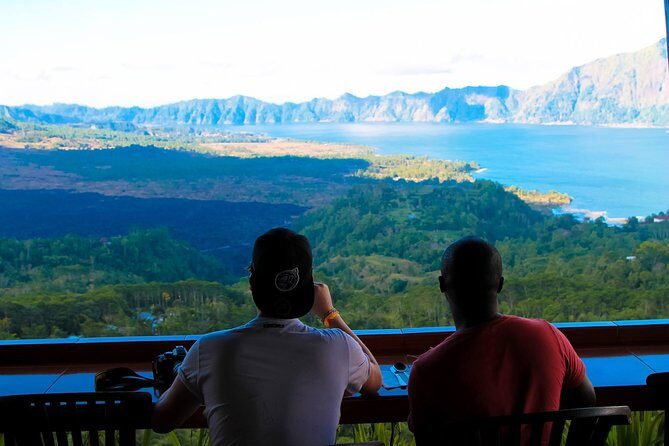
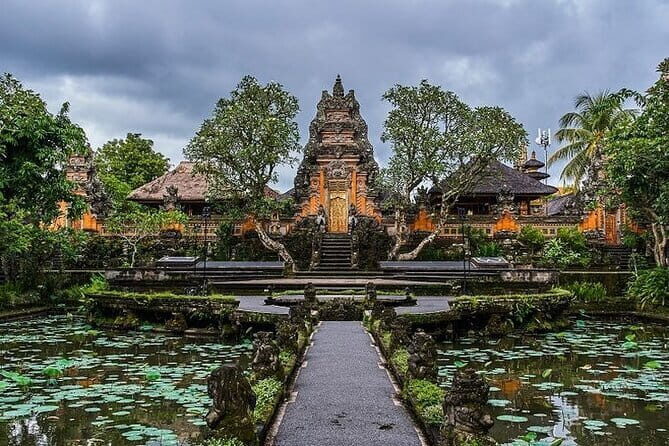
If you care about views, this is also aimed at that. You’ll be dining at Kamandalu Ubud, known for its setting above Ubud Valley. Even if the sun isn’t out, the location helps the night feel special.

The catch is that you need to be the kind of traveler who enjoys structure. Formal dress is required, the dinner has a schedule, and the experience is paced like an event. If you want something casual and spontaneous, a typical restaurant might suit you better.

The Timeline: 6pm Pickup, 6:30 Stroll, 6:45 Doves, Then Dinner
Private 6-Course Romantic Candlelight Dinner Overlooking Ubud Valley - The Timeline: 6pm Pickup, 6:30 Stroll, 6:45 Doves, Then Dinner
Here’s how the evening typically runs, and why the timing matters.

At 6:00pm, you’re picked up from your accommodation in central Ubud. This is a big deal in Bali. Driving in the evening can be smooth or stop-and-start depending on traffic and route, so having the transfer included keeps your night from turning into a travel day.

Around 6:30pm, you arrive at the resort and get time for a leisurely stroll. This isn’t just filler. It helps you shift into “occasion mode” before you sit down, and it also gives you time to take photos in daylight-ish conditions before full darkness.

At 6:45pm, there’s a chance to release two white doves right before dinner. This is one of those moments that makes the night feel ceremonial instead of just dinner-and-wine. It’s also exactly the kind of detail that helps if you’re celebrating something big—anniversaries, proposals, and similar milestones show up here a lot.

Then you open the bottle of Balinese sparkling wine, and dinner follows as a 6-course progression. After dinner, the experience ends the way it started: you’re taken back to your accommodation in Ubud.

Total time is about 4 hours. That’s enough time to feel taken care of without draining your whole evening.

Your Private Setting at Kamandalu Ubud: Intimate, Candlelit, and Built for Photos
Private 6-Course Romantic Candlelight Dinner Overlooking Ubud Valley - Your Private Setting at Kamandalu Ubud: Intimate, Candlelit, and Built for Photos
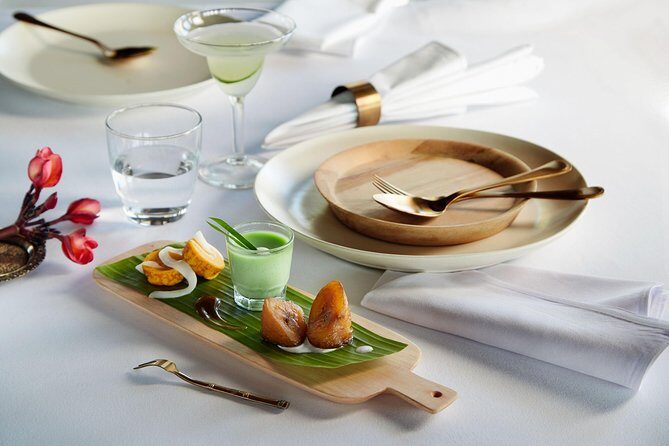
The dinner happens in a private area. That means you’re not mixing with other diners in a loud dining room. The goal is atmosphere: candlelight, a calm pace, and a sense that the venue is turning down the world around you.

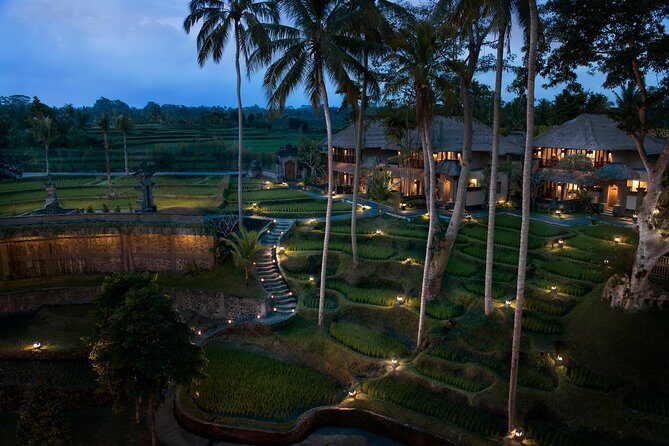
Most of the time, resorts in Ubud offer views and romance, but crowds can ruin the spell. Here, the private setup is the point. Even if other guests are at the resort, your dining area is set up for your group.

There’s also a practical upside to that privacy: when weather turns, they can adjust. One experience described heavy rain, and the team moved things into a private indoor room so the evening could continue without turning into a soggy scramble. If rain is in the forecast, this is reassuring.

Dress code is formal. Think “dress up” rather than “resort casual.” You’ll likely be seated for a while, and candlelight photos tend to look best when everyone is dressed for the occasion.

The 6-Course Meal: Menu Options and What Each Course Feels Like

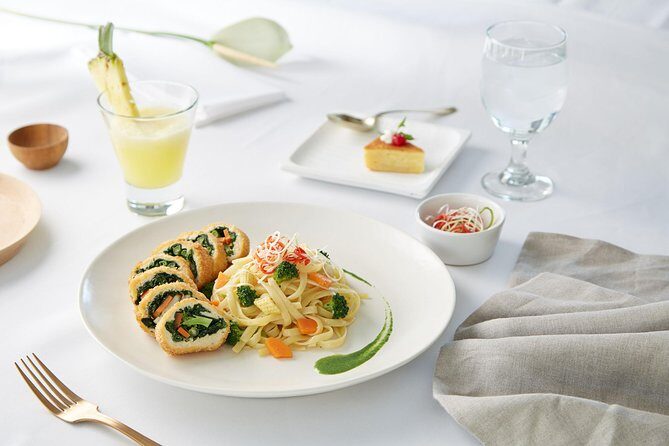
The dinner is structured as six distinct stops, each one doing a job. One is to wake up your palate, one is to add texture, one to reset with something cold and bright, one to add depth, then a main and a dessert that lands the plane.

Your choices (halal, seafood, beef, veg)

You choose a menu type when booking, with options that include:

  • Halal
  • With seafood / without seafood
  • With beef / without beef
  • Vegetarian and vegan

Important detail: the exact course ingredients change by menu choice, but you should expect the same six-course format and a similar “romantic dinner” level of presentation.

The menu example (courses you can plan around)

Even with menu substitutions, these are the named courses from the standard set:

Amuse Bouche

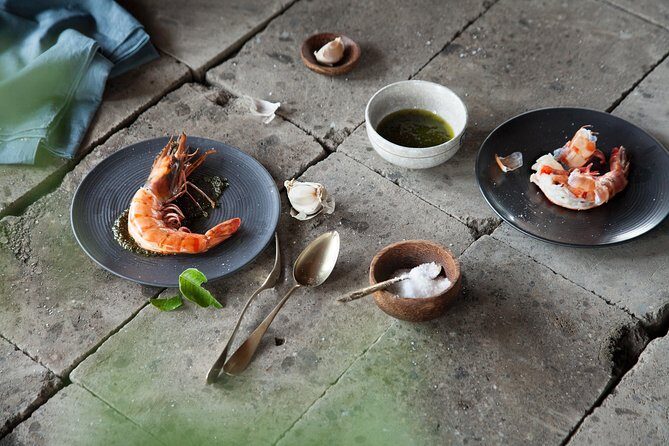
  • Pan-seared Pacific scallop with chili salsa and brioche crumb

This is the first impression course: a mix of sweet-savoury and heat, plus a buttery bread element.

Appetizer Trio

  • Crispy mussel with chipotle bacon
  • Smoked salmon on Thai crispy prawn toast
  • Mango & marinated chicken paper rice roll

This is where you get variety fast. If you’re choosing seafood, this trio is the “wow, okay” course. If you’re avoiding seafood, your appetizer trio will be adjusted to match your selected menu type.

Granita

  • Watermelon orange granita

Granita is like a palate reset. It cools your mouth and clears sweetness before the next savory stage.

Soup

  • Red bean and pumpkin clear soup with shitake and prawn dumpling

This is comfort-soup energy, but lighter than a thick soup. The clear-broth style helps the course feel elegant.

Main Course

  • Pan-seared Australia beef loin on Asian vegetable, turning potato and rosemary gravy

This is the anchor course. If you chose without beef, you should expect a main swap within the same “roast/pan-sear with sides and sauce” vibe.

Dessert

  • Crepes Suzette with chocolate, orange Grand Marnier sauce, and tiramisu ice cream

Dessert here is layered: crepes plus chocolate plus orange, then that tiramisu-style ice cream finish. It’s sweet, but it’s also meant to feel playful rather than one-note.

What I like about this meal design

A lot of romantic dinners get heavy fast. This one gives you structure: a cold reset (granita), a lighter soup, then a main, then a dessert with multiple flavors. You end the night feeling satisfied, not stuffed.

Service That Feels Personal: The Night Is Run Like an Event

Private 6-Course Romantic Candlelight Dinner Overlooking Ubud Valley - Service That Feels Personal: The Night Is Run Like an Event
Service is the part you can’t fake with food quality alone, and this dinner gets strong marks for it.

I love that the evening starts with pickup and continues with smooth handoffs. It means you’re not worrying about whether you’re late, where to park, or how to find the venue after dark.

In one experience, a server named Krishna is called out for being friendly and for providing great service—also snapping photos during the night. That’s the kind of small detail that matters. When you’re in “special night mode,” you don’t want to spend half your time being your own photographer.

There’s also evidence the team can work with your plan. In one case, someone used the dinner as a proposal and was able to coordinate small amendments through WhatsApp with the staff. You don’t need to be staging a big moment to benefit from this—but it does suggest they understand how to manage timing, privacy, and guest requests.

Vegetarian, Halal, and Seafood/Beef Diets: Less Stress, More Control

This is where many high-end dinners fall apart. You ask about dietary needs and you get vague answers. Here, you can select a menu path: halal, with seafood/no seafood, with beef/no beef, vegetarian/vegan.

Two things make that valuable for you:

  • It reduces guesswork. You’re not hoping the kitchen can improvise at the last minute.
  • It keeps the experience feeling consistent. You still get the “6-course romantic night” format, not a simplified plate.

If you have strict requirements, the key move is to advise them at booking. The format asks for this. Also, one review highlighted that vegetarian needs were handled well, and specific requests were accommodated.

If you’re sensitive to shellfish or cross-contamination, your best approach is to mention it clearly when you book. The menu options exist, but your exact needs still need to be spelled out.

Dress Code, Weather, and Camera Time
Private 6-Course Romantic Candlelight Dinner Overlooking Ubud Valley - Dress Code, Weather, and Camera Time
The dress code is formal. It’s not a casual dinner where you can blend in. Plan to look the part. In candlelight, formal attire also photographs well, and it adds to the “only for us” feeling.

Weather can matter. While the experience is meant to feel outdoor-romantic, rain can happen in Ubud. One account described heavy rain during the dinner, and the team set up a private indoor room to keep the experience comfortable. That’s a good sign, but you should still come prepared for cool damp air if it’s raining.

Bring a camera, and also think about how you’ll handle photos without interrupting the flow. If you want a clean set of pictures, ask your server to help with shots when the timing is right—people do well with that during private meal nights.

Price and Logistics: Is $348 Good Value?

Let’s be honest: $348 is a lot of money for one dinner. But it’s not just dinner.

You’re paying for a package:

  • Private venue area for your group
  • Hotel pickup and drop-off from central Ubud
  • A bottle of Balinese sparkling wine
  • A full 6-course meal with an upscale menu design
  • Flexible halal and vegetarian options available on request
  • About 4 hours of structured, hosted time

The real value shows up when you’d otherwise spend time and money to recreate this yourself:

  • Transport arrangements
  • Finding a restaurant with the right dietary menu
  • Coordinating timing for a special occasion
  • Trying to secure privacy in a crowded place

Here, those pieces are handled for you. The private part and the included transfer are the two big levers that justify the price.

Two logistics notes to keep you from surprises:

  • Pickup/drop-off is only from Ubud center. If you’re staying outside that zone, transportation is not included.
  • The booking is minimum 2 people and maximum 2 people. This is truly couple-focused, not a family outing or friend group hang.

Who Should Book This Romantic Dinner (and Who Might Skip It)

You’ll likely love this if:

  • You’re celebrating something specific and want it to feel planned
  • You care about a private setting, not a busy restaurant vibe
  • You want a real multi-course meal with serious attention to menu choices
  • You appreciate formal events and don’t mind a timed evening

You might skip it if:

  • You prefer casual dining with no schedule
  • You’re traveling solo and want single-person pricing (this booking requires at least 2 people)
  • You’re outside central Ubud and don’t want to arrange extra transport
  • You want a flexible, walk-in style evening

Should You Book This Romantic Dinner?

If you’re planning a proposal, anniversary, honeymoon-style night, or just want a “someone thought about this for me” evening, I think this is a strong choice. The combo of private atmosphere, included wine, and a six-course structure makes it feel more like an experience than a meal.

I’d book it especially if you value clear dietary options. Being able to choose halal, seafood/beef/no-beef, or vegetarian/vegan in advance reduces stress and protects the quality of the night.

Just do two things before you confirm: pick the right menu for your needs, and make sure your stay is within central Ubud so pickup/drop-off actually matches your plan. If that’s in place, you’re set up for a very memorable candlelit evening at Kamandalu Ubud.

FAQ

What time does pickup happen?

Pickup starts at 6:00pm from accommodations in central Ubud.

How long is the experience?

It runs for about 4 hours.

Is this a private dinner?

Yes. It’s described as a private tour/activity, and only your group participates.

What’s included besides the meal?

You get hotel pickup and drop-off from central Ubud, a bottle of Balinese sparkling wine, and the full 6-course dinner.

Can I choose halal or vegetarian options?

Yes. Halal and vegetarian/vegan menus are available if you request them during booking. You can also choose with or without seafood, and with or without beef.

Are there specific dishes included?

The provided menu includes items like a pan-seared scallop amuse bouche, an appetizer trio (mussel, smoked salmon, and a chicken paper rice roll), watermelon orange granita, red bean and pumpkin clear soup, pan-seared beef loin as the main option, and crepes Suzette with chocolate and orange sauce.

Is there a dessert and a granita?

Yes. You’ll have a watermelon orange granita and a dessert (crepes Suzette with chocolate, orange Grand Marnier sauce, and tiramisu ice cream).

Do we release doves during the evening?

You’ll have the opportunity to release two white doves at 6:45pm before dinner.

Is there a dress code?

Yes, the dress code is formal.

What’s the cancellation policy?

There is free cancellation. You can cancel up to 24 hours in advance for a full refund.
Bali Most Scenic Waterfalls Trekking

Bali Most Scenic Waterfalls Trekking - What the Trek Is Like: Sticks, Swimming, and Smart Footwear

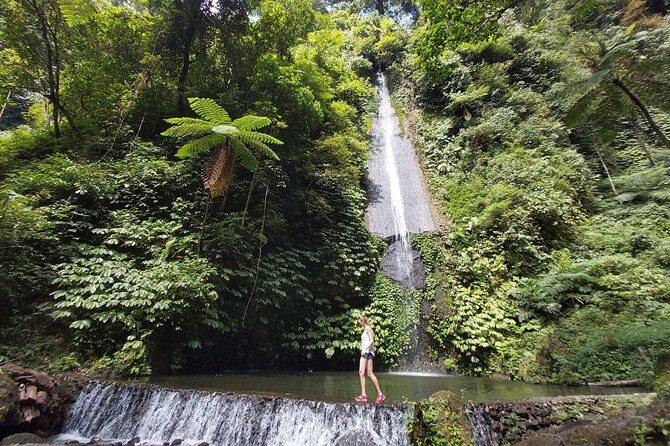
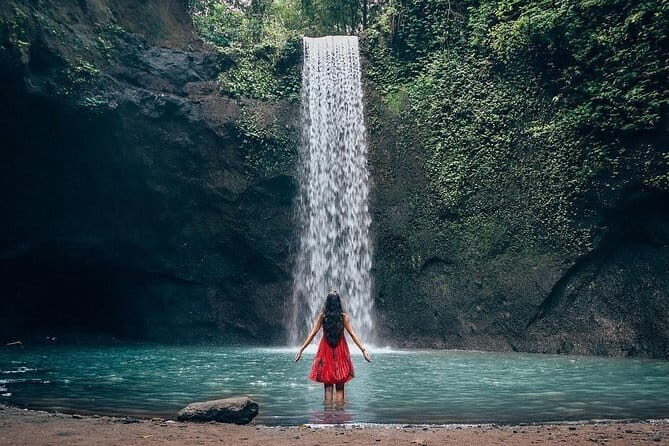
North Bali’s waterfall trail is pure pay-off. This 8-hour trek from Ubud (with pickup options from Kuta and nearby areas) takes you into Wanagiri hills to chase views that feel a long way from the main tourist roads. You get a local guide, the chance to swim when conditions allow, and the kind of day that mixes jungle paths with classic Bali photo stops.

Two things I really like about this experience are the private pacing (your party sets the tempo, and you’re not forced into a rigid group line) and the way the day is built around real scenery breaks, not just checkpoints. You’ll also have lunch and refreshments included, plus coffee or tea, which matters after hours of walking in humid air.

One drawback to plan for: two big sights on the route have separate entry tickets, and the tour is weather-dependent. If rain shuts down the trail, you’ll need to be flexible with timing.

Key Highlights You Should Actually Care About

Bali Most Scenic Waterfalls Trekking - Key Highlights You Should Actually Care About

  • Up to seven waterfalls in one day along a northern Bali hiking route
  • Private tour for your party, so you can slow down for photos and swimming stops
  • Guide-assisted water time, including the chance to swim and jump into the water
  • Scenic breaks built in: lakes, rice terraces, and key viewpoints
  • Lunch by the lakes plus bottled water, coffee or tea, and refreshments
  • Extra ticket costs for Ulun Danu Bratan Temple and Bali Handara Gate

North Bali’s Wanagiri Waterfalls: Why This Trek Feels Special

Bali Most Scenic Waterfalls Trekking - North Bali’s Wanagiri Waterfalls: Why This Trek Feels Special
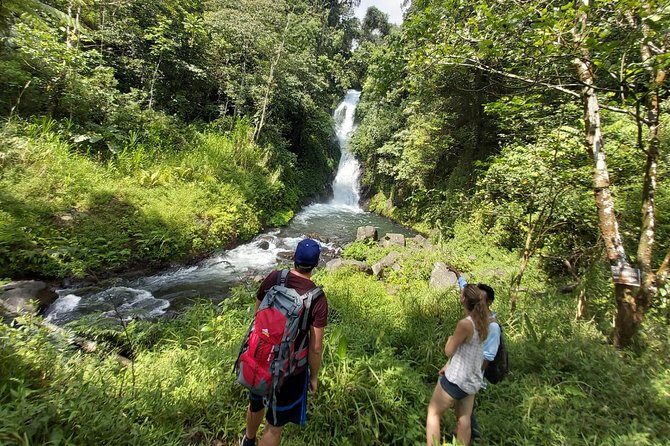
Bali has plenty of waterfall tours. What makes this one worth a close look is the geography and the pacing. You’re not just bouncing from one photo spot to another. You’re actually walking through the mountainous jungle around Wanagiri Hills, where the views open up in stages and the waterfalls show up as part of the hike, not just a destination marker.

I like how the day includes the best kind of variety for a long outing: temple and gate viewpoints, quiet water stops at the lakes, rice terraces, and then the waterfall section where you’ll likely pause often—because you’ll want to. The tour is also set up so you can move at your own pace, which is a big deal on uneven paths where everyone’s speed is different.

The best part for me is the sense of getting away from the standard Bali day-trip rhythm. This route is focused on secluded-feeling northern scenery, and the waterfalls are the payoff you work toward.

Pickup and Timing: How the 8 Hours Work From Ubud (and Kuta)

This tour is designed around convenience. You can get hotel transfers included from Kuta, Ubud, and around those areas. That takes the stress out of figuring out transportation for a full day trek.

The schedule is listed at about 8 hours. In practical terms, that usually means: a decent amount of driving, multiple short sightseeing stops, then a longer walking block for the waterfall circuit. Since this is private, you’re not stuck waiting for other parties to catch up, which helps you keep momentum.

One small caution I learned the hard way in general with Bali excursions: confirm your pickup details before you get comfortable. One service issue that’s come up for past booking groups is a late driver with poor communication at the start of the tour. You can’t control traffic or car trouble, but you can protect yourself—make sure you have the booking reference, and message them again the day of your tour so your pickup timing is crystal clear.

What the Trek Is Like: Sticks, Swimming, and Smart Footwear

Bali Most Scenic Waterfalls Trekking - What the Trek Is Like: Sticks, Swimming, and Smart Footwear
This is a walking trek through forest and hills. You’ll be given walking sticks, which are genuinely helpful when the ground is uneven, muddy, or slick near water. I also like that bottled water is included—small thing, but it matters when you’re out for most of the day.

The tour description also includes a fun, high-attention perk: you can try to swim and even jump into the water, assisted by your guide/local expert. That’s not the kind of thing you can do on every waterfall stop, and it’s part of why guides matter here: they help you pick safe spots and keep the day from turning into chaos.

What you should bring and plan around:

  • Swimsuit if you want the water time (don’t assume you’ll buy one on the fly)
  • Quick-dry clothes so you’re not hiking around soaked in the afternoon
  • Water-friendly shoes or trail shoes with grip for slippery sections
  • Something simple to protect your phone (you’ll be around waterfalls and splashes)

Also, the tour requires good weather. If conditions are poor, you’ll be offered a different date or a full refund. That’s not just fine print—it’s because steep and wet jungle paths can change fast.

The Day’s Scenic Route: Temple, Gate, Hills, Lakes, and Rice Terrace

Bali Most Scenic Waterfalls Trekking - The Day’s Scenic Route: Temple, Gate, Hills, Lakes, and Rice Terrace
Your waterfall trek day is built like a scenic road trip plus a hike—so you’ll get multiple “oh wow” moments before you even reach the water stages.

Ulun Danu Bratan Temple (Ticket Not Included)

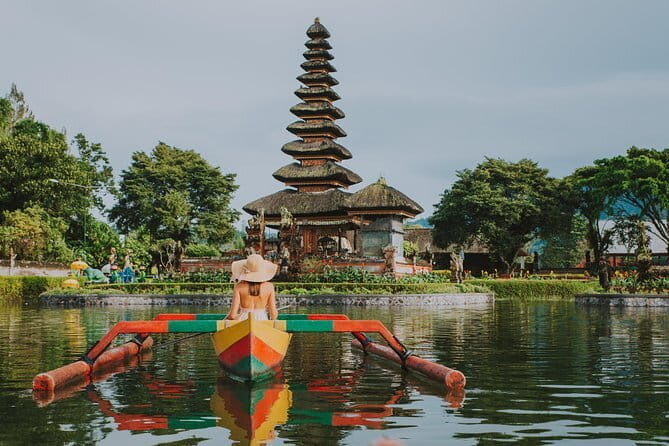
This stop is listed as Ulun Danu Beratan Temple (often referred to as Bratan). It’s a classic landmark in the Bali lake area, and it works as a calmer start before the day turns more physical.

Plan for the entry cost: IDR 75k per person is not included. If you want to keep the day smooth, bring cash for these extras in advance.

A tip: even if you’re not a temple super-fan, this stop gives you a sense of place. It’s one of those moments that tells you you’re truly in the lake-and-hills part of Bali, not just chasing waterfalls.

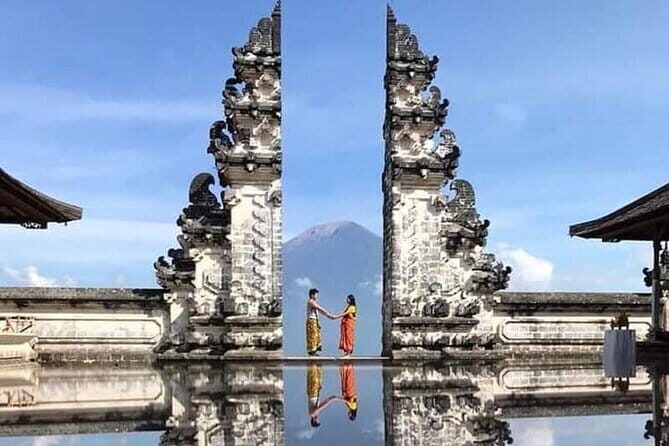
Bali Handara Gate of Heavens (Ticket Not Included)

Next is Bali Handara Gate of Heavens, another highly photo-driven spot on many northern routes. It’s fun, fast, and usually a great break from hiking.

Entry is IDR 40k per person and not included. Don’t underestimate the value of paying this before you’re sweaty and hungry; it helps keep your timeline under control.

Wanagiri Hills and the Wanagiri Village Area

After the scenic viewpoints, you’ll move into the hills around Wanagiri Hills and the Wanagiri village area. This is where the day starts to feel more adventurous. Expect viewpoints, jungle scenery, and the kind of hilly terrain that makes waterfall treks in this region feel like an actual outing.

This section is also part of why the tour stays interesting. You’re not just walking from waterfall to waterfall. You’re traveling through changing views in northern Bali.

Buyan Lake and Tamblingan Lake

The route includes Buyan Lake and Tamblingan Lake. I love lake stops on a hiking day because they break up the intensity and give you places to pause and breathe. Even short stops here help you reset for the waterfall section.

Ambengan Rice Terrace

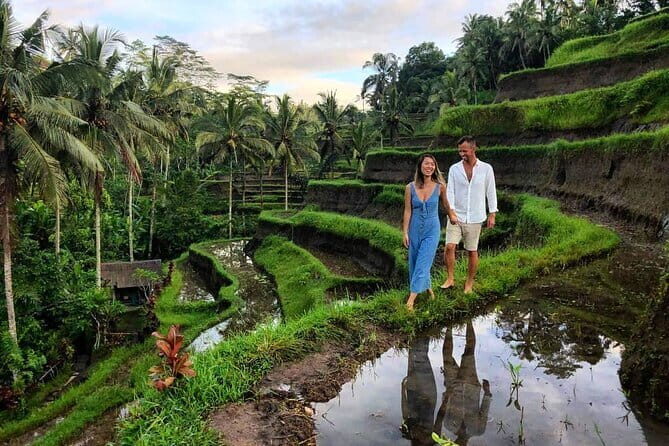
Then comes Ambengan Rice Terrace. Rice terraces are a great visual change from forests and water. They also help you get a feeling for how people shape the land in this part of Bali.

This stop tends to land well because it’s not rushed like some roadside photo moments. You get a different kind of scenery, and it helps the day feel more like northern Bali than a single-theme tour.

Seven Waterfalls on One Trek: From Pucak Manik to Spa Waterfall

Bali Most Scenic Waterfalls Trekking - Seven Waterfalls on One Trek: From Pucak Manik to Spa Waterfall
The headline here is the waterfall circuit: the experience is described as visiting up to seven different waterfalls during the trek.

Here’s how I think about these stops as a practical traveler: each waterfall is a chance to adjust your expectations. Some are best for quick views and photos. Others are perfect for water time, if the guide says it’s safe and the footing looks solid.

Pucak Manik Waterfall

Pucak Manik Waterfall is listed as one of the stops. This is a good early waterfall to set the tone for the rest of your hike. If you’re planning to swim, it’s often better to do it when you first get into the waterfall rhythm, rather than waiting until you’re tired later in the day.

Cemara Waterfall

Next is Cemara Waterfall. This kind of stop is usually where you appreciate the guide-led pacing. The difference between rushing through and lingering is huge when the path and spray can be slippery.

Canging Waterfall

Canging Waterfall keeps the circuit moving. For me, the magic of doing several waterfalls in one day is that you start to notice how each one feels different—sound, mist, sunlight, and how the water lands.

Bidadari / Angels Waterfall

Bidadari/Angels Waterfall is one of the more named stops on this route list. It’s the kind of place where you’ll likely pause for photos, but also where you might feel the reward of the earlier walking.

Campuhan Waterfall

Campuhan Waterfall adds variety again. At this point in the day, your legs are warmed up, so you can enjoy the changing terrain instead of just focusing on getting through.

Celos Waterfall

Celos Waterfall is another step in the trail sequence. I like keeping a low bar for each stop: see it, take a few photos, enjoy the moment, then move on. Trying to treat every waterfall as the final one often leads to disappointment.

Spa Waterfall

Finally, Spa Waterfall closes the waterfall arc. The last waterfall is often the best place to feel proud of the day—this is where the hike stops being a chore and becomes a story you can’t wait to tell.

One more practical note: since the tour includes the chance to swim and jump with assistance, follow the guide’s lead. If they’re cautious, it’s for a reason: footing, water flow, and slippery rocks near waterfalls can change fast.

Lunch by the Lakes: Included Food That Makes the Day Work

Bali Most Scenic Waterfalls Trekking - Lunch by the Lakes: Included Food That Makes the Day Work
You’re not left to hunt for food. Lunch and refreshments are included, plus coffee or tea. The end of the activity includes local food lunch by the lakes.

That last part is important. After a trek, a meal with a scenic view is more than a perk. It’s a reset button that helps you enjoy the day instead of counting down the hours until dinner.

Food on a day like this usually tastes better for one simple reason: you earned it. You’ll be ready for something filling, and you’ll have less stress about what to eat and where.

Price Check: Is $35 Good Value for a Full Waterfall Trek?

Bali Most Scenic Waterfalls Trekking - Price Check: Is $35 Good Value for a Full Waterfall Trek?
Let’s talk money plainly.

The tour price is listed at $35 for an 8-hour private experience with pickup included (Kuta, Ubud, and nearby areas), plus private transportation, lunch, bottled water, walking sticks, and coffee or tea. It also includes all fees and taxes.

For Bali, that’s solid value if you’ll actually use the included services. In many waterfall days, you end up paying extra for guide time, transport, and food. Here, those pieces are already bundled.

The one big variable is what’s not included:

  • Ulun Danu Beratan Temple: IDR 75k per person
  • Bali Handara Gate of Heavens: IDR 40k per person
  • Foot massage (optional): IDR 300k per person

So the true cost depends on whether you plan to enter those paid sights. If you do, make sure you set aside cash in advance. Also consider that the tour is private, which usually costs more per person than shared-group options. The tradeoff is you get your pacing and fewer timeline headaches.

My take: if you want a guide-led day that mixes scenery, walking, and waterfalls—with lunch already handled—this price is a fair deal. If you only care about one waterfall and hate paying extra for entries, you might feel nicked by the add-ons.

Who Should Book This Trek (and Who Might Prefer Something Else)

Bali Most Scenic Waterfalls Trekking - Who Should Book This Trek (and Who Might Prefer Something Else)
This tour is described as suitable for most travelers, and it includes walking sticks and guide assistance for the water time. That suggests the route is meant to be doable for many people, as long as you’re okay with a real hiking day.

This is a great fit if:

  • You want north Bali scenery, not only the most crowded spots
  • You like the idea of up to seven waterfalls
  • You want private pacing so you can linger or move faster as you choose
  • You’ll use the included meal and transport

You might think twice if:

  • You hate walking and prefer purely vehicle-based sightseeing
  • You don’t want to consider extra ticket costs for temple and gate stops
  • You’re traveling during a period with frequent rain and don’t like weather-based schedule changes

The tour’s best moments tend to happen when you’re willing to slow down. A waterfall trek isn’t just a checklist. It’s a day you spend with your senses turned on: sound of water, mist, jungle shade, and the feeling of reaching a new spot after the path.

Should You Book Bali Most Scenic Waterfalls Trekking?

I’d recommend it to you if your dream Bali day includes walking with a guide, chasing multiple waterfalls in northern Bali, and finishing with a proper included meal. The mix of Wanagiri hills, lake scenery, rice terraces, and the seven-waterfall trek gives you more than a single-theme outing.

Before you book, do two things:

  • Plan for the separate entry fees if you want to visit the temple and the Handara gate
  • Build in a little buffer for a weather-dependent day, and confirm pickup details clearly to avoid any start-of-day communication hiccups

If that sounds like your kind of travel day, this is a strong value way to see a quieter side of Bali.

FAQ

Where does this Bali waterfalls trekking tour take place?

It takes place in Ubud, Indonesia, with pickup available from Kuta, Ubud, and around those areas.

How long is the tour?

The tour lasts about 8 hours.

Is this a private tour?

Yes. It’s private, meaning only your group participates.

What is included in the price?

Included are bottled water, walking sticks, private transportation, lunch, coffee and/or tea, and all fees and taxes.

What extra tickets should I expect to pay?

Ulun Danu Beratan Lake Ticket IDR 75k per person and Bali Handara Gate Ticket IDR 40k per person are not included.

Can I swim or jump into the waterfalls?

You can try to swim and jump into the water, assisted by the guide/local expert, during the activity.

What happens if the weather is bad?

The tour requires good weather. If it’s canceled due to poor weather, you’ll be offered a different date or a full refund.

Tanah Lot and Jatiluwih Unesco Rice Terrace Private Tour

Tanah Lot and Jatiluwih Unesco Rice Terrace Private Tour - Stop 1: Tanah Lot Temple and the Batu Bolong coastal moment

Two Bali icons in one long, scenic day.

This tour strings together Tanah Lot with UNESCO-level scenery at Jatiluwih—so you get temple drama, plus rice-terrace scale that’s hard to grasp from photos. I like that the day keeps moving at a comfortable pace (not a whip-and-finish schedule), and I also like that it’s built as a private experience with an AC car and real time at each site.

The main thing to consider is the length: you’re looking at about 8 to 10 hours, and it depends on good weather to deliver the views you came for. If you’re sensitive to long car rides or hot sun, plan your energy accordingly.

You’ll start with Tanah Lot’s seaside temple setting, then climb into the Jatiluwih rice-terrace region, and finish with Luhur Batukaru and Taman Ayun. Along the way, you get entry fees, a sarong for temple visits, and bottled water—small details that matter when you’re on the move all day.

Key highlights to know before you go

Tanah Lot and Jatiluwih Unesco Rice Terrace Private Tour - Key highlights to know before you go

  • Tanah Lot’s 16th-century seaside setting plus the nearby Batu Bolong area for extra atmosphere
  • Jatiluwih is UNESCO World Heritage (since 2012) with sweeping views from about 700 m altitude
  • Two more temple stops: Luhur Batukaru (forest calm) and Taman Ayun (royal family temple, built 1634)
  • Private-only group so you’re not squeezed into a fast-moving crowd
  • Entrance tickets, sarong, and bottled water included, so you avoid a lot of on-the-spot hassles

Why this route hits the right Bali notes in one day

Bali has plenty of temple visits and plenty of rice terraces. The trick here is that this day connects them in a way that makes each stop feel like it adds something, not repeats the same sight. Tanah Lot gives you the coast-and-religion postcard moment, and then Jatiluwih shifts the mood into wide open farmland and mountain air.

I also like that the stops cover different “roles” of place: sacred coastal architecture first, then a working agricultural landscape recognized globally, then two more temples in distinct environments. That variety is a big reason this tour is a favorite.

Getting from Ubud: AC pickup and how to survive a 8–10 hour day

Tanah Lot and Jatiluwih Unesco Rice Terrace Private Tour - Getting from Ubud: AC pickup and how to survive a 8–10 hour day
You get pickup offered, and you’ll ride in a comfortable car with AC. That matters on Bali’s warmer parts of the day, especially when you’re stacking multiple sites into one outing.

Plan to use the ride time well. If you’re the type who wants to take quick phone photos, you’ll burn time at viewpoints; if you slow down for a few minutes of looking instead, the whole day feels smoother. With a 1 hour 45 minute block at Jatiluwih and shorter temple stops (about 45 minutes each), you’ll likely spend a mix of time walking paths and pausing for views.

One practical note: because the experience requires good weather, your guide may emphasize viewing opportunities and timing depending on cloud cover and conditions. If skies are clear, the whole day tends to feel more dramatic—especially at the terrace viewpoints.

Stop 1: Tanah Lot Temple and the Batu Bolong coastal moment

Tanah Lot and Jatiluwih Unesco Rice Terrace Private Tour - Stop 1: Tanah Lot Temple and the Batu Bolong coastal moment
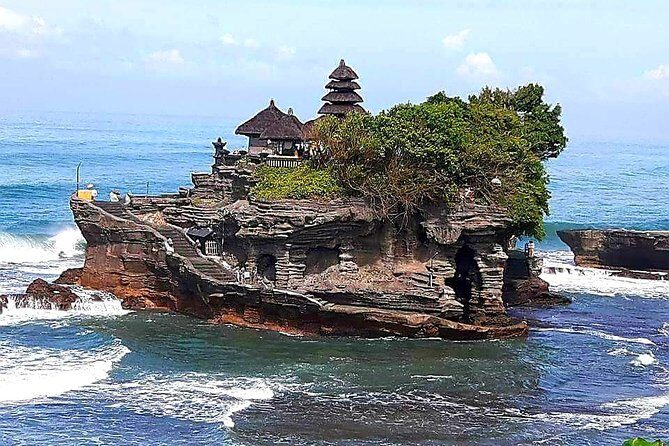
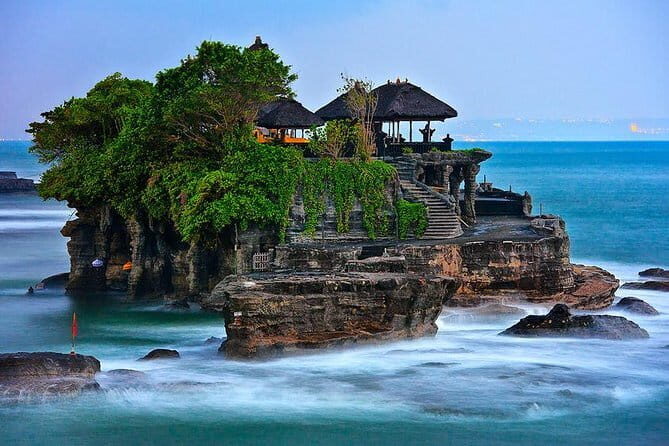
Tanah Lot is built in the 16th century and positioned over the water, which is why it’s so famous. When you’re there in person, it’s not just a temple you see—it’s a temple you can feel as part of the seascape. Waves and shoreline energy give the place a living, changing feel.

Right next to it, you’ll also find Batu Bolong (another nearby temple area). Even if you just take a few minutes to look around, that nearby setting helps explain why this stretch of coast became such a spiritual focal point.

What I like about starting here: Tanah Lot sets a clear “Bali mood” for the rest of the day. After you’ve seen the sacred seaside drama, switching to rice terraces feels like a natural move inland rather than a random stop.

Potential drawback: seaside locations can be windy and uneven underfoot. Wear shoes you can trust, and keep an eye on footing if you’re near wet areas.

Stop 2: Jatiluwih Green Land UNESCO terraces from 700 m altitude

Tanah Lot and Jatiluwih Unesco Rice Terrace Private Tour - Stop 2: Jatiluwih Green Land UNESCO terraces from 700 m altitude
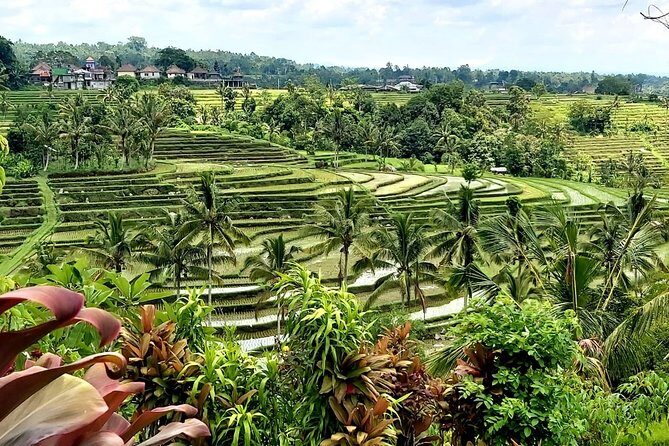
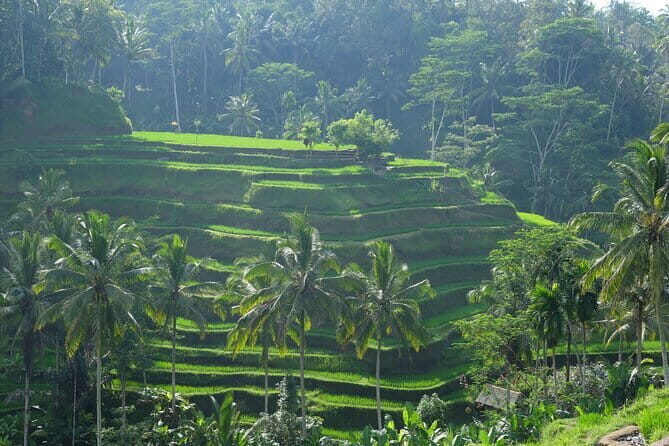
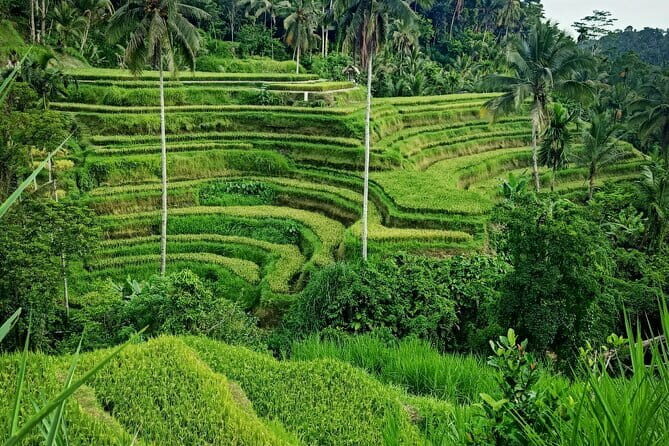
Jatiluwih is the largest rice field in Bali, and the setting is genuinely part of the story. It sits at the foot of Mount Batukaru and reaches around 700 meters in altitude, so you often get cooler air and wider, clearer views than you’d expect in the lowlands.

This is also a UNESCO World Heritage site recognized since 2012, which matters because it’s not just pretty—it’s a landscape shaped by long-running farming knowledge. When you stand on a terrace edge and look across the slopes, you start to understand how the irrigation and rice-growing pattern create that stepped rhythm.

Your stop here is 1 hour 45 minutes, which is enough time to do two useful things:

  • walk some of the paths to get perspective at different angles
  • pause long enough to actually take in the scale

I’ve found that Jatiluwih works best when you don’t rush. If you keep moving constantly, you miss the “in-between” views—those moments where the terraces look different as the light shifts.

Potential drawback: it can still feel warm, even if it’s higher up. And because this is a terrace landscape, you’ll be walking on uneven ground. If you have knee issues, take it slow and stick to flatter paths.

Stop 3: Luhur Batukaru Temple in a calm forest setting

After the open terrace views, Luhur Batukaru Temple brings you into a quieter, more secluded atmosphere. It’s located at the foot of Mount Batukaru in a forest area, so the vibe is less “coastal show” and more peaceful, grounded stillness.

This stop is around 45 minutes, which is a good amount of time for looking, absorbing, and taking photos without turning it into a long detour. The forest setting also helps you reset after the busier sightlines of Jatiluwih.

What you’ll likely notice here is the contrast. Rice terraces are human-shaped farmland. A temple like this is about place, ceremony, and tradition—so you start seeing Bali as more than “scenery.”

Potential drawback: forest locations can mean shaded areas with damp ground after rain. Again, good shoes help more than you’d think.

Stop 4: Taman Ayun Temple, the royal temple built in 1634

Taman Ayun is a royal family temple built in 1634, and it’s known for its garden surroundings. That garden setting makes the temple feel cared for and intentional, not just built and left to time.

This stop is also about 45 minutes, which works well as a closing chapter. By the time you reach Taman Ayun, you’ve already seen coastal temple energy (Tanah Lot), terrace-scale farming (Jatiluwih), and forest calm (Luhur Batukaru). Taman Ayun’s landscaped environment gives your brain a softer landing before heading back to your hotel.

If you care about the cultural side of Bali—not only the views—this is the kind of stop that helps you connect the dots between religion, royal lineage, and how sacred space is arranged.

Potential drawback: gardens are lovely, but if you’re hoping for nonstop dramatic views like Tanah Lot, you’ll need to switch into a slower mode—watching details, layout, and how the temple sits within the garden.

Included items that actually reduce travel friction

This tour is priced to include several “day-trip headaches”:

  • Sarong to use for temple entry
  • Entrance fees
  • Bottled water
  • Parking fees, petrol, and tax
  • AC transport in a comfortable car

For many people, the biggest value is simple: you don’t have to coordinate sarongs, tickets, or last-minute payments at each stop. That means fewer interruptions and more time looking at what you came for.

The only common downside with tours like this is that meals are not included. You’ll want to eat on your own schedule—either before you go or during breaks you control. If you’re prone to getting hangry, plan for it.

Price and value: is $65 per person a smart buy?

Tanah Lot and Jatiluwih Unesco Rice Terrace Private Tour - Price and value: is $65 per person a smart buy?
At $65 per person, this tour sits in a range that can feel like a bargain or like a miss depending on what you’d do otherwise. Here’s the value math you can use:

You’re paying for:

  • private transportation with AC
  • admission fees across multiple major sites
  • sarongs and bottled water
  • a full-day route that would be annoying to stitch together yourself

If you were to drive and coordinate entrances on your own, the cost could add up quickly once you price parking, fuel, and tickets. Plus, you’d still need to manage timing between Tanah Lot, the Jatiluwih region, and two more temples. This itinerary is designed to do that in one pass.

Who gets the best deal from this price:

  • couples and small groups who want a calmer pace than a bus tour
  • people who want “high sights” without planning stress
  • anyone who values explanations while still moving efficiently

The guide factor: explanations that make the sites click

One of the strongest themes in the experience is how much guides help you connect the places. In particular, guides such as Agung, Kotaro, and Ketut come up in examples, and the consistent idea is that they take time to explain traditions and the connections between Bali’s history, religion, and culture.

That’s not just nice-to-have. When you understand why a temple is placed where it is, and how the landscape relates to religious and cultural practice, the sites feel more than visual stops. Even small explanations—like what makes Tanah Lot’s location meaningful or how the terraces fit into the wider region—can change your entire day’s satisfaction.

Practical tips for a smoother day at temples and terraces

Here are the “use it on the ground” tips I’d give you for this kind of route:

  • Use the sarong they provide, and bring clothing that’s comfortable under it.
  • Wear shoes you can walk in on uneven, sometimes damp paths (especially around terrace edges and temple areas).
  • Bring a light layer if you get chilly in the higher terrace region or in shaded forest areas.
  • Plan your photos with patience. Short stops are timed well, but the best shots usually take a minute to find a calm angle.
  • Watch the weather. The experience depends on good conditions, and cloudy or stormy weather can affect visibility and comfort.

And a small behavioral tip: when a guide asks you to look at something specific (layout, materials, or the way the landscape is shaped), it’s usually worth leaning into it. That’s where the day stops being “a list of places” and starts being a story.

Should you book this Tanah Lot and Jatiluwih private tour?

If you want a full Bali highlights day that combines temples + UNESCO rice terraces without the headache of self-planning, I think this is an easy yes. The route makes sense, the included items reduce friction, and the private-only setup keeps the pace comfortable.

Book it if:

  • you’re starting from Ubud and want pickup
  • you care about culture and want explanations along the way
  • you’d rather spend time at a few big sites than rush through many small ones

Skip or reconsider if:

  • you dislike long days (8 to 10 hours)
  • you’re only interested in one type of sight (either temples or rice terraces)
  • you’re traveling at a time when weather is likely to be unreliable and you can’t be flexible

If your goal is a day that feels both scenic and meaningful, this itinerary is built for exactly that.

Bali Tour: Kintamani Tour with Lunch

Bali Tour: Kintamani Tour with Lunch - Goa Gajah and Tirta Empul: Two Sacred Stops, Two Different Moods

Sacred water and volcano views in one day. What makes this tour feel like a win is the private door-to-door setup plus a packed-but-not-rushed route that still lets you set your own pace. I love the combo of Goa Gajah and Tirta Empul with included admission, and I also really like the idea of a Balinese buffet lunch overlooking Batur Volcano in Kintamani. The one drawback to keep in mind: it’s a full 9-hour day, so there is real road time and you’ll want to plan for an early start and some moving around.

You get an air-conditioned vehicle with an English-speaking driver/guide, and the tour is built around you—your driver and guide can help you customize based on what you care about. In a good day like this, you come away with more than photos: you understand what you’re looking at and why people treat these places with care. And yes, the guide experience can be excellent; one name that stood out was Mudana, praised for being knowledgeable and patient.

If you want Bali highlights without the hassle of coordinating multiple tickets, this is a strong value. Drinks aren’t included (you buy them), and gratuities are optional, so budget a little for that. Start time is 8:30 am, and pickup is offered from a long list of areas around South Bali, including Ubud.

Key highlights you’ll feel fast

Bali Tour: Kintamani Tour with Lunch - Key highlights you’ll feel fast

  • Private transportation with pickup and drop-off from major Bali areas, so you don’t burn energy figuring routes
  • Included entrance fees for every main stop, which keeps the day simple
  • Goa Gajah (Elephant Cave) plus Tirta Empul for two very different sacred experiences
  • Kintamani lunch with volcano views, served as an Indonesian buffet with lots of options
  • Batuan traditional house and Tegalalang Rice Terrace to round out the culture and farming scenes
  • A guide who can teach and pace the day, with Mudana cited as a standout for patience and insight

Private Door-to-Door Bali: How the 9-Hour Plan Works

Bali Tour: Kintamani Tour with Lunch - Private Door-to-Door Bali: How the 9-Hour Plan Works
This is a full-day loop out of Ubud, built on the idea that you should spend your time looking at Bali, not negotiating transport. You’re picked up around 8:30 am and you’ll have a private, air-conditioned vehicle for the round trip. The tour is “private,” meaning it’s just your group, not a mixed bus where you’re stuck with other people’s priorities.

The route is practical: Ubud is your base, then you head out to sacred sites and viewpoints, and finish back at your hotel area. Because the tour runs about 9 hours, it’s not one of those slow “wander at will” days. Instead, it’s a curated route where the pacing is handled for you—plus you get the flexibility of a driver/guide who can adjust to your interests.

One smart detail: admission fees are included for the stops that have them. That matters more than it sounds, because it cuts down on time spent at ticket counters and it reduces decision fatigue. You’re also paying for the logistics baked in—parking fees and gas/petrol are listed as included—so you’re not constantly thinking about hidden add-ons.

Where you’ll want to be ready: you’re asked to be waiting in your hotel lobby at pickup time. Also, drinks aren’t included; they’re available for purchase, so bring cash/card or plan to buy a bottled drink when needed.

Goa Gajah and Tirta Empul: Two Sacred Stops, Two Different Moods

Bali Tour: Kintamani Tour with Lunch - Goa Gajah and Tirta Empul: Two Sacred Stops, Two Different Moods
This day leans heavily into Bali’s spiritual sites, and it does it with good contrast.

Goa Gajah (Elephant Cave)

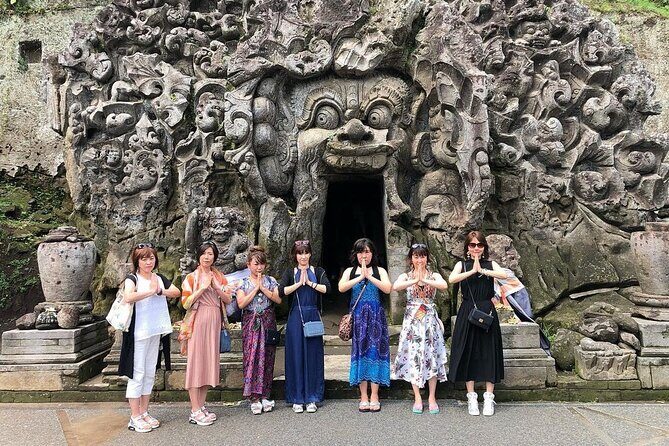
Goa Gajah, also called Elephant Cave, is near Ubud and dates to the 11th century. It served as a sanctuary, and the stop is scheduled for about 1 hour with admission included. If you like historical context that you can actually see in front of you, this is the type of site where a short visit can still leave you with an “ah, that’s why” feeling.

Practical tip: wear something comfortable for uneven surfaces, because caves and temple areas tend to come with steps and nooks. The tour doesn’t say anything special about dress rules, so I’d still keep shoulders and knees covered out of respect in temples and sacred areas.

Tirta Empul Temple

Tirta Empul means something like water gushing from the earth, and it’s regarded as a holy spring. You’ll have about 1 hour here too, and admission is included. This is a calmer, more water-centered stop compared to the cave setting.

I like Tirta Empul because it’s not only about the building. It’s about the idea of water being sacred, coming from the earth, and still being central to what people do there. Even if you keep your visit simple, you’ll likely notice how the site functions and why it matters to locals.

Batur Volcano Time: Mount Batur View Chance + Kintamani Lunch

Bali Tour: Kintamani Tour with Lunch - Batur Volcano Time: Mount Batur View Chance + Kintamani Lunch
If you’re coming for Bali’s “wow” moments, this is the centerpiece section of the day.

Mount Batur stop (short climb time)

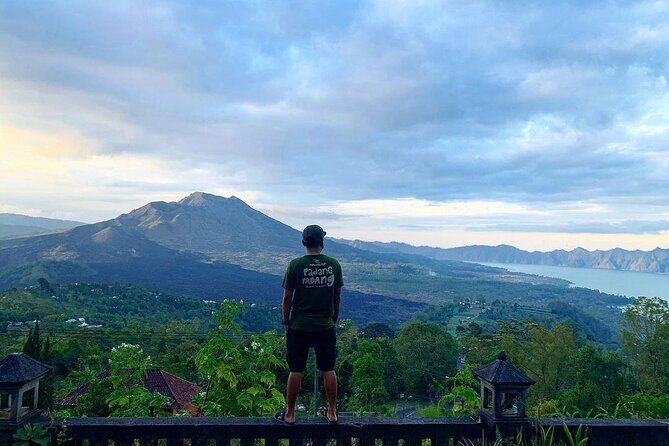
You’ll get a 45-minute stop connected to Mount Batur. The description flags it as a great spot for climbing, with rewards including views into the crater and Lake Batur. This is one of those “give it a try for a bit” moments. You aren’t signing up for a long trek in the middle of a long day; you’re getting a taste of the viewpoint payoff.

If you want to go higher, you can. If you’d rather stay safe and walk up less, it’s a better plan to tell your driver/guide early so your time matches your comfort level. The tour is private, so you’re not stuck with a rigid pace you can’t adjust.

Kintamani highland lunch overlooking the volcano

Next comes lunch in the Kintamani highland area, scheduled for about 1 hour. The lunch is an Indonesian buffet described as gourmet, with many food options, and it’s served with the best kind of restaurant view: Batur Volcano in the background.

This is also where the value of included lunch shows. At $70, you’re not just paying for transport and tickets; you’re paying for a meal that’s positioned as a highlight. And because it’s a buffet, you don’t have to commit to one dish—you can pick what sounds good that day.

Two small things to plan for:

  • Drinks are not included, so budget for water or coffee if you want it.
  • Lunch time is limited, so use the buffet line efficiently and don’t let it turn into a “late lunch” spiral.

Batuan Traditional House and Art Villages: Culture Without the Lecture

This tour doesn’t just do temples and scenery. It also includes time for Balinese everyday culture and architecture.

Stop 1: Batuan traditional house

You start at Batuan, visiting a Balinese traditional vernacular house. The listing notes it has nine buildings with different functions, and the stop is about 45 minutes. Admission is listed as free.

I like this stop because it’s small enough to understand quickly, but detailed enough to make the rest of your day click. When you then look at rice terraces later, you’re more likely to connect farming to community life instead of treating each stop like a separate postcard.

Art villages and culture stops

Between the spiritual sites and the viewpoint areas, there are also mentions of stops at art villages and cultural spots. The goal is to mix “see Bali” with “understand Bali,” at least at an introduction level.

A private guide helps here. If you have questions about what you’re looking at—crafts, daily life, why certain things are made a certain way—that’s where you’ll get answers instead of just watching.

Tegalalang Rice Terraces: A Classic Bali Photo Spot, Done With Time to Enjoy

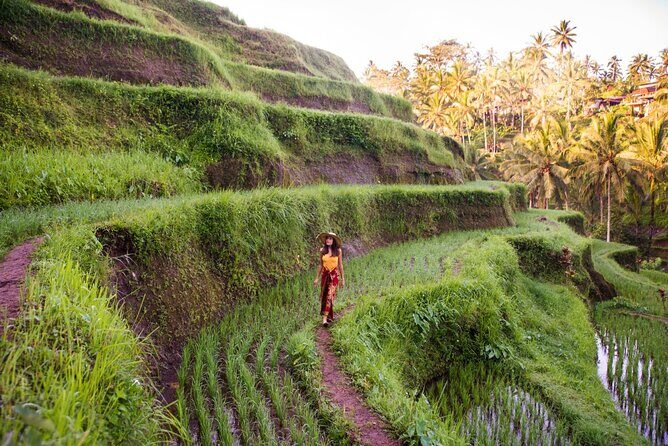
No Bali day trip feels complete without the rice terraces, and Tegalalang is the one most people picture first. You’ll spend about 45 minutes at the Tegalalang Rice Terrace (also known as Ceking Rice Terrace).

This is scheduled as an icon of Bali scenery and culture, with green rice fields and slopes. The timing is long enough to do more than a quick photo. You can walk a bit, pause, and take in how the terrace system fits into the hillside.

A practical reality: popular terrace areas can mean crowds, especially in daylight hours. Your best move is simple: don’t rush the first view. Spend a few minutes looking from different spots so you get a sense of depth, not just a flat picture.

Pacing Tips for a Full Day Without Losing Your Energy

Bali Tour: Kintamani Tour with Lunch - Pacing Tips for a Full Day Without Losing Your Energy
A 9-hour private day sounds comfortable. It is—until you realize it’s still a lot of moving.

Here’s how to make it feel easier:

  • Plan for road time. This tour includes a reasonable amount of driving, and the value is that you cover several highlights in one loop. Just don’t schedule anything tight before or after.
  • Use your guide’s flexibility. The tour says you can customize with your driver and guide. If one stop matters more to you, ask early and see if they can adjust how you spend your time.
  • Don’t forget drinks. Drinks are available for purchase, so expect to buy water along the way.
  • Wear comfortable shoes. Even with short stops, sacred sites and terraces often mean uneven ground and stairs.

Also, note the tour mentions optional attractions if there’s time available (on request only). That’s a nice feature because it lets you add something if your day is running smoothly—just don’t count on it. Ask when you’re already on the road so your driver can judge timing.

Price and Value: What You’re Really Paying for at $70

Bali Tour: Kintamani Tour with Lunch - Price and Value: What You’re Really Paying for at $70
$70 per person can sound either high or low depending on what’s included. In this case, the package includes a lot of the costs that usually sneak up on you:

  • Private air-conditioned vehicle
  • Pickup and drop-off from multiple areas (including Ubud and many South Bali locations)
  • English-speaking driver/guide
  • Entry/admission fees to the attractions where those apply
  • Indonesian buffet lunch (described as gourmet, with many options)
  • Parking fees and gas/petrol
  • Mobile ticket

That’s the real value: you’re buying convenience plus time. Instead of piecing together transport and paying separate admission fees, you’re paying for one coordinated route with admissions handled, plus a lunch that comes with the best kind of setting—volcano views in Kintamani.

The fact that it’s commonly booked about a month ahead suggests it’s a popular “day trip solution” for visitors who want a lot of highlights in limited time. If you’re on a tight itinerary, this is exactly the type of tour that helps you get your bearings fast.

Who This Kintamani Tour Suits Best

This is a great fit if you want a single day that includes:

  • Sacred sites (Goa Gajah and Tirta Empul, with included admission)
  • Cultural stops (Batuan traditional house, plus art village time)
  • A volcano-focused payoff (Mount Batur area + lunch in Kintamani with Batur views)
  • A classic Bali scenery stop (Tegalalang Rice Terrace)

It’s also ideal when you prefer planning to be handled for you. Being private means your group sets the pace more than a bus does.

If you’re the kind of traveler who hates long car days, this might feel like too much. But if you like variety and you’re okay spending a chunk of the day in transit between big highlights, it’s a very sensible format.

And if you care about guide quality, look for operators who can provide patient, clear explanations. One standout guide name tied to this experience was Mudana, specifically praised for being knowledgeable and patient and for going above expectations.

Should You Book This Tour with Bali 4U Tours?

I’d book it if your goal is a one-day Bali overview that mixes spiritual sites, culture, and volcano views without ticket hassles. The included admissions, the private transportation, and the volcano-front lunch are what make this feel like a complete day—not just a list of stops.

Before you confirm, I’d do three quick checks:

  • Confirm your pickup area matches the listed options (Sanur, Ubud, Kuta/Legian, Seminyak, Canggu, Jimbaran, Nusa Dua, Benoa, or Denpasar).
  • Decide in advance how you feel about the Mount Batur viewpoint/climb time (short and optional in how high you go, but it’s still movement).
  • Plan for drinks purchases during the day and consider budgeting a little for gratuities if you want to.

If that sounds like your kind of day, this tour is a strong, practical way to see a lot of Bali in a single, well-paced loop.

FAQ

What time does the tour start?

The start time is 8:30 am.

How long is the Kintamani Tour with Lunch?

The duration is listed as 9 hours (approx.).

What’s included in the lunch?

Lunch is an Indonesian gourmet buffet lunch with many food options, served at the Kintamani highland area.

Are entrance fees included?

Yes. Entry/Admission fees are included for the attractions listed on the tour.

Do you pick up from hotels?

Yes. Pickup & drop-off are offered from Sanur, Ubud, Kuta/Legian, Seminyak, Canggu, Jimbaran, Nusa Dua, Benoa, and Denpasar.

Is this a private tour?

Yes. It’s described as a private tour/activity, with only your group participating.

Are drinks included with the tour?

No. Drink is not included and is available for purchase.

Is free cancellation available?

Yes. You can cancel for a full refund up to 24 hours in advance of the experience’s start time.

Melukat Ceremony and Temple Tour at Gunung Kawi Sebatu Temple

Melukat Ceremony and Temple Tour at Gunung Kawi Sebatu Temple - Dress rules and sarong rental: simple clothing, big respect

Water purification in Bali has a quiet pull. At Gunung Kawi Sebatu, you’ll take part in the Melukat ceremony—Balinese-style purification—then follow a guided temple visit in a setting known for being calmer than the big-name stops nearby. The day feels more like a ritual appointment than a sightseeing checkbox, especially when your guide helps you move with the flow.

I like that you get a real ceremony setup: materials are included, you’ll have an English-speaking guide, and you’re not left guessing what to do at the water. I also like the practicality of the sarong and simple attire rental, since you’re coming prepared without having to buy anything.

One consideration: there’s no shuttle transport, so you’ll need to arrange your own ride and get yourself to the meeting point on time.

Key highlights at a glance

  • Melukat ceremony guidance so you’re not standing around wondering what’s next
  • English-speaking guide support during the temple and ritual moments
  • Sarong and simple dress rental to meet the modesty rules
  • Entrance fee included (so you can avoid the Pay on Arrival hassle)
  • Private tour format for a quieter, more personal pace

Melukat at Gunung Kawi Sebatu: what purification feels like in real life

Melukat Ceremony and Temple Tour at Gunung Kawi Sebatu Temple - Melukat at Gunung Kawi Sebatu: what purification feels like in real life
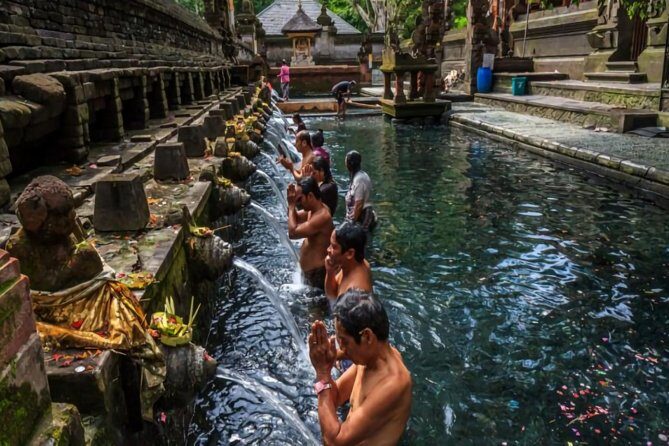
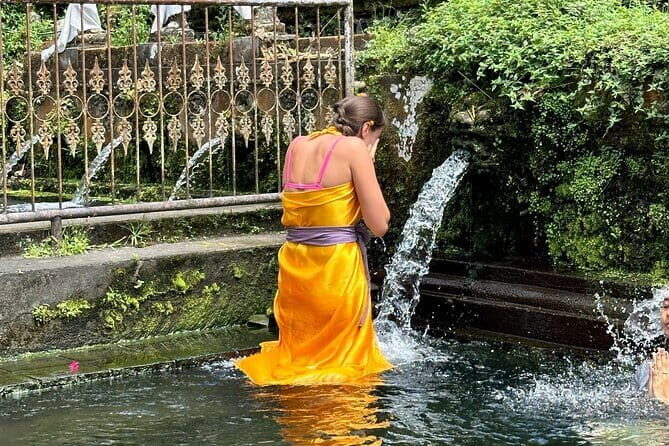
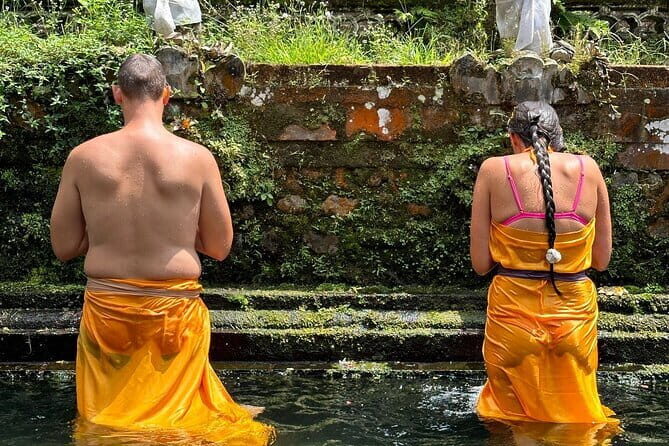
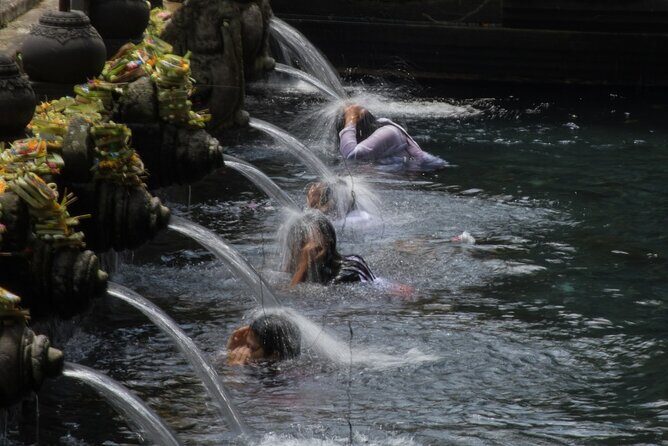
Melukat is Bali’s water purification ritual. In practice, that means you’re there for a guided process using temple water as part of the cleansing and spiritual focus. It’s not a show. It’s a moment of attention, with the guide and temple staff helping the day make sense as you move through the steps.

At Gunung Kawi Sebatu, the ceremony is paired with a temple tour, so the experience isn’t only about the water. You get context—why people come, what to do when you’re dressed properly, and how to behave inside a working religious site. That matters, because if you arrive thinking it’s just a pretty pool, you miss the point.

I also like that the pace is short. Most people will be done in about 1 hour (and sometimes closer to 1–2 hours depending on questions and ceremony timing). This makes it a good fit for days when Ubud is already packed.

Finding the right starting point at Pura Gunung Kawi Sebatu Sebatu

Melukat Ceremony and Temple Tour at Gunung Kawi Sebatu Temple - Finding the right starting point at Pura Gunung Kawi Sebatu Sebatu
Your experience begins at Pura Gunung Kawi Sebatu Sebatu, Tegallalang, Gianyar Regency, Bali. The session ends back at the meeting point, so plan on staying close to that area rather than treating it like a hop-on, hop-off stop.

Because it’s a private tour, your timing matters more than usual. One reason people love this place is that it tends to feel calmer when you’re not arriving mid-surge. If you can, aim to reach the meeting point with a little buffer. You’ll get dressed, settle in, and follow instructions without rushing.

Also note the simple but important rule: you’ll be expected to enter in appropriate clothing. If your outfit is off, you’ll lose time while you adjust or rent what you need.

Dress rules and sarong rental: simple clothing, big respect

Melukat Ceremony and Temple Tour at Gunung Kawi Sebatu Temple - Dress rules and sarong rental: simple clothing, big respect
The temple has clear modesty requirements. You’ll need a top that covers your shoulders (a T-shirt works), and short bottoms that sit above the knee (shorts or a short skirt). Before you even think about comfort, think about coverage. That’s the ticket to moving smoothly through the site.

Here’s what the tour includes for clothing: you’ll get a sarong and a simple dress. The key detail is that this is not the complete full traditional Balinese outfit. It’s meant to keep you within the temple’s expectations without turning your day into a costume project.

Bring a practical bag item checklist, because you’ll likely want to change after getting wet:

  • change of clothes (including underwear)
  • a towel

That towel detail isn’t glamorous, but it’s what saves you from a cold ride afterward.

The Melukat ceremony flow: materials, guide support, and temple staff

The ceremony is guided. You’re provided ceremony materials, and an English-speaking guide stays with you through the process. In addition, the ritual itself is led with help from temple staff; sometimes a priest takes the group through the ceremony steps, depending on what’s scheduled that day.

Guides named Ridwan and Rido come up in the stories people tell about this experience. The common theme: they explain what’s happening in plain language and help you do the ritual the right way, so you don’t feel awkward when it’s time to follow the next instruction.

For you, the practical takeaway is this: don’t treat it like a photoshoot. If you try to multitask, you’ll miss the guidance that makes the cleansing feel meaningful. Follow the sequence, ask one quick question if you’re unsure, then move on.

Also, the emotional tone tends to be quiet and reflective. People describe the setting as calm and the experience as spiritual rather than touristy. A private format helps a lot with that.

Temple tour time at Gunung Kawi Sebatu: fountains, fish, and wish moments

Melukat Ceremony and Temple Tour at Gunung Kawi Sebatu Temple - Temple tour time at Gunung Kawi Sebatu: fountains, fish, and wish moments
After you’re in the temple flow, you may see extra small moments that make the place feel alive, not staged. One example people mention: feeding the temple fish. If that’s part of your route that day, it’s a simple, low-pressure break from the formal ritual steps.

Another detail you might encounter nearby: twelve fountains. People also talk about making a wish at these fountains as part of the experience’s atmosphere. Whether you treat it as symbolic or simply fun, it’s the kind of temple moment that helps the day feel more than “ritual, then leave.”

If you’re the type who likes to understand what you’re seeing, this is where your guide helps the most. The ceremony has structure, but the temple tour also has context—how people use the space and why certain spots matter.

Time and pacing: how long you’ll really need

Melukat Ceremony and Temple Tour at Gunung Kawi Sebatu Temple - Time and pacing: how long you’ll really need
The stated duration is about 1–2 hours. In real terms, most people should plan for around an hour and a half, but your time can shift if you ask questions, pause for guidance, or if the ceremony needs a little extra time.

Because it’s short, you can pair it with other Ubud area plans without losing your whole day. Just don’t stack back-to-back activities with tight timing right after the ceremony, especially if you’ll need to dry off and change.

Also remember: this is a private tour/activity, so it’s you and your group only. That means you won’t get rushed by a crowd, but it also means your group’s pace sets the rhythm.

Price value check: what $29 includes versus the Pay on Arrival fee

Melukat Ceremony and Temple Tour at Gunung Kawi Sebatu Temple - Price value check: what $29 includes versus the Pay on Arrival fee
The price is $29 per person, and the big value point is what you get for that fee. Your package includes:

  • entrance fee
  • English-speaking guide
  • ceremony materials
  • attire rental (sarong + simple dress)

So even though there’s an official entrance fee for a “Visit Only” option—listed as IDR 50,000, available 8:00 AM to 6:00 PM (Pay on Arrival)—the guided package is what you’re paying for. In other words, you’re not only buying entry. You’re buying clarity, support, and the ritual setup that makes the purification feel complete.

Is the “Visit Only” option bad? It’s workable if you just want to see the temple grounds. But for many people, the real magic is the guided process: knowing what to do, having materials ready, and getting instructions that fit the day’s flow.

From a value perspective, $29 makes sense especially if you’re traveling as a couple or small group, because the private structure keeps the experience focused instead of diluted by a big mixed crowd.

Transportation reality: no shuttle means you need a plan

Melukat Ceremony and Temple Tour at Gunung Kawi Sebatu Temple - Transportation reality: no shuttle means you need a plan
This experience includes no shuttle transport. That’s a big deal, because Gunung Kawi Sebatu isn’t a stop you casually walk to from the center of Ubud.

Before booking, think about your local logistics:

  • How will you get to Pura Gunung Kawi Sebatu by the meeting time?
  • Will you need a driver/taxi, or do you already have transport lined up?

Once you solve transportation, everything else is straightforward. If you arrive relaxed, the ceremony will feel smoother. If you’re running late, even a good guide can only do so much.

Who should book this Melukat and temple tour?

Melukat Ceremony and Temple Tour at Gunung Kawi Sebatu Temple - Who should book this Melukat and temple tour?
This is a strong choice if you want:

  • a quiet spiritual experience in Bali
  • guidance during a ritual you’ve never done before
  • a short, focused activity near the Ubud area

It’s also a good fit for small groups, since it’s private. One story includes a parent and son doing the ceremony together, which tells me this can feel family-friendly when the tone stays respectful and the guide is good at explaining steps.

There are two people who should not book, or should be ready to reschedule:

  • If you’re menstruating, temple entry is strictly not allowed.
  • If you menstruate after booking, the experience notes you can request a refund or reschedule.

If you’re traveling with limited flexibility, consider the clothing and changing needs too. You’ll want that towel and a change of clothes ready to go.

Should you book the Melukat Ceremony and Gunung Kawi Sebatu Temple Tour?

Book it if you want the purification ritual to come with guidance, included materials, and the right clothing setup. The package makes this easier than trying to figure it out on your own, especially if this is your first time at a Melukat-style ceremony.

Skip or rethink it if:

  • you don’t have transport figured out, since there’s no shuttle
  • you’re uncomfortable with wet ritual steps and the need to change afterward
  • you know you’ll struggle with the dress rules (shoulders covered, short bottoms above the knee)

If you do book, the best way to make it worthwhile is simple: arrive on time, follow the guide’s lead, and treat it as a ritual day—not just a quick photo stop.

FAQ

How long does the Melukat ceremony and temple tour take?

It usually runs about 1–2 hours.

Is the entrance fee included in the $29 price?

Yes. The package includes the entrance fee. There is also an official Pay on Arrival entrance fee mentioned for the Visit Only option, but your tour includes entry.

What should I wear?

Wear a top that covers your shoulders (like a T-shirt) and short bottoms that are above the knee. This helps you meet the temple’s entry rules.

Is a sarong provided?

Yes. The tour includes attire rental, including a sarong and a simple dress (not the full complete traditional Balinese outfit).

Can I participate if I’m menstruating?

No. The temple entry is strictly not allowed during menstruation. If that happens after booking, you can request a refund or reschedule.

What should I bring?

Bring a change of clothes, including underwear, plus a towel.

Is there shuttle transport included?

No. Shuttle transport is not included, so you’ll need to arrange your own way to the meeting point.

Is this a private tour?

Yes. It’s a private tour/activity, meaning only your group participates.

Private Ubud and Volcano Day Trip

Private Ubud and Volcano Day Trip - The 9-Hour Flow: How the Day Fits Together

A volcano day can be chaotic without a plan. This private tour strings together Ubud and Kintamani highlights with easy pickup and a driver who keeps the day moving. You’ll hit Mount Batur and Lake Batur, Tegenungan Waterfall, Gunung Kawi, and Tegalalang Rice Terrace, with a Bali swing as an optional extra.

I love that it’s private (only your group) and built around practical stops you can enjoy even if you do not want to drive. Two things I also like: the air-conditioned vehicle and English-speaking driver, and the fact that temple prep is handled with sarongs provided.

One possible drawback to note: entrance fees and lunch are not included, so you’ll want some cash and a lunch plan so the day stays smooth.

Key Points at a Glance

Private Ubud and Volcano Day Trip - Key Points at a Glance

  • Private transport so you do not waste time coordinating rides or finding parking
  • Mt. Batur and Lake Batur are part of the core route for classic Kintamani views
  • Gunung Kawi rock-cut shrines add a rare cultural stop, not just scenery
  • Tegenungan Waterfall and Tegalalang Rice Terrace give you both water views and rice-field photo angles
  • Sarongs provided for the temple visit helps you show up prepared

A Private Ubud and Kintamani Route Built for People Who Hate Driving

Private Ubud and Volcano Day Trip - A Private Ubud and Kintamani Route Built for People Who Hate Driving
If you’re in Ubud, it’s tempting to rent a scooter and DIY. But a volcano day trip is where driving stress quietly steals your energy. This is set up as a private tour with pickup from Ubud and many south Bali hotels, so you start the day already in “go mode.”

The timing also feels smarter than a scattered self-drive plan. Instead of bouncing around trying to squeeze in “one more” place, you’re carried between the big hits: Tegenungan Waterfall, Gunung Kawi Temple, Kintamani highland views near Mount Batur, and Tegalalang Rice Terrace. You get a full day of variety without the constant navigation headaches.

Private also means your group sets the pace. If someone wants extra photos at a viewpoint, you usually can do that without the pressure of matching a large group’s rhythm.

Price and Value: What $38.47 Really Covers

At about $38.47 per person, the big value isn’t just the sites. It’s the whole package of transport and logistics.

Here’s what’s included:

  • Bottled water
  • Air-conditioned vehicle
  • Private transportation
  • English-speaking driver
  • Sarong for the temple visit

What’s not included:

  • Lunch
  • Entrance fees
  • Personal expenses

That last part matters. Entrance fees can add up across multiple stops, and lunch is typically where people get surprised. Still, you’re paying for a day of organized transfers and an English-speaking driver, which often costs more when you piece it together yourself.

Also keep this in mind: it’s marked as having group discounts and private service. If you’re traveling with friends or family, that usually makes this kind of full-day routing easier to justify.

The 9-Hour Flow: How the Day Fits Together

Private Ubud and Volcano Day Trip - The 9-Hour Flow: How the Day Fits Together
This tour runs about 9 hours and starts at 9:00 am. Each main stop is roughly 1 hour, which is a helpful structure. You won’t be stuck at one place all day, and you also won’t feel like you’re sprinting every 10 minutes.

A realistic expectation: you’ll spend extra time in the car between sites. That’s not wasted time. On a route like this, the drive is part of the experience because you’re moving from Ubud area highlights toward the Kintamani highlands around Mount Batur.

Practical tip: plan for sun and comfort. Water and AC help, but you’ll still be outside at waterfalls, viewpoints, and rice terraces. Light layers and good footwear make the day feel way easier.

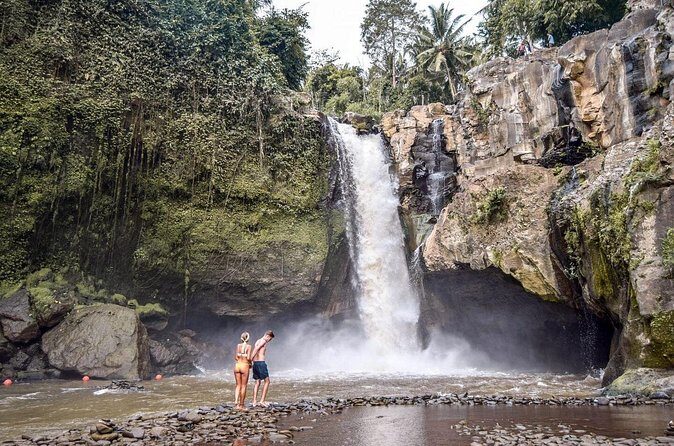
Stop 1: Tegenungan Waterfall by the Petanu River

Private Ubud and Volcano Day Trip - Stop 1: Tegenungan Waterfall by the Petanu River
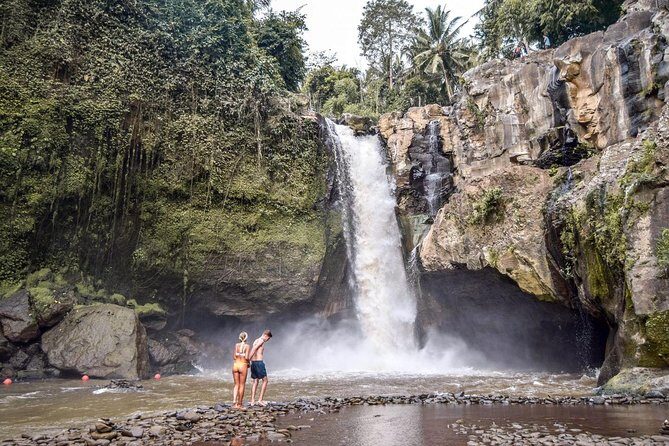
Tegenungan Waterfall is a great first stop because it gives you an immediate “Bali wow” moment. It’s located by the sacred Petanu River, in the area around Tegenungan Village and Kemenuh Village.

What you’ll likely enjoy here:

  • Sharp, dramatic drops that make for easy photos
  • A spot that’s described as fun to visit
  • The chance to swim, since it’s noted as nice for that

One heads-up: entrance fees are not included. Also, waterfalls mean uneven ground and slippery areas. Bring shoes that handle wet surfaces, or at least be ready to go slower than you would on a dry walkway.

If you care about photos, go in with a simple plan. Walk a bit first to check angles, then settle in. In one hour, you can get a few good shots without turning it into a photo marathon.

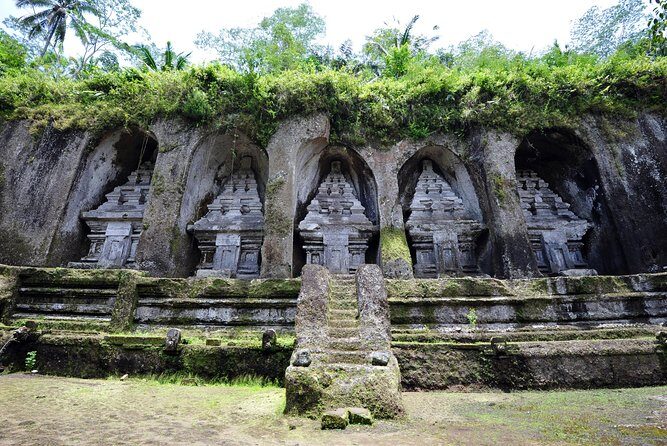
Stop 2: Gunung Kawi (Mount Kawi) and Its Rock-Cut Shrines

Private Ubud and Volcano Day Trip - Stop 2: Gunung Kawi (Mount Kawi) and Its Rock-Cut Shrines
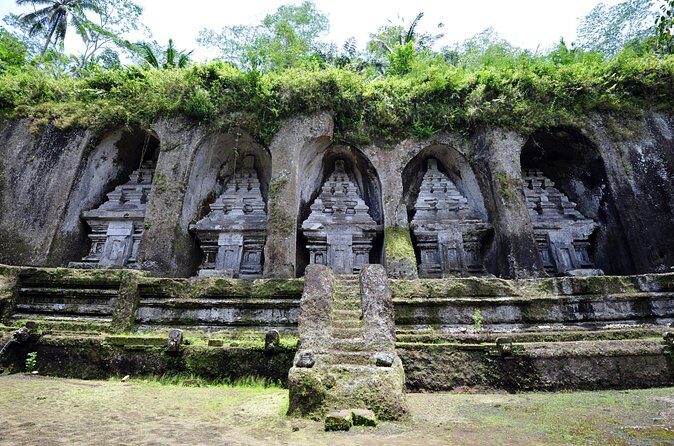
Gunung Kawi Temple complex, also locally referred to as Pura Gunung Kawi, is the cultural anchor of the day. It’s unique because it features ancient shrine reliefs carved into the face of a rock.

This stop is worth it for two reasons:

  1. It’s not just a temple for looking at from a distance. You’re looking at something engineered into the landscape of the site itself—old carvings and shrine reliefs that feel more “archaeological” than decorative.
  2. You get a calmer pace than some of the busier photo spots. One hour is enough to take it in without feeling rushed.

Temple etiquette is partly handled for you. The tour includes sarong use for the temple visit, which helps you meet the basic dress expectations without scrambling at the last minute.

Practical caution: bring a respectful attitude and keep movement gentle around shrine areas. It’s a sacred site, so you’ll enjoy it more if you treat it like one.

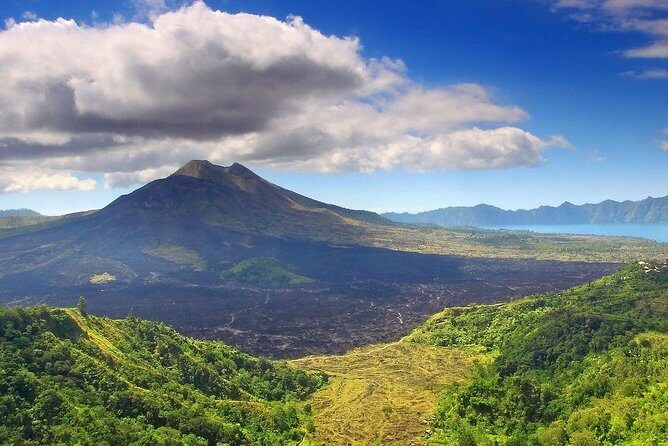
Stop 3: Kintamani Highland Views Near Mount Batur and Lake Batur

Private Ubud and Volcano Day Trip - Stop 3: Kintamani Highland Views Near Mount Batur and Lake Batur
When you head into Kintamani, the day starts to shift from “Ubud highlights” to highland views. This region covers the Mount Batur caldera area and includes places like Penelokan, Toya Bungkah, Batur, Kedisan, Abung, Songan, and Kintamani villages.

The classic reason to come is Mount Batur and Lake Batur. Even if you’re not doing a hike, the viewpoint gives you a feel for how dramatic the caldera setting is. It’s one of those places where the photos look good, but the real value is how it changes your sense of where you are on the island.

Keep in mind:

  • One hour here is a tight window for both photos and atmosphere. Use that time wisely.
  • Weather matters. Cloudy conditions can reduce the view, so if the sky looks iffy, stay flexible and make the best of what you get.

If you love volcano country, this is the stop that turns a “nice day” into a “memory day.”

Stop 4: Tegalalang Rice Terrace and the Subak Water System

Private Ubud and Volcano Day Trip - Stop 4: Tegalalang Rice Terrace and the Subak Water System
Tegalalang Rice Terrace is one of those Ubud-area stops people talk about for a reason. The rice paddies here are known for their striking visuals—terraces and layers that create a lot of depth in photos.

What makes it more than just scenery is the traditional irrigation system called subak. It’s a cooperative system passed down through local tradition, connected to how rice farming works over time.

What to do in your one-hour window:

  • Look for the irrigation channels and the way water moves through the fields.
  • Walk a little for better angles, then pause for photos.
  • Keep your footing careful—terraces can be uneven.

Entrance fees are not included, so factor that into your budget. Also, wear shoes you don’t mind getting dusty or wet. Rice terraces usually mean ground that’s not designed like a mall walkway.

This stop is a great contrast after Kintamani’s highland views. You go from volcanic caldera impressions to green farming geometry.

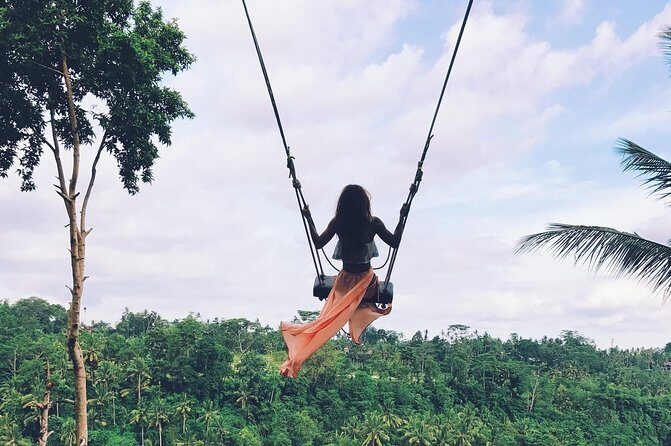
Bali Swing Option: A Fun Add-On If That’s Your Thing

Private Ubud and Volcano Day Trip - Bali Swing Option: A Fun Add-On If That’s Your Thing
The tour mentions a Bali swing (optional). That means you can decide based on your mood and comfort level.

If you like photo experiences and you’re already in the area feeling “day trip energy,” it can be a fun break from temples and viewpoints. If you prefer slower, culture-first stops, you can skip it and keep the day focused on the core route.

Either way, one hour per main stop keeps the schedule from turning into a time sink.

The Driver and Vehicle Experience That Makes It Worth It

This kind of day succeeds or fails on the driving. Long routes with multiple stops need a driver who understands pacing, arrival timing, and the art of keeping people calm.

The service here stands out because the driver experience is repeatedly praised: a friendly, polite, funny driver can turn “a checklist of places” into an easy, comfortable day. Clean, well-maintained vehicles and working AC also matter in Bali, especially once you’re outside near waterfalls and fields.

You also get bottled water, which sounds small until you’re halfway through the day and realize you didn’t need to guess where you’d buy it.

One more practical detail: pickup is offered from Ubud and many south Bali hotels. That reduces the risk of losing time at the start of the day, which is usually when delays cascade.

What to Pack so You Enjoy Every Stop

You’ll have a mix of temple, waterfall, viewpoint, and rice terraces. Pack like you’re mixing water and sun.

Bring:

  • A small towel or quick-dry cloth if you plan to swim at Tegenungan
  • Swimsuit if you want the waterfall option
  • Comfortable, grippy footwear
  • Sun protection (hat, sunscreen)
  • Cash for entrance fees and lunch, since those are not included

At temples, the tour handles sarong use. Still, dressing in a way that’s easy to adjust helps you stay comfortable, especially in heat.

Who This Tour Fits Best

This is a strong fit if:

  • You want a private day with a driver rather than self-driving
  • You want both culture and nature: Gunung Kawi plus waterfall and rice terraces
  • You’re aiming for classic Kintamani views around Mount Batur
  • You prefer a balanced schedule with about 1 hour per stop

It may not be ideal if you want:

  • A long, intensive hike day (the stops are time-boxed)
  • A fully all-inclusive day where everything is included (entrance fees and lunch are not)

Should You Book This Private Ubud and Volcano Day Trip?

If your goal is a smooth, organized volcano day that hits the big Ubud-to-Kintamani highlights without the driving stress, I’d book it. The value is in the transport, the private setup, and the mix of stops that actually fit together in one 9-hour day.

I’d especially recommend it if you care about seeing Mount Batur and Lake Batur, want to add Gunung Kawi’s rock-cut shrines, and still want the famous photo stops like Tegenungan Waterfall and Tegalalang Rice Terrace.

If you hate paying extra once you arrive, plan for entrance fees and lunch ahead of time. But if you’re okay with that, this is the kind of day trip that feels well-paced and genuinely satisfying.

FAQ

What time does the tour start?

The tour start time is 9:00 am.

How long is the private Ubud and volcano day trip?

It runs for about 9 hours (approx.).

Is pickup included?

Yes. Pickup is offered from Ubud and many south Bali hotels, with 2-way transfers.

Is this tour private?

Yes. It’s a private tour/activity, and only your group participates.

What’s included in the price?

Included are bottled water, an air-conditioned vehicle, private transportation, an English-speaking driver, and sarong use for the temple visit.

Are entrance fees included?

No. The price excludes entrance fees.

Is lunch included?

No. Lunch is not included.

Is there an optional activity?

Yes. A Bali swing is listed as optional.

What is the cancellation policy?

Free cancellation is available up to 24 hours in advance for a full refund.
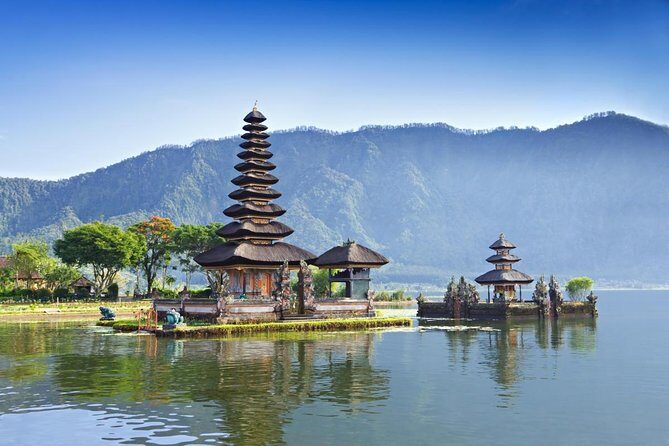
How far in advance should I book?

On average, it’s booked 6 days in advance.

Bali Rafting : Bali Family Rafting in Ubud and Ubud Private Tour

Bali Rafting : Bali Family Rafting in Ubud and Ubud Private Tour - Pickup in Ubud: private car comfort and guided orientation

Rainforest rafting, then rice terraces.

This private Bali day mixes Ayung Dewata Rafting in Ubud with Ubud’s most common wow-stops: Sacred Monkey Forest, Tegalalang rice terraces, and Tegenungan Waterfall. It’s built around expert-led rafting so you can focus on the fun, not the logistics, while your Balinese local guide helps you make sense of what you’re seeing.

I like the way the tour covers the whole day with private pickup and drop-off, so you’re not bouncing between transfers or tracking down meeting points. I also appreciate that lunch, bottled water, and rafting equipment are included, which makes the $30-per-person price feel more realistic. The main thing to watch is that entrance tickets for Monkey Forest and Tegenungan aren’t included, so you’ll want to budget a bit more for those stops.

Key highlights worth caring about

Bali Rafting : Bali Family Rafting in Ubud and Ubud Private Tour - Key highlights worth caring about

  • Private car time in Ubud so you get guidance as you move between sights
  • Ayung Dewata Rafting gear included so you don’t hunt for rentals
  • Sacred Monkey Forest in a set window with around 700 long-tailed macaques in the sanctuary
  • Tegalalang rice terrace trekking on a small route with a guide nearby
  • Tegenungan Waterfall is easy to access compared with other options
  • Comfort extras like WiFi on board and bottled water during the day

How this Ubud day really flows (rafting + 3 iconic stops)

Bali Rafting : Bali Family Rafting in Ubud and Ubud Private Tour - How this Ubud day really flows (rafting + 3 iconic stops)
This tour is designed as a full Ubud loop with a big activity in the middle: rafting, followed by three classic add-ons. The stops are timed (about 30 minutes each for the sightseeing portions), so you get movement without spending the whole day staring at your phone map app. If you like a plan that keeps momentum, this setup works.

That said, the structure also means you won’t linger forever at each photo stop. You’ll likely get enough time to enjoy the view and walk a bit, but you should come with the mindset of quick highlights rather than slow wandering. In Bali, that trade-off can be a good one, especially in Ubud where roads take time.

Pickup in Ubud: private car comfort and guided orientation

Bali Rafting : Bali Family Rafting in Ubud and Ubud Private Tour - Pickup in Ubud: private car comfort and guided orientation
The best part of booking this as a private tour is the transport. You’re picked up from your hotel, villa, or accommodation, and you don’t have to figure out how to get between rafting and sightseeing on your own. That matters in Ubud because traffic and short distances can still add up.

Your driver/guide also gives you advice for places in Ubud as you go. Even if you already have a list, this helps you spot what’s worth your energy today rather than tomorrow. One name to remember: some bookings are paired with a private driver named Agus, and that local style is often mentioned as part of the good vibe of the day.

At the end, the tour activity ends back at the meeting point. The tour description also notes that after the experience, the group can be dropped at some included areas (example given includes Kuta), depending on how your pickup/drop is arranged. Practically, that means you can treat this as your main Ubud activity day and then roll into beach time if your schedule allows.

Ayung Dewata Rafting: what’s included and what to expect

Rafting is the anchor here, and it’s set up with a safety-first approach. The tour highlights professional experts guiding you for a safe and thrilling experience, and you’re provided rafting gear as part of the package. For most people, that reduces a lot of pre-rafting stress: you show up, you get equipped, and you go.

You’ll meet at Ayung Dewata Rafting at Jl. Raya Kedewatan, tanggayuda, Kecamatan Ubud, Kabupaten Gianyar, Bali 80571. Even if you get pickup, it’s useful to know the exact rafting base so there’s no confusion if you need to confirm where you’re going.

Also included: bottled water, lunch, and parking fees. That’s not just convenience; it helps keep the day from turning into a “nickel-and-dime” situation right when you’re hungry or ready to relax. WiFi on board is included too, which is handy if you want to keep your plans lined up for the rest of your trip.

A realistic expectation: you’ll be outdoors, and rafting means you should assume you’ll get wet at some point. Bring or plan for quick-dry clothes changes, and consider simple items like waterproof phone protection and sandals you don’t mind getting splashed.

Stop 1: Ubud orientation from the car (short time, useful guidance)

Bali Rafting : Bali Family Rafting in Ubud and Ubud Private Tour - Stop 1: Ubud orientation from the car (short time, useful guidance)
The first sightseeing element is more of an orientation. You’ll see the Ubud area from the private car, and your guide gives advice for places in Ubud. It’s a smart early move because it sets context for what you’ll see later that day.

This is the kind of stop that works well even if you’ve been in Ubud before. You get an extra layer of local perspective without paying extra entry fees, since this part is listed as having free admission ticket.

Practically, keep your questions handy in the car. Ask what areas are best at what time of day, where it’s easiest to park or walk, and which sights are worth a return visit. A good guide can save you hours over the rest of your trip.

Stop 2: Sacred Monkey Forest Sanctuary in a tight 30 minutes

Bali Rafting : Bali Family Rafting in Ubud and Ubud Private Tour - Stop 2: Sacred Monkey Forest Sanctuary in a tight 30 minutes
Sacred Monkey Forest Sanctuary is the “people either love it or feel stressed by it” stop. Here, you’re looking for around 700 Balinese long-tailed macaques living in the sanctuary’s 12.5 hectares. The tour gives you about 30 minutes on site, which is enough time to walk the main paths, spot monkeys, and enjoy the atmosphere without turning it into an all-day commitment.

Entrance for this stop is not included, so you’ll pay separately. That’s a common pattern in Bali: the tour handles the experience and transport, while certain temples and sanctuaries require your own ticket.

My practical advice: treat it like wildlife, not a zoo. Keep your hands to yourself, avoid sudden moves, and be careful with bags and anything that looks like food. If you want great photos, plan for quick shots and don’t block your own path. The best monkey encounters usually happen when you slow down and watch rather than chase.

Stop 3: Tegalalang rice terraces trekking (quick route, big payoff)

Bali Rafting : Bali Family Rafting in Ubud and Ubud Private Tour - Stop 3: Tegalalang rice terraces trekking (quick route, big payoff)
Next up is Tegalalang rice terraces, one of the most photographed areas around Ubud. You’ll do trekking on a small route in the terraces with your guide nearby. The tour marks it as free admission ticket, and it’s another about-30-minute stop.

The value here is that you get walking time plus guidance, so you’re not just standing in one place waiting for the perfect angle. Rice terrace viewing is one of those Bali experiences where timing matters. Morning or later in the day can change how the light hits the slopes, and a guide can help you choose a good spot to pause.

A small drawback: because the stop is brief, you won’t be doing long hikes into the area. If you want a deep hike through multiple terrace viewpoints, you may need a separate longer trek. But for most people, this quick route is the sweet spot: enough movement, enough views, and back on track.

Stop 4: Tegenungan Waterfall on the Petanu River (easy access matters)

Bali Rafting : Bali Family Rafting in Ubud and Ubud Private Tour - Stop 4: Tegenungan Waterfall on the Petanu River (easy access matters)
The final sightseeing stop is Tegenungan Waterfall, described as popular because it’s easy to access and offers strong views of the Petanu River area. Entrance ticket for this stop is not included, and you’ll have about 30 minutes.

I like this stop because it tends to be straightforward. Not every waterfall in Bali is easy to reach, and the tour specifically positions Tegenungan as a practical choice compared to other options. If you’re short on time, that’s a real benefit.

What to expect: it’s a classic waterfall viewing experience with lots of photo angles. Plan for slippery surfaces near the water and moisture in the air. If you’re doing this after rafting (when you may already be a bit damp), pack a towel or quick-dry wrap if you have one.

One more practical note: waterfalls and terraces are both outdoors. The “easy access” part doesn’t eliminate heat or humidity, so bring sun protection and drink water whenever you can.

Price and value: why $30 feels fair here

Bali Rafting : Bali Family Rafting in Ubud and Ubud Private Tour - Price and value: why $30 feels fair here
At $30 per person, this tour is positioned as a budget-friendly way to stack a major activity (rafting) plus several Ubud highlights. The real value isn’t just the rafting cost. It’s what comes with it: lunch, bottled water, use of rafting equipment, air-conditioned vehicle, WiFi on board, parking fees, and fuel surcharge.

Also included: private transportation for your group. Even if you end up with only a small group, private transport in Ubud can be the difference between a smooth day and a day that feels like you’re constantly checking schedules.

What’s not included is equally important for your budget. You’ll cover alcoholic beverages, entrance tickets for stops other than rafting (Monkey Forest and Tegenungan), and a professional photoshot for rafting if you choose to add that later. If you’re someone who wants lots of action photos, factor in that extra cost—or plan to bring your own phone/camera setup that can handle splashes.

Comfort and small extras that actually help

This tour includes a few “small” items that add up during an 8-hour day. WiFi on board is listed, which is helpful if you’re coordinating the rest of your itinerary. Bottled water is included, and that’s not trivial in Bali heat.

The vehicle is air-conditioned, which I always recommend over open-air transport on long days. You’ll likely spend a few hours in transit and walking between short stops, so cool air in the car can feel like a reset button.

You also get the structure of a mobile ticket, and the tour notes confirmation is received at booking time. For many travelers, that reduces last-minute uncertainty.

Who should book Bali Family Rafting in Ubud, and who might not love it

This fits best if you want an all-in-one Ubud day without complicated planning. It’s also a good match for couples, small groups, and families who want rafting plus sightseeing, all under one booking.

The tour notes that most travelers can participate, which suggests it’s not limited to a narrow type of fitness level. Still, it’s an active day, so if you’re uncomfortable with getting wet, being outdoors, and doing short walks, you may want to pair it with more relaxed sightseeing instead.

If you want a slow, deep dive style of Ubud exploration, you might find the 30-minute stop windows feel short. But if you’d rather see the icons and then pick your favorites for a second visit later, this kind of day-trip format works well.

Should you book this private Ubud rafting day?

I’d book it if you want a simple, value-heavy day that combines professional-guided rafting with the Ubud sights people actually travel for: Monkey Forest, Tegalalang, and Tegenungan. The inclusion list is strong for the price, especially lunch and rafting equipment, and the private car means less hassle between stops.

I’d think twice if you hate extra entrance fees, because Monkey Forest and Tegenungan require separate tickets. Also consider your style: if you prefer lingering, this plan is more “hit the highlights” than “wander at your own pace.”

If your goal is one confident day in Ubud—rafting plus views without a bunch of separate bookings—this is a solid choice.

FAQ

How long is the Bali Family Rafting in Ubud tour?

The tour runs about 8 hours (approx.).

Do I get hotel pickup and drop-off?

Yes. Pickup is offered from your hotel, villa, or accommodation. The activity ends back at the meeting point.

Where does the rafting take place?

The meeting point for the activity is Ayung Dewata Rafting, located at Jl. Raya Kedewatan, tanggayuda, Kecamatan Ubud, Kabupaten Gianyar, Bali 80571, Indonesia.

What’s included in the price?

Included items are bottled water, lunch, use of rafting equipment, air-conditioned vehicle, WiFi on board, private transportation, fuel surcharge, and parking fees.

What is not included?

Not included: alcoholic beverages, entrance tickets other than rafting, and professional photoshot for rafting.

Are the Monkey Forest and Tegenungan tickets included?

No. Admission tickets for Sacred Monkey Forest Sanctuary and Tegenungan Waterfall are not included.

Is free cancellation available?

Yes. You can cancel up to 24 hours in advance for a full refund. Cancellation cut-off is based on local experience time.
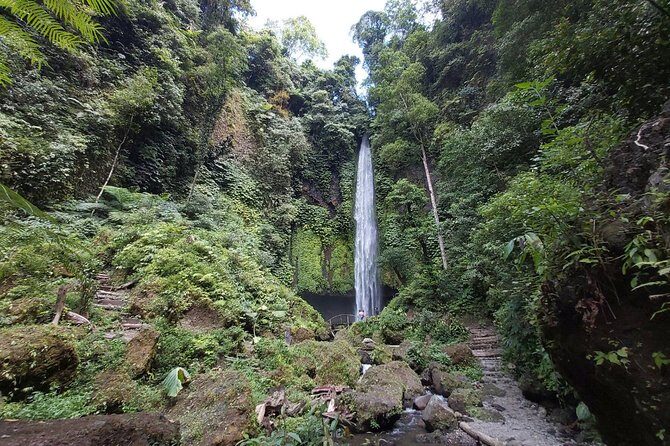
Ubud Full Day ATV Adventure with Rice Terrace and Temple Ritual

Ubud Full Day ATV Adventure with Rice Terrace and Temple Ritual - Tirta Empul Temple and the holy spring purification ritual

One of the best full-day mixes in Ubud.

This 8-hour plan strings together three very different sides of Bali—muddy ATV tracks, iconic Tegalalang rice terraces, and the sacred water-and-spiritual feel of Tirta Empul Temple. The day has built-in variety, so you’re not stuck sightseeing only, or getting adrenaline only. I also really like that it’s set up as a single flow: ride first, then slow down for rice fields, then finish with a ritual stop.

My favorite part was the way the ride and guidance kept things fun and manageable.

ATV time at KeepAll Bali Adventure comes with safety equipment and clear support from the crew, and the ride itself runs through rice fields, jungle areas, and muddy tracks. One consideration: the tour asks for strong physical fitness, so if you’re not comfortable with uneven ground and getting a little dirty, plan accordingly.

Key highlights worth your attention

Ubud Full Day ATV Adventure with Rice Terrace and Temple Ritual - Key highlights worth your attention

  • KeepAll Bali Adventure ATV ride (about 2 hours) through rice fields, jungle, and muddy trails
  • Tegalalang Rice Terrace visit (about 1 hour) plus context on the Subak irrigation system
  • Tirta Empul Temple (about 1 hour) to witness the holy spring purification ritual
  • Entrance fees, lunch, and bottled water included, so you can budget once
  • Private tour setup so only your group participates
  • Tirtha/Tirta-style hosting energy often comes up in feedback, with drivers described as polite and helpful

Starting at KeepAll Bali Adventure: ATV tracks, safety gear, and real work

Ubud Full Day ATV Adventure with Rice Terrace and Temple Ritual - Starting at KeepAll Bali Adventure: ATV tracks, safety gear, and real work
The day starts with the ATV portion, and it matters that it’s not just a short photo stop. Your time at KeepAll Bali Adventure is listed at about 2 hours, and you’ll be riding through rice fields, jungle areas, and muddy tracks. That combination is what makes it feel like an actual off-road experience instead of a quick amusement-park loop.

What you’ll appreciate right away is that the basics are handled for you. The tour includes ATV safety equipment, plus admission for the ATV stop. That means you’re not scrambling around once you arrive or paying extra just to get on the track. Also, the transportation is handled by an air-conditioned vehicle with private transport, so you’re not wrestling with scooters right away after a morning start.

The practical part: get mentally ready for mud and uneven terrain. Even if you’re not a hardcore rider, the goal here is motion—gravel, wet patches, and traction changes. If you’re the type who hates getting dirty, you’ll want to think about what you’ll wear and how you’ll handle wet gear. The tour also explicitly says travelers should have a strong physical fitness level, which makes sense for a ride that involves steering, balancing, and holding your posture through bumps.

And from what you’ll hear in feedback, the human support is a big deal. Guides and instructors are described as helpful and polite, and one driver named Tirtha/Tirta is singled out for being cooperative, experienced, and supportive during the trip. That kind of tone matters on an ATV day, because it’s easier to relax when someone has done it many times and communicates clearly.

Tegalalang Rice Terrace: where the views come with a farming lesson

After the adrenaline, the pace shifts. The Tegalalang Rice Terrace stop is listed at about 1 hour, and it’s the kind of place where your photos can’t fully capture how steep and layered the scenery feels. You’ll stroll through the fields and get a sense of why Tegalalang is one of Bali’s most iconic landscapes.

The useful detail here is not only seeing the greenery—it’s learning about how it works. The tour includes time to learn about the Subak irrigation system used by local farmers. You’ll walk away with a better understanding that these rice terraces aren’t just scenery; they’re tied to an ongoing community system for water management and cultivation.

One reason I like stopping at places like this on a guided day is the context. Without it, rice terraces are just postcard green. With the irrigation explanation, you start noticing patterns: the way water has to be routed, how farming depends on timing and shared effort, and why terrace shapes matter. Even if you only have an hour, the learning component helps the time feel earned.

There’s also a real-world timing advantage. One hour is long enough to walk, take pictures, and hear the basics, but short enough that you’re not burning the day on one viewpoint. After ATV and before Tirta Empul, it’s a good reset: your body calms down, and your eyes get a break from off-road dust and noise.

Tirta Empul Temple and the holy spring purification ritual

Ubud Full Day ATV Adventure with Rice Terrace and Temple Ritual - Tirta Empul Temple and the holy spring purification ritual
Then comes the spiritual stop: Tirta Empul Temple, listed for about 1 hour. This is known as a sacred water temple with a holy spring, and the tour gives you a chance to witness the purification ritual.

Here’s what makes this stop valuable even if you’re not the type to chase temple every day: it’s not just “look at a building.” Water temples in Bali are tied to belief and practice, and that gives you a different energy than a typical sightseeing visit. You’re seeing a ritual meant to bring people into a state of purification and respect.

Because the tour description focuses on witnessing rather than training you on the steps, you can approach it like this: show up ready to observe, be respectful, and follow any guidance you’re given on-site. If you’re hoping for a dramatic, action-packed finale, this part is calmer by design. It’s more about atmosphere and meaning than motion.

Also, this stop fits nicely after the rice terrace. You move from how people farm and manage water (Subak) into how water is treated as sacred and purifying (holy spring). That connection gives the day a subtle theme: water, place, and community.

The 8-hour timing: how to make the day feel easy

Ubud Full Day ATV Adventure with Rice Terrace and Temple Ritual - The 8-hour timing: how to make the day feel easy
The total duration is about 8 hours, and it’s broken down in a helpful way: 4 hours at the destinations and 4 hours in travel between locations. That ratio matters. It tells you this isn’t a “we’ll sprint you through everything” itinerary. You’re driving some distance in a day that includes three stops, and the schedule is built around that reality.

In Ubud traffic, that kind of pacing is usually the difference between a pleasant day and an exhausting one. Since you’re in an air-conditioned vehicle and it’s a private tour/activity (your group only), you avoid the constant stop-and-go feeling that comes with shared shuttles. You’re not waiting for other people to board, and you’re not guessing when your next stop is happening.

Timing also helps you plan your body. You start with the more physical ATV segment, then you move into a walk-and-views terrace stop, then you end with the calmer temple ritual. That order is smart: it saves the most intense physical piece for the earlier part of the day, when you’re fresher.

One more practical note: the tour includes bottled water and lunch at a local restaurant. You’ll be thankful for that mid-day break, because ATV + walking can put a surprising strain on energy levels, especially in Bali’s humidity.

Price and value: what $85 really buys you

Ubud Full Day ATV Adventure with Rice Terrace and Temple Ritual - Price and value: what $85 really buys you
At $85 per person, this tour isn’t just paying for access to one thing. You’re paying for a full day with multiple components, and the “included” list is where the value shows.

Included:

  • ATV safety equipment
  • Entrance fees to the listed attractions
  • Lunch at a local restaurant
  • Bottled water
  • Air-conditioned vehicle and private transportation
  • Pickup offered (when available for your area)

Not included:

  • Personal expenses

So what are you actually getting for your money? You’re paying to bundle together three separate experiences—ATV admission and gear, terrace entry, and temple entry—plus a driver and transport that links it all. If you tried to do it on your own, the hidden costs are usually time, logistics, and paying for each segment separately. Here, you get one price that covers the core pieces and keeps the day moving.

Also, group discounts are listed as an available option. If you’re traveling with friends or your party is big enough to qualify, that can improve the value even more. The tour also uses a mobile ticket, which is nice when you’re juggling phone-based travel plans.

What the guide experience feels like (and why it matters)

Ubud Full Day ATV Adventure with Rice Terrace and Temple Ritual - What the guide experience feels like (and why it matters)
Even with the right stops, the day can rise or fall on the people running it. In feedback, the service theme is consistent: polite, cooperative, and supportive help throughout the journey.

A guide/driver named Tirtha/Tirta shows up repeatedly in the descriptions. One review highlights that the driver was experienced and knowledgeable about the activities, and another focuses on how Tirtha went out of the way to help with arrangements and made the experience feel personal. You also see comments about the crew and instructors being helpful and polite, and about being supported during the ATV rides.

That matters because ATV days often put people in a “learn fast” mode. If the instructor explains clearly, supports your comfort level, and keeps you on track, you spend your energy riding instead of worrying. The best kind of guide is part teacher, part traffic controller, and part calm problem-solver.

Another practical benefit from feedback: you can end up getting suggestions for where to eat. Some comments mention that the driver took people to great places to eat. Since lunch is included, that helps ensure you’re not left choosing blindly when your schedule is already busy.

Who should book this ATV + rice terrace + Tirta Empul day?

Ubud Full Day ATV Adventure with Rice Terrace and Temple Ritual - Who should book this ATV + rice terrace + Tirta Empul day?
This is a strong fit if you want variety in one day and you like both motion and culture. You’ll probably enjoy it most if you:

  • want ATV fun without having to plan transportation and admissions
  • enjoy walking short stretches in scenic areas like Tegalalang
  • like Bali’s spiritual side and want to witness a purification ritual at Tirta Empul
  • travel in a group that benefits from a private tour setup

It may be less ideal if you’re not comfortable with physical effort. The tour states travelers should have a strong physical fitness level, and the ATV ride goes through muddy, uneven terrain. If you have mobility limitations or you know you won’t handle the physical aspect, you may want a calmer itinerary.

It also suits couples. The feedback you’ll find tends to mention couple-friendly value, and the private format helps you avoid the “everyone’s doing their own thing” feeling.

Should you book it? My honest take

Ubud Full Day ATV Adventure with Rice Terrace and Temple Ritual - Should you book it? My honest take
If you want one day in Ubud that covers adventure, iconic Bali nature, and a meaningful spiritual stop, this tour makes sense. The price is reasonable because it wraps in transport, admissions, lunch, and ATV safety gear—and you’re not forced to manage the logistics yourself.

The biggest reason to choose it is the structure. It’s paced for a full day: ATV first, then Tegalalang, then Tirta Empul, with about 4 hours of destination time and 4 hours of travel. That’s a realistic plan, not wishful thinking.

The biggest reason to hesitate is fitness and mess. Strong fitness is required, and the ride involves muddy tracks. If that sounds fun, you’ll likely have a great time. If you’re hoping for a clean, gentle day, you might prefer a different style of Ubud tour.

FAQ

FAQ

Is pickup included?

Pickup is offered, and the tour description also notes that you’ll travel in an air-conditioned vehicle with private transportation.

How long is the tour?

The total duration is listed as about 8 hours.

What time is spent at each main stop?

It’s laid out as about 2 hours at KeepAll Bali Adventure for the ATV ride, about 1 hour at Tegalalang Rice Terrace, and about 1 hour at Tirta Empul Temple. The rest of the time is used for travel between locations.

Do I need to pay entrance fees separately?

No. Entrance fees to all listed attractions are included.

Is lunch included?

Yes. Lunch is included at a local restaurant.

What’s included for the ATV experience?

You’ll get ATV safety equipment included, plus admission for the ATV stop.

What fitness level do I need?

The tour notes that travelers should have a strong physical fitness level.

What is the cancellation policy?

Free cancellation is available up to 24 hours in advance for a full refund.
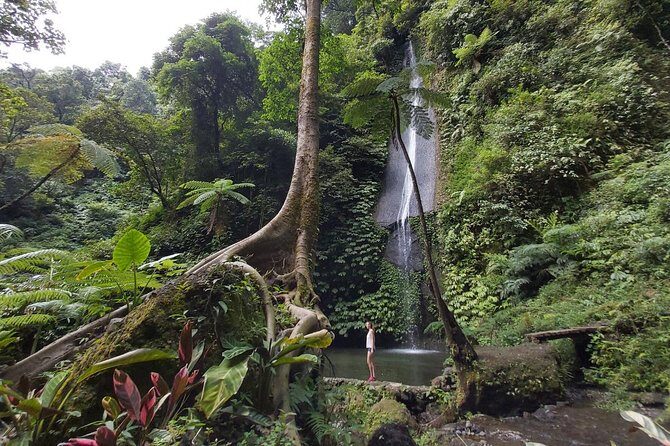
Bali Rainforest Hiking With Canoeing And Waterfall Adventure

Bali Rainforest Hiking With Canoeing And Waterfall Adventure - Rainforest hiking: what you gain beyond exercise

Four wild nature stops in one day. This rainforest hike in the Tamblingan area is built around big scenery: you start at Twin Lake View where you can see Tamblingan and Buyan lakes together, then the day rolls into trekking, canoe time, the Ulun Danu Tamblingan Temple, and a Banyumala waterfall choice.

I really like the way this tour treats the guide as the main event. Names like Dharma, Komang, and Eddy show up in real feedback for a reason: you get practical, on-the-ground explanations of Balinese culture and what you’re actually walking past. I also like the food rhythm, with Balinese coffee and snacks during the canoe transition plus a proper Balinese lunch after the water stop.

One thing to plan for: this is active. It’s a good match for moderate physical fitness, because there’s trekking on uneven ground and canoeing as part of the flow.

Key highlights you’ll feel fast

Bali Rainforest Hiking With Canoeing And Waterfall Adventure - Key highlights you’ll feel fast

  • Small group pace (max 15 travelers): less waiting, more time to ask questions and stop for photos.
  • Twin Lake View photo start: Tamblingan and Buyan lakes in one frame before you start walking.
  • Trek-to-canoe transition: after trekking, a canoe team picks you up with snacks and coffee.
  • Ulun Danu Tamblingan Temple viewpoint: a calm, scenic pause that breaks up the action.
  • Banyumala Waterfall choice: you can pick which waterfall you want to visit in the Banyumala/Banyuwana area.
  • Safety basics included: life jacket and a medical box are part of the package.

Twin Lake View to trekking: how the day sets the tone

Bali Rainforest Hiking With Canoeing And Waterfall Adventure - Twin Lake View to trekking: how the day sets the tone
The best tours don’t start with a lecture. They start with a view and a plan. Here, your day kicks off at the Twin Lake View area (Titik Pandang Danau Kembar Wanagiri, Sukasada, Pancasari Sukasada, Gobleg, Kec. Banjar, Kabupaten Buleleng, Bali 81118). If you’re coming from Ubud, you’ll likely appreciate the fact that the drive is handled for you with an air-conditioned vehicle and pickup availability.

Before you even put on your shoes, you get a quick briefing and a chance to take photos with Tamblingan Lake and Buyan Lake in the same sightline. That matters, because the rest of the day is a sequence of moving parts—trekking, canoeing, temples, waterfall time—so it helps to get your bearings early.

This is also one of those moments where the guide can shape the whole experience. When the day starts with a clear rundown of what you’ll do next, you tend to enjoy the actual activity more and stress less about timing. With a group capped at 15, it’s usually easier to keep that pace without herding people.

Rainforest hiking: what you gain beyond exercise

Bali Rainforest Hiking With Canoeing And Waterfall Adventure - Rainforest hiking: what you gain beyond exercise
The trekking part is the heart of the morning. You head from the meeting point down toward the trekking area, with your trekking guide accompanying you along the way. The focus is on seeing the rainforest up close, not just checking a box.

What you’ll get out of the hike is the slow attention. Guides like Dharma have a reputation for pointing out what’s around you and tying it back to Balinese life and local culture. That sort of narration changes a rainforest walk from scenery into understanding. You’ll also be moving through different types of vegetation, so it doesn’t feel like one long, identical stretch.

A practical note: trekking down can be harder on your knees than trekking up, especially if the ground is slick. The tour calls for moderate physical fitness, so you don’t need to be an athlete. But you should be comfortable with uneven footing and being on your feet for part of the route.

If you’re traveling with kids or teens, the bigger issue is not stamina alone. It’s how they handle steady walking on natural ground. Families can enjoy this day, but it’s still an active outing, so choose this only if everyone can manage the trek portion without constant stops.

The canoe pickup: why the snack and coffee moment is smart

Bali Rainforest Hiking With Canoeing And Waterfall Adventure - The canoe pickup: why the snack and coffee moment is smart
After the trek, the tour shifts gears. The canoe team picks you up, and there’s a pause built into the transition. You can enjoy traditional Balinese coffee and snacks while you reset before the next activity.

I like this structure because it keeps the day from feeling like a straight sprint. You’ve been walking in a humid, shaded environment, then you switch to canoe time. That “small break” can be the difference between a fun day and a day where everyone starts getting cranky.

Canoeing also changes your viewpoint. Instead of watching the jungle through leaves and ground-level angles, you get a smoother, water-based perspective. The tour includes a life jacket and a medical box, which is a reassuring safety baseline when you’re doing water activity as part of a larger day.

You should still dress like you’re heading into nature, not a show. Wear clothing that you don’t mind getting a little dusty, and bring layers if you tend to run cold. The tour includes bottled water, which helps a lot once you’re past the initial coffee-and-snack moment.

Ulun Danu Tamblingan Temple: a calm stop with real atmosphere

Bali Rainforest Hiking With Canoeing And Waterfall Adventure - Ulun Danu Tamblingan Temple: a calm stop with real atmosphere
Then you arrive at Ulun Danu Tamblingan Temple. This is one of those places where the day’s energy drops. Even if you’re not a temple expert, you’ll feel why it’s part of the route. It gives you a scenic reset before the final push toward the waterfall.

The tour gives you time to enjoy the view at the temple, not just a quick photo sprint. That matters because you’re coming from trekking and canoeing. A calm stop keeps the experience balanced, and it also lets you observe without rushing.

From a cultural perspective, the guides in this region tend to explain what you’re seeing in context. Feedback highlights guides such as Dharma for teaching Balinese culture and tradition in an approachable way. So this isn’t just a scenic detour—it’s usually where the day turns from physical adventure into cultural understanding.

Banyumala/Banyuwana waterfall choice: how to think about it

Bali Rainforest Hiking With Canoeing And Waterfall Adventure - Banyumala/Banyuwana waterfall choice: how to think about it
After the temple stop, you move to the Banyumala waterfall area. Here’s a nice detail: you have the option to choose the waterfall that you want to visit at Banyuwana Waterfall (spelling varies in descriptions, but it’s the same Banyumala/Banyuwana region).

That choice can be useful in real life. Different waterfalls can match different comfort levels with walking, stairs, spray, and time at the site. If one option looks too intense for your group, you can often pick another. The tour stays flexible enough to support that.

What I like is that the day doesn’t force one single waterfall as a hard requirement. It gives you a little agency. Also, because the tour is structured in a loop from lakes to temple to water, the waterfall stop feels like a payoff instead of a random last-minute add-on.

The day ends with a rest and lunch after the water activity, so you’re not just racing to the waterfall and then leaving immediately. You can take photos, linger, and settle back into the calm side of the day.

Lunch after the action: where the value really shows

Bali Rainforest Hiking With Canoeing And Waterfall Adventure - Lunch after the action: where the value really shows
Lunch is included, and it’s described as an authentic Balinese lunch. The tour also says they can accommodate dietary restrictions like vegetarian, vegan, and gluten-free. If you have specific needs, you’ll want to note them during booking so the kitchen can plan.

One thing I’d watch for is expectations. This is not a fancy, plated restaurant lunch where you’re guaranteed a long seated service. It’s more like a local meal as part of the tour rhythm. That can actually be a win. When food is chosen to match the setting, you tend to get something more real than a generic tourist buffet.

You’ll also have access to bottled water. Add in the coffee and snacks earlier, and the tour takes care of a big chunk of your day’s fuel.

If you’re someone who likes taking photos, you’ll probably enjoy the day’s timing. There are scenic moments before you start and again at the temple. Then lunch gives you a place to rest before heading back to the meeting point.

Price and value: $68 for a whole active day

Bali Rainforest Hiking With Canoeing And Waterfall Adventure - Price and value: $68 for a whole active day
At $68 for about 4.5 hours, this is priced like an activity package rather than a single attraction. What makes it feel like value is that you’re not paying only for a guide. You’re paying for the combined day: air-conditioned transportation, trekking support, canoe activity with life jackets, and meals (coffee/snack plus lunch).

The included items list matters:

  • Air-conditioned vehicle
  • Life jacket and medical box
  • All fees and taxes
  • Traditional Balinese coffee and/or tea
  • Snacks
  • Bottled water
  • Lunch with dietary accommodations

And the only clear things not included are tipping and personal expenses. If you’re trying to keep your Bali spending under control, this kind of “food + gear + guided activity” bundle usually works better than buying everything separately.

Also, the group limit of 15 helps the experience stay manageable. Smaller groups can make a day like this feel less chaotic, even if you’re sharing the route with other people.

What to expect with timing and group energy

Bali Rainforest Hiking With Canoeing And Waterfall Adventure - What to expect with timing and group energy
Because the tour runs roughly 4 hours 30 minutes, you’re not in for an all-day slog. You should still expect a real outdoor schedule: walking, canoeing, temple time, then the waterfall stop and lunch.

The group energy can make or break a hike. Here, capped group size and guided pacing help. Pickup is offered, and the tour returns you back to the meeting point at the end, so you aren’t left figuring out transport once you’re tired.

One more practical point: the tour is near public transportation, and service animals are allowed. If you’re coordinating with a travel partner who uses mobility support or you’re traveling with a companion animal, that’s useful information to have ahead of time.

Who should book this tour (and who should consider a calmer option)

This is a good fit if you want a single day that includes nature, culture, and water without needing multiple bookings. It’s especially appealing if you like learning from guides who focus on how people live and why places matter.

It’s also a decent choice for families with children if they can handle moderate trekking. One useful clue from feedback: a group with sons aged 14 and 15 had a positive experience with the trekking, canoeing, and lunch. That suggests the day can work for older kids who can manage outdoor time.

It may be less ideal if your idea of a vacation is mostly sitting and scenic overlooks. There’s active walking and canoeing here. If your fitness is low or you don’t enjoy uneven ground, you might feel more comfortable choosing a lighter tour and saving the rainforest hike for a day when you’re feeling fresh.

Final verdict: should you book Bali Rainforest Hiking with Canoeing and Waterfall?

If you want a day that feels like Bali beyond rice-field postcards, this hits a smart mix. The day starts with big lake views, then you get rainforest trekking with guide-led explanation, a canoe segment with Balinese coffee and snacks, a temple viewpoint at Ulun Danu Tamblingan Temple, and then a Banyumala waterfall stop with a choice built in. The included lunch and bottled water keep you going without extra stops.

Book this if:

  • You like active, guided nature time
  • You want temple context, not just photos
  • You value included meals and basic safety gear

Skip it (or consider something gentler) if:

  • You’re not comfortable with moderate trekking
  • You prefer minimal walking and no canoe component

Overall, this tour makes sense for people who want a packed but well-paced half-day—where food, scenery, and local storytelling are built into the schedule instead of added on at the end.

FAQ

Where does the tour start?

The tour starts at Titik Pandang Danau Kembar Wanagiri Sukasada Pancasari Sukasada, Gobleg, Kec. Banjar, Kabupaten Buleleng, Bali 81118, Indonesia.

How long is the Bali Rainforest Hiking With Canoeing And Waterfall Adventure tour?

It lasts about 4 hours 30 minutes (approx.).

What food and drinks are included?

You get traditional Balinese coffee and/or tea, snacks, bottled water, and an authentic Balinese lunch.

Can the lunch accommodate dietary restrictions?

Yes. The tour says they can accommodate dietary restrictions such as vegetarian, vegan, and gluten-free. You should indicate your needs at booking.

What fitness level do I need?

The tour is for travelers with a moderate physical fitness level.

Is free cancellation available?

Yes. Free cancellation is available up to 24 hours in advance for a full refund. Canceling less than 24 hours before the start time is not refunded.
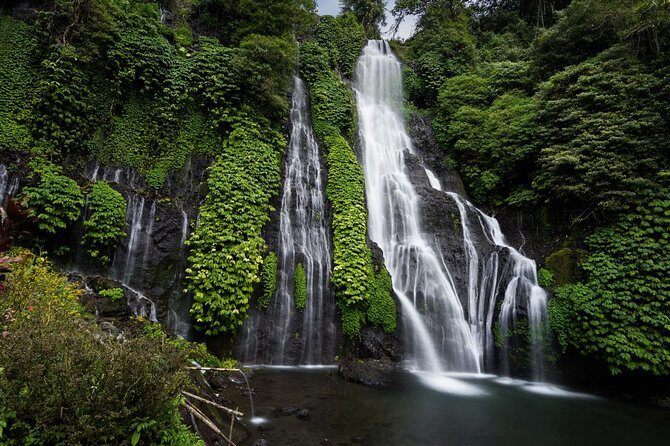
From Ubud 1 Hour Horse Riding at The Beach Experiences

From Ubud 1 Hour Horse Riding at The Beach Experiences - Key highlights you’ll actually care about

A sandy coastline plus a calm horse ride is a rare combo. This experience pairs an easy Ubud pickup with a one-hour horseback outing near Saba Beach, where you trot along the shoreline with ocean sound in the background and greenery framing the view. I especially like that it feels tailored to mixed riding levels, so a first-timer isn’t stuck feeling overwhelmed, and a more confident rider still gets a good time. I also like the practical touches: helmet provided, a safety briefing, and refreshment on arrival.

One consideration: the ride is only about an hour, so it’s best thought of as a taste of beach horseback rather than a full-day adventure. Also, it needs good weather to run.

What you’ll feel on this ride

From Ubud 1 Hour Horse Riding at The Beach Experiences - What you’ll feel on this ride
You’ll start with a scenic drive from Ubud to the beach area, then meet the guide team, get matched with a well-trained horse, and head out after a briefing. As you ride, guides keep things comfortable and informative—pointing out scenic spots and sharing area tidbits—while also steering you to match your comfort level. You might even spot local activity like fishermen casting nets, plus small bits of wildlife along the coast.

By the time you’re back, you’ll feel the “fresh air reset” that comes from being outside for a short, focused session—plus you’ll likely have a few photo-and-video moments to remember it.

Quick reality check before you go

From Ubud 1 Hour Horse Riding at The Beach Experiences - Quick reality check before you go
There’s a hard cap of 90 kg for participation, and you should have at least moderate physical fitness to mount, ride, and stay balanced comfortably. Wear clothes that can handle sand and sun, and if you’re sensitive to heat, plan to protect yourself—this is a beach ride with open skies.

Key highlights you’ll actually care about

From Ubud 1 Hour Horse Riding at The Beach Experiences - Key highlights you’ll actually care about

  • Private pickup and return in Ubud makes the whole thing feel low-effort and vacation-friendly.
  • Saba Beach coastline route gives you water views and sea-breeze vibes during the full hour.
  • Guides match your level so novices and experienced riders in the same group aren’t left behind.
  • Helmet + safety briefing means you’re not guessing once you arrive.
  • Refreshments on-site keep the experience comfortable, not just “sit on a horse and go.”
  • 90 kg weight limit is strict, so check early if you’re close to the cutoff.

How this Ubud-to-Saba Beach setup saves your vacation time

Ubud is great, but it can also be a timing trap. Here, the biggest value is that you don’t need to figure out transport or squeeze in extra planning. Pickup and return are included, and that matters because you’re paying not only for the ride, but for the convenience of getting you from your accommodation to the sand with minimal stress.

Once you’re at the beach, the pace stays focused. You’re not spending half the time waiting around or coordinating details. Instead, you arrive, get greeted, get geared up (helmet), and then you’re paired with a horse and sent out. For many people, that’s the difference between a “good activity” and a smooth, memorable outing.

If you’re short on time in Ubud, or you want something active without turning the day into a logistics marathon, this format fits nicely.

The beach arrival: what happens after you get picked up

From Ubud 1 Hour Horse Riding at The Beach Experiences - The beach arrival: what happens after you get picked up
Your day starts with pickup in Ubud, then a drive through Bali scenery before you reach the beach area near Saba Beach. I like this sequence because it gives you a shift in scenery without demanding your attention the whole time.

When you arrive, the guide team meets you and handles the early steps:

  • a safety briefing
  • helmet distribution
  • pairing you with a suitable horse

That matters for comfort. Horse riding can feel intimidating at first, even when the horse is calm. Having the briefing and gear squared away before you mount helps you get your bearings fast.

Also, this is where the experience gets more “tour” than “random ride.” You’re welcomed and offered refreshments—plus you can expect photo-and-video time while you’re riding. That’s a big deal if you’re traveling with people who want proof you actually did it.

Safety and comfort: helmet, briefing, and matching your horse

From Ubud 1 Hour Horse Riding at The Beach Experiences - Safety and comfort: helmet, briefing, and matching your horse
This isn’t a “wing it” ride. You’ll receive a safety briefing, and you’re provided with a helmet. That’s the baseline for a confident experience, especially if you’re new.

The other key comfort factor is the horse matching. You’ll be paired with a well-trained horse, and the guides adjust the ride to your level. The practical result: the experience works even for groups with mixed comfort—like if one person rides regularly while others are first-timers. Instead of everyone doing the same thing at the same pace, the guides help keep riders in their comfort zone.

For you, that translates into a smoother ride:

  • You’re less likely to feel pressured to keep up.
  • You’re more likely to feel stable.
  • You’ll spend your energy looking at the coast instead of worrying about technique.

A small but important tip: if you’re a first-timer, ask the guide to explain what they want you to do with your hands and posture. Even if you only get a quick refresher, it helps you relax once you’re moving.

The 1-hour beach ride: what the time feels like

From Ubud 1 Hour Horse Riding at The Beach Experiences - The 1-hour beach ride: what the time feels like
The ride itself is about one hour. That duration is smart. Long enough to enjoy the rhythm of the horse and take in the shoreline, short enough that you don’t feel physically drained—especially with a guided route.

As you move out onto the sandy coastline, you’ll feel the sea breeze and hear the waves. That sensory combo is exactly why beach horseback works so well: you’re not trapped in one view. You’re traveling along the shore, getting ocean views while the greenery and beach activity come into frame.

Your guide may point out scenic spots and share tidbits about the area. And because it’s a real coastal environment, you might spot everyday scenes like fishermen casting nets or local wildlife near the beach.

A note on expectations: this isn’t about speed or stunts. It’s more about the experience—being on horseback with the ocean right there.

Stop at Saba Beach: why this location matters

From Ubud 1 Hour Horse Riding at The Beach Experiences - Stop at Saba Beach: why this location matters
The route is centered around Saba Beach. That specific detail matters because beach rides vary a lot. Some routes are more like short loops; others give you an extended stretch with actual water views.

Here, the emphasis is on the coastline. You’re riding alongside the sandy shore with ocean views throughout the hour, plus lush greenery around the beach area. For most people, that makes the ride feel like it’s in its own world—less like a chore, more like a reset.

If you’re someone who loves ocean scenes but doesn’t want to spend the whole day at the beach, this is a nice hybrid. You get the sea, movement, and a bit of local coastal life in one controlled hour.

Mixed abilities in the same group: the practical way they handle it

From Ubud 1 Hour Horse Riding at The Beach Experiences - Mixed abilities in the same group: the practical way they handle it
One of the strongest reasons this ride earns top marks is how it handles different rider comfort levels. This isn’t a one-size-fits-all setup. The stable/team approach is built around making the experience work for a group where riders may be at very different points—someone very experienced, and others who are brand new.

Why that matters: if you’ve ever watched a “beginner-friendly” activity fail, you know what goes wrong. The beginner gets dragged along, or the group pace becomes stressful, or people feel embarrassed about needing extra help.

In this setup, guides help create confidence by matching horses and guiding riders appropriately. You’ll feel like you’re included, not sorted into a separate experience.

If you’re traveling with friends or family and not everyone rides, this is a good choice.

Photos and videos: small detail, big memory value

A lot of people do horseback riding once and then wish they had stronger photos afterward. Here, you can expect lots of pictures and videos while you’re riding. That adds real value, especially if you’re traveling as a couple or in a group that wants a “proof-of-experience” set of memories.

It also changes how you experience the ride. Instead of you thinking only about where your feet are, you can look up at the coastline and enjoy the moment, knowing someone is capturing it.

If you’re the person who normally ends up behind the camera, this is an underrated perk.

Price and value: is $54.76 fair for what you get?

At $54.76 per person, this doesn’t feel like a bargain activity—but it also doesn’t feel overpriced once you look at what’s included.

Here’s what you’re getting in the price:

  • one hour of horseback riding
  • a helmet
  • refreshments and a cold drink
  • private pickup and return in Ubud
  • a guided experience with safety briefing and horse pairing
  • the nature of this being private for your group

When you break it down, the pickup and return alone can be a big chunk of what you’d otherwise spend on transport. Add a guided setup, and you’re not just paying for mounting a horse—you’re paying for time, coordination, and comfort.

Is it worth it for everyone? Not if you want a long horseback day or you’re chasing an adrenaline-packed ride. But if you want a guided, comfortable introduction to beach riding near Ubud, it’s solid value.

What to wear and bring for a sandy, sunny ride

You’re on a beach, and you’ll likely get some sand. Keep your outfit simple and practical.

I’d bring or wear:

  • breathable clothes that can get sandy
  • sun protection (hat/sunscreen), since you’ll be outside
  • secure footwear you don’t mind filling with a little sand

If you’re near the 90 kg weight limit, double-check before booking. It’s a hard requirement, and it’s better to confirm early than arrive worried.

Also, have realistic expectations about the physical part. Moderate fitness is requested. That doesn’t mean you need to be an athlete—it just means you should be comfortable with mounting and staying balanced while riding.

Weather can make or break the plan

This experience depends on good weather. If conditions are poor, you’ll be offered a different date or a full refund. That’s exactly how it should be for an outdoor horseback activity.

Practical advice: if your Bali schedule is tight and you’re booking this near the edge of rainy season, you’re taking a calculated risk. Still, the contingency helps, and the activity’s focus on the beach means weather isn’t a minor detail.

So, should you book this Ubud beach horse ride?

I’d book this if:

  • you want a guided horseback experience close to Ubud
  • you like the idea of Saba Beach with ocean views rather than an indoor or short loop ride
  • you’re traveling with mixed riding levels (novices and experienced folks)
  • you want pickup and return included so you don’t spend your day sorting transport
  • you value safety basics like a helmet and briefing

I’d think twice if:

  • you want a full-day ride or lots of riding time beyond one hour
  • you’re close to the 90 kg limit
  • your schedule can’t flex at all if weather cancels the activity

For many people, this hits a sweet spot: short, guided, scenic, and not too complicated.

FAQ

How long is the horse riding experience?

It’s approximately 1 hour of horseback riding.

Is pickup included from Ubud?

Yes. Private pickup and return are included.

Is this a private tour or a group tour?

This is private for your group only.

What’s included with the booking price?

The package includes 1 hour horse riding, a helmet, a cold drink, refreshments, and private pickup and return.

Is a helmet provided?

Yes, a helmet is included.

What is the maximum weight to participate?

The maximum weight is 90 kg.

Where does the ride take place?

The ride includes Saba Beach.

What happens if the weather is bad?

If it’s canceled due to poor weather, you’ll be offered a different date or a full refund.

Can I cancel for free?

Yes. You can cancel up to 24 hours in advance for a full refund.
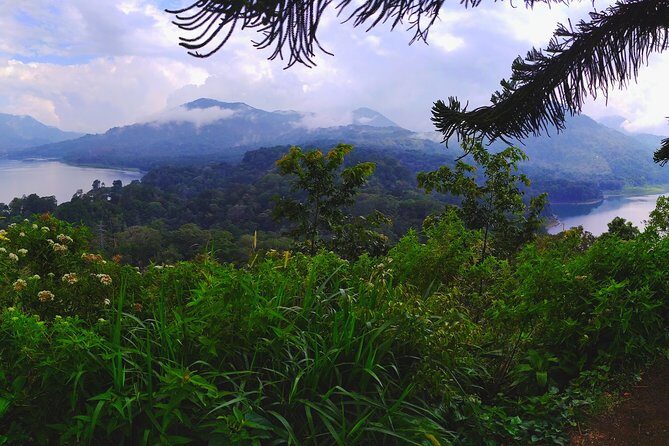
If you want, tell me your travel dates and whether your group includes first-timers—I can help you sanity-check timing and what to prioritize before you go.

Ubud Highlights Tour ( Private All-Inclusive )

Ubud Highlights Tour ( Private All-Inclusive ) - First Stop: Tohpati Village for Batik Craft

A good plan beats wandering Ubud blind. This private all-inclusive-style day (pickup, guide, and air-conditioned car) lines up the places that make Ubud tick: art villages with crafts you can actually see, plus Sacred Monkey Forest and a temple stop that feels very Balinese.

I like that it’s built around specific maker areas—Tohpati for batik, Celuk for gold and silver, Mas for wood carving, and Batuan for painting—so you’re not just sightseeing, you’re watching skill in action. I also appreciate that you get a mix of royal-era culture and everyday life, with a stop at Puri Saren Palace and a look at a traditional Balinese residence compound in Batuan. One thing to consider: the Monkey Forest entrance fee isn’t included (it’s listed separately as $10 per person), so your final cost may be a bit higher than the base price.

Key Points Before You Go

Ubud Highlights Tour ( Private All-Inclusive ) - Key Points Before You Go

  • Private guide and private vehicle keeps the day efficient, with no waiting around for other groups
  • Art village route hits batik, gold/silver work, wood carving, and painting in one sweep
  • Royal and temple stops include Puri Saren Palace and a visit to sacred water at Tirta Empul
  • Monkey Forest requires a separate ticket ($10 per person) and you’ll want cash or card handy
  • Hotel pickup and drop-off makes timing easy, especially if you’re not staying near central Ubud

Why This Ubud Highlights Tour Works So Well

Ubud Highlights Tour ( Private All-Inclusive ) - Why This Ubud Highlights Tour Works So Well
Ubud can be a lot of fun, but it’s also easy to lose time. Streets get crowded, distances add up, and the “must-sees” can turn into a scatter of half-finished visits. This tour is structured so you get a clear loop: art areas first, then central Ubud for palace and temple culture, and finally the Monkey Forest moment.

What makes it feel practical is the private setup. You get pickup and drop-off by car with a guide, so you’re not trying to map buses, shared vans, and timing that changes by the hour. The 5 to 7 hour length also fits real life: you get enough time to see several core sights without burning the whole day.

First Stop: Tohpati Village for Batik Craft

Ubud Highlights Tour ( Private All-Inclusive ) - First Stop: Tohpati Village for Batik Craft
You start with Tohpati Village, the area known for batik. Your time here is listed at about 40 minutes, and you’ll have a free admission ticket for this stop.

What I like about starting in a maker zone is the momentum it gives. Batik isn’t just a souvenir idea—it’s a craft process that connects to daily life and local identity. Even in a short visit, you can get a sense of why Ubud became a magnet for arts and artisans in the first place.

If you tend to buy small things, this is one of the better times in the day to do it. Shops tend to look extra tempting after you’ve already done a few stops, so going early helps you make clearer choices.

Celuk, Mas, and Batuan: Gold, Silver, Wood, and Paint

Ubud Highlights Tour ( Private All-Inclusive ) - Celuk, Mas, and Batuan: Gold, Silver, Wood, and Paint
After Tohpati, the tour shifts into the cluster of art villages around Ubud. Celuk is known for gold and silver, Mas for wood carving, and Batuan for painting. The schedule groups these into roughly 30 minutes, with admission listed as free for this section.

This is the part of the day where you’ll notice how different the “same town” vibe really is. One village is about metalwork, another leans into carving, and another is visual arts—so your eye changes from one stop to the next. It’s a quick way to understand what people mean when they say Ubud is an arts hub.

A small practical note: 30 minutes can feel short if you like to browse slowly. If you’re the kind of person who could spend an hour watching craftsmanship, plan to focus more on “what do I want to learn/see” than on perfect souvenir shopping here.

Ubud Palace (Puri Saren Palace): Royal Power in Everyday Form

Ubud Highlights Tour ( Private All-Inclusive ) - Ubud Palace (Puri Saren Palace): Royal Power in Everyday Form
The next cultural landmark is Ubud Palace, also tied to Puri Saren Palace, where the royal family of Ubud lives. The stop is about 30 minutes with admission listed as free.

Even if you don’t know the details of Balinese royalty, the place helps you understand scale and role. Palaces here aren’t just big buildings; they reflect a system of households and ceremonial space. Seeing it with a guide also helps you interpret what you’re looking at, instead of guessing.

I like that this isn’t a “stand and take photos” stop only. With a guide in the car and on the ground, you can ask straightforward questions like what’s public vs. private space, and what certain decorative features are meant to communicate.

Seeing Traditional Balinese Living in Batuan

Ubud Highlights Tour ( Private All-Inclusive ) - Seeing Traditional Balinese Living in Batuan
One of the standout moments in this tour is the Batuan visit beyond art. In Batuan, you’re also given a chance to see a traditional Balinese house compound, the kind of place where families live on the island. This adds a layer that makes the art villages feel more grounded.

It’s easy for tours to treat culture like scenery. This one at least tries to show the link between craft and daily routine—what a household looks like, how space is organized, and how people structure their day.

If you prefer respectful cultural observation over heavy temple time, this is a good balance point. Just remember you’ll likely be moving through areas that are still functional family spaces, so keep your behavior calm and follow your guide’s directions.

Desa Batuan Temple: Ornamented Architecture Up Close

Ubud Highlights Tour ( Private All-Inclusive ) - Desa Batuan Temple: Ornamented Architecture Up Close
From Batuan, the route continues to Desa Batuan Temple. You can admire Balinese ornamentation on the entrance gate and inside the structure, which is exactly the kind of detail most quick tours skip.

This stop matters because it trains your attention. Once you notice gate carvings and the way decoration is used, the rest of Ubud feels more readable. You start seeing patterns instead of just buildings.

The downside? You don’t get a long time here, so if you’re the type who loves slow photography and sketching, you might want to pause briefly and then keep moving.

Sacred Water at Tirta Empul Temple

Ubud Highlights Tour ( Private All-Inclusive ) - Sacred Water at Tirta Empul Temple
The itinerary includes Tirta Empul Temple, also called the Spring Holy Temple, in Manukaya. You’ll have about 45 minutes here, and the entrance fee is listed as included.

This is one of those places where “what you see” and “what people do” are part of the same story. The sacred waters at Tirta Empul are a water source in the temple complex where Balinese people go to bathe in sacred waters. Even if you don’t participate, watching the flow of devotion helps the site feel alive rather than staged.

Practical tip: wear clothing that works for temple visits and be prepared for the fact that water-related rituals happen there. Your guide can help you figure out what’s appropriate and what you should avoid.

Central Ubud: Monkey Forest and Palace Area Timing

Ubud Highlights Tour ( Private All-Inclusive ) - Central Ubud: Monkey Forest and Palace Area Timing
After Tirta Empul, the tour drives about 15 minutes to central Ubud for the Sacred Monkey Forest Sanctuary and Puri Saren Palace area. This is where you’ll see the monkeys that everyone comes for.

Important note: Monkey Forest entrance isn’t included, and it’s listed as $10 per person. Your guide should help you plan the timing, but you’ll want to budget for it.

This stop can be a lot of fun if you respect the space. The sanctuary is not a theme park; it’s a habitat with human visitors. Keep an eye on your belongings, follow the rules in the area, and expect that monkeys are curious in a very direct way.

Optional Browsing at an Ubud Art Market

If you want it, you can browse gifts and souvenirs at an Ubud art market after the central stops. It’s not mandatory, and that flexibility is good. Sometimes markets can feel touristy; sometimes they’re where you find a small craft you actually like.

This is a good time to compare with what you saw earlier. If you remember what you liked at Tohpati, Celuk, Mas, or Batuan, you’ll be able to judge whether the market items match the quality you expected.

How the Private Car Changes Your Day

A private vehicle with an air-conditioned ride is a real value item in Ubud. Not because you’re being fancy, but because it helps you manage the day in a smart way. You can keep your energy up, get from villages to temples without stress, and still land at the Monkey Forest when it’s time.

The tour is listed as approximately 5 to 7 hours. Start time is 9:00 am, so you’re not stuck with a late-day schedule that can cut your time short if traffic shifts.

Also: you travel with a guide, and your guide is part of what makes the itinerary readable. You’re not just handed locations; you’re given context that helps you notice what matters.

Price and Value: What $65 Covers (and What Doesn’t)

The price is $65.00 per person. For that you get the core structure: private driver/guide, hotel pick up and drop off, and private transport in an air-conditioned vehicle.

The missing pieces to understand up front:

  • Meals and drinks are not included.
  • Souvenirs are not included (but you can buy them).
  • Monkey Forest entrance is not included and costs $10 per person.

On balance, this is strong value if you want a curated route without paying separate transport and without figuring out each stop’s timing on your own. If you’re already planning to pay for Monkey Forest anyway, the “extra” is pretty clear and easy to plan around.

Who This Tour Fits Best

This works especially well if you want:

  • A private day with minimal logistical stress
  • A tour that connects Ubud’s arts scene to places like temples and a palace area
  • A good first Ubud day, when you want to see a wide range without returning to the same neighborhood repeatedly

It may be less ideal if you want long, slow museum-style time at a single location. The schedule moves through multiple stops, so you’ll be best served by deciding what you want from the day: craft inspiration, cultural context, and a Monkey Forest visit.

Practical Tips to Make the Most of Your Stops

Keep your expectations realistic: some stops are around 30 minutes or so, and others stretch a bit longer. If you’re serious about buying, bring a list of what you want before you get distracted by display after display.

For temples: dress respectfully and follow your guide’s direction. For Monkey Forest: keep your attention on belongings, and be ready for monkeys to show interest in normal human snacks and items.

If you’re carrying sunscreen and water, don’t assume you can buy everything at every stop. This tour doesn’t include meals or drinks, so plan to grab water before you start and budget for a drink break somewhere along the way.

Should You Book This Private Ubud Highlights Tour?

If you want a first-rate overview that doesn’t feel like a rushed checklist, I’d say book it. The route is thoughtfully varied—art villages for hands-on craft, palace culture for royal context, and Tirta Empul for sacred water—and it’s all handled with hotel pickup and private transport.

I’d also book it if you like the idea of an art-focused Ubud day but don’t want to manage driving, finding parking, and timing on your own. The only reason to hesitate is if you’re trying to keep costs super tight, since Monkey Forest has a separate $10 per-person ticket and meals aren’t included.

If you fall into that “I want the highlights, but I want it to make sense” group, this is a solid choice.

FAQ

What is the duration of the Ubud Highlights Tour (Private All-Inclusive)?

The tour runs about 5 to 7 hours.

What time does the tour start?

The start time is 9:00 am.

Is hotel pickup and drop-off included?

Yes. Hotel pick up and drop off are included.

Is this tour private?

Yes. It’s a private tour/activity with only your group participating.

What art villages are included in the itinerary?

You’ll visit Tohpati (batik), Celuk (gold and silver), Mas (wood carving), and Batuan (painting).

Which temple is included?

Tirta Empul Temple is included (Spring Holy Temple).

Is the Sacred Monkey Forest Sanctuary entrance fee included?

No. Monkey Forest entrance is not included, and the listed cost is $10 per person.

Are meals and drinks included?

No. Meals and drinks are not included.

Is there a ticket or mobile ticket?

Yes. The tour includes a mobile ticket.

What is the minimum number of people needed to book?

A minimum of 2 people per booking is required.

Experience ATV Ubud Gorilla Cave and Waterfall with Lunch

Mud, cave, and a waterfall in one ride. What makes this adventure fun is the mix: you ride through Payangan jungle and bamboo areas, take on real river and mud sections, then drive into Gorilla Cave before ending at a waterfall. I especially like the hands-on feel of the route, plus the included meal at Cretya Sunset so the day doesn’t end with you hunting for food.

One thing to plan for: the trail involves splashes, mud, and uneven ground, so you need moderate physical fitness and you should expect to get wet and dirty in a very satisfying, ATV-way.

Key things to know before you go

Experience ATV Ubud Gorilla Cave and Waterfall with Lunch - Key things to know before you go

  • Gorilla Cave drive: You ride through the cave, not just around it.
  • 8 km of mixed terrain: Jungle tracks plus river and mud sections.
  • Waterfall break: A refreshing stop and easy photo moment.
  • Lunch at Cretya Sunset: Included Indonesian food after the ride.
  • Small group size: Maximum 15 people keeps things from feeling rushed.
  • Safety gear and basics included: Briefing, equipment, towels, and lockers are part of the package.

Why Payangan’s Jungle ATV Feels Like More Than a Quick Thrill

Experience ATV Ubud Gorilla Cave and Waterfall with Lunch - Why Payangan’s Jungle ATV Feels Like More Than a Quick Thrill
Ubud-area tours often go big on scenery and light on motion. This one is the opposite. You spend your time on an ATV tackling a designed course, and the scenery keeps changing as you move from forest paths to more challenging wet sections. It’s a great way to experience Bali’s natural texture, not just its views from a roadside pull-off.

I also like the way the tour is built for mixed experience levels. There’s a shuttle from Payangan to the ATV start area, then you begin with a briefing and training tracks before you go deeper into the route. That matters if you’re a total beginner, because it helps you build basic control before things get muddy.

At $35 per person for about 1 hour 30 minutes total, the value is strongest when you want one package that includes riding, stops, and food. You’re not piecing together separate transport plus separate activities. And with a 5.0 average rating from 9 reviews, this is one of those deals that people seem to feel good about.

Entering Gorilla Cave: The Moment You’ll Remember

Experience ATV Ubud Gorilla Cave and Waterfall with Lunch - Entering Gorilla Cave: The Moment You’ll Remember
The star feature is the Gorilla Cave portion. Driving through a cave on an ATV feels unusual because it changes how you read the path. Outside, you can focus on light, trees, and the route ahead. Inside, everything gets dimmer and the terrain becomes the focus. It turns the adventure into something more memorable than a scenic ride that just happens to pass a landmark.

The course is designed to include bamboo forest and jungle sections before the cave, so you’re not thrown into the highlight immediately. That pacing helps the ride feel like a story: you warm up, you build confidence, then the cave shows up like a plot twist.

Practical takeaway: if you bring a phone, plan on securing it well. Your hands will be busy controlling the ATV, and you may get spray from earlier wet sections. It’s not a “keep everything clean” activity.

River and Mud Tracks: Where the Fun Gets Real

Experience ATV Ubud Gorilla Cave and Waterfall with Lunch - River and Mud Tracks: Where the Fun Gets Real
After the cave experience, the route shifts into river and mud tracks. This is the part that turns the ride from “exciting” into “I can’t believe this is happening.” You’ll hit uneven ground and watery stretches, and the ATV course is long enough—an 8 km track—that it doesn’t feel like a short loop.

This is also why you should bring the right expectations. Mud and water mean:

  • Your clothes will get messy
  • Your shoes/boots can end up heavier than when you started
  • You’ll want to avoid anything you can’t get dirty

The good news is that the package includes essentials like towels and access to lockers. That’s the kind of practical detail that makes the experience feel “put together,” not just wild.

The Waterfall Stop: Photos, Breathing Space, and a Quick Reset

Experience ATV Ubud Gorilla Cave and Waterfall with Lunch - The Waterfall Stop: Photos, Breathing Space, and a Quick Reset
Between the cave and the final stretch, you’ll make time for a waterfall stop. It functions as a reset after wet, bumpy terrain. In that moment, you get a chance to stand still, look around, and take photos without the constant motion of driving.

This stop also helps the day make sense. Without the waterfall, the ride would be a nonstop adrenaline session. With it, you get a balance: thrill, then a beautiful pause.

Tip: bring something quick-dry for the rest of the day after your ride. Even with towels, you’ll likely be damp around the edges.

ATVs, Safety Briefing, and What the “Beginner-Friendly” Means

Experience ATV Ubud Gorilla Cave and Waterfall with Lunch - ATVs, Safety Briefing, and What the “Beginner-Friendly” Means
This tour emphasizes safety, with a briefing before you head out and safety equipment included. They also provide training tracks at the start, which is a big clue about how they expect most people to ride.

“Beginner-friendly” here doesn’t mean easy terrain. It means you’re taught how to handle the ATV before reaching the more challenging parts like water and mud. That’s why the timing stays tight but not rushed: you get enough riding time—about 60 to 90 minutes on the track—while still getting guidance.

One more practical point: the ride is built for a range of riders, but you still need moderate fitness. Think: staying steady on a moving ATV, handling bumpy ground, and coping with getting wet. If you have mobility issues that affect your ability to sit and brace yourself, this might be more uncomfortable than it sounds on paper.

Lunch at Cretya Sunset: Why It’s Part of the Value

Experience ATV Ubud Gorilla Cave and Waterfall with Lunch - Lunch at Cretya Sunset: Why It’s Part of the Value
After the ride, you’ll eat at Cretya Sunset, with included Indonesian food. This matters because a lot of “adventure” tours tack on lunch that’s either too late, too small, or not worth the extra search time. Here, lunch is part of the package, so your day stays simple.

From a value perspective, this is one of the best parts: you’re paying for the whole arc. You ride through jungle, cave, and muddy tracks, then you’re fed without needing to negotiate a separate plan after you’re already tired and probably a little damp.

If you’re the type who likes straightforward local food after an active morning or afternoon, you’ll likely appreciate that the meal is designed as a proper finish rather than a token snack.

Getting There from Payangan: Simple Logistics That Don’t Waste Time

Experience ATV Ubud Gorilla Cave and Waterfall with Lunch - Getting There from Payangan: Simple Logistics That Don’t Waste Time
The experience starts in Payangan, Gianyar Regency, Bali, and ends back at the meeting point. Pickup is offered, and there’s also a shuttle from the registration area to the ATV start point.

This setup is useful because Bali traffic and short distances can still eat time. By bundling pickup and shuttling into the activity flow, you spend more time on the course and less time figuring out transport on your own.

Also note the tour uses a mobile ticket, and you’ll receive confirmation at booking time. That cuts down on last-minute back-and-forth, which you’ll appreciate if your Bali schedule is packed.

Timing: 1.5 Hours Total That Still Feels Like an Adventure

Experience ATV Ubud Gorilla Cave and Waterfall with Lunch - Timing: 1.5 Hours Total That Still Feels Like an Adventure
The whole experience runs about 1 hour 30 minutes. Within that, you get around 60–90 minutes of actual riding on the 8 km route. That timing is a sweet spot for most people.

Too short usually means you never get into the real rhythm. Too long can turn the day into fatigue, especially when you’re dealing with wet ground. Here, the ride length gives you enough time for the big moments—cave, water, mud, waterfall—without dragging on.

If you’re building a day around Ubud, this is also easier to schedule than all-day tours. You can do this and still keep room for a meal, a massage, or a sunset walk.

Price and Value: Is $35 Worth It in Ubud?

At $35 per person, the value comes from three things you’d otherwise pay for separately:

  • ATV riding plus guide and safety basics
  • Major included stops (Gorilla Cave and a waterfall)
  • A proper included lunch at Cretya Sunset

You’re not only paying for fun. You’re paying for a guided setup that takes you through a course that includes wet and tricky terrain. If you’ve ever tried to DIY something similar, you’ll know the hidden costs: transport, hiring someone to guide you safely, and the time it takes to find a route that’s actually rideable.

This price also feels more reasonable because the group size is capped at 15 travelers. Smaller groups tend to mean less waiting, less crowding at photo stops, and a smoother flow overall.

Who This ATV Adventure Is Best For

This experience fits best if you want active nature time with a clear structure and included food.

You’ll be a good match if you:

  • Like a mix of forest riding and a challenge like mud and river sections
  • Want a unique stop, especially the chance to ride through Gorilla Cave
  • Prefer a guided, safety-minded experience instead of DIY driving
  • Are comfortable with getting wet and muddy, then cooling off afterward

You might want to rethink if you’re sensitive to getting dirty, or if you have issues with moderate physical fitness. Also, you can’t bring alcohol or come in drunk. This is one of those tours where following safety rules is part of getting the best experience.

Should You Book the Gorilla Cave ATV and Waterfall with Lunch?

I’d book this if your ideal Bali day includes real movement—ATV time with jungle variety, a cave that feels out of the ordinary, and a waterfall stop that gives you a break. The included Cretya Sunset lunch, plus towels and lockers, makes it feel like more of a complete outing than a bare-bones activity.

It’s not the best pick if you want a clean, calm nature walk. It’s muddy, wet, and physical in the fun way.

If you’re flexible on weather, you’ll be in good shape too, because the experience requires good conditions. If it’s canceled due to poor weather, you’ll be offered another date or a full refund, so you’re not stuck.

FAQ

Is pickup available for this ATV tour in Ubud?

Pickup is offered, and the activity starts in Payangan, Gianyar Regency, Bali, with the tour ending back at the meeting point.

How long is the ATV experience?

The total experience is about 1 hour 30 minutes. The ride itself lasts around 60 to 90 minutes.

How much does it cost?

The price is $35.00 per person.

What’s included besides the ATV ride?

You get safety equipment, a briefing and training tracks, towels and lockers, and a meal with Indonesian food at Cretya Sunset.

Where does the tour start and end?

It starts at Payangan, Gianyar Regency, Bali, Indonesia and ends back at the meeting point.

Is the Gorilla Cave part of the ride?

Yes. You will explore the Gorilla Cave as part of the ATV route.

Will you stop at a waterfall?

Yes. The route includes a waterfall stop after the main ride sections.

How long is the ATV track?

The track length is listed as 8 km.

How many people are in the group?

The tour has a maximum of 15 travelers.

What should I know about fitness and alcohol?

The tour asks for moderate physical fitness. Alcohol is not allowed, and you should not come drunk.

What happens if the tour is canceled for weather?

The experience requires good weather. If it’s canceled due to poor weather, you’ll be offered a different date or a full refund.

If you want, tell me what day you’re going and whether you’re a first-time ATV rider—I can suggest what to wear so the mud phase doesn’t ruin the rest of your afternoon.

Bali Tour Guide And Driver

Bali Tour Guide And Driver - Gate of Heaven at Lempuyang: a famous photo spot, guided day, real-world timing

A full-day driver saves your sanity. This private Bali experience is built around one simple idea: you get a driver-guide plus vehicle, then you pick the stops that match your interests. It’s especially handy in Bali because you skip the hassle of figuring out routes, traffic, and timing on your own.

I like that the day can be tailored. You’re not stuck with a fixed script—you can mix and match an Instagram-style set (Lempuyang, Tirta Gangga, Tukad Cepung, swings, rice terraces, coffee) with more classic Ubud time (Monkey Forest, Tirta Empul, Tegenungan, and the Traditional Market).

One thing to consider: it’s a long day (about 12 hours) and food isn’t included, so you’ll want to plan for meals and snacks while you’re out.

Key things to know before you go

Bali Tour Guide And Driver - Key things to know before you go

  • Flexible pickup anywhere on the island so you’re not limited to one meeting point
  • Private driver-guide who handles driving, route decisions, and timing
  • Mix-and-match stops from an Instagram tour, an Ubud tour, and a waterfall highlights circuit
  • Bottled water included for the long hours between sights
  • Good weather matters since the experience requires decent conditions
  • Guides like Arya are praised for being friendly, fun, and informative about Bali culture and food

How the Bali private driver-guide works from Ubud

Bali Tour Guide And Driver - How the Bali private driver-guide works from Ubud
This tour is all about comfort and control. You start with pickup (from your hotel or the airport, and the listing also states pickup can be from anywhere on the island). Then you spend the day in a private vehicle with a driver-guide who can help keep things moving.

Why that matters in Bali: distances can add up, roads can be slow, and a “quick plan” can turn into wasted time. With a private setup, you can think more about what you want to see—less about directions and logistics. If you’re the type who likes to adjust plans on the fly (more time at a view, fewer stops in one area), this format makes that easier.

Also, you get a mobile ticket and confirmation at booking. That’s not glamorous, but it’s practical. A day like this runs on schedules, so having your plan ready helps you feel relaxed when you’re picked up.

Gate of Heaven at Lempuyang: a famous photo spot, guided day, real-world timing

Bali Tour Guide And Driver - Gate of Heaven at Lempuyang: a famous photo spot, guided day, real-world timing
One of the headline stops is Gate of Heaven at Lempuyang Temple. This is the “big stairway” sight people come to Bali for, and it’s easy to understand why. Even if you’re not chasing photos, the dramatic setup and the view-focused design make it a memorable stop.

What I like about including Lempuyang in a private itinerary: you can protect your day from wasted time. In Bali, “famous” often means crowded, but with a driver-guide you’re not just standing around waiting. You can time your approach with the rest of your day so you’re not bouncing between far-apart locations all day.

A small consideration: Lempuyang is the kind of place where you’ll want to follow temple expectations and dress codes. Your driver-guide can help you understand what’s needed so you’re not scrambling last minute.

Tirta Gangga Water Palace and Tirta Empul: two water-temple styles

Two water-focused stops show up in different route options, and that’s a great way to see Bali beyond “one type of temple.” Tirta Gangga Water Palace is more of a palace-and-water garden experience, tied to canals and fountains. It’s the kind of place where you’ll notice details—water channels, pathways, and that laid-back, cooling feel that comes with being around fountains.

Then there’s Tirta Empul Temple, which is a different vibe. This one centers on water rituals and temple space, so you’ll likely experience a more solemn, worship-focused atmosphere than a “photo-garden” feel.

If you’re deciding between them, here’s the practical way to think about it: if you want calm scenery and atmosphere, Tirta Gangga is a strong pick. If you want a deeper temple experience and don’t mind a more ritual-focused environment, Tirta Empul is the move. Having both in the day means you get contrast instead of repeating the same “temple look” twice.

The waterfall circuit: Tukad Cepung, Tegenungan, Tibumana, and swings

Bali Tour Guide And Driver - The waterfall circuit: Tukad Cepung, Tegenungan, Tibumana, and swings
Waterfalls are where many Bali trips go off the rails—people pack too much, then end up cold, tired, and cranky. This tour helps because you can build your waterfall plan from a known set of options, including:

  • Tukad Cepung Waterfall
  • Tegenungan Waterfall
  • Tibumana Waterfall
  • plus swing stops like Jungle Swing and Aloha swing (depending on which route you choose)

Let’s start with Tukad Cepung. This one is known for a distinctive setting where the waterfall experience feels more enclosed than “walk up to a wide falls view.” That difference can make the stop feel special, even if you’ve seen waterfalls elsewhere.

Tegenungan is the classic “wow, there’s water right there” kind of waterfall. It’s ideal when you want a more open, energetic feel. Tibumana tends to read more peaceful in comparison, which makes it a good option if you want a breather between busier sights.

Now add swings—Jungle Swing and Aloha swing show up in the itinerary options. If you love quick “activity” moments, these are usually the spots where your day becomes fun instead of strictly sightseeing. Just keep in mind swings are still an extra time commitment in a long day. If you’re not sure you’ll enjoy them, treat them as optional spice, not the main course.

Practical tip for any waterfall day in Bali: wear shoes that handle wet surfaces and uneven ground. Your driver can’t control the terrain, but they can help you stay on schedule.

Ubud Monkey Forest and the Ubud Traditional Market: culture plus everyday life

If the trip feels like it’s turning into “views all day,” you’ll be happy that Ubud time is part of the menu.

The Monkey Forest stop gives you Bali’s wildlife-and-temple mix in one place. It’s not just about monkeys as a spectacle—it’s also a chance to see a nature-filled, temple-like environment in the middle of Ubud. Go in with the mindset that it’s an active space, so keep your phone and bags secured and stay aware while you walk.

Then there’s the Ubud Traditional Market. This is a strong counterbalance to the Instagram stops. Markets are where you see daily life: local produce, souvenirs, small items you might actually use, and the rhythm of people going about their day. It’s also one of the easiest places to pick up small gifts without making it your whole focus.

I love combining Monkey Forest and the market because it turns your day into more of a “Bali portrait” instead of a checklist. You get nature, worship space, then the everyday hustle.

Rice terraces, coffee plantation, and the small tastes that make it feel real

A Bali trip can become a string of photo backdrops. This itinerary offers a few stops that add flavor.

Rice terraces show up more than once (in the Instagram-style set and also in the waterfall highlights option). Rice terraces are about more than scenic angles; they’re a reminder that Bali’s landscape is shaped by work and water management. If you’re the type who likes learning while you see views, this is a nice fit.

Then there’s Coffee Plantation. Coffee stops in Bali can range from quick tastings to longer experiences, but the main point here is simple: it’s an easy way to connect with local agriculture. The guide element matters too—having someone who can explain what you’re seeing and what you’re tasting usually makes the stop feel more meaningful.

Since the reviews highlight guides being informative about Bali culture and food, this is where that strength often pays off. You’re not just buying something—you’re understanding the story behind it.

Price and time: is $40 per person worth it for a 12-hour day?

At $40 per person for about 12 hours, the real value is what’s included: hotel/airport pickup and drop-off, a driver-guide, private transport, and bottled water.

For a solo traveler, the main cost of a trip like this is usually transport and time lost to navigation. A private vehicle helps you compress the day. For a couple or small group, it’s even better value because the “private” part scales with fewer people.

What’s not included is food and drinks. That’s your main budget item outside the tour. Plan for meals between stops, and don’t assume you’ll be offered a restaurant included in the price.

Also, remember this is a weather-dependent day. The tour states it requires good weather, and if it’s canceled due to poor conditions, you’ll be offered a different date or a full refund. So check forecasts, then keep a little flexibility in your schedule.

Who this tour fits best (and who might want something else)

This is a great fit if you want:

  • A private Bali day with minimal stress on navigation
  • A mix of major sights around Ubud (temples, Monkey Forest, market) plus signature “Instagram” places
  • The ability to adjust your route so your day feels like your trip, not a fixed group schedule
  • A guide who’s friendly and can explain local culture and even food choices (Arya is one example mentioned)

It might be less ideal if:

  • You hate long days and prefer a slow half-day pace
  • You don’t want to move between multiple sites (this is designed for a full day)
  • You’re planning the trip around strict mealtimes without flexibility, since food isn’t included

If you’re doing a first Bali visit, or you only have one solid day and want it to count, this driver-guide setup is a smart way to maximize time.

Should you book this private driver-guide tour?

If you want an efficient, low-stress Bali day with pickup flexibility and the ability to choose your own mix of sights, I’d book it. The best reason is the combination of private transport and a driver-guide who can make the day feel more than just pictures—especially if you’re interested in culture and food explanations.

Do it with eyes open on the only real catch: it’s a long day, and food isn’t included. If you plan meals and keep your expectations realistic (good weather, a packed schedule, some stops chosen for scenery and some for activities), you’re very likely to get a satisfying full-day Bali snapshot.

FAQ

What is the duration of the tour?

The tour lasts about 12 hours.

What is the price per person?

The price is $40.00 per person.

Where can pickup and drop-off happen?

Pickup and drop-off can be from anywhere on the island. The tour also mentions pickup from your hotel or the airport.

Is this a private tour?

Yes. It’s a private tour/activity, and only your group will participate.

What stops are included in the itinerary options?

The tour options list stops like Gate of Heaven (Lempuyang Temple), Tirta Gangga Water Palace, Tukad Cepung Waterfall, rice terraces, Jungle Swing, Coffee Plantation, Monkey Forest, Tegenungan Waterfall, Tirta Empul Temple, Ubud Traditional Market, plus Aloha swing, Tibumana Waterfall, and additional rice terrace options.

Can I customize the itinerary?

Yes. You can customize your own itinerary based on your interests, and if you want places not listed, you can ask to arrange them.

What’s included in the tour price?

Hotel pickup and drop-off, the driver/guide, private vehicle transport, and bottled water are included.

Is food included?

No. Food and drinks are not included.

Is a mobile ticket provided?

Yes. A mobile ticket is included.

What happens if weather is poor?

The experience requires good weather. If it’s canceled due to poor weather, you’ll be offered a different date or a full refund.

Bali Lempuyang Temple, Waterfall with Rice Terrace Tour

Bali Lempuyang Temple, Waterfall with Rice Terrace Tour - Stop 2: Tirta Gangga water palace and its 1948-era design

Five stops, one very photogenic day.

This tour strings together Bali’s best-known sights in a smooth route: Lempuyang’s Heaven Gate, Tirta Gangga’s water palace, a swing viewpoint with Mount Agung behind you, and the cave waterfall at Tukad Cepung. I love how the day is guided end-to-end by a fluent English pro who explains what you’re seeing, and I love the bonus tea and coffee tasting plus the UNESCO rice irrigation lesson. One thing to plan for: it’s a long 10-hour day with plenty of walking and steps in the heat, so bring good shoes and expect to slow down at the stair-heavy stops.

What also stands out is the way the day is built around photos without turning into a rush-factory. The guide factor is big here—feedback highlights guides like Gusty, Ade, and Komang for being punctual, great at taking pictures, and making you feel comfortable the whole time. If you’re the kind of traveler who likes understanding a place, not just collecting pictures, this format usually clicks.

Key highlights at a glance

Bali Lempuyang Temple, Waterfall with Rice Terrace Tour - Key highlights at a glance

  • Heaven Gate at Lempuyang: The classic framed view people travel for, done with time built in
  • Tirta Gangga water palace: Dutch-era and Balinese style mixed in one scenic stop
  • Lereng Agung swing: Wide rice-field views plus Mount Agung in the background
  • Tukad Cepung waterfall: A dramatic waterfall you reach through a canyon-like cave walk
  • Tegalalang + UNESCO Subak: Learn the irrigation system that keeps rice paddies alive
  • Tea and coffee tasting in Tampaksiring: A calm mid/late-day break to reset

A private Ubud day with pickup and a fluent English guide

Bali Lempuyang Temple, Waterfall with Rice Terrace Tour - A private Ubud day with pickup and a fluent English guide
This is a private tour, meaning it’s just you and your group in the car. That matters in Bali, where timing can make or break your day—having a guide who handles the flow helps you spend less energy figuring things out and more energy enjoying the sights.

The tour runs about 10 hours, with hotel pickup and private transfer included. Entrance tickets are also included for the temple and key attractions, plus parking fees. You’ll have bottled water during the day, and there’s free tea and coffee at the final stop—small perks that add up when you’re out for the better part of a day.

One more practical detail: the tour uses mobile tickets and the pace is designed around specific photo points and walking segments. If you’re traveling with anyone who gets overwhelmed by chaotic group tours, this format tends to feel calmer.

Stop 1: Lempuyang Temple and the Heaven Gate photo setup

Lempuyang Temple is famous for its view—the “Heaven Gate” framing that shows up in countless photos. You’ll spend about 2 hours here, and admission is included, so you can focus on what matters: the walkways, the temple atmosphere, and getting your photos without treating it like a quick drive-by.

What I like about this stop is that it isn’t only about the picture. With a fluent English guide, you get context for why this place is iconic in Balinese religious life, and you also learn how to time your photo moments around the architecture and viewpoints.

A possible consideration: Lempuyang is the kind of attraction where you should plan for uneven steps and a slower pace. Even if you’re fit, you’ll feel the altitude and the walking, so wear shoes you can trust and bring sunscreen.

Stop 2: Tirta Gangga water palace and its 1948-era design

Bali Lempuyang Temple, Waterfall with Rice Terrace Tour - Stop 2: Tirta Gangga water palace and its 1948-era design
Next comes Tirta Gangga, a water palace associated with the Karangasem Kingdom Regency. It’s often described as a favorite photo spot, and you’ll get about 1.5 hours there.

This stop is special because it mixes influences. The palace is described as being built around 1948 with Dutch, Balinese, and Chinese architectural concepts working together. Translation: it doesn’t feel like a single-style “theme park.” It feels like a layered place that shows how different cultures and local design meet in Bali.

You’ll also get a chance to slow down near the pools and garden-like layout. This is a nice contrast after Lempuyang, because the mood changes from temple views and stairs to water features and calmer walking paths.

Stop 3: Lereng Agung swing photos with Mount Agung in frame

Bali Lempuyang Temple, Waterfall with Rice Terrace Tour - Stop 3: Lereng Agung swing photos with Mount Agung in frame
After Tirta Gangga, you head to Ristorante Lereng Agung. This is where the adrenaline swing comes in—the stop designed for that wide background shot.

You’ll have about 1.5 hours here, including time to do the swing and get photos with the rice fields and Mount Agung in the background. If your group is split—some want photos, some want scenery—this place usually satisfies both, because the viewpoint is broad and the setting is open.

A small caution: the swing is fun, but it’s also something you should treat carefully. Go at your own comfort level, listen to your guide, and don’t rush. The best results come from calm positioning and timing, not from speed.

Stop 4: Tukad Cepung waterfall inside the cave canyon

Bali Lempuyang Temple, Waterfall with Rice Terrace Tour - Stop 4: Tukad Cepung waterfall inside the cave canyon
Then the day turns dramatic with Tukad Cepung Waterfall. This one is famous for the way you walk into a canyon-like area and see the waterfall coming through a cave opening.

You’ll spend around 2 hours total, and admission is included. The walk-in approach is part of the experience—your first glimpse is often the payoff. The cave setting changes how light hits the waterfall, and that’s why photos here often look so striking.

A practical consideration: this stop can involve damp or slippery surfaces. Wear shoes with good grip and move slowly on the approach. You’re doing a lot of walking in one day already, so this is also a good place to keep your energy steady instead of sprinting for the first angle.

Stop 5: Tegalalang rice terraces and the UNESCO Subak irrigation lesson

Bali Lempuyang Temple, Waterfall with Rice Terrace Tour - Stop 5: Tegalalang rice terraces and the UNESCO Subak irrigation lesson
Now you reach Tegalalang Rice Terrace, where the experience becomes more than scenery. You’ll spend about 2 hours here and see the rice paddies with local work happening around irrigation.

The big educational angle is the Subak irrigation system. Subak is described as a rice irrigation method in Bali, and this tour highlights it as part of the UNESCO-listed water irrigation heritage. In plain terms: you’re not just looking at pretty terraces. You’re seeing how people manage water so rice can grow.

I love that this stop is paired with guidance. With an English-speaking guide, you can connect what you see—channels, water flow, and maintenance—with why it matters culturally. It’s a rare chance to understand how the landscape stays working, not just scenic.

If you’re someone who gets bored by “look at the view” stops, this is usually where the day clicks. The terrace plus the irrigation context gives you something to take home besides photos.

Stop 6: Tampaksiring tea and coffee tasting break

Bali Lempuyang Temple, Waterfall with Rice Terrace Tour - Stop 6: Tampaksiring tea and coffee tasting break
To close the loop, you’ll visit Tampaksiring for relaxation and refreshments. This stop is about 1 hour, and tea and coffee are free.

What’s fun here is the variety. The tour includes tea and coffee tasting with options like curcuma tea, ginger tea, rice tea, and avocado coffee. After temples, caves, and walking-heavy terraces, this is a smart reset. You get to sit, cool down, and switch from “photo mode” to “conversation mode.”

This final stop also makes the whole day feel balanced. You’re not ending with another strenuous walk. You’re ending with something sensory and calm.

Price and value: what $67 buys you for a 10-hour route

Bali Lempuyang Temple, Waterfall with Rice Terrace Tour - Price and value: what $67 buys you for a 10-hour route
At $67 per person, this tour is priced like a mid-range full-day experience in Bali—especially because you’re getting a private setup and entrance fees included for the major stops.

Here’s where the value comes from:

  • Private transport + pickup saves time and stress in Ubud
  • Live fluent English guide means you’re not just navigating sights blindly
  • Entrance tickets included reduces surprise costs
  • Parking fees and bottled water keep the day simple
  • The day includes photo-focused time, not only a checklist

Also, it’s booked about 32 days in advance on average, which usually signals that the route is in demand. If you want a specific date, it’s smart to reserve early so you’re not gambling on availability.

One note: personal expenses aren’t included, so budget for any extras you choose to buy on your own. But for the core day plan, the pricing feels straightforward.

What to pack so the day feels fun, not exhausting

Even the best-guided tour becomes less enjoyable if you’re uncomfortable. For a route like this, I’d plan for these basics:

  • Comfortable, grippy shoes for temple steps and the waterfall area
  • Sunscreen and a hat for long outdoor segments
  • A refillable water bottle (you’ll get bottled water during the tour, but having more can help)
  • Light layers for comfort in case your day swings between sun and shaded cave areas

If you’re doing the swing at Lereng Agung, wear something you feel stable in. And bring a small towel or wipes if you tend to get damp easily—Tukad Cepung can involve wet, cave-adjacent conditions.

Who this tour is best for

This tour is a strong fit if you want:

  • Iconic Bali photos that still come with explanations
  • A single-day route that covers temples, water palace views, a cave waterfall, and rice terraces
  • A guide who helps with timing and takes good photos of your group

It’s also a good option if you like structured days. The route is built as a sequence, so you’re not jumping randomly between places.

The bigger drawback is also the biggest one: the day is long. If you’re traveling with someone who can’t handle a lot of walking or stepping, you might want a shorter route or a more relaxed itinerary.

Should you book this Bali Lempuyang Temple, waterfall, and rice terrace tour?

I’d book it if you’re here for a “greatest hits” day and you care about the meaning behind the scenes, not just the camera angles. The biggest reason: you get a guided connection across very different sites—Heaven Gate, Tirta Gangga, a swing viewpoint, a cave waterfall, and UNESCO-linked irrigation—without feeling like you’re hopping around alone.

Skip (or adjust) if you know you’ll struggle with heat, long walking segments, or a 10-hour schedule. This route isn’t built for a slow, sleepy pace. It’s built for a full day of seeing and understanding.

If you do book, pick footwear first, then plan your energy. You’ll get the most out of the day when you’re comfortable enough to enjoy the quiet moments—especially at Tirta Gangga, and when you’re learning how Subak irrigation keeps the rice terraces alive.

FAQ

FAQ

How long is the tour?

The tour runs about 10 hours.

What is the price per person?

The price is $67.00 per person.

Is hotel pickup included?

Yes, private hotel transfer (pickup) is included.

Are entrance tickets included?

Yes. Entrance tickets are included for the key stops on the route.

Is this tour private or group-based?

It’s a private tour. Only your group participates.

Does the tour include tea and coffee?

Yes. You’ll enjoy tea and coffee tasting, including options like curcuma tea, ginger tea, rice tea, and avocado coffee.

Can I cancel for a full refund?

Yes—free cancellation is offered if you cancel up to 24 hours in advance for a full refund.
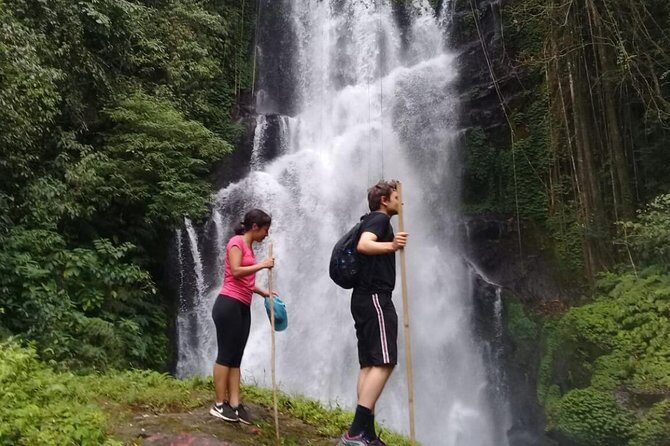
Bali Sidemen Silver Class Making with 7 Gram of Silver

Bali Sidemen Silver Class Making with 7 Gram of Silver - A 2-Hour Session with Real Guidance (Not Just a Paper Certificate)

A morning of silver-making beats a scripted tour. This Sidemen Silver Class is built around hands-on work with local artisans, in a calm village setting near Ubud. I love that you get 7 grams of silver to turn into your own jewelry, and I also like that the session includes a coffee break and Balinese snack. One thing to consider: there’s no pickup, so you’ll want to plan your own way to the workshop.

What makes this experience practical is the pace and the size. The group is capped at 10 travelers, and you’ll get guidance whether you’re brand new or you’ve made jewelry before.

Key things to know before you go

  • You craft with 7 grams of silver, not just watch while someone else works
  • Small group size (up to 10) means real attention from the workshop team
  • Coffee break plus a Balinese snack is included in the 2-hour session
  • Hands-on shaping and detailing are part of the process, guided step by step
  • Mobile ticket means less hassle, right up to the start
  • No pickup or drop-off: you meet at the workshop in Sidemen

Why Sidemen’s Silver Class Feels Better Than a Typical Bali Activity

Bali Sidemen Silver Class Making with 7 Gram of Silver - Why Sidemen’s Silver Class Feels Better Than a Typical Bali Activity
Most Bali activities fall into one of two buckets: either you’re being transported from place to place, or you’re watching something happen while you sit back. This one flips that. You show up, you get taught, and then you do the work.

Sidemen is a quieter part of Bali than the busiest sightseeing corridors around Ubud. That matters because a silver workshop works best when you’re not rushed. You’ll be in a village-style workshop environment at Pande Silver Sidemen, and the whole point is focused crafting time—shaping, then detailing—rather than a checklist of photo stops.

Also, this isn’t presented as a one-size-fits-all “craft demo.” It’s designed so you can participate at your level. If you’ve never made jewelry, you’ll still be guided through the steps. If you’ve made pieces before, you can lean more into your own ideas.

7 Grams of Silver: The Real Value Behind This Workshop

Bali Sidemen Silver Class Making with 7 Gram of Silver - 7 Grams of Silver: The Real Value Behind This Workshop
Let’s talk about the main reason this feels like good value: you’re working with 7 grams of silver, and it’s included in the price.

That sounds simple, but it changes the math. Many “make something” activities are mostly labor-focused, with the materials handled separately. Here, the materials are part of the experience package, which makes the cost easier to justify—especially for a short, 2-hour session.

You’re also not just making something random. The class is built around learning why silver crafting matters in Balinese culture. You’ll hear about the history and significance of silver crafting and then apply that knowledge with your hands. That combination—context first, then making—tends to make the final piece feel more meaningful than a souvenir you picked up at the end of a busy day.

A 2-Hour Session with Real Guidance (Not Just a Paper Certificate)

Bali Sidemen Silver Class Making with 7 Gram of Silver - A 2-Hour Session with Real Guidance (Not Just a Paper Certificate)
The activity runs about 2 hours. You’ll likely notice the rhythm quickly: instruction, then production. The workshop team guides you through the process from shaping to detailing, and the class is structured so you can actually participate rather than only doing the last tiny step.

From the way the workshop operates, it’s clear they want you to leave with something you’re happy to wear. In the feedback, people mention that the team listened to ideas and helped them shape the jewelry to match what they had in mind. That’s a big deal if you care about more than just finishing something—like getting the design proportions right for a ring or similar piece.
Because the group size is kept to a maximum of 10 travelers, you’re less likely to get stuck waiting for attention. Silver work needs focus and small corrections. A smaller group helps the instructor see what you’re doing and nudge you when needed.

What You Get Included: Silver, Wi‑Fi, Coffee, and a Snack

Bali Sidemen Silver Class Making with 7 Gram of Silver - What You Get Included: Silver, Wi‑Fi, Coffee, and a Snack
This is where the experience stays practical. Included in the price:

  • 7 grams of silver
  • Free Wi‑Fi
  • Coffee break and Balinese snack

The coffee break and snack aren’t just a kindness. They make the timing feel more comfortable. Two hours can fly by during making time, and having a pause helps you reset before the finishing steps.

The free Wi‑Fi is also a small but helpful extra. If you’re traveling with family or coordinating transport later, you’ll appreciate not having to find a café that’s willing to share a password.

Meeting at Pande Silver Sidemen: Easy to Find, No Pickup

Bali Sidemen Silver Class Making with 7 Gram of Silver - Meeting at Pande Silver Sidemen: Easy to Find, No Pickup
You’ll start and end at the same place: Silver Class & Workshop Pande Silver Sidemen, Jl. Raya Sangkan Gunung–Sidemen, Sidemen, Kec. Sidemen, Kabupaten Karangasem, Bali 80864, Indonesia.

A key point: there’s no pickup and drop-off. So you’ll want a plan for getting there and back on your own. This is often fine in Bali if you’re already using a driver or scooter arrangements, but it’s important not to assume transport will be handled.

Good news: the session ends back at the meeting point. So you’re not forced into a longer routing plan—just crafting, then you’re done.

What the Workshop Teaches You Beyond the Final Jewelry

Bali Sidemen Silver Class Making with 7 Gram of Silver - What the Workshop Teaches You Beyond the Final Jewelry
The class is described as more than a craft. You also learn the history and significance of silver crafting in Balinese culture before you start hands-on work.

That kind of context is valuable because it changes how you interpret what you’re doing. Instead of thinking of silver crafting as purely technical, you can connect the techniques to local traditions. Even if your primary goal is a wearable souvenir, that background makes the piece feel like it comes from a living craft, not an activity designed only for tourists.

And because the instruction includes shaping and detailing, you’ll get a sense of how the work progresses. You won’t just paint a design onto a finished base. You’ll be shown how the craft builds step by step.

Price and Logistics: Is $24.22 a Fair Deal?

Bali Sidemen Silver Class Making with 7 Gram of Silver - Price and Logistics: Is $24.22 a Fair Deal?
$24.22 per person for a 2-hour silver jewelry class in Sidemen sounds low for the materials alone—because you’re provided 7 grams of silver plus guidance and included refreshments.

Here’s what you should keep in mind when judging value:

  • The price includes the silver and a coffee snack break, so you’re not paying extra for materials you’ll use during the session.
  • The experience is short at about 2 hours, which makes it realistic even if you have a packed Bali itinerary.
  • The group is capped at 10, which typically improves instruction quality and reduces waiting time.
  • What’s not included is the stuff that can creep up: personal expenses, plus pickup and drop-off.

If you already have transport sorted, this kind of workshop tends to be a smart use of time. It’s a hands-on activity you can feel good about, and the final piece functions as a memory you can actually wear.

Who This Sidemen Silver Workshop Is Best For

Bali Sidemen Silver Class Making with 7 Gram of Silver - Who This Sidemen Silver Workshop Is Best For
This experience is a strong fit if you want:

  • a hands-on Bali activity, not just sightseeing
  • a small-group class where you can ask questions
  • a wearable souvenir made with real guidance
  • a short stop (about 2 hours) that doesn’t steal half a day

You’ll also likely like it if you’re traveling with friends or family and want something interactive but still calm. The Sidemen setting supports that. It’s not loud, not frantic, and it’s designed around making.

If you’re the type who hates sitting through instructions, you should feel better here. You’re guided, but you’re also actively shaping and detailing through the process.

Practical Tips to Get Better Results (Without Making It Complicated)

Bali Sidemen Silver Class Making with 7 Gram of Silver - Practical Tips to Get Better Results (Without Making It Complicated)
You don’t need to be a metals expert. Still, a few practical moves can help:

  • Bring a clear idea of what you want to make. If you want a ring style, have a simple reference in mind so the team can guide you.
  • Wear comfortable clothes and plan for a workshop setting. You’ll be focused on the work for the full session.
  • Keep your expectations realistic. You’ll be supported and guided, but silver jewelry takes care and patience—so go in ready to slow down a bit.
  • Since there’s no pickup, confirm your route to the workshop at Pande Silver Sidemen before you set off.

If you’re someone who likes to learn by doing, this is exactly the kind of activity that rewards attention and small adjustments.

Final Verdict: Should You Book the Sidemen Silver Class?

I’d book it if you want a Bali souvenir with actual craft behind it. 7 grams of silver, step-by-step guidance, and a small group (up to 10) make the experience feel both personal and practical. Add in coffee and a Balinese snack, and it’s also a comfortable way to spend a morning or afternoon without getting pulled into a full-day schedule.

Skip it only if you truly don’t care about making jewelry, or if the lack of pickup would be a hassle for your specific travel plan.

FAQ

Is there pickup or drop-off for this Bali silver workshop?

No. The tour does not include pickup and drop-off. The experience starts and ends back at the meeting point in Sidemen.

How long does the Sidemen Silver Class take?

It lasts about 2 hours.

Where does the experience start?

The meeting point is Silver Class & Workshop Pande Silver Sidemen on Jl. Raya Sangkan Gunung–Sidemen, Sidemen, Kabupaten Karangasem, Bali 80864, Indonesia.

What is included in the price?

Included: 7 grams of silver, free Wi‑Fi, and a coffee break with a Balinese snack.

How much silver will I use during the workshop?

You’ll work with 7 grams of silver as part of the class.

Is the class suitable for beginners?

Most travelers can participate, and the workshop is guided so you can make jewelry even if you’re new to it.

How big is the group?

The maximum group size is 10 travelers.

Will I receive a ticket on my phone?

Yes. You’ll receive a mobile ticket.

When will I get confirmation after booking?

Confirmation will be received at the time of booking.

What’s the cancellation policy?

You can cancel for a full refund up to 24 hours before the experience starts. If you cancel less than 24 hours before, the amount paid is not refunded.