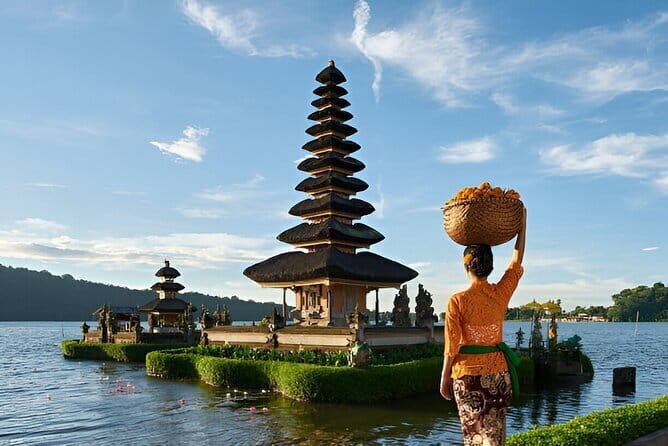
Bali Most Beautiful Temples Private Tour

Bali Most Beautiful Temples Private Tour - The Real Value: $89.99 for Tickets, Transport, and a Private Guide

Bali temples in one stress-free day can feel like magic. This private tour strings together some of the island’s most meaningful sites with convenient transport, so you spend less time figuring out roads and more time looking at what’s in front of you. I really like the combo of hotel pickup/drop-off plus a guide who can explain what you’re seeing as you go. You’ll also love that each stop comes with an admission ticket, which keeps the day simpler and more predictable.

One thing to consider: timing depends on smooth pickup. There’s at least one real-world example of a late driver linked to a hotel mix-up, so I’d strongly recommend confirming your pickup details in advance.

Key highlights at a glance
Bali Most Beautiful Temples Private Tour - Key highlights at a glance

  • Hotel pickup and drop-off to avoid meeting-point stress in Ubud traffic
  • Tickets included for each temple stop, so you don’t chase payments on-site
  • Air-conditioned comfort between temples when roads get slow or bumpy
  • A focused temple route that packs in four major stops without feeling random
  • Smart casual dress code keeps the day practical while still respecting sites

Why This Bali Temple Day Works So Well from Ubud
Bali Most Beautiful Temples Private Tour - Why This Bali Temple Day Works So Well from Ubud
If you’re basing yourself in Ubud and want temple highlights without hiring a car, this itinerary is built for exactly that. It’s a full day, but the structure is the point: you’re not bouncing around on your own, and you’re not constantly recalculating routes. That matters in Bali, where travel time can balloon fast.

I like that the day is designed around a clear sequence of four stops, each with enough time to actually look. You’re not sprinting in and out. You’re also not doing the annoying thing where you think you understood something, then realize you missed the context right in front of you.

There’s also a private-tour feel to it, meaning it’s only your group. That’s a big deal if you want the pace to match your mood—linger for photos at a gate, then move on when you’ve had your fill.

The Real Value: $89.99 for Tickets, Transport, and a Private Guide
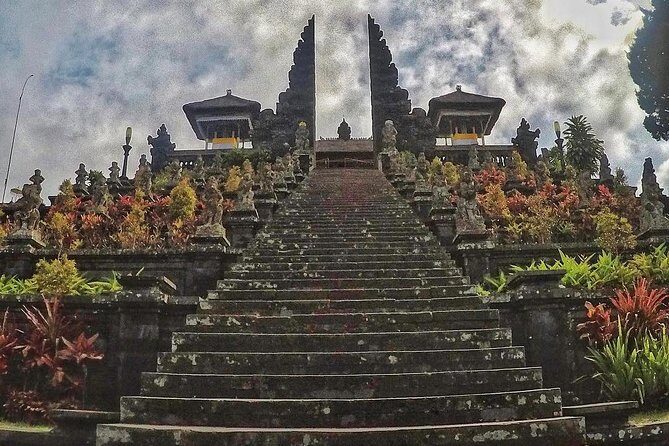
Bali Most Beautiful Temples Private Tour - The Real Value: $89.99 for Tickets, Transport, and a Private Guide
At $89.99 per person, this tour is priced like a “do it once, do it right” day—especially when you compare it to the cost of a private driver plus buying admissions along the way. Here, admission tickets are included for each stop, so you don’t need to do on-the-spot budgeting.

You’re also paying for time. Hotel pickup and drop-off mean you don’t lose the morning (or your afternoon) to logistics. The tour also includes travel between sites in air-conditioned comfort, which helps when the day runs long or you’re dealing with heat.

The biggest value, though, is the guide’s ability to explain what you’re seeing while you’re standing there. In one example, a guide named Mr Wayan was praised for being superb throughout and very knowledgeable about the places on the route. In another, a guide named Wi was highlighted for explaining details clearly. That’s what turns a list of temples into a day that actually makes sense.

Smart Casual, Mobile Tickets, and How to Avoid Pickup Headaches

This is a private tour, and it requires a minimum of 2 people per booking. That’s helpful to know if you’re traveling solo—you’ll need at least one other person to make it work.

You’ll also have a mobile ticket, which keeps things simple once you’re ready to go. The dress code is smart casual, which is usually easy to manage with typical Ubud travel outfits. Still, treat it as a reminder to keep things respectful and not overly casual for sacred spaces.

On pickup day, I’d treat details as your responsibility even when the tour is handled for you. If you’re staying in a hotel complex, double-check the exact pickup point. Because if the driver goes to the wrong place, you’ll feel it immediately in a day like this where every hour matters.

Stop 1: Tirta Empul Temple and the Petirtaan Spring-Water Ritual
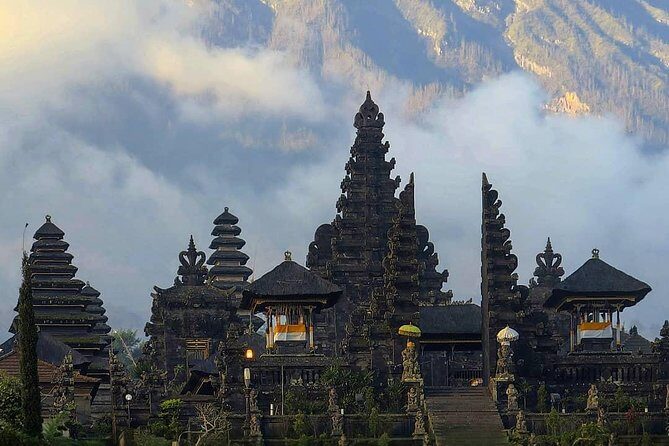
Bali Most Beautiful Temples Private Tour - Stop 1: Tirta Empul Temple and the Petirtaan Spring-Water Ritual
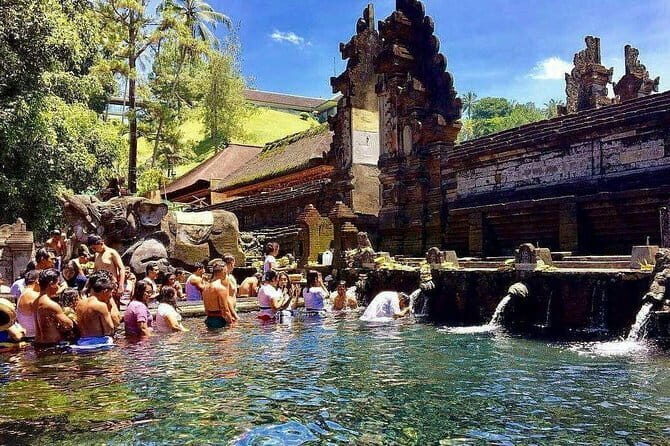
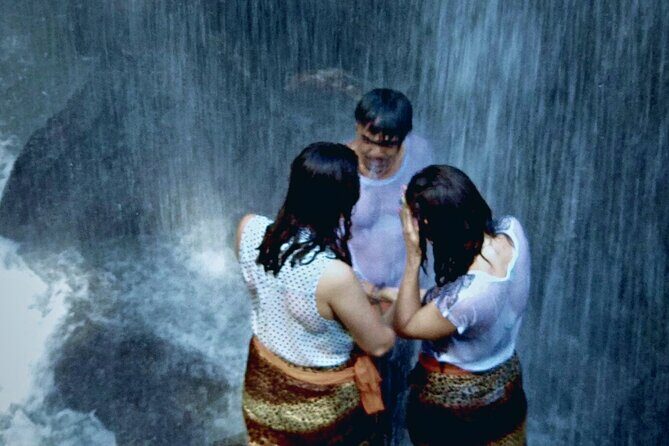
Your first major stop is Tirta Empul Temple, near Tampaksiring. The standout here is the petirtaan, the bathing structure built around a holy spring-water source. This isn’t just scenery—it’s part of how worship and tradition play out in daily life at a Hindu Balinese water temple.

You’ll get about 30 minutes here, which is a good window if you come in ready to observe. Look at the water basins and how the space is organized. Then connect that to what the guide tells you about why this water matters. Even if you don’t fully grasp every detail, you’ll walk away with a clearer sense of what the ritual is meant to communicate.

A quick consideration: because the focus is spiritual practice, the vibe can be more serious than at photo-friendly viewpoints. Keep your movements calm and respectful. If you’re hoping for a casual wander, aim to balance photos with actually watching what’s going on in the space.

Stop 2: Besakih Temple, the Big Mount Agung Complex
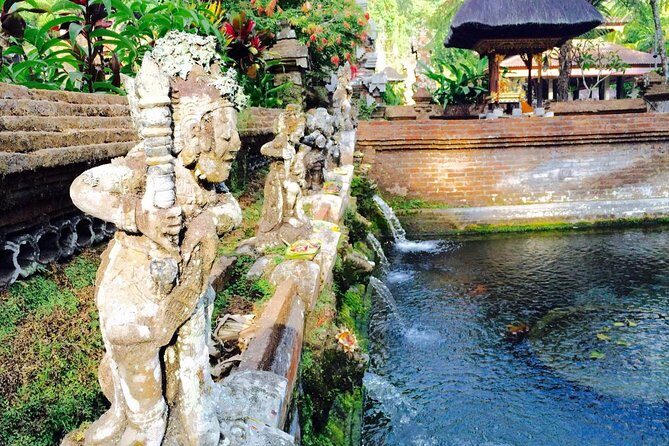
Bali Most Beautiful Temples Private Tour - Stop 2: Besakih Temple, the Big Mount Agung Complex
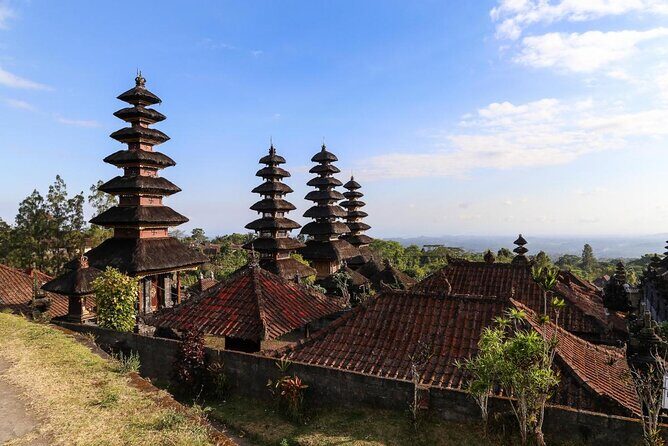
Next up is Besakih Temple, a complex on the slopes of Mount Agung. It’s widely seen as the most important temple in Bali, and it’s also described as the largest and holiest within the island’s Hindu tradition. That scale changes how the visit feels—you’re not just visiting one shrine. You’re stepping into a whole temple world.

You’ll have around 45 minutes here, which helps because Besakih isn’t the kind of place where you can absorb everything in five minutes. Spend your time choosing what to focus on: the layout, the architecture, and the way the site feels like a structured sacred landscape rather than a single landmark.

One practical note: a complex like this can involve more walking on uneven ground than a compact site. Good shoes help, especially if the weather shifts. And since you’re visiting as part of a timed day, try not to get stuck in a photo loop—let the guide’s explanation point you toward the most meaningful areas first.

Stop 3: Gunung Kawi (Mount Kawi) and the Rocky Temple Setting
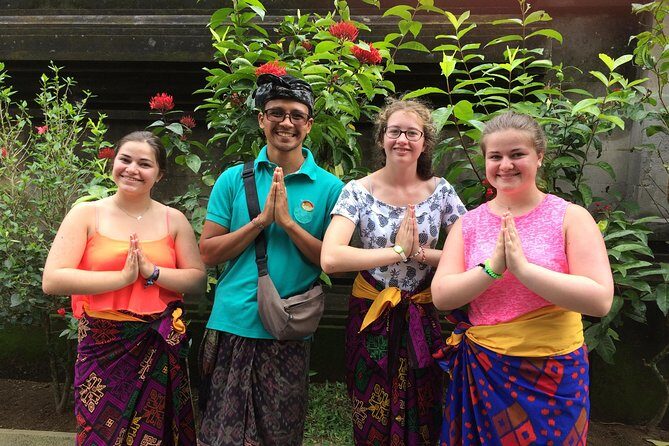
Bali Most Beautiful Temples Private Tour - Stop 3: Gunung Kawi (Mount Kawi) and the Rocky Temple Setting
Then comes Mount Kawi, also known as Gunung Kawi Temple. It’s described as one of Bali’s most beautiful temples and also linked to a UNESCO site listing. The key visual element is right in the name: this is the rocky temple.

You get about 45 minutes here, which is enough to notice how the rock formation influences the atmosphere. In places like this, the structure and the setting work together. You’re not just looking at carvings—you’re experiencing how the landscape shapes the temple’s presence.

The main drawback risk is the same one that comes with dramatic settings: you can end up spending too much time just staring at the rocks and forgetting to look for what makes the temple functional as a sacred space. Ask your guide to point out the details you might otherwise miss. That turns a beautiful view into a fuller visit.

Stop 4: Kehen Temple’s Gate and a Calmer Kintamani-Area Stop
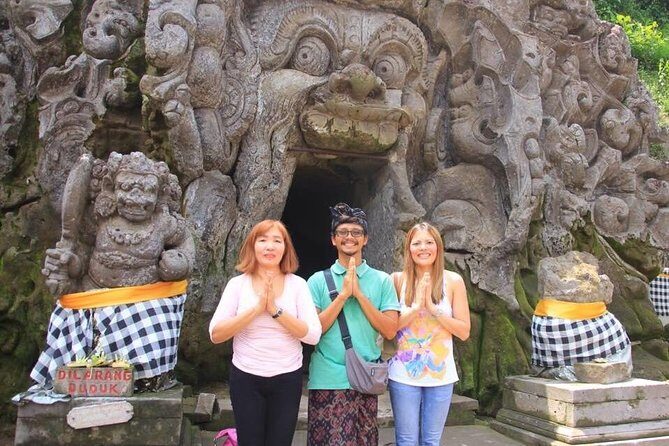
Bali Most Beautiful Temples Private Tour - Stop 4: Kehen Temple’s Gate and a Calmer Kintamani-Area Stop
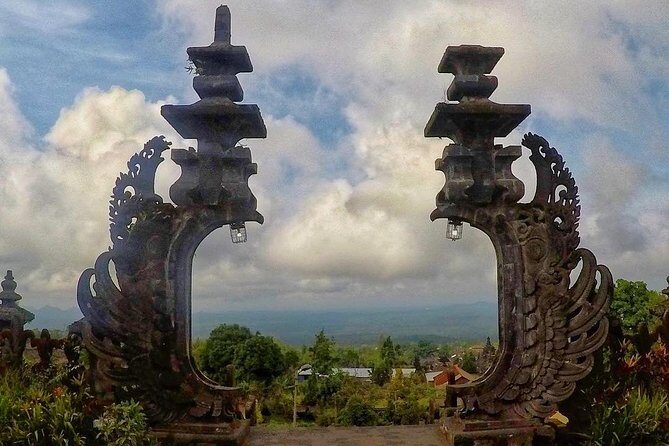
The final temple stop is Kehen Temple, located near Kintamani. It’s known for an impressive gate and is often framed as a more low-key option compared to the most famous routes. You’ll have about 45 minutes here, which is a solid capstone after the heavier hitters.

Kehen is the kind of place where a great gate can set the tone for everything that follows. Look at the entrance structure first, then move through the space with your guide’s context in mind. It’s a good chance to slow down and let the day’s earlier intensity settle.

By this point in the outing, you may feel a little temple fatigue, and that’s normal. Use the time wisely: grab your best photos early if you’re worried about energy, then focus on the details you didn’t get at the earlier stops. The route is paced so you don’t run out of time to enjoy each place.

How the 8 to 10 Hours Usually Feels (and How to Pace Yourself)
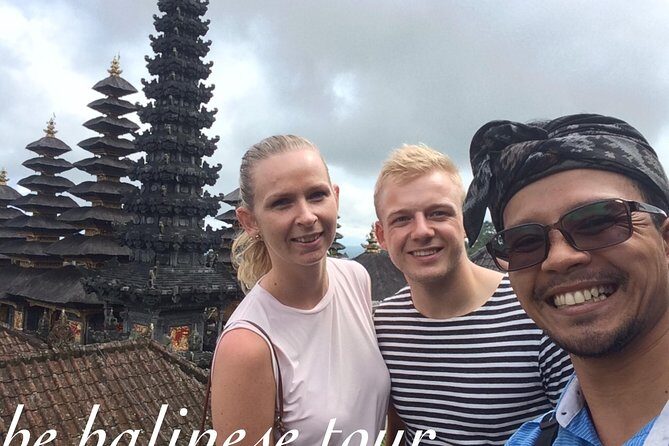
Bali Most Beautiful Temples Private Tour - How the 8 to 10 Hours Usually Feels (and How to Pace Yourself)
This is an 8 to 10 hour day trip, so your body will notice the schedule even when the logistics are handled. The benefit is simple: you’ll see four major temple stops without spending your entire day in navigation mode.

The trade-off is that it’s still a full-day loop. You’ll want to treat it like a plan, not a casual outing. Go in expecting a mix of standing and short walks, plus time for the guide to explain each site. When you do it this way, the day feels coherent instead of rushed.

If you’re sensitive to heat, plan your mindset accordingly. You’ll be outdoors at each site, and you’ll spend the in-between travel time in air-conditioned comfort. That rhythm—cool vehicle, warm temples—makes the day manageable.

Who This Private Tour Suits Best (and Who Might Want Another Plan)

This tour fits you best if you want a high-efficiency temple day from Ubud and you’d rather not figure out roads, parking, or timing on your own. It’s also a strong choice if you like having a guide explain what matters, because each stop is meaningful in its own way and the context improves what you see.

It’s also ideal if you’re traveling with someone who wants different levels of pace. Private means your group’s preferences can guide how much you linger at a gate or how quickly you move between areas. And since this is a minimum-2 booking, it also works well for pairs.

If you’re the type who wants deep, lingering exploration of just one or two temples, you might find a four-stop day feels a bit compressed. In that case, you could prefer a more focused half-day or temple-by-temple plan. But for first-timers who want the highlights, this itinerary is a practical win.

Should You Book This Bali Most Beautiful Temples Private Tour?

I’d book it if you want structure, transport included, and a day that covers four major temple experiences without you wrestling with logistics. The price makes sense when you factor in admissions and private comfort, and the route is built to keep you moving efficiently across Bali’s temple variety.

Skip it only if you know you’ll hate a full-day schedule or you want a slower pace focused on just one site. If your priority is seeing the big names—Tirta Empul, Besakih, Gunung Kawi, and Kehen—this is a smart, time-saving way to do it from Ubud.

FAQ

What’s included in the tour price?

The tour price includes hotel pickup and drop-off, air-conditioned transport between stops, and admission tickets for each temple stop.

Where does the tour take place?

The tour is based in Ubud, Indonesia.

How long is the private temple tour?

It runs about 8 to 10 hours.

Which temples are included?

The stops are Tirta Empul Temple, Besakih Temple, Mount Kawi (Gunung Kawi), and Kehen Temple.

Is this a private tour or a group tour?

It’s a private tour, and only your group will participate. A minimum of 2 people per booking is required.

What’s the dress code?

Smart casual.

Do I need to bring a paper ticket?

No. You’ll use a mobile ticket.

What’s the cancellation policy?

You can cancel for a full refund up to 24 hours in advance. If you cancel less than 24 hours before the start time, the amount paid isn’t refunded.

What if weather is bad?

This experience requires good weather. If it’s canceled due to poor weather, you’ll be offered a different date or a full refund.
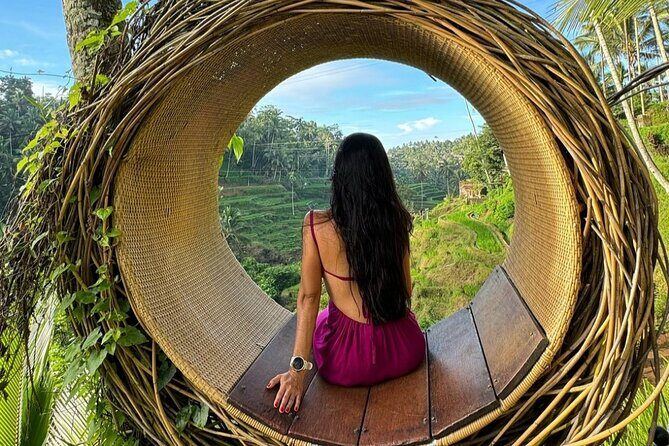
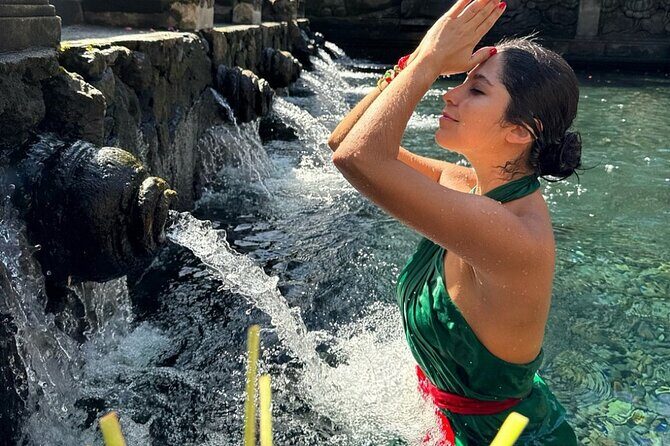
Ubud Guided Tour Monkey Forest, Waterfall, Temple & Rice Terrace.

Ubud Guided Tour Monkey Forest, Waterfall, Temple & Rice Terrace. - Sacred Monkey Forest Sanctuary: watching macaques safely (and getting great shots)

One day, six iconic Ubud stops. This private route is built for maximum variety: Monkey Forest wildlife, royal and temple culture, then classic rice-terrace views—all with an expert guide to explain what you’re seeing and help you time photos. I especially love the mix of nature + culture, and the way the guide keeps the day moving without rushing the key moments at each stop.

The only real catch is the pace: it’s a full 8 to 10 hours of driving and sightseeing, so you’ll want comfy shoes and a bag you can keep secure around macaques.

Key highlights worth planning for

Ubud Guided Tour Monkey Forest, Waterfall, Temple & Rice Terrace. - Key highlights worth planning for

  • Private car with hotel pickup/drop-off for a smoother day
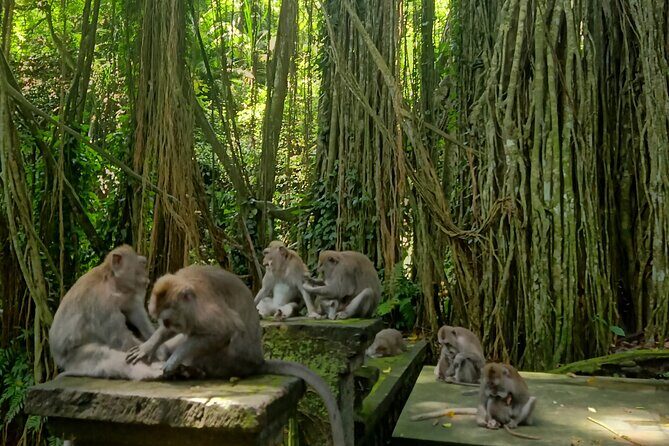
  • Monkey Forest time with long-tailed macaques in the wild forest setting
  • Tirta Empul temple with spring-water cleansing that adds real meaning
  • Ulu Petanu waterfall for that iconic canyon-and-cave look and photos
  • Tegalalang rice terrace + Subak irrigation views you can actually understand
  • Art village/market stop for souvenirs without squeezing them in last-minute

A full Ubud day in one loop: how the 8–10 hours feel

Ubud Guided Tour Monkey Forest, Waterfall, Temple & Rice Terrace. - A full Ubud day in one loop: how the 8–10 hours feel
This is the kind of Ubud trip that works well when you have limited time but still want the big hits. You’re not just hopping from viewpoint to viewpoint. You’re guided through several places that each represent a different side of Ubud: forest life, palace-era heritage, spiritual cleansing, waterfall scenery, and the rice-growing system that supports daily life in Bali.

The tour runs about 8 to 10 hours, and it’s done by private car. That matters because Ubud traffic can be unpredictable, and a private transfer helps you keep control of your schedule. You’ll also have hotel pickup and drop, plus bottled water—small things that keep the day pleasant instead of stressful.

One more thing I like about the structure: it’s arranged so you can slow down at the places you care about most. The time blocks are generous enough to look around, not just pose and run.

Sacred Monkey Forest Sanctuary: watching macaques safely (and getting great shots)

Ubud Guided Tour Monkey Forest, Waterfall, Temple & Rice Terrace. - Sacred Monkey Forest Sanctuary: watching macaques safely (and getting great shots)
Your day starts at the Sacred Monkey Forest Sanctuary, with 800+ (often described up to 1,200+) long-tailed macaques living in the green forest. This isn’t a zoo-style lineup. It’s a real wild-feeling jungle space where the monkeys move around freely, so your experience depends on what’s active when you arrive.

Practical tip: treat the forest like a place where animals are in charge. Keep small items secure. If you carry sunglasses, phones, or snacks out in the open, expect curiosity. A guide helps here because they can read monkey behavior faster than most people—and can steer you away from trouble spots.

This is also one of the best moments for photos, but you’ll get better results if you’re ready to shoot quickly. Some of the strongest shots come when you’re not chasing a monkey; you’re waiting for one to approach or cross a path. With help from the guide, you can position yourself without blocking others.

If you like wildlife and people-free moments, you’ll enjoy this stop. If you’re nervous around animals, just go in with a calm mindset and follow your guide’s cues.

Ubud Palace (Puri Ubud / King Royal Palace) + art market time

Next up is Ubud Palace, sometimes referred to as Puri Ubud / King Royal Palace, in the middle of town. You get about 1 hour here, which is long enough to wander the grounds, spot traditional architecture details, and then slip into the nearby art market village area.

Why this works: it ties history to everyday street life. You’re not walking through a museum that feels detached from Bali. You’re in the middle of Ubud, where markets and local crafts are part of the atmosphere.

What to do with your limited hour:

  • Look first, then shop. Quick browsing before buying saves money and helps you understand price ranges.
  • Ask your guide what’s worth paying for. Even a small bit of guidance can help you avoid low-quality souvenirs.

This stop is also a good reset after Monkey Forest. The crowds can be lively, but the palace grounds tend to feel more grounded and less chaotic than the forest.

Tirta Empul Temple: understanding the spring-water cleansing ritual

Then you head to Tirta Empul Temple, a spiritual site known for cleansing with natural spring water. You’ll have about 2 hours here, which is important. These places don’t work like a quick photo stop. You’ll want time to watch how people move through the ritual and understand what’s happening.

Expect a steady flow of activity: water features, people taking part in the cleansing, and everyone following a respectful rhythm. If you’re unsure how to participate, your guide will help you understand the etiquette—so you don’t feel lost or awkward.

One of the most valuable parts of this temple stop is the context your guide provides about Balinese tradition and the idea of spiritual blessing. Even if you’re not practicing the ritual yourself, the explanation makes the visit feel more real than just seeing a pretty temple.

Practical note: bring clothes you can manage comfortably for a water-related place. Even if you don’t do the cleansing, you’ll likely get close enough to feel the dampness in the air.

Ulu Petanu Waterfall: that iconic canyon/cave look

After the temple, you get a scenic break at Ulu Petanu Waterfall, positioned like an iconic waterfall in a canyon setting. This is one of the most photo-friendly stops on the route, and you’ll have around 2 hours.

Here’s what makes it worth the time: the setting is dramatic. The waterfall is the main event, but the surrounding canyon/cave vibe gives depth to your photos. You can find angles that make the water look bigger and the environment more immersive.

A balanced expectation: waterfalls can be unpredictable with water flow and footing conditions, depending on the day. So keep your focus on safe movement. Wear shoes with traction and avoid rushing to the best spot if it looks slick.

If you care about getting Instagram-style shots, this is where your camera will earn its keep. If you’d rather just enjoy the sound and views, you’ll still enjoy the atmosphere. Either way, this stop is a nice contrast to the more structured temple time.

Tegalalang Rice Terrace + Subak system: views you can read like a story

Next comes Tegalalang Rice Terrace, one of Ubud’s most recognized landscapes. You’ll have about 1 hour here, and the big theme is the Subak irrigation system—the traditional cooperative method that helps manage rice cultivation.

This is more than a photo stop if your guide explains what you’re seeing. Terraces are only half the story. The other half is how water moves and how farmers coordinate. When you understand that, the terraces stop looking random and start looking like a living system.

You’ll also find swing activities in this area. Your guide can help you decide if it’s your kind of thing. Even if you skip it, just watching the terrace paths and irrigation channels can make your time here feel more meaningful.

Quick practical advice: terraces often mean slopes and stairs. If you’re carrying a camera bag, keep it secure and avoid trying to balance while you’re looking around.

Ubud art village / traditional art market: souvenirs with a real local feel

The final major stop is the Ubud Traditional Art Market, which functions like an art village where you can buy souvenirs. You’ll have about 2 hours, which is enough time to browse calmly and compare shops.

This is a good place to think about what you actually want to take home:

  • Small items that travel well (keychains, small carvings, textiles)
  • Gifts that reflect Balinese style instead of generic beach souvenirs
  • Things you can recognize as handmade rather than mass-produced

Because the tour includes a guide, you can get help with basic questions and direction if you get turned around. It’s also a nice way to end the day because shopping doesn’t compete with water or temple etiquette—you can take your time.

Price and value: is $34.80 per person a fair deal?

At $34.80 per person, this looks like strong value for a full-day Ubud loop—mainly because the day stacks several paid items and logistics that would cost you extra if you DIY’d them.

Here’s what you’re getting without the extra headache:

  • Private car with hotel pickup/drop-off
  • A live tour guide
  • Entrance tickets and donations (optional choice)
  • Parking fee covered
  • Bottled water
  • Lunch (option choose)
  • Mobile ticket support

If you tried to assemble this on your own, the biggest costs are usually transport and entry fees, plus the time you spend coordinating. A guide also saves time because they keep the day efficient and explain cultural context as you go.

One caution: the tour data lists one clear add-on not included—an additional Polaroid camera (confirm in advance if you want that). For personal spending (snacks, extra drinks, or shopping upgrades), you’ll still want to budget, just like any day out.

Who should book this Ubud tour, and who might skip it

This is a great fit if you:

  • Want a private day trip with a clear route
  • Have limited time and want Monkey Forest, Tirta Empul, a waterfall, and rice terraces in one go
  • Enjoy learning the meaning behind temples and traditions, not just taking photos
  • Appreciate photo help and guidance during the day

You might consider a different plan if you:

  • Prefer a slow, unstructured day with lots of downtime between stops
  • Get easily overwhelmed by crowds or active animals (Monkey Forest can be intense up close)
  • Want a more specialized itinerary with fewer stops and more time at each one

Tips to get the best day out of it

  • Bring comfortable shoes for temple areas and terrace steps.
  • Keep valuables secure at Monkey Forest. Loose items are basically an invitation.
  • Use the guide’s photo help wisely. Ask for quick positioning and then let the moment happen.
  • Plan to hydrate. Bottled water is included, but a hot Ubud day can still catch you off guard.
  • If you care about how you spend at the art market, set a rough budget before you browse.

Should you book this guided Ubud day trip?

I’d book this if you want a well-paced, value-heavy way to see Ubud’s top mix of wildlife, spirituality, and iconic scenery without wrestling transport and ticket timing.

It’s especially worth it if you value guidance—guides like Ade and Gede come up in the experience record for staying informative, adjusting the day to what’s happening, and helping people feel comfortable while still moving efficiently.

If you’re the type who hates a packed schedule, shorten expectations and pick your priorities. But if you want one solid day that covers the big Ubud names, this private route is an efficient, practical choice.

FAQ

Is hotel pickup and drop-off included?

Yes. The tour includes hotel pickup and drop-off, plus a private car for the day.

How long is the tour?

The duration is about 8 to 10 hours.

Is this tour private?

Yes. It’s private, meaning only your group participates.

Where does the tour take me?

You’ll visit Sacred Monkey Forest Sanctuary, Ubud Palace (Puri Ubud / King Royal Palace), Tirta Empul Temple, Ulu Petanu Waterfall, Tegalalang Rice Terrace, and the Ubud Traditional Art Market.

Are entrance tickets included?

Yes. Entrance tickets and donations (option to choose) are included.

Is lunch included?

Yes. Lunch is included, with an option to choose.

What’s included besides tickets?

The tour includes a live tour guide, bottled water, parking fees, hotel pickup and drop-off, private car transport, and mobile ticket support.

What’s not included?

An additional Polaroid camera is not included. It’s best to confirm in advance if you want that.

Can I get a group discount?

Yes. The tour notes group discounts.

How does cancellation work?

You can cancel for free up to 24 hours in advance of the start time for a full refund. If you cancel less than 24 hours before, the amount paid won’t be refunded.

Ubud Tour Water Temple with Jungle Swing

Ubud Tour Water Temple with Jungle Swing - 8:00am pickup, private transport, and why the timing matters

A good Ubud day feels like a playlist. This one moves fast—in a good way—starting with monkeys at Sacred Monkey Forest, then heading to the sacred springs at Tirta Empul, out to the photo-friendly rice terraces of Tegalalang, and finishing with the big wow factor: the Jungle Swing and Tegenungan Waterfall. It is built for people who want the classic sights, without doing the routing math in the heat.

Two things I really like about this package are the private transportation and the chance to make it your day. Guides such as Kadek and Jhon/Joni are specifically praised for being on time, safe on the roads, and flexible if you want to pause for photos or adjust the pace. The second standout is how the stops flow from culture (temple purification), to farming (rice terraces), to pure nature (waterfall), with the swing acting as your adrenaline break.

One thing to keep in mind: lunch isn’t included, and entrance fees may not be fully covered. So budget a little extra for food and any ticket costs once you’re out there.

Key highlights you’ll actually care about

Ubud Tour Water Temple with Jungle Swing - Key highlights you’ll actually care about

  • Private pickup and air-conditioned car mean less waiting and fewer “where do we meet?” headaches
  • Sacred Monkey Forest includes a huge macaque population, so plan for close encounters—and be smart with what you carry
  • Tirta Empul is known for purification springs tied to a temple tradition dating back to 962 AD
  • Tegalalang rice terraces show how the local subak irrigation system supports farming
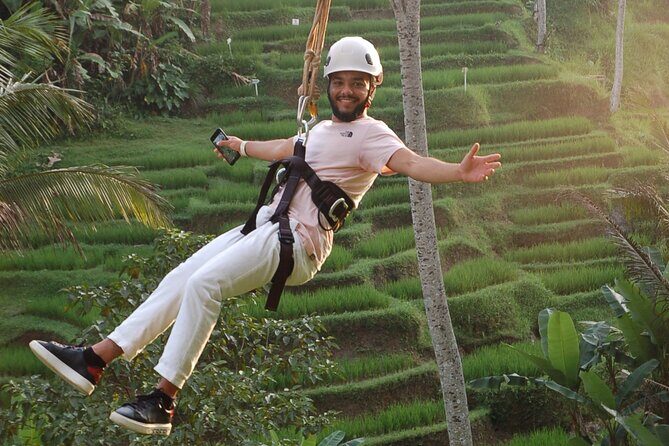
  • Jungle Swing is the signature photo moment, set over lush green valleys
  • Tegenungan Waterfall gives you a natural wind-down at the end of a long day

A classic Ubud day with a Jungle Swing finale

Ubud Tour Water Temple with Jungle Swing - A classic Ubud day with a Jungle Swing finale
Ubud has a way of stacking experiences on top of each other. This tour does that on purpose, but it still keeps the day readable: animals and nature at the start, then spiritual and agricultural stops, then the big action moment, then a waterfall finish.

The Jungle Swing is the headline, but it works best because it is placed after you’ve seen Ubud’s other “green” sides. You’re already thinking in terms of rice terraces, temple water, and jungle scenery. Then you get a change of pace—hands up, camera ready, and a view that makes you understand why people spend the time and money for the swing photo.

And there’s another practical win: you’re not traveling between far-flung corners of Bali by yourself. Private transport turns this from a challenging day into a manageable one, especially if you’re doing it as a couple or as a small group.

8:00am pickup, private transport, and why the timing matters

Ubud Tour Water Temple with Jungle Swing - 8:00am pickup, private transport, and why the timing matters
The day starts at 8:00am, with pickup offered (exact meeting points can vary). That early start matters in Ubud because the heat and crowds build quickly, and your best photos often come when the light is still friendly.

You’ll ride in an air-conditioned vehicle, and bottled water is included. Parking fees are covered too, which sounds boring—until you’re trying to find the one spot that doesn’t cost extra time and stress. This tour is also described as a private activity, meaning your group only. That usually translates into fewer constraints, more freedom to stop when it makes sense, and less time lost to group herding.

On the driver side, you’ll see a strong pattern in the praise for Jhon/Joni and Kadek: on-time service, safe driving, and a sense of humor that helps when the day runs long. One of the most useful skills in Ubud is not just knowing where to go, but knowing the order of stops so you don’t spend hours stuck in traffic.

Sacred Monkey Forest Sanctuary: enjoy the macaques, don’t fight them

The first real “wow” moment is the Sacred Monkey Forest Sanctuary, where you can observe long-tailed macaques in natural behaviors like playing, foraging, and social interaction. The sanctuary is home to a lot of macaques (over 1,260), so this isn’t a quiet zoo visit. It is a living environment where wild behavior is the point.

What to expect in practical terms:

  • It is easy to get distracted by photos. Keep your eyes on your belongings.
  • The monkeys are curious. If you keep items secure and avoid sudden moves, the experience is smoother.
  • You’ll likely spend around 2 hours here, which is enough time to see what’s happening without feeling rushed.

This is one place where I think having a good guide helps. A driver who understands local timing can help you avoid the busiest moments, and their advice can keep you from doing the common mistake of carrying things that look snack-like.

One consideration: admission tickets aren’t listed as included for this stop, so you may need to pay separately depending on how the operator structures ticket pickup.

Tirta Empul: Hindu purification springs with a 962 AD story

Ubud Tour Water Temple with Jungle Swing - Tirta Empul: Hindu purification springs with a 962 AD story
After the monkeys, you shift gears into spirituality at Tirta Empul Temple in Tampaksiring. This is a Hindu water temple known for sacred springs used in purification rituals. The temple is associated with foundations dating back to 962 AD during the Warmadewa dynasty, which gives the site a deeper timeline than most “temple photo stops.”

A couple of reasons this stop is worth your attention:

  1. It’s about water and ritual, not just architecture. The focus is on the springs and the practice tied to them.
  2. You’re stepping into Bali’s ongoing religious life, not a recreated museum moment.

You should plan on about 2 hours here. Admission tickets aren’t indicated as included, so again, budget for entrance if needed.

A practical note: if you want photos, be respectful about where you stand and what you capture. Ritual spaces work best when you give people space and time. The goal isn’t to freeze the moment; it is to understand what’s happening and move through smoothly.

Tegalalang rice terraces: subak irrigation, not just scenery

Ubud Tour Water Temple with Jungle Swing - Tegalalang rice terraces: subak irrigation, not just scenery
Next up is the iconic Tegalalang Rice Terrace area about 9 kilometers north of Ubud. These terraces are famous because they show off Bali’s farming tradition in a way that is visually dramatic—and it isn’t random. The terraces connect to the traditional subak irrigation system, which has been practiced for generations.

This stop is often a “camera first” moment, but I think it’s worth going a step deeper. Look for how the terrain is shaped for water flow. Notice how the farming patterns follow the land. That is the real story: the scenery is beautiful, yes, but the system behind it is what makes it sustainable and interesting.

You’ll likely spend around 2 hours here. Admission isn’t listed as included, so tickets may be separate.

One consideration: terraces and viewpoints can mean lots of steps and uneven ground. If your legs are not loving stairs that day, wear supportive shoes and pace yourself.

Ubud Jungle Swing: why the valley view is the point

Ubud Tour Water Temple with Jungle Swing - Ubud Jungle Swing: why the valley view is the point
Then comes the signature stop: Ubud Jungle Swing. The key promise here is simple: you get to soar above breathtaking valleys, creating that classic Ubud photo moment. It is also framed as being surrounded by lush greenery, so you’re not just swinging over a platform—you’re swinging with the jungle around you.

This part is described as about 2 hours. Exact swing time can vary, but the way the stop is positioned in the day gives you something important: you get the adrenaline and the big “wow” before the final nature finish.

A few practical tips I’d use if this were my day:

  • If you’re prone to motion sickness, plan how you’ll handle it during the swing moment. The general theme in the driver praise includes comfort and safety, so ask your driver what they’ve seen work best.
  • Wear clothes and shoes that can handle a bit of mess and humidity. Ubud can be damp.
  • Bring your best attitude for photos, but don’t let that be the only goal. The view is the reward.

Admission tickets are listed as not included for the swing in the stop notes, so you may pay on-site or as an add-on. Since the package says entrance tickets are optional, it’s worth confirming what’s covered when you book.

Tegenungan Waterfall: the cooling-down ending you’ll remember

Ubud Tour Water Temple with Jungle Swing - Tegenungan Waterfall: the cooling-down ending you’ll remember
To close the day, you head to Tegenungan Waterfall, a popular natural attraction in Kemenuh Village (Sukawati District, Gianyar Regency), about 10 kilometers south of Ubud. This is where the whole day’s theme snaps into place: jungle greenery, water, and a calmer pace than the morning’s crowds.

The description highlights views and the atmosphere, and it also mentions a pool area at the base of the waterfall. That’s the kind of detail that changes how you feel at the end of a long day. After temples and terraces, you get to slow down, breathe, and let the noise drop off.

You’ll spend about 2 hours here. Admission isn’t listed as included, so keep that in mind for your budget.

Practical considerations:

  • Expect slippery spots and damp surfaces near water.
  • Don’t count on the waterfall to be empty. Even on a calm day, it’s a popular stop.

What you pay for (and what you’ll likely still cover)

Ubud Tour Water Temple with Jungle Swing - What you pay for (and what you’ll likely still cover)
At $33 per person, this tour is priced like a budget-friendly way to see a lot of Ubud in one go. The value is strongest if you hate logistics and want everything organized: private car, English-speaking driver, bottled water, parking, and a smooth route.

What’s included:

  • Expert English speaking driver as your tour guide
  • Air-conditioned vehicle
  • Private transportation
  • Parking fees
  • Bottled water
  • Entrance tickets (optional)

What’s not included:

  • Lunch
  • Personal expenses

Also note: for several stops, admission is described as not included. Since “entrance tickets (optional)” is listed, you should assume some ticket costs may be added depending on the exact arrangement when you book.

My budgeting advice is simple: treat the headline price as transportation + guide value, then add a flexible amount for tickets and a casual lunch. If you do that, you won’t feel surprised when the day gets real.

The driver can make or break this kind of day

This is where the reviews really point to a theme: the guide is not just driving. The best drivers in Ubud seem to manage timing, keep you feeling safe, and help you get sensible deals without turning the day into a shopping marathon.

The names that show up most in praise are Jhon/Joni and Kadek. Here’s what that usually translates to in your day:

  • On-time pickup and a smooth plan that doesn’t fall apart
  • Safety and comfort in traffic (including people who get motion sickness)
  • Flexibility if you want to spend extra minutes somewhere or adjust the flow
  • Helpful guidance on where to go and when, plus patience with slow photo moments

If you want a stress-free day, paying attention to the guide choice is smart. In Bali, it’s often the difference between seeing sights and actually enjoying the time between them.

Who this tour suits best

This is a great fit if you want:

  • A private day with an organized route
  • Classic Ubud highlights without doing the driving yourself
  • A mix of culture (Tirta Empul), farming (Tegalalang), animals (Monkey Forest), and nature (Tegenungan)

Because it’s a “most travelers can participate” style tour and involves short blocks at each stop (often around 2 hours), it works well for couples and small groups. It is also ideal if you like structure but still want room to shift plans.

If you dislike crowds at popular sites, you’ll still feel some of that at the Monkey Forest, terraces, and waterfall. The private format helps, but it doesn’t make those places empty. Go early in spirit, wear comfortable shoes, and you’ll be fine.

Should you book the Ubud Tour with Jungle Swing?

I’d book this tour if you want a well-paced sampler of Ubud that finishes with the big adrenaline photo moment. The private car, bottled water, English-speaking guidance, and the way the stops connect into one day make it strong value for $33—as long as you budget for lunch and any entrance fees that aren’t covered.

Skip it (or adjust expectations) if you’re looking for a slow, nature-only experience or if you hate the idea of ticket adds and a full schedule. This is a do-a-lot day. If that sounds fun to you, you’ll likely have a great time.

FAQ

What’s the duration of the Ubud Tour with Jungle Swing?

The tour runs about 8 to 10 hours.

How much does the tour cost?

It costs $33.00 per person.

Is hotel pickup included?

Pickup is offered, and the start time is 8:00am.

Is this tour private?

Yes, it’s a private tour/activity where only your group participates.

Does it include an air-conditioned vehicle?

Yes. You get an air-conditioned vehicle and private transportation.

Is bottled water provided?

Yes, bottled water is included.

Are entrance tickets included?

Entrance tickets are listed as optional, and several stops note admission tickets are not included, so you should expect you may pay for some tickets.

Is lunch included?

No. Lunch is not included.

Is the driver English speaking?

Yes. The included driver is an English speaking guide.

Is free cancellation available?

Yes. You can cancel up to 24 hours in advance for a full refund.

Where does the tour start?

The tour starts at 8:00am, with pickup from a meeting point that’s near public transportation.

Transformative Journey of Holistic Self-Discovery

Transformative Journey of Holistic Self-Discovery - Stop-by-stop: Water Soul Healing and palmistry at Taman Beji Griya Waterfall

North Ubud does wellness in a real way. This 5–6 hour private tour strings together waterfalls, temple rituals, and community acts so your day feels less like sightseeing and more like a reset. It’s gentle on the ego, heavy on meaning, and timed for morning light when you’ll hit key stops.

I like two things most: the mix of spiritual practices and Balinese daily life (market, rice fields), and the fact that transport is handled with private pickup and bottled water. That makes it easier to show up present, not stressed.

One thing to consider: the Mount Batur trek calls for moderate physical fitness. If your legs feel fragile, you can still do it, but it won’t be a sit-and-smile outing.

Quick hits before you go

Transformative Journey of Holistic Self-Discovery - Quick hits before you go

  • Water Soul Healing + palmistry at Taman Beji Griya Waterfall, plus a guiding hand through what to do
  • Morning market and rice fields so you get beyond temple photos and into everyday Ubud
  • Sebatu Holy Waterfall Temple for a calm reset right in the middle of the day
  • Hands-on spiritual effort: serve elderly people and craft Balinese offerings
  • Mount Batur trek + Mengening Temple purification for the big finish
  • Private transportation and bottled water, with site fees covered and lunch left to you

Why this North Ubud day feels different

This tour is built like a guided spiritual circuit around North Ubud. You’ll move from waterfalls to holy spaces, then into community-centered activities like serving elders and making offerings, and end with a Mount Batur trek and purification at Mengening Temple.

The best part is the balance. You’re not stuck only in one kind of experience. You’ll get nature time, ritual time, and culture time in a single run, without needing to coordinate anything yourself.

Price and logistics: what $60 covers for a 5–6 hour private day

Transformative Journey of Holistic Self-Discovery - Price and logistics: what $60 covers for a 5–6 hour private day
At $60 per person for about 5–6 hours, the value comes from what you’re not paying extra for. The package includes all fees and taxes, bottled water, and private transportation, and it notes that admission ticket is free.

You’ll also get a private tour/activity where only your group participates. That matters because the day includes hands-on activities and fairly personal moments (like palmistry and purification rituals). Having your own space with your guide makes those parts feel less like a show.

Two practical notes:

  • Lunch is not included, so plan on buying food separately during or after the route.
  • Tips are not included. In Bali, tipping is common, but this tour doesn’t bundle it—so you’ll want a little cash.

Stop-by-stop: Water Soul Healing and palmistry at Taman Beji Griya Waterfall

Transformative Journey of Holistic Self-Discovery - Stop-by-stop: Water Soul Healing and palmistry at Taman Beji Griya Waterfall
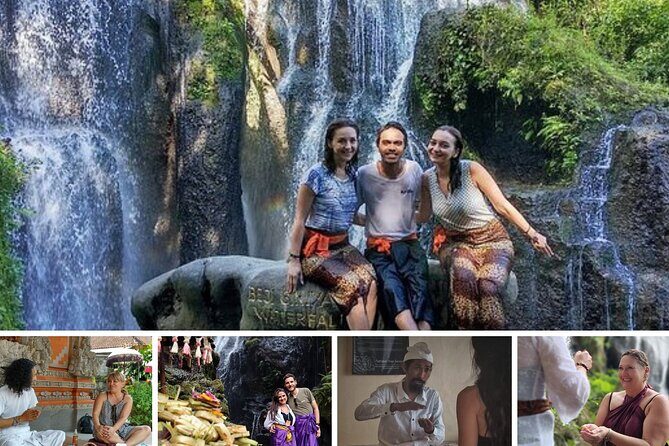
Your day starts in North Ubud with Taman Beji Griya Waterfall, framed as Water Soul Healing. This is the opening act for the tour’s holistic theme—water, reflection, and then a more personal spiritual practice right after.

Then comes palmistry, where you’ll get a look at destiny through your hands. Even if you’re skeptical, this can still work as a structured moment to slow down and think about what you want your next chapter to be.

What I’d watch for here:

  • This stop is a spiritual experience, so it’s not just for photos. Go ready to participate, listen, and follow your guide’s pacing.
  • Waterfalls can mean slick surfaces. If you’re carrying your phone loosely or you rush the stairs, you’ll have a bad time fast.

Morning market, rice fields, and Sebatu Holy Waterfall Temple

Transformative Journey of Holistic Self-Discovery - Morning market, rice fields, and Sebatu Holy Waterfall Temple
After the first spiritual start, the tour shifts into local life. You’ll visit a morning market, then spend time with rice fields—a nice change of pace from temples and healing rituals.

This section matters because it grounds the day. Bali isn’t only sacred sites and ceremonies. Morning markets are where the culture actually lives: daily errands, food, small talk, and the rhythms that keep everything moving.

Then you’ll cleanse your day at Sebatu Holy Waterfall Temple. It’s another waterfall moment, but with a temple frame, so expect a quieter, more reverent vibe than a casual viewpoint stop.

A small consideration: markets can be busy and sensory. If crowds drain you, give yourself permission to slow down and focus on one or two things—like seasonal fruits, snacks, or the way people move through the stalls.

Community spirituality: serving elders and crafting Balinese offerings

Transformative Journey of Holistic Self-Discovery - Community spirituality: serving elders and crafting Balinese offerings
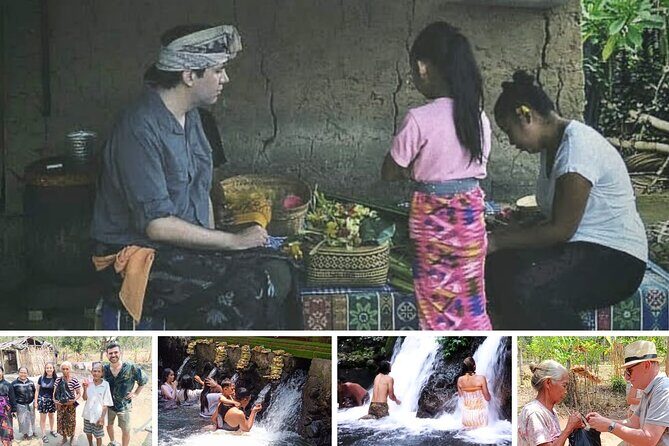
This part is where the tour gets real in the best way. You’ll serve the elderly, then learn to make Balinese offerings, and you’ll be guided through a purification step for renewal.

Serving elders is powerful because it’s not performative. It’s a role in the community, even if it’s only for a short time. You’ll probably feel the difference between passive learning and active participation.

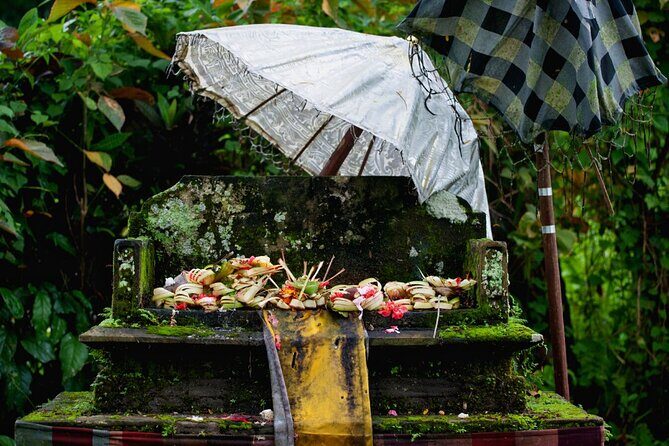
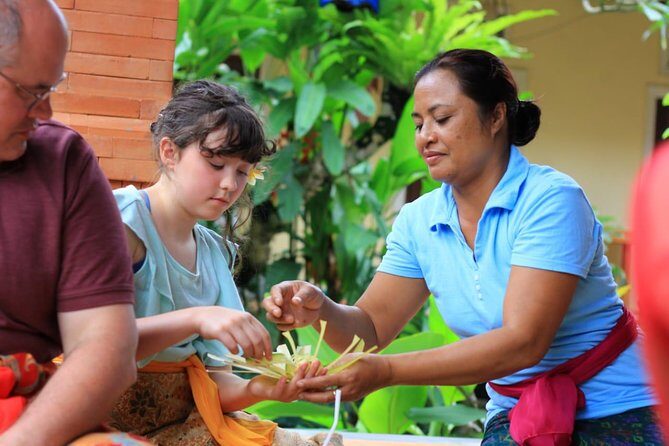
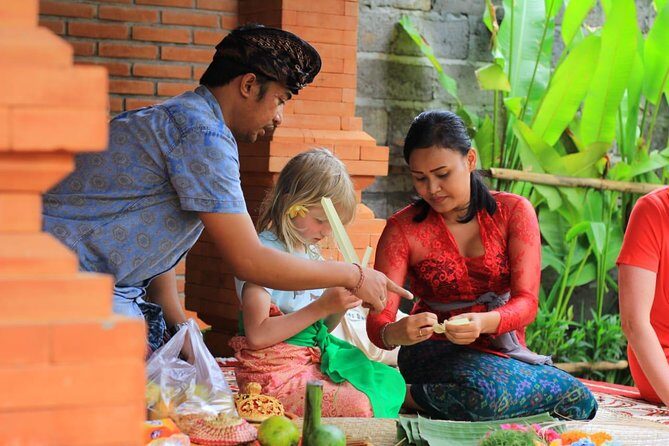
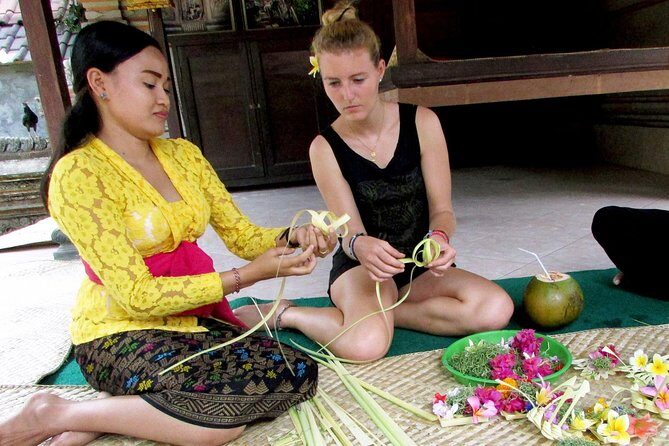
Crafting offerings is also practical culture, not just a craft demo. Offerings are part of everyday spiritual practice in Bali, so making them helps you understand what you’re seeing at temples later in the day.

If you’re not sure how to approach it, here’s a simple rule: be calm, be respectful, and follow instructions closely. You don’t need to be artistic. The goal is participation, not perfection.

The Mount Batur trek and Mengening Temple purification ritual

Transformative Journey of Holistic Self-Discovery - The Mount Batur trek and Mengening Temple purification ritual
The tour’s physical and spiritual peak is Mount Batur trek, followed by purification at Mengening Temple.

Mount Batur is not a “light stroll.” You’ll want moderate physical fitness, and you should expect the climb to take more out of you than the earlier stops. That doesn’t mean it’s impossible. It just means you’ll feel it in your legs.

Then the ritual at Mengening Temple acts like a full stop at the end of the day. After climbing and moving through sacred spaces, purification gives the experience a finish line instead of letting it fade into travel fatigue.

Practical tip from experience: start the trek with water and steady breathing, not adrenaline. If you try to power-walk the whole way, you’ll arrive stressed instead of ready.

Transportation, timing, and group size that actually help

Transformative Journey of Holistic Self-Discovery - Transportation, timing, and group size that actually help
This is a private tour, and your group is the only group that participates. I love that setup for a day with multiple sites and multiple spiritual moments, because your guide can adjust pacing without worrying about a bigger schedule grid.

The tour includes private transportation plus pickup offered. That sounds basic, but it’s huge here. North Ubud sites can be spaced out, and if you’re arranging rides yourself, you’ll spend your day managing logistics instead of focusing on what you came for.

It also uses a mobile ticket, so you won’t be scrambling for paper at the start.

If you’re planning to do this while juggling other Ubud plans, keep your day flexible. You’ll want time to breathe between stops, especially after the trek.

The guide makes the difference: Wayan and what his style brings

Transformative Journey of Holistic Self-Discovery - The guide makes the difference: Wayan and what his style brings
From the reviews, Wayan (Tridatu Bali Tours) stands out for English and confidence, with a warm personality that keeps the day relaxed. People specifically highlight that he’s friendly, well spoken, and informative, and that he shares history and traditions in a way that doesn’t feel like a lecture.

That matters for this tour type. When you’re doing palmistry and purification rituals, you need someone who can explain what’s happening and why, clearly enough that you feel comfortable participating. A good guide also helps you move through temples respectfully and on time.

If you want maximum comfort, ask questions early in the day:

  • What should I expect at each ritual stop?
  • Is there anything I should prepare mentally or physically for the trek?
  • How do you want us to handle pacing at the waterfalls?

A guide who can adjust also helps. One review notes flexibility with the schedule, which is handy when your group needs a slower moment or a quick adjustment.

What to pack and how to prepare (without overthinking it)

This tour is spiritual, active, and outdoorsy. You’ll be around waterfalls, you’ll walk rice-field paths, and you’ll trek on Mount Batur.

Based on what the itinerary includes, I’d plan for:

  • Water and decent footwear (water spots and uneven ground are part of the deal)
  • Clothes you don’t mind getting damp or dusty
  • A small bag that stays secure during the trek and waterfall moments

Also, mentally prepare for participation. This is not only watching from the sidelines. You’ll serve elders, craft offerings, and go through purification rituals.

If you’re the type who prefers pure sightseeing, you might find the spiritual components feel personal. If that’s your vibe, great. If not, treat it as a cultural window instead of a requirement to believe.

Who this tour is best for

This tour fits best if you want a day that blends spiritual practices and Balinese everyday life without turning it into a rushed checklist.

It’s a strong fit for:

  • Couples and solo travelers who want a private guide and personal pacing
  • People who like meaningful activities (serving elders, offering-making) more than only photo stops
  • Travelers who are curious about palmistry and purification rituals as cultural experiences

It may be a weaker fit if:

  • You strongly prefer low-activity days (Mount Batur trek requires moderate fitness)
  • You don’t want to participate in any ritual component, even lightly

A quick value check: is $60 worth it?

For many Ubud days, $60 disappears quickly once you add private transport, site fees, and guide time. Here, the package includes private transportation, bottled water, and all fees and taxes, with admission ticket noted as free.

So the price looks fair for a structured day with multiple stops, especially because it’s private. The big add-ons are predictable: lunch and tips.

If you’d otherwise spend money on separate rides or pay for each stop individually, this packaged flow saves you energy and time. That’s part of the real value.

Should you book this North Ubud holistic day?

I’d book it if you want more than a waterfall day. This has a thoughtful sequence: nature first, culture next, then community service and ritual, and finally the trek and purification finish.

Book it especially if you:

  • Like private pacing and clear guidance
  • Want spiritual practices connected to everyday Balinese life
  • Are comfortable with a moderate climb

If you’re unsure, give yourself a simple test: can you imagine participating in palmistry, making offerings, and joining a purification ritual without it feeling awkward? If yes, you’ll probably love the meaning you take home.

One more practical point: there’s free cancellation up to 24 hours before the experience start time, so you can book without feeling trapped.

FAQ

How long is the tour in North Ubud?

The experience runs about 5 to 6 hours.

Is pickup included?

Pickup is offered, and private transportation is included.

What does the $60 price include?

It includes all fees and taxes, bottled water, and private transportation. The experience also notes an admission ticket is free.

Is lunch included?

No, lunch is not included.

Is this a private tour?

Yes. It’s a private tour/activity, and only your group will participate.

Do I need moderate physical fitness?

Yes. You should have a moderate physical fitness level due to the Mount Batur trek.

What spiritual activities are part of the day?

The tour includes Water Soul Healing and palmistry, serving elderly people, crafting Balinese offerings, and a purification ritual connected to Mengening Temple after the Mount Batur trek.

Bali: Zipline + Watersport Trio (Jetski, Parasailing, BananaBoat)

Bali: Zipline + Watersport Trio (Jetski, Parasailing, BananaBoat) - How the Timing Works: Pickup, a Half-Day Feel, and the Ubud-to-Coast Transfer

Zipline and sea speed in one day. This combo packs a Ubud jungle zipline above rice terraces together with a Tanjung Benoa watersports trio for a fast, varied Bali adventure. I like how it mixes views from the sky with big-water fun you can feel immediately, and I like that it’s built as an all-in-one block instead of you piecing together separate tickets.

The main thing to consider is time and the long drive between Ubud and the coast. If you’re short on daylight or want a very relaxed day, plan your schedule carefully.

Key Highlights Before You Go

Bali: Zipline + Watersport Trio (Jetski, Parasailing, BananaBoat) - Key Highlights Before You Go

  • Jungle zipline in Ubud with panoramic views over rice terraces at U Fun Field
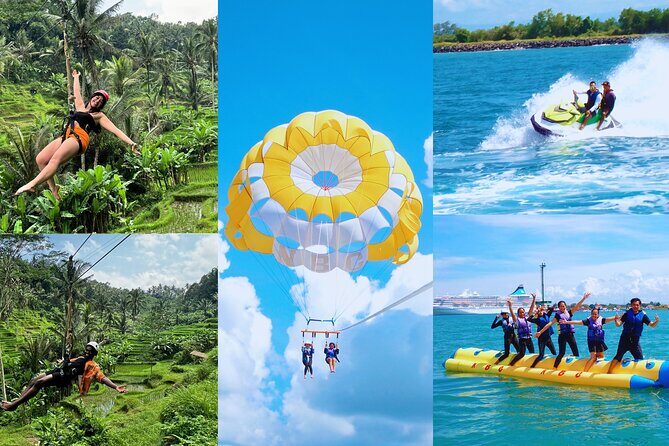
  • Three watersports in one stop at Tanjung Benoa: jetski, parasailing, and banana boat
  • Photo-friendly timing: choosing an earlier zipline hour is a smart move
  • Professional guidance + safety gear for the ocean activities
  • Optional add-ons on site like swing, skybike, and a cultural rice field walk

Ubud Jungle Zipline at U Fun Field: Views First, Then the Rush

Bali: Zipline + Watersport Trio (Jetski, Parasailing, BananaBoat) - Ubud Jungle Zipline at U Fun Field: Views First, Then the Rush
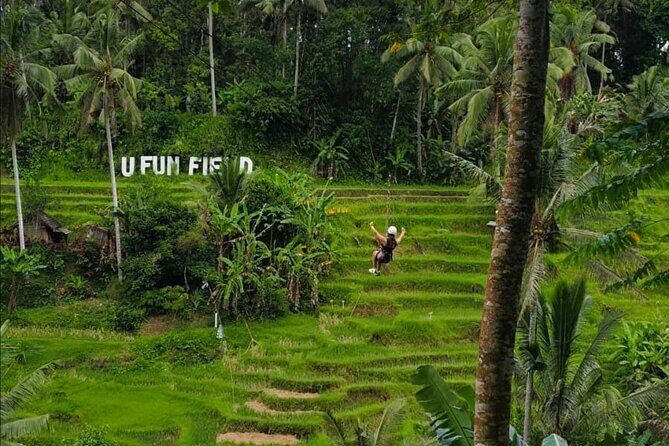
Your day starts in the countryside around Ubud at U Fun Field, the spot known for the Wings of Bali experience and the world’s largest dream catcher swing. Even before you go hands-on, the area’s built for “look up, take photos, smile” energy. Rice terraces and jungle views surround you, so the scenery feels like part of the ride, not just a background.

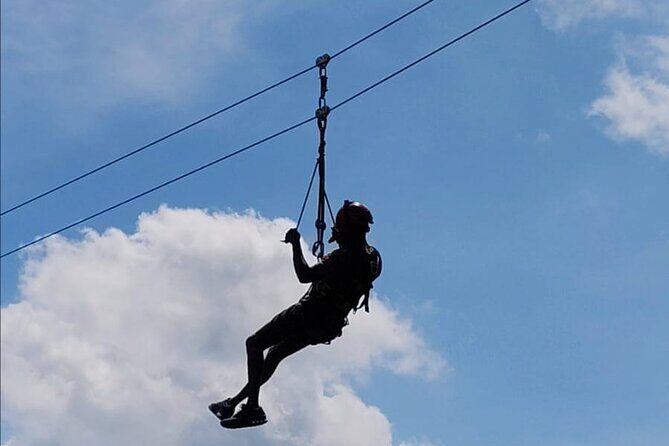
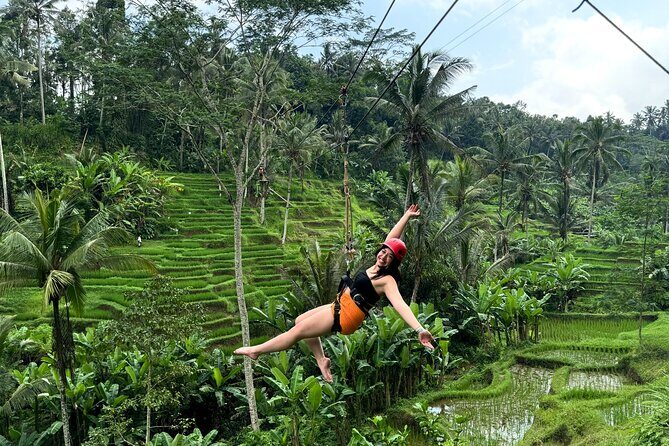
The core activity here is a zipline above a green valley. You’ll get that classic aerial feeling—harness on, breathe deep, and then glide over the rice fields below. It’s not a full-day, complicated course. The point is to give you a clear thrill with great views and a quick win for photos.

You should also know there are optional extras on-site. Depending on what’s available when you arrive, you might be able to add things like a swing, skybike, or a cultural rice field walk. If you’re the type who likes to stretch a short visit into a bigger story, this is your chance without leaving the area.

What to watch for at this stop

Ziplining is listed as about 1 hour total here. That’s short enough that the day stays fun and not exhausting, but it also means you’ll want to arrive ready. Wear comfortable shoes, keep your valuables secure, and don’t overpack your pockets with stuff you don’t want to think about while you’re strapped in.

Tanjung Benoa Watersports at NBC Watersport: Jetski, Parasailing, Banana Boat

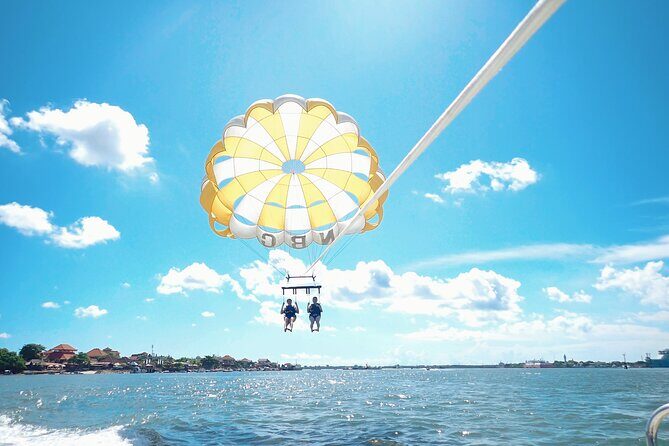
After the jungle skies, you’ll head to Tanjung Benoa, Bali’s well-known watersports hub. Your second stop is at NBC Watersport, where you’ll run through three activities in a single ocean session.

This is where the day turns into full-on water action:

  • Jetski ride: hop on a high-powered jetski and ride across Bali’s turquoise waters. It’s the loud, fast, adrenaline option.
  • Parasailing: strap in and fly high above the beach and bay for bird’s-eye views. This part surprises people because it often feels calmer than they expect, even though you’re up in the air.
  • Banana boat ride: hold on, brace for impact, and laugh your way through the waves—great for friends and families.

All safety gear and instructions are provided, and you’ll have a professional team guiding you. That matters because watersports can be intimidating if you’ve never done them. The setup is designed to get you into the water with clear guidance rather than winging it yourself.

This stop is also about 1 hour. That’s one of the best parts of the format: you can get a big “I did it” payoff without burning your whole day in lines or changing locations five times.

What you should plan for on the beach

You’ll end up soaked at the banana boat stage, and you’ll likely get wet during the others too. Bring quick-dry swimwear and a change of clothes for later. If you’re sensitive to sun, you’ll want sunscreen and some cover for the ride between activities.

How the Timing Works: Pickup, a Half-Day Feel, and the Ubud-to-Coast Transfer

Bali: Zipline + Watersport Trio (Jetski, Parasailing, BananaBoat) - How the Timing Works: Pickup, a Half-Day Feel, and the Ubud-to-Coast Transfer
The total experience is listed as 1 to 5 hours, and that range makes sense once you factor in pickup and transit. In real life, the day can feel like a half-day adventure, but the schedule can expand when pickup routes and traffic are involved.

Pickup is offered, which is a big deal here. The two activity zones are not next door to each other: Ubud in the interior and Tanjung Benoa on the coast. One past solo traveler called out that the trip itself from areas like Kuta and Nusa Dua can be long, but the thrill combination made the journey feel worth it.

So here’s how you should think about your calendar:

  • If you want a quick hit of action, this can work as your main “active block.”
  • If you want a slow start and many breaks, you may feel rushed because the day is built around two fixed activity windows.

A smart scheduling tip

There’s a practical pro tip from the experience vibe: choose the earlier zipline hour if you can. Early timing tends to help you get more comfortable with the harness and avoid feeling like you’re racing the clock later in the day.

Safety and Comfort: Moderate Fitness and Getting Ready for Straps and Splash

Bali: Zipline + Watersport Trio (Jetski, Parasailing, BananaBoat) - Safety and Comfort: Moderate Fitness and Getting Ready for Straps and Splash
The experience asks for moderate physical fitness. That doesn’t mean you need to be an athlete. It does mean you should feel comfortable with short bursts of physical activity: walking on uneven terrain, following instructions quickly, getting in and out of water safely, and handling the harness setup.

For parasailing and ziplining, it helps if you can stay calm while you’re secured. If you feel nervous about height, you’ll still have guidance and safety gear. In one couple’s experience, they were uneasy about parasailing at first, but the team’s reassurance made it go smoothly.

What to bring

You’re going to want:

  • Swimwear (or clothes you’re fine getting wet)
  • A towel or something you can dry off with quickly
  • Sunscreen and sunglasses
  • A dry change of clothes for after the water session

Service animals

Service animals are allowed, which can matter for travelers who need that support. If you have specific needs, it’s worth checking details when you book so the team can plan appropriately.

Value for $23: The Real Math of Combining 4 Thrills in One Day

Bali: Zipline + Watersport Trio (Jetski, Parasailing, BananaBoat) - Value for $23: The Real Math of Combining 4 Thrills in One Day
At $23 per person, this is priced to feel like a value play—especially because you’re not choosing between land and sea. You’re getting:

1) Zipline over rice terraces

2) Jetski

3) Parasailing

4) Banana boat

Even if you’ve never done watersports before, the mix is smart. Jetski gives motion and speed. Parasailing gives the height-and-views moment. Banana boat gives the laughing, group energy. Then you top it off with a different kind of thrill in the jungle.

The “all-in-one” structure is the main value. Instead of coordinating separate operators, separate pickups, and separate timing, you’re staying in a defined flow. One person even described it as nonstop thrill because the day moves from jungle to beach quickly.

Who gets the best value

This is best if you want a single day that feels like a highlight reel:

  • Solo travelers who don’t want to plan multiple bookings
  • Couples looking for variety without a huge time commitment
  • Families who want something active that still feels fun for kids
  • Friend groups who want big group moments in the waves

Private Group Energy: Why Only Your Group Matters Here

Bali: Zipline + Watersport Trio (Jetski, Parasailing, BananaBoat) - Private Group Energy: Why Only Your Group Matters Here
This experience is listed as private, meaning only your group participates. That changes the feel. You’re not competing with a crowd schedule. You also get more flexibility in pacing, especially if your group moves slower or wants clearer explanations before you do the harness and water steps.

For first-time visitors, this can also reduce stress. One solo traveler specifically praised the attentiveness of the agent who helped arrange everything, describing the day as smooth and easy even with the travel time between zones.

Who Should Book This Zipline + Watersport Trio

Bali: Zipline + Watersport Trio (Jetski, Parasailing, BananaBoat) - Who Should Book This Zipline + Watersport Trio
This tour fits you if:

  • You want one ticket for both sky and sea fun
  • You like short, intense activities more than long sightseeing days
  • You’re okay with getting wet and moving between locations
  • You want a day where the staff provide instructions and keep things running

It might not be the best fit if:

  • You want a calm, slow day with lots of downtime
  • You’re very weather-dependent and can’t shift plans
  • You have mobility limits that make changing between land and water difficult (the experience requires moderate fitness)

My Booking Checklist: Things I’d Confirm Before You Pay

Bali: Zipline + Watersport Trio (Jetski, Parasailing, BananaBoat) - My Booking Checklist: Things I’d Confirm Before You Pay
Before you lock it in, I’d double-check a few practical points that matter for enjoyment:

  • Your time window: confirm what “1 to 5 hours” means for your exact pickup time and session slots
  • Order of activities: you’ll run the zipline first, then watersports at the coast
  • On-site extras: ask what’s available at U Fun Field that day (swing, skybike, rice field walk)
  • Weather dependency: the experience requires good weather, and if it’s canceled due to poor weather, you’ll be offered a different date or a full refund
  • Your “soaked” tolerance: plan clothes accordingly, especially for banana boat

Also, if you’re traveling with a service animal, that’s supported. Still, it’s smart to mention it clearly during booking so the team can plan.

Should You Book This Tour?

I’d book it if you want a day in Bali that feels like two totally different worlds—rice terraces above you, then ocean action under you—without turning it into a logistics project. For $23, the value is in the packed variety: zipline plus jetski, parasailing, and banana boat.

I’d think twice only if the long transfer between Ubud and Tanjung Benoa will clash with your schedule or if you strongly prefer low-energy plans. If you can handle a drive, follow safety instructions, and don’t mind getting wet, this one is a fun, straightforward way to get a lot of thrill per hour.

FAQ

What activities are included in the Bali Zipline + Watersport Trio?

You’ll do a zipline at U Fun Field, then at the coastal watersport stop you’ll do jetski, parasailing, and a banana boat ride. Safety gear and instructions are provided.

Where does the zipline part take place?

The zipline runs at U Fun Field in the Ubud area, with views over rice terraces and jungle scenery.

Where are the watersports done?

The watersports are done at Tanjung Benoa, at the NBC Watersport facility on Bali’s southern coast.

How long does the experience take, and is pickup included?

The total experience is listed as about 1 to 5 hours, depending on timing. Pickup is offered.

Is this tour private?

Yes, it’s listed as private, so only your group participates.

What fitness level do I need?

The experience asks for moderate physical fitness.

What if the weather is bad or I need to cancel?

The experience requires good weather. If it’s canceled due to poor weather, you’ll be offered a different date or a full refund. Free cancellation is available up to 24 hours in advance for a full refund.
Are service animals allowed?

Yes, service animals are allowed.

Bali 2 Days and 1 Nights of Nusa Penida and Lembongan Tour

Bali 2 Days and 1 Nights of Nusa Penida and Lembongan Tour - Day 1 on Nusa Penida: Kelingking, Angel’s Billabong, Broken Beach, Crystal Bay

This two-day plan strings together Bali and two of the Nusa Islands in a way that feels efficient but still outdoorsy. I like the focus on the big, well-known viewpoints rather than lots of random stops, and I also like that many sights have admission tickets included plus lunch. The main thing to weigh is that the package is without lodging, so you’ll need to book a hotel in Nusa Penida and be ready for a morning pickup.

You start early with a 6:30 am pickup from the Ubud area, then you’re shuttled to Sanur Harbor for fast-boat crossings. The tour is private in the sense that only your group participates, and the pace fits best for people with moderate physical fitness.

Also, the experience seems to run on friendly, capable drivers. Names that come up include Mr. Naya, Mr. Ajung, driver Koming, Adi, and Big Budi, and the common thread is time management and smooth handoffs so you don’t feel lost between ports, boats, and stops.

Key highlights you’ll feel right away

Bali 2 Days and 1 Nights of Nusa Penida and Lembongan Tour - Key highlights you’ll feel right away

  • Early departure that buys you more daylight for viewpoints
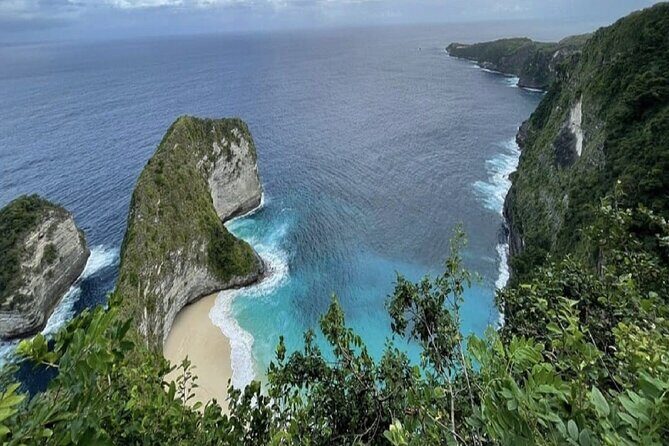
  • Kelingking, Angel’s Billabong, Broken Beach, Crystal Bay in one Penida day
  • Lembongan highlights like Yellow Bridge plus mangroves and seaweed farming
  • Most admission tickets included, with Dream Beach free
  • Lunch included on both island days
  • Private group format with pickup and drop on the mainland

Two-Day Island Jumping: What You’re Really Paying For

At $180 per person, you’re not just paying for boat rides. You’re paying for a full day-to-day flow: pickup on the mainland, transport to the harbor, fast-boat transfers, guided stops with timed entry where it’s included, and then the return drive from Sanur after the second island day.

What makes this good value is the balance of famous lookouts plus a couple of more local, practical island experiences. Penida is famous for its dramatic coastal formations, while Lembongan adds more variety with mangrove scenery and seaweed cultivation you can actually picture in daily life.

Getting There Early: Sanur, Fast Boats, and the 6:30 am Start

Bali 2 Days and 1 Nights of Nusa Penida and Lembongan Tour - Getting There Early: Sanur, Fast Boats, and the 6:30 am Start
The day starts at 6:30 am, which is early enough that you’ll want breakfast ready to go before pickup. The payoff is that you reach the harbor with time to get everything moving without panic, and you get to spend daylight on the viewpoints.

Your schedule is built around fast-boat travel between islands, and that matters because it compresses what you can fit in. Instead of spending your trip on slow transit, you spend it on seeing multiple Penida and Lembongan sites across two days.

Day 1 on Nusa Penida: Kelingking, Angel’s Billabong, Broken Beach, Crystal Bay

Bali 2 Days and 1 Nights of Nusa Penida and Lembongan Tour - Day 1 on Nusa Penida: Kelingking, Angel’s Billabong, Broken Beach, Crystal Bay
Day 1 is a big Penida sweep, and it’s organized like a viewpoint circuit. Each of the four main stops lists about an hour on site, with admission tickets included at those stops, so you’re not wondering whether entrances are extra.

Kelingking Beach

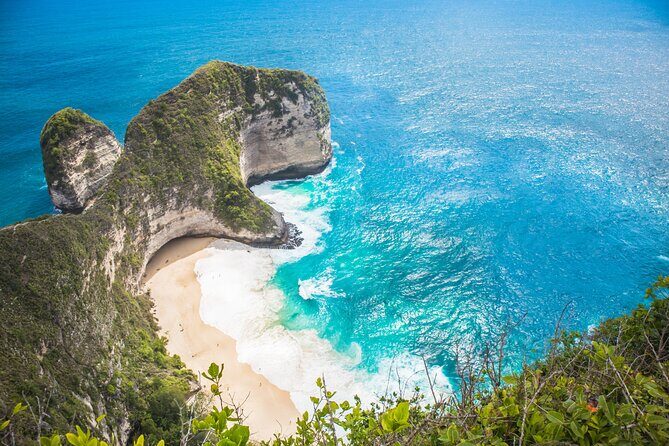
Kelingking is the “everyone knows it” stop on Penida. It’s one of the most visited highlights and usually the first big wow moment. Since the tour specifies a moderate fitness level, plan on some walking and uneven terrain as you move around the lookouts.

Angel’s Billabong

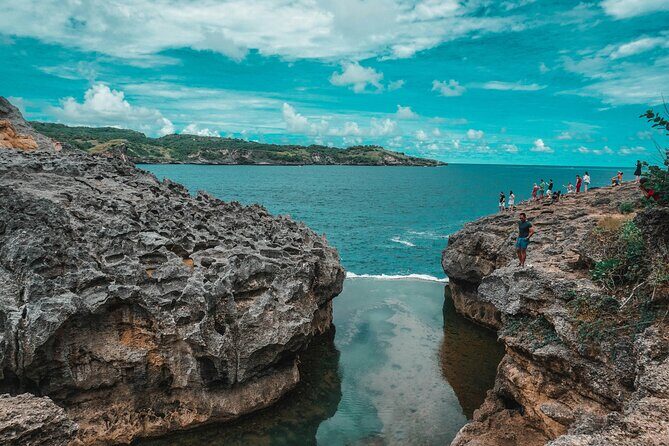
Angel’s Billabong is a natural rock lagoon, which is a different feel from cliff-only viewpoints. It’s built into the classic Penida route for a reason: the rock formation framing the water gives you that postcard geometry without needing much imagination.

Broken Beach

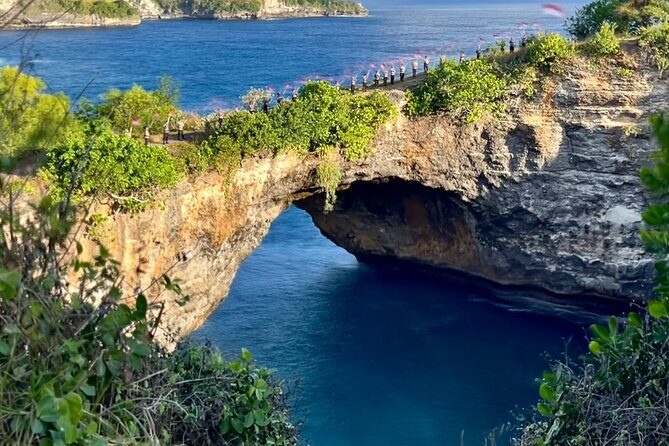
Broken Beach is another top Penida attraction, known for the scenic impact of the sea meeting the rocks. If you like places where nature does the design work, this is where you start seeing the island’s character as a connected system, not just separate photo stops.

Crystal Bay Beach

Crystal Bay is the last Penida stop on the first day’s circuit. You’ll get time here plus lunch, which is smart because it keeps the day from ending on an empty stomach and makes the final stretch feel less rushed.

Practical note on Day 1 pacing

Because Day 1 stacks four major stops, you’ll want comfortable footwear and a small day bag with water. The tour’s hour-per-stop structure helps, but you should still expect a lot of movement across the island.

After Penida: Booking Your Own Hotel Without Stress

Bali 2 Days and 1 Nights of Nusa Penida and Lembongan Tour - After Penida: Booking Your Own Hotel Without Stress
This package is without accommodation, meaning you’ll book your own lodging in Nusa Penida. After the first day’s sightseeing and lunch, the tour includes getting you to your accommodation on Penida.

That means your hotel choice affects your experience more than you might expect. I’d aim for a place that’s easy to reach when the next morning pickup happens, because the tour will pick you up in the morning on Day 2 from Penida.

Day 2 on Nusa Lembongan: Yellow Bridge, Mangroves, Seaweed Farm

Bali 2 Days and 1 Nights of Nusa Penida and Lembongan Tour - Day 2 on Nusa Lembongan: Yellow Bridge, Mangroves, Seaweed Farm
Day 2 shifts from Penida’s dramatic coastal viewpoints to a more varied island program. It starts with a morning pickup on Nusa Penida and then a speed-boat ride to Lembongan, followed by a set of attractions that balance sights with local life.

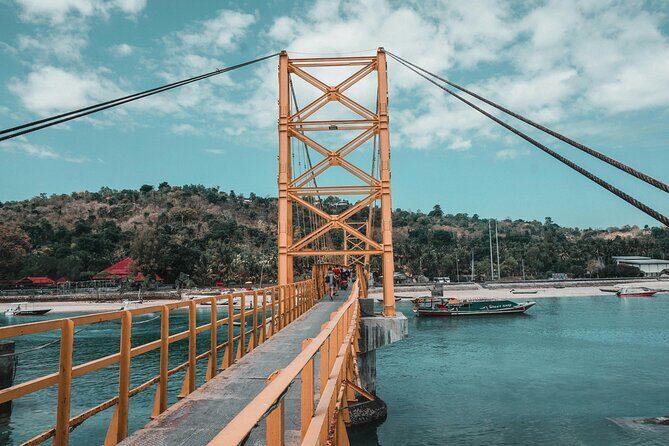
Yellow Bridge

Yellow Bridge is one of the signature Lembongan landmarks connecting the islands of Nusa Lembongan and Nusa Ceningan. You’ll get about an hour here, which is enough time to take photos, enjoy the view, and reset before the more activity-focused stops.

Mangrove Tour at Nusa Lembongan

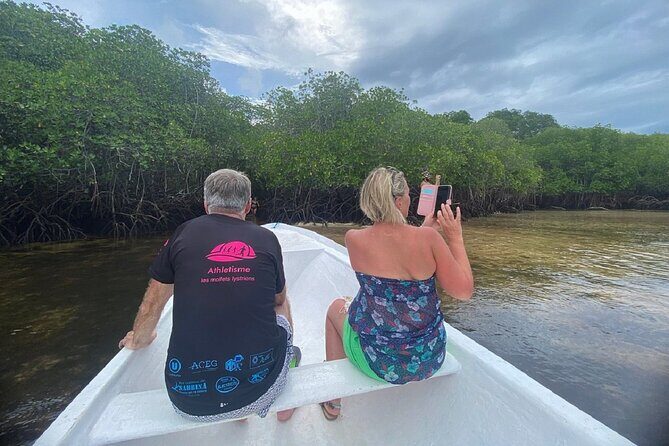
Next up is a mangrove exploration. This part is explicitly about the ecosystem—protected mangrove habitat that supports the coastline and beach areas. It’s a great change of pace after cliffside viewing, and it adds a quieter, more grounded feel to the day.

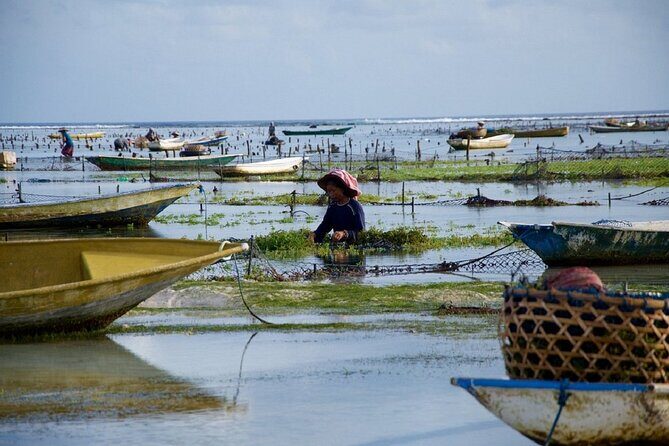
Seaweed Farm area

The seaweed farm stop is one of the most practical learning moments in the plan. Seaweed is farmed in coastal areas by the local community, and it gives you a real sense of how people earn a living on the water and around the shoreline.

Lunch on Lembongan

You’ll enjoy lunch after the seaweed farm area, which keeps the day from turning into a long string of standing and walking. It’s also timed so you can recharge before the final waves-and-beach stops.

Devil’s Tears and Dream Beach: Finishing Strong on Lembongan

Bali 2 Days and 1 Nights of Nusa Penida and Lembongan Tour - Devil’s Tears and Dream Beach: Finishing Strong on Lembongan
Day 2 closes with two classic Lembongan experiences: one that’s all about wave spectacle, and one about sand and water.

Devil’s Tears

Devil’s Tears is where waves crash against rocks and create dramatic splashes. You’ll get about an hour here to watch the action and take in the power of the coast—very different from calm lagoon vibes.

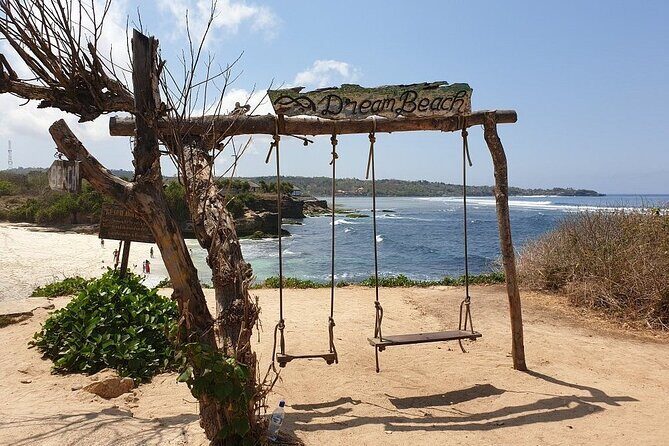
Dream Beach

Dream Beach rounds out the day with white sand and clear water. It lists admission as free, and you’ll have about an hour on site, including time that can be used for swimming since it’s known for that.

Getting back to Bali

After Dream Beach, you board a fast boat back to Sanur Harbor. From there, a driver picks you up and returns you to your hotel on the mainland in Bali, so you’re not left figuring out the final leg.

Food, Tickets, and Transport Details That Affect Comfort

Bali 2 Days and 1 Nights of Nusa Penida and Lembongan Tour - Food, Tickets, and Transport Details That Affect Comfort
A few built-in inclusions make this tour easier to plan.

  • Admissions: Day 1 includes admission tickets for Kelingking, Angel’s Billabong, Broken Beach, and Crystal Bay. Day 2 includes admission tickets for Yellow Bridge, Mangrove Point, Seaweed Farm, and Devil’s Tears. Dream Beach is listed as free.
  • Lunch: You get lunch during the Day 1 sequence and again on Day 2.
  • Pickup and drop: Pickup is offered and you’ll be taken to your Penida accommodation after Day 1, then picked up again the next morning. On the final day you return to mainland Bali from Sanur.

The tour also uses a mobile ticket, and confirmation comes at booking time. That reduces the usual “what exactly do I show” stress, especially when you’re moving between boats and multiple stops.

Who This Tour Fits Best (And Who Should Skip It)

Bali 2 Days and 1 Nights of Nusa Penida and Lembongan Tour - Who This Tour Fits Best (And Who Should Skip It)
This is a strong match if you want a structured, two-island trip without spending your time coordinating ports and tours. It’s also a good fit if you like a clear plan with major sights and you’re okay with a fast pace across two full days.

It might feel like too much if you want a slow vacation with long unplanned breaks. The schedule is set, and the day starts early, so people who dislike morning starts or prefer lots of downtime may find the pace hard.

The good news: the tour does call out moderate physical fitness. That’s your clue to bring the right footwear and accept that some paths and viewpoints may require steady walking.

Price Value Check: Is $180 a Good Deal?

For $180 per person, you’re paying for coordinated transport, island-to-island fast-boat travel, scheduled time at multiple named attractions, and inclusions like lunch and most entrance fees. In places like Penida and Lembongan, tickets and transfers can add up quickly if you book everything separately.

The value is especially good if you’re the type who hates planning. A big chunk of the work is done for you: pickup, harbor rides, timed stops, and the handoff back to your mainland hotel. If you already have a good Penida hotel lined up, you’re basically buying a ready-made two-day route.

Should you book Bali Golden Tour’s Penida and Lembongan 2D/1N?

I’d book this if you want the classic highlights of Penida and Lembongan in a clean two-day structure, with meals and most admissions already handled. The included lunches and admission tickets reduce surprise costs, and the private-group format means you’re not stuck in a huge crowd at every stop.

I’d think twice if you’re not comfortable with early starts or you don’t like moving from one viewpoint to the next. Since lodging isn’t included, also double-check your Penida hotel situation so the morning pickup on Day 2 won’t turn into a scramble.

If you go into it expecting active days and a well-run route, this is a smart way to get real variety: Penida’s dramatic rock scenery paired with Lembongan’s mangroves, seaweed farming, wave spectacle, and a final beach break.

FAQ

Is accommodation included in this tour?

No. The tour is without lodging. You’ll need to book your own hotel in Nusa Penida, and the tour will take you to your accommodation after Day 1.

What time does the tour start?

Pickup starts at 6:30 am, with transport from the Bali side toward Sanur Harbor for the boat ride.

How long is the tour?

It’s a 2-day trip with 1 night, approximately 2 days total.

What islands and stops are included?

You’ll visit Nusa Penida and Nusa Lembongan. On Penida, stops include Kelingking Beach, Angel’s Billabong, Broken Beach, and Crystal Bay Beach. On Lembongan, stops include Yellow Bridge, a Mangrove Tour, a Seaweed Farm area, Devil’s Tears, and Dream Beach.

Are entrance fees included?

Admission tickets are included for the listed stops on both days (with Dream Beach listed as free).

Can I cancel for a refund?

Yes. Free cancellation is available up to 24 hours in advance of the experience’s start time for a full refund. If you cancel less than 24 hours before, the amount paid won’t be refunded.

Bali Buggy UTV Adventure with Ubud River Rafting and Lunch

Bali Buggy UTV Adventure with Ubud River Rafting and Lunch - Meeting point at Mahkota Rafting Bali and how pickup usually works

Those muddy UTV trails grab you.

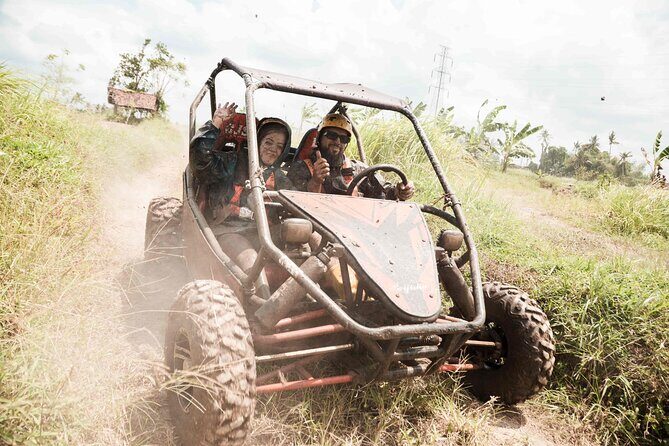
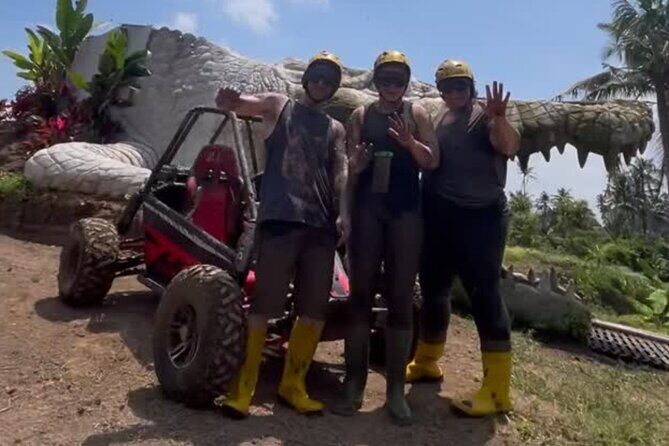
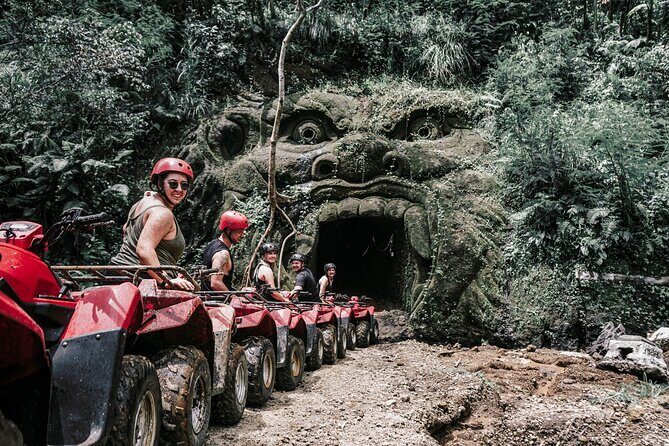
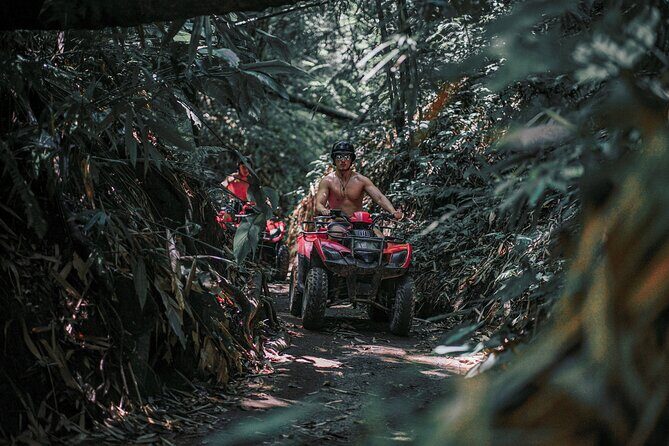
This Bali UTV buggy adventure in Ubud pairs off-road driving with a Ubud river rafting-style water stop and a proper Indonesian lunch. What makes it interesting is the focus on real jungle routes—muddy tracks, rice fields, river crossings, and even splash points—guided by locals who keep the day moving and on-schedule.

I especially like the balance of thrill + comfort. You get professional safety gear (helmet, boots, and raincoat if needed), plus towel and shower facilities after the ride so you’re not stuck smelling like campfire mud.

One drawback to plan for: this is an intentionally messy activity. You will get wet and dirty, and the driving time is built around fun terrain rather than careful, smooth track racing.

Key points before you go

Bali Buggy UTV Adventure with Ubud River Rafting and Lunch - Key points before you go

  • UTV time is the main event: about 1 hour riding through jungle trails, rice fields, and muddy river paths
  • Combo day in one block: Ubud river rafting/tubing plus lunch, all with a single pickup-and-return flow
  • You get cleaned up: towel and shower facilities after the adventure
  • Guides make a difference: people like Adi, Santika, and Wayan are repeatedly praised for being friendly, helpful, and safety-minded
  • Insurance is included: coverage is part of the package, not an optional extra

UTV + Ubud river rafting: what you’re really buying

Bali Buggy UTV Adventure with Ubud River Rafting and Lunch - UTV + Ubud river rafting: what you’re really buying
This isn’t a sit-and-watch tour. It’s a hands-on, engine-thumping day where you drive an all-terrain buggy through jungle conditions that look like they were meant for off-road vehicles.

Your day is structured around three practical goals: ride, get wet, and eat. The exact order can vary by the day’s flow, but the vibe stays consistent—go out for the adventure, come back ready for a shower, then eat a filling Indonesian meal.

The “river rafting” part in the mix is what makes this feel like more than just a UTV loop. Expect water contact and a change of pace from the dusty, muddy sections.

Meeting point at Mahkota Rafting Bali and how pickup usually works

Bali Buggy UTV Adventure with Ubud River Rafting and Lunch - Meeting point at Mahkota Rafting Bali and how pickup usually works
The meeting point is Mahkota Rafting Bali, Jl. Raya Kedewatan No.47a, Kedewatan, Kecamatan Ubud, Kabupaten Gianyar, Bali 80571. The activity returns you to the same meeting point, which keeps things simple when you’re trying to plan the rest of your day in Ubud.

Pickup is offered, and that matters if you’re not renting a scooter. In real-world examples from the day’s guides, pickup can happen quickly—people have described communication working fast and guides showing up on time from villas.

If you have a tight schedule, I’d treat this as a single block—about 2 hours total (approx.)—and don’t stack another activity right afterward. Short tours work best when you stay flexible.

The off-road UTV ride: jungle trails, rice paddies, and splash points

Bali Buggy UTV Adventure with Ubud River Rafting and Lunch - The off-road UTV ride: jungle trails, rice paddies, and splash points
This is a powerful UTV buggy ride through mixed terrain: jungle trails, rice fields, rivers, and muddy sections. It’s not just scenic driving. You’re dealing with ruts, slick patches, and wet ground—so your body works even when you’re just sitting and steering.

The package also includes safety support: helmet and boots, plus a raincoat if needed. That raincoat detail is important because the ride description includes small waterfall splashes. Even if it’s not raining, you can still end up drenched from the route.

One thing I like about how this is set up: you don’t have to be a “motor person.” Most of the control comes from having a guide lead the way and keeping your focus on the terrain ahead, while the group rolls through in a managed rhythm.

And yes, the reviews repeatedly reinforce that you’ll come back muddy. A helpful tip from one experience: bring a change of clothes for after. Your shower helps, but dry clothes are what make the ride feel like it ended well.

Water time for the Ubud river rafting part and why it’s worth the mess

Bali Buggy UTV Adventure with Ubud River Rafting and Lunch - Water time for the Ubud river rafting part and why it’s worth the mess
The combo format makes the day feel more complete. The UTV gets you into the back lanes and muddy paths; the river segment adds motion and that classic Bali water feel.

The tour description talks about going through rivers and splash points, and the combined Ubud river tubing/rafting angle turns that into a real highlight instead of a quick stop. For many people, the contrast is the magic: dry-ish driving energy, then wet-course fun.

Practical note: if you’re the type who hates getting wet, this may feel like a hassle. If you’re okay with it—like, properly okay—this is the part that makes the day memorable.

Lunch after the ride: shower first, then eat like you mean it

Bali Buggy UTV Adventure with Ubud River Rafting and Lunch - Lunch after the ride: shower first, then eat like you mean it
Included in the package is a delicious Indonesian lunch or meal package after the adventure, plus towel and shower facilities. That sequence is how you keep energy up: ride hard, wash off, then sit down and refuel.

From a value standpoint, this matters. A lot of “cheap” adventure days skip the recovery part, and you end up buying overpriced snacks later. Here, the meal is part of the package, which makes it easier to stick to your budget.

Also, locker or changing room access is included, so you can manage your belongings without playing guessing games about where to stash things.

What should you expect from the meal? The details are described generally (Indonesian lunch/meal package), so I’d assume it’s meant to be filling and simple rather than a fancy restaurant-style menu. That’s not a downside for an adventure day.

Guides, safety gear, and the human touch that makes it smoother

Bali Buggy UTV Adventure with Ubud River Rafting and Lunch - Guides, safety gear, and the human touch that makes it smoother
This is led by experienced local guides, and the repeated praise has a clear theme: guides are friendly, helpful, and watch the group.

Names that come up again and again include Adi, Santika, Wayan, and Dwi. People described these guides as staying upbeat, taking care of the ride flow, and helping with real-life issues. One example includes a guide turning the route around when a friend felt sick and getting the person back to the villa—no drama, just action.

That kind of responsiveness is exactly what I’d want on a day that includes mud and water. Even when conditions get messy, you want someone who can adjust without losing the group.

Safety gear is standard in the package: helmet, boots, and raincoat if needed. Insurance coverage is included too. I still recommend you listen closely to the guide at the start—those first instructions shape how comfortable you feel when the terrain gets bumpy.

Price and value: about $30.55 for a full adventure block

Bali Buggy UTV Adventure with Ubud River Rafting and Lunch - Price and value: about $30.55 for a full adventure block
At $30.55 per person, this price sits in the “serious bargain” range for a combo that includes UTV time, water time, safety gear, insurance coverage, shower access, and lunch. The reason it can feel like good value is that it bundles items that are often priced separately on Bali.

You’re also not just paying for the ride itself. You’re paying for the practical support: pickup offered, a guide leading the route, lockers/changing room access, and a post-ride reset.

The trade-off for value is time. The tour length is about 2 hours total, so it’s not a slow, lingering “scenic tour.” If you’re craving an all-day nature immersion, you might want a longer itinerary. If you want a fast hit of Ubud adventure, this works.

One more timing detail: it’s commonly booked well in advance (around 68 days on average). If you’re traveling in busy season or have a tight Ubud schedule, reserve early so you’re not hunting for last-minute availability.

Who this UTV + rafting combo suits best

Bali Buggy UTV Adventure with Ubud River Rafting and Lunch - Who this UTV + rafting combo suits best
This is a strong match if you want active fun without needing expert skills. You don’t have to know how to drive an ATV before showing up, and the guide-led format helps keep the experience manageable.

It also works well for groups. People have described it as enjoyable with friends and also suited for solo participants, which usually means the operation can handle different comfort levels.

It may be less ideal if:

  • you hate getting wet or muddy
  • you want a slow, photo-only scenic drive
  • you’re hoping for lots of instruction time and quiet pacing

If you’re a couple, this can be a fun day because you’ll experience the same ride and water moments together, then relax after with shower access and lunch.

Should you book Bali Buggy UTV with Ubud river rafting and lunch?

I’d book it if you want an affordable, guided, action-heavy Ubud day where you come back with stories—mud, water, and off-road driving included. The included shower and towel access is a big practical plus, and the lunch means you’re not scrambling for food after you’re wiped out.

I would skip it if you’re sensitive to mess and wet clothes. This tour’s whole point is terrain contact, and the splash-and-mud elements are part of the plan.

If you do book, pack smart: bring a change of clothes, wear footwear that can handle wet ground, and plan to let the guide set the rhythm. With that mindset, this is the kind of Bali activity that feels like you actually left the main road behind.

FAQ

How long is the Bali Buggy UTV adventure with rafting and lunch?

The total duration is listed as about 2 hours (approx.).

Is pickup offered from Ubud?

Yes. Pickup is offered, and the tour returns you to the meeting point.

Where is the meeting point?

The start point is Mahkota Rafting Bali, Jl. Raya Kedewatan No.47a, Kedewatan, Kecamatan Ubud, Kabupaten Gianyar, Bali 80571.

What is included in the UTV portion?

You get 1 hour of UTV buggy riding through jungle, rice fields, rivers, and muddy terrain, with a professional local guide and safety equipment.

Does the tour include safety gear?

Yes. It includes a helmet, boots, and a raincoat if needed.

Is lunch included?

Yes. You’ll receive delicious Indonesian lunch or a meal package after the ride.

Do I get a shower after the activity?

Yes. The package includes towel and shower facilities, plus locker/changing room access.

Is insurance included?

Yes. Insurance coverage is included in the tour package.

What is the cancellation policy?

You can cancel for a full refund up to 24 hours before the experience starts. If you cancel within 24 hours, the amount paid is not refunded.

Private Tour: Ubud Day Tour with Traditional Offering Lesson

Private Tour: Ubud Day Tour with Traditional Offering Lesson - Tegalalang Rice Terrace: walking land that still feeds people

Ubud feels personal on this full-day tour. You get a packed-but-balanced mix of sacred sites, nature, crafts, and even a hands-on tradition at a local home. It’s also timed well for a day trip: the tour starts at 8:00 am and runs about 10 hours, so you’re back with daylight still in your pocket.

I really like that the day includes a ceremonial offering lesson with a local family, not just a quick temple stop. I also love the variety: monkey forest wildlife, the famous rice terraces, and a look at how coffee makers deal with luwak. One thing to consider: the schedule is full, so you’ll spend a fair amount of time in the car between stops and marketplaces can feel crowded.

Key highlights at a glance

Private Tour: Ubud Day Tour with Traditional Offering Lesson - Key highlights at a glance

  • Balinese offering lesson in a local home for a more human, less staged cultural experience
  • Sacred Monkey Forest Sanctuary with long-tailed macaques and a temple sanctuary guarded by monkeys
  • Tegalalang Rice Terrace walking time that focuses on how locals cultivate rice
  • Ubud Traditional Art Market with a free admission hour and a chance to bargain
  • Coffee with luwak and a visit to where the story behind the world-famous beans starts

A 10-hour Ubud mix of animals, temples, crafts, and coffee

This is the kind of Ubud day that works when you want more than one “great view.” You’re not just ticking boxes. The day is designed around how Ubud’s locals live—ritual, farming, daily commerce, and craft work—so you get the feeling of a real place, not a theme park.

The tour is priced at $61.54 per person and is built around included basics that matter on a long day: a local guide, hotel pickup and drop-off, lunch, and bottled water. Even though it’s listed as private, the operator also caps the day at 15 travelers, which usually helps keep the overall operation smoother if multiple bookings are running.

If you’re traveling with kids or you want a day that feels structured but still flexible, this format is a strong choice. You’re not on your own trying to stitch together transport and tickets.

Sacred Monkey Forest Sanctuary: what to expect in the green sanctuary

Private Tour: Ubud Day Tour with Traditional Offering Lesson - Sacred Monkey Forest Sanctuary: what to expect in the green sanctuary
The first stop is the Sacred Monkey Forest Sanctuary, with about an hour to walk the paths in the tropical greenery. This is where you’ll see more than 600 long-tailed macaques close to the center of Ubud, and you’ll also spot a sacred temple sanctuary that’s guarded by the monkeys.

Practical tip: treat this like being in an animal environment, not a zoo. Keep your phone and small items secure, don’t reach for the monkeys, and expect that they may investigate bags or loose pockets. If you go into it with calm patience, the photos and people-watching are a lot more fun.

The payoff here is more than cute antics. The sanctuary is tied to Balinese sacred space, so you get a mix of wildlife and spirituality in the same walk, and that sets the tone for the rest of the day.

Tegalalang Rice Terrace: walking land that still feeds people

Private Tour: Ubud Day Tour with Traditional Offering Lesson - Tegalalang Rice Terrace: walking land that still feeds people
Next up is Tegalalang Rice Terrace with around 45 minutes. This is not presented as a quick photo stop. The idea is to walk and understand how traditional people cultivate their land to grow rice for food.

What I like about this kind of stop is that it reframes “scenery.” You’re not only admiring the view. You’re getting a simple explanation of farming work and why the terraces look the way they do.

Keep in mind the trade-off: you’ll be moving at a steady walking pace, and terraces can mean uneven ground and sun exposure. If you’re heat-sensitive, plan to hydrate and wear something lightweight that still looks respectful for temple-area culture later on.

Ubud Traditional Art Market: bargaining, craftsmanship, and control

Private Tour: Ubud Day Tour with Traditional Offering Lesson - Ubud Traditional Art Market: bargaining, craftsmanship, and control
You’ll get about an hour at the Ubud Traditional Art Market, and the admission here is listed as free. This is a good place to slow down and browse handcrafts made by local people.

Bargaining is part of the culture here, but you don’t have to turn it into a stress test. I’d set a quick personal rule: buy only what you genuinely want to take home, and keep your offers friendly and reasonable. The goal is to leave with something you value, not to win a negotiation.

Also, because this is a market stop, it’s smart to watch how you carry your belongings. Busy areas can lead to pickpocket risk anywhere in the world, and markets are no exception—so keep valuables zipped and close.

Offering lesson in a local home: where the day turns personal

The heart of this tour is the traditional offering lesson in a local home. You’ll experience a spiritual ceremony with a family, which is a different angle than the standard temple-tour rhythm.

This matters because offering practices are not just objects you see. They’re tied to daily life—something families build, recite, and participate in. When it’s explained in a home setting, the ritual feels less like a performance and more like living culture.

One of the strongest points from the guide experience is the human warmth around it. For example, one guide named Dewa has been praised for showing visitors his home life and talking about his family. In at least one case, the tour included meeting his heavily pregnant wife and his mother. That kind of moment is hard to replicate when you only see sacred places from the outside.

A good consideration: you should be ready for a more intimate setting. It’s not just sightseeing, so be respectful, follow the guide’s cues, and don’t treat the home like a photo backdrop.

Batik and silversmith stops: learning what your souvenirs are really made from

The tour also includes stops connected to traditional crafts—batik producers and silversmiths along the way through Ubud. These stops help you understand how much time and skill go into items people buy as gifts.

The practical value here is simple: when you see the process, you’re less likely to overspend on an item that doesn’t match your taste. You also get better context when comparing quality across stalls later.

If you love crafts, this part is the difference between buying souvenirs and collecting stories. If you’re not into shopping, I’d still see these stops as cultural education—watch for small details like materials, finishing, and how makers describe their work.

Coffee and luwak: a story you can actually taste

Private Tour: Ubud Day Tour with Traditional Offering Lesson - Coffee and luwak: a story you can actually taste
You’ll also visit a coffee plantation and learn about how locals work with luwak to make some of the world’s most expensive coffee. The tour presents the process as a local practice, tied to the region’s routines and economy.

Now, a reality check: coffee is one of those topics where the marketing can get loud. The value of this stop is that you’re not hearing it from a salesman on a street corner. You’re seeing the setting where the coffee story begins, and you can ask basic questions through your guide.

If you want to keep expectations grounded, think of this as learning about a process and its local context, not necessarily getting a miracle cup. Still, it’s a memorable way to connect your day’s themes—agriculture, animals, and local knowledge.

Lunch by rice fields: a break that keeps momentum

Private Tour: Ubud Day Tour with Traditional Offering Lesson - Lunch by rice fields: a break that keeps momentum
Lunch is included, and it’s described as dining beside lush rice fields. That’s exactly the kind of meal stop that helps on a full day. You get a rest from walking and noise, and the scenery keeps you in the Ubud mindset.

One practical thought: since alcohol isn’t listed as included, you may want to save drinks for later if you’re trying to stay comfortable during the afternoon driving. Also, because the day is about 10 hours, eat like you want energy, not like you’re on a food binge.

If you’re traveling with kids, a lunch stop with open space and views is usually the moment where everyone resets.

Value, timing, and who should book this private Ubud day

For $61.54 per person, you’re getting a lot of logistics handled: hotel pickup and drop-off, a local guide, lunch and bottled water, and entry fees that are explicitly included for Sacred Monkey Forest Sanctuary and Tegalalang Rice Terrace. That’s why the value works: the price is buying time and coordination, not just a list of attractions.

The tour also says it works for most travelers and is perfect for families. That makes sense. The day mixes easy-to-understand sights (temples, terraces, markets) with a cultural lesson (offering ceremony) and a fun wildlife component (macaques).

Who it fits best:

  • Families with kids who still want real culture
  • People who want a structured day without hiring multiple guides
  • Travelers who like crafts, coffee, and hands-on traditions

The one drawback to weigh is the density. This is a full day with multiple stops and enough moving around that comfortable shoes and a simple plan for sun and hydration matter.

Should you book this Ubud day tour with an offering lesson?

I’d book it if you want Ubud in one shot and you care about more than just views. The strongest reason is the offering lesson in a local home, because it gives you cultural context that temples alone can’t. Add in the monkey forest, rice terraces, market time, and the luwak coffee story, and you get a day that feels varied without feeling random.

Skip it if you want a slow, low-transport day or you prefer to control every stop yourself. The schedule is built for momentum. If that sounds good to you, this is a solid value option.

FAQ

What time does the tour start?

The start time is 8:00 am.

How long is the tour?

It runs about 10 hours (approx.).

Is hotel pickup and drop-off included?

Yes, hotel pickup and drop-off are included.

What’s included in the price?

A local guide, private tour, lunch, bottled water, and the activities’ admissions where listed (including the monkey forest and rice terrace) are included.

Are entrance tickets included?

Yes. Admission tickets are included for the Sacred Monkey Forest Sanctuary and Tegalalang Rice Terrace. The Ubud Traditional Art Market is listed as free admission.

Is lunch included, and is alcohol included?

Lunch is included. Alcoholic drinks are not included.

Is this tour private?

It’s described as a private tour.

How many people is the group limited to?

The tour has a maximum of 15 travelers.

What’s the minimum number of people needed to book?

A minimum of 2 people per booking is required.

Mount Batur Sunrise Hike And Natural Hot Spring

Mount Batur Sunrise Hike And Natural Hot Spring - Pickup Zones and the Private-Guide Advantage from Ubud

Early starts turn into big payoff. This is a sunrise-focused Mt. Batur hike where you move by flashlight up to an active volcano summit, then eat breakfast while the light breaks over the caldera. I love that trekking poles and a flashlight are included, because it makes the night climb feel safer and more manageable. I also like the private local guide approach, especially if you want routes that help with photos and less crowding. The main trade-off: you’re up extremely early, and the hike asks for solid footwear and a bit of stamina in the dark.

You’ll spend most of the day in motion—climbing, sunrise, exploring the crater area, and descending by a different path—then you’re back to your pickup area later morning. The schedule is built for the sunrise moment, so if you’re hoping for a long, slow sightseeing day, this won’t be that. Also, the experience name includes natural hot springs, but the provided plan is centered on the summit sunrise and post-hike stops—so if hot spring time is your top goal, confirm it when you book.

Key Things You’ll Notice on This Tour

Mount Batur Sunrise Hike And Natural Hot Spring - Key Things You’ll Notice on This Tour

  • Flashlight + trekking pole support for the dark section up to the rim
  • Summit breakfast with banana sandwich, boiled egg, fruit, and hot drinks
  • Private local guide with routing help for views and photography
  • Caldera exploring after sunrise, then descent by a different way down
  • Optional coffee plantation visit on the return, if you want a slower cultural stop

Mt. Batur Sunrise: Why the Climb Starts at 2:00 am

Mount Batur Sunrise Hike And Natural Hot Spring - Mt. Batur Sunrise: Why the Climb Starts at 2:00 am
This tour is built around timing. You leave in the pre-dawn window so you can reach the summit before sunrise and watch the sky change over Mt. Batur’s caldera basin. Mt. Batur is an active volcano sitting within two concentric calderas, and there’s a caldera lake on the southeast side—so the terrain is dramatic even before the sunrise.

The early pickup is the trade. You’ll be collecting yourself in the dark, with visibility limited to headlamp-style lighting and your guide’s route. I like that the plan is realistic about it: you don’t just show up and hope. You get a flashlight and trekking poles, which help you keep your footing and rhythm rather than rushing.

Pickup Zones and the Private-Guide Advantage from Ubud

Mount Batur Sunrise Hike And Natural Hot Spring - Pickup Zones and the Private-Guide Advantage from Ubud
You can usually catch pickup from Ubud and a wide slice of southern Bali, including Seminyak, Kuta, Nusa Dua, Jimbaran, and Sanur. The experience is private, meaning it’s just your group with your guide and transport, not a big mixed group stream.

That matters more than you’d think at 3:00 to 5:00 in the morning. A good guide helps you keep moving at a pace that suits your group so you don’t blow out too early. It also helps with photo timing: I’ve seen how guides who know the area can position people for better angles away from the heaviest crowd flow. In one example, a guide named Bupu—described as having 24 years doing this—was praised for knowing exactly where to take guests for photos.

What You’re Really Paying for: Gear, Guide, Ticket, and Breakfast

At $63 per person, this isn’t the cheapest thing on Bali, but it includes several costs that add up fast if you plan it on your own. You get private transportation, a private local guide, admission ticket coverage, and the summit hike support items (flashlight and trekking poles). Then there’s the food, which is more substantial than a snack.

Breakfast at the summit includes banana sandwich, boiled egg, seasonal fruit, tea/coffee, and water. That’s the sort of meal that keeps you moving because you’re eating while your body is still waking up from the cold and exertion. And because the hike is structured for sunrise, you’re not paying for a long, aimless wait.

One more value note: there’s an optional coffee plantation stop afterward. That can turn a tiring morning into a more balanced day without needing extra transport planning.

Pre-Dawn Hike Setup: Flashlights, Poles, and Finding Your Pace

Mount Batur Sunrise Hike And Natural Hot Spring - Pre-Dawn Hike Setup: Flashlights, Poles, and Finding Your Pace
The walk starts after you arrive at the starting point, with a guided introduction and then the climb by flashlight. The climb up is about 1.5 hours to reach the top, and it’s timed so you arrive in the sunrise window.

Here’s what you should expect from a physical standpoint:

  • Dark footing means slower steps and more focus on balance
  • Poles help you control your stride on uneven ground
  • Your biggest challenge is usually rhythm, not just raw steepness

I recommend you come ready for cool air and wind at elevation. Even if daytime in Bali feels warm, the summit can feel sharp early. The tour doesn’t include shoes, a jacket, a hat, or other layers, so pack smart. I’d rather see you over-prepared than under-dressed, because the “comfort” gear is the difference between enjoying the sunrise and just enduring the morning.

Summit Sunrise and Breakfast: Banana Sandwiches with a View

Mount Batur Sunrise Hike And Natural Hot Spring - Summit Sunrise and Breakfast: Banana Sandwiches with a View
The best moment is the one you plan for: sunrise from the summit. You’ll reach the top around 5:50 am, then enjoy sunrise and breakfast. This is where the tour earns its keep, because you’re trading sleep for a view you can’t replicate later in the day.

Breakfast is served as you watch the sky. You’ll get:

  • banana sandwich
  • boiled egg
  • seasonal fruit
  • tea, coffee, and water

I like this setup because it’s not just about eating. You’re refueling at the exact point when your energy is lowest from the early climb. You also get a calm “pause” after the effort—time to look around, check your photos, and take in how the crater and caldera shape the view.

If you care about photos, bring a lens cloth or wipe for condensation and a plan for hand warmers (small ones can help). A skilled guide can also steer you for better angles; the praise for Bupu centered on photo positioning away from the most crowded spots, which is a real advantage on popular sunrise days.

Caldera Exploring and Descent by a Different Route

Mount Batur Sunrise Hike And Natural Hot Spring - Caldera Exploring and Descent by a Different Route
After sunrise, you’ll explore around the main crater area and then start the descent by a different way down. The plan has you exploring around 7:00 am and then returning toward the car park by roughly 9:00 am.

Why this part is worth your attention:

  • You see more than one angle of the volcanic terrain
  • The crater-area exploration helps you understand what you’re looking at, not just take pictures
  • A different descent route often means less backtracking and sometimes a smoother flow

The descent is also where trekking poles earn their keep again. Going down uses different muscles and can feel awkward if you’re only thinking about the climb up. Go steady. Don’t rush to “finish” because your legs might be doing the work of two separate hikes: uphill focus early, and downhill control later.

Farm Stop, Optional Plantation, and Making Time for Taste

Mount Batur Sunrise Hike And Natural Hot Spring - Farm Stop, Optional Plantation, and Making Time for Taste
After you reach the car park, you’ll have a farm visit, then you’ll have the option to stop at a coffee plantation around 10:00 am (depending on what you choose). If you’ve ever wished sunrise tours didn’t evaporate into airport-style rushing, this is the antidote. You get a bit of daytime pacing once the hardest part is done.

The coffee plantation stop is optional, which gives you flexibility if you’d rather rest, grab something light, or keep your schedule open. If you do go, it’s a chance to slow down and connect the tour to something local—coffee growing and processing in Bali is part of many visitors’ real understanding of island life, not just souvenirs.

Natural Hot Springs: What to Confirm Before You Assume

Mount Batur Sunrise Hike And Natural Hot Spring - Natural Hot Springs: What to Confirm Before You Assume
The experience name includes natural hot springs, but the schedule you’re operating from is clearly built around the sunrise summit hike, breakfast, caldera exploration, and post-hike visits (including a farm and an optional coffee plantation). Because the provided run-of-day doesn’t clearly spell out hot spring time, I suggest you confirm the hot spring portion directly with the operator when booking.

That’s not me trying to be difficult. It’s just good travel sense: hot springs are often the reason people book this specific tour flavor. If hot spring soaking is important to your trip plan, you’ll want it confirmed in writing and aligned with timing so you’re not disappointed once you’re back on the ground.

Who This Mt. Batur Sunrise Hike Suits Best (and Who Should Skip It)

This is best for you if:

  • you’re comfortable with an early departure and a dark-to-dawn climb
  • you have moderate fitness and can hike steadily for about 1.5 hours uphill
  • you like a guided experience with time focused on one “big moment” (the sunrise)
  • you want private transport and a private local guide rather than a crowded group herd

You might want to skip it if you:

  • hate very early mornings with limited flexibility
  • aren’t comfortable walking on uneven footing in the dark
  • expect lots of free time for wandering around afterward

This tour does not list special gear like warm jackets or hiking shoes, so you should plan to bring your own basics. If you show up with flimsy footwear, you’ll feel every rocky step.

Should You Book This Mt. Batur Sunrise Hike Tour?

Yes, if you want sunrise done right—with gear support, summit breakfast, and a guide who can help you get there and enjoy it. It’s also a good value for the way the price bundles key pieces: pickup, private guide time, trekking poles/flashlight, breakfast, and admission ticket coverage. For $63, you’re paying for execution, not just scenery.

If you’re booking specifically for natural hot springs, I’d treat that as a “confirm first” item rather than a guaranteed part of your timeline. Once you verify that, you’ll be making a smart call.

If you’re deciding between this sunrise hike and a later-day activity, choose this for the experience peak. The mountain is active, the caldera views are real, and the sunrise timing turns the whole effort into something you’ll remember when the rest of Bali fades back into normal daytime pace.

FAQ

What time does the Mt. Batur sunrise tour start?

The start time is 2:00 am.

How long is the experience?

The duration is about 8 to 10 hours.

Is pickup included, and where is it offered?

Yes, pickup is offered. Pickup areas include Seminyak, Kuta, Nusa Dua, Jimbaran, Sanur, and Ubud, plus villa/hotel pickup around Bali.

Is breakfast included, and what does it include?

Breakfast is included. You’ll get a banana sandwich, boiled egg, seasonal fruit, tea/coffee, and water.

Does the tour provide trekking poles and a flashlight?

Yes. Trekking poles and a flashlight are included.

Can I cancel for a full refund?

Yes. You can cancel up to 24 hours in advance for a full refund. If you cancel less than 24 hours before the experience start time, the amount you paid will not be refunded.

Amed Bali Snorkelling: Japanese Shipwreck & Vienna Beach Tour

Amed Bali Snorkelling: Japanese Shipwreck & Vienna Beach Tour - Vienna Beach for Calm-Water Snorkeling and Easy Viewing

Bali’s water is the main event. This tour focuses on Amed’s Japanese Shipwreck area and nearby snorkel spots, with a calm, well-timed route off the east coast. I like that you get a friendly guide who talks you through where to swim, and I also like the small-group feel (max 5), which helps everyone actually enjoy the sights instead of standing around.

One thing to consider: the day’s length can change a lot based on where you’re staying. If you’re outside Amed, expect a longer outing, and there’s no lunch included.

Key things that make this tour worth your time

  • Japanese Shipwreck Point in Amed: a big-name snorkeling draw with real underwater structure
  • Multiple snorkel stops: Amed plus Lipah and Vienna Beach for different water moods
  • Small group size (max 5): easier movement, better attention, less chaos in the water
  • Guide-led swim tips: help with avoiding current and staying on track
  • Wildlife etiquette enforced: you’ll be guided on not touching marine life

Why the Japanese Shipwreck Area Near Amed Is Such a Big Draw

Amed Bali Snorkelling: Japanese Shipwreck & Vienna Beach Tour - Why the Japanese Shipwreck Area Near Amed Is Such a Big Draw
If you’re coming to Bali for snorkeling, Amed is a smart choice. It’s known for underwater viewing that feels more intimate than the most crowded spots, and this tour is built around one of the area’s star attractions: the Japanese Shipwreck. Even before you get in the water, you can feel the excitement in how the day is planned—this isn’t a quick stop-and-go selfie run.

The best part is that the wreck area doesn’t just mean one thing. It’s a mix of underwater “reading the scene” time: you’ll typically see reef fish and coral, and the water can be calm enough that you’re not spending the whole visit fighting waves or stress. In the right conditions, it’s also a place where turtle sightings can happen. One guide-led tip that really matters here: you’ll get guidance on where to swim to reduce the hassle of currents.

Is it for everyone? Most people can join—just remember that snorkeling here is about being comfortable in the water. One review-style theme that kept coming up is that the tour provides gear, but it’s not a training course. So if you’re brand-new to snorkeling, you’ll want to bring confidence (and basic swimming comfort) with you.

Lipah Beach to Amed Wreck: How the Morning Sets Up Your Water Time

Amed Bali Snorkelling: Japanese Shipwreck & Vienna Beach Tour - Lipah Beach to Amed Wreck: How the Morning Sets Up Your Water Time
The day starts with pickup at Baliku Dive Resort (Banyuning, Jl. Raya Amed, Bunutan). The start time is 9:00 am, and the tour uses an air-conditioned vehicle to get you to the water. This part sounds simple, but it’s a big deal in Bali: getting out early and traveling in AC helps you stay fresh for the time you’ll spend looking underwater.

From Lipah Beach, you’ll board a traditional boat for the crossing to the snorkel zone near Amed Wreck. The boat ride is part of the fun—not just transport—because it gives you that moment where you realize you’re actually going to a serious snorkeling area. Once you reach the water, the schedule keeps moving, so you’re not waiting around too long.

What I like about this setup is the pacing. You get to ease into the day with one stop and then continue to the main Amed area without the whole trip turning into a blur of transfers. Another practical win: they provide snorkeling equipment and bottled water, which means you don’t have to pack the whole kit yourself.

Keep in mind that admission tickets are listed as not included. So while you’re covered for the main tour elements (transport, equipment use, insurance), you may still pay some local entry/boat-related fees once you’re there. Plan a little flexibility in your budget for that.

Pantai Amed and the Japanese Shipwreck: What You’re Actually Seeing

Pantai Amed is where the tour really earns its name. This is the area associated with the Japanese Shipwreck, and it’s the snorkel highlight you’ll want to remember when you compare Amed versus other Bali options.

What makes this stop special is the variety in the underwater experience. The wreck itself gives you an obvious focal point—something to swim toward and explore visually—but it also attracts marine life. You’re looking for fish and coral that make the scenery feel like a living reef panel rather than a boring stretch of sand.

In good conditions, turtle sightings can be a real possibility, and you’ll also often find reef fish and coral detail up close. The guides play a key role here: the better tours are the ones that keep you safe and keep you respectful. On this kind of tour, you should expect clear instructions about staying in your swim lane and not touching wildlife. That matters because it protects the reef and it protects you too.

Also, take the guide’s advice seriously about avoiding current. One of the most helpful moments is when the guide tells you where to swim—because current isn’t always obvious when you first enter the water. Follow that guidance and you’ll spend more time looking and less time recalibrating.

Vienna Beach for Calm-Water Snorkeling and Easy Viewing

Amed Bali Snorkelling: Japanese Shipwreck & Vienna Beach Tour - Vienna Beach for Calm-Water Snorkeling and Easy Viewing
Later in the day, the tour shifts to Vienna Beach. This stop has a different feel from the wreck area. Instead of focusing on a single dramatic underwater landmark, you get a more relaxed snorkel vibe: calm waters and a chance to enjoy the reef and marine life without feeling like the water is constantly pushing back.

The beach itself is described with white sand and calmer conditions, which tends to be helpful for people who want comfortable snorkeling time near the end of the outing. It’s also a good place to slow down your breathing and focus on scanning the water for fish, coral, and any passing turtles.

This is also a good stop to use as a “reset.” If you went hard at the shipwreck site—swimming, hovering, comparing angles—Vienna Beach gives you a gentler payoff. You don’t need fancy technique to appreciate it; you just need patience and a habit of looking around rather than staring at one spot too long.

One practical note: since lunch isn’t included, plan how you’ll manage hunger across the day. If you start early and snorkel multiple segments, you’ll feel it later—Vienna Beach can be a long stretch away from food if you don’t plan.

Gear, Boat Handling, and the Wildlife Rules That Make It Better

Amed Bali Snorkelling: Japanese Shipwreck & Vienna Beach Tour - Gear, Boat Handling, and the Wildlife Rules That Make It Better
This tour includes the use of snorkeling equipment, plus insurance and bottled water. If you have your own mask and snorkel, you can bring it. Some people prefer their own fit, and it’s easy to mix and match—using provided fins while keeping your own mask can be a comfortable setup.

Boat and water handling is where guide quality shows up. The best snorkel guides aren’t just pointing at fish. They help you avoid stress: where to swim, how to position yourself, and how to spot the safest route in and out. In past experiences like this, the difference between enjoying the wreck and feeling annoyed usually comes down to current and positioning—and the tour’s guide instruction is built around that.

The other huge quality factor is wildlife etiquette. This tour has a strong emphasis on preventing people from touching marine life. That’s not just for the reef’s sake. Touching corals and animals can also lead to worse visibility, damaged ecosystems, and an awkward vibe in the water. When the guide actively keeps that boundary clear, the snorkel time feels smoother for everyone.

One more reality check: there’s no detailed training described. So if you need step-by-step instruction on mask clearing or snorkel breathing, you might want a more beginner-focused lesson tour instead. The good news is that equipment is provided and the guide helps you navigate the water.

Pickup Timing and the Reality of 3 to 8 Hours

Amed Bali Snorkelling: Japanese Shipwreck & Vienna Beach Tour - Pickup Timing and the Reality of 3 to 8 Hours
The tour runs about 5 hours in general, but the real number depends on where you’re staying. If you’re in Amed, it’s about 3 hours. If you’re in South Bali, it can be closer to 8 hours.

That matters because you should match your expectations to your location. In Amed, it’s a tight, efficient day. You get the snorkeling, you’re not spending half your vacation trapped in a vehicle, and you can still do dinner plans afterward. From farther away, it’s more of a half-day or full outing, and you’ll want to plan rest afterward.

Also note that the maximum group size is 5 travelers. Smaller groups are easier for a guide to manage—especially in the water. It helps with listening time, gear fitting, and keeping people moving with less waiting around.

If you want a trip that feels like it’s designed for your day—not just to shuffle you between stops—this small-group structure is a good sign. If your schedule is tight, choose Amed lodging when you can, and you’ll feel the difference immediately.

Price Value: Does $44 Really Make Sense for This Route?

Amed Bali Snorkelling: Japanese Shipwreck & Vienna Beach Tour - Price Value: Does $44 Really Make Sense for This Route?
At $44 per person, the headline price is friendly. The real value is what you’re getting for that money: pickup by air-conditioned transport, snorkeling equipment, bottled water, and insurance. For many snorkel experiences, the cost creeps up when you factor in gear and basic safety coverage. Here, those parts are already baked in.

Two things are not included: lunch and any admission ticket costs. Since those can vary, your total day cost could be a bit higher once you arrive. But even with that caveat, the included items keep the price from feeling stingy.

The other value driver is the snorkeling “range.” You’re not just doing one quick site. You’re hitting Amed plus additional snorkel spots like Lipah Beach and Vienna Beach, which helps you experience different underwater vibes in the same outing. That’s a win if you only have a short window in Bali and want more than one kind of water view.

If you’re the kind of traveler who likes structure—clear stops, a guide who keeps the group on track—this price is likely fair. If you’re ultra budget-focused and plan to snorkel elsewhere for free, you might skip it. But for most visitors, this hits a sensible balance of comfort and underwater time.

Who This Snorkel Tour Fits Best (and Who Should Skip It)

Amed Bali Snorkelling: Japanese Shipwreck & Vienna Beach Tour - Who This Snorkel Tour Fits Best (and Who Should Skip It)
This is a great fit for you if:

  • You want multiple snorkeling spots in one day without long, complicated logistics
  • You like the idea of a small group (max 5) for easier guide attention
  • You’re excited about the Japanese Shipwreck area and the marine life that comes with it
  • You appreciate guides who enforce a don’t touch wildlife approach

Consider skipping or choosing a different style of tour if:

  • You need snorkeling instruction from scratch. This tour is not described as a training session.
  • You’re extremely sensitive to long travel time. If you’re staying outside Amed, the day can stretch to around 8 hours.
  • You’re counting on lunch being provided. Bring a plan for food.

For couples and small groups, this tour’s size and pickup style often feel like the sweet spot. For solo travelers, it’s also comfortable because you’re not stuck with a huge crowd in and out of the water.

Should You Book the Amed Bali Snorkeling: Japanese Shipwreck and Vienna Beach Tour?

Amed Bali Snorkelling: Japanese Shipwreck & Vienna Beach Tour - Should You Book the Amed Bali Snorkeling: Japanese Shipwreck and Vienna Beach Tour?
I’d book this if your main goal is a practical, guided snorkeling day built around Amed Wreck plus calmer-water viewing at Vienna Beach. The combination of included gear, A/C transport, and a small group makes the day feel efficient. And if you care about staying on the safe side in the water, the guide-led swim tips and wildlife boundaries are exactly what you want.

If your schedule only allows one snorkeling outing in the region, this is a strong choice because it covers more than one kind of underwater scenery. Just come prepared: pack swim basics, plan for snacks or lunch on your own, and be comfortable with snorkeling without needing formal training.

If weather is rough, the experience may be rescheduled or refunded. That’s normal for sea days. The upside: when conditions are good, this route is designed to show you the best of what Amed’s waters can do.

FAQ

What time does the tour start, and where do we meet?

The tour starts at 9:00 am. The meeting point is Baliku Dive Resort, Banyuning, Jl. Raya Amed, Bunutan, Kec. Abang, Kabupaten Karangasem, Bali. The activity ends back at the meeting point.

How long is the tour?

It’s about 5 hours in general, but it depends on your hotel location. If you’re staying in Amed, it’s about 3 hours. If you’re in South Bali, it can be around 8 hours.

What snorkeling spots are included?

You’ll visit Lipah Beach, Pantai Amed (Japanese Shipwreck area), and Vienna Beach.

Is pickup included?

Yes. Pickup is offered, and the tour uses an air-conditioned vehicle for transport.

What’s included in the price, and what isn’t?

Included: bottled water, air-conditioned vehicle, private transportation, snorkeling equipment use, and insurance. Not included: lunch and admission tickets.

How many people are on the tour?

The maximum group size is 5 travelers. There are also notes about group discounts.

Bali Rafting with Tegalalang Rice Terrace Jungle Swing Ubud

Bali turns into a choose-your-adventure day here. You get Ayung River rafting with a professional guide, then you shift to classic Ubud views at Tegalalang Rice Terrace, and finish with a jungle swing built for photos. It’s one long day, but the flow keeps it fun: water, rice terraces, then air.

Two big wins for me: the included lunch keeps your energy steady, and the swing package is packed with lots of photo setups, not just one quick shot. One thing to think about first: you’ll climb stairs to reach the river area, so comfortable mobility helps, and the whole day depends on good weather.

Key highlights you’ll care about most

Bali Rafting with Tegalalang Rice Terrace Jungle Swing Ubud - Key highlights you’ll care about most

  • Ayung River rafting with a pro guide on a route known for waterfalls, natural pools, and wild animal sightings
  • Tegalalang Rice Terrace breaks where the scenery feels like the main character
  • Jungle swing with about 10 photo set-ups, including birds’ nest-style scenes
  • Lunch included (Indonesian food) so you’re not scrambling between activities
  • Private full-day format with hotel pickup and 2-way transfers from Ubud and much of south Bali

A full-day private adventure in Ubud that actually stays organized

Bali Rafting with Tegalalang Rice Terrace Jungle Swing Ubud - A full-day private adventure in Ubud that actually stays organized
This is a private day built around three different “modes”: rafting, rice terrace sightseeing, and jungle swing time. Your pickup is offered, and the company provides private 2-way transfers from hotels in Ubud and much of south Bali—so you’re not stitching together taxis between stops.

The day is listed at about 10 hours, and in practice that makes sense for the pacing. Rafting takes time (getting geared up, getting to the river, and being on the water), and the rice terrace stop plus the swing add extra travel and photo time. The bonus is that the swing is designed to keep you moving. Instead of waiting around for a single photo, you get multiple staged setups.

One detail I really like: this day is run like a real operation, not a loose plan. You check in, you pick up your gear, and you get moved to the activity area. In one review, the “open air truck” transfer was part of the fun, and that’s exactly the kind of thing that makes a tour feel like an outing instead of a chore.

Ayung Dewata Rafting on the Ayung River: whitewater, waterfalls, and swim time

Bali Rafting with Tegalalang Rice Terrace Jungle Swing Ubud - Ayung Dewata Rafting on the Ayung River: whitewater, waterfalls, and swim time
The main event is rafting the Ayung River, and the specific focus here is the river experience—its different tracks, its scenery, and its water moments. The Ayung is known for whitewater sections plus calmer stretches where you can enjoy the green around you, and this tour leans into that mix.

What I’d expect from the run:

  • You pass waterfalls and natural pools
  • You get a brief stop in the middle to take in the view
  • You may spot wild animals along the way
  • You can swim in the freshwater pools during the stop

That mix matters because it keeps the day from feeling like nonstop adrenaline. You get action, then a pause. In the middle, you’re not just floating—you’re meant to stop, look around, and enjoy small waterfalls or a swim opportunity.

You’ll also have a professional guide with you. In my mind, that’s not just “nice to have” when you’re on a tropical river. A good guide helps you feel safe while still letting you enjoy the ride. One review highlighted how awesome the guide was, and that’s the kind of detail that usually correlates with smoother instructions and better timing.

Practical reality: there are stairs to get down to the river area. If stairs are an issue for you, plan around it. You can still do the day if you’re okay with stairs, but I would not assume this is stair-free.

Smart pacing: why going early (when you can) makes the rafting better

Bali Rafting with Tegalalang Rice Terrace Jungle Swing Ubud - Smart pacing: why going early (when you can) makes the rafting better
One review mentioned they were among the first in the river rafting on the day. I can’t promise your timing, but it’s a useful idea to keep in mind: when you start earlier, you often face less crowd pressure and you get more breathing room for the check-in and gearing stages.

Even if you don’t control the schedule, the way this tour handles flow helps. Gear pickup and organized transport reduce the “waiting around” feeling. That’s worth it on a full-day itinerary where you don’t want to burn energy before you even hit the water.

Tegalalang Rice Terrace: the classic Ubud view, with a nice break from the action

Bali Rafting with Tegalalang Rice Terrace Jungle Swing Ubud - Tegalalang Rice Terrace: the classic Ubud view, with a nice break from the action
After rafting, you switch from the river’s soundscape to the rice terrace scenery. Tegalalang Rice Terrace is one of the most recognized Ubud sights, and this stop is your chance to slow down.

Here’s why this pause works so well after rafting:

  • You change settings fast (water to terraces)
  • You get greenery and open views instead of water noise
  • You transition naturally into the swing portion, since the swing is tied to the terrace area

The rice terrace stop isn’t described as a long guided history lecture. Instead, it’s positioned as a scenic break that helps you reset before the most “photo-forward” part of the day.

If you’re the kind of traveler who likes to keep photos meaningful, this stop also gives you context. You’ll see why the swing location makes sense—because the terrace views are what make the whole experience feel like Ubud.

Jungle swing in Ubud with about 10 photo set-ups (and the birds’ nest style scenes)

Bali Rafting with Tegalalang Rice Terrace Jungle Swing Ubud - Jungle swing in Ubud with about 10 photo set-ups (and the birds’ nest style scenes)
This is the part that turns the day into a social media generator, but in a way that can still feel fun instead of rushed—because the swing package includes almost 10 different photo set-ups. That’s a big deal.

Instead of one jump, one angle, one pose, you’re guided through multiple setups. That increases your odds of getting at least a few shots that look like you planned them, not like you caught your phone at the wrong moment.

The experience also references multiple scenes beyond basic swinging. There are mentions of birds’ nests and other photo setups. Whether you love the concept or think it’s a little goofy, the practical point is that you’ll have more variety than a standard “one swing and done” format.

A good way to think about it: you’re buying time and direction. The staging is there to help you get consistent results. You don’t have to figure it out on the fly while balancing in the air.

Lunch in the middle: staying fueled for both rafting and swing time

Bali Rafting with Tegalalang Rice Terrace Jungle Swing Ubud - Lunch in the middle: staying fueled for both rafting and swing time
You get a delicious Indonesian lunch included, served along the way. That’s not a tiny detail. On a day with wet gear, stairs, and an outdoor activity schedule, skipping lunch or grabbing something quick can turn into a headache.

I like the fact that lunch is built into the day rather than left to you to hunt down between stops. You know you’ll be fed before the swing portion, so you can enjoy the photos instead of feeling shaky or tired.

If you have dietary restrictions, you should mention them at booking or when you check in, since the tour data doesn’t specify menu options. But as a general setup, having lunch handled is exactly what you want for a full-day activity like this.

Transfers, gear, and on-site comfort: the small things that make a big difference

Bali Rafting with Tegalalang Rice Terrace Jungle Swing Ubud - Transfers, gear, and on-site comfort: the small things that make a big difference
A full-day rafting-and-swing itinerary lives or dies on logistics. This one is designed to remove friction with private transfers and organized check-in.

From one review, I learned these comfort details matter:

  • Douches and showers are available
  • There are safety lockers
  • Gear is picked up after check-in

That combination is huge. Rafting means you’ll get wet, and getting cleaned up makes the rest of the day more enjoyable. Lockers also reduce stress while you’re off the water and want to keep your essentials secure.

One more practical tip from the same review: bring money if you want to buy a beer or juices during the descent. That doesn’t mean you have to drink anything—just plan like a grown-up and don’t count on it being free.

Price and value: is $45 reasonable for rafting plus terraces plus swing?

Bali Rafting with Tegalalang Rice Terrace Jungle Swing Ubud - Price and value: is $45 reasonable for rafting plus terraces plus swing?
At $45 per person, this isn’t priced like a single activity. You’re paying for a full-day package that combines:

  • Ayung River rafting with professional guidance
  • Terrace sightseeing time at Tegalalang
  • A swing experience with almost 10 photo setups
  • An Indonesian lunch
  • Private 2-way hotel transfers from Ubud and much of south Bali
  • Mobile ticket convenience

When you add those pieces up, the value comes from bundling. You’re not coordinating separate tickets, separate transfers, and separate photo services. And you’re getting the swing package where the photos are part of the offering, not just a free-for-all.

Could you do these activities separately for less? Maybe, depending on your bargaining skills and how you arrange transport. But this package reduces decision fatigue and makes the day smoother, which is a real value in Bali where traffic and timing can eat hours.

What to bring for Ayung rafting + jungle swing (based on how the day works)

You’ll want to pack like you’re doing water sports plus a photo activity afterward. The tour includes showers and safety lockers, which helps, but you should still plan your own comfort.

Bring:

  • Swimwear you’re okay getting wet
  • A change of clothes for after rafting
  • Something you can keep your belongings dry in
  • Cash for small purchases (like drinks), since it may be available during the experience

Also, be ready for stairs. If you’re bringing someone who’s unsure about stairs, it’s worth deciding beforehand whether they’re comfortable with descending to and ascending from the river area.

Who should book this Ubud mix of rafting, terraces, and swings

This is a great fit if you want a classic Ubud “highs” day:

  • You want adrenaline with Ayung River rafting
  • You want the signature Bali visual stops at Tegalalang Rice Terrace
  • You want the “airborne” fun of a jungle swing with lots of photo setups
  • You prefer private transfers so the day runs on rails

It also fits couples and friends who want one organized plan instead of three separate bookings. And because it’s private for your group, the pacing should feel more tailored than a chaotic multi-group day.

The only clear “think twice” case is limited mobility due to stairs. The tour says most travelers can participate, and that’s encouraging, but stairs are part of getting to the river area. If that’s a concern, plan carefully.

Should you book this Bali Rafting with Tegalalang Rice Terrace Jungle Swing day?

If you’re the type of traveler who likes a full day with variety—water action, iconic scenery, and photo-friendly fun—then yes, this is a strong choice. The biggest reason: it bundles transportation, lunch, and multiple photo setups, so you spend less time organizing and more time doing.

Book it if:

  • You want Ayung River rafting plus Ubud highlights in one shot
  • You value the swing package with lots of photo setups
  • You like organized logistics, gear pickup, and on-site comfort like lockers and showers

Skip it or ask extra questions if:

  • Stairs are a problem for you
  • Weather can be an issue for your travel dates, since the experience requires good weather

FAQ

Where does this tour take place?

It takes place in Ubud, Indonesia, with hotel pickup and private transfers from hotels in Ubud and much of south Bali.

How long is the experience?

The duration is approximately 10 hours.

How much does it cost?

The price is $45.00 per person.

What are the main stops during the day?

You’ll do Ayung Dewata Rafting on the Ayung River, visit Tegalalang Rice Terrace, and then go to a jungle swing.

Is hotel pickup included?

Pickup is offered, and the tour includes private 2-way transfers from your hotel in Ubud and much of south Bali.

Is this a private tour?

Yes. It’s private, and only your group participates.

What’s included besides rafting?

Lunch is included, and the jungle swing package includes almost 10 different photo set-ups. Mobile tickets are also provided.

What happens if the weather is bad?

This experience requires good weather. If it’s canceled due to poor weather, you’ll be offered a different date or a full refund.
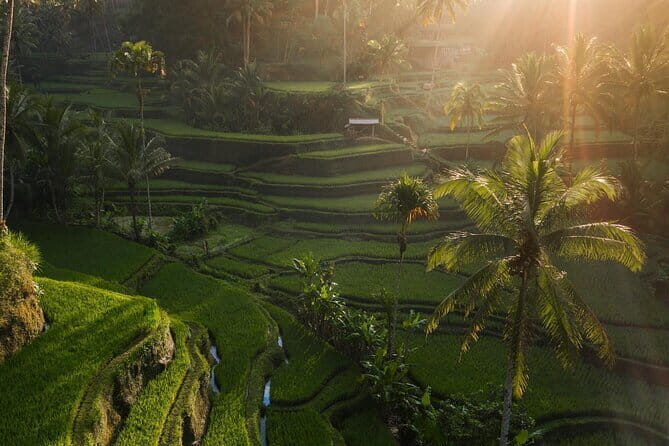
What’s the cancellation window for a full refund?

You can cancel up to 24 hours in advance for a full refund.

Bali Waterfall Wonders | A Nature Escape | All Inclusive

Bali Waterfall Wonders | A Nature Escape | All Inclusive - Ubud pickup and how the day actually works

Lake air and jungle water: a solid day plan. This Bali Waterfall Wonders route is interesting because it strings together big-name sights (like Ulun Danu Beratan and Jatiluwih Rice Terraces) with a more nature-first stop at Banyumala Twin Waterfalls, where you can swim in a natural pool. I like that the day is built around views you can actually feel, not just look at from a bus window. I also like the practical setup: private transportation that gets you moving smoothly through Ubud and around the island, plus driver-guides known for punctual pickups and not rushing you—people have specifically praised drivers like Made and Yogi for arriving early and letting the pace stay relaxed.

One thing to consider: this is an 8-hour loop with multiple stops, so you’re trading deep time at one place for variety across the day. In other words, if you want a slow, hours-long hangout at just the waterfalls, you may feel the schedule is busy.

Quick takeaways before you go

Bali Waterfall Wonders | A Nature Escape | All Inclusive - Quick takeaways before you go

  • Private group day trip from Ubud with an air-conditioned vehicle and bottled water to keep the long driving parts comfortable
  • Banyumala Twin Waterfalls includes admission and gives you time in a natural pool with clean, pure water for swimming
  • Lake and viewpoint pair: Ulun Danu Beratan Temple plus Wanagiri Hidden Hills for twin-lake views
  • UNESCO stop at Jatiluwih Rice Terraces with admission included so you can focus on the scenery instead of ticket logistics
  • Coffee plantation visit (Jatiwangi) is free for the plantation part, after lunch at Nadi Farm Cafe
  • Weather matters: the experience requires good weather, and you’ll be offered another date or a full refund if it’s canceled for poor conditions

The real hook: a water-and-terraces day, not just another checklist

Bali Waterfall Wonders | A Nature Escape | All Inclusive - The real hook: a water-and-terraces day, not just another checklist
This trip is built on two kinds of Bali beauty that go together well in one day. First you get temple and viewpoint scenery with Lake Beratan and the twin-lake perspective at Wanagiri. Then you shift into “real water” mode with Banyumala’s waterfalls and a natural swimming pool. After that, the day caps with Jatiluwih’s rice terraces—UNESCO-listed and more than just a pretty backdrop.

What I like about this kind of route is the pacing. You don’t bounce from one indoor place to another. You spend time outdoors, moving through jungle valleys, lake air, and hill views. And because it’s private transport, you’re not stuck with the usual stop-and-go crowd circus.

Ubud pickup and how the day actually works

Bali Waterfall Wonders | A Nature Escape | All Inclusive - Ubud pickup and how the day actually works
You start from the meeting point in Ubud (Bali Cheap Car & Scooter rental on Jl. Goutama Street). Pickup is offered, and the tour is private, so it’s only your group in the vehicle. That matters in Bali, where “good enough” timing can make or break a day. Private transport helps you keep the flow smooth—especially on roads that can be slow depending on traffic and the day’s conditions.

The tour runs about 8 hours. That’s long enough to cover a lot, but not so long that you feel trapped. Plan to dress for heat early on, then expect cooler, misty moments in the higher areas near temples and viewpoints.

Also, there’s a “mobile ticket” element included. That’s a small thing, but it often makes check-in faster once you’re on the ground.

Ulun Danu Beratan Temple: the floating-lake postcard that feels real

Bali Waterfall Wonders | A Nature Escape | All Inclusive - Ulun Danu Beratan Temple: the floating-lake postcard that feels real
Your first big stop is Ulun Danu Beratan Temple, known as a floating temple on a lake. It’s one of Bali’s iconic landmarks, sitting on the shores of Lake Beratan. This is the kind of place where the setting does half the work. The temple doesn’t just sit there for photos—it’s part of a lake scene that changes as light shifts.

Timing-wise, this opening stop sets the tone. You’ll have about 50 minutes here, including an admission ticket. That’s usually enough to walk around, take in the temple-lake views from different angles, and still stay ahead of the worst of the afternoon crowding.

Practical note: bring a little patience for walking surfaces. Even if the schedule feels tight, you’re not on a sprint. One of the reasons people rate this tour so highly is the way drivers keep things calm rather than rushing you through.

Wanagiri Hidden Hills: twin-lake views with a short, sweet stop

Bali Waterfall Wonders | A Nature Escape | All Inclusive - Wanagiri Hidden Hills: twin-lake views with a short, sweet stop
After the lake temple, you head to Wanagiri Hidden Hills, a viewpoint known for spectacular views of Bali’s twin lakes. This stop is shorter—about 30 minutes, and admission is included.

Because it’s a viewpoint, the goal is simple: arrive, look around, grab photos, and soak in the big-distance scenery. If the air is clear, the twin-lake perspective can be dramatic. If visibility is mixed, you’ll still get the ridge-and-valley feel that makes these lookouts worth it.

What makes this stop worth including is the variety. You go from temple-on-lake to high viewpoint. It’s the kind of “visual reset” that keeps the day from feeling repetitive.

Nadi Farm Cafe and Jatiluwih: lunch with scenery (and one budget detail)

Bali Waterfall Wonders | A Nature Escape | All Inclusive - Nadi Farm Cafe and Jatiluwih: lunch with scenery (and one budget detail)
Next comes lunch time at Nadi Farm Cafe, followed by heading toward Jatiluwih. The schedule gives about 1 hour here, and the admission ticket for the stop is included. The important budget detail: the tour listing says lunch is not included, even though the stop is bundled into the tour day with admission.

So treat this as a meal opportunity where you pay for what you order, not a free buffet guarantee. The upside is that you’re eating while surrounded by green views, which is exactly what you want on a day like this. When your stomach’s happy, your photo taking improves. Science? No. Just experience.

Jati Wangi Luwak Coffee: see the process, keep expectations grounded

Bali Waterfall Wonders | A Nature Escape | All Inclusive - Jati Wangi Luwak Coffee: see the process, keep expectations grounded
After lunch, you visit Jatiwangi Coffee Plantation (often called Jatiwangi Coffee Plantation in the itinerary). This stop is about 1 hour, and the coffee plantation part is listed as free.

What you can expect here is the traditional coffee-making process and a chance to see how coffee production works in Bali. You’re not locked into a tasting if you don’t want one; the key value is watching the steps and learning how the island’s coffee culture is presented locally.

One thing I’d keep in mind: coffee plantations are often partly educational, partly retail. If you’re just there for the process, you can still enjoy it without overbuying. If you like coffee and want a souvenir, this is the time to decide.

Jatiluwih Rice Terraces UNESCO: where irrigation makes the views make sense

Bali Waterfall Wonders | A Nature Escape | All Inclusive - Jatiluwih Rice Terraces UNESCO: where irrigation makes the views make sense
Then you arrive at Jatiluwih Rice Terrace, a UNESCO-listed site known for breathtaking terraced rice fields. The day sets aside about 50 minutes, with admission included.

Here’s what makes Jatiluwih worth your time: the terraces aren’t random steps. They’re tied to a traditional irrigation system (the subak system). When you understand that the terraces are working farmland shaped by water management, the whole scene clicks. The views stop being just “pretty rows” and start looking like a living system.

Also, this stop can be surprisingly relaxing if you take a slow walk. The schedule doesn’t ask you to rush. You get time to look, breathe, and notice how the terraces change as you move.

Banyumala Twin Waterfalls: the swim stop people remember

Bali Waterfall Wonders | A Nature Escape | All Inclusive - Banyumala Twin Waterfalls: the swim stop people remember
After enjoying viewpoints, you descend to Banyumala Twin Waterfalls. This is the heart of the day for many people, and it’s described as a hidden paradise in the jungle.

What makes Banyumala special is the structure: three sides of waterfall. The largest and highest waterfall sits at the center, while smaller ones appear on the left and right sides. Beneath it, there’s a natural pool that adds a whole different dimension from most waterfall stops.

Admission is included, and the schedule gives about 1 hour for this area. The water is described as clean and pure, and the big advantage here is that you can swim around the natural pool. That’s not a gimmick—it’s the part that turns a sightseeing stop into an actual experience.

A practical reality: waterfalls depend on conditions. If the day’s weather is off, your experience could change, which is why the tour notes the experience requires good weather. If weather is good, expect a more comfortable swim window and better waterfall flow.

What I recommend: wear footwear you trust on slippery rock, and bring a change of clothes if you can. Even if you only dip your feet, you’ll probably come away feeling like you did something memorable, not just saw a few sights.

Price and what’s actually included for $75

At $75 per person, this tour is priced like a solid value for a private full-day run. The included items help a lot:

  • Private transportation (air-conditioned vehicle)
  • Bottled water
  • Parking fees
  • Admission tickets at several stops (Ulun Danu Beratan, Wanagiri Hidden Hills, Jatiluwih Rice Terraces, Banyumala Waterfalls)
  • Coffee plantation stop listed as free
  • Mobile ticket
  • Group discounts are offered (even though the tour is private)

What’s not included is just as important for planning:

  • Lunch (even though lunch time is built into the day)
  • Landing and facility fees (not defined beyond that wording)

So, the real budget strategy is simple: bring money for lunch and any extra local fees you encounter at facilities. Otherwise, you’re mostly paying for transport and included entries, which is exactly why this tends to feel like good value.

Driver quality: why punctuality and patience show up in reviews

The reviews for this company and similar day trips highlight a pattern: drivers who speak good English, answer questions, and keep the day smooth without rushing. Names that show up include Made (praised for an early pickup, arriving about 10 minutes early, and letting the group take their time), Wayans Yogi / Yogi (praised as brilliant and helpful), Ngurah (praised as kind and patient with good English), and Gioke (praised for cultural and historical information).

You can’t guarantee you’ll get the exact same driver, but you can assume the service style is what’s being marketed: patient, friendly, and practical. If you like learning while you ride, this is a great format. If you prefer quiet sightseeing, that also usually works on a private tour.

Who should book this tour (and who should skip it)

This is a strong fit if you want:

  • A one-day Bali nature-heavy route from Ubud
  • Mix of iconic and less-obvious outdoor spots (lake temple + viewpoints + rice terraces + Banyumala swim)
  • A private group so the pace stays comfortable
  • A tour that includes key admissions so you don’t lose time on ticket hunting

I’d skip or adjust expectations if you:

  • Want a super relaxed day with long stays at just one place
  • Are very strict about avoiding all extra costs (because lunch isn’t included, and some fees are listed as not included)

Should you book Bali Waterfall Wonders?

If you want variety without feeling chaotic, I’d book it. The combination makes sense: lake temple morning energy, viewpoint photos, lunch with views, coffee plantation process, UNESCO terraces, and then the payoff of Banyumala’s waterfalls and natural swimming pool. At $75 with private air-conditioned transport and most major admissions included, the value is fairly clear.

The only real decision point is your tolerance for a busy 8-hour schedule. If you’re okay moving through several highlights in one day—and you’re excited about the water-and-swim part—this tour is the kind of Bali day you remember later, when you’re back in a hotel room scrolling photos and wishing you’d taken the dip.

FAQ

How long is the Bali Waterfall Wonders tour?

It runs for about 8 hours (approximately).

Is pickup offered from Ubud?

Yes, pickup is offered, and the meeting point is in Ubud at Bali Cheap Car & Scooter rental on Jl. Goutama Street.

What are the main stops on the itinerary?

The tour includes Ulun Danu Beratan Temple, Wanagiri Hidden Hills, Nadi Farm Cafe (with Jatiluwih area), Jatiwangi Coffee Plantation, Jatiluwih Rice Terraces, and Banyumala Twin Waterfalls.

Is lunch included in the price?

No. Lunch is listed as not included.

What is included in the tour price?

Included are private transportation, bottled water, parking fees, and an air-conditioned vehicle. Admission tickets are included for several stops.

Are coffee plantation fees included?

The Jatiwangi Coffee Plantation stop is listed as free for that part of the visit.

What happens if the weather is bad?

The experience requires good weather. If it’s canceled due to poor weather, you’ll be offered a different date or a full refund.
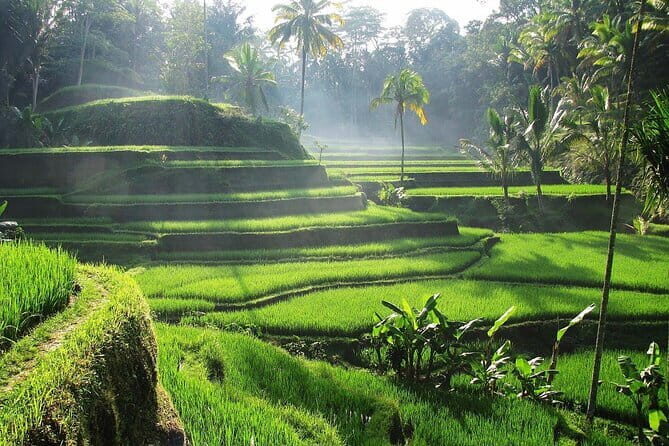
Bali White Water Rafting Adventure at Ayung River Bali

Bali White Water Rafting Adventure at Ayung River Bali - Getting the most from the rapids without losing the fun

Ayung River rafting is pure work and play. This Ayung River run in Ubud is built to feel like a full adventure day: you tackle a 14 km stretch and paddle through 28 rapids, with scenery changing the whole time. I like that it’s designed with real facilities and a proper buffet finish, so you’re not just getting wet and sent on your way.

One thing to plan for: the end of the raft comes with a big stair climb. One 2025 review specifically warned about preparing for an extreme number of steps, so bring shoes you’re okay walking in and have a change of clothes ready.

If you want a white-water outing that still leaves time for a relaxed meal after, this is a solid pick. Expect about 2–2.5 hours on the water within a total 6 hours with pickup, air-conditioned transport, and bottled water included.

Key things I’d circle before you book

  • 14 km route on Ayung River: long enough to feel like a real rafting trip, not a quick splash
  • 28 rapids: steady action with frequent paddling moments
  • Ubud scenery on repeat: rice paddies, rainforest views, waterfalls, and cliff stone carvings
  • Stops along the river: breaks in the rhythm so the changing scenery stays the star
  • Lunch after rafting: buffet lunch included, plus bottled water and equipment
  • Stair-climb reality: you’ll want a plan for stairs and damp clothes at the end

Ayung River in Ubud: why this run feels like a full adventure

Bali White Water Rafting Adventure at Ayung River Bali - Ayung River in Ubud: why this run feels like a full adventure
This rafting adventure focuses on length and variety. You’re not doing a short, one-session paddle—you’re covering a 14 kilometer stretch of the famous Ayung River, which is why the day feels substantial even though the main action is about 2 to 2.5 hours.

What makes it especially interesting is the way the scenery keeps shifting while you’re in motion. You pass views of rice paddies (about 300 meters), parts of rainforest, and you’ll spot features like a waterfall and stone carvings on the cliff. Add in the built-in breaks at several points along the river, and the trip doesn’t turn into one long blur.

The other reason I’d call this a practical pick is that the experience is packaged with the basics done for you. You get rafting gear, bottled water, and transportation, plus lunch right after. That matters in Bali, where getting from place to place can be the hardest part of the day.

The day’s flow: pickup, gear, and what happens before you hit the water

The experience starts at Graha Adventure Rafting in Kedewatan, Ubud (Jl. Raya Kedewatan, Kedewatan, Kecamatan Ubud, Kabupaten Gianyar, Bali). The activity ends back at the meeting point, so you’re not stuck figuring out how to get home after you’re soaking wet.

Pickup is part of the experience offering, and you’ll use a vehicle with air-conditioning plus private transportation. That’s a small detail, but it’s a comfort boost in Bali’s heat—especially once you’re done changing and you’re waiting for the group to finish.

Before rafting, you’ll be fitted with rafting equipment and you’ll get the standard setup for safety and paddling technique (the package includes insurance, too). The exact briefing style isn’t described in the details you provided, but you can expect a short instructions window so everyone can paddle in sync. This is also the moment to double-check things like where your belongings go and how you’ll handle wet gear.

The 2–2.5 hours on the river: 14 km, 28 rapids, and constant scene changes

Bali White Water Rafting Adventure at Ayung River Bali - The 2–2.5 hours on the river: 14 km, 28 rapids, and constant scene changes
Here’s the core of the value: the run is long and it’s active. The route covers 14 km and includes paddling through 28 rapids, so you’re not sitting around much between moments of action. For many first-timers, that combo hits a sweet spot—enough challenge to feel thrilling, but structured enough to stay enjoyable.

Your view changes often during the ride. You’ll see rice paddies, rainforest sections, and you can also catch the kinds of dramatic moments that make the Ayung River famous—like waterfalls and cliffside stone carvings. The experience description also mentions several stops along the river, which helps break up the pace.

A stop is more than a pause. It’s time to reset your grip, adjust to the water flow, and breathe while you take in the scenery that’s close enough to feel real—not distant postcard scenery. If you’re the type who likes photos and you’re okay getting wet, these intervals can be your best chances to get a quick shot.

Getting the most from the rapids without losing the fun

Bali White Water Rafting Adventure at Ayung River Bali - Getting the most from the rapids without losing the fun
With 28 rapids in the mix, your main job is simple: paddle when you’re told, and don’t fight the current. Even if you’ve never rafted before, this setup usually works well because the action is shared—you’re part of a team boat, not tackling the river solo.

Still, there’s a balance to aim for. If you grip too hard the whole time, your arms tire faster. If you relax too much, you lose your timing. The best mindset is steady effort: paddle with purpose, stay ready for instruction, and let the river do what it does.

Also, remember that the route includes natural stops and changing scenery. That means the day isn’t only about the biggest moment of the trip. It’s about enjoying the rhythm: paddle, react, look up, take in a waterfall or cliff carving, and then paddle again.

One more practical note: you should plan to get wet. That sounds obvious, but it connects directly to comfort later. The 2025 review you provided mentioned the need to bring a change of clothes, and I’d treat that as smart planning, not a suggestion.

Stops along the river: why the breaks matter on a long route

On a 14 km run, you’re going to be moving through different moods of the river. The details you provided mention multiple stops along the way, and that’s a big part of why the trip is described as continuously fun rather than repetitive.

These stops help in a few ways:

  • They give your body a breather after active paddling.
  • They help you regroup mentally if you’re feeling a little overwhelmed by rapid motion.
  • They support the “changing scenery” promise, since you can look around without only focusing on water turbulence.

Even if you’re not stopping for long, those breaks keep the day from turning into constant strain. It’s also a good chance to check your gear and make sure you’re not carrying anything you don’t want to get soaked.

Lunch after rafting: value, timing, and how to recover

After your rafting section, the experience includes a buffet lunch at a local restaurant. The package also includes lunch as part of what you pay for, and bottled water is included too, so you’re covered for the basic post-ride needs.

This is where the experience earns its price value. A lot of rafting days either skip food quality or make you pay extra for something basic. Here, lunch is built in, and that means you can focus on recovery instead of hunting for a meal while you’re tired and damp.

You’ll also feel the difference of the included transport back to the meeting point. Instead of trying to figure out your next step when you’re hungry, you’re already moving through the day’s plan.

Price and value: why $27 can make sense here

At $27.00 per person, this rafting day is priced in the mid-budget range for Bali adventure activities. What makes it feel reasonable is not just the rafting itself—it’s the bundle.

You’re getting:

  • Rafting equipment
  • Insurance
  • Lunch
  • Bottled water
  • Air-conditioned vehicle and private transportation
  • All fees and taxes included

In other words, you’re not paying separately for the things that often add up on the back end. And the fact that the route is long (14 km) and packed with action (28 rapids) means you’re paying for time on the river, not only a short initiation ride.

One more pricing-related practical point: the experience is commonly booked about 5 days in advance on average. If your dates are tight or you’re traveling during a busy period, planning a little early can help you lock a time slot that fits your day.

Logistics that matter: meeting point, pickup feel, and group setup

Bali White Water Rafting Adventure at Ayung River Bali - Logistics that matter: meeting point, pickup feel, and group setup
You’ll start at Graha Adventure Rafting in Kedewatan, Ubud, and the experience ends back at that same meeting point. That structure is simple and it reduces the “where do I go after” stress.

Pickup is offered, and transportation is provided in an air-conditioned vehicle. That matters because rafting days often begin early and can include a lot of waiting. Having transport handled keeps your day from turning into extra time in the heat.

The experience is also described as a private tour/activity, meaning only your group participates. That’s a meaningful difference if you dislike mixing with strangers or if you prefer a more controlled group rhythm. Exact group size isn’t given, but the private structure usually makes coordination smoother.

You also get a mobile ticket, which is convenient for day-of entry. And the meeting point is near public transportation, which can be helpful if you’re arranging your own rides.

Stairs at the end: the one reality check you should respect

Bali White Water Rafting Adventure at Ayung River Bali - Stairs at the end: the one reality check you should respect
The most specific caution in your review details is physical: after you finish, you’ll walk up a lot of stairs. One review warned about preparing for what they counted as around 394 steps (with a note that the final number might differ).

That doesn’t mean the experience is unsafe or impossible, but it does mean you should plan like a grown-up. Wear footwear with grip. Don’t bring anything you can’t manage while damp. And yes: pack a change of clothes, because you’ll want to dry off quickly once you’re done.

If you have knee issues or you’re not comfortable with steep stair walking, this is the part you should weigh most carefully. The ride itself is described as something most people can participate in, but the end-of-raft climb is the one step that’s clearly hard-coded into the experience.

Who should book this Ayung River rafting day

I’d point this tour toward people who want a proper rafting experience with real river time and active rapids. If you’re looking for a short taste, this might feel like too much time on the river. If you want value and a long stretch of action plus an included meal, this matches well.

It also suits:

  • Couples or friends who want a private group feel
  • First-timers who want length and excitement without handling logistics
  • Anyone who likes nature scenery—rice paddies, rainforest views, waterfalls, and cliff stone carvings are part of the promise

I’d be more cautious if you:

  • Don’t want to deal with a large stair climb after rafting
  • Have trouble with getting wet and managing damp clothes

Should you book the Bali White Water Rafting on the Ayung River?

If your priority is a long, action-filled rafting run with lunch and transport handled, I think this is a good booking. The route length (14 km), the number of rapids (28), and the included extras like equipment, insurance, and buffet lunch make the $27 price feel grounded.

Book it if you can handle getting wet and you’re ready for the end-of-raft stairs. Skip or reconsider if stairs are a deal-breaker for you, even though most people can participate in the rafting section.

FAQ

Where does the rafting experience start?

The experience starts at Graha Adventure Rafting, located at G6JX+VJ6, Jl. Raya Kedewatan, Kedewatan, Kecamatan Ubud, Kabupaten Gianyar, Bali 80571, Indonesia.

How long is the total tour?

The duration is approximately 6 hours.

How long are you on the river?

The rafting activity is around 2–2.5 hours and covers a 14 km stretch of the Ayung River.

How many rapids are included?

The experience description says you will paddle over 28 rapids.

Is pickup included?

Pickup is offered, and the package includes air-conditioned vehicle and private transportation.

What’s included in the price?

Included are lunch, bottled water, rafting equipment, air-conditioned vehicle, private transportation, all fees and taxes, and insurance.

What happens after the rafting trip?

After rafting, you get a buffet lunch at a local restaurant, and the activity ends back at the meeting point.

Does this tour run as a private group?

Yes. It’s listed as a private tour/activity, and only your group will participate.

Do I get a mobile ticket?

Yes, a mobile ticket is included.

What should I bring or expect physically?

Plan to get wet and bring a change of clothes. One review also warned about a large number of stairs at the end (around 394 steps).

Can I cancel for a full refund?

Free cancellation is available. You can cancel up to 24 hours in advance of the experience for a full refund.

Mount Batur Sunset Trekking Tour

Mount Batur Sunset Trekking Tour - The hike up: what moderate fitness really means on Batur

Sunset on Mount Batur hits different.

This is a late-afternoon Mount Batur sunset trekking plan that gets you to the summit with enough light for the golden hour, without needing the ultra-early alarm clock of sunrise hikes. You’ll walk through volcanic terrain and see local flora along the way, then look out over Lake Batur and the sweeping area around Bali and Mount Agung when conditions cooperate.

I like this tour for two very practical reasons. First, the climb feels calmer because it’s set up for a small group (max 15), so the mountain doesn’t feel like a packed bus stop. Second, the highlight is the hands-on food moment: you can watch eggs get cooked using the volcano’s steam, plus your guide shows fun tricks and explanations that make the science feel real.

One consideration: you’re relying on weather. If clouds roll in, views can soften or disappear, and since it’s an active volcano, you’ll want moderate fitness and steady footing more than hero bravado.

Key highlights at a glance

Mount Batur Sunset Trekking Tour - Key highlights at a glance

  • Late-afternoon start means less crowd pressure than sunrise treks
  • Volcano-steamed eggs turn a view trip into a hands-on moment
  • Small group size (up to 15) keeps the pace friendly
  • Guides like Made, Yuda, Ketut, Agus, and Komang help with the walk and photos
  • Panoramic summit views can include Bali, Lake Batur, and Mount Agung

Why the Mount Batur sunset trek feels easier than sunrise

Mount Batur Sunset Trekking Tour - Why the Mount Batur sunset trek feels easier than sunrise
I get why people pick sunrise. Clear skies can make those topside views spectacular. But I also like the logic of this sunset version: start later, reach the top for sunset, and still get the volcano experience without waking up at crack-of-dawn hours.

Late afternoon also changes the vibe. The hike is still a hike, but the day doesn’t feel like you’re dragging yourself out of bed for hours before anything even starts. And because you’re not stacking with the biggest sunrise waves, you’re more likely to enjoy the mountain at a quieter rhythm.

There’s another subtle win. Sunset trekking gives you natural timing for breaks and photos, plus a built-in reason to stay present as light shifts across the volcanic terrain. Even when the sky starts gray, it’s common for conditions to improve as you gain altitude.

Getting picked up in Ubud and heading toward Kintamani

This tour is based in the Ubud area and offers pickup, which matters on Bali when roads can turn a simple plan into a travel puzzle. A driver arriving early and handling things smoothly shows up in multiple experiences, and that’s exactly what you want here: fewer logistics, more time to focus on the hike.

You’ll be transported from your accommodation area toward the Kintamani region, where Mount Batur sits. The ride is part of the day’s rhythm. Use it to settle in, confirm your plans with your guide, and get your layers ready before you start climbing.

Also note the practical tech piece: you’ll receive a mobile ticket, which helps you check in without fuss.

The hike up: what moderate fitness really means on Batur

Mount Batur Sunset Trekking Tour - The hike up: what moderate fitness really means on Batur
The tour asks for moderate physical fitness. That phrase can mean different things, so here’s how I’d translate it for Mount Batur: you’ll need comfort with sustained uphill walking and uneven volcanic ground, not just a casual stroll.

Your guide plays a huge role in keeping the trek enjoyable. Some guides focus on encouragement and pacing, and others are hands-on with help when someone falls behind. For example, guides like Komang have been known to support group members who struggled to keep up, and in at least one case a bike was arranged for part of the climb so the guest could still enjoy the experience.

Even if you’re reasonably fit, don’t treat the volcano like a flat viewpoint hike. Active volcano terrain can be slippery or tough underfoot, and you’ll want to move carefully. This is not about speed. It’s about steady steps and saving energy for the summit moment.

And yes, photos are part of the job. Guides including Agus and Yuda have helped people get great pictures and video angles. That matters because sunrise and sunset hikes are all about light, and good positioning can turn a nice view into a memorable one.

Reaching the summit: eggs, steam, and local nature on the climb

Mount Batur Sunset Trekking Tour - Reaching the summit: eggs, steam, and local nature on the climb
The walking part is only half the story. What makes this trek feel special is what happens around the volcano itself.

A standout is the egg-cooking experience using volcano steam. You’re not just told about geothermal energy. You get to see how it works. It’s a small moment, but it’s the kind of detail that makes the day feel more like an experience than a photo stop.

Guides often add extra context while you’re there. People describe guides showing fun tricks involving the volcano’s steam, and that’s a big part of why the experience sticks: it connects the view to something tangible.

You’ll also move through unique volcanic terrain and see local plant life along the way. Even when you’re focused on the path, it helps that the hike has visual variety. You’re not staring at dirt the whole time. There’s always something to notice—texture, ground color, and changes in the environment as you climb.

Some days also include extra downtime like a picnic before sunset, depending on how the day flows. If you’re the type who enjoys a calm break with a view, that’s the kind of detail that can make this feel extra satisfying.

Sunset payoff: panoramic views across Bali, Lake Batur, and Mount Agung

At the summit, the goal is simple: reach the top with enough time to watch sunset and enjoy the panorama.

When the sky cooperates, you’re looking out over broad areas of Bali, with Lake Batur and Mount Agung often included in the view. That combination is a big reason people return to Batur in different seasons and different light.

Weather can be a wildcard. One moment you’re hiking under a gray sky, and the next you’re rewarded when clouds clear at the summit. That’s exactly why the weather requirement matters, and why this kind of trek can feel either ordinary or extraordinary depending on conditions.

Also, don’t expect the mountain to perform on cue. An active volcano is still a real mountain. But when you get the clear break at the top, sunset trekking becomes the kind of day you remember for years, not just because of the sunset, but because you earned it with your own steps.

Small-group pacing: why max 15 travelers matters

Mount Batur Sunset Trekking Tour - Small-group pacing: why max 15 travelers matters
The group size is capped at 15 travelers, which changes your whole experience. With a smaller group, you’re less likely to feel rushed, and you’re more likely to get personal attention on the walk.

It also helps with the emotional side of hiking. Big crowds can turn a volcano into a waiting game. A small group turns it into a shared journey. People often highlight the calm, peaceful feel compared to sunrise treks, and that lines up with what you’d expect from a smaller headcount.

This also affects how guides manage the pace. When there aren’t 40 people stretching the line, your guide can adjust step tempo, stop for photos without a long traffic jam, and keep the group together naturally.

And since this is only about 8 hours total, the day moves with intention. You get the climb, the summit moment, and the ride back without feeling like you spent the whole day in transit.

Price and value: is $25 a smart deal for Batur?

Mount Batur Sunset Trekking Tour - Price and value: is $25 a smart deal for Batur?
At $25 per person, this trek sits in the budget-friendly range for Bali volcano experiences. The real question isn’t just cost. It’s what you get for that price.

You’re getting pickup, admission ticket inclusion, and a guided experience built around a specific summit goal: sunset. On top of that, there’s the volcano-steam egg component, plus guides who focus on making the hike enjoyable and helping you capture the moment.

Is it “cheap” in the sense that something is missing? Not based on how the day is described. It’s a focused trip centered on the mountain itself, not a long chain of extra stops. That can be a good thing if your priority is Batur, not a checklist of Bali highlights.

One more value point: you’re avoiding the need for a sunrise start. If you’ve ever done sunrise trekking and hated the early hours, this sunset plan is basically paying to protect your sleep and your mood.

Who this trek suits best (and who might want another option)

Mount Batur Sunset Trekking Tour - Who this trek suits best (and who might want another option)
I’d steer you toward this tour if you:

  • want a volcano summit experience without the earliest wake-up time
  • like guided walks and appreciate help with photos and pacing
  • enjoy hands-on details like volcano-steamed eggs
  • prefer a calmer day on the mountain (smaller group, fewer crowds)

You might consider something else if:

  • you’re not comfortable with moderate uphill walking
  • you know your schedule is strict enough that weather changes would be a headache

And if you’re traveling with someone who’s unsure about fitness, choose your guide carefully. Several guides in these experiences (like Made, Ketut, and Komang) are described as kind and patient, including helping people keep up. That kind of attitude matters more than fancy promises.

Booking smart: timing, weather, and what to watch for

This is commonly booked about 5 days in advance, on average. If you’re aiming for a specific date, I’d plan around that timeline so you’re not scrambling when Batur’s weather mood changes.

Also remember: this experience requires good weather, and if it’s canceled due to poor conditions, you should expect either a different date or a full refund. That’s the nature of volcano trekking. Your best move is to stay flexible and pack like the sky can change its mind.

Finally, confirmation is provided at booking time, and you’ll use your mobile ticket when you show up. That keeps things smooth.

If you’re the type who hates uncertainty, you’ll still have some waiting in the forecast game. But if you’re okay with that trade-off for a dramatic summit moment, this is a great way to experience Batur without the early morning grind.

Should you book the Mount Batur sunset trekking tour?

Yes—if your goal is a guided Batur experience that trades sunrise fatigue for a late-day climb and a sunset summit payoff. The value comes from the combo: pickup, a small group, guided pacing, volcano-steam eggs, and summit views that can include Lake Batur and Mount Agung when the clouds cooperate.

I’d say it’s especially worth booking if you want a quieter mountain day than the sunrise circuit, and if you enjoy details that go beyond a simple viewpoint.

Wait on booking only if you have limited flexibility for weather. This type of trek is weather-dependent, and you’re doing it for the sky and the light. If you can roll with that, you’ll likely come away thinking the day felt well worth it.

FAQ

How long is the Mount Batur sunset trekking tour?

It runs about 8 hours (approx.).

Where does the tour start?

The experience is located in the Ubud, Indonesia area, with pickup offered.

What’s the main stop on this tour?

The tour centers on Mount Batur.

Does the tour include admission?

Yes. Admission ticket is included.

Is pickup included?

Yes, pickup is offered.

How many travelers are on the tour?

The maximum group size is 15 travelers.

What fitness level is needed?

You should have a moderate physical fitness level.

What unique experience is included on the volcano?

You’ll have an experience cooking eggs using the volcano steam.

What happens if the weather is poor?

The experience requires good weather. If it’s canceled due to poor weather, you’ll be offered a different date or a full refund.
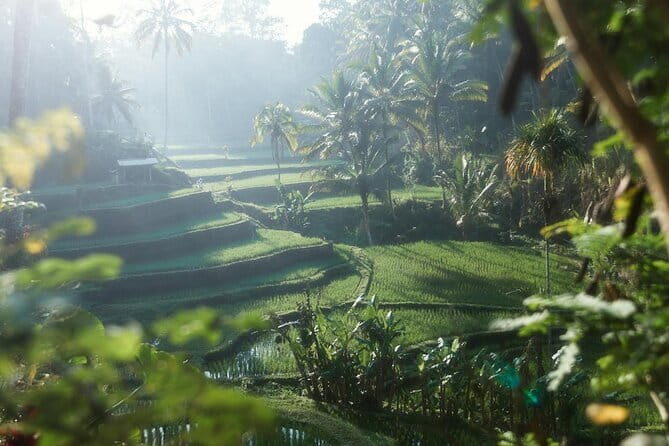
What is the cancellation policy?

You can cancel for free up to 24 hours in advance for a full refund. If you cancel less than 24 hours before the experience starts, the amount paid isn’t refunded.
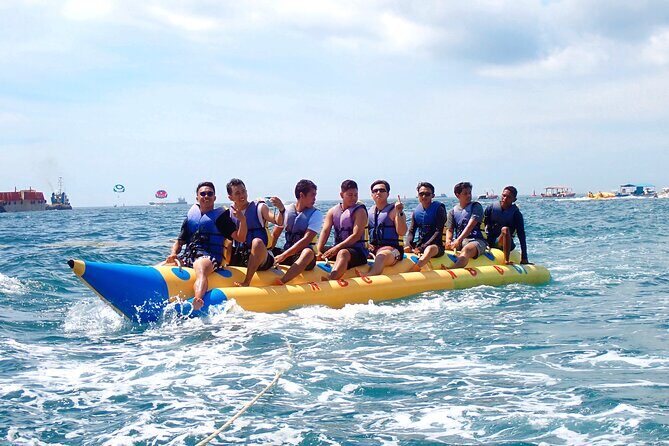

Bali: Gorilla Face ATV Bali Ubud Adventure with Lunch

Bali: Gorilla Face ATV Bali Ubud Adventure with Lunch - Traditional village stop: seeing preserved daily life

Ubud has a different side when you’re on an ATV. This half-day ride turns the countryside around Taro and Tegallalang into a real playground, with mud, dirt tracks, and guided instruction built in from the start. I like that it’s set up so beginners can get confident quickly, not just people who already ride.
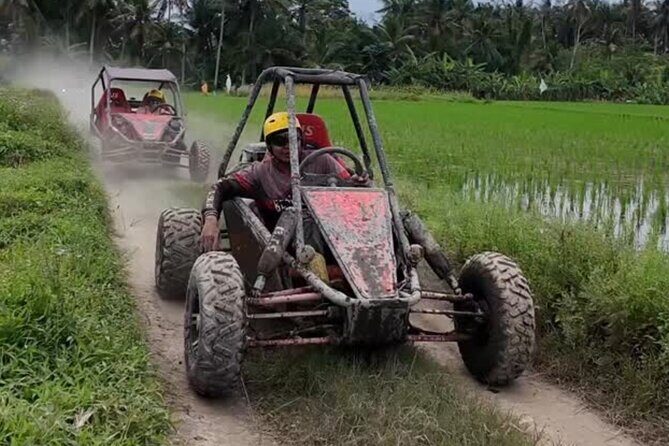
What makes it especially fun is the mix of action and culture: you’ll go through jungle pathways, plantations, and local village areas, then top it off with a Balinese lunch. One thing to consider: this is physically active quad biking, so you’ll want a strong fitness level and you should expect to get dirty.

You also get a smooth day plan with door-to-door hotel pickup (air-conditioned minivan) and practical add-ons like lockers, showers, and changing rooms. The setup is simple, but you’ll still be sharing the ride with a small group, with a max of 15 people.

Key highlights to know before you go

  • Training first: You get a safety briefing and hands-on tips before the real obstacles.
  • Included gear and cleanup: Helmet and boots, plus locker, shower, and changing room.
  • Rural Ubud variety: Dirt paths, palm-lined sections, and jungle areas with waterfall/tunnel scenery.
  • A real village stop: Time in a traditional village for everyday local life and preserved traditions.
  • Lunch is part of the tour: Balinese fare and bottled water included in the 3-hour plan.
  • Bring eye protection: Sunglasses help with dirt in your eyes on muddy sections.

ATV in rural Ubud: what this 3-hour ride really feels like

This is the kind of Ubud activity that changes your perspective fast. Instead of watching the countryside from a viewpoint, you’ll be moving through it—over rugged, rural terrain with guide help when you need it. The timing is tight in a good way: about 3 hours total, with the main riding time packaged with lunch and a cultural stop so the day doesn’t drag.

You’ll drive out from Ubud toward the north area (roughly a 30-minute drive from central Ubud). When you arrive at Alasan Adventures – ATV, you start with a welcome drink, then the briefing and training. After that, you’re not just cruising—you’re learning to handle uneven ground, mud puddles, and obstacle-style sections while staying on dirt tracks.

The best part is the balance. You get the thrill without needing to already be an expert rider. And because the route includes countryside scenery—rice and farm areas, bamboo forest, plantations, plus village scenes—it feels like a real tour of north Ubud, not just a loop around one area.

Meeting at Alasan Adventures and getting ready fast

Bali: Gorilla Face ATV Bali Ubud Adventure with Lunch - Meeting at Alasan Adventures and getting ready fast
The day starts at Alasan Adventures – ATVTaro, Tegallalang, Gianyar Regency, Bali 80572, Indonesia. If you choose hotel pickup, it’s via air-conditioned minivan, which is a huge quality-of-life win in Bali heat. For many people, door-to-door transport is what makes an ATV day actually feel easy.

Once you arrive, you’ll get:

  • A helmet and boots (provided)
  • Locker access for your things
  • Changing room and shower after riding

That matters more than it sounds. ATV days are messy. Having a shower afterward means you’re not stuck wiping off dust in the parking area before heading back to your hotel. It also helps if you plan to go out for dinner later the same day.

Then comes the training. The approach is built for confidence: the guide gives a short safety lesson, and you start riding quickly. One specific detail I really like is that they aim for you to feel capable in a short window—around 5 minutes into riding. That’s the moment where beginner riders stop feeling like they’re going to mess everything up.

The first tracks: dirt paths, mud puddles, and jungle obstacles

Bali: Gorilla Face ATV Bali Ubud Adventure with Lunch - The first tracks: dirt paths, mud puddles, and jungle obstacles
When you finally hit the trail, expect a mix of surfaces. This isn’t paved-road riding. You’ll be on dirt paths through rural Ubud areas, and at times the route gets challenging—mud puddles, rough patches, and obstacle-style sections designed to test control.

You’ll be learning how to:

  • cross obstacles using your own bike control
  • avoid trouble spots on the track
  • keep balance while the terrain shifts under you

The scenery helps the adrenaline make sense. As you ride, you pass by swaying palms and get into thicker jungle areas with standout sights along the way, including mentions of a waterfall and tunnel section. Even if you don’t know Bali geography well, you’ll feel like you’re moving through distinct, changing environments rather than repeating the same narrow trail.

Quick practical tip from the kind of dirt this ride can throw at you: bring sunglasses. On muddy sections, dirt can splash and blow into your eyes. The difference between squinting the whole time and enjoying the view is huge.

Traditional village stop: seeing preserved daily life

Bali: Gorilla Face ATV Bali Ubud Adventure with Lunch - Traditional village stop: seeing preserved daily life
Between the action, you get a breather and a culture moment. The route includes time at a traditional village stop focused on real local life and preserved traditions.

This kind of stop works best when you treat it as an observation window, not a checklist. You’re seeing how everyday routines sit alongside tourism in the same region. Even though you’re on an ATV day schedule, there’s a real value here: you’re not only seeing nature—you’re also meeting the human side of the landscape you’re riding through.

One more thing: this route includes stops around rivers and farms, and it mentions meeting villagers during the journey. That makes the whole experience feel grounded in place, not staged for thrills alone.

The viewpoint moment that breaks up the ride

Bali: Gorilla Face ATV Bali Ubud Adventure with Lunch - The viewpoint moment that breaks up the ride
The plan also includes a lookout point with views over the jungle. For an ATV tour, that matters because it gives your body a reset. After bouncing through dirt, you can slow down and actually take in what you rode through.

You’ll get a chance to stand, catch your breath, and appreciate why this region is so popular. North Ubud has lots of green and layered terrain, and being on the ground gives you a sense of scale that you don’t always get from a driving viewpoint.

If you tend to feel carsick or stiff on active tours, the lookout is where you’ll feel the day pulling back from the physical intensity for a few minutes.

Lunch in the middle of the adventure

Bali: Gorilla Face ATV Bali Ubud Adventure with Lunch - Lunch in the middle of the adventure
Lunch is included, along with bottled water. The food is described as Balinese fare, and that’s exactly what you should hope for on a day like this. You’re going to be dusty and hungry, so the best case is not searching for lunch near the end of the tour. It’s already handled.

Expect lunch to function as your recovery point:

  • refill energy
  • cool down
  • let the dust settle before you get back on the minivan

Because the tour runs about 3 hours, the day stays compact. That can be a big advantage if you’re trying to fit in multiple activities in Ubud without turning one day into half a week of logistics.

Gear, comfort, and safety: what’s provided (and why it helps)

Bali: Gorilla Face ATV Bali Ubud Adventure with Lunch - Gear, comfort, and safety: what’s provided (and why it helps)
Good gear is not just comfort—it’s safety. This tour includes:

  • helmet and boots
  • locker storage
  • shower and changing room

You’re not just wearing gear for show. Helmet and boots help you move confidently because you’re not trying to ride in regular sandals or shoes. The locker and shower matter because you’re likely to end the ride covered in dirt and mud.

There’s also a weight and age reality check built into the rules. The tour lists:

  • maximum weight: 165 kg
  • minimum age for a single ride: 16
  • kids aged 9–15 can ride tandem with an adult
  • maximum age: 59

They also specify a strong physical fitness level. That doesn’t mean you need to be an athlete, but it does mean you should be comfortable with physical effort—mounting the bike, keeping balance, and riding on uneven surfaces.

If any of this worries you, don’t ignore that instinct. ATV riding is fun, but it’s still a hands-on activity. Being in good shape makes it safer and way more enjoyable.

Price and value: is $40 a good deal?

Bali: Gorilla Face ATV Bali Ubud Adventure with Lunch - Price and value: is $40 a good deal?
At $40 per person for a roughly 3-hour adventure with training, hotel pickup (when selected), included gear, lunch, and cleanup facilities, the value is pretty strong. The key reason is that the “hidden costs” are mostly covered. You’re not paying separately for helmets, you’re not scrambling for lunch, and you’re not ending the day without a way to clean up.

Also, the tour size is small. It says there’s a maximum of 15 travelers, which usually means you’re more likely to get real attention from your guide than in huge groups. And you’ll have an instructor/guide during the ride, which is a big deal for both beginners and anyone who wants to ride confidently through obstacles.

One more value point: souvenir photos are not included. That’s not a problem, but it’s good to know upfront. If you love photo packages, you might plan for that as an optional add-on.

Finally, they mention group discounts. If you’re traveling as a pair or small group, that’s often where you get the best per-person cost.

Booking reality checks: tandem rules and who can ride

This one is practical, so pay attention before you lock it in.

Single ride:

  • minimum age is 16
  • maximum age is 59
  • max weight is 165 kg

Tandem ride:

  • kids age 9–15 can ride with an adult present
  • there’s a stated minimum of 2 people per booking for tandem
  • they also require tandem bookings to be in an even number (examples given: 2, 4, 6, 8, 10, 12, 14)

So if you’re a couple, tandem might be easiest. If you’re coming with a slightly odd number of people, you may need to adjust plans so the booking matches the tandem requirement.

This tour is also clearly framed as an action experience, and it’s capped at 15 travelers. That’s a good sign for control, but you still need to show up ready to ride—physically and mentally.

If you’re sensitive about mud, consider what that means. This is not a neat, dry ATV route. It’s built around rugged terrain and mud puddles, so your “clean look” day is not the goal.

Should you book this ATV adventure with lunch?

If you want a classic Ubud day with a mix of action, countryside scenery, and a traditional village stop, I’d say this is a good match. The most praised aspects you should expect to feel are organization and attention: the day is set up for door-to-door ease when pickup is selected, training happens early, and the ride feels guided rather than chaotic.

Book it if:

  • you want a beginner-friendly ATV experience with instruction
  • you like muddy, rugged outdoor fun and want that jungle feeling
  • you want lunch included so the day stays simple
  • you appreciate practical add-ons like shower and changing room

Consider skipping or choosing another style of tour if:

  • you don’t like physical activities on uneven terrain
  • you’re not comfortable getting dirty (this ride includes mud puddles)
  • you’re traveling with a tandem group that may not match the even-number booking rule

One last practical note: the tour operator lists free cancellation up to 24 hours before the experience starts. That gives you some breathing room if your Ubud plans shift.

Overall, for $40, you’re paying for a guided, structured ATV day with real countryside variety and a meal handled for you. That combination is hard to beat.

FAQ

FAQ

How long is the ATV tour?

The tour runs about 3 hours (approx.).

Is lunch included?

Yes. Lunch and bottled water are included.

Does the tour include hotel pickup and drop-off?

Hotel pickup and drop-off are included if you select that option. Pickup is by air-conditioned minivan.

Is helmet and boots provided?

Yes. Helmet and boots are provided.

What is the minimum age to ride?

Minimum age is 16 for a single ride.

Can children ride?

Children age 9–15 must ride tandem with an adult present. A minimum of 2 people per booking is required for tandem.

Is there a weight limit?

Yes. Maximum weight is 165 kg.

Are souvenir photos included?

No. Souvenir photos are available to purchase but are not included.