Bali Horse Riding Sanur Beach include Transport

Bali Horse Riding Sanur Beach include Transport - Getting the Right Horse Pace: Beginners, Leads, and Gallops

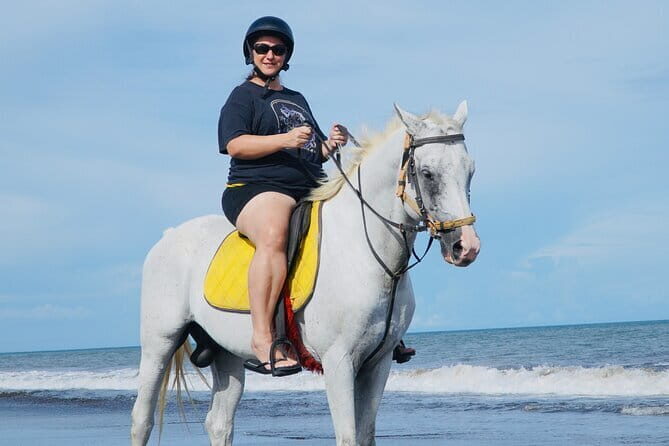
Black sand, sunrise, and a calm ride. This Sanur beach horse riding trip is built around one simple goal: get you out on the coast for a scenic, mostly unhurried experience, then pair it with countryside sights and a sunrise moment at Sanur Beach. I especially like the coastal route and the chance to line it up with sunrise timing.

Two other strong selling points: you’ll have private pickup/transport in an air-conditioned vehicle, and the ride comes with safety gear like a helmet and equipment. The only real consideration is that conditions can affect how the ride feels—one account highlights traffic and a mismatch with what was expected, so set your expectations for timing and be attentive about horse care.

Key Highlights at a Glance

  • Black sand riding by the shoreline: a beach-track experience with waves nearby
  • Tangtu Beach coastal stretch: the ride is planned to reach this scenic area
  • Private, air-conditioned transport included: pickup makes the experience easier
  • Beginner-friendly pacing: you can ride at your comfort level (including being led)
  • Safety gear is included: helmet, safety equipment, and a professional guide

Sanur Horse Riding: The One-Hour Plan You’re Really Buying

Bali Horse Riding Sanur Beach include Transport - Sanur Horse Riding: The One-Hour Plan You’re Really Buying
This experience is short on purpose: about one hour of riding time overall, with the rest of your time tied up in getting to and from the stables and beach areas. If you don’t want a half-day tour, this format can feel like the sweet spot—especially in Bali, where traffic can quietly eat time.

You’ll start at Muara Adventure (Kesiman Kertalangu, Denpasar Tim.), and the activity ends back at the meeting point. The key is that it’s a private group setup, so you’re not trying to share narrow sandy areas with a big crowd—your pace and your comfort matter more here.

From Sanur Beach to Tangtu: Why the Black Sand Route Matters

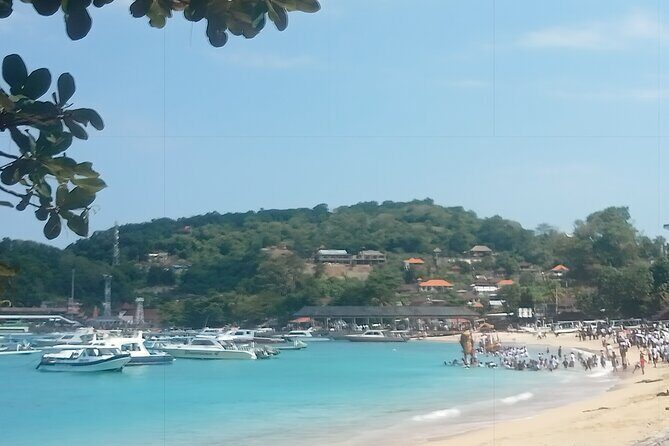
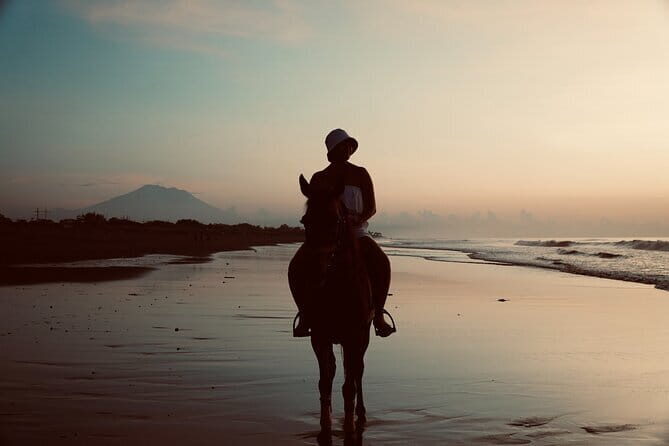
The heart of the ride is the scenery. You’ll move across the black sand track at Sanur, passing views of serene shoreline stretches and the rhythm of the waves. Even if you’ve been to Bali beaches before, this kind of ride changes the feel—you’re not just walking the sand; you’re traveling along it like it’s a route.

The trip is also aimed at reaching Tangtu Beach for a coastal riding moment. That matters because it gives you a sense of “we actually went somewhere,” not just a loop. And if sunrise is part of your plan, the operator specifically frames Sanur’s sunrise as a perfect companion to the ride.

One practical note: coastal riding is weather-sensitive. The experience requires good weather, so if clouds or rain roll in, you might need to switch dates.

Denpasar Pickup and Countryside Sight Lines

Bali Horse Riding Sanur Beach include Transport - Denpasar Pickup and Countryside Sight Lines
You’re not just dropped off. You get private transportation, and the tour connects with Denpasar along the way. In real life, that’s the difference between a “nice idea” and an easy day—especially if you’re staying in Seminyak and don’t want to gamble on getting yourself across town.

While the riding is the main event, the experience is also framed around a short look at Balinese countryside life—you may spot daily routines and local scenes, along with tropical garden greenery. I like experiences that include these in-between moments because they help you understand what you’re passing, even if you’re not stopping to tour a temple or a museum.

Getting the Right Horse Pace: Beginners, Leads, and Gallops
Bali Horse Riding Sanur Beach include Transport - Getting the Right Horse Pace: Beginners, Leads, and Gallops
One of the most valuable parts of a beach ride is whether the experience matches your skill level. Here, the setup appears flexible: for beginners, staff can keep you safer and more controlled—there’s mention of being kept on a lead and riding at the speed you want. If you’re comfortable riding independently, the horse choice can support that too.

So what does that mean for you?

  • If you’re nervous, ask for a calmer pace right away.
  • If you’re experienced, don’t be shy about saying you want more freedom—there are accounts of people being allowed to gallop over the beach.

It’s also worth remembering that horses have personalities. Even within the same stable, you may ride a different temperament depending on your group and the staff’s matching decisions. Think of the “perfect horse” not as a guarantee, but as something you should be ready to negotiate with the guide if you feel mismatched.

Horses, Cleanliness, and Safety Gear You Should Actually Use
Bali Horse Riding Sanur Beach include Transport - Horses, Cleanliness, and Safety Gear You Should Actually Use
Good riding lives or dies on two things: how safe you are, and how cared-for the animals are. This experience includes a helmet, safety equipment, and a professional guide, which is exactly the right baseline. I also like that the stable and horses are described as well maintained and clean in positive accounts—this is what you want to see before you step onto a beach track.

Now the balanced part: there’s at least one unhappy account that complains about horse condition and even the beach quality. I can’t confirm that those claims reflect the usual standard, but they’re a reminder to keep your eyes open.

Before you mount, do this:

  • Look for the horse’s general condition and how it’s handled.
  • Notice whether the staff seems alert and calm, not rushed or careless.
  • If something feels off, speak up immediately. A reputable operator should respond.

Price and Value: What Your $43.50 Includes (and What It Doesn’t)
Bali Horse Riding Sanur Beach include Transport - Price and Value: What Your $43.50 Includes (and What It Doesn’t)
At $43.50 per person, you’re not just paying for “a horse and a beach.” You’re covering several concrete items: a professional guide, private transportation (air-conditioned), helmet, and safety equipment, plus all fees and taxes. That package matters because in Bali, transport and guides can quickly add up.

What’s not included is lunch. That’s normal for a one-hour activity, but plan for it so you’re not searching for food mid-day. If you’re going for sunrise timing, you may want a quick breakfast plan before pickup.

Also: the trip is booked on average about 15 days in advance. That’s a hint to reserve earlier if you’re traveling in peak season or have a narrow window around sunrise.

Timing for Sunrise and a Quieter, Smoother Ride
Bali Horse Riding Sanur Beach include Transport - Timing for Sunrise and a Quieter, Smoother Ride
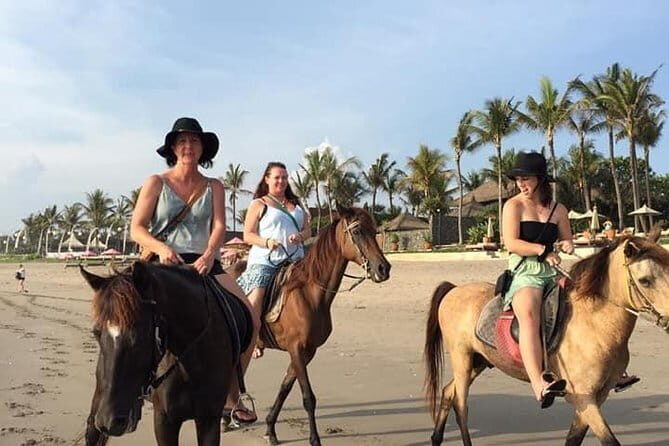
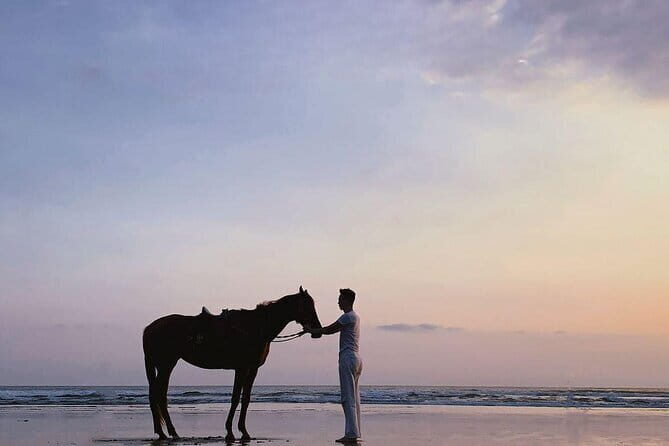
This is one of those tours where timing changes the feel more than you’d expect. Positive accounts emphasize going early, with one tip pointing to an 8am start for a quieter experience and beautiful views. If you want sunrise, you already know the logic—go early, and you cut down on crowds and harsh light.

Here’s how I’d think about it:

  • Morning usually means less heat and more comfortable riding.
  • Fewer people often means less waiting and a smoother flow at the stables.
  • If traffic is a concern for you, an earlier start can help absorb delays.

Just remember: sunrise plans depend on weather, and the activity requires good conditions. If rain or poor visibility hits, you’ll likely be offered a different date or a refund.

Who This Tour Fits Best (And Who Might Want Another Option)
Bali Horse Riding Sanur Beach include Transport - Who This Tour Fits Best (And Who Might Want Another Option)
This ride is a strong match if you:

  • want a scenic beach horse ride without committing to a long day
  • like the idea of mixing beach time with countryside passing views
  • appreciate private transport so you don’t have to coordinate on your own
  • want flexible pacing for beginners or a more active ride for experienced riders

You might rethink it if you:

  • can’t handle traffic variability and tight schedules
  • are very sensitive to animal-condition questions and would need to see everything up close
  • want a long guided cultural program (this is riding-focused, not a temple tour)

Should You Book Bali Horse Riding Sanur Beach Include Transport?

Bali Horse Riding Sanur Beach include Transport - Should You Book Bali Horse Riding Sanur Beach Include Transport?
If your priority is a short, scenic horse ride on Sanur’s black sand with a chance to reach Tangtu Beach, this is an easy yes. The included transport is a big value lever, and the overall setup sounds geared toward making the ride match your skill level—slower for beginners, faster for riders who want it.

My “go/no-go” checklist is simple:

  • Go early if you can (aim for that quiet-morning rhythm).
  • Use the included helmet and ask questions before mounting.
  • Pay attention to the horse handling and stable cleanliness when you arrive.

If those boxes look good to you, you’ll likely end up with the kind of Bali memory that feels different from yet another beach photo.

FAQ

How long is the horse riding experience?

The duration is approximately 1 hour.

Where does the activity start?

The meeting point is Muara Adventure (Kesiman Kertalangu, Kec. Denpasar Tim., Kota Denpasar, Bali 80237, Indonesia).

Is transport included?

Yes. The experience includes private transportation in an air-conditioned vehicle, and pickup is offered.

What’s included in the price?

Included items are helmet, professional guide, air-conditioned vehicle, private transportation, safety equipment, and all fees and taxes.

Is lunch included?

No, lunch is not included.

Is this a private tour?

Yes. It’s listed as a private tour/activity, meaning only your group participates.

What if weather is bad?

The experience requires good weather. If it’s canceled due to poor weather, you’ll be offered a different date or a full refund.
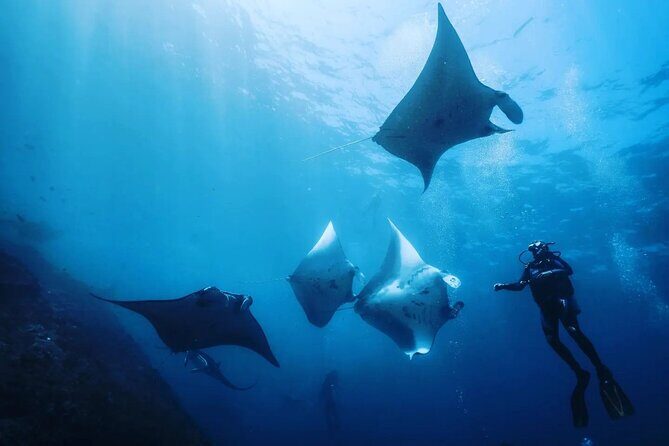
Diving with Manta Ray at Nusa Penida

Diving with Manta Ray at Nusa Penida - Getting to Banjar Nyuh Port: the logistics that affect your day

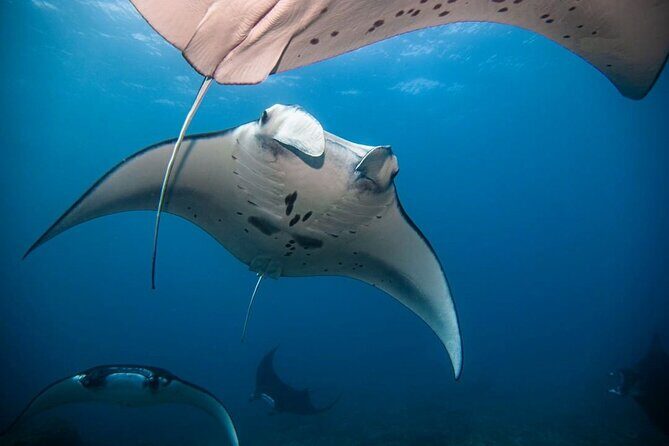
Manta rays feel like magic. At Manta Point in Nusa Penida, you’re chasing a resident manta population with about a 90% chance of seeing them all year, when weather and sea conditions cooperate. I like that the package also handles the messy parts—round-trip transport options, equipment, lunch, and even a shower plus towel—so you spend less time organizing and more time enjoying the day. One thing to watch: free pickup and drop-off only covers places within 1–2 km of their office near Banjar Nyuh Port, and farther locations can add about USD 20–23 per car.

This is also a small-group outing, capped at 12 people, which helps keep things calm when the water is busy. In the same-day experience around Nusa Penida, friendly drivers like Putra, Nyoman, and Komang are praised for being helpful, flexible, and photo-minded.

Expect roughly 4 hours total, starting and ending back at the meeting point on Penida. You’ll do the underwater activity 2x, with breaks for snacks, plus that post-day reset with a shower and towel.

Key highlights worth your attention

Diving with Manta Ray at Nusa Penida - Key highlights worth your attention

  • Resident manta rays at Manta Point: around a 90% chance all year, with results depending on conditions.
  • Two underwater sessions in one day: you get more chances than a single stop.
  • Small group (max 12): easier to manage in a popular area.
  • Meals + shower included: morning tea/snacks/lunch, then towel and shower after.
  • Supportive crew and photo help: drivers like Komang are specifically praised for taking group photos.
  • Manta Point can be busy: the schedule often balances busy with calmer coral-rich spots.

Why Nusa Penida’s Manta Point is the main draw

Diving with Manta Ray at Nusa Penida - Why Nusa Penida’s Manta Point is the main draw

If you want mantas without guessing, Nusa Penida is one of the best places in Bali to aim. The big reason is that manta rays have a resident presence here, so you’re not gambling on a seasonal migration. Manta Point is popular for a reason: it’s built for consistent sightings, and the experience is designed around that.

I also like that the day isn’t just a one-hit wonder. Since you’ll do the underwater activity 2x, your chances improve simply because you get more time in the water and more angles to catch the mantas as they glide past. Even when you don’t see them immediately at the first stop, the second session keeps the momentum going.

That said, manta areas can get crowded. The upside is that the sites are popular for a reason; the downside is that you might feel the “busy” factor at Manta Point. A good operator balances that with other spots where the coral and fish life still give you plenty to look at.

What the $120 package really covers (and what it doesn’t)

At $120 per person, you’re paying for more than a ticket to the water. The core value is that this is a full day kit: shared speedboat, the underwater activity 2x, the crew (captain and instructor), equipment, and food. You also get practical extras that people often forget to budget for—towels and a shower after.

Here’s what’s included:

  • Shared speedboat for the day
  • Underwater activity (2x)
  • Captain and instructor
  • Dive equipment
  • Lunch
  • Shower and towel
  • Plus the morning tea/snacks and lunch mentioned in the overview

And here’s what’s not included:

  • A hotel room (obvious, but worth saying)
  • Underwater camera (if you want one, bring your own or plan separately)

For your decision, the real question isn’t just whether $120 is “cheap.” It’s whether you’d otherwise pay separately for a boat, equipment, food, and someone to run the operation. In Nusa Penida, that coordination can be the hidden cost—this package tries to cover it.

Getting to Banjar Nyuh Port: the logistics that affect your day

Diving with Manta Ray at Nusa Penida - Getting to Banjar Nyuh Port: the logistics that affect your day

Most people underestimate how much time a day like this depends on getting to the port on Penida. Your meeting point is on Penida Island in Nusa Penida (Klungkung Regency, Bali, Indonesia), and the activity ends back there too.

The operator offers free pickup and drop-off, but there’s a tight radius:

  • Free only if you’re about 1–2 km from their office near Banjar Nyuh Port
  • If you’re farther, expect an extra car fee of about USD 20–23 per car

That’s the main “pay attention” detail. If you’re staying a bit off the center, it’s worth asking ahead of time what your pickup situation will be. Otherwise, you might show up thinking it’s fully included, then get surprised at the dock.

Also note that the meeting location is described as near public transportation, so if you prefer to organize your own way to the port, it’s not completely isolated. Still, the smoothest day usually happens when the pickup window matches your exact lodging location.

Finally, with up to 12 travelers, you’ll likely feel less like you’re on a conveyor belt. Smaller groups can mean less waiting, and better chances to ask questions before you’re in the water.

Two underwater sessions: how the day usually flows

You should plan for a full morning-to-early-afternoon feel, since the total duration is about 4 hours.

While there isn’t a minute-by-minute schedule published here, the structure is clear:

  1. You meet at Penida and get grouped up.
  2. You head out by shared speedboat.
  3. You do the underwater activity 2x.
  4. You return to the meeting point, with a shower and towel waiting after.

What makes that “2x” part valuable is simple: it gives you time for both the excitement and the reality of underwater conditions. Sometimes marine life comes fast. Sometimes you need patience. Two sessions means you don’t have all your hope pinned on one single window.

It also helps for comfort. You’ll be geared up, in the water, and then you’ll have a chance to regroup before the second session. In a place like Nusa Penida, sea state and current can vary, and having that second shot matters.

You’ll also have food support. The overview mentions morning tea and snacks, plus lunch. That might sound basic, but on an island day with boat time, it keeps you from dragging yourself through the last part.

Manta sightings: the 90% expectation and how to improve your odds

This is the part everyone cares about. The chance of seeing manta rays is listed as 90%, and they’re present all year. But the exact result depends on the weather and sea conditions on the day.

So treat this as a high-likelihood outing, not a magical guarantee. If the sea is rough, the mantas may be harder to spot, or conditions may change what’s comfortable for the group.

Here’s what you can control:

  • Arrive rested. If you’re tired, you’ll spend less mental energy watching the water for mantas.
  • Follow the instructor and captain’s instructions closely. A safe, well-timed plan usually gets you better viewing than rushing to chase.
  • Stay flexible with your expectations. Even on the “busy” manta day, there’s still fish life and coral to watch while you wait.

One more thing: don’t panic if Manta Point feels crowded. A popular site means lots of eyes and often lots of chances. The key is to keep your buoyancy steady and your attention broad—mantas don’t always appear exactly where you expect.

Some people also mention seeing other marine animals during the same day, including turtles and dolphins. That’s not a promise, but it fits the general idea that you’re in the right region for good marine encounters.

Comfort, training level, and getting back on land

This experience is described as suitable for beginners and advanced divers. Practically, that means the operator is set up to handle different comfort levels. Still, do yourself a favor and be clear about your experience when you book, so the team can steer you toward the right pace and guidance.

Your gear is provided. That includes the underwater equipment used for the sessions, plus towels and shower afterward. Those last items matter more than you might think. After salt water and sun, you’ll want to rinse off and feel human again before heading back.

Underwater camera is not included. If you care about getting your own shots, plan ahead. Many people bring their own housing and gear, but since details aren’t provided here, you should assume you’ll need to arrange that separately.

Also remember the minimum age is 8 years old. If you’re traveling with kids, this is one of the few practical age references given, so it’s worth checking against your group.

Who this is best for (and who should think twice)

This tour fits best if you:

  • Want a focused manta-focused day rather than random sightseeing
  • Appreciate a small group (max 12) and a guided plan
  • Like having meals included, not just a boat ticket
  • Are comfortable doing the underwater activity 2x in a short day

It’s also a good pick if you’re traveling with friends who want great photos. In the island experience around Nusa Penida, guides such as Komang are praised for taking group pictures and even going the extra distance to get better angles. Even if that’s more about land moments, it’s a sign the team often thinks about capturing memories, not only completing logistics.

Who should think twice? If your lodging is well beyond 1–2 km from the office near Banjar Nyuh Port, you’ll likely pay extra for pickup. If you don’t want any surprises, factor that into your budget before you lock it in.

Book it or skip it: my practical recommendation

Diving with Manta Ray at Nusa Penida - Book it or skip it: my practical recommendation

If your top goal is seeing manta rays at a real site in Nusa Penida, this is a strong option. The package structure is the reason: shared speedboat + equipment + two underwater sessions + meals + shower. That’s a lot bundled into one price, and it removes the most common hassle—figuring out transport and gear on an island.

I’d book it if you:

  • Want the high likelihood (90%) of mantas, with flexibility for day conditions
  • Value a small-group format (up to 12)
  • Prefer having lunch and rinse time handled

I’d pause if:

  • You’re far from Banjar Nyuh Port (because the free pickup rule is limited)
  • You’re hoping for a guaranteed manta encounter no matter the sea state (because conditions still matter)

Bottom line: this is built for people who want a serious chance at manta rays without having to stitch together five separate vendors. For most visitors to Nusa Penida, that’s the smart way to spend your time.

FAQ

How long is the Manta Ray scuba session on Nusa Penida?

The duration is about 4 hours.

How much does it cost?

It’s priced at $120.00 per person.

What’s included in the price?

Included are a shared speedboat, the underwater activity (2x), a captain and instructor, dive equipment, lunch, and shower plus towel. Morning tea and snacks are also mentioned in the overview.

Where does the tour start and end?

It starts at the Penida Island meeting point in Nusa Penida and ends back at the same meeting point.

Do you offer pickup from hotels?

Pickup and drop-off are offered, but free service is only for locations about 1–2 kilometers from the office near Banjar Nyuh Port. If you’re farther, extra fees of roughly USD 20–23 per car may apply.

Is manta ray spotting guaranteed?

The chances are listed at about 90% all year, but sightings depend on the weather and sea conditions on the day.

What’s the minimum age?

The minimum age is 8 years old.

Can I get a refund if I cancel?

Yes. Free cancellation is available if you cancel up to 24 hours in advance for a full refund.

Day Trip Discover Scuba dive in Nusa Penida 2 dives (From Sanur – South Bali)

Day Trip Discover Scuba dive in Nusa Penida 2 dives (From Sanur - South Bali) - Sanur to Lembongan: the boat trip that shapes your whole day

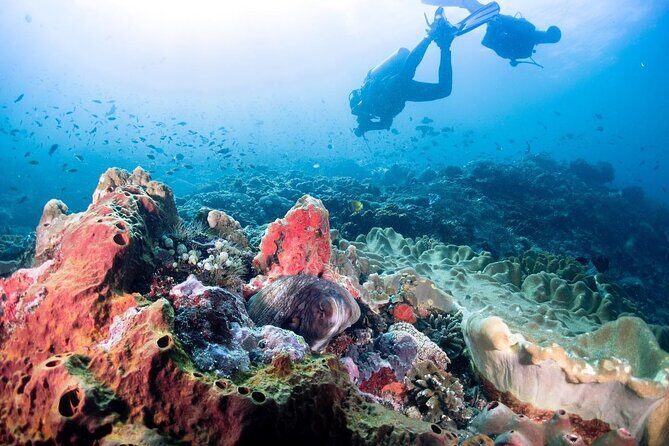
Scuba in Nusa Penida starts with a lesson. This full day links Sanur with the reefs around Nusa Penida, so you can try scuba step-by-step, with safety-first guidance and a real chance to spot manta rays. You’ll also be in the right region for big-season sightings like mola molas (July–October), depending on conditions.

My favorite parts are the small-group feel and the way the instructors focus on practical underwater skills. I especially liked seeing how guides like Mark Cornell helped people understand what they were seeing, from fish and corals to sea turtles, while keeping everyone relaxed and on track.

One thing to plan around: manta sightings and exact sites are never guaranteed. Manta Point is visited regularly, but sea conditions and scheduling can change the plan, so don’t build your day around a single promise.

Key things to know before you go

Day Trip Discover Scuba dive in Nusa Penida 2 dives (From Sanur - South Bali) - Key things to know before you go

  • Two ocean scuba sessions: one earlier and one later, with a full surface interval in between.
  • Small group size (max 8): more personal attention during training and during the day.
  • Pool session options in Sanur: you can do it the day before or very early (7am) if you want to keep things moving.
  • Manta Point is a best-effort: it’s visited often, but not guaranteed every day.
  • Safety-first setup: professional instructors are certified and insured, and the operator highlights a strong safety record.
  • A full day schedule: fast boat timing from Sanur and return in the late afternoon, around 8 hours total.

A beginner-friendly Nusa Penida day without the long course

Day Trip Discover Scuba dive in Nusa Penida 2 dives (From Sanur - South Bali) - A beginner-friendly Nusa Penida day without the long course
This experience is built for first-timers. You don’t need prior scuba experience, and the structure is meant to lower the stress level: learn basics, then get ready for two ocean sessions. If you end up loving it, the operator says you can continue with an Open Water Course that runs about 3 days.

A big reason this works well is the training flow. Your day is designed so you’re not thrown straight into the deep end. Instead, you’ll learn core skills through a pool session (or do the first part at the ocean if conditions require it), then do the two guided underwater experiences around Nusa Penida.

If your goal is to see reef life and come home with confidence, this is a strong fit. It’s also a practical way to decide whether you want to invest in the next step toward certification.

Sanur to Lembongan: the boat trip that shapes your whole day

Day Trip Discover Scuba dive in Nusa Penida 2 dives (From Sanur - South Bali) - Sanur to Lembongan: the boat trip that shapes your whole day
The schedule is very “day trip,” so your time starts on the water. Pickup happens from your hotel, and the exact time depends on the agreed schedule. The day begins around an 8:00 am start, then you transfer to Sanur for the fast boat.

At 9:15 am, you depart Sanur by sharing fast boat (the exact boat is subject to the day’s arrangement). You arrive on Lembongan around 10:00 am, check in, and then the program begins. Later, you’ll return by fast boat from Lembongan back to Sanur around 4:15 pm, with hotel drop-off roughly 4:45–5:00 pm.

What this means for you: it’s not a slow, flexible itinerary. If you’re the type who likes a clear plan, this is comforting. If you hate the idea of spending the whole day in transit, you might want a lighter option. But if you’re here to make one solid outing count, this is well timed.

The pool training in Sanur: learning control before you go under

Your comfort level underwater is the heart of the experience. The operator recommends doing the pool session in Sanur the day before, but it’s also possible to schedule an early session on the same day (they mention 7am as an option).

That pool training is where you should expect to learn the basics and get used to equipment handling and underwater control. The goal isn’t just to make you capable for the two ocean sessions—it’s to help you feel calm and safe so you can actually enjoy what you came for: fish life, corals, and the big animals people travel for.

There’s also a contingency built in. The itinerary notes that the first session can happen in the pool or directly at the ocean depending on sea conditions and student needs. So the plan can adapt to weather, instead of forcing the same exact flow no matter what.

Two ocean sessions plus a long-ish surface break

Day Trip Discover Scuba dive in Nusa Penida 2 dives (From Sanur - South Bali) - Two ocean sessions plus a long-ish surface break
Your day is structured around two guided underwater experiences. After you check in on Lembongan, you’ll do the first session—either in the pool or directly in the ocean depending on conditions. Then you get a 1-hour surface interval with tea and coffee and a lunch choice.

That break matters more than people think. It gives you time to reset, eat, and talk through what you experienced, and it helps you show up fresh for the second ocean session. Then you head out by boat for the second session later in the day.

From real-world feedback, the underwater time can feel satisfying rather than rushed. One review mentioned about 35–40 minutes underwater per session, which matches the “two solid experiences” vibe of the schedule. Actual timing can vary with conditions, but the program is clearly designed to give you meaningful time, not just a quick taste.

Manta rays and mola season: what you can expect without false promises

This region is famous for ocean animals, especially during the right months. The operator highlights that mola molas are a key draw in July–October. They also explain that diving around the islands gives you a chance to see manta rays.

Here’s the honest part: seeing manta rays is never guaranteed. The operator says manta point is visited regularly, but they cannot promise it will happen every day. They also note that you can request specific dive site preferences, but scheduling and sea conditions might limit which locations are possible.

So how do you plan smartly?

  • Go in expecting reef life and a real possibility of mantas, not a guaranteed “manta only” day.
  • If manta sightings are your top priority, pick your trip dates around the season and be flexible on the site plan.
  • If sea conditions make it unsafe or impractical to hit the usual spots, the operator’s plan is supposed to shift rather than cancel the whole thing.

That approach is exactly what you want from a beginner program: adapt, keep you safe, and still aim for the best wildlife odds available that day.

Safety record and certified instructors: what the operator is really selling

The experience is marketed around safety and guided expertise, and the structure supports that. The operator says you’re always guided by a professional who is certified and insured, and they’re familiar with reef habitats and the local environment.

They also point to a strong safety track record (they state a 100% safety record). While no operator can make every day risk-free, this kind of emphasis usually shows they train for practical control: buoyancy awareness, calm pacing, and proper handling so first-timers don’t feel overwhelmed.

The small group size (max 8 travelers) is another safety-plus. It helps instructors manage timing, spot issues quickly, and keep attention where it’s needed. And it likely explains why people in the program often come away with confidence—not just photos.

In the feedback you can see the human side of it. One review specifically calls out Fabio and the team for being brilliant, plus the guide Mark Cornell for clearly explaining what people were seeing. That’s not just “friendly”—it helps you connect underwater: when you can name what’s around you, the whole trip feels better.

Price and logistics: does $195 feel like value?

At $195 per person, you’re paying for a full day that mixes transportation, training, and two guided ocean sessions. Based on the schedule, you’re not just paying for time underwater. You’re also paying for hotel pickup and drop-off, fast boat transfers between Sanur and Lembongan, check-in, a guided structure, and the included surface interval with tea/coffee and a lunch choice.

It’s also booked ahead fairly often (they mention an average booking window of about 24 days), which usually indicates people plan around availability and season. If you want a smoother experience, booking early can help you lock in your preferred date.

Group discounts are also listed. If you’re traveling with friends or family and can align dates, ask about grouping options when you book.

The main cost “gotcha” to keep in mind is that weather can change what you see and when you do it. The operator says the experience requires good weather. If it’s canceled due to poor weather, you’ll be offered a different date or a full refund. That doesn’t change the value, but it does affect planning certainty.
Who this trip suits best (and who should think twice)

This is a good match if you:

  • Want a first scuba experience with structured training.
  • Prefer small groups and guided attention (max 8).
  • Are interested in Nusa Penida’s wildlife—especially the manta-ray chance and mola season (July–October).
  • Like the idea of doing an Open Water Course if you enjoy this taste.

It also seems to work for mixed-age groups. One review describes a family with kids around 10 and 12 plus adults doing two sessions together, with the team using patience so children could explore and feel comfortable.

Think twice if you:

  • Need the manta experience to be guaranteed. It’s a best-effort plan, not a promise.
  • Hate boat days. The fast boat timing is central to the itinerary.

If you’re a beginner who wants a well-run start, the format makes sense: learn in a controlled way, then get two chances to enjoy the water.

Should you book this Discover Scuba day trip?

I’d book it if your priority is a confident first scuba experience with a professional team, clear structure, and the chance of standout wildlife like manta rays. The schedule is designed to avoid rushing, and the pool-to-ocean flow is the right approach for beginners.

I’d pause if manta Point is the one thing you’ll feel disappointed without. The operator visits Manta Point regularly, but they can’t guarantee it. So treat this as a wildlife-chance day, not a single-site guarantee.

If you want, tell me your travel month and whether you’re starting from Sanur or staying elsewhere in Bali. I can help you judge the timing for manta/mola odds and whether this day trip fits your pace.

FAQ

How long is the Nusa Penida Discover Scuba day trip from Sanur?

It runs about 8 hours. The schedule includes fast boat travel to Lembongan, training and two ocean sessions, a surface interval, and return transport back to Sanur and your hotel.

What time does the tour start, and do I get hotel pickup?

The experience lists a start time around 8:00 am. Pickup is offered from your hotel, and the exact pickup time depends on your agreed schedule.

Is this experience suitable if I have never done scuba before?

Yes. It’s designed for beginners and does not require prior scuba skill. You’ll get help from an experienced instructor, including basics learned through a pool session.

Do I have to do a pool session first?

The operator recommends doing the pool session in Sanur the day before. It’s also possible to do it very early on the same day (they mention 7am). Depending on sea conditions and student needs, the first part of the day may happen in the pool or directly at the ocean.

How many people are in the group?

The maximum group size is 8 travelers.

Are manta rays guaranteed?

No. Manta rays depend on the dive location and the daily weather conditions. Manta Point is visited regularly, but they cannot guarantee going there every day.

What does the schedule look like during the day?

You typically leave Sanur by fast boat at 9:15 am, arrive on Lembongan around 10:00 am, and enjoy a 1-hour surface interval with tea, coffee, and lunch. You return to the dive base around 3:00–3:30 pm, then take the fast boat from Lembongan back to Sanur around 4:15 pm, with hotel drop-off roughly 4:45–5:00 pm.

What’s included for the surface interval?

The schedule includes tea, coffee, and a choice of lunch during the 1-hour surface interval.

What’s the cancellation policy if plans change?

Cancellation is free up to 24 hours before the experience’s start time for a full refund. If you cancel less than 24 hours before the start time, the amount paid isn’t refunded. If it’s canceled due to poor weather, you’ll be offered a different date or a full refund.

Do I need to be very fit?

You should have a moderate physical fitness level.

BALI INSTAGRAM TOURS; Heaven Gate, Tirta Gangga, Tukad Cepung waterfall

BALI INSTAGRAM TOURS; Heaven Gate, Tirta Gangga, Tukad Cepung waterfall - How the Private Route Actually Feels (Pickup, Time, and Traffic Reality)

East Bali looks made for photos. This private day links three of the island’s most camera-friendly scenes: the Lempuyang Temple Gates of Heaven, Tirta Gangga’s water palace gardens, and the cave-like drama at Tukad Cepung Waterfall. I like that it’s built around lingering for pictures, not rushing you through. I also like the balance of big, iconic backdrops plus quieter details like fountains, ponds, and temple architecture.

There’s one real catch: the route depends on traffic, and busy roads can make the day feel tight. If you’re a slow shooter, plan to give each stop enough time so you don’t feel chased between viewpoints.

Key things to know before you go

BALI INSTAGRAM TOURS; Heaven Gate, Tirta Gangga, Tukad Cepung waterfall - Key things to know before you go

  • Private pacing for photos: you spend as long as you need at each stop instead of being marched along.
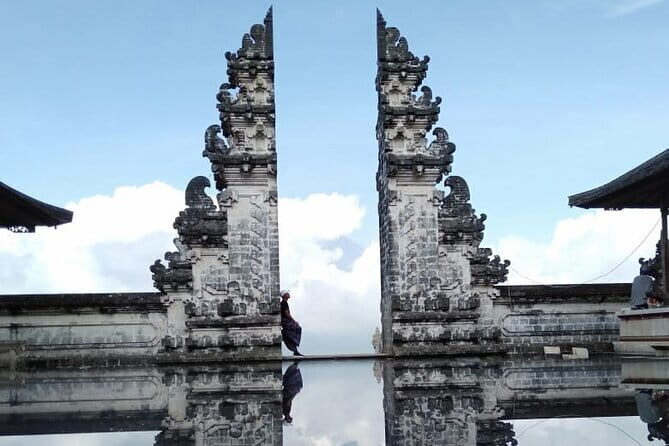
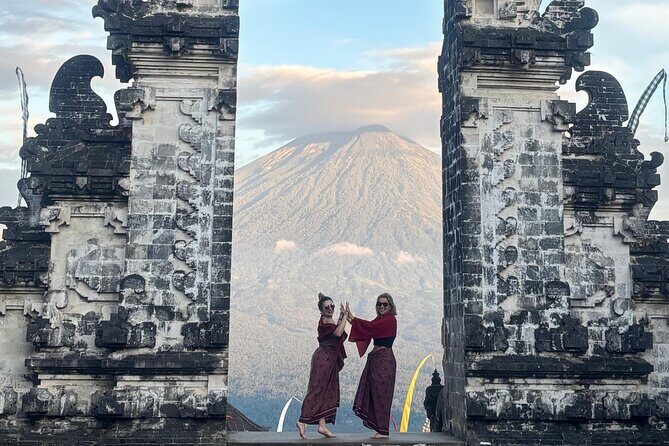
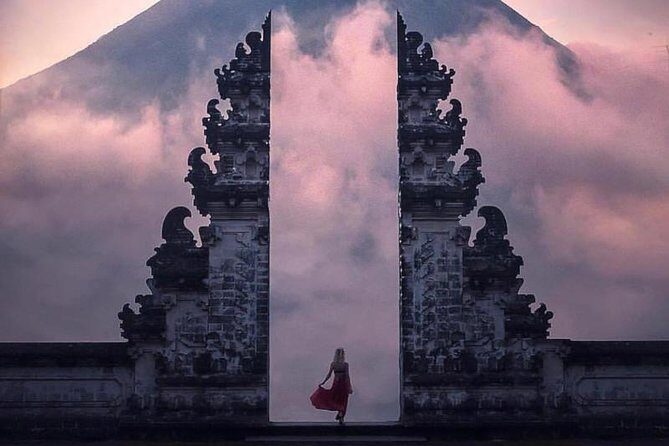
  • Gates of Heaven at Lempuyang: the split-gate view is designed for that classic Mt. Agung-in-the-frame moment.
  • Tirta Gangga’s water palace layout: koi ponds, fountains, and garden areas give you multiple angles in a compact zone.
  • Tukad Cepung’s light-through-the-trees effect: you’re walking into a canyon/cave area where the scene feels more cinematic than most waterfalls.
  • Pickup from Ubud and much of south Bali: it’s a full-day driver experience with hotel door-to-door convenience.

East Bali’s Most Photo-Forward Stops, Wired Into One Day

BALI INSTAGRAM TOURS; Heaven Gate, Tirta Gangga, Tukad Cepung waterfall - East Bali’s Most Photo-Forward Stops, Wired Into One Day
This tour is basically a one-day East Bali “greatest hits” route, tailored for photography time. You’re not just visiting three places—you’re visiting three places that are famous for how they look in a frame, then giving you the breathing room to get that shot without counting down minutes.

The three stops work together because they’re visually different. Lempuyang Temple gives you the iconic gate-and-sky composition with Mt. Agung as the backdrop. Tirta Gangga shifts you into royal-water-gardens mode with ponds, fountains, and structured garden spaces. Then Tukad Cepung drops you into a cave-like waterfall scene where the light effect becomes part of the experience.

If your goal is a set of photos that looks like Bali’s been sorted into storybook chapters, this does that job well. You also get a private vehicle and a driver/guide, which means you’re not stuck coordinating multiple tickets and rides.

How the Private Route Actually Feels (Pickup, Time, and Traffic Reality)

BALI INSTAGRAM TOURS; Heaven Gate, Tirta Gangga, Tukad Cepung waterfall - How the Private Route Actually Feels (Pickup, Time, and Traffic Reality)
You’ll start with hotel pickup and drop-off by private vehicle, with a driver/guide handling the moving parts. That matters because East Bali drives can be longer than they look on a map, and the day has three walking-and-looking moments that all need time.

The private nature is a big deal. Instead of a tight conveyor-belt schedule, you can pause for better angles and wait for a calmer moment at the gates or in the garden areas. One review noted they started with Tukad Cepung first, then went to Tirta Gangga and Lempuyang after—so your order may shift based on the day’s logistics.

Here’s the practical takeaway: wear patience. If traffic is heavy, the tour can still be a great day, but you need to let it take the time it takes. If you’re the type who tries to “win” the schedule, you’ll feel stressed.

Lempuyang Temple Gates of Heaven: The Split-Gate Moment With Mt. Agung Framing

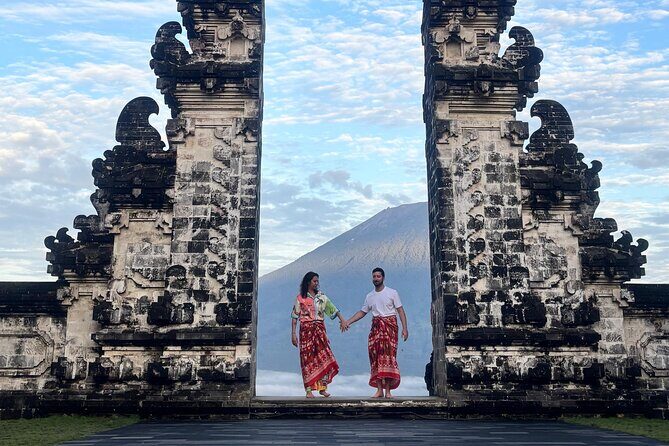
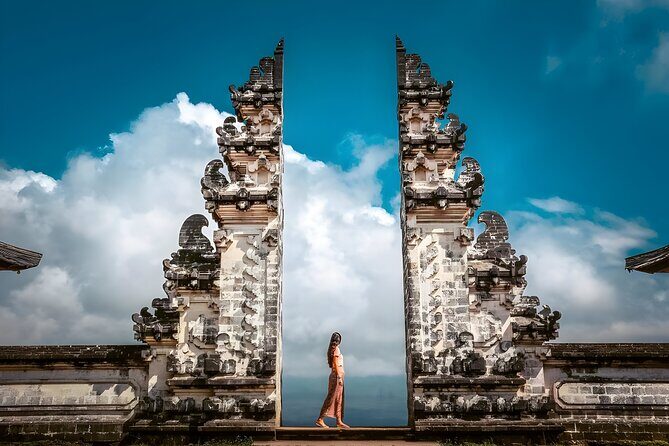
Lempuyang Temple is the headline. The signature scene here is the split gate of pura penataran agung, positioned at the foot of Mount Lempuyang, with Mt. Agung often used as the dramatic background.

You’re given about an hour at this stop, which is the right length for a place like this. You’ll have time to walk in, find a good vantage point, and reset your expectations if the view isn’t perfect right away. Gates like this are famous because they’re symmetrical and photogenic, but the “real” skill is managing timing—when crowds thin out and when the angle lines up with your shot.

One smart approach: don’t treat this like a quick checkbox. If you want the classic gate composition, use your first minutes just to orient yourself—where the gate aligns best, where the background looks cleanest, and where you can stand without blocking other people.

Also, remember this is still a sacred temple area. Even when you’re focused on photos, keep your behavior respectful and stay aware of temple etiquette.

Tirta Gangga Water Gardens: Royal Water Palace Vibes and Multiple Photo Zones

BALI INSTAGRAM TOURS; Heaven Gate, Tirta Gangga, Tukad Cepung waterfall - Tirta Gangga Water Gardens: Royal Water Palace Vibes and Multiple Photo Zones
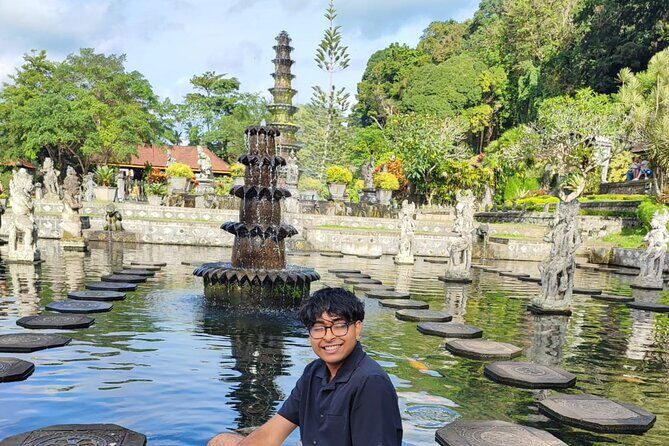
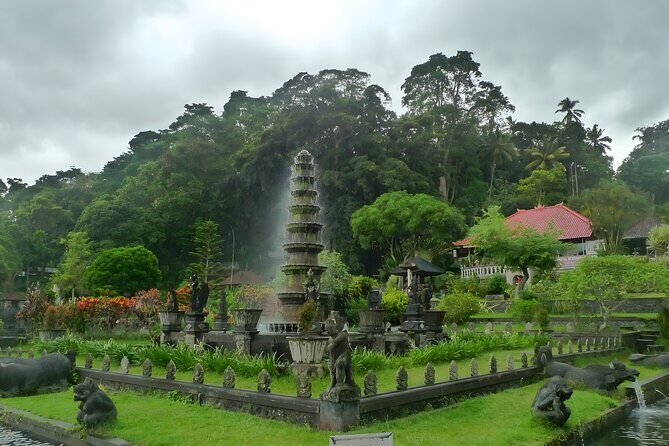
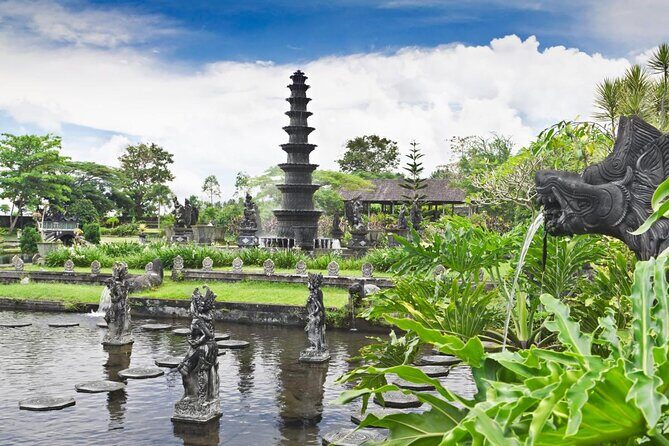
Next you’ll head to Tirta Gangga, the former royal water palace known for its ponds, fountains, and garden spaces. The palace is culturally important for Hindu Balinese practice, and Tirta Gangga itself translates to something along the lines of water/holy water, which hints at why the pools and carved garden layouts feel more than decorative.

You get around 45 minutes here, which is enough if you use it intentionally. Tirta Gangga is visually layered: you can shoot from walkway angles, then shift to closer views around the water features. The koi-adjacent areas and the garden pavilions give you that “Bali postcard, but with texture” look.

The value of this stop is that it slows you down a bit after the temple gate. Where Lempuyang gives you one big iconic structure, Tirta Gangga spreads the visual story across the grounds. You’re not stuck chasing one perfect spot—you can build a set of shots from different distances.

If you’re short on patience with walking, this is one of the easier stops to manage because much of what you want to photograph is accessible within the main water garden zones. Still, 45 minutes can go fast if you stop every two steps to check your camera settings.

Tukad Cepung Waterfall: Why the Cave-Style Walk Changes the Whole Mood

BALI INSTAGRAM TOURS; Heaven Gate, Tirta Gangga, Tukad Cepung waterfall - Tukad Cepung Waterfall: Why the Cave-Style Walk Changes the Whole Mood
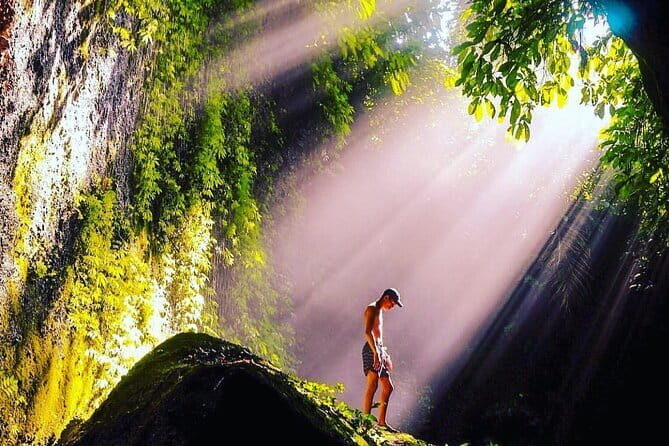
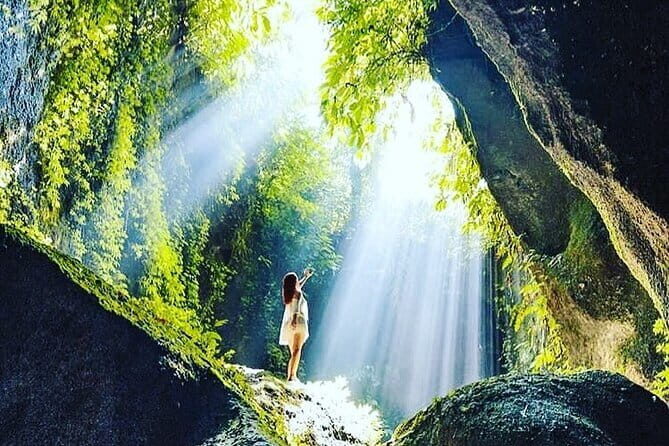
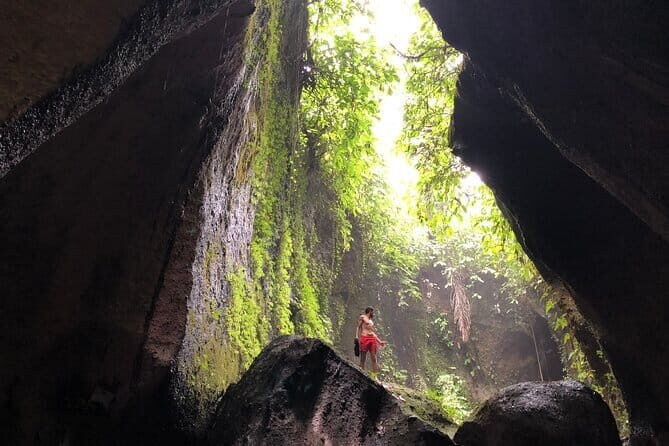
Then you’ll get to Tukad Cepung Waterfall, often described as a hidden-style waterfall with light shining straight through a gap in the trees. This is the stop where the tour’s photo focus really pays off, because the experience isn’t just the waterfall—it’s the way the waterfall is framed by nature.

The route includes a walk through a canyon and then continuing into a cave area. The time here is around 45 minutes, which includes that walking component plus time to look, take photos, and wait for the light effect. The key detail you should expect is the “straight-through” look created by the openings above. That’s why the place photographs so well: your camera catches more than falling water.

A practical tip: bring calm shoes and take your time with footing. Because you’re moving through canyon/cave terrain, things can feel uneven, and you’ll want secure steps. If you’re carrying a tripod or heavy gear, keep it manageable and don’t slow the flow for others.

This stop also rewards patience. In a cave-style scene, the best light can shift as you move slightly or as the angle changes. If you try to rush it, you’ll miss the feel of what makes Tukad Cepung special.

Tickets and the Real Value of a $50 Private Day

BALI INSTAGRAM TOURS; Heaven Gate, Tirta Gangga, Tukad Cepung waterfall - Tickets and the Real Value of a $50 Private Day
The price is $50.00 per person for a full-day private experience in East Bali. That’s a bargain if you value door-to-door convenience and a driver who’s focused on getting you to the right places without you managing navigation and time splits yourself.

What you get for that price is not just a ride. You’re paying for:

  • hotel pickup and drop-off by private vehicle
  • a driver/guide
  • all fees and taxes
  • private transportation

The tour also uses a mobile ticket, which makes check-in simpler at the stops (no paper scramble).

Now, about entrance tickets: the stop details list admission tickets as included, but the overall description also mentions an option to pay as you go for attractions or upgrade to include entrance tickets. The smart move is to confirm what your specific booking includes before you arrive—because the value changes slightly depending on that option.

Even if you do end up paying for a few items separately, you’re still getting a structured day with the big East Bali sights connected in one route. For many people, that alone is worth it.

What’s Not Included: Food, Drinks, and the Little Extra Costs

BALI INSTAGRAM TOURS; Heaven Gate, Tirta Gangga, Tukad Cepung waterfall - What’s Not Included: Food, Drinks, and the Little Extra Costs
Food and drinks are not included, so plan to bring water and consider a simple lunch plan that doesn’t turn into a time sink. A full-day photo tour can make you forget to eat until you’re tired, so build a small routine: snack early, hydrate often, and don’t wait for the final stop to fix your energy.

Souvenir photos are available to purchase, but they’re not included. If you love getting a professional-looking set of Bali shots, you can treat those as optional add-ons rather than something you’re forced to buy.

DVDs are also available for purchase. If you don’t use DVDs anymore, you can ignore that entirely.

Comfort Tips for a 7–8 Hour Photo Day

BALI INSTAGRAM TOURS; Heaven Gate, Tirta Gangga, Tukad Cepung waterfall - Comfort Tips for a 7–8 Hour Photo Day
A day like this is all about staying comfortable enough to keep taking photos. Since you’ll have walking time at each stop—especially at Tukad Cepung—it’s worth showing up ready to move.

I’d plan for:

  • water and a light snack (since food isn’t included)
  • comfortable footwear for uneven or canyon-style paths where you’re walking around for angles
  • a small bag you can keep with you at temples and garden areas

Your schedule is about 7 to 8 hours, so you’ll want to treat it like a working day, not a leisurely stroll. The private nature helps, but the day still has travel time between sites.

If you’re sensitive to heat, keep an eye on your breaks. Even if the photo hunt is fun, you don’t want to lose the rest of the day because you pushed too hard at the first stop.

Who This Tour Is Best For (and Who Might Want Something Else)

This works best if you:

  • want a tightly connected East Bali route without handling transport logistics
  • care about getting the classic photos at the Gates of Heaven, Tirta Gangga, and Tukad Cepung
  • like the idea of a private guide/driver who can adjust timing when roads get messy

You might want to choose something different if you only want one or two of these stops and prefer slow, independent exploring. This is a full-day hit list, and it’s designed to cover three big experiences in one smooth loop.

It also makes sense if you’re traveling with friends and want everyone to share the camera time. Private tours reduce the friction of group timing, especially when photo angles are part of the experience.

Should You Book This East Bali Instagram Tour?

Book it if you want a day that’s built for photos but still feels like you’re seeing real places, not just snapping from a bus window. The big advantage is the private pacing—you’re not forced to leave just because a group is moving on.

I’d especially recommend it if you’re targeting all three signature scenes—Lempuyang’s split gate, Tirta Gangga’s water palace gardens, and the cave-style waterfall at Tukad Cepung. That combination is hard to stitch together well on your own without spending extra time and energy.

If you’re the kind of traveler who hates pressure, build in mental slack for traffic and for the fact that the best shots can take time. If you do that, you’ll come away with a photo set that feels like a real East Bali day, not a checklist.

FAQ

What is the duration of the tour?

It runs about 7 to 8 hours.

How much does the tour cost?

The price is $50.00 per person.

Is this a private tour?

Yes. It’s a private tour/activity, so only your group participates.

Where does pickup happen?

Pickup is offered from hotels in Ubud and much of south Bali.

Are entrance tickets included?

Admission tickets for the stops are listed as included, and the tour also mentions options related to entrance tickets. Confirm what your booking option covers.

What are the main stops?

The tour stops at Lempuyang Temple (Gates of Heaven), Tirta Gangga, and Tukad Cepung waterfall.

Is food included?

No. Food and drinks are not included.

Does the tour use mobile tickets?

Yes, it includes a mobile ticket.

Can I cancel for a full refund?

Yes. You can cancel up to 24 hours in advance for a full refund.

Famous Ubud villlage and Dance Tour with Rice Terrace And Waterfall Visit

Famous Ubud villlage and Dance Tour with Rice Terrace And Waterfall Visit - Celuk Village: a quick look at Bali painting culture

One long day in Ubud can feel like a whole mini-trip. You’ll start early to catch the Sahadewa Barong Dance & Fire Dance at Batubulan, then sweep through creative stops around Ubud, ending with classic views at Tegalalang and Tegenungan waterfall. The schedule is packed, and lunch isn’t included, so you’ll want to plan for food on your own.

I really like how this tour is set up for convenience. Hotel pickup and drop-off keep the transport stress low, and the day includes all entry tickets, so you’re not bouncing around paying at each place. Still, because it runs about 8 to 10 hours, you’ll want comfortable shoes and a calm pace mindset.

Timing matters here. The day begins around 8:15–8:30 am and typically returns around 6 pm, with a mobile ticket and a guide/driver handling the route. One more note: the dress code is formal, so skip beachwear even if it’s hot.

Key highlights to know before you go

Famous Ubud villlage and Dance Tour with Rice Terrace And Waterfall Visit - Key highlights to know before you go

  • Batubulan Barong and Keris Fire Dance (9:30 to 10:30 am): a strong cultural performance in the middle of the morning.
  • Celuk + Mas creative stops: you’ll see how painting and wood carving shape village identity.
  • Ubud Traditional Art Market and Ubud Palace area: a simple way to browse local crafts and everyday goods.
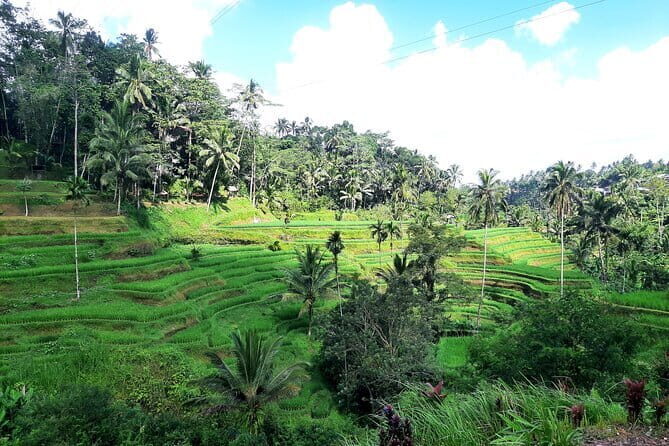
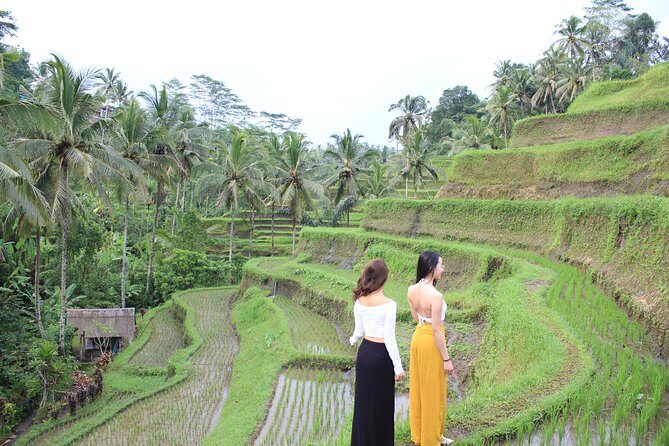
  • Tegalalang rice terrace views: scenic layered rice landscapes with coconut trees and a river valley feel.
  • Bali Pulina coffee plantation stop: quick look at kopi luwak and why it’s low-production and expensive.
  • Tegenungan waterfall visit: nature scenery with built-up viewing access near the falls.

Why this Ubud culture-and-nature loop makes sense

Famous Ubud villlage and Dance Tour with Rice Terrace And Waterfall Visit - Why this Ubud culture-and-nature loop makes sense
Ubud is the kind of place where you can plan an entire week, but most of us don’t have that luxury. This tour is built for people who want variety without doing logistics all day: dance performance, art villages, a market and palace area, rice terraces, coffee, and a waterfall.

What makes the pacing work is that the main cultural show happens early, before the crowds and heat build up too much. Then you move through smaller stops—short enough to keep the day moving, but long enough to actually look around. If you’ve ever felt like Ubud turns into a blur of scooters and hurried photos, this format helps you slow down where it counts.

Also, this is a private setup for your group. That matters in Bali traffic. You’re not negotiating space with a bigger crowd plan, and your driver can adjust timing so you arrive for key moments.

The morning show: Batubulan Barong and Fire Dance

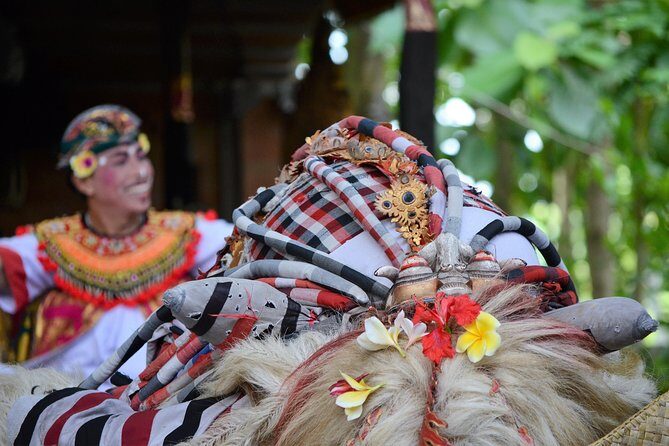
Your day centers on the Sahadewa Barong Dance & Fire Dance at Batubulan Village, scheduled from 9:30 am to 10:30 am. This is one of those performances that gives you cultural context fast. The Barong play represents an eternal fight between good and evil spirits, so it’s not just dancing for entertainment—it’s storytelling with meaning.

Here’s what I’d pay attention to as you watch:

  • The drama is structured, not random. The energy builds and the action moves with the story.
  • The Keris and fire elements are part of that symbolic contrast. Even if you don’t know the details beforehand, you’ll feel the intensity.

Practical note: because the show is timed, being punctual is a big deal. The value of a good driver/guide isn’t subtle here. In the feedback I saw, Komang G stood out for getting people to each event on time, and for handling the hectic driving rhythm without making the day stressful. That kind of reliability turns the morning from chaotic into smooth.

Celuk Village: a quick look at Bali painting culture

Famous Ubud villlage and Dance Tour with Rice Terrace And Waterfall Visit - Celuk Village: a quick look at Bali painting culture
After the show, you head to Celuk Village, in the Sukawati district of Gianyar. This stop is short—about 20 minutes—but it’s designed to give you a targeted taste of Ubud’s broader art scene.

You’ll likely see how artists and workshops support a craft community day-to-day. Even if you only have a brief window, the main payoff is perspective: Celuk is known for artistic production, not just sightseeing.

If your goal is to buy something, this is the kind of stop where you can spot styles you like before you reach the larger market later. Think of it as a warm-up for browsing, so your eye gets trained early.

Dewa Putu Toris and the painter community stop

Famous Ubud villlage and Dance Tour with Rice Terrace And Waterfall Visit - Dewa Putu Toris and the painter community stop
Next comes Dewa Putu Toris, presented as a painter’s community stop. It’s scheduled for about 15 minutes, and the entry here is listed as free.

Because the time is brief, you’ll get the most out of it if you go in with a simple intention:

  • Look for recurring themes or a consistent style.
  • Notice the tools and process more than trying to read every sign.

This is also one of the moments where a private guide can help you interpret what you’re seeing. The tour structure is built to keep you moving, but you still have time for a real look.

Mas Village wood carving: Werochana stop

Famous Ubud villlage and Dance Tour with Rice Terrace And Waterfall Visit - Mas Village wood carving: Werochana stop
Then you shift to Mas Village, focused on wood carving, with a stop at Werochana Wood Carving. This is about 20 minutes and also listed as free entry.

Wood carving in Bali isn’t casual decoration—it’s craft identity. Even within a short stop, you can see the labor that goes into the final work: block-to-shape, fine detailing, and how pieces are finished.

A smart approach for this stop:

  • Spend time finding the craftsmanship level you’re willing to pay for.
  • If you plan to purchase later, take mental notes now: small differences in design can matter a lot.

Ubud Traditional Art Market and Ubud Palace area

Famous Ubud villlage and Dance Tour with Rice Terrace And Waterfall Visit - Ubud Traditional Art Market and Ubud Palace area
By the time you reach the Ubud Traditional Art Market and the Ubud Palace area, the day starts to feel more like local life than a checklist. This stop runs around 1 hour, and entry is included.

You’ll get two different market vibes in one visit:

  • The traditional market side sells daily food and tends to open earlier.
  • The arts market side focuses more on handicrafts.

This is where you’ll want to slow down slightly. Even if you aren’t shopping, the market helps you understand what people actually buy and use, not just what tourists like to photograph. It also sets up a smoother rice terrace and waterfall experience afterward, because you won’t be stuck trying to find snacks at random times.

One more practical point: since lunch isn’t included, the market can be your best bet for a quick meal or snack. Your guide may be able to help you time it, but your best move is to think ahead so you don’t end up hangry and rushed later.

Tegalalang rice terrace: photos, shade, and real scenery

Famous Ubud villlage and Dance Tour with Rice Terrace And Waterfall Visit - Tegalalang rice terrace: photos, shade, and real scenery
Next up is Tegalalang Rice Terrace at Tegallalang Village. This stop is about 1 hour, with admission included. You’ll come for the layered views, but also because this place gives you texture: rice terraces, coconut trees, and a small river valley feel.

Why I like this kind of stop on a tour: it’s visual but not sterile. You’re not looking at one single viewpoint—you’ll see different angles as you walk around, and that helps make your photos look less repetitive.

Tips that keep things comfortable:

  • Wear shoes with grip. Some paths can be uneven.
  • Bring water and plan for sun. Even with cloud cover, the heat can move in fast.
  • If you’re sensitive to crowds, aim for a slower pace and choose one main photo spot before you wander.

This is also a good moment to reset your energy before the coffee and waterfall segments.

Bali Pulina coffee plantation: the kopi luwak angle

Famous Ubud villlage and Dance Tour with Rice Terrace And Waterfall Visit - Bali Pulina coffee plantation: the kopi luwak angle
The coffee stop is at Bali Pulina Coffee Plantation. It’s scheduled for about 20 minutes and includes admission.

The highlight here is kopi luwak, also described as civet coffee. The tour info explains why it costs more: it’s low-production, and the process involves the beans coming from coffee berries eaten by the Asian palm civet. That gives you a clear, simple explanation without turning it into a long lecture.

Reality check: 20 minutes is enough to understand the story and maybe taste, but it’s not enough to become a coffee expert. Treat this as a short educational pause in the middle of a busy day.

Also, if you know you’re not interested in coffee at all, you might want to use this time to take a break, use the restroom, and rehydrate. The tour still keeps you moving so you can get to Tegenungan.

Tegenungan waterfall: what to expect at the end of the day

Finally, you reach Tegenungan Waterfall, with about 30 minutes on site. Admission is included, and the focus is on the natural scenery: green trees and a classic waterfall setting.

There are also facilities near the falls, since the area has been developed for access and visitor viewing. That’s useful because you’re not just standing in one spot—you can usually find a vantage point.

Photo note: the waterfall can be great for quick shots, but it can also be slippery. Stay aware of where you step, and keep your phone secured if mist is in the air.

This stop works well as a closer because it’s a change of rhythm. After art, rice terraces, and coffee, nature gives your brain something different to process.

Price and logistics: does $49.85 feel fair?

At $49.85 per person, this tour is priced like a value bundle. You’re paying for a private driver/guide, hotel pickup and drop-off, parking, and all entry tickets, plus handling charges and taxes.

What’s not included is the obvious thing that can change your day: lunch and personal expenses. If you want the best value, plan to eat either before the market segment or during the market hour. When you do that, you avoid spending time and money later trying to locate food while you’re already on the clock.

For logistics, the big win is the driver’s timing. In the feedback, Komang G was specifically praised for staying on schedule and managing Bali driving stress. Another named team member, Yusand, appears in operator responses tied to positive experiences. The point is simple: when the driver is confident, you spend less energy worrying about routes and more energy enjoying stops.

One small bonus: the tour format can include flexibility on the way back. In one account, a driver even accommodated a quick supermarket stop to pick up groceries, which is a practical advantage if you’re staying somewhere with a kitchenette or you want snacks for later.

Who should book this tour (and who might skip it)

This is a great fit if you:

  • Want culture + crafts + scenery in one day.
  • Like structured timing, especially for performances like the 9:30 am dance show.
  • Prefer pickup and drop-off so you don’t manage multiple taxis.

You might hesitate if you:

  • Hate long days. This runs 8 to 10 hours.
  • Need a big sit-down lunch every day. With lunch not included, you’ll want a backup plan.

Also, the dress code is formal. If you’re arriving straight from the beach, you’ll probably need a quick clothing change.

Should you book this Ubud tour?

I’d book it if you want a fast, focused taste of what makes Ubud special: a meaningful dance show, art-village craft stops, a real market moment, then nature payoff with rice terraces and Tegenungan waterfall. The inclusion of entry tickets and pickup makes it feel like a low-friction way to hit multiple highlights without turning your day into transportation homework.

I’d skip it only if you’re the type who wants free-form exploring with no fixed timing, or if you know you’ll struggle with the long, packed schedule. Otherwise, this one-day loop is a solid value—especially when you get a driver who keeps things on time, like Komang G, and the team’s overall attention to pacing shows up in the day.

FAQ

What time does the tour start, and when does it end?

The tour starts around 8:15–8:30 am (meeting point listed as 8:30 am) and you’ll return around 6 pm. Total duration is about 8 to 10 hours.

How much does the tour cost?

The price is $49.85 per person.

Is hotel pickup and drop-off included?

Yes. Hotel pickup and drop-off are included.

Are admission tickets included?

Yes. All entry tickets are included, along with taxes, fees, and handling charges.

Is lunch included in the price?

No. Lunch is not included, and you’ll also have personal expenses during the day.

Is the tour private?

Yes. It’s a private tour/activity, so only your group participates.

What is the dress code?

The dress code is listed as formal.

Is there a vegetarian option?

Yes. A vegetarian option is available if you advise at the time of booking.

Can I cancel for free?

Yes. Free cancellation is available up to 24 hours in advance of the experience start time for a full refund.

JEEP Batur Sunrise Experience

JEEP Batur Sunrise Experience - Sunrise Timing at Mount Batur: What You’re Actually Chasing

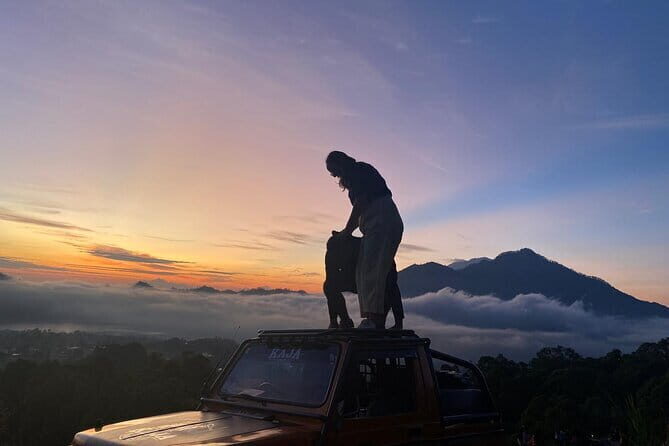
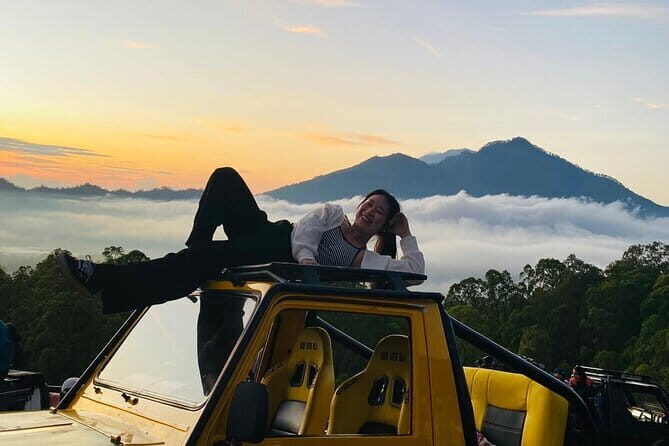
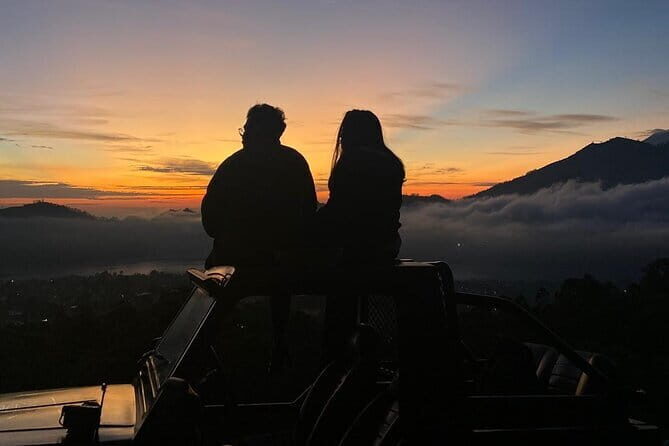
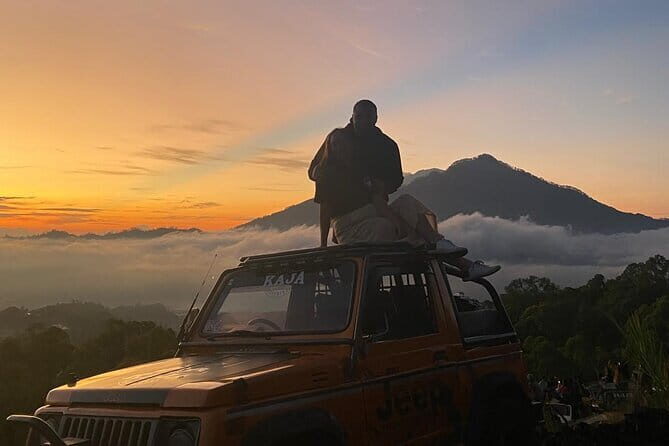
Wake up for a view that feels unreal. This Mount Batur Jeep Sunrise experience is built around one simple goal: see sunrise from the slopes, then hunt photos on the volcano’s dramatic black surfaces. The timing is the hook—sunrise starts around 6:10 AM, but you’re already moving long before that, with your driver-guide getting you ready in the dark.

Two things I really like here are the early start handled smoothly and the practical comfort along the way. You get picked up around 3:00 AM, then there’s a briefing before you head out in a Jeep, plus a hot, simple breakfast (banana sandwich, hot tea, and coffee). I also like that the guide-driver focus is safety and comfort—names that show up in past guest experiences include Indrawan and Tawan, along with Agus, which is a good sign that the same people are getting praised for actually caring.

One consideration: it’s early and it requires moderate physical fitness. You’ll be up before dawn and likely walking and climbing a bit in uneven volcanic terrain, even if you’re not doing a long hike.

Quick Highlights

JEEP Batur Sunrise Experience - Quick Highlights

  • 3:00 AM pickup from Ubud so you’re in position before the sky turns
  • Sunrise timing around 6:10 AM for strong light and fast photo chances
  • Breakfast included (banana sandwich, hot tea, coffee) to keep you steady
  • Black lava, black stones, and black sand photo stops for that iconic volcanic look
  • Guide is also the driver, which usually means smoother coordination
  • Hot spring stop after the volcano sights so your body can reset

Why a 3:00 AM Jeep Sunrise on Mount Batur Works

JEEP Batur Sunrise Experience - Why a 3:00 AM Jeep Sunrise on Mount Batur Works
Mount Batur sunrise is popular for a reason: the light hits the volcano from a low angle, and the dark volcanic ground makes the colors pop. The catch is you can’t arrive at a normal morning time and still get the best view. That’s why this trip is structured around an early pickup and a direct push to viewpoint areas.

What makes this experience feel good is that it doesn’t just dump you at the mountain. You get a briefing first, then you transition to the Jeep portion. That matters because when you’re leaving in the middle of the night, you need the plan to be clear: where you’re going, when you’ll be there, and what you’re waiting for.

If you love sunrise photos, this setup is a strong fit. If you’re more “I hate mornings” than “I chase sunrise light,” you’ll still enjoy it, but you should go in knowing it’s an all-in day.

Pickup From Ubud: The Part That Determines How Enjoyable It Feels

Pickup is offered, and the start time is 3:00 AM. That’s early enough that logistics can make or break the experience. The good news is that the tour is built around private transportation and a guide-driver who manages the timeline.

Once you’re picked up, there’s a briefing with the driver. Then you head by Jeep toward the sunrise area. This pattern—briefing first, motion second—reduces that anxious feeling you get when you’re in a crowd and nobody explains anything.

One detail I appreciate: this is a private tour/activity, meaning it’s only your group. That typically helps with pacing and comfort. You’re not stuck waiting while strangers ask ten questions at the worst possible moment before sunrise.

Practical note: since this begins in the dark, bring what you need for early mornings—water, a warm layer, and something easy for photos. Even with no specified gear list, mountain sunrise weather can be cooler than you expect.

Sunrise Timing at Mount Batur: What You’re Actually Chasing

JEEP Batur Sunrise Experience - Sunrise Timing at Mount Batur: What You’re Actually Chasing
The sunrise begins at 6:10 AM. That’s your main event, and the timing explains everything else on the schedule. You’re leaving Ubud at 3:00 AM so you have time to reach the viewpoint area before the sky fully opens up.

Those few hours before sunrise can feel long, but they’re also when you’re getting your bearings. The dark can be challenging for photos, so waiting with a plan helps. When the horizon starts to brighten, you’ll get that moment where the sky changes fast—exactly the kind of shift that makes sunrise tours worth the early wake-up call.

After sunrise, the day doesn’t end at the view. You shift into the black lava and black sand photo stops. That keeps your time on the mountain meaningful instead of feeling like a quick checkpoint.

Jeep Time Plus a Proper Photo Plan on Black Lava and Sands

JEEP Batur Sunrise Experience - Jeep Time Plus a Proper Photo Plan on Black Lava and Sands
Mount Batur’s black terrain is the reason this tour gets remembered. You’ll visit the black lava, black stones, and black sands—the volcanic ground that looks like it came from another planet.

Why this photo time works: black volcanic surfaces create strong contrast. When the sky has color and the ground is dark, photos tend to come out dramatic without needing special effects. You can also play with composition—people against the ground, the lava textures close-up, and wider shots that show the scale around the volcano.

This part of the day is also where having a guide matters. Even when the area is open, you want guidance on where to stand for the best angle and how to manage time. A well-run driver-guide keeps the flow moving so you’re not guessing.

In the past experiences tied to this tour style, guests praised the comfort and safety focus of the driver. That’s exactly what you want when you’re moving around volcanic terrain and taking photos on uneven surfaces.

Breakfast in the Dark: Small Comforts That Keep the Day Fun

JEEP Batur Sunrise Experience - Breakfast in the Dark: Small Comforts That Keep the Day Fun
One of the easiest ways to ruin a sunrise trip is being hungry and cold for too long. This tour includes breakfast—banana sandwich, hot tea, and coffee—plus bottled water.

I like that the food is simple and practical. You don’t want a big meal that sits heavy. A sandwich plus hot drinks is the kind of combo that helps you feel human again when you’ve been up since before most people are awake.

If you’re the type who turns on autopilot during early mornings, these details matter. You’re much more likely to enjoy the sunrise instead of thinking about how your stomach feels.

Tip from me: even though there’s breakfast, consider bringing a small extra snack if you know you get hangry. That’s not because the provided breakfast isn’t enough—it’s because everyone’s energy level is different on early starts.

The Hot Spring Stop: A Much-Needed Reset After Volcano Time

JEEP Batur Sunrise Experience - The Hot Spring Stop: A Much-Needed Reset After Volcano Time
After the sunrise and the black terrain photo stops, the itinerary includes a hot spring stop. The value of a hot spring after a cold start is obvious: your body gets a chance to loosen up.

One thing to be aware of: the provided details don’t spell out hot-spring admission in a separate line item. What we do know is that the overall tour includes “all fees and taxes,” but it’s still smart to confirm if any specific hot-spring charges apply at the counter. If nothing extra is needed, great. If there is, you’ll want cash or payment ready.

Either way, treat this stop as recovery time. Think of it as the payoff for the early morning effort—warm water after moving around on uneven ground.

Price and Value: Is $45.59 a Good Deal?

JEEP Batur Sunrise Experience - Price and Value: Is $45.59 a Good Deal?
At $45.59 per person, this is priced like a budget-to-midrange sunrise tour, not a luxury private expedition. The value comes from what’s bundled and the fact it’s private.

Here’s what you’re getting based on the included items:

  • Private transportation
  • Bottled water
  • Breakfast
  • Air-conditioned vehicle
  • All fees and taxes
  • A guide who is also the driver

So you’re paying for the early wake-up logistics, the coordination to hit sunrise timing, and the Jeep-based segment that gets you to the right spots. You’re also not paying for separate admissions for the sunrise/lava components listed as free.

What you don’t get is tips. That’s normal, and if you’ve ever tipped in Bali, you know it’s part of how good service gets rewarded. If you want the most accurate sense of what you’ll spend total, budget a little extra for tipping your guide-driver at the end.

Who benefits most from the price: couples, small groups, and anyone who wants a private experience without paying for a full custom charter.

Who This Private Jeep Sunrise Fits Best

JEEP Batur Sunrise Experience - Who This Private Jeep Sunrise Fits Best
This is a great match if you want the full package: early start, sunrise timing, and multiple photo-focused stops, without you having to plan the logistics. It’s also good for people who prefer an organized flow over DIY.

You should also consider it if:

  • You’re comfortable with a start time around 3:00 AM
  • You have moderate physical fitness
  • You want a private tour where your group stays together
  • You like guided photo locations rather than wandering around in the dark

If you’re not a sunrise person, you might still enjoy the black lava and sands portion, but you’ll likely feel the early morning more than the payoff. On the other hand, if sunrise is your thing, this format is exactly what you came for.

Should You Book This Batur Sunrise Jeep Experience?

I’d book it if your priorities are sunrise photos, clear timing, and a guided day that includes food and transport. The best reason is simple: the experience is structured around getting you there before the sky changes, then keeping your time valuable with the lava and sand photo stops.

Skip it only if a 3:00 AM pickup and moderate physical activity don’t sound enjoyable. This isn’t a lie-in breakfast-and-a-view situation. It’s a proper early-morning adventure with warm drinks, breakfast, and a nice recovery stop afterward.

FAQ

What time does pickup start for the Jeep Batur sunrise?

Pickup starts at 3:00 AM from your hotel.

How long does the tour last?

The duration is approximately 9 hours.

Is pickup in Ubud included?

Pickup is offered, and the tour includes private transportation.

Is this tour private or shared?

It’s a private tour/activity, so only your group participates.

When does sunrise happen during this experience?

The sunrise begins at about 6:10 AM.

Is breakfast included?

Yes. Breakfast is included and includes a banana sandwich plus hot tea and coffee.

Are bottled drinks included?

Yes, bottled water is included.

Are admission tickets included?

The admission ticket for the sunrise part is listed as free.

Is there a hot spring stop?

Yes, there is a hot spring stop included in the schedule, but the details on hot-spring admission aren’t separately listed.

What about cancellation and tips?

Tips are not included. For cancellation, you can cancel up to 24 hours in advance for a full refund.

Bali Airport Transfer : Arrival / Departure

Bali Airport Transfer : Arrival / Departure - Key Points That Actually Matter

Your first Bali moment can be painless.

This Bali airport transfer is built for the part of your trip where things usually get messy: landing, finding transport, and getting moving fast. I like that you get a private, air-conditioned vehicle with a professional driver, plus help that can include fast-track airport service when queues get huge. One thing to keep in mind: communication matters, and the experience is described as non-refundable, so double-check your details before you arrive.

You’ll be picked up from I Gusti Ngurah Rai International Airport (Denpasar) and dropped to many popular Bali areas, including Seminyak and Ubud, with service running 24 hours. The transfer is priced for a group (up to 3), which can make it a smart value compared with grabbing separate taxis on arrival.

Key Points That Actually Matter

Bali Airport Transfer : Arrival / Departure - Key Points That Actually Matter

  • Fast-track airport help when immigration lines are long
  • One-way private transfer to a wide set of Bali destinations
  • English-speaking driver in an air-conditioned car
  • Bottled water, parking fees, and fuel surcharge included
  • Mobile ticket and confirmation received at booking time
  • 24-hour service for late arrivals or early departures

Fast Track Feel-First: Skipping Bali Airport Chaos

If you land during a busy wave, Bali’s airport can feel like a moving parking lot. The big value here is the chance to use a fast-track approach through the airport process, which can mean less standing around and more time getting your bearings once you’re in Bali.

In practice, what this does for you is simple. You reduce the two stress triggers of arrival day: long lines and uncertain logistics. One person described a massive queue (on the order of hundreds) and being met quickly, which is exactly what you want after a flight—less waiting, more control.

Just know how to set expectations. The core of the booking is still your transfer by private car. The fast-track help is tied to airport flow, so it helps most when your arrival timing overlaps with heavy flight schedules. If you travel at off-peak hours, you might notice less difference, but you’ll still benefit from having your transport plan locked in.

How the Private Transfer Works From Ngurah Rai

Your trip starts at I Gusti Ngurah Rai International Airport (Tuban, Kuta, Bali). From there, you’re transferred by a private vehicle with a professional driver. This is not a shared shuttle where you’re hoping your stop comes early. It’s direct.

The experience is described as: one-way transfer, with a private car and a driver who speaks English. You’ll also get bottled water during the ride, plus items like parking fees and fuel surcharge. That matters because Bali has a lot of small moving parts when you’re coordinating transport—this package aims to cover the basics so you don’t start your trip negotiating at the curb.

You’ll also want to be ready for the “real Bali” part: traffic varies a lot by time of day. The duration is listed as “about” anywhere from 1 minute to 1 hour, which sounds odd until you realize it’s meant as a rough range depending on where you’re going and how fast you can clear airport access. In other words: your exact timing depends on your destination and the day’s road conditions.

Where You Can Be Dropped Off Around Seminyak, Ubud, and More

This transfer is designed for lots of Bali hotspots, not just one neighborhood. The service can drop you in major areas such as Kuta, Legian, Seminyak, Krobokan, Ubud, Umalas, Payangan, Tegalalang, and Tampak Siring.

Here’s why that list is useful: Bali is spread out. If you’re staying in Ubud (lush interiors) or Seminyak (beach clubs and dining), getting the right drop point saves you from extra driving after you’re already tired.

A practical tip: choose a destination area that matches what you actually booked. Bali accommodations can be close to each other on a map but require different access roads. If you’re staying near a busy stretch, the “drop to your location” promise is only as good as the address and pickup/drop details you provide at booking.

Also, the description says the activity ends back at the meeting point. Since the product is labeled as a one-way transfer, I’d treat that line as a generic system note and confirm your final drop point when you book.

The Car, Driver, and Comfort Details That Matter

This is a private transfer, so the ride is about comfort and control. The car is listed as well air-conditioned, and the driver is professional and English-speaking. Those two details are more important than they sound, especially after a long flight when you’re not in your best brain-cell mode.

One of the best compliments people gave about this type of service is how quickly they were helped at the airport—met with a name sign, guided to the right spot, and handled with paperwork support. That’s not just convenience. It can reduce the moment where you wonder if you’re in the correct place or if your driver is running late.

You’ll also get bottled water. It’s a small thing, but arrival day you’re often dehydrated, and having water already handled is one less task.

What isn’t included: food and drinks. So if you land in the late evening and feel snack-hungry, plan to grab something near your accommodation. If you’re stopping for supplies, do it after you’re settled.

Time, Distance, and What 1 Minute to 1 Hour Really Means

The duration range looks like a typo at first: 1 minute to 1 hour. But it’s really a reminder that transport time changes fast in Bali.

Two factors drive the range:

  • Your destination zone (Seminyak vs Ubud vs Tegalalang)
  • Road conditions at your arrival/departure time (Bali traffic can be unpredictable)

If you’re staying close to the airport side (for example, some parts of Kuta/Legian/Seminyak), you’ll likely see shorter drive times once you’re in the car. If you’re heading inland—toward Ubud, Payangan, Tegalalang, or Tampak Siring—expect more time on the road.

A smart move is to treat the listed range as a planning buffer, not a guarantee. If you have a tight schedule (like a departure flight), plan to arrive early enough at the airport that traffic surprises won’t force you into a rush.

Arrival vs Departure: Two Moments Where You Want Zero Stress

The “arrival/departure” focus is worth paying attention to because these are the two times you can’t afford decision fatigue.

For arrival day, you want:

  • clear pickup
  • direct car to your accommodation
  • minimal back-and-forth

Fast-track help at the airport can be the difference between arriving calm and arriving annoyed, especially when immigration lines are long. People described that feeling of being grateful for bypassing heavy queues.

For departure day, your goal flips. You don’t want to figure out transport while bags are half-packed. You want a driver who’s ready and timing that protects your check-in window. Even if your flight is later in the day, leaving earlier than you think you need is a kindness to future-you.

Bottom line: whether you’re landing or leaving, this service aims to remove the “what now?” moment. Your first job in Bali should be enjoying Bali, not solving transport puzzles.

Value Math: Is $20 Per Group a Smart Move?

The price is $20.00 per group (up to 3) for a private one-way transfer. That’s a surprisingly good value when you compare it to the cost of separate rides, especially if you’re arriving as a small group of friends or a family unit.

Why this can be a good deal:

  • You’re paying for a private vehicle, not a shared one
  • Parking and fuel surcharge are included
  • You get basic comfort support like bottled water
  • The driver is English-speaking

In Bali, transport cost can creep up when you start adding extras. Here, key “annoyance fees” are already covered. Exclusions are clearly listed (food & drinks, plus possible luggage charges and optional gratuities), so you’ll know what’s not included.

The one caution on value: cancellation is non-refundable and cannot be changed for any reason. If your schedule is uncertain, a cheaper option that you can modify might be safer. But if your flights are locked in, the predictability of a private transfer can make the $20 feel less like a cost and more like trip insurance.

Small Watch-Outs: Meet-and-Greet, Signs, and Refund Reality

This is where you should pay attention, because the range of outcomes seems to depend on communication.

Positive experiences included clear meet-and-greet moments like being greeted with your name on a sign and getting moving fast. That’s the ideal flow.

There are also caution stories—cases where passengers said the driver did not contact them or wasn’t waiting as expected, which left them stranded at very late hours. Another complaint involved refund disputes when a driver didn’t reach the passenger.

So here’s how I’d protect yourself:

  • Make sure your booking details are correct at the time you reserve.
  • If the service includes mobile confirmation, keep your phone charged and accessible.
  • Use WhatsApp/phone contact if that’s part of how the provider communicates (the idea of WhatsApp contact came up directly in the issues).
  • If anything seems off, don’t wander around the airport guessing. Go through the company’s support path promptly with your booking order number.

One more reality check: the experience is non-refundable and cannot be changed. If you want flexibility, plan accordingly.

Who This Transfer Fits Best

This transfer is a strong fit if you want:

  • private transport without taxi haggling
  • an English-speaking driver
  • air-conditioned comfort after a flight
  • a transfer plan that reaches major Bali areas, including Seminyak and Ubud

It’s also ideal for couples or small groups (up to 3) who’d rather share one car than manage separate rides.

If you’re the kind of traveler who enjoys planning and you like knowing exactly how you’ll get from airport to hotel, you’ll probably appreciate the structure here. If you’re highly flexible with dates and might need to change plans, the non-refundable terms may be a mismatch.

Should You Book This Bali Airport Transfer?

Book it if your flights are solid and you want a clean, private way to connect to Bali from Ngurah Rai, especially if you’re staying in Seminyak or heading toward Ubud areas. The included basics—bottled water, parking fees, fuel surcharge, and an air-conditioned private vehicle—make it feel practical rather than “touristy.”

Skip it or think twice if you’re worried about changes, or if you know you’ll be slow to respond on arrival. In airport situations, the difference between smooth and stressful often comes down to simple communication.

If you do book, do one thing that pays off: confirm your drop location precisely and keep your contact details ready. Then you can spend your first Bali hour doing the fun part—finding your hotel, cooling off, and starting your trip like you meant it.

FAQ

Is this transfer one-way or round-trip?

It’s a one-way private transfer.

How many people can this transfer handle?

The price is per group up to 3 people.

Where does pickup start?

Pickup starts at I Gusti Ngurah Rai International Airport (Bandara International I Gusti Ngurah Rai), Tuban, Kec. Kuta, Kabupaten Badung, Bali.

What destinations can you be dropped off at?

You can be dropped to many Bali locations, including Kuta, Legian, Seminyak, Krobokan, Ubud, Umalas, Payangan, Tegalalang, and Tampak Siring.

Does it include an English-speaking driver?

Yes, an English-speaking driver is included.

What’s included in the price?

Included are one-way private transfer, private transportation, bottled water, parking fees, and a fuel surcharge.

Is the service available 24 hours?

Yes, the service is offered 24 hours.

Can I cancel and get a refund?

No. The experience is non-refundable and cannot be changed for any reason.

Is bottled water provided?

Yes, bottled water is included.

Indonesia: Waterbom Bali Entry Ticket

Indonesia: Waterbom Bali Entry Ticket - Tickets that cover 9am–6pm rides (and what they do not include)

Drenched fun beats a beach day here.

I like how this Waterbom Bali ticket gives you full-day access to the park’s big lineup, from high-thrill slides like Climax to calmer rides and pools. I also like that it’s prebooked entry, so you can spend less time fussing at the ticket counter and more time in the water. One thing to consider: this entry ticket covers the main park rides, but it does not include extras like towels/lockers, food, or a couple of attractions.

The park itself is the whole point: more than 12 acres (about 5 hectares) of tropical green space where you can switch from adrenaline to relaxation without leaving. You’ll find a lazy river, multiple pools, and a shaded-cabana vibe for slower afternoons. If you’re traveling in the rainy season, just know the weather can be humid and show up in bursts, even if it doesn’t ruin the day.

Key things to know before you buy

Indonesia: Waterbom Bali Entry Ticket - Key things to know before you buy

  • Full-day access (9am–6pm) to the main Waterbom Bali attractions
  • Thrills and chill in one park, including Climax, Twin Racers, Boomerang, plus lazy river time
  • Family-focused Funtastic zone, built for safer kid play and interactive fun
  • Prebooked entry helps you beat counter lines, especially when you’re on a tight schedule
  • Some popular add-ons aren’t included, like Euro-Bungy and Flowrider
  • Clean facilities and friendly staff are repeatedly called out in real-world feedback

Waterbom Bali in Kuta: why this park is the ticket

Indonesia: Waterbom Bali Entry Ticket - Waterbom Bali in Kuta: why this park is the ticket
If Bali feels too chaotic on the beach, a well-run water park can be the breath of fresh air you need. Waterbom Bali in Kuta is basically a full-day, water-first escape: slides for the thrill crowd, pools for the hangout crowd, and a lazy river for everyone who wants to stop sprinting every 12 minutes.

The park is set up like you can do both modes in one visit. You can chase the big-ticket rides when you feel brave, then switch gears to softer attractions without needing to leave the grounds or coordinate with anyone outside the park. It’s also large—12+ acres—so it doesn’t feel like a tiny splash pad where you run out of options in an hour.

And here’s the most practical part: this is the kind of place where you don’t need a master plan. You can be spontaneous, bounce between areas, and still feel like you got your money’s worth.

Tickets that cover 9am–6pm rides (and what they do not include)

Indonesia: Waterbom Bali Entry Ticket - Tickets that cover 9am–6pm rides (and what they do not include)
This experience is simple: buy entry for your selected date, then use it for a full day at Waterbom Bali. Your ticket includes access to the entire park and all slides from 9:00am to 6:00pm, plus a shower room so you’re not stuck leaving damp.

What’s not included matters, because water parks love to nickel-and-dime the convenience stuff. With this entry ticket, expect extra charges for:

  • Towel and locker
  • Food and beverages
  • Gazebo rental
  • Euro-Bungy and Flowrider
  • Digi photos
  • Spa facilities

So you should plan your day with two budgets in mind: the ticket you already paid, and the on-site add-ons you might want. If you hate surprises, bring a realistic snack/drink plan (even if you don’t bring food, you can decide how much you’ll buy inside). If you travel with kids, decide early whether you’ll rent a locker and towel or you’ll work around it.

One more useful note: you’ll receive a booking confirmation, but the official ticket is sent within 24 hours, and the booking notice isn’t the official pass. That means you should buy before you’re rushing out the door on the day you want to enter.

Thrill rides vs lazy river: how to plan your day

Indonesia: Waterbom Bali Entry Ticket - Thrill rides vs lazy river: how to plan your day
Waterbom Bali’s best trick is balance. The park offers major thrill slides—like Climax, Twin Racers, and Boomerang—and it also gives you recovery time built into the design.

Here’s how I’d structure a day there if you want both fun and sanity:

First pass: aim for the big rides while you’re fresh.

Those inverted or high-speed slides feel best early. If you leave them for later, you may find yourself tired, sun-baked, or just less motivated to queue.

Second pass: switch to pools and the lazy river.

The lazy river is the smart counterweight. You get a float moment where you can cool down, reset your body temperature, and watch other people struggle through the hardest rides. It’s also a great way to help kids slow down after their first rush of energy.

Third pass: repeat what you loved, not what you feared.

Most people don’t need to ride every single attraction. Instead, re-hit the 2–4 slides you truly enjoyed. The park’s size and variety make it easy to do that without feeling trapped in one “loop.”

A small but real benefit of having access from 9am to 6pm is that your day isn’t forced into a two-hour sprint. You can pace yourself, take breaks when it gets too sunny (or when rain pops in), then continue.

Family fun at Funtastic zone: keep everyone happy

Indonesia: Waterbom Bali Entry Ticket - Family fun at Funtastic zone: keep everyone happy
Waterbom Bali is a genuine family park, not just a place where kids get dragged along. The Funtastic zone is designed for safe, interactive play, and that changes the experience. Adults don’t have to hover every second, and kids don’t feel like they’re just waiting around.

From the feedback, parents also emphasize that the park works for a wide age range—toddlers can still have fun, and older kids can do most of the slides. That’s big, because in many parks you get a split: either the kids are entertained and adults suffer, or adults get rides and kids get bored.

One tip that matters: if shade matters to you, get there early. More than one person noted that arriving early helps you land sun beds in shaded areas. In Bali’s humidity and sun, shade isn’t a luxury—it’s a comfort tool.

Food, showers, and the real comfort factor

Indonesia: Waterbom Bali Entry Ticket - Food, showers, and the real comfort factor
Your ticket includes a shower room, which is more important than it sounds. After a full day of water play, you’ll want an easy reset before you go back out into Kuta heat. It’s also useful if you’re meeting someone after your park time and want to feel presentable.

Food is not included, but the good news is that people describe food and drinks as affordable for Bali. Some call the park’s entrance expensive compared to Balinese standards, yet still say it’s worth it—often because the park stays clean and the variety is solid. In other words: you may pay more than you expected for the ticket, but once you’re inside, you’re not forced into outrage pricing for everything.

Because towels and lockers cost extra, think about what comfort means for you:

  • If you hate carrying wet stuff, plan for towel/locker costs.
  • If you’re traveling light, you might be able to reduce what you rent.
  • If you’re with kids, a locker can make the day easier when backpacks and extra clothing appear.

Rainy season reality check in Kuta

Indonesia: Waterbom Bali Entry Ticket - Rainy season reality check in Kuta
Bali’s rainy season can be weird: it may rain most days, but often in short bursts rather than a steady washout. That matters for your planning. You’re not buying a half-day “hope it doesn’t rain” ticket. You’re buying a full-day pass, and the park is indoors/outdoors in a way that still allows you to enjoy plenty between rain moments.

Humidity is often mentioned as part of the experience. That means you’ll want to treat the day like a heat-day as much as a water-day:

  • Go for rides when you’re cooler.
  • Take breaks during stronger sun or when rain changes the ground conditions.
  • Keep drinking water even if you’re wet.

Also, if you’re comparing this to beach time in the area, a common frustration is beach litter—things like plastic cups. A water park feels cleaner by default, even if you still should bring a mindset that Bali is a living place, not a plastic postcard.

Value for money: is $22.60 a good deal?

Indonesia: Waterbom Bali Entry Ticket - Value for money: is $22.60 a good deal?
At $22.60 per person, this ticket sits in the midrange for a major Bali attraction. The question isn’t just the price—it’s what you get for the time you’re spending.

You get:

  • A full-day window (9am–6pm) to use the park
  • Entry to slides across the whole park (main included attractions)
  • Shower room access
  • A mix of thrill + chill + family zones, so your group doesn’t splinter

That’s the value story. Many water parks give you a few big slides and then the rest is filler. Waterbom Bali is described as fun for everyone, with improvements over time in rides and overall offerings. People also mention the park feels clean and well maintained, and that staff are friendly and helpful—those things matter because they cut down on hassle and make long days feel smoother.

One caution on value: not everything is included. If your heart is set on Euro-Bungy or Flowrider, you’ll pay extra. If you’re sensitive to add-on costs like towels and lockers, those can add up. Still, if you’re mainly after the major slide lineup plus lazy river time, the base ticket is the core bargain.

Logistics that actually affect your experience

Indonesia: Waterbom Bali Entry Ticket - Logistics that actually affect your experience
This is a day activity that runs from the Waterbom Bali address on Jl. Kartika Plaza, Kuta. It ends back at the meeting point, which makes it easy to plan your day without long transfers.

Group size is also capped at 15 travelers, so this doesn’t feel like a huge cattle-drive. In a place like this, smaller groups often mean less chaos during check-in and fewer timing headaches.

Also, the park is near public transportation, which is useful if you’re not traveling with a private driver. Kuta is built for movement, and you’ll generally find ways to get there without turning it into a whole production.

If you’re sensitive to lines, prebooking is the right move. Even if the park runs smoothly, paying ahead usually helps you get into the good part faster.

Who should book Waterbom Bali entry tickets?

Book this if:

  • You want a one-day Bali activity that works for both thrill seekers and people who just want to float
  • You’re traveling with kids and want a kid-friendly area that doesn’t feel like an afterthought
  • You’re staying in/near Kuta and want an easy, contained plan for a hot or rainy day

Consider skipping or adding planning if:

  • You’re set on extra-ticket rides like Euro-Bungy or Flowrider and don’t want surprise costs
  • Your group is extremely budget-focused and hates any add-ons like towels/lockers or paid food
  • You’re expecting a cheap alternative to a beach day. This park is described as expensive for Balinese standards, even while people say it’s worth it.

Should you book Waterbom Bali entry tickets?

Yes, I’d book them if you’re aiming for a full day of water fun with a good mix of excitement and downtime. The strongest reasons are practical: the 9am–6pm coverage, the variety from major slides to lazy river and family zones, and the fact that people repeatedly describe the park as clean and well run.

Just go in with the right expectations. This is not a “free towels, free snacks” situation. If you plan for paid lockers/towels, decide whether you want premium attractions like Flowrider, and arrive early for shade, you’ll get the kind of day that’s easy to recommend to almost anyone—especially families.

FAQ

What time does the Waterbom Bali ticket let me enter?

Your ticket provides access from 9:00am to 6:00pm.

Is this ticket valid for multiple dates?

No. The ticket validity is for the specific selected date.

Does the ticket include towels, lockers, and food?

No. Towel and locker hire and food and beverages are charged separately.

Are Euro-Bungy and Flowrider included with entry?

No. Euro-Bungy and Flowrider are charged separately.

What ages are accepted for children?

Children must be aged between 2 and 11 years old.

Can I cancel for a refund?

Yes. You can cancel up to 24 hours in advance for a full refund.

Sunrise + Jeep + Photographer

Sunrise + Jeep + Photographer - From Ubud Hotel Pickup to Bintang House Base Camp

Sunrise on a 4WD jeep is pure payoff. You get panoramic sunrise views over volcanic scenery and Lake Batur without needing to trek. I especially like how the morning is timed for photos and comfort, plus the tour kicks off with coffee or tea and chocolate before the jeep track.

You’ll also appreciate the practical flow: pickup from your Ubud hotel, a base-camp start at Bintang House, and a structured circuit that trades steep walking for a bumpy-but-doable ride. One possible drawback: the whole thing runs on a very early schedule, so you’ll be up in the dark, and it can feel cold before the sun clears the horizon.

Key highlights

Sunrise + Jeep + Photographer - Key highlights

  • 4WD jeep sunrise at 1,360 MBSL with Lake Batur views built into the timing
  • Hotel pickup in Ubud and a private, round-trip vehicle plan
  • Black lava and sand exploration as the fun part after the sunrise moment
  • Batur Natural Hotspring stop included in the morning itinerary flow
  • Coffee plantation time in Tampak Siring with Agro Santi and Segara Windhu options
  • Guides who keep things smooth (names you may encounter include Mangku, Bati, Kadek, and Made)

Why Jeep Sunrise Beats the Hard Trek

Sunrise + Jeep + Photographer - Why Jeep Sunrise Beats the Hard Trek
Mount Batur sunrise is popular for a reason: the sky changes fast, and the volcanic views can feel otherworldly. What makes this sunrise + jeep format smart is simple—you get the best part (being up there at the right time) while skipping the hardest part (the long, steep push on foot).

The jeep also means you can spend your energy on what matters: watching the first light spread across the caldera area, then getting moving through the black lava and sand zones afterward. The route is designed to keep you off your feet longer than a trekking-focused itinerary, which is a big deal if you’re traveling with limited stamina or just don’t want to suffer in the cold hours before dawn.

The tour is also set up for comfort, not just transportation. You’ll have bottled water, a light breakfast, and air-conditioned transfers, so the whole day doesn’t feel like one nonstop scramble.

From Ubud Hotel Pickup to Bintang House Base Camp

Sunrise + Jeep + Photographer - From Ubud Hotel Pickup to Bintang House Base Camp
Your morning starts with pickup between 02.00 and 03.00 AM, depending on where your hotel is in Ubud. The start time is listed as 1:00 AM, so don’t be surprised if they’re planning an early run to match your location. Either way, the idea is the same: you’re not arriving late—you’re arriving before the sunrise window.

Once you’re on the road, the first key checkpoint is the base camp at Bintang House (around 04.15 AM). This matters because it buys you time to get organized before the next stage. You’ll also get your pre-track drinks—coffee and/or tea plus chocolate—before you head out for the jeep portion.

Logistically, this is a big advantage over DIY. You don’t have to figure out timing, meetpoints, or how to coordinate transport in the dark. You just show up, get in the vehicle, and follow the plan.

And yes, it is early. I’d call it the kind of schedule where you’ll be negotiating with your alarm clock until your coffee arrives.

The 05:30 Sunrise Point Over Lake Batur

Sunrise + Jeep + Photographer - The 05:30 Sunrise Point Over Lake Batur
Around 05.30 AM, you arrive at the jeep sunrise point at 1,360 MBSL. That altitude is exactly why the timing feels so deliberate. When you’re positioned for sunrise, you’re not just watching a slow glow through haze—you’re seeing the world brighten in layers.

This is where the name of the game becomes obvious: the tour isn’t only about reaching the mountain; it’s about reaching the right view at the right moment. And because this is a jeep-based setup, you’re not dealing with the fatigue that can steal attention from the view.

From this vantage area, you get panoramic scenes that include volcanic terrain and Lake Batur. That’s also the part that’s easiest to photograph. You’ll be there before full daylight, which gives you richer contrast between sky and terrain, and it’s a quieter time of day for shots.

If your booking includes a photography component, the timing is still ideal. Even without a pro photographer, you’ll have a good window to compose and shoot before you move on.

Black Lava and Sand: the 4WD Adventure at 1663

Sunrise + Jeep + Photographer - Black Lava and Sand: the 4WD Adventure at 1663
After sunrise, the tour shifts gears from sightseeing to exploring. Around 07.00 AM, you continue the trip to experience the black lava and sand areas of Mount Batur at about 1,663 MBSL.

This is the part that many people remember most—not because it’s comfy, but because it feels real. It’s rugged terrain, and you’re traveling through it in a sturdy 4WD jeep, which turns the environment into something active and moving rather than a viewpoint you quickly pass.

It’s also a nice trade-off if you’re not into long hikes. You still get the volcanic character up close, but with less physical grind. You’ll be moving at a pace that lets you take in the terrain and then settle back into the jeep rhythm.

One practical note: the ground is volcanic sand and lava. That means your legs and shoes may not stay spotless, even if you’re not trekking. Plan for dirt tolerance.

Batur Natural Hotspring and Coffee Stops in Tampak Siring

Sunrise + Jeep + Photographer - Batur Natural Hotspring and Coffee Stops in Tampak Siring
The itinerary includes Batur Natural Hotspring as a stop. Unfortunately, the exact time block isn’t spelled out in the schedule you have, but it’s clearly built into the morning circuit—so you can count on a warm break after the cooler early hours.

Then comes the finish: around 08.45 AM, you’re ready for a coffee plantation visit in Tampak Siring (marked as optional). The itinerary lists two plantation names you might see on the route:

  • Agro Santi Coffee Plantation
  • Segara Windhu Coffee Plantations

This is a good final stretch because it shifts from volcano drama to everyday Balinese culture. You’ll get a slower pace after the sunrise and rougher terrain.

Also, don’t ignore the small details. The day already includes coffee or tea and chocolate before the jeep track, so the coffee plantation stop is less about being your first taste of coffee and more about seeing how it’s presented locally after you’ve had your big sunrise moment.

Price and Comfort: Is $85.11 good value?

Sunrise + Jeep + Photographer - Price and Comfort: Is $85.11 good value?
At $85.11 per person, this tour looks like a value deal—mainly because of what’s included. You’re not just buying a jeep ride. You’re getting:

  • round-trip hotel transfers from Ubud
  • private transportation and parking fees
  • 4WD jeep for the sunrise circuit
  • light breakfast
  • bottled water
  • coffee and/or tea with chocolate before the jeep track
  • all fees and taxes

That package matters in Bali, where logistics can eat time and money fast. When you factor in transport, entry-related costs, and the sunrise timing, you’re paying for a coordinated schedule rather than chasing it yourself.

Where the value lands depends on you. If you want sunrise but you don’t want the hike, the jeep format is doing exactly what it should. If you love hands-on hiking and don’t mind getting cold and moving for hours, you might find a walking-focused option cheaper. But for most people coming to Ubud for a mix of nature and comfort, this is a fair price for the amount of ground it covers.

Also keep in mind: the experience runs long enough to feel like a whole day event, even if the walking is limited. You’ll want that early morning energy.

Guides, Photos, and Practical Tips for Early Mornings

Sunrise + Jeep + Photographer - Guides, Photos, and Practical Tips for Early Mornings
The quality of a sunrise tour often comes down to the guide and how well they manage timing. The names you may encounter include Mangku, Bati, Kadek, and Made. The consistent theme in their feedback is clear: they’re focused on keeping you comfortable, making sure you understand what’s happening, and helping you get to the right spots.

That last part matters for photos. Sunrise photography isn’t only about having a camera. It’s about being in the correct position at the correct time, and having someone who understands the rhythm of the mountain.

Here are practical tips that fit this specific plan:

  • Dress for cold early starts. Layers beat one heavy jacket.
  • Wear shoes that can handle dust and volcanic ground.
  • If you’re sensitive to early wake-ups, plan a quiet night before and go to bed early.
  • Bring a phone power bank if you shoot a lot. You’ll be out for a good stretch.
  • Expect the jeep ride to be bumpy. Holding your camera steady is easier if you keep your settings ready before you arrive at the sunrise point.

If you want your photos to look sharp, don’t wait until full daylight. Many of the best shots come during the transition—when sky tones and shadows start changing quickly.

Should You Book This Mount Batur Jeep Sunrise Tour?

Sunrise + Jeep + Photographer - Should You Book This Mount Batur Jeep Sunrise Tour?
Book this if you want Mount Batur sunrise with the hard parts dialed down. You’ll get early access, strong sunrise timing, a 4WD experience through black lava and sand, plus a hot springs stop and optional Tampak Siring coffee plantations. It’s also a good choice if you’re traveling with mixed fitness levels and want the group to see the mountain without splitting into slow and fast walkers.

Skip it or consider another style if you’re chasing a full-on trekking challenge, or if super-early mornings feel like a dealbreaker. This tour is built around a dark-hours start, and it doesn’t pretend otherwise.

FAQ

What time is pickup from my Ubud hotel?

Pickup is scheduled between 02.00 and 03.00 AM, depending on your hotel’s location.

Where does the tour start once we arrive near Mount Batur?

The tour arrives at the starting point/base camp at Bintang House around 04.15 AM.

When do we reach the sunrise viewpoint, and how high is it?

You arrive at the jeep sunrise point around 05.30 AM at 1,360 MBSL.

Is the 4WD jeep included?

Yes. The experience includes a 4WD jeep for the sunrise portion and the volcanic trail route.

What food and drinks are included?

You get a light breakfast, bottled water, and coffee and/or tea with chocolate before you start the jeep track.

What stops are included besides the sunrise?

The plan includes Batur Natural Hotspring and coffee plantation visits, including Agro Santi Coffee Plantation and Segara Windhu Coffee Plantations.

Is the coffee plantation visit in Tampak Siring optional?

Yes. After returning around 08.45 AM, you’re set up to visit a coffee plantation in Tampak Siring if you choose to do it.

How long is the tour, and when do we return to Ubud?

The duration is about 10 hours 15 minutes. The estimate is that you’ll be back to your hotel in Ubud around 09.45 AM.

Is this a private tour, and do I get a mobile ticket?

Yes, it’s private for your group only, and you’ll receive a mobile ticket. Confirmation is received at booking.

Can I cancel for a full refund?

Yes. You can cancel up to 24 hours in advance for a full refund.

Bali Gili Island Fast Boat Ticket All Inclusive

Bali Gili Island Fast Boat Ticket All Inclusive - Your Route Options: Gili Trawangan, Air, Meno, and Daily Schedules

Bali to Gili can be chaotic.

What I like here is how the package turns that into a simple, timed handoff: private transfers by air-conditioned vehicle plus onboard Wi‑Fi so you’re not just stuck waiting around. You also get clear support from a friendly English-speaking driver, and you’re not left figuring out what to do with bags at the port.

The one thing to plan for is Padang Bai port energy. It can feel busy and a bit hectic at check-in time, so give yourself a little patience—even when your boarding is set up.

Key Things to Notice Before You Go

  • AC pickup and drop-off from your Bali hotel to Padang Bai port, with a driver who’s ready to help
  • Onboard Wi‑Fi to make the ride pass faster (especially if you’re traveling with kids or need to stay connected)
  • Mineral water bottle included, plus luggage space on the transfer vehicle
  • Express boarding as part of the all-inclusive flow, reducing the time you spend hovering at the ticket counter
  • Modern fast boats with a strong safety record, using large, stable, fast, high-tech boats
  • Daily routes that match your plan across Gili Trawangan, Gili Air, and Gili Meno (and onward toward Lombok options)

Bali–Gili Transfers That Start With Pickup, Not Stress

Bali Gili Island Fast Boat Ticket All Inclusive - Bali–Gili Transfers That Start With Pickup, Not Stress
This is the kind of ticket bundle that’s worth paying for when you want fewer moving parts. Instead of hunting for rides, figuring out port timing, and managing luggage yourself, you get a prepared transfer: you meet the crew, they move you to Padang Bai, and you get onto the boat with less friction.

The “all inclusive” part isn’t just marketing language. You’re buying a full movement plan—transportation + onboard comfort items + ticket support—built around the Bali-to-Gili route that so many people do. For a trip where you only have a few days, that matters.

I also like that the provider lists a straightforward duration: about 1 to 2 hours in the air (and sea). That helps you set expectations and plan your arrival day on Gili without guessing too much.

AC Car to Padang Bai: The Part You Feel the Most

Bali Gili Island Fast Boat Ticket All Inclusive - AC Car to Padang Bai: The Part You Feel the Most
You’ll start with pickup by comfortable air-conditioned transportation from your Bali hotel. The driver is English-speaking, and the vehicle includes space for your luggage, which is one of those details that can make or break the day if you’re traveling with more than a day bag.

This transfer is designed to reduce the common Bali-Gili problem: you don’t want to be late to the port, and you don’t want to feel rushed trying to read directions in a place you’ve never been. With this setup, your pickup time connects to the ferry timing.

In one example, the host managing the car portion, Martika, was described as communicative and ready early, with advice and help that made the rest of the day easier to handle. That’s the kind of small, real-world benefit that doesn’t show up on a feature list.

Padang Bai Port Handoffs: Fast Boarding, Busy Energy

When you reach Padang Bai, the process is built around express boarding for the all-inclusive transfer. In plain terms: you’re trying to avoid the long waiting shuffle that can happen at ports.

That said, let’s be honest. The port area can feel chaotic around peak times. One trip description even called it out directly—brace yourself and keep your head. The good news is that your experience here is meant to keep you moving, not stuck.

You’ll also have a private harbor-transfer style approach: after arrival and on the return day, you’re met at the drop-off spot and directed where you need to go. That matters because the Gili ports are busy in their own way, and being guided reduces the chance you’ll waste time searching for the right point.

The Fast Boat Ride: Stable Boats and Wi‑Fi for the In-Between Time

The boat portion is where you either feel like you’re on a smooth transfer day—or you feel every wave. This package focuses on boats described as large, stable, fast, modern, and equipped with high-technology systems, supported by a “great safety record.”

You’re also getting onboard Wi‑Fi. It’s not always the first thing people think about for a boat ride, but it can be a lifesaver if you need to check messages, coordinate with your island stay, or just keep your sanity while the sea does its sea thing.

Your journey time is listed as about 1 to 2 hours, so you won’t be locked into this ride all day. Still, it’s long enough that having Wi‑Fi and a cold drink helps your mood more than you’d expect.

You’ll also get a fresh mineral water bottle included as part of the ticket package. On boats, being hydrated is not just comfort—it’s practical, especially if you’re already in the heat when you board.

Your Route Options: Gili Trawangan, Air, Meno, and Daily Schedules

Bali Gili Island Fast Boat Ticket All Inclusive - Your Route Options: Gili Trawangan, Air, Meno, and Daily Schedules
This transfer package is designed around Bali’s Padang Bai connection to the Gili islands. The schedule is listed as daily, with routes described as:

  • Bali to Gili Trawangan
  • Bali to Gili Air
  • Bali to Gili Meno
  • Bali to Lombok and return options

What that means for you: you can match your travel plan to where you’re staying. Gili is not one island experience—it’s three different vibes depending on which one you pick (and whether you like quiet or you like action).

If you’re picking between islands, decide based on your actual day style, not just pictures. If you want more restaurants and movement, Trawangan is usually the choice. If you want calmer pacing, many people lean toward Air or Meno. The transfer package gives you that flexibility without forcing you to build your own connection.

Return Day Works the Same Way (That’s the Point)

Bali Gili Island Fast Boat Ticket All Inclusive - Return Day Works the Same Way (That’s the Point)
Return travel is where a lot of “simple tickets” fall apart. Here, the whole idea is a return flow that stays organized: you inform them what day you’re returning, and you’re met in the drop-off spot again.

In one full round-trip description, the experience included water and even food-style refreshments on both directions (breakfast at port on arrival and lunch/water after the ferry ride on return). Since the only hard guarantee listed is the mineral water bottle, treat the meal part as a “nice extra you may see” rather than a universal promise. Still, it signals the provider is focused on keeping you cared for through the transition moments.

On the car side of the return, English-speaking drivers and on-time pickup came up more than once, including a note about a driver providing snacks and drinks and helping keep the trip feeling comfortable all the way back.

What Makes the $55 Price Feel Fair (and When It Might Not)

Bali Gili Island Fast Boat Ticket All Inclusive - What Makes the $55 Price Feel Fair (and When It Might Not)
At $55 per person, you’re not just buying a ferry seat. You’re buying a combination of:

  • AC pickup & drop-off
  • express boarding support
  • an insurance component
  • a mineral water bottle
  • a friendly English-speaking driver
  • luggage space on the transfer vehicle
  • onboard Wi‑Fi

Value like this is best understood as time saved plus stress reduced. In Bali, “cheap and DIY” can cost you hours—hours you’d rather spend swimming, snorkeling, or exploring instead of negotiating rides and timing. When your schedule is tight, paying a little extra for coordination is often the smartest money you spend.

That said, the price logic also depends on whether you already planned your own transfers. If you’re booking separately (ride to Padang Bai, then ferry tickets, then return logistics), you might end up with similar costs but more uncertainty.

Also, note what’s not included: the boat ticket for only port transfer options. If you choose an option that doesn’t bundle the ferry, you’ll need to add the ferry ticket separately.

Included Comfort Details That Actually Matter on Boat Days

Bali Gili Island Fast Boat Ticket All Inclusive - Included Comfort Details That Actually Matter on Boat Days
This package includes a handful of “small” items that become big the moment you’re hauling a bag and timing a departure.

Here are the included highlights from what’s stated:

  • Pick up & drop off by comfortable air-conditioned transportation
  • Express boarding for the all-inclusive transfer
  • Fresh mineral water bottle
  • Friendly English-speaking driver
  • Luggage room on the individual vehicle
  • Insurance

Those details help you keep your momentum. No scrambling for extra water. No guessing where to stand. No worrying that your luggage is being treated like a last-minute afterthought.

And the modern-boat focus is not about luxury branding. It’s about how the ride feels: less wobble, more stability, and a better chance you don’t spend the whole hour in “brace mode.”

Small Print You Should Know Before You Commit

First: this experience requires good weather. If it’s canceled due to poor weather, you’ll be offered a different date or a full refund. That’s important because Gili routes are weather-dependent.
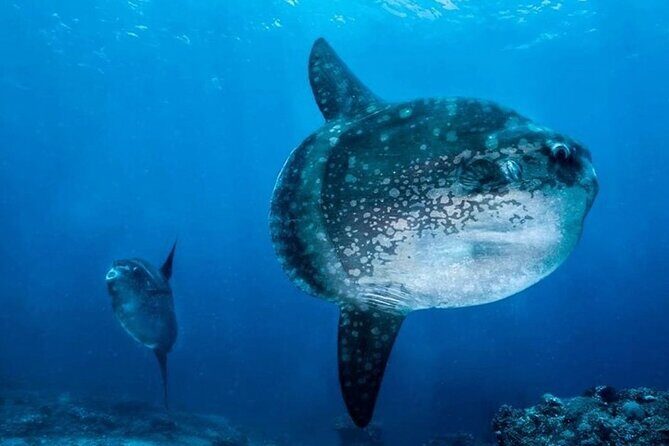
Second: you’re expected to pick the right ticket type. The provider notes you can choose 1-way or a return for peace of mind. If you’re traveling during high season (when seats can tighten), the return option can help you lock in timing rather than gamble on last-minute availability.

Third: the port handoff is set up as a private activity for your group only. That doesn’t mean you get a personal boat charter, but it does mean the transfer is handled for your group with your pickup/drop-off flow rather than a free-for-all scramble.

Finally: you may be asked to use a mobile ticket. Make sure you have it accessible offline or on your phone with battery to spare.

Who This Transfer Is Best For

This works especially well if you:

  • want less stress getting from Bali to the Gili islands
  • care about having support in both directions (arrival and return)
  • don’t want to manage ferry logistics plus ground transport separately
  • like the idea of modern boats with strong safety practices
  • prefer a driver who can guide you in plain English

It’s also a good fit for couples and small groups. The private-group structure suits you when you’d rather coordinate as a unit than jump between strangers.

If you’re solo and very flexible, you might find cheaper options. But if you want fewer surprises, this bundle is built for that.

Should You Book This Bali–Gili Fast Boat Ticket Package?

If you value convenience and coordination, I’d say yes—this is the kind of transfer bundle that reduces the most annoying parts of Bali-to-Gili travel. You get AC pickup, express boarding support, onboard Wi‑Fi, and an included water bottle, plus insurance coverage.

If you’re the type who enjoys planning every step yourself and you already know exactly how you’ll get to Padang Bai, you might find other setups that cost less. But you’ll trade away time, simplicity, and the extra care during the port handoffs.

My practical take: for most people, especially on a short trip, paying for this “ready-to-go” transfer makes the day feel easier—and the islands start sooner.

FAQ

What does this all-inclusive transfer include?

It includes pick up and drop off by air-conditioned transportation, express boarding, a fresh mineral water bottle, a friendly English-speaking driver, luggage room on the vehicle, onboard Wi‑Fi, and insurance.

How long is the fast boat ride?

The duration is listed as approximately 1 to 2 hours.

Do I get Wi‑Fi on the boat?

Yes, onboard Wi‑Fi is included to help pass the time on the journey.

Where are pickups and drop-offs arranged?

The experience is set up as a private transfer between your Bali hotel and Padang Bai port, with the start listed for Gili Trawangan, Gili Indah, Pemenang, and North Lombok Regency (West Nusa Tenggara).

Is return transportation available?

Yes. You can book 1-way tickets or choose a return for peace of mind.

What boat routes does the schedule cover?

Daily routes are described for Bali to Gili Trawangan, Bali to Gili Air, Bali to Gili Meno, and Bali to Lombok, with return options.

Is the port ticket included?

The information notes that the boat ticket is not included for only port transfer options, so check the option you select.

What happens if weather is bad?

This experience requires good weather. If canceled due to poor weather, you’ll be offered a different date or a full refund.

Can I cancel for free?

Yes. You can cancel up to 24 hours in advance for a full refund, and changes within 24 hours aren’t accepted.

Bali Sea Walker

Bali Sea Walker - From Bintang Beach Club water sports to the Sea Walker station

Helmeted, you walk under Bali’s waves. The fun part is the oxygen-fed helmet setup, so you can see tropical fish without swimming skills. It’s built for an easy, guided encounter with marine life right off Tanjung Benoa.

I also like the simple, family-friendly flow: meet, gear up, hop in on the boat, then spend the key time on the ocean floor before heading back to the start point. One drawback to plan for is that the whole experience moves fast, so it can feel short if you’re expecting a long underwater session.

Quick hits before you put on the helmet

Bali Sea Walker - Quick hits before you put on the helmet

  • No swimming required: the experience is designed for people who want to see marine life without getting in to swim
  • Fresh oxygen through the helmet: you breathe via the helmet system as you walk underwater
  • Around 25 minutes on the ocean floor: that’s your main marine-life window
  • Hotel pickup and drop-off included: extra convenience if your hotel pickup is covered
  • Guides keep things moving: they guide you through the gear and help with camera handling
  • Small time window with big fish action: expect plenty of fish nearby during your session

Bali Sea Walker in Tanjung Benoa: why this feels different

Bali Sea Walker is one of those “how is this possible?” activities. You don’t swim. You don’t need diving training. Instead, you walk along the ocean floor wearing a custom-built helmet that provides a stream of fresh oxygen as you explore beneath the surface.

The practical appeal is that it removes the usual intimidation factor. If you want underwater views but you’re not a confident swimmer—or you simply don’t want the hassle of gear and training—this is the cleaner option. And because it’s set up around a short, guided session, it works well for groups with mixed comfort levels.

Tanjung Benoa is the jump-off area for this experience, and you’ll be going out by boat to the Sea Walker station. The payoff is straightforward: walking underwater with your guide nearby and getting close to tropical fish and ocean plants in their natural habitat.

The helmet setup: oxygen breathing and comfort

Bali Sea Walker - The helmet setup: oxygen breathing and comfort
The helmet is the heart of the Sea Walker experience. You’ll gear up with the custom-built helmet, then descend underwater while the system supplies you with oxygen.

Here’s a comfort detail that matters: you breathe through your nose, and you can typically keep your viewing glasses on. That’s a big deal because it reduces the “equipment anxiety” that some water activities create. You stay oriented, you can focus on what you’re seeing, and your guide can help you keep your balance as you get used to the gear.

You should also know that this is a wet activity. Once you finish, you’ll have a chance to shower and change out of wet clothes. That means you don’t have to treat it like a full-day production, but you still should plan to be wet.

From Bintang Beach Club water sports to the Sea Walker station

Bali Sea Walker - From Bintang Beach Club water sports to the Sea Walker station
Your day starts near the water at Bintang Beach Club, at the Tanjung Benoa area. The activity runs across a window from 9am to 2pm, and you’ll meet up at a time that fits your schedule.

Most trips are structured like this:

  1. You arrive and get ready.
  2. Trained guides give you an introduction to the equipment.
  3. You head out to the Sea Walker station aboard a boat.
  4. You gear up, descend, then walk on the ocean floor.
  5. You return and get time to rinse and change.

Even with hotel pickup and drop-off included, plan to arrive with enough buffer so you don’t feel rushed during the equipment briefing. The briefing is short, but it’s what keeps the underwater part smooth and safe.

Also, group size is capped (up to 99). That doesn’t mean you’ll be on top of everyone underwater, but it does explain why the operation feels efficient. It’s a system built for turnover without long downtime.

Walking the ocean floor: what you’ll actually see

The main event is your time walking across the ocean floor. You’ll spend about 25 minutes on the seafloor exploring marine life up close, with your oxygen helmet providing steady breathing.

This isn’t a vague “maybe you’ll see something” situation. The experience is centered on tropical fish and ocean plants, and the guides manage the flow so you can enjoy the view instead of worrying about what to do next. In practice, the fish can show up in lots—enough that it feels like the underwater scene has activity, not emptiness.

As you walk, keep your expectations simple:

  • You’re there to observe.
  • You’re guided through a slow, stable pace.
  • You get close views of fish and underwater plants rather than trying to cover big distances.

If you’re traveling with kids, this is a major advantage. No swimming means less stress, and the short duration means you’re not waiting forever for the “good part” to start.

Time on the water vs. start-to-finish: why it feels quick

The tour length is listed at about 1 hour. In real life, that can feel even tighter because the operation is organized and the underwater portion doesn’t drag.

Some visitors describe the whole experience—from start through finishing—as roughly 30–40 minutes, and that makes sense when you consider:

  • gear up and briefing happen quickly,
  • the helmet descent and walking time is timed,
  • then you move straight to rinse and change.

So here’s the key planning thought: treat Sea Walker as a focused “experience block,” not a full underwater adventure day. If you want a long, slow, hours-long underwater session, you’ll likely wish you had chosen a longer activity. But if you want something easy, structured, and memorable without prep, it’s a good fit.

Price and value at $38.98: what you’re paying for

Bali Sea Walker - Price and value at $38.98: what you’re paying for
At $38.98 per person, Bali Sea Walker can feel like a smart value if you compare it to other ways of seeing underwater life. The reason is what’s included.

Your ticket covers:

  • all equipment
  • all safety gear
  • a Sea Walker guide
  • insurance

And the experience includes hotel pickup and drop-off for convenience. That means you’re not paying extra for basic logistics in the way you often do with smaller tours.

Two quick notes on possible add-ons:

  • Photos/DVD are not included.
  • The listing also mentions hotel return-transport as not included, even though the overview says hotel pickup and drop-off are included. If you’re staying somewhere specific, double-check when you book so there’s no mismatch between what pickup zone you’re in and what’s listed for your exact hotel.

Group discounts are mentioned too, so if you can travel with a small group, it’s worth asking how the pricing works for your number of people.

Who should book: families, non-swimmers, and curiosity seekers

This is an activity I’d steer toward for:

  • families who want an underwater experience without the swimming part
  • adults who want to try something water-related but don’t want training
  • anyone who prefers guided structure and a short time commitment
  • groups with different comfort levels in the water

The “no swimming needed” design is the selling point. You get the marine life experience without the skill requirement. And the helmet breathing setup means you’re not trying to figure out underwater breathing techniques.

It’s also worth it if you like practical activities with clear steps. You don’t have to guess what comes next. Guides handle the gear intro, the descent process, and the on-water timing.

If you’re sensitive to being enclosed in equipment or you hate the idea of putting on a helmet, you might want to think twice. The tour data doesn’t spell out health restrictions, so your best move is to ask before booking if you have any concerns.

Practical tips to make your Sea Walker session better

Bali Sea Walker - Practical tips to make your Sea Walker session better
This is a short experience, so small choices matter. Here’s how I’d prep based on how the program works.

First, plan your day around the idea that you’ll get wet and then rinse and change. Wear something comfortable that can handle moisture. If you’re using your own glasses, the helmet setup is generally friendly for keeping good visibility (breathing through the nose and glasses use are key comfort details).

Second, arrive on time for your chosen meeting slot. The equipment briefing is part of what makes the underwater time feel easy.

Third, treat it like an observation walk, not a race. The guides keep things moving, and you’ll get the most out of it when you slow down and watch. The fish can be active and close, so give yourself time to look instead of constantly adjusting your position.

Finally, if you want keepsakes, budget for photos/DVD if you think that matters to you. Since those are not included, it’s good to know what you’ll decide before you reach the shop window after.

Weather rules: what “good weather required” means for you

This experience requires good weather. That usually translates to a simple reality: if conditions are rough enough, the tour can be canceled. When that happens, you should expect either an alternate date or a full refund.

So when you’re planning your Bali days, I suggest building in flexibility. If your schedule is packed tight with no buffer, Sea Walker might become a last-minute gamble depending on conditions.

Should you book Bali Sea Walker?

Book Bali Sea Walker if you want an easy, guided way to see tropical fish and ocean plants up close with no swimming and minimal training. The included equipment, safety gear, insurance, and guide make it feel like a complete package rather than a “start paying later” activity.

Skip it—or at least rethink it—if you’re expecting a long underwater exploration. The session is short by design, and the whole operation can feel fast. It’s more about the novelty and the guided moment than about spending hours underwater.

If you want a straightforward family-friendly marine-life experience in Tanjung Benoa, this is a solid bet.

FAQ

How long is the Bali Sea Walker experience?

The experience is listed at about 1 hour total. You’ll have around 25 minutes walking on the ocean floor during the underwater portion.

Do I need to know how to swim?

No. The experience is designed so that most travelers can participate without swimming.

Where does the activity start and end?

It starts at Bintang Beach Club Dive & Water Sport, Jl. Pratama No.108A, Tj. Benoa, Nusa Dua, Bali 80361, Indonesia. It ends back at the meeting point.

What should I expect underwater?

You’ll descend into the underwater world with a custom-built helmet that supplies you with a stream of fresh oxygen, then walk on the ocean floor while looking at tropical fish and ocean plants.

What’s included in the ticket price?

Included items are all equipment, all safety gear, a Sea Walker guide, and insurance.

Is hotel pickup and drop-off included?

Hotel pickup and drop-off are described as included for convenience. The listing also mentions hotel return-transport as not included, so it’s smart to confirm what’s covered for your hotel when you book.

Are photos or videos included?

No. Photos/DVD are not included.

What if the weather is bad?

The experience requires good weather. If it’s canceled due to poor weather, you’ll be offered a different date or a full refund.
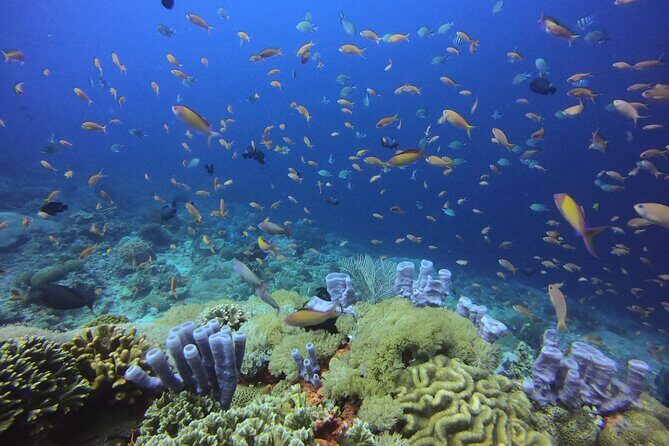
What’s the cancellation policy?

You can cancel for free up to 24 hours in advance for a full refund. If you cancel less than 24 hours before the start time, the amount you paid will not be refunded.

Gate of Heaven Tour

Gate of Heaven Tour - The ultra-early start in real life (and how to plan for it)

Bali can feel like a movie set. This Gate of Heaven tour strings together some of East Bali’s most photogenic places—Lempuyang Temple’s famous views, Tirta Gangga’s water-palace ruins, and Sidemen’s cool hill panoramas. I love how the plan is built around early-morning light and photo angles, not just check-the-box touring.

Two things stand out right away: the stops are spaced so you’re not rushed through the best moments, and the guides help you get strong photos without turning it into a chaotic line-crowd hunt. I also like that you’ll have time in Sidemen for an open-air meal with views of Sleeping Gajah Hill, which makes the day feel more local than touristy.

One thing to consider: this is an early start (starting around 4:00 am), and the long drive time plus some temple-going means you should have moderate fitness and patience with a very full day.

Key highlights you’ll care about

Gate of Heaven Tour - Key highlights you’ll care about

  • Sunrise-first schedule designed for better views at Lempuyang Temple
  • Tirta Gangga admission included, so you can spend time on the grounds instead of tickets
  • Sidemen time for a real break, with panoramic scenery and an open-air lunch option
  • Private tour format means only your group participates
  • Photo help from your guide (Yogi and Gede were both praised for pictures)

Gate of Heaven tour: what you’re really buying

Gate of Heaven Tour - Gate of Heaven tour: what you’re really buying
This is a day trip out of Seminyak into East Bali, built around three very different moods: temple drama at Lempuyang, water-palace beauty at Tirta Gangga, and a calmer village rhythm in Sidemen. If you’re aiming for Mount Agung views and classic “Bali postcard” framing, the itinerary makes sense because the big scenic payoff points are grouped together.

At $75 per person for about 10 hours, the value comes from two practical items: included admission for the two main ticket stops (Lempuyang and Tirta Gangga) and a private, guided flow that helps you hit the timing right. Add pickup (offered) and mobile ticket convenience, and it’s the kind of tour that can save you time and stress compared with piecing everything together yourself.

The other part you’re paying for is the guide’s ability to manage the day. In the reviews, Yogi and Gede are specifically praised for patient guidance and great photos. That matters on early-morning temple visits, where it’s easy to waste time just trying to figure out where to stand and when.

The ultra-early start in real life (and how to plan for it)

Gate of Heaven Tour - The ultra-early start in real life (and how to plan for it)
Starting around 4:00 am is not subtle. Even if you manage to get ready quickly, the early departure changes how you experience the whole day: you’ll feel the effort in your body before you feel the reward in the view.

Here’s how I’d plan your morning energy. Keep your morning simple: water, a snack if you’re the kind of person who needs one, and comfortable footwear. If you’re sensitive to mornings, set expectations now—this trip is for people who can handle early starts in exchange for softer light and less pressure around the iconic shots.

One review specifically praised a guide (Gede) for getting sunrise views without waiting in line. That’s exactly the kind of payoff you want from an early departure: more time taking photos, less time stuck in crowd bottlenecks.

Stop 1: Lempuyang Temple and the Gateway to Heaven views

Lempuyang Temple is famous for good reason. It’s one of Bali’s oldest Hindu temple sites, and it’s located on the slopes of Mount Lempuyang in East Bali. If Mount Agung is visible that morning, the temple views are the headline moment—one of those settings where the landscape and the religious architecture work together like a built-in photo frame.

You’ll get about 2 hours here, and the ticket admission is included. Two hours is a smart window: long enough to arrive, find good angles, take photos, and still avoid feeling like you’re rushing through sacred space. It also gives your guide time to help you pick the right spots depending on the light and crowd movement.

What I like about this stop is the blend of meaning and spectacle. Lempuyang isn’t just a viewpoint; it’s a functioning Hindu temple, which gives your visit a sense of place beyond scenery. It’s also a good place to slow down and understand the symbolism people come for, instead of only shooting pictures.

A possible drawback: temple areas can mean stairs and uneven ground, and you’ll be starting your day early. The tour notes a moderate physical fitness level, so if you’re prone to fatigue, plan for breaks and pace yourself.

Stop 2: Tirta Gangga Park, the royal water palace feel

Gate of Heaven Tour - Stop 2: Tirta Gangga Park, the royal water palace feel
After the temple, Tirta Gangga shifts the mood from steep-and-sacred to calm-and-aesthetically serene. This former royal water palace was built in 1946 by the last king of Karangasem. It was heavily damaged by the 1963 eruption of Mount Agung, and what you see today reflects that past—beauty mixed with restoration and history in the layout.

You’ll spend about 1 hour here, with admission included. An hour sounds short until you realize Tirta Gangga is a “wander and frame” kind of place. You don’t need long museum time; you need enough time to move through the water features, spot the most photogenic viewpoints, and enjoy the atmosphere without feeling time-boxed.

Why this stop works in the tour: it breaks up the morning so you don’t just keep climbing and photographing. It’s a different visual language—water, stone, and the grid of pathways that naturally guide your eyes. The result is a good set of photos that aren’t just temple silhouettes.

One more practical point: because Tirta Gangga is near Mount Agung, it often fits the overall theme of the day (Mount Agung views and East Bali’s volcanic backdrop). Even when the mountain is partially obscured, the water-palace setting still delivers strong visuals.

Stop 3: Sidemen village and Sleeping Gajah Hill views

Gate of Heaven Tour - Stop 3: Sidemen village and Sleeping Gajah Hill views
Sidemen is where the day turns more human-scale. Instead of only dramatic monuments, you get a village scene with panoramic views over hills and jungle. The time here is about slowing down, taking in the everyday setting, and getting a breather between big scenic stops.

You’ll have around 2 hours in Sidemen. This is also where lunch time comes in: the tour includes time to enjoy lunch at an open-air restaurant with views of Sleeping Gajah Hill. That detail is worth keeping in mind when you decide what to eat—this is not a rushed meal. It’s part of the experience.

The value of Sidemen isn’t just “another stop.” It’s a mindset shift. East Bali can feel more grounded than the more crowded areas, and Sidemen gives you a chance to see how people live when the day isn’t built around tourist landmarks.

Possible drawback: Sidemen can be scenic but not flashy. If you’re only here for the most famous single photo spots, you might find the village portion more relaxed than you expected. If you want a balanced day with scenery and breathing room, it’s exactly the right pace.

Your guide matters more than you think

Gate of Heaven Tour - Your guide matters more than you think
This tour’s reviews put a spotlight on guide quality. Yogi is praised for explaining the sites and their history, plus being patient and taking amazing photos for guests. Another recurring name is Gede (and Gede Putra), who is described as excellent at managing crowds and capturing sunrise views.

You’ll also notice a specific practical advantage in one review: the guide’s vehicle was described as clean and air-conditioned, and it was comfortable even for a small group, with snacks and cool towels. Not every trip will match every comfort detail, but it signals the kind of care you can expect from this operator’s guides and how they think about long drive days.

In plain terms, a great guide helps you do three things:

1) reduce wasted time,

2) find the best photo position fast, and

3) explain what you’re seeing so the pictures don’t feel empty later.

If photo timing matters to you, this is one of the biggest reasons to book a guided day instead of going fully DIY.

Getting to the right timing: sunrise and crowd control

Gate of Heaven Tour - Getting to the right timing: sunrise and crowd control
This itinerary is designed around the biggest visual payoff happening early. The temple timing matters because light and cloud cover shift quickly in the mountains. Also, popular viewing moments can attract heavy foot traffic as the morning goes on, which is why the review praise about beating crowds is such a big deal.

When your guide knows where to stand and how to work the schedule, you spend less time scrambling and more time actually enjoying the view. That’s what you want from an “early start” tour: not just waking up early, but getting better results because you did.

One small thing to remember: sunrise views depend on weather. You can still have a strong experience if the sky is less cooperative, but the big dramatic moment is always weather-dependent.

Transportation, comfort, and the pace of a 10-hour day

Gate of Heaven Tour - Transportation, comfort, and the pace of a 10-hour day
This is a long day, roughly 10 hours, and that means you need to think about comfort and pacing as much as sights. Pickup is offered, and meeting points are described as near public transportation, which can make it easier to coordinate if you’re staying in Seminyak.

The vehicle comfort matters because you’ll be transferring between different environments—early temple slopes, open water-palace pathways, then village views. Reviews mention an air-conditioned vehicle and small comfort touches like cool towels and snacks. Even if your group experiences differ slightly, expect the day to prioritize practical comfort over luxury.

Moderate fitness is part of the deal. Temple ground can be uneven, and early departures mean you’ll want your energy management plan. Wear shoes you can walk in for a while, not just for a short stroll.

Price and value: why $75 can make sense here

Let’s talk value in real terms. At $75 per person, you’re paying for:

  • guided, private flow (only your group participates),
  • included admission tickets for Lempuyang Temple and Tirta Gangga,
  • a full East Bali day packed into about 10 hours with a schedule built around key viewing windows,
  • and pickup being offered in many cases.

If you were to DIY this, you’d likely spend more than you expect once you factor in transport time, ticket purchases, and the risk of arriving at the wrong moment for sunrise views. A guided plan reduces that uncertainty.

Also, group discounts are available. If you’re traveling with friends or family, this is one of those tours where splitting the cost can push it into “great deal” territory.

Who this tour fits best

This is best for you if:

  • you want East Bali in one day,
  • you’re chasing Mount Agung-related views and classic sunrise photography,
  • you appreciate a guide who can help you with photos and explanations,
  • and you prefer a private group pace over joining a huge bus crowd.

It may be less ideal if:

  • you hate early starts and long drive days,
  • you’re looking for a slow-paced, restful itinerary,
  • or you want only the easiest flat walking.

Should you book the Gate of Heaven tour?

I think you should book this tour if you can handle the early departure and you care about getting the right timing for Lempuyang Temple. The combination of included admissions, private pacing, and guide quality (with Yogi and Gede both showing up for strong photo help and smooth crowd management) makes the day feel efficient without feeling rushed.

If you’re unsure, the decision is simple: are you willing to trade a very early morning for a stronger chance at sunrise views and better photo moments? If yes, this is a solid way to see East Bali without wasting time figuring it out yourself.

FAQ

What time does the tour start?

The tour starts around 4:00 am.

How long is the Gate of Heaven tour?

It runs for about 10 hours.

Is pickup offered?

Pickup is offered.

Is the tour private?

Yes. It’s a private tour/activity, and only your group participates.

What stops are included?

You’ll visit Lempuyang Temple, Tirta Gangga Park, and Sidemen Village.

Are admission tickets included?

Admission tickets are included for Lempuyang Temple and Tirta Gangga Park.

Will there be food in Sidemen?

You’ll have time for lunch in Sidemen at an open-air restaurant with views of Sleeping Gajah Hill.

What should my fitness level be?

You should have a moderate physical fitness level.

How do mobile tickets work for this tour?

A mobile ticket is part of the experience, and confirmation is received at booking.

Is there free cancellation?

Yes. You can cancel for a full refund up to 24 hours before the experience’s start time.

The Gates of Heaven Bali Tour : Bali Instagrammable Trip

The Gates of Heaven Bali Tour : Bali Instagrammable Trip - Lempuyang Temple and the Gates of Heaven viewpoint

Something about East Bali feels made for photos. This private day tour strings together Bali’s most camera-famous spots and a few quieter, slower moments, so you can get the shot and still enjoy the scenery. You’ll start at the Lempuyang Temple “Gates of Heaven,” then move through water-palace gardens and end with traditional village life in Tenganan Ancient Village.

I especially like that the tour is set up for convenience: hotel or villa pickup and drop-off in air-conditioned comfort, with entrance tickets handled. The other big win is the East Bali route itself—Tirta Gangga and Ujung Water Palace give you that classic fountain-and-pool look, and Virgin Beach offers a breather after temple stairs.

One thing to plan for: Lempuyang Temple can have heavy photo activity around the main viewpoint, and you may find access or timing feels more controlled than you’d expect. Also, this kind of day runs best with good weather, since the schedule depends on it.

Key highlights to know before you go

The Gates of Heaven Bali Tour : Bali Instagrammable Trip - Key highlights to know before you go

  • Gates of Heaven at Lempuyang Temple: the iconic gate view is the main photo goal, and it sets the tone for the whole day
  • Tirta Gangga’s royal water garden: a layout designed in 1948, with fountains and pools that photograph well in different light
  • Ujung Water Palace as a sister stop: same royal flavor, different angles, and a slightly more relaxed feel if you time it right
  • Virgin Beach for a calmer coastline break: less crowded than many Bali beaches, great for wide shots and downtime
  • Tenganan Ancient Village: a living community with traditional rituals such as ritual dances and a youth battle-style tradition
  • Private vehicle + English-speaking driver: you stay flexible and comfortable across a 9–10 hour day

A private East Bali photo day from Seminyak

The Gates of Heaven Bali Tour : Bali Instagrammable Trip - A private East Bali photo day from Seminyak
This tour is built as a full-day East Bali circuit that leans hard into the sights people come to Bali for—especially the photos. The payoff is that you’re not bouncing around town by yourself. From Seminyak, you’re collected in an air-conditioned vehicle with a professional English-speaking driver who also functions as your on-the-ground guide.

You’ll also appreciate the pace being structured. Each stop is long enough to get a proper visit and photos, but not so long that you lose the day to traffic. It’s ideal if you want iconic landmarks without turning your holiday into a logistics project.

And because it’s private, it’s really your party’s rhythm. Your group is the only one in the vehicle, which usually means fewer compromises with timing and fewer awkward “everyone squeeze in” moments.

Lempuyang Temple and the Gates of Heaven viewpoint

The Gates of Heaven Bali Tour : Bali Instagrammable Trip - Lempuyang Temple and the Gates of Heaven viewpoint
Lempuyang Temple is the headline stop, and it’s easy to see why. The Gates of Heaven shot is tied to this site, and the temple is believed to predate many other Hindu temples on the island. Expect temple stairs and a climb that favors comfortable shoes and a steady pace.

Here’s the practical thing to know: the main viewpoint can be dominated by professional photography setups. That can mean the best view isn’t always wide open for casual lingering, and your time there may feel more managed than you’d picture from the photos. If you care about timing and getting your moment, plan to move efficiently at the gate area and be ready to take shots quickly.

Still, even with the controlled photo energy, the gate view is dramatic. You’re working for it—physically and visually—and once you reach the right angle, it looks exactly like what you imagined: that framed view through temple architecture toward the wider scene.

If you’re bringing a camera, sunscreen still matters. Even if the temple shade helps, you’ll spend enough time outdoors for Bali sun to catch up with you.

Tirta Gangga Water Palace: the fountains-and-pools classic

The Gates of Heaven Bali Tour : Bali Instagrammable Trip - Tirta Gangga Water Palace: the fountains-and-pools classic
After the temple climb, Tirta Gangga feels like a switch into “calm and symmetry” mode. This water garden is one of Bali’s most popular designed attractions, created in 1948 by Anak Agung Anglurah Ketut Karangasem, who was the last king of Karangasem. That royal detail matters because it explains the layout: the place is built for impressive sightlines, not random strolls.

What you’ll love here is how easy it is to compose photos. The fountains and pools give you repeating lines and reflective surfaces, so you can shoot both wide and close-up without needing fancy tricks. If you like portrait-style photos, you’ll also find plenty of framing options through arches and water channels.

The only caution is that Tirta Gangga is a well-known spot. You can still enjoy it, but it helps to keep moving through the areas that give you the best shots first, then slow down. You’ll get more satisfaction when you’re not waiting for the perfect gap in crowds.

Ujung Water Palace: the sister site with more angle variety

The Gates of Heaven Bali Tour : Bali Instagrammable Trip - Ujung Water Palace: the sister site with more angle variety
Next comes Taman Ujung Sukasada (Ujung Water Palace), which is described as a sister site to Tirta Gangga. It’s located in the village of Seraya in Karangasem regency and, like Tirta Gangga, was built by the late raja of Karangasem. So yes, you’ll see the same “royal water palace” DNA—but the scenery and angles can feel different enough that it doesn’t feel like repetition.

This stop is great for people who want more than one “water palace” experience in a single day. You get another chance at photography: different viewpoints, different water reflections, and an overall change in perspective once you’re away from the Tirta Gangga structures.

Like most popular sites, the day’s timing matters. If you hit it when light is flattering and you keep your movement smooth, Ujung can feel more comfortable than the earlier stop. If you’re tired from stairs and travel time, take the moments that matter most for you and don’t try to do everything perfectly.

Virgin Beach for a less-crowded seaside reset

The Gates of Heaven Bali Tour : Bali Instagrammable Trip - Virgin Beach for a less-crowded seaside reset
After temples and water palaces, Virgin Beach is your decompression stop. It’s described as one of the best beaches in Bali if you want fewer people. That’s a big deal on an itinerary like this, because you don’t want your whole day to be standing in lines or navigating crowds between photo spots.

What you can expect is simple: white sand and crystal-clear waters. The value here is not just the scenery—it’s the break. This is where you can slow down, hydrate, and let your eyes reset after temple architecture and water garden grids.

Bring your sunscreen and plan to spend at least part of your time soaking in the view without always looking through your lens. A beach moment makes the whole day feel more rounded, not like you spent 9–10 hours chasing angles.

Tenganan Ancient Village: Bali Aga traditions you can actually see

Tenganan Ancient Village is where the day turns from postcard photography into real cultural observation. This village is known as a living museum of a bygone era, and it’s tied to the Bali Aga tradition—often associated with older customs still practiced by the community.

The key detail to plan around is what’s happening there. The village is described as having authentic traditional festival elements, including ritual dances and a battle-like tradition between local youths. That kind of activity can make your visit more than sightseeing because you’re witnessing practice, not just scenery.

If you’re respectful with your behavior, you’ll likely feel the difference right away. Dress code matters here too, since villages and temple-adjacent cultural spaces often have expectations. Smart casual is listed for the tour, so aim to stay modest and comfortable.

Also, keep in mind the timing of rituals isn’t described in detail. What that means for you: don’t go expecting a specific performance at a specific minute. Instead, go ready to watch whatever is offered during your visit window.

Price and logistics: what the $90 buys you in real life

At $90 per person, this tour positions itself as value through organization. You’re paying for a private vehicle, an English-speaking driver-guide, and entrance tickets at multiple stops—plus petrol and parking. For a day that can otherwise cost you time and stress (and separate ticket purchases), that’s a meaningful chunk of what you’re getting.

Duration is listed around 9 to 10 hours. That’s long enough to cover the full route, but short enough that you’re back in a comfortable “one day, done” rhythm. The pickup and drop-off service from areas like Seminyak, Denpasar, Ubud, Sanur, Canggu, Nusa Dua, Kuta, Jimbaran, Uluwatu, and Tanjung Benoa helps too. You don’t have to map the route or coordinate taxis between far-flung East Bali sights.

One practical upside: the tour offers group discounts and a mobile ticket. If you’re traveling with a small group, a private setup still keeps things straightforward.

A note on lunch: an Indonesian set menu lunch is included if you select that option. There’s also a vegetarian option available if you request it at booking. If you don’t select lunch, you’ll want to plan food breaks yourself, since the itinerary is clearly packed.

Timing tips that matter for photos and comfort

This kind of day succeeds with smart pacing. Lempuyang Temple requires a climb, and at the main gate area the photo activity can be intense. So I’d treat the first stop as the moment you manage your energy best—drink water before you start, move quickly to the key viewpoint, and don’t wait until you’re running on fumes.

Next, Tirta Gangga and Ujung Water Palace are places where it pays to “shoot in an order.” Get the wide compositions first, then do close-ups and details once you’ve secured the main shots. It’s an easy way to prevent the day from feeling like you missed something important.

Finally, Virgin Beach and Tenganan Village help balance the day. Beach time gives you a reset, and the village adds a human, cultural stop that doesn’t feel like another photo backdrop. That combination is why the itinerary works as more than a checklist.

What to bring and how to dress

The tour calls for smart casual dress code. For temples and cultural areas, keep things modest. Comfortable clothing and shoes make a real difference, especially because you’ll be doing temple walking and climbing.

Bring sunscreen and a camera. Sunscreen is specifically advised, and it’s hard to ignore on Bali days where you’re outside for most of the itinerary. A camera is obvious here, but also think about spare battery and a way to keep it protected near water and sand.

If you’re doing the Indonesian set menu lunch, you can also request vegetarian at booking. That’s the cleanest way to keep your day smooth without last-minute food decisions.

Should you book the Gates of Heaven Bali Tour?

Book it if you want a private, efficient East Bali day built around iconic photo locations, without doing the driving yourself. The best match is a couple, small group, or solo traveler who cares about getting the “Gates of Heaven” shot, enjoys water palaces like Tirta Gangga and Ujung, and also wants a cultural stop at Tenganan Village.

Skip it or adjust your expectations if your top priority is unhurried, free-flow access at the Lempuyang viewpoint. The main area can be controlled by professional photo setups, so if you dislike that energy, you may want to plan your expectations for a quicker, more purposeful photo session there.

Also consider the weather angle. The tour requires good weather, and if conditions are poor, you’ll be offered a different date or a full refund. If you’re visiting during a stretch of uncertain forecasts, keep your scheduling flexible.
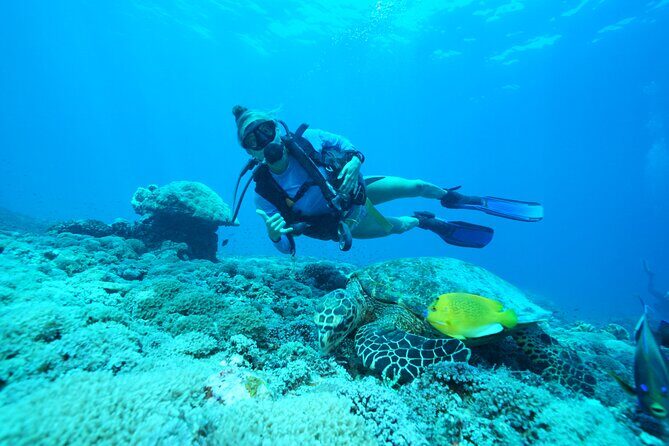
Overall, the value is in the full package: private air-conditioned transport, English-speaking guidance, entrance tickets for multiple stops, and a route that combines photography with a real cultural village experience.

FAQ

How long is the Gates of Heaven Bali tour?

It runs about 9 to 10 hours.

Is pickup and drop-off included?

Yes. Pickup and drop-off are offered from listed areas including Seminyak (and also places like Canggu, Ubud, Sanur, Denpasar, Nusa Dua, Kuta, Jimbaran, Uluwatu, and Tanjung Benoa).

Are entrance tickets included?

Yes. All entrance tickets are included.

Is the lunch included?

Lunch is an Indonesian set menu if you select that option. A vegetarian option is available if you request it at booking.

What kind of vehicle and guide do you get?

You get a private, air-conditioned vehicle and a professional English-speaking driver who serves as the guide. The tour is private, meaning only your group participates in the vehicle.

What should I bring and wear?

Dress smart casual. Bring sunscreen and a camera. The tour also recommends good preparation for the day since it depends on good weather.

Ayung River Rafting and Bali ATV Ride Packages

Ayung River Rafting and Bali ATV Ride Packages - The Day’s Flow: Starting at 8:00 am

That first rush on the Ayung River hooks fast. This Ayung River rafting + Bali ATV combo is a tight, adrenaline-heavy day: 2 hours of whitewater, then an ATV ride through rice fields, jungle, rivers, and traditional villages. I like that you get professional guides and safety-approved gear, and I also like that a buffet lunch is built in so you’re not searching for food after you’re soaked. One thing to watch: photo sales can turn into an upsell moment, so set your expectation (or budget) before you agree.

If you end up with guides like Wayan, Nengah, or Ketut Suar, you’ll notice the pattern: they show up, manage the day, and keep things moving on time. I also like that it’s a private setup for your group, not a cattle call, and the experience loops back to the start point. The schedule is weather-dependent, since the river and trails need decent conditions to run safely.

Key Highlights You’ll Actually Feel

Ayung River Rafting and Bali ATV Ride Packages - Key Highlights You’ll Actually Feel

  • Ayung River whitewater for about 2 hours with a guide-led safety rundown first
  • ATV ride through rice fields, jungle, rivers, and Balinese villages at your own pace
  • Buffet Indonesian lunch included between rafting and off-road riding
  • All gear included, including helmet, life jacket, and boot shoes, plus towels and shower access
  • Professional instruction for both rafting and ATV riding, with insurance coverage included

Why This Ayung River Rafting + Bali ATV Combo Works in 4 Hours

Ayung River Rafting and Bali ATV Ride Packages - Why This Ayung River Rafting + Bali ATV Combo Works in 4 Hours
This package is built for people who want Bali nature and adrenaline without surrendering a whole day. You get two very different experiences back-to-back: whitewater rafting first, then the quad-style ATV ride across countryside. The timing makes sense: you’ll burn energy on the river, refuel at lunch, then switch gears to slower, scenic off-road driving.

For value, it’s not just “two activities for one price.” You’re also covered for the practical stuff that usually adds friction elsewhere: gear, towels, changing room access, toilets, and even shower facilities. At $70 per person, the best part is that your day is packaged end-to-end, so you don’t have to coordinate separate transport and rentals.

The drawback is simple: it’s fast-paced. If you want long stops, lots of downtime, or a slow “soak it in” day, this schedule may feel like you’re always on your next checkpoint.

From Bali Pertiwi Rafting to the River: Pickup Energy and Safety First

Ayung River Rafting and Bali ATV Ride Packages - From Bali Pertiwi Rafting to the River: Pickup Energy and Safety First
Your day starts at Bali Pertiwi Rafting at Jl. Dewi Saraswati No.2, Bongkasa Pertiwi (Abiansemal, Badung, Bali), starting at 9:30 am. The activity ends back at the meeting point, which helps if you’re trying to keep the rest of your Bali plans simple.

Before you hit the water, you’ll get a full safety briefing from the rafting guide. This isn’t the kind of “listen fast and hope” situation—your guide walks you through measures, how to behave on the raft, and what to expect. That matters on the Ayung River, because the route passes narrow gorges and you’ll be dealing with rapids in close quarters.

In the real world, what you’re really paying for here is control and confidence. When a guide like Ketut Suar or Wayan manages pickup timing and moves you from spot to spot, the day feels organized instead of chaotic.

Rafting the Ayung River: Rapids, Narrow Gorges, and Waterfall Moments

The core of the experience is a roughly 2-hour Ayung River rafting run. You’ll tackle exciting rapids while moving through beautiful natural areas, including narrow gorges. The river route also has moments that feel like “wait, did we just pass that?”—think tropical trees and hidden waterfall glimpses along the way.

What I like about this rafting style is that it mixes adrenaline with scenery without turning it into a sightseeing bus ride. You’re focused on your team and your commands, but you still get real Bali outdoors rather than just fighting the current for two hours.

Do go in expecting to get wet. You’ll be issued safety gear (helmet, life jacket, and boot shoes), and you’ll want sunscreen and a camera plan. You’ll also have a water-resistant bag and locker provided, which helps keep your valuables less stressful once you’re done with the raft.

Buffet Lunch Reset: Fuel Up Before the ATV Trails

Ayung River Rafting and Bali ATV Ride Packages - Buffet Lunch Reset: Fuel Up Before the ATV Trails
Between rafting and ATV riding, you’ll stop for an Indonesian buffet lunch. This is a real perk because it’s timed to bring your energy back before the off-road portion. After you’ve worked up sweat and adrenaline, a solid meal makes the ATV ride feel fun instead of tiring.

It’s also practical: you don’t have to leave the activity zone to find food, which often wastes time in Bali. The tour includes lunch, and vegetarian options are available if you arrange it at booking.

One small but important note: wear change clothes for afterward. You’ll have towels and shower facilities on site, but you still want to feel comfortable once you swap from “river mode” to “ATV muddy mode.”

ATV Through Rice Fields, Jungle, Rivers, and Traditional Villages

Ayung River Rafting and Bali ATV Ride Packages - ATV Through Rice Fields, Jungle, Rivers, and Traditional Villages
After lunch, you’ll gear up for the ATV ride using a personal mini off-road vehicle. You drive through a mix of terrain—rice fields, jungle, rivers, and traditional Balinese villages—so it doesn’t feel like one long, repetitive trail.

This part is where the tour earns its name as a “private day of adventure.” You’re not just following a route; you’re navigating steeper hills and rocky trails while your instructor oversees safety. That balance of freedom and guidance is the sweet spot: you get to enjoy the ride at your pace without it turning into a risky free-for-all.

Also check the age rules if you’re traveling with kids. The minimum age for the overall adventure is 5 years, but ATV rules are tighter:

  • Minimum age is 12 years for ATV single ride.
  • Ages 5–11 must ride tandem with an adult.
  • Tandem rides must be booked in multiples of 2 (2, 4, 6, 8, etc.).

Equipment, Towels, and Shower Access (So Your Day Doesn’t End Sticky)

Ayung River Rafting and Bali ATV Ride Packages - Equipment, Towels, and Shower Access (So Your Day Doesn’t End Sticky)
One reason this package feels easier than DIY is what it includes beyond the “cool parts.” You get safety-approved rafting and ATV equipment—helmet, life jacket, and boot shoes. On the ATV side, you also get clear instruction from an ATV instructor, which helps if you haven’t ridden before.

After activities, the tour provides towels and shower facilities, plus changing room and toilet facilities. There’s also a locker and a water-resistant bag for your items. That’s not a luxury detail—it’s what keeps you from spending your remaining Bali hours smelling like river water and wondering where to store your phone.

Dress code is listed as smart casual, but in practice for this type of day, plan for sporty clothes you don’t mind getting wet or dusty. Bring a change of clothes, and keep your camera either in the water-resistant bag or protected when you’re not actively shooting.

Price and Value: What $70 Covers (and What You’ll Pay Extra)

Ayung River Rafting and Bali ATV Ride Packages - Price and Value: What $70 Covers (and What You’ll Pay Extra)
At $70 per person, the value here comes from bundling. You’re not just paying for a quad and a raft. You’re paying for:

  • Professional rafting guide and ATV ride instructor
  • Safety equipment for both parts
  • Lunch (Indonesian buffet)
  • Towels, changing room, toilets, and shower facilities
  • Locker + water-resistant bag
  • Insurance coverage, plus tax and service

What isn’t included is your souvenir photo or video package. And that’s where costs can creep up quickly, especially if you end up buying multiple sets.

If you’re comparing this to piecing it together separately, the included gear and on-site facilities usually make up the difference. The ride time is also efficient: about 4 hours total, starting at 9:30 am, which is ideal if you want one big adventure without tying up your entire day.

Photo and Video Upsells: How to Stay in Control

Ayung River Rafting and Bali ATV Ride Packages - Photo and Video Upsells: How to Stay in Control
One review highlighted the downside: they were offered rafting and ATV photos priced at 30 USD each, with additional pressure around tipping. That doesn’t mean you’ll get hassled on every tour, but it does mean you should go in with a plan.

Here’s the practical approach I’d use:

  • Decide your photo budget before you buy anything.
  • If you’re not interested, be polite but firm.
  • Keep an eye on how many photo sets you’re being shown and priced.

The nice part is that guides sometimes go out of their way to help with photos even when it’s not required. The tricky part is separating helpful guidance from paid upsell pressure. You can enjoy the day and still protect your wallet.

Who This Private Tour Fits Best (and Who Might Skip It)

This works well if you want adrenaline plus scenery, and you’re okay with a structured, time-bound schedule. It’s also a solid choice for people staying around Ubud who want nature without spending the day in transit.

It’s especially good for:

  • Couples and small groups who want the day to feel private
  • Active travelers who don’t mind getting wet
  • First-time ATV riders, because you have instruction and safety gear

Consider skipping if you:

  • Want lots of downtime between activities
  • Are uncomfortable with rapids or rocky terrain
  • Have strict budget concerns around photos and tipping expectations

On ages: the experience has a minimum age of 5 and maximum age of 60. ATV single riding starts at 12, so plan tandem arrangements for younger kids.

Weather and Packing Tips That Actually Matter in Bali

This tour requires good weather. If conditions aren’t right, you’ll be offered a different date or a full refund. In other words, you’re not gambling your money blindly—you’re protected, but you should still watch the forecast around your start day.
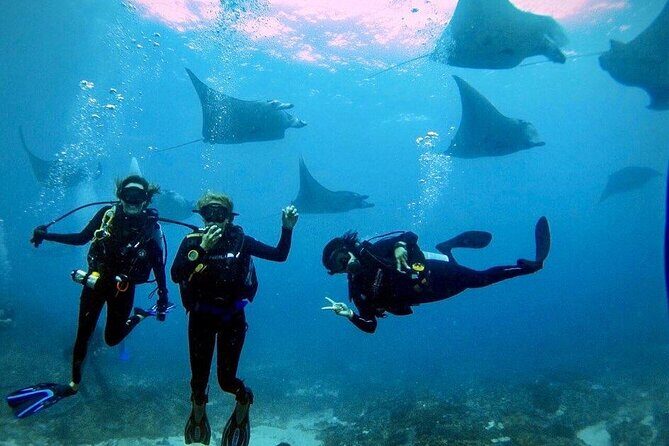
For packing, keep it simple:

  • Sunscreen (river sun + ATV sun adds up)
  • Camera (you’ll likely want photos, but think about the paid package too)
  • Change of clothes (dust + water will happen)
  • Smart casual clothing, but treat it as “adventure casual”

Also, since you’ll have a water-resistant bag and locker, you can bring a phone and not feel like you must lock everything up permanently. Just avoid rushing during the wet moments—store items securely before you stand around taking pictures.

Should You Book This Ayung River Rafting + Bali ATV Package?

I’d book it if you want a single, well-run adventure day that covers both Ayung River rafting and an ATV ride through countryside that you’d normally only see from the road. It’s a strong value when you factor in gear, lunch, insurance coverage, showers, and the fact that guides like Wayan, Nengah, and Ketut Suar are known for keeping things organized and personable.

Skip it if you hate photo upsells or you’re looking for a slow, scenic day with long breaks. It’s action-heavy, not a leisurely stroll.

If your goal is one memorable morning-to-early-afternoon hit of Bali—rapids, rice fields, and dirt roads—this is the kind of combo that makes your trip feel packed in the best way.

FAQ

Where is the meeting point for this tour?

The tour meets at Bali Pertiwi Rafting, Jl. Dewi Saraswati No.2, Bongkasa Pertiwi, Kec. Abiansemal, Kabupaten Badung, Bali 80352, Indonesia.

What time does the tour start?

The start time is 9:30 am.

How long is the Ayung River rafting and ATV experience?

The total duration is about 4 hours.

What activities are included in the package?

You’ll do Ayung River rafting for about 2 hours, followed by an ATV ride through rice fields, jungle, rivers, and traditional Balinese villages.

Is lunch included, and is there a vegetarian option?

Yes, lunch is included as an Indonesian buffet. A vegetarian option is available if you advise at booking.

What equipment is provided?

You’ll be provided with safety-approved equipment, including a helmet, life jacket, and boot shoes. Towels and shower facilities are also included.

Do I need to bring anything?

Bring sunscreen, a camera, and a change of clothes.

What are the age requirements?

The minimum age for the overall adventure is 5 years and the maximum is 60 years. Minimum age is 12 for an ATV single ride. Children age 5–11 must ride tandem with an adult.

Is this tour private, and does insurance coverage come with it?

Yes, this is a private tour/activity for your group only. Insurance coverage is included.

Are photos or video included in the price?

Photo or video souvenirs are not included and can be purchased separately.

Bali Instagram Most Iconic Spots Private Tour

Bali Instagram Most Iconic Spots Private Tour - Lempuyang Temple’s Gate of Heaven: 1,700+ steps and photo timing

Bali is easy to love at first sight. This private photo-route strings together several of the most recognizable Bali scenes, from the Gate of Heaven at Lempuyang to Tirta Gangga and Tukad Cepung, with photo breaks that make sense for a long day. I also like that there is onboard Wi‑Fi so you can share your shots while you’re still on the move.

Two things I really appreciate are the door-to-door pickup for most south Bali hotels and the simple, ticket-included stops that keep you from wasting time at ticket counters. The jungle swing stop also gives you a classic Instagram moment without turning the day into a “look, don’t touch” museum tour.

One thing to think through first: Lempuyang involves a tough climb with more than 1,700 steps, and it’s a long day overall. If you’re not feeling steady on your feet, you’ll need to plan your pace (or reconsider the fit part of the itinerary).

Key highlights and practical wins

Bali Instagram Most Iconic Spots Private Tour - Key highlights and practical wins

  • Gate of Heaven photos at Lempuyang Temple, plus time built in for the climb and views
  • Tirta Gangga Water Palace in a focused stop with admission included
  • Tukad Cepung Waterfall for that dramatic waterfall-in-a-natural-setting look
  • Alas Harum jungle swing at Ristorante Lereng Agung, built into the schedule
  • Onboard Wi‑Fi + mobile ticket, so you’re less stressed and more share-ready
  • Gusde/Gosday (guide) is praised for being experienced and funny, which makes the early start feel lighter

Starting in Seminyak: what the 7:00 am start gets you for $95

Bali Instagram Most Iconic Spots Private Tour - Starting in Seminyak: what the 7:00 am start gets you for $95
This tour is built around a simple promise: get you to the Bali “you’ve probably seen this online” spots without the hassle of figuring out transport, timing, and admissions by yourself. You meet at 7:00 am in/near Seminyak, and you’re on the road for roughly 12 hours. The day is designed for photos, yes, but also for variety—temples, water gardens, a famous waterfall, a rice terrace, and that jungle swing moment.

At $95 per person, the value comes from more than just the ride. The schedule includes admission tickets for multiple major stops (Lempuyang, Tirta Gangga, Tukad Cepung, Ristorante Lereng Agung, and Tegalalang), plus pickup and drop-off for most south Bali hotels. For a day like this, having transportation handled is where the savings really show—because DIY often turns into several separate payments and time-draining back-and-forth.

One small but very real quality-of-life win is the onboard Wi‑Fi. It means you can post and send photos right away instead of waiting until later with a drained data plan. And because you get a mobile ticket, you’re not scrambling with paper or screenshots at the last second.

Lempuyang Temple’s Gate of Heaven: 1,700+ steps and photo timing

Bali Instagram Most Iconic Spots Private Tour - Lempuyang Temple’s Gate of Heaven: 1,700+ steps and photo timing
Lempuyang Temple is called the Gate of Heaven, and the big reason it’s famous is the dramatic viewpoint and temple setting. The day starts with this stop for a reason: it gives you more of the morning to tackle the climb and work your angles before the sun feels harsher.

The practical part: you’re looking at a steep climb with more than 1,700 steps. That’s not a “stroll and snap” situation. If you’re fit and willing, this is exactly the kind of place where the effort pays off. If you’re not, consider how you’ll manage the ascent, the return down, and your energy for the rest of the day.

What I like about Lempuyang in a structured tour is that it gives you enough time to do more than rush. You also get the benefit of a guide who can keep things moving when queues, photo sessions, and timing get tricky. In reviews, one guide named Gusde/Gosday is praised for being experienced and funny, and that kind of calm energy helps when you’re doing something physically demanding early in the morning.

My caution: this stop is the “make-or-break” for comfort. Even if you’re okay with steps, plan for slow moments. Wear proper footwear and keep water and a light layer in mind. The temple part is spiritual, but the steps are physical.

Tirta Gangga Water Palace: royal water gardens in about an hour

Bali Instagram Most Iconic Spots Private Tour - Tirta Gangga Water Palace: royal water gardens in about an hour
Next up is Tirta Gangga, a water palace near Ababi village, less than an hour’s drive from Denpasar. This is the kind of stop that balances well against the big stair effort at Lempuyang. Instead of one overwhelming physical challenge, you get a calmer-feeling water garden setting with scenic paths and a strong “Bali postcard” look.

The story matters here because Tirta Gangga wasn’t thrown together as a modern attraction. It was designed and constructed by Anak Agung Anglurah Ketut Karangasem, the last king of Karangasem. Even if you don’t read every detail on-site, knowing it’s tied to a royal lineage makes the place feel more intentional than just a pretty backdrop.

You’ll spend about one hour with admission included. That’s enough time to walk the main viewpoints without turning the stop into a marathon. It also keeps the day flowing—because you still have the waterfall and the rice terrace later.

One consideration: because it’s a highlight stop, it can attract photo crowds. The tour format helps you move efficiently, but you’ll still want to be patient and flexible with where you position yourself.

Tukad Cepung Waterfall: the “inside the rocks” Bali moment

Tukad Cepung Waterfall is scheduled for around two hours, with admission included. This is one of those places where the famous look is partly about location—water framed by rock and a dramatic view from the right angle. It’s a very different vibe from the open gate at Lempuyang or the symmetrical water palace at Tirta Gangga.

For photography, this stop is all about timing and position. If you’ve seen images of Tukad Cepung, the appeal is the way the waterfall looks like it’s coming from within the natural rock structure. That means you’re not just shooting “a waterfall,” you’re shooting a specific view that depends on where you stand and how light hits the opening.

The two-hour window gives you room to settle in rather than treat it like a 10-minute detour. You can take a breath, try different spots, and still make it to your next stop without panic.

My practical tip: bring shoes you don’t mind getting damp, and go at a pace that keeps you steady near slippery areas. Even if your photos turn out perfect, your comfort is the real win.

Ristorante Lereng Agung jungle swing: that Instagram shot, with real logistics

Bali Instagram Most Iconic Spots Private Tour - Ristorante Lereng Agung jungle swing: that Instagram shot, with real logistics
The tour includes time at Ristorante Lereng Agung—the well-known location associated with the Alas Harum Bali jungle swing. This is your “yes, I did that” stop: the swing shot that looks like it floats over jungle greenery.

You’ll spend about one hour here, with admission included. That hour is the right length for most people because you can factor in lines, waiting turns, or simply taking photos around the area while you wait for your swing window.

In a day full of temples and waterfalls, I like the swing stop because it adds movement and fun. Reviews praise the guide energy (again, Gusde/Gosday comes up), and humor helps a lot here—especially when you’re balancing excitement with the natural nerves of trying something high and fast.

A consideration: if you’re uncomfortable with heights, big swings, or getting strapped in, you can still treat it as a photo and scenic stop. But the time is still centered around the experience, so decide what matters most to your day before you commit.

Tegalalang Rice Terrace: the classic Bali view and where time goes

By the time you reach Tegalalang Rice Terrace, you’re likely already thinking in layers: one part is scenic, one part is photo angles, and one part is just conserving energy. Tegalalang is scheduled for about one hour, and admission is included. This is the iconic terraced rice-field view that many people recognize immediately when they see it.

The value of having this stop in the middle or later part of the day is balance. Earlier you did a demanding climb and then switched to water-and-rock scenery. Rice terraces bring a calmer, wide-open feel and a different kind of beauty. It’s also a great place for a slower pace because the scenery gives you lots of natural composition.

My advice: think about your expectations. This is not a quiet hike-through-nature where you forget time. It’s a landmark stop—so plan to be patient and to adjust your photo plan based on where the crowd is moving.

Also, if you’re doing the whole circuit in one long day, your camera and your body will get tired. One hour at Tegalalang is usually the sweet spot: enough for multiple shots, not enough to drain your whole afternoon.

The in-between moments: Ubud market and spa passes plus beach drives

Between the main icons, the tour includes “pass by” segments that still shape your day. You’ll pass multiple spas in Ubud and can pass by Ubud Traditional Art Market during the tour. You may also pass by beaches depending on where your hotel is in south-west Bali—Seminyak Beach, Canggu Beach, or Kuta Beach.

These sections are useful because they break up the travel time and give you a sense of the broader Bali vibe beyond the exact photo stops. If you’re the kind of person who likes to notice signage, traffic style, and neighborhood texture, this part helps you build mental maps for the rest of your trip.

Just don’t expect these to replace actual shopping or a dedicated spa visit. Since they’re described as passes, the value is more about views and orientation than a full stop.

Who should book this private Instagram tour, and who should skip it

Bali Instagram Most Iconic Spots Private Tour - Who should book this private Instagram tour, and who should skip it
This is a strong match if you want a single day plan that hits the big-ticket Bali photo targets—without renting transport or juggling multiple tickets on your own. It’s also ideal if you’re a solo traveler who wants the day to feel social without the pressure of hosting. And it works for couples too, especially since the price is per person and pickup/drop-off reduces friction.

The tour is private, meaning only your group participates, which is a practical perk if you want a bit more control over pacing and photo stops. Reviews also highlight that the guide adds energy—Gusde/Gosday is singled out for experience and humor—so you’re not just chauffeured through scenery.

Skip or reconsider if the idea of a steep climb scares you. Lempuyang’s 1,700+ steps is the central physical commitment. If stairs, uneven terrain, or long walking will ruin your day, you’ll feel it fast. Also, if you want slow, deep cultural time and not a packed photo itinerary, you may feel rushed even if each stop is given a reasonable time block.

Should you book this Bali Instagram Most Iconic Spots Private Tour?

If your goal is to check off Lempuyang, Tirta Gangga, Tukad Cepung, Tegalalang, and a jungle swing in one well-managed day, this tour is a good fit. The door-to-door pickup, onboard Wi‑Fi, and ticket-included stops make it feel efficient, not chaotic. And the guide praise (including Gusde/Gosday for keeping things fun) is a real quality signal for a day that starts early.

Book it if you’re comfortable with a long day and you can handle stairs. You’ll get a lot of iconic Bali scenes, and you’ll spend less time worrying about logistics. Just go in with clear expectations: this is a photo-focused itinerary with set stops, not a flexible slow-travel day.

FAQ

What is the tour price per person?

The price is $95.00 per person.

How long is the experience?

It runs for about 12 hours.

Where is the tour located and what is the meeting time?

It’s in Seminyak, Indonesia, and the start time is 7:00 am.

Does the tour include pickup and drop-off?

Yes. Pickup is offered and the tour drops you direct to most south Bali hotels.

Is Wi‑Fi provided during the tour?

Yes. There is onboard Wi‑Fi.

Are tickets included for the stops?

Yes. Admission tickets are included for Lempuyang Temple, Tirta Gangga, Tukad Cepung Waterfall, Ristorante Lereng Agung, and Tegalalang Rice Terrace.

Which major spots are included?

You’ll visit Lempuyang Temple, Tirta Gangga, Tukad Cepung Waterfall, Ristorante Lereng Agung (jungle swing), and Tegalalang Rice Terrace.

Is the tour private?

Yes. It’s a private tour/activity, and only your group participates.

Is a mobile ticket included?

Yes. The tour includes a mobile ticket.

What is the cancellation window?

Free cancellation is available up to 24 hours in advance for a full refund.
FAQ

How far in advance do most people book this tour?

On average, it is booked about 14 days in advance.

Is there any pass-by time in Ubud?

Yes. You’ll pass by multiple spas in Ubud and may pass by Ubud Traditional Art Market during the tour.

Does the itinerary include beach drive-by views?

It may. Depending on your hotel area, the tour passes by Seminyak Beach, Canggu Beach, or Kuta Beach.