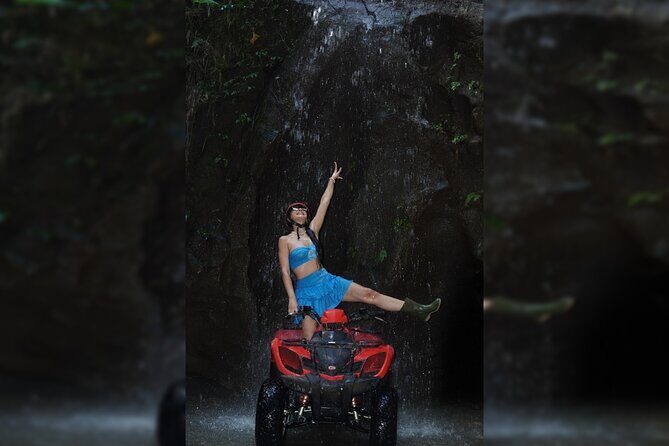
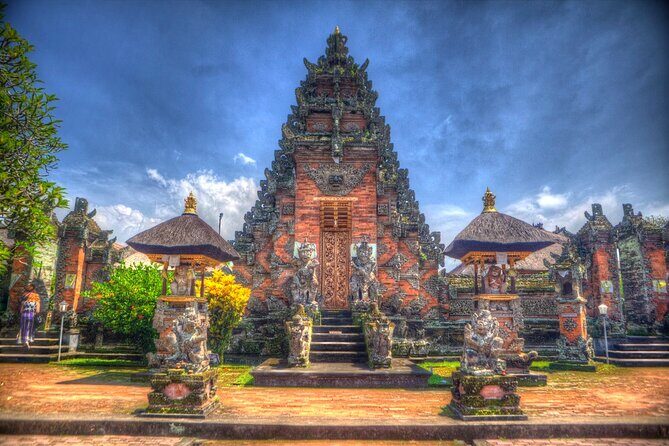
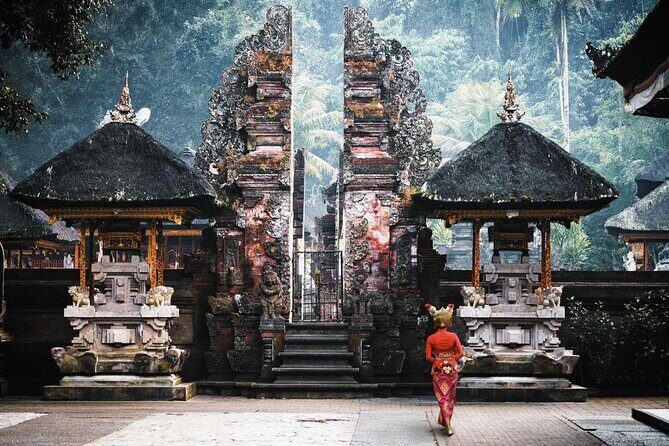
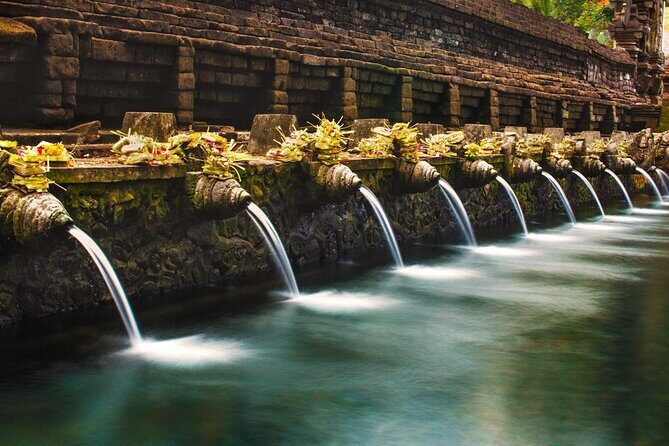
Bali Private Custom Tour

Bali Private Custom Tour - What you can expect for the day: timing, pickup, and flow

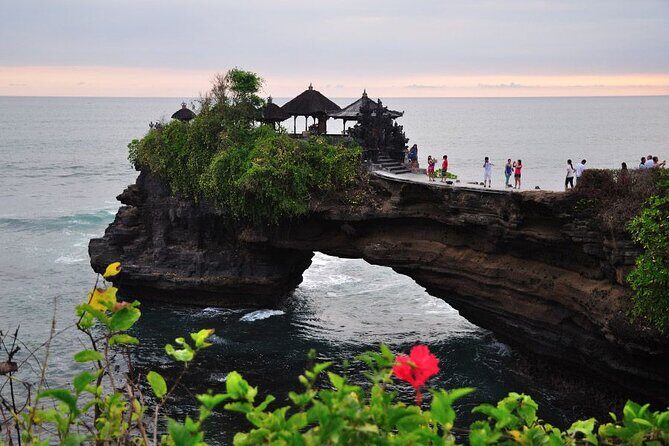
A private day in Bali beats guessing.

This 10-hour custom tour lets you shape the day in Seminyak with a private car and English-speaking driver, plus parking and fuel handled for you. It’s the kind of service built for people who want flexibility, not a rigid route. From the way guides like Ketut Suastama are described, you’re also getting a calm, on-time presence that helps you make good choices fast.

What I like most is the custom planning part: you can reorganize your stops by time and location, and you’ll get practical recommendations beyond your initial ideas. I also really like that the day is set up to run smoothly—no-hassle coordination, with an attentive driver who’s known for patience and staying cooperative.

One consideration: entry fees and meals aren’t included, so if your plan includes paid attractions, you’ll need to budget for them. Also, the experience runs on good weather, and they’ll adjust if conditions are poor.

Key highlights worth your attention
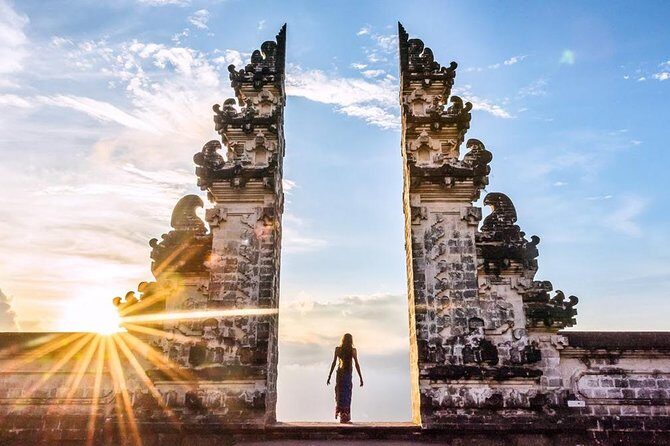
Bali Private Custom Tour - Key highlights worth your attention

  • Private, not group-y: it’s only your group in the car, so you can move at your pace
  • 10 hours of control: you’re not stuck with a short window or a fixed checklist
  • English-speaking driver + planning help: support with timing, locations, and on-the-fly changes
  • Vehicle comfort included: air-conditioned transport with parking and fuel covered
  • Some stops may be free, but entry fees aren’t: admission is not blanket-covered for everything

How a 10-hour private tour really helps in Seminyak

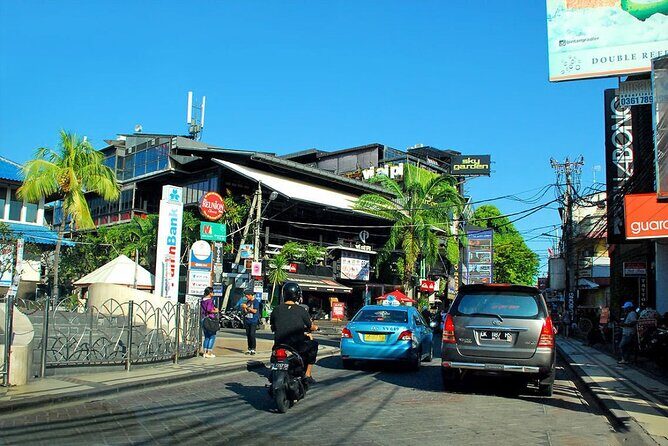
Seminyak is a great base, but it can be a bit of a scramble if you’re trying to plan everything yourself. Roads shift, traffic happens, and you don’t want to burn half your day moving between places that don’t fit your mood. This private custom tour is built to fix that.

Instead of you juggling maps, timing, and logistics, you get an air-conditioned vehicle with an English-speaking driver and a day designed around where you want to go. You still get to choose the vibe—culture, scenic moments, and a bit of adventure—but someone local helps you avoid the worst inefficiencies.

The “10 hours per day” is also the sweet spot. It’s long enough to stitch together multiple types of experiences (temples, viewpoints, cultural stops), but not so long that everyone ends up exhausted and cranky. If you’re on a schedule—honeymoon, family trip, or just a tight trip—this duration makes the day feel purposeful.

Price and value: what $32 covers (and what it doesn’t)
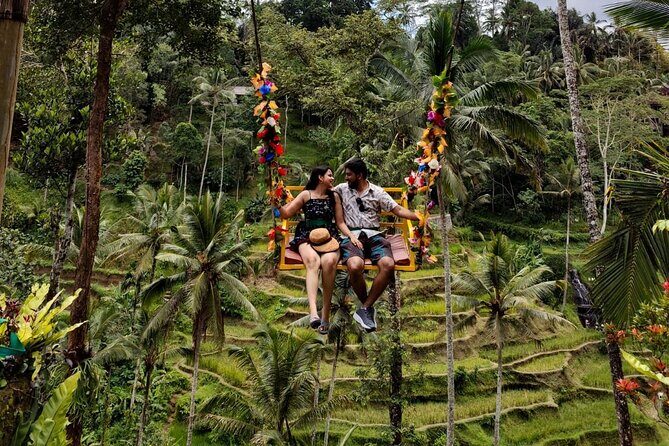
Bali Private Custom Tour - Price and value: what $32 covers (and what it doesn’t)
At around $32 for about 10 hours, this is priced like a budget-friendly private option. You’re not paying separately for the car, the driver time, or the basics like parking and fuel surcharge (those are included). That matters, because in Bali, transport costs can quietly climb.

Here’s the deal in plain terms:

  • Included: air-conditioned vehicle, private transportation, English-speaking driver, parking fees, and fuel surcharge
  • Not included: lunch, dinner, entry fees

That “not included” part is where you’ll feel the difference. If you build a day around paid attractions, you’ll pay those ticket costs directly. But if you plan a mix of free-access areas and a couple paid stops, your overall spending can stay very reasonable.

I also like that the pricing is for private service. You’re not sharing your driver, and you’re not stuck waiting on other people’s slow decisions. For groups, that privacy usually makes the day feel more like a personal itinerary than a generic tour.

What you can expect for the day: timing, pickup, and flow
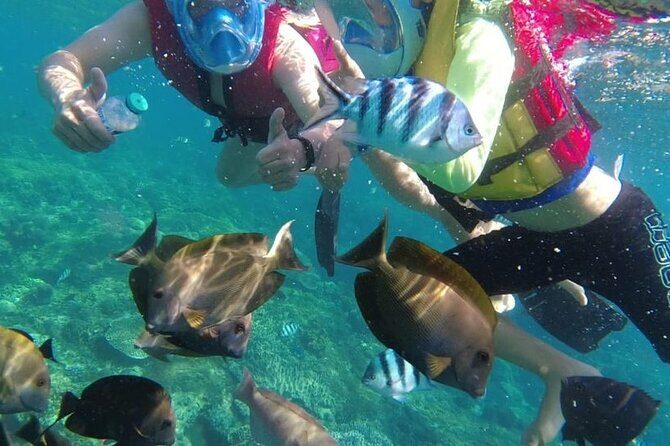
Bali Private Custom Tour - What you can expect for the day: timing, pickup, and flow
This tour runs daily within set hours: Monday–Sunday, 8:30 AM to 6:30 PM. The provider mentions pickup is offered, and in practice that’s usually the biggest quality-of-life upgrade you can get in Seminyak.

If you want the day to feel easy, plan around how pickup and traffic work. Even if the tour itself is “10 hours,” your real usable time starts the moment you’re moving. So if you’re hoping to hit a famous viewpoint plus a temple plus shopping, it helps to keep your must-dos tight and flexible.

You’ll also want to think about comfort and pacing. With private transport, you can take short breaks when you need them, and your driver can help adjust routes to reduce backtracking. That’s especially important if someone in your group tires out early or you’re traveling with parents.

Bali “highlights, culture and adventure” — without the rigid script

The itinerary is described simply, with Bali as the main focus and admission listed as free for that “Bali” stop. That’s actually useful. It signals a flexible approach: you’re not being forced into one exact lineup of attractions.

In a custom tour, the quality comes from how your day is organized. The tour description emphasizes that your planned events are arranged more effectively in terms of time and location, and you’ll receive recommendations for attractions you didn’t originally propose.

So what does that mean for you on the ground?

  • You can start with one anchor idea (like a cultural stop or a scenic moment)
  • Then you can add or swap options depending on what you want more of: viewpoints, local sights, or a bit of adventure
  • You can shift if the day’s mood changes, rather than paying for a fixed schedule that doesn’t match your energy

This is also where a good guide helps you avoid tourist traps and wasted time. The feedback you’re getting around guides like Ketut (including Ketut Suastama in one mention) points to planning that’s practical, polite, and cooperative—exactly what you want when your day is custom.

The driver factor: why punctual patience matters
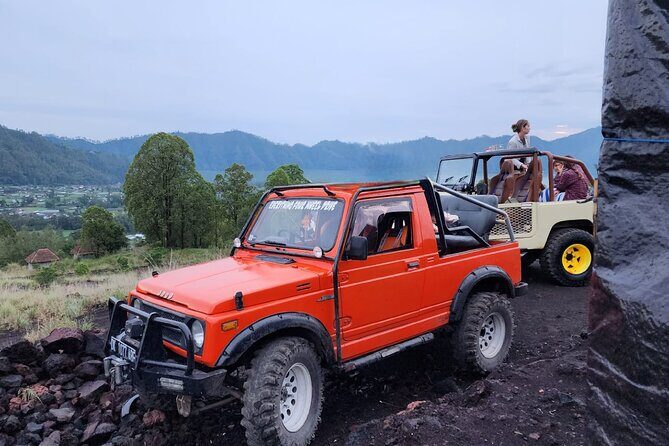
Bali Private Custom Tour - The driver factor: why punctual patience matters
In Bali, a driver is more than a driver. They’re your moving logistics team. They manage the route, keep the day on track, and handle the small moments where you’d normally be stuck—finding the right turn, deciding how long to stop, or simply keeping things organized.

Across the feedback provided, the strongest pattern is reliability and attitude:

  • Punctual and patient support
  • A polite approach and genuine help
  • Quick guidance and direction when you need it
  • Willingness to adjust and cooperate with your preferences

That’s not just “nice.” It changes how the whole day feels. When your driver is steady and calm, you spend less time stressed and more time actually enjoying the places you chose.

If you’re traveling as a couple, a small group, or even a family, this matters even more. People often underestimate how much energy planning takes. A driver who stays patient and helpful makes it easier to keep a good pace without pushing anyone too hard.

Where you’ll likely spend extra money

To keep expectations straight: lunch, dinner, and entry fees are not included. That means your custom itinerary should be built with that in mind.

Two practical tips:

  1. Decide your “paid attractions” limit early. Pick a couple places that truly matter to you, and fill the rest of the day with areas that don’t require ticket costs.
  2. Plan food timing. Because meals aren’t included, you’ll want to either stop for lunch you choose or schedule a break when you know you’ll eat.

Also note a small detail from the tour summary: “admission ticket free” is shown for the Bali highlight stop. That doesn’t mean every stop in your personal plan is free. Think of it as a signal that at least part of the day may involve no-admission areas, while still keeping flexibility.

Mobile ticket and confirmation: the small things that reduce stress

You’ll receive confirmation at the time of booking, and the tour uses a mobile ticket. That might sound minor, but it helps if you’re the type who hates rummaging for papers while also trying to manage sunscreen, water, and your day plan.

The “good weather required” note is also something to take seriously. If weather is poor and the experience must be canceled due to conditions, you’ll be offered an alternate date or a full refund. In Bali, that flexibility is important because rain can make some outdoor stops less enjoyable or practical.

Who this tour is best for (and who should choose something else)

This tour is a strong fit if you want:

  • Private transport without splitting time with other groups
  • A day plan that adapts to your preferences
  • A driver who can help keep things organized and efficient
  • A long enough window (10 hours) to feel like you actually did something meaningful, not just “visited a couple stops”

It’s also a good pick for special trips where everyone has different needs. For example, honeymoon planning often benefits from smoother logistics and fewer surprises. Family trips benefit from patience and flexibility, especially when schedules shift.

Who might consider a different option?

  • If you already have a tight plan and don’t need help organizing time and location, you might spend less by booking specific attractions yourself.
  • If you want a full set of attractions with all admission fees included in one price, this setup won’t meet that expectation since entry fees aren’t included.

Practical tips to get the most out of your private day

If you book this kind of custom tour, you’ll get better results if you help your driver with clarity and limits.

Here’s what works well:

  • Share a short list of priorities (top 3) and a wish list (optional extras).
  • Tell them your pace: slow scenic stops or faster “see a lot” mode.
  • If you’re celebrating something (honeymoon, birthdays, family milestones), mention it. A guide who’s cooperative and helpful can often adjust how the day is paced.
  • Bring small basics: water, sun protection, and a light layer if you’re out later in the day.

And one more thing: build your day with reality. Even with private transport, Bali has real-world traffic and travel time. The value here is not rushing; it’s using your driver to keep the day efficient so you can actually enjoy it.

Should you book this private custom tour in Seminyak?

Yes, if you want a private, flexible 10-hour Bali day with an air-conditioned car, parking and fuel handled, and an English-speaking driver who’s known for being punctual and patient. At this price point, the value comes from avoiding the small costs and hassles that add up when you plan every step yourself.

Skip it (or look at alternatives) if you’re expecting the price to include meals and attraction tickets, or if you already have a ready-made itinerary you can execute without help. For most people staying in Seminyak who want a smooth, personalized day, this hits the practical sweet spot.

If you do book, keep your “must-sees” focused, expect some extra spending for entry fees and food, and you’ll likely come away with a day that feels organized instead of stressful.

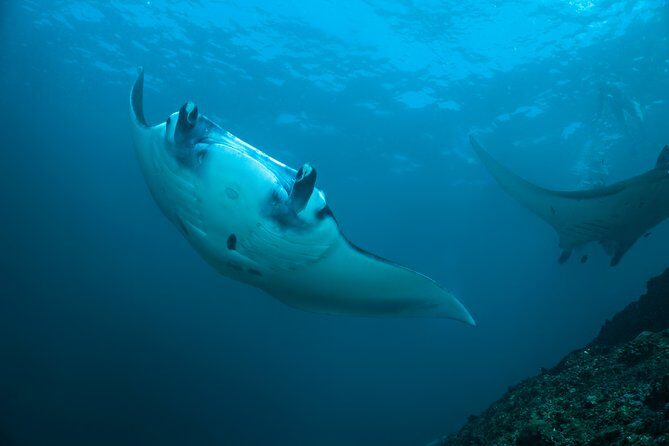
Snorkelling with Manta Rays at Nusa Penida and Lembongan

Snorkelling with Manta Rays at Nusa Penida and Lembongan - Getting From Kuta: Pickup, Timing, and the Reality of a 7-Hour Day

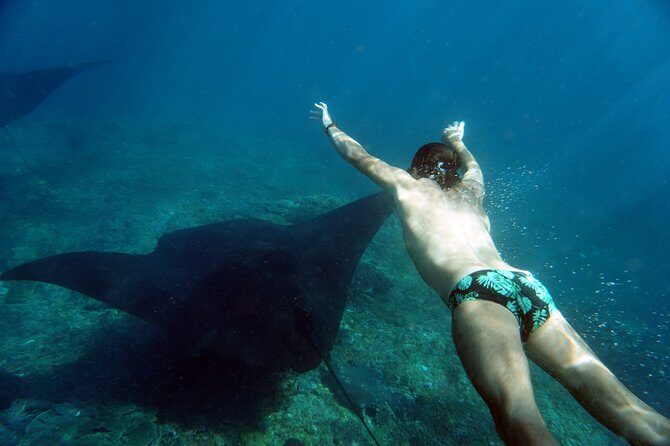
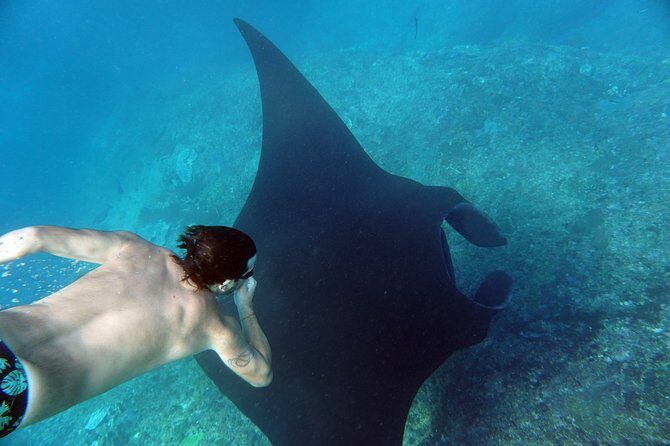
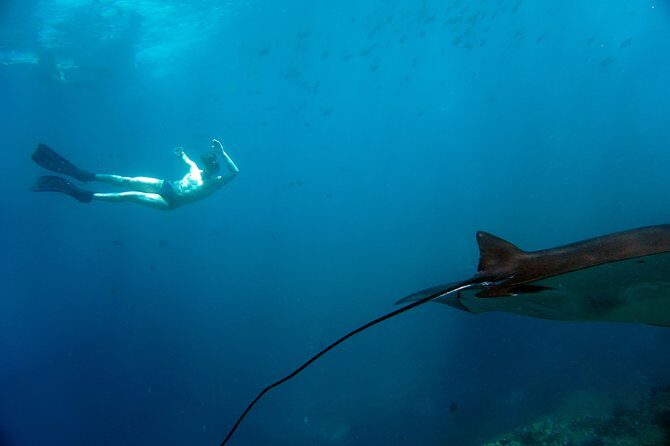
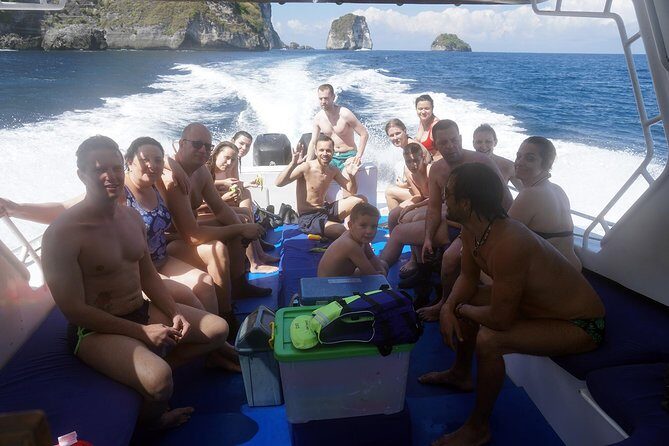
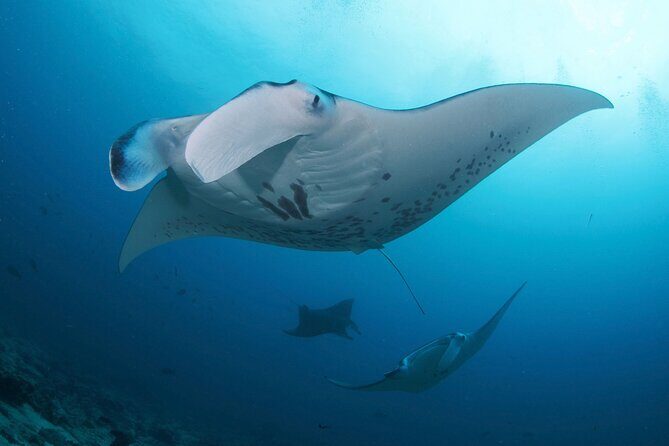
Mantas do the talking at Nusa Penida. This is a full, guided day built around Manta Point, where you go in for close-up snorkel time with majestic manta rays, then you head back to Bali for a second underwater stop. I also like the small-team setup: one guide per six snorkelers means you get real help in the water without feeling rushed.

The main thing to consider is the weather. The second site depends on conditions, and the whole experience requires good weather—if seas are rough, your plan may shift or you’ll be offered a different date or a full refund.

Key Things I’d Bet on

Snorkelling with Manta Rays at Nusa Penida and Lembongan - Key Things I’d Bet on

  • Manta Point first: you start with the mantas, so the main goal isn’t optional
  • Small group (max 15) plus a clear guide-to-snorkeler ratio
  • Lunch, fruit, and water onboard keeps you fueled during a long morning
  • Two snorkeling sites on one outing: Penida manta time plus a weather-based second stop
  • Speedboat transfers with Wi-Fi from several Bali areas, including Kuta and Seminyak

Manta Point: Why This Route Feels Like a Targeted Mission

Snorkelling with Manta Rays at Nusa Penida and Lembongan - Manta Point: Why This Route Feels Like a Targeted Mission
If you’re coming to Bali for snorkeling with manta rays, you don’t want a vague day at the beach. This trip is designed around one big idea: get you to the manta zone at Nusa Penida, then build in a second site for extra marine variety.

The first stop is Manta Point, where manta rays gather and where your snorkel time is the reason most people sign up. The guides don’t treat it like a quick pass. With a guide to every six snorkelers, you’re more likely to get clear instructions on where to be and how to stay comfortable in the water while the action happens.

Then you get a bonus layer: after the mantas, you’ll go to another snorkeling site on Nusa Penida and/or nearby islands, with the second stop chosen based on weather. That makes the day feel less like a gamble and more like a smart plan. Even if the second site changes, the structure still keeps the manta experience as the centerpiece.

Getting From Kuta: Pickup, Timing, and the Reality of a 7-Hour Day

Snorkelling with Manta Rays at Nusa Penida and Lembongan - Getting From Kuta: Pickup, Timing, and the Reality of a 7-Hour Day
This is a full-day speedboat outing, not a casual half-afternoon. From your hotel, pickup typically runs in the morning window (starting around 7:00–8:00 am) and the tour wraps up around 2:00–3:00 pm. Expect about 7 hours total.

Where it gets practical is the pickup coverage. You can be collected from Sanur, Nusa Dua, Jimbaran, Kuta, Seminyak, and Kerobokan, which makes it easier to base your trip where you’re already staying. You’re not forced to relocate to one meeting point at the last minute.

Transfers also include Wi-Fi, plus a mobile ticket approach. In plain terms: it’s easier to find your group, and you’re not stuck juggling printed documents before a morning boat run.

One small scheduling detail that matters: the tour depends on good weather, and that often changes the day’s flow. If you’re the type who hates uncertainty, plan this as your one flexible ocean activity—so you’re not panicking if conditions shift.

Stop One at Nusa Penida: What Your Manta Snorkel Time Is Really Like

The day is structured so you don’t start with a warm-up swim and hope the mantas show up later. Your first underwater stop is at Nusa Penida Island, with the manta rays encounter at Manta Point.

Because the group size is capped at 15 travelers, you’re less likely to feel like you’re part of a crowded herd. And since there’s one guide to every six snorkelers, the support feels closer to “coaching” than “good luck out there.” That matters when manta rays appear—having someone who can guide your positioning and keep things calm helps everyone enjoy the moment instead of fighting the current or confusion.

You’re also set up with what you need for the water. The experience includes snorkeling gear plus a towel, and the guides handle the in-water portion. Since you don’t need prior experience, the biggest challenge is usually just getting comfortable in the water while waiting for the rays to move in.

From the reviews, the standout feeling is simple: the mantas are majestic and up close. One review even highlights swimming with about six manta rays during their session. That’s the kind of detail that tells me the guide team is working to get you into the right moment, not just posting you near the waterline.

Stop Two Choice: Crystal Bay Sea Turtles or a Drift-Style Coral Swim

Snorkelling with Manta Rays at Nusa Penida and Lembongan - Stop Two Choice: Crystal Bay Sea Turtles or a Drift-Style Coral Swim
After the manta stop, the experience pivots. Your second snorkeling site is chosen depending on weather conditions.

Usually, the options look like this:

Crystal Bay: A better chance at sea turtles

If conditions steer the itinerary toward Crystal Bay, the focus shifts from mantas to other big marine moments—specifically sea turtles. This is a smart second stop because it gives you variety. You’re not doing the same exact swim twice; you’re switching the underwater “story.”

Nusa Lembongan: Healthier corals and a drift-style swim

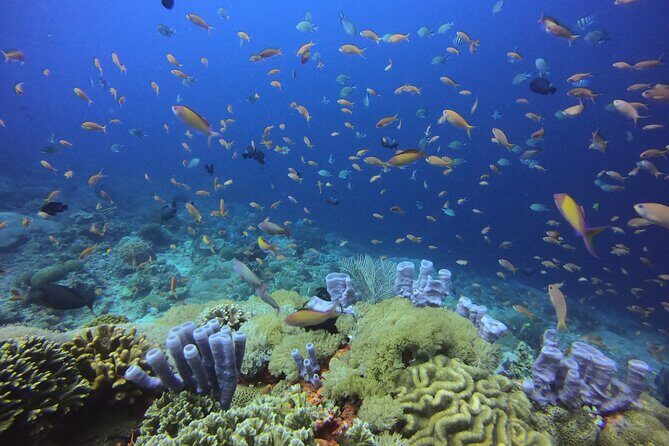
If the plan goes toward Nusa Lembongan, the emphasis is on healthiest corals around the southern Bali islands, with a drift-style snorkeling format. Even without getting overly technical, the idea is clear: you’re likely to see coral habitat by being carried along a route rather than repeatedly stopping and starting.

Practical takeaway for you: don’t lock your mindset into one specific second-stop fantasy. The second site depends on conditions, and the tour is transparent about that. The upside is that your day still ends with real underwater time and not just travel.

The Speedboat Day: Food, Water, and Small Comforts That Actually Matter

Snorkelling with Manta Rays at Nusa Penida and Lembongan - The Speedboat Day: Food, Water, and Small Comforts That Actually Matter
Long sea days can drain you fast. This tour helps by feeding you while you’re on the move.

On the speedboat, you get lunch, plus fruit and water. That’s not a small detail. It means you don’t arrive underwater hungry or spend the morning worrying about where your next meal will come from. For many people, the biggest enjoyment killer on day trips is low energy. This setup tackles that directly.

You also get towel and gear included, so you’re not trying to track down rentals at the worst possible time. If you’re traveling around Bali and want to keep your “stuff logistics” simple, this is one of those quietly valuable inclusions.

Then there’s the group size: maximum of 15 travelers. Smaller groups tend to move more smoothly on and off boats. You also get that patient team vibe from the reviews—people felt taken care of, not handled like a checklist.

Price Check: Does $143 Feel Worth It?

Snorkelling with Manta Rays at Nusa Penida and Lembongan - Price Check: Does $143 Feel Worth It?
At $143 per person, you’re paying for a lot more than a snorkel ticket. You’re covering a full speedboat day, guided support, and round-trip transfers from multiple Bali areas (including Kuta). You’re also getting gear and towel, plus lunch, fruit, and water.

For value, I look at two things:

1) How much of the day is guided and included.

Here, the guide support is structured (one guide per six), and key comfort items like gear/towel and food/water are built in. That reduces extra costs and planning on your end.

2) How “locked in” the manta part feels.

Because the itinerary places Manta Point first, you’re not gambling the main highlight until later. The second site may shift, but your manta objective comes early.

The reviews also lean strongly positive, with a 5/5 rating across 12 reviews and 100% recommendation. While reviews aren’t your personal experience, consistent praise on the guide and the manta encounter is a good sign you’re buying into a team that manages the day well.

One more note: a review mentions video and photos included with the package. That detail isn’t fully spelled out in the core tour description you provided, so I’d treat it as something to confirm at booking. If it’s part of your specific package, that can add real value because snorkeling memories are hard to capture well without extra effort.

Who Should Book This Manta-Ray Snorkel Day

Snorkelling with Manta Rays at Nusa Penida and Lembongan - Who Should Book This Manta-Ray Snorkel Day
This tour is a great match if you:

  • Want manta rays as the top priority and prefer a guided setup rather than DIY snorkeling
  • Like the idea of a small group with a clear guide ratio
  • Don’t want to plan meals or gear logistics for a full-day sea outing
  • Want two underwater experiences in one day: mantas plus either Crystal Bay sea turtles or a Lembongan coral stop

It may be less ideal if you:

  • Hate itinerary changes tied to weather (your second stop depends on conditions)
  • Are looking for a slow, flexible day with lots of free time. This is structured, early, and focused.

If you’re staying in Kuta, Seminyak, or Kerobokan, the pickup coverage is especially handy. You don’t have to spend your vacation rearranging your base just to reach Sanur.

Should You Book This Manta-Rays Snorkel Tour?

Snorkelling with Manta Rays at Nusa Penida and Lembongan - Should You Book This Manta-Rays Snorkel Tour?
I’d say yes if your goal is manta rays and you want a straightforward, guided day that reduces uncertainty.

The biggest reasons to book are the practical ones: Manta Point as stop one, small-group limits, and one guide per six snorkelers, plus lunch and water included so you’re not running on fumes. The reviews back up the experience with strong praise for guides being kind, knowledgeable, and patient, and with mantas showing up close and clearly.

The main reason to pause is the weather dependency. The experience requires good conditions, and the second site changes based on the day. If you’re only in Bali for a single ocean day, consider booking early enough that you can adjust, and keep the day flexible.

If you want, tell me your hotel area (Kuta, Seminyak, Sanur, etc.) and your travel dates, and I can help you think through which day to aim for based on typical timing and how you like to structure your schedule.

FAQ

What’s included in the snorkeling experience?

You’ll get snorkeling gear, a towel, a guide, lunch on the speedboat, plus fruit and water. The trip also includes round-trip transfers and a mobile ticket.

Do I need snorkeling experience?

No experience is needed. The tour is designed for beginners, and you’ll have guide support with one guide for every six snorkelers.

Where does pickup happen?

Pickup is offered from Sanur, Nusa Dua, Jimbaran, Kuta, Seminyak, and Kerobokan.

How long is the tour?

The duration is about 7 hours, with the day running roughly from 7:00–8:00 am to around 2:00–3:00 pm.

Which snorkeling sites do you visit?

You’ll snorkel at Manta Point in Nusa Penida first. The second stop is chosen based on weather and is usually Crystal Bay or Nusa Lembongan.

How big are the groups?

The tour has a maximum of 15 travelers.

Is there Wi-Fi on transfers?

Yes, transfers include Wi-Fi.

When do I receive confirmation after booking?

Confirmation is received within 48 hours of booking, subject to availability.

What happens if weather is poor?

The experience requires good weather. If it’s canceled due to poor weather, you’ll be offered a different date or a full refund.

How does cancellation work?

It’s free cancellation. You can cancel up to 24 hours in advance for a full refund, and changes made less than 24 hours before start time aren’t accepted.

Is there any photo or video option?

One review notes video and photos included with the package. Since details can vary by booking option, it’s smart to confirm what’s included in your specific package before you go.

Monkey Forest, Temple, Waterfall and Rice Terrace in Ubud Tour

Monkey Forest, Temple, Waterfall and Rice Terrace in Ubud Tour - Celuk Village for Balinese Silver and Gold Craft

One day in Ubud, well plotted. I love the private, air-conditioned vehicle and the English-speaking driver/guide who keeps everything moving without turning it into a rushed stampede. You get the key Ubud hits in one block: jungle monkeys, rice-terrace views, a sacred spring temple, and the easy walk to a famous waterfall. The one drawback to flag: it’s an 8-hour sprint, so you’re choosing “enjoy and move on” over lingering all day in one place.

The guide quality is a big part of the value here. Names like Adi, Gusti, Kadek, Aris, Komang, and Alit show up again and again, with praise for calm professionalism, patient pacing, and helpful context at each stop. One guide gets remembered for that touch of personality even down to small extras like ginger tea.

Before you book, think about entrance fees. There’s an option with entrance fees included, and a lower-cost option that leaves those fees out, so the final bill depends on which choice you make.

Key things I’d notice before you go

Monkey Forest, Temple, Waterfall and Rice Terrace in Ubud Tour - Key things I’d notice before you go

  • Private pickup and drop-off in an AC car keeps travel time from eating your day
  • Big Ubud sampler in 8 hours: monkeys, temples, terraces, waterfall, crafts
  • Tirta Empul expects respectful dress and a sarong is recommended
  • Celuk Village is the craft focus for Balinese silver and gold work
  • Tegalalang rice terraces include a short walk and photo time with valley views
  • Guides matter here and many are praised for being calm and not pushy

Ubud in One Day: Why This Route Works

Monkey Forest, Temple, Waterfall and Rice Terrace in Ubud Tour - Ubud in One Day: Why This Route Works
If you’re in Ubud for a short stay, trying to DIY everything can feel like herding cats. This tour fixes that problem by putting the heavy lifting—driving, sequencing, and timing—into someone else’s hands. You ride in a private air-conditioned vehicle, with hotel pickup and drop-off, plus fuel, parking, and bottled water handled.

What I like about the routing is the natural flow. You start with a craft village in town (less “get wet, get muddy”), then you move into Ubud’s signature nature-and-spiritual mix: Monkey Forest, Tegalalang rice terraces, Tirta Empul Holy Spring Temple, and finally the waterfall. By the time you reach Tegenungan, you’re already in the right frame of mind for jungle scenery and quick photos.

The trade-off is time. Each stop is about one hour on-site (with the rest of the day spent traveling between them and factoring in lunch). If you’re the type who wants to read every plaque and watch every ritual detail for a long stretch, you’ll need to manage expectations. Still, for a first Ubud day, it’s a smart way to see the “greatest hits” without building a complicated itinerary.

Celuk Village for Balinese Silver and Gold Craft

Monkey Forest, Temple, Waterfall and Rice Terrace in Ubud Tour - Celuk Village for Balinese Silver and Gold Craft
Your first stop is Celuk Village, a well-known center for Balinese silver and gold craftsmanship. This is where you get out of the big scenic-tour mode and into something more tactile: jewelry-making and metalwork you can actually watch and browse.

Plan for one hour. That’s usually enough time to see traditional making methods, look at finished pieces, and pick up a small souvenir if something catches your eye. Since admission is free for this stop, your budget stays simple here.

A practical tip: don’t treat this like a quick “look and leave.” Celuk is a great place to slow down for a bit. If you’re the type who likes understanding what you’re buying, this stop gives you context—so you’ll shop with your eyes open, not just because a store is selling.

Sacred Monkey Forest Sanctuary: Temples, Shade, and Gray Macaques

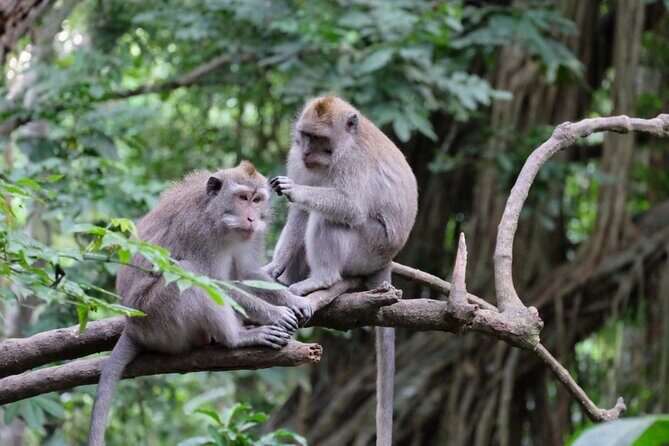
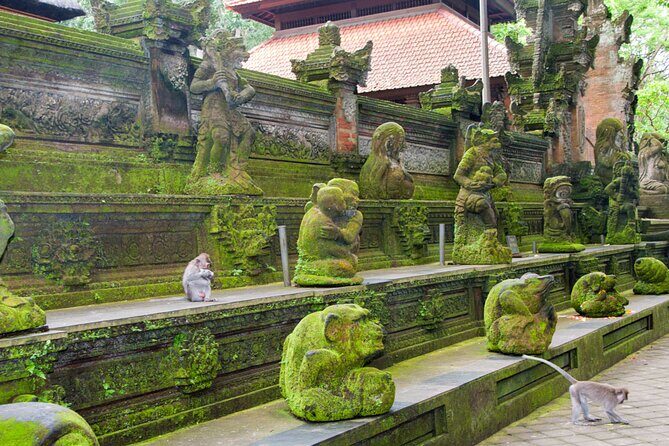
Next up is the Sacred Monkey Forest Sanctuary, one of Ubud’s most recognizable experiences. Here, gray macaques roam around Hindu temple grounds, and the main attraction is the contrast: calm stone-and-shrine spaces in the middle of a living jungle, with monkeys moving through the same paths.

You’ll have about an hour to walk shaded paths and get close to the action. This isn’t about a single “monkey moment,” either. It’s more like a slow wander where you keep noticing new behavior—monkeys crossing, pausing, climbing, and generally treating the place like their own neighborhood.

The consideration I’d keep in mind: these are wild animals. The tour gives you access to the area and the walk, but you should still be ready for unpredictable encounters. Keep your attention on where you’re stepping and what you’re carrying, and you’ll have a better time.

Also, it’s a good mental break before the more structured spiritual stops. If the day feels like it’s piling on, this forest pause helps reset the pace.

Tegalalang Rice Terraces: Views, Short Walks, and Photo Time

Monkey Forest, Temple, Waterfall and Rice Terrace in Ubud Tour - Tegalalang Rice Terraces: Views, Short Walks, and Photo Time
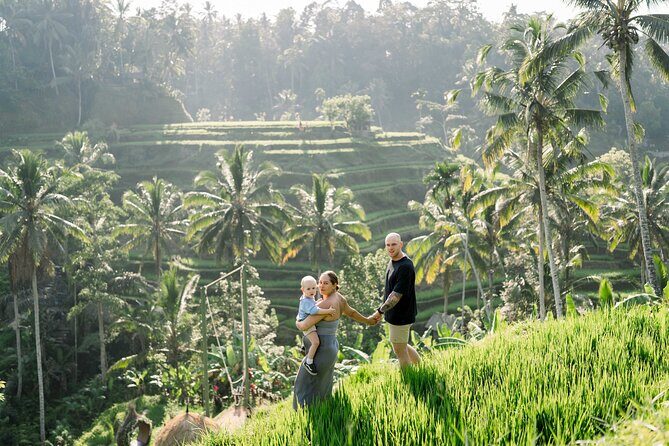
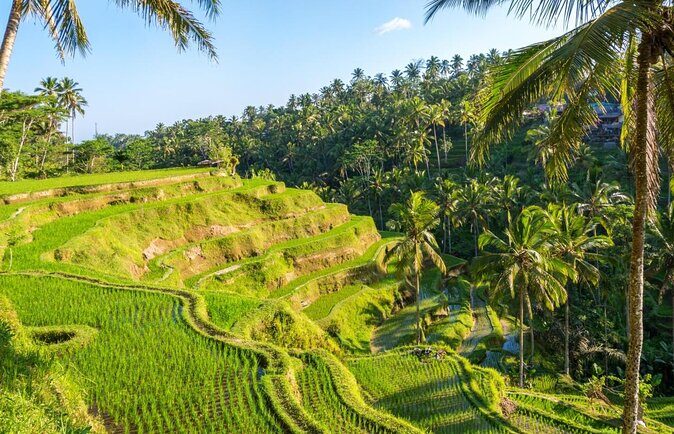
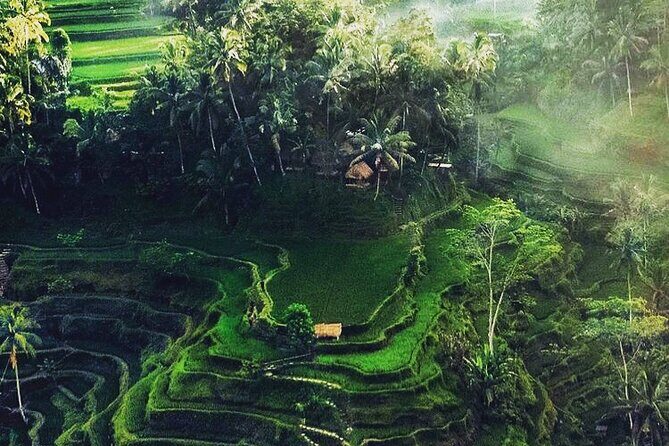
Then you reach Tegalalang Rice Terrace, the classic layered green scenery that made Ubud famous. You’ll get classic Ubud valley views, with time for a short walk and plenty of photo opportunities.

Expect about an hour here. That typically includes a gentle stroll through viewpoint areas and time to enjoy a coffee stop nearby if you want it. The area is built for photos, but it’s also worth paying attention to the shape of the terraces—the way water management and farming patterns create those stepped lines.

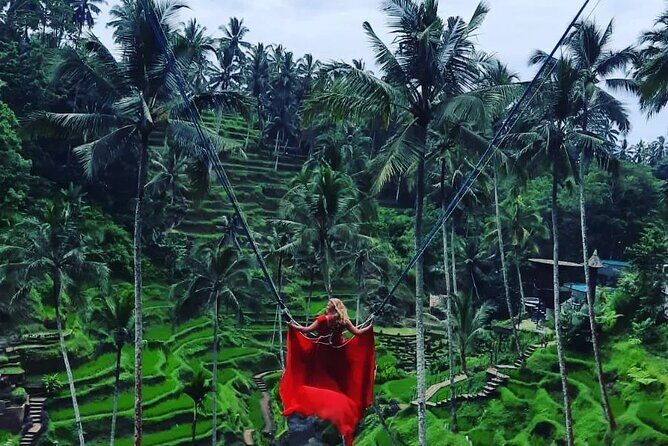
There’s also an adrenaline option in the mix around Tegalalang. The tour notes mention trying a jungle swing-style experience, but the exact timing and fit depends on your day and how your guide organizes the hour. If you want that added thrill, tell your guide early so it doesn’t turn into a last-minute scramble.

One more thing: terraces can mean uneven ground. Wear shoes you’re comfortable walking in, and keep your phone secured while you’re moving between viewpoints.

Tirta Empul Holy Spring Temple: Purification Pools and Sarong Etiquette

Monkey Forest, Temple, Waterfall and Rice Terrace in Ubud Tour - Tirta Empul Holy Spring Temple: Purification Pools and Sarong Etiquette
Tirta Empul Holy Spring Temple is where the tour shifts from scenery into something more spiritual and participatory. The temple is famous for purification pools, tied to local ritual meaning and religious heritage.

The tone here is respectful and observant. You’ll have about an hour to understand what’s going on and to see the cleansing process. The tour also flags an important detail: a sarong is recommended for respectful entry. If you don’t have one, this is the moment when you’ll want to make sure you can meet the dress expectation, because it can affect whether you’re allowed into certain areas or how comfortable you feel.

The “how much should I join in” part is up to you. The tour notes say you can optionally join a cleansing experience, with proper attire. Even if you skip the cleansing yourself, you’ll still learn the purpose and watch the rhythm of the ritual.

This stop adds meaning to the day. Without it, the itinerary would just be waterfalls and views. With it, you get Ubud as a living cultural center, not a theme park.

Tegenungan Waterfall: The Easy Walk to Big Jungle Views

Monkey Forest, Temple, Waterfall and Rice Terrace in Ubud Tour - Tegenungan Waterfall: The Easy Walk to Big Jungle Views
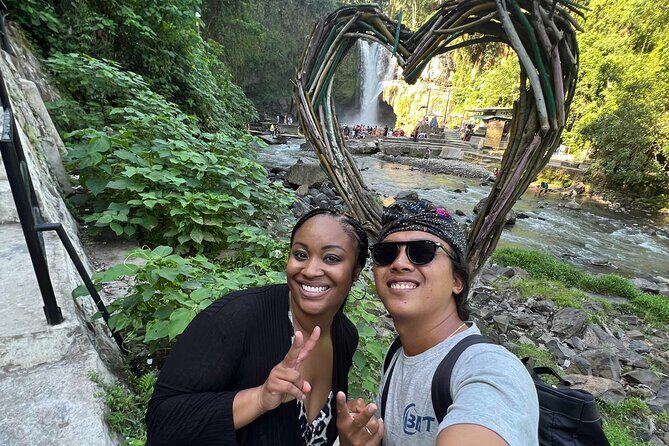
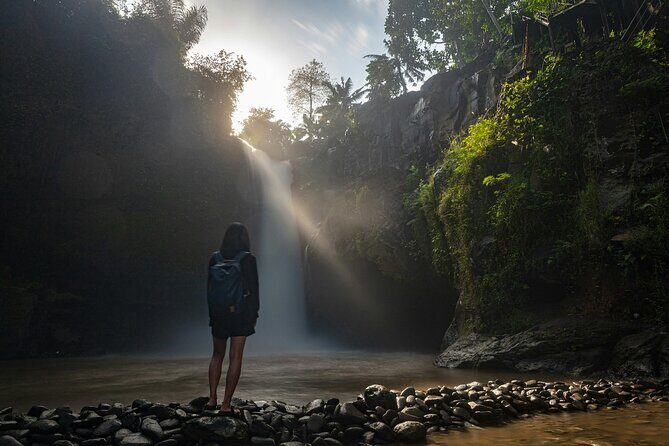
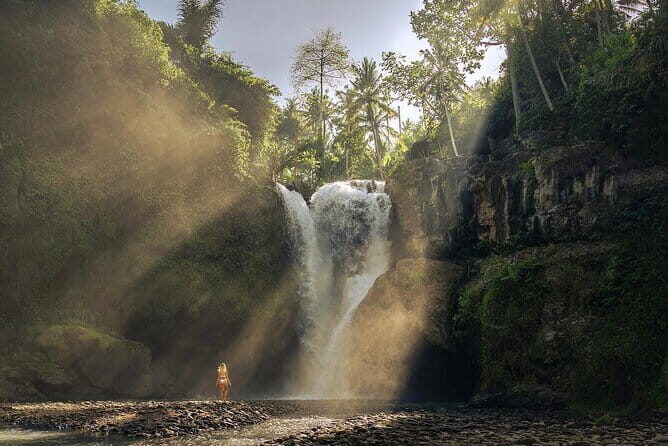
After Tirta Empul, you’re rewarded with something straightforward and visual: Tegenungan Waterfall. This one is known for a powerful waterfall surrounded by lush greenery, with an access point that’s described as easy near Ubud.

You’ll have about an hour, which is usually enough time for a short walk to the falls and the classic photo moments. It’s a good contrast to the temple’s indoor-and-pool focus: here it’s motion, sound, and that humid jungle air.

Practical note: waterfalls mean moisture. Even if the walk is short, be prepared for damp ground and mist. Comfortable footwear helps. If you’re sensitive to crowds or want quieter photos, you can time your shots by watching how your guide spaces the group during the walk.

Ubud Town Stop for Craft Shopping (Time Permitting)

Monkey Forest, Temple, Waterfall and Rice Terrace in Ubud Tour - Ubud Town Stop for Craft Shopping (Time Permitting)
The tour also includes a central shopping-area stop for local crafts, textiles, and souvenirs, time permitting. This is a flexible add-on that gives you a chance to round out your day with practical shopping—especially if you didn’t find anything at Celuk.

Because it’s time-limited, this is not the place to go hunting for the perfect jacket. It’s more like: if you spot something small that fits your taste, grab it. If not, no pressure—your day is about the main sites.

Price and Logistics: Does $33 Really Add Up?

Monkey Forest, Temple, Waterfall and Rice Terrace in Ubud Tour - Price and Logistics: Does $33 Really Add Up?
At $33 per person, this is the kind of tour that tries to be fair value, not fancy. The big reason it can work at this price point is what’s included: hotel pickup/drop-off, a private air-conditioned vehicle, English-speaking driver/guide, petrol, parking, and mineral water.

Here’s where the pricing becomes important. Entrance fees can be included or not, depending on the option you select:

  • If you choose the entrance fees included version, your major site costs are handled.
  • If you choose the lower-cost without entrance fees option, you’ll pay site fees separately.

You also need to factor in what’s not included: lunch and personal spending. Tips are optional and not required, which gives you flexibility.

Duration is listed as 8 hours approx., but that’s outside just the listed sights. In real life, that means travel time between Ubud sites is part of the package, which is exactly why the private car matters. You’re buying time saved, comfort, and guidance—so you can enjoy the stops instead of negotiating traffic and timing on your own.

What the Best Guides Do on This Day

The itinerary is solid, but the experience rises or falls on how it’s run. The most praised aspect across guide feedback is how smoothly they handle the day while keeping it human.

Guides like Adi are praised for being personable and professional, with one standout memory involving ginger tea. Gusti gets recognized for cultural context and good conversational flow. Kadek is repeatedly described as polite and easy to talk to, and important: not pushy, with space for you to enjoy each stop at your pace. Aris is described as calm and professional, helpful with questions and tips at each site. Komang and Alit also come up for friendliness and patience.

That kind of guiding matters especially on a day like this, because you’ll be moving between very different places: a craft village, a monkey sanctuary, rice terraces, a purification temple, then a waterfall. A good guide keeps the transitions easy and helps you get the most out of each stop without turning it into a checklist.

Who This Tour Suits Best

This tour fits you if:

  • You’re in Ubud for a short time and want the core sights in one day
  • You prefer private transport so you’re not squeezed into a shared shuttle schedule
  • You like a mix of nature and culture, not just one type of attraction
  • You value a guide who can explain what you’re seeing in plain language

It might not fit you if:

  • You want slow travel with long stays at one place
  • You’re mainly after beach time or open-water scenery (Ubud is inland and jungle/temple based)
  • You’re very sensitive to animals in the Monkey Forest area

Making the Day Feel Easy: My Practical Advice

A packed day works best if you plan for comfort. You’ll do short walks at places like the rice terrace viewpoint areas and the waterfall, and you’ll also be in and out of temple-like spaces. Wear clothing that’s comfortable for humidity and easy movement.

For Tirta Empul, plan ahead for respectful entry. The tour specifically recommends a sarong, so either bring one or make sure you’ll be able to obtain what you need before that stop.

Bring a mindset for options. The tour includes a choice structure for entrance fees and also mentions a possible adrenaline add-on around Tegalalang. If you want the swing-style activity, tell your guide early so your one-hour window doesn’t become stress.

Finally, remember lunch is not included. If you have dietary needs, decide how you’ll handle food before the day starts, since that slot can affect how your guide times the later stops.

Should You Book This Best-of Ubud Day Tour?

If you want a well-paced, guided one-day overview of Ubud—temples, monkeys, terraces, and waterfall—this is a strong booking. The private AC car and pickup/drop-off are the big comfort win, and the guide experience is clearly the heart of why people feel satisfied. You also get a useful balance: craft culture at Celuk, spiritual grounding at Tirta Empul, then nature payoff at Tegalalang and Tegenungan.

Book it if your goal is a memorable first Ubud day without planning headaches. Consider an alternative if you want a slower, single-site experience, or if you dislike monkey areas or strict dress etiquette at temples.

FAQ

How long is the Monkey Forest, Temple, Waterfall and Rice Terrace in Ubud tour?

It runs for about 8 hours, including travel time between stops and time not listed for lunch.

Is hotel pickup and drop-off included?

Yes. The tour includes hotel pickup and drop-off using a private air-conditioned vehicle.

Is this tour private or shared with other groups?

It is private. Only your group participates.

Are entrance fees included in the price?

Entrance fees are included only if you select the option that includes them. There is also an option without entrance fees, which means you would pay site fees separately.

Do I need to bring a sarong for Tirta Empul?

A sarong is recommended for respectful entry at Tirta Empul, where purification pools are part of the experience.

What’s included besides transportation?

The tour includes an English-speaking driver/guide, petrol (fuel), parking fees, mineral water, and the private vehicle. Entrance fees may be included depending on your option.

What’s not included?

Lunch is not included, and personal expenses are not included. Tips are optional and not required.

What is the cancellation policy?

You can cancel for a full refund up to 24 hours in advance. If you cancel less than 24 hours before the start time, the amount paid will not be refunded.

Ubud : Monkey Forest, Rice Terrace, Waterfall, Swing

Ubud : Monkey Forest, Rice Terrace, Waterfall, Swing - Monkey Forest Sanctuary: What to Expect at the First Stop

Monkey forest to waterfalls in one day.

This Ubud trip is interesting because it strings together the big hits plus the quieter, green stuff: Sacred Monkey Forest Sanctuary, terraced rice fields, coffee culture, and two different waterfalls. I like the way the day is built around short, focused stops (so you’re not trapped in one place too long), and you still get variety without feeling rushed.

Two things I especially like: hotel pickup and drop-off plus a full day of included admission fees at most stops. One drawback to plan for is the drive time; you’re spending real hours in the air-conditioned vehicle as you hop around Ubud and nearby villages, and traffic can steal more time than you expect.

Quick Hits Before You Go

Ubud : Monkey Forest, Rice Terrace, Waterfall, Swing - Quick Hits Before You Go

  • A full Ubud sampler (about 8 hours) that combines forest, rice terraces, coffee, and waterfalls in one loop
  • Most key admissions included, so your day stays predictable (the swing ticket is the main extra)
  • Private setup for your group with an air-conditioned vehicle and a driver who can adapt
  • Ubud Jungle Swing is short and optional in time but big on photos
  • Two waterfalls, two vibes: Kanto Lampo (tiered, about 15 meters) plus Tibumana (in a forest setting)
  • Guides/drivers like Jero Andi are known for being dependable and flexible with small changes

A One-Day Ubud Mix: Forest, Rice, Coffee, and Falls

Ubud : Monkey Forest, Rice Terrace, Waterfall, Swing - A One-Day Ubud Mix: Forest, Rice, Coffee, and Falls
This is the kind of day trip that makes sense if you’re only in Ubud for a short time. You get a blend of wildlife-and-forest scenery, agricultural views, and classic “look at this” natural spots like waterfalls. It’s also a practical format: each stop runs about 30 to 60 minutes, which keeps your energy for the parts that matter.

You’re paying a low base price for a full route, and that’s where the value is. At a glance, $26 per person doesn’t look like much, but the included items help it add up: air-conditioned transport, parking, and hotel pickup/drop-off, plus admissions for several major stops. The main cost you’ll likely add is lunch and the Ubud swing ticket.

One reason this tour works well in real life: it’s built for mobility. Even when you’re not in the mood for yet another viewpoint, you’re rarely stuck waiting for long stretches. You move from one scene to the next—monkeys, terraces, coffee, then waterfalls—so the day feels like a playlist instead of a single track.

Getting Around Ubud: Why the Car Time Matters

The tour runs about 8 hours, but the sightseeing stops add up to only part of that. The rest is transit. Ubud is small, but the roads and traffic are very real, especially when you’re bouncing between different parts of the island.

Here’s how to plan smarter:

  • Wear comfy shoes you can move in at terraces and waterfall paths.
  • Keep water handy. You might not have long breaks between stops.
  • If you’re sensitive to heat, remember you’ll be in and out of outdoor spots, so dress in breathable layers.

The upside is that you’re not doing this solo. With private transport, you’re not coordinating taxis between far-apart points. You also avoid the “figure it out” stress when Bali’s traffic changes your timing.

Monkey Forest Sanctuary: What to Expect at the First Stop

Ubud : Monkey Forest, Rice Terrace, Waterfall, Swing - Monkey Forest Sanctuary: What to Expect at the First Stop
The morning starts at Sacred Monkey Forest Sanctuary in Padangtegal. The forest covers about 12.5 hectares and is home to monkeys. This is a proper sanctuary, not just a scenic yard, which makes it a bit more meaningful than a quick photo stop.

This first stop is about an hour. That time is usually enough for a slow walk, taking in the shaded forest feel and the winding pathways. If you want photos, aim for moments when your group isn’t constantly stepping aside for others. It’s also a place where you’ll want to follow the sanctuary rules on-site—since it’s a real animal habitat, not a theme park.

One practical note from experience with this kind of tour: double-check the exact wording of your monkey-forest stop. I’ve seen confusion between similar-sounding listings. If you care about getting exactly the Ubud sanctuary you expected, confirm the name when you book.

Tegalalang Rice Terraces: How to Enjoy the View Time

Ubud : Monkey Forest, Rice Terrace, Waterfall, Swing - Tegalalang Rice Terraces: How to Enjoy the View Time
Next up is Tegalalang Rice Terrace—a terraced rice field area that still uses traditional Balinese irrigation. The idea here is simple: you’re going to see one of Bali’s most recognizable agricultural views, with those stepped greens that look even better from the right angles.

You’ll have about one hour. That’s a good length for terraces because you can:

  • find a viewpoint,
  • walk a bit along paths,
  • and take photos without turning it into an all-day hike.

The only “watch out” is crowding and foot traffic. Terraces draw people, and Ubud drives the demand. Go at a calm pace and keep your footing. If you’re traveling with kids or older adults, stick to the smoother sections and let the driver know what pace works for your group.

Ubud Jungle Swing: The Photo Stop Without the Full Day Weight

Ubud : Monkey Forest, Rice Terrace, Waterfall, Swing - Ubud Jungle Swing: The Photo Stop Without the Full Day Weight
The Ubud Jungle Swing stop is shorter—about 45 minutes—and the ticket isn’t included. That means your cost can rise slightly if you decide to ride, and your schedule can shift a little depending on lines and photo timing.

Is it worth it? If you like scenic thrill rides and you want that famous “swing over the greenery” look, it’s the kind of quick stop that pays off in photos. If you hate waiting or you’re not interested in the swing, you can treat this as a view break and hang time instead of a commitment.

Practical advice: build in patience. Swing attractions tend to involve small delays while groups take turns. If your group is sensitive to time, ask the driver to keep an eye on pacing so you still enjoy the waterfall stops later.

Coffee Plantation in Kintamani: Learning Without Making It Too Long

Ubud : Monkey Forest, Rice Terrace, Waterfall, Swing - Coffee Plantation in Kintamani: Learning Without Making It Too Long
The tour then heads to Agro Santi Coffee Plantation. This segment is about 30 minutes, and admissions are included.

This stop is mainly about understanding the local coffee routine—how coffee is cultivated and how it becomes a product people talk about. The time is short by design, which is a plus if you don’t want to sit through a full production demo. You get the idea, you see how things are grown and processed, and you can move on.

One smart way to use this stop: decide early what you want. If your group loves tasting, plan for it. If you just want to walk through and learn a bit, keep it light. Either way, remember lunch isn’t included, so coffee stops can sometimes turn into snack time more than a meal.

Also, if the plantation experience includes people encouraging purchases, you don’t have to go along with everything. You can enjoy the coffee knowledge and simply choose what fits your budget.

Warung Dewa Malen and Lunch Time: Plan for Your Own Meal

Ubud : Monkey Forest, Rice Terrace, Waterfall, Swing - Warung Dewa Malen and Lunch Time: Plan for Your Own Meal
After coffee, there’s a 45-minute stop at Warung Dewa Malen. The idea is you’ll be invited to visit restaurants or food stalls along the route near the sights. Lunch itself isn’t included, so this is where you’ll likely grab your main meal.

Here’s what I recommend:

  • Use this stop to solve lunch first, not last. Food decisions take longer than you think when you’re hungry.
  • Keep your order simple if you’re on a clock.
  • If you’re picky, ask what options are available quickly rather than browsing for a long time.

Some drivers also help when things run tight. In past experiences with guides from this operator, I’ve seen the driver help a group find food on the way back to their hotel. That’s the benefit of having a real driver who’s paying attention, not just ticking off boxes.

Tibumana Waterfall: Cool Green Forest Time

Ubud : Monkey Forest, Rice Terrace, Waterfall, Swing - Tibumana Waterfall: Cool Green Forest Time
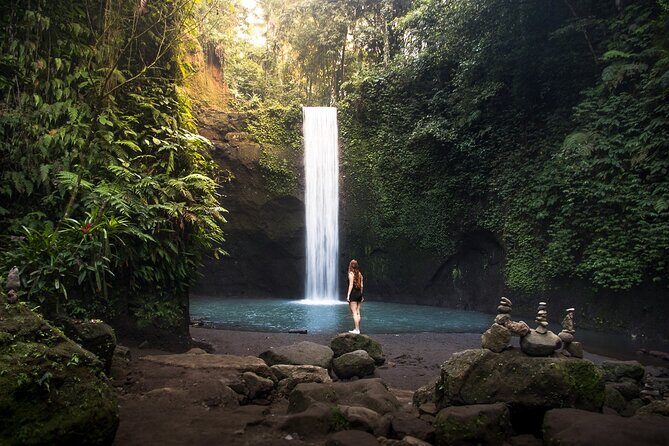
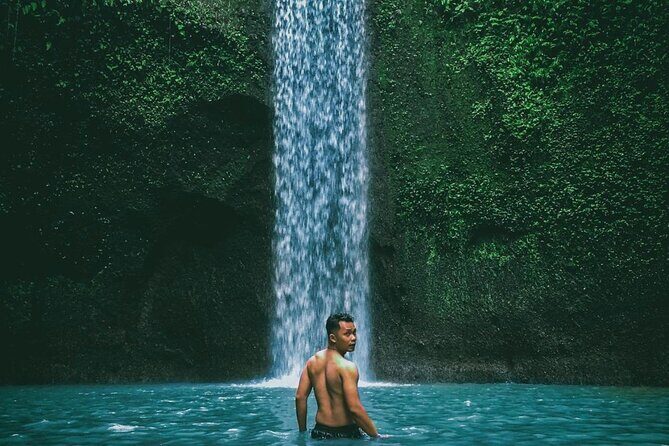
Then comes Tibumana Waterfall, about one hour on site. This waterfall is located in Apuan Village, Bangli Regency, and it’s known for a forest setting. The description emphasizes that the area is cool and green, with the waterfall set into the landscape.

This stop usually feels different from the more famous waterfall energy. Because it’s in a forest setting, the mood is more “quiet scenery” than “big crowd spectacle.” That’s great if your group wants a break from hot sun and wants to slow down a little.

The practical downside: if weather turns wet or slippery, you’ll want to be careful where you step. Waterfall paths can get slick. If you’re traveling with anyone who’s unsteady on their feet, choose footing early and stick to it.

Kanto Lampo Waterfall: Tiered Views and a Bigger Water Scene

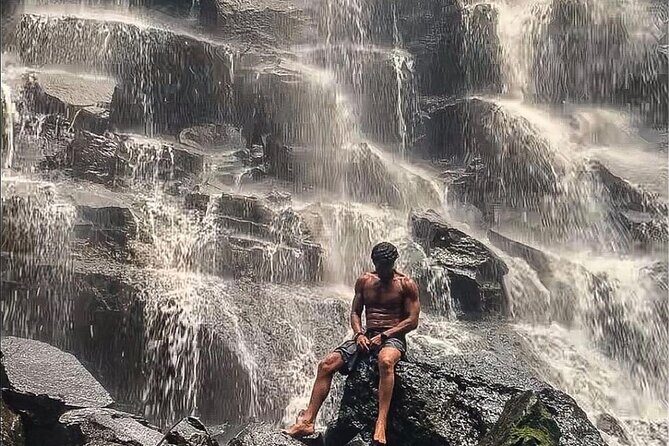
Next is Kanto Lampo Waterfall, also about one hour. It’s a tiered waterfall around 15 meters high, and the atmosphere is described as refreshing. This stop tends to deliver that “wow, look at the water” feeling, especially if the flow is strong.

What you’ll likely enjoy here is the combination of sound and sight. Tiered falls create a more complex visual than a single drop, and the surrounding area gives you more angles for photos.

If your group is doing the swing earlier, this is a nice contrast: instead of action and posed photos, it’s scenic looking, photos at different levels, and taking in the cooling spray when you get close.

Price and Value vs What You Actually Pay

At $26 per person, this trip is priced like a budget-friendly “greatest hits” day. The key to its value is what’s included.

Included:

  • Air-conditioned vehicle
  • Private transportation
  • Entrance fees for the included stops (not for everything)
  • Parking fees
  • Hotel pickup and drop-off

Not included:

  • Lunch
  • Ticket for the swing
  • Personal expenses

So yes, you’re paying little up front, but you’re also giving up some control. The tour is designed around included sights, and the swing is the main “extra ticket” item. If you want zero add-ons, you’ll still likely pay for lunch unless you bring your own food (not stated, so I can’t assume it’s allowed or convenient). If you’re okay budgeting modestly for lunch and the swing, the value is strong.

A practical way to think about this: you’re buying transportation plus entry fees, and you’re getting a full route worth of experiences. If you tried to DIY it with separate taxis and tickets, you’d spend more time and likely more money than you expect.

The Best Fit: Who This Tour Suits

This tour suits you if you:

  • want a one-day overview of Ubud nature and culture-adjacent scenery,
  • like having a driver handle the route,
  • and enjoy a mix of “walk around” and “look at views” stops.

It’s also a good choice for couples and small groups, since the tour is set up so you’re not mixed into a big crowd from multiple parties. The wording indicates only your group participates, which usually means fewer interruptions and more flexibility.

If you’re traveling with mobility limitations, the tour might still work, but you should be realistic about outdoor walking at terraces and waterfall areas. Short stop lengths help, but you still need to be able to move around.

A Quick Note on Flexibility and Drivers (Jero’s a Name to Remember)

One of the most practical perks of this type of Ubud day trip is having a driver who keeps the day smooth. In this operator’s experiences, Jero and Jero Andi come up as dependable and flexible—happy to make changes to suit your needs, and punctual enough that you can keep the schedule without frantic chasing.

That flexibility can matter a lot when traffic shifts timing. If you have a specific preference like extra photo time, a quick stop for food, or adjusting pacing at one location, a good driver makes it feel less like a factory line.

Should You Book This Ubud Day Trip?

Book it if you want the best-use-of-time approach: monkeys, rice terraces, coffee, and two waterfalls in one day, with most admissions covered and pickup handled. At $26, the math is friendly, especially if you were already planning to see multiple Ubud-area sights and don’t want to manage transport between them.

Skip it or reconsider if:

  • you’re strongly against paying extra for the swing ticket,
  • you dislike long car time (about half the day is transit depending on traffic),
  • or you need a fully slow, unhurried day with no schedule pressure.

Weather can also affect outcomes. Since it requires good weather, you’ll want to plan with flexibility in mind.

FAQ

What does the $26 price include?

The price includes an air-conditioned vehicle, private transportation, entrance fees for the listed included stops, parking fees, and hotel pick-up and drop-off.

How long is the tour?

The tour runs about 8 hours.

Is pickup from my hotel included?

Yes, hotel pick-up and drop-off are included.

Which stops have admission tickets included?

Admission tickets are included for the Sacred Monkey Forest Sanctuary, Tegalalang Rice Terrace, Agro Santi Coffee Plantation, Tibumana Waterfall, and Kanto Lampo Waterfall.

Do I need to pay extra for the swing?

Yes. The Ubud Jungle Swing ticket is not included.

Is lunch included?

No. Lunch is not included, and there is a stop at Warung Dewa Malen where you can choose food.

Is this tour private or shared?

It’s set up as private transportation for your group, and only your group participates.

What happens if the weather is bad?

The experience requires good weather. If it’s canceled due to poor weather, you’ll be offered a different date or a full refund.

What is the cancellation cutoff?

You can cancel up to 24 hours in advance for a full refund. Canceling less than 24 hours before won’t be refunded.

3 Epic Dives in Nusa Penida – Certified Divers’ Day Trip

3 Epic Dives in Nusa Penida - Certified Divers' Day Trip - The boat ride to Nusa Penida: what it means for your comfort

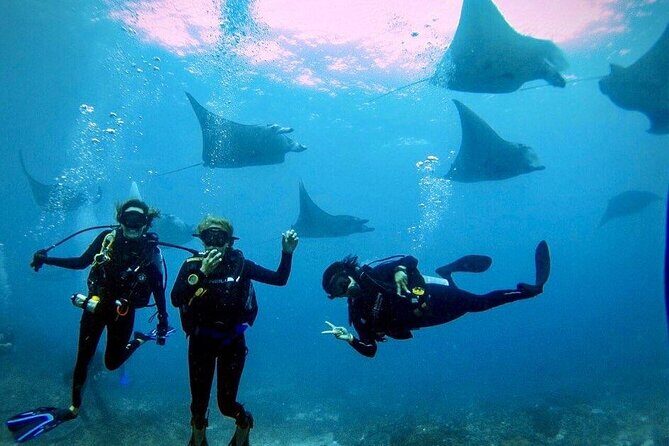
You’ll spend the day underwater on purpose. This Nusa Penida trip is built for certified divers only and focuses on tight timing, small groups, and real reef time around the island. Expect three reef underwater sessions from a boat out of Sanur, with snack and lunch worked into the schedule.

One catch to plan for: manta rays are amazing, but sightings depend on the site and conditions. Also, you’re committing to an early start from South Bali.

I like how the operation puts safety and guidance front and center, with professional, certified, insured instructors leading the group. In the reviews, the guide Adi comes up again and again for clear support, especially when conditions or skills get a bit more challenging.

You’ll also appreciate the logistics: pickup from Kuta/Legian/Seminyak area, a maximum of 8 travelers, and an air-conditioned ride to keep the day from turning into a travel slog.

The one real drawback? This is weather-dependent, so rough conditions can change the plan. And if you’re not already certified at least Open Water level, you’ll be turned away for this exact tour.

Key things I’d bet on

3 Epic Dives in Nusa Penida - Certified Divers' Day Trip - Key things I’d bet on

  • Small group cap (max 8 travelers): less waiting, more attention from the guide, and an easier pace.
  • Certified-only requirement: you bring your Open Water certification, and the team can focus on reef time.
  • 3 scheduled reef underwater sessions by boat: you get a full day rather than one quick stop.
  • Manta-ray focused reef options: sites like Manta Bay and Crystal Bay are part of the plan, with year-round chances.
  • Adi-style guidance shows up in reviews: people highlight him when it’s their first drift-style experience.

Who this Nusa Penida trip is for (and who should skip it)

This is a certified divers’ day trip. The requirement is a minimum of Open Water certification, so if you’re still working toward your first card, look for another option that supports beginners.

I think it suits you best if you want a straightforward full-day reef itinerary without having to manage the transport. The company runs from South Bali on a fixed schedule, which is helpful when you want Nusa Penida on one calendar day and don’t want the stress.

You’ll also enjoy it if you like structure. The day is timed around leaving Sanur, doing three reef underwater sessions, and returning before the evening—so you’ll know what’s happening when.

The only type of traveler I’d hesitate for is someone who gets motion sick easily or hates early mornings. The schedule starts with pickup before 7 am, and the speedboat crossing is part of the deal.

South Bali pickup and the clean start in Sanur

3 Epic Dives in Nusa Penida - Certified Divers' Day Trip - South Bali pickup and the clean start in Sanur
The day runs with pickup from South Bali areas including Kuta, Legian, and Seminyak. Pickup is listed around 06:45–07:00, which means you should be ready earlier than you think—especially if your driver needs a bit of time to find your exact hotel entrance.

Next you meet at the Sanur shop around 07:15 for equipment check and paperwork. I like this step because it sets expectations early. You’re not doing all the paperwork on a boat while everyone is bouncing in waves.

There’s also a practical advantage: you can get fit-tested in the real world before the crossing. Even if you’re an experienced diver, it’s still smart to arrive with your gear sorted and your questions ready.

The boat ride to Nusa Penida: what it means for your comfort

3 Epic Dives in Nusa Penida - Certified Divers' Day Trip - The boat ride to Nusa Penida: what it means for your comfort
At 08:00 you board in Sanur and head out for the day’s reef visits. This is where travel time matters, because you’ll feel the ride more than you might on a longer multi-day plan.

The tour includes speed boat transfer, so you’re not piecing together separate transport. That’s good value at this price point, since organized crossings usually cost money on their own.

In at least some recent experiences, people noted the boat felt spacious and comfortable. That matters because it can reduce the stress before your first underwater session.

If you’re prone to seasickness, I’d plan for it now rather than hoping you’ll be fine. The tour is designed around a boat schedule, not a flexible one.

Three reef underwater sessions: how the timing usually plays out

You’re booked for three reef underwater sessions as part of one day trip from the island. The schedule groups them around 9:30, with snack and lunch provided during surface intervals.

I like that snack and lunch are included. It removes a common pain point on day trips: you don’t need to guess where to eat between sessions, and you don’t lose energy on an empty stomach.

What you can’t fully control is marine life. The manta ray section is clear: manta rays can appear all year, but sightings are not guaranteed and depend on dive site and daily weather conditions. That’s also the truth of reef watching in general—so treat it as a chance to maximize your odds, not a promised show.

Between sessions, you’ll also likely spend time regrouping and re-checking. That’s normal, but having food during those gaps helps you keep your focus instead of feeling wiped out.

Reef site expectations: manta rays, coral, and the sites they name

3 Epic Dives in Nusa Penida - Certified Divers' Day Trip - Reef site expectations: manta rays, coral, and the sites they name
Nusa Penida is famous for big animals, and this tour is built around that reality. The plan includes well-known reef areas such as Manta Bay, Crystal Bay, Gamat Bay, Toya Pakeh, and Sental, with up to 12 total sites in the local selection.

Here’s how to think about it: the best outcome is multiple mantas at depth with good visibility. The realistic outcome is mantas are present sometimes, sometimes not, and you still get healthy coral and plenty of fish life.

If you’re hoping for a specific species moment, you’ll love that they designed the day around manta-ray chances. If you’re more of a reef generalist, the emphasis on clear waters and colorful, healthy reef should still work well.

One more practical note: the tour mentions a reef depth profile that can allow certain unqualified participants to join with a PADI instructor at some sites. But this specific product is only for certified divers. So use that information only as context for what the area can offer, not as a signup loophole.

Guides, safety record, and what “100% safety” looks like day-to-day

The company states it has a 100% safety track record and that you’ll be guided by professional instructors who are certified and insured. That’s not a small claim, and it lines up with how the reviews describe the team: professional, respectful, and tuned in to diver comfort.

The guide name Adi shows up repeatedly. People highlight him for being patient, fun, and supportive—especially when someone’s learning a new style like drift work. That kind of guidance matters on Nusa Penida, where current and site layout can change how the experience feels.

I’d also call out the “small group” element again. With fewer divers, the guide can adjust buoyancy checks, spacing, and communication without turning into a herd herding.

If you want a trip where you can ask questions and get practical feedback instead of just being rushed along, this format is a good fit.

What $190 gets you (and what you’ll likely pay extra)

At $190 per person, you’re not only buying three underwater sessions. You’re also buying the full day package: pickup, air-conditioned ground transport, speedboat crossing, lunch and snack, and the local costs tied to accessing the area.

Included items listed:

  • Lunch
  • Speed boat transfer
  • Air-conditioned vehicle
  • Community contributions, porter and parking fees

What’s not included:

  • GoPro or underwater camera rental (available)
  • Full dive equipment rental (available)

So where does the money really go? Mostly into getting you to Nusa Penida and keeping you moving on schedule. That’s hard to DIY well, especially if you’re staying in places like Kuta, Legian, or Seminyak and want a single-day solution.

If you travel with your own gear, your costs stay closer to the base price. If you need equipment rental, you’ll want to budget extra before you book so the total doesn’t surprise you.

Logistics that make the day smoother (times, group size, and meals)

The tour is built around a fixed sequence:

  • early South Bali pickup
  • meet and check in Sanur
  • boat ride out
  • three reef underwater sessions with snack and lunch in between
  • return to Sanur in the afternoon
  • drop-off back to your hotel by late afternoon

Why does this matter? Because time is everything on island day trips. When the schedule is tight, a smooth check-in and organized transport can be the difference between feeling calm and feeling rushed.

The maximum of 8 travelers is also a quality-of-life factor. Smaller groups tend to mean less waiting and fewer distractions during prep and surface intervals.

And the meal plan helps. Lunch isn’t an afterthought, and tea/coffee-style touches were mentioned in recent experiences, which is the kind of small comfort that makes the return ride feel less like a grind.

What to bring so you’re not fighting your own trip

You’ll need to show up ready as a certified diver, but beyond that, think comfort and electronics.

Bring:

  • Your certification card (you’ll need proof of Open Water or higher)
  • Underwater camera setup if you own it, plus any usual personal items like a towel
  • Sun protection for the boat and waiting areas
  • Something to reduce seasickness if that’s ever been an issue for you

If you don’t bring gear, the tour says full dive equipment rental is available. If you want an onboard GoPro-style camera, rental is also available, but it’s not included in the base price.

For your own planning: pack like you’re going to get sun, wind, and salt on you. Your best underwater results happen when you can relax on the surface too.

Should you book this Nusa Penida certified-divers day trip?

You should book if you:

  • are Open Water certified or higher and want a full day of reef underwater time
  • care about mantas enough to choose a trip designed around manta-rich sites
  • prefer small group attention from instructors
  • want pickup from Kuta/Legian/Seminyak and don’t want to manage the island logistics yourself

You might skip (or choose a different format) if you:

  • aren’t comfortable with early starts and a speedboat crossing
  • get seasick easily and don’t have a plan
  • need a guaranteed manta-ray encounter, because the tour is clear that sightings depend on site and conditions

My take: this is strong value when you want an organized day that focuses on reef time, safety-first guidance, and a real shot at mantas. If you show up certified, match the pacing, and accept that wildlife is wildlife, you’ll likely leave with at least one moment you’ll keep thinking about later.

FAQ

Is this tour only for certified divers?

Yes. This activity is only for certified divers, with a minimum requirement of Open Water certification.

How long is the day trip?

The duration is about 8 hours.

What time does pickup start?

Pickup from South Bali (including Kuta/Legian/Seminyak) is listed around 06:45–07:00.

How many underwater sessions are included?

The plan is for 3 reef underwater sessions in Nusa Penida during the day trip.

Does the price include food and transport?

Yes. Lunch is included, and the tour also includes air-conditioned vehicle transport and speed boat transfer. Snack is provided during surface intervals as well.

What equipment is included vs not included?

Dive equipment full set rental is not included but is available for rent. GoPro or underwater camera rental is also not included but is available.

What happens if weather is bad?

The tour requires good weather. If it’s canceled due to poor weather, you’ll be offered a different date or a full refund.

Private Bali Hotel Transfer: Hotel to Hotel

Private Bali Hotel Transfer: Hotel to Hotel - Pickup Timing: The One Detail You Should Not Ignore

Moving around Bali can feel like a sport.

This private Bali hotel transfer takes you from one hotel to another without the hassle of figuring out routes, apps, or public transit that often isn’t worth the time. You’ll get a meet-and-greet at your lobby, help with luggage, and a driver who stays focused on getting you to the next spot—whether you’re heading between Ubud and south Bali or bouncing around places like Canggu, Seminyak, Sanur, and Nusa Dua.

What I like most is how straightforward it is: it’s hotel to hotel, and it’s private, so you’re not waiting on other parties or making stop-by-stop detours. I also like that communication is built in—phone and WhatsApp support—and many drivers keep you informed about what you’re passing.

One thing to plan for: pickup is tied to hotel routines. You’re usually looking at a pickup window after checkout (around 12:30–13:00, with a note that pickup can be at 13:00). If your bags and room access run late, traffic can be even more unforgiving—so I’d keep your day flexible.

Key Highlights You’ll Feel Immediately

Private Bali Hotel Transfer: Hotel to Hotel - Key Highlights You’ll Feel Immediately

  • Meet-and-greet lobby pickup with luggage help, so you’re not wandering for your car
  • Private, non-stop transfer with no waiting for other guests
  • Ubud plus key south Bali areas including Canggu, Seminyak, and Nusa Dua
  • MPV/SUV vehicle up to 4 travelers with luggage (handy for small groups)
  • Fast support via phone and WhatsApp if anything feels unclear

Why This Private Hotel Transfer Works So Well in Bali

Private Bali Hotel Transfer: Hotel to Hotel - Why This Private Hotel Transfer Works So Well in Bali

Bali’s beauty is matched by how slow it can be to move around. Roads get crowded fast, and public transportation options aren’t reliable in the way you might expect. When you’re bouncing between neighborhoods—say, from Ubud to a beach area—time can disappear even when the distance isn’t huge.

That’s where a private transfer earns its keep. Instead of trying to coordinate drivers, wait at pickups, and deal with app updates mid-ride, you get a door-to-door service that’s designed for the exact problem: getting from A to B without stress.

This one also gives you a practical advantage for first-timers. Ubud and south Bali feel like different worlds. In one day you might go from rice-field calm to traffic and surf vibes. A good driver isn’t just steering the car; they’re also helping you understand what you’re seeing as you pass through.

Pickup Timing: The One Detail You Should Not Ignore

Private Bali Hotel Transfer: Hotel to Hotel - Pickup Timing: The One Detail You Should Not Ignore

Hotel-to-hotel transfers live or die by timing, and this service gives you a fairly clear rhythm. Most hotels in the area have a checkout time around 12:00 (noon). Your driver is then scheduled to pick you up from about 12:30 to 13:00 at the hotel lobby.

There’s also a note that pickup is at 13:00 PM. In other words: treat this as a midday pickup, and plan to have your bags ready. If your hotel lets you do an early check-in or late check-out, that can affect what’s possible—but the driver timing is still anchored around hotel schedules.

I’d build in a little cushion. Even if the ride itself is short on paper, Bali traffic doesn’t care about your itinerary. The service is still usually quick—duration is listed at 45 minutes to 2 hours—but that range is real.

What Happens at the Lobby: Meet-and-Greet in Plain English

When your transfer starts, you won’t be left guessing. The driver is set to wait at your hotel lobby, and you get a meet-and-greet style pickup. They’ll help you get your luggage into the vehicle, which matters more than it sounds if you’re packing for both Ubud sightseeing and beach relaxation.

The service also makes communication easy. You can contact the provider by phone call and WhatsApp, and the driver details come through your voucher information. If you can’t find the driver for any reason, the instructions say you should call the number shown on your voucher information sheet for assistance.

That last part is important. It shifts responsibility back to you to reach out if something is off. In practice, this is usually simple—just don’t assume the driver will roam around your hotel until you appear.

Vehicle Size, Luggage Fit, and Real-World Comfort

Private Bali Hotel Transfer: Hotel to Hotel - Vehicle Size, Luggage Fit, and Real-World Comfort

This is a private transfer, but it’s not a big coach situation. It’s handled in an MPV/SUV vehicle, and the listing notes a maximum of 4 travelers with luggage.

That makes it ideal for:

  • couples
  • small families
  • groups of friends traveling light to mid-light

If your luggage is heavy or bulky, pay attention to the “excess luggage charges (where applicable)” note. The listing doesn’t specify pricing, so the safe move is to plan within normal luggage limits for the vehicle type.

A couple of the strongest signals from past experiences include cars being clean and the ride feeling smooth through busy traffic. For example, one rider mentioned a Toyota Avanza and that a carseat was provided when requested. Another mentioned an SUV that was clean and appropriate for the transfer. Those aren’t guarantees for every booking, but they do suggest the operator focuses on the basics that matter: clean vehicle, ready pickup, safe driving.

The Drive Itself: Between Ubud and South Bali Without Detours

Private Bali Hotel Transfer: Hotel to Hotel - The Drive Itself: Between Ubud and South Bali Without Detours

The transfer covers routes that connect Ubud and key south Bali areas, including Canggu, Kuta, Legian, Seminyak, Sanur, Nusa Dua, and Jimbaran. So depending on where you’re staying, you may be cutting across busy corridors or winding through calmer stretches near Ubud.

Time is listed at 45 minutes to 2 hours (approx.), which is exactly what you should expect in Bali. If you’re traveling during peak congestion, the longer end is realistic.

The ride also tends to be more than just transportation. Drivers have a reputation for being talkative in a helpful way—sharing information about places you pass and offering tips. One rider credited driver Weyan with great English and an upbeat attitude. Another rider highlighted driver Darma for giving interesting info and taking the quickest routes while staying safe. Another mentioned Aris and Guna for smooth, friendly transfers.

You don’t have to turn it into a tour, though. If you want quiet time, you can keep it simple—just ask for what you need.

Drop-Off: Hotel to Hotel, Done the Right Way

Private Bali Hotel Transfer: Hotel to Hotel - Drop-Off: Hotel to Hotel, Done the Right Way

The point of a transfer like this is not only getting you to the right area. It’s getting you to the right hotel entrance.

Because it’s one-way private hotel to hotel, the driver’s job ends when you’re dropped off at your next property. No multiple stops for other passengers. No “one more quick stop.” That’s a big deal in Bali traffic, where every extra stop can balloon into wasted time.

When you arrive, you should already be oriented. You’ll have phone/WhatsApp contact available, so if the reception desk is confused or you’re running a few minutes late, you can usually fix it quickly by calling.

Price and Value: Why $18 Can Beat a Hotel Taxi

Private Bali Hotel Transfer: Hotel to Hotel - Price and Value: Why $18 Can Beat a Hotel Taxi

The price is $18.00 per person, and that matters because you’re not just paying for a ride—you’re paying for reduced friction.

Here’s what’s included:

  • Transport by private vehicle
  • One-way private transfer: hotel to hotel
  • Meet and greet service
  • Gas/petrol

That’s a clean package. When you compare it to the “taxi from the hotel desk” approach, private transfers often win because hotels tend to mark up transportation heavily.

One rider specifically said this service was about 1/3 the price of what their hotel charged. That’s a strong value signal, even if your exact comparison will depend on your hotel and the day/time.

Also, there’s mention of group discounts. If you’re traveling with a friend or family member and can fill the vehicle capacity sensibly, the per-person price can feel even better.

The Small Things That Make It Feel Low-Stress

Private Bali Hotel Transfer: Hotel to Hotel - The Small Things That Make It Feel Low-Stress

What keeps this transfer from feeling like a typical taxi? It’s the operational details.

  • Mobile ticket: you’re not juggling paperwork
  • 24/7 customer service: phone and WhatsApp support with fast response
  • Waiting at the lobby: you get a clear meetup point
  • Private only your group: no shared timing chaos
  • Safe, prompt pickup: multiple experiences highlight punctuality and friendly drivers

One review described the driver arriving early and communicating clearly even with limited English. Another praised a driver’s friendly help and information-sharing during the ride. None of that changes the core value—what you’re really buying is predictable pickup and a direct route—but these small touches are why it feels easier once you’re actually in Bali.

Who This Transfer Fits Best (and Who Might Skip It)

You’ll likely love this transfer if:

  • you’re moving between Ubud and south Bali
  • you want to avoid the hassle of coordinating rides while juggling luggage
  • your schedule is tight and you want predictable timing
  • you prefer a private vehicle for comfort and direct drop-off

You might consider another approach if:

  • you’re traveling solo with very light bags and don’t mind handling local transport logistics yourself
  • you’re flexible enough to accept pickup delays and wayfinding with apps

Because the vehicle capacity is capped at 4 travelers with luggage, it’s also best for smaller groups. If you have a larger party, you’ll need multiple vehicles or a different setup (not covered in the provided details).

Should You Book This Private Bali Hotel Transfer?

I think this is a smart booking for most people who value time and sanity—especially if you’re connecting Ubud with Kuta, Seminyak, Canggu, Sanur, Nusa Dua, or Jimbaran.

Book it if:

  • you want hotel-to-hotel convenience
  • you care about lobby meet-and-greet and luggage help
  • you’d rather pay for simplicity than wrestle with traffic and pickup uncertainty

Skip it only if you’re truly comfortable managing transportation on your own and you don’t mind longer, less predictable travel days. In Bali, unpredictability is normal. This service is built to reduce it where it counts most: the moment you’re carrying bags and trying to get from one hotel to the next.

FAQ

What areas does the transfer cover?

The transfer covers hotels in Ubud and the key south Bali areas, including Canggu, Kuta, Legian, Seminyak, Sanur, Nusa Dua, and Jimbaran.

How long does the transfer usually take?

The listed duration is about 45 minutes to 2 hours (approx.), depending on traffic and your route.

When will my driver pick me up?

Pickup is tied to checkout, usually around 12:30 to 13:00 at your lobby. The info also notes pickup at 13:00 PM, and exact timing is confirmed in a notification 1 day in advance.

How many people can ride in the vehicle?

The vehicle is an MPV/SUV with a maximum of 4 travelers and luggage.

What’s included in the price?

Included are private hotel-to-hotel transport, meet-and-greet, and gas/petrol.

Is it a private transfer or shared with others?

It’s a private service. Only your group participates, with no stops for other guests.

What if I can’t find my driver at the hotel?

You should call the number shown on your voucher information sheet for assistance. The driver is expected to wait at the lobby, but if you can’t locate them, contact support directly.

Can I cancel and get a full refund?

Yes. You can cancel up to 24 hours in advance for a full refund. If you cancel less than 24 hours before the experience starts, the amount paid is not refunded.

Sidemen Trekking Through Rice Terraces and Villages

Sidemen Trekking Through Rice Terraces and Villages - Irrigation channels, the wooden motorbike bridge, and Subak of Ogang

Rice fields meet real village life.

In Sidemen, you’ll walk out from the village center toward iconic rice terraces, passing temples, irrigation channels, and a wooden bridge used by locals and motorbikes. The route aims for viewpoints with Mount Agung in the background, while also showing day-to-day farming—plowing, planting, and harvesting—along the way.

I love how personal it feels thanks to a real guide on your path. If you get Wayan, you’ll benefit from his local teaching style, including plant and rice-farming know-how and lots of friendly conversation. You’ll also get a hands-on view of the traditional Subak irrigation system as you pass Subak of Ogang.

One heads-up: the rice scene depends on timing. If fields are already harvested, you might miss that full, picture-perfect carpet of green—so going early in the morning and staying flexible helps, especially when paths turn muddy after rain.

Key highlights I’d circle before booking

Sidemen Trekking Through Rice Terraces and Villages - Key highlights I’d circle before booking

  • A guide named Wayan who shares rice and local plant knowledge in plain language
  • A wooden bridge that locals cross while motorbikes pass too
  • Subak of Ogang irrigation channels you can walk alongside
  • Morning viewpoints toward Mount Agung from the Sidemen highlands
  • Private-group feel with bottled water included
  • Weather-aware guidance when trails get wet and slippery

Why Sidemen feels calmer than Bali’s big-name stops

Sidemen is one of those Bali places where the day doesn’t revolve around selfie lines. You still get the classic rice-terrace scenery, but you’re walking through working farmland with people going about their routines. That difference matters. It’s less postcard, more lived-in.

You start close to village life, not at a faraway scenic parking lot. That means you pass real daily rhythms: someone tending fields, a temple along the way, irrigation water moving through channels. It’s a simple morning plan, but it tells a clearer story about how food and culture connect here.

From the Sidemen market to the first terraces: the easy start you’ll feel

Sidemen Trekking Through Rice Terraces and Villages - From the Sidemen market to the first terraces: the easy start you’ll feel
The trek begins at SIDEMEN RICE TERRACE (GCJP+77P) around 7:00am. The start is near the Sidemen village area, so you’re not stuck in a long transfer before you even lace up your shoes.

At the beginning, you’re oriented fast. You move from the traditional market and village center area into the rice landscape, following irrigation lines that guide the route naturally. This is one reason the walk works well for first-timers: the scenery changes right away, and the paths feel purposeful instead of random.

Also, this is a private tour, so it’s just your group with the guide. That helps when you’re traveling with a toddler or you simply don’t want to keep pace with strangers. The experience is listed as most travelers can participate, which usually means it’s not a hardcore trek—just a steady walk through fields and village lanes.

Irrigation channels, the wooden motorbike bridge, and Subak of Ogang

Sidemen Trekking Through Rice Terraces and Villages - Irrigation channels, the wooden motorbike bridge, and Subak of Ogang
The heart of this Sidemen walk is the way it follows water. Rice in Bali isn’t just about pretty terraces—it’s about systems. On this route, you’ll see irrigation channels, cross a wooden bridge shared by locals and motorbikes, and learn about the traditional Subak approach—specifically Subak of Ogang.

That mix of practical infrastructure and village use is one of the most memorable parts. The wooden bridge crossing is short, but it’s vivid: one moment you’re surrounded by rice, the next you’re watching everyday traffic flow. It’s a reminder that this landscape is active, not staged.

Why I think that matters for you: it turns the walk from scenery-only into understanding. You’re not just looking at terraces—you’re seeing how people manage water, timing, and farming work.

Temples and daily routines: what you’ll notice once you slow down

Sidemen Trekking Through Rice Terraces and Villages - Temples and daily routines: what you’ll notice once you slow down
Along the trek you’ll pass temples and notice how the farmland and spirituality sit side by side. The route is designed so you can spot small moments rather than racing past them.

You’ll also get close to farming activities that change through the season. The plan includes seeing what daily workers do—plowing and planting when those tasks are underway, then harvesting when fields are ready. That’s why some mornings look dramatically greener than others.

Here’s the balanced truth: your photos will depend on what’s happening in the fields at that time. But even when the greenery is less intense than expected, the walk still helps you understand the pace of rural life—what keeps fields productive and what shapes the look of the terraces.

Mount Agung viewpoints: the payoff comes in small looks, not one big reveal

Sidemen Trekking Through Rice Terraces and Villages - Mount Agung viewpoints: the payoff comes in small looks, not one big reveal
The route aims for scenic viewpoints with Mount Agung in view as you walk through the Sidemen area. Instead of one giant overlook, think of it as a series of sight windows—brief breaks where the valley opens up behind you.

This is where timing helps. A 7:00am start generally gives you softer light and cooler walking temperatures. It doesn’t guarantee perfect weather, but it helps you enjoy the walk without feeling fried before you even reach the best angles.

One more practical note: the listed duration is about 1 hour, but some guided walks can run longer at a relaxed pace. If your group chats with the guide and pauses for photos, you may end up closer to a couple of hours. The good news is that the route is built around a slow, village-focused rhythm rather than a strict sprint.

Price and value: what $9.80 buys you in real terms

Sidemen Trekking Through Rice Terraces and Villages - Price and value: what $9.80 buys you in real terms
At $9.80 per person, this is priced like a local morning experience rather than a premium sightseeing package. What you get for the money is the key.

Included basics:

  • Bottled water
  • Guide trekking
  • Hotel pickup and drop-off is optional

That combination is where the value shows. You’re paying for a guide who can explain what you’re seeing—rice and plants, village routines, irrigation systems—and you’re not carrying all the logistics yourself. With the private-group setup, you also avoid the awkwardness of being herded with people who don’t care about the same details.

Not included:

  • Tips

So if you decide to book, budget a little extra for gratuity. A small tip can make a big difference to guides who spend time teaching and helping you navigate uneven ground.

What to expect on the ground: pace, terrain, and weather reality

Sidemen Trekking Through Rice Terraces and Villages - What to expect on the ground: pace, terrain, and weather reality
This trek is designed so most travelers can participate, but it’s still outdoors and still Bali. That means uneven footpaths, compacted dirt, and potentially slippery spots.

One review highlighted rain: the guide checked coats beforehand and the group got wet and muddy. That’s the kind of reality you should plan for. Bring shoes with grip. If you don’t love mud, wear something you don’t mind getting dirty.

A practical packing list:

  • Comfortable walking shoes (not brand-new slick sneakers)
  • A light rain layer or compact poncho
  • Sun protection (cap/sunglasses)
  • Small cash for snacks if you want a local break

If you’re traveling with kids, this is the sort of walk that can work well because it’s flexible and guided. A guide who’s good with a toddler can help pace things so you don’t turn the morning into a stressful slog.

Guide choice: why Wayan stands out for learning and good vibes

Sidemen Trekking Through Rice Terraces and Villages - Guide choice: why Wayan stands out for learning and good vibes
The most praised aspect of this experience in the provided feedback is the guide. Many people singled out Wayan—calling him fun, easy to talk to, and full of local knowledge about the fields and plants.

You’ll notice a difference when a guide can point out what you would otherwise miss:

  • what’s growing and why it matters
  • how the irrigation system ties to the farming cycle
  • what daily village work looks like up close

Even better, one account included the chance to eat at his family’s warung for a late lunch. That’s not stated as a guaranteed part of the trek, but it’s the kind of local connection that can make the morning feel like more than just a walk.

The one snag to plan around: rice field timing

A disappointing moment can happen when fields are already harvested. If your main goal is lush, green terraces in every direction, timing matters.

Here’s how to reduce the risk:

  • Treat the walk as cultural and educational first, photos second.
  • Go with the expectation that some days show more earth and less green.
  • Ask the guide on the day what stage the fields are in—then tailor your photo hopes.

Even when the terraces aren’t at their most saturated, you’ll still see irrigation and village life, and that’s what makes this experience different from a quick scenic stop.

Should you book this Sidemen rice-terrace trek?

Book it if you want a guided morning walk that mixes rice scenery with real village rhythms. This is a strong choice for first-timers who want their Bali experience to feel grounded in how food and culture work together.

Skip it (or adjust expectations) if your #1 goal is guaranteed peak-green terraces from start to finish. Also be ready for muddy ground if rain comes through, since this is an outdoor walk through working fields.

If you value learning from a local guide—especially one like Wayan—this is a great use of a few hours in Sidemen at very solid value.

FAQ

How long is the Sidemen rice terrace trek?

The tour is listed at about 1 hour (approx.). Some guided walks may run longer depending on pace and the flow of the morning.

What time does the trek start, and where do we meet?

It starts at 7:00am. The meeting point is SIDEMEN RICE TERRACE (GCJP+77P), Jl. Sidemen – Sangkan Gn., Sangkan Gn., Kec. Sidemen, Kabupaten Karangasem, Bali 80864.

Is hotel pickup included?

Hotel pickup and drop-off are optional. If you want it, you should select that option when booking.

What’s included in the price?

You’ll get bottled water and a trekking guide. Optional hotel pickup/drop-off may also be included depending on your selection.

Do I need to pay tips?

Tips are not included.

Can I cancel and get a full refund?

Yes. You can cancel up to 24 hours in advance for a full refund.

Is the tour suitable for families and most travelers?

It’s listed as suitable for most travelers. The experience is guided and private, which can make it easier for families, including those traveling with a toddler.

Besakih Mother Temple, Penglipuran Village and More – Full Day

Besakih Mother Temple, Penglipuran Village and More - Full Day - Besakih Mother Temple: where the day turns monumental

This temple day has real energy. You’ll move from courtyard culture to mountain views to Bali’s best-known sacred complex, then end with a calm village stroll under palms and bamboo. Two things I’d call out right away: hotel pickup and drop-off that keep the day low-stress, and Besakih Mother Temple as the kind of sight that makes the hours feel worth it.

One thing to plan for: the headline price doesn’t include temple entry and you’ll also need to budget for your own lunch stop, so your final day cost is higher than the starting $31.50.

The guide can make or break a tour like this, and this one has plenty of proof in that category. People highlighted drivers and guides like Putu, Gede Oka, and Gusti for staying flexible, explaining what you’re seeing, and answering even the odd question without rushing you. The result is a day that feels like a guided route, not just a bus ride.

Key highlights to expect

Besakih Mother Temple, Penglipuran Village and More - Full Day - Key highlights to expect

  • A full 10-hour circuit of temples, viewpoints, and a traditional village without you doing the driving
  • Kertha Gosa (Kertagosa Court) time set aside so you’re not just glancing at it
  • Bukit Jambul’s Mount Agung viewpoint paired with a breather and lunch on your own
  • Besakih Temple as Bali’s Mother Temple and a long enough visit to actually see the complex
  • Penglipuran Village + bamboo forest walking as the quiet, human-scale ending
  • Top guide momentum, with Putu, Gede Oka, and Gusti repeatedly praised for support and flexibility

Kertha Gosa Park (Kertagosa Court): a calm start with court-style temple vibes

I like starting the day with something that feels detailed but not frantic. Kertha Gosa Park is built around Kertagosa Court, and it’s a strong warm-up for the rest of the trip because it’s all about craftsmanship and sacred architecture in a more intimate setting than a big mountain complex. You get about 2 hours here, which is long enough to slow down instead of treating it like a quick photo stop.

Practically, you should know the entrance fee for Kertagosa Temple is IDR 50,000 per person. Since it’s not included in the base price, I recommend you plan to carry cash or have a way to pay on-site. Also, if you’re sensitive to sun, plan for direct light—temple architecture looks best when you can see details, and that usually means standing out in open areas.

This first stop also sets expectations for the whole day: the tour isn’t only about famous names. It’s about walking through how Balinese sacred spaces are organized—courts, worship areas, and the way the buildings relate to the grounds around them. It’s a good foundation before you hit Besakih.

Bukit Jambul viewpoint: rice terraces, cool air, and a smart lunch break

Besakih Mother Temple, Penglipuran Village and More - Full Day - Bukit Jambul viewpoint: rice terraces, cool air, and a smart lunch break
After the court-style start, the day shifts gears to open-air views. Bukit Jambul (Jambul Hill) is known for a cool breeze and panoramic views that include rice terraces and Mount Agung. You’ll have about 1 hour here, which works well because it gives you time to look, breathe, and take photos without feeling like you’ve been sitting in a lookout for half the day.

This is also where the tour gives you breathing room for lunch. The lunch break is at your own expense, so you can choose something convenient to your tastes and budget instead of being locked into a set meal you might not want. I like this approach on cultural tours because energy dips after temple time, and having control helps you keep the day feeling personal.

One consideration: since this part is viewpoint-based, weather matters more than at an indoor-or-courtyard site. If the day is cloudy, you’ll still get a pleasant hill stop, but you may miss some of the crisp long-distance views of Mount Agung.

Besakih Mother Temple: where the day turns monumental

Besakih Mother Temple, Penglipuran Village and More - Full Day - Besakih Mother Temple: where the day turns monumental
If you’re doing this tour for one big anchor moment, it’s Besakih. The Besakih Temple complex is often described as Bali’s Mother Temple, and the key detail is the scale: it’s the largest and most revered Hindu site on the island, built on the slopes of Mount Agung. You get about 2 hours here, which is important. With a complex like this, two hours is what makes the difference between touching the surface and actually absorbing the place.

Here’s what I think makes this stop so effective on a guided day. The route has already prepared your eyes: you’ve seen Balinese sacred design at Kertagosa Court, so Besakih doesn’t come out of nowhere. Then you get enough time to understand how a massive religious complex functions—not just as a single building, but as a connected environment of worship spaces.

Entrance is separate: IDR 150,000 per person for Besakih Temple. That’s a big chunk of the day’s total cost, so I’d treat it as your main expense when you budget. When I’m planning, I mentally separate the trip into two parts: what you pay for the guided logistics, and what you pay to enter the sacred sites. This tour is very clear about that split.

Also, because you’re visiting a major Hindu landmark, I’d plan your visit with the mindset of respect and patience. You might have to wait in certain areas or move with a flow of other visitors, so avoid making Besakih the one place where you try to squeeze in every single photo angle.

Penglipuran Village and its bamboo forest: the soft landing after Mount Agung

Besakih Mother Temple, Penglipuran Village and More - Full Day - Penglipuran Village and its bamboo forest: the soft landing after Mount Agung
The day ends with a completely different feeling: community life and walking. Penglipuran Village is known for its well-preserved Balinese architecture and community harmony, plus a tranquil bamboo forest that gives the last stretch a calmer pace.

You’ll spend about 1 hour 30 minutes here. That’s a sweet spot for a village visit. Long enough to stroll, notice how the homes and streets are laid out, and enjoy that slow transition from temple energy to everyday rhythm. Short enough that you don’t feel like you’re stuck when you’d rather just keep wandering.

Entrance is separate again: IDR 50,000 per person for Penglipuran Village. Because you’ve already paid for Besakih earlier in the day, this last entry fee is the smaller one—but it still matters for budgeting.

What I love about ending here is that it gives your brain a place to rest. After temples and viewpoints, it’s easier to appreciate details like architecture, materials, and the way the village feels organized. And the bamboo forest adds a gentle “walk-through” experience instead of only a sightseeing checklist.

Price and value: what $31.50 really covers (and what it doesn’t)

At $31.50 per person, this tour can be a strong value—especially because it handles the hardest parts of a full day: transport, timing, and a guide to explain what you’re seeing. Included are an English-speaking guide, an air-conditioned vehicle, hotel pickup and drop-off, and mineral water. Those pieces matter in Bali, where traffic and heat can quietly eat your day.

But you need to budget for the items that aren’t included. Entrance fees are listed clearly:

  • Kertagosa Temple: IDR 50,000
  • Besakih Temple: IDR 150,000
  • Penglipuran Village: IDR 50,000

Total temple entries come to IDR 250,000 per person, not counting anything you choose for lunch. Meals are not included, so plan to pay for lunch at Bukit Jambul (or wherever you decide that meal should happen during the day).

My practical take: if you want a full-day itinerary that strings together major sites without you coordinating buses or hiring separate drivers for each leg, this price works. If you’re trying to keep costs ultra-low, then entrance fees plus lunch are where your budget will “move.” Either way, you’ll know what you’re spending, which is the best kind of transparency.

How the 10 hours actually feel on the ground

This is listed as about 10 hours, which is a lot in theory and manageable in practice if the schedule is paced well. The stop lengths are built to keep momentum:

  • Kertha Gosa Court/Park: about 2 hours
  • Bukit Jambul viewpoint: about 1 hour
  • Besakih Temple: about 2 hours
  • Penglipuran Village: about 1 hour 30 minutes

That timing suggests you’re not rushed from one place to the next nonstop. There are enough “anchor” blocks to see what you came for, plus a viewpoint and village ending that doesn’t feel like another long temple slog.

Transport is also handled well for comfort. You get an air-conditioned vehicle, plus mineral water, and hotel pickup and drop-off. For me, that’s a major quality-of-life feature because you’re not left figuring out where to start and where to end.

One more note: the tour is described as a private tour/activity where only your group participates. At the same time, it also mentions group discounts. Translation in everyday terms: you should expect a more controlled, less chaotic experience than a fully shared bus day, and the price may be better if you’re traveling as a small group.

Guide support is the real differentiator here

Besakih Mother Temple, Penglipuran Village and More - Full Day - Guide support is the real differentiator here
I’m glad this tour has multiple standout guide mentions, because a temple-and-village day is exactly where interpretation matters. People specifically praised drivers and guides such as Putu for support and help during a great day, and Gede Oka for being the kind of person who listens, explains, and answers questions without making you feel silly. Gusti also showed up in praise for being fun, informative, and willing to get off the beaten path.

That kind of guide energy changes how you experience all four stops:

  • At Kertagosa, you can understand what you’re looking at instead of just admiring the architecture.
  • At Bukit Jambul, you get context for what the views represent.
  • At Besakih, you can make sense of a complex religious space.
  • At Penglipuran, you can notice cultural structure rather than only street-level scenery.

So if you care about the story behind the sites, this tour is set up for you. If you mainly want a photo checklist with zero explanation, you might not feel the same payoff—but most people who do this kind of day end up appreciating at least some guided context.

Should you book the Besakih and Penglipuran full-day tour?

Book it if you want a single, organized day that mixes sacred Bali (Besakih Mother Temple) with viewpoint breathing (Bukit Jambul) and a human-scale finish (Penglipuran Village). I also think it’s a good choice for first-time Bali visitors who don’t want to coordinate transport between mountain temples and traditional villages.

Skip it or reconsider if you hate paying separate entrance fees (total IDR 250,000 per person) or you’d rather pick your own lunch plan with no meal flexibility. Also, if weather is often a gamble where you are staying, keep in mind the experience requires good weather, because viewpoint visibility depends on it.

If your goal is a balanced culture day with pickup comfort and guide support, this is the kind of tour that usually hits the right notes.

FAQ

What is the duration of the Besakih Mother Temple and Penglipuran Village tour?

It runs for approximately 10 hours.

Where does the tour start in Bali?

The tour is based in Kuta, Indonesia, and includes hotel pickup and drop-off.

How much does the tour cost?

The price is $31.50 per person.

Is the entrance fee included in the price?

No. Entrance fees are listed as not included: Kertagosa Temple (IDR 50,000), Besakih Temple (IDR 150,000), and Penglipuran Village (IDR 50,000).

What’s included in the tour?

Included items are an English speaking guide, air-conditioned vehicle, hotel pickup and drop off, and mineral water.

Is lunch included?

No. Meal is not included, and you’ll have a lunch break at your own expense.

Are there any ticket options like mobile tickets?

Yes. The tour includes a mobile ticket.

How will I get confirmation after booking?

You’ll receive confirmation at the time of booking.

What is the cancellation policy?

There is free cancellation. You can cancel up to 24 hours in advance for a full refund. If you cancel less than 24 hours before the start time, the amount is not refunded.

Does the tour run in poor weather?

The experience requires good weather. If it’s canceled due to poor weather, you’ll be offered a different date or a full refund.

Final verdict: book it if you want one guided culture day

If you’re aiming for a day that checks off Besakih Mother Temple, adds the Mount Agung viewpoint break at Bukit Jambul, and ends with a relaxed walk through Penglipuran’s bamboo forest, this tour is a solid pick. Just budget for the separate entrances and your own lunch, and you’ll get good value for the full guided route.

Ubud Highlights -Private Tour,Temples, Waterfalls & Rice terraces

Ubud Highlights -Private Tour,Temples, Waterfalls & Rice terraces - Celuk Village: silver, carvings, and batik in a real workshop-style stop

A perfect Ubud day in one loop. This private tour packs Bali’s cultural and natural highlights into a smooth, air-conditioned day, with guides who share the stories behind each place. I like the fact that entrance tickets are covered for the big stops, and I also love the coffee stop with Luwak animals and a real tasting set. Nyoman, Gede, Made, Erwin, and Gusti are names you may see attached to great days like this, based on past guests’ experiences.

The one thing to consider is the walking. Rice terraces and temple areas can mean uneven steps and slopes, so it’s not recommended for knee problems.

Key things to know before you go

Ubud Highlights -Private Tour,Temples, Waterfalls & Rice terraces - Key things to know before you go

  • Private, air-conditioned transport so you’re not mixing with strangers all day
  • Entrance tickets included for the major sights
  • Tegallalang Rice Terrace with classic swing-style photo spots and wide jungle views
  • Tegenungan Waterfall with time to get closer for photos (and a real change of pace)
  • Tirta Empul Temple where you can join the water cleansing ritual
  • Coffee plantation + Luwak tasting, including a set of coffee and tea samples

Seminyak to Ubud: how the day actually moves

Ubud Highlights -Private Tour,Temples, Waterfalls & Rice terraces - Seminyak to Ubud: how the day actually moves
This is an easy-structure kind of day. You get pickup from your place in Seminyak, then you ride into Ubud in a private air-conditioned car. The total time runs about 8 hours, which usually means you’ll see a lot without feeling like you’re sprinting across Bali.

Because it’s private, you’re not trying to coordinate with a crowd. That matters for two reasons. First, you can slow down at photo stops like the Tegallalang rice fields swings and viewpoints. Second, guides can pace the day around your group’s comfort, especially during the temple and waterfall parts.

Also, you get a mobile ticket, which is simple when you’re bouncing between sites. And because it’s billed per person (with group discounts available), it can be good value if you’re traveling with others.

Celuk Village: silver, carvings, and batik in a real workshop-style stop

Ubud Highlights -Private Tour,Temples, Waterfalls & Rice terraces - Celuk Village: silver, carvings, and batik in a real workshop-style stop
Celuk is where Bali turns into hands-on craft. You’ll visit a traditional craftsmen area known for silver making, wood carving, and batik production. Instead of just shopping in a stall, you get the chance to actually see how work gets done, which makes your souvenirs feel less like a random purchase and more like a story you can take home.

This stop is about 2 hours, and there’s no admission fee here. That means the time is mostly about observation and choosing items. If you like fine details, watch for consistent craftsmanship—things like clean edges in carving, neat metal work in silver pieces, and batik patterns that look intentional rather than rushed.

Practical tip: if you’re planning to buy jewelry or crafted items, give yourself extra time for comparisons. Even in a short visit, you’ll spot differences. And since this is a craft village stop, your guide’s sense for what’s good can help you avoid the common trap of buying something purely because it looks flashy in a photo.

Tegallalang Rice Terrace: swing viewpoints, walking paths, and postcard views

Tegallalang Rice Terrace is the photo magnet for a reason. The terraces here are famous for a reason: you get layered rice fields, jungle views, and those iconic spots for pictures. Your time at the terrace is about 2 hours and includes entrance tickets.

What I like most about this stop is that it’s not only about looking. You can walk up and down through the rice area to see how the plants are growing. That movement is part of why the views feel so different as you shift position—one angle shows the depth of the terraces, another shows smaller details like planting rows and irrigation.

And yes, there are multiple photo spots, including swing-style areas and bird-nest type viewpoints. If you’re traveling as a couple or with friends, this is usually the easiest place to get everyone in the same shot without turning the day into a logistics nightmare.

One caution: shoes matter. Paths can be uneven and wet. If you have knee issues, this is exactly the sort of walking area that can be uncomfortable.

Satria Agrowisata coffee plantation: learn Luwak stories and taste the goods

Ubud Highlights -Private Tour,Temples, Waterfalls & Rice terraces - Satria Agrowisata coffee plantation: learn Luwak stories and taste the goods
Ubud has plenty of places to say coffee, but this stop is built around the whole bean-to-brew idea. At Satria Agrowisata, you’ll learn about coffee-making, including the famous Luwak coffee. You’ll also see the Luwak animals as part of the experience.

This stop lasts about 1 hour, and it includes entrance tickets. You also get a free coffee and tea tasting set. That tasting is where this stop earns its keep. Instead of buying a bag of something you barely know, you get to sample and decide what you actually like.

If you’re a coffee person, pay attention to how the tasting is served and what flavors you notice. If you’re not, the tea samples can still be a fun way to learn what locals prefer.

If you want souvenirs, this plantation is also a practical place to buy. You can pick different types of tea and coffee based on what you liked during the tasting, not just the label.

Tegenungan Waterfall: time for photos and a closer look

Ubud Highlights -Private Tour,Temples, Waterfalls & Rice terraces - Tegenungan Waterfall: time for photos and a closer look
Next comes the cool-down factor: Tegenungan Waterfall. You’ll spend about 2 hours here, with entrance tickets included. This is one of Bali’s bigger waterfalls, and it changes the pace of the day fast.

The plan gives you time for photos from the main viewpoints, plus an opportunity to go down to see the waterfall more closely. That closer position is where you really understand scale—something that’s hard to appreciate from far away.

If you’re considering getting closer to the falls, think about comfort first. The ground can be slippery. If you wear sandals or shoes that get wet easily, it’s usually easier. And bring a little patience: waterfall photography takes time, especially when everyone wants their turn.

Tirta Empul Temple: water cleansing and ritual context

Ubud Highlights -Private Tour,Temples, Waterfalls & Rice terraces - Tirta Empul Temple: water cleansing and ritual context
Holy Tirta Empul Temple is where the day shifts from scenery to spirituality. Your time here is about 1 hour, and entrance tickets are included.

This is a sacred site where you can enter the water for spiritual cleansing. Your guide explains what’s happening and shares stories about Balinese life and Hindu traditions. Even if you’re not religious, it helps to get the context, because otherwise the ritual can look like a random tourist activity. Here, it’s clearly framed as part of belief and practice.

A few practical notes. Wear clothing you can comfortably move in and keep it respectful. Follow what your guide tells you about where to go and how to participate. The temple experience is most rewarding when you act like you belong there for a reason, not just for photos.

Also, remember that this stop is usually mentally and physically different from the rice terrace. Plan for a quieter rhythm here.

The guide effect: stories, pacing, and fewer headaches

Ubud Highlights -Private Tour,Temples, Waterfalls & Rice terraces - The guide effect: stories, pacing, and fewer headaches
One of the biggest reasons this tour earns a strong reputation is how smoothly it runs with the help of the guide and driver. In past experiences, guides like Nyoman and Gede stood out for story-sharing and making sure the day felt relaxed rather than rushed. Others, including Made, Erwin, and Gusti, were praised for being patient and focused on comfort.

Here’s what that means for you on the ground:

  • You spend less time figuring out where to go and more time actually being at the places.
  • Photo moments are handled with guidance, so you’re not stuck trying to pose in the wrong spot.
  • The driver’s confidence matters on Bali roads, especially when you’re switching between Ubud attractions.

Some days include smart add-ons when timing allows. For example, a few past guests referenced extra scenic stops like Twin Lake View or Banyumala Waterfalls, and one mentioned the Monkey Forest. You shouldn’t plan your day around extras, but it’s good to know that good guides sometimes adjust the route to match energy and timing.

Value check: what $33 per person buys you

Ubud Highlights -Private Tour,Temples, Waterfalls & Rice terraces - Value check: what $33 per person buys you
Let’s talk about value in real terms, not just the price tag.

At $33 per person, the value comes from three things that stack together:

  • Private, air-conditioned transportation from Seminyak
  • Entrance tickets for major stops (including rice terrace, waterfall, coffee plantation, and Tirta Empul)
  • Coffee and tea tasting at the plantation

If you were to try to piece this together on your own—tickets plus transport plus a guide to explain what you’re seeing—costs add up quickly. Even if you hire a driver for a day, you’ll still be managing timing, knowing which entrances to use, and figuring out what’s worth your limited time.

The one cost item to keep in mind is lunch. Lunch is not included, so you’ll need to budget for it. Your guide can help you plan where to eat, but you should expect to pay for food yourself.

If you’re traveling as a small group, check whether group discounts apply to your booking. That’s one more way this tour can stay budget-friendly without cutting out the ticketed experiences.

Practical tips so the day feels easy (not exhausting)

This is a full day. It’s not a half-day “see two things and call it a win” plan.

Here’s how to make it smoother:

  • Wear grippy shoes for Tegallalang and the waterfall area. Slippery surfaces are common.
  • Bring sun protection. Ubud can be hot, and you’ll spend time outdoors at the terraces and waterfall.
  • Keep a small bag for water and personal items. You’ll be moving between stops for several hours.
  • Plan your pace at Tirta Empul. It’s the most reflective stop, and it also involves water participation.
  • If you have knee problems, take that warning seriously. The rice terrace walking and temple steps aren’t designed for comfort over long distances.

Also note the tour needs good weather. If conditions are poor, the experience can be changed to a different date or you’ll get a refund.

Should you book this Ubud Highlights tour?

Book it if you want:

  • A single private day that covers rice terraces, temples, and a waterfall
  • Entrance tickets included so you don’t hunt for pricing and timing on the fly
  • A guided day with real explanations, especially at Tirta Empul
  • A coffee stop that includes Luwak animal viewing and an actual tasting set

Skip or reconsider if:

  • You have knee issues or strong mobility limits
  • You don’t want a structured itinerary and prefer slower, spaced-out exploring

If you’re choosing between “DIY Ubud” and a guided highlight loop, this one is a strong match for first-timers who still want something authentic without the stress of planning every leg.

FAQ

How long is the Ubud Highlights tour?

It runs about 8 hours.

Do you get pickup and drop-off from your accommodation?

Yes, pickup is offered, and drop-off is included at your accommodation.

Are entrance tickets included?

Yes. Entrance tickets are included for the main stops such as the rice terrace, coffee plantation, waterfall, and Tirta Empul temple.

Is lunch included?

No. Lunch is not included.

Is coffee or tea tasting included?

Yes. A coffee and/or tea tasting set is included at the local plantation.

Can I enter the water at Tirta Empul Temple?

Yes. You can enter the water and participate in the spiritual cleansing there, following your guide’s instructions.

Is the tour suitable for travelers with knee problems?

It is not recommended for travelers with knee problems.

What if the weather is poor?

The experience requires good weather. If it’s canceled due to poor weather, you’ll be offered a different date or a full refund.

All Inclusive Private Uluwatu Tour with Kecak Dance and Dinner

All Inclusive Private Uluwatu Tour with Kecak Dance and Dinner - Kecak and Fire Dance: why this show hits at Uluwatu

Sunset at Uluwatu feels like a movie scene. This tour strings together Uluwatu Temple cliff views, the Kecak Fire Dance, and a Jimbaran beachfront dinner into one smooth 6-hour block. I especially like that the major costs are bundled (entrance fees plus dinner), so you’re not scrambling at the last minute.

One thing to plan for: the drive can take longer than expected, especially around Uluwatu-area timing and road changes.

Quick hits before you go

  • 3:00 pm start time keeps the day paced for a sunset-style evening.
  • Entrance fees and admission are included for both Uluwatu Temple and the Kecak Fire Dance.
  • Private means just your group with pickup and drop-off from the listed area.
  • Dinner is part of the plan with seafood on the Jimbaran Bay shoreline, plus bottled water.
  • Vegetarian is possible if you message ahead via WhatsApp before your date.
  • Alcohol isn’t included, so if you want beer or wine, you’ll pay separately.

A 3pm Uluwatu plan built for sunset timing

All Inclusive Private Uluwatu Tour with Kecak Dance and Dinner - A 3pm Uluwatu plan built for sunset timing
This experience starts at 3:00 pm, which is exactly what you want for Uluwatu. The timing matters here. Uluwatu Temple is a cliffside place, and the whole experience lands best when the light starts to soften and the ocean looks dramatic.

The tour runs about 6 hours, which is a smart length for a single evening itinerary. You’ll have enough time to enjoy the sites without turning the night into a sprint. You should still expect some waiting and transit time, because Bali traffic and route changes can stretch schedules.

Because it’s private, you’re not stuck in a big shared-van rhythm. You get a guide who can keep your group moving at a human pace, including help with practical stuff like photos and timing.

Uluwatu Temple: cliff views, carvings, and practical pacing

All Inclusive Private Uluwatu Tour with Kecak Dance and Dinner - Uluwatu Temple: cliff views, carvings, and practical pacing
Uluwatu Temple sits on Bali’s Bukit Peninsula cliffs, and it’s known as a sea temple with spiritual significance. What I like about this stop is how quickly it gives you a sense of place. One minute you’re in the car, the next you’re walking among stone details with the Indian Ocean opening up to your left and right.

You get 1 hour 30 minutes here, with the admission ticket included. That time window is important. Uluwatu isn’t a quick photo pull-and-go. It has intricate stone carvings and it’s a working religious site, so you’ll want breathing room to move, look, and take in the setting without feeling rushed.

You’ll also want to be mentally ready for the general reality of Uluwatu area sightseeing: it’s outdoors, there can be uneven walking, and animals are part of the deal. In the strong feedback for guides, I saw specific praise for drivers like Aron for helping keep things calm around monkeys. That tells me a good guide isn’t just a driver with a map. They’re thinking about your safety and comfort as you walk around.

Good sign to look for: guides who know when to move, how to handle crowds, and how to keep your group from wandering too far into the complicated parts of the grounds.

Kecak and Fire Dance: why this show hits at Uluwatu

All Inclusive Private Uluwatu Tour with Kecak Dance and Dinner - Kecak and Fire Dance: why this show hits at Uluwatu
After the temple, the day shifts to performance mode: Kecak and Fire Dance at Uluwatu. This is staged right at the temple area, and it’s famous for vocal chanting, traditional dance elements, and fire components.

You get about 1 hour for the dance, with admission included. The pacing makes sense. It’s long enough to settle in and really watch, but not so long that you’re exhausted before dinner.

Here’s what I find most compelling about Kecak at Uluwatu: the sound and the setting work together. The chants carry, the performers move in a way that feels both dramatic and controlled, and the fire adds intensity that looks even better as the night takes over.

If you care about how the evening unfolds, your guide can make a difference. In the feedback examples, guides like Krisda were praised for taking photos and supplying drinks, while Dewa got credit for making the overall timing feel worth it even when road closures pushed travel time. That’s useful because the dance itself is only half the experience. The other half is arriving in good shape, not late and frazzled.

What to watch for: the chanting structure and how the dancers and fire elements build tension. If you focus on the rhythm and the dramatic beats rather than trying to capture everything at once, you’ll enjoy it more.

Jimbaran Bay dinner: seafood on the sand, ocean sounds included

All Inclusive Private Uluwatu Tour with Kecak Dance and Dinner - Jimbaran Bay dinner: seafood on the sand, ocean sounds included
The last stop is Jimbaran Bay, with 1 hour 30 minutes for dinner. This is where the tour becomes romantic and relaxed. You get a beachfront dining experience with grilled seafood cooked over open flames, while you hear the ocean waves.

Dinner is included, and the tour description notes the setting as sandy shore dining. That matters because Jimbaran dinner isn’t just about the food. It’s about sitting there while Bali’s evening atmosphere turns the whole meal into an event.

A couple practical points based on how this kind of dinner typically feels, without pretending you’ll control the whole environment. First, this is a place where you’ll likely want to slow down. If you rush through the meal, you’ll miss the point. Second, since the tour notes that alcoholic beverages are not included, you’ll want to decide ahead of time if you plan to add drinks on-site.

Also, your guide can help with the rhythm. In the feedback, guides like Wedana and Wah Ko were praised for being gentle and for handling traffic well, which usually translates into arriving at dinner without your group feeling stressed. That’s half the battle on an evening tour.

Private pickup and the guide factor that changes everything

All Inclusive Private Uluwatu Tour with Kecak Dance and Dinner - Private pickup and the guide factor that changes everything
Pickup and drop-off are included from the listed area, and bottled water is part of the package. That might sound basic, but it’s the kind of detail that quietly improves the whole evening. You don’t have to figure out transport, and you start with less friction.

The big value is the private nature of the tour. Only your group participates. No waiting for extra stops. No negotiating your way through shared schedules. And because you have a guide, you’re more likely to get help with the in-between moments: timing at Uluwatu, photo breaks, and smart navigation around congestion.

The strongest feedback centers on guide personality and logistics, not just sightseeing. Examples include:

  • Berata, praised for being flexible and mindful about keeping time from turning into traffic purgatory.
  • Wah Ko, praised for handling Bali traffic complexity.
  • Gede (including feedback naming Gede Wiratme), praised for being accommodating and knowledgeable, including support for a 90-year-old mother.
  • Aron, praised for attentiveness and even making time for a morning coffee break on another day style of trip, plus careful handling around monkeys.
  • Manik, praised as pleasant and knowledgeable.

You don’t get to choose which guide you’ll get from the info provided, but the pattern is clear: when this tour works well, it’s because the guide thinks about comfort and flow.

If you want an evening that feels easy, not chaotic, this is the kind of tour that helps. You spend your energy on the temple, the dance, and the dinner instead of planning the route while hungry and tired.

Cost and value at about $49 per person

All Inclusive Private Uluwatu Tour with Kecak Dance and Dinner - Cost and value at about $49 per person
At $49.00 per person, the price feels low for an evening that includes transport, a private guide, entrance fees, and dinner. That’s the key: this tour doesn’t ask you to buy most of the big pieces separately.

Here’s what’s included, per the tour details:

  • Pickup and drop-off from the listed area
  • Bottled water
  • All fees and taxes
  • Private tour
  • Entrance fees to the attractions (Uluwatu Temple and Kecak)
  • Dinner
  • Guide
  • Mobile ticket

What’s not included:

  • Alcoholic beverages

So the value equation is pretty straightforward. If you were to plan this on your own, you’d typically be paying for transport, buying tickets, and then paying for dinner anyway. Bundling it is convenient, and convenience matters most on an evening schedule when you don’t want to deal with multiple payment points and timing clashes.

One consideration: because you’re paying for a private experience, the real value depends on whether your group actually wants private pacing. If you’re totally fine with a shared tour and you’re strict about squeezing every last minute, you might find alternatives. But if you want a calm, guided evening, $49 can look like a fair deal.

Who should book this Uluwatu Kecak and Jimbaran dinner tour

This tour is a great fit if you:

  • Want culture + performance + a real sit-down meal in one evening
  • Prefer private logistics instead of shared shuttles
  • Like cliff views and iconic Balinese dance staging
  • Have a partner or family group that benefits from a guide who can keep things running smoothly

It may be less ideal if you:

  • Hate long rides during peak times and can’t handle schedule drift
  • Want alcohol included in the price (it isn’t)
  • Are expecting a loose, floating schedule rather than a planned temple-to-dance-to-dinner sequence

Because the tour says most travelers can participate, it’s broadly accessible, but it’s still an active evening with walking around temple grounds.

If you’re traveling with kids or older relatives, the private format can be a plus. The feedback includes examples of guides being accommodating, like the mention of support for an elderly parent, which hints that the driver/guide approach can matter a lot.

Before you go: how to make this evening feel smooth

This is one of those tours where small prep turns into big peace of mind.

  • Plan for an evening that includes walking at a cliff temple and sitting through a staged performance. Wear shoes that work on uneven ground.
  • Bring a cover-up or light layers, since you’ll be outdoors for the temple and dance. The weather and breeze near the ocean can change how it feels.
  • If you care about food preferences, message about dietary needs ahead of time. The tour notes vegetarian accommodation is possible if you contact via WhatsApp before your travel date.
  • If you drink alcohol, decide in advance how you want to handle it, since alcohol isn’t included.

And one more practical tip: if you hate feeling rushed, tell your guide at pickup. Good guides can often adjust the pacing within the tour structure, especially when they’re already managing timing around traffic.

Should you book this Uluwatu Kecak and Dinner tour?

I think you should book if you want a classic Bali evening built around three anchors: Uluwatu Temple, Kecak Fire Dance, and Jimbaran Bay dinner. The strongest reason to choose it is value plus convenience. You get pickup, a private guide, entrance tickets for the main attractions, and dinner in one package.

Skip it only if you’re the type who gets stressed by possible traffic delays or you want alcohol included. Otherwise, this is the kind of tour that helps you see Bali without turning your night into logistics work.

If your goal is an iconic sunset-style evening that feels handled, not improvised, this tour is a solid bet.

FAQ

Is this a private tour or a shared experience?

This is a private tour/activity, so only your group participates.

What time does the tour start, and how long is it?

The start time is 3:00 pm, and the duration is about 6 hours.

What’s included in the $49 price?

The price includes pickup and drop-off from the listed area, bottled water, all fees and taxes, entrance fees, a guide, and dinner. It’s also listed as a private tour with a mobile ticket.

Are entrance tickets and the dance show covered?

Yes. Entrance fees for the attractions are included, and the Uluwatu Temple and Kecak Fire Dance admissions are part of the package.

Can you accommodate vegetarian or other dietary needs?

Yes, the tour says dietary needs such as Vegetarian can be accommodated. You should contact via WhatsApp before your travel date.

Is alcohol included with dinner?

No. Alcoholic beverages are not included.

Can I cancel for a full refund?

Yes. Free cancellation is available up to 24 hours in advance for a full refund.

If you want, tell me your group size and where you’re staying in Seminyak. I can help you sanity-check whether a 3:00 pm start fits your evening goals and energy level.

Private Beginner 1 on 1 Surfing Lesson at Kuta Beach without transfer

Private Beginner 1 on 1 Surfing Lesson at Kuta Beach without transfer - 1-on-1 coaching: how you get to standing faster

Kuta surf is a fast way to learn. This private beginner lesson turns Bali’s beach energy into a simple, guided routine that helps you go from standing awkwardly to actually riding. You get a clear sequence: quick theory, land practice, then real ocean time, with a check-in during the session and an end-of-lesson skill review.

I especially like the 1-on-1 coaching. One instructor can watch your stance, where your feet land, and how you time the pop-up—then correct you immediately, which is exactly what a first-timer needs. I also like that the price covers the basics you’d otherwise spend time (and money) chasing: board, rashguard, and zinc or sunscreen, plus photo or video.

One consideration: Kuta can have conditions that feel intense even for beginners. The waves may not be huge, but the undertow and surf power can be strong, so you’ll want to listen closely and stick to your instructor’s cues.

Key highlights to know before you go

Private Beginner 1 on 1 Surfing Lesson at Kuta Beach without transfer - Key highlights to know before you go

  • True private instruction (1 instructor to 1 student), so corrections happen fast
  • 90-minute structure: theory, land drills, then ocean attempts
  • Mid-session check-in so you review what’s working after your first rides
  • Photo/video included, with a photographer often in the water
  • Safety coaching in Kuta’s real conditions, including strong undertow awareness
  • Low price for what’s included: gear, rashguard, and zinc or sunscreen

Why Kuta is a smart first-surf choice

Kuta Beach is one of the easiest places in Bali to learn because it’s built for beginner access and steady learning. The water here is where local surf culture is always active, so you’re not stuck in a remote spot with complicated logistics. It’s also the kind of beach where instructors can keep you oriented and focused instead of spending your energy figuring out where to stand or where to wait.

That matters because learning to surf is mostly timing and technique, not raw athleticism. If you’re brand new, you want the lesson to feel like a guided progression: practice, repeat, then apply. Kuta gives you enough surf activity to keep attempts coming, while still being workable for first-timers when you’re coached properly.

And you’re not paying a huge premium for the location. At $14 for about 90 minutes, the focus is clearly on giving you actual reps, not just an introduction photo moment.

The 90 minutes: what your lesson timeline really looks like

Private Beginner 1 on 1 Surfing Lesson at Kuta Beach without transfer - The 90 minutes: what your lesson timeline really looks like
This lesson runs about 1 hour 30 minutes, and it’s built to keep you moving. Expect a rhythm instead of a lecture.

1) Meet and quick setup

You’ll start by meeting the instructor and getting into the lesson flow. If you’re arriving with wet weather or timing delays, there’s an ability to shift teaching time, which is useful in Bali where squalls can roll in quickly.

2) Theoretical introduction (short and practical)

You’ll get a basic explanation of how surfing works—how to position yourself, how to use the board correctly, and what to focus on so you don’t waste energy. This part is meant to lower your anxiety, not overwhelm you with surf jargon.

3) The first practice phase on land

Before you hit the ocean, you practice the motions you’ll need—especially your stance and how you transition from lying on the board to standing. This is where you learn how the board feels under you and how your body needs to move.

4) Ocean time (with coaching in real conditions)

Then you go into the water for actual waves. The goal for true beginners is simple: get you standing at least once, and build toward repeatable control. If you already pick up standing quickly, the instructor shifts the lesson toward catching waves on your own.

5) Break time review

Between sessions, there’s a short review of what you did on your first rides. This is helpful because it keeps you from repeating the same mistake. It also gives you a moment to reset your breathing and energy.

6) Final level review for what to take next

At the end, you get feedback on your current level and what kind of next lesson makes sense. That’s valuable because surfing lessons can vary a lot, and beginners often don’t know what to choose after the first try.

1-on-1 coaching: how you get to standing faster

Private Beginner 1 on 1 Surfing Lesson at Kuta Beach without transfer - 1-on-1 coaching: how you get to standing faster
One instructor to one student changes the entire feel of the lesson. In group surfing, you can spend time waiting for your turn, and correction often arrives late—after you’ve already repeated the error. Here, coaching is immediate.

The instructor’s attention is practical:

  • How you place your feet
  • Whether you’re leaning too far forward or back
  • How you time your pop-up
  • How you react when the wave carries you

For first-timers, the lesson goal is confidence plus connection to the wave. You’re not being tested. You’re being trained. The instruction is designed so you can enjoy the session while learning the safest version of each move.

And because the instructor is focused only on you, they can adjust the plan midstream. If a technique suddenly clicks, they can push you toward catching your own wave. If it doesn’t, they can slow down and keep you working on the key movement you need.

Also, you’ll be learning from someone who loves surfing and teaching. That kind of energy matters when you’re nervous. You’ll feel supported and guided instead of rushed.

What’s included: gear, protection, and photo/video

Private Beginner 1 on 1 Surfing Lesson at Kuta Beach without transfer - What’s included: gear, protection, and photo/video
This lesson includes the key items that make surfing possible without added cost. You don’t need to hunt down rentals or show up under-protected.

Included in the price:

  • Surf board
  • Rashguard
  • Zinc or sunscreen
  • Photo or video

That coverage is a real value play at $14. If you’ve ever priced a surf rental plus a lesson, you know the lesson often costs less than the equipment on its own. Here, the bundle makes your first attempt much easier to justify.

The photo/video piece is also more than souvenir fluff. A visual recap helps you understand what you did on the wave—especially your stance and how the board moved under you. One lesson experience noted a photographer present in the water, which can make documentation feel integrated rather than an awkward shoreline photo.

What’s not included: bottled water, meals, other drinks, personal expenses, and tips. Bring a small snack plan for after, and keep water in your day routine even if you’re just doing 90 minutes.

Kuta surf reality check: undertow, wave size, and safety

Private Beginner 1 on 1 Surfing Lesson at Kuta Beach without transfer - Kuta surf reality check: undertow, wave size, and safety
Here’s the honest part: even if the waves look manageable, Kuta can have strong undertow and active surf movement. Instructors are used to handling this with beginners, but your job is to listen carefully and follow instructions.

In practice, that means:

  • Don’t fight the current. Use the coaching cues.
  • Keep your attention on what the instructor says about where to position yourself.
  • If you feel uncertain, signal and reset. The lesson is designed to build gradually.

From beginner experiences, waves are often not too tall for first attempts, which helps you avoid that panic-surf feeling. But undertow can still be powerful, so you should expect a workout for your timing and awareness, not just a casual swim.

One nice thing: your instructor keeps you on course. That’s what turns a potentially scary first outing into a safe one where you can actually learn.

No transfer needed: how to handle getting to the lesson

Private Beginner 1 on 1 Surfing Lesson at Kuta Beach without transfer - No transfer needed: how to handle getting to the lesson
This experience is without transfer, so you’ll manage your own ride. The meeting point is at Jl. Raya Kuta No.102, Kuta, Kec. Kuta, Kabupaten Badung, Bali 80361, Indonesia. The activity also notes that it’s near public transportation, which helps if you’re moving around Kuta without a private car.

Because you’re on your own for the trip, plan for two small realities:

1) traffic and scooter parking can slow you down

2) rain can change beach timing quickly

One real lesson story included an instructor who adjusted when a squall caused a late arrival (at least 30 minutes). That suggests the crew is used to timing shifts, but you should still aim to show up early so you don’t miss the main intro.

What to bring:

  • A towel or quick-dry plan for after
  • Flip-flops or sandals for getting around
  • Sunscreen if you prefer your own (though zinc or sunscreen is included)
  • A dry bag or zip pouch for valuables

Also, check your personal comfort in water-based activities. The lesson notes it’s not recommended for anyone with certain medical conditions such as high blood pressure and epilepsy.

Price and value: why $14 can make sense

Private Beginner 1 on 1 Surfing Lesson at Kuta Beach without transfer - Price and value: why $14 can make sense
Let’s talk money, because $14 for a private 1-on-1 surf lesson feels almost suspicious—until you look at what’s actually included. You’re paying for instruction time (90 minutes), plus gear (board and rashguard), plus protection (zinc or sunscreen), plus photo/video documentation.

You’re not paying for:

  • bottled water and meals
  • pick-up or drop-off
  • extra equipment upgrades
  • transport logistics

So the value is in the essentials. If you can already get yourself to Kuta, and you’re okay with a beginner-friendly, focused lesson rather than a luxury full-day program, this price is a strong deal.

One more value angle: the private format. When you’re paying the same price as group options sometimes charge for a basic rental, paying for 1-on-1 attention is usually where you feel the difference most. The faster you learn the standing pop-up correctly, the more satisfying the session becomes.

Who should book this lesson in Kuta

Private Beginner 1 on 1 Surfing Lesson at Kuta Beach without transfer - Who should book this lesson in Kuta
This lesson fits well if:

  • You’re a total beginner and want a clear path to standing
  • You’d rather get coached one-on-one than wait in a group
  • You want a short Bali activity that still feels real and active (not just a demo)
  • You like getting feedback and a suggestion for what level you should take next

It may not be your best pick if you:

  • Need pick-up or a fully packaged transport day (there’s no transfer here)
  • Have medical conditions listed as not recommended by the activity
  • Want a super long session with lots of free surf time

Also, if you already find it easy to stand on a board, the instructor will teach you how to catch your own wave. That’s a good sign that the lesson adapts rather than giving every person the exact same script.

Should you book this private beginner surf lesson?

I think you should book it if your goal is simple: try surfing in Bali with real coaching and leave with at least one solid success moment. The combination of low price, private attention, and included gear/protection makes it a smart first step.

Book it if you’re comfortable handling basic logistics on your own, and you’ll follow safety guidance in Kuta’s undertow and shifting surf. With a short, structured 90-minute plan and feedback built in, you’ll likely get more learning than you expect from a first session.

Skip it if you need guaranteed calm water, you can’t participate with the stated medical limitations, or you’re hoping for a transfer-and-lounge style day.

FAQ

How long is the private beginner 1-on-1 lesson?

The lesson is about 1 hour 30 minutes.

Is this lesson truly private?

Yes. It’s a private activity with 1 instructor and only your group participating.

What’s included in the lesson price?

It includes a surf board, rashguard, zinc or sunscreen, and photo or video. Bottled water, meals, and tips are not included.

Where do I meet the instructor?

The lesson starts at Jl. Raya Kuta No.102, Kuta, Kec. Kuta, Kabupaten Badung, Bali 80361, Indonesia, and ends back at the same meeting point.

Do I need a transfer from my hotel?

No transfer is provided. You’ll need to get yourself to the meeting point.

What if the weather is poor?

The experience requires good weather. If it’s canceled due to poor weather, you’ll be offered a different date or a full refund. You can also cancel for a full refund up to 24 hours in advance.

Bali Sightseeing

Bali Sightseeing - Pickup, Transport, and What the $78 Group Price Really Buys

Ubud can feel like a maze. This tour turns it into a clear route. You’ll move through Bali’s arts, daily life, and water rituals in one long day, with private air-conditioned transport and a mobile ticket setup to keep things smooth from stop to stop.

I especially like how the day mixes performance and place. The Barong and Kris dance brings myth to life, then you shift to real-world Ubud with the monkey sanctuary and rice terrace. I also like the human touch: the guide team is often praised for being warm, flexible, and great at explaining what you’re seeing.

One thing to consider: most major entrances are not included, so your final total will depend on how many people are in your group and which tickets you buy on-site. Plan on budgeting for the dance, Monkey Forest, rice terrace, and Tirta Empul fees.

Key Things I’d Focus On Before You Go

Bali Sightseeing - Key Things I’d Focus On Before You Go

  • Private pickup and air-conditioned car for a stress-free Ubud route
  • Barong and Kris dance in Batubulan, a full 1-hour staged story
  • Ubud Monkey Forest access with temple grounds and lots of close-up macaque moments
  • Coffee and herbal tasting at Satria Agrowisata, with samples of local drinks
  • Tirta Empul purification at a real spring-water temple ritual
  • Tegalalang rice terraces + Subak irrigation views and how local farming works

Why This Ubud Circuit Works in 10 Hours

Bali Sightseeing - Why This Ubud Circuit Works in 10 Hours

If you want a full taste of central Bali without wrestling with schedules, this style of day trip is a smart fit. It strings together the most common Ubud must-sees, then layers in a couple of extras that help the day feel less like a checklist.

You’ll start in the morning and run deep through Ubud’s culture. Expect a long day, but it’s built around short, focused stops: one performance, one wildlife/temple visit, one farming stop, one coffee-and-herbs stop, one sacred water ritual, and one scenic rice terrace finale.

The biggest value is how the route connects themes. You go from story (Barong and Kris) to nature (Monkey Forest) to production (coffee and rice) to water and tradition (Tirta Empul). That flow makes it easier to remember what you saw instead of just collecting photos.

Pickup, Transport, and What the $78 Group Price Really Buys

Bali Sightseeing - Pickup, Transport, and What the $78 Group Price Really Buys

The price listed is $78 per group up to 4. That matters because you’re not paying a per-person transport rate. In a place like Ubud, where distances add up fast, a private car can be the difference between a calm day and a frantic one.

What’s included is practical: private transportation, bottled water, a driver/guide who speaks with you, and a sarong for the temple. You also get a mobile ticket, which tends to make check-in feel more organized once you arrive at timed places.

Just be realistic about the rest of your spend. Entrance fees for the main attractions are not included, and lunch isn’t included either. So you’re really paying for the route and guiding, then topping up tickets separately.

Barong and Kris Dance at Batubulan: Myth on Stage

Your first major stop is Batubulan village for the Barong and Kris dance. This is a traditional Balinese performance that tells a story through dramatic movement and costumes. The show is about a battle theme connected to the Ramayana story, with the ongoing clash of good versus evil represented through characters and ritual energy.

The nice part is the timing. It’s a dedicated, 1-hour performance stop, so you’re not constantly rushing through a place just to grab a quick glance. If you care about understanding Bali beyond beaches and shopping streets, a staged cultural performance early in the day sets the tone.

A small consideration: this attraction’s entrance ticket isn’t included. If you’re traveling as a group, you’ll want to add the per-person ticket cost before you go so you don’t get surprised later.

Ubud Monkey Forest Sanctuary: Temple Grounds and Close-Up Encounters

Bali Sightseeing - Ubud Monkey Forest Sanctuary: Temple Grounds and Close-Up Encounters

Next comes the Sacred Monkey Forest Sanctuary, also called the Ubud Monkey Forest. It’s a nature reserve and temple complex with over 1,260 long-tailed macaques living there. You’ll get a nature walk through a mix of forest trails and temple areas, plus ample chances for photos.

One practical note: the day’s value is highest if you treat this as an observation experience, not just a selfie stop. Those macaques can be fast, bold, and curious, so keep your phone, bags, and small items secure. If you arrive calm and attentive, you’ll enjoy it more.

This stop is also a good pacing break. After a performance, you get movement and greenery, plus the temple setting adds depth. The visit length listed is about 1 hour 30 minutes, which usually feels long enough to see a good chunk of the area without feeling trapped.

Again, the Monkey Forest entrance fee is not included, so add it to your mental budget.

Coffee and Herbal Drinks at Satria Agrowisata

Bali Sightseeing - Coffee and Herbal Drinks at Satria Agrowisata

After wildlife and temples, the route shifts into everyday life at Satria Agrowisata, a coffee and herbal plantation stop. Here, you’ll learn how locals produce coffee and other herbal beverages and spices, then taste what they make.

If coffee is your thing, this stop can be a highlight. In the feedback, people call out sampling multiple coffees and teas, including mentions of luwak coffee experiences. Even if you don’t love coffee, the herbal drinks are worth trying because they give you a sense of how “plant-based wellness” shows up in daily Balinese routines.

This stop runs about 1 hour, which is enough time to watch the basic process and try samples without making it feel like a sales marathon. Still, bring a mindset that you’re visiting a working plantation, not a museum. Ask questions, taste what you can, and treat it like a living production site.

Entrance fees are not included here either, so plan for that.

Tirta Empul Temple Purification: Water Rituals You Can Watch or Join

Bali Sightseeing - Tirta Empul Temple Purification: Water Rituals You Can Watch or Join

The most spiritual stop on the route is Tirta Empul Temple, famous for purification rituals in holy spring water. The experience isn’t about a single photo spot. It’s about the ritual process and the meaning behind it.

You’ll be able to participate if you want: the ritual involves dipping yourself into a pond filled with blessed spring water. That’s a very physical, very real experience. If you decide to join, go slowly, respect the flow around you, and treat it like a ceremony, not a stunt.

Good news: a sarong is provided for the temple entrance. That removes a common headache. You may still want comfortable footwear and clothing you don’t mind getting slightly wet or damp.

The Tirta Empul entrance fee is not included, so budget for it. Also, plan for a bit of time for calm observation. Even if you don’t dip, watching the ritual movement helps the day feel more grounded.

Tegalalang Rice Terrace and the Subak Irrigation System

Bali Sightseeing - Tegalalang Rice Terrace and the Subak Irrigation System

The final visual payoff is Tegalalang Rice Terrace. It’s famous for its hillside rice fields and the way the terraces are arranged along the slope. You’ll see local farming work and how irrigation is managed.

The key local detail here is the Subak system, Bali’s traditional water-sharing method. Seeing Subak referenced in the context of the terraces helps you connect the scenic view to actual farming practice. It turns the rice terraces from just a pretty backdrop into an example of how people organize water for agriculture.

This stop is about 1 hour. That’s usually enough to get a satisfying look around and take pictures without burning your whole afternoon. Just remember you’re wrapping up a long day—so aim to prioritize the viewpoints that matter to you, not every single angle.

Entrance fees are not included for the rice terrace either, so factor that in.

The Real MVPs: Sindu, Dabi, and the Value of a Relaxed Guide

Bali Sightseeing - The Real MVPs: Sindu, Dabi, and the Value of a Relaxed Guide

A lot of day trips in Bali rise or fall on the guide and driver. In this case, the feedback strongly points to a team that makes the day feel easy.

People often praise Sindu (sometimes listed as Kadek Sindu) for being friendly, patient, and very good at explaining Balinese culture. Many also highlight his ability to answer questions in a relaxed way, not in a rushed lecture style. There are also notes about strong photography help, which is a big deal if you’re traveling solo and want fewer awkward moments.

Another detail worth noting: the team is described as punctual and adaptable. In one example, the plan adjusted when rain showed up. That kind of flexibility matters in Bali, where weather can change fast.

If you care about learning while you travel, this is the kind of tour where that learning actually happens. It’s not just driving you around. It’s tying each stop to the culture around it.

Who This Tour Fits Best (and Who Might Prefer Something Else)

This Bali sightseeing day trip is a good match if you want a one-day highlights loop around Ubud that covers culture, nature, farming, and ritual. It’s also ideal if you prefer private transportation and don’t want to manage multiple tickets and timing by yourself.

It’s especially suitable for:

  • First-timers who want core Ubud experiences in one organized day
  • Travelers who like guided context, not just sightseeing photos
  • Groups up to four that can share the private car cost
  • Solo travelers who appreciate getting better photos and support navigating busy spots

It might not be the best fit if:

  • You want a very slow day with minimal movement (this is about 10 hours)
  • You’re trying to keep costs ultra-low, since several entrance fees are paid separately
  • You don’t enjoy mixing wildlife, temples, and staged performances in one day

Should You Book Bali Sightseeing?

Yes, I’d book it if you want a clear Ubud route with private transport, and you’re willing to add entrance fees on top of the base price. The structure is what makes it work: performance early, nature next, production and tasting in the middle, sacred purification, then the rice terraces finale.

Skip or rethink it if you’d rather pay for fewer sites and spend longer at each. Also, do your planning with the entrance fees in mind so the day stays fun, not stressful.

If you like culture with practical pacing, this one-day loop is a strong value way to experience central Bali.

FAQ

What time does the tour start?

The meeting start time is listed as 8:30 am, with pickup offered at your lobby hotel.

How long is Bali Sightseeing?

The duration is approximately 10 hours.

Is pickup included?

Yes. Pickup is offered at the lobby hotel you are staying at.

Is this a private tour?

Yes. It’s private, and only your group participates.

How many people can be in a group?

The price is per group for up to 4 people.

What’s included in the price?

Included are private transportation, bottled water, a guide/driver speaking, and a sarong for temple entrance.

Which entrance fees are not included?

Barong and Kris dance (IDR 150,000 per person), Monkey Forest Ubud (IDR 120,000 per person), Tegalalang Rice Terrace (IDR 25,000 per person), and Tirta Empul Temple (IDR 75,000 per person).

What should I do if the weather is poor?

This experience requires good weather. If it’s canceled due to poor weather, you’ll be offered a different date or a full refund.

Is lunch included?

No. Lunch is not included.

Goa Gajah / Elephant Cave Temple And Ubud Tour – All Inclusive

Goa Gajah / Elephant Cave Temple And Ubud Tour - All Inclusive - Goa Gajah (Elephant Cave): carved stone, Ganesh, and ancient bathing pools

Bali hits different when your day is already planned. I like how this tour packs major Ubud landmarks into one smooth driver-led day without you hunting tickets or directions. I also like that your guide doubles as a photo and video helper, so you come home with more than blurry phone shots. One thing to consider: it is a long, full schedule, so if you hate back-to-back stops, you’ll feel it.

What makes it especially workable is the all-included structure: air-conditioned private vehicle, admissions, parking, gas, and lunch are handled for you. You’ll start in the Seminyak area and spend most of the day moving between temples, viewpoints, and nature breaks around Ubud. Guides named Yosi and Giok show up in past feedback, both praised for English and for keeping the day easy to follow.

Key things I’d circle before you go

Goa Gajah / Elephant Cave Temple And Ubud Tour - All Inclusive - Key things I’d circle before you go

  • Photo and video focus: the guide actively helps you get better shots throughout the day
  • Admissions handled: entrance fees are included at each scheduled stop
  • A real Ubud mix: cave temple, monkey sanctuary, rice terraces, holy spring purification, and a waterfall break
  • Lunch included with jungle views: you get a sit-down meal rather than a quick grab-and-go
  • Bali swing is built in: you do the swing as part of the plan, not as an optional detour
  • Private, with pickup options: only your party rides in a/c, and pickup covers a wide range of Bali neighborhoods

A one-day Bali plan that actually feels organized

Goa Gajah / Elephant Cave Temple And Ubud Tour - All Inclusive - A one-day Bali plan that actually feels organized
This is the kind of day tour you book when you want “Ubud, plus the classics,” but you don’t want to spend your vacation juggling maps, tickets, and timing. The itinerary moves in a logical rhythm: one ancient site, then a wildlife-and-temple area, then two scenic food/view stops, then waterfall time, then a spiritual finale at Tirta Empul.

You also get a practical comfort advantage. You’re in a private air-conditioned vehicle with pickup and drop-off from many common bases (Seminyak, Canggu, Kuta/Legian, Sanur, Ubud, Jimbaran, Nusa Dua/Benoa, and Denpasar). That matters in Bali, where traffic can turn a “quick ride” into a slow one.

Transportation and timing: 8 to 10 hours with a tight rhythm

Expect an 8 to 10 hour day. The plan is designed so you see a lot, with about an hour at Goa Gajah, Sacred Monkey Forest Sanctuary, and Tirta Empul, and shorter blocks for the swing and lunch.

Here’s the trade-off. When a day is packed, you shouldn’t plan additional activities before or after. I’d also assume you’ll do some walking and stair steps at temples and viewpoints, simply because these sites are built for visitors and views, not flat strolls.

The private vehicle helps you make the most of the day. You won’t be waiting around for other groups, and you can ask your guide about what to do next instead of trying to figure it out while everyone streams out at once.

Goa Gajah (Elephant Cave): carved stone, Ganesh, and ancient bathing pools

Goa Gajah / Elephant Cave Temple And Ubud Tour - All Inclusive - Goa Gajah (Elephant Cave): carved stone, Ganesh, and ancient bathing pools
Goa Gajah sits near Ubud and is a 9th-century temple known for its carved cave entrance and Hindu deities, including Ganesh. It’s also described as having ancient bathing pools, which adds an extra layer beyond just “walk in, take a photo, walk out.”

What I like about starting here is the mood shift. You go from modern Bali into something older and more ritual-focused. The cave entrance and the carved details set a tone for the day: this isn’t only about views. It’s also about how people have used sacred spaces for centuries.

Practical note: this stop is listed as 1 hour with admission included, so you should expect a guided pace rather than free-roam time. If you want deep quiet time, this tour may feel a bit quick.

Sacred Monkey Forest Sanctuary: 700 long-tailed macaques and three temples

Next is the Sacred Monkey Forest Sanctuary, officially that name, and it’s protected. You’re going to see 700+ long-tailed macaques and three ancient temples inside the sanctuary area.

This stop is memorable for two reasons. First, you’re not just watching monkeys from behind a fence. You’re walking through a sacred landscape where temple structures and wildlife share the same space. Second, the guide can help you understand what you’re seeing and how to handle the situation around the macaques without turning it into stress.

A consideration: monkey areas can mean more chaos than you expect. Even with a guide, you’ll want to keep your hands and belongings under control, because these animals are bold and curious by nature.

If you’re traveling with a camera, this is also where having a guide who actively photographs can be useful. You’ll get better angles than trying to chase a moving subject while balancing your phone.
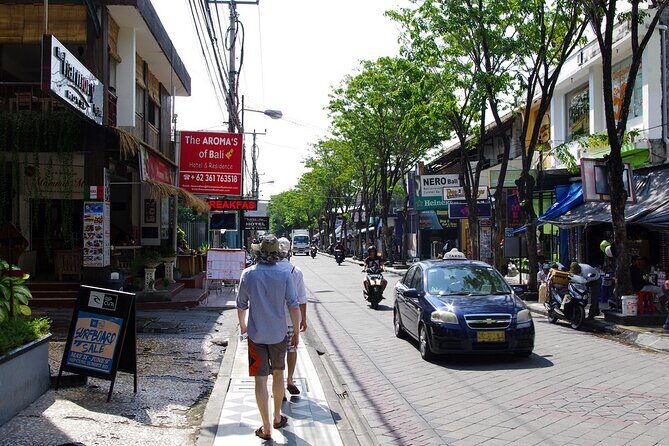
D’Alas Swing: the included thrill with jungle views

The tour includes the swing experience at d’Alas. This is a short stop (about 30 minutes), but it’s one of those Bali activities people talk about because it gives you a strong photo moment fast.

I like that it’s included and timed early enough that it doesn’t chew up the rest of your day. It’s also framed as a jungle-view swing experience, so you’re not just paying for a ride. You’re getting a view backdrop, which matters for photos and for making the moment feel worth it.

One thing to consider: if you don’t enjoy heights or you’re unsure about motion, this is the stop that can change your comfort level most. The tour is still structured to keep moving afterward, so you won’t be stuck waiting for the whole group to finish.

D’Alas Warung lunch: sit down with panoramic jungle views

Goa Gajah / Elephant Cave Temple And Ubud Tour - All Inclusive - D’Alas Warung lunch: sit down with panoramic jungle views
After the swing, you switch gears to lunch at D’Alas Warung Restaurant. The day describes it as having great outback jungle views, and lunch comes as part of the included package.

This is a valuable pause. When your itinerary includes temples, wildlife, and viewpoints, a real meal helps you reset instead of powering through on snacks. It also breaks the day visually, so you’re not only dealing with stone and foliage snapshots all afternoon.

Since lunch is included, you can spend your decision energy on what you actually want to eat, not on whether the next stop will have the right options. The included timing also keeps the flow from drifting.

Tegalalang Rice Terrace: scenic steps plus optional adventure vibes

Goa Gajah / Elephant Cave Temple And Ubud Tour - All Inclusive - Tegalalang Rice Terrace: scenic steps plus optional adventure vibes
Tegalalang Rice Terrace is one of Ubud’s most recognizable areas, famous for its scenic rice fields. Your time here is listed as about 1 hour, with admission included.

What I find useful about including rice terraces in this specific day is variety. You’ve already done cave temple and monkey forest. The rice terraces give you open space and layered views, which make the photos and the mental reset feel different.

Also, the area is described as having thrilling options alongside the scenery, such as sky bike and zip line activities. Those extras aren’t listed as included on the tour, so treat them as something you might see offered in the area rather than part of the guaranteed package.

A timing tip: use your hour wisely. If you want photos, do them early while the light is still working for you, and then leave time to soak in the view without constantly moving.

Ulu Petanu Waterfall: relaxation time and a swim-friendly break

Then you shift to Ulu Petanu Waterfall, described as peaceful and surrounded by tropical greenery. It’s also presented as a spot for relaxation and swimming.

This is the stop that makes the day feel less like a checklist. After temples and viewpoints, you get a nature-focused break where the goal is to slow down. Even if you don’t swim, waterfalls tend to change your sense of pace immediately.

One consideration: a waterfall stop can add wet feet and slippery footing, depending on conditions. Wear shoes that handle uneven ground, and keep your expectations flexible. This part of the day is the easiest place for weather and surface conditions to affect comfort.

Tirta Empul Temple: spiritual purification at the holy spring fountains

Your final major cultural stop is Tirta Empul Temple. This is where the day becomes unmistakably spiritual.
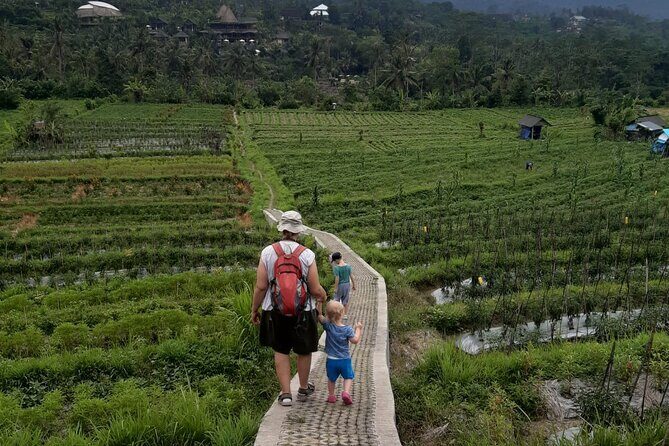
The tour description explains that local Hindu Balinese purify their bodies’ water element in a spiritual bathing ceremony at holy spring fountains. Tirta Empul is described as founded in 969, and it’s also tied to volcanic spring water linked to UNESCO as a source of water (the details are phrased in the tour text in a partial way, but the UNESCO connection is explicitly mentioned).
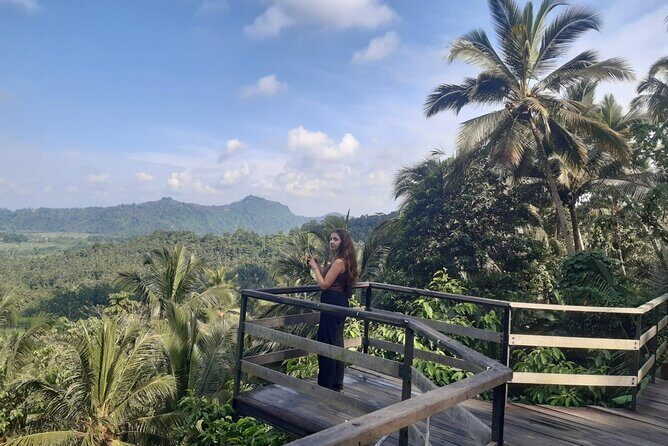
I like finishing the day here because it gives meaning to the earlier stops. You’ve seen historic temple carvings, sacred monkey forest temples, and scenic landscapes. Tirta Empul is different: you’re seeing how water and ritual connect for worshippers.

For visitors, your best approach is to watch with respect and follow your guide’s direction. Dress and behavior matter at sacred sites, and a guide helps you move through the space appropriately without making it awkward.

The included value: what $95 covers and why it can be worth it

At $95 per person, this tour isn’t trying to be the cheapest way to see Ubud. But it is positioned as all-inclusive, and that affects the value in real life.

Here’s what’s included:

  • Private air-conditioned vehicle
  • Pickup and drop-off across several Bali areas, including Seminyak and Ubud bases
  • English-speaking guide (also your driver)
  • Entry/admission fees and parking fees
  • Gas/petrol
  • Lunch
  • Swing experience

When you add up how many separate payments and decisions you’d normally make for a day like this, the price starts to make sense. The big value isn’t only the admission fees. It’s that you’re buying someone else’s planning. You also get the guide acting as your personal photographer and videographer, which can be hard to replace if you travel independently.

Two extra notes on price mechanics:

  • Group discounts are listed, even though the experience is private for your party. That usually means the operator can adjust pricing based on booking conditions.
  • If you’re booking about 65 days ahead on average, you’re likely getting a better chance at fitting the day into your schedule.

Who this tour suits best (and who might want a different style)

This is a strong fit if:

  • you want a one-day Ubud highlights route without doing the research work
  • you want an English-speaking guide to explain what you’re seeing
  • you like getting photos and video made for you, not just taking them yourself
  • you prefer a private vehicle and included entries to avoid day-of hassle

It might not fit if:

  • you want slow travel with long unstructured time at each site
  • you don’t enjoy animal areas, even with a guide helping you manage the interaction
  • you’d rather choose your own lunch spot and pace

The good news is that the tour is designed to keep moving after each stop, so you won’t be stuck waiting long in one place.

Book it or skip it? My call

If you’re spending limited time in Bali and you want Goa Gajah, monkey forest, rice terraces, a waterfall break, and Tirta Empul in one day, this tour is a practical way to do it. The included admissions, lunch, and swing are the core reasons it feels like a real package, not just a rides-and-photos day. Add in the guide who works like a photo and video helper, and you’re paying for a smoother experience.

I’d book it if your goal is to leave Ubud with a solid set of memories and you’re okay with a full, moving schedule. I’d skip or switch tours if you’re chasing quiet time over speed, or if monkey forest and temple etiquette don’t sound fun to you.

FAQ

What is the duration of the Goa Gajah / Elephant Cave Temple And Ubud Tour?

The tour lasts about 8 to 10 hours.

Where does pickup and drop-off happen?

Pickup & drop-off are offered for Sanur, Ubud, Kuta/Legian, Seminyak, Canggu, Jimbaran, Nusa Dua, Benoa, and Denpasar.

What stops are included in the tour?

The tour includes Goa Gajah (Elephant Cave), Sacred Monkey Forest Sanctuary, d’Alas Swing, D Alas Warung Restaurant (lunch), Tegalalang Rice Terrace, Ulu Petanu Waterfall, and Tirta Empul Temple.

Is lunch included?

Yes. Lunch is included.

Are entrance fees included?

Yes. Entry/admission fees and parking fees are included.

Is the swing experience included?

Yes. The swing experience is included.

Is this a private tour?

Yes. It’s a private tour/activity, and only your group participates.

Can I cancel and get a full refund?

You can cancel for a full refund if you cancel at least 24 hours before the experience start time. If you cancel less than 24 hours before, the amount paid is not refunded.

Canggu Jungle Mud-Fun ATV Only 1 Hour Driving from Canggu

Canggu Jungle Mud-Fun ATV Only 1 Hour Driving from Canggu - Pickup, Safety Briefing, and Getting Suited Up

This Canggu Jungle Mud-Fun ATV ride turns Bali’s greens into a real, noisy adventure. The route mixes muddy tracks with nature scenes like rice fields, jungle paths, and bamboo areas, so it feels less like a drive and more like an off-road day out.

I love how safety gear and guidance are built in from the start. You get a helmet, gloves, and protective pads after pickup, plus an instructor/guide who keeps the experience fun and controlled. I also like that lunch and shower/changing facilities are included, so you’re not stuck smelling like campfire smoke and wet soil.

The only real drawback: you should expect to get messy. If mud and soaked gear are a problem for you, this isn’t the gentle, photo-only Bali activity type.

Key things that make this ATV day work

Canggu Jungle Mud-Fun ATV Only 1 Hour Driving from Canggu - Key things that make this ATV day work

  • Short transfer from Canggu: the ride area is about 1 hour from the Canggu side of Bali.
  • Small group size (max 6): less crowd energy and more attention from the guide.
  • Proper kit for messy riding: helmet, gloves, protective pads, plus insurance included.
  • Real off-road variety: muddy trails, river crossings, and jungle scenery rather than one boring track.
  • Included comfort after: lunch, towel, locker, and a shower facility so you can clean up.
  • Beginner-friendly, not just for pros: you’ll be coached for control, whether you’re new or already riding.

Half-Day Jungle ATV Fun Near Canggu

Canggu Jungle Mud-Fun ATV Only 1 Hour Driving from Canggu - Half-Day Jungle ATV Fun Near Canggu
If you want Bali to feel a little wilder, this is a strong option. It’s based around the Seminyak area, but the ride itself is close to Canggu—about an hour drive from the Canggu side, depending on where you start.

The timing is built for a day that doesn’t swallow your whole itinerary. The full experience runs about 5 hours total, but the core ATV time is around 1 hour 40 minutes. That means you get enough riding for a proper splash-and-slide experience, without it turning into a full-day logistics project.

The small-group setup helps too. With a maximum of 6 travelers, you’re usually not fighting for space at turns, and the instructor can give clearer instructions before the terrain gets chaotic (in the fun way).

Pickup, Safety Briefing, and Getting Suited Up

Canggu Jungle Mud-Fun ATV Only 1 Hour Driving from Canggu - Pickup, Safety Briefing, and Getting Suited Up
The experience starts with hotel pickup, then a transfer to the ATV base where you’ll do a safety briefing. This isn’t the time for guesswork. You’ll be told how to handle the machine, how to follow, and how to deal with the kind of ground that makes tires slip, especially once mud gets involved.

You’ll also get the standard protection you should always look for on an ATV tour:

  • Helmet
  • Gloves
  • Protective pads

That matters because this isn’t a smooth, paved “tour route.” The whole point here is muddy jungle trails and river-crossing style terrain. A good safety briefing doesn’t kill the fun. It makes it possible for you to focus on riding instead of worrying about your footing or speed.

Then you roll out with an instructor/guide. You’ll also have bottled water, and the tour includes lunch, towel, locker, and access to a shower and changing room after the ride.

Muddy Jungle Trails, River Crossings, and Bali’s Green Scenery

This is the core of the experience: 1 hour 40 minutes of riding through natural areas that feel close to “real Bali” rather than a fenced park. The route is described as a mix of muddy trails, river crossings, and scenic jungle terrain.

Expect a blend of:

  • Muddy jungle tracks where you’ll hear the machine work and see the splashes build
  • River crossings that add a different kind of challenge (and yes, you’ll likely get water on you)
  • Natural scenery along the way, including tropical forest areas and rice fields
  • Plus bamboo areas mentioned as part of the route, which helps break up the ride visually

This is also where the tour earns its high marks for “organized and exciting.” When the route has variety, the day feels like an adventure instead of one long muddy loop. The scenery also helps you reset mentally between the trickier bits of terrain.

One honest consideration: your personal tolerance for getting dirty will decide how much you enjoy it. This is mud-fun, not dry-fun.

The ATV Ride: Control, Confidence, and What You’ll Actually Do

Canggu Jungle Mud-Fun ATV Only 1 Hour Driving from Canggu - The ATV Ride: Control, Confidence, and What You’ll Actually Do
The ATV here is described as easy to handle, and that lines up with the idea that both beginners and experienced riders can enjoy the session. Even if you’ve never ridden an ATV before, the setup is geared toward getting you moving confidently.

What you’re doing during the ride is simple in concept but demanding in practice:

  • Follow the guide through changing ground
  • Keep your balance while the wheels grab (and sometimes slip) in mud
  • Navigate uneven terrain at a speed that feels exciting but still safe

The guides are the difference between a tense ride and a fun ride. With expert guidance and a structured route, beginners usually feel less panicked and more in control, and experienced riders get a solid dose of challenge without turning the day into a stunt show.

Because the group is small, pacing can stay more consistent. You’re less likely to end up waiting forever at a choke point, and it’s easier for the guide to spot who needs a quick adjustment.

Lunch, Showers, Towels, and the Stuff People Forget to Plan

Canggu Jungle Mud-Fun ATV Only 1 Hour Driving from Canggu - Lunch, Showers, Towels, and the Stuff People Forget to Plan
This tour doesn’t just drop you in the mud and wish you luck. It includes the practical stuff that saves your day.

You’ll have:

  • Lunch
  • Towel
  • Shower facility
  • Changing room
  • Locker space
  • Bottled water

In Bali, it’s common to do a thrilling activity and then realize you’re basically trapped in sweaty clothes for the rest of your evening. Here, the included cleaning setup makes the tour feel more complete. You can ride, cool down, change back into something wearable, and keep going.

If you’re traveling with friends or family, having a place to change and store things matters more than people expect. With a locker on site, you’re not trying to cram wet gear into your bag with your electronics and spare clothes.

Price and Value: What $50.72 Buys You

Canggu Jungle Mud-Fun ATV Only 1 Hour Driving from Canggu - Price and Value: What $50.72 Buys You
At $50.72 per person, this ATV day is positioned as a value-focused half-day. But what makes the price feel reasonable isn’t only the riding. It’s the bundle: insurance, safety equipment, instructor/guide support, lunch, towel, locker, and shower facilities.

A lot of ATV experiences quietly add cost later through extras like equipment fees, meal add-ons, or lack of proper cleanup. This one covers the essentials upfront, which means you can budget with fewer surprises.

Also, the small-group cap (max 6) matters. When you’re paying for an activity that depends on guidance and safety, a smaller group can translate into a smoother experience rather than a long line of riders.

So the value pitch is simple: you’re paying for a structured ride with the messy part included, plus the “what happens after” solved.

Who This ATV Ride Fits Best (and Who Might Think Twice)

Canggu Jungle Mud-Fun ATV Only 1 Hour Driving from Canggu - Who This ATV Ride Fits Best (and Who Might Think Twice)
This experience is a great match if you want a hands-on Bali activity. It’s built for people who like:

  • Adrenaline from muddy trails and river-crossing terrain
  • Nature variety: rice fields, jungle tracks, and bamboo scenery
  • A short, high-impact day without complicated planning

You should also have a moderate physical fitness level. That doesn’t mean you need to be an athlete. It means your body should be okay with mounting the ATV, sitting through some bumps, and staying coordinated while terrain changes.

Who might think twice:

  • If you hate getting dirty, this may feel like too much. Mud is part of the product.
  • If you’re looking for a calm, scenic stroll, this is not that. It’s an ATV ride with real off-road conditions.

The good news is that the ride is described as suitable for both beginners and more experienced riders, which means you don’t have to be a lifelong ATV fan to enjoy it.

Practical Tips to Make Your Day More Fun

Canggu Jungle Mud-Fun ATV Only 1 Hour Driving from Canggu - Practical Tips to Make Your Day More Fun
Here’s how to get the most out of the mud-fun without turning it into a stress test.

  • Wear clothes you can sacrifice. You will get splashed and you will likely finish the day muddy.
  • Bring shoes that handle mess. The data doesn’t spell out footwear rules, but mud and water mean you’ll want something grippy and non-delicate.
  • Use the gear they provide. Helmet, gloves, and pads are included for a reason—so your ride stays safe and comfortable.
  • Listen during the briefing. This is where you learn how to handle slippery ground and how to follow.
  • Lean into the small-group vibe. With a max of 6, pay attention to your instructor’s cues and you’ll avoid getting separated or lagging.
  • Plan your post-ride time. Since you’ll have showers and changing room access, you can comfortably head to dinner afterward without needing an immediate wardrobe change scramble.

Should you book the Canggu Jungle Mud-Fun ATV?

If your Bali bucket list includes a proper off-road thrill, I think this is an easy yes. You get a big chunk of action in a short window, and the included lunch + shower + locker combo makes it feel like a complete experience, not a messy add-on.

I’d skip it only if you strongly prefer clean, quiet activities. This ride is mud-forward, and that’s the point.

If you want something that feels like Bali’s outdoors, with a little chaos and a lot of fun under control, book it—then accept that you’ll leave looking like you just had a backyard mud battle.

FAQ

Where is the ATV experience located?

The experience is in the Seminyak, Indonesia area, with the riding area about 1 hour from Canggu.

How long is the tour?

The total experience is about 5 hours, including pickup and the ride. The ATV riding time is about 1 hour 40 minutes.

How much does it cost?

The price is listed as $50.72 per person.

Is pickup included?

Yes. Hotel pickup is offered.

What safety equipment is provided?

You’ll receive a safety briefing and provided equipment including a helmet, gloves, and protective pads.

Is lunch included?

Yes. Lunch is included.

Is there a shower and changing room after the ride?

Yes. The tour includes a shower facility, changing room, a towel, and locker access.

What level of fitness do I need?

The activity notes that travelers should have a moderate physical fitness level.

How big is the group?

The maximum group size is 6 travelers.

Can I cancel for a refund?

Free cancellation is allowed up to 24 hours in advance for a full refund. If you cancel less than 24 hours before the start time, the amount paid is not refunded.

The Popular Of Ubud Private Day Tour

The Popular Of Ubud Private Day Tour - Price and value: what you really spend per person

A well-run day in Ubud can make all the difference on your first trip. This private tour is built for exactly that: you get an English-speaking driver and a private, air-conditioned ride so you can hit the main highlights like Tegalalang Rice Terrace, Tirta Empul Temple, Tegenungan Waterfall, and more without the usual scramble.

I especially like two things: first, the private guide attention means you can adjust the pace to what you care about most; second, the pickup and drop-off cuts the time cost that usually eats up a short Bali stay. One thing to keep in mind is that the famous sites add up in entrance fees, so you’ll want to budget a bit beyond the base tour price.

You’ll spend about a full workday on the move (around 8 hours), with roughly 30–40 minutes of driving between stops. That makes it ideal if you want a clear first look at Ubud’s big-name places, not a slow, do-one-thing-all-day kind of day.

Quick hits before you go

The Popular Of Ubud Private Day Tour - Quick hits before you go

  • Private means private: only your group rides in the vehicle, so your timing stays yours.
  • Air-conditioned comfort: you’ll appreciate this on Bali heat-heavy days.
  • Start with Monkey Forest: it’s a temple-and-nature stop that sets the tone for the day.
  • Tegalalang is famous for a reason: but wear sturdy shoes, because the terrace paths can be uneven.
  • Holy spring bathing at Tirta Empul: you’ll watch a real purification ritual focused on water.
  • A full mix of Ubud favorites: temples, rice terraces, and a waterfall in one day.

Why this Ubud private tour works for first-timers

The Popular Of Ubud Private Day Tour - Why this Ubud private tour works for first-timers
Ubud can overwhelm you fast. Even if you love temples and photography, you still need logistics: getting from place to place, knowing what’s worth your time, and staying comfortable in the car. This tour is built for that real-world problem.

Because it’s private, you’re not forced into a one-size-fits-all schedule. Your driver can help you shape the day around your interests—more time for photos, less time standing around, and practical guidance on what to watch for once you arrive.

I also like that you’re not just dropped at random gates. An English-speaking driver is included, plus insurance and a private air-conditioned vehicle. That combination matters when traffic and weather shift your timing, which can happen anywhere in Bali.

Price and value: what you really spend per person

The Popular Of Ubud Private Day Tour - Price and value: what you really spend per person
The tour price is $33.51 per person, and it includes hotel pickup and drop-off, a private English-speaking driver, a private air-conditioned vehicle, and insurance.

What’s not included is the entrance fees at each stop. Based on the amounts listed:

  • Monkey Forest: $8
  • Tegalalang Rice Terrace: $3
  • Tirta Empul Temple: $5
  • Tegenungan Waterfall: $3
  • Batuan Temple: $3

That’s $22 per person in entrance fees on top of the tour price. So a realistic total for the day is about $55.51 per person, not counting meals, drinks, and any snacks you grab on the go.

For me, the value comes from what you’re getting for that money: you’re paying for door-to-door pickup, comfortable transport, and a driver who can keep the day from turning into a transportation puzzle. If you’re already planning to visit multiple paid attractions, the math often works out better than piecing together separate taxis and tickets.

The ride plan: how the day stays manageable

The Popular Of Ubud Private Day Tour - The ride plan: how the day stays manageable
This is an 8-hour day, give or take. The stops are spaced by about 30–40 minutes of travel, which is short enough to feel like you’re making progress but long enough to avoid turning the day into a sprint.

You’ll also benefit from the air-conditioned vehicle, especially in the middle of the day when sun and heat can make standing in queues feel like a workout. The private setup helps here too: you can ask for timing that makes sense for your energy level.

One practical tip: plan to move efficiently once you arrive at each site. You’ll have about an hour at each main stop, so think in terms of seeing, walking, photographing, and then moving on rather than treating each stop like an all-day adventure.

Sacred Monkey Forest Sanctuary: temple complex first, surprises always

The Popular Of Ubud Private Day Tour - Sacred Monkey Forest Sanctuary: temple complex first, surprises always
Your day starts with Sacred Monkey Forest Sanctuary, also known as the Ubud Monkey Forest. This place is a mix of nature reserve and temple complex, and it’s home to over 1,260 long-tailed monkeys.

What I like about starting here is that it feels like stepping into a living environment, not just a viewpoint. You get temple setting, shaded paths, and a sense that the area has its own rhythm—one shaped by wildlife and local practices.

A couple of considerations. First, expect monkeys to be part of the experience, including their bold curiosity. Keep small items secure and avoid dangling anything that looks snack-like. Second, this is a popular site, so a calm start helps. Going early or with an efficient timing plan can make a big difference.

Tegalalang Rice Terrace: the cliff views, the crowds, and shoe choice

The Popular Of Ubud Private Day Tour - Tegalalang Rice Terrace: the cliff views, the crowds, and shoe choice
Next up is Tegalalang Rice Terrace, in Tegalalang Village north of Ubud. The big draw is the rice terraces cut into a cliffside setting, the kind of place that looks good even when you’re not trying.

Here’s the practical truth: it’s famous, so it can feel commercialized in spots. Still, it’s a must-see if you want the classic Bali rice-terrace photo and the sense of how agriculture shapes the landscape.

The best advice I can give is simple: wear sturdy shoes. Terrace paths can be uneven, and you don’t want to slip while you’re trying to get the shot. Also, if you’re sensitive to crowds, you’ll enjoy the moment more if you take your time with lower-key angles and keep moving rather than stopping in the busiest spots.

Tirta Empul Temple: watching a purification ritual with respect

The Popular Of Ubud Private Day Tour - Tirta Empul Temple: watching a purification ritual with respect
Then you shift from rice terraces into spirituality at Tirta Empul Temple. This is where local Hindus perform a spiritual bathing ceremony at holy spring fountains—an activity focused on purification tied to the body’s water element.

What makes this stop special is the feeling that you’re witnessing something lived-in, not staged for tourists. The water basins and the ritual flow give you a clearer sense of what the site means to the community.

A few things to keep in mind. Dress and behavior matter at temples, and this is one where you’ll want to observe first and participate only if you’re comfortable with the process. If people are actively bathing or following ritual steps, give them space. Don’t block anyone’s path for a better photo.

Tegenungan Waterfall: jungle air and the reality of slippery steps

The Popular Of Ubud Private Day Tour - Tegenungan Waterfall: jungle air and the reality of slippery steps
After Tirta Empul, the day turns to nature with Tegenungan Waterfall, locally known as Air Terjun Tegenungan. It’s one of Bali’s popular waterfalls and is located within a tropical jungle area in the village of Kemenuh, Sukawati subdistrict.

I like the contrast this provides. Temples are calm and structured; a waterfall day is more physical and spontaneous. You’re moving through a lush setting toward the sound and spray of water, and it often feels like the day finally hits a different gear.

The main consideration is the ground. Waterfall areas often mean wet, slippery surfaces. Plan for that. If you’re not confident on uneven footing, take it slow. And remember that waterfall photography can tempt you into standing where you shouldn’t—aim for stable angles and keep your balance.

Batuan Temple: a quieter temple stop that rounds out the day

The Popular Of Ubud Private Day Tour - Batuan Temple: a quieter temple stop that rounds out the day
The final major cultural stop is Batuan Temple, also known as Puseh Batuan Temple. It’s a local Balinese Hindu temple looked after by residents of the Batuan countryside, and it’s described as beautifully designed.

What I like about adding Batuan Temple at the end is that it helps the day feel balanced. Monkey Forest and Tirta Empul are both highly recognizable; Batuan gives a more grounded sense of everyday temple life and local care.

This stop also works well as a wind-down. By the time you get here, you’ve seen enough showpieces. You’re ready for something calmer and more about the details of the place rather than the big crowd spectacle.

Pacing, timing, and what happens when traffic or weather changes

Even the best plan can get nudged by Bali realities—traffic, clouds, sudden weather shifts. One review highlighted that their driver did everything possible to keep the day special even when weather and traffic weren’t kind. That’s exactly where having a private driver helps.

You can also tell how your day is going to feel based on the pace. With about an hour per stop and short drives between them, you’ll be constantly moving. That’s great if you want an efficient overview, but not ideal if you want to linger for hours.

The smart move is to decide in advance what you care about most:

  • If temples are your focus, prioritize Tirta Empul and the temple side of the day.
  • If photos are the goal, plan to spend extra moments at Tegalalang and keep your shoes ready for terrace footing.
  • If nature is the priority, be mindful with your timing and energy at Tegenungan.

Who this tour suits best

This is a strong choice if:

  • You’re visiting Ubud for the first time and want a big-picture overview in a single day.
  • You want a private setup with pickup, an air-conditioned vehicle, and a driver who speaks English.
  • You like mixing culture and scenery: temple stops plus the rice terrace and waterfall.

It might not be the best fit if you hate crowds at all costs or if you prefer deep time at fewer places. This is designed for multiple highlights within a single day, not for one-site immersion.

Should you book this Ubud private day tour?

If you want a practical, first-time-friendly Ubud day with comfortable transport and a driver who can help keep things smooth, this tour is worth considering. The base price is reasonable, and once you add the fact that entrance fees are required anyway for these major attractions, the overall value often lands in a fair place.

Book it if you’re after classic Ubud highlights, appreciate a guided overview, and want the freedom of private timing. Skip it if you’d rather slow down, travel lightly with no driving, or prefer freeform exploration without a set set of stops.

If you do book, I’d pack two things: sturdy shoes for terrace and waterfall surfaces, and a small mindset shift toward moving efficiently. You’ll see a lot, you’ll get the big names, and you’ll come away with a much clearer sense of what Ubud is all about.

FAQ

What does the tour include?

The price includes a private English-speaking driver, hotel pickup and drop-off, a private air-conditioned vehicle, and insurance.

How long is the tour?

It runs for about 8 hours (approx.).

Is it really private?

Yes. It’s a private tour/activity, and only your group will participate.

Are entrance fees included?

No. Entrance fees for each site are not included. The listed entrance fees are: Monkey Forest $8, Tegalalang Rice Terrace $3, Tirta Empul Temple $5, Tegenungan Waterfall $3, and Batuan Temple $3 (per person).

What are the main stops on the day?

You’ll visit Sacred Monkey Forest Sanctuary, Tegalalang Rice Terrace, Tirta Empul Temple, Tegenungan Waterfall, and Batuan Temple.

How much travel time is between stops?

You should plan for about 30–40 minutes from one attraction to another.

Do I get help with tickets?

You’ll have a mobile ticket, and confirmation is received at the time of booking.

Can I cancel for a full refund?

Yes. Free cancellation is available up to 24 hours in advance for a full refund. If you cancel less than 24 hours before the experience starts, the amount paid is not refunded.