Bali Instagram: Gate of Heaven Temple Tour

Bali Instagram: Gate of Heaven Temple Tour - Getting from Ubud in an air-conditioned vehicle

Queue at heaven’s gate, then waterfall light. This private 10-hour day in Ubud strings together Bali’s most camera-friendly sites and a few quieter moments, with air-conditioned hotel pickup and drop-off. I love that admission fees are included, and you get sarongs handed to you for the temples. The one thing to keep in mind is the day is long, and Lempuyang’s photo spot can mean serious waiting.

If you’re in decent shape, you’ll enjoy how the route flows from sacred gates to water palaces to a cave waterfall. The only real caution is physical effort: some walking and stairs are part of the plan, especially around Tukad Cepung.

Key highlights to know before you go

Bali Instagram: Gate of Heaven Temple Tour - Key highlights to know before you go

  • Private group comfort with hotel pickup in an air-conditioned vehicle, so you’re not stuck riding around in someone else’s schedule.
  • All entrance fees included, so you can focus on sights instead of budgeting at every stop.
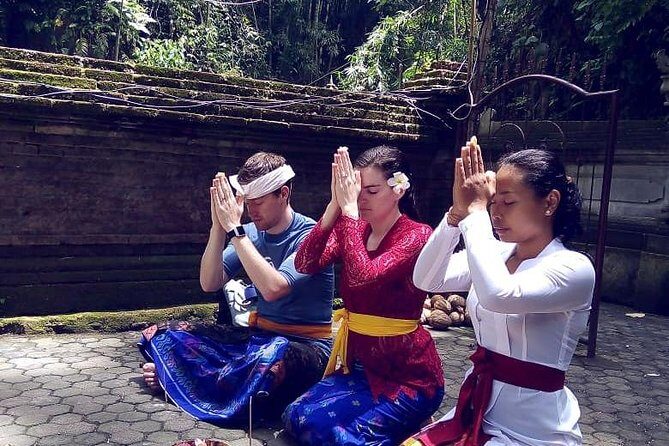
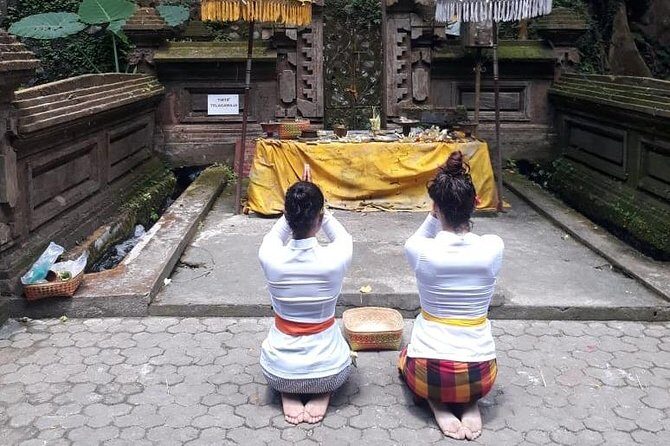
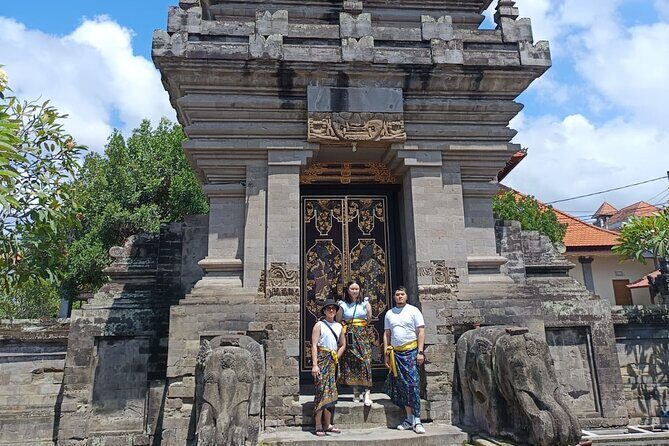
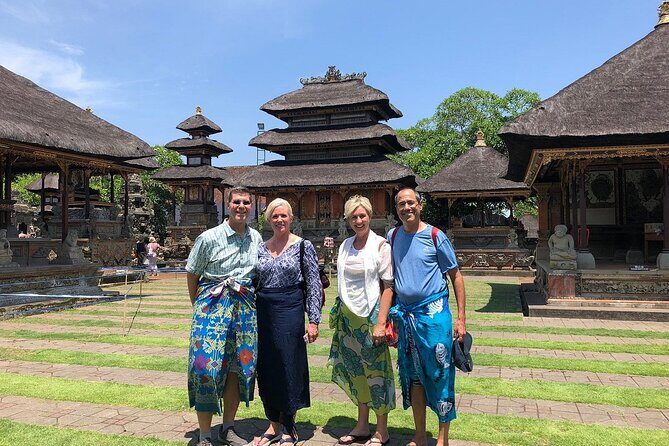
  • Sarongs for temple visits are provided, which saves you from last-minute shopping.
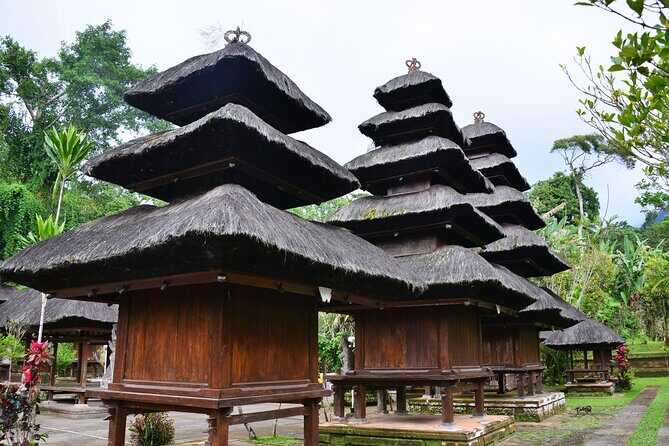
  • Iconic Gate of Heaven photos at Lempuyang Temple with Mt. Agung in the background.
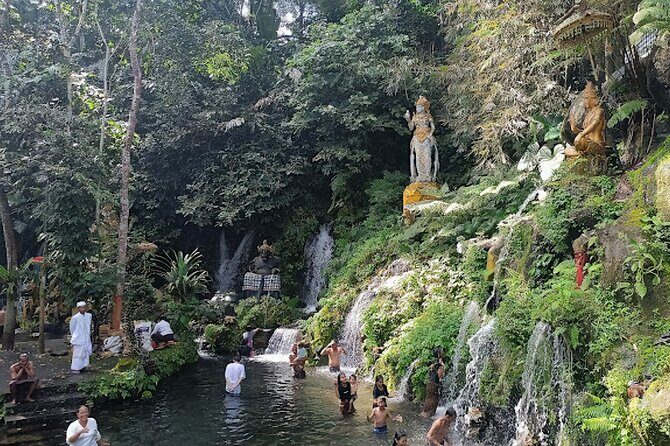
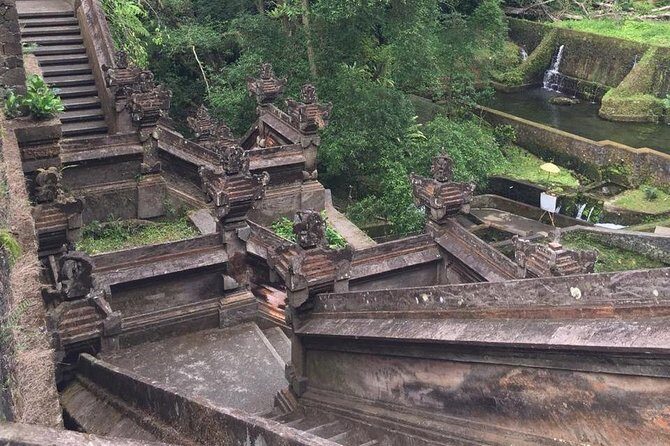
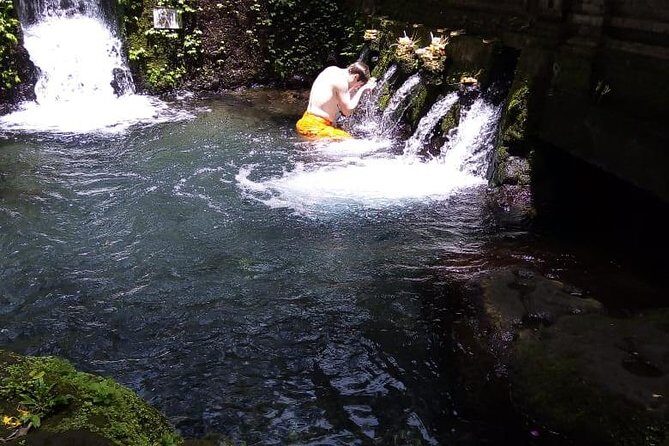
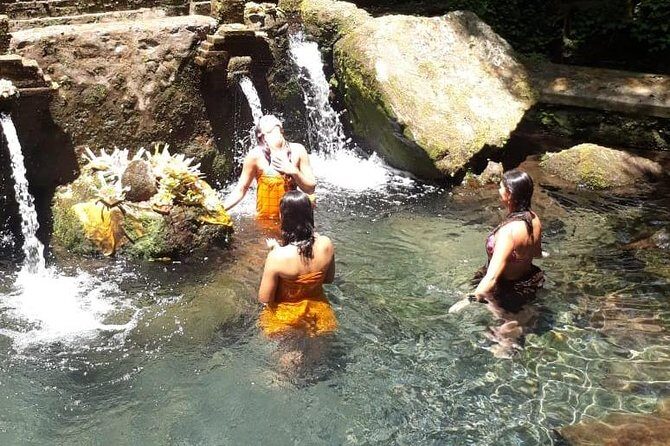
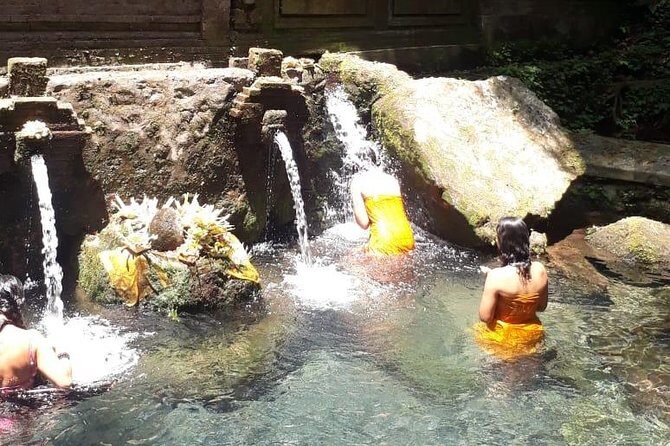
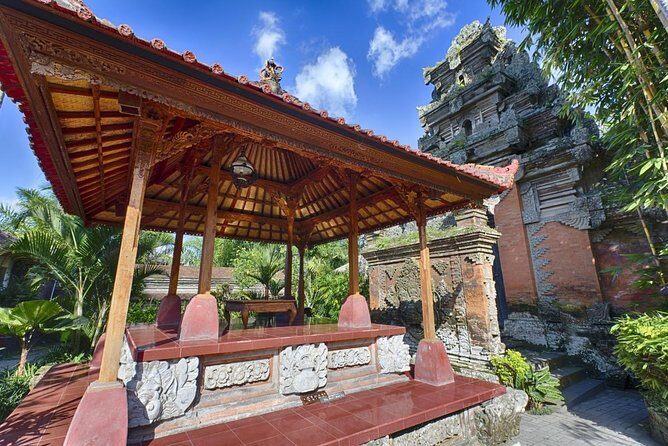
  • Tirta Gangga’s holy spring water gardens and fountains add a calm, scenic break between big photo stops.
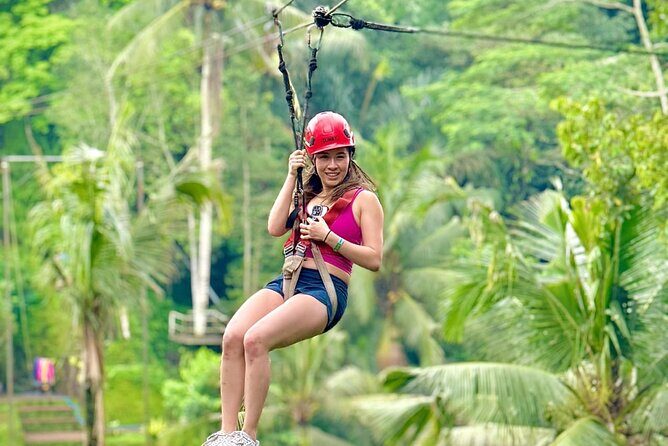
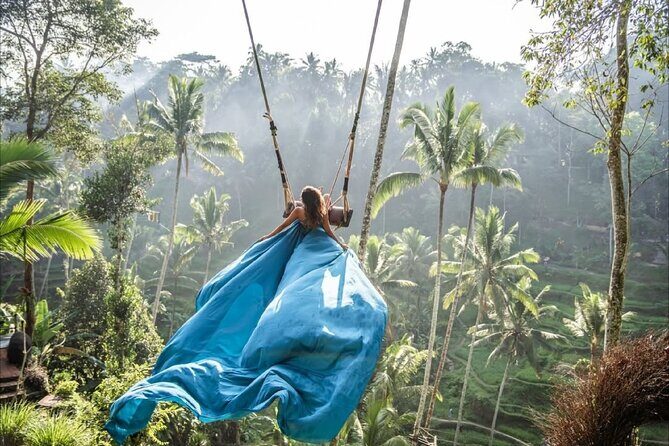
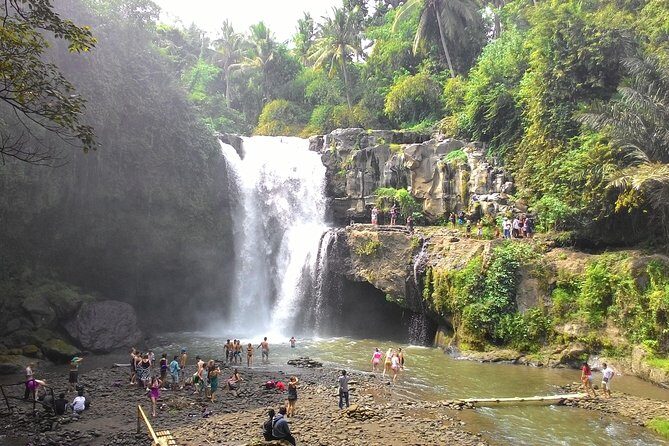
  • d’Alas Swing plus Tukad Cepung means you’re getting both the valley waterfall vibe and the swing-over-rice-terraces shot.

The vibe: a Bali photo route with real spiritual stops

Bali Instagram: Gate of Heaven Temple Tour - The vibe: a Bali photo route with real spiritual stops
This tour is built around the most searched-for Bali moments, but it’s not just random sightseeing. You’re starting at Lempuyang Temple, where the Gate of Heaven framing makes Mt. Agung the star of your holiday photos. Then you shift into water and worship spaces, and later you end with Ubud’s rice-terrace scenery and the jungle swing.

You’ll feel the rhythm of the day: mornings tend to be about getting the best temple timing, midday becomes about food and views, and the later hours lean more active with waterfall walking and the swing session. If your idea of a great Bali day includes both spirituality and the classic Instagram angles, this one fits.

Price and what you really get for $85

At $85 per person for a full-day private route, the value comes from what’s bundled. You’re getting round-trip hotel pickup/drop-off, a local buffet lunch, bottled water, and a list of tickets and fees that would normally add up fast on your own.

Here’s what that means for you in practical terms:

  • You’re not paying temple entry one by one. All admission fees are included.
  • You don’t need to bring extra temple clothing. Sarongs are provided.
  • You’re not stuck guessing what costs extra. The d’Alas swing ticket is included, and bottled water is on board.
  • You still get the “day driver” advantage: you spend your time at stops, not on logistics.

The possible trade-off is that you’re committing to a set sequence. You can’t expect unlimited flexibility to swap stops on a whim, because the plan is designed to hit multiple featured locations in one long day.

Getting from Ubud in an air-conditioned vehicle

Bali Instagram: Gate of Heaven Temple Tour - Getting from Ubud in an air-conditioned vehicle
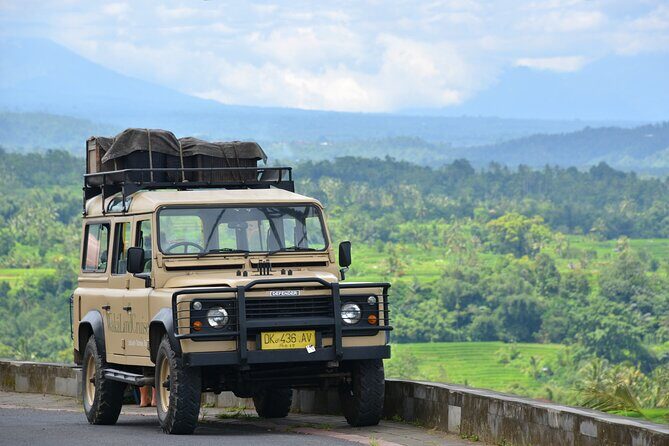
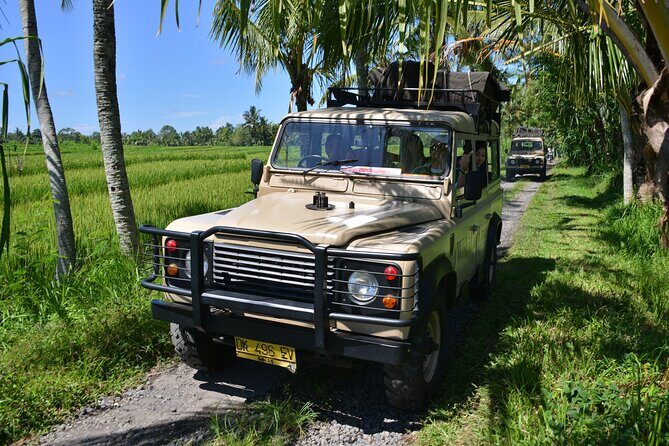
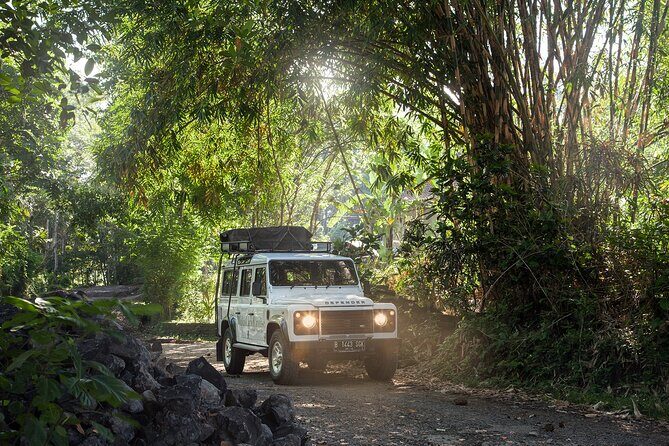
The transport is straightforward and useful: round-trip pickup from your hotel in an air-conditioned car. That matters more than it sounds, because the route covers different sides of Bali’s central areas and you’ll likely be in the car for a good chunk of the day.

A nice bonus in the reviews is how many guides emphasized time, road safety, and smooth driving, especially on longer stretches. That shows up in the experience as fewer stress moments: you arrive ready to work your way through queues and photo setups instead of burning energy on travel problems.

Also note: this is a private tour, so it’s only your group. If you’re traveling with family, friends, or a small group, you’ll get more control over your own pace—within the limits of the itinerary.

Stop 1: Lempuyang Temple and the Gate of Heaven photo reality

Bali Instagram: Gate of Heaven Temple Tour - Stop 1: Lempuyang Temple and the Gate of Heaven photo reality
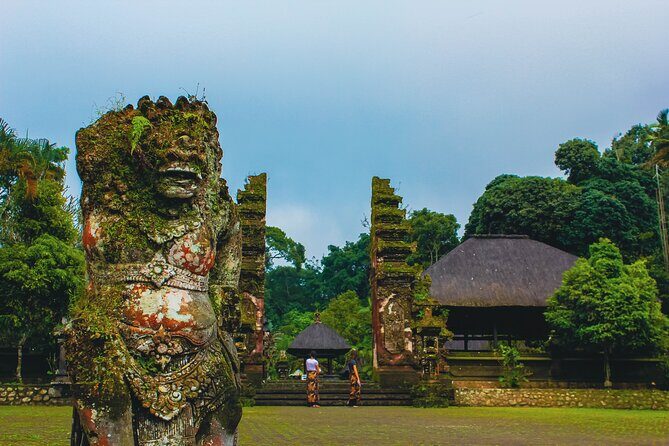
Lempuyang Temple is the headline. You’ll walk up to the famous gate framing and admire Mt. Agung, Bali’s highest volcano, from the iconic viewpoint. This is the spot that people travel across the island for, and it’s exactly why you should plan your expectations around time at the gate.

What I like about this stop:

  • The view is the whole point. You’re aiming your camera at a composition that puts Mt. Agung and the gate in one frame.
  • You’re given a sarong to meet temple requirements, so you don’t scramble for clothing.
  • You get about an hour here, which is enough for photos and letting the moment soak in.

What to watch out for:

  • Expect more people here. Even on a good day, waiting can eat into your time.
  • One practical tip: if you can choose an early start, it helps. Many people talk about getting there around the early-morning window because it reduces time in line.

And yes, the waiting can feel long. The key is mental planning: bring patience, use the time well, and don’t expect the photo moment to be instant.

Stop 2: Tirta Gangga water palace and the holy spring gardens

Bali Instagram: Gate of Heaven Temple Tour - Stop 2: Tirta Gangga water palace and the holy spring gardens
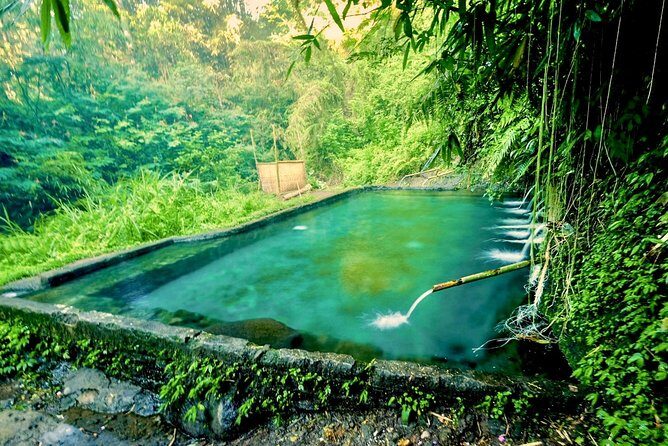
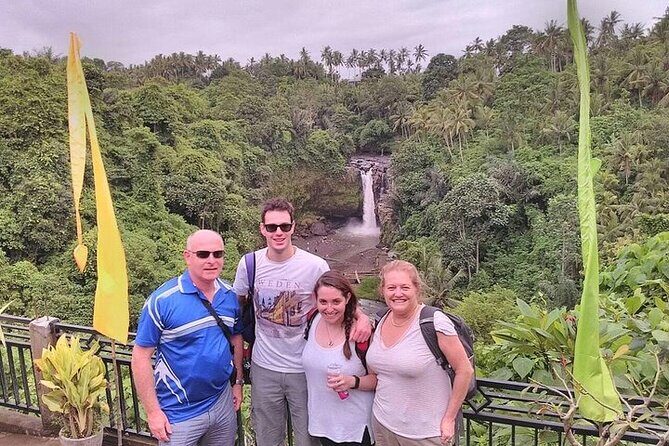
After the temple, the day shifts to water and gardens at Tirta Gangga, the water palace known for crystal-clear pools and fountains fed by a natural holy spring. You’ll spend about an hour wandering the space and taking in the water features and surrounding sculptures.

This is a smart change of pace. Lempuyang is all about climbing and picture framing. Tirta Gangga gives you something calmer: reflections, open walkways, and a visual break from the stone-and-gate scenery.

A couple of practical notes for your enjoyment:

  • Plan for a lot of photo angles. The water and sculpture layout create repeating compositions.
  • It’s mostly a walking stop. Comfortable shoes will pay off here too.

Lunch at Mahagiri Panoramic Resort: views while you reset

Bali Instagram: Gate of Heaven Temple Tour - Lunch at Mahagiri Panoramic Resort: views while you reset
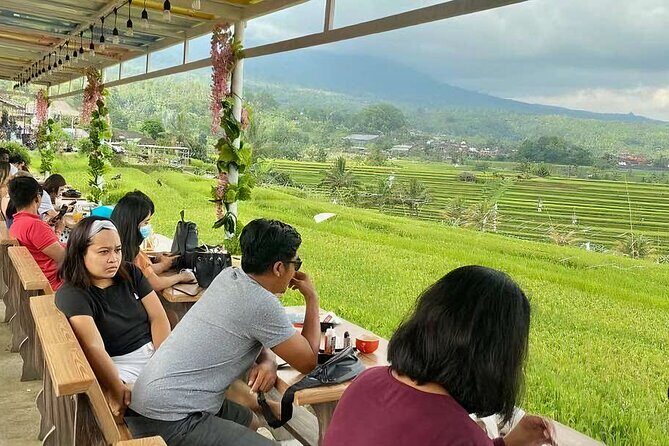
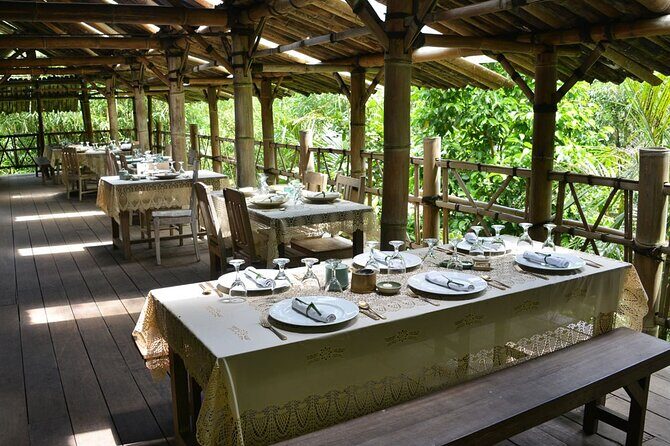
You’ll stop at Mahagiri Panoramic Resort & Restaurant for lunch. The best part for me is the setting: you’re eating with rice-field views and Mt. Agung in the distance, which keeps the day from feeling like a typical bus-tour meal.

You get a local buffet lunch, and the stop is listed as about an hour with admission free for the lunch location. In a full-day route, this matters because you want a real reset, not just a quick snack between attractions.

My advice: eat what you can, hydrate, and give yourself a couple minutes to enjoy the view before you head back into movement. After Lempuyang and Tirta Gangga, your legs may start reminding you you’re on a schedule.

Stop 3: Tukad Cepung waterfall and the cave-light effect

Bali Instagram: Gate of Heaven Temple Tour - Stop 3: Tukad Cepung waterfall and the cave-light effect
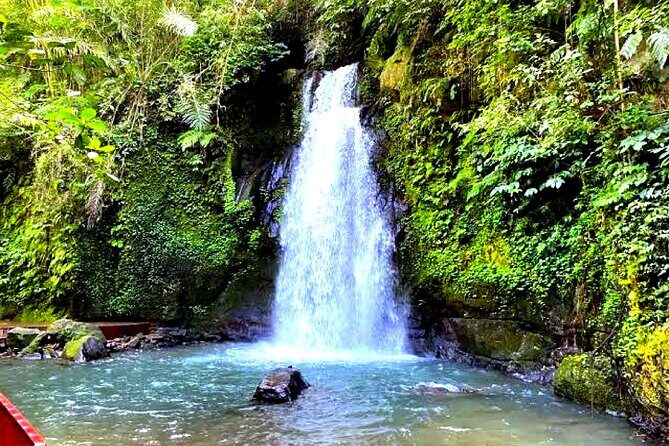
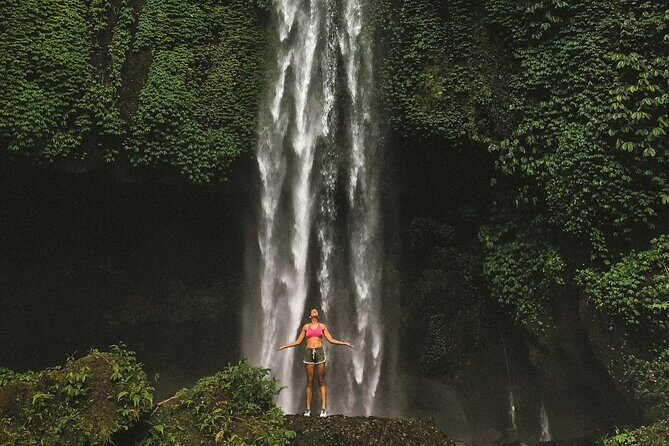
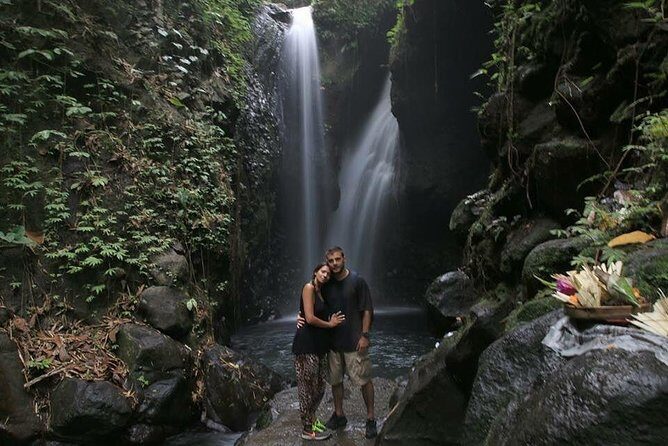
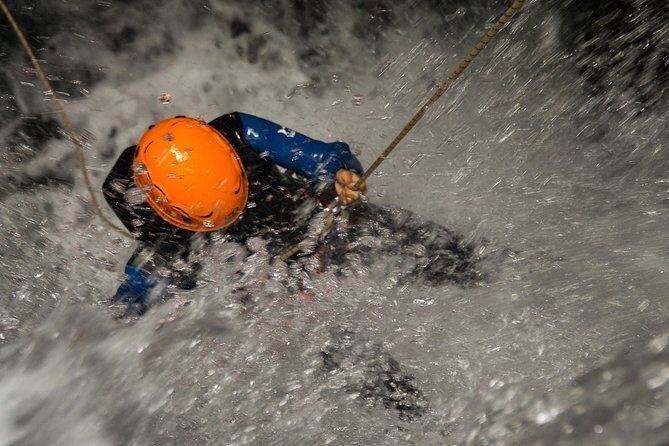
Then comes Tukad Cepung Waterfall, one of Bali’s dramatic spots that feels more “found” than “displayed.” You’ll walk down through a valley along jungle paths and between rocks to reach the waterfall tucked under a cave-like area.

The reason people rave about it is the light. When the sunlight enters the opening, it creates a radiance that makes photos look almost unreal. It’s not just the waterfall; it’s the way the waterfall is framed by the cave.

The drawback is effort. This stop involves a trek down, and the walk can feel daunting depending on your comfort with uneven paths and rock steps. The good news is that you get around an hour here, so you’re not rushing through the best moments.

What to do so you enjoy this stop:

  • Wear shoes with grip and expect some slippery surfaces.
  • Take your time on the path down. Your knees will thank you later.
  • Bring a plan for photos: decide what you want first, then wander for the more “natural” angles.

Stop 4: Tegalalang Rice Terrace and the classic Ubud viewpoint

Bali Instagram: Gate of Heaven Temple Tour - Stop 4: Tegalalang Rice Terrace and the classic Ubud viewpoint
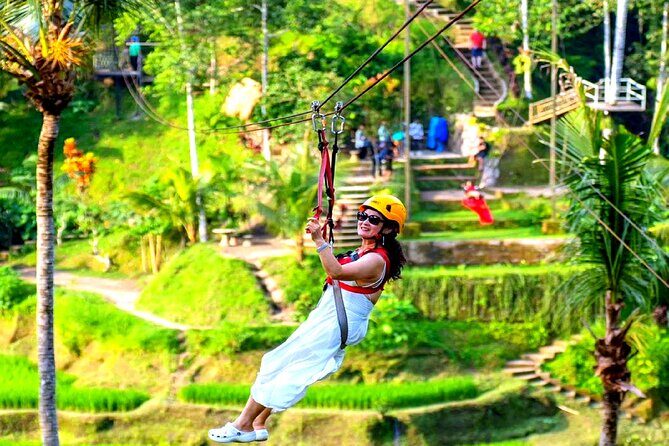
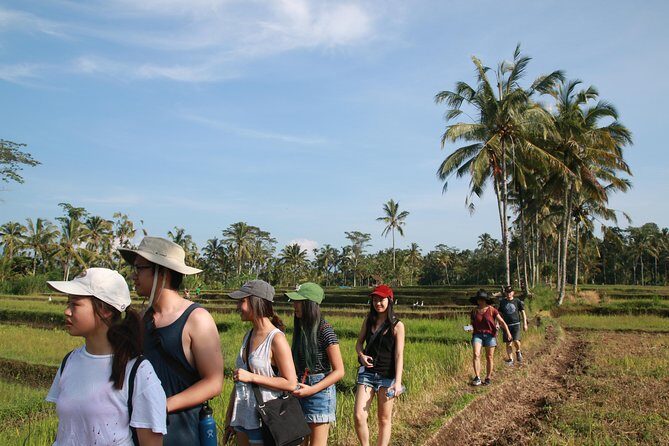
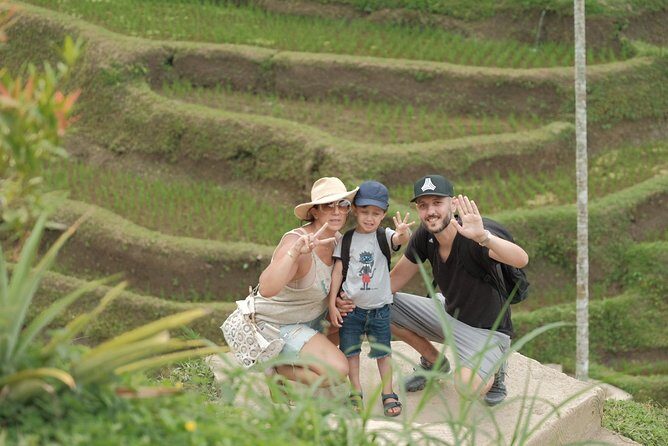
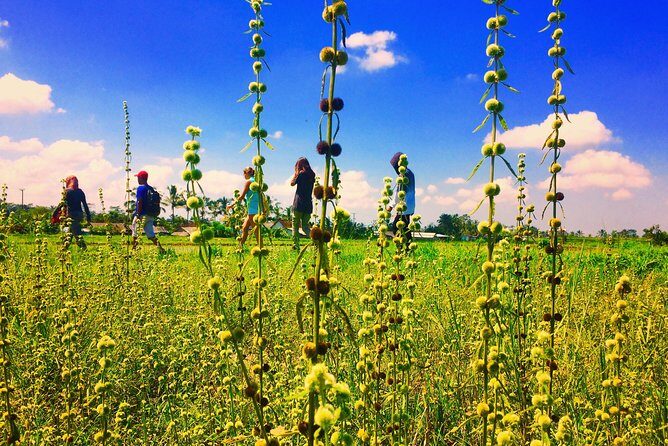
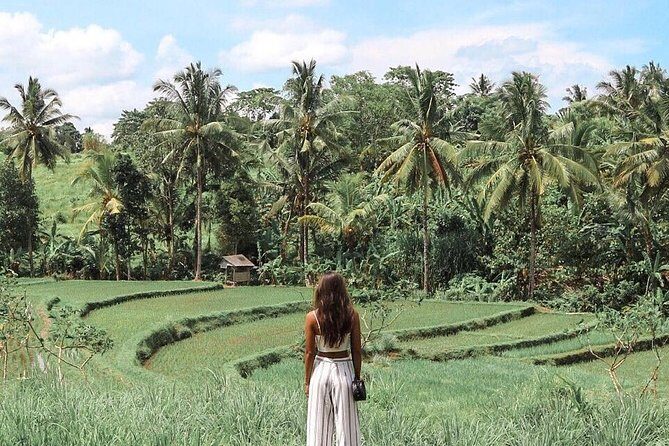
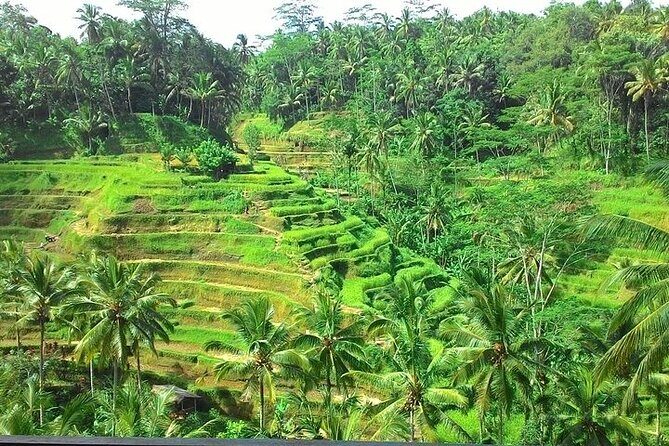
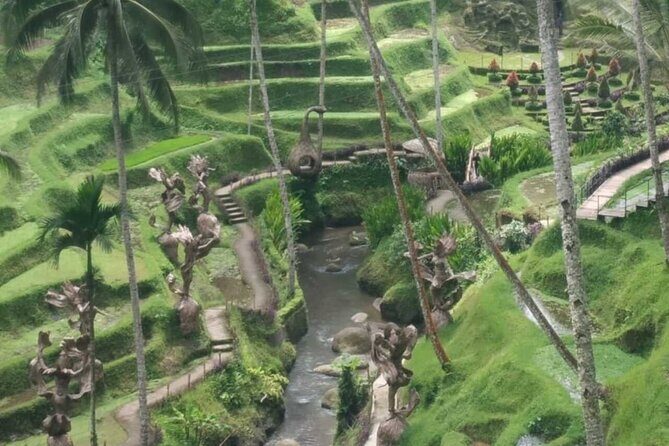
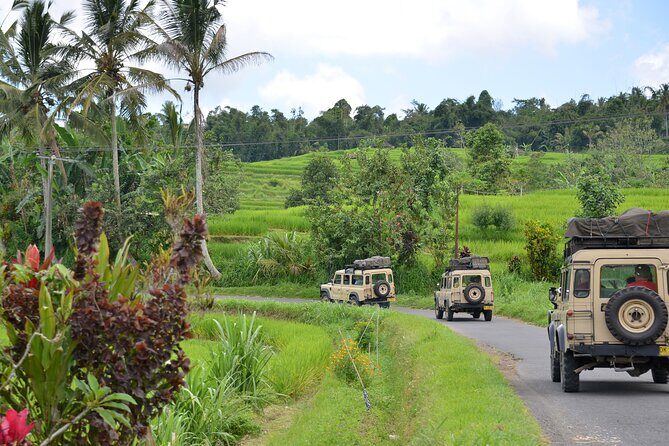
Tegalalang Rice Terrace is the Ubud signature scene, and you’ll have about 45 minutes here. This stop is visually big and very walkable, with layered paddies and classic terrace geometry that works for wide shots and close details.

I like how this stop bridges you from waterfall trekking into the swing portion. After Tukad Cepung, the terrain shifts back toward open landscapes and easier viewing zones.

Since you only get 45 minutes, think about this like a quick circuit:

  • Walk to your preferred viewpoint first.
  • Take wide photos before you get too focused on tiny details.
  • Don’t spend 20 minutes stuck checking your gear if you’re traveling with a group that wants to move.

Stop 5: d’Alas Swing over jungle and rice fields (age matters)

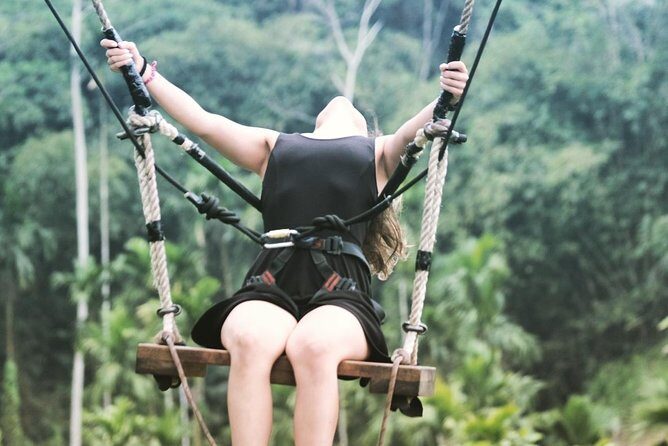
The d’Alas Swing is short but memorable. You’ll spend about 30 minutes here, taking in the jungle-over-rice-terrace view and getting the classic swing shot that shows off Bali’s greenery and depth.

Two practical points from the tour data:

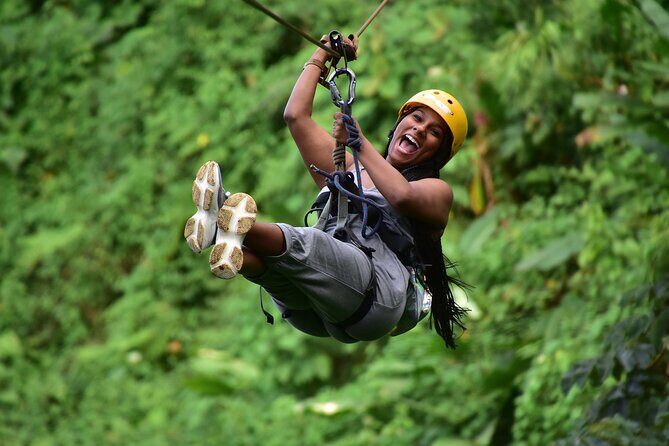
  • There’s a minimum age of 10 years to do the jungle swing.
  • The tour expects moderate physical fitness, and this portion involves climbing and getting in position for the swing setup.

If you’re not doing the swing, you can still enjoy the viewpoints, but the ticket is part of the plan, so ask your guide how the timing works for non-participants. Either way, this is one of the easiest “wow” moments to capture quickly once you’re there.

Who this tour suits best

This is a strong match if you:

  • Want a single private day that covers Lempuyang, Tirta Gangga, Tukad Cepung, Tegalalang, and a swing stop.
  • Like photo-driven planning but still want the spiritual grounding at the temples.
  • Prefer a driver who keeps things moving smoothly, with the vehicle taking the strain off your navigation.

It may be less ideal if you:

  • Don’t like long days. At about 10 hours, your energy budget needs to be real.
  • Have trouble with stairs and rocky paths. Tukad Cepung includes walking down through uneven terrain.
  • Are easily frustrated by crowds or waiting. Lempuyang’s gate photo spot can mean delays.

What I’d do to plan your day well

Here’s how I’d prep if I were doing it again:

  • Wear shoes you trust on uneven ground. It’s the best investment you can make for a cave waterfall day.
  • Bring a light layer. Morning starts and caves can cool things down a bit.
  • Bring patience for Lempuyang. If your photos matter to you, set your expectations and go step by step.
  • Hydrate early. Bottled water is included, but you’ll still want to sip while you wait between stops.

Also, this tour offers group discounts and has a mobile ticket option. If you’re traveling with more than two or three people, group savings can make the $85 feel even better.

Should you book the Bali Instagram Gate of Heaven Temple Tour?

I’d book it if you want the strongest “Bali highlight stack” in one private day, with admissions, sarongs, lunch, and the swing ticket handled for you. The mix of Gate of Heaven framing, Tirta Gangga’s water gardens, Tukad Cepung’s cave-light waterfall, and Tegalalang’s rice terrace views is a very efficient way to see the places that keep popping up in Bali photography.

I wouldn’t book it if you dislike long touring days, aren’t comfortable with stairs and rocky walks, or you truly hate queue time at the temple gate. For everyone else, it’s a solid value-driven day that feels organized and scenic rather than random.

FAQ

How long is the Bali Instagram Gate of Heaven Temple Tour?

It runs about 10 hours.

Where does this tour operate?

The tour takes place in Ubud, Indonesia.

What does it cost per person?

The price is $85.00 per person.

Is hotel pickup and drop-off included?

Yes. Round-trip transport from your hotel is included in an air-conditioned vehicle.

Is this a private tour?

Yes. It’s listed as a private tour/activity, with only your group participating.

Are admission fees included?

Yes. All entrance fees are included in the price.

What about sarongs for temple visits?

Sarongs are provided for wearing in the temples.

Is lunch included?

Yes. Lunch is included as a local buffet lunch.

Is the d’Alas Swing included, and is there an age limit?

Yes. The jungle swing ticket is included, and the minimum age to do the jungle swing is 10 years old.

What cancellation window is offered?

Free cancellation is available, and you can cancel up to 24 hours in advance for a full refund.

How do I know if I’m physically okay for the tour?

The tour notes that travelers should have a moderate physical fitness level due to walking and stairs.

Private Arrival Transfer: Bali Airport to Hotel

Private Arrival Transfer: Bali Airport to Hotel - What Happens After Your Flight Lands (Step by Step)

First night in Bali should start easy. This private arrival transfer is built for that exact moment: you land at Ngurah Rai Airport and want a straightforward ride to Seminyak without taxi games. I like the meet-and-greet setup with a driver holding your name, and I also like that you get door-to-hotel service with no extra stops for other travelers. The one thing to watch is the waiting-time window and luggage limits, since delays beyond the included time or extra/oversized bags can mean local charges.

What makes it especially useful is the stress-control baked into the process. You prebook in your home currency (so you’re not hunting for cash), and you’re expected to stay reachable on your phone via call or WhatsApp so the handoff goes smoothly after immigration. It’s one of those small-travel-upgrades that can quietly protect your whole first day.

Finally, this isn’t a shared shuttle. It’s a true private ride, so the car time is usually fast and direct—but the total experience length can vary a lot depending on traffic and how long you spend at immigration and baggage claim.

Key things that matter before you land

Private Arrival Transfer: Bali Airport to Hotel - Key things that matter before you land

  • Name-sign pickup at the arrival exit helps you avoid the usual airport crowd chaos
  • 1.5 hours waiting time starts from flight landing time (with a 30-minute offset for the driver entering the waiting area)
  • WhatsApp-ready communication is part of the system, especially if bags or immigration take longer
  • Direct transfer with no extra stops for other travelers means you’re not stuck in a loop
  • Max 1 suitcase + 1 carry-on per traveler keeps things simple, but extra or oversized luggage may cost more
  • Tolls, airport fees, and insurance are included so you’re less likely to get hit with surprise extras

Why a Seminyak private pickup beats Bali taxi chaos

Private Arrival Transfer: Bali Airport to Hotel - Why a Seminyak private pickup beats Bali taxi chaos
Ngurah Rai International Airport can feel like a busy market the second you clear arrivals. You’ve got tired legs, jet lag, and a lot of people waving at you. A private arrival transfer cuts through that fast.

You’re not negotiating fares at the curb. Your driver is identified ahead of time and meets you holding a sign with your name. That matters because the airport area can be full of “helpful” offers, and the wrong choice can turn into a refund headache later (more on that below).

Another win: you get a direct ride route to your hotel. That saves decision-making on day one. Instead of asking which turns to take or where to stop for a SIM card, you can just get in, get comfortable, and get to Seminyak.

The meet-and-greet rules that keep your pickup from going sideways

The pickup is simple, but Bali airports reward clarity. Here’s how the process works in practical terms:

After you collect luggage, you need to proceed to the exit to the arrival hall. Your driver is supposed to be there holding a sign with your name. You may need to walk a little around the exit area, since there can be a lot of drivers.

If you truly can’t find your name on the signage, don’t wander for too long. Go wait at the flight information desk, where an airport representative should meet you at the meeting point.

One important warning is stated clearly: don’t accept offers from taxi drivers or other transport companies around the arrival hall. If you accept an offer, there will be no refund for this private transfer. I treat this like a safety rule, not a suggestion. If you’re unsure, call your driver or your contact first, then decide.

Waiting time math: what 1.5 hours really means after delays

Private Arrival Transfer: Bali Airport to Hotel - Waiting time math: what 1.5 hours really means after delays
This is the part that can save you money and stress. The service includes 1.5 hours of waiting time, started from when your flight lands—not when you planned to land.

There’s also an offset built in: the driver enters the waiting area 30 minutes after flight landed time. That gives room for you to handle immigration and baggage claim without your driver already being at the exact pickup point too early.

Here’s the example they give: if your schedule says 1:00 PM but the flight actually lands at 1:30 PM, waiting time starts at 1:30 PM for the 1.5 hours. The driver then enters the waiting area 30 minutes after landing, which aligns better with the reality of clearing immigration.

If you’re worried about running late, keep your phone ready. Make sure your phone can take calls, or connect to Bali airport Wi-Fi and have WhatsApp installed. It’s specifically called out as the easiest way to coordinate if you expect to exceed the included waiting time.

Communication on WhatsApp can turn a stressful arrival into a calm one

This service works best when you and your driver stay connected. They ask that your phone is active and able to take calls, or that you can connect to Wi-Fi and use WhatsApp.

That’s not overkill. It’s the difference between standing in the wrong spot for 20 minutes and getting a quick correction like a map pin. In the experience you’re buying, communication is part of the product, not an extra.

Real-world notes from the ride experience side add up to the same message: many pickups run smoothly when the driver confirms details ahead of time and updates you at arrivals. Some drivers even share photos of their sign and where they are, which is genuinely helpful when the exit doors look identical.

What’s included: tolls, fees, and insurance (so you’re not guessing)

You’re not just paying for a car. Your transfer includes:

  • One-way private transfer
  • Meet-and-greet service
  • All road tolls
  • Airport fees and charges
  • Insurance

That package is valuable because tolls and airport charges are not where you want to do arithmetic when you’re tired. It’s also part of why this feels different from grabbing the first taxi you see.

Insurance inclusion is another quiet comfort. Nobody books airport transfers thinking about risk, but it’s nice when it’s included up front.

What’s not included: excess luggage charges and oversized items

This service sets a clear luggage expectation: each traveler is allowed a maximum of one suitcase and one carry-on bag.

If you’re bringing extra items, or something oversized like a surfboard or golf clubs, you must advise at booking. Extra charges then apply and must be paid locally. That means you should plan for that possibility early rather than hoping it’s fine at the curb.

If you’re traveling light, this part is easy. If you’re packing heavy or doing sports gear, it’s where your budget can change.

How long the ride takes from Denpasar to Seminyak

The booked duration is listed as 15 minutes to 2 hours (approx.). That range is wide, and it’s honest: traffic, your hotel location, and how long you spend inside the airport will all shape the final time.

In practice, the transfer is designed to be direct. That’s what you’re paying for. You’re not bouncing between drop-offs.

If you’re also factoring in Bali arrival reality—immigration queues, baggage claim, and walking to the exit—your total experience from landing to hotel usually feels like the bigger story than the drive time alone.

Car sizes and group size: what you’re really paying for

Private Arrival Transfer: Bali Airport to Hotel - Car sizes and group size: what you’re really paying for
This is private service, so your group stays together the whole time. Pricing is described as per car, with vehicle options based on how many adults are in your group:

  • Standard option: price per car for 1 to 5 adults
  • Minibus option: price per car for 6 to 12 adults

There’s also a listed price point of $6.00 per group (up to 4). That likely reflects a starting price or a promotional structure. Since the provider also states price is per car based on adult count, treat the final cost as tied to your selected group size and vehicle category.

If you’re a solo traveler or a couple, the standard option often makes the most sense because you’re still getting a private ride without paying for extra capacity. If you’re a small group of friends or a family, you can often spread the per-car cost in a way that feels more like a smart local taxi upgrade than a luxury expense.

The driving experience: safe, direct, and mostly phone-free

A big part of why airport transfers feel worth it is how the driver drives once you’re on the road. Multiple examples in the ride experience point to safe, calm driving and cars that feel clean and comfortable.

You may even find the driver is not glued to the phone. That’s not guaranteed, but it lines up with why the pickup is often described as easy. The driver also typically helps with luggage, which sounds basic until you’re dragging a suitcase over uneven pavement with a jet-lagged brain.

One more nuance: some drivers may offer small practical stops if it fits your situation. Examples include stopping at an ATM or picking up small essentials. If you want that, it’s best handled as a quick request during the ride. The core promise remains direct transfer—no extra drop-offs for other travelers.

Should you book this private transfer to Seminyak?

I’d book it if you want your first hours in Bali to be about relaxing, not negotiating. The biggest value is the combination of meet-and-greet, direct hotel transfer, and included tolls/fees/insurance. You’re also not carrying cash on day one, which is a real win in an airport setting.

I’d think twice only if you know you’ll have complicated logistics—like multiple oversized items—or if your travel schedule is wildly unpredictable. The included waiting time helps, but it isn’t infinite. If you’re traveling with sports gear, confirm details in advance so you’re not dealing with extra charges right after landing.

If you’re traveling in a group, pricing per car can be a great deal. If you’re traveling solo, it may feel pricey compared to a public option, but the time saved and stress avoided often makes the difference.

FAQ

How long is the waiting time at the airport?

You get 1.5 hours waiting time included. The timing starts from your flight landing time, and there’s a 30-minute offset for when the driver enters the waiting area.

What if my flight is delayed?

Waiting time is calculated from when the flight actually lands, not when it was scheduled. You should stay reachable by phone or WhatsApp so the driver can coordinate if you’re running late.

Where do I meet the driver inside the airport?

After collecting luggage, go to the exit to the arrival hall. Your driver should be there holding a sign with your name.

What if I can’t find my name on the sign?

Go wait at the flight information desk. An airport representative is meant to meet you there at the meeting point.

Is the transfer direct to my hotel?

Yes. The service is a private one-way transfer designed to take you straight to your hotel, without stops for other travelers.

What’s included in the price?

Included are the one-way private transfer, meet-and-greet service, road tolls, airport fees and charges, and insurance.

What luggage is allowed?

Each traveler is allowed a maximum of one suitcase and one carry-on bag. Extra luggage or oversized items can trigger excess charges that are paid locally.

Can I cancel for free?

Yes. Free cancellation is available up to 24 hours before the experience’s start time for a full refund.

Nusa Penida One Day Trip with All-inclusive

Nusa Penida One Day Trip with All-inclusive - Price and value: what $51 buys you (and where the gaps are)

Nusa Penida is pure cliff drama. This one-day trip from Bali strings together the island’s biggest photo stops—Broken Beach, Angel’s Billabong, Kelingking Beach, and Crystal Bay—using fast boats and drivers so you’re not stuck sorting out timing on your own.

I love the round-trip transfers from your Bali hotel, plus an English-speaking driver/guide who keeps the day moving. I also like that lunch is included and entrance tickets are built in, so you don’t have to keep whipping out your wallet mid-day. The main drawback is a packed, fast-paced route with long car hours on rough roads and limited time to actually relax at the beaches.

Key things to know before you go

Nusa Penida One Day Trip with All-inclusive - Key things to know before you go

  • Round-trip hotel transfers from several Bali areas, including Ubud, Seminyak, Canggu, Kuta, and more
  • Fast boat tickets included, with Sanur to Nusa Penida taking roughly 30–45 minutes each way
  • Icon stops only: Pasih Uug (Broken Beach), Angel’s Billabong, Kelingking Beach viewpoint, Crystal Bay
  • Indonesian lunch included, but it’s a set lunch (so don’t expect a big menu)
  • Private car tour on Penida with an English-speaking driver/guide who handles the route
  • Weather matters, because rain and rough conditions can change water time and sometimes the plan

How this Nusa Penida day trip really works (Sanur to the cliffs and back)

Nusa Penida One Day Trip with All-inclusive - How this Nusa Penida day trip really works (Sanur to the cliffs and back)
This is built as a full-day circuit. Your day starts with pickup from your Bali hotel, then a transfer to the Sanur harbor. After you check in for the speedboat, you cross to Nusa Penida (think about 30 minutes to 45 minutes), where a local driver meets you and drives the island’s main sights.

The value here is that you get the whole chain covered: transport to the harbor, your boat tickets, and then island navigation. Penida’s roads can be slow and bumpy, so having a driver who knows where to go saves real energy.

You’ll typically move from stop to stop with about an hour at each main attraction. That means you’ll see a lot, but you won’t linger like a slow beach day. If you want quiet time, plan for more “look, take photos, move on” than “unwind for hours.”

Price and value: what $51 buys you (and where the gaps are)

Nusa Penida One Day Trip with All-inclusive - Price and value: what $51 buys you (and where the gaps are)
At $51 per person, you’re paying for more than just a sightseeing ticket. You’re getting a package that includes:

  • Round-trip fast boat (Sanur to Nusa Penida and back)
  • Hotel pickup and drop-off in multiple Bali areas
  • Entrance fees for the major stops
  • An Indonesian lunch
  • An English-speaking driver/guide during the tour

That’s good value if you’d otherwise have to coordinate multiple pieces yourself: boat schedules, entrance tickets, and a reliable driver on Penida. The one “gap” to expect is that food quality and timing can vary, because the included lunch is a set menu. Also, souvenir photos aren’t included.

To get the best value for your money, treat this as an iconic-sights day. If your dream is lots of swimming time, slow wandering, and long beach breaks, this kind of route can start to feel like a sprint.

The early start, Sanur harbor, and the fast-boat comfort check

Your day is only as good as your start time, and this tour is designed for an early run. You head to Sanur, check in, and then board your speedboat. One thing to plan for: harbor areas can be busy, and the boarding experience can feel hectic.

The boat itself is part of the tradeoff. Fast boats save time, but you should be ready for heat and tight seating during the crossing, especially when it’s crowded. If you’re sensitive to motion, consider bringing something that helps you feel steady.

Practical tip: keep small cash handy. Some riders note you may have to pay for toilets at the ferry area on Penida. A small note stash beats the scramble.

Stop 1: Broken Beach (Pasih Uug) — the cliff hole you came for

Nusa Penida One Day Trip with All-inclusive - Stop 1: Broken Beach (Pasih Uug) — the cliff hole you came for
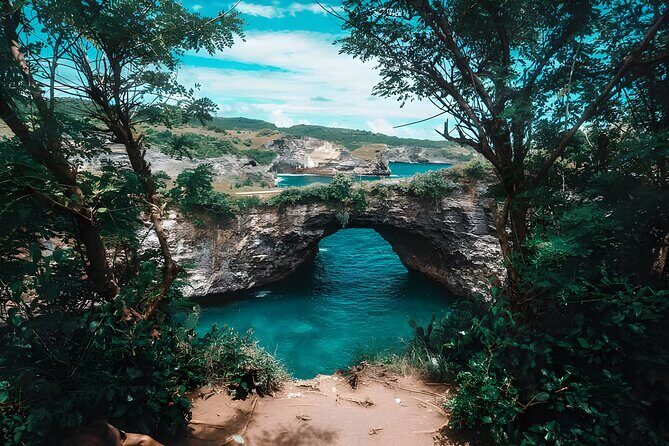
Broken Beach is one of those Penida icons that makes you stop talking and just stare. From the cliff area, the views center on the dramatic rock formation, including the big circular hole that frames the sea. It’s the kind of scene you understand instantly why people line up for photos.

Expect this stop to be very photo-focused. You’re going to get time to look around and take pictures, but the “wow” comes from the viewpoint more than from a long beach hang.

A downside to keep in mind: because of how these lookouts are set up and how time is scheduled, you may feel rushed if you want to sit and watch the waves for a long stretch. Penida is also known for crowds at popular viewpoints, so arriving with patience helps.

Stop 2: Angel’s Billabong — the natural infinity pool plan

Nusa Penida One Day Trip with All-inclusive - Stop 2: Angel’s Billabong — the natural infinity pool plan
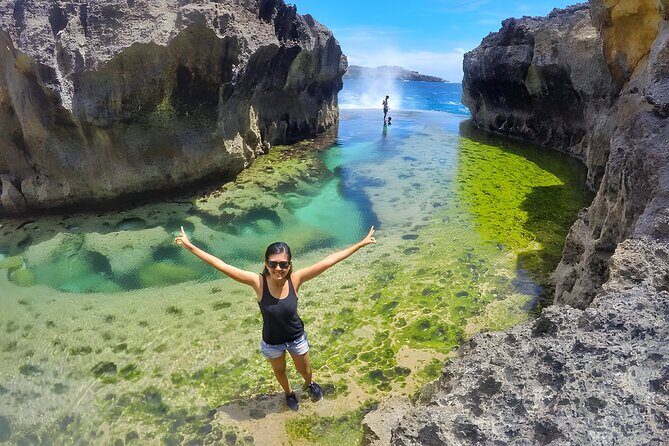
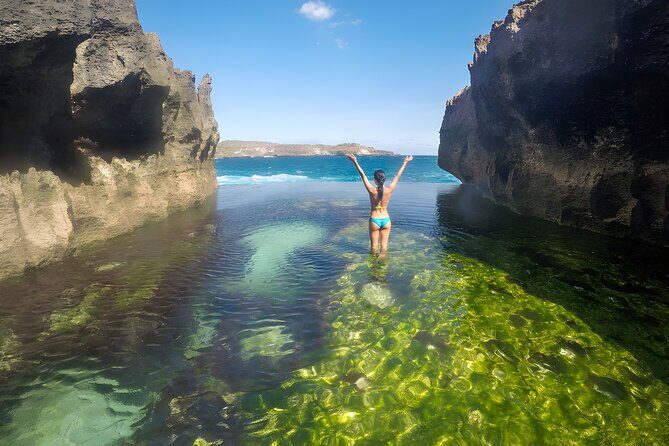
Angel’s Billabong is a natural infinity-pool style rock formation where water sits in a cliff pool. It’s built for looking and photographing, but it’s also a potential swim moment if conditions are right.

This is one of the better stops if you like the combo of scenery plus a chance to get in the water. The included entrance ticket gets you access, and you’ll usually have around an hour here.

The catch is water conditions. Rough weather or strong swell can limit swimming, and you might end up mostly admiring the pool and taking photos. If swimming is your priority, treat this as your “maybe” stop, not a guaranteed swim.

Stop 3: Kelingking Beach viewpoint — huge views, steep logistics

Nusa Penida One Day Trip with All-inclusive - Stop 3: Kelingking Beach viewpoint — huge views, steep logistics
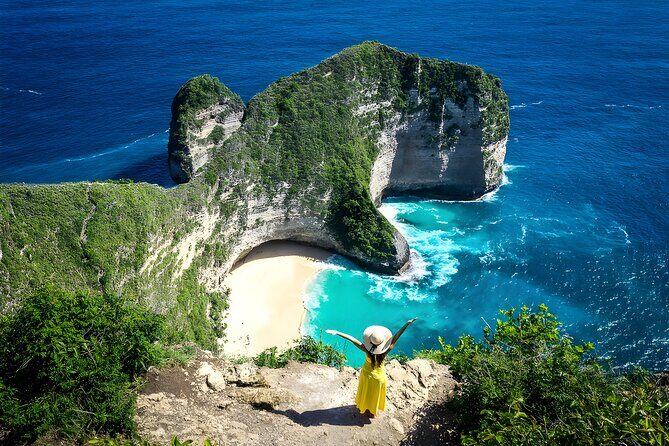
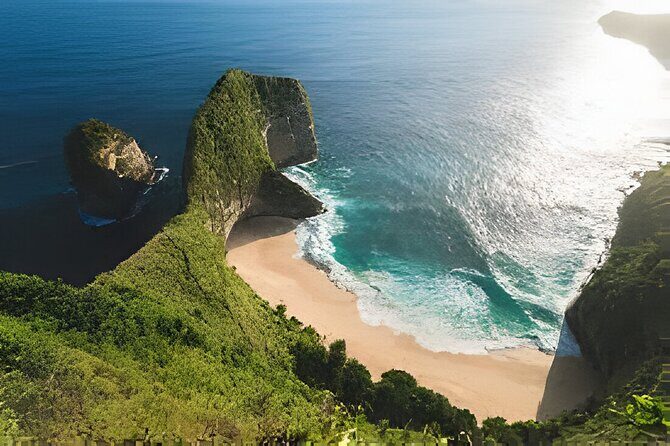
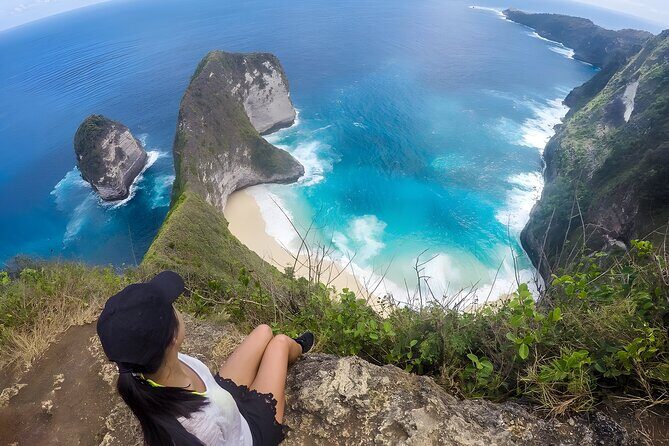
Kelingking Beach is famous for the cliff shape that looks like a T-Rex from above. The tour setup focuses on the viewpoint platform, which makes sense because getting down to the sand involves steep stairs and can take much longer than a quick photo stop.

That matches the reality on tight itineraries: you’re often not going to do everything here. You get time for photos from the built viewpoint area, plus enough time to enjoy the scenery without turning it into a full hike day.

One more reality check: parts of Kelingking’s viewpoint area can feel altered by infrastructure changes over time. If you’re very sensitive to that, keep expectations flexible and focus on the original cliff spectacle, not the surrounding structures.

Stop 4: Crystal Bay — white sand, and the snorkeling decision

Nusa Penida One Day Trip with All-inclusive - Stop 4: Crystal Bay — white sand, and the snorkeling decision
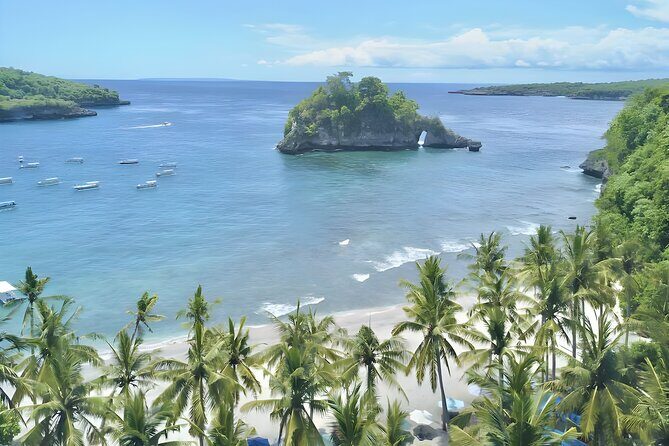
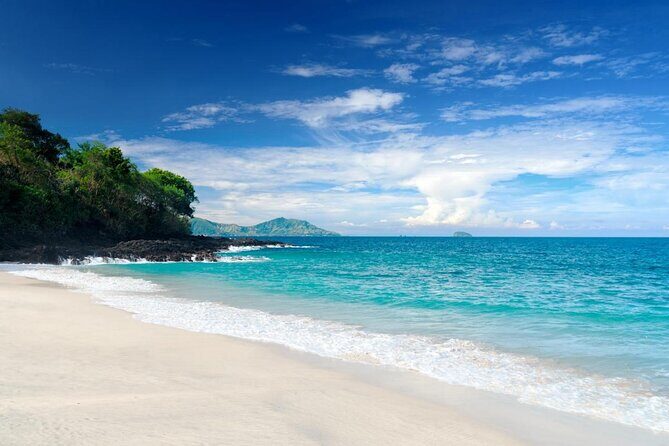
Crystal Bay is the closest thing in this itinerary to a classic beach break. You get a chance to enjoy white sand and palm-lined views, and it’s also where you can opt to rent gear for a snorkeling session.

This stop is often the one that makes people happy they booked, because it gives you the best chance for real water time compared to the cliff viewpoints. Even if you don’t snorkel, it’s a nicer setting for a slow walk, a swim, and some decompression.

Just remember: the tour timing is tight. You’ll have about an hour here, so snorkeling is limited by time and conditions. If the water is rough or visibility isn’t great, you’ll likely still enjoy the bay, but your underwater time might be shorter than you hoped.

Drivers make the difference: names like Wahyu, Wayan, Pagus, Kadek

Nusa Penida One Day Trip with All-inclusive - Drivers make the difference: names like Wahyu, Wayan, Pagus, Kadek
In practice, this trip lives or dies by the drivers at both ends. The format usually includes a Bali hotel driver who gets you to Sanur, plus a Penida driver who meets you after the boat crossing.

Several guides have been credited for making the transitions smooth—names like Wahyu, Wayan, Pagus, and Kadek come up in connection with punctual pickups and strong on-the-ground navigation. People also mention guides such as Adi and Candra when describing photo help and steady driving on Penida’s rough roads.

Why this matters: Penida roads can be slow, and you’re moving between viewpoints that are easy to miss if you’re on your own. When the driver is calm, the day feels more manageable. When the driver struggles with routes or communication, the itinerary can feel more stressful even if the sights are still great.

The reality of pacing: crowds, long drives, and limited beach time

Here’s the honest tradeoff. This itinerary hits several headline stops, which means you spend a lot of time in the car plus time queuing for the best angles.

Road conditions are part of the experience—expect potholes, bumpy stretches, and driving that can make some people nauseous. The upside is you get to see the island without the hassle of self-driving. The downside is you may feel like you’re constantly shifting locations rather than relaxing.

Crowds are also real. Some stops can be packed, and that can shrink the time you want to spend enjoying the scenery. If you’re going for the Instagram icons, this style works. If you want space, quiet, and unhurried exploration, you’ll probably feel the pressure.

A few riders also flag lunch as the weakest link. Even when lunch is included, it’s described as a set Indonesian meal with limited choices. My advice: treat lunch as fuel, not the highlight. If you’re picky about food quality or portions, eat a solid breakfast and consider grabbing an extra snack before you head back.

Weather, snorkeling changes, and the smart way to plan for contingencies

This tour depends on weather. If conditions are poor, your experience may be canceled and you’ll be offered a different date or a full refund. That’s not just policy talk—rough conditions can affect sea crossings and reduce water time at the stops.

Snorkeling is especially weather-dependent. You can rent snorkeling gear at Crystal Bay, but conditions decide whether you’ll actually have a great session.

If weather looks iffy, stay flexible. Your best “Plan B” is to treat the day as a viewpoint and photo route first, and swimming as a bonus when the water cooperates.

Should you book this Nusa Penida one-day trip?

Book it if you want an efficient, sights-first day trip from Bali with fast boats, hotel transfers, entrance tickets, and lunch handled in one bundle. This works especially well if you care most about seeing the top cliff formations: Broken Beach, Angel’s Billabong, Kelingking viewpoint, and Crystal Bay.

Skip it (or adjust expectations) if you want a slower schedule, lots of beach time, or a day built around long snorkeling sessions. The itinerary is designed to cover multiple icons, so you’ll trade comfort and quiet for variety.

If you’re the type who gets tired of long car days and crowds, consider spending more than a day on Penida instead. For a first-timer “hit the highlights” visit, this tour can be a solid choice.

FAQ

Where does pickup and drop-off happen?

Pickup and drop-off are offered from Ubud, Nusa Dua, Jimbaran, Kuta, Legian, Seminyak, Sanur, and Canggu.

How long is the Nusa Penida one-day trip?

The duration is about 12 hours.

How do you travel from Bali to Nusa Penida?

You take a fast boat from Sanur to Nusa Penida, then use the included return fast-boat ticket back to Sanur.

Is lunch included?

Yes. An Indonesian lunch is included in the tour price.

What are the main stops during the day?

The itinerary includes Broken Beach (Pasih Uug), Angel’s Billabong, Kelingking Beach, and Crystal Bay, plus the Sanur harbor as part of the travel route.

Are entrance tickets included?

Yes. Entrance fees are included for the stops listed in the tour.

Is snorkeling included?

Snorkeling itself isn’t listed as included. At Crystal Bay, you can opt to rent gear for a snorkeling session.

Is this a private tour?

Yes. It’s a private tour/activity, and only your group participates.

What’s not included?

Souvenir photos are not included.

Does weather affect the trip?

Yes. This experience requires good weather, and if it’s canceled due to poor weather, you’ll be offered a different date or a full refund.

Individual Bali Day Trip with Private Driver and Free WiFi

Individual Bali Day Trip with Private Driver and Free WiFi - Your day’s timing: 8 hours vs 10 hours (and why that matters)

One day, many Bali moods. This private Bali day trip lets your driver mix temples, beaches, and cultural stops on your terms, and you get WiFi on board so your photos upload while you ride.

I especially like the pickup from your accommodation across Kuta, Seminyak, Canggu, Nusa Dua, Ubud, Jimbaran, and Sanur, so you skip the meeting-point stress.

Pick a route like South Bali cliffs or central Ubud, and your plan can flex with the day. One drawback to keep in mind: most stops are only about 15 minutes, and Bali traffic can slow everything down, so you’ll want to choose a few priorities.

Key things I’d plan around

Individual Bali Day Trip with Private Driver and Free WiFi - Key things I’d plan around

  • Pickup that starts at your door with round-trip transfers from many Bali bases
  • WiFi in the vehicle so you can post as you go
  • Truly customizable route with fewer rigid, check-the-box moments
  • Short stop times that work best when you have a clear must-see list
  • Gate of Heaven needs an early start (often 4–5 AM to dodge the worst crowds)

Private driver day trip in Bali: how it actually feels

Individual Bali Day Trip with Private Driver and Free WiFi - Private driver day trip in Bali: how it actually feels
This is built for people who want a full day on Bali without the hassle of meeting buses or finding exact locations on your own. You’re not locked into one route. Instead, you and your private driver shape the day around what you care about most—beach time, temples, photo stops, or a mix.

A big practical win is that the day is designed to move efficiently: you get A/C transport, bottled water, parking fees taken care of, and WiFi aboard the car. On a day like this, you’ll be in transit a lot. Being able to stay connected and share your updates right away makes the ride feel less like dead time.

You’ll also find that your driver acts like a day coordinator as much as a driver—suggesting options, adjusting to your pace, and steering you toward the next stop that makes sense. In past days, drivers like Putu, Kadek, Awan, Aris, Panda, Dewa, and Ketek have been behind the wheel for this style of trip, and a common theme is clear communication and keeping things comfortable.

Price and value: why $38 can make sense

At $38 per person for a full 8–10 hour private day trip, the value comes from two places: transportation logistics and flexibility.

First, you’re paying for a private A/C vehicle with fuel and parking included, plus pickup from your accommodation and return transfer. Those costs add up fast if you try to stitch together rides and drivers on your own.

Second, the customizable part matters. Instead of paying for a fixed tour that might include stops you don’t care about, you can steer toward your interests. If you only have a day or two on Bali, this is one of the most efficient ways to sample multiple areas without turning your vacation into an app-and-direction scavenger hunt.

What’s not included is just as important: lunch isn’t included, and admission tickets vary by stop. Some places are free, many are paid, and you’ll want to budget for entrance fees if your day includes the big-name attractions.

Your day’s timing: 8 hours vs 10 hours (and why that matters)

Individual Bali Day Trip with Private Driver and Free WiFi - Your day’s timing: 8 hours vs 10 hours (and why that matters)
Most of these stops are brief—about 15 minutes each—so the schedule is more like a fast circuit than a slow walk. Your driver can tighten things up based on your choices, but the reality is Bali’s roads and sightseeing timing drive the day.

You have two practical options:

  • 8 hours: focused travel (either Ubud area or Uluwatu/Kuta/Seminyak/Nusa Dua area, depending on how you want to group it)
  • 10 hours: you can reach farther attractions, including places like the Gate of Heaven area

If your top priority is an early-morning photogenic stop like the Gate of Heaven, the 10-hour window is usually the safer bet.

South Bali: Nusa Dua beaches to Uluwatu cliffs

Individual Bali Day Trip with Private Driver and Free WiFi - South Bali: Nusa Dua beaches to Uluwatu cliffs
A classic plan starts in the south, where you get beach views plus dramatic cliffside temples.

  • Nusa Dua Beach: Think golden-white sand and calm blue water—great for a quick swim, a breather, or just ocean viewing.
  • Water Blow (Nusa Dua): Waves force water through jagged limestone along the coast. It’s short, but it’s a cool contrast to straight-up beach lounging.
  • Garuda Wisnu Kencana Cultural Park (GWK): This is a big Hindu cultural park built around Lord Vishnu and Garuda. Even with a short stop, the scale of the main statue and the architecture make it easy to see why people come.
  • Pantai Melasti Ungasan: A cliff-below beach with clear blue water and coral vibes—photo-friendly and scenic.
  • Pantai Dreamland: A coral beach area that’s also known for surfing. Even if you don’t surf, it’s a good stop to feel the energy of that coastline.
  • Padang Padang Beach: This is a famous Bali beach scene—especially after the Eat Pray Love association. It tends to be popular, so a short visit can still be worth it if timing is good.

Then the day often pivots toward the Uluwatu area:

  • Uluwatu Temple: Built on a cliff edge projecting into the sea. The sea views are the point here, plus the atmosphere of a temple setting right above the ocean.
  • Kecak and Fire Dance at Uluwatu Temple (around 6 PM daily): If you catch it, it’s an outdoor Ramayana-style performance with sunset views behind it. Since it’s time-specific, this is one of the moments where you’ll benefit from letting your driver know it’s a must-see.

To wrap up the coastline vibe:

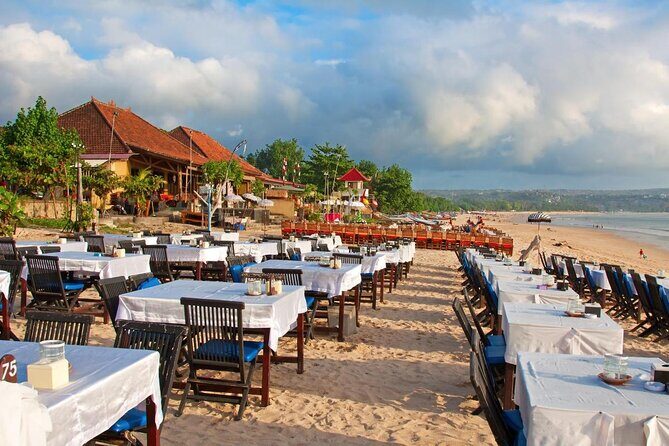
  • Jimbaran Bay: A favorite for sunset and grilled seafood by the beach cafés. Even if you’re not eating, you’ll usually get that slow, end-of-day energy.

One caution: for all these cliff and beach stops, weather matters. If rain comes in hard, you may need to swap in a different beach viewpoint or shift toward the more sheltered options.

Central Bali and Ubud: monkeys, rice terraces, and temple rituals

Individual Bali Day Trip with Private Driver and Free WiFi - Central Bali and Ubud: monkeys, rice terraces, and temple rituals
If you want the Bali that feels more local and green, you’ll likely spend time around Ubud and central religious sites.

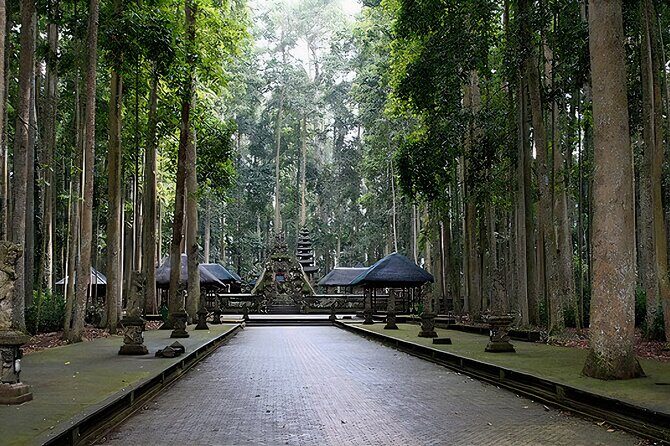
  • Sacred Monkey Forest Sanctuary: A tropical forest habitat with monkeys and temple areas inside. It’s popular, but it’s one of the places where you’ll immediately feel you’re in a living nature space—not just a photo set.
  • Ubud Traditional Art Market: A walk-through of craft shops and local goods. If you like small artisan finds, this is an easy stop without needing extra planning.
  • Tegalalang Rice Terrace: Green rice fields and famous swing photo spots. The view is the main event here, and even a short stop gives you the sense of Bali’s terraced agriculture.
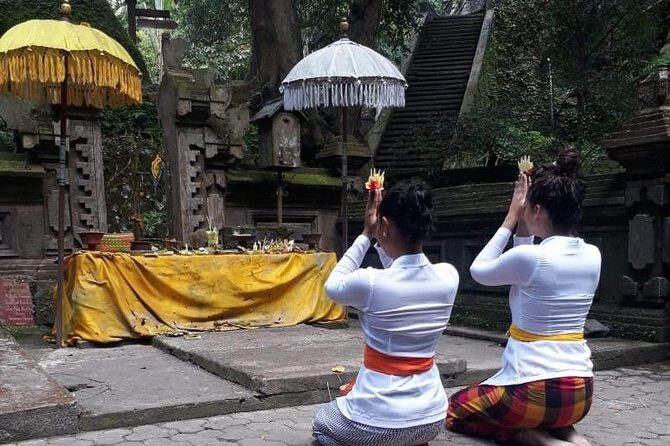
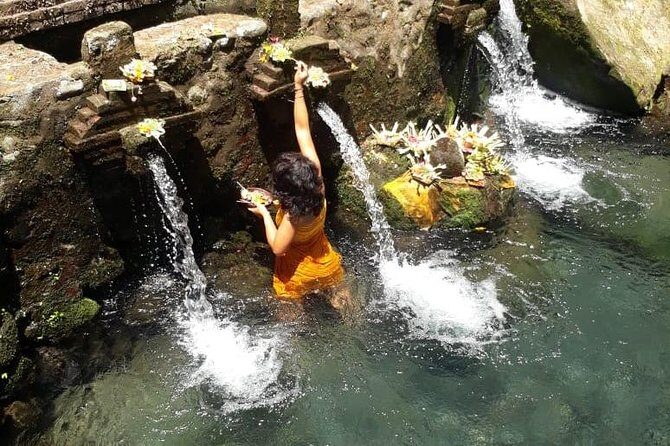
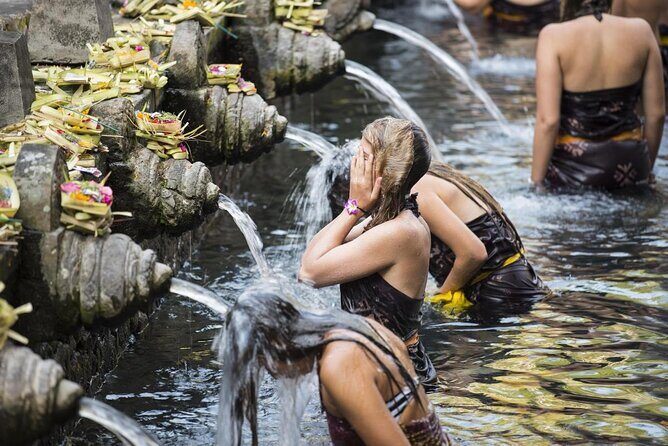
  • Tirta Empul Temple: Holy spring water used for ritual purification. It’s a meaningful temple experience, and even with short time, you’ll see why it’s a destination.
  • Tegenungan Waterfall: A waterfall where you can climb stairs down to get closer. The walk and viewpoints are the value; just know the short-stop format means you might not do the long side trails.
  • Campuhan Ridge Walk: A well-known ridge walk in Ubud with open views and calmer air than the town streets. It can be a great use of 15 minutes because it’s linear—you walk, you see, you move on.

One small practical idea: with stops this short, you’ll get more out of each place if you pick what you want most—temple photos vs. a quick walk vs. viewing points—then let your driver aim you there first.

West Bali classics: Tanah Lot and coastal views

Individual Bali Day Trip with Private Driver and Free WiFi - West Bali classics: Tanah Lot and coastal views
When your route includes West Bali, you’ll bounce from temples to coastal panoramas.

  • Tanah Lot Temple: Built on a rock offshore, shaped by tides over time. Even if you only stay briefly, you’ll get that signature picture of a temple set against the sea.
  • Batu Bolong Beach: Close to Tanah Lot, with a temple and a dramatic view featuring a big hole under the temple.
  • Sanur Morning Market: A traditional morning market stop with a local-food and produce feel. If you want to taste Bali life beyond resorts, this is one of those simple stops that works fast.
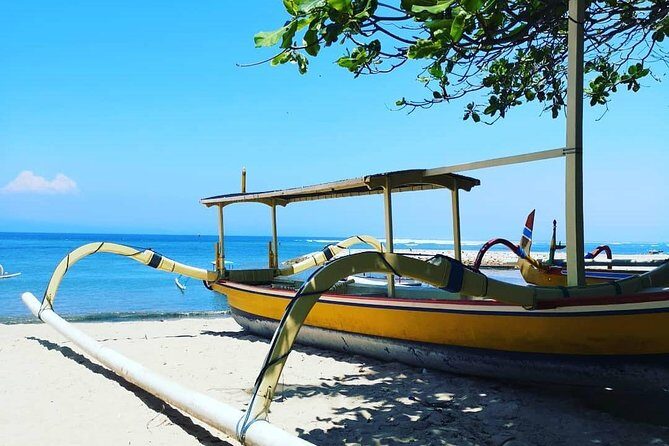
  • Sanur Beach: The promenade vibe and colorful outrigger boats line the water. It’s a good cooldown after temple viewing.

If you’re pairing West Bali with art and shopping, this is also where city landmarks might slip in:

  • Bajra Sandhi Monument in Denpasar (Renon Square area): a major landmark shaped like a Balinese Hindu priest’s praying bell, with a striking look from outside.
  • Nyaman Gallery in Seminyak: a contemporary art stop with both local and international work. Even a quick visit can be a nice change of pace from temples and beaches.

North and the mountain-side photo circuit: lakes, gates, and swings

Individual Bali Day Trip with Private Driver and Free WiFi - North and the mountain-side photo circuit: lakes, gates, and swings
For the dramatic scenery angle, North Bali and highland viewpoints are the big draw.

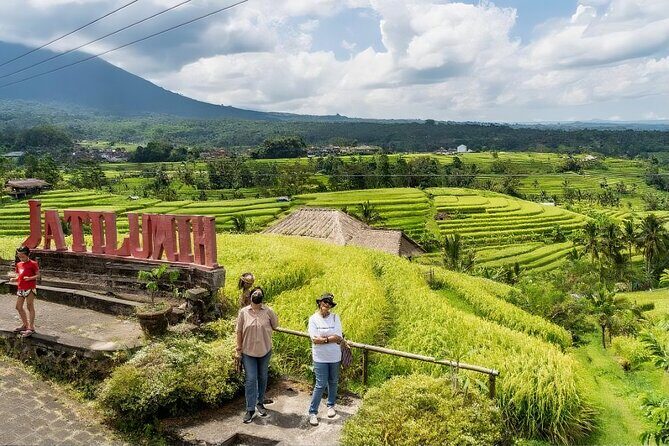
  • Jatiluwih Green Land: A UNESCO cultural heritage area known for terraced rice views with Mount Agung in the background. It’s usually the kind of place you’d want more time in, but even a short stop can help you see why it’s protected.
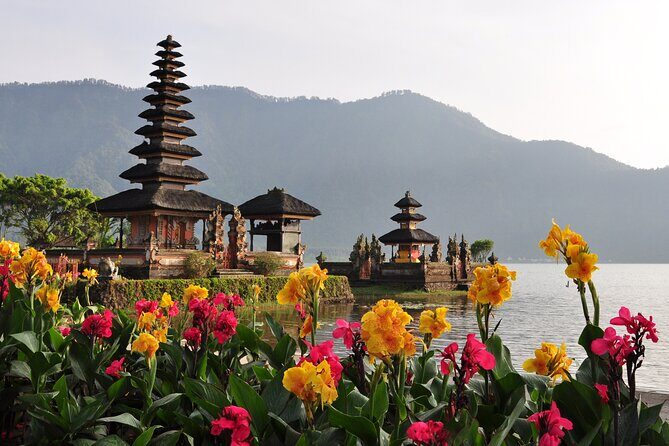
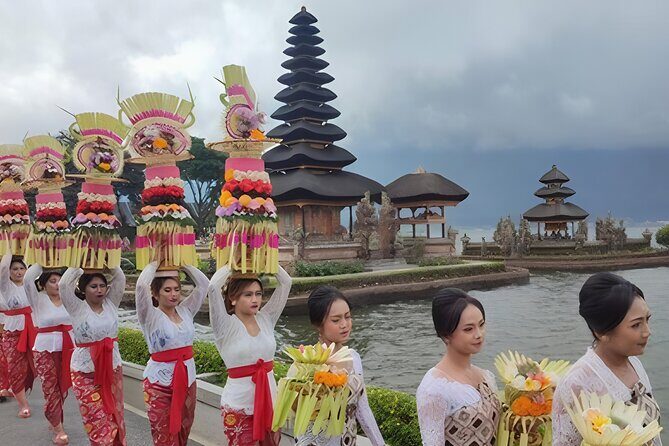
  • Ulun Danu Beratan Temple (by Lake Bratan): A temple setting by a volcanic lake at about 1,239 m elevation. The views around the lake are the real payoff.
  • Handara Iconic Gate: That famous gate shot with green scenery behind it. It’s short, but it’s one of the most recognizable Bali photo backdrops.
  • Tamblingan Lake: Scenic twin-lake area vibes (Tamblingan and Buyan), usually about viewpoints and calm water views.
  • Wanagiri Hidden Hills (viewpoint area): Known for swings over the lake and other photo-friendly structures. If you’re chasing photos, this area can be a fun contrast to pure temple stops.
  • Asah Hill: A cliff-and-ocean viewpoint type stop, free admission. Short visits can still feel special because you’re up high and the horizon does most of the talking.

Two practical notes: first, northern Bali road time can be long. Second, light changes fast at higher elevations, so your driver may try to position you for the best moment.

East Bali water palaces and holy viewpoints

Individual Bali Day Trip with Private Driver and Free WiFi - East Bali water palaces and holy viewpoints
East Bali is where you start stacking “water + temple + palace” in one day.

  • Lempuyang Temple: The famous temple setting with views toward Mount Agung over clouds. This is the kind of stop that can hinge on weather and visibility.
  • Tirta Gangga: A water palace with reverence tied to water traditions. You’re basically seeing a historic garden-water setup.
  • Ujung Water Palace: Another former royal water palace area, with large pools and temple/palace atmosphere.

If your plan stretches farther east, you may also see:

  • Pantai Pasir Putih: Virgin white sand beach vibes with turquoise water and fine sand. It’s the kind of beach stop that can recharge you after a day of temple photos.

Again, time is the limiter. A 15-minute stop won’t replace a full afternoon on these sites, but it can make them “experience-able” if you’re doing a one-day circuit.

Fun breaks and city flavor: Waterbom, night markets, and beach bars

Not every stop has to be temples and cliffs. Your route can include easier, more casual breaks that keep the day from feeling nonstop.

  • Waterbom Bali: A theme-park style break with water slides and rides. If your group includes kids or you just want a playful pause, it’s a solid switch-up.
  • Upside Down World Bali: A whimsical photo-op venue with upside-down setups.
  • Sindhu Night Market: A sheltered, warehouse-like market space with about 150 stands, clean and modernized compared to some older markets.
  • Seminyak Village and Nyaman Gallery: shopping and art stops that fit better with a late-day pace.
  • Seminyak Beach, Pantai Double Six, and Pantai Canggu: beach time and surf culture energy, with the ocean right there when you want it.
  • Batu Bolong Beach and Sanur Beach: coastal options on a different vibe—more promenade for Sanur, more surf-and-view for Canggu/Batu Bolong.

One tip: if you’re trying to keep energy up, build your day so at least one stop is “slow and free.” It makes the schedule feel less like rushing.

Mountains: Mount Batur and Mount Agung if you want altitude

If you’re adding mountain ambition, you’ll usually choose between a volcano experience and a higher-significance peak viewpoint.

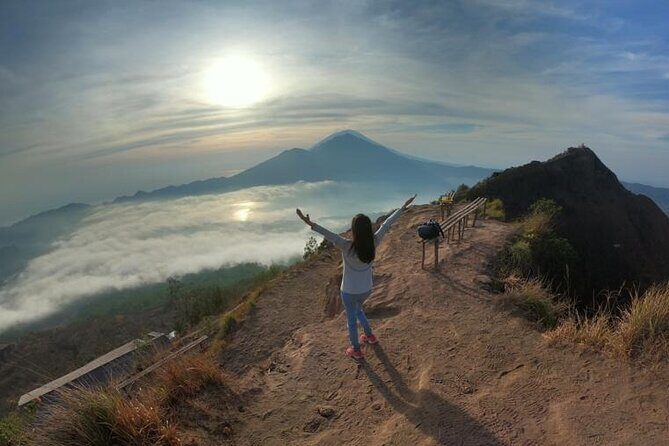
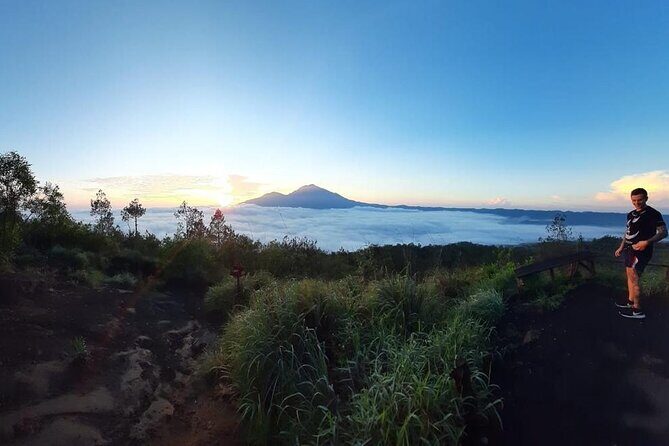
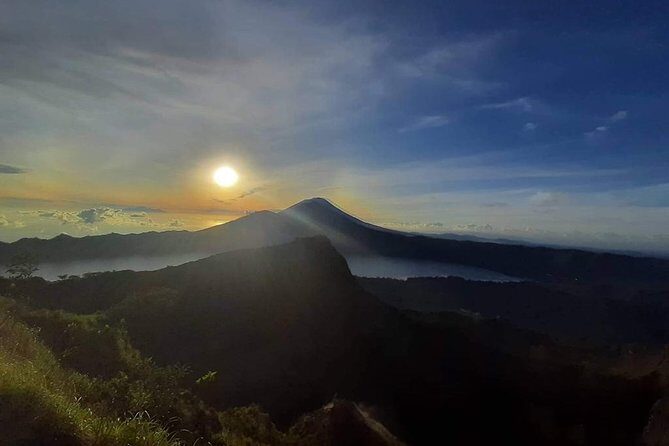
  • Mount Batur: Volcano hiking option with crater and Lake Batur views. There’s a note that visibility can be limited during the rainy season (December to March).
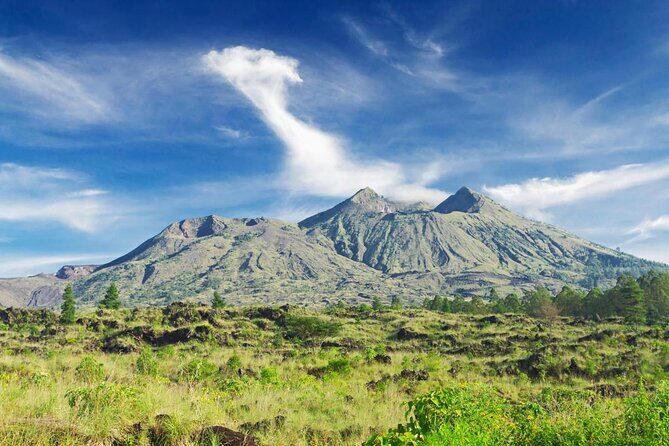
  • Mount Agung: The island’s highest volcano at 3,033 m. It has huge spiritual significance, and a short visit will likely be about viewpoints and atmosphere rather than a full climb.

If mountains are your priority, communicate your exact goal (views only vs. a hike plan) so your driver can build the day around realistic timing.

The real-world logistics: traffic, short stops, and photos

Bali traffic is real. Even when the plan looks great on paper, you’ll spend time in the car. That’s why the “15 minutes per stop” approach matters: it helps you fit many highlights into one day, but it also means you shouldn’t expect long guided walks.

Also, think about photos with a plan. With onboard WiFi, you can upload quickly, and some drivers are known for making photo stops work well—using your own phone for the shots and helping you pick good angles. If you care about photos, tell your driver early so they can position you for the best light and avoid last-second scrambling.

Should you book this private Bali day trip?

Book it if:

  • You want maximum variety in one day (beaches + temples + Ubud vibes)
  • You value pickup convenience and WiFi on board
  • You can pick a few must-sees and let your driver fill in the rest

Skip it or change expectations if:

  • You want long, in-depth explanations at every stop. This is primarily a private driver experience, and your best move is to ask for the level of detail you want.
  • You’re the type who gets annoyed by short stop times. The day works best when you’re flexible and okay with “see it, then move on.”

FAQ

What’s the duration of the Bali day trip?

It runs about 8 to 10 hours (approx.), depending on the route you choose.

Where do pickups happen?

Pickup service is available from Seminyak, Canggu, Nusa Dua, Ubud, Kuta, Jimbaran, and Sanur.

Is WiFi included?

Yes. The vehicle includes WiFi on board.

Do I need to bring printed tickets?

No. You’ll receive downloadable tickets for your mobile phone.

Is lunch included in the price?

No. Lunch is not included.

Are entrance fees included for each attraction?

No. Admission tickets are not included for many stops, though some stops are listed as free.

What’s included besides transportation?

Included items are air-conditioned vehicle, private transportation, fuel surcharge, WiFi, bottled water, parking fees, and round-trip pickup service from your accommodation.

Can I choose the route?

Yes. The tour is fully customizable, and you’ll discuss and confirm the route in advance with your driver.

Do I need any special safety items?

Yes. The information provided includes that masks and personal protective equipment are required, and the car is cleaned and sanitized frequently.

How does cancellation work?

Cancellation is free up to 24 hours in advance for a full refund, and the tour requires good weather (if canceled due to poor weather, you’ll be offered a different date or a full refund).

Bali to Nusa Penida: Premium Private Full Day Tour-All Inclusive

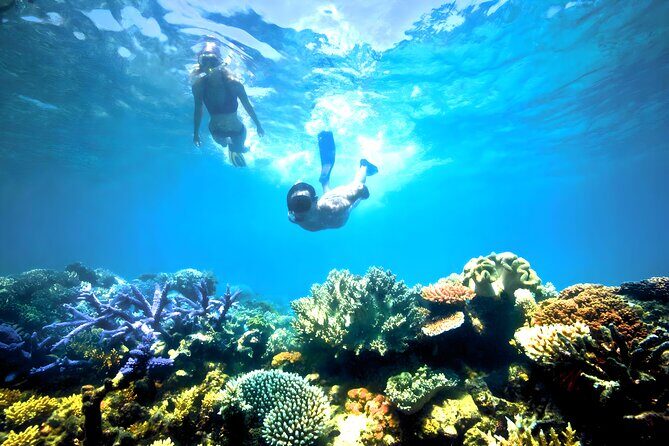
A serious day-trip to Nusa Penida can be loud and rushed. This one is built for snorkeling calm—your group heads out on a private motor yacht timed to avoid the worst crowd surges.

I love that the schedule is designed around good visibility and quieter stops, not just ticking boxes. You also get a real premium-feeling flow: welcome drink, multiple reef windows, and time to actually enjoy the water.

Two big wins for me are the infinity-pool lunch with Mt. Agung views and the chance to swim with giant oceanic manta rays. It’s the kind of day where photos feel like part of the experience, not an afterthought.

One consideration: the ocean crossing and snorkeling day depend on weather and sea conditions. If you’re sensitive to motion, that’s something to plan for before you pay premium money.

Key points I’d bet on

  • Private yacht setup that avoids the chaotic fast-boat feeling
  • Pro-led snorkeling with tailored stops like SD Point drift conditions
  • Manta ray flexibility (Manta Bay or Manta Point depending on availability)
  • Lunch at Khamara with Mt. Agung views and a white-sand beach at the daybeds
  • Onwater photos/video captured with a GoPro style setup
  • Serangan return options plus a hot shower in the office

Why this Bali to Nusa Penida premium yacht day feels different

Bali to Nusa Penida: Premium Private Full Day Tour-All Inclusive - Why this Bali to Nusa Penida premium yacht day feels different

Nusa Penida is famous, which means it can also feel like a conveyor belt. This tour is built to reduce that. Instead of arriving amid noise, you go out on your own private yacht and spend the day in a tighter rhythm.

I like that the team plans the day around timing—hitting the popular spots when crowds are less intense. You get a day that feels more like a curated excursion than a nonstop stampede.

Then there’s the “premium” part that actually matters: included snorkeling gear, landing and facility fees, towels, bottled water, and an underwater photo/video capture. That means you show up ready to swim, not to negotiate logistics mid-vacation.

Serangan morning: office welcome, 8:30 start, and the 30-minute hop

Bali to Nusa Penida: Premium Private Full Day Tour-All Inclusive - Serangan morning: office welcome, 8:30 start, and the 30-minute hop

You meet at the Boat Tours And Rental Bali-Nusa Penida office in Serangan, Denpasar. Start time is 8:30 am, and there’s a welcome drink waiting—plus free-flow coffee by % Arabica, along with teas, beverages, and pastries.

From there, the crossing to Nusa Penida takes about 30 minutes by boat. That short hop is a big deal on an 8–10 hour day; you spend more time snorkeling than riding out the waves.

If you’re booking this from further away (Kuta, Seminyak, Canggu, Ubud, etc.), note that a private transfer from your hotel isn’t included—but the tour offers transfers to several areas. Also, if you’re relying on pickup, double-check your timing the day before so you don’t lose morning momentum.

Nusa Lembongan first stop: Bali Hai Lagoon and calm coral gardens

Bali to Nusa Penida: Premium Private Full Day Tour-All Inclusive - Nusa Lembongan first stop: Bali Hai Lagoon and calm coral gardens

The first water time is on Nusa Lembongan, with a stop at what’s described as a secret Bali Hai Lagoon plus coral gardens near the island. This is positioned as the easier start: calm, clear water is the goal here.

This matters because your first snorkel shapes the whole day. If you go in relaxed—floating, looking around, finding fish—your later, wilder-water spots feel more fun than stressful.

You’ll get about 1 hour at this stop, and it’s built as a breather before the more current-driven snorkeling later. If your group has mixed experience levels, this “warm-up” stop helps everyone get comfortable with fins, mask fit, and how the water looks once you’re in.

SD Point and Wall Bay: drift snorkeling, turtles, and mangrove reef edges

Bali to Nusa Penida: Premium Private Full Day Tour-All Inclusive - SD Point and Wall Bay: drift snorkeling, turtles, and mangrove reef edges

After Lembongan, you head toward Nusa Penida and the next reef stop is SD Point. This one is described as a hidden spot and a divers’ paradise, especially for people who enjoy current drift snorkeling. The payoff can be strong: you can spot turtles and lots of fish.

From a practical viewpoint, drift snorkeling is different. You’re not just swimming in place—you’re letting the water do some work. That can feel magical when you’re watching fish and coral move with the current, but it’s also easier to get tired if you swim too hard.

Right after, the tour moves you to Wall Bay Point for a very short stop. It’s about a minute long on the schedule, and the highlight is snorkeling near mangroves and vibrant coral reef marine life. Think of it as a quick add-on window: you might see a different style of reef environment than at SD Point without committing to a long swim stretch.

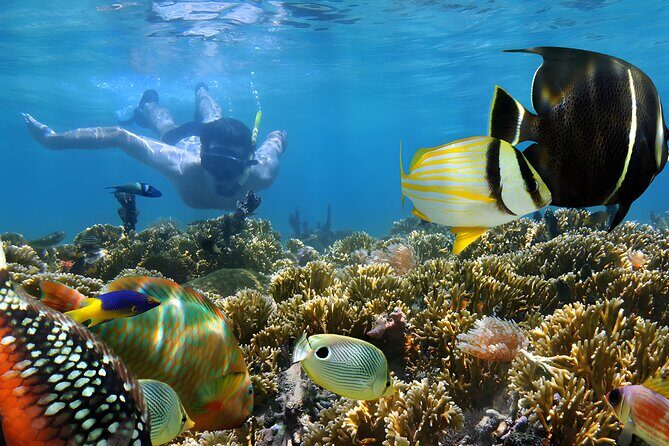
If you want turtles and you also want good variety in reef scenery, this pair of stops is a smart combo. The day isn’t just built around one highlight—it’s built around multiple chances to see marine life.

Khamara lunch with Mt. Agung views and a private beach at daybeds

Bali to Nusa Penida: Premium Private Full Day Tour-All Inclusive - Khamara lunch with Mt. Agung views and a private beach at daybeds

Lunch is at Khamara Nusa Penida, and this is where the day slows down. You get about 1 hour 30 minutes, plus a restaurant meal described as having stunning views of Mount Agung.

The standout detail here is that the lunch spot includes a private white sand beach right at the daybed area. In other words, you’re not eating and immediately sprinting back onto a boat. You’re reset time, then back in the water when your energy level is good.

There’s also a good “vacation math” element: lunch is included, and it’s not a random roadside meal. For the price level of this tour, you should expect the land portion to be a real part of the day—and Khamara is the only stop where you get that true sit-down, view-and-relax moment.

Manta Point (or Manta Bay): how the tour manages your best shot

Bali to Nusa Penida: Premium Private Full Day Tour-All Inclusive - Manta Point (or Manta Bay): how the tour manages your best shot

The final water highlight is manta ray snorkeling at Manta Point or Manta Bay, depending on availability. That flexibility matters. Manta sightings can be unpredictable, and the team’s job is to put you in the right water at the right time.

This stop is scheduled for about 1 hour. It’s also guided, with professional guidance used to help you position and swim comfortably for the encounter. The tour emphasizes giant oceanic manta rays as a once-in-a-lifetime experience, and from the way the day is structured, it’s clear the goal is to give this last segment enough time to feel real—not rushed.

A smart thing to remember: manta ray success isn’t only about location. It’s also about conditions. When the ocean is too rough, you might still have an incredible day, but the manta highlight can be affected. That’s why the tour timing to avoid crowds and the use of experienced crew are important—they help make the best of whatever the day offers.

In the crew stories people share, the experienced captains and guides are a big reason the day feels safe, even when the sea can be choppy. One boat captain named Billy and guides such as Putu and Ringgo show up repeatedly in positive comments about confidence and good decision-making.

Guides, safety, and the little things that prevent a bad day

Bali to Nusa Penida: Premium Private Full Day Tour-All Inclusive - Guides, safety, and the little things that prevent a bad day

This is a private tour for your group, and a big part of “premium” is how the day is run. You get a professional English-speaking snorkeling guide, and the tone from the team is safety-first with active guidance in the water.

The guides’ names that come up often include Morgan, Ceco, Budi, Olog, Putu, and Ringgo. I take that as a sign the operation has consistent staffing—people get repeat guide experiences rather than totally random leadership.

What you care about, though, is how that turns into your day:

  • You’re taken to the right snorkeling type for the spot (drift conditions at SD Point, reef-and-mangrove style at Wall Bay).
  • The crew helps you adjust the plan if conditions shift.
  • You’re not just dropped in with a “good luck” attitude.

And yes, the ocean can be rough. Multiple comments point out that even when seas get unsettled, the captain and guide experience makes a huge difference in how calm you feel. That’s one of those things you can’t test until you’re on the water—so it’s worth paying for a crew that’s clearly done this route many times.

What’s included (and why that matters more than the headline)

Bali to Nusa Penida: Premium Private Full Day Tour-All Inclusive - What’s included (and why that matters more than the headline)

Premium pricing should come with fewer surprises. Here’s what you actually get included:

  • Lunch at a stylish restaurant with an infinity pool and views of Mt. Agung
  • Snorkeling equipment described as USA quality
  • Landing and facility fees
  • Bottled water
  • Underwater photos and videos with a GoPro style setup
  • Professional English-speaking snorkeling guide
  • All entrance tickets, towels, and drinking water

Not included:

  • Private hotel transfer (listed at 300,000 IDR per way for 5 people)
  • Private land tour on Nusa Penida (listed at 800,000 IDR per car for 5 people)
  • Breakfast

Why I think this matters: if you’ve ever done “tour + extras” experiences, your day gets chopped up by small fees and gear rentals. Here, the cost is bundled into the experience. You can budget once, then spend the day focused on water and photos.

One more detail that makes a difference for families and groups: this is designed as a private group outing. Multiple comments mention it being a good fit for groups of around 4–6 people, where the crew can match your pace instead of managing a large mix of strangers.

Price and value: is $495.88 per person actually justified?

Bali to Nusa Penida: Premium Private Full Day Tour-All Inclusive - Price and value: is $495.88 per person actually justified?

At $495.88 per person, this is not a budget snorkeling outing. It’s a premium private yacht day, and the value comes from the “package” you’re buying—especially around manta-focused time.

If you strip it down, you’re paying for:

  • private yacht time instead of shared chaos
  • pro guide attention for multiple stops
  • included snorkeling gear and key fees
  • lunch with view and pool (plus that daybed beach element)
  • underwater photo and video capture

That combination reduces the biggest hidden costs of similar days: equipment rentals, lunch add-ons, entrance fees, and the time wasted coordinating. Also, manta ray snorkeling is a timing-and-conditions game. The more experienced crew you’re paying for, the more your odds of a smooth, well-managed day improve.

So the question isn’t just whether the price is high. It’s whether you want this day to feel controlled, photographed, and low-stress. If yes, the price aligns with what you’re getting.

If you’re mainly focused on seeing fish and coral and you don’t care about photos/video capture, you might prefer a cheaper shared-boat option. But if manta rays are the mission, this style of tour is aimed exactly at that goal.

Who this Bali to Nusa Penida tour is best for (and who should think twice)

This works best if you want:

  • a private group day rather than fast-boat chaos
  • multiple snorkeling windows, including current-style drift snorkeling
  • an all-in lunch stop with real downtime
  • professional guidance and underwater photo/video capture

It can also be a solid choice for families, including kids. People mention doing it with younger travelers, and the guide experience helped even when the ocean wasn’t perfectly calm.

Think twice if you’re:

  • sensitive to motion (the day can get choppy at sea)
  • bringing someone who’s pregnant over 32 weeks (it’s not permitted)
  • expecting a guaranteed manta sighting regardless of conditions (the tour adapts between Manta Bay and Manta Point based on availability)

Practical tips so you get the best day, not just the best plan

A few plain things I’d do before you go:

  • Confirm pickup and meet-up timing if your route includes a hotel transfer option. Some communication issues show up in feedback, so getting it right early saves stress.
  • Pack for sun and water time. Even if you’re mostly in the water, you’ll be on the boat between stops.
  • If your group can get motion sick, plan for it before boarding. The ocean can be rough, and comfort makes snorkeling much more enjoyable.
  • Bring a simple mindset: you’re spending a big chunk of the day on boats and in the water. Having a relaxed attitude helps everything go smoothly.

Should you book this premium private yacht day to Nusa Penida?

I’d book this if your priority is manta rays plus a calmer, more controlled day. The “premium” parts aren’t just marketing fluff here: the included gear, guided snorkeling, all-fee coverage, and the underwater GoPro-style photos/video add real value. Add lunch at Khamara with infinity-pool views and that private beach setup, and it becomes a full-day experience rather than a reef stop squeezed into transportation.

I wouldn’t book it if you’re trying to keep costs low or you know you won’t handle choppy seas well. This is a yacht day, not a sheltered lagoon cruise, and ocean conditions can influence how comfortable you feel.

If you want Nusa Penida to be the kind of day you remember for the right reasons—manta rays, turtles, coral gardens, and a crew that keeps things organized—this one is built for that.

FAQ

What time does the tour start?

The tour starts at 8:30 am.

Where is the meeting point?

You meet at Boat Tours And Rental Bali-Nusa Penida, Jl. Tukad Punggawa No.238, Serangan, Denpasar Selatan, Kota Denpasar, Bali 80228, Indonesia.

How long does it take to get to Nusa Penida?

The crossing to Nusa Penida takes about 30 minutes by boat.

What’s included in the price?

Included are lunch (with infinity pool and Mt. Agung views), snorkeling equipment, landing and facility fees, bottled water, underwater photos and videos, an English-speaking snorkeling guide, and entrance tickets, towels, and drinking water.

Is hotel pickup included?

A private transfer from/to your hotel is not included. Transfers to multiple areas are available as an option.

Are manta rays guaranteed?

The tour takes you to Manta Point or Manta Bay depending on manta rays availability, so the encounter depends on conditions.

Bali ATV Quad Bike Adventures

Bali ATV Quad Bike Adventures - After the ride: showers, changing rooms, and lunch you can count on

Quad bikes in Bali get you dirty fast. This Ubud ATV ride threads rice fields and jungle tracks with a beginner-friendly guide, then throws in lunch and a shower. I liked two things most: the included safety gear with insurance coverage, and guides like Oka and Pong who keep first-timers comfortable. One drawback: Bali traffic and package add-ons can stretch your day, and the final value may feel different than the first price you see.

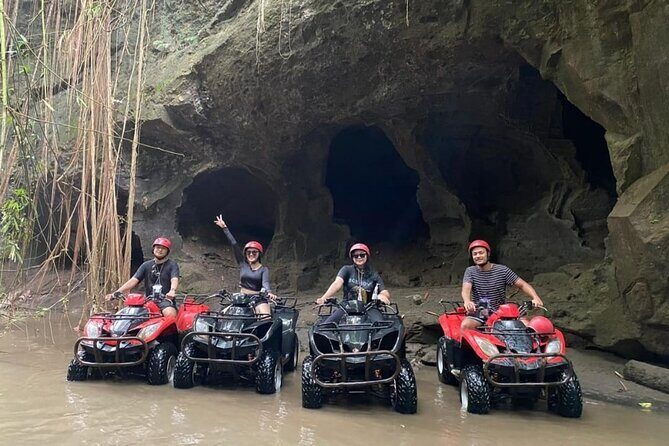
Most people book the option with round-trip hotel transfers, so your morning starts with pickup instead of a scooter scramble. At Pertiwi Adventure, you get helmet and boots, learn the simple controls, and then ride a course with puddles, small rivers, and even a tunnel. If you do a tandem ride, you’ll share one ATV and decide up front who drives; solo riders (age 16+) get their own quad.

Key things to know before you go

  • Gear, insurance, and a shower are included so you’re not stuck figuring out logistics after you’re muddy
  • A real off-road loop with puddles, bamboo/river scenery, and a tunnel, not just a flat “theme park” track
  • Tandem vs solo changes the vibe: shared ATV for tandem, one ATV per person for solo
  • Lunch is part of the package, with people reporting vegan-friendly options
  • The day can run long because pickup time, transfers, and traffic can add waiting

Ubud pickup and the Pertiwi Adventure start

Bali ATV Quad Bike Adventures - Ubud pickup and the Pertiwi Adventure start
This is one of those Bali tours where the day works best if you treat it like a full half-day, not a quick errand. If you choose the transfer option, pickup comes from your Ubud or south Bali hotel (you’ll be asked for your accommodation name and address when booking). If you don’t choose transfers, you’ll need to make your own way to the activity site.

The ATV ride itself starts at Pertiwi Adventure (Bali Pertiwi Adventure, Jl. Dewi Saraswati No.2, Bongkasa Pertiwi, Kec. Abiansemal, Kabupaten Badung). You’ll return to the same meeting point when you finish. If you add on Ubud stops like the rice terraces or monkey forest, you’re basically buying a “ride plus sightseeing” day.

One practical note: the tour company runs groups with a maximum of 30 people. That number matters because it usually affects how long you wait to get sorted and how quickly you can move from transfer to briefing to riding.

Helmet-on: tandem and solo rules (and how the day feels)

Bali ATV Quad Bike Adventures - Helmet-on: tandem and solo rules (and how the day feels)
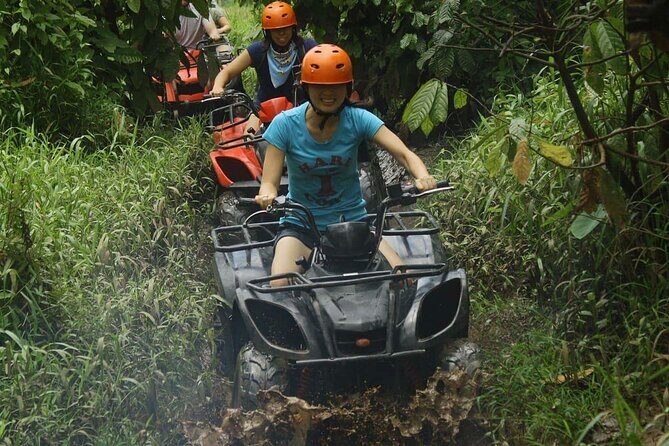
Before you move an inch, you’ll get geared up with a helmet and boots. Then the guide shows you the simple controls—enough to get you rolling without a big learning curve. The ride is described as challenging but beginner-friendly, and the course has the kind of wet, muddy sections that make it feel like you’re doing something real.

Now the important part: how you ride.

  • Solo ride means you get your own ATV. Solo riders must be at least 16 years old.
  • Tandem ride means two people share one ATV (a rider and a passenger). Tandem requires booking in multiples of 2. Minimum age is 5 years old with an adult present (for a tandem passenger).

If you’re doing tandem, you’ll decide who drives. That’s not a small detail—your passenger is going to spend more time holding on and enjoying the view, while the driver does most of the work (and steering through puddles).

A few reviews highlight how guides run a calm, hands-on start. People singled out guides by name, including Oka, Pong, and Pandu, and mentioned that first-time riders felt looked after after the initial instructions.

The 1.5-hour ATV track: puddles, rice views, bamboo/river scenes, and a tunnel

The ATV portion is about 1.5 hours on the quad bike. That time typically covers a loop through wet sections (puddles and small river crossings), plus scenic stretches that go beyond “just ride forward.” You’ll pass a mix of rice fields, bamboo forest, and riverside jungle scenery, and you may even go through a tunnel.

This is the part you’re really paying for: a chance to ride your own all-terrain machine through Bali’s messy, green in-between spaces. Expect your clothes to get dirty. The tour includes lockers and then offers a shower after the ride, so you don’t have to stay in that soggy feeling for long.

The course can also be “treacherous in parts,” based on a review. That’s not meant to scare you—it’s a heads-up to ride smart. If you’re bringing kids, keep their comfort with mud, speed, and bumps in mind.

Timing also matters for expectations. One review said they were told a longer ride, but their actual riding time was shorter. Another review said if you finish the first ride too quickly, they won’t allow an additional lap. So don’t plan on unlimited riding. Plan on the listed track time, and treat any extra time as a bonus.

After the ride: showers, changing rooms, and lunch you can count on

Bali ATV Quad Bike Adventures - After the ride: showers, changing rooms, and lunch you can count on
When you’re done, the tour doesn’t end with you wandering off muddy. You get access to a shower and changing room, which is genuinely helpful in Bali’s humid heat. You’ll also get lunch and mineral water.

Lunch quality can make or break the value of a tour like this. One review specifically called out vegan accommodation, which is a big plus if you have dietary needs. On the other hand, there are complaints about lunch being small or the day becoming slower when the group is waiting. That doesn’t mean lunch will be bad for everyone, but it does mean you should be mentally prepared that the whole day is scheduled like a production (pickup, waiting, riding, then lunch).

Souvenir photos are not included, and you can expect them to be offered for purchase. If you hate surprise costs, decide in advance whether you want photos, because the temptation is built into the flow of these tours.

Optional upgrades: waterfalls, monkey forest, swings, rafting, and real time math

Bali ATV Quad Bike Adventures - Optional upgrades: waterfalls, monkey forest, swings, rafting, and real time math
The base experience is the ATV ride, shower, and lunch. Then you can upgrade the day by adding other activities. The tour is set up so that if you choose an option, your itinerary continues beyond the ride and may include private transfer around Ubud.

Here are the specific add-on combos described:

  • Ubud Tour option: ATV ride with private transfer, plus visits to Ubud art handicrafts, Tegalalang Rice Terraces, and the Ubud Sacred Monkey Forest.
  • Bali Swing option: ATV ride with private transfer, plus the Bali Swing Pioneer Active package.
  • Waterfalls Tour option: ATV ride with private transfer, plus Tibumana and Kanto Lampo Waterfalls, plus Ubud art handicrafts.
  • All rider, Swing, Tegenungan option: ATV ride plus Ubud Swing, Tegenungan Waterfalls, and Ubud art handicrafts.
  • White-water rafting is also mentioned as an upgrade you can add.

This matters for your day planning. The total duration from pickup to drop-off depends on the package, listed as about 5 to 10 hours. Some reviews mention heavy Bali traffic dragging the day out and creating waiting time before you reach the next activity. If you’re only visiting Bali for a short time, this is the kind of day where you should keep your next booking flexible.

Price and value: why the “$39.78” can turn into a different number

Bali ATV Quad Bike Adventures - Price and value: why the “$39.78” can turn into a different number
At about $39.78 per person, the ATV adventure looks like a great deal on paper, especially because you’re getting safety gear, insurance coverage, lunch, a shower, and (in many packages) transfers. For a lot of people, that’s exactly the right kind of Bali value: one ticket that covers the messy parts of organizing an off-road experience.

But there are a couple of price traps to watch for:

  • One review said the listing felt misleading and that the initial price seemed tied to a sharing option, with the final cost coming out about double after selecting the ATV option and other items.
  • Another complaint mentioned being pushed toward more expensive packages through the menu process.

So here’s my advice: before you pay, double-check what your selected package includes. Confirm whether it’s ATV-only or ATV plus transfers plus other attractions. If you see add-ons like monkey forest, waterfalls, or swings, assume your total day cost will climb.

Also remember: ATV photos are sold separately, and a few reviews mention the schedule can feel slower once you factor in waiting.

Safety reality check: insurance, waivers, and how to ride smart

Bali ATV Quad Bike Adventures - Safety reality check: insurance, waivers, and how to ride smart
The tour includes insurance coverage and all safety gear. That’s a real positive. Still, a couple of reviews raise concerns about how insurance and waivers are handled—one person mentioned signing away claims and described insurance limits in detail, and another described a serious injury outcome and no refund.

I can’t rewrite their experiences, but I can point you to the practical takeaway: treat the waiver as a real document. Read what you sign at the office, and don’t assume insurance details will be explained earlier.

On the riding side, you’re helped by the guide’s initial training. Reviews praise guides for keeping riders safe on the route and checking in. People also mention that some vehicles may need repair, so if something feels off with the ATV you’re assigned, speak up before you start.

Finally: ride within your comfort level. If the track looks slick or rough, slow down. The point is to have fun across puddles and muddy sections—not to treat it like a race.

Who should book this ATV tour (and who should pause)

Bali ATV Quad Bike Adventures - Who should book this ATV tour (and who should pause)
This is a strong fit if you want an active Bali day without needing to rent and figure out everything yourself. If you’re traveling with friends, tandem can work because you share the ATV but still get the full experience. If you’re traveling as a teen or adult (age 16+), solo gives you more control and a more personal ride.

It may be less ideal if:

  • You hate long days and aren’t willing to wait around due to pickup time and traffic.
  • You’re extremely price-sensitive and want the final total to match the first price you saw.
  • You’re bringing very young kids and you want minimal roughness; one review called the track treacherous in parts.

Should you book Bali ATV Quad Bike Adventures?

Bali ATV Quad Bike Adventures - Should you book Bali ATV Quad Bike Adventures?
Yes, with a few smart conditions.

Book it if you want a real off-road ATV ride around Ubud’s countryside (rice fields, bamboo/river scenes, puddles, and a tunnel), plus lunch and a shower that make the day practical. If you like the idea of a guide-led route, and you’re okay paying for add-ons if you choose them, it’s likely to feel worth it.

Skip or re-check the plan if you’re trying to squeeze this into a tight schedule, or if you haven’t confirmed what your package includes. The tour can be great value when the transfers and full set of inclusions match what you selected. It can feel overpriced when the final bill shifts after add-ons, sharing options, or photo/extra purchases.

If you do book, I’d go in knowing the key truth: this is a fun dirt-and-views day, not a quiet museum visit.

FAQ

What’s included in the Bali ATV Quad Bike Adventure?

The package includes a professional guide, insurance coverage, an approximately 1.5-hour ATV ride, helmet and boots, lunch and mineral water, and shower facilities with changing room access. If you choose the transfer package, round-trip private hotel transfers are included as well.

Do I need to arrange my own transport in Bali?

You have two options. With the transfer package, you’ll get pickup and drop-off from your hotel location (and pickup/drop-off are at the same hotel/location). Without transfers, you’ll need to come to the ATV ride place on your own.

Can I ride tandem with someone else, and what are the age limits?

Tandem ride means two people ride on one ATV (a rider and a passenger). The minimum age for tandem is 5 years old with an adult present. Tandem must be booked in multiples of 2. Solo ride means one ATV per person, and solo riders must be at least 16 years old.

How long is the ATV ride?

The ATV riding portion is about 1.5 hours. Total time from pickup to drop-off depends on the package you book and is listed as roughly 5 to 10 hours.

Is lunch and a shower included after the ride?

Yes. After the ride, you’ll have access to showers and a changing room, plus lunch and mineral water.

What add-on activities can I include?

You can add options such as white-water rafting, a waterfall tour, an Ubud sightseeing tour, or the Bali swing experience. Specific combos include visits like Tegalalang Rice Terraces and Ubud Sacred Monkey Forest for the Ubud tour option, and Tibumana and Kanto Lampo Waterfalls for the waterfalls tour option.

Can I cancel for free?

Yes. You can cancel up to 24 hours in advance for a full refund. If you cancel less than 24 hours before the experience starts, the amount paid is not refunded.

Open Water Course in Nusa Lembongan – Get Certified on remote island (next Bali)

Open Water Course in Nusa Lembongan - Get Certified on remote island (next Bali) - What you earn: SSI Open Water to 18 meters

Scuba made simple here.

This SSI Open Water course turns Nusa Lembongan into your classroom, with certified instructors guiding you through theory, skills in shallow water, and the required open-water training. I like how the teaching style shows up in the small details: clear explanations and calm handling when you feel nervous, with instructors such as Silvère and Kaka specifically praised for patience and support (and yes, that first real moment underwater can feel a bit unreal).

What really makes this course feel worthwhile is the mix of comfort and opportunity. You get a full package of gear (mask, tank, fins, and more), plus practical on-site basics like Wi‑Fi, lockers, bathrooms, and a restaurant, so you’re not juggling logistics after each session. And because the area is known for big marine life, you may get to see mantas, turtles, octopus, sharks, and lots of fish and coral—though I’d treat manta sightings as a bonus, not a guarantee.

One consideration: your plan depends on conditions. The course is weather-dependent, and in at least one experience it wasn’t possible to reach manta-focused sites, so you should book with flexibility and expect that the schedule can shift for safety.

Key things I’d notice before you book

Open Water Course in Nusa Lembongan - Get Certified on remote island (next Bali) - Key things I’d notice before you book

  • SSI Open Water certification with training designed to reach 60 feet / 18 meters
  • At least 5 shallow-water sessions plus at least 4 ocean sessions, with both skills practice and real underwater time
  • Comfortable training base: lockers, bathrooms, Wi‑Fi, and a restaurant on-site
  • Multiple local sites including Crystal Bay, Mangrove Point, Toyapakeh, and Jungut Batu Beach
  • Great instructor track record with names like Silvère, Kaka, Loïc, and Pablo showing up repeatedly

SSI Open Water on Nusa Lembongan: your course, in plain terms

Open Water Course in Nusa Lembongan - Get Certified on remote island (next Bali) - SSI Open Water on Nusa Lembongan: your course, in plain terms
This is an SSI International Open Water certification course, set on Nusa Lembongan—the island that feels like a quieter next step after Bali. You’ll learn the basics from scratch, then build real confidence through supervised exercises and multiple ocean sessions.

The format is structured in three main stages. First comes the knowledge part (the what and why). Next you practice core skills repeatedly in shallow water, typically in a beach or pool setting. Then you graduate to deeper ocean sessions where you apply those skills for real-life underwater conditions.

The good part for you is that you’re not just doing “one lesson and hope.” You get enough time in the water to actually learn buoyancy control, breathing rhythm, and basic safety procedures so your certification feels earned, not rushed.

What you earn: SSI Open Water to 18 meters

Open Water Course in Nusa Lembongan - Get Certified on remote island (next Bali) - What you earn: SSI Open Water to 18 meters
The goal of the course is SSI Open Water certification, with training that prepares you to dive (under SSI rules) to 60 feet / 18 meters. That matters because it’s not a “try scuba” experience. It’s a real certification track that can open doors to future trips where you want to go past the first-timer stage.

During the ocean portion, the course includes at least four deep-ocean sessions, plus training dives that help you practice technique and confidence-building skills under supervision. In other words, you should come away with both the certificate and the muscle memory to use it.

Also note the practical side: you’re working with a certified instructor the entire time. That doesn’t just feel reassuring—it also helps you progress faster because feedback is immediate.

Stage one: theory you’ll use, not just memorize

Before you get wet, you’ll develop the knowledge you need to understand diving basics. The course describes a theory component, then moves into hands-on training right away.

I like this sequencing. When the rules and concepts connect to what you’re about to do, it reduces the “everything is new” shock. You’re still learning a lot, but it stops feeling like random scuba facts floating in the air.

Stage two: shallow-water skills, at least five practice sessions

Open Water Course in Nusa Lembongan - Get Certified on remote island (next Bali) - Stage two: shallow-water skills, at least five practice sessions
You’ll do basic exercise training in shallow water—either a beach or a swimming pool—with at least 5 sessions. This is where you work on the fundamentals you’ll rely on underwater: controlling your breathing, using equipment correctly, and performing basic skills without panicking.

From what people describe, instructors here tend to focus on clarity and calm. That’s a big deal because the early skills phase is where most first-time students get overwhelmed—not by underwater animals, but by doing the basics while your brain is still catching up.

If you’ve already done a discovery session and want to go further, this shallow phase is the bridge. It turns first-timer confusion into repeatable control.

Stage three: open-water sessions at four Lembongan-area sites

Open Water Course in Nusa Lembongan - Get Certified on remote island (next Bali) - Stage three: open-water sessions at four Lembongan-area sites
Over the course, you’ll complete at least four ocean sessions plus the required training dives in deep waters. The itinerary lists four stops: Crystal Bay, Mangrove Point, Toyapakeh, and Jungut Batu Beach.

Here’s the practical value of rotating locations: it helps you learn how your buoyancy and comfort hold up in different underwater environments. Even when your skills don’t change, the feel of the water can. Different sites mean different routes, different visual cues, and different ways your brain needs to stay calm and organized.

What you might see depends on conditions. The overall experience highlights the chance for marine life like manta rays, turtles, octopus, sharks, and plenty of fish and coral. Just remember: if the day’s conditions don’t line up, you might not reach every hoped-for site. One experience specifically noted that it wasn’t possible to reach manta point, even though mantas are a major draw in the region.

The manta-ray promise: what to expect and how to think about it

Open Water Course in Nusa Lembongan - Get Certified on remote island (next Bali) - The manta-ray promise: what to expect and how to think about it
The standout hook is that you’ll be in an area where people genuinely expect manta-ray encounters. The course experience is marketed around that idea, and the on-water wildlife list you’ll hear includes mantas along with turtles, sharks, octopus, and coral.

But here’s the honest way to plan mentally: think of mantas as a real possibility, not a schedule item. Weather, sea conditions, and site access can affect what you can reach that day. And because you’re learning and being assessed, safety decisions always win.

The good news is that the rest of the underwater life doesn’t require perfection to be worth it. Even if mantas don’t show up, you’re still getting multiple ocean sessions and seeing coral and fish up close—plus learning how to enjoy what’s in front of you without treating it like a checklist.

Equipment included, and what that saves you

Open Water Course in Nusa Lembongan - Get Certified on remote island (next Bali) - Equipment included, and what that saves you
This course includes the scuba gear you need, from mask to tank to fins. That’s more than convenience. It reduces hassle before day one, and it means you can focus on your skills instead of guessing whether a random rental fits correctly.

The training base also has the basics you’ll appreciate between sessions: lockers for your stuff, bathrooms and shower access, and Wi‑Fi so you can send messages, upload photos, or handle work without hunting for a café every time.

There’s also a restaurant on-site, which matters when your schedule gets busy. After your brains and bodies have been “training mode” for hours, you don’t want a complicated meal quest.

Meet the instructors: calm teaching is the real upgrade

Open Water Course in Nusa Lembongan - Get Certified on remote island (next Bali) - Meet the instructors: calm teaching is the real upgrade
The course is credited to certified instructors, and names show up repeatedly with praise for how lessons land.

In particular:

  • Silvère gets called out for being thorough and making students feel safe, including one story where someone felt panicked on a first ocean session and the instructor stayed calm and patient.
  • Kaka earns praise for making learning easy and fun, including detailed explanations and GoPro photo moments.
  • Pablo is mentioned alongside Kaka for patience and clear instruction.

Why this matters to you: good instructors don’t just explain what to do. They notice when your body and breathing are off, then help you fix it. That’s the difference between “I survived the course” and “I actually learned.”

Stop-by-stop: what each location does for your training

The itinerary rotates through four places: Crystal Bay, Mangrove Point, Toyapakeh, and Jungut Batu Beach. The exact underwater features aren’t spelled out here, but the training purpose of multiple locations is clear: you practice the same core skills across different settings so the certification reflects real ability, not just one specific scenario.

Here’s how to think about each stop:

  • Crystal Bay: often associated with open-water excitement, so it’s a natural fit for practicing skills once you’re beyond the beginner comfort zone.
  • Mangrove Point: the name tells you you’re near a coastal mangrove setting, which usually means a different visual environment than reef-only areas.
  • Toyapakeh: a second distinct site helps you keep building control and awareness rather than repeating the exact same pattern every time.
  • Jungut Batu Beach: returning to a known beach area supports continuity and makes transitions easier after longer water sessions.

Bottom line: don’t expect every stop to look identical. Expect your training to feel more “real world.”

Price and value: $461.48 for a full SSI track

The price is $461.48 per person, with bookings often made around 35 days in advance (so you’ll want to plan ahead if your dates are fixed).

What makes this feel like decent value is that it’s not just instructor time. The package includes scuba equipment and access to on-site facilities like lockers, bathrooms, showers, and Wi‑Fi. It also includes the structure needed for SSI certification: shallow-water practice sessions plus at least four ocean sessions with certified supervision.

Another value factor: this is a private tour/activity, meaning your group stays together. That can reduce the stress of a mixed-skill crowd and can help instructors manage pacing.

Is it expensive? For a certification course, it’s in the range you should expect. The better question is whether you’re getting a complete learning track. With the gear included and the course structure clearly defined, you are.

Who should do this course (and who should slow down)

This course has a minimum age of 10. It also states you should have moderate physical fitness. If you can swim and you’re comfortable learning new equipment skills step-by-step, this is a strong fit.

I’d pay extra attention if:

  • you’re prone to panic in new environments (the good news: instructors here are praised for staying calm, but you should still go in prepared)
  • you expect guaranteed manta encounters (treat mantas as a bonus)
  • you’re tight on schedule (weather can affect when sessions happen)

If you’ve already done a discovery scuba session, this is a straightforward next step toward becoming certified and gaining real independence on future trips.

My booking tips: make it smoother from day one

A few practical moves can help you get the most out of your three days.

  • Plan for a weather-dependent schedule. The course requires good weather, and if it’s canceled due to poor conditions, you’ll be offered a different date or a full refund.
  • Budget for optional photo purchases. Digital souvenir photos/videos aren’t included, but instructors may take photos with devices like GoPro—then you can decide whether to buy the final set.
  • Decide on accommodation early. Dormitory and bungalow options are available at the dive center, but accommodation itself isn’t included in the package.
  • Bring a calm mindset. You’re learning buoyancy, breathing, and safety procedures while the ocean does ocean things. The more relaxed you are at the start, the faster you’ll progress.

Should you book this SSI Open Water course on Nusa Lembongan?

If you want real SSI certification with structured training, gear included, and a team that prioritizes safety and clear instruction, I’d say yes. The course length is long enough to actually build confidence, not just complete checkboxes. And the setting gives you a strong chance at memorable wildlife—mantas and turtles are part of the region’s draw—while you learn the skills that make those encounters enjoyable.

Only skip it (or choose dates with flexibility) if manta encounters are your sole reason for going. Even then, the underwater life and the learning process should still be worthwhile, but you’ll want to plan your expectations accordingly.

FAQ

What certification will I earn?

You’ll earn SSI International Open Water certification.

How deep is the training geared for?

The course certification is for dives to 60 feet / 18 meters.

How many ocean sessions are included?

The course includes at least four ocean sessions in the deep waters, plus additional training dives.

Do I have to practice skills in shallow water first?

Yes. You’ll do basic exercise training in shallow water with at least 5 sessions.

What scuba gear is included?

The package includes the necessary scuba equipment, including mask, tank, and fins.

Are facilities available at the training center?

Yes. The location includes Wi‑Fi, lockers, bathrooms, shower/change rooms, and a restaurant.

Is accommodation included?

No. Accommodation (dormitory and bungalows) is available at the dive center, but it’s not included in the package.

What’s the minimum age?

The minimum age is 10 years.

What if weather is bad?

The activity requires good weather. If it’s canceled due to poor weather, you’ll be offered a different date or a full refund.

Are photo or video souvenirs included?

No. Digital souvenir photos/videos are available to purchase separately.

Mount Batur Sunrise Trekking Private All Inclusive

Mount Batur Sunrise Trekking Private All Inclusive - Night hike on black sand: flashlights, poles, and steady pacing

Cold start, big payoff. This Mount Batur sunrise trek is Bali’s favorite kind of early-morning adventure: you climb in the dark with Balinese guides, reach the summit for breakfast, and watch the island glow from the edge of an active volcano. I like how guide Wali keeps an eye on your pace and wellbeing, and even offers to carry your stuff while he’s managing breakfast. The main drawback is that you start before dawn and the top can feel cold fast, so come ready for a real climb on sand and rock.

I also love the small-group feel (max 5) and the way the itinerary keeps giving you something besides the hike: Lake Batur comes into view from up high, then you stop at OKA Agriculture Bali for coffee tastings on the way back. One more thing to consider: pickup can be very early and in the dark, so you’ll want to confirm your exact pickup point and be on time.

Key things I’d pin on your trip plan

Mount Batur Sunrise Trekking Private All Inclusive - Key things I’d pin on your trip plan

  • Max 5 travelers means the guide can actually manage the pace and you don’t feel packed in.
  • Summit breakfast is simple but comforting when you’re cold, hungry, and waiting for sunrise.
  • Flashlight night hiking is part of the fun; it also means you should wear proper shoes and take it slow on the uneven parts.
  • UNESCO crater area views give you a rare look at an active volcanic setting.
  • Lake Batur sightline is a quick but satisfying payoff on the return.
  • OKA Agriculture Bali coffee stop adds a cultural break that keeps the day from feeling like hike-only tourism.

What a Mount Batur sunrise trek is like in real life

Mount Batur Sunrise Trekking Private All Inclusive - What a Mount Batur sunrise trek is like in real life
Mount Batur is the kind of hike that turns your body into the metronome for the whole experience. The night part is all about rhythm: step, breathe, check your footing. Then the summit moment changes the whole tone. You stop moving, the air cools down, and you watch the sky brighten over Bali.

What makes this trek special isn’t fancy frills. It’s the combo of timing and access. You’re climbing during the hours most people sleep, then you get a summit breakfast and time at the crater area before heading back down. The included morning tea/coffee also helps you feel human again once the initial cold wears off.

And yes, it’s busy on some mornings. But this small-group version keeps it from feeling like a cattle shoot. You can actually talk with your guide, ask questions, and get help when the terrain gets tricky.

The ultra-early pickup and how the day flows from Ubud or Kuta

Your morning starts with pickup from Ubud or Kuta (the exact pickup time is confirmed at booking). Plan on a very early departure. In the real world, many schedules run around 2:30 AM, with some even earlier depending on where you’re staying.

The drive is part of the experience, mostly because you’re going from “resort breakfast” mode to “volcano hike” mode before you can fully register it. The vehicle is described as air-conditioned, and you’re going up toward Mount Batur’s area in the Kintamani region.

Timing matters here. If you’re late to pickup, you’ll feel it immediately because you’re hiking in darkness and the whole plan is built around reaching the summit before sunrise. A common lesson from mountain mornings: set your phone alarm, but also set your feet in motion early—standing around in the dark is not a fun warm-up.

Night hike on black sand: flashlights, poles, and steady pacing

Mount Batur Sunrise Trekking Private All Inclusive - Night hike on black sand: flashlights, poles, and steady pacing
The climb begins at the base around nighttime, using flashlights. That means visibility is limited and the trail is uneven enough that good footing matters. Expect sand and rocky sections where your feet can sink slightly and slip a bit if you rush.

This is also where the guide quality shows up. Multiple guides are praised for support on every stage of the ascent, with special attention to keeping you safe and comfortable. People mention guides offering reminders, chatting to keep spirits up, and adjusting pace for the group.

Some hikers also noted the practical gear: headlamps and walking poles were available and helped a lot, especially for the steep or slippery parts. Even if poles aren’t a main deal on the brochure, treat them as a serious option. Your knees will thank you on the way down.

One practical tip: layer smart. You’ll work hard enough that you’ll feel warm for stretches, then you’ll cool down while waiting or stopping. Keep your warm jacket accessible so you’re not fiddling with it when the light is changing.

Summit time: sunrise, breakfast, and the crater viewpoint

Mount Batur Sunrise Trekking Private All Inclusive - Summit time: sunrise, breakfast, and the crater viewpoint
Reaching the top is the whole point. Sunrise on Mount Batur is a slow reveal: first the glow, then the horizon light, then the full view spreading out across Bali. You’ll also get the chance to explore the UNESCO-recognized crater area.

The breakfast is included and it’s a real morale boost once you’re at summit altitude and the fog or wind hits. One thing I like about this setup: you’re not just eating while rushing for photos. You’re there early enough to actually wait, watch, and enjoy the moment.

Based on what people described, breakfast is typically simple and easy to eat while seated—items like a banana sandwich, boiled egg, fruit, and something sweet like chocolate, plus hot tea or coffee. That’s the right kind of food for a hike: not too heavy, not fussy, and it gives you energy without wrecking your stomach.

Once sunrise clears, the crater and volcanic setting come into focus in a way you usually never see on Bali’s beaches. You can understand the “active volcano” idea with your own eyes instead of just hearing about it.

Lake Batur views and the return route that doesn’t feel like a straight line

Mount Batur Sunrise Trekking Private All Inclusive - Lake Batur views and the return route that doesn’t feel like a straight line
After the summit portion, you trek back down. This is where sturdy shoes pay off. Even when the climb up feels doable, the descent can be more demanding because your legs are tired and the terrain is still uneven.

During the return, there’s a viewpoint stop for Lake Batur (Danau Batur). It’s not a long stop, but it’s a nice one because it gives your brain a new target besides your next step. Seeing the lake from up high helps you connect the hike to the wider geography of the area.

One small “heads up” from the itinerary flow: the plan includes a stop that’s essentially a pass-by rather than a full stop. In plain terms, you may get the scenery but not a long photo break. If you’re the kind of person who wants every moment planned for photos, you’ll still get plenty of chances, but keep expectations realistic.

OKA Agriculture Bali coffee stop: tasting without turning the day into a sales pitch

Mount Batur Sunrise Trekking Private All Inclusive - OKA Agriculture Bali coffee stop: tasting without turning the day into a sales pitch
On the way back, the tour stops at OKA Agriculture Bali, a traditional Balinese coffee plantation visit. The time listed is about 1 hour.

This stop can be a mixed bag on some tours, depending on how pushy the tasting turns. Here, what you can count on is the structure: you visit the plantation and you get coffee and/or tea as part of what’s included. Some people also noted tasting famous varieties like Luwak coffee, which may involve extra cost, so don’t assume every specialty is included.

The value of this stop for me is pacing. After a hard morning, you want something calmer. Plantation visits are usually easier on the legs, and you get to step into a different rhythm: small explanations, tasting cups, and time to sit and warm up.

Guides make or break a sunrise trek, and this one gets high marks

Mount Batur Sunrise Trekking Private All Inclusive - Guides make or break a sunrise trek, and this one gets high marks
This is one of the most consistent themes in the experience feedback: guides are friendly, attentive, and willing to help at the exact moment you need it.

Names you might encounter include Wali, Made, Madi, Jerry, Joe, Adi, Sari, G.D, Gede, Wayan Topa, and Yanika. A recurring praise point is caring behavior on the hike. People talk about guides offering to carry items, taking extra time to check on hikers, and helping you feel safe when the trail turns rocky.

You’ll also notice a photo angle. A lot of guides seem to take personal pride in creative photos, which matters at Mount Batur because the best views come with cold fingers and shaky hands. If someone else handles the camera for you at sunrise, you’ll actually enjoy the moment.

One more detail I appreciate: the guides often share local context about volcano activity and the history of the area. It doesn’t turn into a lecture. It’s conversation, paced around the hike.

Small group size, English-speaking support, and what that changes for you

Mount Batur Sunrise Trekking Private All Inclusive - Small group size, English-speaking support, and what that changes for you
The tour caps the group at 5 travelers, and that size affects everything. It helps the guide keep track of who’s slipping behind, who needs a break, and who can move faster. On a steep volcanic trail at night, that’s not a small advantage.

This version also includes a professional English-speaking guide, plus all fees and taxes. For you, that means fewer line-ups and fewer surprise charges for basic access.

You’re also given a mobile ticket, which usually makes entry and check-in easier. Still, on an early-morning departure, I treat your phone like a backup plan, not the plan. Keep the confirmation handy in case your signal is weak.

Price and value: why a Mount Batur sunrise trek at about $21 can still make sense

At about $21.43 per person, this is priced like a budget-friendly way into a bucket-list morning. That price is only “good value” if the essentials are covered—and in this case, they are.

What’s included:

  • Morning tea and breakfast
  • A professional English-speaking guide
  • All fees and taxes
  • Coffee and/or tea
  • Transportation via pickup service is offered

The real value in this trek is that you’re buying logistics plus timing. Sunrise treks are harder to DIY safely because you need timing, trail knowledge, and a guide to navigate the volcanic terrain at night. When the guide also helps with pacing and photos, the cost starts to look like a bargain rather than a souvenir purchase.

Still, do the honest math. If you hate early starts, this price can’t buy back sleep. If you’re unsteady on your feet, you’ll spend part of the hike focusing on balance. But if you can handle the climb and you want sunrise from an active volcano, this price is hard to beat.

What to pack for cold summit hours and dusty steps

The tour guidance is clear: wear hiking or sport shoes. Add long pants and bring sunblock and a camera. Then plan for temperature swings.

What I’d bring based on how these hikes feel:

  • Warm jacket for the summit and waiting time
  • Long pants
  • A camera (or phone with a backup battery)
  • Sunblock even at sunrise (UV sneaks up once the sun clears)
  • Toilet paper (small but useful on remote outings)
  • A small snack if you tend to get hungry fast, especially if you’re doing a long, low-break morning

Even if you feel warm during the climb, don’t bet on that staying true at the top. People commonly describe the top as cold when you stop moving. Layers solve that without slowing you down.

Common issues to think about: weather and pickup hiccups

This experience requires good weather. If it’s canceled due to poor weather, you’ll be offered a different date or a full refund. That matters because sunrise views can get covered by fog or clouds.

Cloudy mornings are still usually beautiful in their own way, but it’s smart to treat sunrise as a weather-dependent event. If views are your top priority, you’re taking a small gamble with the sky.

Second issue: pickup logistics. The schedule is very early, and some hikers reported delays if a car doesn’t show exactly on time. I’d handle that by confirming your pickup details clearly and being ready early. If a vehicle is late, you’ll want to be proactive rather than wait with no plan.

Who should book this Mount Batur sunrise trek from Ubud

This is a strong fit if you:

  • Want a real sunrise experience over a volcano setting
  • Like guided hikes and want someone local to handle pacing and terrain
  • Prefer small groups over big tour buses
  • Don’t mind cold waiting and early alarms

It’s less ideal if you:

  • Have major mobility issues or struggle on uneven, sandy, rocky paths
  • Want a leisurely morning without physical effort
  • Can’t handle starting in the dark and changing plans at the last minute if weather shifts

The hike is described as challenging but doable for many people with moderate fitness. You don’t need to be an athlete, but you do need to be ready for steep steps and cold wind at the top.

Should you book this Mount Batur sunrise tour

If you’re choosing between staying in Ubud and doing one big Bali morning beyond the obvious, I’d book it. The combination of sunrise, a guided volcanic hike, summit breakfast, crater views, and a coffee-plantation stop creates a full day with clear payoffs.

Book it especially if you value the small-group size and the guide attention you see praised again and again, including names like Wali and Made. The main reason to skip is simple: the early start and cold top are real. If you can handle that, you’ll get the kind of memory you can’t recreate later in the day.

FAQ

What time is pickup for this Mount Batur sunrise trek?

Pickup is very early in the morning, and you’ll receive confirmation of the exact time at booking. Many departures are around 2:30 AM, and pickup can vary depending on whether you’re staying in Ubud or Kuta.

How long does the trek take?

The full experience runs about 7 to 8 hours (approx.).

Is breakfast included, and is it served at the summit?

Yes. The tour includes morning tea and breakfast, and breakfast is served at the summit while you watch the sunrise.

How many people are in the group?

This activity has a maximum of 5 travelers, so it’s a small-group experience.

What coffee stop is included on the way back?

You stop at OKA Agriculture Bali, a traditional Balinese coffee plantation visit (about 1 hour). Coffee and/or tea are included.

What should I wear and bring?

Wear hiking or sport shoes. Bring a warm jacket, long pants, a camera, sunblock, and toilet paper. A moderate fitness level is recommended.

What happens if the tour is canceled due to weather?

This experience requires good weather. If it’s canceled due to poor weather, you’ll be offered a different date or a full refund.

Mount Batur Sunrise Trekking Private Tour with Breakfast and Hotel Transfer

Mount Batur Sunrise Trekking Private Tour with Breakfast and Hotel Transfer - Why the Private Format Changes the Whole Experience

That first pre-dawn hike is a different kind of Bali. A private Mount Batur sunrise trekking tour gets you on an active-volcano schedule, with a guide who stays with your group and helps you adjust the climb. I especially like how you can set your pace and even pick how you go back down.

The real win is what you get after the hard part. You arrive in the dark, reach the summit for sunrise, and then eat a hearty crater-area breakfast with hot drinks to warm up before the descent. Plus, you’re not stuck figuring out rides or meeting points on your own.

One possible drawback: you start extremely early. Pickup can be around 1:30 a.m., and the hike is best for people with moderate fitness, with weather depending on conditions up high.

Key points I’d underline before you book

Mount Batur Sunrise Trekking Private Tour with Breakfast and Hotel Transfer - Key points I’d underline before you book

  • Private pacing and route choice: you’re not stuck with a one-size-fits-all group climb.
  • Headlamp, trekking poles, and a guide who watches your footing: helpful on uneven, dark terrain.
  • Hot drink on arrival and breakfast at the summit/crater rim: warm fuel right after the sunrise wait.
  • AC hotel transfer: you sleep through as much of the morning commute as you realistically can.
  • Guides like Tana, Jata, Oman, Donn, Komang ras are repeatedly praised for motivation, safety, and friendly banter.
  • Restroom stops and comfort touches: mats at the top and breaks can make the experience feel smoother.

Timing That Actually Makes Sense: from pickup to hotel return

Mount Batur Sunrise Trekking Private Tour with Breakfast and Hotel Transfer - Timing That Actually Makes Sense: from pickup to hotel return
This tour is built around one goal: getting you to Mount Batur’s summit in time for sunrise, with enough time afterward to eat and descend without rushing. Your day runs about 8 hours total, but the clock starts long before the sunrise party begins.

Pickup around 1:30–3:00 a.m.

You’ll be picked up from your Ubud or south Bali address (including villas) in a private AC car. Expect a quiet, sleepy start. This is the kind of early wake-up that’s easier when you know the transport and guide connection are handled for you.

A few things to consider:

  • Dress for cold early-morning air. Even if Bali feels warm later, mornings on the volcano can feel chilly.
  • Plan to be ready right at pickup time. You’re moving on a strict schedule to make the summit window.

Arrival at the base and the start of the trek (around 3:30 a.m.)

Once you reach the base, you begin the climb. Many tours will rush the handoff, but here the flow tends to be calm: you meet your guide, get oriented, and start with the gear you need. Your inclusions commonly include trekking poles and a headlamp, which is a big deal in darkness.

You may also get a hot drink on arrival, which helps you feel human before the first steep steps.

Summit time: roughly 5:30–6:00 a.m.

This is the money moment. You push through the night to reach the peak window where sunrise might be visible. In clear conditions, it’s the kind of view that makes the early start feel like a bargain. In cloudier conditions, you might not get a perfect sky, but you still gain the experience of being on an active volcano at dawn.

From the guide side, pacing matters. Private tours let your guide match your rhythm, and I like that because Mount Batur is not just a fitness test. It’s also a coordination test in the dark—so steady walking beats sprinting.

Breakfast on the summit/crater rim (around 6:30 a.m.)

After the sunrise viewing (and photo time if you want it), the tour gets you fed. The breakfast setup typically includes sandwiches, cakes, eggs, fruit, and hot drinks. This matters more than it sounds: descending on an empty stomach is no fun, and warm food helps you feel ready for the colder trail.

Some guides also set up extras at the top, like mats for sitting, so you’re not just standing around while the group waits.

Descent starting around 7:00 a.m.

When it’s time to head down, your guide leads the way and helps you choose what works. The tour is designed so you can move at your pace, and it’s even noted that walking around the crater is recommended.

Descent is where good guidance really shows:

  • Your legs will be tired from the climb.
  • The ground can be uneven.
  • If someone twists an ankle or feels strained, a capable guide can adjust the pace and route rather than forcing the group to suffer.

Back to the finish point and your hotel by about 8:30 a.m.

You’ll wrap up the trek and return to your accommodation. One reason I like this tour format is the day doesn’t explode into a full-day adventure. You’re back early enough to still enjoy the rest of Bali afterward.

Why the Private Format Changes the Whole Experience

Mount Batur Sunrise Trekking Private Tour with Breakfast and Hotel Transfer - Why the Private Format Changes the Whole Experience
Private doesn’t just mean a smaller group. It changes how the hike feels.

You set the pace

On a volcano climb, the fastest person always wants to go faster. Private tours remove that tension. People who move slower get time. People who move faster aren’t forced to crawl. Your guide keeps you supported so the group stays together without turning it into a race.

In practical terms, this is where the guides shine. I’ve seen multiple examples of guides like Tana and Jata being praised for motivation and for keeping people safe when they struggled. Others, like Oman and Donn/Don, are noted for being helpful, taking care of the group, and keeping things organized from the start.

You can choose your route down

Mount Batur isn’t a single-file mountain climb where everyone does the exact same loop. You can set preferences for how you head down, including walking around the crater area. That flexibility helps if your group is curious about the geology side, or if you’d rather focus on comfort and timing.

Your guide becomes your safety system

Walking in the dark is where a good guide earns their keep. The included headlamp and trekking poles help, but the real safety comes from someone watching footing, adjusting pace, and looking out for uneven sections.

One review-style detail that sticks: guides were commended for responding quickly when someone twisted an ankle, with the rest of the experience adapted to keep things safe and pleasant.

The Summit Wait: sunrise viewing plus real comfort

Mount Batur Sunrise Trekking Private Tour with Breakfast and Hotel Transfer - The Summit Wait: sunrise viewing plus real comfort
The summit area can be cold and crowded—if you’re in the wrong tour. In a private setup, it’s more controlled. You typically get time to find a spot, watch the light change, and get photos without someone constantly nudging the schedule.

Mats, breaks, and hot drinks help

What I like is that the experience doesn’t end at the view. You’re not left freezing while other people go eat. Some guides provided mats so you can sit while waiting or during breakfast setup. Also, hot drinks are part of the plan, which matters on a windy ridge.

If it’s cloudy, you still get the climb

This is a sunrise activity, so weather affects the view. But the hike itself is the point: you experience the volcano at night, reach the crater area, and get a structured sunrise-and-breakfast routine. If clouds roll in, you might trade a perfect sky for a moody dawn. Either way, the effort doesn’t feel wasted because breakfast and warmth follow quickly.

Breakfast at the crater: not just food, but a reset

Mount Batur Sunrise Trekking Private Tour with Breakfast and Hotel Transfer - Breakfast at the crater: not just food, but a reset
Breakfast is usually where early tours either win or lose. Here, it’s a proper meal.

What you eat

The breakfast spread includes:

  • Sandwiches
  • Cakes
  • Eggs
  • Fruit
  • Hot drinks

That mix is practical. It’s not just sugary snacks. Eggs and sandwiches provide real calories for your descent, while fruit and cake make it feel like an actual treat instead of survival food.

Why this is good planning for your body

After sunrise, your legs are still working hard. Eating before the descent keeps your energy steadier. Also, warm drinks help with the cold shift that happens once the sun is up and you’re not just climbing.

Getting There Smoothly: AC transfers from Ubud and south Bali

Mount Batur Sunrise Trekking Private Tour with Breakfast and Hotel Transfer - Getting There Smoothly: AC transfers from Ubud and south Bali
The early hour is one thing. The logistics are another. This tour includes 2-way transfers, which is a big value add because you don’t have to solve transportation at 1:30 a.m.

What the ride experience can feel like

Some people mention having a comfortable, spacious AC ride and even finding a way to rest during the drive. That’s real. If you can sleep a bit before the climb, you’ll enjoy the trek more.

Pickup for villas and different addresses

The tour is described as collecting and dropping at many kinds of south Bali accommodations, including villas. That flexibility helps if you’re staying somewhere less central or tucked away.

What to Bring (so the hike feels easier, not harder)

Mount Batur Sunrise Trekking Private Tour with Breakfast and Hotel Transfer - What to Bring (so the hike feels easier, not harder)
This is a volcano hike in the dark. The “wrong gear” feeling is real. The essentials you should bring include:

  • Sport shoes (grippy soles help)
  • Jacket (early-morning cold)
  • Sun cream
  • Mask and hand sanitizer (included as what to bring, so it’s part of the expected prep)
  • Some cash (recommended)

You’ll also get key hiking gear like trekking poles and a headlamp, but your shoes and jacket are still on you.

The real cost question: is $49.78 good value?

Mount Batur Sunrise Trekking Private Tour with Breakfast and Hotel Transfer - The real cost question: is $49.78 good value?
Let’s talk value, not just price.

At $49.78 per person, the value comes from the combination:

  • a private guided sunrise trek
  • round-trip hotel transfers
  • included hiking aids (headlamp and trekking poles)
  • hot drinks
  • and a real breakfast at the crater/summit area

If you were to DIY this in Bali, you’d still pay for transportation and for a local guide who knows the route and timing. You’d also lose the comfort of a pre-planned pickup window and the coordinated handoff between driver and guide.

So yes, it’s not cheap compared to the cheapest “someone will take you” options. But for what’s included, it often lands in the sweet spot for people who want a smooth, supported experience without turning the morning into a logistics puzzle.

Who should book this sunrise trek, and who might hesitate

Mount Batur Sunrise Trekking Private Tour with Breakfast and Hotel Transfer - Who should book this sunrise trek, and who might hesitate
This tour fits best if you:

  • want a private experience with pacing control
  • are comfortable hiking at an early hour and walking in the dark
  • have moderate physical fitness
  • care about a guided experience that focuses on safety and comfort

You might want to hesitate if:

  • you’re not comfortable with steep, early-morning trekking
  • your schedule can’t handle a 1:30 a.m. pickup
  • you’re extremely view-dependent and can’t deal with the possibility of cloud cover affecting sunrise visibility

Quick Tips so you enjoy it more than you expect

  • Sleep early the day before. The wake-up is the hardest part for most people.
  • Wear shoes that won’t slip on uneven ground.
  • Don’t overpack with heavy extras. You want warm layers, not a backpack full of regrets.
  • Ask your guide to adjust pace early, not after you feel behind.

Also, if you end up with a guide like Tana, Jata, Oman, Donn/Don, or Komang ras, you’ll likely appreciate the care people describe: encouragement, organization, and safety-first adjustments.

Should you book this Mt. Batur sunrise private tour?

If you want a structured sunrise experience with real support—private guide, included trekking gear, hot drinks, breakfast, and AC transfers—this is a strong choice. The price is competitive when you factor in everything rolled into the trip, not just the hike.

I’d book it if you’re willing to trade sleep for a volcano dawn and you’d rather have someone handle the timing and pacing than improvise. If you’re sensitive to early starts or cold mornings, plan your gear and mindset. Do that, and you’ll start the day tired but pretty satisfied.

FAQ

What time does the pickup happen?

Pickup is typically between 1:30 a.m. and 3:00 a.m., depending on where you’re staying.

How long is the tour?

The tour runs about 8 hours (approx.).

Is this tour really private?

Yes. It’s a private tour/activity, and only your group participates.

What’s included in the trek and summit experience?

You’ll have a mountain guide, trekking poles, a headlamp, a hot drink on arrival, and breakfast at the summit/crater area.

Do I have any control over the pace?

Yes. This is a private format where you can request your walking speed and the guide can help you keep the hike comfortable for your group.

Can I choose how to hike back down?

Yes. The tour notes that you can choose your route down, and walking around the crater area is recommended.

What should I bring?

Bring sport shoes, a jacket, mask and hand sanitizer, sun cream, and some cash.

What fitness level do I need?

The tour is listed as suitable for travelers with moderate physical fitness.

What happens if weather is poor?

This experience requires good weather. If it’s canceled due to poor weather, you’ll be offered a different date or a full refund.

How does cancellation work?

You can cancel for a full refund up to 24 hours before the experience starts. If you cancel less than 24 hours in advance, the amount paid isn’t refunded.

Discover The Best of Ubud: All-Inclusive and Private Guided Tour

Discover The Best of Ubud: All-Inclusive and Private Guided Tour - Tegalalang Rice Terraces: the walk is the point, not just the photos

Ubud is easier when someone else drives. This private, all-day tour strings together the big-name sights and a few calmer stops across the countryside, with a driver-guide who’s strong on phone photography. You get round-trip pickup, plus onboard Wi‑Fi (where available) so you can post as you go instead of waiting until the evening.

What I like most is the pacing. You’re not just dropped at photo spots and sent away—you get time to look around at each place, and your guide helps you frame shots without turning it into a race. I also love that you can upgrade for lunch and entrance fees, which is the difference between a “cheap ticket” day and a smooth, no-math day.

One thing to consider: the “All-Inclusive” add-on matters. If you don’t choose it, entrance tickets are not included, and you may also notice that lunch or the coffee venue can swap depending on what’s available on the day.

Quick hits before you go

Discover The Best of Ubud: All-Inclusive and Private Guided Tour - Quick hits before you go

  • Private driver-guide means flexible time at each stop, not a herd schedule
  • Smartphone photography help so your photos actually look like you tried
  • Wi‑Fi onboard (where available) for quick sharing and maps-free navigation
  • Ulu Petanu Waterfall is a calmer option with fewer stairs than many other waterfalls around Ubud
  • Tirta Empul Temple includes a traditional sarong for the water temple visits
  • Coffee plantation finale gives you a structured end to the day, not a random stop

Private pickup plus phone-friendly guiding: why this tour works

Ubud’s attractions are spread out. The Monkey Forest area, the rice terraces, Tirta Empul, and the waterfall zone don’t sit next to each other like they do in some cities. So the real win here is that you can relax in an air-conditioned vehicle while your driver-guide handles the roads and timing.

I also like how the tour is set up for modern travelers. Onboard Wi‑Fi (where available) means you can share photos and keep track of what you saw, right there. And your guide brings real confidence with smartphone shooting—helping with angles, moments, and short video opportunities. In the past, I’ve heard names like Kadek Jarot and Gede mentioned for this kind of photo-and-story support, and that matches what the experience is designed for.

The other big value piece is “private” in the practical sense. You’re not negotiating crowd crushes while trying to hear your guide over everyone else. You get personal attention, and you can ask questions like what to expect at the next site or how long you should spend where.

Sacred Monkey Forest Sanctuary: go in ready for chaos (the cute kind)

Discover The Best of Ubud: All-Inclusive and Private Guided Tour - Sacred Monkey Forest Sanctuary: go in ready for chaos (the cute kind)
Your day typically starts with pickup, then a scenic drive to the Sacred Monkey Forest Sanctuary. Expect about 1 hour 30 minutes for the forest visit, with admission not included. This is one of Ubud’s most famous stops for a reason: the place feels alive, with long-tailed macaques weaving through temples and paths.

Here’s how I’d approach it. Wear comfortable shoes you don’t mind getting a little dusty. Keep your phone secure and avoid dangling items where monkeys might treat them like snacks. If you want photos, ask your guide to show you safe angles—many guides are used to getting good shots without encouraging risky behavior.

Since this is a private tour, you can often manage the tempo better than a group tour. You can slow down for carvings and temple corners, then speed up when you hit the more crowded lanes. Guides like Kadek Jarot, Gede, and Kojer are frequently praised for taking time and not rushing.

Admission is not included, so budget for that if you’re aiming for the “fast and simple” version of your day. If you pick the all-inclusive option, entrance fees are covered along with lunch.

Tegalalang Rice Terraces: the walk is the point, not just the photos

Discover The Best of Ubud: All-Inclusive and Private Guided Tour - Tegalalang Rice Terraces: the walk is the point, not just the photos
Next up is Tegalalang Rice Terrace, usually around 1 hour. Admission is not included. This is one of those places where everyone takes the same wide shots—but the better experience happens when you actually walk the paths and look closely.

You’ll see traditional rice farming methods and the way the terraces shape the landscape. Even if you’ve seen pictures online, being there gives you better scale: the steps, the irrigation paths, and the way the valley funnels light. It’s also a spot where your guide’s photography skill really pays off. They can help you line up shots that show depth, not just flat greens.

Practical tip: sunscreen and water matter here. The terraces are outdoors, and the sun can hit hard between cloud breaks. Comfortable footwear helps because paths can be uneven, and you’ll want to move at a steady pace without feeling rushed.

Ulu Petanu Waterfall near Tegallalang: calmer stairs, good swim energy

Discover The Best of Ubud: All-Inclusive and Private Guided Tour - Ulu Petanu Waterfall near Tegallalang: calmer stairs, good swim energy
One of the more memorable parts of this itinerary is Ulu Petanu Waterfall in Kedisan Village, near Tegallalang. The stop is around 1 hour, and admission is not included. The tour description highlights that this waterfall tends to be more pristine and has fewer stairs than many other waterfall options around Ubud, which makes it feel more doable for a wider range of people.

You may get time to cool off. The recommended packing list includes a swimsuit, change of clothes, and a towel, which tells you the day isn’t just about looking—it’s about enjoying. If you’re not swimming, still plan on wet conditions near the falls. Slides and rocks get slick.

In real-world guiding stories, people often mention extra care at this stage—like assistance on steeper sections. One guide was praised for helping a sister on steep steps, and that kind of patience is what you want if you’re traveling with anyone who moves more slowly.

Drawback to keep in mind: this stop is still outdoors. So if the weather turns or the footing looks unsafe, your guide may adjust how close you go or how long you stay. That flexibility is one more reason this is worth doing privately instead of joining a fixed group.

Amertha Restaurant lunch with rice-field views: upgrade the day, not just your meal

Discover The Best of Ubud: All-Inclusive and Private Guided Tour - Amertha Restaurant lunch with rice-field views: upgrade the day, not just your meal
Lunch is a bright break in the schedule, planned for about 1 hour at The Amertha Restaurant, and the tour notes it as included (admission free). The view is described as overlooking the rice terraces, which is exactly the kind of payoff that makes a long day feel worthwhile.

You can choose between western or traditional Balinese dishes (the tour notes both options are available). I like this setup because it avoids the common problem of “tour lunch” where you eat fast, then regret it. Here, lunch is timed as a real pause between outdoors-heavy stops.

If you choose the all-inclusive version, this matters even more because it reduces your mental load. You’re not tracking entrance fees and piecing together cash for tickets while hungry. One review specifically praised lunch quality and the rice-field ambience, and that fits the intent: a meal you can actually look forward to.

Small heads-up: in at least one case, the lunch venue was swapped for a similar option and it still worked out fine. So don’t worry if you hear a different restaurant name on the day—you’re still getting the same “sitting with views” idea.

Tirta Empul Temple: sacred water rituals and the sarong step

Discover The Best of Ubud: All-Inclusive and Private Guided Tour - Tirta Empul Temple: sacred water rituals and the sarong step
After lunch, the tour heads to Tirta Empul Holy Water Temple, typically about 1 hour 30 minutes. Admission is not included, but this is one of the places where the tour’s included extras really matter: you receive a traditional Balinese sarong for temple visits.

Tirta Empul is known for its cleansing water. The atmosphere is calm and sacred, and there’s a sense of place even if you’re just observing. If you choose to participate in the purification ritual, follow the local flow and any instructions your guide gives you. The point isn’t performance—it’s respect and quiet attention.

A good driver-guide makes this easier. People mention guides like Kojer and others explaining what’s happening and offering context, especially during the water temple visit. That’s valuable because otherwise it can feel like you’re watching something without understanding the meaning.

Practical tip: bring flip-flops you can manage quickly, or shoes that dry fast. If you do any water activity, you’ll want your feet to be stable and comfortable. Your swimsuit plan from the waterfall can help here too, but you should follow what the temple situation allows.

Pemulan Bali Coffee Plantation: a structured finish, not a random shop stop

Discover The Best of Ubud: All-Inclusive and Private Guided Tour - Pemulan Bali Coffee Plantation: a structured finish, not a random shop stop
The final stop is Pemulan Bali Coffee Plantation, about 1 hour, with admission listed as free. This is a great way to end the day because it shifts you from walking outdoors to something slower and more explainable.

The tour mentions you’ll be welcomed and guided through the coffee plantation experience, including tea and coffee processing details. If you like tasting or learning how coffee becomes coffee, this can be a satisfying wind-down.

This is also where smartphone photos can get good again. The guide can point out which plants and processes are worth photographing, and you’ll likely have a chance to try drinks at the end. Since the tour includes coffee and tea onboard, it’s nice to see the story behind what you already drank on the ride.

One note from real guiding moments: people praised the coffee plantation guide for clear English and solid explanations. So if coffee is one of your interests, this stop is worth leaning into rather than treating it as a quick last checkbox.

Price and value: why $30 can still feel like a full-day deal

Discover The Best of Ubud: All-Inclusive and Private Guided Tour - Price and value: why $30 can still feel like a full-day deal
At $30.24 per person, this tour can be a strong value—especially because it’s private and lasts 8 to 10 hours. The vehicle isn’t a bare-bones scooter ride; it’s described as a comfortable air-conditioned car. Pickup and drop-off remove the hardest part of planning Ubud day trips: the driving and timing between scattered sights.

The key value question is the all-inclusive upgrade. If you pay separately for entrances and add-ons, the total can climb quickly in Bali. The tour’s all-inclusive option is there for a reason: it bundles lunch and all entrance fees and includes items like the sarong for temple visits. If you want predictability, that upgrade turns the day into one clean payment instead of multiple mini-expenses.

Also, the “driver-guide with great mobile photography skills” isn’t a tiny perk. Ubud is visual. If you end up with fewer good photos because you were busy asking others to take them, you lose something intangible. The tour is designed so you can focus on being present while still getting solid pictures.

My balanced take: if you’re traveling on a tight budget and you don’t mind paying entrances separately, you can save by skipping the upgrade. If you want less hassle and more certainty, the all-inclusive option is the better value.

What to bring and how to handle a busy day

The tour recommends a practical kit: comfortable footwear, sunscreen, cash or a credit card, a change of clothes, plus a swimsuit and towel for water activities. That packing list tells you the day is not just sightseeing from a distance.

Here’s how I’d use it:

  • Wear shoes you can walk on for terraces and temple paths.
  • Bring a lightweight layer for the car ride if you get chilly with AC.
  • Pack a small bag for wet items after the waterfall.

Also, keep water and breaks in mind. You’ll be outdoors at Monkey Forest, rice terraces, and the waterfall. Even with good pacing, it’s still an all-day format. The benefit of a private tour is that your guide can help you manage time so you don’t feel dragged or trapped.

Who this Ubud day tour suits best

This fits you if you want an efficient Ubud highlights day without spending hours planning route logistics. It’s also ideal if you care about photography and want someone to help with phone framing, not just drive you around.

It also helps if you want a balanced mix of:

  • major icons (Monkey Forest, Tegalalang, Tirta Empul)
  • nature time (Ulu Petanu Waterfall)
  • a calmer ending (coffee plantation)

If you prefer ultra-spontaneous exploring with no structure, you might feel boxed in. But even then, you’re paying for guidance and timing. This tour is built for people who want to see a lot and still feel taken care of.

Should you book it?

I’d book this tour if your goal is a high-quality Ubud day that covers the big sights plus one of the better waterfall experiences near the rice terraces. The value comes from the private pickup, the air-conditioned transport, the sarong included for Tirta Empul, and the option to make everything simpler with lunch and entrance fees covered.

I’d skip the all-inclusive option only if you’re very comfortable handling entrances yourself and you’re confident your planned budget can handle it. And I’d keep your expectations flexible around lunch or the coffee stop name—because swaps can happen, even when the overall experience stays on track.

If you want one practical Ubud itinerary that doesn’t turn into a stressful scavenger hunt, this one is a strong choice.

FAQ

Is this tour private?

Yes. It’s a private tour/activity, meaning only your group participates.

How long does the tour last?

It runs about 8 to 10 hours.

What’s included in the tour price?

Included items include private pickup and drop-off, an air-conditioned vehicle, a professional English-speaking driver-guide, lunch and entrance fees if you select the all-inclusive option, a traditional Balinese sarong for temple visits, bottled water, coffee and tea, and Wi‑Fi on board where available.

Are entrance fees included?

Entrance fees are not included unless you choose the all-inclusive option, which includes lunch and all entrance fees.

Do I need to pay for lunch?

Lunch is included if you select the all-inclusive option.

Can I get a full refund if I cancel?

Yes. You can cancel up to 24 hours in advance for a full refund. If you cancel less than 24 hours before the start time, the amount paid won’t be refunded.

Mount Batur Sunrise Trekking

Mt. Batur sunrise is a weirdly perfect plan.

You start in the dark, climb an active volcano to the crater rim, then wait for Bali’s light show while a simple breakfast and hot drink help you feel human again. The best part is that you’re not winging it: this is built around a licensed guide and the right gear for an early, steep walk.

I really love two things here. First, the trip includes the essentials you’d otherwise have to arrange yourself: pickup, flashlight, poles, warm light breakfast, and a hot drink. Second, the guides make the pace work for real people, with frequent encouragement and smart breaks up the slope.

One caution: the climb and the sunrise are weather-dependent. On a cloudy or rainy morning, you can end up with views but no sunrise, and the trail can be slippery, so you’ll want solid footwear and a moderate fitness level.

Key Things to Know Before You Go

Mount Batur Sunrise Trekking - Key Things to Know Before You Go

  • Licensed English-speaking guide: you hike an active volcano with someone who knows the route and pacing
  • Head flash light + trekking poles provided: less scrambling for gear in a busy Bali morning
  • Summit timing for sunrise: the experience is built around reaching the crater rim just before light
  • Warm light breakfast and hot tea/coffee: you get food before you fully crash from the early start
  • Optional geothermal hot springs: a recovery soak after the hike, in Batur Natural Hot Springs
  • Expect variable sunrise weather: clouds can block the sky, even when the climb is great

A 2 a.m. Morning Built Around One Big Sunrise

Mount Batur Sunrise Trekking - A 2 a.m. Morning Built Around One Big Sunrise
This tour is all about timing. You’re going up early enough that you’re hiking while the world is still mostly dark, then you reach the crater rim in time to watch the first real color of sunrise.

At the top, it’s not just the view. The included warm light breakfast and hot tea/coffee give the moment a rhythm: climb hard, then settle in, eat, sip, and watch the light roll in. One review summed up the feeling well: walking up with stars overhead and then watching sunrise rise above the clouds is the kind of memory that sticks.

The climb itself is short-ish in distance but steep in effort. People doing it for the first time often say it is more challenging than expected, especially if you’re not used to uphill steps on uneven ground.

Getting to Mount Batur: Pickup Areas and Real-World Logistics

Mount Batur Sunrise Trekking - Getting to Mount Batur: Pickup Areas and Real-World Logistics
The morning starts with pickup, which is a big deal on Batur day. Instead of trying to find a meeting point at 1 or 2 a.m., you get picked up from a set of Bali areas, including Kuta, North Kuta, Sanur, Seminyak, Canggu, Ubud, and Kintamani.

You also get a driver plus a guide setup. Reviews repeatedly call out drivers like Indra, Simon, Ketut, Emon, Aji, and Gede for punctual pickups and smooth, safe driving. That matters because the route to the trailhead happens before normal traffic is awake, so a missed pickup can ruin your whole sunrise plan.

One nuance: the description notes 2-way private transfers from the Ubud area only. If you’re booking private, double-check that your pickup option matches your exact base area. If you’re booking shared, the listed pickup zones are more broadly covered.

The Climb to the Crater Rim: Flashlight, Poles, and Footing

Mount Batur Sunrise Trekking - The Climb to the Crater Rim: Flashlight, Poles, and Footing
You can’t hike Mt. Batur’s summit on your own. The active-volcano route needs a guide, and that’s exactly what you’re buying here: someone who leads and manages safety and pacing.

You’ll hike with head flashlight and trekking poles provided, which is a smart combo for the dark start. A number of people highlight how helpful the torches and sticks are, and that the guide keeps the group moving at a pace that doesn’t leave slower walkers in the dust.

What the climb feels like in real time:

  • Expect uphill effort for roughly 1.5 hours for the ascent, based on what people report.
  • There are slippery points and high inclines, so you’ll want shoes with grip.
  • Breaks matter. Multiple guide names (Ageng, Wira, Yus, Nick, Veera, Komang Raka, and Guzman appear often) are praised for being patient, encouraging, and willing to slow down when needed.

If you’re deciding between a carefree morning and a serious one, go in with the right mindset: this is a “workout first, postcard second” kind of hike. You should be comfortable walking uphill and keeping your footing.

The Sunrise Wait: Breakfast, Hot Drinks, and That Crater Rim Moment

Mount Batur Sunrise Trekking - The Sunrise Wait: Breakfast, Hot Drinks, and That Crater Rim Moment
The tour’s centerpiece is reaching the crater rim just before sunrise. The goal isn’t to arrive hours early and kill time. It’s to position you for the moment the sky changes.

Once you’re there, you get warm breakfast and a hot drink. Reviews describe the breakfast as simple but very nice, which is exactly what you want after a steep start: something that fuels you without turning the summit into a buffet.

From a practical standpoint, the wait can be longer than you expect because clouds can drift in and out, or sunrise can simply be slower than you assume. That’s why having the hot tea/coffee is more than a perk. It turns waiting in the coldish hours into something manageable.

Photo tip without the guesswork: your guide will usually help you find a spot for the best view. People mention guides like Yus and Wira helping with viewpoints and photos, even when weather conditions weren’t perfect.

Optional Upgrade: Batur Natural Hot Springs After the Hike

Mount Batur Sunrise Trekking - Optional Upgrade: Batur Natural Hot Springs After the Hike
If you want the “finish strong” version of this tour, add the geothermal hot springs soak. The description calls out an upgrade to Batur Natural Hot Springs to soothe tired muscles after the climb.

This is a smart upgrade if:

  • Your legs feel it the moment you stop walking uphill.
  • You want a low-effort decompression after an early start.
  • You’d rather sit in warm pools than immediately jump into a full day of sightseeing.

The tradeoff is crowding. One review notes that the hot springs can be crowded, so plan to keep your expectations flexible. If you’re the type who hates waiting in lines, you might still enjoy the hike and skip the soak.

Also remember timing: this is an 8-hour day (approx.), so the hot springs are part of how the schedule flows. If you choose the upgrade, you’ll likely finish later than you would with hike-only.

Weather Reality: When Sunrise Gets Clouded

Mount Batur Sunrise Trekking - Weather Reality: When Sunrise Gets Clouded
This tour requires good weather. It’s right there in the important info: sunrise success depends on sky conditions.

In cloudy mornings, you might still get:

  • A strong hike experience with great views in clearer breaks
  • Breakfast and hot drinks at the crater rim
  • A memorable walk under a starry sky

But the full magic is reduced if the sun is blocked. One review mentions heavy rain and clouds from about halfway up, which eliminated the sunrise view. That’s the big consideration, and it’s not something a tour can control.

My practical advice: treat sunrise as the headline, but focus your day on the climb too. If you only care about the sun popping out like a TV show, you’ll be disappointed when the sky acts differently.

Price and Value: Is $39 Worth a Full Sunrise Day?

Mount Batur Sunrise Trekking - Price and Value: Is $39 Worth a Full Sunrise Day?
At $39 per person, you’re paying for a lot more than a viewpoint ticket. For that price level, you typically get:

  • Licensed English-speaking trekking guide
  • Head flashlight and trekking poles
  • Warm light breakfast and hot tea/coffee
  • Water bottle
  • Pickup and drop-off from several Bali areas
  • All fees and taxes

That’s the value equation. If you tried to do this solo, you’d still need the guide component (you’re not supposed to do this on your own), and you’d be hunting for gear and transport on a tight early schedule.

If you add the hot springs upgrade, the overall value tends to feel even better because the day ends with recovery, not just “walked a mountain, now what?”

The only way it feels overpriced is if you’re not ready for the effort. This isn’t a casual stroll. If you can’t handle steep uphill steps and uneven footing, you’ll have a worse time even with the best guide.

Who This Fits Best (And Who Might Want Another Option)

Mount Batur Sunrise Trekking - Who This Fits Best (And Who Might Want Another Option)
This is best for you if you:

  • Have moderate physical fitness and can handle a steep uphill walk
  • Want a guided sunrise experience where safety and timing are handled
  • Enjoy early mornings and want a Bali highlight that feels like it happened to you, not just something you booked

It may not feel ideal if you:

  • Need an easy, low-impact morning
  • Struggle with slippery footing or steep inclines
  • Get anxious in the dark and prefer a more relaxed start (even though head flashlights help)

Age and flexibility vary. In one case, a family with a 12-year-old chose not to do the hot springs because the kid was tired. That’s a normal decision on a long, early day.

Should You Book Mount Batur Sunrise Trekking?

I think you should book this if you want the classic Mt. Batur experience done in a sane, guided way. The combination of licensed guide, provided flashlight and poles, and included breakfast makes it feel well set up for the early start. And the repeated praise for guides and drivers like Ageng, Wira, Yus, Nick, Indra, Simon, and Veera tells you this isn’t just about the mountain. It’s about how the morning is run.

Skip or reconsider if you’re expecting a gentle hike or you’re only chasing the sunrise without caring about the climb. Weather can block the sun, and the trail can be slippery. If you accept those realities and dress for the effort, this is one of the more satisfying “one-day” Bali plans you can make.

FAQ

What’s included in the Mount Batur sunrise trek?

It includes hotel pickup and drop-off from listed Bali areas, a licensed English-speaking trekking guide, trekking equipment (head flashlight and poles), warm light breakfast with hot tea/coffee, a water bottle, and all fees and taxes.

Is there an option for private vs joined-in tours?

Yes. The tour is offered as both private and joined-in options, depending on the package you select.

How long is the experience?

It runs about 8 hours (approx.), including pickup, trekking time, and the return.

Do I need hiking gear?

You’ll get the basics here: head flashlight and trekking poles are provided. You should still bring appropriate footwear since parts of the trail can be slippery.

Is the sunrise guaranteed?

No. The experience requires good weather. If it’s canceled due to poor weather, you’ll be offered a different date or a full refund, but sunrise views can still be affected by clouds.

Can I upgrade to hot springs?

Yes. You can upgrade to a dip in Batur Natural Hot Springs after the hike.

What fitness level do I need?

You should have moderate physical fitness. The climb involves uphill walking on an active volcano route, so you’ll want to be comfortable with that effort.

What’s the cancellation and weather plan?

You can cancel for a full refund if you cancel at least 24 hours before the experience starts. If it’s canceled due to poor weather, you’ll be offered another date or a full refund. Confirmation is received at booking time.

If you tell me your hotel area (Seminyak, Canggu, Ubud, etc.) and whether you’re thinking shared or private, I can help you choose the version that fits your morning routine best.

Ubud Silver Class Jewelry making in bali

Ubud Silver Class Jewelry making in bali - Price and value: Why $36.66 feels fair here

Want a souvenir you can actually wear?

This Ubud silver class sends you out to a real silversmith village, where you shape and finish your own Balinese silver jewelry. I like that you get 7 grams of silver included, so the class feels grounded in a tangible result. I also like the close coaching style, with staff guiding the tiny steps so beginners can make something that looks intentional, not accidental. One consideration: the workshop is a bit of a drive from central Ubud, and being rural means you should expect bugs and plan for pickup if you don’t want the hassle.

You’ll start with tea or coffee and snacks, pick (or sketch) a design, and then work through metalwork tasks like hammering, soldering, engraving, and cutting. The standard class runs about 3 hours, and it caps at 20 people, so it doesn’t feel like a factory line. If you want to turn it into a full day, you can add options like cooking, ATV time, village visits, sightseeing, or a retro Volkswagen Safari.

Key points to know before you go

Ubud Silver Class Jewelry making in bali - Key points to know before you go

  • 7g of silver is included, with help to turn that amount into your best-looking piece
  • Guided design building: sketch your idea or start from a sample
  • Small group size (up to 20 travelers) means you’re not shouting over the process
  • Multiple metalwork techniques are part of the experience, from soldering to engraving
  • Helpful staff names come up often, including instructors like Aldi, WaWan, and Pepi
  • Rural setting details: it’s charming, but bring bug spray as a backup

Ubud Silver Class at Delodsema: What you’re making

Ubud Silver Class Jewelry making in bali - Ubud Silver Class at Delodsema: What you’re making
This is a Balinese silver jewelry making workshop experience centered around a village setting near Ubud, specifically at GBE Silver Class in Delodsema (Taro area, Tegallalang). The core idea is simple: you’re not watching a demonstration. You’re working with a silversmith to build your own piece step by step, then taking it home.

Most people do a ring, but you can usually expect options like a pendant, bangle, or earrings, depending on what you choose and how much silver you use. What matters is that the workshop structure helps you make a design that fits the time and materials. Even if your idea is ambitious, the instructor team will steer you toward what’s realistically possible with the silver provided.

And there’s a practical Balinese-craft angle here. Silver jewelry making is described as an age-old craft that supports local rural life and working skill. You’re in the place where the craft is practiced, not a staged “tour showroom.” That context makes the finished jewelry feel more meaningful.

Price and value: Why $36.66 feels fair here

Ubud Silver Class Jewelry making in bali - Price and value: Why $36.66 feels fair here
At $36.66 per person, this class sits in the sweet spot for hands-on Bali activities that end with a real object. You’re not just paying for instruction. You’re paying for materials and skilled help.

Here’s the value math that matters:

  • You get 7 grams of silver (included). That’s not a token amount. It’s enough for a solid ring or a smaller piece, and you can sometimes make more than one item if time and metal allow.
  • You get an experienced local instructor who guides your design and the hands-on techniques. The staff focus on details, and that shows in how well the ring shape and finish work out.
  • If you want to add stones or use extra silver, there are costs: gemstones cost extra, and additional silver runs at 80k per gram.

So the price makes sense if you plan your design within the included silver and you’re okay with optional extras being optional (especially stones). If you show up already thinking you want heavy gemstone work or multiple large pieces, you’ll likely add on the extra materials fee.

Getting there from Ubud: pickup, timing, and the drive you should expect

Ubud Silver Class Jewelry making in bali - Getting there from Ubud: pickup, timing, and the drive you should expect
The class starts in Delodsema (Taro/Tegallalang area), with the meeting point listed at GBE Silver Class, Jl. Taman Gajah, Taro, Kec. Tegallalang, Gianyar, Bali.

If you book with pickup in the Ubud area, you’re collected and driven to the workshop. If you’re staying outside Ubud, pickup may cost more. The drive is part of the experience vibe: it’s scenic and it keeps the workshop from feeling like it’s right on a main tourist strip.

In real-life terms, I’d strongly consider pickup if you’re not comfortable with local transport. Several people note that it’s a drive that’s worth doing, and the easiest way to get there without stress is to let the service handle the car and timing. Some people also mention drivers by name, like Olen or Budi, and that friendly, knowledgeable transport can set the tone before you even start metalwork.

Class length is about 3 hours, so build your day with a clear block of time. If you plan to stack add-ons (ATV, cooking class, village visit), you’ll want to book them so the travel gaps don’t eat your morning.

Inside the workshop: tea, snacks, and picking your design

Ubud Silver Class Jewelry making in bali - Inside the workshop: tea, snacks, and picking your design
When you arrive, you’re greeted with a welcome drink—tea or coffee—plus Balinese snacks. Then the workshop gets practical fast: you’ll look at sample jewelry pieces for inspiration, and your instructor helps you choose what you’re going to make.

You basically have two paths:

  1. Bring an idea: if you already have a design in mind, your teacher helps you sketch it out and translate it into a metalworking plan.
  2. Start from a sample: if you don’t have a concept yet, you’ll build from a reference piece you like.

This is one of the most valuable parts for first-timers. Silverwork has steps that are hard to “wing” in your head. Having someone translate your idea into workable proportions and a process you can actually follow is the difference between a cool memory and a wearable ring you’re proud of.

Also, you’ll likely work in a small group format with staff close by. People describe the help as detailed and patient, especially for those with no experience. The workshop team isn’t rushing you; the process is hands-on, and they guide you through the steps.

From sketch to shine: the techniques you’ll learn

The teaching focus is on techniques that shape, refine, and finish your piece. During the class, you’ll use methods including:

  • Hammering to shape the metal
  • Soldering to join parts (when your design needs it)
  • Engraving and cutting for details and final form

Even if you’ve never touched jewelry tools before, the experience is set up so you’re not overwhelmed. You’re coached through each step, and the staff help you avoid common mistakes that affect how a ring sits or how evenly a piece finishes.

A pattern I see in the best feedback: people praise the instructors for being careful about the small things that matter, like ring fit and getting the final look right. The staff guidance is described as detail-oriented and patient, with plenty of time spent on getting the piece to match reference designs.

If you’re worried you’ll make something too complicated, don’t be. The workshop helps you adjust. When someone wants a bigger design, you’ll get guidance on whether it’s too ambitious for the silver and time you have. That honesty is good, because it protects the end result.

Making more than one piece: using the 7 grams wisely

The class package includes 7 grams of silver. That amount is the built-in limiter, and how you handle it affects your final outcome.

You can make multiple jewelry pieces if you have enough time and silver left. In some cases, people end up making more than one item because the workflow and remaining metal make it possible. In other cases, you’ll focus on one standout piece, especially if you choose a ring design that needs careful shaping and finishing.

Here’s the practical advice I’d give you:

  • If you want one jewelry item you’ll wear often, prioritize a design you can finish cleanly within the included silver.
  • If you’re open to experimentation, ask your instructor how close you are to the point where you’ll have silver left for a second piece.

This is also where the workshop’s coaching matters. The team helps you implement your design using the techniques above, but they also help you manage materials so your jewelry doesn’t end up looking “half done” just because you tried to do everything.

Optional add-ons: turning your jewelry class into a full Ubud day

This experience can be paired with other activities, either before or after the silver class, depending on your booking choices. Options mentioned include:

  • ATV or quad bike tour
  • Cooking class
  • Village visit
  • Sightseeing tour
  • Retro Volkswagen Safari

If you want a balanced day, my favorite pairings are the ones that don’t overload you. Silverwork is detailed and requires focus, so it pairs better with one more structured activity than with a full list of high-energy plans.

People also describe combining the class with a farm cooking experience as a highlight of their Bali trip, because it gives you both creativity and local food without turning the day into travel fatigue.

If you’re booking add-ons, think about pacing:

  • Choose one “big” activity plus the jewelry class.
  • Leave a little buffer for transport time.
  • Don’t plan a second hands-on workshop right after unless you know the timing works for your schedule.

What to bring, what to expect, and who this class fits best

This workshop is described as suitable for most travelers. It’s aimed at beginners as long as you’re willing to slow down and follow instructions. The “hard part” is not the skill. It’s patience: shaping metal takes time, and it’s easy to move too fast if you’re thinking ahead.

Before you go, keep these points in mind:

  • Out of town means bugs: since it’s in a rural area, you should expect mosquitoes. Some people note bug spray is available, but I’d still bring your own as a backup.
  • Bring a clear idea or a flexible mind: if you come with a design, you’ll get help sketching it. If you don’t, sample-based guidance works well too.
  • Plan for optional costs: gemstones and extra silver cost extra. If you’re set on stone work or larger designs, ask early what the material plan is.
  • Wear comfy clothes: workshop activities can involve fine metal work and some mess. Wear something you don’t mind spending time in.

Who should book this?

  • You want a genuine Bali craft souvenir that’s wearable, not just a photo prop.
  • You enjoy making things and learning processes with your hands.
  • You’re traveling with a partner or friends and want an activity that’s fun but still produces something lasting.

Who might skip?

  • If you hate small details or you’re short on time, you might find the process slower than expected.
  • If you only want a quick purchase experience with zero effort, this isn’t that kind of class.

Should you book this Ubud silver jewelry making class

Book it if you want a hands-on Ubud-area activity where you leave with real silver jewelry, coached through the steps like hammering, soldering, engraving, and cutting. The included 7 grams of silver and the patient, detail-focused instruction make it a strong value, especially compared with buying a mass-produced souvenir.

Don’t book it yet (or be extra clear about your design) if you’re aiming for heavy gemstone work or big multi-piece sets, because the extra materials can add cost quickly. Also, if you’re sensitive to bugs or you dislike longer drives, arrange pickup and pack accordingly.

If you want one practical move to make before you go: think about what you’ll actually wear back home. A ring is the obvious winner for daily use. Then design within the silver you’re given, and let the instructor refine your plan. That’s where this class delivers its best results.

FAQ

Where does the Ubud Silver Class meet and start?

The class starts at GBE Silver Class, Delodsema, Jl. Taman Gajah, Taro, Kec. Tegallalang, Kabupaten Gianyar, Bali 80561, Indonesia.

How long is the silver jewelry making class?

It runs about 3 hours (approx.).

What is included in the price?

You get a welcome drink, 7 grams of silver, an experienced instructor/local expert, and guidance to help you make multiple jewelry items as long as the silver is enough.

Can I choose my own jewelry design?

Yes. You can bring your own idea and the teacher helps sketch it out, or you can start from jewelry samples and build your design from what you like.

Is pickup from Ubud included?

Pickup is offered for the Ubud area, and extra charges apply for pickup from elsewhere.

Is extra silver or gemstones available?

Yes. If you want to use gemstones or need more silver, there is an additional charge. Extra silver is listed at 80k/gram.

Will I make only one piece of jewelry?

You can make multiple pieces if there’s time and enough silver left, but your final number depends on your design and the material.

How big is the group?

This activity has a maximum of 20 travelers.

Can I combine the class with other activities?

Yes. Optional add-ons include ATV/quad bike, a cooking class, a village visit, a sightseeing tour, and a retro Volkswagen Safari. These may happen before or after the silversmithing class.

Is there a cancellation policy for refunds?

Free cancellation is available up to 24 hours in advance for a full refund.

Bali ATV Ride and White Water Rafting

Bali ATV Ride and White Water Rafting - Timing: What 8–9 Hours Feels Like in Real Life

Two Bali adventures, one muddy day.

This combo is built for action: you’ll tackle the Ayung River rapids with a guide, then switch to an ATV ride through countryside trails that feel like you took a shortcut to the real Bali. I love that it’s structured and guided, so you’re not just winging it on either activity. The other big win is the pacing: there’s a proper lunch stop in the middle, so the day stays fun instead of frantic.

The ATV safety briefing is also a highlight—helmets and boots are provided, and you get a demo before you head out. If you choose the transfer option, door-to-door round-trip pickup makes the day much easier to fit into a Ubud stay. One drawback to plan around: this is a long, physical day with steep stairs at the river and muddy trails on the ATV.

Key Highlights You’ll Feel Immediately

Bali ATV Ride and White Water Rafting - Key Highlights You’ll Feel Immediately

  • Ayung River white-water with a guide and time on rapids, not just floating around
  • ATV trails in the jungle and rice paddies where the scenery changes constantly
  • Safety talks and gear included (helmet, boots, instructor demo before riding)
  • Showers provided so you can get the mud off before heading back
  • Approx. 8–9 hours total with rafting around 2 hours and ATV around 1.5 hours
  • Max group size of 90 (still a crowd, but not a huge circus)

A Smart Combo Day Around Ubud

Bali ATV Ride and White Water Rafting - A Smart Combo Day Around Ubud
Ubud is great for day trips, but it’s also easy to stack activities that don’t actually work well together. This one does, because the two parts use different skills and different energy. Rafting gets you wet and loud. Then the ATV lets you shift into control, steering, and throttle—plus the countryside views give you that air you need after the river.

I also like the flexible way the operator frames it. You can do the combo, or you can pick only rafting or only ATV. That matters if you’re traveling with someone who’s only into one side of the fun.

The day starts at Bali Tarantula Adventure (Bongkasa Pertiwi, Abiansemal, Badung Regency). If you’re doing the full package with transfers, you’ll be picked up and returned to your pickup point. If not, you’ll meet at the center and go back there.

Timing: What 8–9 Hours Feels Like in Real Life

Bali ATV Ride and White Water Rafting - Timing: What 8–9 Hours Feels Like in Real Life
The whole experience is about 8 to 9 hours. If you choose hotel transfers, the timing is roughly 9 hours from pickup to drop-off. The core activities are shorter than the total day, which is good news, because Bali traffic and changeovers can add time fast.

Here’s the rhythm that helps you plan:

  • Arrive 30 minutes before your start time
  • Rafting is around 2 hours
  • ATV riding is around 1.5 hours
  • Lunch is built into the river section, so you’re not hunting for food mid-adventure
  • After the ATV, there are showers to rinse off mud before heading back

One thing I’d call out: expect that the day is scheduled with some buffer, but it can still run like an active day. Add in getting gear on, briefings, the ride between spots, and the bathroom stops you’ll need once you’re wet. Plan to keep the evening easy.

Stop at Bali Tarantula Adventure: ATV Setup and Off-Road Thrills

Bali ATV Ride and White Water Rafting - Stop at Bali Tarantula Adventure: ATV Setup and Off-Road Thrills
Your ATV portion begins at Bali Tarantula Adventure. You’ll get helmet and boots, plus an instructor-led demo so you understand how to start, stop, and turn. That’s not just safety theater—ATV trails in Bali can be muddy and uneven, and confidence helps you stay smooth.

Solo vs tandem (and who can ride)

The operator divides rider types clearly:

  • Solo ATV riding: minimum age 16
  • Tandem ATV: one driver and one passenger per ATV
  • Tandem bookings must be in multiples of 2 (example: 2, 4, 6, 8 travelers)
  • Kids ages 5–16 can join, but a responsible adult must be present as a passenger on the tandem

If you’re booking with mixed ages, this matters. I’d double-check the exact rider setup before you arrive so you don’t end up trying to rework tandem pairings at the base.

What the ride feels like

From the way people describe it, the ATV track is more than a casual loop. You may ride through rice paddies, jungle areas, and muddy trails. One rider even described the route as including tunnels and bridges, plus tracks through forest areas.

That said, you should manage expectations about speed. In one case, the ATV portion was described as fun but limited by the track being a designated slope, not a total free-for-all. If your dream is high-speed ripping, this still delivers adrenaline, but it’s run like a guided activity with control and safety in mind.

Safety reminders that actually matter

If you take one piece of advice from the rider feedback, take this: pay attention during the safety instructions. The same advice came up around tricky moments like tunnels and downhill sections. When people go too fast or hesitate at the wrong time, it shows.

Also: you’ll get dirty. Rides include muddy terrain, and once you’re wet, you’re not going to stay clean.

The Ayung River: White-Water Rapids, Jungle Views, and Real Stairs

Bali ATV Ride and White Water Rafting - The Ayung River: White-Water Rapids, Jungle Views, and Real Stairs
Then you switch gears to the Ayung River rafting portion, guided from start to finish. This part is where the adrenaline ramps up fast.

What you’ll do on the river

You’ll raft with an instructor/guide, and you’ll pass jungle scenery and waterfalls. There are also points in the day where you’ll stop for a rest and then continue. Some groups mention photo moments around a waterfall stop during the river section.

One honest heads-up: people often imagine rafting as mostly floating and paddling. On the Ayung, the rapids do the work, and the pace is lively.

The physical part nobody should ignore

Rafting on this route can be more physical than expected because there’s a steep climb down and up. One rider described it as a gorge with lots of cement stairs—steep in most places, with many steps that can feel brutal both ways.

If you have knee issues or you’re not comfortable with stairs after being damp, this is the part to think about. The good news is you’re not alone—guides and staff are there—but you still need to manage your own footing.

Lunch by the river

Lunch is included and served on the river side. Quality can vary depending on the group and timing. In one case it was described as relaxed and yummy; in another, someone said it wasn’t great and suggested carrying snacks.

My practical take: treat the included lunch as food for energy, not your foodie moment. If you have a favorite snack, bring it. You’ll thank yourself once you’re muddy, wet, and suddenly starving.

Guides, Safety, and How the Day Stays Under Control

Bali ATV Ride and White Water Rafting - Guides, Safety, and How the Day Stays Under Control
The strongest theme in the feedback is that this company emphasizes safety talks before you start both activities. People repeatedly mention clear instruction before getting in the water or onto the ATV, and they credit guides for keeping the day both fun and controlled.

You’ll see that reflected in the kinds of support you get:

  • guides/instructors are part of the included package
  • safety equipment is provided
  • you get instruction and a demo before riding
  • after the ATV, showers help you reset

Also, you might get guides who bring energy and humor. Some named examples show up in the feedback: raft guide Made and drivers like Putu, Owen, Saka, Oka, and Ketut Adi. You shouldn’t count on those exact names, but the pattern is clear: guides are active, present, and focused on making sure you understand what to do.

Equipment checks you should do

Even with good safety training, do your own quick scan:

  • helmet fits snug (not wobbling)
  • boots are secure (no loose laces)
  • you can reach controls easily
  • listen first, then ride

This avoids the most common issues, like rushing into a corner, taking a tunnel too fast, or forgetting how to stop smoothly.

What’s Included, What Costs Extra, and Real Value at $47.47

Bali ATV Ride and White Water Rafting - What’s Included, What Costs Extra, and Real Value at $47.47
At $47.47 per person, this combo is priced like a budget adventure day. The reason it can still feel like good value is that it includes a lot of the expensive parts people often forget to price separately: guides, safety gear, insurance, and the activities themselves.

Included (from what’s listed and what riders experienced)

  • Hotel pickup and drop-off only for the transfers package
  • Activities guide/instructor
  • All safety equipment
  • Helmet and boots
  • Lunch
  • Insurance
  • Mineral water
  • Showers after the ATV
  • A mobile ticket option is included

Not included

  • Photos/DVD (available to purchase)

If you skip photos, you can keep the total cost under control. But if you like proof of your day, plan extra spending. One rider shared sample photo pricing in local currency and AUD; the exact amount can vary, but photos are definitely add-on.

So is it worth it?

For people who want both water adrenaline and land adrenaline, it’s hard to beat the value. The big reason is that you’re paying for the structure: instruction, gear, insurance, and transport when you choose transfers.

The only time I’d question it is if you know you’ll spend the whole day worrying about stairs, mud, or feeling unsafe on a vehicle. In that case, doing just rafting or just ATV might be the better fit.

How to Pack So You Don’t Hate the End of the Day

Bali ATV Ride and White Water Rafting - How to Pack So You Don’t Hate the End of the Day
You’ll leave this tour dirty. That’s not a bug; it’s the point.

Here’s what helps:

  • swimwear or a quick-dry outfit under clothes you don’t mind getting wet
  • a change of clothes for after the ATV
  • water-friendly footwear or shoes with decent grip (your boots are part of the setup, but you’ll still walk around)
  • a dry bag if you have one, especially for phones
  • small snacks if you’re picky about included lunch

One small money tip from rider feedback: there may be lockers available onsite. One person reported paying about $5 AUD for a locker deposit, with the deposit returned when they gave the key back. If you bring valuables, plan to use it.

And yes, there are showers after the ATV portion. Still, you’ll want to dry off enough to change into clean clothes before the drive back.

Who Should Book This ATV and Ayung Rafting Combo

Bali ATV Ride and White Water Rafting - Who Should Book This ATV and Ayung Rafting Combo
This tour is ideal if:

  • you want a full adventure day with two different types of adrenaline
  • you’re comfortable with wet conditions and getting muddy
  • you like guided activities and don’t want to plan logistics yourself
  • you can handle stairs, or at least you can move carefully on uneven steps

It might not be ideal if:

  • you’re sensitive to steep climbs or have mobility limitations
  • you hate getting wet and dirty (it’s part of the deal here)
  • you want totally free-style ATV riding and high-speed chaos

If you’re traveling with teens, adults, or mixed groups, tandem rules are straightforward—but confirm them before arrival so you’re not scrambling with pairings.

Should You Book This Tour?

I’d book it if you want a high-energy Ubud day that doesn’t require you to organize separate guides, separate gear, and separate logistics. For the price, you’re getting a real two-activity experience with instruction, safety equipment, lunch, and showers.

I’d rethink it if stairs are a deal-breaker for you. The rafting access includes steep cement steps, and that’s not the kind of challenge you can ignore.

Best move: if you’re excited by rapids and ATV trails, go for the combo. If you’re only excited about one part, choose the single activity. You’ll still get a strong day, without forcing your body to do more than it wants.

FAQ

How long is the Bali ATV ride and white-water rafting combo?

The full experience is about 8–9 hours. The ATV ride is about 1.5 hours, and the river rafting is around 2 hours. If you choose the package with transfers, it’s roughly 9 hours from pickup until drop-off.

Does this tour include hotel pickup?

Hotel pickup and drop-off are included only for the package with transfers. If you don’t choose transfers, you meet at the activity location and it ends back at the meeting point.

What ages are allowed?

The minimum age allowed is 5 years. Solo ATV riding requires a minimum age of 16. Tandem ATV riding is one driver plus one passenger, and children age 5–16 must have an adult present as the passenger.

Can I ride tandem with any group size?

Tandem must be booked in multiples of 2 (for example: 2, 4, 6, 8 travelers). Solo means each person rides their own quad, with the minimum age of 16.

What’s included in the price?

Included are the guide/instructor, safety equipment, helmet and boots, lunch, insurance, mineral water, and (for the transfers package) hotel pickup and drop-off.

Are photos included?

No. Photos/DVD are available to purchase, but they are not included in the tour price.

All Inclusive : Bali Blue Lagoon Snorkeling, Lunch, and Transport

All Inclusive : Bali Blue Lagoon Snorkeling, Lunch, and Transport - Blue Lagoon snorkeling: calm water, marine life, and first-time confidence

Saltwater calm in Padangbai is the point. This half-day plan takes you out to Blue Lagoon and Tanjung Jepun, with equipment, a safety briefing, and a proper schedule that does not eat your whole day. I especially like the fact that Blue Lagoon can be calm when weather is normal, so first-timers have a fair shot at enjoying the water. I also like the private hotel transfers from Ubud, so your day starts with less hassle than DIY snorkeling.

One possible drawback: snorkeling quality can depend on the guide in charge of your group. Most days the team runs a safety-focused start, but I’ve seen one low-star account that complained about missing safety instruction and a lack of clear communication once in the water. Also, while lunch is included, I’d treat it as good but not guaranteed for everyone, since one review mentioned stomach trouble.

Before you go, plan for real ocean time. Bring your own towel for the activities, and pack a dry change of clothes for after snorkeling, especially if you add waterfalls or the canyon option. If you want extra adventure, the modular add-ons are part of what makes this feel like more than just a quick swim.

Key highlights at a glance

All Inclusive : Bali Blue Lagoon Snorkeling, Lunch, and Transport - Key highlights at a glance

  • Two Padangbai snorkel stops at Blue Lagoon and Tanjung Jepun, close enough to keep the day moving
  • Beginner-friendly conditions at Blue Lagoon when weather is normal, plus a safety briefing at the start
  • All inclusive basics: snorkeling equipment, instructor support, bottled water, and Indonesian lunch
  • Private 2-way hotel transfer from Ubud, which matters in Bali traffic and timing
  • Modular upgrades you can add: ATV/quad, Beji Guwang Hidden Canyon hike, or a two-waterfall visit
  • Professional guidance names to look for include drivers and guides such as Yoga, Putu, Esa, Adi, Maha, Made, Whayu, Kedek, and Kadek Agus

Padangbai’s Blue Lagoon and Tanjung Jepun: what you’re really buying

You’re paying for an easy day that still feels like an experience. The core idea is simple: get you from Ubud to Padangbai, put you in the water with gear and instruction, then handle lunch and transport so you’re not juggling logistics in the heat.

Blue Lagoon is the calmer starting point. It’s a popular snorkeling area because conditions can be gentle, which makes it easier for people who are new to mask-and-fins snorkeling. The second stop, Tanjung Jepun, is there to keep things from feeling repetitive and to broaden what you might see on the reef.

You also get a built-in structure for confidence. A safety procedure happens at the start of the activity, and you’ll be led by a professional snorkeling instructor. If you’re the kind of person who likes a clear plan and someone keeping track of the group, this format usually works well.

Ubud to Padangbai logistics: how the 6-hour day actually feels

All Inclusive : Bali Blue Lagoon Snorkeling, Lunch, and Transport - Ubud to Padangbai logistics: how the 6-hour day actually feels
This is listed as about 6 hours total, and that’s realistic because Padangbai is roughly an hour from Ubud. In other words, you’re not just snorkeling. You’re also doing the road part, and Bali traffic can stretch a “simple transfer.”

The trip runs on private transport, meaning it’s just your group. That matters when you want your timing to match your energy level, not a big bus schedule. In past experiences, drivers have been praised for being on-time and for communicating clearly, including names like Putu and Yoga.

One practical detail: the pickup is often smooth, but you may still want to keep your phone handy for confirmation and timing. Some guests noted meeting the driver at a busy port with a clear sign, which is exactly what you want in Bali.

Blue Lagoon snorkeling: calm water, marine life, and first-time confidence

All Inclusive : Bali Blue Lagoon Snorkeling, Lunch, and Transport - Blue Lagoon snorkeling: calm water, marine life, and first-time confidence
Blue Lagoon is the spot most people picture when they think of easy Bali snorkeling. When weather is normal, the water can be extremely calm, which gives you a friendlier entry into the underwater world. It’s also ideal if you’re traveling with family or if you want a low-stress first try.

What you’re looking for under the surface is a mix of reef life. The trip highlights include angelfish, clownfish, and moray eels. You may also spot other common reef sightings, and in one account a turtle made the day memorable.

Here’s the practical part: you get snorkeling equipment, which saves you from renting, fitting gear, and then realizing you brought the wrong swim setup. You’ll also start with safety procedures. If you’re a first-timer, this is the moment to ask whatever questions you still have, even if it feels basic. You want your comfort level before you’re floating.

A small but important note for comfort: you’ll be in and out of water, so bring a towel. The experience specifically asks you to bring your own towel during activities, and it’s smart to have a dry change of clothes ready too.

Tanjung Jepun as your second site: variety without wasting time

All Inclusive : Bali Blue Lagoon Snorkeling, Lunch, and Transport - Tanjung Jepun as your second site: variety without wasting time
If Blue Lagoon is the warm-up, Tanjung Jepun is the chance to see a different slice of reef life without adding a whole extra travel day.

Because the two snorkel sites are part of the same plan, the logistics stay efficient. You’re already in Padangbai, so you’re not burning time to reach a faraway location. This is a big deal for a half-day format. You get two water experiences, but you do not lose the day to transfers.

The bigger value here is variety. Even if conditions are similar, different sites can mean different reef angles, different currents, and different chances to spot specific fish. If you’re the type who worries about “only one shot” at snorkeling, two sites makes that pressure a lot lighter.

Lunch and water: included, but don’t expect fine-dining perfection

All Inclusive : Bali Blue Lagoon Snorkeling, Lunch, and Transport - Lunch and water: included, but don’t expect fine-dining perfection
Lunch is included and is Indonesian a la carte food. You’ll also get bottled water, which is not glamorous, but it keeps you from turning the afternoon into a dehydration math problem.

Quality can be personal. One review said the snorkeling was fantastic but that lunch wasn’t great and they felt unwell afterward. That does not mean lunch is always bad, but it does mean you should treat it as a practical meal, not a guaranteed highlight.

What I recommend: if you’re sensitive to certain foods, eat light at lunch. Bring a small snack if you think you might need backup, especially if you’re adding upgrades like waterfalls or the hidden canyon hike afterward.

And yes, get your clothing situation right. If you add waterfalls, plan for you getting wet twice—once in the sea and once again at the falls. A dry swimsuit or quick-dry change can make you feel human again at lunch.

Upgrades that turn snorkeling into an adventure day

All Inclusive : Bali Blue Lagoon Snorkeling, Lunch, and Transport - Upgrades that turn snorkeling into an adventure day
The modular package is one of the best parts of this experience because you can match the day to your energy level. You can keep it simple with just snorkeling and lunch, or you can add bigger activities.

ATV or quad bike option: If you want adrenaline after the water, the ATV add-on is an easy way to keep the momentum. One review also praised the ATV portion specifically, mentioning that part worked well even though the snorkeling guide had issues for that group. That’s a useful signal that the land adventure part tends to run smoothly.

Beji Guwang Hidden Canyon hike: This is the active option. Guests who added the hidden canyon described it as breathtaking and memorable, and some even mentioned guides like Kadek Agus as a big reason it worked out. The canyon option is best for you if you want something more than “see fish, then go back.” Just know it’s a hike-adventure style add-on, not a sit-and-snack detour.

Two-waterfall trip: If you want Bali nature without the technical canyon effort, choose the waterfall upgrade. Some guests recommended adding it because it was beautiful and also offered great photo opportunities. Bring a dry swimsuit and a towel for after, since you can get wet in a way that snorkeling prep does not fully cover.

If you’re trying to decide, ask yourself one question: do you want the sea to be your big highlight, or do you want a day with multiple “wow” moments? Upgrades help you shape the day either way.

Safety and guide quality: what to check before you go in

All Inclusive : Bali Blue Lagoon Snorkeling, Lunch, and Transport - Safety and guide quality: what to check before you go in
Most of the value here is the human part: instructors and drivers. Names that show up in praised experiences include snorkeling guides such as Kedek and instructors paired with drivers like Adi, Maha, Esa, Made, and Whayu.

But here’s the reality check. One unhappy review reported poor safety practices: no clear safety protocols, lack of instruction for a first-time snorkeler, and guides not fully communicating once the group entered the water. That’s rare compared with the overall strong ratings, but it’s serious enough that I want you to handle your safety like an adult athlete, not a passive passenger.

Before you get in:

  • Listen closely during the safety briefing.
  • If you’re new, ask for a quick mask-and-breathing check.
  • If you feel unsure, say so immediately and ask for help staying comfortable.

Also, tip your guide if you feel they earned it. Some guests tipped the snorkel guide but not the driver, which suggests people differentiate between roles. If you’re happy with both, tipping both is normal and appreciated.

Price and value check: why $44 can make sense

All Inclusive : Bali Blue Lagoon Snorkeling, Lunch, and Transport - Price and value check: why $44 can make sense
At $44 per person, this is built as an all-in price for a half-day with transport. In Bali, the road time can be a hidden cost for small groups if you book random pieces separately. Here, the two-way private hotel transfers and the basic snorkeling package are bundled.

You also get more than “someone will show up.” You get:

  • English-speaking driver
  • Professional snorkeling instructor
  • Bottled water
  • All fees and taxes
  • Lunch included

So the value isn’t just the snorkeling. It’s the fact that the day runs as a package, so you spend your mental energy on enjoying the reef instead of planning the route.

That said, remember that it’s not a luxury restaurant day and not an ocean-safari helicopter day. The value is in access and organization. If you’re after a high-end resort vibe, you’ll likely feel like something is missing. If you want a practical, scenic Bali outing with good value, the math tends to work.

Who should book this Bali Blue Lagoon snorkeling day

This trip makes sense if:

  • You want a half-day snorkeling plan that fits around Ubud
  • You’re a beginner or traveling with family and want calm-water help at Blue Lagoon
  • You like the idea of two snorkeling sites instead of one
  • You want modular upgrades so you can add ATV, hidden canyon, or waterfalls without booking separate tours
  • You prefer private hotel transfers over shared transport

It may be less ideal if you’re extremely sensitive to food quality at lunch or if you need very structured instruction for your first time snorkeling. In those cases, you should communicate your experience level clearly at the start and be ready to ask for extra help.

Should you book this Bali Blue Lagoon snorkeling tour or skip it?

Book it if you want an organized, beginner-friendly way to see reef life at Padangbai without turning your day into logistics. The two-site plan, the included equipment, and the private transfers from Ubud are the big wins for most people.

Skip or reconsider if you know you’re picky about lunch, or if your comfort in open water requires very hands-on coaching. In those cases, you can still book, but go in with a mindset of active communication: ask for what you need during the safety briefing and don’t stay quiet if something feels off.

If you do book, bring your own towel, pack a dry change of clothes, and consider upgrading if you want the day to include more than the sea.

FAQ

What is included in Bali Blue Lagoon snorkeling for the price?

The package includes English-speaking driver service, bottled water, a professional snorkeling instructor, snorkeling equipment, all fees and taxes, Indonesian a la carte lunch, and 2-way private hotel transfers.

How long is the tour?

It’s listed as about 6 hours (approx.).

Where do the snorkeling stops take place?

You snorkel at Blue Lagoon Beach in Padangbai and at Tanjung Jepun as the second site.

Do I get hotel pickup and drop-off from Ubud?

Yes. Two-way private hotel transfers are included, and pickup is offered.

Is the tour private or shared?

It’s private, meaning only your group participates.

Is snorkeling equipment provided?

Yes. The experience includes all snorkeling equipment.

Do I need to bring a towel?

Yes. The experience notes that you should bring your own towel during the activities.

What marine life might I see?

The experience highlights include angelfish, clownfish, and moray eels. A turtle has also been mentioned in accounts of what people saw.

What upgrades are available?

You can upgrade to add an ATV (quad bike), a hike in Beji Guwang Hidden Canyon, or a visit to two waterfalls.

Is lunch included, and what type is it?

Yes. Lunch is included and is Indonesian a la carte food.

What if I need to cancel?

Free cancellation is available up to 24 hours in advance for a full refund. Canceling less than 24 hours before start time is not refunded.

Private Day Tour: The Highlight of Ubud

Private Day Tour: The Highlight of Ubud - Tirta Empul: holy spring water and what purification looks like

This Ubud day hits the big icons hard. You get a door-to-door private route through macaque temples, holy water at Tirta Empul, and the cliff-hugging rice terraces at Tegalalang, plus a couple of Ubud nature stops. What I like: you get context (not just photo stops) for Bali’s daily life and sacred rituals, and the day stays flexible when weather or crowds shift. Main consideration: it is a long 8-10 hour loop, and some sites involve stairs and uneven paths.

The tour is built around short, efficient visits: about 1 hour at the Sacred Monkey Forest, then roughly 30 minutes each for Tirta Empul, Tegalalang Rice Terrace, Tegenungan Waterfall, and Elephant Cave (Goa Gajah). You’ll also pass through parts of Ubud like markets and temples along the way.

One of the biggest reasons this works is the people driving it. In the best experiences shared with this route, guides like Cok, Agung, Tirta, Oka, Pong, and Pandu keep things smooth with strong English, good explanations, and frequent photo help.

Key things to know before you go

Private Day Tour: The Highlight of Ubud - Key things to know before you go

  • Private, just your group with pickup and drop-off from your hotel or port
  • English-speaking driver plus local tax coverage in the price
  • Entrance fees included on the main tour, while custom trips may exclude them
  • Five big stops in one day: Monkey Forest, Tirta Empul, Tegalalang, Tegenungan, Goa Gajah
  • SUBAK and rice-growing context are part of the Tegalalang experience
  • Flexibility in the schedule when rain or conditions change

Why this Ubud highlight loop makes sense in one day

Private Day Tour: The Highlight of Ubud - Why this Ubud highlight loop makes sense in one day
Ubud can feel like a choose-your-own-adventure town, which is great… until you realize the roads are busy and time disappears fast. This private day tour solves that problem by stitching together the main Ubud icons with a plan that doesn’t waste hours hopping between far-flung spots.

I like how the stops aren’t random. You move from animal-and-temple territory (Monkey Forest) to a living Hindu ritual (Tirta Empul). Then you shift into the agriculture story of Bali’s irrigation system at Tegalalang, before heading to Ubud’s waterfall mood and finishing at Elephant Cave (Goa Gajah), where carved stone and old bathing pools set a different tone.

It’s also the kind of day where your guide can steer based on what you care about most. People have called out how flexible guides were when rain hit, and how they adjusted locations so the day still felt like you got real value.

Sacred Monkey Forest Sanctuary: temples, macaques, and a full hour on site

Start with the Sacred Monkey Forest Sanctuary, where long-tailed macaques roam around Hindu temples in the forest. You’re given about 1 hour here, and that matters. If you only had 15 minutes, it would just turn into a rush of photos. That longer window gives you time to actually watch how the place works—macaques moving through the grounds, people visiting the temples, and the general energy of this Ubud landmark.

The admission ticket is included, so you don’t have to spend your morning tracking down payments and lines. Also, since you’re at this stop first, you typically get better light for photos than you would at the end of the day.

The trade-off: Monkey Forest is active. If you’re sensitive to crowds, noise, or lots of movement, consider going in with realistic expectations. And if you’re hoping for calm, empty nature, this stop won’t be that.

Tirta Empul: holy spring water and what purification looks like

Private Day Tour: The Highlight of Ubud - Tirta Empul: holy spring water and what purification looks like
Next comes Tirta Empul Temple, famous for its holy spring water used in purification. You get around 30 minutes here, and the best part is that this isn’t just a pretty temple. You may even catch Balinese visitors doing purification rituals before they pray at the main temple.

That quick glimpse is powerful because it shows Hindu practice as lived culture, not museum material. It also helps you connect the dots with other stops later in the day, where Bali’s spirituality and daily routines blend together.

The admission ticket is included for this stop too, so the time you spend feels focused. Just don’t plan on doing a deep, slow temple study in one short visit. This is more of a “see it, understand it, and respect it” stop—perfect for an highlights day.

Tegalalang Rice Terrace and SUBAK: the irrigation story behind the views

Private Day Tour: The Highlight of Ubud - Tegalalang Rice Terrace and SUBAK: the irrigation story behind the views
Tegalalang Rice Terrace is the postcard moment in your day, but the tour adds something important: a chance to understand Bali’s ancient irrigation system called SUBAK. That’s the difference between seeing rice terraces as scenery and understanding them as a system farmers manage carefully.

You’re there for about 30 minutes, so think of it like a fast guided orientation. Your guide can point out what makes these terraces special beyond the photos: how water management supports the rice-growing cycle, and why the terrace patterns look the way they do.

It’s also a cliff-and-view stop, so expect uneven ground and angles that can be tricky for steady walking. Bring shoes you’re comfortable in for short hikes and photo stops.

My practical advice: if you’re going for photos, plan for the fact that your “best” shot might mean stepping to a new angle. With only 30 minutes, you’ll want to pick your photo rhythm quickly.

Tegenungan Waterfall: green views, quick walk options, and timing reality

Private Day Tour: The Highlight of Ubud - Tegenungan Waterfall: green views, quick walk options, and timing reality
Tegenungan Waterfall is your next nature hit. You get about 30 minutes here, with lush green surroundings that make the area feel vivid and photogenic.

You can usually take a short walk closer to the falls, or you can stay back and shoot from a top hill view. Either way, this is a “see it, enjoy it, move on” stop. The time is short, but it’s well matched to a day where you’re also packing in temples and caves.

The one consideration: waterfalls pull people. Even with private transport, you can still feel the crowd energy, and if it rains, conditions change. That’s where the guide flexibility comes in. People have shared experiences where locations were adjusted due to rain, which is a big deal on an island where weather can switch fast.

Goa Gajah (Elephant Cave): carvings, bathing pools, and big stone symbolism

Private Day Tour: The Highlight of Ubud - Goa Gajah (Elephant Cave): carvings, bathing pools, and big stone symbolism
You’ll wrap the main highlight circuit at Elephant Cave (Goa Gajah), which is more than a cave with a name. It’s a larger temple complex area with a cave and temple space, plus rock-wall carvings and bathing pools.

The overview also points to important religious symbolism: a Ganesha statue on one side, plus Trimurti (Shiva, Vishnu, and Brahma). Even if you don’t go super deep in 30 minutes, you’ll get enough to understand why this site is regarded as meaningful.

Your time here is about 30 minutes, and that feels right. This stop is about atmosphere—stone textures, carved details in the courtyard, and that sense of age right when you step into the space.

The main practical note is footwear and walking pace. Cave areas often involve uneven surfaces and short transitions between spots. If you’re the kind of traveler who likes to linger, this stop might feel quick—but for a highlights day, it’s the right length.

Arts village stops: batik, silver, and wood carving you can actually see

Private Day Tour: The Highlight of Ubud - Arts village stops: batik, silver, and wood carving you can actually see
Depending on the option you choose, you may add Ubud arts handicraft village visits. These include places focused on batik painting, silver arts, and wood carving.

This part is valuable because it shifts the day from “sights” to “making.” Instead of only looking at temple and nature views, you also see how artisans turn raw materials and design traditions into products people buy and use.

It’s also a useful balance after the more intense parts of the day. If you want to shop, this is where it makes sense. You’re not trying to buy at the end when everyone’s tired. You’ll have time to ask questions, watch how crafts are done, and decide what fits your budget.

Keep in mind there can be extra shopping pressure at craft places. If you’d rather just watch and not buy, a friendly but clear approach works best. You’re on a private schedule, so you can always move along if you’re done.

Full tour vs custom trip: how to pick the best format

Private Day Tour: The Highlight of Ubud - Full tour vs custom trip: how to pick the best format
There are really two ways to do this:

The full highlight route

The full option is designed around the main Ubud icons: Monkey Forest, Rice Terrace, Tirta Empul, Tegenungan, Goa Gajah, and Ubud arts village time. This is the best choice when you want a clean “first Ubud day” plan.

The custom Ubud trip

The custom option lets you choose where to go with the same basic idea: a private car and driver for about 10 hours from pickup to drop-off. This is how you add extra experiences like jungle swing, Campuhan ridge walk, Ubud Palace, Ubud Market, and extra waterfall stops such as Suwat, Tibumana, and Kanto Lampo.

One key detail: entrance fees may not be included on the custom trip. So if you choose custom, you’ll want to confirm what is covered and what you’ll pay on site.

I like the custom approach if you already visited a few temples and waterfalls and want to target what you personally care about. I’d choose the full route if you’re new to Ubud and you want the major landmarks without negotiation.

Price and value: why $68 can feel fair here

At $68 per person, this is not a “cheap transfer” price. You’re paying for private transportation, an English-speaking driver, local tax, and entrance fees for the included attractions—plus hotel or port pickup and drop-off.

The value is in the bundle:

  • You avoid the hassle of organizing separate tickets and transport for multiple far-apart stops.
  • You get someone to keep time, handle the transitions, and keep the route logical.
  • You don’t have to turn the day into a logistics puzzle while you’re trying to enjoy temples and viewpoints.

Food and beverages are not included, so you’ll still want to budget for meals. But once you compare the entrance fees plus the transport effort, this price often feels reasonable—especially on a private day when you’re not sharing the car with strangers.

There’s one more “value” point: many guides focus on explanations and photo stops. People have praised guides for taking picture-friendly pauses and giving clear context, which helps turn standard stops into a more satisfying day.

Timing and traffic: the real enemy of Ubud days

Ubud can be fun, but traffic can turn a calm plan into a grind. That’s why the door-to-door pickup matters. You’re not figuring out where to meet or losing time to transit errors.

A practical tip I recommend: aim to start earlier if your schedule allows. One shared experience noted that even if the earliest booking looks fine, you should ask your driver about an earlier start because traffic can build quickly. That’s the kind of small timing tweak that can give you 15-30 minutes back at a viewpoint or reduce stress overall.

Also, build in flexibility for weather. Rain changes waterfall conditions and can make some paths slick. Guides have adjusted locations when rain showed up, which you’ll appreciate if you’re trying to protect the “must-see” moments.

Who this tour suits best (and who should think twice)

This tour is a great fit for:

  • First-time Ubud visitors who want a highlight-heavy day
  • Travelers who prefer private comfort over group schedules
  • People who like structure but still want some flexibility for how long to linger
  • Families who can handle short, active stops (kids under 2 are free with an adult)

It may be less ideal if:

  • You have limited mobility or find stairs difficult. Some sites include steps and uneven paths, and that can slow you down.
  • You want a slow, deep-temple day. Each stop is time-limited, so you won’t get a long, quiet study session.

If your travel style is more “run a tight route and see the big icons,” this one fits.

Tour guides make or break the day

This is one of those experiences where the route is strong, but the driver/guide quality is the secret sauce.

I noticed a pattern in the names shared: Cok and Agung stood out for explaining Balinese habits and how rice planting connects to daily life. Tirta and Oka were praised for excellent, friendly guidance. Pong and Pandu were specifically called out for being flexible and for helping with smooth entry and photo stops. And guides like Lea Azelea and Anggra came up with themes of patience and good English.

That matters because this is not just a “drive to a spot” kind of tour. When the guide understands what you care about, you get better answers on things like why Tirta Empul is special or what SUBAK means at Tegalalang.

Should you book this private day tour?

I’d book it if you want a well-timed first Ubud day that hits Monkey Forest, Tirta Empul, Tegalalang, Tegenungan, and Goa Gajah without you managing tickets and transport.

I would hesitate if you’re very mobility-limited, or if your top priority is a slow, detailed temple day rather than highlights. Also, if you choose the custom format, confirm whether entrance fees are included—one mismatch around entrance fee coverage can turn a highlight day into an unnecessary headache.

If your goal is to see the major Ubud faces—spiritual life, rice irrigation culture, waterfalls, and a dramatic cave temple—this private route is one of the easiest ways to do it in a single day.

FAQ

What is the duration of the tour?

The day is about 9 to 10 hours in total, with pickup to drop-off typically around 8 to 10 hours depending on where you’re staying.

Is pickup and drop-off included?

Yes. The tour includes hotel or port pickup and drop-off.

What does the price include?

It includes private transportation, an English-speaking driver, local tax, and entrance fees (for the included attractions on the main tour option). Food and beverages are not included.

Which places are included in the main highlights route?

The standard highlights circuit includes Sacred Monkey Forest Sanctuary, Tirta Empul Temple, Tegalalang Rice Terrace, Tegenungan Waterfall, and Elephant Cave (Goa Gajah). Arts village time may also be included on the full tour option.

Can I customize the itinerary?

Yes. There is a Ubud custom trip option where you can choose where to go for about 10 hours with a private car and driver.

Are entrance fees included on the custom trip?

Entrance fees are not included on the Ubud custom trip option.

Is this tour private?

Yes. It’s a private tour/activity with only your group participating.

What is the cancellation policy?

Free cancellation is available up to 24 hours in advance for a full refund. If you cancel less than 24 hours before the start time, the amount paid is not refunded.