HOT PROMO. Beginner Surf Lessons in Bali

HOT PROMO. Beginner Surf Lessons in Bali - Getting There Without Stress: The Pullman Hotel Beach Meeting Point

First-timers get their first wave here. What makes this beginner surf lesson in Kuta appealing is the combo of small-group coaching and real value, with boards and rash shirts handled for you. I especially love the included surf photos (sent after your session) and the fact that you don’t have to pack or rent gear. One possible drawback: photo availability can depend on the day’s photographer, so if getting images is your main goal, plan to confirm what will be delivered.

I like that the whole experience is built for beginners in Kabupaten Badung, with a relaxed pace and on-beach instruction before you head into the water. You’ll meet on the beach near the Pullman Hotel (Jl. Pantai Kuta No.32, Legian), and the school runs daily from 8:00 AM to 6:00 PM. Your ticket is mobile, and the lesson is capped at 15 people.

Since surfing is physical and a bit wobbly, you’ll want at least moderate fitness for paddling, standing up, and getting in and out of the water. And in a rare mismatch between expectations and teaching style, you may find some coaches more intense than others, like Pang’s very detailed coaching or Prima pushing hard to get balance and stand-up mechanics right.

Key Reasons This Beginner Lesson Works in Kuta

HOT PROMO. Beginner Surf Lessons in Bali - Key Reasons This Beginner Lesson Works in Kuta

  • Beginner-first coaching at an honest price: $13.75 makes a surf lesson feel possible even on a tight Bali budget.
  • Gear is covered: surfboard, leash, and surf shirt are included, so you travel light.
  • Real-world group size: the lesson is capped at 15, and many sessions feel closer to small-group attention.
  • Coaches stay hands-on: instructors like Chip, Lubis, Gede, and Pang are known for clear cueing and safety focus.
  • Comfort extras matter: lockers for valuables plus public showers and toilets make the after-surf part easy.
  • Surf photos are part of the deal: free photos are included, but day-to-day delivery can vary if staffing is disrupted.

Kuta Beach: Why This Works for Learning Fast

HOT PROMO. Beginner Surf Lessons in Bali - Kuta Beach: Why This Works for Learning Fast
Kuta is a classic beginner testing ground because it’s where you can actually see other people practicing. That matters. You’re not wandering around guessing if you’re in the right place—your lesson is directly on the beachfront.

The surf school’s approach also helps you learn in the right order: brief coaching on land, then water time, then adjustments as conditions and your progress change. In lessons like these, it’s normal to get some breaks partway through so you can reset, catch your breath, and keep technique from turning into panic paddling.

You’ll also notice that “safe” is treated like a real rule, not marketing fluff. On bigger-wave days, the school is still willing to teach, but they’ll stop if danger is present for lesson participants.

Getting There Without Stress: The Pullman Hotel Beach Meeting Point

HOT PROMO. Beginner Surf Lessons in Bali - Getting There Without Stress: The Pullman Hotel Beach Meeting Point
Meeting is one of those small things that can make or break a first day out. Here, you start on the beach in front of the Pullman hotel at Jl. Pantai Kuta No.32, Legian (Kec. Kuta), Kabupaten Badung, Bali 80361.

It’s easy to orient because it’s a major hotel landmark plus beach access. It’s also listed as near public transportation, which helps if you’re not riding around with a driver all day.

One practical tip: build in a little slack. In at least one recent session, the start time felt earlier than you’d expect, so arriving early helps you check in, grab your gear, and not feel rushed before the waves.

What You Get for $13.75: Gear, Photos, Showers, and the Real Value

HOT PROMO. Beginner Surf Lessons in Bali - What You Get for $13.75: Gear, Photos, Showers, and the Real Value
At $13.75 per person for about 2 hours, the value here isn’t just the price tag. It’s that the essentials are already included, so you don’t blow extra money on rentals and random add-ons.

Here’s what’s included:

  • Surf equipment: surfboard, leash, and surf shirt
  • Coaching: surf coach(s) during your lesson
  • Free online training course
  • Security: a locker safe for valuables
  • Comfort: public showers and public toilets
  • Free surfing pictures

What you should bring (or plan to buy):

  • Sun screen (not included)
  • Towels (not included)

The practical upside: you can show up with just a swim kit and basic sun protection, and you’ll still get a full lesson package. That’s a big deal in Bali, where many activities quietly charge for “the stuff you need.”

Also, the online training course is a nice bonus if you’re the kind of person who likes to watch technique once before your feet hit the board. It’s not a replacement for coaching, but it can help you understand what the coach is correcting in real time.

The Lesson Flow: From Board Basics to First Stand-Ups

HOT PROMO. Beginner Surf Lessons in Bali - The Lesson Flow: From Board Basics to First Stand-Ups
Your session runs about 2 hours, and the learning path is built around beginners getting the sequence right: board control, getting up, and catching at least a few rides safely.

A typical arc looks like this:

  1. Start with a briefing so you understand how to use the board and leash.
  2. Quick basics on land: how to handle the board and how to position your body before you paddle out.
  3. Into the water with coaching: you practice short attempts, then you correct.
  4. Breaks and wave rotation: you pause, then go again once you’re ready.

The most exciting part for first-timers is usually the moment you stop thinking and start doing. In multiple lessons, people reported standing up within the first part of the session and then building confidence at a comfortable pace.

Coaching style varies by instructor, and that’s worth knowing. You might get a teacher like Lubis who stays extremely positive and patient, or Pang who can be very intense and very detailed underwater. If you respond well to direct, high-focus instruction, you’ll likely do great. If you need gentler pacing, tell your coach what makes you feel comfortable.

Either way, you’re not thrown in and left alone. In-water coaching is part of the experience, and in at least one lesson, the instructor stayed in the water the whole time, which helps beginners feel anchored and safe.

Small-Group Attention and How It Affects Your Learning

HOT PROMO. Beginner Surf Lessons in Bali - Small-Group Attention and How It Affects Your Learning
Even though the lesson is capped at 15, the real value is in how small-group it can feel. Some sessions end up with just a handful of people, and that changes everything: you get more feedback per wave attempt.

That’s why names like Chip, Darwin, Robert, and Gede come up in strong feedback. The common thread isn’t just friendliness—it’s attention. When there are fewer people in the lesson, instructors can watch your takeoff timing, your balance, and your paddle rhythm without missing your best chance to correct something.

Safety also improves with smaller numbers. You’re less likely to feel crowded, and coaches can better monitor who’s ready and who needs a reset. The school also emphasizes safety decisions, including cancelling if conditions become unsafe for participants.

Photos, Emails, and Getting Your Surf Memory

HOT PROMO. Beginner Surf Lessons in Bali - Photos, Emails, and Getting Your Surf Memory
The package includes free surfing pictures, and that’s a big reason many people book this lesson. In past experiences, photos have been emailed later the same day, which is perfect when you want to share your first-wave proof immediately.

A practical note: photos are included, but photo/video delivery can vary depending on the photographer’s situation and the session. One instructor explained that a photographer issue (including sudden illness) can affect delivery, and in another case, someone was told photo/video timing differed between morning and other sessions.

So here’s the smart move: double-check the email address you provide during booking and keep an eye on your inbox after your lesson. If your plan depends on photos for a specific moment, don’t wait until the last second.

Weather and Wave Reality: When Bali Helps (and When It Doesn’t)

HOT PROMO. Beginner Surf Lessons in Bali - Weather and Wave Reality: When Bali Helps (and When It Doesn’t)
This activity requires good weather. If conditions are poor, you’ll be offered a different date or a full refund, so you’re not stuck paying for a weather bust.

On sunny days, Kuta can still throw bigger waves into the mix. The good news is that your coach can decide when to ride and when to pause. One session described waves feeling pretty big, but the group still learned how to stand up and felt safe.

My advice: treat weather as part of the surfing skill. A calm day helps you learn balance. A rough day teaches patience, but it can slow progress for true first-timers. If you’re traveling with limited time, go for a time slot when you can handle a slight change in plan.

Who Should Book This Beginner Lesson, and Who Might Not

HOT PROMO. Beginner Surf Lessons in Bali - Who Should Book This Beginner Lesson, and Who Might Not
This is a great fit if:

  • You’re a first-timer or you haven’t surfed in years and want a structured refresher
  • You want value and included gear without hassle
  • You like a coach who stays engaged and encourages you back onto the board after wipeouts

It’s also a good choice if you want a lesson that doesn’t eat your whole day. About 2 hours is long enough to learn real basics but short enough to still enjoy Kuta afterward.

You might want to think twice if:

  • You’re very sensitive to coach communication styles. Some instructors are described as patient and gentle, while others can feel intense in delivery.
  • You’re expecting guaranteed photo/video delivery every time. Photos are included, but day-to-day delivery can depend on staffing and timing.
  • You need equipment beyond what’s listed. Towels and sunscreen are not included, and kids surf shirts aren’t included.

Physical readiness matters too. The activity calls for moderate physical fitness, which is basically code for: you should be okay paddling, standing, and getting back on the board without medical limitations.

Should You Book UP2U in Kuta?

My call: yes, if you want an affordable first surf lesson with real coaching. The big win is the full beginner package—board, leash, rash shirt, lockers, showers, and free photos—at a price that doesn’t make you regret getting wet and wiped out.

I’d book it especially if you care about:

  • Starting with basics on land before you hit the water
  • Getting coach attention in a small-group setup
  • Leaving with something tangible like surf photos

Just go in with two smart expectations. First, coach styles can differ, so if you prefer a gentler pace, communicate that early. Second, photos are included, but delivery can vary by day, so confirm your email and don’t plan around guaranteed video.

If you want a first surf day that feels friendly, structured, and priced like Bali (instead of like a surf fantasy), UP2U is a very solid bet.

FAQ

How long is the beginner surf lesson?

The lesson is approximately 2 hours.

What does the lesson cost?

It’s priced at $13.75 per person.

Where do I meet the surf school?

You meet on the beach in front of the Pullman hotel, Jl. Pantai Kuta No.32, Legian, Kec. Kuta, Kabupaten Badung, Bali 80361.

Do I need to bring surf gear?

No. Surfboard, leash, and surf shirts are included.

Are towels and sunscreen provided?

No. Sunscreen and towels are not included.

Does the experience include showers and a place to secure valuables?

Yes. You get security in a locker safe for valuables, plus public showers and public toilets.

Are surf photos included?

Yes. Free surfing pictures are included. The experience also mentions an online training course.

What if the weather is bad?

This activity requires good weather. If it’s canceled due to poor weather, you’ll be offered a different date or a full refund.

What’s the cancellation window for a full refund?

You can cancel up to 24 hours in advance for a full refund. Canceling less than 24 hours before the start time isn’t refundable.

Canggu Scooter Lessons

Canggu Scooter Lessons - How the Lesson Builds: Theory, Balance, Turns

Two hours can change how you ride in Bali. These private electric scooter lessons in Canggu are set up like a calm training ladder, with an instructor guiding you step by step. You start with basics, build balance, then move to a quieter street only when you’re ready.

I love how the coaching is patient and practical. Instructors like Agus and Gede are described as patient, clear, and willing to explain in detail, with learning paced to you, not a stopwatch. There’s also a real sense of no pressure—practice stays in a safe environment before you think about the real streets.

One heads-up: you need a valid license, and this activity requires good weather to run smoothly.

Key things to know before you learn

Canggu Scooter Lessons - Key things to know before you learn

  • Private 1-on-1 style instruction in Canggu, so you’re not sharing attention.
  • Theory first, then balance drills, then turning practice.
  • A confidence gate: you only move to a quiet village street once you’re comfortable.
  • Break time is built in, so you can reset instead of rushing.
  • You can choose the number of lessons, with an average of 2–3 sessions (about 4–6 hours) depending on you.

Finding Your Starting Spot in Canggu (Jl. Raya Dawas)

Canggu Scooter Lessons - Finding Your Starting Spot in Canggu (Jl. Raya Dawas)
Your lesson begins back at their parking lot meeting area on Jl. Raya Dawas, Tibubeneng, Kec. Kuta Utara, Kabupaten Badung, Bali 80361. That matters more than it sounds. A lot of first-time scooter stress comes from uncertainty—where to meet, what to do first, and how to start moving without fumbling.

Here, the session flow is straightforward: you show up, get oriented, and then the lesson starts on-site. Since the activity ends back at the same meeting point, you don’t have to plan extra transport afterward. It’s also a nice option if you’re staying in or near Canggu and don’t want to spend your whole day doing logistics.

One more detail I like: they use a mobile ticket, and confirmation comes at booking time. That reduces the usual last-minute scrambles that can happen when you’re learning something physical like riding.

How the Lesson Builds: Theory, Balance, Turns

Canggu Scooter Lessons - How the Lesson Builds: Theory, Balance, Turns
This is not a jump-right-onto-the-street lesson. You’ll go through a clear sequence designed to help your body learn while your brain understands what’s happening.

First comes the theory: they explain how everything works and the function of the scooter. You’re not just learning hand positions—you’re getting the idea behind how control and balance interact.

Next you move into the practical basics:

  • balancing the scooter
  • learning how to take turns

That step-by-step order is smart. Balance is the foundation. Turns are where balance gets tested, and where many beginners feel shaky. Practicing turns after balance makes the learning feel more “buildable” instead of random.

Then you hit a key point: you only continue to riding on a quiet village street when you’re completely confident. That confidence checkpoint keeps the lesson from turning into a stressful endurance test.

Quiet-Street Practice When You’re Ready

Canggu Scooter Lessons - Quiet-Street Practice When You’re Ready
Once you’ve shown you can balance and control turning, the next phase happens on a quieter village street. The goal is simple: give you real-world movement without throwing you into chaotic traffic right away.

For a new rider, this staging does two useful things:

  1. You start getting used to the scooter in motion, not just standing and tricking out your balance.
  2. You learn how your decisions feel when you’re actually traveling forward and managing turns.

This is where the private format shines. If you need extra time to feel steady, you don’t lose your place. And because you can take breaks, you don’t have to “push through” when your confidence drops.

From what I’ve learned, the best outcome isn’t just learning to move. It’s learning to move without panic. A calmer start usually makes you safer later.

Private Coaching That Keeps You Calm (Agus, Gede, and Your Pace)

Canggu Scooter Lessons - Private Coaching That Keeps You Calm (Agus, Gede, and Your Pace)
The biggest value here is the human part of the training: an instructor in your ear. That means corrections happen immediately and you’re not guessing what went wrong.

Instructors described as patient (including Agus) are especially helpful when it’s your first time. They’ll guide you and explain things in detail. Another named instructor, Gede, is noted for taking his time and teaching the next step only after confidence kicks in. That style matters, because the wrong pacing can cause bad habits—like over-correcting when you feel off-balance.

A detail that really helps beginners: you’re given tasks and practice in a safe environment, then you improve through repetition. One of the most common first-time scooter frustrations is feeling like you’re “doing it wrong” but not knowing how to fix it. This kind of structured drill-based teaching helps you build actual technique, not just luck.

Also, there’s no pressure to learn fast. If you can only handle a few drills per session, that’s part of the plan. If you’re ready for more, you can progress. It’s learning at your pace, with support.

How Many Lessons Do You Actually Need?

Canggu Scooter Lessons - How Many Lessons Do You Actually Need?
The short answer: it depends on you. Everyone’s balance, comfort level, and learning speed are different. That’s why they don’t lock you into one fixed experience for everyone.

In practice, you’ll likely do:

  • 1 lesson if you want a quick confidence boost
  • 2 or 3 lessons if you want more freedom and stronger control

Their average is about 4–6 hours total, usually across 2–3 lessons. The key point is that they reassess after the first lesson and adjust the plan based on how you feel.

What this means for your trip planning: don’t treat the first session like the final exam. Treat it like a checkpoint. If you’re aiming to ride more comfortably during your Bali days, plan time for at least a second session.

Price and Value: What $31.34 Buys You

Canggu Scooter Lessons - Price and Value: What $31.34 Buys You
The listed price is $31.34 per person, and the duration is about 2 hours. For many people, that price feels low compared to the risk and stress of figuring out a scooter on your own.

Here’s how I think about value with this kind of skill training:

  • You’re paying for safety-by-practice, not just entertainment.
  • You’re paying for coaching feedback, which you can’t easily recreate by watching videos.
  • You’re reducing the chance you spend your vacation in fear or constantly second-guessing yourself.

If you only do one session, you’ll likely come away with basics. If you do 2–3 sessions (the common range), you get more time for repetition, confidence, and real comfort. That extra time is what tends to make the biggest difference once you’re actually near traffic.

So the smart budgeting move is to treat your first lesson as the start, not the whole story. If you end up doing more lessons, you’re still investing in a skill that can make getting around easier during your stay.

Getting Ready: License, Bicycle Experience, and Weather

Canggu Scooter Lessons - Getting Ready: License, Bicycle Experience, and Weather
Before you go, there are a few practical conditions you should take seriously.

You need a valid license

They note that travelers should have a valid license. Don’t assume you can learn first and handle paperwork later. This training is built around legal and safe expectations.

If you’re learning to drive, bicycle experience helps

They also mention a specific requirement for learning driving: scooter learning for driving requires experience riding a bicycle/bike. So if you can’t ride a bike confidently, you might need to start with bicycle practice first (they do offer bicycle lessons as a service).

Good weather is required

The experience needs good weather. If it’s canceled due to poor weather, you’ll be offered a different date or a full refund. Given scooters are all about traction and control, this one makes sense.

What you’ll need physically

They ask for moderate physical fitness. Think: you’ll be mounting, balancing, and practicing repeatedly, which can tire your legs and core even if you’re not doing anything extreme.

Extra services if you want to go further

If you’re planning a longer-term stay, they also offer:

  • to get an Indonesian driving license
  • manual motorbike lessons
  • bicycle lessons

Those options are handy if you want to build up the whole stack—bike basics first, then manual skills, then scooter driving.

One travel-planning caution

This experience is non-refundable and cannot be changed for any reason. Weather problems are the exception where you can get a different date or a full refund. So I’d book it when you have some flexibility, but not as a last-second gamble.

When Scooter Lessons Actually Make Bali Easier

Canggu Scooter Lessons - When Scooter Lessons Actually Make Bali Easier
Learning to ride a scooter isn’t just about movement—it’s about decision-making. The drills you do here train you to feel control before you’re forced to react to everything around you.

After training, you should feel more prepared for busy roads. The lesson structure supports that by building:

  • basic control (balancing)
  • directional control (turns)
  • comfort progressing to a quiet street

What you should keep in mind: even with training, you’re still entering a place where traffic patterns can feel intense. Your training helps most when you keep using the calm habits you learned—steady movements, controlled turns, and not rushing the next step.

If you go in expecting this to be one big confidence jump, you might feel disappointed. If you go in expecting a skill ladder, you’ll likely feel better fast.

Who This Works Best For (and Who Should Skip)

This is a great fit if:

  • you’re new to riding and want a structured start
  • you want a private lesson so you learn without feeling rushed
  • you’d rather build confidence on a quiet street than jump into traffic too early
  • you like clear instruction and supportive coaching

It may be less ideal if:

  • you don’t have a valid license
  • you can’t ride a bicycle at all and you want to skip the fundamentals
  • you’re trying to lock in only one short lesson and expect instant comfort on Bali streets

If you’re unsure, I’d think like this: the lesson is designed to get you safe control first. Comfort follows practice. That’s the whole point.

Should You Book Canggu Scooter Lessons?

I’d book this if your goal is practical confidence with an instructor guiding you from theory to balance to turns, then onward to a quiet street when you’re ready. The structure makes it harder to panic, and the private coaching style seems built for first-timers and repeat visitors alike.

One smart way to decide: check your schedule and plan for at least a first session, then stay flexible for a second if you want more freedom. If you come in with a valid license and (for driving) bicycle experience, you’ll get the most out of the time.

FAQ

Where is the scooter lesson meeting point?

It starts at Canggu Scooter Lessons, Jl. Raya Dawas, Tibubeneng, Kec. Kuta Utara, Kabupaten Badung, Bali 80361, Indonesia.

How long is the lesson?

The lesson duration is about 2 hours (approx.).

Is this a private activity?

Yes. It’s a private tour/activity, and only your group will participate.

Do I need a valid license?

Yes. Travelers should have a valid license.

Is bicycle experience required?

For learning driving, scooter learning requires experience riding a bicycle/bike.

What happens first during the lesson?

You start with theory about how the scooter works and what the functions do.

Do you ride right away on real streets?

You practice balancing and turning first. Only when you are completely confident do you continue on a quiet village street.

Can I take breaks during the lesson?

Yes. You can take as much break time as you need.

How many lessons will I need?

It depends on your pace and confidence after the first lesson. The average is about 4–6 hours total (2–3 lessons).

What if the weather is poor or I cancel?

The experience requires good weather. If canceled due to poor weather, you’ll be offered a different date or a full refund. Outside of weather issues, it’s non-refundable and can’t be changed for any reason.

Nia Balinese Cooking Class

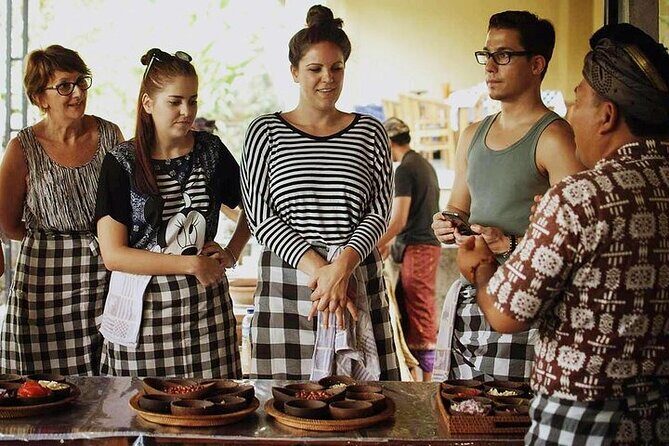
Morning shopping first is a smart way to start cooking in Bali. The Nia Balinese Cooking Class turns a Seminyak market visit into real ingredient education, then pulls you into a hands-on lesson that covers classic flavors like Ayam Betutu and Nasi Goreng. You also get lunch with what you make, plus a recipe book and a completion certificate.

I especially love the market portion. Seeing and learning ingredients where they’re sold helps you understand why certain spices and staples matter. It also makes the later cooking feel less like following steps and more like learning a system.

My other favorite part is the sheer amount of food and technique packed into the day—think multiple dishes, snack breaks, and a full lunch banquet. The main drawback to plan for: you’ll be on your feet for about 5 hours, and it’s a group, shared-dishes setup (so the pace and format may not fit everyone).

Key Highlights at a Glance

Nia Balinese Cooking Class - Key Highlights at a Glance

  • Traditional market start in Seminyak so you understand ingredients before you touch a cutting board
  • 9 Balinese dishes with hands-on prep and cooking steps
  • Ayam Betutu banana-leaf technique plus classic spice-building methods
  • Included lunch and snacks so you leave full, not just informed
  • Certificate + recipe book for take-home results
  • Small group size (max 15) for a more personal cooking experience

From Warung Nia to the market: your 8:30 ingredient reality check

Nia Balinese Cooking Class - From Warung Nia to the market: your 8:30 ingredient reality check
You’ll meet at Warung Nia Balinese Food & Pork Ribs on Kayu Aya Square (Jl. Kayu Aya No. 19-21). Start time is listed as 8:00 am, and the market trip is set for 8:30 am, so plan to arrive a bit early, get oriented, and meet the staff.

Here’s why this first step matters: in Balinese cooking, the flavor is not just in one sauce or one spice. It’s in the whole chain—fresh produce, spice blends, aromatics, and the way ingredients come together. When you see what’s available locally and learn how it’s used, you can recreate the results later at home instead of guessing.

You’ll also get a look at two Seminyak stops during the shopping phase: Seminyak Square and the Flea Market Seminyak. Expect a lively setting where you’ll be comparing ingredients, learning what to look for, and getting a feel for how people actually shop on the island—not a staged supermarket setup.

Practical tip: don’t show up starving but also don’t plan a huge breakfast. The class day feeds you progressively (snacks, then lunch), and by the end you’ll be glad you saved some appetite.

Seminyak Square and the flea market: learning what you can actually buy

Nia Balinese Cooking Class - Seminyak Square and the flea market: learning what you can actually buy
Seminyak’s food shopping scene is part classroom, part sensory overload. The good news is the class is designed so you’re not just walking. You’re looking for the ingredients that show up in the dishes you’ll cook later.

This is also where the day can become a budget-smart one. Several participants mention that the chef and staff help with ingredient purchasing and can help you navigate better pricing when you shop after class. That means the market stop isn’t just for viewing. It can be for building your Bali pantry for later.

What to watch for:

  • You’ll likely want water and a way to manage the heat (Bali mornings can still feel warm by the time you’re walking).
  • If you have vitamin allergies, this tour is marked as not recommended, so check your situation carefully before booking.

If you’re the kind of traveler who loves learning how local people live (not just what they eat), this market portion is where the day clicks.

The hands-on cooking class: how a shared setup still teaches real skills

Nia Balinese Cooking Class - The hands-on cooking class: how a shared setup still teaches real skills
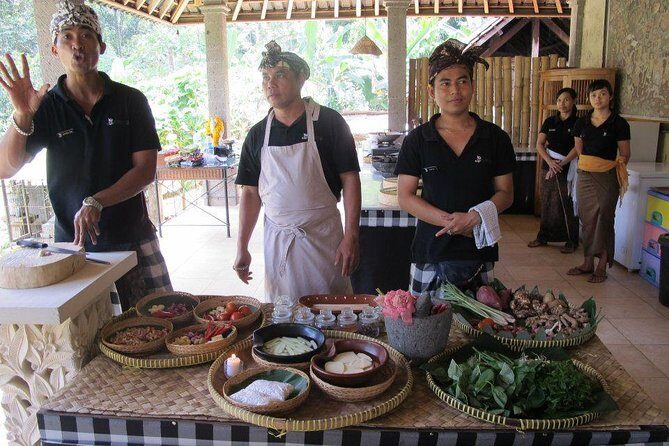
After the market, you’ll head into the cooking phase at the Warung Nia setting. There are snacks and drinks before the lesson really ramps up, and then you’ll cook through 9 dishes as part of the class.

One thing to know: this is set up as a group cooking experience with shared preparation and dining. That can be fun—especially if you enjoy a social atmosphere—but it also means you may not do every single step end-to-end on your own like a private course.

Still, the structure is built to keep everyone involved. The staff manage the kitchen workflow while you participate in chopping, mixing, shaping, and cooking. You’re not just watching a demonstration and collecting a couple photos.

Also, be ready for a classic Bali rhythm: the kitchen runs fast, staff reset stations quickly, and cooking overlaps. Some participants describe the team as running a smooth “machine” behind the scenes, so you’ll feel busy without chaos.

The dish lineup you can expect (including Ayam Betutu)

Nia Balinese Cooking Class - The dish lineup you can expect (including Ayam Betutu)
The class description calls out a traditional Balinese food journey covering both wrapped-leaf specialties and popular everyday favorites. A few dishes and techniques are named directly:

  • Ayam Betutu, wrapped in banana leaves with a special folding method
  • Nasi Goreng, one of Bali’s more widely loved fried rice styles

Even when specific recipes aren’t listed line-by-line, the day is clearly organized around core Balinese flavor-building—spice prep, seasoning, and cooking methods that make the dishes distinctly local.

Why that matters for you: fried rice is easy to make at home, but Balinese versions can taste different because of the spice base and the mix of aromatics. Learning the reasoning behind the seasoning approach helps you avoid recreating just the look and actually get closer to the taste.

And the Ayam Betutu wrapping detail is more than a showy trick. Banana leaves change the cooking environment—creating aroma and helping keep things moist. If you want one skill you can later try for friends, this folding and wrapping technique is a strong candidate.

Lunch and certificate: your big payoff after a full morning

Nia Balinese Cooking Class - Lunch and certificate: your big payoff after a full morning
Once your cooking run is done, lunch becomes the payoff. The tour includes lunch, and it’s built around what you prepared as a group. In other words, you don’t just cook and rush out—you eat the results.

You’ll also receive a Cooking Class Certificate and a recipe book. That recipe book is the practical part you’ll use later. It turns the day from a memory into something you can cook again. And the certificate is a nice little “yep, I learned this” keepsake for your Bali trip folder.

Timing note: some people report being on site from early morning until a little after 1 pm. So yes, this is a real half-day commitment. If you’ve got another tour right after, you’ll probably want to leave buffer time for travel and a post-lunch food coma.

Price and value in Seminyak: what $45 really covers

Nia Balinese Cooking Class - Price and value in Seminyak: what $45 really covers
At $45 per person, this class is priced as a budget-friendly way to get real cooking instruction in Bali. The value comes from multiple layers:

  • You’re not just attending. You’re actively cooking through multiple dishes.
  • Food is included: snacks and a full lunch.
  • You get take-home tools: recipe book + certificate.
  • It’s organized for a small group setting (max 15 travelers), which usually makes it easier to ask questions and get help.

Also, the market visit is part of the deal. That ingredient scouting alone can be worth it if you want to understand what to buy and what’s typical in Balinese kitchens. And if you plan to shop afterward (some people do), having staff guidance can help you avoid random impulse buys that don’t match what you cooked.

One caution on value: because it’s a shared group format, you won’t necessarily get the same “every step, every dish, individually” experience you might get with a private course. If you want maximum individual control, look for a private class option (not listed here).

Logistics that matter: transport, meeting point, and getting there

Nia Balinese Cooking Class - Logistics that matter: transport, meeting point, and getting there
The meeting point is clearly set at Warung Nia Balinese Food & Pork Ribs on Kayu Aya Square. The tour ends back at the meeting point.

Transport is where you should plan ahead. Drop-off transport is not provided, and private transportation is also listed as not included. The good news: staff can assist you in getting transport, so you’re not totally on your own once you’re done eating.

If you’re using public transportation, the tour is marked as near public transportation, which helps. If you’re staying far from Seminyak, you’ll likely want to budget time for getting to Kayu Aya Square early.

If you’re sensitive to heat or standing: bring a hat and something to protect your feet. The cooking portion isn’t a quick show-and-tell. It’s a real working day.

Who should book Nia, and who should skip it

Nia Balinese Cooking Class - Who should book Nia, and who should skip it
This class is a great fit if:

  • You like hands-on cooking and don’t mind a group format
  • You want an ingredient-focused Balinese experience (market first, cooking second)
  • You care about learning classic dishes and techniques, including Ayam Betutu banana-leaf methods
  • You want included lunch so you’re not juggling food plans during your Bali day

You might skip it if:

  • You need a private, individually paced course (this is shared preparation and shared eating)
  • You have vitamin allergy concerns (the tour is marked not recommended)
  • You’re short on mobility or hate being on your feet for about 5 hours

If you’re a foodie who also wants cultural context through everyday shopping and cooking, this is a solid Seminyak activity. You get learning, food, and a take-home recipe book—without paying premium private-tour pricing.

Should you book this cooking class in Seminyak?

I’d book the Nia Balinese Cooking Class if you want one efficient, flavor-heavy day in Seminyak: market education first, then cooking through 9 dishes, finished with lunch and a recipe book. At $45, the included meal and materials make it feel like good value, not just a tourist show.

I’d think twice if you absolutely want an individual, start-to-finish dish-by-dish experience. The shared group format can be social and fun, but it can also mean you participate differently than a private class.

If you match the vibe—hands-on cooking, a market stop, and a hearty lunch—this is one of the easier “planner-proof” Bali days to choose.

FAQ

What is the duration of the Nia Balinese Cooking Class?

The class runs for about 5 hours (approx.).

What time does the tour start?

The meeting start time is listed as 8:00 am, and the market visit begins at 8:30 am.

Where do I meet for the class?

You meet at Warung Nia Balinese Food & Pork Ribs, Kayu Aya Square, Jl. Kayu Aya No. 19-21, Seminyak, Bali.

Does the tour include transport to and from my hotel?

No. Drop-off transport is not provided and private transportation is not included. Staff can help assist you in getting transport.

How many dishes will we cook?

The class description says you’ll cook 9 dishes.

What is included in the price?

Included are lunch, a Cooking Class Certificate, and a recipe book.

Is there a mobile ticket?

Yes. The tour notes mobile ticket.

What group size should I expect?

The tour has a maximum of 15 travelers.

Is the tour suitable for people with vitamin allergies?

No. It is not recommended for travelers with vitamin allergy.

Is free cancellation available?

Yes. You can cancel for a full refund up to 24 hours in advance. The experience may also be rescheduled or refunded if canceled due to poor weather or if a minimum number of travelers isn’t met.

PRIVATE Balinese Cooking Class in Ubud with Dewa with Transfers

PRIVATE Balinese Cooking Class in Ubud with Dewa with Transfers - The Garden Tour: Fruit, Herbs, Spices, and the “Why” Behind It

If you want Bali that feels lived-in, this is it. This private half-day experience takes you from central Ubud into the terraced foothills near Keliki, where Dewa and his family cook the way many locals still do—using a garden of fresh ingredients, traditional tools, and a wood-fired stove inside their walled compound.

I love the family-home setting because it’s not staged like a studio class. You start with a guided look at the garden and plants, then you cook, then you eat as part of the day. I also love that you’re learning real Balinese flavors, not just copying a recipe card: expect dishes like pepes Ikan (grilled tuna in banana leaves), bumbu kuning (turmeric and coconut sauce), and bregedel (hand-ground corn fritters). One consideration: you should plan for a bit of walking and village wandering—comfortable shoes help, and the day can feel more “hands-on village visit” than “smooth classroom rhythm.”

Key Highlights Worth Planning For

PRIVATE Balinese Cooking Class in Ubud with Dewa with Transfers - Key Highlights Worth Planning For

  • Private 2-way transfers from Ubud so you don’t have to coordinate rides or routes on your own
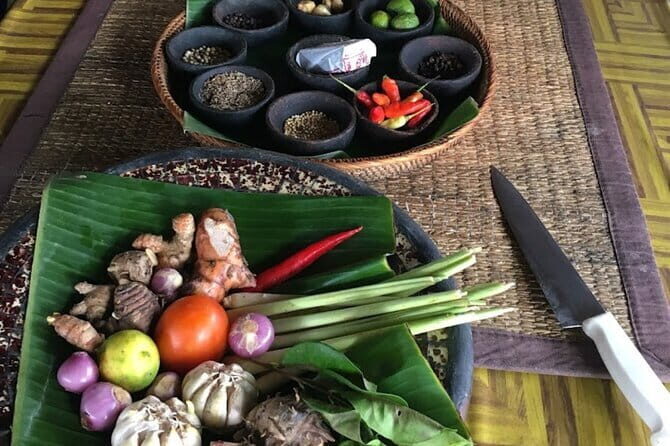
  • Garden tour first, focused on fruit, herbs, and spice plants like galangal, cacao, and nutmeg, with medicinal talk
  • Wood-fired stove cooking plus traditional prep tools like pestle and mortar
  • Hands-on meals you eat right there in the family’s walled compound, often with beer and water
  • You can take recipes home in a handwritten-style recipe book/notebook from the family experience

How This Private Cooking Day Works (And Why It Feels Different)

This tour is built around one simple idea: food knowledge comes from daily life. Instead of showing you a handful of dishes in a commercial kitchen, you go to Dewa’s Balinese family compound in Keliki and learn where the ingredients come from and why they’re used.

The pacing matches that. You start outside, walking through the garden and getting your hands and eyes familiar with the plants. Then you move into an open kitchen and cook over a wood-fired stove with Dewa (or another family member if he’s unavailable) and Dewa’s wife, Jero. Finally, you eat what you helped prepare, usually with local beer and water.

It’s also truly private: only your group participates. That matters because you can ask more questions, and the food explanations tend to stay personal instead of generic.

Getting From Ubud to Keliki With Private Round-Trip Transfers

PRIVATE Balinese Cooking Class in Ubud with Dewa with Transfers - Getting From Ubud to Keliki With Private Round-Trip Transfers
One of the smartest parts of this experience is the transportation. The tour includes round-trip transfers from Ubud hotels and vacation rentals (with Dewa able to provide that only from Ubud). That means less stress on timing, less worrying about traffic, and more time for the day itself.

From what you’ll likely experience on the ground, the trip is short enough to keep the schedule comfortable, but long enough to feel the change in setting once you leave the busier Ubud area. You’ll travel through terraced foothills, and the ride sets expectations: you’re going somewhere quieter than the tourist strip.

If you’re staying outside Ubud, there’s a key difference. Dewa can’t do transportation from beyond the Ubud region. In that case, you meet directly at his home in Keliki. If you’re deciding where to stay during your trip, that’s a real factor.

Practical tip: ask yourself how you like to spend half-days. If you want zero driving and constant activity, this may feel slower. If you like moving at a human pace, it’s a good fit.

The Garden Tour: Fruit, Herbs, Spices, and the “Why” Behind It

PRIVATE Balinese Cooking Class in Ubud with Dewa with Transfers - The Garden Tour: Fruit, Herbs, Spices, and the “Why” Behind It
The first major step is the garden tour. This isn’t just a walk for photos. You’ll look at Balinese fruits and spice ingredients grown in the family area—plants such as galangal, cacao, and nutmeg come up, along with herbs and other ingredients used for cooking.

What I like about this part is the focus on purpose. You’ll hear about medicinal properties and traditional beliefs around plants. Even if you don’t treat it like a medical lesson, it gives you a better understanding of why certain flavors show up again and again in Balinese cuisine.

You’ll also get context for the dishes you’ll cook later. When you’ve seen the plant first, the recipe makes sense in a way that’s hard to get from a supermarket ingredient list.

For your comfort: you’ll likely do some walking. Comfortable shoes help, especially since the experience can include village paths and garden areas rather than flat, paved sidewalks the whole time.

Cooking in a Walled Compound Kitchen (Wood-Fired Stove Included)

PRIVATE Balinese Cooking Class in Ubud with Dewa with Transfers - Cooking in a Walled Compound Kitchen (Wood-Fired Stove Included)
Now for the work part—hands-on cooking. You join the family in an open kitchen area and learn to cook authentic Balinese dishes over a traditional wood-fired stove. You’ll use traditional kitchen tools too, including pestle and mortar for grinding and combining aromatics.

This is not marketed like a professional chef class, and that’s a good thing to know. The goal is learning from the family cooks and getting a feel for the way Balinese home cooking happens. Your role is active: chopping, grinding, mixing, and following steps while Dewa explains what matters.

Common dishes you should expect to cook include:

  • Pepes Ikan: grilled tuna wrapped in banana leaves
  • Bumbu kuning: chicken in a fresh turmeric and coconut milk sauce
  • Bregedel: hand-ground corn fritters

Depending on the day and the flow of the household, you may cook several dishes in total (many experiences focus on multiple courses). The consistent thread is that you’re cooking with flavor-building ingredients at the center: aromatics, fresh herbs, and turmeric-based sauces.

One practical consideration: wood-fired cooking and traditional prep can mean less “precision measuring.” That’s part of the charm. If you’re hoping for strict timing like a baking class, temper expectations. If you want to learn technique and taste, you’ll enjoy it more.

What You Eat: Lunch/Dinner in the Family Compound

PRIVATE Balinese Cooking Class in Ubud with Dewa with Transfers - What You Eat: Lunch/Dinner in the Family Compound
After cooking, you eat the results right there. You’ll enjoy your meal in the lush greenery setting of the family’s compound walls—exactly the place you learned inside.

I like this stage because it completes the loop. You’re not just taking home a cookbook; you’re eating the food while the context is still fresh. And based on what’s described in the experience, meals can include local beer and water.

A subtle but important detail: the cooking philosophy is usually described as traditional and health-minded, not “salty for tourists.” Some explanations emphasize food as part of wellbeing and balance. If you’re used to heavy seasoning, Balinese flavors may taste gentler at first—but you still get plenty of punch from aromatics and spice blends.

Vegetarian option: the experience says a vegetarian meal is available if you advise at booking. That’s helpful if you don’t want to guess at ingredient swaps on arrival.

The Recipe Take-Home: Notes You’ll Actually Use

PRIVATE Balinese Cooking Class in Ubud with Dewa with Transfers - The Recipe Take-Home: Notes You’ll Actually Use
One of the best value perks is that you don’t leave with only memories. You get a notebook-style recipe book and writing space, so you can record what you made and how it came together.

From the way this experience is described, the recipe book is more of a hands-on souvenir than a generic printed leaflet. In some versions, it’s presented as a handmade notebook. Either way, the intent is clear: help you recreate the dishes at home.

If you cook at home and like learning techniques, this is the part you’ll use later. If you don’t cook much, you’ll still appreciate it as a way to remember flavors and the ingredient logic behind each dish.

Price and Value: Is $69 Worth It?

PRIVATE Balinese Cooking Class in Ubud with Dewa with Transfers - Price and Value: Is $69 Worth It?
At $69 per person for a private half-day experience in Ubud that includes round-trip transfers (from Ubud), a garden tour, cooking with a local host, and food plus beer and water, the value is strong—especially for a private format.

Where you’ll feel that value:

  • Private guide attention in a local home rather than a group demo
  • Included transport from Ubud, which adds cost and planning time on your own
  • Food included after cooking, so you’re not paying restaurant prices on top
  • Recipe book/notebook as a tangible take-home

Where you should be realistic:

  • It’s a home-based experience, not a polished culinary school with standardized classes.
  • Time is part of the experience: there’s travel plus village walking, so the day isn’t a quick in-and-out.

Bottom line: if you want a real Balinese cooking day with family context, $69 feels like a fair trade. If your main goal is a fast, strictly timed cooking lesson with minimal cultural elements, you might look for a more workshop-style option.

Who This Fits Best (And Who Might Want Another Option)

PRIVATE Balinese Cooking Class in Ubud with Dewa with Transfers - Who This Fits Best (And Who Might Want Another Option)
This is a great match if you:

  • Want Balinese food in a home setting, not a restaurant or factory-style cooking room
  • Enjoy learning about ingredients—especially spices and how they grow
  • Prefer asking questions and cooking hands-on with a family host

It may be less ideal if you:

  • Dislike walking paths or garden visiting
  • Want a purely “classroom” experience with strict cooking measurements
  • Are staying outside Ubud and don’t want to make arrangements to meet at the home in Keliki

If you’re short on time in Bali but still want something memorable beyond temples and markets, this works well because it’s a focused half-day.

Final Thoughts: Should You Book Dewa’s Balinese Cooking Class?

Yes, I’d book it if your idea of a great Ubud day includes real people, real food prep, and learning why ingredients matter. The wood-fired cooking, the garden start, and the chance to eat what you cook in a family compound are the right combination of practical skill and cultural context.

The one reason to pause is if you dislike the “village visit” side of things. If you’re okay with that pace—and you show up with comfortable shoes—this has the feel of one of the more meaningful experiences you can fit into a Bali trip.

FAQ

Is this experience private or shared with other groups?

It’s a private experience. Only your group will participate.

How long is the cooking class?

The duration is about 4 hours.

Are round-trip transfers from Ubud included?

Yes, round-trip transfers from Ubud are included. If you’re staying outside Ubud, the experience notes that there is no transportation and you’ll meet directly at the home in Keliki.

What’s included besides the cooking?

You’ll get a private garden tour and cooking class with a local host, an immersive Balinese cultural and culinary experience, and local beer (plus water). A vegetarian option is available if you advise at booking.

What dishes will we cook?

The experience describes cooking dishes such as pepes Ikan (grilled tuna in banana leaves), bumbu kuning (chicken in turmeric and coconut milk sauce), and bregedel (hand-ground corn fritters).

Is this taught like a professional cooking school?

No. It’s described as not a professional cooking class. It’s an authentic home visit to meet a family who shares Balinese culture and cuisine while cooking together.

Balinese Authentic Cooking Class in Ubud

Balinese Authentic Cooking Class in Ubud - A Local Balinese House Visit and Coffee Time

Spice up your Ubud day with real cooking. This half-day Balinese cooking class from Lesung Bali is built like a mini food adventure: a traditional market (morning only), a local Balinese house visit, a farm tour where you can harvest spices, then hands-on cooking with fresh ingredients. It runs in the west side of Ubud in a calmer, countryside-style setting that feels a bit removed from the center.

I really like two things about this experience. First, you get proper technique practice, including grinding and chopping with Lesung (mortar and pestle), so you understand how Balinese flavors actually get made. Second, the class offers regular, vegetarian, and vegan menu choices, so you’re not stuck with a sad substitute meal. The main catch: the price assumes the free shuttle within Ubud, and extra transportation costs apply if you’re staying outside Ubud.

Key Things You’ll Notice

Balinese Authentic Cooking Class in Ubud - Key Things You’ll Notice

  • Market-first morning option: Morning classes include a traditional market visit where you can buy spices.
  • Farm-to-station cooking: You’ll explore the farm, harvest spices, and cook with what you selected.
  • Lesung spice work: Real mortar-and-pestle prep is part of the hands-on process.
  • Dietary flexibility: Regular, vegetarian, and vegan menus are available.
  • Small group feel: Maximum of 15 travelers, with extra personal help.
  • You eat what you cook: Coffee/tea, Balinese cake, and the meal you prepare are included.

What a Half-Day Balinese Cooking Class Means in Ubud

This is a true half-day plan that usually lands around 5 hours from start to finish. You can pick a morning, afternoon, or evening slot, which matters because the schedule changes slightly depending on the time—most notably the market stop. The location is on the west side of Ubud, in greener grounds, so you’re not constantly on the road or stuck indoors.

The class caps at 15 people, which is one reason it feels less like a show and more like a kitchen lesson. Most of the teaching is hands-on, and in the better moments you’ll be doing the prep yourself while the chef steps in to correct technique or adjust seasonings.

Also, the experience includes an air-conditioned vehicle for transfers, mineral water, and coffee and/or tea. That’s a solid base for an activity that starts early or runs when you might otherwise be tempted by roadside snacks.

The Traditional Morning Market Stop (If You Choose Mornings)

Balinese Authentic Cooking Class in Ubud - The Traditional Morning Market Stop (If You Choose Mornings)
If you book the morning class, you start with a visit to a traditional morning market. This is more than a quick photo stop. You get to see common ingredients used in Balinese cooking, including spices you’ll later use in your menu. The visit is tied directly to the cooking plan, and you can buy spices from the local market.

A market visit also helps you understand a core idea behind Balinese flavor: a lot of the magic comes from how spices are selected and processed, not from complicated cookware. When you later grind and pound with Lesung, those earlier market choices suddenly make sense.

One small practical thought: because you’re early and moving through a busy market environment, wear comfortable shoes. Even if the pace is not rushed, you’ll still be walking and bending a bit.

A Local Balinese House Visit and Coffee Time

Balinese Authentic Cooking Class in Ubud - A Local Balinese House Visit and Coffee Time
After the market (morning only) or after pickup for other time slots, you’ll visit a local Balinese house. The focus here is daily life and how the compound is set up, including the way the building is placed and how Balinese living works at home. You should come ready to ask questions, because this stop is where the class connects food to culture.

You’ll also have coffee and/or tea and enjoy snacks during this part. Many people talk about how welcoming the hosts and guides are during this phase, with a relaxed rhythm that makes it feel human rather than scripted.

Names you might hear from instructors during the visit include Ron and Don. Different guides bring different personality styles, but the structure stays similar: learn the setting, hear the lifestyle context, then move on to the farm where the ingredients come from.

If you’re short on time in Ubud, this house visit is also a good use of your cooking day. You’re not sacrificing culture to learn recipes. You get both.

Farm Harvest Time: Where the Spices Come From

Balinese Authentic Cooking Class in Ubud - Farm Harvest Time: Where the Spices Come From
Next is the farm portion, and this is where the class turns from classroom to field. You’ll explore the farm, and then you can harvest spices that will be used in your cooking. Even if you’re not a gardening person, it’s a useful moment because you see the ingredients before they become the finished dishes on your plate.

This stop is also a great reality check: Balinese cooking leans heavily on fresh aromatics and spice combinations. When you’ve just picked them, you’ll pay attention to scent and texture in a way you usually don’t in a supermarket kitchen.

The farm setting is described as clean and relaxing, with a lush, green feel. That’s not a throwaway detail. A calmer environment helps the cooking portion feel less frantic, especially in a class that’s active and hands-on.

Choosing Your Menu and Cooking Your Way Through Balinese Techniques

Balinese Authentic Cooking Class in Ubud - Choosing Your Menu and Cooking Your Way Through Balinese Techniques
After the farm tour and harvest, the chef works with the group to decide the menu you’ll cook. You can choose from regular, vegetarian, and vegan options. That choice affects ingredient selection and sometimes how dishes are structured, but the key technique and flavor logic stays Balinese.

Then you get to the heart of the lesson: making dishes using traditional methods. A standout technique here is Lesung, the mortar-and-pestle style grinding. You’ll practice chopping and pounding spices, which is the backbone of many spice pastes used in Balinese cooking.

What I like for practical reasons is that the class doesn’t assume you already know cooking skills. In the best parts of the instruction, you’ll get clear step-by-step guidance and enough help to keep going, even if your kitchen confidence is low.

Here’s one consideration to keep in mind: a few people note that sometimes the chef adds small ingredients during the process without fully stopping to explain each tiny step. That can leave you wondering what exactly went into the mix. If you want maximum clarity, just speak up. A quick question is easy to handle in a small group.

Also, depending on the menu and how the cooking flow is handled that day, you might not handle every single component of every dish. For example, one person mentioned not cooking rice themselves. If that matters to you, ask your chef early what parts you’ll personally prepare.

What You’ll Cook and Eat (And Why the Meal Can Be the Best Part)

Balinese Authentic Cooking Class in Ubud - What You’ll Cook and Eat (And Why the Meal Can Be the Best Part)
Most participants end up talking about the food itself, and this class is set up to deliver that. You cook multiple dishes (people commonly reference around six dishes plus dessert/cake elements), and then you eat what you make.

Included treats add up:

  • Coffee and/or tea
  • Mineral water
  • Balinese cake
  • The dishes you prepare during the class

The portion and variety matter because Balinese cooking can be flavor-heavy and spice-forward. If you eat lightly beforehand, you’ll appreciate how filling the meal becomes. If you eat like you’re skipping lunch, you’ll probably regret it when the final spread arrives.

If you’re vegan or vegetarian, you’re not just getting a bland alternative. You’re choosing an actual menu option. That’s a big deal in cooking classes, where substitutions are often an afterthought.

Price and Value: Why $39.71 Can Make Sense in Ubud

Balinese Authentic Cooking Class in Ubud - Price and Value: Why $39.71 Can Make Sense in Ubud
The listed price is $39.71 per person, and that’s where value depends on two things: what’s included and how far you are from the Ubud pickup zone.

What’s included in the base:

  • Air-conditioned vehicle for the experience
  • Mineral water
  • Coffee and/or tea
  • Balinese cake
  • All fees and taxes
  • Free shuttle service Ubud area only

What’s not included:

  • Pickup/drop-off outside Ubud
  • Extra transportation fees for areas like Nusa Dua, Jimbaran, Uluwatu, Kuta, Seminyak, Sanur, and Canggu (with car fees listed by zone)

So the value story is simple:

  • If you’re staying inside Ubud, the price covers a lot for a half-day with multiple stops and a hands-on cooking session.
  • If you’re outside Ubud, the added car fee can change the math. In that case, compare this class with other options that either include a longer transfer distance or are closer to your hotel area.

One more value note: the group size cap of 15 is part of what you’re paying for. You’re not just buying recipes. You’re paying for active teaching and time with the chef.

Class Atmosphere: Who the Experience Fits Best

Balinese Authentic Cooking Class in Ubud - Class Atmosphere: Who the Experience Fits Best
This is a great choice if you want both culture and cooking skills without needing to be a “serious foodie.” The house visit and farm stop help you understand why ingredients show up the way they do. Then the kitchen part gives you something you can repeat at home: spice grinding technique, flavor balance, and how to think about ingredient combinations.

It also suits:

  • Solo travelers who want a structured half-day (and the chance to ask questions)
  • Couples who want a shared activity that isn’t just another restaurant
  • People who are new to cooking but still want to be hands-on

Instructors often get credited for patience and clear explanations, and you might hear names like Putri, Begul, Ron, Don, or Gustie (depending on the day and schedule). Personality matters in cooking classes, and this one tends to rate well because the teaching style is friendly and practical, not intimidating.

Should You Book Lesung Bali’s Balinese Cooking Class?

If you’re in Ubud for a few days and you want a half-day activity that’s more than eating, I’d book it. The structure is logical: market (morning only) → house context → farm harvest → Lesung technique → meal. That chain makes the recipes feel grounded instead of random.

Book it especially if:

  • You want vegetarian or vegan options done properly
  • You like hands-on cooking rather than watching from the sidelines
  • You care about technique, like how spices are ground and blended
  • You’d rather spend a day learning than just shopping and sightseeing

Skip or reconsider if:

  • You’re staying far outside Ubud and the extra car fee will push the total cost up
  • You’re the type who wants zero un-explained steps. This class is not designed as a lab manual, so you may need to ask follow-ups during cooking.

If you want an efficient, authentic way to bring Bali flavors home, this class gives you more than a full stomach. It gives you a repeatable method.

FAQ

How long is the Balinese cooking class?

It lasts about 5 hours.

What time options are available?

You can choose morning, afternoon, or evening classes.

Is the class small group?

Yes. The class has a maximum of 15 travelers.

Do you offer pickup in Ubud?

There is a free shuttle service within the Ubud area. Pickup and drop-off outside Ubud are not included.

Does the class include a market visit?

Yes, the traditional market tour is only for the morning class.

Are vegetarian and vegan options available?

Yes. You can choose from regular, vegetarian, and vegan menu options.

What’s included in the price?

Included items are coffee and/or tea, mineral water, a Balinese cake, air-conditioned vehicle, and all fees and taxes.

What if I’m staying outside Ubud?

Extra transportation fees apply depending on the area you’re coming from, including set car prices for places like Nusa Dua and Jimbaran, Uluwatu, and Kuta/Seminyak/Sanur/Canggu.

What is the cancellation policy?

You can cancel for a full refund up to 24 hours in advance. If you cancel less than 24 hours before the start time, it is not refunded.

What if the weather is bad?

The activity requires good weather. If it’s canceled due to poor weather, you’ll be offered a different date or a full refund.

Ubud Monkey Forest Silver Class – Craft Your Own Silver Jewelry

A silver workshop near Monkey Forest sounds small. It’s also hands-on, guided, and designed so you can make a real souvenir in just a few hours. You choose a design, work with tools like soldering and polishing, and leave with a piece that starts as raw sterling silver 925 and becomes wearable metal.

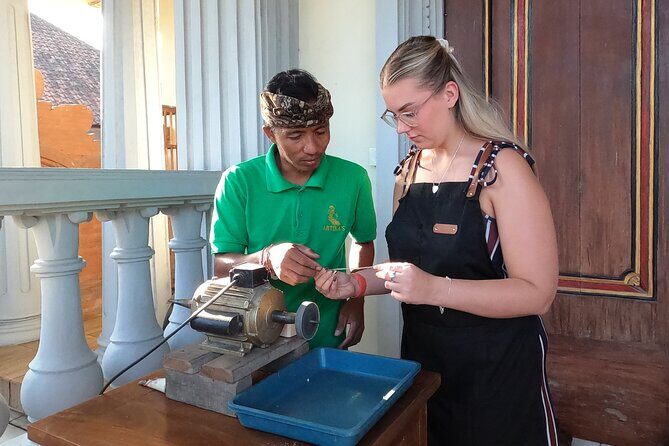
I like the small-group setup (max 10) and the way instruction stays practical from start to finish. You work directly with local silversmiths such as Eddie, Ino, Ketut, and Sugita, and the class covers steps like melting, pressing, shaping, soldering, filing, and polishing.

One thing to plan for: you make one piece per person, and the silver is measured and priced by weight. If you go above the included amount, or add gemstones, the total can rise fast.

Key Things You’ll Love Here

Ubud Monkey Forest Silver Class - Craft Your Own Silver Jewelry - Key Things You’ll Love Here

  • Hands-on silver steps from melting sterling silver 925 to polishing the final piece
  • One-to-one guidance in a max 10 person group, with silversmiths like Eddie, Ino, Ketut, and Sugita
  • Included snacks, mineral water, and Free Wi‑Fi, so you’re not hunting for breaks
  • Design choice is flexible, from sample designs to your own concept
  • Real take-home jewelry, typically 1–5 grams depending on your design

Ubud Monkey Forest Silver Class: what you’re actually making

Ubud Monkey Forest Silver Class - Craft Your Own Silver Jewelry - Ubud Monkey Forest Silver Class: what you’re actually making
This workshop is all about turning silver into something you can wear. Not a demo. Not a watched-through show. You’ll select a design, then create your own piece from scratch with guidance from a working Bali silversmith team.

The location matters because you’re in Ubud, near the Monkey Forest area. That’s a good setup for an afternoon activity because you can pair it with temple stops, cafés, and shopping later. The class also runs about 3 hours on the ground, with some variation based on how your piece progresses.

The workshop is priced at $41.85 per person, which sounds modest for a craft where you’re leaving with actual silver. The catch is that the included silver weight is capped. Think of the price as the cost of making your base piece, and treat extra grams or gemstones as add-ons.

The practical workflow: from sterling silver 925 to polished metal

Ubud Monkey Forest Silver Class - Craft Your Own Silver Jewelry - The practical workflow: from sterling silver 925 to polished metal
Your “itinerary” here is really a sequence of metalworking steps. That’s good news: you’ll understand the process because you’ll feel each stage.

Choosing your design first

You start by picking from sample designs. If you want something personalized, you can also come up with your own concept. This matters because the design affects two big things: how much silver you’ll use and how much hands-on time you’ll spend.

A tip from how the class works in practice: some designs tend to be more involved than others. If you want lots of active metal shaping, choose a style that includes steps like hammering or stamping rather than one that’s mostly assisted setup.

Getting the materials and tools explained

Next you’ll be introduced to the tools you’ll use. Even if you’ve never done jewelry-making, you’re not expected to know the names or techniques. The value here is that you’re learning the “why” behind the steps, not just copying someone else’s work.

Melting and forming the silver

The class begins with melting pure silver, described here as sterling silver 925. After melting, you’ll move into stages like hammering and pressing to shape the base metal.

This part can be surprisingly physical. It’s not gym-level, but you’ll be doing repetitive motions, holding tools, and working with metal that needs steady handling.

Shaping, then soldering

Once your base is shaped, the process moves into soldering. Soldering is where separate metal elements get joined. In plain terms: it’s how your design becomes one connected piece instead of separate parts that never quite fit.

You’ll get help here because soldering is sensitive. If heat and placement aren’t right, the join might not look clean. That’s where the silversmith guidance really pays off.

Filing and polishing the finish

Finally comes the smoothing work: filing to refine the edges and polishing to make it look finished, not handmade-in-a-chaos way.

This is where your piece starts looking like jewelry instead of shaped metal. The polishing stage also helps the piece feel more comfortable to wear, especially for rings.

One piece per person

Each participant can make only one silver jewelry piece. That keeps the class focused and manageable in a small-group setting, but it also means you can’t use this as a “make gifts for everyone” session. Plan to make one meaningful item.

Design details and personal touches that make it feel like yours

Ubud Monkey Forest Silver Class - Craft Your Own Silver Jewelry - Design details and personal touches that make it feel like yours
The best part about jewelry-making is the moment you stop thinking of it as an activity and start thinking of it as a souvenir. With this class, the design is yours to choose, and the final work is directly yours to take home.

Weight affects what you can afford

Your silver take-home is starting from 1–5 grams, depending on your design. If your piece ends up under 5 grams, the usage is still accounted for as 5 grams. That means you can’t always shrink a design to avoid extra cost.

If you want more silver than the included amount, there’s an additional fee of 85,000 IDR per gram for more than 5 grams. This is the main lever that changes your total price.

Gemstones are optional and priced separately

You can add a gemstone for an extra charge, listed as from IDR 100K to 500K, depending on type and size. This can be a great way to make the piece feel extra personal, but it’s worth deciding early so you’re not rethinking your budget mid-class.

Personalizing inside a ring

Some pieces can include special finishing like stamping. For example, one participant described stamping Bali on the inside of their ring. That’s exactly the kind of detail that makes the souvenir feel like a story, not a store-bought item.

Just keep expectations practical: your specific options depend on the design you choose and how your workshop plan is set up.

What’s included in the price, and what costs extra

Ubud Monkey Forest Silver Class - Craft Your Own Silver Jewelry - What’s included in the price, and what costs extra
Here’s where I think this class is a strong value: it includes a lot of the “annoying” extras that many tours forget.

Included with your ticket:

  • All necessary materials and tools
  • Snacks and mineral water
  • Free Wi‑Fi
  • Your take-home silver jewelry, starting from 1–5 grams (final weight depends on design)
  • You keep what you make; your jewelry and design are directly yours
  • The class time is roughly 1.5 to 3 hours depending on your piece

Not included (where you might spend more):

  • Over-weight silver: additional 85,000 IDR/gram above 5 grams
  • Gemstones: IDR 100K to 500K depending on type and size
  • No shared silver with other people (each participant makes their own piece)
  • No shuttle service

The biggest budgeting advice: decide whether you want a plain silver piece or a gemstone upgrade before you arrive. If you’re aiming to keep the total near the headline price, stick to a design that stays within the included weight.

Timing, group size, and why the pace feels focused

Ubud Monkey Forest Silver Class - Craft Your Own Silver Jewelry - Timing, group size, and why the pace feels focused
This class is built for a maximum of 10 travelers, which is small enough for real help when you’re learning. You won’t get lost in a big crowd, and you’re more likely to be able to ask questions without feeling like you’re slowing everyone down.

Expect the experience to run about 3 hours approx., with some flexibility. The “from 1.5 to 3 hours” note is realistic: time depends on the design complexity and how your piece progresses through shaping, soldering, and finishing.

One small consideration: the design selection part can feel a bit rushed if you’re unsure. If you like options, take a moment before you arrive so you have a short list in your head. That one habit makes the rest of the class calmer.

Location near Ubud Monkey Forest: how to plan your day

Ubud Monkey Forest Silver Class - Craft Your Own Silver Jewelry - Location near Ubud Monkey Forest: how to plan your day
The meeting point is at Jalan Raya Jl. Monkey Forest, Ubud. You’re also told it’s near public transportation, which helps if you’re not using a private car or driver.

A practical detail from the experience in real life: the workshop is about a 15-minute walk from the Monkey Forest area. That means you can build a simple day like:

  • morning temple time
  • midday craft class
  • afternoon café and shopping

Just remember the workshop is a “workshop” setting, not a quick grab-and-go. Wear comfortable clothes you don’t mind getting a little dusty from metalworking work.

Also, there’s no shuttle included. If you’re planning transport, arrange it ahead of time.

Accessibility and who this workshop suits best

Ubud Monkey Forest Silver Class - Craft Your Own Silver Jewelry - Accessibility and who this workshop suits best
The class is listed as wheelchair and stroller accessible. That’s rare for hands-on crafts that involve benches and tools, so it’s worth noting.

Who will enjoy this most:

  • You want a souvenir with real meaning, not just a pre-made trinket
  • You like learning by doing, especially with your hands
  • You want an activity in Ubud that isn’t only looking and walking

This may be less ideal if:

  • You expect to make multiple items in one session
  • You want to avoid all extra costs beyond the base price
  • You dislike physical, repetitive tool work (even if it’s not extreme)

Should you book this Ubud Monkey Forest Silver Class?

Ubud Monkey Forest Silver Class - Craft Your Own Silver Jewelry - Should you book this Ubud Monkey Forest Silver Class?
If you want a Ubud activity that’s genuinely hands-on and leaves you with something you’ll actually keep, this is a strong pick. The $41.85 price feels fair because you’re not just learning—you’re walking away with your own sterling silver piece, plus snacks, mineral water, and Free Wi‑Fi.

Book it if:

  • you’re okay with the idea of one piece per person
  • you want a guided craft session with room for personalization
  • you’re interested in the process itself, not just the finished object

Consider skipping or adjusting expectations if:

  • you want a low-key sit-and-watch activity
  • you’re hoping to add gemstones without thinking about the extra IDR 100K–500K range
  • you’re counting on silver weight to stay under the included limit with no “hidden” impact (because under 5 grams still gets accounted for as 5 grams)

FAQ

How long is the Ubud Monkey Forest Silver Class?

The class runs about 3 hours on average, with a stated range of 1.5 to 3 hours depending on your piece.

What’s included in the $41.85 price?

You get all materials and tools, snacks, mineral water, and Free Wi‑Fi, plus the silver jewelry you make starting from 1–5 grams.

Do I need jewelry-making experience?

No. The class is designed so you can learn the process from scratch.

Can I make more than one jewelry piece in the class?

No. Each participant can make only one silver jewelry piece.

What are the silver weight rules?

You take home silver starting from 1–5 grams depending on your design. If the final amount is under 5 grams, it’s still accounted for as 5 grams.

What if I want more than 5 grams of silver?

Any amount over 5 grams has an additional fee of 85,000 IDR per gram.

Is a gemstone included?

Gemstones are not included. If you add one, there’s an extra charge from IDR 100K to 500K depending on type and size.

Do I get a shuttle to and from the workshop?

No. Shuttle service is not included.

What is the cancellation and refund window?

You can cancel for a full refund up to 24 hours in advance. If you cancel less than 24 hours before the start time, the amount paid is not refunded.

Is the class accessible for wheelchairs and strollers?

Yes. The tour is listed as wheelchair and stroller accessible.

Balinese Cooking Class in Seminyak

Balinese Cooking Class in Seminyak - The Optional Jimbaran Fish Market: Worth It If You Like Food Details

Cooking in Bali starts with a story.

This Seminyak cooking class is interesting because it goes beyond recipes: you learn the why behind Balinese flavors, from spice blends to cooking methods like banana-leaf steaming. If you pick the morning option, you can also shop with the chef at the Jimbaran fish market, so your meal starts with the ingredients you choose.

I love the way the class feeds you: you make a full 3-course menu and then eat what you cooked for lunch or dinner. I also love the small feel of it, with a max group size of 10 and a chef who teaches in a hands-on way, not just talk. You’re even given a certificate and you keep the class apron as a souvenir.

One thing to think about is logistics. Pickup is included only for the Seminyak area, so if you’re staying farther out you may need extra transport. And the morning market stop has conditions: it requires a minimum of 2 people per booking, with an extra charge for solo travelers.

Key highlights at a glance

  • Three-course Balinese menus with meat, fish, and vegetarian choices
  • Optional Jimbaran fish market shopping with your chef (morning only)
  • Chef-led, hands-on cooking at The Amala in Seminyak
  • Hotel pickup and drop-off in Seminyak with a private transfer
  • You keep your apron and receive a completion certificate

Why The Amala Setting Makes This Cooking Class Easier to Enjoy

Balinese Cooking Class in Seminyak - Why The Amala Setting Makes This Cooking Class Easier to Enjoy
This class has a big advantage that isn’t about food at all: the pace feels relaxed. You meet at The Amala Boutique Retreat in Seminyak (Jl. Kunti I No.108), and the cooking happens in the calm, scenic style of an upscale Balinese property. That matters because cooking classes can be chaotic elsewhere. Here, you get space to work and actually pay attention.

The other thing that makes it work is the format. You’re not just watching someone cook. You get time with the ingredients, equipment, and technique under a chef’s eye. The class also caps at 10 travelers, so it doesn’t turn into a crowd scene where you only stir once and hope for the best.

Your 3 Menus: What You’ll Cook for Lunch or Dinner

Balinese Cooking Class in Seminyak - Your 3 Menus: What You’ll Cook for Lunch or Dinner
Everyone in your group chooses one set menu, and you cook the same dishes. That keeps things simple and lets the chef guide the group through one flavor path.

Menu 1: Chicken, fish, and a sweet pancake

If you choose Menu 1, you cook:

  • Lawar salad (green bean, fresh coconut, and chicken salad)
  • Tum ikan (steamed fish in banana leaf)
  • Dadar gulung (coconut pancake with palm sugar and coconut)

This menu is a good pick if you want variety across texture—salad freshness, banana-leaf aroma from the fish, and a sweet finish.

Menu 2: Papaya soup, lemongrass satay, and fried banana

Choose Menu 2 and you’ll cook:

  • Jukut Gedang Mekuah (young papaya soup with seafood)
  • Sate lilit ayam (chicken satay on lemongrass stick with steamed rice)
  • Godoh biu (Balinese fried banana)

This one is fun if you like food that shifts from savory soup to grilled-style satay flavors, then lands on something sweet-fried.

Vegetarian menu: Peanut dressing, tofu in banana leaf, and black rice pudding

For vegetarian, you’ll cook:

  • Gado-gado (vegetable salad with peanut dressing)
  • Pepes tahu (steamed bean curd/tofu in banana leaf)
  • Bubur injin (Balinese black rice pudding)

This vegetarian menu is not an afterthought. It still uses Balinese staples like banana leaf cooking and bold peanut dressing, and it ends with a distinct local sweet.

The Optional Jimbaran Fish Market: Worth It If You Like Food Details

Balinese Cooking Class in Seminyak - The Optional Jimbaran Fish Market: Worth It If You Like Food Details
The morning option can include a trip with your chef to the Jimbaran fresh fish market. The schedule starts at 9:30 AM for the market visit, where you can purchase ingredients and spices for the class.

This is valuable for two reasons. First, it shows you what “fresh” means in real market conditions. Second, it explains how ingredients lead to flavor choices. In particular, you may hear practical guidance on picking fish—for example, one standout tip you could get is how chefs judge freshness for red snapper, using cues like the eyes color.

Just know the market stop comes with a couple rules:

  • It requires a minimum of 2 people per booking
  • If you’re booking as a single person, there’s an extra Rp100,000 net charge for the market visit

If you’re coming with a friend or family member, this is an easy add-on to justify. If you’re solo, check whether the market option will be available at your price point before you commit.

Inside the Class: What Happens Between 11:30 Prep and 1:00 or 6:00 Eating

Balinese Cooking Class in Seminyak - Inside the Class: What Happens Between 11:30 Prep and 1:00 or 6:00 Eating
After the market (if you chose it), you meet the chef for ingredient and equipment setup at 11:00 AM in the morning option. In the afternoon option, the chef meet-up is at 4:00 PM. Then you begin prep:

  • Morning: you start preparing around 11:30 AM
  • Afternoon: you start preparing around 4:30 PM

By the end, you eat what you made:

  • Morning: finish and enjoy your meal around 1:00 PM
  • Afternoon: finish and enjoy your meal around 6:00 PM

One thing I like about this structure is that it keeps you focused. You get a clear arc: intro, prep time, then sit down to eat. Also, the chef’s job is not only to teach steps—it’s to guide you through flavor decisions while you’re actually cooking.

Hands-on style: you’ll chop and you’ll cook

This class is hands-on, and that’s great if you want to do real work. Some cooking classes let you participate for five minutes and call it interactive. This one involves enough prep that you’ll likely spend meaningful time working with ingredients, including chopping. That’s also why food can be affected by timing. If your portion of the cooking run is later in the line, you might find the final meal slightly cooler than expected.

Pickup in Seminyak: Smooth If You’re Close, Not Universal If You’re Not

Balinese Cooking Class in Seminyak - Pickup in Seminyak: Smooth If You’re Close, Not Universal If You’re Not
The package includes round-trip private transfer within the Seminyak area, and the activity ends back at the meeting point. That’s a clear win if you’re staying in or near Seminyak.

If you’re located farther away (for instance, in other Bali beach hubs), don’t assume pickup will be seamless. One traveler shared that they paid extra to get to the cooking venue when staying outside Seminyak. The honest takeaway: the included transport is designed for Seminyak stays, so factor in the cost of getting there if your hotel is beyond that zone.

Chef Teaching Style: Real Technique, Plus Tips for Cooking at Home

Balinese Cooking Class in Seminyak - Chef Teaching Style: Real Technique, Plus Tips for Cooking at Home
This is one of those experiences where the chef’s role matters as much as the recipes. Many classes teach you steps. This one also aims to teach you technique and ingredient logic—why things work together in Balinese food.

You may hear chef guidance on spice handling and how to pair ingredients so you don’t end up with bland or overly heavy results. And you can expect recommendations for ingredients that might be harder to find back home—useful if you want to recreate dishes instead of just remembering what they tasted like.

It also helps that the teaching approach is structured for participation. Across the course, you get opportunities to get involved rather than standing aside.

Bonus Souvenirs: Apron, Certificate, and Food You Can Actually Repeat

Balinese Cooking Class in Seminyak - Bonus Souvenirs: Apron, Certificate, and Food You Can Actually Repeat
At the end, you receive a certificate from the chef and get to keep the class apron. That’s a small detail, but it’s a nice ritual. Cooking memories fade faster than you expect, and an apron you can actually keep makes the moment stick.

More importantly, this class is built around dishes people can realistically repeat with the right ingredients. A steamed banana-leaf fish dish (tum ikan) and a coconut pancake (dadar gulung) are not “mystery food.” With a menu and steps you can follow, you’ll have a roadmap to try again later.

Price and Value Check: Is $66.67 Worth It?

Balinese Cooking Class in Seminyak - Price and Value Check: Is $66.67 Worth It?
At $66.67 per person, this sits in the mid-range for Bali cooking classes. Here’s why the value can work for you:

  • You’re paying for more than a demo: you cook and then eat a 3-course meal.
  • Pickup and drop-off within Seminyak are included, which saves time and transport hassle.
  • The class includes a completion certificate and you keep your apron, so you leave with something physical.
  • If you choose the morning upgrade, the market trip with the chef adds ingredient context and ingredient sourcing.

What might affect value is whether you’re booking as a solo traveler (market conditions can add a charge) and whether your hotel is within the Seminyak transfer zone. If you need extra transport from outside Seminyak, your true cost goes up.

Still, if you’re staying nearby and want an authentic, skill-building food experience, this pricing can feel fair for what you get.

Small Details That Make a Big Difference on Class Day

Balinese Cooking Class in Seminyak - Small Details That Make a Big Difference on Class Day
Here are the practical things I’d plan around:

  • Show up on time: the schedule is tight, especially if you’re doing afternoon.
  • Pick your menu thoughtfully: your menu is the one you’ll cook for everyone in the group, so choose based on your appetite for fish vs chicken vs vegetarian.
  • If you want the market add-on, plan for the minimum requirement: the market visit needs at least 2 people per booking.
  • Expect hands-on prep: you’ll likely do a lot of chopping and active cooking, not just watching.

Wear something comfortable for kitchen work. You might get messy, and that’s part of the fun.

Who This Balinese Cooking Class Is Perfect For (and Who Might Skip It)

This is a great fit if:

  • You want a chef-led, hands-on cooking class rather than a quick taste session
  • You like the idea of learning ingredient logic, not only memorizing recipes
  • You’re staying in Seminyak and want easy pickup
  • You want a real meal experience: lunch or dinner you make yourself

You might choose something else if:

  • You’re staying far outside Seminyak and don’t want to manage extra transport costs
  • You’re shopping for a purely casual activity with minimal prep (this is hands-on)
  • You want the fish market but would be booking alone and don’t want to consider the added charge

Should You Book This Seminyak Cooking Class?

If you’re in Seminyak and you want an authentic Balinese food experience with real technique, I’d book it. The combination of 3-course cooking, chef guidance, and the option to add the Jimbaran fish market makes it more than a tourist-only meal.

I’d make your decision based on two things: can you comfortably join the cooking venue from your hotel within Seminyak, and do you want the morning market shopping experience badly enough to meet the minimum/extra conditions.

If the answer is yes, this is the kind of class that gives you both a great dinner and something to repeat later.

FAQ

How long is the Balinese cooking class in Seminyak?

It runs for about 3 hours. If you choose the morning option with the market visit, the day extends from the morning market timing to lunch around 1:00 PM.

What does the $66.67 price include?

The experience includes round-trip private transfer within the Seminyak area and the cooking class where you prepare and eat your 3-course meal, with a certificate and the apron souvenir.

Do I need to choose a menu in advance?

Yes. You select one of the available menus (including a vegetarian option), and the same menu is cooked by all participants in your group.

Is the Jimbaran fish market visit included?

It’s optional and available with the morning session only. The market tour has a minimum of 2 persons per booking. If you book as a single person, an extra Rp100,000 net charge applies.

What dishes are included on the menus?

Menu 1 includes Lawar salad, Tum ikan, and Dadar gulung. Menu 2 includes young papaya soup with seafood, chicken satay on lemongrass stick with steamed rice, and fried banana. The vegetarian menu includes Gado-gado, Pepes tahu, and Bubur injin.

What are the class start times?

Morning option timings include the market visit around 9:30 AM, chef introduction at 11:00 AM, and lunch around 1:00 PM. Afternoon option starts with chef introduction at 4:00 PM, cooking at 4:30 PM, and dinner around 6:00 PM.

Does the class have an age limit?

The minimum age is 12 years.

What if the weather is bad?

The experience requires good weather. If it’s canceled due to poor weather, you’ll be offered a different date or a full refund.

Balinese Farm Cooking Class by Pemulan Bali

Balinese Farm Cooking Class by Pemulan Bali - Organic farm visit: produce, spices, and real context

Five hours of farm-to-pan cooking.

In Ubud, this class links a market visit with an organic farm and then an open-air kitchen, so you learn where ingredients come from before you start cooking. It’s a practical way to taste Balinese flavors without feeling stuck in a restaurant routine.

Two things I especially like: you pick your own produce at the farm, and you leave with recipes plus coffee and tea to keep the food part going after the class. The main catch is time—expect to spend a solid chunk of the day on the whole experience, and some sessions can be more food-heavy than others.

Key highlights at a glance

Balinese Farm Cooking Class by Pemulan Bali - Key highlights at a glance

  • Market morning in Ubud with fresh fruit and local treats
  • Pick-your-own ingredients from the farm garden
  • Open-air cooking in a calm countryside setting
  • Six Balinese dishes (with some sessions running more food-focused)
  • Coffee, tea, and recipes to take home
  • Small group size (up to 20) for a more hands-on feel

Balinese farm-to-table cooking in Ubud

Balinese Farm Cooking Class by Pemulan Bali - Balinese farm-to-table cooking in Ubud
This is a hands-on cooking class built around the real flow of food in Bali: ingredients first, then preparation, then the meal. You start in central Ubud with pickup, then move through two different “ingredient zones”—a local market and a farm—before you cook in an open-air kitchen.

What makes it work for most people is that it doesn’t treat cooking like a performance. You’re guided step by step, and you get context for why the ingredients matter. In a place like Bali, where flavors rely on fresh aromatics and spice blends, that order is a big deal.

Also, the farm setting helps. Even if you usually avoid “nature walks,” this one has a clear job: it teaches you what grows there and how people use plants and spices in daily cooking.

Ubud market stop: picking ingredients like a local

If you choose the morning class, the day begins with a trip to a traditional market in Ubud. You’re not just browsing—you’re shopping for ingredients you’ll actually cook with later. Along the way, you’ll get to sample fresh fruits and treats, which is a quick way to reset your taste buds before you start prep.

Here’s what you’ll likely find useful as a cook (even a nervous one). Markets are where you can see the ingredients in their natural forms: whole spices, fresh produce, and everyday items people rely on. That makes it easier to understand what you’re doing later in the kitchen, especially when a dish depends on aromatics like herbs, roots, or spice pastes.

If you’re short on time or prefer to be in the kitchen sooner, note that the morning market is specifically called out as part of morning classes. Evening and afternoon options may focus more on the cooking and farm portion, depending on the schedule you select.

Organic farm visit: produce, spices, and real context

Balinese Farm Cooking Class by Pemulan Bali - Organic farm visit: produce, spices, and real context
After the market, you go to the farm. The setting is described as an organic farm with a garden you can explore, plus the chance to hand-pick fresh ingredients.

This part matters more than it sounds. A market teaches you what to buy; the farm teaches you what to look for. And when you pick the produce yourself, it’s easier to remember things like:

  • which herbs smell the strongest when crushed
  • which plants are used for fresh flavor versus cooking deeper
  • how ingredient availability affects what dishes get made

You also learn about Balinese spice plants and other greenery used in daily life. The kitchen work later becomes less mysterious because you’ve already seen the raw material.

The farm is also open and scenic in a calm, countryside way. If you’re tired of Ubud crowds, this is a nice change of pace with a purpose.

Open-air kitchen time: cooking six Balinese dishes

Balinese Farm Cooking Class by Pemulan Bali - Open-air kitchen time: cooking six Balinese dishes
Next comes the open-air cooking session. You’ll work with chefs in a kitchen surrounded by countryside calm, and the goal is to prepare and enjoy six authentic Balinese dishes.

In practice, this usually means a mix of appetizers and mains, plus something sweet. One of the most satisfying details from the class experience is that you don’t just watch—you cook. That includes prep work, handling ingredients, and learning the reasoning behind technique choices.

Based on the pattern of what’s been cooked in the past, you can expect a variety—some savory plates, some heavier mains, and a dessert or sweet component. One participant described making 2 appetizers, 3 main dishes, and a community dessert, which matches the idea of a full meal rather than a single demo.

A small warning from the timing perspective: there can be different class levels. The experience you choose may affect how much food you’re making and how long you’ll be in the kitchen. Plan your day like this is the main event, not a quick add-on.

Coffee, tea, and take-home recipes (the part you’ll re-use)

Balinese Farm Cooking Class by Pemulan Bali - Coffee, tea, and take-home recipes (the part you’ll re-use)
When cooking is done, you eat what you made. Tea and coffee are included, and there are recipes to take home. That last part is huge for value, because it’s what turns “a fun meal” into “I can recreate this later.”

It’s also practical. Balinese dishes often rely on fresh ingredients and spice mixes. If you want to cook at home, having the recipe steps helps you figure out substitutions and get the flavor direction right.

One more plus: the shared meal format feels social without turning the day into a party. You’ll likely be in a group setting with up to 20 people, which gives the chefs enough room to guide you while still making it easy to talk with other participants.

And yes, the class has a friendly, human feel. People have specifically highlighted warm staff energy and even a chef with a great sense of humor—exactly what you want when you’re chopping, grinding, and learning by doing.

Is $39.71 worth it? Value, group size, and what’s included

Balinese Farm Cooking Class by Pemulan Bali - Is $39.71 worth it? Value, group size, and what’s included
At $39.71 per person, this is positioned as an all-in cooking experience rather than a cooking “taster.”

For your money, you get:

  • pickup from central Ubud
  • a market visit (on morning classes)
  • a farm visit with pick-your-own produce
  • a guided cooking session for six dishes
  • coffee and tea
  • recipes to take home
  • a group size limited to 20 travelers

That bundle is the key to the price. Many cooking classes charge similarly but skip either the market ingredient lesson or the hands-on farm step. Here, you get both. You also leave with recipes, which effectively extends the value beyond the day of cooking.

If you’re the type who likes to understand why food tastes the way it does—rather than only what it tastes like—this kind of ingredient-focused structure is a better deal than most.

Picking your time slot: 07:30, 12:30, or 16:00

Balinese Farm Cooking Class by Pemulan Bali - Picking your time slot: 07:30, 12:30, or 16:00
The schedule offers three options:

  • Morning class: 07:30 AM
  • Afternoon class: 12:30 PM
  • Evening class: 16:00 PM

Your best choice depends on what you want most.

  • Choose the 07:30 AM slot if you want the Ubud market stop with fruit and local treats before the farm and cooking.
  • Choose 12:30 PM if you want to get it done before evening plans, while still having decent daylight for the farm and open-air kitchen.
  • Choose 16:00 PM if mornings feel rushed and you prefer a later start—just remember the day is still a full activity, and cooking time is real.

One practical tip: treat it as a “centerpiece experience.” It’s not a quick two-hour workshop. Even if a guide says approximate duration, you’ll want to keep your schedule roomy so you don’t feel rushed when the day runs long.

Logistics that matter: pickup, meeting point, and how long it takes

Balinese Farm Cooking Class by Pemulan Bali - Logistics that matter: pickup, meeting point, and how long it takes
Pickup is included from central Ubud, and the activity starts at a specific meeting point: Pura Dalem Puri Peliatan (with the provided map pin in the listing) in the Tebesaya/Petulu area.

The class ends back at the meeting point, so you’re not scrambling for transport at the end.

On time: the duration is listed as about 5 hours, but plan for a longer block on the ground. One common expectation is that the whole experience can stretch to a 3–4+ hour commitment depending on how the class is paced and what session level you end up in. The safe move is to clear part of your day and go with the flow.

Weather also matters. The experience requires good weather, and if it gets canceled due to poor weather, you’ll be offered a different date or a full refund.

Who this class fits best (and when to skip)

This is a great fit if you want more than a recipe card. You’ll probably enjoy it most if you like:

  • fresh ingredients and spice variety
  • cooking with guidance
  • a farm-to-plate day that feels grounded in local life
  • eating what you make in a relaxed setting

It’s also a strong choice for people who don’t want to hunt down ingredients themselves. The market and farm stops do that work for you, and the chefs handle the technique.

When might you skip it? If you’re the type who hates any schedule uncertainty, note that different class levels can shift how much food you cook and how long it feels. Also, since it relies on good weather, don’t book it if you’ve got a tight plan that can’t flex.

Finally, it’s group-based and small (max 20). If you want total privacy or a one-on-one class, you might find this less suited to you—but for most people, that group size keeps things friendly and manageable.

Should you book Pemulan Bali Farm Cooking Class?

If you want an authentic Balinese cooking day that includes real ingredient learning, I think you should seriously consider booking. The value is strong for the money because you get market + farm + cooking + recipes, not just a basic cooking session.

Book it when:

  • you’re in Ubud and you want a structured, local-food experience
  • you like hands-on learning
  • you want to leave with recipes you can actually use

Pass or reconsider if:

  • you have a very strict timetable
  • bad weather would ruin your plans and you can’t reschedule
  • you’re expecting a quick snack-sized workshop rather than a meal-focused cooking day

If your goal is to go home knowing what makes Balinese flavor tick, this class does that—one ingredient and one dish at a time.

FAQ

What location is this cooking class in?

It’s in Ubud, Indonesia.

How much does the Balinese Farm Cooking Class cost?

The price is $39.71 per person.

How long is the experience?

The duration is listed as about 5 hours (approx.).

Does the class include a market visit?

Yes, the morning class includes a market visit in Ubud.

How many dishes will I cook?

You’ll prepare and enjoy six different authentic Balinese dishes.

Are pickup and recipes included?

Yes. It includes pickup from central Ubud and includes coffee and tea plus recipes.

What time options are available?

The schedule lists: 07:30 AM (morning), 12:30 PM (afternoon), and 16:00 PM (evening).

How big are the groups?

This activity has a maximum of 20 travelers.

Is there free cancellation?

Yes, free cancellation is available. You can cancel up to 24 hours in advance for a full refund.

PRIVATE Authentic Balinese Cooking Class in Ubud at Putu’s Home

PRIVATE Authentic Balinese Cooking Class in Ubud at Putu's Home - Price and Logistics: Is $75 Worth It?

Smelling spices is one of the fastest ways to start Bali. In Ubud, you cook in Putu’s family home with her husband, grandparents, and children, not in a classroom. You’ll grind spices, chop on simple boards, and learn why certain ingredients matter before you sit down to eat everything you made.

I especially love the farm-to-table feeling. Many of the ingredients come from Putu’s own gardens and the rice her grandparents grow, so the food tastes like it has a story attached. One small consideration: the kitchen setting is basic and mostly outdoor, and the drive from central Ubud can add time, so plan your day with that buffer.

If you choose lunch or dinner, the experience still runs at an unhurried home rhythm. You’ll finish with a Balinese feast, plus a little local alcohol, and you’ll leave with recipes to try back home. It’s a private setup, so you can ask questions and adjust spice levels as you go.

Key points to know before you go

PRIVATE Authentic Balinese Cooking Class in Ubud at Putu's Home - Key points to know before you go

  • Private and hands-on, not a show: You cook alongside Putu and her family, with guidance at each step.
  • Five dishes, built from scratch: Expect spice work, chopping, grilling/steaming, and assembly like banana-leaf parcels.
  • Farm ingredients and family rice: You’ll taste produce and rice grown by Putu’s household.
  • Culture mixed into cooking: You learn about Balinese Hindu household life, including temple areas, in plain language.
  • Food comes with leftovers: People often leave with extra food packed to take away.
  • Transport is included only from Ubud: Pickup and drop-off are included from Ubud hotels; outside Ubud costs extra.

Why Putu’s Ancestral Compound Feels More Like Family Than Tour Time

PRIVATE Authentic Balinese Cooking Class in Ubud at Putu's Home - Why Putu’s Ancestral Compound Feels More Like Family Than Tour Time
The setting is the first big win. You’re invited into a traditional Balinese compound home, where different spaces have meaning. Putu walks you through the layout—especially the family temple areas—and explains what you’re seeing in everyday terms. It’s not a museum talk. It’s the logic of how people actually live.

This is also a multigenerational household. You’ll meet Putu, her grandparents, her husband, and their children. That matters because the cooking isn’t treated like a performance. It’s treated like daily life—passed down, practiced, corrected, and shared.

In a lot of Bali cooking classes, you learn recipes. Here, you learn context. Putu shares stories behind the food, including the spice choices her family makes and the role of traditional Balinese ingredients. Some of what you hear goes beyond flavor into traditional uses—like the healing properties of certain ingredients—paired with where they come from.

The vibe is warm and funny. Several people mention Putu’s patient, encouraging teaching, which helps a lot if your cooking skills are only average. Also, it’s private—so if you want to go slower, ask questions, or take notes, you can.

Price and Logistics: Is $75 Worth It?

PRIVATE Authentic Balinese Cooking Class in Ubud at Putu's Home - Price and Logistics: Is $75 Worth It?
At $75 per person, the value comes from three places: privacy, instruction, and what’s included with the meal.

You get a private cooking lesson (not a big group classroom), plus a homecooked meal built from the dishes you prepare. You also get:

  • Round-trip transport from your Ubud hotel
  • Local alcohol (typically 1–2 glasses)
  • Non-alcoholic drinks
  • Taxes and fees included
  • Gratuities included
  • A mobile ticket system

That combination is what keeps it from feeling like you’re paying mostly for access. You’re paying for time with Putu’s family kitchen and their food culture.

The one pricing catch is geography. If you’re staying outside Ubud, transport costs extra. If you’re deep in the countryside, make sure you’re comfortable adding that extra ride time and expense.

The other “logistics value” point: you’re not driving yourself through traffic or hunting for a meeting point. Door-to-door pickup and drop-off is included for Ubud hotels, and that alone can make the whole day feel easier.

Timing Reality: Around 3 Hours Total, Not a Long Day

The total block is about 3 hours, but the actual cooking time is roughly 1.5 hours. That’s a good setup for two reasons.

First, you can fit it into your trip without feeling like you lost half a day. Second, the remaining time is what you need: the welcome, the farm/compound walk, and the meal at the end.

A few practical notes from people’s experiences:

  • The class works for both lunch and dinner schedules.
  • If you’re booking at night, the cooking area can be well-lit, so you’re not stuck guessing what you’re doing.
  • The kitchen process includes traditional methods like steaming rice and using hands-on spice prep, so the pace is more “methodical” than “rushed.”

Plan your day with a buffer for driving. One review notes the cooking location is about 40 minutes from central Ubud. That’s not a deal-breaker, but it matters if you booked another reservation right after.

What You’ll Cook: Five Balinese Dishes Built Around Spices

You’ll cook five authentic dishes, and the exact menu can vary by season. That means you should treat it like a rotating menu based on what’s freshest—not a fixed checklist.

Still, you can expect dishes in the range of:

  • Grilled fish
  • Banana leaf parcels
  • Curry-style preparations

What makes the cooking feel real is the process. Putu doesn’t just hand you ingredients. You’ll do the work:

  • Chopping on wood blocks with small cleavers
  • Grinding spices by hand (you may even work it into satay-style prep)
  • Cooking over simple equipment like a basic cooktop, and traditional steaming methods for rice

One of the best moments is when the kitchen starts smelling like the dish you’re making. The spice work is front and center, and Putu explains how she expects flavors to combine. Several people mention she lets you adjust spice level, which is handy if you’re not trying to “eat fire for fun.”

Vegetarian and vegan options

Vegetarian and vegan options are available. If dietary restrictions are important to you, tell Putu at booking. The class isn’t presented as a one-size-fits-all menu.

Allergies and preferences

If someone in your group has allergies or strong preferences, you should advise at booking. This is especially important for spice mixes and ingredients that may vary with the day’s produce.

The Feast: Rice, Garden Produce, and a Small Pour of Local Alcohol

PRIVATE Authentic Balinese Cooking Class in Ubud at Putu's Home - The Feast: Rice, Garden Produce, and a Small Pour of Local Alcohol
After cooking comes the part most people remember: sitting down to a Balinese feast with everything you made.

You’ll eat their homegrown rice, cultivated by Putu’s grandparents. That detail matters because it frames the meal as family agriculture, not just food styling. People also mention tasting fruits from the garden, with one example being mangosteen, which gives you a sense of the orchard life behind the cooking.

The meal is paired with drinks:

  • Local alcohol, typically 1–2 glasses
  • Non-alcoholic beverages

This isn’t a “party” vibe. It’s a simple pairing. Think of it as a small cultural touch—one more reason the meal feels lived-in rather than staged for tourists.

One practical bonus: people often mention there’s enough food for leftovers, and it may be packed to take away. If you’re the type who likes having a tasty breakfast the next day, this can be a nice payoff.

Cultural Lessons You’ll Actually Use in Conversation

PRIVATE Authentic Balinese Cooking Class in Ubud at Putu's Home - Cultural Lessons You’ll Actually Use in Conversation
This is where the class quietly becomes more than cooking.

Putu shares what different spaces in a traditional Balinese home mean, especially around the temple areas. You’ll learn the basic household logic—why certain parts exist and how they’re used—without getting lost in academic terms.

You also hear about the ingredients beyond “this tastes good.” Putu explains:

  • what spices she uses and why
  • traditional Balinese ingredients and their healing properties
  • how much of the food supply comes from the family farm

That kind of explanation sticks because you taste what it’s saying. It’s not just a lecture. You’re building the dish, then you understand why that ingredient was chosen in the first place.

And yes, there’s humor. Multiple reviews highlight Putu’s personality and teaching style—friendly, patient, and relaxed—so the cultural part doesn’t feel heavy.

Comfort, Cleanliness, and the Real Kitchen Setup

Don’t expect a glossy demo kitchen. You’ll likely be working with a simple setup—sometimes outdoor, sometimes in a garden area. People mention the kitchen can be outdoor and clean, with ingredients laid out and ready.

Two practical comfort points show up repeatedly:

  1. The workspace is organized, so you’re not fighting for counter space.
  2. The process is taught clearly enough that even people with moderate cooking skills can keep up.

Also, communication is practical. One review notes Putu uses WhatsApp to communicate, so having it installed helps you coordinate smoothly.

If you get cold easily, bring a light layer. If you hate insects, bring basic repellant. The class is tied to a rural home setting, so you’re stepping into nature more than into a hotel.

Who This Cooking Class Suits Best

This experience fits best if you want real home cooking and a personal connection to Bali beyond souvenir shops.

It’s a strong match for:

  • Food lovers who like learning techniques, not just recipes
  • People who enjoy farm-to-table stories
  • Anyone curious about Balinese Hindu household life
  • Families or mixed-age groups, since the cooking is handled with patience and everyone can participate

It may be less ideal if you’re looking for:

  • A polished “chef show” with quick plating and zero mess
  • A fully indoor, modern kitchen experience
  • A super fast, factory-style workshop

Given the private format, you get more flexibility than most group classes. But it’s still hands-on cooking in a real home setting.

Should You Book Putu’s Private Balinese Cooking Class in Ubud?

Yes, if you want a private lesson that feels like you were invited in, not like you bought a ticket and sat in the back. The mix of five hands-on dishes, farm-grown ingredients, and temple/culture context is the reason this class gets consistently high ratings.

Book it especially if you care about value: private transport from Ubud, meal included, local alcohol included, and recipes to take home. At $75, it’s not just “cheap,” it’s balanced against what you’re actually getting.

Think twice only if you’re staying well outside Ubud and the extra transport charge will make it feel too pricey. Also, if you’re trying to pack every minute of your day, remember that driving time can be around 40 minutes each way from central Ubud.

If you want one meal in Bali that you can explain to people back home, this is it.

FAQ

Where does the cooking class take place?

It’s held at Putu’s home in Ubud, in her traditional compound home and garden area.

How long is the experience?

The class cooking portion is about 1.5 hours, and the overall experience is around 3 hours.

How many dishes will we cook?

You’ll prepare five authentic Balinese dishes.

Is this experience private?

Yes. It’s a private, personalized experience, and only your group participates.

Does the price include transportation?

Transport round-trip from your Ubud hotel is included. If you’re outside Ubud, there’s an extra charge for transportation.

Is lunch or dinner offered?

Yes. You can choose between lunch or dinner based on your schedule.

Are vegetarian or vegan options available?

Yes. Vegetarian and vegan options are available if you advise at the time of booking.

Is local alcohol included?

Local alcohol is included, typically 1–2 glasses, along with non-alcoholic beverages.

Do I get recipes to take home?

Yes. You’ll take home the recipes from the class.

Can I cancel for a full refund?

Free cancellation is offered. You can cancel up to 24 hours in advance of the experience for a full refund.

Ubud Silver Class Jewelry making in bali

Ubud Silver Class Jewelry making in bali - Price and value: Why $36.66 feels fair here

Want a souvenir you can actually wear?

This Ubud silver class sends you out to a real silversmith village, where you shape and finish your own Balinese silver jewelry. I like that you get 7 grams of silver included, so the class feels grounded in a tangible result. I also like the close coaching style, with staff guiding the tiny steps so beginners can make something that looks intentional, not accidental. One consideration: the workshop is a bit of a drive from central Ubud, and being rural means you should expect bugs and plan for pickup if you don’t want the hassle.

You’ll start with tea or coffee and snacks, pick (or sketch) a design, and then work through metalwork tasks like hammering, soldering, engraving, and cutting. The standard class runs about 3 hours, and it caps at 20 people, so it doesn’t feel like a factory line. If you want to turn it into a full day, you can add options like cooking, ATV time, village visits, sightseeing, or a retro Volkswagen Safari.

Key points to know before you go

Ubud Silver Class Jewelry making in bali - Key points to know before you go

  • 7g of silver is included, with help to turn that amount into your best-looking piece
  • Guided design building: sketch your idea or start from a sample
  • Small group size (up to 20 travelers) means you’re not shouting over the process
  • Multiple metalwork techniques are part of the experience, from soldering to engraving
  • Helpful staff names come up often, including instructors like Aldi, WaWan, and Pepi
  • Rural setting details: it’s charming, but bring bug spray as a backup

Ubud Silver Class at Delodsema: What you’re making

Ubud Silver Class Jewelry making in bali - Ubud Silver Class at Delodsema: What you’re making
This is a Balinese silver jewelry making workshop experience centered around a village setting near Ubud, specifically at GBE Silver Class in Delodsema (Taro area, Tegallalang). The core idea is simple: you’re not watching a demonstration. You’re working with a silversmith to build your own piece step by step, then taking it home.

Most people do a ring, but you can usually expect options like a pendant, bangle, or earrings, depending on what you choose and how much silver you use. What matters is that the workshop structure helps you make a design that fits the time and materials. Even if your idea is ambitious, the instructor team will steer you toward what’s realistically possible with the silver provided.

And there’s a practical Balinese-craft angle here. Silver jewelry making is described as an age-old craft that supports local rural life and working skill. You’re in the place where the craft is practiced, not a staged “tour showroom.” That context makes the finished jewelry feel more meaningful.

Price and value: Why $36.66 feels fair here

Ubud Silver Class Jewelry making in bali - Price and value: Why $36.66 feels fair here
At $36.66 per person, this class sits in the sweet spot for hands-on Bali activities that end with a real object. You’re not just paying for instruction. You’re paying for materials and skilled help.

Here’s the value math that matters:

  • You get 7 grams of silver (included). That’s not a token amount. It’s enough for a solid ring or a smaller piece, and you can sometimes make more than one item if time and metal allow.
  • You get an experienced local instructor who guides your design and the hands-on techniques. The staff focus on details, and that shows in how well the ring shape and finish work out.
  • If you want to add stones or use extra silver, there are costs: gemstones cost extra, and additional silver runs at 80k per gram.

So the price makes sense if you plan your design within the included silver and you’re okay with optional extras being optional (especially stones). If you show up already thinking you want heavy gemstone work or multiple large pieces, you’ll likely add on the extra materials fee.

Getting there from Ubud: pickup, timing, and the drive you should expect

Ubud Silver Class Jewelry making in bali - Getting there from Ubud: pickup, timing, and the drive you should expect
The class starts in Delodsema (Taro/Tegallalang area), with the meeting point listed at GBE Silver Class, Jl. Taman Gajah, Taro, Kec. Tegallalang, Gianyar, Bali.

If you book with pickup in the Ubud area, you’re collected and driven to the workshop. If you’re staying outside Ubud, pickup may cost more. The drive is part of the experience vibe: it’s scenic and it keeps the workshop from feeling like it’s right on a main tourist strip.

In real-life terms, I’d strongly consider pickup if you’re not comfortable with local transport. Several people note that it’s a drive that’s worth doing, and the easiest way to get there without stress is to let the service handle the car and timing. Some people also mention drivers by name, like Olen or Budi, and that friendly, knowledgeable transport can set the tone before you even start metalwork.

Class length is about 3 hours, so build your day with a clear block of time. If you plan to stack add-ons (ATV, cooking class, village visit), you’ll want to book them so the travel gaps don’t eat your morning.

Inside the workshop: tea, snacks, and picking your design

Ubud Silver Class Jewelry making in bali - Inside the workshop: tea, snacks, and picking your design
When you arrive, you’re greeted with a welcome drink—tea or coffee—plus Balinese snacks. Then the workshop gets practical fast: you’ll look at sample jewelry pieces for inspiration, and your instructor helps you choose what you’re going to make.

You basically have two paths:

  1. Bring an idea: if you already have a design in mind, your teacher helps you sketch it out and translate it into a metalworking plan.
  2. Start from a sample: if you don’t have a concept yet, you’ll build from a reference piece you like.

This is one of the most valuable parts for first-timers. Silverwork has steps that are hard to “wing” in your head. Having someone translate your idea into workable proportions and a process you can actually follow is the difference between a cool memory and a wearable ring you’re proud of.

Also, you’ll likely work in a small group format with staff close by. People describe the help as detailed and patient, especially for those with no experience. The workshop team isn’t rushing you; the process is hands-on, and they guide you through the steps.

From sketch to shine: the techniques you’ll learn

The teaching focus is on techniques that shape, refine, and finish your piece. During the class, you’ll use methods including:

  • Hammering to shape the metal
  • Soldering to join parts (when your design needs it)
  • Engraving and cutting for details and final form

Even if you’ve never touched jewelry tools before, the experience is set up so you’re not overwhelmed. You’re coached through each step, and the staff help you avoid common mistakes that affect how a ring sits or how evenly a piece finishes.

A pattern I see in the best feedback: people praise the instructors for being careful about the small things that matter, like ring fit and getting the final look right. The staff guidance is described as detail-oriented and patient, with plenty of time spent on getting the piece to match reference designs.

If you’re worried you’ll make something too complicated, don’t be. The workshop helps you adjust. When someone wants a bigger design, you’ll get guidance on whether it’s too ambitious for the silver and time you have. That honesty is good, because it protects the end result.

Making more than one piece: using the 7 grams wisely

The class package includes 7 grams of silver. That amount is the built-in limiter, and how you handle it affects your final outcome.

You can make multiple jewelry pieces if you have enough time and silver left. In some cases, people end up making more than one item because the workflow and remaining metal make it possible. In other cases, you’ll focus on one standout piece, especially if you choose a ring design that needs careful shaping and finishing.

Here’s the practical advice I’d give you:

  • If you want one jewelry item you’ll wear often, prioritize a design you can finish cleanly within the included silver.
  • If you’re open to experimentation, ask your instructor how close you are to the point where you’ll have silver left for a second piece.

This is also where the workshop’s coaching matters. The team helps you implement your design using the techniques above, but they also help you manage materials so your jewelry doesn’t end up looking “half done” just because you tried to do everything.

Optional add-ons: turning your jewelry class into a full Ubud day

This experience can be paired with other activities, either before or after the silver class, depending on your booking choices. Options mentioned include:

  • ATV or quad bike tour
  • Cooking class
  • Village visit
  • Sightseeing tour
  • Retro Volkswagen Safari

If you want a balanced day, my favorite pairings are the ones that don’t overload you. Silverwork is detailed and requires focus, so it pairs better with one more structured activity than with a full list of high-energy plans.

People also describe combining the class with a farm cooking experience as a highlight of their Bali trip, because it gives you both creativity and local food without turning the day into travel fatigue.

If you’re booking add-ons, think about pacing:

  • Choose one “big” activity plus the jewelry class.
  • Leave a little buffer for transport time.
  • Don’t plan a second hands-on workshop right after unless you know the timing works for your schedule.

What to bring, what to expect, and who this class fits best

This workshop is described as suitable for most travelers. It’s aimed at beginners as long as you’re willing to slow down and follow instructions. The “hard part” is not the skill. It’s patience: shaping metal takes time, and it’s easy to move too fast if you’re thinking ahead.

Before you go, keep these points in mind:

  • Out of town means bugs: since it’s in a rural area, you should expect mosquitoes. Some people note bug spray is available, but I’d still bring your own as a backup.
  • Bring a clear idea or a flexible mind: if you come with a design, you’ll get help sketching it. If you don’t, sample-based guidance works well too.
  • Plan for optional costs: gemstones and extra silver cost extra. If you’re set on stone work or larger designs, ask early what the material plan is.
  • Wear comfy clothes: workshop activities can involve fine metal work and some mess. Wear something you don’t mind spending time in.

Who should book this?

  • You want a genuine Bali craft souvenir that’s wearable, not just a photo prop.
  • You enjoy making things and learning processes with your hands.
  • You’re traveling with a partner or friends and want an activity that’s fun but still produces something lasting.

Who might skip?

  • If you hate small details or you’re short on time, you might find the process slower than expected.
  • If you only want a quick purchase experience with zero effort, this isn’t that kind of class.

Should you book this Ubud silver jewelry making class

Book it if you want a hands-on Ubud-area activity where you leave with real silver jewelry, coached through the steps like hammering, soldering, engraving, and cutting. The included 7 grams of silver and the patient, detail-focused instruction make it a strong value, especially compared with buying a mass-produced souvenir.

Don’t book it yet (or be extra clear about your design) if you’re aiming for heavy gemstone work or big multi-piece sets, because the extra materials can add cost quickly. Also, if you’re sensitive to bugs or you dislike longer drives, arrange pickup and pack accordingly.

If you want one practical move to make before you go: think about what you’ll actually wear back home. A ring is the obvious winner for daily use. Then design within the silver you’re given, and let the instructor refine your plan. That’s where this class delivers its best results.

FAQ

Where does the Ubud Silver Class meet and start?

The class starts at GBE Silver Class, Delodsema, Jl. Taman Gajah, Taro, Kec. Tegallalang, Kabupaten Gianyar, Bali 80561, Indonesia.

How long is the silver jewelry making class?

It runs about 3 hours (approx.).

What is included in the price?

You get a welcome drink, 7 grams of silver, an experienced instructor/local expert, and guidance to help you make multiple jewelry items as long as the silver is enough.

Can I choose my own jewelry design?

Yes. You can bring your own idea and the teacher helps sketch it out, or you can start from jewelry samples and build your design from what you like.

Is pickup from Ubud included?

Pickup is offered for the Ubud area, and extra charges apply for pickup from elsewhere.

Is extra silver or gemstones available?

Yes. If you want to use gemstones or need more silver, there is an additional charge. Extra silver is listed at 80k/gram.

Will I make only one piece of jewelry?

You can make multiple pieces if there’s time and enough silver left, but your final number depends on your design and the material.

How big is the group?

This activity has a maximum of 20 travelers.

Can I combine the class with other activities?

Yes. Optional add-ons include ATV/quad bike, a cooking class, a village visit, a sightseeing tour, and a retro Volkswagen Safari. These may happen before or after the silversmithing class.

Is there a cancellation policy for refunds?

Free cancellation is available up to 24 hours in advance for a full refund.

Ubud Cooking Class Bali with Balinese Chef

Ubud Cooking Class Bali with Balinese Chef - Morning market stop at Ubud Traditional Art Market (30 minutes)

Your lunch turns into a lesson. This Ubud cooking class in Bali is hands-on from start to finish, run in English by a Balinese chef, and you cook at your own station. I love that you do not just watch—everything you eat is tied to what you personally prepare, from peanut sauce to banana-leaf grilling.

Two big wins for me: the traditional market stop (Ubud Traditional Art Market, morning trips) and the step-by-step feel of the class so you know what you are actually doing. The one thing to consider is the logistics: pickup is included for hotels in Ubud center only (sharing car), while other areas cost extra.

Key things to look forward to

Ubud Cooking Class Bali with Balinese Chef - Key things to look forward to

  • English-led, hands-on cooking at your own station with utensils and ingredients provided
  • Ubud Traditional Art Market for morning departures, with an included ticket and quick guided walk
  • 7 dishes in one session, plus the dessert kolak pisang
  • Vegetarian and non-vegetarian menus with matching peanut sauces and Balinese spice paste
  • Small-group feel with a maximum of 24 travelers
  • Ubud-center transfers and a clear return meeting point for afternoon sessions

Hands-on Ubud cooking with a Balinese chef (and a real menu)

Ubud Cooking Class Bali with Balinese Chef - Hands-on Ubud cooking with a Balinese chef (and a real menu)
If you want a class that actually changes what you can cook at home, this one is built for that. The format is straightforward: you get your own cooking setup, you make the dishes yourself, and you eat what you cooked for lunch or dinner.

What makes it practical is that the menu is not a vague sampler. It’s a defined set of Balinese favorites for either the vegetarian or non-vegetarian option, including peanut sauce and Balinese spice paste as recurring building blocks. That means you learn flavors you can reuse, not just one-off techniques.

Morning market stop at Ubud Traditional Art Market (30 minutes)

Ubud Cooking Class Bali with Balinese Chef - Morning market stop at Ubud Traditional Art Market (30 minutes)
On morning trips, the tour starts with a quick visit to the Ubud Traditional Art Market. You get a short guided look and an included admission ticket, and it’s designed to be useful, not exhausting—30 minutes is just enough time to see ingredients you’ll cook with later.

The upside here is focus. Instead of wandering for an hour, you get a targeted orientation that helps you connect what you see to what shows up in your kitchen. The only possible drawback is time: if you love markets and want to browse slowly, this stop is more like a taste than a shopping trip.

Tip for you: if you want extra snacks, fruit, or souvenirs beyond what’s planned, plan to spend a little personal money at the market since personal expenses there are not included.

Ketuts Bali Cooking Class: your station, your utensils, your dishes (3.5 hours)

The main event happens at Ketuts Bali Cooking Class, where you learn authentic Balinese cuisine from a local instructor. The key detail is that the class is not a demo. You prepare and cook the menu items yourself using the cooking ware and ingredients provided.

You also get a built-in language safety net: the class runs in English. That matters because spice blends and sauce textures are easier to learn when you can follow instructions clearly, not through vague gestures.

One more thing I like: the class pacing feels designed for real learning. There’s plenty of on-hand support, and the teaching style is light and entertaining. People mention the head chef being both skilled and fun, and that kind of energy helps when you’re trying new steps like pounding, mixing spice paste, or grilling in banana leaf.

What you actually cook: vegetarian menu (7 dishes + dessert)

Ubud Cooking Class Bali with Balinese Chef - What you actually cook: vegetarian menu (7 dishes + dessert)
If you choose the vegetarian menu, you still get the core Balinese flavors, just without the meat. The dishes listed are:

  • Sauce Kacang (Peanut sauce)
  • Bumbu Bali (Balinese spice paste)
  • Kare Sayur (Vegetable Curry)
  • Tempe, tofu and vegetable sate with peanut sauce
  • Pepes Mushroom (Grilled mushroom in banana leaf)
  • Mie Goreng (Fried noodle)
  • Kolak Pisang (braised banana saba in palm sugar gravy)

I like this menu because it covers several cooking styles in one session. You get a curry (simmering and seasoning), satay-style elements (sauce pairing matters), banana-leaf grilling (aroma and wrapping technique), and a noodle stir-fry. Plus, peanut sauce and bumbu bali show up as anchor flavors you can reuse later.

Practical takeaway for you: when you make peanut sauce at home, you can treat it like a master base for dipping and finishing. And bumbu bali is a shortcut to that Balinese profile, so your other meals stop tasting like they are missing something.

What you actually cook: non-vegetarian menu (7 dishes + dessert)

If you pick the non-vegetarian option, your menu keeps the Balinese backbone and swaps in meat and fish:

  • Sauce Kacang (Peanut sauce)
  • Bumbu Bali (Balinese spice paste)
  • Ayam Bumbu Bali (Balinese fried chicken)
  • Sate Ayam with peanut sauce
  • Pepes Ikan (Grilled fish in banana leaf)
  • Mie Goreng (Fried noodle)
  • Kolak Pisang (braised banana saba in palm sugar gravy)

This set is valuable because it teaches you how the same peanut sauce and spice paste can be adapted across chicken, sate, and fish. That is the kind of lesson that sticks, since you see how flavors travel across different proteins and cooking methods.

The food part: taste what you cooked (lunch or dinner)

Ubud Cooking Class Bali with Balinese Chef - The food part: taste what you cooked (lunch or dinner)
After cooking, you sit down to eat what you made. This is not just included as a meal; it’s part of the learning process. You taste the sauces, adjust your sense of balance (sweet-salty-spicy), and leave with a clear reference point for what the dishes are supposed to taste like.

The dinner or lunch is also included, and you’ll get a welcome drink and mineral water. If you’re thinking about skipping this class because you do not want to eat a big group meal, don’t. The structure is built around your cooking effort, so the sitting-down part feels earned.

Dessert focus: kolak pisang is the payoff

Kolak pisang is the dessert for both vegetarian and non-vegetarian menus. It’s banana saba braised in palm sugar gravy, which is the kind of comforting sweet that fits Bali’s warm, tropical food logic.

Why it works in a cooking class: dessert is easy to remember. When you get the sweet balance right, it makes the whole meal feel complete, and it gives you one finished dish you can replicate without needing fancy equipment.

Transfers, timing, and where to meet (so you don’t waste time)

This tour is built around simple timing and clear pickup points.

For morning trips, you can get return hotel transfer in Ubud center only (sharing car). If your hotel is outside Ubud center, pickup for the cooking class is extra, with an IDR 600K/car note for that extra pickup area.

For afternoon sessions, the class meets at 2:30pm at the front of Lapangan Desa Ubud, listed as the pickup/return point. The tour also includes the return part for afternoon at that location.

The practical lesson for you: if you’re optimizing your day, plan around the transfer boundaries. This is a good class when you want a focused block of time in Ubud, not a flexible half-day with endless meeting point options.

Price and value: what $35.79 includes that you’d otherwise pay for

At $35.79 per person, the value comes from what’s wrapped into the price:

  • English-speaking local chef
  • Traditional market tour (morning only) with admission ticket
  • Welcome drink and mineral water
  • Cooking utensils and ingredients
  • 7 dish cooking (either vegetarian or non-vegetarian menu)
  • Lunch or dinner, tasting your own dishes
  • Group size cap (maximum of 24)

So you are not paying just for food tasting. You are paying for instruction, the full ingredient setup, and the meal tied to what you cooked. If you’ve taken other cooking classes before and ended up watching a lot of people cook while you took photos, this format is the opposite.

One more value angle: the menu repeats key components like peanut sauce and Balinese spice paste. That’s how you get real kitchen “transfer”—you go home with flavor systems, not only recipes you forgot the moment you stepped into your hotel.

Group size and support: why the class feels manageable

The maximum group size is 24 travelers, and the setup is designed for everyone to cook at their own station. That matters because Bali cooking can involve multiple steps—grinding, mixing spice paste, assembling satay, and timing noodles and curry.

On top of that, people highlight that the team is organized and there are plenty of hands to help when needed. If you’re a slower cook, the support helps you keep pace without feeling rushed.

If you like humor in lessons, you may enjoy the instructor style as well. Several participants mention the chef’s entertaining, upbeat approach, which makes the class feel less like homework and more like a good cooking session with a capable guide.

Who this cooking class suits best (and who might want a different plan)

This works especially well if:

  • you want a hands-on food lesson instead of a demo
  • you’re interested in Balinese staples like peanut sauce and banana-leaf cooking
  • you prefer a structured itinerary with included transfers and a clear meeting point

It might be less ideal if:

  • you want a long, free-form market wander with lots of shopping time
  • your hotel is outside Ubud center and you’d rather avoid extra transfer costs
  • you need total schedule inflexibility, since the experience requires good weather and can be adjusted if conditions are poor

Should you book? My practical take

I’d book this if you want one afternoon or early evening in Ubud that turns into a set of dishes you can realistically recreate. The biggest advantage is the learning loop: cook → taste → understand. And the menu structure is smart, because peanut sauce and bumbu bali are taught as repeatable foundations.

If you’re in Ubud center and you’re okay with a set class block, this is a strong value. If you’re outside Ubud center, double-check the pickup situation and costs. And if you’re visiting during a period where weather can be unpredictable, build in flexibility.

FAQ

Do I get picked up from my hotel?

For morning class departures, return hotel transfer is included for hotels in Ubud center only (sharing car). If you’re outside Ubud center, pickup for the cooking class has an extra cost noted at IDR 600K/car.

Is there an English-speaking chef?

Yes. The cooking class is conducted in English with a Balinese chef.

Is the market visit included?

Yes, a short Ubud Traditional Art Market tour is included for the morning trip only, and the admission ticket is included.

How long is the experience?

The duration is listed as about 4 hours.

What dishes will I cook?

You cook 7 dishes plus dessert. The exact set depends on whether you choose vegetarian or non-vegetarian options.

Can I choose vegetarian food?

Yes. There is a vegetarian menu that includes items like vegetable curry, tempe/tofu/vegetable sate with peanut sauce, grilled mushroom in banana leaf, fried noodles, and kolak pisang.

What about non-vegetarian options?

There is a non-vegetarian menu that includes Balinese fried chicken, chicken sate with peanut sauce, grilled fish in banana leaf, fried noodles, and kolak pisang, along with peanut sauce and bumbu bali.

Is the experience refundable if I cancel?

No. It’s listed as non-refundable and cannot be changed for any reason.

What happens if the weather is poor?

The experience requires good weather. If it’s canceled due to poor weather, you’ll be offered a different date or a full refund.