Bali Benoa Shore Excursion for Cruise’s Passenger – All Inclusive

Bali Benoa Shore Excursion for Cruise's Passenger - All Inclusive - Private vs Sharing Van: Comfort and How Many People You’ll Be With

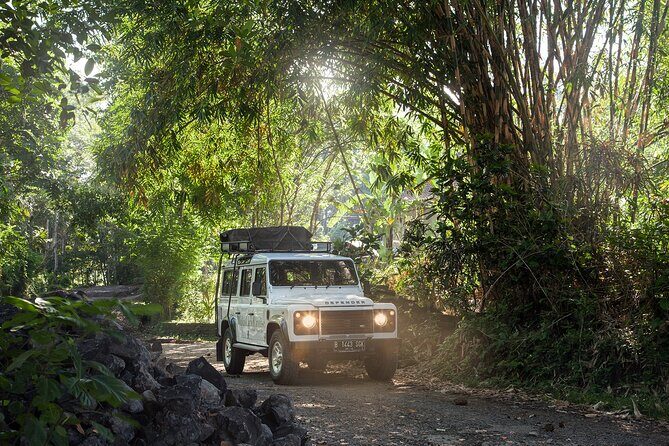
Bali in one cruise day is possible. This Benoa shore excursion strings together Bali’s craft traditions, rice-terrace views, a major waterfall, and a batik workshop-like stop—without you having to plan a thing. I like the cruise-port pickup setup and how the day is paced for a tight schedule, with a real person holding your name at the port.

Two big wins for me are the English-speaking driver/guide and the lunch stop with a terrace view. The only real caution: timing in Bali can be unpredictable, and if you start late or hit heavy traffic, the plan may cut into later stops like the waterfall.

Key Highlights You’ll Actually Care About

Bali Benoa Shore Excursion for Cruise's Passenger - All Inclusive - Key Highlights You’ll Actually Care About

  • Port pickup with your name visible so you can start moving fast
  • English-speaking driver/guide who can explain what you’re seeing in plain terms
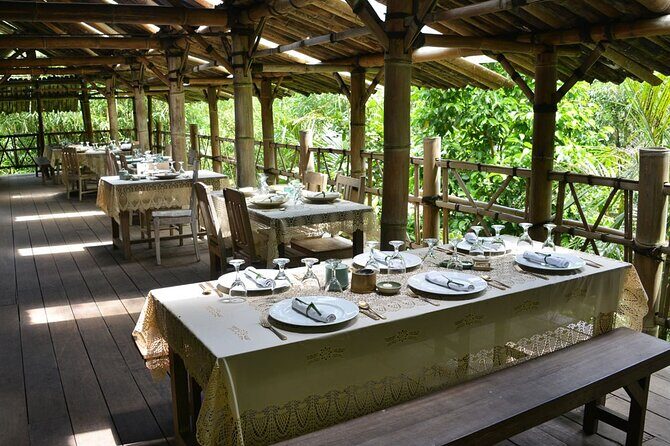
  • Tegalalang lunch with terrace views (Indonesian menu) built into the schedule
  • A stop in Celuk for gold-and-silver craft watching
  • Tegenungan Waterfall included, but it’s the one most affected by road time
  • Batik making on display at Bali Bidadari Batik so you see the process, not just a showroom

Why This Benoa Shore Excursion Works for Cruise Passengers
Bali Benoa Shore Excursion for Cruise's Passenger - All Inclusive - Why This Benoa Shore Excursion Works for Cruise Passengers
If your ship docked in Benoa and you only have part of a day, you want two things: clear timing and zero guesswork. This tour is built around that reality. The overall run is about 7–8 hours, and it’s designed to take you out from Benoa Cruise Port to a string of familiar Bali sights in a logical order, then back to the port.

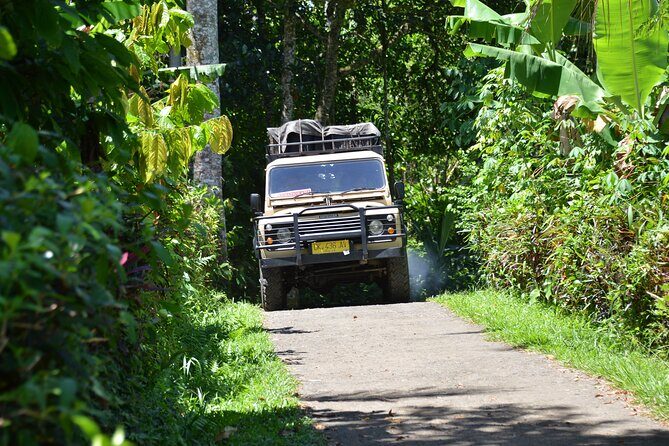
What makes it feel practical is the way it treats a cruise day like a mission, not a loose idea. You get air-conditioned transport, all fees and taxes included, and a guide/driver who handles the driving and the explanations. For many cruise passengers, that’s the difference between a calm day and a frantic one.

Getting Found Fast at Benoa: The Pickup That Saves Time

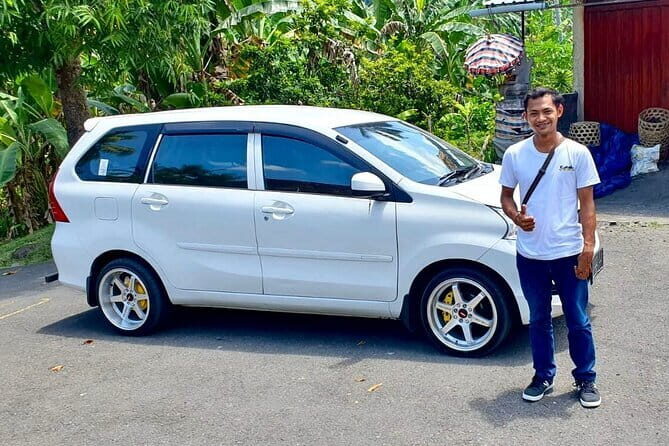
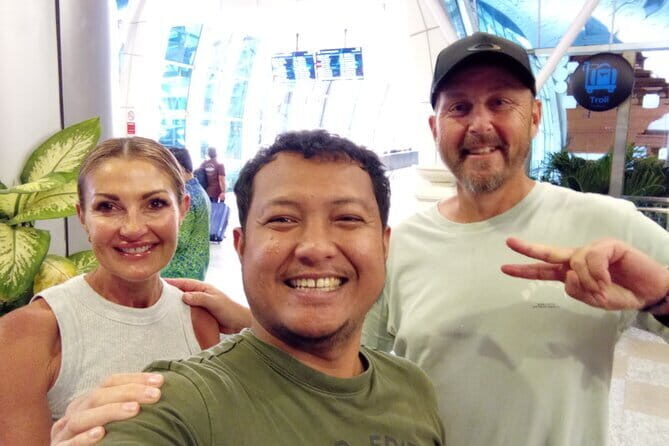
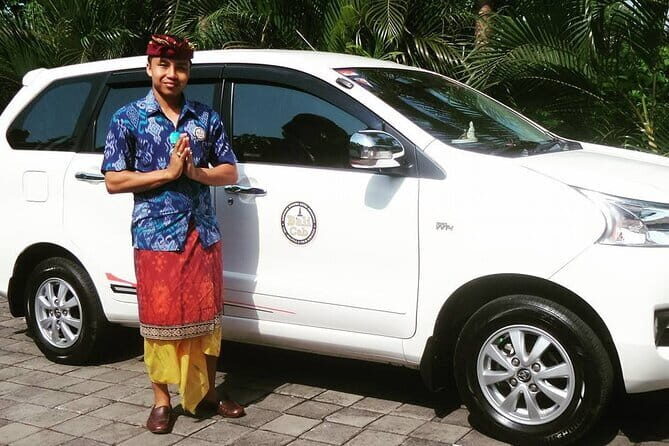
Your day starts at the Port of Benoa (Jalan Dermaga II, Pedungan, Kuta Selatan). The key detail here is how you meet up: the driver/guide waits by the counter with a sign that has your name. That little touch matters on cruise mornings because you’re not trying to figure out which pickup boat person is yours.

The tour also uses a mobile ticket, and the supplier contacts you the day before (by email or WhatsApp). That’s helpful because in Bali, small timing changes happen. You want the info ahead of time, not while you’re standing in the heat.

Private vs Sharing Van: Comfort and How Many People You’ll Be With
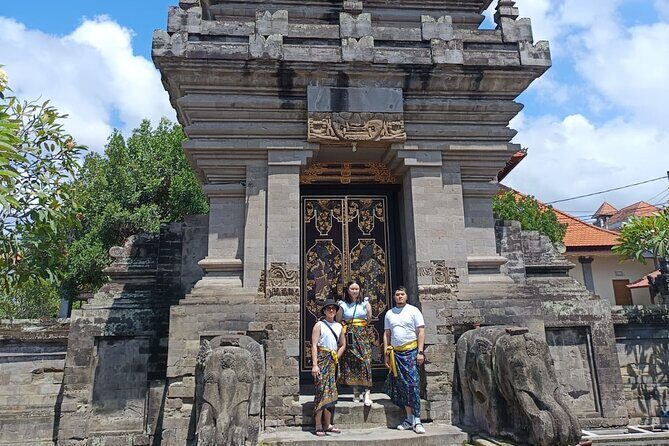
Bali Benoa Shore Excursion for Cruise's Passenger - All Inclusive - Private vs Sharing Van: Comfort and How Many People You’ll Be With
You can choose either a private setup or a sharing option.

  • If you go private, it’s just your group.
  • If you choose sharing, the vehicle size is limited: a van max 6 persons or a minibus max 12 persons.

Why this matters: on a cruise day, group size affects how quickly you can get in and out at stops, and how much space you have for photos during transitions. A smaller group usually means fewer delays inside the vehicle and less waiting at each location.

Either way, you’re getting round-trip return transfer in an air-conditioned vehicle, which is a big comfort upgrade when you’re doing multiple outdoor sights in a single day.

The Craft-and-Temple Loop: Celuk Village and Puseh Batuan Temple
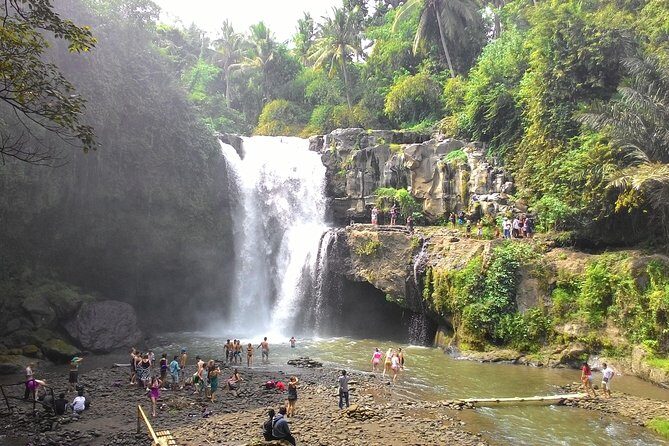
Bali Benoa Shore Excursion for Cruise's Passenger - All Inclusive - The Craft-and-Temple Loop: Celuk Village and Puseh Batuan Temple
After pickup, the first stop is at Benoa Harbour, then you move into central Bali culture through a craft village and a temple area. This part of the day is a good contrast to the more photo-driven stops later.

Stop: Celuk Village (about 1 hour)

Celuk is known as a center for gold and silver crafts. In practice, that means you’re watching traditional-style making—how intricate designs get created, and what the craft looks like up close. This stop is especially valuable if you’re the type who likes Bali beyond beaches and rice terraces.

Admission here is listed as free, so you’re not paying extra just to get a cultural flavor.

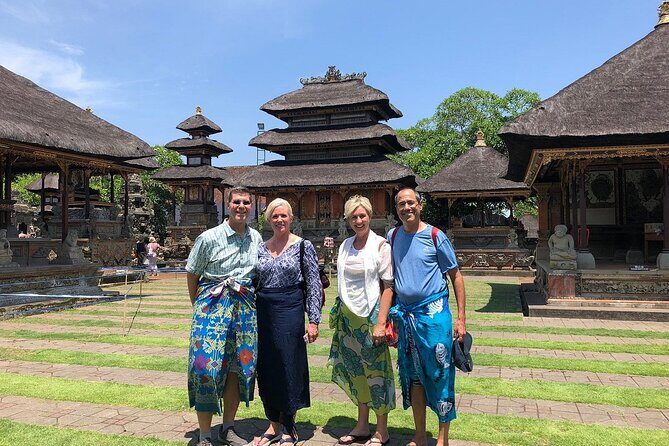
Stop: Puseh Batuan Temple (about 1 hour)

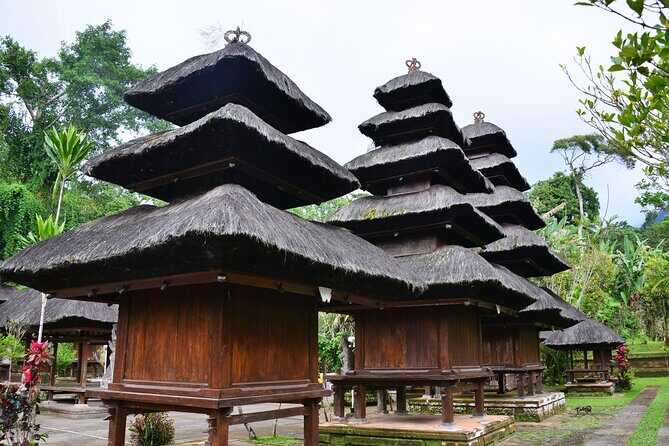
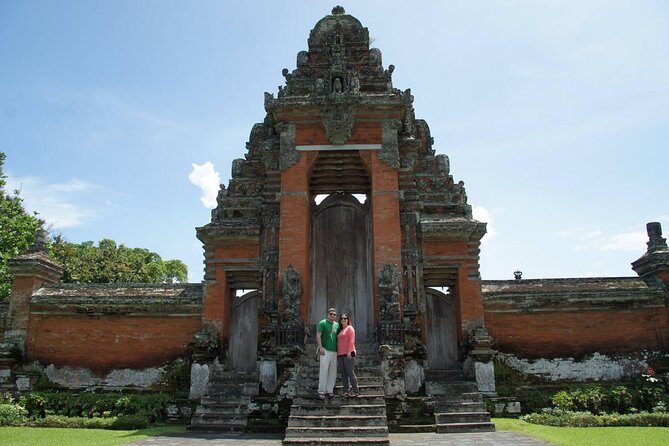
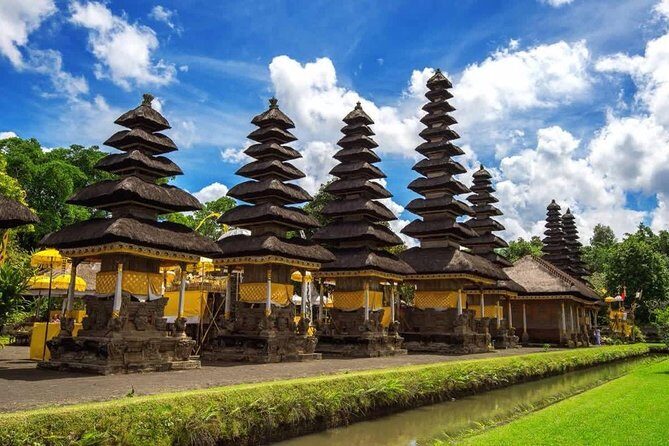
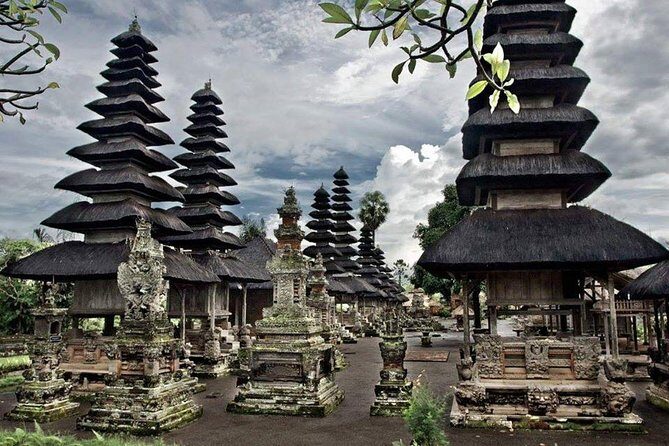
Next is Puseh Batuan Temple in Batuan Village, Sukawati (Gianyar). It’s part of the Tri Kahyangan concept (Pura Puseh, Pura Desa, Pura Dalem), and it’s described as established in 1022 AD.

What I like about this stop is the way it gives you a sense of how old Bali belief systems structure community life. Also, admission is listed as free, which helps keep the day feeling good-value.

Practical note: temples are where you’ll want to follow local rules on respectful visiting. If you’re unsure about dress, bring something that covers your shoulders and knees.

Singapadu Agro Tourism: Coffee and Tea with Plantation Views
Bali Benoa Shore Excursion for Cruise's Passenger - All Inclusive - Singapadu Agro Tourism: Coffee and Tea with Plantation Views
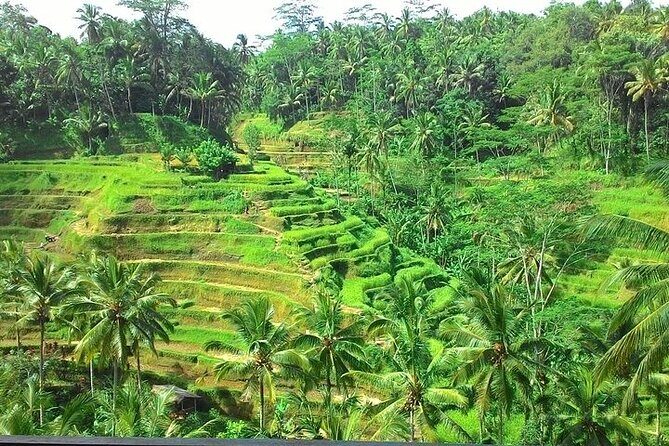
After the temple and craft stops, you head to Singapadu Agro Tourism for about 1 hour. This is focused on the production process of different beans, plus you get to enjoy the views of the plantation while tasting a variety of coffees and teas.

Admission is listed as free, and the time here is short enough that it doesn’t swallow your day. For me, this stop works best when you treat it as a sensory break—something different from temples and terraces—while still staying connected to Bali’s working landscape.

Tegalalang Rice Terraces Lunch: The Stop You’ll Remember
Bali Benoa Shore Excursion for Cruise's Passenger - All Inclusive - Tegalalang Rice Terraces Lunch: The Stop You’ll Remember
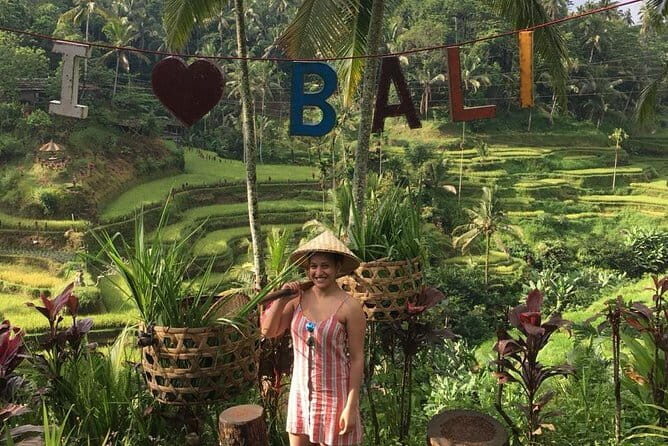
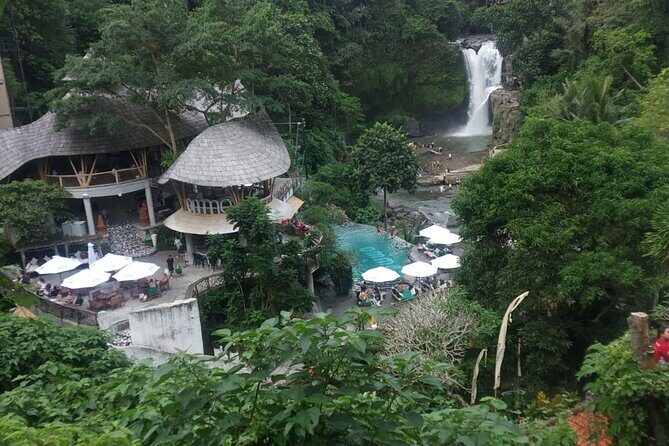
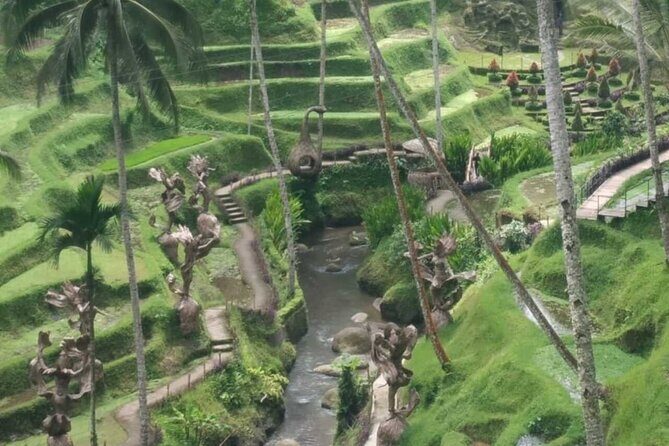
Then comes the star photo zone for a lot of people: Tegalalang Rice Terrace. You’ll spend around 1 hour 30 minutes here, and lunch is included—an Indonesian menu served at a restaurant with rice terrace views.

Admission at this stop is listed as included, so you’re not paying extra on top of the tour price for the main viewing area. This is also a smart pacing choice: you’re using the best scenic stop as an anchor for a full meal rather than just a quick photo stop.

Why this part matters for cruise passengers: it reduces decision fatigue. Instead of scrambling to find lunch near viewpoints, you get fed while you’re already at one of Bali’s most iconic views. And yes, the classic stepped rice photo backgrounds are the reason this place stays popular.

Tip I’d follow: go slower with photos than you think you need to. The terraces are photogenic from many angles, but the best shots often come from patient repositioning, not rushing.

Tegenungan Waterfall: The Big Nature Moment, With a Timing Catch
Bali Benoa Shore Excursion for Cruise's Passenger - All Inclusive - Tegenungan Waterfall: The Big Nature Moment, With a Timing Catch
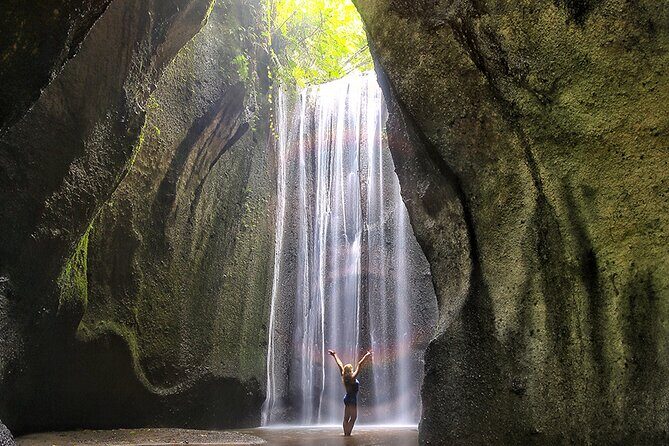
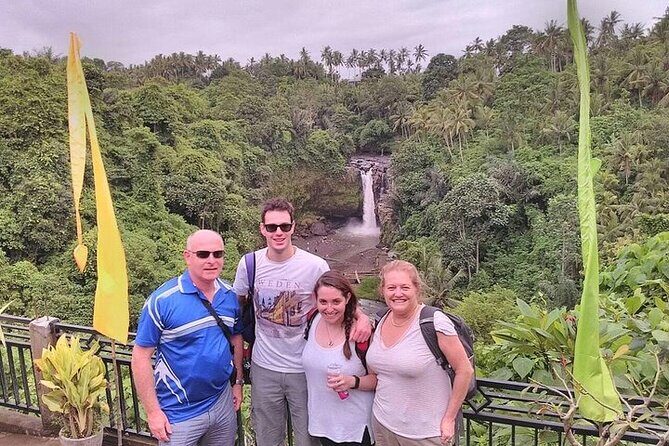
After lunch, the tour includes Tegenungan Waterfall for about 1 hour. Admission here is listed as included, and this is one of the most popular Bali highlights—so you should expect it to be busy at certain times.

Here’s the caution: waterfall time is the first thing that gets stressed if Bali traffic runs late. In the real-world experience of cruise timing, that’s exactly what can happen. One guide can be excellent and still have to fight road time, and you may end up with less time at the waterfall than planned or even miss it if the schedule collapses.

This is why the tour strongly suggests choosing a cruise departure window like 7:30am to 9:00am when possible. Starting too late can mean not all stops can be visited.

If your heart is set on the waterfall photo, treat it like a priority. Give yourself margin by picking the earlier slot you can manage.

Bali Bidadari Batik: Watching the Process Before You Buy
Bali Benoa Shore Excursion for Cruise's Passenger - All Inclusive - Bali Bidadari Batik: Watching the Process Before You Buy
On the way back toward the port, the day includes Bali Bidadari Batik for about 1 hour. This is not framed as a quick store stop. You can see ladies painting batik, weaving batik, and handworking designs—so you’re watching art-making as it happens.

Admission is listed as included, which makes this feel like a genuine cultural add-on, not just a retail stop. Even if you don’t buy anything, it’s a good way to end the day on something more thoughtful than another viewpoint.

When Your Guide Makes the Difference: Real Driver Strengths

The tour’s success often comes down to the driver/guide. The names that pop up in the experience summaries include Ari, Ketut, Gusti, and Nyoman Kojana, plus other friendly hosts.

What repeatedly matters: they drive safely, they handle the flow of the day, and they can explain what you’re seeing. If you want a richer experience, ask simple questions during transitions—about the craft process in Celuk, how temple concepts are organized, or what the coffee/tea tasting is actually focused on.

Also, cruise passengers should appreciate this: getting back to the ship on time isn’t luck. A steady, competent driver earns their tip.

Price and Value: What $50 Is Really Covering

At $50 per person, this tour is priced like an economical way to pack multiple sights into one cruise-friendly day. What makes it feel like value is what’s included:

  • Air-conditioned return transport
  • English-speaking driver/guide
  • All fees and taxes
  • Lunch at the terrace-view restaurant
  • Entrance coverage at key stops like Tegalalang, Tegenungan Waterfall, and Bali Bidadari Batik (with several other stops marked free)

Your personal expenses are the main extra cost you might face—typical souvenirs, snacks, or drinks beyond lunch.

Value logic for you: if you were to arrange separate transport, pay separate entrances, and then try to find lunch on your own while working around ship timing, the costs can add up fast. This package keeps the day predictable, which is often what you pay for on a cruise.

Timing Reality Check: How to Choose Your Start Time

The tour suggests that if you’re a cruise passenger, picking 07:30am to 09:00am helps you maximize the tour’s 8-hour target. The reason is simple: Bali traffic can stretch travel time, and you may not be able to hit every listed stop if you start later.

So my practical recommendation is: if you have the option, choose the earlier slot. It’s not about doing more for the sake of it. It’s about protecting the stops you actually want—especially Tegenungan Waterfall.

And if your ship docks later or runs behind schedule, it’s worth being flexible. The day is designed to work with cruise constraints, but the road still decides how smooth it feels.

Who This Shore Excursion Is Best For

This is a strong fit if you want:

  • A first Bali day without complicated planning
  • A mix of culture, crafts, scenic views, and a waterfall
  • An experience centered around English-speaking guidance and safe driving
  • A cruise-friendly schedule with return transport handled

It may be less ideal if you want zero pressure and zero traffic impact. If you’re the type who hates any chance of missing a stop, you should plan a land stay instead of a cruise day. But if you can work with timing, this tour offers a lot.

Should You Book It? My Honest Decision Guide

I think this is a good booking when your goal is a one-day Bali sampling from Benoa. The combination of Tegalalang lunch with terrace views, a full cultural route through Celuk and a temple stop, and an ending visit to batik production makes it more than a drive-by photo tour.

Book it if you can choose an earlier start (roughly 7:30–9:00am) and you’re okay with the reality that traffic can squeeze later moments. Skip it or adjust expectations if your schedule forces a late start and you’re extremely dependent on hitting every single stop exactly on time.

FAQ

How long is the Bali Benoa shore excursion from the cruise port?

The tour runs about 7 to 8 hours.

Where does the tour start at Benoa?

The meeting point is the Port of Benoa (Jalan Dermaga II, Pedungan, Kuta Selatan, Kota Denpasar, Bali).

Is pickup included, and how do they find cruise passengers?

Yes. You’re picked up from Benoa port, and the driver/guide waits at the counter holding a sign with your name.

What’s included in the price besides transportation?

The price includes all fees and taxes, an English-speaking driver or guide, and lunch at a restaurant overlooking the Tegalalang Rice Terrace.

Do we pay entrance tickets at every stop?

Not all stops are paid. Some are listed as free (like Celuk Village, Puseh Batuan Temple, and Singapadu), while others are listed as admission included (like Tegalalang Rice Terrace, Tegenungan Waterfall, and Bali Bidadari Batik).

Is lunch included, and what will it be like?

Lunch is included, with an Indonesian menu, served at a restaurant overlooking the Tegalalang Rice Terrace.

Is this tour private or shared?

You can choose private (only your group) or sharing. The sharing vehicles are listed as van max 6 or minibus max 12.

What time should cruise passengers book for the best chance to see everything?

If possible, choose a time window around 07:30am to 09:00am to help maximize the tour length (about 8 hours).

Is the tour affected by weather?

Yes. The experience requires good weather. If it’s canceled due to poor weather, you’ll be offered a different date or a full refund.

Can I cancel for a full refund?

Yes. You can cancel up to 24 hours in advance for a full refund.
Bali 4WD Adventure WakaLand UNESCO Jatiluwih Trip in Bali Outback

Bali 4WD Adventure WakaLand UNESCO Jatiluwih Trip in Bali Outback - Penebel and the stone quarry: where temple stone starts

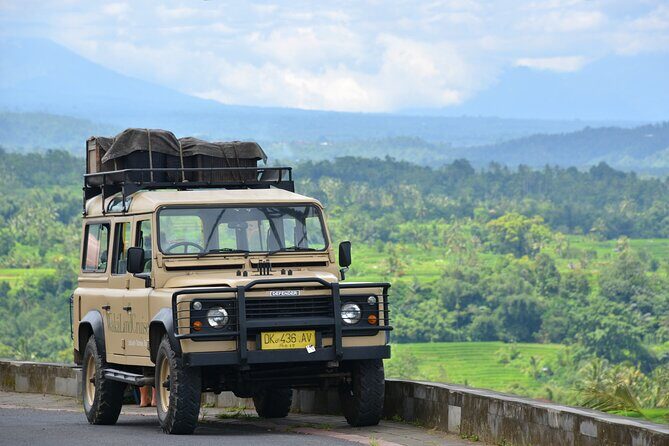
Bali gets serious inland. This small-group 4WD adventure pushes you into rural Tabanan Regency for rice terraces, village stops, and mountain-side temples you won’t see from the beach strip. Two things I love about it right away: the mix of hard-to-reach places (quarries, bamboo groves, hot mineral baths) and the fact that the lunch is in the rainforest on Mount Batukaru’s slopes.

The main thing to consider is time. Some parts of the day feel like a quick pass-through rather than a slow soak, so if your top goal is lots of uninterrupted jungle time, I’d mentally budget for driving and temple/village stops.

Key things to know before you go

Bali 4WD Adventure WakaLand UNESCO Jatiluwih Trip in Bali Outback - Key things to know before you go

  • Max 6 people per vehicle keeps the day from feeling crowded, even on bumpy roads.
  • English-speaking driver/guide is included, plus morning tea and beverages.
  • Jatiluwih rice terraces are a major highlight, with the Subak irrigation system behind them.
  • Batukaru Temple adds a spiritual layer in a quieter part of Bali.
  • Hot mineral baths are part of the day—great for atmosphere, and you may want swimwear if you plan to soak.
  • Rainforest lunch at Bamboo Forest Restaurant by WHM is consistently the moment people remember.

Price and what you’re really buying for $115

Bali 4WD Adventure WakaLand UNESCO Jatiluwih Trip in Bali Outback - Price and what you’re really buying for $115
At about $115.39 per person for an ~8-hour day, you’re paying for a full package: 4WD transportation, an English-speaking licensed driver/guide, hotel pickup and drop-off from major areas, and a meal plan that includes lunch plus beverages. That matters in Bali because inland driving can turn into a time sink if you try to DIY it, and 4WD is what gets you off the smoother routes.

Also, small-group limits (up to 6 people per vehicle) are part of the value. Fewer people means fewer stops that turn into waiting games, and you get better chances for photos and conversation with your guide.

The 4WD reality: bumpy roads, big photo angles

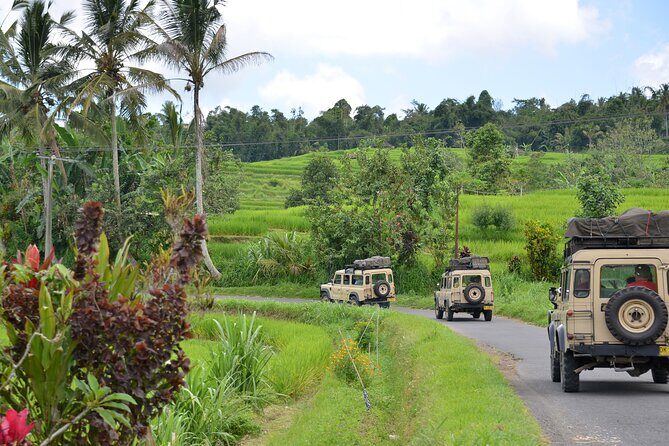
This is called an outback-style adventure for a reason. You’ll leave the beach-and-market loop and head into Bali’s interior, where roads can be narrow and uneven. Expect real driving—often fast, often bouncy—so plan for a day where you’ll be shifting your focus between the vehicle ride and the views.

What makes the ride worthwhile is what the drive reveals. Along the way, you see a mix of everyday rural life and religious details: hand-carved deities placed in the roadside landscape, and a contrast between modern and traditional architecture as you move through less-touristy villages.

Practical tip: wear shoes with grip. You’ll be stepping on uneven surfaces at village and temple stops, and the last thing you want is to be thinking about footing instead of taking photos.

Penebel and the stone quarry: where temple stone starts

Bali 4WD Adventure WakaLand UNESCO Jatiluwih Trip in Bali Outback - Penebel and the stone quarry: where temple stone starts
Your day begins in the Penebel area, with a stop at a natural stone quarry. Instead of a staged viewpoint, this is about process. Villagers have cut stone out of a dry river bed for generations, and you can see how the raw material becomes the building blocks for temples and shrines.

Why this stop matters: it gives you context. Bali isn’t just scenery—it’s infrastructure made of stone, carved by hand, and tied to religious practice. If you like travel that explains how things are made, you’ll enjoy this moment more than the typical quick photo stop.

Then you move on to an agricultural village environment. The idea here is simple: you get a taste for how people live when tourism isn’t calling the shots.

Coffee, vanilla, cocoa, and tea: a working farm break

Bali 4WD Adventure WakaLand UNESCO Jatiluwih Trip in Bali Outback - Coffee, vanilla, cocoa, and tea: a working farm break
Next comes a break at a farm area where you sip tea and take in fields growing coffee, vanilla, and cocoa. This is one of those stops that can feel short on paper, but it’s useful because it changes the pace. After time on the road and in village settings, you get a calmer moment to look around and smell the air.

If you’re the kind of person who likes souvenirs that mean something, this is also where you can learn what you’re actually buying later—though what’s available to purchase isn’t listed, so I’d treat it as a learning and tasting moment, not a shopping guarantee.

Jatiluwih UNESCO terraces: Subak irrigation up close

Bali 4WD Adventure WakaLand UNESCO Jatiluwih Trip in Bali Outback - Jatiluwih UNESCO terraces: Subak irrigation up close
Jatiluwih is the big name for a reason. You’ll visit Bali’s terraced rice paddies, maintained through the ancient Subak irrigation system. This isn’t just “pretty greenery on a slope.” It’s a living system that coordinates water use, farming, and community decision-making.

What you’ll notice on-site is the layered structure: paddies stepping down the hills, with the farming pattern creating that patchwork look people come for. Timing matters here too. If you can, aim to spend a little extra time walking and finding angles where the terraces stretch across the hillside.

Practical tip: bring something for insects and a light layer for shade changes. Mountain-side weather in Bali can shift quickly.

Mount Batukaru slope stops: bamboo groves to jungle lunch

Bali 4WD Adventure WakaLand UNESCO Jatiluwih Trip in Bali Outback - Mount Batukaru slope stops: bamboo groves to jungle lunch
After rice terraces, the day moves toward Mount Batukaru. You’ll travel through thick bamboo groves and climb into a cooler, greener feel. The temperature shift is part of the experience—you literally feel Bali change as you gain altitude.

Then comes what many people remember most: lunch at Bamboo Forest Restaurant by WHM, set right on the slopes near a jungle camp vibe. You’ll eat Balinese cuisine surrounded by giant bamboo, with views overhead toward Mount Batukaru.

Lunch layout (so you know what to expect):

  • You dine on Balinese favorites in the restaurant setting
  • You get a choice of tea, soft drinks, beer, wine, or coffee
  • You also have morning beverages earlier, so you’re not stuck just waiting for the meal

Why this lunch is a highlight: it’s not only the food (which is consistently praised), it’s the setting. High up, with bamboo all around, it feels like you’re eating inside the landscape rather than next to it.

Batukaru Temple: spirituality in a quieter corner

Bali 4WD Adventure WakaLand UNESCO Jatiluwih Trip in Bali Outback - Batukaru Temple: spirituality in a quieter corner
After lunch, you visit Batukaru Temple, described as a sacred mountain sanctuary and a royal temple of the Tabanan dynasty, founded in the 11th century by Hindu sage Empu Kuturan.

This is one of those stops that works well if you enjoy religious architecture without the big-tour crush. The temple context matters here: it’s tied to a mountain sanctuary concept, not just a random temple you pass on the way to a viewpoint.

Practical note: Bali temples typically expect respectful dress. The tour info doesn’t specify clothing rules, so I’d pack basic respect in your planning—covering shoulders and having a plan for lower-body coverage.

Hot mineral baths: history, atmosphere, and real-world use

Bali 4WD Adventure WakaLand UNESCO Jatiluwih Trip in Bali Outback - Hot mineral baths: history, atmosphere, and real-world use
Toward the end of the day, you stop at ancient hot mineral baths. Your guide explains the history and how the baths are used in modern times, and you see why this tradition keeps going.

A key point: the tour description says you visit the baths, not necessarily that you’re guaranteed long soaking time. If soaking is a priority for you, bring swimwear and a change of clothes anyway, but don’t assume you’ll have a long, leisurely spa schedule.

This stop works well even if you don’t soak. The baths add a tactile, human element to the day—something beyond walking and photo angles.

Timing, pacing, and small-group comfort (with one caution)

This is an ~8-hour outing, and the day is built as a sequence of stops rather than one long activity block. That’s why you’ll feel both variety and a bit of time pressure. You’ll move from quarry to farm to rice terraces to bamboo restaurant to temple to baths and then back.

Small-group limits (up to 6 per vehicle) help with pacing, but they don’t eliminate the bigger Bali reality: roads and vehicles can run into issues. One past situation to keep in mind is a 4WD mechanical problem (drive shaft failure) that meant a wait for a replacement vehicle. That’s not something you can plan perfectly for, so if you’re traveling with strict timing for later that evening, leave a little buffer.

For guide style: you get an English-speaking licensed driver/guide, and people can experience the day as very informative or a bit quiet depending on the guide’s energy. I’d treat the guide as your best source for clarifying what you’re seeing on the way.

Who this tour fits best (and who should look elsewhere)

This tour is a good match if you want:

  • Inland Bali—not just beaches and shopping streets
  • A mix of nature, farming, temples, and practical cultural stops
  • A day that includes lunch in a special mountain setting
  • A group size that stays manageable (max 6 per vehicle)

It might be less ideal if:

  • You’re mainly chasing one kind of experience, like long uninterrupted rainforest time
  • You care most about specific coastal temples or staged performances (because this day is very focused on Tabanan and Batukaru area stops)
  • You want a slow, restful day with minimal driving

So… should you book Bali 4WD Adventure WakaLand UNESCO Jatiluwih Trip?

If you like variety and you want to see the part of Bali that feels lived-in, I think this is a strong value buy. For the price, you get 4WD transport, an English-speaking guide, hotel pickup/drop-off, and a day structured around major inland highlights like Jatiluwih and Batukaru, plus the meal at Bamboo Forest Restaurant by WHM.

My call: book it if you’re excited by rice terraces, bamboo groves, temple visits, and hot mineral baths—and you’re okay with a full day of moving from stop to stop. If you want a lighter pace or maximum time in one single setting, ask more questions before you go so the day matches what you’re craving.

FAQ

How long is the Bali 4WD Adventure WakaLand UNESCO Jatiluwih Trip?

It runs for about 8 hours.

What does the tour cost?

The price is $115.39 per person.

Do you get pickup and drop-off from hotels?

Yes. There’s pickup and drop-off from major hotels in Kuta, Seminyak, Sanur, Jimbaran, and Nusa Dua area (select hotels).

How many people are in each vehicle?

The tour limits groups to a maximum of 6 people per vehicle.

Is lunch included?

Yes. Lunch is included, along with coffee and/or tea and beverages.

Do I get an English-speaking guide?

Yes. The tour includes an English-speaking licensed guide/driver.

Which major stops are included during the day?

You’ll visit places including Penebel (natural stone quarry area), Jatiluwih rice terraces, Bamboo Forest Restaurant by WHM for lunch, Batukaru Temple, and ancient hot mineral baths.

Is free cancellation available?

Yes. You can cancel for a full refund up to 24 hours before the experience start time.

Snorkeling in Wall Point, Gamat Bay and Manta Bay: Nusa Penida Island

Snorkeling in Wall Point, Gamat Bay and Manta Bay: Nusa Penida Island - Entering the small-boat reality: gear and guide support

Manta rays are the headline here, but the whole day is built around smart snorkeling stops on Nusa Penida. I like how this trip strings together three named bays—Crystal Bay (Wall Point) for clear visibility, Gamat Bay for fish and coral, and Manta Bay for those manta-ray encounters—plus a guide and crew who get you moving without making it feel complicated.

My favorite part is the convenience: you get pickup and drop-off from your Bali area, speedboat ride, snorkeling gear, and a guide all handled. The trade-off to know up front is that the snorkeling windows are limited, and the day can feel like more travel than water time—especially if weather affects the schedule.

The short list I’d tell a friend

  • Three real snorkeling locations: Wall Point, Gamat Bay, and Manta Bay in one outing
  • Clear-water odds at Crystal Bay (Wall Point), with turtles often seen
  • Coral and fish focus at Gamat Bay, where underwater critters are common
  • Manta rays are the goal at Manta Bay, but sightings can depend on conditions
  • Small shared snorkeling boat means simple setup (think practicality, not onboard comforts)

From Seminyak to Nusa Penida: the speedboat rhythm

This is a classic “go far, snorkel hard (for a bit), then go home” day. You start with hotel or villa pickup in Seminyak, then head to the departure area for the shared speedboat to Nusa Penida. It’s a longish day, but the speedboat keeps your total time on the water much more efficient than slower boats.

Once you arrive on Nusa Penida, the crew greets you and helps you get organized for the snorkeling boat. That step matters. Nusa Penida has a reputation for being busy during good weather, and a smooth handoff helps you get into the water sooner instead of standing around while everyone else figures out timing.

Entering the small-boat reality: gear and guide support

Snorkeling in Wall Point, Gamat Bay and Manta Bay: Nusa Penida Island - Entering the small-boat reality: gear and guide support
The snorkeling setup is straightforward and included: mask, fins, and a life jacket. You also get a professional snorkeling guide, which is a big plus for a place like Nusa Penida where conditions and currents can vary by bay.

One practical detail: the snorkeling boat is small and shared, with space for around a dozen people (not a big catamaran vibe). That’s fine—most people come for the water, not the onboard lounge. But if you expect a boat with a toilet, changing area, or extra comfort space, you may feel a little underwhelmed. You’ll want to treat the boat as transportation, then focus on the actual snorkeling time.

Stop 1: Crystal Bay (Wall Point) for clear visibility and turtles

Crystal Bay (often called Wall Point) is the first stop, and it’s chosen for a reason: the water tends to be clear, which helps you see coral structure and marine life without a murky blur. If you like snorkeling where you can actually spot details—fish hovering above coral, small reef critters, and animals moving through the area—this is a strong opening.

A highlight here is that turtles can be seen quite regularly. That doesn’t mean guaranteed sightings, but it’s one of those stops where your odds are better than at many random reef spots. You’ll typically have around 40 minutes in the water.

The one drawback to keep in mind: reef condition can vary. Even with good visibility, some stretches of coral may look worn. When you snorkel, avoid touching anything and keep fins light—good visibility makes it tempting to chase close-up shots.

Stop 2: Gamat Bay for coral gardens and lots of fish

Gamat Bay is the “underwater busy” stop. The idea is coral and marine life together—think lots of fish and underwater critters using the reef for cover. If Crystal Bay is about seeing clearly and spotting animals like turtles, Gamat Bay is about texture: coral forms, fish behavior, and the small stuff moving in and out of nooks.

You’ll get another roughly 40 minutes here. That’s enough time to get oriented, settle your breathing, then slow down and actually enjoy what’s in front of you. It’s also long enough that you’ll probably want to swim at a relaxed pace instead of trying to cover every inch quickly.

A tip for enjoying this stop: resist the urge to stay at the surface the whole time. Even staying shallow, a little movement along the reef edges helps you spot more activity.

Stop 3: Manta Bay for mantas, stingrays, and nurse sharks

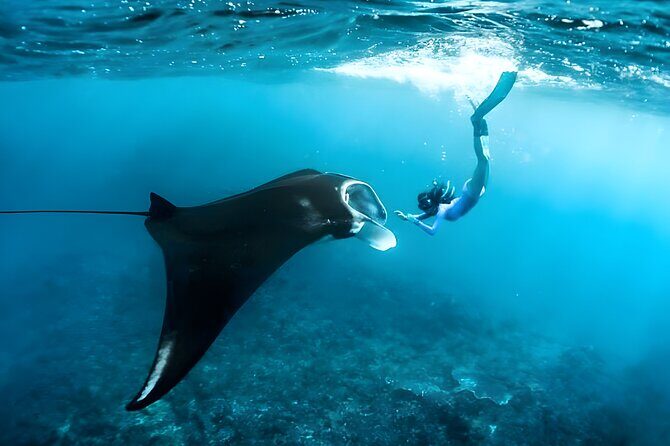
Manta Bay is the reason many people take the trip. This is where you go looking for manta rays—specifically coral manta (Manta alfredi). The chance of seeing them is described as almost daily, and other marine life like spotted stingrays and nurse sharks may appear in the area.

Still, manta-ray spotting is weather-and-momentum dependent. High waves and rougher conditions can limit visibility or how long you can stay in the water at the exact moment the mantas show up. When that happens, you might get a strong day of snorkeling without the manta encounter you came for.

Your best strategy is to treat this stop as a wildlife-search, not a checklist. Keep your focus on slow scanning and calm movement. If the guide signals where to look, follow that direction quickly, then settle. The more you hover, drift, and watch, the more likely you are to spot something moving below the surface.

Timing: why the 6–7 hours can feel longer than you expect

On paper, the trip sounds like a straightforward half-day: about 6 to 7 hours total. The snorkeling stops are each about 40 minutes, so you might expect more total water time. What can surprise you is that travel, boarding, and repositioning take a chunk of the day.

In practice, you’ll spend significant time getting to the island, moving between bays, and returning. If your goal is maximum time underwater, this won’t feel like a full-on long session. But if you want the best odds at multiple locations—including mantas—this structure makes sense. You’re buying efficiency: fewer days, more sites.

If the boat schedule shifts due to waves or conditions, don’t panic. It’s a weather-driven area, and the day is built to adapt.

Price and value: what $90 covers (and what it doesn’t)

At $90 per person, the value is in the included essentials. You’re paying for pickup and drop-off from your area, a return shared speedboat ticket, the snorkeling boat, snorkeling equipment, and a professional snorkeling guide. Taxes and services are included too, so there aren’t lots of small add-ons at the counter.

What’s not included: lunch and towels, plus personal expenses. That means you should plan to either buy food separately or eat beforehand. If you’re someone who gets hangry after a long boat ride, pack a snack plan so you’re not stuck searching for quick food at the wrong time.

Also note: it’s listed as a private tour/activity, meaning your group travels with private vehicle service, but the boat rides themselves are shared. That’s a decent balance for cost control while still giving you a more organized pickup experience.

Weather, comfort, and what to bring

This experience requires good weather, and conditions matter for visibility and safety. If it’s rough, the day may get adjusted, and that can affect how likely you are to see manta rays.

Dress code is smart casual, but think practical too. Bring sunscreen (you’ll be exposed), a camera (this is a “try for photos” day), and a change of clothes. Towels aren’t provided, so either plan to bring your own or make sure you have something ready for after the water.

If you’re prone to motion sickness, consider preparing ahead of time. Speedboats can be bouncy, and the day involves enough boat time that discomfort can drain your energy.

Who should book this Nusa Penida snorkeling day

This trip is a good match if you want a guided “greatest hits” snorkeling plan in one day. It’s also a strong pick for first-timers who want a clear structure: named bays, included equipment, and a guide to help you navigate.

It may be less ideal if:

  • You expect long hours of snorkeling at just one site
  • You care more about onboard comfort than the water time
  • You’re traveling with very high expectations of guaranteed manta-ray sightings

Age limits run from minimum 5 years to maximum 60 years, and most travelers can participate. The main limits beyond age are weather and how comfortable you are in open-water snorkeling conditions.

Should you book it?

I’d book this if you’re going to Nusa Penida for the main attractions—Wall Point, Gamat Bay, and the manta-ray hunt—and you like guided logistics that remove planning headaches. The included gear and transportation make the day easier than piecing it together yourself.

I’d pause if your top priority is lots of pure time in the water or if you’re the type who really needs mantas to be guaranteed. Since sightings can change with conditions, plan your mindset around the snorkeling overall, not just the headline animal.

If you’re flexible and want a well-structured one-day combo, this is a solid way to spend a Bali trip—especially when you want those classic Nusa Penida stops without extra coordination.

FAQ

How long is the snorkeling experience?

It runs about 6 to 7 hours total.

Where do you pick up and drop off?

Pickup and drop-off are offered from several Bali areas, including Seminyak, plus places like Kuta, Denpasar, Canggu, Sanur, Nusa Dua, and others listed by the provider.

What snorkeling stops will we visit?

You’ll snorkel at Crystal Bay (Wall Point), Gamat Bay, and Manta Bay.

How long do we snorkel at each location?

Each stop is listed at about 40 minutes with an admission ticket included.

Is it private or shared with other people?

It’s private for your group in terms of the tour/activity, but the speedboat ride and the snorkeling boat are described as sharing.

What’s included in the price?

Pickup/drop-off, a return shared speedboat ticket, snorkeling boat, snorkeling equipment (mask, fins, life jacket), a professional snorkeling guide, and taxes/services are included.

What should I bring and are there age limits?

Bring sunscreen, a camera, and change of clothes (dress smart casual). Towels are not included. Minimum age is 5, and maximum age is 60.

Snorkeling in Blue Lagoon Padang Bai Bali : Snorkel in the clear blue waters

Snorkeling in Blue Lagoon Padang Bai Bali : Snorkel in the clear blue waters - Private Day Trip Flow: pickup, traditional boat, two reef stops, lunch

Watching the water change color is the whole show. Blue Lagoon in Padang Bai is known for sheltered, clear-ish conditions that make snorkeling feel doable even if you’re new, and the reef life can be surprisingly fun up close.

I love the setup here: you get a private tour with hotel pickup, a snorkeling guide, and all the gear, so you’re not hunting around for fins or trying to figure out timing on your own. I also like that you snorkel at two different spots, not just one long stop, which helps you see more variety without feeling rushed.

One thing to consider: conditions can be a wildcard. On rougher weather days (or in rainy season) visibility may drop, and you might even notice surface plastic, which can totally ruin the mood.

Key Points to Know Before You Go

Snorkeling in Blue Lagoon Padang Bai Bali : Snorkel in the clear blue waters - Key Points to Know Before You Go

  • Two snorkeling stops with about 1 hour in each place, so you get more reef time
  • Private transport and private activity (your group only) for a calmer pace
  • All snorkeling equipment included, including mask, fins, and a life jacket
  • Smart-casual dress and a change of clothes make the return ride more comfortable
  • Weather matters for water clarity and how easy the snorkel feels

Blue Lagoon Padang Bai: calm water that works for first-timers

Snorkeling in Blue Lagoon Padang Bai Bali : Snorkel in the clear blue waters - Blue Lagoon Padang Bai: calm water that works for first-timers
The Blue Lagoon area in Padang Bai is popular for a reason: it’s sheltered enough that the experience feels gentler than open-ocean snorkeling. For most people, that translates to less panic, steadier water, and more time watching fish instead of managing your balance.

The tour also leans practical. You’re not just dropped in the water and told good luck. You go with a snorkeling guide who helps you get comfortable with breathing, timing, and how to move around the reef without banging into anything. If you’re bringing kids (minimum age is 6) or anyone who prefers a slower pace, this kind of “calm-water first” approach is a big plus.

That said, I’d plan your expectations around Mother Nature. Visibility and debris on the surface can shift, especially around rainy periods. If you’re going for crisp, postcard-blue water and perfect photos, you’ll want to pick your date carefully.

The $65 price: what makes it feel fair (and what doesn’t)

At $65 per person, this tour sits in a mid-range zone for Bali snorkeling. The value comes from what’s packaged in: hotel pickup, private transport, a snorkeling guide, snorkeling gear, and lunch.

Here’s how that matters for you in real life:

  • If you’ve ever priced out snorkeling gear + boat + guide separately in Bali, this kind of package can feel like the efficient choice.
  • Lunch being included means you don’t end up scrambling for food after you’ve gotten wet and hungry.
  • Private transport reduces waiting around with strangers and makes timing smoother for families and small groups.

What’s not included is alcoholic beverages, so if you want beer or cocktails after the swim, you’ll need to budget extra.

One more note: this activity is “booked in advance” fairly often (around 25 days on average). That’s a clue it’s a popular way to fill a half-day. If you’re traveling in high season, booking ahead is smart.

Private Day Trip Flow: pickup, traditional boat, two reef stops, lunch

Snorkeling in Blue Lagoon Padang Bai Bali : Snorkel in the clear blue waters - Private Day Trip Flow: pickup, traditional boat, two reef stops, lunch
This is a private tour/activity, meaning only your group participates, both in the vehicle and on the experience itself. You’ll typically start with hotel pickup from the Seminyak area, then ride in an air-conditioned vehicle toward Padang Bai.

From there, the pace becomes more “Bali style” and less “checklist style.” You’ll take a traditional Balinese boat out to the snorkeling areas. Boats usually mean a little rocking, so if you’re prone to motion sickness, consider taking a prevention plan before you get on.

You’ll snorkel at two different sites, with about 1 hour at each. That’s a good rhythm: long enough to settle in and spot fish, not so long that you get cold or exhausted. Between stops, you’re generally in “watch mode,” with the guide helping point out what to look for.

Then comes lunch. You’ll have a set menu lunch at a local restaurant. It’s a nice reset after you’re done watching the reef. One practical tip: bring a spare shirt or rash guard in your day bag. You’ll thank yourself on the ride back.

A heads-up from real-world timing: even though the experience duration is listed around 2 hours, pickup and overall timing can run longer depending on where you start and how traffic stacks up. One experience report noted a longer pickup stretch (about 3.5 hours total for pickup-related timing). So treat the trip as a half-day block, not just “two hours and done.”

What you’ll see under the surface: coral, tropical fish, and moray eels

Snorkeling in Blue Lagoon Padang Bai Bali : Snorkel in the clear blue waters - What you’ll see under the surface: coral, tropical fish, and moray eels
The tour is built around the best-known appeal of Blue Lagoon: coral reefs that are home to tropical fish and moray eels. You’re not just chasing sea turtles and distant wildlife. The tour description is specifically about reef residents—fish that are easier to spot in a snorkel session.

The kind of sightings you can hope for include:

  • Colorful reef fish (the most consistently praised part)
  • Moray eels in the right spots (usually more about careful searching than guaranteed sightings)
  • Reef life that works well for photos, especially close-up shots

One review experience described it like seeing something out of Finding Nemo—lots of fish, and enough space to enjoy them without constant crowds around you. That’s another value point for a private setup: it’s much easier to slow down and actually look when you aren’t fighting for a spot.

Now, the tricky part: if the day is windy or the sea is uneven, snorkel comfort drops. A calm day helps because you can focus on the reef instead of constant fin corrections. If you’re planning a date, choose a day that looks stable and not stormy.

Also watch for water clarity changes. In rainy season, visibility can be less clear, and surface debris can be more noticeable. That doesn’t mean the reef is gone—it means your experience quality may vary more than you’d expect.

Weather and water clarity: how to avoid a disappointing day

Weather isn’t a “tiny detail” here. It’s the difference between turquoise and just okay. This tour requires good weather, and that requirement exists for a reason: rougher conditions make snorkeling harder and can affect clarity.

Here’s what you can do to stack the odds:

  • Pick a day with calmer sea conditions. If you see choppy water plans, treat that as a warning sign.
  • If it’s rainy season, keep your expectations flexible about clarity.
  • Bring sunscreen and plan to spend time outdoors before and after the water.

A tough downside showed up in one cautionary report: the ocean had plastic on the surface, and visibility wasn’t clear. The operator response pointed to rainy-season conditions affecting what people can see from the surface. I’d take that seriously. If your “must-have” is a clean, pristine look, check weather trends before committing.

Gear, comfort, and the smart list you’ll wish you packed

Snorkeling in Blue Lagoon Padang Bai Bali : Snorkel in the clear blue waters - Gear, comfort, and the smart list you’ll wish you packed
All snorkeling equipment is included: mask, fins, and a life jacket. That alone saves you hassle, especially if you don’t want to rent gear separately. The guide will also help you get set up, which matters because a good mask fit can make the whole trip feel easy.

Still, you should bring the basics:

  • Sunscreen
  • Camera (or phone in a waterproof case)
  • Change of clothes (seriously—warm and dry beats damp and cold on the ride back)

Dress code is smart casual. That’s vague enough that you can adapt, but keep in mind you’ll be wet. Wear something that dries fast, and pack a dry layer.

If you’re worried about comfort with fins or water time, the calm conditions of Blue Lagoon usually make it easier than open-ocean swims. But if you’ve never snorkeled before, plan to take it slow for the first 10 minutes and let your breathing settle.

Who this tour fits best (and who should think twice)

This tour is a great match if you want:

  • A reef-focused snorkeling experience with two stops
  • A calmer, guided setup for beginners
  • A private experience where you aren’t sharing the best moments with strangers

It also covers a wide age range: minimum 6 years, maximum 60 years. That makes it one of the more family-friendly snorkeling options, at least on paper, because the water is sheltered and guided.

Where it may not fit:

  • If you have a strong “only perfect conditions” mindset, be aware that water clarity and surface debris can change with weather, especially in rainy season.
  • If long pickup time would stress your group, plan your schedule with extra buffer for transport. Traffic and distance from Seminyak can stretch timelines.

Final value check: should you book Bali Sky Tour’s Blue Lagoon snorkeling?

If your goal is colorful reef fish, calm-water snorkeling support, and an easy package that includes pickup, gear, and lunch, I think booking makes sense. The pricing feels reasonable because you’re buying a whole workflow, not just a boat ride.

I’d book with eyes open if you’re chasing crystal-clear visibility only. This is an outdoor activity with real weather impacts, including possible rainy-season visibility issues and occasional surface debris.

My “do it” checklist:

  • You want a guided, private snorkel with two reef sessions
  • You can handle some variability in water clarity
  • You’re prepared with sunscreen, a camera, and a change of clothes

If that sounds like you, you’re set up for a genuinely fun, fish-forward Bali day.

FAQ

How long is the Blue Lagoon snorkeling tour?

The experience is listed as about 2 hours total.

What does the $65 price include?

It includes hotel pickup, private transport, a snorkeling guide, snorkeling equipment (mask, fins, life jacket), boat transfers to two snorkeling spots, set menu lunch, and tax and service.

Is pickup included from Seminyak hotels?

Yes, hotel pickup is offered as part of the tour.

Are alcoholic beverages included?

No, alcoholic beverages are not included.

What’s the minimum and maximum age?

Minimum age is 6 years and maximum age is 60 years.

Is there a vegetarian lunch option?

Yes, a vegetarian option is available if you advise at booking.

What should I bring and wear?

Wear smart casual. Bring sunscreen, a camera, and a change of clothes.

What happens if weather is poor?

The experience requires good weather. If it’s canceled due to poor weather, you’ll be offered a different date or a full refund.

Tanah Lot Sunset and Monkey Forest Tour.

Tanah Lot Sunset and Monkey Forest Tour. - Taman Ayun Temple: A Royal-Temple Start in Mengwi

Sunset in Bali should be this easy. This private route from Ubud strings together temples and a monkey forest with the key payoff of Tanah Lot at sunset, without you juggling buses or time slots. I like that you get round-trip hotel pickup, an air-conditioned ride, and the freedom to move at your own pace.

One thing to plan for: Bali traffic can be slow, especially late in the day, so build in patience rather than expecting everything to run like a clock.

Key Things I’d Watch For on This Route

Tanah Lot Sunset and Monkey Forest Tour. - Key Things I’d Watch For on This Route

  • Hotel pickup + private, air-conditioned transport: You stay comfortable for a long half-day.
  • A paced itinerary: Each stop gets its own time block, so you’re not rushing from one photo spot to the next.
  • Sangeh Monkey Forest feels calmer: It’s often less hectic than Bali’s most famous monkey stop.
  • Tanah Lot is the centerpiece: The offshore rock and sunset timing are the whole reason you’re here.
  • Admissions aren’t included: You’ll want to budget for tickets on top of the $39 tour price.

How the Ubud-to-Tanah Lot Plan Really Runs

Tanah Lot Sunset and Monkey Forest Tour. - How the Ubud-to-Tanah Lot Plan Really Runs
This tour starts at 1:00 pm and runs about 7–8 hours, which is the right length for chasing sunset without feeling frantic. You’ll ride in an air-conditioned vehicle, and it’s a private setup, meaning it’s only your group. That matters because you’re free to linger a bit where you care, rather than getting herded on a fixed group schedule.

The route is built around three main stops—Taman Ayun Temple, Sangeh Monkey Forest, and finally Tanah Lot Temple for sunset. Between those, you have the practical gift of flexibility: you can stop for a meal whenever you like. Lunch and dinner aren’t included, so if you want a specific warung or café, this is your chance to choose. Just remember that sunset is unforgiving, so don’t get so absorbed in food that you miss your window.

Also, this is operated with a mobile ticket, which keeps things simple once you’re on the move. The tour includes bottled water (one mineral water per person), so you won’t start the afternoon dehydrated while you’re bouncing between sights.

Taman Ayun Temple: A Royal-Temple Start in Mengwi

Tanah Lot Sunset and Monkey Forest Tour. - Taman Ayun Temple: A Royal-Temple Start in Mengwi
Your first major stop is Taman Ayun Temple, often described as a royal family temple complex. It’s in Mengwi Village, about 18 km north of Denpasar. You’ll get around 1 hour here, and the admission ticket isn’t included—so factor that small extra cost into your day.

What I like about starting here is the pacing. Taman Ayun is a calmer way to ease into the afternoon before you hit the animal-and-crowd energy later. It’s also a smart order: you’re not arriving at Tanah Lot already tired, hungry, and overheated. Instead, you’re fresh, and the temple makes a great first cultural stop.

The temple complex is tied to the Mengwi kingdom era. Construction is listed as 1632–1634, built by the first king of the kingdom (the listing gives the name in a shortened form). Even if you don’t memorize dates, you can feel the intention behind the space: it’s temple architecture with a royal, ceremonial vibe. If you care about atmosphere, this stop is where you get it—without yet being in full sunset mode.

One practical note: one hour can go fast if you’re the kind of person who pauses for every photo. If you’re traveling with someone who wants quick looks, you’ll be fine. If you like slow wandering, consider using your time to pick one area to really absorb rather than trying to see every corner.

Sangeh Monkey Forest for a Quieter Walk

Next up is Sangeh Monkey Forest, scheduled for about 1 hour. It’s located to the north of Sangeh Village in Badung Regency, and the admission ticket also isn’t included.

This is the stop that can make or break your day’s mood. If you want monkeys but you don’t want a chaotic circus atmosphere, Sangeh is a strong choice. One detail I really appreciate is that it’s described as quieter than Bali’s more famous monkey experiences. That means you can actually enjoy the walk, focus on the setting, and not feel like you’re being shuffled through.

The forest is tied to a temple history in the 17th-century Mengwi golden period. The listing points to I Gusti Ketut Karangasem (the king’s son) founding a temple in the area. That context matters because this isn’t only about monkeys. You’re walking through a sacred site landscape, which changes how the visit feels. Even if you only catch bits of the story while you explore, it gives the place more meaning than a quick animal encounter.

For timing, one hour is enough to wander and take photos without turning the afternoon into an endless detour. For comfort, it’s also a good buffer before you head to Tanah Lot, since you’ll still have time afterward to get into sunset positions.

Village Pass-Throughs and Meal Freedom Without Extra Pressure

Tanah Lot Sunset and Monkey Forest Tour. - Village Pass-Throughs and Meal Freedom Without Extra Pressure
Between stops, you’re not stuck waiting in the car like it’s a long commute. The tour is designed to let you move at your own pace, and the overview specifically mentions local villages along the way. In practice, that usually means you’re seeing more of Bali’s day-to-day scenery than just temple-to-temple sightseeing.

You’re also allowed to stop for meals when you want, but lunch and dinner aren’t included. That’s a positive if you like control—pick something you’re craving, avoid anything you don’t trust, and don’t feel trapped by a set menu.

My best advice here is simple: eat early enough that you’re not tired and cranky during the Tanah Lot phase. Sunset walks can be slower than you expect. You’ll want energy for standing around, taking in views from different angles, and moving carefully on uneven stone.

If you’re the type who hates wasted time, keep your meal decision quick. If you enjoy sampling local food, plan to treat the meal stop as part of the experience rather than just a checkbox.

Tanah Lot Temple at Sunset: The Real Reason You Came

Tanah Lot Sunset and Monkey Forest Tour. - Tanah Lot Temple at Sunset: The Real Reason You Came
Finally, you reach the main event: Tanah Lot Temple. This stop runs about 2 hours, which is the right amount of time for a sunset temple where crowds can build and the best views shift as the light changes.

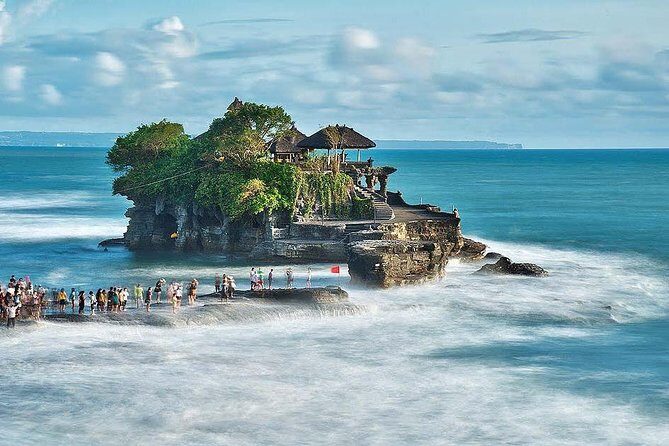
Tanah Lot means land in the sea, and the listing explains why. The temple sits on a large offshore rock that’s been shaped over time by ocean tide. It’s also located in Tabanan, about 20 km northwest of Denpasar. Even without the full backstory, the setting does the storytelling for you: you’re looking at a spiritual site wrapped into the coastal landscape.

Because this is the sunset finale, timing is everything. The biggest value of a tour like this is that you’re not trying to guess traffic, parking, or when to arrive. Your guide or driver gets you there as part of a coordinated schedule, so you can focus on enjoying the light rather than doing logistics math.

Admissions are also not included here, so budget for entry if you plan to go inside temple areas. Once you’re on-site, take advantage of your longer time window. Walk to different points, watch the rock and sea as the sky shifts, and don’t assume the first viewpoint is the best one. Sunset changes fast.

One caution: the last stretch of the day can be sweaty and slow-moving, especially if traffic is heavy on the return route. Bring patience and plan for a late finish rather than expecting an early drop-off.

Guide Quality, Safety, and the Cultural Notes You’ll Actually Use

Tanah Lot Sunset and Monkey Forest Tour. - Guide Quality, Safety, and the Cultural Notes You’ll Actually Use
On a half-day temple circuit, the difference between a good day and a great one often comes down to the driver/guide. This tour offers private transportation, and the rides are described as punctual and safe by people who praised specific guides.

Two names that stood out in the guide feedback are Kapri and Mr. Ketut. While you can’t count on getting either person, the important takeaway is this: the tour value increases when your guide explains what you’re seeing. When someone shares context about Balinese culture and everyday life, it makes temple architecture and sacred spaces feel less like a checklist.

Here’s how to use that in your favor. When you arrive at each stop, ask a quick question like what this place represents or what to look for while you walk. You don’t need a long conversation. One good explanation can help you see the details you’d otherwise miss.

Also, because this is a private tour with an air-conditioned car, your comfort is in better hands. You’re less likely to be stuck waiting awkwardly with no plan when traffic slows.

Cost and Value: What $39 Buys You (and What It Doesn’t)

Tanah Lot Sunset and Monkey Forest Tour. - Cost and Value: What $39 Buys You (and What It Doesn’t)
At $39, this tour is priced to feel doable for many budgets, especially compared to tours that bundle more extras you might not need. Here’s what you’re getting in exchange:

  • Round-trip transfers from your hotel
  • Private transportation in an air-conditioned vehicle
  • Bottled water (one mineral water per person)
  • A structured route that covers Taman Ayun, Sangeh Monkey Forest, and Tanah Lot at sunset

What you’re not getting: entrance tickets and meals. That means the real cost depends on how you spend on entry fees and food. Still, for a route that includes multiple major stops plus the timing pressure of sunset, the transport and coordination are doing real work.

The private format also matters. If you’re traveling as a pair or small group, you’re paying for the convenience of your own schedule and fewer compromises. If you’re the type who enjoys your own pace—standing longer where you care, moving faster where you don’t—this setup can feel like better value than you’d expect from a low base price.

Who Should Book This Tour (and Who Might Prefer DIY)

Tanah Lot Sunset and Monkey Forest Tour. - Who Should Book This Tour (and Who Might Prefer DIY)
This is a great match if you want:

  • Easy logistics from Ubud with pickup and an air-conditioned ride
  • A clear route that still gives freedom to explore at your own pace
  • A sunset plan that ends with Tanah Lot, not just another random temple visit
  • A day that mixes culture (temples) with a calmer nature break (Sangeh)

It’s also a solid option for first-timers who want an efficient afternoon without the stress of planning travel times and ticket timing.

You might want to skip it if:

  • You hate driving long distances late in the day and know you get impatient in traffic
  • You’d rather spend more time at a single site and build your own route
  • You want a fully included package with meals and entrance fees built in

Should You Book the Tanah Lot Sunset and Monkey Forest Tour?

If your goal is a smooth day ending in an unforgettable sunset setting, I’d book it. The biggest wins are practical: pickup, AC comfort, and a route that naturally funnels you from morning-culture energy into the coastal payoff at Tanah Lot. The private pace also helps. You can slow down where it counts and move on before your legs or patience run out.

I’d only think twice if you’re extremely sensitive to traffic delays or you’re traveling with someone who wants a strict, slow, no-rush experience for hours at just one place. Otherwise, this is one of the easier ways to get multiple iconic Bali stops without turning your afternoon into a stress test.

If you do book, one smart move is to decide ahead of time where you want your meal stop to be, so you don’t spend the most time-sensitive part of the day deciding what to eat.

FAQ

What time does the tour start?

The start time is 1:00 pm.

How long does the tour take?

It’s approximately 7 to 8 hours.

Is hotel pickup included?

Yes. Round-trip transfers from your hotel are provided.

Is this a private tour?

Yes. It’s a private tour/activity, and only your group will participate.

What’s included in the price?

The tour includes bottled water (one mineral water per person), an air-conditioned vehicle, and private transportation.

Are entrance tickets included?

No. Entrance tickets are not included.

Is lunch included?

No. Meals are not included, but you can stop for meals when you like.

What about cancellation?

You can cancel for a full refund up to 24 hours before the experience’s start time.

Are service animals allowed?

Yes. Service animals are allowed.

Full-Day Ubud Village including Mt Batur Tirta Empul and Sightseeing Tour

Full-Day Ubud Village including Mt Batur Tirta Empul and Sightseeing Tour - Celuk Village silverwork: seeing Bali’s metal tradition up close

Bali on one long day can be a lot. This route turns that time into a smart loop through craft villages, a temple for holy-water rituals, and countryside views. I especially like that entrance fees are covered and the day is paced with real stops, not just quick photo pulls.

Two big wins for me: you get a hands-on feel for local making (batik and silver) and you finish with scenery that actually lets you slow down, like the Tirta Empul and Tegenungan moments. One drawback to plan for: it’s an 8 to 10 hour outing with walking and stairs at the waterfall, so you’ll want moderate fitness and comfy shoes.

You’ll leave the Nusa Dua area early, then work your way inland toward Ubud and Gianyar, with a private-vehicle setup that keeps the day smooth. And the guide can matter a lot here—people named Kana, Davy, Edy, Putu, and Dedy were repeatedly praised for adjusting the flow and sharing details in an easy way. If you’re the type who likes to ask questions, this tour gives you room to do it.

Key highlights you’ll actually feel during the day

Full-Day Ubud Village including Mt Batur Tirta Empul and Sightseeing Tour - Key highlights you’ll actually feel during the day

  • Batik + silver stops that show how the work gets made, not just how it looks
  • Tirta Empul and the cleansing ceremony vibe at a temple that welcomes visitors
  • Mt Batur viewpoint time with lunch served around the crater-area views
  • Tegalalang rice terraces plus a quick look at the irrigation system behind them
  • Tegenungan waterfall with options to view from above or go down to the river
  • A guide-led, adaptable schedule, with some groups even adding a local school visit when timing allows

From Nusa Dua to Ubud: what this full-day loop really delivers

This is a full-day cultural route designed to get you out of the coast traffic mood and into Bali’s working countryside. You start with pickup, then you’re headed inland for crafts, rice terraces, a major mountain stop, and two nature/culture finales. The whole day is built around variety, so you’re not stuck staring at the same scenery for hours.

I like that the day includes entrance fees and hotel pickup and drop-off. That means you spend less time figuring out tickets and more time enjoying each stop’s “why it matters.” It also helps with budgeting: you can focus on what’s not included, like lunch and personal shopping.

The pacing is important too. Many stops are listed at about 30 to 40 minutes each, which usually gives you enough time to look around and take a few photos without rushing through the meaning of the place. Still, you should expect a long day in the car, and you’ll want to be ready for stairs at Tegenungan.

Stop at Sari Amerta Batik Collection: craft, wax, and patterns with context

Full-Day Ubud Village including Mt Batur Tirta Empul and Sightseeing Tour - Stop at Sari Amerta Batik Collection: craft, wax, and patterns with context
Your first taste of Balinese creativity is at Sari Amerta Batik Collection. Batik is one of Indonesia’s cultural heritages, and Bali’s batik development is tied to the Batu Bulan village area. Here, the point isn’t just browsing finished products—it’s seeing how motives are made by hand using wax techniques.

What I like about this kind of stop is that it gives you a practical lens. When you watch the process, the patterns stop looking like random design and start reading like a system of choices—where the wax goes, how the colors build, and what gets repeated. Even if you don’t buy, you’ll understand why people pay attention to details.

Possible watch-out: batik stops often come with a gentle sales rhythm. If you’re not into shopping, go in with a plan—look for 10 minutes, ask one or two questions about the process, then decide if you want anything. The time is capped at around 30 minutes, so you’re not stuck for long.

Celuk Village silverwork: seeing Bali’s metal tradition up close

Full-Day Ubud Village including Mt Batur Tirta Empul and Sightseeing Tour - Celuk Village silverwork: seeing Bali’s metal tradition up close
Next you head to Celuk Village, known for silverworks. The tradition goes back to around 1930, and it originally served religious ceremonies and royal palace needs. Over time, the craft shifted toward jewelry and everyday ceremonial items.

This stop works best if you let it be a conversation. Ask what tools they use, how designs start, and whether a piece is handmade end-to-end or built in stages. That’s the kind of detail that turns a “shop stop” into a real cultural checkpoint.

One practical consideration: silverwork villages can be visually loud. If you’re easily overloaded by lots of sparkly options, set your expectations: this is about craft and production rather than quiet museum browsing. Grab one or two items as examples for comparison later, and resist the urge to compare everything at once.

Tegalalang rice terraces: irrigation basics and photo time that doesn’t feel forced

Full-Day Ubud Village including Mt Batur Tirta Empul and Sightseeing Tour - Tegalalang rice terraces: irrigation basics and photo time that doesn’t feel forced
Tegalalang Rice Terrace is one of those places where the views are famous for a reason. You’ll spend about 30 minutes here, with time to walk a little and take photos. The stop also connects you to the subak Bali irrigation system, which is a key part of how rice farming works in Bali.

I appreciate that this isn’t only about standing on a viewpoint. The mention of going down toward the fields matters because it puts you closer to the logic of the landscape—how water and farming interact. If you like understanding how a system works, this is a good place to ask your guide what subak means in day-to-day terms.

Keep in mind that terraces often mean uneven ground. Wear shoes you trust, and be careful near edges. If you want the “classic photo angle,” do it early in your time block; crowds and sun direction can change fast.

Mt Batur viewpoint: crater-edge lunch and the reality of weather

Full-Day Ubud Village including Mt Batur Tirta Empul and Sightseeing Tour - Mt Batur viewpoint: crater-edge lunch and the reality of weather
Mount Batur is a major highlight on this day, and you’ll get to see the active volcano from above about 1,000 meters. The information shared around this stop notes it has erupted 26 times since 1804. That kind of background gives you a deeper feel for what you’re looking at—this isn’t just a pretty backdrop.

Lunch is where it gets interesting. The itinerary describes Indonesian buffet time with views of Mount Batur, but the tour’s “not included” list says lunch is not included as part of the price. So treat lunch as: you get the time for it, and you should budget for it separately.

Here’s the practical approach I’d use: plan to eat something simple or snack earlier, then decide on lunch once you see what’s offered. If you’ve ever had a “surprise” meal cost in Bali, this is exactly the moment where it can happen. The viewpoint can also be weather-dependent. If clouds sit in, the views can soften, so bring patience rather than expectations of perfect visibility.

Tirta Empul Temple: how cleansing at Melukat feels in real life

Full-Day Ubud Village including Mt Batur Tirta Empul and Sightseeing Tour - Tirta Empul Temple: how cleansing at Melukat feels in real life
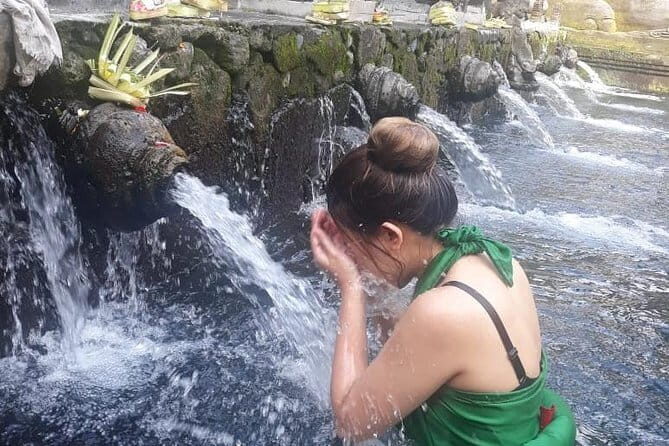
Tirta Empul Temple is one of Bali’s old and famous temples, and it’s known for cleansing rituals. The key ceremony mentioned here is Melukat, a holy-water cleansing practice used by visitors as part of spiritual preparation. Importantly, this temple is open to the public, so it’s not only for ceremonies with closed doors.

This stop is usually the most emotionally memorable on the route, especially if you pay attention to the rules and rhythms. Even if you’re not participating in the bathing, you’ll see people moving through the cleansing process in an orderly way. Watch what others do, then follow your guide’s advice on what’s appropriate.

Practical tip: temples can mean different dress expectations. While exact rules aren’t spelled out here, you should bring a light layer you can adjust and be ready to cover appropriately.

Time here is around 40 minutes. That’s enough to understand the basics, watch calmly, and still have time for a quick walk and photo. If you rush, you’ll miss the feeling that makes Tirta Empul more than a checklist stop.

Tegenungan Waterfall: stairs, river-level options, and a strong finish

Full-Day Ubud Village including Mt Batur Tirta Empul and Sightseeing Tour - Tegenungan Waterfall: stairs, river-level options, and a strong finish
Tegenungan Waterfall is the last stop, about 40 minutes. It sits in Kemenuh village, and the plan includes the option to go down the stairs to the river. If you don’t want to descend, you can still enjoy the view from above.

I like waterfall endings because they “cool down” the day. You’ve done crafts and temples already, so the sound and movement of water becomes a different kind of reward. Also, the choice to go down or stay up helps families and mixed fitness levels.

Just be smart about the stairs and surfaces. They can be slippery, and you’ll be balancing on uneven steps. Bring shoes with grip, and don’t assume you can do it in flip-flops just because you’re on vacation.

If the weather’s been wet, expect more spray. That’s great for the atmosphere, but bring a dry bag or at least plan where your phone goes.

Guides, pacing, and private comfort: what your day depends on most

Full-Day Ubud Village including Mt Batur Tirta Empul and Sightseeing Tour - Guides, pacing, and private comfort: what your day depends on most
This tour is offered as a private experience for your group, with pickup from your hotel area and transport in a private vehicle. The driver/guide is listed as English-speaking, and that matters on a day like this. When you understand what you’re seeing—batik meaning, silverwork origins, irrigation context—you enjoy the time more.

The guide names that came up repeatedly in positive experiences include Kana, Davy, Edy, Putu, and Dedy. People also praised drivers like Ghali and Adie for keeping things safe and smooth. The best feedback pattern was simple: guides asked what you wanted, adjusted the flow, and didn’t make you feel rushed.

What you should do: if you have a priority (temples, crafts, photos, or scenery), tell your guide right after pickup. That small moment can change how much time you spend at each stop and what you focus on.

Also, consider that you’ll be on the move for a long stretch. You’ll have mineral bottled water included, which is helpful, but you’ll still want to bring your own snacks if you’re the kind of person who gets hungry quickly between stops.

Price and value: where the $78 feels fair, and what to budget

At $78 per person for an 8 to 10 hour day, this tour looks like a good value for a few reasons. Entrance fees are included, and that can add up across multiple sites. You also get hotel pickup and drop-off, plus transport by private vehicle with parking and tolls covered.

Where value can wobble is lunch. The itinerary talks about Indonesian buffet lunch time during the Mount Batur portion, but the not-included section lists lunch as not included. So assume lunch is on you, and plan for it when you budget the day.

Personal expenses are also not included, which usually means souvenirs and extra purchases. If you’re interested in batik or silver items, set a number in your head before you arrive at workshops. It keeps shopping fun instead of stressful.

Who should book this tour (and who might want a different plan)

I think this tour suits you if you want a full day with a mix of culture, craft villages, a serious temple visit, and an outdoor finish. It also works well if you prefer a guide who can answer questions and adjust pacing—especially since people specifically praised that flexibility.

Book it if you:

  • want craft-focused stops (batik and silver) plus the rice terrace irrigation story
  • care about temples and respectful cultural context, not just quick photo ops
  • can handle moderate walking and the option of stairs at Tegenungan
  • like the idea of a private day rather than bouncing around on a big bus

You might choose differently if you:

  • want a very light schedule with minimal driving
  • strongly dislike shopping environments, even when the goal is craft demonstration
  • have very limited mobility for uneven paths and stair steps

Should you book this Ubud village day trip?

Yes, with one clear prep note. If you can handle a long day and you want a route that connects Bali’s making (batik and silver), farming systems (subak), and spiritual practice (Melukat cleansing), this tour is an efficient way to see a lot without feeling like a stamp-run.

My advice: message your priorities early, wear grippy shoes for terraces and the waterfall steps, and budget for lunch separately. If you’re lucky with your guide—names like Kana, Davy, Edy, Putu, and Dedy have been praised for thoughtful pacing—you’ll get more meaning out of each stop, not just photos.

FAQ

How long is the full-day tour?

It runs about 8 to 10 hours.

Where is the meeting point and what time does it start?

Meeting point is at 08:30 AM at the lobby of your hotel or accommodation.

Does the tour include hotel pickup and drop-off?

Yes, free hotel pickup and drop-off are included.

Are entrance fees included?

Yes, entrance fees are included.

Is lunch included in the price?

Lunch is listed as not included (lunch buffet or set menu). The itinerary includes lunch time during the Mount Batur portion, but you should budget for it.

What’s included besides the guide and driver?

You get an English-speaking experienced driver/guide, parking and tolls, local taxes regulation fees, mineral bottled water on tour, and transport by private vehicle.

Is this a small-group tour or private tour?

It’s described as a private tour/activity, meaning only your group participates. It’s also listed as a small-group tour.

Are kids allowed?

Yes, kids are allowed with a maximum of 2 kids per booking.

What cancellation window do I get a full refund?

You can cancel up to 24 hours in advance for a full refund.
Written by you, not by the weather: final thought

This is the kind of day that works best when you treat it like a guided story: craft first, then countryside, then temple, then water. Do that, and the long hours usually feel worth it.

Rafting Adventure 18 km and Balinese Village Life Tour with Lunch

Rafting Adventure 18 km and Balinese Village Life Tour with Lunch - The ride from Kuta: central highlands, AC comfort, and waterfall stops

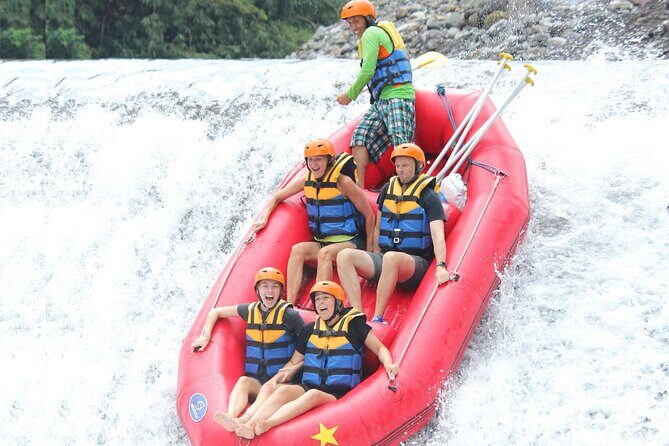
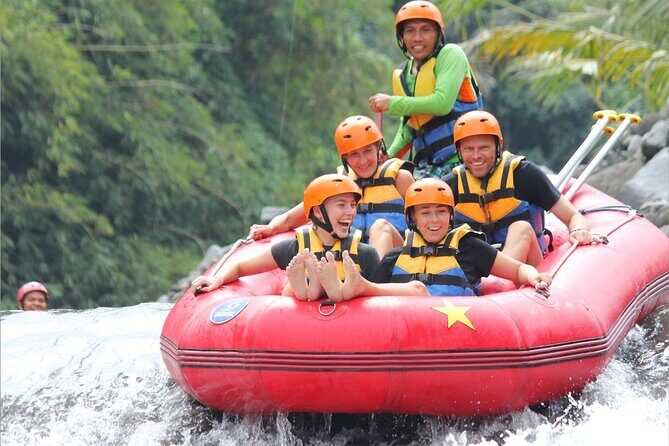
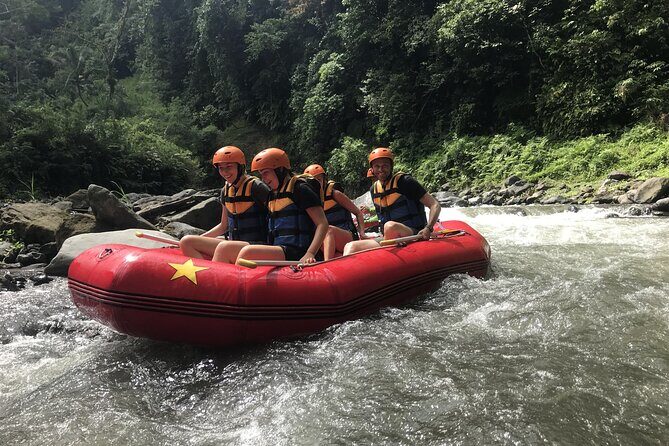
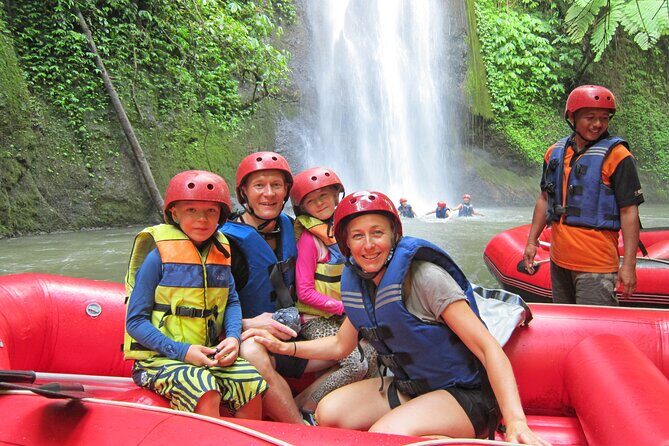
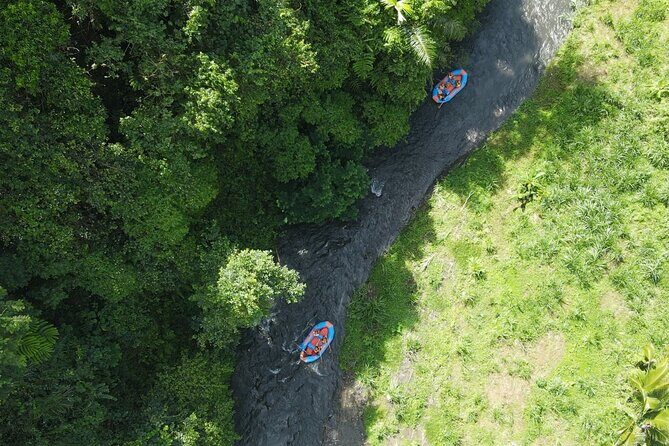
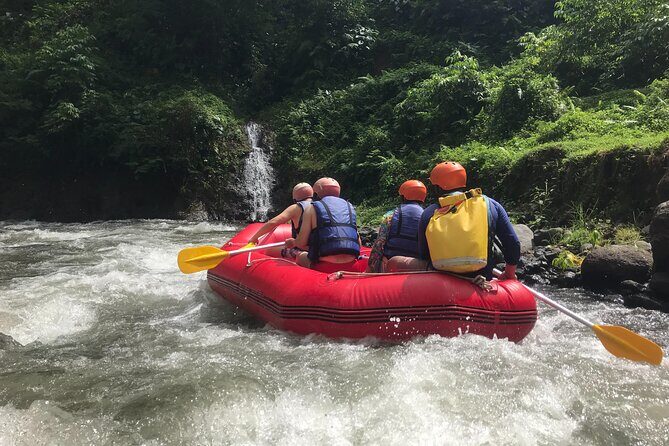
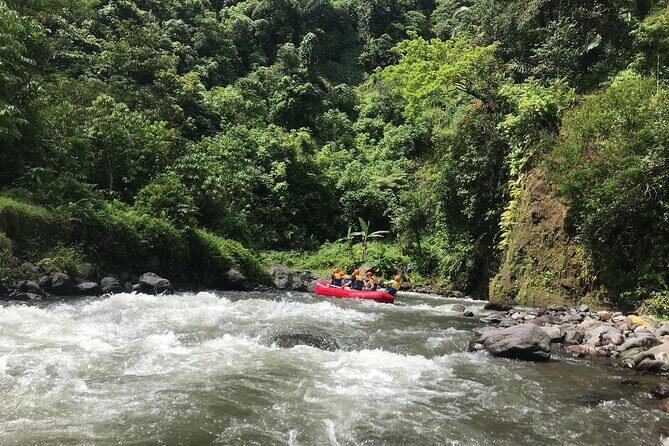
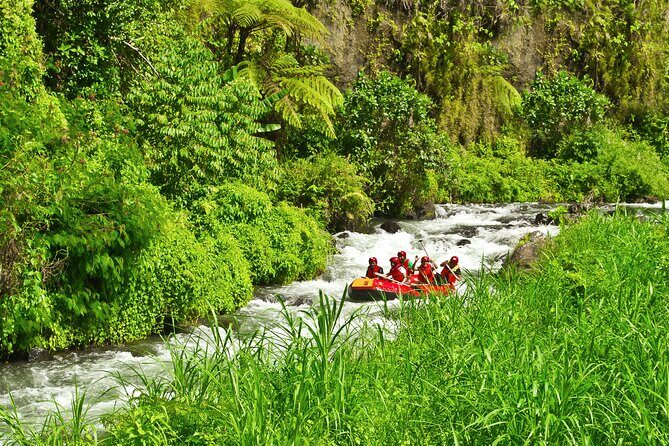
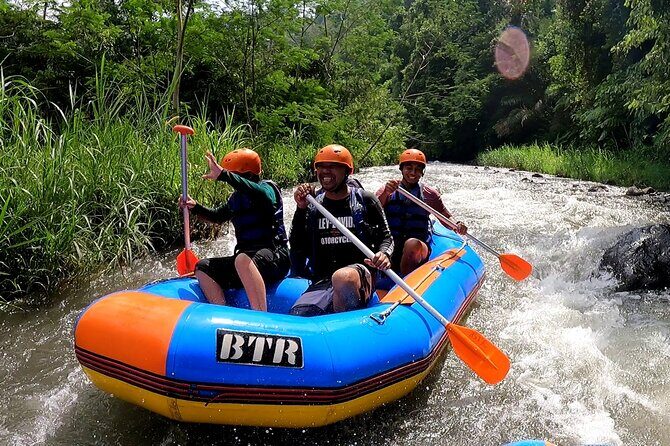
One day, two sides of Bali. This trip pairs 18 km rafting on the Telaga Waja River with a village visit and lunch in a private home, so you get action and real daily life. You’ll ride out through the central highlands, stop for waterfalls, then paddle through jungle-and-water views with a professional crew.

I especially like the straightforward setup: no rafting experience is required, and you get full safety focus from trained river guides. I also love the village timing and setting—after a quick change, you walk through rice fields and see how people live in Klungkung, then share a family-style meal prepared by the chef.

One thing to consider: this is moderate-movement day, and the experience depends on good weather, so the plan can shift if conditions aren’t right.

Key highlights to know before you go

Rafting Adventure 18 km and Balinese Village Life Tour with Lunch - Key highlights to know before you go

  • 18 km Telaga Waja rafting with waterfalls, jungle cliffs, and quiet stretches
  • Klungkung village walk through rice fields and a local family compound
  • Family-home lunch in a private setting, prepared by a chef
  • Professional river guidance designed for people with no experience
  • Pickup and AC drive with waterfall stops in the central highlands

Why Telaga Waja rafting plus Balinese village life fits together

Rafting Adventure 18 km and Balinese Village Life Tour with Lunch - Why Telaga Waja rafting plus Balinese village life fits together
This is the kind of Bali day that makes sense. You start with water, movement, and big scenery, then you end with people, routines, and calm conversation over lunch. Most island trips feel split: one part is activity, the other is just a stop. Here, the order actually helps. Rafting gives you a fresh way to read the place, because you see the river valleys up close. Then the village portion slows everything down, so you understand what you were looking at from the river bank.

You also get a rare mix of access. The lunch is in a private home and prepared family-style, which is very different from sitting in a restaurant and calling it culture. And the rafting side isn’t the usual vague “hop in a boat and hope.” The day is built around getting you ready on the river with a crew that takes safety seriously and keeps the energy up.

The final bonus is how personal it can feel for a “one day” outing. It’s listed as a private tour/activity, so it’s only your group, not a random crowd that drains the vibe.

The ride from Kuta: central highlands, AC comfort, and waterfall stops

Rafting Adventure 18 km and Balinese Village Life Tour with Lunch - The ride from Kuta: central highlands, AC comfort, and waterfall stops
Your day starts with hotel pickup and a drive to the Telaga Waja River area. The route goes through the central highlands, and there are waterfall stops along the way. That matters because it’s not just transport. It’s part of the experience, and it breaks up the long day with view breaks and quick photo opportunities.

One practical point: you’re spending hours on the move, and the AC car helps. In Bali heat, it’s an underrated comfort—especially before you get wet. The drive also sets expectations. You’re leaving Kuta’s pace behind, which makes the rafting section feel like a real change of world, not just a nearby detour.

18 km on Telaga Waja: pacing, scenery, and what to expect on the water

Rafting Adventure 18 km and Balinese Village Life Tour with Lunch - 18 km on Telaga Waja: pacing, scenery, and what to expect on the water
The headline is an 18-kilometer rafting trip on the Telaga Waja River. The time on the river is about 3 hours, which is the sweet spot for feeling like you got a full adventure without turning the whole day into one long slog.

Here’s what you’re likely to see along the way: lush river vegetation, jungle cliffs, waterfalls, and stretches where the water calms down enough to actually look around. That blend is what makes rafting feel special here. You don’t just bounce from rapid to rapid. You get action, then you get quiet moments to watch birds and the movement in the river corridor.

The best part is that the experience is set up for first-timers. You get prepared by a professional team, and the information says no experience needed. That doesn’t mean it will be effortless. It just means you’ll get instructions and support, so you can focus on enjoying the trip instead of worrying about technique.

Guide skills are the difference: feeling safe and laughing at the right times

Rafting Adventure 18 km and Balinese Village Life Tour with Lunch - Guide skills are the difference: feeling safe and laughing at the right times
On paper, rafting is gear and timing. In real life, it’s the guide. The feedback attached to this tour is very consistent about that: people highlight professional guides, a strong sense of control over the canoe, and feeling safe the whole way.

You’ll see that theme tied to named guides too. Kadek is the guide mentioned for the village portion, while river leadership is credited to skilled staff such as Rias and Made Kumbara in past trips. The recurring pattern is what you want: guides who can handle the river confidently and keep the day fun.

I like that this tour doesn’t treat safety like a checklist. It’s woven into the experience. You’ll likely get clear instructions before you hit the water, and you’ll have that steady, calm presence on the rafting segment. Some people even mention having a hard time keeping a straight face. If you like your adventure to include laughter, that’s a good sign.

After rafting: quick change, then a calmer Bali rhythm

Rafting Adventure 18 km and Balinese Village Life Tour with Lunch - After rafting: quick change, then a calmer Bali rhythm
Once the paddling ends, there’s a quick change before heading into the village area. That’s more important than it sounds. Getting dry and resetting helps you enjoy the walk and lunch without feeling cold or sticky.

Then the day shifts from river sounds to village sounds. You’ll travel to the Klungkung area for the cultural portion, and the walking segment is designed to be doable for a range of physical ability levels as long as you’re comfortable with moderate movement.

The tour also keeps the pacing human. It’s not a rushed factory line of “see this, move on.” You’re given time to walk through rice fields and see daily spaces up close.

Klungkung village walk: rice fields and family compounds

Rafting Adventure 18 km and Balinese Village Life Tour with Lunch - Klungkung village walk: rice fields and family compounds
The village portion is where this trip earns its credibility. Instead of treating culture like a show, it’s structured around real places: a walk through rice fields, a look at a local family compound, and a tour of how Balinese life works away from the bigger tourist routes.

This is also where your guide’s role really matters. Kadek is set up as your host and interpreter, and the goal is simple: you get context for what you’re seeing. You’re not just looking at buildings. You’re learning how family life is organized and how the daily environment supports it.

What I like about this segment is the feeling of scale. The river was big and loud. The village walk is smaller and quieter, and that contrast helps you pay attention. One thing that comes through strongly is that the scenery around the river and the village areas can feel unusually peaceful, with stretches that don’t feel crowded.

Balinese family-style lunch in a private home

Rafting Adventure 18 km and Balinese Village Life Tour with Lunch - Balinese family-style lunch in a private home
Lunch is one of the main reasons this isn’t just an activity bundle. You’ll be welcomed into your guide Kadek’s village family home for a Balinese family-style lunch, prepared by a talented chef.

The value here isn’t fancy packaging. It’s the setting and the rhythm. Eating in a private home changes how you experience the food, because it feels connected to the day and to the people hosting you. You’re not just consuming a meal; you’re part of the pause in the schedule where conversation and local hospitality can happen.

Family-style lunch also matches what you’re doing earlier. Rafting gives you physical connection to the river. Lunch gives you social connection to the land and routines around it. Together, that’s why this combo works better than doing two separate tours on two separate days.

Price and time: what $73.02 buys you in a full day

Rafting Adventure 18 km and Balinese Village Life Tour with Lunch - Price and time: what $73.02 buys you in a full day
At $73.02 per person, this tour sits in a range that can look like “good deal” or “fair price” depending on how you compare. Here’s what you’re actually packing into that price: rafting on an 18 km stretch, a professional setup on the river, hotel pickup, an AC ride through the highlands with waterfall stops, and a private-home lunch with chef-prepared food.

On the value side, the pricing makes sense because you’re not only paying for transportation and tickets. You’re paying for interpretation and organization: a guide to help you understand what you’re seeing, plus river staff to keep the paddling portion safe and manageable for first-timers.

Time-wise, expect about 8 hours total. That’s a full day, but it’s also efficient. Instead of spending half your day figuring out routes and entry points, the day is planned into one flow: river → quick change → village → lunch.

Also worth noting: it’s priced as a private tour/activity, and those are usually more expensive than group tours. The “value” part here is getting a private feel without needing multiple days or extra bookings.

Who this rafting-and-village day suits best

This tour fits best if you want an active Bali day with a culture stop that doesn’t feel like an afterthought.

It’s a strong pick if:

  • You want 18 km rafting and scenery like waterfalls and jungle cliffs, not just a short river splash
  • You like the idea of learning from locals, with someone like Kadek guiding your village walk
  • You care about safety and clear instructions, not just adrenaline

It might be less ideal if:

  • You strongly prefer lounging all day and minimal movement
  • Weather is a sensitive issue for you, since the experience requires good weather

As for the physical side: the tour asks for moderate physical fitness. That doesn’t mean you need to be an athlete. It just means you should be comfortable with a day that includes rafting effort plus a village walk.

Should you book this rafting adventure and Balinese village lunch?

If your Bali plan includes a “choose one big activity” day, this one is worth serious consideration. The pairing of Telaga Waja rafting with a Klungkung village walk and family-home lunch is more than a marketing combo. It’s how you get both sides of Bali in one day: fast water action and slower human context.

Book it if you want:

  • A professional, supportive rafting experience that works for beginners
  • A guide-led village visit where the meal is part of the cultural connection
  • A full-day structure with pickup, AC comfort, and planned waterfall breaks

Skip it or delay it if you’re not flexible about weather or if you prefer lighter days.

One last practical note: the experience averages being booked around 11 days in advance, so if you’re traveling during a busy period, it’s smart to plan ahead rather than waiting until the last minute.

FAQ

How long does the tour take?

It runs for about 8 hours.

Where does the rafting happen?

Rafting takes place on the Telaga Waja River.

What is the rafting distance?

The rafting trip is 18 kilometers.

Do I need rafting experience?

No experience is required. You’ll be prepared by the professional team.

Is hotel pickup included?

Pickup is offered.

What happens after the rafting part?

After rafting and a quick change, you go to Klungkung for a village walk and lunch.

Is lunch included, and where will it be served?

Yes. You’ll be welcomed into a village family home for a Balinese family-style lunch prepared by a chef.

Is this tour private?

Yes. It’s listed as a private tour/activity, so only your group participates.

What fitness level do I need?

Moderate physical fitness is recommended.

What if the weather is bad?

The experience requires good weather. If it’s canceled due to poor weather, you’ll be offered a different date or a full refund.

Uluwatu Temple Entrance & Kecak Dance Tickets

Uluwatu Temple Entrance & Kecak Dance Tickets - The Kecak Fire Dance: Sunset First, Fire Second

Bali’s best cliff show is simpler than you think. This combo ticket strings together Uluwatu Temple entry and the Kecak Fire Dance so you spend less time waiting and more time enjoying the views. You start at the temple, walk at your own pace, then head into the performance as the light changes over the Indian Ocean.

Two things I really like: first, the pre-arranged entrance so you don’t get stuck in slow-moving lines, and second, the guide’s help with temple rules and context while you explore. When guides like Fawas or Akmal are on your group, you also get practical coaching for dealing with the temple grounds, including the monkey zone.

One consideration: this is timed around sunset energy. You’ll have a short 2-hour window, and the temple area is active, so plan for some walking on uneven cliff paths and steps.

Key highlights worth your attention

Uluwatu Temple Entrance & Kecak Dance Tickets - Key highlights worth your attention

  • Pre-arranged Uluwatu Temple entry: walk in and get started fast
  • Cliffside ocean views: you’re literally facing the Indian Ocean as you explore
  • Monkey-smart guidance: helps you avoid getting too close or tangled up
  • Kecak seating handled in advance: less scramble as the show starts
  • Fire looks best later: if a later show time is available, the darkness makes the fire more dramatic
  • Group capped at 100: big enough to run efficiently, not so huge that you lose the flow

Uluwatu Temple Entrance Without the Line Drama

Uluwatu Temple Entrance & Kecak Dance Tickets - Uluwatu Temple Entrance Without the Line Drama
Uluwatu Temple sits on a dramatic cliff edge, and that means crowds can form fast. The big win here is that your entrance is arranged, so you can move through the temple area without the classic wait-and-stand routine. Instead of spending your best light hours in a queue, you start walking and looking right away.

This matters because you’re here for the whole experience: the ocean horizon, the carved details, and the feeling that you’re in a sacred place rather than a theme park. With your ticket already set up, you can spend your energy on the good stuff—photos, soaking in the views, and listening to what your guide points out.

Your tour begins at Uluwatu Temple, Pecatu (South Kuta) and ends back at the meeting point. That keeps logistics straightforward. You’re not getting shuffled across town repeatedly, which is a nice bonus when you only have about two hours.

Walking the Cliff: Views, Balinese Temple Details, and Monkeys

Once you’re through the entry process, the rhythm is simple: you explore the temple grounds at your own pace, with a guide helping you understand what you’re seeing. The temple is known for its ocean backdrop, and the view is the kind that makes you pause often. Even if you’re not a hardcore architecture person, you’ll spot the unique Balinese style as you move between viewpoints.

I like that the guide doesn’t just point out sights. They help you understand the traditional rules of the temple area, which changes how you experience it. When you know what’s expected, you’re less likely to wander into areas you shouldn’t, and you can enjoy the place with more respect and less awkward guesswork.

Then there are the monkeys. Uluwatu’s temple grounds are famous for them, and they can be bold. One practical thing you’ll appreciate is that your guide can help you avoid monkey trouble—like when you need to keep distance or protect small items. If you’ve ever had a monkey decide your snack is a gift from the gods, you’ll understand why that matters.

Here’s how I’d plan your time once inside:

  • Spend the first stretch finding a couple of viewpoints before you linger.
  • Keep your hands free and your valuables secure around the monkey zones.
  • If you want photos, pick one or two spots and commit, rather than trying to chase every angle.

The Kecak Fire Dance: Sunset First, Fire Second

Uluwatu Temple Entrance & Kecak Dance Tickets - The Kecak Fire Dance: Sunset First, Fire Second
The Kecak Fire Dance is one of Bali’s most iconic performances, and it works because it layers drama. You start with sunset energy, then the show shifts into a darker stage of chanting, storytelling, and fire.

Your ticket includes advance preparation for your seat, so you’re not stuck queuing right when people are arriving in waves. That’s a small detail, but it has a big payoff. You get to settle in, get your bearings, and focus on the performance instead of fighting for position.

What you’ll see is the classic Kecak format: rhythmic chanting, traditional storytelling, and a fiery spectacle. The ocean backdrop helps the whole thing land emotionally. Sound carries differently at night, and the fire has a stronger visual impact once it’s fully dark.

Timing tip: one of the smartest moves is choosing a later show time if it’s available to you. If you’re offered a 7 pm style slot, that extra stretch of daylight can help you enjoy the sunset longer, and then watch the fire glow more dramatically once the sky gets dark. In other words, you get both phases: the orange horizon and the high-contrast fire.

How the Guide Makes or Breaks the Experience

Uluwatu Temple Entrance & Kecak Dance Tickets - How the Guide Makes or Breaks the Experience
With experiences like this, the guide can turn a good visit into a memorable one. In this combo, the guide’s role shows up in two places: the temple walk and the performance experience.

At the temple, guides like Fawas and Akmal are described as friendly and informative, but more importantly, they’re helpful in real ways. They explain temple history and context, including cultural rules that would be easy to miss if you were going solo. Some guides also share local stories that add color without turning the visit into a lecture.

At the Kecak show, your guide’s help can be surprisingly useful. Several comments highlight that the guide escorts you to good seating, which is exactly what you want with a show that depends on sightlines and lighting. When you arrive and your seat is already sorted, you can treat the performance like a performance—not a scramble.

Also, guides paying attention to monkeys is a real-life skill. If you’re trying to enjoy the temple and a monkey gets too close, it’s not the moment for guesswork. Getting help fast keeps the experience smooth and keeps you from spending your time shooing and worrying.

Price and Time Check: Is $23 Good Value?

Uluwatu Temple Entrance & Kecak Dance Tickets - Price and Time Check: Is $23 Good Value?
At $23 per person for a roughly 2-hour outing, this is priced like a smart add-on day. You’re basically buying two things: access and convenience. Temple entry and a major cultural performance usually cost more separately, and the value here comes from removing the waiting and chaos that can eat up your limited time.

Group size is capped at 100 travelers, which is large enough to run efficiently but small enough that you’re not constantly losing track of what’s happening. That matters for a sunset show, because once the light drops, people move faster and queues get more intense.

If you’re trying to fit Bali highlights into a packed itinerary, this combo ticket is practical. It’s not a half-day project, and it doesn’t require you to reinvent the day. You start at Uluwatu, you explore with guidance, then you watch one of Bali’s most famous performances in the evening.

The main reason you’d feel it’s expensive (for some budgets) is the short duration. But if you treat it as a tight, high-impact outing—temple viewpoints plus Kecak in one sweep—the math usually works in your favor.

What to Expect on the Ground: Pacing, Pace-Bumps, and Comfort

Uluwatu Temple Entrance & Kecak Dance Tickets - What to Expect on the Ground: Pacing, Pace-Bumps, and Comfort
This experience is straightforward in order: temple first, dance second. Still, it’s good to think about how your body and attention will handle cliffside walking and evening darkness.

The temple is a working sacred site with active areas and rules. Your guide helps you understand what to follow, but you’ll still want to move calmly and stay aware. The ground can be uneven, and you may climb stairs or navigate paths along the cliff.

Then you shift into nighttime seating for Kecak. That means your energy needs to be managed. I suggest you keep your “I’ll look at everything” mindset in check and aim for the moments that matter most to you: two or three strong temple viewpoints plus the show.

Also note that the tour is described as near public transportation. That’s useful if you’re staying somewhere flexible and want an easy return path. The activity ends back at the meeting point, so you’re not stuck far away if you planned other stops after.

Who This Uluwatu + Kecak Combo Is Best For

Uluwatu Temple Entrance & Kecak Dance Tickets - Who This Uluwatu + Kecak Combo Is Best For
This ticket is a strong fit if you want two top Bali experiences with minimal stress. You’ll probably like it if you:

  • Want Uluwatu Temple and Kecak Fire Dance without spending your afternoon in lines
  • Prefer a guided explanation of temple rules and cultural context
  • Are traveling with limited time and want maximum impact per hour
  • Appreciate practical help, like avoiding monkey hassles and getting good seating

If you’re the type who loves wandering slowly without a schedule at all, you might feel the timing is brisk. But the flip side is that the pacing protects your sunset moment, and that’s the whole point of Kecak at Uluwatu.

It’s also a good choice for first-timers in Bali who want an iconic cultural evening. The performance is dramatic, and the chanting and fire effects land best when you’re watching in the right place—and with seating handled for you.

Should You Book This Uluwatu Temple and Kecak Combo?

Uluwatu Temple Entrance & Kecak Dance Tickets - Should You Book This Uluwatu Temple and Kecak Combo?
If your goal is simple—see Uluwatu Temple, catch the Kecak Fire Dance at sunset, and avoid the line chaos—then yes, book it. The convenience is real: pre-arranged temple entrance plus prepped seats for the show means you spend your time on the experience, not on logistics.

I’d book this especially if you like structure without a rigid pace. You get guidance when it counts (temple rules, context, seating support), and you still have freedom to explore the grounds at your own speed.

Skip it only if you strongly dislike tight timing or if you need long free roaming time at the temple. For most people chasing Bali highlights, this combo is a solid value—clear, iconic, and built around the sunset moment that makes Uluwatu unforgettable.

FAQ

Where does this tour start and end?

It starts at Uluwatu Temple, Pecatu, South Kuta, Badung Regency, Bali, Indonesia, and it ends back at the same meeting point.

What’s included in the ticket?

The ticket covers entrance to Uluwatu Temple and a Kecak Fire Dance ticket, with both handled in advance so you can move directly to the relevant areas.

How long does the experience take?

The duration is approximately 2 hours.

How much does it cost?

The price is $23.00 per person.

Do I need to wait in long lines?

The setup is designed so you do not need to worry about long lines, because temple entrance and Kecak seating are arranged in advance.

Where do I pick up or redeem my ticket?

The ticket redemption point is Uluwatu Temple, Pecatu, South Kuta, Badung Regency, Bali, Indonesia.

Is it easy to reach by public transportation?

It’s described as near public transportation.

How large are the groups?

There is a maximum of 100 travelers for this activity.

What is the cancellation policy?

You can cancel for a full refund up to 24 hours in advance of the experience start time. Free cancellation is available under that rule.

Private hiking Mt Abang

You want sunrise, but not the circus. A private Mt. Abang hike checks that box with a very early start and big-volcano views. You’ll be climbing Bali’s third-highest peak (Mt. Abang) while looking out toward Mt. Agung, Mt. Batur, and Lake Batur.

Two things I like a lot: you get two-way private transfers so you’re not stuck juggling taxis at 1:00am, and you’re looked after with breakfast included while you wait for first light. One drawback to plan for: this is a tough, early-morning trek, so you’ll want real hiking footwear and warmer layers (and a moderate fitness level).

Key points to know before you go

  • A private guide and private group keeps the pace human and the experience calmer
  • Breakfast served during the sunrise wait means you don’t hike hungry or race the clock
  • Hiking poles are provided, which helps on steep, uneven sections
  • The view promise is the point: Mt. Agung, Mt. Batur, and Lake Batur from about 2,152m
  • It starts around 1:00–1:30am, so prepare for an early alarm more than an easy morning

Mt. Abang From Ubud: The Sunrise Hike You Can Actually Enjoy

Private hiking Mt Abang - Mt. Abang From Ubud: The Sunrise Hike You Can Actually Enjoy
Mt. Abang is Bali’s third-highest summit, reaching about 2,152 meters (7,060 feet). The best part of this experience is that you’re not just “going for a hike.” You’re planning a sunrise-style climb from Ubud with a private setup, so the early start feels organized instead of chaotic.

From the Ubud side of Bali, this is the kind of trip that fits great if you’ve already seen sunrise hype around Mt. Batur and you’d rather avoid the crush. Mt. Abang still gives you the volcano drama—Agung’s looming shape, Batur’s active-looking slopes in the distance, and Lake Batur laid out below—without feeling like you’re stuck in a line.

Also, you’re not doing this with guesswork. Your package includes round-trip transfers and an on-the-ground guide, so you can focus on the climb and the views instead of logistics.

The 1:00am Start: Timing and Logistics (Read This First)

Private hiking Mt Abang - The 1:00am Start: Timing and Logistics (Read This First)
Expect this to be an early-night effort. The start time listed is 1:00am, and in practice you may see pickup land around 1:30am depending on where you’re staying and how the driver builds the route.

Here’s why that matters: the hike begins in darkness, which makes footing and steady pacing your main job. A private transfer helps because you’ll be taken directly to the starting area (Gunung Abang, Abangsongan, Kintamani, Bangli Regency). Then you meet your guide and get into “climb mode” without wasting time.

You’ll also be in an air-conditioned vehicle for the ride. That’s not a tiny detail—cooler travel time matters when you’re starting before sunrise and you’ll likely be wearing layers you want to keep dry and functional.

From Start Point to the Summit: What the Climb Really Means

Private hiking Mt Abang - From Start Point to the Summit: What the Climb Really Means
You’ll hike Mt. Abang with a private guide, which changes the experience more than you might expect. In tough terrain, a guide’s job isn’t just safety. It’s setting a pace that matches you, so you don’t burn out before the best part.

The trek is described as a moderate fitness hike, but the reviews show people still find it demanding. That’s normal on a mountain that starts so early and climbs in the dark. If you’re the type who gets discouraged by steep uphill portions, plan to lean on the basics: steady steps, short breaks, and trusting the guide’s route.

Two helpful inclusions make a difference once you’re on the trail:

  • Hiking poles are provided, which can reduce strain on your knees and help on uneven ground.
  • You’ll have a guide meeting you at the start point, so you’re not navigating alone or trying to “figure it out” while cold and tired.

Breakfast on the Mountaintop: Fuel for Sunrise Waiting

Private hiking Mt Abang - Breakfast on the Mountaintop: Fuel for Sunrise Waiting
One of the nicest surprises in this package is breakfast included, and it’s served while you’re waiting for sunrise. That means your morning has a purpose even before the peak view hits.

If you’ve ever done sunrise hikes where you’re stuck shivering and starving, you’ll appreciate this setup. Instead of racing to the top just to eat later, you get fuel at the right time—when the sky is still changing and everyone is focused on the view.

The practical angle: bring layers you can manage because you’ll likely be stopped more than you think while waiting for the first light. A warm drink or a simple breakfast is great, but warmth is still mostly about what you wear.

The Big Reward: Mt. Agung, Mt. Batur, and Lake Batur

Private hiking Mt Abang - The Big Reward: Mt. Agung, Mt. Batur, and Lake Batur
This hike is built around the payoff: you’re climbing to see the volcano-and-lake panorama from Mt. Abang. The route is described as a way to soak up views of Mt. Agung and Mt. Batur, plus Lake Batur.

In clear conditions, this is the kind of scenery that makes the early alarm feel worth it. Instead of only seeing a single peak, you get a whole lineup—Agung’s presence in the distance, Batur’s volcanic area, and Lake Batur anchoring the scene below.

One thing to keep in mind: this experience is weather dependent. The tour requires good weather, and if poor weather shuts things down, you’ll be offered a different date or a full refund. That’s important for sunrise planning, because cloudy mornings can flatten the whole point of the climb.

Private Transfers and Air-Con Ride: Comfort That Pays Off

Private hiking Mt Abang - Private Transfers and Air-Con Ride: Comfort That Pays Off
At $75 per person, the “value” isn’t only about the summit view. It’s about how smoothly the morning runs.

You get:

  • Two-way private transfers from your Ubud hotel or rental
  • An air-conditioned vehicle
  • A private tour, meaning just your group participates

This is a big deal for a 1:00am start. Shared transport can feel like time hostage—waiting for other people, stacking pickups, and losing sleep. Private transfers keep your schedule tighter and reduce stress.

Also, the reviews bring up drivers and guides by name, and they’re often praised for being attentive and accommodating. Names you may hear in the process include driver Yasa and driver Ade, and guide Gede and guide Toni. Another common theme is fast communication through WhatsApp (including contacts named Ari), which helps you confirm the pickup timing without playing phone-tag in a new country.

What’s Included (and What You Must Bring)

Private hiking Mt Abang - What’s Included (and What You Must Bring)
Here’s what you can count on:

  • Breakfast (served while waiting for sunrise)
  • Air-conditioned vehicle
  • Hiking poles
  • All fees and taxes

What’s not included is also crucial:

  • Bring jackets
  • Bring hiking shoes
  • Or bring long pants

That last part matters more than people expect. Dawn temperatures can feel chilly during a mountain sunrise trek, and your legs will be dealing with uneven steps. If you only bring sneakers or thin pants, you’ll likely regret it by the time you’re halfway up.

My practical packing list for this kind of climb (based on what’s required):

  • warm top layers you can move in
  • long pants you don’t mind getting scuffed
  • shoes with grip (not just style)
  • something small for the sunrise wait (layers are better than a flimsy hoodie)

Price and Value: Is $75 Worth It?

Private hiking Mt Abang - Price and Value: Is $75 Worth It?
At $75 per person, this doesn’t feel like a budget “quick hike” deal. But for a private sunrise trek from Ubud with round-trip transfers, breakfast, and poles, it can be strong value.

The best way to judge it is to compare what you’d have to do on your own:

  • hiring a guide
  • arranging reliable 1:00am transport
  • getting breakfast sorted
  • dealing with weather risk

This tour wraps those pieces into one package. Also, the average booking timing is about 61 days in advance, which tells me people plan this seriously. For sunrise climbs, that’s usually a good sign: earlier planning helps secure your timing and reduces last-minute scramble.

How Fit Do You Need to Be?

Private hiking Mt Abang - How Fit Do You Need to Be?
This tour is for travelers with moderate physical fitness. That’s a fair description for a sunrise hike with steep sections and darkness early on.

If you’re someone who:

  • hikes regularly (even modestly)
  • can handle uphill for a sustained stretch
  • has decent balance on uneven ground

…you’ll likely be comfortable with the pace your guide sets. If you’re recovering from injuries or you struggle with steep climbs, you might want to pick a less demanding hike. The trip won’t be “easy,” and it’s designed for people who can keep moving through the early hours.

Who This Tour Suits Best

This private Mt. Abang hike is a great match if you want:

  • a calmer sunrise experience than the most crowded volcano options
  • a guide-led climb with a steady pace
  • a morning that includes both the climb and a sit-down breakfast moment
  • the convenience of private, air-conditioned transfers from Ubud

It’s also a strong pick for couples and small groups who value coordination. The tour is private, so you won’t be stuck with a mismatched group tempo.

One more note: the experience requires good weather, and there’s a minimum number of travelers. If minimum numbers aren’t met, the operator will offer a different date/experience or a full refund. That’s worth keeping in mind if you’re traveling on tight dates.

Should You Book the Private Mt. Abang Hike?

Book it if you want a well-run sunrise climb with the practical pieces handled: private transfers, breakfast while you wait, hiking poles, and a real guide at the start point. The view payoff—Agung, Batur, and Lake Batur—makes the early wake-up feel purposeful.

Skip it (or choose another option) if you hate very early starts, you don’t have proper shoes and a jacket, or you’re not confident with moderate uphill effort. This isn’t a casual stroll, and the whole point is the sunrise timing.

If you’re flexible on weather and can commit to the timing, Mt. Abang is one of those hikes that feels like a Bali highlight rather than a check-the-box day.

FAQ

What time does the Mt. Abang hike start?

The start time is listed as 1:00am, with pickup offered from your Ubud accommodation. Some departures may feel closer to 1:30am depending on location.

Where do we meet for the hike?

The meeting/start point is Gunung Abang, Abangsongan, Kintamani, Bangli Regency, Bali, Indonesia.

What’s included in the private tour?

The package includes breakfast, an air-conditioned vehicle, hiking poles, and all fees and taxes. It also includes 2-way private transfers from your Ubud hotel or rental.

What should I bring with me?

Bring jackets, hiking shoes, and/or long pants. These items are not included in the tour package.

Is the tour private?

Yes. This is a private tour/activity, and only your group will participate.

How fit do I need to be?

The tour is for travelers with moderate physical fitness. If you’re comfortable with uphill walking for a long stretch, you’re likely a good fit.

What happens if the weather is poor?

This experience requires good weather. If it’s canceled due to poor weather, you’ll be offered a different date or a full refund.

What’s the cancellation policy?

You can cancel for a full refund up to 24 hours before the experience’s start time. If you cancel less than 24 hours before, the amount paid is not refunded.

Sunrise At The Gate Of Heaven Lempuyang Bali

Sunrise At The Gate Of Heaven Lempuyang Bali - Sunrise at the Gate of Heaven: What You’re Really There For

Sunrise at the Gate of Heaven is a time machine. You’ll start before dawn and roll straight into Bali’s famous temple viewpoint, when the morning light hits the stone and the mountains look extra crisp. I especially like the early arrival strategy—it helps you reach Lempuyang before the biggest waves of visitors—and I also like that your driver/guide handles the flow with hotel pickup, tickets, and a full day plan. One thing to consider: it’s a long early start, and the schedule assumes good weather, so plan for some changes if conditions are rough.

If you’re a Bali fan who wants more than one Instagram stop, this day has variety. You’ll move from a major temple sunrise scene to the calm, photogenic water palace of Tirta Gangga, then end with the dramatic rock-and-light vibe at Tukad Cepung. I also like the human touch from past guests—drivers like Santana and Dana are praised for being helpful and making the day feel smooth. The main drawback is timing: you’ll be up early, on the go most of the day, and photo turn-taking at Lempuyang can mean short waits.

Key Details That Matter Before You Go

Sunrise At The Gate Of Heaven Lempuyang Bali - Key Details That Matter Before You Go

  • Pre-dawn timing: You’re picked up around 3:00 AM and reach Lempuyang in time for sunrise.
  • Photo-line management: At Lempuyang, you’ll likely use a number system for photo turns.
  • Ticket and logistics included: Entrance tickets and mineral water are part of the package, with hotel transfers from many areas.
  • Three big stops in one day: Lempuyang Temple → Tirta Gangga Water Palace → Tukad Cepung Falls.
  • Private, customizable feel: It’s private (only your group), and you can tailor the day to your needs.
  • Weather-dependent day: It runs best with good weather, and the provider may offer a different date or refund if canceled.

A Pre-Dawn Day Trip That Turns the Long Day into a Win

This is one of those Bali itineraries where the hard part is not the sightseeing—it’s the hour. Leaving around 3:00 AM sounds intense, but it’s also the whole point. The sunrise at Lempuyang’s Gate of Heaven is at its best when the sky is still doing its first light show and the viewpoint feels quieter and more “real” than later in the morning.

I like that the plan doesn’t waste time. You arrive at the Lempuyang area around 5:00 AM, then you’re set up to watch sunrise from the temple viewpoint by about 5:30 AM. After that, you don’t sit around all day. You’re off Lempuyang around 8:00 AM, then you transition to the next two nature/culture locations while the day is still moving.

One more practical plus: this is built as a private tour, so you’re not trapped behind a crowd-control chain of buses and group schedules. You travel with your own driver/guide setup, and that makes the morning-to-afternoon rhythm easier to handle—especially if you want flexibility for photos or slower pacing.

Getting to Lempuyang: Why the Early Start Pays Off

Sunrise At The Gate Of Heaven Lempuyang Bali - Getting to Lempuyang: Why the Early Start Pays Off
Your day begins with pickup. The schedule lists 3:00 AM, but the exact pickup time depends on where your hotel is. The tour is designed for early arrival, so you’re not just “getting up early”—you’re using that time to arrive while the area is still waking up.

When you reach Lempuyang around 5:00 AM, you’re at the starting point early enough to avoid that awkward period where you’re waiting in the dark or rushing once the crowds lock in. Past guests also noted that once you’re there, you may be assigned a number and wait until it’s your turn for photos. That’s normal for high-demand viewpoints, and it’s good to treat it like part of the process rather than a delay.

What you’ll enjoy most here is the atmosphere. Even if the viewpoint is famous, the early light changes everything. The temple sits against mountains and morning haze, and sunrise gives you a cleaner backdrop than you get later when the sky is brighter and harsher. If you’re sensitive to crowds, this timing is a big reason the tour gets such strong satisfaction.

Sunrise at the Gate of Heaven: What You’re Really There For

Sunrise At The Gate Of Heaven Lempuyang Bali - Sunrise at the Gate of Heaven: What You’re Really There For
Lempuyang Temple is the headline, and it’s the kind of stop where you’ll feel your attention sharpen the moment the light begins. The schedule has you watching sunrise around 5:30 AM, then you’re done with Lempuyang by about 8:00 AM. That window is long enough to get your photos and enjoy the view, but short enough that you won’t feel dragged into an all-day temple vigil.

A detail I think is worth knowing: photo access can come with a system. One review mentioned a number system where you wait your turn to take pictures. That means you’ll want patience—and a plan for what you want. If your goal is one standout shot (plus a couple variations), you’ll do well. If you expect constant uninterrupted access, you may feel a little stalled.

Also, the tour lists a moderate physical fitness level for travelers. That typically means you should be comfortable with temple-site pathways and stairs/uneven ground. Nothing about the day is presented as extreme, but this is not a “sit in a car and watch” experience.

Breakfast Break Around 8:30 AM: A Smart Reset Before the Next Stops

After you leave Lempuyang around 8:00 AM, the schedule builds in a breakfast around 8:30 AM. This matters because the sunrise timing can make you feel off-balance—early morning photos can be a lot of standing and waiting, and the adrenaline fades fast.

One note: the package details you provided are a bit mixed about meals. The overview says lunch and mineral water are included, while the “not included” section specifically lists lunch. What I would do in your shoes is check your booking confirmation carefully for what’s covered. Either way, the schedule clearly includes a breakfast stop around 8:30, so expect that portion of the day to be handled rather than dropped on you last minute.

Tirta Gangga Water Palace: When the Day Gets Calm and Photogenic

By around 11:30 AM, you head toward Tirta Gangga Water Palace. This is a different flavor from Lempuyang. Instead of temple drama, you get a more relaxed, water-centered space where you can slow down, look at details, and enjoy lighter movement through the gardens and pools.

The time you have matters. With arrival around late morning, the lighting is strong, which can help photos and makes walking around easier than in the early cold. You’re also past the hardest wake-up part of the day. This is where the itinerary starts to feel like a full experience rather than a sprint.

One good reason to keep this stop: it’s not just “another photo location.” It changes the pace. After the sunrise viewpoint, your brain gets tired. Tirta Gangga gives you a break with scenery that feels more serene and less intense.

Tukad Cepung Around 1:30 PM: The Dramatic Finale

Then it’s time for Tukad Cepung. The schedule sets you heading there around 1:30 PM, with return to your hotel around 2:30 PM or 14:30 PM (depending on your exact drop-off).

Tukad Cepung is known for its cave-like setting and the way light filters in, so it’s a strong end to the day. Here’s the practical angle: late afternoon light can be tricky, but a midday arrival often gives you a chance to experience the location in workable conditions. Still, the tour is listed as weather-dependent, so if clouds or rain change how the light behaves, your experience might look different than expected.

Also remember the day has been long. You’ll have already been up before dawn, so treat this as a finale you enjoy rather than something you try to “speed through.” If you’re the kind of person who likes one or two great photos, you’ll likely feel satisfied here.

Hotel Transfers and What They Do for Your Stress Level

This tour includes pickup and return to your hotel from many Bali locations. That sounds simple, but it’s actually a big value piece. Without transfers, sunrise trips can turn into a logistics puzzle: figuring out meeting points, timing drivers, and getting back after a long day.

Because this is private, you also avoid the “everybody lines up at once” problem that can happen on group tours. Your driver/guide manages your day, which helps you keep momentum from 3:00 AM pickup to your mid-afternoon return.

Past reviews singled out drivers like Santana and Dana for being helpful and going the extra mile to keep people comfortable. You’re paying not just for transport and tickets, but for someone who understands the flow of a day like this—especially during busy sunrise hours.

Price: Why $40 Can Be a Good Deal (If the Inclusions Match)

The price is listed at $40.00 per person. For a pre-dawn private day trip that includes entrance tickets and mineral water, that price can be fair value—especially if you’re also paying for hotel pickup and not arranging transportation yourself.

But there’s one key value check you should do before you commit: meals. The overview mentions lunch and mineral water included, but the details section also says lunch is not included. That mismatch matters because lunch can be one of the larger daily expenses when you’re out all day. So confirm what’s included in your voucher, and if lunch isn’t covered, plan on either eating at the breakfast stop or budgeting for a meal between attractions.

Also, because the day runs around 10 hours approx., you’re effectively buying a full-day service. If you already have your own driver or you’re comfortable handling sunrise timing solo, the value shifts. If you want it handled end-to-end—pickup, tickets, and a guided timeline—this price can make a lot of sense.

Who This Tour Fits Best

This is a strong match if you:

  • Want sunrise at Lempuyang without dealing with timing chaos.
  • Like seeing multiple Bali highlights in one day: temple viewpoint → water palace → falls.
  • Prefer a private setup where your group can move at a sensible pace.
  • Are comfortable with early morning starts and a moderate physical fitness level.

It’s also a good choice if you want culture plus nature. Lempuyang brings the spiritual landmark. Tirta Gangga gives you gentle scenery and water details. Tukad Cepung adds a more dramatic nature setting.

A Few Smart Tips So the Day Feels Easier

Based on how the day is structured, these are the practical things that help:

  • Treat waiting as part of the plan at Lempuyang. If a number system is used for photo turns, you won’t get a steady flow of shots, so plan for it.
  • Bring your energy strategy for the early start. Sunrise days are tiring even when the view is stunning. The breakfast break at around 8:30 AM is your cue to reset.
  • Pack for comfort during temple/mountain-area ground. The tour calls for moderate fitness, and the schedule includes early standing and walking.
  • Have one flexible photo goal. With timed access and a busy viewpoint, focusing on your top shots will help you enjoy the experience rather than chasing constant re-tries.

Should You Book Sunrise at the Gate of Heaven Lempuyang?

If you’re going to Bali and Lempuyang is on your “must-see” list, this is the kind of tour that makes sense. The big win is the early morning timing paired with hotel transfers and included entrance tickets. You get a packed but reasonable route that keeps the day from feeling like an endless wait.

I’d especially book if you value convenience and you want a driver/guide who can keep things moving smoothly—names like Santana and Dana show up in feedback for a reason. If you’re more budget-focused and don’t want to pay for a private setup, you might compare costs with arranging your own transport, but that comes with more planning risk.

One last decision helper: check your confirmation for meals, especially lunch. If lunch coverage is unclear, it’s an easy fix—just budget for it. Do that, and you’ll be set for a sunrise experience that feels like a real Bali morning, not a rushed box-check.

FAQ

What time is pickup for this tour?

Pickup starts around 3:00 AM, and the exact pickup time depends on your hotel location.

How long does the tour take?

The duration is about 10 hours, with return to your hotel around mid-afternoon (around 14:30), depending on where you’re staying.

What does the tour include?

It includes pickup and return to your hotel, mineral water, and all entrance tickets (including Lempuyang Temple). The schedule also includes a breakfast break around 8:30 AM.

Is lunch included?

Lunch inclusion is not consistent in the details you provided. The overview mentions lunch, but the package notes list lunch as not included. Check your booking confirmation to confirm what’s covered.

Is this tour private?

Yes. It’s a private tour/activity, and only your group participates.

Can I cancel for a refund?

Yes. You can cancel up to 24 hours in advance for a full refund, and the experience is weather-dependent—if canceled due to poor weather, you’ll be offered another date or a full refund.

Mount Batur Sunrise Trekking and Hidden Waterfall

Mount Batur Sunrise Trekking and Hidden Waterfall - The 2:00am start: pickup, trekking gear, and how the hike fits together

Sunrise on Mt. Batur is a shock of color. What makes this outing worth your early alarm is the full arc: a flashlight-guided climb to watch first light, then a summit breakfast while the caldera wakes up, followed by Tukad Cepung’s famous cave waterfall. You’re also not stuck wandering on your own—your guide sets the pace and helps you time photos and viewpoints.

One thing to keep in mind: the start is 2:00am, and this experience is weather-dependent, so a cloudy morning can reduce the drama of the sunrise.

Key things that make this tour a smart morning plan

Mount Batur Sunrise Trekking and Hidden Waterfall - Key things that make this tour a smart morning plan

  • 2:00am departure window means you’re hiking in the dark for sunrise, not just sightseeing at sunrise time.
  • Flashlight and trekking poles included so you’re less likely to feel sketchy on early volcanic footing.
  • Breakfast at the summit turns a climb into a reward, not just a view sprint.
  • A different descent route helps break up the effort and keeps the day feeling like a journey.
  • Tukad Cepung waterfall in a cave gives you the sunbeam effect when light hits the opening just right.

Mt. Batur sunrise: the view you came for, in the right order

Mount Batur Sunrise Trekking and Hidden Waterfall - Mt. Batur sunrise: the view you came for, in the right order
Mt. Batur is one of those places where timing matters more than hype. The tour is built around catching sunrise from the volcanic rim, then sticking around long enough to enjoy breakfast and crater scenery before you head down. If you’ve been to Bali’s temples and beaches already, this feels like a different side of the island—cooler air, darker paths, and that slow shift from black sky to day.

The vibe is also practical. You’re not just dropped off at a viewpoint. You hike with a guide, get help with the early route, then spend a solid block of time at the top before the waterfall stop. It’s a “morning mission” that stays structured.

The 2:00am start: pickup, trekking gear, and how the hike fits together

Mount Batur Sunrise Trekking and Hidden Waterfall - The 2:00am start: pickup, trekking gear, and how the hike fits together
The day kicks off with pickup as early as 2:00am. The tour offers early pickup from Seminyak, Kuta, Nusa Dua, Jimbaran, Sanur, and Ubud, so you can start without wrestling taxis at night. You’ll be traveling as a private group (only your group participates), which usually helps the experience feel calmer and more tailored.

On the climb, you get flashlight and trekking poles. That matters because the first part is dark, and the footing can be uneven. Trekking poles also make a difference on volcanic steps—your knees will thank you later.

Your guide stays with you on the path by flashlight, and the pace is something you can lean on. Some guides are extra focused on helping you avoid unnecessary crowds and finding better angles; I’d expect that kind of attention from a good team. In past departures, people have highlighted guides like Putu for making sure they reached the top safely and comfortably, and drivers like Nawe for being punctual.

Summit breakfast: why this tour’s pacing feels smart

Mount Batur Sunrise Trekking and Hidden Waterfall - Summit breakfast: why this tour’s pacing feels smart
Most sunrise hikes treat food like an afterthought. This one doesn’t. After you reach the summit area, you watch the sky shift from dark into orange-yellow light, then you eat breakfast at the top while the volcano is still in “early day” mode.

The breakfast spread is simple but real and travel-friendly: banana sandwich, hard-boiled egg, seasonal fruits, and tea or coffee. It’s the kind of meal that keeps you from feeling shaky halfway down. It also means you’re not sprinting off as soon as the photos are done.

There’s also a bit of time to walk around the crater rim for views and pictures. One highlight that stands out is getting time on the rim for Instagram-worthy angles, including a west-side viewpoint noted as a great spot for photos. If you care about pictures, you’ll likely appreciate this pause rather than doing a quick look-and-go.

Crater views and the “rim walk” moment

Once sunrise is underway, the mountain stops being just a climb and becomes a panorama. The rim area gives you that classic Mt. Batur feeling—ancient volcanic terrain stretching out under a brightening sky. You’re high enough to see the sea and the direction the light is coming from, which is a big part of why the sunrise feels so dramatic.

You’ll also have time to enjoy the surrounding crater area before you start heading down. The tour’s design keeps you up top long enough to shift from “moving fast” into “actually looking.” That small change in tempo is often what separates a good hike from a rushed one.

Descending by a different route: less repetition, better flow

After breakfast and rim time, you head back down toward the parking area. A key detail here is that you come down by a different route than the one you climbed. That helps avoid repeating the exact same footing sequence, and it keeps the day from feeling like a checklist of stair steps.

Practically, descent is where trekking poles shine. Even if you’re fit, volcanic slopes can get slippery or uneven. When your guide adjusts pace and route, you’re less likely to feel like you’re managing the climb alone.

If you’re traveling with someone who’s not as confident on uneven ground, this kind of support can make the difference between a stressful day and a memorable one. People have specifically mentioned guides matching the hike to their skills and helping with route choices to avoid the thickest crowds.

Tukad Cepung Waterfall: the cave makes it feel like a special effect

Mount Batur Sunrise Trekking and Hidden Waterfall - Tukad Cepung Waterfall: the cave makes it feel like a special effect
Once the volcano part is done, you switch settings to water and shade: Tukad Cepung Waterfall. This waterfall sits inside a cave system, and what makes it famous is the way sunlight beams through the top opening and lights up the cave interior.

The tour includes admission and about 1 hour at the waterfall area. You’ll have time to take photos, but the key is timing. The best light is typically around 10:00am, when more sun rays can reach the cave entrance and create that iconic look. If you love photography, you’ll likely find the cave ceiling and sunbeam effect more interesting than a standard waterfall viewpoint.

The waterfall stop also benefits from the earlier start. By the time you’re there, the morning’s light has built up, which gives the cave beams a better chance of showing.

Value check: what $65 buys you (and what it doesn’t)

Mount Batur Sunrise Trekking and Hidden Waterfall - Value check: what $65 buys you (and what it doesn’t)
At $65 per person, the value is strong if you compare it to paying separately for a driver, guides, entry fees, and your own gear. This package includes:

  • Private transportation
  • Breakfast (the specific items are listed above)
  • Trekking poles and flashlight
  • All fees and taxes

That last part matters. Hidden costs can turn a cheap booking into an expensive morning fast. Here, the structure is straightforward: you’re buying a guided sunrise trek plus the waterfall visit with core expenses covered.

What’s not included is also clearly spelled out: personal expenses and gear like jackets and shoes. That doesn’t mean you’re left unprepared, but you’ll want to bring sensible footwear for rocky paths and something warm enough for early morning cold.

Who this tour is best for (and who should rethink it)

Mount Batur Sunrise Trekking and Hidden Waterfall - Who this tour is best for (and who should rethink it)
This experience is best for you if:

  • You want a structured sunrise plan with a guide and built-in pacing.
  • You like photos but also want time to actually enjoy the climb and breakfast, not just snap and run.
  • You can handle an early start. 2:00am is not a polite suggestion—it’s the schedule.

The physical requirement is moderate fitness. People in their mid-twenties have reported being able to handle the climb in about 2 hours (with breaks) and still catch the full sunrise, but that doesn’t mean it’s effortless. If you’re dealing with injuries, expect to plan carefully with your guide.

It also fits couples really well, since the tour is private and the day is all about shared early-morning awe. But families can sometimes manage it too if everyone is comfortable hiking at night and walking on uneven surfaces.

Practical tips to make the sunrise better, not harder

A great sunrise day is mostly about being ready for the realities of early mountain weather and dark trails. Based on how the tour is run, here’s what helps:

  • Wear shoes with grip. The itinerary includes climbing and descending volcanic terrain, and trekking poles are included, but your feet still need traction.
  • Bring warm layers. Early pickup and flashlight hiking mean it can feel cold before sunrise. Jacket is not included.
  • Keep your expectations realistic if clouds move in. This tour requires good weather, and the sunrise experience can be reduced when conditions are poor.
  • Charge your phone/camera before pickup. You’ll want photos during sunrise, at the rim, and at Tukad Cepung’s cave waterfall.

Should you book this Mt. Batur + Tukad Cepung combo?

If you’re doing only one volcano sunrise outing in Bali, this is a strong choice because it bundles the big events into one smooth morning: sunrise hike with gear, summit breakfast, then a cave waterfall with a different kind of wow-factor.

Book it if you:

  • want a private feel with pickup coverage across several areas
  • like the idea of breakfast at the summit instead of rushing away
  • can handle a 2:00am wake-up

Pass or switch dates if:

  • you’re sensitive to cold mornings and very dark hiking
  • you’re hoping for a “set it and forget it” sunrise regardless of weather
  • you’re not comfortable on uneven paths

Overall, this tour makes the day efficient without feeling rushed, and the two headline moments (sunrise from the caldera rim, then a sunbeam waterfall) connect nicely.

FAQ

What time does the Mt. Batur sunrise trek start?

The start time is 2:00am.

How long is the tour from start to finish?

It runs about 8 to 10 hours total.

Where do you get picked up?

Pickup is offered from Seminyak, Kuta, Nusa Dua, Jimbaran, Sanur, and Ubud.

What’s included for the hike up Mt. Batur?

You get flashlight and trekking poles, plus breakfast at the summit.

What is included in the summit breakfast?

Breakfast includes banana sandwich, hard-boiled egg, seasonal fruits, and tea or coffee.

How long do you spend at Tukad Cepung Waterfall?

You’ll have about 1 hour at Tukad Cepung Waterfall, with admission included.

What happens if the weather is bad?

This experience requires good weather. If it’s canceled due to poor weather, you’ll be offered a different date or a full refund.

Journey To Heaven Gate East Bali Tour

That Heaven Gate photo needs patience.

This East Bali tour strings together Lempuyang Temple’s Heaven Gate with a calm garden break at Tirta Gangga, scenic Maha Gangga Valley views, and a quiet swim at Virgin Beach. I like the focus on big photo moments with practical timing, and I also like that the guide and driver role can keep the whole day feeling easy.

The main drawback is simple: the Heaven Gate area can be crowded, so your time window can stretch, and entrance tickets plus meals are extra.

Quick hit highlights

Journey To Heaven Gate East Bali Tour - Quick hit highlights

  • Heaven Gate at Lempuyang Temple with Mount Agung framed by the iconic gate
  • Patient, English-speaking guide/driver who keeps you moving without rushing
  • Tirta Gangga water garden with ponds, fountains, and an 11-tier fountain scene
  • Maha Gangga Valley for green views and a photo swing-style break
  • Virgin Beach for quiet white sand time and swimming, away from the busiest areas

East Bali in one day: what you’re really paying for

Journey To Heaven Gate East Bali Tour - East Bali in one day: what you’re really paying for
At $60 per person, this is the kind of East Bali mix that makes sense if you want variety without the hassle of driving yourself. You’re not just buying “places.” You’re buying transportation support, someone who can take you where you need to go, and a day plan that doesn’t leave you guessing.

What you get that’s built into the price:

  • Fuel surcharge
  • Parking fees
  • Bottled water
  • An English-speaking driver (and your guide escort through stops)
  • Advice on next tours and activities in Bali

What you should expect to pay separately:

  • Entrance tickets for each destination
  • Lunch (and dinner/personal expenses)

That split matters for value. If you’re the type who hates surprise costs, keep a budget line for entrance fees and food. If you’re okay with that, the $60 price becomes a fair deal because the itinerary hits multiple highlights in one shot: temple views, royal-water gardens, and a quieter beach.

Also note: the tour is private (only your group participates), and it supports solo travelers, couples, and small groups. That private structure usually means less waiting around for strangers and more control over how long you stay at each spot—especially important at Lempuyang.

How the day timing works (and why Heaven Gate can stretch it)

Journey To Heaven Gate East Bali Tour - How the day timing works (and why Heaven Gate can stretch it)
The duration is listed as 1 to 8 hours (approx.). That’s a wide range, and the reason is obvious once you’re at Heaven Gate.

Stop 1—Lempuyang Temple—has one big timing factor: to get photos at the famous spot, you often have to wait in line because there are many visitors. Even if your guide manages the flow well, you still can’t delete the crowd. So treat the listed time as flexible. If you have a tight schedule that day, you’ll want a buffer.

After that, the pacing changes. Maha Gangga Valley and Tirta Gangga both come with about 2 hours each, which is a comfortable chunk to look around, take photos, and have a break. Then Virgin Beach is shorter at about 1 hour—enough for swimming and relaxing without turning it into a long beach slog.

Weather is another timing wildcard. The experience says it requires good weather. If conditions aren’t right, you’ll be offered a different date or a full refund—so plan to keep one backup day if your trip schedule is tight.

Lempuyang Temple and the Heaven Gate view of Mount Agung

Journey To Heaven Gate East Bali Tour - Lempuyang Temple and the Heaven Gate view of Mount Agung
This is the headline stop: Gate of Heaven at Lempuyang Temple, with stunning views of Mount Agung framed by the temple gates. If you came to Bali for that iconic “wow” photo, this is where you want to spend your energy.

What makes it special:

  • The viewpoint is built around a dramatic composition: the gate + the mountain in the same frame.
  • It’s both spiritual and photography-focused, which is why people spend so long here.

What you need to plan for:

  • Waiting for photos. The tour notes that to get pictures, you typically have to wait in line because so many guests come to this spot.
  • Admission isn’t included. You’ll want to budget for entrance tickets.

Practical tip: If your priority is getting photos without losing your whole morning, I’d treat your first hour at Lempuyang as a “settle in and get organized” block. Arrive ready for photos, but also accept that the famous shot takes time. The upside is that when you finally get your moment, it’s the kind of view that looks good from almost any angle.

And this is where the guide’s role matters. Your escort helps keep the day smooth, and the driver/guide dynamic is repeatedly praised for letting people choose how much time they want at each stop. That style is especially useful when crowds get unpredictable.

Maha Gangga Valley: green views, rice-terrace vibes, and a photo swing break

Journey To Heaven Gate East Bali Tour - Maha Gangga Valley: green views, rice-terrace vibes, and a photo swing break
After the temple crowds, Maha Gangga Valley feels like an exhale. It’s described as a peaceful, green area, and you’ll get natural views that can include rice-terrace scenery.

What you can do with your time here:

  • Take in the green views and the terraced scenery.
  • Have a lunch break if you’re bringing your own or buying on the go (lunch itself is not included in the tour price).
  • Take photos on a photo swing setup, which is built into the experience.

Timing is about 2 hours, which is a good length. It’s long enough to walk slowly, stop for pictures, and grab a meal without feeling rushed. It’s also short enough that you won’t feel like you’re touring a viewpoint for half a day.

Possible drawback: if you’re mostly chasing “religious landmark” moments, Maha Gangga Valley is more about scenery and photos than a formal heritage stop. It’s still a worthwhile contrast—temple to garden to water palace to beach.

Tirta Gangga: ponds, fountains, and the 11-tier fountain scene

Journey To Heaven Gate East Bali Tour - Tirta Gangga: ponds, fountains, and the 11-tier fountain scene
Tirta Gangga is a royal water palace and it’s famous for its gardens, fountains, and pools. It was built in 1948, and that historical detail actually helps explain why the place feels designed rather than random. There’s a structure to the layout, and you can tell the focus was on the beauty of water in a garden setting.

Key features you’ll spend time around:

  • Ponds and lush greenery
  • Fountains
  • A standout 11-tier fountain surrounded by stepping stones

One of the most useful details for planning: visitors can walk across the ponds. That turns it from a “look from one spot” attraction into something more active. Just be mindful that you’ll want comfortable footwear for wet surfaces and stepping areas.

The stop runs about 2 hours, and again, entrance tickets are not included. But even with that add-on, Tirta Gangga tends to feel like strong value because you get multiple photo angles in one location: the fountain centerpiece, water reflections, garden paths, and the pond-crossing walkway areas.

If you like places where you can slow down and just watch water move, this is your sweet spot after Heaven Gate.

Virgin Beach: a quieter white-sand break for swimming and snorkeling

Journey To Heaven Gate East Bali Tour - Virgin Beach: a quieter white-sand break for swimming and snorkeling
Then you switch gears: Virgin Beach is a quiet, secluded white sand beach in East Bali. The point here isn’t sightseeing overload. It’s downtime.

What the tour describes you can enjoy:

  • Swimming
  • Sunbathing
  • Snorkeling (your enjoyment will depend on conditions that day)
  • A few local spots nearby where you can find food and drinks

This stop is about 1 hour, so it’s more of a reset button than a full beach day. You’ll want to make that hour count:

  • If swimming is your priority, use the first part of your time to get in the water.
  • If you just want to relax, arrive ready to unwind rather than plan a detailed excursion.

Also, because this is presented as quiet and away from bigger crowds, it can be a nice emotional contrast to the temple crowds earlier. It’s the kind of finale that makes the day feel balanced: sacred views in the morning, then calmer nature and sea time at the end.

Guide and driver style: why Lanang’s name keeps coming up

Journey To Heaven Gate East Bali Tour - Guide and driver style: why Lanang’s name keeps coming up
This tour is only as good as the people behind the wheel and on the ground. Here, the big advantage is the English-speaking driver who also escorts you through each destination.

From the provided experience info, your guide setup includes:

  • Escort service at each stop
  • Waiting support so you don’t feel you’re constantly chasing someone
  • A day that feels simple and safe, with knowledgeable road handling
  • The option for your guide to help you plan next steps in Bali

The name Lanang shows up in praise as the driver/guide who speaks English well and keeps the pace respectful. People highlight that he’s patient and will take you to the right places while giving time based on what you want to do. That matters because Heaven Gate isn’t “quick.” If you’re rushed there, the photos and the vibe both suffer.

One more practical detail: the tour includes bottled water, and parking/fuel are handled. Those small things add up when you’re trying to keep the day stress-free.

Practical costs: entrance tickets and meals you’ll need to plan

Journey To Heaven Gate East Bali Tour - Practical costs: entrance tickets and meals you’ll need to plan
Let’s talk money like an adult. This tour price is $60, and it includes:

  • fuel and parking
  • bottled water
  • the English-speaking driving/escorting
  • advice on other activities

But none of the entrances are included, and the tour explicitly lists admission tickets not included at stops like Lempuyang. It also says:

  • Lunch not included
  • Personal expenses not included
  • Dinner not included

So if you’re trying to estimate total cost, do this:

  1. Start with the $60 per person.
  2. Add entrance tickets for each stop you visit.
  3. Add at least lunch (and anything you want at Virgin Beach).

The good news is that the tour doesn’t waste your day on things you can do for free. You’re paying for actual paid attractions and guided time in each place. The value is in stacking East Bali highlights efficiently.

Who this East Bali day is best for

I’d point this tour toward people who want:

  • A private day without the stress of coordinating transport between far-apart places
  • Photo time at Heaven Gate
  • A mix of temple + garden water features + beach
  • A day paced around your comfort level, not a strict “one size fits all” schedule

It also makes sense if you’re:

  • Solo and don’t want to hire multiple taxis or figure out routing
  • A couple who wants a day plan with built-in time for photographs
  • In a small group and want the day to feel more personal

If you’re someone who hates crowds, understand that Heaven Gate is popular and lines are part of the deal. You can still enjoy the experience—you’ll just need the patience part.

Should you book Journey To Heaven Gate East Bali Tour?

I’d book it if you want a straightforward East Bali day that covers the major highlights: Heaven Gate at Lempuyang, scenic valley views, Tirta Gangga’s water palace, and a quiet finale at Virgin Beach. The included water, driver support, and private-group setup make it feel good for a day trip.

I wouldn’t book it if your schedule is super tight or you absolutely detest waiting in crowded photo spots. Also, go in knowing entrances and meals are extra, so you’re not surprised at checkout.

If you’re flexible with time and you want an efficient, guided “East Bali hits” day, this one is a solid choice.

FAQ

Where is the Journey To Heaven Gate East Bali Tour located?

The tour is based in Ubud, Indonesia.

How much does the tour cost?

The price is $60.00 per person.

How long is the tour?

The duration is listed as 1 to 8 hours (approx.).

Is this tour private?

Yes. It’s described as a private tour/activity, and only your group participates.

What stops are included in the experience?

The tour includes Lempuyang Temple (Heaven Gate East Bali), Maha Gangga Valley, Tirta Gangga, and Virgin Beach.

What’s included in the price?

Included items are fuel surcharge, parking fees, bottled water, an English speaking driver, and advice about next tours and activities in Bali.

Are entrance tickets included?

No. All entrance tickets for destinations are not included, and admission is listed as not included at stop 1.

Is lunch included?

No. Lunch is not included.

Do I need good weather for this tour?

Yes. The experience requires good weather, and if it’s canceled due to poor weather, you’ll be offered a different date or a full refund.

Do I receive a mobile ticket and is cancellation free?

Yes, it includes a mobile ticket. Cancellation is free, and you can cancel up to 24 hours in advance for a full refund.
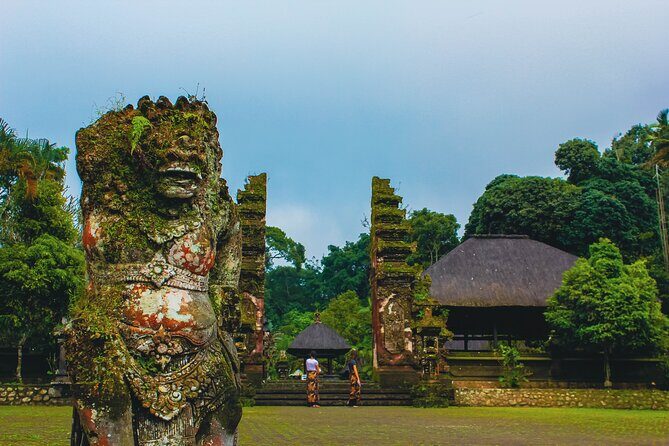
The Natural Canyoning in Alam Canyon

The Natural Canyoning in Alam Canyon - Getting there from Ubud: pickup, timing, and an air-conditioned ride

You do not get bored in a canyon.

This trip turns the jungle outside Ubud into a real rope-and-water playground, with up to 28m rappels and fast-flowing river sections that feed into hidden waterfalls. I especially like the way the day is planned around learning and safety, then ratchets up the fun with a small group up to six so you get steady attention. The only real drawback to flag is simple: strong swimming is compulsory, and the technical gorge parts will feel intense if you are not comfortable in moving water.

Logistics are also thoughtfully easy. You get hotel pickup, an air-conditioned vehicle ride to the canyon area, breakfast before you jump in, then lunch after you finish. If you are the type who likes structure (and doesn’t want a chaotic day), this format fits well.

On the guide side, I’m glad they pair an instructor and an assistant and keep the tone practical and supportive. On one day I saw mentioned, guides Made and Win led the tour and the focus was clear: come down safely, move confidently, and enjoy the canyon’s biodiversity while you’re at it.

Key highlights to know before you go

The Natural Canyoning in Alam Canyon - Key highlights to know before you go

  • Up to 28m rappels in the upper section, with an open, sunny feel for the start of the adventure
  • Narrow, deep gorge later in the route, where jumps and technical rappels take over
  • Full canyoning equipment included, plus a towel to help you finish the day more comfortably
  • Breakfast, lunch, snacks, and bottled water are included, so you do not spend your day hunting food
  • Free photos and videos, so you can skip the camera stress while your hands are busy
  • Max 6 travelers, which helps when you need coaching during rope work

Alam Canyon canyoning: where rope work meets jungle water

The Natural Canyoning in Alam Canyon - Alam Canyon canyoning: where rope work meets jungle water
Alam Canyon is the kind of Bali adventure that feels physical in the best way. You are not just walking and taking photos; you’re using the gorge itself like an outdoor gym—rappels down rock, climbs through tight sections, and then drops back into the flow of the river.

The route has two moods. The upper section stays more open and sunlit, which makes the first rappels feel like you’re warming up. Then the canyon tightens into a narrow, deeper gorge where the action becomes more technical: jumps, rope work, and the kind of canyon walls that make you pay attention to your footing.

And there’s more than adrenaline. Your guide also shares information about the area’s unique biodiversity, so you’re learning something real while you’re surrounded by the jungle ecosystem.

Getting there from Ubud: pickup, timing, and an air-conditioned ride

The Natural Canyoning in Alam Canyon - Getting there from Ubud: pickup, timing, and an air-conditioned ride
This starts early, with a 6:00 am start time. Pickup is offered from your accommodation, and the day runs about 10 hours total (approx.), which gives you time for the full canyon experience plus breaks for training and meals.

You’ll ride in an air-conditioned vehicle, and at least one guest noted a prompt pickup and a relaxed drive through scenery. That matters because canyoning is already a lot of active time; you want the travel portion to be comfortable, especially when you’re leaving before the heat ramps up.

If you’re wondering about where you’ll gather: the meeting point is Rindu Adventures | Bali Canyoning Adventure, located at Jl. Raya Desa Sambangan, Sambangan, Kec. Sukasada, Kabupaten Buleleng, Bali 81161, Indonesia. The tour ends back at the meeting point after lunch.

Before the canyon: breakfast, equipment, and short training

The day is built around getting you ready before you commit to the rope. Before you enter the canyon, you’ll eat breakfast, and you’ll meet the instructor and assistant who guide you through the route.

You also get short training. It is not a long classroom course, but it is enough to help you understand the basics of moving with the equipment and following the guide’s safety rhythm. This is a key part of why the trip works: you’re not tossed in blind.

Then you’re kitted out with full canyoning equipment, plus a towel. You’ll also have coffee and/or tea, snacks, and bottled water during the day. That combination matters because canyoning can make you sweat fast, and you do not want to feel hungry while you’re concentrating on rope moves.

Bring swimwear (not included). You may also want a plan for where you keep your personal items, because a storage device is not included.

The upper canyon: sunny rappels up to 28m

The Natural Canyoning in Alam Canyon - The upper canyon: sunny rappels up to 28m
The first stretch is where Alam Canyon eases you into the sport. You’ll do nice rappels, and the experience notes rappels up to 28m high in the upper section. That is the kind of height where you feel your stomach lift, even if you’re excited.

What I like about the upper section is the atmosphere. It’s described as more open and sunny, which means you’re not constantly staring at dark rock walls. It often helps first-timers build confidence: you can see what’s coming, and the light makes it easier to understand how the canyon shapes the route.

This is also a good place to get your body syncing with the technique. You’ll be doing real rope work, not just casual movement, so the early rappels act like your practice run.

The technical gorge section: jumps, climbing, and rope work

Then you enter the second section: a narrow and deep gorge with jumps and technical rappels. This is where you should expect the day to feel more intense, both mentally and physically.

Swimming is compulsory on this tour, and the ability is directly tied to how comfortable you’ll feel during the river and jump moments. Even if you’re strong in a pool, moving water is different. The guides will help with safety and direction, but you still need the skill and confidence to get through the swim sections.

One guest specifically mentioned jumps of up to about 8 meters (in their day), plus abseiling, slides, swimming, and more. So yes, it can be adrenaline-heavy. If you like daredevil-style activity, this is the point where Alam Canyon earns its reputation.

Also, this portion is more technical. That means you might do more rope adjustments, more careful repositioning, and more waiting your turn while the guide manages the group safely. On at least one day with very small headcount, people noted a 1:1 instructor-to-student ratio, which is exactly what you want when the moves get complex.

Safety style on the day: instruction, teamwork, and control

Safety here is not just a lecture at the start. It’s how the day is run. The experience includes an instructor and assistant, and the tour is built around short training before you descend.

It also helps that the group size is capped at six participants. Smaller groups reduce chaos in a gorge, and you can often move with more precision when the guide isn’t juggling too many people at once.

From the guide descriptions, the tone is welcoming and supportive, not harsh or rushed. Guests praised skilled focus on safety and the fact that the equipment is in good condition. That last part is worth caring about: in canyoning, you want gear you trust, not gear you’re wondering about.

Nature in motion: biodiversity lessons while you’re getting wet

The Natural Canyoning in Alam Canyon - Nature in motion: biodiversity lessons while you’re getting wet
Alam Canyon is not only a physical workout; it’s also a moving tour of the jungle canyon ecosystem. Your guide shares information about the area’s unique biodiversity, which helps you connect the scenery with real life plants and animals in the gorge environment.

The best time for that kind of learning is between action bursts. When you’re waiting for the group to clear a rappel or reposition for a jump, the guide can point out what you’re seeing and explain what matters about the canyon habitat.

This is also why the timing and route matter. Starting with a sunnier upper section gives you an easier moment to orient yourself, then the narrow gorge ramps up the intensity where you’re less likely to notice anything except your next move. Having the guide explain biodiversity keeps the experience from becoming only adrenaline.

Meals and the finish: lunch after the canyon

The day ends with lunch, after which you’re dropped back to your accommodation. In practice, lunch is more than a nice break. It’s a big part of recovering from a long, active morning.

The tour includes lunch plus snacks, and you’ll have bottled water along the way. That means you can focus on finishing strong instead of managing hunger at the worst possible time.

There’s also a practical bonus: free photos and videos. Canyon days move fast, and holding a phone steady while you rappel is not the plan. Having photo and video coverage included helps you keep your hands on the gear and your attention on safe movement.

The small-group advantage in plain terms

Up to six people might not sound like a lot, but in canyoning it changes the feel of the entire day. With fewer participants, it’s easier for guides to track everyone’s timing and comfort level. It’s also easier to maintain safety spacing in narrow gorge moments.

Guests highlighted exactly that vibe: calm organization, skilled guidance, and attention that feels personal. And on at least one day with only a couple of participants, people noted how close the guidance was (two instructors for a tiny group), which should be a good sign for how the company handles coaching.

If you’re someone who gets anxious in group adventure sports, this structure matters more than the marketing name.

Value check: does $150 make sense here?

At $150 per person, Alam Canyon canyoning is not a cheap casual outing. But it can be strong value because a lot is included:

  • Hotel pickup and an air-conditioned vehicle
  • Breakfast, lunch, snacks, plus bottled water
  • Coffee and/or tea
  • Full canyoning equipment
  • A towel
  • Free photos and videos

When you add up what you’d otherwise pay for gear rental, a guided activity, and transport plus meals, the price starts looking more reasonable. Also, the equipment quality and safety focus come through in the feedback, which is what you want to feel good about before you commit to something physical.

Where value can shift for you is your personal comfort with swimming and heights. If you are already confident with moving water and rope work, you get more out of the experience. If you’re not, you may spend the day stressed rather than excited.

Who should book Alam Canyon, and who should think twice

This is aimed at moderate fitness and strong swimming skills. You should feel good about water before you book. The route includes swimming and jumps, and the technical gorge section is not the moment to discover you do not like moving water.

It’s a great fit if:

  • You like adventure that is more than hiking
  • You enjoy rope work and hands-on instruction
  • You want a small group where you get attention
  • You’re excited to see jungle canyon scenery up close and wet

It’s a tougher fit if:

  • You cannot swim confidently
  • You dislike heights or are very uncomfortable with rappels
  • You want a relaxed, sit-and-enjoy type of day (this is active)

Should you book this canyoning tour?

If you’re craving a real adventure day with a clear safety structure, this tour is an easy yes. I’d book it when you can check the big boxes: you can swim confidently, you’re okay with rappels up to big height, and you want a guided canyon run that includes meals and gear so you can focus on the experience.

I’d hesitate only if swimming in moving water makes you panic, or if you’d rather save your energy for calmer sightseeing. The gorge does not care about your nerves. This trip shines when you bring steady comfort in the water and a willingness to follow instructions.

FAQ

FAQ

What time does the Alam Canyon tour start?

The start time is 6:00 am.

How long is the tour?

The duration is about 10 hours (approx.).

Is pickup from my accommodation included?

Yes, pickup is offered.

What meeting point do I use?

The meeting point is Rindu Adventures | Bali Canyoning Adventure, Jl. Raya Desa Sambangan, Sambangan, Kec. Sukasada, Kabupaten Buleleng, Bali 81161, Indonesia.

What is included in the price?

The tour includes breakfast, lunch, snacks, bottled water, coffee and/or tea, full canyoning equipment, a towel, air-conditioned vehicle, and free photos and videos.

Do I need to bring swimwear?

Yes. Swimwear is not included.

Do I need strong swimming skills?

Yes. The ability to swim is compulsory, and the tour is suitable for travelers with strong swimming skills.

Is there a group size limit?

Yes. It’s a small group tour with a maximum of six participants.

Do they provide a mobile ticket?

Yes. Mobile ticket is listed as a feature.

Can I get a full refund if I cancel?

Yes. Free cancellation is available up to 24 hours before the experience start time for a full refund.

Bali Private Airport Pickup – Exclusive Arrival Transfer

Bali Private Airport Pickup – Exclusive Arrival Transfer - Your Driver, the Vehicle, and the Little Comforts (AC, Wi-Fi, Welcome Drink)

A calm start beats a stressful one. This private airport arrival transfer for Seminyak is built for you to step off the plane, get help right away, and head to your Bali base without the usual guessing game. It’s handled by Rob and trusted partners, with flight status monitoring and a proper meet & greet so you’re not wandering the pickup area trying to match faces to names.

Two things I like a lot: you get a clean, air-conditioned vehicle and personal coordination, and the service includes practical touches like luggage help and a welcoming hand when you arrive. One thing to consider is timing can stretch—this ride is listed as 30 minutes to 3 hours, depending on where you’re going and conditions after landing.

If you’re arriving with a baby or bulky gear, plan ahead. A baby car seat costs extra, and excess baggage or surfboards are only okay if they fit inside the vehicle.

Key Things Worth Noting

Bali Private Airport Pickup – Exclusive Arrival Transfer - Key Things Worth Noting

  • Rob and team meet you with a clear presence: one review mentioned a driver waiting with a placard to make it easy to spot him.
  • Flight monitoring reduces wait time: they track your arrival so you’re not stuck wondering when the car will show up.
  • Air-conditioned private transport: you’re not sharing a van or waiting for random pickup stops.
  • In-car Wi-Fi plus a welcome drink: small comforts that help you reset after the flight.
  • Bali travel catalog included: a handy reference for experiences across Bali and Indonesia.

Why a Private Arrival Transfer Feels Different in Seminyak

Seminyak is the kind of place where a good first hour can set the tone for your whole trip. If you land tired, hit traffic uncertainty, or just don’t want to deal with ticket desks and “where do I go?” energy, a private pickup is the simple fix. This one focuses on the moment you arrive at Bali Ngurah Rai Airport and transitions you straight to your destination in Bali.

What makes this service feel more “worth it” than a generic taxi idea is the coordination layer. You get flight status monitoring, so the driver isn’t making you wait on schedule guesswork. You also get meet & greet support, which matters in any airport pickup zone where signage, crowding, and timing can get messy.

And yes, it’s still just a transfer. But that’s the point: you’re buying time, clarity, and comfort. You’re also buying a calmer start, which is often the hardest part of a Bali trip.

What Happens After You Land: Flight Monitoring and Meet & Greet

Bali Private Airport Pickup – Exclusive Arrival Transfer - What Happens After You Land: Flight Monitoring and Meet & Greet
Here’s the practical flow you can expect. Your pickup begins at Bali Ngurah Rai Airport (Denpasar). They monitor your flight status, so they can be ready for the reality of travel delays. That alone is a big deal because it turns your arrival from reactive to proactive.

Then comes the meet & greet. You’re not left to interpret how the driver will find you. In one of the provided review highlights, a driver was courteous, waiting with a placard, and stayed patient from landing at noon until the pickup window cleared—about 1:40 PM. That’s the kind of detail that tells you they’re aiming for a smooth handoff, not a quick grab and go.

Once you’re located, expect help with luggage. The service description explicitly includes assistance, which is useful if you’re traveling with bags that are awkward after a long flight. Even if you can manage your own load, it’s nice to have that extra set of hands as you step into the next stage of your trip.

Your Driver, the Vehicle, and the Little Comforts (AC, Wi-Fi, Welcome Drink)

Bali Private Airport Pickup – Exclusive Arrival Transfer - Your Driver, the Vehicle, and the Little Comforts (AC, Wi-Fi, Welcome Drink)
Let’s talk comfort, because you’ll feel it right away. This is a private transfer in a clean, air-conditioned vehicle. After a flight, AC isn’t a luxury—it’s recovery mode. It helps you stay comfortable while you’re transitioning from airport energy to beach-town energy.

You’ll also get a welcome drink. That sounds small, but it’s one of those practical “reset” benefits. It’s hydration and a moment to breathe before the ride starts. If you’ve ever landed and immediately needed to figure out everything at once, you know how helpful it is when one piece of the puzzle is already solved.

Two other perks are included: in-car Wi-Fi and a travel catalog featuring Bali and Indonesia experiences. Wi-Fi can help you handle messaging, check where you’re staying, or map your next steps. The travel catalog is useful if you like to plan on the fly and want ideas that match where you are in Bali.

And the driver aspect matters too. The service is personally handled by Rob, with trusted partners supporting the operation. That matters for consistency when you’re arriving and can’t easily troubleshoot on the spot.

Timing in Bali: From 30 Minutes to 3 Hours

Bali Private Airport Pickup – Exclusive Arrival Transfer - Timing in Bali: From 30 Minutes to 3 Hours
The duration is listed as 30 minutes to 3 hours. That range isn’t there to be vague—it’s there because airport-to-hotel travel time can change based on where you’re headed and what happens after landing. With transfers, the “how long” depends on traffic, pickup flow, and your exact drop-off area in Bali.

So what should you do with this information? Plan your arrival day like this:

  • Don’t schedule something urgent immediately after touchdown.
  • If you have a first appointment later in the day, aim for an extra buffer.
  • Pack anything you’ll need right away in an easy-to-reach spot, since you may not know how quickly things move.

If you’re someone who hates timing uncertainty, a private transfer still reduces it compared with shared options. But it won’t erase real-world conditions after landing. For most people, that’s the right trade: less stress, more control, and no awkward pickup delays caused by multi-stop logistics.

Price Breakdown: $14.29 per Group and What You Actually Get

Bali Private Airport Pickup – Exclusive Arrival Transfer - Price Breakdown: $14.29 per Group and What You Actually Get
The price is $14.29 per group (up to 3), which changes the math in a helpful way. Airport transfers can get pricey fast when you’re paying per person. Here, you’re essentially buying “your group’s ride” rather than a separate fare for every passenger.

What you get for that per-group cost includes the big-ticket parts of a smoother arrival:

  • flight status monitoring,
  • private transfer with a professional driver,
  • meet & greet service,
  • parking and toll fees (if applicable),
  • welcome drink,
  • in-car Wi-Fi,
  • travel catalog.

That list matters because the “hidden costs” of airport logistics often come from things like extra waiting, unclear pickup systems, or paying separately for tolls and parking. Since tolls and parking are included (when applicable), you’re less likely to get surprise add-ons during a moment when you’re already tired.

One more value angle: this is a private tour/activity. Only your group participates. That means you’re not rolling the dice on who you’re sharing space with, and you’re not waiting for extra stops that can turn a quick ride into a slow one.

Luggage, Surfboards, and Baby Seats: The Practical Limits

Bali Private Airport Pickup – Exclusive Arrival Transfer - Luggage, Surfboards, and Baby Seats: The Practical Limits
This is where you should read carefully, because a transfer is only as smooth as your logistics match the vehicle.

Excess baggage and surfboards are allowed only if they fit inside the vehicle. That’s a fair rule—space is space. If you’re traveling with bulky items, don’t assume they’ll fit just because the ride is private. If in doubt, you might want to limit to essentials or pack smarter so your load stays manageable.

For families: a baby car seat is available, but it costs $10.00 per booking. If you need one, plan for the extra cost rather than assuming it’s included.

Also note tipping is not included—tips for the driver are optional. In places like Bali, it’s normal to tip when service is good, but it’s your call.

If you’re traveling solo or as a couple, you still fit the “up to 3” group limit. Just remember: the service is priced for a group, and your practicality will depend on how much you’re carrying.

Value-Add Extras That Make the First Day Easier

Bali Private Airport Pickup – Exclusive Arrival Transfer - Value-Add Extras That Make the First Day Easier
Some airport transfers stop at transportation. This one adds a few elements that help you transition from arrival mode to explore mode.

The welcome drink is the simplest win. It’s not a meal plan, but it helps you feel human again before you start navigating your first neighborhood in Bali.

The in-car Wi-Fi is another practical perk. You might use it to message your contact at your hotel, confirm arrival details, or check a plan for later. Even a quick connection can reduce stress if your phone network is spotty.

Then there’s the travel catalog. You can treat it like a starting point for what you do next. It covers Bali and Indonesia experiences, which is useful if you want to build your itinerary without doing everything from scratch on your phone.

Add in flight monitoring and meet & greet, and you get a transfer that helps you start rather than just arrive.

Who This Airport Pickup Suits Best

Bali Private Airport Pickup – Exclusive Arrival Transfer - Who This Airport Pickup Suits Best
This service is a strong fit if you value comfort and clarity on arrival. Here’s the profile that usually gets the most out of this kind of pickup:

  • Couples and small groups (up to 3) who want privacy and a straightforward transfer.
  • Travelers arriving at Ngurah Rai who don’t want to figure out pickup logistics after a long flight.
  • People who appreciate being greeted and handled, especially when luggage is involved.
  • Anyone who likes the small comforts: AC, welcome drink, and in-car Wi-Fi.

If you’re the type who loves wandering and figure-it-out energy, you might not need a private service. But if you’re trying to protect your first hours in Bali, this kind of arrival transfer is often the easiest way to reduce friction.

Also, if you’re booking Seminyak as your base, this aligns well with the vibe: you get out of the airport area and into your stay zone faster, without extra stops.

Should You Book This Private Airport Pickup for Seminyak?

If you want an uncomplicated landing into your Bali stay, I’d lean yes. The biggest reasons are practical: flight monitoring, meet & greet, and a private, air-conditioned ride that’s set up for small-group travelers. The price also makes sense because it’s per group (up to 3), and key add-ons like parking and tolls (when applicable) are included.

I’d hesitate only if you know you’ll have luggage that may not fit inside the vehicle, or if you’re traveling with a baby and you’re not planning for the extra $10 baby seat fee. Otherwise, this is exactly the kind of “buy back your time” service that pays off on day one.

If you’re trying to start your trip with less stress and more momentum, this one delivers.

FAQ

Where does the pickup start and where do you go?

Pickup starts at Bali Ngurah Rai Airport in Denpasar, Indonesia, and the transfer ends in Bali, Indonesia.

How long does the transfer take?

The duration is listed as approximately 30 minutes to 3 hours.

What is the price, and how many people does it cover?

It costs $14.29 per group, up to 3 people.

What’s included in the private airport transfer?

Included features are flight status monitoring, a private transfer with a professional driver in a clean, air-conditioned vehicle, meet and greet service, airport parking and toll fees (if applicable), a welcome drink, in-car Wi-Fi, and a travel catalog with Bali and Indonesia experiences.

What’s not included?

Not included items are driver tips (optional), excess baggage and surfboards unless they fit inside the vehicle, a baby car seat fee of $10.00 per booking, and personal expenses or additional needs.

Do I need to arrange confirmation or tickets?

Confirmation is received at the time of booking, and the service includes a mobile ticket.

Is this only for my group?

Yes, it’s a private tour/activity, so only your group will participate.

What’s the cancellation rule?

Free cancellation is available up to 24 hours in advance for a full refund. Changes made less than 24 hours before the start time aren’t accepted.
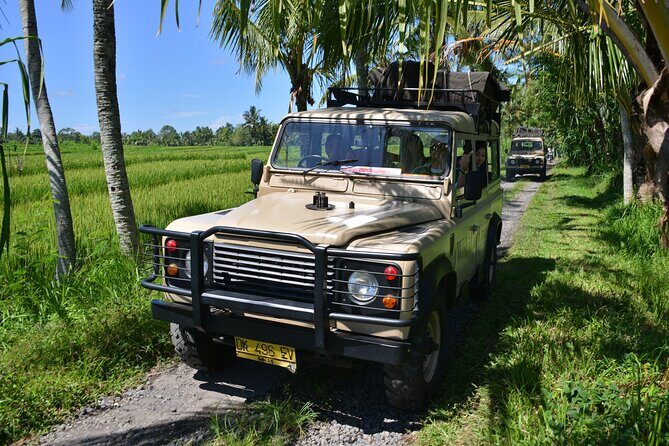
Hidden Canyon Beji Guwang & White Water Rafting

Hidden Canyon Beji Guwang & White Water Rafting - Why This Beji Guwang and Ayung Raft Combo Works in One Day

One day, two kinds of water fun. This Beji Guwang Hidden Canyon + white-water rafting combo turns Ubud into an action-packed morning and a wild, scenic river afternoon. You get a guided canyon walk through the patterned stone walls of Beji Guwang, then you shift gears to Grade II–III rafting on a Ubud-area river with a professional guide calling the moves.

I like the way this tour is built for real convenience: you get lunch, bottled water, and the key gear handled so you can focus on doing the activities instead of organizing them. I also really appreciate the added safety layer—both parts are led by guides, with essential safety gear included for rafting. One thing to consider is that canyon time isn’t for people who hate getting a bit physical; you’ll be scrambling, climbing, and walking through uneven, wet terrain.

Also, the tour is private and starts early (around 8:30am), so it’s best if you’re ready for a full day rather than a slow sightseeing plan. If you’re coming from farther in Ubud, double-check pickup details, because one review noted there can be extra operational costs depending on where you’re picked up outside the tourist district.

Key highlights you’ll actually feel

Hidden Canyon Beji Guwang & White Water Rafting - Key highlights you’ll actually feel

  • Guided canyon scrambling: You’re not just sightseeing—you’re moving through the gorge with a guide.
  • Real white-water range (Grade II–III): Enough rapids to feel it, but still guided for most people who can handle basic activity.
  • Lunch + bottled water included: Less searching, more time on the river and in the canyon.
  • Private transfers from your Ubud address: Less hassle than piecing together transport.
  • Provided snorkeling equipment: You’ll have the gear if the water time includes a chance to use it.
  • All entrance fees and taxes included: Fewer “surprise payments” at the start.

Why This Beji Guwang and Ayung Raft Combo Works in One Day

Hidden Canyon Beji Guwang & White Water Rafting - Why This Beji Guwang and Ayung Raft Combo Works in One Day
This tour is popular for a reason: it bundles two signature “Ubud adventure” experiences without asking you to solve logistics. In practice, that matters because both Hidden Canyon and rafting depend on timing, water conditions, and competent guides. When you combine them with private 2-way transport, you spend less time traveling and more time doing.

The canyon part is all about the feel of the place. Beji Guwang Hidden Canyon is carved into stone, with walls shaped over an extremely long time by river water. When you move through that tight space—wet footing, changing sounds, sudden splash zones—it feels different from a normal waterfall stop. It’s active, and it makes the scenery more than a photo backdrop.

Then rafting takes you into the open air. You get a 10-kilometer route and about two hours on the river, with a professional guide on board for instructions throughout. The rapids are Grade II–III, so you’ll get jolts and splashes, but you’re not signing up for extreme technical white-water. It’s a sweet spot for many people who want adrenaline without needing advanced rafting skills.

Getting There from Ubud: Private Transfers and Your 8:30am Start

The day begins at 8:30am, and it’s built around pickup and direct travel. You may be picked up from your Ubud address with private transfers, but the meeting point listed for the start is in the Beji Guwang area (Sukawati/Guwang side). In other words: you’ll be driven in, then the tour runs at full speed from there.

This is a big value point. In Ubud, trying to coordinate a canyon day plus rafting with separate drivers and separate guide arrangements can turn into a half-day headache. Here, private transportation is part of the package, and the goal is to save you time and reduce the stress of bargaining.

That said, one review response mentioned extra cost can apply when pickup and drop-off are outside the tourist district, explained as operational coverage. So if your hotel is tucked away (or you’re not sure where you fall on the pickup map), message ahead and confirm the exact pickup point and any additional charges. You’ll feel better knowing the plan before the driver arrives.

Beji Guwang Hidden Canyon: Scramble, Splash, and Follow the Guide

This is not a slow walk. Hidden Canyon Beji Guwang is designed for guided movement through the gorge—scrambling, hiking, and getting splashed along the way. The big reason you need a guide is safety and navigation. A gorge like this isn’t about “finding the view.” It’s about knowing where to step, when to move, and how to handle the slippery zones.

What makes it worth it is the combination of physical effort and visual payoff. The canyon walls are patterned and formed by erosion over hundreds of thousands of years, which is why people come away impressed even without trying hard to “hunt photos.” You’re moving through a natural stone channel with water energy all around you, so the place feels alive rather than staged.

Fitness reality check: you should be comfortable walking on wet uneven surfaces and doing some climbing. One reviewer put it plainly—don’t show up if you’re a complete couch potato. If you can handle a bit of scrambling, you’ll be fine. If you hate getting your shoes wet or you’re nervous around heights and rock steps, this part may feel stressful.

Practical tip: wear footwear you don’t mind getting soaked and potentially scuffed. You don’t want flip-flops that slap around during climbs, and you don’t want brand-new sneakers that you’ll regret later.

Ayung River Rafting Grade II–III: What Two Hours Feels Like

After the canyon comes the river. The rafting portion is on the Ayung River area, with a 10-kilometer route and about a two-hour rafting adventure. You’ll have a guide with you and clear instructions before and during the run.

Grade II–III means you can expect rapids that are fun and sometimes exciting, with a few sections that demand you pay attention. You won’t be drifting in calm water the entire time. You’ll likely get splashed (that’s part of the deal), but you’re not in a situation where a small mistake suddenly becomes a major emergency, as long as you follow the guide’s directions.

One note from the tour info that’s helpful: the Ayung River is described as clear, fresh water, and there’s mention of a hidden natural waterfall and spots where swimming might be possible. In real terms, that usually means you should be ready for short “water time” if conditions allow and if your guide says it’s safe. Don’t assume you can swim whenever you want. Just be flexible.

If you’re the type who gets nervous at the first splash, focus on the guide’s commands and your group positioning. Rafting is teamwork. When you move together—row timing, balance, and listening—it turns the rapids from scary into thrilling.

Lunch, Bottled Water, and Provided Gear: Less Worry, More Play

The tour includes lunch and bottled water, which is not a small detail. In Bali, it’s easy to burn energy and then waste time finding food between activities. Here, you’re fueled, and you can keep your energy up for the canyon scrambling and rafting.

You also get essential equipment. The rafting includes all the basics you need for safety, and the canyon/river day includes provided items such as snorkeling equipment (listed as included). That tells me the itinerary has water time built in beyond just “get wet and go.” Even if you don’t use everything, it’s good insurance that the tour isn’t expecting you to bring special gear.

All entrance fees and taxes are included too. That’s one of those value things that sounds boring until you’ve had to pay separate charges halfway through a day. Here, you can plan your budget around the posted price and not scramble at the last minute.

One possible “gotcha” for some people: personally printed photos are not included. If you like souvenir photos, plan to purchase if you want them.

What to Pack (So Your Day Stays Comfortable)

Because both activities involve water and movement, pack like you’re getting wet and you’ll need to keep going. I’d prioritize:

  • Water-ready shoes (something grippy and comfortable for rock and wet steps)
  • A quick-dry change of clothes for after rafting
  • A small dry bag for your phone and valuables
  • Sunscreen (you’ll be out of shade more than you expect)
  • A light rain layer or hat for comfort if it’s humid or drizzly

Also, keep in mind the day runs about 8 hours. That’s long enough that you’ll appreciate things that reduce discomfort—dry socks, a hat, and a plan for where your stuff goes between canyon and river.

Service, Extras, and the Coffee Plantation Question

This combo is usually praised for the action and the scenery, and you’ll want good human energy on both halves of the day. One review specifically praised the Hidden Canyon guide and the team at Graha Adventure Rafting, which is a strong sign the rafting side is handled by people who know what they’re doing.

That same review mentioned something important for your expectations: a coffee plantation tour wasn’t highlighted in the description, but it happened as part of the day. I can’t promise it will appear on every departure, but I strongly suggest you ask your operator ahead of time if there’s any planned stop beyond canyon + rafting + lunch. If you don’t want extra time in a showroom-style stop, you’ll want to know early.

As for service quality, one review headline summed it up as amazing sites but less amazing service, with a response explaining the pickup/drop-off outside tourist zones can add cost. That doesn’t mean the guides are bad—just that logistics communication matters. Message early, confirm pickup location, and you’ll avoid most of the friction.

Value for $90: When Private Transfers Make Sense

At $90 per person, this is priced as a full-day private experience with included essentials. The value isn’t just “cheap fun.” It’s what you don’t have to organize.

For your money, you get:

  • Guided Hidden Canyon scrambling
  • Guided Grade II–III rafting with a professional guide
  • Lunch and bottled water
  • Private transportation and round-trip transfer
  • All fees and taxes
  • Included safety gear and snorkeling equipment

If you tried to book those separately—driver, guide, entrance fees, and rafting—costs add up fast, and you risk mismatched timing. Here, the package is built to keep the day flowing. Even if you live in Ubud, private transfers save time and reduce the chance you’re sitting around waiting for drivers while everyone else moves on.

So who should go for the value? If you want a no-drama day with a clear plan, this is a good fit. If you love DIY planning and you’re comfortable negotiating with multiple providers, you might find cheaper options—but you’ll likely trade away convenience and certainty.

Should You Book Beji Guwang Hidden Canyon and Rafting?

I’d book it if you want an active day in Bali where you’re not just watching nature—you’re moving through it. Hidden Canyon is for people who can handle wet steps and a bit of climbing. Rafting is for people who want a real dose of excitement with guide-led safety.

I would pause if:

  • You hate scrambling, climbing, and slippery surfaces
  • You’re looking for a purely relaxed day with minimal physical effort
  • You strongly dislike any extra stops and you haven’t confirmed whether a coffee plantation stop might be added

If you’re on the “I want action but I want it organized” side of the decision, this combo is hard to beat. The canyon makes the scenery feel close and intense, and the rafting adds the adrenaline with a clear skill level (Grade II–III) that’s still guided.

FAQ

What is the duration of Hidden Canyon Beji Guwang and white-water rafting?

The tour is listed at about 8 hours.

Where is the tour located?

The experience is in the Ubud area of Bali, Indonesia, with the Hidden Canyon start at Hidden Canyon Beji Guwang in the Guwang/Sukawati area.

What time does the tour start?

The start time is 8:30am.

Is pickup from Ubud included?

Pickup is offered, and the tour includes 2-way private transfers from your Ubud address.

Is this a private tour?

Yes. It’s private, and only your group participates.

What activities are included?

You’ll do a guided walk through Beji Guwang Hidden Canyon, then raft Grade II–III white water on a scenic river.

What’s included in the price?

Included items are bottled water, lunch, snorkeling equipment, private transportation, and all fees and taxes.

Do I need to bring snorkeling equipment or safety gear?

No. Snorkeling equipment is included, and essential safety gear is provided for the rafting.

Are personally printed photos included?

No, personally printed photos are not included.

What happens if weather is bad?

The experience requires good weather. If it’s canceled due to poor weather, you’ll be offered a different date or a full refund.
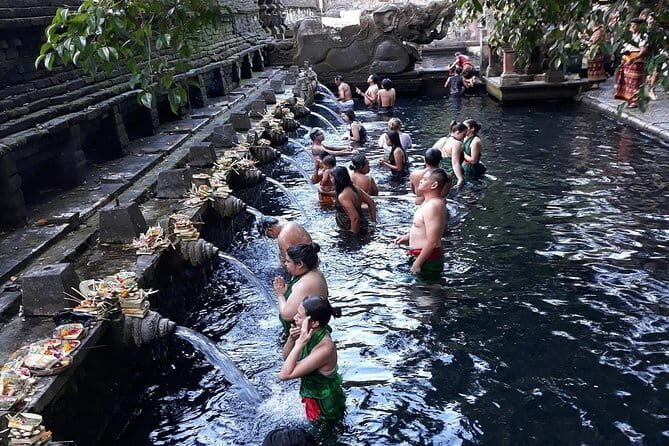
Can I cancel for free?

Yes. You can cancel up to 24 hours in advance for a full refund.