Melukat Ceremony and Temple Tour at Tirta Empul Temple

I love ceremonies that feel practical, not performative. This private Melukat Ceremony and Tirta Empul Temple Tour is built for that: you get a guide, you wear the proper attire, and you follow the cleansing steps at Bali’s famous holy spring site. The goal is simple—ritual purification through sacred spring water—while your guide fills in the meaning so it doesn’t turn into just a photo stop.

Two things I especially like: the private format (it’s only your group) and the way the guide helps you understand what you’re doing as you go. One potential drawback is the water factor. If you choose a later slot, the cold water can be a real wake-up call, so bring your towel and plan for an icy moment.

If you want Bali spirituality without chaos, this is one of the cleaner ways to do it.

Quick hit points you’ll care about

Melukat Ceremony and Temple Tour at Tirta Empul Temple - Quick hit points you’ll care about

  • Private tour for your group means more questions and less waiting.
  • Early morning or late afternoon slots help you dodge crowds.
  • Attire rental and ceremony materials included so you’re not scrambling at the temple.
  • You’ll get wet during the Melukat and you’ll want a change of clothes ready.
  • Locker included for a calmer, hands-free visit.

Entering Tirta Empul: why this place matters

Melukat Ceremony and Temple Tour at Tirta Empul Temple - Entering Tirta Empul: why this place matters
Tirta Empul is one of Bali’s most recognized purification temples, and the draw is the holy spring water. Locals come to cleanse, and the Melukat ceremony is the structured way the ritual is practiced on-site. Instead of watching from the edge, you’re guided through the process while learning what each part represents in Balinese Hindu practice.

What makes this tour work is the balance between rules and guidance. You get a clear path through the temple grounds, and you also get someone to explain the temple’s layout and spiritual importance as you walk. That combo matters at Tirta Empul, because there’s a lot happening in different spots, and it’s easy to feel lost if you’re winging it.

The Melukat ceremony: what you actually do

Melukat Ceremony and Temple Tour at Tirta Empul Temple - The Melukat ceremony: what you actually do
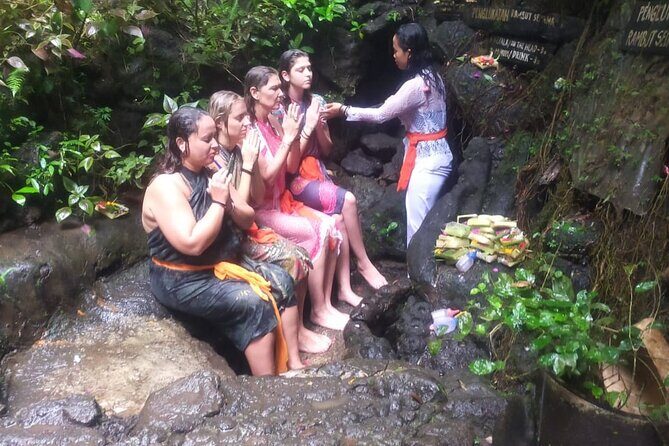
This isn’t a passive “see the water” stop. You’ll be led into the ritual itself—donning the required clothing, preparing for the ceremony, and then performing the cleansing steps with your guide.

In the typical flow, you:

  • Explore the temple grounds first, with explanations about the site’s history, architecture, and spiritual significance.
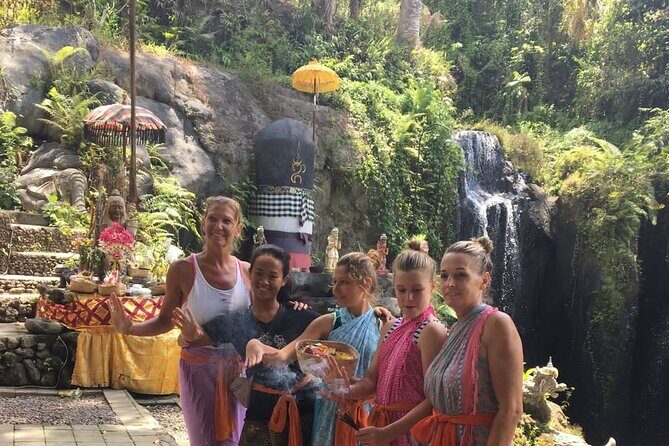
  • Put on a sarong and a simple top (you don’t need full traditional dress).
  • Take part in an offering and worship sequence, guided step-by-step.
  • Perform the ritual cleansing in the sacred spring water as directed.

The best part is how the guide handles the meaning. Names that show up in this tour’s success stories include Botak, Dana, Ketut, Kadek, Dewa, Komang, and Agung—each praised for making the process feel understandable and meaningful. You don’t just get a script; you get context for why certain movements and offerings matter.

Temple tour + ritual timing: morning vs late afternoon

Melukat Ceremony and Temple Tour at Tirta Empul Temple - Temple tour + ritual timing: morning vs late afternoon
You choose between an early morning slot or a late afternoon slot, and that choice affects your experience more than you might expect. Tirta Empul can get busy, so earlier hours help you move through the ceremony space with less jostling. The tour is designed to help you beat crowds simply by letting you start when the site is calmer.

If you pick a later slot, you’re trading crowd control for a higher chance of feeling the cold water more intensely. That’s not just discomfort—it can make the ceremony feel harder if you’re sensitive to temperature. If you’re flexible, I’d aim for morning. If you’re set on afternoon, treat the towel-and-change-of-clothes part like your main job.

What you wear (and why the rules are strict)

Melukat Ceremony and Temple Tour at Tirta Empul Temple - What you wear (and why the rules are strict)
This tour gives you attire rental: a sarong plus a simple dress/top for participation. You still have to follow the temple’s modesty rules, and those rules are clear:

  • Your top must cover your shoulders (a T-shirt works).
  • Your shorts or skirt should be above the knee.

Plan around the fact that you will be wet. The tour instructions also ask you to bring:

  • A change of clothes (including underwear)
  • A towel

This is one of those “simple details” that actually decides whether your experience feels relaxed or stressful. If you show up in clothes you don’t mind ruining and you don’t bring a towel, the ceremony becomes a scramble. With the right setup, it becomes calm and respectful.

Bring your change of clothes and handle the cold water

Melukat Ceremony and Temple Tour at Tirta Empul Temple - Bring your change of clothes and handle the cold water
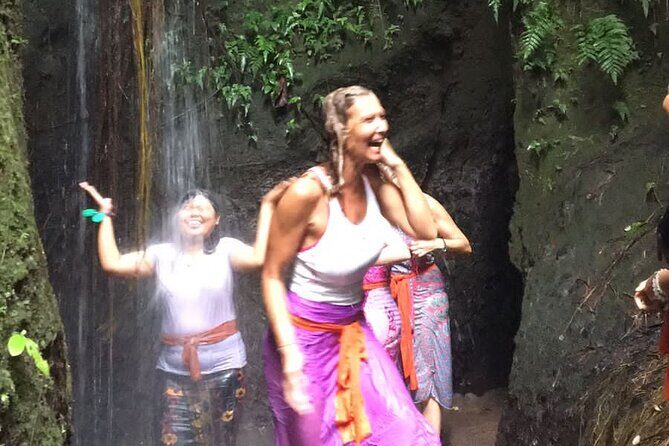
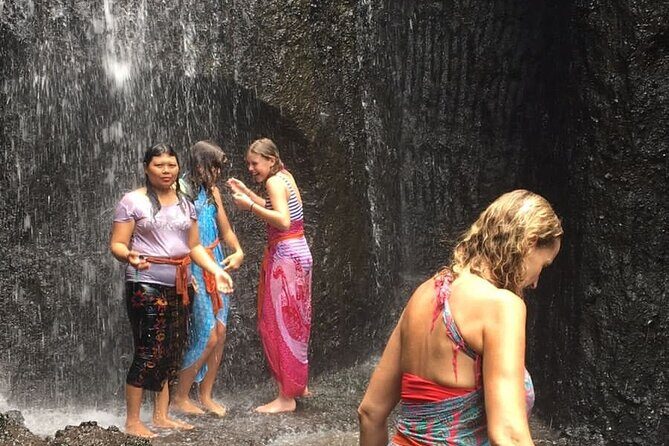
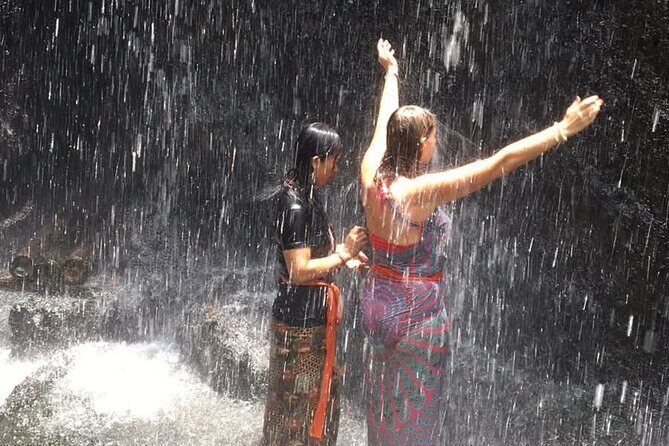
Yes, you’ll get wet. That’s the whole point. One practical note that keeps coming up in the experience: the holy spring water can feel cold, especially if you’re doing it later in the day.

My advice:

  • Pack your towel where you can reach it quickly.
  • Bring dry underwear and something comfortable to wear immediately after.
  • Wear practical footwear that’s easy to manage before and after you’re in the ritual spaces.

Even if you’re excited, the physical part is real. The “negative energy washed away” feeling people talk about often comes right after you finish the last step and your body settles back down. You’ll want a change of clothes so you can feel that shift instead of just feeling chilled.

Your private guide: more than a translator

Melukat Ceremony and Temple Tour at Tirta Empul Temple - Your private guide: more than a translator
An English-speaking guide is included, and the private format means you’re not stuck with a rushed, one-size-fits-all explanation. You can ask as many questions as you like, and that’s huge for a ritual where details matter.

The guides associated with this experience are repeatedly praised for doing three things well:

  • Explaining the ritual setup and how everything is organized on-site
  • Clarifying the meaning behind steps and offerings
  • Keeping the process smooth so you know what’s next

If you care about understanding the “why,” this tour fits that mindset. If you only want a quick photo, it may feel like slower travel, because the ceremony takes time for correct participation.

Price and value: why $29 makes sense here

Melukat Ceremony and Temple Tour at Tirta Empul Temple - Price and value: why $29 makes sense here
At $29 per person, the value is strongest because key items are included. You’re not just buying a ticket—you’re getting:

  • Entrance fee
  • Attire rental (sarong + simple top/dress)
  • Ceremony materials
  • English-speaking guide
  • Locker access

The big item not included is transport. Shuttle transport is not included, so you’ll need to arrange getting to Pura Tirta Empul (Tampaksiring, Gianyar Regency, Bali). That doesn’t make it overpriced—it just means you should budget transportation separately if you’re staying in Ubud and relying on a driver.

Where the math works out: many temple experiences charge separately for entrance, guide, and clothing. Here, those pieces are bundled, so your cost stays predictable. With a private setup, that predictability matters.

Where the tour starts and how it ends

Melukat Ceremony and Temple Tour at Tirta Empul Temple - Where the tour starts and how it ends
You’ll meet at Pura Tirta Empul, Tampaksiring, Gianyar Regency, Bali 80552. The tour ends back at the same meeting point, so you’re not dealing with complicated “drop-off” plans.

The duration is about 1 to 2 hours. That’s a sweet spot: long enough for the guided grounds tour and the Melukat steps, not so long that you lose half your day to temple timing.

Who should book this tour (and who should skip it)

I’d steer you toward this experience if you:

  • Want a meaningful temple ritual, not a quick sight-seeing stop
  • Prefer smaller-group or private pacing
  • Care about learning what you’re doing as part of your travel

You might think twice if you:

  • Don’t like cold water experiences
  • Get stressed by modesty rules and wet clothing logistics
  • Need shuttle transport provided (since it’s not included)

Also, note the participation rule: menstruation is strictly not allowed to enter the temple. The instructions say if you menstruate after booking, you can request a refund or reschedule. That’s a real factor for planning your dates.

Should you book the Tirta Empul Melukat tour?

Book it if you want Bali spirituality with structure. The private guide, included attire, and ceremony materials make it easy to do respectfully. The timing option is also practical—morning is the smart choice if you want a calmer experience.

Skip or reconsider if water temperature is a deal-breaker for you, or if you’re hoping for a fully hands-off “transport included” package. Since shuttle transport is not included, also check how you’ll get there without stress.

If your goal is a genuine purification ritual with clear guidance, this is a solid pick for Ubud-area planning.

FAQ

How long is the Tirta Empul Temple and Melukat ceremony tour?

The tour lasts about 1 to 2 hours.

Is shuttle or transportation included?

No. Shuttle transport is not included, so you’ll need to arrange your own way to the meeting point.

What’s included in the ticket price?

Entrance fee, attire rental (sarong and a simple top/dress, not full traditional dress), ceremony materials, an English-speaking guide, and a locker are included.

What should I wear to the ceremony?

You must wear a top that covers your shoulders and short bottoms that are above the knee (like shorts or a short skirt). You’ll also be given a sarong and simple attire for the ritual.

Do I need to bring a towel or extra clothes?

Yes. You should bring a change of clothes (including underwear) and a towel.

Can most people participate in the Melukat ceremony?

Most travelers can participate. However, menstruation is strictly not allowed to enter the temple. If this happens after booking, you can request a refund or reschedule.

Do I need a WhatsApp number to book?

Yes. You must enter your WhatsApp registered phone number during booking so the team can reach you.

What happens if the weather is bad or I need to cancel?

This experience requires good weather. If it’s canceled due to poor weather, you’ll be offered a different date or a full refund. You can cancel for a full refund up to 24 hours before the start time.
Private Half-Day Tour: Uluwatu Sunset Trip and Dinner Packages

Private Half-Day Tour: Uluwatu Sunset Trip and Dinner Packages - Price and Value: What You’re Paying For at $65

Uluwatu at sunset has a built-in sense of drama. This half-day private trip strings together temple cliffs, Bali’s most famous vocal dance, and a Jimbaran beach dinner in one smooth evening plan. It’s a good way to see the big sights without spending your whole day stuck in traffic hunting down schedules.

I especially like two things: first, the convenience of hotel-to-temple-to-dinner round-trip pickup in an air-conditioned vehicle; second, the way the Kecak and fire show turns the Ramayana into something you can follow with your eyes and your ears. One thing to consider: Uluwatu and the performance area can get crowded, and traffic can affect how close you get to the temple views before the show.

Key Things You’ll Notice On This Uluwatu Sunset Trip

Private Half-Day Tour: Uluwatu Sunset Trip and Dinner Packages - Key Things You’ll Notice On This Uluwatu Sunset Trip

  • Private vehicle, no sharing: it’s only you and your party, so you’re not squeezed into a group shuttle rhythm
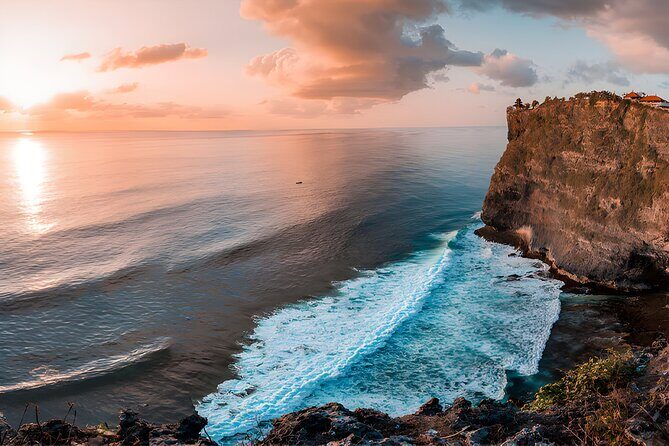
  • Uluwatu’s cliff setting: the temple sits about 70 meters above sea level, so the sunset view is part of the “ticket price”
  • Kecak is voice-led: the music comes from human voices, described as a “gamelan suara” choir in concentric circles
  • Dinner is part of the plan: Jimbaran seafood is included as a set menu, served in a beach setting at the end
  • Flexible add-ons may be possible: the tour notes flexible timing, and some people report adding a coffee stop on request
  • Weather matters: it requires good weather, so rain can change plans

Why This 3:00 pm Timing Works for Uluwatu Sunset

Private Half-Day Tour: Uluwatu Sunset Trip and Dinner Packages - Why This 3:00 pm Timing Works for Uluwatu Sunset
This tour starts at 3:00 pm, which is a smart time choice if you want daylight for temple photos and still have enough time for sunset and the cultural show. Uluwatu is famous for evening views, but the real trick is pacing: you don’t want to arrive too early and feel rushed, and you don’t want to arrive too late and miss the light.

I like that the plan is built around the flow of the evening: temple first, then the performance, then dinner. It turns what could be a random list of stops into a story-like sequence. If you’re the type who likes your schedule to make sense, you’ll appreciate this one.

Price and Value: What You’re Paying For at $65

Private Half-Day Tour: Uluwatu Sunset Trip and Dinner Packages - Price and Value: What You’re Paying For at $65
At $65 per person, the value is strongest if you compare it to the cost of doing this piecemeal on your own. You’re not just paying for admission—you’re also paying for private transfers, an English-speaking driver who guides, and included entrance tickets + Kecak ticket. Then there’s dinner: a set-menu seafood meal is included.

That doesn’t mean every meal will hit the exact mark for every appetite. Some people have found the dinner underwhelming, especially when portions felt small or seafood didn’t match expectations. So I’d frame it like this: you’re paying for an all-in evening package, and the temple + dance value is usually the headline.

Pickup From Seminyak and Other Areas: Convenience With One Big Caveat

Private Half-Day Tour: Uluwatu Sunset Trip and Dinner Packages - Pickup From Seminyak and Other Areas: Convenience With One Big Caveat
This tour offers pickup and drop-off from a long list of areas in Bali, including Seminyak, and also places like Ubud, Sanur, Denpasar, Tanjung benoa, Nusa Dua, Pecatu, Jimbaran, Tuban, Kuta, Legian, Kerobokan, Canggu, and more. If you’re staying in one of these zones, it keeps the day from becoming a DIY logistics puzzle.

You’ll travel in an air-conditioned vehicle, and you’re on a private setup—so your driver can help manage timing and decide how to handle the in-between moments. The catch is the one Bali never stops reminding you about: traffic. One common issue in feedback is arriving later than expected and losing some of the chance to explore the temple area closely. In practical terms, start by assuming the roads can slow you down, and don’t book anything right after if you’re planning a tight next-day agenda.

Stop 1: Uluwatu Temple on a 70-Meter Cliff

Private Half-Day Tour: Uluwatu Sunset Trip and Dinner Packages - Stop 1: Uluwatu Temple on a 70-Meter Cliff
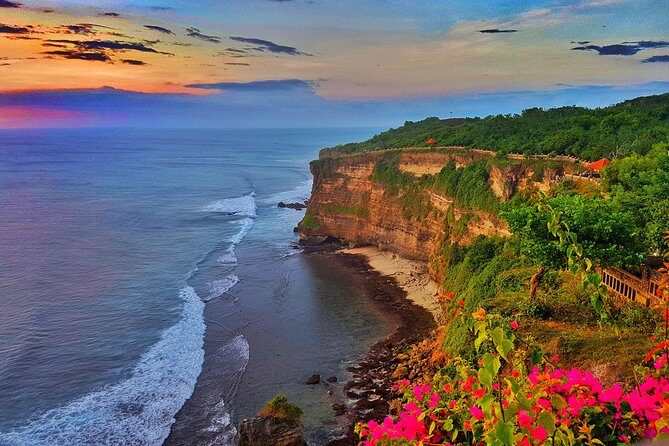
Uluwatu Temple (Pura Luhur Uluwatu) is one of Bali’s six pillar temples. The best part is the setting: it’s perched on a steep cliff roughly 70 meters above sea level, so the views are built into the architecture, not just the scenery around it.

What to expect when you get there:

  • time to enter and take in the views before sunset
  • a temple experience that feels very Balinese, with lots of movement, prayers, and people photographing the same big overlook
  • a need to follow local routines and your guide’s advice for where to stand and how to move through crowds

One practical note: there are monkeys in this area. Your driver-guide can help you manage the moment, and you’ll want to keep a close eye on your belongings and follow their lead through temple grounds.

Stop 2: Kecak and Fire Dance That Reads Like a Living Story

Private Half-Day Tour: Uluwatu Sunset Trip and Dinner Packages - Stop 2: Kecak and Fire Dance That Reads Like a Living Story
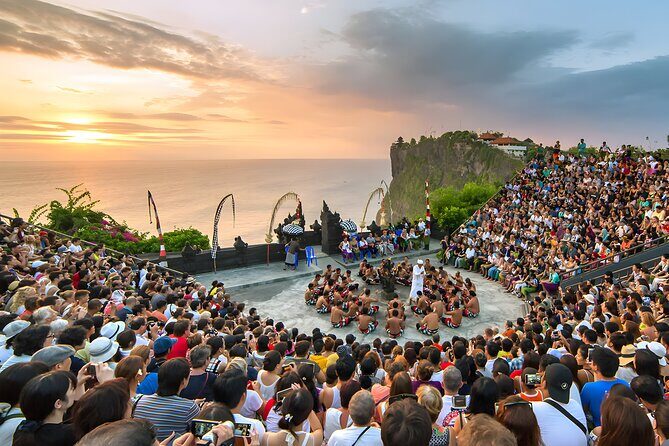
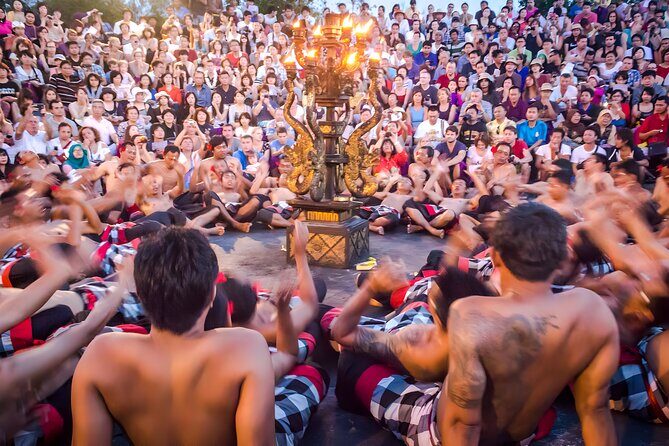
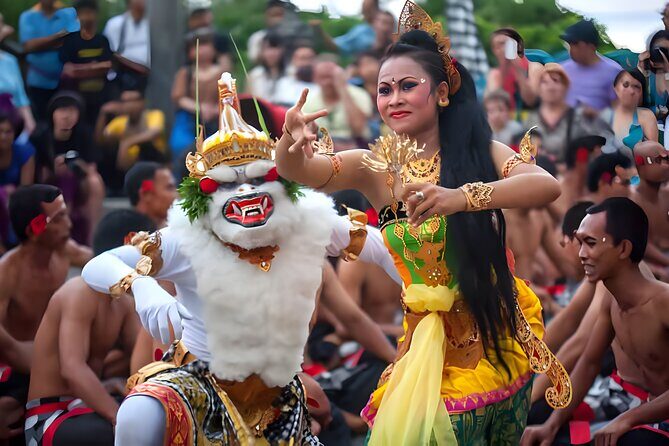
After the temple, you head to the Kecak and Fire Dance, usually described as a one-hour cultural performance with admission included. The part that makes it special is how the sound is created. Instead of relying on instruments, the accompaniment is provided by a human voice choir. You’ll hear it explained as gamelan suara, with a large group (described as a choir of a hundred or more) sitting in concentric circles.

Why this matters for you:

  • You don’t have to understand every word to feel the rhythm and tension.
  • The Ramayana storyline becomes easier to follow when you’ve got a quick setup from your guide beforehand.
  • The fire element adds intensity in a way that’s hard to replicate through photos.

If you want the performance to click, ask your guide for a short storyline overview before the show starts. One of the best pieces of advice I’ve seen from people who enjoyed it most is that a little context makes the action make more sense. Also, dress smart casual—show seating can mean warm weather plus firelight, so plan for the heat and keep sunscreen in mind.

Stop 3: Jimbaran Bay Seafood Dinner by the Water

Private Half-Day Tour: Uluwatu Sunset Trip and Dinner Packages - Stop 3: Jimbaran Bay Seafood Dinner by the Water
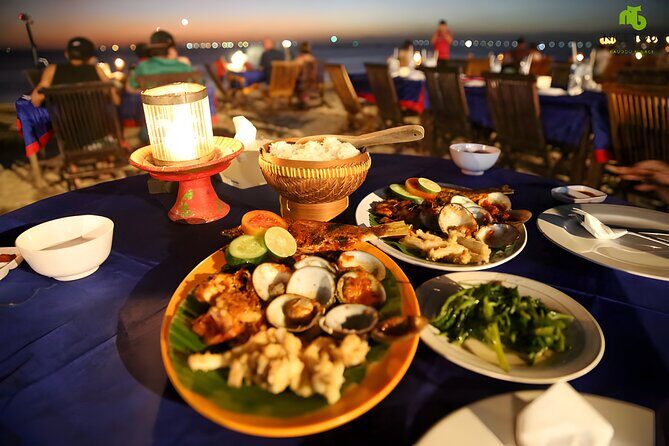
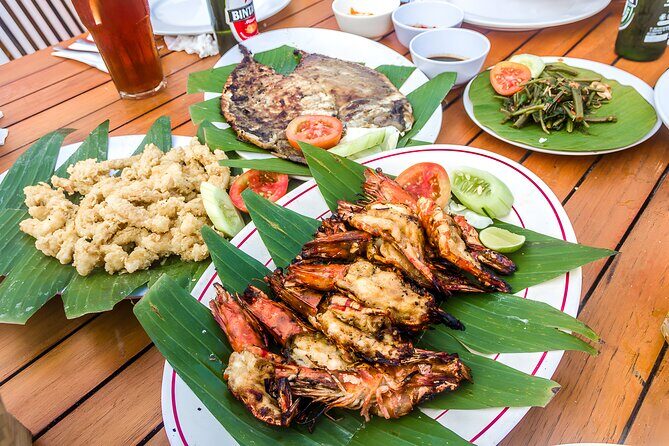
The evening lands in Jimbaran Bay, where the big draw is grilled seafood with a sunset-style backdrop. The tour lists a set menu seafood dinner as included, and that beach setting is a major part of why people book this package instead of trying to assemble it separately.

Here’s the reality check:

  • The location can be spectacular—feet-in-the-sand energy is real.
  • The food is a mixed bag depending on the restaurant’s execution for the night.
  • Some diners loved it and called it delicious; others found portions small or seafood dry.

If you’re picky about seafood quality or portion size, you have options: the tour notes a vegetarian option (available if you advise at booking) and a non-seafood dinner option. That simple choice can protect your night from feeling like an afterthought.

Also, dinner sometimes includes live entertainment in the restaurant area. One person specifically mentioned a Mariachi-style band, which tells me the vibe can go beyond plain dinner service. Still, plan for variability: you’re buying an experience that mixes culture, music, and dinner in a busy tourist zone.

The Drive With Photo Stops: Cultural Park and Famous Beaches

Private Half-Day Tour: Uluwatu Sunset Trip and Dinner Packages - The Drive With Photo Stops: Cultural Park and Famous Beaches
On the way, you pass a famous cultural park and several well-known beaches. The exact stops aren’t specified as timed activities, but the drive itself matters here. You get a sense of what’s around the southern coast without spending extra time planning.

This part is best for:

  • grabbing a few photos from the car window or quick lookouts
  • letting your driver point out what you’re seeing as you approach Uluwatu and Jimbaran

If you’re the type who gets restless in transit, tell your driver you want quick photo breaks when appropriate—this tour notes flexible timing based on request.

Your Guide Makes or Breaks the Evening (Names to Watch For)

Private Half-Day Tour: Uluwatu Sunset Trip and Dinner Packages - Your Guide Makes or Breaks the Evening (Names to Watch For)
A private sunset trip lives and dies by the guide. In the feedback tied to this tour, names like Aditya, Nengah, Ketut and Ketut Putra, plus Gusti Eka and Naya, show up again and again. People describe them as friendly, attentive, and quick to explain what you’re looking at—especially at the temple and around the dance.

One detail I really value: guides who help you understand what you’re seeing. At Uluwatu, that can mean knowing where to stand and how to respect the space. At the Kecak show, it can mean knowing enough story context to follow the performance without feeling lost.

If you can, ask your driver one simple question when you meet up: what’s the Ramayana thread you should focus on during the Kecak? It’s an easy way to level up the show.

Who This Tour Fits Best (And Who Might Skip Dinner)

This tour is a strong fit if you want:

  • a private evening plan with pickup from your area
  • the classic combo of Uluwatu temple + Kecak fire dance + Jimbaran beach dinner
  • someone handling entrances, tickets, and timing so you can focus on the sights

You’ll probably enjoy it most if you’re traveling as a couple, friends group, or a solo traveler who wants an easy, guided route rather than a self-drive sunset mission.

If you’re the kind of person who obsesses over dinner quality, I’d still consider booking—but I’d be cautious about assuming the included seafood meal will be your best meal in Bali. Use the options: choose vegetarian or a non-seafood dinner if that matters to you. If you’re happy with a beach setting even when the meal is just decent, this package is a lot of fun.

Should You Book This Uluwatu Sunset Trip and Dinner Package?

Book it if you want the classic Bali evening in one shot: cliff temple views, a Kecak performance built on human voice power, and a beach dinner at the end with included tickets and transfers. The private setup and included admissions make it feel like a complete, ready-made plan.

Consider adjusting or skipping dinner expectations if you have strong seafood preferences or you’ve had bad luck with set meals before. Also, keep your schedule flexible because traffic can affect temple time.

If your goal is to experience Uluwatu without doing logistics math, this one makes sense. If your goal is to maximize time at the temple grounds no matter what, give yourself a buffer and don’t treat the itinerary like a stopwatch.

FAQ

What time does the Uluwatu sunset tour start?

It starts at 3:00 pm.

How long is the tour?

The duration is about 6 to 7 hours.

Is this tour private?

Yes. It’s private, so only your group participates, and you won’t be sharing the vehicle with other participants.

What’s included in the price?

The package includes an air-conditioned vehicle, an English-speaking driver as a tour guide, all entrance and Kecak tickets, a set menu seafood dinner, petrol and parking, tax and services, and hotel/villa pickup and drop-off.

Which areas have pickup and drop-off?

Pickup and drop-off are available from select areas including Ubud, Sanur, Denpasar, Tanjung benoa, Nusa Dua, Pecatu, Jimbaran, Tuban, Kuta, Legian, Seminyak, Kerobokan, and Canggu.

Can I request a vegetarian or non-seafood dinner?

Yes. A vegetarian option is available, and there is also a non-seafood dinner option. You need to advise at booking.

What should I wear and bring?

Dress in smart casual. Bring sunscreen and a camera.

Ubud White Water Rafting with Waterfall and Lunch

Ubud White Water Rafting with Waterfall and Lunch - Getting to Bali Bintang Rafting and getting suited up

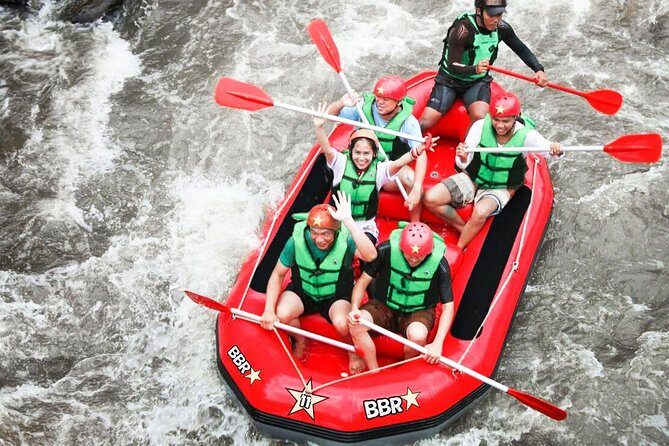
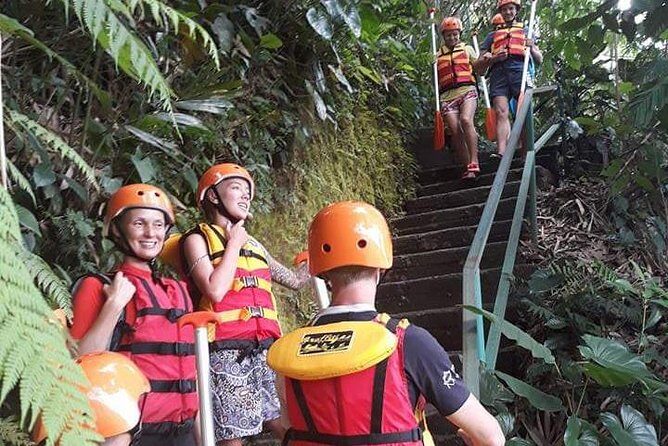
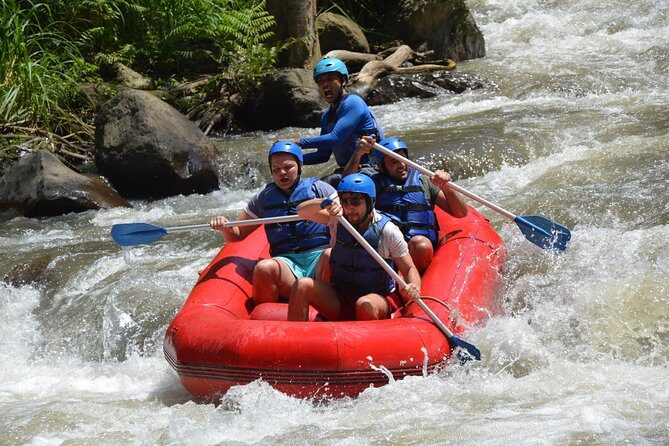
Stairs, splashes, and a waterfall swim. This Ubud rafting trip takes you down the Ayung River with a professional guide, then treats you to lunch and rinse-off time after the water fun. It’s the kind of Bali day that feels active without turning into a full-on endurance event.

I especially like the safety focus and the people running the show. Guides such as Renu and Katu come across as confident and funny, and they make the rules feel practical, not scary. The other big win for me is the value: you’re not just paying for a boat ride. You also get safety gear, locker/shower access, and an included Indonesian buffet lunch.

One thing to keep in mind: the walk down (and back up) to the river can be steep and chunky. Expect a lot of steps—often around 300 each way—so plan for breaks and wear footwear with grip.

Key things to know before you go

Ubud White Water Rafting with Waterfall and Lunch - Key things to know before you go

  • Ayung River rafting with beginner-friendly pacing along Bali’s longest river
  • Waterfall stops plus time to swim along the way (when conditions allow)
  • Guide-led safety and a fun vibe, with guides like Putu and Renu calling out what to do
  • Included buffet lunch after rafting, often with options like vegetarian meals
  • Changing rooms, towels, and toiletries plus a real shower setup afterward

Ayung River rafting is a great Ubud activity for first-timers

Ubud White Water Rafting with Waterfall and Lunch - Ayung River rafting is a great Ubud activity for first-timers
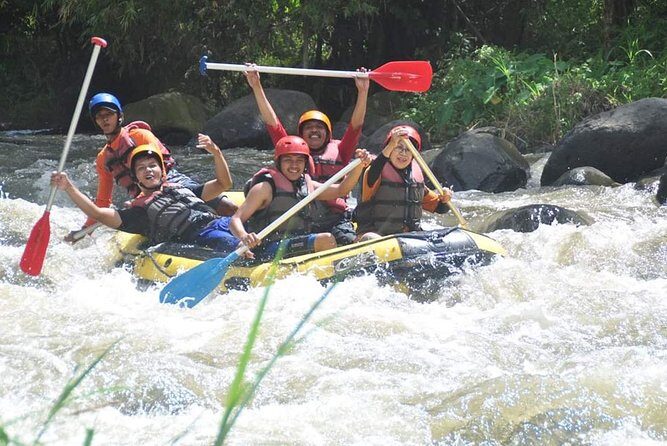
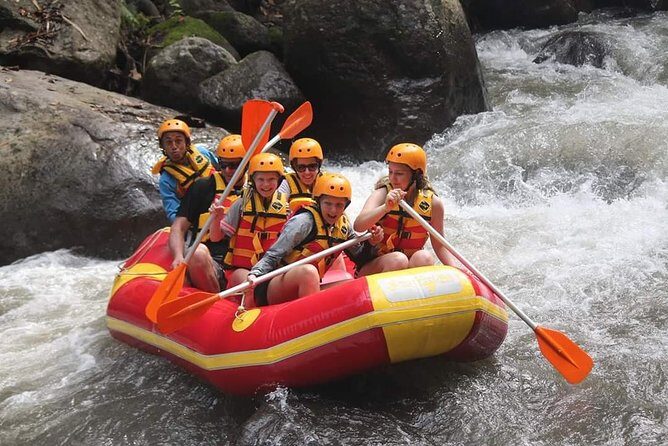
If you’re looking for a Ubud activity that feels different from temples and rice fields, this rafting day fits the bill. The route runs along the Ayung River, and the experience is built around scenic jungle stretches, waterfall moments, and guided rapids that usually don’t feel out of control. You’re on the water long enough to feel like you actually did something, but the overall flow stays approachable.

I like that it’s set up for normal travelers, not just adrenaline seekers. The description says it’s enjoyable for families and beginners, and the rapids are generally talked about as exciting but manageable for most people. You’ll also see cliffs and lush river scenery as you go—plus you might spot wildlife depending on the day.

Practical mindset: rafting in Bali is wet and physical, but it’s designed to be a fun day, not a suffering contest. Bring a “get dirty, laugh a little, cool off with a shower later” attitude.

The stairs down and back up are the real challenge

Let’s be honest: the steps are the headline you need to read twice. Multiple guests called out a heavy stair climb to reach the river and then climb back up at the end. One commonly cited number was about 300 steps down and 300 steps up, while other notes mentioned around 200 (or even higher totals). Either way, you should treat it like a serious walk.

This matters because it changes what kind of traveler should book. If you’re fine on stairs and you don’t mind taking breaks, you’ll probably be okay. If stairs are a problem, you’ll want to think carefully—this isn’t a “roll up, jump in, and float away” kind of activity.

My practical tips:

  • Wear shoes with grip. River steps get slick.
  • Use the handholds where offered.
  • If you get winded, take short breaks. The guides are used to this.
  • Pack lighter than you think—once you’re wet, extra stuff becomes annoying fast.

Getting to Bali Bintang Rafting and getting suited up

Ubud White Water Rafting with Waterfall and Lunch - Getting to Bali Bintang Rafting and getting suited up
Most days, you’ll start with round-trip transfers from your Ubud hotel. That’s a big deal in Bali because traffic and timing can turn a “quick trip” into a long one. With pickup included (and private tour wording in the info), you can focus on the day rather than chasing directions.

When you arrive at Bali Bintang Rafting (Jl. Raya Bunutan, Kedewatan, Kecamatan Ubud, Kabupaten Gianyar, Bali 80581), the next stage is setup. You’ll be provided safety-approved rafting equipment, plus you’ll have access to a locker, shower, and changing room afterward. The included toiletries are also a nice touch—things like shampoo and bath soap are part of the package, so you don’t have to guess what the facility has on hand.

Also pay attention to the shared water-resistant bag. You’ll want to keep the most important items sealed and dry-ish so you can actually enjoy lunch and post-rafting time without digging for soggy phones.

The rafting part: rapids, waterfalls, and swim breaks

Ubud White Water Rafting with Waterfall and Lunch - The rafting part: rapids, waterfalls, and swim breaks
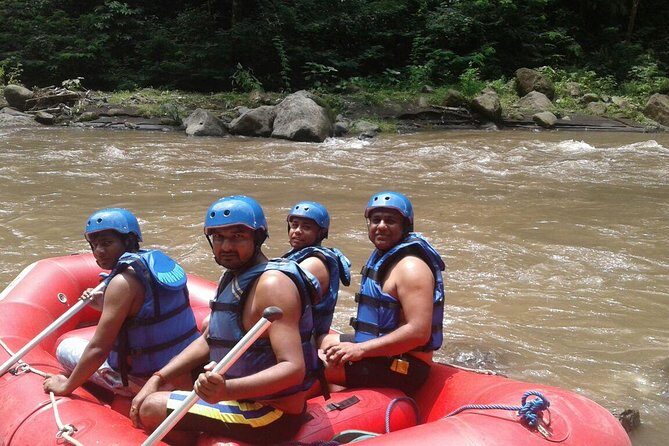
This ride is timed as an about-two-hour journey on the river, and the overall experience runs longer because of stairs, changing, briefing, and lunch. On the water, you paddle through lush jungle sections and past cliff scenery. The river is known for being Bali’s longest river, and that gives the trip a sense of length—you don’t feel like you’re done in ten minutes.

What makes it memorable is the mix:

  • Rapids you can handle, usually described as beginner-friendly
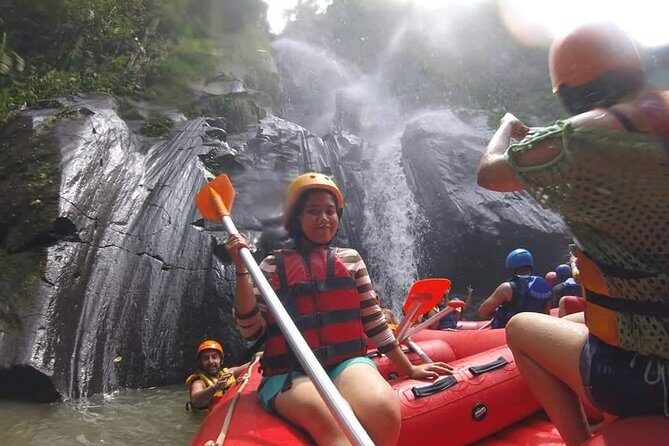
  • Scenic stops, including waterfalls
  • A chance to swim at a waterfall stop or along the route (conditions and safety rules apply)

Several guests highlighted waterfall highlights—some mentioned seeing around 10 waterfalls (they lost count, but the point is you get multiple “stop and look” moments). One person even described a slide element during the ride, which is exactly the kind of surprise that makes a rafting day feel special without needing extra add-ons.

Wildlife sightings came up too, which is always a bonus in Bali’s river corridors. Don’t plan your entire day around it, but if you like random nature surprises, you’ll probably enjoy this part.

The guide experience is where this tour wins

Rafting is physical, but the guide makes or breaks the vibe. The good news here is that the guides consistently sound confident, clear, and entertaining. People mentioned guides like Renu, Katu, Putu, and also noted the guide’s humor and safety explanations.

You’ll get a safety briefing before you’re sent downriver. That briefing is important because rafting isn’t just about luck on the river—it’s about timing, paddle cues, and what to do when the raft hits turbulence. In the notes, the safety prep stood out as something that made people feel comfortable fast.

There’s also a human side. Guides were described as enjoyable and funny, which matters because your brain can go into panic mode when you hear splashing and see water moving fast. Humor and clear instructions help you stay in the moment.

Even if you’re nervous, this is the kind of operator where the tone is “you’re safe and you can do this.”

Lunch buffet and showers: the recovery you actually need

Ubud White Water Rafting with Waterfall and Lunch - Lunch buffet and showers: the recovery you actually need
After rafting, you eat. The lunch is an included Indonesian buffet, and it’s part of the value equation. You’re wet, hungry, and your body is working—so having food already arranged keeps the day from dragging or turning into an expensive scramble.

Guests described the buffet as tasty and also noted there may be a vegetarian option. That’s worth remembering if you have dietary preferences. The tour description doesn’t spell out menus, so the safest expectation is that you’ll be able to find something, but you may still want to mention dietary needs when you confirm.

For showers, you’ll have access to changing rooms, towels, and toiletries. One guest described showering as a bit less than expected, but that still sounds like normal reality for an active outdoor setup. Translation: you’ll get cleaned up, but don’t expect a five-star spa ritual. It’s more like “freshen up so you can enjoy the rest of your day.”

Also note: soft drinks aren’t listed as included. So if you want an icy drink with lunch, expect to pay extra.

Transfers, timing, and what can affect your day

Ubud White Water Rafting with Waterfall and Lunch - Transfers, timing, and what can affect your day
The plan is simple: pickup from your Ubud hotel, rafting down the Ayung River, lunch, shower, then return. But a day like this runs on real-world Bali timing. Traffic can happen, and some guests reported transfer delays.

One practical takeaway: if your schedule is tight—like you have a dinner reservation right after—leave breathing room. This is a 3 to 5 hour experience length (approx.). Add in steps, changing, and the fact that the river and weather can influence the day.

On weather: this rafting experience requires good weather. If it’s canceled due to poor weather, you’ll be offered a different date or a full refund. That’s important, because it means you’re not gambling on an activity that ignores safety. You’re better off treating weather as part of the plan.

Private group feel, but the river may still be busy

The activity info says it’s a private tour/activity, which usually means your group stays together. At the same time, rafting is a popular sport in the area. One guest said it could be busy with other rafting boats on the river, but they didn’t feel crowded.

So here’s the practical expectation: you won’t have the chaos of a giant mixed group on your raft, but you might still see other boats along the way. That’s normal in a place where the river runs tours all day.

If you want a calm escape from crowds, this won’t be that. If you want a fun, scenic rafting day with your group and a great guide, it should fit well.

Who should book this Ubud rafting trip

This is a strong match if you:

  • Are new to rafting and want rapids that feel exciting but not terrifying
  • Want nature plus action in one day (waterfalls and swim time are part of the appeal)
  • Like the idea of included lunch and showers so you don’t waste your day hunting food
  • Prefer a guide-led experience where safety feels taken seriously

It might be less ideal if:

  • You struggle with steep stair climbs or long walks
  • You’re very sensitive to wet conditions and can’t handle changing/locker logistics
  • You’re the type who hates any uncertainty tied to weather

If you’re traveling with family, the trip is described as suitable for families and kids from age 7. Just remember that the stairs don’t change with age.

Price and value: why $26.97 can make sense

At $26.97 per person, you’re paying for far more than the raft. Your package includes:

  • Safety-approved rafting equipment and insurance coverage
  • A professional river guide
  • Round-trip transfers from your Ubud hotel (when pickup is offered)
  • Lunch buffet at no extra cost
  • Changing rooms, towels, toiletries, and shower access

This is the part people often miss when comparing prices. Some rafting deals look cheap until you add lunch, transportation, and basic safety gear. Here, the essentials are packaged together. Even if you spend a little extra on souvenirs or drinks, you’re still likely to feel like you got a real activity day for a reasonable price.

Should you book this rafting tour?

I think you should book if you want a classic Ubud adventure that’s scenic, guide-driven, and built around good safety habits. The Ayung River route delivers the core stuff—rapids, waterfalls, and moments to cool off in the water—without needing rafting experience.

I’d also book if you care about value, because the included lunch and shower setup mean you’re not just wet and exhausted when the tour ends. You’re actually ready to continue exploring Ubud.

Don’t book if stairs scare you. The river itself is the fun part, but the stair climb is the one “gotcha” that shows up again and again in practical feedback. If you can handle steps with breaks, you’ll probably have a great time.
If you do book, bring grippy shoes, wear clothes you don’t mind getting soaked, and keep expectations realistic about showers. Then go with the goal of having fun. The guides are there to get you down the river safely and, judging by the people who praised guides like Renu, Katu, Putu, and the onboard style, they’re ready to make it a good day.

FAQ

How long is the rafting experience?

The rafting experience runs about 3 to 5 hours (approx.), with roughly a two-hour journey on the river. Time also includes pickup, safety briefing, getting suited up, changing, and lunch.

What’s included in the price?

It includes an Indonesian buffet lunch, private transportation/round-trip transfers from your Ubud hotel (pickup is offered), all fees and taxes, safety-approved rafting equipment, insurance coverage, and toiletries such as shampoo and bath soap, plus locker/shower/changing room access and a shared water-resistant bag.

What are the minimum age and requirements?

The minimum age is 7 years, and most travelers can participate. You’ll need good weather because the activity requires it.

Are there stairs to reach the river?

Yes. You should expect a steep walk with many steps down to the river and a return climb afterward. Many guests described totals around 200 to 300 steps each way, so plan accordingly.

Can you swim and see waterfalls?

The experience includes waterfalls along the way and gives you a chance to swim during the rafting route. The exact timing depends on conditions and safety.

What’s the cancellation policy if weather changes?

You can cancel for free up to 24 hours in advance for a full refund. If it’s canceled due to poor weather, you’ll be offered another date or a full refund.

Kecak and Fire Dance Ticket at Uluwatu Temple

Kecak and Fire Dance Ticket at Uluwatu Temple - Temple entry fee: plan for the extra IDR60,000

Uluwatu’s Kecak is one of Bali’s most unusual shows. I like the sunset cliff backdrop and the big, hypnotic circle of chant (it feels instantly different from standard “dance night” tours). The ticket is skip-the-line for the performance, which saves time once you’re at the venue. The main drawback to plan around is the heat and crowding before and during the show, which can feel chaotic if you’re not into jostling.

You’ll need to make your own way to the temple, and temple admission is extra (IDR60,000 per person). This experience works best as a simple add-on: get yourself to Uluwatu in time for the sunset timing, then settle in for chanting, costumed characters, and fire.

Key points to know before you go

Kecak and Fire Dance Ticket at Uluwatu Temple - Key points to know before you go

  • Sunset timing means you’ll watch the show with the ocean and cliffs in the same frame
  • Skip-the-line for the show helps once you reach the entrance area
  • No transfers included: plan your ride so you don’t miss your entry window
  • Free seating style can mean tight space and a scramble for the best views
  • Chant-driven storytelling (Ramayana) can be hard to follow if you go in cold
  • Bring comfort items like water, and consider a small fan for humid waits

Kecak at Uluwatu: what makes this ticket worth your time

Kecak and Fire Dance Ticket at Uluwatu Temple - Kecak at Uluwatu: what makes this ticket worth your time
Kecak at Uluwatu Temple is built around a night setting and a story you can feel even if you don’t speak a word of Indonesian. The show is designed to line up with sunset, so the timing matters as much as the performance. When the sky shifts and the stage lights up the costumes, it lands as an experience of place, not just choreography.

I especially enjoy the way the chant works. Around a large group of men chant in rhythm, and that repetitive pulse pulls your focus into the scene on the stage. It’s dramatic without needing dialogue, and that is part of its charm. The fire dance element adds extra visual punch once it starts, and the costumes make the characters easy to spot in the dark.

One thing to keep expectations realistic: the Kecak style isn’t like a modern pop-style show with constant talking and fast cuts. If you prefer a soundtrack with lots of spoken explanations, you may find the chanting repetitive. If you arrive ready to watch for story beats instead of conversation, you’ll likely have a much better time.

Getting there on your own: transport is the real decision

This ticket includes entry to the Kecak and Fire Dance show, not hotel pickup. That means your biggest variable is how you get to Uluwatu in time. Traffic around the area can be slow, and the approach to the temple takes longer than you might expect if you’re coming from farther away.

Your payoff for handling transport well is simple: you’re less stressed at the gate and more likely to enjoy the sunset view. If you can, plan your ride to arrive with a buffer, not right at the last minute. The venue is popular, and the entrance area can get crowded and hot.

Ticket redemption point (useful for your driver)

You’ll redeem at:

Kecak Uluwatu, Kawasan parkir Pura Uluwatu, Jl. Uluwatu, Pecatu, Kec. Kuta Sel., Kabupaten Badung, Bali 80361, Indonesia

If your navigation app struggles here, use the temple area car park as your guide. The key is to get dropped at the correct redemption point so you can enter through the right flow.

Temple entry fee: plan for the extra IDR60,000

Kecak and Fire Dance Ticket at Uluwatu Temple - Temple entry fee: plan for the extra IDR60,000
Your ticket covers the Kecak and Fire Dance show only. Uluwatu Temple admission is separate and costs IDR60,000 per person. That fee is an easy line item to miss if you’re only looking at the $11.50 show ticket price.

I think about this like a two-part budget:

  • Pay for the show ticket (this one)
  • Pay temple admission when you arrive

If you’re comparing options, this separation explains why some online tickets feel cheaper at first glance but end up closer once you add the temple entry.

Skip-the-line for the show: what it can and can’t do

Kecak and Fire Dance Ticket at Uluwatu Temple - Skip-the-line for the show: what it can and can’t do
The promise here is skip-the-line access for the performance. In practical terms, that usually helps you move faster at the point where people are funneling into the show area. It can reduce waiting once you’re already at Uluwatu.

But here’s the catch: even with skip-the-line, you’re still dealing with a popular night show at an open-air venue. The biggest congestion often happens around the entrance flow and seating area. If the amphitheater is full, you’re going to feel the crowd no matter how fast you get in.

So I treat skip-the-line as time-saver, not crowd-avoidance. If you’re sensitive to packed spaces, your best strategy is arriving early, bringing water, and having a mindset of patience.

The Kecak performance: how the story works without spoken dialogue

Kecak and Fire Dance Ticket at Uluwatu Temple - The Kecak performance: how the story works without spoken dialogue
Kecak is rooted in the Ramayana story, and it’s told through chanting, movement, and character action rather than spoken dialogue. If you don’t know the basic setup, the show can feel like a powerful visual ritual with less immediate clarity. That’s not a reason to skip it, but it’s a reason to prepare lightly.

A helpful approach: read up on the basics of the Ramayana storyline before you go, or at least skim the characters and who’s doing what. Once you recognize the roles, the chanting circle starts to make more sense. You begin to see when the scene is shifting and when the story is building toward the fire moment.

Where you might feel the pacing

Some people love Kecak because it’s hypnotic and steady. Others find it too repetitive if they were hoping for constant action. The chanting is central, and the show’s rhythm is part of the design. Think of it like musical storytelling: you’re watching layers of chant + staged action, not a conversation-driven play.

If you’re the type who needs a running commentary, bring that storyline awareness with you. It turns the chant from background into plot.

Fire dance element and costume spectacle: what you’ll see

Kecak and Fire Dance Ticket at Uluwatu Temple - Fire dance element and costume spectacle: what you’ll see
The show is marketed as Kecak and Fire Dance, and the fire component is part of the performance. The visual impact depends on the moment you catch and where you’re seated, since open-air amphitheaters can limit sightlines.

Costumes are a big part of why Uluwatu Kecak works as a “wow” show even for first-timers. Characters stand out clearly under night lighting, and the fire adds a high-contrast effect that feels dramatic against the cliffside setting.

If you’re worried about whether the fire segment will be satisfying, use a simple checklist before you arrive:

  • Choose a show time that gives you full sunset views
  • Expect the fire section to be timed as a highlight, not a continuous fire fest
  • Plan to be seated early enough to see it without leaning or straining

I’d rather you walk in with clear expectations than hope for something the show isn’t designed to be.

Crowds, seating, and comfort: the honest part

Kecak and Fire Dance Ticket at Uluwatu Temple - Crowds, seating, and comfort: the honest part
This is the area where you need the most realism. The amphitheater is known for being full, and seating can feel tight. Some people mention that it can be disorganized around entry, and once inside, you may find free seating with limited space to maneuver.

In short: this can be a great cultural show, and it can still be uncomfortable.

What to bring

Based on what people consistently complain about, pack for humidity and waiting:

  • Water (more than you think you’ll need)
  • A small portable fan if you run hot
  • Sunscreen and light layers, even at night
  • Something secure for your valuables

Some visitors note that sarongs provided or worn at the temple can feel warm because they can be polyester. If you’re planning to wear one, consider bringing a breathable option or plan on sweating a bit.

Seating strategy that helps

Because seating is not about a specific fixed seat number, your arrival time matters. If you show up late, you may end up with a more awkward angle or less legroom. Arriving earlier improves your odds of a better sightline and a less cramped feeling.

It can also reduce the stress of entry jostling. That matters because when you’re hot and crowded, everything feels worse, including the show.

Monkeys and your stuff: Uluwatu’s real side quest

Kecak and Fire Dance Ticket at Uluwatu Temple - Monkeys and your stuff: Uluwatu’s real side quest
Uluwatu is famous for monkeys, and you should treat them like small, fast thieves with attitudes. People report sunglasses being taken, and there are stories of monkeys jumping onto people when items are within reach.

Your best defense is simple:

  • Keep your phone and glasses secured
  • Avoid leaving items unzipped in bags
  • Don’t dangle things from your hands or pockets
  • Watch your group’s shoulder-to-shoulder space near the parking and pathways

If a monkey steals something, don’t chase it like it’s a dog. Stay calm and let staff handle the situation where possible.

Value check: how $11.50 compares to buying at the temple

The price listed here is $11.50 per person, with group discounts. That’s attractive on paper, especially for a show that also includes a fire segment and has a sunset timing.

But there’s a second piece: online platforms can add service fees and use currency conversions that make the final amount higher than buying directly at the temple gate. Some visitors have compared costs and found online tickets more expensive than temple purchase.

So here’s my practical way to judge value:

  • If skip-the-line saves you meaningful waiting time, it can be worth the extra cost
  • If you’re comfortable arriving early and buying on-site, you might find a lower base price
  • If timing is tight and you’re worried about entry chaos, pay for convenience

For most people, the online ticket makes the night smoother. For budget-first travelers, it might not.

Best time to book: chase sunset, not just the show

Several people recommend choosing a slot that lets you see sunset fully. The show is timed to coincide with sunset, so the earlier evening options tend to give you the best chance at that cliffside glow.

If you’re deciding between time slots:

  • Pick the one that matches sunset views where possible
  • Build in buffer time for traffic
  • Don’t assume you can arrive at the exact moment and still get easy seating

Missing the sunset portion can make the whole night feel less special, even if the performance is still good.

Who this experience is best for (and who should skip)

This ticket is a strong choice if you want:

  • A classic Balinese cultural performance that’s tied to a dramatic setting
  • Chant-and-story style entertainment (especially if you like ritual and rhythm)
  • A convenient add-on ticket that saves you some time at the venue

It may be a poor fit if you:

  • Hate crowded spaces and tight seating
  • Need lots of spoken explanation to follow a story
  • Get uncomfortable quickly in hot humid waiting areas

If you’re traveling with kids, consider comfort and safety seriously. The entry area and amphitheater can get packed, and people have expressed worries about crowd density and heat during the waiting time.

FAQ

FAQ

What does the ticket include?

Your ticket includes the Kecak and Fire Dance show admission. It does not include hotel pickup, meals, or temple admission.

Do I need to pay extra for Uluwatu Temple entry?

Yes. Uluwatu Temple admission is an extra cost of IDR60,000 per person.

Is hotel pickup and drop-off included?

No. Hotel pickup and drop-off are not included, so you need to make your own way to the temple area.

Where do I redeem my ticket?

Redeem at Kecak Uluwatu, Kawasan parkir Pura Uluwatu, Jl. Uluwatu, Pecatu, Kec. Kuta Sel., Kabupaten Badung, Bali 80361, Indonesia.

How long is the show?

The duration is about 1 hour.

Is skip-the-line access included?

Yes, this ticket provides skip-the-line access for the show.

Is the show timed to sunset?

Yes. The performance is carefully timed to coincide with sunset.

Do I need to know the Ramayana story before I go?

You might enjoy it more if you read up on the story, since Kecak storytelling is done through performance rather than spoken dialogue.

Can I cancel for free?

Free cancellation is available. You can cancel up to 24 hours in advance for a full refund.

Who is this experience for?

Most travelers can participate.

Should you book this Kecak and Fire Dance ticket?

I’d book it if you’re after a recognizable Balinese evening show with a real sense of place. The sunset timing and the chant-driven performance style are exactly the kind of thing that makes Bali feel different from other destinations.

I wouldn’t book it if crowds and heat stress you out. You’ll likely spend time in a busy entrance flow and a packed amphitheater, so this is one of those nights where comfort prep matters as much as the ticket.

If you’re deciding today: choose a sunset-friendly show time, plan your ride so you’re not rushed, bring water, and come ready to follow the story through action and chanting. That mix turns a chaotic entry moment into a memorable night.

Advanced Open Water Course – Advanced Certification in Lembongan (next to Bali)

Advanced Open Water Course - Advanced Certification in Lembongan (next to Bali) - The Training Stops Around Nusa Lembongan: Why These Sites Matter

First big watery step? Good. This 2-day SSI Advanced Open Water course in Nusa Lembongan is built to take you from basic comfort to real skill under supervision, with five training sessions spread across different local sites. I like that it is less theory-heavy (the instruction style is described as more mellow than the Open Water course) and more about doing the right tasks in the water, with an instructor watching your technique closely.

My second favorite part is how the program nudges you toward practical skills you will use right away: deeper dive planning, managing the body’s changes at depth, and underwater navigation with compass plus time and visual cues. The one possible drawback is that it is physically and mentally demanding—good focus helps—and it requires you to already be Open Water certified before you can start.

Key Points You’ll Actually Care About

  • 5 training sessions in 2 days: enough variety to move your skills forward without dragging it out.
  • Up to 30 meters / 100 feet certification goal: you learn how to handle deeper conditions safely under instructor guidance.
  • Underwater navigation with a compass: not just theory—practice using kick cycles, landmarks, and time.
  • Specialty options are real choices: you pick from topics like photography, buoyancy control, fish ID, or exploring wrecks.
  • Small group size (max 5): you’re less likely to get lost in the shuffle.
  • Comfort-forward center setup: Wi-Fi, lockers, showers, and a place to recover between sessions.

Advanced Open Water in Lembongan: What You Get in 2 Days

This course is designed to be a step-change, not a repeat of your first certification. You already have the basics; now you refine skills, build comfort at greater depth, and learn how to plan and execute more complex underwater work with an instructor nearby.

You’ll complete five training sessions total, including one focused on deep planning and the body’s responses at depth, one centered on navigation, and three more where you can lean into what you actually care about—skills like better buoyancy, photo technique, fish identification, or wreck exploration basics (depending on what you choose and what the instructor offers from the available adventure options).

The atmosphere is intentionally less theory-crowded than the earlier Open Water course. You’ll still do some studying, but the emphasis stays on controlled practice—so you leave with muscle memory, not just notes.

Who This Course Fits Best (and Who Might Want to Wait)

Advanced Open Water Course - Advanced Certification in Lembongan (next to Bali) - Who This Course Fits Best (and Who Might Want to Wait)
You need Open Water certification first. If you just finished your first course, this one is a natural next step because it’s built for progression: more confidence, more supervision, and a clearer path to specialty training later.

You also want at least moderate physical fitness. Nothing in the info screams “athlete-only,” but you should be comfortable with basic exertion, getting in and out of the water, and concentrating while you work through new skills.

If you’re the type who learns faster by doing, you’ll probably enjoy this. And if you’re the type who worries in silence, that’s also fine—this course is staffed with certified instructors, and you’ll get direct feedback while you practice.

Deep Planning and Navigation Skills That Actually Pay Off

Advanced Open Water Course - Advanced Certification in Lembongan (next to Bali) - Deep Planning and Navigation Skills That Actually Pay Off
The course is structured around two big skill blocks, and they’re the reason most people feel a real jump after completing Advanced Open Water.

Deep Adventure Session: Plan, Then Execute

In the deeper-focused training session, you learn how to plan underwater work more carefully. The goal is to understand how depth affects you physiologically, then use that understanding to make better decisions during the session. That’s the difference between feeling “I can handle it” and knowing why and how to handle it.

You’re aiming for certification capability close to 30 meters / 100 feet, so you should be ready for the mental switch from “new depth” to “systems thinking.” It’s not about going as deep as possible—it’s about learning to stay in control.

Underwater Navigation Session: Compass Without Guessing

Your navigation session teaches compass use underwater, and it goes beyond simple direction changes. You practice using kick cycles (so you don’t drift), visual landmarks (so you can confirm your path), and time (so you can keep your route consistent even when visibility isn’t perfect).

This is the skill that changes the kind of routes you can do afterward. Once you can navigate with purpose, you stop feeling like the site is only for people who have done it a hundred times already.

Three More Specialty Options (Pick What Matches Your Mood)

You’ll also complete three additional skills areas based on your preferences. The examples provided include:

  • photography
  • buoyancy control
  • fish identification
  • exploring wrecks

I like this part because it makes the course feel personal. Instead of “here’s the curriculum, deal with it,” you get to steer toward what makes you curious.

The Training Stops Around Nusa Lembongan: Why These Sites Matter

Advanced Open Water Course - Advanced Certification in Lembongan (next to Bali) - The Training Stops Around Nusa Lembongan: Why These Sites Matter
You’ll move around the island area during the two days. That matters because each site tends to feel different underwater, and you get a more realistic picture of how your skills translate across conditions.

Crystal Bay: Building Comfort in a Familiar Pattern

Crystal Bay is one of the main stops. Practically, it’s a great place to work on consistent technique and calm decision-making before you stack more skills on top.

If you’re someone who needs a couple of repetitions to settle in, this is likely to help. You’ll still be learning, but you can focus on staying relaxed and controlled.

Manta Point: A Big-Name Stop With Big Expectations

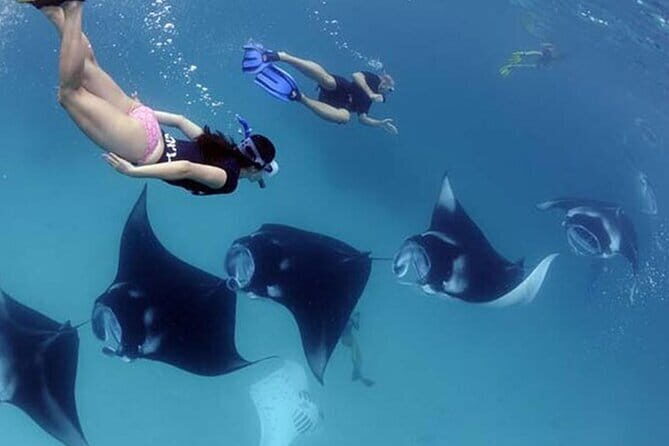
“Manta Point” is on the schedule, and the name alone sets the tone: you’re in an area people associate with larger marine life. Just keep expectations flexible—seeing a specific animal is never guaranteed.

Still, it’s a strong choice for building excitement and keeping your motivation high during the more technical training parts.

Mangrove Point: Different Underwater Feel, Different Challenges

Mangrove Point at Nusa Lembongan is another scheduled stop. Mangroves often create a different underwater rhythm—think structure, changing lines of sight, and the need to stay precise with your movement.

That’s helpful for your navigation and buoyancy work, because small corrections matter when you’re close to structure or dealing with variable visibility.

Toyapakeh: A Workshop-Style Set of Sessions

Toyapakeh is included as a training location. In real terms, it’s another chance to reinforce your skills with repetition: controlled movement, steady buoyancy, and working through the tasks you practiced earlier.

This stop helps your brain connect the dots: the course isn’t just five unrelated sessions—it becomes a skill ladder.

Jungut Batu Beach: Ending Where It Feels Easy

Jungut Batu Beach rounds out the set. Ending near a more central area usually helps you transition back to surface time without stress.

It’s also a good moment to reflect: did your buoyancy improve? Are your compass checks more automatic? Do you feel calmer planning your next segment?

Small Group Energy and Instructor Quality (Valentin, Kaka, Hugo, Sara, Silvère)

Advanced Open Water Course - Advanced Certification in Lembongan (next to Bali) - Small Group Energy and Instructor Quality (Valentin, Kaka, Hugo, Sara, Silvère)
A max group size of 5 travelers is a big deal in a course like this. When the group stays small, your instructor can spend more time with you instead of splitting attention.

From the instructor names connected to the course, you get a clear pattern: people highlight professionalism and patience. Names you’ll see associated with excellent teaching include Valentin, Kaka, Hugo, Sara, and Silvère—each called out for being careful, warm, and focused on making you feel safe while you learn.

I especially like instructors who correct technique without shaming you. In a skills-forward course, you want honest feedback with a calm tone—so you actually improve instead of freezing up.

Gear Included, Comfort On-Site, and What That Means for You

Advanced Open Water Course - Advanced Certification in Lembongan (next to Bali) - Gear Included, Comfort On-Site, and What That Means for You
Equipment is included: masks, snorkel, fins, buoyancy control jacket, regulator, wetsuit, weight belt, and the other required instruments. That’s a real value point because rental shopping can be a hassle, and it adds hidden costs.

On-site facilities include Wi-Fi, toilet, shower, lockers, and a change room. There’s also a restaurant on site, but that’s for your own expense.

This setup matters more than people think. After a couple of concentrated underwater sessions, you want a place to rinse, change, and reset quickly. Good recovery time helps you learn better the second day.

Price Check: Is $431.28 a Good Value for a 2-Day Course?

Advanced Open Water Course - Advanced Certification in Lembongan (next to Bali) - Price Check: Is $431.28 a Good Value for a 2-Day Course?
At $431.28 per person for roughly two days, this isn’t a bargain course, but it also doesn’t feel overpriced for what’s included. You’re paying for certified instruction, structured progression to SSI Advanced Open Water outcomes, and gear you don’t have to source separately.

Because the course is only two days with five training sessions, you also avoid the cost of a long “sit and wait” schedule. In a small group model, you’re less likely to feel like you’re paying for time that isn’t getting used well.

If you’re comparing options, I’d focus on three value levers:

  • how many sessions you get in the package (here, five)
  • whether gear is included (it is)
  • how much instructor attention you can realistically expect (the max group size helps)

Weather, Timing, and Staying Flexible Without Stress

This experience requires good weather. That’s not a small footnote—it’s how you keep the training safe and the schedule sane.

Your best approach is to plan your Bali-side days with breathing room. If the water is too rough or conditions aren’t right, the operator may offer a different date or a refund rather than pushing forward into unsafe conditions.

You’ll also be in a schedule window that runs daily from morning until evening, which generally gives room for two-day momentum. Still, you should expect that surface conditions control the exact flow more than any paper timetable.

Should You Book This Advanced Course in Nusa Lembongan?

Book it if you want a structured next step after Open Water and you care about practical skills: deeper planning, navigation with compass support, and choosing specialty topics that match your interests. The small group limit and the strong emphasis on instructor presence are the kind of factors that make a course feel worth your time and money.

Skip or postpone if you’re not ready for increased responsibility at depth. You don’t need to be athletic, but you do need focus, patience, and comfort with learning new systems quickly.

If you’re chasing one thing—better control underwater and more confident planning—this is a solid route. You’ll leave with skills you can use right away, and you’ll understand how to keep your head clear when the water gets more challenging.

FAQ

Do I need Open Water certification before I can join this course?

Yes. To qualify for the Advanced Open Water certification, you must already be Open Water certified.

What certification depth does this course prepare you for?

The course is designed to certify you to dive to depths up to 100 feet (30 meters) with SSI.

How long is the course?

It runs for 2 days (approximately).

How many training sessions are included?

You’ll complete five training sessions.

Is equipment included?

Yes. Masks, snorkel, fins, buoyancy control jacket, regulator, wetsuit, and a weight belt are provided, along with other necessary instruments.

What facilities are available at the dive center?

The center has Wi-Fi, lockers, toilets, shower access, and a change room.

Is accommodation included in the price?

No. Accommodation is not included, but dormitory and bungalows are available at the dive center.

Are digital photo or video souvenirs included?

No. Digital souvenir photos/videos are available for purchase, but they’re not included.

What’s the cancellation and weather approach?

Free cancellation is available if you cancel at least 24 hours before the experience starts for a full refund. The experience requires good weather; if it’s canceled due to poor conditions, you’ll be offered a different date or a full refund.

Bali Downhill Cultural Cycling Tour

Bali Downhill Cultural Cycling Tour - Coffee Tasting and Breakfast: Fuel, Culture, and a Possible Sales Moment

Two wheels, volcano views, real village life. This full-day downhill ride from Ubud blends Kintamani scenery with real Balinese culture stops, plus coffee and two meals. The air-conditioned van pick-up smooths out the start so you’re not stressed before you start coasting.

I love that the biking is mostly downhill and paced for comfort—about 3.5 hours on the bike. With small group size (up to 15) and guides such as Agus and Wayan, you’ll get clear guidance and feel looked after on the road.

One thing to watch: road surfaces can vary, with a few rougher stretches and occasional non-postcard stretches, so good shoes and sunscreen help. Also, the coffee stop can feel more sales-forward than the rest of the day, so keep your budget mindset on.

Key Points That Make This Tour Worth Your Time

Bali Downhill Cultural Cycling Tour - Key Points That Make This Tour Worth Your Time
Mostly downhill riding for an easy day on the legs

Kintamani Highland volcano viewpoint with a short, focused stop

Coffee tasting + breakfast to set you up for the ride

School and culture visits at a family compound and priest compound

Air-conditioned transport and hotel pick-up from Ubud

Small groups (max 15) for a calmer, safer-feeling experience

Setting Out From Ubud: The Morning Rhythm (8:30 Start)

You start at 8:30 am, with the tour ending back at the meeting point in Ubud. Hotel pick-up and drop-off from Ubud is included, and you’ll travel by air-conditioned minivan. That matters here because the day is long—roughly 8 hours—and you want energy left for biking, not just sightseeing fatigue.

The first part of the day is built around “arrive, refuel, then move.” You’ll drive up toward the Kintamani area, pause for views, and then shift to food and coffee before you ever touch the pedals. It’s a smart flow for most fitness levels, especially if you’re not looking for a hardcore workout.

Kintamani Highland: The Volcano View Stop That’s Short for a Reason

Bali Downhill Cultural Cycling Tour - Kintamani Highland: The Volcano View Stop That’s Short for a Reason
A stop at Kintamani Highland gives you a chance to see the volcano scenery for about 15 minutes. The admission ticket is free for this viewing stop, so you’re not losing time to extra logistics.

This is not a long hike and not an all-day scenic trek. It’s a quick, efficient viewpoint break—ideal if you want photos and the wow-factor without burning half your morning. If weather is clear, you’ll get the dramatic “Bali from above” feeling; if it’s hazy, don’t panic. You’re still getting a meaningful first chapter before the downhill ride.

Coffee Tasting and Breakfast: Fuel, Culture, and a Possible Sales Moment

Bali Downhill Cultural Cycling Tour - Coffee Tasting and Breakfast: Fuel, Culture, and a Possible Sales Moment
Before the downhill cycling starts, you get a coffee-tasting session and breakfast. This stop is part learning, part tasting, and part “watch what you buy.” The tour is designed so you eat first, then ride while your body has enough fuel.

At coffee places in this region, you may encounter lots of coffee and tea varieties and explanations about how they’re processed. Some guides have gone further with coffee stories and even animal-based coffee references during tastings. Either way, you’re getting a local food culture moment, not just a quick cafe stop.

Practical tip: if you’re not a coffee enthusiast, you can still enjoy the tasting portion while keeping spending in check. A few reviews mention the coffee area can be overpriced, so decide what you want before you get swept into the pitch.

The Downhill Bike Ride: 3.5 Hours Through Villages, Rice Fields, and Quiet Roads

The highlight is the ride: about 3.5 hours cycling downhill, with the route taking you through rural villages and scenic countryside. The big selling point is that it’s not built like a steep cycling test. In practice, most of the day is gentle coasting, with only small sections where you may need to pedal.

What I like about this format is that it gives you time to look around. You’re not racing. You can actually notice village life—homes, gardens, irrigation, and the feel of the countryside as you roll by.

Safety and road reality:

  • You may cross some busier stretches, but guides tend to manage crossings and keep an eye on the group.
  • Road surfaces can be patchy in places, with potholes or rougher sections in the mix.
  • Helmets are used on the ride (bikes are also reported as well maintained).

So, what should you do with this info? Bring the right expectations. If you want brand-new smooth roads and zero bumps, you might get annoyed. If you’re okay with “rural roads in Bali,” this is one of the most enjoyable ways to see the non-touristy side.

Culture Stops That Actually Change the Day: School, Priest Compound, Family Visits

This tour isn’t only about riding. It adds structured cultural stops that break up the day and give meaning to what you’re seeing outside the car.

The charity visit to a local school

You get an included charity visit to a local school. This is one of the most praised parts of the day because it turns a sightseeing trip into something you can connect to. You’ll be there as part of the group and guided by your local host, so you’re not just dropping in and rushing away.

I recommend you approach this moment with respect and patience. Kids tend to be curious, and the best way to make the interaction feel good is to stay calm, follow your guide’s lead, and keep it short if the group needs to move on.

The local priest compound

You’ll also visit a local priest compound. This gives you a glimpse into everyday Balinese religious life—how spirituality shows up in daily spaces, not just as a big-ticket temple photo stop.

A key value here: it’s less about monumental architecture and more about seeing how belief shapes community routines. Even if you don’t know the details, your guide’s commentary helps you connect the dots.

The local family compound

The tour includes a stop at a local family compound, where you learn about Balinese culture in a home setting. This is where the day shifts from “tour route” to “real life.” You’ll see how families live and how tradition fits into daily routines.

One common theme in the best-feeling guides is that they balance explanations with time to look, ask, and take in the scene without rushing everyone. The result is that the culture stops feel like chapters in the same story, not random detours.

Lunch in Ubud: A Final Reset After the Bike and the Culture Stops

After the ride and stops, you wrap up with lunch and a drop-off back to Ubud. Meals are included—breakfast earlier in the day and lunch at the end—so you’re not scrambling for food mid-adventure.

This matters more than it sounds. When you’re cycling and walking through cultural sites, hunger makes everything worse fast. Having lunch planned means you can focus on enjoying the last part of the day rather than hunting for a late meal.

Food quality depends on the exact lunch spot, but reviews commonly describe it as very good and not just “tourist fuel.” If you have dietary needs, you’ll want to confirm details at booking since the tour data doesn’t specify options.

Transport and Group Size: Why This Feels More Relaxed

This is capped at 15 travelers, which changes the whole vibe. Smaller groups generally mean less waiting, easier pacing, and better attention when you’re crossing roads or listening to the guide’s explanations.

The air-conditioned minivan and included hotel pick-up also reduce stress. A day like this is easier to enjoy when you don’t have to coordinate taxis, meet-ups, or last-minute directions.

One more practical note from the day’s rhythm: dress light. Light cotton attire is recommended. You’ll be outdoors, and the sun can be sneaky once you start rolling downhill.

What About Fitness Level and Pedaling Effort?

The tour is aimed at people with moderate physical fitness. That doesn’t mean you need to be athletic, but it does mean you should be comfortable spending several hours on a bike and dealing with some uneven ground.

Most of the cycling is reported as easy and very slow downhill, often with minimal pedaling. Still, expect a few small up-and-over moments where you’ll work a little—especially on rougher road bits.

My advice: if you can handle a relaxed day of walking and cycling without expecting perfect roads, you’ll be fine. If you’re nursing injuries or you hate the idea of rough pavement, you may want a gentler tour.

Value Check: Is $33.60 a Good Deal for a Full-Day Culture + Bike?

At $33.60 per person, this tour is strong value if you want three things in one day: biking, culture, and transport. Many Bali tours charge more once you factor in guide time, vehicle support, and multiple stops.

Here’s what you’re getting for your money:

  • Round-trip Ubud hotel transport
  • Local guide
  • Breakfast and lunch
  • Coffee tasting
  • Cultural visits including a school charity visit and a priest compound visit
  • Bike time plus the support that keeps the group moving

The only notable “extra” mentioned is alcohol, which isn’t included. You can buy it if you want.

Potential trade-off: the coffee stop can push you toward purchases, and road conditions can mean the ride isn’t always perfectly smooth. But for many people, that’s the trade you make for seeing real village roads instead of only polished tourist routes.

Who Should Book This (and Who Might Skip It)

This tour fits best if you want:

  • A downhill cycling day that doesn’t turn into a leg workout
  • Real Balinese life through a school visit and home/community stops
  • A guide-led experience that helps you understand what you’re seeing

You might want to skip if:

  • You need ultra-smooth roads and predictable cycling surfaces
  • You only care about biking and want zero culture stops
  • You’re very sensitive to sales pressure at coffee tastings (even though you control what you buy)

If you’re traveling as a couple, this is a great “shared day” with plenty to talk about—views, culture, and the ride itself.

Should You Book Bali Downhill Cultural Cycling Tour?

If you want a calm, meaningful Bali day that mixes easy downhill riding with real community visits, I’d book it. The combination of included meals, coffee tasting, and multiple culture stops (school + priest compound + family compound) makes the price feel fair, especially with hotel transport from Ubud.

Just go in with the right expectations: it’s not a luxury smooth-road cycling fantasy. It’s rural Bali on two wheels. If that sounds like your kind of day, this tour is a smart choice.

FAQ

How long is the Bali Downhill Cultural Cycling Tour?

It runs for about 8 hours.

What time does the tour start?

The start time is 8:30 am.

Is hotel pick-up and drop-off included?

Yes. Hotel pick-up and drop-off from Ubud is included, along with round-trip transport by air-conditioned minivan.

Is the cycling difficult?

The tour recommends moderate physical fitness. The ride is designed to be mostly downhill, but there may be small sections where you pedal.

What meals are included?

Breakfast and lunch are included.

What cultural visits are part of the day?

You’ll include a charity visit to a local school, a visit to a local priest compound, and a stop at a local family compound to learn about Balinese culture.

Is alcohol included?

No. Alcoholic drinks are not included, though they may be available to purchase.

What is the cancellation policy?

You can cancel for a full refund if you cancel at least 24 hours before the experience starts.

Ubud Tour with Swing, Temple, Monkey Forest, and Waterfall

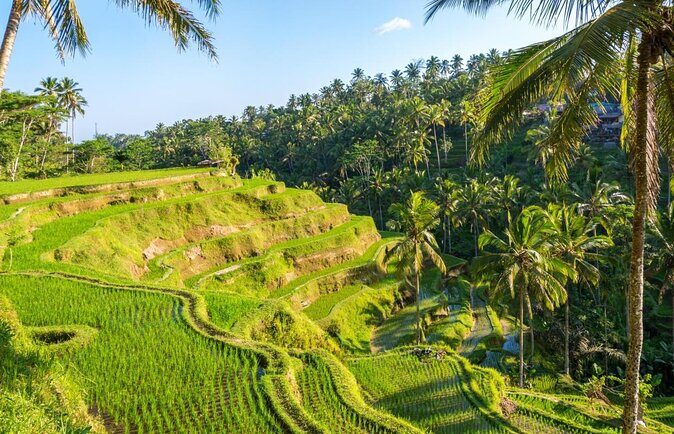
Ubud Tour with Swing, Temple, Monkey Forest, and Waterfall - Tegalalang Rice Terrace: start with the big views

Swing, monkeys, temples, and waterfalls in one day.

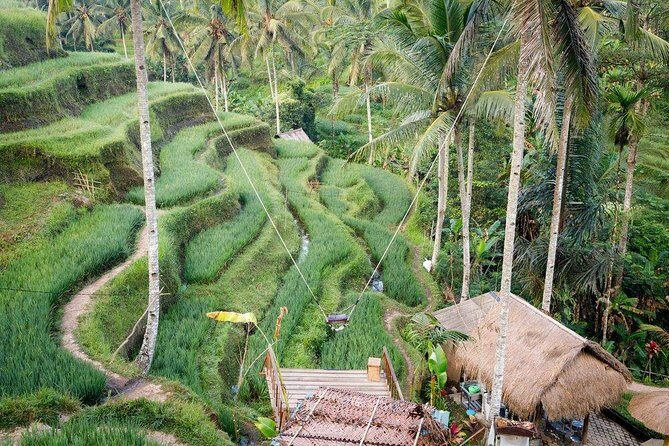
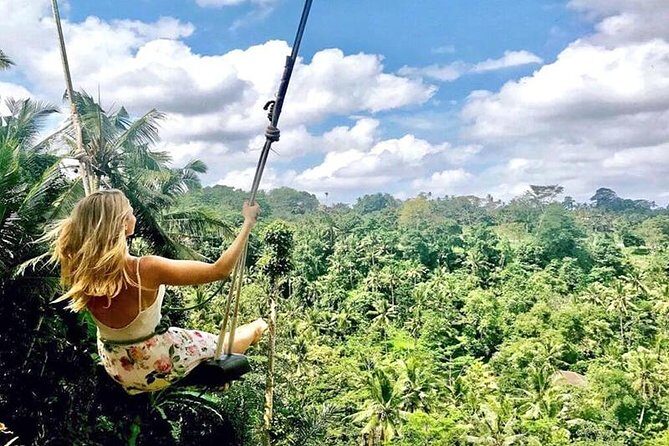
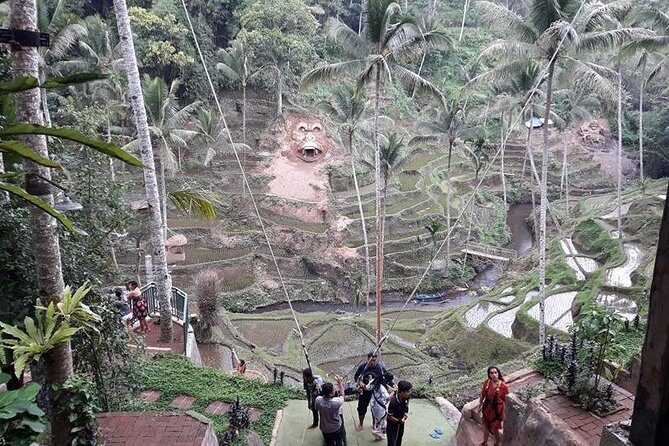
This is the kind of Ubud day trip that keeps things simple: you ride door-to-door with a private, English-speaking driver, so you spend less time fighting traffic and more time at the stops. I especially like the photo-focused hits (Tegalalang rice terraces and the Happy Swing Bali viewpoint) and the way the tour strings together Ubud’s top sights without making you plan a route.

The main drawback to plan around is the pace. With a long day and short stays at most locations, it works best if you want to see a lot and grab great photos, not if you want slow, lingering time at every single stop.

Key highlights worth planning for

Ubud Tour with Swing, Temple, Monkey Forest, and Waterfall - Key highlights worth planning for

  • Door-to-door private transfers from Ubud and south Bali mean an easier start and finish.
  • Tegalalang Rice Terrace + Happy Swing Bali deliver classic Ubud views in a single stretch.
  • Monkey Forest timing gives you a temple-and-jungle setting where macaques are the stars.
  • Tegenungan Waterfall includes time to cool off, assuming conditions are right.
  • Batuan Temple adds a quieter, spiritual stop beyond the usual photo spots.
  • Art village passes (Semar Kuning, Tohpati, Celuk, Mas) give you a chance to see crafts and shop if you want.

How the private-driver setup makes Ubud feel easy

Ubud Tour with Swing, Temple, Monkey Forest, and Waterfall - How the private-driver setup makes Ubud feel easy
Ubud is beautiful, but the roads can be time thieves. This tour solves that by using a private driver/guide who handles transport as a priority. You get private, air-conditioned round-trip transfers from your accommodation, and you don’t have to coordinate buses, rideshares, or standalone tickets.

The tour also stays comfortable in the real-world sense: it’s designed as a long day (about 8–10 hours) with stops spaced out enough to breathe. You’re not stuck in one place all day, and you’re not stuck rushing between distant areas without guidance.

A lot of the experience comes down to the driver/guide. I’m glad to see names show up like Oka, Troy, Pong, Dodik, and Agus, with comments about flexibility and good humor. That matters, because on a packed day, the ability to adjust timing can save your momentum.

Tegalalang Rice Terrace: start with the big views

Ubud Tour with Swing, Temple, Monkey Forest, and Waterfall - Tegalalang Rice Terrace: start with the big views
Most people come to Ubud for the scenery, and Tegalalang Rice Terrace is one of the most recognizable places for a reason. Expect rolling steps of rice fields, layered greenery, and lots of angles for photos—even if you’re not trying to “perform” for the camera.

You get about 30 minutes here, with an admission ticket included. That’s enough time to walk a bit, find a good viewpoint, and not feel trapped at a single spot. It’s also a good mental warm-up for the rest of the day: you get the view first, then the rest feels like a tour of themes—nature, culture, and wildlife.

Practical note: keep your expectations realistic about time. With a half hour, you’ll want to move with purpose. Wear shoes with grip and bring water, especially because the next stops include outdoor areas.

Monkey Forest: temple jungle and close-up macaques

After the rice terraces, you head to the Sacred Monkey Forest Sanctuary, where gray macaques roam among Hindu temples, jungle paths, and gorge views. This stop runs about 1 hour, and the admission ticket is included.

This is one of those places that can be charming and slightly chaotic, depending on what you carry. The safest vibe is to keep your hands free, avoid dangling items, and stay aware of where the monkeys are moving. You’ll likely see macaques approach visitors out of curiosity. If you’ve got snacks or anything that looks food-like, put it away.

This stop is also where you’ll appreciate having a capable guide. People mention guides who know the best photo angles and how to keep things smooth around the animals. The tone from guides like Amporna (with comments about solo traveler comfort) and Pong (with informative, caring guidance) gives you a hint that safety and timing are taken seriously.

Happy Swing Bali: the ricefield photo moment

Ubud Tour with Swing, Temple, Monkey Forest, and Waterfall - Happy Swing Bali: the ricefield photo moment
Then comes the star activity for many people: Happy Swing Bali. You get around 1 hour, and admission is included, with the main appeal being the swing experience framed by green, jungle-adjacent views.

This is less about history and more about the “Ubud postcard” moment. If you’ve been picturing Bali’s swing photos over rice fields, this is one of the stops that delivers that look in one go, without you having to piece together locations and transportation.

A real tip: don’t underestimate how photos work here. If you’re aiming for your best shots, you’ll want to be ready when it’s your turn—timing and patience matter. The tour format helps because you’re not waiting on other travelers to finish a different attraction. A good guide keeps the day moving, and people mention that kind of smooth pacing with guides like Dodik and Agus.

Tegenungan Waterfall: swim time, if conditions allow

Ubud Tour with Swing, Temple, Monkey Forest, and Waterfall - Tegenungan Waterfall: swim time, if conditions allow
Next up is Tegenungan Waterfall, one of the most visited waterfalls in Bali. You get about 30 minutes here, with admission included.

You can cool off and you might even be able to swim beneath the falls, depending on water flow and conditions. This is where weather becomes part of the equation. The tour also notes that it requires good weather, which makes sense: muddy paths and rough conditions can ruin the waterfall plan.

What I like about keeping this stop shorter is that you don’t waste your whole day waiting in lines or stuck on one task. You get the waterfall, you get your photo or your swim moment, and then you move on while your energy is still good.

Puseh Batuan Temple: culture with a calmer feel

Ubud Tour with Swing, Temple, Monkey Forest, and Waterfall - Puseh Batuan Temple: culture with a calmer feel
After the nature stops, the tour shifts into spirituality at Puseh Batuan Temple. Expect about 30 minutes here, with admission included.

This is the kind of stop that adds balance to the day. You’re not just doing photos—you’re also seeing how Balinese temple life works in daily practice. The tour description notes that you may get a chance to observe Balinese purification before prayer at the main temple, which can be one of those small moments that makes a site feel real instead of staged.

Also, guides can make this stop much better. People mention guides who explain what you’re seeing as you go, and that’s exactly what you want at a temple—context turns “buildings and carvings” into understanding.

The craft villages: shopping breaks that also teach

Ubud Tour with Swing, Temple, Monkey Forest, and Waterfall - The craft villages: shopping breaks that also teach
Between the big sights, you’ll make several culture-and-craft stops that are included but listed as free-entry experiences. These are your “walk through and see” moments, and they’re built for people who like arts, materials, and the process behind the product.

Here’s what you’ll see (and what it means for your day):

  • Semar Kuning Artist Cooperative (about 30 minutes): a center for painting arts where you can browse and shop if you want.
  • Tohpati Village (about 30 minutes): batik weaving, where you can observe the process of how it’s made.
  • Celuk Village (about 30 minutes): silver art jewelry making; another place where you might shop, but it’s also interesting just to watch the craft.
  • Mas Carving Center (about 30 minutes): wood carving village work, often where you can see how detail is created step-by-step.

These stops are short on purpose. They keep the day from becoming one long shopping detour, but they still give you hands-on variety. If you’re worried you’ll be forced to buy, the good news is that these are time-boxed visits. You can look, ask a question, and leave when your time is up.

Coffee and tea production: a useful cultural break

Ubud Tour with Swing, Temple, Monkey Forest, and Waterfall - Coffee and tea production: a useful cultural break
The tour also includes a coffee plantation stop focused on tea and coffee production. Even though this isn’t shown as a numbered stop in the schedule details, it’s part of the overall plan.

This is one of those “worth it” breaks because it’s not only about tasting. It’s about learning how production works and how the plants and processes fit into daily life. It can be a nice change from selfies and walking—especially in the middle of a long day.

Small passes that can matter: Campuhan Ridge Walk and markets

On the route around Ubud, you may also pass places like Campuhan Ridge Walk and a Ubud market. Think of these as extras: you’ll see them as you travel, but the main tour value is still the planned stops.

If you love ridge walks or markets, consider this an inspiration moment. The tour schedule likely won’t give you a long time in those spots, but it can help you decide what you want to return to later on your own.

Timing, comfort, and what to wear

This day is built around efficiency. Most major attractions are around 30 minutes, with the monkey forest at about 1 hour, and swing also about 1 hour. That means you should be ready to move through each place without overthinking it.

For comfort:

  • Wear breathable clothes and shoes you can walk in.
  • Bring sunscreen and water since multiple stops are outdoors.
  • Keep your phone and money secure around the monkeys.
  • If you’re planning to swim at Tegenungan Waterfall, pack a quick-dry plan.

Also, since pickup is included from Ubud and south Bali, confirm where you’ll meet the driver at your hotel. Door-to-door is the goal, but hotels can have tricky entrances.

Price and value: $83.60 for a full highlight mix

At $83.60 per person, this is priced like a “do-it-all” Ubud day. What makes it feel like value is that several key items are handled for you:

  • Private round-trip transfers (air-conditioned)
  • English-speaking driver/guide
  • Included admissions for Tegalalang Rice Terrace, Sacred Monkey Forest Sanctuary, Tegenungan Waterfall, Puseh Batuan Temple, and the Happy Swing Bali experience

Food and drinks are not included, so you’ll still need to budget for meals. Personal expenses like shopping are on you too, and the craft stops make shopping possible.

Here’s the real value math: if you tried to schedule these sites yourself, you’d still pay for transport and tickets, and you’d spend time solving logistics. This tour packages the decisions and gives you a driver who can keep the order sensible—so you can actually enjoy the day.

Who this tour fits best

This is a great fit if you:

  • Want Ubud highlights in one day without traffic headaches
  • Like photo stops but also want cultural stops (temple + craft villages)
  • Prefer a private setup where it’s just your group
  • Are traveling solo or as a couple and want someone to guide the flow

It may not fit as well if you:

  • Want long time at each location
  • Hate the idea of short visits and constant transitions
  • Need a slower, deeper pace at temples or workshops

If you do want slower time, you could still choose this tour for the “greatest hits,” then plan a separate day later for one or two favorites.

Should you book this Ubud tour?

I’d book it if your goal is a high-output Ubud day with minimal planning. The mix of Tegalalang Rice Terrace, Monkey Forest, Tegenungan Waterfall, and Batuan Temple covers nature, wildlife, and culture in a way that doesn’t feel random. Add in the swing stop and the coffee/tea production break, and you’ve got variety built into the schedule.

I’d hesitate only if you want a relaxed itinerary. With short time windows at most stops, it’s best for travelers who are okay with seeing a lot and moving on.

If you want the best experience, choose based on the guide vibe. The tour’s track record includes comments praising humor, flexibility, and photo help from guides like Oka, Troy, Amporna, Pong, Dodik, and Agus—and that kind of guidance can turn a packed day into a smooth one.

FAQ

How long is the Ubud tour?

It runs about 8 to 10 hours.

Do you get pickup and drop-off from your hotel?

Yes. Private air-conditioned round-trip transfers are included from/to your accommodation.

Are the main attraction tickets included?

Admission is included for Tegalalang Rice Terrace, Sacred Monkey Forest Sanctuary, Tegenungan Waterfall, Puseh Batuan Temple, and the Happy Swing Bali experience.

Is food included in the price?

No. Food and drinks are not included.

Is this a private tour?

Yes. Only your group participates.

What type of guide do you get?

You get an English-speaking driver/guide.

What happens if the weather is bad?

The tour requires good weather. If it’s canceled due to poor weather, you’ll be offered a different date or a full refund.

Is cancellation free?

Yes. You can cancel up to 24 hours in advance for a full refund.

Half Day Cycling Tour ( Manual Bike )

Half Day Cycling Tour ( Manual Bike ) - Why This Ride Feels Easy: Mostly Downhill, Real Roads, Smart Breaks

This half-day bike tour is popular for a reason: you get countryside views and local culture without needing technical cycling skills. The route mixes quiet village lanes, rice paddies, and a few cultural stops, then wraps up with lunch in a restaurant setting that feels made for lingering.

I love the setup. You’re not just dropped at a trailhead—round-trip pickup from your hotel (from the Ubud area) and return are included, plus helmets, water, and insurance come with the ride. I also love the pace: it’s designed so most of the cycling is gentle and fast to enjoy, with lots of photo stops built in.

One thing to consider: this is a manual bike tour, and the experience can run longer depending on where you’re staying and how the route flows with local traffic. If you expected electric bikes, double-check before you go.

Quick hits before you book

  • Mostly downhill riding makes the trip feel relaxed, even if you’re not a hardcore cyclist
  • Helmets, water, and insurance included so you can focus on the views instead of logistics
  • Cultural stops include a Balinese house visit and temple time, not just scenery
  • Tegallalang and rice-field areas give you that classic Bali “padi” photo moment
  • Lunch at Greenkubu Restaurant is built into the day, not tacked on at the end

The Morning Setup: Manual Bikes, Pickup, and What $33 Really Covers

Half Day Cycling Tour ( Manual Bike ) - The Morning Setup: Manual Bikes, Pickup, and What $33 Really Covers
At $33 per person, you’re paying for more than the bike. You’re getting a full day plan that includes the bike and helmet, bottled water, snacks, insurance, and an air-conditioned vehicle that handles the transfers around the riding portion.

If you’re staying in Ubud, you’re in the sweet spot. The tour’s base is reached from your hotel with a shorter transfer. If you’re in Kuta, Seminyak, Legian, Sanur, or Nusa Dua, plan for about a 2-hour ride each way just to reach the starting area—meaning the overall day will feel less “half-day” in your body clock.

Group size is kept to a maximum of 20, so you should expect a real guide-led experience rather than a chaotic bike herd. And the start time is 7:00am, which matters: earlier light is better for photos, and you’ll beat some of the heat.

Getting to Abuan: Transfers, Timing, and the Abuan Village Start

Half Day Cycling Tour ( Manual Bike ) - Getting to Abuan: Transfers, Timing, and the Abuan Village Start
Your cycle day begins with pickup from your hotel and a transfer toward the departure point in Abuan village (Kintamani area). Along the way, the guide sets expectations and does the practical briefing, including safety standards, water distribution, and helmet checks.

Timing varies based on where you’re staying and how the day’s route is adjusted, but it’s typically framed as a 7 to 8 hour experience. That sounds long for a “half-day” name, yet many people still book it because you’re not spending that time sitting in a car nonstop—you’re moving through village areas and taking planned stops.

A subtle but important detail: the ride is built around you being comfortable with rural roads and paths. Even when the big hills aren’t on your plate, you’re still cycling in a real working region where people walk and drive close to the road edges.

Why This Ride Feels Easy: Mostly Downhill, Real Roads, Smart Breaks

Half Day Cycling Tour ( Manual Bike ) - Why This Ride Feels Easy: Mostly Downhill, Real Roads, Smart Breaks
Here’s the vibe this tour is built on: you ride with the countryside rolling beneath you, and you get breaks at the spots that matter. One guide-led theme comes up again and again—about 99% downhill. That’s why even older riders and beginners often feel it’s manageable.

You’ll still use your brain at intersections and narrow sections. Some paths are off main roads, with local traffic and pedestrians moving through the same spaces. The trick is letting the guide manage the flow and staying alert when the road narrows or when you’re sharing space with walkers.

Expect stops that keep the ride fun instead of grindy:

  • short photo moments where you can stop without rushing
  • breaks for coffee or snacks
  • cultural visits where you slow down on purpose

And yes—rain can happen. You may get raincoats if the weather turns, and many groups report they handled rainy conditions without turning the day into a cancellation.

Stop-by-Stop: Tegallalang Photos, Abuan House Visit, and Rice-Field Irrigation Views

The route is short on wasted time and long on variety. You’ll move from viewpoint stops to culture stops to rice paddies, and you’ll feel the changes in scenery across the morning.

Tegallalang: Quick Coffee-Break Photo Time

Your first stop is Tegallalang. It’s a short break—about 15 minutes—with a quick chance to take photos in the area around a coffee-break place. You’re not there for a long walk or a big museum-style experience. It’s more about grabbing the classic “padi terraces” view while the light is good.

If you’re the type who likes an efficient photo stop (and not a rushed one), you’ll like this part. If you want a deep dive into Tegallalang itself, you’d likely need a separate visit.

Bayung Gede (Abuan Start): Safety Brief and Helmet Check

Next you land in the Bayung Gede area, with your starting point in Abuan village. This is where the guide explains safety standards and gets everyone set with water and helmets.

This stop is about 30 minutes, and it does two jobs: it helps everyone feel confident before moving into the riding portion, and it gives the group time to settle after pickup.

Abuan Village House Visit: Balinese Daily Life Up Close

Then comes a longer cultural moment—still in the Bayung Gede area—with time to visit a Balinese house in Abuan village. You’ll spend about 45 minutes here, and this tends to be a highlight because you’re not just photographing a temple from a distance.

The value is in seeing how daily life is organized. You get context for the routines, family roles, and the way buildings and space connect to tradition. Even if you don’t speak the language, the experience can still feel real because you’re being shown the household, not performing for a camera.

Taro Village Experience: Coffee Break in Palm-Garden Setting

After that, you head to the Taro Village Experience area for a coffee break in a palm-tree garden setting. This one runs about 45 minutes and includes the admission for the stop.

Some tours in this region also tie this moment to coffee tasting and local snacks. In practical terms, it’s your energy reset before you push onward toward rice-field scenery.

Bresela: Rice Growing and the Water Irrigation System

One of the most satisfying portions is the stop at Bresela, focused on rice growing and water irrigation. You’ll have about 30 minutes to see the system in action and understand how the paddies stay productive.

This is where the tour feels educational without being overly academic. You’re watching a working landscape that depends on practical water management, not just pretty terraces.

Payangan Finish Point: A Quick Wrap Before Lunch

At Payangan, you reach a finish point near Klusa Payangan. This stop is short—about 15 minutes—and it acts like the day’s “transition” before the final meal.

It’s a good moment to catch your breath, check your photos, and mentally switch from riding mode to eating mode.

Greenkubu Restaurant and Swing: Lunch Plus a Final Pause

Lunch is in Greenkubu Restaurant and Swing and lasts about 1 hour with admission included. This is where you refuel after cycling, and it’s also where you get to slow down and take in the surroundings without the pressure of packing up and moving on.

The lunch is typically described as an Indonesian buffet style meal, which usually means you can build your plate based on what you actually want after a few hours of biking.

Lunch in the Rice-Field Mood: Why This Meal Works for the Whole Day

The included lunch isn’t just a box to tick. Because it sits at the right point in the schedule—after the riding portion—it gives you something most day tours miss: a meal that feels like part of the experience, not an afterthought.

You’ll also get snacks during the ride and bottled water, which helps prevent that late-morning crash. And because you’re moving through rural areas, having food and drinks already covered can make the day feel smoother.

A small but practical detail: the tour doesn’t include alcoholic beverages or soda/pop, so if that’s your usual travel ritual, plan to buy it separately.

Culture Stops That Feel Useful: Temples, Houses, and Village Life

What makes this tour stand out isn’t only scenery. It’s the way the day includes cultural contact points:

  • a visit to a Balinese house in Abuan village
  • time at village sites along the way, including temple-related stops

These aren’t framed as long lectures. Instead, you’re given time to look, ask questions, and notice how people live. Guides like Ben, Darma, Yoga, and others are repeatedly praised for explaining what you’re seeing and keeping things friendly and calm.

If you like tours where you come home with better context—how people farm, how family life works, how places of worship fit into daily routines—this one is made for you.

Safety and Weather Reality: Helmets, Raincoats, and Staying Alert

Safety is built into the basic plan: helmets are provided, water is available, and the guide does an upfront safety briefing. Insurance is included, which is one less thing to worry about while you’re riding.

But the real-world factor is that you’re riding on rural paths where locals are doing local things. Even if the ride is easy downhill, you’ll still need to stay focused around:

  • pedestrians walking near the route
  • places where the road narrows
  • occasional mix of bikes, motorbikes, and foot traffic

A common praise point is how guides manage the ride and keep intersections safer, which is what you want. Another note from real-world feedback: routes can be adjusted, and if you’re counting on a very specific path, keep flexibility in mind.

Weather can also shift. If it rains, some groups report the team is prepared with raincoats, so you’re not stuck soaked and miserable.

Price and Value at $33: Why This Is One of the Better Deals in Ubud Cycling

Half Day Cycling Tour ( Manual Bike ) - Price and Value at $33: Why This Is One of the Better Deals in Ubud Cycling
At $33, you’re paying for a lot of included services:

  • manual bicycle + helmet
  • round-trip transfers (from Ubud area hotels)
  • insurance
  • bottled water and snacks
  • included lunch
  • stops with admissions covered along the route

That combination is the value. A lot of bike tours only include the bike and then expect you to figure out the rest. Here, you’re buying a structured day with food, safety gear, and guided access to culture and paddies.

One caution on value: if you’re outside Ubud and your transfer becomes a long round trip (about 2 hours each way from places like Sanur, Kuta, Seminyak, Legian, or Nusa Dua), the day can feel heavier. You may still find it worth it, but it’s less of a quick hop and more of a full morning-to-lunch commitment.

Who Should Book This Manual Bike Tour (and Who Might Not)

Half Day Cycling Tour ( Manual Bike ) - Who Should Book This Manual Bike Tour (and Who Might Not)
This is a great fit if you want:

  • an easy-feeling ride built for most downhill cycling
  • a guided day that includes real cultural contact, not only viewpoints
  • included food and gear so your trip stays smooth

It also fits multigenerational groups. Multiple reviews mention riders who weren’t young racers. If you can handle a basic bike and stay attentive around village traffic, you can enjoy it.

You should pause before booking if:

  • you expected electric bikes (this is a manual bike tour)
  • you’re very strict about an exact route with zero changes
  • you need a fully traffic-free bike path (this is rural, and you’ll share space)

In other words: it’s not a closed-course cycling event. It’s Bali on a bike, which is exactly why it’s memorable.

Should You Book This Tour or Pass?

If you’re staying in Ubud and you want a morning ride that mixes rice paddies, village culture, and real stops with guides who explain things, I’d book it. The value is strong because your helmet, insurance, transfers, and lunch aren’t add-ons.

I’d also book it if you like being active but don’t want to suffer uphill for bragging rights. The mostly downhill approach makes the day feel fun for a wide range of fitness levels.

If you’re traveling from far outside Ubud, do the math on time. The ride may still be enjoyable, but you’re paying in hours as well as money—so treat it as a full planned outing, not a quick side quest. And if you prefer a closed-road ride or electric assistance, confirm what you’re getting before you arrive.

FAQ

How long is the cycling tour?

The tour runs about 7 to 8 hours in total, starting at 7:00am.

Does the tour include pickup and drop-off?

Yes. Round-trip transfers from your hotel to the start area are included (with transfer time depending on where you’re staying).

Are helmets and insurance included?

Helmets are provided for all participants, and insurance is included in the tour package.

What kind of bike is used?

This is a manual bike tour, and you ride as part of a guided group through villages and rice paddies.

What’s included in the price?

Lunch, bottled water, helmets, air-conditioned vehicle, snacks, and insurance are included.

Is the tour suitable for beginners or families?

Most travelers can participate, and many people find the riding manageable because it’s largely downhill, but you should still expect rural paths and shared village traffic.

Mount Batur Sunrise Trekking

Mount Batur Sunrise Trekking - Bayung Gede Village camp: breakfast and a plan before the climb

A volcano sunrise needs an early alarm.

This Mt. Batur trek is built for the pre-dawn push: you start in the dark, hike toward the crater, and then wait for first light over an active volcano. I like the night hike setup because it turns the clock into a plan, not a gamble, and I also like that breakfast comes from geothermal cooking right where you’re standing.

Two things I’d call out fast. First, the round-trip transfers mean less time stuck on logistics before your climb. Second, you get an English-speaking guide to keep things understandable on a steep, dim trail. If you’re traveling solo or just don’t want to sort out buses, this “show up and go” feel matters.

One consideration: the sunrise is weather-dependent. You can do everything right and still end up with fog or low cloud that hides the view, so plan the trek as the main win, not only the photo at the end.

Key things to know before you go

Mount Batur Sunrise Trekking - Key things to know before you go

  • Early briefing and a real start time so the hike doesn’t drift
  • Flashlight included for the night portion of the trail
  • Egg breakfast cooked in volcanic steam at the crater summit
  • Crater circuit optional (you can keep hiking or turn back)
  • Two-way hotel transfers from Ubud or Kintamani (plus a clear meeting area in Songan)

The 3:30 AM start that makes the whole trek work

Mount Batur Sunrise Trekking - The 3:30 AM start that makes the whole trek work
This tour runs on a very specific clock. You’ll get a quick briefing around 03:15–03:30, then you head out on the trail shortly after 03:30. That early push is what puts you near the crater when the sky starts to change.

The good part of a scheduled sunrise hike is that you don’t burn time guessing. In practice, you’re also less likely to arrive in the middle of chaos when everyone else is deciding what to do next. Expect a steady climb in the dark for several hours before you get your first real payoff.

Pickup and meeting point: easy in the moment, fixed in reality

Mount Batur Sunrise Trekking - Pickup and meeting point: easy in the moment, fixed in reality
If you’re staying in Ubud or Kintamani, pickup is offered as part of the package, which is a big deal at 2:30–3:30 in the morning. The idea is simple: you don’t need to manage your own motorbike, taxis, or timing. For many people, that’s the difference between a smooth day and a stressful one.

You’ll also want to be clear on where the trek ties back together. The walk begins at the Geopark Village & Spa area in Songan, and the experience ends back there. In other words: even with pickup, the trek has a defined start/finish point near the base.

There’s also a practical time gap: you’ll ride for about an hour before you’re fully on trekking mode. If you’re the type who gets anxious about “dead time” before activities start, this is still normal here—it’s the drive to the trailhead area.

The night climb: what your body should expect

From about 04:00 to 06:00, you’re on the climb toward the crater area. That’s the long stretch, and it’s done at night. You’ll be grateful for the flashlight included, because it helps you keep footing without turning the hike into a tech problem.

This is not a stroll, even if it’s not described as extreme. The tour is aimed at moderate fitness, and the key word is moderate. You should be comfortable with uphill steps for hours while it’s dark and cool.

What I like about having a guide here is simple: someone is watching the group pace and safety, and they can explain what to watch for on an active-volcano setting. Guides like Wayan are the kind of people who make the hike feel more like a controlled climb than a random scramble.

Crater summit timing: the sunrise window plus geothermal breakfast

Mount Batur Sunrise Trekking - Crater summit timing: the sunrise window plus geothermal breakfast
Around 06:15–06:45, you reach the crater summit area. This is when the sunrise moment is supposed to happen, and when you also get a simple breakfast of eggs cooked in volcanic steam. It’s a small meal, but the context makes it memorable: you’re eating food created by geothermal heat while the volcano is still actively doing its thing in the background.

Once you arrive, you’ll also have time to slow down and look around. The summit area includes small traditional shops, often called warung, where you can buy hot tea, coffee, or soft drinks. That matters because the wait can feel long if you only packed something cold.

And here’s the honest part: sunrise visibility can be hit or miss. Fog and cloud can block the view. When that happens, you still get the crater experience, but you may not get the wide-open “sun in the sky” moment.

The crater circuit: keep hiking or call it when the view is good

Mount Batur Sunrise Trekking - The crater circuit: keep hiking or call it when the view is good
After breakfast and sunrise time, you continue the trek. You’ll have the possibility to trek around the entire crater and, depending on conditions and your chosen pace, you can opt to reach the summit portion that some routes include.

This part is great if you like walking for the sake of walking—if you want the sense of “I covered the whole rim” rather than just reaching a point and turning back. It also helps balance the risk of weather. Even when the sky is muted, the crater rim walking gives you a strong sense of place.

If you’re tired, this is the segment where you’ll feel it first. Night climbing plus a summit stop means your legs will be deciding things. The good news is the option-style approach lets you choose how far to push.

Descent and finishing point: the day ends with breathing room

Around 08:00, you begin your descent. The finishing point is at Bali Sunrise Villas, and you generally arrive there around 09:00–09:30. From there, the experience is basically over, and you’re back at the area tied to the meeting point.

This timing works well for a day in Bali. You’re not spending your entire day hiking into the afternoon. You still get a big morning experience, but you should be able to return and enjoy the rest of your day without feeling wrecked all evening.

Guides and group size: what “professional” feels like at 3 AM

The tour runs with a maximum group size of 100 travelers. That number can sound big on paper, but the real question is how it feels on the mountain. In practice, what stands out is the organization: guides brief you quickly, set you off on time, and keep the climb moving.

In the real-world tone of the hike, what makes it better is when the guide knows the trail rhythm and can answer questions without rushing. People have highlighted guides such as Mr. Ngurah for being professional, caring, and attentive—basically the type you want when you’re climbing in the dark and don’t want to think about every little safety detail.

You’ll also benefit from English-speaking guidance. On an active volcano route, clarity matters. You don’t want to guess about where to stand, where not to step, or what the plan is for sunrise timing.

Price and value: why $39 can feel like a bargain here

Mount Batur Sunrise Trekking - Price and value: why $39 can feel like a bargain here
At about $39 for roughly 6 hours, this trek earns its value through what it includes. You’re not just paying for a hike. You’re getting:

  • a guide
  • park fees included
  • a flashlight
  • the geothermal egg breakfast
  • round-trip transfers offered from Ubud or Kintamani
  • a structured schedule from briefing through arrival back in the area

For Bali, sunrise treks are popular, and convenience can be expensive. Here, the package tries to bundle the pieces that usually add friction: transportation timing, entry fees, and gear for night visibility.

Is it “cheap”? It’s positioned as budget-friendly, and that’s exactly why it works best when you arrive ready to go. If you’re expecting a private guide experience or a guaranteed sunrise show regardless of fog, you might feel the limits. If you’re okay treating weather as a factor, it’s strong value for the experience you get.

Weather is the one thing you can’t negotiate

This is the only major “gotcha,” and it’s a real one: the experience requires good weather. If conditions are poor, the tour can be canceled, and you’re offered a different date or a full refund.

Even when the tour runs, visibility isn’t controlled. Fog can hide the sunrise even after a great climb. That’s why I’d advise you to think of this as a crater hike with a sunrise opportunity, not a guaranteed sunrise performance.

If you’re the type who wants perfect skyline photos at any cost, this might not match your style. If you want an early-morning volcanic experience that still feels meaningful even when the horizon is gray, you’ll probably enjoy it a lot.

Who this Mt. Batur sunrise trek is best for

This tour suits you if you want a guided, straightforward sunrise hike without handling logistics. It’s also a good match if you’re traveling with mixed fitness levels within “moderate”—the kind of hike where you can be challenged but still finish comfortably.

You’ll likely love the geothermal breakfast and crater circuit if you enjoy experiences that are tied to the actual place, not just a viewpoint. You also get a clear payoff rhythm: climb, summit wait, eggs, crater walking (optional), then descent and a normal rest of day.

Should you book this sunrise trek?

I’d book it if you want an organized Mt. Batur morning with transfers, guide, flashlight, and geothermal eggs all handled for you. The structure and inclusions make it easy to commit, and the overall satisfaction suggests the company runs the show with care.

I’d hesitate if your entire trip plan is dependent on a clear sunrise view. Weather can change quickly in volcanic areas. If you can accept that possibility and focus on the hike and crater experience, this one is a strong, cost-effective way to do Mt. Batur.

FAQ

FAQ

What time does the trek start?

Start time is 3:30 am, with a briefing happening around 03:15–03:30 before departure.

How long is the experience?

It runs for about 6 hours (approx.), from early morning through 09:00–09:30 arrival at the finishing point.

Where is the meeting point?

The start point is Geopark Village & Spa in Songan, Kintamani (Jl. Bukit Mekar Sari Banjar Dalam, Songan A, Kec. Kintamani, Kabupaten Bangli, Bali 80652, Indonesia).

Are hotel pickups included?

Pickup is offered for hotels in Ubud and Kintamani.

What’s included for the hike?

The package includes a guide, park fees, a flashlight, and breakfast of eggs cooked in volcanic steam.

Is the hike only to the summit, or do you walk the crater too?

You can continue with the possibility of trekking around the entire crater, and there is also the option to reach the summit depending on how you do the route that day.

Is the tour suitable for everyone?

It’s best for travelers with moderate physical fitness.

What happens if the weather is bad?

This experience requires good weather. If it’s canceled due to poor weather, you’ll be offered a different date or a full refund.

Can I cancel for free?

Yes. Free cancellation is available up to 24 hours in advance for a full refund.

Half-day tour : Tanah Lot Sunset Tour

Sunset at Tanah Lot is the main event. This half-day plan strings together Tanah Lot views with a quieter temple stop at Taman Ayun, so you get the Bali highlights without burning your whole morning. You’ll also ride in a comfortable, air-conditioned car with an English-speaking driver-guide.

Two things I really like: the smooth pickup-and-drive setup (so you’re not stuck figuring out logistics), and the way the tour is timed for photos and sunset timing. In real life, guides such as Wira, Bawa Nyoman, Nova, and Yudi Bali have a reputation for being on time and helping with great pictures.

One thing to consider: the sunset isn’t guaranteed, and access at Tanah Lot can be limited. If the sky is cloudy or the temple area is closed off, you’ll still get the setting, but it may not feel like a full explore-your-way-in moment.

Key things to know before you go

Half-day tour : Tanah Lot Sunset Tour - Key things to know before you go

  • Private, just your group: only your party participates, so the pace stays yours.
  • Comfort first: an air-conditioned car, mineral water, and even free Wi-Fi on the ride.
  • Two temple experiences: Pura Tanah Lot at the coast plus Taman Ayun in Mengwi.
  • Photo-friendly timing: multiple guide stories mention arriving right before sunset, even with traffic.
  • Weather matters: if conditions are poor, the experience may be rescheduled or refunded.

Why this Tanah Lot sunset plan feels smarter than DIY

Half-day tour : Tanah Lot Sunset Tour - Why this Tanah Lot sunset plan feels smarter than DIY
If you’ve ever tried to catch Tanah Lot at sunset on your own, you know the stress. You have traffic, parking, crowds, and the timing problem. This tour is designed to remove most of that friction.

You’ll leave from Ubud and head toward the southwest coast, then finish with sunset at the Tanah Lot area. Along the way, you also get a culture stop that’s not just a quick photo: Taman Ayun Temple in Mengwi. That combination is what makes this feel like more than a one-stop sightseeing sprint.

I also appreciate that it’s built around an afternoon and evening window. You can keep your morning for beaches, cafés, or a slow start in Ubud, then still make the best light of the day.

Price at $19: what you’re actually paying for

Half-day tour : Tanah Lot Sunset Tour - Price at $19: what you’re actually paying for
At $19 per person, the value comes from the parts most DIY trips cost you in time and headaches: transport, a driver-guide, and the structure to hit both temple stops.

Here’s what’s included as part of the experience:

  • A private, comfortable air-conditioned car
  • An English-speaking driver as your guide
  • Bottled mineral water
  • Free Wi-Fi
  • Insurance
  • A mobile ticket
  • Entrance tickets as an option (depends on your booking type)

The optional entrance detail is worth paying attention to. Some bookings include entrance fees, while others are set up so you pay at the sites. A couple of unhappy experiences point out that confusion here can ruin the mood. If your confirmation says entrance tickets are included, great. If it says excluded, plan to handle gates on the spot.

Even with that caution, this is still a good deal if you want sunset without turning it into a day-long logistical project.

How the 6-hour rhythm works (and why timing is everything)

Half-day tour : Tanah Lot Sunset Tour - How the 6-hour rhythm works (and why timing is everything)
The whole experience runs about 6 hours. That’s long enough to feel like a real outing, but short enough to count as a half-day plan in Bali time.

You’ll typically start with a temple visit, then shift toward the coast with enough time to enjoy the main viewpoint area as sunset approaches. Several guide stories mention timing under pressure: arriving right before sunset even when traffic got heavy. That kind of timing matters, because Tanah Lot’s best light tends to happen fast—and then crowds spread out and the best angles change.

Also, remember that you’re not just chasing a moment. You’re there to enjoy two different temple settings:

  • One set in calm grounds at Taman Ayun
  • One on a dramatic rocky coast at Tanah Lot

That flow keeps the day from feeling repetitive.

Stop 1: Pura Tanah Lot and the rocky-coast photo moment

Half-day tour : Tanah Lot Sunset Tour - Stop 1: Pura Tanah Lot and the rocky-coast photo moment
Pura Tanah Lot is one of Bali’s easiest places to recognize and one of the hardest places to view quietly. It sits on a rocky island out in the sea, and the whole scene is designed for “wow” photos.

You’ll spend about two hours at the Tanah Lot stop. This is long enough to take photos, walk around the viewing area, and watch how the lighting shifts as the sun drops. The temple’s spiritual story is tied to Dang Hyang Nirartha, a figure connected with spreading Hinduism across Bali.

A couple of practical notes from real-world experiences:

  • You may not be able to walk into the temple itself in the way you expect. Some visits are mostly a viewpoint experience.
  • The temple area can sometimes be restricted or closed off, depending on conditions.
  • If it’s cloudy, your sunset can be muted—but the ocean setting still has strong visual power.

One really cool bonus that can happen here is the low-tide effect. In some conditions, you can walk toward the cliff cave area farther than you thought possible, and it changes the feeling from look-and-go to explore-the-coast-for-a-bit. That said, don’t count on it. Go with curiosity, not guarantees.

Stop 2: Taman Ayun Temple in Mengwi’s quieter grounds

Half-day tour : Tanah Lot Sunset Tour - Stop 2: Taman Ayun Temple in Mengwi’s quieter grounds
After Tanah Lot, you’ll head to Taman Ayun Temple in Mengwi. This stop is a nice contrast: less coastal chaos, more temple gardens and water features.

You’ll have about one hour here, which is just enough to do a slow walk and take in the layout without rushing. One detail you’ll notice quickly is the fish pond setting around the grounds. It gives the place a different rhythm than many temples that feel dry and stone-only.

Taman Ayun is also often described as eye-opening while walking around. If you like architecture, garden paths, and the way Balinese temple compounds are planned, this is a worthwhile add-on. It’s a chance to see Bali’s spiritual design in a more lived-in-feeling setting.

If you’re hoping for deep explanations at every turn, don’t be surprised if it depends on the day and the driver-guide. Several experiences praised guides for sharing context, but a few noted that the explanation wasn’t always as detailed as they wanted. The good news: you can usually ask direct questions in the car, and guides often respond with stories and practical meaning.

The car, guide, and photo-help that make it feel easy

Half-day tour : Tanah Lot Sunset Tour - The car, guide, and photo-help that make it feel easy
This is where this tour wins points for people who don’t want to spend vacation energy on logistics.

You ride in a private, air-conditioned car. That matters in Bali, where heat can make “just walking around” feel like a workout. Having water ready helps too, and free Wi-Fi means you can recharge your phone and check maps without burning data.

Your driver is also the guide side of the experience. And the guide quality shows up in the small things:

  • punctual arrival
  • clear direction on where to stand for photos
  • lots of patience with camera time

Some named guides that came up in positive experiences include Wira, Bawa Nyoman, Nova, and Yudi Bali. Many of these stories shared a similar theme: the guide helped with timing and took the pressure off you for getting your own photos.

There’s also mention of added detours in some cases, like a tea and coffee tasting stop. Because that isn’t listed as a core included item, treat it as a possible bonus rather than a promise. If you want a tasting, ask your guide early so you can factor it into the day.

Weather, crowds, and access: plan for reality, not a perfect postcard

Half-day tour : Tanah Lot Sunset Tour - Weather, crowds, and access: plan for reality, not a perfect postcard
Tanah Lot is famous, so crowds are part of the deal. Even when you arrive well, you’ll likely share space with plenty of people during sunset hour. The good strategy is to treat this like a photo rotation: find your angle, take your shots, then let the scene change while you move a few steps over.

Cloud cover is the other big variable. One standout complaint was that Tanah Lot was cloudy for sunset. That can happen. Still, the coastline and temple structure often look dramatic even without a full sun flare.

Access can also shift. Some experiences mention being able to enjoy the viewpoint but not going into the temple. Others mention the temple area being closed off. That’s not something you can fully control, so I’d go in with a mindset of enjoying the whole coastal setting, not just chasing an entry ticket moment.

Finally, weather is important for whether the tour runs at all. The experience requires good weather. If it gets canceled due to poor weather, you should be offered a different date or a full refund. That safety net is worth having when sunset plans are fragile.

Who should book this tour (and who might want a different plan)

Half-day tour : Tanah Lot Sunset Tour - Who should book this tour (and who might want a different plan)
This tour is a good match if you want:

  • sunset at Tanah Lot without navigating transport and parking
  • an organized way to see two temple sites in one outing
  • a comfortable ride with a driver-guide who can help with timing and photos

It also suits couples and small groups who prefer a private setup over joining a big bus crush. Since it’s private and only your group participates, you can linger longer at the parts you care about.

You might want to compare options if:

  • you’re set on going inside Tanah Lot temple grounds (access can be limited)
  • you hate crowds and want a quieter sunset plan
  • you’re trying to do a strict, detailed “learn every inscription” temple course (the experience is structured, but the depth of explanations can vary by guide)

Should you book the Tanah Lot Sunset Tour?

I’d book it if your priority is easy, well-timed sunset viewing plus a meaningful second temple stop. For the money, $19 is strong value because you’re paying for transport, a guide, and the structure that keeps you from losing the best light.

My advice is simple:

  • Pick this tour when you want convenience and photos.
  • Double-check whether entrance fees are included or optional in your booking so you aren’t surprised at the gate.
  • Bring flexibility for weather and access. Even with a cloudy sky, Tanah Lot’s setting still delivers.

If you want a stress-free afternoon that ends with one of Bali’s most iconic coastal views, this is a smart choice.

FAQ

Where do you get pickup from?

Pickup is offered from select areas of the island. Your confirmation should tell you the pickup details for your area.

How long do I spend at each temple?

You’ll have about two hours at Tanah Lot Temple and about one hour at Taman Ayun Temple.

Are entrance fees included in the tour price?

Entrance tickets are optional. You can upgrade to include entrance fees, or book without them and pay at the sites.

Is this tour private?

Yes. It’s a private tour/activity, and only your group will participate.

What’s included besides transport?

Besides the private air-conditioned car, the tour includes an English-speaking driver-guide, mineral water, free Wi-Fi, and insurance. Entrance tickets may be included depending on the upgrade you choose.

What if the weather is bad?

This experience requires good weather. If it’s canceled due to poor weather, you’ll be offered a different date or a full refund. You can also cancel up to 24 hours in advance for a full refund.

If you want, tell me where you’re staying in Bali and your travel dates, and I’ll help you think through whether the timing suits your schedule for sunset.

Bali Hai Beach Club Cruise

Bali Hai Beach Club Cruise - Morning boarding: coffee, pastries, and getting to the “first splash” fast

There’s a lot going on in one 7-hour day. This Bali Hai cruise mixes Lembongan Bay scenery with an all-in schedule: beach club hours, a BBQ lunch, snorkeling gear and instruction, plus banana boat rides. I like that your day is structured, with food and activities built in, so you’re not hunting for plans.

My favorite part is the mix of water time and downtime at Hai Tide Beach Resort—pool, ocean toys, and a relaxed island rhythm. I also really appreciate the included transfer setup from many Bali hotels and the mobile ticket convenience. One consideration: the sea can be choppy on the return (it can still feel safe and fun, but you may want to plan for motion).

Key highlights you’ll feel in your day

Bali Hai Beach Club Cruise - Key highlights you’ll feel in your day

  • Door-to-door Bali hotel transfers in an air-conditioned vehicle, so you start fresh at 9:15am
  • Unlimited banana boat rides from 11:00am to 2:00pm
  • Pontoon stop with serious water fun: a 35-meter water slide plus an underwater viewing chamber
  • Snorkeling equipment and instruction included, with a gear-and-go setup
  • Coral Reef Restoration Workshop as part of the day’s learning
  • Hai Tide Beach Resort time with pool, SUP boards, ocean kayaks, and a kids club

Kuta to Lembongan with minimal hassle (and a clear schedule)

Bali Hai Beach Club Cruise - Kuta to Lembongan with minimal hassle (and a clear schedule)
This day trip starts at 9:15am and runs about 7 hours. You’ll get picked up from many Bali hotels for door-to-door round-trip transport, and it’s handled in an air-conditioned vehicle—worth it when you’re trying to make the most of limited vacation time.

The cruise is designed for a big group, with a maximum of 300 travelers. That can mean a bit of waiting during boarding and between stops, but the plan is tight enough that it doesn’t drag all day.

You’ll also use a mobile ticket, which keeps things simple once you’re in motion. One extra note: the operator may use an alternative vessel depending on guest numbers and what’s viable that day—so don’t expect every detail to be identical from one departure to the next.

Morning boarding: coffee, pastries, and getting to the “first splash” fast

Bali Hai Beach Club Cruise - Morning boarding: coffee, pastries, and getting to the “first splash” fast
Your day begins at the Bali Hai Cruises meeting point with morning coffee or tea and pastries. That small start matters because you’ll be moving—boat time, then water activity—before you get a proper lunch later.

Boarding takes about 30 minutes, and the first phase is calm compared to what comes next. It’s a good moment to double-check you’ve got what you need for water play (swimwear, towel, anything you want for sun protection).

Then it’s on to the pontoon area—where the day shifts from “travel day” to “let’s have fun in the water.”

The Bali Hai Pontoon stop: water slide, snorkeling, and coral work

Bali Hai Beach Club Cruise - The Bali Hai Pontoon stop: water slide, snorkeling, and coral work
This is where the cruise really earns its “beach day with extra” reputation. At the pontoon stop, you’ll get about 1 hour of action, and it’s packed.

Here’s what you can expect:

  • Snorkeling with equipment and instruction
  • Banana boat rides (you’ll also see more banana boat time later)
  • A 35-meter water slide for people who want a fast thrill
  • An underwater viewing chamber for coral viewing without needing perfect swimmability
  • A Coral Restoration segment that ties the day to conservation efforts

That underwater viewing chamber is a smart option when you want the coral look but you’re not feeling like you’ll stay in the water the whole time. And because snorkeling is supported with instruction, you’re not left guessing.

One more thing: this cruise includes big-water movement, and the return can feel rough depending on conditions. The good news is the boat experience is described as safe and enjoyable even when seas get bumpy. Still, if you’re prone to motion sickness, bring your usual remedy and plan to stay hydrated.

Hai Tide Beach Resort: a full 5 hours to swim, paddle, and chill

Bali Hai Beach Club Cruise - Hai Tide Beach Resort: a full 5 hours to swim, paddle, and chill
After the pontoon stop, the cruise moves to Hai Tide Beach Resort, where you’ll get about 5 hours on the island-side beach club.

This is the “slow down” block—still active, but with room to choose your own tempo. You’ll have access to:

  • A swimming pool (handy if you want a break from the ocean)
  • SUP boards and ocean kayaks through the beach club facilities
  • A village tour as part of the scheduled island time
  • A kids club option if you’re traveling with children
  • More snorkeling time

You’ll also keep getting banana boat time during your beach club window. The big sweet spot is unlimited banana boat rides from 11:00am to 2:00pm, which makes it easy to fit the main ride block into your own plans.

The best way to enjoy this stop is to alternate: one “real” activity (like snorkeling or kayaking), then reset with pool time or shade. If you go nonstop, you’ll burn your energy before the day ends. This cruise works best when you treat it like a mix of play and recovery.

Lunch, tea, coffee, and snacks: the day runs on included food

Food is a big reason this cruise holds up for value. You’re not paying separately for meals, and the timing is spread out so you don’t hit a mid-day crash.

What’s included:

  • Tropical BBQ lunch
  • Morning tea/coffee and snacks
  • Afternoon tea/coffee and snacks
  • Hot drinks are also part of the beverage plan
  • A locker at the beach club

The BBQ lunch is your main anchor. When you’re spending the day crossing water and doing multiple activities, having lunch already handled keeps you from wasting time searching for a meal on the island.

Alcohol is not included, and souvenir photos are also extra. That doesn’t make the cruise worse—it just means if you want a drink with your beach club time, budget for it in advance.

Snorkeling plus optional upgrades: how to choose without overcommitting

Snorkeling is included, and you’ll get snorkeling equipment and instruction. That’s ideal for first-timers because you’re not left to figure out gear and technique while the group is already moving.

If you want to push beyond surface snorkeling, there are optional upgrades:

  • Sea walking
  • Scuba (up to two scuba sessions for qualified divers)

There are also optional add-ons like parasailing, introductory scuba, certified scuba, and aquanauts. The key for you is to decide what kind of “underwater time” you want:

  • If you mainly want easy reef viewing and confidence in the water, stick with the included snorkeling and spend extra time on the shore side.
  • If you really want the structured underwater experiences, upgrade only if you’re comfortable with the training/requirements and you’ll actually enjoy the more involved option.

One practical note: sea walking and scuba are not “free by default.” If you’re tempted, compare the cost of upgrading against how likely you are to make it a highlight rather than a rushed add-on.

Banana boats from 11:00 to 2:00: the clearest “free thrill” on the schedule

If you love goofy water fun, the banana boat section is the headline. The cruise includes unlimited banana boat rides between 11:00am and 2:00pm, which is a wide enough window that you can plan around lunch, photos, or a quick snorkel.

This is the kind of activity that keeps energy high without requiring advanced skills. It’s also a solid choice for groups of mixed ages because people can jump in when they feel ready, then swap turns.

The only “watch-out” is simple: it’s a ride, so you’ll want to follow crew instructions closely and keep your basics secure.

What this cruise is best for (and who should consider a different day)

Bali Hai Beach Club Cruise - What this cruise is best for (and who should consider a different day)
This cruise is built for a wide range of travelers because it includes options that don’t all require the same comfort level.

You’ll likely enjoy it most if you:

  • Want a one-day taste of Lembongan without planning a private transfer and separate boat
  • Like a mix of water activities and beach club downtime
  • Are traveling with kids (there’s a kids club)
  • Prefer structured activities with included gear and instruction

It might be less ideal if you:

  • Want a slow, quiet beach day with minimal scheduling
  • Are hoping for total solitude—this is a large-group cruise by design
  • Are very sensitive to water movement (not everyone is, but choppy returns can be a factor)

Price check: does $143 feel fair for what’s included?

At $143 per person, the value comes from what you don’t have to buy separately. You’re getting:

  • Round-trip hotel transfers
  • A beach club day at Hai Tide Beach Resort
  • A tropical BBQ lunch
  • Morning and afternoon tea/coffee plus snacks
  • Snorkeling equipment and instruction
  • Unlimited banana boat rides for a set 3-hour window
  • Conservation-focused coral restoration work
  • Beach club facilities like pool, SUP boards, and ocean kayaks
  • A locker

You’re also getting pontoon-side features like the 35-meter water slide and the underwater viewing chamber, which typically aren’t part of smaller day trips.

What’s not included is straightforward: alcoholic beverages and souvenir photos. If you plan to buy those, factor that cost in. If you don’t, you’ll likely feel like the base price covers most of your biggest day expenses.

Small tips for a smoother day (based on how this schedule feels)

Because the day is packed, your goal is to keep it comfortable:

  • Start your day with a light breakfast if you tend to get hungry fast; you’ll have pastries and drinks, but lunch comes later.
  • If you get motion sick, use your go-to remedy before you board. The return can be rough enough to matter for some people.
  • Decide early whether you’ll stick with the included snorkeling or pay for a sea walking/scuba upgrade. That keeps you from feeling rushed.
  • Plan your lunch and banana boat riding around the 11:00am to 2:00pm window so you don’t lose prime time.
  • Bring cash or card planning for add-ons like souvenir photos and any alcohol you want.

Should you book the Bali Hai Beach Club Cruise?

I’d book this if you want a “Bali-to-island” day trip that’s organized, action-friendly, and good value once you factor in transfers, meals, and included water activities. The pontoon stop adds fun (slide, banana boats, underwater viewing), and Hai Tide Beach Resort gives you the beach club pacing to cool down.

I’d skip it or swap to a calmer option if you’re chasing solitude or you dislike schedules with multiple stops. This isn’t the day to hide from the itinerary—it’s a day to ride it.

If that sounds like your kind of Bali vacation, this is a strong pick.

FAQ

What time does the Bali Hai Beach Club Cruise start?

The tour start time is 9:15am.

How long is the cruise?

It’s approximately 7 hours.

How much does it cost per person?

The price is $143.00 per person.

Is hotel pickup included?

Yes. You get air-conditioned vehicle door-to-door transfers from many Bali hotels.

Do I need to print anything, or can I use a mobile ticket?

A mobile ticket is offered, and you’ll receive confirmation at booking time.

What food and drinks are included?

You get morning and afternoon tea, coffee, and snacks, plus a tropical BBQ lunch and hot drinks.

Is snorkeling included, and is equipment provided?

Yes. Snorkeling equipment and instruction are included.

Are banana boat rides included?

Yes. Banana boat rides are included as unlimited rides from 11:00am to 2:00pm.

What optional upgrades are available?

You can upgrade for sea walking or scuba. Other optional activities include parasailing, introductory scuba, certified scuba, and aquanauts.

Is there free cancellation?

Yes, you can cancel up to 24 hours in advance for a full refund.

Mount Batur Sunrise Jeep With Black Lava

Mount Batur Sunrise Jeep With Black Lava - Black Lava Fields: Why the Second Stop Matters

Sunrise on Mount Batur sounds dramatic. This 4WD jeep version is built for people who want the wow factor without the punishing hike. I like the idea of a hidden-route drive that aims to dodge the biggest crowds, then delivers you to a front-row-feeling sunrise spot in time for breakfast.

Two big wins for me here are simple: you get warm breakfast and tea/coffee with the sunrise experience, and you also spend real time among the black lava fields afterward. One thing to consider is that this is weather-dependent. Fog or rain can swallow the view, and the mountain can be busy when you’re there during peak season.

If you’re choosing Bali’s volcano time wisely, this is one of the easier ways to do it: ride up, watch the light change, then explore the volcanic terrain without feeling like your legs are the main attraction.

Key things to know before you go

  • Hidden-route style drive: The ride is marketed as taking a less crowded path than the usual scramble.
  • Warm breakfast at the viewpoint: Breakfast and hot drinks are part of the summit morning.
  • Black lava fields stop: After sunrise, you go into the hardened volcanic rock area.
  • Optional hot springs add-on: You can tack on a relaxing soak if your morning energy holds out.
  • Early departure is normal: One reported pickup time was around 03:45.

Jeep Sunrise on Mount Batur: What Makes It Feel Worth It

Mount Batur Sunrise Jeep With Black Lava - Jeep Sunrise on Mount Batur: What Makes It Feel Worth It
Mount Batur is one of those Bali sights that’s famous for a reason. The twist with this jeep experience is that the hard part is handled for you. Instead of committing to a steep, early-morning trek, you’re in a 4WD jeep and carried up toward the sunrise viewpoint. That changes the whole vibe from exhausting to scenic.

I also like that the tour is set up as a full morning, not just a quick look-see. You’re not only chasing the moment the sun clears the horizon. You also get time to walk around (as much as you want) in the black lava area after the sunrise has happened. That second stop turns the morning from a one-photo event into a real sense of place.

Timing and Pickup: The Real-Life Morning Schedule

Mount Batur Sunrise Jeep With Black Lava - Timing and Pickup: The Real-Life Morning Schedule
This tour runs about 8 hours total. Hotel transfer is included for select Bali areas: Kuta, Seminyak, Canggu, Sanur, and Ubud. You’re picked up and handled round-trip within that coverage, which matters because a sunrise tour lives or dies on punctuality.

Expect an extremely early start. One traveler recorded being picked up at 03:45, and the mountain sunrise itself depends on the sky, not your sleep schedule. If you’re the type who needs time to wake up, plan to set your alarm and skip the last-minute packing stress.

The ride also has a handoff: you start by meeting the jeep operation near Toya Bungkah (Jl. Pendakian Gn. Batur, Batur Tengah, Kec. Kintamani). After that, you switch to the jeep driver for the volcanic route up. That handoff is part of how the operation works, so don’t plan a tight schedule before pickup.

Mount Batur at First Light: Breakfast, Views, and Photo Time

The centerpiece is the Mount Batur sunrise stop. You’re taken to a scenic viewpoint area where you can watch the sky change and eat breakfast. The tour includes warm breakfast and tea/coffee, which is a big deal because early mornings on volcano mornings can be chilly.

A few practical points that came through strongly:

  • The driver can position you well for photos. Multiple people highlight that the jeep driver helped them get a good spot for sunrise viewing.
  • The experience can include a history-and-local-life storytelling angle from the guide/driver. Names like Wayan, Debi, Muriti, Darta, and Kavit show up in positive comments for being friendly and informative.

You’re likely to see wide views including Mount Agung and Lake Batur from the viewpoint area. That panorama is why people do this at all: the horizon line opens up, the ridges stack, and the volcano feels less like a symbol and more like a real place.

One drawback to watch for: fog and rain can blunt the sunrise. There are cases where the sky stayed too cloudy to get the full show. If you want maximum odds, bring rain gear anyway and keep expectations flexible.

Black Lava Fields: Why the Second Stop Matters

Mount Batur Sunrise Jeep With Black Lava - Black Lava Fields: Why the Second Stop Matters
After sunrise, you head into the black lava portion of the experience. This is where the tour goes beyond the postcard moment. You ride deeper into the black lava fields, hardened stretches of volcanic rock from past eruptions.

This part lasts about 1 hour on the schedule, and it tends to be the stop people remember for texture. It’s not just dramatic. It’s physically strange: dark stone, rugged terrain, and slopes that look like the mountain got melted and then cooled in place. If you like geology, this stop is your payoff.

There’s also a practical angle. Many volcano mornings have one tight viewpoint window and then you leave. Here, the second stop gives you time to breathe and look around without chasing the sun.

Optional Hot Springs (and When to Add Them)

Mount Batur Sunrise Jeep With Black Lava - Optional Hot Springs (and When to Add Them)
The tour includes an optional hot springs add-on. That’s a smart pairing with Batur because you’re likely to be cold and stiff before the sun even shows up. The hot springs turn your morning from wake-up and wonder into comfort and recovery.

One traveler’s description is especially clear: after the sunrise and lava fields, they were taken to hot springs and then to a coffee plantation. The coffee plantation part may not be guaranteed in every schedule, but the fact that it appeared as an extra on a real day suggests there’s often room for additional stops if conditions and timing allow.

If you’re deciding whether to add hot springs:

  • If you’re traveling with anyone who hates early exertion, it can balance the morning.
  • If you’re already planning other spa time later in Bali, you might skip it and keep your evening open.

Your Driver and the Hidden-Route Idea: How Comfort Affects the Experience

Mount Batur Sunrise Jeep With Black Lava - Your Driver and the Hidden-Route Idea: How Comfort Affects the Experience
This tour is private, meaning it’s just your group. The quality of the ride and how smoothly the day runs comes down to the driver and guide experience.

The strongest praise in the info you have points to a few patterns:

  • Drivers are often friendly and keep things organized without rushing.
  • Many drivers help with photo angles and timing.
  • Some guides add story time about mountain life and past eruptions.

The jeep side also matters for comfort. You’re going up pre-dawn and riding on volcanic roads, so a smoother driver makes the morning feel safer and less chaotic.

At the same time, be realistic about crowds. Even with a hidden-route approach, Mount Batur is a magnet. On busy days, you may still see a lot of jeeps on the mountain.

What to Wear and Bring for Rain, Fog, and Mud

Mount Batur Sunrise Jeep With Black Lava - What to Wear and Bring for Rain, Fog, and Mud
Even the best sunrise plan can get interrupted by weather. There’s a clear caution about the rainy season (roughly Dec to April)—fog and rain can show up, sometimes morning after morning.

So I’d plan for three weather realities:

  • Rain: Bring a light rain jacket or poncho. One concern raised was that some jeeps don’t have enough cover in rainy conditions.
  • Cold and fog: Layers help, because you’re early and higher up.
  • Mud: Wear shoes you don’t mind getting dirty. Volcanic terrain can get slippery, and being wet is part of the mountain experience.

Also bring a towel or something small to dry off if you’re heading directly from the tour to other plans. You’ll be happier if your afternoon doesn’t start with soggy socks.

Price and Value: Is $39.71 a Good Deal for This Morning?

Mount Batur Sunrise Jeep With Black Lava - Price and Value: Is $39.71 a Good Deal for This Morning?
At $39.71 per person, this tour is priced like a strong value move, not a splurge. The reason is what’s bundled in:

  • hotel transfer in covered areas
  • a private jeep with a driver
  • entrance fee coverage
  • warm breakfast and tea/coffee
  • time at the Mount Batur sunrise viewpoint plus black lava fields

When you compare that to how much sunrise tours often cost when you add transport and “small extras,” this package looks efficient. You’re paying for a full early-morning operation: getting you up there, feeding you, and keeping the schedule moving.

The hidden cost to consider is personal: if weather ruins visibility, your outcome might be less dramatic, even if the service is still solid. That’s not a “scam” issue—it’s the nature of volcano mornings. If you can be flexible with your dates, you protect your money with better odds.

Who Should Book This Jeep Sunrise Tour

Mount Batur Sunrise Jeep With Black Lava - Who Should Book This Jeep Sunrise Tour
This is a great fit if:

  • you want the Mount Batur sunrise without a tough climb
  • you value comfort and transport handling
  • you like volcano scenery enough to spend time in the black lava area
  • you want an easy add-on option like hot springs

It may not be ideal if:

  • you need guaranteed sunshine and crystal-clear visibility
  • you hate any chance of rain and don’t plan for mud or slippery paths
  • you’re very sensitive to busy mountain conditions (it can get crowded on peak days)

Should You Book? My Decision Guide

Book it if you want an efficient, scenic volcano morning with breakfast and a second stop that adds real substance. The private setup and the warm food matter, and the black lava fields give you more than just a sunrise photo.

Don’t book expecting a perfect sunrise every time. Choose this when you can roll with weather changes and you’re prepared with a rain layer.

If you’re deciding between doing nothing or taking on an early alarm for one unforgettable morning, this is the kind of Bali outing that tends to pay you back fast—sunrise views, lava textures, and a hot springs option to close the loop.

FAQ

How much does the Mount Batur sunrise jeep tour cost?

It’s listed at $39.71 per person.

How long is the experience?

The duration is about 8 hours.

Is hotel pickup included, and where does it operate?

Yes. Round-trip hotel transfer is included for the area Kuta, Seminyak, Canggu, Sanur, and Ubud.

Is this a hike to reach the sunrise?

No. It’s designed as a 4WD jeep ride so you can skip the difficult hike and still reach the sunrise viewpoint.

What’s included in the price?

Hotel transfer round trip (in the stated areas), entrance fees, a private jeep with driver, and warm breakfast plus tea/coffee.

What are the main stops during the tour?

You’ll visit Mount Batur for the sunrise viewpoint and breakfast, then go to the black lava fields.

Is the hot springs visit included?

Hot springs is listed as an optional add-on, so you can add it if you want.

Is the tour private?

Yes. It’s private, meaning only your group participates.

What happens if weather is bad or I need to cancel?

The experience requires good weather. If it’s canceled due to poor weather, you’ll be offered another date or a full refund. You can cancel for a full refund if you cancel up to 24 hours in advance.

Ubud Tour – Balinese Healing By Shaman And Self Purification

Ubud Tour - Balinese Healing By Shaman And Self Purification - Shaman house healing in Batuan: massage points and the holy room

Purification with holy water in Ubud. This private day blends Mengening Temple melukat-style cleansing with a Balinese healer session, with English-speaking drivers such as Jana helping you make sense of what you’re seeing.

I especially like two things: the private setup that lets you control pacing at sacred stops, and the strong people who run the show, with guide names like Jana, Made Sutama, De Putro, Edy, and Arthur showing up in standout experiences for clear explanations and care. One note to plan for: the schedule can feel full, and traffic or timing can add stress if you want a super relaxed day.

Key highlights

Ubud Tour - Balinese Healing By Shaman And Self Purification - Key highlights

  • Mengening Temple self-cleansing with holy water in a calmer, less crowded setting
  • Shaman house healing that includes a full-body massage approach (legs, toes, back, head, stomach)
  • Celuk silver craft stop for handmade jewelry and an on-site gallery feel
  • Batuan Temple with Balinese architecture and split gates tied to Tri Kahyangan
  • Tegallalang rice terraces plus a planned lunch break with jungle views

Entering Ubud’s purification day: pickup, sarung, and a clear plan

This is built as a private Ubud experience that starts at 8:00 am, with pickup and return to your hotel in an air-conditioned car. For $74 per person, you’re not just buying transportation. You’re getting admissions and fees worked into the day, plus key items that keep you from scrambling at the last minute.

You’ll also like the practical touches: mineral water, a sarung (clothes) provided for the temple and healer visit, and an English-speaking driver/guide who handles the flow. The tour uses mobile tickets, which is handy when you’re bouncing between stops. And because it’s private, it’s only your group, not a mixed crowd that forces the whole schedule to move as one.

The day’s structure is also part of the value. It threads spirituality, craft, temple architecture, and classic Ubud scenery without turning into a “drive-by postcard run.” You may still feel a bit busy if you like slow travel, but the stops are sequenced so you don’t lose the story.

Mengening Temple melukat: holy water self-cleansing and what to expect

Ubud Tour - Balinese Healing By Shaman And Self Purification - Mengening Temple melukat: holy water self-cleansing and what to expect
The first major moment is at Mengening Temple, where the focus is spiritual self cleansing at the holy water temple. The tour frames this as melukat or self purification, and the intent is to clear “bad energy,” refresh your mind, and ease stress. Keep in mind that this is spiritual practice, not a medical treatment. The value is in participating with respect and understanding what the ritual means in local tradition.

What makes this stop work well is the setting described as not too crowded, so you’re not constantly fighting through a line of people. You’re also given time to actually settle in. The Mengening Temple stop runs about 1 hour, and the admission ticket is included.

Practical prep that matters

This is where you should follow the tour’s advice closely: bring extra clothes and towels for the water purification. Even if you’re not sure how much water contact happens, you’ll be glad you’re prepared. Bring shoes you’re comfortable wearing for temple grounds, and plan for damp conditions.

You’ll be provided the sarung for the temple area. That detail is easy to underestimate until you see how quickly you can get blocked from participation without the right clothing. Having it included takes away a common hassle.

What the ritual can feel like

One person’s description of the process included a quiet prayer room with smoke, plus palm oil applied over the hands and head during the shaman’s prayer. That matches the general vibe of temple purification: calm, guided, and symbolic, with pauses that let you experience the moment instead of treating it like a quick photo stop.

Shaman house healing in Batuan: massage points and the holy room

Ubud Tour - Balinese Healing By Shaman And Self Purification - Shaman house healing in Batuan: massage points and the holy room
After the temple cleansing, the tour moves to the healer house in Batuan village for Balinese healing. This part is hands-on and more physical than the temple segment, and it’s designed as a sequence.

The healing begins with massage across areas described as important points of the body: legs, toes, back, head, and stomach. The explanation given is that this helps blood circulation flow well and can support healing for certain illnesses. Whether you’re skeptical or fully open, you’ll probably appreciate the structure: it’s not random. It’s an organized session that moves from the body outward.

The session continues into the holy room, which is described as part of the healing flow. That second area matters because it signals that this isn’t just a comfort massage. It’s paired with spiritual intentions and prayer-like surroundings.

How to make it comfortable

Because the massage touches areas like head and stomach, you’ll want to think about comfort in advance. If you have any sensitivities or preferences, communicate clearly to your driver/guide at the start. Even if the massage is gentle, the focus areas are intimate, so it helps to feel understood.

Also, bring that spare clothing mindset from the temple. Even if the healer portion isn’t water-based, you’re still moving through sacred spaces. Dry, comfortable layers make the day feel calmer.

Celuk silver crafts and Batuan Temple: culture you can see up close

Ubud Tour - Balinese Healing By Shaman And Self Purification - Celuk silver crafts and Batuan Temple: culture you can see up close
This tour doesn’t stop at “spiritual stuff only.” It also gives you cultural context through crafts and architecture.

Celuk Village: silver-making by hand

The Celuk Village stop is about 30 minutes and focuses on silver crafting. Celuk is known as a center for silver jewelry, and you’ll see manufacture done manually, plus samples and an on-site gallery feel.

I like this stop because it changes the pace after the ritual intensity. Also, it’s a good reality check: Bali’s spirituality is alive in daily life, and crafts like silver are one visible thread of that culture. Even if you don’t shop, it’s satisfying to watch the process and understand how detailed the work is.

Batuan Temple: split gates and Tri Kahyangan

Next is Batuan Temple, one of the popular temples in Batuan, tied to Tri Kahyangan and known for Balinese architecture, including split gates. The stop runs about 1 hour, with admission included.

What you’ll notice here is how the temple style carries meaning through design. Split gates and specific layout choices are part of how sacred space is structured in Balinese tradition. It’s not just pretty stonework. It’s a built system meant to support the spiritual purpose of the site.

Tegallalang rice terraces and lunch with jungle views

Ubud Tour - Balinese Healing By Shaman And Self Purification - Tegallalang rice terraces and lunch with jungle views
Once you’ve done temple and healing, the tour brings you into Ubud scenery with Tegallalang Rice Terrace. This stop is roughly 1 hour and is scheduled after Batuan Temple, so you’re not jumping straight from ritual into a “hard sell” sales stop. The view comes from terraces down a valley, with wide green views over the surrounding hills and farming areas.

Then comes a planned break: Tebasari Resto, Bar & Lounge for lunch. Lunch is described as optional, but the tour includes the meal component in the day’s inclusions. It’s set up as a local warung-style lunch break with natural jungle view.

This is where the private nature of the day helps. If you want slower pacing and a longer sit-down, you can ask your guide to adjust. If you’re the type who wants to keep moving, you’ll also have the freedom to do that without being stuck behind a large group.

Coffee and tea break at Lumbung Sari Agroo

Ubud Tour - Balinese Healing By Shaman And Self Purification - Coffee and tea break at Lumbung Sari Agroo
Before the last big scenery stop, you’ll pause at Lumbung Sari Agroo, described as a coffee plantation experience with traditional Bali coffee and tea samples. The time on this stop is about 30 minutes, and it fits neatly as a reset between temples, terraces, and healing spaces.

If you’re sensitive to timing, this coffee stop is useful because it’s short and easy. You won’t lose the whole afternoon to another long activity. And if coffee isn’t your thing, you can still enjoy the setting as a break rather than a must-buy experience.

Logistics and timing: how to avoid a stressful day

Ubud Tour - Balinese Healing By Shaman And Self Purification - Logistics and timing: how to avoid a stressful day
The duration is listed as 1 to 8 hours (approx.), which tells you something important: this isn’t a one-size-fits-all script. Your actual time can depend on how long you want at Mengening Temple and how the healing session runs, plus the real-world factor you’ll feel in Ubud traffic.

One experience note mentioned heavy traffic and a late start causing stress and making the program feel packed. That’s a good reminder: you’re starting at 8:00 am to help, but roads can still slow things down.

Here’s how you keep it smooth:

  • Wear comfortable shoes and clothing you can move in across temple grounds.
  • Plan your expectations. If you want ultra-relaxed, ask your guide to prioritize fewer stops for longer attention at the cleansing and healing parts.
  • Use the included driver time wisely. If you want photos, request photo moments at scenic points and tell the guide what you care about.

A small trick: treat the day like two moods. First mood is spiritual participation. Second mood is culture and scenery. If you try to force the spiritual stops into a fast checklist, it can feel rushed. If you let those two moods flow, the day feels more coherent.

Price and value: what $74 buys you in the real world

Ubud Tour - Balinese Healing By Shaman And Self Purification - Price and value: what $74 buys you in the real world
At $74 per person, the big value is the mix of things included rather than just the transportation. This tour covers:

  • Private pickup and return in an air-conditioned car
  • All fees and taxes and admission tickets for listed stops
  • Mineral water
  • Sarung for temple and healer visit
  • English-speaking driver/guide

For many day trips in Bali, people end up paying for admissions separately, plus they still need transport. Here, admissions are folded into the plan. That matters because it reduces uncertainty and helps you stick to the schedule without extra expense.

Lunch is included as well, though it’s described as an optional lunch break in the day flow. You’ll still want to eat if you can, because the spiritual activities and moving stops can wear you out.

Balanced take: the itinerary is active. You cover a lot in one day: temple cleansing, healer healing, craft village, another temple, rice terraces, coffee plantation, and lunch. If you’re the type who wants only one or two signature experiences with no pressure, consider adjusting expectations or booking a shorter plan elsewhere. If you want a guided day that gives you both spirituality and classic Ubud sights, this price can feel fair.

Who should book this purification and healing tour

This tour is a strong fit if you want:

  • A private day in Ubud with a structured route
  • A serious try at Balinese self-purification at Mengening Temple
  • A guided experience at a shaman house healing session in Batuan
  • Culture stops you can look at directly, like Celuk silver and Batuan Temple architecture
  • A balanced schedule that includes rice terraces and a practical lunch break

It may not be your best match if you prefer only secular sightseeing, or if you’re uncomfortable with ritual participation that may involve water contact. Also, since you’re told to bring extra clothes and towels, plan for a day where you might get damp.

One more reason to consider booking: the guide quality is repeatedly a highlight. Names that come up often include Jana for warmth and helpfulness, Made Sutama for culture explanations, and De Putro for both driving and photo support. If having a guide who can translate the meaning of each stop matters to you, you’re in the right place.

Should you book this Ubud tour?

Book it if you want a guided, respectful day that connects ritual cleansing with real Ubud culture and then follows through with crafts and scenery. The included admissions, sarung, and hotel pickup make it simpler than trying to assemble everything yourself.

Skip or rethink it if your ideal day is slow and quiet, because this plan packs in multiple sacred and scenic stops. Also, if weather is a worry for you, remember the day depends on conditions for the water ritual to proceed.

If you’re open-minded and prepared with extra clothes and towels, this can be one of those Ubud days that you remember for its intention, not just its photos.

FAQ

What time does the Ubud tour start?

It starts at 8:00 am.

Is pickup from my hotel included?

Yes. Private pick up and return hotel is included in an air-conditioned car.

Is this a private tour or shared with other people?

It’s private, so only your group participates.

What should I bring for the temple purification?

You should bring extra clothes and towels for the water purification at the temple.

Do I need a sarung for the temple and healer visit?

No need to bring your own. A sarung for the visit is included.

How long is the tour?

It’s listed as 1 to 8 hours (approx.), depending on how the day runs.

Is lunch included?

Mineral water and lunch are included. The lunch break is described as optional within the day flow.

Can I cancel for a full refund?

Yes, free cancellation is available. You can cancel up to 24 hours in advance for a full refund.

What language support is provided?

You’ll have an English speaking driver/guide.

Bali Snorkeling at Blue Lagoon with Transport and Lunch

Bali Snorkeling at Blue Lagoon with Transport and Lunch - Transport from your hotel: punctual pickups, but plan for driving time

Two reefs, one easy day. This Padangbai trip is built for convenience, with private hotel pickup and snorkeling gear included, plus a simple schedule that still feels like a full outing. One watch-out: if your hotel is far from Padangbai, the ride can eat more of your day than you expect.

What makes this tour especially appealing is the plan to snorkel at two different sites by small boat: Blue Lagoon and Tanjung Jepun. You get clear instructions from a local snorkeling guide, then about an hour at each spot to look for colorful tropical fish and other wildlife, with extra attention from staff if you want help.

Between the water time and the beach time, you also get the basics handled well: an Indonesian lunch near the shore and shower facilities with a changing room so you are not stuck rinsing off in street clothes. Some meals lean toward dishes like mie goreng or nasi goreng, with cold bottled drinks and occasional vegetarian choices mentioned by past travelers.

Key things to know before you go

Bali Snorkeling at Blue Lagoon with Transport and Lunch - Key things to know before you go

  • Two snorkeling spots, one schedule: You snorkel two locations (about 1 hour each) after a boat transfer.
  • Gear is handled: You do not need to bring fins or a lifejacket; snorkeling and safety equipment are included.
  • Private transport from many Bali areas: Pickup and drop-off are offered across popular neighborhoods (Ubud, Denpasar, Seminyak, Kuta, Nusa Dua, and more).
  • Lunch is part of the value: You eat an Indonesian meal near the beach, with showers and changing facilities.
  • Weather affects visibility: Clear water depends on conditions, and rainy-season water can be less clear.

Blue Lagoon and Tanjung Jepun: why this Padangbai combo works

Bali Snorkeling at Blue Lagoon with Transport and Lunch - Blue Lagoon and Tanjung Jepun: why this Padangbai combo works
Padangbai is a solid home base for snorkeling because it puts you close to multiple reefs without making you spend half the day in transit. This tour focuses on two sites instead of one, which matters. One reef can be great and the next can be quiet; two stops increase your odds of seeing plenty of fish, good coral texture, and that satisfying sense that you picked the right day.

Blue Lagoon is the one most people recognize by name, but Tanjung Jepun is the other half of the plan. The practical benefit of splitting your snorkel time is mental, too: you are not committed to one long, single-spot session. If you prefer a steady pace, you can enjoy each location, then take a breather before heading back in.

A real-world note: some people come back thrilled by how blue and clear the water looks. Others have had less-than-ideal visibility due to weather or water conditions, and a few mentioned plastic and floating debris at one of the stops. That does not mean the trip is “bad,” but it does mean you should set expectations for what nature (and the sea) can deliver on any given day.

Transport from your hotel: punctual pickups, but plan for driving time

Bali Snorkeling at Blue Lagoon with Transport and Lunch - Transport from your hotel: punctual pickups, but plan for driving time
The big practical win here is private round-trip transportation. Pickup times are typically around 08:00 or 09:30, and the driver collects you from many Bali areas including Ubud, Sanur, Denpasar, Canggu, Seminyak, Kuta, Legian, Tuban, Uluwatu, Tanah Lot, Nusa Dua, Tanjung Benoa, and Jimbaran, plus other nearby locations.

From a value standpoint, private transport is what turns this from a “let me figure out how to get there” day into a day you can actually enjoy. You are not paying taxi fares, and you are not hunting for the right meeting point at the harbor.

Still, be honest with yourself about distance. Some pickups can involve a longer drive, and traffic can slow the return. Past visitors have flagged that when you start from farther hotels (like some parts of Nusa Dua), the trip can feel heavier on the road even if the tour is marketed as roughly a 6-hour experience from pickup to drop-off. Bring a book or download something offline.

You may also notice a pattern in the service style: drivers like Adi, Komang, Made Comet, Agung Oka, Restu, Candra, and Wi have been highlighted for punctuality, safe driving, and friendly conversation. Even if you do not need chatting, it helps when the driver explains what the day will look like so you are not wondering what comes next.

The snorkeling schedule: two one-hour sessions with boat transfers

The day starts with instructions at the beach and then gear goes on: mask, snorkel, and the included safety equipment. You also get guidance from the local snorkeling guide on how to snorkel comfortably and where to focus. If you are newer to snorkeling, that part matters. A few small adjustments to fit and breathing can change everything.

Then you head out by small boat to the first snorkel spot. Plan on around 1 hour snorkeling at each location, with a boat ride between the sites. That structure is useful because you can settle in without feeling rushed into a marathon swim.

What you should expect underwater:

  • Lots of colorful small fish and coral textures
  • The possibility of turtles, which has come up in multiple accounts
  • Varied conditions site to site, including occasional visibility issues and debris

Important practical tip: boarding the boat can be a little step-and-lift depending on how the vessel is positioned. A few people said it is best for those with reasonable fitness. If you have mobility issues, it is worth asking what the transfer onto the boat looks like for your group.

Guides, gear, and what kind of snorkeling this actually is

Bali Snorkeling at Blue Lagoon with Transport and Lunch - Guides, gear, and what kind of snorkeling this actually is
This is not a “you will see the largest fish in the ocean” kind of trip. It is better described as reef snorkeling: lots of fish, coral detail, and close-up viewing. That is a great match for most people, including families and teens, especially if you want a fun water activity without needing lots of special skills.

One of the most praised parts is how much the guides help. You get clear instructions up front, and during the snorkel they often check in so you do not spend the whole hour doing mental math about what you are supposed to be doing. Some guides even adjust their approach based on your comfort level and can point out what to look for.

Gear is included, which makes this tour simpler than many DIY plans. You do not need fins or a lifejacket. Still, you can bring your own gear if you prefer your own fit. A few visitors noted they were using personal equipment, so they could not comment on the rental quality, but the trip provides the standard equipment set.

Also, do not ignore water comfort. Snorkeling works best when you are not fighting your mask. Bring sunglasses or a hat for the boat and beach time, and consider reef-safe sunscreen. One practical tip people offered: protect your face and eyes from the sun because the pace between snorkeling and eating can still be hot.

Motion sickness is another real consideration. A few people reported some seasickness on the boat ride. If that is you, pack your usual remedy. There is no point suffering through the transport to get one good look at the fish.

Beach lunch, showers, and the payoff after you get wet

Bali Snorkeling at Blue Lagoon with Transport and Lunch - Beach lunch, showers, and the payoff after you get wet
After snorkeling, you eat an Indonesian lunch near the beach. This is one of those underrated parts of good tour design. You get a proper meal and a place to reset, not just a snack and a hurry to the next stop.

Meals mentioned by past travelers include things like mie goreng and nasi goreng, with cold bottled water. Vegetarian options have shown up too, such as cabbage soup. Some people also noted extras like milkshakes and brownies. Those extras are not guaranteed, but they do suggest the lunch is often more than just plain food.

Facilities are another plus. You have shower facilities and changing rooms, which means you can rinse off and get comfortable before the ride back. One practical note from people who appreciated the setup: bring your own towel or small toiletries if you want to feel fully prepared.

Upgrades: waterfalls, Ubud, Lempuyang Temple, or a cooking class

Bali Snorkeling at Blue Lagoon with Transport and Lunch - Upgrades: waterfalls, Ubud, Lempuyang Temple, or a cooking class
The base experience is snorkeling at two Padangbai reefs, but the tour can be upgraded. Options include:

  • A waterfalls add-on
  • Ubud highlights
  • A trip to Lempuyang Temple’s Gates of Heaven
  • A cooking class

This matters if you are deciding what to do with your one day away from beach hopping. Snorkeling gives you the water time, and an upgrade can give you the sightseeing payoff people often want in Bali. Just keep your expectations realistic: adding temple stops and waterfalls usually means more driving and more time out of the water.

If you are the type who gets tired easily from long rides, you might be happier staying with the base snorkeling plan. If you want variety and you do not mind traffic and a packed day, upgrades can turn the day into a true Bali sampler.

Visibility, weather, and the reality of the sea

Bali Snorkeling at Blue Lagoon with Transport and Lunch - Visibility, weather, and the reality of the sea
Snorkeling in Bali is very weather-dependent. Clear visibility depends on conditions, and the tour is explicitly tied to good weather. During rainy season, water can get dirtier, and some people have found visibility worse than they hoped.

Another factor is cleanliness. A few accounts noted plastic trash or floating debris at one of the snorkeling sites. That is not something the tour company can control, but it is useful for you to know so you do not feel shocked if it affects the water clarity.

How to handle this:

  • Choose a day with better weather if you have flexibility.
  • Go into it expecting fish first, perfect ocean photos second.
  • If a spot feels murkier, enjoy the reef texture and fish close to you rather than chasing distant views.

Also keep in mind health and safety limits. The tour is not recommended for participants with asthma, heart complaints, or other serious medical conditions. If you have a condition that affects breathing or exertion, ask questions before booking.

Price and value: what $48 buys you in real terms

Bali Snorkeling at Blue Lagoon with Transport and Lunch - Price and value: what $48 buys you in real terms
At around $48 per person, you are paying for a full package: hotel pickup and drop-off, professional local snorkeling guidance, boat transfer to two spots, all snorkeling and safety gear, an Indonesian lunch, plus showers and changing facilities.

If you tried to recreate this yourself, the costs usually creep up fast. Transportation to the harbor, boat arrangements, and guide support add up, and then you still need to solve lunch and rinsing-off. Here, the tour bundles the hard parts into one price.

The value is highest if you are staying in one of the included areas and you do not want to manage logistics. It is also strong for groups and families because the tour is set up as a private activity for your group, with minimum age set at 12.

There is one more value angle: two snorkeling sites. Even if one spot is only average, the other spot can bring it back to a memorable day. That structure is part of why this feels like more than a short half-day.

Who should book this Blue Lagoon snorkeling day

This tour fits best if you want:

  • A guided snorkeling experience with gear handled
  • Two reef spots instead of one
  • Easy hotel pickup and a smooth schedule
  • A real lunch and a place to shower afterward

It may be less ideal if:

  • You have mobility concerns with getting onto the boat
  • You are very sensitive to boat movement
  • You can only tolerate long drives and traffic
  • You need guaranteed crystal-clear visibility every time

It is a good choice for confident swimmers and anyone comfortable snorkeling at the surface. And it is a great “one day in Bali, two reefs, done” plan when you want the water highlight without turning it into a research project.

Should you book this tour?

Book it if you want an efficient, guided way to snorkel Padangbai’s two main reef areas, and you value having transport, gear, and lunch taken care of. The combination of boat transfers, two snorkel sessions, and shower facilities is exactly what makes this style of day trip feel worthwhile.

Consider skipping or switching your plan if you are picky about conditions and need consistently crystal-clear water. Weather and seasonal rain can change visibility, and occasionally water conditions may include debris at a site. If you can be flexible and enjoy the experience even when it is not perfect, you will likely feel you got your money’s worth.

If you do book, pack smart: sun protection, motion sickness help if you need it, and a towel or basic toiletries for the post-snorkel reset.

FAQ

What snorkeling spots are included?

The tour includes snorkeling at Blue Lagoon Beach and Tanjung Jepun, with boat transfer between the two areas.

How long do I snorkel during the trip?

You spend about 2 hours snorkeling total, split between the two snorkeling spots (about 1 hour at each site).

Is snorkeling equipment provided?

Yes. All snorkeling and safety gear is included, so you do not need to bring fins or a lifejacket.

Do I get hotel pickup and drop-off?

Yes. Pickup and drop-off are offered from many Bali areas, and the transfer is private for your group.

Is there an age limit?

The minimum age is 12 years.

What if the weather is bad?

The experience requires good weather. If it is canceled due to poor weather, you are offered a different date or a full refund.

Ubud Waterfalls, Temple & Rice Terrace Guided Tour

This Ubud day feels like a perfect cheat code. You hit waterfalls, a sacred temple, and the iconic rice terraces in one organized loop, with a friendly English-speaking guide keeping the day flowing. I like how the route mixes nature and Balinese culture instead of turning into a checklist.

Two things I’d point out right away: the stops are spaced so you get real time to look, walk, and take photos, and you don’t have to solve logistics on your own. A name you may hear is Jero, who’s been praised for making the day feel special and easy.

One consideration: this tour depends on good weather. If conditions are poor, the experience can be canceled and you’ll be offered a different date or a full refund, so keep your schedule flexible.

Key things to know before you go

Ubud Waterfalls, Temple & Rice Terrace Guided Tour - Key things to know before you go

  • Private transportation from Seminyak keeps your day comfortable and prevents taxi-hopping between sights
  • English-speaking guide/driver adds context at the temple and helps you navigate local customs
  • Kanto Lampo + Tibumana give you two different waterfall vibes with time to walk and take pictures
  • Tirta Empul temple includes a sarong for entry, a useful must-know for respectful visiting
  • Tegallalang rice terrace is best when you take your time on the narrow paths and viewpoints
  • Optional extras like swing tickets may cost extra, so decide what’s worth it for your day

Why This Ubud Day Works: Waterfall, Temple, and Rice Terrace in One Route

Ubud Waterfalls, Temple & Rice Terrace Guided Tour - Why This Ubud Day Works: Waterfall, Temple, and Rice Terrace in One Route
If your goal is to get the highlights of Ubud in a single day, this kind of guided loop makes a lot of sense. You’re not just driving from point to point. You’re moving through four very different settings: jungle waterfalls, a temple centered on purification, and the hillside rice terraces that people come from all over Bali to photograph.

I like that the day is built around short, clear visits: roughly an hour at each stop. That keeps the stress low. You still get time to get your bearings, enjoy the views, and do a bit of walking without turning the day into a marathon.

The best part is the guide role. Names that show up in praised guide experiences include Jero, Intan, Agus, Putu, and Domplo. The shared theme is simple: you get someone local who can explain what you’re seeing, and who’s patient when the day includes photos, small detours, and the occasional question about customs or what’s going on at the temple.

Pickup From Seminyak: The Comfort Factor You’ll Notice First

Ubud Waterfalls, Temple & Rice Terrace Guided Tour - Pickup From Seminyak: The Comfort Factor You’ll Notice First
Starting in Seminyak matters. Traffic and timing are real in Bali, and it’s hard to guess your route if you don’t know the island. With private transportation and parking fee covered, you’re minimizing the fiddly bits that can eat up your energy before you even reach Ubud.

Because it’s a private tour/activity, you’re not stuck pacing your way through the day with strangers. That’s a big deal when the day includes uneven paths around waterfalls and temple entry rules that you want to handle calmly.

If you’re the type who likes to ask questions while you’re moving, this format helps. An English-speaking guide/driver gives you a running commentary, instead of forcing you to learn everything from signs or guesswork.

Kanto Lampo Waterfall: Photo Steps, Gentle Water, and Jungle Calm

Ubud Waterfalls, Temple & Rice Terrace Guided Tour - Kanto Lampo Waterfall: Photo Steps, Gentle Water, and Jungle Calm
Kanto Lampo is the first stop, and it’s a strong opener. The waterfall runs down terraced rocks, which is part of why it photographs so well. You’ll spend about an hour here, giving you time to look from different angles and decide how close you want to get.

What I like about this stop is the balance between accessible and atmospheric. It’s in a lush jungle setting, so you still feel like you’re in nature, but you’re not spending hours trekking to reach it. If you’re hoping for a day that’s active but not punishing, this kind of waterfall stop is a good start.

Practical tip: wear shoes you don’t mind getting wet. The area around waterfall viewpoints often means slick footing, and the most enjoyable option is to move slowly and keep your balance. Bring a camera strap or keep your phone secured, because splashes can happen.

One small drawback to plan for: waterfall time can feel weather-dependent. Even with dry hours, conditions can change, so if you’re relying on getting that one perfect shot, be ready to adjust and try a few different angles within your hour.

Tibumana Waterfall: A Short Forest Walk With a Quieter Feel

Ubud Waterfalls, Temple & Rice Terrace Guided Tour - Tibumana Waterfall: A Short Forest Walk With a Quieter Feel
Then you shift to Tibumana, which works well after Kanto Lampo. This stop includes a short walk through a tropical forest of coconut trees and greenery, and that walk is part of the experience. You’re not just arriving at a viewpoint—you’re spending time in the setting before you even see the water.

This is also a smart stop if you prefer a slightly more low-key feel. Your hour here gives you room to slow down. You can take photos, but you can also just enjoy the sound and the shaded atmosphere of the forest route.

What to keep in mind: since it’s still a waterfall area, the ground can be uneven and damp. Take the walk at an easy pace. If you’re carrying a small day bag, keep essentials protected from moisture. Even if you don’t plan to dip into the waterfall, the air near the falls can still feel damp.

Tirta Empul Temple: The Holy Springs and How the Sarong Helps

Ubud Waterfalls, Temple & Rice Terrace Guided Tour - Tirta Empul Temple: The Holy Springs and How the Sarong Helps
Tirta Empul Temple is where the day turns cultural and spiritual. The temple is known for its holy spring water, and it’s associated with a traditional purification ritual for both locals and visitors.

You’ll spend about an hour here, and the experience is much more than sightseeing. With a local guide, you’re more likely to understand what you’re seeing: the meaning behind the ritual areas and why certain behaviors matter. That context can transform a temple visit from a quick look into something you actually remember.

A very practical win: sarongs are provided for temple entry. That removes one of the most common hassles at Indonesian temples. You’ll also notice that rules here are taken seriously, and a guide helps you follow them without getting stressed.

One consideration: the purification ritual itself has optional details. The sarong and locker for that specific ritual are listed as optional extras. If your plan is to participate fully, it’s smart to ask your guide what’s needed on the spot so you don’t get caught without the right items.

Tegallalang Rice Terrace: Walking the Hillside Without Missing the Details

Ubud Waterfalls, Temple & Rice Terrace Guided Tour - Tegallalang Rice Terrace: Walking the Hillside Without Missing the Details
Tegallalang Rice Terrace is the part many people recognize instantly from photos. The hillside views stretch in dramatic layers of green, and it’s set up for a slow walk. You’ll get about an hour here, and that’s enough time to pause often, hop onto different viewpoints, and take a breather after the earlier stops.

What makes this stop feel worth it is the way the terrace paths work. Narrow routes and small bridges guide you through the area, so it’s not just looking from one spot. You can move at your own pace, stop where the view hits best, and take photos without feeling like you’re being pushed along.

I also like that your guide can help you read what you’re looking at. Rice terraces are agriculture and scenery at the same time. Understanding how the landscape is shaped for farming changes how you see it, even if your visit is short.

Small drawback: this is a popular sight type, so plan on sun and heat. Bring water and take breaks. Even if the route is easy, the tropical conditions can make an hour feel longer than you expect.

Price and Value: What Around $23 Really Buys You

Ubud Waterfalls, Temple & Rice Terrace Guided Tour - Price and Value: What Around $23 Really Buys You
At about $22.91 per person, the value is strongest when you look at the full package: private transportation, an English-speaking guide/driver, parking fee, and a sarong for temple entry. You’re also getting entrances to destinations if you select the package that includes entry tickets.

This is the kind of deal that becomes especially good if you would otherwise pay for a driver plus a guide separately. Bali can be inexpensive, but once you add up transport, time lost negotiating, and entrance costs, group or guided value starts to win.

Also, the tour includes admission ticket free indications for the stops, but the “if package with entry ticket selected” note means you should confirm what you’re covered for based on your chosen option. This isn’t a problem, just a detail worth double-checking before you go.

Where you might spend extra:

  • Swing ticket is optional
  • Purification ritual-related sarong and locker are optional extras

For me, that’s the right kind of optional. You get the core sights covered, and you decide on the extras based on your energy and interests.

Tips for a Smoother 8 to 9 Hours in Bali

Ubud Waterfalls, Temple & Rice Terrace Guided Tour - Tips for a Smoother 8 to 9 Hours in Bali
This is an all-day loop, roughly 8 to 9 hours. That length is part of why guided tours like this help: someone else handles sequencing, timing, and transport. Still, a few simple choices can make your day much better.

1) Bring a small dry bag

Even if you don’t plan to splash, the waterfall areas can mean wet conditions around your belongings.

2) Wear shoes you can trust

Sandals can work for some people, but damp rocks are a risk. Shoes with grip help you move confidently.

3) Ask your guide about photo stops and timing

Guides like Intan and Putu have been praised for patience and knowledge, and that usually means they’ll help you pause where it matters and keep things respectful at the temple.

4) Have water ready for the rice terrace

Heat hits fast. Your hour at Tegallalang is more comfortable when you pace yourself and drink.

5) Be flexible with expectations at waterfalls

Even with a good day, nature decides how it looks. If water flow is different than expected, you can still get a great experience by focusing on angles and the walkways.

Who This Tour Suits Best (and Who Should Consider Alternatives)

This tour fits best if you want a structured day without missing major Ubud sights. If you’re in Bali for a short time, or you’re staying outside Ubud and don’t want to plan transport, the guided loop is a practical solution.

It’s also a good match for people who care about respectful visits. Tirta Empul is not just pretty architecture. It’s a living religious site with rituals. Having an English-speaking guide helps you avoid awkward missteps and increases the chance you’ll understand the meaning behind what you’re watching.

You might want to think twice if:

  • You’re very sensitive to heat or long days. It’s still 8 to 9 hours.
  • You’re hoping for a fully spontaneous schedule. This is a guided rhythm, not free-form wandering.
  • You hate weather uncertainty. This experience requires good weather, and rain can shift plans.

Should You Book This Ubud Waterfalls, Temple & Rice Terrace Tour?

Yes, I’d book it if you want one day that covers four iconic experiences without the stress of planning routes, entry basics, and timing between locations. The value is strong for the price once you factor in private transportation, an English-speaking guide, parking, and sarong entry support for the temple.

I’d also book it if you like getting context. The repeated praise for guides such as Jero, Intan, Agus, Putu, and Domplo points to a real strength here: someone who explains what you’re seeing and keeps the pace friendly.

Your main decision point is weather. If your schedule is flexible enough to handle a date change, this becomes an easy yes.

FAQ

How long is the Ubud waterfalls, temple & rice terrace tour?

It runs about 8 to 9 hours.

Where does the tour start?

The tour is associated with Seminyak, and pickup is offered.

Is transportation included?

Yes. Private transportation is included, along with parking fee.

Do I need to pay for temple entry or tickets?

Entrance tickets can be included depending on the package you choose. The included list notes entry tickets are included if you select the package with entry ticket selection.

Is the tour private?

Yes. It’s a private tour/activity, and only your group participates.

Do I get help with temple dress rules?

You get a sarong to enter the temple included in the tour.

Is the purification ritual sarong and locker included?

Sarong and locker for the purification ritual are optional and not included.

Does the tour include a swing activity?

A swing ticket is not included. It’s listed as optional.

What waterfalls and sights are included?

You’ll visit Kanto Lampo Waterfall, Tibumana Waterfall, Tirta Empul Temple, and Tegallalang Rice Terrace.

What’s the weather policy?

This experience requires good weather. If canceled due to poor weather, you’ll be offered a different date or a full refund.

What is the cancellation window?

Free cancellation is available up to 24 hours in advance for a full refund.