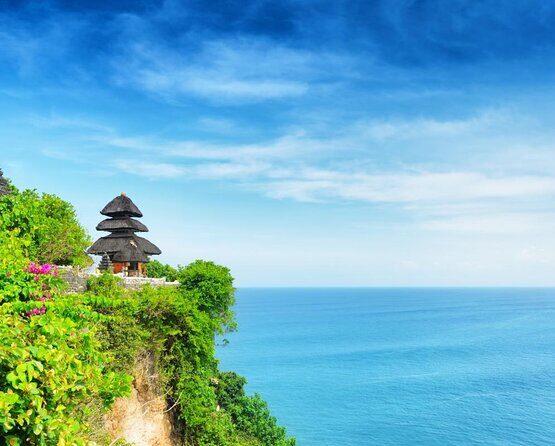
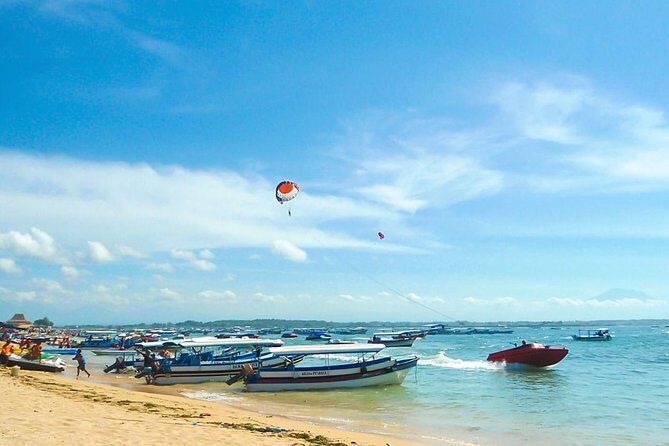
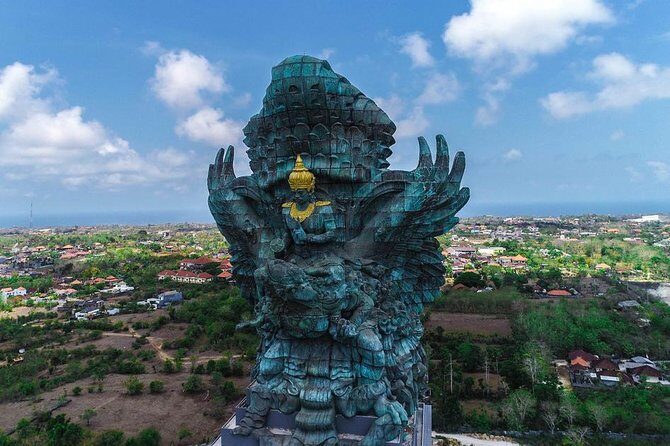
Private Tour: Gates of Heaven,Tukad Cepung Waterfall, Tirta gangga

Private Tour: Gates of Heaven,Tukad Cepung Waterfall, Tirta gangga - Tirta Gangga: royal water gardens and an hour to slow down

Temple gates and hidden falls.

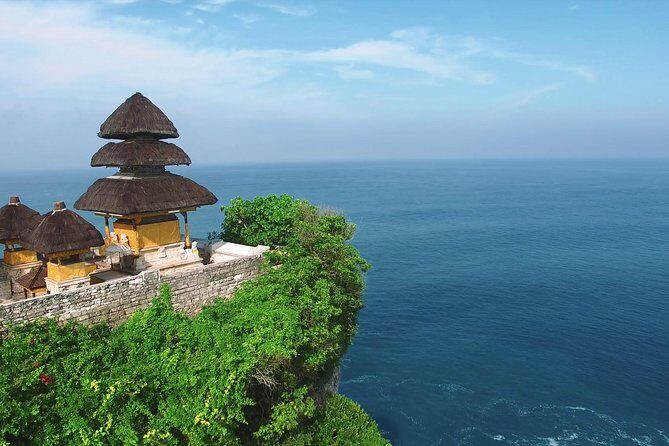
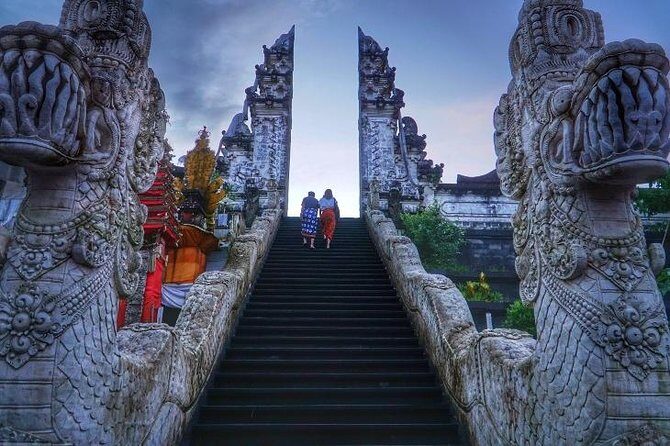
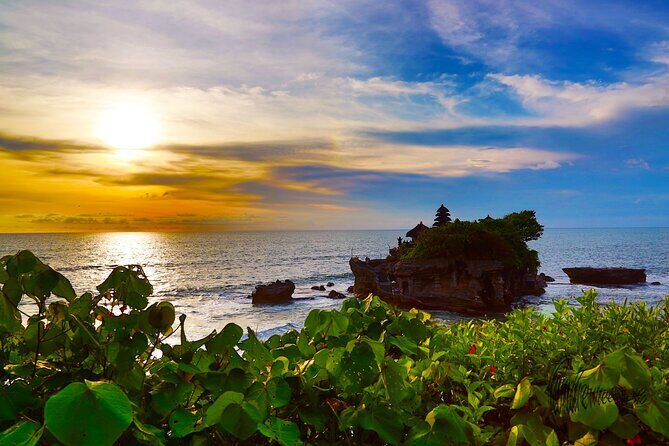
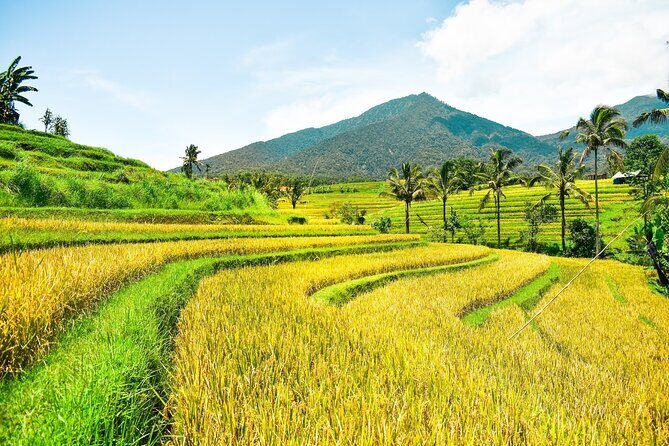
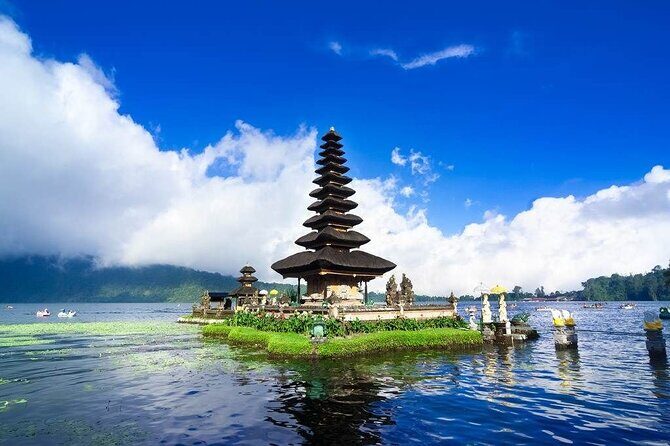
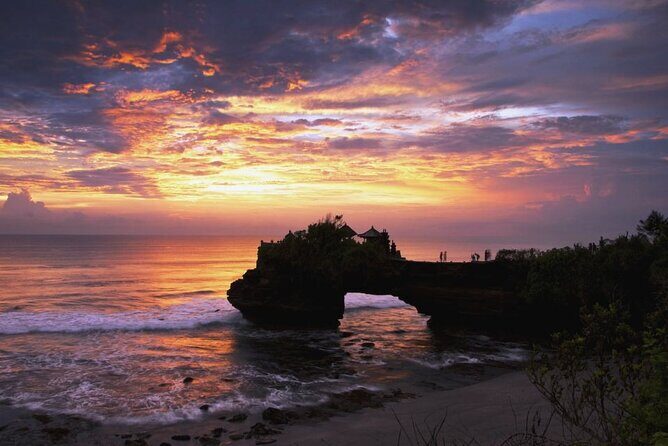
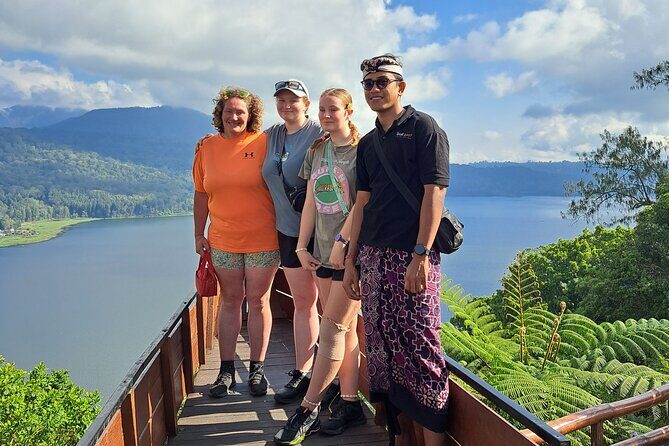
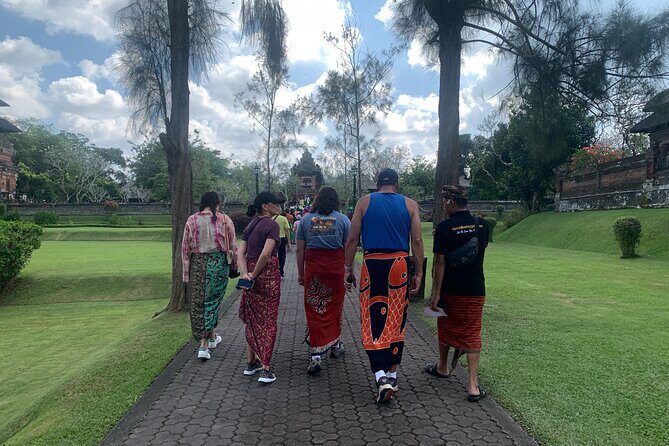
This private day in Bali strings together three of the island’s most photogenic stops, starting at Lempuyang Temple with Mount Agung views and an ancient gate at Pura Lempang. You then slide into the calm of Tirta Gangga, a former royal palace site with a water pool full of ornamental fish. The big reason I’d book it is simple: you get major sights without the stress of timing and navigation, thanks to hotel pickup and an English-speaking driver, like Jarot, who keeps the drive smooth and gets you to each place on schedule. One thing to consider: this experience needs good weather, and that can affect the day—especially the waterfall portion.

I like that the tour is built for a steady pace rather than a sprint. Lempuyang takes about 2 hours, and the later stops each get their own hour, so you’re not constantly bouncing with sore legs and zero time to enjoy what you came for. Since it’s private, the plan is yours as a group, which also helps if you want a little extra time for photos at the gate or a slower walk around the water garden.

For value, this one is fairly straightforward. At $70 per person, you’re covered for entrance tickets, pickup and drop-off, mineral water, and an English-speaking driver—but lunch isn’t included, so you’ll want to plan for a meal on your own after the tour.

Key highlights you’ll actually care about
Private Tour: Gates of Heaven,Tukad Cepung Waterfall, Tirta gangga - Key highlights you’ll actually care about

  • Iconic Lempuyang Temple gate with Mount Agung panorama views and time to get photos
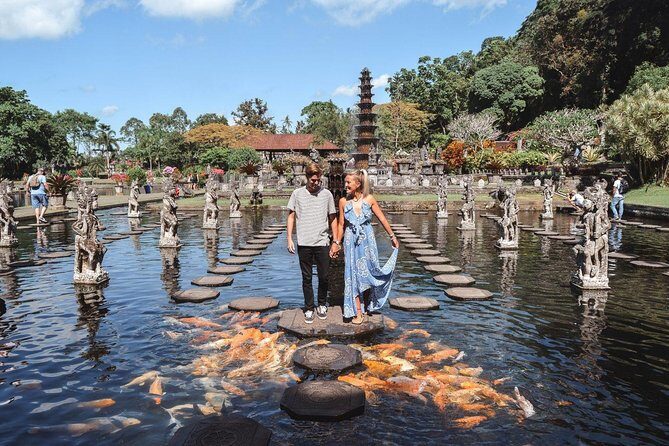
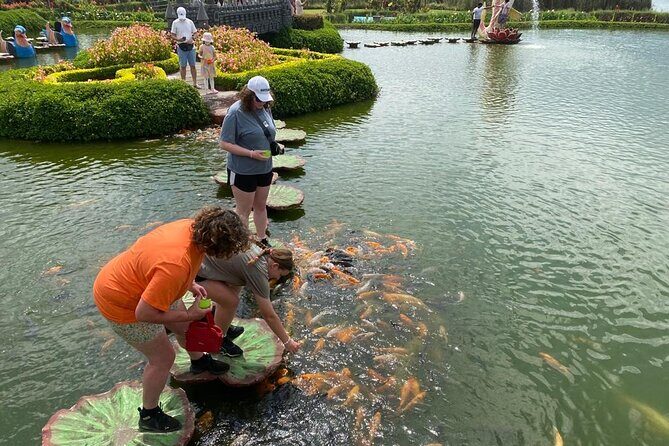
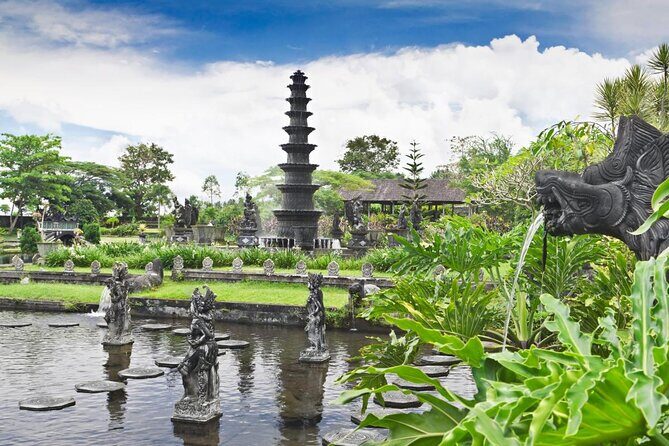
  • Tirta Gangga water palace ponds with ornamental fish and a temple feature to the right
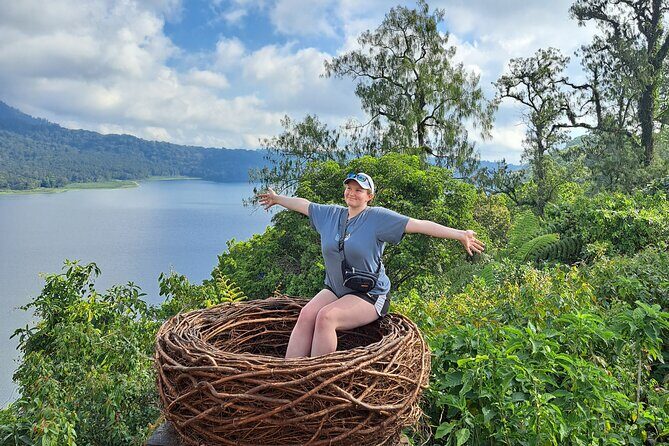
  • Tukad Cepung’s hidden setting plus the kind of access that calls for footwear prep
  • Smooth, safe driving—including punctual timing praised by guests
  • Private group format with only your group in the vehicle

How this 10-hour route works from Seminyak

Private Tour: Gates of Heaven,Tukad Cepung Waterfall, Tirta gangga - How this 10-hour route works from Seminyak
This is a private tour based around three stops spread across roughly 10 hours total, with a 7:30 am start. It’s an early departure, which matters in Bali: you want daylight for the temple views and enough time for the waterfall experience without rushing.

The rhythm is simple. You start with Lempuyang Temple (about 2 hours). Then you move to Tirta Gangga (about 1 hour). You finish at Tukad Cepung Waterfall (about 1 hour). In a day like this, the order makes sense because temples and palaces are more forgiving with time, while a waterfall day depends more on conditions and getting your footing right.

Because you get pickup and drop-off from Seminyak, you also skip the mental math of how to get from place to place. That’s not glamorous, but it’s real travel value. You spend the day seeing things, not negotiating transport.

One more practical point: you’re an adult on a schedule. The tour includes all entrance tickets, mineral water, and an English-speaking driver. That means fewer hassles mid-route. The one thing you still handle is lunch, so consider eating before pickup or budgeting for something after drop-off.

Lempuyang Temple: the gate, Mount Agung views, and photo time

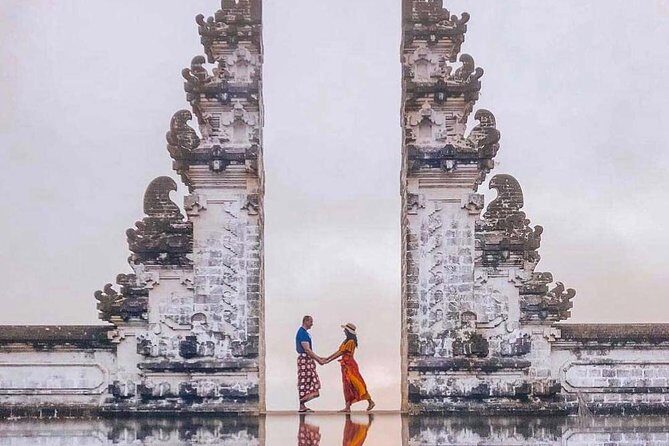
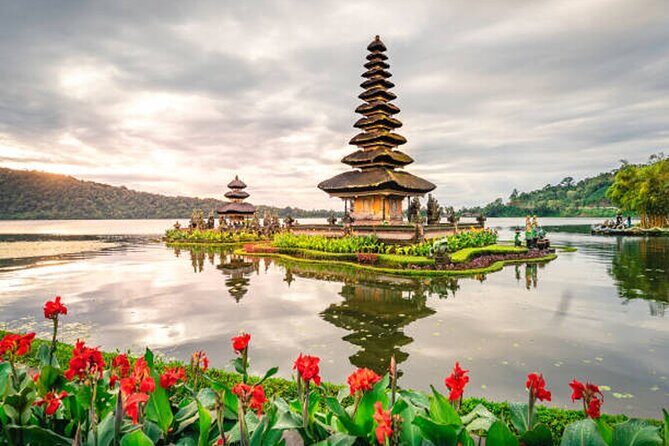
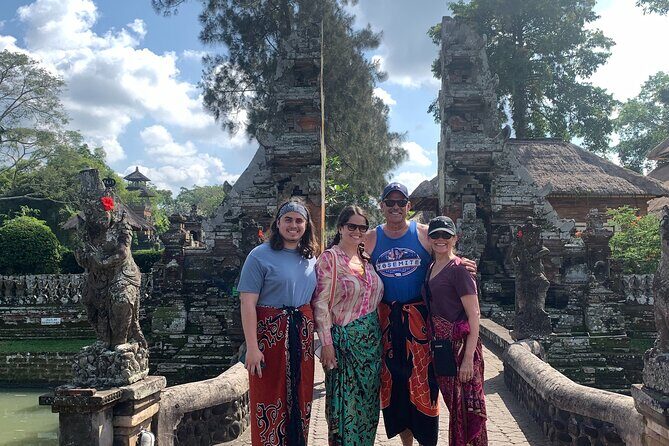
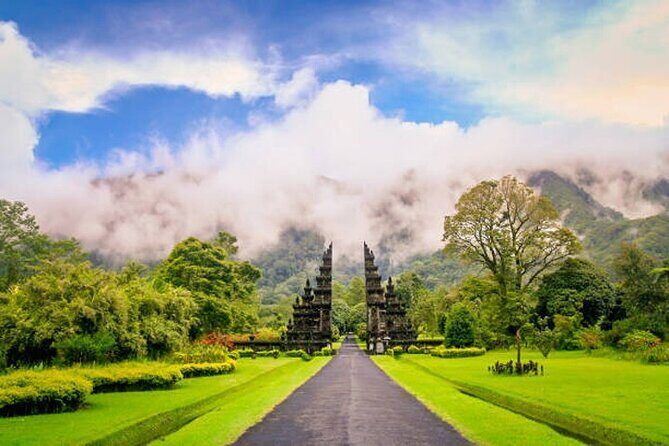
Lempuyang Temple is one of those Bali sights people talk about because it hits two things at once: a strong visual focal point and a big-sky backdrop. Here, the highlight is the ancient gate at Pura Lempang, paired with panoramic views of Mount Agung.

You’ll have about 2 hours at this stop, which is a good window. It’s enough time to walk around the area, take photos at the gate without feeling like you need to sprint, and still slow down if you want a calmer look at the temple setting. The emphasis for this stop is clear: expect scenic views and photo opportunities built around that gate.

What to watch for at Lempuyang is weather and timing. The tour is scheduled in the morning, which helps with lighting for pictures and generally makes the day feel easier. Still, if conditions aren’t great, you might not get the crispest mountain view you hoped for—so keep expectations flexible.

Also, remember that a temple stop is not just “look and go.” Even if you’re primarily there for the view, you’re in a living religious space. Plan for walking and a respectful mindset around the area so the experience feels good, not rushed or awkward.

Tirta Gangga: royal water gardens and an hour to slow down

Private Tour: Gates of Heaven,Tukad Cepung Waterfall, Tirta gangga - Tirta Gangga: royal water gardens and an hour to slow down
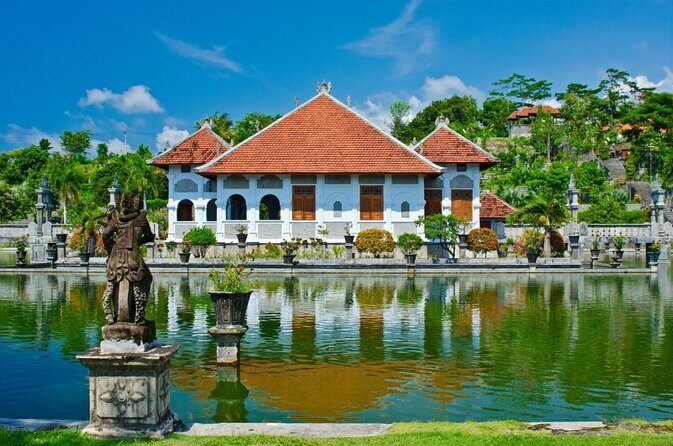
After Lempuyang’s dramatic gate views, Tirta Gangga feels like a breather. It’s described as a former royal palace of East Bali, and the design makes that clear. The star here is the pool area—open, scenic, and arranged around water.

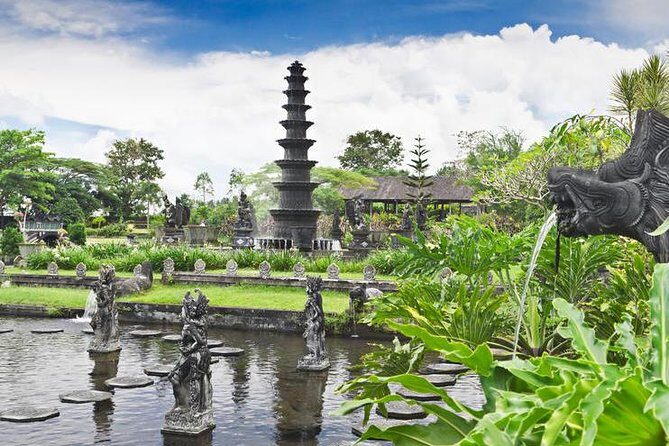
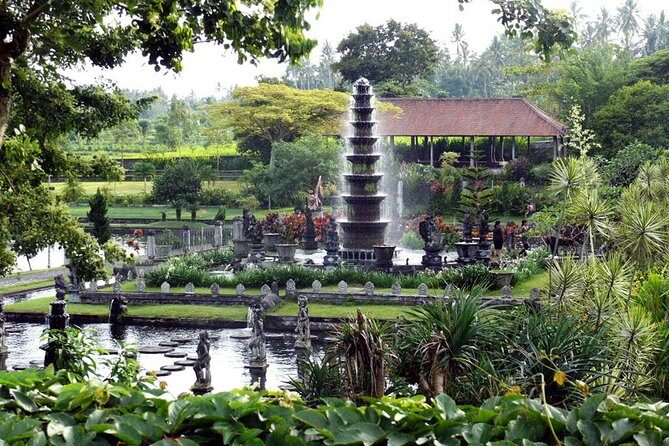
You’ll get about 1 hour at Tirta Gangga, and that’s enough for the main circuit. The site is known for its water pool and a temple that rises to the right. In the water, you can see ornamental fish, and there’s also a visible pond bottom. That combination is what makes this stop soothing rather than purely sightseeing.

The value of a place like this in a packed day is that it gives you a different kind of experience. At Lempuyang you’re focused on the iconic structure and the mountain panorama. At Tirta Gangga you’re focused on detail—movement in the water, the way the pool is laid out, and how the space feels like it was designed for leisure.

A small practical consideration: since it’s a water-focused garden, keep an eye on footwear. You might be on damp surfaces, and you’ll want to feel steady while you walk around to different viewpoints. The tour doesn’t mention special gear here, so I’d treat it as “comfortable shoes” time.

If you like atmosphere—quiet corners, visual symmetry, gentle sensory details—Tirta Gangga is the stop that will probably stick with you.

Tukad Cepung Waterfall: bring sandals and expect real access

Private Tour: Gates of Heaven,Tukad Cepung Waterfall, Tirta gangga - Tukad Cepung Waterfall: bring sandals and expect real access
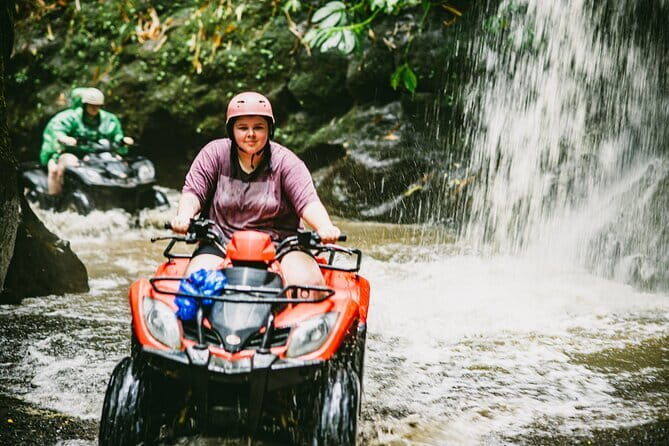
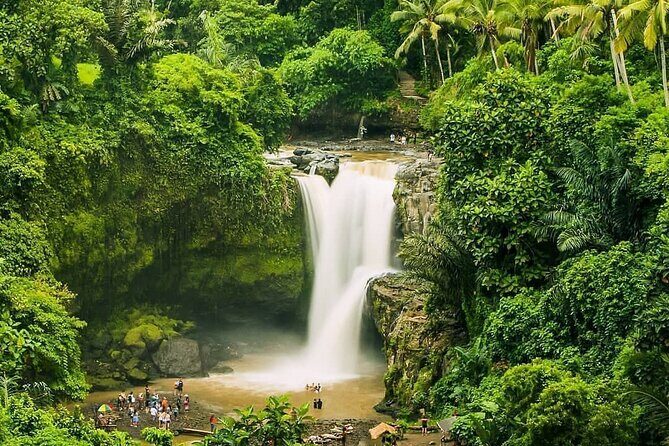
Tukad Cepung Waterfall is the wild card on this tour—in a good way. It’s described as having a hidden location with difficult access, and that’s exactly the point. This isn’t one of those “park, walk 30 seconds, done” waterfalls.

You’ll have about 1 hour here, which means you’ll want to be ready to move. The route includes that tricky access, and at least one key piece of advice comes through clearly: bring sandals if you plan to walk in the water to reach the falls.

That’s practical and important. Water access changes your whole experience. Without sandals (or something similar), you might spend the day thinking about your feet instead of watching the waterfall. With the right footwear, you can focus on the scenery and not turn it into a muddy survival test.

The other thing I like about ending the tour here is the contrast. By the time you reach the waterfall, you’ve already seen the major cultural sites. Now you’re getting something natural that feels more adventurous and less scripted.

One more weather note that matters for this stop: the tour requires good weather. Rain can change visibility and footing, and it can also mean the operator may adjust the day or offer an alternative date. That’s not a small detail; it’s part of how this experience is managed.

Price and value: why $70 per person can make sense

At $70 per person, you’re paying for a focused private route with real inclusions. The list is clear: entrance tickets are included for all three stops, plus pickup and drop-off, mineral water, and an English-speaking driver.

When tours are priced low but packed with fees, you end up doing math all day. This one is closer to the opposite. You’re not paying entrance after entrance, and you’re not handling the transport puzzle. For many visitors staying in Seminyak, that alone can make the day feel “worth it.”

The one item not included is lunch, which is normal for a tour like this but still something you should plan for. If you like to eat while you travel, check your budget so lunch doesn’t become a last-minute stress.

Also, since it’s private, you’re paying for exclusivity and comfort. That’s especially valuable when the stops are spread out and when one stop (the waterfall) can require some flexibility. Having a driver who can keep timing tight and get you to the right places efficiently is part of the value—especially if you care about not wasting the morning.

Provider-wise, this tour is run through Krisna Bali Trekking Tour, and the driving experience is something guests specifically praised as smooth and safe. That matters because a good route can’t happen without a good driver.

What’s included (and what you’ll want to pack)
Private Tour: Gates of Heaven,Tukad Cepung Waterfall, Tirta gangga - What’s included (and what you’ll want to pack)
Here’s the practical breakdown of what you’re covered for:

  • All entrance tickets for Lempuyang Temple, Tirta Gangga, and Tukad Cepung Waterfall
  • Pickup and drop-off from your hotel
  • Mineral water
  • An English-speaking driver

Lunch is not included. So if you’re the kind of person who needs a proper meal rather than snacks, plan ahead. Eating before the tour starts can help, and you may want to grab something simple after your return.

Packing tips based on the stops:

  • Bring sandals for Tukad Cepung, since reaching the falls may involve walking in water
  • Wear comfortable clothing for temple areas and for moving around outdoors
  • Bring any basic personal items you’d normally want for a day out, since the tour only specifies mineral water as provided

The nice part is you don’t need to worry about tickets. That keeps you focused on the actual experience instead of standing in lines doing payments.

Who this tour suits best

This one is a good match if you want a day that balances culture and nature without going full “all day hiking.” You’ll get:

  • cultural and scenic temple time at Lempuyang
  • a calmer, water-and-fish palace garden at Tirta Gangga
  • an adventurous-feeling waterfall finish at Tukad Cepung

It’s especially suitable for:

  • couples or small groups who want privacy instead of joining a large group
  • travelers who prefer smooth transport and an English-speaking driver
  • anyone who enjoys photography but also wants time to breathe at each stop

If you dislike early starts, this might feel intense. If you’re picky about footwear and hate getting wet, you can still do it—but bring the right sandals and be ready for that waterfall access.

Should you book this private Bali day?

I think this tour is worth booking if you want an organized route that hits three high-impact sights, with fewer logistics headaches. The entrance tickets included piece is meaningful, and the fact that the driving experience is described as smooth and safe makes the day feel more relaxed. And if you care about waterfalls, Tukad Cepung is exactly the kind of place people remember—especially with the right footwear.

Book it if:

  • you’re staying in Seminyak and want hotel pickup/drop-off
  • you’re okay with good weather being important
  • you’re willing to plan for lunch outside the tour

Skip it if:

  • you can’t do early mornings
  • you’d rather avoid any water-walking at all (even with sandals)
  • you need a fully flexible day regardless of weather

If you fit the first set, this is a solid private option that balances big visuals, a calm pause, and a waterfall finish—without turning your day into a transport scavenger hunt.

FAQ

What is the price per person for this tour?

The tour costs $70.00 per person.

What time does the tour start?

The start time is 7:30 am.

How long is the tour?

The duration is 10 hours (approx.).

Is this a private tour?

Yes. It’s a private tour/activity, and only your group will participate.

What’s included in the tour price?

It includes all entrance tickets, hotel pickup and drop-off, mineral water, and an English speaking driver.

Is lunch included, and what if weather is bad or plans change?

Lunch is not included. The experience requires good weather; if it’s canceled due to poor weather, you’ll be offered a different date or a full refund. For cancellation, you can cancel for a full refund up to 24 hours in advance of the experience’s start time; within 24 hours, the amount paid is not refunded.

Balinase Cooking Class and Private Ubud Day Tour

Balinase Cooking Class and Private Ubud Day Tour - Starting strong: Lesung Bali Cooking Class (and why it works)

Plan your Bali day carefully. This private Ubud itinerary strings together food, temples, nature, and crafts with hotel pickup and an 8–10 hour schedule that tries to make the most of your time.

I like this format because you get real guided context, not just photo stops. I also love the start: a Balinese cooking class where you learn dishes you can realistically repeat later at home. One thing to keep in mind is it’s a long day with walking and some outdoor time, so comfortable shoes and good weather matter.

Quick take: what makes this tour worth your time

Balinase Cooking Class and Private Ubud Day Tour - Quick take: what makes this tour worth your time
If you want a single day that covers a lot of iconic Ubud-area moments, this tour hits the basics well. I’d call the strongest selling points the cooking class and the way the day mixes culture with scenery instead of repeating the same kind of stop. The main drawback is that it’s packed, so you’ll have less time to slow down than you would on a lighter, one-or-two-stop day.

Key things to love on this Balinese Ubud day tour

  • Balinase cooking class (3 hours) with lunch: you learn food and you eat it, with admission included
  • Monkey Forest with a clear wildlife focus: long-tailed macaques in their sanctuary setting (over 1,200 monkeys)
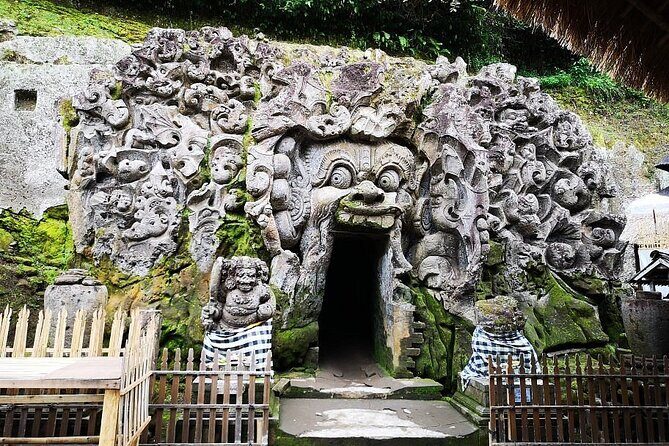
  • Goa Gajah (Elephant Cave) temple visit: a 9th-century Hindu cave temple with an interesting backstory
  • Tegenungan Waterfall time: a half-hour drive from Ubud area, plus a chance to cool off when conditions allow
  • Craft time included: Yanyan Gold & Silver Smith is free, and the craft segment may include other artisan work such as batik
  • Private guide attention: your group moves together and you can ask questions and adjust your pace

The “private Ubud day” formula: what you’re really buying

Balinase Cooking Class and Private Ubud Day Tour - The “private Ubud day” formula: what you’re really buying
This is built for people who want a full day in the Ubud area without running around on your own. You trade some flexibility for structure, and the payoff is fewer headaches: pick-up, transport, and guided stops are handled. Your group gets the driver/guide attention, so you can ask questions and react to what you like as the day moves.

The pricing is the other major hook. At about $29 for a day that includes private transportation plus multiple admission tickets and lunch, you’re getting better value than many ticket-only add-ons. It’s still a busy itinerary, but it’s the kind of busy that can save you time and money.

Starting strong: Lesung Bali Cooking Class (and why it works)

Balinase Cooking Class and Private Ubud Day Tour - Starting strong: Lesung Bali Cooking Class (and why it works)
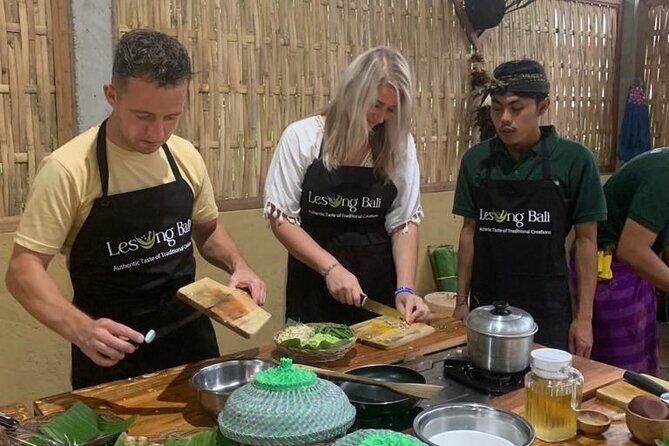
The day begins at Lesung Bali Cooking Class for about 3 hours, and admission is included. This is the part I’d prioritize if your Bali trip is short or you want something hands-on, not just sightseeing.

What I like about a good cooking class here is the balance. You’re not only learning how dishes taste, you’re learning how the ingredients and flavors relate to Balinese cooking style. In the class, guides such as Ron are specifically described as connecting cuisine and culture, which is what turns cooking from a one-time show into knowledge you can use later.

Practical expectation: you’ll likely do some chopping, mixing, and tasting along the way. If you’re someone who enjoys food, you’ll find this far more memorable than another “walk-through market” stop.

Good to know: you’re eating later as well. So don’t plan to snack heavily right before class. Let the cooking session set your appetite.

Walking with monkeys at Sacred Monkey Forest Sanctuary

Balinase Cooking Class and Private Ubud Day Tour - Walking with monkeys at Sacred Monkey Forest Sanctuary
Next comes Sacred Monkey Forest Sanctuary, home to over 1,200 long-tailed macaques. It’s about 1 hour, and admission is included. This isn’t a zoo-style experience where everything is staged; it’s a sanctuary setting where you share space with the animals.

Here’s how to make this stop go smoothly. Keep your belongings controlled. Avoid dangling bags or loose items that look tempting. Stick to the path and keep moving—lingering tends to invite curiosity. The monkeys are part of the landscape, so the key is calm, not dramatic reactions.

What I like about this stop is the atmosphere. The forest setting gives you a break from the driving and a different kind of Bali feel: quieter, greener, and very “everyday life” for wildlife.

Goa Gajah (Elephant Cave): temple ruins with a story

Then you’ll head to Elephant Cave, officially Pura Goa Gajah. It’s a 9th-century Hindu cave temple, and the name is a bit of a puzzle. It’s called Elephant Cave, but no elephants are involved—part of the mystery is that the entrance area isn’t even described as wide enough for one.

The visit is around 2 hours, with admission included. Expect to see the temple spaces and carved details that help explain why this site has lasted. Even when you don’t catch every detail, it’s the kind of place where the setting does half the work: stone, age, and ritual spaces.

This is also a good place to use your guide’s questions. If you ask what features mean or why this temple is laid out the way it is, the visit becomes more than a checklist stop.

Tegenungan Waterfall: photos, shade breaks, and optional water time

After temple time, you’ll go to Tegenungan Waterfall. It’s described as about a half-hour drive from Ubud, and the stop is around 1 hour. Admission is included.

This part of the itinerary works best for people who like scenery and don’t mind short, active breaks. You’ll get the classic waterfall views, and when conditions are good, there can be an opportunity to dip and cool off. The catch is the “when conditions are good” part—water surfaces and safety depend on weather and flow.

To enjoy it: wear grippy shoes and plan for slippery spots. If you’re not sure you’ll want to go in the water, you can still enjoy the falls from more stable viewing areas.

Yanyan Gold & Silver Smith (plus the craft-village energy)

Balinase Cooking Class and Private Ubud Day Tour - Yanyan Gold & Silver Smith (plus the craft-village energy)
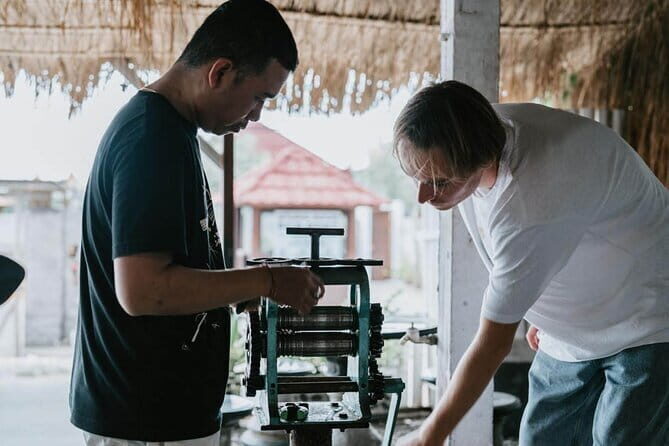
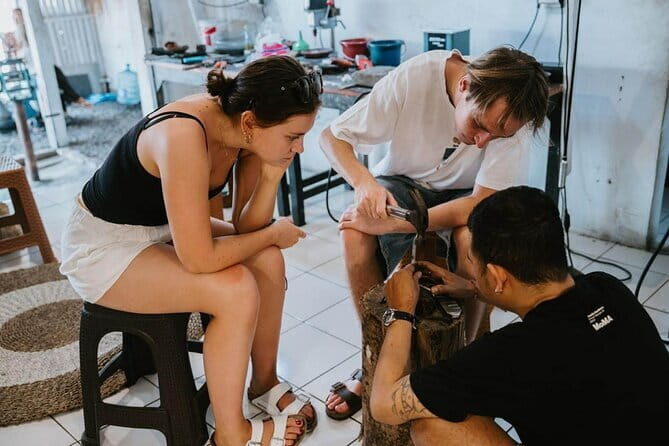
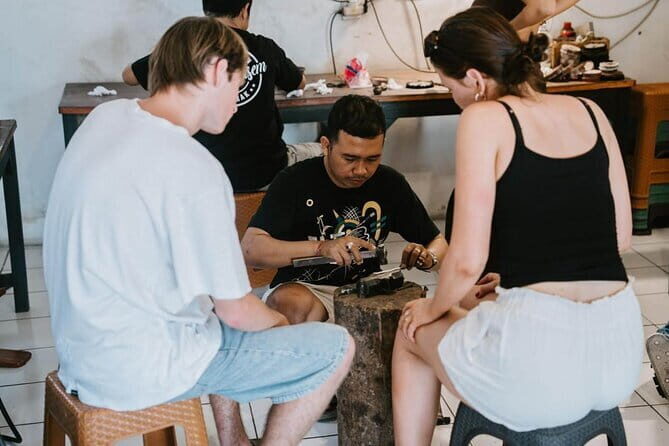
The craft segment is free and runs about 1 hour at Yanyan Gold & Silver Smith. The description frames it as handmade artisanal work, which is usually the difference between shopping and understanding.

This stop is also where your day may overlap with other artisan experiences. One honeymoon highlight shared with this tour format mentions a local batik workshop, with learning and picking up pieces from the art. Even if your specific craft stop focuses on gold and silver, the same idea holds: you get to watch skills that take patience, not just speed.

A practical tip: if you’re going to buy something, bring a light bargaining mindset. You can admire the workmanship first, then decide after you’ve watched and asked questions.

Coffee plantations by air-conditioned bus: a calmer pace

The tour overview also includes a stop at coffee plantations by air-conditioned bus. That’s a nice contrast to the more active parts of the day. Plantation stops can feel like a sales pitch on some tours, but with a private guide, you can usually steer the conversation toward what you actually care about—growing process, tasting style, or how locals use coffee beyond tourism.

Plan for a slower, sit-and-ask session. Even if you don’t want to buy coffee, it’s a good chance to cool down and reset before the last legs of the day.

Lunch and welcome drink: small comforts that matter on a full-day route

Included in the price are a welcome drink and lunch. On a packed day, that matters more than you might think. It means you avoid the classic problem of timing: arriving hungry, searching, and losing time when you should be in a guided moment.

If you’re picky about meal timing, this is a better setup than random restaurant breaks. You can focus on the experience instead of managing logistics.

Private transport and an English-speaking guide: the hidden value

This is a private tour, meaning it’s only your group. Your guide/driver is described as English speaking, and that has real value on days like this. Temple details and cultural context aren’t always easy to interpret on your own, and with private attention you can ask direct questions without feeling rushed.

The guides named in shared experiences—Mr. Yoga, Mr. Joga, Mr. Viktor, and Ron—are described as kind and knowledgeable, with a focus on caring for the group and explaining what you’re seeing. Even if your guide isn’t one of those names, the pattern matters: this isn’t just driving you from A to B. It’s someone helping the day make sense.

Also, because it’s private, you can often adjust your pace. If you want more time at a viewpoint or you’d rather skip a slower moment to make the waterfall safer, you have the chance to ask.

Timing and physical comfort: how to be ready for 8–10 hours

The duration is about 8 to 10 hours, so you’re committing to a long day. The tour suggests moderate physical fitness, which fits the mix: forest paths, temple walking, and a waterfall stop that may involve uneven terrain.

What I recommend:

  • Wear shoes you trust on stone and possibly wet surfaces
  • Bring water, even if you expect a welcome drink
  • Use sun protection; outdoor time adds up fast
  • Don’t plan a late dinner right after if you’re prone to getting tired

If you’re traveling with kids or someone who struggles with walking, consider whether you want a lighter day plan. This one can still work, but you’ll want to go in with realistic expectations.

Price and value: is $29 really fair for this day?

At about $29, this tour is priced in a way that can surprise people. The value comes from what’s included: private transportation, an English-speaking driver, a welcome drink, lunch, and admissions for the cooking class, monkey forest, Elephant Cave, and Tegenungan Waterfall.

A quick way to think about it: if you were to pay for similar admissions and hire private transport for the same set of stops, the total cost would likely rise quickly. Here, you’re bundling the big spend items into one day.

Is it perfect value? Only if you want a full-day “greatest hits” mix. If you’d rather slow travel, you might find it too packed for your style.

Best for honeymooners, food lovers, and first-timers in Ubud

This tour makes especially good sense for:

  • Food-focused travelers who want a hands-on cooking class with repeatable learning
  • First-timers who want the main Ubud-area highlights without planning
  • Couples on a special trip, since private guide attention can feel more personal
  • People who like structure when their time in Bali is limited

If you’re the kind of traveler who hates crowds and wants slow mornings, you may prefer a shorter, two-stop day. You’ll get more breathing room and less “run-and-go” energy.

What you should pack for this day

I’d pack for a day that mixes temple stones, forest paths, and waterfall surfaces:

  • Comfortable, grippy shoes
  • Light rain layer or poncho (based on weather conditions)
  • Sun protection (hat/sunscreen)
  • Small towel or a change of clothes if you plan to get wet

If you buy craft items, also keep an extra bag ready for secure carrying.

Should you book this Bali cooking class and private Ubud day tour?

Book it if you want one efficient day that combines a real cooking class, wildlife in the monkey sanctuary setting, a major temple stop at Goa Gajah, and the scenic payoff of Tegenungan Waterfall—without having to organize transport and tickets yourself.

Skip it if you want a relaxed, slow pace, or if you’re worried about long outdoor walking. With 8–10 hours and multiple stops, this works best when you’re ready for a full schedule.

If your goal is maximizing Ubud time from Kuta while still getting something authentic and learnable (not just photos), this is a strong, good-value choice.

FAQ

How long is the Balinase Cooking Class and Private Ubud Day Tour?

It runs about 8 to 10 hours.

Where does the tour take place?

The tour is based in Kuta, Indonesia, with visits around the Ubud area.

Is pickup and drop-off included?

Yes. Hotel pick-up and drop-off are included.

Is this tour private?

Yes. It’s a private tour/activity, and only your group participates.

What’s included in the price?

The tour includes private transportation, an English-speaking driver, welcome drink, lunch, and admissions for the cooking class, Sacred Monkey Forest Sanctuary, Tegenungan Waterfall, and Elephant Cave.

Are admission tickets included for every stop?

Admissions are included for the cooking class, Sacred Monkey Forest Sanctuary, Tegenungan Waterfall, and Elephant Cave. The craft segment listed (Yanyan Gold & Silver Smith) is free.

What about physical fitness and walking?

The tour requests moderate physical fitness.

Does the tour depend on weather?

Yes. The experience requires good weather. If it’s canceled due to poor weather, you’ll be offered a different date or a full refund.

Is free cancellation available?

Yes. You can cancel for a full refund up to 24 hours in advance of the experience start time.

Seaweed Farming Activity and Sightseeing at Diamond Beach

Seaweed Farming Activity and Sightseeing at Diamond Beach - Hands-on seaweed farming: what you actually do out there

This is one of the rare tours where your morning is about ocean work, not just selfies. You start with a straightforward presentation on seaweed farming and why it matters to the island, then you head out with local farmers to try the traditional methods yourself. It’s a cultural day with real-world impact, and it doesn’t feel like a canned script.

I love that the day is built around local families and a more stable income. You’re not just watching from the shore. You meet the people doing the work, learn the basics from a guide, and participate in the process, which is the point.

One thing to consider: because this is ocean-based, conditions can affect what you’re able to do that day. One past experience noted that tides made the farming portion impossible, so don’t plan on the seaweed part being guaranteed at full strength every time.

Key highlights before you go

Seaweed Farming Activity and Sightseeing at Diamond Beach - Key highlights before you go

  • Hands-on seaweed farming with local farmers, plus a start-of-day orientation so you know what you’re doing
  • A local lunch included, keeping the experience rooted in Nusa Penida life
  • Diamond Beach stops with options like walking down, the Bali swing, or viewing from above
  • Atuh Beach as a bonus scenic stop on the same half-day circuit
  • Small group size (max 6), so you’re not lost in the crowd
  • Photo and video capture during the day, shared afterward

Seaweed farming in Nusa Penida: real work with a purpose

Seaweed Farming Activity and Sightseeing at Diamond Beach - Seaweed farming in Nusa Penida: real work with a purpose
Seaweed farming may sound like a niche activity, but on Nusa Penida it’s everyday labor. The tour starts by putting that work into context: what seaweed farming is, why it’s important for coastal ecosystems, and how it supports the island community. That first presentation matters because once you understand the “why,” the “how” on the farm makes sense.

You’ll also get the human angle. The seaweed market can be unpredictable, and the tour frames farming as a way families can depend on steadier income. That’s not just a nice story. It helps explain why your participation is treated like more than entertainment.

And yes, you’ll still get the beach day you came for. This itinerary blends the ocean work with major scenic stops so you don’t feel like you traded sightseeing for “learning.” You’re doing both.

Basecamp under Coral Cafe: getting your footing fast

Your day begins at Ecotourism Nusa Penida, at the basecamp location below the Coral Cafe. This is where you settle in, get grouped with everyone else (remember, it’s small), and get the setup you need before you go near the water.

Before you head to the farm, there’s an orientation and you’re welcome to borrow water boots. That detail sounds minor, but it’s the kind of practical touch that keeps the day from turning into “improvise your footwear and hope for the best.” If you’re not used to slick or uneven coastal ground, boots help you move with confidence.

After that prep, you’ll drive out to the seaweed farm area and meet the people doing the work. The tour is clear about the “hands-on” goal, so you’re not left wondering what you’re supposed to be doing once you arrive.

Hands-on seaweed farming: what you actually do out there

Seaweed Farming Activity and Sightseeing at Diamond Beach - Hands-on seaweed farming: what you actually do out there
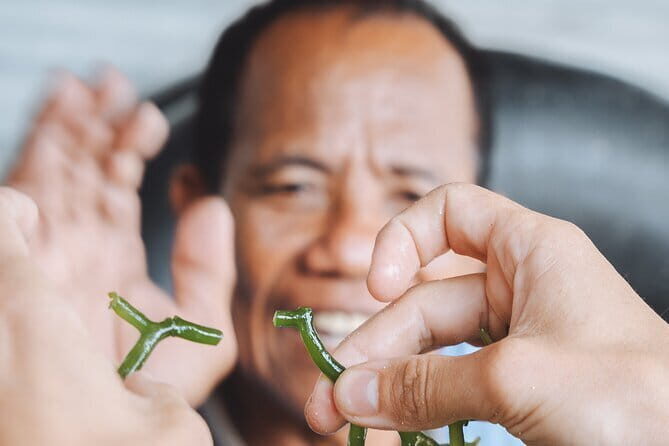
This is the core of the experience: joining local farmers in the ocean and trying the traditional farming techniques with guidance. The tour doesn’t treat it like a pass-through where you just stand nearby. You learn the process and do part of it yourself, supported by guides and local partners.

Here’s what I’d pay attention to as you go:

  • Watch first, then try. The guidance is part of the value. You’ll get orientation before you get wet.
  • Expect a “real day” rhythm. This is labor that supports families, not a staged performance.
  • Use the provided gear and ask questions early. If anything feels confusing, get clarification before you step in.

One more thing: the program emphasizes that you’re supporting families who rely on seaweed farming for more stable income. That may sound abstract, but it helps you appreciate why your role is taken seriously. You’re not just collecting a souvenir story. You’re participating in a day of work.

Also, the tour includes photo and video capture during your activities. That means you don’t have to juggle your camera while you’re trying to learn a new task. It’s a small convenience that makes a difference.

Atuh Beach stop: the scenery reset between work and wonder

Seaweed Farming Activity and Sightseeing at Diamond Beach - Atuh Beach stop: the scenery reset between work and wonder
After the farming time, the day shifts to scenic coastal rewards, starting with a stop at Atuh Beach. This is where you get a quick breathing space from the ocean activity, while still staying in the same “east side of the island” vibe.

Atuh Beach works well as a pacing tool. It’s the moment where you can look around, dry out a bit, and decide how you want to handle your next stop at Diamond Beach. If you tend to get tired from active days, this sort of reset matters. It turns the schedule into a flow rather than a sprint.

Even if you’re primarily booking for seaweed farming, don’t skip taking a slow walk here. The beach views are part of why this route is so popular.

Diamond Beach and the Bali swing: choices, views, and tide reality

Seaweed Farming Activity and Sightseeing at Diamond Beach - Diamond Beach and the Bali swing: choices, views, and tide reality
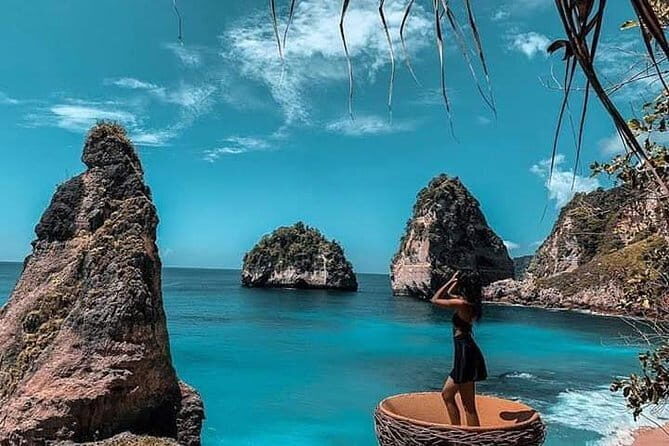
Next up is Pantai Diamond (Diamond Beach) in East Nusa Penida. This is the big name stop, and the tour gives you options so you’re not forced into one style of sightseeing.

You can:

  • Walk down toward the beach area
  • Try the Bali swing if you want the classic photo moment
  • Or stay above for panoramic views and a less physical option

This is where you should think about your own comfort level. A “walk down” option is great if you like getting close to the shoreline and don’t mind steps and uneven ground. The swing is more about fun and photos than about long hiking. Staying above is the easiest way to enjoy the view without adding extra effort.

Now for the practical part: because Diamond Beach is coastal, conditions can change what’s comfortable or possible. One prior experience noted that tides prevented seaweed farming, which is a reminder that ocean timing matters on Nusa Penida. So keep expectations flexible. If the farm portion gets affected by tide, you’ll still have the beach legs of the day to enjoy.

The schedule and travel day feel: about 6.5 hours, small group, AC ride

Seaweed Farming Activity and Sightseeing at Diamond Beach - The schedule and travel day feel: about 6.5 hours, small group, AC ride
The duration is about 6 hours 30 minutes. That’s a sweet spot for Nusa Penida: long enough to do something meaningful (seaweed work plus two beaches), but short enough that you’re not wiped out for the rest of the day.

You travel in a well-maintained air-conditioned vehicle, which is a big deal in Bali heat. It helps keep the day comfortable, especially when you’re going from ocean activity back to sightseeing.

Your group maximum is 6 travelers, so this doesn’t feel like a bus tour with a “one size fits all” pace. With fewer people, the guide can help you stay on track during hands-on time, and you’re more likely to get quick answers.

One more note that’s worth caring about: the tour is designed around a single meeting point and ends back there. If you’re staying nearby, you’ll appreciate how simple the start and finish are.

Lunch and included extras that make it feel worth it

Seaweed Farming Activity and Sightseeing at Diamond Beach - Lunch and included extras that make it feel worth it
A local lunch is included. I like included meals on island tours because they keep you from having to guess what’s open, where to go, and whether the food matches your schedule. Here, lunch also reinforces the “local life” theme rather than turning the day into a sequence of paid lookouts.

The tour also says it will take photos and videos of your day and share them afterward. Even if you’re the kind of traveler who likes to document everything yourself, this can be a helpful backup. You can focus on the activity and still end up with decent material.

And because the operator states they are fully licensed and insured, you get peace of mind that the tour is run like a real business, not a casual side hustle.

Price ($74.19) and value: what you’re really paying for

Seaweed Farming Activity and Sightseeing at Diamond Beach - Price ($74.19) and value: what you’re really paying for
At $74.19 per person, this isn’t a bargain-basement activity. But it’s also not priced like a private yacht day.

What you’re getting for the money:

  • Guided presentation and instruction before the farm work
  • Transportation in an air-conditioned vehicle
  • Hands-on seaweed farming with local partners
  • Local lunch
  • Diamond Beach with multiple viewing options
  • Photo and video capture during the day
  • A small-group experience (max 6)

The biggest value driver is the combination of labor-in-the-ocean plus structured sightseeing. If you tried to recreate this yourself, you’d likely spend time and effort lining up transportation, local instruction, and a meal. Here, it’s packaged into one organized route with limited group size.

Also, the tour is commonly booked about a month in advance. That doesn’t mean it sells out instantly, but it does suggest steady demand for a unique, hands-on program.

Who should book (and who should think twice)

This tour is best for people who like learning by doing. If you enjoy meeting locals, getting your hands involved, and understanding how island life works beyond the beach, you’ll probably have a satisfying day.

It’s also a good fit if you want a mix:

  • Seaweed farming experience in the morning (active, practical)
  • Scenic breaks at Atuh Beach and Diamond Beach (photogenic, flexible)
  • A lunch included so the day feels whole

The tour asks for moderate physical fitness. That doesn’t mean you need to be an athlete, but you should be comfortable with getting in and out of coastal areas and walking where needed. If you’re set on staying fully on stable ground, choose the Diamond Beach option that stays above rather than walking down.

If you hate any chance of getting wet or you’re extremely sensitive to changing ocean conditions, you might find the tide factor stressful. The good news is the tour still centers on beach time if the seaweed portion changes.

Should you book Seaweed Farming and Diamond Beach?

I’d book this if you want your Nusa Penida day to feel useful, not just scenic. The seaweed farming part gives you a behind-the-scenes look at daily life, and the beach stops keep it fun and rewarding.

Skip it only if your priority is purely low-effort sightseeing. With hands-on ocean work and a moderate fitness expectation, it’s not a sit-and-watch-only tour. And remember the real-world constraint: ocean and tide conditions can affect what you can do.

If you go in with flexible expectations, you’ll likely come away with something more memorable than a beach photo. You’ll leave with a clearer sense of how the coast is supported by the work happening right in it.

FAQ

How long is the Seaweed Farming and Diamond Beach experience?

It runs for about 6 hours 30 minutes.

What is included in the tour price?

The tour includes a presentation, hands-on seaweed farming activities, transportation in an air-conditioned vehicle, a local lunch, and photo/video capture during the day.

Where do I meet for the tour?

The meeting point is at Ecotourism Nusa Penida, Buyuk, Jalan, Ped, Nusa Penida, Klungkung Regency, Bali 80771, Indonesia. The tour ends back at the meeting point.

What beaches are visited during the tour?

You’ll stop at Atuh Beach and Pantai Diamond (Diamond Beach).

Is there an option to take the Bali swing at Diamond Beach?

Yes. At Diamond Beach, you can choose to walk down, try the Bali swing, or enjoy the panoramic views from above.

Can I request hotel pickup and drop-off?

Yes. You can request it by notifying the provider at least 12 hours in advance.

What is the cancellation policy?

Free cancellation is available up to 24 hours in advance for a full refund. If you cancel less than 24 hours before the start time, the amount paid is not refunded.
Ultimate Ubud

Ultimate Ubud - Cost and Value: Why $112.50 Can Be a Smart Deal (or Not)

Ubud in one day can feel rushed. This tour is built for short-time wins, covering the big hits without wasting half your day in traffic. I especially like the coffee plantation tasting stop and how you get time at Tegalalang Rice Terraces for photos and a jungle swing. One drawback to consider: since the day depends on a tight schedule and good weather, you’ll want to be flexible and ready to move.

I also like that you’re not just dropped at random places. You get guided time at each main stop, plus lunch and water included. The one caution I’d flag is guide reliability: there has been at least one reported case where a guide didn’t show up and communication failed, so it’s smart to confirm your pickup details the day before.

If you want a practical Ubud “greatest hits” day—coffee, rice terraces, and monkeys—this can be a good-value choice. Just go in with realistic expectations: this is a 10-hour sampler, not a slow, in-depth cultural stay.

Key highlights in plain English

Ultimate Ubud - Key highlights in plain English

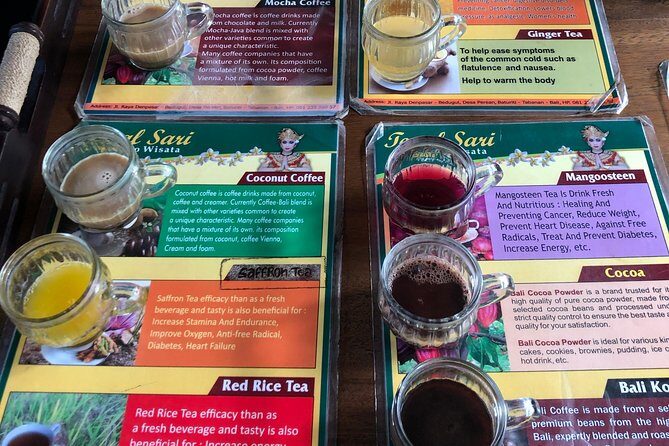
  • Coffee tasting included at a Luwak coffee plantation, with a guided tour and a complimentary assortment of coffees and teas
  • Tegalalang time for photos plus the chance to ride a jungle swing above the terraces
  • Subak irrigation explained at Tegalalang, tied to the UNESCO-recognized Bali cultural system
  • Sacred Monkey Forest walking route for close-up wildlife viewing (with common-sense etiquette)
  • Lunch and bottled water included, so you’re not scrambling for food between stops
  • Environmental support built in, with 2% of the tour price directed to an environmental action initiative

A Fast-Track Ubud Day: What Ultimate Ubud Gets You in 10 Hours

Ultimate Ubud - A Fast-Track Ubud Day: What Ultimate Ubud Gets You in 10 Hours
Ultimate Ubud is the kind of tour that makes sense when you’re time-poor but still want the iconic places. In about 10 hours, you’ll cover three major Ubud anchors: a coffee plantation, Tegalalang Rice Terraces, and Sacred Monkey Forest—then head back to your hotel.

The pacing is the whole point. You won’t have hours and hours at each site, but you will get enough time to actually do the experience instead of just passing by. That balance matters in Ubud, where “worth seeing” spots are spread out and roads can be slow.

Another reason this works for many people: it’s structured around guided experiences. A guided coffee plantation visit gives you context for what you’re drinking. Time at Tegalalang includes explanation of the irrigation system (subak), which makes the scenery feel more purposeful than just pretty greens. And the Monkey Forest stop is a guided-style walk through a cultural sanctuary where people and monkeys share space.

Cost and Value: Why $112.50 Can Be a Smart Deal (or Not)

Ultimate Ubud - Cost and Value: Why $112.50 Can Be a Smart Deal (or Not)
At $112.50 per person, you’re paying for a packed day with transportation, admissions, and meals bundled in. That’s important because in Bali, the “little extras” add up fast—entry fees, bottled water, lunch, and the cost of getting between far-apart sights.

Here’s what your money covers:

  • Guided coffee plantation visit with complimentary coffee and teas
  • Admission tickets included for each stop
  • Lunch (traditional Balinese food) and bottled water
  • Enough time at each location to do more than just look

Where the value shifts depends on what you’re trying to get out of the day. If you’re the type who wants a slow, unhurried stroll and lots of detours, you may feel slightly squeezed. But if you want an efficient sampler with real time at the top attractions, the bundle pricing can feel fair.

Also, this is listed as a private tour/activity, meaning only your group participates. That can be a big deal in a place like Ubud where “group tours” can sometimes feel crowded or rushed. It’s not a guarantee that everything will be perfect, but it often makes the day feel smoother.

Pickup and Timing: The Real Secret to a Smooth Ubud Schedule

Ultimate Ubud - Pickup and Timing: The Real Secret to a Smooth Ubud Schedule
This tour offers pickup, which is the unsung hero in Ubud. Without pickup, you’d be arranging transport on your own for a coffee plantation, rice terraces, and Monkey Forest—plus you’d need to coordinate your timing between them. The pickup reduces that mental load.

Timing also matters because each stop has its own “right time” feel:

  • Coffee plantation visits work well earlier in the day when you’re still fresh.
  • Tegalalang is a photo-and-view stop, and you’ll want decent visibility.
  • Monkey Forest is a walk-through experience where you move at a steady pace.

Your day runs about 10 hours total, so you’ll likely be busy most of the time. Bring patience, not paranoia. If you’re the type who hates being on a schedule, you’ll probably feel it by mid-afternoon.

One more factor: the experience requires good weather. If it’s canceled due to poor weather, you should be offered a different date or a full refund. Translation: have a backup day in your trip if you can.

Stop 1: Luwak Coffee Bali Plantation and the Coffee-Tea Tasting

The coffee plantation stop is a full-on experience, not just a quick photo stop. You’ll get a guided tour of the plantation and then a chance to sample a complimentary assortment of coffees and teas made from fresh ingredients grown on site.

What I like about this stop for your first hours in Ubud is that it gives you something to focus on immediately. You’re not just walking around scenery—you’re learning what you’re tasting and where it comes from. That guidance can turn a “small side trip” into a genuinely memorable stop.

You’ll also have the option to buy coffee or tea if you want. That’s common, but it’s still worth setting your expectations: tasting is included, but purchases are optional.

A practical tip: if you’re sensitive to caffeine, go easy during the tasting. Coffee sampling is fun, but the rest of the day is full of walking and time in sun and humidity.

Stop 2: Tegalalang Rice Terraces, Subak Irrigation, and the Jungle Swing

Tegalalang Rice Terraces are the reason many people picture Ubud at all. This stop is given about 3 hours, which is a lot of time for this specific area. You’ll have time to explore, take photos, and enjoy the famous setting above the rice terraces.

What makes this stop more than just a viewpoint is the subak irrigation system explanation. Subak is the traditional water management system associated with Bali’s cultural heritage, recognized by UNESCO. When you understand that irrigation isn’t random—it’s organized, shared, and tied to community life—you start seeing the terraces differently. The channels and fields feel like a living system, not just scenery.

And then there’s the jungle swing. This is the kind of activity that can be a highlight for visitors who want a thrill moment in the middle of a sightseeing day. If you’re even mildly curious, it’s worth doing here because the swing location is designed to give you big views over the terraces.

A realistic consideration: a swing is an activity. It depends on safety procedures and comfort with heights. If you don’t like heights, you can still enjoy the terraces and photos, but you may skip the swing.

Also, wear practical footwear. You’ll be on uneven paths near the rice area, and you don’t want to fight your shoes while trying to get a great shot.

Stop 3: Sacred Monkey Forest Sanctuary and Wildlife Etiquette

Sacred Monkey Forest Sanctuary is about 2 hours of walking through a cultural sanctuary where humans and animals share the space. This is one of those stops where you should treat it like a respectful wildlife encounter, not a petting zoo.

You’ll see monkeys up close as you walk through the area. The key is to keep your expectations grounded:

  • You’re visiting their environment.
  • They may get curious.
  • You stay calm and follow your guide’s lead.

That’s why the guided nature of the stop matters. Even a basic walk can feel chaotic if you’re trying to “figure out monkey rules” on the spot.

Quick etiquette that keeps you safer and less stressed:

  • Avoid sudden movements and loud behavior.
  • Keep personal items secure and controlled.
  • Don’t try to interact for photos in a way that risks attention.

If you’re going with kids, it’s extra important to keep them close. Monkey Forest is fun, but you want it to stay fun.

Lunch in Ubud: Traditional Balinese Food and Keeping Your Energy Up

Ultimate Ubud - Lunch in Ubud: Traditional Balinese Food and Keeping Your Energy Up
Lunch is included, and it’s listed as traditional Balinese food, plus bottled water. That matters because Ubud can turn into a “food hunt” city once you hit the middle of the day. With lunch included, you avoid the common problem: arriving hungry at the next stop and then spending time searching instead of enjoying.

I recommend treating lunch like refueling, not an extra attraction. Eat, hydrate, and prepare for the next walking section. If you’re prone to getting tired in the afternoon, plan to keep the rest of the day relaxed in your mindset even if the schedule feels tight.

If you have dietary restrictions, you’ll want to check details directly with the provider before you go—because the tour data tells you lunch is included, but it doesn’t spell out options.

Guide Quality in the Real World: Jangga and Kadek’s Impact

Ultimate Ubud - Guide Quality in the Real World: Jangga and Kadek’s Impact
The best versions of this day are often about the guide. In the feedback, two names came up for standout service: Jangga and Kadek.

With Jangga, the emphasis was on lots of interesting local information that made the day feel connected, not just busy. With Kadek, the theme was going above and beyond—being informative and making the whole experience feel personal and well-run.

That matters because these stops can overlap visually in your mind later on. Rice terraces, jungle swings, and a monkey sanctuary can blur together if you only treat them like picture backgrounds. A strong guide helps you connect what you’re seeing with why it matters.

That said, there’s also been a negative experience where a guide reportedly didn’t show up and communication became a problem. I can’t predict your specific day, but I can suggest a smart habit: keep your confirmation details handy, and double-check pickup timing the day before. It’s a small step that can save you from a big headache.

How the UNESCO Subak Story Changes Your Rice Terrace Photos

Here’s what I’d watch for: when the guide explains subak irrigation, your photos will improve because you’ll know what to look for. Instead of shooting only the terraces and greenery, you’ll find yourself framing water channels and patterns—because they tell the story.

Even if you don’t remember every term, you’ll notice that the terraces are arranged with purpose. That shifts the emotional feel from: pretty place to: working system.

And that’s the value of guided stops in general. You leave with memories plus a bit of context. You also avoid the awkward situation where you stare at a view and realize you don’t know what makes it special.

Environmental Angle: The 2% Initiative and What to Expect

The tour states that 2% of each tour goes toward an environmental action initiative aimed at positive change and a more sustainable Earth. That’s a feel-good detail, but how do you treat it practically?

I’d see it as a bonus value layer rather than something you can fully verify mid-day. You won’t likely see the impact during the tour itself—because environmental change takes time and planning. But it’s still meaningful if sustainability is part of how you like to travel.

If you care about ethical travel choices, this is one of those small “checkmarks” that aligns with your values without requiring extra effort from you.

Who Ultimate Ubud Is Best For (and Who Should Skip It)

This is a good fit if:

  • You’re visiting Ubud with limited time and want the main highlights in one day
  • You like having a schedule and pickup so your day runs smoothly
  • You want included admissions plus lunch rather than piecing together logistics

It may not be ideal if:

  • You hate being on a clock
  • You want deep cultural immersion and lots of time to linger (this is timed, not slow)
  • You’re uncomfortable with heights and would rather skip the jungle swing

Also, it’s listed as suitable for most travelers can participate. If you have specific mobility needs or very sensitive conditions, it’s smart to confirm before booking—because the rice terraces and Monkey Forest are walking-heavy.

Should You Book Ultimate Ubud for Your Ubud Day?

I’d book this if you’re after a solid, efficient Ubud overview with guided stops, included tickets, and food. The price makes sense when you add up admissions, lunch, and the value of having pickup plus planning handled. The Tegalalang and jungle swing combo is the kind of “one day, wow factor” moment that you can’t easily replicate without coordination.

I’d be cautious if your trip is very weather-dependent or if you can’t tolerate schedule disruptions. Since the experience needs good weather and runs as a tight loop, it’s best when you have some flexibility in your itinerary.

And one final personal rule of thumb: confirm pickup details, bring comfy shoes, and go in expecting photos plus a little context—not a slow museum-style day. Do that, and Ultimate Ubud can be a satisfying way to spend your time in Ubud.

FAQ

How long is the Ultimate Ubud tour?

It runs for approximately 10 hours.

Does the tour include pickup from my hotel?

Yes, pickup is offered.

What stops are included in the day?

You’ll visit a Luwak coffee plantation, the Tegalalang Rice Terraces, and Sacred Monkey Forest Sanctuary.

Is lunch included?

Yes. Lunch with traditional Balinese food is included, along with bottled water.

Are admission tickets included?

Yes. Admission tickets are included for the coffee plantation, the rice terraces, and Sacred Monkey Forest.

Is the jungle swing included?

The Tegalalang stop includes time for a jungle swing above the rice terraces.

Is this a private tour?

It’s listed as a private tour/activity, meaning only your group participates.

What happens if the weather is bad?

The tour requires good weather. If it’s canceled due to poor weather, you’ll be offered a different date or a full refund.

East Bali and Lempuyang Temple Tour

East Bali and Lempuyang Temple Tour - Lempuyang Temple (around 1,775m): the Gates of Heaven photo mission

Lempuyang makes the whole day feel worth it. This East Bali route strings together three very different stops: Lempuyang Temple up in the hills (about 1,775m above sea level), Tirta Gangga’s former royal-water setting, and Tenganan Traditional Village for a look at older Balinese community life. What I like most is the built-in photo mission at Lempuyang plus the fact that you get a full village visit without it turning into a rushed shopping stop. One thing to consider: the day is packed into about 8 hours, so you’ll want to move efficiently at each site—especially the short Lempuyang photo window.

I also like that this is set up as a private experience, so your group stays together and you’re not stuck in mixed crowds with strangers. Pickup is offered, and you’ll use a mobile ticket, which keeps the morning from getting messy. Still, you should be ready for the reality that good weather matters a lot for this kind of scenic, high-altitude temple stop.

Quick takeaways before you go

  • 1,775m views at Lempuyang: the classic Gates of Heaven setting with a quick, focused photo stop
  • Tirta Gangga’s stepping stones: a former royal palace with water features and a central centerpiece
  • 2 hours in Tenganan: time to see day-to-day village rhythm, not just a drive-by
  • Private group experience: only your group participates, which helps the day stay calm
  • Value math: Lempuyang admission is included, while Tirta Gangga and Tenganan admissions are free
  • Guide and driver quality shows up: past guides like Nyoman Warnita have timed the day well and explained the places clearly

Why this East Bali route works in a single day

East Bali and Lempuyang Temple Tour - Why this East Bali route works in a single day
This tour is built for people who want East Bali without losing an entire day to logistics. From Ubud, you start early and hit three distinct sights that each tell a different part of the region’s story—temple worship and mountain atmosphere, royal water design, then daily life in one of the oldest Balinese villages.

The other thing I like is the pacing logic. Lempuyang is short by design, so you get the must-do viewpoint without letting it eat your whole day. Then the schedule opens up: Tirta Gangga gets about an hour, and Tenganan gets two hours, which is long enough to slow down and actually look around.

Pickup at 8:00 from Ubud: timing that sets the tone

The start time is 8:00am, which matters here because you’re heading to a high-elevation temple and moving between multiple areas in one day. Starting early helps you avoid turning the day into a scramble where every stop feels like it’s competing for time.

You’ll also want to treat pickup as a real part of your plan, not just a convenience. When pickup is offered, you can show up ready—water, camera, hat—without having to coordinate rides on your own. The tour notes that the meeting point is near public transportation, which can be handy if you need an alternate way to get there.

Lempuyang Temple (around 1,775m): the Gates of Heaven photo mission

East Bali and Lempuyang Temple Tour - Lempuyang Temple (around 1,775m): the Gates of Heaven photo mission
Lempuyang Temple is famous as the Gates of Heaven, and it sits roughly 1,775m above sea level. That height is exactly why the viewpoint is such a big deal: you’re not just visiting a temple, you’re getting a dramatic mountain setting, which makes the iconic photo feel believable.

Here’s the practical part: the Lempuyang stop is listed at 3 minutes with admission included. Three minutes can sound tiny, but the goal is clear—this is a quick hit for the signature view. I’d treat it like a timed photo sprint: decide what you want to capture, then focus on getting the shot(s) without wandering too far.

Also pay attention to the atmosphere at a working religious site. Offerings are part of the experience, and that adds color and context even if you’re moving fast. You don’t need to stage a whole ritual, but do keep your respect level high and your movement simple so you don’t block others trying to view the same area.

A note on weather for this temple viewpoint

This experience requires good weather. Since Lempuyang is high up and the scenic payoff depends on visibility, cloudy or rainy conditions can change the feel of the day. If the tour is canceled due to poor weather, you should expect a different date offer or a full refund.

Tirta Gangga Water Palace: where the water design does the talking

Next up is Tirta Gangga, a former royal palace in eastern Bali. This stop is about 1 hour, and admission is free, which is a nice balance after the ticket-included temple stop.

What makes Tirta Gangga special is the way the water and layout work together. You’ll see unique stepping stones on the water that lead around the center piece. That detail matters because it turns the site into more than a background for photos—you’re likely to notice how people move through the space and where the central focal point pulls your attention.

With about an hour, you can do three things well:

  • take a few photos without burning time
  • slow down enough to understand the layout
  • look for the center feature and the path around it

The possible drawback is that one hour goes quickly if you try to do everything at once. If you’re very photo-driven, prioritize your angles early, then spend the rest of the time just soaking in the setting.

Tenganan Traditional Village: older village life, two hours to breathe

The last stop is Tenganan Traditional Village, one of Bali’s oldest ancient villages in the east part of the island. The schedule gives you about 2 hours, and admission is free, so this is your longest window for watching how a place works day-to-day.

This isn’t a “one building, one photo, done” stop. The focus is on culture and a unique local community life pattern. I like this kind of ending because it changes the tone of the day. After temples and water features, you shift into people and routines, and you get a more grounded sense of how communities live.

Two hours is also enough time for the kind of respectful curiosity that doesn’t feel rushed. You can pause to look, move slowly, and ask questions through your guide rather than treating the village like a checklist.

What to keep in mind in a traditional village

Even when the schedule is generous, you’ll want to keep your behavior simple and considerate. Move with the flow of locals, avoid blocking pathways, and be mindful that this is a community—not a theme park stop.

Price and value: is $73 really a good deal?

At $73.00 per person for a day that runs about 8 hours, the value depends on two things: what’s included and how efficiently the route is paced.

You get pickup offered, a mobile ticket, and a group-based experience setup. Most importantly, the ticket logic is smart:

  • Lempuyang Temple: admission ticket included
  • Tirta Gangga: admission ticket free
  • Tenganan: admission ticket free

That means a big chunk of the cost is tied to transportation, driver time, and the Lempuyang entry. If you’re planning to do all three anyway, the pricing feels like you’re paying mostly for getting there smoothly and getting the key access at Lempuyang.

Another value signal: the tour is often booked about 48 days in advance. That usually points to steady demand, which can mean these dates fill up earlier than you’d expect.

The possible drawback is that $73 is only “cheap” if the day’s pace fits your style. If you want long, slow stays at each site, this itinerary is built more for highlights than lingering.

The guide and driver effect: Nyoman’s timing and explanations

One thing that really shows up in the experience quality is the human element. Past runs highlight Nyoman Warnita as a strong driver, with calm, careful handling and good English. There’s also a recurring theme of good timing—knowing the best schedule so you don’t waste the day waiting around.

Nyoman is also described as funny and kind, and able to explain what you’re seeing at each stop. That matters because Lempuyang and Tirta Gangga can look similar in photos—until you understand what you’re looking at. When the guide can connect the dots, the day feels less like hopping between famous names and more like a coherent East Bali story.

Even if you don’t get Nyoman specifically, this is the kind of tour where the guide’s ability to manage time and answer questions can make a big difference, especially with a short Lempuyang window.

Group discounts, private touring, and what that changes for you

This is listed as a private tour/activity, meaning only your group participates. That’s not just a comfort perk. It changes how the morning feels when stops are timed and the route is efficient.

When you’re with only your group, you can:

  • keep to your own photo pace (within the overall schedule)
  • ask questions without feeling pushed aside
  • avoid the friction of mixing different energy levels

There are also group discounts, which can lower the per-person cost if you’re traveling with friends or family. If you’re a solo traveler, the private format can still be worth it, but it’s especially attractive when there are multiple people sharing the day.

Weather, pace, and who this tour suits best

This experience requires good weather, and that’s a real factor with both the elevation at Lempuyang and the general scenic value of the stops. If conditions are poor, the tour may be canceled with a refund or offered on a different date.

In terms of pace, this is a “see the highlights” day. Lempuyang is quick, Tirta Gangga is moderate, and Tenganan is the most time-friendly. That makes it a strong fit for:

  • couples and small groups who want an East Bali taste from Ubud
  • photo-first travelers who still want culture at the end
  • people who enjoy a guide-led day but don’t want a full-day march

It might be less ideal if you want lots of free time to wander independently, or if you’re the type who needs 2–3 hours at every single stop.

FAQ

What time does the tour start?

The tour starts at 8:00am.

How long is the East Bali and Lempuyang Temple tour?

It runs for about 8 hours.

Where are you picked up from?

The tour is based in Ubud, and pickup is offered.

Is Lempuyang Temple admission included?

Yes. Lempuyang Temple admission ticket is included.

Are admission tickets included for Tirta Gangga and Tenganan?

Tirta Gangga and Tenganan are listed as admission free.

Is this a private tour?

Yes. Only your group will participate.

Do I need to worry about weather?

Yes. The experience requires good weather. If it’s canceled due to poor weather, you’ll be offered a different date or a full refund.

How does cancellation work?

You can cancel for a full refund up to 24 hours in advance of the experience’s start time.

Should you book this tour?

Book it if you want a smart East Bali day that hits the big three: Lempuyang Temple for the Gates of Heaven view, Tirta Gangga for the water-palace stepping stones, and Tenganan for real village time. It’s especially good value because Lempuyang admission is included while the other two stops are free.

Skip it if you prefer long, unhurried visits at one place over quick highlights. Also keep an eye on the weather—this route depends on visibility and the scenic payoff. If your dates are flexible and you like a well-timed, guide-led day, this is a solid plan.

TULA Wellness Taiwan Tea Ceremony

TULA Wellness Taiwan Tea Ceremony - The 1.5-hour flow: from tea set basics to a mindful tasting

A quiet ritual in Seminyak, not a rushed tour. This TULA Wellness Taiwan Tea Ceremony recreates the real Taiwanese tea ceremony experience: learning the tea set, the spirit of serving tea, and then tasting three hand-picked teas from Taiwan in a small, gentle session. You’ll also get hand-made traditional Taiwanese desserts, so it’s not just sipping—it’s learning how people slow down and pay attention to flavor.

What I really like is how the tasting is tied to the craft. You hear how brewing time and leaf fermentation shape the flavor, from green freshness to delicate floral notes—so it feels like understanding, not guessing. One possible drawback: it’s only about 1 hour 30 minutes, so if you want a long, full-day food-and-culture program, this one is more of a focused reset.

Key highlights you’ll feel right away

  • Small group (max 6 travelers) for calmer pacing and more personal attention
  • Taiwan tea lesson built around knowing the tea set and the serving spirit
  • Three kinds of high-quality hand-picked Taiwanese tea to compare styles and flavors
  • Brewing time + leaf fermentation explained so your tastings make sense
  • Hand-made traditional Taiwanese desserts served alongside the tea
  • Wellness setting at The Amala Bali area, with a service-minded vibe

TULA Wellness Taiwan Tea Ceremony: what you’re booking in Seminyak

TULA Wellness Taiwan Tea Ceremony - TULA Wellness Taiwan Tea Ceremony: what you’re booking in Seminyak
If you’ve done Balinese massages and beach days in Seminyak, this is the change of pace your schedule needs. The TULA Wellness Taiwan Tea Ceremony is designed to recreate a real Taiwanese-style tea experience rather than a quick sampling for photos.

You’ll start with the basics: how the tea set works and what the serving spirit is meant to teach you. Then you move into the fun part—tasting. The ceremony includes three kinds of high-quality, hand-picked tea from Taiwan, and you’ll notice how different teas can taste “close” or “far” from each other depending on how they’re prepared. Even better, you aren’t just handed cups and told to enjoy. The experience guides you through the logic behind the flavors, including the role of brewing time and leaf fermentation.

A big part of why this works is the wellness tone at TULA Wellness (run through The Amala Bali). The whole setup is calm and service-focused. In this same wellness world, people have praised very attentive care—so the ceremony fits naturally if you like thoughtful guidance over chaos.

The 1.5-hour flow: from tea set basics to a mindful tasting

TULA Wellness Taiwan Tea Ceremony - The 1.5-hour flow: from tea set basics to a mindful tasting
This isn’t built like a big sightseeing itinerary. It’s a single guided session at the start point: The Amala Boutique Retreat in Seminyak (Jl. Kunti I No.108). The activity ends back where it starts.

Here’s the order of what you’ll experience, based on the way the ceremony is described:

Step 1: Settle in and learn the tea set

You begin by learning about the tea set itself. That matters more than you might think. When you understand what you’re looking at—how the serving works and why it’s done that way—you stop treating tea like a random drink and start experiencing it like a small ritual.

You’re also taught the spirit and knowledge behind serving tea. That doesn’t mean you’ll sit for a lecture. It’s more like a guided atmosphere: you’re encouraged to pay attention, be mindful, and treat the moment as something worth slowing down for.

Step 2: The tasting starts with high-quality Taiwanese oolong styles

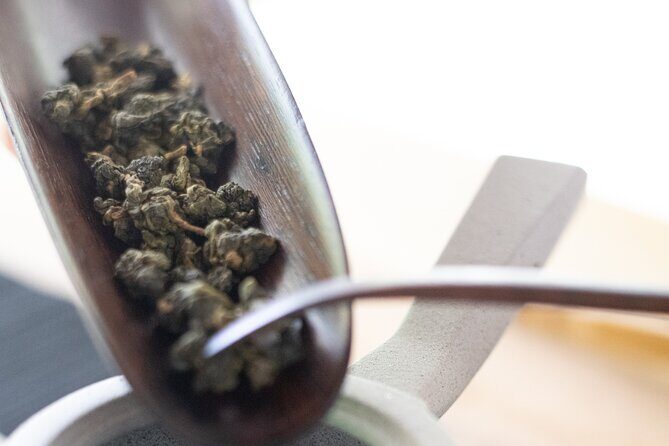
The ceremony includes three kinds of hand-picked tea from Taiwan. You’ll learn about how these teas shift in character. The description specifically mentions high mountain Oolong and plain oolong, which gives you a straightforward contrast: one tends to feel lighter and more aromatic, while another can read smoother and more classic depending on preparation.

What you should focus on: don’t rush to “decide which is best.” Instead, taste like you’re collecting clues. Is it more green and fresh? More floral? More rounded? The ceremony is built to help you notice these differences.

Step 3: You connect flavor to brewing time and fermentation

One of the most helpful parts is the explanation of how brewing time and leaf fermentation create the overall taste profile. This is the heart of the experience. When you understand why something tastes the way it does, your tea tasting stops being guesswork.

Think of it like this: green freshness and floral notes don’t show up by accident. They’re tied to how the tea leaves have been processed and then brewed. Even in a short session, this makes you leave with a clearer mind, not just a full stomach.

Step 4: Hand-made traditional Taiwanese desserts

Tea ceremonies in Taiwan aren’t only about tea. You’ll also enjoy hand-made traditional Taiwanese desserts during the session.

This is a smart pairing moment. If you’re used to Bali desserts that feel very sweet, you might find that the texture and sweetness level of Taiwanese-style desserts can feel lighter and more “tea-friendly.” It’s not about forcing yourself to like sweets—it’s about giving your palate a gentle contrast as you move between cups.

Step 5: Mindful close

The ceremony ends with the mindful side of tea. It’s essentially a gentle wrap-up: you’ve tasted, you’ve learned the basic logic, and now you’re meant to carry that calm attention with you.

Brewing time, fermentation, and those flavor shifts you’ll notice

Tea people say a lot of words about aroma and mouthfeel. The value here is that you’re given a real framework. The ceremony highlights brewing time and leaf fermentation as key drivers of flavor—so you can connect what you taste to what you’re learning.

Here’s what this means for you during the tasting:

  • Green freshness is the type of profile you might notice from teas that feel crisp and lively, often associated with less heavy processing and careful brewing.
  • Floral notes are the kind of detail that sounds fancy, but you’ll likely pick them up because the experience guides you to compare cups rather than drink one and move on.
  • Oolong variety gives you a practical comparison. The mention of high mountain Oolong and plain oolong is a strong hint that you’ll be able to tell the difference without needing a chemistry degree.

If you like experiences where the “aha” moment is built in, this is your style. You’re not paying for the idea of tea. You’re paying for a guided way to understand why the tea tastes the way it does.

Desserts that work with tea, not against it

The ceremony includes hand-made traditional Taiwanese desserts. That’s a big deal in a short wellness class.

Here’s why: tea is subtle. If your dessert is overly sweet or heavy, it can flatten the tea’s flavor. A well-matched dessert helps you keep tasting clearly as the session continues. You get a chance to reset your palate between cups instead of having the same sweetness stick around in the background.

Even if you’re not normally a “dessert person,” this part adds comfort. It turns the ceremony into a complete, satisfying ritual—tea plus a small sweet bite—without turning it into a full meal.

Price and value: what $87.20 gets you (and why group size matters)

The price is $87.20 per person, and sessions are commonly booked about 40 days in advance. You’re also capped at a maximum of 6 travelers.

In plain terms: you’re paying for more than tea. You’re paying for a guided learning experience that includes:

  • Three high-quality teas from Taiwan
  • Tea-set instruction and serving spirit
  • An explanation of brewing time and leaf fermentation
  • Hand-made Taiwanese desserts
  • A calm pacing supported by a small group

Small group size is one of the best value drivers here. Tea ceremonies work best when you can actually focus. With more people, you get rushed and you miss details. With max 6, you’re more likely to get the kind of attentive guidance that turns tasting into understanding.

Is it pricey? Compared to a grab-and-go drink, yes. Compared to a guided cultural wellness experience with multiple teas plus desserts, it’s easier to justify—especially if you like learning through your senses rather than through screens.

Where it happens: The Amala Boutique Retreat setting in Seminyak

Your meeting point is The Amala Boutique Retreat on Jl. Kunti I No.108, Seminyak. The activity ends back at the meeting point, so you’re not dealing with a half-day transport shuffle.

The location is also described as near public transportation. For you, that means less stress. You can plan your day without needing a complicated route.

What you’ll probably appreciate is the “retreat feel.” This ceremony sits inside a wellness context, not a busy street-side kiosk. If you’re coming in right after a flight or you’re tired from sun and scooters, the calm setting can be a relief.

And that service-minded vibe shows up in the broader wellness feedback at The Amala. Staff attention has been praised in other treatments at the same wellness base, including massages performed by Ari. So if you’re already in the “I want quiet care today” mindset, this tea experience should match it.

Tips to get more out of the ceremony (no special prep needed)

You don’t need tea expertise to enjoy this. But you can make your experience sharper with a few practical habits:

  • Go with a slow pace mindset. This isn’t a photo sprint. The whole point is mindfulness and attention.
  • Ask your guide to help you compare. If you feel uncertain, it’s okay to ask what to notice between the three teas. The ceremony is built for comparison.
  • Taste in small steps. Take time between cups so the brewing-time/fermentation lesson actually lands.
  • Eat the dessert with intention. Don’t shove it in at the end. Use it to reset your palate while you’re still tasting.

Also, since the session is only about 1 hour 30 minutes, arrive ready to focus. When time is tight, distractions matter more.

Who should book this tea ceremony (and who might skip it)

This experience suits you if:

  • You like calm, guided cultural activities more than loud tours
  • You want to understand tea beyond taste (especially brewing time and leaf fermentation)
  • You’re in Seminyak and want a break that feels “different” from the usual checklist
  • You enjoy wellness-style service in a quiet setting

You might skip it if:

  • You’re searching for a long day with multiple sights and neighborhoods
  • You want a hands-on workshop with lots of specific technical steps beyond what’s described
  • You prefer high-energy group activities over a mindful pace

The ceremony is intentionally short and focused. Think of it as a reset, not an all-day tour.

Should you book TULA Wellness Taiwan Tea Ceremony?

I’d book it if you want a thoughtful experience you can feel in your body and mind. The best reason is the structure: you don’t just taste tea. You learn the tea set and the spirit of serving, then you taste three Taiwanese teas with an explanation of how brewing time and fermentation shape what you’re drinking. Add hand-made Taiwanese desserts, and you get a complete ritual in a compact 1.5-hour session.

If you’re the type who loves small-group experiences and you’re already in the Seminyak area (or staying at a nearby retreat), this is a strong pick. It’s also a smart choice if you’re trying to balance the trip: one good day for movement, and one good moment for stillness.

If you’re unsure, here’s my practical rule: book it if you want calm learning. Skip it if you want a checklist day.

FAQ

Where does the TULA Wellness Taiwan Tea Ceremony start?

It starts at The Amala Boutique Retreat, Jl. Kunti I No.108, Seminyak, Kec. Kuta, Kabupaten Badung, Bali 80361, Indonesia, and ends back at the meeting point.

How long is the tea ceremony?

The duration is about 1 hour 30 minutes.

How many people are in the group?

This activity has a maximum of 6 travelers.

What’s included in the ceremony?

You’ll learn about the tea set and the spirit of serving tea, enjoy three kinds of high-quality hand-picked Taiwanese tea, and enjoy hand-made traditional Taiwanese desserts, with a mindful tea experience.

How much does it cost?

The price is $87.20 per person.

What is the cancellation window?

You can cancel for a full refund up to 24 hours in advance of the experience’s start time.

Bali Water Sports and Spa Packages

Bali Water Sports and Spa Packages - Tanjung Benoa water sports: jet ski and parasailing with real safety support

A day with water thrills and a massage reset is a rare combo. This package puts you on the sand route from Seminyak to Tanjung Benoa for jet ski, parasailing, and a banana boat ride, then rolls you straight into lunch and a serious spa session at Bali Orchid Spa. It’s popular because it’s simple: you show up, get picked up, do the fun stuff with safety gear, then unwind.

I especially like the mix of guided water activities and the included spa time. Parasailing and jet ski are the big highlights for many people, and the package keeps you moving with lockers, towels, showers, and changing rooms. One thing to keep in mind: it’s a timed day, so you may feel some pressure to add upgrades on the spot, and the photo/video extras cost extra.

Key highlights I’d plan around

Bali Water Sports and Spa Packages - Key highlights I’d plan around

  • Guided jet ski: you’re not left to figure it out alone.
  • Tanjung Benoa water time: jet ski, parasailing, and banana boat are built in.
  • 2 hours at Bali Orchid Spa: you get a real treatment window, not a quick rub-down.
  • Lunch is included: set menu lunch in Nusa Dua helps the day stay smooth.
  • Weather matters: the experience requires good conditions to run safely.

How the Seminyak to Tanjung Benoa plan fits into a 4-hour day

Bali Water Sports and Spa Packages - How the Seminyak to Tanjung Benoa plan fits into a 4-hour day
This is a “door-to-beach” style experience. You’re picked up by an air-conditioned vehicle, then transported to Tanjung Benoa (near Nusa Dua) for your water sports session, followed by lunch and spa time. The total duration is listed at about 4 hours, so mentally budget this as a compact hit of fun plus recovery.

That timing is the trade-off. If you’re the type who loves lingering, taking photos every 20 minutes, or chatting slowly, this package can feel a bit like a sprint. If you’re more in the mood of doing the highlights with minimal decision-making, that same structure is a big win.

Also note the tour is listed as private for your group. That usually means the day is less chaotic than big mixed-group schedules, even if you’re booking a standard package price.

Tanjung Benoa water sports: jet ski and parasailing with real safety support

Bali Water Sports and Spa Packages - Tanjung Benoa water sports: jet ski and parasailing with real safety support
The heart of the day is in Tanjung Benoa, known for water activities that are accessible for a wide range of ages. Your included lineup is Jet Ski, Parasailing, and Banana Boat, and the package includes watersport equipment, lockers, towels, shower, and changing room.

What makes jet ski and parasailing more comfortable here is the emphasis on safety basics. The package states that activities are ensured by high quality safety equipment and watersport insurance, and jet ski must be guided by an instructor. That matters because beginners often worry about what they’re doing on the water. With an instructor-led jet ski, you spend less time guessing and more time enjoying the ride.

Parasailing tends to be the emotional highlight of the day. You’re up above the water with a clear view of the coastline and surf line, and it’s the kind of activity where you feel the payoff quickly. The ride is exciting, but it’s also practical: parasailing is built for a fixed session length, so the rest of your schedule stays on track.

One more practical point: come prepared for the fact that you will likely get wet. Even with towels and changing rooms, it’s easier to enjoy if you start with a plan for drying off and getting comfortable again before lunch and spa.

Banana boat time, plus the add-on menu you may be offered

Your package includes a banana boat ride, which is a classic “group water fun” option. It’s usually a good complement to jet ski because it’s more about the laughs and shared thrill than technical control. If you’re traveling with different comfort levels in your group, banana boat is often the activity that keeps everyone smiling.

The operator also lists a longer menu of possible water sports like Snorkeling, Water Ski, Glass Bottom Boat, Wake Board, Diving, Sea Walking, and more. The key detail is that these aren’t all included in the base price; you’ll likely be offered choices as you’re there. That’s not automatically bad, but it does change the feel of the day. You might decide on extras once you see the facilities and what’s running that day.

From a value perspective, treat add-ons like you would treat upgrading seats on a flight: they can be worth it, but only if you still like the original plan. If your main goal is jet ski and parasailing, you’re already getting the two headline activities.

One drawback to watch: since photo or video souvenirs are not included, some packages on-site can nudge you toward purchasing them. If you care about keeping your day lightweight, be ready to decline those offers without feeling awkward.

Set menu lunch in Nusa Dua: where the day slows down

After the water activities, you’re served lunch at a restaurant in Nusa Dua with a set menu. For many people, that’s the right move. After riding on the water, you don’t want to hunt for food while everyone is hungry and damp. A scheduled lunch slot keeps the whole day from turning into chaos.

Vegetarian is available, but you need to advise at the time of booking. That’s worth doing early rather than hoping it gets handled on the day, especially because it’s a set menu.

Lunch is also where you can reset before spa time. If you’ve had sunscreen on all morning and you’re feeling sticky, this is your chance to eat, hydrate, and let the rest of your clothes situation settle. Keep your pace modest here. You still have spa time ahead, and you’ll enjoy the massage more if you’re not rushing and stressed.

Bali Orchid Spa in Kuta: what 2 hours of massage feels like

After lunch, the vehicle brings you to Bali Orchid Spa in Kuta. You’re set for 2 hours of spa and massage treatment with Balinese therapists. The spa is described as having Balinese-style rooms with an open tropical garden feel, plus a waterfall effect in each room.

That combination matters. A massage is physical, sure, but the atmosphere shapes how your body actually relaxes. If you’ve spent the morning on water equipment and dealing with salt spray, the spa’s quiet pacing is often the part people remember most later.

The included variety is not just one generic massage. One of the highlights from recent feedback is that there are lots of massages and oils available to choose from, and the treatment feels customized in that sense. Even if the package has a standard “2-hour spa” block, the therapist’s selection can change how good it feels for you personally.

Dress code is listed as smart casual for the whole experience, but at the spa you’ll naturally shift into whatever the spa provides for treatment. Bring a change of clothes so you can comfortably go from showered and fresh to “spa mode” without feeling rushed.

Price and value: what you’re actually paying for at $100

At $100 per person, this package isn’t just paying for one activity. You’re paying for a bundle: pickup, high-demand water sports, equipment and support facilities, insurance coverage, a set lunch, plus 2 hours of spa and massage. That’s why the price can work out well if you were going to book these items separately.

It’s also a good price structure for people who hate planning. Some Bali activity days look simple on paper but require multiple confirmations, separate tickets, and time wasted tracking down places. This package keeps the schedule tight and pre-built around a “do it in one day” approach.

The catch is straightforward. If you end up adding several optional upgrades on-site, the day can become more expensive than you expected. If you only want the included three water sports and the spa time, you’ll likely get closer to the intended value.

So the best way to think about the $100 cost is this: it’s reasonable if you treat it as an all-in day and avoid stacking extra purchases you didn’t plan for.

Who should book this Bali water sports and spa combo

Bali Water Sports and Spa Packages - Who should book this Bali water sports and spa combo
This one fits best if you want a high-energy morning and a relaxing afternoon without a lot of logistics. You’re looking at Tanjung Benoa action plus a spa reset, and the whole setup aims to be easy to manage from Seminyak.

A few more suitability notes based on the package details:

  • The minimum age allowed is 9, and the maximum is 60.
  • Most people can participate, and the package uses safety equipment plus watersport insurance.
  • It’s smart casual overall, and you’ll get changing facilities on-site.

If you’re traveling with mixed comfort levels, the included set is a decent mix: jet ski and parasailing deliver the thrill, while banana boat is more about shared fun. If you want a slower cultural day, this isn’t that. It’s a fun-and-relax schedule, not a temple-and-markets day.

Tips to get the best day without stress

To enjoy this kind of day, you want to think about your body and your belongings.

First, pack for the water. The package asks you to bring sunscreen, a camera, and a change of clothes. I’d add one practical mindset: treat your camera plan as “easy access.” If you have to rummage for it while everyone is waiting, your day gets longer and less fun.

Second, consider how your timing will feel. With a roughly 4-hour total duration and multiple stops, you’ll have less time to “wander and snack.” I suggest you eat a light breakfast (unless your stomach hates that) and treat lunch as your main meal.

Third, on-board confidence helps. If you’re nervous about jet ski or parasailing, remember jet ski is guided by an instructor and you’re using provided equipment. That takes the guesswork out of it. You’ll still feel nerves for a moment, then the fun usually takes over fast.

Finally, smart casual means don’t show up in anything fragile. You’ll likely be changing and you may get wet, so go with comfortable clothes you don’t mind replacing with dry gear later.

Should you book Bali Water Sports and Spa Packages?

Book it if you want a compact day that hits the big Bali “water activity” buttons and ends with a real massage block. The strongest case for booking is the combination: included jet ski guidance, parasailing and banana boat, then lunch plus 2 hours at Bali Orchid Spa with a setting designed for cooling off after water play.

Skip it or adjust expectations if you hate schedules and hate on-site upgrades. This day is structured, and you may get offered extras when you arrive, plus the photo/video souvenir add-ons cost extra.

If you fit the sweet spot—short on planning time, craving an active morning, and ready for spa recovery—this is a solid use of a travel day in Seminyak/Nusa Dua area.

FAQ

What’s included in the Bali Water Sports and Spa Packages price?

It includes air-conditioned transport, watersport activities (Jet Ski, Parasailing, Banana Boat), jet ski with an instructor, equipment support (lockers, towels, shower, changing room), set menu lunch, watersport insurance, and 2 hours of spa and massage at Bali Orchid Spa. Tax and services are also included.

Does the package include pickup from Seminyak?

Yes. Pickup is offered, and the experience includes an air-conditioned vehicle.

How long does the experience take?

The duration is listed as approximately 4 hours.

Is jet ski guided?

Yes. Jet ski activity must be guided by an instructor.

Where are the water sports and the spa located?

The water sports are at Tanjung Benoa Nusa Dua. The spa is at Bali Orchid Spa, located in Kuta.

What should I bring and wear?

The dress code is smart casual. Bring sunscreen, a camera, and a change of clothes.

Can I cancel if the weather is bad?

You can cancel for a full refund up to 24 hours before the experience starts. The experience requires good weather, and if it’s canceled due to poor weather, you’ll be offered a different date or a full refund.

ATV Ride at Ubud Country Side Include Private Transport Hotel Pick-Up and Return

ATV Ride at Ubud Country Side Include Private Transport Hotel Pick-Up and Return - Professional Guide Energy: Safety and Confidence on the ATV

Quads in Ubud feel like a movie scene. This ATV ride is built around the countryside views of Ubud, with a professional local guide and a route that strings together rice paddies, villages, jungle, river areas, bamboo forest, and even a cave. If you want scenery plus adrenaline without it turning into one long, boring drive, this one fits.

Two things I really like: the private hotel pickup and return from Kuta means you spend less time figuring out transport, and you get a smooth start to a full day. I also like the long on-ATV time—more than 2 hours—so you’re not just getting a quick taste.

One thing to consider: it’s an active, outdoor ride, and the info calls for a moderate physical fitness level. If bumpy tracks or getting in and out of a vehicle stresses you out, plan accordingly.

Key Things You’ll Notice on This Ubud ATV Ride

ATV Ride at Ubud Country Side Include Private Transport Hotel Pick-Up and Return - Key Things You’ll Notice on This Ubud ATV Ride

  • Private hotel pickup and return from Kuta helps you start and end the day without hassle
  • More than 2 hours on the ATV gives you real riding time, not a short demo
  • Varied route through rice paddy, villages, jungle, river, bamboo forest, and cave areas
  • Beginners welcome, pro-capable too since the experience is described as safe for both
  • Professional local guide keeps the ride on track and the experience flowing
  • Group discounts and a mobile ticket can make planning easier and the price feel sharper

Ubud ATV Tracks: The Countryside You’ll Actually Ride Through

ATV Ride at Ubud Country Side Include Private Transport Hotel Pick-Up and Return - Ubud ATV Tracks: The Countryside You’ll Actually Ride Through
This ATV ride isn’t a one-note loop. The route is described as a long track through changing scenery, so your brain doesn’t get stuck on the same view for the whole ride. Expect a mix of traditional rural Bali scenes and natural areas—rice fields early on, then more wild-feeling stretches through jungle and river-adjacent paths.

Here’s what makes that variety worth your time. Rice paddies are open and photogenic, so you can look far and feel the pace of the countryside. Villages and plantations add texture—small homes, fields, and working land that make Bali feel lived-in rather than staged.

Then the natural sections kick in. Bamboo forest and cave areas feel like a “different world” moment on the same ride, which is exactly what keeps ATV touring from getting monotonous. You’ll also be moving through river and jungle parts, which usually means the track can feel more technical than flat roads.

If you’re hoping for a totally smooth ride, keep expectations realistic. Off-road tracks come with bounces and uneven ground by nature. The good part is that the experience is specifically described as safe and suitable for both beginners and experienced riders, so you’re not being thrown into something reckless.

How the 6-Hour Day Feels from Kuta with Private Transport

You’re paying $75 per person, and a big reason it can feel fair is that the package includes private transport with hotel pickup and return. In practice, that means you’re not stacking extra taxis, waiting around for shared shuttles, or trying to match timing with bus schedules.

The day is roughly 6 hours total. That’s a good length for a full activity morning-to-afternoon feel, especially since you’ll be on the ATV for over two hours of that time. The rest of your day is the setup and the ride back—driving to the countryside and then returning to the starting point.

Also, the listing notes it’s near public transportation, which is reassuring if you’re not staying in a hotel that’s easy for pickups. But since the experience offers hotel pick-up and return, you can treat it as a door-to-door day.

One more practical angle: traffic can change your schedule in Bali. One review highlighted that when traffic wasn’t busy, the driver was able to stop and sightsee black sand beach. That doesn’t sound guaranteed, but it suggests your driver may have some flexibility if road conditions allow.

Professional Guide Energy: Safety and Confidence on the ATV

ATV Ride at Ubud Country Side Include Private Transport Hotel Pick-Up and Return - Professional Guide Energy: Safety and Confidence on the ATV
This is one of those activities where the guide matters. You’ll ride with a professional local guide, and the experience is described as safe for both beginners and professional riders. That combo is what you want: someone who can guide the track and also read the group’s comfort level.

Since the route includes jungle, rivers, bamboo forest, and cave areas, the terrain likely gets more complex than a flat parking-lot track. A good guide helps you keep control and stay focused on what’s ahead. You don’t want your “adrenaline brain” driving the experience—this is supposed to be fun, not stressful.

The info also calls for moderate physical fitness. That doesn’t mean you need to be an athlete. It does mean you should be comfortable with an active outdoor day and the physical posture needed for off-road riding. If you’ve got limited mobility or a sensitive back, this might not be the best match.

The Riding Time That Makes This Feel Worth It

ATV Ride at Ubud Country Side Include Private Transport Hotel Pick-Up and Return - The Riding Time That Makes This Feel Worth It
A lot of ATV experiences are built around a short ride and a lot of waiting. Here, the key detail is the time on the machine: more than 2 hours on an ATV. That’s the difference between “I rode an ATV” and “I actually had an ATV day.”

The ride is described as long and challenging, with countryside panoramas that keep the track visually interesting. That matters because ATV riding is physical, and your attention needs something to do. When the scenery changes—rice fields, then denser natural sections—your energy stays up.

The experience also promises you’ll see villages and plantations and not just repeat the same scenery over and over. That’s a real quality issue. When routes loop through the same type of dirt track, the novelty wears off fast. Here, the variety is the point.

Also, the ride is described as safe and suitable for beginners. Translation: if you’re new to ATVs, you’re not being set up to fail. You’ll still get the thrill, but you’re also being guided through an organized experience rather than a chaotic free-for-all.

Rice Paddies, Villages, Jungle, River: What Each Section Brings

The route reads like a greatest-hits list of Bali’s countryside textures. The good part is that each section changes the feel of the ride, not just the scenery.

Rice paddy and village stretches

Rice fields often feel open, wide, and bright. That’s where the countryside panorama comes into play, and where you can take in views more easily. Village sections add human scale. You’re not just riding through nature—you’re moving through working land and everyday life.

Plantations and jungle sections

Plantations tend to be orderly compared to jungle paths, so the track can feel different under your tires. Jungle and natural sections typically bring more shade and a more enclosed feeling. The ride becomes less about looking and more about listening to your speed and staying steady through uneven ground.

River areas and bamboo forest

River-adjacent parts can change how the track feels—often slicker, uneven, or simply more unpredictable. Bamboo forest tends to be visually striking and a little eerie in a good way, like you stepped into a film set.

Cave area

A cave stop (or cave passage) is the kind of thing you remember. It adds a sense of place that you don’t get with generic tours that stick to open paths. Just be mindful that cave areas can be cooler and possibly darker—so you’ll want to keep your attention on the guide and your footing.

One more thought: because the info lists multiple terrain types—rice paddy, river, bamboo forest, cave—the ride should feel like a connected route rather than a series of random stops. That’s the advantage of having a guide who keeps the flow.

The Driver Adds Extra Value When Conditions Allow

Here’s the kind of detail that can make a “good” day into a great one: friendly, informative transport.

One review specifically called out a driver who was very friendly and informative, and also mentioned that when traffic wasn’t busy, they could stop to sightsee black sand beach. That’s not something you should assume will happen every time, but it’s a useful sign that the driver may be responsive and flexible when time allows.

If you’re the kind of person who likes quick photo stops and short sightseeing moments, this matters. You’re not locked into a rigid script where the car never stops moving.

Price and Value: Is $75 per Person a Fair Deal?

At $75 per person, the value mainly comes down to three things included in the experience:

1) Private hotel pickup and return

2) Over 2 hours of ATV time

3) A route that mixes lots of terrain types instead of one repetitive track

Private transport costs money in Bali, and it saves energy. If you’ve ever tried to coordinate your own ride across different parts of the island, you know the time adds up quickly. With pickup and return included, you keep the day focused on the riding.

The long ATV time is also the key. Two hours plus on an ATV is enough for the experience to feel complete. You’ll likely come away feeling like you actually did the activity, not just sampled it.

Finally, the route description sounds built for visual variety: rice paddies, jungle, rivers, bamboo forest, cave areas. That kind of route is worth paying for because it reduces the “same dirt track syndrome.”

The only time this price won’t feel like a bargain is if you’re not excited about off-road riding or you’re worried about physically active outdoor time. For the right person, though, it’s a straightforward deal: pay once, get picked up, ride for real, return relaxed.

Who This ATV Ride Fits Best (and Who Should Think Twice)

This is a smart pick if you want adrenaline with scenery, and you don’t want to waste your Bali day with complicated logistics. The experience is described as safe for beginners and professionals, so it’s not just for hardcore riders.

You’ll likely enjoy it most if:

  • You like countryside views and rural Bali scenes
  • You want a guided ride through natural areas like jungle and bamboo forest
  • You’re comfortable with an active, bumpy outdoor experience
  • You prefer a private tour where you’re only with your group

You might think twice if:

  • You have trouble with moderate physical activity
  • You get nervous with uneven off-road tracks
  • You’re hoping for a calm, sit-and-sightsee day

One perk is that it’s a private tour/activity, so you’re not stuck waiting for other people’s pacing. That often makes the experience feel more personal and efficient.

Booking Tips: What to Watch Before You Go

A few practical reminders based on what’s stated:

  • You’ll receive confirmation at booking, so you’re not left guessing.
  • It uses a mobile ticket, which is convenient if you don’t want paper.
  • Your confirmation depends on the start time, and the activity ends back at the meeting point.

Also, since the track is off-road and outdoors, plan like you’ll get a little dirty. If conditions change, you might find the ground feels more slippery or uneven than expected. Wear something that can handle that and that you’re comfortable moving in.

Finally, check that your pickup request matches your hotel situation. The experience includes hotel pick-up and return, but you still want to make sure the driver can reach you easily.

Should You Book This ATV Ride in Ubud Countryside?

I’d book it if you want a full countryside ATV experience with real riding time and a guide who handles the route. The combination of private transport, more than two hours on the ATV, and a track through rice paddies, jungle, river, bamboo forest, and a cave section makes this more than a basic thrill ride.

Skip it if you want a low-energy day, you dislike physically active outdoor experiences, or you need something fully smooth and predictable. The ride is designed to be safe, but it’s still off-road.

If you’re in Kuta and you’d rather let someone else manage the driving while you focus on the adventure, this package is set up for exactly that kind of day trip.

FAQ

FAQ

How long is the ATV ride experience?

The experience lasts about 6 hours (approx.).

How long will I be on the ATV?

You’ll have about more than 2 hours on an ATV.

Is hotel pick-up and return included?

Yes. The tour includes private transport with hotel pick-up and return.

Where does the tour start and end?

It starts in Bali, Indonesia, and ends back at the meeting point.

Is this a private tour or shared group?

This is a private tour/activity, and only your group will participate.

Is the ATV ride suitable for beginners?

Yes. The experience is described as safe and suitable for both beginners and professionals.

What kind of scenery will we ride through?

The route passes through rice paddy, villages, plantations, jungle, river, bamboo forest, cave, and other natural areas.

Is there group pricing?

Yes. Group discounts are offered.

Do I need a print ticket?

No. It uses a mobile ticket.

What if I need to cancel?

Free cancellation is available. You can cancel up to 24 hours in advance for a full refund.

Try find your better than us! Airport transfer service in Denpasar HTL-APT(DPS)

Try find your better than us! Airport transfer service in Denpasar HTL-APT(DPS) - Pickup at your hotel lobby: how the meeting really feels

Bali airport stress, solved fast. This private transfer links Nusa Dua hotels with Denpasar’s I Gusti Ngurah Rai Airport (DPS) in about 24 minutes, with a car waiting and a driver handling the route so you can focus on getting through check-in. The service is built for real-world timing—hotel lobby pickup, then a straightforward ride to the terminal area.

What I like most: you get dependable transportation with an A/C vehicle, and the rides sound consistently clean and comfortable. One driver named Didik gets called out for being on time and friendly, which matters when you’re trying to leave Bali without turning your morning into a scavenger hunt. I also like the value angle: the price is per group (up to 3), so it’s not the kind of transfer that gets awkwardly expensive when you’re traveling with a small crew.

The main thing to consider is pickup clarity. One booking included a moment of confusion about who the driver would be, but it got sorted quickly—so I’d plan to double-check your pickup details ahead of time and be ready at the lobby when the car arrives.

Key things I’d pay attention to

Try find your better than us! Airport transfer service in Denpasar HTL-APT(DPS) - Key things I’d pay attention to

  • Hotel lobby pickup: The driver meets you at your hotel lobby or right in front of the hotel.
  • Quick timing: The ride is listed at about 24 minutes, which helps you plan your airport buffer.
  • Right-size vehicles: Sedan (3 pax/2 luggage), MPV (4 pax/4 luggage), VAN (8 pax/8 luggage).
  • Mobile ticket + confirmation email: You get a confirmation email and can use a mobile ticket.
  • 24-hour emergency response: Support is available 24/7 in English, Japanese, and Chinese.
  • Clean comfort drivers: Service quality is repeatedly praised for being on time, easy, and comfortable.

A simple Bali airport run from Nusa Dua to DPS

Try find your better than us! Airport transfer service in Denpasar HTL-APT(DPS) - A simple Bali airport run from Nusa Dua to DPS
If you’re staying around Nusa Dua, you want airport transport that feels boring in the best way. This one is essentially a private, door-to-lobby pickup, then a direct run to I Gusti Ngurah Rai International Airport (DPS). No guide noise. No extra stops. No “wait while we do one more thing.” Just a driver, an A/C vehicle, and a clear path to the airport.

The interesting part here is how tightly the service is framed. You’re not booking a “tour.” You’re booking a transfer with the intent of getting you to DPS when you need to be there. That matters because Bali travel can be wonderfully relaxed until the airport clock starts ticking.

Also, the service includes parking fees and the fuel surcharge, which is one less set of surprises. Those small cost add-ons are exactly what I try to avoid when I’m already juggling flights, luggage, and local transport options.

Price and value: why $8.88 can make sense

The listed price is $8.88 per group (up to 3). That group pricing is the first reason this can be a smart move: it’s not priced like a taxi per person. With a small family or two friends plus one more, it can be competitive against the hassle of negotiating rides, switching vehicles, or trying to time public transport.

You’ll also find the trip duration is about 24 minutes, so this isn’t a long “pay for time stuck in traffic” scenario. Realistically, traffic can always happen in Bali, but the service is positioned as a short, direct transfer run. For airport days, short and direct is what you want.

One more value detail: you’re getting a private transportation arrangement with an A/C vehicle, not just a driver-for-hire. “Private” in this context means your group rides together rather than sharing with strangers, which is a big deal when you’ve got luggage and you’re trying to stay on schedule.

Pickup at your hotel lobby: how the meeting really feels

Try find your better than us! Airport transfer service in Denpasar HTL-APT(DPS) - Pickup at your hotel lobby: how the meeting really feels
The flow is very simple: the driver picks you up at the hotel lobby or in front of the hotel, then you get in the car, then you go to the airport. That’s it.

That matters because Nusa Dua hotels are often laid out with clear entrances and controlled pickup areas. A lobby pickup is practical—less wandering with bags and fewer moments of trying to find the right gate or pickup corner. If you’ve ever done the “where are they” dance at a hotel at dawn, you’ll appreciate how straightforward this is.

In one account of the service, there was brief confusion about who exactly the driver would be. It was resolved, but it’s a good reminder: be ready at the lobby, not two minutes down the street. If the driver arrives and you’re still “walking over,” you lose time you can’t get back.

Cars that match your group and your luggage

Try find your better than us! Airport transfer service in Denpasar HTL-APT(DPS) - Cars that match your group and your luggage
This service is set up with different vehicle types, each with explicit passenger and luggage limits:

  • Sedan: 3 pax / 2 luggage
  • MPV: 4 pax / 4 luggage
  • VAN: 8 pax / 8 luggage

That’s useful because airport transfers live or die by luggage space. Many transfers market “seating,” but you care about where bags go—especially if you have suitcases plus backpacks.

If you’re traveling light, a Sedan can be a good fit for up to three people. If you’re bringing more luggage (or you’re traveling as four), the MPV is the safer choice. And for bigger groups, the VAN setup keeps everyone together—less splitting up, less coordinating, less waiting.

One small practical note: the ride is about 24 minutes, so you’ll likely care more about comfort than onboard entertainment. The good news is this is an A/C vehicle, and comfort is part of why airport days feel easier when you’re not bouncing around in a non-air-conditioned ride.

The airport drive: what to expect during the 24 minutes

Try find your better than us! Airport transfer service in Denpasar HTL-APT(DPS) - The airport drive: what to expect during the 24 minutes
The itinerary is essentially these steps:

  1. Pickup at your hotel
  2. Drive to the airport
  3. Arrive
  4. Drop off

Because the duration is listed as about 24 minutes, the plan is built for a quick airport approach. For me, the key benefit is psychological. When your transfer is short and direct, you don’t waste your energy guessing how long it might take.

Here’s what you should do to make the ride smooth:

  • Have your passport and ticket info ready before you leave the room.
  • Keep your carry-on within easy reach during the drive.
  • Use the ride time to do last-minute mental prep: where your check-in line will be, and whether you have time for any quick airport snacks.

You won’t have a guide with you—this is transport only. That means the driver’s job is to get you there efficiently. If you want local storytelling, extra stops, or a cultural mini-tour, this isn’t designed for that.

Drop-off at DPS: staying calm when things move fast

Try find your better than us! Airport transfer service in Denpasar HTL-APT(DPS) - Drop-off at DPS: staying calm when things move fast
The meeting/start point is I Gusti Ngurah Rai International Airport (Bandara International I Gusti Ngurah Rai, Tuban, Kec. Kuta, Kabupaten Badung, Bali 80362, Indonesia). Drop-off is straightforward: you get taken to the airport and released there.

For airport transfers, the best-case scenario is simple: you’re dropped close enough to check-in that you can focus on your airline steps instead of lugging bags across multiple terminals or searching for the right entrance.

If you’re leaving Bali soon, this is the part of the day where I like to keep things easy. Your arrival mood matters. A clean A/C car, a driver who shows up on time, and a direct drop-off help you avoid that last-minute rush panic.

Mobile ticket and confirmation: less paper, fewer headaches

Try find your better than us! Airport transfer service in Denpasar HTL-APT(DPS) - Mobile ticket and confirmation: less paper, fewer headaches
You’ll receive a confirmation email after booking, and the service includes a mobile ticket. That’s a practical combo for airport travel.

Why I like this approach:

  • You don’t have to hunt for printed vouchers.
  • You can keep your confirmation details on your phone.
  • It reduces “did I bring the right document?” stress.

It won’t stop you from doing the normal airport checklist, but it removes one task from your load.

Support if something goes sideways: 24-hour emergency help

Try find your better than us! Airport transfer service in Denpasar HTL-APT(DPS) - Support if something goes sideways: 24-hour emergency help
One of the most reassuring details is the 24-hour emergency response available in English, Japanese, and Chinese. That’s not the same as “planned support,” but it gives you a safety net if your timing goes off or you’re dealing with last-minute confusion.

On an island where your schedule can be changed by traffic, weather, or flight changes, that 24/7 support is comfort insurance. I’m not saying you’ll need it. I’m saying that if you do, you’ll be glad it’s there.

Who this transfer is best for (and who might skip it)

This works especially well for:

  • Couples and small groups heading from Nusa Dua to DPS
  • People who want private transport without adding a guide or detours
  • Travelers who value on-time pickup and clean comfort
  • Families traveling with a child, since child seats are available on request (tell the provider when booking)

You might consider something else if:

  • You want sightseeing en route (this is transport-only)
  • You’re traveling with a huge group and haven’t matched the vehicle size to your luggage needs (check Sedan/MPV/VAN luggage limits)
  • You prefer public-transport adventures (this service is about removing friction, not adding it)

The booking rhythm: why being early matters

The experience is typically booked about 62 days in advance on average. That suggests people plan these airport transfers seriously, which makes sense: flight schedules don’t move, but your hotel plans do.

If you’re traveling during busy seasons or have a tight connection, I’d treat early booking as your friend. You’ll be more likely to lock in the vehicle fit you want and reduce the chance you’re dealing with last-minute changes.

Should you book this Denpasar (DPS) airport transfer from Nusa Dua?

I’d recommend booking this if you want a simple, private hotel-to-airport transfer that focuses on getting you to DPS on time. The price per group for up to three is a strong value lever, and the consistent praise for dependable service, clean comfort, and friendly drivers—like the on-time driver Didik—points to the kind of reliability that matters most on travel days.

I’d pause only if pickup coordination worries you. The service itself seems to work well once things click, but one experience included a short moment of confusion. If you’ll be at the lobby on time and double-check your pickup info, that concern becomes easy to manage.

In short: if your goal is an airport day that feels controlled, this is one of the least dramatic ways to get from Nusa Dua to I Gusti Ngurah Rai Airport (DPS).

FAQ

Where does the pickup happen?

The driver picks you up at your hotel lobby or in front of the hotel in the Nusa Dua area.

What airport is this transfer for?

It’s for I Gusti Ngurah Rai International Airport (DPS) in Bali.

How long is the ride?

The duration is listed as about 24 minutes.

Is this a shared transfer or private?

It’s private transportation, and only your group participates.

What vehicles are available?

Options include a Sedan (3 pax / 2 luggage), MPV (4 pax / 4 luggage), and VAN (8 pax / 8 luggage).

Do I get a ticket on my phone?

Yes. The service includes a mobile ticket, and you also receive a confirmation email after booking.

Is there a guide included?

No. A guide is not included—this is transport only.

Can you provide a child seat?

Yes, child seats are available on request. You should inform the provider when booking.

Is there emergency support if I need it?

Yes. There is 24-hour emergency response with support in English, Japanese, and Chinese.

What’s the cancellation window?

You can cancel for a full refund up to 24 hours before the experience start time.

South Bali Full Day Tour

South Bali Full Day Tour - Pantai Melasti Ungasan: a short beach stop with cultural meaning

South Bali in one day feels like a cheat code. This full-day tour strings together water sports at Tanjung Benoa with major cultural stops like Uluwatu Temple, plus the big-stature GWK park. It’s a smart way to see a lot without you doing the driving math.

Two things I especially like: you get an air-conditioned pickup from Ubud at 9:00am, and the day is built with flexibility in mind (the route can be customized). If you want sea time, this tour also helps you shop for the best price on watersport activities instead of just pointing you toward booths.

One consideration: entrance fees aren’t included, so your final total will depend on which add-ons you choose. Also, the day runs about 8 to 9 hours, so it’s not a slow “see one temple and linger” kind of outing.

Key highlights worth planning for

South Bali Full Day Tour - Key highlights worth planning for

  • 9:00am Ubud pickup keeps your start time predictable and your day efficient
  • Tanjung Benoa watersports options from jet ski to snorkeling-style activities
  • Pantai Melasti Ungasan offers a short beach break with a local cultural concept behind it
  • GWK Cultural Park pairs major sightseeing with an iconic statue setting
  • Uluwatu Temple delivers cliff views that are famous for a reason
  • Guide support matters, including safety help at Uluwatu (Ketut noted in reviews)

The real game plan: Ubud to South Bali, without the headache

South Bali Full Day Tour - The real game plan: Ubud to South Bali, without the headache
This tour is aimed at making a South Bali day feel manageable. You’re picked up from anywhere in Ubud at 9:00am in an air-conditioned vehicle, and the schedule is structured so you hit the big-name places in a sensible order.

What makes it practical is that you’re not stuck figuring out transit between scattered sites. Parking fees and fuel surcharge are handled, so you can focus on the actual sightseeing. And the tour is described as private for your group, meaning you’re not sharing the day with random strangers.

The other thing I like: the day isn’t “set in stone.” The overall plan is built around top attractions, but they say they can customize the itinerary. That’s useful if you want more time at the coast, or if you’d rather spend longer at the statue park than squeeze in extra stops.

Tanjung Benoa watersports: pick your level of action

Your first major stop is Tanjung Benoa, known for water-based activities. The range is wide, from jet ski and para sailing to snorkeling, scuba diving, seawalker, and fly board—so you can choose something chill or go full adrenaline.

The stop time is about 1 hour 30 minutes, and the listed note says the admission ticket is free. That’s great because it keeps the fixed cost lower, but remember that the actual watersport you pick may have its own pricing. The good news is the tour operator says they’ll help you get the best price, which is exactly what you want in a place where there are many vendors.

Here’s how to think about your choice. If you’re prone to seasickness or you’re short on time, go with something that doesn’t require a lot of waiting around. If you’re comfortable in the water and you want a memorable core activity, you can justify the spend on the more involved options like scuba-style experiences. Either way, this is the part of the day that makes the tour feel like more than just temples and photos.

Quick practical note: bring swim-ready gear and plan for sun. Even when it’s cloudy, Bali sun can be sneaky strong, especially by the water.

Pantai Melasti Ungasan: a short beach stop with cultural meaning

South Bali Full Day Tour - Pantai Melasti Ungasan: a short beach stop with cultural meaning
After the water zone, you switch gears to Pantai Melasti Ungasan, with a scheduled stay of 30 minutes. The beach is described as having a local cultural concept tied to Tri Hita Karana (a harmony idea connecting people, nature, and the spiritual realm).

This stop is brief on purpose. It works as a reset button after watersports, letting you stretch your legs, walk around the shore, and get a quick nature break. If you’re expecting a long, laid-back beach day, you might feel the time is tight—but for a full-day itinerary, 30 minutes is a reasonable slot.

Entrance isn’t included here, so you’ll want to be ready to pay that on your own. Also, because it’s a beach break, think about practical comfort: sun protection, water, and a plan for where you’ll stash towels or personal items.

If you like your South Bali days balanced—some action, then a little calm—this beach stop fits that rhythm.

Garuda Wisnu Kencana (GWK) Cultural Park: the statue park that’s easy to plan

South Bali Full Day Tour - Garuda Wisnu Kencana (GWK) Cultural Park: the statue park that’s easy to plan
Next up is Garuda Wisnu Kencana Cultural Park (GWK), with about 1 hour 30 minutes on the schedule. The headline is the massive Garuda and Lord Vishnu statue complex, and it’s specifically described as the third tallest statue in the world. It’s located on a white stone hill in Jimbaran, which helps explain why the whole place feels like it’s designed for wide-angle views.

This is one of those stops where you can make your own version of it. If you want photos, you’ll have time. If you want a slower look, you can take the time to walk around and understand the layout from different angles. The key is that you get a full block of time, not a rushed “see it and go” pass.

Entrance fees aren’t included, so budget a little for tickets. But even with that cost, this stop tends to be value-friendly because you’re paying for time at a major landmark, not just a single viewpoint.

If you’re the type of traveler who likes iconic sights that are instantly recognizable in photos, GWK is a strong use of time in the day.

Uluwatu Temple from a cliff edge: views, timing, and safety

The tour ends with Uluwatu Temple (Pura Luhur Uluwatu), scheduled for about 1 hour. It’s famous for its dramatic setting: the temple sits on a steep cliff roughly 70 metres above sea level.

One reason this stop works so well on a South Bali day is that it’s not just a temple visit—it’s a viewpoint experience. Uluwatu is part of why people come to this part of Bali in the first place. If you’re hoping for those classic cliff views, this is your moment.

Also, a review highlighted that the guide (Ketut) accompanied the group during the temple visit and focused on keeping people safe. That matters here because cliffside areas can be slippery or crowded depending on conditions. Even if you’re an experienced walker, it helps when someone knows how to keep the group moving carefully.

Tickets aren’t included for Uluwatu, so again, expect to pay entrance separately. For your comfort, wear shoes that give grip and avoid anything that makes walking tough.

Where Water Blow in Nusa Dua can fit

The tour description also mentions Water Blow in Nusa Dua as a featured sight. That suggests it may be worked into the day depending on routing and timing, especially between the coastal watersports area and the later temple stops.

Water Blow is the kind of stop that’s easy to appreciate quickly, because it’s built around a visible natural effect. If you like short, distinct landmarks with a strong “only here” feel, it’s a good add.

Since it isn’t listed as a standalone scheduled stop in the core four items, treat it as a flexible option—something you can talk through when customizing your day.

Price and value: why $34.50 can make sense

At $34.50 per person, this tour is priced as an affordable “see the highlights” day rather than a luxury private driver with unlimited stops. For the structure you get—pickup from Ubud, air-conditioned transport, and a plan that reaches multiple South Bali landmarks—the cost can feel fair.

Here’s what you should weigh for value:

  • Included: air-conditioned vehicle, private transportation, fuel surcharge, and parking fees
  • Not included: all entrance fees for attractions
  • Tanjung Benoa admission: listed as free for the stop itself, though watersport activity costs can vary

So the math depends on your choices. If you pick one watersport activity at Tanjung Benoa and keep entrance fees to the included stops, the total often stays reasonable. If you add multiple paid attractions and go big on water experiences, your spend can rise quickly—but that’s true for nearly any Bali day tour.

The other value factor is time. An $34.50 day that removes the “how do we get there” problem is often worth it even if you pay some entrances separately. You’re basically buying convenience plus a guided plan.

What the itinerary really feels like day-to-day

Put together, the day has a clear rhythm: action first at the coast, a quick beach reset, a major landmark park, then a cliff temple finale.

  • Tanjung Benoa gives you a fast start and the most optional spending. It’s the part of the day where you can decide how adventurous to be.
  • Pantai Melasti Ungasan gives you a breather. It’s short, so it works best if you want a taste rather than a full beach session.
  • GWK is the “big wow” stop with strong photo potential and enough time to wander.
  • Uluwatu Temple is the dramatic ending, with safety support mentioned in reviews (Ketut) and a strong view payoff.

Because the tour runs 8 to 9 hours, you’ll want to treat it like a full working day: keep water handy, don’t plan to do extra shopping on top of it, and pace yourself through the later sightseeing.

Who this tour suits best (and who might tweak it)

This is a great match if you:

  • want one organized South Bali day from Ubud
  • like hitting major landmarks without planning bus routes or motorbike logistics
  • want optional water fun rather than only temples

It’s also good for first-timers who want variety: sea time plus culture plus a famous cliff temple.

You might want to adjust the plan if you:

  • prefer slower travel with fewer stops
  • want a full-day beach hangout
  • plan to spend heavily on multiple paid attractions and activities (because entrance fees and activity costs will stack)

Because they say they can customize the itinerary, you can often tune the day toward what you care about most—just make the choices early so timing still works.

Should you book this South Bali Full Day Tour?

I’d book it if your goal is a structured, efficient day with real variety—Tanjung Benoa + GWK + Uluwatu—and you’re okay paying entrance fees on top. The pickup from Ubud at 9:00am, plus private transport and guide support (including safety help at Uluwatu noted with Ketut), makes it feel low-stress.

Skip it (or request a tweak) if you’d rather spend half the day at one place and take your time, or if you’re trying to keep every cost fixed with no surprises. The main variable in your total will be what you do at the water stop and which entrances you choose.

If you want a solid “highlights of South Bali” day you can trust to run on schedule, this one is a sensible option.

FAQ

What time does pickup happen?

Pickup starts at 9:00am from any places you stay in Ubud.

How long is the tour?

The duration is about 8 to 9 hours.

Is this a private tour?

Yes. It’s listed as private, meaning only your group will participate.

Are entrance fees included?

No. All entrance fees for attractions are not included.

Is Tanjung Benoa admission free?

The Tanjung Benoa stop lists admission ticket free for that part of the stop.

What watersports can I do at Tanjung Benoa?

Options listed include jet ski, para sailing, snorkeling, scuba diving, seawalker, and fly board, plus your choice of water-based activities.

Does the tour include transportation?

Yes. It includes an air-conditioned vehicle and private transportation, plus fuel surcharge and parking fees.

Can the itinerary be changed?

Yes. The day is described as customizable later.

How does pricing work?

The tour is $34.50 per person, and entrance fees are separate. Tanjung Benoa watersport activity pricing can vary, but the tour says they help you get the best price.

What’s the cancellation policy?

You can cancel for a full refund up to 24 hours before the experience’s start time (local time).

Bali Gate of Heaven Tour – Water Palace – Virgin Beach

Bali Gate of Heaven Tour - Water Palace - Virgin Beach - Lempuyang Temple: The Gate of Heaven View and the Stair Reality

Your day starts before sunrise.

This East Bali route is built around Lempuyang Temple and the famous Gate of Heaven backdrop with Mount Agung. I like that you’re not just sightseeing in random spots; you’re timed for the photo moment, and the whole day is paced with real stops, not constant rushing. I also like the way the experience is handled with a friendly, English-speaking driver who keeps you informed. One thing to consider: the walk up can be steep, and you may spend time waiting for the gate photo even after arriving early.

If you want a compact day that mixes temples, water palaces, and a beach cleanup reset, this is a good fit. You’ll roll out at around 5:00am, and the total outing runs about 8–10 hours depending on traffic and the photo line. The big value play here: you get an air-conditioned vehicle, private transportation for your group, bottled water, and WiFi on board, plus admission tickets for the main stops. Lunch is the only obvious extra you’ll need to handle yourself.

Key Highlights You’ll Actually Care About

Bali Gate of Heaven Tour - Water Palace - Virgin Beach - Key Highlights You’ll Actually Care About

  • Gate of Heaven framing at Lempuyang Temple with Mount Agung in the background for classic photos
  • Early start timing that helps you reach the temple before the busiest stretch
  • Tirta Gangga water palace gardens with Hindu Balinese reverence tied to the site’s water features
  • Virgin Beach as a white-sand break after temple stairs and traffic
  • Private group comfort with air-conditioning, bottled water, and on-board WiFi

The 5am Plan: Why This Tour Starts So Early

Bali Gate of Heaven Tour - Water Palace - Virgin Beach - The 5am Plan: Why This Tour Starts So Early
Starting around 5:00am is not a gimmick. It’s the whole point. Lempuyang Temple sits on a hillside with a serious approach, and the gate photo is one of those high-demand moments where timing matters. If you roll in later, you often end up doing more waiting and spending more of your day in line than on the viewpoint.

The schedule also reflects how East Bali differs from the south. The drive takes time, so the tour uses the early hours efficiently. In practical terms, you’re trading a quiet morning for a calmer arrival and better odds of getting your turn without losing the day.

This tour runs roughly 8 to 10 hours, so you’ll want to think of it as a full-day push. Wear comfortable shoes, keep your plans flexible for photo lines, and you’ll get the experience that makes this route famous.

Lempuyang Temple: The Gate of Heaven View and the Stair Reality

Bali Gate of Heaven Tour - Water Palace - Virgin Beach - Lempuyang Temple: The Gate of Heaven View and the Stair Reality
Lempuyang Temple is the star attraction, and it’s easy to see why. You’re going for the classic Gate of Heaven composition with Mount Agung as the dramatic backdrop. It’s not just a pretty door in the distance; the setup is designed for viewing, and the scene is what most people came to see.

Plan on an uphill approach. The climb is steep, and even with patience, it adds up. If you’re comfortable with stairs and uneven ground, you’ll be fine. If not, you’ll still get the view, but it may feel more demanding than you expected.

What I like about Lempuyang here: the time on-site is built in. You’re allotted about 2 hours, which is helpful because the day isn’t only about grabbing one photo and disappearing. It gives you enough space to adjust your angle, take a breath, and get your moment.

The one drawback to watch for: photo waiting. Even with an early arrival, you may still face a line at the gate. That’s just how it works at this exact spot. I’d treat that wait as part of the day, not a failure of planning, and bring your best patience skills.

Tirta Gangga Water Palace: Hindu Water Symbolism in a Photo-Friendly Site

After Lempuyang, you head to Tirta Gangga, a place locals understand through its Hindu Balinese meaning. The name points straight to water, and the site is closely tied to reverence around water features—especially the “water palace” built in 1948 by the Raja of Karangasem.

This stop is about transition. Lempuyang can feel intense—stairs, altitude, and photo demand. Tirta Gangga feels more open, with water structures and gardens that are easier to enjoy at a slow pace. You’re there for about 1 hour, which is long enough to walk the key areas and take a bunch of photos without turning it into a long grind.

Why this stop is valuable for your day: it balances the spiritual vibe of Lempuyang with something calmer and visually different. If you love architecture, water basins, and the way the structures guide your eye, you’ll appreciate Tirta Gangga more than you might expect from a quick itinerary.

The practical note: dress and footwear matter more here than you think. The ground can be slick in places near water. If you keep your footing careful, you’ll enjoy the site instead of thinking about where you’re stepping.

Virgin Beach: A White-Sand Reset After Temples

Then comes the breather: Virgin Beach. You’re looking for a straightforward payoff after the morning’s climb and the afternoon’s water palace walk. This stop is about 1 hour, and it’s long enough to stretch, enjoy the white sand, and snap sunset-to-late-afternoon style photos if the timing works out.

Don’t expect a full beach day. This is a quick stop inside a day itinerary. You’ll get the “we’re at the coast” feeling, but you won’t have hours to rent chairs, swim for ages, or explore far beyond the main area.

Still, it’s a smart choice. After temples, the beach gives your body a chance to recover and your eyes a chance to rest. It also turns the day into more than just a photo circuit.

Transport, Pickup, and the Difference Between a Good and Great Day

Bali Gate of Heaven Tour - Water Palace - Virgin Beach - Transport, Pickup, and the Difference Between a Good and Great Day
This experience is built around private transportation with an air-conditioned vehicle. That matters in Bali, where heat and traffic can turn a long day into a miserable one fast. A/c also helps you re-center between stops, especially after a steep climb.

Pickup is offered, and the tour is set up so your group stays together. There are also group discounts and a mobile ticket, which can simplify the day when you’re juggling early-morning logistics.

The reviews emphasize something you’ll feel right away: driver quality. The most praised aspects are punctuality, friendliness, English skills, and useful information along the way. That’s more than nice-to-have. On a packed route like this, a driver who communicates clearly reduces stress, helps you understand what’s next, and keeps you from missing key moments.

One small caution based on the real-world experience: bottled water is included, but it may only be one bottle per person depending on the day. Since you’re starting early and walking, I’d plan to be thirsty. If you know you drink a lot, consider bringing a little extra water of your own.

Timing Reality Check: Travel Time, Photo Lines, and Waiting for Your Shot

Even when you start early, East Bali timing can swing. Traffic, entry flow, and the photo line at Lempuyang can all affect your day. The schedule is structured, but it’s still a real-world route with real people showing up for the same famous gate.

A detail that matters: there can be time spent waiting for the picture at Lempuyang. You might arrive around 8am and still see a line situation. So set your mental expectation that a portion of the temple time may be waiting, not just walking and posing.

Here’s how I’d handle it:

  • Go in with the mindset that the gate photo is a process
  • Keep your energy up before you get there
  • Be ready to shift your timing for the best shot, not just the first slot

If you treat waiting as part of the experience rather than an inconvenience, you’ll end up happier at the moment you finally get your view.

Price and Value: Is $43 Fair for This Route?

Bali Gate of Heaven Tour - Water Palace - Virgin Beach - Price and Value: Is $43 Fair for This Route?
For about $43, you’re buying a whole-day structure that usually costs more in Bali if you plan it on your own. You’re getting:

  • Private transportation in an air-conditioned vehicle
  • Bottled water and WiFi on board
  • Admission tickets included for the main stops (Lempuyang Temple, Tirta Gangga, and Virgin Beach)
  • A full route that covers the famous East Bali trio

The trade-off is that the price doesn’t include lunch, so you’ll need to budget for that separately. Also, the value depends on how well the day runs. If you get a driver who communicates well and keeps things on track, this looks like a bargain. If WiFi is spotty on board, it won’t ruin the day, but it may be annoying if you rely on connectivity.

Overall, I think it’s good value if your goal is a tightly packed, photo-driven itinerary without the stress of arranging drivers for each leg.

Who This Tour Fits Best (and Who Should Skip)

This works best for you if you:

  • Want the Lempuyang Gate of Heaven photo without planning the logistics
  • Like a route that combines temples, water gardens, and a beach stop in one day
  • Don’t mind early mornings and a little waiting for a popular viewpoint
  • Prefer private-group comfort over crowded shared tours

You might want to think twice if you:

  • Have trouble with steep climbs and uneven ground (Lempuyang involves a serious ascent)
  • Hate being on a tight schedule for 8–10 hours
  • Expect a long beach time or a slow, unhurried day

The tone of the experience is “get it done well.” It’s not designed for wandering endlessly.

Should You Book Bali Gate of Heaven Tour with Water Palace and Virgin Beach?

I’d book it if your priority is the Gate of Heaven viewpoint and you want an organized day that strings together the most famous East Bali stops efficiently. The value makes sense, the transport comfort helps, and the route gives you variety: temple drama, water palace calm, and a white-sand reset.

Just go in with eyes open. Wear grippy shoes for the steep approach at Lempuyang, accept that the gate photo can involve waiting, and don’t assume lunch is handled. If you can match your expectations to that rhythm, this is a strong way to spend a full day in Ubud while chasing the photos that started the whole buzz in the first place.

FAQ

What time does the tour start?

The tour start time is 5:00 am.

Where is the tour located?

It’s based in Ubud, Indonesia, and focuses on sites in East Bali.

How long is the tour?

The duration is about 8 to 10 hours.

Does the tour include pickup?

Pickup is offered.

What are the main stops during the day?

You’ll visit Lempuyang Temple (Gate of Heaven), Tirta Gangga Water Palace, and Virgin Beach.

Are admission tickets included?

Admission tickets are listed as included for the temple and attractions in the itinerary.

Is lunch included?

No, lunch is not included.

What’s included in the tour price besides transport?

Included items are WiFi on board, an air-conditioned vehicle, private transportation, and bottled water.

Is this a private tour?

Yes. It’s private for your group only.

Is the tour affected by weather?

It requires good weather. If it’s canceled due to poor weather, you’ll be offered a different date or a full refund.

Bali Full-Day Private Customize Tour

Bali Full-Day Private Customize Tour - Uluwatu Temple: Cliff Views and 1 Hour That’s Meant for Looking

Six temples and sea views in one day.

This kind of full-day circuit works because it’s built for customized planning and a tight hit of Bali must-sees, not a slow, meandering day. I love the way the route mixes Uluwatu’s ocean-cliff drama with water and rice-terrace scenery like Tanah Lot, Ulun Danu Bratan, and UNESCO-area Jatiluwih. And I also like that it’s private—so your English-speaking driver can adapt the flow to your interests instead of forcing you into a one-size-fits-all schedule.

One thing to factor in: you’re looking at a 10-hour day with about 4 hours set aside for pickup/drop-off and driving between stops. It’s a lot of moving, so it’s best when you’re okay with packing many highlights into one schedule.

Key things that make this tour worth your time

Bali Full-Day Private Customize Tour - Key things that make this tour worth your time

  • Private and customizable: your guide adjusts the day around what you want to see
  • Big Bali hits in 10 hours: Uluwatu, Jimbaran, Tegalalang, Tanah Lot, Bratan, and Jatiluwih
  • Tickets mostly included: several major admissions are part of the price
  • Air-conditioned vehicle + bottled water keeps the long day manageable
  • UNESCO Jatiluwih is a full-on rice-terrace payoff, not just a quick photo stop

Why This 10-Hour Bali Mix Works for Real Schedules

Bali is the kind of place where you can either slow down and soak it in… or you can zoom through the famous parts. This tour is for the second group—people who want a lot of variety without spending days planning. You get temples, coast, and rice terraces in one loop, which is a smart way to understand what Bali feels like in different settings.

The value is in the mix. Uluwatu gives you cliff-and-ocean energy. Jimbaran gives you an easy beach break. Tegalalang and Jatiluwih let you experience Bali’s famous stepped green scenery at two different scales. Then Tanah Lot and Ulun Danu Bratan bring the religion-and-water combo into the day, with sea temple views and a highland lake setting.

The “customize” part matters too. A private day is less about checking boxes and more about pacing. If you want more photo time at the terraces, or you’d rather spend longer on one temple viewpoint, your guide can steer the day that way—within the overall time frame.

And because the itinerary includes ticketed stops at most locations, you’re not left hunting for admissions or wasting time figuring out what’s included once you arrive.

Starting in Seminyak: Pickup, AC Comfort, and the Private Advantage

Bali Full-Day Private Customize Tour - Starting in Seminyak: Pickup, AC Comfort, and the Private Advantage
You start in Seminyak, and pickup is offered. That’s huge, because Bali days can turn into complicated logistics fast—especially if you’re trying to stitch together multiple locations on your own. With a private setup, you’re not coordinating with strangers, and you’re not stuck with a guide who has to keep everyone moving at the same pace.

You’ll also ride in an air-conditioned vehicle, and you get bottled water. On a hot island day, those two basics can make the whole experience feel smoother. Add an English-speaking driver, and it’s easier to ask questions, confirm timing, and get real help navigating the stops.

The private format is also why the custom factor feels practical. In a shared tour, customization usually means swapping one quick stop for another. In a private day, it can be more like adjusting how you spend the hours you already have—like shifting time between scenic viewpoints and temple time, or aligning the day with what you care about most.

Yes, this is still a long day. But with comfortable transport and a driver who can keep things organized, it’s the kind of “full day” that doesn’t feel chaotic.

Uluwatu Temple: Cliff Views and 1 Hour That’s Meant for Looking

Bali Full-Day Private Customize Tour - Uluwatu Temple: Cliff Views and 1 Hour That’s Meant for Looking
Uluwatu Temple (Pura Luhur Uluwatu) sits on the southwestern tip of the Bukit Peninsula, and the description says it plainly: ocean views from a cliff setting. This stop is all about that perspective. The payoff is the combination of temple architecture plus coastline drama, so you’ll want your time to include both looking around and taking photos from the right angles.

You get one hour here, and admission is included. That’s important because it removes one more decision point from your day. With a set block of time, you can focus on what matters: enjoying the views and walking at an easy pace without thinking about tickets.

Possible drawback? Cliffside viewpoints can get crowded at peak hours, and temple areas often mean stairs and uneven ground. With only one hour, you’ll want comfy shoes and a calm pace. If you’re the type who needs long breaks between stops, this one might feel like a “go look fast” hour rather than a slow hangout.

But if you like dramatic scenery, Uluwatu is a very strong anchor for the day. It’s the kind of place where you instantly understand why Bali is famous for cliffs and temples in the same frame.

Jimbaran Beach: A Breather With Sea-Air and a Simple Rhythm

Bali Full-Day Private Customize Tour - Jimbaran Beach: A Breather With Sea-Air and a Simple Rhythm
After the temple, you shift to Jimbaran Beach. This is a coastal area known for golden sand, calm water, and a seafood scene nearby. The tour gives you about one hour, and there’s no admission charge at this stop.

Why this works: it changes the tempo. Instead of another walk-heavy cultural stop, you get a lighter, beach-centered break. Even if you’re not planning a long swim, it’s a nice reset for your eyes and your legs.

The “consideration” here is timing. Since it’s only one hour, you won’t get a leisurely beach day. You’re using this as a pause—stretch, breathe, look at the coastline, maybe grab a snack if you want (food isn’t included in the price, so plan for that).

If you’re traveling with people who get tired of temples and terraces, Jimbaran is the compromise stop that keeps everyone happy. It’s also a good moment to check in with your driver about the rest of the day’s pacing.

Tegalalang Rice Terrace: The Classic Steps, Given Real Time

Tegalalang Rice Terrace is the kind of place where the scene hits you immediately: stepped paddies cascading down a slope. The tour sets aside one hour, and admission is included. You’re in the Tegalalang village area north of Ubud, so this is a major Bali sightseeing stop for a reason.

This hour matters because it’s enough time to do more than snap one quick photo. You can move to different viewpoints, slow down for shots where the terraces line up, and spend time understanding how the terraces stretch away from you.

A practical note: terraces often mean paths that aren’t flat. Even when the scenery is gorgeous, the ground can be uneven. If you want the full experience, wear shoes that handle dirt and slopes. Also, sun exposure is real during daytime terrace visits, so bring water (you’ll have bottled water) and plan for the heat.

The other small consideration is crowding. Popular terrace stops can get busy, and with only one hour, you’ll likely have moments of waiting or shoulder-to-shoulder movement near viewpoints. Still, the terraces are the point, and this timing keeps you from turning this into a long detour.

Tanah Lot Temple: A Sea Temple Stop Built for Photos

Next up is Tanah Lot, an ancient sea temple on a rocky outcrop off Bali’s coast. This is one of those stops where the structure plus setting does the heavy lifting. The temple’s rocky island feel makes it a naturally dramatic photo subject, especially when the light hits the water and stone.

You’ll have one hour, and admission is included. That’s enough time to take in the view from the main areas and get photos without turning your day into a long waiting game.

The only caution is that sea-temple surroundings can mean variable footing near the rock area. If you’re someone who hates rushing because the ground might be tricky, keep your pace slow and don’t try to “optimize” your path in a hurry.

If you want your day to feel like a real Bali postcard, Tanah Lot does that. It adds the “temple meets ocean” flavor that balances the inland rice-terrace stops.

Ulun Danu Bratan Temple: Water Temple Views in the Bedugul Highlands

Bali Full-Day Private Customize Tour - Ulun Danu Bratan Temple: Water Temple Views in the Bedugul Highlands
Ulun Danu Bratan Temple (Pura Ulun Danu Bratan) brings the day into the highlands near Lake Bratan. This stop is described as a picturesque temple on the shores of the lake, surrounded by mountains of Bedugul. That combination matters: you’re not just looking at a temple, you’re looking at a whole water-and-mountain setting.

You get one hour, and admission is included. One hour here is a good middle ground. It’s long enough to enjoy the lake view and move around for different angles, but short enough that you don’t lose the rhythm of the day.

A consideration: highland areas can change in feel compared to the coast, and the lake setting means you’ll want to be ready for cool air and damp conditions if the weather shifts. The tour doesn’t mention weather gear, so bring a light layer if you tend to get chilly outdoors.

If your travel style is “I want the most iconic images, but I also want meaning,” Bratan works. It’s a visual pause in the middle of the loop: water, temple, mountains, and that calm atmosphere you can feel even before you read anything.

Jatiluwih Green Land: UNESCO Rice Terraces With Wide-Open Views

If you’re going to end the day on one of Bali’s most memorable scenery notes, Jatiluwih Green Land is a strong candidate. The tour describes it as Jatiluwih Rice Terrace and a UNESCO World Heritage site. The key detail is “vast terraced rice fields” and panoramic views.

This stop gives you one hour, and admission is included. It’s a fitting final major scenery stop because it often feels less like a quick viewpoint and more like a space where you can step back and let the scale sink in. Compared with smaller terrace areas, UNESCO-designated Jatiluwih often reads as “more room to see the terraces as a system,” not just as a single photo spot.

Practical advice: plan for walking time on terrace paths. Even if you keep it relaxed, you’ll likely cover some ground to reach good angles. Bring comfortable footwear and take breaks. This is a scenery stop that benefits from slowing down.

Possible drawback? Because it’s only one hour, you won’t cover every viewpoint option. If you want maximum photos, arrive with a simple plan: pick two or three angles and commit to them rather than trying to cover the entire area.

Still, if your goal is to leave Bali with at least one big “wow” moment that isn’t only about temples or only about beaches, Jatiluwih is the one that delivers.

Price and Practical Value: What $50 Buys You on a Private Day

At $50 per person, you’re paying for a private full-day schedule that includes an air-conditioned vehicle, bottled water, and an English-speaking driver, plus entrance tickets for most of the main stops. That’s the real value: not just the transportation, but the fact that major admissions are handled through the tour package.

Food and drink are not included, and tips aren’t included either—so plan for meals on your own. Also note that e-toll and personal expenses aren’t included, so if you use toll roads, that cost won’t magically disappear.

How to think about value: this tour is best when you’d otherwise spend money and time arranging multiple stops yourself—especially if you want reliable timing for temples, terraces, and specific scenic locations. A private day like this costs more than shared group trips, but it often pays off in reduced stress and better pacing.

The customization element also adds value. If you actually care about the order or the time spent at certain types of places, private customization can be worth more than the base itinerary.

Timing, Food, and Comfort Tips for This Tight Loop

This day is long, and the tour notes that about 4 hours go to pickup/drop-off and moving time. That means your choices matter: where you spend time on stops and how you handle meal breaks.

Here’s what will make it feel smoother:

  • Eat before you start or plan a simple lunch break strategy, since food isn’t included
  • Wear comfortable shoes for terraces and temple walkways
  • Bring sun protection. You’ll be outdoors for temples and rice terraces
  • Use Jimbaran as a true rest stop rather than trying to turn it into a full beach day

Also, since it’s private and customized, you can ask your driver to help with pacing early on. If you feel rushed, say so sooner rather than later. A good day plan is usually a small conversation repeated at each transition.

One more thought: the tour includes a mobile ticket, which saves time if you’re dealing with phones and check-in procedures. It’s one less item to worry about during a day with many moving pieces.

Who Should Book This Tour (and Who Might Prefer Something Else)

This tour fits best if you want:

  • A single day to see a lot of iconic Bali settings
  • A private guide who can adapt your pace and priorities
  • Strong scenic highlights: cliff ocean views, sea-temple atmosphere, and UNESCO terraces

It may not be ideal if you:

  • Want a very slow, relaxed day with long stays at each place
  • Don’t like driving and prefer fewer stops with more downtime

The strongest match is travelers who like variety and can handle a full schedule—while still wanting the comfort of a private vehicle and an English-speaking driver.

One detail that really matters: you don’t just get a generic circuit. The guide experience can shape the day. In particular, this tour’s guide Ketut Udi is highlighted for taking planning preferences seriously and adjusting the route to match interests. That kind of listening is exactly what makes customization feel real rather than cosmetic.

Should You Book This Seminyak Private Day Tour?

Yes, if your priority is a structured but flexible way to hit Bali’s top visual stops in one day—and you’re okay with a long day that includes significant driving time. The value is strongest when you would otherwise pay for transport and separate ticketing, and when you want the comfort of an AC vehicle plus an English-speaking driver.

Book it if you want a clean mix of temples, coast, and rice terraces, with several admissions included and a guide who takes your interests into account—like Ketut Udi’s approach to adjusting the day.

Skip it if you’d rather spread things out over multiple days to move slower and linger longer at each place.

FAQ

How long is the Bali Full-Day Private Customize Tour?

It runs about 10 hours.

Where does the tour start from?

The tour is located in Seminyak, and pickup is offered.

Is this tour private?

Yes. It’s a private tour/activity, so only your group participates.

Are entrance tickets included?

Admissions are included for Uluwatu Temple, Tegalalang Rice Terrace, Tanah Lot Temple, Ulun Danu Bratan Temple, and Jatiluwih Green Land. Jimbaran Beach has free admission.

What’s included in the price?

You get bottled water, an air-conditioned vehicle, and an English-speaking driver.

Is food included?

No. Food and drink are not included.

Do I get a mobile ticket?

Yes, the tour includes a mobile ticket.

Can I cancel for free?

Yes. Free cancellation is available up to 24 hours in advance for a full refund.

Full Day Tour Bedugul Sightseeing and Tanah Lot Temple

Full Day Tour Bedugul Sightseeing and Tanah Lot Temple - Stop 1: Taman Ayun Temple in Mengwi’s garden-temple setting

Bali in one packed day is a win. This full-day route strings together the big-name sights you come for, with enough time at each stop to take photos and actually look around. I like that it finishes with the Tanah Lot sunset moment while you’re still fresh enough to enjoy it.

I also really like the way this tour handles the “getting there” part: hotel pickup and drop-off, a private air-conditioned car, and an English-speaking driver make the day feel controlled. And I appreciate that you don’t have to scramble for details at the temples because entrance tickets, sarongs, and even bottled water are included.

One thing to consider: it’s a long day (about 9–10 hours), so if you hate full-schedule tours, you might feel a bit rushed at the photo stops.

Key highlights that make this tour worth your time

Full Day Tour Bedugul Sightseeing and Tanah Lot Temple - Key highlights that make this tour worth your time

  • Private car + English-speaking driver means fewer headaches and more time looking, not waiting.
  • Temple pairing that makes sense: Taman Ayun first, then Ulun Danu Bratan on Lake Beratan.
  • Photo stops built into the route: Handara Gate and the Wanagiri “selfie” spots are timed for quick hits.
  • Tanah Lot is the payoff: perched on a rock with ocean views, about 300 meters offshore.
  • A guide name you may remember: one recent guest praised Kerry for safety and comfort and called the day “great.”

What you’re really buying: a controlled, photo-friendly Bali day

Full Day Tour Bedugul Sightseeing and Tanah Lot Temple - What you’re really buying: a controlled, photo-friendly Bali day
This tour is basically a checklist day—only the checklist is the stuff people actually travel to Bali for. You’re doing five major stops across the island’s cooler north: Taman Ayun, Ulun Danu Bratan, Handara Gate, Wanagiri Hidden Hills, and finally Tanah Lot. The value is in the flow. You’re not bouncing between random pickup points or trying to figure out timing on your own.

The private car matters more than you might think. Bali traffic and parking can eat hours. Here, you’re starting from Seminyak with hotel pickup at 8:30 am, then riding in air-conditioning between stops. That keeps you comfortable, especially because the Bedugul area tends to feel cooler than the south.

Price-wise, $74 per person is reasonable for what’s included: tickets, sarongs, water, and an English-speaking driver in a private vehicle. The “cheap” versions of Bali tours often cut corners (like skipping entrance fees or making you handle your own tickets), so you end up paying anyway. This one is more like paying upfront for a smooth day.

Stop 1: Taman Ayun Temple in Mengwi’s garden-temple setting

Full Day Tour Bedugul Sightseeing and Tanah Lot Temple - Stop 1: Taman Ayun Temple in Mengwi’s garden-temple setting
Your first major temple stop is Taman Ayun Temple, a site built by the first king of Mengwi. The basics are good to know before you arrive: it began in 1632 and was completed in 1634. “Taman Ayun” literally translates to Garden Temple in the Water, which gives you a hint about what to look for when you’re there.

This is the kind of stop where an hour is the right amount of time. You can walk the grounds, see the temple layout, and take your photos without feeling like you’re sprinting. It’s also a nice start because it sets a calmer rhythm before the more photo-focused stops later in the day.

What I like about this first stop: it’s temple architecture that feels intentional, not just a quick viewpoint. If you like places that reward slow walking—doors, carvings, symmetry—you’ll enjoy this more than the “one look and go” temples.

Possible drawback: if you’re the type who wants maximum scenic variety per minute, you may wish you had a little longer here. But since the tour is already balanced across five stops, it’s a fair allocation.

Stop 2: Ulun Danu Bratan Temple and the Lake Beratan atmosphere

Full Day Tour Bedugul Sightseeing and Tanah Lot Temple - Stop 2: Ulun Danu Bratan Temple and the Lake Beratan atmosphere
Next up is Ulun Danu Bratan Temple, often described as the floating temple on Lake Beratan. It’s also noted as the largest temple in Bali after Besakih, so you’re not just seeing another pretty stop—you’re hitting a big cultural landmark.

The “floating” idea is the kind of thing that looks great in photos, but it’s also a real visual effect in person. The lake setting gives you that layered look—water, temple structures, and the way the surroundings frame the main complex. This stop is about 1 hour, which is long enough to take photos from a couple of angles and still have time to look without rushing.

Tip to help you enjoy this more: keep your phone camera ready, but don’t stare through it the entire hour. Spend a few minutes watching how the water and light shift. Even if you’re not a weather-chasing person, it changes the mood quickly near lakes.

One caution: lake-area temples can feel cooler and breezier. Bring a light layer if you tend to get cold.

Stop 3: Handara Iconic Gate for the classic Bali photo moment

Full Day Tour Bedugul Sightseeing and Tanah Lot Temple - Stop 3: Handara Iconic Gate for the classic Bali photo moment
Then you hit Handara Iconic Gate—the famous entrance gate where people stop specifically for photos. This is a 30-minute stop, so it’s not the kind of place you’re meant to wander for long. You arrive, take your shots in front of the gate, and move on.

The gate is built in Balinese architecture style with traditional carving details, and it’s surrounded by lush green hills. This is exactly why it’s popular: the background makes the photo look “finished” even before you edit anything.

What makes this stop worth it anyway: it’s timed and short, so you don’t lose half your day waiting around. You also don’t get stuck here too long if you’re not feeling the photo scene.

Possible drawback: because it’s a famous selfie stop, it can feel a bit “photo-first.” If you prefer calm, quiet locations, you’ll want to treat this as a quick win—get your shot, enjoy the view for a minute, and keep it moving.

Stop 4: Wanagiri Hidden Hills and its fast-hit viewpoints

Full Day Tour Bedugul Sightseeing and Tanah Lot Temple - Stop 4: Wanagiri Hidden Hills and its fast-hit viewpoints
Your next stop is Wanagiri Hidden Hills, still in the Bedugul area. This is another place where your time is limited on purpose—another 30-minute stop. It’s known for popular photo spots like a hanging birds’ nest style feature, plus swings and the chance to photograph from an edge platform with wide views over the area.

This stop is less about temple details and more about changing scenery. You’ll get a north-Bali feel: cooler air, dramatic angles, and viewpoints built for photos. If your trip includes more beaches and heat in the south, this is a welcome break.

How to get the most out of your 30 minutes: arrive ready. Decide which spot you want first, take the photo, then check the rest quickly. If you wait until you’re already tired to start, you’ll feel rushed.

Consideration: the stops at Handara and Wanagiri are short. That’s good for avoiding long waits, but if you want deep time at viewpoints, this day won’t stretch that way.

Stop 5: Tanah Lot Temple at sunset—the day’s payoff

Full Day Tour Bedugul Sightseeing and Tanah Lot Temple - Stop 5: Tanah Lot Temple at sunset—the day’s payoff
Finally, you reach Tanah Lot Temple, and this is where the tour earns its keep. The temple is set on a large rock facing the ocean, about 300 meters offshore. That location detail isn’t just trivia—it’s what creates the famous look and makes sunset so effective here.

You get about 1 hour at the site, and the tour’s schedule is built around seeing the sunset. Sunset at Tanah Lot tends to be the moment people remember: the ocean, the rock, and the temple silhouettes as light shifts.

If you’re a sunset person, this stop is a big deal. If you’re not, you’ll still appreciate the setting because Tanah Lot is visually strong even before the sky changes.

Practical note: bring your patience. This is one of Bali’s most photographed areas, so expect people around, especially closer to prime angles.

How the day works: timing, comfort, and what to do between stops

Full Day Tour Bedugul Sightseeing and Tanah Lot Temple - How the day works: timing, comfort, and what to do between stops
With a start time of 8:30 am and a total duration of about 9–10 hours, this tour runs like a smart day plan. You’re not just hopping between places; you’re moving across regions in a way that makes sense: start with temple culture in Mengwi, shift to the lake temple in Bedugul, then go for iconic photo gates and viewpoints, and finish with a coast-and-sunset finale.

The tour includes hotel pickup and drop-off, a private air-conditioned car, and an English-speaking driver. That combo helps you relax because you’re not handling directions, parking, or ticket lines on your own.

You’re also covered with small comforts that add up:

  • Bottled water so you’re not hunting for drinks between stops
  • Sarong so temple entry isn’t a last-minute problem
  • A face towel to refresh after activities

That last one is the kind of detail you’ll feel good about mid-day, especially when you’ve been out taking photos and walking.

The value deal: tickets included, lunch not

Full Day Tour Bedugul Sightseeing and Tanah Lot Temple - The value deal: tickets included, lunch not
This is where I think the price makes sense. You’re paying $74 per person, and entrance tickets are included at each stop, along with sarongs. Lunch is not included, and that matters because it’s one more decision you’ll need to make during your day.

Since the tour duration includes lunch time and travel time, you’re not losing hours to figuring out where to eat—you’ll have built-in time for a meal. Still, because lunch isn’t included, I’d budget for it. If you’re trying to keep the whole trip lean, that’s your main extra cost beyond tips and personal spending.

If you want a day that covers the headline sights without the hassle of buying multiple tickets or managing transport, this format is a good fit.

Guide quality: when “professional and comfortable” really matters

One recent guest specifically called out the guide, Kerry, saying he was professional and provided safety and comfort. That’s not a minor point. On a day with early pickup and multiple stops, a driver/guide who keeps things smooth changes your experience.

A good guide does two things well:

  • Keeps timing realistic so you’re not constantly sprinting.
  • Helps you feel at ease at temples and crowded photo spots.

If you’re the kind of person who gets stressed by logistics, that reassurance is worth a lot. You’re not doing this day to manage chaos.

Who this tour is best for (and who should skip it)

This tour fits you if you want:

  • A one-day Bali overview with the big-name sights
  • Temple time plus photo stops in a logical route
  • A private setup starting from Seminyak, with tickets included
  • Sunset at Tanah Lot without scrambling for transport

You might want to skip or reconsider if you hate structured schedules. Two of the stops are only 30 minutes, and that’s intentional. You’ll be able to get photos and see the key points, but you won’t have hours to linger.

Quick check: what to bring for the day

Based on the stops and included temple gear, you’ll want the usual Bali day kit:

  • Sunscreen and a hat (you’ll still be outdoors)
  • Comfortable walking shoes for temple paths and viewpoints
  • A light layer for cooler Bedugul air if you get cold
  • Your best camera battery, because you’ll want it at Handara and Wanagiri

Sarongs are provided, so you don’t need to worry about that temple rule.

Should you book this Bedugul and Tanah Lot tour?

Yes, I’d book it if you’re short on time and you want a well-paced day that hits Bali’s most recognizable icons. The biggest strengths are the included entrance tickets, the private air-conditioned car, and the way the schedule ends with Tanah Lot sunset instead of leaving that as a separate, stressful plan.

If you’re coming specifically to explore at a slow pace, or you dislike photo stops, then the 30-minute Handara and Wanagiri segments may feel too fast. But for most first-timers, this is one of the smarter “see a lot without suffering” choices.

FAQ

What is the start time for the tour?

The tour starts at 8:30 am.

How long is the full day tour?

It runs about 9 to 10 hours.

Does the price include hotel pickup and drop-off?

Yes. Hotel pickup and drop-off are included.

Is this tour private?

Yes. It’s a private tour/activity, and only your group participates.

Are entrance tickets included?

Yes. All entrance tickets are included.

Are sarongs provided for temple visits?

Yes. Sarongs are provided to enter the temples.

Is lunch included in the price?

No. Lunch is not included.

What does the tour include for refreshments?

You get bottled water and a face towel to refresh after activities.

What is the main sunset stop?

The tour includes Tanah Lot Temple at sunset, with time to enjoy the view.

What is the cancellation policy?

You can cancel for a full refund if you cancel up to 24 hours in advance of the experience’s start time. If you cancel less than 24 hours before, the amount paid is not refunded.

Bali: Silver Jewelry Making Class in Kuta

Bali: Silver Jewelry Making Class in Kuta - What you can make: earrings, ring, or pendant with 5–7 grams

Your hands make the souvenir.

In a silver workshop in Kuta, I loved that you don’t just watch—you create real jewelry (a ring, earrings, or a pendant) using 5–7 grams of silver, guided by Balinese craftsmen. The second big win for me is the finished piece: you leave with something you actually made, not a generic shop buy. One thing to plan for: the amount of silver is limited, and extra silver is not included, so upgrades cost extra.

The format is simple and effective. Over about 2 hours, you move through different work stations, get help step by step, and end with the polish/sanding you need to make it look clean and wearable. The English local instructor is a real plus if you’re not fluent in Bahasa.

This is also a good “small group” style class because it’s listed as a private tour/activity for your group, with an option for pickup. If you’re expecting a long, fancy studio experience with a lot of waiting around, you may find it more hands-on and focused than that.

Key highlights you’ll actually care about

Bali: Silver Jewelry Making Class in Kuta - Key highlights you’ll actually care about

  • Work-station coaching: You’re guided every step, not left to guess.
  • Polishing and sanding included: The final look matters, and it’s part of the class.
  • A fixed silver portion (5–7 grams): Clear boundaries help you finish on time.
  • You take the finished jewelry home: It’s a true souvenir made by you.
  • English local instructor support: Easier design decisions and better communication.
  • Private for your group: Less chaos, more attention from the craftsmen.

Where you start in Kuta: the workshop flow you’re walking into

Bali: Silver Jewelry Making Class in Kuta - Where you start in Kuta: the workshop flow you’re walking into
Kuta is a busy base, so I like that this experience gives you a straightforward starting point: Family Silver Class Legian, in the Seminyak/Kuta area (Jl. Campuhan II, Kec. Kuta, Kabupaten Badung, Bali). The listing notes pickup is available, which is useful if you’d rather avoid the “what street is this again?” dance in traffic.

Once you arrive, the class has a workshop rhythm. You’re not stuck in one spot for the full time. The experience is set up around different stations where you shape, refine, and then finish your piece. In the reviews, that moving-around structure comes up a lot—people specifically said they went station to station over two hours to make their ring.

If you’re coming from another area in Bali, having that pickup option can make this class feel more like an activity and less like a side quest. And because the session is only a couple hours, it fits neatly into a day that already has beach time or shopping plans.

What you can make: earrings, ring, or pendant with 5–7 grams

Bali: Silver Jewelry Making Class in Kuta - What you can make: earrings, ring, or pendant with 5–7 grams
The core idea is straightforward: you create your own silver jewelry from scratch. The class materials include 5–7 grams of silver, and you can shape that into a piece like earrings, a ring, or a pendant (depending on what the session is set up for and what you choose to design).

That weight detail matters more than it sounds. A fixed silver amount helps the studio manage time and keeps the process realistic for a short class. It also means you should think about your goal before you arrive:

  • If you want something simple and clean, you’ll likely finish with a satisfying result.
  • If you’re imagining something large or heavily detailed, you may need to accept that the silver portion and time are limited.

One review called out the end result as fantastic and mentioned attention to detail. Another review said the instructors helped with a ring design to match what the person imagined. That’s the sweet spot for this class: bring an idea, then let the silversmiths translate it into something workable in the time you have.

Learning the silver story of Kuta (without turning it into a lecture)

Bali: Silver Jewelry Making Class in Kuta - Learning the silver story of Kuta (without turning it into a lecture)
This class isn’t only tool work. You’ll also learn about the history of silver jewelry making in Kuta. For many people, that matters because it gives context to what you’re doing—why silver work here has its own style and tradition, and why local craftsmen keep the craft alive.

I like history lessons that stay practical, and this one is clearly designed to support the making. You’re not expected to memorize dates. You’re meant to understand the craft background while your hands are busy shaping and polishing.

If you care about culture in a hands-on way, this is the right balance: you get a story, then you do the work.

The hands-on crafting part: from shaping to sanding and polish

Bali: Silver Jewelry Making Class in Kuta - The hands-on crafting part: from shaping to sanding and polish
Here’s where this experience earns its high marks. The class is built around professional craftsmanship and clear guidance. You’ll work with Balinese silversmiths who help you transform fresh silver into something polished and presentable.

The included help is specific: sanding and polishing are part of what you pay for. That’s important because a lot of DIY experiences stop right after forming the metal. But with jewelry, the finishing is what makes it look intentional, smooth, and ready to wear (or at least keep looking good in your travel jewelry box).

In the reviews, people repeatedly mentioned excellent instruction and being guided every step of the way. One review specifically described how, across two hours, participants moved through the work stations to make a ring each, with guidance throughout. That tells me you shouldn’t have to “figure it out” alone.

What that means for you

If you’re a first-timer, good news: the class structure is designed for beginners. You’re learning a process, not taking a test. If you’re more experienced, you can still benefit from the craftsmanship and the studio tools, plus you’ll get help at the finishing stage that’s easy to mess up.

Expect a focused pace

This is not a slow craft afternoon. The duration is about 2 hours (approx.), with some descriptions suggesting 2–3 hours. So come with the mindset of: listen, make decisions quickly, and trust the process.

Price and value: is $18.09 a good deal?

Bali: Silver Jewelry Making Class in Kuta - Price and value: is $18.09 a good deal?
At $18.09 per person, this class is priced like an entry-level Bali activity, not a luxury workshop. What makes it feel like decent value is that you’re paying for a real outcome: you take home your own silver piece made with 5–7 grams of silver and you get sanding and polishing included.

What’s not included is equally important. The experience notes that silver addition is not included, and personal expenses and additional learning classes aren’t included. Translation: if you want more metal than the included portion, or if you want extra sessions beyond the main workshop, you’ll pay more.

How to judge value in real life

Ask yourself two questions:

  1. Do you want a wearable souvenir you made with help, in about two hours?
  2. Are you okay with the silver portion being limited to what fits that time?

If you said yes to both, the price makes sense. If you’re hoping for a big, intricate jewel that needs extra silver, you’ll likely end up spending more than the base price.

Pickup, group setup, and the practical experience setup

Bali: Silver Jewelry Making Class in Kuta - Pickup, group setup, and the practical experience setup
This is where small details can make or break your day. Here’s what the listing supports:

  • Pickup offered: helpful for getting there without stress.
  • Mobile ticket: easier on arrival.
  • Private tour/activity: only your group participates (so you’re not competing for attention).
  • Near public transportation: if you prefer to go on your own, you’re not stranded.

The reviews also support a more personal experience. People praised customer service and kindness, and one review mentioned instructors helping design rings so the result matched the vision.

Who should choose a private group here?

I’d pick the private setup if:

  • you’re traveling with friends and want a calmer experience,
  • you want time for design questions,
  • you’d rather not share a limited workshop with strangers.

If you’re solo, a private group still sounds like a good choice, especially since jewelry-making needs patience and fine motor work.

What to bring (and what to decide) so your ring looks like you

Bali: Silver Jewelry Making Class in Kuta - What to bring (and what to decide) so your ring looks like you
The class is built around guidance, but your results improve when you bring clarity.

Before you go

  • Have a simple idea: ring, earrings, or pendant.
  • Think about style: clean and minimal versus more decorative (within what fits the class).
  • If you can, picture the final look you want—one review mentioned getting help to make a ring design match what they imagined.

During the class

  • Take advantage of the English local instructor. Asking the right question early saves time later.
  • Watch the stations in order. Moving station by station works best when you focus on the step you’re in.
  • Don’t rush the finishing. Since polishing/sanding is included, it’s the moment where you can get that smooth, “ready to keep” feel.

After the class

You take your jewelry home as a souvenir from Bali. This is the type of activity where the value isn’t just the object—it’s the story. You’ll wear it and remember the workshop day.

Who this Bali silver jewelry class suits best

Bali: Silver Jewelry Making Class in Kuta - Who this Bali silver jewelry class suits best
This experience is best for people who want to make something real, with guidance, in a limited time.

You’ll probably love it if you:

  • enjoy hands-on creative activities,
  • want a souvenir with actual meaning,
  • like working directly with local craftsmen,
  • prefer structure (work stations and step-by-step help).

It may not be the best fit if you:

  • want a long, slow craft session,
  • need a complex design that likely requires extra silver,
  • are looking for only background sightseeing (this is making-focused).

From the reviews, the common theme is satisfaction with instruction and the final shine. That’s exactly what I’d aim for with this kind of class: a finished piece and a good learning experience.

Should you book this Bali silver jewelry class?

If you want a real Bali craft souvenir and you like the idea of making it yourself with professional help, I think this class is a strong choice. The standout value is that you’re guided through the process, you get sanding and polishing included, and you leave with your own silver jewelry made from 5–7 grams.

Book it if you can accept the limits of a short class (time and included silver). Don’t book it if you’re expecting a large-scale jeweler build or unlimited material for a complex design.

FAQ

How long is the Bali silver jewelry making class in Kuta?

It runs for about 2 hours (approx.), and the workshop descriptions suggest around 2–3 hours.

What does the class cost?

The price is $18.09 per person.

What can I make in this workshop?

You can create silver jewelry such as earrings, a ring, or a pendant, with professional craftsmen guiding you.

How much silver is included?

You use 5–7 grams of silver for your creation.

What’s included in the price?

The included items are an English local instructor plus sanding and polishing.

Is pickup available?

Pickup is offered. The activity also starts at Family Silver Class Legian in the Seminyak/Kuta area and returns to the meeting point.

What if I need to cancel?

You can cancel for a full refund if you cancel at least 24 hours before the experience starts (free cancellation). Cancellation within 24 hours is not refunded.
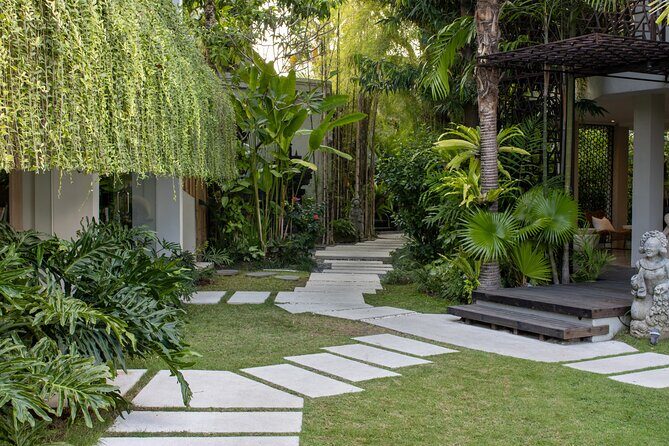
Bali Ayung River Rafting and Tanah Lot Temple Sunset Private Tour

One day, two Bali icons. This private combo tour stacks Ayung River rafting with classic temple stops, ending at Tanah Lot for sunset when the sea turns dramatic and the photos get easy. It’s a smart way to pack adventure and culture into one outing without wasting time on transfers.

I especially like that you get real guidance on the water, plus a smooth rhythm on land: rafting, buffet lunch, then temples in a set route. In the reviews, guides and drivers like Darma and Begus are praised for being friendly, explaining Bali culture, and being flexible enough to help you explore beyond the obvious stops.

The main thing to consider is the day is active and fairly long: moderate fitness helps for rafting, and it’s not suitable for kids under 7. If you prefer a slow, sit-down tour, this one may feel like a lot.

Key highlights worth your attention

Bali Ayung River Rafting and Tanah Lot Temple Sunset Private Tour - Key highlights worth your attention

  • Ayung River rafting near Ubud with a professional rafting guide and built-in changing time
  • Buffet lunch right after rafting at the rafting company
  • Taman Ayun Temple with a wide moat and a layout that feels like it’s floating on water
  • Batu Bolong Temple on a cliff where seawater can enter through the hole
  • Tanah Lot at sunset with multiple viewing spots and tide-dependent views

A Rare Combo: Ayung River Rafting + Tanah Lot Sunset in One Day

Bali Ayung River Rafting and Tanah Lot Temple Sunset Private Tour - A Rare Combo: Ayung River Rafting + Tanah Lot Sunset in One Day
If you’re doing Bali for the first time, you usually face a choice: pick adventure or pick iconic sights. This tour solves that problem with one efficient plan. You start on the Ayung River for white-water action, then shift gears to temples that are famous for a reason, with the day closing at Tanah Lot when the light turns the whole scene more emotional and photogenic.

The value here isn’t just that you visit several places. It’s the pacing. You’re not cramming random stops with long waits. You get one clear morning focus (rafting), one good sit-and-eat break (buffet lunch), and then temple-hopping that naturally builds toward sunset.

Also, since it’s private, the driver/escort can keep your group together and adapt to the day without juggling a big crowd schedule. For couples and small groups, that matters.

Morning Pickup and the 8:00 Start Advantage

Bali Ayung River Rafting and Tanah Lot Temple Sunset Private Tour - Morning Pickup and the 8:00 Start Advantage
The tour begins at 8:00 am, and that matters more than you’d think. Starting early gives you a better shot at comfortable travel between Ubud and the coastal temple area. It also helps you avoid feeling rushed later when you’re waiting for the sky to change at Tanah Lot.

You’ll get pickup offered, and the tour uses a mobile ticket, which is convenient if you’re traveling light and don’t want to mess with printed paperwork. It’s also worth noting that the tour is described as private: only your group participates.

If you’re staying around Kuta, expect a proper ride day. You’re not just popping across town. You’re moving between regions, including northern Ubud for rafting and then toward Tabanan Regency for Tanah Lot. The payoff is that the route builds toward sunset rather than treating it as an afterthought.

Ayung River Rafting Near Ubud: What You’re Really Signing Up For

Bali Ayung River Rafting and Tanah Lot Temple Sunset Private Tour - Ayung River Rafting Near Ubud: What You’re Really Signing Up For
Ayung River rafting is the core of this experience, and it’s where the tour earns its name. The Ayung is known for an active run with rapids that give you a real workout in your arms and balance. The river is described as fun and challenging, and the setting includes high riverbanks and Bali nature passing along the water.

What I like about the way this day is structured is that you don’t just get tossed on a raft and hoped for the best. You’re assisted by a professional rafting guide, which is the difference between random splashing and an actual ride where you understand what’s coming next.

After the rapids, you end at the finish point and then you eat. A buffet lunch at the rafting company is included, which is a huge practical win. You don’t need to hunt for food while you’re still damp and salty.

One more detail that helps: shower and changing clothes are reserved so you can refresh before temples. That’s not a luxury—on a tour day, it keeps you comfortable and helps you enjoy the next stops instead of smelling like adrenaline for hours.

Practical notes before you go:

  • Pack or wear clothes you don’t mind getting wet. Even with shower time later, you’ll want comfort.
  • Bring sandals or water-friendly shoes for transitions.
  • If you’re prone to motion sickness on boats, it’s smart to consider that you’ll be in a raft with turns and quick moments.

Your fitness requirement is listed as moderate. So you’re not signing up for a steep hike, but you should be prepared to participate actively and move through the day without feeling wiped out.

Taman Ayun Temple: Moat-Wrapped Calm After the Rapids

Bali Ayung River Rafting and Tanah Lot Temple Sunset Private Tour - Taman Ayun Temple: Moat-Wrapped Calm After the Rapids
After lunch, the tour shifts from adrenaline to architecture and atmosphere at Taman Ayun Temple in Mengwi. This is a very different Bali experience than you get in busier temple areas.

Here’s what makes Taman Ayun special on this route:

  • It’s built in a style tied to Balinese royal and ceremonial spaces.
  • It has a wide moat and fish pond setting that can make the temple feel like it’s floating.
  • The temple complex is described as having architecture with unique multi-level elements, up to ten storeys, and it’s set up on relatively flat land.

It also carries UNESCO relevance. The information provided states it was suggested for UNESCO and included in the World Heritage list in 2002. Even if you don’t go deep on credentials, it’s a comforting marker that this isn’t a random roadside stop. It’s a meaningful site with design details that reward a slow walk.

A potential drawback? Temple time can feel short if you want to linger, especially after rafting when you’re still processing energy. Still, this stop works well because it resets your body and helps you shift into the next site with less fatigue.

Batu Bolong Temple: The Cliff Temple With a Sea Hole View

Bali Ayung River Rafting and Tanah Lot Temple Sunset Private Tour - Batu Bolong Temple: The Cliff Temple With a Sea Hole View
Next comes Pura Batu Bolong—a temple on a cliff with a hole in the middle. The idea is simple but striking: seawater can enter through that opening, which creates a natural drama for the site.

This isn’t a temple you visit only for a quick look. It’s one where the setting is part of the experience: the cliff, the ocean energy, and the way you can frame the view from different angles.

Two context points you’ll likely hear on-site (or from your guide if they’re chatty in a good way):

  • It’s linked to worship of the God of Holiness.
  • It’s used for ceremonies like Melasti and Pakelem, which relate to cleansing and spiritual practice.

There’s also a ceremonial connection mentioned between Batu Bolong and Tanah Lot, including references to Budda Wage/Cemeng Langkir ceremonies. Even if you don’t catch all the details, it helps to understand that these temples are not just photo spots. They’re part of an ongoing religious rhythm.

If you’re someone who loves photographing water + stone, this stop is a strong mid-day anchor. If you hate waiting for tide or light, just keep your expectations realistic: the ocean view is naturally changeable.

Tanah Lot Temple at Sunset: How to Get the Best Views

Bali Ayung River Rafting and Tanah Lot Temple Sunset Private Tour - Tanah Lot Temple at Sunset: How to Get the Best Views
The final stop is Tanah Lot, and the timing is everything. Tanah Lot is described as a Balinese Hindu temple on a rock in the sea, and it’s especially beautiful at sunset, with multiple viewing spots to take in the ocean and the changing sky.

One key thing you’ll want to understand before you arrive: Tanah Lot’s appearance depends on the tide. At certain tide conditions, the temple looks surrounded by water. That’s part of the magic—like a small island floating out at sea. The site is also explained through its name:

  • Tanah as reef or island-like reef
  • Lot as sea

So Tanah Lot is effectively a small island in the sea.

The information provided also notes that the location has been used since a Megalithic period. That helps explain why the place feels grounded in deep time, even when you’re standing in the middle of modern tourism.

My practical tip: don’t rush in expecting one perfect view. Give yourself a few minutes to find an angle where the light hits the rock well and you can see both the temple and the sea. If your guide suggests a specific spot, it’s usually because they’ve seen how the view works as the sun drops.

And yes, you’ll likely be sharing the area with photographers. That’s normal. If you’re traveling with a group that wants photos, plan a quick photo sprint, then settle for a calm watch as the colors shift.

Price and Value at $100 per Person: What You’re Getting

Bali Ayung River Rafting and Tanah Lot Temple Sunset Private Tour - Price and Value at $100 per Person: What You’re Getting
At $100 per person, this tour isn’t cheap in a casual sense, but it does stack up well for what’s included and what’s coordinated.

Here’s where the value comes from:

  • Rafting admission and activity time at Ayung River
  • Professional rafting guide support
  • Buffet lunch at the rafting company
  • Temple admissions at Taman Ayun, Batu Bolong, and Tanah Lot
  • Pickup offered and a full day of escorted driving between sites
  • The tour is private, meaning you’re not fighting for space or dealing with big-group time delays
  • Mobile ticket makes the day easier to manage

The biggest cost in Bali day trips is often time, not just money. You pay this price to avoid spending your vacation hours coordinating transport across several regions and waiting for separate tickets. When you’re bundling adventure + multiple paid sites + included meals, $100 starts to look like a fair deal—especially if you’re traveling in a pair or small group.

The one thing to watch is your personal preference for active days. If rafting is a must for you, the price feels like it supports your goal. If you’re unsure about rafting, you might feel like you’re paying for something you’re not fully excited about.

Who This Private Tour Fits Best (and Who Might Skip)

Bali Ayung River Rafting and Tanah Lot Temple Sunset Private Tour - Who This Private Tour Fits Best (and Who Might Skip)
This tour makes the most sense if:

  • You want one-day rafting with a guide and then a proper temple sunset.
  • You like having a plan that balances effort and comfort, especially with lunch included.

  • You travel with someone who wants both adventure and iconic Bali sights without separate days.

It may be a poor match if:

  • Your ideal vacation is slow and low-energy. This is active and includes time on the road.
  • You’re traveling with a child under 7, since it’s not suitable for children below that age.
  • You have concerns about moderate physical fitness. The rafting part is the reason.

For best comfort, plan your wardrobe around water and temples. Wear something you can handle after rafting, and keep temple-appropriate clothing in mind when you’re changing.

A Quick Decision Check: Should You Book This Bali Golden Tour?

I’d book this if your checklist includes Ayung River rafting and you also want the classic ending at Tanah Lot sunset without doing two separate tours. The structure is logical: start early, raft first, eat at the same base, then move through temples in a route that naturally builds to sunset.

I’d skip it if you’re not excited about rafting. In that case, you might find the temples feel like extras instead of the main event. Also, if you hate long transport days, consider doing temples only, because the ride time is part of the deal.

If you do book it, try to go in with a flexible mindset about tides and light at the coast. Tanah Lot’s beauty partly comes from those changing conditions. And if you get a driver or guide like Darma or Begus, the day should feel friendly and well explained—not just like you’re being moved from stop to stop.

FAQ

Is this Bali Ayung River rafting and Tanah Lot tour private?

Yes. The tour is listed as private, meaning only your group will participate.

What time does the tour start?

The start time is 8:00 am.

How long is the tour?

It’s about 7 hours (approx.).

Do I get pickup?

Pickup is offered.
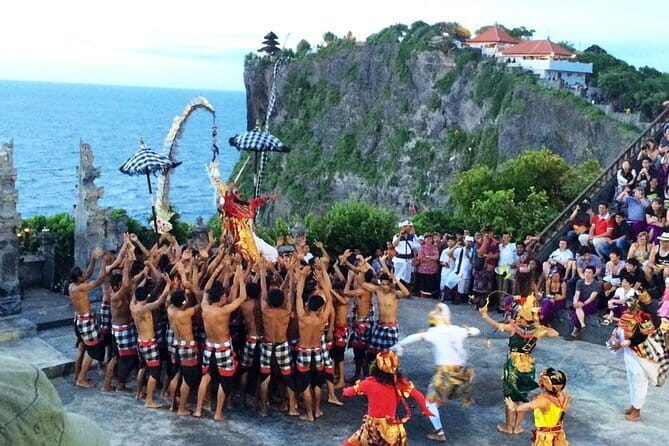
What activities are included?

You’ll do Ayung River rafting near Ubud, enjoy buffet lunch at the rafting company, then visit Taman Ayun Temple, Batu Bolong Temple, and Tanah Lot Temple for sunset.

Are tickets included for the temples and rafting?

Admission tickets are included for the stops listed: rafting, Taman Ayun Temple, Batu Bolong Temple, and Tanah Lot Temple.

What fitness level is needed, and is it suitable for kids?

The tour notes a moderate physical fitness level. It is not suitable for child below 7 years.

What if I need to cancel?

You can cancel for a full refund up to 24 hours before the experience’s start time. Free cancellation is available up to that window, and changes inside 24 hours aren’t accepted.