Bali Sightseeing Tour – Traditional village – Waterfall

Bali Sightseeing Tour - Traditional village - Waterfall - Goa Raja Cave Waterfall: Wet Steps and Swim Plans

Cave waterfall and holy springs are a winning combo. This private Ubud-and-central-Bali tour strings together culture and nature in one smooth day, with a driver/guide doing the hard parts of getting you there. You’ll see Penglipuran’s traditional village calm, Tirta Empul’s sacred springs, and the Tegalalang rice terraces, plus a plantation stop if you want it.

What I like most is the private door-to-door comfort—no self-drive stress, no navigating, and fewer “wait, where do we go?” moments. I also love that the guide explains Bali Hinduism’s beliefs and symbols in a way you can actually use on the ground. The main consideration: it’s an all-day stretch (about 8 to 10 hours), and the waterfall stop is a walking, damp-feeling kind of outing, so plan accordingly.

Key Highlights You’ll Notice Fast

Bali Sightseeing Tour - Traditional village - Waterfall - Key Highlights You’ll Notice Fast

  • Goa Raja cave-waterfall stop with time to walk in and enjoy the setting (swim-ready if you want)
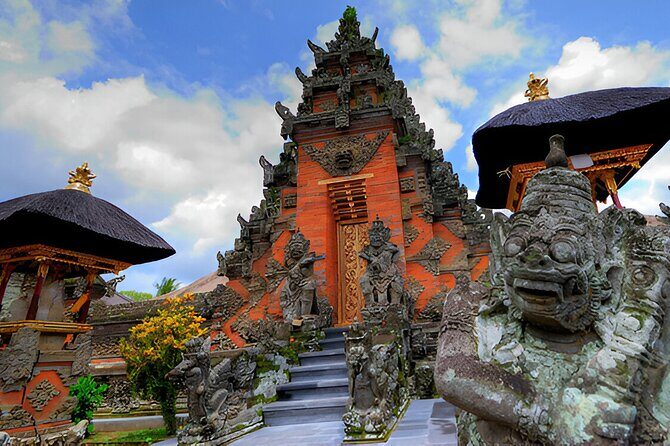
  • Penglipuran Village where strict customary rules keep the village quiet, including limits on motorized vehicles
  • Bamboo Forest beside Penglipuran for a calm change of pace and a natural look at local materials
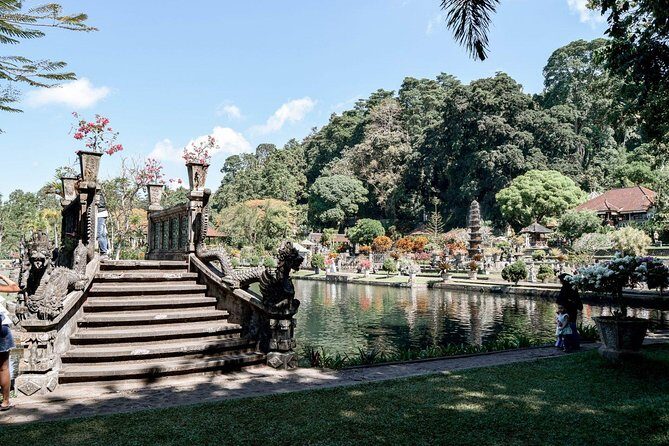
  • Tirta Empul holy spring temple where people go for purification, with guide context to make it meaningful
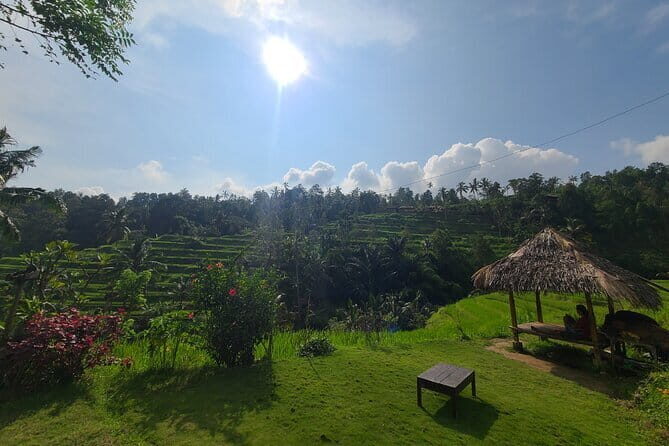
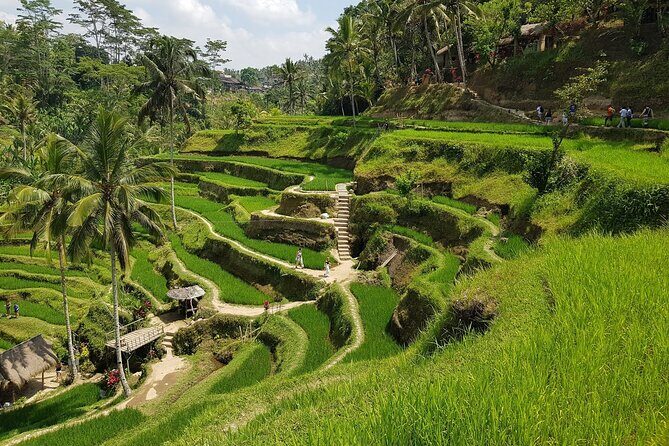
  • Tegalalang Rice Terrace viewpoints with classic north Ubud scenery and a guided stop that keeps you moving
  • Optional coffee/spice plantation to round out the day with a homegrown taste

A Private Driver Who Handles Ubud Traffic From Start to Finish

Bali Sightseeing Tour - Traditional village - Waterfall - A Private Driver Who Handles Ubud Traffic From Start to Finish
This tour is set up for people who want Bali without the rental-car headache. Pickup is offered, and you’re with a private driver/guide, so you’re not stuck with a rigid cattle-car schedule or finding your own way between distant sights. The experience is also private in the sense that it’s just your group, which makes it feel more personal than the standard shared bus day.

Your guide is English-speaking, which matters on Bali days like this. When you’re standing at temples, inside village rules, or looking at religious symbols, good explanations turn a quick photo stop into something you understand. The tour style here leans practical: you get enough context to make sense of what you’re seeing, then you move on before the day drags.

One more useful detail: the tour uses a mobile ticket. That cuts down on back-and-forth and keeps you focused on the places, not paperwork.

Goa Raja Cave Waterfall: Wet Steps and Swim Plans

Bali Sightseeing Tour - Traditional village - Waterfall - Goa Raja Cave Waterfall: Wet Steps and Swim Plans
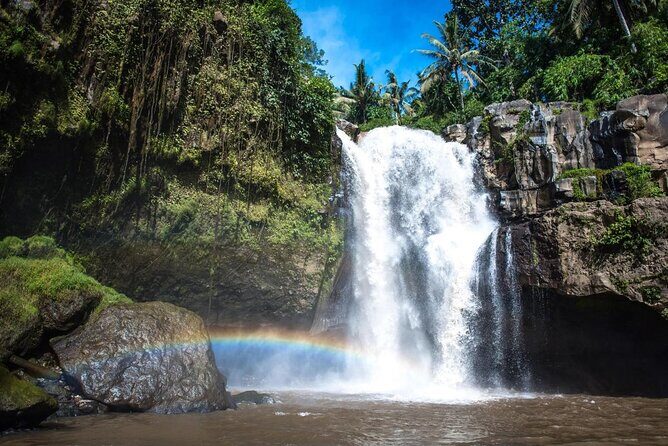
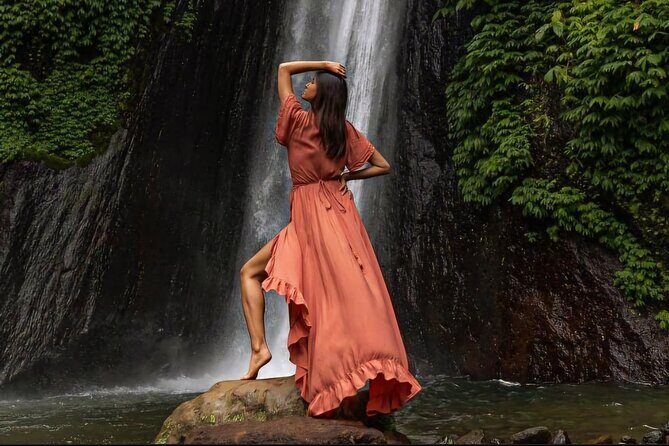
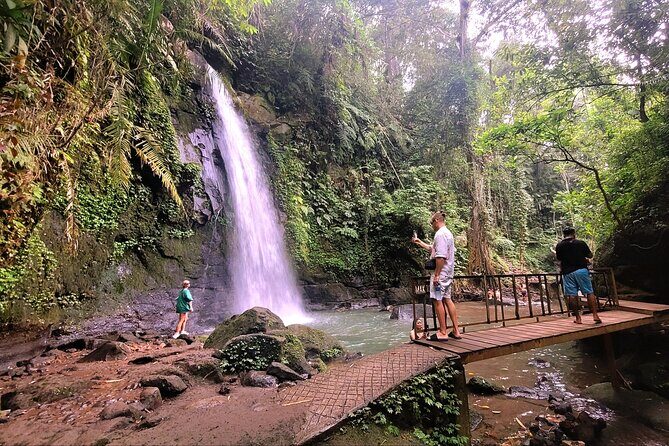
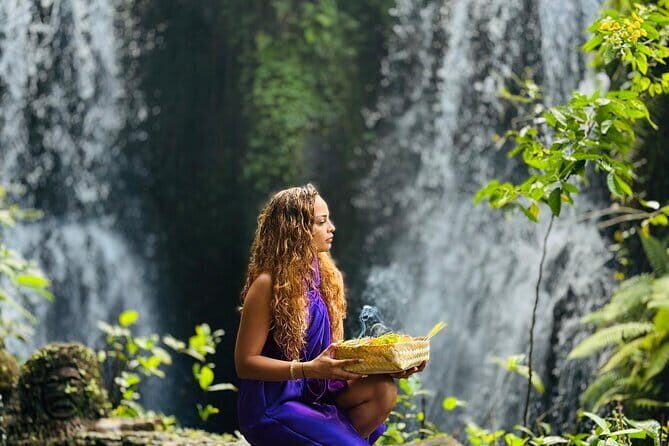
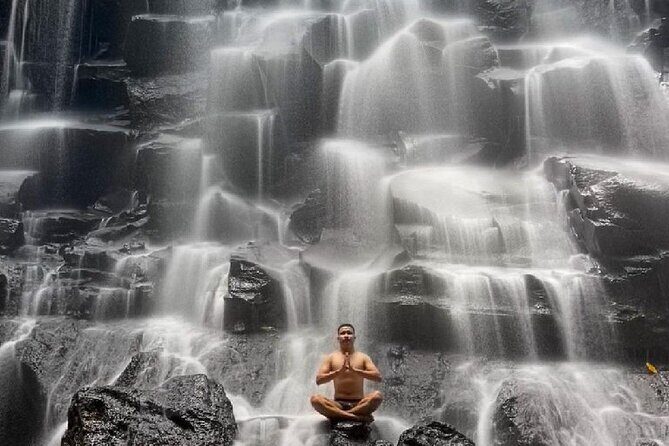
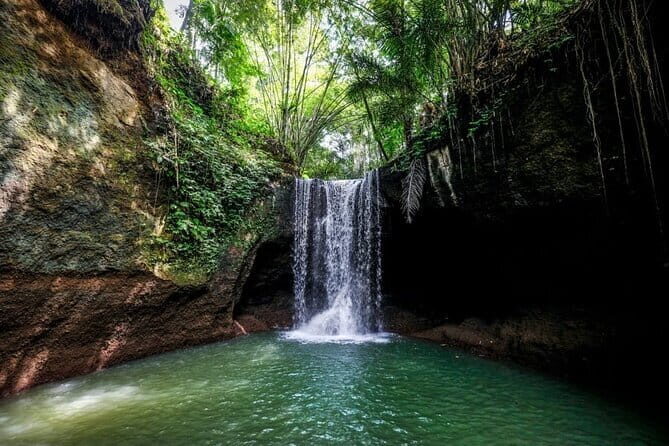
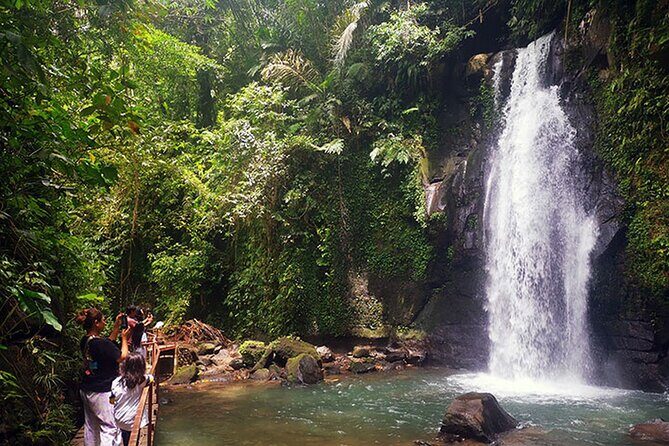
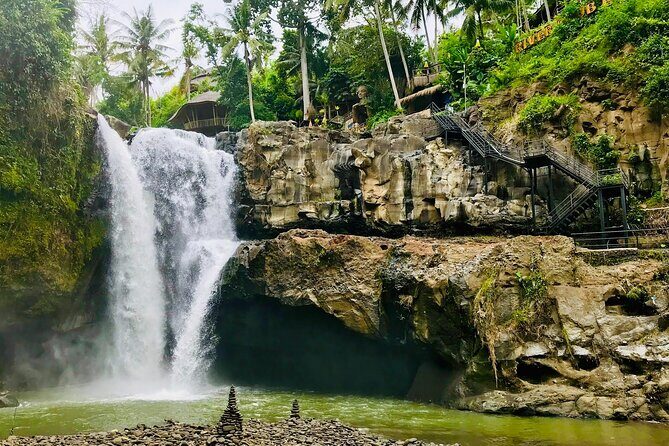
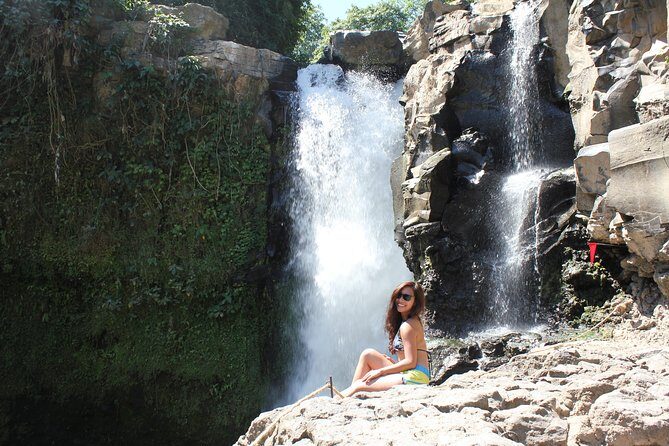
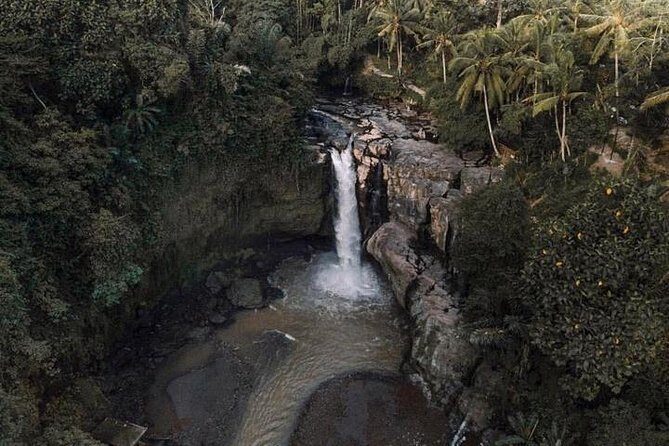
Your first stop is the waterfall area called Goa Raja Waterfall, described as a hidden waterfall location under a cave. That cave setting is part of the appeal: it’s a different feel from the more open-air Bali waterfalls. Expect a walk that’s more than just a single viewpoint. You’ll have around 1 hour 30 minutes, which gives time to slow down and actually enjoy the surroundings.

There’s also a clear heads-up if you plan to swim. The tour info specifically suggests bringing a swim suit and towel if you want to get in. Even if you don’t swim, knowing the area can be wet helps you dress smartly—think comfortable footwear and gear you won’t stress about getting damp.

Practical tip: this is the kind of stop where timing and movement matter. If you arrive, change pace with the space—there can be a flow of visitors moving in and out of the walkway and cave viewing area. Your guide’s job is to keep the day moving, but also to help you understand what you’re looking at so it’s not just random scenery.

Penglipuran Village: Clean Air Rules and a Very Quiet Pride

Next comes Penglipuran Village, often talked about as one of the cleanest villages in Indonesia, and the reason is not magic. The village uses strict customary rules, including a prohibition on using motorized vehicles to help keep the air quality clean. That single rule changes the whole mood. You’re not fighting noise. The village feels more pedestrian and more intentional.

You also get a real cultural experience rather than just a quick walk-by. Penglipuran’s layout and daily life reflect the idea that community rules shape the environment. Your guide helps connect those rules to what you’re seeing, which is the difference between taking photos and understanding why the place works.

Expect about 1 hour here. That’s long enough to stroll and notice details without feeling rushed. If you care about how traditions shape the physical world—cleaner air, quieter streets, and a village that stays centered on visitors and residents alike—this stop is one of the strongest parts of the day.

The Penglipuran Bamboo Forest Stroll: A Small Stop With Meaning

After Penglipuran, you’ll head to the Penglipuran Bamboo Forest, just to the north of the village. This is a shorter stop (about 30 minutes), but it’s a smart one because it shifts you from the human-built village into a natural resource story.

Bamboo is a local material used for houses, ceremonial tools, and crafts. That’s an important thread in Bali life: people don’t treat nature as decoration. They use it. Even if you’re only here for half an hour, the bamboo forest stop helps you see where the village’s materials and traditions come from.

This part also gives your legs a breather. It’s not a long slog, so you can enjoy the change in scenery. If you’re the type who likes little add-ons that connect nature and culture, you’ll probably like this more than you expect.

Tirta Empul Temple: Sacred Springs and Purification With Context

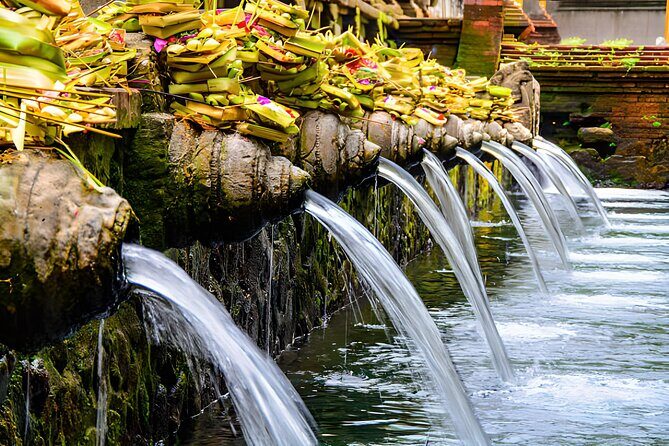
Now for the spiritual anchor: Tirta Empul Temple, known for holy spring water used for purification. The tour info notes that local people typically do purification here, and that matters. You’re not just viewing a temple building—you’re watching a living practice tied to the springs.

You’ll have about 1 hour at Tirta Empul. That’s enough time to understand the space, see how people use the spring water, and get your guide’s explanation of the beliefs and symbols behind it. This is where a good English-speaking guide pays off. Without context, purification rituals can feel like just something happening in the background. With the explanations, you can follow the meaning instead of only the visuals.

A balanced note: temple areas can attract crowds, and purification can mean you’re sharing space with ongoing activity. The best approach is to let your guide set the pace and follow their lead on where to stand and when to move. The goal is respectful observation, not taking over someone’s sacred moment.

Tegalalang Rice Terrace: Big Views, Short Time, Good Flow

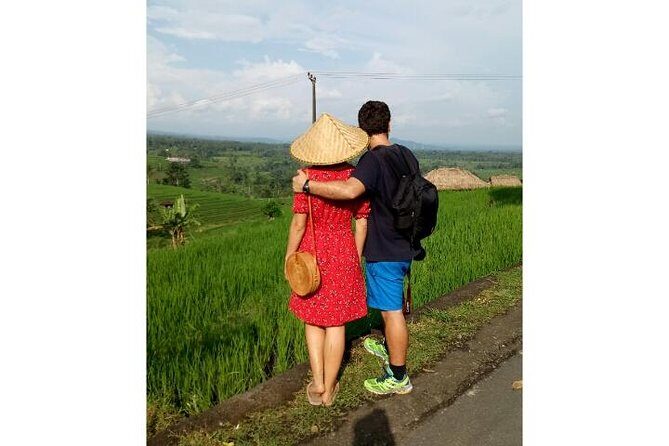
Next you’ll reach Tegalalang Rice Terrace, one of the classic north Ubud scenes. Expect about 45 minutes, and plan for viewpoints along a riverbank where the rice paddies spread in terrace formations. This is the kind of landscape you don’t need a long lecture for—your eyes get it fast.

The value here is how the tour keeps your time efficient. You’re not wandering for hours trying to find the best angle. Instead, you arrive, look, and move on while the day still has energy. In a longer day like this, pacing matters.

If you’re sensitive to crowds or want long quiet stretches, this is the only stop where you might feel some pressure from the popularity of Tegalalang. The upside: you’ll still get great views and a satisfying walk without losing the rest of the day.

Optional Coffee and Spice Plantation: A Homegrown Taste Stop

There’s also an optional stop for a coffee plantation and spice tasting. The tour info frames it as optional, so you can treat it as your palate reset—especially useful after temple and waterfall time. If you skip it, you keep the day moving.

If you do go, the focus is on homegrown coffee at a spice plantation. This kind of stop works best when you’re curious about how local products connect to everyday life. Your guide can help connect what you’re tasting to the broader picture of how central Bali grows and uses plants.

Price and Value: What $54 Buys in One Packed Day

Bali Sightseeing Tour - Traditional village - Waterfall - Price and Value: What $54 Buys in One Packed Day
At $54 per person for a day that runs about 8 to 10 hours, this tour is priced for value if you want convenience plus guided context. The big win is that you’re not paying separately for transportation between stops and then also paying for your guide at the same time.

Here’s what’s included:

  • English-speaking guide
  • Fuel surcharge
  • Entry/admission for Goa Raja Waterfall, Penglipuran village and bamboo forest, Tirta Empul, and Tegallalang rice terrace
  • Private transportation
  • A coffee plantation visit that’s optional

Lunch is not included, and gratuities are optional. That means you’ll likely want to budget for a meal out. Still, once you factor in admissions and private transport, this doesn’t feel like a bare-bones sightseeing scramble.

One more value detail: group discounts are mentioned. So if you’re traveling with friends or family, this can become even more of a bargain per person versus going it alone.

Cancellation is free if you cancel up to 24 hours before the experience start time. That flexibility is helpful in Bali, where rain and road conditions can shift plans.

Logistics That Matter: Timing, Pickup, and How to Prepare

This is a full-day routing that moves through several very different environments: a cave waterfall area, a traditional village, a bamboo forest, a temple with purification, and then the rice terraces. That means your day will feel like a loop, not a single-site visit. The payoff is variety.

Because it’s about 8 to 10 hours, bring a steady mindset. You don’t need to be a marathoner, but you do want to be ready to walk and stand more than you might on a short half-day.

For the waterfall stop, follow the tour’s swim guidance. If you want to swim, bring the swim suit and towel. If you don’t, at least dress for damp conditions so you can enjoy the cave waterfall without worrying about comfort.

Also, since pickup is offered and it’s door-to-door, you’ll want to be ready at the pickup point so you don’t lose time at the beginning. Your guide and driver handle the route and coordination, which is the point of paying for private transport.

Who This Tour Is Best For (and Who Might Skip It)

This is a strong fit if you:

  • Want traditional culture plus nature in one day around Ubud
  • Like having your guide explain what you’re seeing, not just where to stand for photos
  • Prefer private door-to-door logistics over self-driving
  • Enjoy a mix of big scenery (rice terraces) and smaller meaningful stops (bamboo forest, village rules)

It might not be the best fit if:

  • You’re looking for a relaxed half-day with minimal walking and minimal schedule
  • You want only one or two stops, not a full circuit of cultural sites and viewpoints
  • You dislike wet, cave-style environments at waterfalls (even if you don’t swim)

Still, the structure is designed to keep you moving at a sane pace, with guidance at the spots that need it most.

Should You Book This Ubud and Central Bali Tour?

If you want a guided day that covers the key cultural icons around Ubud—Penglipuran, Tirta Empul, and Tegalalang—without the self-drive stress, I think this is a smart booking. The private setup with an English-speaking guide (Ketut Suwenda, Safe Bali Driver) makes a difference when you’re dealing with temple meanings and village customs.

I’d book it if you’re the type who likes understanding the story behind a place, and you’re okay with an 8 to 10 hour day that includes a cave waterfall stop. The price is fair for private transportation and included admissions, and the optional coffee plantation gives you flexibility if you want a tasty local add-on.

FAQ

How long is the Bali Sightseeing Tour

It runs about 8 to 10 hours.

Is pickup offered

Yes, pickup is offered and the tour is door-to-door.

Is this a private tour

Yes. It’s a private tour/activity and only your group will participate.

What stops are included

You’ll visit Goa Raja Waterfall, Penglipuran Village, Penglipuran Bamboo Forest, Tirta Empul Temple, and Tegalalang Rice Terrace. There’s also an optional coffee plantation/spice plantation stop.

Are entrance fees included

Yes. Entry/Admission for all the listed major stops is included.

Do I need to bring a swim suit

If you want to swim at the waterfall, the tour suggests bringing a swim suit and towel.

Is the coffee or spice plantation stop included

It’s optional.

What does the price include

It includes an English-speaking guide, fuel surcharge, entry/admission for the listed sites, and private transportation.

What is the cancellation policy

Free cancellation is available if you cancel up to 24 hours in advance for a full refund.

Lempuyang Temple Tirta Gangga Tukad Cepung waterfall and Swing

Lempuyang Temple Tirta Gangga Tukad Cepung waterfall and Swing - What the Heaven’s Gate climb feels like in real life

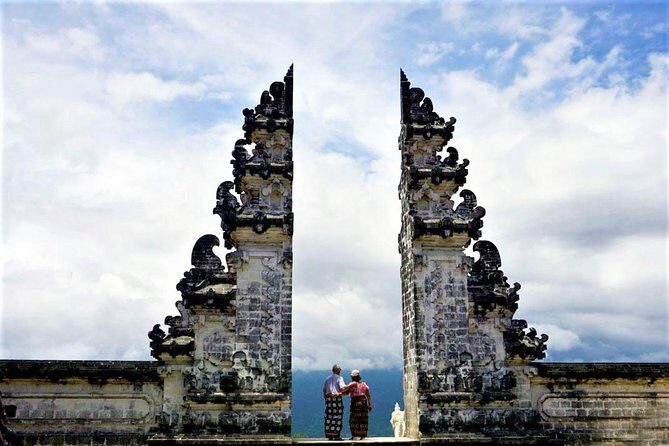
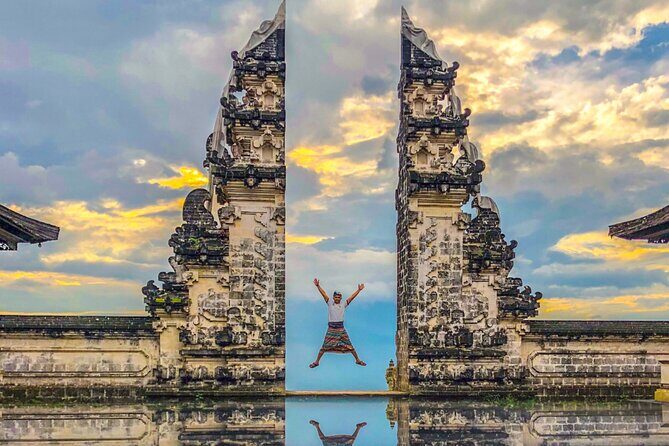
Sunrise Gate is worth the alarm clock. This full-day Bali combo targets Heaven’s Gate at Lempuyang Temple in the early morning, when Mount Agung and the sunrise rays make for serious photo material. Then you head to Tirta Gangga’s water palace pool with colorful fish, followed by the less-visited feeling of Tukad Cepung waterfall, where you can even swim before heading back.

What I like most is the mix of iconic views and hands-on nature time. The sunrise timing is a big deal because you’re not just arriving after the best light has slipped away. I also like that the day includes both picture-taking at Tirta Gangga and actual in-water time at Tukad Cepung. One consideration: it’s an early start (pickup at 04:00) with stairs and a moderate fitness expectation, plus the day depends on good weather.

You’ll also appreciate the practical setup: pickup and drop-off from your hotel, an English-speaking driver, entrance tickets, breakfast, and bottled water are handled. Lunch isn’t included, so you’ll want some cash/plan for that. It’s a private experience for your group, so the pacing can feel more relaxed than a big shuffle through popular stops.

Key highlights worth getting up for

Lempuyang Temple Tirta Gangga Tukad Cepung waterfall and Swing - Key highlights worth getting up for

  • 04:00 AM pickup so you can catch Heaven’s Gate in the best light window
  • Heaven’s Gate + Mount Agung views designed for that sunrise-photo moment
  • Tirta Gangga fish pool gives you a colorful backdrop for pictures
  • Tukad Cepung waterfall swim time adds an active, unforgettable touch
  • Entrance tickets, breakfast, and bottled water included for smoother logistics
  • Private-group format means you’re not stuck waiting on strangers

Sunrise at Lempuyang Temple’s Heaven’s Gate

Lempuyang Temple Tirta Gangga Tukad Cepung waterfall and Swing - Sunrise at Lempuyang Temple’s Heaven’s Gate
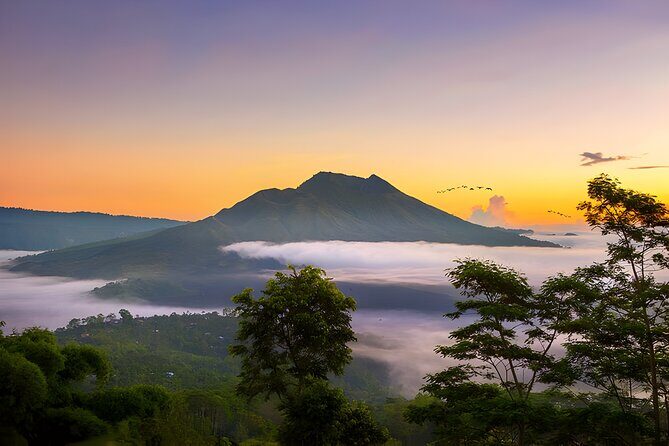
This tour is built around one moment: getting to Heaven’s Gate early enough to catch the sunrise glow. You’re picked up around 04:00 AM, then you reach the Lempuyang Temple area around early morning. The reward is the view back toward Mount Agung, plus sunrise rays that turn the scene into something you’ll want to keep looking at.

Lempuyang Temple itself is part of why the whole experience feels special. The morning timing helps you see it at a calmer pace than arriving later in the day. You also get more time to compose photos without feeling rushed the whole time. And since your driver is there with an English-speaking guide approach, you can usually get quick answers to questions as you move between spots.

The practical trade-off is obvious: it’s early, and the site involves climbing stairs. The experience listing asks for moderate physical fitness, so if you don’t love step-heavy locations, it’s smart to plan your footwear and pace. This is one of those tours where you get the payoff because you’re willing to work a little.

What the Heaven’s Gate climb feels like in real life

Lempuyang Temple Tirta Gangga Tukad Cepung waterfall and Swing - What the Heaven’s Gate climb feels like in real life
Let’s be honest: the Heaven’s Gate part isn’t just a stroll. You’ll be dealing with stairs and uneven temple footing. That’s why I think this tour works best when you set expectations early and pace yourself. You don’t need to be an athlete, but you do need to be comfortable with a steady climb.

Here’s how to make it easier on your body:

  • Wear comfortable, grippy shoes (you’ll thank yourself later).
  • Take breaks when you need them. The view doesn’t run away.
  • Keep an eye on your stamina so you’re not wiped out before Tirta Gangga and the waterfall.

Weather matters too. This experience requires good weather, and if conditions are poor, you’ll be offered a different date or a full refund. That rule tells you how dependent the sunrise and outdoor stops are on visibility and comfort.

Tirta Gangga’s colorful fish water palace (and why it’s more fun than it sounds)

Lempuyang Temple Tirta Gangga Tukad Cepung waterfall and Swing - Tirta Gangga’s colorful fish water palace (and why it’s more fun than it sounds)
After the early temple stop, you move on to Tirta Gangga around late morning. This is a water palace with a pool where colorful fish hang out. The best part is that this isn’t just a quick photo stop. You get time to linger and take pictures with the fish as part of the scene.

Why I think this stop is valuable: it shifts the day from views to something more playful and interactive. At Tirta Gangga, you get a different Bali vibe—less climb, more calm. The fish make the pool look lively even when you’re standing still. It’s also a nice contrast after stairs and sunrise light.

Potential drawback? Timing. Because the day runs on a tight rhythm after the morning highlight, you’ll want to stay ready to move. This doesn’t feel like a slow half-day art break. It’s a smooth sequence designed to fit multiple major stops into a single 10-hour outing.

Tukad Cepung waterfall: swimming in a hidden-feeling spot

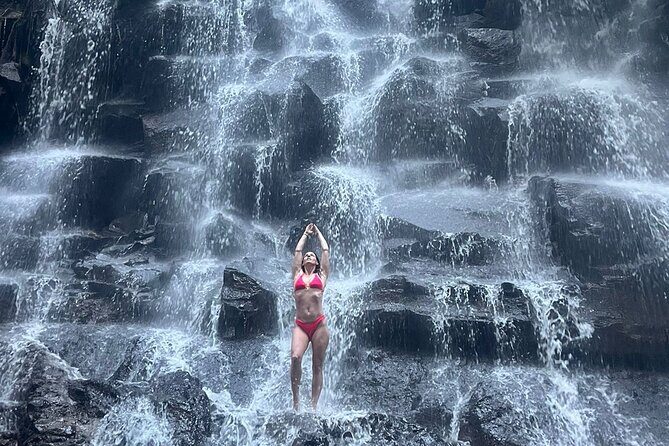
Then comes the standout nature moment. You head to Tukad Cepung waterfall around midday, when the schedule suggests you’ll have time to enjoy it, not just pass by. Tukad Cepung is described as a less-visited waterfall with extraordinary natural beauty, and the big bonus is that you can swim before heading back.

That swimming element is what turns it from a scenic waterfall stop into an experience with body-and-senses memory. You’ll feel the temperature shift, hear the water up close, and get that take-the-photo-then-stay-awhile feeling. If you’re the type who only watches from the edge, you might miss part of why this stop is included.

A few things to consider:

  • Bring a plan for getting wet and drying off. You’ll be happier if you have a way to keep your essentials protected.
  • Moderate fitness still matters here. Even if it’s not a long hike, you’ll be on uneven ground and moving around the waterfall area.
  • Since the day depends on good weather, rain can change the feel of outdoor water time.

Also note the order of the day. You’re going from sunrise temple energy to fish pool time, then straight into waterfall time. That pacing can feel energetic, but it also prevents the day from feeling repetitive. Each stop hits a different mood.

Lunch timing, coffee plantation stop, and getting back to Ubud

After Tirta Gangga, you get a lunch window. Lunch isn’t included in the price, but the tour schedule includes a lunch break around late morning. That’s useful because it keeps you from starving at the waterfall. Just don’t count on the tour price covering your meal—plan for food separately.

Later, you stop at a coffee plantation around 13:00. This is a classic Bali add-on, and I like it when a day trip also includes something cultural and local that isn’t just another viewpoint. Even if you’re not a coffee super-fan, it’s a way to stretch the day while you’re already in the right zone.

Then you return to your hotel around 14:00 (the whole day runs about 10 hours from the 04:00 pickup). That early finish is a quiet win. It leaves you time for a relaxed afternoon in Ubud instead of eating the whole day.

One small note to double-check: the tour description mentions continuing to Ayung water rafting, but the day’s listed flow you’re given here focuses on Lempuyang, Tirta Gangga, Tukad Cepung, and the coffee stop. If you really want rafting, confirm what’s actually included in your specific booking.

Price and value: is $70 per person a good deal?

Lempuyang Temple Tirta Gangga Tukad Cepung waterfall and Swing - Price and value: is $70 per person a good deal?
At $70 per person for about 10 hours, the value depends on what you care about and how much you want others to handle. In your favor, the price includes:

  • Pickup and return to your hotel
  • Entrance tickets
  • Breakfast
  • Bottled water
  • Driver speaking English

What’s not included: lunch.

So, you’re paying for a real, all-in-one transport and ticket day, not a bare taxi. If you’ve ever tried to DIY a sunrise temple and then link it to a waterfall and another water palace, you know the time and planning headache adds up fast. This kind of routing is usually where group tours quietly earn their keep.

Where you should think carefully: if you hate early mornings, the sunrise timing is a cost to your energy even if the money is fair. If you also know you’ll want to skip swimming at Tukad Cepung, you might wonder if you’re paying for time at multiple major stops. Still, the core payoff—sunrise Heaven’s Gate plus Tirta Gangga plus Tukad Cepung—makes the package feel balanced for first-timers and photo lovers.

Who should book this sunrise + waterfall + fish pool day

This tour is a strong match if you:

  • Want Heaven’s Gate sunrise views and not just a late arrival
  • Like having a plan that hits multiple iconic places in one day
  • Enjoy water time, especially the chance to swim at Tukad Cepung
  • Prefer a private group so you can move with your own pace

It’s less ideal if you:

  • Don’t handle stairs well (the experience requires moderate fitness)
  • Strongly dislike early starts
  • Are easily bothered by weather changes, since the day needs good weather and can be rescheduled if conditions are poor

Should you book this Krisna Bali Trekking Tour?

Lempuyang Temple Tirta Gangga Tukad Cepung waterfall and Swing - Should you book this Krisna Bali Trekking Tour?
I’d book it if you want an efficient Bali day that mixes a must-see sunrise temple with two very different water-based experiences: a fish-filled palace pool and a waterfall where you can swim. The $70 price feels fair because pickup, tickets, breakfast, and English-speaking driver support are included, and the schedule is built to keep the best outdoor moments early.

But do yourself a favor and confirm one thing before you go: whether any extra activities mentioned in the description (like Ayung rafting) are actually part of your booking. If it is, great. If it isn’t, you still get a solid day with the three headline experiences.

If early mornings don’t scare you, and you’re comfortable with moderate stairs and a full day outdoors, this is the kind of trip that makes Bali feel like Bali.

FAQ

What time is hotel pickup?

Pickup is scheduled for 04:00 AM.

What are the main stops on this tour?

The tour covers Lempuyang Temple, Tirta Gangga water palace, Tukad Cepung waterfall, and a coffee plantation.

Is breakfast included?

Yes. Breakfast is included.

Is lunch included in the price?

No. Lunch is not included.

Are entrance tickets included?

Yes. Entrance tickets are included.

Is bottled water provided?

Yes. Bottled water is included.

Do you get a mobile ticket?

Yes. Mobile ticket is listed as part of the experience.

How long is the tour?

The duration is about 10 hours (approx.).

What fitness level is required?

The tour requires moderate physical fitness level.

What happens if the weather is bad?

This experience requires good weather. If it’s canceled due to poor weather, you’ll be offered a different date or a full refund.

Is cancellation free?

Yes. Free cancellation is available, and you can cancel up to 24 hours in advance for a full refund.

Epic Waterfall Trip: Kanto lampo, Goa Rang Reng, Tibumana & Secret waterfall

Epic Waterfall Trip: Kanto lampo, Goa Rang Reng, Tibumana & Secret waterfall - Tibumana Waterfall: green views and a “walk-first” experience

That first morning jump is worth it.

This waterfall plan mixes big-name spots with quieter stops so you get smoother photo time and fewer standstill crowds. I like the idea of a private guide-led route instead of wrestling with Ubud traffic and directions. I also like that the day includes onboard Wi‑Fi, so you can message your hotel, check plans, and avoid roaming charges.

What I really like here is the mix and the pacing. Tibumana brings a bold green view along the path, and Kanto Lampo’s stepped rock wall and shallow wading pool make it a fun, classic waterfall scene. The Rang Reng Cave stop is the quieter counterweight, with a hidden-feeling valley spot that feels like a break from the usual waterfall circuit. One consideration: the tour has had serious pickup communication complaints from past bookings, so you’ll want to confirm exact pickup details the day before.

Key points before you go

Epic Waterfall Trip: Kanto lampo, Goa Rang Reng, Tibumana & Secret waterfall - Key points before you go

  • Private waterfall route with a guide, saving you from navigation stress
  • Onboard Wi‑Fi during the day, useful for maps and messaging
  • Four waterfall moments: Tibumana, Goa Rang Reng (Rang Reng Cave), Kanto Lampo, plus a secret fourth stop
  • Seasonal Kanto Lampo with a wading-pool view that changes with rainfall
  • Entrance fees not included, so budget for tickets at each stop

Why this Ubud waterfall day feels easier than self-driving

If you’ve ever driven around Ubud looking for one waterfall, you already know the truth: the trip is never just about the waterfall. It’s the roads, the one-way turns, the “where exactly is the parking?” moments, and the time you lose getting from stop to stop.

This experience is built around a guided route with private transfers, which means your morning can start with less stress. You leave at 7:30 am and spend the day moving from one waterfall to the next with someone else handling the driving and timing. That’s a big deal when you’re trying to maximize daylight for photos and swims, and not just maximize time sitting in traffic.

I also like the approach of pairing popular waterfalls with a less busy option. The typical mistake is hitting only the most famous falls. They’re famous for a reason, but you pay for it in crowding and fewer clean photo angles. This route is designed to keep at least part of the day feeling more relaxed.

The full-day rhythm: early start, four falls, and time to breathe

Epic Waterfall Trip: Kanto lampo, Goa Rang Reng, Tibumana & Secret waterfall - The full-day rhythm: early start, four falls, and time to breathe
The trip runs about 8 to 10 hours, with a 7:30 am start. That early start matters in Bali. You beat some of the heat, you get more stable lighting for photos, and you avoid the worst of the late-morning crowd buildup at the most popular spots.

The day’s known order is:

  • Tibumana Waterfall
  • Rang Reng Cave (Goa Rang Reng)
  • Kanto Lampo Waterfall
  • A secret waterfall surprise stop (the fourth waterfall mentioned in the trip description)

Tibumana and Kanto Lampo are each scheduled for about 1 hour, while the Goa Rang Reng Cave stop runs about 1 hour 30 minutes. That’s a comfortable amount of time if you want to actually walk the path, pause for pictures, and not feel like you’re sprinting from viewpoint to viewpoint.

The secret waterfall stop is the wildcard. You won’t have a lot of detailed advance info listed for it, but that can be a good thing. A surprise stop often means your guide can react to conditions—crowds, weather, and what the group wants in the moment—so the day doesn’t feel like a forced checklist.

Tibumana Waterfall: green views and a “walk-first” experience

Epic Waterfall Trip: Kanto lampo, Goa Rang Reng, Tibumana & Secret waterfall - Tibumana Waterfall: green views and a “walk-first” experience
Tibumana Waterfall is described as one of Bali’s most incredible waterfall experiences, and what I’d take from that is the emphasis on the approach. You get green views along the path, and the walk before the water is part of the payoff.

Scheduled time: about 1 hour. Admission is not included, so plan to pay entrance tickets on site.

Why Tibumana is worth your time:

  • The waterfall experience isn’t only about the final frame. You’re walking in and taking in the view en route.
  • The setting is known for natural beauty and that “breathe for a second” feeling when the waterfall finally comes into view.

What to consider:

  • Because it’s a classic Ubud-area attraction, it may still have visitors. The schedule helps, but you’ll want to arrive ready to move through quickly once you’re there if you care about photos without many heads in them.

Rang Reng Cave (Goa Rang Reng): a quieter valley stop

If your goal is photos without everyone standing on the same exact angle, Rang Reng Cave is the kind of stop that can change your whole day. It’s described as a hidden waterfall around Ubud, with lush greenery and a hidden spot in the valley that takes your breath away.

Scheduled time: about 1 hour 30 minutes. Again, admission is not included.

Why this stop matters:

  • It’s positioned as the less-visited alternative. That usually means more breathing room on the walk and at the water.
  • The “cave/hidden” framing signals that you’ll likely feel like you’re leaving the main circuit, which helps your day feel more varied.

What to watch for:

  • Cave-style settings can mean uneven footing and damp surfaces. Bring footwear that handles wet ground comfortably.
  • If you hate waiting for your group to finish taking photos, you’ll want to set your own pace early. The extra 30 minutes here is there so you can move at a human speed.

Kanto Lampo Waterfall: stepped rocks and a wading-pool scene

Kanto Lampo is the one that tends to look great in photos because of the structure. The description calls it scenic and seasonal, cascading down a stepped rock wall into a shallow wading pool.

Scheduled time: about 1 hour. Admission is not included.

Why Kanto Lampo is a smart follow-up:

  • After the quieter Goa Rang Reng stop, Kanto Lampo gives you the classic “everyone understands it’s a waterfall” payoff.
  • Stepped rock walls usually create natural layers in your photos, which can make even a quick visit look great.

What you’ll want to plan for:

  • Because it’s seasonal, how dramatic it looks can vary with rainfall. If you’re traveling in a drier period, you might still get great photos, but the water volume can be different.
  • A shallow wading pool means you’ll likely be around wet feet and slick areas. If you’re not comfortable with that, you may want to stick to the edges and focus on viewpoints.

The secret waterfall stop: why a wildcard can be better than another checklist

The trip description includes a secret surprise waterfall as the fourth stop, even though the exact details aren’t spelled out here. That matters because it can help the guide make the day work.

In plain terms: when you add a secret stop, your guide can choose something based on real-time conditions—crowds, how the group feels, and what’s best that day. You’re not stuck with the same plan no matter what.

How this affects your experience:

  • It can reduce the sense of “we’ve seen this already.”
  • It gives you one more moment that isn’t as predictable, which often turns into the most memorable photo.

What to keep in mind:

  • Since the stop isn’t specified, don’t plan your day around a particular kind of waterfall scene. Stay flexible, bring the same kind of footwear you’d use for wet, uneven ground, and be ready for a quick walk and brief viewing.

Transfers, timing, and onboard Wi‑Fi: the small things that make the day work

This tour includes pickup offered and is described as 2-way private transfers from hotels in Ubud and much of south Bali. With Seminyak listed as the location, you should expect the pickup area to cover parts of south Bali as well, but your exact start point depends on where your hotel is.

You’ll meet at 7:30 am. That early start is the reason this kind of tour can fit four waterfall stops into one day without feeling rushed in the middle.

Two-way transfers matter because waterfall days often get chaotic when you self-drive. You need the right parking spot, then you need to get from parking to the entrance, then you need to get back out before the light shifts. Letting the driver handle it keeps you moving.

Onboard Wi‑Fi is also genuinely useful. It’s listed as included, and it helps you handle the day without guessing. You can check directions if needed, message whoever you’re meeting later, and generally keep things smooth without relying on sketchy cell coverage.

Price in context: what $43.08 per person really covers

Epic Waterfall Trip: Kanto lampo, Goa Rang Reng, Tibumana & Secret waterfall - Price in context: what $43.08 per person really covers
The price is listed at $43.08 per person. At that level, value comes from bundling the big day components: a private experience format, a guide, and private round-trip transfers, plus onboard Wi‑Fi and a mobile ticket.

Here’s the catch that affects your total cost: entrance fees are at your own expense. That’s standard on Bali day tours, but it’s still the part you should budget for. If your plan relies on hitting four sites, those ticket costs can add up more than you expect.

So I’d look at the price like this:

  • You’re paying for the day to run. Transport + guide + structure + Wi‑Fi are the “included” value.
  • You’re paying separately for the “right to enter” each waterfall area.

The main risk I’d check: pickup communication

The biggest problem signal tied to this experience is pickup communication. Some past bookings reported charging without getting contact, and others reported waiting at pickup points for a long time with no guide arrival and no phone contact.

That doesn’t mean every day goes wrong. But it does mean you should protect yourself:

  • Confirm pickup details the day before.
  • Make sure you’ll have a way to contact the tour team if something changes.
  • Be ready at the pickup point on time, since the tour start time is fixed at 7:30 am.

If you’re the type who hates uncertainty, this is the one area where you’ll want to do a little extra checking before you leave.

What to bring for a comfortable waterfall day

Even without extra details, a waterfall circuit in Bali has predictable needs. Here’s what helps you enjoy the stops instead of thinking about discomfort:

  • Shoes with grip for wet, uneven ground
  • A small towel or dry shirt if you plan to get close
  • Water and a snack, since the day is long (8–10 hours) and entrance fees are separate
  • A light rain layer, especially because waterfalls are more impressive when conditions are wet but paths can get slick
  • A phone pouch or dry bag for electronics if you care about keeping your gear protected

Because you’ll be visiting multiple sites, small comforts add up fast. You want your body to feel good so your photos look better.

Who this tour fits best

This is a good match if:

  • You want a private, guide-led waterfall day without the stress of driving and route planning
  • You like the idea of mixing famous stops (Kanto Lampo, Tibumana) with a more relaxed-feeling cave/valley option (Goa Rang Reng)
  • You care about being at the waterfalls early enough to improve your photo chances

It may be less ideal if:

  • You need very high confidence in day-of communication and can’t handle last-minute uncertainty
  • You dislike wet-feet situations at waterfalls like Kanto Lampo’s shallow wading pool

Should you book this waterfall day?

I’d book it if your priority is a smooth, structured waterfall circuit and you want to spend your energy on the sights, not navigation. The combination of Tibumana, Goa Rang Reng, Kanto Lampo, plus a secret fourth stop gives you variety in one day, and the onboard Wi‑Fi plus private transfers makes the whole day easier to manage.

But I wouldn’t book blindly. Do a quick confirmation the day before, especially about pickup contact. If that’s handled well and you’re comfortable paying entrance fees separately, this can be a fun, photo-friendly waterfall day with real variety.

FAQ

FAQ

What time does the tour start?

The start time is 7:30 am.

How long is the waterfall trip?

It runs approximately 8 to 10 hours.

Is pickup included?

Yes. Pickup is offered, and the tour includes 2-way private transfers from hotels in Ubud and much of south Bali.

Is this tour private?

Yes. It is a private tour/activity, and only your group participates.

Which waterfalls are included?

The day includes four waterfalls: Tibumana, Goa Rang Reng (Rang Reng Cave), Kanto Lampo, and a secret waterfall stop.

Are entrance fees included?

No. Entrance tickets are not included, and you’ll pay entrance fees at your own expense.

Does the tour include Wi‑Fi?

Yes. There is onboard Wi‑Fi included.

What payment or ticket format is used?

A mobile ticket is provided.

What is the cancellation policy?

Free cancellation is available. You can cancel up to 24 hours in advance for a full refund.

Who provides the tour?

The provider is Bali Tours Ubud.

Blue Lagoon Snorkeling – Cave Waterfall – And More – All Included + FREE Wi-Fi

Blue Lagoon Snorkeling - Cave Waterfall - And More - All Included + FREE Wi-Fi - Goa Lawah Temple: The Bat Cave Stop You Can’t Ignore

A cave waterfall and snorkeling in one day sounds like a win. This private tour strings together Padangbai Blue Lagoon, the Goa Lawah bat cave temple, and the Instagram-famous Tukad Cepung for a day that feels like Bali greatest hits—without wasting time.

I like two things right away: you get private boat snorkeling in Padangbai with gear handled, and you also have onboard Wi‑Fi so you can share as you go (yes, it really helps when you want quick updates between stops). I also appreciate the pacing from real guides—Dewa, for example, is praised for not rushing people through the steps around Tukad Cepung.

One consideration: it’s a full day (about 10 hours) with a “moderate physical fitness” requirement, and the Tukad Cepung area involves walking and steps inside a cave setting. Plan your day with comfortable footwear and a calm attitude for photos.

Key Highlights You’ll Actually Feel

Blue Lagoon Snorkeling - Cave Waterfall - And More - All Included + FREE Wi-Fi - Key Highlights You’ll Actually Feel

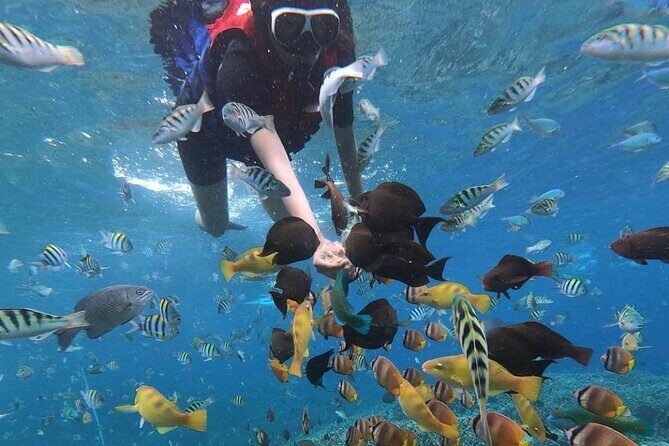
  • Two-stop private snorkeling setup at Padangbai’s Blue Lagoon, with an instructor and provided gear
  • Tukad Cepung waterfall inside a cave for that iconic circular-cliff photo frame
  • Goa Lawah bat cave temple for a quick hit of Balinese temple life plus bats-in-a-cave vibes
  • Onboard Wi‑Fi + towels (comfort details that make long travel days easier)
  • Free 2-way private transfers from Ubud and most south Bali areas, plus pickup from multiple neighborhoods near Kuta
  • Guide-led pace that matters—Dewa is specifically noted for being helpful and unhurried

From Kuta to Padangbai: Why This Route Works

If you’re basing yourself in Kuta, Seminyak, Legian, Canggu, Sanur-side areas, or even farther toward Nusa Dua/Tanjung Benoa, this tour is designed to knit together three very different Bali moments: ocean life, temple culture, and a cave waterfall photo session.

The big value is that it’s not just “a transfer with stops.” The itinerary groups the best locations into one efficient loop. You start with the water (Blue Lagoon snorkeling), then shift to a temple/cave stop (Goa Lawah), and end on the most visually dramatic experience (Tukad Cepung). That flow keeps you from bouncing around like a pinball all day.

Another reason I like the structure: the day isn’t only about views. You also get the practical parts handled—private boat access, an instructor, and snorkeling gear. And once you’re on the move, the ride itself includes onboard Wi‑Fi, which is a small comfort that makes the long hours feel less like dead time.

Blue Lagoon Beach Snorkeling (Padangbai): Private Boat + Provided Gear

Your morning hits Blue Lagoon Beach first, with about 3 hours at this stop. The tour is built around snorkeling in Padangbai’s Blue Lagoon, and the key detail is the setup: a private boat plus an instructor just for your group, with snorkeling gear provided.

What this means for you in real life:

  • You’re not sharing boat time with a giant crowd, so you can usually get a more relaxed rhythm in and out of the water.
  • An instructor makes a difference. Even if you’re a confident swimmer, it’s nice to have someone who knows where the fish activity tends to be and how to manage the timing between the two snorkeling moments.

The tour description also references two separate stops from the boat. Translation: you’re not just doing one quick float-and-go. You’ll have more than one chance to see marine life, which improves the odds you’ll get at least a few great moments for photos.

What to bring (and what to plan for)

The packing list is simple and honest: sun cream, hat, swimsuit, towels, and a camera for your personal use. The tour also says the chauffeur provides towels, so don’t be shocked if towels show up—still, bring your own just to avoid any guesswork.

One more practical tip: even though this is snorkeling, you’ll still be on your feet at various points—boarding, walking, and moving around the beach area. Wear something that works if your feet get damp and you need traction.

The only “watch out”

Ocean time depends on conditions. The tour notes that it requires good weather, so if conditions are unsafe, you may be offered a different date or a full refund. That’s not a deal-breaker; it’s just a reminder that your best snorkeling day comes from cooperative seas.

Goa Lawah Temple: The Bat Cave Stop You Can’t Ignore

Blue Lagoon Snorkeling - Cave Waterfall - And More - All Included + FREE Wi-Fi - Goa Lawah Temple: The Bat Cave Stop You Can’t Ignore
Next comes Goa Lawah Temple, described as being built around a cave inhabited by bats, often called the Bat Cave.

This is a shorter stop (about 30 minutes), but it’s a focused one. You’re not trying to “complete” a temple visit in one whirlwind half hour—you’re getting the main experience: the atmosphere of a working Balinese temple and the visual hook of the cave/bat setting.

Here’s why this stop is worth the time:

  • It breaks up the day after snorkeling with something cultural and local-feeling.
  • It’s also a change of scenery: you go from sea to temple grounds, so your body gets a little variety after the water session.

A quick caution: bat cave areas tend to be humid and enclosed in parts. If you’re sensitive to tight spaces or strong smells, take your time and follow guide guidance on where to stand and how to move.

Tukad Cepung Waterfall: How to Get That Cave Photo

Then you hit the star: Tukad Cepung Waterfall. This waterfall sits inside a cave and is surrounded by circular cliffs—exactly the kind of natural framing that makes the photos look unreal.

You’ll have about 1 hour here, and the experience is timed around what matters at a cave waterfall: access, light, and the flow of people moving through the area.

What you should expect on the ground

Cave waterfalls are rarely “easy mode.” You should plan for steps and walking on uneven surfaces. That detail matters because one review specifically praises Dewa for not hurrying people through the steps to and from the waterfall. That’s a really practical compliment: it means you can move at a normal pace, not feel like you’re being dragged through for the next photo.

Photo strategy that doesn’t stress you out

Since the whole point is that iconic cave frame:

  • Take your first photos quickly to capture the overall look.
  • Then slow down. Spend time finding a better angle from where you can see the cave walls clearly.
  • Use your camera settings if you know them—but if you don’t, let the light do the work and shoot in short bursts.

If you’re traveling with friends, this is a good stop for splitting roles: one person works on the wide shot, another grabs close-ups, and everyone cycles so nobody gets left behind.

The “Extra” Stops: Markets and Coastal Views Depending on Where You Stay

The itinerary includes several additional photo and local-life touches that vary based on pickup area. You might see:

  • a traditional morning market stop
  • a traditional morning fish market stop
  • scenic viewpoints involving the beaches of Nusa Dua and a mangrove forest area
  • coastal views around Sanur and Gianyar
  • cultural sculpture/photo stops (including mention of the Dewa Ruci sculpture and the Titi Banda Statue related to the Ramayana epic)

I like these add-ons when they’re done with the right pacing. They give you a sense of Bali beyond the “top three attractions” list. The trade-off is simple: they add motion and time, so you’ll want to keep your energy for the snorkel and Tukad Cepung.

One nice thing for planning: the notes say these extra stops are tied to areas like Ubud, Jimbaran, Nusa Dua, Sanur, and so on. That usually means your route is designed to make travel time less painful from your exact pickup neighborhood.

Private Transfers + Onboard Wi‑Fi: The Comfort Math

At about $74.72 per person for an all-in day, the big question is value: what are you really paying for?

You’re not just paying for entry tickets. The tour includes:

  • pickup from your accommodation area (multiple Kuta/Seminyak/Legian/Canggu/Tanjung Benoa zones are mentioned)
  • free two-way private transfers from Ubud and most south Bali destinations
  • snorkeling equipment and a private boat with an instructor
  • admission tickets at the listed stops
  • onboard Wi‑Fi, plus towel and comfort support from the chauffeur

On a long day, these details matter. Transfers reduce the risk of burning time finding transport or coordinating with other groups. Wi‑Fi helps when you want to coordinate photos, messages, or simple check-ins between stops.

Group size is also handled. It’s a private tour, meaning only your group participates. If your group has more than 7 people, the tour notes a second car will be provided, which usually keeps the ride comfortable.

Hygiene and practical safety notes

The tour states that cars are frequently cleaned and sanitized. It also includes personal protective equipment expectations—masks are referenced for travelers and says the guide will wear personal protective equipment (masks), plus social distancing instructions. Even if you usually travel light on these things, this is part of how the day is run, so pack accordingly.

Lunch, Timing, and How to Make the Day Feel Easier

The description mentions lunch as part of the Blue Lagoon snorkeling experience in Padangbai. In practical terms, that’s important because it keeps you from needing to hunt for food between stops while you’re tired and sun-baked.

Timing-wise, think of your day like three “anchors”:

  • Blue Lagoon snorkeling (the longest block, around 3 hours at the site)
  • Goa Lawah (a quick, concentrated cultural stop)
  • Tukad Cepung (the photo-heavy finale, about 1 hour)

Once you mentally anchor those, the extra market/view stops become supporting acts rather than something that steals your focus.

A small gear checklist that matches the day

Based on what’s listed, I’d pack:

  • swimsuit
  • sun cream + hat
  • camera
  • sandals you can walk in
  • a lightweight layer for cave air (optional, but cave spaces can feel cooler than you expect)
  • mask (since it’s required in the tour details)

And if you’re the type who likes to stay dry and organized, bring a small dry bag for your phone/camera accessories. The itinerary includes multiple moving parts, and you’ll thank yourself later.

The Guide Quality: Why Dewa and Wayan Matter

This tour is only as good as the human behind the schedule. One standout theme in the reviews is how much your guide’s attitude affects the experience.
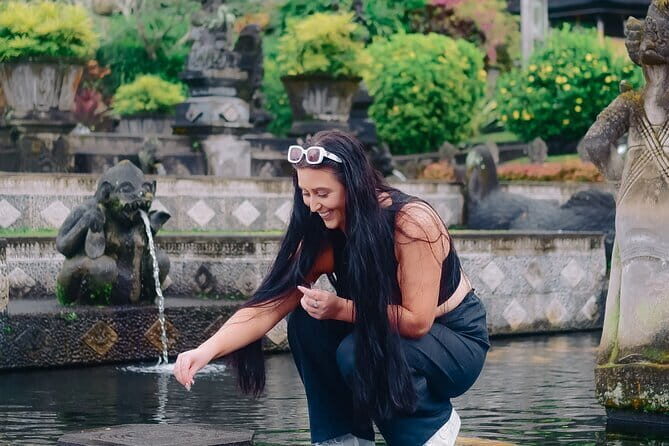
One review calls out Dewa as excellent—helpful, informative, speaks excellent English, and doesn’t rush people when you need extra time on the steps to and from the waterfall. That’s the kind of detail you feel in your body: you stop tripping over your own stress and just enjoy the view.

The messages also show the provider’s team includes guides such as Wayan, who replies warmly to guests. Even if you don’t get the same guide name, the point is that this isn’t an anonymous “drop you off” operation. It’s guide-led with a focus on pacing and clear communication.

Who This Tour Fits Best (And Who Might Prefer Something Else)

This is a great fit if you want:

  • a one-day Bali itinerary that mixes sea life, temple culture, and a cave waterfall
  • a private feel without driving yourself
  • snorkeling with an instructor and provided gear
  • built-in convenience like pickup and onboard Wi‑Fi

It might be less ideal if:

  • you hate walking on uneven cave/waterfall approaches
  • you want a slow, unstructured day with lots of free time (this is tightly grouped by design)
  • you’re not comfortable with a moderate fitness level rating and steps

If you’re traveling with friends or family, it’s also a good option because a private setup helps keep the day smooth. Everyone gets the same schedule and the same guide attention.

Should You Book Blue Lagoon Snorkeling + Cave Waterfall + Goa Lawah?

I’d book it if your priority is a high-impact day that doesn’t require planning three separate activities. For the price, you’re getting more than “tickets”—you’re getting private snorkeling structure, admission included across the stops, and comfort perks like pickup and onboard Wi‑Fi.

I’d think twice if you’re sensitive to cave conditions, steps, or you want lots of downtime. But if you can handle some walking and you want one of Bali’s most photogenic cave-waterfall settings, this route is hard to beat.

My practical “decision rule” is simple: if Tukad Cepung is on your list and you want real snorkeling time at Blue Lagoon, this tour lines up the key pieces into one efficient day. That combo is the value.

Nungnung Waterfall,Jatiluwih Heritage UNESCO and Bedugul Tour

Nungnung Waterfall,Jatiluwih Heritage UNESCO and Bedugul Tour - Timing, weather, and smart packing for a smooth 10-hour day

One day, four Bali icons. This private route strings together Nungnung Waterfall, Bedugul’s lakeside temple, Jatiluwih rice terraces (a UNESCO area), and sunset at Tanah Lot—without you spending the day fighting traffic or route planning.

I especially like the chance to cool off at Nungnung Waterfall with time set aside to swim, and I also like that Jatiluwih is more than a quick photo stop. You get a real look at the countryside feel and an easy option to stretch your legs with trekking-style walking around the terraces.

One consideration: entrance fees and lunch cost extra, and they’re listed per person, so plan for an added budget before you go.

Key highlights at a glance

  • Private door-to-door pickup so your day starts with less hassle and more time outdoors
  • Nungnung Waterfall first gives you the freshest start and the most active stop early on
  • Lake Beratan Temple in Bedugul combines a lakeside setting with a long cultural timeline
  • Jatiluwih rice terraces plus lunch adds countryside rhythm, not just temples
  • Tanah Lot sunset timing is the payoff for the whole loop
  • Sindu-style guiding is repeatedly praised for safety, clear cultural explanations, and even helpful photography

Why this Nungnung–Bedugul–Jatiluwih–Tanah Lot loop is worth doing

Bali can feel like two trips at once: one part religion and views, the other part driving. This tour solves the driving problem with a private setup, plus hotel pickup and drop-off. That matters, because the best sights are spread out and the roads can be slow, especially when you’re coordinating stops on your own.

What makes the day feel satisfying is the sequencing. You go from waterfall energy (morning activity) to lakeside calm, then to rice-terrace views, and end with the big visual moment: Tanah Lot Temple at sunset. It’s an order that keeps the day from feeling like one long line of standing around.

A big plus for a first-time or “see more, stress less” traveler: you’re not stuck doing the same basic route as everyone else. You’re also not wondering what to look for at each place. A driver who speaks English and explains what you’re seeing can turn a stop into a story you remember.

Nungnung Waterfall: swim time, green views, and a realistic budget

Nungnung Waterfall,Jatiluwih Heritage UNESCO and Bedugul Tour - Nungnung Waterfall: swim time, green views, and a realistic budget
This is the first stop for a reason. Starting at Nungnung Waterfall means you’re not just watching from a bus seat—you’re getting time to enjoy the water and the surrounding greenery. The plan includes about an hour here, and the itinerary specifically mentions time to swim at the large waterfall. If you’re the type who likes getting your feet wet (literally), this is one of the more active moments of the day.

Important: the waterfall entrance fee is IDR20,000 per person and is not included. Bring cash for fees like this. Also, think about what you’ll need for comfort. The tour doesn’t list what to bring, so use your own common sense: quick-dry clothes, a change of footwear, and something secure for phone and wallet.

One more practical point: because this is an outdoors swim stop, weather matters. If rain has made conditions slippery, you may need to take it slower. The tour does note good weather is required, and that’s not just marketing—it’s for comfort and safety.

Lake Beratan and Ulan Danu Beratan Temple: a lakeside temple with real age behind it

Nungnung Waterfall,Jatiluwih Heritage UNESCO and Bedugul Tour - Lake Beratan and Ulan Danu Beratan Temple: a lakeside temple with real age behind it
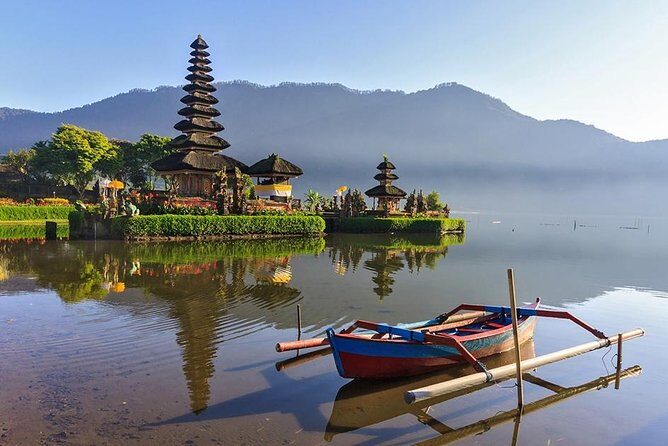
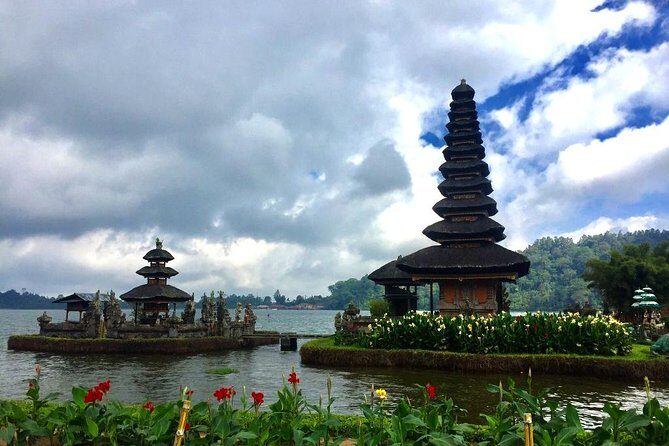
Next up is Lake Beratan and the Ulan Danu Beratan Temple in Bedugul. This stop gives you a calmer pace after the waterfall. The setting is centered on the lake and the temple relationship to water, which is part of why it feels special in person.

The itinerary describes the temple as being built around 1643 years ago, tied to the Mengwi Kingdom and a dedication to God in the lake. Even if you only catch part of the story, you’ll understand the core idea: these places are not just photo backgrounds. They’re living cultural points in daily life.

This stop also runs about an hour. Entrance fees are extra here too: IDR75,000 per person for the Beratan lake temple. If you like temples but also hate money surprises, this is where you’ll want to keep a running note of your totals.

Also, don’t rush your photos. Lakeside light changes fast, especially with clouds. Take a few minutes to look at the temple from different angles rather than chasing only one perfect shot.

Jatiluwih rice terraces: UNESCO views plus lunch and walking time

Then comes the countryside stretch: Jatiluwih rice terraces in the Jatiluwih area, paired with lunch at a restaurant during the stop window. The tour gives about two hours total, which is enough time to see the terraces properly without feeling like your day is stuck waiting for the same viewpoint.

Jatiluwih is known for being large and scenic, and this stop is built for that. The itinerary mentions scenic views of Batu Karu Mountain, plus the option to do trekking. You don’t need to be an athlete. Think of it as gentle walking around viewpoints and terrace edges, with plenty of chances to pause.

A couple of realities to plan for:

  • The entrance fee is IDR75,000 per person, not included.
  • Footing can be uneven. Wear shoes you trust, especially if it’s been wet.
  • You’ll likely want to eat lunch here or at least use the scheduled restaurant time, since lunch is specifically listed as not included in the base price.

Why I like this stop in a one-day plan: it breaks the temple/waterfall pattern. It gives you a real sense of rural Bali—rice growing, working life, and the way terraces shape daily movement through the valley.

Tanah Lot sunset: the clifftop payoff and how to make it count

The day ends at Tanah Lot Temple, and the itinerary calls out why this is the star stop: it sits above rocky ground near the sea, and it’s famous for sunset viewing.

This is the part where the tour earns its full-day length. If you’re choosing only a couple “best of” moments, Tanah Lot is one of them. The tour allots about two hours, which is useful because sunset is not a single instant—you want time to arrive before the light gets intense, then time to enjoy the temple as the sky changes.

Expect uniqueness: the itinerary notes the temple is on rock with a kind of sticky surface, and mentions seeing other temples nearby, like Batu Bolong. You’ll also want to watch the shoreline movement because sea conditions can change the feel of the rocks and reflections.

One smart tip: keep your camera settings simple and don’t treat this as a marathon. If you’re there for 20 minutes of calm watching, you’ll probably enjoy it more than if you’re constantly checking settings and sprinting for the best angle.

Private transport and Sindu’s guiding style: the real value is in the flow

The tour is built around one big practical advantage: transport by air-conditioned vehicle plus hotel pickup and drop-off. That reduces friction, and it keeps your day comfortable even when the stops are spread out.

The guiding piece is also a major theme in the feedback style you’ll see for this operator. The driver/guide often named is Sindu Bali Driver (people specifically mention Sindu). Praise focuses on:

  • polite, friendly service
  • safe and careful driving
  • English communication and explanations about culture and customs during the day
  • flexibility in how the day feels hour-to-hour
  • even helpful photography support

That last point matters more than it sounds. Tanah Lot and Jatiluwih are places where a wrong angle can make a great scene look flat. If your guide is also helping with timing and photo positioning, you spend less time wrestling your camera and more time actually seeing.

Also, the comfort notes aren’t vague: people mention air conditioning and cold water in the car. Those small details add up on a 10-hour day.

Price and value: $85 per group, then plan the entrance fees

The base price is $85 per group for up to 4 people, and the tour runs about 10 hours starting around 8:30 am. That’s a good structure if you’re traveling with family or friends and can fill the group size. If you’re a solo traveler or a couple, it may still be worth it for the pickup convenience—but your per-person value drops compared with splitting the group cost.

Let’s talk entrance fees, since they’re listed clearly and not included:

  • Nungnung Waterfall: IDR20,000 per person
  • Beratan lake temple: IDR75,000 per person
  • Jatiluwih rice terrace: IDR75,000 per person
  • Tanah Lot Temple: IDR75,000 per person

Add those up and your total entrance fees are IDR245,000 per person, not counting any optional drinks or lunch. Lunch is also not included, and alcohol is listed as available to purchase.

So the best way to judge value is this: you’re paying for someone to handle logistics and guiding, while you budget a predictable amount for entry costs and food. For a private day, that’s often the right trade: controlled schedule, less stress, and you get to see multiple standout areas instead of just one.

Timing, weather, and smart packing for a smooth 10-hour day

Nungnung Waterfall,Jatiluwih Heritage UNESCO and Bedugul Tour - Timing, weather, and smart packing for a smooth 10-hour day
This tour starts at 8:30 am. That early start helps with two things: better light for daytime stops and less stress when you hit the later sunset timing.

Transfers take varying amounts of time because of traffic and the time of day. That’s normal in Bali, and it’s one reason a private guide can make the day feel smoother. When you’re driving yourself, every delay turns into a scramble.

Weather matters. The tour notes good weather is required. If conditions are poor, the tour may be canceled and you’ll be offered another date or a full refund. In practice, that means you should keep your schedule flexible and avoid booking this tour on the one day you’ve planned zero backup time.

For packing, use a practical approach:

  • bring swim-ready gear if you want to use the waterfall time
  • wear shoes you can walk on uneven ground in Jatiluwih
  • carry cash for entrance fees (they’re listed per person)
  • bring something lightweight for temple stops and photos

Dress code is listed as smart casual, so skip the full beach outfit unless you can change quickly after the waterfall.

Who this tour fits best (and who should consider a different plan)

This is a strong match for:

  • couples, small families, and groups of up to 4 who want private comfort
  • first-timers who want waterfall + temples + rice terraces + sunset in one day
  • travelers who like explanations and cultural context, not just drop-off and go
  • anyone who hates driving on unfamiliar roads and wants a driver who can handle the route

It may be less ideal if:

  • you only want one or two major sights and prefer a slower pace
  • you’re not interested in paying multiple entrance fees and adding lunch separately
  • you want total flexibility to skip stops on the fly (this is private, but the day is still designed as a sequence)

The day is full, but it’s built around variety, so it doesn’t feel repetitive.

Should you book the Nungnung–Bedugul–Jatiluwih–Tanah Lot day tour?

Book it if you want an efficient Bali day that hits big-name experiences without the stress of planning. I’d especially recommend it when you value:

  • hotel pickup/drop-off
  • a guide who helps with culture and timing
  • a sunset finish at Tanah Lot
  • the mix of active (waterfall swim) and scenic (rice terraces) stops

Hold off or shop for alternatives if entrance fees and lunch costs feel like too many add-ons, or if you’re traveling at a time when weather disruption would be a major problem for your schedule.

If you do book, my advice is simple: budget the entrance fees (IDR245,000 per person total) and pack for both temples and one wet outdoors stop. Then let the day run its course—you’ll get a Bali sampler that actually hangs together.

FAQ

What time does the tour start?

The tour start time is 8:30 am.

How long does the tour take?

The duration is about 10 hours.

Is the tour private, and how many people can it include?

Yes, it’s a private tour/activity. Only your group participates, up to 4 people per group.

What’s included in the price?

Included are bottled water, the driver/guide, hotel pickup and drop-off, and transport by air-conditioned vehicle. A mobile ticket is also provided.

Are entrance fees included?

No. Entrance fees are at your own expense, and the listed fees are: Nungnung Waterfall (IDR20,000 per person), Beratan lake temple (IDR75,000 per person), Jatiluwih rice terrace (IDR75,000 per person), and Tanah Lot Temple (IDR75,000 per person).

Is lunch included?

No, lunch is not included.

Is the guide English speaking?

Yes, the tour notes an English-speaking guide.

What if bad weather affects the day?

The tour requires good weather. If it’s canceled due to poor weather, you’ll be offered a different date or a full refund.

What’s the cancellation window?

You can cancel up to 24 hours in advance for a full refund. If you cancel less than 24 hours before the experience start time, the amount you paid will not be refunded.

Jungle Trekking at Mt. Batukaru, scenic Waterfall & village life

Jungle Trekking at Mt. Batukaru, scenic Waterfall & village life - The Morning Drive: Countryside Views Before You Enter the Forest

Some places in Bali feel made for photos.

This one feels made for people and plants. I love how the day mixes sacred rainforest trekking with real village stops, guided by a local ranger who teaches you how to read the jungle—birds, plants, monkey calls, and simple survival-style know-how. Two big wins for me: the small-group size (max 8) keeps it personal, and the day ends with thoughtful recovery time—a short massage plus shower access at the Balikaru Experience Center.

There is one consideration: the hike includes a moderate fitness requirement and uses narrow jungle paths, so if you have knee issues or hate uneven ground, you’ll want to plan carefully. Also, it runs best in good weather since it requires it to operate as described.

Key Highlights You’ll Actually Feel

Jungle Trekking at Mt. Batukaru, scenic Waterfall & village life - Key Highlights You’ll Actually Feel

  • Local ranger-led rainforest trekking on Mount Batukaru (about 2 hours)
  • Luhur Batukaru Temple at the start, a calm spiritual pause in misty forest air
  • Balikaru village lunch (Nasi Campur Tumpeng) in a family-run garden warung
  • Balikaru Farm visit with animals and stingless Trigona bees
  • Pengempu Waterfall + hot spring as a satisfying cool-down after the hike
  • Massage and shower option to help you reset before you head back

Why Mt. Batukaru Feels Different Than the Usual Bali Day

Jungle Trekking at Mt. Batukaru, scenic Waterfall & village life - Why Mt. Batukaru Feels Different Than the Usual Bali Day
Bali has plenty of good tours. This one leans into a quieter kind of Bali—one where the jungle is the main event, not an accessory. You start early, get driven through countryside, then gradually trade pavement for footpaths.

What makes it work is the pacing and the people. You’re not just walking; you’re learning how to notice. A local ranger and your English-speaking guide help you spot what’s around you—so the rainforest feels like a place you can understand, not just pass through.

And because the group is small, the day doesn’t feel rushed. It’s still active (and wet-season jungle can be muddy), but it feels like a guided conversation with nature and local culture.

The Morning Drive: Countryside Views Before You Enter the Forest

Jungle Trekking at Mt. Batukaru, scenic Waterfall & village life - The Morning Drive: Countryside Views Before You Enter the Forest
You’ll start around 7:00 am with pickup offered from the Sanur area, then ride through Bali’s interior. This is one of those drives that’s worth paying attention to: rice terraces, small villages, and farmers working in the fields.

Why I like this part: it gets your eyes ready for what’s coming. You begin by seeing the landscape (literally rice systems and irrigation) that makes rural Bali tick. Then you head toward the mountain and the air starts to feel different.

If you’re the type who gets impatient in transit, don’t be. This drive is part of the story. It sets expectations for temples, terraces, and a slower rhythm.

Luhur Batukaru Temple: A Sacred Start With Mountain Mist

Jungle Trekking at Mt. Batukaru, scenic Waterfall & village life - Luhur Batukaru Temple: A Sacred Start With Mountain Mist
At Pura Luhur Batukaru, you step into one of Bali’s most sacred mountain temples. You’ll have time there to slow down—about 30 minutes—while you see how locals visit for blessings before the day’s mountain and forest time.

This stop matters because it changes the tone. The jungle trek doesn’t feel like a random hike anymore. It feels like a respectful visit to a living place with spiritual meaning.

Practical tip: dress and behave with the temple in mind. Wear something comfortable but not overly bare for a sacred site.

Entering the Jungle: Ranger-Style Mt. Batukaru Trek (About 2 Hours)

Jungle Trekking at Mt. Batukaru, scenic Waterfall & village life - Entering the Jungle: Ranger-Style Mt. Batukaru Trek (About 2 Hours)
This is the heart of the tour: rainforest trekking around 2 hours on Mount Batukaru. You’ll follow narrow jungle paths under tall trees and giant ferns with a local ranger plus your guides.

The best part isn’t just the green. It’s the guidance. The ranger’s focus is on what you can observe:

  • how to identify birds and plants
  • listening for monkey calls
  • basic jungle survival-style tips (practical stuff, not scary stuff)
  • learning what the forest is doing around you

Even if you’re not a “nature person,” this approach usually lands. It turns the hike into an activity you can participate in, instead of a long walk where you count steps and hope it ends.

Group size also helps here. With up to 8 people, you’re not lost in a stampede. You can actually hear explanations and ask questions.

What about walking difficulty?

You’ll need moderate physical fitness. The paths are narrow and uneven. You don’t need to be an athlete, but you do need solid shoes and a steady pace.

The tour recommends well-worn trekking or sports shoes. If you request it, you can get rubber boots on site. Rain ponchos are offered if it’s wet.

The Coffee Break: A Pause in the Forest, Not a Retail Stop

Jungle Trekking at Mt. Batukaru, scenic Waterfall & village life - The Coffee Break: A Pause in the Forest, Not a Retail Stop
Between the walking segments, there’s a coffee break at a hidden place in the rainforest. This isn’t positioned like a sales stop. It’s a real breather—water, coffee, and a moment to let your body cool down before you continue.

You’ll see it as part of the “listen to the jungle” style of the day. After learning bird calls and plant names, it’s nice to sit and watch for a minute.

Balikaru Village Life: Lunch at Warung.Balikaru (Nasi Campur Tumpeng)

Jungle Trekking at Mt. Batukaru, scenic Waterfall & village life - Balikaru Village Life: Lunch at Warung.Balikaru (Nasi Campur Tumpeng)
After the hike, you’ll head toward Balikaru, a family community surrounded by tropical greenery. There’s time for a short walk and a look at a garden with more than forty species of plants, herbs, and spices.

Then lunch at Warung.Balikaru—a family-run restaurant with garden views. The meal is described as Nasi Campur Tumpeng, served with local vegetables and traditional Balinese flavors.

Why I think this lunch is a big deal: it’s not just food. It’s part of the village rhythm you came for. You’re re-fueled in a place that’s tied to the day’s learning, including herbs and plant knowledge from earlier.

If you care about dietary needs, this tour says it can accommodate vegetarian and other requests if you indicate them during booking.

Balikaru Experience Center: Shower + Rest When You Need It

Jungle Trekking at Mt. Batukaru, scenic Waterfall & village life - Balikaru Experience Center: Shower + Rest When You Need It
At the Balikaru Experience Center, the tour includes a rest stop and shower option, with towels provided. This is the kind of practical detail that makes a jungle day feel manageable.

It also changes how you pack. You can bring a change of clothes and not worry about being stuck sweaty for the ride back. That matters when you’re mixing jungle + waterfall + hot spring.

Balikaru Farm and Stingless Bees: Animals, Plants, and Traditional Methods

Jungle Trekking at Mt. Batukaru, scenic Waterfall & village life - Balikaru Farm and Stingless Bees: Animals, Plants, and Traditional Methods
Next up is the Balikaru Farm visit. You’ll learn about how villagers cultivate rice, cocoa, coffee, and tropical fruits using traditional and sustainable methods.

You’ll also see animals and stingless Trigona bees. This is the kind of stop I like because it’s specific. Bees aren’t a generic “farm” label here—they’re part of the farm experience you actually go see.

If you’re traveling with kids, this farm segment often works well because it’s hands-on and visual. If you’re traveling solo or as a couple, it still helps break up the day after hiking.

Rice Terraces on the Way: Subak Irrigation Views

On the return side of the day, you’ll pause during the drive and get photo time with views of rice terraces, tied to the traditional irrigation system called subak.

This isn’t a full rice-terrace tour. It’s more like a gentle reminder of how the mountain water connects to daily life in Bali. It also gives your legs a chance to recover before the final water stops.

Pengempu Waterfall and the Hot Spring: Cool Down for the Body

Before you head back, you visit Pengempu Waterfall. You’ll take a short walk through tropical vegetation to reach the falls, where you can enjoy a serene stop before the long drive back.

Then there’s the hot spring visit as part of the same late-day recovery theme. You’re basically doing the classic nature loop in reverse: hike, learn, eat, then soften your muscles in warm water and cool air.

This combo makes the end feel complete. Many trekking days end after lunch. Here, you still get to feel the mountain’s energy.

Guides Matter: What You Can Expect With English Support

The tour includes an English-speaking guide, and you’ll also have an additional local experienced trekking guide. There’s a surcharge if you choose another language, but English is covered.

From real day-to-day experience, the guide quality is usually the difference between a walk and a story. One guide name you might encounter is Komang, praised for friendliness and helpful English. Another name that shows up in the experience is Dika, tied to an excellent guide-led day.

Even beyond names, the key is that the jungle teaching is coming from people who live with this forest and know how to translate it into something you can notice fast.

Price and Value: Why $117 Can Make Sense (If You Want the Real Day)

At $117 per person, this isn’t the cheapest Bali tour. But you’re paying for a specific mix of things you don’t always get together:

  • Two hours of ranger-led jungle trekking
  • Temple time at Luhur Batukaru
  • Homemade lunch at Warung.Balikaru
  • Coffee break during the trek
  • Massage after trekking
  • Shower/rest access
  • Hot spring + waterfall stops
  • A small group limit (max 8), which often means more attention during the hike

If you’re the kind of traveler who likes seeing a place through local eyes—forest knowledge, village life, and practical recovery—this pricing can feel fair. If you only want a quick highlight checklist and don’t care about learning, you may find other tours more cost-friendly.

Who This Tour Is Best For

This is a great fit if:

  • you want jungle trekking with real guidance, not just a guided walk
  • you like mixing spiritual sites with nature
  • you enjoy village food and farm-to-table kind of context
  • you prefer small groups and a more personal day

It might not be your best match if:

  • you dislike uneven trails or you’re dealing with mobility limitations
  • you want a mostly relaxing day with minimal walking

Should You Book Jungle Trekking at Mt. Batukaru?

I’d book it if you want Bali beyond the beach-and-temple combo. The Mt. Batukaru trek plus Balikaru village life gives you a fuller view of how people live with the mountain—spiritually, practically, and day to day.

On the other hand, if you’re mostly chasing a short photo stop and you don’t want to work for it with a moderate hike, look for a lighter option.

FAQ

Is pickup included for this tour?

Yes, pickup is offered, and the tour starts at 7:00 am.

How long is the Jungle Trekking at Mt. Batukaru experience?

The duration is about 10 hours.

What fitness level do I need?

The tour recommends travelers have moderate physical fitness for the trek.

What’s included with the price?

The package includes an air-conditioned vehicle, an English-speaking guide (other languages have a surcharge), an additional local trekking guide, around 2 hours of rainforest trekking, coffee break, entrance fees, rest stop and shower option at Balikaru experience centre, homemade lunch at Warung Balikaru, a 15-minute massage, a visit to Balikaru farm with animals and stingless Trigona bees, plus the hot spring and a visit to Pengempu Waterfall.

Are dietary needs accommodated?

Yes. Vegetarian options are available, and other dietary needs can be accommodated if you indicate them at booking.

What should I wear or bring for the trek?

The tour recommends well-worn trekking or sports shoes and possibly a change of clothes. Rubber boots can be provided on request, and rain ponchos are offered if needed. A shower is available at the Balikaru Experience Center, with towels provided.

Is there an option for shower and rest during the day?

Yes. The Balikaru Experience Center includes a rest stop and shower option, and towels are provided.

What happens if weather is bad?

The tour requires good weather. If it’s canceled due to poor weather, you’ll be offered a different date or a full refund.

Hidden North Waterfall Bali All inclusive

Hidden North Waterfall Bali All inclusive - Price and Inclusions: What the All-Inclusive Part Really Covers

Four waterfalls, one calm Bali day. This private, full-day outing strings together Leke Leke, Banyumala Twin, Banyu Wana Amertha, and Munduk so you get lush scenery without wasting hours bouncing around. I like that admission tickets and lunch are included, meaning fewer surprises and more time outdoors. I also like the in-person English guide, who keeps things organized and helps you understand what you’re seeing. One consideration: you’ll do a few short treks, so expect some leg work and possibly sore muscles after.

The logistics are pretty traveler-friendly. Pickup is offered from Seminyak area, you ride in an air-conditioned vehicle, and there’s WiFi on board to keep your plans, maps, and messages from falling apart. The only real catch is weather: the tour requires good conditions, and if it’s canceled for that reason, you’ll get a different date or a full refund.

If you care about atmosphere, this route is built for it. At least one of the stops is described as calm and suitable for anyone who wants to be near the water without feeling like you’re signing up for a deep-water swim.

Key things to know before you go

Hidden North Waterfall Bali All inclusive - Key things to know before you go

  • Private group time: only your group participates, so the pace is less rushed.
  • All-inclusive core needs: lunch, bottled water, and admission fees are covered.
  • Waterfall variety in one day: you’ll see different styles, from single drops to multi-tier cascades.
  • Short jungle treks: expect walking paths and humidity, not just a quick photo stop.
  • Guide support for photos and comfort: guides like Hendi and Aji are praised for keeping you at the right spots.
  • Weather matters: you’re going when conditions are right for viewing and trekking.

Four Waterfalls in One Day: Why This Route Feels Like a Secret

Hidden North Waterfall Bali All inclusive - Four Waterfalls in One Day: Why This Route Feels Like a Secret
This is the kind of day that works because it’s focused. Instead of doing a long list of stops that all blur together, you’re building your time around four waterfall experiences, each with its own feel.

Leke Leke starts the day with a rainforest trek and a hidden-feeling arrival. Then Banyumala Twin shifts gears to a more storybook set-up with two cascades. After that, Banyu Wana Amertha gives you the multi-tier look, and Munduk finishes with misty air and a slower vibe.

The payoff is simple: you get time to actually be there. Not just a 3-minute lineup and sprint back to the van. You have structured time at each stop (about two hours per waterfall), which is enough to walk in, take photos, and settle in.

Price and Inclusions: What the All-Inclusive Part Really Covers

Hidden North Waterfall Bali All inclusive - Price and Inclusions: What the All-Inclusive Part Really Covers
At $96.51 per person, the best value part isn’t the badge “all inclusive.” It’s what gets taken off your to-do list while you’re traveling.

Included:

  • Lunch (so you don’t hunt for food mid-trek)
  • Bottled water
  • Air-conditioned vehicle
  • WiFi on board
  • Private transportation
  • All fees and taxes
  • English-speaking guide
  • Admission tickets at the stops

Not included:

  • Breakfast

Here’s why that matters. Waterfall days in Bali can get physically draining fast. When lunch and water are already planned, you’re less likely to get grumpy, dehydrated, or stuck bargaining for a snack on the wrong side of a trail. Also, admission tickets being handled means you don’t lose time at entrances.

The only cost trap to watch for is breakfast. If you skip it at home, you’ll need to buy something before pickup (not provided on this option).

How the Day Runs from Seminyak (Pickup to Drop-Off)

Hidden North Waterfall Bali All inclusive - How the Day Runs from Seminyak (Pickup to Drop-Off)
This tour is built around a full 8-hour day with pickup offered from Seminyak. You’ll be in an air-conditioned vehicle between stops, and that’s a big deal in Bali’s heat—especially after trekking into cooler, humid forest areas.

Expect the schedule to feel like: ride, short hike, waterfall time, then ride again. With about two hours at each location, you’re not sprinting every five minutes, but you also won’t feel like you’re sitting around doing nothing.

Because it’s a private tour for your group, you’re less likely to get the awkward rhythm of waiting for strangers at every turn. It’s your group’s pace, guided by an in-person English speaker.

Finally, a practical note: bring items you’ll want on you for trekking and photos (water-resistant footwear if you have them, a light layer for misty air at the end, and a phone strap or secure camera setup).

Stop 1: Leke Leke Waterfall Walk to the Quiet Drop

Hidden North Waterfall Bali All inclusive - Stop 1: Leke Leke Waterfall Walk to the Quiet Drop
Leke Leke kicks off with a trek through lush tropical forest. The experience is described as hike-first, waterfall-second, which is usually the best way to enjoy it. You’re walking through greenery, listening to nature, and then the waterfall reveal feels like a reward rather than a roadside stop.

What I like about this start: it sets the tone for the whole day. You’re already in “walking and noticing” mode, so later waterfalls don’t feel like you’re repeating the same experience.

You’ll have enough time to do more than just snap one photo. Plan on:

  • A careful walk along the trail sections
  • Time for photos and simple rest
  • A chance to enjoy the sound and cool air around the falls

Possible drawback: this is still a hike. If your legs are tight or you’re sensitive to humidity, go slow and give yourself time to adjust.

Stop 2: Banyumala Twin Waterfalls and the Rolling-Jungle Drive

Hidden North Waterfall Bali All inclusive - Stop 2: Banyumala Twin Waterfalls and the Rolling-Jungle Drive
After Leke Leke, you’ll ride through rolling hills and jungle areas to reach Banyumala Twin. That drive matters more than it sounds. It changes the mood from “forest hike” to “scenery ride,” and it helps break up the day so you don’t feel locked into one environment for eight hours.

At Banyumala Twin, you’ll take a short trek on a nature trail surrounded by tropical plants. Then you’re greeted by the twin cascades—two waterfalls that make the scene feel fuller than a single drop.

What to look for here:

  • A viewpoint that lets you capture both cascades
  • Time to watch how water moves down different edges
  • A slower moment away from the densest crowd spots (you’ll know when you see them)

This is also a strong stop for people who like photos. One guide, Hendi, is specifically praised for helping get great shots, and Banyumala’s two-waterfall composition is exactly the type of setting where that skill helps.

Stop 3: Banyu Wana Amertha Waterfall in the Multi-Tier Jungle

Hidden North Waterfall Bali All inclusive - Stop 3: Banyu Wana Amertha Waterfall in the Multi-Tier Jungle
Banyu Wana Amertha adds variety with a multi-tier structure. Instead of one main fall, you get water streaming from several points, creating a layered look that photographs well and feels more dramatic in person.

You’ll do a gentle trek through green jungle landscapes to reach the waterfall area. Gentle doesn’t mean effortless; it usually means the trail is manageable, but you still need to take your time. The air tends to feel cooler here, especially once you’re close to the water.

This stop is great if you want:

  • A waterfall that looks different from the previous one
  • More visual texture (those multiple tiers)
  • Time to relax and listen to the flow

If you’re traveling with someone who wants calm over adrenaline, this is a good balance. And if you’re the type who likes to linger, the scheduled waterfall time gives you breathing room instead of forcing quick exits.

Stop 4: Munduk Waterfall for Mist, Photos, and a Possible Dip

Hidden North Waterfall Bali All inclusive - Stop 4: Munduk Waterfall for Mist, Photos, and a Possible Dip
Munduk closes the day with a cooler, misty atmosphere and a tranquil vibe. It’s often the kind of place where you just slow down—take photos, breathe, and let your eyes rest.

On the way, you’ll pass through coffee plantation areas and tropical flora. That matters because it makes the transition between stops feel natural. You don’t just go from one jungle path to another and another; you also get agricultural scenery for a change of pace.

At Munduk, you can enjoy a refreshing dip if conditions allow. One review highlights that the water isn’t deep at least at some of these swimming-friendly spots, which makes it less intimidating if you’re not looking for a serious swim.

Practical tip: mist can make surfaces slick. Wear grippy footwear and keep your balance when walking near water edges.

Guides Make It Better (Hendi and Aji Set the Tone)

Hidden North Waterfall Bali All inclusive - Guides Make It Better (Hendi and Aji Set the Tone)
Even with the same route, the day can feel different depending on the guide. Two names come up clearly in feedback: Hendi and Aji.

Hendi is praised for showing truly less-visited waterfalls and for helping with photography. If you like taking pictures but don’t love figuring out angles and timing in the rain forest, that kind of guidance saves time and frustration.

Aji is described as making the experience feel serene, and he helped someone enjoy the waterfalls because the water area was suitable and not overly deep. That kind of comfort matters when you’re traveling with a friend, or when you want a calm day instead of a tough hike day.

In short: you’re not just being driven. You’re being supported. That’s part of why the included English guide can be worth more than you’d think.

Who This Tour Suits and Who Might Skip It

This is a strong choice if you want a nature-focused Bali day and you like waterfalls that feel like they have space around them. The private-group format also works well if your group wants a smoother pace and less time waiting.

You’ll probably enjoy it most if you:

  • Don’t mind short treks on uneven paths
  • Want lunch handled and admission fees taken care of
  • Like photography, especially waterfall scenes
  • Prefer a calm, quieter feel rather than a packed tourist circuit

You might want to rethink the plan if you:

  • Have mobility limits and struggle with trekking segments (the tour says most travelers can participate, but it still involves walking)
  • Hate the idea of being out all day with only breakfast excluded
  • Are very sensitive to sore legs after hikes (one review notes the body may feel it afterward)

Should You Book This Tour? My Practical Verdict

If you’re staying in Seminyak and you want a full day that’s mostly about waterfalls, this is a smart buy. The price is reasonable for what you get: transport, English guidance, lunch, water, WiFi on board, and admission fees handled. That combination keeps the day stress-light, which is exactly what you want when you’re spending hours in humid outdoor settings.

Book it if your top goal is to see several waterfall styles in one trip, with enough time at each stop to actually enjoy them. Skip it or adjust expectations if you’re not into treks or you only have energy for very short walks.

Bottom line: for most travelers who like nature, this is one of those Bali days that feels worth paying for because the basics are covered.

FAQ

Where does this tour operate?

It’s based in Seminyak, Indonesia, with pickup offered for guests in the Seminyak area.

How long is the Hidden North Waterfall Bali all inclusive tour?

The duration is about 8 hours.

Is pickup included?

Yes, pickup is offered.

What’s included in the price?

Lunch, bottled water, air-conditioned vehicle, WiFi on board, private transportation, all fees and taxes, an English-speaking guide, and admission tickets for the waterfall stops.

Is breakfast included?

No, breakfast is not included.

Are admission tickets included for each waterfall?

Yes, admission tickets are included for each stop.

Do I need good weather for this tour?

Yes. The experience requires good weather. If it’s canceled due to poor weather, you’ll be offered another date or a full refund.

Can I cancel for a full refund?

Yes. You can cancel up to 24 hours in advance for a full refund. Canceling within 24 hours isn’t refundable.

Ubud ATV Ride with Waterfall, Dragon Cave & Lunch – 2 Hours

Ubud ATV Ride with Waterfall, Dragon Cave & Lunch – 2 Hours - Quad Bikes in Ubud: 2 Hours of Cave, Waterfall, and River Mud

Ubud can be busy. This tour takes you straight into mud, jungle trails, and waterfall scenery with a quad bike loop that feels like a full-on adventure in just a couple hours. I love that it mixes iconic Bali stops—Goa Naga (Dragon Cave), rice paddies, and a waterfall—with real off-road time on the ATV. I also like the value punch: helmets and boots, a towel and locker, plus lunch and insurance for the activity itself. One drawback to plan for: this is a wet, muddy ride. Wear clothes you don’t mind getting soaked and dirty, and be ready for a bumpy ride if you’re not feeling confident physically.

Timing, Transport, and How the Day Actually Runs

Ubud ATV Ride with Waterfall, Dragon Cave & Lunch – 2 Hours - Timing, Transport, and How the Day Actually Runs
The total outing is about 2 hours (with 1.5 hours on the ATV). You’ll likely be in a small group led by a guide, with help if you get stuck—this tour is often described as beginner-friendly. Pickup is available, and the start point is ATV Green Bali Adventure at Jl. Raya Ganyar Silakarang, Singapadu Kaler, Kec. Sukawati, Kabupaten Gianyar, Bali 80571. The mix of cave, photo stops, and off-road riding is great if you want action without a long day.

Key Highlights You Should Care About

Ubud ATV Ride with Waterfall, Dragon Cave & Lunch – 2 Hours - Key Highlights You Should Care About

  • Goa Naga (Dragon Cave) before the mud: a change of pace that adds real “Bali story” to the ride
  • River and jungle tracks: expect splashes and careful control, not a smooth theme-park drive
  • The famous Donut Mud spot: the kind of stop you can’t help laughing about even if you’re nervous at first
  • Waterfall + rice paddies: scenic breaks that keep the experience from feeling like pure adrenaline
  • Lunch, towel, and locker included: practical touches that make the day feel complete
  • Safety gear and instructor support: helmets and boots, plus guidance when you need it

Quad Bikes in Ubud: 2 Hours of Cave, Waterfall, and River Mud

Ubud ATV Ride with Waterfall, Dragon Cave & Lunch – 2 Hours - Quad Bikes in Ubud: 2 Hours of Cave, Waterfall, and River Mud
This isn’t a “sit and watch” tour. It’s built around riding. You spend most of your time on a quad bike (about 1.5 hours of riding), and the rest of the time is used to reach the cool places—Goa Naga Dragon Cave, rice fields, a waterfall area, and the muddy track loop that includes Donut Mud.

The price is also part of the appeal: it’s $25 per person, and in that cost you get more than just the bike. You get lunch, safety equipment (helmets and boots), plus a towel and locker, and insurance during the ATV activity. For Ubud, that’s a rare mix of adventure and included comfort. If you’ve ever paid for an ATV tour where you’re drenched, muddy, and then scramble to buy basic extras afterward, this one feels easier.

You’ll also feel the small-group approach. One review described driving in a small group led by a guide, and that support matters here because the route isn’t only scenic. It includes muddy sections where you need steady throttle control, and it includes river driving, where splashes are part of the experience.

First Stop: Goa Naga (Dragon Cave) and the “Wait, We’re Going In?” Factor

Ubud ATV Ride with Waterfall, Dragon Cave & Lunch – 2 Hours - First Stop: Goa Naga (Dragon Cave) and the “Wait, We’re Going In?” Factor
The tour starts building your day like a movie: you begin with a nature/culture stop at Goa Naga (Dragon Cave). It’s not described as a massive time-consuming site visit, but it is a meaningful early anchor point. You’re not just riding through scenery—you’re stepping into a place called out specifically in the route.

Why this works: when you do off-road first, you can feel worn out before the best photos. Starting with a cave stop breaks the adrenaline rhythm. It gives your brain something to focus on besides the throttle and handlebars.

What to watch for: caves usually mean uneven walking and cooler, damp air. You’ll already be wearing gear for the ATV later, so this is a good moment to keep your steps careful and conserve energy for the ride. If you’re the type who rushes through everything for photos, slow down here. The cave is one of the more memorable parts of the itinerary.

Rice Paddies and Culture Stops: World Ball Statue and Cliff Reliefs

Ubud ATV Ride with Waterfall, Dragon Cave & Lunch – 2 Hours - Rice Paddies and Culture Stops: World Ball Statue and Cliff Reliefs
After the cave, you move into the quieter, greener stretch of the route—rice paddies are specifically part of the experience. This is one of those parts where you get a view, but you also feel the geography of Ubud: small changes in elevation, rural paths, and long lines of green that look great in photos.

Along the way, you’ll also pass a World Ball statue and dramatic relief carvings on the cliffs that highlight Bali’s cultural heritage. These stops can feel small compared to a cave or waterfall, but that’s the point. They give texture to the ride. Instead of only doing “nature tourism,” you see the cultural roadside markers that make Bali feel like a lived-in place.

Practical tip: plan for photo stops, not a long sightseeing crawl. This tour is timed to keep the ride portion strong, so don’t expect a leisurely walking pace through each cultural detail. If you want to linger, do it carefully and stay aware of timing.

The Waterfall Moment: When You’ll Want Photos and Dry Clothes Later

Ubud ATV Ride with Waterfall, Dragon Cave & Lunch – 2 Hours - The Waterfall Moment: When You’ll Want Photos and Dry Clothes Later
Next comes the waterfall. In tours like this, waterfall stops often become quick photo breaks. Here, the waterfall is framed as a highlight, and the overall route theme is clearly designed for that wet-adventure feel.

What I like about including the waterfall: it gives you an obvious “wow” moment after the cave and paddies. It also tees you up for the muddy riding afterward. You’ll go from calm greenery into a track that’s explicitly messy and challenging.

One thing to consider: the whole day has water and mud energy. Even if the waterfall stop itself doesn’t mean you’ll swim, your clothes and shoes are likely to end up damp. The tour includes a towel, which helps, but you’ll still want a practical plan for changing after. If you’re pairing this with other activities later that day, keep in mind that you’ll likely need time to freshen up.

Donut Mud and Mud Track Control: The Part That Feels Like a Challenge

Ubud ATV Ride with Waterfall, Dragon Cave & Lunch – 2 Hours - Donut Mud and Mud Track Control: The Part That Feels Like a Challenge
This is the signature adrenaline stretch: the tour includes muddy tracks, including the famous Donut Mud spot. It’s exactly the kind of name that makes you curious—because it implies controlled slipping, circular pushing, and the messy fun of learning how traction works on a quad.

Here’s why this section matters: it’s where the tour stops being just “scenery with a vehicle” and becomes a true off-road experience. The muddy track means you can’t rely on smooth surfaces. You’ll need to keep control and pace yourself.

One review also mentioned that when someone got stuck, staff were happy to help. That’s a real benefit. Quad biking can feel intimidating if you’ve never ridden one. When support is ready, you can focus on steering rather than panicking.

My practical advice:

  • Ride smoothly, not aggressively. Sudden throttle can spin you into deeper mud.
  • If you’re nervous, keep your eyes forward. Watching the wheels too much can make you wobble.
  • Don’t treat the mud like a flat road. You’re driving terrain, not pavement.

River Riding: Splashes, Adrenaline, and Better Balance Than You Think

Ubud ATV Ride with Waterfall, Dragon Cave & Lunch – 2 Hours - River Riding: Splashes, Adrenaline, and Better Balance Than You Think
The overview is very clear about what happens here: you’ll drive the ATV through a river, and that creates splashes while you navigate the flowing waters. This isn’t “easy water.” It’s part of the thrill.

Why river riding is a big deal: it adds variety to the day. You get jungle paths, muddy sections, and then this moving-water challenge. It also changes how you balance and steer. Even if you’re a careful rider, the water makes everything feel a little less predictable.

The tour also emphasizes that you should wear clothes you don’t mind getting dirty and wet, and that muddy tracks will leave your outfit wet and soiled. That’s not a warning to scare you off—it’s a heads-up so you don’t ruin your best travel outfit on day one.

Lunch and Included Comfort Items: A Small Detail That Makes a Difference

Ubud ATV Ride with Waterfall, Dragon Cave & Lunch – 2 Hours - Lunch and Included Comfort Items: A Small Detail That Makes a Difference
One of the most consistently praised aspects is that lunch is included and described as delicious. After time in mud and water, a proper meal matters more than you’d think. It means you don’t spend the second half of your day hunting for food while you’re still damp and tired.

The tour also includes:

  • A towel
  • Locker
  • Safety equipment (helmets and boots)
  • Insurance covered during the ATV ride activity
  • Experienced quad bike instructor
  • Optional private hotel transfers

This is how you judge value. A cheap ATV tour that nickel-and-dimes for helmets, food, or basic post-ride recovery is usually not cheap at all. Here, the included items support the whole experience.

If you’re riding in a tandem setup (a review specifically mentions tandem quad bike), lunch and included gear become even more important. You want a smooth, supported day for both people, not a scavenger hunt of extras.

Who This ATV Ride Is Best For (And Who Should Skip It)

This tour fits best if you want a compact adventure day. You get cave + paddies + waterfall + off-road mud, and you do it in about 2 hours total. That’s ideal for:

  • First-timers who want a guided intro to quad biking
  • People who like action but don’t want an all-day excursion
  • Anyone who enjoys photos of mess-and-momentum moments

It may be less ideal if:

  • You don’t do well with mud and getting wet
  • You’re looking for a slow cultural day with long walking time
  • You’re sensitive to bumpy rides and physical strain

The tour info notes travelers should have a strong physical fitness level. That doesn’t mean you need to be an athlete, but it does mean you should expect activity and balance work. If you have medical concerns, it’s smart to check with the provider before booking.

Getting There and What to Bring for a Real-World Mud Day

The meeting point is at ATV Green Bali Adventure in Sukawati (with the full address provided). Pickup is offered, but it’s optional, so plan your timing either way.

What to pack (based on how the route is described):

  • Clothes you’re okay getting soaked
  • Water-friendly shoes or anything you can handle being muddy
  • A change of clothes for afterward
  • A towel is included, but you may still want personal items like a small dry bag

Also plan your day around the fact that you’ll likely be damp. Keep the next activity simple. If you’re heading to a dinner reservation right after, you’ll appreciate the included towel—and you’ll still want a fresh shirt ready.

So, Should You Book This Ubud ATV Ride?

I’d book this if you want a high-action Ubud outing with real variety: cave, paddies, waterfall, and then the messy off-road stuff with river crossings and Donut Mud. For the money—$25 with lunch, safety gear, and insurance included—it’s one of the more practical adventure deals in the area.

I’d think twice if you hate getting dirty or you’re hoping for a calm, scenic drive with minimal physical challenge. This is a ride that asks you to lean into the mud.

If you’re deciding right now, here’s my quick checklist:

  • You’re okay getting wet and muddy
  • You want a guided quad experience with instructor support
  • You want a short, packed day (about 2 hours total)

If those boxes are true, this is a strong pick.

FAQ

How long is the ATV ride and total tour time?

The total experience is about 2 hours. The included ATV riding time is about 1.5 hours.

Is pickup offered?

Yes, pickup is offered. Private hotel transfers are listed as optional.

What’s included in the price?

Included items are the 1.5 hour ATV ride experience, an experienced quad bike instructor, safety equipment (helmets and boots), locker, towel, lunch, and insurance covered during the ATV ride activity.

Where does the tour start and how does it end?

The tour starts at ATV Green Bali Adventure on Jl. Raya Ganyar Silakarang, Singapadu Kaler, Kec. Sukawati, Kabupaten Gianyar, Bali 80571, Indonesia. It ends back at the meeting point.

Do I need good physical fitness?

Yes. The tour info says travelers should have a strong physical fitness level.

What’s the group size limit?

The tour/activity has a maximum of 30 travelers.

Swimming At Taman Sari Waterfall & Visit The Best Site Of Ubud

Swimming At Taman Sari Waterfall & Visit The Best Site Of Ubud - Puseh Batuan Temple: carved details in a village setting

That first splash at Taman Sari sets the tone.

This Ubud tour strings together a natural waterfall swim plus the big-ticket rice-terrace views and a high jungle swing above the valley. You’ll also visit nearby temples and finish in central Ubud with the art market and palace courtyards.

I especially like the way the day is built around variety: swimming in a real natural pool and then switching gears to temples, terraces, and town culture. I also like that the experience is guided by an English-speaking driver/guide, and the pacing can feel smooth because your guide keeps things moving between stops.

One thing to consider: the tour notes say it needs good weather, and entrance-ticket details are a little inconsistent in the info you’ll see—so you’ll want to confirm what’s covered before you go.

Quick take: what you’ll remember from this Ubud day

Swimming At Taman Sari Waterfall & Visit The Best Site Of Ubud - Quick take: what you’ll remember from this Ubud day

  • Taman Sari Waterfall swim in cascades that split after a single drop into multiple flows
  • Tegallalang Rice Terraces with dramatic views down the valley
  • d’Alas Swing above jungle and rice fields for a classic photo
  • Puseh Batuan Temple (built in lsaka 944) with carved details
  • Ubud art market + Ubud Palace to end the day with local crafts and courtyards
  • Guide quality: names like Nyoman, Rico/Riko, and Wayan show up in strong feedback, with fast, friendly guidance

Entering the day: pickup, timing, and how the tour actually flows

The tour starts at 8:30 am and runs about 7 to 8 hours. It’s built as a private experience with your group only, using an air-conditioned private car that covers petrol and parking. That matters in Ubud, because travel time between waterfall, rice terraces, and central town can add up fast if you’re doing it on your own.

You’ll have an English-speaking driver or guide, and that’s a big part of the value here. In real-world terms, it means you don’t just get dropped at scenic spots—you get help working out what to do next and when to move.

You’ll also get bottled water during the day, but the tour does not include lunch. Plan on eating either before pickup or later in Ubud, depending on how hungry you get after the swim and swing stop.

Taman Sari Waterfall and the natural pool swim

Swimming At Taman Sari Waterfall & Visit The Best Site Of Ubud - Taman Sari Waterfall and the natural pool swim
This is the headline moment. Taman Sari Waterfall is close to Ubud and is known for a look that’s very Instagram-friendly without feeling like a theme park: it starts as a single drop, then divides into multiple cascades flowing over rock.

The tour includes around 1 hour here, and admission is listed for this stop as included. The core activity is simple: you swim in the natural pool while the falls create a dramatic backdrop. If you’ve only seen waterfalls from a viewpoint, this is the upgrade—your body is part of the scene.

A few practical notes, just so you’re not surprised:

  • Go with a swimsuit and something quick-drying for afterward.
  • Expect some slippery rock and wet surfaces. Move carefully, especially if the pool area is busy.
  • Bring water-friendly footwear if you’re the cautious type (you’ll decide based on your comfort level).

Why this stop is worth your time: the waterfall structure creates photo angles at different levels. Even if your pictures are mostly for memories, you’ll still enjoy the swim because the falls aren’t just a single “pretty sheet of water”—they break into layers that look different as you move.

Puseh Batuan Temple: carved details in a village setting

Swimming At Taman Sari Waterfall & Visit The Best Site Of Ubud - Puseh Batuan Temple: carved details in a village setting
After the waterfall, the day shifts from water to stone and ritual details. Puseh Batuan Temple is in Batuan Village near Ubud, and it’s described as being built in lsaka 944. The reason it’s a popular stop is clear: you’ll see Bali carvings across the temple.

You’ll spend about 1 hour here. Admission is also listed as included for this stop, which helps keep the day from turning into a fee hunt.

What makes this temple visit feel more authentic than a quick roadside photo is the vibe. Instead of being only a background for pictures, a village temple tends to work like a living cultural place—quiet enough to appreciate carvings, but still “Bali” in a way that feels grounded.

If you’re not sure what to look for, your guide can point out the carving work and help you understand what you’re seeing from a respectful angle. Guides named like Nyoman, Rico/Riko, and Wayan showed up in strong feedback for being helpful and education-focused, and that lines up with why this stop can be more than a stamp on your schedule.

Tegallalang Rice Terraces: the view, the walk, and the best photo spots

Swimming At Taman Sari Waterfall & Visit The Best Site Of Ubud - Tegallalang Rice Terraces: the view, the walk, and the best photo spots
Next up is Tegallalang Rice Terrace, one of the classic Ubud landscapes. The big selling point isn’t just “pretty green.” The description focuses on the way the terrace vista sprawls down the slopes and spreads across the valley.

You’ll have about 1 hour here. Admission is listed for this stop as included, and it’s a photo stop that can also be a gentle walk if you pace yourself.

The practical advantage of this structured timing: you’re not trying to coordinate multiple photo angles while also dealing with transportation. You arrive, you get a sense of the terrain, and you can choose where you want to spend your attention—wide valley views or closer terrace lines.

One caution: rice-terrace areas can mean lots of steps and uneven ground. Wear shoes you can handle, and don’t plan this stop as “easy stroll only” unless you’re already comfortable walking on rough paths.

d’Alas Swing over jungle and rice: fun photos with a real adrenaline hit

Swimming At Taman Sari Waterfall & Visit The Best Site Of Ubud - d’Alas Swing over jungle and rice: fun photos with a real adrenaline hit
Then you’ll go from valley views to height. d’Alas Swing is described as a swing you can ride above jungle and rice fields, which is why it’s such a popular photo moment.

You’ll spend about 45 minutes here, with admission listed as included for the swing. This is short by design, which is good: enough time to ride and get your photos, without eating the entire day.

If you’re deciding whether to do the swing, here’s the honest tradeoff: it’s a different type of experience than the waterfall. The joy is less about nature immersion and more about the thrill and the photos. If that’s your kind of memory-making, this stop is a highlight. If you prefer lower-impact sights, focus more on the terrace views and treat the swing as optional.

Either way, having a guide helps because you can move between photo points without losing time to confusion. Some of the strongest feedback around guides described how they kept movement efficient and avoided delays.

Ubud Traditional Art Market: where to shop smart (and not overpay)

In the center of Ubud, the tour hits the Traditional Art Market. You’ll get about 1 hour here, and admission is listed as free.

This is a good stop if you want to see everyday craft culture instead of only museum-style displays. You’ll also likely come across a wide mix of items—some locally made, some tourist-leaning. Since the tour doesn’t include lunch, the art market hour can also be useful timing to pick up small snacks or water you might want, depending on what’s available on-site.

How to shop smart:

  • Compare a couple stalls before you buy anything big.
  • If you see something you truly want, negotiate gently and politely.
  • Keep your purchases small enough that they’re easy to carry for the rest of the day.

Ubud Palace (Puri Saren Agung): courtyards and carvings that feel like a historic home

Your last main stop is Ubud Palace, also known as Puri Saren Agung. This is an older complex with courtyards and carvings, and it’s presented as an important historical landmark for Balinese people.

You’ll spend about 1 hour here, and admission is listed as free in the itinerary notes. Even if you’re not a “history person,” courtyards are a nice way to end the day because they’re slower and easier to enjoy after the active waterfall and swing stops.

The carvings are the star. This isn’t a “single photo and move on” place if you’re the type who likes details. Take a few minutes to look closely at how the architecture is decorated, then step out into the courtyard light for a calmer final memory.

Price and logistics: is $32 per person good value?

At $32 per person, this tour can be strong value if you want multiple Ubud highlights in one organized day.

Here’s why:

  • You’re getting a private car, petrol, and parking covered.
  • You have an English-speaking guide/driver.
  • The itinerary includes several major stops: waterfall swim, temple, rice terraces, swing, market, and palace.

Where value can depend on your group: if you’re traveling as a pair or small group, the private-transport portion becomes easier to justify. If you’re solo, it still can make sense when you factor in time savings and the stress reduction of coordinating all these locations alone.

One practical snag to watch: the general info says all entrance tickets are not included, but the itinerary notes list admission as included for multiple stops. Before you go, confirm exactly what’s covered for the waterfall, temple, rice terraces, and swing. That’s the one question that can prevent an awkward surprise on the day.

Who this tour suits best (and who might skip parts)

This day works especially well if you want an “all-in-one Ubud” experience without spending your vacation figuring out routes. It’s also a good fit if you like a mix of hands-on nature (swim) and photo set pieces (swing and terraces).

You’ll probably love it if you:

  • want a guided plan with short, focused time at each stop
  • like temples and carvings, not just scenery
  • enjoy having someone manage pacing so you don’t lose time

You might want a lighter plan if you:

  • don’t enjoy heights or don’t want swing-style thrills
  • prefer longer stays at one place instead of moving every stop on schedule
  • want lunch included (since it isn’t)

The guide factor: why names like Nyoman, Rico, and Wayan matter

One of the clearest themes from strong experiences with this tour is guide quality. Names like Nyoman and Rico/Riko show up in positive feedback, along with descriptions of being fun, friendly, and genuinely helpful. Another guide name that stands out is Wayan, praised for being very good.

What you can take from that: on a day with several quick transitions, the guide isn’t just entertainment. A good guide keeps you moving, reduces confusion, and helps you get more out of each stop.

In one described experience, a request was added to include monkey forest after pickup. That suggests a flexible approach when timing allows. If monkey forest is on your mental checklist, ask early, not at the last second.

What to bring and how to not lose time

Because the day includes a waterfall swim and time at rice terraces and a swing, you’ll be most comfortable if you pack with those activities in mind:

  • Swimsuit and a small towel or quick-dry wrap
  • A change of clothes for after the water stop
  • Sun protection, since Ubud daylight can feel strong
  • Water shoes or shoes with good grip, if you prefer extra stability

For timing, don’t overschedule the day before this tour. Start fresh so you can enjoy the swim without feeling rushed.

If you want photos, think about this simple strategy: prioritize one “big” photo at each scenic stop, then relax and enjoy the moment. The day is full enough that trying to photograph everything will make you tired.

Should you book this Ubud day trip?

I’d book it if you want a structured, efficient Ubud day that covers the highlights—Taman Sari waterfall swim, Tegallalang terraces, d’Alas swing, and then classic town stops like the art market and Ubud Palace. The $32 price can feel fair because you’re paying for private transport, a guided day, and several major experiences rolled into one schedule.

Skip or modify it if you dislike active stops, hate heights, or you need lunch included. Also, do a quick check on the entrance-ticket question since the info you’ll see can conflict.

If you do book, the smartest move is to message your guide about what you care about most—especially if you want an extra stop like monkey forest. When your priorities match the day’s flow, this becomes a very memorable Ubud highlight without turning into a stressful logistics puzzle.

FAQ

What time does the tour start?

The start time is 8:30 am.

How long is the tour?

It runs about 7 to 8 hours.

Is pickup included?

Yes. Pickup is offered, and the tour uses an air-conditioned private car.

Is this tour private?

Yes. It’s listed as a private tour/activity, meaning only your group participates.

Are entrance tickets included?

The itinerary notes list admission tickets as included for multiple stops, but the overall information also says all entrance tickets are not included. Check with the provider when booking so you know what is covered.

Is lunch included?

No. Lunch is not included.

What should I bring since there is a waterfall swim?

Bring swimwear because the main activity is swimming at Taman Sari Waterfall’s natural pool. You may also want a change of clothes for afterward.

Is the tour affected by weather?

Yes. The experience requires good weather. If it’s canceled due to poor weather, you’ll be offered a different date or a full refund.

Bali Cycling and Ubud Waterfall Tour

Bali Cycling and Ubud Waterfall Tour - The bike portion: downhill, guided, and built for comfort

Bali by bike beats the traffic. This private day strings together countryside cycling, classic Ubud sights, and a waterfall finish, so you can move at your own pace without sharing the vehicle.

I especially like the downhill cycling for about two hours. You still get a real “on-the-ground Bali” feel, including time with locals in a traditional village, without the kind of uphill grind that turns a nice day into a sweaty chore.

The main thing to watch is the long day and the weather factor. It’s scheduled for about 9 to 10 hours, and the adventure requires good weather, so plan for a possible change if conditions are poor.

Key highlights you’ll actually feel

Bali Cycling and Ubud Waterfall Tour - Key highlights you’ll actually feel

  • Downhill cycling for about two hours: designed so most people won’t feel wiped out
  • Private transport with pickup: you’re not squeezing into a crowded shuttle
  • Ubud classics plus quieter stops: Monkey Forest, Ubud Palace, Goa Gajah, and Tegenungan
  • Local contact time: you spend time with people in a traditional village
  • All entrances and safety included: tickets, safety gear, breakfast, and lunch are part of the deal
  • Professional English-speaking driver plus cycling guide: fewer gaps, more explanations as you go

Bali bike + Ubud waterfall: how the day really flows

This tour is built for people who want Bali to feel like more than a checklist. You start early, you get picked up in an air-conditioned vehicle, and then the day splits into two modes: cycling through the countryside, then classic Ubud-and-surroundings sightseeing.

What makes it practical is that a lot of the “extras” are handled. Entrance tickets, a light Indonesian breakfast, and set-menu lunch are included. That matters because Bali days can get expensive fast once you start adding tickets, snacks, and separate transport between sights.

You’ll also get the big-picture feel of central Bali without doing the exhausting thing. The cycling portion is downhill, guided, and supported with safety equipment. So even if you’re not a serious cyclist, you can still enjoy the ride and the views.

Pickup and timing: starting at 7:30 am, returning the same day

Bali Cycling and Ubud Waterfall Tour - Pickup and timing: starting at 7:30 am, returning the same day
The day begins at 7:30 am. Expect about 9 to 10 hours total, including travel time and time at each stop. Pickup is available from hotel or villa in many areas around southern Bali, including Seminyak (the tour’s base area), plus Ubud, Sanur, Denpasar, Nusa Dua, Jimbaran, Kuta, Legian, Canggu, and more.

This matters because the “best” tour is the one that doesn’t steal your time. A pickup that actually meets you at your door means you’re not hunting for a departure point or paying for extra rides just to get going.

Also note: it’s a private tour, meaning your group is the only one in the vehicle. That gives you more flexibility, and it also makes it easier for the driver to answer your questions as you pass places.

The bike portion: downhill, guided, and built for comfort

Bali Cycling and Ubud Waterfall Tour - The bike portion: downhill, guided, and built for comfort
The cycling is the heart of the experience: about two hours of downhill cycling with a professional cycling guide. You’ll have cycling safety equipment, and the tour includes cycling insurance, tax, and service.

Even with “downhill,” you’ll still want to approach it smart. Wear sunscreen and bring a camera, because Bali mornings can go from cool to bright quickly. You’ll also want comfortable clothes and shoes you don’t mind getting a little dusty.

One more nice detail: the day includes time that’s not only about viewpoints. There’s a cultural component where you meet locals in a traditional village. This is where the bike tour becomes more than scenery. It’s also a good chance to ask simple questions like daily routines, village life, or what certain roadside offerings mean, as long as your guide says it’s appropriate.

Stop 1: Red Paddle Bali Adventures and the Kintamani Volcano/Lake Batur views

Bali Cycling and Ubud Waterfall Tour - Stop 1: Red Paddle Bali Adventures and the Kintamani Volcano/Lake Batur views
Your first major stop is at Red Paddle Bali Adventures, where you’ll get a look toward Kintamani Volcano and Lake Batur. This is a classic central-mountain view: a wide caldera setting with Lake Batur occupying a large part of the scene.

Why this works early in the day: clouds and haze can come and go. Starting in the morning generally improves your odds of seeing clearer distances, especially if you’re hoping for photos that don’t look washed out.

A practical tip: treat this as a quick orientation moment. Look around first, then decide what you want to photograph. The view here is huge, so you’ll save time by planning your shots instead of sprinting through every angle.

Stop 2: Sacred Monkey Forest Sanctuary (Ubud Monkey Forest)

Bali Cycling and Ubud Waterfall Tour - Stop 2: Sacred Monkey Forest Sanctuary (Ubud Monkey Forest)
Next up is Sacred Monkey Forest Sanctuary—the famous Ubud Monkey Forest, set over 27 lush acres. You’re told it’s home to over 400 long-tailed macaques, and that’s the right mental image: this is not a quiet petting-zoo experience.

You’ll have a short window there (the schedule lists only about a minute in the outline), but even a short visit can be worthwhile if you go in with the right expectations. Here’s what to pay attention to:

  • How the monkeys move through the trees and along paths
  • The way the sanctuary blends nature and human-designed areas
  • How your guide manages the timing so you’re not lingering where it gets chaotic

Also, don’t bring anything tempting if you can avoid it—monkeys are opportunists. Keep bags zipped and follow your guide’s cues. If you’re careful, it’s one of those “only in Ubud” moments that’s fun without feeling stressful.

Stop 3: Ubud Palace (Puri Saren Ubud)

Bali Cycling and Ubud Waterfall Tour - Stop 3: Ubud Palace (Puri Saren Ubud)
Then it’s Ubud Palace, known locally as Puri Saren Ubud. The stop is around 30 minutes, and the palace sits right on the main Jalan Raya Ubud road.

This is the “history-and-culture in the city center” stop. The benefit of a timed visit is that you can take it in without letting the day slow down too much. You’ll get a sense of the palace setting and the way Ubud’s cultural life is interwoven with everyday street activity outside.

Possible drawback: if you’ve got zero interest in palace grounds, this is the least “active” part of the day. It can still be a good break point, but don’t expect a long, deep guided lecture here.

Stop 4: Goa Gajah Temple (Elephant Cave)

Bali Cycling and Ubud Waterfall Tour - Stop 4: Goa Gajah Temple (Elephant Cave)
After Ubud Palace, you head to Goa Gajah Temple, often called Elephant Cave. You’re given about one hour here, and it’s described as an archaeological site of significant historical value.

What I like about Goa Gajah as a stop is the contrast. You’ve been in lively Ubud and then in animal-filled sanctuary space. Now you shift to a temple site with a more grounded, ancient feel. Even if you don’t consider yourself a temple buff, it’s an easy stop to appreciate because it’s designed for walking and viewing.

The text notes it’s on the cooler western edge of Bedulu Village, which helps explain why it can feel calmer than some of the more crowded spots. If the morning sun is strong, this part can feel like a welcome temperature reset.

Stop 5: Tegenungan Waterfall for the big finish

Bali Cycling and Ubud Waterfall Tour - Stop 5: Tegenungan Waterfall for the big finish
Finally, the day ends with Tegenungan Waterfall, scheduled for about one hour. This is one of the better-known waterfalls in Bali, and the notes point out that locals also visit, not just international tourists.

That’s important. Waterfalls that locals actually use tend to be more “real-life” experiences. You may still encounter crowds, but the vibe is less like a staged attraction and more like a place people return to.

Bring your camera because this is where you’ll want photos that don’t look like the same filter you use everywhere. Also, wear footwear that’s practical around wet surfaces. The tour includes transport and time management, but water physics are still water physics.

Value for $90: what’s included and what it saves you

At $90 per person, you’re paying for a full, organized day rather than piecemeal attractions. Here’s what’s included:

  • Private tour (your group only in the vehicle)
  • Air-conditioned vehicle
  • Professional English-speaking driver as tour guide
  • Two hours downhill cycling with a professional cycling guide
  • Cycling safety equipment
  • Entrance tickets
  • Indonesian light breakfast and set-menu lunch
  • Cycling insurance, tax, and service

So the value isn’t just “the tour costs less than doing everything yourself.” It’s that you get fewer annoying decisions. Entrance tickets are handled. Meals are handled. Transport is handled. And you get a guide during the parts where you’d otherwise be guessing what to do next.

What’s not included is also clear: personal expenses. That means your budget should leave room for snacks, souvenirs, extra drinks, or any add-ons you decide you want on the spot.

Who this tour fits best (and who might want to skip it)

This is a strong fit if:

  • You want a private day with pickup in a specific Bali area (like Seminyak)
  • You like the idea of cycling, but you don’t want a hardcore workout
  • You’re interested in Ubud culture plus a waterfall at the end
  • You appreciate having entrances and meals included

It might not be ideal if:

  • You hate being on a tight schedule (the day runs about 9 to 10 hours)
  • You’re looking for only one kind of experience—this tour mixes viewpoints, animals, palace time, temple time, and waterfall time

Age limits are listed as minimum 5 years and maximum 60 years, and it says most travelers can participate. That wide range suggests the downhill cycling is paced for normal visitors, not athletes.

What to wear and bring for a smooth day

The dress code is smart casual. You’ll do better if you think of it like warm-weather sightseeing: breathable clothes, a hat if you like, and practical shoes.

Bring:

  • Sunscreen
  • Camera

Also, don’t forget basic travel sense: have water on hand if your day allows it, and follow your guide’s instructions during the monkey forest and around the waterfall.

Should you book this Bali Cycling and Ubud Waterfall day?

Book it if you want a day that’s equal parts movement and meaning: a downhill bike ride, a cultural mix in Ubud, and a waterfall finale—all wrapped into a private, guided format with tickets and meals included.

I’d pass if you only want one theme (only biking, only temples, or only waterfalls) and you dislike switching between different environments. The day is varied on purpose, and that’s part of the appeal.

If your priority is getting real Bali across without losing hours to logistics, this is a tidy way to do it.

FAQ

How long is the Bali Cycling and Ubud Waterfall Tour?

The tour runs about 9 to 10 hours total, starting at 7:30 am.

What is the price per person?

The price is $90.00 per person.

Is this tour private?

Yes. It’s a private tour, so only your group participates, and you’ll have the vehicle to yourselves.

Where is hotel pickup available?

Pickup is offered from hotels or villas in Ubud, Sanur, Denpasar, Tanjung Benoa, Nusa Dua, Pecatu, Jimbaran, Tuban, Kuta, Legian, Seminyak, Kerobokan, and Canggu.

How difficult is the cycling?

The cycling portion is about two hours of downhill cycling, guided by a professional cycling guide. The tour notes that most travelers can participate, with an age range of 5 to 60.

What’s included in the tour price?

Included are the air-conditioned vehicle, English-speaking driver, two hours downhill cycling, safety equipment, entrance tickets, Indonesian light breakfast, set-menu lunch, and cycling insurance, tax, and service.

Are entrance tickets included?

Yes. All entrance tickets are included.

Is there a vegetarian meal option?

Yes, a vegetarian option is available. You should advise this when booking.

What if the weather is bad?

The experience requires good weather. If it’s canceled due to poor weather, you’ll be offered a different date or a full refund. You can also cancel for a full refund if you do so at least 24 hours before the start time.

North Bali Hidden Gems Tour Ulun Danu Temple Twin Lakes Waterfall

North Bali Hidden Gems Tour Ulun Danu Temple Twin Lakes Waterfall - Handara Gate photo stop: make 30 minutes count

A long day, with big payoff.

This North Bali sights loop strings together temple calm, iconic photo stops, and real jungle-waterfall time. You’ll move from Ulun Danu at the lake, to Handara Gate for a classic frame, then out to panoramic Twin Lakes views before finishing at Banyumala for swimming in cool pools.

I especially like two things: a licensed guide who keeps the day organized, and the way the route balances culture and nature instead of doing the same kind of viewpoint all day. The feedback on guides such as Mr Tirtawan and Mr Tirtha highlights clear explanations and a positive, supportive vibe—exactly what you want when you’re trying to see a lot without stress.

One consideration: it’s an 8-hour tour with about 4 hours of driving, so you should be okay with a busier day rather than a slow, leisurely crawl. Also, Banyumala includes a jungle hike, so bring footwear you trust on uneven ground.

Key highlights you’ll care about

North Bali Hidden Gems Tour Ulun Danu Temple Twin Lakes Waterfall - Key highlights you’ll care about

  • Lake Beratan at Ulun Danu Temple gives you misty, spiritual calm with photo-worthy views
  • Handara Gate in a timed slot means you get the shot without losing half your day to crowds
  • A viewpoint for Buyan and Tamblingan brings wide-open panoramas with a quieter feel
  • Banyumala twin waterfalls includes a hike to multi-tier falls and swimming-friendly pools
  • Licensed guide + private, air-conditioned vehicle keeps the logistics smooth and comfortable
  • Lunch and refreshments included so you’re not rationing snacks during the long drive

North Bali in one long day: how the 8 hours really works

This is a full-day North Bali plan designed to hit the region’s most memorable mix—temples, famous gates, big water views, and waterfall time—without forcing you to line up multiple separate tours. The total is about 8 hours, and that split matters: roughly 4 hours at stops and 4 hours traveling.

So, what does that mean for you? It means you’ll get variety, but you won’t linger like a slow traveler. If you love a tight itinerary that trades extra sitting for more sights, this fits well. If you prefer unhurried pacing, you’ll want to mentally budget your energy for driving hours.

Price-wise, it’s $70 per person, which is reasonable for a private setup with an air-conditioned private vehicle, entrance fees covered, plus lunch and refreshments. The value is strongest if you’d otherwise pay for separate tickets and transportation for multiple stops.

Ulun Danu Temple on Lake Bratan: a calm start with real atmosphere

North Bali Hidden Gems Tour Ulun Danu Temple Twin Lakes Waterfall - Ulun Danu Temple on Lake Bratan: a calm start with real atmosphere
Your day begins at Ulun Danu Bratan Temple on Lake Beratan. This is one of those places where the setting does half the storytelling: temple architecture, water views, and a peaceful tone that makes photos and quiet moments both feel natural.

You get about 1 hour here, and that’s a good window. Long enough to walk around, take your time at the lakefront views, and still stay on schedule for the rest of North Bali. Admission is included, so you’re not doing the usual let’s-find-a-ticket-line routine.

What I like about leading with Ulun Danu is the mood shift it creates. You start with culture and stillness, which makes the later photo stop and the waterfall hike feel like a progression rather than a rushed checklist. If you’re someone who gets tired when tours jump straight to crowds, starting here helps.

A practical note: temple visits are where weather can change fast near water. If it’s cool or misty, dress in layers so you don’t overheat later. You’ll be glad you did once you’re back in the vehicle heading to the next viewpoint.

Handara Gate photo stop: make 30 minutes count

North Bali Hidden Gems Tour Ulun Danu Temple Twin Lakes Waterfall - Handara Gate photo stop: make 30 minutes count
Next is Handara Iconic Gate, one of Bali’s most recognized photo spots. The frame is dramatic—mountains in the background and that traditional gate style—so even people who don’t normally care about landmarks tend to stop and shoot.

You get about 30 minutes, with admission included. Thirty minutes sounds short until you realize what you’re really paying for: quick access to the best angles without having to spend your whole day waiting for the light or circling for spots.

Here’s how to get more from your half hour:

  • Arrive ready to shoot and move, not wander slowly at first.
  • Take a few seconds to check the background before you commit to a wide shot.
  • If you’re with a group, decide in advance who’s doing wide photos versus close-ups so you don’t burn time reorganizing.

The drawback to any famous gate is that everyone else thinks it’s famous too. Your timing is what helps here. A guided, scheduled stop usually means you’re not stuck in an all-day traffic photo mission.

Twin Lakes viewpoint for Buyan and Tamblingan: pause for panoramas

North Bali Hidden Gems Tour Ulun Danu Temple Twin Lakes Waterfall - Twin Lakes viewpoint for Buyan and Tamblingan: pause for panoramas
Then you head to a Twin Lakes view paradise stop with panoramic scenery over Buyan and Tamblingan. This is the kind of break that resets your brain after temple walls and gate photos—wide views, forests and mountains in the background, and a quieter feel from the way the stop is positioned.

Your time here is about 45 minutes, which is enough to walk, find a comfortable angle, and actually enjoy the panorama instead of just stopping for a single phone snap. Admission is included again, keeping things easy.

What makes this viewpoint valuable is that it gives you context for North Bali’s water geography. You’re not just seeing one lake or one cliff—you’re seeing two, framed by surrounding terrain. That helps you understand why the region feels watery and misty compared with some other parts of Bali.

If you get motion sickness in the car, this is also a good time to focus on stationary views. Take a moment, breathe, and let your eyes rest on distance.

Banyumala Twin Waterfalls: jungle hike, swimming pools, and a proper finale

North Bali Hidden Gems Tour Ulun Danu Temple Twin Lakes Waterfall - Banyumala Twin Waterfalls: jungle hike, swimming pools, and a proper finale
The grand finale is Banyumala Twin Waterfalls. This stop is the most active part of the day: you hike through the jungle to reach a multi-tier waterfall that pours into crystal-clear pools.

You get about 1 hour 30 minutes here, and admission is included. The time includes both hiking and time at the falls. And yes, the pools are described as perfect for swimming or relaxing—so if weather and water conditions cooperate, this is your chance to do more than just watch.

This is where you’ll feel the tour’s “hidden gems” style in the best way: it’s not only about looking. It’s about getting close to the sound of water and stepping into a cooler microclimate. The day’s energy shifts from viewing to doing.

A few practical considerations:

  • Jungle paths can be uneven. Wear footwear that grips.
  • If you plan to swim, bring a quick-dry towel or clothes you can change into afterward.
  • Think about pacing: don’t sprint the hike. Save energy so you enjoy the waterfall time instead of arriving wiped out.

The best part about ending here is that it naturally becomes the most memorable. A waterfall visit sticks with people because it’s sensory—sound, mist, and that moment when you see the tiers all together.

Price and value: why $70 makes sense (and when it might not)

North Bali Hidden Gems Tour Ulun Danu Temple Twin Lakes Waterfall - Price and value: why $70 makes sense (and when it might not)
At $70 per person for an 8-hour private tour, you’re paying for a lot more than just transportation. Your money covers:

  • Round-trip transfers and a private, air-conditioned vehicle
  • A licensed guide
  • Entrance fees to every listed stop
  • Refreshments and lunch

That combination is what makes this feel fair. If you tried to do it on your own, you’d likely end up paying separately for guiding, admission, and at least some form of transport. Here, those pieces are bundled.

Where value gets weaker is if you’re traveling solo and already plan to self-drive. But even then, the guided pacing and entrance coverage can still save you hassle.

One more value angle: the itinerary is built to keep you moving through varied experiences instead of spending all day on one narrow theme. When you have limited time in Bali, this kind of mix can be a smart use of your days.

Transportation and timing: comfortable rides, tight connections

North Bali Hidden Gems Tour Ulun Danu Temple Twin Lakes Waterfall - Transportation and timing: comfortable rides, tight connections
The tour runs on a schedule, with each stop timed: 1 hour at Ulun Danu, 30 minutes at Handara Gate, 45 minutes at the Twin Lakes viewpoint, and 1 hour 30 minutes at Banyumala. That totals about 4 hours on-site, with the other 4 hours devoted to travel.

That can feel like a lot of car time, but the private vehicle and air-conditioning help. It’s also a good setup if you want someone else handling the driving while you focus on what matters: photos, walking, and enjoying the views.

Because it’s private, you also get a benefit that’s easy to overlook: your group doesn’t get slowed by other schedules. You’re not stuck waiting on strangers to finish a photo rotation. In the feedback I saw around Bali Trip Top, guides like Mr Tirtawan and Mr Tirtha were praised for keeping timing smooth and making sure you still have enough time to explore.

If you’re the kind of traveler who hates rushing, you can counterbalance by being ready at each stop. Quick prep—water, sunscreen, and shoes—means your guide can spend more time on the route flow instead of waiting for your group.

What to bring so the day feels easy

North Bali Hidden Gems Tour Ulun Danu Temple Twin Lakes Waterfall - What to bring so the day feels easy
The tour includes lunch and refreshments, but you’ll still want to pack your own basics for comfort and photos. I recommend:

  • Comfortable shoes for the jungle hike at Banyumala
  • A swimsuit or quick-change option if you plan to swim
  • Sunscreen and a hat for the viewpoint and gate photo time
  • Light layers for lakeside temple weather
  • A small dry bag or plastic pouch if you’re bringing a phone to waterfall areas

Also, remember that you’ll be doing multiple stops that involve walking. Even if you’re not hiking all day, you’ll still want footwear that doesn’t slip on wet surfaces.

Who should book this North Bali tour, and who should skip it

This tour fits best if you want one day that covers a lot of North Bali variety: temple culture, iconic gate photos, wide water views, and a real waterfall finish. It’s also a strong choice if you value a licensed guide and would rather not handle ticketing and admission on your own.

You might skip it if:

  • You hate long driving days and want more slow time at fewer places
  • You don’t feel comfortable with a jungle hike to reach the falls
  • Your group wants lots of extra free time at each stop without strict scheduling

If you’re traveling as a couple or small group, the private setup is especially comfortable. And because it’s designed for most travelers to participate, it’s a good general pick for people who can manage moderate walking.

Should you book it? My practical take

I’d book this if you’re looking at your Bali calendar and thinking: I want North Bali’s highlights, but I want it organized, guided, and not chaotic. The mix of Ulun Danu, Handara Gate, Twin Lakes panoramas, and Banyumala waterfalls gives you a day with both calm moments and the kind of “move-your-feet” experience that makes the trip feel real.

Skip it if you’re chasing a relaxed pace. This is a structured route with plenty of driving, so it’s best for travelers who like a plan.

If you book, do yourself a favor: pack for comfort, wear grippy shoes, and treat Banyumala as the main event. The waterfall time is where the whole day earns its ending.

FAQ

How long is the North Bali Hidden Gems Tour?

The tour is approximately 8 hours total.

Where is the tour located?

It’s in North Bali, with the pickup and stops described around Kuta, Indonesia.

Is pickup included?

Yes, pickup is offered, with round-trip transfers included.

Is this a private tour?

Yes. It’s a private tour/activity, and only your group participates.

What are the main stops on the itinerary?

You’ll visit Ulun Danu Bratan Temple, Handara Iconic Gate, a Twin Lakes viewpoint for Buyan and Tamblingan, and Banyumala Twin Waterfalls.

Are entrance fees included?

Yes. Entrance fees to all listed attractions are included.

Does the price include lunch?

Yes. Refreshments and lunch are included.

What’s the total time spent at destinations versus travel?

About 4 hours are spent at destinations and about 4 hours are used for travel between locations.

Is the tour good for swimming?

Banyumala Waterfall pools are described as perfect for swimming or relaxing in nature.

What is the cancellation policy?

Free cancellation is available. You can cancel up to 24 hours in advance for a full refund.

Banyumala Waterfall, Jatiluwih, Ulun Danu and Tanah Lot tours

Banyumala Waterfall, Jatiluwih, Ulun Danu and Tanah Lot tours - Jatiluwih Green Land: rice terraces plus the human work behind it

Five sacred stops, one scenic day.

I like how this route stitches together the best Bali variety: Banyumala Twin Waterfalls with a calm lagoon, plus the Jatiluwih rice terraces framed by Mount Batukaru. I also really appreciate that you’re not just looking at temples from afar. At places like Jatiluwih, you can see how farmers work the paddies by hand, and you get time to walk around the green slopes at an unhurried pace.

The main drawback is the pace: it’s an 8 to 10 hour day, and the waterfall approach involves effort. If you hate steps, long walks, or getting damp, you’ll want to plan your footwear and expectations.

Key highlights

Banyumala Waterfall, Jatiluwih, Ulun Danu and Tanah Lot tours - Key highlights

  • Banyumala Twin Waterfalls: clear, calm water and time that can work for swimming
  • Jatiluwih rice terraces: a classic Bali view with Mount Batukaru behind it
  • Ulun Danu Bratan: a lake-temple stop on the Bedugul plateau
  • Two lake views: Buyan and Tanblingan with scenic photo opportunities
  • Private, air-conditioned transport: just your group, with a driver who can guide in good English (Nik noted)

Entering the Bali countryside loop: temples, terraces, and water

Banyumala Waterfall, Jatiluwih, Ulun Danu and Tanah Lot tours - Entering the Bali countryside loop: temples, terraces, and water
This tour is built like a highlights sampler of Central and West Bali. You start with a sea-temple icon, roll into rice-terrace scenery, then climb to the lake plateau, and finish with a waterfall that’s one of the more relaxing-feeling stops on the day.

The value is the way the day is packaged. For a single price, you get private transportation, air-conditioned comfort, and admission tickets included for the main stops. Since lunch isn’t included, you’re free to eat when you’re ready instead of getting herded on a strict schedule.

One more practical note: the day runs long enough that you’ll feel the rhythm of a well-managed driver. In at least a few cases, the driver-guide (Nik is specifically mentioned) wasn’t only focused on driving—he helped interpret what you were seeing, and that makes a big difference when you’re juggling multiple sights.

Tanah Lot: temple on the rock meets sea air

Tanah Lot is the kind of place that makes first impressions fast. The temple sits on a large offshore rock, shaped and reshaped by the sea. Even if you’ve seen photos, seeing it in person gives you a better sense of the dramatic setting.

You’ll usually get about two hours here, which is enough time to walk around the viewpoint areas and take in the water-facing angles. It’s also a good place to pause and regroup before the day gets more countryside-focused.

Small consideration: depending on how the day flows, late-day light can matter. One person described ending Tanah Lot with sunset timing after the later stops, but it’s not something I’d count on every time. Still, starting at 8:00 am makes it realistic to catch nicer light later in the afternoon if the traffic is kind.

Jatiluwih Green Land: rice terraces plus the human work behind it

Banyumala Waterfall, Jatiluwih, Ulun Danu and Tanah Lot tours - Jatiluwih Green Land: rice terraces plus the human work behind it
If Tanah Lot hits you with drama from the sea, Jatiluwih hits you with something steadier: scale and calm. This is a rice-terrace area known for contoured paddies irrigated through a communal water system developed by Balinese farmers. That detail matters because it’s not just a scenic backdrop. It’s a working landscape.

What I like most is you’re not stuck with a viewpoint-only stop. You can walk around the rice fields and, if you want, use a bike to get around the area. That makes it easier to see the terraces from different angles without feeling rushed.

The strongest payoff here is the farming context. You may be able to watch farmers plant rice manually, including steps that come before planting—processing the land until it’s ready. It’s a reminder that this isn’t a theme park version of Bali farming. It’s real work, carried out on slopes that are beautiful because they’re functional.

Also, you get options for what to take home. The area is described as having organic rice to buy, including white rice, red rice, black rice, yellow rice, and young coconut. If you’re a foodie, this is one of the more practical souvenir stops on the route—something you can use after you return home.

Ulun Danu Bratan: a lake-temple stop on the Bedugul plateau

Banyumala Waterfall, Jatiluwih, Ulun Danu and Tanah Lot tours - Ulun Danu Bratan: a lake-temple stop on the Bedugul plateau
Ulun Danu Bratan (often referred to as Ulun Danu Lake Temple) sits on a plateau above the lake, and it feels connected to the water in a way that’s hard to fake. The temple complex is dedicated to Dewi Danu, the god of lakes formed by volcanic eruptions thousands of years ago.

Plan for about two hours at this stop, which is enough for the main viewpoints and photos without making it feel like a sprint. The lake backdrop can also make the area feel quieter than the sea-temple vibe you had earlier.

The practical catch is weather and footing. You’ll be on wet-feeling ground near a lakeside environment at altitude, so shoes that handle uneven paths are worth it. If you’re hoping for crisp photos, check the sky while you’re there and don’t wait until the last minute—light can shift.

Buyan Lake: twin-lake views at Wanagiri Gobleg Village

Banyumala Waterfall, Jatiluwih, Ulun Danu and Tanah Lot tours - Buyan Lake: twin-lake views at Wanagiri Gobleg Village
Buyan and Tanblingan Lakes are part of why the Bedugul region feels so different from Bali’s coast. This is a more “pause and look” stop, with scenic views and photo opportunities.

You’ll likely get around two hours. That’s enough time to take photos, enjoy the air, and move on without turning it into a slog. The stop is also described with a cliffside feel, including photo props and overlooks tied to Lake Banyumala views in the area.

I treat a stop like this as a reset button. You can stretch your legs, take a breather from temple crowds, and prepare mentally for the effort of the waterfall leg.

Banyumala Twin Waterfalls: clear water, calm lagoon, and swim time

Banyumala Waterfall, Jatiluwih, Ulun Danu and Tanah Lot tours - Banyumala Twin Waterfalls: clear water, calm lagoon, and swim time
This is the reason many people book. Banyumala Twin Waterfalls are described as hidden, with clear and calm water and a very calm lagoon—potentially perfect for swimming. If you’re looking for a Bali water moment that feels peaceful rather than chaotic, this is the one.

You’ll usually get about two hours here. That can translate into an extended swim window if conditions allow, since one account specifically notes swimming under the waterfall for around an hour. Just go in thinking you’ll need time for the whole process: getting down, finding a safe spot to stand or swim, and drying off afterward.

One more important point: the journey to reach the waterfall can be tiring. That doesn’t mean it’s impossible. It just means you should wear shoes you trust on slippery ground and bring something simple to change into if you want to feel comfortable afterward.

If you want the best experience, arrive ready to slow down. The “clear and calm” description matters—this isn’t just about rushing to a view and snapping a picture. It’s about hanging out next to water long enough to feel like you actually got out of the car.

Price and logistics: is $70 per person good value?

Banyumala Waterfall, Jatiluwih, Ulun Danu and Tanah Lot tours - Price and logistics: is $70 per person good value?
At $70 per person, the biggest question is what you’re getting beyond transportation. Here, you get private transportation in an air-conditioned vehicle, plus admission tickets included at the main stops. You’re also using a mobile ticket system, and pickup is offered.

So you’re paying for a day that normally would cost more if you pieced it together yourself: separate rides, separate admissions, and a lot of coordination stress.

What’s not included is just as important: lunch and personal expenses. That means your total day cost depends on where you eat and what you buy (like organic rice). Still, it’s a fair setup. You’re not locked into one lunch option that might not suit your tastes.

Duration is 8 to 10 hours, so budgeting time matters more than budgeting money. You’ll want to pack a water bottle and snacks if you typically need them between stops.

Driver-guide makes a difference: what to watch for

Banyumala Waterfall, Jatiluwih, Ulun Danu and Tanah Lot tours - Driver-guide makes a difference: what to watch for
This tour is described as a private group experience, so your driver matters. In multiple accounts, the driver Nik is called out for good English and the ability to understand the tour, not just transport people.

What that means for you: when a stop includes temples, terraces, and lake context, a driver who can explain what you’re looking at helps the day feel cohesive. You don’t just check boxes—you understand why each place is positioned where it is.

Who should book this tour

This fits best if you want a single day that covers a lot of Bali’s famous variety without switching hotels or doing separate tours for each region.

You’ll likely enjoy it if you:

  • want Tanah Lot, Jatiluwih, Ulun Danu Bratan, and Banyumala all in one trip
  • like scenic time plus a bit of active sightseeing
  • care about seeing working landscapes like the rice terraces
  • are open to swimming at Banyumala (when conditions allow)

You might want to reconsider if:

  • you don’t like long days (8 to 10 hours)
  • you hate uneven, damp ground near waterfalls or lakes

Should you book Watibalitours’ Tanah Lot to Banyumala route?

I’d recommend booking if your Bali plan is short and you want a high-value day that mixes temples, rice terraces, lake scenery, and waterfall swimming. The inclusion of admission tickets plus private, air-conditioned transport makes it easier to justify the $70 cost, especially when you’d otherwise spend time and money coordinating each stop yourself.

I wouldn’t book if you want a slow, one-area day with minimal walking. Banyumala’s approach can feel tiring, and the schedule is designed for full coverage.

If you do book, go in with two simple intentions: wear good shoes, and give yourself permission to slow down at Banyumala and Jatiluwih. Those are the moments where the day stops feeling like a checklist and starts feeling like Bali.

FAQ

How long is the tour, and what time does it start?

The tour starts at 8:00 am and typically runs about 8 to 10 hours.

What does the $70 per person price include?

The price includes private transportation in an air-conditioned vehicle, and admission tickets are included for the listed stops.

Is lunch included?

No. Lunch is not included, so you’ll need to plan for a meal on your own.

Can I swim at Banyumala Twin Waterfalls?

Banyumala Twin Waterfalls are described as suitable for swimming, with a clear, calm lagoon and water under the waterfall.

Which main sights are part of the day?

You visit Tanah Lot Temple, Jatiluwih Green Land, Ulun Danu Bratan Temple (Ulun Danu Lake Temple), Buyan Lake, and Banyumala Twin Waterfalls.

Is this tour private or shared?

This is private. Only your group participates.

Is free cancellation available?

Yes. You can cancel up to 24 hours in advance for a full refund.

Best of North Bali Tour, Hot Spring, Waterfall, Lake Temples

Best of North Bali Tour, Hot Spring, Waterfall, Lake Temples - Stop 1: Brahma Vihara Arama Buddhist Monastery

North Bali feels like a whole other planet. This private day trip strings together Buddhist and Hindu temples, warm Banjar Hot Springs, and big mountain views on a long-but-good-flow route. One guide named Yuda is specifically praised as fun, relaxed, and knowledgeable, and that kind of steering matters when you’re mixing sites and roads all day.

I love the way this tour’s timing helps you catch calmer moments at the stops. I also like that entrance tickets are included, so you don’t burn time figuring out payments or standing around with your group.

The main trade-off is the schedule: you’re looking at a 9–10 hour day. If you want long, slow stays at one place, this is better as a highlights-and-photos kind of day.

Key things to know before you go

Best of North Bali Tour, Hot Spring, Waterfall, Lake Temples - Key things to know before you go

  • Private pickup and drop-off with an air-conditioned vehicle from your hotel or villa
  • English-speaking driver who can act as a real guide, not just a driver
  • Banjar Hot Springs for a warm sulphur soak, ideally best in the morning
  • Twin lakes stops at Lake Tamblingan and Lake Buyan, with a peaceful feel
  • Banyumala Twin Waterfalls for dramatic valley views and photo angles
  • Wanagiri Hidden Hills for popular selfie-photo viewpoints

Why North Bali feels different (and why this route works)

North Bali has two big advantages over a random, stop-and-go plan. First, the roads and scenery make the drive part of the day, not wasted time. Second, the day is built around changing “moods” every hour: temple calm, hot-spring comfort, lake stillness, waterfall energy, then mountain viewpoints.

This is also one of those tours that can feel very efficient without being rushed. The reason is simple: it’s structured in hour-long blocks at each main stop, with entrance tickets included. That means you can focus on what you came for—views, gardens, water, and spirituality—instead of logistics.

You’ll start from Seminyak, which is convenient if you don’t want to manage taxis or drivers on your own. And because it’s private, the pacing is easier to match to your group’s comfort level.

Private 9–10 hour logistics: what you’re really signing up for

Best of North Bali Tour, Hot Spring, Waterfall, Lake Temples - Private 9–10 hour logistics: what you’re really signing up for
Let’s talk reality. You’re signing up for a full day away from the beach scene, with a steady rhythm of travel time plus short visits at each attraction.

The tour includes:

  • Hotel/villa pickup and drop-off
  • Air-conditioned vehicle
  • Professional English-speaking driver
  • All entrance tickets
  • Optional Indonesian set-menu lunch if you select it

Because it’s private—your party only in the vehicle—you don’t get shuffled around with strangers, and you don’t have to wait for other groups. That matters for a route like this, where a few minutes can mean the difference between a calm viewpoint and the swell of tour buses.

The schedule does mean you’ll likely want comfortable shoes and sunscreen ready to go. Dress code is smart casual, which is doable for most people. Just keep it practical for sitting, walking, and hopping between stops.

Stop 1: Brahma Vihara Arama Buddhist Monastery

Best of North Bali Tour, Hot Spring, Waterfall, Lake Temples - Stop 1: Brahma Vihara Arama Buddhist Monastery
Your first cultural stop is Brahma Vihara Arama Buddhist Monastery, a large Buddhist complex built by the Yayasan Giri Rakketo Maha Tera foundation and named with its founder Bhiku Giri Rakketo Maha Thera in the background story. This opening visit sets a reflective tone for the rest of the day.

What I like about starting here is that monasteries of this type tend to reward slow looking. You get time for photos, garden views, and atmosphere without the physical challenge of some of the water-and-hill stops later.

A practical note: plan for about one hour here, and try not to overpack your photo list. You’ll be doing several photo moments later—so leave room to enjoy the monastery beyond just the camera shots.

Stop 2: Banjar Hot Springs for a warm sulphur soak

Next comes one of the most relaxing parts of the day: Banjar Hot Spring. These sulphuric waters are volcanic in origin and are described as having an agreeable warm temperature. The tour info also notes it can be ideal for people dealing with rheumatic issues.

If you’re the type who thinks about timing, this stop is a big deal. The best time to visit Banjar Hot Spring is listed as in the morning. Since the day usually starts earlier, you’re more likely to hit it in that better window.

What to expect from a hot-spring stop inside a long itinerary:

  • You’ll get a one-hour window
  • You’ll need to treat it like a quick reset, not a spa day
  • It’s a nice contrast to the busier viewpoints and waterfall areas

Bring what you need to feel comfortable, and keep hydration in mind since you’re traveling and outdoors for much of the day.

Stop 3: Lake Tamblingan and Lake Buyan twin-lake calm

Best of North Bali Tour, Hot Spring, Waterfall, Lake Temples - Stop 3: Lake Tamblingan and Lake Buyan twin-lake calm
After the hot spring, the day shifts to softer scenery: Lake Tamblingan and Lake Buyan. The tour describes these twin lakes as nature that’s kept almost untouched, and it notes they’re part of the life source for nearby communities.

I like this stop because it’s a breather. Hot springs are warm and temples are still; lakes give you a different kind of quiet. Even if you’re not a hardcore “sit and watch the water” person, it’s a good place to slow your pace for a few minutes and take in the air and views.

You’ll typically get about one hour, and since it’s included admission, you can focus on enjoying the lake atmosphere rather than chasing ticket stations or extra add-ons.

If you care about photos, this is where wide shots work well—then you can switch to tighter angles at waterfalls and viewpoint hills.

Stop 4: Banyumala Twin Waterfalls in a valley setting

Best of North Bali Tour, Hot Spring, Waterfall, Lake Temples - Stop 4: Banyumala Twin Waterfalls in a valley setting
Then the energy spikes at Banyumala Twin Waterfalls. This waterfall spot sits in a valley with three sides, and the tour description explains a central and largest waterfall with smaller ones on the right and left.

Why this stop is worth it: waterfalls add motion and sound, and that tends to make a short visit feel more memorable. Even with only one hour, the setting gives you multiple ways to frame the scene—wide valley views, mid-range falls, and closer details from different angles (depending on where you’re allowed to stand).

A balanced expectation: waterfalls can be more crowded during peak times, and weather matters. If conditions affect visibility or safety, your driver may adjust timing. The good news is that this tour is built around getting to key sites efficiently.

Stop 5: Wanagiri Hidden Hills for the photo viewpoint break

After the waterfalls, you’ll head to Wanagiri Hidden Hills, a popular selfie-park-style viewpoint area. The tour notes it’s one of the newer selfie parks in Bali, but also says it was the original location in Bali for this style of spot.

This is where you should think of the stop as a photo and scenery break, not a long nature hike. You’ll have about one hour, which is enough to:

  • get your main viewpoint photos
  • walk through to a couple of angles
  • relax while the group regroups for the last major temple stop

If you’re traveling with family or you’d rather not do too much “pose-y” time, you can still treat it like a scenic lookout and keep your time focused and light.

Stop 6: Ulun Danu Beratan Temple by Lake Beratan

Your final major attraction is Ulun Danu Beratan Temple, located in the Bedugul highlands on a plateau above Lake Beratan. The description emphasizes mountain scenery and fresh air, and it positions this as the kind of temple setting that feels cooler and more open than lower-elevation Bali.

This stop works as a strong closing act because it blends two things you want after a long day: a calm spiritual space and a big water-and-mountain view. The tour allocates about one hour, which is typically enough for photos and walking around the area without feeling like you need all day.

If you care about comfort, this is also where you’ll appreciate timing. The day is designed so you’re not stuck at the temple at the very beginning when you’re still thinking about travel fatigue.

Price and value: what $80 buys you (and what to watch)

At $80 per person, this tour can be good value because several costs are wrapped into the price. Based on what’s included, you’re not just paying for a driver—you’re paying for a full package that covers:

  • Private vehicle with air conditioning
  • Hotel/villa pickup and drop-off
  • English-speaking driver as guide
  • All entrance tickets
  • Lunch only if you select that option (Indonesian set-menu)
  • Petrol, parking, tax, and services

What you don’t pay for (and should budget for) are personal expenses. That usually means snacks, drinks beyond what’s included, souvenirs, and anything you decide you want outside the set plan.

In practical terms, the biggest value isn’t the math. It’s the friction removal. Entrance tickets are handled, the route is planned, and you’re not trying to piece together multiple separate bookings across North Bali.

One more point: the tour offers group discounts. If you have friends or family traveling on the same dates, coordinating to fill out a private group can reduce the effective cost per person.

Timing tips: how to get calmer spots

This kind of North Bali day is all about timing, because popular stops can fill up when multiple groups arrive at once. The tour design helps here: it aims to hit each stop with a window of time so you’re not always standing in a queue.

You can also improve your own experience by being ready at each stop:

  • arrive with sunscreen on
  • keep your camera accessible
  • don’t linger at the very start if you know you want to move through for photos first

One review highlighted that the group got lucky with timing and that large buses showed up shortly after they left. That’s the kind of “timing luck” you can partially control by following your driver’s cues and moving efficiently during each one-hour block.

What to bring and how to dress

The tour lists smart casual dress code. That’s easy to follow for most people, but I’d still keep it practical.

Bring:

  • Sunscreen
  • Camera

And use common sense for a warm day with water stops:

  • plan for sun exposure during photo viewpoints
  • bring a way to keep your phone or camera dry around hot-spring and water areas

If you’re sensitive to sun and heat, you’ll enjoy the air-conditioned ride between stops even more.

Who this tour suits best

This is a great match if you want:

  • a single-day sampler of North Bali highlights
  • a mix of temple culture, hot-spring relaxation, lakes, and waterfalls
  • the comfort of private transport with pickup and drop-off
  • a driver who can explain what you’re seeing (English-speaking)

It’s also a solid choice if you don’t want the stress of coordinating multiple separate tickets and drivers.

You might want to choose something else if your ideal Bali day is slow, low-effort, and beach-focused. With six major stops and set time windows, it’s a structured day.

Should you book this North Bali tour?

If you want variety, convenience, and a route that hits both nature and temples without you doing any planning, I’d say yes—book it, especially for a first or mid-trip visit when you want North Bali in one day.

I’d hesitate only if you’re chasing a very slow pace or if you strongly dislike long days on the road. The tour is designed for movement and highlights, not for lingering all day in one place.

Two final decision helpers:

  • If you like photos plus calm breaks (lakes, gardens, viewpoints), this fits your style.
  • If you need a very flexible day with lots of downtime, you might prefer a more limited itinerary.

FAQ

How long is the Best of North Bali Tour?

It runs about 9 to 10 hours.

Is hotel or villa pickup included?

Yes. Hotel/villa pickup and drop-off are included.

Is this tour private or shared?

This is a private tour, meaning there are no other participants in the vehicle besides your group.

What is included in the price?

The tour includes an air-conditioned vehicle, an English-speaking driver/guide, all entrance tickets, petrol and parking fee, and tax and services. Lunch is included only if you select the lunch option.

Do I need to pay for entrance tickets separately?

No. All entrance tickets are included.

Can I add lunch during the tour?

Yes. There’s an Indonesian set-menu lunch option if you select it.

What should I bring?

Bring sunscreen and a camera.

What is the dress code?

The dress code is smart casual.

What happens if weather is poor?

This experience requires good weather. If it’s canceled due to poor weather, you’ll be offered a different date or a full refund.

If you want, tell me your travel dates and whether you prefer hot-spring time or more photo time, and I’ll suggest how to plan your day around the stops.

Bali Full-Day Tours : Waterfall and Ubud Destination Trip

Bali Full-Day Tours : Waterfall and Ubud Destination Trip - Value check: $50 per person, and what you should mentally budget

A day in Ubud can feel either magical or chaotic. This one keeps you moving through the highlights—Tegenungan Waterfall, rice terraces, temples, monkeys, and then back to central Ubud for culture and shopping—without you having to plan every turn.

Two things I like a lot: first, the tour is set up as a true circuit with admission tickets included at most stops, so you’re not constantly paying or guessing what’s covered. Second, the guides named in past outings—Buddy, Agung, and Arya Kutawaringin—come across as punctual, trustworthy, and flexible, with enough personality to adjust the day if you want a little extra time somewhere.

One consideration: it’s a long day—about 7 to 10 hours—and you’ll do moderate walking. If you’re short on energy, the monkeys and waterfall areas can add up fast, especially under strong midday heat.

Quick hits before you go

Bali Full-Day Tours : Waterfall and Ubud Destination Trip - Quick hits before you go

  • Pickup from Kuta (and a private setup): only your group rides along, so you can move at your pace.
  • Tegenungan Waterfall entry included: you get dedicated time at one of Bali’s most visited falls.
  • Tegalalang Rice Terrace admission included: plan for viewpoints and photo stops within a focused hour.
  • Monkey Forest admission included: about two hours to see the macaques and the sanctuary’s grounds.
  • Goa Gajah (Elephant Cave) stops the day with a temple/archaeology moment: a good break from just “pretty views.”
  • Ubud Royal Palace is free (and art market is included): culture first, then practical souvenir shopping.

Kuta to Ubud in one long day: what the ride really means

Bali Full-Day Tours : Waterfall and Ubud Destination Trip - Kuta to Ubud in one long day: what the ride really means
Starting from Kuta, you’re basically using a full day to link together Bali’s most famous Ubud-region sights. That’s a good use of time if you’re staying in southern Bali and want “Ubud energy” without moving hotels.

The private-group format matters more than people expect. It usually means you’re not stuck waiting on strangers at each photo stop, and you can ask for small changes like more time for viewpoints or a slightly different route around traffic. In the past, guides such as Buddy and Agung have been praised specifically for being reliable and punctual, so the day tends to run like a plan rather than a guessing game.

Because the total time is 7 to 10 hours, transport is a big part of the experience. Expect some road time and consider that Bali’s traffic can swing your schedule. The payoff is you’ll cover a lot of ground in one day—waterfall, rice terrace, temple sites, monkeys, palace, and the art market.

Value check: $50 per person, and what you should mentally budget

Bali Full-Day Tours : Waterfall and Ubud Destination Trip - Value check: $50 per person, and what you should mentally budget
At $50 per person, the headline value is the mix of included stops. From the tour details, you’ve got admission included for major paid sites like:

  • Tegenungan Waterfall
  • Tegalalang Rice Terrace
  • Sacred Monkey Forest Sanctuary
  • Goa Gajah (Elephant Cave)
  • Ubud Art Market

Ubud Royal Palace is listed as free, so you’re getting that classic landmark without an added ticket cost.

What you should still budget for is what the listing doesn’t cover: snacks, drinks, personal shopping, and anything you choose to add outside the included sites. A few guides have also been noted for offering extra options like a coffee plantation stop if you want one. That kind of add-on can be a fun break—but it’s optional, not the core of the day.

Also keep expectations realistic: this price is low by Bali private-tour standards, so the best “value mindset” is to enjoy the included sights, stay flexible with timing, and not treat it like a slow, luxury-paced private retreat.

Stop 1: Tegenungan Waterfall—famous for a reason, but plan the timing

Tegenungan Waterfall is one of those Bali stops that you can’t ignore. You’ll get about 2 hours, and entrance is included. That time window is ideal: long enough to see the waterfall, take photos, and move around without feeling rushed.

Practical things to know:

  • Bring water and plan for humidity.
  • Wear shoes that won’t hate wet stone and paths.
  • If you’re prone to motion sickness or discomfort on uneven footing, keep your pace slow.

A potential drawback: waterfalls get crowded, and so do the edges where people line up for photos. A good guide will help you manage the flow—sometimes that means a less obvious viewing angle, or just timing your photos so you’re not stuck waiting for the perfect shot.

Goa Gajah (Elephant Cave): the cultural breather between nature stops

Bali Full-Day Tours : Waterfall and Ubud Destination Trip - Goa Gajah (Elephant Cave): the cultural breather between nature stops
After the waterfall, the day shifts gears with Goa Gajah Temple, an archaeological site located on the western edge of Bedulu Village, about six kilometers from central Ubud. You’ll have around 1 hour here, and admission is included.

This stop is a smart balance point. If your day starts to feel like “views, views, views,” Goa Gajah brings in an older layer—stonework, history, and a temple setting that feels calmer than the busiest selfie zones.

How to make the most of that hour:

  • Use the time to read the space, not just photograph it.
  • Ask your driver/guide what to look for in the carvings or layout.
  • Keep an eye on the ground and steps—temple areas are often uneven.

Tegalalang Rice Terrace: how to turn an icon into great photos

Bali Full-Day Tours : Waterfall and Ubud Destination Trip - Tegalalang Rice Terrace: how to turn an icon into great photos
Next up is Tegalalang Rice Terrace—a full-on Ubud icon. You’ll get about 1 hour, and admission is included.

This is where your guide can make a difference. Rice terraces are famous, so you’ll likely see crowds at the most popular angles. Still, you can get great results if you:

  • Focus on layers and leading lines (the terrace rows guide your eye).
  • Take one wide shot early, then switch to tighter views of texture and paths.
  • Keep your phone/camera safe if you’re moving on narrow paths.

A small reality check: one hour sounds short, but terraces are easy to overstay. The best approach is to set your priorities—one main viewpoint, a walk along a section (as your comfort allows), and then move on before you hit photo fatigue.

Lunch in Ubud: fueling the second half of the day

Bali Full-Day Tours : Waterfall and Ubud Destination Trip - Lunch in Ubud: fueling the second half of the day
Lunch is served at a restaurant in the Ubud area. The exact restaurant isn’t listed, but the key point is that it’s included as part of the schedule.

This matters because it prevents the classic Bali full-day problem: everyone gets hungry at the same time and you end up eating something you didn’t want. With lunch built in, you can plan your energy for the afternoon, especially for Sacred Monkey Forest, which can be an active, attention-demanding stop.

My practical advice: go for something filling but not too heavy. Your afternoon includes walking, stairs, and lots of movement in heat. If you tend to get sluggish after meals, choose lighter dishes, hydrate, and keep an eye on timing so you don’t arrive late to the monkey area.

Sacred Monkey Forest Sanctuary: the fun part with real rules

Bali Full-Day Tours : Waterfall and Ubud Destination Trip - Sacred Monkey Forest Sanctuary: the fun part with real rules
You’ll spend about 2 hours at Sacred Monkey Forest Sanctuary, with admission included. This stop is popular because it’s both a nature space and a real animal encounter.

The big “know before you go” detail is that macaques are macaques. You’re walking through their environment, and their behavior can be unpredictable if you act like a snack vendor.

A few practical ways to keep this enjoyable:

  • Keep your hands and small items controlled—pockets, bags, and zippers matter.
  • Avoid dangling accessories or food.
  • Stay aware and don’t block others when you stop for photos.

The positive side: two hours is a good amount of time. You’re not rushed, and you can move between viewpoints and temple-style areas without feeling like you’re constantly being herded.

Ubud Royal Palace (Puri Saren Ubud) and why it works after monkeys

Bali Full-Day Tours : Waterfall and Ubud Destination Trip - Ubud Royal Palace (Puri Saren Ubud) and why it works after monkeys
After the forest, you head to Ubud Royal Palace (Puri Saren Ubud). Admission is listed as free, and you’ll have about 1 hour.

Why this placement works: it shifts you from animal encounters back into human-made culture—architecture, courtyards, and a clear sense of where Ubud’s royal story fits into modern daily life. It’s also a lighter stop compared to the activity level of the monkey forest, which gives your legs a moment to recover.

If you like “less rush, more looking,” this is where you’ll benefit from having a private guide. You can take your time without worrying about dragging a group along.

Ubud Art Market: souvenirs without the endless guessing

The day ends at the Ubud Traditional Art Market, locally referred to as Pasar Seni Ubud. It’s listed as about 1 hour, with admission included.

This is where you turn the trip into tangible memories: silk scarves, lightweight shirts, handmade woven bags, and other crafts are mentioned in the tour details. The market is open daily and is busy with visitors, which usually means you’ll have options and price comparisons.

My advice here is simple:

  • Go in with a budget before you start.
  • Focus on a few categories you actually want.
  • Keep an eye on how you’ll carry purchases—especially if you’re making other stops later or packing for a return trip.

One nice plus from the private-car setup: you can keep your belongings together and easier manage shopping once you’re back on the move.

Private comfort and flexible guidance: what makes the day feel easy

The tour is a private tour/activity, so you ride with your group only. In a day packed with major sights, that’s what makes the difference between a “schedule” day and an enjoyable day.

The strongest praise pattern in the available feedback is about the drivers’ behavior:

  • Punctual, reliable, and trustworthy (Buddy and Agung are named)
  • Flexible route adjustments when you want extra time or a small detour
  • Cultural insight that turns stops from checklist items into something you understand a bit more
  • Helping with photos so you’re not always stuck behind your camera

It’s also noted that some guides may suggest additional experiences like a coffee plantation visit. If you’re into that kind of cultural add-on, it can be a fun way to slow down for a break—and it’s often the kind of stop that feels more “Bali local” than another viewpoint.

Who should book this Ubud-and-waterfall day

This tour is a good fit if you:

  • Want to see major Ubud highlights from Kuta without planning transport
  • Like the idea of included entry fees at most stops
  • Prefer a private group day with a driver who can adjust timing
  • Are comfortable with moderate walking and being out most of the day

You might want to skip or adjust if you:

  • Have very limited mobility or find stairs difficult
  • Hate long transit days and prefer shorter, slower outings
  • Are easily overwhelmed by crowds (waterfall and monkey areas can be busy)

Should you book Bali View Tours for this route?

Yes, if your goal is a full-day “great hits” tour that’s sensibly priced and guided. The inclusion of admissions at several major sites, plus lunch and private comfort, makes the value easier to justify than doing everything piecemeal.

I’d book it if:

  • You want Tegenungan Waterfall + Ubud in one shot
  • You appreciate a guide who’s willing to be flexible with your time
  • You like the mix of nature and culture (not just one or the other)

I wouldn’t book it if you’re chasing a slow, quiet, minimal-people Bali day. This is a packed circuit. The best outcome is when you go in ready to move, drink water, and treat the photos as a bonus—not a stress test.

FAQ

How long is the Bali Full-Day Tours Waterfall and Ubud Destination Trip?

The tour runs about 7 to 10 hours.

What does the tour cost?

The price is $50.00 per person.

Is pickup offered?

Yes, pickup is offered.

Is this a private tour?

Yes. It’s listed as a private tour/activity, and only your group participates.

Which stops are included during the day?

The day includes Tegenungan Waterfall, Goa Gajah Temple, Tegalalang Rice Terrace, Sacred Monkey Forest Sanctuary, Ubud Royal Palace, and Ubud Traditional Art Market.

Are admission tickets included?

Admission tickets are included for Tegenungan Waterfall, Tegalalang Rice Terrace, Sacred Monkey Forest Sanctuary, Goa Gajah Temple, and Ubud Traditional Art Market. Ubud Royal Palace is listed as free.

Is lunch included?

Lunch is included, served at a restaurant in the Ubud area.

How much time do you spend at each stop?

The listed times are: Tegenungan Waterfall (2 hours), Tegalalang Rice Terrace (1 hour), Ubud Royal Palace (1 hour), Sacred Monkey Forest Sanctuary (2 hours), Goa Gajah Temple (1 hour), and Ubud Traditional Art Market (1 hour).

What fitness level is recommended?

A moderate physical fitness level is recommended.

What is the cancellation policy?

Free cancellation is available. You can cancel up to 24 hours in advance of the start time for a full refund.

Kintamani and Tukad Cepung Waterfall Tour

Kintamani and Tukad Cepung Waterfall Tour - Kehen Temple Built in the 11th Century

Rocks hide a waterfall surprise. This middle-of-Bali route ties together a waterfall you reach through rock corridors, an 11th-century temple, and two cultural stops that feel worlds apart from the beaches. I especially like how the day flows from nature to temples to village life, ending with the rice terraces near Ubud.

The tour’s biggest win is the people driving it. In the feedback I saw names like Nyoman and Katur, and that matches what you want on a long day: someone who can explain what you’re seeing and keep things smooth even when you wake up early. One thing to think about first is that it’s a 9-hour day starting at 8:00 am, and it depends on good weather—so plan this when you’re not gambling with rain.

Key Points You’ll Actually Care About

Kintamani and Tukad Cepung Waterfall Tour - Key Points You’ll Actually Care About

  • Tukad Cepung Waterfall: a waterfall set into rock formations, with about 2 hours to explore.
  • Kehen Temple (11th century): an old-school temple stop with a full 1 hour on site.
  • Penglipuran Village: learn how the Bali Aga (ancient Balinese) community lives and builds.
  • Kintamani views at lunch: buffet lunch with Mount Batur and the lake in sight.
  • Ceking Rice Terrace near Ubud: around 1 hour for the classic terrace photos and slow walking.
  • Guides that talk: the strongest praise centers on friendly, helpful drivers like Nyoman and Katur.

A Ubud Day Trip That Spreads Out the Best of Central Bali

This tour is built like a loop through some of Bali’s most varied scenery. You start in Ubud, then work your way toward the Batur/Kintamani region, with stops that mix dramatic nature, old religious sites, and daily life in a traditional village.

The schedule is one of the reasons it feels satisfying. Instead of doing one highlight and rushing past the rest, you get a decent chunk of time at each stop. That matters with Bali, because the drive time isn’t short, and you don’t want to feel like you’re only arriving for quick photos.

I also like that the day is structured around “things you do,” not just “things you look at.” There’s time to explore the waterfall area, time in the temple, time in a living village, a real sit-down buffet lunch, and time to walk the rice terraces. It’s a practical way to see central Bali without trying to string five separate tickets and rides together yourself.

Tukad Cepung Waterfall: Why This One Feels Different

Kintamani and Tukad Cepung Waterfall Tour - Tukad Cepung Waterfall: Why This One Feels Different
Tukad Cepung Waterfall is the kind of place you only fully get once you’re there. The standout feature is how the waterfall sits between rocks, creating a dramatic, tucked-in feeling. You’re not just viewing water from a roadside pull-off—you’re moving into the waterfall’s pocket.

You’ll spend about 2 hours here, which is important because this stop isn’t meant to be a one-minute photo stop. With that time, you can take in the view from different spots, catch the overall atmosphere, and actually enjoy the setting rather than just clock it and move on.

Practical note: this is an outdoor nature stop. Expect uneven surfaces and plan for a little dampness in the air. I’d bring shoes with grip and pack a small water bottle—simple stuff, but it keeps the day from feeling like an obstacle course.

If you care about photos, this is also a good place to slow down. The rock walls change how you see the waterfall, so you’ll likely want a few minutes to find the angle that makes the scene feel framed, not flat.

Kehen Temple Built in the 11th Century

Kintamani and Tukad Cepung Waterfall Tour - Kehen Temple Built in the 11th Century
After the waterfall, the day shifts from nature to religion with a visit to Kehen Temple, described as built in the 11th century. This stop is about calm and atmosphere. The setting gives you a sense of time depth, like you’re stepping into Bali’s spiritual architecture rather than ticking off another viewpoint.

You get about 1 hour at Kehen Temple. That’s long enough to wander, read the vibe, and take in the temple spaces without feeling rushed. Shorter temple visits can feel like you’re just walking through. An hour gives your brain a chance to notice details and patterns, like how the area is laid out and how the temple fits its surroundings.

The biggest value here is contrast. A waterfall is sensory and wet and loud in the mind. A temple is quieter and structured. Putting them in the same day makes both feel more meaningful—you’re not just bouncing from one scenic thing to another. You’re seeing Bali’s spiritual and environmental sides back-to-back.

Dress smart for temple time. Even when you’re not told exactly how, you’ll generally want clothing that lets you move comfortably and respects the site.

Penglipuran Village and Bali Aga Culture

Penglipuran Village is where the tour turns toward people and culture. You’ll spend about 1 hour learning about the traditional architecture and daily life of the Bali Aga—described as the ancient Balinese people.

What makes this stop valuable is that you’re not only watching a performance or visiting a museum setting. The focus is on how the village is built and how the community lives. That’s the kind of cultural stop that helps you understand why certain places feel the way they do—because you see the human logic behind the streets, homes, and community habits.

This also breaks up the “big scenery” rhythm. After Kehen and the waterfall, Penglipuran shifts the tempo into something slower and more grounded. Even if you’re not the type to love guided cultural explanations, you’ll likely appreciate having an hour here to ask questions and look closely at the way the village is arranged.

One consideration: one hour passes quickly. If you want to ask deeper questions about Bali Aga traditions, you’ll do best when you’re ready to speak up early rather than waiting until the last few minutes.

Mount Batur Views and Buffet Lunch in Kintamani

Then comes one of Bali’s best-known regions for views: Mount Batur and the lake in the Kintamani area. You’ll have buffet lunch here with those views as your backdrop, and you’ll spend about 1 hour 30 minutes at this stop.

This is more than a meal break. It’s a chance to reset in the middle of a long day. When you’re doing waterfall, temple, and village sightseeing back-to-back, you’ll feel it in your legs and patience. A proper lunch with Mount Batur and the lake in front of you gives the day a breathing space.

I also like that the tour builds in enough time for lunch to feel like lunch. Some day trips cram food into a 20-minute window. Here, you have time to eat without checking your watch every two bites.

Practical tip: when you’re in highland areas, conditions can change. Even if the tour only says good weather is needed overall, it doesn’t hurt to wear layers you can adjust after being in and out of sun.

Ceking Rice Terrace Near Ubud: The Best Way to End

Kintamani and Tukad Cepung Waterfall Tour - Ceking Rice Terrace Near Ubud: The Best Way to End
The final stop is the Ceking Rice Terrace near Ubud—described as a UNESCO heritage rice terrace. You’ll get around 1 hour here, which is usually just enough time to walk a bit, frame a few photos, and soak in the view without your day turning into a full hiking mission.

Rice terraces in Bali have a particular kind of calm. They feel engineered, careful, and alive. When you finish with this, the whole day makes more sense: nature (waterfall), spirituality (temple), community (village), highland landscape (Batur), then agriculture (rice terraces).

If you’re trying to decide between “scenic photos” and “slow travel,” this stop helps you do both. You can take your pictures quickly, then spend a little time lingering along the paths to enjoy how the terraces step down and how the light hits the paddies.

Wear comfortable shoes here too. Even if you’re only walking for an hour, terrace paths can be uneven, and you’ll want foot comfort to keep the experience fun instead of fussy.

The Driver Is the Difference: Nyoman and Katur Energy

This tour’s reviews strongly point to one theme: the driver isn’t just transportation. It’s part of the experience. Names that came up include Nyoman and Katur, with praise for being helpful, cheerful, and full of insight about traditions, temples, and the places around Kintamani.
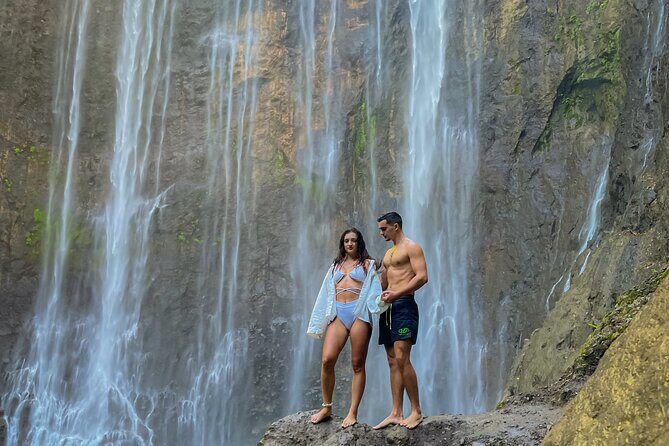

That matters because central Bali can feel like a string of locations unless someone helps connect it. A good guide can turn each stop from a picture into a story. You start seeing why a temple is positioned the way it is, why a village looks the way it does, and why the waterfall’s rock setting creates its distinctive atmosphere.

It’s also a big quality-of-life thing. This is a full 9-hour day, and an early start at 8:00 am can test anyone’s patience. A friendly driver who can keep things moving smoothly makes that early morning feel less like a sacrifice and more like the price you pay for a good day.

If you value explanation and not just sightseeing, prioritize tours like this where the human factor is strong.

Price and Value: Why $78 Can Make Sense

Kintamani and Tukad Cepung Waterfall Tour - Price and Value: Why $78 Can Make Sense
At $78 per person, this tour sits in the midrange for a full-day Bali outing. The value angle comes from three factors in the tour data: pickup is offered, it’s a private tour/activity for your group, and admission tickets are included at each stop.

That matters because admissions add up fast when you’re stacking multiple sites. Here, the waterfall, temple, village, lunch stop, and rice terrace are all covered with admission ticket inclusion. When you combine that with a driver taking you between locations for the full day, the price starts to look more reasonable.

Also, the private format is a real value for many people. You’re not packed into someone else’s schedule. You’re on your own group time, which can be especially useful if you want a slower pace at the waterfall or more time asking questions in Penglipuran.

One possible drawback is that private tours can be pricier than shared ones. If budget is your only priority, you might compare options. But if you care about comfort, clear pacing, and a guide who can talk through what you’re seeing, this price is easier to justify.

Timing, Comfort, and How to Plan Your Day

The start time is 8:00 am, and the day runs about 9 hours. That means you should plan for a full-day commitment. You’ll want an early breakfast before pickup, and you’ll want to keep your energy up because you’re rotating through five major experiences.

The tour is marked as good for most travelers, and it’s a private activity where only your group participates. That reduces the “group chaos” feeling you can sometimes get on large bus tours. It’s also a better fit if you prefer asking questions freely without waiting for a guide to gather everyone.

Weather is a factor. The experience notes that it requires good weather. That’s fair for outdoor stops like the waterfall and rice terraces. If it’s raining or unpleasant, your best move is to plan a flexible day in your Bali schedule.

Mobile ticket is included, which is a nice modern convenience. Less paperwork means less friction on the day—always a win when you’re juggling multiple stops.

Finally, this kind of tour benefits from being booked ahead. It’s described as commonly booked about 21 days in advance on average. If your dates are fixed, don’t wait for the last minute.

Should You Book This Kintamani and Tukad Cepung Tour?

I’d book it if you want a balanced Bali day: waterfall drama, an old temple, a genuine traditional village visit, lunch with real landscape payoff, and a classic rice terrace finish. This isn’t only about one highlight. It’s about stacking experiences so the day feels full.

I’d think twice only if you hate early mornings or you’re stuck with one day that’s already tight on weather risk. Since it depends on good weather, you’ll be happier when you have at least some flexibility.

If you can, pick this tour when you want central Bali rather than another beach-and-shopping day. The combination of Tukad Cepung, Kehen Temple, Penglipuran, Mount Batur lunch, and Ceking Rice Terrace gives you a strong snapshot of what Bali looks like away from the coast.

FAQ

What time does the tour start?

The tour starts at 8:00 am.

How long is the tour?

The duration is about 9 hours (approx.).

Are admission tickets included?

Yes. Admission ticket inclusion is listed for each stop: Tukad Cepung Waterfall, Kehen Temple, Penglipuran Village, Mount Batur lunch stop, and Tegalalang Rice Terrace/Ceking Rice Terrace.

Is this tour private?

Yes. It’s described as a private tour/activity, meaning only your group participates.

Is pickup included?

Pickup is offered.

What if the weather is bad?

The experience requires good weather. If it’s canceled due to poor weather, you’ll be offered a different date or a full refund.