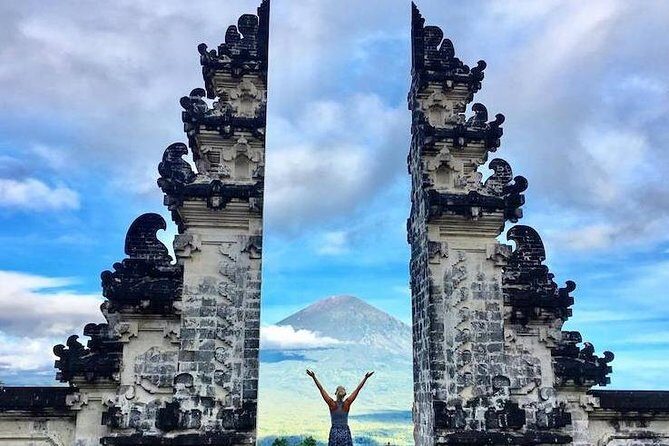
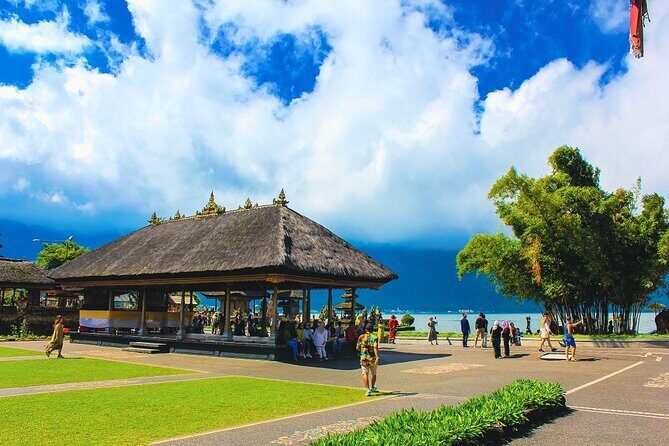
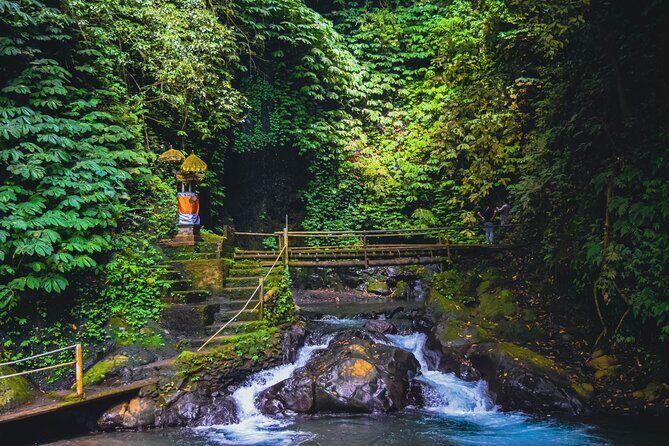
Bali Instagram Tour

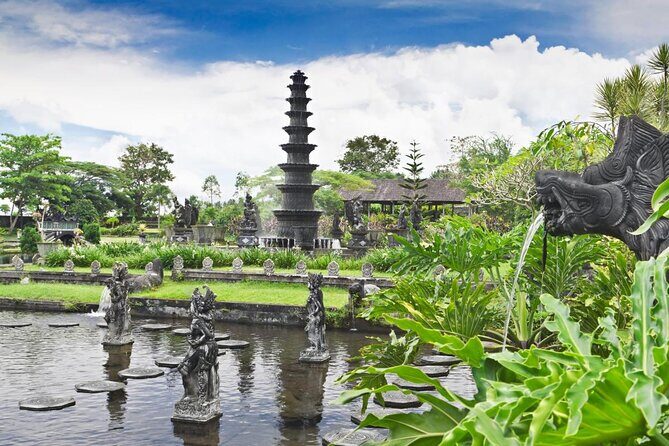
Bali Instagram Tour - Tirta Gangga Water Palace: maze of pools and carved details

Early starts, big photos, real Bali.

This private Bali Instagram Tour is built for flexibility: you get a dedicated English-speaking driver, round-trip hotel transfers, and an air-conditioned ride so you can move between famous sites without the stress. I also like the photo help built into the day, from timing your shots to suggesting where to stand, especially at Lempuyang Temple. One heads-up: it’s a long day that starts at 4:00 am, and several key places have admission fees (not included), plus there can be waiting time—worth it, but plan for it.

It’s a focused route through standout stops, from the Gates of Heaven at Lempuyang to Tirta Gangga’s water palace, then on to Tukad Cepung for that sun-ray look. There’s a break at Segara Windhu Coffee Plantation with free tastings, then you finish with Tegalalang Rice Terrace and the Uma Ceking swing photo moment. If you’re scheduling Lempuyang, note the temple restriction: women during their menstrual period are prohibited to enter.

Key highlights worth knowing before you go
Bali Instagram Tour - Key highlights worth knowing before you go

  • Private, only your group with an English-speaking driver and bottled water
  • 4:00 am pickup to help you get photos earlier and reduce queue time
  • Lempuyang Temple for the famous gate framing, with longer waiting possible
  • Tukad Cepung Waterfall where the light matters for those ray shots
  • Segara Windhu Coffee Plantation with traditional coffee making and free Balinese coffee/tea tasting
  • Tegalalang + Uma Ceking for the rice-terrace views and the swing photo (swing ride is extra)

Why this Bali Instagram Tour starts before sunrise
Bali Instagram Tour - Why this Bali Instagram Tour starts before sunrise
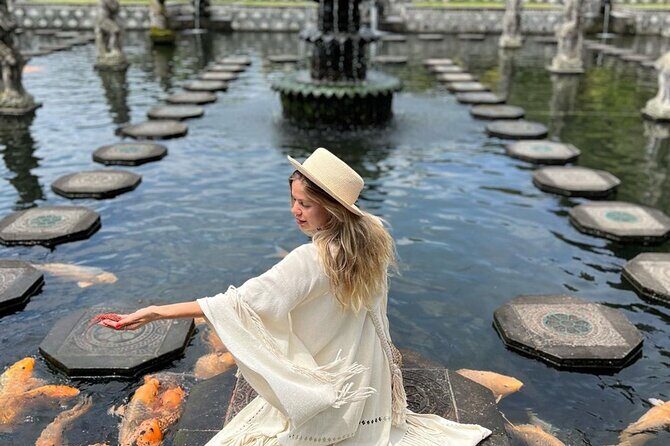
The biggest reason this tour works is timing. You start at 4:00 am, which sounds brutal until you realize why Bali’s top photo spots get crowded fast. Your driver’s job is to get you to each location when it’s still manageable, and that early start helps more than it sounds like it would.

You’ll also appreciate the comfort piece. You’re in an air-conditioned vehicle for the long stretches between Kuta and the day’s highlights, and you get bottled water along the way. That matters on an 11-hour day when you’re outdoors a lot—especially at temple sites and viewpoints.

One more thing: this is a private tour through Go Bali Trekking, so you’re not squeezed into a bus schedule. Your pace can stay flexible, and your driver can adjust based on what you care about most.

Lempuyang Temple: the Gates of Heaven shot needs patience

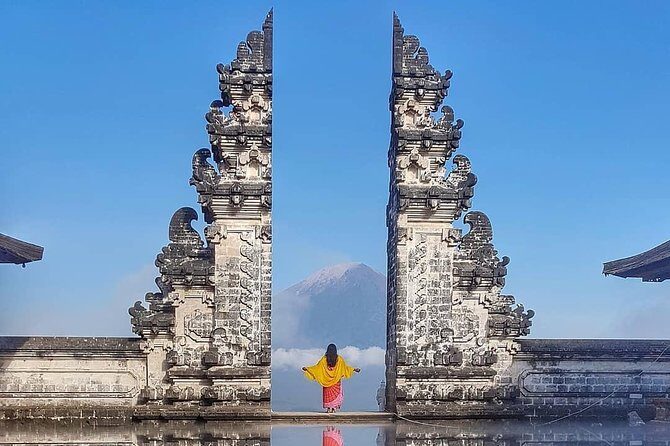
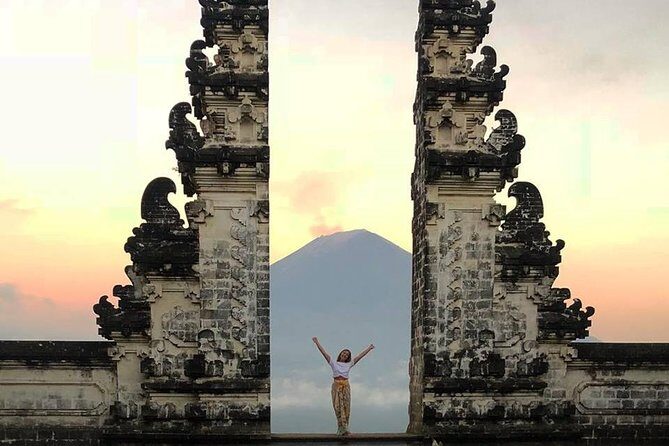
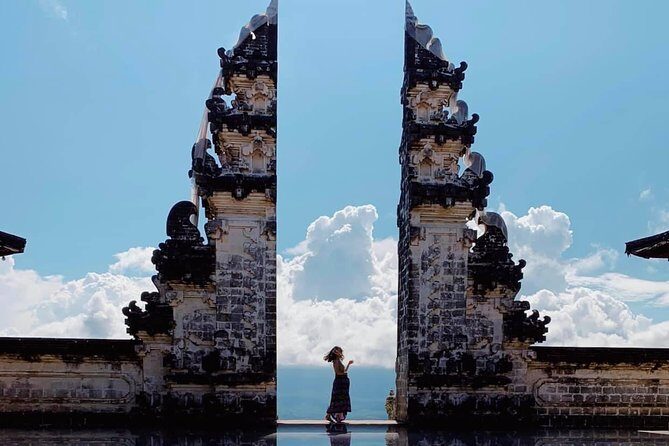
Lempuyang Temple is the star of the early morning for a reason. The temple complex is one of Bali’s most respected, and it’s become extra famous lately because of the way the architecture frames the view in photos.

You’ll spend about 2 hours here, but the practical reality is that Lempuyang often involves waiting. In past runs, drivers have managed the timing so you spend less time standing around and more time getting the shots you want. Guides like Made have been known to set up a 4:00 am pickup specifically because the timing can make a noticeable difference once the crowds build.

Photo tip that actually helps: give yourself a little time to reset. The gate photo depends on the angle and the spacing. If you only focus on rushing the first take, you’ll miss the chance to get a cleaner frame once people move.

Important rule: women during their menstrual period are prohibited to enter the temple. If that affects anyone in your group, you’ll want to plan around it before the morning.

Admission isn’t included, so budget for temple fees separately. Also, since you’re doing this early, it can feel chilly or damp at first—pack a light layer if you get cold easily.

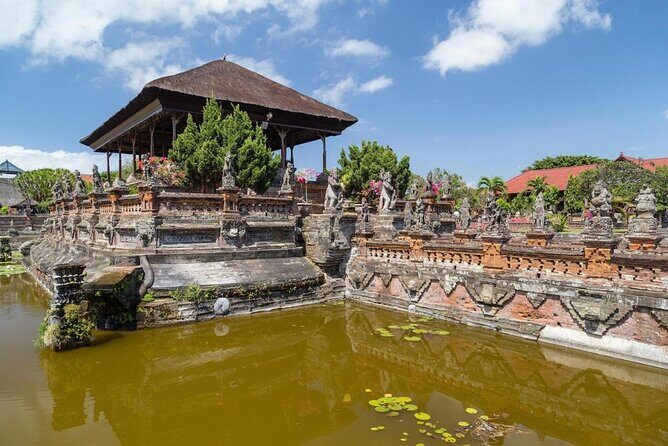
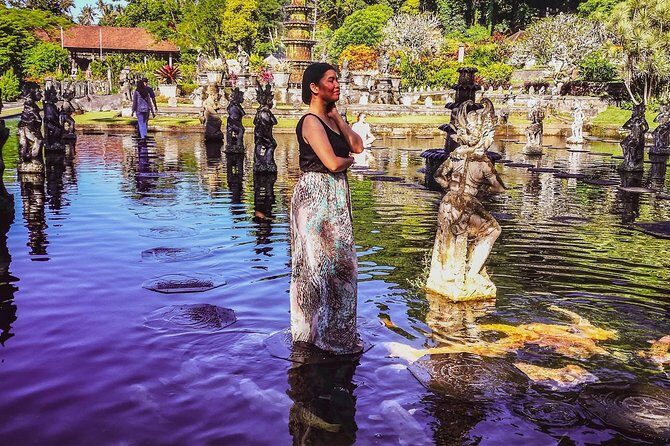
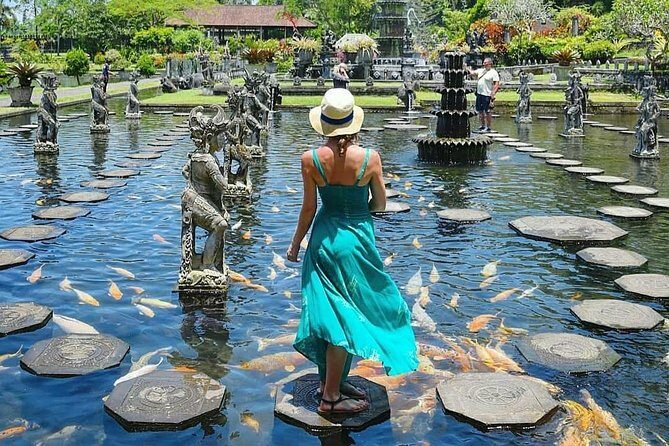
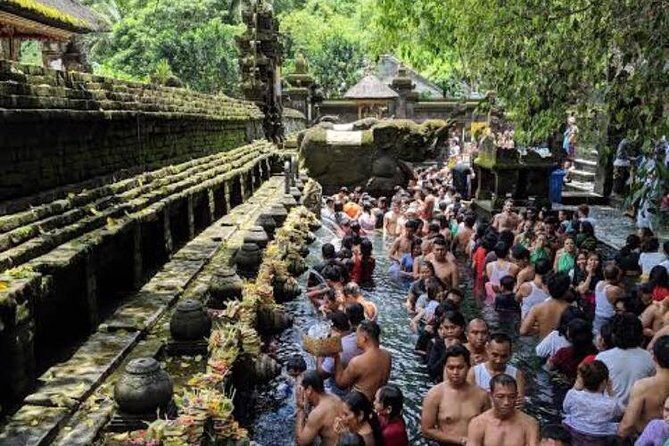
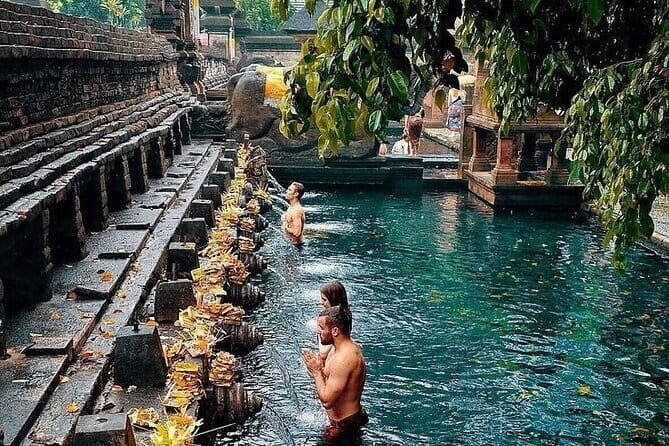
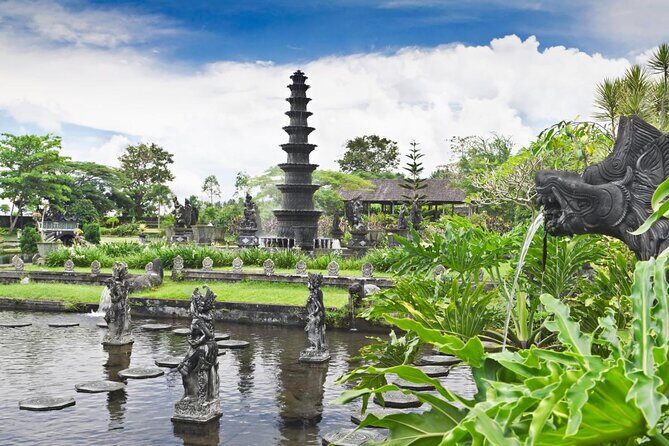
Tirta Gangga Water Palace: maze of pools and carved details

Bali Instagram Tour - Tirta Gangga Water Palace: maze of pools and carved details
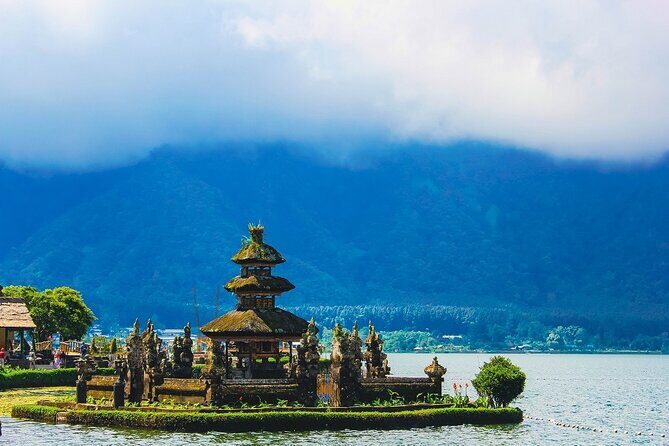
After Lempuyang, you shift to the quieter, water-focused beauty of Tirta Gangga. This stop is about 1 hour, and it’s the kind of place where photos don’t need heavy posing. Pools, fountains, and garden paths create natural backdrops, and stone carvings add texture even when the light isn’t perfect.

It’s also a good contrast stop. Lempuyang can feel intense and crowded. Tirta Gangga feels more like wandering through a cared-for water garden, where you can take your time and still keep the day moving.

Like the temple, admission tickets aren’t included here. The good news: at around an hour, you won’t feel like you’re stuck in a long queue for a single view.

Tukad Cepung Waterfall: catching sun rays at the right time

Bali Instagram Tour - Tukad Cepung Waterfall: catching sun rays at the right time
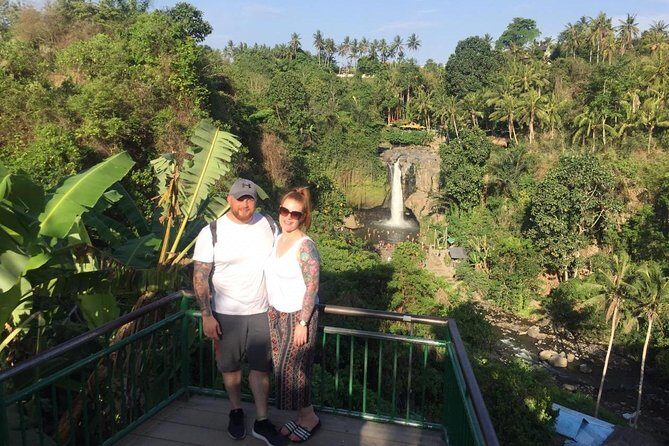
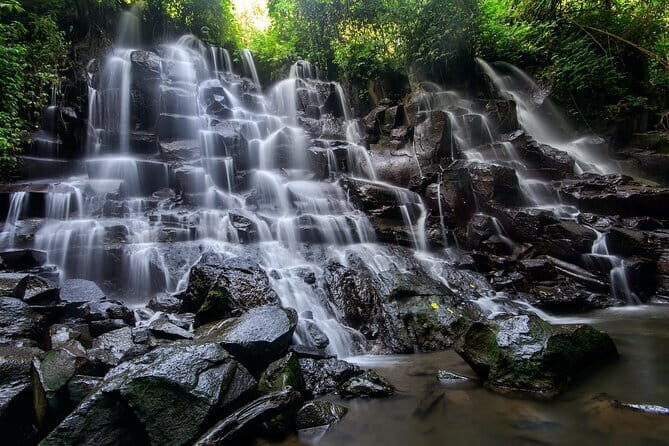
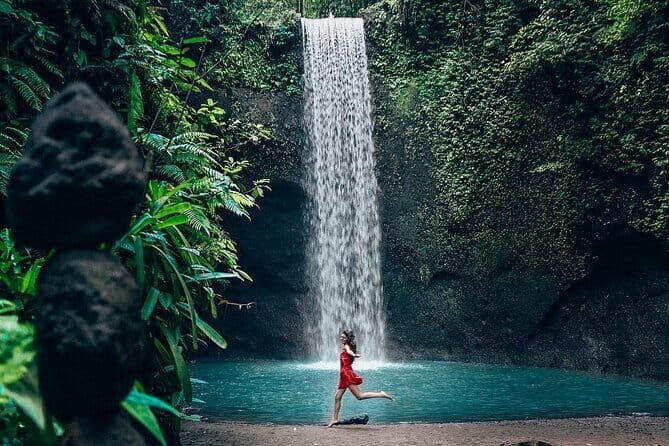
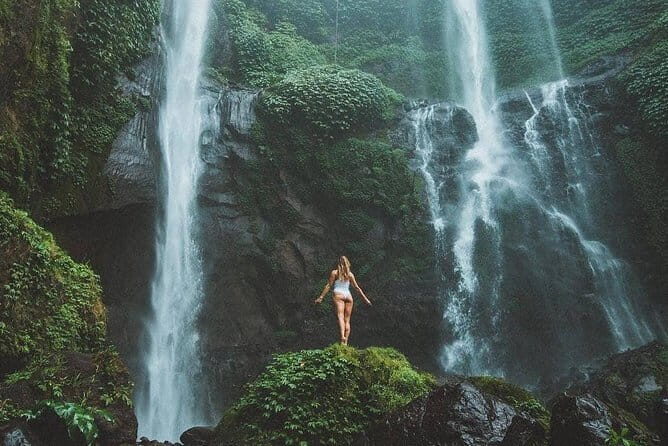
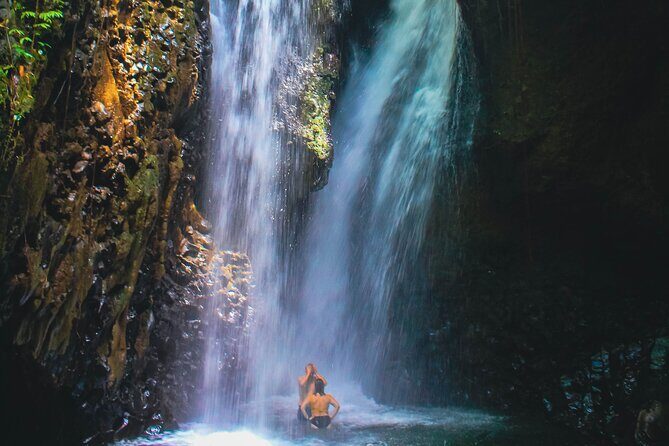
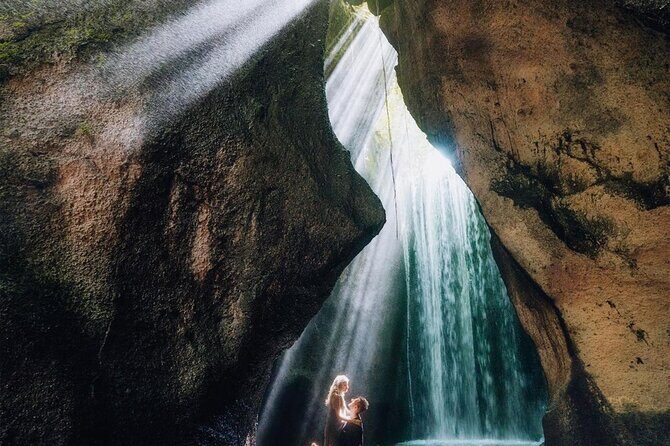
Next up is Tukad Cepung Waterfall, and yes, it’s famous for those dramatic light rays. The setting is a rocky cave-like area, so the sunlight can stream in and create that magical look when conditions line up.

You’ll spend about 1 hour 30 minutes here. That’s enough time to take photos, walk around to find better angles, and still cool down before the next stop. The main variable is weather—this experience requires good weather, and the waterfall stop is exactly where conditions can make or break the look.

Admission tickets are not included, so plan to pay separately. If you’re a photo-first person, bring a bit of patience. Waterfall areas often involve people moving in different directions, and the best shots can mean waiting for the right moment when the frame clears.

Segara Windhu Coffee Plantation: a short break with free tastings
Bali Instagram Tour - Segara Windhu Coffee Plantation: a short break with free tastings
Between temples and rice terraces, the Segara Windhu Coffee Plantation gives you a welcome reset. You’ll have about 30 minutes, which is just enough time to see traditional processing methods without feeling trapped in a long workshop.

Here’s the part worth smiling about: coffee and tea tasting is free, and you can learn how coffee is made in traditional ways. If you like coffee (or you just like trying local stuff), this stop is a nice use of time because it’s hands-on and quick.

Admission is listed as free, so this is one of the few parts of the day that doesn’t add surprise costs. It also helps break the day up emotionally—after several outdoor photo spots, a short indoor or shaded experience makes the rest of the route easier.

Tegalalang Rice Terrace: that famous shot with real walking time

Bali Instagram Tour - Tegalalang Rice Terrace: that famous shot with real walking time
Then you’re at Tegalalang Rice Terrace, the iconic Ubud-area scenery that people chase across Instagram. Your time here is about 1 hour.

This is where the day shifts from “look for the perfect frame” to “walk through the place.” You can move along paths for different angles and grab the kind of photo that makes people believe you really slowed down to enjoy Bali. It’s also a good chance to slow your pace after the waterfall, because you can take photos whenever you want instead of waiting for sun rays.

Admission tickets aren’t included. Also, because this is an outdoor area, it’s worth wearing shoes that handle uneven paths.

Even if you’re not obsessed with selfies, rice terraces make for calm scenery and great wide shots—especially with a driver who understands where the best perspectives usually are.

Uma Ceking swing and the rice-terrace backdrop

Bali Instagram Tour - Uma Ceking swing and the rice-terrace backdrop
The last stop is Uma Ceking Resto and Swing, where the big tree swing is the headline. Your time here is about 15 minutes, so you’ll want to decide quickly if you’re doing the swing ride or just taking photos from the side.

The swing ride itself isn’t included (listed as Jungle Swing not included), so it’s a separate cost if you want the full experience. That’s important because this stop can feel “short on paper,” but it can get longer if you’re waiting for turn time.

If you care about the photo more than the thrill, you can still get strong results just by being near the right angles and keeping the rice terrace background in view. This is one of those moments where your driver’s timing and placement help a lot, and a good English-speaking driver will steer you to spots that look right without wasting your limited minutes.

Price and logistics: value at $31.51, plus what to budget

Bali Instagram Tour - Price and logistics: value at $31.51, plus what to budget
At $31.51 per person, this tour is priced for people who want a full day of recognizable highlights without paying a premium for a private guide with a long menu of extra add-ons. You’re getting a dedicated English-speaking driver, an air-conditioned vehicle, and bottled water, plus round-trip hotel transfers from your pick-up location.

But here’s the realistic budgeting part: admission fees and other taxes are not included. That includes the major sites across the route, and you should also expect the swing cost to be extra if you do it. Lunch also isn’t included, and neither are personal expenses.

So the best value comes from doing two things:

  • arriving ready to pay site fees separately
  • prioritizing photo stops you truly want, because the day is efficient and doesn’t linger forever

Also, this is a private tour, meaning no need to share your space with strangers. That often makes the money feel worth it, especially when you want the driver to help with angles and timing.

In past experiences, drivers like Satyasurya, Agus, Dedi, Made, Adi, and Gusti have been praised for staying unhurried and helping with photos. One theme is control: they don’t rush you, and they guide you so you’re not just wandering and guessing.

Who should book this Bali Instagram Tour

This tour fits best if you:

  • want a private day of Bali’s most photographed stops
  • care about getting good photos without spending hours figuring out logistics
  • don’t mind a 4:00 am start for better timing
  • like a structured route with a clear progression: temple → water palace → waterfall → coffee → rice terrace → swing

Skip it (or at least reconsider timing) if you hate early mornings, you’re traveling with someone who can’t do long outdoor waits, or you need a fully inclusive price with zero extra payments for entry and activities.

One more practical note: the menstrual restriction for Lempuyang Temple affects entry for women. If anyone in your group might be impacted, plan alternatives ahead of time.

Should you book?

If your goal is a photogenic, tightly managed Bali day without the hassle of hiring multiple drivers or coordinating separate tickets, this tour is a strong choice for the money. The combination of private transfers, an English-speaking driver, early timing, and multiple signature locations makes it feel efficient rather than chaotic.

I’d book it if you’re okay with a long day and you’re willing to pay site fees separately. I’d hesitate if you want a slow, low-cost day with zero ticket surprises, or if the Lempuyang temple rule is a concern for your group.

FAQ

FAQ

What time does the tour start, and how long is it?

Start time is 4:00 am, and the duration is about 11 hours.

Is this tour private, and do I get hotel pickup and drop-off?

Yes. It’s a private tour, and you get round-trip transfers from your hotel.

What’s included in the price?

The tour includes an air-conditioned vehicle, bottled water, and an English-speaking driver.

Are admission tickets included for places like Lempuyang Temple and Tukad Cepung Waterfall?

No. Admission tickets are not included for the temple, water palace, waterfall, and rice terrace stops. The coffee plantation is listed as free.

Is the swing included at Uma Ceking?

No. The Jungle Swing is listed as not included, so you should expect an extra cost if you ride.

What if the weather is bad or I need to cancel?

The experience requires good weather. If it’s canceled due to poor weather, you’ll be offered a different date or a full refund. You can cancel for a full refund if you cancel at least 24 hours before the start time; within 24 hours, the amount paid is not refunded.
Full Day Nusa Penida Island Beach Tour From Bali

Full Day Nusa Penida Island Beach Tour From Bali - Angel’s Billabong: A Limestone Lagoon Stop That Rewards Good Timing

A day on Nusa Penida can feel like you’re chasing the coastline for hours. This tour strings together famous limestone stops like Angel’s Billabong and Pasih Uug (Broken Beach), then adds the big-view hit at Kelingking Beach and the water time at Crystal Bay. I especially like the photo-focused stops and the way the team helps you get angles and shots (Robert, Gede, and others are repeatedly praised for camera skills and finding good viewpoints). One thing to keep in mind: the ocean can be rough—one guest reported feeling rough after the first stop due to current, then recovered after resting.

You’ll also want a moderate fitness level, because at Kelingking Beach there’s a tough option (a trek down) that’s tied to low tide.

Key Highlights From This Nusa Penida Day Trip

  • Pickup from Kuta and a private setup so it’s just your group
  • 4 major stops in about 9 hours, with 45 minutes each at the first three viewpoints
  • Admission tickets included for the first three stops
  • Crystal Bay water time is built for snorkeling, and some people mention manta rays
  • Guides who actively help with photos and timing, including Robert and Gede in reviews

Entering Nusa Penida’s Best Viewpoints Without Making a Mess of It

Full Day Nusa Penida Island Beach Tour From Bali - Entering Nusa Penida’s Best Viewpoints Without Making a Mess of It
Nusa Penida is famous for a reason: the island doesn’t do flat beach days. It throws cliff edges, limestone arches, and dramatic sea views at you back-to-back. That’s exactly why this full-day format works. You get a sequence of stops that feel like a highlight reel, without needing to coordinate transport, tickets, and timing between scattered viewpoints on your own.

This tour is also structured for real viewing time. You’re not just waving at scenery from a bus window. You’ll have short, focused windows to walk, look, and photograph—45 minutes at Angel’s Billabong, 45 minutes at Pasih Uug, and 45 minutes at the Paluang Cliff / Kelingking Beach area. Then there’s a longer block—about 2 hours—at Crystal Bay, where the day shifts from cliffs to water.

One more plus: it’s private for your group. If you’ve ever done a day trip where you’re constantly trying to “catch up,” this style will feel calmer and more controllable.

Price and Value for a Full-Day Island Route ($107.18 per Person)

At $107.18 per person, this isn’t a budget snack-sized excursion. But it can still be good value for a day that includes:

  • pickup and round-trip transport (starting in Kuta),
  • a planned route across multiple top sights,
  • admission tickets included for the first three stops,
  • and guide support that focuses on getting you to the right spots on Nusa Penida.

What you’re really paying for is time and coordination. Nusa Penida is not the kind of place where you want to wing it on a single day, especially if you want specific photo angles and a realistic pacing. Guests also repeatedly mention smooth pickup and a professional team, which matters because the day runs on a clock. If you’re paying for a tour day, you want it to feel run like a day trip—not a scavenger hunt.

Pickup From Kuta and the Private-Group Feel

Full Day Nusa Penida Island Beach Tour From Bali - Pickup From Kuta and the Private-Group Feel
The tour starts with pickup offered, and the format is listed as private: only your group participates. In practice, that usually means less waiting around and more flexibility in how quickly you move between viewpoints. Reviews back up the “arrives on time and helps you through the day” vibe, with people mentioning drivers like Agus, DIPTA, and Budi showing up ready and keeping things moving.

You’ll also get a mobile ticket, and confirmation is received at the time of booking. That helps you avoid last-minute uncertainty. The big picture: you’re showing up, getting transported, and having someone else handle the rhythm of the day.

Since the tour lasts around 9 hours, plan to treat it like a full outing. You’ll want to be mentally ready for a long but scenic day, especially if you’re sensitive to road time and cliff-side walking.

Angel’s Billabong: A Limestone Lagoon Stop That Rewards Good Timing

Full Day Nusa Penida Island Beach Tour From Bali - Angel’s Billabong: A Limestone Lagoon Stop That Rewards Good Timing
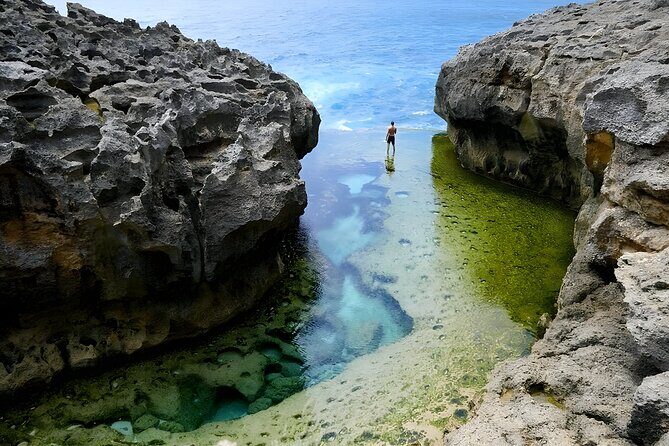
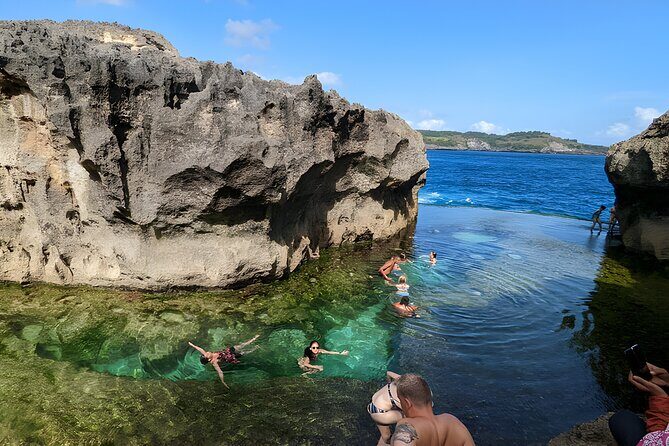
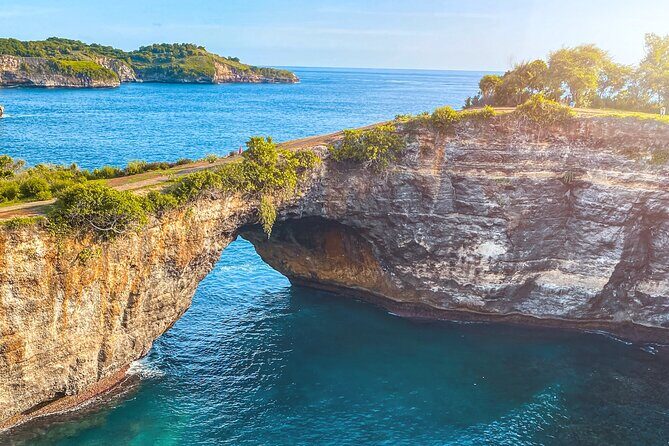
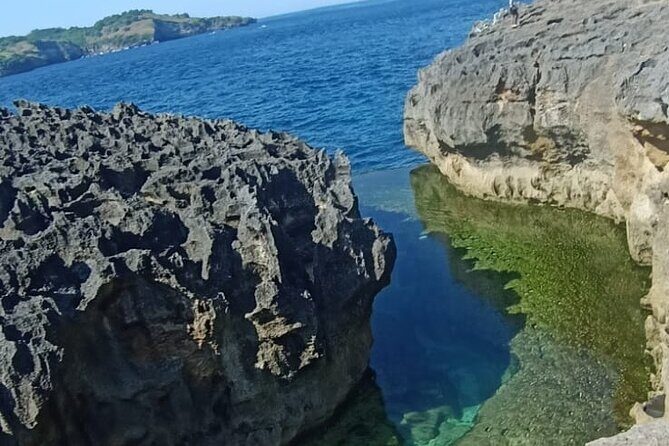
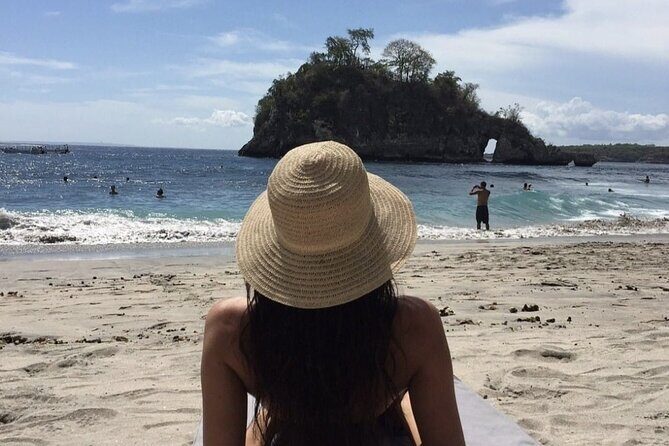
Your first major stop is Angel’s Billabong, located nearby Pasih Uug (Broken Beach). The standout here is the setting: a naturally formed rock lagoon with an open-sea backdrop. That “window into the ocean” look is what makes this stop such a frequent camera subject.

The time is about 45 minutes, which sounds short, but it’s enough if you have a plan: walk slowly to find the best view angle, pause for photos, and then step back before crowds or waves shift the scene too much. The lagoon setting also means you’re dealing with real water motion, not a quiet pond. That’s part of the charm—and part of the reason it can feel rough if conditions aren’t ideal.

A consideration: ocean conditions can change how comfortable and safe you feel near the waterline. One guest noted feeling unwell after the first stop due to rough current, then felt better after resting. If you’re prone to motion discomfort, it’s smart to take your time and listen to your body early in the day.

Pasih Uug (Broken Beach): The Arch Landmark and the Photo Angles

Full Day Nusa Penida Island Beach Tour From Bali - Pasih Uug (Broken Beach): The Arch Landmark and the Photo Angles
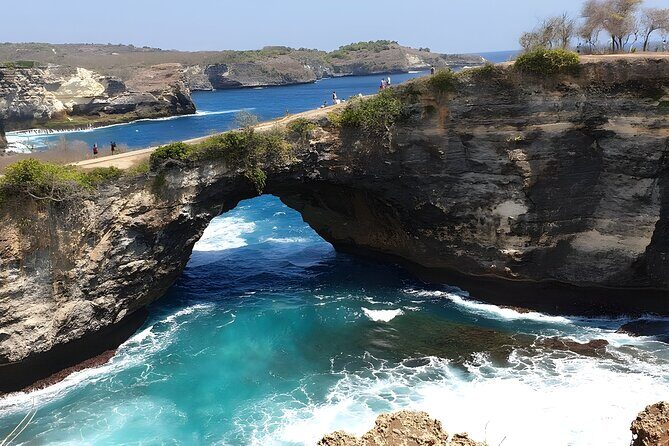
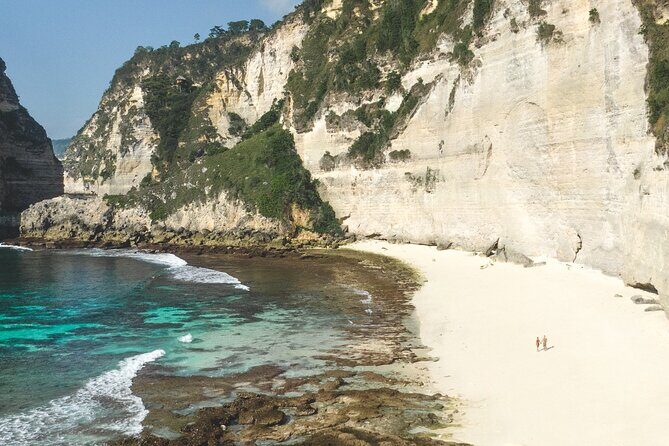
Next comes Pasih Uug Beach—often called Broken Beach for the signature look of the rock formation. The hallmark is a hilly, arch-like limestone structure set against the crashing open Indian Ocean. If you want that classic “sea meets rock” composition, this is where you’ll get it.

You’ll have about 45 minutes here, and that’s enough to do three things well:

1) find the main viewpoint for the landmark arch,

2) get your photos from a couple of angles, and

3) avoid rushing while waves are changing the lighting and spray.

This stop’s drawback is mostly physical and environmental. It’s a coastal viewpoint area, which means wind and spray are real. Also, you might feel the sea more than you expect when water hits the rocks nearby. The good news is that the day’s pace is short-stop, short-break. If you need a moment, you can take it without losing your whole tour.

The reviews consistently highlight “great photography” and “best spots,” and that matches what Pasih Uug is built for: photo composition. Guides like Robert are praised for knowing where to stand and how to time your shots.

Paluang Cliff / Kelingking Beach View: The Platform Is Easy, the Trek Is Not

Full Day Nusa Penida Island Beach Tour From Bali - Paluang Cliff / Kelingking Beach View: The Platform Is Easy, the Trek Is Not
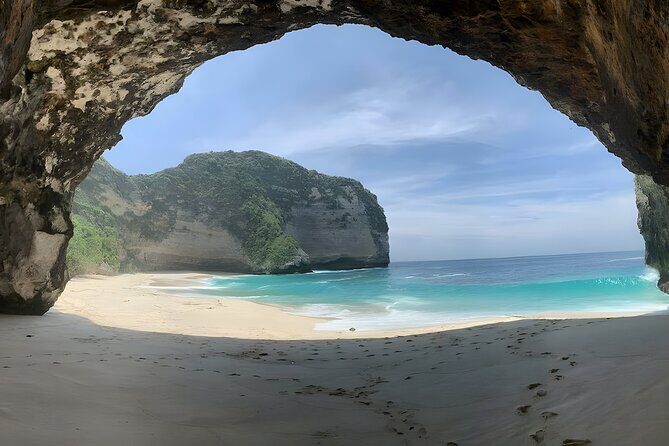
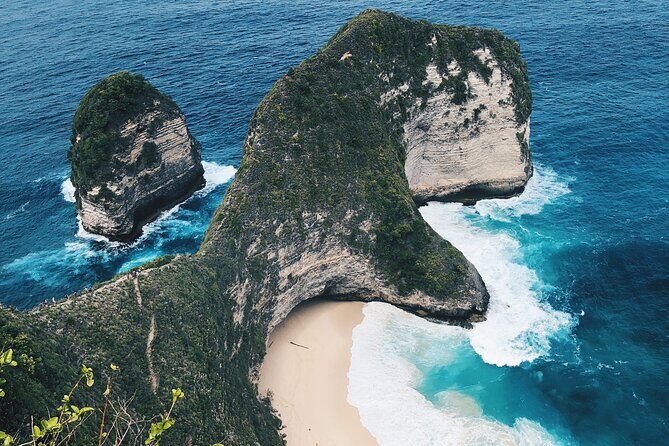
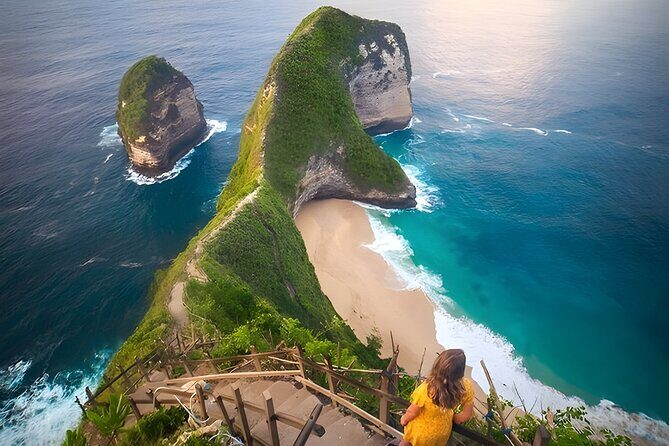
Then you hit the Paluang Cliff area tied to Kelingking Beach. The signature element is the view from a purpose-built platform bordered by bamboo fences. This is the “take the photo, get the cliff perspective” part of the stop.

Time here is also about 45 minutes, and the platform view is the easiest way to experience it. If you only do the platform, you’ll still get that big sweeping panorama that makes people gasp.

Here’s the key consideration: the challenging trek down to the beach exists, and it’s specifically recommended that you do it at low tide. That matters because low tide changes what’s safe and possible near the waterline. This tour notes that travelers should have moderate physical fitness, which makes sense given that one optional part of this stop can be demanding.

If you’re not sure you want the steep descent, you don’t have to. The platform option is the built-in payoff, and it fits the short time slot without forcing you into a high-effort plan.

Crystal Bay: Snorkeling-Focused Water Time and the Manta Ray Mention

Full Day Nusa Penida Island Beach Tour From Bali - Crystal Bay: Snorkeling-Focused Water Time and the Manta Ray Mention
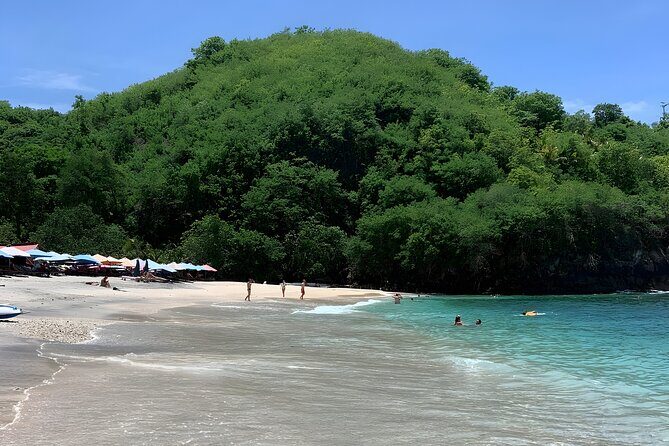
The day finishes at Crystal Bay, and this is where the atmosphere shifts. Unlike the cliff viewpoints, Crystal Bay is described as accessible with well-developed roads and known for snorkelling. It’s also palm-fringed, so the vibe is more beachy and less “white-knuckle cliff edges.”

You’ll have about 2 hours here, and that time is the difference-maker. Instead of just looking at the ocean, you get a chance to experience it directly. Reviews mention snorkeling as a major highlight, including a first snorkeling experience that was fun and memorable.

One of the most specific things you’ll hear from guests: spotting Mantas during snorkeling activity. That doesn’t mean you’ll see them every time, but it does signal that the water time at Crystal Bay is the moment when the day can turn magical if conditions line up.

Possible drawback: when you go from cliff viewpoints to the ocean, your body will feel it. If you’re tired, this is still the stop where the payoff might be worth it, but pace yourself. If you felt off earlier (like the rough current note from a first stop), give yourself time to settle before you commit to water time.

The People Power: Drivers, Guides, and the Photo Help You’ll Actually Use

The biggest consistently praised aspect isn’t just the places—it’s the team’s ability to get you good results fast. Multiple review snippets call out guides and drivers by name, and the common thread is practical help:

  • Robert is repeatedly mentioned for photo skills and finding the best spots.
  • Gede is praised for taking IG-worthy photos and videos and for helping with timing.
  • Komang is described as funny, cheerful, friendly, and making people feel comfortable.
  • Agung and Robert are mentioned for being helpful with taking many beautiful photos.
  • Drivers like DIPTA, Agus, and Budi are credited for arriving on time and adjusting as needed.

That matters because in Nusa Penida, you don’t just want pretty views—you want good angles. If you’ve ever fumbled your camera while standing in a windy cliff viewpoint, you know the value of someone who can tell you where to stand and how to frame the shot.

Also, guests mention professionalism and that the team makes you feel safe and cared for. One review even points out the feeling of security and staff kindness. For many people, that reassurance is worth as much as the itinerary itself.

Pacing, Physical Fitness, and Ocean Conditions (What Can Change Your Day)

Full Day Nusa Penida Island Beach Tour From Bali - Pacing, Physical Fitness, and Ocean Conditions (What Can Change Your Day)
This tour is built around short, purposeful blocks: 45 minutes at each of the first three stops and 2 hours at Crystal Bay. That pacing is great if you like moving between highlights and keeping the day from dragging.

But Nusa Penida is exposed. Ocean conditions affect how comfortable it feels near stops, and the tour setting is all about sea impact—waves, spray, and real coastal energy. One review specifically notes rough current after the first stop, followed by rest and recovery. That tells you something important: if conditions hit you the wrong way, the best solution is simple—pause, rest, and take the day in manageable pieces.

Also, the tour explicitly calls for moderate physical fitness. The platform views are fine for most people, but the option to trek down at Kelingking (at low tide) adds a physical component. Be honest about your limits. You can enjoy the cliff views without pushing yourself into the harder descent.

Best for Who? Who Will Enjoy This Tour the Most

This is a strong fit if you want:

  • a full-day Nusa Penida highlights route without planning headaches,
  • a private-group experience with pickup from Kuta,
  • and serious photo opportunities at the major limestone viewpoints.

You’ll likely enjoy it most if you’re comfortable with short walks and viewpoints and you’re okay with the idea that some ocean conditions are out of anyone’s control.

You might rethink it if you:

  • know you get motion discomfort easily with rough current,
  • dislike physically demanding optional activities (like the Kelingking descent),
  • or prefer a slow travel pace with long beach lounging and no moving between spots.

Should You Book This Nusa Penida Beach Tour?

I’d book it if your goal is a high-impact Nusa Penida day that hits Angel’s Billabong, Pasih Uug (Broken Beach), the Kelingking Beach viewpoint from Paluang Cliff, and Crystal Bay water time. The photo support from named guides like Robert and Gede is a big part of the value, and the private setup plus pickup from Kuta helps keep the day from feeling chaotic.

I’d hesitate if you’re worried about ocean conditions or you’re not up for moderate fitness. In that case, you can still enjoy the platform viewpoints, but you may want to be cautious about the more demanding parts and keep your expectations flexible for how the sea behaves that day.

If you’re excited by dramatic cliffs, limestone formations, and a snorkeling stop with a chance of seeing mantas, this is a solid choice for your Bali-based trip.

FAQ

How long is the Nusa Penida full-day tour?

It’s listed as about 9 hours.

Where does the tour start?

The location is Kuta, Indonesia, and pickup is offered.

Is it a private tour?

Yes. It’s described as a private tour/activity, and only your group will participate.

What stops are included during the day?

You’ll visit Angel’s Billabong, Pasih Uug (Broken Beach), Paluang Cliff (Kelingking Beach area), and Crystal Bay.

How much time do you spend at each stop?

Angel’s Billabong is about 45 minutes, Pasih Uug is about 45 minutes, Paluang Cliff is about 45 minutes, and Crystal Bay is about 2 hours.

Are admission tickets included?

Admission tickets are included for the first three stops (Angel’s Billabong, Pasih Uug, and Paluang Cliff).

Is snorkeling included?

Crystal Bay is described as one of Nusa Penida’s famous snorkeling and dive sites, and the experience reviews mention snorkeling.

What fitness level do you need?

The tour notes a moderate physical fitness level.

When will I get confirmation after booking?

Confirmation is received at the time of booking.

What is the cancellation policy?

You can cancel for free up to 24 hours in advance for a full refund. If you cancel less than 24 hours before the start time, the amount paid is not refunded.
Bali Nusa Lembongan Islands Private Tour – All Inclusive

Bali Nusa Lembongan Islands Private Tour - All Inclusive - Fast-boat transfers and the all-inclusive setup

Windy waves and mangroves in one smooth day. This private Nusa Lembongan trip is appealing because it bundles the key parts of the journey—fast-boat tickets and transfers—so you spend less time planning and more time looking out the window. You also get a day-trip pace, so you don’t have to sleep on the island to see the best bits.

I especially like the private-car way of getting around once you’re on Nusa Lembongan. It feels calmer than group shuttles, and it makes the timeline easier to manage across stops like Devil’s Tears and Dream Beach. One thing to keep in mind: the day is weather-dependent, and strong winds can affect beach time for swimming.

Key highlights to know before you go

Bali Nusa Lembongan Islands Private Tour - All Inclusive - Key highlights to know before you go

  • All-in-one transport: roundtrip transfers plus fast-boat tickets are included.
  • Mangrove boat trip: see the protected mangrove ecosystem from the water.
  • Seaweed farm visit: learn how local communities grow marine algae.
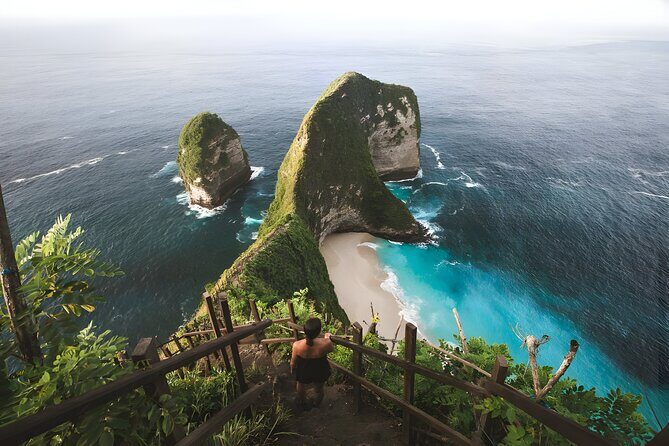
  • Nusa Lembongan viewpoints: hit Yellow Bridge and dramatic wave action at Devil’s Tears.
  • Beach time is flexible: Dream Beach is famous, but wind can make it less swim-friendly.

Nusa Lembongan in a single day, without the extra hassle

Bali Nusa Lembongan Islands Private Tour - All Inclusive - Nusa Lembongan in a single day, without the extra hassle
Nusa Lembongan sits off Bali’s southern coast, and it’s one of those places where the day feels different from the beach-and-traffic rhythm of the main island. Here, you trade crowds for slower sights: mangroves, coastline viewpoints, and the kind of shore you actually want to spend time on.

This tour is built for convenience. You start early (7:30 am), and you don’t have to figure out schedules for boats and ground transport. It’s also private, meaning your group stays together rather than being shuffled into a large multi-stop bus tour.

Fast-boat transfers and the all-inclusive setup

Bali Nusa Lembongan Islands Private Tour - All Inclusive - Fast-boat transfers and the all-inclusive setup
The big value play here is that the expensive, timing-sensitive part—getting from Bali to Nusa Lembongan—is handled for you. Transfers and fast-boat tickets are included, so you’re not hunting for schedules or negotiating meeting points with different operators.

You’ll also get a mobile ticket, which is handy when your morning is busy. And since lunch is included, you’re less likely to lose precious time searching for food right when the day starts to heat up.

A small practical note: even though it’s private, it still runs like a tight day-trip loop. You’ll want to be ready to move when the plan moves, especially if you want the best light at viewpoints.

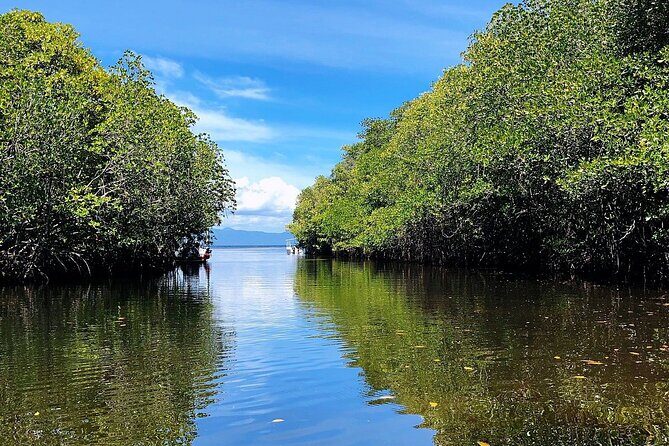
Mangrove Point: protected mangroves and a boat ride

The day begins with Mangrove Point, where you’ll take a mangrove tour by traditional boat. This is the kind of stop I love because it slows everything down. Mangroves aren’t just scenery here—they’re protected for the ecosystem and to help maintain the coastal habitat.

The duration is about 1 hour, with admission included. That’s long enough for the ride to feel like an experience, but short enough that you’re not stuck on the same motion for the rest of the day.

If you get even a little breeze, you’ll feel it on the water. Bring sunglasses and something light for wind if you tend to get cold on boats.

Yellow Bridge: quick history and classic coastline photos

Bali Nusa Lembongan Islands Private Tour - All Inclusive - Yellow Bridge: quick history and classic coastline photos
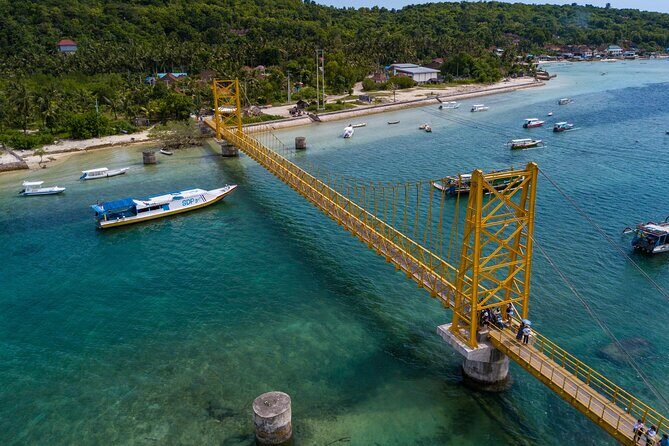
Next up is Yellow Bridge, a well-known connection between Nusa Lembongan and Nusa Ceningan. It was built around 1996, and it’s become part of the island’s photo-and-walk tradition.

You’ll spend about 1 hour here, and admission is included. This is a good break point in the schedule: you get a recognizable landmark, a bit of stretching time, and a change of pace after the mangrove water ride.

If you’re timing your photos, try to arrive with a bit of patience. Short stops can feel rushed if you’re trying to do everything at once. I’d treat it like a stop for views and a calm walk, not a long hangout.

Seaweed farm on Nusa Lembongan: real local coastal work

Bali Nusa Lembongan Islands Private Tour - All Inclusive - Seaweed farm on Nusa Lembongan: real local coastal work
Then you’ll head to Nusa Lembongan’s seaweed farming area. The tour’s framing is clear: seaweed farming is agriculture that specializes in growing marine algae in coastal areas, often as part of local community livelihoods.

You’ll spend about 1 hour on this stop, and admission is listed as free. That makes it a strong value segment of the day—you’re getting a learning moment without feeling like you’re paying extra for a quick look.

What makes this stop worth it is that it gives context. Nusa Lembongan doesn’t just look like a postcard; it functions like a working coastal place. You’ll come away with a better sense of why the coastline and the water matter so much here.

Dream Beach: white sand, clear water, and wind reality checks

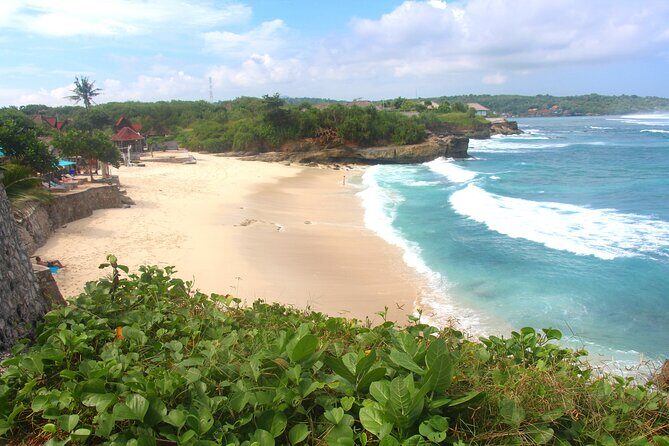
Dream Beach is the classic “relax and enjoy” stop. You’ll get around 1 hour here, and admission is free. The setting is described as white sand with very clear water, and it’s often used for swimming by tourists.

Now for the consideration: wind can change everything. On at least one windy day, Dream Beach was almost impossible to swim at, even though the water looks inviting. If you’re booking with the hope of a long swim session, be realistic.

A good plan is to treat Dream Beach as two-part time. First, enjoy the sand and views. Second, if conditions allow, go for a swim. If not, you still get a beach break without forcing it.

Devil’s Tears: waves on rocks and a dramatic finish

Bali Nusa Lembongan Islands Private Tour - All Inclusive - Devil’s Tears: waves on rocks and a dramatic finish
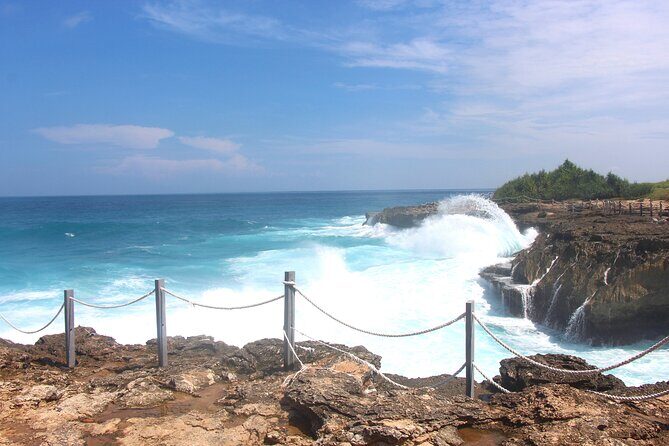
Devil’s Tears is where the day shifts into spectacle. The setting is built around waves crashing against rocks, creating big splashes that can look quite dramatic from the viewpoints.

You’ll spend about 1 hour here, and admission is included. This is a stop I think works especially well in a day tour because it doesn’t require much time on your feet. You can watch, reset, and take in the ocean energy without needing a full itinerary commitment.

The best advice here is simple: go when the waves are working. If the ocean looks calm at first, pause. Devil’s Tears is all about timing.

Timing, walking, and how the 8 hours usually feel

The tour runs about 8 hours, starting at 7:30 am. With five main stops, you’re typically looking at roughly an hour per stop, plus travel time between them.

Here’s how that translates for your body and your patience. You’ll likely do a mix of standing, short walks, and viewpoint viewing, plus one boat ride through the mangroves. If you’re someone who loves structured travel days, this schedule can feel efficient. If you prefer long, slow lingering, you may find 1 hour per stop a bit tight—especially at the beach.

Because the day is weather-dependent, the tour may run differently if skies are rough. The operator notes good weather is required, and they’ll offer a different date or a full refund if weather cancels the experience.

Customization: making the day match your interests

The tour can be customized to suit your needs and interests, even though it includes set stops. In practice, that usually means you can talk with your driver before the day gets rolling and aim for your priorities—whether that’s more time on the coast, more time on the mangrove experience, or a slower pace on viewpoints.

If you know you want photos, say so early. If you want the calmest pace possible, communicate that too. Private tours reward clear requests.

Also, since you’re in a private car for getting around on the island, adjustments tend to be easier than on larger group buses. You’re not stuck with someone else’s agenda.

Price and value: what $110 covers and why it can be fair

At $110 per person for an 8-hour private day trip, the price looks reasonable once you break down what’s included. You’re not only paying for the stops—you’re also paying for the transportation engine: fast-boat tickets plus transfers, plus a private car on Nusa Lembongan, and an Indonesian lunch.

If you tried to piece it together yourself, the hardest parts to manage would be timing and coordinating multiple vendors for the boat and local transport. This tour handles that, and it tends to reduce stress, especially on a day trip where delays can domino.

It also runs as a private activity, so your group doesn’t get diluted into a mass tour feel. Even if you’re traveling solo, private tours like this can still be worth it if you care more about comfort and pace than about making it the cheapest option possible.

One extra note: group discounts are mentioned. If you’re traveling with friends and can book together, it may make the per-person cost even easier to justify.

Who this Nusa Lembongan private tour is best for

This tour suits you if you want a structured day that still feels personal. I’d point it toward:

  • First-time visitors who want the core Nusa Lembongan sights in one loop
  • Travelers who prefer private transportation over group shuttles
  • People who like a mix: nature (mangroves), learning (seaweed farming), and ocean viewpoints (Yellow Bridge and Devil’s Tears)
  • Beach lovers who understand Dream Beach swimming depends on wind and sea conditions

It’s also a good fit if you don’t want to plan an overnight. The experience is designed as a day visit, so you can see the island without changing your lodging.

Should you book Bali Nusa Lembongan Islands Private Tour?

I’d book it if you’re looking for a well-timed, mostly “hands-off” day trip from Kuta with key transport included. The mangrove boat ride and the seaweed farm stop add real texture beyond the beach-only version of this area.

I’d think twice if your trip dates are likely to be windy and you’re counting on Dream Beach for a long swim session. The beach can be stunning, but the ocean mood can take over. In that case, I’d still go if you’re happy to enjoy beach time even when swimming isn’t ideal.

If you want maximum value for your time—and less logistics work—this private format does the job.

FAQ

What time does the tour start?

The tour starts at 7:30 am.

How long is the Bali Nusa Lembongan Islands private tour?

It runs for about 8 hours.

Are transfers and fast-boat tickets included?

Yes. Transfers and fast-boat tickets are included.

What stops are included during the day?

The tour includes Mangrove Point, Yellow Bridge, a seaweed farm stop on Nusa Lembongan, Dream Beach, and Devil’s Tears.

Is lunch included?

Yes. An Indonesian lunch is included.

Can the tour be customized?

Yes. The tour can be customized to match your needs and interests.

What happens if weather is bad?

This experience requires good weather. If it’s canceled due to poor weather, you’ll be offered a different date or a full refund.

Can I cancel for free?

Yes. You can cancel up to 24 hours in advance for a full refund.

Bali Scuba Diving trip at Tulamben for Certified Diver

Bali Scuba Diving trip at Tulamben for Certified Diver - Shore-entry logistics: the practical way this keeps things calmer

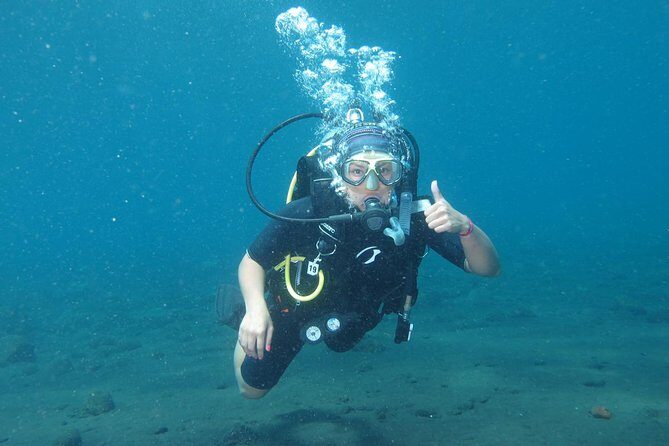
A wreck you can swim beside.

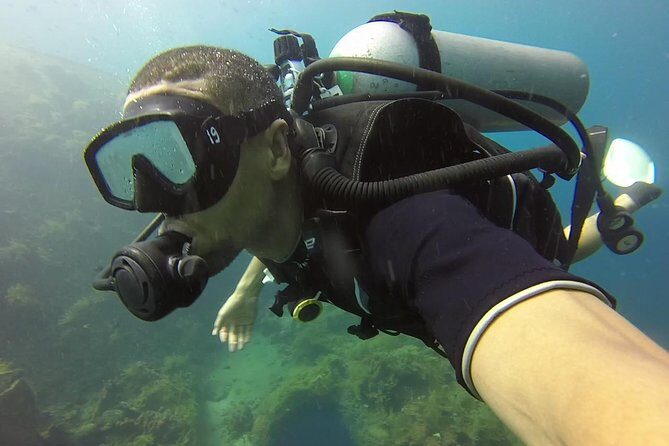
This certified scuba trip in Tulamben is built around the famous USS Liberty shipwreck, with guided underwater time on land-entry routes and plenty of marine life to watch. What I like most is the combo of shipwreck scenery plus a smooth, well-timed day—get picked up, reach East Bali, then spend the late morning underwater with an instructor right there. I also appreciate that gear, lunch, and transport are rolled into the price, so you’re not hunting down extras all morning. The one trade-off: it’s an early start with a longer drive, so plan for a slower first half of the day.

You’ll go with a small group (up to 8 total), and for certified sessions you’ll need proof of your PADI level. The program also works as a confidence builder, since the instructor keeps the pace steady and the group stays organized by skill. If you’re sensitive to schedules, know this day runs close to full length, and you’ll be back around late afternoon.

Key things to know before you book

  • USS Liberty wreck is the main stop: East Bali’s most photographed underwater landmark, set up for unforgettable viewing.
  • Two 1-tank guided underwater sessions: for certified divers only, with clear structure and an instructor guiding you the whole time.
  • Small groups (max 8): and a guide ratio that keeps you from feeling lost in the water.
  • Shore-entry setup: the sessions start from the beach, which can feel simpler than rushing to a boat.
  • Gear and meals included: BCD, regulator, booties, fins, mask, tank, and wetsuit plus lunch.
  • South Bali pickup and drop-off: from common areas like Kuta/Legian/Seminyak/Nusa Dua and Sanur.

USS Liberty shipwreck at Tulamben: why this is such a strong certified option

Bali Scuba Diving trip at Tulamben for Certified Diver - USS Liberty shipwreck at Tulamben: why this is such a strong certified option
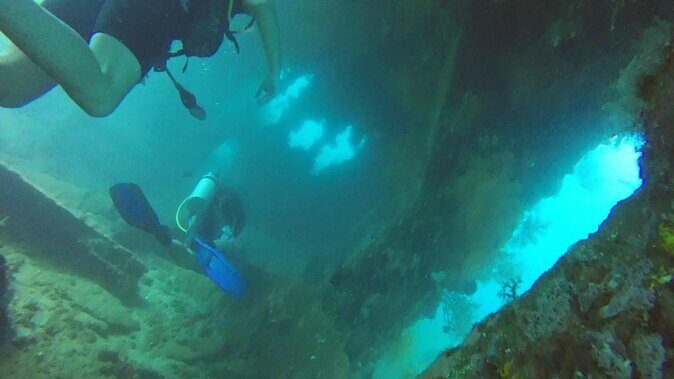
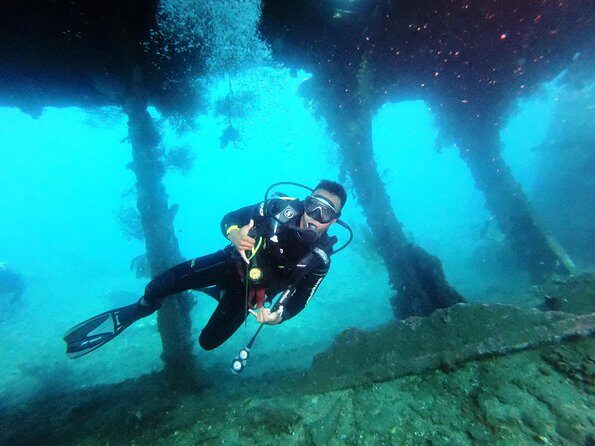
The USS Liberty wreck is the headline for a reason. The shipwreck sits off East Bali and has become a magnet for underwater photographers because it creates a clear, dramatic subject. Even if you’re not chasing photos, wrecks tend to attract fish and other sea life, and you usually get that “wow” feeling fast: you’re not just looking at rocks or a reef wall—you’re swimming around a piece of history that life has moved into.

What makes this specific trip feel practical is the way it’s designed around your certified comfort level. You’re not doing a huge schedule with lots of extra stops. Instead, the day has one core goal, so you spend your energy on controlling buoyancy, watching your surroundings, and letting the guide handle the details.

Also, Tulamben is known for shore-based access in general, and this program runs as a two-session beach entry plan. That means less time wrangling gear at open water launch points and more time actually getting ready calmly and getting on with the experience.

Certified diver timing: the day runs from early pickup to late return

This is a full day that starts early, then moves on a tight rhythm. Your pickup depends on where you’re staying:

  • If you’re in Kuta, Legian, Seminyak, Nusa Dua, or remote areas, pickup is around 7:00 AM.
  • If you’re based in Sanur, pickup is around 7:30 AM.

From there, you’re heading toward Tulamben. Travel time puts you on site in time for the first late-morning underwater session, with a typical flow like this:

  • 8:15 AM travel to Tulamben
  • 11:00 AM first underwater session at the USS Liberty
  • 12:00 PM lunch
  • 1:00 PM second underwater session at the same wreck area
  • 2:30 PM return travel
  • 5:00 PM back to accommodation

That timing matters. A lot of people book Bali scuba plans hoping to “maximize” their time in the water, but the hidden win here is the pacing. You get one solid session, fuel up with lunch, then go again—so you’re not mentally fried by the time your second water time starts.

One more detail that helps: the program includes a small refreshment stop in the morning (ice cream or tea/coffee in the office), which is the kind of thing you appreciate when you’ve already been up early.

What the two 1-tank underwater sessions are really like

Bali Scuba Diving trip at Tulamben for Certified Diver - What the two 1-tank underwater sessions are really like
For certified divers, the structure is straightforward: two 1-tank guided underwater sessions. That gives you two separate chances to see the wreck, plus time between them to refuel and reset.

The guide setup is designed so you’re not managing chaos. For certified divers, the group ratio is typically four certified divers per guide. That’s important because it means:

  • you get closer attention during key moments like equipment checks
  • you can follow instructions without constant repetition
  • the guide can manage your pacing and keep the group together

If you’re new to certified scuba, this ratio can feel especially comforting. It’s still your responsibility to stay within your training and air limits, but you’re not swimming around in a crowd.

Also, the sessions are scheduled at the same wreck site. That’s efficient for planning and it helps you build familiarity. You might find yourself recognizing landmarks on your second session, which can make the second tank feel smoother than the first.

Shore-entry logistics: the practical way this keeps things calmer

Bali Scuba Diving trip at Tulamben for Certified Diver - Shore-entry logistics: the practical way this keeps things calmer
This plan is set up as shore-entry, meaning your underwater time starts from the beach rather than from a boat launch. That can be a big deal in Bali, where weather and sea conditions can change your plans quickly.

Shore entry often works better when you want a day that feels organized and not frantic. You’re likely to:

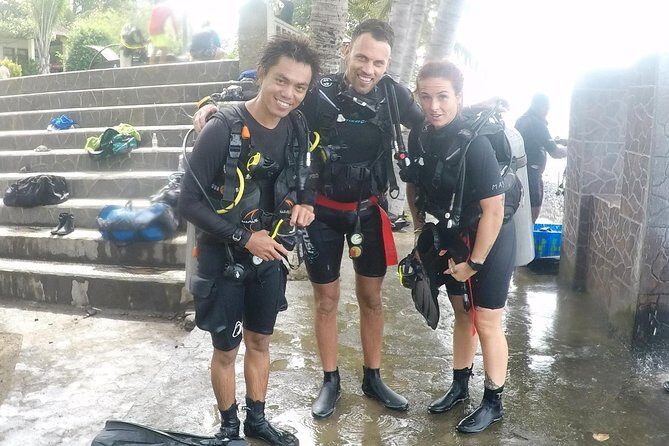
  • suit up and do final checks on land
  • manage the entry process with the guide’s instructions
  • get your bearings faster because you’re not also dealing with boat ramps, ladders, or moving platforms

That said, shore entry still asks for good basic technique. You’ll want to pay attention to your air management, your buoyancy, and the way you handle moving from wetsuit-and-gear comfort into actual water movement. If you tend to get anxious in transitions, do your calm breathing and gear checks like you practiced in training.

Bring a towel and a change of clothes. They’ll help a lot during the land-to-water-to-land rhythm, and the tour does not include a towel.

Equipment included: what you can count on, and what to double-check

Bali Scuba Diving trip at Tulamben for Certified Diver - Equipment included: what you can count on, and what to double-check
This experience includes the full standard rental kit: BCD, regulator, booties, fins, mask, tank, and wetsuit. For a certified diver, that’s the practical win—you avoid paying for gear rentals separately and you avoid the hassle of transporting your own kit across Bali.

Before you go, do a quick equipment sanity check with the staff:

  • Make sure your mask fits comfortably and seals well.
  • Confirm your fins aren’t slipping and that booties feel secure.
  • Check your regulator feels easy to breathe through while you’re still on land.

It’s also worth knowing the plan includes scuba insurance, plus an environmental fee for the reef. Those details don’t sound exciting, but they add up to fewer hassles and a smoother day.

If you use prescription lenses or have specialized gear needs, that’s not spelled out here—so it’s smart to confirm in advance. For the standard gear list, though, you’re covered.

Lunch by the water: how the break helps your second session

Bali Scuba Diving trip at Tulamben for Certified Diver - Lunch by the water: how the break helps your second session
Between tanks you get lunch at a beachside restaurant around 12:00 PM. You also have mineral water included.

A good meal break is not just about calories. After the first tank, your body needs time to cool down, hydrate, and reset mentally. Eating on a schedule keeps you from rushing into the second session hungry or distracted.

There’s also a vegan and vegetarian option available if you tell the operator at booking time. If you’re eating based on dietary needs, flag it early so staff can plan the meal without stress.

And if you’re someone who likes to plan for comfort: wear something easy for the ride back. You’ll want to move from wet gear to dry clothes quickly, and then you’ll be in a shuttle back to South Bali.

The human factor: guides who keep you safe and relaxed

Bali Scuba Diving trip at Tulamben for Certified Diver - The human factor: guides who keep you safe and relaxed
For a certified scuba day, the guide’s role is more than pointing at fish. A good instructor helps you:

  • stay within safe procedures
  • keep your group organized
  • control the pace so you’re not fighting currents or panic
  • enjoy the wreck without turning it into a stressful task

The strongest praise in this style of trip tends to go to instructors who are patient and attentive. I’ve seen names like Niki and Rudi tied to that kind of calm guidance. When that’s your guide, you’re more likely to enjoy the day instead of spending it bracing for what happens next.

Also, the program’s health check requirement matters. You’ll complete a health questionnaire before participating, and some pre-existing conditions may prevent you from diving, so be honest and check with a doctor when needed.

What you can spot near the USS Liberty wreck

Bali Scuba Diving trip at Tulamben for Certified Diver - What you can spot near the USS Liberty wreck
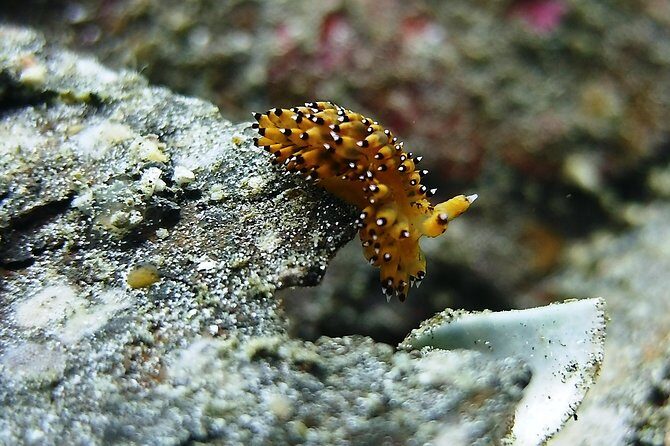
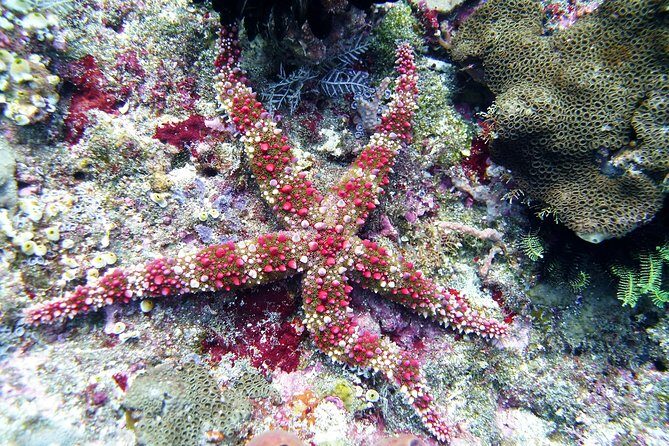
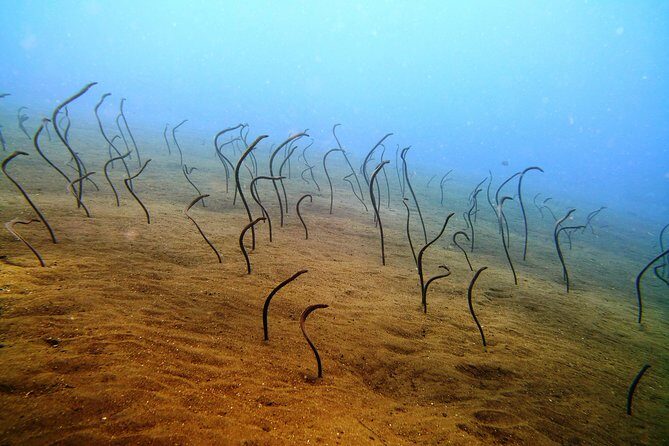
The USS Liberty wreck is famous for marine life that collects around structure. You can expect corals and lots of fish, and the wreck is especially popular with underwater photographers.

From the kind of sightings that show up often in this area, you should keep your eyes open for things like:

  • turtles
  • eels
  • many small schools of colorful fish

You won’t control what you see—sea life moves—but wrecks tend to reward patient watching. Slow down, glance at the wreck surfaces, and don’t rush your view just because your buddy found something. The second tank is a good time to scan again with fresh attention.

Price and value: what your $98.34 is actually paying for

Bali Scuba Diving trip at Tulamben for Certified Diver - Price and value: what your $98.34 is actually paying for
At $98.34 per person, the headline question is: what’s included versus what you’d pay elsewhere? Here’s the value angle that makes this price more believable:

Included in your cost:

  • hotel pickup and drop-off from select South Bali areas
  • experienced scuba guide
  • two 1-tank guided underwater sessions
  • shore-entry setup
  • full equipment rental (BCD, regulator, mask, fins, wetsuit, tank, and more)
  • lunch and mineral water
  • reef/environment fee (reef tax)
  • scuba insurance
  • morning refreshment at the office (ice cream or tea/coffee)

Not included:

  • towel and sunscreen

If you were to piece this together yourself—transport, tanks, equipment, guide time, and lunch—you’d usually end up paying more or spending more time coordinating. Here, you’re buying a turnkey day with the core costs baked in. That’s where the value sits.

Who this certified diver day fits best

This is a good match if you:

  • are already PADI-certified and want a structured wreck day
  • prefer a small group and a guide that can keep close tabs on you
  • like the idea of shore-entry rather than a boat day
  • want a single focal site (USS Liberty) instead of a complex multi-stop schedule

It may be less ideal if you:

  • hate early mornings or long drives
  • want lots of variety beyond one primary wreck location
  • need very specialized gear beyond the standard rental list

Minimum age is 10 years, and there’s a health questionnaire step for everyone.

Should you book this certified diver trip?

Book it if you want an efficient, guided USS Liberty wreck day with equipment and meals handled for you. The small-group setup and the clear two-session plan make it feel like a calm way to build wreck experience without a complicated itinerary. You’ll be paying for real logistics, not just tank time.

Skip it or at least double-check fit if your schedule is tight or you know you get overwhelmed by early starts and travel. Also, if you’re traveling from far away, remember that diving within 24 hours of flying is not recommended.

If you want, tell me your PADI level and where you’re staying (Kuta, Legian, Seminyak, Sanur, Nusa Dua, etc.). I can help you sanity-check the morning pickup timing so you’re not rushing.

FAQ

What certification do I need for the certified diver option?

You’ll need to provide evidence of your dive certification. The two 1-tank guided underwater sessions are for PADI-certified divers only.

How many people are in the group, and what is the guide ratio?

The tour has a maximum of 8 travelers. For certified divers, the typical ratio is four certified divers per guide.

What equipment is provided?

The tour includes rental equipment: BCD, regulator, booties, fins, mask, tank, and wetsuit.

What’s included in the price besides the underwater sessions?

Pickup and drop-off from select areas, a scuba guide, lunch, mineral water, reef/environment fees, scuba insurance, and a morning refreshment at the office (ice cream or tea/coffee) are included.

Is lunch suitable for vegetarians or vegans?

Yes. Vegan and vegetarian options are available if you advise the operator when booking.

Do I need to bring a towel or sunscreen?

You should bring a towel and sunscreen. These are not included.

What if the trip is canceled due to weather?

If cancellation happens because of poor weather, you’ll be offered an alternative date or a change to another dive spot without any surcharge.

HOT PROMO. Private Surf Lessons (1 Coach/1 Guest)

HOT PROMO. Private Surf Lessons (1 Coach/1 Guest) - How the 2-Hour Lesson Actually Plays Out

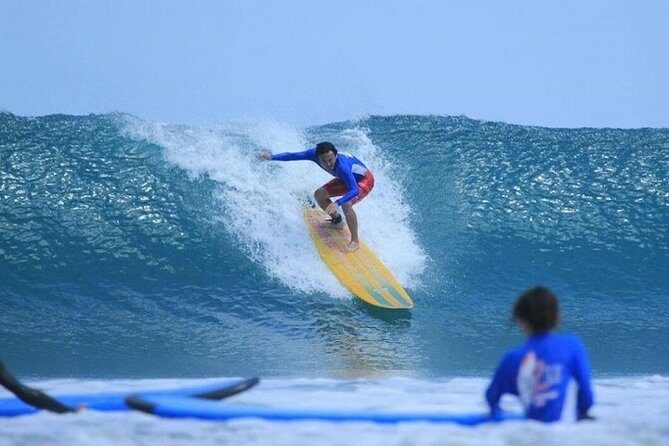
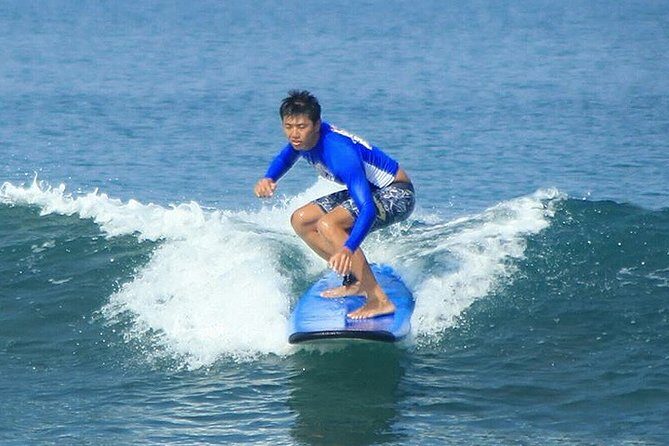
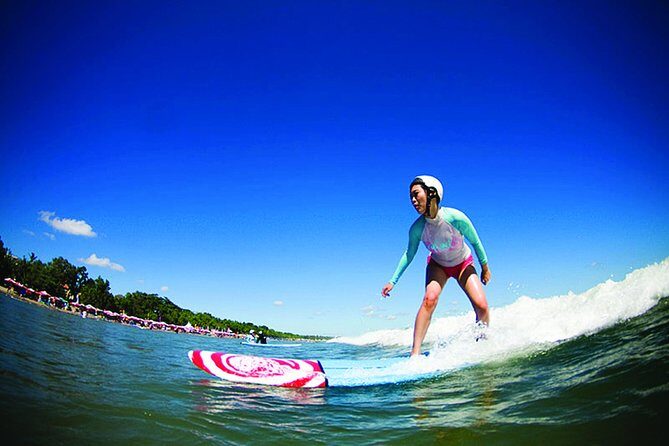
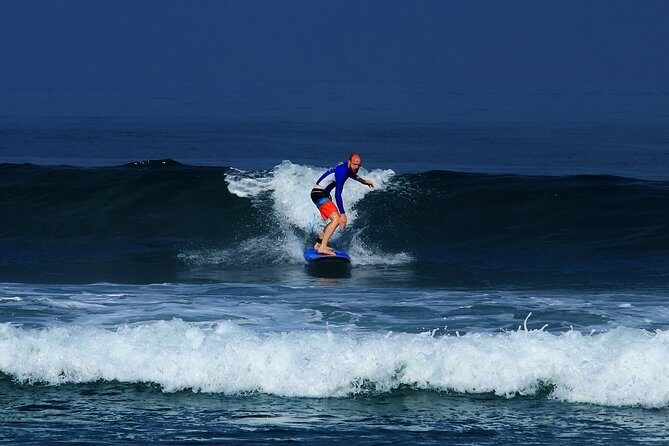
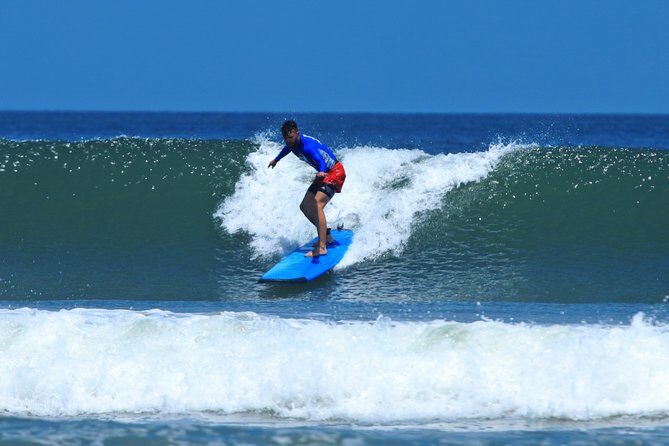
Two hours and the sea is the teacher. This private surf lesson in Kuta is built for beginners who want hands-on guidance in a real surfing setting, not a long group class where you disappear into the back of the beach. I really like the one coach per guest setup and the fact that surf equipment is provided, including a board and rash guard style gear. One thing to plan for: sunscreen and towels are not included, and lesson timing can shift each day based on surf conditions.

I also like the extras that reduce friction on a busy beach. You get free surfing pictures, a free online training course, and practical perks like security for valuables plus free public showers and toilets. It’s a smart value play at $19.86 per person, especially if you want quick feedback and you’re aiming to stand up sooner.

Key Things I’d Bookmark Before You Go

HOT PROMO. Private Surf Lessons (1 Coach/1 Guest) - Key Things I’d Bookmark Before You Go

  • One coach per person in Kuta Beach: you get focused instruction instead of sharing attention with a crowd.
  • Gear is included: surfboard, leash, and surf shirt/rash vest style protection means you travel lighter.
  • Coaching adjusts to your progress: the instructor adapts what you do based on how you’re doing in the water.
  • Free surf photos: you’ll have something to remember besides sore legs and saltwater hair.
  • Prep helps first-timers: there’s a free online training course, and you may also receive helpful links ahead of time.
  • Beach basics are covered: free public showers and toilets make the post-surf reset easy.

Kuta’s Private Surf Lesson: What You’re Paying For

This isn’t a “tour bus to the beach” kind of activity. You’re paying for a private lesson structure where the coach can watch what you’re doing and correct it in real time. That matters, because learning surf is mostly about small adjustments: where you place your feet, when you pop up, how you handle the leash, and what to do when a wave doesn’t cooperate.

At $19.86 per person, the best value is when you’re truly ready to benefit from a coach’s attention. If you’re already comfortable paddling and popping up, you might find you progress slower than expected for the price. But for first-time surfers and novices, the format is aimed directly at you.

The lesson runs about 2 hours, which is long enough for a few solid attempts and short enough that you don’t burn out before you even find your rhythm.

Meeting Point Near Pullman: Getting Started Without Stress

HOT PROMO. Private Surf Lessons (1 Coach/1 Guest) - Meeting Point Near Pullman: Getting Started Without Stress
Your meeting point is on the beach in front of the Pullman hotel on Jl. Pantai Kuta No.32, in the Legian/Kuta area (80361). The activity ends back at the meeting point, so you’re not stuck figuring out transport after you’re done.

A mobile ticket is used, so you won’t be hunting for paper confirmations. And because it runs Monday through Sunday, from 8:00 AM to 6:00 PM, you can usually fit it into a normal Bali day.

Bring your stuff in a way that won’t slow you down. You’ll want a simple plan for sunscreen, a towel (not provided), and a small place to store valuables. The program includes a security safe for valuables, which is a big comfort on a busy beach.

How the 2-Hour Lesson Actually Plays Out

HOT PROMO. Private Surf Lessons (1 Coach/1 Guest) - How the 2-Hour Lesson Actually Plays Out
The instruction is centered on Kuta Beach, and the coach adapts the session based on your progress. That’s the key phrase, because beginners don’t all struggle in the same place. Some have trouble paddling; some can’t read the timing; some pop up but lose balance instantly.

What I like about the coaching style is the practical feedback. One first-timer session described the instructor as patient and attentive, and the coach gave clear input on what to look out for and how to improve. Another beginner-focused session emphasized that each person had their own personal coach, which helps if you’re surfing with a partner or family and don’t want to take turns while one person waits.

A helpful clue from that experience: progress can happen fast. One beginner caught a wave within 30 minutes, which tells me the lesson isn’t just about standing on the sand. You’ll be in the water and getting coached while you learn.

Kuta Waves and Timing: Why Your Start Time Can Shift

HOT PROMO. Private Surf Lessons (1 Coach/1 Guest) - Kuta Waves and Timing: Why Your Start Time Can Shift
Lesson times can change each day depending on surf conditions. That’s normal for surf lessons, and it’s actually a good thing if you’re new to this.

For you, the benefit is simple: you’re more likely to get workable wave time instead of starting at a fixed hour when conditions are flat or rough. The drawback is logistical. If you’re trying to anchor the rest of your day to a strict minute-by-minute plan, build in flexibility.

If your schedule is tight, I’d treat this as a “morning or afternoon window” activity rather than a hard appointment.

Equipment Provided: What You’ll Wear and Why It Helps

HOT PROMO. Private Surf Lessons (1 Coach/1 Guest) - Equipment Provided: What You’ll Wear and Why It Helps
Your lesson includes surf equipment, including a surfboard and leash plus surf shirts/rash guard style protection. That’s more valuable than it sounds, because it saves you from buying gear you may never use again.

For first-timers, rash vest protection is also about comfort and confidence. You’ll likely spend more time than you expect on the board, in the wipeout zone, and getting re-positioned near the breaking area.

Two things are specifically not included: sunscreen and towels. So yes, you should pack them. It’s a straightforward call, but it’s also where many people lose a lesson hour if they show up unprepared.

Also note this: kids’ surf shirts are not included. If you’re bringing a child, double-check what they’ll need for coverage.

The Coach Factor: One-on-One Feedback in Real Time

HOT PROMO. Private Surf Lessons (1 Coach/1 Guest) - The Coach Factor: One-on-One Feedback in Real Time
The headline feature is the coach-to-guest ratio: one surfing coach per person. In plain terms, you’re not waiting for help. You’re getting feedback while you’re still processing what just happened.

That kind of attention can be especially helpful if you’re learning basics like:

  • paddling technique and positioning
  • reading incoming waves
  • timing the pop-up
  • managing balance once you’re up
  • learning what to do when a wave isn’t right for you

From what I’ve seen described, instructors don’t just watch. They explain what you can do better and what to watch for next time. One instructor named Chip was singled out for being patient and attentive, and for giving specific feedback that helped a first-time surfer catch a wave quickly. That’s exactly the kind of coaching you want when you’re learning.

Free Surf Photos and Online Training: Small Extras, Big Payoff

HOT PROMO. Private Surf Lessons (1 Coach/1 Guest) - Free Surf Photos and Online Training: Small Extras, Big Payoff
You get free surfing pictures, which is a nice add-on when you’re learning and you’re likely too busy to notice what you looked like at the moment you stood up.

You also get a free online training course. This is the part you’ll either appreciate or skip, depending on your style, but it’s a real leg-up for beginners. One parent described getting links to read and watch the day before the session, which likely helped them and their child show up already knowing what to expect.

If you’re the type who likes to understand the basics before you hit the water, use this material. It’s the easiest way to shorten the learning curve.

After the Water: Showers, Toilets, and Beach-Day Reality

HOT PROMO. Private Surf Lessons (1 Coach/1 Guest) - After the Water: Showers, Toilets, and Beach-Day Reality
A lot of surf experiences forget the practical “what next” part. This one doesn’t. You have free public showers and a free public toilet, which means you can rinse off without hunting around.

There’s also advice to bring a little small money. The activity doesn’t say exactly what that’s for, so I’d treat it as “street-level readiness” for snacks, drinks, or whatever you decide to do on the beach afterward.

If you plan to stay in Kuta for the rest of the day, think of this lesson as one stop in a longer beach loop: suit up, surf, rinse, and keep moving.

Who This Private Lesson Suits Best

This is a good fit if you’re:

  • a beginner with no surf experience or very little
  • learning with a partner and you want separate coaching rather than alternating
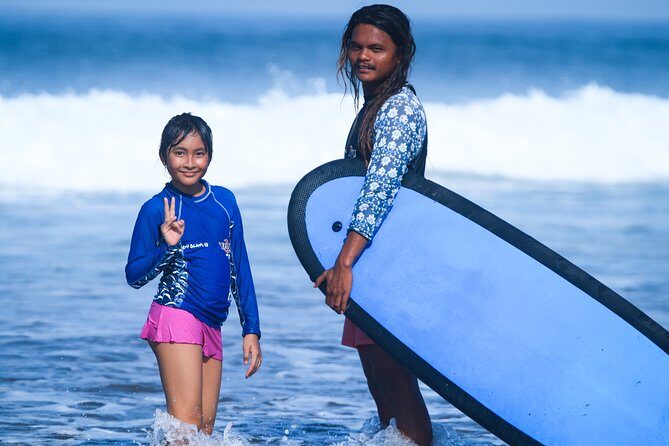
  • bringing a child (one session included a 12-year-old with a parent, and they had a good first-time experience)
  • the type who wants a coach to adapt instruction to your pace

If you already surf regularly and want advanced coaching, you might still enjoy the experience, but the structure is clearly aimed at getting new surfers confident and standing up.

If you have moderate physical fitness, you’re likely fine. The program notes a moderate fitness level, which makes sense for the paddling and getting up and down from the board repeatedly.

Price and Value: Is $19.86 a Good Deal?

For a private lesson, $19.86 per person can feel almost too good, but the value logic holds if you match the lesson to your needs. You’re buying:

  • private, one-on-one instruction
  • board, leash, and rash guard style gear
  • free photos
  • free online training course
  • practical beach amenities like showers, toilets, and a valuables safe

The biggest “value trap” would be buying it when you’re not ready to surf at all. If you show up without sunscreen or a towel, or you’re trying to combine it with a packed schedule, you’ll spend mental energy fixing those problems instead of learning.

But if you’re a first-timer and you want structured coaching in a real surf setting, this looks like a strong deal.

Booking tends to happen about 9 days in advance on average, so if you have a tight travel window, I’d secure it before your Bali dates get busy.

Should You Book This Kuta Private Surf Lesson?

If you’re new to surfing and you want fast, clear coaching, I’d say yes. The big reasons are the one coach per person format and the fact that the session is designed for beginners and novices, with the instructor adapting to your progress.

You should think twice only if you hate schedule flexibility, since start times can shift with surf conditions. Also, pack your own sunscreen and towel so you don’t lose time on day-of essentials.

Overall, this is the kind of surf lesson that’s built to get you out on the waves quickly, with feedback that helps you improve during the session, not weeks later.

FAQ

Where do I meet for the surf lesson?

You meet on the beach in front of the Pullman hotel, Jl. Pantai Kuta No.32, Legian, Kec. Kuta, Kabupaten Badung, Bali 80361, Indonesia.

How long is the private surf lesson?

It runs for about 2 hours.

Is this a private activity?

Yes. It’s private, and only your group participates. The lesson also includes one surfing coach per person.

What surf equipment is included?

You get surf equipment, including a surfboard, leash, and surf shirts/rash guard style gear.

Do I need to bring sunscreen and a towel?

Sunscreen and towels are not included, so you should bring both.

Are there any valuables storage options?

Yes. The experience includes a security safe for valuables.

Are public showers and toilets available?

Yes. Free public showers and a free public toilet are included.

Do lesson times stay the same every day?

No. Lesson times change each day depending on surf conditions.

What if I bring kids?

Surfboard gear is included, but kids surf shirts are not included, so plan for that if needed.

What’s the cancellation policy?

You can cancel for free up to 24 hours in advance for a full refund. If you cancel less than 24 hours before the start time, you won’t get a refund.

Can service animals go on the tour?

Service animals are allowed.

Final Note

If your goal is a beginner-friendly surf lesson with real attention from a coach, this one is worth booking. Pack the essentials, expect timing that follows the ocean, and you’ll get a solid shot at catching your first waves.

Surfing Group Lesson Level 1 Beach Surfer

Surfing Group Lesson Level 1 Beach Surfer - Small groups and patient coaching (Budi and Gung show up)

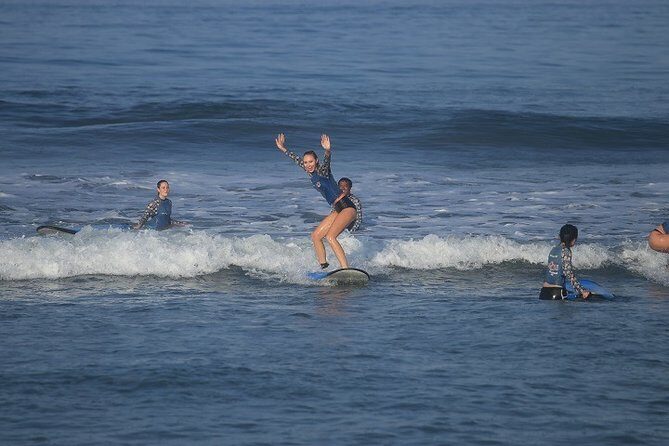
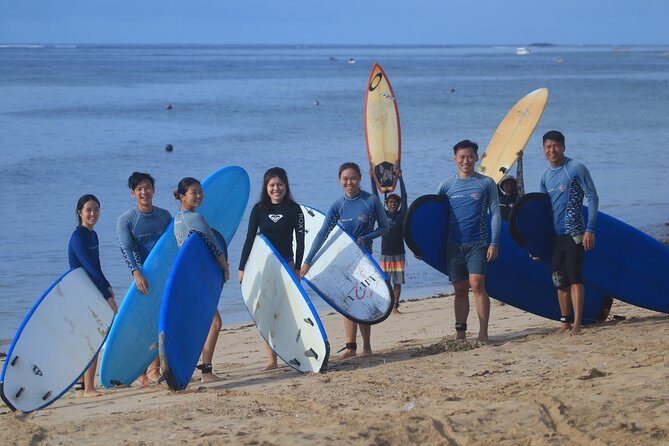
First-timers can get confident fast. This five-day Level 1 course focuses on getting you on a board with small groups and a real theory-to-practice approach at Legian’s Double Six Beach. I like that you’re capped at no more than five students per coach, and that you don’t have to juggle rentals because equipment is provided (including zinc and a rash guard). One thing to consider: sessions can run early, and surf conditions can include waves that feel big even for beginners.

What makes it practical is the whole setup around you. You get door-to-door round-trip transfers from many key South Bali areas, plus showers, changing rooms, lockers, fresh drinking water, and towel service—so you can actually move on with your day afterward. My other favorite part is the human side: the vibe is consistently described as professional, patient, and safety-minded, with instructors like Budi and Gung named in feedback.

Still, plan around a few realities of a group lesson in Bali. Your exact session time (8 am, 10 am, 1 pm, or 3 pm) can shift based on tides and wind, and food isn’t included, so you may want to eat before or after your lesson depending on your timing.

Key things to know before you go

Surfing Group Lesson Level 1 Beach Surfer - Key things to know before you go

  • Tiny 5:1 coaching ratio means you get more individual feedback than typical surf classes
  • Five 2-hour sessions spread learning out over multiple days, not crammed into one morning
  • All equipment included: board, leg rope, helmet, rash guard/leggings, towel, and imported zinc
  • South Bali pickup and drop-off takes the stress out of getting to Double Six Beach
  • Photo coverage happens during lessons, and images are available for purchase after the program
  • Beach safety is part of the syllabus, so you’re not only practicing pop-ups

Why Legian’s Double Six Beach fits Level 1

Legian’s Double Six is the kind of surf stop where you can learn seriously, but still keep it fun. The program is designed for beginners and true first-timers, with the goal of getting you from awkward paddling to at least consistent attempts at riding waves.

The tradeoff with a famous surf beach is that conditions can vary. You may get a day with waves that are described as good but big, which is still workable for Level 1, but it’s why the course emphasizes ocean safety and beginner technique. If you’re expecting a gentle kiddie-wave curriculum every single day, you might feel surprised—because part of real learning is adapting to what the ocean is doing.

The five 2-hour lessons: theory, practice, practical

This is a 5-day structure, with 2-hour lessons each day. That repeated time is key: you don’t just get one burst of coaching and hope it sticks. You practice, learn the why behind it, then come back the next day to refine.

The course is built on three parts inside your lesson block: theory, practice, and practical. Theory helps you understand what to do and why it matters—especially around safety. Practice is where you repeat technique. Practical is where your skills get tested in a more realistic way on the water.

You also get a student study book during the course, with soft copies you can download from the school’s website. That’s useful because it gives you something to review after you’re dry, showered, and ready to remember what you learned.

Rip Curl School of Surf photographers take photos during your sessions. The images are for sale after you finish, so if you like progress souvenirs, plan to decide later once you’ve had a chance to see what they captured.

Small groups and patient coaching (Budi and Gung show up)

Surfing Group Lesson Level 1 Beach Surfer - Small groups and patient coaching (Budi and Gung show up)
The biggest quality signal here is the coaching ratio: a maximum of 5 students per instructor/assistant. In a surf setting, that matters more than people think. When you’re learning balance, timing, and ocean-reading, you need corrections in the moment—especially after a wipeout.

From the feedback, instructors are described as kind, professional, and patient. People also mention feeling safe and welcome, which is exactly what you want in your first week on the water. Names like Budi and Gung come up in the kind of “they taught us well” way that suggests more than just a scripted checklist—they’re watching you closely and adjusting instruction.

One more point: this style of teaching tends to reduce frustration. If you’re trying hard but not getting it, extra attention and calm coaching can make the difference between giving up and improving each session.

All the gear is handled, plus the post-surf comfort

You save a lot of hassle with courses that include real gear, not just a board. Here, your equipment package covers the surf basics and the comfort extras: surf board, leg rope, and a helmet, plus a Rip Curl rash guard and leggings. The program also includes imported zinc, along with sealed drinking water during the lessons.

You don’t need to hunt for sunscreen or worry about forgetting something small that actually matters. The course overview also lists sunscreen in what’s included, which pairs nicely with the zinc for sun-protection days.

After you finish your water time, the setup is practical. You’ll have fresh water shower facilities, soap and shampoo, towels, private changing rooms, and individual lockers. That means you can rinse off salt and sand properly and not spend your afternoon feeling grimy.

The one clear item not included: you’ll need to bring your swimsuit (bikini or board shorts). Also, towel is included, so you can travel lighter than you would for a DIY day.

Pickup and drop-off in South Bali: less travel fatigue

Getting from wherever you’re staying to the beach can eat half a day in Bali traffic. This course builds in door-to-door round-trip transfers from a long list of South Bali areas: Legian, Seminyak, Oberoi, Canggu, Kuta, Jimbaran, Uluwatu, Nusa Dua, and Sanur.

You start at the Rip Curl School of Surf (with the meeting point listed at Hotel Prama Sanur Beach area). For most people staying in those covered zones, pickup and return is the difference between squeezing in a lesson and actually enjoying it.

The main consideration is that the lesson schedule gets confirmed one day in advance. That’s normal for surf timing, but it does mean you can’t fully lock your plans for the day until confirmation comes through. If your itinerary is tight, keep your mornings and early afternoons more flexible.

Lesson times, tides, wind, and why early mornings happen

Your sessions can be scheduled at 8 am, 10 am, 1 pm, or 3 pm. The surf school also notes that different disciplines and levels may require different tides, wave size, and wind conditions. In plain terms: they’re aiming to match you to workable water rather than forcing the same wave pattern every day.

That’s why early mornings are often recommended. Even if you’d rather sleep in, this course is built around the idea that morning can give you better conditions. I’d treat the schedule as part of the learning experience: more comfortable water often helps you get your best attempts done in that 2-hour window.

The rhythm of your learning week (and what you’ll be practicing)

Even without a written stop-by-stop itinerary, the learning rhythm is easy to understand because each day repeats the core parts. You’ll have classroom-style theory inside the lesson block, then you’ll get in the water for hands-on practice. The practical portion is where safety knowledge and technique come together as you try riding and responding to real wave behavior.

By the end of five sessions, your progress should show up in small but important ways: better positioning, steadier attempts at turning, and stronger ocean safety instincts. Reviews consistently highlight improving each time and feeling safe, which fits how this program is structured.

Also, the study book helps connect what you feel on the board to what you learned off the board. That bridge is what turns accidental progress into repeatable skill.

What’s included, what’s not, and what that means for value

At $155 for about five days, you’re paying for more than instruction. You’re paying for time on water (10 hours of 2-hour lessons), plus the convenience layer: gear, transfers, and shower and changing facilities.

Here’s where the price feels justified based on what’s included:

  • Equipment included: board, leg rope, helmet, rash guard/leggings
  • Sun protection included: zinc (and sunscreen is mentioned in the overview)
  • Comfort included: towels, lockers, changing rooms, fresh showers, soap, shampoo
  • Convenience included: pickup and return from many South Bali locations
  • Student support included: study book and downloadable soft copies
  • Safety included: one million USD liability insurance
  • Refreshments: tea, coffee, and fruit are included in the overview, and fresh fruit is noted after lessons

What’s not included is also important:

  • Food isn’t included.
  • You need to bring your swimsuit.
  • Transport outside the covered pickup zones would be on you.

If you’ve ever done a surf day where you had to rent gear, buy sunscreen, find a place to shower, and still fight transit, this course usually feels like a smoother deal. If you live far outside the transfer coverage areas, the value can drop because you’d need extra ground transport not covered.

Who should book this Level 1 surf lesson

I think this course is a great match if:

  • you’re a true beginner or still early in learning
  • you want structured progress across five days
  • you’d like small-group coaching rather than a crowded class
  • you appreciate having showers and lockers handled for you
  • you’re okay with tides and wind meaning your session time may shift

You should pause and think twice if:

  • you want advanced technique work (this is Level 1 focused)
  • you hate early starts and can’t flex your schedule for tides and conditions
  • you’re counting on a full meal included (food is not included)

The course also notes travelers should have a moderate physical fitness level. That doesn’t mean you need to be an athlete; it just means you should be comfortable paddling, getting up, and spending time in the water.

Practical tips to make your first week smoother

I’d treat this like a week-long skill class, not a random beach activity. Wear the included rash guard and be ready to reapply sun protection because you’re on the water.

Bring a swimsuit you don’t mind getting sandy. Then plan a simple pre-lesson snack strategy since food isn’t included. After your lesson, take advantage of the showers and fresh-water setup so you’re not stuck in salt-stained clothes for the rest of the day.

If your schedule is confirmed late, don’t panic. Surf timing changes based on conditions, and that’s part of learning safely and effectively.

Should you book this surf lesson course?

Yes, if you want a beginner-friendly surf week with small-group coaching, equipment handled, and an easy South Bali pickup system. At $155, the value comes from the package: instruction plus gear plus comfort plus transfers. That’s a lot to get in one bundle, especially for your first time surfing.

If you don’t mind putting in a bit of patience for wave conditions and early-ish session times, this is a smart way to get from zero to at least your first real wave attempts. Just pack your swimsuit, eat on your own schedule, and be ready for the ocean to be the ocean.

FAQ

How many lessons are included, and how long is each one?

You get five lessons, and each lesson is about 2 hours.

What level is this surf lesson course?

This is a Level 1 course, aimed at beginners and people who are still learning.

Is surf equipment included?

Yes. Your equipment is included, including the surf board, leg rope, and helmet, plus the school provides a rash guard/leggings.

Do you provide hotel pickup and drop-off?

Yes. Pickup and transfer back to your hotel are included for many South Bali areas listed in the course details.

Where does the course start from?

The meeting point is listed at the Rip Curl School of Surf, with the start point given at Hotel Prama Sanur Beach area. The activity ends back at the meeting point.

What should I bring?

You should bring your swimsuit (bikini or board shorts). The program provides other key items like towels, showers, and zinc.

Is cancellation free?

Free cancellation is available, and you can cancel up to 24 hours in advance for a full refund. If the experience is canceled due to poor weather, you’ll be offered a different date or a full refund.

Nusa Penida 2 Day 1 Nights Guided Private Bali Tour

Nusa Penida 2 Day 1 Nights Guided Private Bali Tour - The big picture: how this two-day route feels

Cliffs, bays, and a tight schedule. This two-day private Nusa Penida tour is built around smooth logistics from Kuta with a fastboat hop from Sanur, then a full day in the east and another in the west. Your driver and guide handle the driving, stops, and timing, so you can focus on the viewpoints instead of the route math.

I love the private feel of it. It’s only your group, and the day stays flexible enough that you can linger at photo spots without everyone rushing you out. I also like that lunch is included both days, served at local places during the long sightseeing stretches.

One catch: the tour does not include your hotel. You choose where you’ll sleep on Nusa Penida, and that choice will affect how relaxed (or stressful) your mornings feel.

Key things to know before you go

Nusa Penida 2 Day 1 Nights Guided Private Bali Tour - Key things to know before you go

  • Private guide + driver: you get organized stops without group chaos
  • East then west coverage: day one focuses on east Nusa Penida, day two on the west
  • Lunch twice included: built-in breaks at local Indonesian restaurants
  • Fastboat return included: return transport to Nusa Penida is part of the package
  • Most fees included: entrance tickets listed for the main stops
  • Weather matters: the itinerary depends on good conditions

Price and logistics: what $145 buys you

Nusa Penida 2 Day 1 Nights Guided Private Bali Tour - Price and logistics: what $145 buys you
At $145 per person for about two days, the value comes from how much is already bundled. You’re not just paying for a driver—you’re getting an air-conditioned vehicle, return fastboat ticket to Nusa Penida, and a shuttle connecting your hotel to Sanur harbor. Entrance fees and taxes are included for the main stops, which helps keep the day from turning into a constant series of small extra payments.

You’ll also like the pacing style. This is a private tour, so you aren’t stuck with a rigid group flow. The schedule still has set landmarks, but your guide can adjust small timing decisions based on crowds, light, and how you’re feeling.

The main thing you must plan for is your base. Since accommodation isn’t included, you’ll want to book a hotel that keeps your first morning from feeling like a long scramble. The tour starts early (meeting at 6:30 am), so a nearby, easy pickup spot really helps.

The big picture: how this two-day route feels

Nusa Penida 2 Day 1 Nights Guided Private Bali Tour - The big picture: how this two-day route feels
Nusa Penida is all about big views and steep viewpoints. This tour is structured to make those views efficient: one day leans into dramatic east-coast angles and the next day hits the west’s famous cliff scenes. You’ll spend most of your time on the road moving between viewpoints, then stop for focused photo time and short walks.

Even with a private setup, expect the days to feel full. Each main stop is scheduled with a set visit window (often around an hour), which means you’ll get enough time to enjoy each place without turning the whole day into one long waiting game.

Day 1 on the east side: billabongs, broken beaches, and a star viewpoint

This day is designed for variety—rock formations, sea basins, and the west-famous “wow” cliff energy, but shot through the east side’s coastline shapes. You’ll start early, then work through a chain of stops that are spaced for a smooth sightseeing flow.

Angel’s Billabong: a rock lagoon worth the early start

Angel’s Billabong is a natural rock lagoon where the sea frames the scene like a living photo border. The big appeal here is how the water sits against the rock—when conditions are right, it gives you that “nature made this for pictures” look.

How to enjoy it: wear shoes you trust on uneven ground and give yourself time to watch how the light shifts across the rock edges. If you’re the type who likes calm moments, this stop can be that pause in an otherwise busy day.

Pasih Uug Beach (Broken Beach): rocky holes and dramatic seascapes

Pasih Uug—often called Broken Beach—brings a different kind of drama. Here, rocky openings and sea views combine to create a rough-edged look that’s very “Nusa Penida.”

Possible drawback: the scenery is the main event, not a long beach stroll. Plan on viewpoint-style time rather than a relaxing swim session unless you know the area well.

Kelingking Beach: the cliff scene everyone dreams about

Kelingking Beach is one of Nusa Penida’s best-known attractions, and the stop reflects that. You’ll get a classic cliffside perspective that’s famous for the way the coastline curves below.

Tip for your photos: step back and look for the best angle before you start shooting. The cliff view is the star, so position matters more than lens tricks.

Paluang Cliff: the second angle on the same big moment

Paluang Cliff is a viewpoint where you can see Kelingking from another side. This is a clever addition because it turns one iconic scene into two different compositions without needing to jump around the island endlessly.

This stop is shorter (about 30 minutes), so treat it like a quick “angle check” rather than a long wandering break.

Lunch stop: Sam sam guling sebuluh

Lunch is included here at Sam sam guling sebuluh, with both vegetarian and non-vegetarian options. That’s a useful detail if you’re traveling with mixed diets.

Why lunch timing matters: Nusa Penida days can blur together fast. Having a scheduled food break stops the fatigue cycle—especially if you’ve been on the move since the early morning.

Crystal Bay: a calmer finale with big coast energy

Crystal Bay is often visited as a later-day highlight, and it typically lands well after the bigger cliff moments. You’ll get a scenic coastal stop that feels like a “settle in” moment before the day wraps.

Realistic expectation: it’s still about the views more than a long beach day. But as a final stop, it gives you a smoother wrap-up to day one.

Day 2 on the east side: Atuh, Diamond Beach, and the Teletubbies hill shape

Nusa Penida 2 Day 1 Nights Guided Private Bali Tour - Day 2 on the east side: Atuh, Diamond Beach, and the Teletubbies hill shape
Day two continues the east-side theme with a different set of signature lookouts. The goal is to give you coastline variety again—bright-sand beach views, cliffside photo points, and the fun-shaped hills people remember.

Atuh Beach: clear water vibes and natural charm

Atuh Beach is known for clear water and a popular vibe among newer Nusa Penida attractions. It’s a good stop if you want a more “beach-calm” feeling between the heavier cliff viewpoints.

Pantai Diamond (Diamond Beach): a newer crowd-pleaser

Diamond Beach is listed as a beach stop with white sand and strong visual impact. It’s short enough to keep the day moving, but it’s the kind of place where you’ll want a few minutes to take in the shoreline shape before you continue.

Rumah Pohon Tree House (Molenteng): the rock-cliff photo moment

Rumah Pohon Tree House Molenteng is a small wooden house on a rock cliff overlooking a stretch of beach. This is one of those stops that’s more about the viewpoint framing than about sitting around.

One small note: the itinerary details show a duration entry that reads oddly, so it’s worth confirming the timing with your guide the day before. The location itself is clear; the exact visit length may vary.

Atuh King Five Nusa Penida (Thousand Islands View Point): rocks that look like islands

Atuh King Five is also described as Thousand Islands View Point. The idea is simple: you see many sea rocks that, from far enough away, resemble little islands scattered in the water.

Since this stop is around 30 minutes, go with a “look, shoot, and enjoy the view” mindset rather than expecting a long exploration.

Lunch stop: Warung The Sorent

Lunch is included again at Warung The Sorent with Indonesian food and both vegetarian and non-vegetarian options. If you’re trying to manage a schedule without thinking about meals, this is a major convenience.

Practical tip: if you have a sensitive stomach, eat at a steady pace and hydrate. A couple long days on coastal roads can feel more intense than you expect.

Teletubbies Hill: a quirky hill shape for a fun finish

Teletubbies Hill is known for its rounded hill shapes—people describe it as reminiscent of the Teletubbies style. It’s one of the more playful stops, and it works as a fun end to the two-day tour.

This is a short stop (about 30 minutes), so it’s best used for quick photos and a last scan for good light.

Getting there and moving around: start time, transfers, and how it all runs

Nusa Penida 2 Day 1 Nights Guided Private Bali Tour - Getting there and moving around: start time, transfers, and how it all runs
The day begins early. You meet at 6:30 am, then you’ll use a return fastboat setup between Sanur and Nusa Penida. There’s also a shuttle that moves you from your hotel to Sanur harbor.

Once you land on Nusa Penida, you’ll spend lots of time in an air-conditioned vehicle between stops. That’s not just comfort—it matters because the island’s roads can take energy out of you if you’re hot and cramped.

From the service feedback tied to this operator, punctual pickups and clear coordination come up again and again. People also mention getting a photo via WhatsApp so you can spot the right driver quickly, plus help with logistics and time management. You may also find that bottled water shows up during the day, which is a small detail that really helps.

What you should watch out for at the stops

Nusa Penida 2 Day 1 Nights Guided Private Bali Tour - What you should watch out for at the stops
Nusa Penida is viewpoint heavy. Even when a stop is “only” about an hour, you’ll often be moving between rough ground and edges where the wind can be strong.

A few practical things I’d do in your shoes:

  • Wear grippy shoes for rocky ground at places like billabongs and cliff viewpoints.
  • Expect stairs or uneven paths at famous viewpoints. If you have mobility limits, this is the part to plan carefully (the tour info doesn’t spell out accessibility details).
  • Bring sun protection. You’ll be outdoors for most of each day, especially at the beach and cliff angles.
  • Have a backup mindset for weather. The tour requires good weather, and rough conditions can change plans.

Choosing your hotel base since accommodation is not included

Nusa Penida 2 Day 1 Nights Guided Private Bali Tour - Choosing your hotel base since accommodation is not included
This is the big planning lever you control. Because the tour doesn’t provide accommodation, your sleep choice becomes part of the itinerary experience.

For the calmest mornings, choose a place that keeps pickup simple and reduces travel time stress. Also think about how you want your day one evening to feel. If you want a quiet reset after the first full day, you’ll prefer being in an area where you can unwind without extra commuting.

One more thing: since you’re going to be out all day, you don’t need luxury—but you do need a comfortable bed and easy morning access. Aim for practical over fancy.

Who this private tour suits best

Nusa Penida 2 Day 1 Nights Guided Private Bali Tour - Who this private tour suits best
This one fits well if you:

  • want a private experience with only your group
  • like seeing multiple top Nusa Penida sights in two days without planning each stop
  • value included basics like lunch and entrance fees, instead of figuring everything out on your own
  • prefer a driver who can handle timing while you choose when to linger for photos

It may not fit as well if you’re looking for a slow, beach-and-nap trip with zero rushing. The schedule is packed with signature stops, and it’s built for efficient sightseeing.

Should you book this Nusa Penida private tour?

If you’re the kind of traveler who wants to show up, get driven, and still feel like you have control over your pace, this is a strong option. The best reasons to book are the bundled transport (fastboat plus shuttle), the included lunches on both days, and the fact that you’ll hit the island’s major east-coast style viewpoints across two full days.

I’d only hesitate if you:

  • don’t want to deal with choosing a hotel base
  • are worried about weather disruption (good conditions are required)
  • prefer a more relaxed schedule with fewer stops

If your priority is value and clean logistics for a short stay, book it and spend your energy enjoying the cliffs and bays instead of mapping them.

FAQ

What is the price for this tour?

The price is $145.00 per person.

How long is the tour?

It runs for 2 days (approximately).

Where is the tour located and when does it start?

The tour is based in Kuta, and the start time is 6:30 am.

Does the tour include hotel pickup?

Pickup is offered, and there is a return shuttle from your hotel to Sanur harbor.

Do I need to buy fastboat tickets to Nusa Penida?

No. Return fastboat ticket to Nusa Penida is included.

Is accommodation provided?

No. Hotel is not provided, so you choose where to stay.

Are meals included?

Lunch is included for 2 meals total. Dinner is not included.

Is this tour private?

Yes. It is a private tour/activity, and only your group participates.

What happens if the weather is poor?

If the experience is canceled due to poor weather, you’ll be offered a different date or a full refund.

The Best Ayung River Rafting Adventure in Ubud

The Best Ayung River Rafting Adventure in Ubud - From Hotel Pickup to Final Drop-Off: The 6-Hour Flow

Two things can make Bali rafting feel easy.

This Ayung River run mixes grade II–III rapids with scenery you’ll actually remember: waterfalls, jungle passages, and sections that feel tamed rather than savage. I like that it’s built around a full experience package, not just a ticket to the water. Two standouts for me are the included private 2-way transfers (less waiting, more time doing the fun part) and an Indonesian buffet lunch that keeps you from scrambling for food after you’re soaked and hungry. One thing to consider: it’s still rafting. You’ll get wet, and it’s a solid chunk of time, about 6 hours.

You also get help from the start, not just a shouted safety lecture. The tour includes lifejacket and helmet, plus in-raft instruction, so you’re not guessing what to do when the current picks up. Another practical consideration is that photo/video services aren’t included, so if you want action shots, plan on bringing your own waterproof option or purchasing separately.

Key Highlights Worth Prioritizing

The Best Ayung River Rafting Adventure in Ubud - Key Highlights Worth Prioritizing

  • Private hotel pickup and drop-off from Ubud and much of south Bali, using an air-conditioned vehicle
  • Safety gear and coaching: lifejacket, helmet, rafting paddle, and in-raft instruction
  • Ayung River grade II–III rapids with waterfalls, jungle scenery, and calmer stretches
  • Indonesian buffet lunch included, so you fuel up without searching
  • A comfort-first approach on the water, including quick training and phone-friendly handling like dry-bag use

Ayung River Rafting Around Ubud: What Makes This Run Special

The Best Ayung River Rafting Adventure in Ubud - Ayung River Rafting Around Ubud: What Makes This Run Special
If your Bali trip needs a “today, we’re doing something” moment, the Ayung River is a strong choice. The big draw here is the mix of challenge and scenery. The rapids are usually grade II–III, which tends to land in that sweet spot: exciting enough to feel like white water, but guided and manageable for most people who can follow instructions.

What you’re doing is more than just bouncing through waves. The river environment is part of the point. You’ll float past waterfalls and through natural jungle areas, plus stretches described as more tamed than chaotic. That matters because it changes the vibe from constant adrenaline to a rhythm: paddle, steer, enjoy the view, then hit the next lively section.

There’s also a “riverbank feel” to this experience, tied to the northern part of Ubud. Even without fancy add-ons, that location advantage often translates to better scenery than you’d expect from a purely functional rafting stop. It’s not just about the drop. It’s about how long you get to enjoy the ride.

Price and Value: What $50 Buys You Here

At $50 per person, the headline is the price. The real story is what’s inside that price.

This package includes:

  • Private 2-way transfers from your hotel area (Ubud and much of south Bali)
  • An air-conditioned vehicle
  • A guide on the raft
  • Lifejacket, helmet, and rafting paddle
  • Insurance coverage
  • An Indonesian buffet lunch
  • All fees and taxes

So you’re not paying separately for the “get there” part, and you’re not paying again for the basics that many rafting trips nickel-and-dime. In plain terms, that’s how $50 becomes good value: you spend more time on the water and less time managing logistics.

One small catch: photo/video services are not included. If you care about action shots, budget for that decision. Some people love photos from trips like this; others just keep their memory in their head and phone. Either way, it’s better to know in advance than to be surprised later.

From Hotel Pickup to Final Drop-Off: The 6-Hour Flow

The Best Ayung River Rafting Adventure in Ubud - From Hotel Pickup to Final Drop-Off: The 6-Hour Flow
Expect about 6 hours total, give or take based on where you’re picked up and traffic. This isn’t a “quick morning ticket then good luck” kind of outing. It starts with pickup, and it ends with your return to your hotel area.

The private transfers are a big deal because they typically reduce the annoying parts of shared tours:

  • Less waiting around while other groups load up
  • More predictable timing
  • A smoother start, especially if you’re trying to fit this into a busy Ubud schedule

Practically, that also means you can plan your morning with confidence. You’ll still want to be ready for an early-ish pickup, but you won’t be stuck in a long, stop-and-go circuit for other travelers.

Because this is a private tour/activity, it’s just your group on the agenda. That can make it easier to ask questions, get comfort with the setup, and settle into the day without hearing half conversations you don’t need.

Safety Gear and In-Raft Coaching: How They Keep It Fun

The Best Ayung River Rafting Adventure in Ubud - Safety Gear and In-Raft Coaching: How They Keep It Fun
Bali rafting is only enjoyable when you feel safe enough to relax. Here, the safety foundation is clearly spelled out: lifejacket, helmet, and instruction both before you hit the current and while you’re on the raft.

That in-raft instruction is important. I’ve seen too many experiences where the guide says the rules once, then disappears into the chaos. This tour’s approach is more practical: you get guidance that matches what’s happening right now on the river.

You’ll also have a guide in control of the raft and the route, which helps beginners feel included instead of “just along for the ride.” The rapids are described as usually grade II–III, so you’re not dealing with a chaotic free-for-all. Still, it’s moving water. Your best move is to listen closely, follow hand signals, and keep your feet and body where the guide asks.

One comfort detail shows up in how the experience feels: there’s quick training so everyone feels ready. In a good rafting setup, that training is the difference between tense paddling and confident paddling.

You’ll likely appreciate the phone-care angle too. One highlight mentioned is having a dry bag available for phones, which helps you keep pictures without treating your phone like an emergency item.

On the Water: Grade II–III Rapids, Waterfalls, and Jungle Passages

This is the part you’re really booking. The Ayung River delivers the classic rafting mix: push through rapids, then enjoy calmer stretches where you can spot the scenery.

Here’s what you can expect in terms of river personality:

  • Grade II–III rapids: punchy sections that are challenging but not usually brutal
  • Waterfalls along the route: a visual payoff that makes the ride feel special
  • Natural jungle areas: you’ll feel like you’re in a real river setting, not a man-made chute
  • Tamed landscapes in parts: sections that help you catch your breath

The rhythm matters. When rapids are spaced with calmer segments, you can breathe, re-center, and still enjoy the experience without constantly feeling like you’re bracing.

There’s also typically a brief stop once during the trip. One detail from the experience is that you can buy water there, and even grab a beer. That’s not a reason to plan a party. It’s just a useful option if you realize you’re thirsty or you want a small treat while others are changing positions on the raft.

If you’re traveling with people who are nervous, this kind of route tends to help because the guide-led structure reduces uncertainty. You know you’ll get direction, and you’re not expected to be a paddling expert before you start.

Lunch Buffet After Rafting: Indonesian Comfort Food That Helps You Recover

The Best Ayung River Rafting Adventure in Ubud - Lunch Buffet After Rafting: Indonesian Comfort Food That Helps You Recover
Rafting builds a particular kind of hunger. You’re working your core, you’re moving your arms, and you’re using adrenaline in a way that makes normal meals feel extra good.

That’s why the included Indonesian buffet lunch matters. You don’t have to wait, search, or negotiate your meal plan while you’re tired and maybe damp. You’ll have a buffet of Indonesian specialties included as part of the package, giving you real recovery fuel.

One practical way to think about it: the lunch isn’t just a bonus. It’s part of the “complete day” design. If you’ve ever finished rafting and then spent an hour trying to find food in a place you don’t know, you already understand why this saves energy.

A buffet also helps you tailor your recovery. You can pick what feels right for your appetite after a wet morning. Go easy if your stomach feels sensitive, and choose something filling if you feel drained.

Timing can vary on any given day, but either way, it’s included. That means you can stop worrying about where your next meal will come from and focus on the river.

Phones, Photos, and What to Bring for a Wetter Day

The Best Ayung River Rafting Adventure in Ubud - Phones, Photos, and What to Bring for a Wetter Day
Let’s talk reality: you will get wet. Even with instructions and gear, rafting is water sports. The smart approach is to plan for dampness instead of trying to fight it.

Here’s what you can use from the experience setup:

  • The tour provides lifejacket and helmet, which helps with safety and comfort
  • There’s a phone-handling benefit mentioned, like a dry bag your guide can use

But a dry bag isn’t magic for every phone setup. If you care about getting photos of the rapids, bring your own waterproof solution if you have one. At minimum, assume your phone needs protection even if you’re handed a way to keep it safer.

Also remember that photo/video services are not included. So if your plan includes buying professionally taken rafting shots, you’ll need to arrange that separately.

What to pack is simple and practical:

  • A change of clothes for after
  • Something to protect your phone and small valuables
  • Any comfortable river shoes or sandals you can manage with wet conditions

If you show up in delicate sandals or shoes that hate water, you’ll spend part of the trip worrying about footwear instead of enjoying the river.

Who This Ayung River Adventure Suits Best

The Best Ayung River Rafting Adventure in Ubud - Who This Ayung River Adventure Suits Best
This tour is framed as something most travelers can participate in, which is a good sign if you’re not an extreme-sports person but you want a real rafting experience.

This specific package fits especially well if:

  • You want private transfers so you’re not stuck waiting for other groups
  • You’re traveling from Ubud or south Bali and want a straightforward pickup and drop-off
  • You care about safety structure: gear, insurance coverage, and in-raft instruction
  • You like the idea of a full half-day plan with lunch already handled

It may be less ideal if:

  • You hate getting wet and cannot tolerate soaked clothing
  • You’re very sensitive to motion or rough water, even at grade II–III
  • You expect included professional photos, since photo/video services aren’t part of the deal

The sweet spot is a group that wants fun, moderate rapids, and a smooth day with less hassle.

Should You Book This Ayung River Rafting Adventure?

If you’re weighing this against a more basic rafting-only ticket, I’d lean toward booking it when convenience and safety matter to you. The value is strongest when you factor in the private 2-way transfers, the included buffet lunch, and the safety gear and instruction. That’s what turns a rafting trip into an actual day plan.

I’d book it if you want a guided ride on the Ayung River with grade II–III rapids, waterfalls, and jungle scenery, without turning your itinerary into a logistics puzzle. And if your group appreciates phone protection and a quick training so you feel ready, this style of operation matches that.

Skip it only if wet conditions or the idea of moderate rapids is a hard no for your group.

FAQ

How long is the Ayung River rafting experience?

The total duration is about 6 hours.

Do I get pickup and drop-off from hotels?

Yes. The tour offers private 2-way transfers from hotels in Ubud and much of south Bali.

What safety gear is included?

It includes a lifejacket and helmet, plus rafting paddle use. You also get in-raft instruction.

Is lunch included?

Yes. An Indonesian buffet lunch is included.

Is this tour private or shared?

This is a private tour/activity, so only your group will participate.

Is free cancellation available?

Yes. You can cancel up to 24 hours in advance for a full refund.

Bali : Mount Batur Sunrise Trek With All Inclusive

Bali : Mount Batur Sunrise Trek With All Inclusive - Key things that make this trek worth your time

The sky goes from dark to magic fast. A Mt Batur sunrise hike is one of Bali’s most direct ways to see an active volcano up close, with a timed summit view and a simple, satisfying breakfast made using the volcano’s heat. I love that the day is built around real payoff moments: the sunrise on the ridge and the breakfast cooked on-site while the world is still waking up.

Two other big wins are the small group vibe (max 15) and the guides’ focus on getting you safe, moving, and taking home photos. You’ll meet guides who are especially good at route guidance and summit pictures, like Wayan, Denis, and Kutut Karma, so it feels more personal than a big bus tour. One thing to consider: this is a very early start (around 3:00 am), and jacket and hiking shoes are not included, so you’ll want to plan for cold mornings and uneven, sandy uphill.

Key things that make this trek worth your time

Bali : Mount Batur Sunrise Trek With All Inclusive - Key things that make this trek worth your time

  • 3:00–5:30 am momentum: meet, start climbing, reach the summit in time for sunrise
  • Volcano heat breakfast: banana sandwich, egg, fruit, and hot drinks served during sunrise
  • Small group limit: up to 15 travelers, which helps with photos and pacing
  • English-speaking, experienced trekking guides: support through the uphill and crater area
  • Weather-flexible plan: the crater walk and descent timing depend on conditions

Why Mt Batur sunrise hits different (even if you’ve seen volcanoes before)

Sunrise treks are popular for a reason: timing matters. On Mt Batur, you’re not just walking in the dark and watching light leak into the horizon. You’re climbing toward a viewpoint where the volcanic valley, clouds, and sea backdrop can change minute by minute. That’s the fun part, and it’s also why a good guide and a realistic schedule matter.

What I like most about this style of Batur trip is the focus on the core moments:

  • getting to the peak at the right time
  • eating something warm while the sunrise is happening
  • then walking down before you run out of energy

This one is also built for convenience. You get pickup and return to your hotel, plus entrance coverage for the Kintamani area. For a $34 day, that’s a practical deal compared to piecing everything together yourself.

The early start: what your 3:00 am morning looks like

The day begins with a meet-up at 3:00 am. You’ll be served some small food for quick energy during the climb. It’s not a full meal, more like a head start so your body doesn’t revolt right as the hike begins.

Then you head out to the Mount Batur trekking start point around 3:30 am, with the climb starting about 4:00 am. The timing is designed to get you to the peak by roughly 5:30 am, so you have a buffer to set up, find a viewing spot, and enjoy the light show.

A realistic expectation: you’ll be cold at first. Even if you travel with good sleep, this is a wake-up-and-go day. Wear layers you can manage while sweating uphill and cooling off at the summit.

Trekking to 5:30 am: the uphill challenge and how guides help

The hike portion runs from about 4:00 am to 5:30 am, with the terrain doing most of the work. One review note that came through clearly is that the uphill can be tough on sandy terrain. That means traction matters, and pacing matters more than speed.

Here’s what a strong guide does on this route:

  • keeps you from burning out too early
  • picks good spots for photos without turning it into a long stop fest
  • helps you make it to the summit in time

You’ll likely hike with an English-speaking guide, and the guide experience can really shape the day. I saw clear examples of guides like Wayan and Denis being funny, supportive, and very good at coordinating pictures so you’re not stuck asking strangers to take shots at the worst possible angle.

If you’re hoping to optimize your comfort, aim for:

  • warm layers for the cold start
  • breathable layers for the climb
  • shoes with grip (more on what’s missing below)

Summit timing: sunrise, photos, and the crater walk

At around 5:30 am, you arrive at the peak. This is where the day becomes worth the early alarm. Sunrise is the headline, but it’s also about what you see around it: volcanic ground, a wider view of the volcanic valley, and that moment when the world shifts from dark shapes to clear depth.

From 6:00 am, breakfast service starts while you enjoy the sunrise. After eating, you’ll either:

  • walk down, or
  • walk around the crater area

Which option happens depends on weather and your condition. That’s a big deal. With volcano treks, plans aren’t rigid if conditions aren’t safe or comfortable. A good guide will adapt instead of rushing you.

You should also expect that the lighting is tricky for photos. If you want great pictures, bring a camera you’re comfortable using in low light—or count on the guide’s help. Multiple guides in the route stories are known for stopping to capture photos and even taking a proper set of images for your group.

Breakfast at the volcano: what you actually get

Breakfast is served at around 6:00 am, and it’s not just a snack. It’s part of the experience and part of the recovery.

You get:

  • banana sandwich
  • egg
  • fruit
  • hot drinks
  • mineral water (included)

The tour description also highlights that the breakfast is prepared using the steam of the active volcano, which gives the whole meal a very specific sense of place. Even if you’re not a foodie, it’s a morale boost: warm food while you’re perched near the summit is a lot easier than trying to “just wait” until you find breakfast later.

This is also why timing matters. If you were to hike on your own, you’d have to figure out food and logistics. Here, the trek schedule is built around the meal moment.

Walking down by 6:30–8:30: what the rest of the morning feels like

After sunrise and breakfast, you’ll start heading back. The itinerary indicates that around 6:30 am you’ll begin walking down or moving around the crater depending on conditions. Then you arrive back at the finish point about 8:30 am.

The descent is usually less dramatic than the climb, but it can be rough if you’re tired or if the ground is sandy. Go slow. Save your legs. The goal isn’t to “win” the hike; it’s to get everyone back safely and still feel good enough to keep enjoying Bali afterward.

Once you hit the finish point at about 8:30 am, you can continue your day on your own. That flexibility is nice. Some sunrise tours dump you back late. This one is early enough that you can still do beach time, a temple visit, or a long late breakfast back in town.

Value for $34: what’s included, what it really means, and what you bring

For $34, this trek gives you a lot of what usually costs extra on Bali:

  • hotel pickup and return
  • entrance fee to the Kintamani area
  • breakfast plus mineral water
  • English-speaking trekking guides
  • government taxes and service fees included
  • a mobile ticket

That’s the real value: transport and key costs are wrapped in, so you’re not juggling multiple vendors at 2:00 am.

What’s not included is also important, because it affects how comfortable you’ll be:

  • jacket
  • hiking shoes
  • camera

My practical take: bring good shoes and a jacket even if the day in Kuta feels warm. Sunrise at a high volcano start point can feel chilly fast. If you’re wearing sneakers without grip, plan for sore ankles and slower pacing on the sandy sections.

Who this tour fits best (and who should reconsider)

This tour works well if you:

  • want a one-day, high-reward Bali activity
  • like clear schedules and a fixed sunrise goal
  • enjoy hiking but want it guided and supported
  • prefer small groups (max 15)

It’s also a good fit if you care about photos. Guides such as Wayan, Kutut Karma, and Denis show up repeatedly for being helpful with picture-taking, not just leading you to the top.

You might want to reconsider if:

  • you hate very early mornings
  • you don’t have the right footwear and would rather suffer than adapt
  • you’re expecting a leisurely walk—this is an uphill climb to the summit

The itinerary says most people can participate, but “most” doesn’t mean “everyone.” If you have mobility limits, take a close look at your comfort with steep, sandy ground.

The guide factor: why names you’ve heard matter here

On Mt Batur, the guide matters because conditions change. The crater walk depends on weather. The route can be adjusted based on your condition. And the summit experience can be smoother when your guide knows when to stop, where to stand, and how to keep the group together without panic.

The names that show up strongly in the experience stories include:

  • Wayan (known for route choice, motivation, and photo help)
  • Denis (known for fun, kindness, and clever group photos)
  • Kutut Karma (noted for helpful guidance and photography skills)

You can think of it like this: your legs do the climbing, but your guide protects your energy and helps you enjoy the view instead of just surviving the ascent.

Should you book this Mt Batur sunrise trek?

If you want one Bali day that feels unmistakably “Bali,” this is a strong choice. The combination of early summit timing, warm volcano-style breakfast, and hotel pickup makes the whole day feel efficient instead of chaotic.

Book it if:

  • sunrise views are a priority for you
  • you’re willing to get up around 3:00 am
  • you can bring a jacket and shoes with grip

Skip it or look for a gentler alternative if:

  • very early starts are a deal-breaker
  • you can’t comfortably handle uphill sandy terrain

Overall, this is one of those tours where the price-to-experience ratio makes sense. You’re paying for timing, guidance, entrance coverage, and a proper breakfast—so you can focus on the best part: the moment the sun clears the horizon and the mountain stops being a climb and starts being a view.

FAQ

Do you pick me up from my hotel?

Yes. Pick up and return to your hotel are included.

What time does the trek start?

You meet around 3:00 am, then you travel to the trekking start point and begin the hike around 4:00 am.

Is breakfast included, and what do you get?

Breakfast is included and served around 6:00 am while you enjoy the sunrise. It includes banana sandwich, egg, fruit, and hot drinks, plus mineral water.

What should I bring since some items aren’t included?

You should bring a jacket and hiking shoes. A camera is not included either.

How many people are in a group?

The tour has a maximum of 15 travelers.

Is there an entrance fee included?

Yes. Entrance fee to the Kintamani area is included.

What happens if weather is poor?

This experience requires good weather. If it’s canceled due to poor weather, you’ll be offered a different date or a full refund.

Uluwatu Silver Class: A Unique Jewelry-Making Experience in Bali

Uluwatu Silver Class: A Unique Jewelry-Making Experience in Bali - The Workshop Flow: Design Choice, Melting Silver, Shaping, and Polish

Make silver jewelry feel possible fast. This Uluwatu-area workshop guides you through creating silver jewelry from scratch, with you making the decisions and doing the hands-on steps. I love the hands-on pace from design to finishing, and I love that you take home your own silver piece (about 1–5 grams depending on your design).

There’s also a very Bali-friendly payoff: you can pair it with an afternoon near Uluwatu beaches or a sunset plan around the Uluwatu area shows. The main thing to consider is language. One instructor’s English can be limited, so if you want specific details, come with a simple plan in mind and be ready for teamwork and gestures.

Key Things I’d Put on Your Must-Do List

Uluwatu Silver Class: A Unique Jewelry-Making Experience in Bali - Key Things I’d Put on Your Must-Do List

  • Design-first process: you start by choosing your design, not by being handed a preset template
  • You’ll work through the real stages: melting silver grains, forming wire or plate, shaping, soldering, sanding, polishing
  • Your piece is yours: one participant makes one jewelry piece, and you can’t share silver with another person
  • Silver weight is part of the deal: you take home 1–5 grams (final weight depends on the design)
  • Extra costs are optional but clear: gemstones add IDR 100K–500K, and going over 5 grams costs IDR 100,000 per extra gram
  • Private, small-group feel: only your group participates, so you’re not stuck competing for attention

What You Make and What You Take Home for $45.82

Uluwatu Silver Class: A Unique Jewelry-Making Experience in Bali - What You Make and What You Take Home for $45.82
At about $45.82 per person, this is one of those Bali activities where the price mostly goes to two things you can actually hold later: guided time with silversmiths and the silver itself. You’re not paying for a photo moment. You’re paying to go from raw silver grains to a finished piece you can wear or gift.

Here’s the practical core of the value:

  • You take home real silver: the included take-home amount is 1–5 grams, depending on what you design
  • Final weight can vary: heavier or more complex designs may land closer to the higher end of that range
  • If your piece uses less than 5 grams, it’s still treated as 5 grams for usage accounting: meaning you shouldn’t expect to be able to stretch beyond the allotted silver expectations by choosing a tiny design and then adding more later

You also get small comforts that matter when you’re standing and working for a while:

  • snack and mineral water are included
  • free Wi‑Fi is included
  • it’s a mobile ticket, which saves time if you’re juggling beaches and buses

The takeaway

If you like souvenirs that are personal and not mass-produced, this is a solid use of time. The only reason it won’t feel like a win is if you’re expecting a full custom jewelry service with unlimited materials. This workshop is built around making one included piece, then letting you refine it in the time you have.

The Workshop Flow: Design Choice, Melting Silver, Shaping, and Polish

Uluwatu Silver Class: A Unique Jewelry-Making Experience in Bali - The Workshop Flow: Design Choice, Melting Silver, Shaping, and Polish
Think of this class as a guided “maker’s route.” It’s not just one trick demo. The session is structured to walk you through each major step of turning silver into jewelry.

The flow typically runs 1.5 to 3 hours (and that time window is what you’re really buying). Your exact timing depends on your design and how quickly you move through each stage.

1) Choose your design

You start by selecting a design. This is important because the workshop later makes decisions for you about what’s practical to form and finish within the included silver weight. If you want a piece that feels like you, decide early on a shape style you can clearly describe or show.

2) Materials and tools basics

Next you get an intro to the materials and tools. Even with limited shared language, this part helps you understand what the team expects from you during the hands-on steps. It also makes the later stages less mysterious—especially the stages with heat and metal-forming.

3) Melting silver grains

You move into melting silver grains. In a good workshop setup, this is one of the moments that feels like actual transformation: the raw becomes a workable metal. The guidance matters here because you’re not doing this as a trained silversmith; you’re learning the workflow while the studio keeps things moving safely and efficiently.

4) Form wire or plate

After melting, you’ll form silver into something you can work with—either wire or plate. This choice affects how your final piece looks and how it can be shaped. Wire styles often lend themselves to rings, bracelets, or banded looks. Plate-based looks tend to guide your shaping and soldering choices differently.

5) Shape and build the form

Then you shape the jewelry. This is where the class shifts from technical steps to personal style. Even if your design is simple, shaping is how your piece starts to look like jewelry instead of a metal experiment.

6) Soldering

Soldering is the step that helps pieces hold together. It’s also where you’ll likely feel the difference between a nice concept and a wearable result. The studio guidance is what turns your metal parts into a single solid piece.

7) Sanding and polishing

Finally comes sanding and polishing. This is where the workshop earns its keep. Polishing can make a huge visual difference, turning rough metal into something that looks finished and intentional.

What you should expect at the end

By the end of your session, you should walk away with a finished piece of your own design made in the class. Each participant can make only one jewelry piece, and that piece is directly yours.

A Bali Day Plan: Timing Around Uluwatu Beaches and the Kecak Sunset

The meeting point is at Garuda Silver Class, Jl. Toya Ning II, Ungasan, Kec. Kuta Sel., Kabupaten Badung, Bali 80361. The activity ends back at the meeting point, so you’re not signing up for a long circuit.

The workshop’s location is one of its sneaky advantages. It’s close to a cluster of well-known Uluwatu-area spots. The info provided lists proximity to:

  • Balangan Beach
  • Melasti Beach
  • Pandawa Beach
  • Nyang-Nyang Beach
  • Uluwatu Beach

It’s also close to the Garuda Wisnu Kencana Culture Park, plus the Kecak Dance performance at Uluwatu during sunset.

How I’d schedule it

  • If you love beaches: do the workshop earlier, then head to the water for a calmer post-class vibe.
  • If you love culture at sunset: pick a session that gives you time to get to Uluwatu for the Kecak timing.

Transportation reality check

The class is near public transportation, but the listing also says shuttle is not included. That means you’ll want to plan your own ride or route. If you’re pairing it with beach stops, build in extra time for traffic, not just for the workshop.

Costs and Limits That Can Catch You Off Guard

Uluwatu Silver Class: A Unique Jewelry-Making Experience in Bali - Costs and Limits That Can Catch You Off Guard
This is where you’ll feel the most difference between “fun class” and “final bill.” The base price includes materials and tools, but some upgrades and extra metal use can change the total.

What’s included

  • all necessary materials and tools
  • snack and mineral water
  • free Wi‑Fi
  • take home 1–5 grams of silver (final weight depends on the design)
  • your design and the piece you make is yours
  • one piece per participant

What is not included (and how it’s charged)

  • Gemstones cost extra: from IDR 100K to 500K, depending on type and size
  • Overweight silver fee: if you go beyond the 5 gram limit, there’s an additional IDR 100,000 per gram
  • No sharing silver: you can’t share silver with another person
  • No shuttle: you’ll handle transportation

The one detail that’s easy to misread

“If your silver jewelry less than 5 grams, the usage will still be accounted for as 5 grams.”

What this suggests in practice is that the included silver allowance is treated as a minimum accounting amount of 5 grams. So even if your design ends up using less, you shouldn’t assume you’ll get a free way to add extra silver beyond the stated limit.

Language and expectations

One review noted limited English from an instructor, even though the team was friendly. So: if you have a very specific design idea, bring it as a clear sketch or a simple visual reference. Keep it simple enough that the workshop can translate it into something workable in the time you have.

Who This Private Silver Class Fits Best

Uluwatu Silver Class: A Unique Jewelry-Making Experience in Bali - Who This Private Silver Class Fits Best
This is a good fit for people who:

  • want a hands-on craft where you make the final product
  • like meaningful souvenirs you can actually wear
  • prefer a private setup where only your group participates
  • are comfortable spending up to about 3 hours focused on one project

It’s also family-friendly in the sense that the class is structured for novices—experienced silversmiths guide each step, including the stages that sound technical on paper.

Who might not love it

Skip or rethink if:

  • you’re hoping to make multiple pieces in one session (the class allows one piece per participant)
  • you expect shuttle service included
  • you need very precise design execution and you don’t want to communicate with help from gestures or simpler explanations

Getting the Most Out of Your Session (Bring Ideas, Not Complex Plans)

Uluwatu Silver Class: A Unique Jewelry-Making Experience in Bali - Getting the Most Out of Your Session (Bring Ideas, Not Complex Plans)
You’ll get better results when your design is realistic for a workshop timeline. A few practical tips based on how these classes are usually run and on what’s stated:

  • Plan for a single finished piece. Don’t treat it like a buffet where you try five concepts
  • Decide whether you want a basic silver-only design or you’re open to optional gemstones (IDR 100K–500K range)
  • If you’re aiming to stay within the intended silver amount, keep your design within what feels compact and wearable
  • Bring your expectations down to the time reality: you’re going through design, melting, forming, shaping, soldering, sanding, and polishing in one sitting

Also, since language can vary, keep a backup plan: a design that’s easy to describe even without perfect shared wording.

Should You Book the Uluwatu Silver Class?

Uluwatu Silver Class: A Unique Jewelry-Making Experience in Bali - Should You Book the Uluwatu Silver Class?
Book it if you want a Bali souvenir that’s personal and made through a full process, not a quick demo. At $45.82, with materials, tools, snack, mineral water, and free Wi‑Fi included—and with you taking home 1–5 grams of silver—the value is strong if you’re the type who likes crafts and tangible keepsakes.

Don’t book if you:

  • want a shuttle-included package
  • plan to exceed the 5 gram silver limit
  • want multiple pieces in one trip
  • need extremely detailed design work with lots of back-and-forth in a specific language

One last point: you can cancel for a full refund if you cancel at least 24 hours before the experience start time. That gives you flexibility if your Bali schedule shifts.

FAQ

Uluwatu Silver Class: A Unique Jewelry-Making Experience in Bali - FAQ

How long is the Uluwatu Silver Class?

The class runs about 1.5 hours to 3 hours, and the tour summary notes a duration of approximately 3 hours.

What’s included in the price?

Included are all necessary materials and tools, a snack, mineral water, and free Wi‑Fi. You also take home your silver jewelry (starting from 1–5 grams, depending on your design).

Can I make more than one piece during the class?

No. Each participant can make only one silver jewelry piece.

Are gemstones included?

Gemstones are not included. If you want them, there’s an additional charge of IDR 100K to 500K, depending on the type and size.

Is there a shuttle from nearby areas?

No. Shuttle is not included, so you’ll need to arrange your own transport.

Where does the class start, and where does it end?

It starts at Garuda Silver Class, Jl. Toya Ning II, Ungasan and ends back at the same meeting point.

HOT PROMO. Semi Private Lessons (1 Coach/2 Guests)

HOT PROMO. Semi Private Lessons (1 Coach/2 Guests) - What Semi-Private Actually Means (1 Coach/2 Guests)

Learning to surf is easier here.

This semi private setup on Kuta Beach is built around fast feedback: you get “pro tips” aimed at both first timers and experienced surfers, and you can pick a start time that fits your day. I like that the group stays small (up to 15 overall), so your instructor can keep an eye on what you’re doing, not just do a quick demo and disappear. One thing to consider: this package requires a minimum of two people to book, so you’ll need a friend or partner to match your session.

What I love most is the teaching style and the follow-through. You get personalized attention with 1 surf coach for 2 guests, plus free surfing pictures and a free online training course to help you practice after you dry off. The gear is also handled for you, so you’re not hunting around for a board lease on the beach.

The main drawback is simple logistics. You’ll want to bring your own sunscreen and towels (and kids need surf shirts), and you may run into small extra costs nearby for things like drop-off parking around the meeting area.

Key things to know before you go

HOT PROMO. Semi Private Lessons (1 Coach/2 Guests) - Key things to know before you go

  • 1 coach for 2 guests means more hands-on feedback than a big-group lesson
  • Kuta Beach session focuses on riding the famous waves in a controlled, coached way
  • Beginners and experienced surfers are both welcome, so the lesson can match your level
  • Free photos + free online training course give you something to study after your waves
  • Surf equipment included (board, leash, rashies), plus showers and toilets on hand

Kuta Beach in a 2-Hour Semi-Private Lesson

HOT PROMO. Semi Private Lessons (1 Coach/2 Guests) - Kuta Beach in a 2-Hour Semi-Private Lesson
Kuta is the kind of place where you can feel the ocean before you even see it. The waves are the star, and this lesson is designed to help you get on your board and start building real surf habits, not just take a few wobbly rides.

The whole experience runs about 2 hours, which is the sweet spot for learning without turning your day into a full-time surf saga. You’ll also have options for timing since you can choose a start time that works for you, which matters when you’re balancing beach time with everything else in Bali.

This isn’t a one-size-fits-all “everyone does the same drill” model. The info is clear that the lesson can be tailored for beginners or experienced surfers, so you should feel like the coaching matches what you need, whether that’s learning basic stability or improving how you approach and ride.

And yes, it’s at Kuta Beach. That’s a big part of the appeal. You’re not traveling somewhere generic and quiet; you’re learning in the place most people picture when they think of surfing in Bali.

What Semi-Private Actually Means (1 Coach/2 Guests)

HOT PROMO. Semi Private Lessons (1 Coach/2 Guests) - What Semi-Private Actually Means (1 Coach/2 Guests)
Here’s the key point: you’re not doing this as part of a random crowd of strangers. This booking is semi-private, with 1 coach for 2 guests. In practice, that means the instructor can watch you more closely and give specific pointers, instead of splitting attention across a large set of participants.

It also means you’ll probably learn faster, because you get feedback at the moment it matters: while you’re still thinking about what you just did. Surfing rewards quick correction, and this setup is built for that.

One more rule that affects your planning: the booking requires a minimum of two people. So if you’re traveling solo, you’ll need to bring a friend or partner to make the package work. If you already have someone to share the plan with, it’s a nice way to keep costs reasonable while still getting the instructor attention you want.

Coach + Small Group Size: How the Learning Feels Different

The lesson highlights personalized attention and keeps things small, with a group limit of 15. That matters because surf lessons can get chaotic fast when the group is large. More people means more waiting, less time riding, and more chance you end up guessing what to fix next.

The reviews back up the “real coaching” vibe. People describe the instructor as great with clear explanations and lots of pointers. One review specifically calls out how quickly the coach had them standing up, and another mentions expert advice for brand-new surfers. That’s what you’re looking for if you want your lesson to translate into real progress, not just a fun beach afternoon.

If you’re experienced, you’re not locked out either. The lesson is described as suitable for surfers who already have skills. In that case, your best bet is to show up knowing what you want to improve, like balance, consistency, or how you handle takeoff. The more clearly you can communicate your goal, the more useful the feedback will be.

Also, there’s a small but important detail: the lesson is structured as a private tour/activity for your group, meaning it’s not a free-for-all with unrelated participants. That keeps the experience focused.

Gear, Photos, Showers, and the Extras That Actually Matter

Let’s talk practical value, because this is where the lesson earns its low price.

You get surf equipment included: surf board, leash, and rashies. That removes one of the biggest headaches for beginner surfers. You don’t want to spend your first surf day figuring out equipment basics while you’re trying not to get dumped by the first set of waves.

You also get free surfing pictures. This is not just a casual “someone may take photos” situation. Multiple reviews mention that the team takes photos during the session, and those images become a nice memory and a useful reference for what your stance looked like.

Then there’s the coaching bonus: a free online training course. Even without details on what’s inside that course, the concept is solid. You’ll get something you can review after the lesson, when your body isn’t ready to wipe your brain with saltwater. That helps the lesson stick.

On-site comfort matters too. You’ll have access to free public showers and free public toilet, plus a security safe for valuables. If you’re carrying a phone, wallet, or camera, a safe is one less stress point.

What’s not included is also worth noting. You’ll want to bring sunscreen and towels. And if you’re bringing kids, the lesson says they don’t stock surf shirts for children, so plan to pack that if your child needs it. (It’s easy to forget sun protection until you’re already on the beach.)

Your Kuta Beach Session: What Happens on the Day

HOT PROMO. Semi Private Lessons (1 Coach/2 Guests) - Your Kuta Beach Session: What Happens on the Day
There’s one main stop: Kuta Beach, Bali. You’ll start and end at the meeting point in the Legian area: T-brother Surf (75R8+2PV), Legian, Kuta, Badung Regency, Bali.

Since the lesson is about 2 hours, you should expect a tight flow: check in, get your gear, meet your coach, then hit the water with coaching designed for your level. The key promise is pro tips tailored to your ability, so you can focus on making changes that improve how you ride.

Because the group is small, you shouldn’t feel like you’re constantly watching other people. The reviews mention standing up quickly and getting lots of instruction, which usually means the coach is correcting technique while you’re actively trying.

You’ll also be in photo territory. The lesson includes free surfing pictures, so the team is set up to capture your attempts during the session. That’s a big plus if you want something to remember the moment you finally nailed a ride.

After the surf time, it makes sense to rinse off. The lesson includes free public showers, so you can clean up right after you finish. Then you’re back at the meeting point, so you can keep moving with your Bali day instead of getting stuck in another long transition.

One final detail that affects your planning: the activity runs Monday to Sunday from 8:00 AM to 5:00 PM. That’s helpful if you want a morning session, or if you’re trying to time your lesson before it gets too hot.

Price Check: What $13.75 Per Person Really Buys You

At $13.75 per person, this is priced like a bargain compared to many surf experiences. But you can’t judge surf value on price alone. You judge it on what you’re getting without extra add-ons.

Here’s what supports the value:

  • Equipment included (board, leash, rashies)
  • Coaching included with a 1 coach/2 guests format
  • Free surfing pictures
  • Free online training course
  • Showers, toilets, and a valuables safe

When lessons charge “cheap” but then nickel-and-dime you for gear, photos, or basic comfort, the low price stops being a deal. This one looks like it keeps the essentials inside the ticket.

There is one pricing-related catch: the package needs a minimum of two people. So the value is best when you already have a buddy to surf with. If you’re traveling solo, you’ll need to solve that pairing first or look for another format.

Still, if you do have a partner, this looks like a smart way to learn without blowing your Bali budget. And the review pattern—people describing fast progress, great instruction, and clear explanations—suggests you’re paying for results, not just board rental time.

Who Should Book This Lesson (and Who Might Want Another Option)

HOT PROMO. Semi Private Lessons (1 Coach/2 Guests) - Who Should Book This Lesson (and Who Might Want Another Option)
This is a great fit for:

  • First-time surfers who want expert guidance and clear instructions
  • Couples, partners, or friends who can meet the minimum of two people
  • Surfers who already ride and want targeted pro tips to refine technique
  • People who like small, manageable groups where the coach can actually focus on you

It may be less ideal if:

  • You’re solo and don’t have someone to pair with
  • You’re expecting towels or sunscreen to be included (they’re not)
  • You’re traveling with kids who need surf shirts (the listing says they don’t stock them for children)

Also, the experience notes a moderate physical fitness level. That doesn’t mean you need to be an athlete, but surfing involves getting up and down, paddling, and handling balance. If you have mobility concerns, it’s worth thinking about what moderate effort looks like for you.

And if you rely on public transportation, the meeting area is described as near public transportation, which is handy in Kuta/Legian where traffic can be unpredictable.

Planning Tips for a Smooth Kuta Surf Day

HOT PROMO. Semi Private Lessons (1 Coach/2 Guests) - Planning Tips for a Smooth Kuta Surf Day
A few practical things will make the day easier.

Bring:

  • Sunscreen
  • Towels
  • Kids surf shirts, if needed
  • Some small money, since you’re advised to bring it

Wear:

  • Rash-protective swim gear is typically a good idea. The lesson supplies rashies, but you still want a comfortable base for your session.

Expect:

  • A start-time schedule within 8:00 AM–5:00 PM
  • Weather dependence. The experience requires good weather, and if conditions are poor you’ll be offered a different date or a full refund.

Small heads-up from real-world details: one review mentions a parking charge during drop-off near the area. Nothing that should stop you, but it’s smart to plan around it so you don’t get surprised when you’re trying to unload gear quickly.

Should You Book This Surf Lesson in Kuta?

Yes, you should book this if you want a real coaching surf session at a price that’s hard to beat. The mix of 1 coach/2 guests, small-group limits, and the fact that you leave with photos plus an online training course makes it more than just a “try surfing” activity.

Book it especially if:

  • You’re traveling with a friend or partner and can meet the minimum of two people
  • You want clear pro tips and you like the idea of learning with close supervision
  • You value getting your gear handled and having basic comforts like showers and toilets ready

Skip it (or look elsewhere) if you’re going solo, expecting towels/sunscreen to be included, or you need specific children’s clothing that isn’t stocked.

If you want Kuta waves plus practical feedback, this is a strong option.

FAQ

How many people are in each semi-private lesson?

This package is 1 surf coach for 2 guests, and it requires a minimum of two people to book.

How long is the surfing lesson?

The lesson is about 2 hours.

Where does the lesson take place?

The surf lesson is on Kuta Beach, Bali. The meeting point is T-brother Surf (75R8+2PV), Legian, Kuta.

What do I need to bring?

The lesson does not include sunscreen or towels. It also advises bringing some small money. Kids may need surf shirts since they are not stocked for children.

Is the lesson only for beginners?

No. It’s described as suitable for beginners and experienced surfers.

What surf gear is included?

You get surf equipment, including a surf board, leash, and rashies.

Does the activity include photos?

Yes. You get free surfing pictures.

Is there an online learning component?

Yes. The package includes a free online training course.

Is this a private activity?

It’s described as a private tour/activity, meaning only your group will participate.

What if the weather is bad?

The experience requires good weather. If it’s canceled due to poor weather, you’ll be offered a different date or a full refund.

All-Inclusive Lempuyang Temple Gate Of Heaven Tour

All-Inclusive Lempuyang Temple Gate Of Heaven Tour - Tirta Gangga: the royal water palace for photos and calm walking

East Bali has a talent for dramatic framing. This day trip strings together Lempuyang Temple and Mount Agung views, plus Tirta Gangga and Tenganan for a side of Bali most people skip. You also get a clear look at how religion shows up in everyday spaces, not just photo spots.

I like that it’s built around three distinct places in one smooth circuit: a sacred temple viewpoint, a royal water palace for photos, and an older traditional village culture stop. I also like the practical setup: hotel pickup and drop-off, an English-speaking driver/guide, and entrance tickets bundled in.

One thing to plan for is the time: expect an 8 to 10 hour outing. It’s a full day, so you’ll want comfortable shoes and a patient mindset for temples and viewpoints.

Key highlights to know before you go

All-Inclusive Lempuyang Temple Gate Of Heaven Tour - Key highlights to know before you go

  • Mount Agung between the gates: Lempuyang Temple’s iconic “heaven’s gate” perspective is the headline moment.
  • Tirta Gangga photo time: A royal water palace stop that’s made for scenic wandering and pictures.
  • Bali Aga at Tenganan: Traditional ancient village culture, with a different feel from the coastal tourist zone.
  • Small groups, personal guiding: Maximum 15 travelers, often with a guide who answers questions and adjusts to your pace.
  • Tickets and basics included: Entrance fees, bottled water, and private transport make budgeting simpler.
  • English-speaking driver/guide support: You’re not stuck guessing; you get context while you travel.

Lempuyang and East Bali: why this route works

All-Inclusive Lempuyang Temple Gate Of Heaven Tour - Lempuyang and East Bali: why this route works
This tour is interesting because it targets a common Bali problem and solves it: you get pulled between landmarks without context. Here, the day is arranged so you move from one kind of place to another—sacred worship, royal-era water gardens, and a traditional village—so the culture doesn’t feel like a checklist.

Also, the order matters for your brain. You start with the big religious viewpoint at Lempuyang Temple, then shift to Tirta Gangga for softer, scenic walking. The day ends at Tenganan Ancient Village, which helps you notice how long-running traditions still shape daily life.

One more smart touch: you’re not only doing the headline stop. The “Escape the tourist trail” theme is real in the sense that you’ll spend time in East Bali rather than stacking only the same crowded circuit.

Lempuyang Temple: Mount Agung framed by heaven’s gate

Lempuyang Temple is one of Bali’s oldest temple areas, built around worship tied to Mount Lempuyang and the broader sacred geography of the island. The experience here is equal parts spiritual space and photo stage. You’ll spend about 1 hour on site with time to take pictures and also just slow down in the temple setting.

The main visual payoff is seeing Mount Agung framed by the towering temple gates—often called heaven’s gate. That framing is what makes this stop feel like more than just another temple visit. You’re not only looking at a temple; you’re looking at a temple designed to create a view.

Practical tip: treat this hour like two mini-blocks. First, get oriented—walk to the spots that give you the gate-and-volcano perspective. Then switch roles: stop chasing every angle and spend a few minutes actually looking at the site details and how worship is practiced around you.

What I’d watch for is your energy. Lempuyang is the day’s centerpiece, so it’s where you’ll want to be most ready for patience—temple spaces ask for it, and your photos will be better if you’re not rushing.

Tirta Gangga: the royal water palace for photos and calm walking

All-Inclusive Lempuyang Temple Gate Of Heaven Tour - Tirta Gangga: the royal water palace for photos and calm walking
After Lempuyang, you go to Tirta Gangga, described as a beautiful water palace and known for excellent photo opportunities. This stop is about contrast. Instead of one major viewpoint, you get an atmosphere you can roam through, with garden-like areas and water features that make the scene feel cooler and more open.

You’ll have about 1 hour here, and it’s time well spent if you take a slower approach. Rather than running from one camera angle to the next, try mixing wide shots (showing the water palace layout) with close-ups (details in the grounds and the way the water features sit in the space).

If you’re the kind of traveler who likes learning while you photograph, this is where the guide’s storytelling can make a big difference. Several guides associated with this tour style are praised for being patient and informative with culture explanations, and Tirta Gangga is an easy place to ask questions because it connects to how royal and religious life historically blended.

If you want a simple plan: save your most effort-heavy shots for the gate moment at Lempuyang, then let Tirta Gangga become your relaxed “wander and frame” part of the day.

Tenganan Ancient Village: Bali Aga traditions in a living setting

All-Inclusive Lempuyang Temple Gate Of Heaven Tour - Tenganan Ancient Village: Bali Aga traditions in a living setting
The final major stop is Tenganan Ancient Village, home to the Bali Aga, often described as a traditional old village. This part of the tour is valuable because it shifts you out of the modern tourist rhythm.

You’ll also get about 1 hour here. The key is to treat this as a cultural encounter, not a quick photo sprint. In a village setting, the best experiences come from watching how people live and listening to the cultural explanation your guide shares as you move through the area.

One reason this stop gets strong appreciation is that it rounds out the day. Lempuyang gives you a sacred landscape view. Tirta Gangga gives you a heritage “royal” space with water beauty. Tenganan brings it back to everyday tradition, showing that Bali’s culture isn’t only preserved for visitors.

Practical note: your time is limited, so if there’s something specific you want to know—customs, daily life, the basic idea of Bali Aga traditions—ask early in the visit. You’ll get more out of the hour if your questions are driving your attention.

The day’s flow from Kuta: timing, group size, and comfort

All-Inclusive Lempuyang Temple Gate Of Heaven Tour - The day’s flow from Kuta: timing, group size, and comfort
This is an 8 to 10 hour tour from Kuta with hotel pickup and drop-off and private transport with an English-speaking driver/guide. That matters because long Bali days can become tiring if you’re stuck coordinating taxis or figuring out tickets mid-trip.

A big plus here is the max group size: up to 15 travelers. That keeps the experience more manageable than a large coach day. It also means your guide can actually guide, not just herd. In the feedback for this tour, guides like Ketut, Wah, Leo, and Dewa come up repeatedly for being kind, professional, and willing to answer questions—and that’s exactly what you want with a multi-stop route.

What you should plan around is the rhythm. You’ll be moving between three different environments:

  • temple viewpoints (Lempuyang)
  • water garden wandering (Tirta Gangga)
  • traditional village time (Tenganan)

For comfort, focus on:

  • good shoes (you’ll be on your feet at all three stops)
  • a light layer (temple areas and shaded village routes can feel cooler than the midday sun)
  • a small bag with essentials so you’re not constantly digging during photos

Price and inclusions: is $75 worth it?

All-Inclusive Lempuyang Temple Gate Of Heaven Tour - Price and inclusions: is $75 worth it?
At $75 per person, the deal works best if you like simplicity. You’re paying for more than the sights. The tour includes private transport, an English-speaking driver/guide, hotel pickup and drop-off, entrance tickets, fuel and parking, and bottled water.

That “tickets included” part is underrated value. In Bali, entrance fees and on-the-spot add-ons can add up fast, especially when you’re doing multiple stops. Bundling it keeps the day easier to manage.

What’s not included is alcoholic drinks, which is standard for tours like this. You can buy what you want, but you’re responsible for it.

The other value lever is the guide interaction. When guides are patient and informational, you don’t just collect images—you learn what you’re looking at. Feedback for this tour highlights guides who took time for photo requests and explained Balinese culture as you traveled between locations. That’s not just nice service; it changes how satisfying the day feels.

If you’re trying to compare options, ask yourself: do you want to spend your day organizing transport and tickets, or do you want a driver/guide to handle the moving parts so you can focus on the sights? This price leans toward the second option.

Dress code and the sarong reality at temples

All-Inclusive Lempuyang Temple Gate Of Heaven Tour - Dress code and the sarong reality at temples
Dress code is listed as smart casual, and you’ll need a sarong. This is one of those Bali rules that can derail your day if you show up underprepared.

So do this before you head out: plan what you’ll wear that works for temples. Smart casual usually means:

  • shoulders and legs covered in a respectful way
  • comfortable clothing you don’t mind adjusting for temple rules

If you don’t have a sarong ready, you might be asked to handle it onsite—so bring one if you can. It’s cheap insurance against awkward last-minute stops and delays.

The good news: this isn’t presented as a super-restrictive situation. It’s framed as a normal part of visiting places of worship in Bali, and most people can participate comfortably as long as they follow the dress expectations.

Photography strategy: three different “asks” for your camera

All-Inclusive Lempuyang Temple Gate Of Heaven Tour - Photography strategy: three different “asks” for your camera
Each stop wants a different type of photography approach, so don’t use one shooting style for the whole day.

Lempuyang Temple (the gate frame)

Your job here is framing. The big moment is Mount Agung framed by the towering gates. When you arrive, move calmly, pick your angle, then pause long enough to feel what’s in front of you. The view is the point, but temples reward patience.

Tirta Gangga (the walkabout photos)

This is more about soft-scene variety. Expect water features and palace-garden style visuals. Here, you’ll get better results by mixing:

  • wide establishing shots
  • medium shots showing paths and water elements
  • detail photos that catch texture and arrangement

Tenganan Ancient Village (respect-first photos)

In a village setting, your photos should reflect that you’re there to observe respectfully. Take your time, ask your guide when you’re unsure about what’s appropriate, and keep the experience human rather than purely camera-driven.

Also, in feedback for this tour, guides like Ketut are praised for being patient and helping take incredible photos. If that matters to you, it’s a strong sign to choose a guided option like this instead of figuring it out solo.

Who should book this tour?

This tour fits best if you want a structured East Bali day without the stress. It’s especially good for:

  • first-time visitors to Bali who want more than just beaches and shopping
  • travelers who care about culture explanations, not only photos
  • people who prefer an English-speaking guide and a simple plan
  • anyone who likes a small group day (maximum 15)

It’s also a solid pick if you like the idea of seeing three different cultural settings in one outing: temple religion, royal heritage gardens, and traditional Bali Aga village life.

You might skip it if you’re the type who wants total freedom with no set route. The day is built around three scheduled stops and a full-day window, so if you want to linger for half a day at one place, this format may feel a bit tight.

Should you book the All-Inclusive Lempuyang Gate of Heaven Tour?

My take: yes, if you want a well-organized East Bali circuit with fewer logistics headaches. The strongest reason to book is the combination of included entrance tickets, private transport, and a guide who explains what you’re seeing. The sights themselves line up well too: heaven’s gate framing at Lempuyang, then Tirta Gangga’s photogenic water palace feel, then Tenganan’s traditional village culture.

If your priorities are only beaches or only one big landmark, you could design a cheaper, more minimal day. But if you want one day that feels like it actually covers East Bali, this is a good value at $75—especially because the “all-in” setup keeps your spending predictable.

FAQ

FAQ

What’s the price per person?

The tour costs $75.00 per person.

How long is the tour?

It runs about 8 to 10 hours.

Is pickup available from my hotel?

Yes. Hotel pick up and drop off are included.

Is there an English-speaking guide?

You’ll have a private transport with an English speaking driver/Guide.

Are entrance tickets included?

Yes. Entrance Ticket is included for the stops.

What about the sarong and dress code?

Dress code is smart casual, and you’ll need a sarong.

How big is the group?

The tour has a maximum of 15 travelers.

Are drinks included?

Alcoholic drinks are not included, though you can purchase them.

How does cancellation work?

You can cancel for free up to 24 hours in advance for a full refund.

Do I get tickets on my phone?

Yes. Mobile ticket is included.

Favorite Sites of Ubud Daytrip

Favorite Sites of Ubud Daytrip - Lumbung Sari Coffee House: Free Samples and a Real Roast

Ubud in one packed day is a smart move. This trip strings together culture and nature in a way that feels efficient without feeling rushed, with stops built around Celuk’s craft makers, Ubud’s royal sights, and two of the area’s best photo landscapes. I especially like the mix of hands-on village work at Celuk and the calm, spiritual mood shift at Tirta Empul.

One thing to consider: the day is long (about 6–10 hours), and the waterfall and rice terrace are short stops. If you want lingering time for every view, you’ll need to accept that this is a “see the highlights, then move on” style day.

Key points I’d prioritize before you go

Favorite Sites of Ubud Daytrip - Key points I’d prioritize before you go

  • Celuk Village craft viewing: Watch gold and silver get shaped into beautiful objects using traditional methods.
  • Lumbung Sari coffee + tea sampling: A free taste set makes the stop feel less like a sales pitch.
  • Ubud Palace and the Traditional Art Market: Royal atmosphere plus shopping streets in one stretch of time.
  • Tegenungan Waterfall time-box: Only about 30 minutes, so you’ll want to arrive ready to photograph.
  • Tirta Empul’s holy spring water temple: A very different pace than the scenic stops, built for respect and observation.

From Kuta to Ubud: A 6–10 Hour Best-of Day Plan

Favorite Sites of Ubud Daytrip - From Kuta to Ubud: A 6–10 Hour Best-of Day Plan
This is a classic Bali “full-day hits list,” but it’s built with practical timing. You start in Kuta and spend roughly a half hour at Tegenungan, 45 minutes at Tegalalang, and 90 minutes at Tirta Empul—enough time to feel each place without exhausting the whole day. In between, you get two longer culture blocks: Celuk Village (about 1 hour) and Ubud’s palace/market area (about 2 hours).

The big value is door-to-door convenience. You get pickup and drop-off to your chosen Kuta address, in an air-conditioned vehicle, with parking fees covered. That matters because traffic and logistics in Bali can turn a “fun day” into a “waiting day” fast. Here, the day is structured so your time goes to the sights, not to figuring out transport.

Also, the tour includes chilled bottled water (and there’s complimentary cool water at the waterfall stop). That sounds small, but it helps when you’re out in the sun doing multiple exterior stops in one go.

Celuk Village: Watching Gold and Silver Makers Work

Celuk Village is one of those places where you get a real sense of skill. The focus isn’t just looking at jewelry—it’s watching how gold and silver processing turns into finished objects using traditional methods and designs. That’s a different vibe than shopping first and learning later.

What I like about this stop is that it’s craft-focused. You can watch the steps, ask questions, and connect what you’re seeing to the actual work process. If you’re into design, metals, or just how things are made, this hour gives you a stronger story than most “jewelry village” stops.

A quick practical consideration: if you’re sensitive to sales pressure, focus on watching and asking questions, not browsing. The setting is meant to show production, but it’s still a place where people sell. Keeping your priorities clear makes the time feel better.

Lumbung Sari Coffee House: Free Samples and a Real Roast

Favorite Sites of Ubud Daytrip - Lumbung Sari Coffee House: Free Samples and a Real Roast
Next comes the coffee plantation experience at Lumbung Sari House of Coffee. You’ll see how Balinese roasting happens and you’ll get included free samples of many types of tea and coffee.

This stop works for most people because it’s not only about drinking. You’re also getting a small food-and-culture window—how flavors get prepared and what roasting tastes like before you decide what you actually like. If you’re the type who usually says, yes, I’ll try it, but then regrets it later, the sampling is your safety net.

Plan around the fact that it’s a tasting stop, not a long break. It’s timed at about 1 hour. If you’re hungry, grab a snack before you arrive, because you’ll likely be moving on fairly soon. (Lunch is handled later during the Ubud market/palace block, and it’s not included.)

Ubud Palace and Traditional Art Market: More Than Souvenirs

Favorite Sites of Ubud Daytrip - Ubud Palace and Traditional Art Market: More Than Souvenirs
This is where the day leans into Ubud’s identity. In the traditional art market and the Royal Palace area, you’re not only shopping—you’re stepping into the place where royal culture and local creativity overlap.

You get about 2 hours here, which is the right length to do two things:

  • browse at a comfortable pace
  • still have time to actually look around instead of sprinting for the next stop

The tour also includes admission tickets for this block, and you’ll stop for lunch at a local restaurant during this time (lunch is not included in the tour fee). That’s important for budgeting. I’d arrive with a plan for what you want to eat and what you can spend, since you’ll have limited time to shop around once you’re seated.

One more practical tip: wear something you can move in. The palace and market areas can involve walking on uneven surfaces. Comfortable shoes make you feel more at ease while you browse.

Tegenungan Waterfall in Half an Hour: How to Make It Worth It

Tegenungan Waterfall is scenic, and it’s also time-boxed. You’ll have about 30 minutes at the waterfall, plus access to complimentary cool water, which is a nice touch after walking and sun exposure.

So here’s how to get the most from the short window:

  • be ready with your camera before you arrive at the best photo angle
  • move efficiently once you’re there, because 30 minutes disappears fast
  • bring a plan for photos first, then slow down if you still have time

The good news: the stop is built to fit the day. It’s long enough to appreciate the view and get photos, but not so long that it steals time from the temple and rice terrace.

If you’re visiting with friends, this is also an easy group stop—everyone can take turns at the best spots without turning the whole day into an argument over timing.

Tegalalang Rice Terrace: Quick Views, Smart Photo Spots

Favorite Sites of Ubud Daytrip - Tegalalang Rice Terrace: Quick Views, Smart Photo Spots
Then you head to Tegalalang Rice Terrace for about 45 minutes. This is one of those Ubud “must-sees,” but your experience will depend on how you use that time.

With a 45-minute window, you’ll want to focus on two things:

  • find a viewpoint that gives you depth (terraces layered behind the foreground)
  • take a few photos, then walk to another angle rather than staying still the whole time

This isn’t a leisurely “all afternoon in the fields” stop. It’s more like a guided snapshot of why the rice terraces are famous. That’s exactly what makes it work within the full-day schedule.

Also, since you’ll already have done Celuk, coffee, and market/palace, this stop acts like a reset. You’ll feel the pace slow down compared to indoor or craft-focused areas.

Tirta Empul Holy Spring Temple: Slow Down at the Water Rituals

Tirta Empul Temple is the spiritual centerpiece of the day. You’ll have about 1 hour 30 minutes here, and the focus is on the holy spring water temple experience.

This stop is different from every other location on the itinerary because it’s not primarily about scenery or consumption. It’s about sacred water and ritual space. Even if you’re just observing, your behavior matters more here—quiet attention and following guidance on site go a long way.

In terms of timing, 90 minutes is a fair amount. It allows you to watch the flow of visitors, step in (only if appropriate) when you’re guided to do so, and still have time to step away from the busiest moments for calmer viewing.

If you’re looking for the “spirit of Bali” part of Ubud, this is where that feeling lands. It also balances the day so it doesn’t feel like a nonstop photo tour.

Price and Value for a Ubud Daytrip at $32

Favorite Sites of Ubud Daytrip - Price and Value for a Ubud Daytrip at $32
Let’s talk value in plain terms. At $32, you’re not just buying transportation. You’re getting:

  • air-conditioned vehicle
  • bottled water (chilled)
  • parking fees
  • admission tickets included at each stop
  • pickup and drop-off direct to your Kuta address
  • a private setup for your group
  • and time in multiple high-demand Ubud locations (Celuk, coffee plantation, palace/market, waterfall, rice terrace, Tirta Empul)

For most people, the biggest value driver is that the entry costs are included. Temples and attractions can add up quickly when you buy everything separately. Pair that with the included water and air-con, and the day feels far more “all-in” than you’d expect for the price.

One more smart angle: this is positioned for people in Kuta who don’t want to organize transfers on their own. If you’ve ever tried to piece together Ubud transport mid-trip, you know how quickly it gets complicated.

If I had to flag one “value consideration,” it’s that lunch isn’t included. The tour schedules lunch during the Ubud palace/market block, but you’ll still need to budget for it. With that in mind, the $32 price works best when you plan your meal spending ahead.

Who This Tour Fits Best in Bali

This is a strong match if you want a high-coverage day from Kuta and you like a balanced mix of craft, food culture, and nature.

It also fits well if:

  • you’re traveling with a group and want shared timing (the tour lists group discounts)
  • you want private pickup and drop-off without coordinating multiple vehicles
  • you like structured stops with included tickets
  • you’re okay with short photo windows at the waterfall and rice terraces

If you’re the type who wants long, slow wandering—especially at scenic spots—then you might find the waterfall and rice terrace feel brief. In that case, you’d probably prefer a slower, more customized day. But for most visitors, the schedule hits a useful sweet spot.

Should You Book Favorite Sites of Ubud Daytrip from Kuta?

I’d book it if you’re aiming for an easy, well-rounded Ubud introduction and you’re starting from Kuta. The included admissions, air-conditioned vehicle, and direct address pickup make it feel like good planning rather than a gamble.

If you’re on the fence, ask yourself one question: do you want a guided highlight day or a slow personal exploration day? This one is clearly the highlight day. And if you get a guide who knows how to keep the group moving with good energy, the day can feel smooth even though it’s full.

Also, keep your lunch budget in mind since it’s not included, and wear shoes that handle walking around Ubud’s palace/market areas comfortably.

If that sounds like your kind of day, this is an excellent way to experience Ubud’s craft, spirituality, and famous views without turning the trip into logistics.

FAQ

How long is the Favorite Sites of Ubud Daytrip?

It runs about 6 to 10 hours, depending on timing and travel.

What are the main stops on the tour?

You’ll visit Celuk Village, Lumbung Sari House of Coffee, Ubud Traditional Art Market and the Royal Palace area, Tegenungan Waterfall, Tegalalang Rice Terrace, and Tirta Empul Temple.

Is pickup included, and where does the tour pick me up?

Yes. Pickup and drop-off are direct to any address in Kuta. You provide the address for the pickup point.

Is lunch included in the price?

No. Lunch is scheduled during the Ubud Traditional Art Market and palace area time, but it’s not included.

Are admission tickets included?

Yes. Admission tickets are included for the stops listed on the itinerary.

Is bottled water provided?

Yes. Bottled water is included, and it’s described as chilled. Cool water is also provided at the waterfall stop.

Does the tour run daily, and what are the hours?

The operating hours are Monday to Sunday, 8:30 AM to 8:00 PM.

Is this tour private?

It’s listed as a private tour/activity, meaning only your group participates.

What’s the cancellation policy?

You can cancel for a full refund up to 24 hours in advance of the experience start time.

Ubud Hidden Gems Waterfall, Temple and Rice Terraces Private Tour

Ubud Hidden Gems Waterfall, Temple and Rice Terraces Private Tour - Tegalalang Rice Terrace: farming views and a slower stroll

Five waterfalls, one calm day in Ubud.

This private tour is built for people who don’t want a rushed circuit. You’ll move through rice terraces, a real water-purification ritual at Tirta Empul Temple, and waterfalls timed for that Bali “light through the cliffs” moment at Tukad Cepung.

I especially like the door-to-door pickup from Ubud and most of south Bali. And I love that entrance tickets are included, so you spend your time outside, not at ticket desks.

One consideration: this is a long 9.5-hour day with wet paths and uneven ground around waterfalls and temples. If you hate hills, stairs, or getting a little damp, wear grippy shoes and plan for a slower pace.

Key things to know before you go

Ubud Hidden Gems Waterfall, Temple and Rice Terraces Private Tour - Key things to know before you go

  • Private pacing: it’s only your group, so you’re not stuck with someone else’s agenda.
  • Tirta Empul water blessing: you’ll join the purification ritual at the sacred spring site.
  • Tukad Cepung light effect: sunlight filters through cliff openings—great for photos and quiet viewing.
  • A full waterfall sweep: Kanto Lampo and Tibumana add variety beyond the headline stops.
  • Tickets, water, parking included: guiding and entry fees are bundled, while lunch is on your own.

A private waterfall-and-temple day that doesn’t feel like a chore

In Bali, “seeing a lot” can turn into “rushing a lot.” This tour flips that. Because it’s private, your guide can set a realistic rhythm: time to pause for photos, time to step off the main flow when you want a quieter moment, and time to ask questions without feeling like you’re interrupting a packed schedule.

The big win is the combo of nature and spirituality in one loop. You start with traditional farming views at Tegalalang Rice Terrace, shift into a Hindu temple water-ritual at Tirta Empul, then spend the rest of the day with waterfalls—starting with Tukad Cepung’s signature sunbeam setting. It’s the kind of day where your phone gets used for photos, but you also end up paying attention to how locals relate to water and landscape.

Getting from place to place: pickup that saves your energy

Ubud Hidden Gems Waterfall, Temple and Rice Terraces Private Tour - Getting from place to place: pickup that saves your energy
If you’re basing yourself in Ubud (or staying in parts of south Bali), the pickup and drop-off is a major convenience. You’re not self-driving between spots, which matters because waterfall days can turn slippery fast—and driving while watching weather and crowds is not the fun part.

The tour also includes parking and mineral water, so you’re not constantly budgeting time and energy for tiny logistics. From what I see in the way guides are described by name—Agung, Gus, Wayan, Made, and Mr. Gusti Tirta—service tends to be hands-on: helping with tickets, keeping things moving, and making the day feel comfortable rather than chaotic.

Tegalalang Rice Terrace: farming views and a slower stroll

Ubud Hidden Gems Waterfall, Temple and Rice Terraces Private Tour - Tegalalang Rice Terrace: farming views and a slower stroll
Tegalalang Rice Terrace is one of those places that looks Instagram-famous from a distance—then gets even better when you’re walking through it. Expect an hour to stroll through the emerald-green terraces, take in how water and land work together, and learn the basics of traditional Balinese farming.

Why this stop works in the middle of a waterfall tour: it gives you a dry, photogenic reset before you head toward the damp jungle conditions. You also get a sense of why water is such a big deal in Bali. Even when you’re not thinking about irrigation systems, you can feel the relationship between steps of farmland and the flow of life-giving water.

Practical tips:

  • Go prepared for uneven footing. Terraces can be rickety under the best conditions.
  • If you’re a photographer, arrive with patience for angle hunting—views here change quickly as you move.

Tirta Empul Temple: the water blessing ritual and its meaning

Ubud Hidden Gems Waterfall, Temple and Rice Terraces Private Tour - Tirta Empul Temple: the water blessing ritual and its meaning
Tirta Empul Temple is where the day turns spiritual. You’ll spend about one hour participating in a purification ritual at this sacred Hindu water temple, known for its holy springs and intricate temple setting.

Even if you’re not religious, it’s worth approaching this stop with respect. The ritual is not just “something to watch.” It’s a lived practice tied to cleansing and sacred water. A private guide helps here because you’re more likely to understand what to do, when to follow, and how to move without turning the moment into a performance.

What I like about having a guide at Tirta Empul:

  • You can ask basic questions on-site.
  • You can follow the flow of the ritual more easily than if you were figuring it out alone.
  • You’ll avoid that awkward feeling of not knowing where to stand or when to step in.

Dress and behavior matter. Plan on shoulders and knees covered for temple areas, and expect a quiet, focused atmosphere around the spring pools.

Tukad Cepung Waterfall: why the light effect is worth timing

Ubud Hidden Gems Waterfall, Temple and Rice Terraces Private Tour - Tukad Cepung Waterfall: why the light effect is worth timing
Then comes the waterfall stop most people talk about for the right reason: Tukad Cepung. You’ll have about one hour here, and the point isn’t just the waterfall—it’s the way sunlight floods through cliff openings, creating a dramatic atmosphere and strong photo opportunities.

This is a great contrast to the open-air rice terraces. At Tukad Cepung, the air feels cooler and the setting is more enclosed. The waterfall area can also be visually busy, so the trick is to slow down, find your best vantage point, and let the “light moment” happen. If you’re hoping for pictures that look different from standard waterfall shots, this is one of your best bets that day.

Practical tips:

  • Expect getting a little wet. Even without bathing, spray can happen.
  • Be ready for slippery patches. Take your time on the path in and out.
  • Bring a camera that handles humidity or keep it covered. Condensation is real.

Kanto Lampo and Tibumana: two waterfalls, two moods

Ubud Hidden Gems Waterfall, Temple and Rice Terraces Private Tour - Kanto Lampo and Tibumana: two waterfalls, two moods
After Tukad Cepung, you continue to a pair of waterfalls that broaden the day beyond one signature scene.

Kanto Lampo Waterfall: closer to the cascade

Kanto Lampo is the stop where you get that close-to-the-water feeling. You’ll spend about one hour exploring its natural charm and getting refreshed by the spray.

This one tends to feel more active than Tukad Cepung. You’ll have moving water plus the energy of people trying to frame the right shot. If you like waterfalls with texture and depth—water hitting rock, foam patterns, and that “I’m right here” vibe—Kanto Lampo is a good match.

Tibumana Waterfall: calmer jungle time

Next is Tibumana Waterfall, typically a quieter experience because it’s described as tucked into a lush jungle setting and a bit less famous than the headline stops. You’ll have around one hour to enjoy the tranquil atmosphere.

This is your decompression stop. After Kanto Lampo’s lively spray, Tibumana gives your eyes and ears a chance to settle. It’s a nice moment if you’re traveling with someone who doesn’t want every stop to feel like a photo mission.

Practical tips for both:

  • Wear footwear you trust on uneven, damp surfaces.
  • Keep a small towel or tissue handy for drying hands and camera touches.
  • If you’re with a group, agree on meeting points in case you split for photo angles.

Guide quality and photo help: why it changes the day

Ubud Hidden Gems Waterfall, Temple and Rice Terraces Private Tour - Guide quality and photo help: why it changes the day
A waterfall tour lives or dies by how the guide runs the timing. With this operator, the guide component shows up again and again in the way people describe named guides like Agung Balibuddy, Gus, Wayan, Made, and Mr. Gusti Tirta.

Here’s what that usually means in real life:

  • You’re not left holding a ticket and guessing what to do next.
  • The guide helps with entry flow, and you spend more time in the right place at the right moment.
  • You get helpful cultural context, which makes temples feel less like scenery and more like a place with rules and meaning.
  • Many guides will help with photos, especially if you tell them what you want (wide shots, people shots, or “sunbeam” waterfall framing).

That last part is underrated. If you’ve ever tried to take decent waterfall photos yourself—kneeling, holding a phone, aiming for a moving target—you know why having a second set of eyes helps.

Transport, pace, and comfort: what a 9.5-hour circuit really means

Ubud Hidden Gems Waterfall, Temple and Rice Terraces Private Tour - Transport, pace, and comfort: what a 9.5-hour circuit really means
This is about 9 hours 30 minutes total, give or take based on traffic and weather. With five main stops and roughly an hour at each, the day is structured but not frantic.

The pace works best if you’re okay with:

  • walking between viewpoints,
  • stepping on wet surfaces,
  • and adjusting your speed to temple rhythms and waterfall crowds.

If you want a day that feels effortless, private guiding helps. If you expect a “sit and be chauffeured” day, this won’t match that. You’ll be moving through sacred and natural spaces, and that movement is the point.

Price and value: what $33 covers (and what it doesn’t)

At $33, this tour is priced like a value play—especially because the essentials are included: pickup/drop-off, guiding, parking, mineral water, and all entrance tickets.

That bundled structure is what makes it feel like good value. In Bali, you can easily spend more than you expect on ticket fees alone, then add transportation and small extras that stack up. Here, most of the “gotchas” are handled.

What isn’t included is straightforward:

  • Lunch is on you.
  • Personal expenses are on you.

For most people, that’s not a deal-breaker. It just means you should plan where you’ll eat nearby after the tour, or bring a snack if you get hungry between stops.

Weather and comfort planning for Bali waterfall days

This experience requires good weather. If it’s canceled due to poor weather, you’ll be offered a different date or a full refund. That’s important because waterfall lighting, access paths, and safety can change quickly with heavy rain.

My advice if you’re booking:

  • Build flexibility into your schedule for that day.
  • Keep your footwear simple: grippy soles beat style every time.
  • Bring a light layer for temple airflow and a small waterproof cover for your phone if you’ll be shooting video.

Also, because it’s a private tour, you’re not locked into a fixed group timing. Your guide can help you adjust within the tour structure while still honoring the order of the day.

Should you book this Ubud private tour?

Book it if you want a private day that mixes culture and nature without the stress of self-drive. The combination of Tegalalang rice terraces, a Tirta Empul water purification ritual, and multiple waterfalls—especially Tukad Cepung with its cliff-filtered light—makes the day feel varied, not repetitive.

Skip it or rethink it if you:

  • dislike long days with uneven, damp ground,
  • need a strictly seated itinerary,
  • or have major mobility limitations around stairs and temple pathways.

If you’re traveling in a small group and you care about getting the timing right (for photos and for temple etiquette), this tour is a strong option for a calm, well-supported Bali day.

FAQ

FAQ

What are the stops on the tour?

The tour includes Tegalalang Rice Terrace, Tirta Empul Temple (for a purification ritual), Tukad Cepung Waterfall, Kanto Lampo Waterfall, and Tibumana Waterfall.

Is pickup and drop-off included?

Yes. Pickup and drop-off are included from addresses in Ubud and most of south Bali.

Are entrance tickets included?

Yes. All entrance tickets are included, and mineral water is provided.

Is lunch included?

No. Lunch isn’t included, so you’ll want to plan your meal separately.

How long is the tour?

It runs about 9 hours 30 minutes.

Is this tour private?

Yes. It’s a private tour/activity, and only your group participates.

What should I do if the weather is bad?

This experience requires good weather. If it’s canceled due to poor weather, you’ll be offered a different date or a full refund.

Is there a way to cancel for a refund?

Yes. You can cancel for a full refund if you cancel at least 24 hours in advance of the experience’s start time. If you cancel less than 24 hours before, the amount paid isn’t refunded.
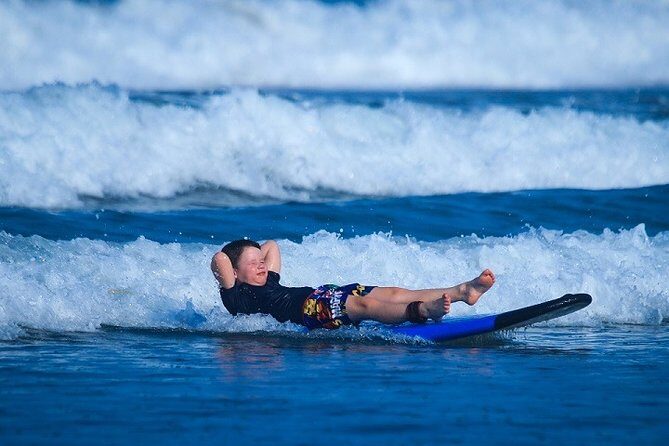
Bedugul and Singaraja Tour

Bedugul and Singaraja Tour - Pasar Candi Kuning: fruit, flowers, and a peek at mountain life

Bali’s north coast feels quieter and wilder. This full-day route links the mountain Candi Kuning fruit-and-flower market with Lake Beratan and a rainforest waterfall walk, then continues on to Lovina and historic Singaraja. It’s a great way to see a very different Bali side without doing any of the driving yourself.

I also like that you get an English-speaking licensed guide, and I’ve seen praise tied to guides such as Anto and Windri for making the culture stops make sense. The one real trade-off is time: it’s about 10.5 hours, with lots of riding, and weather can throw a curveball if you hit rain on the day.

Key highlights before you plan your day

Bedugul and Singaraja Tour - Key highlights before you plan your day

  • Candi Kuning market altitude: Mountain produce and flowers, where the scenery and air change as you climb.
  • Lake Beratan and its lakeside temple: A crater lake setting with a temple locals use for offerings and honoring the water goddess.
  • Bedugul area at 850m (2,700 ft): Cooler mountain vibes compared with the coast.
  • Munduk twin lakes stop: A welcome scenic breather after the lake temple.
  • Lovina coast pass-by: You’ll see the famous black sand beach area and get a coastal lunch stop (own expense).
  • Gigit Waterfall rainforest walk: A nature break near the end of the day, with a stroll to the falls.

Getting from Kuta to North Bali without losing the day

Bedugul and Singaraja Tour - Getting from Kuta to North Bali without losing the day
This tour is built for one thing: covering serious territory in one day. You start around 8:30am with hotel pickup from major areas like Kuta, Seminyak, Sanur, Jimbaran, and Nusa Dua. Then you ride up through Bali’s central mountains, shift from coast heat into cooler highland air, and end back at your hotel.

If you’re the kind of traveler who hates planning, you’ll like this format. You don’t have to figure out routes between Bedugul, Lovina, and Singaraja. You just show up, follow along, and use the stops to break up the long drive.

The drawback is also simple: it’s a long day. Even if the itinerary feels “full,” your comfort depends on the driving pace and your tolerance for sitting. If you’re sensitive to motion or you get stiff fast, bring a light layer and plan to walk whenever you can during scheduled stops.

A practical note on comfort

Some reviews mention that the coach and AC are appreciated, but Bali can still feel hot. Pack like you’ll be doing both: airy coastal time and cooler mountain time. Comfortable shoes matter because the waterfall portion includes a walk on uneven ground.

Pasar Candi Kuning: fruit, flowers, and a peek at mountain life

Bedugul and Singaraja Tour - Pasar Candi Kuning: fruit, flowers, and a peek at mountain life
One of the most fun early stops is Pasar Candi Kuning. This is a fruit-and-flower market up in the mountains, where the scenery gradually turns more alpine: you start seeing cabbage, maize, and potatoes, plus mossy, green-covered edges to the roads.

What you’ll enjoy here is the texture of daily life. You’re not just photographing a famous spot. You’re watching vendors sell produce and blossoms that match the elevation. It’s also a nice reset before the temples and lake views, because it’s active and local.

What to watch for

Markets like this can mean steady selling and lots of people moving around. If you plan to buy anything, keep in mind you’ll also be spending the rest of the day in the car, so avoid anything fragile or heavy. If your goal is photos and wandering, you’re in good shape—just keep your pace slow and your expectations realistic.

Since this stop runs about an hour, it’s enough time to see the market vibe and grab a quick snack or drink if you want one. Lunch is not part of the included cost, so you’ll be paying for food later anyway.

Bedugul and Lake Beratan: the crater lake temple moment

After the market, the tour heads toward Bedugul, a mountain resort area about 850m (2,700 ft) above sea level. This matters more than it sounds. That altitude shift is why Bedugul often feels like a different Bali: cooler air, greener hills, and easier breathing if the coast is hot and sticky.

The big highlight here is Lake Beratan. The lake sits in a crater left by an extinct volcano (Mount Batukaru). Around it is the famous temple setting used by locals to honor the goddess believed to inhabit the lake.

Why Lake Beratan works on a tour

This stop is not just sightseeing from a viewpoint. You get to see a living religious site with a sense of everyday use by locals. In the earlier part of the day, you’re surrounded by agriculture and market energy. At the lake, it slows down. The water and temple views give your eyes a breather before you head onward to the waterfall.

Timing and weather check

If the weather is clear, you’ll likely enjoy the lake’s calm reflections more. If rain comes in, don’t panic—mountain weather changes fast—but visibility can drop. Bring a rain jacket you can stuff in a day bag. You’ll still get the temple and shoreline views, even if the photos come out moodier.

The Batukaru area and Munduk twin lakes stop

Bedugul and Singaraja Tour - The Batukaru area and Munduk twin lakes stop
The itinerary also includes time in the broader Mount Batukaru area, plus a ride up to Munduk Village to see the twin lakes.

This is the kind of stop that people either love or forget, depending on expectations. If you came for dramatic temple views and coastal beaches, the “in-between” mountain scenery can feel like transport. But if you enjoy seeing how Bali changes with elevation—farms, misty slopes, village edges—this is a good stretch of the day.

How to enjoy this portion

Use it as a contrast moment. Early on, you’re at a market. Then you’re at a lake temple. Next, you’re back to open scenery and viewpoints around the highlands. The twin lakes stop is a visual payoff for the drive up: it helps justify the earlier climb.

Wear layers here if you get cold easily. Mountain air can feel crisp compared with the coast, especially in the morning.

Lovina: black sand coast, coastal lunch, and long-drive reality

Bedugul and Singaraja Tour - Lovina: black sand coast, coastal lunch, and long-drive reality
Next up is the Lovina area, Bali’s former capital. The route passes by the famous black sand beach area and continues along the coast.

Lovina is not all about one big landmark on this tour. It’s more about getting that north-coast feel: sea air, coastal roads, and the contrast with the inland rice and mountain farming you saw earlier.

Lunch is on you

Lunch is a break in the plan, but it’s own expense. That means the quality and value will depend on what restaurant the guide selects that day and what the buffet setup looks like. In some cases, people loved the lunch setup and location along the coast; in other cases, the experience can fall flat if the place is busy or if service is rushed.
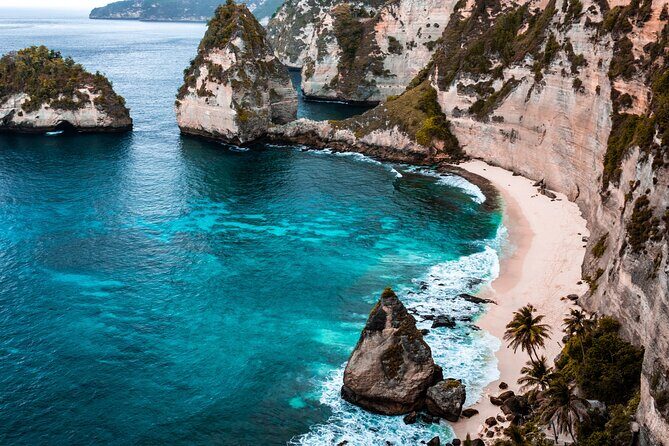
My advice: bring a little patience and some flexibility. If lunch is important to you, consider eating a light breakfast before pickup and plan for snacks during the day if you can.

A reality check on the driving

This is where the tour’s long format shows up. Reviews often call out the drive time and the fact that the bus ride takes up a lot of the day. If you get restless, bring something to pass time on the ride—offline music or a book—then treat each stop like a reset button.

Singaraja: Bali’s old capital without the big-tour feel

Bedugul and Singaraja Tour - Singaraja: Bali’s old capital without the big-tour feel
Singaraja is the historic town stop on the way home. It’s Bali’s former capital, so it has a different rhythm than the beach hubs to the south. On this tour, you’re getting a taste rather than a deep dive, but even a brief look can help you understand how north Bali lives and thinks.

In practice, the amount of time you get in town can vary with traffic and how the day runs. If you’re expecting a full city tour, aim for a lighter mindset: this is a stop to see the feel of the place, not to map every street.

What you should do during this part

Walk slowly, take in the architecture and street life, and use the guide’s explanations. Since you’re with an English-speaking licensed guide, this is a good moment to ask how Singaraja’s role as a former capital shaped local culture. If the weather is good, also use it as a chance to take photos before the day ends.

Gigit Waterfall: the rainforest walk that ties the day together

Bedugul and Singaraja Tour - Gigit Waterfall: the rainforest walk that ties the day together
The last nature payoff is the Gigit Waterfall stop. You head to a rainforest area where you take a stroll to the falls.

This portion is where many people feel the tour hits its stride, because you’re trading roads for greenery and a real walking moment. It’s also a good closing chapter: you start the day at a market and temple, then end with something you can’t replicate in a quick photo stop.

How to prepare

Bring shoes with grip. The walk is described as pleasant, but it’s still in a rainforest environment where ground can be slick. If you’ve got any knee issues, move slower and hold a steady pace.

If it rains, waterfall areas can get muddier. I’d rather you show up ready than spend the walk thinking about your feet.

One more practical tip: save your energy. This part often comes late in the day, so start the morning with a decent breakfast, and don’t treat this like a sprint.

Price and value: is $70.52 fair for this full-day route?

Bedugul and Singaraja Tour - Price and value: is $70.52 fair for this full-day route?
At $70.52 per person, the best value piece is what you don’t have to arrange. You get:

  • Hotel pickup and drop-off from selected areas
  • An air-conditioned vehicle
  • An English-speaking licensed guide
  • Entrance fees included for the stops that charge
  • A tour duration of about 10 hours 30 minutes, so you’re covering multiple regions in one run

What’s not included is the easy budget item that still matters: food and drinks. Lunch is own expense, so you’ll want to plan that extra cost.

When the price feels especially good

This tour makes sense if you want north Bali’s highlights without spending time hiring separate drivers for each leg. It’s also a solid pick if you like learning as you go—many guides on similar routes are strong at explaining religion, daily life, and why certain places matter.

When the price might feel less worth it

If you hate long car days, the included stops won’t fully solve the main problem. Also, this tour can include extra selling stops in some routes (metal shops and woodcarvers have shown up for some days). If you’re trying to avoid shopping pressure, go in with clear boundaries and stick to your plan.

Who should book this tour, and who should skip it

This is a good match for:

  • You want a one-day north Bali sampler: highlands, lake temple, north coast, and a waterfall walk.
  • You like road-trip style sightseeing where each stop is a chapter.
  • You prefer guided context over wandering on your own.

It’s not ideal if:

  • You’re short on time and want only beaches or only temples.
  • You hate sitting in a vehicle for most of the day.
  • You’re extremely sensitive to comfort and legroom. Some reviews mention vehicle comfort issues, so it’s worth being ready for the possibility your seat setup won’t be perfect.

A smart way to manage expectations

Think of this as a drive-heavy highlights tour. Plan your photos and walking, but don’t expect a relaxed pace like a small half-day private tour.

And if you see craft-shop-style stops added on your day, decide ahead of time how you’ll handle it. A polite no and moving on usually works best if you want to keep the focus on scenery and culture.

Should you book the Bedugul and Singaraja North Coast Tour?

Book it if you want to see Lake Beratan, Lovina, Singaraja, and Gigit Waterfall in one go, and you’re okay with a long day and some time on the road. The included guide, entrance fees, and pickup help make it efficient, and the mix of market-to-lake-to-rainforest is a nice balance.
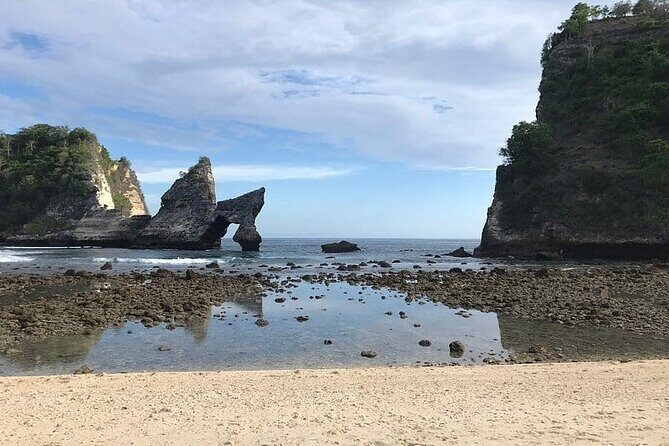
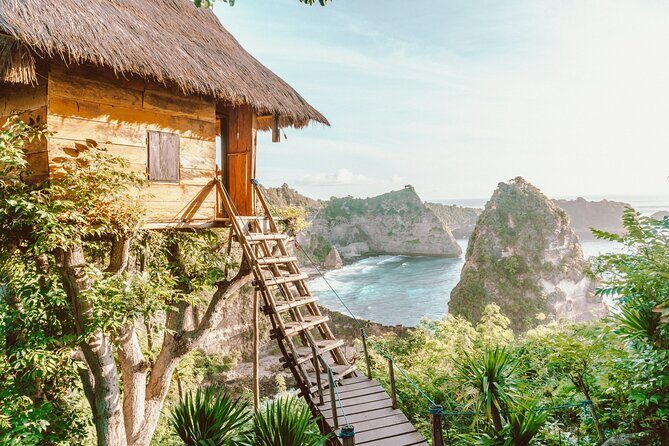
Skip it (or look for a shorter alternative) if you’re mainly after a slow, beach-only vacation vibe, or if you already know you don’t enjoy waterfall walks and multi-hour transport days. If the weather looks iffy, pack rain gear and aim for flexible expectations. North Bali can be dramatic either way.

FAQ

What time does the Bedugul and Singaraja tour start?

It starts at 8:30am.

How long is the tour?

The duration is about 10 hours 30 minutes (approx.).

Where does hotel pickup happen?

Pickup is available from selected major hotels in Kuta, Seminyak, Sanur, Jimbaran, and the Nusa Dua area.

What’s included in the tour price?

The tour includes hotel pickup and drop-off, an air-conditioned vehicle, an English-speaking licensed guide, and entrance fees for the included stops.

Is lunch included?

No. Food and drinks are not included, and lunch is described as an own-expense stop.

How big is the group?

The tour has a maximum of 15 travelers (and a minimum of 2 people per booking is required).

Is free cancellation available?

Yes. You can cancel up to 24 hours in advance for a full refund.