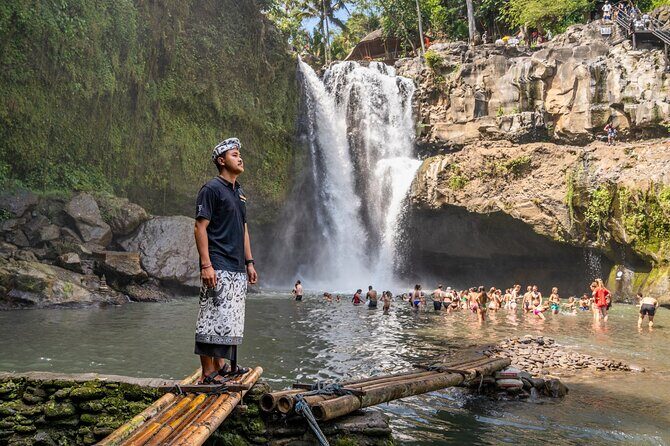
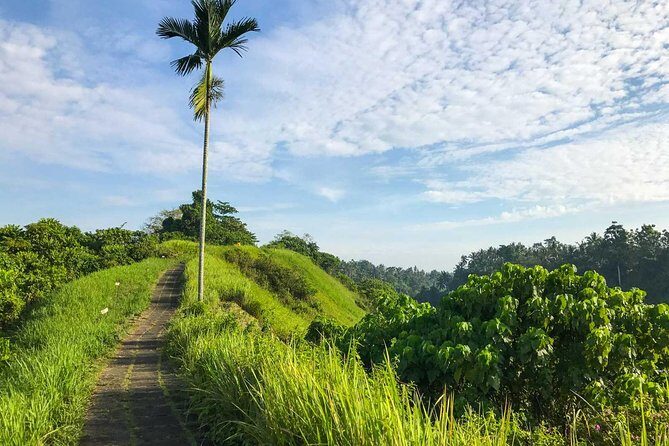
4-Hour Private Tour in Jatiluwih Terraces and Butterfly Park

4-Hour Private Tour in Jatiluwih Terraces and Butterfly Park - Bali Butterfly Park: easy wildlife time with room to wander

Butterflies and rice terraces in one clean loop. This private 4-hour tour from Kuta links three different kinds of Bali beauty—Bali Butterfly Park, Jatiluwih rice terraces, and a hot-spring stop—so you don’t waste half your day figuring out logistics.

I like how the pacing is simple: about 1 hour with the butterflies, 1 hour 30 minutes at Jatiluwih, and another 1 hour 30 minutes at Penatahan Waterspring. I also like the “human factor” that shows up in the trip reports—drivers and hosts like Yoga are described as friendly, patient, and good at finding the right moments on the way.

One consideration: the route is outdoors and also weather-dependent, so if conditions are rough the experience may shift or be canceled and rebooked. Also, with only a 4-hour window, you’re not doing a slow, all-day wander—you’re doing a well-timed highlight reel.

Key points at a glance

4-Hour Private Tour in Jatiluwih Terraces and Butterfly Park - Key points at a glance

  • Early timing can help you dodge crowds at the butterfly park.
  • Jatiluwih is UNESCO for a reason, and you get enough time to enjoy the terraced views without rushing.
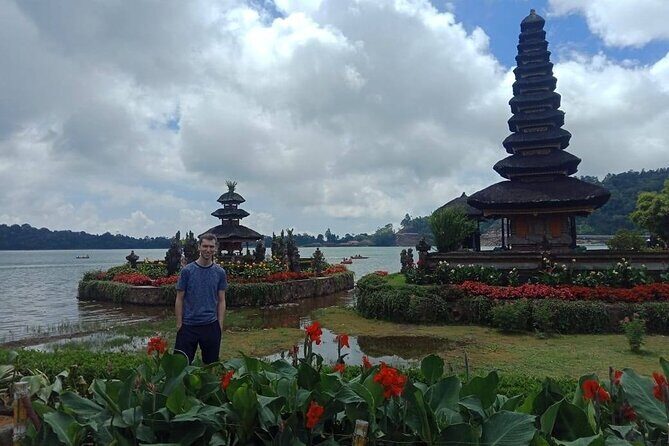
  • Penatahan Waterspring adds a real reset after walking in the sun.
  • A private driver helps with traffic and street-finding, especially when roads feel confusing.
  • Admission tickets and parking are included, so your budget stays clearer.

Why this 4-hour private loop works from Kuta

4-Hour Private Tour in Jatiluwih Terraces and Butterfly Park - Why this 4-hour private loop works from Kuta
Bali traffic can turn a simple plan into a long day. That’s where a private ride pays off. You get an air-conditioned vehicle, pickup offered, and a driver who can plan around the worst congestion. One helpful pattern that shows up in the trip feedback: leaving early. It helps the butterfly stop feel calm instead of chaotic.

The length is also realistic. With four hours total, you get to see three major highlights, but you’re still back with enough energy for an afternoon back in Kuta. You’ll want to match your expectations to the clock: this isn’t a multi-stop, all-day countryside trek. It’s a tight route built for seeing the main highlights efficiently.

Bali Butterfly Park: easy wildlife time with room to wander

4-Hour Private Tour in Jatiluwih Terraces and Butterfly Park - Bali Butterfly Park: easy wildlife time with room to wander
Bali Butterfly Park is the kind of stop where the atmosphere does half the work. You’re guided through a butterfly sanctuary set in lush garden areas, with butterflies that are active and easy to watch up close. The tour gives you about 1 hour, which is a sweet spot. Long enough to settle in, short enough that you don’t feel trapped in one spot.

A nice detail from the experience reports: starting early is a smart move. If you can beat the bigger waves of visitors, you’ll usually have an easier time walking the paths slowly, watching different species flutter by, and getting your phone ready for photos or video without feeling rushed.

This is also a good stop for families. One guest specifically mentioned a six-year-old enjoying the butterflies, which makes sense. There’s no complicated etiquette, no formal lesson required—just a living, moving exhibit.

Practical tip: wear shoes with grip. You’ll be spending time on walkways that can feel slick if there’s been rain.

Jatiluwih rice terraces: UNESCO views, with the right mindset

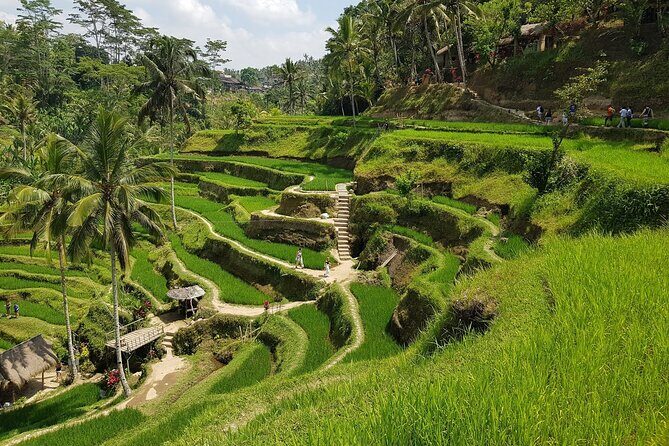
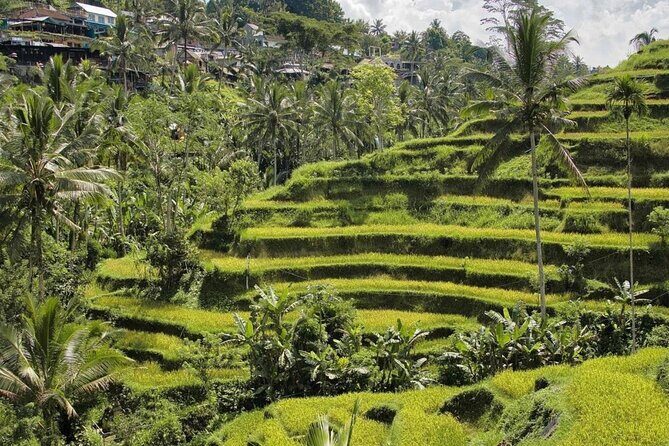
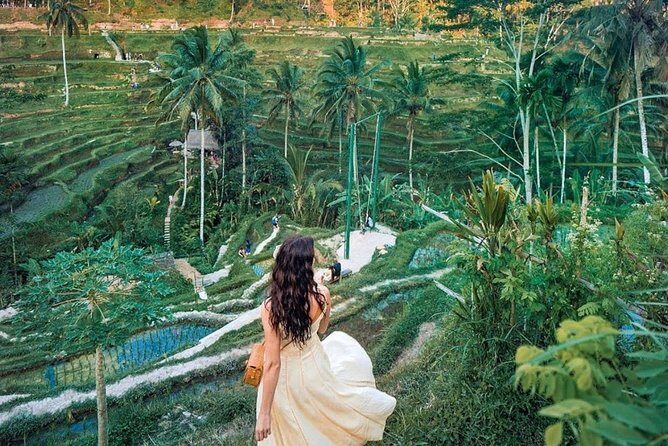
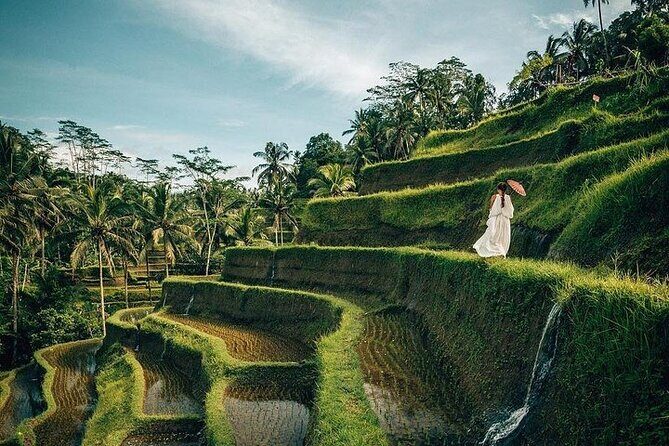
Jatiluwih is famous for a reason: it’s UNESCO World Heritage rice terrace scenery that’s wide, layered, and meant for slow viewing. Your stop here is about 1 hour 30 minutes, including the admission ticket.

In a time-limited visit, what matters most is how you move. Aim for a mix of viewpoints and short walks rather than trying to cover every trail. With only 90 minutes, you want to pick a few angles where the terraces stretch out clearly and then sit or stand long enough for the scene to sink in.

You’ll also enjoy this stop more if you bring a simple expectation: it’s not just a photo wall. The terraces are part of an active farming landscape, and the value of Jatiluwih is in how the fields interact with the hills and weather. If the light is changing, take a minute to look up and down the slopes; the view can shift quickly.

Practical tip: bring water and plan for sun exposure. Even if the weather is comfortable, walking in terrace areas can feel more intense than you expect.

Penatahan Waterspring hot spring break

4-Hour Private Tour in Jatiluwih Terraces and Butterfly Park - Penatahan Waterspring hot spring break
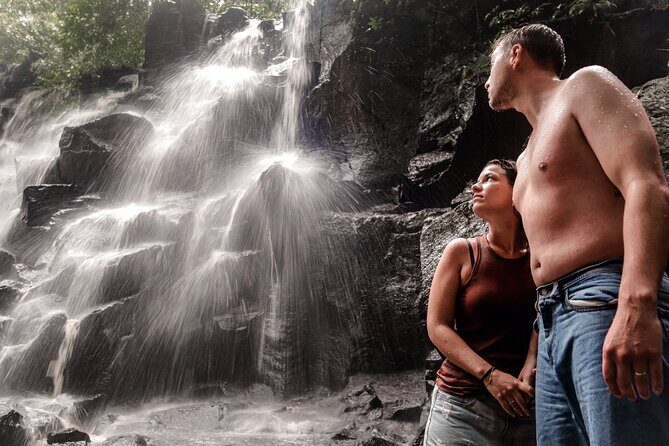
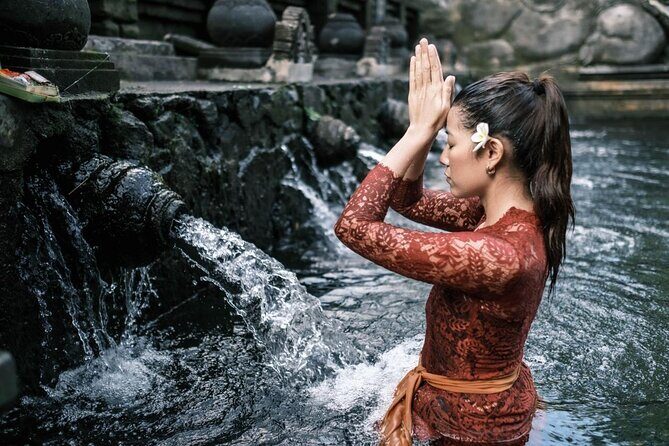
After butterflies and terraces, Penatahan Waterspring acts like a reset button. Your time here is about 1 hour 30 minutes, and admission is included. The experience is described as a soothing hot-spring stop in Bali’s countryside.

A hot spring stop is valuable for two reasons on this exact tour. First, it breaks up the sightseeing so you’re not constantly on your feet. Second, it gives you an easy “Bali moment” that feels different from the outdoors-only rhythm of butterflies and rice terraces.

What to do here is simple: take it slow. If you plan to get in the water, you’ll want to be ready with what you personally need—like a change of clothes or a dry bag. Even if you don’t swim, it’s a good place to relax and cool down before the drive back.

The driver-guide factor: how you avoid traffic headaches

4-Hour Private Tour in Jatiluwih Terraces and Butterfly Park - The driver-guide factor: how you avoid traffic headaches
This is a private tour, and that matters most on Bali roads. The trip stories consistently point to the driver as a key part of the day. People highlight how helpful, friendly, and professional the driver-guide was—especially when traffic got heavy and street signs weren’t easy to follow.

You’ll feel the difference in real time. A skilled driver helps reduce the stress of guessing turns, and they can use local knowledge to find shortcuts when roads are jammed. That’s not just convenience; it protects your schedule. With only 4 hours, falling behind once can squeeze the best moments out of your stops.

One name that comes up is Yoga, described as a friendly host who shared sites along the way, was patient with questions, and made the trip feel enjoyable even for kids. Another guest also mentioned the host’s sense of humor and how that connection made the day feel extra fun.

If you like tours that feel guided but not stiff, this style matches that. You’re getting a “you-only” route with someone who’s willing to explain what you’re seeing.

Price and value: what $70 really buys

4-Hour Private Tour in Jatiluwih Terraces and Butterfly Park - Price and value: what $70 really buys
At $70 for a 4-hour private tour, the value depends on who you’re traveling with. If you’re used to paying separately for tickets, entrance fees, and transport, this package can be easier on your budget and less annoying to manage.

Here’s what’s included:

  • Private transportation in an air-conditioned vehicle
  • Parking fees
  • Admission tickets at each stop (Bali Butterfly Park, Jatiluwih, and Penatahan Waterspring)

What’s not included:

  • Lunch
  • Alcoholic beverages

So you’re basically paying for a planned route plus the key entrances. That’s a good deal for a short day, because you’re not paying separately for each major stop.

The only cost you might feel is meals. If you’re hungry, plan for lunch off-tour. If you’re not a big eater or you snack lightly, you’ll feel the cost less.

Timing, tickets, and weather: how to get the best day

4-Hour Private Tour in Jatiluwih Terraces and Butterfly Park - Timing, tickets, and weather: how to get the best day
This experience runs on a schedule and works best with good weather. The tour information specifically notes that the experience requires good weather. If conditions are poor, you may be offered a different date or a full refund.

That matters because two of the stops are outdoors-focused: butterflies and terraced views. If clouds roll in or rain is heavy, you might still enjoy parts of the day, but visibility and comfort can change fast.

Also, the tour uses a mobile ticket, which is handy. You don’t need to hunt for printed passes, and you can keep everything in your phone. That saves time when you’re moving between sites.

If you have control over it, pick an option that helps you start earlier. Early timing is repeatedly connected with avoiding crowds at the butterfly park, and it tends to make the entire day feel smoother.

Who should book this tour?

4-Hour Private Tour in Jatiluwih Terraces and Butterfly Park - Who should book this tour?
This is a great fit if you want a Bali highlight day without the stress of driving, planning, or negotiating multiple vendors. It’s especially good for:

  • Couples who want nature and scenery with a little relaxation from the hot spring
  • Families (one report included a child enjoying the butterflies, and the host was described as patient)
  • First-timers who want Jatiluwih and the butterfly park without spending half a day in transit

It’s less ideal if you hate set schedules. With fixed stop lengths, you don’t get hours and hours at one viewpoint. This is best when you like a focused itinerary and trust your driver to keep things flowing.

Should you book this private Jatiluwih and Butterfly Park tour?

If your goal is a tidy, scenic, no-driving-needed day, I’d say yes—especially because the price includes the transport and the admissions. The private aspect is the real win: it protects your time in a place where traffic can eat plans.

I’d book it if:

  • you want Bali Butterfly Park + Jatiluwih UNESCO + hot spring in one shot
  • you’re traveling with kids or you simply want a guide who handles the logistics
  • you appreciate leaving early to avoid crowds

I’d think twice if:

  • you want unlimited time to roam Jatiluwih at your own pace
  • your schedule is tight and you don’t have flexibility if weather cancels or shifts the day

If you can work with the weather and you like a well-timed route, this is a strong way to see several Bali classics in just four hours.

FAQ

How long is the tour?

The tour lasts about 4 hours.

What does the $70 price include?

It includes private transportation (an air-conditioned vehicle), parking fees, and admission tickets for Bali Butterfly Park, Jatiluwih, and Penatahan Waterspring.

Is pickup included?

Pickup is offered.

Is this tour private or shared?

This is a private tour/activity, and only your group participates.

Are tickets included for all stops?

Yes. Admission tickets are included for Bali Butterfly Park and Jatiluwih, and Penatahan Waterspring is also listed with admission included.

Is lunch included?

No, lunch is not included.

Is the tour weather-dependent?

Yes. The experience requires good weather, and if it’s canceled due to poor weather you’ll be offered a different date or a full refund.

Can I cancel for free?

Yes. Free cancellation is available up to 24 hours in advance for a full refund.

What ticket format do you use?

The tour offers a mobile ticket.

Discover the best waterfalls in Ubud and rice terraces tour

Discover the best waterfalls in Ubud and rice terraces tour - Pickup and timing: what 8 to 10 hours actually means for you

Ubud is prettier than your camera expects. This day trip strings together four big-name nature stops with a private driver, so you get waterfalls, rice terraces, and macaques without wrestling Ubud’s traffic. I like the photo-ready contrast between Tukad Cepung’s hidden-valley light and Kanto Lampo’s dramatic flow. I also like the convenience of door-to-door pickup from Ubud and parts of south Bali. One drawback: the waterfall sections involve walking on stairs and jungle paths, so you’ll want decent shoes and a bit of patience.

This is an all-in-one outing (about 8 to 10 hours) built for seeing a lot in a single day. You’ll visit Tukad Cepung first, then Kanto Lampo, continue to Tegalalang Rice Terrace in the north of Ubud, and finish at Sacred Monkey Forest Sanctuary. Admission tickets and mineral water are included, but lunch is not, so plan for a snack break.

Key highlights you’ll care about

Discover the best waterfalls in Ubud and rice terraces tour - Key highlights you’ll care about

  • Private driver and door-to-door transfers from Ubud and major south Bali areas like Seminyak and Canggu
  • Tukad Cepung Waterfall in a thick jungle valley, reached via stairs and a short jungle walk
  • Kanto Lampo Waterfall with bold, tumbling cascades and a river running beneath the falls
  • Tegalalang Rice Terrace focused on traditional daily farmer activity in the Ceking area
  • Sacred Monkey Forest Sanctuary with about 700 Balinese long-tailed macaques

Why this Ubud waterfalls-and-rice trip feels worth it

Discover the best waterfalls in Ubud and rice terraces tour - Why this Ubud waterfalls-and-rice trip feels worth it
Ubud sits in that part of Bali where the scenery is great but the roads can be slow and narrow. This tour solves the problem the simple way: you get a private, English-speaking driver/guide to do the driving and route planning.

What you’re really buying isn’t just four stops. It’s time saved. With a driver, you can keep your focus on the views and walking. You don’t have to think about parking, navigation, or figuring out which turnoffs are worth your effort. For a one-day plan, that matters.
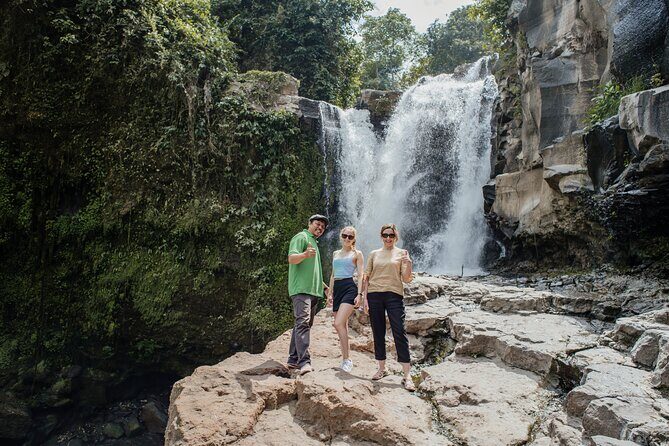
The other thing I like is the balance of themes:

  • Waterfalls for drama and photos
  • Rice terraces for culture and everyday farming life
  • Monkey Forest for a completely different vibe

It’s a tidy “Ubud sampler” that still feels natural, not rushed-for-the-sake-of-it.

Pickup and timing: what 8 to 10 hours actually means for you

Discover the best waterfalls in Ubud and rice terraces tour - Pickup and timing: what 8 to 10 hours actually means for you
This is scheduled for about 8 to 10 hours, and the day is built around travel time plus time at each stop. You’ll have pickup and drop-off from your address—listed pickup areas include Kuta, Seminyak, Sanur, Nusa Dua, Jimbaran, Ubud, and Canggu (so it’s not only for people already in Ubud).

A few practical notes that help you enjoy the day more:

  • Wear shoes you’re happy to get a little dirty. The Tukad Cepung route includes stairs and jungle pathways.
  • Expect shifting light. Waterfalls and jungle valleys can look very different depending on cloud cover and sun breaks.
  • Bring patience for travel. Ubud traffic isn’t always dramatic, but the area’s road network can slow things down.

This is also a private tour/activity—only your group participates. That’s a big deal if you want less crowd pressure, and if you’d rather ask questions without a big group funneling everyone.

Stop 1: Tukad Cepung Waterfall and its jungle-valley light

Discover the best waterfalls in Ubud and rice terraces tour - Stop 1: Tukad Cepung Waterfall and its jungle-valley light
Tukad Cepung Waterfall is the opening act for a reason. This is a waterfall tucked into a thick jungle and reached by walking down—yes, stairs, then a jungle pathway. If you like waterfalls that feel like a secret room, this one delivers.

Here’s what makes it special:

  • It’s described as hidden valley territory, not a quick roadside splash.
  • It’s known for shafts of sunlight filtering through the setting, which can make the water look extra dramatic when conditions line up.

Plan how you move. You’ll be going down and then back up, and you’ll want steady footing because surfaces can feel slick. If your travel style is more “easy stroll” than “mini workout,” pack that expectation.

Photo tip, plain and simple: shoot early, then adapt. In valley spots, the light changes fast. When the sunlight hits, you’ll want angles that include both the water and the opening above.

Stop 2: Kanto Lampo Waterfall with the river-under-the-falls look

Discover the best waterfalls in Ubud and rice terraces tour - Stop 2: Kanto Lampo Waterfall with the river-under-the-falls look
Next up is Kanto Lampo Waterfall, one of Ubud’s most frequently loved waterfall stops for a reason. It’s known for tumbling cascades and a distinctive look: there’s a river beneath the waterfall, which gives you layered visuals instead of just one flat sheet of water.

You get about 1 hour at this stop (admission included). That’s usually enough time to:

  • find a photo spot
  • walk around for better angles
  • take a breather before the next drive

What I like about Kanto Lampo is that it feels more structured for photography than many “just stand here” falls. The shape and the river underneath give you options for framing—especially if you enjoy foreground-and-background shots.

The main thing to watch is footing and crowd flow. The waterfall area can be popular, and pathways can get busy around peak daylight. Move calmly, keep an eye on where you step, and let the moment pass before you change positions again.

Stop 3: Tegalalang Rice Terrace and real farmer daily life

Discover the best waterfalls in Ubud and rice terraces tour - Stop 3: Tegalalang Rice Terrace and real farmer daily life
Then you shift from water to working landscapes—rice terraces, but with an emphasis on how people actually farm. Tegalalang Rice Terrace is in the north of Ubud (listed as Jalan Raya Ceking, Tegalalang 80517), and the focus here is on traditional daily activities.

This stop is great if you want Ubud beyond Instagram views. Rice terraces are often photographed from viewpoints, but this one is framed around the idea that the terraces are still part of daily work, not just scenery.

A practical way to enjoy it:

  • Bring a light layer if it’s breezy or rainy.
  • Take time to look at the small details, like how paths and water relate to the fields.

If you’re visiting in bright midday sun, expect harsh light. Mornings and late afternoons usually soften shadows, but this tour’s schedule may not guarantee ideal golden-hour timing. Still, Tegalalang has enough structure and angles that you can usually find good views even when the sun is high.

Stop 4: Sacred Monkey Forest Sanctuary and macaque encounters

Discover the best waterfalls in Ubud and rice terraces tour - Stop 4: Sacred Monkey Forest Sanctuary and macaque encounters
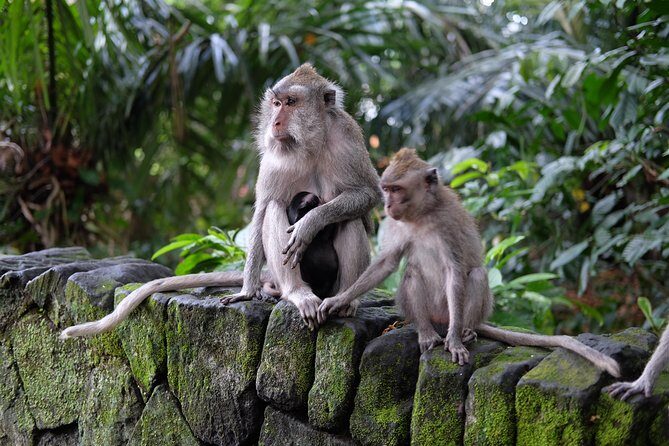
Sacred Monkey Forest Sanctuary is the wildcard stop in the best way. You’re walking around an area where Balinese long-tailed macaques live in large numbers—about 700 are mentioned—plus you get the feeling of mossy, jungle-like paths.

What you should expect:

  • close, real animal encounters (not a themed animal attraction)
  • a lot of movement and noise as monkeys hop between areas
  • photo moments if you keep your focus and stay aware of the surroundings

This tour includes admission, and the overall flow is designed to finish the day strong after waterfalls and terraces. You’ll want to be mindful and follow your guide’s directions, especially when animals get close.

If you’re nervous around wildlife, go slow. Watch how the animals behave around you before you step into a busy spot for photos.

The guides: why the driver/guide matters here

Discover the best waterfalls in Ubud and rice terraces tour - The guides: why the driver/guide matters here
This tour includes an English-speaking driver/guide, and that’s not just a comfort perk. In Ubud, good local guidance helps you:

  • arrive at the right areas on time
  • understand what to look for at each stop
  • move efficiently between scattered locations

From the praise pattern, certain names come up repeatedly: Gung Wan, Natha, Dika, Dewa, Adhi, and Ketut. Multiple comments highlight that guides were informative and accommodating, and at least one mentions helping with great photos during the day.

If you’re booking with the goal of getting the best photos, this matters. A good driver/guide doesn’t take over your day, but they can point you toward smarter angles and help you avoid wasting time at the wrong viewpoint.

Price and value: what $47.50 buys you in real terms

Discover the best waterfalls in Ubud and rice terraces tour - Price and value: what $47.50 buys you in real terms
The price listed is $47.50 per person, for a day that typically runs 8 to 10 hours. For this specific itinerary, the value case is strong because several big costs are bundled:

  • Hotel pickup and drop-off
  • Private transportation
  • Entrance tickets for the stops
  • Mineral water
  • An English-speaking driver/guide

Lunch is not included, so you should budget for that. But think about the trade: instead of managing multiple separate tickets and directions, you’re paying for a smooth day with transportation and entry fees handled.

One more booking detail that hints at demand: it’s often booked about 21 days in advance on average. That suggests people like this plan as a one-day Ubud hit, and it’s worth booking ahead if your travel dates are tight.

What to pack and how to time your photos

Because this tour touches waterfalls, jungle paths, terraces, and a monkey sanctuary, your packing should match the variety.

Bring:

  • Shoes with grip for stairs and wet areas near waterfalls
  • A small towel or quick-dry cloth if you get damp
  • Sunscreen and a hat for Tegalalang (it can be bright)
  • A snack or drink plan for lunch downtime

Timing matters because the waterfall light and the energy levels change. Even within the same hour, sunlight can shift in valley areas like Tukad Cepung. Your best move is to take your first shots, then reassess angles once the scene settles.

And one practical note: this experience requires good weather. If it’s not good, you’ll be offered a different date or a full refund.

Who should book this tour, and who might skip it

This tour is a strong match if you:

  • want classic Ubud nature in one day
  • don’t want to self-drive on narrow, traffic-heavy roads
  • like a clear route with tickets handled
  • care about photos but also want cultural stops (Tegalalang)

You might consider a different plan if you:

  • dislike stairs and uneven walking (Tukad Cepung involves stairs and jungle paths)
  • want long, slow time at just one place instead of four stops
  • don’t want to be around wildlife in large numbers (Monkey Forest has about 700 macaques)

It’s also a good option for couples and small groups because it’s private and designed around your group’s pace.

Should you book this Ubud waterfalls and rice terraces tour?

If your goal is a smooth, photo-friendly Ubud day that covers waterfalls, terraces, and monkeys without logistics stress, I’d book it. The value math works best because pickup, private transport, and entrance tickets are bundled, and the stops are thoughtfully varied rather than all “same type of view.”

Before you book, set realistic expectations:

  • Wear proper shoes for the waterfall walk.
  • Expect shifting light and changing conditions, especially in jungle valleys.
  • Plan for lunch on your own.

If that sounds like your kind of day—active but not extreme, structured but still outdoors—this is a solid way to experience Ubud’s highlights.

FAQ

How long does the tour take?

It runs about 8 to 10 hours.

What waterfalls and attractions are included?

You’ll visit Tukad Cepung Waterfall, Kanto Lampo Waterfall, Tegalalang Rice Terrace, and Sacred Monkey Forest Sanctuary.

Do I get hotel pickup and drop-off?

Yes. Pickup and drop-off are included from addresses in Ubud and parts of south Bali, including Kuta, Seminyak, Sanur, Nusa Dua, Jimbaran, and Canggu.

Is the tour private?

Yes. It’s a private tour/activity, and only your group participates.

What is included in the price?

Hotel pickup and drop-off, private transportation, an English-speaking driver/guide, mineral water, and entrance tickets are included.

Is lunch included?

No. Lunch is not included.

What ticket format do I get?

The tour uses a mobile ticket.

Is good weather required?

Yes. It requires good weather. If it’s canceled due to poor weather, you’ll be offered a different date or a full refund.

What’s the cancellation policy?

You can cancel for a full refund up to 24 hours in advance. If you cancel less than 24 hours before the start time, you won’t receive a refund.

Are the waterfalls walkable for most people?

Most travelers can participate, but Tukad Cepung involves walking down stairs and along a jungle pathway, so bring appropriate footwear.

Ubud Tour Waterfall Rice Terrace Temple and Art Village

Ubud Tour Waterfall Rice Terrace Temple and Art Village - Stop 1: Tegenungan Waterfall and the Swim-Ready Natural Pool

One day in Ubud packs a lot. This tour strings together waterfall fun, temple calm, and rice-terrace views in a single organized day, so you don’t waste time guessing routes. I like the private, air-conditioned pickup and the English-speaking driver/guide format that keeps things smooth. I also really enjoy the human touch from guides like Putu Sudiatra and Arta, who show up with humor, good explanations, and help with the little practical bits that make the day easier.

The one thing to plan for is cost on top of the booking: entrance fees are not included, and the total on-site figure given for the must-visit stops is IDR 450,000 per person (Monkey Forest can cost more on weekends).

Key Highlights You’ll Actually Feel

Ubud Tour Waterfall Rice Terrace Temple and Art Village - Key Highlights You’ll Actually Feel

  • Private air-conditioned transport with hotel pickup from designated areas, so you’re not herding with strangers
  • English-speaking guide time that turns photo stops into real context and stories
  • Tegenungan Waterfall with time to photograph and even swim in the natural pool area
  • Tegalalang Rice Terrace views plus a look at the traditional Subak irrigation system
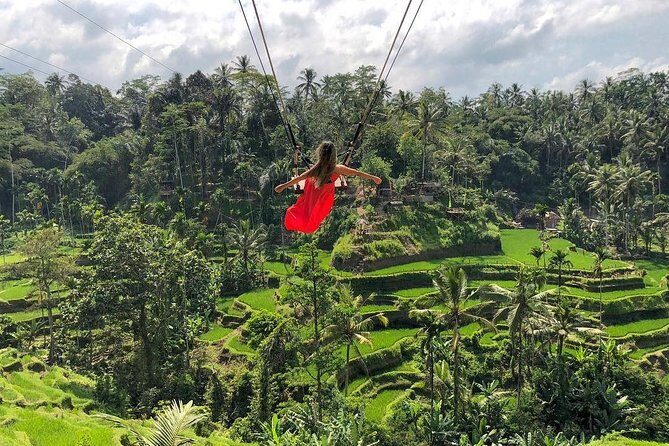
  • Ubud Jungle Swing for the signature panoramic photo moment (ticket not included)
  • Gunung Kawi Sebatu Holy Water Temple as a quieter, spiritual finish

Ubud in One Day: Waterfall, Rice Terrace, Temple, Swing

Ubud Tour Waterfall Rice Terrace Temple and Art Village - Ubud in One Day: Waterfall, Rice Terrace, Temple, Swing
If Ubud is on your itinerary, you’ll likely want the big visual hits without turning the day into a logistics puzzle. This charter tour is built for that: you move through lush nature, cultural stops, and one more playful, adrenaline-style activity in the middle. It’s the kind of day where your camera gets used a lot, but you also get enough guidance that the places don’t feel random.

The best part is the mix. You start with Tegenungan Waterfall, then head into animal-and-temple atmosphere at the Monkey Forest Sanctuary. After that, the vibe turns to rice terrace scenery at Tegalalang. Then you go for the Ubud Jungle Swing photo moment, and you end at Gunung Kawi Sebatu, where the pace slows again around sacred spring water.

This is also a private tour, meaning your group keeps its own rhythm. If you’re the type who likes to ask questions, take extra photos, or adjust timing without a whole bus waiting, that matters.

Private Pickup and an English-Speaking Guide (It’s More Than Comfort)

You’re paying for more than transportation here. Yes, you get a private air-conditioned vehicle and hotel pickup and drop-off from designated areas, plus mineral water during the tour. But the real value is having an English-speaking driver/guide who handles the drive between stops and explains what you’re seeing.

In Ubud, the road can be slow. Traffic and short local roads are normal. A private vehicle helps you stay on schedule, and it also cuts down on the stress of figuring out where to go next. One of the most praised parts of this experience is how guides treat your day like a personal project: helping with photos, planning timing, and even pointing you toward practical choices like restaurants or money exchange options when it comes up.

Guides named in recent experiences include Putu Sudiatra and Arta, and Komang also showed up as a standout. What they seem to have in common: they’re engaging, they’re attentive to what your group needs, and they bring humor without turning the day into a comedy show.

The format includes a mobile ticket, which is one less thing to manage with paper on your phone.

Stop 1: Tegenungan Waterfall and the Swim-Ready Natural Pool

Ubud Tour Waterfall Rice Terrace Temple and Art Village - Stop 1: Tegenungan Waterfall and the Swim-Ready Natural Pool
Tegenungan Waterfall is one of Bali’s best-known waterfall stops, and that popularity is for a reason. The scenery is lush and dramatic, and the area is set up for photos quickly. You’ll have about one hour here, which is usually enough time to see the falls, get your shots, and decide if you want to get in.

The tour description specifically points out the chance to swim in the natural pool area. That’s not a guarantee everywhere in nature, but in this stop’s case, it’s part of the appeal. Bring a mindset of water-friendly fun, not competitive swimming. If you do plan to swim, wear gear that dries fast and be ready for slippery rocks.

Admission is not included for this stop, so expect an on-site fee. Also, since it’s a top highlight, it can feel busy at peak times. Going with a guide helps because they can steer you toward a workable view angle and keep the day moving.

Stop 2: Monkey Forest Sanctuary for Temples and Playful Macaques

Ubud Tour Waterfall Rice Terrace Temple and Art Village - Stop 2: Monkey Forest Sanctuary for Temples and Playful Macaques
Next comes the Sacred Monkey Forest Sanctuary, one hour of jungle atmosphere with temples and long-tailed macaques. The mix is the whole point: you’re not just looking at animals in a park. You’re walking through a sacred green space where temples sit inside the habitat.

This stop is where your attitude matters. If you like wildlife and don’t mind monkeys doing monkey things—stealing snacks, checking pockets, and generally acting like they own the place—you’ll have a great time. If you don’t like animals around you, you might find it stressful. A guide helps you navigate the rules of staying safe and not encouraging behavior that can get messy.

Admission isn’t included here either, and the cost can be higher on weekends. That’s a real consideration if your dates fall on a busy day. Planning for a bit of extra spend avoids surprises later.

The sanctuary is also a good break from the waterfall’s water intensity. It’s more about shade, walkable paths, and getting that jungle-and-temple feel.

Stop 3: Tegalalang Rice Terrace and the Subak Irrigation System

Ubud Tour Waterfall Rice Terrace Temple and Art Village - Stop 3: Tegalalang Rice Terrace and the Subak Irrigation System
Then the scenery shifts into one of Ubud’s most photographed scenes: the Tegalalang Rice Terrace. You get about one hour here, and that’s basically timed for sightseeing and photography—plus learning what makes these terraces work.

One useful detail is the mention of the traditional Subak irrigation system. That’s the kind of thing that makes a view more than just a postcard. Subak is tied to how farmers organize water and manage rice cultivation through shared rules. Even if you don’t go deep, a guide can connect the terraces to something practical and human, not just pretty scenery.

Admission isn’t included for this stop, and it’s one of those “pay once, remember forever” places. The terraces are especially photogenic from good angles, and getting there with a guide saves you from wandering with no plan.

Also, plan your time with the weather in mind. Rice terraces in Bali can be hot and bright. Keep water in your bag (you’ll have mineral water from the tour), and wear something you can walk in comfortably.

Stop 4: Ubud Jungle Swing for the Big Panoramic Photo Moment

Ubud Tour Waterfall Rice Terrace Temple and Art Village - Stop 4: Ubud Jungle Swing for the Big Panoramic Photo Moment
Now for the thrill stop: the Ubud Jungle Swing. You’ll get about 45 minutes here. That’s typically enough time to get the photo you came for and handle any waiting without dragging the whole day.

This is a ticketed activity, and admission isn’t included. So treat it as a planned add-on. The swing’s main payoff is the panoramic view over the jungle and the dramatic photo angle. If you’re comfortable with heights and like that kind of staged, action-photo energy, you’ll probably enjoy it a lot.

If you’re not into swings, it can still be worth it just for the views—but you might spend less time actually riding and more time taking in the scenery and working your angle.

My practical advice: don’t let this stop become rushed. Even with a 45-minute slot, you want a calm minute for positioning, photos, and any quick adjustments.

Stop 5: Gunung Kawi Sebatu Holy Water Temple to Close the Day Quietly

Ubud Tour Waterfall Rice Terrace Temple and Art Village - Stop 5: Gunung Kawi Sebatu Holy Water Temple to Close the Day Quietly
To finish, you go to Gunung Kawi Sebatu, a holy water temple connected to sacred spring water. You’ll have about one hour here, and the shift from jungle swing excitement to temple calm feels intentional.

This is one of those stops where the value isn’t in doing something fast. It’s about slowing down and taking in the gardens, the spiritual atmosphere, and the meaning behind the site. The tour description emphasizes the holy spring water, so you’ll notice the focus on water as something sacred rather than just scenery.

Admission isn’t included here either. But compared with the more adrenaline-based stops, this one often feels like a satisfying payoff: less chaos, more reflection, and a visual calm that balances the day.

If your legs are a bit tired by this point, this stop is a good way to end without needing another long stretch of active sightseeing.

The Art Village Stop: Culture Credit Without Extra Planning

Ubud Tour Waterfall Rice Terrace Temple and Art Village - The Art Village Stop: Culture Credit Without Extra Planning
Your tour name includes an art village, and the on-site fee list also points to an art village admission. That means this experience isn’t only nature and temples. You’ll also get a chance to see local craft culture during the day.

Because the provided details don’t specify exact timing for the art village in the stop list, you should treat it like part of the full schedule rather than a standalone “must-study.” The value is in context: it breaks up the day between big scenic moments with something more hands-on and cultural.

The on-site fees (again, not included) cover this as one of the must-visit items, so you’ll know it’s not an optional side quest.

Price and What It Really Covers (Including Entrance Fees)

The listed price is $53.24 per person for an approximately 8-hour day. That includes private transportation in an air-conditioned vehicle, an English-speaking driver/guide, mineral water, hotel pickup and drop-off from designated areas, and photography opportunities at the destinations. You also get a private group setup, so it’s not mixed with random strangers.

Two hours of your day is travel, with about six hours spent at destination stops. That ratio is good for a one-day hit list.

What’s not included is the money most people forget to budget: entrance fees. The tour notes that you’ll need to pay IDR 450,000 per person for the major stops listed (Tegenungan Waterfall, Monkey Forest, Ubud Swing, Holy Water Sebatu Temple, Tegalalang Rice Terrace, and also the art village). It also flags that Monkey Forest can be higher on weekends.

Lunch is also not included, as are personal expenses. So if you’re planning to eat during gaps, have a rough budget ready.

Here’s the value logic: you’re paying for a guide, private transport, and efficient route coverage across multiple Ubud icons. If you tried to do this on your own, you’d likely lose time and spend more on transportation missteps. For a first-timer in Ubud, this kind of setup often ends up feeling like a bargain, especially when the guide is genuinely helpful and the itinerary stays on track.

Timing, Pacing, and How to Avoid a Frustrating Day

An 8-hour private tour is long enough to see a lot, but not so long that you’re trapped in a minivan all day. Your schedule is split into around 6 hours on-site and 2 hours driving between each location.

To make it feel good, you’ll want to keep a light mindset. You’re doing multiple “big” sights back-to-back. That means you can’t treat each one like you’re spending a full morning or day studying it. What works best is to choose what matters most to you: photos at the waterfall and terraces, calm at the holy water temple, and adrenaline at the swing. Then let your guide handle the rest.

Also, since admissions aren’t included, you’ll want to be ready with cash or the way the group expects to handle those fees on the ground. The tour description and past guide help mentioned practical tips like exchanging money and pointing you to restaurants, which can be a lifesaver if you get caught without the right denominations.

Who Should Book This Ubud Tour (And Who Might Skip It)

This tour fits best if you want a one-day overview of Ubud without the headache of arranging rides and mapping out stops yourself. It’s also great if you want a guide who talks, jokes, and helps you get solid photos without turning it into a stiff lecture.

You’ll likely enjoy it if you:

  • like nature sights plus cultural stops in the same day
  • enjoy photography and panoramic viewpoints
  • want a private pace and a friendly guide presence

You might reconsider if you:

  • don’t like being around macaques (Monkey Forest is active and unpredictable)
  • hate heights or would rather skip the swing
  • have a tight budget for entrance fees and lunch on top of the booking

Should You Book This Ubud Charter Tour?

If you want one focused day that hits the classics—waterfall, rice terrace, temple, jungle swing—this is a strong choice. I’d especially recommend it for first-time Ubud visitors who want to maximize time and keep stress low, and for people who care about having a guide who’s present and helpful rather than just passing through.

The only real downside is the add-on entrance cost. If you budget for the IDR 450,000 per person and plan for lunch, the rest becomes straightforward: you get a full day of iconic Ubud sights with private transport and an English-speaking guide.

If your goal is to feel like Ubud is yours for the day, this format delivers.

FAQ

What’s the duration of this Ubud tour?

The total duration is about 8 hours, with around 6 hours spent at destinations and about 2 hours on travel between locations.

Is pickup included?

Yes. The tour includes hotel pickup and drop-off from designated areas.

Is this a private tour?

Yes, it’s private. Only your group participates.

What’s the price per person?

The price is listed as $53.24 per person.

What’s included in the tour price?

Included items are private transportation (air-conditioned vehicle), an English-speaking driver/guide, mineral water during the tour, hotel pickup and drop-off, and photography opportunities at each destination.

Are entrance fees included?

No. Entrance fees are not included. The tour indicates an additional cost of IDR 450,000 per person for key stops, with Monkey Forest noted as higher on weekends.

Is lunch included?

No. Lunch is not included.

Can I cancel for a full refund?

Yes. You can cancel up to 24 hours in advance for a full refund.

Full-Day Tour to Water Temples and UNESCO Rice Terraces in Bali

Full-Day Tour to Water Temples and UNESCO Rice Terraces in Bali - Price and Value: Why $39 Can Still Make Sense

Eight hours in Bali’s scenery, nicely packed.

This full-day tour strings together some of Ubud’s most in-demand sights without you having to plan transport or puzzle together timing. I like that it mixes big, iconic temples with quieter, slower moments like a swim in a natural pool and relaxing under a waterfall, plus a stop at the Sacred Monkey Forest Sanctuary.

I also like the value math: hotel pickup and private air-conditioned vehicle are included, and admission is covered for key stops like Ulun Danu Bratan Temple and Taman Ayun Temple (while Jatiluwih and Tanah Lot are listed as ticket-free). One thing to consider: lunch isn’t included, so you’ll want a plan for midday food to avoid getting stuck hungry between stops.

Key highlights you’ll feel the most

  • Hotel pickup + private transportation: fewer hassles, less waiting around.
  • Water temple pairings: Ulun Danu Bratan plus Taman Ayun for different temple vibes.
  • UNESCO rice terraces time: Jatiluwih’s wide views get you out of the city heat and into classic Bali scenery.
  • Tanah Lot at the right time: plan around low tide for ocean access and sunset potential.
  • Added experience time: the day’s built to include the Sacred Monkey Forest Sanctuary plus a natural pool and waterfall break.

The real charm of this Ubud route: temples, terraces, and a water break

Full-Day Tour to Water Temples and UNESCO Rice Terraces in Bali - The real charm of this Ubud route: temples, terraces, and a water break
What makes this day work is that it doesn’t just rotate landmarks. It gives you variety: ceremonial water temples, UNESCO rice terraces, and then a physical reset with a natural pool and waterfall time. If you’re visiting Ubud for the first time, this kind of day helps you understand what Bali does best—religion shaped by landscape, agriculture shaped by community, and nature you can actually enjoy on foot.

The pacing also matters. This is listed as about 8 hours, with each main temple/terrace stop running roughly an hour. That’s long enough to slow down and take photos, but not so long that you’re fighting fatigue the whole day.

Still, it’s a full day. You’ll be in the car a lot, and you’ll want to treat it like a planned outing rather than a “maybe we’ll see things” kind of day. If you hate schedules, you might find the day a bit tight.

Getting there from Ubud: private ride comfort vs. a long day in the van

You’ll start with pickup offered from your hotel area, and you’ll move around in an air-conditioned vehicle. That sounds basic, but in Bali heat and traffic, comfort is not small stuff—it can turn a tiring day into an enjoyable one.

This is also described as private transportation, and the activity is for your group only. That typically means fewer forced waits for strangers and more flexibility to keep your day on track.

One practical point: the itinerary includes multiple temple and terrace locations spread out around the island’s interior/coastal rhythm. Even if individual stops are around an hour, the travel time between them adds up. I recommend treating the day as an 8-hour commitment and setting aside energy for the car ride too—water, snacks (if needed), and a relaxed attitude help.

Ulun Danu Bratan Temple: a classic water temple experience

Full-Day Tour to Water Temples and UNESCO Rice Terraces in Bali - Ulun Danu Bratan Temple: a classic water temple experience
Your first major stop is Ulun Danu Bratan Temple, also known as Ulun Danu Beratan or Bratan Pura. This is described as a large water temple complex in Bali, and it’s one of the main “water temple” identities on the island (with the other being Pura Ulun Danu Batur).

What I love about this stop is the theme. This isn’t just a temple you pass by—it’s a place where water is part of the spiritual meaning. In plain terms: you get a strong sense of why Bali’s religious sites often feel tied to daily life and water management.

The listing says admission ticket is included, which is a nice start for value and keeps you from hunting for small details mid-day. Plan on about an hour here. That’s enough to walk the grounds, take in the structures, and not rush the moment.

A consideration: it’s a temple, so you’ll want to move respectfully and keep your outfit comfortable for walking.

Jatiluwih UNESCO rice terraces: wide views and a slower rhythm

Full-Day Tour to Water Temples and UNESCO Rice Terraces in Bali - Jatiluwih UNESCO rice terraces: wide views and a slower rhythm
After Bratan, the route heads to Jatiluwih, described as the widest rice terraces in Bali, and recognized by UNESCO as part of the world’s cultural heritage in maintaining local culture. Admission is listed as free here, and the stop is about an hour.

This is the point in the day where the scenery does the heavy lifting. Jatiluwih is all about scale—big slopes, long lines of terrace fields, and the kind of view where your brain finally stops listing tasks and starts noticing details like how water moves through the terraces.

Because the stop is about an hour, you can do the basics without getting stuck. Walk around, find a couple of viewpoints, and just soak up the fact that this is a living agricultural system, not a theme park.

Possible drawback: if you’re expecting a fully guided “hands-on” farming experience, this stop is more about observation. The pay-off is the views and the context of UNESCO recognition, not interactive lessons.

Taman Ayun Temple: Mengwi royal ancestry in temple form

Next up is Taman Ayun Temple, a Paibon/Pedarman Temple for the King of Mengwi, built to worship the ancestral spirits of the kings. The listing highlights the Paibon building and the meru-meru buildings, which gives you a clue that you’re going to see temple architecture focused on lineage and ceremony.

Admission ticket is included, and the stop is about an hour. I like this stop because it shifts the mood. After water temple awe and rice terrace views, Taman Ayun brings you back to details—buildings, layout, and the feeling of a curated sacred space.

What to watch for: take your time with the architecture. Even without a complicated script, temple design often tells you how people understand the relationship between royalty, spirits, and community.

A small consideration: temples can feel similar if you rush. If you want this stop to land, don’t treat it as a photo-only stop. A slower walk is the whole point.

Tanah Lot at sunset, plus the low-tide reality check

Full-Day Tour to Water Temples and UNESCO Rice Terraces in Bali - Tanah Lot at sunset, plus the low-tide reality check
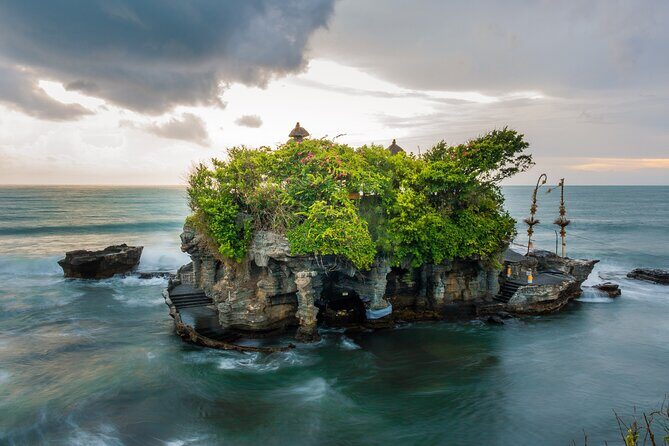
The last destination is Tanah Lot, timed for the best sunset in Bali, with the ocean scene as part of the appeal. The big practical detail is that access to the temple area is possible only when it’s in low tide.

Admission is listed as free here, and the stop is about an hour. That means you’ll likely spend most of the time watching light change and figuring out where you can safely walk or view from during the tide window.

Here’s the real-world advice: don’t assume you’ll see everything at once. Low tide rules the access. If you’re thinking of an epic sunset photo, arrive mentally ready to work with the timing you get.

Also, ocean areas can get breezy and uneven, so comfortable shoes help.

The bonus stops that make this day feel different: Monkey Forest and a waterfall swim

This tour’s overview and highlights point to more than just temples and terraces. You also get time at the Sacred Monkey Forest Sanctuary, including temple sights inside the sanctuary area. The tour description also includes a swim in a natural pool and relaxing under a beautiful waterfall, described as semi-secret.

Even if you’re not a “nature person,” this is the part that breaks up the day. It turns a sightseeing loop into something more physical and memorable—especially the contrast between structured temple spaces and the messy, refreshing feel of water in a natural setting.

A consideration: bring swim-ready essentials if you plan to use this time. Since the schedule includes a natural pool and waterfall, you’ll be happier if you show up prepared rather than hoping to borrow something last minute.

Price and value: why $60.85 can make sense for a full-day day

Full-Day Tour to Water Temples and UNESCO Rice Terraces in Bali - Price and value: why $60.85 can make sense for a full-day day
At $60.85 per person, the value here comes from three things:

  1. Transport is handled: hotel pickup, air-conditioned vehicle, and private transportation mean you’re not paying extra for rides or spending time coordinating.
  2. Fees are covered: the listing states all fees and taxes are included.
  3. Admissions aren’t all on you: Ulun Danu Bratan Temple and Taman Ayun Temple list admission ticket included, while Jatiluwih and Tanah Lot are listed as ticket-free.

Lunch not being included is the one missing piece. For me, that’s not a dealbreaker, but it does change how you budget and plan. If you can’t easily find food near the stops, pack a simple plan before the day starts.

Another value detail: there’s mention of group discounts and a mobile ticket, plus the tour is private in the sense that only your group participates. If you’re traveling as a couple, family, or small group, that can make the day feel more relaxed than the typical big-bus experience.

Who should book this tour, and who might want to skip it

Full-Day Tour to Water Temples and UNESCO Rice Terraces in Bali - Who should book this tour, and who might want to skip it
This is a strong fit if you want a one-day hit list that still feels varied: water temples, UNESCO terraces, royal-history temple architecture, and a sunset coast stop. It also suits travelers who don’t want to drive or coordinate between far-flung sights.

You might want to rethink if:

  • You hate a full-day schedule and prefer slow exploration without set stops.
  • You’re very sensitive to timing because Tanah Lot’s access depends on low tide.
  • You want lunch included, especially if you have specific dietary needs and don’t want to hunt for meals mid-route.

Also note the listing says the tour is for people 17+ years. If you’re traveling with younger kids, you’ll need to consider other options.

Should you book this Ubud water-temple and rice-terrace tour?

If you’re in Ubud and want a day that balances spirituality, scenery, and a real water break, I’d book it. The combo is smart: major temple stops with included admissions, UNESCO terraces for scale, and a final coastal moment built around sunset—with the low-tide detail kept in mind.

I’d especially recommend it if you value convenience: pickup, air-conditioned transport, and a plan already stitched together. Just go in with two expectations: bring swim-ready items if you want that natural pool time, and plan for lunch since it’s not provided.

If that fits your style, this is the kind of day that gives you strong Bali memories without turning your trip into logistics.

FAQ

How long is the Full-Day Tour to Water Temples and UNESCO Rice Terraces?

It’s listed as about 8 hours.

Is hotel pickup included?

Yes, pickup is offered.

Is this tour private?

Yes. The description says it’s private, with only your group participating.

What’s included in the tour price?

The listing includes an air-conditioned vehicle, private transportation, and all fees and taxes. It also lists admission ticket included for Ulun Danu Bratan Temple and Taman Ayun Temple.

Is lunch included?

No, lunch is not included.

Are there age restrictions?

Yes. The tour is for people 17+ years.

What is the cancellation window for a full refund?

You can cancel up to 24 hours in advance for a full refund. If you cancel less than 24 hours before the start time, the amount paid is not refunded.

Tanah Lot, Jatiluwih Rice Terrace and Waterfall Day Tour

Tanah Lot, Jatiluwih Rice Terrace and Waterfall Day Tour - Tanah Lot Temple: sea temple views and sunset timing

Four icons, one well-paced day.

This Tanah Lot, Jatiluwih Rice Terrace and Waterfall Day Tour strings together Bali’s most in-demand sights without turning the trip into a marathon. You’ll start at Tanah Lot Temple perched above the sea, then move on to UNESCO-listed Jatiluwih’s terraced rice views, continue to Banyumala’s waterfall area for downtime, and finish at Ulun Danu Lake Beratan Temple by the water with mountain scenery in the background.

I love how much you actually get to do at the stops. The Jatiluwih stop isn’t just a quick look-it’s time to walk the terraces and take photos, which really helps it feel like a place, not a checklist. And in the best versions of this tour, guides like Putu and Arta lean into photography and local context, so you come away with better pictures and a clearer sense of what you’re seeing.

One consideration: entrance fees and food can add up. Entrance fees for Tanah Lot, Jatiluwih Rice Terrace, Banyumala Waterfall, and Ulun Danu Temple are listed as IDR 275,000 per person, and lunch isn’t included. Also, it’s about 8 hours total, with roughly half that time spent driving—so don’t expect super long visits.

Key highlights to look forward to

Tanah Lot, Jatiluwih Rice Terrace and Waterfall Day Tour - Key highlights to look forward to

  • Tanah Lot sea-temple views that are especially beautiful near sunset
  • UNESCO Jatiluwih rice terraces with time to walk through and photograph the fields
  • Banyumala waterfall break to relax, take in the cascade, and swim if you want
  • Ulun Danu Beratan Temple by Lake Beratan, dedicated to Dewi Danu with mountain views
  • Private transportation with hotel pickup and drop-off in an air-conditioned vehicle
  • Built-in photo-friendly stops, plus mobile ticket convenience

The big idea: a private Ubud circuit with real time at the sights

Tanah Lot, Jatiluwih Rice Terrace and Waterfall Day Tour - The big idea: a private Ubud circuit with real time at the sights
This is a private day tour from Ubud built around four destinations that each have a different mood: ocean drama, rice-terrace calm, waterfall freshness, and lakeside temple views.

What makes it work is the pacing. The total duration is about 8 hours, and roughly 4 hours is spent at the destinations. That means you’re not constantly jumping in and out with barely enough time to turn around. You still get a busy day, but the schedule is designed so each place gets a sensible slice of attention.

You’ll travel in an air-conditioned vehicle with hotel pickup and drop-off (from designated areas). The tour is priced per group (up to 5 people), so it can be good value if you’re splitting the cost instead of booking separate rides or joining a larger group.

And yes, there are photography opportunities at each stop. The best part here is not just that there are viewpoints—it’s that the day is structured so you can actually pause, take photos, and enjoy the scenes instead of rushing like you’re on a transit transfer.

Tanah Lot Temple: sea temple views and sunset timing

Tanah Lot, Jatiluwih Rice Terrace and Waterfall Day Tour - Tanah Lot Temple: sea temple views and sunset timing
Your first stop is Tanah Lot Temple, one of Bali’s best-known sea temples, sitting on a rocky outcrop above the ocean. The listing highlights the dramatic setting, and it notes that Tanah Lot is especially beautiful at sunset. In plain terms: this is the stop where the light can make a huge difference, and the ocean backdrop helps the photos look more cinematic than they would inland.

You’ll have about 1 hour here. That’s enough time to get your bearings, enjoy the view from the temple area, and take photos without feeling like the clock is hunting you. Since you’re starting your day with one of the most famous sights, it also helps set the tone—this is Bali at its most iconic before you get into the calmer nature stops.

Practical note: entrance fees are not included for Tanah Lot. So budget for that IDR 275,000 per person total entrance fee mentioned for the whole set of sites.

Jatiluwih Rice Terrace (UNESCO): how to make the hour count

Tanah Lot, Jatiluwih Rice Terrace and Waterfall Day Tour - Jatiluwih Rice Terrace (UNESCO): how to make the hour count
Next up is Jatiluwih Rice Terrace, a UNESCO World Heritage site. The core reason this stop matters is scale. The terraced fields stretch out across the landscape, and the experience is more about walking through the rice views than simply looking from one angle.

You’ll also have about 1 hour here, and the listing frames it as a place travelers can walk through and enjoy the panoramic, lush green scenes. That hour is the difference between a drive-by and a real feel for the terraces. When you’re walking and photographing, you naturally slow down, and the views keep opening as you move.

This is also where having a guide can pay off. In the feedback for this type of tour, the recurring theme is that guides like Putu help people get good pictures and share local context as you move between viewpoints. If you care about photos, this is one of the stops where you’ll feel the biggest benefit from that.

Entrance fees are also part of the total IDR 275,000 per person listed for all four sites, so don’t assume this portion is free even though you might be thinking of it as nature.

Banyumala Twin Waterfalls: time to relax, and swim if you want

Tanah Lot, Jatiluwih Rice Terrace and Waterfall Day Tour - Banyumala Twin Waterfalls: time to relax, and swim if you want
Then you head to Banyumala Waterfall, described as a multi-tier waterfall surrounded by tropical foliage. The setting is meant to feel quieter than the headline destinations, and the listing mentions you can relax and take in the cascading water—and that swimming is possible.

You’ll get about 1 hour at Banyumala. That’s a good amount of time for a break from temple sightseeing. Even if you don’t swim, waterfalls tend to reset your energy. If you do plan to swim, factor in that water activities usually change your pace a bit. So think of this hour as flexible: enjoy the waterfall views first, then decide on water time based on comfort and conditions.

Again, entrance fees apply here as part of that IDR 275,000 per person total.

Ulun Danu Lake Beratan Temple: Dewi Danu and mountain-backed lake views

Tanah Lot, Jatiluwih Rice Terrace and Waterfall Day Tour - Ulun Danu Lake Beratan Temple: Dewi Danu and mountain-backed lake views
Your final stop is Ulun Danu Lake Beratan Temple on the shores of Lake Beratan. This temple is dedicated to the water goddess Dewi Danu, and the listing emphasizes the picturesque setting and mountain views around the lake.

You’ll also have about 1 hour here, which keeps things consistent across the day. That consistency matters: you’re not scrambling to catch up at the end. You can arrive, look around the lakeside temple setting, and get photos that include water and mountains in the frame.

For many people, this is the emotional finish. Tanah Lot starts with ocean drama, and Jatiluwih is all about rice-terrace calm. Banyumala gives you water energy, and Ulun Danu closes the loop with water as a spiritual theme. If you like thematic travel—where each stop feels related—that’s the pattern you’ll see today.

Entrance fees also apply at this site as part of the total mentioned above.

Driving time and pacing: what 8 hours feels like

Tanah Lot, Jatiluwih Rice Terrace and Waterfall Day Tour - Driving time and pacing: what 8 hours feels like
This tour is about 8 hours total, and the schedule notes that 4 hours are spent traveling between each location. That’s a lot of time in a car, but it’s also the trade-off for packing four major sights into one day.

The upside of private transport: you’re not waiting for other pickup times, and you’re not stuck doing the slowest version of a group tour. The air-conditioned vehicle also makes a difference in Bali’s heat, especially when you’re hopping between different natural areas.

The downside is simple: you need to plan for a full day. One hour at a stop can feel long if the place is quiet and the views keep expanding, and it can feel short if you arrive at peak crowds or your timing is off. Your best bet is to treat each stop like a photo-and-stroll window rather than a deep study session.

What’s included (and what you’ll pay yourself)

Tanah Lot, Jatiluwih Rice Terrace and Waterfall Day Tour - What’s included (and what you’ll pay yourself)
Here’s what you’re getting with the tour price:

  • Air-conditioned vehicle
  • Private transportation
  • Hotel pickup and drop-off (from designated areas)
  • Photography opportunities at each destination
  • Private tour: only your group participates
  • Mobile ticket convenience

And here’s what’s not included:

  • Lunch
  • Personal expenses
  • Entrance fees for Tanah Lot, Jatiluwih Rice Terrace, Banyumala Waterfall, and Ulun Danu Temple: IDR 275,000 per person

That entrance fee detail is important because it turns this from a single-cost day into a two-part budget: the tour price per group, plus the per-person entrance fees.

Price and value: when $90.54 per group makes sense

Tanah Lot, Jatiluwih Rice Terrace and Waterfall Day Tour - Price and value: when $90.54 per group makes sense
The price is listed as $90.54 per group (up to 5 people). That means the math depends on how many seats you fill.

If you book with 4–5 people, the cost per person can feel light for a private, air-conditioned ride that covers two temples, UNESCO rice terraces, and a waterfall area in one day. The value improves even more if you care about photos and want a guide who will help you make stops count instead of just getting you from A to D.

If you’re traveling solo or as a couple, it may still be reasonable compared with doing everything on separate transport, but you’ll want to compare that entrance-fee total and the fact that lunch isn’t included. In other words: this is best when shared.

Also, since it’s a private tour, you’re not negotiating with other people’s pace. That matters on days like this where timing and photo light can shape your happiness.

Your guide experience: why Putu and Arta keep coming up

The best version of this tour is the one where your guide behaves like a partner, not just a driver. In the feedback tied to guides on similar days, Putu and Arta are repeatedly described as making people feel comfortable from pickup and helping with photography.

That’s not a small detail. When the day includes Tanah Lot, the rice terraces, and two water settings, you’re going to take a lot of photos. A guide who knows where to stand, when to shoot, and how to frame the shots helps you get better results without turning every stop into an argument about angles.

It also helps that the guides are presented as sharing local knowledge and context around history and culture as you move between sites. You don’t need a lecture at every stop—but a few clear stories can make temples and religious settings feel less like scenery and more like something living.

Provider note: this experience is operated by Beauty Of Bali Tours.

Who this tour is for (and who might want a different plan)

This day tour is a strong match for you if:

  • You want four major Bali sights without planning a self-drive route
  • You prefer private transportation with hotel pickup and drop-off
  • You care about photo opportunities and having a guide who helps
  • You want a balanced day mixing temples + rice terraces + waterfalls + lake views

It’s less ideal if:

  • You hate car time and want a slower schedule
  • You want long, unhurried visits at each site (because your time per stop is about 1 hour)
  • You’re on a strict budget that can’t absorb the entrance fees plus lunch

Should you book this Tanah Lot, Jatiluwih, Banyumala and Beratan day tour?

I’d book it if you’re looking for a one-day highlights route from Ubud and you want the comfort of private, air-conditioned pickup plus guide support for photos. The value gets much better when you have 3–5 people in your group, and the itinerary is built around sights that each deliver a different type of view—ocean, rice terraces, waterfall, and lakeside temple.

If you’d rather travel slowly, or you want to spend half a day at just one place, then you might be happier with a less packed plan. But if your goal is to see Bali’s famous nature-and-culture icons in one day without DIY headaches, this tour is a practical way to do it.

FAQ

FAQ

What’s included in the tour price?

The tour includes an air-conditioned vehicle, private transportation, hotel pickup and drop-off from designated areas, and photography opportunities at each destination. You also get a mobile ticket and only your group participates.

What’s not included?

Lunch and personal expenses are not included. Entrance fees are also not included for Tanah Lot, Jatiluwih Rice Terrace, Banyumala Waterfall, and Ulun Danu Temple.

How much are the entrance fees?

Entrance fee is listed as IDR 275,000 per person for Tanah Lot, Jatiluwih Rice Terrace, Banyumala Waterfall, and Ulun Danu Temple.

How long is the tour, and how much time do I spend at each stop?

The tour is about 8 hours total. The schedule notes that about 4 hours are spent at the destinations, and about 4 hours are travel time between locations.

Is this a private tour?

Yes. It’s private, so only your group will participate.

Do you offer pickup in Ubud?

Pickup is offered from designated areas, with hotel pickup and drop-off included.

What if I need to cancel?

You can cancel for free up to 24 hours in advance for a full refund. If you cancel less than 24 hours before the experience start time, the amount you paid will not be refunded.

Jatiluwih full day e-bike cycling with lunch & trekking program

Jatiluwih full day e-bike cycling with lunch & trekking program - What the ride feels like: jungle, bamboo, villages, and rice-farm details

Two wheels and rice terraces. Perfect mix.

This full-day e-bike and trek program turns Jatiluwih into a morning-and-afternoon story: you ride from Batukaru Temple through jungle and bamboo, then hit the UNESCO rice terraces, followed by a countryside lunch and a later trek that gets you away from the main foot traffic. I especially like how the electric bike keeps the pace comfortable, even when the roads get a bit bumpy. I also love lunch in the rice fields at Green Cafe. One drawback to consider: the afternoon trekking is real walking on uneven paths, so you’ll want good shoes and some patience with climbs.

What makes it feel worth the day is the balance of effort and reward. You’re not just sightseeing—you’re moving through working farmland with local guides, and the max group size of 12 helps keep it from turning into a rush-and-vanish parade. It runs about 7 hours total, with pickup available in the Ubud area and a 10:00 am start.

Key highlights to know before you go

Jatiluwih full day e-bike cycling with lunch & trekking program - Key highlights to know before you go

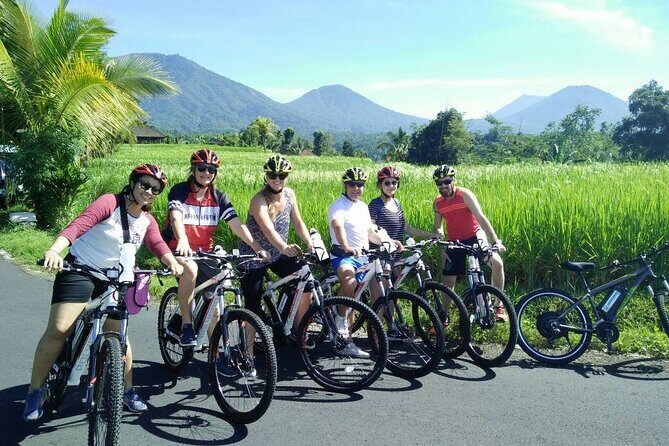
  • Electric mountain bikes for UNESCO Jatiluwih: less strain, more time for photos and questions
  • Batukaru Temple to the rice terraces: start in a cooler, greener zone before the views open up
  • Green Cafe lunch in the fields: a traditional Balinese meal served where you can actually see the rice
  • 2 to 2.5 hours of post-lunch trekking: a quieter follow-up when many groups are already done
  • Local guide energy: guides from the area share how farming and village life work
  • Small group cap of 12: more breathing room on both the ride and the trek

Jatiluwih by e-bike: from Batukaru Temple to UNESCO rice terraces

Jatiluwih full day e-bike cycling with lunch & trekking program - Jatiluwih by e-bike: from Batukaru Temple to UNESCO rice terraces
The day starts with a simple idea: use an electric bike to do the fun parts of the route without paying for it with exhaustion. You’ll head out from Batukaru Temple, then roll onto small, quiet roads toward Jatiluwih in the valley of four extinct volcanoes. That mix matters. Early on, you’re still in the calmer, greener stretch where the air feels different from the busier rice-terrace zones.

Once you reach the Jatiluwih area, the terrain becomes a working showcase. You cycle through dense jungle patches, a giant bamboo forest, small streams, and stretches where farmers are actively tending rice. This is not the kind of UNESCO spot where you just point at scenery from a viewpoint. You ride through it, so the terraces don’t feel like a distant postcard—they feel like a place people live and farm every day.

You’ll also get a big confidence boost from the equipment. The bikes are electric mountain bikes, and the experience is designed for people who want to travel actively but don’t want to muscle every hill. Even if you’re not a cyclist, the bike assistance helps you stay in the moment.

What the ride feels like: jungle, bamboo, villages, and rice-farm details

Jatiluwih full day e-bike cycling with lunch & trekking program - What the ride feels like: jungle, bamboo, villages, and rice-farm details
The cycling portion is about 2 hours, and it’s structured to keep the day flowing. The route doesn’t just jump between attractions. It layers environments so you’re constantly changing what you’re looking at: jungle shade, bamboo textures, village life along the way, and then the open terraces when you get closer to Jatiluwih.

Here’s what I think you’ll notice most once you’re rolling:

  • You move like a local: small roads and gentle turns make the ride feel human-scale, not like a big bus tour.
  • The bamboo forest adds a cool reset: even on a warm Bali day, shaded bamboo sections help you catch your breath.
  • Rice farming is the main character: you’ll see farmers working traditional practices, which makes the terraces feel more grounded.

A small but important practical point: you’ll get a helmet and you’ll likely get a quick rundown on the e-bike controls before you start. The goal is easy handling. The bike support is there to smooth out the effort, so you can focus on the route and the sights instead of checking your legs every few minutes.

One consideration: the paths and roads can involve uneven edges and typical rural bike-riding moments. You don’t need to be an athlete, but you should pay attention and wear shoes with decent grip.

Green Cafe lunch in the rice fields: traditional, simple, and well-timed

Jatiluwih full day e-bike cycling with lunch & trekking program - Green Cafe lunch in the rice fields: traditional, simple, and well-timed
Lunch is a highlight for a reason: it’s served in the rice fields, not in some distant building where the view is only a promise. At Green Cafe, you’ll get a traditional Balinese nasi combo, and you’ll also have coffee or tea along with water included.

Timing helps too. You ride in the morning when the rice terraces look their clearest, then lunch gives you a real reset before the trek. That means your legs aren’t totally fried, and your head is in the right place for walking after eating.

What I like about this setup is that it supports the whole point of doing the day this way. The lunch stops you from turning the trip into a pure activity schedule. You sit, you eat, and you can watch the farmland around you.

Alcohol is not included, but you can purchase it. So if you want a cold drink after the ride, it’s your call—but you won’t feel forced into anything.

The 2 to 2.5 hour trek: off-path rice terraces and a river route

Jatiluwih full day e-bike cycling with lunch & trekking program - The 2 to 2.5 hour trek: off-path rice terraces and a river route
After lunch, you switch gears from cycling to walking. The trek runs 2 to 2.5 hours, and it’s aimed at getting you away from the most crowded viewing spots. The goal is to walk through rice fields and then head down through more natural terrain toward a river.

This is the part of the day where the experience turns from scenic to personal. When you’re trekking, you notice the textures: irrigation edges, narrow trails, and the way the terraces change as you go lower. And because this part is scheduled after lunch, the timing often means you’re not competing with the biggest wave of foot traffic.

One useful thing to keep in mind: the trek is described as going off the beaten path, which usually means uneven ground and fewer built-up surfaces. Bring shoes you can trust. You don’t need hiking boots, but you do need traction and comfort.

If you enjoy nature and you like walking when the route feels more local than touristy, this afternoon segment is why the day works.

Guides and group size: why a small team changes the day

Jatiluwih full day e-bike cycling with lunch & trekking program - Guides and group size: why a small team changes the day
The guides on this kind of tour can make or break the experience, and here that’s not just talk. The cycling guides are local to the area, and they can answer questions about what you’re seeing—rice farming, village life, and how the terraces function in everyday terms.

On top of that, the group size is capped at 12 travelers. That sounds like a small detail until you’re on a narrow trail or waiting at a roadside moment. Smaller groups generally mean fewer stops that drag, less waiting, and more space for questions. It also makes it easier to keep a steady pace on both the e-bike ride and the trek.

I also like that the tour includes travel insurance. You’re not going to plan for every bump, but having that safety net makes the day feel more relaxed.

Price and value: what you get for $88

At $88 per person, you’re paying for more than just a bike and a ticket. The value comes from the package nature of it: hotel pickup and drop-off, a private-feeling small-group experience, the e-bike use, helmet, a local guide, lunch, trekking time, bottled water and beverages, and transport by air-conditioned minivan. Insurance is included too.

Let’s put it in practical terms. If you tried to build this yourself in Ubud, you’d likely pay separately for a guide, a bike rental, transportation across the area, and a meal spot that actually fits the schedule. Here, the day is designed so your food and walking happen at the right time, instead of you guessing and losing time.

A small extra note: admission and fees are handled, and site access is part of what’s included. That removes one more stress point on the day when you’d rather just ride and walk.

What to wear and bring for a smooth day

You’ll have a cycling morning and a walking afternoon, so dress for both.

I’d plan around three things:

  • Comfortable shoes with grip for trekking
  • Comfortable clothes you can move in during the ride
  • Sun protection since you’ll be outside much of the day

Sunscreen is explicitly advised, and it’s smart. You’ll also want to hydrate—bottled water and beverages are included, but you’ll still sweat during the bike ride and walk.

If you’re tall, good news: the tour asks for guests to be at least 150 cm, because there aren’t small bikes available. If you’re shorter, you may not fit their equipment.

Who this e-bike and trek day fits best

This is a strong choice if you want:

  • A fun, active Bali day that doesn’t require advanced fitness
  • More than just a viewpoint stop (you ride through rice terraces and then trek)
  • A day with local guidance and practical pacing

You might want to skip it (or at least rethink timing and shoes) if:

  • You hate uneven trails or you’re not comfortable walking for 2 to 2.5 hours
  • You want a fully relaxed, sit-down sightseeing schedule only

For most people, though, it’s a great middle path: you get movement and nature without turning the day into an all-out workout.

Should you book this Jatiluwih e-bike and trekking tour?

If your ideal Bali day includes rice terraces, local food, and a quieter walk away from the main crowds, I’d say yes. The combination of electric cycling + a later trek is the secret sauce: the bike makes the UNESCO portion feel doable, then the trek gives you that deeper, feet-on-the-ground feeling that’s hard to get from a short car stop.

Book it if you’re excited to see Jatiluwih as a working place—rice farmers, bamboo groves, village roads—not just a photo backdrop. And if you pick comfortable shoes and show up ready for a real (but manageable) walk, this one tends to feel like a full-day win.

FAQ

How long is the full-day experience?

It runs about 7 hours total, including the morning e-bike ride, lunch, and an afternoon trekking segment.

What time does the tour start?

The start time is 10:00 am.

Is hotel pickup and drop-off included?

Yes. Hotel pickup and drop-off are included.

What’s included for lunch?

Lunch is a traditional Balinese nasi combo at Green Cafe. It includes water and coffee or tea.

Do I need experience riding an e-bike?

No experience is required. The bikes are easy to use electric mountain bikes, and you’ll have helmets provided.

Can I cancel and get a refund?

Free cancellation is available. You can cancel up to 24 hours in advance for a full refund. If you cancel less than 24 hours before the start time, the amount paid is not refunded.

Ubud: Holy Water Temple, Volcano View, Rice Terrace, MonkeyForest

Ubud: Holy Water Temple, Volcano View, Rice Terrace, MonkeyForest - Pickup, AC Comfort, and a Driver You Can Actually Talk To

One day, many sacred scenes in Ubud.

I like how this tour stacks Barong and Kris culture with real-world stops you can use: the Mount Batur viewpoint at Kintamani for wide open sightlines, plus Ubud time for art and walking. You’ll also be in good hands with an English-speaking driver, and I’ve seen praise for guides like Ambo, Wahyu, Oka, Krisna, and Cema for keeping the day friendly and organized.

The main heads-up: several stops require you to buy tickets or entrance fees on your own. If you prefer everything prepaid, this might feel a bit annoying.

Still, the structure works well: pickup from your hotel or meeting point, a comfortable AC vehicle, bottled water for each person, and a private format where it’s only your group, not a mixed crowd.

Key highlights to know before you go

Ubud: Holy Water Temple, Volcano View, Rice Terrace, MonkeyForest - Key highlights to know before you go

  • Barong and Kris dance with Mahabharata themes: a live performance tied to Balinese religious storytelling and the idea of duality.
  • UC Silver Gold workshop visit: a focused look at handcrafted silver and gold processing.
  • Goa Gajah (Elephant Cave): a notable temple site connected to Ganesha, with a cave complex setting.
  • Kintamani viewpoint time: a short rest built around panoramic views toward Mount Batur.
  • Tegalallang rice terrace photo time: rice fields plus time where swings are available as an extra activity.
  • Monkey Forest sanctuary: a natural habitat for long-tailed macaques (the sanctuary notes about 749 monkeys).

What You’re Paying For in This Ubud Private Day

Ubud: Holy Water Temple, Volcano View, Rice Terrace, MonkeyForest - What You’re Paying For in This Ubud Private Day
This tour is priced at $36.78 per person and runs about 8 to 10 hours. For that length of time, the value comes from one big thing: you’re not just “seeing places,” you’re getting transport all day in a comfortable AC vehicle with an English-speaking driver, plus bottled water and the fuel/parking fees that usually add up when you hire a car on your own.

The trade-off is in what’s not included. The big activities where you’ll likely pay separately are marked as admission ticket not included: the Barong dance, the Elephant Cave site, the Kintamani and viewpoints (no ticket listed there, but other sites often are), Tegalallang rice terrace, the Monkey Forest sanctuary, and often the daily timing at Ubud spots. So your real total cost depends on how many entrance fees you choose to pay and how you handle optional add-ons at places like the rice terrace.

If you like a day plan that mixes culture and scenery without you doing the driving, this kind of private loop is a solid fit. If you hate surprise spending, you’ll want to mentally budget for the ticketed stops.

Pickup, AC Comfort, and a Driver You Can Actually Talk To

Ubud: Holy Water Temple, Volcano View, Rice Terrace, MonkeyForest - Pickup, AC Comfort, and a Driver You Can Actually Talk To
The day starts with pickup from your hotel or pickup point, based on your details. That matters in Ubud because traffic and short distances can still add stress—here you’re tucked into a car and can focus on the stops.

You also get an English-speaking driver, and the tour notes that guides in other languages (French, Spanish, Chinese, and more) are available for an additional cost. In practice, that’s useful if you want the “why” behind what you’re seeing, not just where to stand for photos.

And because it’s private, you avoid the awkward pacing that happens when groups of different interests get thrown together. You’re with your group only.

Barong and Kris Dance: More Than a Show

Ubud: Holy Water Temple, Volcano View, Rice Terrace, MonkeyForest - Barong and Kris Dance: More Than a Show
Your first cultural hit is the Barong and Kris dance, a live performance tied to sacred Balinese storytelling linked with the Mahabharata. The tour framing puts attention on the theme of duality—the idea that opposing forces (good and bad, order and chaos) exist in balance, and that these stories aren’t just entertainment. They’re part of how people explain the world through performance.

It lasts about 1 hour, but you’ll want to plan for the fact that admission isn’t included. If you’re arriving ready to watch, not bargain, this can be one of the most meaningful “first stops” of the day. The dance sets an emotional tone: later, when you visit temples and sacred sites, you’ll recognize that the symbols you saw onstage connect to real beliefs.

Practical note: because the show is scheduled early in the loop, it can be a good way to beat the rest of your day’s heat and time pressure.

UC Silver Gold: Handcrafted Metal Without the Guesswork

Ubud: Holy Water Temple, Volcano View, Rice Terrace, MonkeyForest - UC Silver Gold: Handcrafted Metal Without the Guesswork
After the dance, you stop at UC Silver Gold, described as a place to see the processing of handcrafted silver and gold jewelry. This isn’t just a quick “look and leave” stop. You’re given around 45 minutes, which gives you time to watch how the work happens and to understand what you’re paying for if you decide to buy.

One reason I like this type of stop: it’s a chance to slow down and learn a skill-based craft. Instead of treating shopping as random souvenir hunting, you see the labor side. Even if you don’t buy anything, it helps you spot better-made items later in Ubud.

As always with jewelry stops, you should keep your expectations clear. This is the sort of place where pricing and styles are part of the experience—so go in knowing you’re either there to browse or to buy with a mindset.

Goa Gajah (Elephant Cave): Sacred Space in a Cave Setting

Ubud: Holy Water Temple, Volcano View, Rice Terrace, MonkeyForest - Goa Gajah (Elephant Cave): Sacred Space in a Cave Setting
Next up is Goa Gajah, also known as Elephant Cave. The tour explains it as an important historical and cultural site in Ubud, known for its ancient cave complex. It’s roughly 45 minutes at the site, and admission tickets are not included.

What I like about including Goa Gajah in a day like this is the shift from performance culture to built sacred space. The tour specifically notes a connection to Ganesha, so when you’re walking through the cave complex and surrounding sacred areas, it helps to remember you’re seeing a place designed for ritual and meaning—not just stone and carvings.

Drawback: like the dance, you’ll pay your way into the experience here. If you want to keep spending down, you’ll want to confirm entrance fees before you arrive at the gate.

Kintamani Highland and Mount Batur Views: The Pause Your Day Needs

Ubud: Holy Water Temple, Volcano View, Rice Terrace, MonkeyForest - Kintamani Highland and Mount Batur Views: The Pause Your Day Needs
Then the pace shifts toward big open views at Kintamani Highland. The tour describes it as a village set around the lake area with Mount Batur in view, and you get about 45 minutes here. The day even builds in rest time so you can sit and take in the panoramic outlook.

This is the part of the day that’s easiest to appreciate even if your attention is tired. After temples and workshops, Kintamani is a reset: sky, distance, and the sense of standing near one of Bali’s defining volcano areas.

Also, the description notes a cooler climate at Kintamani, which can be a blessing on an otherwise warm day. Even if it’s not dramatically different, the break in tempo helps.

Tegalallang Rice Terrace: Rice Fields and Swing Time (Optional)

Ubud: Holy Water Temple, Volcano View, Rice Terrace, MonkeyForest - Tegalallang Rice Terrace: Rice Fields and Swing Time (Optional)
After Kintamani, you head to Tegalallang Rice Terrace, one of the most recognizable views around Ubud. Here you’ll get about 30 minutes to admire the rice fields and the layered look of the terraces.

The tour also mentions swing availability. Since additional activities aren’t included, think of the swing as something you’d do only if you want to pay extra on-site. Whether you take it or not, the terrace itself is the main event: standing above working fields gives you a sense of how long-term farming reshapes the hillsides.

Potential downside is simple: 30 minutes goes fast. If you love slow photo time or want more than a few viewpoints, this stop may feel brief.

Ubud Traditional Art Market: Walking Time That Helps You Pace the Day

Ubud: Holy Water Temple, Volcano View, Rice Terrace, MonkeyForest - Ubud Traditional Art Market: Walking Time That Helps You Pace the Day
You then shift into Ubud proper for a walking tour of the Traditional Art Market, around 45 minutes with admission listed as free. This is a nice counterbalance to the sacred and scenic stops. It’s where you can absorb everyday Ubud life: storefront rhythm, craft goods, and the simple act of moving through a market without a strict “must buy” agenda.

I like giving the day market time because it’s practical. After you’ve seen dance costumes, temple space, and craft processing, the market becomes easier to understand. You’re not just collecting random items; you’re connecting what you saw earlier to what people sell now.

Sacred Monkey Forest Sanctuary: A Wildlife Stop With Real Presence

The final major stop is the Sacred Monkey Forest Sanctuary, also called Monkey Forest. You’re given about 45 minutes here, and admission tickets are not included.

This isn’t a zoo-style encounter in the tour description. It’s a sanctuary and natural habitat for Balinese long-tailed monkeys (the sanctuary notes about 749 monkeys). That number alone tells you the experience is more about sharing space than controlling it.

If you’re the type who likes wildlife without gimmicks, you’ll probably enjoy it. If you’re uneasy around animals, you might want to treat this stop as a “look and leave” situation rather than a linger-and-chat moment.

Either way, it’s a good capstone to the day because it adds a living, moving element after all the statues, terraces, and indoor-like craft areas.

Timing and Pace: Why the 8–10 Hours Works (and When It Feels Tight)

The whole loop is built to fit 8 to 10 hours, including a lot of switching: dance, workshop, a cave temple, a volcano viewpoint, rice terraces, Ubud market walking, and then Monkey Forest.

That means the schedule gives you variety, but it also keeps each stop fairly time-boxed. The main thing to expect is that you won’t have unlimited time at the places that ask for a ticket. The tour does give you a decent block at each stop (often 30 to 45 minutes), yet it still feels like a “day tour” pace, not a “linger all afternoon” pace.

My advice: if there’s one stop you truly want extra time for, plan to keep your expectations realistic. You can enjoy it fully with the time provided, but if you want to slow things down for browsing, it may cut into another stop.

Language, Groups, and Private Comfort

This is a private tour, and the day notes that only your group participates. That’s a huge comfort factor for families and for mixed-age groups—less waiting for strangers, fewer personality clashes, and less time spent wrangling anyone’s “I want to see that one thing” requests.

The driver speaks English. If you need another language, a tour guide option is available for an additional cost. That’s a good choice if you want richer explanations at temple or dance stops.

One more small but useful included detail: you get bottled water for each traveler. In Bali heat, that’s not a luxury.

Is This Tour Good Value for Your Day in Ubud?

At $36.78 per person, you’re paying for full-day transportation and a guided route through Ubud and the Kintamani area. The biggest reason it’s good value is that the itinerary is packed: culture, craft, temple heritage, volcano views, rice terraces, markets, and monkey sanctuary time. You’re not stringing together separate hires and hoping you can coordinate them yourself.

The biggest reason it might not feel like a slam dunk is that entrance fees aren’t included for key stops. So your final spend depends on site admissions and optional add-ons (like the rice terrace swing, if you choose it).

If you want one day where the logistics are handled and you get a meaningful mix of Bali experiences, this tour checks a lot of boxes for the price.

Should You Book This Ubud Day?

Book it if you want a private, easy day that links cultural performance, a major temple site, volcano views at Kintamani, iconic rice terraces, and a real wildlife sanctuary—all without dealing with driving, routing, and scheduling.

Skip or adjust your expectations if you hate buying tickets during the day or if you need long, unhurried time at every stop. With several paid-admission sites and a packed route, you’ll want to go in ready for a “see a lot” rhythm.

If you’re deciding between doing Ubud solo and doing it guided, I’d lean guided. You’ll spend less brainpower figuring out how to connect all these places, and you’ll spend more of your energy actually enjoying them.

FAQ

Is hotel pickup included?

Yes. Pickup is offered from your designated hotel or pickup point based on your booking details.

How long does the tour take?

The tour runs about 8 to 10 hours.

What’s included in the price?

Transportation (private, comfortable AC vehicle) and an English-speaking driver are included, along with bottled water, and fees for fuel surcharge and parking.

Are entrance fees included?

No. Admission tickets are not included for several stops listed in the day, including the Barong & Kris Dance, Goa Gajah, Tegalallang Rice Terrace, and Sacred Monkey Forest Sanctuary.

Is this tour private or shared?

This is a private tour/activity. Only your group participates.

Can I cancel for a refund?

Yes. Free cancellation is available up to 24 hours before the experience start time for a full refund. If you cancel less than 24 hours before, the amount paid will not be refunded.

How far in advance should I book?

On average, this experience is booked about 60 days in advance.

Bali Highlights : Nature, Waterfall, Rice Terraces and Volcano

Bali Highlights : Nature, Waterfall, Rice Terraces and Volcano - Mount Batur in Kintamani and Batuan Temple: volcano views and carved stone

Bali’s highlights, chained into one day. This route strings together waterfalls, famous rice terraces, volcano viewpoints, temple stops, and a stretch of Bali coast from your base around Kuta.

I like that pickup and an air-conditioned vehicle mean you spend less time wrangling logistics and more time looking around. I also like the way the day mixes nature and culture, plus your guide helps with practical details and photo angles.

The big consideration is pace. It’s an 8 to 10 hour highlight hop, lunch isn’t included, and at least two early nature stops list admission as not included.

Key things I’d bookmark before you go

Bali Highlights : Nature, Waterfall, Rice Terraces and Volcano - Key things I’d bookmark before you go

  • Air-conditioned pickup from Kuta, Seminyak, Ubud, Nusa Dua, Sanur, Jimbaran, Canggu, Legian, Denpasar, and Benoa Harbor
  • Mount Batur + Batuan Temple tickets included (depending on package rules, plus stop-by-stop notes)
  • Tegenungan Waterfall and Tegalalang Rice Terrace are nature-heavy and very scenic, but admission is listed as not included there
  • Sarong provided for temple visits, so you don’t scramble for one at the last minute
  • Celuk Village and Mas wood carving give you craft time, not just photo time
  • Jungle swing over the Ayung River is great for photos, but it’s listed as personal expense

The route and timing in an 8 to 10 hour highlight hop

This is the kind of Bali day that’s designed to work like a greatest-hits playlist: you get multiple stops without having to plan each one. You’re in an air-conditioned vehicle with hotel pickup and drop-off, so the day starts clean and stays organized.

The trade-off is that the clock matters. With an estimated 8 to 10 hours, you should expect quick transitions and enough time for photos, a short walk, and a look around at each stop.

One more detail that shapes the experience: it’s described as a private tour/activity, meaning only your group participates. That usually makes the day feel calmer than a big bus tour, and it helps if you want a little extra time at a viewpoint or a craft shop.

Tegenungan Waterfall and Tegalalang Rice Terrace: nature you can feel

You start with Tegenungan Waterfall, set in green tropical jungle. The experience here is simple: you can take in the view from the viewing platform, and the setting also supports going down toward the water if you want that closer feel. The admission note for this stop says the ticket is not included, so budget for it if your package doesn’t cover it.

Practical tip: plan for slippery spots. Waterfall areas often mean uneven steps, wet rock, and sudden mud patches. Closed shoes and quick-dry clothes make the walk way less stressful.

Next comes Tegalalang Rice Terrace, one of Bali’s most photographed rice scenes. You’ll get a stroll through the paddies and get to see day-to-day farming rhythms up close, which is where the visit feels more real than a staged photo stop. Like Tegenungan, the entry note here says admission ticket not included, so check what your booking includes.

I like this pairing because it gives you two different kinds of greenery. The waterfall is lush and vertical—sound, mist, and movement. The rice terrace is quieter and horizontal—patterned fields, small paths, and long view lines for photos.

Mount Batur in Kintamani and Batuan Temple: volcano views and carved stone

Bali Highlights : Nature, Waterfall, Rice Terraces and Volcano - Mount Batur in Kintamani and Batuan Temple: volcano views and carved stone
Then the mood shifts from water and rice to a big, dramatic volcano viewpoint at Mount Batur in the Kintamani highland. From here you’re meant to enjoy the view over Mount Batur and the valley below. This is also one of the clearer “sit and take it in” moments on the route, with about an hour set aside.

Lunch can be served here, but it’s listed as own cost. That’s a good thing to plan for early in the day, because once you’re in the highland area, you’ll want to decide whether you’ll eat there or manage your own timing.

After that, you head to Batuan Temple, a serious stop for anyone who likes temples more for stonework than postcard vibes. This one is described as founded in 944 saka (1020 AD), and the point isn’t just age—it’s the ornate carvings and decorative ornaments across its shrines. Admission for Batuan Temple is listed as included, and you’ll also be provided a sarong for entering temple areas.

If you’re temple-phobic, don’t worry. This is the kind of visit where you can keep it simple: take your time reading the details in the carvings, notice the structure, and enjoy the fact that the place is set for looking closely.

Celuk Village, Mas wood carving, and temple sarongs: Balinese craft with context

Balinese craft is where the day gets hands-on in a way photos can’t. First up is Celuk Village, known for producing high-grade gold and silver handicrafts, especially jewelry. Admission is listed as included for this stop, which is helpful because it lets you actually slow down and look rather than feel like every minute has a ticket clock attached.

What I like about Celuk is the direct connection between place and product. Instead of shopping as an afterthought, you see the craft focus, which makes any purchase decisions feel more grounded.

Then you get Mas village, the center of Bali wood carving. Even if you don’t buy, it’s worth watching how craft work shows up in everyday objects. This is another stop where the best experience is slow looking—shapes, textures, and the way designs turn from idea into wood.

Temple time can also feel more comfortable thanks to the sarong included in the tour. That little detail matters because it removes a common hassle: getting the right clothing right before you enter.

Ubud Palace and Pasar Ubud: royal heritage meets shopping walks

Ubud’s cultural core is part of this route, and two stops anchor it: Ubud Palace (officially Puri Saren Agung) and Pasar Ubud.

The palace is described as the historical residence of the royal family of Ubud, part of a complex of historical buildings. What makes it interesting is that it’s not just scenery—it’s a sense of how power and tradition used to organize life in the area.

Then you cross to Pasar Ubud, located opposite the palace and open daily. The market is where you’ll find paintings, silk scarves, lightweight shirts, handmade woven bags, and more. I like giving yourself some time here because the market browsing is a different skill than photography. You’re looking for texture, material, and what feels right in your hands.

One small planning thought: expect the market to be active and focused on sales. If you want to buy, go with a calm pace and check items carefully. If you don’t plan to buy, still treat it like a cultural stop—look at how people display goods and how the market layout shapes the flow of the day.

Jungle swing over the Ayung River and other photo stops

This is the fun, slightly chaotic section of the day. You’ll have the option to ride an incredible swing that soars over dense jungle of palm trees and the Ayung River. The key detail here is cost: the swing is listed as personal expense, not included.

This is the part where I’d manage expectations. You’ll get classic “tall, dramatic, hold-your-breath” photos, but you’ll also want to treat it like an activity with safety checks. Wear clothes you can move in, skip anything that’s hard to secure, and keep your phone and camera handled carefully.

There are also additional photo-friendly stops on the program list, including temple views and cliff or canyon-style viewpoints described as giving unforgettable impressions and pictures. The upside is that Bali does photo ops well. The drawback is that with a packed schedule, it’s smart to pick your priorities—do you want one big swing photo, or more time at quieter spots?

Beaches after Ubud: Kuta, Nusa Dua, Seminyak, Tanjung Benoa, and Canggu

The day then swings from inland to coast, and you’ll see a stretch of well-known beach zones. Kuta Beach is specifically mentioned as a highlight, with blue water and golden-white sand. From there, the route list also calls out other beach favorites: Pandawa Beach, Padang Padang Beach, and Geger Beach in Nusa Dua, each described as white sand and clear, inviting water.

Two beach details worth noting from the route descriptions:

  • Padang Padang Beach is described as a small sandy bay, with an easy walk down where you may meet a lot of monkeys.
  • One cliffside beach is described as having clear blue water, corals, and an amazing view from the cliff (name not specified in the notes).

If you’re heading to the beach as a sit-and-sun option, bring simple beach basics. If you’re going mainly for views and walking, keep footwear grippy and expect crowds to vary.

The program also includes Tanjung Benoa, described as a place for water sports with shallow waters and colorful fishing boats on the sand. There’s also a temple stop here: Pura Blanjong, built from coral with inscriptions dating from the 10th century. Even if you’re not a temple person, it’s a neat way to see how places connect to both sea and history.

Then there’s Canggu, including a coastal stretch starting from Berawa to the village of Cemagi, plus mention of black sand beach views linked with the volcano area. The route list also includes Finns Beach Club on Berawa Beach, described as a chic hangout with a freeform infinity pool and a bamboo structure. This is the kind of stop where you can grab a breather and enjoy a different Bali vibe than Ubud’s craft and temples.

Value check: what $37.23 buys (and what to budget for)

At $37.23 per person, this tour is positioned as strong value mainly because you get organization baked in. You’re paying for hotel pickup and drop-off, private air-conditioned transportation, and temple-ready support with a sarong included. That kind of convenience saves your time and reduces decision fatigue.

The other big value driver is ticketing. The tour states entrance tickets are included depending on the package you book, and the stop details add more clarity:

  • Mount Batur entry is listed as included.
  • Batuan Temple and Celuk Village entries are listed as included.
  • Tegenungan Waterfall and Tegalalang Rice Terrace say admission tickets are not included.

So for budgeting, I’d plan as if you’ll have a few add-ons. You’ll definitely need money for lunch since it’s not included. You might also pay entry fees at the early nature stops if your package doesn’t cover them. And if you want the jungle swing, treat it as extra cost because it’s listed as personal expense.

This is also where the short day matters. With an 8 to 10 hour schedule, you’re buying access to many highlights, not deep time in one place. If that’s your travel style, you’ll feel like the day moves at a good rhythm. If you hate rushing, you might find it slightly intense.

Should you book Bali Highlights? A quick decision

Book it if you want a single day that covers nature (waterfall and rice), volcano views, temples and craft, and then lands you at Bali beach zones like Kuta, Nusa Dua, Seminyak area, and Canggu. It’s a practical pick when you don’t want to coordinate separate tickets and transport on your own.

Skip it or rethink your expectations if you’re picky about long stays or you hate paying for multiple separate entries and add-ons. With the packed timing, you’ll want to arrive ready to go, comfortable with quick transitions, and okay with keeping lunch and some activities as extra planning.

FAQ

How long is the Bali Highlights tour?

It runs about 8 to 10 hours.

Is hotel pickup offered, and where are pick ups free?

Yes. Hotel pickup and drop-off are included, and free pickup areas listed include Kuta, Seminyak, Ubud, Nusa Dua, Sanur, Jimbaran, Canggu, Legian, Denpasar, and Benoa Harbor.

Is this a private tour?

Yes. It’s described as a private tour/activity, meaning only your group will participate.

What major stops are included?

The program includes Tegenungan Waterfall, Tegalalang Rice Terrace, Mount Batur (Kintamani), Batuan Temple, and Celuk Village, plus additional Ubud, craft, and beach stops listed in the itinerary.

Are entrance tickets included?

Entrance tickets depend on the package, and the itinerary notes indicate some stops are not included (like Tegenungan Waterfall and Tegalalang Rice Terrace) while others are included (like Mount Batur, Batuan Temple, and Celuk Village).

Is lunch included?

No. Lunch is not included. Lunch can be served at Mount Batur, but it’s listed as own cost.

Do I need to bring a sarong for temples?

No. A sarong for entering Balinese temples is included.

Do I get a mobile ticket, and when do I receive confirmation?

A mobile ticket is included, and confirmation will be received at the time of booking.

Can I cancel for free?

Yes. Free cancellation is offered, and you can cancel up to 24 hours in advance for a full refund.

Tanah Lot and Jatiluwih Unesco Rice Terrace Private Tour

Tanah Lot and Jatiluwih Unesco Rice Terrace Private Tour - Stop 1: Tanah Lot Temple and the Batu Bolong coastal moment

Two Bali icons in one long, scenic day.

This tour strings together Tanah Lot with UNESCO-level scenery at Jatiluwih—so you get temple drama, plus rice-terrace scale that’s hard to grasp from photos. I like that the day keeps moving at a comfortable pace (not a whip-and-finish schedule), and I also like that it’s built as a private experience with an AC car and real time at each site.

The main thing to consider is the length: you’re looking at about 8 to 10 hours, and it depends on good weather to deliver the views you came for. If you’re sensitive to long car rides or hot sun, plan your energy accordingly.

You’ll start with Tanah Lot’s seaside temple setting, then climb into the Jatiluwih rice-terrace region, and finish with Luhur Batukaru and Taman Ayun. Along the way, you get entry fees, a sarong for temple visits, and bottled water—small details that matter when you’re on the move all day.

Key highlights to know before you go

Tanah Lot and Jatiluwih Unesco Rice Terrace Private Tour - Key highlights to know before you go

  • Tanah Lot’s 16th-century seaside setting plus the nearby Batu Bolong area for extra atmosphere
  • Jatiluwih is UNESCO World Heritage (since 2012) with sweeping views from about 700 m altitude
  • Two more temple stops: Luhur Batukaru (forest calm) and Taman Ayun (royal family temple, built 1634)
  • Private-only group so you’re not squeezed into a fast-moving crowd
  • Entrance tickets, sarong, and bottled water included, so you avoid a lot of on-the-spot hassles

Why this route hits the right Bali notes in one day

Bali has plenty of temple visits and plenty of rice terraces. The trick here is that this day connects them in a way that makes each stop feel like it adds something, not repeats the same sight. Tanah Lot gives you the coast-and-religion postcard moment, and then Jatiluwih shifts the mood into wide open farmland and mountain air.

I also like that the stops cover different “roles” of place: sacred coastal architecture first, then a working agricultural landscape recognized globally, then two more temples in distinct environments. That variety is a big reason this tour is a favorite.

Getting from Ubud: AC pickup and how to survive a 8–10 hour day

Tanah Lot and Jatiluwih Unesco Rice Terrace Private Tour - Getting from Ubud: AC pickup and how to survive a 8–10 hour day
You get pickup offered, and you’ll ride in a comfortable car with AC. That matters on Bali’s warmer parts of the day, especially when you’re stacking multiple sites into one outing.

Plan to use the ride time well. If you’re the type who wants to take quick phone photos, you’ll burn time at viewpoints; if you slow down for a few minutes of looking instead, the whole day feels smoother. With a 1 hour 45 minute block at Jatiluwih and shorter temple stops (about 45 minutes each), you’ll likely spend a mix of time walking paths and pausing for views.

One practical note: because the experience requires good weather, your guide may emphasize viewing opportunities and timing depending on cloud cover and conditions. If skies are clear, the whole day tends to feel more dramatic—especially at the terrace viewpoints.

Stop 1: Tanah Lot Temple and the Batu Bolong coastal moment

Tanah Lot and Jatiluwih Unesco Rice Terrace Private Tour - Stop 1: Tanah Lot Temple and the Batu Bolong coastal moment
Tanah Lot is built in the 16th century and positioned over the water, which is why it’s so famous. When you’re there in person, it’s not just a temple you see—it’s a temple you can feel as part of the seascape. Waves and shoreline energy give the place a living, changing feel.

Right next to it, you’ll also find Batu Bolong (another nearby temple area). Even if you just take a few minutes to look around, that nearby setting helps explain why this stretch of coast became such a spiritual focal point.

What I like about starting here: Tanah Lot sets a clear “Bali mood” for the rest of the day. After you’ve seen the sacred seaside drama, switching to rice terraces feels like a natural move inland rather than a random stop.

Potential drawback: seaside locations can be windy and uneven underfoot. Wear shoes you can trust, and keep an eye on footing if you’re near wet areas.

Stop 2: Jatiluwih Green Land UNESCO terraces from 700 m altitude

Tanah Lot and Jatiluwih Unesco Rice Terrace Private Tour - Stop 2: Jatiluwih Green Land UNESCO terraces from 700 m altitude
Jatiluwih is the largest rice field in Bali, and the setting is genuinely part of the story. It sits at the foot of Mount Batukaru and reaches around 700 meters in altitude, so you often get cooler air and wider, clearer views than you’d expect in the lowlands.

This is also a UNESCO World Heritage site recognized since 2012, which matters because it’s not just pretty—it’s a landscape shaped by long-running farming knowledge. When you stand on a terrace edge and look across the slopes, you start to understand how the irrigation and rice-growing pattern create that stepped rhythm.

Your stop here is 1 hour 45 minutes, which is enough time to do two useful things:

  • walk some of the paths to get perspective at different angles
  • pause long enough to actually take in the scale

I’ve found that Jatiluwih works best when you don’t rush. If you keep moving constantly, you miss the “in-between” views—those moments where the terraces look different as the light shifts.

Potential drawback: it can still feel warm, even if it’s higher up. And because this is a terrace landscape, you’ll be walking on uneven ground. If you have knee issues, take it slow and stick to flatter paths.

Stop 3: Luhur Batukaru Temple in a calm forest setting

After the open terrace views, Luhur Batukaru Temple brings you into a quieter, more secluded atmosphere. It’s located at the foot of Mount Batukaru in a forest area, so the vibe is less “coastal show” and more peaceful, grounded stillness.

This stop is around 45 minutes, which is a good amount of time for looking, absorbing, and taking photos without turning it into a long detour. The forest setting also helps you reset after the busier sightlines of Jatiluwih.

What you’ll likely notice here is the contrast. Rice terraces are human-shaped farmland. A temple like this is about place, ceremony, and tradition—so you start seeing Bali as more than “scenery.”

Potential drawback: forest locations can mean shaded areas with damp ground after rain. Again, good shoes help more than you’d think.

Stop 4: Taman Ayun Temple, the royal temple built in 1634

Taman Ayun is a royal family temple built in 1634, and it’s known for its garden surroundings. That garden setting makes the temple feel cared for and intentional, not just built and left to time.

This stop is also about 45 minutes, which works well as a closing chapter. By the time you reach Taman Ayun, you’ve already seen coastal temple energy (Tanah Lot), terrace-scale farming (Jatiluwih), and forest calm (Luhur Batukaru). Taman Ayun’s landscaped environment gives your brain a softer landing before heading back to your hotel.

If you care about the cultural side of Bali—not only the views—this is the kind of stop that helps you connect the dots between religion, royal lineage, and how sacred space is arranged.

Potential drawback: gardens are lovely, but if you’re hoping for nonstop dramatic views like Tanah Lot, you’ll need to switch into a slower mode—watching details, layout, and how the temple sits within the garden.

Included items that actually reduce travel friction

This tour is priced to include several “day-trip headaches”:

  • Sarong to use for temple entry
  • Entrance fees
  • Bottled water
  • Parking fees, petrol, and tax
  • AC transport in a comfortable car

For many people, the biggest value is simple: you don’t have to coordinate sarongs, tickets, or last-minute payments at each stop. That means fewer interruptions and more time looking at what you came for.

The only common downside with tours like this is that meals are not included. You’ll want to eat on your own schedule—either before you go or during breaks you control. If you’re prone to getting hangry, plan for it.

Price and value: is $65 per person a smart buy?

Tanah Lot and Jatiluwih Unesco Rice Terrace Private Tour - Price and value: is $65 per person a smart buy?
At $65 per person, this tour sits in a range that can feel like a bargain or like a miss depending on what you’d do otherwise. Here’s the value math you can use:

You’re paying for:

  • private transportation with AC
  • admission fees across multiple major sites
  • sarongs and bottled water
  • a full-day route that would be annoying to stitch together yourself

If you were to drive and coordinate entrances on your own, the cost could add up quickly once you price parking, fuel, and tickets. Plus, you’d still need to manage timing between Tanah Lot, the Jatiluwih region, and two more temples. This itinerary is designed to do that in one pass.

Who gets the best deal from this price:

  • couples and small groups who want a calmer pace than a bus tour
  • people who want “high sights” without planning stress
  • anyone who values explanations while still moving efficiently

The guide factor: explanations that make the sites click

One of the strongest themes in the experience is how much guides help you connect the places. In particular, guides such as Agung, Kotaro, and Ketut come up in examples, and the consistent idea is that they take time to explain traditions and the connections between Bali’s history, religion, and culture.

That’s not just nice-to-have. When you understand why a temple is placed where it is, and how the landscape relates to religious and cultural practice, the sites feel more than visual stops. Even small explanations—like what makes Tanah Lot’s location meaningful or how the terraces fit into the wider region—can change your entire day’s satisfaction.

Practical tips for a smoother day at temples and terraces

Here are the “use it on the ground” tips I’d give you for this kind of route:

  • Use the sarong they provide, and bring clothing that’s comfortable under it.
  • Wear shoes you can walk in on uneven, sometimes damp paths (especially around terrace edges and temple areas).
  • Bring a light layer if you get chilly in the higher terrace region or in shaded forest areas.
  • Plan your photos with patience. Short stops are timed well, but the best shots usually take a minute to find a calm angle.
  • Watch the weather. The experience depends on good conditions, and cloudy or stormy weather can affect visibility and comfort.

And a small behavioral tip: when a guide asks you to look at something specific (layout, materials, or the way the landscape is shaped), it’s usually worth leaning into it. That’s where the day stops being “a list of places” and starts being a story.

Should you book this Tanah Lot and Jatiluwih private tour?

If you want a full Bali highlights day that combines temples + UNESCO rice terraces without the headache of self-planning, I think this is an easy yes. The route makes sense, the included items reduce friction, and the private-only setup keeps the pace comfortable.

Book it if:

  • you’re starting from Ubud and want pickup
  • you care about culture and want explanations along the way
  • you’d rather spend time at a few big sites than rush through many small ones

Skip or reconsider if:

  • you dislike long days (8 to 10 hours)
  • you’re only interested in one type of sight (either temples or rice terraces)
  • you’re traveling at a time when weather is likely to be unreliable and you can’t be flexible

If your goal is a day that feels both scenic and meaningful, this itinerary is built for exactly that.

Ubud Full Day ATV Adventure with Rice Terrace and Temple Ritual

Ubud Full Day ATV Adventure with Rice Terrace and Temple Ritual - Tirta Empul Temple and the holy spring purification ritual

One of the best full-day mixes in Ubud.

This 8-hour plan strings together three very different sides of Bali—muddy ATV tracks, iconic Tegalalang rice terraces, and the sacred water-and-spiritual feel of Tirta Empul Temple. The day has built-in variety, so you’re not stuck sightseeing only, or getting adrenaline only. I also really like that it’s set up as a single flow: ride first, then slow down for rice fields, then finish with a ritual stop.

My favorite part was the way the ride and guidance kept things fun and manageable.

ATV time at KeepAll Bali Adventure comes with safety equipment and clear support from the crew, and the ride itself runs through rice fields, jungle areas, and muddy tracks. One consideration: the tour asks for strong physical fitness, so if you’re not comfortable with uneven ground and getting a little dirty, plan accordingly.

Key highlights worth your attention

Ubud Full Day ATV Adventure with Rice Terrace and Temple Ritual - Key highlights worth your attention

  • KeepAll Bali Adventure ATV ride (about 2 hours) through rice fields, jungle, and muddy trails
  • Tegalalang Rice Terrace visit (about 1 hour) plus context on the Subak irrigation system
  • Tirta Empul Temple (about 1 hour) to witness the holy spring purification ritual
  • Entrance fees, lunch, and bottled water included, so you can budget once
  • Private tour setup so only your group participates
  • Tirtha/Tirta-style hosting energy often comes up in feedback, with drivers described as polite and helpful

Starting at KeepAll Bali Adventure: ATV tracks, safety gear, and real work

Ubud Full Day ATV Adventure with Rice Terrace and Temple Ritual - Starting at KeepAll Bali Adventure: ATV tracks, safety gear, and real work
The day starts with the ATV portion, and it matters that it’s not just a short photo stop. Your time at KeepAll Bali Adventure is listed at about 2 hours, and you’ll be riding through rice fields, jungle areas, and muddy tracks. That combination is what makes it feel like an actual off-road experience instead of a quick amusement-park loop.

What you’ll appreciate right away is that the basics are handled for you. The tour includes ATV safety equipment, plus admission for the ATV stop. That means you’re not scrambling around once you arrive or paying extra just to get on the track. Also, the transportation is handled by an air-conditioned vehicle with private transport, so you’re not wrestling with scooters right away after a morning start.

The practical part: get mentally ready for mud and uneven terrain. Even if you’re not a hardcore rider, the goal here is motion—gravel, wet patches, and traction changes. If you’re the type who hates getting dirty, you’ll want to think about what you’ll wear and how you’ll handle wet gear. The tour also explicitly says travelers should have a strong physical fitness level, which makes sense for a ride that involves steering, balancing, and holding your posture through bumps.

And from what you’ll hear in feedback, the human support is a big deal. Guides and instructors are described as helpful and polite, and one driver named Tirtha/Tirta is singled out for being cooperative, experienced, and supportive during the trip. That kind of tone matters on an ATV day, because it’s easier to relax when someone has done it many times and communicates clearly.

Tegalalang Rice Terrace: where the views come with a farming lesson

After the adrenaline, the pace shifts. The Tegalalang Rice Terrace stop is listed at about 1 hour, and it’s the kind of place where your photos can’t fully capture how steep and layered the scenery feels. You’ll stroll through the fields and get a sense of why Tegalalang is one of Bali’s most iconic landscapes.

The useful detail here is not only seeing the greenery—it’s learning about how it works. The tour includes time to learn about the Subak irrigation system used by local farmers. You’ll walk away with a better understanding that these rice terraces aren’t just scenery; they’re tied to an ongoing community system for water management and cultivation.

One reason I like stopping at places like this on a guided day is the context. Without it, rice terraces are just postcard green. With the irrigation explanation, you start noticing patterns: the way water has to be routed, how farming depends on timing and shared effort, and why terrace shapes matter. Even if you only have an hour, the learning component helps the time feel earned.

There’s also a real-world timing advantage. One hour is long enough to walk, take pictures, and hear the basics, but short enough that you’re not burning the day on one viewpoint. After ATV and before Tirta Empul, it’s a good reset: your body calms down, and your eyes get a break from off-road dust and noise.

Tirta Empul Temple and the holy spring purification ritual

Ubud Full Day ATV Adventure with Rice Terrace and Temple Ritual - Tirta Empul Temple and the holy spring purification ritual
Then comes the spiritual stop: Tirta Empul Temple, listed for about 1 hour. This is known as a sacred water temple with a holy spring, and the tour gives you a chance to witness the purification ritual.

Here’s what makes this stop valuable even if you’re not the type to chase temple every day: it’s not just “look at a building.” Water temples in Bali are tied to belief and practice, and that gives you a different energy than a typical sightseeing visit. You’re seeing a ritual meant to bring people into a state of purification and respect.

Because the tour description focuses on witnessing rather than training you on the steps, you can approach it like this: show up ready to observe, be respectful, and follow any guidance you’re given on-site. If you’re hoping for a dramatic, action-packed finale, this part is calmer by design. It’s more about atmosphere and meaning than motion.

Also, this stop fits nicely after the rice terrace. You move from how people farm and manage water (Subak) into how water is treated as sacred and purifying (holy spring). That connection gives the day a subtle theme: water, place, and community.

The 8-hour timing: how to make the day feel easy

Ubud Full Day ATV Adventure with Rice Terrace and Temple Ritual - The 8-hour timing: how to make the day feel easy
The total duration is about 8 hours, and it’s broken down in a helpful way: 4 hours at the destinations and 4 hours in travel between locations. That ratio matters. It tells you this isn’t a “we’ll sprint you through everything” itinerary. You’re driving some distance in a day that includes three stops, and the schedule is built around that reality.

In Ubud traffic, that kind of pacing is usually the difference between a pleasant day and an exhausting one. Since you’re in an air-conditioned vehicle and it’s a private tour/activity (your group only), you avoid the constant stop-and-go feeling that comes with shared shuttles. You’re not waiting for other people to board, and you’re not guessing when your next stop is happening.

Timing also helps you plan your body. You start with the more physical ATV segment, then you move into a walk-and-views terrace stop, then you end with the calmer temple ritual. That order is smart: it saves the most intense physical piece for the earlier part of the day, when you’re fresher.

One more practical note: the tour includes bottled water and lunch at a local restaurant. You’ll be thankful for that mid-day break, because ATV + walking can put a surprising strain on energy levels, especially in Bali’s humidity.

Price and value: what $85 really buys you

Ubud Full Day ATV Adventure with Rice Terrace and Temple Ritual - Price and value: what $85 really buys you
At $85 per person, this tour isn’t just paying for access to one thing. You’re paying for a full day with multiple components, and the “included” list is where the value shows.

Included:

  • ATV safety equipment
  • Entrance fees to the listed attractions
  • Lunch at a local restaurant
  • Bottled water
  • Air-conditioned vehicle and private transportation
  • Pickup offered (when available for your area)

Not included:

  • Personal expenses

So what are you actually getting for your money? You’re paying to bundle together three separate experiences—ATV admission and gear, terrace entry, and temple entry—plus a driver and transport that links it all. If you tried to do it on your own, the hidden costs are usually time, logistics, and paying for each segment separately. Here, you get one price that covers the core pieces and keeps the day moving.

Also, group discounts are listed as an available option. If you’re traveling with friends or your party is big enough to qualify, that can improve the value even more. The tour also uses a mobile ticket, which is nice when you’re juggling phone-based travel plans.

What the guide experience feels like (and why it matters)

Ubud Full Day ATV Adventure with Rice Terrace and Temple Ritual - What the guide experience feels like (and why it matters)
Even with the right stops, the day can rise or fall on the people running it. In feedback, the service theme is consistent: polite, cooperative, and supportive help throughout the journey.

A guide/driver named Tirtha/Tirta shows up repeatedly in the descriptions. One review highlights that the driver was experienced and knowledgeable about the activities, and another focuses on how Tirtha went out of the way to help with arrangements and made the experience feel personal. You also see comments about the crew and instructors being helpful and polite, and about being supported during the ATV rides.

That matters because ATV days often put people in a “learn fast” mode. If the instructor explains clearly, supports your comfort level, and keeps you on track, you spend your energy riding instead of worrying. The best kind of guide is part teacher, part traffic controller, and part calm problem-solver.

Another practical benefit from feedback: you can end up getting suggestions for where to eat. Some comments mention that the driver took people to great places to eat. Since lunch is included, that helps ensure you’re not left choosing blindly when your schedule is already busy.

Who should book this ATV + rice terrace + Tirta Empul day?

Ubud Full Day ATV Adventure with Rice Terrace and Temple Ritual - Who should book this ATV + rice terrace + Tirta Empul day?
This is a strong fit if you want variety in one day and you like both motion and culture. You’ll probably enjoy it most if you:

  • want ATV fun without having to plan transportation and admissions
  • enjoy walking short stretches in scenic areas like Tegalalang
  • like Bali’s spiritual side and want to witness a purification ritual at Tirta Empul
  • travel in a group that benefits from a private tour setup

It may be less ideal if you’re not comfortable with physical effort. The tour states travelers should have a strong physical fitness level, and the ATV ride goes through muddy, uneven terrain. If you have mobility limitations or you know you won’t handle the physical aspect, you may want a calmer itinerary.

It also suits couples. The feedback you’ll find tends to mention couple-friendly value, and the private format helps you avoid the “everyone’s doing their own thing” feeling.

Should you book it? My honest take

Ubud Full Day ATV Adventure with Rice Terrace and Temple Ritual - Should you book it? My honest take
If you want one day in Ubud that covers adventure, iconic Bali nature, and a meaningful spiritual stop, this tour makes sense. The price is reasonable because it wraps in transport, admissions, lunch, and ATV safety gear—and you’re not forced to manage the logistics yourself.

The biggest reason to choose it is the structure. It’s paced for a full day: ATV first, then Tegalalang, then Tirta Empul, with about 4 hours of destination time and 4 hours of travel. That’s a realistic plan, not wishful thinking.

The biggest reason to hesitate is fitness and mess. Strong fitness is required, and the ride involves muddy tracks. If that sounds fun, you’ll likely have a great time. If you’re hoping for a clean, gentle day, you might prefer a different style of Ubud tour.

FAQ

FAQ

Is pickup included?

Pickup is offered, and the tour description also notes that you’ll travel in an air-conditioned vehicle with private transportation.

How long is the tour?

The total duration is listed as about 8 hours.

What time is spent at each main stop?

It’s laid out as about 2 hours at KeepAll Bali Adventure for the ATV ride, about 1 hour at Tegalalang Rice Terrace, and about 1 hour at Tirta Empul Temple. The rest of the time is used for travel between locations.

Do I need to pay entrance fees separately?

No. Entrance fees to all listed attractions are included.

Is lunch included?

Yes. Lunch is included at a local restaurant.

What’s included for the ATV experience?

You’ll get ATV safety equipment included, plus admission for the ATV stop.

What fitness level do I need?

The tour notes that travelers should have a strong physical fitness level.

What is the cancellation policy?

Free cancellation is available up to 24 hours in advance for a full refund.

Best of Bali Water Temple and UNISCO Rice Terrace Trek

Best of Bali Water Temple and UNISCO Rice Terrace Trek - Stop 1: Taman Ayun Temple and Its Garden-Temple Mood

Bali hits different at sunset. This day trip strings together Taman Ayun, Ulun Danu Beratan, UNESCO-listed Jatiluwih rice terraces, and the big finale at Tanah Lot. I like that you get admission included at the main stops, and I also like that the route is built around convenience—door-to-door, air-conditioned round transfers, bottled water, and a guide. One thing to consider: it’s a long day (about 10 hours), so it rewards energy and good footwear more than lingering.

Here’s the practical hook: you’re set up to beat ticket lines for the included sights, and the timing is aimed at seeing Tanah Lot in the best light. For extra fun, the plan may also add stops like Bali Treetop Adventure Park and Secret Garden Village, depending on the day. If you’re hoping for a super slow, unhurried pace with lots of free time, you might feel a bit time-pressed.

Key points to know before you go

Best of Bali Water Temple and UNISCO Rice Terrace Trek - Key points to know before you go

  • Line-saving entry to the included temples and Jatiluwih
  • Air-conditioned round transfers with hotel pickup and drop-off
  • UNESCO-listed rice terraces (Jatiluwih) plus lunch included
  • Tanah Lot sunset with a classic offshore rock temple setting
  • Private tour format (only your group), plus possible added stops like Treetop Adventure Park and Secret Garden Village
  • A driver who can add context, like Made Surya, noted for safety, patience, culture explanations, and photo help

A Tight 10-Hour Route: From Taman Ayun to Tanah Lot

This tour is built for people who want a lot of “wow” without having to plan, route, and re-route. You’re looking at roughly 10 hours total, with time carved out for four anchor stops: Taman Ayun, Ulun Danu Beratan, Jatiluwih, and Tanah Lot.

The schedule is also helpful because each location has a different personality. You start with a temple in a garden setting, move to a lake-crater temple tied to a specific goddess, switch to UNESCO rice terraces and Balinese irrigation culture, then finish at the offshore rock temple where the day naturally wants to slow down.

Why “Beat the Lines” Is Actually Valuable

Best of Bali Water Temple and UNISCO Rice Terrace Trek - Why “Beat the Lines” Is Actually Valuable
“Beat the lines” sounds like marketing until you’re standing there in the heat with a limited day. Having admission handled for the included sights can save you time at each stop, especially when multiple groups show up around the same window.

This matters most on a route like this, where the total day is only about 10 hours. Even a small delay at one stop can squeeze your photo time at another, and you don’t want your Tanah Lot sunset reduced to a quick glance.

Stop 1: Taman Ayun Temple and Its Garden-Temple Mood

Best of Bali Water Temple and UNISCO Rice Terrace Trek - Stop 1: Taman Ayun Temple and Its Garden-Temple Mood
Your first temple stop is Taman Ayun Temple in Mengwi Village (Badung District), about 18 km west of Denpasar. The name literally points to the vibe: Taman Ayun means temple in a beautiful garden, so you’re not just looking at stone structures—you’re stepping into a landscaped, calmer-feeling setting.

Plan on about an hour here, which is enough time to take in the main temple views without feeling rushed. The practical win is that starting with a garden-style site can “warm you up” for the rest of the day, especially if you’re arriving from Kuta and want something that’s visually rewarding early on.

Stop 2: Ulun Danu Beratan on the Lake-Crater Edge

Best of Bali Water Temple and UNISCO Rice Terrace Trek - Stop 2: Ulun Danu Beratan on the Lake-Crater Edge
Next is Ulun Danu Beratan Temple, dedicated to the lake goddess, Ida Batari Dewi Ulun Danu. This temple is on the edge of a huge crater, and the dominant shrines are Meru’s (pagodas) tied to the lake goddess and the gods of Mount Bat… (the itinerary describes it as Mount Bat with the rest cut off).

What I like about this stop is the clear “why” behind it. It’s not just a pretty viewpoint temple; it’s specifically linked to water and worship, which pairs nicely with what you’ll later see at Jatiluwih and the way water shapes rice growing.

You’ll have about an hour here. That’s a good match for a temple + scenery combo: enough time to understand the significance and still move on before the day tightens.

Stop 3: Jatiluwih UNESCO Rice Terraces and the Included Lunch

Best of Bali Water Temple and UNISCO Rice Terrace Trek - Stop 3: Jatiluwih UNESCO Rice Terraces and the Included Lunch
Jatiluwih is where the day turns from temples to living agriculture. You’ll spend about two hours at Jatiluwih Green Land, located in the center of Tabanan regency. This is one of Bali’s best-known UNESCO rice terraces, recognized as part of the Balinese Subak System.

Subak is the key detail: it’s the traditional irrigation and water management system tied to farming and community worship. So even though you’re walking through rice terraces, you’re also seeing a cultural system in action—how water, timing, and collective work shape what you see.

Two smart bonuses are built in. First, you get lunch at Jatiluwih, which reduces decision fatigue mid-tour. Second, the tour includes bottled water, which is genuinely useful on a warm walking day. If you’re planning to take lots of photos, this is the stop where comfortable shoes pay off fast.

Potential drawback: terraces can mean uneven ground or paths that aren’t designed for slow wandering. If you know you’ll want to linger for ages, your two-hour window may feel short. If you like structured time with enough sight coverage for one day, it’s a solid fit.

Stop 4: Tanah Lot, the Offshore Rock Temple, and a Real Sunset Finale

Best of Bali Water Temple and UNISCO Rice Terrace Trek - Stop 4: Tanah Lot, the Offshore Rock Temple, and a Real Sunset Finale
Tanah Lot is the closer for a reason. The name means Land in the Sea in Balinese, and the temple sits on a large offshore rock shaped over time by the ocean. It’s a famous silhouette, and this tour aims to time your visit so you can see the sunset against the backdrop of that lava tower setting.

You’ll have about two hours at Tanah Lot. That’s not just “look and go”—it’s enough time to find your angle, watch the light change, and get photos without panic. If you’ve ever arrived late to a sunset stop and watched the best colors disappear while you negotiated a snack line, you’ll appreciate the steadier pacing here.

Tip for best use of your time: treat Tanah Lot like a photo and atmosphere stop, not a “must see everything up close” stop. With the temple perched on rock and the ocean as part of the scene, your best experience often comes from getting your bearings quickly and letting the light do the work.

Extra Stops in the Mix: Treetop Adventure Park and Secret Garden Village

Best of Bali Water Temple and UNISCO Rice Terrace Trek - Extra Stops in the Mix: Treetop Adventure Park and Secret Garden Village
This tour plan may also include stops beyond the core temples and terraces, including Bali Treetop Adventure Park and SECRET GARDEN VILLAGE near Luwus Bedugul.

  • Bali Treetop Adventure Park is described as a fun activity set in an open-air environment for group and family.
  • Secret Garden Village is described as a tourism complex with an Edu-vacation concept—built around fun, exciting learning.

Because the itinerary provides these as “Stop” entries rather than clearly tied to a specific time window, you should expect some variability based on the day’s flow. If your group wants action and games, these can add a lighter break after temple stops. If you’re only here for the religious and rice-terrace sights, you might treat them as optional energy boosters rather than the main reason to book.

Getting Around: Air-Conditioned Transfers and Door-to-Door Ease

Best of Bali Water Temple and UNISCO Rice Terrace Trek - Getting Around: Air-Conditioned Transfers and Door-to-Door Ease
One of the biggest reasons people like tours like this is that Bali driving can feel like a full-time job. This plan includes hotel pickup and drop-off and describes comfortable, air-conditioned round transfers to keep the day from turning into a sweat-fest before the sights even begin.

Also, this is set up as a private tour/activity, meaning only your group participates. That matters because timing at temples and sunset spots often works better when you aren’t constantly matching other peoples’ pace. It’s easier to group your priorities—photos first, then slow viewing—without bargaining with the clock.

If you’re traveling as a group yourself, the plan also mentions group discounts, which can improve value if you’re not traveling solo.

The Driver Factor: When Safety and Context Matter

A good driver turns transportation into part of the experience. In this case, one noted driver is Made Surya, described as safe and patient, and happy to explain Balinese culture along the way. The same note also mentions he’ll capture photos for you, which is handy at scenic stops where you want shots but you don’t want to keep asking strangers.

Even if you’re not a big talker, cultural context can help your brain connect the dots. The day isn’t just four stops—it’s a sequence: water-focused temple worship, water-linked rice farming culture, then a final coastal temple setting.

This is where “value” gets real. It’s not only about admissions and transport; it’s about getting more meaning from what you see in the time you have.

Price and Value: Why This $32 Day Can Make Sense

At $32 for about 10 hours, this tour packs in a lot that would normally cost extra. You’re getting:

  • Bottled water
  • Hotel pickup and drop-off
  • Private tour
  • Lunch at Jatiluwih
  • Entry/admission included for Taman Ayun, Ulun Danu Beratan, Jatiluwih Green Land, and Tanah Lot

That’s a strong bundle if you were going to pay for each sight admission and arrange transport anyway. The day is also built around timing, especially with the Tanah Lot sunset emphasis and the “beat the lines” approach for included admissions.

One caution on price: $32 is low enough that you should confirm what’s included for the extra stops (like the treetop park or Secret Garden Village) and whether any optional activities cost extra on-site. The core admissions and lunch are clearly included, which is the part that keeps the value grounded.

Who Should Book This Tour (and Who Might Not)

You’ll likely love this tour if you:

  • Want a first-time Bali style overview of temple + terraces + sunset
  • Prefer a structured day with transport and admissions handled
  • Care about getting to the best lighting moment at Tanah Lot
  • Like hearing culture explained while you travel, not just being dropped at gates

You might want to skip or adjust if you:

  • Hate long days with back-to-back stops
  • Plan to spend lots of time doing independent wandering at each site (the schedule is paced)
  • Are only interested in one theme (for example, only temples or only rice terraces)

Should You Book This Best of Bali Water Temple and UNESCO Rice Terrace Trek?

If you want a clean, efficient day that hits Bali’s most famous “water + worship + scenery” moments, I think this is an easy yes. The combination of included admissions, lunch, air-conditioned round transfers, and a sunset finish at Tanah Lot is exactly what makes it feel worth it at the stated price.

Book it if your main goal is to see a lot without stress and still get a memorable visual payoff. Hold back if you’re chasing a slow, deep, no-rush experience at just one or two locations. This is a see-it-all day, and it does that job well.

FAQ

How long is the tour?

The duration is approximately 10 hours.

Where does the tour start and finish?

It’s based in Kuta, Indonesia, and includes hotel pickup and drop-off.

Is bottled water included?

Yes, bottled water is included.

Does the tour include lunch?

Yes, lunch is included at Jatiluwih.

Are admissions included for the main sights?

Yes. Entry/admission is included for Taman Ayun Temple, Ulun Danu Beratan Temple, Jatiluwih Green Land, and Tanah Lot Temple.

Is transportation air-conditioned?

Yes, the tour includes comfortable, air-conditioned round transfers.

Is this a private tour?

Yes, it’s described as a private tour/activity where only your group participates.

Are there group discounts?

Group discounts are mentioned as a feature.

Is a mobile ticket provided?

A mobile ticket is listed as part of the experience features.

Can I cancel for a refund?

Yes. Free cancellation is available, and you can cancel up to 24 hours in advance for a full refund.

Ubud ATV Quad Bike, Monkey Forest and Rice Terrace

Ubud ATV Quad Bike, Monkey Forest and Rice Terrace - Monkey Forest Sanctuary: sacred grounds and the Tri Hita Karana angle

Mud, monkeys, and rice terraces in one day. I like the easy hotel pickup with return drop-off, and I also like that the big sightseeing stops come with admission tickets. One thing to double-check before you go: lunch is listed as a buffet, but meal details may be simpler than the word buffet suggests.

The ATV portion is set up as an actual ride, not a quick photo stop. You get a practice session first, then head out on tracks through rice fields, jungle, river paths, and even a traditional village area. The schedule runs about 8 to 10 hours, so it’s a full day, and you’ll want comfy socks and patience for a tight itinerary.

At Monkey Forest Sanctuary, you’re not just paying to see monkeys; the sanctuary is managed with the Tri Hita Karana philosophy in mind. Then the iconic Tegalalang rice terrace delivers that instantly recognizable green-step view Bali is famous for, with a waterfall stop later for photos and a quick break.

Key things I think you’ll really enjoy

Ubud ATV Quad Bike, Monkey Forest and Rice Terrace - Key things I think you’ll really enjoy

  • Real ATV track time (not just a showroom spin) with a practice session before you ride
  • Helmet, boots, and shower/changing room so you’re not stuck dealing with mud all day
  • Monkey Forest with Tri Hita Karana context, so it feels more than a selfie stop
  • Tegalalang rice terrace timing gives you time to look, photograph, and breathe for a bit
  • A guide who keeps you on track, with names like Ketut, Putu, Nyoman Rudi, and Arya showing up as standouts

How the day runs: pickup from Kuta and a quick ATV warm-up

This is a Ubud-focused day, but the start is convenient. You’re picked up from your hotel or cruise port in an air-conditioned minivan at the time you select, then transported to the ATV starting area.

Once you arrive, you meet your guide and get some time to practice driving the quad. This practice matters. If you’re new to ATVs, it helps you get your hands and feet coordinated before you hit the trickier terrain. If you’re more experienced, it still helps you understand the ride style and how your guide expects you to follow.

Before you roll, the tour provides helmet and boots, plus you can use the shower and changing room after. That last part is not glamorous, but it’s genuinely useful once you’ve been caked in mud.

Quad biking in Ubud: rice fields, river paths, and a track that gets messy

Ubud ATV Quad Bike, Monkey Forest and Rice Terrace - Quad biking in Ubud: rice fields, river paths, and a track that gets messy
The ATV ride is the star of the day. It’s described as an adventure with challenging tracks and scenery that includes rice fields, jungle, river areas, and a traditional village environment.

You’ll also spend time on a trek route where the terrain can be a bit hectic (in a fun way). One rider noted it as a game full of mud, which is exactly what you should expect if you’re choosing an ATV day in Bali rather than a calm nature walk.

Beginner-friendly does not mean zero effort

The tour is said to be safe and suitable for both beginners and professionals. That doesn’t mean it’s effortless. You’ll still need to stay alert on uneven ground and follow your guide’s instructions, especially when the track narrows or dips.

If you’re worried about handling the machine, take comfort from the fact that guides are helping riders who aren’t confident cyclists or drivers. In other words, the day is built for people across skill levels.

What “included gear” really changes for you

Having helmet and boots provided saves you from the usual hassle of buying or renting gear. Boots are also a big deal on a muddy ATV day. You can ride with more confidence because your feet are better protected than in sneakers.

And yes, the tour includes a shower and changing room. That turns the ATV portion from a one-day mess into something you can recover from before dinner.

Monkey Forest Sanctuary: sacred grounds and the Tri Hita Karana angle

Ubud ATV Quad Bike, Monkey Forest and Rice Terrace - Monkey Forest Sanctuary: sacred grounds and the Tri Hita Karana angle
After the ATV, you head to Sacred Monkey Forest Sanctuary. The key theme here is conservation under the Tri Hita Karana concept—harmony between people, nature, and the spiritual world.

In plain terms, this stop is less about rushing and more about slowing down enough to see the sanctuary as an active protected area. You get admission included and about an hour on-site, which is usually enough time to walk the main sections without feeling like you need an all-day museum pass.

How to enjoy it more (and not get frazzled)

Monkey Forest is a place where you’ll likely want to keep your belongings secure and stay aware of your surroundings. The good news is the tour setup supports you with a guided day plan, and riders often mention valuables being kept secure.

Give yourself permission to move at a relaxed pace. If you rush, it’s easy to miss the calm side of the forest and just end up chasing the quickest photo.

Tegalalang Rice Terrace: the classic Bali view, with time to actually look

Ubud ATV Quad Bike, Monkey Forest and Rice Terrace - Tegalalang Rice Terrace: the classic Bali view, with time to actually look
Then comes Tegalalang Rice Terrace, one of the most recognizable Bali scenes online. You’ll have about 1 hour 30 minutes here, with admission included.

The terrace itself is the payoff: lush, terraced green views that cascade across the hillside. This is one of those stops where timing matters. With a solid block of time, you can take photos from a few angles, pause for the view, and not feel like you’re doing a drive-by.

What you should plan for

This isn’t a sit-down attraction. It’s a walking-and-viewing stop, which means comfortable shoes help. Also, because the terrace is famous, expect it to be busy at peak hours depending on the day and time slot your route hits.

The good part is your schedule doesn’t trap you there for hours. You get enough time to enjoy the scenery and then move on.

Celuk Village and the waterfall area: a short nature stop with photo options

Ubud ATV Quad Bike, Monkey Forest and Rice Terrace - Celuk Village and the waterfall area: a short nature stop with photo options
The last major stop is a quick one: the schedule lists Celuk Village, but the included description centers on a waterfall near Ubud. You’re given about 20 minutes here and the waterfall entrance is included.

This stop is more about a fast reset. After a full ATV day plus Monkey Forest and rice terraces, this is your chance to cool off your feet, grab a few photos, and get a break from constant walking.

Swings and romantic photo moments, if available

One rider specifically mentioned getting time for swing-style photos at the waterfall stop. Since that can depend on what’s operating and how the day flows, treat it as a nice bonus rather than a guaranteed main attraction.

Lunch and the meal reality: what to expect at Quad Restaurant

Ubud ATV Quad Bike, Monkey Forest and Rice Terrace - Lunch and the meal reality: what to expect at Quad Restaurant
Lunch is included, and the tour description states it’s a buffet lunch at Quad Restaurant. That sounds straightforward, but one note you should keep in mind: lunch buffet wording can be where expectations clash.

Here’s the practical way to handle it. Go in expecting a provided meal with options you can choose from, not a spread that feels like a full sit-down banquet. If the day runs tight, a simple but filling meal is still a win.

Keep your day energy stable

Because you’re out for 8 to 10 hours, lunch is part of your endurance plan. If you’re sensitive to timing, try to eat as soon as it’s offered rather than saving it for later.

Also, if you have dietary restrictions, this is the kind of tour where you’ll want to ask directly how they handle choices. The tour data doesn’t spell out dietary accommodation, so communication matters.

Transfers, tickets, and included gear: where the value comes from

Ubud ATV Quad Bike, Monkey Forest and Rice Terrace - Transfers, tickets, and included gear: where the value comes from
This tour is priced around $32, which is a good sign when you look at what’s included.

You get:

  • Air-conditioned hotel return transfers
  • Helmet and boots
  • Lunch at Quad Restaurant
  • Shower and changing room
  • ATV quad ticket
  • Entrance tickets for Monkey Forest, Rice Terrace, and Ubud Waterfall

That combination is what keeps the day from turning into an add-on headache. A lot of Bali tours advertise a low price, then pile on entry tickets and gear rentals at checkout. Here, the major ticket items are already part of the package.

The hidden value: you don’t have to coordinate pieces

You’re spending the whole day in Ubud’s orbit, but you don’t have to handle separate bookings for each stop. The pickup plus included admissions mean less time planning and more time outside.

And because this is set as a private tour/activity with only your group, it can feel smoother than a big shared shuttle day—especially once you’re dealing with mud gear, timing, and group pace.

Price check: is $32 a steal or a gamble?

Ubud ATV Quad Bike, Monkey Forest and Rice Terrace - Price check: is $32 a steal or a gamble?
For $32, the honest answer is: it’s a solid deal if you’re comfortable with a busy day and an ATV that can be messy.

You’re getting gear, transport, multiple admission tickets, and a full-day flow. If you add up those categories separately while staying in Bali, you’ll often find costs creeping up fast—especially once you start pricing entry tickets plus transport plus ATV rental.

The main value risk isn’t the ATV itself. It’s expectations around lunch. The tour description says buffet, but the meal format may not match your idea of a buffet spread. If you can accept a simpler lunch arrangement, the rest of the package looks like good value.

Who should book this ATV + Monkey Forest + Rice Terrace day

This tour fits best if you want one day in Ubud that mixes:

  • Adrenaline from quad biking through rice fields and jungle paths
  • Culture/nature context at Monkey Forest
  • Iconic scenery at Tegalalang
  • A quick waterfall break at the end

It’s also a good match if you like guided pacing. You get help with gear, practice time, and navigation between stops.

Skip it if…

If you’re the type who wants a slow, flexible day with minimal walking and zero mess, this likely won’t feel right. It’s built to run from start to finish and it’s outdoors-heavy. Also, if lunch expectations matter a lot to you, ask ahead what the meal looks like in practice.

Practical tips that will make your day smoother

A few small things can change the whole experience.

  • Wear clothes you don’t mind getting dirty. The quad ride can be mud-heavy, and you’ll appreciate the included shower after.
  • Bring a bag for valuables that you can keep secure. One rider noted valuables being kept secure, which is a reminder to use whatever system they provide.
  • Use the practice time seriously. If you feel rushed once the track gets interesting, you’ll enjoy it less.
  • Charge your phone, but don’t expect perfect weather. Plan for lots of photos and take short breaks to enjoy the views in person.
  • If you’re booking as a group, the tour notes group discounts can apply, so it’s worth checking with the provider.

Should you book this Ubud ATV + Monkey Forest + Rice Terrace tour?

Book it if you want a single-day hit of Ubud that’s active, scenic, and well packaged for the price. The included gear, tickets, and transport reduce the usual hassle. The Monkey Forest and Tegalalang stops add real local scenery beyond the ATV alone.

Skip or reconsider if you’re very sensitive to meal expectations or you hate long, structured days. The day runs about 8 to 10 hours, and it’s designed as a full itinerary rather than a choose-your-own-adventure.

If you do book, message the company or ask your guide what lunch will look like that day. If you’re good with a simple included meal and you’re ready for mud, this tour can be a fun way to see a lot of Bali without spending your whole vacation on logistics.

FAQ

How long is the ATV, Monkey Forest, and Rice Terrace tour?

The tour runs about 8 to 10 hours.

Where does the pickup happen?

Pickup is offered from your Bali hotel or your cruise port, depending on what you select at booking time.

Is the tour private?

Yes. It’s listed as a private tour/activity, meaning only your group participates.

What activities are included in the day?

You’ll do ATV quad biking, visit Sacred Monkey Forest Sanctuary, see Tegalalang Rice Terrace, and stop at the Ubud waterfall area (the schedule also mentions Celuk Village).

Are admission tickets included?

Yes. Entrance tickets for Monkey Forest, Rice Terrace, and the Ubud waterfall are included.

What ATV gear do I get?

Helmet and boots are included, and the day includes a shower and changing room after.

Is lunch included?

Lunch is included at Quad Restaurant and is described as a buffet lunch. The provided info also suggests meal details can vary, so it’s smart to confirm what options will be available on the day.

Is the tour suitable for beginners?

Most travelers can participate, and the ATV ride is described as safe for both beginners and professionals, with a practice driving session first.

Does the tour offer mobile tickets or group discounts?

Yes. It’s listed as having a mobile ticket, and group discounts are mentioned.

Can I cancel for a refund?

Yes. You can cancel up to 24 hours in advance for a full refund.

Bali Lempuyang Temple, Waterfall with Rice Terrace Tour

Bali Lempuyang Temple, Waterfall with Rice Terrace Tour - Stop 2: Tirta Gangga water palace and its 1948-era design

Five stops, one very photogenic day.

This tour strings together Bali’s best-known sights in a smooth route: Lempuyang’s Heaven Gate, Tirta Gangga’s water palace, a swing viewpoint with Mount Agung behind you, and the cave waterfall at Tukad Cepung. I love how the day is guided end-to-end by a fluent English pro who explains what you’re seeing, and I love the bonus tea and coffee tasting plus the UNESCO rice irrigation lesson. One thing to plan for: it’s a long 10-hour day with plenty of walking and steps in the heat, so bring good shoes and expect to slow down at the stair-heavy stops.

What also stands out is the way the day is built around photos without turning into a rush-factory. The guide factor is big here—feedback highlights guides like Gusty, Ade, and Komang for being punctual, great at taking pictures, and making you feel comfortable the whole time. If you’re the kind of traveler who likes understanding a place, not just collecting pictures, this format usually clicks.

Key highlights at a glance

Bali Lempuyang Temple, Waterfall with Rice Terrace Tour - Key highlights at a glance

  • Heaven Gate at Lempuyang: The classic framed view people travel for, done with time built in
  • Tirta Gangga water palace: Dutch-era and Balinese style mixed in one scenic stop
  • Lereng Agung swing: Wide rice-field views plus Mount Agung in the background
  • Tukad Cepung waterfall: A dramatic waterfall you reach through a canyon-like cave walk
  • Tegalalang + UNESCO Subak: Learn the irrigation system that keeps rice paddies alive
  • Tea and coffee tasting in Tampaksiring: A calm mid/late-day break to reset

A private Ubud day with pickup and a fluent English guide

Bali Lempuyang Temple, Waterfall with Rice Terrace Tour - A private Ubud day with pickup and a fluent English guide
This is a private tour, meaning it’s just you and your group in the car. That matters in Bali, where timing can make or break your day—having a guide who handles the flow helps you spend less energy figuring things out and more energy enjoying the sights.

The tour runs about 10 hours, with hotel pickup and private transfer included. Entrance tickets are also included for the temple and key attractions, plus parking fees. You’ll have bottled water during the day, and there’s free tea and coffee at the final stop—small perks that add up when you’re out for the better part of a day.

One more practical detail: the tour uses mobile tickets and the pace is designed around specific photo points and walking segments. If you’re traveling with anyone who gets overwhelmed by chaotic group tours, this format tends to feel calmer.

Stop 1: Lempuyang Temple and the Heaven Gate photo setup

Lempuyang Temple is famous for its view—the “Heaven Gate” framing that shows up in countless photos. You’ll spend about 2 hours here, and admission is included, so you can focus on what matters: the walkways, the temple atmosphere, and getting your photos without treating it like a quick drive-by.

What I like about this stop is that it isn’t only about the picture. With a fluent English guide, you get context for why this place is iconic in Balinese religious life, and you also learn how to time your photo moments around the architecture and viewpoints.

A possible consideration: Lempuyang is the kind of attraction where you should plan for uneven steps and a slower pace. Even if you’re fit, you’ll feel the altitude and the walking, so wear shoes you can trust and bring sunscreen.

Stop 2: Tirta Gangga water palace and its 1948-era design

Bali Lempuyang Temple, Waterfall with Rice Terrace Tour - Stop 2: Tirta Gangga water palace and its 1948-era design
Next comes Tirta Gangga, a water palace associated with the Karangasem Kingdom Regency. It’s often described as a favorite photo spot, and you’ll get about 1.5 hours there.

This stop is special because it mixes influences. The palace is described as being built around 1948 with Dutch, Balinese, and Chinese architectural concepts working together. Translation: it doesn’t feel like a single-style “theme park.” It feels like a layered place that shows how different cultures and local design meet in Bali.

You’ll also get a chance to slow down near the pools and garden-like layout. This is a nice contrast after Lempuyang, because the mood changes from temple views and stairs to water features and calmer walking paths.

Stop 3: Lereng Agung swing photos with Mount Agung in frame

Bali Lempuyang Temple, Waterfall with Rice Terrace Tour - Stop 3: Lereng Agung swing photos with Mount Agung in frame
After Tirta Gangga, you head to Ristorante Lereng Agung. This is where the adrenaline swing comes in—the stop designed for that wide background shot.

You’ll have about 1.5 hours here, including time to do the swing and get photos with the rice fields and Mount Agung in the background. If your group is split—some want photos, some want scenery—this place usually satisfies both, because the viewpoint is broad and the setting is open.

A small caution: the swing is fun, but it’s also something you should treat carefully. Go at your own comfort level, listen to your guide, and don’t rush. The best results come from calm positioning and timing, not from speed.

Stop 4: Tukad Cepung waterfall inside the cave canyon

Bali Lempuyang Temple, Waterfall with Rice Terrace Tour - Stop 4: Tukad Cepung waterfall inside the cave canyon
Then the day turns dramatic with Tukad Cepung Waterfall. This one is famous for the way you walk into a canyon-like area and see the waterfall coming through a cave opening.

You’ll spend around 2 hours total, and admission is included. The walk-in approach is part of the experience—your first glimpse is often the payoff. The cave setting changes how light hits the waterfall, and that’s why photos here often look so striking.

A practical consideration: this stop can involve damp or slippery surfaces. Wear shoes with good grip and move slowly on the approach. You’re doing a lot of walking in one day already, so this is also a good place to keep your energy steady instead of sprinting for the first angle.

Stop 5: Tegalalang rice terraces and the UNESCO Subak irrigation lesson

Bali Lempuyang Temple, Waterfall with Rice Terrace Tour - Stop 5: Tegalalang rice terraces and the UNESCO Subak irrigation lesson
Now you reach Tegalalang Rice Terrace, where the experience becomes more than scenery. You’ll spend about 2 hours here and see the rice paddies with local work happening around irrigation.

The big educational angle is the Subak irrigation system. Subak is described as a rice irrigation method in Bali, and this tour highlights it as part of the UNESCO-listed water irrigation heritage. In plain terms: you’re not just looking at pretty terraces. You’re seeing how people manage water so rice can grow.

I love that this stop is paired with guidance. With an English-speaking guide, you can connect what you see—channels, water flow, and maintenance—with why it matters culturally. It’s a rare chance to understand how the landscape stays working, not just scenic.

If you’re someone who gets bored by “look at the view” stops, this is usually where the day clicks. The terrace plus the irrigation context gives you something to take home besides photos.

Stop 6: Tampaksiring tea and coffee tasting break

Bali Lempuyang Temple, Waterfall with Rice Terrace Tour - Stop 6: Tampaksiring tea and coffee tasting break
To close the loop, you’ll visit Tampaksiring for relaxation and refreshments. This stop is about 1 hour, and tea and coffee are free.

What’s fun here is the variety. The tour includes tea and coffee tasting with options like curcuma tea, ginger tea, rice tea, and avocado coffee. After temples, caves, and walking-heavy terraces, this is a smart reset. You get to sit, cool down, and switch from “photo mode” to “conversation mode.”

This final stop also makes the whole day feel balanced. You’re not ending with another strenuous walk. You’re ending with something sensory and calm.

Price and value: what $67 buys you for a 10-hour route

Bali Lempuyang Temple, Waterfall with Rice Terrace Tour - Price and value: what $67 buys you for a 10-hour route
At $67 per person, this tour is priced like a mid-range full-day experience in Bali—especially because you’re getting a private setup and entrance fees included for the major stops.

Here’s where the value comes from:

  • Private transport + pickup saves time and stress in Ubud
  • Live fluent English guide means you’re not just navigating sights blindly
  • Entrance tickets included reduces surprise costs
  • Parking fees and bottled water keep the day simple
  • The day includes photo-focused time, not only a checklist

Also, it’s booked about 32 days in advance on average, which usually signals that the route is in demand. If you want a specific date, it’s smart to reserve early so you’re not gambling on availability.

One note: personal expenses aren’t included, so budget for any extras you choose to buy on your own. But for the core day plan, the pricing feels straightforward.

What to pack so the day feels fun, not exhausting

Even the best-guided tour becomes less enjoyable if you’re uncomfortable. For a route like this, I’d plan for these basics:

  • Comfortable, grippy shoes for temple steps and the waterfall area
  • Sunscreen and a hat for long outdoor segments
  • A refillable water bottle (you’ll get bottled water during the tour, but having more can help)
  • Light layers for comfort in case your day swings between sun and shaded cave areas

If you’re doing the swing at Lereng Agung, wear something you feel stable in. And bring a small towel or wipes if you tend to get damp easily—Tukad Cepung can involve wet, cave-adjacent conditions.

Who this tour is best for

This tour is a strong fit if you want:

  • Iconic Bali photos that still come with explanations
  • A single-day route that covers temples, water palace views, a cave waterfall, and rice terraces
  • A guide who helps with timing and takes good photos of your group

It’s also a good option if you like structured days. The route is built as a sequence, so you’re not jumping randomly between places.

The bigger drawback is also the biggest one: the day is long. If you’re traveling with someone who can’t handle a lot of walking or stepping, you might want a shorter route or a more relaxed itinerary.

Should you book this Bali Lempuyang Temple, waterfall, and rice terrace tour?

I’d book it if you’re here for a “greatest hits” day and you care about the meaning behind the scenes, not just the camera angles. The biggest reason: you get a guided connection across very different sites—Heaven Gate, Tirta Gangga, a swing viewpoint, a cave waterfall, and UNESCO-linked irrigation—without feeling like you’re hopping around alone.

Skip (or adjust) if you know you’ll struggle with heat, long walking segments, or a 10-hour schedule. This route isn’t built for a slow, sleepy pace. It’s built for a full day of seeing and understanding.

If you do book, pick footwear first, then plan your energy. You’ll get the most out of the day when you’re comfortable enough to enjoy the quiet moments—especially at Tirta Gangga, and when you’re learning how Subak irrigation keeps the rice terraces alive.

FAQ

FAQ

How long is the tour?

The tour runs about 10 hours.

What is the price per person?

The price is $67.00 per person.

Is hotel pickup included?

Yes, private hotel transfer (pickup) is included.

Are entrance tickets included?

Yes. Entrance tickets are included for the key stops on the route.

Is this tour private or group-based?

It’s a private tour. Only your group participates.

Does the tour include tea and coffee?

Yes. You’ll enjoy tea and coffee tasting, including options like curcuma tea, ginger tea, rice tea, and avocado coffee.

Can I cancel for a full refund?

Yes—free cancellation is offered if you cancel up to 24 hours in advance for a full refund.

Jatiluwih Spiritual Journey of Melukat with Rice Terrace View

Jatiluwih Spiritual Journey of Melukat with Rice Terrace View - The practical rhythm of a guided ceremony

Purification in Bali is intensely personal. This private Ubud day trip links a Melukat water blessing at Pura Kahyangan Kedatuan Raksa Sidhi with a full circuit of Bali highlights, guided by people like Putu Eka. I love that the ceremony is explained step by step, so you’re not just standing there hoping you got it right. One thing to consider: this is both spiritual ritual and a packed day, so it can feel busy if you want lots of downtime.

The payoff is the timing and the scenery—after the blessing, Jatiluwih UNESCO rice terraces feel extra meaningful, like the day has real momentum from inside your head to the views outside it.

Key things to know before you go

Jatiluwih Spiritual Journey of Melukat with Rice Terrace View - Key things to know before you go

  • Melukat at Pura Kedatuan Raksa Sidhi with clear, guide-led instruction
  • A guide who participates and explains the steps (including Putu Eka in past groups)
  • Jatiluwih UNESCO rice terraces as a major “breather” right after the purification
  • Iconic temples on the route, including Ulun Danu Beratan and Tanah Lot
  • Sangeh Monkey Forest admission included for a nature break between stops
  • Lunch isn’t included, so plan your food break (and budget)

Melukat water blessing at Kedatuan Raksa Sidhi: what this day is really about

Jatiluwih Spiritual Journey of Melukat with Rice Terrace View - Melukat water blessing at Kedatuan Raksa Sidhi: what this day is really about
This tour’s heart is Melukat, a Balinese Hindu water purification ritual. Think less like a spa day and more like a personal reset. The goal is to clear away spiritual and emotional “impurities” you carry around, then come back to your day with a steadier mind. It’s the kind of activity where context matters. That’s why the guide is such a big part of the value here.

In the ceremony, you’re not left to guess. The people leading the experience explain what’s happening and how to do it properly. In at least some cases, the guide even joins in alongside you during the blessing, which can make the ritual feel less intimidating and more like a shared practice rather than a performance you watch from the side.

The practical rhythm of a guided ceremony

Jatiluwih Spiritual Journey of Melukat with Rice Terrace View - The practical rhythm of a guided ceremony
Here’s how the experience tends to land when it’s run well: you go in with questions, then the steps get explained in plain language, and you start to relax into the process. The most praised moment in the whole day is the purification blessing itself—people highlight how beautiful it feels, and how refreshing it is afterward.

You’ll also notice how much communication shapes the experience. Guides are said to explain every part of the day and the ritual itself, so you can follow along without needing to already know Balinese Hindu traditions. One review also mentioned the guide taking time to record memorable moments with video and photos. That matters because you’ll likely remember the feeling, but it helps to have a record of the setting too.

Jatiluwih after Melukat: why the rice terraces hit harder

Jatiluwih Spiritual Journey of Melukat with Rice Terrace View - Jatiluwih after Melukat: why the rice terraces hit harder
After spiritual cleansing, you head into one of Bali’s most recognizable nature-and-farming scenes: Jatiluwih UNESCO rice terraces. Even if you’ve seen rice terraces before, this stop changes the lens. You’re not just taking photos. You’re looking at the way Balinese culture links agriculture, daily life, and spiritual thinking.

The key advantage here is placement. If Melukat is your inner reset, Jatiluwih is the visual proof that Bali’s traditions aren’t stuck in temples. They show up in how people shape land, manage water, and keep the rhythm of planting and harvest. It’s also a “pause” moment in the schedule, with a set time to enjoy the view without needing to sprint to the next checkmark.

This stop is also noted as admission-free in the tour details, which helps the value. You’re paying for transportation and the broader day plan, not an extra gate fee just to see the terraces.

Beyond the terraces: temples, sea views, and Lake Beratan at Ulun Danu

Jatiluwih Spiritual Journey of Melukat with Rice Terrace View - Beyond the terraces: temples, sea views, and Lake Beratan at Ulun Danu
Next comes one of Bali’s most photographed temple settings: Ulun Danu Beratan, often called the floating temple. It sits on the western shores of Lake Beratan, and the views are a large part of why people remember this stop. Even though it’s a classic, it doesn’t feel like a random tourist stop. It fits the day because it keeps circling back to water—first in Melukat, then in the lake setting, then later at the coast.

You’ll have time here to take in the temple and the water backdrop without feeling rushed, and you’ll likely see why this is one of the icons that shows up in postcards for a reason. The included admission ticket helps too, since the cost of temples can add up across a full-day route.

Sangeh Monkey Forest: a timed nature break with included entry

Jatiluwih Spiritual Journey of Melukat with Rice Terrace View - Sangeh Monkey Forest: a timed nature break with included entry
Between temples and viewpoints, the day includes Sangeh Monkey Forest in the Sangeh area. The tour gives you about two hours there with admission included, which is long enough to walk the main areas at a calm pace and still get back to the car without turning it into a stress march.

Monkey forests can be hit or miss depending on crowds and how well your group manages space. What helps in this plan is the clear time slot and the fact that the rest of your day isn’t dependent on that stop. You’re not sacrificing your whole schedule waiting on a single attraction, which is a relief.

Ubud’s Sacred Monkey Sanctuary: more macaques, a temple-culture feel

Jatiluwih Spiritual Journey of Melukat with Rice Terrace View - Ubud’s Sacred Monkey Sanctuary: more macaques, a temple-culture feel
The experience also includes the Ubud Monkey Forest (the Sacred Monkey Forest Sanctuary). This is where the scale comes through: it’s home to over 1,200 long-tailed macaques. That’s a lot of monkeys, and it can add energy to the day—both entertaining and a little chaotic in the way only wildlife can be.

If you’re sensitive to loud spaces or fast-moving crowds, you’ll want to keep that in mind. But if you like seeing animals up close in a temple setting, this is one of Bali’s most famous places to do it. The best part is that you get it as part of a bigger day, not as a stand-alone rushed visit.

Tanah Lot: the sea temple stop that rounds out the water theme

Jatiluwih Spiritual Journey of Melukat with Rice Terrace View - Tanah Lot: the sea temple stop that rounds out the water theme
The day doesn’t stay inland. It also includes Tanah Lot, the iconic sea temple perched on a rock formation offshore, famously translating to Land in the Sea. This is one of Bali’s dramatic locations—part temple, part coastal rock, part sunset magnet depending on timing.

Tanah Lot works well on this route because you’re ending (or near-ending) the water theme. You start with Melukat water purification, you pass through a major lake temple setting, and you finish in a coastal shrine. If you like religious sites tied to nature, this stop feels like a logical final chapter.

Baturiti coffee tester: a small stop with big context

Jatiluwih Spiritual Journey of Melukat with Rice Terrace View - Baturiti coffee tester: a small stop with big context
One hour in Baturiti is planned for a coffee tester experience. This is the type of stop that makes sense after temple and terrace time: it breaks up the schedule with something local and practical. The description ties it to Luwak coffee and explains the traditional Balinese coffee-making process, typically at an agro-tourism style site.

This is also where you see the tour’s value logic. The coffee tester stop is listed as admission-free in the details. So you’re not just paying for transport while standing in lines. You’re getting an activity that can give you some real context about how coffee fits into the local economy and daily routines.

Price and value: what $35.60 buys you in a 10-hour day

At $35.60 per person for about 10 hours, the big value is not one single attraction. It’s the mix—and what’s included.

Here’s what you’re getting without extra charges listed in the tour details:

  • Air-conditioned vehicle and private transportation
  • Admission fees (not for every stop, but for the ones marked included)
  • A long day that connects multiple major Bali experiences

The admission structure matters. Jatiluwih and the Baturiti coffee tester are marked as free in the tour information, which helps keep the overall day from feeling like you’re paying entry fee after entry fee. Meanwhile, key ticketed sites like Sangeh Monkey Forest and Ulun Danu Beratan include admission.

The one cost you should plan for is lunch—this is explicitly not included. If you book this, set aside money for food so you don’t end up “snacking only” for the rest of the day.

Also note the offer of pickup. That’s not just convenient. In Bali traffic, it can be the difference between feeling relaxed and spending your whole day stressed on the road.

Transportation style: private comfort on a long route

This is a private tour/activity, meaning it’s only your group. That changes the feel of a spiritual ceremony and temple day. You’re not getting pulled along by strangers with different expectations, and you can move at a pace that matches your group’s comfort level.

The air-conditioned vehicle is another quality-of-life detail that matters more than people think, especially when you’re also doing outdoor stops like monkey sanctuaries and rice terraces. And the tour also offers mobile ticketing, which typically makes check-in smoother once you’re at the activity points.

Who this tour is best for (and who should skip it)

This experience is a strong fit if you want:

  • A Balinese Hindu purification ritual (Melukat) with a guide who explains the process
  • A full-day route that combines spirituality, temples, and nature views
  • A private setup so your group can follow the rhythm without crowd pressure

It’s also a good choice if you like “meaningful order”—purify first, then appreciate what Bali looks like when you’re seeing it with clearer attention.

Skip it or think twice if:

  • You want a slow day with minimal driving and fewer stops
  • You’re not comfortable participating in a spiritual ritual, even with guidance
  • You mainly want one attraction and nothing else

Should you book Jatiluwih Melukat with this route?

I’d book it if your idea of a great Bali day includes both inner work and real scenery. The tour’s most praised element is the Melukat blessing, especially the guide-led, step-by-step explanation and the sense of respectful participation. Then Jatiluwih gives you a powerful follow-through—rice terraces that feel more than just pretty views.

I’d hesitate if you dislike busy schedules. With multiple major stops packed into a roughly 10-hour day, you’ll want to go in knowing it’s a full program. Also, remember lunch isn’t included, so budget for it.

FAQ

How long is the Jatiluwih Spiritual Journey of Melukat?

It runs for about 10 hours.

Where does the tour take place?

The tour is based in Ubud, Indonesia, and includes stops around the Bali region.

What does the tour cost?

The price is $35.60 per person.

Is hotel pickup included?

Pickup is offered.

Is this tour private?

Yes. It’s a private tour/activity, so only your group participates.

What’s included in the price?

Admission fees, air-conditioned vehicle, and private transportation are included.

Is lunch included?

No, lunch isn’t included.

Do I need admission tickets for Jatiluwih or the coffee stop?

Jatiluwih UNESCO Rice Terrace is listed as admission free, and the Baturiti coffee tester experience is listed as admission free in the tour details.

What sites are included on the route?

The tour includes Sangeh Monkey Forest, a Melukat water blessing ceremony at Pura Kahyangan Kedatuan Raksa Sidhi, Jatiluwih UNESCO Rice Terrace, Ulun Danu Beratan Temple, Baturiti (coffee tester), plus Tanah Lot Temple and the Ubud Monkey Forest.

What is the cancellation policy?

Free cancellation is available up to 24 hours in advance for a full refund.

Bali 4WD Adventure WakaLand UNESCO Jatiluwih Trip in Bali Outback

Bali 4WD Adventure WakaLand UNESCO Jatiluwih Trip in Bali Outback - Penebel and the stone quarry: where temple stone starts

Bali gets serious inland. This small-group 4WD adventure pushes you into rural Tabanan Regency for rice terraces, village stops, and mountain-side temples you won’t see from the beach strip. Two things I love about it right away: the mix of hard-to-reach places (quarries, bamboo groves, hot mineral baths) and the fact that the lunch is in the rainforest on Mount Batukaru’s slopes.

The main thing to consider is time. Some parts of the day feel like a quick pass-through rather than a slow soak, so if your top goal is lots of uninterrupted jungle time, I’d mentally budget for driving and temple/village stops.

Key things to know before you go

Bali 4WD Adventure WakaLand UNESCO Jatiluwih Trip in Bali Outback - Key things to know before you go

  • Max 6 people per vehicle keeps the day from feeling crowded, even on bumpy roads.
  • English-speaking driver/guide is included, plus morning tea and beverages.
  • Jatiluwih rice terraces are a major highlight, with the Subak irrigation system behind them.
  • Batukaru Temple adds a spiritual layer in a quieter part of Bali.
  • Hot mineral baths are part of the day—great for atmosphere, and you may want swimwear if you plan to soak.
  • Rainforest lunch at Bamboo Forest Restaurant by WHM is consistently the moment people remember.

Price and what you’re really buying for $115

Bali 4WD Adventure WakaLand UNESCO Jatiluwih Trip in Bali Outback - Price and what you’re really buying for $115
At about $115.39 per person for an ~8-hour day, you’re paying for a full package: 4WD transportation, an English-speaking licensed driver/guide, hotel pickup and drop-off from major areas, and a meal plan that includes lunch plus beverages. That matters in Bali because inland driving can turn into a time sink if you try to DIY it, and 4WD is what gets you off the smoother routes.

Also, small-group limits (up to 6 people per vehicle) are part of the value. Fewer people means fewer stops that turn into waiting games, and you get better chances for photos and conversation with your guide.

The 4WD reality: bumpy roads, big photo angles

This is called an outback-style adventure for a reason. You’ll leave the beach-and-market loop and head into Bali’s interior, where roads can be narrow and uneven. Expect real driving—often fast, often bouncy—so plan for a day where you’ll be shifting your focus between the vehicle ride and the views.

What makes the ride worthwhile is what the drive reveals. Along the way, you see a mix of everyday rural life and religious details: hand-carved deities placed in the roadside landscape, and a contrast between modern and traditional architecture as you move through less-touristy villages.

Practical tip: wear shoes with grip. You’ll be stepping on uneven surfaces at village and temple stops, and the last thing you want is to be thinking about footing instead of taking photos.

Penebel and the stone quarry: where temple stone starts

Bali 4WD Adventure WakaLand UNESCO Jatiluwih Trip in Bali Outback - Penebel and the stone quarry: where temple stone starts
Your day begins in the Penebel area, with a stop at a natural stone quarry. Instead of a staged viewpoint, this is about process. Villagers have cut stone out of a dry river bed for generations, and you can see how the raw material becomes the building blocks for temples and shrines.

Why this stop matters: it gives you context. Bali isn’t just scenery—it’s infrastructure made of stone, carved by hand, and tied to religious practice. If you like travel that explains how things are made, you’ll enjoy this moment more than the typical quick photo stop.

Then you move on to an agricultural village environment. The idea here is simple: you get a taste for how people live when tourism isn’t calling the shots.

Coffee, vanilla, cocoa, and tea: a working farm break

Bali 4WD Adventure WakaLand UNESCO Jatiluwih Trip in Bali Outback - Coffee, vanilla, cocoa, and tea: a working farm break
Next comes a break at a farm area where you sip tea and take in fields growing coffee, vanilla, and cocoa. This is one of those stops that can feel short on paper, but it’s useful because it changes the pace. After time on the road and in village settings, you get a calmer moment to look around and smell the air.

If you’re the kind of person who likes souvenirs that mean something, this is also where you can learn what you’re actually buying later—though what’s available to purchase isn’t listed, so I’d treat it as a learning and tasting moment, not a shopping guarantee.

Jatiluwih UNESCO terraces: Subak irrigation up close

Bali 4WD Adventure WakaLand UNESCO Jatiluwih Trip in Bali Outback - Jatiluwih UNESCO terraces: Subak irrigation up close
Jatiluwih is the big name for a reason. You’ll visit Bali’s terraced rice paddies, maintained through the ancient Subak irrigation system. This isn’t just “pretty greenery on a slope.” It’s a living system that coordinates water use, farming, and community decision-making.

What you’ll notice on-site is the layered structure: paddies stepping down the hills, with the farming pattern creating that patchwork look people come for. Timing matters here too. If you can, aim to spend a little extra time walking and finding angles where the terraces stretch across the hillside.

Practical tip: bring something for insects and a light layer for shade changes. Mountain-side weather in Bali can shift quickly.

Mount Batukaru slope stops: bamboo groves to jungle lunch

Bali 4WD Adventure WakaLand UNESCO Jatiluwih Trip in Bali Outback - Mount Batukaru slope stops: bamboo groves to jungle lunch
After rice terraces, the day moves toward Mount Batukaru. You’ll travel through thick bamboo groves and climb into a cooler, greener feel. The temperature shift is part of the experience—you literally feel Bali change as you gain altitude.

Then comes what many people remember most: lunch at Bamboo Forest Restaurant by WHM, set right on the slopes near a jungle camp vibe. You’ll eat Balinese cuisine surrounded by giant bamboo, with views overhead toward Mount Batukaru.

Lunch layout (so you know what to expect):

  • You dine on Balinese favorites in the restaurant setting
  • You get a choice of tea, soft drinks, beer, wine, or coffee
  • You also have morning beverages earlier, so you’re not stuck just waiting for the meal

Why this lunch is a highlight: it’s not only the food (which is consistently praised), it’s the setting. High up, with bamboo all around, it feels like you’re eating inside the landscape rather than next to it.

Batukaru Temple: spirituality in a quieter corner

Bali 4WD Adventure WakaLand UNESCO Jatiluwih Trip in Bali Outback - Batukaru Temple: spirituality in a quieter corner
After lunch, you visit Batukaru Temple, described as a sacred mountain sanctuary and a royal temple of the Tabanan dynasty, founded in the 11th century by Hindu sage Empu Kuturan.

This is one of those stops that works well if you enjoy religious architecture without the big-tour crush. The temple context matters here: it’s tied to a mountain sanctuary concept, not just a random temple you pass on the way to a viewpoint.

Practical note: Bali temples typically expect respectful dress. The tour info doesn’t specify clothing rules, so I’d pack basic respect in your planning—covering shoulders and having a plan for lower-body coverage.

Hot mineral baths: history, atmosphere, and real-world use

Bali 4WD Adventure WakaLand UNESCO Jatiluwih Trip in Bali Outback - Hot mineral baths: history, atmosphere, and real-world use
Toward the end of the day, you stop at ancient hot mineral baths. Your guide explains the history and how the baths are used in modern times, and you see why this tradition keeps going.

A key point: the tour description says you visit the baths, not necessarily that you’re guaranteed long soaking time. If soaking is a priority for you, bring swimwear and a change of clothes anyway, but don’t assume you’ll have a long, leisurely spa schedule.

This stop works well even if you don’t soak. The baths add a tactile, human element to the day—something beyond walking and photo angles.

Timing, pacing, and small-group comfort (with one caution)

This is an ~8-hour outing, and the day is built as a sequence of stops rather than one long activity block. That’s why you’ll feel both variety and a bit of time pressure. You’ll move from quarry to farm to rice terraces to bamboo restaurant to temple to baths and then back.

Small-group limits (up to 6 per vehicle) help with pacing, but they don’t eliminate the bigger Bali reality: roads and vehicles can run into issues. One past situation to keep in mind is a 4WD mechanical problem (drive shaft failure) that meant a wait for a replacement vehicle. That’s not something you can plan perfectly for, so if you’re traveling with strict timing for later that evening, leave a little buffer.

For guide style: you get an English-speaking licensed driver/guide, and people can experience the day as very informative or a bit quiet depending on the guide’s energy. I’d treat the guide as your best source for clarifying what you’re seeing on the way.

Who this tour fits best (and who should look elsewhere)

This tour is a good match if you want:

  • Inland Bali—not just beaches and shopping streets
  • A mix of nature, farming, temples, and practical cultural stops
  • A day that includes lunch in a special mountain setting
  • A group size that stays manageable (max 6 per vehicle)

It might be less ideal if:

  • You’re mainly chasing one kind of experience, like long uninterrupted rainforest time
  • You care most about specific coastal temples or staged performances (because this day is very focused on Tabanan and Batukaru area stops)
  • You want a slow, restful day with minimal driving

So… should you book Bali 4WD Adventure WakaLand UNESCO Jatiluwih Trip?

If you like variety and you want to see the part of Bali that feels lived-in, I think this is a strong value buy. For the price, you get 4WD transport, an English-speaking guide, hotel pickup/drop-off, and a day structured around major inland highlights like Jatiluwih and Batukaru, plus the meal at Bamboo Forest Restaurant by WHM.

My call: book it if you’re excited by rice terraces, bamboo groves, temple visits, and hot mineral baths—and you’re okay with a full day of moving from stop to stop. If you want a lighter pace or maximum time in one single setting, ask more questions before you go so the day matches what you’re craving.

FAQ

How long is the Bali 4WD Adventure WakaLand UNESCO Jatiluwih Trip?

It runs for about 8 hours.

What does the tour cost?

The price is $115.39 per person.

Do you get pickup and drop-off from hotels?

Yes. There’s pickup and drop-off from major hotels in Kuta, Seminyak, Sanur, Jimbaran, and Nusa Dua area (select hotels).

How many people are in each vehicle?

The tour limits groups to a maximum of 6 people per vehicle.

Is lunch included?

Yes. Lunch is included, along with coffee and/or tea and beverages.

Do I get an English-speaking guide?

Yes. The tour includes an English-speaking licensed guide/driver.

Which major stops are included during the day?

You’ll visit places including Penebel (natural stone quarry area), Jatiluwih rice terraces, Bamboo Forest Restaurant by WHM for lunch, Batukaru Temple, and ancient hot mineral baths.

Is free cancellation available?

Yes. You can cancel for a full refund up to 24 hours before the experience start time.