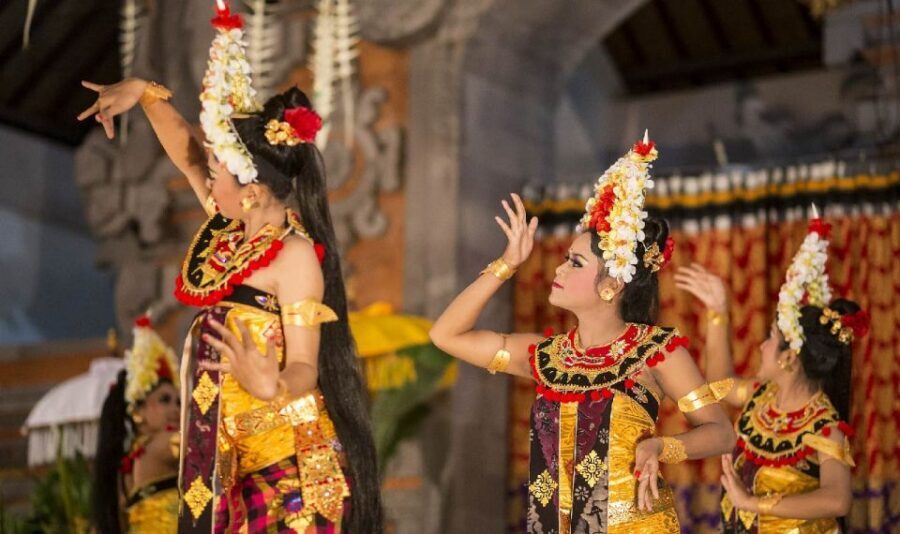
Ubud: Downhill Cycling with Volcano, Rice Terraces and Meal

Ubud: Downhill Cycling with Volcano, Rice Terraces and Meal - Mount Batur Views: The Part You’ll Remember in 10 Seconds

A bike day with real Bali won’t be this easy.

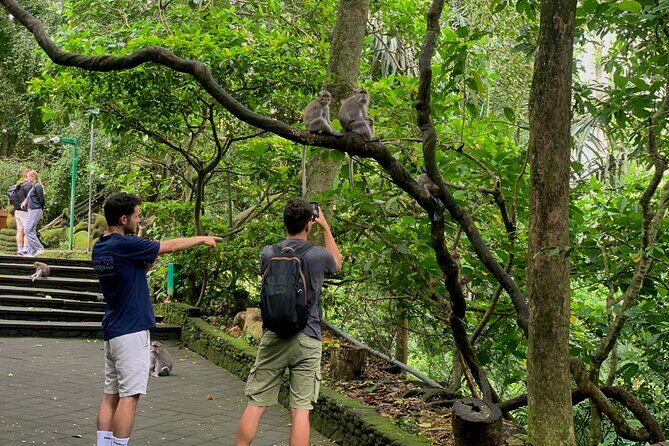
This Ubud experience pairs downhill cycling with volcano views, rice terraces, and hands-on cultural stops. You’ll start with the big Kintamani sights near Mount Batur, then head into countryside backroads where schools, family compounds, and temples shape the day. Guides such as Eddie, Agus, August, Dedy, and Dika help translate what you’re seeing into something you can actually understand.

Two things I really like: the ride is designed for an easy pace (even when you’re not a cyclist), and the small group of four keeps it personal. I also appreciate the practical inclusions—bike setup, bottled water, lunch, and insurance—so you don’t waste time micromanaging the day.

The main thing to consider is that lunch can vary by quality on the day. One person mentioned the buffet was only okay and a bit lukewarm, so I’d plan to treat it as a satisfying end to a long morning, not as a foodie destination.

Key Highlights That Matter

Ubud: Downhill Cycling with Volcano, Rice Terraces and Meal - Key Highlights That Matter

  • Small group (max 4 travelers) for a calmer, more personal day
  • Mostly downhill riding (about 18 km) with very little pedaling
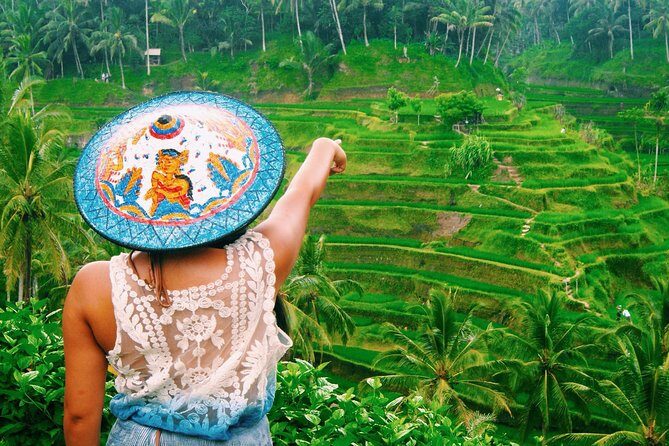
  • Mount Batur/Kintamani views paired with rice-field countryside roads
  • Culture stops like a local school, family compound, and temple
  • Lunch included at the end of the ride
  • Pickup in the Ubud area plus cycling gear and bottled water

From Ubud Pickup to Mount Batur at 8:30
Ubud: Downhill Cycling with Volcano, Rice Terraces and Meal - From Ubud Pickup to Mount Batur at 8:30
Start time is 8:30 am, and you’ll typically begin with pickup from the Ubud area. That matters because Ubud traffic can be chaotic, and you don’t want to burn your energy arguing with a scooter rental before a downhill bike day.

The drive up toward the Mount Batur / Kintamani area can take about an hour each way. If you’re sensitive to cooler morning air up high, bring a light layer—Bali mornings can feel chilly compared to the beach.

This is also one of those tours where the logistics are designed to keep you stress-free: you get a guide, cycling equipment, bottled water, and a plan that doesn’t require map-spotting. In a good way, it turns the day into “show up and ride,” which is exactly what you want on a cycling trip.

Mount Batur Views: The Part You’ll Remember in 10 Seconds
Ubud: Downhill Cycling with Volcano, Rice Terraces and Meal - Mount Batur Views: The Part You’ll Remember in 10 Seconds
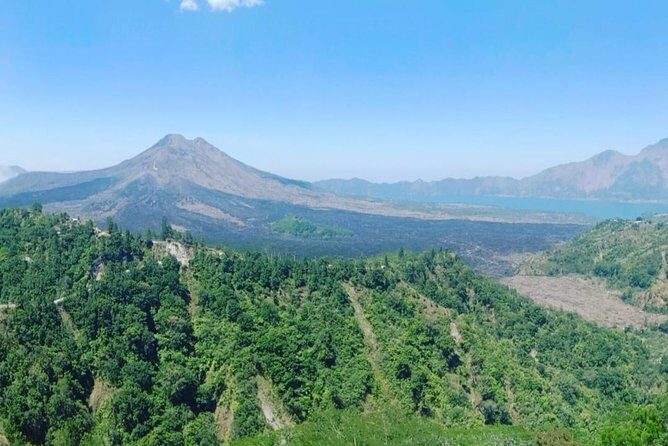
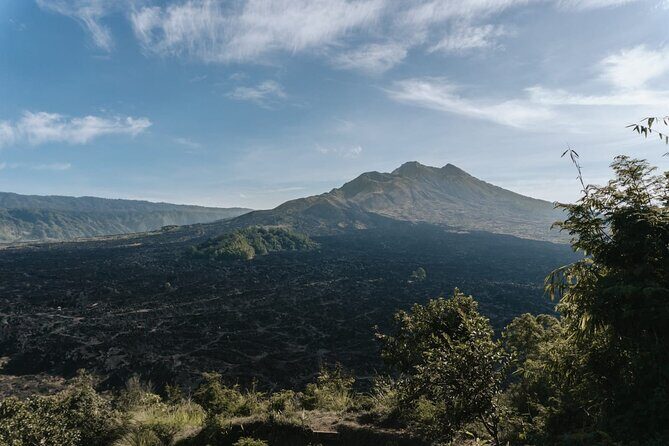
The Mount Batur stop is short—around 15 minutes—but it’s a high-impact moment. You’ll be in the Kintamani area looking out over the volcano caldera and the lake, with big sky and wide views that make the rest of the day feel worth it.

If your tour hits this part with clear weather, you’re going to get the “wow” moment people talk about. If it’s foggier, you’ll still get the volcanic setting, but the distance views may soften—so don’t build your hopes only around crisp photos.

Bring your eyes for the scale, not just your phone for the shot. This stop is where your brain clicks into why the rest of the day works: you’re getting a top-down transition from volcanic altitude to farming backroads.

The Downhill Ride Through Rice Fields and Backroads (About 18 km)

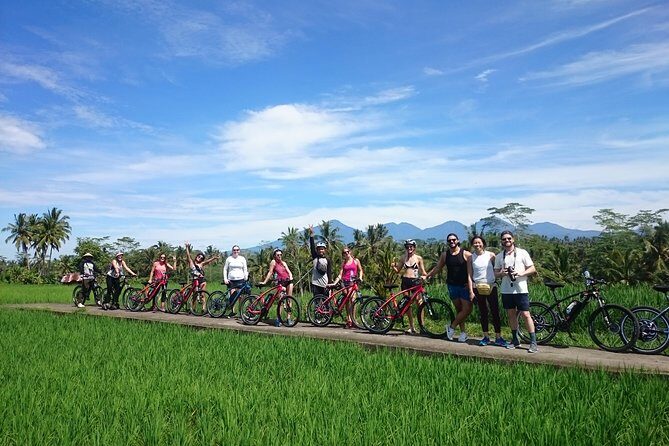
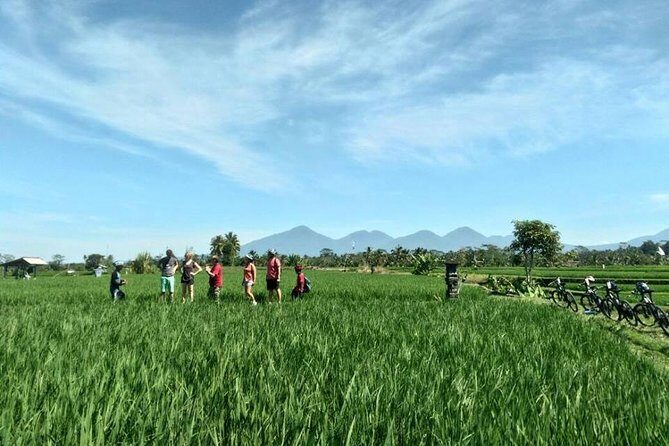
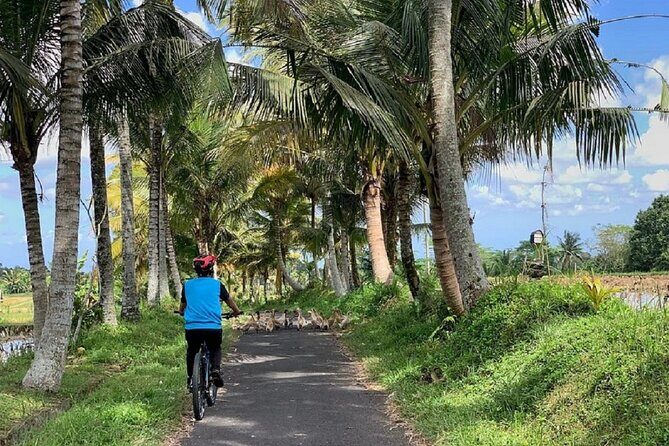
This is the core of the tour, and the good news is the word downhill is accurate. Riders describe it as mostly downhill—around 18 km—with very little pedaling, which makes it a realistic “any fitness level” day for many people.

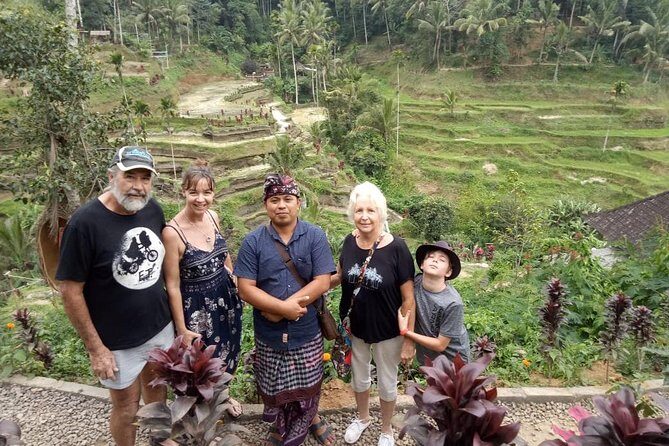
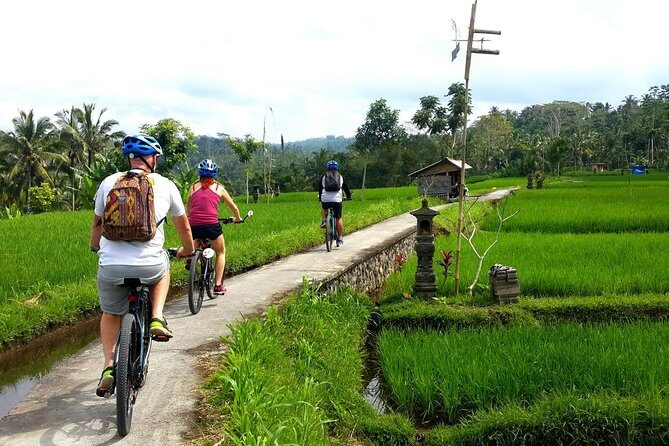
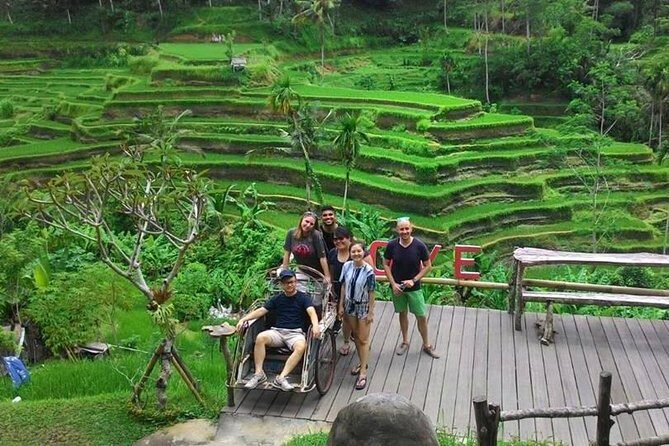
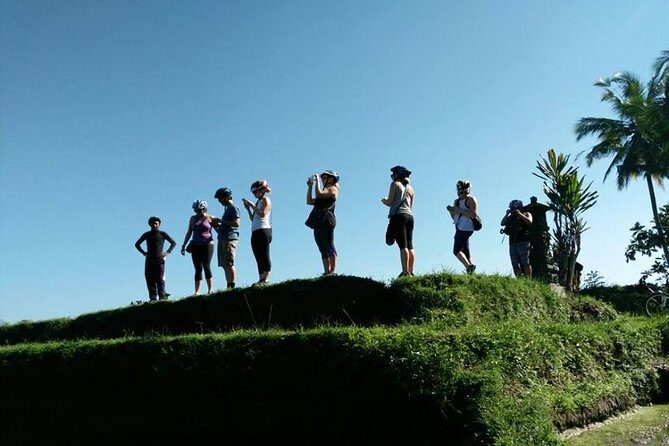
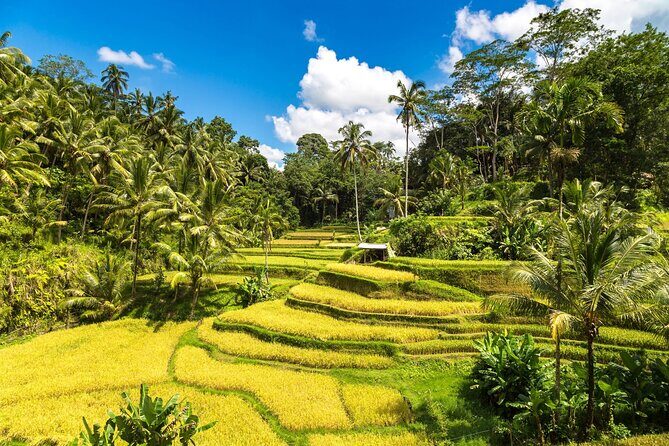
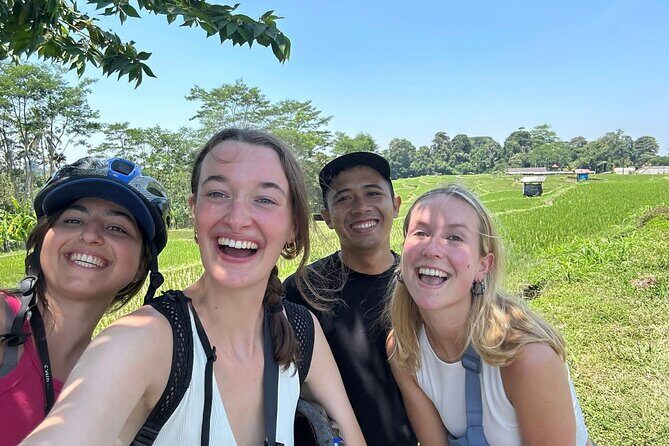
You’ll be on backroads moving past local farms, villages, and rice terraces. That’s not just scenic bragging—it changes the whole vibe. Car days in Bali can blur into traffic and checkpoints. By bike, you move at a human pace and you notice details: small shrines, farm work rhythms, and the way paths connect houses to fields.

Brake quality gets mentioned for a reason. A few people specifically praised the bikes and good brakes, which is smart to care about on a long descent. You’ll want a comfortable grip and stable footing, and the tour includes the cycling equipment so you’re not hunting for the right bike in the last hour.

Manukaya Culture Stops: School, Family Compound, Temple
Ubud: Downhill Cycling with Volcano, Rice Terraces and Meal - Manukaya Culture Stops: School, Family Compound, Temple
After the volcano viewing moment, the day shifts from big views to human-scale life. This is where the tour earns its “more than a bike ride” label.

In the Manukaya segment, you’ll visit a local school and get explanations about education and daily routines. A few guides (Eddie comes up often) are especially good at connecting what you see to how Balinese families think about community and childhood.

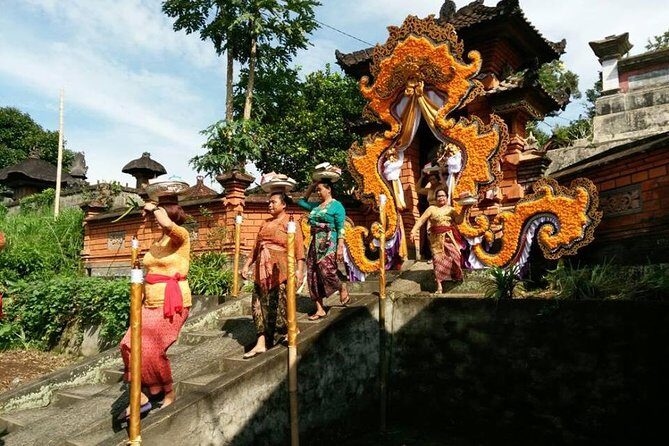
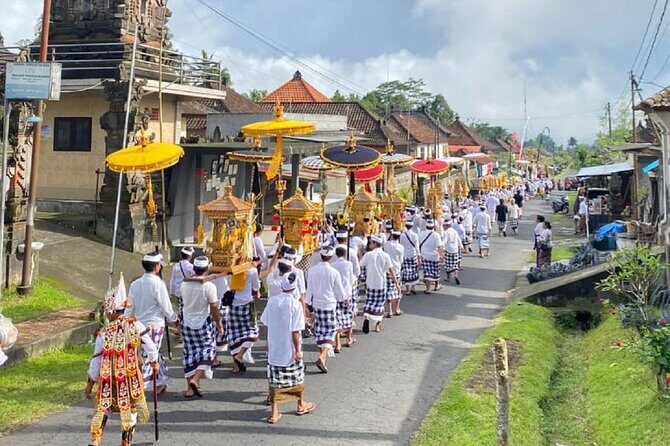
You may also stop at a family compound and a temple. One day can include a dramatic community moment like a traditional public cremation, depending on timing and local events. Even when it’s calmer, these stops give you a sense of how spiritual life and daily work overlap.

Here’s the practical tip: treat these as learning moments, not museum tours. Ask your guide what to look for. People who came away happiest were the ones who slowed down—asked questions, listened, and let the guide’s explanations turn random sights into real understanding.

Lunch in Banjar Laplapan: Simple, Included, Usually Satisfying
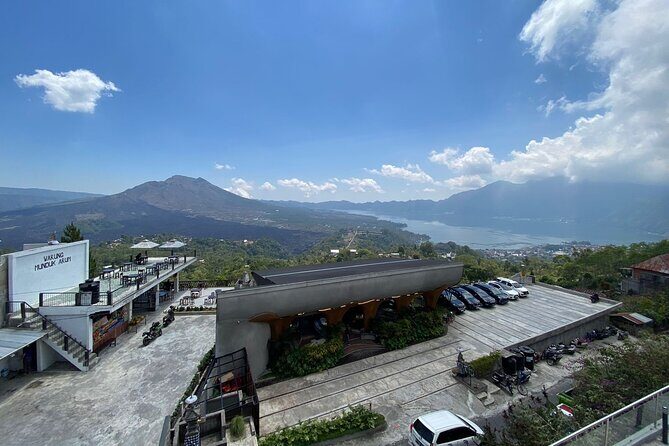
Ubud: Downhill Cycling with Volcano, Rice Terraces and Meal - Lunch in Banjar Laplapan: Simple, Included, Usually Satisfying
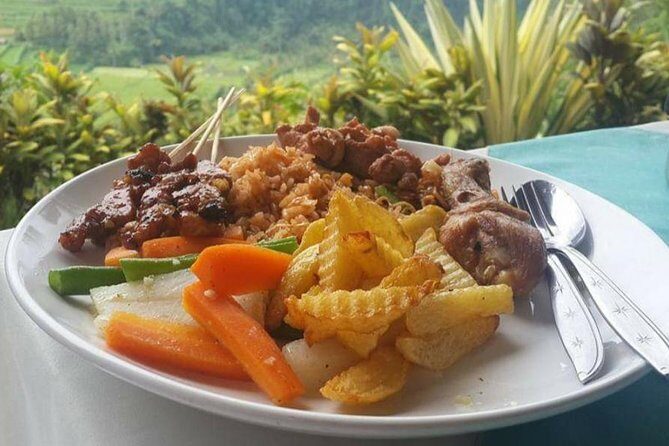
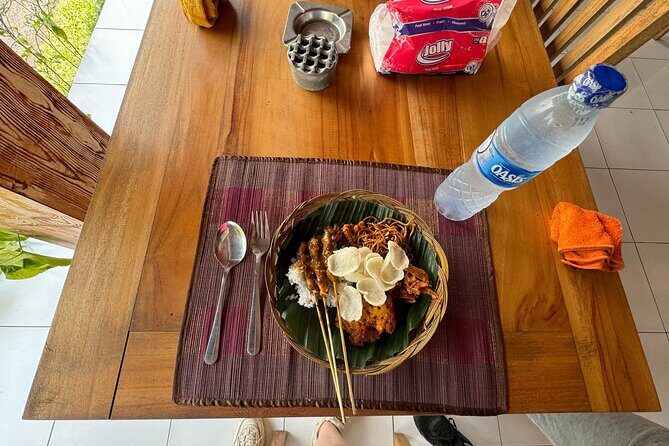
Lunch is built in at the end of the ride, around 1 hour. It’s included, and many people call it delicious, with a buffet-style setup and options for different dietary needs (one review specifically mentioned catered for coeliac).

That said, there’s a small risk lunch quality won’t match the rest of the day. One person noted the buffet tasted okay but was lukewarm. So I’d treat lunch as part of a full-value day, not as a guarantee of restaurant-level perfection.

The good angle: after 18 km of downhill and hours of stops, you’ll likely be ready for anything filling. You’ll also have water and recovery time before the drive back.

Guides and Pace: Why Small Group Size Makes It Work
Ubud: Downhill Cycling with Volcano, Rice Terraces and Meal - Guides and Pace: Why Small Group Size Makes It Work
This tour caps at four travelers, which changes everything. With fewer people, your guide can manage the pace, answer questions without rushing, and adjust stops based on comfort and photo time.

A recurring theme in feedback is that the ride is easy and the guides keep things moving at a good speed. People also mentioned guides being funny and patient with photos. That sounds small, but it’s huge on a day that mixes riding with culture stops—because the best parts are often the tiny moments you don’t want to snap through.

You might ride with guides including Dika (sometimes spelled Dike), Agus, August, Augus, Augustin, or Dedy, depending on your date. Regardless of the name, the tour style stays consistent: explain as you go, keep it understandable, and don’t pretend Bali is one flat script.

What to Pack (So the Day Feels Easy)
Ubud: Downhill Cycling with Volcano, Rice Terraces and Meal - What to Pack (So the Day Feels Easy)
You don’t need a suitcase for this, but a few things make life smoother:

  • Wear comfortable shoes with grip for wet roads and stops.
  • Bring a light rain layer. Heavy rain happened for at least one group, and things continued with adjustments.
  • Sunscreen isn’t included, so pack it if you’re prone to burn.
  • Alcoholic drinks aren’t included, so if you want one, plan to buy it separately when possible.

Also, don’t overthink fitness. The ride is mostly downhill, and people described it as doable even without cycling training. Still, your legs and balance matter—so if you’ve got knee issues or mobility limits, consider whether downhill control feels safe for you.

Price and Value: Why $36.66 Can Feel Like a Steal

Ubud: Downhill Cycling with Volcano, Rice Terraces and Meal - Price and Value: Why $36.66 Can Feel Like a Steal
At $36.66 per person, this tour can feel like strong value for Bali. Here’s why: you’re paying for more than “a bike ride.”

You’re getting an English-speaking professional guide, cycling equipment, bottled water, lunch, pickup from the Ubud area, and personal insurance up to IDR 2,500,000 for ages 5–65. That combination usually costs more when you try to piece it together yourself.

Also, small group size matters. You’re not sharing the day with a huge crowd of strangers, so the time with your guide is real time. The cultural stops get attention, and the ride doesn’t feel like a conveyor belt.

If you’re counting money and time, this is a rare deal: you get volcano views, countryside riding, and education/culture stops in a single half-day format.

Who This Tour Suits Best (and Who Should Rethink)

This tour fits you if you want:

  • Downhill cycling without technical bike skills
  • Volcano views plus rice terraces and village backroads
  • A smaller group day with time for questions and photos
  • A structured schedule that includes lunch and water

It may not be ideal if:

  • You expect a gourmet, high-end meal as the main event
  • You need a very strenuous workout (this is more “ride and explore” than “train and suffer”)
  • You want a long, uninterrupted ride with no cultural stops (this has multiple stops built in)

For families, it’s a strong contender. Ages aren’t listed for participants beyond the insurance range (5–65), but one family with teens described it as easy, fun, and even a highlight when teens weren’t excited at first.

Should You Book This Ubud Downhill Cycling Tour?

If you’re in Ubud and you want a day that feels like Bali, not just Bali on a schedule, I’d book it. The biggest win is the mix: volcano altitude views, then a mostly downhill ride through rice terraces and local backroads, with school/compound/temple stops that give context fast.

Choose it especially if you like your travel active but not punishing, and you want your guide to explain what you’re actually seeing. Just go in knowing lunch is included and usually good, but not always perfect, and pack for rain and sun since those details aren’t handled for you.

FAQ

What time does the tour start?

The start time is 8:30 am.

Is pickup included?

Yes, pickup is offered from hotels in the Ubud area.

How big are the groups?

The tour has a maximum of 4 travelers.

What’s included in the price?

It includes an air-conditioned vehicle, a professional English-speaking guide, cycling equipment, bottled water, lunch, and personal insurance (up to IDR 2,500,000 for ages 5–65).

Is the ride difficult?

It’s a downhill cycling tour and is described as easy, with many people noting very little pedaling.

Is lunch and water provided?

Yes. Lunch is included (with a meal stop at the end), and bottled water is provided. Alcoholic beverages are not included.

Ubud: Monkey Forest, Water Temple, Rice Terrace, Waterfall

One day, four Ubud icons. This tour is a smooth mix of wildlife and sacred sites, with an English-speaking guide keeping the day clear and comfortable, and a Monkey Forest stop that feels like a real-life scene. I especially like how your guide handles the temple etiquette and what to expect at Tirta Empul, and I love the convenience of hotel pickup in an air-conditioned car. One drawback to plan for: attraction entry can cost extra depending on the ticket option, and you’ll want extra clothes for Tegenungan Waterfall.

Ubud is only part of the story here. Starting from Seminyak, you’ll head into the hills, then move through temples and viewpoints on a schedule that usually works well for first-timers who don’t want to rent a scooter or figure out traffic on their own.

It’s also a day where your guide matters. Many guides in this program, like Romy, Santanu, Bayu, and Dama, get praised for adapting to your pace, explaining rules, and helping you make the most of each stop without rushing.

Key highlights worth your attention

Ubud: Monkey Forest, Water Temple, Rice Terrace, Waterfall - Key highlights worth your attention

  • Hotel pickup and air-conditioned comfort keep the long day from feeling like a slog
  • 700+ macaques at Monkey Forest plus practical guidance on how to act around them
  • Tirta Empul’s purification fountains with sarong support and clear temple etiquette
  • Tegalalang rice terraces in 40 minutes for a classic view without overcommitting
  • Tegenungan Waterfall time that’s ideal for a quick wash-off if you come ready

From Seminyak to Ubud: how the day actually feels (8–10 hours)

Ubud: Monkey Forest, Water Temple, Rice Terrace, Waterfall - From Seminyak to Ubud: how the day actually feels (8–10 hours)
This is built as a full-day highlights loop. Expect around 8 to 10 hours, usually starting with pickup from your hotel in the Seminyak area (and nearby Bali areas too, depending on where you’re staying).

The payoff is simple: you spend your time looking around, not navigating. The vehicle is air-conditioned, you get bottled water, and you won’t be dealing with parking or most logistics. You’ll also have a driver/guide who stays with your group through the day (not a quick in-and-out drop).

One small practical note: the day includes both higher-hill temple visits and a waterfall stop. That mix means you’ll likely feel it physically, even if the pacing is relaxed. Wear smart casual clothes, and plan to handle humidity and sudden mist—especially around the waterfall.

Monkey Forest Sanctuary: 700 macaques and the rules that keep you safe

Ubud: Monkey Forest, Water Temple, Rice Terrace, Waterfall - Monkey Forest Sanctuary: 700 macaques and the rules that keep you safe
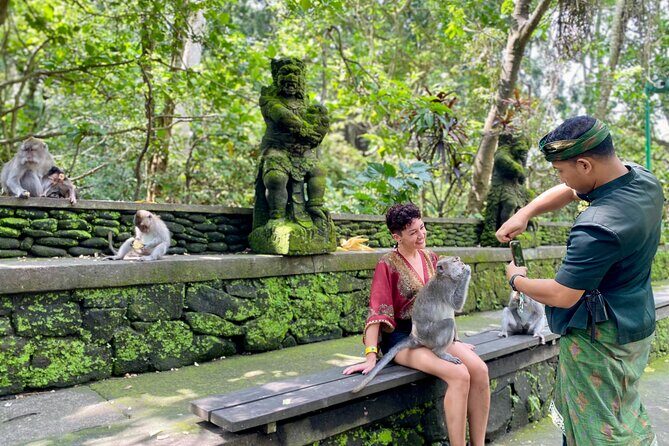
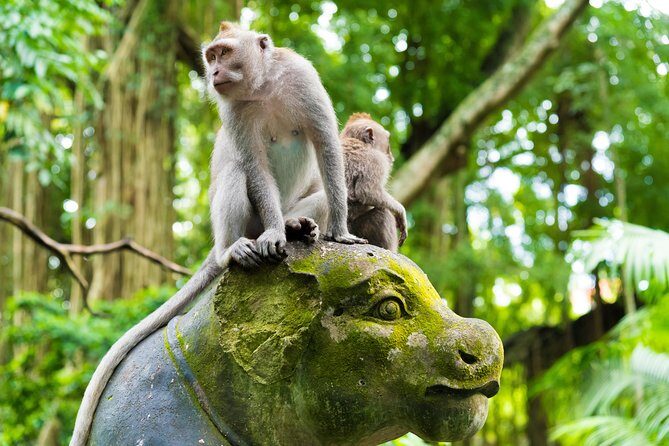
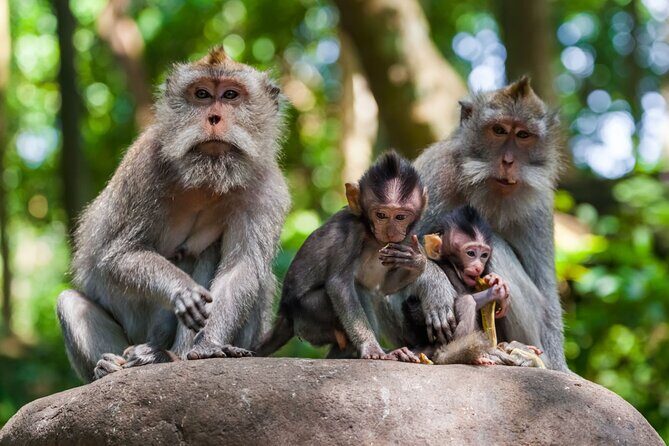
Stop one is Sacred Monkey Forest Sanctuary, a forest area about 12.5 hectares wide, filled with roughly 700 Balinese long-tailed macaques. This is one of those places where the wildlife is the main event, but the vibe depends heavily on how you behave.

Your guide helps you get the basics right:

  • follow signs and staff instructions
  • keep a respectful distance
  • don’t tease or chase the monkeys
  • watch your hands and personal items

Here’s the reality check: monkeys at these sites are curious and cheeky. The best way to enjoy it is to stay calm, hold your belongings securely, and treat the whole area like the monkeys have priority.

Time-wise, plan for about 1 hour here. That’s enough to see a lot of activity without feeling like you’re fighting a crowd—or spending the entire hour trying to take one perfect photo.

Tirta Empul holy water temple: sarong support and the 13 fountains ritual

Ubud: Monkey Forest, Water Temple, Rice Terrace, Waterfall - Tirta Empul holy water temple: sarong support and the 13 fountains ritual
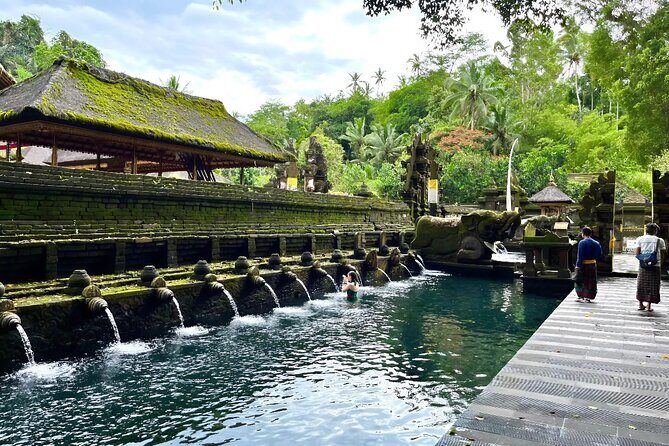
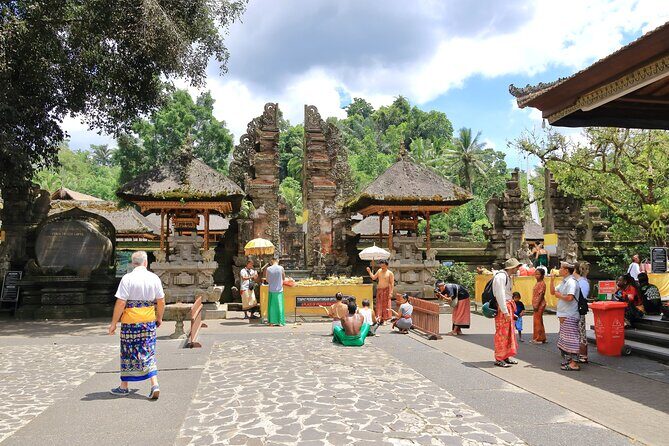
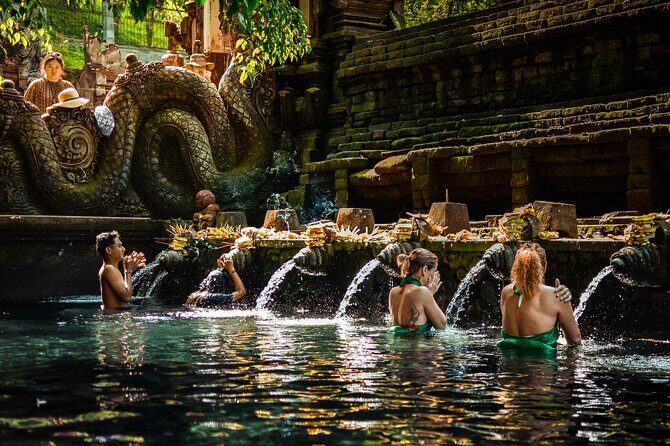
Next you’ll head to Tirta Empul Temple, known for ritual purification at water spouts. The temple is centered around 13 fountains, fed by a spring that’s tied to local Hindu legend.

This is the most “temple etiquette” stop of the day. You’ll typically get help with what to wear and how to participate appropriately, including using a Balinese sarong style item for temple entry. Your guide also explains what’s happening so you aren’t just standing there wondering why everyone is moving in certain ways.

A crucial rule to know: women who are menstruating are not allowed to enter the temple area. If that applies to you (or someone in your group), the guide should point you to the right way to handle the visit.

Also be ready for a sensory experience. Expect the sound of flowing water, the stone structures, and the carved details of mythical creatures that spout water into bathing pools. If you’re respectful and observant, it’s one of the most meaningful moments on the itinerary.

Time is about 1 hour. That’s enough to understand the ritual and watch calmly, even if you don’t fully participate in the water bathing.

Tegalalang rice terraces: how to get the best views in 40 minutes

Ubud: Monkey Forest, Water Temple, Rice Terrace, Waterfall - Tegalalang rice terraces: how to get the best views in 40 minutes
Then it’s on to Tegalalang Rice Terrace, one of Ubud’s most photographed scenes. The terraces are arranged on the hillside with carefully shaped rice fields that create layers of green when conditions are right.

You’ll have about 40 minutes here. That short window is actually a strength. It keeps the day moving, and it prevents you from burning time in a spot before you’ve seen the rest.

What to focus on:

  • the tiering as the hillside steps down
  • how the fields follow the contour of the land
  • the work and movement of farmers you might spot nearby

Practical tip: rice terrace viewpoints can be busy depending on timing. Keep your camera ready, but don’t camp in one spot—rotate a bit, and let your guide point out the easiest angles for photos without blocking others.

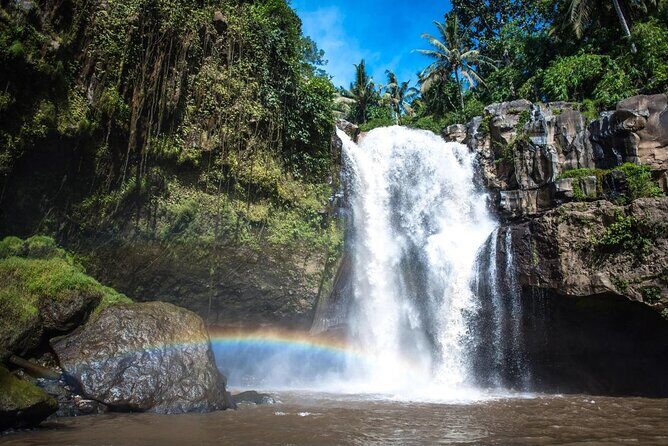
Tegenungan Waterfall: bring dry clothes and plan for slippery moments

Ubud: Monkey Forest, Water Temple, Rice Terrace, Waterfall - Tegenungan Waterfall: bring dry clothes and plan for slippery moments
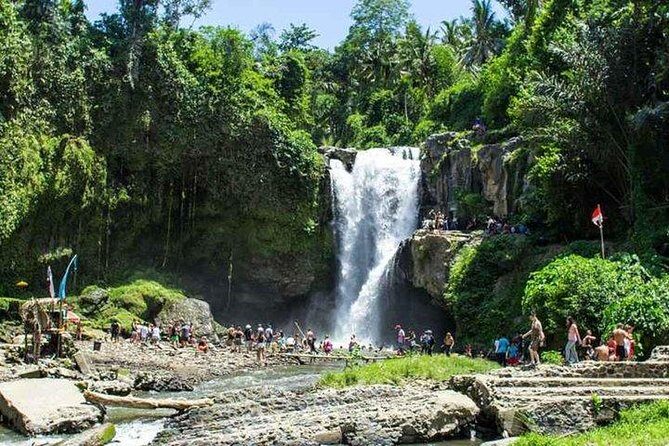
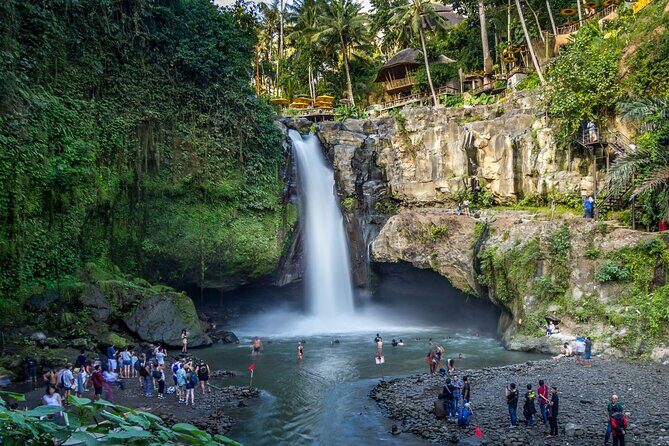
Final stop is Tegenungan Waterfall. This is a popular Ubud area waterfall, and it’s described as clean and clear water that you can use for washing or playing around.

You’ll spend about 1 hour here. The time is perfect for a quick soak-and-shoot visit, then moving on without feeling trapped in wet clothes for the rest of the day.

Two things matter for this stop:

  • Bring extra clothes (towel and change-dry clothing aren’t included)
  • Be mindful of footing when you get close to the water

If you want to actually enjoy the waterfall portion, plan for getting damp. Even if you don’t swim, a misty day or river spray can happen fast.

Guides make the difference: Romy, Santanu, Bayu, Dama, and more

Ubud: Monkey Forest, Water Temple, Rice Terrace, Waterfall - Guides make the difference: Romy, Santanu, Bayu, Dama, and more
This tour lives or dies on how your guide runs it. In this program, that part gets consistent praise.

Here’s what the best guides tend to do:

  • explain the background at each stop in plain language
  • share temple rules so you don’t accidentally do the wrong thing
  • adjust the schedule to your pace (extra breaks, more time at one site, less pressure)
  • help with photos and general “what should we do next?” flow

You might be guided by people like Romy, Santanu, Bayu, Dama, Ketut, Pande, Nyoman, or Wayan Budiarta (among others noted in guide feedback). The common thread is confidence on the ground and smooth communication, including when you’re traveling as a couple, with kids, or solo.

If you want a less stressful day, this is the big advantage of booking with an experienced guide instead of doing it all independently.

Price and value: why $28 might be a fair deal

Ubud: Monkey Forest, Water Temple, Rice Terrace, Waterfall - Price and value: why $28 might be a fair deal
The listed price is $28 per person with hotel pickup and a private vehicle for your group. That’s not just “transport.” You’re also getting parking fees covered as per the itinerary, fuel, bottled water, and an English-speaking driver/guide who stays with you all day.

Where value can change is the ticket setup:

  • Admission tickets are not included by default (Monkey Forest, Tirta Empul, rice terraces, and the waterfall).
  • There’s an option that includes entry fees for destinations.
  • There’s also an option that excludes all tickets, with destinations then paid by you during the tour for $16 per person.

So the real value question is simple: do you want the operator to bundle entry costs, or do you prefer to pay on-site yourself? If you like predictable total cost, choose the entry-fee option. If you’re comfortable handling ticket lines and payments, the lower ticket option can work.

Food is not included, but you can purchase meals during the day. One review noted that lunch was average, so don’t build your day around any one meal being amazing. Treat food as a flexible extra, not the centerpiece.

What to pack for this Ubud day (so you enjoy it more)

Ubud: Monkey Forest, Water Temple, Rice Terrace, Waterfall - What to pack for this Ubud day (so you enjoy it more)
The tour gives you bottled water, but it doesn’t give you everything you’ll want for comfort. I suggest packing like this:

  • your camera (you’ll want it at the terraces and waterfall)
  • extra clothes for the waterfall
  • a plan for temple dress (smart casual is the guideline)
  • keep personal items secure at Monkey Forest

Also, the day includes a temple visit with a dress expectation and sarong support. Still, smart casual clothing helps you avoid last-minute friction.

Small timing tips that make the day smoother

This itinerary moves fast enough to be a highlights tour, but slow enough to enjoy. To keep it smooth:

  • start your morning with water and a light breakfast (you may not eat until later)
  • assume the monkey area and temple area can slow the flow if it’s busy
  • keep your waterfall stop flexible: if the water feels too slippery or crowded, your guide can help you find a comfortable spot

And if you want to reduce stress, you’ll appreciate guides who build breathing room into the plan. Several guides in this program are praised for being patient and flexible.

Who this tour suits best

This is a great fit if you:

  • have limited time in Bali and want classic Ubud highlights in one day
  • don’t want to drive yourself in traffic
  • like a mix of wildlife, viewpoints, and culture
  • want an English-speaking guide to translate etiquette and meanings

It also works well for families and multi-age groups, since guides can slow down and explain rules clearly. If you’re traveling solo, having a guide who acts as a helper and photo-taker can make the day feel less lonely and more complete.

Should you book this Ubud highlights tour?

Book it if you want a guided day that hits the big Ubud stops—Monkey Forest, Tirta Empul, Tegalalang rice terraces, and Tegenungan Waterfall—without the hassle of planning transport, parking, and basic etiquette. At $28, the value is strongest when you’d rather spend your energy on seeing instead of figuring.

Skip it or adjust expectations if:

  • you’re on a tight budget and want to minimize extra entry fees (ticket options matter here)
  • you hate crowds at popular sites like Monkey Forest and the terraces
  • you’re not comfortable with getting damp at a waterfall unless you bring extra clothes

If you’re the type who likes structured sightseeing but still wants a guide to keep things calm, this is a solid “Ubud in a day” choice.

FAQ

How long is the tour?

It runs about 8 to 10 hours.

Do I get hotel pickup and drop-off?

Yes. Pickup and drop-off are included, with pickup offered in most Bali areas around Seminyak/nearby coverage.

Is there an English-speaking guide?

Yes. An English-speaking driver and guide accompany you throughout the day.

Are ticket entry fees included in the price?

Admission ticket costs are not included by default. You can choose an option that includes entry fees, or an option that excludes tickets (then you pay at the destinations for $16 per person).

What should I wear to the temples?

The dress code is smart casual. You’ll also get help wearing a Balinese sarong style item for temple visits.

Can women enter Tirta Empul during menstruation?

Women during menstruation are not allowed to enter the temple.

Is food included?

No. Food is available to purchase.

Is the tour private?

Yes. It’s private to your group, with only your group participating.

What if weather is poor?

This experience requires good weather. If it’s canceled due to poor weather, you’ll be offered a different date or a full refund. You can cancel up to 24 hours in advance for a full refund.

Balinese Ubud cooking school (9 Dish Cooking and Market Tour)

Balinese Ubud cooking school (9 Dish Cooking and Market Tour) - Meeting at Ubud Palace and the real flow of the 5-hour experience

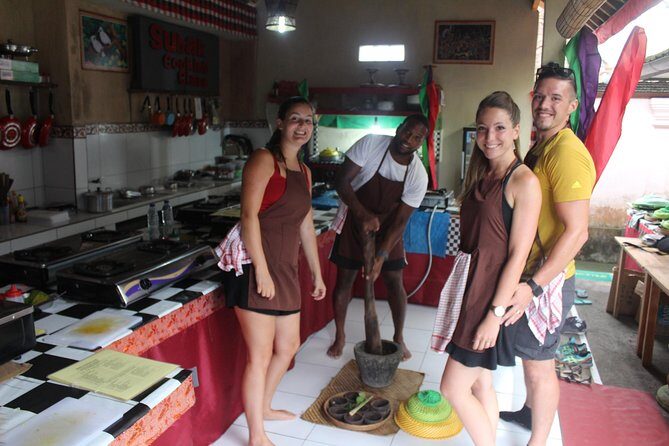
A great day starts with food. This Ubud cooking class takes you from a guided market stop to cooking nine Balinese classics, then eating everything you make. It is a smart way to learn flavor, not just recipes.

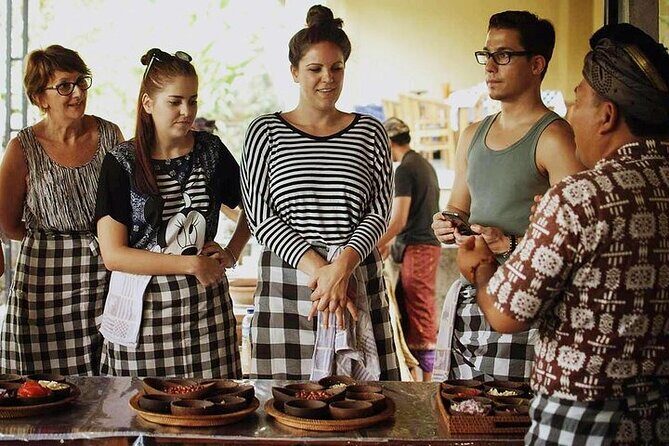
Two things I like a lot: you’re not stuck making one or two dishes. You cook a full set, and you leave with a take-home recipe copy. Also, the team is friendly and the vibe is relaxed, and you might cook with instructors known for step-by-step teaching like Chef Yogi.

One consideration: pickup is best if you are already in Ubud. If you’re farther out, you may need to pay extra transport, and it can mean more driving than you expect.

Key highlights you’ll feel right away

Balinese Ubud cooking school (9 Dish Cooking and Market Tour) - Key highlights you’ll feel right away

  • Cook 9 dishes, not a quick demo: soup, mains, sambal, spices paste, and dessert
  • Guided morning market tour: taste fruit and sweets, learn how ingredients are sold
  • Rice paddies visit: see how rice is grown before you eat with white rice on the side
  • Up to 14 people max: small enough for questions while cooking at your own station
  • Regular or vegetarian menu options: the same structure, swapped ingredients

Why an Ubud market-to-kitchen class beats a basic cooking tour

Balinese Ubud cooking school (9 Dish Cooking and Market Tour) - Why an Ubud market-to-kitchen class beats a basic cooking tour
If you’ve done a cooking class before, you might know the pattern: watch a demo, cook one dish, take a photo, go home hungry for the rest of the meal. This one is different because it’s built around Balinese cooking as a full system.

You start by learning how ingredients are chosen and used. That market time matters because Balinese dishes rely on fresh produce, spice blends, and specific textures. Then the kitchen time helps you connect the dots by making nine dishes yourself—so when you try cooking later, you understand what each element is doing.

The other win is pace. With a group that stays under 14 travelers, you’re not just standing around. You get hands-on help, and the staff and guide keep things moving without turning it into a factory line.

Meeting at Ubud Palace and the real flow of the 5-hour experience

Balinese Ubud cooking school (9 Dish Cooking and Market Tour) - Meeting at Ubud Palace and the real flow of the 5-hour experience
Most people meet near Ubud Palace and the activity ends back there. From there, the day is built to feel like a mini food outing, not a long bus ride and a short kitchen session.

Plan for about 5 hours total. Within that time, you’ll do:

  • pickup or group meet-up in the Ubud area (depending on your booking)
  • a market visit (morning option)
  • a rice paddies stop
  • time at a local cooking school where you prepare and cook nine recipes
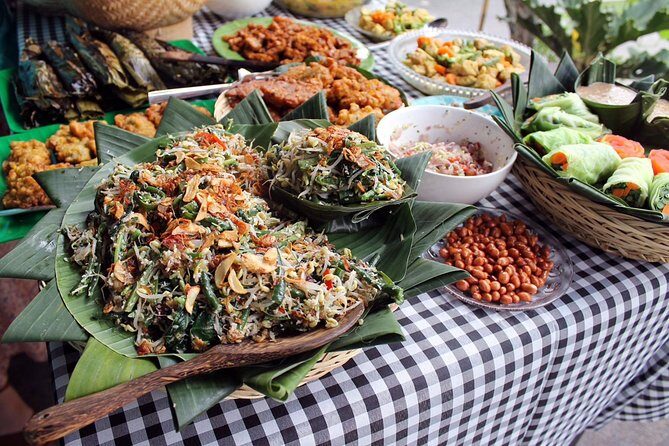
  • tasting along the way, then eating your finished lunch or dinner buffet

Also, you will want to bring a camera. The stops are visual, and the market is colorful in a way that reads like a real day-to-day place, not a staged attraction.

Morning Market Tour: fruit, spices, and how Balinese shopping works

Balinese Ubud cooking school (9 Dish Cooking and Market Tour) - Morning Market Tour: fruit, spices, and how Balinese shopping works
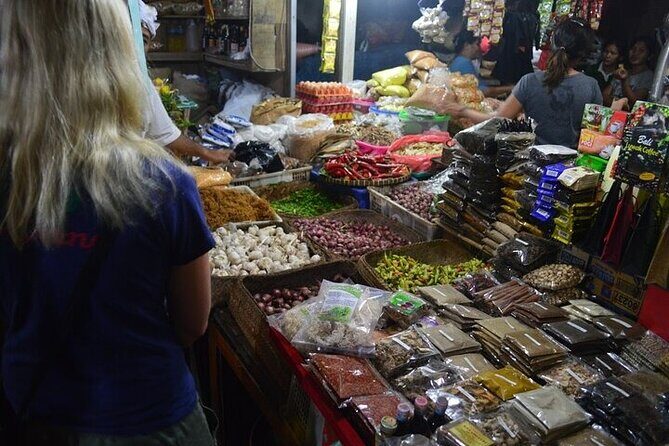
Choose the morning slot and you get the market experience as part of the program, not just a quick photo stop. You’ll go with a local guide who shows you what people buy and why certain items matter in Balinese cooking.

Here’s what that adds to your class:

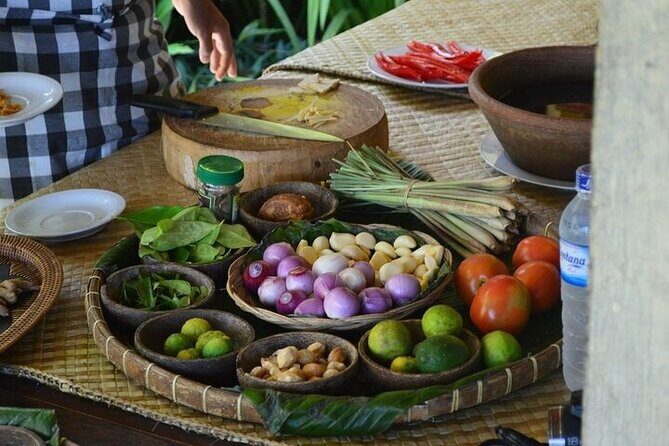
  • You learn what ingredients look like when they’re fresh.
  • You pick up names and uses for common items you’ll see again in the kitchen.
  • You get the chance to sample foods so your brain starts mapping flavors before you cook.

It also helps you understand that Balinese cuisine isn’t only about heat. It’s about layering. You’ll see how one ingredient can play multiple roles—base, aroma, acidity, crunch, or sweetness.

If you are the type who likes to know where your food comes from, the market visit is the foundation. If you just want to eat, it’s still worth it because it sets you up to recognize the flavors you’ll be cooking later.

Rice paddies and the local house stop: why it changes how you cook

Balinese Ubud cooking school (9 Dish Cooking and Market Tour) - Rice paddies and the local house stop: why it changes how you cook
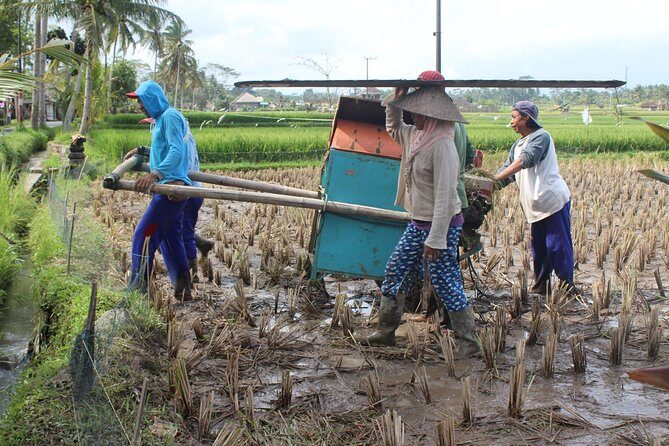
After the market, you’ll head to a rice paddies visit and a local Balinese house as part of the experience. This is not random sightseeing. It’s there to give you the context behind the meal.

Rice is the everyday partner for so many dishes in Bali, and seeing the fields helps you understand why rice shows up again and again—especially with the classic sides like white rice included with the main courses you cook.

The Balinese house stop also matters because it nudges you to view food through culture and daily life: offerings, cooking rhythms, and household roles. Even if you don’t consider yourself a culture traveler, it makes the recipes feel grounded instead of imported.

One practical note: the paddies and house visits are outdoors and can be hot. Bring water, and plan to go at a comfortable pace when the group slows down for photos.

The cooking stations: nine recipes, step-by-step help, and real hands-on work

Balinese Ubud cooking school (9 Dish Cooking and Market Tour) - The cooking stations: nine recipes, step-by-step help, and real hands-on work
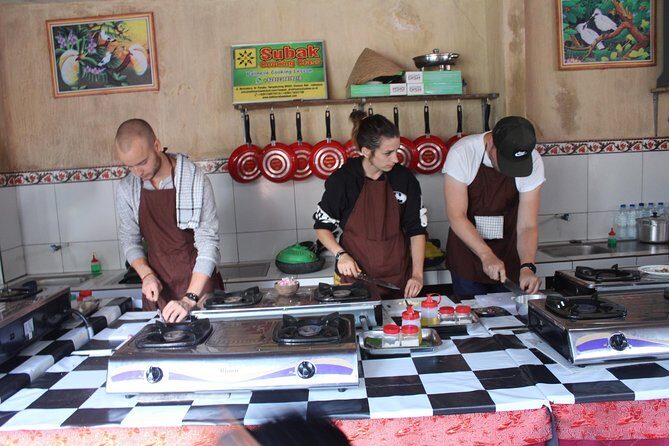
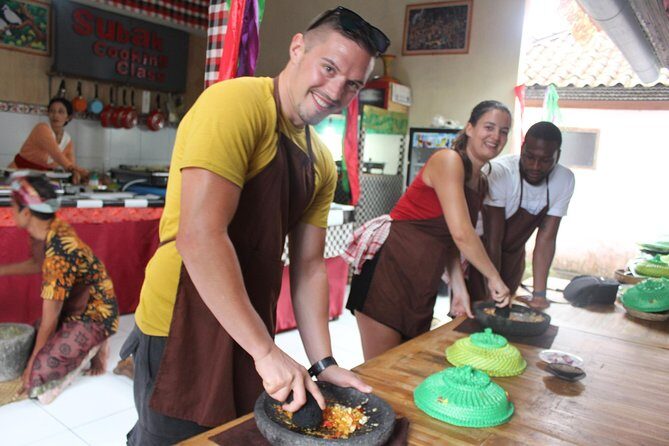
This is the heart of the tour. You’ll cook with a Balinese chef step by step, working through at least 9 Balinese recipes. You’ll have equipment and ingredients provided, including things you might not find easily at home.

A key detail: the teaching style is practical. The goal is that you can recreate the dishes later, not just survive the class meal. You also get copy recipes to take away, which is the difference between having a good day and having a reason to cook again.

The Regular menu dishes (what you cook)

You’ll prepare this set, with the main courses served with white rice:

  • Sayur Bali (Balinese vegetable soup)
  • Ayam santan bumbu Bali (fried chicken with coconut milk)
  • Tempe manis (sweet fried tempe)
  • Sate lilit Bali (chicken satay)
  • Pepes Ayam (grilled/steamed chicken in banana leaf)
  • Lawar Bali (mix vegetable with Balinese spices)
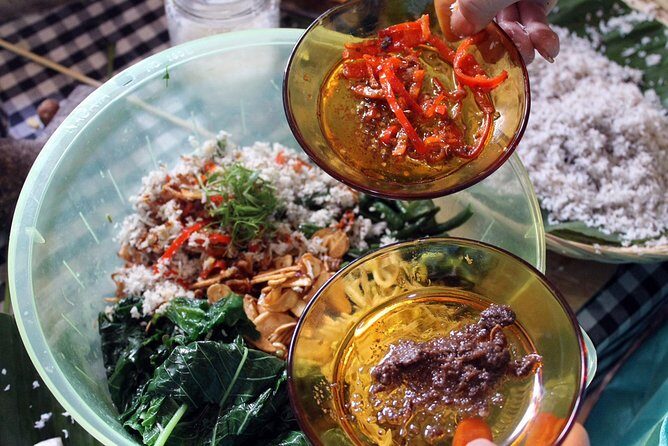
  • Sambal Matah (raw spices with coconut oil)
  • Base Gede (basic spices paste)
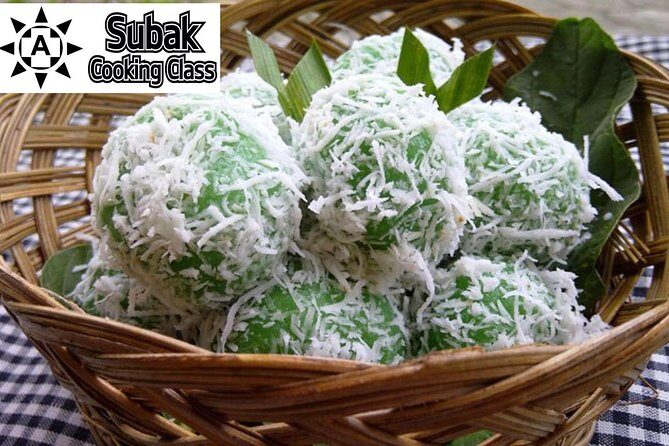
  • Klepon cake (sweet sticky flour dessert)

Vegetarian menu swaps (same structure)

If you choose vegetarian, you’ll still follow the same recipe arc, with plant-based versions:

  • Sayur Bali (Balinese vegetable soup)
  • Tofu bumbu Bali (fried tofu with basic sauce)
  • Tempe manis (sweet fried tempe)
  • Sate tempeh (Balinese soybean cake skewers) with peanut sauce
  • Pepes Tofu (grilled or steamed tofu in banana leaf)
  • Lawar Bali (vegetable mix with Balinese spices)
  • Sambal Matah
  • Base Gede
  • Klepon cake

Plus main courses served with white rice.

If you love cooking, you’ll appreciate that the set covers multiple techniques: frying, pounding or combining spice bases, handling sambal, working with banana leaf, and making dessert. This is why the class feels like more than one lesson.

Lunch or dinner buffet: tasting as you go, then eating the finished plates

Balinese Ubud cooking school (9 Dish Cooking and Market Tour) - Lunch or dinner buffet: tasting as you go, then eating the finished plates
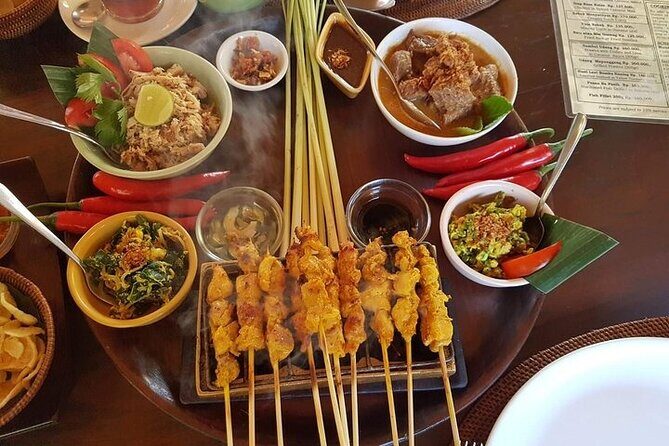
You’ll do food tasting during the process, then you eat a buffet lunch or dinner made from what you cooked.

That matters because you’re not guessing if the recipe worked. You get immediate feedback. You can also see how the different dishes relate on the plate—soup with fried items, sambal as the punch, spiced bases tying everything together, and rice as the neutral partner.

There’s also often food left over, and you can usually take it with you (pack-up is commonly requested by guests). That’s a nice bonus when you’re full but still want tomorrow’s snack.

One tip: go a little hungry. The market samples and the kitchen tasting can add up fast. If you show up with a big breakfast, you may end up fighting your way through the buffet.

What makes the staff style feel different

Balinese Ubud cooking school (9 Dish Cooking and Market Tour) - What makes the staff style feel different
The team approach is part of the value here. People consistently talk about a friendly, welcoming atmosphere and an instructor who keeps things clear and fun. You may meet instructors and guides such as Wayan, Tata, Yogi, Putu, or Gus—not every name will apply to every day, but they reflect the kind of team culture the school is known for.

Practically, that means:

  • you can ask questions without feeling rushed
  • you get explanations in plain English
  • the workstations feel organized enough to keep you cooking

Even better, this is designed for couples and families as well as solo travelers. You’ll be at your own station, so it’s not a lecture with props.

Price and logistics: is $58 a fair value for what you get?

Balinese Ubud cooking school (9 Dish Cooking and Market Tour) - Price and logistics: is $58 a fair value for what you get?
At about $58, you’re paying for a lot of real time: market visit, paddies stop, cooking practice for nine dishes, tasting, and the meal itself. You’re also getting recipe copies and kitchen equipment.

If you price it like this, the value looks solid:

  • You pay for a guided food experience with multiple stops
  • You get multiple cooking lessons in one day
  • You eat what you cook, with a buffet included
  • You leave with recipes, not just memories

Where it can cost you extra is transportation. Pickup is included only for the Ubud area. If you’re staying outside Ubud, additional charges can apply, and the team asks that you bring cash for extra transport. If you’re planning a longer day trip from farther away, factor that into your budget and time.

Tips for booking and doing better than average in class

A few small choices can make your experience smoother.

  • Pick your menu option early: choose regular or vegetarian when booking so the kitchen can prep your set.
  • Bring a camera and expect photos at multiple stages: market, flower offerings in the broader local rhythm, and rice paddies viewpoints.
  • Use the market stop to learn names: don’t just taste. Ask how ingredients are used in the dishes you’ll cook later.
  • If you want a calmer experience, arrive rested: the class is active, and you’ll be cooking continuously through multiple recipes.
  • Wear normal, comfortable clothes suited for a hot day and kitchen work. You’ll be told you need a normal uniform; it’s usually practical, not fancy.

Should you book the Balinese Ubud 9-Dish Cooking and Market Tour?

Book it if you want a real Balinese cooking day where you do the cooking, not just watch it. The combination of market + rice paddies + nine dishes is a strong fit for food lovers who like to understand ingredients before the stove.

Skip it or choose a different option if you are very sensitive to long transfers or if you’re staying far outside Ubud and don’t want extra transport costs. Also, if you expect to start completely from scratch with zero prep for ingredients, this style may feel more guided than you want—most classes like this prioritize getting you to the finished meal safely and on schedule.

If you can be flexible about timing and you come ready to cook, this one is easy to recommend.

FAQ

How long is the Ubud cooking class with 9 dishes and market tour?

It runs about 5 hours (approximately).

Where does the tour start and end?

It starts at Ubud Palace and ends back at the meeting point.

Is pickup offered?

Pickup and drop-off are included only for the Ubud area. If you stay outside Ubud, additional charges may apply.

What is the price?

The price is $58.

How many dishes will I cook?

You will prepare at least 9 Balinese recipes.

Does this experience include a market visit?

Yes. The morning option includes a local market visit with a guide.

Do I have a choice of menu?

Yes. You can choose regular or vegetarian.

What kinds of dishes are on the menu?

The regular menu includes items like Sayur Bali, Ayam santan bumbu Bali, Sate lilit Bali, Lawar Bali, Sambal Matah, and Klepon cake. The vegetarian menu swaps in tofu and tempeh versions while keeping the same overall structure.

What’s included in the price?

Included: pick up/drop off in Ubud, mineral water, kitchen equipment, recipe copy, food tasting, lunch or dinner buffet, local guide/host, market visit (morning), and rice paddies visit.

What should I bring?

Bring your booking reservation (shown on arrival), a camera, and cash for any extra transport costs if you stay outside Ubud.

PRIVATE Authentic Balinese Cooking Class in Ubud at Putu’s Home

PRIVATE Authentic Balinese Cooking Class in Ubud at Putu's Home - Price and Logistics: Is $75 Worth It?

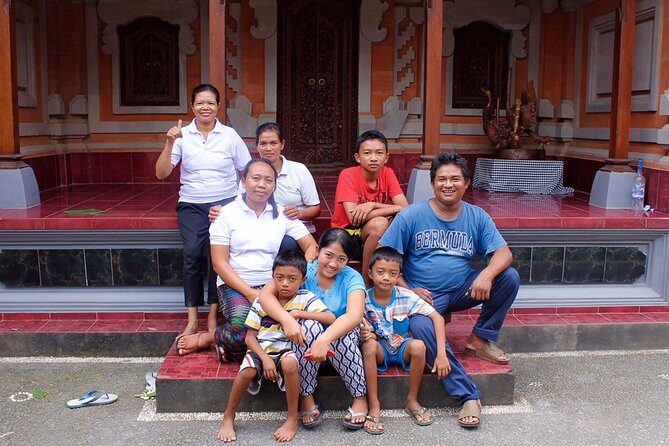
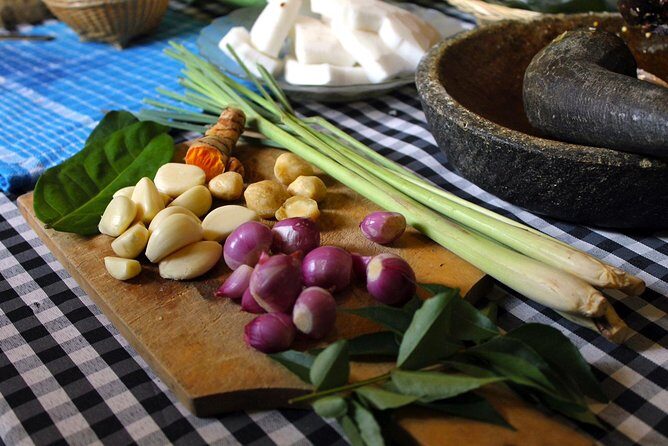
Smelling spices is one of the fastest ways to start Bali. In Ubud, you cook in Putu’s family home with her husband, grandparents, and children, not in a classroom. You’ll grind spices, chop on simple boards, and learn why certain ingredients matter before you sit down to eat everything you made.

I especially love the farm-to-table feeling. Many of the ingredients come from Putu’s own gardens and the rice her grandparents grow, so the food tastes like it has a story attached. One small consideration: the kitchen setting is basic and mostly outdoor, and the drive from central Ubud can add time, so plan your day with that buffer.

If you choose lunch or dinner, the experience still runs at an unhurried home rhythm. You’ll finish with a Balinese feast, plus a little local alcohol, and you’ll leave with recipes to try back home. It’s a private setup, so you can ask questions and adjust spice levels as you go.

Key points to know before you go

PRIVATE Authentic Balinese Cooking Class in Ubud at Putu's Home - Key points to know before you go

  • Private and hands-on, not a show: You cook alongside Putu and her family, with guidance at each step.
  • Five dishes, built from scratch: Expect spice work, chopping, grilling/steaming, and assembly like banana-leaf parcels.
  • Farm ingredients and family rice: You’ll taste produce and rice grown by Putu’s household.
  • Culture mixed into cooking: You learn about Balinese Hindu household life, including temple areas, in plain language.
  • Food comes with leftovers: People often leave with extra food packed to take away.
  • Transport is included only from Ubud: Pickup and drop-off are included from Ubud hotels; outside Ubud costs extra.

Why Putu’s Ancestral Compound Feels More Like Family Than Tour Time

PRIVATE Authentic Balinese Cooking Class in Ubud at Putu's Home - Why Putu’s Ancestral Compound Feels More Like Family Than Tour Time
The setting is the first big win. You’re invited into a traditional Balinese compound home, where different spaces have meaning. Putu walks you through the layout—especially the family temple areas—and explains what you’re seeing in everyday terms. It’s not a museum talk. It’s the logic of how people actually live.

This is also a multigenerational household. You’ll meet Putu, her grandparents, her husband, and their children. That matters because the cooking isn’t treated like a performance. It’s treated like daily life—passed down, practiced, corrected, and shared.

In a lot of Bali cooking classes, you learn recipes. Here, you learn context. Putu shares stories behind the food, including the spice choices her family makes and the role of traditional Balinese ingredients. Some of what you hear goes beyond flavor into traditional uses—like the healing properties of certain ingredients—paired with where they come from.

The vibe is warm and funny. Several people mention Putu’s patient, encouraging teaching, which helps a lot if your cooking skills are only average. Also, it’s private—so if you want to go slower, ask questions, or take notes, you can.

Price and Logistics: Is $75 Worth It?

PRIVATE Authentic Balinese Cooking Class in Ubud at Putu's Home - Price and Logistics: Is $75 Worth It?
At $75 per person, the value comes from three places: privacy, instruction, and what’s included with the meal.

You get a private cooking lesson (not a big group classroom), plus a homecooked meal built from the dishes you prepare. You also get:

  • Round-trip transport from your Ubud hotel
  • Local alcohol (typically 1–2 glasses)
  • Non-alcoholic drinks
  • Taxes and fees included
  • Gratuities included
  • A mobile ticket system

That combination is what keeps it from feeling like you’re paying mostly for access. You’re paying for time with Putu’s family kitchen and their food culture.

The one pricing catch is geography. If you’re staying outside Ubud, transport costs extra. If you’re deep in the countryside, make sure you’re comfortable adding that extra ride time and expense.

The other “logistics value” point: you’re not driving yourself through traffic or hunting for a meeting point. Door-to-door pickup and drop-off is included for Ubud hotels, and that alone can make the whole day feel easier.

Timing Reality: Around 3 Hours Total, Not a Long Day

The total block is about 3 hours, but the actual cooking time is roughly 1.5 hours. That’s a good setup for two reasons.

First, you can fit it into your trip without feeling like you lost half a day. Second, the remaining time is what you need: the welcome, the farm/compound walk, and the meal at the end.

A few practical notes from people’s experiences:

  • The class works for both lunch and dinner schedules.
  • If you’re booking at night, the cooking area can be well-lit, so you’re not stuck guessing what you’re doing.
  • The kitchen process includes traditional methods like steaming rice and using hands-on spice prep, so the pace is more “methodical” than “rushed.”

Plan your day with a buffer for driving. One review notes the cooking location is about 40 minutes from central Ubud. That’s not a deal-breaker, but it matters if you booked another reservation right after.

What You’ll Cook: Five Balinese Dishes Built Around Spices

You’ll cook five authentic dishes, and the exact menu can vary by season. That means you should treat it like a rotating menu based on what’s freshest—not a fixed checklist.

Still, you can expect dishes in the range of:

  • Grilled fish
  • Banana leaf parcels
  • Curry-style preparations

What makes the cooking feel real is the process. Putu doesn’t just hand you ingredients. You’ll do the work:

  • Chopping on wood blocks with small cleavers
  • Grinding spices by hand (you may even work it into satay-style prep)
  • Cooking over simple equipment like a basic cooktop, and traditional steaming methods for rice

One of the best moments is when the kitchen starts smelling like the dish you’re making. The spice work is front and center, and Putu explains how she expects flavors to combine. Several people mention she lets you adjust spice level, which is handy if you’re not trying to “eat fire for fun.”

Vegetarian and vegan options

Vegetarian and vegan options are available. If dietary restrictions are important to you, tell Putu at booking. The class isn’t presented as a one-size-fits-all menu.

Allergies and preferences

If someone in your group has allergies or strong preferences, you should advise at booking. This is especially important for spice mixes and ingredients that may vary with the day’s produce.

The Feast: Rice, Garden Produce, and a Small Pour of Local Alcohol

PRIVATE Authentic Balinese Cooking Class in Ubud at Putu's Home - The Feast: Rice, Garden Produce, and a Small Pour of Local Alcohol
After cooking comes the part most people remember: sitting down to a Balinese feast with everything you made.

You’ll eat their homegrown rice, cultivated by Putu’s grandparents. That detail matters because it frames the meal as family agriculture, not just food styling. People also mention tasting fruits from the garden, with one example being mangosteen, which gives you a sense of the orchard life behind the cooking.

The meal is paired with drinks:

  • Local alcohol, typically 1–2 glasses
  • Non-alcoholic beverages

This isn’t a “party” vibe. It’s a simple pairing. Think of it as a small cultural touch—one more reason the meal feels lived-in rather than staged for tourists.

One practical bonus: people often mention there’s enough food for leftovers, and it may be packed to take away. If you’re the type who likes having a tasty breakfast the next day, this can be a nice payoff.

Cultural Lessons You’ll Actually Use in Conversation

PRIVATE Authentic Balinese Cooking Class in Ubud at Putu's Home - Cultural Lessons You’ll Actually Use in Conversation
This is where the class quietly becomes more than cooking.

Putu shares what different spaces in a traditional Balinese home mean, especially around the temple areas. You’ll learn the basic household logic—why certain parts exist and how they’re used—without getting lost in academic terms.

You also hear about the ingredients beyond “this tastes good.” Putu explains:

  • what spices she uses and why
  • traditional Balinese ingredients and their healing properties
  • how much of the food supply comes from the family farm

That kind of explanation sticks because you taste what it’s saying. It’s not just a lecture. You’re building the dish, then you understand why that ingredient was chosen in the first place.

And yes, there’s humor. Multiple reviews highlight Putu’s personality and teaching style—friendly, patient, and relaxed—so the cultural part doesn’t feel heavy.

Comfort, Cleanliness, and the Real Kitchen Setup

Don’t expect a glossy demo kitchen. You’ll likely be working with a simple setup—sometimes outdoor, sometimes in a garden area. People mention the kitchen can be outdoor and clean, with ingredients laid out and ready.

Two practical comfort points show up repeatedly:

  1. The workspace is organized, so you’re not fighting for counter space.
  2. The process is taught clearly enough that even people with moderate cooking skills can keep up.

Also, communication is practical. One review notes Putu uses WhatsApp to communicate, so having it installed helps you coordinate smoothly.

If you get cold easily, bring a light layer. If you hate insects, bring basic repellant. The class is tied to a rural home setting, so you’re stepping into nature more than into a hotel.

Who This Cooking Class Suits Best

This experience fits best if you want real home cooking and a personal connection to Bali beyond souvenir shops.

It’s a strong match for:

  • Food lovers who like learning techniques, not just recipes
  • People who enjoy farm-to-table stories
  • Anyone curious about Balinese Hindu household life
  • Families or mixed-age groups, since the cooking is handled with patience and everyone can participate

It may be less ideal if you’re looking for:

  • A polished “chef show” with quick plating and zero mess
  • A fully indoor, modern kitchen experience
  • A super fast, factory-style workshop

Given the private format, you get more flexibility than most group classes. But it’s still hands-on cooking in a real home setting.

Should You Book Putu’s Private Balinese Cooking Class in Ubud?

Yes, if you want a private lesson that feels like you were invited in, not like you bought a ticket and sat in the back. The mix of five hands-on dishes, farm-grown ingredients, and temple/culture context is the reason this class gets consistently high ratings.

Book it especially if you care about value: private transport from Ubud, meal included, local alcohol included, and recipes to take home. At $75, it’s not just “cheap,” it’s balanced against what you’re actually getting.

Think twice only if you’re staying well outside Ubud and the extra transport charge will make it feel too pricey. Also, if you’re trying to pack every minute of your day, remember that driving time can be around 40 minutes each way from central Ubud.

If you want one meal in Bali that you can explain to people back home, this is it.

FAQ

Where does the cooking class take place?

It’s held at Putu’s home in Ubud, in her traditional compound home and garden area.

How long is the experience?

The class cooking portion is about 1.5 hours, and the overall experience is around 3 hours.

How many dishes will we cook?

You’ll prepare five authentic Balinese dishes.

Is this experience private?

Yes. It’s a private, personalized experience, and only your group participates.

Does the price include transportation?

Transport round-trip from your Ubud hotel is included. If you’re outside Ubud, there’s an extra charge for transportation.

Is lunch or dinner offered?

Yes. You can choose between lunch or dinner based on your schedule.

Are vegetarian or vegan options available?

Yes. Vegetarian and vegan options are available if you advise at the time of booking.

Is local alcohol included?

Local alcohol is included, typically 1–2 glasses, along with non-alcoholic beverages.

Do I get recipes to take home?

Yes. You’ll take home the recipes from the class.

Can I cancel for a full refund?

Free cancellation is offered. You can cancel up to 24 hours in advance of the experience for a full refund.

Ubud Hot Springs and Waterfall Private Guided Tour

Ubud Hot Springs and Waterfall Private Guided Tour - Toya Devasya Hot Springs: The Relaxation Anchor of the Day

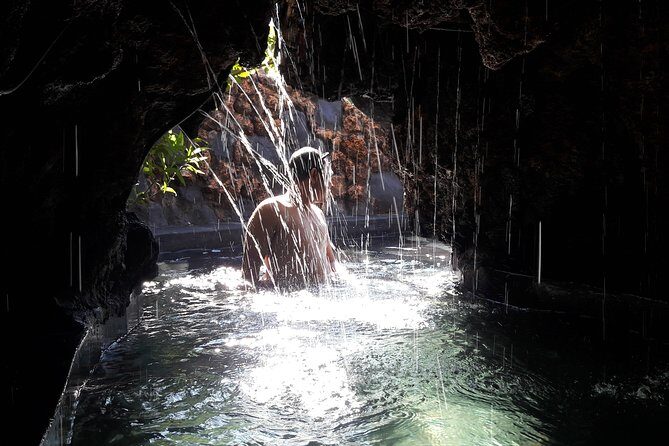
A long day, packed with Bali flavor. This private tour strings together volcanic hot springs with classic Ubud scenery, plus a waterfall finale, all with door-to-door pickup so you skip the stress of self-driving. It’s also built around big viewpoints: lunch overlooks Mount Batur, and the hot spring route gives you those wide, lake-and-volcano views. I especially like the way the day is run by guides such as Ketut, Adi, and Moyo, who tend to explain what you’re looking at and help keep the pace moving.

Two things I really like: first, the hot springs stop is the main event, not a quick dip—people come away feeling calm and recharged. Second, the Ubud portion mixes animals and nature in a way that feels practical for a first time in the area, from the Sacred Monkey Forest Sanctuary to the Tegalalang rice terrace. One consideration: the itinerary is ambitious, and even with a private vehicle, Bali traffic can make the day feel longer and tighter at the edges.

Key Things to Know Before You Go

Ubud Hot Springs and Waterfall Private Guided Tour - Key Things to Know Before You Go

  • Toya Devasya Resort & Spa hot springs with a volcano-and-view setting, built for relaxing rather than rushing
  • Mount Batur buffet lunch with multiple Indonesian favorites and a lake-and-volcano viewpoint
  • Sacred Monkey Forest + Ubud highlights in one day, so you don’t waste time picking stops
  • Tegalalang rice terrace and Happy Swing Bali for classic photos plus some light walking
  • Tirta Empul purification temple for a more spiritual pause between water-and-nature stops
  • Tegenungan Waterfall as a memorable finish, but expect stairs and bring footwear for wet rock

Door-to-Door Private Transport From Seminyak (and Why It Matters)

Ubud Hot Springs and Waterfall Private Guided Tour - Door-to-Door Private Transport From Seminyak (and Why It Matters)
The biggest practical win here is simple: you’re picked up at your hotel and returned to it, with air-conditioned MPV/minibus transport. That matters in Bali because the time cost of driving yourself adds up fast—parking, wrong turns, and scooter detours get old quickly. With this setup, you can focus on the sights instead of the navigation.

This is also listed as a private tour, meaning only your group rides together. That tends to make a difference at the busy stops. You can move at your group’s pace, and your guide can usually answer questions without the whole “herd management” feeling that comes with bigger bus tours.

The day is about 10 hours approx. (and in real life, traffic can stretch that). So while it’s framed as a relaxing day tour, think of it as relaxing inside a packed schedule. In other words: enjoy the calm at the hot springs, but don’t expect leisurely free time at every single stop.

Toya Devasya Hot Springs: The Relaxation Anchor of the Day

Ubud Hot Springs and Waterfall Private Guided Tour - Toya Devasya Hot Springs: The Relaxation Anchor of the Day
This tour’s heart is the hot springs at Toya Devasya Resort & Spa, and that’s not just marketing speak. The main idea is soaking in volcanic hot springs with a volcano view, which is exactly the kind of Bali contrast I like: you spend the morning among temples and terraces, then you land in warm water with sweeping scenery.

At this stop, you’re looking for a few things:

  • Time to settle in: this isn’t the type of stop where you just dip, take a photo, and leave.
  • Comfort for water time: wear your swimwear under your clothes or plan to change easily.
  • Photo opportunities: the views are part of the experience, not an add-on.

One tip I’d follow based on what people point out: bring a towel if you can. Hot springs may provide one, but the waterfall later often doesn’t. If you only pack the basics, you’ll feel it when you’re drying off at the end of the day.

Buffet Lunch at Mount Batur: How to Eat Well on a Long Route

Lunch is set with a buffered buffet-style meal overlooking Mount Batur and its lake. The food list in the details reads like a practical best-of menu: spring roll, nasi goreng, mie goreng, chicken dishes, and more. The vibe here is less about fine dining and more about refueling with a view.

Here’s my value-minded advice: if you’re trying to keep energy up for a waterfall and a temple later, don’t skip the basics. Even if you’re not super hungry, grab something easy—rice/noodles, a protein, and a drink—so you don’t run out of steam.

Also, in a day like this, lunch timing can affect later stops. If you choose to eat lightly or take long pauses, your guide may have to adjust how much time you get at other places. That’s not necessarily bad, but it is something to be aware of.

Sacred Monkey Forest Sanctuary: Fun, Fast, and Realistic About Macaques

Ubud Hot Springs and Waterfall Private Guided Tour - Sacred Monkey Forest Sanctuary: Fun, Fast, and Realistic About Macaques
The Sacred Monkey Forest Sanctuary is the classic Ubud “wow, we’re really in it” stop. You go in for about an hour (per the schedule), and you’ll see macaques in their natural-ish setting. It’s labeled as free admission in the provided plan, which helps your budget—more money stays for the paid attractions.

My advice for this stop is straightforward:

  • Keep your hands and pockets secure. Don’t treat it like a petting zoo.
  • Expect some chaos energy. Monkeys move fast and can be bold.
  • Put aside time for photos, but don’t spend so long that you’ll feel rushed later.

One nice thing about doing this with a private guide is context. A good guide helps you understand what you’re seeing, and it turns the stop from just “monkeys on demand” into something you can actually watch.

Tegalalang Rice Terrace + Happy Swing Bali: Iconic Views With Stairs

Ubud Hot Springs and Waterfall Private Guided Tour - Tegalalang Rice Terrace + Happy Swing Bali: Iconic Views With Stairs
The tour’s Ubud nature section centers on Tegalalang rice terrace, with a stop that’s paired with Happy Swing Bali. This area is described as a UNESCO-listed heritage-recognized site in the tour notes, which explains why you’ll see so many photo setups here.

Expect two kinds of time:

  • Walking / light trekking around the terrace edges (the plan mentions a simple trekking route)
  • Photo-focused time at the swings

Here’s the practical part: this whole area can be uneven. You’ll want shoes that grip well, especially if the weather’s humid or rainy.

The Happy Swing Bali stop is often the most “look at me” moment of the day—perfect for photos—but it can also steal time if your group gets caught in a long line or you’re very focused on perfect angles. If you want to protect your day, set expectations early with your guide: you’ll do the swing, but you’ll also save time for walking the terrace for real views.

Tampaksiring and Village Scenery: The Pause Between Big Attractions

Ubud Hot Springs and Waterfall Private Guided Tour - Tampaksiring and Village Scenery: The Pause Between Big Attractions
After the terrace area, you head toward Tampaksiring, described as an authentic Bali village with farming views. The plan frames it as photo stops and decent views down the volcano, with about 30 minutes here.

This is where I like to think of the tour as getting you out of pure “attraction mode” and into “Bali living” mode. You’re not spending all day at one location; instead, you get these quick, calmer scenic moments that make the day feel less like a checklist.

A note from the way the day is organized: the schedule is tight enough that these 30-minute stops don’t leave room for long detours. So treat them as a chance to take a few photos, ask a question or two, and keep moving.

Tirta Empul Temple: Purification Temple Energy (and What to Respect)

Ubud Hot Springs and Waterfall Private Guided Tour - Tirta Empul Temple: Purification Temple Energy (and What to Respect)
Then comes Tirta Empul, a sacred purification temple in the north-east Ubud area. The tour describes arriving at the gate with strong energy and notes the presence of a holy spring inside the temple.

This is one of the stops where the guide’s role really matters. In a private setting, you’re more likely to understand:

  • why the spring matters
  • what the purification process is about
  • what behavior is appropriate in a sacred space

Plan to keep your tone respectful and your body language calm. Even if you’re not participating in every ritual, you’ll still want to observe thoughtfully.

You may also see the day include a coffee plantation stop near this temple area. One review highlights a coffee plantation experience around the same part of the route, so it seems common enough that you should expect it as a possibility if it’s offered during your day.

Elephant Cave Temple Pass-By: Quick Sight, No Big Time Sink

Ubud Hot Springs and Waterfall Private Guided Tour - Elephant Cave Temple Pass-By: Quick Sight, No Big Time Sink
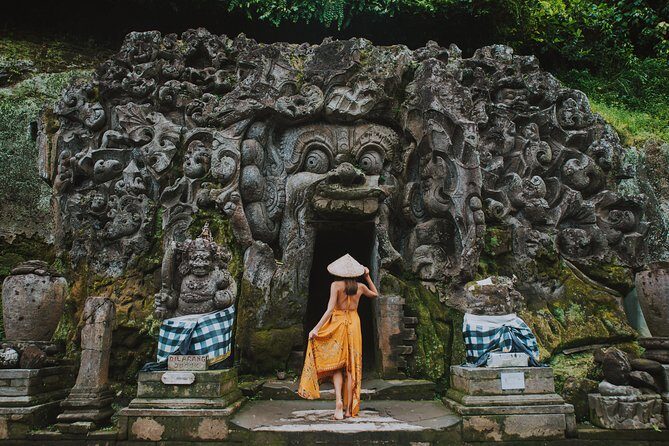
The schedule includes a pass by the Elephant Cave Temple in east Ubud. It’s described as featuring ancient statues tied to the Trinity of Brahma, Vishnu, and Shiva.

Because it’s a pass-by, you shouldn’t expect deep exploration time. If you’re the kind of traveler who loves architecture and would want to go inside, this is a place where you could ask your guide whether there’s any flexibility. With a packed route, though, guides may stick closely to the planned stops.

Batur Natural Hot Spring + Views Over Lake Batur: More Water Time

After Mount Batur lunch, the plan adds another hot spring experience: Batur Natural Hot Spring. This stop is described as a natural healing and water park with panoramic views of Lake Batur and Abang Hills, plus facilities that feel more swim-friendly (it even mentions an Olympic-size swimming scale).

This is a good reason the hot springs portion is a highlight: it’s not just one short soak. You get the “soak with a view” feeling twice, with different atmospheres. If you’re the type who likes water-based relaxation, this is where the day really pays off.

Practical tip: if you’re also planning to do Tegenungan Waterfall later, keep your towel situation under control. Wet days can turn annoying fast if you’re scrambling at the end for something dry.

Tegenungan Waterfall: The Final Wow (With Stairs and Wet Rock)

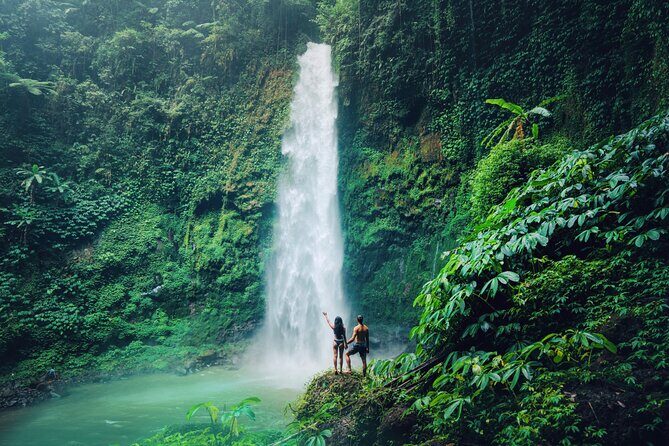
The day ends at Tegenungan Waterfall, one of Bali’s most famous waterfall stops. You’ll have about an hour for this part. The tour notes mention a green, dramatic view of the falls and the idea of getting a selfie on a stage-like spot.

Here’s my realistic take: Tegenungan is worth it, but it’s not a flat, stroll-through attraction. Expect stairs and uneven ground. Reviews specifically call out the need for solid waterproof shoes because you’ll be hiking on rocks, and doing it in basic sandals can be rough.

If it’s rainy season or the ground is wet, wear shoes you trust. Also pack a spare layer if you’re likely to get cold or wet. The tour recommends spare clothing, and for this kind of finish, it’s a good call.

Price and Value Check: What You Pay vs What You Actually Use

The listed price is $18.12 per person, which is the first eye-catcher. But Bali tours are usually priced on two layers: transport and guide service on the one hand, and attraction admissions on the other.

In your case, the details say:

  • Admissions may cost extra, listed as around $18 USD for all attractions (described as special private guided purchase ticket entrance).
  • Lunch may be extra, around $4 per person at a local restaurant.
  • The included side covers pickup/drop-off across South/Middle/East Bali, insurance, mineral water, and AC transport.

So how do you judge value?

  • If you want a full day that includes hot springs + major Ubud stops without driving, the value can still be strong even with entry fees.
  • If your group already plans to self-drive and only wants one or two stops, this may feel like paying for more structure than you need.

My advice: budget for admissions and be mentally ready for a long day. That way, you’ll judge the tour on how smoothly it runs, not on how close the extras match your hopes.

When the Day Feels Packed: Traffic, Timing, and Extra Flexibility

Even when a tour is private, you still fight two things: traffic and distance. This route moves through Ubud and back toward Seminyak, so delays can pile up. Some feedback also points to the itinerary feeling tight when the day slips later than expected.

There’s also a practical reality: hot springs, temples, and terraces don’t all take the same amount of time. Monkey Forest can run long if you stop for photos. Swing time can expand. Waterfall time depends on footing and how quickly you’re ready to go.

In at least one reported instance, a vehicle issue (a radiator problem near Mount Batur) created a delay. And in other cases, guides had trouble keeping to the exact timing, leading to missed stops or schedule changes. None of that means you shouldn’t book. It just means you should treat this like a day-trip with an active plan, not a slow, flexible roam.

How you can protect your experience:

  • Ask your guide early how the timing is set for each stop.
  • Decide ahead of time what you’d be sad to miss (for most people here, it’s the hot springs and/or the waterfall).
  • Wear realistic footwear and pack a small “wet day kit” (sunscreen, a spare top, and a plan for towel/drying).

Who This Tour Suits Best (and Who Should Rethink)

This tour is a strong fit if you want:

  • Door-to-door convenience from Seminyak
  • A day that covers multiple classic Ubud sights without planning a route yourself
  • A relaxing anchor in the volcanic hot springs, plus a scenic finale at Tegenungan Waterfall

It’s less ideal if you:

  • Hate long days and prefer slow travel
  • Want lots of free time at just one place
  • Are extremely sensitive to schedule shifts from traffic

If you’re traveling as a couple, solo traveler, or small group, this private format often hits the sweet spot. You get structure without the big-tour feel.

Should You Book This Ubud Hot Springs and Waterfall Private Tour?

I’d book it if your dream Bali day includes warm volcanic water, classic Ubud scenery, and at least one major waterfall. The combination is the main draw: you don’t just “see Ubud,” you experience a few sides of it—nature, culture, and pure soaking.

I’d pause and consider a different format if you’re the kind of traveler who wants unhurried time everywhere. This is one of those days where you’ll enjoy the best moments—especially the hot springs and Mount Batur lunch views—but you should expect it to feel like a marathon if traffic runs hot.

If you do book, go in prepared: bring swimwear, realistic shoes, and plan for extra admissions. Do that, and you’ll likely feel like the day delivered what it promised: a full slice of Bali, wrapped in private comfort.

FAQ

What’s included in the tour price?

Pickup and drop-off, an AC private vehicle, a friendly guide/driver, mineral water, insurance, and a mobile ticket are included. The tour also describes an included entrance-ticket element, but attraction admissions may still be purchased separately depending on the site.

Are entrance fees included?

Some attraction entrances appear to be covered on the premium all-inclusive side, but the tour details also note a separate entrance ticket cost on the day for attractions (about $18 USD for all attractions).

Is lunch included?

Lunch is listed as additional, at about $4 per person at a local restaurant. The day does include a buffet lunch stop overlooking Mount Batur in the itinerary description, but the provided pricing notes suggest you should expect lunch as an extra charge.

How long is the tour?

It’s listed at about 10 hours. In practice, traffic and timing at each stop can make the day run longer.

What should I wear and bring for this day?

Bring swimming clothes, sunscreen, a camera, sandals, and spare clothing. For the waterfall part, sturdy shoes are a smart idea because you’ll be on wet, rocky stairs.

Is this a private tour or a group tour?

It’s private. Only your group participates.

Can I cancel for free?

Yes. Free cancellation is available up to 24 hours in advance for a full refund.

Discover The Best of Ubud: All-Inclusive and Private Guided Tour

Discover The Best of Ubud: All-Inclusive and Private Guided Tour - Tegalalang Rice Terraces: the walk is the point, not just the photos

Ubud is easier when someone else drives. This private, all-day tour strings together the big-name sights and a few calmer stops across the countryside, with a driver-guide who’s strong on phone photography. You get round-trip pickup, plus onboard Wi‑Fi (where available) so you can post as you go instead of waiting until the evening.

What I like most is the pacing. You’re not just dropped at photo spots and sent away—you get time to look around at each place, and your guide helps you frame shots without turning it into a race. I also love that you can upgrade for lunch and entrance fees, which is the difference between a “cheap ticket” day and a smooth, no-math day.

One thing to consider: the “All-Inclusive” add-on matters. If you don’t choose it, entrance tickets are not included, and you may also notice that lunch or the coffee venue can swap depending on what’s available on the day.

Quick hits before you go

Discover The Best of Ubud: All-Inclusive and Private Guided Tour - Quick hits before you go

  • Private driver-guide means flexible time at each stop, not a herd schedule
  • Smartphone photography help so your photos actually look like you tried
  • Wi‑Fi onboard (where available) for quick sharing and maps-free navigation
  • Ulu Petanu Waterfall is a calmer option with fewer stairs than many other waterfalls around Ubud
  • Tirta Empul Temple includes a traditional sarong for the water temple visits
  • Coffee plantation finale gives you a structured end to the day, not a random stop

Private pickup plus phone-friendly guiding: why this tour works

Ubud’s attractions are spread out. The Monkey Forest area, the rice terraces, Tirta Empul, and the waterfall zone don’t sit next to each other like they do in some cities. So the real win here is that you can relax in an air-conditioned vehicle while your driver-guide handles the roads and timing.

I also like how the tour is set up for modern travelers. Onboard Wi‑Fi (where available) means you can share photos and keep track of what you saw, right there. And your guide brings real confidence with smartphone shooting—helping with angles, moments, and short video opportunities. In the past, I’ve heard names like Kadek Jarot and Gede mentioned for this kind of photo-and-story support, and that matches what the experience is designed for.

The other big value piece is “private” in the practical sense. You’re not negotiating crowd crushes while trying to hear your guide over everyone else. You get personal attention, and you can ask questions like what to expect at the next site or how long you should spend where.

Sacred Monkey Forest Sanctuary: go in ready for chaos (the cute kind)

Discover The Best of Ubud: All-Inclusive and Private Guided Tour - Sacred Monkey Forest Sanctuary: go in ready for chaos (the cute kind)
Your day typically starts with pickup, then a scenic drive to the Sacred Monkey Forest Sanctuary. Expect about 1 hour 30 minutes for the forest visit, with admission not included. This is one of Ubud’s most famous stops for a reason: the place feels alive, with long-tailed macaques weaving through temples and paths.

Here’s how I’d approach it. Wear comfortable shoes you don’t mind getting a little dusty. Keep your phone secure and avoid dangling items where monkeys might treat them like snacks. If you want photos, ask your guide to show you safe angles—many guides are used to getting good shots without encouraging risky behavior.

Since this is a private tour, you can often manage the tempo better than a group tour. You can slow down for carvings and temple corners, then speed up when you hit the more crowded lanes. Guides like Kadek Jarot, Gede, and Kojer are frequently praised for taking time and not rushing.

Admission is not included, so budget for that if you’re aiming for the “fast and simple” version of your day. If you pick the all-inclusive option, entrance fees are covered along with lunch.

Tegalalang Rice Terraces: the walk is the point, not just the photos

Discover The Best of Ubud: All-Inclusive and Private Guided Tour - Tegalalang Rice Terraces: the walk is the point, not just the photos
Next up is Tegalalang Rice Terrace, usually around 1 hour. Admission is not included. This is one of those places where everyone takes the same wide shots—but the better experience happens when you actually walk the paths and look closely.

You’ll see traditional rice farming methods and the way the terraces shape the landscape. Even if you’ve seen pictures online, being there gives you better scale: the steps, the irrigation paths, and the way the valley funnels light. It’s also a spot where your guide’s photography skill really pays off. They can help you line up shots that show depth, not just flat greens.

Practical tip: sunscreen and water matter here. The terraces are outdoors, and the sun can hit hard between cloud breaks. Comfortable footwear helps because paths can be uneven, and you’ll want to move at a steady pace without feeling rushed.

Ulu Petanu Waterfall near Tegallalang: calmer stairs, good swim energy

Discover The Best of Ubud: All-Inclusive and Private Guided Tour - Ulu Petanu Waterfall near Tegallalang: calmer stairs, good swim energy
One of the more memorable parts of this itinerary is Ulu Petanu Waterfall in Kedisan Village, near Tegallalang. The stop is around 1 hour, and admission is not included. The tour description highlights that this waterfall tends to be more pristine and has fewer stairs than many other waterfall options around Ubud, which makes it feel more doable for a wider range of people.

You may get time to cool off. The recommended packing list includes a swimsuit, change of clothes, and a towel, which tells you the day isn’t just about looking—it’s about enjoying. If you’re not swimming, still plan on wet conditions near the falls. Slides and rocks get slick.

In real-world guiding stories, people often mention extra care at this stage—like assistance on steeper sections. One guide was praised for helping a sister on steep steps, and that kind of patience is what you want if you’re traveling with anyone who moves more slowly.

Drawback to keep in mind: this stop is still outdoors. So if the weather turns or the footing looks unsafe, your guide may adjust how close you go or how long you stay. That flexibility is one more reason this is worth doing privately instead of joining a fixed group.

Amertha Restaurant lunch with rice-field views: upgrade the day, not just your meal

Discover The Best of Ubud: All-Inclusive and Private Guided Tour - Amertha Restaurant lunch with rice-field views: upgrade the day, not just your meal
Lunch is a bright break in the schedule, planned for about 1 hour at The Amertha Restaurant, and the tour notes it as included (admission free). The view is described as overlooking the rice terraces, which is exactly the kind of payoff that makes a long day feel worthwhile.

You can choose between western or traditional Balinese dishes (the tour notes both options are available). I like this setup because it avoids the common problem of “tour lunch” where you eat fast, then regret it. Here, lunch is timed as a real pause between outdoors-heavy stops.

If you choose the all-inclusive version, this matters even more because it reduces your mental load. You’re not tracking entrance fees and piecing together cash for tickets while hungry. One review specifically praised lunch quality and the rice-field ambience, and that fits the intent: a meal you can actually look forward to.

Small heads-up: in at least one case, the lunch venue was swapped for a similar option and it still worked out fine. So don’t worry if you hear a different restaurant name on the day—you’re still getting the same “sitting with views” idea.

Tirta Empul Temple: sacred water rituals and the sarong step

Discover The Best of Ubud: All-Inclusive and Private Guided Tour - Tirta Empul Temple: sacred water rituals and the sarong step
After lunch, the tour heads to Tirta Empul Holy Water Temple, typically about 1 hour 30 minutes. Admission is not included, but this is one of the places where the tour’s included extras really matter: you receive a traditional Balinese sarong for temple visits.

Tirta Empul is known for its cleansing water. The atmosphere is calm and sacred, and there’s a sense of place even if you’re just observing. If you choose to participate in the purification ritual, follow the local flow and any instructions your guide gives you. The point isn’t performance—it’s respect and quiet attention.

A good driver-guide makes this easier. People mention guides like Kojer and others explaining what’s happening and offering context, especially during the water temple visit. That’s valuable because otherwise it can feel like you’re watching something without understanding the meaning.

Practical tip: bring flip-flops you can manage quickly, or shoes that dry fast. If you do any water activity, you’ll want your feet to be stable and comfortable. Your swimsuit plan from the waterfall can help here too, but you should follow what the temple situation allows.

Pemulan Bali Coffee Plantation: a structured finish, not a random shop stop

Discover The Best of Ubud: All-Inclusive and Private Guided Tour - Pemulan Bali Coffee Plantation: a structured finish, not a random shop stop
The final stop is Pemulan Bali Coffee Plantation, about 1 hour, with admission listed as free. This is a great way to end the day because it shifts you from walking outdoors to something slower and more explainable.

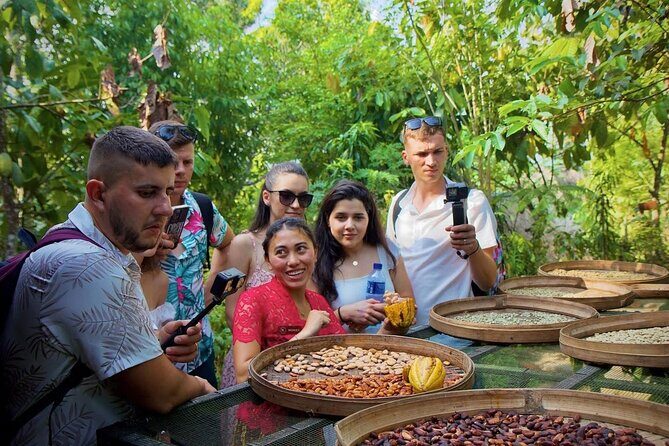
The tour mentions you’ll be welcomed and guided through the coffee plantation experience, including tea and coffee processing details. If you like tasting or learning how coffee becomes coffee, this can be a satisfying wind-down.

This is also where smartphone photos can get good again. The guide can point out which plants and processes are worth photographing, and you’ll likely have a chance to try drinks at the end. Since the tour includes coffee and tea onboard, it’s nice to see the story behind what you already drank on the ride.

One note from real guiding moments: people praised the coffee plantation guide for clear English and solid explanations. So if coffee is one of your interests, this stop is worth leaning into rather than treating it as a quick last checkbox.

Price and value: why $30 can still feel like a full-day deal

Discover The Best of Ubud: All-Inclusive and Private Guided Tour - Price and value: why $30 can still feel like a full-day deal
At $30.24 per person, this tour can be a strong value—especially because it’s private and lasts 8 to 10 hours. The vehicle isn’t a bare-bones scooter ride; it’s described as a comfortable air-conditioned car. Pickup and drop-off remove the hardest part of planning Ubud day trips: the driving and timing between scattered sights.

The key value question is the all-inclusive upgrade. If you pay separately for entrances and add-ons, the total can climb quickly in Bali. The tour’s all-inclusive option is there for a reason: it bundles lunch and all entrance fees and includes items like the sarong for temple visits. If you want predictability, that upgrade turns the day into one clean payment instead of multiple mini-expenses.

Also, the “driver-guide with great mobile photography skills” isn’t a tiny perk. Ubud is visual. If you end up with fewer good photos because you were busy asking others to take them, you lose something intangible. The tour is designed so you can focus on being present while still getting solid pictures.

My balanced take: if you’re traveling on a tight budget and you don’t mind paying entrances separately, you can save by skipping the upgrade. If you want less hassle and more certainty, the all-inclusive option is the better value.

What to bring and how to handle a busy day

The tour recommends a practical kit: comfortable footwear, sunscreen, cash or a credit card, a change of clothes, plus a swimsuit and towel for water activities. That packing list tells you the day is not just sightseeing from a distance.

Here’s how I’d use it:

  • Wear shoes you can walk on for terraces and temple paths.
  • Bring a lightweight layer for the car ride if you get chilly with AC.
  • Pack a small bag for wet items after the waterfall.

Also, keep water and breaks in mind. You’ll be outdoors at Monkey Forest, rice terraces, and the waterfall. Even with good pacing, it’s still an all-day format. The benefit of a private tour is that your guide can help you manage time so you don’t feel dragged or trapped.

Who this Ubud day tour suits best

This fits you if you want an efficient Ubud highlights day without spending hours planning route logistics. It’s also ideal if you care about photography and want someone to help with phone framing, not just drive you around.

It also helps if you want a balanced mix of:

  • major icons (Monkey Forest, Tegalalang, Tirta Empul)
  • nature time (Ulu Petanu Waterfall)
  • a calmer ending (coffee plantation)

If you prefer ultra-spontaneous exploring with no structure, you might feel boxed in. But even then, you’re paying for guidance and timing. This tour is built for people who want to see a lot and still feel taken care of.

Should you book it?

I’d book this tour if your goal is a high-quality Ubud day that covers the big sights plus one of the better waterfall experiences near the rice terraces. The value comes from the private pickup, the air-conditioned transport, the sarong included for Tirta Empul, and the option to make everything simpler with lunch and entrance fees covered.

I’d skip the all-inclusive option only if you’re very comfortable handling entrances yourself and you’re confident your planned budget can handle it. And I’d keep your expectations flexible around lunch or the coffee stop name—because swaps can happen, even when the overall experience stays on track.

If you want one practical Ubud itinerary that doesn’t turn into a stressful scavenger hunt, this one is a strong choice.

FAQ

Is this tour private?

Yes. It’s a private tour/activity, meaning only your group participates.

How long does the tour last?

It runs about 8 to 10 hours.

What’s included in the tour price?

Included items include private pickup and drop-off, an air-conditioned vehicle, a professional English-speaking driver-guide, lunch and entrance fees if you select the all-inclusive option, a traditional Balinese sarong for temple visits, bottled water, coffee and tea, and Wi‑Fi on board where available.

Are entrance fees included?

Entrance fees are not included unless you choose the all-inclusive option, which includes lunch and all entrance fees.

Do I need to pay for lunch?

Lunch is included if you select the all-inclusive option.

Can I get a full refund if I cancel?

Yes. You can cancel up to 24 hours in advance for a full refund. If you cancel less than 24 hours before the start time, the amount paid won’t be refunded.

Ubud Silver Class Jewelry making in bali

Ubud Silver Class Jewelry making in bali - Price and value: Why $36.66 feels fair here

Want a souvenir you can actually wear?

This Ubud silver class sends you out to a real silversmith village, where you shape and finish your own Balinese silver jewelry. I like that you get 7 grams of silver included, so the class feels grounded in a tangible result. I also like the close coaching style, with staff guiding the tiny steps so beginners can make something that looks intentional, not accidental. One consideration: the workshop is a bit of a drive from central Ubud, and being rural means you should expect bugs and plan for pickup if you don’t want the hassle.

You’ll start with tea or coffee and snacks, pick (or sketch) a design, and then work through metalwork tasks like hammering, soldering, engraving, and cutting. The standard class runs about 3 hours, and it caps at 20 people, so it doesn’t feel like a factory line. If you want to turn it into a full day, you can add options like cooking, ATV time, village visits, sightseeing, or a retro Volkswagen Safari.

Key points to know before you go

Ubud Silver Class Jewelry making in bali - Key points to know before you go

  • 7g of silver is included, with help to turn that amount into your best-looking piece
  • Guided design building: sketch your idea or start from a sample
  • Small group size (up to 20 travelers) means you’re not shouting over the process
  • Multiple metalwork techniques are part of the experience, from soldering to engraving
  • Helpful staff names come up often, including instructors like Aldi, WaWan, and Pepi
  • Rural setting details: it’s charming, but bring bug spray as a backup

Ubud Silver Class at Delodsema: What you’re making

Ubud Silver Class Jewelry making in bali - Ubud Silver Class at Delodsema: What you’re making
This is a Balinese silver jewelry making workshop experience centered around a village setting near Ubud, specifically at GBE Silver Class in Delodsema (Taro area, Tegallalang). The core idea is simple: you’re not watching a demonstration. You’re working with a silversmith to build your own piece step by step, then taking it home.

Most people do a ring, but you can usually expect options like a pendant, bangle, or earrings, depending on what you choose and how much silver you use. What matters is that the workshop structure helps you make a design that fits the time and materials. Even if your idea is ambitious, the instructor team will steer you toward what’s realistically possible with the silver provided.

And there’s a practical Balinese-craft angle here. Silver jewelry making is described as an age-old craft that supports local rural life and working skill. You’re in the place where the craft is practiced, not a staged “tour showroom.” That context makes the finished jewelry feel more meaningful.

Price and value: Why $36.66 feels fair here

Ubud Silver Class Jewelry making in bali - Price and value: Why $36.66 feels fair here
At $36.66 per person, this class sits in the sweet spot for hands-on Bali activities that end with a real object. You’re not just paying for instruction. You’re paying for materials and skilled help.

Here’s the value math that matters:

  • You get 7 grams of silver (included). That’s not a token amount. It’s enough for a solid ring or a smaller piece, and you can sometimes make more than one item if time and metal allow.
  • You get an experienced local instructor who guides your design and the hands-on techniques. The staff focus on details, and that shows in how well the ring shape and finish work out.
  • If you want to add stones or use extra silver, there are costs: gemstones cost extra, and additional silver runs at 80k per gram.

So the price makes sense if you plan your design within the included silver and you’re okay with optional extras being optional (especially stones). If you show up already thinking you want heavy gemstone work or multiple large pieces, you’ll likely add on the extra materials fee.

Getting there from Ubud: pickup, timing, and the drive you should expect

Ubud Silver Class Jewelry making in bali - Getting there from Ubud: pickup, timing, and the drive you should expect
The class starts in Delodsema (Taro/Tegallalang area), with the meeting point listed at GBE Silver Class, Jl. Taman Gajah, Taro, Kec. Tegallalang, Gianyar, Bali.

If you book with pickup in the Ubud area, you’re collected and driven to the workshop. If you’re staying outside Ubud, pickup may cost more. The drive is part of the experience vibe: it’s scenic and it keeps the workshop from feeling like it’s right on a main tourist strip.

In real-life terms, I’d strongly consider pickup if you’re not comfortable with local transport. Several people note that it’s a drive that’s worth doing, and the easiest way to get there without stress is to let the service handle the car and timing. Some people also mention drivers by name, like Olen or Budi, and that friendly, knowledgeable transport can set the tone before you even start metalwork.

Class length is about 3 hours, so build your day with a clear block of time. If you plan to stack add-ons (ATV, cooking class, village visit), you’ll want to book them so the travel gaps don’t eat your morning.

Inside the workshop: tea, snacks, and picking your design

Ubud Silver Class Jewelry making in bali - Inside the workshop: tea, snacks, and picking your design
When you arrive, you’re greeted with a welcome drink—tea or coffee—plus Balinese snacks. Then the workshop gets practical fast: you’ll look at sample jewelry pieces for inspiration, and your instructor helps you choose what you’re going to make.

You basically have two paths:

  1. Bring an idea: if you already have a design in mind, your teacher helps you sketch it out and translate it into a metalworking plan.
  2. Start from a sample: if you don’t have a concept yet, you’ll build from a reference piece you like.

This is one of the most valuable parts for first-timers. Silverwork has steps that are hard to “wing” in your head. Having someone translate your idea into workable proportions and a process you can actually follow is the difference between a cool memory and a wearable ring you’re proud of.

Also, you’ll likely work in a small group format with staff close by. People describe the help as detailed and patient, especially for those with no experience. The workshop team isn’t rushing you; the process is hands-on, and they guide you through the steps.

From sketch to shine: the techniques you’ll learn

The teaching focus is on techniques that shape, refine, and finish your piece. During the class, you’ll use methods including:

  • Hammering to shape the metal
  • Soldering to join parts (when your design needs it)
  • Engraving and cutting for details and final form

Even if you’ve never touched jewelry tools before, the experience is set up so you’re not overwhelmed. You’re coached through each step, and the staff help you avoid common mistakes that affect how a ring sits or how evenly a piece finishes.

A pattern I see in the best feedback: people praise the instructors for being careful about the small things that matter, like ring fit and getting the final look right. The staff guidance is described as detail-oriented and patient, with plenty of time spent on getting the piece to match reference designs.

If you’re worried you’ll make something too complicated, don’t be. The workshop helps you adjust. When someone wants a bigger design, you’ll get guidance on whether it’s too ambitious for the silver and time you have. That honesty is good, because it protects the end result.

Making more than one piece: using the 7 grams wisely

The class package includes 7 grams of silver. That amount is the built-in limiter, and how you handle it affects your final outcome.

You can make multiple jewelry pieces if you have enough time and silver left. In some cases, people end up making more than one item because the workflow and remaining metal make it possible. In other cases, you’ll focus on one standout piece, especially if you choose a ring design that needs careful shaping and finishing.

Here’s the practical advice I’d give you:

  • If you want one jewelry item you’ll wear often, prioritize a design you can finish cleanly within the included silver.
  • If you’re open to experimentation, ask your instructor how close you are to the point where you’ll have silver left for a second piece.

This is also where the workshop’s coaching matters. The team helps you implement your design using the techniques above, but they also help you manage materials so your jewelry doesn’t end up looking “half done” just because you tried to do everything.

Optional add-ons: turning your jewelry class into a full Ubud day

This experience can be paired with other activities, either before or after the silver class, depending on your booking choices. Options mentioned include:

  • ATV or quad bike tour
  • Cooking class
  • Village visit
  • Sightseeing tour
  • Retro Volkswagen Safari

If you want a balanced day, my favorite pairings are the ones that don’t overload you. Silverwork is detailed and requires focus, so it pairs better with one more structured activity than with a full list of high-energy plans.

People also describe combining the class with a farm cooking experience as a highlight of their Bali trip, because it gives you both creativity and local food without turning the day into travel fatigue.

If you’re booking add-ons, think about pacing:

  • Choose one “big” activity plus the jewelry class.
  • Leave a little buffer for transport time.
  • Don’t plan a second hands-on workshop right after unless you know the timing works for your schedule.

What to bring, what to expect, and who this class fits best

This workshop is described as suitable for most travelers. It’s aimed at beginners as long as you’re willing to slow down and follow instructions. The “hard part” is not the skill. It’s patience: shaping metal takes time, and it’s easy to move too fast if you’re thinking ahead.

Before you go, keep these points in mind:

  • Out of town means bugs: since it’s in a rural area, you should expect mosquitoes. Some people note bug spray is available, but I’d still bring your own as a backup.
  • Bring a clear idea or a flexible mind: if you come with a design, you’ll get help sketching it. If you don’t, sample-based guidance works well too.
  • Plan for optional costs: gemstones and extra silver cost extra. If you’re set on stone work or larger designs, ask early what the material plan is.
  • Wear comfy clothes: workshop activities can involve fine metal work and some mess. Wear something you don’t mind spending time in.

Who should book this?

  • You want a genuine Bali craft souvenir that’s wearable, not just a photo prop.
  • You enjoy making things and learning processes with your hands.
  • You’re traveling with a partner or friends and want an activity that’s fun but still produces something lasting.

Who might skip?

  • If you hate small details or you’re short on time, you might find the process slower than expected.
  • If you only want a quick purchase experience with zero effort, this isn’t that kind of class.

Should you book this Ubud silver jewelry making class

Book it if you want a hands-on Ubud-area activity where you leave with real silver jewelry, coached through the steps like hammering, soldering, engraving, and cutting. The included 7 grams of silver and the patient, detail-focused instruction make it a strong value, especially compared with buying a mass-produced souvenir.

Don’t book it yet (or be extra clear about your design) if you’re aiming for heavy gemstone work or big multi-piece sets, because the extra materials can add cost quickly. Also, if you’re sensitive to bugs or you dislike longer drives, arrange pickup and pack accordingly.

If you want one practical move to make before you go: think about what you’ll actually wear back home. A ring is the obvious winner for daily use. Then design within the silver you’re given, and let the instructor refine your plan. That’s where this class delivers its best results.

FAQ

Where does the Ubud Silver Class meet and start?

The class starts at GBE Silver Class, Delodsema, Jl. Taman Gajah, Taro, Kec. Tegallalang, Kabupaten Gianyar, Bali 80561, Indonesia.

How long is the silver jewelry making class?

It runs about 3 hours (approx.).

What is included in the price?

You get a welcome drink, 7 grams of silver, an experienced instructor/local expert, and guidance to help you make multiple jewelry items as long as the silver is enough.

Can I choose my own jewelry design?

Yes. You can bring your own idea and the teacher helps sketch it out, or you can start from jewelry samples and build your design from what you like.

Is pickup from Ubud included?

Pickup is offered for the Ubud area, and extra charges apply for pickup from elsewhere.

Is extra silver or gemstones available?

Yes. If you want to use gemstones or need more silver, there is an additional charge. Extra silver is listed at 80k/gram.

Will I make only one piece of jewelry?

You can make multiple pieces if there’s time and enough silver left, but your final number depends on your design and the material.

How big is the group?

This activity has a maximum of 20 travelers.

Can I combine the class with other activities?

Yes. Optional add-ons include ATV/quad bike, a cooking class, a village visit, a sightseeing tour, and a retro Volkswagen Safari. These may happen before or after the silversmithing class.

Is there a cancellation policy for refunds?

Free cancellation is available up to 24 hours in advance for a full refund.

Private Day Tour: The Highlight of Ubud

Private Day Tour: The Highlight of Ubud - Tirta Empul: holy spring water and what purification looks like

This Ubud day hits the big icons hard. You get a door-to-door private route through macaque temples, holy water at Tirta Empul, and the cliff-hugging rice terraces at Tegalalang, plus a couple of Ubud nature stops. What I like: you get context (not just photo stops) for Bali’s daily life and sacred rituals, and the day stays flexible when weather or crowds shift. Main consideration: it is a long 8-10 hour loop, and some sites involve stairs and uneven paths.

The tour is built around short, efficient visits: about 1 hour at the Sacred Monkey Forest, then roughly 30 minutes each for Tirta Empul, Tegalalang Rice Terrace, Tegenungan Waterfall, and Elephant Cave (Goa Gajah). You’ll also pass through parts of Ubud like markets and temples along the way.

One of the biggest reasons this works is the people driving it. In the best experiences shared with this route, guides like Cok, Agung, Tirta, Oka, Pong, and Pandu keep things smooth with strong English, good explanations, and frequent photo help.

Key things to know before you go

Private Day Tour: The Highlight of Ubud - Key things to know before you go

  • Private, just your group with pickup and drop-off from your hotel or port
  • English-speaking driver plus local tax coverage in the price
  • Entrance fees included on the main tour, while custom trips may exclude them
  • Five big stops in one day: Monkey Forest, Tirta Empul, Tegalalang, Tegenungan, Goa Gajah
  • SUBAK and rice-growing context are part of the Tegalalang experience
  • Flexibility in the schedule when rain or conditions change

Why this Ubud highlight loop makes sense in one day

Private Day Tour: The Highlight of Ubud - Why this Ubud highlight loop makes sense in one day
Ubud can feel like a choose-your-own-adventure town, which is great… until you realize the roads are busy and time disappears fast. This private day tour solves that problem by stitching together the main Ubud icons with a plan that doesn’t waste hours hopping between far-flung spots.

I like how the stops aren’t random. You move from animal-and-temple territory (Monkey Forest) to a living Hindu ritual (Tirta Empul). Then you shift into the agriculture story of Bali’s irrigation system at Tegalalang, before heading to Ubud’s waterfall mood and finishing at Elephant Cave (Goa Gajah), where carved stone and old bathing pools set a different tone.

It’s also the kind of day where your guide can steer based on what you care about most. People have called out how flexible guides were when rain hit, and how they adjusted locations so the day still felt like you got real value.

Sacred Monkey Forest Sanctuary: temples, macaques, and a full hour on site

Start with the Sacred Monkey Forest Sanctuary, where long-tailed macaques roam around Hindu temples in the forest. You’re given about 1 hour here, and that matters. If you only had 15 minutes, it would just turn into a rush of photos. That longer window gives you time to actually watch how the place works—macaques moving through the grounds, people visiting the temples, and the general energy of this Ubud landmark.

The admission ticket is included, so you don’t have to spend your morning tracking down payments and lines. Also, since you’re at this stop first, you typically get better light for photos than you would at the end of the day.

The trade-off: Monkey Forest is active. If you’re sensitive to crowds, noise, or lots of movement, consider going in with realistic expectations. And if you’re hoping for calm, empty nature, this stop won’t be that.

Tirta Empul: holy spring water and what purification looks like

Private Day Tour: The Highlight of Ubud - Tirta Empul: holy spring water and what purification looks like
Next comes Tirta Empul Temple, famous for its holy spring water used in purification. You get around 30 minutes here, and the best part is that this isn’t just a pretty temple. You may even catch Balinese visitors doing purification rituals before they pray at the main temple.

That quick glimpse is powerful because it shows Hindu practice as lived culture, not museum material. It also helps you connect the dots with other stops later in the day, where Bali’s spirituality and daily routines blend together.

The admission ticket is included for this stop too, so the time you spend feels focused. Just don’t plan on doing a deep, slow temple study in one short visit. This is more of a “see it, understand it, and respect it” stop—perfect for an highlights day.

Tegalalang Rice Terrace and SUBAK: the irrigation story behind the views

Private Day Tour: The Highlight of Ubud - Tegalalang Rice Terrace and SUBAK: the irrigation story behind the views
Tegalalang Rice Terrace is the postcard moment in your day, but the tour adds something important: a chance to understand Bali’s ancient irrigation system called SUBAK. That’s the difference between seeing rice terraces as scenery and understanding them as a system farmers manage carefully.

You’re there for about 30 minutes, so think of it like a fast guided orientation. Your guide can point out what makes these terraces special beyond the photos: how water management supports the rice-growing cycle, and why the terrace patterns look the way they do.

It’s also a cliff-and-view stop, so expect uneven ground and angles that can be tricky for steady walking. Bring shoes you’re comfortable in for short hikes and photo stops.

My practical advice: if you’re going for photos, plan for the fact that your “best” shot might mean stepping to a new angle. With only 30 minutes, you’ll want to pick your photo rhythm quickly.

Tegenungan Waterfall: green views, quick walk options, and timing reality

Private Day Tour: The Highlight of Ubud - Tegenungan Waterfall: green views, quick walk options, and timing reality
Tegenungan Waterfall is your next nature hit. You get about 30 minutes here, with lush green surroundings that make the area feel vivid and photogenic.

You can usually take a short walk closer to the falls, or you can stay back and shoot from a top hill view. Either way, this is a “see it, enjoy it, move on” stop. The time is short, but it’s well matched to a day where you’re also packing in temples and caves.

The one consideration: waterfalls pull people. Even with private transport, you can still feel the crowd energy, and if it rains, conditions change. That’s where the guide flexibility comes in. People have shared experiences where locations were adjusted due to rain, which is a big deal on an island where weather can switch fast.

Goa Gajah (Elephant Cave): carvings, bathing pools, and big stone symbolism

Private Day Tour: The Highlight of Ubud - Goa Gajah (Elephant Cave): carvings, bathing pools, and big stone symbolism
You’ll wrap the main highlight circuit at Elephant Cave (Goa Gajah), which is more than a cave with a name. It’s a larger temple complex area with a cave and temple space, plus rock-wall carvings and bathing pools.

The overview also points to important religious symbolism: a Ganesha statue on one side, plus Trimurti (Shiva, Vishnu, and Brahma). Even if you don’t go super deep in 30 minutes, you’ll get enough to understand why this site is regarded as meaningful.

Your time here is about 30 minutes, and that feels right. This stop is about atmosphere—stone textures, carved details in the courtyard, and that sense of age right when you step into the space.

The main practical note is footwear and walking pace. Cave areas often involve uneven surfaces and short transitions between spots. If you’re the kind of traveler who likes to linger, this stop might feel quick—but for a highlights day, it’s the right length.

Arts village stops: batik, silver, and wood carving you can actually see

Private Day Tour: The Highlight of Ubud - Arts village stops: batik, silver, and wood carving you can actually see
Depending on the option you choose, you may add Ubud arts handicraft village visits. These include places focused on batik painting, silver arts, and wood carving.

This part is valuable because it shifts the day from “sights” to “making.” Instead of only looking at temple and nature views, you also see how artisans turn raw materials and design traditions into products people buy and use.

It’s also a useful balance after the more intense parts of the day. If you want to shop, this is where it makes sense. You’re not trying to buy at the end when everyone’s tired. You’ll have time to ask questions, watch how crafts are done, and decide what fits your budget.

Keep in mind there can be extra shopping pressure at craft places. If you’d rather just watch and not buy, a friendly but clear approach works best. You’re on a private schedule, so you can always move along if you’re done.

Full tour vs custom trip: how to pick the best format

Private Day Tour: The Highlight of Ubud - Full tour vs custom trip: how to pick the best format
There are really two ways to do this:

The full highlight route

The full option is designed around the main Ubud icons: Monkey Forest, Rice Terrace, Tirta Empul, Tegenungan, Goa Gajah, and Ubud arts village time. This is the best choice when you want a clean “first Ubud day” plan.

The custom Ubud trip

The custom option lets you choose where to go with the same basic idea: a private car and driver for about 10 hours from pickup to drop-off. This is how you add extra experiences like jungle swing, Campuhan ridge walk, Ubud Palace, Ubud Market, and extra waterfall stops such as Suwat, Tibumana, and Kanto Lampo.

One key detail: entrance fees may not be included on the custom trip. So if you choose custom, you’ll want to confirm what is covered and what you’ll pay on site.

I like the custom approach if you already visited a few temples and waterfalls and want to target what you personally care about. I’d choose the full route if you’re new to Ubud and you want the major landmarks without negotiation.

Price and value: why $68 can feel fair here

At $68 per person, this is not a “cheap transfer” price. You’re paying for private transportation, an English-speaking driver, local tax, and entrance fees for the included attractions—plus hotel or port pickup and drop-off.

The value is in the bundle:

  • You avoid the hassle of organizing separate tickets and transport for multiple far-apart stops.
  • You get someone to keep time, handle the transitions, and keep the route logical.
  • You don’t have to turn the day into a logistics puzzle while you’re trying to enjoy temples and viewpoints.

Food and beverages are not included, so you’ll still want to budget for meals. But once you compare the entrance fees plus the transport effort, this price often feels reasonable—especially on a private day when you’re not sharing the car with strangers.

There’s one more “value” point: many guides focus on explanations and photo stops. People have praised guides for taking picture-friendly pauses and giving clear context, which helps turn standard stops into a more satisfying day.

Timing and traffic: the real enemy of Ubud days

Ubud can be fun, but traffic can turn a calm plan into a grind. That’s why the door-to-door pickup matters. You’re not figuring out where to meet or losing time to transit errors.

A practical tip I recommend: aim to start earlier if your schedule allows. One shared experience noted that even if the earliest booking looks fine, you should ask your driver about an earlier start because traffic can build quickly. That’s the kind of small timing tweak that can give you 15-30 minutes back at a viewpoint or reduce stress overall.

Also, build in flexibility for weather. Rain changes waterfall conditions and can make some paths slick. Guides have adjusted locations when rain showed up, which you’ll appreciate if you’re trying to protect the “must-see” moments.

Who this tour suits best (and who should think twice)

This tour is a great fit for:

  • First-time Ubud visitors who want a highlight-heavy day
  • Travelers who prefer private comfort over group schedules
  • People who like structure but still want some flexibility for how long to linger
  • Families who can handle short, active stops (kids under 2 are free with an adult)

It may be less ideal if:

  • You have limited mobility or find stairs difficult. Some sites include steps and uneven paths, and that can slow you down.
  • You want a slow, deep-temple day. Each stop is time-limited, so you won’t get a long, quiet study session.

If your travel style is more “run a tight route and see the big icons,” this one fits.

Tour guides make or break the day

This is one of those experiences where the route is strong, but the driver/guide quality is the secret sauce.

I noticed a pattern in the names shared: Cok and Agung stood out for explaining Balinese habits and how rice planting connects to daily life. Tirta and Oka were praised for excellent, friendly guidance. Pong and Pandu were specifically called out for being flexible and for helping with smooth entry and photo stops. And guides like Lea Azelea and Anggra came up with themes of patience and good English.

That matters because this is not just a “drive to a spot” kind of tour. When the guide understands what you care about, you get better answers on things like why Tirta Empul is special or what SUBAK means at Tegalalang.

Should you book this private day tour?

I’d book it if you want a well-timed first Ubud day that hits Monkey Forest, Tirta Empul, Tegalalang, Tegenungan, and Goa Gajah without you managing tickets and transport.

I would hesitate if you’re very mobility-limited, or if your top priority is a slow, detailed temple day rather than highlights. Also, if you choose the custom format, confirm whether entrance fees are included—one mismatch around entrance fee coverage can turn a highlight day into an unnecessary headache.

If your goal is to see the major Ubud faces—spiritual life, rice irrigation culture, waterfalls, and a dramatic cave temple—this private route is one of the easiest ways to do it in a single day.

FAQ

What is the duration of the tour?

The day is about 9 to 10 hours in total, with pickup to drop-off typically around 8 to 10 hours depending on where you’re staying.

Is pickup and drop-off included?

Yes. The tour includes hotel or port pickup and drop-off.

What does the price include?

It includes private transportation, an English-speaking driver, local tax, and entrance fees (for the included attractions on the main tour option). Food and beverages are not included.

Which places are included in the main highlights route?

The standard highlights circuit includes Sacred Monkey Forest Sanctuary, Tirta Empul Temple, Tegalalang Rice Terrace, Tegenungan Waterfall, and Elephant Cave (Goa Gajah). Arts village time may also be included on the full tour option.

Can I customize the itinerary?

Yes. There is a Ubud custom trip option where you can choose where to go for about 10 hours with a private car and driver.

Are entrance fees included on the custom trip?

Entrance fees are not included on the Ubud custom trip option.

Is this tour private?

Yes. It’s a private tour/activity with only your group participating.

What is the cancellation policy?

Free cancellation is available up to 24 hours in advance for a full refund. If you cancel less than 24 hours before the start time, the amount paid is not refunded.

Best of Ubud Attractions: Private All-Inclusive Tour

Best of Ubud Attractions: Private All-Inclusive Tour - Price and Value: Why This $57 Tour Can Add Up

Ubud hits hard when you have a plan, and this private day tour gives you one. I like the private, customizable route that you can shape on the fly, and I also like that entrance fees are built into the experience so the day feels smoother. One thing to watch: there are plenty of steps in places like the waterfall, cave areas, and temple grounds—if your knees don’t love stairs, plan carefully.

What makes this tour especially appealing is how it’s designed for real pacing: you get hotel pickup and drop-off, a driver who can adjust timing, and a full spread of Ubud icons—rice terraces, sacred sites, markets, and a jungle swing option if you want the big photo moment. It runs about 10 hours, so bring water, wear solid shoes, and keep your expectations realistic for a full day of walking.

Key Things That Make This Ubud Tour Worth Your Day

Best of Ubud Attractions: Private All-Inclusive Tour - Key Things That Make This Ubud Tour Worth Your Day

  • Private and customizable so you can spend more time on what you care about
  • Entrance fees included plus bottled water, so you’re not stuck buying tickets all day
  • Ubud classics in one run: Tegalalang rice terrace, Tegenungan waterfall, Elephant Cave, Monkey Forest
  • Photo-focused stops where your guide can help with timing and picture angles
  • Add-ons for photos and meals: optional lunch and a jungle swing experience
  • Easy souvenir browsing with a traditional art market and a carving center stop

What You’re Buying With a Private, Custom Ubud Day

Best of Ubud Attractions: Private All-Inclusive Tour - What You’re Buying With a Private, Custom Ubud Day
For $57 per person, you’re not just buying transport—you’re buying a full-day structure that cuts down on decision fatigue. This is a private tour, meaning it’s only your group, and you can shape the order and focus based on what you want more of (waterfall views, temple atmosphere, monkeys, shopping breaks, or photo time).

The best value here is the “friction removal.” In Ubud, the schedule can get messy fast with traffic and route timing. A private guide helps you keep the day moving without feeling like you’re sprinting from place to place. In practice, that shows up as practical questions along the way—where you want extra minutes, what feels like too much walking, and where you’d rather slow down for photos.

Price and Value: Why This $57 Tour Can Add Up

Best of Ubud Attractions: Private All-Inclusive Tour - Price and Value: Why This $57 Tour Can Add Up
Let’s talk money the useful way. You’re paying a flat per-person price for a long day that includes:

  • Round-trip hotel pickup and drop-off in Ubud and south Bali areas
  • Bottled water
  • Entrance fees for key stops
  • Optional upgrades like lunch and a jungle swing experience

If you try to piece this together yourself—driver, multiple entrance tickets, and time lost figuring out the order—you’ll often spend more than you expect. Here, the tour’s value is that it bundles the hard parts: planning, routing, and admissions.

Also, the feedback pattern for this service is strong: the tour is rated 5/5 with a 100% recommendation figure across 1,150+ reviews. That matters, because with tours like this, small issues (slow pickup, confusing timing, missing entrance tickets, awkward guiding) can ruin the day. The consistency suggests you’re buying something that people reliably experience as well-run.

How the Day Flows: From Rice Terrace to Alas Warung

Best of Ubud Attractions: Private All-Inclusive Tour - How the Day Flows: From Rice Terrace to Alas Warung
This is a full-day loop built around a classic Ubud mix: dramatic views, sacred sites, wildlife, and craft and shopping stops. It runs around 10 hours, with short but meaningful time blocks at each place so you see a lot without turning the day into a constant rush.

A typical flow looks like:

  • Start with Tegalalang Rice Terrace (big green views, photo-friendly)
  • Move to Tegenungan Waterfall (main natural highlight)
  • Stop at Mas Carving Center (wood craft)
  • Head to Elephant Cave (temple site with older structures)
  • Continue to Sacred Monkey Forest Sanctuary (macaques + temples)
  • Browse Ubud Traditional Art Market
  • Wrap with Ubud Palace
  • Finish with lunch at D Alas Warung (if you choose the lunch option)

If you choose the add-on, the jungle swing can also be worked into the day, depending on your timing and energy. A good guide will try to fit it in without wrecking your waterfall or cave time.

Tegalalang Rice Terrace: The Best Big-View Start

Best of Ubud Attractions: Private All-Inclusive Tour - Tegalalang Rice Terrace: The Best Big-View Start
The day begins with Tegalalang Rice Terrace, and it’s easy to see why this stop gets picked for first-timers. The terraces give you that immediate Ubud feel: layered fields, green hillside views, and lots of spots where photos look good without much effort.

You’re typically given about 45 minutes here, which is enough to:

  • Walk a short loop
  • Find a viewpoint that matches your style (wide terrace shots vs. closer detail)
  • Take a breather before the more physical stops later in the day

Practical note: bring sunscreen and water. You’ll be outdoors for a chunk of time early, and Ubud sun can be sneaky even when the air feels cool.

Tegenungan Waterfall + Mas Carving Center: Nature Meets Craft

Best of Ubud Attractions: Private All-Inclusive Tour - Tegenungan Waterfall + Mas Carving Center: Nature Meets Craft
Next up is Tegenungan Waterfall, with about 1 hour onsite. This is a “massive water” kind of place—fresh water feeding the river from the mountains. It’s dramatic, and it gives you a strong change of pace after the rice terraces.

The big consideration is physical. Expect steps and uneven paths in parts of the waterfall area. One clear piece of advice that comes through strongly is simple: if you have bad knees, the stairs can be rough. You can still enjoy the waterfall, but you’ll want to manage how far you go and how often you rest.

Then you’ll pivot to Mas Carving Center for around 30 minutes. This stop is quick but useful. Mas is where you’ll see wood carving work that ranges from everyday souvenirs to higher-quality pieces. Even if you don’t plan to buy, it’s a good cultural break from nature stops because you’ll get a sense of how the craft is made and sold in Ubud.

Elephant Cave and Sacred Monkey Forest: Sacred Space Plus Wildlife

Best of Ubud Attractions: Private All-Inclusive Tour - Elephant Cave and Sacred Monkey Forest: Sacred Space Plus Wildlife
Two of the most memorable stops are Elephant Cave and the Sacred Monkey Forest Sanctuary—they both feel like temples first, and attractions second.

Elephant Cave (Go in with the right expectations)

Elephant Cave is an 11th-century temple site area, with archaeological elements you can spot as you move through the compound. You’re given about 1 hour, which is enough time to wander, read small bits where available, and take photos without feeling rushed.

Sacred Monkey Forest: Rules keep it smooth

Then comes Sacred Monkey Forest, about 1 hour. You’ll find roughly 700 Balinese long-tailed macaques in a protected forest area across around 12.5 hectares. This is not a zoo vibe where monkeys sit politely for you.

Here’s the practical monkey advice that’s worth listening to:

  • Don’t stare or make intense eye contact
  • Keep an eye on your phone and small items
  • Know that monkeys can open bags if they get curious

One of the best things about this stop is that your guide can help you stay calm and move at a sensible pace. It’s one of those places where your experience improves a lot if someone is watching the timing and telling you what to do next.

Ubud Traditional Art Market and Ubud Palace: Culture, Not Just Shopping

Best of Ubud Attractions: Private All-Inclusive Tour - Ubud Traditional Art Market and Ubud Palace: Culture, Not Just Shopping
You’ll get two culture-and-objects stops that work well together.

Ubud Traditional Art Market

The Ubud Traditional Art Market stop is about 30 minutes. It’s not a huge time block, but that’s actually a feature. You’re not stuck for hours bargaining. You can walk, scan what’s for sale, and pick up small souvenirs without the day losing momentum.

If you like handmade items, this is a better stop than a single generic souvenir shop because you can compare styles quickly and get a feel for what’s common in Ubud.

Ubud Palace

Then you’ll visit Ubud Palace for about 15 minutes. It’s short, but it lets you see the architecture and get a sense of where royalty and ceremony influenced the area’s cultural identity.

In terms of value, this palace stop works because it offers contrast. You’ve just been in wildlife and nature areas; a quick formal site break resets your head before you head to lunch.

Lunch at D Alas Warung: A Jungle Setting Break

Best of Ubud Attractions: Private All-Inclusive Tour - Lunch at D Alas Warung: A Jungle Setting Break
If you choose the lunch upgrade, you’ll eat at D Alas Warung Restaurant, set like a jungle restaurant with valley views. You get about 1 hour here.

Why lunch matters on this kind of tour: it’s the moment you can reset your legs and your mood. You’ll likely be slightly tired by then—rice terrace walking, waterfall steps, cave paths, plus monkey forest movement adds up.

If you’re picky about food, the key is that this is planned into the day rather than left to chance. The restaurant stop also helps you keep the afternoon from getting messy.

Jungle Swing Add-On: The Photo Moment That Can Also Be a Workout

The jungle swing upgrade is the standout “make it fun” addition. It’s built for photos and that social-media-style dress-up vibe people often chase on Bali.

One useful detail from the experience: you can sometimes wear fancy dress-style outfits for the swing photo moment, depending on what’s included with your swing ticket. If you want that look, it’s worth bringing something comfortable underneath and preparing for a little dressing time before you swing.

The swing itself is also physical. You’ll be gripping, posing, and moving around more than you think. If you’ve already had knee-stress from stairs, consider whether you want to swap the swing for more rest time in later stops. Your guide can help you decide based on how you’re feeling.

Guide Quality and the Picture Factor in Ubud

In tours like this, the guide is the difference between a checklist day and a day that feels like it fits you. This service stands out for how often the driver-guide is described as:

  • Being on time for pickup
  • Speaking good English
  • Answering questions during the day
  • Helping with photo angles and picture timing

You’ll also see a repeating theme in the names attached to great days: Ekok, Berata, Gusde, Wayan, Komang, Bagus, Marco, Agung Rai, Hendra, Desna, Surya, and others. When you get a host like that, the day feels less random. You’re not just walking through sights—you’re getting the context that makes you care.

One more practical point: this tour is built to be adjustable. If you decide the waterfall feels better later, or you want to slow down around a temple stop, a flexible guide can help rearrange how the day feels without losing everything.

Small Drawbacks to Plan For

No tour is perfect, and this one has a few realities to keep in mind:

  • Stairs and steps: multiple stops can involve stairs and uneven paths. If knees are an issue, go slow and consider asking your guide what parts are easiest to skip.
  • Full-day timing: 10 hours is a long stretch. You can see a lot, but you’ll still feel it by the end.
  • Ubud traffic: Ubud can be slow. A good driver helps you manage it, but it’s still a real-world factor.
  • Guide fit: in rare cases, a guide may feel more like a driver than an interpreter at first. Communication with the company can help, but your best defense is to ask early: what you’re most excited about, and what kind of explanations you want.

Should You Book This Best of Ubud Private Tour?

I’d book this if you want an efficient Ubud overview with real structure, included entrance fees, and a private setup that lets you steer the day. It’s also a great choice for first-timers who want the big hits—rice terraces, waterfall, monkeys, temples, palace, and a market—without the mental load of planning and ticket juggling.

I would hesitate if:

  • Your main goal is a slow, low-walking day with minimal stairs
  • You’re very sensitive to monkey areas and want lots of distance from wildlife (you can still enjoy it, but you’ll need to follow rules and stay aware)
  • You want only one or two stops and nothing else—this tour is designed for variety

If you book, do this before you go: wear shoes with grip, bring water, and tell your guide up front what matters most (photos, culture, nature, shopping). With the private format, that simple request often turns a good tour into a great one.

FAQ

Is this tour private?

Yes. It’s a private tour/activity, and only your group will participate.

How long is the tour?

The duration is about 10 hours.

What’s the pickup area?

Pickup and drop-off are available from hotels, apartments, and villas in Ubud and south Bali.

What’s included in the price?

Hotel pickup and drop-off, bottled water, entrance fees, and bottled water are included. Lunch and the jungle swing are included only if you choose the upgraded options.

Is lunch included?

Lunch is included if you select the lunch upgrade. The tour mentions D Alas Warung Restaurant as the lunch stop.

Is the jungle swing included?

The jungle swing is included if you select the option that includes it.

Which attractions are part of the day?

The tour includes Tegalalang Rice Terrace, Tegenungan Waterfall, Mas Carving Center, Elephant Cave, Sacred Monkey Forest Sanctuary, Ubud Traditional Art Market, and Ubud Palace. The day also mentions more customization.

Are entrance fees included?

Yes. Entrance fees are included for the sites listed with admission included, and some stops in the day are listed as admission free (like the art market and palace).

How active is the day? Are there stairs?

The day includes places where you may face stairs and steps, including the waterfall area. If you have bad knees, this is a key consideration.

What is the cancellation policy?

You can cancel for a full refund up to 24 hours before the experience starts. If you cancel less than 24 hours before, the amount paid isn’t refunded.

Electric Cycling Tour of Ubud with Free Hotel Transfer and Lunch

Electric Cycling Tour of Ubud with Free Hotel Transfer and Lunch - Price and value: why $41 can make sense here

Ubud is full of beautiful ups and downs, and this electric cycling tour is a smart way to see that countryside without arriving cooked. The day is built around guided e-bikes, with time at the Tegalalang Rice Terrace for photos, plus a stop at the Ubud Jungle Swing area for a fun jungle view and a meal break. I also like that you get free round-trip hotel transfer inside Ubud, so you’re not wasting your morning juggling scooters and directions.

Two more things I really enjoy: the tour rhythm is short and friendly (about 3 hours), and the guides manage the ride so you can focus on the scenery—often with extra explanation about Balinese daily life and farming. One consideration: a big slice of the experience involves real roads and intersections with cars and motorcycles, so you’ll want to feel comfortable riding in traffic and on narrower, bumpy paths.

Quick take: what you should know first

Electric Cycling Tour of Ubud with Free Hotel Transfer and Lunch - Quick take: what you should know first

  • Small-group feel (max 20 riders) helps keep the pace manageable.
  • Free hotel pickup and drop-off (Ubud area) cuts down stress.
  • Tegalalang Rice Terrace gives you a UNESCO-worthy photo stop with no ticket charge.
  • Jungle Swing stop combines views with a coffee plantation option and a meal.
  • E-bike effort control means you can pedal gently or let the motor do more.
  • Traffic crossings need attention even with guides and a trailing support vehicle.

Electric cycling in Ubud: the real vibe

Electric Cycling Tour of Ubud with Free Hotel Transfer and Lunch - Electric cycling in Ubud: the real vibe
This tour is a practical half-day: you trade Ubud’s gridlocked streets for back-road riding, rice terraces, and that classic jungle-swing moment. The electric bike changes everything. You’re not fighting hills, heat, or exhaustion the whole time—you control how much effort you want, and the motor fills in the gaps when you’d rather coast.

It also helps that the ride is guided. You’re not just rolling along and hoping you’ll end up at the right viewpoint. You get direction on how to use the e-bike, plus commentary along the way. In reviews, guides get praised for staying organized, keeping groups together, and handling intersections so crossings feel safer than doing it alone.

Price and value: why $41 can make sense here

Electric Cycling Tour of Ubud with Free Hotel Transfer and Lunch - Price and value: why $41 can make sense here
At about $41 per person, the cost looks low for what you get—especially if you’d otherwise pay for transport and entry tickets. Here’s what’s included:

  • Use of the bicycle and helmet
  • Local guide
  • Bottled water
  • Hotel pickup and drop-off (Ubud area)
  • Air-conditioned minivan transport
  • Lunch or dinner, depending on tour time
  • Admission ticket is free for the main stop areas listed

That matters because e-bikes in Bali can easily turn into a “just the bike” deal. This one bundles the bike, the guide, and the food into the price, and it keeps you from spending your limited trip time on logistics.

The main value question is whether the traffic/road portion is your kind of challenge. If you’re okay with short bursts of street riding—while still spending plenty of time in calmer countryside—this price starts looking like a bargain.

Meeting at eBikes Bali: what happens before you roll

The tour starts at eBikes Bali Electric Bicycle Tours, at Jl. Tirta Tawar, Petulu, Ubud (meeting point is listed for the “Ubud Cycling Tours – eBikes Bali” location). You usually spend around 15 minutes at the office area.

This pre-ride window is where you:

  • confirm your spot (you get a mobile ticket),
  • meet the crew,
  • get the bike sized to you,
  • and go over safety gear and basic bike use.

Helmets are provided, and the reviews underline that safety gear and instructions are not an afterthought. Riders often describe the e-bike as easy to master—strong assistance on demand, and enough flexibility to pedal lightly or cruise without feeling like your legs are burning.

If you’re prone to saddle discomfort, bring a little anti-chafe cream. One review even called out rash/saddle-rub concern and suggested packing cream. Simple fix, big comfort win.

How the ride feels: control, traffic, and staying together

Electric Cycling Tour of Ubud with Free Hotel Transfer and Lunch - How the ride feels: control, traffic, and staying together
This is not a fully car-free cycling day. You will mix on-road riding with calmer stretches. That’s part of the authenticity: you see how people actually move around Ubud, not just the “pretty” footpaths.

The good news is that the operation is set up for group safety:

  • guides ride in front and behind the group,
  • they help keep everyone together,
  • and they’re described as stopping traffic when needed for crossings,
  • plus there’s mention of a trailing vehicle in case someone gets tired or needs help.

Still, consider this as a “ride with guidance” experience, not a “relax and forget the road” experience. One drawback that comes up in feedback: some paths through rice paddies can be narrow and can feel bumpy. You’ll want stable shoes and to ride with attention, especially when you’re threading between obstacles.

If you’re a confident bike rider, it’s genuinely fun. If you’re nervous in traffic, the e-bike helps a lot, but you’ll still need calm focus at intersections.

Tegalalang Rice Terrace: the photo stop you’ll actually have time for

Electric Cycling Tour of Ubud with Free Hotel Transfer and Lunch - Tegalalang Rice Terrace: the photo stop you’ll actually have time for
The Tegalalang Rice Terrace stop lasts around 30 minutes, and admission is included (listed as free). This is the time when you’ll want to do your best work: photos, short viewpoints, and a slow look at how the terraces step down across the hills.

Why this stop hits:

  • The scenery is instantly recognizable, and it’s an easy win for memorable travel pictures.
  • The timing is long enough to walk to a viewpoint without feeling rushed.
  • You’re doing it on a fresh schedule, not at the end of a tiring day.

The trade-off: 30 minutes can feel fast if you want lots of wandering. Also, some of the approach and nearby paths can be bumpy and narrow, so keep your balance and your head up.

Practical tip: wear covered shoes and go in with sunscreen on. Ubud’s heat and sun don’t wait for your perfect photo angle.

Ubud Jungle Swing: views, coffee options, and a decision point

Electric Cycling Tour of Ubud with Free Hotel Transfer and Lunch - Ubud Jungle Swing: views, coffee options, and a decision point
The Ubud Jungle Swing area is another 30 minutes stop, and it’s part of why this tour feels like more than just cycling. The big-swing view over the rice is the headline moment for many people.

But the stop is also tied to a coffee plantation experience. From what’s included in the tour format and what riders describe, you may have an option between:

  • a coffee plantation visit (with explanations and tastings like Luwak and teas), or
  • a different cultural choice such as seeing a more traditional Balinese house setup.

This is where you should think about your own comfort level. One detailed review raised animal welfare concerns about Kopi Luak practices, describing small cages and poor welfare, and encouraged skipping that coffee option. That’s not a dealbreaker for everyone, but it’s important context for you to consider before you commit to the coffee tasting.

If you care about animal welfare, I’d treat the coffee option as optional rather than mandatory. Pick the alternative cultural visit if that’s available on your day, and focus on the views and the swing.

Lunch or dinner: the meal break that makes the ride feel complete

Electric Cycling Tour of Ubud with Free Hotel Transfer and Lunch - Lunch or dinner: the meal break that makes the ride feel complete
The tour includes a meal:

  • Lunch after the morning tour
  • Dinner after the afternoon tour

The exact restaurant isn’t specified in the details you provided, but riders describe a local restaurant/café meal as part of the wrap-up. This is a big deal for value. Half-day tours in Bali can be overpriced when the food is extra and you’re stuck finding something after you’re tired.

Expect this meal to function like a proper reset: you ride, you sweat, you see the main sights, then you sit down and actually eat before heading back.

Getting the most out of the e-bike effort

Electric Cycling Tour of Ubud with Free Hotel Transfer and Lunch - Getting the most out of the e-bike effort
One of the nicest parts of electric cycling is that the bike lets you match the ride to your energy. Reviews mention that you can pedal and also get motor help, and in some situations you can even let the bike move under its own power without heavy pedaling.

Here’s the best way to use that:

  • If you want a relaxed pace, keep your pedaling light and use the assistance early on climbs.
  • If you want more exercise, pedal more—but don’t “push to prove something.” This tour is about seeing Ubud, not conquering it.

Also, if you’re offered route variation (one review mentioned a more advanced route option), you can choose based on confidence. Narrow paths and traffic require quick reactions; pick the version that matches your comfort.

Safety reality check: what to watch for

Even with strong guidance, keep your expectations grounded. The experience includes:

  • traffic riding with cars and motorcycles,
  • occasional concentration required on narrow paths,
  • and short moments where you’ll need to steer around obstacles.

To stack the odds in your favor:

  • Wear covered shoes (this is specifically recommended).
  • Use sunscreen.
  • Keep a steady pace and don’t overthink every small bump.
  • If you’re anxious on roads, tell your guide early so they can position you and set expectations for your group placement.

The good part is that the tour team appears set up for real-world cycling stress, not just scenic photos. That’s why so many people rate it highly.

Who should book this electric Ubud tour (and who might not)

This is a strong fit if you:

  • want countryside and culture without full-day bike exhaustion,
  • like guided explanations and organized group riding,
  • want Tegalalang and the jungle swing in one efficient package,
  • and appreciate that the bike does the heavy lifting.

It’s also a great option if you’re traveling with teens or family members who can ride a bike and benefit from electric assistance. Reviews mention how it worked well for younger riders who were nervous at first—because guides helped them feel safe and steered them along quieter roads when possible.

Consider a different style of activity if you:

  • hate mixing with traffic,
  • have trouble balancing on narrow or bumpy paths,
  • or prefer a fully car-free, low-concentration route.

One more point: the tour requires good basic bike riding ability. The minimum height is listed at 150 cm, max rider weight 120 kg, and children must ride with an adult.

Should you book it? My call

I think you should book this if your top priority is a fun, efficient half-day that swaps Ubud’s traffic for rice terraces, jungle views, and a proper meal—while still giving you enough control to make the ride as easy or active as you want.

Skip it only if road riding stresses you out, or if you’d rather avoid any coffee-stop setup that could raise animal welfare questions. If that coffee option is offered, decide ahead of time what’s okay for you and choose the alternative if you’re not comfortable.

If you want, tell me which day you’re aiming for (morning vs afternoon) and your comfort level with bike traffic, and I’ll help you pick the best time slot and what to wear for maximum comfort.

FAQ

How long is the electric cycling tour in Ubud?

The duration is about 3 hours (approx.).

Does the tour include hotel pickup and drop-off?

Yes. Pickup and drop-off are included for hotels in the Ubud area.

Is lunch or dinner included?

Lunch is included after the morning tour, and dinner is included after the afternoon tour.

What does the price include besides the e-bike?

It includes a local guide, bottled water, helmet use, and air-conditioned minivan transport, plus the included meal and free admission tickets for the listed stops.

Do I need bicycle riding experience?

Yes. Must have bicycle riding experience.

Are there weight and height limits?

Yes. Maximum rider weight is 120 kg (260 lb) and minimum height is 150 cm.

What stops are included during the tour?

The listed stops are eBikes Bali offices, Tegalalang Rice Terrace, and Ubud Jungle Swing.

How many people are in the group?

The tour has a maximum of 20 travelers.

What should I wear or bring?

Covered shoes and sunscreen are recommended. Helmets and bottled water are provided.

What is the cancellation policy?

Free cancellation is available up to 24 hours in advance for a full refund. If you cancel less than 24 hours before the start time, the amount paid is not refunded. The experience requires good weather; if canceled due to poor weather, you’ll be offered a different date or a full refund.

Ubud Cooking Class Bali with Balinese Chef

Ubud Cooking Class Bali with Balinese Chef - Morning market stop at Ubud Traditional Art Market (30 minutes)

Your lunch turns into a lesson. This Ubud cooking class in Bali is hands-on from start to finish, run in English by a Balinese chef, and you cook at your own station. I love that you do not just watch—everything you eat is tied to what you personally prepare, from peanut sauce to banana-leaf grilling.

Two big wins for me: the traditional market stop (Ubud Traditional Art Market, morning trips) and the step-by-step feel of the class so you know what you are actually doing. The one thing to consider is the logistics: pickup is included for hotels in Ubud center only (sharing car), while other areas cost extra.

Key things to look forward to

Ubud Cooking Class Bali with Balinese Chef - Key things to look forward to

  • English-led, hands-on cooking at your own station with utensils and ingredients provided
  • Ubud Traditional Art Market for morning departures, with an included ticket and quick guided walk
  • 7 dishes in one session, plus the dessert kolak pisang
  • Vegetarian and non-vegetarian menus with matching peanut sauces and Balinese spice paste
  • Small-group feel with a maximum of 24 travelers
  • Ubud-center transfers and a clear return meeting point for afternoon sessions

Hands-on Ubud cooking with a Balinese chef (and a real menu)

Ubud Cooking Class Bali with Balinese Chef - Hands-on Ubud cooking with a Balinese chef (and a real menu)
If you want a class that actually changes what you can cook at home, this one is built for that. The format is straightforward: you get your own cooking setup, you make the dishes yourself, and you eat what you cooked for lunch or dinner.

What makes it practical is that the menu is not a vague sampler. It’s a defined set of Balinese favorites for either the vegetarian or non-vegetarian option, including peanut sauce and Balinese spice paste as recurring building blocks. That means you learn flavors you can reuse, not just one-off techniques.

Morning market stop at Ubud Traditional Art Market (30 minutes)

Ubud Cooking Class Bali with Balinese Chef - Morning market stop at Ubud Traditional Art Market (30 minutes)
On morning trips, the tour starts with a quick visit to the Ubud Traditional Art Market. You get a short guided look and an included admission ticket, and it’s designed to be useful, not exhausting—30 minutes is just enough time to see ingredients you’ll cook with later.

The upside here is focus. Instead of wandering for an hour, you get a targeted orientation that helps you connect what you see to what shows up in your kitchen. The only possible drawback is time: if you love markets and want to browse slowly, this stop is more like a taste than a shopping trip.

Tip for you: if you want extra snacks, fruit, or souvenirs beyond what’s planned, plan to spend a little personal money at the market since personal expenses there are not included.

Ketuts Bali Cooking Class: your station, your utensils, your dishes (3.5 hours)

The main event happens at Ketuts Bali Cooking Class, where you learn authentic Balinese cuisine from a local instructor. The key detail is that the class is not a demo. You prepare and cook the menu items yourself using the cooking ware and ingredients provided.

You also get a built-in language safety net: the class runs in English. That matters because spice blends and sauce textures are easier to learn when you can follow instructions clearly, not through vague gestures.

One more thing I like: the class pacing feels designed for real learning. There’s plenty of on-hand support, and the teaching style is light and entertaining. People mention the head chef being both skilled and fun, and that kind of energy helps when you’re trying new steps like pounding, mixing spice paste, or grilling in banana leaf.

What you actually cook: vegetarian menu (7 dishes + dessert)

Ubud Cooking Class Bali with Balinese Chef - What you actually cook: vegetarian menu (7 dishes + dessert)
If you choose the vegetarian menu, you still get the core Balinese flavors, just without the meat. The dishes listed are:

  • Sauce Kacang (Peanut sauce)
  • Bumbu Bali (Balinese spice paste)
  • Kare Sayur (Vegetable Curry)
  • Tempe, tofu and vegetable sate with peanut sauce
  • Pepes Mushroom (Grilled mushroom in banana leaf)
  • Mie Goreng (Fried noodle)
  • Kolak Pisang (braised banana saba in palm sugar gravy)

I like this menu because it covers several cooking styles in one session. You get a curry (simmering and seasoning), satay-style elements (sauce pairing matters), banana-leaf grilling (aroma and wrapping technique), and a noodle stir-fry. Plus, peanut sauce and bumbu bali show up as anchor flavors you can reuse later.

Practical takeaway for you: when you make peanut sauce at home, you can treat it like a master base for dipping and finishing. And bumbu bali is a shortcut to that Balinese profile, so your other meals stop tasting like they are missing something.

What you actually cook: non-vegetarian menu (7 dishes + dessert)

If you pick the non-vegetarian option, your menu keeps the Balinese backbone and swaps in meat and fish:

  • Sauce Kacang (Peanut sauce)
  • Bumbu Bali (Balinese spice paste)
  • Ayam Bumbu Bali (Balinese fried chicken)
  • Sate Ayam with peanut sauce
  • Pepes Ikan (Grilled fish in banana leaf)
  • Mie Goreng (Fried noodle)
  • Kolak Pisang (braised banana saba in palm sugar gravy)

This set is valuable because it teaches you how the same peanut sauce and spice paste can be adapted across chicken, sate, and fish. That is the kind of lesson that sticks, since you see how flavors travel across different proteins and cooking methods.

The food part: taste what you cooked (lunch or dinner)

Ubud Cooking Class Bali with Balinese Chef - The food part: taste what you cooked (lunch or dinner)
After cooking, you sit down to eat what you made. This is not just included as a meal; it’s part of the learning process. You taste the sauces, adjust your sense of balance (sweet-salty-spicy), and leave with a clear reference point for what the dishes are supposed to taste like.

The dinner or lunch is also included, and you’ll get a welcome drink and mineral water. If you’re thinking about skipping this class because you do not want to eat a big group meal, don’t. The structure is built around your cooking effort, so the sitting-down part feels earned.

Dessert focus: kolak pisang is the payoff

Kolak pisang is the dessert for both vegetarian and non-vegetarian menus. It’s banana saba braised in palm sugar gravy, which is the kind of comforting sweet that fits Bali’s warm, tropical food logic.

Why it works in a cooking class: dessert is easy to remember. When you get the sweet balance right, it makes the whole meal feel complete, and it gives you one finished dish you can replicate without needing fancy equipment.

Transfers, timing, and where to meet (so you don’t waste time)

This tour is built around simple timing and clear pickup points.

For morning trips, you can get return hotel transfer in Ubud center only (sharing car). If your hotel is outside Ubud center, pickup for the cooking class is extra, with an IDR 600K/car note for that extra pickup area.

For afternoon sessions, the class meets at 2:30pm at the front of Lapangan Desa Ubud, listed as the pickup/return point. The tour also includes the return part for afternoon at that location.

The practical lesson for you: if you’re optimizing your day, plan around the transfer boundaries. This is a good class when you want a focused block of time in Ubud, not a flexible half-day with endless meeting point options.

Price and value: what $35.79 includes that you’d otherwise pay for

At $35.79 per person, the value comes from what’s wrapped into the price:

  • English-speaking local chef
  • Traditional market tour (morning only) with admission ticket
  • Welcome drink and mineral water
  • Cooking utensils and ingredients
  • 7 dish cooking (either vegetarian or non-vegetarian menu)
  • Lunch or dinner, tasting your own dishes
  • Group size cap (maximum of 24)

So you are not paying just for food tasting. You are paying for instruction, the full ingredient setup, and the meal tied to what you cooked. If you’ve taken other cooking classes before and ended up watching a lot of people cook while you took photos, this format is the opposite.

One more value angle: the menu repeats key components like peanut sauce and Balinese spice paste. That’s how you get real kitchen “transfer”—you go home with flavor systems, not only recipes you forgot the moment you stepped into your hotel.

Group size and support: why the class feels manageable

The maximum group size is 24 travelers, and the setup is designed for everyone to cook at their own station. That matters because Bali cooking can involve multiple steps—grinding, mixing spice paste, assembling satay, and timing noodles and curry.

On top of that, people highlight that the team is organized and there are plenty of hands to help when needed. If you’re a slower cook, the support helps you keep pace without feeling rushed.

If you like humor in lessons, you may enjoy the instructor style as well. Several participants mention the chef’s entertaining, upbeat approach, which makes the class feel less like homework and more like a good cooking session with a capable guide.

Who this cooking class suits best (and who might want a different plan)

This works especially well if:

  • you want a hands-on food lesson instead of a demo
  • you’re interested in Balinese staples like peanut sauce and banana-leaf cooking
  • you prefer a structured itinerary with included transfers and a clear meeting point

It might be less ideal if:

  • you want a long, free-form market wander with lots of shopping time
  • your hotel is outside Ubud center and you’d rather avoid extra transfer costs
  • you need total schedule inflexibility, since the experience requires good weather and can be adjusted if conditions are poor

Should you book? My practical take

I’d book this if you want one afternoon or early evening in Ubud that turns into a set of dishes you can realistically recreate. The biggest advantage is the learning loop: cook → taste → understand. And the menu structure is smart, because peanut sauce and bumbu bali are taught as repeatable foundations.

If you’re in Ubud center and you’re okay with a set class block, this is a strong value. If you’re outside Ubud center, double-check the pickup situation and costs. And if you’re visiting during a period where weather can be unpredictable, build in flexibility.

FAQ

Do I get picked up from my hotel?

For morning class departures, return hotel transfer is included for hotels in Ubud center only (sharing car). If you’re outside Ubud center, pickup for the cooking class has an extra cost noted at IDR 600K/car.

Is there an English-speaking chef?

Yes. The cooking class is conducted in English with a Balinese chef.

Is the market visit included?

Yes, a short Ubud Traditional Art Market tour is included for the morning trip only, and the admission ticket is included.

How long is the experience?

The duration is listed as about 4 hours.

What dishes will I cook?

You cook 7 dishes plus dessert. The exact set depends on whether you choose vegetarian or non-vegetarian options.

Can I choose vegetarian food?

Yes. There is a vegetarian menu that includes items like vegetable curry, tempe/tofu/vegetable sate with peanut sauce, grilled mushroom in banana leaf, fried noodles, and kolak pisang.

What about non-vegetarian options?

There is a non-vegetarian menu that includes Balinese fried chicken, chicken sate with peanut sauce, grilled fish in banana leaf, fried noodles, and kolak pisang, along with peanut sauce and bumbu bali.

Is the experience refundable if I cancel?

No. It’s listed as non-refundable and cannot be changed for any reason.

What happens if the weather is poor?

The experience requires good weather. If it’s canceled due to poor weather, you’ll be offered a different date or a full refund.

Bali: Ubud Kecak and Fire Dance Show Tickets

Bali: Ubud Kecak and Fire Dance Show Tickets - Timing in Ubud: when the gate opens and the show actually starts

Balinese temple nights can feel like pure ritual, not staged performance. What makes the Ubud Kecak and Fire Dance special is the chanting-driven drama: the rhythm comes from voices and sounds, with no musical instruments, as the story of the Ramayana unfolds in front of you. You sit in an open-air temple setting in Ubud, and the show builds from slow, steady movement into faster intensity, with a dalang narrating the tale (including monkey chant moments). If you want a little extra guidance, I’ve seen people highlight helpers like Dews Nyoman Putra Yasa for making the story easier to follow.

My favorite part is how close and hypnotic the chanting feels—like you’re inside the rhythm rather than watching from far away. I also really love the fire finale: it’s the moment when the whole crowd locks in, even if you don’t catch every line of the story. The one drawback to plan for: seating can be a bit tough, and depending on the exact venue you choose, you may hear some traffic or nearby construction noise that pulls your attention out of the trance.

Key points before you go

Bali: Ubud Kecak and Fire Dance Show Tickets - Key points before you go

  • No-instruments Kecak: the vocal chorus creates the beat and the atmosphere
  • Ramayana storytelling with dalang narration so the plot stays on track
  • Rising tempo and trance-like performance that turns “chanting” into theater
  • Fire dance finale that’s visually dramatic and crowd-stopping
  • Arrive early to snag better sightlines in a small venue
  • Outdoor timing and weather matter because it’s held at a temple in the evening

Why this Ubud show feels different than typical theater

Bali: Ubud Kecak and Fire Dance Show Tickets - Why this Ubud show feels different than typical theater
The Kecak and Fire Dance is often described as a dance show, but that doesn’t fully capture it. Yes, you get costumed performers acting out the Ramayana. But the experience runs on something stranger and more powerful: human voices creating rhythm like a living drumline.

That means two things for you, right away. First, the sound design is part of the show, not a soundtrack. Second, when the pace speeds up and the performers’ movements tighten, the whole crowd tends to react—people lean forward, whisper less, and just follow what’s happening. It’s not background entertainment.

It also helps that the staging is temple-based and open to the night air. Even if you’ve been to temples during the day, this evening format changes the mood. The show starts after dusk, and it’s timed so you’re watching dramatic movement in low light with the temple setting doing some of the work for you.

Finally, it’s one of the rare performances that can be both dramatic and family-friendly. If you’re traveling with kids, they usually handle the hour better than you’d expect because the visuals are strong and the chants keep things moving.

Timing in Ubud: when the gate opens and the show actually starts

Bali: Ubud Kecak and Fire Dance Show Tickets - Timing in Ubud: when the gate opens and the show actually starts
This is the part that saves you hassle in the real world. In Ubud, the performance happens at a chosen temple venue in the evening. The stage gate is open from 18:00 to 19:30, and the Kecak dance starts at 19:00.

Plan to arrive at least 30 minutes early. Not 10 minutes early. Early early. That gives you time to find your section, settle in, and avoid the last-minute scramble that leads to bad sightlines. People who arrive early also tend to get the breeze and better angles, which matters because the seating is outdoors and you’ll be sitting for about an hour.

One practical note: there are different venues for Kecak in Ubud (the choice matters). Double-check the venue tied to your booking option so you don’t end up showing up at the wrong temple compound.

Your first 15 minutes: ticket entry and finding your seat

Bali: Ubud Kecak and Fire Dance Show Tickets - Your first 15 minutes: ticket entry and finding your seat
Tickets include entry to the temple and the Kecak and Fire Dance show ticket. The event is set up so you can skip the ticket line, which is a nice time-saver in the evening when things get hectic.

Once you’re inside, you’ll want to do the boring but important stuff fast:

  • Find the best seat you can, especially if you care about a clear view of the center action.
  • Get any essentials (water or a small snack if refreshments are sold at that venue).
  • Use your camera setup early. Don’t wait until the chanting hits peak intensity.

From what I’ve seen, the venue experience can vary a bit. Some spots feel more “small and close,” with you feeling closer to the performers. Other spots can be slightly more exposed depending on the layout. Either way, you’ll spend the show largely stationary, so think of the seat as part of the experience—because it is.

The Kecak rhythm: what happens when there are no instruments

Bali: Ubud Kecak and Fire Dance Show Tickets - The Kecak rhythm: what happens when there are no instruments
Most shows use music like a background engine. Here, the chanting is the engine.

In the Kecak performance, the dancers move and chant rhythmically while the dalang narrates the tale. The rhythm comes from the chorus—voices and sounds working together—so you get a powerful, hypnotic effect that’s hard to replace with anything modern.

The show typically has a clear build:

  • It starts slowly, giving you a chance to get oriented.
  • Then tempo and intensity gradually rise.
  • The performers’ movements and collective chants push toward a trance-like feeling.

For your brain, that slow-to-fast structure is helpful. If you’re not fluent in the story, the pacing gives you a spine to follow. You may not catch every plot detail, but you can still feel when action ramps up and when the narrative turns.

One small “heads-up” for expectations: there’s no guarantee of super-clear English translation on-screen during every venue. Some people like having extra context for the Ramayana storyline. If you want that, a quick read about the basics beforehand can help you enjoy the narration more.

The Ramayana story on stage: dalang narration and the monkey chant

The show’s narrative core is the Ramayana, with the famous monkey chant moments playing a role in the drama. The dalang is the storyteller who narrates the tale as dancers enact the scenes.

Here’s what I’d tell you to pay attention to. Watch for how the dalang’s pacing matches the dancers. When the narration signals a shift, the movement patterns and vocal rhythm usually change too. That’s your cue that the story is turning—even if you don’t catch every word.

It’s also why this performance works for different ages. For kids, the costumes and action keep them focused. For adults, the structure of story + chant turns it into more than a simple dance routine.

The fire dance finale: why it’s the moment everyone remembers

Bali: Ubud Kecak and Fire Dance Show Tickets - The fire dance finale: why it’s the moment everyone remembers
The fire portion is usually the headline image people take home. And yes, it’s impressive. But the best part is how it lands after the earlier build.

Because the Kecak rhythm ramps up first, the fire finale feels like a dramatic release. The audience attention tightens. People who came for “the fire” still end up reacting to the chanting and storytelling beforehand, because that groundwork makes the finale hit harder.

If you’re taking photos, plan ahead. Make sure your camera settings are ready and avoid flash. The goal is to let the performers do their thing without disruption. Most people find that the best shots happen when you’re already settled and not fiddling with gear at the critical moment.

Weather and comfort: the outdoor stuff you can’t ignore

Bali: Ubud Kecak and Fire Dance Show Tickets - Weather and comfort: the outdoor stuff you can’t ignore
This show is outdoors. That’s both the charm and the complication.

Rain can happen, especially during certain seasons in Bali. I’ve seen examples where the event gets adjusted with cover during bad weather, including cases where the performance moved under cover when storms hit. Still, don’t assume you’ll be dry no matter what.

What you should bring for comfort:

  • Comfortable shoes (you may be standing or walking around a bit before seating)
  • Comfortable clothes suitable for an outdoor evening
  • A light jacket or shawl, because evenings can feel cool
  • Camera (and remember flash is best avoided)
  • Insect repellent, because mosquitoes are part of outdoor Bali

Also, expect seating to be firm. Some people mention that the seats can feel tough for your bottom for a full hour. If you’re sensitive to that, bring a small cushion if your venue allows it (the activity info bans luggage/large bags, so keep anything you bring small and simple).

Venue noise and disruptions: how to protect your attention

Bali: Ubud Kecak and Fire Dance Show Tickets - Venue noise and disruptions: how to protect your attention
Not every temple compound is perfectly quiet. In Ubud, you might notice:

  • Traffic noise if the venue sits near a road
  • Construction noise if there’s work nearby
  • General evening sound from people moving around before the show settles

This doesn’t ruin the performance, but it can interrupt the mood if you’re trying to be fully “in the trance.” Your best move is to time your arrival so you’re seated early and settled before the show begins. When you’re already focused on the center action, outside noise matters less.

If you’re really noise-sensitive, choose your venue option carefully. The activity information notes there are multiple venues, so the location details attached to your option are worth checking.

Accessibility and who this show suits best

Bali: Ubud Kecak and Fire Dance Show Tickets - Accessibility and who this show suits best
This experience is listed as wheelchair accessible. Also, it’s not suitable for babies under 1 year.

If you have specific mobility needs, it’s smart to confirm venue details in advance, since while access is available, each temple setup can still vary.

Who tends to love this most:

  • Families looking for an engaging cultural performance in one hour
  • People who enjoy vocal performance and dramatic storytelling
  • Travelers who want something more local than a standard theater show

Who might not love it as much:

  • If you need a lot of explicit English explanation, you might feel the lack of translation guidance (the show relies on narration, but language support isn’t guaranteed at every venue)
  • If you’re uncomfortable sitting on firm outdoor seating, plan for extra comfort

Price and value: why $6 feels like a steal here

At about $6 per person (often referenced around that range), this show is strong value because you get:

  • Temple entry
  • A full hour performance
  • A unique format that doesn’t rely on instruments or modern staging tricks

The real value is that this is not a polished “tourist-only” production. It’s a traditional-style performance tied to Balinese Hindu storytelling, using voices and movement as the core art.

If you’re trying to balance your Bali budget, this is one of those easy wins: low cost, high entertainment, and it gives you a cultural evening that feels different from day-trip sightseeing.

Food and beverages aren’t included. Some venues may sell snacks and drinks, so you can top up before or during the waiting period. If you’re thirsty, don’t count on the show time itself being when you remember to buy water.

Practical checklist: what to bring and what to avoid

The activity info is pretty straightforward, so follow it and you’ll have a smoother night.

Bring:

  • Comfortable shoes
  • Camera
  • Comfortable clothes

Don’t bring:

  • Pets (assistance dogs allowed)
  • Luggage or large bags
  • Fireworks
  • Anything that disrupts the show (like making noise)

Before you leave your room, also double-check the start time and your venue choice. The show starts at 19:00, so arriving late means you risk worse seats and missing the slow build that makes the whole experience work.

Should you book the Ubud Kecak and Fire Dance show?

If you want an evening cultural performance that’s easy on the budget and genuinely different from Western theater, yes, I’d book it. The chanting-only rhythm is the hook, the Ramayana narration gives it structure, and the fire finale provides the big visual payoff. It’s also family-friendly in practice because the visuals and pace hold attention.

Skip it if your top priority is comfort or language support. Outdoor seating can be firm, and depending on the venue, you may deal with ambient noise. Also, if you truly need lots of English translation detail, you might feel under-supported and would be happier with something more explanatory.

If you book, arrive early, pick your venue carefully, and plan for the outdoors. Do that, and this $6 hour in Ubud has a good chance of being one of the most memorable nights of your trip.

FAQ

How long is the Ubud Kecak and Fire Dance show?

The show lasts about 1 hour.

Where does the show take place?

It’s held in the Ubud area at a temple. There are multiple venues in Ubud, and your option determines which one.

What time does the performance start?

The gate opens from 18:00 to 19:30, and the Kecak dance starts at 19:00.

Is food included with the ticket?

No. Food and beverages are not included, though some venues may offer refreshments for purchase.

Is there music with instruments during the performance?

No. The dance does not use musical instruments. The rhythm comes from the human voice chants and sounds.

Can I bring a pet or luggage?

Pets are not allowed, and you also can’t bring luggage or large bags. Assistance dogs are allowed.

Is the event wheelchair accessible?

Yes, it is listed as wheelchair accessible, though it’s still a good idea to check specific needs in advance.

If you tell me your exact travel dates and whether you prefer the closest seats or the quietest location, I can suggest how to choose the best venue option.

Body Massage Experience in Ubud Traditional Spa

Body Massage Experience in Ubud Traditional Spa - Personalize your massage oil and pressure (and watch the therapists adapt)

A massage can reset your whole day. In Ubud, this traditional spa experience feels like a quiet village pause: firm Balinese hands, a calm room with incense and music, and a setting that pulls you away from the center noise. I especially like the personal touch—you can fill out a preference form and choose your massage oil before you start.

I also like that you get real refresh time, not just the massage—cold towel on arrival, then warm herbal tea afterward in the Balinese Bale Wantilan lounge. One possible catch: the session is short enough that a few people wish it lasted longer, so if you want an extended, extra-heavy treatment, you may want to set expectations up front.

Key things that make this spa stop worth it

Body Massage Experience in Ubud Traditional Spa - Key things that make this spa stop worth it

  • Choice-based comfort: you pick massage oil and your preferred pressure
  • Practical refreshments: welcome herbal drink plus warm tea after
  • Serene setting cues: calming music, incense, and a clean massage room
  • After-care is included: shower facilities, plus time to unwind in a lounge
  • Staff who check in: therapists adjust based on how hard you want it
  • Easy logistics: pickup and drop-off from the Puri Lukisan Museum area

A village-style spa in Ubud that actually slows you down

Body Massage Experience in Ubud Traditional Spa - A village-style spa in Ubud that actually slows you down
Ubud is busy by Bali standards. This spa works because it doesn’t try to out-yell the town. You’re guided into a more peaceful pace—calm atmosphere, soft music, and that classic incense smell that signals you’re switching modes from travel to rest.

The massage rooms feel cared for and clean, and you’re treated with that respectful, Balinese-style flow where people help you get set up without making it awkward. In multiple experiences shared, staff also take care with modesty, using a sarong when needed so you stay comfortable throughout.

The welcome ritual: herbal drink, cold towel, and tea

The experience starts with a simple but effective reset. You’re welcomed at the spa and offered a herbal-style drink along with a cold towel. It’s a small thing, but in warm Ubud weather, it does the job fast: cools you down and makes you feel like someone thought about your comfort.

You’ll also have coffee and/or tea included, so you’re not stuck with only one option. After your massage, you get warm herbal tea again in the lounge area, which makes the end feel like a real unwind rather than a quick exit.

Personalize your massage oil and pressure (and watch the therapists adapt)

Body Massage Experience in Ubud Traditional Spa - Personalize your massage oil and pressure (and watch the therapists adapt)
This is one of the best parts of the whole deal: you don’t just get whatever the therapist guesses you want. You complete a massage form and choose your favorite oil and preferred pressure before you start.

Then the work happens with a lot of feedback. Several people highlighted that therapists check in during the session—asking if the pressure is right and focusing on areas with knots or tight spots. That kind of communication matters because Balinese massage can be pleasantly firm, but you still want it to feel right for your body.

Names that show up in excellent feedback include Putri and Asih, Luci and Ari, and Tika and Intan, plus Lusi and Tini. Those details aren’t just trivia: they point to consistent staff quality and a team that pays attention to what you’re asking for.

What the full-body massage feels like in practice

Body Massage Experience in Ubud Traditional Spa - What the full-body massage feels like in practice
You’re set up for a full-body massage experience, not a quick target session. The general feel—based on strong ratings and repeated comments—is firm hands with a focus on easing tension rather than making it gentle-smooth the whole way.

If it’s your first massage, this format can be a confidence builder. Multiple accounts describe feeling comfortable and cared for from the moment they arrived, including being kept covered when appropriate. If you’ve had massages before, the pressure-choice step helps you steer the intensity so you’re not stuck with a one-size setting.

One thing to watch: the overall activity is about 2 hours. That doesn’t mean you get a tiny massage, but it does mean you may feel like you could use a little more time if you love the deep relaxing part. For some, the massage felt perfect but too short.

After your massage: shower, Bale Wantilan lounge, and the fruit-plate question

Body Massage Experience in Ubud Traditional Spa - After your massage: shower, Bale Wantilan lounge, and the fruit-plate question
After the massage, you can freshen up with shower facilities and amenities. This is a big practical win if you’re continuing your day afterward, since you won’t have to rush back to your hotel and hope you can clean up quickly.

Then you relax in the lobby area called Balinese Bale Wantilan while you enjoy your warm herbal tea. It’s a comfortable setup for lingering a bit, letting your body cool down and your nervous system switch gears.

About the fruit plate: it’s listed as part of the refreshment experience, but at least one person noted that the fruit plate was missing even though it was mentioned. If that snack matters to you, I’d simply ask staff when you arrive, so you know what’s planned for your session.

Pickup and timing from the Puri Lukisan Museum area

Body Massage Experience in Ubud Traditional Spa - Pickup and timing from the Puri Lukisan Museum area
Logistics are handled for you, and that’s part of why the value feels strong. The meeting point is at Puri Lukisan Museum on Jl. Raya Ubud, and pickup/drop-off is described as from the Museum Puri Lukisan parking lot. The experience also offers 2-way transfers from central Ubud addresses.

Opening hours run daily from 10:00 AM to 10:00 PM. The activity window is listed as roughly 2 hours, so plan your schedule with buffer time—especially if you’re fitting this between sightseeing stops.

In real life, the “works-for-most-people” part matters too. This is a private tour/activity, meaning it’s only your group. That usually makes it easier to settle in without feeling rushed or squeezed into a shared schedule.

Price and value: why about $21 feels like a lot more than a plain massage

Body Massage Experience in Ubud Traditional Spa - Price and value: why about $21 feels like a lot more than a plain massage
At around $21, this isn’t just a budget massage. The value comes from the add-ons that would cost extra elsewhere: welcome drink, herbal tea after, coffee/tea, shower access, and round-trip pickup in the Ubud area.

In Bali, you can find massages for less, but you often trade away something—like comfort details, a proper cool-down routine, or smoother transport. Here, the experience is built like a full spa visit: arrive, reset, massage, shower, and then an actual unwind moment.

The private setting also shifts the value. A one-on-one vibe usually means you can get clearer about pressure preferences and timing. Even if you’re only comparing it to a basic massage spot, the inclusion of refreshments plus after-care helps justify the cost.

Who should book this spa (and who might want a different option)

Body Massage Experience in Ubud Traditional Spa - Who should book this spa (and who might want a different option)
This works especially well if you want:

  • A relaxing Balinese full-body session without having to negotiate everything on the spot
  • A calm, non-hype spa environment where staff focus on comfort
  • A first massage in Bali, or a reset day between temples and rice terraces

It may be less ideal if:

  • You want a very long session, because the activity is around 2 hours and a few people felt it didn’t last long enough
  • You expect the fruit plate to be guaranteed in every situation, since one report mentioned it wasn’t provided even though it’s listed

If you’re sensitive to pressure, don’t stay quiet. The entire setup supports you speaking up. Choosing your preferred pressure before you start is part of the design, and the therapists are described as willing to adjust.

Practical tips to get the most out of your session

  • Choose your oil and pressure thoughtfully. If you like firmer work, say so. If you want gentler, you can steer that too.
  • Plan to leave a little time afterward. Shower and tea take the edge off that post-massage stiffness.
  • If you’re heat-sensitive, take advantage of the cold towel early. It really helps before you settle into the room.
  • If fruit is part of your expectation, ask staff directly when you arrive, so you’re not guessing later.

Should you book Ubud Traditional Spa?

I think it’s a strong booking for most people who want a genuine Balinese massage experience in a quieter setting. The combination of massage customization, thoughtful hospitality (welcome drink, warm tea, lounge time), and practical after-care (shower facilities) makes it feel like a complete spa visit rather than a quick stop.

Book it if:

  • You like firm, skilled hands but want control over pressure
  • You want easy pickup from the central Ubud area
  • You want a calm, respectful experience that helps you reset

Skip or compare other options if:

  • You’re chasing a very long session
  • You know you want a specific snack or add-on and you hate uncertainty

FAQ

FAQ

Where is the meeting point for this spa experience?

The meeting point is Puri Lukisan Museum, Jl. Raya Ubud, Ubud, Bali (with pickup/drop-off described at the Museum Puri Lukisan parking lot area).

How long does the massage experience take?

The duration is approximately 2 hours.

Is pickup and drop-off included?

Yes. Pickup and drop-off service is included at central Ubud addresses, with pickup/drop-off described at the Museum Puri Lukisan parking lot.

What is included in the massage?

You get a full-body massage, plus refreshment drinks (a welcome drink and warm herbal tea afterward). Shower facilities and amenities are also included.

Can I choose the massage oil and pressure?

Yes. You complete a massage form to choose your preferred massage oil and your preferred pressure.

Is this a private experience or shared with others?

This is a private tour/activity, so only your group participates.

What happens after the massage?

After your massage, you can relax at the lobby area called Balinese Bale Wantilan and enjoy warm herbal tea. Shower facilities are available as well.

What are the opening hours?

Opening hours are listed as Monday through Sunday from 10:00 AM to 10:00 PM.

Can I cancel for a full refund?

Yes. Free cancellation is available up to 24 hours in advance of the experience’s start time for a full refund.

Best of Ubud 1-Day Private Tour

Best of Ubud 1-Day Private Tour - Your 8:30am Start and the 8–9 Hour Reality

One day can hit Ubud’s best in one loop.

This private driver-guide plan links Celuk’s craft village, the classic Balinese carvings at Batuan Temple, the jungle roar of Tegenungan Waterfall, and the photo-famous rice terraces at Tegalalang. You also get dedicated time at Ubud Monkey Forest and a quick look around central Ubud, with guides like Oka, Sudi, and Gede often stepping in as driver, storyteller, and on-the-spot photo helper.

I love two things about this style of Ubud day. First, it saves you from hopping between far-flung sights with slow public transit. Second, the price already covers entry/admission fees for the main stops plus bottled water—so you’re not doing money math every time you arrive at a gate.

One consideration: it’s a full 8–9 hour push. You’ll do some walking at temples, terraces, and the Monkey Forest, and the schedule gets tighter if traffic runs hot—so pack water, wear grippy shoes, and keep your expectations flexible for short breaks.

Key things that make this Ubud day work

Best of Ubud 1-Day Private Tour - Key things that make this Ubud day work

  • Private transport solves Ubud’s sprawl: the headline sights sit outside the center.
  • Celuk Village is a real craft stop: silver/gold work, wood carving, and painting options.
  • Batuan Temple rewards slow looking with its classical Balinese-style carvings.
  • Tegenungan + Tegalalang give you both waterfall power and terraced-rice views in one day.
  • Monkey Forest is best with a guide mindset: rules, timing, and photo help matter.
  • Central Ubud time is built in for the Art Market and Ubud Palace.

Why This Private Ubud Loop Makes Sense

Best of Ubud 1-Day Private Tour - Why This Private Ubud Loop Makes Sense
Ubud is not one compact “walk everywhere” place. It’s a cluster of neighborhoods and countryside hits that spread out into rice valleys, temple grounds, and craft villages. A private setup matters because it keeps you moving efficiently without the stress of timing buses or squeezing into shared vans.

I also like that your day mixes big-name scenery with cultural stops. One minute you’re looking at temple details. Next minute you’re watching water crash over stone at Tegenungan. Then you’re back in rice-terrace country, where the view is the whole point.

The tone here is practical. You’re not just touring for a checklist. A good guide will help you spot what to notice—like how temple carvings tell a story, or why certain viewpoints at the rice terraces feel better for photos.

Your 8:30am Start and the 8–9 Hour Reality

Best of Ubud 1-Day Private Tour - Your 8:30am Start and the 8–9 Hour Reality
You start at 8:30am, and the day runs about 8 to 9 hours. That means an early morning pickup from your hotel area, followed by a steady rhythm of driving and visiting.

The best part of the long day is variety. You get waterfall, terrace, temple, and a forest encounter—plus short breaks in central Ubud. The tradeoff is fatigue. By late afternoon, you’ll feel the walking and waiting, especially around popular photo stops and temple entrances.

If you’re the type who loves to linger, I’d still keep your pace reasonable. This tour is designed to fit multiple regions into one day, so you’ll want to choose where you stretch your time. A flexible guide can help you adjust, but it can’t cancel traffic or sudden weather.

Celuk Village: Crafts You Can Actually Shop With Your Eyes

Celuk Village is the art village stop, where you can choose the kind of craft you want to see and buy. The focus options include silver/gold, wood carving, and painting.

This is a good first stop because you’re fresh, alert, and still thinking in “learning mode.” Temple and waterfall days can blur together, but craft villages add a different kind of context. You also get a full 1 hour here, which is enough time to look around without feeling rushed.

Practical tip: go in with a simple plan. If you love small items, check jewelry-making and metalwork. If you like texture, wood carving catches the light in a way flat souvenirs can’t. If you’re into art, painting stalls help you compare styles quickly.

Batuan Temple: Classic Balinese Carvings Up Close

Best of Ubud 1-Day Private Tour - Batuan Temple: Classic Balinese Carvings Up Close
Batuan Temple (Pura Puseh Desa Batuan) is a traditional Hindu temple built in a classical Balinese style, known for elaborate carvings. You get 1 hour at this stop, including entry.

This is the stop that rewards slow attention. Instead of just snapping a few pictures, you’ll want to look at the layered carvings, the architectural details, and the way the temple complex feels lived-in rather than staged for tourists.

One smart way to enjoy it: use your guide’s explanations in the moment. Even if you only catch a few points, it changes your eye from tourist mode to observer mode. In a lot of Bali tours, the temple becomes background. Here, it can be the highlight.

Tegenungan Waterfall: Jungle Scenery With a Wet-Feet Risk

Best of Ubud 1-Day Private Tour - Tegenungan Waterfall: Jungle Scenery With a Wet-Feet Risk
Tegenungan Waterfall is your 1 hour nature stop, built around the foaming water and lush surroundings. It’s a satisfying change from temples and shops, because the waterfall forces your attention to one thing: sound, motion, and that constant green backdrop.

This is also a stop where conditions matter. You may want quick-dry clothing or at least be ready for spray and wet steps. If you’re bringing sandals, consider shoes with grip. The point isn’t to “be tough.” It’s to keep your footing calm so you can enjoy the view.

Photo note: guides can help you time viewpoints, so you get the waterfall look without standing in the worst crowds for too long. Many of the stories I’ve heard from guides like Tegeg and Aris center on helping people get solid shots while you keep moving.

Tegalalang Rice Terrace: Terraces That Make Time Feel Different

Best of Ubud 1-Day Private Tour - Tegalalang Rice Terrace: Terraces That Make Time Feel Different
Tegalalang Rice Terrace is one of those places where the view grabs you by the brain. You get 1 hour here, and it’s a favorite for nature lovers because the terraced paddies are basically designed for looking.

What I like about pairing this with a waterfall stop is how different your senses get. At Tegenungan, you’re reacting to sound and mist. At Tegalalang, you’re reading the lines of the terraces—walking paths, levels of green, and the way the light hits leaves and water.

A helpful mindset: don’t rush. Even if you only explore the main viewpoints, giving yourself time helps you notice how the terrain folds. You can also shift your walking style: some spots are better from up a little higher, others feel best closer to the edges (where available).

Sacred Monkey Forest Sanctuary: A Fun Stop That Needs Common Sense

Best of Ubud 1-Day Private Tour - Sacred Monkey Forest Sanctuary: A Fun Stop That Needs Common Sense
Ubud Monkey Forest Sanctuary is a protected reserve and temple complex sheltering hundreds of long-tailed Balinese macaques. You get 1 hour there, including entry.

This can be the most memorable part of the day, but it also needs the right expectations. The monkeys are curious and fast. They’re not a zoo exhibit you ignore. You’ll want to keep your personal space clean: hold onto bags, watch your pockets, and avoid sudden moves near them.

It’s also a stop where your guide’s job is more than explaining. A good guide acts like a buffer—helping you decide where to stand, keeping you safe, and guiding your photo timing. Many guide stories mention this “monkey first security guard” role, especially around Sudi and other guides who helped visitors manage encounters smoothly.

If you want the best photos, don’t just hunt for a monkey. Watch the rhythm: where monkeys tend to gather, when they pause, and which angles keep you from standing where they want to pass through.

Free Time in Ubud: Art Market and Ubud Palace Break the Day Up

Best of Ubud 1-Day Private Tour - Free Time in Ubud: Art Market and Ubud Palace Break the Day Up
The tour gives you 30 minutes in the Ubud center for the Art Market and 30 minutes for Ubud Palace. This is a nice design choice. After temples, waterfall, and terraces, a short city block gives you a reset—and a chance to buy small gifts without turning the whole day into shopping.

At the Art Market, you’ll find multiple buildings and a long street where vendors set up shop for the day. At Ubud Palace, you’re seeing the crafted royal compound that has been the home of Ubud’s royal family since the late 19th century.

In this slot, I recommend you keep your goals small. If you try to do everything—market, palace, photos, food—it’s easy to feel rushed. Better to decide: either shop for a couple items and enjoy the atmosphere, or focus on photos and architecture. The limited time keeps you from overthinking.

How the Included Fees Change the Value of This Tour

At $54.68 per person for about 8–9 hours, this is one of those tours that can actually feel fair—because several costs are baked in. Your price includes a private air-conditioned vehicle, entry/admission fees for the stops, bottled water, parking fees, and gas/petrol.

Food and drink are not included, and gratuities are optional. That’s normal. But the key value play is admissions. Since you’re paying for multiple attractions in one day, covering entry tickets inside the package reduces the chance you’ll get hit with surprise expenses late in the schedule.

Also, this kind of itinerary is hard to do efficiently on your own. Even if you could hire a driver, you’d still be coordinating stops, timing, and entrance logistics. Here, the structure does the heavy lifting, and your guide adds the context.

Pickup Areas and What You Should Expect From the Vehicle

Pickup is offered from a long list of areas: Sanur, Ubud, Kuta/Legian, Seminyak, Canggu, Jimbaran, Nusa Dua, Benoa & Denpasar. That range matters because it opens the tour to more than just travelers who stay right in central Ubud.

You’ll travel in a private, air-conditioned vehicle. For an 8–9 hour day, that comfort isn’t luxury—it’s sanity, especially when traffic can slow things down.

One more practical point: this is set up for your group only. So you’re not waiting on other schedules. That helps keep the day moving, even if you decide to take a little extra time in one place.

Guide Quality: Why Names Like Oka, Sudi, and Gede Matter

In Bali, the driver-guide is often the whole experience. With this tour style, guides can be more than a translator. They can act like a travel operator in real time.

I’ve seen mentions of guides such as Oka, Sudi, Gede, Aris, Tegeg, Rio, Darma, and Rika—and the common thread is clear: they help pace the day, answer questions, and manage the photo-heavy moments so you spend energy on the sights rather than logistics.

The best guides also bring small extras that improve the day without making it weird. For example, help with rainy conditions, umbrellas, and fast photo setups show up in guide stories. And when the day is stuck in traffic, a guide who can keep you informed makes the time feel less wasted.

Small Drawbacks to Plan For (Without Killing the Fun)

Nothing is perfect, and the most realistic downsides are simple:

  • You’re packing a lot into one day, so you may have to trade “wander time” for “see everything time.”
  • The Monkey Forest and some temple areas can mean walking on uneven ground.
  • Traffic can stretch your schedule. Some people handle this fine, others want slower pacing.

If you’re the type who hates schedule pressure, you can still enjoy this tour—just pick the places you want to linger. Use the free time in central Ubud to breathe. Then, if you want maximum value, treat the waterfall and terrace stops as your main “slow looking” moments.

Who Should Book This Ubud Day Tour

This is a strong match if you want:

  • a one-day plan that hits the big Ubud sights,
  • private transport and an English-speaking guide/driver,
  • included entry fees and a full-day structure,
  • a mix of culture, scenery, and a playful Monkey Forest stop.

It’s especially good for first-timers who don’t want to spend their vacation building an itinerary from scratch.

If you already know Ubud well and you want long, deep time in one area, you might prefer a slower, single-neighborhood plan. But if you’re in town briefly or you want the highlight loop with minimal hassle, this works.

Should You Book the Best of Ubud 1-Day Private Tour?

If your goal is to see Ubud’s essentials without the stress of arranging rides, this is an easy yes. The combination of private transport, admissions included, and a route that covers crafts, temple details, waterfall drama, rice-terrace views, Monkey Forest encounters, and quick central Ubud time is a solid way to spend a short visit.

Book it if you:

  • want an organized day with a guide who can help with pacing and photos,
  • appreciate cultural plus scenic stops,
  • like the idea of spending 8–9 hours moving through different sides of Ubud.

Skip it if you hate schedule pressure, you’re not comfortable with walking uneven paths, or you want a slower day with fewer stops. For most people, though, it’s one of the best ways to get a lot of Ubud into one clean, efficient loop.

FAQ

How long is the Best of Ubud 1-Day Private Tour?

It runs about 8 to 9 hours.

What time does the tour start?

The start time is 8:30am.

Where does pickup happen?

Pickup is offered from Sanur, Ubud, Kuta/Legian, Seminyak, Canggu, Jimbaran, Nusa Dua, Benoa & Denpasar.

What’s included in the price?

The tour includes a private air-conditioned vehicle, pickup and drop-off, an English speaking guide (who also serves as a driver), entry/admission fees, bottled water, parking fees, and gas/petrol.

Are food and drinks included?

No. Food and drink are available for purchase.

If I cancel, do I get a refund?

Yes, free cancellation is available. You can cancel up to 24 hours in advance for a full refund, based on the experience’s local time.

Bali: Ubud Palace Legong Dance Show Ticket

Bali: Ubud Palace Legong Dance Show Ticket - What makes Legong Kraton feel so precise

Legong at Ubud is pure wrist-and-eye magic. This Legong Kraton show is a window into Bali’s old court traditions, performed by young dancers in gold costumes while a live gamelan orchestra drives every beat. It’s staged right in Ubud, so the cultural payoff feels close to the city, not tucked away in a hard-to-reach corner.

I particularly like how the dance is built on tiny hand gestures and controlled facial expressions, so the performance reads even if you don’t know the language. I also love the value: at about $6, you’re getting a full classical-dance experience with live music and real storytelling energy.

One thing to plan around: it gets crowded fast, and filming phones can interfere with the view and mood. Seats are limited, and the best spots are earned by arriving early.

Key things to know before you go

Bali: Ubud Palace Legong Dance Show Ticket - Key things to know before you go

  • Go early for seats: arrive about 45–60 minutes before showtime if you want a clear view.
  • It’s outdoor seating: comfortable enough when weather cooperates, but it can get hot and tight.
  • Read the story aids: pamphlets help you follow who is who and what’s happening.
  • Expect crowds and phone lights: people filming is a real distraction during parts of the show.
  • Stage location may surprise you: the performance is not always on the palace main grounds.
  • Bring cash and a camera: cash is useful for on-site purchases, and photography is part of the fun.

Ubud Palace Legong Kraton: a classic Bali dance in practical terms

Bali: Ubud Palace Legong Dance Show Ticket - Ubud Palace Legong Kraton: a classic Bali dance in practical terms
If you want one Bali night that feels distinctly Balinese (not just a generic show), Legong Kraton is a smart pick. This dance is one of Bali’s most revered classical court styles, originally performed in royal settings and shaped by court discipline and symbolism. You’ll see that formality immediately: the dancers don’t move like a casual performance. They move like they’ve trained for exact timing, exact angles, and exact expression.

This show lasts about 90 minutes, so it’s long enough to feel like a real event, not a quick photo stop. It’s also simple logistically: you go straight to the ticketing counter at Ubud Palace, get sorted, and take your place for the performance.

The other reason I think this works well for most travelers: it’s not only about steps. It’s about story. Legong is traditionally linked to a royal tale of love, conflict, and destiny, supported by the rhythm of a gamelan ensemble and the dancers’ facial work. Even if your understanding is basic, you can still track the emotions and the turning points.

What makes Legong Kraton feel so precise

Bali: Ubud Palace Legong Dance Show Ticket - What makes Legong Kraton feel so precise
Legong is famous for its delicate, controlled technique—especially the hands. Those gestures aren’t decoration. They act like punctuation in the story, letting the dancers show meaning with small movements. The choreography also includes fast, precise actions that can look effortless from the audience, even though they’re anything but.

A key visual element is the costume work: you’ll typically see young female dancers wearing elaborate gold outfits and ornate headdresses. The look matters because the dance is designed to be read from a distance—costume detail helps the characters stand out, and the bright gold intensifies how the movements register in the light.

Then there’s the gamelan. The music isn’t a background soundtrack; it’s the engine of the performance. You’ll feel the orchestra’s rhythms cue changes in the dancers’ energy and timing. If you like traditional instruments, this show delivers without needing extra context.

If you want one small homework shortcut, take it: pick up and read the story notes or pamphlets handed out on site. A few minutes of reading helps you follow who’s who and why certain scenes matter. Without it, the dance still works visually—but you’ll connect fewer dots.

Finding your seat at Ubud Palace: timing is everything

Bali: Ubud Palace Legong Dance Show Ticket - Finding your seat at Ubud Palace: timing is everything
Your ticket is valid for the selected date, and you’ll want to show up ready to stand in line without stress. Meeting point is straightforward: head directly to the ticketing counter at Ubud Palace.

Now for the real ticket hack: seating fills early. Multiple people note the venue packs up quickly, and if you arrive late, you may end up standing or watching from angles that cut off the view. A good rule is to arrive about 45–60 minutes early. If you’re picky about photos or you want a front-area sightline, go even earlier.

Also pay attention to how you get in. Some bookings can route you through a different entrance on the other side of the complex. It’s not hard, but it can be confusing if you assume there’s only one obvious path.

One more practical point: seats can be limited, and some areas may involve floor viewing. There are mats placed near the front in at least some setups, but access may require buying a drink from the vendors nearby. Plan a small budget for that if you care about sitting close.

The show itself: what happens during the 90 minutes

Once you’re seated, the pacing feels like a proper performance, not a rushed lineup. The dancers use strong facial expressions, quick eye focus, and controlled posture to communicate the story in layers. That can be especially striking if you’ve been reading or learning basic Balinese themes during your trip.

A common tip that keeps repeating for a reason: arrive early because the show starts and fills in around you. By the time the performance is underway, the crowd noise drops into a shared attention—but only if people aren’t constantly blocking lines of sight. Keep your expectations realistic: yes, you’ll see plenty of phones raised. If you’re the type who wants a quiet, focused experience, choose your seating spot strategically and be ready to mentally filter the filming.

The show is also long enough that you’ll notice fatigue if you’re standing. A few people mention the length and suggest that you can leave if you need to step out. That flexibility matters if you’re traveling with kids, or if you’re sensitive to heat.

If you go for an evening show (like the popular 7pm slot), plan your dinner timing. One schedule example puts the end around 9:15. So treat it like a real dinner-shift decision, not a casual activity.

Cost and value: is $6 really enough?

For around $6 per person, this is one of the most affordable ways to watch a serious classical performance in Bali. The value comes from three things:

  • You get live music, not canned audio.
  • You get costumed dancers with trained technique.
  • You get a full 90-minute show rather than a short “highlight reel.”

Even if the venue setup isn’t perfect, the core experience is strong: ornate costumes, intricate choreography, and the gamelan rhythms that make the dance come alive. At this price point, you’re not paying for transportation or a guide. You’re paying for access to the performance itself, and that’s exactly what you should compare it to.

One balanced note: the infrastructure isn’t always what you’d expect for comfort. Some seating areas are basic, and the venue can feel crowded or tight. If you expect theater-style comfort, adjust your mindset: think cultural event first, comfort second.

Crowds, filming, and comfort details that affect your view

This show has a big draw, and that means crowds. The most common downside is simple: people filming the entire performance can be distracting. Phone screens and raised arms can partially block the view, especially if you end up in a lower-seated or side position.

Where you sit changes what you see. Several people mention the side sections can offer better angles with fewer obstructions. Others point out the show is mostly presented toward the front, so sitting on the wrong side can make parts feel less clear.

Weather matters too. Since the performance is held outdoors, it can feel great when the air is comfortable—but it can also be hot, especially when the crowd density traps warmth. If you run warm, bring a small fan or something similar.

Toilets and food are another practical reality check. One person notes there was no toilet available, so don’t count on facilities being easy. For drinks, vendors sell refreshments inside the venue area. That’s convenient, and it also supports the small ecosystem around the show.

Where the show is staged (and why that matters)

One detail that can surprise you: the performance may not be happening on the palace main stage you picture. Some mention the show is staged on a setup across the road rather than inside the palace grounds. It still connects to the Ubud Palace experience, but your mental map may not match the physical one.

That’s why arriving early helps more than you’d think. When you have time, you can find the correct entrance, locate seating areas, and avoid wandering around when the venue is already packed.

Who should book this Legong ticket, and who might skip it

Bali: Ubud Palace Legong Dance Show Ticket - Who should book this Legong ticket, and who might skip it
I’d book this if you want:

  • A true Balinese classical dance in one focused evening block
  • Live gamelan music as part of the experience
  • A low-cost cultural activity that doesn’t require a complex itinerary

You might reconsider if:

  • You hate crowds and don’t want to deal with constant phone filming
  • You need theater-like comfort (limited seating and basic viewing are common)
  • You’re very short on time and can’t arrive early

Kids are charged at the same rate as adults, so it’s not a discounted family ticket. On the bright side, the performance is visually engaging, and the costumes and music tend to hold attention.

Should you book Ubud Palace Legong Kraton?

Bali: Ubud Palace Legong Dance Show Ticket - Should you book Ubud Palace Legong Kraton?
Yes, if you’re willing to play the seating game. For about $6, you’re getting a genuine classical performance with ornate costumes and live gamelan backing. The biggest risk is not the dance—it’s view quality and crowd distraction. If you arrive early, read the story notes, and accept the outdoor-venue reality, this is a high-value Bali night.

If you’re the type who wants comfort first, bring earplugs or choose a spot with a clean line of sight and plan a quick rest break. But for most people, this is one of the easiest ways to experience Bali’s traditional court dance style without paying tour-package prices.

FAQ

Where is the meeting point for the Legong dance ticket?

You should head directly to the ticketing counter at Ubud Palace.

How long is the Legong Kraton show?

The show runs for about 90 minutes.

Is hotel pickup or drop-off included?

No. Hotel pick-up and drop-off are not included.

What should I bring to the show?

Bring a camera and cash.

Are children charged the same as adults?

Yes. Children are charged at the same rate as adults.

Can I get a refund if my plans change?

No. The activity is non-refundable.

Is the performance held outdoors?

Yes, it’s staged on an outdoor stage, so plan for open-air conditions.