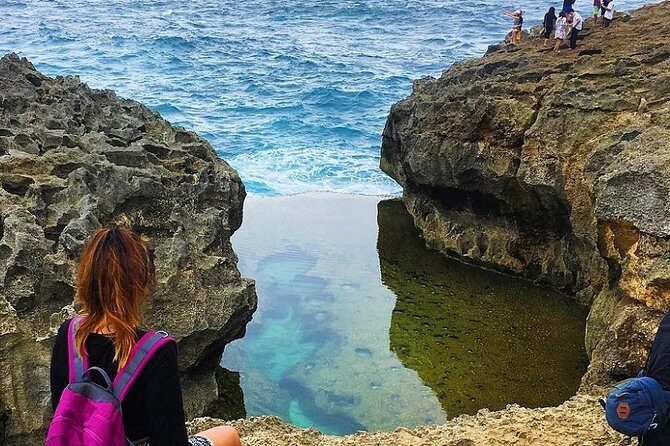
Ubud to Bali (DPS) Airport Private Transfer

Ubud to Bali (DPS) Airport Private Transfer - The minivan ride: comfort, luggage limits, and helpful conversation

Getting to the airport can be the stressful part.

This private Ubud-to-DPS airport transfer keeps things simple: a driver meets you at your hotel gate with a sign, then you ride in an air-conditioned minivan to Ngurah Rai International Airport in about 1.5 hours. I like the meet-and-greet with a name sign (easy to find, easy to start), and I also like that the price is set per person for a private vehicle, which makes it work well for small groups. One thing to watch: the luggage space is limited (roughly 2 suitcases or 4 backpacks per van), and Bali traffic can be unpredictable, so build in extra time.

You’ll get two clear wins right away.

First, I really like the friendly, punctual driver vibe shown in past trips—drivers such as Wayan and Sukawadi are described as kind, patient, and easy to work with. Second, I like the practical extras: bottled water and a straightforward, fixed-price transfer with taxes and fees included, so you’re not stuck negotiating at the curb. The only drawback I’d plan around is timing: if you need to be at the airport early, you may want to be picked up earlier than you think.

The transfer itself is straightforward, but traffic matters.

The ride is about 1.5 hours, yet one important note is that traffic can slow you down even earlier in the day, so a smart move is requesting pickup with extra buffer time. If you arrive late, you’ll feel it—airport schedules don’t care about good intentions.

Key things that make this transfer worth it

  • Hotel gate meet-and-greet with a signboard showing your name, so you don’t wander looking for a car
  • Private, air-conditioned minivan for up to 4 people, with luggage space capped (plan for about 2 suitcases or 4 backpacks)
  • Driver who chats and helps you out, with English-friendly service from drivers like Wayan and Sukawadi
  • No hidden fee feel, since taxes, fuel surcharge, and service fees are included in the price
  • Good value for small groups because the cost is per person based on 2 to 4 passengers per vehicle

Ubud to Ngurah Rai by private van: the stress-killer
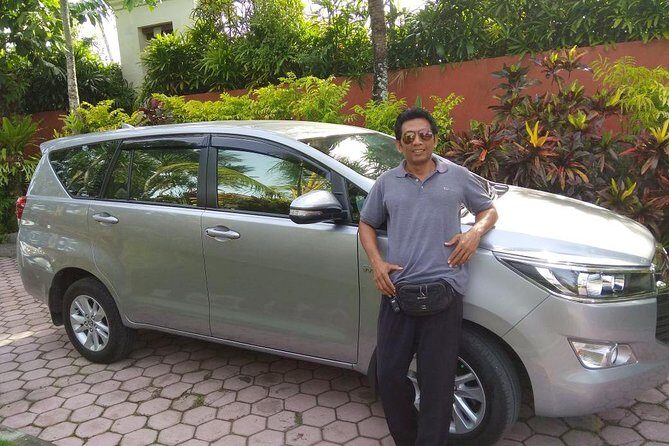
Ubud to Bali (DPS) Airport Private Transfer - Ubud to Ngurah Rai by private van: the stress-killer
Ubud to Bali’s main airport (Ngurah Rai / DPS, in the Tuban–Kuta area) sits far enough from central Ubud that you don’t want your last hour of vacation to become a guessing game. This transfer is designed for smooth control: you’re picked up at your hotel area, then delivered to the airport in one go.

The ride time is listed at about 1.5 hours, and that’s your planning baseline. But Bali traffic can change the math. The best way to handle that is to treat the trip time as a minimum, not a promise—especially if you’re flying early, checking bags, or just hate rushing.

Going private also helps with the “small decisions” you’d otherwise make under pressure. Instead of figuring out where to meet a taxi, negotiating directions, or trying to get your timing right, you focus on your flight. That’s the real value here.

Meet-and-greet at your hotel gate with your name sign
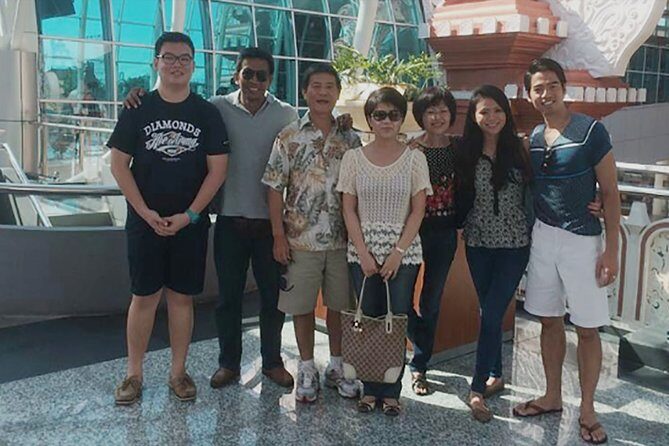
Ubud to Bali (DPS) Airport Private Transfer - Meet-and-greet at your hotel gate with your name sign
This is where the whole experience gets easier. You should expect a driver to greet you at your hotel gate with a board that shows your name. That one detail saves time and stress—especially in Ubud, where hotel entrances can be a little tucked away and pickup points can be confusing.

You’re traveling from your hotel or private residence in the Ubud area, and the driver is supposed to come directly to you before escorting you to the vehicle. This is a good setup if you’re carrying a few bags and don’t want to walk them across busy lanes.

You also get a small but useful comfort touch: bottled water is included. It’s not a big “vacation upgrade,” but it helps when you’re heading to airport lines and you’d rather not pay airport prices for a bottle.

If you’re the kind of traveler who likes calm starts, this is exactly that.

The minivan ride: comfort, luggage limits, and helpful conversation
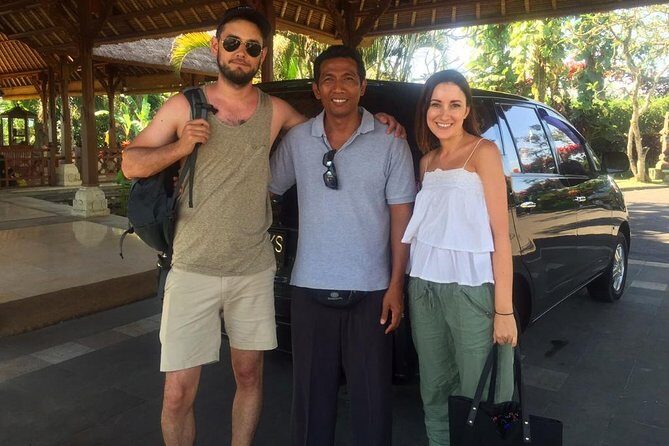
Ubud to Bali (DPS) Airport Private Transfer - The minivan ride: comfort, luggage limits, and helpful conversation
The transfer is done in a private air-conditioned minivan for up to 4 people. That’s a sweet spot for families, couples, and small friend groups: you get privacy, but you’re not stuck with a big vehicle.

Luggage limits matter more than most people think. The guidance is roughly:

  • up to 2 larger suitcases, or
  • up to 4 backpacks

If you’re traveling with multiple hard-shell bags or you pack big for the tropics, you’ll want to check what your party plans to bring. The transfer will still work fine, but squeezing extra bags into limited space is where stress sneaks in.

One of the most praised parts of this service is the driver’s attitude and communication. Drivers like Wayan are highlighted for excellent English and even helping passengers learn a few local phrases. If you want light conversation and a relaxed vibe, you’re likely to get it.

Drivers also tend to share practical info about Bali during the drive. If you have questions—where to go next, what to expect, how locals handle things—you’ll likely get helpful answers without making it feel like a lecture.

A possible detour: ask about quick stops

The main plan is direct transport to Ngurah Rai Airport. Still, there’s a pattern in the praise: one driver was flexible enough to add a waterfall stop on the way because it was convenient. That’s not guaranteed for every trip, but it’s a good example of how these transfers can stay human rather than robotic.

If you want a short photo stop or a quick break, ask your driver. Keep it simple, and keep an eye on your airport timing.

Price and value: $25 per person with the fees handled
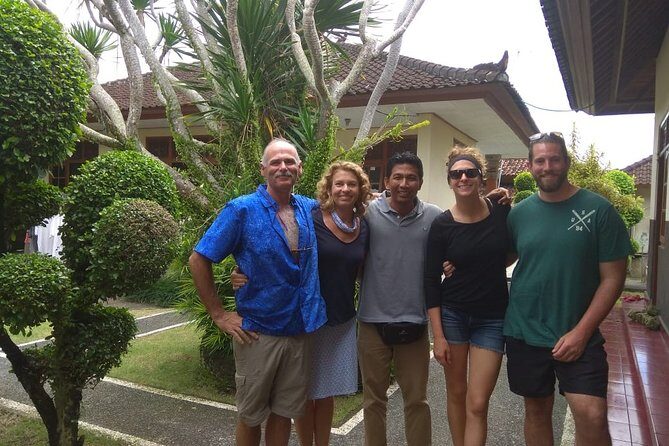
Ubud to Bali (DPS) Airport Private Transfer - Price and value: $25 per person with the fees handled
At $25.00 per person, the first thing to understand is how the pricing is structured. It’s per person based on 2 to 4 people per vehicle. That means the value rises when you’re traveling as a pair or a small group, since you’re sharing one private van.

Also, the cost is described as including taxes, fuel surcharge, and service fees. That matters because airport transfers often get messy with add-ons. Here, you’re paying up front for a straightforward service: pickup, private ride, and drop-off.

No food or drinks are included, so plan for that like any airport transfer. The good news is the ride is short enough that you’re not locked into buying meals on the way unless you want to.

In practice, this price can be a smart middle ground: you get the convenience of private transport without jumping to the high end of luxury car pricing.

Arrival at Ngurah Rai Airport: plan your buffer time

The drop-off is at I Gusti Ngurah Rai International Airport (the Tuban/Kuta area address is listed). You’ll be escorted to the airport as part of the service.

The big practical issue is timing. One key note from real-world experiences: traffic can be bad even at 10am, and it’s smart to arrange pickup at least 2 hours before you want to reach the airport.

Why 2 hours? It’s not about fear. It’s about the small steps:

  • getting everyone out the car and toward check-in
  • handling bags and lines
  • moving at a relaxed pace rather than a sprint

If you schedule like you’re always going to beat traffic, Bali can humble you. Schedule with margin, and you’ll feel in control.

Tip: if you’re not sure how early your airline recommends for check-in, aim for that recommendation plus a bit more—because the transfer’s listed time is an estimate, not a guarantee.

How this fits different trip styles

This private transfer is a strong match for:

  • Solo travelers who don’t want to figure out taxis at the end of a long day
  • Couples who want predictable pickup and don’t want to haggle
  • Small groups (2–4 people) where the per-person pricing becomes especially good
  • Travelers who like a driver who can talk, explain, or answer questions (Wayan and Sukawadi-style service gets a lot of praise)

It may not be the best match if:

  • you have a large group needing more than 4 passengers per vehicle
  • you have luggage beyond the stated limits and can’t consolidate
  • you want frequent stops during the ride (this is mainly a direct transfer)

If your main goal is to land at the airport calm, this service fits that job.

Should you book this Ubud airport transfer?

Book it if you want clear pickup, a private air-conditioned ride, and a service that treats timing seriously. The meet-and-greet with a name sign is a real convenience, and the included bottled water is a nice little touch that makes the ride feel taken care of.

Skip or reconsider if your packing setup doesn’t fit the luggage limits or if you’re tempted to rely on a minimal schedule. For airport transfers in Bali, extra time is never wasted.

If you’re flying from DPS soon after your Ubud stay, this kind of calm handoff usually beats trying to DIY the final leg.

FAQ

How long is the Ubud to Bali Airport transfer?

It’s listed at approximately 1 hour 30 minutes.

Where do you get picked up?

Pickup is from your hotel or private residence in the Ubud area.

Does the driver meet you at the hotel?

Yes. You’ll be greeted by your driver at your hotel gate with a signboard that shows your name.

Where is the drop-off?

Drop-off is at Ngurah Rai International Airport (I Gusti Ngurah Rai International Airport).

How many people fit in the vehicle?

The private minivan accommodates up to 4 people.

How much luggage can I bring?

Luggage is limited to about 2 luggage or up to 4 backpacks per vehicle.

Is the minivan air-conditioned?

Yes, the transport is in a private air-conditioned minivan.

What’s included in the price?

Included: meet & greet service, bottled water, one-way private transport, and taxes, fuel surcharge, and service fees.

What’s not included?

Food and drinks are not included.

Can I cancel for a full refund?

Yes. Free cancellation is available up to 24 hours before the experience start time for a full refund.
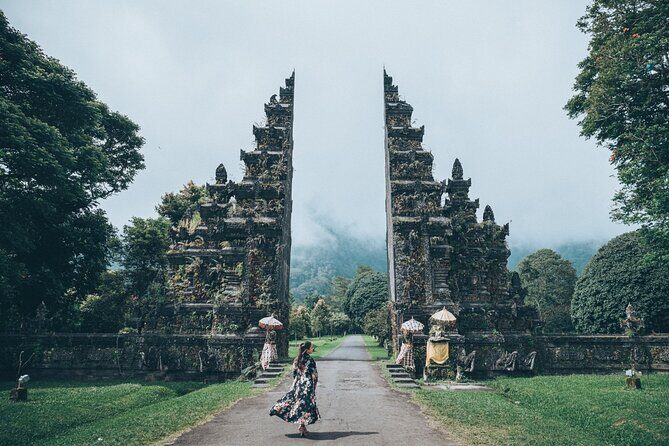

Full-Day Private Guided Exploring Bali as You Wish Tour

Full-Day Private Guided Exploring Bali as You Wish Tour - How to Choose Stops: Use Themes, Not a Checklist

Bali in one day sounds impossible until you add flexibility. This private tour lets you shape the day with your English-speaking driver-guide, choosing from iconic temples, Ubud culture, waterfalls, rice terraces, markets, and beach breaks without being chained to a fixed route. What I like most is the custom planning right from the start, and the practical private transport setup that keeps you comfortable from hotel to hotel. One thing to keep in mind: the list of possible stops is huge, so you’ll need to pick wisely to avoid spending the whole day in the car.

The 8:30am start time works well because it gives you a calmer rhythm for temple visits and scenic stops before heat and crowds stack up. You can also build the day around your energy level, whether that means slow wandering and photos or a tighter run of highlights. A smart consideration: many stops have entry tickets and you’ll also be buying meals, so your final cost depends on what you choose.

Key Things That Make This Tour Work Well

Full-Day Private Guided Exploring Bali as You Wish Tour - Key Things That Make This Tour Work Well

  • You plan the day with your guide: choose what you want, skip what you don’t, and adjust on the fly.
  • English-speaking driver-guide: your driver is also your guide, so explanations and route decisions happen as you go.
  • Private vehicle with pickup: air-conditioned car plus bottled water, parking fees, and gas/petrol included.
  • A stop menu that covers Bali’s range: Ubud culture, sacred sites, nature, and beaches all fit into one day if you select smart clusters.
  • Guide names you’ll recognize: services have included drivers/guides such as Lemon, Sudi, Dastra, and Yasmika, praised for safety and friendly, on-the-ground guidance.

Private 10-Hour Custom Route: The Real Point of Bali As You Wish

Full-Day Private Guided Exploring Bali as You Wish Tour - Private 10-Hour Custom Route: The Real Point of Bali As You Wish
The big idea here is simple: you don’t have to “survive” a rigid schedule. You sit down with your English-speaking driver-guide and talk through what kind of day you want. Then the route gets built around your choices, with the car doing the heavy lifting.

That flexibility matters in Bali because the island is a patchwork. One morning you’re in lush Ubud. The next you’re on a steep cliff for a temple view, then later you’re at a beach where the vibe and weather can feel completely different. A fixed itinerary often forces you to accept timing that doesn’t fit you. This setup lets you push the day toward your interests.

You can also tailor the pace. Each stop is roughly set for about 45 minutes, which is long enough to do the essentials (a walk, a viewpoint, some photos, maybe a quick snack) without turning every stop into a half-day job. If you want longer at one place, you can usually request adjustments, since your guide is making the plan with you.

A small caution: with a long list of optional stops to choose from, it’s easy to overbook. I suggest picking a theme and building around it, not trying to tick off everything. Otherwise the day turns into “car, stop, car, stop” and nobody’s happy.

Starting at 8:30am and Staying Sane on the Roads

The tour starts at 8:30am, with pickup from your hotel. That early start gives you a real advantage for temple and cultural stops. You’re less likely to feel like you’re racing the day, and you can often get better light for viewpoints and photos.

Pickup coverage is broad across the island’s common bases: Sanur, Ubud, Kuta/Legian, Seminyak, Canggu, Jimbaran, Nusa Dua, Benoa, and Denpasar. If you’re staying somewhere else, you might still be able to arrange it, but the listed areas are where this is clearly set up to work smoothly.

Inside the day, your driver-guide handles the logistics: routing, parking, and the practical stuff like getting you through busy zones. The vehicle is air-conditioned, which is not a luxury detail in Bali, it’s your reset button.

Practical tip: plan what you’ll wear and carry before pickup. Bring a small day bag with water, sun protection, and something to cover up for temples. Many stops are religious spaces, so you’ll want to look respectful even if rules vary by location.

How to Choose Stops: Use Themes, Not a Checklist

Full-Day Private Guided Exploring Bali as You Wish Tour - How to Choose Stops: Use Themes, Not a Checklist
This tour includes a long menu of possible stops. The trick is selecting the right combination that stays efficient and feels enjoyable.

A theme-based approach usually works best:

  • Ubud culture + a nature highlight
  • Ubud + waterfalls + rice terraces
  • South coast temples + sunset beaches
  • East Bali gardens + a scenic viewpoint
  • Volcano area for cooler highlands (if timing fits)

Because the day is about 10 hours, you’ll typically land on a handful of stops—not all 40+ options. Your guide can help you decide based on geography, traffic, and what you care about most.

If you’re traveling solo, that flexibility is especially handy. Solo days can feel awkward when you’re stuck with a group pace. Here, you can move at your pace while still getting local guidance.

Ubud and Culture Stops: What You Get From Temples and Town Life

Full-Day Private Guided Exploring Bali as You Wish Tour - Ubud and Culture Stops: What You Get From Temples and Town Life
If you want a Bali day that feels grounded in culture, start with the Ubud area and build outward.

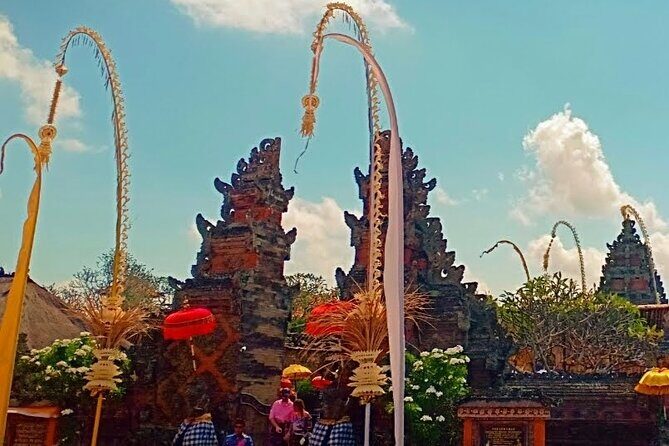
Puseh Batuan Temple (optional): This is an ancient Hindu temple site known for intricate stone carvings. It’s the kind of stop where you’ll get more out of it if you take a slow walk and let your guide explain what you’re seeing.

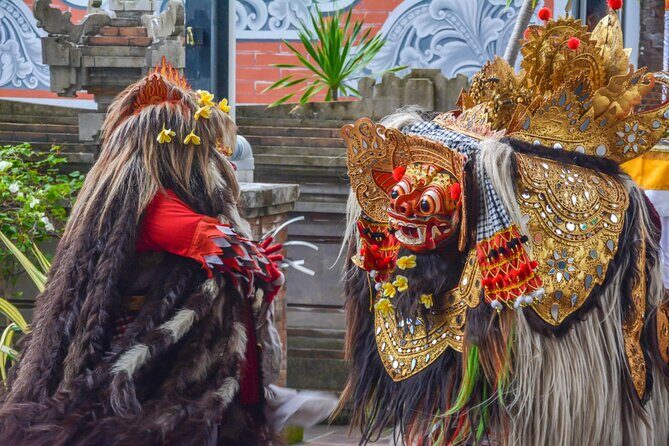
Barong & Kris Dance (optional): This is Bali’s famous dance-drama that portrays the battle of good vs evil. It’s a good choice if you want something more than scenery—something with story and performance.

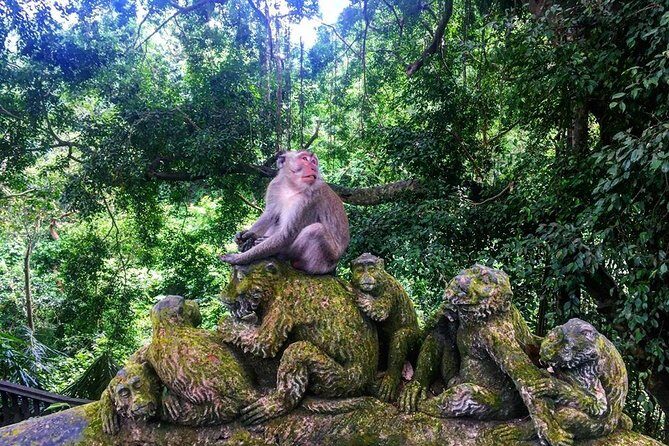
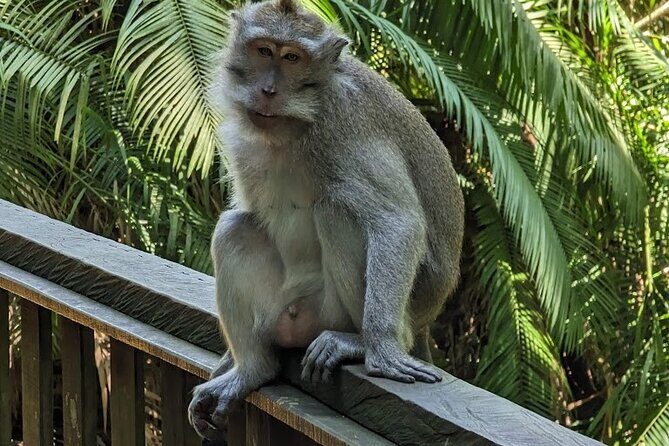
Sacred Monkey Forest Sanctuary (optional): The draw is simple: you’re in a forested sanctuary with 700+ long-tailed macaques. The key consideration is basic safety and common sense—don’t tease, don’t reach, and keep valuables secured.

Elephant Cave (optional): A sacred Hindu temple site with cultural and archaeological importance. This is one of those stops that can feel meaningful without needing a long lecture—just be ready to walk and look closely.

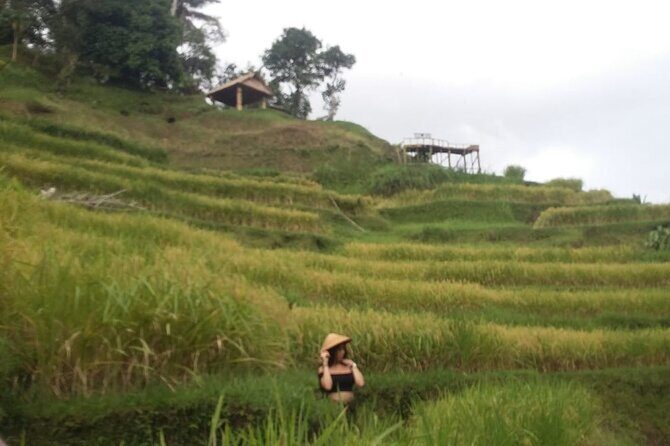
Tegalalang Rice Terrace (optional): Terraced fields with coconut trees that look like a postcard. One drawback: it can get busy, and the viewpoints can be slippery if it’s humid or wet. Wear shoes you trust.

Campuhan Ridge Walk (optional): A walk through greenery and valley views around Ubud. This is a good pick if you like gentle movement and don’t want another temple photo session.

If you’re building a culture day, keep your Ubud time grouped together. That reduces driving and gives you a smoother flow between temples, performances, and countryside walks.

Waterfalls and Green Highlands: Nature Stops That Still Feel Manageable

Full-Day Private Guided Exploring Bali as You Wish Tour - Waterfalls and Green Highlands: Nature Stops That Still Feel Manageable
Bali’s waterfalls and highland scenery are a huge part of why people plan day trips. The challenge is picking the right waterfall for your schedule and energy.

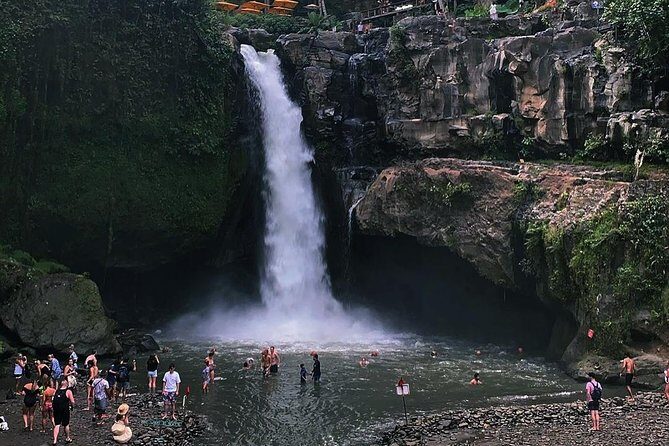
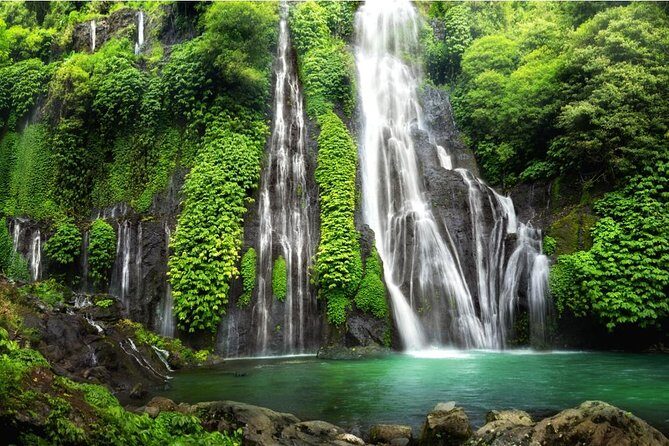
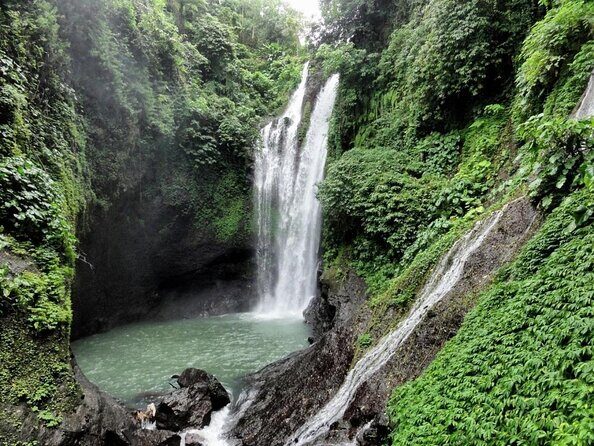
Tegenungan Waterfall (optional): You’ll get a viewpoint plus a short walk down steps. It’s family-friendly compared to some steeper waterfall routes, and it’s easier to do in a tight day.

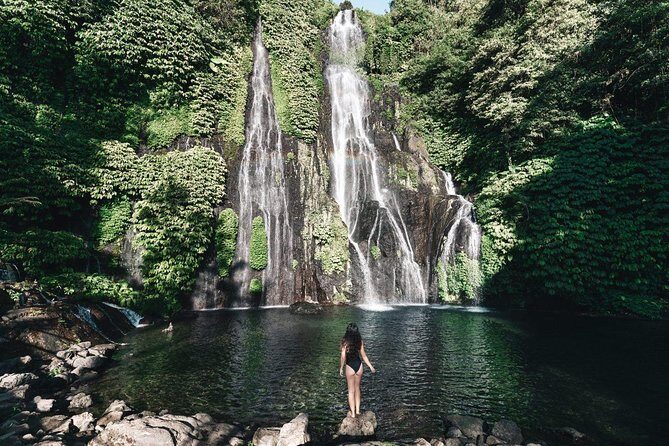
Sekumpul Waterfall (optional): This one is described as a cluster of 6 to 7 narrow cascades in a lush valley. If you choose this, factor in that it can feel more involved than a simple viewpoint stop.

Jatiluwih Green Land (optional): A cultural landscape heritage area in the highlands of Tabanan. For many people, it’s less about a quick photo and more about long views and cooler air.

Mount Batur (optional): An active volcano in the Kintamani area. Your best shot for dramatic timing is early morning for sunrise (or midday if you’re not chasing sunrise).

Mount Agung (optional): Bali’s highest mountain at 3,142m. This is more of a “holy mountain” scale moment than a casual stop, so it’s best if you’re okay with the idea of a bigger, more serious day.

Waterfall and volcano days can work in one day if you cluster them logically. If you try to pair north waterfalls with distant coast temples, the travel time can eat the experience.

Beaches and Temples on the South Coast: Pick Sunset Carefully

Full-Day Private Guided Exploring Bali as You Wish Tour - Beaches and Temples on the South Coast: Pick Sunset Carefully
South Bali is built for views. Temples on cliffs and beaches for late afternoon can make your day feel like a highlight reel, but timing matters.

Seminyak Beach (optional): A common south-coast baseline with plenty of beach energy nearby, and a good option if you’re not trying to go too far beyond the main tourist corridor.

Pantai Double Six (optional): Another beach stop with sunset appeal. It’s popular, so if you like quiet, you might want to go earlier in the afternoon.

Uluwatu Temple (optional): A key spiritual temple on a steep cliff about 70 meters above sea level. Expect dramatic views and a sense of place. Plan respect: this is a temple, not just a viewpoint.

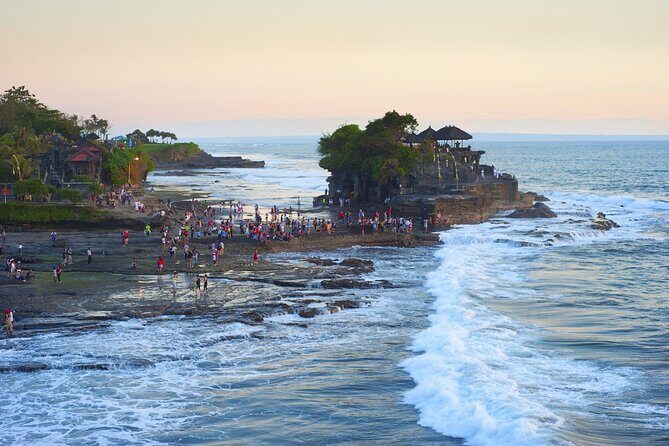
Tanah Lot Temple (optional): One of the most famous temples, known for its offshore setting and sunset backdrops. It’s a classic because the setting does half the work for you.

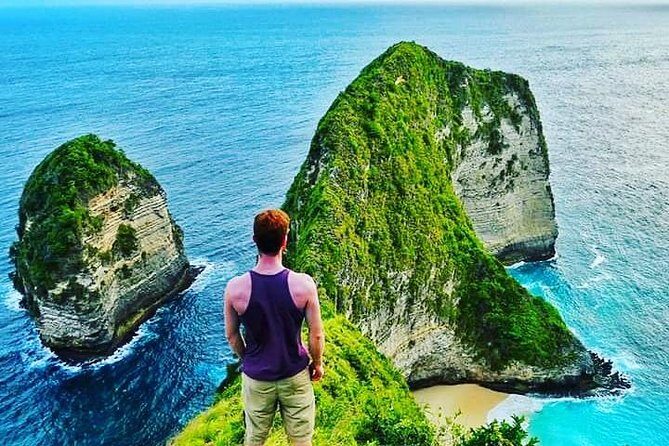
Kelingking Beach (optional): Listed as part of Nusa Penida with spectacular landscapes. This is one of those “big view” stops where you’ll want your expectations set: you’re there for scenery, not a long beach day.

Nusa Penida (optional): The island is described as fairly wild with great cliff viewpoints, especially along the west coast. If you pick this, you should accept that it’s a major commitment within a single 10-hour schedule.

Sanur Beach (optional): Often a calmer swimming beach option with clear water and fewer waves.

Jimbaran Bay (optional): Seafood town energy with golden sands and views toward limestone cliffs.

If sunset is the goal, decide what you’re willing to trade. Don’t add a late-night market stop if you’re trying to catch a temple sunset. Your guide will help you shape it, but your preferences drive the timing.

Gardens, Markets, and Art: Slower Stops That Add Character

Full-Day Private Guided Exploring Bali as You Wish Tour - Gardens, Markets, and Art: Slower Stops That Add Character
Not every stop needs to be loud. Some of the best “Bali feeling” comes from calmer places where you can breathe.

Tirta Gangga (optional): An East Bali water garden with pools, ponds, fountains, stepping stones, statues, and tropical gardens. This works well if you like photos but also enjoy wandering.

Sindhu Night Market (optional): A market for fresh vegetables, dried fish, spices, and ready-to-eat food options. It’s a good pick if you want to taste what’s around you rather than planning a restaurant.

Nyaman Gallery (optional): A contemporary art gallery representing local and international artists. If you’re tired of temples and beaches, this is a different kind of cultural stop.

Museum PASIFIKA (optional): An art museum focused on Asian Pacific cultural artifacts.

Purpa Fine Art Gallery Seminyak (optional): A gallery with contemporary pieces by Indonesian and international artists, with an owner who can explain the collection.

Samasta Lifestyle Village (optional): An open-air lifestyle space with lots of photo spots.

Setia Darma House of Mask and Puppets (optional): A museum of masks and puppets from different regions of Indonesia and around the world.

This category is also where I see a strong fit for travelers who don’t want only “checklist Bali.” Add one calmer stop so the day doesn’t feel like a sprint.

What’s Included, What’s Not, and How to Budget This Day

Full-Day Private Guided Exploring Bali as You Wish Tour - What’s Included, What’s Not, and How to Budget This Day
You’re paying for a private, air-conditioned vehicle plus your English-speaking guide who also drives. That’s the foundation. Also included are pickup and drop-off in the listed areas, bottled water, parking fees, and gas/petrol.

What you’ll pay separately:

  • Entry/admission fees (not included)
  • Food and drink (available for purchase)
  • Gratuities (optional)

Given the published price of $31.40 per person, the biggest value is that the logistics and transport are covered. The cost can still rise based on how many paid attractions you add and how much you eat out. If you choose mostly outdoor stops and only one or two ticketed sites, your day stays budget-friendly. If you stack several ticketed temples, markets, and shows, expect costs to creep up.

My budget advice: before you confirm your final stop list, do a quick mental count of where tickets might apply. Then plan meals in a way that matches your day: a market snack mix for variety can be simpler than full sit-down meals between stops.

Guides, Safety, and the Personal Touch You’ll Actually Notice

One of the strongest themes in the guide/service feedback is practical comfort. People have specifically praised being on time, a safe driver, and clear local guidance.

Names that come up include Lemon (praised for local route knowledge and suggestions), Sudi (praised for understanding local culture and planning a strong route), Dastra (praised for friendly, knowledgeable guidance), and Yasmika (praised for being insightful and kind). Even if you don’t meet the same guide, the pattern matters: you’re not just hiring a driver; you’re getting someone who can help turn a list of places into a real plan.

That matters most when you’re deciding between two good options. Your guide can steer you toward what fits the day’s timing and your style.

Who This Tour Suits Best (and Who Should Rethink It)

This is a great fit if:

  • You want a private day without rigid pacing
  • You’d rather customize than follow a script
  • You want an English-speaking guide while you’re on the road
  • You’re okay making choices and trimming your must-sees down to a realistic set

You might want to rethink it if:

  • You expect every listed stop in one day (that’s not how a 10-hour schedule behaves)
  • You dislike deciding things on the spot (you’ll want to come with at least a rough idea of priorities)
  • You’re trying to do several far-flung areas with no central theme (driving time can crowd out the fun)

For couples, solo travelers, and families who want control, this setup often feels just right: one car, one plan, and the freedom to say yes or no.

Should You Book Bali As You Wish?

Book it if your ideal Bali day has balance: culture plus nature, or temples plus a beach break, guided by a driver who can adjust the route. The combination of hotel pickup, private air-conditioned transport, and an English-speaking guide who drives is the core value, especially when you’re not trying to squeeze everything in.

Skip it if you want a fixed itinerary with zero decision-making. This tour gives you options, and options require a little commitment from you.

If you’re the kind of traveler who likes to say, Today I feel like waterfalls, or, Today I want temples and views, this is the right tool for the job.

FAQ

What time does the tour start?

Pickup and start time are set for 8:30am.

Is pickup included, and where does it pick up from?

Yes. Pickup and drop-off are included from Sanur, Ubud, Kuta/Legian, Seminyak, Canggu, Jimbaran, Nusa Dua, Benoa, and Denpasar.

How long is the tour?

The duration is about 10 hours.

Is this tour private?

Yes. It’s a private tour/activity, and only your group participates.

Are entrance fees and food included?

No. Entry/admission fees and food and drink are not included. Bottled water is included.

What if I need to cancel?

You can cancel for a full refund if you cancel at least 24 hours before the experience’s start time. If you cancel less than 24 hours before, the amount paid is not refunded.

Fun Canyoning in Gitgit Canyon

Fun Canyoning in Gitgit Canyon - Gear and safety setup: what’s included and how it changes your day

That early morning canyon wake-up is worth it.

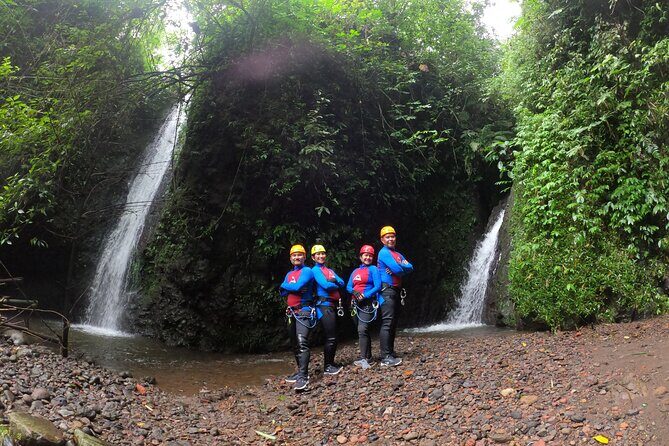
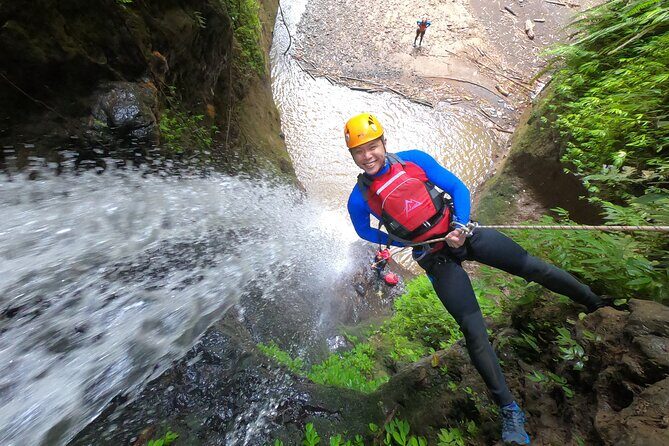
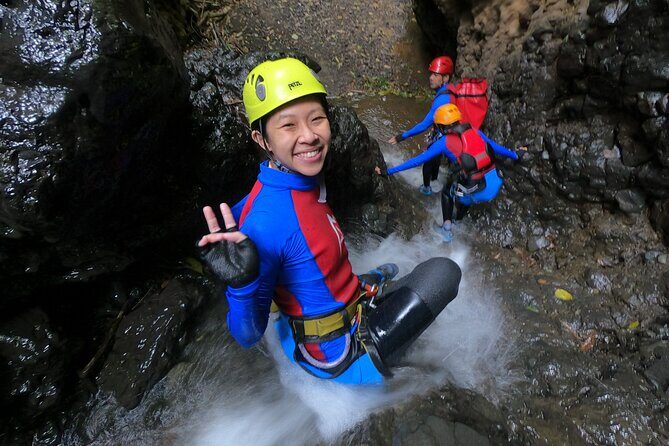
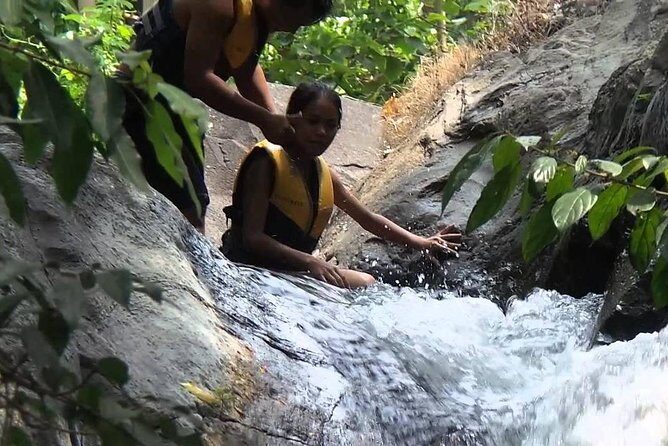
Gitgit Canyon is one of Bali’s best-known canyoning spots, and the experience is built to feel both exciting and controlled: volcanic-rock gorge, caves, and a mix of slides, jumps, abseils, and a zip-line. This is guided canyoning in a small group, with the day planned around safety training, real time in the water, and meals that keep you going.

What I love most is that you’re not left to figure anything out. You get hotel pickup and air-conditioned transfers, plus full equipment (helmet, harness, wetsuit, shoes, towel) so you can focus on the gorge. I also like the way the team runs the day—coffee/tea and breakfast first, then short training, then a guided sequence that matches your comfort level, not just a scripted routine.

One thing to consider: it’s an early start (pickup and activity begin around 6:00 am) and it runs about 9 hours, so you’ll want to be ready for a full-day workout plus water time. Also, you’ll need to bring your own swimwear to wear under the wetsuit.

Key highlights at a glance

Fun Canyoning in Gitgit Canyon - Key highlights at a glance

  • Small-group feel: maximum 10 travelers, with very personal guidance throughout
  • All gear included: helmet, harness, wetsuit, shoes, and a towel
  • Action menu: jumps up to 3–8 m, slides 2–7 m, abseils 7–15 m, plus a 20 m zip-line
  • Real refuel breaks: breakfast, lunch, snacks, and hot beverages
  • Photos and video included: a big help when you’re focused on staying safe

Why Gitgit Canyon works for both beginners and adrenaline seekers

Fun Canyoning in Gitgit Canyon - Why Gitgit Canyon works for both beginners and adrenaline seekers
Gitgit Canyon is popular for a reason. The gorge is carved into volcanic rock, so it naturally delivers that close-in canyon vibe—tight turns, water features, and walls that make every slide and abseil feel like it matters. You’re not just splashing around in a river; you’re moving through a planned route with built-in variety.

I like that the activity gives you multiple ways to participate. Some people get their thrill from slides and jumps, others from rappelling (abseils), and some just want to enjoy the caves and swimming sections while letting the guide handle the logistics. The operator keeps the group small, and the instructors run a short training session before you go in, which makes first-timers less nervous.

If you already canyoned before, this still has value. One reason is the mix: slides, jumps, abseils, and a zip-line in the same outing. That variety can make a second trip feel different instead of repeating the same moves.

The 6:00 am start: pickup, coffee, breakfast, and the clove-garden drive

The day begins early, and that’s part of the charm. You’re picked up from your accommodation by a friendly driver and taken by air-conditioned vehicle toward the basecamp area. The morning drive includes views over Bali’s clove gardens—nothing wild or complicated, just a calm start before the action.

At the basecamp, you get morning coffee/tea and breakfast before gearing up. This matters more than you’d think. Canyoning is physical, and you’ll be using energy even when you’re focusing on safety steps. Having real food early helps you stay steadier during the harder vertical sections.

You’ll then meet the instructor and assistant. The guide gives a short training session so you understand the basics before you enter the gorge. The training isn’t long lectures; it’s practical coaching that helps you get your bearings fast—especially for abseils, where correct setup and body position make all the difference.

Gear and safety setup: what’s included and how it changes your day

Fun Canyoning in Gitgit Canyon - Gear and safety setup: what’s included and how it changes your day
Canyoning is one of those activities where the gear matters, but you shouldn’t have to shop for it. This tour includes full canyoning equipment: helmet, harness, wetsuit, shoes, and a towel. You’re also provided with snacks and bottled water, which helps on a day that can run longer than you expect once you’re in.

From a practical standpoint, this setup reduces stress. You don’t need to guess wet-season clothing, find a harness that fits, or worry whether your shoes will grip. Instead, you show up, get fitted, and then follow the guide’s instructions.

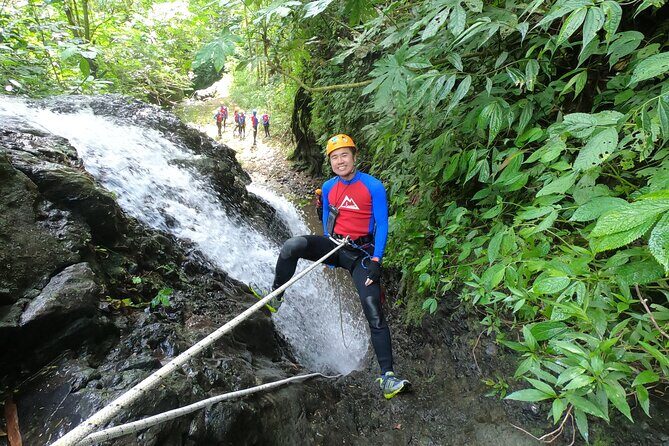
Safety-wise, the day is built around instruction plus supervision. The guide walks you through a sequence of elements—slides, jumps, abseils, and a zip-line—so there’s a clear progression from “learn” to “do.” Reviews also highlight that instructors adapt to your capacity and keep you safe and comfortable, which is exactly what you want when you’re dealing with heights and fast-moving water.

Inside the gorge: what the route feels like (slides, jumps, caves, abseils)

Once you reach the starting point, the real canyoning begins. You’ll climb and descend through sections inside a gorge carved on volcanic rock, with caves and mixed water features. The route is designed to keep you moving through different types of obstacles so the day doesn’t feel repetitive.

Here’s the action menu the operator lists for this canyon:

  • Jumps: 4 possible jumps at about 3–8 m
  • Slides: 5 possible slides at about 2–7 m
  • Zip-line: 1 ride around 20 m
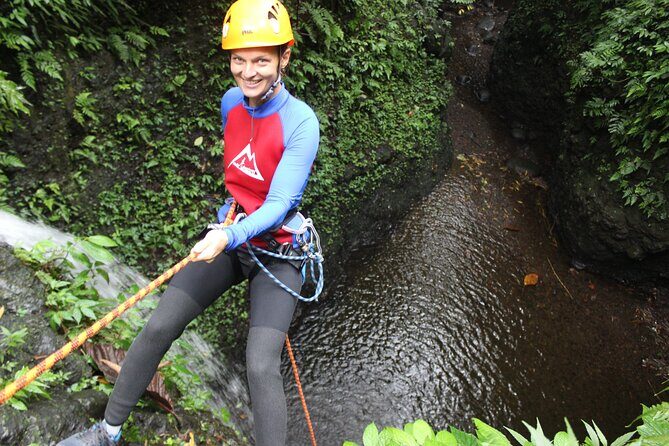
  • Abseils: 6 possible rappels around 7–15 m
  • Swimming: about 10–15 m total in water sections

That looks like a lot on paper, but the guiding approach makes it feel manageable. You’re not dropped into the biggest move first. You start with training and you go element-by-element, with the instructor watching and adjusting as you go. If you’re nervous, that control helps. If you’re experienced, the variety still keeps your attention.

One practical note: abseils and the zip-line are where most first-timers feel the mental load. Heights can be intimidating even when you’re properly fitted. The best move is to listen closely during the coaching moments, then focus on the next step—not the whole route. The guide’s job is to make sure you’re ready before you commit.

Also, bring a mindset for water. You will be wet, and you’ll likely be getting covered in canyon spray. If you’ve never worn a wetsuit before, expect a snug fit and a weird first-minute feeling. It passes quickly once you start moving.

Heights, water, and comfort: how to prep so the day feels easier

Even with great guidance, your comfort determines your enjoyment. Since this tour includes a wetsuit, you should plan what goes underneath. Swimwear isn’t included, so pack swimwear for under the wetsuit. This is one of those details that can be easy to forget, and it affects comfort immediately.

Beyond that, think about what you can control:

  • Keep your hands and head clear of distractions during training.
  • Listen for the guide’s cues before each slide, jump, or abseil.
  • Wear the provided shoes as directed—don’t improvise with footwear tricks.
  • Expect your body to feel worked. Even if you’re not always doing the “hardest” move, you’re climbing, descending, and gripping.

If you’re watching your endurance, you’ll be glad the day includes breakfast and lunch, plus snacks and hot beverages. Canyoning burns calories fast, and re-fueling prevents that last-hour drag where you stop taking in the experience.

Photos and video: why it’s worth not managing your camera all day

Fun Canyoning in Gitgit Canyon - Photos and video: why it’s worth not managing your camera all day
One of the best “quality of life” features here is that photo and video are included. That means you’re not trying to hold a phone, balance a camera, and do the moves at the same time. You can focus on safety and timing.

What you should remember is that you’ll need a way to receive and manage your photos. The tour notes that a storage device isn’t included for saving pictures, so if that matters to you, plan ahead. Even if you just want a few highlights on your phone later, it’s easier if you’re ready.

Personally, I love included photos for canyon days. The best views and action moments are also the moments you’ll be most focused on breathing and balance. Having that captured means you can relax during the hard sections and still leave with a story.

Meals built for a physical morning: breakfast, lunch, and hot drinks

Fun Canyoning in Gitgit Canyon - Meals built for a physical morning: breakfast, lunch, and hot drinks
Food may sound like a small thing, but it’s a big deal on canyon days. This outing includes breakfast, lunch, and coffee/tea plus hot beverages, along with snacks and bottled water.

That matters because you’re doing a full activity cycle: gear up, hike or climb to viewpoints, move through water obstacles, then repeat. If you only ate lightly, you’d feel it by the time the abseils and swims hit. Here, you get energy at the start and again mid-day, which helps you keep your confidence.

One of the best review themes is that breakfast and lunch were great, not just edible. That fits the value equation: you’re paying for a full package—transport, gear, instruction, meals, and media—so getting decent food is part of why the day feels worth it.

Transfers and timing: how the day flows end to end

The itinerary is straightforward, and that’s good. You start with pickup and a drive to the basecamp. You get breakfast and coffee/tea, meet your team, and receive training. Then you head up into the area with scenic views before reaching the starting point inside the canyon.

After you finish the canyon route, the day ends with lunch, then you’re dropped back to your accommodation. The total duration is about 9 hours, and since it starts at 6:00 am, you’ll likely be back in time to enjoy the rest of your day without ruining your whole itinerary.

If you’re tight on time in Ubud, this is still a workable full-day plan. It’s long enough to count as a main activity, but the early start means you’ll be home while others are still getting going.

Price and value: what $99 actually buys you

At $99 per person, this tour is priced like a true activity package, not like a barebones outdoor experience. Here’s what’s covered: air-conditioned transfers, full equipment, breakfast and lunch, snacks, coffee/tea, bottled water, and photo/video. Add in all fees and taxes, and it becomes easier to see the value.

If you tried to recreate this on your own, you’d quickly spend time and money on equipment, guidance, safe setup, and a route that’s meant for canyoning—not random river play. Even when you find gear rentals, the real cost is often the coaching and risk management that keeps things moving smoothly.

The small-group cap also affects value. A maximum of 10 travelers means the instructor can manage pacing better than on mega-tour days. And the operator positions it as very personal; reviews back that up with comments about close attention and instructors adapting the challenge to your capacity.

So if you want a canyon day where you’re not planning logistics mid-trip, this price makes sense.

Who should book this canyoning trip, and who should think twice

This experience is a strong fit if you want:

  • a guided canyon adventure with slides, jumps, abseils, and zip-line
  • an early start that gives you a full activity day without stretching into night
  • included meals that help you keep energy up
  • a team that focuses on safety and comfort, not just speed

You should think twice if:

  • you’re not comfortable with heights or vertical elements like abseils and jumps
  • you don’t want to get wet and muddy (that’s part of canyoning)
  • you hate waking up early and committing to about 9 hours

For most people, though, this kind of guided day is exactly how you test your canyon legs. The training before entering helps you feel ready, and the structure keeps you moving through a sequence instead of guessing what comes next.

Should you book Fun Canyoning in Gitgit Canyon with Rindu Adventures?

Yes, if you want a complete, well-supported canyoning day in Bali’s Gitgit area. The combination of small-group attention, full equipment, and included breakfast/lunch means you spend less time managing details and more time enjoying the gorge. The included photos and video are a practical bonus because canyon action is hard to capture yourself.

My only caution is simple: it’s an early, physical outing with vertical elements. If you arrive rested, follow the guide’s instructions, and bring swimwear under your wetsuit, you’ll be in the right frame of mind for a day that feels safe, fun, and genuinely memorable.

FAQ

What time does the Fun Canyoning in Gitgit Canyon tour start?

The activity starts at 6:00 am.

Is hotel pickup included?

Yes. Pickup is offered, and you’ll use an air-conditioned vehicle for transfers.

What gear is provided for canyoning?

You get full canyoning equipment including a helmet, harness, wetsuit, shoes, and a towel.

What meals are included during the day?

The tour includes breakfast and lunch, plus coffee/tea, snacks, and bottled water.

Do I need to bring swimwear?

Yes. Swimwear for under the wetsuit is not included, so you should bring it.

What activities are part of the canyoning route?

The itinerary includes a mix of slides, jumps, zip-line, abseils, and swimming, with listed possible counts and height ranges for each.

Best Of Ubud : One Day Hidden Waterfall Tour with Tempel

Best Of Ubud : One Day Hidden Waterfall Tour with Tempel - Pickup and getting around: the AC car difference

Ubud has a way of hiding its best water surprises. This one-day tour strings together temples, jungle walks, and two waterfall stops, all in one smooth loop from your hotel or port area. You also get a driver who can talk Balinese culture in plain English, so the places feel more like lived-in Bali and less like a checklist.

I especially like the private, air-conditioned car setup. It helps you avoid the stop-and-start chaos that can drain a long day, and it’s a big deal when you’re bouncing between waterfalls and temple steps. I also like that you start with etiquette—at Puseh Batuan Temple you wear a sarong (provided), which makes the visit feel respectful instead of rushed.

One consideration: entrance tickets for the sights are not included, so the final cost can creep up a bit. Also, water-based stops mean you’ll want to plan for getting damp, since a towel and extra clothes aren’t provided.

Key highlights you’ll feel right away

Best Of Ubud : One Day Hidden Waterfall Tour with Tempel - Key highlights you’ll feel right away

  • Puseh Batuan Temple first: 10th-century village temple setting with sarong-required entry
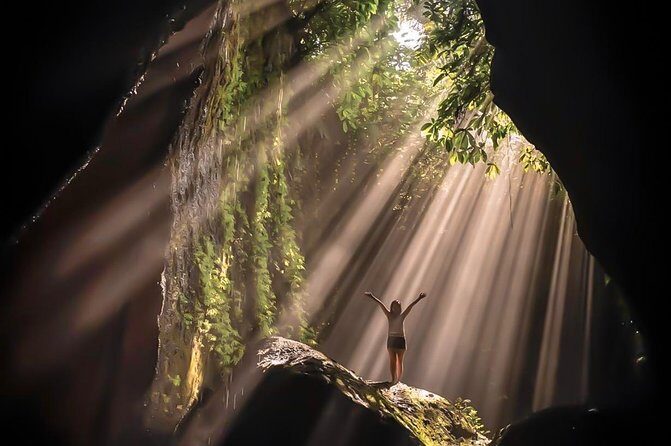
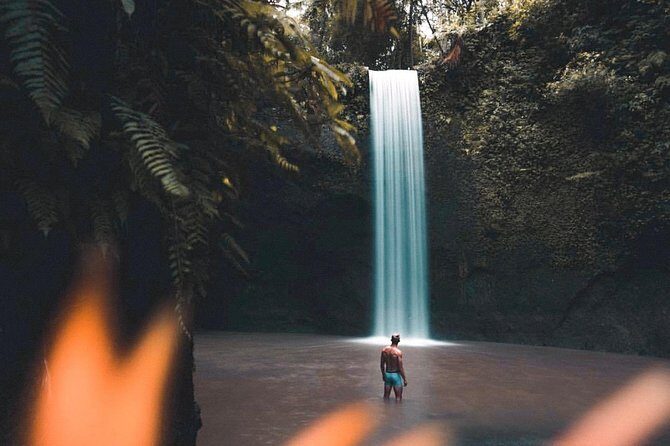
  • Tukad Cepung Waterfall: the lesser-known, cave-like waterfall you come to for the unique setting
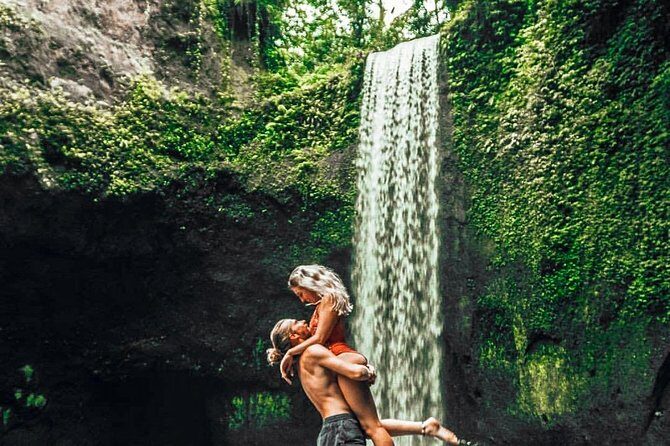
  • Tibumana Waterfall: 20-meter falls plus a clear shallow pool area (gua area)
  • Sacred Monkey Forest Sanctuary walk: long-tail macaques in their real habitat and a guided route that includes the dragon bridge area
  • Door-to-door pickup by area: pickup and drop-off available in multiple Bali zones, with an AC private car and bottled water

Why this Ubud “hidden waterfall + temple” day makes sense

Best Of Ubud : One Day Hidden Waterfall Tour with Tempel - Why this Ubud “hidden waterfall + temple” day makes sense
This is the kind of Ubud day that works because it’s built around variety. You get human-made beauty first (temples), then nature in two very different styles (a waterfall tucked into a rock setting, then another with a strong local reputation). The monkey forest finish helps you shift from wet, slippery footing to shaded jungle paths.

The tour also fits how most people want to experience Bali: not just big-name views, but meaning. When your driver shares context as you go—what temples are for, why sarongs matter, what the local mindset looks like—you start noticing details you’d otherwise walk past.

And yes, the private format matters. An 8 to 10 hour day in Bali can feel long if you’re crammed with strangers, stuck in transfers, or waiting for the next group. With a private car, you control the pace more than you think you will.

Price and value: what $48 per person really covers

At $48 per person, you’re paying for three things: transportation, guided time, and convenience. You’re not buying entrance fees, and you are not buying a towel. But you are getting hotel pickup and drop-off, a private AC car, and a driver who handles the English-speaking side and the flow of the day.

That trade-off is usually worth it for Ubud. Entrance tickets in Indonesia can add up, but the big savings come from not spending your energy on logistics—finding parking, negotiating rides between scattered spots, or losing daylight to inefficient routing. If your goal is a full day with minimal stress, this pricing structure is pretty fair.

One more value point: the tour uses a mobile ticket and offers group discounts. If you’re traveling as a couple, small family, or small group, that can help the per-person cost.

Pickup and getting around: the AC car difference

Best Of Ubud : One Day Hidden Waterfall Tour with Tempel - Pickup and getting around: the AC car difference
The tour includes round-trip pickup and drop-off, and it’s available for several areas around Bali. If you’re staying in Ubud (or nearby zones), you can usually count on an easy start. There’s also pickup for places like Denpasar, Kuta, Seminyak, Sanur, and other specific zones listed for the provider. Hotel pickup and drop-off around Kemenuh is explicitly included, and there are pickups for several other named areas too.

Also, the day is designed around a private car with good air conditioning and mineral water. In Ubud, that sounds like a small thing—until you’re sitting in the heat after a waterfall stop. A cool car is a real comfort upgrade when the day is long.

Practical tip: if your hotel is in a more remote stretch, I’d still confirm your pickup point the day before. You don’t want to waste 20 minutes hunting for each other while your itinerary is already moving.

Puseh Batuan Temple: respectful entry with a 10th-century feel

Best Of Ubud : One Day Hidden Waterfall Tour with Tempel - Puseh Batuan Temple: respectful entry with a 10th-century feel
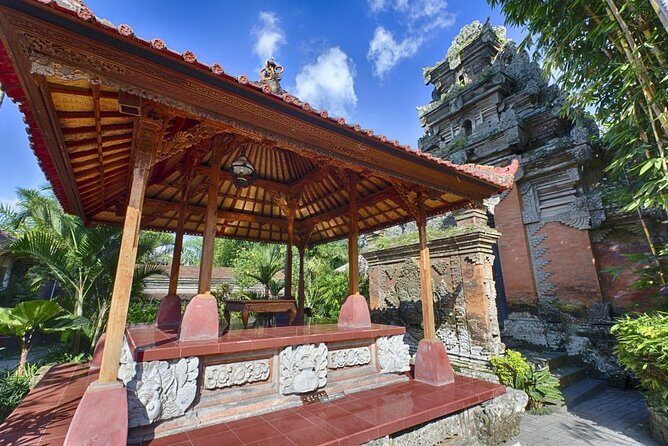
The day begins at Puseh Batuan Temple, described as an ancient village temple from the 10th century. You’ll see stonework and sculptures as part of the temple setting, and you’ll also follow local etiquette: sarongs are required for entrance, and the tour provides them.

This stop matters because it sets the tone. Waterfalls in Bali are easy to treat like photo ops. Temples remind you the island is religious and communal—people come here for practices, not just scenery. If you’re the type who likes context (and you want your driver to actually explain things), this is a strong first move.

What to watch: this is a temple visit, so plan for a slower, more thoughtful pace than you might use at other stops. You’ll also want to wear something that works for temple entry rules and walking around stone areas.

Tukad Cepung Waterfall: why the setting feels special

Best Of Ubud : One Day Hidden Waterfall Tour with Tempel - Tukad Cepung Waterfall: why the setting feels special
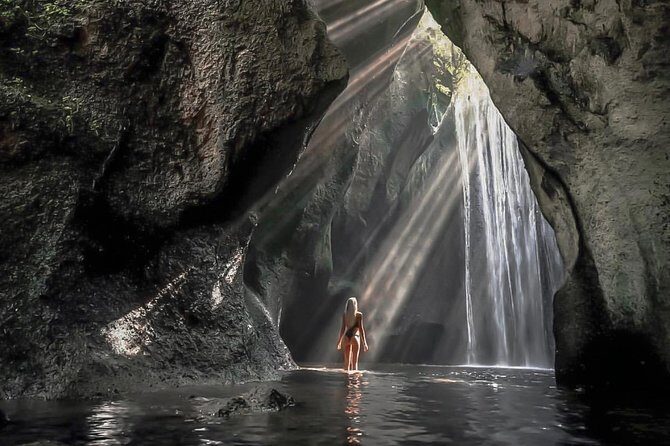
Tukad Cepung Waterfall is the tour’s “hidden” nature moment. Unlike Bali’s most famous waterfall circuits, Tukad Cepung is described as only recently discovered by travelers and still relatively unknown, with a more untouched feel.

The key detail is the setting. Tukad Cepung is known for its dramatic cave-like environment, which changes the vibe from open-air falls to a more enclosed, atmospheric scene. You can usually expect something very different visually from a waterfall you see in a wide valley.

Time-wise, you get about an hour at the waterfall. That’s enough to take in the view, move with your guide’s rhythm, and still keep the rest of the day on track. The drawback: waterfalls involve getting wet and dealing with uneven ground, so come in with shoes that won’t punish you.

Entrance ticket note: entrance is not included, so factor that into your budget.

Tibumana Waterfall: local meaning, 20-meter drama

Best Of Ubud : One Day Hidden Waterfall Tour with Tempel - Tibumana Waterfall: local meaning, 20-meter drama
Next up is Tibumana Waterfall, a spot locals connect to a secret gateway linked with Raja Besakih’s temple and Balinese Hindu tradition. Even if you don’t memorize every detail, the idea adds weight to what you’re looking at.

The waterfall itself is described as 20 meters height for each waterfall. The surrounding area has a shallow clear pool and a gua area. Translation: you’re not just looking at falling water; you’re in an environment that invites you to linger and observe the space around the falls.

Again, you get about an hour here. That’s a smart window—long enough for photos and a calm look, not so long that you lose energy for the monkey forest walk later.

Entrance ticket note: entrance is not included.

Sacred Monkey Forest Sanctuary + Dragon Bridge walk

Best Of Ubud : One Day Hidden Waterfall Tour with Tempel - Sacred Monkey Forest Sanctuary + Dragon Bridge walk
The final major stop is the Sacred Monkey Forest Sanctuary, a guided walking tour designed for close-up time with long-tail macaques in their real habitat. The tour also includes the iconic dragon bridge area, plus lush forest walking, a river canyon segment, and a monkeys temple.

This part of the day tends to feel more “Ubud” than “nature tour.” The energy is different: shade, winding paths, and the constant movement of animals around you (at a distance, with a guide helping you understand how to behave). If you want the cultural-and-natural combo Ubud is famous for, this is where it clicks.

Practical consideration: monkey forest environments are active. You’ll want to keep small belongings secured and follow your guide’s instructions quickly. A calm, predictable approach beats trying to be brave or clever for a photo.

If you’re traveling with kids, this stop can be a highlight because it’s interactive in a safe, structured way. For people who dislike animals or prefer quiet, you might find this the most distracting part of the day.

What you’ll actually need to bring (since not everything is included)

Best Of Ubud : One Day Hidden Waterfall Tour with Tempel - What you’ll actually need to bring (since not everything is included)
The tour includes mineral water and a sarong, which is nice. But it does not include a towel or extra clothes. That’s a useful clue: you’re going to get damp at the waterfalls, and you’ll likely want a dry layer for the ride back.

Here’s what I’d pack for comfort and value:

  • A change of clothes for after the last waterfall stop
  • Shoes you’re comfortable walking in on uneven ground
  • A small dry bag for your phone and essentials
  • Sunscreen and insect repellent (Ubud is warm, and you’ll be outside for hours)

Also, entrance tickets aren’t included. You’ll want some spending flexibility for temple and waterfall fees so you don’t end the day surprised.

How good guides shape the whole day

This is one of those tours where the guide really changes your experience. In the names I kept running into—Made, Suta, Maha, and Ketut Ajus—the common thread is clear communication and good instincts around what to do next. People praised guides for being accommodating, explaining Balinese history and culture, and helping them avoid long lines and tourist traps.

Even with a strong route, a driver who can read timing helps. They can suggest lunch stops, adjust the order if needed, and keep you moving without rushing you like a commuter.

If you care about culture explanations, tell your driver early that you want context at the temples, not just directions. That one request can make the whole day feel more meaningful.

Who this tour is best for

This tour is ideal if you want:

  • A temple + waterfall day that feels fuller than a single attraction tour
  • A private setup with AC car comfort for a long day
  • Two waterfall experiences that aren’t the same photo twice
  • A guided monkey forest walk with more than basic sightseeing

It also works well for couples and small groups who want flexibility. Since it’s private (only your group participates), you can move at a pace that suits you.

If your main goal is to spend most of the day doing one thing—like only hardcore hiking or only beaches—this may feel like too many stops. But if you’re trying to “get a lot of Ubud” without burning your legs out, this route hits a nice balance.

Should you book the Best Of Ubud hidden waterfall tour with Tempel?

Yes, you should book it if you want a stress-reduced day that blends Puseh Batuan Temple, two very different waterfall moments (Tukad Cepung and Tibumana), and a guided Sacred Monkey Forest experience with the dragon bridge walk.

I’d hesitate if you hate paying separate entrance fees or you’d rather avoid any chance of getting damp during waterfall time. Also, if monkeys and active jungle paths aren’t your thing, swap the monkey forest portion for a calmer plan.

If you want a one-day Ubud highlight that feels respectful, scenic, and efficiently arranged, this is a strong choice.

FAQ

How long is the Best Of Ubud one-day hidden waterfall tour?

The tour lasts about 8 to 10 hours.

What does the price include?

The price includes hotel pickup and drop-off, a private air-conditioned car, Balinese sarong, an English-speaking driver, and mineral water.

Are entrance tickets included for the temples and waterfalls?

No. Admission tickets are not included for the stops listed.

Is this tour private or shared?

This is a private tour/activity, so only your group participates.

Do you offer pickup in Ubud and nearby areas?

Yes. Pickup and drop-off are available for the Ubud area, plus other Bali areas listed by the provider.

Is a towel provided?

No. Towel and extra clothes are not included.

Can I cancel and get a full refund?

Yes. You can cancel up to 24 hours in advance of the experience start time for a full refund.
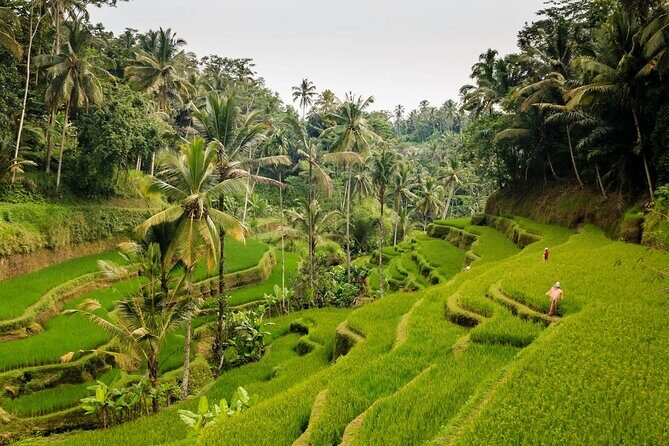
Does the tour use a mobile ticket?

Yes, mobile ticket is included.

️Uluwatu Temple Sunset & Kecak Fire Dance Tour

️Uluwatu Temple Sunset & Kecak Fire Dance Tour - Stop 2: Uluwatu Temple sunset at a cliff height of about 70 meters

Few evenings in Bali hit harder than this one. This Uluwatu Temple sunset plus Kecak fire dance combo is a smart use of time: you get a sacred cliff temple, then a night show inspired by the Ramayana. I like that the tour keeps things easy with pickup and drop-off so you’re not wrestling buses at golden hour. I also love how the timing lines up: you’re at Uluwatu Temple when the sky turns dramatic, then you head straight into the performance. One heads-up: the monkeys at Uluwatu can be distracting and sometimes pushy, so keep bags zipped and don’t wander too freely.

This is also strong value for the price, especially because it’s built around two headline experiences in one evening. The experience runs about 8 hours starting at 1:00 pm, which gives you time for a beach stop before Uluwatu and still makes it to the fire dance without feeling rushed. The main consideration is that parts of the experience may require an extra paid admission, so you’ll want to budget a little more than the base tour price.

Key things to know before you go

️Uluwatu Temple Sunset & Kecak Fire Dance Tour - Key things to know before you go

  • Two top Bali experiences in one night: sunset at Uluwatu Temple, then the circle-style Kecak and fire show
  • Easy logistics from Ubud: hotel pickup and return transfers, plus an air-conditioned car
  • A beach break before the temple: a stop at Padang Padang Beach for views and photos
  • Sunset timing matters: Uluwatu is all about timing, so you’ll want to arrive when it’s still light
  • You’ll likely pay some entrance fees on the ground: admission for certain stops is separate
  • Monkeys are real at Uluwatu: plan to hold onto your phone and keep your bag closed

Your evening plan: 1 pm start, 8 hours of big sights

This tour starts at 1:00 pm and runs about 8 hours. That timing is practical. You’re not trying to squeeze Ubud to the Bukit Peninsula at the last minute, and you still get to Uluwatu Temple with enough light to enjoy the views before sunset.

The structure is also designed to keep your energy steady. The day begins with a coastal stop at Padang Padang Beach, then you move on to Uluwatu Temple, and you finish with Kecak fire dance. Finally, you land in Jimbaran for dinner by the water.

One more benefit: the tour is private, meaning only your group participates. That matters because sunset and show times are tight. You’re not getting stuck waiting on strangers who are still deciding which snack to buy.

Stop 1: Padang Padang Beach for a quick coastal breather

️Uluwatu Temple Sunset & Kecak Fire Dance Tour - Stop 1: Padang Padang Beach for a quick coastal breather
Padang Padang Beach is known as a major surf spot on Bali’s Bukit Peninsula. You’ll pull in for about an hour, long enough to stretch your legs, take photos, and soak up the mood before the temple climb and sunset rush.

Even if you’re not surfing, this stop helps the whole day feel less like a checklist. It’s a chance to shift gears from inland Bali to the coastline. And because you arrive earlier, the area often feels more relaxed than it does later in the evening.

Practical tip: if you’re wearing sandals, double-check grip on uneven ground. Beach paths can be a little slippery, and you’ll want your feet comfortable for Uluwatu Temple afterward.

Stop 2: Uluwatu Temple sunset at a cliff height of about 70 meters

️Uluwatu Temple Sunset & Kecak Fire Dance Tour - Stop 2: Uluwatu Temple sunset at a cliff height of about 70 meters
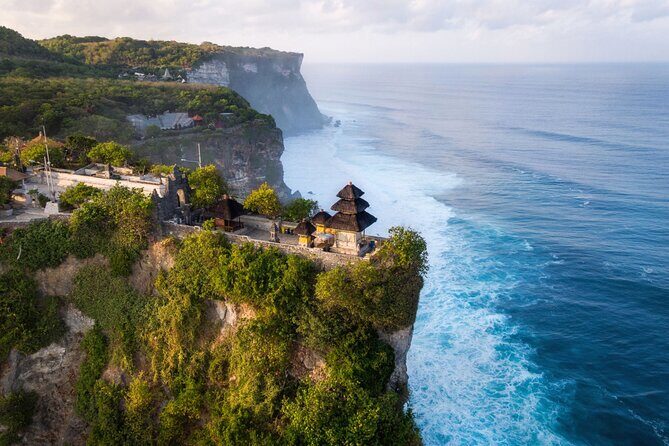
Uluwatu Temple (Pura Luhur Uluwatu) is famous because it sits high above the sea. The view is the whole point. The temple is perched roughly 70 metres above the waves, so when the sun lowers, the cliff edges turn into a natural stage.

This is one of Bali’s key temples. You’re also in a sacred space, so it’s worth approaching it with a little respect and patience. Dress modestly. Keep moving at a sensible pace. If you get offered help for entry, take it—temple rules can be firm but the staff are usually used to working with visitors.

The monkey situation (and how to handle it)

Uluwatu’s monkeys are a real consideration. They can be curious in a way that’s funny from a distance, but less funny when they get close. I’d treat them like you would any animal that’s already decided you’re part of its day. Keep your phone secure. Don’t dangle anything on a strap. And don’t wander with food or open bags.

If you want photos, plan them close to where you’re standing—not while holding your bag open or turning your back.

Stop 3: Kecak and fire dance, Ramayana storytelling in a circle

️Uluwatu Temple Sunset & Kecak Fire Dance Tour - Stop 3: Kecak and fire dance, Ramayana storytelling in a circle
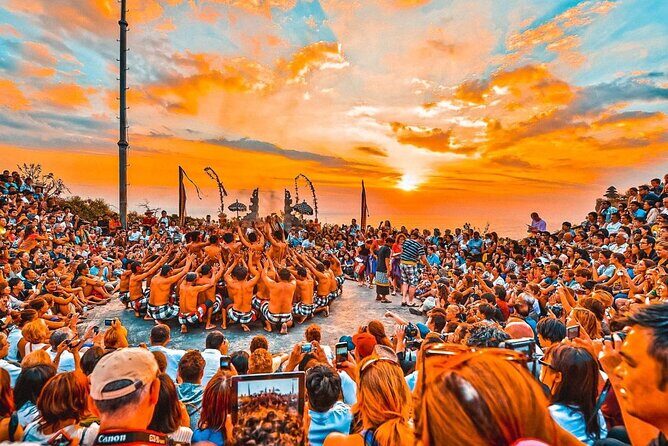
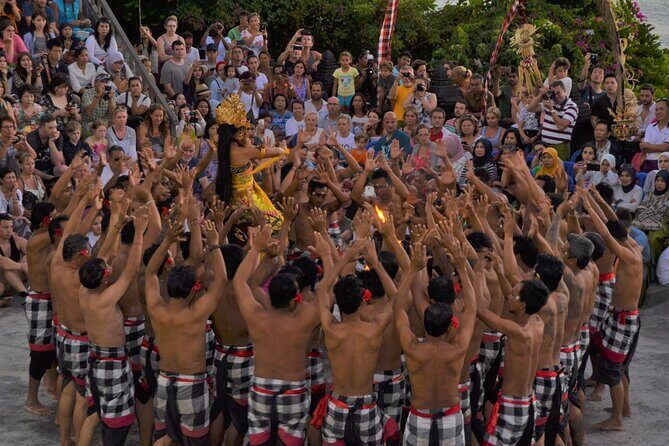
After the temple, the tour moves you into the Kecak and Fire Dance portion. Kecak is a Balinese Hindu dance tied to the Ramayana story. A key feature is the way it’s performed: you’ll see the group arranged in a circle, with rhythmic vocal chanting that builds tension as the performance grows.

The show also has a strong sense of place. It developed in the 1930s in Bali, and it’s designed to feel both theatrical and communal. The chant and circle formation are more than style—they make the audience part of the atmosphere. And the fire element at night turns it into a true evening event rather than a daytime cultural stop.

A practical way to enjoy the show

Fire dances are dramatic, but timing is everything. Aim to arrive a little early so you’re not scrambling for a seat. If there’s a chance your view could be blocked, choose your spot with that in mind—don’t assume front row is worth it if you’re standing in a tight aisle.

Also, remember you’re in a cultural performance setting, not a concert. Expect respect cues: quiet focus, minimal distractions, and a willingness to watch instead of trying to film every second.

Stop 4: Jimbaran dinner by the bay, optional seafood upgrade

️Uluwatu Temple Sunset & Kecak Fire Dance Tour - Stop 4: Jimbaran dinner by the bay, optional seafood upgrade
The day ends in Jimbaran, with a dinner opportunity at the beach area. This part is about the payoff: warm ocean air, sunset mood fading into evening, and a setting that feels intentionally built for lingering.

The dinner option you choose can affect your total spend. The base tour includes dinner at Jimbaran (listed as part of the package value), but there’s also a Jimbaran seafood dinner add-on with an extra cost of $25 per person.

If you’re the type who wants one classic Bali dining moment—sand-to-table vibes, seafood if you eat it—this upgrade can be worth it. If you’re already fed up with touring and just want something simple and satisfying, stick with what’s included and save your appetite for the next day’s adventure.

Practical tip: if you’re choosing seafood, decide ahead of time. Then you won’t be making choices while hungry.

Price and value: the $28 base and the real on-the-ground total

️Uluwatu Temple Sunset & Kecak Fire Dance Tour - Price and value: the $28 base and the real on-the-ground total
The tour price is $28 per person, which is hard to complain about for an evening that bundles multiple major stops plus private transport from Ubud.

Here’s where the math matters. The tour lists that admission tickets are included for some attractions (Price A & E), but other admission tickets (Price B, C & D) cost $15 per person. That means your realistic total is more like $43 before any optional dinner upgrade.

Then add the seafood option if you want it: the Jimbaran seafood dinner is listed as $25 per person extra.

So how do you decide if it’s worth it?

  • If you want both Uluwatu sunset and the Kecak fire dance and you’d otherwise book them separately, the packaged transport and timing alone usually saves you time and hassle.
  • If you dislike paying extra at the door, you’ll want to budget the $15 admission in advance so you’re not surprised later.
  • If you’re on a tight schedule and want one guided evening that removes planning stress, the value becomes clearer fast.

My rule: if you hate last-minute logistics and you value convenience, this kind of combo tour is a good use of money. If you’re comfortable driving and you love building your own itinerary, you might find cheaper DIY options—but you’ll trade convenience for control.

Who this tour fits best (and who might prefer another plan)

️Uluwatu Temple Sunset & Kecak Fire Dance Tour - Who this tour fits best (and who might prefer another plan)
This tour is a strong match if you:

  • want a one-evening version of Bali’s best-known night activities
  • prefer pickup and drop-off over navigating traffic and parking
  • like cultural performances that feel tied to a specific location, not just a show slapped onto a calendar

It’s also especially good for first-timers in Bali. Uluwatu and Kecak are the kind of iconic experiences that can feel overwhelming to plan well—this keeps the day structured.

You might want to reconsider if you:

  • hate animals getting too close, because Uluwatu monkeys are part of the reality
  • strongly prefer fully self-planned timing (you won’t have complete control over when you’re at each stop)
  • want to minimize any extra fees, because there are additional admission costs and an optional seafood upgrade

Things to watch for on a cliff-temple sunset day

️Uluwatu Temple Sunset & Kecak Fire Dance Tour - Things to watch for on a cliff-temple sunset day
Uluwatu is dramatic, but it’s also practical. A few things make a bigger difference than you’d expect:

  • Footwear: you’ll be on uneven temple terrain. Comfortable shoes beat fancy ones.
  • Phone management: monkeys + cliff paths can turn into stress fast if your phone is in hand.
  • Weather: this experience requires good weather. If it gets canceled due to poor weather, you’ll be offered a different date or a full refund.
  • Food timing: you’re out for hours. If you snack beforehand, you’ll enjoy dinner more and feel less like you’re waiting for the finish line.
  • Photography expectations: sunset views are the star, but the best photos often require patience and waiting for light—so keep your expectations realistic.

If you get a driver who explains what you’re seeing and keeps the schedule moving, the experience feels smoother. Based on past feedback about the tour style, that human touch can make a big difference in how you remember the day.

Should you book this Uluwatu sunset and Kecak tour?

If you want two headline Bali moments in one evening with easy transport, I think this tour is an excellent choice. The mix of Uluwatu’s cliff sunset and the Kecak fire performance is a pairing that makes sense—temple drama followed by theatrical chanting and fire at night.

Book it if you:

  • value convenience from Ubud
  • like structured evenings where someone else handles the driving and timing
  • are excited by the idea of a cultural dance show tied to a specific place

I’d skip or choose a different option if you:

  • get stressed by animals close up
  • want zero extra fees beyond the listed price
  • prefer total independence over a planned route

If you do book, go in with one plan: hold onto your phone, keep your bag closed at Uluwatu, and treat sunset as the main event. Everything else—the beach stop, the temple walk, and the dance—works because of that one moment.

FAQ

What time does the tour start?

The start time is 1:00 pm.

How long is the tour?

The duration is about 8 hours.

Does this tour include hotel pickup and transport?

Yes. You get hotel pick up and return transfers, plus private transportation in an air-conditioned vehicle. Bottled water and an English-speaking driver are included.

Are admission tickets included in the $28 price?

Some admissions are included, but other attraction admission tickets cost $15 per person (not included in the base price).

Is dinner included, and how much is the seafood option?

Dinner at Jimbaran is included. If you choose the Jimbaran seafood dinner option, there is an additional $25 per person entrance fee.

What happens if weather is bad, and can I cancel?

This experience requires good weather. If it’s canceled due to poor weather, you’ll be offered a different date or a full refund. You can cancel for a full refund if you cancel up to 24 hours in advance.

Mount Batur Black Lava Jeep Tour with Pickup

Mount Batur Black Lava Jeep Tour with Pickup - The Off-Road 4WD Drive: What It Means for Your Comfort

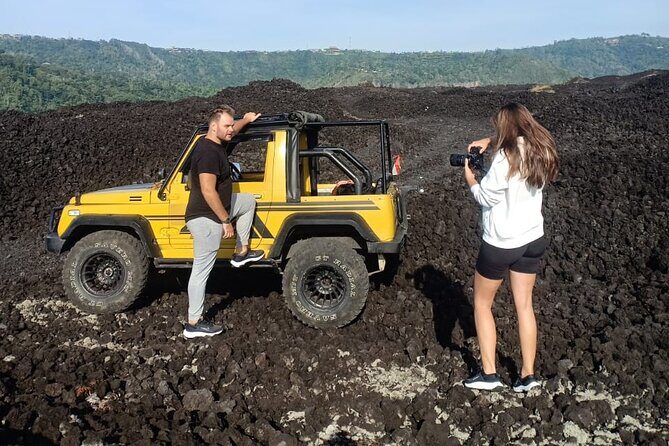
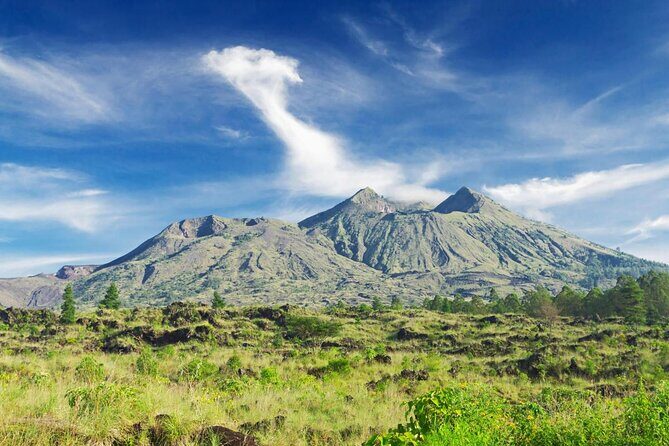
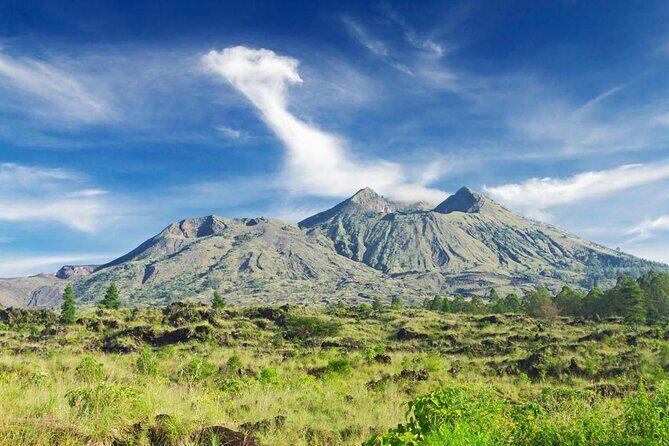
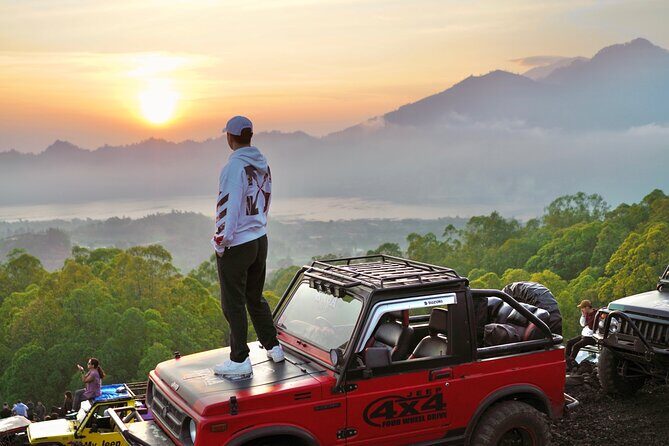
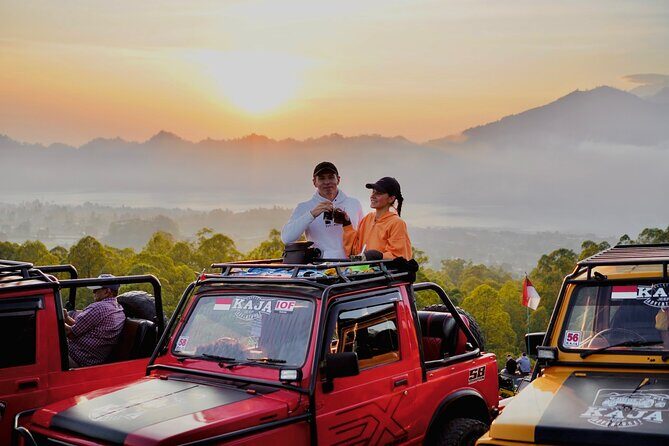
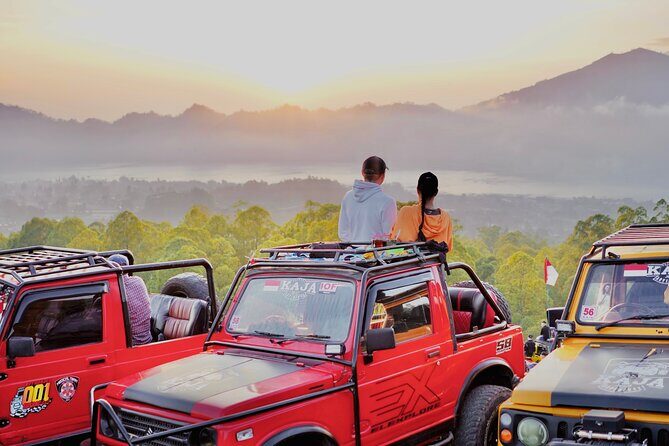
Mount Batur looks like another planet before you even get out of the jeep. This black lava tour takes you across rugged 4WD terrain and brings you to viewpoints over the lava flows and other striking spots like natural caves. It’s a short outing, but it packs a lot of changing scenery in a compact time window.

What I like most: the ride and stops are built for big views without long hiking. Second, the guides seem to take photo-making seriously, with drivers and guides like Mr. Mangku, Ajik, Agung, Wayan, Jro, Wi, and Kadek showing up as real pros in different groups. One thing to consider: it’s chilly early, so plan for cold air even if your hotel afternoon weather felt warm.

Key Things to Know Before You Go

Mount Batur Black Lava Jeep Tour with Pickup - Key Things to Know Before You Go

  • Pickup from Ubud area makes it feel like a real day-trip, not a logistics puzzle
  • Custom 4WD jeeps handle rough terrain better than most vehicles
  • Mount Batur stops include viewpoints and natural cave areas (not just a drive-by)
  • Small group size (max 16) keeps it from turning into a chaotic cattle-car
  • Bring a jumper for the early cold; a blanket may help too

Why Mount Batur Black Lava by Jeep Works So Well From Ubud

If you’re basing yourself in Ubud, a Mount Batur tour is one of the most efficient ways to see the Kintamani area without spending your whole day on transport. The black lava fields are dramatic, and they’re also hard to reach at a relaxed pace. That’s where a jeep tour does what it should: it gets you onto the rougher routes that normal cars won’t manage.

This particular tour is priced at $40 for a 2–3 hour experience (with admission included for the Mount Batur portion). For Bali, that’s a practical price point if you want the experience value—off-road access, guided context, and photo stops—without committing to an all-day trek. It’s also structured around a compact schedule, which matters when you’ve only got limited time on the island.

The biggest payoff here is the combination of movement plus meaning. You’re not just riding to a single overlook. You get multiple moments where the terrain changes from dark lava to wider Kintamani views, and the guide explains what you’re looking at—lava flows, geography, and how the area formed. That turns a cool view into something you can actually understand and remember.

Pickup, Meeting Point, and the Start at Bali Sunrise Villas

Mount Batur Black Lava Jeep Tour with Pickup - Pickup, Meeting Point, and the Start at Bali Sunrise Villas
Start logistics can make or break an early morning tour. This one is built to be easy: pickup is offered for people staying near Ubud, and the official start point is Bali Sunrise Villas, Jalan Songan No.001 Songan, Songan A, Kec. Kintamani, Kabupaten Bangli, Bali 80652, Indonesia.

The activity ends back at the meeting point, so you’re not left guessing where to head next. For you, that means you can plan a later meal or rest without building a new transport plan.

If you’re not using the pickup option, you’ll still be aiming for that Bali Sunrise Villas location. Either way, the tour has a small-group cap of 16 travelers, which usually translates into faster coordination and fewer waiting gaps once you’re ready to roll.

And one more detail that’s quietly helpful: you get a mobile ticket, and confirmation comes at booking time. That reduces the back-and-forth that can happen with last-minute changes.

The Off-Road 4WD Drive: What It Means for Your Comfort

Mount Batur Black Lava Jeep Tour with Pickup - The Off-Road 4WD Drive: What It Means for Your Comfort
A custom-made 4WD jeep is the right tool for black lava terrain. The ground can be uneven, and the routes can be bumpy. So instead of thinking about a smooth highway drive, think about a controlled, guided scramble.

That matters because your comfort is mostly about expectations and clothing:

  • Go in prepared for early morning cold.
  • Bring something you can wear in layers.
  • Expect dusty roads and a bit of grit in the air.

You don’t need to be an athlete, though. The tour notes that most travelers can participate, and the whole point is that you’re seeing the area without a long hike. Still, it’s not a stroller-friendly, totally level experience. If you’re very sensitive to rough rides, it’s smart to choose your seating spot carefully when you arrive.

Stop at Mount Batur: Lava Flows, View Points, and Natural Caves

Mount Batur Black Lava Jeep Tour with Pickup - Stop at Mount Batur: Lava Flows, View Points, and Natural Caves
The heart of the tour is the Mount Batur stop. You begin with scenic driving through a lunar-like black lava area, then you reach spectacular view points and interesting historical and natural stops.

Here’s what this tends to look like in practice:

1) Black lava terrain and historical lava flow viewpoints

You’ll see how lava has cooled into dark, rugged shapes. The guide’s job is to help you connect the visuals to the story—where the flows moved, how the terrain is shaped, and why Kintamani’s volcanic region looks the way it does.

The best part is that the tour doesn’t treat the view as just a single photo moment. Multiple viewpoints let you see scale: how wide the lava fields are, how the black stone contrasts with the brighter sky, and how the volcano sits in the background as a reference point.

2) Natural caves and odd geological features

Some tours just brag about dramatic volcano photos. This one also includes stops tied to natural caves. That adds a fun, slightly adventurous twist, and it gives you something different from the standard overlook routine.

Because caves and rock features are part of the geography, these stops also tend to be good for understanding how volcanic areas change over time. You get the geology lesson without needing a classroom.

3) Photo stops with guides who actually help

One of the most consistently praised things in the feedback is that drivers and guides don’t just drive—they help you get shots. People highlighted how Mr. Mangku handled photography, and how Jro was patient with photos. Other named guides, including Wi and Kadek, also took on the role of helping with photos and being extra supportive with group needs.

If you care about getting good images, this is a real quality signal. A view is great, but a guide who understands timing and angles can make a big difference.

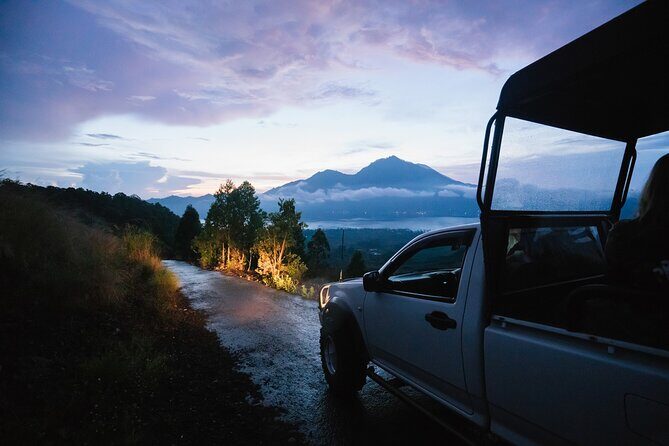
Sunrise-Style Timing: The Cold That Catches People Off Guard

Even if your tour is described as a black lava jeep experience (not a long trek), it still has early-morning energy. That’s why you’ll see practical advice like: take a jumper, because it’s very cold at the start.

The good news: one review specifically mentioned that the tour provided a warm blanket for the chilly part of the outing. Still, don’t treat the blanket as your only plan. Pack layers so you’re comfortable the moment you arrive for pickup or at the first waiting period.

Photo timing also matters. Brightening skies can make the black lava look even sharper, and it’s easier to take photos when you’re not shivering. So if you’re deciding what to wear, aim for warmth first and style second.

How Long It Really Takes and What You Can Do After

This is a 2 to 3 hour activity, and it returns you to the starting area. That’s a big advantage if you want to keep your day flexible. You can structure your schedule so you don’t feel trapped by a long tour.

A realistic flow looks like:

  • Early start and drive into the Batur area in a 4WD jeep
  • Viewpoints, lava-related stops, and natural cave areas during the Mount Batur portion
  • Return to the meeting point near Bali Sunrise Villas

Some experiences also add a meal after the jeep portion. In the feedback you provided, there’s a mention of a breakfast after the trip with views of the volcano. Because that’s not guaranteed in the baseline info you listed, I’d treat breakfast as a possible bonus rather than a certainty. But if breakfast is important to you, you can ask your operator directly when you book.

Price and Value: Is $40 a Fair Deal for This Type of Tour?

At $40, you’re paying for more than entry into a viewpoint. You’re paying for:

  • 4WD transport over rough lava terrain
  • A guided route with multiple stop moments
  • Admission ticket included for the tour component described
  • A small-group cap (max 16 travelers), which affects how smoothly the ride and photo stops work

In value terms, it’s strongest if you want the big volcanic scenery without the heavy commitment of a longer trek. If you already have your own scooter and you’re confident navigating the area, you could theoretically self-drive. But lava roads are not the place to freestyle your day. A guided 4WD route saves time and reduces the risk of missing the best viewpoint angles.

It’s also strong for couples and small groups who want a guided experience but don’t want a full-day schedule. The listing also signals group discounts, so if you’re traveling with friends, it’s worth checking whether your group size qualifies.

The Most Praised Part: Service That Feels Personal

Mount Batur Black Lava Jeep Tour with Pickup - The Most Praised Part: Service That Feels Personal
Here’s where this tour seems to win hearts: it’s not just about the volcano. The service looks attentive, and names show up with repeated positivity.

A few service highlights you should actually care about:

  • Smooth pickup and drop mentioned with Ajik and others
  • Patience with photos tied to guides like Jro
  • Extra help with families, including support for people with small children
  • Warm items like blankets to manage cold conditions
  • Guides who act like photo assistants, not background scenery

For you, that translates into less stress. When you don’t have to fight for a photo timing window, and you don’t feel rushed at every stop, the whole outing becomes more enjoyable.

Who This Tour Is Best For (And Who Might Want to Skip It)

This black lava jeep tour is a good fit if:

  • You want a Mount Batur experience but prefer time efficiency
  • You like guided stops and context about what you’re seeing
  • You want the off-road access without committing to a long hike
  • You’re traveling as a couple, friends, or family and want organized transport

You might choose a different format if:

  • You hate cold mornings and don’t want to deal with early-start weather (you can manage it with layers, but it’s still early)
  • You’re strongly motion-sensitive and find bumpy rides stressful
  • You only want one single viewpoint photo and would rather do self-guided time

Should You Book the Mount Batur Black Lava Jeep Tour With Pickup?

I’d book this if your goal is a high-impact Mount Batur view with minimal planning. The combination of 4WD access, viewpoint stops, and natural-cave moments makes it more than a drive-by. The small group size (up to 16) is also a plus, and the repeated praise for drivers and photo help suggests you’ll be in good hands.

Book it if you’re staying near Ubud and want a short excursion that still feels like you did something special. Just come prepared for early cold—plan on layers, and use the blanket if they provide one.

If you want a sunrise-style volcano outing but don’t want a long, physically demanding day, this hits a sweet spot.

FAQ

What is the duration of the Mount Batur black lava jeep tour?

The tour runs about 2 to 3 hours.

Does this tour include pickup from Ubud?

Pickup is offered, and the meeting point listed is Bali Sunrise Villas in the Kintamani area.

Where does the tour start and where does it end?

It starts at Bali Sunrise Villas, Jalan Songan No.001 Songan, Songan A, Kec. Kintamani, Kabupaten Bangli, Bali 80652 and ends back at the meeting point.

What type of vehicle is used?

The tour uses custom-made 4WD jeeps for the rugged volcanic terrain.

Is admission included in the price?

Yes. The itinerary notes admission ticket included for the Mount Batur portion.

How large are the groups?

The tour has a maximum of 16 travelers.

What should I bring for the early morning?

It can be very cold first thing in the morning, so bring a jumper. A warm blanket was also mentioned in the experience feedback.

What happens if the weather is bad?

The experience requires good weather. If it’s canceled due to poor weather, you’ll be offered a different date or a full refund.

What is the cancellation rule?

You can cancel for a full refund up to 24 hours in advance of the experience start time. If you cancel less than 24 hours before, the amount paid is not refunded.

Ubud Tour-All Inclusive with Jungle Swing And Lunch

Ubud Tour-All Inclusive with Jungle Swing And Lunch - Your ride: private air-conditioned comfort, plus real pickup help

One day can feel like three. This private Ubud tour strings together the area’s biggest hits with entrance fees included and a private air-conditioned vehicle that keeps you from wasting hours on logistics.

I especially like the built-in flow: temples, artsy villages, nature, and one photo-stop with real adrenaline. You also get pickup and drop-off from your Bali hotel, so you start and end with less stress.

One thing to consider: it’s a full agenda with an 8:00 am start, so you’ll want comfy shoes and a good attitude for short walks between stops.

Key highlights worth packing your day around

Ubud Tour-All Inclusive with Jungle Swing And Lunch - Key highlights worth packing your day around

  • Hotel-to-hotel pickup and drop-off: you’re not hunting rides between sights
  • Entrance fees and taxes included at every stop
  • Sacred Monkey Forest + Tegalalang Rice Terrace for classic Ubud visuals in one circuit
  • Celuk Village artisan time focused on silver and other craft workshops
  • Happy Swing Bali for a quick giant-swing moment above the jungle
  • Lunch at a local Balinese place, plus bottled water to keep you fueled

One day in Ubud, without the usual planning headache

Ubud Tour-All Inclusive with Jungle Swing And Lunch - One day in Ubud, without the usual planning headache
Ubud is gorgeous, but it can also be a little chaotic. Roads are busy, distances add up, and one “quick stop” can turn into a half-day detour. This tour is designed to solve that: you get a tight route of top sights with the busywork handled for you.

The big value here isn’t just that you see famous places. It’s that you see them in a way that keeps your time intact. You’re not trying to coordinate entrance tickets, figuring out the best order of stops, or bargaining with transport at every turn. The tour includes the admission fees and taxes across the schedule, so the “where do we pay next?” moment is largely removed.

And it works for your first days in Bali. If you’re still getting your bearings, this is a practical way to understand where Ubud sits, how far key areas are from each other, and what kind of scenery dominates the region—temple carvings, green valley views, waterfall power, and terraced rice fields.

Your ride: private air-conditioned comfort, plus real pickup help

Ubud Tour-All Inclusive with Jungle Swing And Lunch - Your ride: private air-conditioned comfort, plus real pickup help
The tour runs with a private setup, not a shared shuttle feel. That matters more than people think. In Ubud, you’re often dealing with narrow roads and stop-and-go traffic. A private car means you’re not stuck waiting for strangers to return, and you can usually keep to your scheduled timing more smoothly.

You’ll travel in a private air-conditioned vehicle with an English-speaking driver. That’s helpful for two reasons: you can ask practical questions on the way, and you’re less likely to lose time figuring out what’s what at each entrance.

The tour also includes hotel pickup and drop-off. If you’ve ever tried to navigate Bali without a clear plan, you know how much energy you can spend just getting to the starting point. Door-to-door pickup cuts that down fast.

Quick tip: bring a small day bag and keep your essentials easy to reach. With multiple stops, you don’t want to be doing a full bag search every time you step out.

Sacred Monkey Forest Sanctuary: temple + wild nature in about an hour

Your first major nature-temple stop is the Sacred Monkey Forest Sanctuary, also known as Ubud Wanara Wana. It’s a nature reserve and temple complex, which means you’re looking at more than a single temple structure—you’re moving through a living, forested setting where the temple areas are part of the scenery.

You’ll typically have around 1 hour here, and that’s enough time to get the “wow, this is Ubud” feeling without turning it into a marathon. The key is to keep a steady pace. If you linger too long at one cluster of carvings, the rest of the day can start feeling rushed.

Practical consideration: this is a sanctuary/temple area, so it can involve walking on uneven ground. Wear shoes that don’t slip easily, and keep your focus on your surroundings rather than trying to outsmart the environment.

This stop is also a good calibration point for your day. After your first hour, you’ll understand whether you prefer slower photo time or faster movement.

Celuk Village: silver workshops and craft culture in 30 minutes

Next up is Celuk Village, a place known for its silver factory and artisans who produce jewelry manually. In other words, it’s not just a “look at souvenirs” stop—it’s about watching the craft process and seeing how finished pieces start as work you can actually imagine.

You’ll have about 30 minutes here. That short window is a blessing if you’re trying to keep momentum, but it also means you should decide what you’re after quickly: want to watch the silver-making process, or do you mostly want to browse?

Celuk also includes mentions of other workshops you may see during the visit, such as wood carving, a batik factory, and paintings. So even in a half-hour, you can feel the creative mix that makes Ubud feel distinctly artistic.

Value tip: if you’re interested in buying, treat this as your research stop. Even if you don’t buy today, watching the craft and learning what’s made here helps you spot better choices later in Bali.

Batuan Temple: local Balinese Hindu temple details you can actually notice

Ubud Tour-All Inclusive with Jungle Swing And Lunch - Batuan Temple: local Balinese Hindu temple details you can actually notice
Batuan Temple is described as a local Balinese Hindu temple, looked after by residents of the Batuan countryside. This is a more neighborhood-feeling stop than the big “tour bus temples,” and that changes your viewing experience.

You’ll get around 1 hour, which is plenty for temple ornament details. Expect a lot of Balinese decorative elements—ornaments are specifically noted in the temple description. The focus is on the design and the way the roof structure is built, plus the atmosphere of a temple maintained by locals rather than staged solely for visitors.

Balanced way to enjoy this: don’t try to photograph everything. Pick one or two areas (gate detail, roofline, carved segments) and study them. The result feels more satisfying than rushing through with your camera held up the whole time.

Tegenungan Waterfall: the view first, then choose how close to get

Then you head to Tegenungan Waterfall, with about 1 hour on site. The surrounding area is described as lush and green, which is what you want here: that fresh, cooling contrast after temple stops.

You’ll have a choice in how you experience it:

  • take a short walk to get closer to the waterfall, or
  • view from the top hill

That flexibility is one of the best parts of this stop. If you’re tired or just want photos, hill viewing can be enough. If you’re feeling energetic and want the stronger presence of water nearby, walk down for a closer look.

Practical note: bring a layer you don’t mind getting damp. Even if you only step closer for a few minutes, waterfall mist can catch you off guard.

Segara Windhu Coffee Plantation: learn the traditional Bali coffee style

Ubud Tour-All Inclusive with Jungle Swing And Lunch - Segara Windhu Coffee Plantation: learn the traditional Bali coffee style
After the waterfall comes the Segara Windhu Coffee Plantation stop, with about 30 minutes. This part includes a coffee and tea break, and you’ll be served different types of coffees and teas.

The tour also frames this as a learning moment: you can learn and see the traditional way how to make Bali coffee. That’s useful, because it turns a typical coffee stop (where you just buy a cup) into something more meaningful—like understanding the steps behind the drink.

If you like trying new flavors, this is a good place to do it. If you’re not a coffee person, tea is included in the serving options, so you’re not locked into one type.

Value tip: treat this as a reset. By now you’ve had temples and nature. The plantation stop gives you a sit-down moment so you don’t power through the rest of the day on adrenaline.

Lunch at a Balinese warung-style stop: fuel for the rest of the circuit

Lunch is handled for you, about 1 hour at a local Balinese restaurant/warung-style setting (the plan names Tebasari Resto, Bar & Lounge for the lunch stop, while the inclusion notes a local Balinese warung lunch). Either way, the core point is the same: you’re eating lunch included without needing to plan where to go.

This matters because Ubud has plenty of options, and choosing well can take time. When you’re already visiting several stops, a reliable lunch break prevents the day from turning into “find food, wait, then rush.”

One practical thing: eat a normal meal, not just snacks. You’ve still got a swing stop and a rice terrace after lunch, and those work best when you’re not running on empty.

Happy Swing Bali: the quick adrenaline stop with jungle views

Now for the fun part: Happy Swing Bali. You’ll have a very short time here—listed as about 1 minute in the schedule—but it’s a dedicated stop and includes admission.

The description focuses on a giant swing over a big jungle, with stunning green views. This is where many people get their “I can’t believe I’m here” photos—because the angle and height change everything.

Reality check: even though the time window is brief, this is usually the kind of activity where you’ll want a steady plan for photos and waiting your turn. Go in with a calm mindset, and you’ll enjoy it more.

If you don’t want to ride the swing, you can still use the stop for views and photos, but the tour is designed around making this moment part of the day.

Tegalalang Rice Terrace: your final big scenery payoff

Your last major sight is Tegalalang Rice Terrace, with about 1 hour. This is one of Ubud’s most famous views for a reason: terraced rice fields create layered scenes that look great from multiple angles.

You’ll likely spend time walking/viewing and getting photos. The tour framing emphasizes that it’s famous for the verdant feel of the terraced scenery—translated into plain English: it’s green, stepped, and photogenic.

Here’s how to make the most of your hour:

  • Pick a viewpoint that shows the layers clearly
  • Wander slowly enough to catch the different angles
  • Don’t wait until the end to try your photos; lighting can change fast near sunset hours

This stop works as a perfect closer. After temples, waterfall, and coffee, you end with the kind of calm scenery that feels very “Ubud postcard,” but still grounded in real agricultural fields.

Price and value: what $60 includes (and why that matters)

At $60 per person, this tour is positioned as an all-inclusive one-day experience. The best way to judge value isn’t only what you pay—it’s what you avoid paying and planning.

Here’s what’s included:

  • Private pickup and drop-off from your Bali hotel
  • Private tour with an English speaking driver
  • All fees and taxes
  • Bottled water
  • Lunch at a local Balinese place
  • Admission tickets at the major stops

That matters because entrance fees and taxes can add up quickly across multiple attractions. Instead of paying per sight and then dealing with ticket lines or unclear fees, you get a smoother day that stays predictable.

Also, you’re not sacrificing comfort. A private air-conditioned vehicle is a real quality-of-life upgrade in Bali heat and traffic. Even if you’re just comparing it to shared tours, that comfort can be the difference between enjoying the sights and counting down minutes.

One more thing: the tour offers group discounts, so if you’re traveling with friends, it can get even better. Ask when you book.

Who this tour is perfect for, and who should think twice

This tour is ideal if you want a first-time “Ubud highlight mix” without heavy planning. It suits:

  • couples or small groups who want private service
  • solo travelers who prefer a driver-based plan over navigation
  • visitors who want the main sights—Monkey Forest, temples, waterfall, coffee, swing, rice terraces—in one day

It may feel like a lot if you’re the type who wants long, slow stays at each attraction. The stops are time-defined, and while there’s some flexibility in how you choose to view certain areas (like the waterfall), the day stays packed.

It also helps if you’re okay with short bursts of walking. You’re not doing a hike here, but you are moving through multiple outdoor areas.

The human touch: when the driver makes the day easier

One of the biggest takeaways from strong experiences with this kind of tour is the driver. In this case, the name Made comes up as someone who can act as tour guide, driver, and even a personal photographer. The common theme is not just driving skill, but being considerate—showing you sights without rushing you and staying available when you need help.

Driving in Bali traffic can look chaotic from the outside. Having a professional driver smooths that out and lets you keep your energy for the stops that matter.

You should still keep your expectations realistic. A day like this runs on timing. But with a capable guide, the tour can feel friendly instead of mechanical.

Should you book this Ubud all-inclusive tour?

I think you should book it if your goal is clear: get top Ubud highlights in one day, keep tickets and fees handled, and ride comfortably with pickup and drop-off.

Book it especially if:

  • you want an easy introduction to Ubud
  • you don’t want to spend your first day figuring out transport logistics
  • you like a mix of temples, nature, and one big activity moment at Happy Swing Bali

Skip or adjust your expectations if you prefer unhurried pacing and long stays at fewer places. This is a “see a lot” tour, not a “hang out all day in one area” tour.

FAQ

What’s included in the Ubud tour price?

The tour includes private pickup and drop-off, private tour with an English speaking driver, all fees and taxes, bottled water, lunch, and admission tickets for the listed attractions.

What are the main stops during the day?

The day includes Sacred Monkey Forest Sanctuary, Celuk Village, Batuan Temple, Tegenungan Waterfall, Segara Windhu Coffee Plantation, a lunch stop at a local Balinese restaurant/warung setting, Happy Swing Bali, and Tegalalang Rice Terrace.

How long is the tour and when does it start?

The start time is 8:00 am, and the duration is listed as 1 to 8 hours (approx.).

Is this a private tour?

Yes. It’s listed as a private tour/activity, meaning only your group participates.

Are entrance fees included?

Yes. Entrance fees are included at each stop, and the tour also lists all fees and taxes included.

What happens if weather is bad?

The experience requires good weather. If it’s canceled due to poor weather, you’ll be offered a different date or a full refund.

Munduk:authentic local Home cooking class

Munduk:authentic local Home cooking class - Garden Shopping: Where the Meal Begins

Spice up your Bali day. This Munduk experience blends two things people actually remember: hands-on home cooking and a real-world waterfall stop in North Bali.

I like that you start by going into nearby gardens to select ingredients, then you cook from scratch with fresh, chemical-free produce. I also love that the hosts make it feel personal, like you are welcomed into the rhythm of village life, with names you might hear such as Kadek and Edi.

One thing to consider: the whole outing runs about 4 hours, so it is not a slow, wandering day. Also, because the cooking happens in local homes, expect a more practical setup than a polished restaurant kitchen, and you’ll be moving between rural spots.

Key Highlights You’ll Feel Right Away

Munduk:authentic local Home cooking class - Key Highlights You’ll Feel Right Away

  • Pick ingredients in village gardens before you cook, so the meal starts with your hands, not a menu
  • Cook inside a local resident’s home, not in a commercial venue
  • Chemical-free, organic-style ingredients help the flavor feel clean and simple
  • Banyumala Twin Waterfalls adds a nature break right after the meal
  • Private group experience, so it feels calmer and easier to ask questions
  • Pickup offered and you end back at the starting point for a smoother day

A Real Home-Cooking Day in Munduk (Not a Factory Tour)

Munduk:authentic local Home cooking class - A Real Home-Cooking Day in Munduk (Not a Factory Tour)

If your Bali wish list includes food that tastes like it came from a real kitchen, this is the right kind of day. In Munduk, the vibe is rural and grounded, and the cooking part is built around living spaces, not showrooms. That changes the tone fast: you slow down, you learn, and you eat what you made.

I also like that the class frames the day as a nature-to-plate experience. You’re not just watching someone cook; you’re part of the chain. And when the next part of the day is a waterfall, the whole outing feels like one continuous story instead of two unrelated stops.

Because it is a private tour, your group stays together. That matters when you are learning hands-on cooking. You’re not squeezed in with strangers, and the instructor can adjust explanations to your pace.

Garden Shopping: Where the Meal Begins

Munduk:authentic local Home cooking class - Garden Shopping: Where the Meal Begins

The first step is ingredient shopping in the area’s gardens. You will walk through the growing spaces, then select what you’ll use for the meal. This is one of those details that sounds small until you try it, because tasting and smell come before cooking.

What you take from this part is not just a bunch of produce. You learn how simple choices affect the dish. Think of it like learning a language by reading signs, not just hearing the rules.

The experience also emphasizes organic, chemical-free ingredients from nearby gardens. Even if you are not an ingredient nerd, that matters. Fresh ingredients tend to bring out clearer flavors, and you’ll notice it once you start cooking.

Practical tip: bring a light layer. Garden time can feel breezy and cool, and then you cook, and suddenly you’re warm. You’ll thank yourself when you’re not swarmed by sweat mid-stir.

Cooking With Local Hosts: What You’re Actually Doing

Munduk:authentic local Home cooking class - Cooking With Local Hosts: What You’re Actually Doing

The cooking portion happens with a local instructor or guide in a tranquil rural setting. This is the heart of the experience: you cook alongside someone who knows how Balinese dishes are put together at home.

From the names shared in the experience feedback, you may be welcomed by Kadek, described as the owner who made people feel at home. Other sessions are associated with Edi, with the day described as more than a quick taste of Bali. Either way, the point is the same: you are not treated like a passive student. You are part of the work.

Since the class takes place in homes, you’re likely to see the difference between restaurant cooking and everyday cooking. You’ll get a feel for how ingredients are handled, how flavors are balanced, and why some steps exist beyond convenience. That is also why the experience can feel more memorable than a cooking show: it has the pace of a real day.

What you should expect during the class:

  • You’ll work with the ingredients you selected earlier
  • You’ll follow guided steps to make authentic Balinese dishes
  • You’ll get guidance as you cook, not just a demonstration

One small consideration: if you want an ultra-regimented cooking experience with printed recipes and perfect timing, a home-style class may feel looser. That’s not worse. It’s just a different style of learning.

The Food Part You’ll Care About: Fresh, Balanced, and Personal

Munduk:authentic local Home cooking class - The Food Part You’ll Care About: Fresh, Balanced, and Personal

Because the ingredients are sourced from nearby gardens and described as chemical-free, the food tends to feel more natural and less heavy. You’re cooking with what is available locally, not relying on packaged substitutes. That shows up in texture and taste.

The best part is that you leave with a meal that actually has your fingerprint on it. The cooking lesson becomes more than knowledge; it becomes food you can eat while it is still hot and clearly made from your own choices.

Also, if you like food travel, you know the truth: most souvenirs fade. But a dish you can picture yourself making back home? That sticks. Even if you never recreate every ingredient perfectly, you’ll remember the flavor logic.

Banyumala Twin Waterfalls: A Nature Break After Cooking

Munduk:authentic local Home cooking class - Banyumala Twin Waterfalls: A Nature Break After Cooking

After cooking, the day shifts to a nearby highlight: Banyumala Twin Waterfalls. This stop gives you a palate reset. You go from stove heat to cool air, and your senses recalibrate.

This waterfall is also a nice match for the cooking portion. Instead of jumping to a faraway viewpoint, you stay in the same general region and keep the day feeling cohesive. It’s basically: learn and eat, then reward yourself with scenery.

What to expect at the waterfall stop:

  • Time to see the twin falls up close
  • A change in atmosphere right after the cooking class
  • A calm ending that feels tied to the rural setting

Practical note: waterfalls usually mean moisture, uneven ground, and occasional slippery spots. Wear shoes you don’t mind getting damp. If you’re carrying a phone or camera, keep it protected from mist.

Price and Value: Is $41.24 Worth It?

At $41.24 per person for an about 4-hour day that includes garden ingredient selection, a home cooking class, and a waterfall visit, the value is strong—especially if you care about authentic food.

Here is why it feels like good value:

  • You’re paying for a local experience, not only a guide’s narration
  • The ingredient start is hands-on, not just a visit
  • The class is in a resident’s home, which generally means more direct access to how people live
  • The waterfall stop turns it into a full half-day, not a single activity

There is also mention of group discounts, so if you’re traveling with friends or family, it can get even better. Your best move is to check how the discount applies to your group size once you book.

If you are on a tight budget, this price may still feel steep compared with a standard walking tour. But this is not a walking tour. This is food and local access, plus a nature stop.

Pickup, Timing, and Where the Day Starts

Munduk:authentic local Home cooking class - Pickup, Timing, and Where the Day Starts

This experience is set up around easy movement, with pickup offered. It also ends back at the starting point, which keeps your day from turning into a transportation puzzle.

The listed starting point is De Koffie – Wanagiri on Jalan Air Terjun Banyumala in Wanagiri, Sukasada, Buleleng, Bali. Since you may have pickup from your hotel depending on how your operator confirms your plan, read your confirmation carefully and don’t assume you’ll meet at the same spot as everyone else.

Timing-wise, you’re looking at an about 4-hour outing. That is perfect for travelers who want a real activity but do not want to spend the whole day in a car.

Small, smart planning tips:

  • Bring water. Cooking days get active fast.
  • Pack a change of socks or at least expect damp shoes for the waterfall area.
  • Wear something you can move in. Cooking and waterfall ground both reward comfort.

Who Should Book This Munduk Cooking and Waterfall Day

Munduk:authentic local Home cooking class - Who Should Book This Munduk Cooking and Waterfall Day

This is a great fit if:

  • You want local home cooking in Bali, not a restaurant performance
  • You like learning from the source, starting with the ingredient garden
  • You want an actual half-day plan that combines food and nature
  • You prefer a private group feel, with room to ask questions

You might skip it if:

  • You only want big, famous sights with minimal walking or no rustic elements
  • You hate the idea of a home setting and prefer all comforts to be hotel-grade
  • You need a fully scheduled, strictly timed cooking class with no flexibility

If you are traveling from Ubud, this day works well as a change of pace. Ubud can feel artsy and busy. Munduk’s rural rhythm balances that out nicely.

Should You Book This Cooking Class?

Yes, if your idea of a good Bali day includes two things: food that feels real and a nature stop that isn’t just a quick photo break. At $41.24 and about 4 hours, it’s a strong value when you compare it to shorter activities that don’t include cooking in a local home.

Book it also if you care about supporting the local community. The tone shared around the experience includes appreciation for community support in their village, which matches the whole format: it’s built around residents opening their homes and sharing their routines.

My final advice: if you want a meal you helped make, choose this. If you want a smooth, hotel-like cooking studio experience, look elsewhere.

FAQ

How long does the Munduk cooking class and waterfall experience last?

The duration is about 4 hours.

What happens during the cooking class?

You explore nearby gardens to pick ingredients, then cook authentic Balinese dishes with a local instructor or guide in a rural home setting.

Do I get pickup, and where does the tour start?

Pickup is offered. The activity starts at De Koffie – Wanagiri (Jalan Air Terjun Banyumala, Wanagiri, Sukasada, Buleleng, Bali 81161) and ends back at the meeting point.

Is this tour private?

Yes. It is a private tour or activity, meaning only your group participates.

What does it cost?

It costs $41.24 per person.

Is there free cancellation?

Yes. Free cancellation is available up to 24 hours in advance for a full refund.

Is it suitable for most travelers?

Most travelers can participate.

Batur Jeep Explore with Photographer

Batur Jeep Explore with Photographer - Timing: Sunrise, Sunset, or Daytime (and Why the Light Changes Everything)

The sunrise at Batur hits hard. This is a private, 4WD Mount Batur experience where you get to the viewpoint without the punishing trek, and you leave with photos that look like they belong in a travel magazine.

I love the way the ascent is done by jeep, so your knees and calves aren’t the main attraction. I also love the professional photographer part, because you’re not left guessing angles and timing in the dark.

The main trade-off: you’re up extremely early, and pickup times can be later than expected around Ubud—so confirm your schedule in writing and plan for a bit of waiting.

Key Highlights Worth Your Attention

Batur Jeep Explore with Photographer - Key Highlights Worth Your Attention

  • Jeep ascent, not a climb: You reach the viewpoint area without the steep, knee-jarring hike.
  • Professional photo help: A photographer guides your poses and captures the signature shots.
  • Breakfast with the view: Local breakfast is served while you wait for the right light.
  • Black lava and black sand photo stops: The western Batur area gives bold, high-contrast scenes.
  • Private group feel: It’s truly just your group, so the timing and photo stops feel more flexible.
  • Pickup options from multiple areas: Two-way transfers are available from popular Bali bases.

Why This Mount Batur Jeep-and-Photo Tour Feels More Like a Win

Batur Jeep Explore with Photographer - Why This Mount Batur Jeep-and-Photo Tour Feels More Like a Win
Mount Batur is one of those places that can go either way. You can arrive tired, sweaty, and underwhelmed—or you can arrive ready for the light, the steam, and the wide open sky.

This tour is built for the second version. You’re driven up the rugged terrain by jeep, which matters because the Batur climb at night is widely known for being crowded and chaotic. Instead of spending your energy fighting the trail, you’re spending it watching the horizon and letting the photographer do the technical work.

You also get a practical mix: sunrise or sunset (or daytime), breakfast at the right moment, plus a short exploration on the darker western volcanic side where the landscape turns dramatic.

And yes, the photos are a real part of the value here. If you’ve ever tried to capture sunrise photos while juggling your camera settings and your timing, you know the stress. Having someone handle the framing and moment-by-moment guidance makes the whole experience feel smoother.

Timing: Sunrise, Sunset, or Daytime (and Why the Light Changes Everything)

Batur Jeep Explore with Photographer - Timing: Sunrise, Sunset, or Daytime (and Why the Light Changes Everything)
You can choose sunrise, sunset, or a daytime option. That choice affects more than just what time you leave the house.

  • Sunrise: Expect cool air, early departure, and the best chance of that glowing horizon over the volcanoes and lake views. This is the most popular way to experience Batur.
  • Sunset: Similar idea, just with the evening light shift. You’ll still want to bring layers because mountain air can feel chilly even when the coast is warm.
  • Daytime: If you’d rather avoid the darkest start, the daytime option trades dramatic early-light effects for easier logistics and more comfortable temperatures.

One more real-world point: the climb route gets very crowded at night, so going with a guided jeep plan is a smart way to reduce the stress. You’re still sharing the area, but you’re not wrestling your way along with everyone doing the same steep hike.

Pickup, Private Group, and Getting to the Starting Point in Kintamani

The tour starts and ends at the same meeting point in the Kintamani area (listed at Q9CW+X33, Jl. Bukit Catu, Songan A, Kintamani, Kabupaten Bangli, Bali 80652, Indonesia). That matters because it keeps the day from turning into a long hopscotch of drop-offs.

If you want door-to-door help, two-way transfers are offered from:

Kuta, Seminyak, Canggu, Nusa Dua, or Ubud.

That’s a big deal for value. A $26 per-person price is easier to justify when you’re not spending your energy (or money) on separate transport arrangements. Also, since this tour can run 9 to 10 hours, having pickup reduces the risk of losing time due to taxi-hunting.

One note that comes up in real-world timing: if you’re staying around Ubud, pickup can be later than what you might expect from the displayed pickup window. My practical advice is simple: message or check confirmation details right after booking, and don’t treat the first time you see as guaranteed.

Inside the 45-Minute Jeep Ascent (What It Means for Your Body)

Batur Jeep Explore with Photographer - Inside the 45-Minute Jeep Ascent (What It Means for Your Body)
Once you’re in the activity area, you’ll ride a jeep with a trained guide and ascend up to around 1,420 meters above sea level. The drive/climb time is about 45 minutes, and the path is described as easy compared with a typical hike.

What that means for you:

  • Your legs don’t take the main punishment.
  • You can keep your energy for photos and enjoying the view.
  • You avoid the slow, knee-grinding pace that ruins sunrise plans for some people.

The Batur climb area can be rough—volcanic terrain does not care about your fashion choices—so jeep travel is not just convenience. It’s also a way to get you to the best viewpoints with less physical strain.

And because it’s a guided setup, you’re also less likely to wander into the wrong spots when it’s dark and everyone’s moving fast.

Breakfast While the Volcano Wakes Up

Batur Jeep Explore with Photographer - Breakfast While the Volcano Wakes Up
Before (and during) sunrise viewing, you’ll be served local breakfast. You start with a waiting period for the light, and the breakfast timing is designed to keep you comfortable while the sky does its thing.

This is one of the underrated parts of the tour. If you’ve done sunrise trekking before, you know breakfast is often an afterthought—or it’s not available at all. Here, it’s built into the schedule so you’re not starving and shaky while waiting for the horizon.

A practical strategy: treat breakfast as part of the performance. Eat enough to stay warm and steady, but don’t overdo it, especially if you’re sensitive to early-morning queasiness.

Black Lava and Black Sand: The Photo Stops That Make Batur Look Unreal

Batur Jeep Explore with Photographer - Black Lava and Black Sand: The Photo Stops That Make Batur Look Unreal
After sunrise (or your chosen viewing moment), you’ll explore the western part of Mount Batur, known for black lava and black sand.

This area is where Batur gets visually wild. Instead of gentle greens and normal beach colors, you get deep volcanic textures—hard black rock, hardened lava shapes, and wide stretches of dark sand. It’s the kind of landscape that instantly makes photos look more “real” and more high-contrast.

The tour specifically highlights:

  • Lava black, formed from volcanic eruption material that hardened into unique stones
  • A long stretch of black sand for big, dramatic shots

If you care about photography, this is where you’ll feel the most difference from a typical viewpoint-only experience. Sunrise views are gorgeous, but the black-lava stops give you variety: close-up texture, wide-angle scenery, and that strong silhouette feeling with the volcanic background.

Also, because it’s guided, you’re more likely to hit the spots that are best for stepping into the right position fast.

The Photographer Advantage (and How It Saves You From Awkward Photos)

Batur Jeep Explore with Photographer - The Photographer Advantage (and How It Saves You From Awkward Photos)
A professional photographer is included, and the goal is clear: signature shots of you and the view.

In practice, that’s valuable for three reasons:

  1. Timing: The best light changes fast. You don’t want to miss it while you’re adjusting settings.
  2. Posing guidance: At sunrise, it’s easy to look stiff or unsure. A guide can help you angle your body and face toward the scene.
  3. Real composition: Instead of one random selfie, you get photos that look planned—without you needing to be a photographer.

If you’ve ever looked at your own sunrise photos and thought, I can’t even tell where the mountain is, you’ll appreciate the difference. Your shots become more about the relationship between you and the landscape, not just your face against the sky.

A helpful detail from guides’ work style that’s shown up for some groups: many tours can feel flexible after booking. One standout theme is that the experience can be adjusted so you get the best photo moments rather than sticking rigidly to a generic script.

Making the Day More Than One Sunrise Stop

Batur Jeep Explore with Photographer - Making the Day More Than One Sunrise Stop
The core experience is Batur sunrise/sunset/day viewing plus volcanic exploration. But the day can include additional moments depending on how you want to shape it.

One review highlight mentioned a coffee plantation tour alongside the Batur experience, and another noted the day can be customized after booking. Translation for you: there’s room for the day to feel more like a Bali outing, not only a volcano sprint.

If you want that, ask when you book (or right after confirmation) whether the guide can include extra stops that fit your interests and your energy level. The earlier part of the day is demanding no matter what, so it’s smart to keep expectations realistic.

Price and Value: What You’re Really Paying For

At $26 per person, this is positioned as good value for a private jeep experience with pickup options and a professional photographer.

Here’s how I look at the price:

  • You’re paying for access to the jeep ascent and guided navigation through rugged volcanic terrain.
  • You’re paying for breakfast being timed into the sunrise plan.
  • You’re paying for the photographer’s time and guidance.

Private + photographer is usually where prices climb quickly on Bali tours. So the fact that this stays at a relatively approachable per-person cost makes it worth a second look, especially if you want sunrise photos without planning every technical detail yourself.

Also, the tour length of 9 to 10 hours matters for value. This isn’t a quick half-day photo stop. It’s a full day experience that tries to deliver multiple viewpoints and a complete flow: viewing, breakfast, and volcanic exploration.

Small Heads-Up: Clothing, Crowds, and Pickup Reality

A few practical considerations that can make or break a smooth day:

  • Bring layers. Mountain air can be chilly early, and sunrise plans can mean standing around for a while.
  • Expect a crowd component around night routes. Even with a jeep plan, the broader area is busy at early hours.
  • Confirm pickup timing if you’re in the Ubud area. Some people experience pickup later than expected (even when the app shows an earlier window). A quick message to confirm the exact pickup time can save a lot of stress.

Finally, if you have your own wheels, there’s an option mentioned for tours without transfers. That can simplify logistics, but only choose it if you’re confident about timing and navigating to the meeting point.

Should You Book This Mt. Batur Jeep Explore With Photographer?

Book it if you want Mount Batur without turning the day into a knee workout. The jeep ascent, included breakfast, and professional photographer support are the big reasons this tour works. If you care about photos and don’t want to stress over angles and sunrise timing, you’ll likely feel like you got your money’s worth.

Skip it (or consider a different option) if you hate very early departures or you need fully predictable pickup timing without any leeway. This is a sunrise-focused kind of day, and it moves on mountain time.

If you’re flexible, confirm your pickup schedule up front, pack layers, and show up ready for volcanic scenery and strong sunrise light. This is the kind of day that can leave you with both memories and photos you actually want to keep.

FAQ

How long is the Mount Batur Jeep Explore with Photographer tour?

The tour lasts about 9 to 10 hours overall, with around 3 hours spent at Mount Batur.

Is the climb up Mount Batur a hike?

No. Ascents are done by jeep, so you avoid the strain of a full hike.

Does the tour include a professional photographer?

Yes. A professional photographer captures signature shots of you and the view.

Can I choose sunrise, sunset, or daytime?

Yes. You can experience Mount Batur during sunrise, sunset, or the daytime.

Do they offer pickup from Bali locations?

They offer two-way transfers from Kuta, Seminyak, Canggu, Nusa Dua, or Ubud. You can also choose an option without transfers if you have your own wheels.

What is the cancellation policy?

You can cancel for a full refund up to 24 hours before the experience starts. If you cancel less than 24 hours before, the amount you paid is not refunded.

Jungle Swing – Volcano – Water Temple – Monkey Forest and Waterfall Tour

Jungle Swing - Volcano - Water Temple - Monkey Forest and Waterfall Tour - Tegenungan Waterfall: jungle views and a classic Bali stop

One day, five different worlds. This private tour stitches together Tegenungan Waterfall, a sacred spring at Tirta Empul, jungle swings, volcano views, and Bali’s famous monkey forest. I love how it hits big-picture highlights without making you manage the hard parts, and I also love the chance to add in a jungle swing for photos and laughs. The main drawback is simple: it’s a long 9-hour day, and you’ll want comfy shoes and a calm attitude around crowds and live wildlife.

The other thing I like is the balance between scenery and meaning: Tirta Empul is used by local Hindus for purification, and Monkey Forest is an actual sanctuary habitat with 700+ long-tailed monkeys. You’re also not stuck with a rigid script because you can adjust stops with your driver. The catch is that the $37 price covers the guide and vehicle, but entrance fees are extra at multiple stops.

If you’re lucky, your English-speaking driver/guide may be someone like Krishna, a name that showed up in the tour feedback I reviewed. Either way, the pacing feels designed for a full day: early start, then a smooth run through central Bali, with optional add-ons if you want more.

Key highlights worth planning for

Jungle Swing - Volcano - Water Temple - Monkey Forest and Waterfall Tour - Key highlights worth planning for

  • Private, door-to-door transport with an English-speaking driver/guide
  • Jungle swing at My Swing Bali for that classic Ubud photo moment
  • Tirta Empul’s holy water spring where locals do purification baths
  • Mt. Batur and the sister lake view stop in the Kintamani highlands
  • Sacred Monkey Forest Sanctuary with 700+ long-tailed monkeys
  • Flexible extras such as markets, temple ponds, beaches, and hilltop viewpoints

How this 9-hour Bali loop keeps your day simple

This is a true private tour, meaning it’s only your group in the vehicle. You’re picked up from a range of areas (including Ubud, Sanur, Canggu, Seminyak, Kuta/Legian, Jimbaran, Nusa Dua, Benoa, and Denpasar), and you’re dropped back off afterward. That matters because Bali traffic can turn even a short transfer into a time sink.

The day starts at 8:30 am, and the whole thing runs about 9 hours. That timing is a sweet spot: early enough to get moving before the hottest part of the day, and long enough to do the major highlights without rushing through them like a checklist.

There’s also a practical vibe here. Admission fees for the main sights are not included, so you’re not stuck in “mystery pricing.” You’ll just plan for a handful of ticket purchases across the day and stay focused on the experiences.

Logistics that actually matter: pickup zones, private vehicle, and pacing

Jungle Swing - Volcano - Water Temple - Monkey Forest and Waterfall Tour - Logistics that actually matter: pickup zones, private vehicle, and pacing
You get an air-conditioned vehicle, plus a driver/guide who speaks English. The tour includes parking and petrol, which helps keep your day from turning into constant small payments.

Because pickup is offered from many parts of the island, you should check that your hotel area is listed for pickup. The tour also mentions optional pickup for some areas “on request,” so if you’re outside the standard set, confirm early.

In real life, the pacing works best if you treat it like a guided highlight tour: you’ll spend about an hour at each main stop, then move on. When you add optional extras, your day can feel fuller, so I’d only tack on extras if you’re the type who likes moving with purpose.

Tegenungan Waterfall: jungle views and a classic Bali stop

Jungle Swing - Volcano - Water Temple - Monkey Forest and Waterfall Tour - Tegenungan Waterfall: jungle views and a classic Bali stop
Tegenungan Waterfall is the big green-jungle moment near south Ubud. The setting is lush and photogenic, and the waterfall is one of those places people keep returning to because it feels raw and alive compared to more manicured attractions.

Expect about 1 hour here, which is enough time to see the waterfall from the main viewing areas and still move at a relaxed pace. If you’re trying to capture photos, you’ll want to give yourself a few tries because the view angles can change depending on where you stand.

The main consideration is that this is a popular attraction, so it can feel busy. Go in with the mindset of shared space, not a quiet retreat. Also, bring a plan for what you’ll do with damp air and wet spray near the falls.

Tirta Empul: sacred springs and the reality of purification baths

Jungle Swing - Volcano - Water Temple - Monkey Forest and Waterfall Tour - Tirta Empul: sacred springs and the reality of purification baths
Next up is Tirta Empul Temple, tied to a “holy water spring” called Tirta Empul. This place is used by local Hindus for purification bathing, which gives the visit more weight than a purely decorative temple stop.

You’ll spend about 1 hour here. The best way to experience it is to treat it like a working religious site: you’ll see people using the sacred water sources as part of their practice. Even if you just watch, it changes the feel of your Bali day because it’s not only about sightseeing.

A practical note: this kind of site often comes with visitor expectations around respectful behavior. The tour doesn’t list rules in detail, so I can’t promise anything specific, but you’ll feel better if you dress and act in a way that won’t stand out in a disrespectful way.

My Swing Bali jungle swing: the photo moment you control

Jungle Swing - Volcano - Water Temple - Monkey Forest and Waterfall Tour - My Swing Bali jungle swing: the photo moment you control
Then comes the fun break: My Swing Bali. The selling point is right there in the name—this is a jungle swing with a spectacular view. You ride, you grab photos, and you get a rush that’s part thrill and part silly.

You get about 1 hour, and the swing itself has an entrance fee listed separately (IDR 200,000 per person). The tour notes that Bali swing can be optional, so if you’re not into heights or you’d rather skip the ticket price, ask your driver about swapping it for another viewpoint stop.

The drawback is timing. Swing activity can take longer than you expect if lines form or the waiting part eats into your hour. If your priority is photos, go earlier in the session if that’s possible for your group, and keep your phone secured.

Kintamani Highland: Mt. Batur and the sister lake viewpoint stop

Jungle Swing - Volcano - Water Temple - Monkey Forest and Waterfall Tour - Kintamani Highland: Mt. Batur and the sister lake viewpoint stop
After the temple and swing, you head toward the highlands for Kintamani, where you’ll see Mount Batur and a “sister lake” below. This stop is all about the scale of the volcanic region: big sky, big views, and the feeling of standing at the edge of something geological.

You’ll get about 1 hour. The area is described as having hiking trails and tracks that cut across the mountainous region. That doesn’t mean you’ll go hiking on this specific stop, but it does mean you’ll likely have options depending on how energetic your group feels.

Entrance fee here is listed as IDR 50,000 per person. Since the tour doesn’t provide a specific “activity plan” beyond a stop, treat it as a viewpoint-style stop: take in the view, wander the nearby areas if you want, then move on.

Sacred Monkey Forest Sanctuary: 700+ long-tailed monkeys up close

Jungle Swing - Volcano - Water Temple - Monkey Forest and Waterfall Tour - Sacred Monkey Forest Sanctuary: 700+ long-tailed monkeys up close
Ubud’s Sacred Monkey Forest Sanctuary is one of Bali’s iconic nature-and-people intersections. Here you walk through a jungle habitat with more than 700 Balinese long-tailed monkeys, so you’re not visiting a zoo. You’re walking through their home.

You’ll have about 1 hour. That’s usually enough to see monkey activity from a few paths and get photos without turning it into a never-ending loop.

The consideration is obvious even if you love monkeys: you’re close to wildlife. Keep your belongings protected and stay alert to what monkeys grab and what they ignore. If you’re traveling with kids, I’d keep a tighter grip on bags and snacks. If you don’t love animals at close range, you might still enjoy the jungle walk, but set your expectations accordingly.

Also, the sanctuary entrance fee is listed as IDR 120,000 per person, so plan for that add-on cost.

What you’ll actually pay: tour price plus entrance tickets

Jungle Swing - Volcano - Water Temple - Monkey Forest and Waterfall Tour - What you’ll actually pay: tour price plus entrance tickets
The tour price is $37 per person, which covers a private vehicle, pickup and drop-off, an English-speaking driver/guide, parking fees, and petrol. That’s the value piece: you’re paying for transportation and guidance to string together multiple locations in one day.

But the biggest math part is entrance fees, because these are not included. The core ticket list provided is:

  • Tegenungan Waterfall: IDR 30,000 per person
  • Tirta Empul Temple: IDR 75,000 per person
  • My Swing Bali: IDR 200,000 per person
  • Kintamani Highland (Mt. Batur area): IDR 50,000 per person
  • Sacred Monkey Forest Sanctuary: IDR 120,000 per person

Add those up and the main sights total IDR 475,000 per person in entrance fees. (Optional extras would be on top.)

In plain terms: this tour is good value if you want the whole day’s mix of highlights, not just one or two sights. It’s less of a bargain if you end up skipping paid components like the swing and don’t replace them with other stops.

Flexibility without chaos: optional stops you can swap in

One of the smartest parts of this experience is the flexibility. The tour is described as flexible and private, so you can ask your chauffeur about additional stops. The provided options include things like:

  • A Ubud market for local souvenirs
  • Scenic hilltop views with mellow hiking trails
  • Beach options for Canggu, Sanur, Seminyak, Legian, Jimbaran, and Nusa Dua
  • Temple and lotus-pond style Hindu scenes (listed as an optional stop in the options)

These extras are useful if you want to tailor the day: add shopping if you like a wander, add a beach if you want a softer ending, or skip something that doesn’t match your energy.

The only caution: every extra stop steals time from something else. With an already full 9-hour day, I’d treat optional add-ons like seasoning, not like the main meal.

Who this tour fits best (and who should think twice)

I’d call this tour a great fit for you if:

  • You want a one-day highlights route around Ubud and central Bali
  • You like the mix of nature, photos, and a spiritual stop
  • You prefer private transport over figuring out rides between scattered sights
  • You’re comfortable paying separate entrance fees to make the day richer

I’d think twice if:

  • You hate crowds. Waterfall and Monkey Forest can be busy.
  • You dislike wildlife at close range, even in a sanctuary setting.
  • You’re not interested in the swing element, since it’s a major billed stop (though it can be optional).

It’s also a solid choice for couples, friends, and small groups who want their own pacing. The tour being “only your group” makes a difference when you’re trying to keep the schedule from turning into stop-and-start frustration.

The best way to enjoy the day: a practical approach

To get the most out of this kind of full-day tour, I’d plan like this:

  • Bring cash for entrance fees since multiple stops are ticketed.
  • Keep your phone and valuables secure during the monkey forest portion.
  • Wear shoes that handle some uneven ground and jungle paths.
  • If the swing is your priority, treat it as a “do it early” activity mindset when you can.

This is the kind of day where you get a lot of variety fast. If you go in expecting one calm masterpiece, you might feel rushed. If you go in expecting a guided sampler platter of Bali’s big hits, it clicks.

Should you book this Jungle Swing, Volcano, Water Temple, Monkey Forest, and Waterfall day?

Book it if you want value through convenience: a private driver, door-to-door pickup options, and a full day that covers multiple iconic regions in one shot. The combo of Tirta Empul, the jungle swing at My Swing Bali, Mt. Batur in Kintamani, and the Sacred Monkey Forest Sanctuary is exactly the kind of “Bali greatest hits” day that’s hard to DIY without losing time to logistics.

Skip or switch to a lighter version if entrance fees add up for your budget or if you strongly prefer quiet, low-traffic experiences. In a day like this, crowd energy is part of the package.

If you want a safer decision: look at your must-do list. If it includes several of these stops, this tour is a good match.

FAQ

How long is the tour?

It runs about 9 hours.

What time does the tour start?

The start time is 8:30 am.

Is pickup and drop-off included?

Yes. Pickup and drop-off are offered for several areas including Sanur, Ubud, Kuta/Legian, Seminyak, Canggu, Jimbaran, Nusa Dua, Benoa, and Denpasar.

Is this tour private?

Yes. It’s described as a private tour/activity where only your group participates.

Are entrance fees included in the $37 price?

No. Entrance fees for the waterfall, Tirta Empul, the swing, Kintamani Highland, and the Sacred Monkey Forest Sanctuary are not included and are listed separately in IDR.

Which stops are included in the main plan?

The main stops are Tegenungan Waterfall, Tirta Empul Temple, My Swing Bali (jungle swing), Kintamani Highland (Mt. Batur area), and Sacred Monkey Forest Sanctuary.

Can I customize the stops during the day?

Yes. You can customize by choosing additional stops and asking your chauffeur.

What kind of driver or guide do I get?

You’ll have an English-speaking driver/guide.

Is free cancellation available?

Yes. Free cancellation is offered up to 24 hours in advance of the experience start time for a full refund.
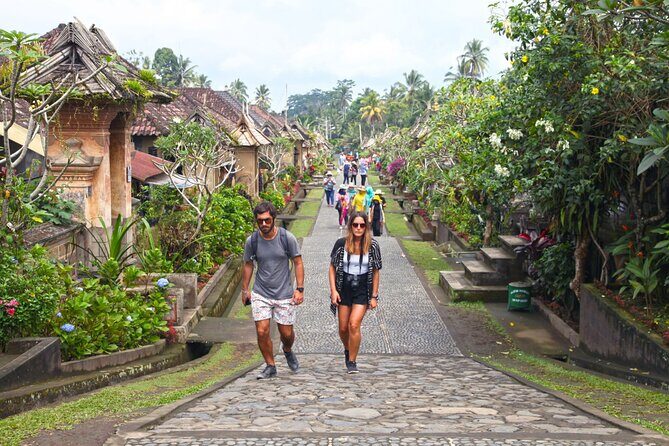
Plant Based Food Tour in Ubud

Plant Based Food Tour in Ubud - What You’ll Taste on the Plant-Based Ubud Tour

Penestanan food feels like a local secret you can actually taste. This 3-hour plant-based tour in Ubud strings together thoughtful stops in and around Sayan, mixing Indonesian flavors with global vegan favorites, plus a proper coffee tasting.

I especially like the variety of vegan styles you get in one walk: raw food, warm comfort-food plates, and even café-style drinks. I also like that the tour is built for conversation with the chefs and guide, led by Robyn and Ayu, so you’re not just eating in silence.

One thing to consider: you’re moving between stops, so wear comfortable shoes and plan for some outdoor walking in Penestanan’s lanes and field-adjacent paths.

Quick Highlights

Plant Based Food Tour in Ubud - Quick Highlights

  • Five food stops in about 3 hours, paced for sampling without rushing
  • Plant-based coffee tasting at Pourmoure Ubud (three coffee tastes plus one tea)
  • Raw food creativity at Seeds of Life, including Mexican lasagna-style flavors
  • Balinese-inspired comfort at Zest, with items like gado-gado with peanut sauce
  • Plant Bistro’s plant-based Carbonara, fully vegan and creamy

Penestanan, Five Stops, One Easy 3-Hour Route

Plant Based Food Tour in Ubud - Penestanan, Five Stops, One Easy 3-Hour Route
This tour is designed around a simple idea: you’ll leave Ubud’s main scene and spend a few hours in Penestanan, where the food feels more personal. You start at Jalan Puskesmas in Sayan at 11:00 am, and you finish at the Blanco Renaissance Museum area, where it’s easy to grab a ride or continue exploring.

The group stays small, with a maximum of 10 people. That matters. It keeps the pace friendly and makes it easier to ask questions about ingredients, kitchen tricks, and what makes plant-based cooking work in Bali’s food culture.

For timing, the full experience runs about 3 hours. That’s short enough for a lunch-day plan, but long enough that the tour doesn’t feel like a drive-by tasting.

What You’ll Taste on the Plant-Based Ubud Tour

Plant Based Food Tour in Ubud - What You’ll Taste on the Plant-Based Ubud Tour
You’re not just getting one style of vegan food. The overall menu mix leans creative and wide-ranging, with classics and playful modern dishes showing up side by side.

Across the stops, expect plant-based takes on dishes like jackfruit rendang, plant-based sushi, vegan lasagna, and mini burgers. You’ll also see refreshing sides like papaya salad and a ginger lemon spritz, plus classic Balinese flavors such as gado-gado with peanut sauce.

The tastings are portioned for a walking route, so you’ll sample more than you’ll eat. That’s usually the best approach in Ubud—especially if you’re pairing the tour with a later meal or two on your own.

Moksa Restaurant: Raw Lasagna and Tempeh Satay in a Garden Setting

Plant Based Food Tour in Ubud - Moksa Restaurant: Raw Lasagna and Tempeh Satay in a Garden Setting
Your first stop is Moksa Restaurant, positioned as a plant-based farm-to-table kind of place with a gourmet twist. This is a strong start because it sets expectations: the cooking isn’t trying to copy meat. It’s trying to build flavor from ingredients and technique.

Two menu items you should look forward to here are raw lasagna and tempeh satay. If raw food sounds intimidating, this is a helpful entry point because raw lasagna can still feel familiar—layers, sauces, and that satisfying lasagna rhythm—just without the usual bake.

Moksa’s setting is calm and garden-like, which makes the first stop feel like a reset. It’s a good moment to slow down, meet your group, and get your bearings before you head to the coffee stop.

Pourmoure Coffee Ubud: Three Tastings From Organic, Permaculture Farms

Plant Based Food Tour in Ubud - Pourmoure Coffee Ubud: Three Tastings From Organic, Permaculture Farms
At Pourmoure Coffee Ubud, the tour shifts from food textures to aroma and flavor. You’ll do three coffee tastes plus one tea, which is a smart move because it trains your palate quickly.

The coffee is described as coming from farmers using organic and permaculture coffee farming. That matters beyond the marketing line. It gives the tasting more meaning: you’re not just drinking. You’re learning how farming practices can show up as different flavor notes in the cup.

A practical tip: take small sips and pause. Coffee tasting goes fast when you’re walking and chatting. If you treat each sample like a mini flight, you’ll remember the differences later when you’re ordering on your own.

Seeds of Life and Zest: Raw Food Creativity Meets Balinese Comfort

Plant Based Food Tour in Ubud - Seeds of Life and Zest: Raw Food Creativity Meets Balinese Comfort
Seeds of Life is next, and it’s aimed at raw food lovers who want more than salad bowls. This stop leans global in style, with living-food dishes and creative plate-building. One featured item to watch for is Mexican lasagna—yes, raw-food style—so expect surprising flavor combinations.

If you’ve only seen vegan food as either healthy or trendy, Seeds of Life helps connect the dots: raw can still be playful and filling. It’s also a great place to notice how sauces do the heavy lifting, especially when heat isn’t part of the cooking process.

Then you move to Zest Restaurant, described as having Earth-Kissed Food and focusing on nourishing dishes with fresh local flavors. This is where the tour balances creativity with comfort. You’ll get Balinese favorites in a plant-based format, including gado-gado with peanut sauce.

Gado-gado is one of those dishes that usually sells the idea of plant-based cooking without needing persuasion. Peanut sauce brings saltiness, richness, and that familiar Indonesian comfort factor, while the rest of the dish keeps it varied—often a mix of vegetables and satisfying toppings.

Plant Bistro’s Carbonara and the Final Bite Factor

Plant Based Food Tour in Ubud - Plant Bistro’s Carbonara and the Final Bite Factor
Plant Bistro is the last stop, and it’s the kind of place you’ll remember for one reason: it offers a plant-based Carbonara made entirely from plant-based ingredients. Carbonara usually depends on eggs and dairy for its signature silkiness, so seeing a fully vegan version makes the tour feel immediately relevant.

This stop works well at the end of the route. By now you’ve tasted raw food, coffee, and Balinese comfort notes. Carbonara gives you a warm, creamy closer—an ending that feels like comfort rather than just sampling.

When you finish here, you’ll head toward the Blanco Renaissance Museum area. It’s a convenient finish point because you’re not stuck in a maze of alleyways with no easy exit. You can keep exploring Ubud on foot from there or switch to a ride.

Walking Pace, Group Size, and How to Make It Worth Your Time

Plant Based Food Tour in Ubud - Walking Pace, Group Size, and How to Make It Worth Your Time
A 3-hour food tour sounds easy until you remember Bali isn’t flat and straight. The route is built for walking through Penestanan paths and near rice-field scenery, so plan for uneven ground and short stretches outside.

Because the group max is 10, the walk doesn’t turn into a long parade. I like that small size because it usually means:

  • More chances to ask about ingredients and substitutions
  • Less time waiting around at busy tables
  • Better pacing between stops

You’ll also get a mobile ticket, which keeps the whole thing simple. Have your confirmation details ready on your phone at the start, and you’ll spend less time figuring things out and more time tasting.

One more practical note: I’d treat this as a dedicated food block on your day. If you try to cram it between long activities, you’ll miss the point. The best experience comes from slowing down, comparing flavors at each stop, and letting the guide’s context connect the dots.

Price in Context: Is $69 Fair for Ubud?

Plant Based Food Tour in Ubud - Price in Context: Is $69 Fair for Ubud?
At $69 per person, this tour sits in a middle zone for Ubud experiences. What makes it feel fair is what’s included in practice: multiple food stops, a guided route, and a dedicated coffee tasting with three coffees plus a tea.

If you were to recreate this day yourself, you’d likely pay restaurant minimums at each place and still miss the structure. The tour’s value comes from efficiency and flow. You get a tight sampler of different vegan approaches—raw, café classics, and Balinese comfort—without spending your whole afternoon making decisions.

Also, the tour is booked on average about 19 days in advance. That’s a hint that popular travel weeks fill up. If your dates are fixed, I’d reserve sooner rather than later, especially for small-group tours.

Who This Tour Fits Best

This is a great match if you want plant-based food in a place where it still feels tied to local culture. It’s also ideal if you don’t want a “one style fits all” vegan meal.

You’ll likely enjoy it if:

  • You’re vegetarian or vegan and want variety without hunting menus
  • You’re curious about how Balinese flavors translate to plant-based cooking
  • You like meeting people and hearing stories behind food choices

It may feel less ideal if you’re expecting a hardcore food crawl where you leave stuffed. Portions are tasting-sized, designed for a walking itinerary. You’ll come away impressed and satisfied, not defeated by food weight.

Should You Book This Plant-Based Food Tour in Ubud?

I’d book it if you want a smart, small-group route through Penestanan that actually teaches your palate. Between Robyn and Ayu’s guidance, the range of dishes (from raw formats to peanut-sauced comfort), and the focused Pourmoure coffee tasting, it’s a day that feels designed rather than random.

Book it with comfortable shoes and a relaxed lunch-or-dinner plan afterward. If that sounds like your pace, this tour is an easy win for Ubud—especially if you want vegan food that still tastes like Bali.

FAQ

How long is the Plant Based Food Tour in Ubud?

It runs for about 3 hours.

What does the tour cost?

The price is $69.00 per person.

Where do I meet the tour guide, and where does the tour end?

You meet at Jalan Puskesmas, Sayan, Kecamatan Ubud, Kabupaten Gianyar, Bali. The tour ends at the Blanco Renaissance Museum, Jalan Raya Campuhan, Sayan, Kecamatan Ubud, Kabupaten Gianyar, Bali 80571.

What time does the tour start?

The start time is 11:00 am.

How many people are in the group?

The tour has a maximum of 10 travelers.

Is the tour suitable for different dietary needs like gluten-free or vegan?

The tour can accommodate dietary needs such as vegetarian, vegan, and gluten-free. You should indicate your requirements at the time of booking.

What happens during the coffee tasting?

You get 3 coffee tastings and 1 tea at Pourmoure Coffee Ubud.

Is there free cancellation?

Yes, you can cancel for a full refund up to 24 hours before the experience starts. If you cancel less than 24 hours before, the amount paid is not refunded.

Best of Ubud Village Private Tour with Jungle Swing All Inclusive

Best of Ubud Village Private Tour with Jungle Swing All Inclusive - Aloha Jungle Swing in Ubud: the main event

A Ubud day can feel packed fast.

This private tour strings together the big hits with a good rhythm: a waterfall viewpoint, the Aloha Jungle Swing, then Tegalalang rice terraces and the Monkey Forest—plus lunch—so you don’t have to play transportation roulette across town.

What really makes it worth your time is the way it’s run. I like the private setup (your group only), and I like that the key stops are handled with tickets included and a driver who helps you hit the right photo spots without wasting daylight.

The main thing to consider is the pace: it’s about 8 hours and they ask for moderate physical fitness, plus it’s not for kids under 7. If you want a slow, sit-everywhere day, this may feel like too much.

Key highlights worth planning for

Best of Ubud Village Private Tour with Jungle Swing All Inclusive - Key highlights worth planning for

  • Aloha Jungle Swing included: you get the swing time and the jungle photo spot stop built into the route
  • Tegenungan Waterfall viewpoint (no descent): you see it from the stepping zone viewpoint instead of going down to the falls
  • Tegalalang lunch included: Indonesian set menu, with vegetarian available on request
  • Rice terrace + Monkey Forest in the same day: classic Ubud pairing without extra hopping
  • Photo-ready guidance: drivers help with timing and knowing where to stand for photos
  • Strong driver-track record: names like Febri, Ayu, Heri, Sulendra, Dirga, Oka, and Teddy show up for friendly, professional service

A full-day private Ubud route that stays focused

This is a one-day, private tour built to cover four major Ubud areas without you coordinating anything. The day starts at 8:00 am, and pickup is offered, which matters in Bali where the road time can eat your morning. For $125 per person, the promise is pretty straightforward: you trade your own planning stress for an organized loop, with transport and major entry points handled.

The itinerary isn’t just random checkboxes, either. It’s designed around variety: water views, a thrill activity in the jungle, a calm rice-terrace pause, then a walk-through nature/temple sanctuary with monkeys. That mix is where most people feel the value of a guided day—because it’s easy to build a similar list yourself, but harder to do it in a clean order with the right timing.

Also, it’s nice that this is set up with mobile ticket support. Small thing, but it reduces last-minute chaos when you’re trying to show up, scan, and move.

Tegenungan Waterfall viewpoint: big scenery, less strain

Best of Ubud Village Private Tour with Jungle Swing All Inclusive - Tegenungan Waterfall viewpoint: big scenery, less strain
Your day opens at Tegenungan Waterfall. You get about one hour here, and the tour includes the admission ticket. The key detail: you get the view from the viewpoint/stepping zone, but you don’t go down to the waterfall.

That choice is important. Going down can turn a simple stop into a sweaty, slippery stair ordeal. Coming from the viewpoint keeps it more about the cool air and the dramatic scenery than about the effort. If you’re trying to save your energy for the swing later, this makes sense.

One practical note: even at the viewpoint, you should expect some walking and stair-like movement. They list the tour as requiring moderate physical fitness, so wear shoes you trust. Water shoes aren’t required (and nobody said you’d be getting in the falls), but sturdy grip helps.

Aloha Jungle Swing in Ubud: the main event

Best of Ubud Village Private Tour with Jungle Swing All Inclusive - Aloha Jungle Swing in Ubud: the main event
After the waterfall viewpoint, you jump into the day’s big thrill: the Aloha Swing Ubud experience. This stop takes about three hours, and the admission ticket is included.

Here’s what makes the swing portion special in Ubud tours like this: the action happens with a jungle backdrop. The idea isn’t just to swing—it’s to swing with a green view behind you, and then stop at the photo spot at the venue to get shots you’d struggle to recreate on your own.

If you’re new to swing-style attractions, this is the moment where you decide what kind of photos you want. The tour gives you time for the ride itself and the photo spot, so you’re not rushing away as soon as you’re done. That alone can be the difference between getting one good photo and having none because you ran out of time.

What about comfort? Since they mention moderate physical fitness, think of this as an activity day, not a lounge day. You’ll want to be able to move around the venue, follow staff instructions, and handle the mild physical demands of an outdoor attraction.

Tegalalang lunch plus rice terraces: the calm chapter

Then you get a breather at Tegalalang. There are two Tegalalang-related stops in the route:

1) A lunch stop at Tegalalang

2) The Tegalalang Rice Terrace visit

Lunch first is a smart move. It’s a set Indonesian menu, and vegetarian food is available if you request it. That matters because Indonesian lunches can vary a lot, and a set menu usually means fewer surprises. After lunch, you’re escorted to the next site, which prevents the common problem of “everyone eats at once, then nobody knows where to go.”

The Tegalalang lunch portion runs about one hour, and the admission for that stop is listed as free. So you’re mostly paying for the guided structure, the timing, and the meal included.

Then the tour brings you to the Tegalalang Rice Terrace with admission included, also about one hour. This is classic Ubud scenery: tiered rice fields, viewpoint spots, and the kind of background that turns almost any photo into a postcard.

The trade-off with rice terraces is simple: it’s popular, and you’ll likely walk around with crowds depending on the day. A guide who knows where to stand helps. The tour’s driver-focused reviews point to this strength—people liked that their driver knew the photo spots and kept them moving at a good pace.

Sacred Monkey Forest Sanctuary: temple grounds and curious faces

Best of Ubud Village Private Tour with Jungle Swing All Inclusive - Sacred Monkey Forest Sanctuary: temple grounds and curious faces
Next up is Ubud Monkey Forest, also known as Ubud Wanara Wana. The tour gives about one hour here, with admission included.

This stop is more than just a monkey viewing opportunity. It’s a nature reserve temple complex, so you get the mix of forest paths, sanctuary feel, and temple atmosphere. And yes, the monkeys are the main attraction—live animals in the area are part of what you’re coming for.

A one-hour visit can feel short, but it’s enough to get oriented, walk the main areas, and enjoy the forest vibe without your day turning into a long wander. Since you’ve got swing and terraces earlier, the timing works well. You finish the day with something different from both the thrill activity and the open-field rice views.

One practical piece: because it’s a sanctuary with live monkeys, keep your focus on where you’re walking and don’t treat it like a zoo with rules you’ve already memorized. This is the kind of place where being alert is part of enjoying it.

Why the guides make this tour feel smooth

The biggest repeated theme in this tour experience is the people driving it. Several guide names pop up: Febri, Ayu, Heri, Sulendra, Dirga, Oka, and Teddy.

What you can take from that, as a practical traveler, is what to look for when you get your driver:

  • friendly, welcoming service right from pickup
  • professional driving and safe timing
  • helpful tips about where to stand for photos
  • staying on time without making the day feel rushed
  • small touches that make the ride more enjoyable, like Indonesian songs during the drive or providing water

A good driver can also reduce stress at busy stops. In places like Tegalalang and Monkey Forest, the biggest enemy is wasted time. When you have someone who knows photo spots and keeps your group moving, you spend more time enjoying and less time hunting.

Price and value: what $125 buys you in a day

Best of Ubud Village Private Tour with Jungle Swing All Inclusive - Price and value: what $125 buys you in a day
At $125 per person for about 8 hours, this tour is priced for a “do-it-all” day. You’re not just paying for a car ride; you’re paying for the structure of a full route plus several included items:

  • pickup offered and day transport
  • admission tickets for key attractions like Tegenungan Waterfall, Aloha Swing, Tegalalang Rice Terrace, and the Monkey Forest
  • lunch as a set Indonesian meal, with vegetarian option on request
  • time allocation that prevents rushing between distant sites

Could you do parts of this yourself cheaper? Maybe. But in Ubud, the costs aren’t only money. They’re also time, logistics, and decision fatigue—especially when you’re juggling multiple paid attractions and want decent timing for photo lighting.

Also, this is listed as a private tour/activity, which means your group only. That’s where the price can feel more reasonable compared to shared tours. If you’re traveling with others and want less crowd energy, private is often the smart trade.

One more note: the tour listing mentions group discounts. If you’re booking as a group, ask what discount applies to your exact party size—small savings can be meaningful on a $125 ticket.

Timing tips so you don’t feel rushed

The day starts at 8:00 am, so plan to be ready early. An early start helps you reach the morning stops before crowds build up, and it keeps your swing time comfortable rather than squeezed.

Because you’ll be moving from stop to stop, build your day-around strategy like this:

  • expect walking at every location, even if it’s not extreme
  • save energy for the swing portion, since it’s the most physically demanding part of the schedule
  • bring a little patience for busy photo areas, especially around rice terraces

Also, since the waterfall viewpoint is designed so you don’t go down to the falls, you’ll likely feel less drained than you would on a descent-and-climb itinerary. That’s a good setup for the rest of the day.

Who this tour suits best (and who should pass)

This tour fits best if you want a one-day highlight reel of Ubud and you’re okay with an active day.

Good matches:

  • first-time visitors who want a smart mix of nature views, photos, and animal/temple scenery
  • people who really want the Jungle Swing experience and want it handled with time and tickets
  • travelers who value a friendly, English-speaking style guide and safe driving (names like Febri and Ayu show up for that kind of service vibe)

You might want to skip or rethink if:

  • you prefer slow travel with lots of downtime
  • you’re traveling with kids under 7 (it’s not suitable for children below that age)
  • you don’t enjoy activities that require more than light walking and movement (they ask for moderate physical fitness)

Should you book this Best of Ubud day?

If your top priorities are a well-run full-day loop plus Aloha Jungle Swing, then this is a strong option. The value isn’t just the “included ticket” checklist—it’s the fact that the route is organized around efficient timing and photo-friendly stops, with drivers who tend to be friendly and punctual.

I’d book this if you want to see a lot of Ubud in one go without planning headaches, and if you’re comfortable with an 8-hour schedule and moderate activity.

I’d hesitate if you’re looking for a gentle, low-movement day or you’re traveling with younger kids who don’t fit the age requirement.

FAQ

How long is the Best of Ubud Village Private Tour with Jungle Swing?

It’s about 8 hours.

What time does the tour start?

The start time is 8:00 am.

Is pickup included?

Pickup is offered.

Is this tour private?

Yes, it’s a private tour/activity. Only your group participates.

Are admission tickets included?

Yes for several key stops: Tegenungan Waterfall, Aloha Ubud Swing, Tegalalang Rice Terrace, and Sacred Monkey Forest Sanctuary.

What’s included for lunch?

You’ll enjoy a set Indonesian lunch. Vegetarian food is available on request.

Do you go down to the Tegenungan Waterfall?

No. You view it from the viewpoint/stepping zone and do not go down to the waterfall.

Is the Jungle Swing included, and where does it take place?

Yes, the Jungle Swing is included and it’s at Aloha Swing Ubud. The tour also includes a photo spot at the location.

Who is this tour not suitable for?

It’s not suitable for children below 7 years, and it asks for moderate physical fitness.

What is the cancellation policy?

You can cancel for a full refund if you cancel at least 24 hours before the experience’s start time. If you cancel less than 24 hours before, the amount paid is not refunded.

Experience Full Day to Bali Swing Temple and Monkey Forest

Experience Full Day to Bali Swing Temple and Monkey Forest - Craft villages on the route: batik, wood carving, and gold-and-silver work

That first swing is pure joy.

This full-day Ubud tour strings together a few of Bali’s most in-demand stops into one smooth route. I like the big-picture flow: Picheaven Bali Swing (with a safety briefing) plus classic Ubud sights like Batuan Temple and the Monkey Forest. If you want a day that feels active but not frantic, this format is a solid pick.

My other favorite part is the convenience. You get door-to-door private pickup from popular areas around Ubud and the south coast, with an English-speaking driver and no waiting around for random extra stops. The main consideration: the day is long (about 10 hours) and it asks for strong physical fitness, especially since the swing itself involves climbing and getting in/out safely.

Key points to know before you go

Experience Full Day to Bali Swing Temple and Monkey Forest - Key points to know before you go

  • Picheaven Bali Swing height range: you can try multiple levels, from 5m up to 20m, for about 30 minutes of swing time
  • A proper safety briefing: a professional trainer gives instructions before you go up
  • Batuan Temple’s 10th-century feel: stop for ancient architecture that you can actually slow down for
  • Craft villages en route: batik painting, wood carving, and silver and gold smith work are part of the drive
  • Monkey Forest phone safety matters: keep an eye on your phone—monkeys are known to go after it
  • Small group cap: maximum 15 travelers, which helps the day move

Soaring at Picheaven Bali Swing: height options and how the timing works

The headline here is the Bali Swing at Picheaven Bali Swing. After morning pickup, you head out and then get a short, focused safety briefing from a professional trainer. That matters because you’re not just looking at a swing from the ground—you’re actually climbing up and choosing your ride height.

You’ll then try the swing at different levels, listed as 5m to 20m, with about 30 minutes for your swing time. In other words: you’re not rushing one quick photo moment and leaving. You’ll have time to take a few angles, get comfortable, and decide if you want the lower or higher options.

One practical tip: go with the mindset that you’ll be using your hands and moving your body throughout the activity. The tour is very doable, but it’s not a sit-in-a-car-and-watch trip. And because the tour requires good weather, you’ll want to plan for a possible change if the skies don’t cooperate.

Batuan Temple’s 10th-century stop: a calmer pause in the middle of Ubud

Experience Full Day to Bali Swing Temple and Monkey Forest - Batuan Temple’s 10th-century stop: a calmer pause in the middle of Ubud
Between the more adrenaline-heavy moments, you get a real break at Batuan Temple. It’s described as an attractive, ancient temple dating back to the 10th century. That gives the stop more weight than a quick photo stop in a busy parking lot.

What I like about this kind of pairing—Temple plus swing—is that it gives your eyes a rest. The swing is all movement and height. The temple is quieter. You can slow down, look at the architecture, and reset before heading back into the lush Ubud circuit.

A small drawback to keep in mind: temple visits often work best when you’re patient. If your travel style is pure speed-run, you might feel like this is another scheduled stop. But if you enjoy history and details, this is one of the moments that makes the day feel more like a real Ubud experience instead of a checklist.

Craft villages on the route: batik, wood carving, and gold-and-silver work

Experience Full Day to Bali Swing Temple and Monkey Forest - Craft villages on the route: batik, wood carving, and gold-and-silver work
On the way to the swing and through the morning portion of the tour, you’ll pass craft villages and see traditional work in progress. The stops mentioned include:

  • Batik painting
  • Wood carving
  • Silver and gold smith work

This isn’t random “shopping time” in name only. The tour is set up so you can watch people making things by hand, which is one reason this day feels more grounded. You’ll also get context for why Bali art and craft aren’t just souvenirs—they’re a way of life that supports whole communities.

If you want to make the most of these stops, look closely at the process, not just the final product. Ask simple questions in your own way (even a few words go far): what tool they use, how they start, how long it takes. The value here is the craft rhythm you can observe, not necessarily the price tag.

Rice terraces and a coffee plantation: a break you can actually enjoy

Experience Full Day to Bali Swing Temple and Monkey Forest - Rice terraces and a coffee plantation: a break you can actually enjoy
After the earlier activity, the tour includes visits to rice terraces and a coffee plantation stop along the way. This is the softer side of the day, and it’s a good counterbalance to the swing and the monkey energy later.

Rice terraces can feel touristy if you only glance. The trick is to treat the terraces as a slow-view moment. Take a breath, look at how the slopes are laid out, and notice the way the light hits the fields. Even without getting fancy, you’ll get those classic Ubud views while your body cools down.

The coffee plantation stop is included as well. The details of tasting or specific drinks aren’t listed, so plan for a general plantation visit rather than assuming a specific menu. Still, it’s a nice “stomach and calm” break in a day that’s otherwise full of movement.

Monkey Forest in Ubud: cheeky monkeys and the phone rule

Experience Full Day to Bali Swing Temple and Monkey Forest - Monkey Forest in Ubud: cheeky monkeys and the phone rule
Then comes Ubud Monkey Forest, one of the most famous places in town. The vibe is playful, and the monkeys can be genuinely charming. It’s also a spot where you need street-smart behavior.

Here’s the key advice I’d follow: watch your phone. In the feedback you provided, the tone is clear—those cheeky monkeys want phones. That means keep your phone secured, don’t dangle it, and be ready to move it away quickly when monkeys get curious.

Also, keep your awareness up around bags and loose items. This is less about fear and more about common sense. If you treat the area like you’re in a live environment (because you are), you’ll have a better time and avoid that panic moment when something goes missing.

The payoff is worth it. Monkey Forest is one of those places where the moments feel spontaneous. The best photos aren’t forced—they happen when you’re calm enough to let the scene unfold.

Price and value: why this can be a bargain or a mismatch

Experience Full Day to Bali Swing Temple and Monkey Forest - Price and value: why this can be a bargain or a mismatch
The listed price is $28.67 per person for the experience, typically booked around 26 days in advance. That timing detail matters: if you’re traveling in peak season, you don’t want to be last-minute with your schedule.

The value question is really about which package you choose:

All-inclusive package (best when you want a one-price day)

This option includes:

  • Transport
  • Bali Swing activities
  • Entrance ticket to the temple, rice terrace, and Ubud Monkey Forest
  • Lunch

And you’ll also get a complimentary bottle of mineral water.

If you like not thinking about tickets, entrances, or scrambling for cash on a tight timeline, this is the smoother deal.

Transport-only option (best if you prefer control)

Transport-only gives you:

  • English-speaking driver and petrol
  • Pickup and transport

But lunch is not included, and entrance fees are not included. You pay entrance fees for activities as a pay-as-you-go basis.

If you already know you’ll pay for everything directly (and you’re comfortable handling the flow on your own), transport-only can make sense. If not, the all-inclusive package usually feels easier and more “whole-day” complete.

One more money note: souvenir photos are available to purchase, but they’re not included. If getting swing and monkey photos is a priority, budget for that add-on.

Pickup, timing, and why a small group helps (a lot)

Experience Full Day to Bali Swing Temple and Monkey Forest - Pickup, timing, and why a small group helps (a lot)
Start time is 8:30 am, and the day runs about 10 hours. The tour is designed as a door-to-door experience, with pickup from many common Bali bases, including:

  • Kuta, Sanur
  • Ubud
  • Legian, Seminyak
  • Nusa Dua, Jimbaran

You’ll ride in comfortable, air-conditioned transport with an English-speaking driver. The day is described as private door-to-door, and it also emphasizes fewer delays—no waiting around for other travelers.

The small group size matters here. This experience caps at 15 travelers, which usually means you get more consistent timing and less confusion at each stop. In a day that moves between swing, temple, terraces, coffee, and monkeys, that efficiency is real value.

Also, this is explicitly listed as requiring good weather. If rain or poor conditions hit, you’ll likely be offered another date or a full refund. That’s the kind of policy you want to be aware of before you plan anything else for the same day.
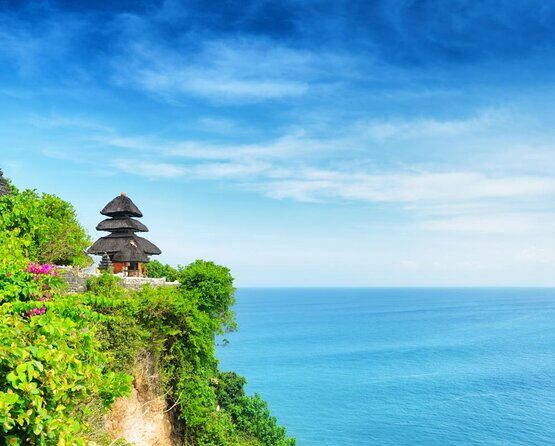
Who should book this Ubud Bali Swing and Monkey Forest day

Experience Full Day to Bali Swing Temple and Monkey Forest - Who should book this Ubud Bali Swing and Monkey Forest day
This tour is a strong fit if you want a full Ubud-style day that includes both action and classic sights. It’s been rated 4.9 with 100% recommended in the feedback you shared, and the themes are clear: people love the Bali Swing, and they like having everything handled in one day.

It also seems especially good for families. One of the strongest notes you provided is that it was a best-day-trip option for kids—mainly because the swing is fun and Monkey Forest is memorable.

You should reconsider if:

  • You don’t handle height activities well, or you’re worried about mobility and climbing associated with the swing
  • You prefer very slow sightseeing with lots of free time (this is a paced day)

Should you book this full-day Bali Swing and Monkey Forest tour?

If you want a straightforward, high-energy Ubud day with major highlights grouped into one route, I’d book it—especially the all-inclusive option. The swing is the main event, Batuan Temple adds depth, and Monkey Forest makes the day feel uniquely Ubud.

Choose this when your goal is simple: see the key sights, keep the logistics easy, and get a day that feels like an actual experience, not just a series of separate tickets.

Choose transport-only only if you’re confident you’ll manage entrances and timing smoothly on your own. If you want less mental load, the all-inclusive package is the safer call.

In short: if good weather lines up and you’re comfortable with an active 10-hour day, this is a great way to pack real Ubud into one outing.

FAQ

How long is the Bali Swing and Monkey Forest day trip?

It runs about 10 hours.

What time does the tour start?

The start time is 8:30 am.

Where do pickups happen?

Pickup is offered from Kuta, Sanur, Ubud, Legian, Seminyak, Nusa Dua, and Jimbaran, plus your designed hotel.

What’s included in the All Inclusive package?

All inclusive includes transport, Bali Swing activities, entrance tickets to the temple, rice terrace, and Ubud Monkey Forest, plus lunch. You also get a complimentary bottle of mineral water.

What’s included if I choose Private Transport Only?

Private Transport Only includes an English-speaking driver, petrol, and air-conditioned transport. Lunch and entrance fees are not included, and you pay them on a pay-as-you-go basis.

How does the Bali Swing height and timing work?

You get a safety briefing first, then you can try swing heights from 5m to 20m. Swing time is about 30 minutes.

Is lunch included on this tour?

Lunch is included only if you choose the All Inclusive package. It is not included with Transport Only.

What should I watch for at Monkey Forest?

You should watch your phone, because monkeys may go after it.

What happens if the weather is bad?

This experience requires good weather. If it’s canceled due to poor weather, you’ll be offered a different date or a full refund.
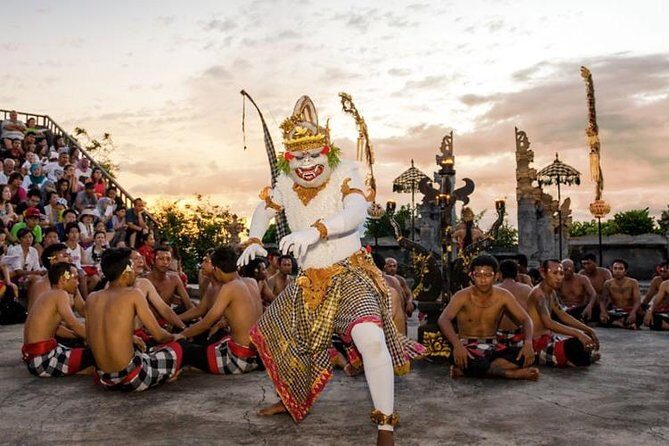
Aling-aling Waterfall tours

Aling-aling Waterfall tours - 6:30 am pickup and how the private vehicle changes the day

Six thirty is early, but worth it. This private Ubud day is built around three well-known Bali waterfalls and real downtime to swim and play, not just stand and look. I like that it stays practical with round-trip hotel pickup and a dedicated private vehicle for your group.

I also like the pacing. Aling-Aling gets a full two hours for jumps, the natural slide, and swimming in very fresh water, while the other stops keep things moving without feeling like a race.

One thing to consider: ask clearly about any add-on charges before you’re dropped back off. A past booking described an unexpected extra 200,000 IDR charge from the driver at return, so I’d confirm the full total up front to avoid surprises.

Key things that make this tour work

Aling-aling Waterfall tours - Key things that make this tour work

  • Private vehicle, only your group means you set the tempo and won’t get boxed in by other schedules
  • Two hours at Aling-Aling gives time for the slide, jumps, and a proper swim
  • Gitgit’s forest setting feels more like a calm nature stop than a quick photo stop
  • Banyumala’s twin cascades give you two waterfall views in one area, with time to relax and take pictures
  • Admission tickets and fees included for all three stops, so you’re not doing last-minute payments
  • Early start (6:30 am) helps you start your waterfall day before the busiest feeling builds

Ubud waterfall hopping built for real swimming time

Aling-aling Waterfall tours - Ubud waterfall hopping built for real swimming time
If your idea of a Bali waterfall day includes getting wet and having fun, this route is made for you. You’ll hit three different kinds of waterfalls—one for active play at Aling-Aling, one tucked into forest greenery at Gitgit, and one with the classic “twin view” vibe at Banyumala. It’s the kind of day that feels like you’re doing more than sightseeing.

The value here comes from how the experience is packaged: it’s private and includes round-trip transfers plus admission tickets and fees for each stop. For a day that can easily turn into chaos without planning, having pickup and tickets handled is a big comfort.

There is a trade-off. This is a full-day outing—around 10 hours—and it’s active enough that moderate physical fitness matters. Plan for uneven paths, steps, and wet surfaces, especially at the swimming spots.

6:30 am pickup and how the private vehicle changes the day

Aling-aling Waterfall tours - 6:30 am pickup and how the private vehicle changes the day
The tour starts at 6:30 am, with pickup from your hotel area in Ubud. That early timing is useful because you’re not spending the first half of the morning stuck in daylight crowds. You also gain daylight hours for each waterfall stop, which helps when you want time to swim, change, and still get photos.

A private vehicle for just your party changes how the day feels. You’re not waiting on a larger group, and you’re more likely to get the kind of pacing that matches your comfort level—stay longer at one waterfall if you want, or move on when you’re ready. That flexibility is part of why the tour is rated 4.7 and recommended by 91%.

You’ll also get a mobile ticket, which is handy if you’d rather keep things in your phone than track paper.

Stop 1: Aling-Aling Waterfall for jumps, slide, and fresh water

This is the main event. At Aling-Aling Waterfall, you get about 2 hours, and that’s the time slot that turns a visit into an actual experience. The focus here is on water play: the area is known for chances to do jumps, ride the natural slide, and swim in very fresh-looking water.

Two hours sounds simple, but it matters. You have time to:

  • figure out where you feel comfortable entering the water
  • take a few photos without rushing
  • enjoy the swim and still have a buffer to dry off a bit

Because this is a waterfall swim day, I’d plan your clothing accordingly. Wear something you don’t mind getting wet, and bring a dry layer for after. If you have water-friendly footwear, that can make the walking feel much less stressful.

The other practical angle: this is where you’ll likely spend your energy. If you’re the type who wants to do the slide or some jump spots, arrive ready to move. If you’re more cautious, you can still enjoy the views and the atmosphere—you just may want to pace yourself and choose your swim level.

Stop 2: Gitgit Waterfall in the forest, paced for an easy 1-hour stop

Next comes Git Git Waterfall, with about 1 hour on site. This stop is described as a waterfall in the middle of the forest, with an authentic mountain feel. The vibe here is different from Aling-Aling: instead of being centered on action, it’s more about slowing down in a greener, more secluded-feeling setting.

One hour is a sweet spot. It’s long enough to enjoy the environment, take a few photos, and get your bearings on the walkways. It’s not so long that you end up tired or bored before you reach the last stop.

If you like nature stops where you can pause and listen—birds, leaves, the quiet rhythm of the forest—this is the one. If you’re only there for swimming and action, you might find the time short, but the trade is a more relaxed feel.

Stop 3: Banyumala Twin Waterfalls for a laid-back finish

Aling-aling Waterfall tours - Stop 3: Banyumala Twin Waterfalls for a laid-back finish
Finish with Banyumala Twin Waterfalls, also around 2 hours. This stop is all about the twin cascades—two falls creating a more dramatic photo and scenery experience than a single drop. You’ll have time for swimming and taking pictures, plus some room to just sit, relax, and let the day slow down.

Two hours at the end is important because it gives you energy back. By now you’ve seen the main highlights. You can choose to be active—swim and explore a bit—or go into “vacation mode,” soaking in the views and taking your time with photos.

This is a good stop for anyone traveling with mixed interests. The more active person in your group can spend time in the water, while the person who prefers dry viewing can still get excellent views and a solid photo setup without forcing the pace.

Price and value: what $20 buys you in Ubud

At $20 per person, this is one of those deals that looks almost too straightforward—especially because it’s a private tour. The price includes private transportation and all fees and taxes, and admission tickets are included for all three waterfalls.

That matters more than it sounds. Waterfall tickets and local fees can pop up as separate payments on other tours, and private transfers often cost extra when they’re not truly part of the package. Here, the structure helps you keep the day predictable.

Two things are not included: lunch. So you’ll want to plan for a meal stop on your own during the day, or bring simple snacks if that works for you. If you’re the type who needs a full lunch break to stay comfortable, factor that into your timing expectations.

Also note the demand signal: it’s typically booked about 21 days in advance on average. That’s not a reason to panic, but it is a hint that the slots go quickly in popular seasons.

What the timing and total day length means for your plan

This tour runs about 10 hours. That means you’re committing to a full-day schedule, starting early and returning later. It’s great for people who want a one-day waterfall hit, and not great if you’re hoping to do a late-morning beach plan after.

It also means you’ll want to treat this as your main activity. Don’t stack big plans immediately after pickup time unless you’re sure you can handle a late return.

The pacing across the day is built like this: 2 hours + 1 hour + 2 hours at the waterfalls, with driving in between. The driving time isn’t listed, but the structure makes sense for a waterfall circuit from Ubud.

Weather matters here more than you think

The tour has a weather requirement: it runs only when conditions are good. If poor weather forces cancellation, you’ll be offered a different date or a full refund.

That’s practical advice for Bali. Rain can make paths slippery and affect how comfortable and safe swimming feels. If you’re traveling during a wetter stretch, keep your schedule flexible and consider booking dates with some buffer.

Also, if you do go: bring a mindset for “waterfall day,” not “museum day.” You’ll be walking around wet areas and spending time near rushing water.

Who should book this private Aling-Aling waterfall tour

This tour is a strong match if you want:

  • A private day with your own pace
  • Time to swim and attempt fun water activities at Aling-Aling
  • A mix of action (Aling-Aling), forest calm (Gitgit), and scenic twin views (Banyumala)
  • A package that includes transport plus admission tickets and fees

It’s also a good fit if you appreciate early starts and prefer guided structure. The tour is guided, and the private setup helps you ask questions on the spot—where to go, what’s easiest, and how to handle the wet sections.

I’d hesitate if you’re not comfortable with active walking on uneven ground or if you strongly prefer dry, seated sightseeing only. The tour calls for moderate physical fitness, and the water stops naturally mean some movement.

Should you book it or pass?

I’d book this Aling-Aling Waterfall hopping tour if you want a true waterfall day with time to enjoy the water, and you value having private transfers plus admissions handled. The overall rating of 4.7 and the high recommendation rate signal that most people come away happy—especially with the quality of the guide and the beauty of the falls.

I would still go in with one extra habit: confirm the expected total with your driver and double-check whether anything could be requested at drop-off. One reported case involved an extra 200,000 IDR charge from the driver, so prevention beats arguing later.

If you’re flexible with weather, comfortable getting wet, and okay with a 10-hour day that starts at 6:30 am, this is a very solid value way to experience several Bali waterfalls in one clean plan.

FAQ

What time does the Aling-Aling Waterfall tour start?

The start time is 6:30 am.

How long is the tour?

It lasts about 10 hours.

Is hotel pickup included?

Yes, round-trip transfers from your hotel are included.

Which waterfalls are included?

You’ll visit Aling-Aling Waterfall, Git Git Waterfall, and Banyumala Twin Waterfalls.

Are admission tickets included?

Yes. Admission tickets are included for each stop.

Is lunch included in the price?

No. Lunch is not included.

If you want, tell me your travel dates and group size, and I’ll help you judge whether $20 per person makes sense for your schedule and what to pack for the water stops.

Nusa Penida Island Full-Day Tour from Bali

Nusa Penida Island Full-Day Tour from Bali - Pasih Uug (Broken Beach): the arched ocean-and-pool effect

Nusa Penida compresses a lot into one day. What makes this tour tempting is the tight mix of big-name sights with included lunch and the convenience of pickup and drop-off from many Bali areas.

There is one real consideration: the island hopping comes with bumpy roads and an early 6:30am start, so it’s better if you’re in decent health and okay with a long day.

Key things to know before you go

  • Small-group feel: maximum group size is stated as 10, while the operator also notes a cap of 12 travelers.
  • Boat transfer from Sanur: you’ll ride a speed boat to Nusa Penida (about 45 minutes), not a slow ferry.
  • Iconic stops in one loop: Kelingking Beach, Pasih Uug (Broken Beach), Angel’s Billabong, and Crystal Bay.
  • Snorkeling-friendly timing at Crystal Bay: snorkeling equipment is included, and Crystal Bay is the place you can actually swim/snorkel more comfortably.
  • You’re on a schedule: some stops are about 30 minutes each, so this is a “see it, then move” style day.
  • Support is available: Bali 4U Tours lists 24/7 customer service, and staff contact in communications includes Wayan Eza.

The value of a one-day Nusa Penida circuit from Bali

Nusa Penida Island Full-Day Tour from Bali - The value of a one-day Nusa Penida circuit from Bali
Nusa Penida is one of those places where the views look like they belong on a screensaver—then you realize you’re standing on the edge of real cliffs, over real ocean, with real sun beating down. A full-day tour helps because it strings the main photo stops together into one efficient loop.

I like that this isn’t a bare-bones “go here yourself” plan. You get English-speaking help, admission fees, and an included set lunch, which means less time figuring out logistics and more time enjoying the island.
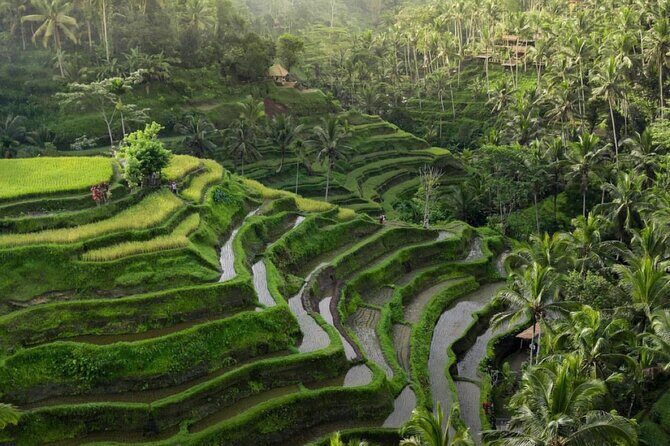
I also like the way the pacing is built around recognizable highlights: Kelingking, Broken Beach (Pasih Uug), Angel’s Billabong, and Crystal Bay. That’s a lot of variety—cliffs, ocean pools, and the one beach where swimming and snorkeling are meant to feel easier.

The tradeoff is time. With multiple stops in one day, you’re not meant to linger for hours at each viewpoint. If you’re the type who wants to soak in one beach for most of the morning, this style may feel rushed.
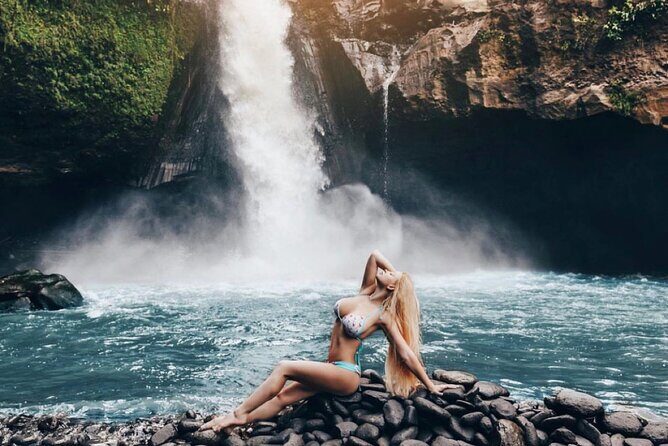
From your Bali hotel to Sanur: the early-morning setup

Nusa Penida Island Full-Day Tour from Bali - From your Bali hotel to Sanur: the early-morning setup
This tour starts at 6:30am, and the routine is straightforward: you’re picked up from your hotel in Bali and driven to Sanur Beach. Pickup coverage includes Sanur, Ubud, Kuta/Legian, Seminyak, Canggu, Jimbaran, Nusa Dua, Benoa, and Denpasar.
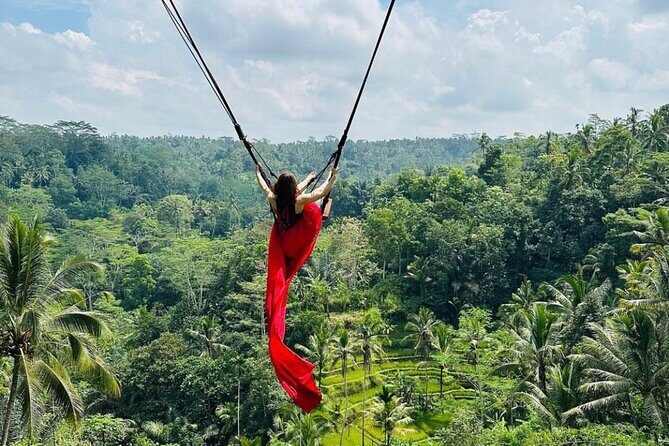
Once you reach Sanur, you board a speed boat for the crossing to Nusa Penida, typically described as around 45 minutes. The schedule also assigns about 30 minutes for this first segment, so think of the early part of the day as a mix of travel plus boarding time—not just time on the boat.

If you’re prone to seasickness, take that seriously before you go. Even if the boat ride is the shorter part of the day, it’s early, it can be choppy, and it’s the kind of discomfort that can stick with you through the next stops.

And a small heads-up: the operator notes that some roads around Bali’s tourism routes and island hopping can be bumpy, and that you should have a good health condition. That matters for your comfort more than people expect.

Kelingking Beach: a 30-minute hit of cliff drama

Kelingking Beach is the classic Nusa Penida silhouette: a steep cliff and headland framing turquoise waters and white sand below. This is the stop you usually picture first when someone says Nusa Penida.

Your time here is about 30 minutes, which is enough for the basics—see it, get your photos, and decide if you want to stay longer on your own later. The short window is also a benefit for the group: it keeps the day moving and reduces the chance of you burning daylight at one spot.

If you’re going for the wow factor, this stop delivers. If you’re going for comfort and slow beach time, it’s not the longest stop in the plan.

Pasih Uug (Broken Beach): the arched ocean-and-pool effect

Nusa Penida Island Full-Day Tour from Bali - Pasih Uug (Broken Beach): the arched ocean-and-pool effect
Next up is Pasih Uug Beach, also known as Broken Beach. The signature feature is the arched tunnel in the cliffs, which lets the ocean flow into a pool area.

This is one of those stops where the exact look depends on water movement, light, and conditions. The good news: even with a short time slot, you’re visiting a site designed for quick visual payoff—cliffs, arch, ocean channel, and that pool effect.

Your allocated time here is again about 30 minutes. That’s just long enough to watch the ocean shaping the scene, then move on before the day becomes a slog.

The only drawback is the same one that comes with many iconic stops: if you’re not able to tolerate bright sun or wind, you’ll want to plan for quick breaks at the right times and keep your energy up.

Angel’s Billabong: the tide pool that crashes into open sea

Nusa Penida Island Full-Day Tour from Bali - Angel’s Billabong: the tide pool that crashes into open sea
Then you’re onto Angel’s Billabong, described as a crystal-clear tide pool on the east coast of Nusa Penida. The way it’s built matters: it cascades into the ocean, and waves crash in from the outside.

If you like your scenery with motion, this one tends to satisfy. It’s not a still lake moment; it’s about the ocean interacting with a natural pool-like structure.

Your time here is about 30 minutes, and the goal is to catch the drama without losing the rest of the day. For many people, this is the stop that makes Nusa Penida feel like more than just a list of viewpoints.

Crystal Bay: why this is the swimming-and-snorkeling stop

Nusa Penida Island Full-Day Tour from Bali - Crystal Bay: why this is the swimming-and-snorkeling stop
After cliff-and-tunnel stops, you get a breather at Crystal Bay Beach. This is noted as one of the island’s most popular beaches, and the practical reason is that it’s more suitable for snorkeling and swimming with relaxing conditions compared to many other wild beaches.

Your time here is about 1 hour, which is the longest stop on the plan. That extra time matters because snorkeling and water time take a bit more effort than a quick viewpoint stop.

You also get snorkeling equipment included, so you’re not hunting for gear at the last second. One catch from the tour details: a boat for snorkeling in-destination is not included. So if you’re hoping for a specific type of snorkeling that requires getting out on a boat, you’ll likely need to pay for that separately once you’re there.
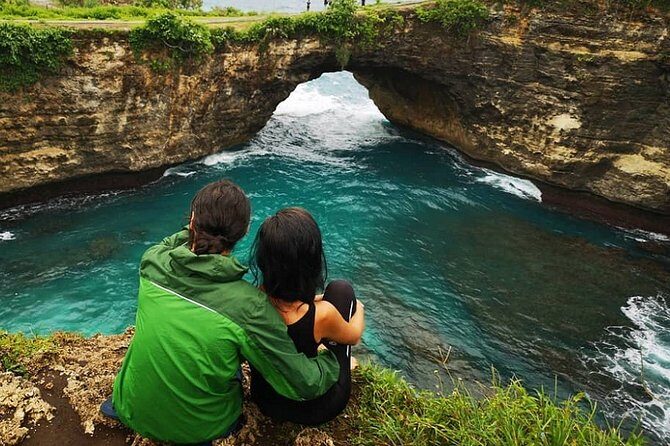
If you want the best mix of dramatic coastline plus an actual swim, Crystal Bay is the place to prioritize.

Lunch, group size, and why the pace feels comfortable

Nusa Penida Island Full-Day Tour from Bali - Lunch, group size, and why the pace feels comfortable
This is a full-day tour, around 10 hours, and it’s built to reduce friction. You get a driver/guide, pickup and drop-off, and an Indonesian lunch (set menu).

I like included lunch on tours like this because it helps you avoid two problems on hot island days: searching for food at the wrong time and overpaying when everyone is hungry. A set menu also helps the group move at a predictable pace.

On group size, the messaging is a bit mixed but points to the same goal: small group. The plan highlights a maximum of 10 people, while the operator also lists a cap of 12 travelers. Either way, it’s clearly not the big-bus style tour.

Still, be realistic about the day’s structure. With multiple stops and shorter time blocks, you’re signing up for a schedule. The small group helps with comfort, but it doesn’t turn the day into a slow-paced beach holiday.

Money and logistics: is $125 good value for Nusa Penida?

Nusa Penida Island Full-Day Tour from Bali - Money and logistics: is $125 good value for Nusa Penida?
At $125 per person, you’re paying for a lot bundled together. The details include a round-trip speed boat, hotel pickup/drop-off, English-speaking driver/guide, entry/admission fees, and snorkeling equipment. You’re also getting a lunch included.

That’s the value equation: this price makes sense if you want all the major components handled and you don’t want to piece together transport plus admissions plus gear on your own.

Where the value can slip is if you’re the type who wants more time at fewer places. Since several stops are around 30 minutes, you’re paying for breadth, not depth. If you end up wanting to linger—especially at Crystal Bay—you may feel like the schedule runs ahead of your comfort.

Also note the included snorkeling gear helps, but snorkeling that requires an extra snorkel boat is not covered. That’s not a dealbreaker, but it’s smart to budget a little extra if your plan is more ambitious than “snorkel right off the shore.”

Safety, motion sickness, and the reality of bumpy roads

Nusa Penida Island Full-Day Tour from Bali - Safety, motion sickness, and the reality of bumpy roads
This tour is transparent about one challenge: bumpy roads due to development and island hopping conditions, plus the note that you need a good health condition for the day.

In plain terms, expect a rougher ride than you’d get on a smooth, modern highway back in more settled areas. That can mean discomfort for some people, especially if you’re sensitive to vibration, curvy roads, or long time spent in transit.

There’s also a cautionary note in the provided feedback about a transport experience that felt frightening. I won’t sugarcoat it: if safety and comfort are your top priorities, pay attention to the condition of the land transport used on the day. Ask questions before you book about what the on-island transfer involves and how they handle comfort for riders.

If you do go, I strongly suggest you bring the practical stuff: motion-sickness help if you need it, water, and shoes that won’t make you slip if the ground is hot or uneven.

For many people, the tradeoff is worth it because the sights are so dramatic. For a smaller slice of travelers, the road + timing combo can feel like too much for one day.

Who this tour suits best (and who should reconsider)

This is a strong fit if you:

  • want to see multiple Nusa Penida highlights in one day without planning transportation
  • like a small group experience with pickup and drop-off
  • want snorkeling access at Crystal Bay with equipment included
  • are okay with shorter stop times (around 30 minutes for several attractions)

This is a weaker fit if you:

  • hate early mornings and don’t want a 6:30am start
  • are not comfortable with bumpy road conditions
  • want a more relaxed “stay longer in one place” itinerary
  • need a lot of extra time for swimming/snorkeling beyond the included 1 hour at Crystal Bay

Also, the tour notes that most travelers can participate, but it’s still worth being honest about your comfort level. Nusa Penida can feel like the entire island is outdoors and exposed—sun, wind, and constant moving.

Should you book this Nusa Penida full-day tour from Bali?

If you want a one-day checklist of Nusa Penida’s biggest hits—Kelingking, Pasih Uug, Angel’s Billabong, and Crystal Bay—and you like the idea of speed boat + pickup + lunch + admissions all handled, this tour looks like a solid value at $125.

I’d book it if you’re comfortable with rough-road conditions, can handle an early start, and you’re happy with a tour style that gives you memorable stops rather than hours of downtime at each one.

I’d reconsider if you’re sensitive to bumpy transfers or you’re the kind of traveler who needs long, slow beach time. In that case, you’ll probably want a different format—more time on fewer stops—so you don’t feel rushed or worn out.

FAQ

What time does this Nusa Penida tour start?

The scheduled start time is 6:30am. The tour asks you to be ready and waiting in your hotel lobby for pickup.

Where do you get picked up in Bali?

Pickup is available from Sanur, Ubud, Kuta/Legian, Seminyak, Canggu, Jimbaran, Nusa Dua, Benoa, and Denpasar.

How long is the tour?

The duration is about 10 hours.

Is the speed boat included?

Yes. The tour includes a round-trip speed boat ride (about 45 minutes to Nusa Penida is stated).

Is lunch included?

Yes. You get an Indonesian lunch (set menu).

Do I get snorkeling equipment?

Yes. Snorkeling equipment is included. However, the use of a boat for snorkeling in-destination is not included.

How big is the group?

The tour is described as having a small group size of maximum 10 people, and the additional info also lists a maximum of 12 travelers, so it stays limited.

Can I cancel for a full refund?

Yes, you can cancel for a full refund if you cancel at least 24 hours before the experience’s start time.

If you tell me your hotel area (Ubud, Seminyak, Canggu, etc.) and whether you get seasick, I can help you judge if this timing and transport style fits your comfort level.