The Gate Of The Heaven Bali with Top Places To Visit In The East of Bali

The Gate Of The Heaven Bali with Top Places To Visit In The East of Bali - Lempuyang to Tegalalang: The Route Break That Changes the Feel

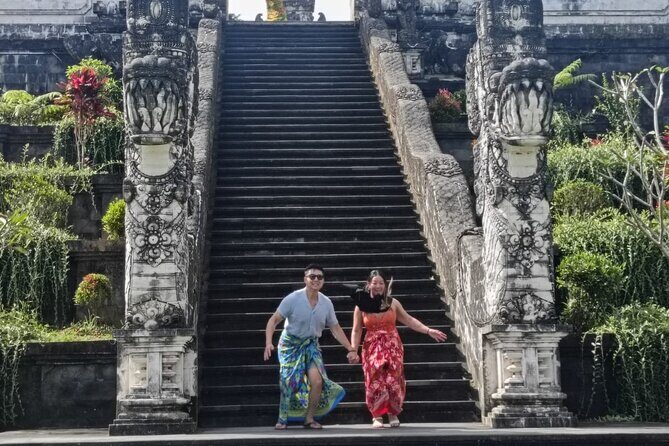
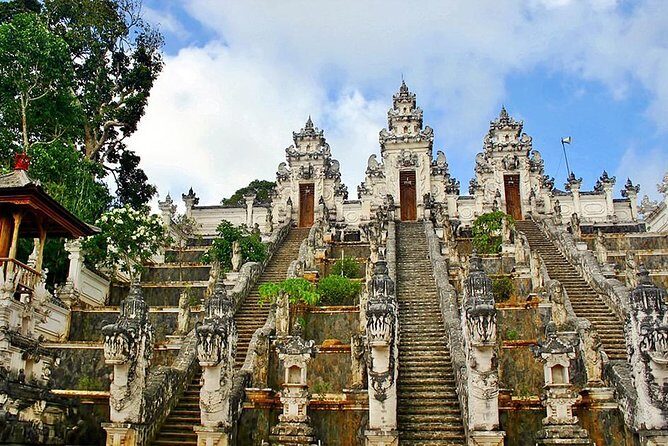
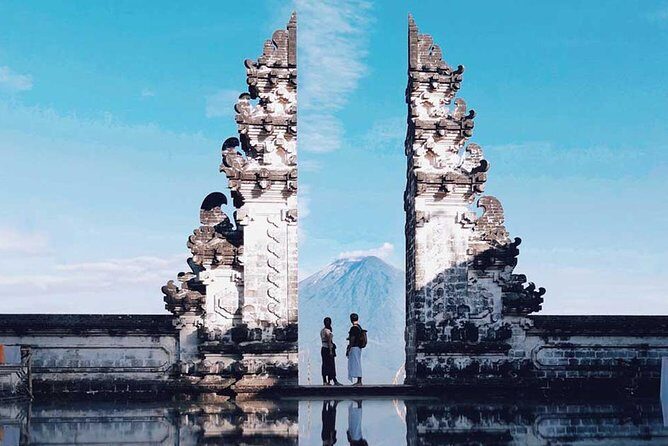
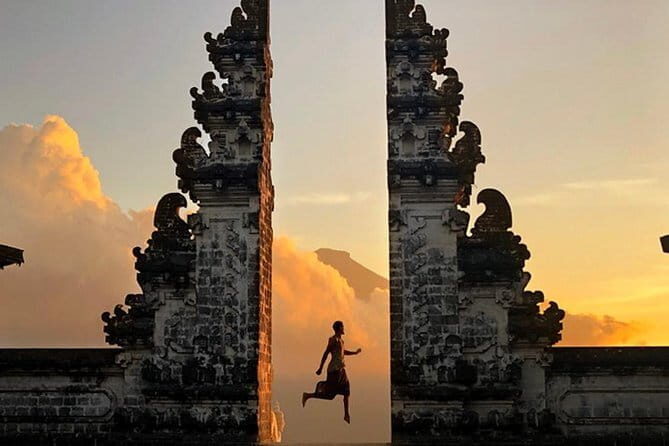
This Bali morning starts before dawn. The big hook is the Gate of Heaven at Pura Luhur Lempuyang, with Mt. Agung rising in the background, usually on a schedule built around sunrise. I also like that you get an English-speaking driver for the long day, plus pickup from the Seminyak/Kuta area. One real downside to know up front: this temple is very busy, and the photo line can stretch, so expect to lose time even if your morning goes smoothly.

What makes this East Bali route work is the mix: sacred temples, water-palace gardens, and a living village culture. You’ll see Tirta Gangga and Taman Ujung (both water sites tied to Karangasem), then head to Tenganan Ancient Village and finish at Goa Lawah, the Bat Cave Temple. Entrance tickets are included, so you’re not hunting for the next payment desk while you’re trying to keep your day moving.

The schedule runs about 11–12 hours, with pickup starting at 3:30am (or very close). Since lunch isn’t included, you’ll want to plan how you’ll handle food and water during a full day of stops and drives.

Key Points to Know Before You Go
The Gate Of The Heaven Bali with Top Places To Visit In The East of Bali - Key Points to Know Before You Go

  • 3:30am pickup for the Gate of Heaven sunrise viewpoint—yes, it’s early, but it’s the point.
  • Pura Luhur Lempuyang is one of Bali’s nine directional temples, tied to the island-wide temple system.
  • Tirta Gangga and Taman Ujung are built around water architecture, including the royal history of Tirta Gangga (1948).
  • Tenganan Ancient Village is home to Bali Aga, the older pre–Majapahit community of Bali.
  • Goa Lawah Bat Cave Temple adds a totally different sacred vibe, set in Klungkung regency.
  • All entrance tickets are included, while lunch and tips are not.

The Gate of Heaven at Lempuyang: Why Sunrise Here Is a Whole Thing
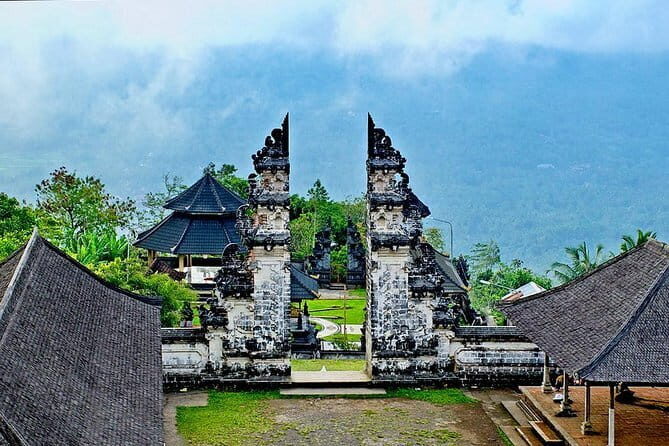
The Gate Of The Heaven Bali with Top Places To Visit In The East of Bali - The Gate of Heaven at Lempuyang: Why Sunrise Here Is a Whole Thing
Pura Luhur Lempuyang is more than a pretty gate. It’s one of Bali’s nine directional temples, part of a system that stretches around the island with Pura Luhur Besakih at the centre. That cultural weight shows up in how people visit: you’ll often see Balinese families in ceremonial attire carrying baskets of food to be blessed by priests at the top of the mountain.

Then there’s the other reason this stop pulls people in: the “Gate of Heaven” framing. The iconic shot is the gate with Mt. Agung standing tall behind it. The spot can feel almost surreal because it’s simultaneously a working worship site and a world-class photo location.

Here’s the practical reality: the temple is busy, and the time you spend can be unpredictable. If you’re aiming for photos, you should assume there will be waiting—sometimes for long enough that your planned flow changes. In a perfect world, you’d move quickly through the gate area, grab a few shots, and then continue upward and onward. In the real world, the line system can slow you down, so keep your expectations flexible.

If you care about balance—worship first, photos second—try to think in terms of time blocks: arrive, take in the spiritual atmosphere for a bit, and then allocate a set amount of time for photos. That way you don’t end up frustrated when the queue stretches.

One more thing I appreciate: this tour is built around the sunrise idea, not a late-morning “we’ll see what we can catch.” You’ll be picked up at 3:30am from the Seminyak/Kuta area, which tells you the day is engineered for early light and less chaos than you’d get later.

Lempuyang to Tegalalang: The Route Break That Changes the Feel
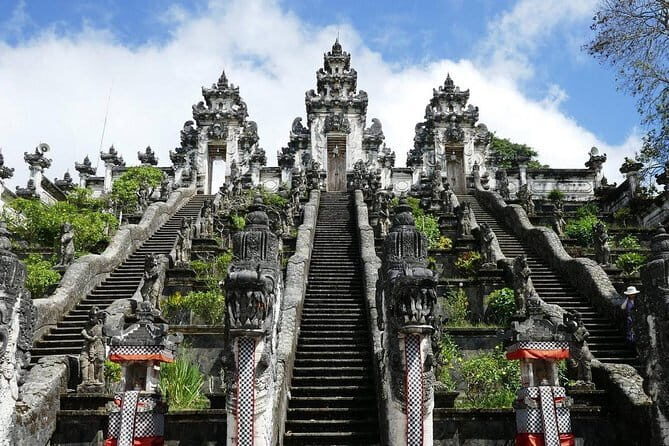
The Gate Of The Heaven Bali with Top Places To Visit In The East of Bali - Lempuyang to Tegalalang: The Route Break That Changes the Feel
After Lempuyang, the day commonly includes a stop at Tegalalang rice terrace and time that typically connects the highland temple experience to the East Bali coastal vibe. Even if you’ve seen rice terraces before, Tegalalang is one of the places where the scenery feels very “Bali in motion”—steps, viewpoints, and layers of fields that make you want to pause more than once.

This is also a good point to manage energy. The day starts brutally early, and you’re doing a temple climb plus a sunrise schedule. Use this mid-morning stretch to reset: take short breaks, keep an eye on your timing with your driver, and avoid the trap of staying too long at the first view you like.

Tirta Gangga: The 1948 Water Garden Stop
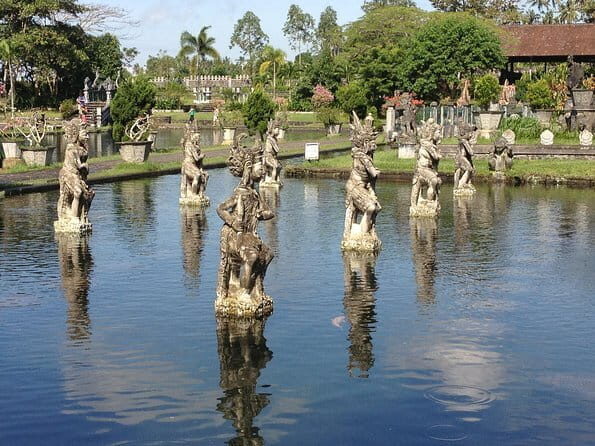
The Gate Of The Heaven Bali with Top Places To Visit In The East of Bali - Tirta Gangga: The 1948 Water Garden Stop
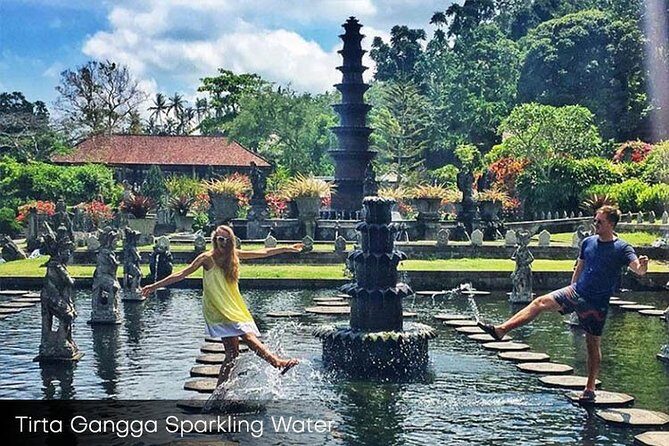
Next up is Tirta Gangga, the water garden built in 1948 by the Karangasem royal family—specifically Anak Agung Anglurah Ketut Karangasem. The standout detail here is the architecture: it’s described as a unique blend of Balinese and Chinese influences.

In plain terms, Tirta Gangga tends to be calm and “designed,” in a way that contrasts with temple crowds. You’re looking at water features and structured spaces rather than a single major shrine viewpoint. It’s the kind of stop where you can slow down a bit, take photos without the same intense photo-line pressure, and enjoy the garden layout.

This stop is scheduled for about 30 minutes with admission included. Thirty minutes sounds short, but for a water garden, it’s often enough time to walk the main paths, take a few photos, and appreciate the design without turning it into a half-day detour.

Taman Ujung (Ujung Water Palace): Royal-Style Views in Seraya

The Gate Of The Heaven Bali with Top Places To Visit In The East of Bali - Taman Ujung (Ujung Water Palace): Royal-Style Views in Seraya
Then you head to Ujung Water Palace, officially noted as Taman Sukasada Ujung, located in Seraya in Karangasem regency. This is Bali’s royal water-palace style: the kind of place where the geometry and ponds feel intentional, not just scenic.

The tour gives you about 40 minutes here, again with admission included. That’s a workable window. You get time to wander, find a couple of viewpoints, and enjoy how the water features frame the space. If you like gardens and architecture, this is one of the smoother stops in the day because the layout helps you move without constantly reorienting.

If you’re the type who likes to “collect” a variety of Bali scenes in one day, Taman Ujung is exactly that: temple energy earlier, water-garden calm later, village culture after.

Tenganan Ancient Village: Bali Aga Culture You Can Actually See
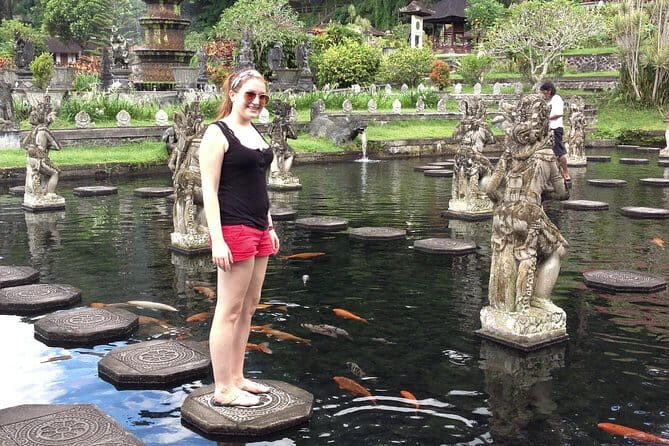
The Gate Of The Heaven Bali with Top Places To Visit In The East of Bali - Tenganan Ancient Village: Bali Aga Culture You Can Actually See
Tenganan Ancient Village is where this trip starts to feel more human and less camera-driven. Tenganan is occupied by the Bali Aga, described as the original Balinese community that arrived in Bali before the Majapahit era.

What I like about Tenganan as a tour stop is that you’re not just looking at monuments. You’re visiting a community with a distinct identity, and the setting helps you understand why Bali Aga history is taken seriously. The village also connects to seasonal cultural practice—there’s mention of Ngusaba Sambah Festival occurring around May or June, including pandan war (spelled out as Ngusaba Sambah in the itinerary info).

The time here is about 20 minutes. That’s short, so you’ll want to use it wisely: focus on what’s in front of you, ask your driver questions if they can, and don’t plan to “learn everything.” Think of it as a first look that gives you a direction for what you might explore on your next trip.

Goa Lawah Bat Cave Temple: A Temple Stop With a Different Mood
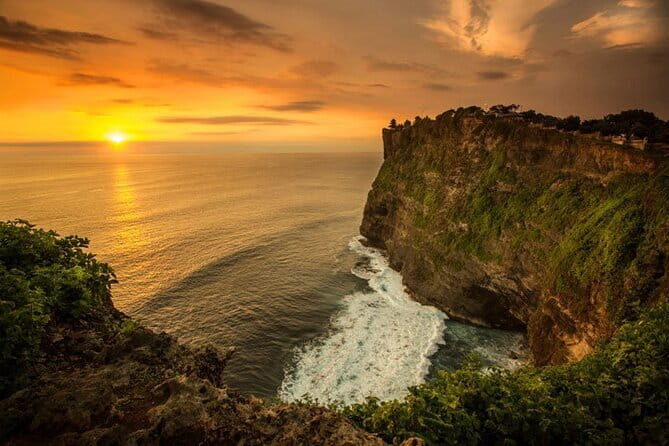
The Gate Of The Heaven Bali with Top Places To Visit In The East of Bali - Goa Lawah Bat Cave Temple: A Temple Stop With a Different Mood
Finishing at Pura Goa Lawah (the Bat Cave Temple) gives the day a different spiritual texture. The temple is in Pesinggahan Village in Klungkung regency and is said to have been built in the 11th century by priests including Mpu Kuturan or Mpu Raja Kerta (as named in the tour notes).

What changes here is the feel. Instead of the big “gate framing” of Lempuyang, Goa Lawah is about place-specific sacred atmosphere—connected to cave life and a temple setting that’s tied to long religious tradition. You also get a short, efficient 20-minute stop with admission included, which helps keep your overall day on track.

If you want variety—sunrise icon, royal water gardens, village culture, and then a cave temple—Goa Lawah is a satisfying final chapter.

Time Management: How an 11–12 Hour East Bali Loop Really Works
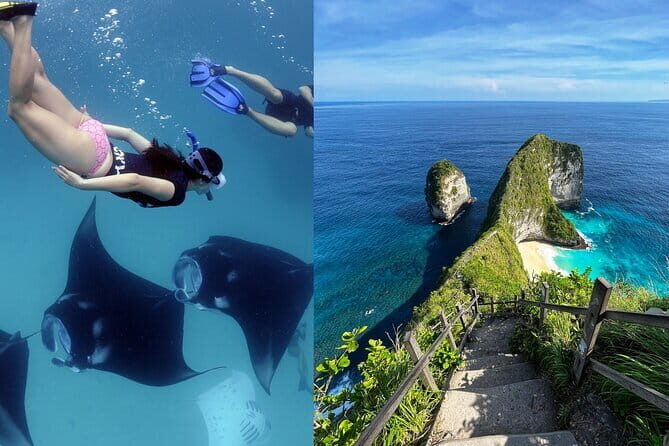
The Gate Of The Heaven Bali with Top Places To Visit In The East of Bali - Time Management: How an 11–12 Hour East Bali Loop Really Works
An 11–12 hour day from the 3:30am start isn’t just long on paper. It affects how you experience every stop.

Here’s what matters most:

  • Your best chance at the sunrise moment is locked to that early pickup.
  • Temple crowds can shift your timing, especially at Lempuyang where waiting for photos may slow you down.
  • The later stops are short by design: about 20–40 minutes each for Tirta Gangga, Ujung, Tenganan, and Goa Lawah.

That pacing is the trade-off for packing many classic East Bali sights into one day. If you hate rushing, this might feel like too much. If you’re the kind of person who likes a full “greatest hits” day—without needing extra planning—this structure is a good fit.

Also, note that pickup is offered from Seminyak, Kuta, Badung Regency. That’s useful if you’re staying in that part of the island. If you’re farther away, you might need to confirm how that affects your schedule, since the tour is anchored to the 3:30am departure.

Price and Value: Is $76.29 Fair for This Much Driving?
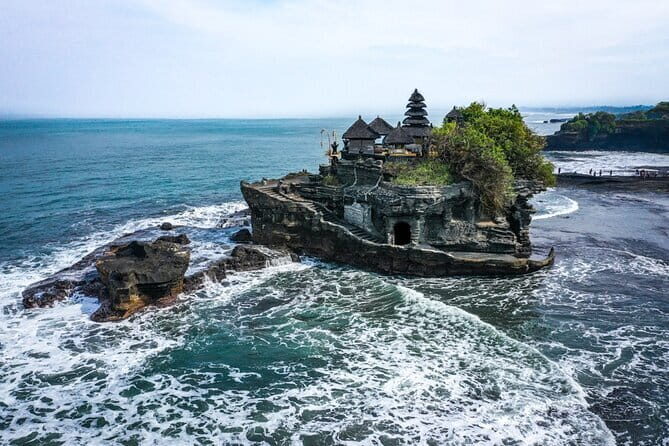
The Gate Of The Heaven Bali with Top Places To Visit In The East of Bali - Price and Value: Is $76.29 Fair for This Much Driving?
At $76.29 per person, the value comes from what’s covered, not just the number.

Included:

  • All entrance tickets
  • Private tour format with an English-speaking driver
  • Parking fees

Not included:

  • Lunch
  • Personal expenses
  • Tips

So you’re mainly paying for transport time, the driver’s work across a long East Bali loop, and the entry costs for multiple major stops. The biggest savings is entrance fees for several sites—without you needing to buy and manage them one by one during the day.

The “private” part is also part of the value. This isn’t a cattle-car group day where you’re stuck with a slow-moving consensus. One driver and your group means you can follow the plan your way and have real conversation time.

One more value marker: based on prior experiences shared with the operator, guides and drivers have included names like Ketut Permana, Gede, Made Suta, Komang Gunawan, Budi, and Md Eras. Not every name will apply to every booking, but it tells you the company does send out specific English-capable staff, not just a random driver.

What Can Go Wrong (and How to Handle It Smoothly)

The big risk is simple: crowds at Lempuyang, and especially the time spent waiting for photos.

If you’re coming for the sunrise gate shot, you’ll probably be fine if you accept that you’re sharing the moment with lots of other people. If you’re hoping for a quiet, fully spiritual experience with no waiting, you may feel frustrated when the area turns into a camera workflow.

There’s also a timing ripple effect. If you lose time at Lempuyang Gate, it can compress your remaining stops because the later ones are scheduled for short windows. Your best move is mental, not mechanical: keep your plan loose after Lempuyang, and don’t treat every minute as a guarantee.

On the good side, drivers have been described as professional and caring, and some have helped with small extras like taking short video clips for visitors. That kind of attention matters on a long day, because it keeps you from feeling like you’re just chauffeured between checklists.

Should You Book This Gate of Heaven and East Bali Tour?

Book it if you want:

  • The Gate of Heaven sunrise moment at Pura Luhur Lempuyang
  • A full East Bali day with Tirta Gangga, Taman Ujung, Tenganan Village, and Goa Lawah
  • Included entry tickets and a private, English-speaking driver

Skip it (or consider a lighter day) if:

  • You hate early starts and long temple queues
  • You prefer fewer stops and more time per location
  • You’re traveling for a slow, mostly quiet cultural experience rather than a structured highlight route

If you can handle the early morning and you’re okay with some waiting for photos, this is a strong way to see a lot of East Bali classics in one efficient loop—without the hassle of ticket shopping and route planning.

FAQ

What time does pickup start for this tour?

Pickup starts at 3:30am, which is timed for the Gate of Heaven sunrise experience at Lempuyang.

How long is the tour?

The tour lasts about 11 to 12 hours.

Where is the pickup location?

Pickup is offered from Seminyak, Kuta, Badung Regency, Bali.

Is this tour private?

Yes. It’s listed as a private tour/activity, with only your group participating.

What’s included in the price?

The tour includes all entrance tickets, an English-speaking driver, and parking fees.

What isn’t included?

Lunch, personal expenses, and tips aren’t included.

Do I get a ticket on my phone?

Yes. The tour includes a mobile ticket.

What is the cancellation policy?

You can cancel for a full refund if you cancel up to 24 hours before the experience’s start time (based on local time).
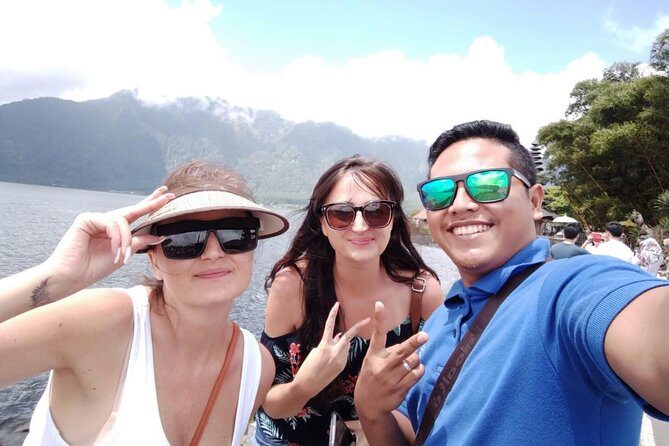
Bali Private Transfer Services

Bali Private Transfer Services - Hotel lobby meet-and-greet: what the start feels like

A smooth handoff beats Bali stress. This private transfer in Ubud is built for calm logistics: you meet up at your hotel lobby pickup, get help with luggage, and roll straight to your next hotel without negotiating vehicles. I like that it’s simple and hotel-to-hotel, not a complicated tour day with extra stops.

What really makes the ride feel worth it is the human touch. You get an English-speaking driver who’s happy to chat and share helpful context, and the transfer can include practical pauses like grabbing waters or snacks along the way. The one thing to think about: it’s priced per person and personal spending isn’t included, so if you’re traveling solo or you plan lots of shopping stops, the total can creep upward.

Key points to know before you go

Bali Private Transfer Services - Key points to know before you go

  • Hotel meet-and-greet in the lobby saves you the “where do I wait?” stress.
  • AC private car with petrol included keeps the ride comfortable and cost predictable.
  • Friendly English-speaking driver can add context during the drive.
  • Stop options are allowed for supermarkets, snacks, or a quick shop visit.
  • Vehicle size depends on your group (6-seater car or 5-seater minibus).
  • Mobile ticket means you’re not hunting for paper confirmations.

Why a Ubud private transfer feels easier than DIY

Bali Private Transfer Services - Why a Ubud private transfer feels easier than DIY
In Bali, transfers can be oddly exhausting. Even when the distance is short, you still end up with questions: Who finds the driver? Where do you meet? What about bags, time, and getting from one hotel to another without detours?

This service is designed to remove those friction points. You request a pickup time, a team member meets you in the lobby, and you’re escorted to the AC vehicle. That’s it. No searching around your area, no last-minute negotiating, and fewer moving parts to worry about on a travel day.

I also like that it’s truly private for your group. That matters when you’ve got luggage, you’re traveling as a couple, or you just don’t want to wait for other people to finish their breakfast. Your schedule is your schedule.

And since the ride length is listed as about 1 to 2 hours, it works well as a clean “between bases” day. Think of it as the bridge between one stay and the next, not a day packed with sightseeing.

Hotel lobby meet-and-greet: what the start feels like

Bali Private Transfer Services - Hotel lobby meet-and-greet: what the start feels like
The first payoff is how you start. At your requested pick time, someone meets you at your hotel lobby and you’re brought to the car. This is a small detail that makes a big difference. Bali hotels can have multiple entrances, busy lobbies, and people coming and going. Being pointed to the right place fast is a win.

Expect a quick handoff like this:

  • The team meets you at the lobby around your pick time.
  • They escort you to the AC private car.
  • They help with your luggage.
  • There’s a final check before you head to your new hotel destination.

In practice, this is the part that reduces that tired, end-of-trip feeling. You’re not juggling bags, phone screens, and directions in the first five minutes.

One more point: the driver is described as friendly and English-speaking, so once you’re in the car, the handoff continues smoothly. If you want a calm chat or just want to ride in silence, you can usually set the tone.

Choosing the right ride: 6-seater car or 5-seater minibus

Bali Private Transfer Services - Choosing the right ride: 6-seater car or 5-seater minibus
This transfer adjusts to the group size. The service notes that it uses a 6-seater car and also a 5-seater minibus, based on how many people you request.

Why you should care: vehicle fit affects comfort more than you’d expect. If you’re traveling with backpacks, shopping bags, or multiple pieces of luggage, you want a vehicle that doesn’t feel cramped the moment you get in.

If you’re a family, a small group of friends, or a couple with a lot of stuff, this matters. Private transfers are often chosen because you want the ride to feel friction-free, and the right vehicle size supports that.

Also, since it’s private, you don’t have to worry about everyone else’s baggage choices. Your group’s needs drive the setup.

On the road with an English-speaking driver

The driver experience is one of the most praised parts of this service. You’ll get an English-speaking driver who can chat, and you may also pick up useful context about where you’re going.

From the reviews, the best moments tend to be conversational. People describe drivers discussing areas and cultural information during the ride. That’s more than small talk. It helps you connect what you’re seeing to what you’ll understand later when you’re walking around.

A second practical value: drivers are willing to make the transfer feel flexible, not rigid. One review highlights that the driver handled a simple stop for local snacks and waters. Another mentions an art shop stop before reaching the resort. Those are the kinds of moments that turn a plain transfer into a smoother start at your next stay.

One note to keep expectations realistic: you’re still doing a transfer. You’re not guaranteed a structured sightseeing program. If you want specific stops, bring it up at the start or ask during the ride when it makes sense.

Optional detours for snacks and quick shopping stops

Bali Private Transfer Services - Optional detours for snacks and quick shopping stops
Here’s the good part: this transfer allows stopping during the trip if you want to visit a place or do shopping at a supermarket. That policy is stated clearly, and it matches what people describe in their feedback.

So what might that look like?

  • A quick stop to buy snacks and waters (one review includes exactly that).
  • A short visit to an art shop in a village on the way to a resort (another review describes an art shop stop before arrival).

These pauses can be genuinely useful. After you switch hotels, it’s nice to have drinks, small snacks, and a couple of items sorted immediately. It can save you time later, especially if you’re arriving and don’t want to scramble for supplies.

The drawback is simple: stops add time. If your next hotel check-in has a tight schedule, ask for a plan that keeps things smooth. Think of stops as optional breathing room, not a guaranteed extended tour.

My advice: if you care about speed, set a limit—like one quick store stop—and keep the rest of the ride straightforward.

Price and value: why $18.34 per person can make sense

Bali Private Transfer Services - Price and value: why $18.34 per person can make sense
The price shown is $18.34 per person, with adult pricing applying to all participants. Children under 3 are free of charge. That means the “value” depends a lot on who’s in your group.

Here’s what your money covers (this is the part many transfers hide in the fine print):

  • AC private car
  • Petrol
  • Parking fee or toll road fee
  • English-speaking driver

Personal expenses are not included, so anything you buy on a stop is on you. But the ride costs are largely covered, which makes budgeting easier.

It also helps that the service is booked relatively far ahead on average (around 67 days). That’s often a sign the pickup demand is real, especially for popular Ubud itineraries. If your date matters, it’s smart to book early so the pickup time you want is more likely to be available.

Now, let’s talk value in plain terms:

  • If you’re traveling with luggage, this is often cheaper than losing half a day to transport hassles.
  • If you’re arriving at one end and heading out to another, it’s a low-effort way to keep your holiday momentum.
  • If you want conversation plus practical flexibility (like store stops), a private driver tends to beat hiring chaos with no plan.

For solo travelers, the per-person price can feel steep compared to shared options, but since this is private and includes a driver, it’s still a fair choice when comfort and smoothness matter.

Timing tips so your pickup actually feels smooth

Bali Private Transfer Services - Timing tips so your pickup actually feels smooth
This transfer runs about 1 to 2 hours. That range is a helpful reality check. It tells you to plan your day around the transfer as an activity in itself, not a quick errand.

You’ll request a pickup time, and the team meets you at that time in the lobby. If you want a different start time than the standard schedule, you should inform the provider.

The practical trick: pick a time that matches your energy level, not just your calendar. If you’re leaving a hotel after check-out, build in a buffer for collecting bags, settling accounts, and getting everyone to the lobby.

Also, keep your stop wishes simple. The service allows stops for buying stuff and visiting places, but the goal is convenience. A single focused stop (snacks, waters, basic supplies) usually does more good than turning the transfer into a multi-stop errand list.

Who should book this Ubud private transfer?

Bali Private Transfer Services - Who should book this Ubud private transfer?
This is a strong fit if you want:

  • Low-stress hotel-to-hotel movement in Bali
  • A comfortable AC ride
  • An English-speaking driver who can explain things as you go
  • The option to handle small needs mid-journey (like snacks or a quick shop)

It’s especially good for couples and small groups who don’t want to manage transportation details, and for travelers who value a calmer start at their next hotel.

If you’re traveling extremely light and love figuring things out on your own, you might decide this isn’t necessary. But if you’d rather spend your attention on Bali instead of transport math, this kind of private transfer is exactly the point.

Should you book this private transfer from Ubud?

I’d book it if you care about comfort, clear pickup, and a ride that feels handled. The hotel lobby meet-and-greet, AC car, and English-speaking driver are the core wins, and the extra flexibility for quick stops makes it useful beyond just getting from A to B.

Skip it if your group is tiny, you’re trying to squeeze every dollar, and you don’t care about help with luggage or a guided-feeling ride. The per-person pricing means it’s most compelling when the cost is shared across your group.

If your dates are fixed, don’t wait too long. The service is commonly booked about 67 days ahead on average, so early planning gives you more control over the pickup time you want.

FAQ

What is the starting location for this transfer?

The service starts in Ubud, Gianyar Regency, Bali, Indonesia.

How long does the transfer take?

The duration is listed as about 1 to 2 hours.

What is the price per person?

The price is $18.34 per person.

What’s included in the transfer cost?

It includes an AC private car, petrol, parking fee or toll road fee, and an English-speaking driver.

Is pickup from the hotel included?

Yes. The team meets you at your hotel lobby based on your requested pickup time.

Can we stop during the trip for shopping or snacks?

Yes. Stopping is allowed if you want to visit a place or buy items at a supermarket or similar stop.

What vehicle types do you use?

The provider notes a 6-seater car and also a 5-seater minibus, depending on your group size.

Do children pay?

Adult pricing applies to all participants. Children below 3 years are free of charge.

Is this tour private?

Yes. It’s a private tour/activity, and only your group participates.

How does free cancellation work?

You can cancel for a full refund up to 24 hours in advance of the experience start time. If you cancel less than 24 hours before, the amount paid is not refunded.

Ubud Luxury Bali Spa Package with amidst rice fields

Ubud Luxury Bali Spa Package with amidst rice fields - The full 2-hour treatment: scrub, bath, and a full-body ritual

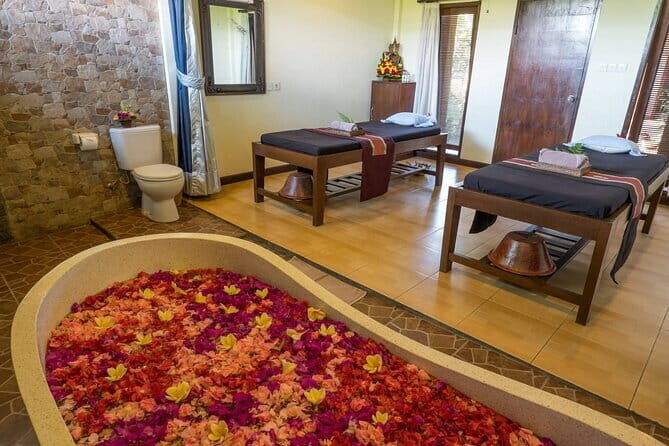
Rice paddies set the mood fast. This Ubud spa package has you walking a short path through the rice fields before your Balinese massage, with the north-side Ubud setting doing most of the work for your stress levels. You’ll choose a 1-hour massage option or a longer 2-hour treatment that adds exfoliation and a bath ritual.

I especially like the private transportation with an air-conditioned vehicle, which keeps the whole experience smooth from start to finish. I also love the treatment details: you’re coated with a spice paste made from powdered spices, sandalwood, and turmeric, then warmed up further with yoghurt before the massage.

One drawback to plan for: the rice-field setting is beautiful, but it’s not a literal outdoor massage in the paddies. Also, Ubud traffic can slow pickup times, so build a little buffer so the spa doesn’t feel rushed.

Key things worth knowing before you go

Ubud Luxury Bali Spa Package with amidst rice fields - Key things worth knowing before you go

  • Rice-field walk before treatment gives you an instant break from busy Ubud
  • Spice-sandalwood-turmeric paste dries slightly, then gets removed as part of the ritual
  • Yoghurt skin step is included to help soften and nourish
  • 1-hour vs 2-hour options let you match the spa to your schedule
  • Pickup in an air-conditioned vehicle keeps logistics easy
  • No lunch included, so plan food timing around your appointment

Rice-field setting in Ubud: how this spa actually feels

This is the kind of spa that starts working the moment you arrive. The venue sits on the north side of Ubud, surrounded by lush rice paddies, and the entry includes a small walk down a path through the fields. Even before you get undressed, that change of scenery matters. Ubud can be busy, loud, and hot. The idea here is simple: slow you down early, then keep you there.

You’re not just buying a massage. You’re buying a reset. The 2-hour option is built around a body cleansing ritual, exfoliation, and a bath step, not only massage pressure. That means you leave feeling different, not just relaxed.

The vibe also seems designed for comfort. You’ll have practical basics like access to a shower, locker, and towel. So you’re not thinking about where to rinse off or what to do with your things while you’re winding down.

What you get for 1 hour: straight-up Balinese massage

Ubud Luxury Bali Spa Package with amidst rice fields - What you get for 1 hour: straight-up Balinese massage
If you’re short on time or you already know you want pure massage time, the 1-hour option is the clean choice. It’s listed as a 1-hour massage when that option is selected.

Here’s what that typically means for your body: you’ll focus on deep relaxation with Balinese massage techniques, using essential oils as part of the experience. The treatment description also mentions massage with essential oils and floral body lotion afterward, which is part of the “finish strong” feel you want after a massage session.

This option can work well if:

  • You have a packed day and want to fit in something restorative
  • You don’t want scrub/bath steps
  • You’re pairing this with another Ubud activity nearby

The full 2-hour treatment: scrub, bath, and a full-body ritual

Ubud Luxury Bali Spa Package with amidst rice fields - The full 2-hour treatment: scrub, bath, and a full-body ritual
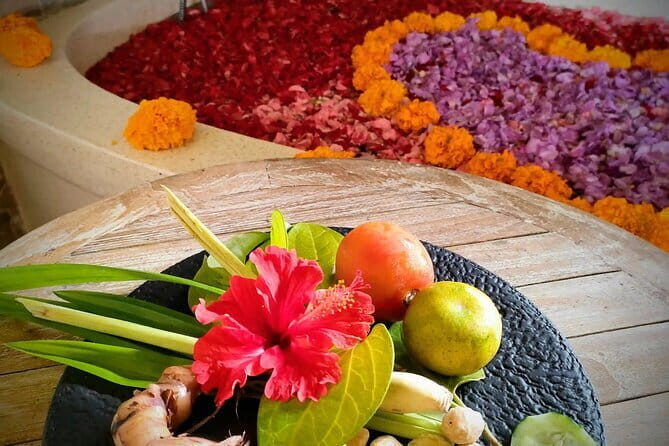
The longer option is the one most people book when they really want the body-cleansing piece. The 2-hour treatment includes a Balinese massage plus exfoliation and a bath ritual. The description calls out a scrub and a flower bath, and it also mentions flower bath or milk bath as part of the package wording.

Plan on a true flow, not just time lying on a table. The ritual includes a medicinal-fragrance paste made from powdered spices, sandalwood, and turmeric. Your skin gets coated with this paste, it dries slightly, then gets removed. After that, you’ll have yoghurt applied to help soften and nourish the skin.

That sequence is worth caring about. A lot of spa “exfoliation” is just a quick scrub. Here, the paste step suggests more of a full-body treatment feel, with time for the paste to set before removal. Then the yoghurt step adds a soothing element that can make your skin feel calmer afterward, especially if you’ve been out in sun, scooter exhaust, and dry air.

Then comes the massage with essential oils and floral body lotion. That combo matters: exfoliate and cleanse first, then seal in comfort with massage and moisturization.

The spice paste and yoghurt steps: what they mean for your skin

Ubud Luxury Bali Spa Package with amidst rice fields - The spice paste and yoghurt steps: what they mean for your skin
Let’s talk about the part people either love or wonder about: the paste. You’re coated with a mixture made from powdered spices, sandalwood, and turmeric. The paste dries a little before it’s removed. That drying time is part of the process, so don’t panic if it feels a bit tight for a moment. It’s meant to do something before it’s wiped off.

Then comes the yoghurt. It’s described as being applied to further soften and nourish the skin. That’s an important detail because your body can feel a little “freshly cleaned” after exfoliation. Yoghurt is usually used in soothing routines because it’s gentle-feeling. Even if you don’t think about ingredients at home, this is the kind of spa step that makes the whole ritual feel more complete.

If you’re the type who likes to know what’s happening to your body, you’ll probably appreciate this treatment’s clear steps. It’s not vague. It’s described in a way that helps you set expectations.

After-treatment comfort: what happens after the massage

Ubud Luxury Bali Spa Package with amidst rice fields - After-treatment comfort: what happens after the massage
This package isn’t only about the session itself. You’ll also get practical support like shower, locker, and towel. That’s not glamorous, but it’s a real quality-of-life upgrade. After you’ve had a scrub and a bath step, you’ll want to rinse and change quickly.

You’ll also leave with massage oils and lotion already handled as part of the routine. The description mentions floral body lotion. In other words, you’re not walking out looking dry or sticky, at least not in the way you might if you had a quick scrub with no finishing steps.

Then it’s back to the start point at the end of the activity. The round-trip setup matters for Ubud because getting around can be slow, and you don’t want to spend your last minutes hunting for transport.

Rice paddies vs reality: setting expectations about the view

Ubud Luxury Bali Spa Package with amidst rice fields - Rice paddies vs reality: setting expectations about the view
The rice-field setting is the headline, but here’s the balanced truth: you may find the rice paddies are more of a setting and atmosphere than an all-in treatment location. Some people really enjoy the environment, while others note that the rice-field part can feel more like a visual bonus than something you interact with during the massage itself.

So I’d think of it this way: you’re here for the ritual and the massage, and the rice paddies are the mood-setter. If you’re hoping for something like being treated directly amid the working fields, adjust your expectations. If you want a calm, pretty arrival and a spa that feels removed from daily travel noise, you’ll likely be happy.

Either way, walking into that quiet before your treatment is still the kind of detail that makes Ubud spa days memorable.

Pickup, timing, and the Ubud traffic reality

Ubud Luxury Bali Spa Package with amidst rice fields - Pickup, timing, and the Ubud traffic reality
Pickup is offered, and transport is included by private air-conditioned vehicle. The big practical note is Ubud traffic. One piece of feedback flags that traffic was bad, so plan around it.

How to do that without overthinking:

  • Book this when you have flexibility before or after
  • Avoid tight connections right before your spa start
  • If you’re staying far from the meeting point, give yourself extra time for pickup

Your start point is Bliss Ubud Spa Resort on Jalan Raya Sanggingan in Kedewatan, Ubud (Gianyar, Bali). The activity ends back at that meeting point, so you’re not left figuring out transportation after you’re relaxed and less patient than usual.

The experience lasts around 2 hours approximately, so the spa time is short enough for a mid-day reset. But because pickup can take longer, treat the whole window as “a little more than 2 hours” depending on where you’re coming from.

Price and value: is $23.50 worth it?

Ubud Luxury Bali Spa Package with amidst rice fields - Price and value: is $23.50 worth it?
At $23.50 per person, this is priced like an easy splurge that doesn’t wreck your Bali budget. But value isn’t just the price tag. It’s what you’re getting for that money.

You’re paying for:

  • Private transportation via air-conditioned vehicle
  • Spa equipment and included treatment steps
  • Shower, locker, and towel access
  • All fees and taxes
  • The massage time, plus the longer-option ritual if you choose 2 hours

And you’re not paying extra for the big components like exfoliation and bath if you book the 2-hour treatment option. Lunch is not included, so that’s the main outside cost you’ll likely plan for.

For readers comparing Bali spa options, I’d judge this on two things:

  1. Do you want a full ritual (paste, yoghurt, exfoliation, bath), not only a massage?
  2. Do you want the logistics handled by pickup in a comfortable vehicle?

If yes to both, $23.50 can feel like a strong deal for Ubud. If you only want massage time and you’re already close by, you might find cheaper massage-only options elsewhere. But once you factor in pickup and the cleansing/bath ritual, the math gets better.

Who should book this Bali spa package?

This package makes the most sense for you if:

  • You’re in Ubud and want a break that feels different from temples and walking
  • You want Balinese massage plus a cleansing and exfoliation ritual
  • You prefer private transport and not sharing a car with strangers
  • You want a spa day that still fits a short schedule

It’s also a nice fit if you’re solo. The setting and communication style seem to work well for independent travelers, and the treatment itself is designed as a self-contained reset.

I’d be a bit cautious if:

  • You’re expecting an outdoor massage experience right in the rice paddies
  • You’re extremely time-sensitive and cannot tolerate Ubud traffic delays
  • You’re hoping lunch is included (it isn’t)

Booking basics, weather, and what to plan around

This experience works best when the weather cooperates. It’s listed as requiring good weather, and if it’s canceled due to poor weather, you’re offered another date or a full refund.

It also has a minimum number of travelers. If that minimum isn’t met, you’ll be offered a different experience or a full refund. That’s normal for smaller spa operators, but it’s good to know if you’re booking far ahead.

If you’re choosing between the 1-hour and 2-hour options, pick based on how you want to feel afterward:

  • 1 hour = mostly massage relaxation
  • 2 hours = relaxation plus cleansing, exfoliation, and bath ritual

Should you book this Ubud rice-field spa package?

I’d say yes if you want a massage with a genuine ritual around it, and you like the idea of starting with a calm walk through rice paddies. The price is fair for what’s included, especially with pickup, shower/locker/towel access, and the longer treatment’s paste, yoghurt, scrub, and bath steps.

Book it with realistic expectations about the rice fields: think of them as atmosphere and setting, not a literal outdoor massage venue. Also, plan for Ubud traffic so your spa doesn’t turn into a rushed appointment.

If you want a simple reset day in Ubud that feels more like wellbeing than a quick service, this one earns a spot on your list.

FAQ

How long is the Ubud Luxury Bali Spa Package?

The treatment is approximately 2 hours. You can also select a 1-hour massage option depending on which package option you choose.

What treatments are included in the 2-hour option?

The 2-hour treatment includes a Balinese massage plus exfoliation such as a scrub or mask and a bath such as a flower bath or milk bath.

Is pickup included?

Yes. Pickup is offered, and the package includes private transportation in an air-conditioned vehicle.

Where does the experience start?

The meeting point is Bliss Ubud Spa Resort, Jalan Raya Sanggingan, Kedewatan, Kecamatan Ubud, Kabupaten Gianyar, Bali 80561, Indonesia.

Does the package include lunch?

No. Lunch is not included.

Is this a private activity?

Yes. It’s listed as a private tour/activity, so only your group participates.

Do I get shower and towel access?

Yes. The package includes shower, locker, and towel access.

What happens if the weather is bad?

This experience requires good weather. If it’s canceled due to poor weather, you’ll be offered a different date or a full refund.

What is the cancellation policy?

You can cancel for a full refund up to 24 hours in advance. If you cancel less than 24 hours before the start time, the amount paid is not refunded.

Can most people participate?

It’s listed that most travelers can participate.

Mount Batur Volcano Sunrise Trekking With Ubud Rice Terrace

Mount Batur Volcano Sunrise Trekking With Ubud Rice Terrace - Mount Batur trekking, sunrise views, and that crater-time plan

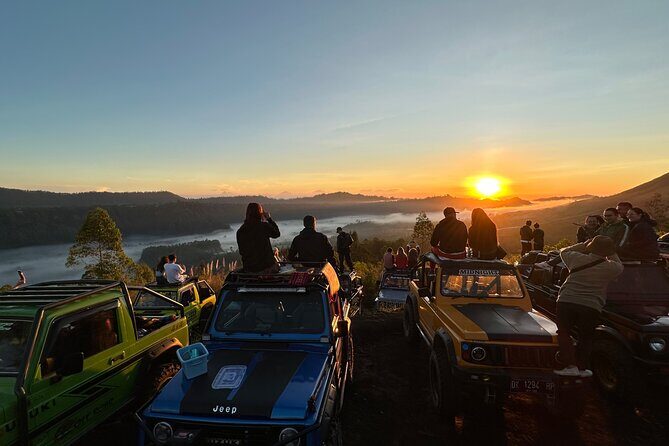
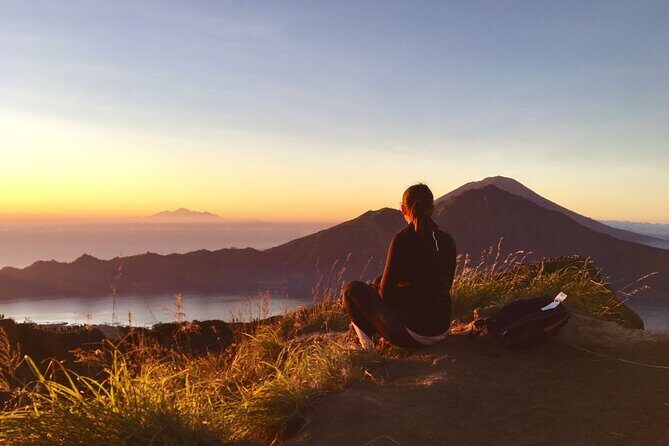
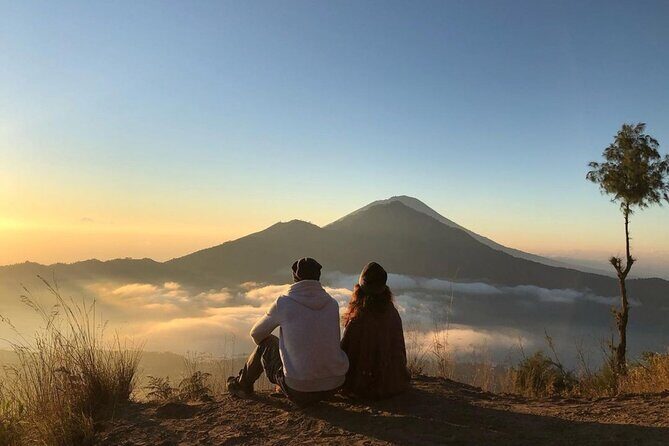
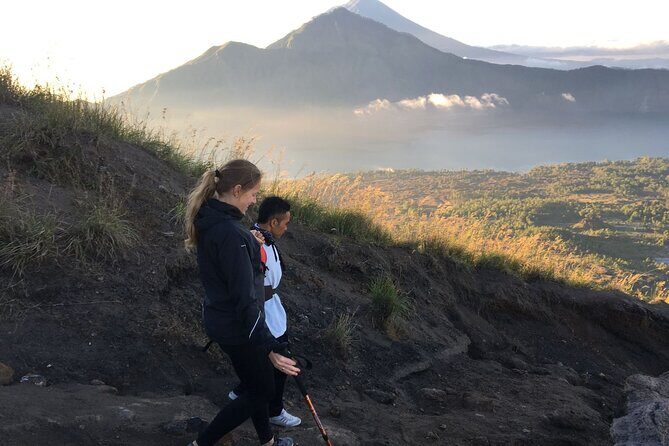
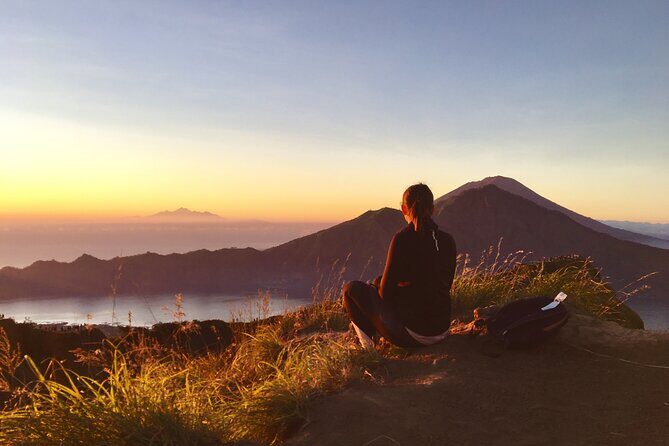
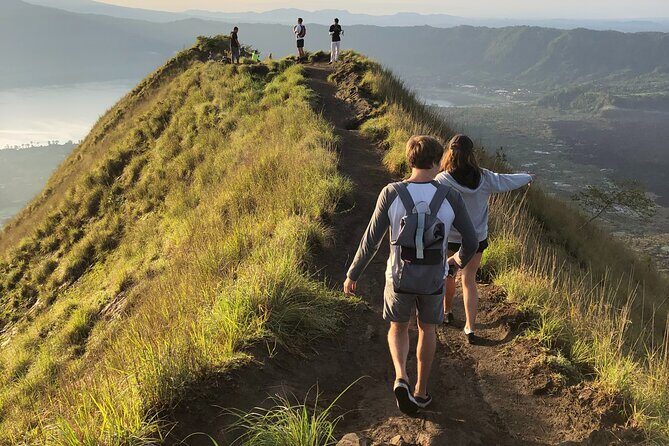
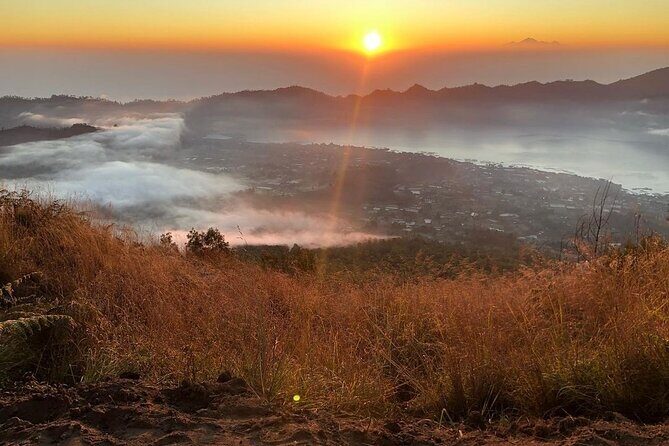
Sunrise on Mount Batur starts before most alarm clocks. This guided hike gets you to the right spot for early views, with volcanic-steam eggs breakfast and a plan that includes Ubud’s Tegalalang Rice Terrace and a coffee stop. I love that you’re not doing this solo: you get a briefing and an English-speaking guide so you can focus on the climb, not the route. I also like that breakfast is handled for you. The trade-off? The 2:00 am start means you’ll earn your coffee the hard way, and you should have moderate fitness for the hike.

A big part of the comfort here is the way transport and guidance are set up. If you’re using Rio Bali Tours, the driver and guide coordination can be solid, and at least one guest specifically praised how clearly things were explained in English and how patient the team was. With a maximum of 15 people, you’re not stuck in a huge herd either.

Value-wise, you’re paying $60 for a full morning with pickup, a local trekking guide, bottled water, and entry/ticket coverage for the main stops listed. One thing to plan for: lunch isn’t included, so you’ll want to eat afterward without relying on hunger to be a surprise marketing tactic.

Quick hits before you go

Mount Batur Volcano Sunrise Trekking With Ubud Rice Terrace - Quick hits before you go

  • 2:00 am departure keeps you on schedule for Mount Batur sunrise timing.
  • Breakfast in volcanic steam means less to carry and a classic Bali experience.
  • Small groups (max 15) make the trek feel more controlled.
  • Hotel pickup and drop-off removes one of Bali’s trickiest parts: getting moving that early.
  • Tegalalang Rice Terrace stop is built in, not tacked on at the end.
  • Coffee plantation + Jati Temple add culture and local flavors beyond just the hike.

Why a 2:00 am start is the whole point on Mount Batur

If you do Mount Batur sunrise, the early start is not a gimmick. It’s the only way the day works: you need enough time to begin the trek in the dark, reach the right viewing spot, and still have energy for the rest of the morning. Think of it as paying for daylight with an uncomfortable alarm clock.

This tour’s stated start time is 2:00 am, and that timing is exactly what makes sunrise possible. If you’re the type who hates rushing, you’ll still want to get ready the night before: set out clothes, charge your phone, and keep your essentials in one bag. Your future self will thank you when you’re not digging for socks at 1:40 am.

The other reason the schedule matters: you’re walking on a volcanic environment where conditions can change quickly. The tour includes a safety procedure briefing with an experienced hiking guide, and the early start gives you time to follow that guidance before it turns into a scramble.

Hotel pickup with Rio Bali Tours: the simple win

Mount Batur Volcano Sunrise Trekking With Ubud Rice Terrace - Hotel pickup with Rio Bali Tours: the simple win
The practical win here is hotel pickup and drop-off, so you don’t have to coordinate a ride while half-asleep. The tour is run by Rio Bali Tours, and one review specifically singled out Agung Rio as the hotel driver/guide who made the plan feel safe and organized, with good English and patient explanations.

That matters more than people think. When you’re leaving at 2:00 am, small misunderstandings become big problems fast. Pickup also helps with timing discipline. You’re less likely to arrive late to the meeting point, miss the briefing, or feel like you’re sprinting through the first stage of the hike.

Since this is a group tour (maximum 15), the pickup also sets the rhythm for everyone. Everyone starts together, and you’re less likely to lose your place when you’re moving through the dark early hours.

Mount Batur trekking, sunrise views, and that crater-time plan

Mount Batur Volcano Sunrise Trekking With Ubud Rice Terrace - Mount Batur trekking, sunrise views, and that crater-time plan
The headline is sunrise from the top of Mount Batur, guided so you won’t get lost. You’ll start with an arrival at the starting point, then a safety and route briefing led by an experience professional hiking guide (associated with Mount Batur trekking guides). That first step is key. You’re not just being told to follow—you’re learning how the trek will run and what to expect.

The tour includes the admission ticket for Mount Batur at Stop 1, and the time listed there is 1 hour 30 minutes. While that doesn’t mean you’re only walking for 90 minutes, it does give you a sense of how much time is built into the early part of the experience for setup, moving out, and getting through the first trek segment.

What you’ll do around sunrise

  • You trek to the peak for the sunrise views.
  • Afterward, there’s a planned crater-area segment where you’ll keep walking and taking in the volcanic surroundings.
  • Breakfast is part of the schedule: eggs cooked in volcanic steam.

The volcanic-steam eggs are the kind of detail that turns a hike into a story. Instead of carrying food and guessing when to eat, the tour bakes in breakfast at the right moment. It also changes the “hard part” of the morning from just climbing to reaching a reward with a clear purpose.

One realistic consideration: this is an early, physical day. The tour asks for moderate physical fitness, so if you’re coming straight from a lazy beach day, you’ll want decent shoes and a mindset that includes slowing down when your legs say so.

The Tegalalang Rice Terrace: what to look for on the way in daylight

After the volcanic morning, the tour shifts gears to Ubud’s agricultural views. Stop 2 is Tegalalang Rice Terrace, described as the most beautiful rice terrace in north Ubud, with 30 minutes allotted and admission ticket included.

This stop is short on purpose. After a sunrise trek, you don’t want a long museum-style detour. You want a clean dose of scenery and context, with time to breathe and reset your body a little.

What makes Tegalalang worth it on a day like this is the contrast. You go from steam and rocks to irrigation lines and working farms. You’ll also get a guided angle on local produce, since the tour includes learning tied to both the rice terrace and the coffee plantation later.

Practical note: 30 minutes can feel fast when you’re taking photos. Try not to spend your whole time stuck in one spot. If you want variety, rotate slightly—walk a bit along the viewpoint areas, then come back for one or two steady shots once you’ve found your angle.

Coffee plantation and Jati Temple: culture that isn’t just window dressing

Mount Batur Volcano Sunrise Trekking With Ubud Rice Terrace - Coffee plantation and Jati Temple: culture that isn’t just window dressing
Mount Batur is the big draw, but the tour doesn’t stop at views and hiking. It also includes a Jati Temple visit and a Balinese Coffee Plantation.

Those additions matter because they give the day more texture than a straight point-to-point hike. The rice terrace and coffee plantation are both about local production—what people grow, how they process it, and why it’s tied to daily life in Bali.

Even if you’re not a coffee superfan, this stop is useful because it breaks up the long early morning. You’ll likely find yourself rethinking how you want to spend the rest of your day in Ubud. Food-and-culture stops tend to do that: they make you slow down and notice details instead of just chasing the next highlight.

No time details are provided for these cultural stops, so don’t plan a tight schedule around them afterward. Instead, treat them as part of the morning flow—expect a few transitions, and keep your schedule flexible.

What’s included in the $60 price, and where you’ll spend extra

At $60 per person, this tour looks like a straightforward deal on paper, but the real value is in the bundle:

  • Hotel pickup and drop-off
  • Local trekking guide
  • Breakfast
  • Bottled water
  • Admission ticket for Mount Batur at the main stop
  • Admission ticket included for Tegalalang Rice Terrace

For a sunrise trek, transportation plus a guide can easily be the biggest cost drivers. Here, the price also covers breakfast, and breakfast is not just a snack—it’s cooked in volcanic steam, which takes planning and timing off your plate.

What’s not included: lunch. This is your main “budget alert.” You’ll finish the morning trek and sightseeing still hungry if you typically eat big lunches. I’d plan for a proper meal afterward, not just a quick bite.

Also note: the tour duration is listed as 8 hours (approx.). That’s a full day, even if the hardest part happens early. Wear clothes you can move in comfortably, and plan to treat the rest of the day as a recovery window.

Group size, guidance quality, and staying comfortable at dawn

Mount Batur Volcano Sunrise Trekking With Ubud Rice Terrace - Group size, guidance quality, and staying comfortable at dawn
This is a guided group tour with a maximum of 15 travelers. That small cap tends to help with logistics, especially at sunrise when timing matters. It also makes the guide role feel more real—questions are easier to hear, and you’re less likely to lose the group.

The guide experience is a standout from reviews, especially around English clarity and patience. One review praised that the guide knew English well and made people feel safe, with clear explanations of what would happen next. That’s exactly what you want at 2:00 am: calm communication beats bravado.

Comfort tips that actually help:

  • Dress in layers. Sunrise mornings can feel cold even if you’re expecting warm Bali weather later.
  • Bring footwear you trust on uneven, possibly gritty volcanic ground.
  • Keep your day bag simple. Breakfast and bottled water are included, so you’re mostly packing for comfort and photos, not meals.

Who should book this Mount Batur sunrise trek from Ubud

This tour is best if you want:

  • Sunrise views from Mount Batur without route-finding stress
  • A guided hike with a briefing before you start
  • A full morning that blends nature with Ubud culture: rice terraces, a temple visit, and coffee plantation time

It’s not ideal if:

  • You hate early wake-ups. The 2:00 am start is non-negotiable for sunrise.
  • You want a purely relaxed day. This is a hike with moderate physical fitness needs.

I’d especially recommend it to hikers who also enjoy food and local flavor. The volcanic-steam eggs and the rice-and-coffee stops turn a “just a climb” trip into a rounded Bali morning.

Should you book? My practical take

Book it if you want a well-paced sunrise experience where logistics are handled: pickup, guidance, breakfast, and key Ubud stops are all included. The small group setup and the emphasis on safety briefing are exactly what makes an early trek feel manageable instead of chaotic.

Skip it if you’re mainly chasing a casual stroll or if you’re not comfortable with moderate physical activity at dawn. You’ll spend a lot of the day outside your hotel, and you’ll likely want lunch afterward since it’s not included.

If you’re on the fence, here’s the simplest decision rule: if sunrise hiking sounds exciting and you can handle a very early start, this is a strong way to spend a day in Ubud with both volcano drama and rice-terrace beauty in the same morning.

FAQ

What time does the tour start?

The tour start time is 2:00 am, so you’ll need to be ready for an early pickup and departure.

How long is the Mount Batur sunrise trek tour?

The duration is listed as about 8 hours.

Is breakfast included?

Yes. Breakfast is included, and the tour includes eggs cooked in volcanic steam.

What else is included besides breakfast?

In addition to breakfast, the tour includes bottled water, a local trekking guide, and hotel pickup and drop-off. Admission tickets are included for the Mount Batur stop and the Tegalalang Rice Terrace stop.

What is not included?

Lunch is not included.

How many people are in the group?

The tour has a maximum of 15 travelers.

Can I cancel for a full refund?

Yes. You can cancel for free up to 24 hours in advance of the experience start time for a full refund.

Ubud Night Traditional Market Food Tour

Ubud Night Traditional Market Food Tour - Starting at 6:00 pm: How the Night Unfolds

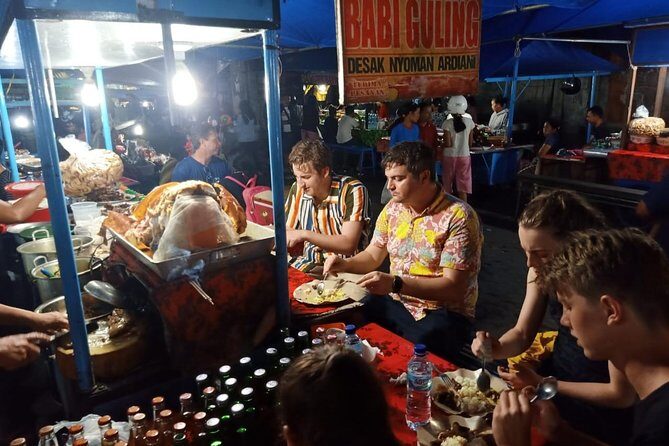
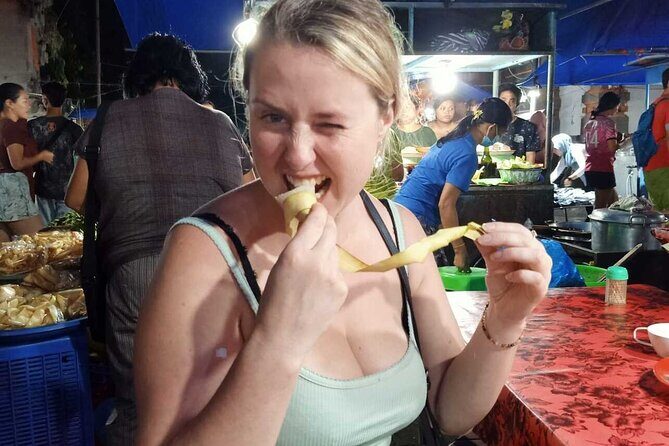
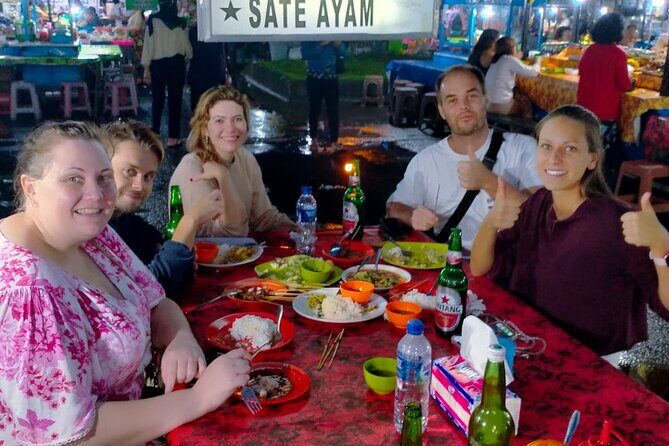
Night markets make Bali feel real. This 3-hour Ubud night market food tour is built around one simple idea: you get a local guide to lead the way, translate menus, and steer you to traditional Balinese eats that are easy to miss on your own.

Two things I especially liked. First, you get help deciphering menus so you can order with confidence, not guesswork. Second, the guide actively tunes the stops to your preferences, including how spicy you want it, and that can turn an average snack run into a proper Balinese dinner.

One consideration: this is street-food-adjacent, and one guest noted they felt uneasy about food handling practices (like no gloves). If you’re very cautious about cleanliness, use your instincts, eat what’s clearly cooked fresh, and keep hand sanitizer handy.

Key Things You’ll Notice

Ubud Night Traditional Market Food Tour - Key Things You’ll Notice

  • Menu translation help so you can choose dishes without struggling with another language
  • Guided night market walk where the guide explains what you’re seeing and tasting
  • Traditional Balinese focus with cuisine locally called Megibung
  • Spice preferences catered to (worth mentioning up front)
  • Small group size with a maximum of 10 people

Ubud Night Market Food Tour: What This Is Really For

Ubud Night Traditional Market Food Tour - Ubud Night Market Food Tour: What This Is Really For
This tour is for you if you want more than just eating random things off a stall. You want structure. You want a guide who can explain what’s in front of you, where it comes from, and what to order next. And you want a plan for the night that doesn’t feel like wandering with a phone flashlight.

What makes it work is the mix of practical guidance and cultural context. You’re not just being taken to places to consume food. You’re getting help reading menus, learning what the market is about, and ending with a set of local recommendations you can use afterward. If you care about getting the Balinese food experience right, this style of tour helps you do that fast.

Price and Value: $45 for Dinner-Style Sampling

At $45 per person, this is priced like a budget food tour, but it doesn’t feel budget-lite. All meals and drinks are included, and the cost also covers an air-conditioned vehicle, plus all fees and taxes. In plain terms: you’re mostly paying for guidance, time, and transportation, not for each bite.

The only catch is the minimum group rule. The tour requires at least two people. If you’re booking solo, the additional charge listed is $35 (so you’re not paying $45 for yourself alone). That matters because solo travelers may feel this becomes less of a deal unless you can pair up with a travel partner.
Also keep expectations in line with the duration: you’re on a 3-hour evening plan. That means the focus is on tastings and smart sampling, not a slow, sit-down marathon.

Starting at 6:00 pm: How the Night Unfolds

Ubud Night Traditional Market Food Tour - Starting at 6:00 pm: How the Night Unfolds
The tour starts at 6:00 pm, timed for when night markets and street food energy really kick in. If you’re used to Bali pacing—late dinners, relaxed schedules—this fits nicely. The night is long enough for several stops, but short enough that you’ll still have energy afterward.

You can also get pickup offered (and the tour includes an air-conditioned vehicle). That’s a big deal in Ubud. Traffic and distance can chew up your evening, and you don’t want to spend your best eating hours getting rerouted. Pickup helps you stay in “eat mode” from the first stop.

And yes, there’s a mobile ticket. So if your travel day is already chaotic, you won’t be stuck hunting for paper tickets.

First Stop: Traditional Balinese Cakes and a Menu Warm-Up

Ubud Night Traditional Market Food Tour - First Stop: Traditional Balinese Cakes and a Menu Warm-Up
Before you hit the market lanes, the experience starts with a traditional, Balinese-style cake. This is a smart move because it eases you into flavors before everything gets loud and chaotic.

Then the guide helps you with menu reading. This isn’t about memorizing words; it’s about knowing what you’re looking at. You can ask what’s sweet vs. savory, what’s likely spicy, and what’s a safer first choice if you’re not sure what you’ll like. It also makes your ordering feel less awkward, which matters when you’re in a busy market setting.

If you’re someone who normally skips street food because you can’t tell what it is—this part alone can change your whole night.

Walking a Famous Market: History, Culture, and What You’re Actually Eating

After the first taste, you walk around a well-known market and learn what makes it important. The tour includes cultural and historical context from a guide who knows the area’s food scene.

This portion matters because markets can look like chaos from the outside. A guided walk turns that chaos into a map:

  • You understand why stalls offer certain items
  • You know how to spot the better choices
  • You learn what’s typical vs. what’s more tourist-facing

You also get a chance to see market life beyond the usual Ubud highlights. One guest specifically pointed out getting a more real-feeling market experience outside the typical Ubud bubble, toward the Gianyar area. Even when the exact market route varies, the point stays the same: you’re aiming for local rhythm, not a photo stop.

Tackling Spice: The Guide Tunes the Food to You

Ubud Night Traditional Market Food Tour - Tackling Spice: The Guide Tunes the Food to You
Balinese food can be spicy. You probably knew that. What you might not realize is that different guides handle spice differently—some just say spicy and hope for the best.

Here, the guide asks about your preferences. One guest noted their guide asked how they liked spicy food, and you can use that to your advantage. If you want mild, say it clearly. If you want heat, say that too. It’s your dinner, not a dare.

This is also why the menu translation help is valuable. It helps you communicate quickly when you’re standing in front of a stove, not 20 minutes into the tour.

The Main Eating Phase: Local Stops for Foods and Drinks

Once the market walking is done, you go to the guide’s favorite food and drink spots. This is where you should come hungry—because the tour promises that all foods and drinks are included and you should leave satisfied.

The tour focuses on traditional Balinese cuisine, including a local concept named Megibung. Even if you’ve never heard the term before, the practical outcome is what counts: you’re eating traditional, locally valued dishes, not generic snacks pretending to be Balinese.

What you’re likely to experience during this phase:

  • a mix of hot and cold items
  • dishes that make more sense when paired with guidance
  • drink stops that fit the food you’re eating (not random sugary choices)

One guest even mentioned the guide helping with bargaining in the market. That kind of support is underrated. If you’re paying local prices and you’re not sure how to negotiate, you might end up overpaying or skipping the chance to buy something because it feels uncomfortable.

Tailored Tips for the Rest of Your Trip

Ubud Night Traditional Market Food Tour - Tailored Tips for the Rest of Your Trip
The tour also includes take-away tips for the rest of your time in Bali. This is one of those benefits that doesn’t look flashy in the booking description, but it can genuinely save you time later.

After eating your way through the local scene, you’re in a better position to ask smart questions:

  • What foods should I try next?
  • Where should I go that doesn’t feel like a tourist menu?
  • Which spots are best at night?

Guides like Wayan, Amba, and Kadek (names shared by guests) come across as the kind of people who enjoy explaining, so you’ll often leave with more than just full stomachs.

Who This Tour Suits Best (And Who Might Want to Skip)

This fits you if:

  • You want a guided night market experience rather than self-directed wandering
  • You’re curious about traditional Balinese food, especially local concepts like Megibung
  • You’d rather ask questions in real time than translate menus on the fly
  • You like small groups (up to 10)

It might not be your best match if:

  • You feel very uneasy around street-food environments and handling
  • You can’t handle spicy food even in small amounts
  • You’re looking for a long, slow meal with lots of sitting time (this is 3 hours)

Food Safety Reality Check: What to Watch for

One review flagged concerns about food handling practices, like no gloves or other safety measures. I can’t promise what you’ll see at every stop, but you should go in with awareness.

Practical approach:

  • Pick items that look cooked fresh and served hot
  • Watch how food is handled at the stall
  • Use sanitizer before eating, and try not to touch your face right after tasting
  • If something feels off, skip it. The point is to enjoy the night, not force it

If you handle street food with common sense, this kind of tour can be a great way to eat well without turning your holiday into a germ debate.

Getting the Most Out of Your Tour

Here’s how to make your 6:00 pm start work in your favor:

  • Tell your guide your spice level at the start
  • Ask what a dish is made from and what the texture is like
  • If you have dietary restrictions or allergies, mention them early (so the guide can steer you)
  • Keep a small mindset shift: this is not a single restaurant meal. It’s a curated night of tastings

And bring a normal level of street-food confidence. You don’t need to be fearless. You just need to be flexible and curious.

Should You Book This Ubud Night Market Food Tour?

I’d book it if you want a low-effort, high-guidance way to eat traditional Balinese food in Ubud at night. The value feels strong because all food and drinks are included, pickup is available, and the guide is clearly doing more than just walking you from stall to stall. The menu help and spice tailoring are especially worth it.

Skip or reconsider if food handling makes you nervous, even with fresh-cooked stalls. Also think twice if you’re traveling solo and would have to pay the extra $35 to meet the minimum. In that case, it may still be fine if you want the guided experience, but it won’t be the same bargain feeling as booking with a friend.

If your goal is a real night out where Balinese food makes sense (and tastes great), this is a solid choice.

FAQ

What time does the tour start?

The tour starts at 6:00 pm.

How long is the Ubud night market food tour?

It lasts about 3 hours.

Is pickup included?

Pickup is offered, and the tour also includes an air-conditioned vehicle.

What’s included in the price?

All meals and drinks during the tour are included, along with all fees and taxes.

Do I need to pay extra if I’m traveling alone?

Yes. The tour requires a minimum of two people. If you book one person, there is an additional charge of US$35.

How many people are in the group?

The group size is capped at a maximum of 10 travelers.

Can I get help ordering because I don’t know the language?

Yes. The tour includes menu help to help you decipher food and drink in another language.

Are there any restrictions on participation?

Most travelers can participate, and service animals are allowed.

Does the tour run in bad weather?

This experience requires good weather. If it’s canceled due to poor weather, you’ll be offered a different date or a full refund.

What is the cancellation window?

You can cancel up to 24 hours in advance for a full refund. If you cancel less than 24 hours before the start time, the amount you paid is not refunded.

Bali Car Hire With English Speaking Friendly Driver

Bali Car Hire With English Speaking Friendly Driver - The Driver: Your Day Moves Because You Don’t Have to Translate

A day like this stops the decision fatigue fast. You get a full-day route that strings together Bali’s best-known coasts and viewpoints, plus inland temple stops, with an English-speaking driver keeping things easy. It’s a good way to see a lot without building a spreadsheet.

I especially like two things: the hotel pickup and drop-off convenience, and the way the driver helps you keep moving (with helpful ideas on what to prioritize). One consideration: this kind of “see a lot” day means long stretches of driving, so you’ll want a flexible attitude if you’re hoping for slow, deep hangs at every stop.

Key Points to Know Before You Go

Bali Car Hire With English Speaking Friendly Driver - Key Points to Know Before You Go

  • English-speaking driver keeps communication simple and stress low
  • Hotel pickup and round transfers from areas like Ubud, Seminyak, and Nusa Dua
  • 10 hours, many stops across beaches, temples, rice terraces, and waterfalls
  • Free Wi‑Fi in the car for maps, photos, and messaging
  • Private transportation for your group, plus group discounts when applicable
  • Admission is listed as free for the included stops, but plan spending for food and add-ons

What This Bali Day Charter Feels Like in Real Life

Bali Car Hire With English Speaking Friendly Driver - What This Bali Day Charter Feels Like in Real Life
This isn’t one temple and a snack. It’s more like a rolling highlight reel, with your driver acting as the person who keeps the day flowing. The big win is that you don’t have to manage directions, negotiate language, or guess timing on your own. An English-speaking friendly driver means you can ask quick questions and get real recommendations on the fly.

You also get the practical comforts that make a long day survivable in Bali: air-conditioned transport (a minibus or car, depending on what you book) and free Wi‑Fi during the trip. Add in the round hotel transfers, and you’re not spending half the day figuring out where to meet and how to get back.

One detail to keep in mind: the schedule includes many locations, and some are farther apart than they look on a map. If you’re the type who wants an unhurried afternoon, treat this as a fast-paced sampler and save deep-dive days for later.

Price and Value for a 10-Hour Mix of Coasts and Culture

At $25.00 per person, this is priced like a “serious value” day. The reason it can feel like a good deal is the mix of things you’re buying in one package: transport for a long day, driver help, and a long list of stops across Bali. Also, it’s often booked about 20 days in advance, which is a sign people plan ahead for the route.

You should still look at value with clear eyes:

  • The stops list shows admission ticket marked free at each stop, which helps keep costs down on-site.
  • You’ll still pay for what isn’t listed—like food, drinks, and anything you choose to do at beaches (especially where watersports are involved).

  • With that many stops, you’ll likely spend more on time-saving than on ticket prices.

If you want to maximize what you see in one day without doing a painful route-planning exercise, this is a strong fit.

The Driver: Your Day Moves Because You Don’t Have to Translate

Bali Car Hire With English Speaking Friendly Driver - The Driver: Your Day Moves Because You Don’t Have to Translate
The reviews and tour info point to the same practical theme: drivers are friendly, and they help with recommendations and timing. One driver name that comes up is Putu Awan—if you have the chance to request a driver, it’s worth asking. Another name that appears in connection with the experience is Wayan Wira.

There’s also a real-world detail about comfort: one shared experience notes the minibus was very clean, but the air-conditioning wasn’t perfect at first. The driver handled an unexpected issue and got it working again by the end of the day. That tells me two things: you’ll likely be fine if you dress for heat and keep water handy, and drivers can troubleshoot when something mechanical happens.

How the Day Is Structured (and Why It Matters)

Bali Car Hire With English Speaking Friendly Driver - How the Day Is Structured (and Why It Matters)
This route is built to cover Bali’s “greatest hits” in a single day. You’ll bounce between:

  • West and south beaches (easy entry into Bali’s coast vibe)
  • Temple viewpoints and cultural stops (Uluwatu and Ubud area)
  • North and east photo stops (gates, hidden hills, and waterfalls)
  • Optional beach time for snorkeling and scenery (Amed and Blue Lagoon)

Expect that you won’t be the only focus of the entire day—this schedule is designed for movement. Each stop is typically around 1 hour, with a few longer ones (like a 2-hour waterfall option and other longer photo stops). That’s enough time to see, take photos, and breathe—but not enough time to “live there.”

West Coast Beach Stops: Seminyak, Echo Beach, Legian, and Kuta

Bali Car Hire With English Speaking Friendly Driver - West Coast Beach Stops: Seminyak, Echo Beach, Legian, and Kuta
These first stops are your “get your bearings” segment. The driver escorts you to good spots and you follow your own pace for each beach.

Seminyak Beach (1 hour)

Seminyak is a classic west-coast start. The value here is easy: you get sand time early, and you can decide how long you want before the day ramps up.

Pantai Batu Mejan (Echo Beach) (1 hour)

This stop is listed as Echo Beach, which gives it a specific identity rather than a generic beach pull-off. It’s a good chance to reset after traffic and stretch your legs.

Legian Beach (1 hour)

Legian is another west-coast beach stop in the same rhythm. If you like quick beach variations, this sequence works well.

Kuta Beach – Bali (1 hour)

Kuta is big on recognition, and that matters for a first-day itinerary. You’ll have an easy time finding your footing, and the driver helps you reach the right parts fast.

Possible drawback in this beach cluster: you can end up spending more time traveling between coasts than you expect. If you want one beach to be your main event, consider keeping your expectations light for the earlier ones.

Jimbaran Sunset Potential, Dreamland Beach, Nusa Dua, and Tanjung Benoa

Bali Car Hire With English Speaking Friendly Driver - Jimbaran Sunset Potential, Dreamland Beach, Nusa Dua, and Tanjung Benoa
Next comes the southern coast vibe, plus some watersport options if you want them.

Jimbaran Beach (1 hour)

This one is paired with the idea of sunset dinner. Even if you don’t schedule dinner exactly there, Jimbaran’s setting is the kind of place where sunset planning feels worth it.

Pantai Dreamland (1 hour)

Listed as a newer destination on the route. If you like less “main road” energy, it’s a good swap-in while you still have a full day.

Nusa Dua Beach (1 hour)

This stop specifically mentions snorkeling and watersports. If you want water activities without turning the day into a full separate outing, Nusa Dua fits that role.

Tanjung Benoa (1 hour)

This area is described as a central watersports provider where you can visit and find lowest ticket price. What that means for you: you may be able to compare options in one hub instead of shopping around in scattered places.

Tip: watersports can change your timing. If you’re counting minutes for temples later, ask the driver to keep the schedule realistic.

East Coast Swing: Sanur, Keramas, and Lebih Seafood by the Sea

Bali Car Hire With English Speaking Friendly Driver - East Coast Swing: Sanur, Keramas, and Lebih Seafood by the Sea
This part of the day shifts you from “beach postcard” to “beach with practical context.”

Sanur Beach (1 hour)

Sanur is identified as the main port to cross to Penida island. Even if you’re not doing a trip to Nusa Penida during the day, it’s useful context: this is the kind of stop that helps you plan future excursions.

Keramas Beach (1 hour)

Keramas is noted as an amazing surfing beach at Bali’s east coast. If you like watching activity, it’s a strong sightseeing choice.

Lebih Beach (1 hour)

This stop is about more than sand. It’s tied to seafood culinary on the seaside, plus there’s mention of a colorful boat that can be perfect for photos.

Ports and Planning: Padangbai as a Gateway

Bali Car Hire With English Speaking Friendly Driver - Ports and Planning: Padangbai as a Gateway
Padangbai (1 hour)

Padangbai is listed as a port to cross to Lombok or Gili island. In real terms, it’s an “infrastructure view” stop: you’re not just looking at scenery, you’re seeing where island-hopping starts.

Ubud Culture Core: Traditions, Rice Terraces, and Volcano Views

Now you start getting the Bali identity that people actually come back for.

Ubud (1 hour)

Ubud is called the central of Bali traditions. This is the stop where you can feel the culture concentrate. Even if you only sample a slice, it gives the whole day meaning.

Tegalalang Rice Terrace (1 hour)

Tegalalang is on the route for its beautiful rice terraces. You don’t need a lecture—just show up with time for photos and a respectful pace.

Kintamani Highland (1 hour)

This is your active volcano view moment. Expect the payoff to be the panorama more than any single “thing” at the viewpoint.

Lake Batur (Danau Batur) (1 hour)

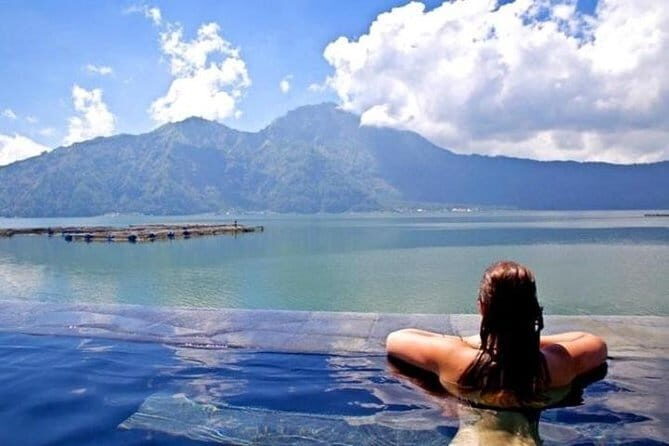
A distant view of Lake Batur rounds out the volcanic landscape theme. Together with Kintamani, it makes the inland segment feel like a proper scenic loop.

Cliffside Sunset and Performance at Uluwatu

Uluwatu Temple (1 hour)

This stop is all about the sunset at the cliff. It’s a classic Bali mood: dramatic coastline, big sky, and a sense you timed the day right.

Kecak and Fire Dance (1 hour)

You also get Kecak and Fire Dance at the Uluwatu temple stage, with the ramayana story theme. Practical note: if you’re trying to catch sunset, make sure you’re not rushing the temple portion.

Lakeside Temples and Sacred Water: Bratan and Beyond

Ulun Danu Bratan Temple (1 hour)

Listed for day-time visits: lake Bratan plus the Ulundanu temple. The lake setting is the headline here. It’s a nice contrast after the cliff drama of Uluwatu.

Later in the day, you’ll see additional sacred-water options:

Tirta Empul Temple (1 hour)

This is described as a sacred blessing temple. Plan to keep your tone respectful—these kinds of places are about ceremony, not just photos.

North Bali Icons: Handara Gate, Wanagiri Hills, and Twin Waterfalls

This is the part of the day built around big photo moments and scenic rewards.

Handara Iconic Gate (1 hour)

A “must” for picture-taking on Bali north tours. It’s basically a visual landmark—show up, frame it, and then move on.

Wanagiri Hidden Hills (1 hour)

This one is labeled for lake views and photo spots. If you like viewpoints that feel slightly off the main path, it fits.

Banyumala Twin Waterfalls (2 hours)

This stop is explicitly longer. It’s described as an amazing waterfall option, and the extended time suggests you’ll want it for walking and viewing multiple angles.

Gates, Water Temples, and Ancient Village Flavor

Here the route shifts from scenery to culture details.

Lempuyang Temple (1 hour)

Listed as the popular gate heaven spot, strongly tied to getting the signature photo.

Tirta Gangga (1 hour)

A water temple stop. It’s ideal if you want something calm after waterfall and gate viewpoints.

Tenganan Ancient Village (1 hour)

This is presented as old classical Balinese living. It’s not a beach day. It’s more about how people live and how a place keeps traditions visible.

A small caution for planning: Lempuyang Temple also appears again later on the list. If your day schedule is tight, confirm with your driver whether it’s meant once or twice so you don’t end up repeating the same photo hour back-to-back.

Virgin Beach, Tanah Lot Sunset Temple, and a Few More Sacred Stops

Virgin Beach (Pasir Putih or Virgin Beach) (1 hour)

This stop is framed as an option to swim at an amazing beach of Pasir Putih. It’s also one more chance to let the day cool down after a cluster of viewpoints.

Tanah Lot (1 hour)

Described as an amazing sunset temple. If you’re still holding energy for one more sunset, it’s the kind of location that makes the drive worth it.

Ubud Extra Detail: Elephant Cave and the Terrace Swing Scene

Back near Ubud, the route adds two very different styles of “things to do.”

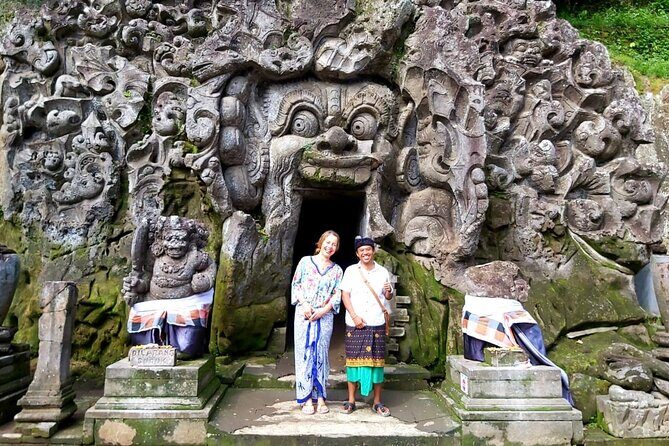
Elephant Cave (1 hour)

Popular with elephant cave and Ubud sightseeing. It’s a more curiosity-based stop, good if you like mixing one offbeat attraction into the day.

Terrace River Pool Swing (2 hours)

This is called out as one of the most beautiful Ubud spots, specifically for the swing and the bird nest photo scene. It’s very much a photo-first stop, and the extra time helps you take breaks and get better angles without sprinting.

East Bali Water Time: Amed and Blue Lagoon Snorkeling

If you want water, this is where you shift into a more active lane.

Amed (1 hour)

Amed is presented for coral views and snorkeling options. If you want a snorkeling moment that feels different from the big resort coasts, this is the part of the day to prioritize.

Blue Lagoon Beach (1 hour)

Listed for an amazing beach and snorkeling trip at the lagoon. This pairs well with Amed because both focus on the sea rather than land temples.

Should You Also Include Sekumpul, or Keep It to the Basics?

Sekumpul Waterfall (2 hours) is described as the best amazing waterfall of Bali. Since it takes real time, it’s worth deciding early in the day whether waterfalls are your top priority.

If you’re not a “walk-and-wait” person, you may feel time squeeze elsewhere. If you are, treat Sekumpul like the anchor stop and let other locations be the flexible extras.

A Practical Packing List for This Kind of Day

You’re outdoors a lot, and the stops move quickly. I’d plan for:

  • sunscreen + a hat (you’ll be at temples and viewpoints in the open)
  • water you can grab fast between stops
  • a light layer for temple evenings near the cliffs
  • swimwear if you want the beach and snorkeling options

The biggest comfort isn’t luxury. It’s not having to scramble.

Should You Book This Bali Car Hire With English-Speaking Driver?

Book it if:

  • you want to cover beaches + temples + viewpoints in one 10-hour day
  • language is a stress point and you want an English-speaking driver
  • you value hotel pickup and round transfers so you can keep your day simple
  • you like a flexible, driver-guided flow and don’t need a slow pace

Skip it (or choose a lighter version) if:

  • you get cranky with long driving hours between distant areas
  • your ideal day is one or two places max, with long stays
  • you’re mainly after snorkeling or deep temple study and nothing else

If you fit the first group, this is a strong value way to see a lot of Bali without getting stuck in logistics. Just go in expecting momentum, and let the driver help you make the moments count—especially if you can request Putu Awan.

FAQ

How long is the Bali car hire with an English-speaking driver?

It runs for about 10 hours.

Where is hotel pickup offered?

Pickup is offered in areas including Ubud, Seminyak, and Nusa Dua.

Is the transportation private?

Yes. It’s listed as a private tour/activity, so only your group participates.

Does the trip include Wi‑Fi?

Yes. Free Wi‑Fi is included during the trip.

Is the driver really English speaking?

The experience is described as having an English-speaking friendly driver, so you shouldn’t run into language barriers.

Are admission tickets included?

The itinerary lists Admission Ticket Free for the stops included in the schedule.

What happens if weather is poor?

This experience requires good weather. If it’s canceled due to poor weather, you’ll be offered a different date or a full refund.

When can I cancel for a full refund?

You can cancel up to 24 hours in advance for a full refund. If you cancel less than 24 hours before the start time, the amount paid isn’t refunded.

PrivateTour Lempuyang Temple – Gate of Heaven Instagram favorites

PrivateTour Lempuyang Temple - Gate of Heaven Instagram favorites - Lempuyang Temple: the Gate of Heaven photo moment in real life

Lempuyang’s Gate of Heaven is the main event. I like how this tour strings together iconic religious scenery plus two calmer breaks, Tirta Gangga and Virgin Beach. I also like that it’s set up as a true private day with hotel transfers and a professional guide who can help you make sense of what you’re seeing. The main drawback: entrance fees and food aren’t included, and the Gate of Heaven photo setup means you’ll spend time waiting in line.

This is built for a long, full day (about 8 to 10 hours). You’ll move from temple hill views to a royal water garden, then finish with white sand time. If you’re not into a packed day or you hate queues for photos, this might feel like too much.

Key things I’d plan around

PrivateTour Lempuyang Temple - Gate of Heaven Instagram favorites - Key things I’d plan around

  • Gate of Heaven photo line: you join the line on-site, so build patience into your day
  • Tirta Gangga meaning: water from the Ganges is tied to local Hindu reverence and the palace’s story
  • Virgin Beach trekking: you walk in to reach the short white-sand stretch and a more laid-back feel
  • Private transfers from many areas: pickup is offered from Ubud through parts of Seminyak/Canggu and more
  • Entrance fees are extra: the tour covers the guide and transfers, not site tickets

Gate of Heaven and the east-Bali loop that actually makes sense

PrivateTour Lempuyang Temple - Gate of Heaven Instagram favorites - Gate of Heaven and the east-Bali loop that actually makes sense
If you’re visiting Bali for the “wow” photos, Lempuyang Temple is usually on the short list. This private tour is interesting because it doesn’t stop at one highlight and call it a day. Instead, it uses the east Bali rhythm: temple views first, then Tirta Gangga’s calm water gardens, then a beach finish where you can put your feet down and stop thinking in photos.

What makes it practical is the flow. Lempuyang gives you the religious spectacle and iconic framing. Tirta Gangga shifts the mood to statues, pools, and that royal-pavilion feeling. Then Virgin Beach is a payoff moment—white sand, time to relax, and a break from temples.

The pace is the trade-off. You’re out for most of the day, and you’ll be on your feet in at least two of the three stops, including a trek at Virgin Beach. That’s manageable for many people, but it’s not a sit-and-sightsee only itinerary.

Lempuyang Temple: the Gate of Heaven photo moment in real life

PrivateTour Lempuyang Temple - Gate of Heaven Instagram favorites - Lempuyang Temple: the Gate of Heaven photo moment in real life
Lempuyang is one of Bali’s oldest and most renowned Hindu temples. It’s especially famous for its Gates of Heaven—an image that Bali has become known for worldwide. The day is built around this: you go to the temple and join the line for photos at the gate.

Here’s what you should expect at the Gate of Heaven setup:

  • You’ll wait. The tour description is honest about it: you join the line for photos. So if you’re coming for quick selfies only, plan for time.
  • The view is why you’re there. The gate area is where the temple’s perspective becomes “Instagram famous,” but the value isn’t only in the photo. It’s also in seeing how the temple works as a living religious place, not just a backdrop.
  • Comfort matters. The tour notes a moderate physical fitness level, which is your clue that the visit includes walking and uneven terrain. Wear shoes you can move in.

Admission tickets are not included, so you’ll want to budget for site entry separately. Also note that the stop time is about 1 hour 30 minutes, so you’re not rushing across Bali for a two-minute look—you’re given enough time to experience the gate area without feeling like cattle in a conveyor belt.

If you want better odds of calm vibes, a private setup helps. A guide can help you manage timing at the gate area so you’re not standing around clueless, which is half the battle with popular photo temples.

Tirta Gangga: royal water palace with sacred meaning

Next up is Tirta Gangga, a regal water pavilion built as a royal water palace. The name literally points to its meaning—water from the Ganges River—and the site is connected to reverence in Balinese Hindu tradition.

This stop feels different from Lempuyang in the best way. Instead of rushing for a single iconic shot, you get time to move through a place designed for water, statues, and gardens. The description highlights lush surroundings and statue detail, and the “royal water palace” concept tells you what to look for: the structured layout, the decorative stonework, and the calm, reflective atmosphere.

A few practical notes:

  • It’s another ticketed site. Entrance fees are not included here either.
  • Plan to slow down a notch. The stop is about 1 hour 30 minutes, which is usually enough time to walk the main areas and take photos without making it feel like a timed race.
  • Respect the sacred context. Even if you’ve seen photos online, remember this isn’t staged like a theme park. Treat it like a religious and historic site.

I like Tirta Gangga on this itinerary because it balances the day. After the gate line and temple crowds, you get a more leisurely-feeling environment. If your group wants a break from photo lines but still wants something genuinely Bali, this stop does that job well.

Virgin Beach: white sand relief after temples

PrivateTour Lempuyang Temple - Gate of Heaven Instagram favorites - Virgin Beach: white sand relief after temples
After temples and palace-water gardens, you finish with Virgin Beach. The description is specific about the experience: you enter and trek to the site and then arrive at a short stretch of white sandy beach where you can relax, sunbathe, or sit by the water.

This is the kind of stop that makes a long day worth it. It’s not just a “look from the parking lot” beach moment. You actually get time on the sand, and the tour even notes you can rent a chair and umbrella from local people.

A few realities to plan around:

  • There’s a trek component. The tour calls it a trek before you reach the beach, so comfy walking shoes help, especially if the route is uneven or sandy before you reach the smooth sand.
  • It’s only about 1 hour. That’s perfect if you want toes-in-the-sand time without losing the whole afternoon. It’s less ideal if you were hoping for a long beach day.

If you’re traveling with someone who gets “templed out,” Virgin Beach is your peace offering. It’s also a nice way to end the day without having to sit through another crowded photo attraction.

Private hotel transfers across east Bali’s traffic reality

The most practical part of this tour is that it treats transportation as the backbone of the day. Pickup and drop-off are offered from many hotel areas, including:

  • Ubud
  • Sanur
  • Legian
  • Seminyak
  • Canggu
  • Nusa Dua
  • Jimbaran

That matters because east Bali travel can eat time quickly, especially when you’re not sure how long certain roads will take. With private transfers included, you’re not arranging multiple rides or negotiating with drivers mid-day. You can also keep everyone together in one vehicle, which is a big deal on a tour that spans different types of sights.

The tour runs about 8 to 10 hours, so your “day feel” is built on driving plus three stops. In real life, that means:

  • you’ll start early enough to make the first stop work,
  • you’ll need water and breaks even if you’re excited,
  • and you’ll want a calm mindset for lines and transitions.

Good news: bottled water is included, and fuel surcharge is included too. That’s small, but it reduces friction when you’re already paying separate entry fees at each place.

Price value: what $46.16 per person covers (and what it doesn’t)

PrivateTour Lempuyang Temple - Gate of Heaven Instagram favorites - Price value: what $46.16 per person covers (and what it doesn’t)
At $46.16 per person, this tour isn’t priced like a full-service luxury package. It’s priced like a straightforward way to get a guided, private day with transportation.

Here’s what you do get:

  • professional guide
  • hotel pickup and drop-off
  • private tour
  • bottled water
  • fuel surcharge

Here’s what you don’t get:

  • food and drinks
  • personal expenses
  • entrance fees to all sites

So the real value math is simple: compare the convenience of private transfers + a guide against the cost of doing it yourself. Even if you can find independent drivers, you’ll still need entry tickets and you may lose context at each stop. With a guide, you’re paying for interpretation and smoother logistics.

Group discounts are listed, and there’s a mobile ticket. Since it’s a private tour, the group discount part likely matters if you book multiple people; either way, it signals that the operator can price flexibly when a group sizes up.

My practical take: this is good value if you want someone to handle the driving, keep the day organized, and explain what you’re seeing. It’s less value if you’d rather skip a guide and you’re comfortable managing everything solo.

How the guide experience can change the day

PrivateTour Lempuyang Temple - Gate of Heaven Instagram favorites - How the guide experience can change the day
The reviews attached to this operator consistently highlight the human side: guides who are friendly, helpful with pictures, and willing to explain Bali culture in clear English.

Names mentioned include:

  • Wayan Suwardana
  • Komang
  • Ketud
  • Kongman
  • Pandu

One recurring theme is that the guide doesn’t just point. They explain and help you feel at ease, even if you’re traveling alone. Another theme is patience—especially important on a tour where the Gate of Heaven photo moment can involve waiting.

If you care about getting the most out of Lempuyang and Tirta Gangga, that guide skill is where your money turns into memories. A good guide also helps you manage the pace so you don’t waste your limited stop time figuring out what’s worth seeing first.

What to pack and how to behave at these three very different stops

You’ll be moving between three environments—temple, palace gardens, and a beach—so pack for variety.

Bring:

  • shoes you can walk in comfortably (moderate fitness is mentioned)
  • a light layer if the day gets windy near the beach
  • sunscreen and water (bottled water is included, but it’s still smart to plan)
  • something respectful for temple areas (basic modesty helps)

And for behavior:

  • At Lempuyang, assume you’ll follow local rules around temple areas and photo spots. Wait your turn at the gate.
  • At Tirta Gangga, treat it like a reverent space, not just a photo park.
  • At Virgin Beach, expect a trek before the sand—so keep the walking-friendly mindset.

This is the kind of tour where “good vibes and patience” are as important as camera readiness.

Should you book the PrivateTour Lempuyang Temple + Tirta Gangga + Virgin Beach?

Yes, if you want an organized private day that hits three high-interest east Bali stops without you playing transport Tetris. I’d book it if:

  • you care about the Gate of Heaven photo moment but want a guide to help manage the day,
  • you want variety (temple + water palace + beach) rather than three hours in one area,
  • you want hotel pickup from places like Ubud, Seminyak, Canggu, Sanur, Nusa Dua, or Jimbaran.

I’d think twice if:

  • you dislike waiting in lines for photos,
  • you hate long days (8 to 10 hours with driving and three stops),
  • you’re trying to keep the whole trip “cheap-cheap” since entrance fees and food are extra.

If you’re aiming for a memorable, well-managed east Bali day, this one is a solid bet—especially because it combines the most famous photo temple with a more peaceful palace stop and a beach finish that makes the schedule feel worth it.

FAQ

What is the price of this private tour?

The price is $46.16 per person.

How long is the tour?

It runs about 8 to 10 hours.

Is hotel pickup and drop-off included?

Yes, hotel pickup and drop-off are included, with pickup offered from Ubud, Sanur, Legian, Seminyak, Canggu, Nusa Dua, and Jimbaran.

Is this tour private?

Yes. It’s a private tour/activity, so only your group participates.

Are entrance fees included for Lempuyang Temple, Tirta Gangga, and Virgin Beach?

No. Entrance fees to all sites are not included.

What stops are included in the itinerary?

You’ll visit Lempuyang Temple (Gate of Heaven), explore Tirta Gangga, and stop at Virgin Beach.

What’s included besides transport?

Included items are fuel surcharge, bottled water, a professional guide, and the private tour itself.

What’s not included?

Food and drinks, personal expenses, and entrance fees are not included.

Does the tour require moderate physical fitness?

Yes. The tour notes a moderate physical fitness level, which likely matters for walking and the trek at Virgin Beach.

Is there a mobile ticket option?

Yes, a mobile ticket is listed as part of the experience.

Best of Ubud – Kintamani Volcano View – Private Tour

Best of Ubud - Kintamani Volcano View - Private Tour - Stop 2: Tegalalang Rice Terrace for classic terrace views

A scenic day trip in Bali’s highlands, thoughtfully planned. This private tour strings together the big-name stops around Ubud and the Kintamani viewpoint, with door-to-door pickup so you’re not living inside a traffic jam for half the day. You also get the practical bonus of all entrance fees included, so you can focus on the places, not the ticket math.

My two favorite parts are how smoothly it runs with your driver-guide and how much you get from the stops when you have someone like Ketut Suwenda handling the details and even your photos. One key consideration: women who are menstruating can’t enter Tirta Empul Temple.

Fast Take: Why This Private Ubud to Kintamani Tour Works

  • Door-to-door private transfers keep the day calmer and easier to manage
  • Entrance fees are included for every listed site, including Tirta Empul
  • Monkey Forest meets temple + viewpoints in one efficient route
  • Tirta Empul’s holy spring fountains add a meaningful stop beyond photos
  • Ketut Suwenda’s pace-and-photo help makes the day feel more personal

Private Ubud-to-Highlands Route, Without the Headache

This is the kind of day trip that fits a real travel schedule. You start in Ubud, ride out to Bali’s central highlands, and come back without switching plans, hunting schedules, or coordinating anything with strangers. It’s built as a private tour for just your group, so your driver-guide can keep things moving while still letting the day breathe.

The itinerary is also designed for variety. You’re not only doing viewpoints. You’re pairing animals, rice terraces, a major purification temple, and a Kintamani overlook in a single long loop. That mix matters, because one strong stop can be great, but the best days in Bali give you a flow of different sides of the island.

Price and what you actually get for $63 per person

Best of Ubud - Kintamani Volcano View - Private Tour - Price and what you actually get for $63 per person
At $63 per person, this tour can feel like good value because it bundles the stuff that usually adds up: hotel pickup and drop-off, a driver-guide, fuel surcharge, and paid entry for the included sites. Lunch is not included, but you do know that up front, so you can plan a simple meal strategy rather than getting surprised mid-day.

Two practical value notes for you to consider:

  • If you hate surprise costs, the entrance fees included setup is a big deal.
  • If you’re visiting for the first time, this route saves time. You see multiple “top” highlights without arranging separate drivers and separate days.

Average booking is about 95 days in advance, so this one tends to get planned early. If you’re traveling in a busy season or you want a specific day, it’s worth reserving ahead.

Stop 1: Ubud Monkey Forest Sanctuary (10 hectares of macaque life)

Best of Ubud - Kintamani Volcano View - Private Tour - Stop 1: Ubud Monkey Forest Sanctuary (10 hectares of macaque life)
Your first main stop is the Sacred Monkey Forest Sanctuary. It’s a 10-hectare area grown with various tropical trees, and it’s known for Balinese long-tailed monkeys. This is one of those places where the experience is mostly about being there—watching the monkeys in their natural-feeling environment and getting a sense of how the sanctuary functions as a sacred space, not just a zoo-style attraction.

The time slot is about 1 hour, which is enough to walk, look around, and settle into the vibe without dragging the day out. Admission is listed as free for this stop, and it’s included as part of the tour.

What to keep in mind: the sanctuary can be lively, so if you prefer a calmer pace, tell your driver-guide you want fewer photo stops and more walking time once you’re on site.

Stop 2: Tegalalang Rice Terrace for classic terrace views

Best of Ubud - Kintamani Volcano View - Private Tour - Stop 2: Tegalalang Rice Terrace for classic terrace views
Next up is Tegalalang Rice Terrace, one of Ubud’s most famous rice terraces in the north area. The terraces form overlay patterns of rice paddies, stretching along the river bank. Even if you’ve seen rice terraces in photos before, seeing the layers in person makes the scale clearer.

You’ll have about 30 minutes here. That’s a short window, but it matches the tour’s goal: cover key highlights efficiently. If you love photography, this is one of the easiest stops to enjoy quickly because the views give you lots of angles without needing to explore deeply off-route.

Admission is listed as free for this stop, so you don’t have to add anything on top of the tour price. Just plan for the reality of a popular location: you’ll want to move with the flow and keep your camera ready.

Stop 3: Penelokan and Kintamani Highland for volcano viewpoints over Lake Batur

Best of Ubud - Kintamani Volcano View - Private Tour - Stop 3: Penelokan and Kintamani Highland for volcano viewpoints over Lake Batur
Then you head toward the highlands: Penelokan Kintamani is a famous village known for panoramic volcano views and green nature. The highlight here is the classic Kintamani viewpoint area, including views extending toward Lake Batur.

You’ll have about 30 minutes at this stop. That time can feel short, but it’s usually the right amount for a scenic overlook, especially if you want to keep the day balanced and make Tirta Empul feel un-rushed later.

Practical tip: if you care about photos, ask your driver-guide about the best side for the view when you arrive. A good driver-guide can also help you time the stop so you get the clearest moment available.

This is also where the tour earns its name. You’re not only doing Ubud. You’re crossing into the central highlands and letting the day shift from temple-and-culture mode to open-air volcano viewpoint mode.

Stop 4: Tirta Empul Temple and the holy spring purification fountains

Tirta Empul Temple is one of Bali’s older temple sites, described here as dating to 969. The big idea is the holy spring water temple: purification rituals and water blessings happen with water that runs into a set of fountains inside the temple.

You’ll spend about 1 hour at this stop, and admission is included. For me, this is the most grounded and meaningful part of the day because you’re watching a living religious practice tied to water, ritual, and worship.

Important note: women who are menstruating are not allowed to enter the temple. If this applies to you, you may need to reconsider this stop or arrange another plan for that part of the day.

If you’re someone who likes to understand what you’re seeing, this is also the kind of site where your driver-guide’s explanations can make a big difference. The best moment is usually not the first photo. It’s when you stop and observe how the ritual area works and why the water matters to the worship.

How the guide shapes the day (Ketut Suwenda’s strong points)

Best of Ubud - Kintamani Volcano View - Private Tour - How the guide shapes the day (Ketut Suwenda’s strong points)
A private day tour succeeds or fails based on the guide, and this one tends to shine with Ketut Suwenda. Based on what I’ve learned from past experiences with guides like him, you should expect clear explanations and a style that helps the day feel organized, not just driven around.

You’ll also get photo help. In the best versions of this tour, Ketut doesn’t just point you toward a view—he helps with taking photos and makes sure you’re not missing the angles you actually care about. There’s also a sense of flexibility: the day can be adjusted to your pace and interests, and your guide may add extra areas if time allows.

One more detail that’s worth mentioning for your expectations: this type of route can feel more off the usual path. Even when you’re doing iconic places, you can still get a calmer, less hectic feel if the guide times things well and chooses how long to stay where.

Timing, pacing, and how to keep the day from feeling rushed

Best of Ubud - Kintamani Volcano View - Private Tour - Timing, pacing, and how to keep the day from feeling rushed
This is listed as 8 to 10 hours total. That’s a full day, but it’s not packed with dozens of stops. The structure is simple: Monkey Forest (1 hour), Tegalalang (30 minutes), Kintamani/Penelokan (30 minutes), Tirta Empul (1 hour), plus travel time connecting everything.

That pacing matters because it gives you a pattern:

  • One hour for atmosphere (Monkey Forest)
  • Short burst for a view (Tegalalang)
  • Short burst for a bigger view (Kintamani highlands)
  • One hour for a cultural center (Tirta Empul)

If you’re the type who needs time to slow down between places, tell your guide early. Ketut Suwenda’s style is described as customizing to your pace and interest, which is exactly what you want on a day trip that includes both animals and temples and viewpoints.

What’s included (and what you’ll need to plan yourself)

Here’s what the tour includes, based on the provided details:

  • Experienced English-speaking driver/guide
  • Hotel pickup and drop-off
  • Fuel surcharge
  • Entry for Sacred Monkey Forest Sanctuary
  • Entry for Tirta Empul Temple
  • Entry for Penelokan / Kintamani Highland
  • Entry for Tegallalang Rice Terrace

Not included:

  • Lunch
  • Gratuities (optional)

So plan on eating on your own. Since the tour is a long day, you’ll want a simple strategy: pick a location near a stop if you can, or bring snacks and water so hunger doesn’t mess with your mood. Also, keep a little cash on hand for small purchases at the sites, even if the big-ticket items are already covered.

Who this private tour fits best

This tour makes sense if you want a “best of” style day without losing hours to coordination. It’s especially good for:

  • First-timers in Bali who want Ubud highlights plus a Kintamani volcano-view day
  • People who prefer a private setup over joining a larger group
  • Anyone who wants temple context, not just sightseeing snapshots
  • Travelers who value smooth door-to-door logistics and included entrance fees

If you’re traveling with mixed interests—someone who loves animals, someone who loves photos, and someone who wants temples—this route is one of the better matches because it balances all three.

Should you book this private Best of Ubud + Kintamani volcano view day?

I’d book it if you want a structured day that hits the key Ubud area highlights and still delivers the Kintamani volcano-view payoff. The entrance fees included detail reduces friction, and the private setup with an English-speaking guide like Ketut Suwenda makes the day feel thoughtful instead of rushed.

Skip it only if Tirta Empul’s restriction affects you, or if you strongly dislike full-day schedules. Otherwise, this is a practical way to see Bali’s central highlands from Ubud in one go, with enough context at each stop to feel like more than just a checklist.

FAQ

How long is the Best of Ubud – Kintamani Volcano View – Private Tour?

It runs about 8 to 10 hours.

What are the main stops on this private tour?

The tour includes Sacred Monkey Forest Sanctuary, Tegalalang Rice Terrace, Penelokan / Kintamani Highland, and Tirta Empul Temple.

Is hotel pickup and drop-off included?

Yes. Hotel pickup and drop-off are included.

Are entrance fees included in the tour price?

Yes. Entry/admission is included for Sacred Monkey Forest Sanctuary, Tirta Empul Temple, Penelokan / Kintamani Highland, and Tegalalang Rice Terrace.

Is lunch included?

No. Lunch is not included.

Is this a private tour?

Yes. It’s a private tour/activity, and only your group participates.

Do I get an English-speaking guide?

Yes. The tour includes an experienced English-speaking driver/guide.

Are there any restrictions for visiting Tirta Empul Temple?

Women who are menstruating are not allowed to enter the temple.

What is the cancellation policy?

Free cancellation is available up to 24 hours in advance for a full refund. If you cancel less than 24 hours before, you won’t get a refund.

Rural Charm of Bali Tour

Rural Charm of Bali Tour - The Ride From Your Hotel: Convenient, But Know the Trade-Off

Gulingan Village feels like a Bali timeout. This rural Ubud tour trades beaches for rice terraces, village life, and a real Balinese cooking lesson where you’ll see herbs and spices turned into dishes you can actually eat. I like that it includes a traditional lunch in the countryside, not just a quick snack. I also like that you get more than a show: there’s hands-on spice work and village activities on the way. One thing to plan for: the day can start early with pickup, and the schedule can feel a little tour-by-tour different depending on the guide and extra stops.

If you want Bali that feels lived-in, this is a solid way to get it. You’ll spend time in and around Batu Sepih/Kemenuh area, walking through farming areas tied to coffee, vanilla, and cloves. Then you’ll move into a traditional kitchen to learn how common Balinese flavors come together—plus you’ll leave with lunch made from your own spice-mixing efforts, not a generic meal.

Key Points to Know Before You Go

Rural Charm of Bali Tour - Key Points to Know Before You Go

  • Rural Gulingan Village setting with rice terraces and a quieter, countryside pace
  • Cooking demo plus hands-on spice prep (you grind, mix, and help build flavor)
  • Lunch included in a traditional pavilion setup among the fields
  • Village-style activities can include kite flying, Gamelan, and pond fishing
  • Hotel pickup is offered from major Ubud-area beach towns and you’ll be back the same day

Why Gulingan Village Feels Like a Real Countryside Detour

Rural Charm of Bali Tour - Why Gulingan Village Feels Like a Real Countryside Detour
This tour is about contrast. Ubud has plenty to do, but it can still feel busy and curated. Here, you head into Bali’s interior to experience everyday rhythms: farms, ponds, and village routines that aren’t built for souvenir stops.

The best part is that the day connects food to place. You don’t just learn cooking in a classroom. You walk through farming areas linked to ingredients people actually use, then you watch (and help with) the spice process in a traditional kitchen. That chain—field to kitchen—makes the whole thing click.

I also appreciate that the cooking section is built around recognizable Balinese dishes. You’ll learn the kind of flavors behind Yellow Rice and fresh vegetable sides, plus a wrapped item called Tum Wrapping (spelling as shown in the tour materials). When you can tie the meal to the steps you saw, you’re more likely to remember it—and you’re more likely to recreate it later.

Pickup Timing, Duration, and How to Schedule Your Day

The tour starts at 9:00 am. If you’re using hotel pickup, you’ll be collected between 30 minutes and one hour before 9:00 am, and the exact time is confirmed by the operator.

Plan for a day that lasts about 4 to 6 hours total (most of the time outside depends on traffic and how the guide structures stops). This matters because Bali traffic can turn “half-day” into “why is it still driving?” if you stack other plans right after.

My practical advice: keep the rest of your day loose. If you have spa bookings or dinner reservations, schedule them at least a few hours later. You’ll come back with lunch in your stomach, and you might have some walking to loosen up.

The Ride From Your Hotel: Convenient, But Know the Trade-Off

Rural Charm of Bali Tour - The Ride From Your Hotel: Convenient, But Know the Trade-Off
You get pickup and drop-off from major hotels in Kuta, Seminyak, Sanur, Jimbaran, and the Nusa Dua area. That’s a big convenience if you don’t want to handle transport on your own.

The trade-off is simple: you’re traveling from coastal areas into the interior, and that adds time. Also, pickup is shared logistics, not a private charter. So even if the tour itself is 4–6 hours, your “door-to-door” time will be longer than you’d expect if you’re staying nearby Ubud.

If you’re coming from a different part of Bali than the pickup zones listed above, you might need to start from the meeting point instead. The meeting point is the Bali Budaya Cultural Village area (Jalan Raya Ir. Utami, Br. Batusepih – Kemenuh, Kemenuh, Sukawati, Gianyar Regency, Bali 80582).

Wandering Through Farming Country: Kites, Ponds, and Spice Plants

Rural Charm of Bali Tour - Wandering Through Farming Country: Kites, Ponds, and Spice Plants
After pickup, you head into the island’s interior. The goal is to show you rural Bali away from beach crowds and souvenir lanes.

At the village side of the experience, you may get a chance to try a mix of activities, such as:

  • flying a classic Balinese kite
  • trying Gamelan (bamboo instruments used in ceremonies)
  • going fishing in a local pond
  • walking through fields connected to coffee, rice, cloves, and vanilla

This is the kind of section I like because it doesn’t feel like forced “check-the-box” sightseeing. You’re doing small, village-style activities that match the setting. It also explains why the later cooking makes sense. When you’ve walked past plants tied to spice and flavor, the cooking lesson stops being abstract.

One practical note: you will do some walking through rural areas and rice fields. That’s not a runway stroll. Bring good walking shoes, and expect uneven ground.

The Traditional Market Stop: Why It Matters for the Cooking Class

Rural Charm of Bali Tour - The Traditional Market Stop: Why It Matters for the Cooking Class
A highlight that makes this tour more than just a cooking show is the ingredient intro. The day includes a visit to a local traditional market where you can see fresh ingredients and spices up close.

This matters because Balinese cooking is built on flavor layers. Watching the chefs work is fun, but seeing ingredients first makes the technique stick. It also helps you understand what you’re eating at lunch, since you’ve already seen the raw components.

Don’t expect a long shopping spree. Think of it as a learning stop. You’ll be back in motion soon enough.

Inside the Kitchen: How the Spice Work Actually Goes

Rural Charm of Bali Tour - Inside the Kitchen: How the Spice Work Actually Goes
The cooking segment happens in a traditional kitchen in the village area. You’ll begin with a hands-on demonstration: grinding, mixing, and preparing the herbs and spices that shape Balinese dishes.

Here’s the honest expectation setting: most of the cooking is demonstrated by the hosts, but you do get chances to participate. Some days feel more hands-on than others, depending on group size and the flow of the class. You’re not just watching from the sidelines.

The dishes tied to the lesson include:

  • Tum Wrapping
  • Yellow Rice
  • Fresh vegetables

You’ll learn how the spices and herbs combine into the flavors that make these meals work. The kitchen approach is simple in concept—ground ingredients, careful mixing, and traditional preparation—but it’s effective. And when lunch shows up, it’s not random. It’s the meal you helped build.

I also like that the class is paired with a guided explanation from an English-speaking licensed guide. If you’ve ever watched cooking demos that feel like theatre, this one has the practical “why” behind the method.

Lunch in a Thatched Pavilion: Food Meets the Rice Fields

Rural Charm of Bali Tour - Lunch in a Thatched Pavilion: Food Meets the Rice Fields
After the cooking demo, you eat lunch in a customary thatched pavilion setting among the countryside rice views.

In other words: you get both the meal and the setting. That’s not just for photos. Eating outdoors in this kind of setup changes the whole tone of the day. You’re not stuck at a restaurant counter; you’re tasting food in the same rural context where you learned it.

Based on the tour descriptions and the structure of the class, lunch is the payoff: you sit down after seeing ingredients, doing some spice prep, and watching traditional cooking methods. And yes—the cooking is often described as a standout part of the day. If you care about eating well in Bali, this is one of the more direct routes to that.

The Guide Factor: Gus, Pushiness, and Keeping Control

Rural Charm of Bali Tour - The Guide Factor: Gus, Pushiness, and Keeping Control
Guides can make or break a tour like this. The good ones are friendly, informative, and help you connect the dots between village life and what you eat.

In the feedback tied to this experience, a guide named Gus comes up positively for being great and enjoyable. That’s a good sign, because the day runs smoothly when your guide keeps the rhythm and doesn’t rush you.

Still, there’s a real consideration here. A few experiences note that a guide can be pushy about booking extra tours, or that you may get dragged into additional stops. One review also mentioned extra additions like a batik factory, an art gallery, and a coffee plantation.

My advice if you book: go in with a clear plan for your own time. If you’re not interested in add-ons, say so early and calmly. Most guides will still do their job, but you’ll avoid the “last-minute sales pitch” feeling.

How Group Size Changes the Vibe

The tour lists a maximum group size of up to 99 travelers, which is the official ceiling. In practice, the size can vary a lot.

Some experiences were described as very small, with only a couple of people in the group, which can make the cooking and Q&A feel personal. In a large group, the class will still run, but you might get fewer opportunities to step in during spice prep.

If you can choose, smaller groups are simply better for participation. But even in standard group size, the core value—spice lesson plus lunch—should still come through.

Price and Value: Is $71.80 Worth It?

At $71.80 per person, you’re paying for more than “watch cooking.” You’re getting:

  • a traditional cooking demonstration
  • lunch included
  • a guided market/ingredients experience
  • hotel pickup and drop-off from multiple areas
  • an English-speaking licensed guide
  • access to rural village activities and walking time in the interior

That’s why the cost can make sense. You’re paying for transport and a bundled cultural meal experience, not just a recipe show. In Bali, transport alone can eat a chunk of a day’s budget, and lunch on top of that usually costs extra.

The one value risk is the day can include extra stops depending on the route and guide. If that happens and you don’t care about add-ons, you might feel like time shifts away from the core village + cooking pieces. But if you stay focused on the lunch and cooking work, the package generally delivers.

Who This Tour Suits Best (and Who Should Skip It)

This is a good fit if you:

  • want an Ubud rural day that doesn’t revolve around spas or temples
  • care about food and want to understand spice technique, not just taste dishes
  • enjoy short village activities like kite flying or pond fishing
  • prefer guided learning with practical explanation in English

Consider skipping or choosing something else if:

  • you strongly dislike early pickups
  • you want a fully hands-on cooking class where you do most of the cooking yourself
  • you don’t want any extra stops added during the day

If you’re traveling with kids, this can still work, but the walking through rice fields and the pacing of a shared group tour may feel like a lot. Wear shoes, bring water if allowed, and keep expectations realistic.

The Practical Verdict: Should You Book Rural Gulingan Village?

I’d book it if your idea of a great Bali day includes rural life, real ingredients, and lunch that isn’t an afterthought. The cooking lesson hits the core reason most people come to Bali food experiences: spices, technique, and a meal you can name and remember.

I’d also go in with one expectation check: you’ll participate in the spice work, but you’re not guaranteed to be the lead cook at every step. And be clear about add-ons if you don’t want them.

If you’re the type who likes quiet scenery, countryside activities, and eating what you helped make, this is a good value pick for your Ubud visit.

FAQ

FAQ

What time does the tour start, and how long will I be out?

The start time is 9:00 am. The experience runs about 4 to 6 hours (exact timing can vary with pickup and driving).

Is lunch included?

Yes. You’ll have lunch after the cooking demonstration, and it’s part of the included experience.

Do you pick up from hotels? If so, where?

Pickup and drop-off are available from major hotels in Kuta, Seminyak, Sanur, Jimbaran, and the Nusa Dua area.

Will I need to walk, and what should I wear?

Yes, there is some walking through rural villages and rice fields. Wear good walking shoes.

How big can the group get?

The tour lists a maximum group size of up to 99 travelers.

Can I cancel and get a full refund?

Yes. You can cancel for a full refund up to 24 hours before the experience’s start time.

Ubud Food and Cultural Tour

Ubud Food and Cultural Tour - The meeting point and the easy start you want

Ubud tastes like a story. This Ubud food tour strings together 10 dishes across six stops, then finishes with a tea master ceremony. I like that it’s not just about eating; you also learn how the local food scene mixes tradition, outside influences, and everyday creativity.

Two things I really like: the variety is real, from noodle soup to jackfruit curry, and the tour takes you into well-designed places to eat instead of treating food as a quick pit stop. One thing to keep in mind is the pace: it’s about 3 hours, and you’ll be walking between stops rather than sitting around.

Key highlights to look for

Ubud Food and Cultural Tour - Key highlights to look for

  • 10 dishes in 6 stops: a fast sampling route through Ubud’s food world
  • Tea master ceremony finale: a slower, calmer ending after all the eating
  • Food and refreshments included: you’re not constantly checking prices mid-tour
  • Small group size (max 10): easier conversation with your guide
  • Specific food hits: best noodle soup, jackfruit curry, asian fusion tacos, nasi kuning, cakes, and desserts
  • Fixed meet and end points: starts at Mudra Cafe and ends at Panda Tea Café

Why this Ubud food tour feels different from a quick meal run

Ubud Food and Cultural Tour - Why this Ubud food tour feels different from a quick meal run
A lot of food tours list a bunch of restaurants. This one feels more like a guided route with an actual arc. You start with a strong, filling base (think noodles), work your way through different styles of savory food, then close with sweets and tea.

The big value play here is that you’re getting food and refreshments included while still getting out and about in central Ubud. For $69 for about three hours, it makes sense for you if you want variety without spending time researching every place yourself.

And the tour’s size matters. With a maximum of 10 people, it’s easier to ask questions, follow along, and actually enjoy the food instead of shouting over the noise.

The meeting point and the easy start you want

Ubud Food and Cultural Tour - The meeting point and the easy start you want
The tour starts at Mudra Cafe on Jl. Goutama Sel. No.21 in Ubud (11:00 am). I’d arrive a few minutes early and get oriented in the area so you don’t start stressed. A mobile ticket is provided, so you can keep things simple on your phone.

Using the exact address (Mudra Cafe) helps a lot in Ubud, where streets can feel close but take time to cross. Once you lock in the starting spot, the rest is straightforward walking between places.

Your route ends at Panda Tea Café, not back at the beginning

The tour finishes at Panda Tea Café, Jl. Sukma Kesuma No.32, Peliatan. That’s a convenient way to close the loop: you finish with something quieter and sit-down friendly, then head back to your next plan with less hassle than retracing steps.

If you’re planning the rest of your day, it’s smart to leave some buffer after the tour ends. Not because it runs late in a dramatic way, but because tea ceremonies and sweet stops can make you want to linger for a few minutes after the official finish.

Six stops and 10 dishes: what you’ll actually taste

Ubud Food and Cultural Tour - Six stops and 10 dishes: what you’ll actually taste
This experience is built around six handpicked stops and 10 dishes, with each stop telling a small story about Ubud’s food culture. You’ll see the blend of local flavors and international influence in a way that’s easy to follow, not just a random sampling.

Here’s how the food flow comes together, in the order you’ll feel it while you’re on the move:

1) Noodle soup that sets the tone

Your first major bite is the best noodle soup in town. I like starting with something comforting and familiar in structure because it helps you judge the rest of the meal day. It’s a strong entry dish that also makes it easy to eat quickly and keep energy for the rest of the route.

A practical tip: noodle soup can be messy if you’re eating fast. Go slow on the first spoonful and you’ll be fine for the rest of the tour.

2) Jackfruit curry and the comfort-food side of Ubud

Next up is jackfruit curry, one of the highlights called out for the tour. Jackfruit brings a distinct texture and sweetness that works well in savory curries, so it’s a good example of how Bali uses local ingredients in ways that feel both comforting and different.

If you’re picky about texture, this is the stop to pay attention to. Jackfruit has a character to it, and this tour makes it one of the standout dishes rather than hiding it inside something else.

3) Asian fusion tacos with a modern twist

You’ll also taste asian fusion tacos. This is the part of the route that shows how Ubud food doesn’t live in a museum—it borrows ideas from outside and adapts them with local ingredients and tastes.

I find fusion dishes are where a good guide helps you understand what you’re seeing. Instead of just eating, you get context on why these flavors fit in Ubud’s current food scene.

4) Nasi kuning and the classic rice plate

Another stop includes nasi kuning, a rice dish that anchors the meal in something more traditional. Rice is a key part of everyday Balinese and Indonesian food life, so having it in the middle of the tour helps the overall variety feel balanced rather than scattered.

This is also a helpful checkpoint. After noodles and curry and tacos, the nasi kuning stop helps reset your palate.

5) Cakes and a dessert shop that supplies the top kitchens

For dessert, you’ll visit a dessert store where top restaurants source their sweets, and you’ll also try delicious cakes. This part of the tour is genuinely fun because you’re not just picking up a random sweet. You’re seeing how dessert supply works behind the scenes.

I like that this includes more than one dessert moment. It keeps the sweet course from feeling like a token afterthought.

6) The tea master ceremony finish

The tour ends with a tea master ceremony, and that ending style is one of the best parts of the whole experience. After eating your way through multiple dishes, the ceremony gives you a quieter rhythm and something to focus on besides tasting.

Tea ceremonies are about attention and process, and this one is designed to be a memorable finale. It’s the kind of wrap-up that helps the meal feel like more than just calories.

What the guide adds: stories you can actually use

Ubud Food and Cultural Tour - What the guide adds: stories you can actually use
The route isn’t just a food hop. You’ll learn local history, culture, and the food scene as you move from stop to stop, with each stop linked to a unique story. I like this format because it gives you a reason to pay attention beyond the flavor.

In the way the tour is described, guides also come across as friendly and kind, and the group size supports conversation. That matters because the tour is built around multiple stops, and you’ll enjoy it more if you can ask questions when something catches your interest.

Price and value: why $69 works if you eat with intention

Ubud Food and Cultural Tour - Price and value: why $69 works if you eat with intention
Let’s do the math in a realistic way. You’re paying $69 per person for about three hours and getting all food and refreshments included, spread across 10 dishes. The value comes from two things:

1) You don’t have to decide which single place is worth your money.

2) You get variety that you’d struggle to recreate in one afternoon on your own.

If you’re the kind of person who hates food planning stress, this tour can be a smart shortcut. You show up, follow the route, and eat your way through different styles without constant budgeting or decision fatigue.

If you only want one big meal and nothing else, it might feel like more food than you expected. But if you want a true sampling experience, the pricing looks fair.

Pacing and logistics you should plan around

Ubud Food and Cultural Tour - Pacing and logistics you should plan around
This tour runs about 3 hours. That’s long enough to try 10 dishes, but short enough that it doesn’t swallow your whole day.

The main “consideration” is simply movement. You’re walking between six stops, so wear comfortable shoes and keep water in mind when you’re between tastings. The tour includes refreshments, but you’ll still feel better if you’re not also dealing with sore feet.

Also, the max group size is 10. That’s small, but it’s still enough people that you shouldn’t expect a private, one-on-one experience.

Who this Ubud food and cultural tour fits best

Ubud Food and Cultural Tour - Who this Ubud food and cultural tour fits best
This is a great match if you want:

  • A guided food route through central Ubud with multiple styles of dishes
  • A mix of classic Indonesian plates and modern twists like asian fusion tacos
  • A calmer ending with a tea master ceremony
  • Enough structure that you don’t have to plan every restaurant yourself

It’s also a good fit if you travel with curiosity and enjoy learning while you eat. The cultural and food-scene context is part of the package, not an afterthought.

If you’re someone who hates walking or you only eat a very narrow set of foods, it may not be ideal because the tour does include many different dishes across stops.

Should you book the Ubud Food and Cultural Tour?

I’d book it if you want your afternoon to feel like a guided meal story: noodles to curry to rice to fusion tacos to sweets, then a tea ceremony to slow everything down. The best reason is value: food and refreshments included plus 10 dishes in a small group, so you get variety without the planning headache.

I’d skip it if you want a long, sit-and-stay kind of dining day. The pacing is built for tasting across six stops, not for lingering in one place.

If you can do short walks and you’re excited to try multiple dish types, this tour is a strong way to experience Ubud beyond just one restaurant dinner.

FAQ

What is the duration of the Ubud Food and Cultural Tour?

The tour lasts about 3 hours.

How much does the tour cost?

It costs $69.00 per person.

How many food stops and dishes are included?

The tour includes six stops and you’ll try 10 dishes.

Where does the tour start and what time?

It starts at Mudra Cafe in Ubud at 11:00 am.

Where does the tour end?

The tour ends at Panda Tea Café in Peliatan, Ubud. The operator says they can help you find transport afterward.

Is food included in the ticket price?

Yes. All food and refreshments are included in the ticket price.

Is there free cancellation?

Yes. You can cancel up to 24 hours in advance for a full refund.

Combo Bali ATV Ride with Ayung River Rafting All Inclusive

Combo Bali ATV Ride with Ayung River Rafting All Inclusive - Getting From Ubud Pickup to the Dadi Bali Adventures Start

Quad biking and rafting in one day sounds intense. That’s exactly why this Ubud combo is popular: ATV thrills in the jungle-and-rice scenery, then Ayung River rapids to cool you off and keep the adrenaline rolling. It’s built as a true all-in-one adventure, not a “go sit and watch” day.

What I like most is how much is handled for you. You get pro guidance, all the ATV and rafting equipment, and even lunch, plus use of lockers and shower facilities. I also appreciate the added safety net: full insurance for both activities, which matters when you’re mixing bumpy terrain with river time.

One thing to consider: the rafting setup can involve stairs, and one participant noted sharp steps made it harder if your fitness level isn’t great. If you know you’ll struggle with steps, ask your guide what your best option is before you commit your energy.

Key highlights before you go

Combo Bali ATV Ride with Ayung River Rafting All Inclusive - Key highlights before you go

  • Ayung River rapids with waterfall and rainforest-style scenery, run as a guided raft experience
  • ATV riding through varied terrain such as jungle trails, rice fields, rivers, and traditional village areas
  • Lunch and water included, so you’re not budgeting food between wet and dusty moments
  • Change rooms, showers, towels, and lockers after the activities
  • Small groups with a maximum of 15 travelers for a more personal feel
  • Full insurance + professional guides for ATV and rafting

Why This Ubud Quad Bike and Ayung Raft Combo Fits So Well

Combo Bali ATV Ride with Ayung River Rafting All Inclusive - Why This Ubud Quad Bike and Ayung Raft Combo Fits So Well
This is the kind of day plan that works when you only have a few days in Bali. Instead of picking just one activity, you get two big-ticket experiences in about 8 hours, with transport handled and the schedule kept tight. It’s a practical way to pack adventure into one itinerary day without turning your vacation into chaos.

The combo also makes sense in terms of pacing. First you get warmed up with quad riding—dusty, bumpy, and hands-on. Then you switch to water and movement again with Ayung River rafting. That rhythm can feel better than doing one activity and then sitting around waiting for the rest of the day.

Value-wise, the price is low for what’s included: lunch, equipment, guides, private transportation, and insurance for both parts. At this price point, the “win” is that you’re not paying extra on-site just to participate.

Getting From Ubud Pickup to the Dadi Bali Adventures Start

Combo Bali ATV Ride with Ayung River Rafting All Inclusive - Getting From Ubud Pickup to the Dadi Bali Adventures Start
If you want a low-stress day, this package is designed for it. Pickup is offered, and you use a mobile ticket, which usually means less time spent hunting for paperwork. You’re also traveling by private transportation, so you’re not stuck making a long chain of stops with strangers.

The clear meeting point for the start is Mahkota Rafting Bali, on Jl. Raya Kedewatan No.47a, Kedewatan, Kecamatan Ubud, Kabupaten Gianyar, Bali 80571. Your day ends back at the same meeting point.

One small practical tip: wear clothes you don’t mind getting wet or dusty. You’ll likely need to change later, but planning your outfit early saves you time.

ATV Quad Biking Around Ubud: Terrain Variety Is the Point

The heart of the first half is the quad ride from Dadi Bali Adventures. The best way to understand what you’re signing up for is that it’s not a slow scenic drive. It’s ATV riding on tracks designed for all-terrain vehicles, through a mix of environments.

Expect the ride to feature a blend like:

  • jungle trails
  • rivers and river-adjacent terrain
  • rice fields
  • traditional village areas
  • other hidden-path style routes suited to quad bikes

This is where the experience can surprise people. One participant summed it up well: it felt more like a quad biking experience than a slow, cultural immersion. That’s not a bad thing—just know what you’re optimizing for. If you want major stops to admire temples and villages at length, this is probably more action-focused than sightseeing-focused.

As a rider (first-timer or not), the guide matters. You’ll have a professional guide for the ATV portion, and that’s the difference between a fun ride and a stressful one—especially when you’re learning how to handle the bike over uneven ground. Your goal should be control, not speed.

Lunch and Facilities: The Day Stays Comfortable After the Dust

Combo Bali ATV Ride with Ayung River Rafting All Inclusive - Lunch and Facilities: The Day Stays Comfortable After the Dust
This combo isn’t just about getting dirty. It includes lunch, plus practical post-activity facilities: change rooms, a shower room, bath towels, and lockers.

That matters more than you might think. After quad biking, you’ll be dealing with sweat, dust, and that “I need to reset” feeling. Then rafting adds water, and both together can make the time between activities feel longer if there’s nowhere decent to regroup.

Because showering and towel access are included, you can treat this like a complete day outing rather than a grab-and-go experience. You’ll also have a locker option, which helps with the usual problem: where to put your valuables while you’re riding and rafting.

Ayung River Rafting: Rapids, Waterfalls, and Rainforest-Style Views

Combo Bali ATV Ride with Ayung River Rafting All Inclusive - Ayung River Rafting: Rapids, Waterfalls, and Rainforest-Style Views
After the ATV portion, the plan shifts to Ayung River rafting. Ayung is described as Bali’s longest and most scenic river, and the activity follows that style: you paddle through a mix of scenery and excitement.

Here’s what you can count on based on the tour description:

  • thrilling rapids
  • paddling past cascading waterfalls
  • rainforest surroundings

The tone is adventure, but guided. You’ll have professional rafting equipment and a guide for the rafting part, so you’re not left to figure it all out on the spot. The point of rafting here is the combination of motion and views—so you’ll want to pay attention not just to your paddle rhythm but also to the scenery along the route.

One note from real-world experience: a participant mentioned sharp stairs at the rafting location and suggested asking for an alternative rafting location if fitness is limited. If steps are an issue for you, don’t wait until the last moment. Ask early so you can plan around your limits.

Guides, Safety, and Full Insurance: Why It’s a Big Deal

Combo Bali ATV Ride with Ayung River Rafting All Inclusive - Guides, Safety, and Full Insurance: Why It’s a Big Deal
This is where the package feels more trustworthy. You’re getting professional guides for both ATV and rafting, and you also have full insurance for both activities included.

For you, that translates to two main benefits:

  1. You’re not navigating the experience alone. A good guide keeps the ride on track and reduces the stress of learning in a high-energy setting.
  2. The insurance piece adds confidence. When you’re doing activities with unavoidable risks—bumpy riding, wet surfaces, river rapids—knowing the tour is insured can help you relax.

Also, English communication matters. One review highlighted a guide named Teja, who was described as lovely and speaking very good English. While your guide may not be Teja, it’s a useful sign that communication can be solid, which helps if you’re new to either ATV riding or rafting.

How Much Energy You Really Need (And the Weather Factor)

Combo Bali ATV Ride with Ayung River Rafting All Inclusive - How Much Energy You Really Need (And the Weather Factor)
This is an active day, and you should plan it like one. The tour duration is around 8 hours, and you’ll be moving from quad riding to rafting, then back again. You’ll likely feel the physical effects of riding and handling yourself in water—especially if you aren’t used to active outdoor days.

Fitness-wise, the tour says most travelers can participate, but the real key is how you handle small physical hurdles. One person specifically struggled with sharp stairs at the rafting site and said they’d recommend requesting an alternative location if needed. So if you have knee issues, mobility concerns, or you get winded easily with stairs, do some planning.

Weather also matters. The experience requires good weather, and if it’s canceled due to poor conditions, you’ll be offered a different date or a full refund. That’s important because this is outdoors time both on the ground and on the river.

Price and Value: Why $33.50 Can Be a Smart Buy

Combo Bali ATV Ride with Ayung River Rafting All Inclusive - Price and Value: Why $33.50 Can Be a Smart Buy
Let’s talk about value, because this price is what makes the combo tempting. At $33.50 per person, you’re not only paying for two activities—you’re also paying for the extras that normally cost extra elsewhere.

What’s included:

  • lunch
  • bottled water
  • ATV ride equipment
  • rafting equipment
  • professional guides for both
  • lockers, towels, and shower facilities
  • private transportation
  • full insurance for both activities

At a basic level, you’re getting the full “day package” structure: transportation + equipment + guide + food + facilities. That reduces decision fatigue. Instead of piecing together separate tours, you’re buying one schedule that aims to cover the whole day.

The one “value trade” is that you’re optimizing for adrenaline and ride time, not long cultural stops. If you want a slower pace with lots of off-ATV photo stops and extended village time, you might feel the quad portion moves quickly. But if your goal is action plus scenery, this price-to-experience ratio is hard to ignore.

Who Should Book This (And Who Might Skip It)

You’ll probably love this tour if you:

  • want two adventure activities in one day
  • like guided experiences where equipment and logistics are handled
  • enjoy riding ATVs and don’t mind that it’s more ride-focused than sightseeing-focused
  • want a practical way to see some of Ubud’s scenery from ground level and water level

You might think twice if:

  • stairs and uneven access are a problem for you (the rafting area can involve sharp steps, based on one participant’s experience)
  • you’re hoping for a slow, culture-heavy day with lots of time standing around and exploring
  • you get anxious in wet or fast-moving situations (rafting rapids aren’t described as gentle)

In other words: this is a great match for active travelers and good for first-timers who want a guided, structured day.

Should You Book the Combo Bali ATV Ride with Ayung River Rafting?

If you want a full-day Bali adventure without spending hours assembling components, I think this combo is a strong pick. The small group size (up to 15), the included lunch, the gear, and the full insurance all push it toward “good planning” rather than “cheap and risky.”

My main reason to hesitate is the rafting-side stairs and your personal comfort with that. If you think you’ll struggle, ask questions before you go—specifically about options if stairs are involved. And if you’re expecting a mostly cultural Ubud experience, adjust your mindset: this is action-first, with scenery running alongside.

For the right traveler, this is the kind of day you’ll remember: dust on your clothes, water on your skin, and a guided day that keeps moving.

FAQ

How long is the Ubud Quad Bike and Ayung River Rafting combo?

It’s listed as approximately 8 hours.

Where does the tour start and end?

It starts at Mahkota Rafting Bali (Jl. Raya Kedewatan No.47a, Kedewatan, Kecamatan Ubud, Kabupaten Gianyar, Bali 80571) and ends back at the meeting point.

Is pickup included?

Pickup is offered.

What’s included in the price?

Lunch, bottled water, ATV and rafting equipment, professional guides for both activities, change rooms, shower room, bath towel and locker, private transportation, and full insurance are included.

Do I need to bring my own equipment?

No. ATV ride equipment and rafting equipment are included.

What’s the maximum group size?

The tour has a maximum of 15 travelers.

Is the tour suitable for beginners?

The tour says most travelers can participate, and it’s guided with professional support for both ATV and rafting.

How does the mobile ticket work?

A mobile ticket is provided.

What happens if weather is bad?

This experience requires good weather. If it’s canceled due to poor weather, you’ll be offered a different date or a full refund.

What is the cancellation policy?

You can cancel for free up to 24 hours before the experience for a full refund. If you cancel less than 24 hours before the start time, the amount paid is not refunded.

Sunrise / Sunset Jeep Tour Mt. Batur Kintamani & Hot Spring

Sunrise / Sunset Jeep Tour Mt. Batur Kintamani & Hot Spring - Sunrise Breakfast With a Mountain View

That early jeep pickup sets the tone. This Mount Batur tour strings together sunrise views (or a calmer sunset option), a look at the volcanic black surfaces, and then a soak in the natural hot spring—without forcing you to trek.

I like that it is built around clear time blocks: 4:00am pickup in the Kintamani area, a sunrise breakfast with the mountain in front of you, then a morning drive over to the black lava and black sand zone. The experience feels practical and goal-focused, not vague sightseeing.

I also like the human side of it—drivers and guides like Wisnu and Nyoman come across as friendly, safety-aware, and good at turning a rough ride into something fun (yes, with humor and local insight). One consideration: it is a very early start and the tour is non-refundable, plus pickup outside the Kintamani area costs extra.

Key highlights to look for

Sunrise / Sunset Jeep Tour Mt. Batur Kintamani & Hot Spring - Key highlights to look for

  • Sunrise schedule that starts at 4:00am so you can catch the best light
  • Off-road jeep time that trades hiking effort for thrilling terrain views
  • Black lava and black sand access with entrance fees included
  • Natural hot spring swim/relax stop to cool down after the ride
  • Optional add-ons like Toyadevasya entrance (IDR 300K) and breakfast
  • Private setup for your group (even when there are group discounts)

Why Mount Batur Jeep Tours Begin at 4:00am

If you hate early mornings, this is not for you. The sunrise version begins with pickup around 4:00am from the Kintamani area, then the tour is timed so you reach the viewpoint in time for the early light.

The payoff is that you are watching the mountain wake up before most of Bali is fully awake. One review notes seeing sunrise above the clouds, which makes the whole thing feel bigger than just a mountain photo. And since the schedule is tight, you spend less time waiting around and more time actually enjoying the view.

Also, keep your expectations realistic about how this kind of morning works. You are going to sit in a jeep, move through a few different spots quickly, and then wind down at the hot spring. It is a short, energetic loop—about 5 hours in total—so plan your day after with a slower pace.

What the Off-Road Jeep Drive Really Gives You

Sunrise / Sunset Jeep Tour Mt. Batur Kintamani & Hot Spring - What the Off-Road Jeep Drive Really Gives You
The jeep part is where this tour feels like an adventure, not a checklist. The drive takes you through rough terrain, and you get the sense you are moving through the volcanic area rather than just looking at it from the side of the road.

One of the most praised parts is the guide/driver quality. People specifically mention experienced navigation and safety focus, which matters because you are bouncing around before sunrise. The ride is thrilling in a controlled way, and it helps that guides bring local knowledge and humor—so even the bumpy minutes feel like part of the story.

The best way to think about it for your own comfort: you are trading strenuous trekking for off-road vehicle time. If you want the views of Mount Batur but you do not want to spend hours hiking up the slope, this jeep format makes that trade.

And if you are traveling with people who get tired on foot, this is also a nice balance. The tour keeps the walking segments modest while still giving you access to the black volcanic sites and the main viewpoint.

Sunrise Breakfast With a Mountain View

Sunrise / Sunset Jeep Tour Mt. Batur Kintamani & Hot Spring - Sunrise Breakfast With a Mountain View
The tour includes a sunrise breakfast with a view timed around the peak early-light moment. You may see that breakfast described as simple—one review mentions a banana sandwich, and another notes warm coffee as the perfect follow-up after watching the sky change.

Even if you skip the optional breakfast add-on (if offered to your booking), there is still an energy plan here: you start before dawn, then you eat while the air and views are at their best. That is a smart setup because it prevents the classic travel problem of going cold and hungry while waiting for the sunrise moment to happen.

What I like is that the breakfast is not treated like a separate activity. It is part of the sunrise itself. You get the mountain first, then the food, then the next stop—so the whole morning feels like one continuous experience.

Black Lava and Black Sand: The Volcanic Morning Stop

Sunrise / Sunset Jeep Tour Mt. Batur Kintamani & Hot Spring - Black Lava and Black Sand: The Volcanic Morning Stop
After sunrise and breakfast, the schedule moves you to the volcanic area. The tour includes entrance fees to Black Lava and Black Sand, so you are not worrying about paying another gate or scrambling for tickets while you are already half-awake.

This is the part that turns the trip from pretty views into something more grounded. Mount Batur is not just a picture; the geothermal features are right there in front of you. The black surfaces also make for dramatic photos, especially with the contrast of early morning light.

You do not need to be a geology expert to enjoy this stop. The value here is simple: you get access to the volcanic features in a guided route, at the right time of day, without turning your morning into a navigation project.

And since the entrance fees are included, it feels like good “no surprise” value. You pay your tour price, then the morning runs on rails.

Natural Hot Spring: The Reset Button at 8:00am

Sunrise / Sunset Jeep Tour Mt. Batur Kintamani & Hot Spring - Natural Hot Spring: The Reset Button at 8:00am
Then comes the part your legs will thank you for: relaxation. Around 8:00am, you get time to relax and swim in a natural hot spring.

This stop is the emotional payoff of the whole morning loop. You go from darkness and early light, to volcanic black terrain, to warm water that helps you slow down. It is a nice pairing because the jeep ride and volcanic sites are more intense than you might think, and the hot spring gives your body an easy reset.

Practical tip: treat this as a real swim break, not just a quick dip. Bring what you might need for comfort—like a towel and swimwear if you plan to go in. The tour info says you can swim, so you will feel better prepared if you assume it is a real water stop.

There is also an optional entrance fee for Toyadevasya (listed as IDR 300K, optional). If your booking includes it, expect another paid access component tied to that hot-spring area.

Pickup, Meeting Point, and How to Avoid Stress

Sunrise / Sunset Jeep Tour Mt. Batur Kintamani & Hot Spring - Pickup, Meeting Point, and How to Avoid Stress
This tour is anchored around one clear starting point: Batur Geopark Adventure, Jl. Raya Penelokan, Batur Tengah, Kec. Kintamani, Kabupaten Bangli, Bali 80652, Indonesia. The activity ends back at the meeting point as well.

Pickup is described as starting from the Kintamani area around 4:00am, which is convenient if you are staying nearby. If you are in places like Denpasar, Kuta, Nusa Dua, or Ubud, pickup is available but costs extra: 40$/car.

That extra car fee is the one “gotcha” to check before you book. The tour price itself is low, so the pickup distance can become the real cost difference. If you can get yourself to the Kintamani area meeting point, you keep the math simple.

Also, the tour uses a mobile ticket, and confirmation is received at booking time. That combination is helpful if you want less back-and-forth and more smooth mornings.

Price and Value: What $16 Really Covers

Sunrise / Sunset Jeep Tour Mt. Batur Kintamani & Hot Spring - Price and Value: What $16 Really Covers
At $16.00 per person, this tour is priced for maximum sightseeing per dollar. And it is not just “transport and vibes.”

Based on the included items, your money covers:

  • Water
  • Entrance fees to Black Lava and Black Sand
  • Driver and petrol
  • Optional pieces depending on your booking (like breakfast and Toyadevasya)

What is not included is also straightforward: lunch and personal expenses. And pickup outside the Kintamani area costs that $40/car extra.

So where is the value? You are getting:

1) a guided early-morning jeep push into Mount Batur territory,

2) entry access to the black volcanic zones, and

3) a hot-spring decompression moment.

For a lot of people, those three things together are the entire reason to come to Kintamani in the first place. It is a short tour, but it covers the core experiences without you having to rent gear, pay lots of separate fees, or stitch together multiple vendors.

One more practical point: the tour is often booked about 13 days in advance on average. That does not mean you must book exactly then, but it is a sign this morning slot is popular. If you have a tight schedule, earlier booking gives you better odds.

Sunrise vs Sunset: Choosing the Right Light

Sunrise / Sunset Jeep Tour Mt. Batur Kintamani & Hot Spring - Sunrise vs Sunset: Choosing the Right Light
The title says sunrise/sunset jeep tour, and reviews specifically compare the two options.

Sunrise is the high-energy choice. You start extremely early, and the reward can include sunrise above clouds. It is also when the mountain looks dramatic and sharp against early sky colors.

The sunset tour is a calmer option. One review described the sunset light over Mount Batur and Lake Batur as stunning and said it felt less crowded. That same review also mentioned the guide finding a quieter photo spot, which is exactly the kind of small decision that makes a sunset feel special instead of chaotic.

So how should you choose? If you want the classic “before the world wakes up” experience, pick sunrise. If you’d rather sleep in a bit and trade early crowds for softer golden timing, pick sunset. Either way, you still get the jeep-and-volcano structure, just with different light.

What to Bring (So the Morning Feels Easy)

This is a short tour, but the timing is intense. Since you are leaving very early, you might want to pack like you are going on a morning activity: comfortable footwear, a small bag you can keep dry, and anything you need for a hot-spring stop.

A few common-sense items to consider:

  • A towel for the natural hot spring
  • Swimwear if you plan to actually get into the water
  • A light layer for the pre-dawn hours (you will be outside early)

The tour includes water, but if you are the type who likes to keep extra for sipping between stops, bring a small extra bottle.

Also, have your questions ready for the guide. People mention guides who add local insight and humor, so asking about what you are seeing can turn a photo stop into a real understanding moment.

Is This Jeep + Hot Spring Tour Worth Booking for You?

I think this tour is a strong pick if you want:

  • Big Mount Batur views without a long trek
  • A fun off-road ride with safety-focused driving
  • A short, organized loop that ends with real relaxation in hot water

It is also a good fit for groups where not everyone wants to hike. The jeep format keeps the effort level more even.

I would skip it if you absolutely hate early mornings, or if you need a flexible schedule. This experience is listed as non-refundable and cannot be changed for any reason, so you want to be confident about your dates before you commit.

If you are already in or near Ubud and you do not want to pay the extra $40/car pickup fee, plan on reaching the Kintamani meeting point area yourself. The tour itself is easy to follow, but the start time means you should avoid last-minute scrambling.

Bottom line: if you can handle the early start, this is good value for a structured, volcanic-meets-relaxing morning in Kintamani.

FAQ

What time does the sunrise jeep tour pickup start?

Pickup is around 4:00am from the meeting point or hotels in the Kintamani area.

How long is the tour?

The duration is about 5 hours.

Where is the meeting point for the tour?

The meeting point is Batur Geopark Adventure, Jl. Raya Penelokan, Batur Tengah, Kec. Kintamani, Kabupaten Bangli, Bali 80652, Indonesia.

What is included in the price?

Included items are water, entrance fees to Black Lava and Black Sand, the driver, and petrol.

Are breakfast and Toyadevasya included?

Breakfast is listed as optional, and the entrance fee to Toyadevasya is optional at IDR 300K.

What is not included?

Lunch and personal expenses are not included.

Is pickup from Ubud and other areas available?

Pickup from Denpasar, Kuta, Nusa Dua, or Ubud is available for an extra charge of 40$/car.

Is it a private tour or a shared group tour?

It is described as private, and only your group will participate.

Is the booking refundable if plans change?

No. This experience is non-refundable and cannot be changed for any reason.

How far in advance is this tour usually booked?

On average, it is booked about 13 days in advance.

If you tell me your travel month and whether you prefer sunrise or sunset, I can help you pick the best option for your schedule and energy level.

Mount Batur Sunrise Hike

Mount Batur Sunrise Hike - Ubud pickup to the summit: timing, group size, and what to expect

Mount Batur sunrise is one of Bali’s big “wake up and go” experiences, and this hike gives you the guide support you need to do it well. You’ll be climbing in the dark, then arriving for the glow—plus your guide helps you frame the best photos while you take in the wider views of Batur’s crater lake and the surrounding volcano country. Guides like Gede and Wayan are often highlighted for being calm, helpful, and photo-friendly.

What I like most is the volcanic-heat breakfast and the fact you’re not doing this solo. You get a simple meal cooked the local way—banana or egg sandwiches, hard-boiled eggs, and a hot drink—often right at the base of the experience, so you’re not stuck hunting food after the climb. The second thing I love is the easy logistics: free pickup and drop-off from your accommodation, plus a small-group set-up that keeps things moving without feeling like a cattle line.

One thing to consider: you’ll be dealing with crowds at the viewpoint and the hike includes some steep sections. If your knees are sensitive, plan for that, and expect flies around the top when the weather and crowds line up.

Key things to know before you go

Mount Batur Sunrise Hike - Key things to know before you go

  • Small-group pacing (max 15): You’re not squeezed into a huge herd, and your guide can make real time for photos and questions.
  • Gear included: Flashlight and hiking support (walking stick/pole) means less packing and less guesswork.
  • Breakfast cooked for sunrise energy: Banana or egg sandwiches, hard-boiled eggs, and a hot drink help you reset fast.
  • Guides who slow down when needed: People highlight guides like Gede, Wayan, and Ketut for safety and patience on the climb.
  • Crowd reality at the summit: The views can be shared, and it can get busy at the exact best angle.

Why Mount Batur sunrise hits different from Ubud

Mount Batur Sunrise Hike - Why Mount Batur sunrise hits different from Ubud
This isn’t just a hike. It’s Bali’s signature “watch the light come up over an active volcano” moment, timed to the sunrise window. Mount Batur rises to about 1,717 meters, so you’re climbing high enough to see the island’s volcanic backbone spreading out around you.

From Ubud, the trip feels efficient because you’re not trying to manage transport and meeting points yourself. You get pickup and drop-off included, and your guide handles the route and timing so you can focus on the big payoff: arriving early enough to enjoy the sunrise properly, not just race in after it’s already happened.

Also, you get real practical help, not just motion toward a viewpoint. Your guide coaches you on when and where to stand for photos, which matters when you’re in a crowd and everyone’s chasing the same golden glow.

Price and value: what you’re actually paying for ($21.60)

At about $21.60 per person, this is a low-cost way to experience Mount Batur sunrise with actual local guidance. The price isn’t just for “a seat.” It covers the things that normally add cost in Bali: hotel pickup/drop-off, guide support, the included walking gear, and a breakfast you don’t have to organize yourself.

The value gets even better when you think about effort. Sunrise treks can turn stressful if you don’t know the route, the timing, or how long you’ll be walking in the dark. Having a guide who can adjust pacing—one that people describe as letting them take their time—often makes the difference between a fun morning and a rushed one.

Is it a luxury experience? No. But it’s a sensible one. You’re paying for the core elements: climb, sunrise, food, and included basics.

Ubud pickup to the summit: timing, group size, and what to expect

Mount Batur Sunrise Hike - Ubud pickup to the summit: timing, group size, and what to expect
The tour runs for about 8 hours. That’s long enough to feel like a full morning adventure, but short enough that you’re still back in time for the rest of your Bali day.

The group size matters. This one caps at 15 travelers, which is a nice middle ground. You’re not doing a solo trek, but you also aren’t stuck waiting behind a giant crowd each time you stop. In practical terms, that keeps the climb from turning into a stop-start shuffle.

The big timing note: you’ll be starting early. Some people recommend being ready around 3am to get going and reach the sunrise viewpoint on schedule. That’s not a detail to ignore—it’s the backbone of the whole experience.

The climb itself: flashlight, walking stick, and guide pacing

Mount Batur Sunrise Hike - The climb itself: flashlight, walking stick, and guide pacing
You’ll start before sunrise, and that changes everything. You’re walking in the dark, usually with uneven ground, so the included flashlight and walking stick/hiking pole are not “extras.” They’re the kind of support that keeps your feet steady and your pace comfortable.

The hike is often described as moderate with some steep sections. Many people manage it well when they’re at least reasonably fit, but there’s still a real climbing rhythm involved. If your knees are a concern, treat those steep parts seriously and don’t try to force a fast pace just because others move quickly.

One of the most praised practical touches is how guides manage pacing and photo breaks. People mention guides like Gede and Wayan stopping multiple times and adjusting to what they wanted. That doesn’t mean the hike gets dragged out. It means you’re not punished for being human.

Sunrise at Mount Batur: views, crowd reality, and photo help

Mount Batur Sunrise Hike - Sunrise at Mount Batur: views, crowd reality, and photo help
The summit is why you’re here. Once you reach the sunrise area, you get the main show: the sun rising over Bali, with crater lake views around Batur and other volcanoes in the wider scene. It’s scenic in every direction, and that’s exactly why the viewpoint gets busy.

Be honest about the crowd. Some people note that tourists can obstruct the best view, and there can be flies near the top. You can’t control those things, but you can improve your odds.

This is where having a guide really earns its keep. If your guide knows the timing and where to position people, you get a better shot of actually seeing the sunrise clearly—without standing in the wrong spot at the exact wrong moment. People also highlight guides taking or helping with great photos, which is a big deal when you’re traveling with a phone camera and no tripods.

Also: the best photos aren’t always the “standing still” ones. If you follow your guide’s advice on when to shift position, you’ll usually get cleaner light and fewer heads in your frame.

Volcanic-heat breakfast: banana and egg energy before the day

Mount Batur Sunrise Hike - Volcanic-heat breakfast: banana and egg energy before the day
Let’s talk about food, because this is one of the biggest reasons people remember the morning. Your package includes a simple breakfast cooked using the volcanic heat, with options like banana or egg sandwiches, hard-boiled eggs, and a hot drink.

This hits you at the right time. Sunrise hikes can leave you cold, tired, and a little foggy. Having breakfast already handled means you’re not wandering around looking for coffee and eggs after the exertion. You just eat, warm up, and start the descent with a clearer head.

You’ll also notice a pattern in the feedback: guides are often described as thoughtful about supplying what people need. Some people mention coffee on arrival, which fits the idea that your morning includes hot drinks as part of the experience, not a separate hunt.

Optional hot springs by the lake: a good way to cool down

Mount Batur Sunrise Hike - Optional hot springs by the lake: a good way to cool down
This tour can include a chance to rest and refresh at the lakeside hot springs after the hike. That’s a smart pairing. A volcanic sunrise trek involves muscles that don’t ask politely afterward. A soak helps you turn “morning workout regret” into “okay, that was worth it.”

The hot springs option is also a good way to balance the intensity. You get the big early adventure, then you ease into your day. If you’re trying to keep your Bali itinerary fun instead of exhausting, this is exactly the kind of add-on that makes sense.

Who this tour suits best (and who should think twice)

Mount Batur Sunrise Hike - Who this tour suits best (and who should think twice)
This Mount Batur sunrise hike is a great fit if you want:

  • A guided climb with included gear and breakfast
  • A small group that’s big enough for shared energy but not chaotic
  • An experience built around the sunrise window—not a vague “sometime in the morning” plan

It’s especially good for first-timers. In Bali, volcano treks can be confusing if you’re trying to piece everything together. Here, the route and timing are handled, and your guide can adjust pacing so you’re not stuck doing everything the hardest way.

Think twice if:

  • Your knees are sensitive to steep, uneven paths. The climb has steep sections, and people specifically note needing strong knees.
  • You dislike crowds. The summit viewpoint can be crowded enough to block some angles.

If you’re flexible and realistic, you’ll still likely love it. The sunrise moment tends to smooth out a lot of small annoyances once you actually see the light.

Tips that make this morning easier

These are based on what helps in a dark, steep, sunrise-focused hike—plus what guides are praised for.

  • Take your time on the way up. Some guides are praised for letting you go at your pace, which can prevent you from feeling rushed or breathless.
  • Use the included support gear. Flashlight and walking stick/hiking pole aren’t there for show. They’re for stability on uneven ground.
  • Plan for a busy summit. If you want photos, listen closely to your guide about positioning and timing.
  • Bring your own calm. Expect early mornings and a few sensory surprises (crowds, flies). Your guide can help you manage it, but you still have to show up with the right mindset.
  • Choose your photo strategy. Some guides are noted for taking amazing photos. If that’s important to you, tell your guide what you want before you reach the viewpoint.

And if you’re curious which guides to look out for: people mention Gede, Wayan, Kadek (often as a driver or part of the team), Ketut, and Made, plus Nyoman and Jon in pickup/drop-off praise. Any of these names show up as part of the “people felt cared for” theme.

Should you book this Mount Batur sunrise hike?

Book it if you want a smart, budget-friendly way to experience the classic Bali sunrise without juggling logistics. The included pickup/drop-off, small-group cap, flashlight/walking support, and the volcanic-heat breakfast make it feel complete for the price.

Don’t book it if you’re chasing a quiet, private, slow-motion nature moment. The summit can be crowded and the climb includes steep sections. But if you can handle an early start and share a viewpoint with other sunrise chasers, you’ll likely feel that the experience delivers.

If you do book, treat it like a mission: get ready early (around 3am), wear your most reliable footwear, use the gear, and follow your guide’s photo advice. The sunrise payoff is the whole point—and the best part is you’re doing it with real local support instead of winging it.

FAQ

How long does the Mount Batur sunrise hike take?

The tour runs for about 8 hours.

Is hotel pickup and drop-off included?

Yes. Free pickup and drop-off from your accommodation are included.

What time should I be ready for the sunrise start?

You should be ready early, with some guidance suggesting being prepared around 3am to start the trip and catch the sunrise on time.

What hiking supplies are included?

You’ll receive a flashlight and a walking stick/pole, plus a bottle of mineral water for the hike.

What is included in the breakfast?

The included simple breakfast includes banana or egg sandwiches, hard-boiled eggs, and a hot beverage.

Is there an option to visit hot springs after the hike?

Yes. You can choose to rest and refresh at the lakeside hot springs after the sunrise hike.

What is the cancellation policy?

Free cancellation is available up to 24 hours in advance for a full refund. Canceling within 24 hours of the start time won’t be refunded.

The Volcano Trail – Epic Volcano Cycling Adventure

The Volcano Trail – Epic Volcano Cycling Adventure - Kintamani area transfer: from hotel comfort to volcanic core

Volcanic singletrack with real downhill fun. This Volcano Trail day starts high around 1,600m and delivers a fast, mostly downhill run on volcanic ground before turning into cross-country riding through rice paddies and small villages toward Ubud. I love the full-suspension bikes with a dropper post and the solid safety kit that makes sketchy-looking sections feel manageable. I also love the guided pace with a senior mountain bike guide plus vehicle support. The one thing to weigh: this is built for intermediate to advanced riders with strong fitness and bike control, so it’s not a casual spin.

I’m also a big fan of how the day is structured. You get an early start, then you spend the middle hours actually riding—about 4–5 hours on trail—rather than wasting time hanging around. Small group size (up to 15) helps keep the ride flowing and lets the guide steer you around the tricky bits.

And yes, the scenery is the main event here: Mt Batur region views at altitude, then paddies and village life as you work your way down. Expect a long day (about 7–8 hours total) that blends adrenaline, local food, and real trail riding.

Key highlights to know before you go

The Volcano Trail – Epic Volcano Cycling Adventure - Key highlights to know before you go

  • Early transfer to 1,600m so you start with momentum instead of climbing for hours
  • Big descent with no “extreme feature” pressure, built around smooth single and double track
  • Rice paddies + villages on the cross-country stretch, so it’s not just a downhill day
  • Dropper-post full-suspension bikes plus helmet, gloves, and knee protection
  • Senior guide + vehicle support, which helps you ride faster with less stress

Volcano Trail: what this ride is really like

The Volcano Trail – Epic Volcano Cycling Adventure - Volcano Trail: what this ride is really like
This is a Bali mountain bike day for people who want their adrenaline served on dirt, not in a theme-park setting. The core idea is simple: get you up near Bali’s volcanic heart, then let the trail do the work. The route is known for fast, flowing single and double track. It mixes a big downhill section with a calmer cross-country portion through rice fields and countryside.

One of the nicest surprises is what isn’t part of the ride. You’re not signing up for mandatory jumps, huge drops, or anything that turns it into a stunt course. The challenge comes from terrain, traction, and control—plus enough climbing to keep your fitness useful.

The ride profile is stout on paper: roughly 45 km total distance, about 300m of climbing, and more than 1,300m of descent. That descent is why the early transfer matters. You’ll feel like you’re being set up for success instead of punished for convenience.

Why the early 7:00 am start is worth it

You start at 7:00 am, with pickup from the main Bali tourist areas (Seminyak, Kuta, Nusa Dua, Canggu, Sanur, Legian, and the Ubud area). The practical payoff is that you’re already in the higher zones while the day is still fresh.

Altitude also changes what the ride feels like. At around 1,600m, the air tends to be cooler, and you start the downhill leg with more comfort in your breathing and legs. That matters because the first stage is predominantly downhill. If you’ve ridden technical dirt before, you know the first 20–30 minutes often decide how confident you feel for the rest of the ride. Getting there early helps you start calm, not rushed.

Another small but real plus: the day is long enough to include lunch and breaks, but short enough to keep your energy up. You’re typically done after 7–8 hours. The actual trail time sits around 4–5 hours, which is a sweet spot for riders who want a real adventure without turning it into an all-day suffering contest.

Kintamani area transfer: from hotel comfort to volcanic core

The Volcano Trail – Epic Volcano Cycling Adventure - Kintamani area transfer: from hotel comfort to volcanic core
The ride begins with an air-conditioned vehicle transfer to the volcanic regions at about 1,600m. This isn’t just logistics. That drive sets up the ride’s personality.

You’re heading for the Kintamani area and the Mt Batur zone. From there, you drop into lower terrain along volcanic ground, then later you weave through rice paddies and villages. It’s a classic Bali combo: volcanic power at the top, everyday rural life as you descend.

Look, the drive portion can’t be skipped. But here it’s doing its job—placing you in the correct elevation so you can focus your effort on trail rather than brute-force climbing.

The first stage: fast downhill on volcanic ground

The Volcano Trail – Epic Volcano Cycling Adventure - The first stage: fast downhill on volcanic ground
The opening leg is mostly downhill, starting around 1,600m and finishing at lower grounds. This is where the Volcano Trail earns its reputation.

The trail is described as fast-flowing single and double track. In plain terms: it’s meant for riders who can handle speed and changing surfaces. You might encounter volcanic sand or slippery volcanic ground, so braking and line choice matter more than muscling through.

What I like about this stage is that it rewards smooth riding. You don’t need to be doing aerial tricks. You need good bike handling, steady body position, and quick adjustments. If you’ve got intermediate skills, this is where you’ll feel your confidence grow—especially if you follow the guide’s cues early.

A couple practical tips for this downhill section:

  • Keep your weight balanced and low. On slippery ground, staying composed matters more than late heroic corrections.
  • Assume traction changes. Volcanic surfaces can feel different track to track.
  • Use your brakes with intention, not panic. Let the bike roll where possible, then slow progressively.

Second stage: cross-country through rice paddies and villages

The Volcano Trail – Epic Volcano Cycling Adventure - Second stage: cross-country through rice paddies and villages
After the downhill, the ride shifts into a more cross-country style. This is the stretch that changes the mood.

Instead of pure speed, you get weaving segments through lush rice paddies and past local villages. The terrain is still trail riding—single and double track—but it’s more about flow and endurance than nonstop downhill thrills. You’ll likely spend time picking your line through countryside, watching how the terrain opens and closes as you pass fields and homes.

This stage also helps justify the “epic” label. The ride isn’t just a descent; it’s a journey. You’re moving through rural Bali at real speed, with big views and plenty of visual variety.

The trade-off is that the cross-country portion can feel more “work.” You’ve already burned your energy in the downhill. Now you have to keep your legs active while staying relaxed enough to handle the trail. That’s why the tour asks for intermediate to advanced fitness and excellent bike skills.

Bike setup and safety: what’s included (and why it matters)

The Volcano Trail – Epic Volcano Cycling Adventure - Bike setup and safety: what’s included (and why it matters)
The tour includes a quality full suspension mountain bike with a dropper post. That one detail matters more than it sounds. When you hit steep or bumpy sections, being able to move your seat height quickly helps you stay balanced and in control. It’s especially useful on downhill terrain where you want stability.

You also get:

  • Helmet
  • Gloves
  • Knee protection
  • Flat or SPD pedals (depending on what you’re provided)
  • Guided ride with a senior mountain bike guide
  • Vehicle support during the ride

That safety kit is a big deal on a volcanic-surface day. Slippery ground plus speed can turn mistakes into pain. Knee protection won’t make the trail easy, but it can save your day when you misjudge a corner or need to dab a foot.

Guides: you’ll be riding with a senior mountain bike guide, and I’ve seen names like Gita and Ruddy associated with this type of Infinity Mountainbiking experience. If you get the same guides, you’re likely in good hands—people who clearly enjoy the riding and keep the group comfortable with steady instructions.

Also, check your own comfort level. If you haven’t ridden with a dropper post before, you’ll want to treat it like a learning curve. Don’t wait until the steepest moment to figure it out.

Lunch and the pacing: getting a real break

The Volcano Trail – Epic Volcano Cycling Adventure - Lunch and the pacing: getting a real break
You get local snacks, fruit, lunch, drinking water, and isotonic drinks. That’s not just a nice bonus. On a ride with over 1,300m of descent and a total of around 45 km, your body still needs fuel even if the legs aren’t “climbing mountain” style all day.

The day timing matters too. With a start around 7:00 am and a total duration of 7–8 hours, your meals likely line up with the longer break after major sections. The goal is to keep you hydrated and ready for the next trail segment.

One more practical note: dress sporty casual. You’ll want clothing that can handle dust and sun. Bali can be warm even early, and volcanic trail can be dusty fast.

Terrain difficulty: who this ride suits best

The Volcano Trail – Epic Volcano Cycling Adventure - Terrain difficulty: who this ride suits best
This is aimed at intermediate to advanced riders with strong fitness and excellent bike-handling skills. The ride avoids extreme features like mandatory jumps or huge drops. But it’s still not “beginner friendly.”

Here’s how I’d interpret the challenge level:

  • If you can ride technical dirt without freezing at speed, you’ll likely have a great day.
  • If you’re comfortable with braking on loose or slippery surfaces, you’ll feel more in control on the volcanic downhill.
  • If you struggle with balance or you avoid going fast downhill, this may feel stressful rather than fun.

The upside is that it’s described as a “step up” from other Bali off-road options in the same biking lineup. So if you’re already biking in your home country and you want to level up, this fits.

It’s also built for a small group (max 15). That’s good news if you want guidance and pacing, but you still want to ride actively rather than waiting in line.

Price and value: what $80 covers in the real world

At $80 per person, this ride can look like a bargain or a splurge depending on how you usually budget for activities in Bali. Here’s the reality check: you’re paying for much more than a bike rental.

Included in the price:

  • A full suspension mountain bike with dropper post
  • Helmet, gloves, and knee protection
  • Lunch plus snacks and fruit
  • Drinking water and isotonic drinks
  • Air-conditioned pickup and drop off from multiple areas
  • A guided mountain bike tour
  • Vehicle support during the ride

So you’re getting the bike + gear + guide + transport + food in one package. If you tried to piece that together on your own, the guide and transport would likely eat the savings fast. The value is strongest if you’re staying in one of the pickup zones and you want a guided, high-quality trail day without the hassle.

If you’re a rider who can’t ride without a dropper post or prefers SPD pedals, this kind of included setup reduces friction. You show up, you ride, you eat, you go.

How to get the most out of the Volcano Trail

You’ll have a better time if you prepare like the ride is technical, even if it avoids extreme stunt features.

A few smart moves:

  • Bring a focus on bike control, not just fitness. This ride is about line choice and braking on changing surfaces.
  • Go in expecting speed on the first big downhill. If you’re relaxed there, everything feels easier later.
  • Wear protective gear. Even though knee protection is provided, consider gloves fit and helmet snugness. Comfort equals better riding.
  • Ask the guide for how they want the group to ride in the first stage. The early instructions prevent stress later.

And if you’re traveling as a couple or friends: small-group dynamics help. You can still have your own rhythm, but you won’t feel lost.

Should you book this Volcano Trail ride?

Book it if you want a day that’s:

  • Built around real off-road riding with fast, flowing trail
  • Focused on volcanic scenery and big downhill energy
  • Guided, with safety gear and vehicle support so you can ride hard without chaos
  • A manageable adventure day (7–8 hours total) rather than a full travel circus

Skip it if:

  • You’re a beginner or you avoid technical dirt surfaces
  • You don’t like downhill riding or slippery terrain
  • You’re looking for a gentle sightseeing ride with minimal effort

My take: this is the kind of Bali activity that feels more like a trail day than a tour. If you match the skill level, you’ll come away with a story that isn’t just scenery photos—it’s the sensation of riding singletrack down a volcanic route, then rolling into rice paddies and villages as the day winds down.

FAQ

What time does the Volcano Trail ride start?

The start time is 7:00 am, with early pickup before you head up to the higher elevation.

How long is the tour from pickup to drop-off?

It runs about 7 to 8 hours total, with around 4–5 hours of actual riding time.

Is pickup and drop-off included, and where does it cover?

Yes. The tour includes air-conditioned pickup and drop-off from Seminyak, Kuta, Nusa Dua, Canggu, Sanur, Legian, and Ubud areas.

What bike and safety gear do I get?

You get a quality full suspension mountain bike with a dropper post. You also receive a helmet, gloves, and knee protection.

What fitness level and skill do I need?

The ride is suited for intermediate to advanced riders with strong fitness and excellent bike-handling skills.

Is lunch included, and do you offer a vegetarian option?

Lunch and local snacks are included, along with fruit and drinks. A vegetarian option is available if you request it at booking.

Can I cancel for a full refund?

Free cancellation is offered up to 24 hours in advance for a full refund. If you cancel less than 24 hours before the start time, the payment is not refunded.

Bali Quad bike ATV passing through Waterfall, Cave & Rice fields

Bali Quad bike ATV passing through Waterfall, Cave & Rice fields - Pickup From Your Ubud Hotel (or Cruise Port) and the Start at Bali Tarantula Adventure

Quad bikes through Bali sounds loud.

This Ubud ATV route pairs heart-racing off-road riding with stops for scenery like waterfall and rice fields, plus time to pause for photos and village life along the way. I like that you get more than a loop on a dusty trail—you actually pass through different natural backdrops.

Two things stand out for me: the safety briefing plus a practice run before you set off, and the way the ride is paced with real breaks (water and jungle moments, not just nonstop acceleration). One possible drawback: this experience needs good weather, so rain can change the plan or lead to a reschedule.

Quick hits before you go

Bali Quad bike ATV passing through Waterfall, Cave & Rice fields - Quick hits before you go

  • Waterfall + cave + river + jungle + rice fields in one ATV outing (not just “drive around”).
  • Practice before riding and a professional ATV guide to keep you feeling steady on the route.
  • Pickup and drop-off by air-conditioned minivan from your hotel or cruise port.
  • Included lunch plus a shower and changing room after the ride.
  • Photo and video souvenirs cost extra, and the jungle swing isn’t included.

Quad Bike Route Through Waterfall, Cave, River, Jungle, and Rice Fields

Bali Quad bike ATV passing through Waterfall, Cave & Rice fields - Quad Bike Route Through Waterfall, Cave, River, Jungle, and Rice Fields
This is the kind of ATV tour in Ubud that tries to give you variety, not just speed. Your route is described as running through scenes like a waterfall, cave, river, jungle, and terraced rice fields, plus countryside villages where you can stop and look around. That mix matters because it keeps the ride interesting when you’re on the gas for long stretches.

The best part is the rhythm. You don’t just ride and hope for a good photo. You ride, you pause. The stops are built in for photos and glimpses of rural village life. Even if you’re not a serious photographer, those breaks help your brain catch up—especially after a few minutes of concentrating on the trail.

You should also expect that the “adventure” side has some emphasis. This isn’t a slow parade. It’s off-road riding, so your arms and core will notice. If you have back or neck issues, go in thinking about comfort and control. You’ll start with guidance, and the tour aims to suit different experience levels, but ATV riding does take physical effort.

Waterfall and cave moments: why they’re more than scenery

Waterfall and cave stops tend to be popular on quad bike itineraries because they create natural “waypoints.” You get a change of pace from open trail sections. They also give you something to look at besides the ground in front of your tires.

River and jungle sections: what they usually feel like

A river or jungle segment usually means tighter, more shaded sections compared with open rice-field areas. That’s where the guide’s direction and your own focus matter most. If you’re riding tandem (sharing with someone), this also becomes a coordination game—listen to your guide and keep your body position steady.

Rice fields: the photo payoff

Rice fields are great because they usually mean wider views and calmer-looking scenery compared with cave or jungle stretches. Even if the ride stays exciting, those open sections give your eyes a reset. You’ll also have a better shot at photos because you’re not always dealing with tight paths.

Pickup From Your Ubud Hotel (or Cruise Port) and the Start at Bali Tarantula Adventure

Bali Quad bike ATV passing through Waterfall, Cave & Rice fields - Pickup From Your Ubud Hotel (or Cruise Port) and the Start at Bali Tarantula Adventure
Your day starts with pickup from your Bali hotel or cruise port. A minivan handles the transfer in an air-conditioned ride to the departure point. That matters because it reduces the “where do I go” stress, especially in Ubud traffic.

The meeting point is Bali Tarantula Adventure – ATV, RAFTING AND SWING, located in Bongkasa Pertiwi, Abiansemal, Badung Regency, Bali. Once you arrive, you meet your guide and get set up.

Before you roll out on the trail, there’s time to practice driving. That initial practice is genuinely useful. It helps you get your hands and feet coordinated—throttle, brakes, turning—before the route gets more interesting. If you’re new to ATVs, that practice can be the difference between feeling confident and feeling frantic.

Timing-wise, plan around an approximately 1 hour 30 minutes experience for the activity itself. The full day timing depends on pickup distance, but the riding + stops + return flow is designed to fit into a short, punchy window.

What “private tour” changes

This is a private tour/activity, meaning only your group participates. Practically, that tends to mean you’re not mixing with a random crowd and waiting around for other riders. Your guide can pace you and your timing stays in sync with your group.

Safety Briefing, Helmets, and How Guides Keep It Fun

Bali Quad bike ATV passing through Waterfall, Cave & Rice fields - Safety Briefing, Helmets, and How Guides Keep It Fun
A good ATV tour lives or dies by safety. The setup here includes a professional ATV guide and helmets. On arrival, you’re given a safety briefing and you practice before starting the adventure.

From the feedback, guides like Doni are a big reason people feel comfortable. Doni is described as friendly and informative, and the experience includes a sense of safety and easygoing conversation. Another driver name that came up is Dede, mentioned with thanks for safe return to the hotel. That gives you a clue about how the service is delivered: not stiff and formal, but focused and supportive.

One helpful detail: you’ll be able to stop along the way for photos or to catch glimpses of local life. That means the tour isn’t just a blur. It’s a guided ride with moments to collect yourself and look around.

Single vs tandem ATVs: choose what fits your comfort

The tour info notes single and tandem ATVs. If you ride solo, you control everything and you build confidence faster. If you choose tandem, your partner and you both rely on shared handling and the guide’s cues. If you’re anxious about controlling the ATV in rough terrain, tandem might feel less intimidating, but it also means less personal control.

Stops Along the Trail: Photo Breaks at Waterfalls, Caves, Rice Paddies, and Villages

Bali Quad bike ATV passing through Waterfall, Cave & Rice fields - Stops Along the Trail: Photo Breaks at Waterfalls, Caves, Rice Paddies, and Villages
The itinerary is built around changing scenery. You’ll ride through areas linked to waterfall, cave, river, jungle, and rice field views, with stops for photos. That’s a meaningful difference from tours that only claim scenic routes but never pause for them.

Waterfall: a real pause point

A waterfall stop gives you a strong visual landmark. Expect the moment to be more than a quick glance. You typically get time to take photos and soak in the scene before you roll onward.

Cave: where you need to pay attention

Caves can be tricky in terms of footing and lighting. Even when it’s short, your guide’s instructions matter. Follow them closely. Don’t rush. This is also a spot where it helps to keep your camera or phone ready only when your guide signals, because the ride details come first.

Rice fields: better views, better photos

Rice fields are where you tend to feel the contrast from tight jungle paths. They also often make riders relax a little—less strain on steering, more space to look around. Use those sections to take a breath and reset your posture.

Rural villages: glimpses, not a staged show

You also stop for glimpses of local life in rural villages. These moments tend to feel more human than scenic-only stops. Don’t treat them like a theme park. Keep it respectful and quick. If you’re offered a chance to photo, follow your guide’s guidance on where it’s appropriate to stand.

Back to Base: Shower, Changing Room, and Lunch After the Ride

Bali Quad bike ATV passing through Waterfall, Cave & Rice fields - Back to Base: Shower, Changing Room, and Lunch After the Ride
After the ATV adventure, you return to the starting point. This part is surprisingly important if you’re doing the rest of your day in Ubud. You get time to shower and change before lunch is served.

Included in the package are:

  • Shower and changing room
  • Lunch
  • A locker and clean towel
  • Helmet during the activity

That set of comfort items is what makes the tour feel complete. If you’re planning to go on to another meal or activity right after, this helps you avoid that sweaty, helmet-hair situation lasting all afternoon.

“Lunch included” is not always a throw-in

Some adventure tours include lunch that’s more snack than meal. Here, lunch is explicitly included, and it comes after you’ve had a chance to shower and change. That sequencing makes it more satisfying. It’s also a good time to cool down and hear what your guide thought of your riding.

Price and Value: Is $37.90 Worth It for an ATV With Lunch?

Bali Quad bike ATV passing through Waterfall, Cave & Rice fields - Price and Value: Is $37.90 Worth It for an ATV With Lunch?
At $37.90 per person, this isn’t a luxury-priced excursion. The value comes from what’s bundled.

Included:

  • Lunch
  • Professional ATV guide
  • Helmet, clean towel, locker
  • Shower and changing room
  • Personal insurance
  • Air-conditioned pickup and drop-off (for the package with transfer)
  • Mobile ticket

Not included:

  • Souvenir photos (available to purchase)
  • Personal expenses
  • Jungle swing

When you break it down, you’re paying for the ATV experience plus the “how do I get cleaned up afterward” extras. Pickup and drop-off are also part of the value because getting to and from ATV sites in Bali isn’t always simple without a driver.

Also, groups can get discounts, and the tour offers a mobile ticket. If you like planning ahead, it’s often booked about 10 days in advance, which suggests it’s a popular slot in the Ubud area.

The optional photo package can be the hidden cost

There’s a video and picture package available for purchase. If you want the souvenirs, factor it into your budget. If you’re fine with your own photos, you can keep it lean.

The Doni Factor: Friendly, Patient Hosting Makes a Difference

Bali Quad bike ATV passing through Waterfall, Cave & Rice fields - The Doni Factor: Friendly, Patient Hosting Makes a Difference
A standout theme is guide quality. Doni comes up repeatedly as accommodating, friendly, and knowledgeable about Bali. People also mention how he navigates busy streets with care when escorting between places.

That’s not a small detail. In a scooter-heavy area like Bali, a calm driver and guide reduce stress, especially on arrival and return. When you feel safe during transfer and during the ATV portion, you tend to enjoy the fun parts more.

Another name that appeared is Dede, credited with safe return. That suggests the company leans on a consistent style of hosting: approachable, communicative, and safety-minded.

How to use this information

You can’t guarantee the exact guide from the name alone, but you can decide what matters to you. If you value a guide who talks you through things and makes it feel friendly rather than intimidating, this tour’s service style looks like a strong match.

Weather and Comfort: What to Plan for When This Needs Good Conditions

Bali Quad bike ATV passing through Waterfall, Cave & Rice fields - Weather and Comfort: What to Plan for When This Needs Good Conditions
The tour requires good weather. If it’s canceled due to poor weather, you’ll be offered a different date or a full refund. That matters because ATV tours can become unsafe in certain conditions, and the operator is saying the experience depends on the day.

So, what should you do with that? Keep one more Ubud activity flexible. If this is your first “big” day and it gets postponed, you’ll want an alternate plan that doesn’t depend on perfect timing.

Clothing and basic prep (use common sense)

Even without extra specifics, you can plan like any ATV adventure:

  • Wear closed-toe shoes you don’t mind getting scuffed
  • Bring a change of clothes since you’ll shower and change, but you might still want a fresh outfit after riding
  • Keep valuables secured and follow the guide’s locker instructions

You’ll get a shower and towel included, so you’re not stuck sweating through the rest of your day. Still, having clean clothes ready is smart.

Who This Ubud ATV Ride Suits Best

This works well for:

  • First-timers who want practice time before the trail
  • Couples who want an active day with scenic variety
  • People who like guided experiences where the stopping points are part of the fun
  • Anyone who wants lunch, shower facilities, and transfers included rather than piecing it together

The tour also says most travelers can participate. With safety briefing and practice time, it’s designed to be accessible, not just for hardcore off-road riders.

When you might choose something else

If you strongly dislike helmets, loud off-road riding, or you have mobility limits that make active driving difficult, you might want to consider a less physical Bali activity. Also, if your schedule is rigid and you can’t handle weather-driven changes, remember this one depends on good conditions.

Should You Book This Bali Quad Bike ATV Tour in Ubud?

I’d book it if you want a short, high-energy adventure that still includes meaningful scenery stops—waterfall, cave, river, jungle, and rice fields—plus practical perks like lunch and a shower. At $37.90 with pickup/drop-off, it’s a solid value if you want everything handled.

Skip it (or at least think twice) if weather flexibility is a problem for you. Since the experience requires good weather, you’ll want a backup day in Ubud anyway. And if you love souvenir photos, budget for that optional add-on.

FAQ

FAQ

Where is the ATV tour in Ubud starting?

The tour starts at Bali Tarantula Adventure – ATV, RAFTING AND SWING in Bongkasa Pertiwi, Abiansemal, Badung Regency, Bali, Indonesia. The experience ends back at the meeting point.

How long is the ATV experience?

The duration is approximately 1 hour 30 minutes.

What’s included in the price?

Included: lunch, a professional ATV guide, helmet, clean towel, locker, shower and changing room, personal insurance, and air-conditioned pickup and drop-off for the package with transfer.

Do I need experience driving an ATV?

Most travelers can participate, and you get some time to practice driving your ATV before the tour starts.

Is this tour private or shared?

This is a private tour/activity, so only your group participates.

What happens if the weather is bad or I need to cancel?

The experience requires good weather. If it’s canceled due to poor weather, you’ll be offered a different date or a full refund. Free cancellation is available up to 24 hours in advance for a full refund.