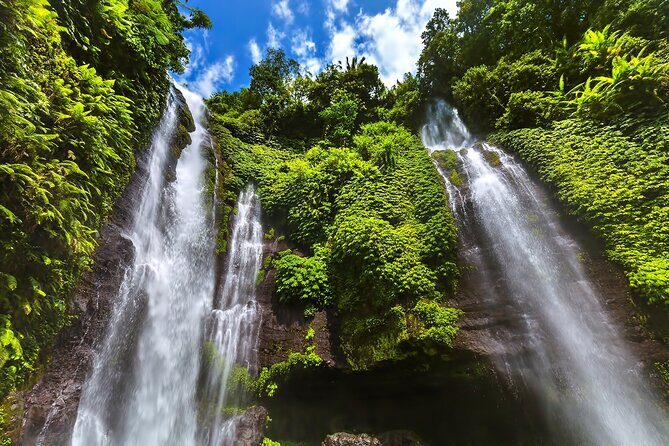
Essence Alchemy Workshop: create self-love blends in Ubud

Essence Alchemy Workshop: create self-love blends in Ubud - Where You Go in Ubud: Love Pure in Petulu

A little alchemy goes a long way in Ubud. This 2-hour self-love workshop mixes aromatherapy with gentle spirituality, from an oracle-style reading to a singing bowl meditation. You’ll create a personalized essential oil blend using your own intention, and then translate that into a natural face-body oil you can actually use after the workshop.

Two things I really like: you get private, close attention from the workshop leader, and you finish with a take-home product set that isn’t just a souvenir. You’re also in a small space, so you’ll want to be comfortable with a cozy setup.

The focus stays practical. You’re taught the steps of selecting, mixing, and blending essential oils, plus how to use your face and body oil in a way that matches your own goals and mood. I also love that the workshop starts with a short ritual (coffee or tea, welcome infusion, then a reading), so it feels like self-care, not a craft fair.

One consideration: the space is small and isn’t suitable for babies or wheelchairs. If you’re traveling with mobility needs or very young kids, plan carefully before you book.

Key Things You’ll Appreciate Most
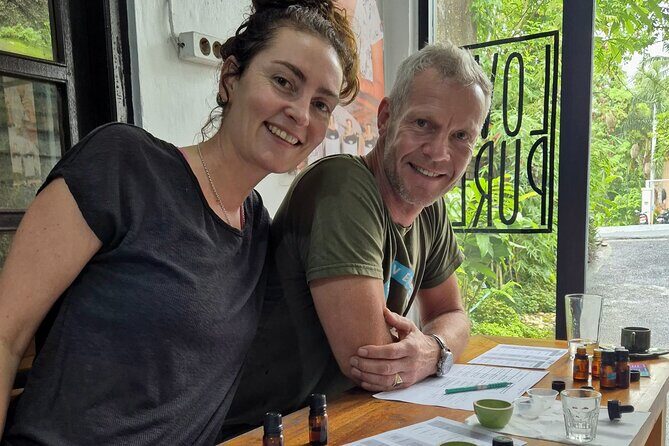
Essence Alchemy Workshop: create self-love blends in Ubud - Key Things You’ll Appreciate Most

  • Private group (1 to 4 people) so you’re not stuck waiting your turn
  • Oracle-of-essences style start with intention-setting before you mix oils
  • You’ll create a face-body oil plus your own essential oil blend
  • Welcome tea/coffee and a handmade natural infusion on arrival
  • Singing bowl meditation to land the experience, not just finish with a bottle

Ubud Self-Love Workshop: What This 2 Hours Actually Feels Like

Essence Alchemy Workshop: create self-love blends in Ubud - Ubud Self-Love Workshop: What This 2 Hours Actually Feels Like
This is the kind of workshop that works even if you’re not into spiritual stuff day-to-day. You’re not asked to recite anything. You’re guided through a simple process: notice your energy, choose scents that feel right, and then turn that into a wearable, usable blend.

The vibe is calm and focused. You’ll start with a short meditation and a reading that frames the session around intention and self-love. Then the hands-on part kicks in: you’ll select, mix, and blend essential oils. The final step is also emotional, not just technical. You’ll finish with a singing bowl meditation, which helps you reset after you’ve been thinking and deciding so much.

Because it’s private (your group only, up to 4 people), you’re more likely to get real help if you second-guess your choices. And you’re less likely to feel rushed. That matters here, because scent decisions are personal. One person might want grounding. Another might want uplifting. The workshop is set up so your blend can reflect that.

Where You Go in Ubud: Love Pure in Petulu
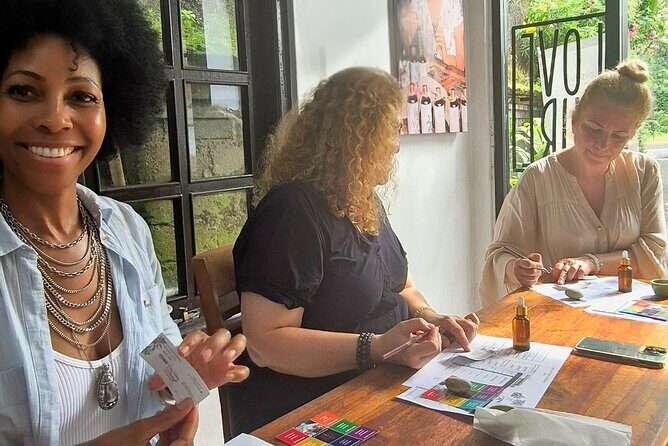
Essence Alchemy Workshop: create self-love blends in Ubud - Where You Go in Ubud: Love Pure in Petulu
You’ll meet at LOVE PURE natural skincare products & Aromatherapy Workshops for healing and learning in Petulu, at Jl. Tirta Tawar No.5, Ubud (Bali 80571). The activity ends back at the same meeting point, so you’re not juggling multiple locations.

Petulu is a good area for a quieter, more local-feeling stop in Ubud. It’s also handy that the workshop is self-contained. You can walk in, settle, and focus. No long transfers, no awkward waiting in a café while you wait for your turn.

Also, come prepared for the space to be small. That’s not a deal-breaker if you’re comfortable with close quarters, but it is worth knowing up front.

The Welcome Part: Tea, a Natural Infusion, and Settling In
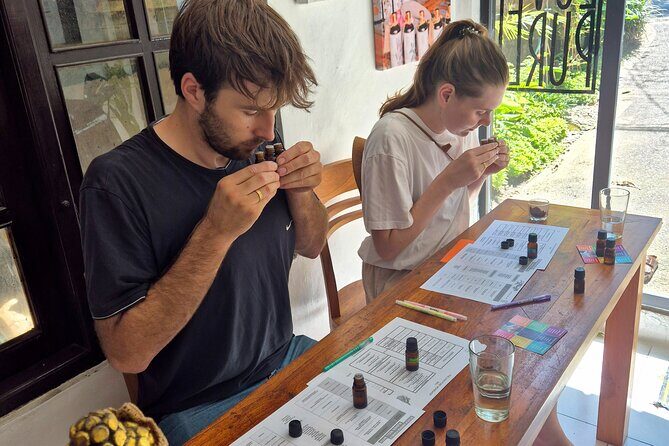
Essence Alchemy Workshop: create self-love blends in Ubud - The Welcome Part: Tea, a Natural Infusion, and Settling In
Before you mix anything, you’ll get a warm start. You’ll be offered coffee and/or tea, plus bottled water. On arrival, they also share a handmade natural infusion.

This matters more than it sounds. Essential oil workshops can feel intense fast. Having something warm in your system helps you slow down. It also keeps the experience comfortable, especially since there’s no lunch offered during the workshop.

Practical note: since lunch isn’t provided, bring something light or plan for a meal before or after. If you tend to get hangry when you’re focused on activities, treat this like a real training session.

Intention-First Start: Meditation and an Oracle Reading

Essence Alchemy Workshop: create self-love blends in Ubud - Intention-First Start: Meditation and an Oracle Reading
The session doesn’t jump straight into drops and pipettes. It starts with a short meditation and an oracle-style reading of essences. The goal is to connect what you’re choosing with what you actually need, not just what smells good at first swipe.

You’ll also do something described as recognition of your energy points. I interpret this as the workshop guiding you to pay attention to your inner signals while you make scent choices. You’re not required to have any special background. You’ll be supported through the process.

This is also where you can benefit most if you’re unsure. If you think, I don’t know what I want, this is the part that helps you get your bearings fast. It gives your choices a reason, which makes the rest of the workshop easier.

Mixing Your Essential Oil Blend: The Alchemist Moment
Essence Alchemy Workshop: create self-love blends in Ubud - Mixing Your Essential Oil Blend: The Alchemist Moment
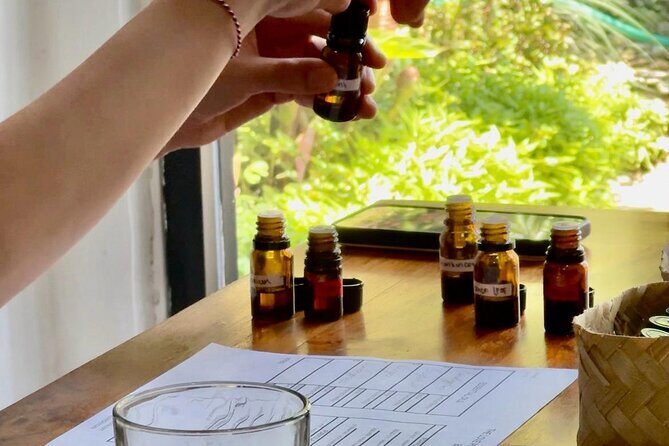
Now the fun part. You’ll create your own natural blend, infused with intention and self-love. The workshop walks you through selecting, mixing, and blending essential oils.

Here’s the practical value: you’re not just smelling oils in isolation. You’re learning how different scents work together as a blend. That’s the difference between picking a favorite fragrance and creating something that feels like it belongs to you.

Because you get personal attention from the workshop leader, you can adjust along the way. If one note feels too strong or not right, you have a chance to tweak before you lock in the blend.

And since the workshop is limited to up to four people per session, the leader can actually keep track of what each person is doing. That makes it less chaotic than many group workshops where the instructor is talking to everyone at once.

Your Take-Home Creation: Face and Body Oil Plus a Travel Set
Essence Alchemy Workshop: create self-love blends in Ubud - Your Take-Home Creation: Face and Body Oil Plus a Travel Set
The main take-home is a natural face-body oil that you create as part of the workshop. You’re also taking home your own blend infused with intention and self-love.

But you’re not leaving empty-handed beyond the bottle. You’ll also receive a travel skincare gift set with the products.

This is where the price starts to make more sense. At $31.46 per person, many workshops give you either a small sample or a single mixed item. Here, you’re getting a usable skincare product plus an extra kit. Even if you only use the oil occasionally, it’s the kind of souvenir that can actually fit into your routine.

One more helpful detail: the workshop includes all materials, so you’re not dealing with hidden add-ons for supplies.

The Energy Landing: Singing Bowl Meditation

Essence Alchemy Workshop: create self-love blends in Ubud - The Energy Landing: Singing Bowl Meditation
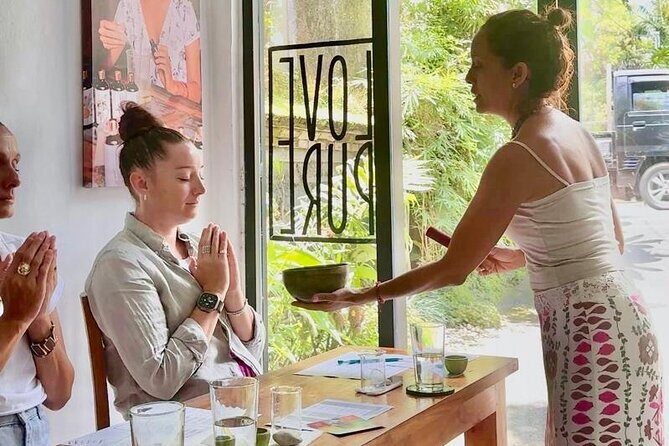
Finishing with a singing bowl meditation is a smart choice. Scent work can stir up emotions. It can also just make you feel alert and thoughtful because you’ve been deciding things about yourself.

The bowl meditation helps “close the loop.” You’ve made something, you’ve chosen something, and now you come back to your body and your breath. It’s also a good reset if you’re the type who likes to come away from experiences feeling calm instead of wired.

In the short reviews I’ve seen for similar workshops, people often mention the meditation as a highlight. In other words: it’s not just a decorative ending. It’s part of the design.

Coffee, Water, and No Lunch: Plan Like This Is a Real Appointment

Essence Alchemy Workshop: create self-love blends in Ubud - Coffee, Water, and No Lunch: Plan Like This Is a Real Appointment
The workshop includes bottled water and drinks, but it doesn’t include lunch. During the session, they don’t offer food, so you should bring what you need to feel comfortable.

That doesn’t mean you need a feast. It just means you should avoid the “I’ll be fine” mistake if you’re prone to low blood sugar. Bring a snack if you think you’ll need it. And if you’re sensitive to strong scents, consider planning your timing so you’re not hungry or overly tired.

Also, because you’re working with oils, it’s a good idea to think about how you’ll keep your skin comfy afterward. You’ll take things home, so you’ll want the rest of your day to be easy.

Who This Workshop Is Best For (And Who Might Skip It)

This is best if you want a mix of hands-on skincare and a guided self-care process. You’ll likely enjoy it if:

  • you like aromatherapy and want to understand how blending works
  • you’re interested in intention-setting, meditation, or oracle-style reflection
  • you want a personalized take-home product, not just a photo moment
  • you’d appreciate small group attention and a calm pace

Skip it if:

  • you need wheelchair accessibility or you’re traveling with a baby (the space is small and not suitable)
  • you want a long, big-output class (this is 2 hours, and the format is focused, not sprawling)

Price and Value in Plain Terms

At $31.46 per person for about 2 hours, the value is driven by three things:

  1. You create something tangible: your own face-body oil plus your self-love blend.
  2. Materials are included, so there’s less risk of surprise expenses for supplies.
  3. You get time with a leader in a private session setting (up to 4 people), which improves the experience beyond what cheaper, larger-group classes sometimes deliver.

It’s also worth noting that it’s often booked about 15 days in advance. That’s not a hard rule, but if you’re traveling in high season or on a tight schedule, book earlier so you can pick a time that fits your Ubud days.

Tips to Get More From Your Self-Love Blend

A workshop like this rewards preparation, even if you don’t overthink it. Here are a few things that can help:

  • Come in with a simple intention. Try phrases like I want calm, or I want confidence. The oracle and meditation part will give you prompts, but you’ll still do better with a clear direction.
  • Don’t judge a scent in the first 20 seconds. Some oils smell one way at first and blend into something different once combined.
  • Be ready to slow down. This isn’t a rushed shopping stop. The value comes from the process of choosing and blending.
  • Plan your day so you’re not sprinting right after. Meditation helps you land the experience; give yourself space to enjoy that feeling.

Booking Checklist: What You Should Know Before You Go

This experience uses a mobile ticket, and you’ll receive confirmation at booking. It’s described as private for your group only, with sessions from one person up to four people.

Weather matters. The experience notes it requires good weather, and if it’s canceled due to poor weather, you’ll be offered a different date or a full refund. Also, there’s a minimum number of travelers required; if that minimum isn’t met, you’ll be offered a different date/experience or a full refund.

None of that should scare you, but it’s good to plan with flexibility in your Ubud schedule.

Should You Book It? My Practical Take

If you want a short, calm, meaningful workshop in Ubud where you leave with skincare you’ll actually use, I think this is a strong choice. The best part is the blend of guided intention + hands-on results. You’re not just sniffing oils; you’re making something with a personal purpose, and then you get a soothing closing ritual.

I’d especially recommend it if you value personal attention. Many people come to Ubud to feel centered, and this format does that without making it complicated. It’s also a good option if you want a creative activity that still feels grounded.

The main reason to pause is space constraints. If you have accessibility needs or you’re traveling with a baby, this setup isn’t a fit.

If those points work for you, book it and set aside two hours of mental quiet. You’ll come away with a bottle of self-love you made yourself.

FAQ

What is the duration of the Essence Alchemy Workshop?

The workshop lasts about 2 hours.

Where does the workshop take place?

It takes place in Ubud, at the LOVE PURE natural skincare products & Aromatherapy Workshops for healing and learning location in Petulu (Jl. Tirta Tawar No.5).

Is this a private experience?

Yes. It’s private for your group only, with capacity from 1 to up to 4 people per session.

What do I make during the workshop?

You’ll create your own essential oil blend infused with intention and self-love, and you’ll also make a natural face-body oil.

What is included in the price?

Materials are included, along with bottled water, coffee and/or tea, and a travel skincare gift set.

Is lunch provided?

No. During the workshop there is no lunch, so you should bring what you need to feel comfortable.

Do I need good weather?

Yes. The experience requires good weather. If canceled due to poor weather, you’ll be offered another date or a full refund.

How far in advance is it usually booked?

On average, it is booked about 15 days in advance.
Ubud Monkey Forest, Rice Terrace & Tirta Empul Temple Tour

Ubud Monkey Forest, Rice Terrace & Tirta Empul Temple Tour - Getting to the Sacred Monkey Forest Sanctuary (and making it worth your time)

One day in Ubud, four big stops. This private-style route is built around Sacred Monkey Forest Sanctuary and Tegalalang Rice Terrace, so you get both the animal chaos and the iconic hillside rice views in a single day. I also like how the pacing includes real time at each place, not just photo stops.

The middle of the day hits Tirta Empul Temple, famous for its holy spring water and purification rituals, then shifts to Tibumana Waterfall for a quieter nature break. If you’re lucky enough to get Mangkok as your guide, the experience gets a boost: he’s described as professional, funny, and full of local info that helps you understand what you’re seeing.

The one thing to keep in mind is that this is a 10-hour day, and it does not include lunch. Also, the Ubud Jungle Swing has extra fees, so you’ll want to decide in advance if that’s a must for you.

Key points to know before you go

Ubud Monkey Forest, Rice Terrace & Tirta Empul Temple Tour - Key points to know before you go

  • Entrance fees are included for Monkey Forest, Tegalalang Rice Terrace, Tirta Empul, and Tibumana Waterfall.
  • A full Ubud hit list in one day: monkeys, rice terraces, a water temple, a waterfall, plus market time.
  • Small group size (max 15 people) helps keep the day from feeling like a free-for-all.
  • Optional Jungle Swing costs extra, so budget for it if you want the ride.
  • Air-conditioned vehicle + bottled water make the long drive days easier.
  • A guide like Mangkok can turn the day from sightseeing into actual context.

Why this Ubud combo works so well

Ubud is famous for “see everything” lists. This tour is smart because it chooses a handful of stops that each feel different: wild monkeys, classic rice terrace views, a Hindu water temple, then a waterfall break. That variety matters when you only have one day, because you’re not stuck doing the same type of activity back-to-back.

It also helps that the tour is structured around real time at each place. You get about two hours at Monkey Forest, one hour at Tegalalang Rice Terrace, and roughly two hours each for Tirta Empul and Tibumana Waterfall. That’s long enough to wander, take photos, and still feel like you’re doing something besides waiting.

Finally, the day includes a Ubud market stop for souvenirs. That small addition makes the tour more practical: you can plan gifts and local items into the schedule, instead of trying to hunt for them after you’re tired.

Price and what you actually get for $24.30

Ubud Monkey Forest, Rice Terrace & Tirta Empul Temple Tour - Price and what you actually get for $24.30
At about $24.30 per person, the big value piece is what’s covered. Entrance fees are included for Monkey Forest, Tegalalang Rice Terrace, Tirta Empul Temple, and Tibumana Waterfall. You also get an air-conditioned vehicle, bottled water, and pickup is offered.

What’s not included is also important. Lunch is not included, and Bali Swing fees (Ubud Jungle Swing) are extra. So the true cost for some people becomes: base tour price + lunch + any optional swing time.

If you’re comparing this to piecing together separate tickets and transportation, that’s where the bargain comes from. You’re paying for a guided, scheduled route that bundles the required entry fees—so you don’t lose time organizing each stop yourself.

Getting to the Sacred Monkey Forest Sanctuary (and making it worth your time)

Ubud Monkey Forest, Rice Terrace & Tirta Empul Temple Tour - Getting to the Sacred Monkey Forest Sanctuary (and making it worth your time)
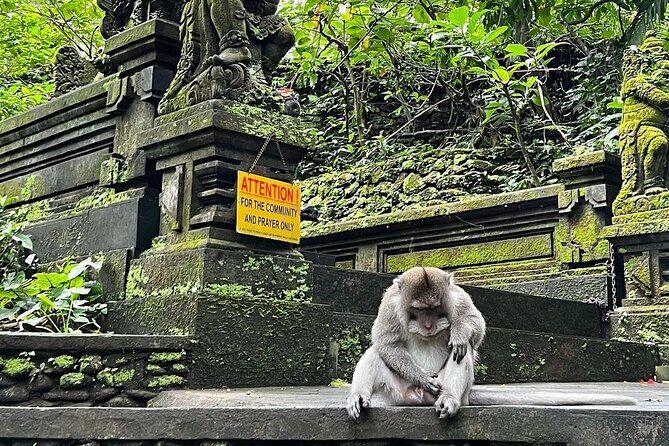
The Sacred Monkey Forest Sanctuary is a lush nature reserve in Ubud, and the star of the show is the hundreds of Balinese long-tailed macaque monkeys. It’s exactly the kind of place where you’ll want a plan: this is not a quick walk-through. The tour gives you around two hours here, which is enough time to look around the reserve and still enjoy the monkey encounters without rushing.

A good part of a guided visit is interpretation. Even if you’re focused on photos, a guide can help you understand what you’re seeing and how the place works as a sanctuary. Mangkok (when available) is the kind of guide who’s described as professional and funny, which helps keep the mood light during a chaotic animal moment.

Practical mindset: expect attention. Monkeys are wild animals, so your experience will come with more movement and unpredictability than a temple courtyard or viewpoint. The benefit is that it feels real—not staged—because you’re watching animals behave naturally.

Time tip: if you’re the type who likes to pause for close-up shots, use some of that two hours to do slow walking and some to step back for wider views. That way you get variety, not just one kind of photo.

Tegalalang Rice Terrace: classic Ubud views with optional Jungle Swing

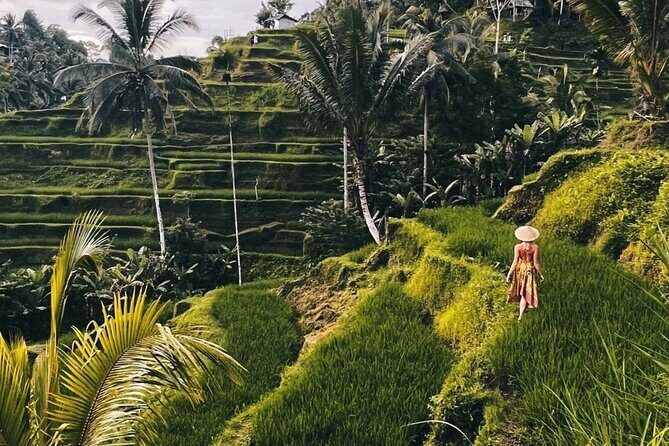
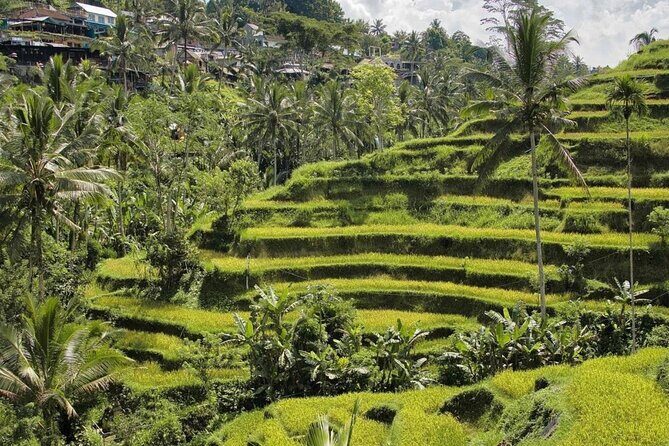
Tegalalang Rice Terrace is one of those places that looks impressive from a distance and even better as you get closer. Carved into the hillsides, it’s all about the patterned rice paddies and the layered way they cascade down the slopes. The tour allots about one hour here, so you’ll want to move with purpose—but also leave time to stop and just look.

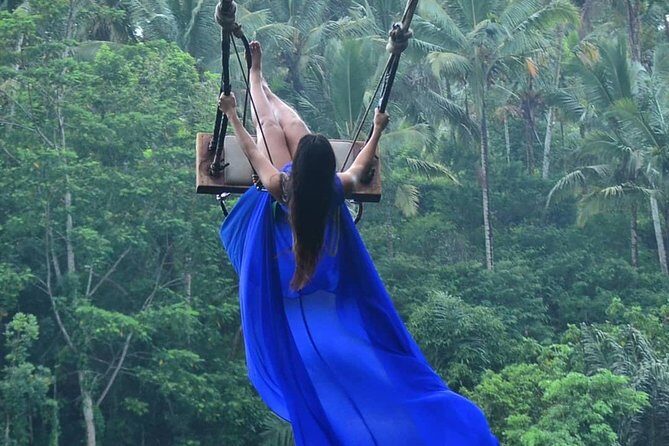
This is where the tour can add a choice: you also have access to the area for the Ubud Jungle Swing. The swing itself is not included, so if you want it, you’ll pay extra on the spot. That matters because you shouldn’t commit to the swing if you’re already short on energy. If you do want it, mentally budget the extra cost and plan for extra time spent waiting, getting in position, and getting your turn.

How I’d treat this stop:

  • If your main goal is scenery, spend your hour on viewpoints and walk the paths you can access.
  • If you want the swing, aim to do it early in the hour so you don’t feel rushed if there’s any wait.

Even without the swing, the rice terrace time is a strong payoff. You’ll get the “Ubud hillside” look people travel for, and you won’t feel stuck in traffic all day to reach it.

Tirta Empul Temple: water purification and respectful observation

Ubud Monkey Forest, Rice Terrace & Tirta Empul Temple Tour - Tirta Empul Temple: water purification and respectful observation
Tirta Empul Temple (near Tampaksiring) is known for holy spring water and purification rituals. The tour includes about two hours here, which is the right amount of time to observe without feeling like you’re being dragged through.

This stop is different from the monkey and rice areas. It’s not about views and animals; it’s about ritual space. You’ll be in a temple environment where the water is the focus. Because the site is linked to purification practices, expect that people will be moving through the water-centered areas with purpose and routine.

The best way to enjoy Tirta Empul is to slow down your photo urge. Take a few photos, yes, but spend more time watching what’s happening and letting the setting make the mood. A guided context helps here—Mangkok-style local info is especially useful because it can explain what the water relates to and why the rituals matter to worshippers.

Small practical note: plan for a temple day. Comfortable clothing and shoes that work on uneven surfaces will make your time easier. And if you see people participating in purification, you’ll have to follow what’s allowed in the areas you access.

Tibumana Waterfall: a break from crowds and a good swim option

Ubud Monkey Forest, Rice Terrace & Tirta Empul Temple Tour - Tibumana Waterfall: a break from crowds and a good swim option
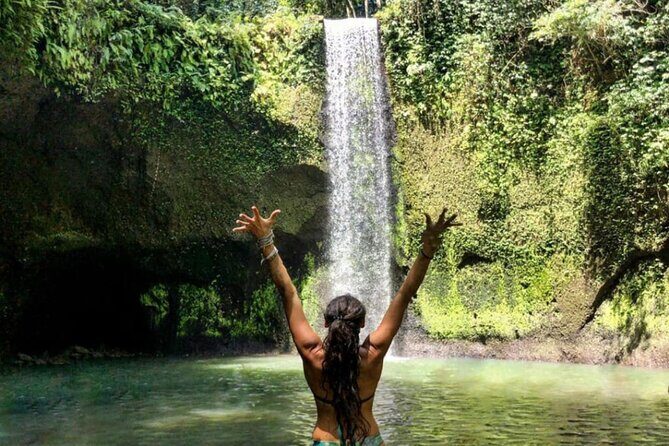
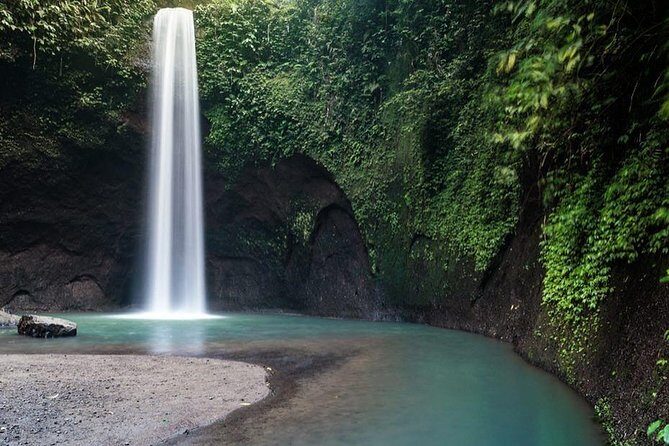
After the temple, the tour moves to Tibumana Waterfall. This is a Bali waterfall stop in Bangli regency, described as having a serene ambiance and pristine natural surroundings. The waterfall cascades down a cliff into a shallow pool below—exactly the kind of setup that makes you think about soaking and photos.

You get around two hours here. That time is handy because it lets you:

  • watch the waterfall and take pictures from different angles
  • relax in the pool area if you want to
  • cool down after earlier walking stops

The tour description specifically notes a spot perfect for swimming and relaxation. So if you’re the “yes, I’ll swim” type, bring what you need to make it comfortable. At minimum, plan on wet weather logic: quick-dry options and a way to keep your bag protected.

The value of this stop is emotional, not just visual. It’s a chance to shift from cultural sites to nature, and it breaks up the day so you don’t end up “sightseeing tired.”

Ubud Traditional Art Market: souvenirs with built-in time

Ubud Traditional Art Market, also known as Pasar Ubud, is the shopping moment. The tour gives about one hour here, and that’s enough time to browse without turning it into a full afternoon project.

This is where the day turns practical. Instead of scrambling for gifts later, you can buy directly from a local market scene: art, crafts, and everyday items you might want for family. The tour includes admission for the market stop, which helps keep this part of the day simple.

How to shop efficiently in one hour:

  • Spend the first 10–15 minutes scanning for the vibe you want (wood items, crafts, textiles, or small souvenirs).
  • Pick a couple of favorites and check prices quickly rather than spending 60 minutes wandering without direction.
  • If you see something small and meaningful, grab it earlier. The market moment can pass fast once your energy drops.

Also, remember this is a day with multiple outdoor stops. If you buy fragile items, think about how you’ll carry them during the next hour or two.

Jungle Swing area timing: plan your money and your energy

Ubud Monkey Forest, Rice Terrace & Tirta Empul Temple Tour - Jungle Swing area timing: plan your money and your energy
The Ubud Jungle Swing stop is included as part of the tour day, but the swing fees are not. That means your experience here is flexible. You might simply enjoy the views from the swing area, or you might go for the ride if you want that high-adrenaline photo moment.

Because this costs extra, I’d treat it as an optional add-on rather than a guaranteed part of the trip. If you’re traveling with kids or someone who doesn’t love heights, you may prefer to skip the swing and use the time for easy viewing and photos.

Also, factor this into your day strategy. Swing time can stretch depending on line length and who’s ready at each turn. Since the day already runs about 10 hours, adding a long waiting period can make the last part feel rushed.

The 10-hour flow: small group pacing and why it feels easier

This tour runs about 10 hours total, and it’s capped at a maximum of 15 people. That group size matters more than you’d think. Big groups mean constant re-checking of who went where. Smaller groups mean fewer delays, and you’re more likely to keep the timing for each stop.

You also get pickup offered and an air-conditioned vehicle plus bottled water. On a full-day route across Ubud and the surrounding area, that comfort isn’t a luxury—it’s what keeps the later stops enjoyable instead of miserable.

Scheduling matters, too. The day is built so you move from Monkey Forest to rice terraces to Tirta Empul, then to Tibumana, and then finishes with market time and the swing area. It’s a logical progression: energetic start (monkeys), iconic views (rice terraces), structured cultural focus (water temple), nature cool-down (waterfall), then flexible final shopping and fun.

If Mangkok is your guide, the flow tends to feel smoother because he’s described as professional and funny, with local context that helps you understand why each stop is placed where it is.

Who this tour is best for (and who should think twice)

This tour fits you best if you want a one-day Ubud highlights plan that includes both nature and culture without a ton of decision-making. It’s especially good if you like:

  • seeing monkeys in a dedicated sanctuary visit
  • taking in Tegalalang’s iconic rice terrace views
  • visiting Tirta Empul for its holy water purification meaning
  • getting a proper waterfall break with a pool area for relaxation

You might think twice if you strongly prefer to linger in one place for hours. This day is carefully timed across multiple stops, so it’s not built for slow wandering only. Also, if you don’t want to pay extra for lunch and the Jungle Swing, you’ll likely feel more value if you plan what you want to spend before you arrive.

Most people can join this tour, and the small group size can help it feel manageable for many different styles of travel.

Should you book this Ubud Monkey Forest, Rice Terrace & Tirta Empul tour?

Yes—if your goal is a packed but organized Ubud day where entrance fees are handled and the schedule hits the major highlights. At roughly $24.30 per person, the math works best when you’d otherwise pay separate entry costs and figure out transportation on your own.

Book it especially if:

  • you want a guided day with pickup and a capped group size
  • you care about hitting Monkey Forest, Tegalalang Rice Terrace, and Tirta Empul in one go
  • you’re interested in Tibumana Waterfall time for photos and relaxation
  • you like having market time built into your itinerary

Consider another option if:

  • you hate long days and want fewer stops
  • you don’t plan to buy lunch or pay extra for the Jungle Swing
  • you’d rather keep the day flexible instead of following a set order

One more practical note: it’s popular enough that it’s often booked about 44 days in advance on average. If your dates are fixed, reserving ahead is a smart move.

FAQ

What is the price of the Ubud Monkey Forest, Rice Terrace & Tirta Empul tour?

The price is $24.30 per person.

How long is the tour?

The duration is about 10 hours.

Is hotel pickup included?

Pickup is offered, and the tour includes an air-conditioned vehicle.

What entrance fees are included?

Entrance fees are included for Sacred Monkey Forest Sanctuary, Tegalalang Rice Terrace, Tirta Empul Temple, and Tibumana Waterfall.

What is not included in the tour price?

Lunch is not included, and Bali Swing fees (for Ubud Jungle Swing) are not included.

What is the group size limit?

The tour has a maximum of 15 people.

What is the cancellation policy?

You can cancel for free up to 24 hours in advance for a full refund. If you cancel less than 24 hours before the start time, the amount you paid is not refunded.

Mt Batur Sunrise Jeep & Natural Hot Spring Tour

Mt Batur Sunrise Jeep & Natural Hot Spring Tour - The Black Lava Field Stop: Where the Volcano Story Becomes Visible

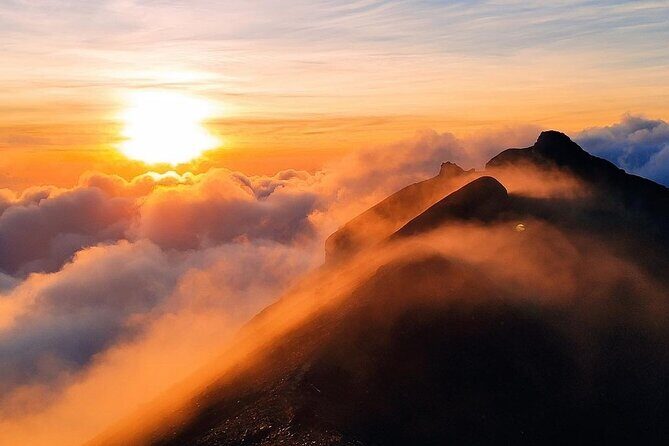
Sunrise on Mount Batur hits different. This Mt Batur sunrise jeep tour pairs rugged volcanic driving with a calm soak afterward, so you get big views without ending the day exhausted. You’ll ride in a 4WD jeep, roll through black lava scenery, and finish at Batur Natural Hot Spring by Lake Batur.

Two things I like right away: the chance to see the caldera at sunrise and the simple value of built-in comfort for the downtime. You get bottled water, coffee/tea, towels, and lockers at the hot spring, which makes the relaxing part actually relaxing. Even better, the guides I’ve seen praised by name—Kadek, Komang, Arsa, Mawe, Gede, and Ketut—are consistently described as respectful and focused on helping you feel good, not rushed.

One possible drawback to plan for: it’s a long day, about 10 hours total. If you prefer a short, low-effort outing, the early sunrise timing and the full schedule can feel like a commitment.

Key Highlights You’ll Care About

Mt Batur Sunrise Jeep & Natural Hot Spring Tour - Key Highlights You’ll Care About

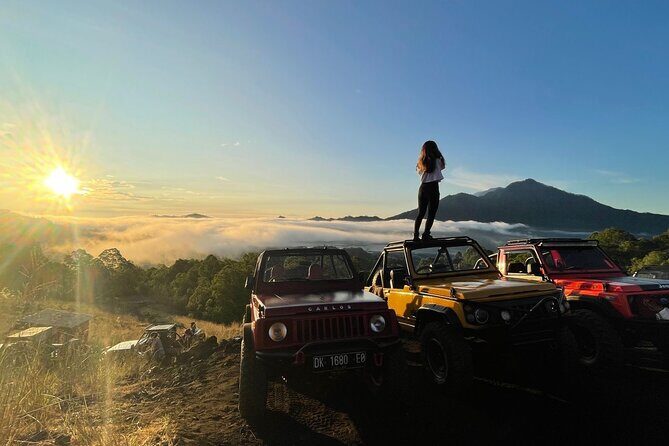
  • 4WD jeep sunrise timing for dramatic views over the caldera and Lake Batur
  • Black lava field driving from Mount Batur’s volcanic eruptions
  • Hot spring included with about 2 hours to soak and reset
  • Small group size (max 15) for a more personal feel
  • Photo-friendly guides known for taking lots of pictures and giving calm direction

Sunrise Jeep Ride to Mount Batur: The Morning Part That’s Actually Worth It

Mt Batur Sunrise Jeep & Natural Hot Spring Tour - Sunrise Jeep Ride to Mount Batur: The Morning Part That’s Actually Worth It
The “sunrise jeep” portion is the heart of this outing. Instead of just looking at Mount Batur from far away, you get taken up and around the volcanic terrain in a 4WD vehicle built for rough ground. The goal is simple: arrive for the sunrise moment when the views start to feel extra crisp and dramatic.

What I like about how this tour is structured is that it treats the sunrise like a real experience, not a quick stop. The itinerary calls for around 8 hours linked to Mount Batur, which usually means you’re not just climbing in a straight line and rushing back down. You’ll have time to experience the driving, view points, and the volcanic “wow” factor in a way that feels paced.

Also, you’re not left to fend for yourself for basic comforts. The tour includes bottled water and coffee or tea. That matters because sunrise days can be a little unpredictable for how you’ll feel—having something warm or drinkable on hand makes the waiting and movement easier.

A small detail that helps: the tour includes entrance tickets to Mount Batur (and any other included entrance option you select, like Kintamani). That reduces the last-minute hassle so you can focus on the moment you came for: seeing the sunrise over the volcanic region.

What to expect from the jeep part

  • You’ll be driving through rugged volcanic terrain in a 4WD jeep.
  • You’ll get classic view angles around the caldera area and over Lake Batur.
  • The “adventure” side is part of the deal, so come ready for a bumpy ride and frequent stops for photos.

If you’re the type who wants your Bali day trips to feel like a story—wind in your face, volcanic views waking up in the sky—this is the right kind of morning.

The Black Lava Field Stop: Where the Volcano Story Becomes Visible

Mt Batur Sunrise Jeep & Natural Hot Spring Tour - The Black Lava Field Stop: Where the Volcano Story Becomes Visible
One of the most memorable elements here is the scenic black lava field, tied to eruptions of Mount Batur. Even if you don’t know the geology, you can read the story from the ground itself. This is one of those places where the terrain looks like a natural fossil of the volcano’s power.

This stop matters because it gives the day more variety than sunrise-only tours. Sunrise gives you the drama above the horizon. The lava field gives you the drama under your feet.

And the way the tour is set up, you’re not just passing through. You’ll have time to see the black volcanic rock and take photos, which is exactly what people get excited about. In the guidance style shared by multiple guide names—like Gede, Made, and Arsa—the emphasis is usually on making sure you understand what you’re seeing, not just snapping and moving on.

If you like travel that mixes visuals with meaning, this is the best part to slow down for. Look closely. Notice how the ground changes. That’s where the day turns from scenic to unforgettable.

Kintamani Entrance Option: A Bonus View Detour (If You Select It)

Mt Batur Sunrise Jeep & Natural Hot Spring Tour - Kintamani Entrance Option: A Bonus View Detour (If You Select It)
The tour includes entrance tickets to Kintamani if that option is selected. That’s a useful detail if you’re trying to squeeze in the classic “high view” Bali moments during one day.

I like that the tour gives you a choice rather than forcing it for everyone. Some people want maximum time in the jeep and hot spring. Others want that extra viewpoint stop. Either way, the core plan stays the same: Mount Batur first, hot spring after.

So if Kintamani is on your must-do list, check your booking option before you go. If it’s included, you’ll have a slightly fuller itinerary during the Mount Batur portion.

Batur Natural Hot Spring: The Reset Button After a Bumpy Jeep Day

Mt Batur Sunrise Jeep & Natural Hot Spring Tour - Batur Natural Hot Spring: The Reset Button After a Bumpy Jeep Day
After the jeep adventure, you shift gears to the Batur Natural Hot Spring. The hot spring is located near Lake Batur, and you’ll get about 2 hours to relax in thermal pools with views toward the lake and Mount Abang.

This pairing is what makes the day feel balanced. Volcano sunrise tours can leave your body tired and your brain buzzing. The hot spring is the slow-down moment—where you stop thinking in minutes and start thinking in soak-time.

The tour includes practical things that make the experience easier:

  • Towels at the hot spring
  • Lockers for your belongings
  • Entrance tickets to the hot spring
  • (Plus the bottled water and coffee/tea from earlier helps too)

One more comfort point: the hot spring section includes time to actually use the facilities, not just walk through. Two hours is long enough to rinse, change, settle in, and enjoy the view without feeling like you’re being marched along.

How to enjoy the hot spring more

Bring a calm, unhurried mindset. If you rush, you’ll miss the whole point. The best value is in taking a seat, watching the scenery, and letting your body cool down after the jeep ride.

And if you’re visiting with a partner or friends, this is the part that turns the day from “activity” into “together time.” People often remember the contrast: chaos of adventure, then the quiet soak with Lake Batur in the background.

Transfers, Timing, and Group Size: Why This Feels Well Run

Mt Batur Sunrise Jeep & Natural Hot Spring Tour - Transfers, Timing, and Group Size: Why This Feels Well Run
This tour is built to be easy on you logistically. Pickup is offered, and you’ll have a mobile ticket. The vehicle is air-conditioned, which is a big plus in Bali heat—especially once you come down from the higher, windier sunrise area.

The group size is also capped at 15 travelers. That matters because Mount Batur and the hot spring can be busy places. A smaller group makes it more likely you’ll have smoother movement between stops and less waiting around for your turn.

A big part of how this day lands is the human factor: the guides. Names that show up repeatedly as being especially helpful include Kadek, Komang, Arsa, Mawe, Gede, Made, and Ketut. The common thread is that they’re described as respectful, attentive to how you feel, and focused on helping with photos.

I’m glad this tour doesn’t treat picture-taking as an afterthought. A well-run jeep day depends on knowing when to pause and where to stand. If your guide is good at that, you get the photos without feeling like you’re fighting for angles while everyone else pushes.

Safety and comfort: what the reviews suggest

One theme you’ll see in the guidance style praised by name is that people felt secure during the jeep experience. That’s not a small deal when you’re on rugged terrain. It’s worth choosing a tour that prioritizes steady driving and clear direction.

Price and Value: Is $65 a Good Deal?

Mt Batur Sunrise Jeep & Natural Hot Spring Tour - Price and Value: Is $65 a Good Deal?
At $65 per person, this tour sits in the middle range for a Bali volcano-and-hot-spring day trip. The question is what you get for that money, not just the number.

Here’s the value math based on what’s included:

  • Air-conditioned vehicle
  • Bottled water
  • Coffee and/or tea
  • Entrance tickets to Mount Batur
  • Entrance tickets to the hot spring (if selected, but in this plan it is part of the tour)
  • Towels and lockers at the hot spring
  • Pickup offered (a major time-saver when you’re starting in Ubud)
  • Max 15 travelers (a quality-of-experience factor, not just a pricing line)

Then there’s the big intangible value: you’re paying for two different experiences that work as a pair. Sunrise jeep tours are about timing and access. Hot springs are about recovery and scenery. When both are included cleanly, you’re not forced into juggling separate tickets and separate transportation costs.

If you’re already in Ubud and want a one-day answer to Mount Batur and Batur Natural Hot Spring, this price feels reasonable. If you’re trying to go ultra-budget and you don’t care about sunrise or guided photo help, you might find cheaper ways to travel. But for most people aiming for a smooth, memorable day, $65 is a fair trade.

Who gets the best value

  • Couples who want a dramatic sunrise and a relaxing follow-up
  • Small groups who don’t want chaos and overcrowding
  • Travelers who value included comfort (water, tea/coffee, towels, lockers) and less ticket hassle

Who This Tour Suits Best

Mt Batur Sunrise Jeep & Natural Hot Spring Tour - Who This Tour Suits Best
This is a great fit if:

  • You want Mount Batur sunrise views and are okay with a full day schedule
  • You like being guided through volcanic scenery rather than DIYing it
  • You want a “wind down” ending with the hot spring and lake views
  • You prefer a small group size for a calmer experience

It might not be ideal if:

  • You want a short half-day plan
  • You dislike early-morning starts connected to sunrise timing
  • You want a very quiet, no-photos kind of tour (this is very photo-friendly)

Also, if you’re visiting around the Ubud area and you don’t want to stress over getting yourself to the right spots, pickup and included tickets do a lot of the heavy lifting.

Should You Book the Mt Batur Sunrise Jeep & Natural Hot Spring Tour?

Mt Batur Sunrise Jeep & Natural Hot Spring Tour - Should You Book the Mt Batur Sunrise Jeep & Natural Hot Spring Tour?
Yes, you should book this tour if your priority is a classic Mount Batur sunrise experience plus a genuine relax finish. The best reason to choose it is that it balances effort and recovery: jeep adventure first, then soak time with Lake Batur and Mount Abang views.

I’d especially recommend it if you care about how the day feels. The guides named in the experience feedback—people like Kadek, Komang, Arsa, Mawe, Gede, Made, and Ketut—are repeatedly linked to being respectful, helpful with photos, and tuned into travelers’ comfort.

The main caution is simple: it’s about 10 hours total. If your travel style is “one big thing, then back to the hotel,” this might feel like more than you want. But if you’re planning Bali around memorable day trips, this one checks the boxes: big views, black lava scenery, and an ending that helps your body exhale.

FAQ

FAQ

How long is the Mt Batur Sunrise Jeep & Natural Hot Spring tour?

The tour is approximately 10 hours total, with about 8 hours for the Mount Batur part and about 2 hours at the Batur Natural Hot Spring.

Does the tour include pickup from Ubud?

Pickup is offered. The exact pickup details aren’t listed here, but the tour does include transportation pickup service.

What’s included in the price?

Included items are an air-conditioned vehicle, bottled water, coffee and/or tea, entrance tickets to Mount Batur, entrance tickets to Batur Natural Hot Spring, towels and lockers at the hot spring, and entrance tickets to Kintamani if you selected that option.

How much does it cost and when should I book?

It costs $65.00 per person, and on average it’s booked about 14 days in advance.

Is admission to Mount Batur and the hot spring included?

Yes. Admission tickets to Mount Batur and Batur Natural Hot Spring are included in the tour.

Can I cancel for a full refund?

Yes. You can cancel for a full refund up to 24 hours in advance of the experience start time. If you cancel less than 24 hours before, the amount paid is not refunded.

Shore Excursion Cruise Ship From Celukan Bawang Port

Shore Excursion Cruise Ship From Celukan Bawang Port - Timing the 6–10 hour route so you’re back for departure

This route makes North Bali feel like a whole other Bali. You start with a scenic coastal drive, then stack together iconic temples and big water scenery without losing the cruise-day timing. The day balances culture (Ulun Danu Bratan and Brahma Vihara Arama) with nature breaks like Twin Lakes and multiple waterfalls.

I also love that it’s built for limited time: you’re kept moving, but not in a stressed, sprint-around-every-corner way. You’ll get a true North Bali mix—calmer Lovina Beach plus highland views—while still aiming to return to the port with time to spare. The main drawback to watch for: the itinerary is packed, so if you want long, slow hangs at the water, you may feel rushed.

Cruise-port timing and the kind of comfort you’ll notice

Shore Excursion Cruise Ship From Celukan Bawang Port - Cruise-port timing and the kind of comfort you’ll notice
Because this is designed as a shore excursion from Celukan Bawang Port, the goal is simple: maximize sights and still make it back for your ship. Pickup is offered, and you ride in an air-conditioned vehicle with an English-speaking, private driver—handy on Bali’s roads and heat.

Key stops come with defined time blocks (from quick viewpoints to about an hour at major sites). It’s not a get-lost-in-the-moment day. It’s a see-a-lot and go home happy day.

Key highlights you’ll care about

Shore Excursion Cruise Ship From Celukan Bawang Port - Key highlights you’ll care about

  • Ulun Danu Beratan Temple at Lake Beratan: one of Bali’s most photogenic temple settings, with admission included.
  • Twin Lake Viewpoint: a quick 30-minute break to see Lake Buyan and Lake Tamblingan from above.
  • Banyumala Twin Waterfalls: lush cliffs and a clear natural pool for a refreshing stop.
  • Banjar Hot Springs: warm, mineral-rich bathing waters with the dragon-carved spout.
  • Lovina Beach with black sand: calmer coastal time with free admission.
  • Munduk Waterfall: highland waterfall surrounded by forests plus coffee and clove plantations.

North Bali from Celukan Bawang: a calmer side of the island

North Bali has a different pace than the south. It leans into green hills, cooler highlands, and places that feel more local and less crowded. That’s why this tour works so well as a cruise shore day: you’re not just ticking boxes—you’re moving through regions that actually feel different from one another.

You begin with a drive along Bali’s northern coast. Then you head inland toward Bedugul and the crater-lake area. Later, you swing back toward the Lovina coast and continue into the Munduk highlands. In plain terms, you spend the day crossing Bali’s “climate zones” rather than repeating the same scenery.

Timing the 6–10 hour route so you’re back for departure

Shore Excursion Cruise Ship From Celukan Bawang Port - Timing the 6–10 hour route so you’re back for departure
The tour runs about 6 to 10 hours, which is the right scale for a shore excursion if you want multiple stops but don’t want a day-long saga. The schedule uses a mix of short and longer visits: for example, the Twin Lake viewpoint is about 30 minutes, while several major stops are around an hour.

The practical takeaway: this format is ideal when you’re tied to your ship’s departure time. The tour is designed so you return to Celukan Bawang Port in plenty of time for your cruise. If your number-one goal is to see North Bali’s key sights without gambling your schedule, this is the right style.

Ulun Danu Bratan Temple at Lake Beratan: temple photos with a water theme

Shore Excursion Cruise Ship From Celukan Bawang Port - Ulun Danu Bratan Temple at Lake Beratan: temple photos with a water theme
Ulun Danu Beratan Temple is one of those places where the setting does half the work. It sits on the shores of Lake Beratan in Bali’s cooler Bedugul highlands, and it’s dedicated to Dewi Danu, the goddess of water. That theme matters because you’re not just looking at buildings—you’re looking at a religious site that’s tightly connected to the lake.

You’ll have about an hour at the temple, and admission is included. Expect a mix of temple views, walkways, and photo angles with the lake in the background. If you like architecture and atmosphere, this is usually the stop where the “wow” factor clicks.

One consideration: like many temple visits in Bali, it’s smart to dress respectfully. Also, the time is limited, so don’t plan on doing this like you’re spending a half-day sightseeing slowly. Hit your favorite view angles early in the hour and keep moving.

Twin Lake Viewpoint: a quick crater-lake fix with big views

Shore Excursion Cruise Ship From Celukan Bawang Port - Twin Lake Viewpoint: a quick crater-lake fix with big views
Right after the temple stop comes a faster viewpoint break: Twin Lake Viewpoint. You’re looking at two crater lakes—Lake Buyan and Lake Tamblingan—surrounded by dense tropical forest. It’s a classic North Bali scene: water, forest, and a high vantage point that makes it easier to understand the region quickly.

This stop is about 30 minutes, and admission is included. That short timing is a feature, not a bug. You get the visual payoff without eating up the whole day.

If you’re sensitive to motion or heat, viewpoints can feel a bit exposed. Try to time your photos so you’re not standing in the hottest part of the day for too long.

Banyumala Twin Waterfalls: refreshing water and slippery footing

Shore Excursion Cruise Ship From Celukan Bawang Port - Banyumala Twin Waterfalls: refreshing water and slippery footing
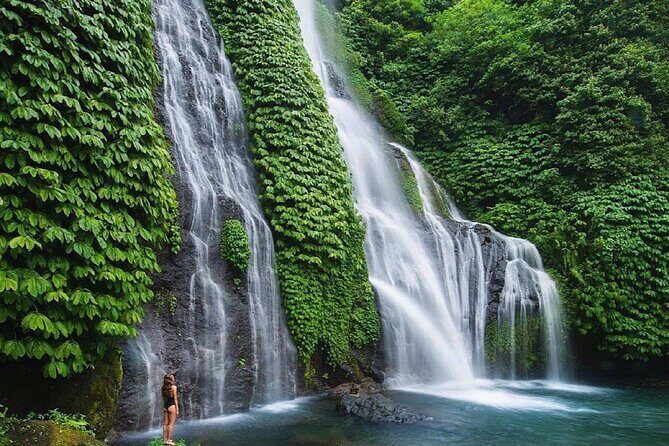
Next up is Banyumala Twin Waterfalls, near the Twin Lakes area. This is the kind of stop that breaks up the cultural sites with a nature reset. The waterfall cascades down lush green cliffs into a clear, natural pool, which makes it feel more like a place to breathe for a bit than a quick look-and-go.

You’ll have about an hour here, and admission is included. That gives you time to wander, take photos, and decide how close you want to get to the pool area.

Practical consideration: waterfall areas can be slick. I’d plan on wearing shoes with grip (or water-friendly footwear). If you’re bringing a bag, keep electronics protected because mist and splashes are part of the deal.

Banjar Hot Springs: warm water after cool highland stops

Shore Excursion Cruise Ship From Celukan Bawang Port - Banjar Hot Springs: warm water after cool highland stops
Then you shift into something totally different: Banjar Hot Springs (Air Panas Banjar). This is a natural hot water bathing spot in North Bali, located near Lovina. The waters are described as warm and mineral-rich, and the spring water flows from a stone-carved dragon spout—an extra bit of local character that you can actually see.

This stop is about an hour, and admission is included. It’s a great contrast to the colder highland feel around Bedugul and the outdoor walking at waterfalls. Even if you don’t go in for long, the hot water stop can feel like a reset button for your whole body.

What to do with this stop: treat it like recovery time. Plan your bathing so you’re not scrambling at the end. Also, bring swimwear or a change of clothes if you think you’ll actually use the pools (the tour includes bottled water, but it doesn’t mention towels or gear).

Brahma Vihara Arama Buddhist Monastery: the Little Borobudur vibe

Shore Excursion Cruise Ship From Celukan Bawang Port - Brahma Vihara Arama Buddhist Monastery: the Little Borobudur vibe
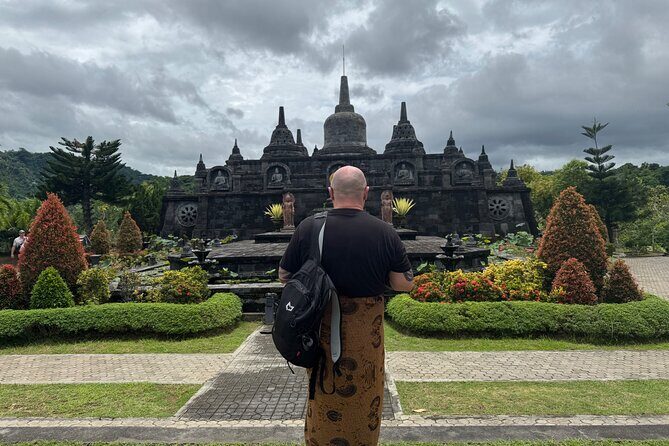
Brahma Vihara Arama Vihara Temple is one of Bali’s biggest Buddhist monastery sights, and it’s located in the hills near Banjar in North Bali. It’s often called the Little Borobudur because of its beautiful stupas and detailed carvings.

You’ll get about an hour here, and admission is included. This stop is valuable because it adds spiritual depth beyond the Hindu temple focus of Ulun Danu Beratan. If you enjoy religious art, stonework, and symmetry in architecture, you’ll likely spend more time here than you expect—just don’t ignore the time limit.

Practical note: monasteries usually require respectful clothing. If you’re unsure what works, err on the modest side. You’ll move between viewpoints and walkways, so wear something you can stay comfortable in.

Lovina Beach black sand: calmer coast time with free entry

After monasteries and waterfalls, you’ll hit Lovina Beach. This is where North Bali slows down again. Lovina is known for its calm black sand shores and a tranquil coastal vibe compared with Bali’s busier southern beaches.

You’ll have about an hour, and entry is free. That free entry matters because it helps keep the day’s overall cost controlled, especially since several other stops include admission already.

What you can do with this time: relax, take beach photos, and enjoy the difference in atmosphere. If you’re hoping for a big, all-day beach scene, note that this is a one-hour stop. It’s more about peaceful coastal time than a full-on beach vacation.

Munduk Waterfall: highland green, plus coffee and clove air

To finish the nature side, you’ll visit Munduk Waterfall in the highlands of Munduk Village, Buleleng Regency. This waterfall is described as being surrounded by lush green forests, with coffee and clove plantations in the mix. It’s the kind of setting that feels cool and fresh compared with the coast.

You’ll have about an hour here, and admission is included. This stop works as a satisfying closer because it’s different from Banyumala and adds another “water moment” before you head back.

Consideration: you’ll likely be outdoors again after hot springs and temple walks. Wear footwear that works on damp ground, and bring a light layer if you run cold in shaded areas.

Wanagiri ATV quad bike stop: fun off-road, check what your package covers

Your itinerary includes a stop related to Wanagiri ATV Quad Bike tours. The description pitches an off-road route through jungles, rice fields, rivers, and villages, with muddy trails, rocky paths, and the chance to pass caves or hidden waterfall areas.

Here’s the key point: the provided info doesn’t clearly state whether the ATV ride itself is included in the package price. It does list the stop and describes what the experience offers, but it doesn’t spell out the activity fee.

So before you commit your time, confirm what your booking option includes. If your goal is just photos and sightseeing, this stop might still be enjoyable as a viewpoint. If your goal is the actual quad bike ride, budget for possible extra costs and come dressed for dust and mud.

Price and value at $25.66 per person (and what can cost extra)

At $25.66 per person, the big value driver is what’s bundled. You’re getting bottled water, an air-conditioned vehicle, parking fees, and travel insurance. You also have a driver who speaks English and a private driver for the day. On top of that, entrance tickets are included for the listed stops—except for the booking option that says you can customize your itinerary, where entrance fees may not be included.

That combination is what makes it good value for a cruise shore day. You’re paying for transport across multiple North Bali regions plus admissions at key sites. If you tried to piece this together yourself on the same day, you’d likely pay similar or more once you add drivers, timing risks, and entry fees.

What’s not included is also clearly stated:

  • personal expenses
  • entrance fees when you choose a booking option that customizes the itinerary

One more practical cost to watch: the ATV quad bike activity may have its own fee. Since it’s not explicitly called out as included, you should treat it as a possible add-on.

Who this shore tour suits best (and who may feel cramped)

This tour is a good fit if you:

  • want North Bali highlights in one day from Celukan Bawang Port
  • like mixing temples, waterfalls, and a calm beach stop
  • prefer having a driver handle logistics and timing
  • want entrance fees mostly handled for you

You may feel cramped or want to manage expectations if you:

  • hate being on a schedule (the stops run around an hour each, with some shorter viewpoint time)
  • want long beach lounging, since Lovina Beach is about one hour
  • plan to spend extra time at the natural areas for swimming or long hikes (the day has to keep moving)

Should you book this North Bali cruise shore excursion?

I’d book it if your priority is a well-paced see-a-lot North Bali day that respects cruise timing. The route hits the kind of places people come for—Lake Beratan temple views, crater-lake viewpoints, waterfall scenery, hot springs, and the black-sand calm of Lovina—without forcing you to plan, price entry tickets, or coordinate transport.

Skip it or at least double-check the package details if your booking option is customized and you’re counting on entrance tickets being included. Also confirm whether the Wanagiri ATV quad bike ride cost is part of your choice, since that’s the one item that could add surprise expenses.

If you want a calm, efficient North Bali intro with real variety, this is a strong option.

FAQ

Where does this shore excursion depart from?

It departs from Celukan Bawang Port and is designed to return you to the port with time for your cruise departure.

How long is the tour?

The tour is approximately 6 to 10 hours.

Is pickup included?

Yes, pickup is offered.

Does the price include entrance tickets?

For booking options A to E, the package includes the entrance tickets for the planned itinerary. If you choose a customize itinerary option, entrance fees are not included.

What does the tour include besides the tour stops?

It includes bottled water, an air-conditioned vehicle, parking fees, travel insurance, an English-speaking driver, and a private driver.

Which stops are included in the plan?

The listed stops are Ulun Danu Beratan Temple, Twin Lake Viewpoint, Banyumala Twin Waterfalls, Banjar Hot Springs, Brahma Vihara Arama Buddhist Monastery, Lovina Beach, Munduk Waterfall, plus a Wanagiri ATV quad bike stop.

Is Lovina Beach admission included?

Yes. Lovina Beach entry is listed as free.

Ubud Monkey Forest, Holy Water Temple & Waterfalls Tours

Ubud Monkey Forest, Holy Water Temple & Waterfalls Tours - Ubud Monkey Forest Sanctuary: macaques, walking time, and photo energy

Ten hours in Ubud can feel fast.

This private guided loop strings together Ubud Monkey Forest, Tegalalang Rice Terrace, Tirta Empul’s sacred springs, and two different waterfalls—Tukad Cepung and Tibumana—so you get nature and Hindu culture in one day without rushing between places on your own.

I like how the pacing is clear and site-by-site, so you know what you’re heading to next: macaques in the morning, rice farming around late morning, a purification ceremony around midday, then waterfalls through the afternoon. I also like the practical setup: private air-conditioned vehicle, pickup options from several Bali areas, and an English-speaking guide who can explain what you’re seeing and help tailor the day to your interests.

The main drawback is simple: it’s a full-day schedule. By the time you add the walk-ins at each stop, plus the afternoon waterfall timing, you’ll want to manage energy and expect a hot-weather day outdoors.

Key moments that make this tour worth your time

Ubud Monkey Forest, Holy Water Temple & Waterfalls Tours - Key moments that make this tour worth your time

  • Sacred water blessing at Tirta Empul: a hands-on Hindu purification at the temple springs
  • Ubud Monkey Forest visit: time to walk around and play with friendly macaques
  • Tegalalang Rice Terrace education: learn about rice cultivation and the irrigation system
  • Two waterfalls with two very different vibes: Tukad Cepung’s cave-like photo spots plus Tibumana’s swim-friendly waterfall
  • Lunch break that’s built in: a set menu at Waroeng D’Yoni (when you choose the lunch option)

Ubud in one packed day: what you’re really signing up for

Ubud Monkey Forest, Holy Water Temple & Waterfalls Tours - Ubud in one packed day: what you’re really signing up for
This tour is built like a “greatest hits” circuit, but it doesn’t feel random. You start with monkeys and rice, switch gears to a temple ritual, then end with waterfalls that are different enough to keep your brain interested: one is known for photos inside a cave-like setting, and the other gives you a real chance to linger—right up to swimming.

Because it’s private, you’re not stuck with awkward group pacing. You can move at your own rhythm, ask questions, and focus on what you care about most—animals, agriculture, ceremony, or waterfalls. And since you’re in an air-conditioned vehicle with pickup, the hardest part is just showing up and being ready to walk.

The day is also structured to catch you at sensible times of day: Monkey Forest in the morning, rice terrace shortly after, Tirta Empul around late morning, then waterfall stops later when the light and temperatures can be more workable.

Ubud Monkey Forest Sanctuary: macaques, walking time, and photo energy

Ubud Monkey Forest, Holy Water Temple & Waterfalls Tours - Ubud Monkey Forest Sanctuary: macaques, walking time, and photo energy
Your morning begins at Sacred Monkey Forest Sanctuary. The plan is straightforward: you’ll walk around and play with friendly monkeys for about an hour, with an admission ticket included on the stop.

Here’s the key to enjoying this part: treat it like a lively outdoor walk, not a “stand still and watch” attraction. Your time is limited, so move with purpose—pause when you see something cool, then keep going before you get stuck in one spot.

Also, remember this is a sanctuary setting, so you’ll be sharing the space with animals. That means you should keep your attention on your surroundings and your comfort level, especially if you’re the type who dislikes close animal encounters. If you’re okay with that, you’ll probably love how playful the macaques are.

A practical tip: go in ready for motion. An hour sounds long until you’re weaving through paths and reacting to what the monkeys do.

Tegalalang Rice Terrace: irrigation lessons you can actually use

Ubud Monkey Forest, Holy Water Temple & Waterfalls Tours - Tegalalang Rice Terrace: irrigation lessons you can actually use
After the monkeys, you shift to farming history at Tegalalang Rice Terrace. You’ll spend about an hour here, learning about rice plantations and the irrigation system, plus taking in the layered terraces.

What I like about this stop is that it’s not only about views. The irrigation system is the point. Rice terraces in Bali aren’t just pretty stairs—they’re engineering built to move water where crops need it. When you understand that water flow, the landscape suddenly makes more sense, and the terraces become more than a photo backdrop.

You’ll also get a sense of why this area keeps showing up in Bali itineraries. It’s one of the ways the island’s agricultural culture feels visible in real life—people still use these terraces, and you’re seeing how water supports the cycle.

One consideration: it’s still outdoors and usually hot. Plan for sun and keep your own pace. If you want slow, take slow. If you’re more of a quick-look photographer, focus on the terraces first and save chatting for when you’re shaded.

Tirta Empul Temple: a Hindu purification you should approach respectfully

Next up is Tirta Empul Temple, scheduled for around 11:00am. This is the cultural anchor of the day: you’ll take part in purification on the holy water and learn Balinese culture during about an hour, with admission included.

This is not a casual photo stop. It’s a ritual space, and the value comes from understanding the meaning behind it and behaving like you belong. You’re there for a water blessing at the sacred springs, and that’s inherently personal and structured.

Even if you don’t know the ritual details ahead of time, you can still do two things well:

  • Listen closely to your guide’s explanations
  • Follow the flow of people already participating

It helps that your tour includes a guide with excellent English and a clear plan. You won’t be guessing what’s happening.

Culturally, Tirta Empul connects the dots between Bali’s daily life and its spiritual traditions. After you’ve seen monkeys and agriculture, this stop adds the “why” that ties it together—water isn’t only practical here. It also carries meaning.

Waroeng D’Yoni lunch: where the set menu can save your energy

Ubud Monkey Forest, Holy Water Temple & Waterfalls Tours - Waroeng D’Yoni lunch: where the set menu can save your energy
At about 1:00pm, you’ll take lunch at Waroeng D’Yoni. The tour uses a set menu at a local Indonesian restaurant, and this stop is about an hour.

This kind of lunch matters more than you might think on a day like this. When the schedule is tight, a set menu reduces decision fatigue. You’re also less likely to waste time hunting for food that fits your tastes, your budget, or your dietary needs.

If you’re choosing the lunch upgrade, it’s included as a set menu lunch. There’s also a vegetarian option available—just tell them when you book.

The only drawback is that you’re eating in the middle of a full schedule. That means it’s smart to eat like you’re fueling a hike: don’t go for something too heavy. You want energy for the afternoon, not a sleepy slump before waterfalls.

Tukad Cepung Waterfall: walking into the cave for photos

The first waterfall stop is Tukad Cepung around 3:00pm. You’ll walk through a small forest with coconut trees and bamboo and then move into the waterfall area that’s known for spectacular photos inside a cave-like setting. The stop is about an hour, and admission is included.

Tukad Cepung works because it’s not just “pretty water falling.” It’s a different kind of experience: the setting is more enclosed, so the waterfall viewing feels framed rather than open. That makes it a favorite for photos—especially for people who like dramatic lighting and unusual viewpoints.

What you should consider before going: since the waterfall spot is inside a cave area, the environment tends to feel darker and tighter than an open waterfall. Move carefully, give yourself time to find the best spots, and don’t rush through this section just because you’ve seen pictures online.

This stop also nicely breaks up the day. You go from rice terrace and temple ritual into a natural, sensory world—sound of water, cooler mist in shaded areas, and the earthy walk through coconut and bamboo.

Tibumana Waterfall: a classic finish with time to swim

Ubud Monkey Forest, Holy Water Temple & Waterfalls Tours - Tibumana Waterfall: a classic finish with time to swim
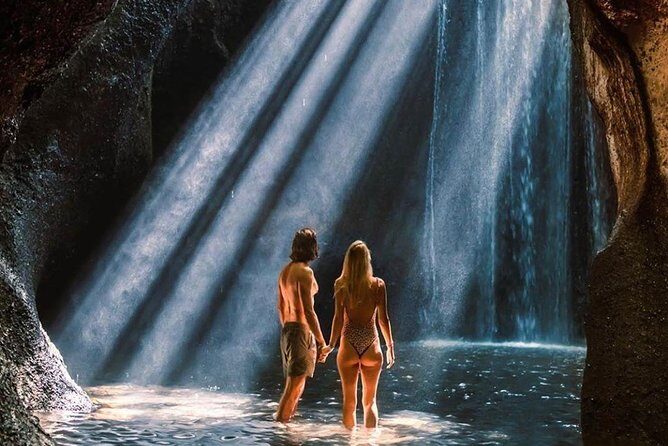
You’ll end with Tibumana Waterfall around 4:00pm. The plan is about an hour here, with admission included, and the standout detail: you can swim in it. The tour even calls out getting the best Instagram photos while enjoying the waterfall.

This is the payoff for staying until late afternoon. Tibumana tends to feel more like a “you’re here, slow down and enjoy it” stop. Swimming changes the tone. You’re not only watching water—you’re interacting with it, which makes the visit more memorable if you’re traveling for experiences, not just sights.

A practical note: if you want to swim, bring what you need to handle water comfortably. If you don’t swim, you can still enjoy the waterfall atmosphere and use the time to take photos and reset after the cave-style setting at Tukad Cepung.

The timing is also good for pacing. After a busy morning and early afternoon, this last stop gives you a gentler rhythm—especially compared to earlier “walk and learn” segments.

Price and value: what $33.25 means on a full-day private route

The base price is $33.25 per person, and the tour runs about 10 hours. That sounds affordable for a day that covers four major cultural/nature stops plus private transport.

Here’s where value really depends on your upgrade choices. The tour includes all ticket fees and a set menu lunch if you select the option. So if you want fewer surprises and less planning work, upgrade for tickets and lunch. You’ll get a clearer sense of what the day costs overall.

You also get a package feel: bottled water, an air-conditioned vehicle, and a private guide with English spoken well. Even if you’re not paying extra for lunch or tickets, you’re still buying time efficiency. Instead of coordinating separate rides and separate entry costs, you get a smooth route designed to hit Ubud’s top stops without juggling details.

Where the price might not fit you is if you already have entrances figured out and you’d rather do waterfalls without structure. This isn’t the cheapest option if you like to DIY everything. But for many people—especially those who want a guided, private day with meaningful cultural time—this is a solid value.

Where this tour fits best (and who might prefer something else)

This is a great match if you want a single, guided loop of Ubud’s big experiences:

  • families and couples who like structure
  • visitors who want a mix of culture and nature
  • people who’d rather ride in comfort than coordinate multiple transport legs
  • travelers who like being shown what matters, especially at Tirta Empul

It may feel less ideal if you’re a slow traveler who hates packed schedules. The day runs from about 9:00am to around late afternoon, and you’ll spend time walking at multiple stops. Also, if you dislike animal encounters entirely, the Monkey Forest segment could be stressful even if the monkeys are described as friendly.

The practical flow: timing, pickup, and how to be ready

The tour is designed to start around 9:00am, then move step-by-step with site visits. Pickup is offered, and transfers are available from Ubud and also from Kuta, Sanur, Canggu, Seminyak, Nusa Dua, and Jimbaran addresses.

If you’re choosing this tour, you’ll get the most out of it by preparing like it’s a full-day outing:

  • have comfortable shoes for walking
  • bring something for sun (it’s outdoors a lot)
  • decide ahead of time if you want the lunch and ticket upgrades (it changes what’s included)

You’ll also receive a mobile ticket, which is handy for keeping everything organized during a busy day.

Should you book this Ubud Monkey Forest, Holy Water Temple & Waterfalls Tour?

If you want one day that hits Monkey Forest, Tegalalang Rice Terrace, Tirta Empul’s sacred springs, and two waterfalls without constant logistics, I think this is an easy yes. The structure is clear, the stops complement each other, and the option for tickets plus lunch makes the day feel more complete and less “let me figure it out later.”

I’d especially recommend it if you care about the Tirta Empul purification part. That’s the kind of experience where a guide helps you understand what you’re participating in, and it changes how you experience the whole day.

If you’re the type who wants lots of free time or only wants nature (not ceremony), then you might prefer a lighter plan. But if your ideal Bali day is culture in the morning and waterfalls in the afternoon, this private Ubud tour fits the bill.

FAQ

How long is the Ubud Monkey Forest, Holy Water Temple & Waterfalls tour?

It runs about 10 hours.

What stops are included in the itinerary?

You’ll visit Sacred Monkey Forest Sanctuary, Tegalalang Rice Terrace, Tirta Empul Temple, Waroeng D’Yoni for lunch (at around 1:00pm), Tukad Cepung Waterfall, and Tibumana Waterfall.

Is pickup included?

Pickup is offered, and transfers are available from Ubud and several other Bali areas including Kuta, Sanur, Canggu, Seminyak, Nusa Dua, and Jimbaran.

Is lunch included?

Lunch is included only if you choose the option for a set menu lunch at Waroeng D’Yoni. A vegetarian option is available if you request it during booking.

Are entrance tickets included?

Admission and ticket fees are included only if you select the option that includes tickets.

Can I cancel for a full refund?

Free cancellation is available up to 24 hours before the experience starts for a full refund. If you cancel less than 24 hours before, the amount paid is not refunded.

Full Day Ubud Waterfall Visit and Cooking Experience

Full Day Ubud Waterfall Visit and Cooking Experience - AM Mart Pejeng start: simple logistics, easy meeting

This trip turns Ubud into a kitchen plus a cool-off spot in one day. You start with an early pickup, stop at a traditional market, then head straight into a cooking class set up for all levels. The day ends at Secret Waterfall, with time to shower under the falls and swim when the water is calm.

Two things I really like: first, you learn Balinese cooking in a practical way—chopping, grinding, frying, and grilling satay with coconut shell—so it feels more like making food than watching a show. Second, you eat what you cook. Lunch is included, and it uses the dishes you prepare in class.

One possible drawback: it’s an early start and the day runs about 8 hours, plus the waterfall experience depends on conditions. The market stop can also shift if it rains, so plan for some weather-flexibility.

Key highlights at a glance

Full Day Ubud Waterfall Visit and Cooking Experience - Key highlights at a glance

  • Market-to-kitchen flow: you see local ingredients first, then you cook with that same spice logic
  • No experience needed: chopping and grinding are part of the fun, not a test
  • Chef-led, hands-on teaching: you’ll work with a friendly team, including Chef Wayan
  • Swim time at Secret Waterfall: you can take a natural shower and swim if conditions allow
  • Value-packed inclusions: lunch, tools, ingredients, air-con transport, and bottled water are covered

How the morning pickup sets the tone in Ubud

Full Day Ubud Waterfall Visit and Cooking Experience - How the morning pickup sets the tone in Ubud
Your day starts early, with pickup from your stay somewhere around 6:30–7:40 AM depending on where you are. That timing matters. You’ll beat the later crowds, and you’ll arrive at the first stops with enough daylight to enjoy the market and cooking setting properly.

You’ll ride in an air-conditioned vehicle and follow the same driver for the day trip. The tour is capped at up to 20 travelers, which helps keep things from feeling chaotic once you’re in the cooking space.

The day is built around travel time too. After each major block, you’re not stuck wondering what’s next—the itinerary keeps moving, and the remaining hours are simply for getting between stops.

AM Mart Pejeng start: simple logistics, easy meeting

Full Day Ubud Waterfall Visit and Cooking Experience - AM Mart Pejeng start: simple logistics, easy meeting
The tour start point is AM Mart Pejeng, near Jl. Raya Pejeng Tampaksiring in Pejeng. From there, the schedule has a clear rhythm: market, then a short hop to the cooking workshop.

The meeting point is useful if you’re organizing your morning on your own. Even if you’re staying farther out, the pickup plan still keeps things straightforward. You’re also dropped back near Warung Tumang Bali at the end of the day.

One small timing detail to keep in mind: it takes about 10 minutes from the market visit to the cooking class workshop. So once you’re done looking around, you’re not waiting around for long.

Local market stop: what you’re really looking for

Full Day Ubud Waterfall Visit and Cooking Experience - Local market stop: what you’re really looking for
The first stop is Jalan Raya Laplapan, where you’ll visit a local Balinese market (if it’s not rainy). This is the part that makes the cooking class feel grounded instead of generic. You’re not just learning recipes; you’re learning the ingredient “why.”

In the market, you’ll see how people shop for fruits, vegetables, and spices that show up again and again in Balinese cooking. The point isn’t to memorize names. It’s to notice the pattern—what’s fresh, what’s aromatic, and what gets used to build flavor.

If it’s rainy, the market portion can be affected. That’s the only weather-related wrinkle in the day that can change how you experience this stop. If you’re the type who hates rushing, bring a light layer and plan on a quick, efficient browse.

Balinese cooking class at the rice-paddy workshop

Full Day Ubud Waterfall Visit and Cooking Experience - Balinese cooking class at the rice-paddy workshop
After the market, you head to the cooking workshop, set in a beautiful rice paddies-type setting. That’s more than scenery. A setting like this helps you settle in, and it keeps the cooking class from feeling like a rushed demo.

The class itself is built for beginner-friendly participation. You don’t need prior cooking experience. You’ll be guided step-by-step by a friendly team, with Chef Wayan specifically called out in past experiences.

What you’ll actually do (not just watch)

The teaching style is hands-on. You’ll do tasks like:

  • Chopping ingredients
  • Grinding spices and aromatics
  • Frying components for flavor and texture
  • Grilling satay, including grilling in a way that uses a coconut shell

Then you’ll make traditional Balinese spice paste, which acts as a base for multiple dishes. That base is the core “skill” you take home mentally. Even if you don’t recreate everything back home, you’ll understand how those spices get built into the food.

Meat or vegan options

The class teaches Balinese food with either meat or vegan options. That’s a big deal for planning. It means you can join the same core class format while still cooking something that fits what you eat.

If you’re traveling with friends who don’t eat the same way, this is one of those rare tours that doesn’t force one-size-fits-all meals. You’ll still be cooking, still learning the spice work, and still eating lunch afterward.

Expect a fun group pace

With a maximum group size of 20 travelers, the format typically stays friendly and manageable. Still, it’s a full workshop day, and you’ll be working at a station. If you’re used to private, slow, one-on-one teaching, you might find it slightly more structured. But if you like to get your hands busy, this is exactly the right setup.

Lunch: you eat what you cooked

Full Day Ubud Waterfall Visit and Cooking Experience - Lunch: you eat what you cooked
Lunch is included, and it’s made from what you prepared in the class. That’s a practical win. Many cooking experiences end with a snack and a polite nod. Here, you actually get a meal that uses your work.

The class teaching includes chopping and cooking tasks, and then you eat the results. That makes the experience feel complete, because you can immediately connect the spice paste work to the taste on your plate.

Bring an appetite. You’re learning and cooking for a few hours, and the meal is part of the payoff.

Secret Waterfall (Uma Anyar): the payoff at the end

Full Day Ubud Waterfall Visit and Cooking Experience - Secret Waterfall (Uma Anyar): the payoff at the end
After cooking, you head to Secret Waterfall, also referenced as Uma Anyar Waterfall. This part of the day is about resetting your energy after all the kitchen time.

You’ll have around 2 hours here. The waterfall experience includes:

  • An upper waterfall area where you can take a natural shower
  • A lower cascade where the river water can be calmer, so you can swim and relax when conditions are right

The tour notes that swimming and relaxing are best when it’s not rainy. That makes sense. Heavy rain can change how safe and comfortable the water feels, and it can also affect how easy it is to move around.

What to do with your time

Spend your first moments taking it in. Then decide if you want the shower experience up top, the swim/relax area down below, or both.

If you’re the kind of traveler who likes photos, this is also a good spot for short bursts—don’t let your time evaporate in one exact angle. Move a little, find a comfortable spot, and enjoy the sound and mist.

Price and value: why $21.44 can make sense

Full Day Ubud Waterfall Visit and Cooking Experience - Price and value: why $21.44 can make sense
At $21.44 per person, this is one of those tours that feels surprisingly fair if you compare what’s included.

Here’s what you’re getting without extra line-item surprises:

  • Air-conditioned vehicle
  • Bottled water
  • Lunch (the food you cook)
  • Cooking tools and ingredients
  • All fees and taxes
  • Waterfall admission included
  • Pickup offered

You’re also getting two different experiences packaged together: ingredient-based culture (market) plus skill-based cooking (workshop) plus a nature stop (secret waterfall). For that price, you’re not paying just for a location—you’re paying for the structured learning and the included meal.

Two quick value checks you should run in your head before booking:

  1. Are you okay with a full day, including travel? The “8 hours approx.” is real.
  2. Are you excited to cook and then eat? If yes, the value is strong. If cooking isn’t your thing, this day can feel longer than expected.

Who this day trip suits best

Full Day Ubud Waterfall Visit and Cooking Experience - Who this day trip suits best
This combo tour works best for travelers who want a hands-on cultural activity, not just sightseeing.

It’s a great match if:

  • You want a Balinese cooking class with real participation
  • You like the idea of learning spice paste basics and then eating it
  • You want a waterfall moment that includes time to shower and possibly swim
  • You prefer small groups (up to 20 travelers)

It’s not the best match if you:

  • Want an all-nature hike day with long trails and minimal structure
  • Prefer very slow pacing and lots of downtime between stops
  • Dislike early starts (pickup starts in the morning)

If you’re traveling solo, it’s also a friendly option. The format is social, but it’s not dependent on you finding a partner.

Practical tips for enjoying both cooking and swimming

Based on how the day is structured, I’d plan your packing around two activities: cooking work and waterfall water time.

Consider bringing:

  • A change of clothes for after the waterfall, just in case
  • A small towel or something quick-drying for the swim/shower area
  • Comfortable footwear for market walking and workshop movement
  • A light rain layer, since the market stop is noted as rain-dependent and waterfall conditions can shift

Also, go into the cooking class ready to get your hands working. The best part of this experience is that you don’t just taste—you participate, including grinding and grilling tasks.

Should you book this Ubud waterfall and cooking combo?

If you want a day in Ubud that mixes food skills with a real nature break, this one is worth serious consideration. The hands-on cooking, included lunch you make yourself, and the chance to shower and swim at Secret Waterfall make the day feel complete rather than fragmented.

Book it if you’re excited to learn Balinese flavors, you can handle an early start, and you’d like your trip to include both culture and a cooling reward. Skip it if cooking sounds like a chore or you’re hoping for a purely relaxed, no-rhythm day.

FAQ

FAQ

What time does the pickup start?

Pickup is usually between 6:30 AM and 7:40 AM, depending on your stay location.

How long is the full day tour?

The duration is about 8 hours in total.

What does the tour include?

It includes lunch (what you cook), an air-conditioned vehicle, bottled water, all fees and taxes, and cooking tools and ingredients.

Do I need cooking experience?

No. The cooking class is designed so that you can participate even without any cooking experience.

Where does the tour start and end?

It starts at AM Mart Pejeng and ends at Warung Tumang Bali.

Is the waterfall admission included?

Yes. The Secret Waterfall stop has admission included.

What is the cancellation policy?

You can cancel for a full refund up to 24 hours before the experience’s start time.

Ubud Airport Transfer Private All Inclusive

Ubud Airport Transfer Private All Inclusive - Onboard Wi‑Fi and no-roaming setup: small comfort, big payoff

Your Bali arrival should be this easy. This private transfer is built for a smoother exit from Ngurah Rai, with a name sign pickup that cuts through the airport chaos and onboard Wi‑Fi so you can message and reconnect without roaming stress. My only caution is timing and fit: when traffic is heavy, you can see delays, and for larger families you’ll want to choose the right vehicle size for luggage.

What I like most is the feeling of control. You’re not sharing with random stopovers, and drivers such as Arya and Komang are repeatedly described as communicative, professional, and ready when you land.

To make it work well, you must send correct details. Share your flight number, Ubud hotel address, and a working hotel phone number, and plan for the ride time to sometimes stretch beyond the stated 1–2 hours due to real Bali road conditions.

Key points to know before you prebook

Ubud Airport Transfer Private All Inclusive - Key points to know before you prebook

  • Name sign meeting makes it easier to spot your driver in a crowd
  • Onboard Wi‑Fi helps you get online fast after you land
  • Direct private transfer with no extra guest stops
  • Luggage space is planned, with a micro-bus option for bigger groups
  • Communication supports delays if your flight or arrival process runs late

From Ngurah Rai to Ubud: why this transfer feels calmer

Bali’s Ngurah Rai Airport can be intense at the moment you land. There are lots of people trying to pull you toward taxis and set prices on the spot. This transfer is designed to remove that pressure right away by handling the basics before you leave the airport area.

The driver meeting system is the practical win. You’re told your driver will greet you at arrivals holding a sign with your name, which helps you find the right car quickly. Several drivers mentioned in real experiences include Arya, Komang, and Putu Awan, and the consistent theme is that they’re easy to locate, polite, and focused on getting you moving.

Another smart touch is the direct ride. Instead of adding stops for other passengers, you go from the airport straight to your Ubud hotel or villa area. That matters because Ubud is not next door—saving time on route logistics keeps the start of your vacation from turning into an unplanned waiting game.

Still, one small consideration: your pickup depends on the correct arrival context. The service notes that pickup can work for international or domestic arrival as shown in your booking details. If those don’t match your actual arrival, you can run into confusion right when you’re tired and jet-lagged.

Meeting your driver fast: the name sign and the details you must send

Ubud Airport Transfer Private All Inclusive - Meeting your driver fast: the name sign and the details you must send
Here’s how you set yourself up for the smoothest pickup. The provider asks you to mention your flight number and your Ubud hotel address, and to prepare your hotel phone number properly. That’s not just admin. It’s how they prevent you from standing around with luggage while everyone tries to figure out who belongs to which car.

The name sign pickup is built for speed. When you exit the arrivals area, other cars and drivers blend together. The sign cuts through that problem quickly, especially if you’re traveling as a group or you have kids, bulky bags, or wet weather to deal with.

In real-world use, communication also shows up as a major factor. Drivers are described as updating by WhatsApp before and after arrival, and they coordinate when passengers are delayed coming out of immigration and baggage claim. You’ll get the best outcome by keeping your phone active for messages, even if your first instinct is to disconnect after landing.

One more detail: if you’re arriving late, the service indicates the driver will be notified when arrival time is delayed. That doesn’t guarantee zero delays—traffic and airport processing can still affect timing—but it usually reduces the chance of you guessing where your driver went.

Onboard Wi‑Fi and no-roaming setup: small comfort, big payoff

Ubud Airport Transfer Private All Inclusive - Onboard Wi‑Fi and no-roaming setup: small comfort, big payoff
The service includes onboard Wi‑Fi, and that’s more useful than it sounds. After a long flight, you usually want three things fast: to confirm directions, to message your hotel, and to check plans for the next day. Wi‑Fi helps you do that without relying on your own mobile data plan right away.

It also helps if anything changes. Maybe your hotel check-in desk is calling you to ask for timing, or your group needs to confirm a meeting spot. With Wi‑Fi available onboard, you can respond quickly once you’re in the car.

This can be especially helpful if you’re traveling with a family or friends and your group is splitting tasks. Someone can check route timing, someone else can message, and everyone keeps moving instead of waiting until you’ve paid for phone access.

Just keep expectations realistic: the Wi‑Fi is there to help you reconnect, not to stream large videos. Think of it as a practical bridge from airport chaos to quiet Ubud time.

The drive itself: direct, private, and realistic about Bali traffic

Ubud Airport Transfer Private All Inclusive - The drive itself: direct, private, and realistic about Bali traffic
The transfer is described as private transport by car from the airport to the Ubud town hotel area. It’s intended to be no stops for other guests, which is one of the biggest differences from shared shuttles and budget taxi lines.

Duration is listed as about 1 to 2 hours. In practice, you should plan with a buffer. Some rides are described as smooth and about 1.5 hours, but other experiences mention a longer ride time due to congestion. That’s normal around Bali—especially if your flight lands during rush hour or if weather slows things down.

What to watch for on your side:

  • Land at a time when you’ll accept some traffic as part of the deal.
  • If your flight times are tight with dinner or a scheduled activity, don’t book something that assumes the ride always finishes in the minimum time window.

The benefit of direct private transport is that even if the drive takes longer, you’re still not dealing with extra pickup delays for strangers. Your time is more predictable than shared options.

Comfort also matters. Several experiences describe comfortable vans and professional driving, with help for luggage. That’s the kind of detail that quietly improves your first hours in Bali.

Vehicle choice matters: car capacity vs micro-bus for groups

Ubud Airport Transfer Private All Inclusive - Vehicle choice matters: car capacity vs micro-bus for groups
One of the most useful parts of this service is that it offers different vehicle options, including a micro-bus for up to 10 people with luggage on private transfer. That matters when your group isn’t just two adults with carry-ons.

Luggage space is noted as available on the back side of the vehicle. But the provider also points out that the regular car has limits (for example, one experience notes an issue when the group was five plus luggage and the vehicle wasn’t sized ideally). In plain terms: if you’re traveling with multiple large bags, confirm you’re booking the right vehicle class.

If you’re carrying a surfboard, the service says good size up to 3 meters square can be supported, but you should confirm with the operator. Surfboards can be tricky if you don’t have a secured plan for how they’ll fit inside without damaging padding or blocking space.

So my practical advice: don’t only count people. Count bags, and think about how you’ll travel through the airport with kids, backpacks, and suitcases. The most common problem in transfers is not the driver—it’s an undersized ride for the amount of gear you brought.

Communication when your flight runs late: how delays are handled

Ubud Airport Transfer Private All Inclusive - Communication when your flight runs late: how delays are handled
Delays are part of flying, and Bali roads can add their own delays once you’re on the move. The key is whether your pickup stays connected and coordinated.

This service states that it’s available 24/7 following your arrival time, and that the driver will be notified if arrival time gets delayed. In real usage, drivers are described as being communicative on WhatsApp, including when passengers were delayed exiting the airport. That kind of proactive contact is what turns a possible headache into a manageable delay.

You can help by doing two things before you travel:

  • Put the flight number and correct hotel details into the booking.
  • Keep the contact number you provided reachable, including after you land.

One reason this matters: one experience described a no-show situation when the pickup wasn’t properly registered under the expected name, and another described a late pickup with limited contact at the start. Those situations underline the same lesson: you’re safer when your reservation details match reality and your phone can receive messages.

Also remember the airport workflow itself can eat time. Immigration, baggage claim, and getting out to the meeting area can stretch the moment you land. Planning a little slack helps you judge the situation with patience, especially during busy periods.

Value for money: what $15 per person actually buys you

Ubud Airport Transfer Private All Inclusive - Value for money: what $15 per person actually buys you
At $15 per person, this transfer is priced to be realistic for most budgets. The biggest value isn’t luxury—it’s friction reduction. You’re paying to avoid hunting for a taxi, negotiating on the spot, and spending mental energy on figuring out the simplest route to Ubud.

You also get practical extras bundled in:

  • Private ride from airport to Ubud with no extra passenger stops
  • Onboard Wi‑Fi to reconnect quickly
  • Name sign pickup that helps you locate the driver fast
  • A stated plan for luggage space (and a micro-bus option for bigger loads)

Is it always the cheapest way to get to Ubud? Maybe not. But it often feels like the best value when you count stress, timing, and the cost of being tired after a long flight.

A smart way to judge value is to consider your group size and luggage. If you’re a party of two or three with normal suitcases, a private car can be very competitive against ad-hoc taxis. If you’re traveling as a family of five or packing heavy, selecting the micro-bus can prevent a bad mismatch where you end up squeezing into the wrong vehicle setup.

Who this transfer suits best in Ubud

Ubud Airport Transfer Private All Inclusive - Who this transfer suits best in Ubud
This is a great fit if you want an easy arrival with a predictable plan. It’s especially useful when:

  • You’re landing at odd hours, since pickup is 24/7.
  • Your Ubud stay is in a villa or hotel where you want direct drop-off rather than walking from a busy pickup zone.
  • You’d rather use a working Wi‑Fi connection to sort messages and directions right after landing.
  • You’re traveling with luggage and want a vehicle where bags are planned for, not shoved into awkward spaces.

It’s also a good choice if you like communication. Drivers described in experiences as friendly, responsible, and professional stand out for being ready at the airport, helping with luggage, and making the ride start feel low-stress.

If you’re traveling with something oversized like a surfboard, make sure you confirm ahead so the gear works with the vehicle plan.

Quick advice to make your pickup painless

Here’s my short checklist that matches how this service is meant to work:

  • Double-check you entered the right flight number.
  • Provide the correct Ubud hotel address and a working hotel phone number.
  • Confirm which arrival type you’re using (international vs domestic) so the driver meets you in the right arrivals context.
  • If you have extra luggage or a larger group, choose the micro-bus option early rather than hoping a regular car will fit everything.

And one more mindset tip: in Bali traffic, a 10–30 minute difference can happen even when everyone is trying. Build slack into your first day.

Should you book this Ubud airport transfer?

I’d book it if you want a private, direct airport-to-Ubud ride that focuses on simple wins: name-sign pickup, onboard Wi‑Fi, and planned luggage space. At around $15 per person, it’s usually a strong deal when you’re comparing the hassle of on-the-spot taxis.

I’d think twice or choose carefully if you’re in a group that needs more space than a standard car provides. Confirm luggage needs early, and pick the micro-bus when your bags and people won’t fit comfortably.

If you’re organized with your flight and hotel details—and you keep your phone reachable—the odds are high you’ll start your Ubud days feeling relaxed, not stuck in airport stress.

FAQ

How long does the Ubud airport transfer take?

The duration is listed as about 1 to 2 hours, depending on the traffic and conditions on the route.

Is pickup available at any time?

Yes. The service is available 24/7 based on your arrival time.

Will the driver meet me at the airport with a sign?

Yes. The driver is described as meeting you at arrivals holding a sign with your name.

What if my flight is delayed?

The service says the driver will be notified when arrival time is delayed. The provider also advises keeping your flight number and contact details accurate so communication can work smoothly.

Is there Wi‑Fi in the vehicle?

Yes. Onboard Wi‑Fi is included so you can catch up after your flight without worrying about roaming charges.

What luggage or special items can I bring?

You’ll have luggage space in the vehicle (back side). For a surfboard up to about 3 meters square, you should confirm with the operator. There is also a micro-bus option that supports groups up to 10 people with luggage.

What is the cancellation policy?

You can cancel for a full refund if you cancel at least 24 hours before the experience start time. If you cancel less than 24 hours before, the amount paid is not refunded.

Mount Agung Sunrise Trekking with Local Guide

Mount Agung Sunrise Trekking with Local Guide - Photo Breaks and the Summit Moment You Came For

A midnight start pays off at dawn. This Mount Agung sunrise trek is interesting because you’re climbing in the dark to time the summit views for first light, with lots of built-in chances for sunrise photos and photo stops along the way. It’s led by a professional local guide, and the whole point is to get you up safely and back down without rushing your legs.

I especially like that it’s structured for real effort: you’ll be on a steep volcano trail that’s physically demanding, but beginners are welcome if you’re ready for the challenge. The main consideration is the difficulty level. This climb is steeper and tougher than Mount Batur, the hike is timed for night conditions, and the descent can feel intimidating if you’re not used to rocky slopes.

What You’re Really Buying on Mount Agung Sunrise

Mount Agung Sunrise Trekking with Local Guide - What You’re Really Buying on Mount Agung Sunrise
For $99 per person, you’re not just paying for a view. You’re paying for the whole sunrise machine to run smoothly: a guide who helps with timing, navigation in the dark, and steady pacing so you reach dawn without turning the hike into a sprint.

Mount Agung is the highest peak in Bali, topping out at over 3,000 meters (9,800 feet). That elevation matters. Even if you’re fit, the combination of altitude and steep trail makes this feel like a proper mountain day, not a casual walk. The trek is also designed around the moment you’ll remember most: the summit view when the sky lightens over Bali and the surrounding islands, with Mount Rinjani often in the wider panorama.

And the small group size helps. With a maximum of 15 people, you’re less likely to feel like a number. It’s still a group hike, but the vibe is more controlled—especially important when you’re climbing at night and moving over a trail that can be tricky to follow.

Timing from Ubud: the 11:00 pm Start That Changes Everything

Mount Agung Sunrise Trekking with Local Guide - Timing from Ubud: the 11:00 pm Start That Changes Everything
The start time is 11:00 pm, and that’s not a random detail. It’s the reason you get sunrise from the summit instead of sunrise down on the trail.

From Ubud, pickup is offered, and the overall duration is about 13 hours. That means you’re basically committing to a full late-night-to-morning schedule. The practical result: you’ll likely eat earlier, you’ll be hiking while most of Bali is asleep, and you should plan your energy like you’re running a marathon in phases—steady climb, summit waiting/looking, then the descent work.

When you hear night hike, it can sound romantic. It is. But the real deal is logistics in the dark: footing, finding the trail line, and not losing your rhythm. The tour is set up with a local guide specifically because the climb can be challenging to follow in the dark.

Entering the Main Event: the Mount Agung Climb

Your trek is centered entirely on Mount Agung—one long, purposeful climb that ends at the summit for the sunrise.

Here’s what makes the route demanding:

  • Steep grade and stamina needs: It’s described as physically demanding, and it’s steeper and more difficult than Mount Batur. Expect your legs to work.
  • Trail navigation in darkness: The route can be hard to follow at night, which is exactly why the experience recommends going with a local guide for safety and navigation.
  • Altitude and pace: Above 3,000 meters, even “comfortable breathing” can feel different. Your best strategy is to let your pace stay consistent rather than chasing speed.

The guide also matters for the flow of the experience. The itinerary design includes chances to stop for photos, which turns what could be a grind into something more human: breathe, look, take a few shots, then keep moving.

Photo Breaks and the Summit Moment You Came For

Mount Agung Sunrise Trekking with Local Guide - Photo Breaks and the Summit Moment You Came For
Sunrise treks are a little like theater. You don’t just watch the finale—you build to it.

During the climb, there are plenty of opportunities to stop for photos. That’s not a side quest. When you’re moving through the night toward a volcano summit, you want landmarks and moments you can frame—especially once you start seeing changes in the sky.

Then the payoff lands at the top. From the summit, you’re rewarded with panoramic views of Bali and the surrounding islands. Mount Rinjani is mentioned as part of the wider scenery, which helps you understand what you’re seeing: this isn’t just a bright horizon, it’s a whole layer-cake of islands and peaks.

One practical note: sunrise often means you’ll be standing and waiting as light changes, so your guide’s timing and your own patience matter. The goal is to be in the right place when the sky starts doing its thing.

What the Local Guides Get Right (and Why It Matters)

Mount Agung Sunrise Trekking with Local Guide - What the Local Guides Get Right (and Why It Matters)
The tour is guided by a professional local guide, and that’s the difference between doing the trek and actually enjoying it.

In the Mount Agung hiking experience, people highlight guide behavior that directly affects safety and comfort—especially for first-timers.

For example, Juna is praised for being patient and attentive during the climb. The big detail: even when the descent felt intimidating, Juna guided carefully the whole way and helped keep the hike steady. If you’re someone who can handle the uphill but worries about the downhill, that kind of guidance matters a lot.

Kadek is also specifically noted for climbing Mount Agung at night to watch the sunset, with kindness, friendliness, and experience. Breaks and snacks were part of the experience too—small things, but they can make the difference between pushing through and feeling wiped.

Bottom line: the guide isn’t just there to lead. They’re there to manage the pace, reduce mistakes in the dark, and keep you comfortable enough to enjoy the sunrise instead of just surviving the climb.

Fitness Level: Beginner-Friendly, But Don’t Underestimate It

Mount Agung Sunrise Trekking with Local Guide - Fitness Level: Beginner-Friendly, But Don’t Underestimate It
This trek says beginner hikers are welcome. That’s true, with a big if: you still need strong physical fitness.

The reality of Mount Agung is that it’s physically demanding, steeper than Mount Batur, and timed around a night ascent. That combination rewards people who can keep a steady effort for hours.

So how do you decide if you’re ready?

  • If you’re comfortable hiking and don’t get exhausted quickly on steep trails, you’ll likely find the trek doable with pacing.
  • If you struggle with steep climbs, the night conditions, or the idea of a careful descent, you’ll want to think hard.

The good news is the tour includes a guide who helps pace you, and the experience includes frequent stopping points (including photo breaks). Still, the mountain sets the level.

Price and Value: Why $99 Can Make Sense

Mount Agung Sunrise Trekking with Local Guide - Price and Value: Why $99 Can Make Sense
At $99 per person, this trek looks affordable for a sunrise mountain day—especially because key items are included:

  • Pickup is offered.
  • An admission ticket is included.
  • You get a local guide, which is crucial for safety and navigation in the dark.
  • The group stays fairly small (up to 15 people).
  • You get a mobile ticket.

Value here isn’t just the number. It’s the package: transportation + guide + admission + the timing that gets you to the summit for dawn. If you tried to piece this together on your own, you’d be solving the same problem the guide already handles: a night route that can be hard to follow and a schedule that needs to work.

Who This Trek Is Best For

Mount Agung Sunrise Trekking with Local Guide - Who This Trek Is Best For
This is a strong match if you want:

  • A serious sunrise experience at Bali’s highest peak
  • A guided hike that prioritizes getting everyone through the night safely
  • A challenge that isn’t just for expert climbers (beginners are welcome), as long as you’re fit enough

It’s also a good pick if you care about photo opportunities during the climb, not only at the summit.

If you’re looking for something light and casual, this likely won’t fit. The trail is steep, the timing is late, and it requires stamina.

Practical Tips That Come Straight From the Trek’s Setup

You’ll make your life easier if you treat this like a night hike with a schedule, not like a normal day tour.

  1. Plan your day around the 11:00 pm start. With a 13-hour duration, you’ll want a low-effort day beforehand.
  2. Respect the climb difficulty. It’s steeper than Mount Batur, and it’s demanding.
  3. Let the guide set the pace. The best sunrise hikes are paced—not rushed.
  4. Expect the descent to matter. People specifically note descent can feel intimidating, and careful guidance helps.

Also, since climbing Mount Agung usually requires a permit, you’ll be glad you’re going through a guided setup that’s designed to handle the reality of getting to and from the summit safely.

Should You Book Mount Agung Sunrise Trekking?

I’d book this if you want a real sunrise challenge in Bali and you’re honest about your fitness. The guide-led support, the photo stops, and the goal of summiting in time for dawn create a complete experience for the price.

I would skip or switch to a gentler option if you know you struggle on steep terrain, you’re uneasy with nighttime trekking, or you don’t feel comfortable with a careful downhill afterward.

One more reason to feel confident: cancellations are free up to 24 hours in advance for a full refund, so you’re not locked in without flexibility.

FAQ

FAQ

How long is the Mount Agung sunrise trekking?

It’s about 13 hours (approx.).

What time does the tour start?

The start time is 11:00 pm.

Where does this experience operate?

It’s located in Ubud, Indonesia.

How much does it cost?

The price is $99.00 per person.

Is pickup included?

Pickup is offered.

Is an admission ticket included?

Yes, the admission ticket is included.

Do I get a mobile ticket?

Yes, the tour uses a mobile ticket.

How many people are in the group?

The maximum group size is 15 travelers.

Is this trek okay for beginners?

Beginner hikers are welcome, but you should have strong physical fitness because the climb is physically demanding.

Do you need a permit to climb Mount Agung?

Climbing Mount Agung usually requires a permit, and going with a local guide is recommended for safety and navigation, especially in the dark.

What is the cancellation policy?

You can cancel for a full refund if you cancel up to 24 hours in advance. If you cancel less than 24 hours before the experience’s start time, the amount paid is not refunded.

[All Inclusive] The Soul of Bali: Temples, Art & Traditions Tour

[All Inclusive] The Soul of Bali: Temples, Art & Traditions Tour - Stop 1: Tegalalang Rice Terrace and the Photo Spots That Actually Make Sense

You don’t need a full day to feel Bali’s culture. This half-day circuit around Ubud mixes rice-field views, temple stops, and a quieter waterfall walk, so your photos and your understanding both get fed. The UNESCO subak irrigation story also ties the sites together in a way that feels practical, not lecture-y.

Two things I really liked: the chance to photograph Tegalalang Rice Terrace in a classic cliffside setting, and the way the guide can adjust the pace and even add small extras. One review mentioned the host adapted the tour for their needs, and that kind of flexibility matters when you’re trying to avoid rushing through sacred places and crowded viewpoints.

The main thing to consider is the schedule is tight. You’ll see a lot in about 5 hours, and Suwat Waterfall involves going down a path (even though it’s described as easy), so wear comfy shoes if your legs aren’t thrilled about stairs and uneven ground.

Key highlights worth your time

[All Inclusive] The Soul of Bali: Temples, Art & Traditions Tour - Key highlights worth your time

  • Tegalalang Rice Terrace with admission included and lots of photo opportunities
  • Ubud Traditional Art Market for crafts and everyday local shopping
  • Goa Gajah (Elephant Cave) dating back to the 11th century
  • Suwat Waterfall on an easy-feeling path through bamboo and tropical foliage
  • Private guided experience with hotel pickup across Ubud and much of south Bali

A Half-Day That Mixes Rice Views, Art, Temples, and a Quiet Fall

This tour is built for people who want Bali in “chapters.” You start with the rice terraces and their famous cliffside outlook, then you pivot to crafts and temple culture, and you end with a waterfall that feels calmer than the most overbooked stops.

I like that it’s not only about ticking off attractions. The route connects agriculture, daily life, and spirituality. The rice terrace stop isn’t just scenery; it’s part of Bali’s famous water system story tied to the subak irrigation network, recognized by UNESCO.

You should also know you’re going in the “private tour” lane. Your group participates only with your guide, and transfers are offered from Ubud and several south Bali areas (like Seminyak, Kuta, Canggu, and Jimbaran). That reduces the typical hassle of figuring out timing, parking, and who’s doing what.

The vibe is also easy to manage. It’s about 5 hours, with each stop given a realistic block of time (an hour here, 45 minutes there). That pacing helps if you like photos, but also want time to actually look at details—like rock carvings at Suwat’s bottom.

Hotel Pickup Across Ubud and South Bali (So You Don’t Waste Your Morning)

[All Inclusive] The Soul of Bali: Temples, Art & Traditions Tour - Hotel Pickup Across Ubud and South Bali (So You Don’t Waste Your Morning)
Logistics make or break a short tour. What helps here is the included pickup service from many places: Ubud, and also Nusa Dua, Seminyak, Kuta, Legian, Canggu, and Jimbaran. That’s a big advantage if you’re staying outside Ubud’s center, because you won’t be hunting for transport at the last minute.

You’ll also get transfers that are described as hassle-free and private. In plain terms: you’re not trying to coordinate multiple rides or wait around for a group to assemble. For a 5-hour experience, cutting friction is worth real money.

You’ll receive confirmation at booking time, and you’ll use a mobile ticket. That matters because it lets you keep your day simple—no last-minute printouts.

Fitness wise, the tour asks for moderate physical readiness. The waterfall route is described as easy, but “easy” still means walking down a path and then dealing with the climb back up. If you have knee issues, plan for slower steps and bring shoes with grip.

Stop 1: Tegalalang Rice Terrace and the Photo Spots That Actually Make Sense

[All Inclusive] The Soul of Bali: Temples, Art & Traditions Tour - Stop 1: Tegalalang Rice Terrace and the Photo Spots That Actually Make Sense
Tegalalang Rice Terrace is the kind of place where your first instinct is to point your camera everywhere. The terraces are set on a cliff and framed by traditional rice-field patterns, so you get that classic layered look quickly.

You get about an hour here, and admission is included. That timing is useful because you don’t have to sprint between viewpoints. You can pause, move to a new angle, and then come back to the same spot to get a different light or perspective.

Here’s the practical tip: don’t treat it like a single photo stop. Use the hour to watch how the irrigation and terraces work visually. Even if you don’t know the terminology yet, you’ll start noticing how water and field layout shape the whole scene.

A drawback to flag: it’s famous, so you might feel busy around the most photographed areas. With a private guide, you can often do a better job picking where to stand and when to move, compared with a group that’s stuck flowing with the crowd.

If you’re doing this tour for culture as well as photos, use this first stop to set context. When you later hear about subak, the rice terraces will make more sense than if you saw them as just pretty scenery.

Stop 2: Ubud Traditional Art Market for Crafts, Not Just Souvenirs

[All Inclusive] The Soul of Bali: Temples, Art & Traditions Tour - Stop 2: Ubud Traditional Art Market for Crafts, Not Just Souvenirs
The Ubud Traditional Art Market stop is shorter—around 45 minutes—and admission is included. That’s long enough to browse without turning it into an all-day shopping mission.

What I like about this stop is that it’s framed as a society/economic center of Ubud, not just a tourist bazaar. You’re more likely to see the day-to-day rhythm of what locals buy, sell, and trade, even while you’re shopping.

You should expect a lot of options. One review highlighted that the market has too many choices for street shopping, which is accurate in spirit—there’s variety, and it can be a little decision-heavy. If you’re the type who hates decision fatigue, go in with a plan: pick one type of souvenir (like small art items) or one price range and stick to it.

Also, use your time wisely. In a half-day tour, the market is your chance to buy gifts or decorate your Bali memories without feeling like you missed the rest of the day. If you want to shop seriously, you might find you’ll want extra time beyond 45 minutes, so treat this as browsing with a chance to buy.

The upside of having a guide here: they can help you navigate what’s worth your attention and keep the experience moving at a comfortable pace.

Stop 3: Goa Gajah (Elephant Cave) Temple and Its 11th-Century Roots

[All Inclusive] The Soul of Bali: Temples, Art & Traditions Tour - Stop 3: Goa Gajah (Elephant Cave) Temple and Its 11th-Century Roots
After the terraces and market, you shift to a temple site: Goa Gajah, also known as Elephant Cave Temple. The site is described as dating back to the 11th century, which gives the visit a real sense of time depth.

The stop lasts about 45 minutes and includes admission. That’s enough time to take in the hillside setting and the sacred atmosphere without feeling trapped in a long temple loop.

A detail worth knowing: the temple was built on a hillside where two streams met to form a junction. Even if you don’t fully map the geography while you’re there, it’s a good reminder that many religious sites in Bali are tied to water, natural features, and the logic of the surrounding land.

What helps this stop is context from your guide. In reviews, guides like Komang and Wayan were praised for explaining things clearly and adapting the tour to needs. If you can ask questions, do it here. A few good answers can turn a “we saw a cave” moment into a “now I understand why it mattered” moment.

A consideration: temples require respect. Plan for slower steps, keep your shoulders and knees covered as needed, and follow whatever rules you see on-site. With a private guide, you’ll usually get clearer direction than if you arrive alone.

Stop 4: Suwat Waterfall, Bamboo Walk, and Rock Carvings

[All Inclusive] The Soul of Bali: Temples, Art & Traditions Tour - Stop 4: Suwat Waterfall, Bamboo Walk, and Rock Carvings
Suwat Waterfall is the quieter, less-discovered stop on the route. The walk down is described as easy, and it goes through a small bamboo forest and other tropical foliage along the way. In other words, you’re not doing a tough hike, but you are getting a real nature moment instead of only urban sightseeing.

You’ll have about an hour here, which usually gives you enough time to take photos, enjoy the view from different spots, and check out the details near the bottom. Admission is included.

At the bottom, you’ll find cool rock carvings and a big natural pool. That mix—waterfall plus rockwork plus a natural setting—makes Suwat feel like more than a quick stop.

One practical note: “easy walk” still means you’re going down and back up. If you’re sensitive to slippery stones, go slow. If rain is in the forecast, bring a plan for wet footing and consider how weather might affect your willingness to take photos and linger.

This is a great ending to the tour because it resets your brain. Rice terraces and markets are busy on your senses. A waterfall with a calmer path gives you a softer landing before you head back to hotel.

How the UNESCO Subak Story Fits the Whole Route

[All Inclusive] The Soul of Bali: Temples, Art & Traditions Tour - How the UNESCO Subak Story Fits the Whole Route
The tour is specifically framed around Bali’s subak irrigation system, recognized with UNESCO World Heritage status. That detail matters because it changes how you interpret what you’re seeing.

When you start at Tegalalang, the terrace layout is just visually impressive. But when your guide connects it to the water management system, you start to understand why rice terraces look the way they do, and why water isn’t just a resource—it’s part of how communities organize life.

That same idea carries over into the temple stop, too. Goa Gajah is tied to streams and natural water junctions, and many Balinese sacred sites have this kind of connection to the environment. It’s not random decoration; it’s a relationship.

Then you end at Suwat, where the waterfall and natural pool make the water theme physical. After that, the whole tour feels like a single theme expressed through different places: agriculture, art and daily commerce, spirituality, and nature.

I like tours that explain why sites exist, even briefly. This one doesn’t need to be a textbook. You just need a few clear links, and a good guide can handle that. The reviews praising guides like Komang and Wayan suggest you’re likely to get solid explanations without turning the day into homework.

Price and Timing: Is $50 Worth It for a Private 5-Hour Day?

[All Inclusive] The Soul of Bali: Temples, Art & Traditions Tour - Price and Timing: Is $50 Worth It for a Private 5-Hour Day?
$50 per person is the kind of price that makes you ask: what am I really getting? Here’s what’s supported by the tour details: private guided experience, hotel pickup across multiple areas, admission included for each listed stop, and a 5-hour time window that keeps you from wasting a whole day in transport.

For many short tours, the hidden cost is admissions plus the hassle of getting around. In this case, the admissions for Tegalalang Rice Terrace, Ubud Art Market, Goa Gajah, and Suwat Waterfall are included. That shifts the value in your favor.

Another value point is the private guide. Even within a short schedule, having one person to translate what you’re seeing—and adapt pace if needed—can make the difference between “I went places” and “I understood places.” Reviews repeatedly called out guides who were friendly and clear, and who could adjust.

Timing is also a value feature. With 5 hours, you can do this without sacrificing an entire day of lounging by your pool or exploring on your own. It’s half-day enough to keep your energy up, but structured enough to feel like a real itinerary instead of a loose plan.

The main consideration is choice limits. You can’t cover everything. If you’re the type who wants slow travel and lots of extra stops, you might later wish the tour was longer. But that’s not a failure. It’s the trade for keeping it short and focused.

Should You Book This Soul of Bali Tour?

If you want a smart first taste of Ubud—rice terraces, a traditional market, a historic temple site, and a quieter waterfall—this is a strong match. It also fits you if you care about how Bali’s water system and community life connect to what you see.

I’d especially recommend it if:

  • You’re staying in Ubud or south Bali and want pickup handled for you
  • You’d like admission tickets included rather than paying them one by one
  • You prefer a private guide and a paced, explain-what-you-see kind of day

Skip it (or be cautious) if:

  • You’re looking for a long, slow, unhurried exploration day
  • You’re worried about walking down and up at Suwat Waterfall
  • You want a lot of free time for shopping beyond the market stop

If you’re unsure, this tour is also a practical test-run. It gives you four varied stops in one coherent route, and a guide who can adapt helps you make the day feel personal rather than mechanical.

FAQ

How long is the tour?

The tour is approximately 5 hours.

What stops are included in the itinerary?

The tour includes Tegalalang Rice Terrace, Ubud Traditional Art Market, Elephant Cave (Goa Gajah), and Suwat Waterfall.

Are admission tickets included?

Yes. Admission tickets are included for the listed stops.

Is hotel pickup included, and from where?

Pickup is included for areas including Nusa Dua, Seminyak, Kuta, Legian, Canggu, Jimbaran, and Ubud.

Is this a private tour?

Yes. It’s a private tour/activity, and only your group participates.

What ticket method do I use?

The tour provides a mobile ticket.

Do I need a certain fitness level?

The tour notes a moderate physical fitness level is recommended.

What if the weather is bad?

The experience requires good weather. If canceled due to poor weather, you’ll be offered a different date or a full refund.

What is the cancellation window for a full refund?

You can cancel up to 24 hours in advance for a full refund, based on local time.

Gates of Heaven Tour: Tirta Gangga – Kanto Lampo Waterfall

Gates of Heaven Tour: Tirta Gangga - Kanto Lampo Waterfall - Tirta Gangga water gardens: palace romance without the museum vibe

Mountaintop heaven shots take effort, not luck. This tour is all about the Gates of Heaven photo moment plus easy hotel pickup and one-guide-one-car attention for the day. I also like the way it stacks the big visual stops—Tirta Gangga water gardens, a Candidasa lotus spot, then Kanto Lampo—for a full camera day. The main catch: the value depends on what you actually upgrade for, since some people reported mismatches around entrance fees, lunch, bottled water, and Wi‑Fi.

You’ll cover a lot of ground between Ubud and east Bali, with a total day running about 8 to 12 hours. The itinerary feels photo-focused, including a selfie line at Lempuyang Temple and a quick lotus lagoon moment. If you’re expecting a fully stocked, worry-free package, you’ll want to double-check inclusions before you go.

Weather matters here. Gates of Heaven is famous for misty Mt. Agung views, but the tour itself requires good weather to really deliver, and cloudy conditions can dull the payoff.

Key things to know before you go

Gates of Heaven Tour: Tirta Gangga - Kanto Lampo Waterfall - Key things to know before you go

  • Lempuyang Temple photo line is part of the experience: expect waiting for your shot at the main gateway view.
  • You ride in an air-conditioned private car with an English-speaking driver-guide and bottled water listed as included.
  • Tirta Gangga is a palace-and-water-garden layout from 1946: plan to wander the stone pathways and basins.
  • The lotus lagoon stop can be short and simple: you’ll want to be ready to move when you get there.
  • Kanto Lampo is the refresh break: the plan includes time at the waterfall, with a chance to swim.
  • Tickets and lunch can be confusing: tickets may be optional or upgraded, so confirm what’s covered in your booking.

The Gates of Heaven gateway: why the views are the whole point

Gates of Heaven Tour: Tirta Gangga - Kanto Lampo Waterfall - The Gates of Heaven gateway: why the views are the whole point
Lempuyang Temple is one of Bali’s most recognizable temple scenes, mainly because of the famous mountaintop gateway people call the Gates of Heaven. The layout is designed for that big reveal: you climb up, you get the wider view, and then you line up for the signature framed picture with the Mt. Agung backdrop.

This tour’s value is that it doesn’t leave you to figure out the day on your own. You start with pickup and a straightforward route to the temple area, then you get time on-site to climb to the upper points and handle the selfie line without chaos.

Practical note: the temple experience is not a quick stroll. You’ll be walking stairs, and you’ll want to bring your best “steady pace” energy rather than hoping for a casual photo loop. If you’re not comfortable with uneven steps and lots of up-and-down, plan to go slow, take breaks, and accept that you’re trading comfort for iconic scenery.

And here’s the key reality: the temple’s magic depends on weather. The tour is described as requiring good conditions, because the whole visual concept is mist and mountain views. When the sky is clear, the gateway picture hits harder. When it’s cloudy, you may still get a great temple scene, but the Mt. Agung payoff can be weaker.

How the selfie line works (and how to get better photos with less stress)

This is a tour built around one thing: the shot. At Lempuyang, you’ll join the photo setup line that people use to get their turn in front of the gateway frame.

You can make this part smoother by thinking like a photographer for 15 minutes, not like a tourist who just wants to be done. Show up ready: phone charged, camera settings sorted, and your outfit/hat situation decided before you reach the busiest spot. Then use your time in line efficiently—when you finally step into position, don’t start hunting for the right angle or rereading messages.

I also recommend you treat the line as a timed performance. If you’re trying to get multiple versions (wide shot, closer shot, different poses), do it in a planned sequence, not in a panic spiral. A private driver-guide helps, because they can guide you to where you need to be and how to keep your momentum.

One more thing: the tour format is private, so you’re not juggling the movement of a big bus group. That matters. You can move through the space more flexibly, and you’re less likely to be stuck waiting on strangers while your best light passes.

Tirta Gangga water gardens: palace romance without the museum vibe

Gates of Heaven Tour: Tirta Gangga - Kanto Lampo Waterfall - Tirta Gangga water gardens: palace romance without the museum vibe
After the mountaintop temple, the day shifts to Tirta Gangga, a former palace and water garden established in 1946 by the former king of Karangasem. This is where the tour turns from “stand and pose” into “wander and soak in details.”

I like Tirta Gangga because it’s visually satisfying in a calmer way than temple steps. You get multiple angles of basins, stone channels, and garden scenes, so you can take your time without feeling like you’re on a strict schedule every ten seconds. The tour allots a good block of time here—around two hours—which is enough to stroll, reframe photos, and still not feel rushed.

There’s also a practical benefit: you’re moving from higher-altitude, stair-heavy time into something flatter. That gives your legs a moment to reset. If you’re traveling with someone who cares less about temples but still wants photos, Tirta Gangga tends to please both sides—pretty scenery, easy walking, and lots of “walk-by-to-get-another-shot” opportunities.

A small caution: this is still a popular photo and sightseeing stop. Bring patience. If you hit it during a busy window, expect people to be moving through your frame. The best way to handle it is simple: take your first shot quickly, then go deeper into the complex for less crowded views.

Candidasa lotus lagoon: a quick photo stop you should plan for

Gates of Heaven Tour: Tirta Gangga - Kanto Lampo Waterfall - Candidasa lotus lagoon: a quick photo stop you should plan for
The lotus lagoon stop is designed for one thing: fast, bright photos. You’ll hit a lotus spot around Candidasa with about one hour to make it count.

Here’s the part you should calibrate expectations on. Even though the stop is included in the flow, it’s not described as a big, long-form garden experience with a full wander. The time is tight, and the approach can feel like a quick roadside-style stop for picture time. So arrive ready to shoot quickly, not expecting a slow scenic walk the whole hour.

To make this kind of stop work for you, I’d treat it like a mini mission:

  • Pick your background options fast.
  • Get the main photo first.
  • Then use the remaining time to try one alternate angle or pose.

If you’re the type who loves soft detail shots, lotus scenes can deliver. If you want a deeper cultural stop, this one may feel more like a photogenic waypoint than a must-see attraction on its own.

Also, keep an eye on the timing of the overall day. After Lempuyang and before Kanto Lampo, this lotus stop is partly a reset and partly a photo hit. If you run low on energy, do the photos efficiently and save your legs for the waterfall part.

Kanto Lampo waterfall: the payoff stop with swim potential

Gates of Heaven Tour: Tirta Gangga - Kanto Lampo Waterfall - Kanto Lampo waterfall: the payoff stop with swim potential
Kanto Lampo is where the itinerary goes from pretty to refreshing. The plan calls it a hidden-feeling waterfall experience and includes time at the waterfall with ticket included, plus an opportunity for swimming after the trip.

Waterfall stops are never totally predictable, because conditions can change. But the basic value is clear: you break up the day with motion, cool air, and the chance to get wet. That alone can make the long 8–12 hour route feel worth it.

Practical advice: bring footwear that can handle wet ground, and plan for getting your clothes/gear damp if you swim or splash around. You’ll have a short window, so don’t wait until you’re there to realize your shoes are wrong.

Photos here can be dramatic, but they also come with reality—mist, uneven footing, and a lot of people aiming for the same angles. I like waterfalls with time to move slightly and find your own viewpoint rather than treating it as one single photo perch. The tour gives about one hour at this stop, which is enough to enjoy the water and still keep the day moving.

Pricing and value: does $35 make sense for a private day?

Gates of Heaven Tour: Tirta Gangga - Kanto Lampo Waterfall - Pricing and value: does $35 make sense for a private day?
At $35 per person, this tour can look like a steal—especially because you’re paying for a private air-conditioned car, an English-speaking driver-guide, and a full-day route across multiple major stops. The price also benefits from group discounts and mobile ticket convenience.

But here’s the honest value check: some inclusions are optional, and some people felt the all-inclusive language didn’t match their expectations. In particular, there have been complaints about missing items like bottled water, lunch not being included when it was expected, and confusion around entrance fees and Wi‑Fi.

So I’d treat $35 as a starting point, not a guarantee that everything is automatically covered.

What to confirm before you book:

  • Whether entrance tickets are included or are part of an upgrade option.
  • Whether lunch is included in your specific option (it’s listed as optional).
  • Whether bottled water and Wi‑Fi are actually expected during your ride.
  • Whether any “souvenir photos” are an extra purchase at the sites.

One more point: the tour format is private, meaning you should get undivided attention rather than a driver juggling multiple stops for different groups. That’s where the money should feel justified—when your guide is helping you get where you need to be and keeping the day flowing.

If you’re okay with a photo-first itinerary and you verify what’s covered, the price can feel fair. If you want a fully packed meal-and-tickets bundle with zero questions, you may want to compare upgrade options carefully.

Transfers, timing, and comfort: what the long day feels like

Gates of Heaven Tour: Tirta Gangga - Kanto Lampo Waterfall - Transfers, timing, and comfort: what the long day feels like
The tour is built for convenience, with pickup offered from hotels in Ubud and much of south Bali and a private comfortable air-conditioned vehicle. That matters on Bali days like this, where distances add up and traffic can shift your schedule.

You should plan for a full day: 8 to 12 hours is a real commitment. You’ll be traveling, waiting a bit at photo points, walking stairs at Lempuyang, and then moving on to Tirta Gangga, the lotus lagoon, and finally Kanto Lampo.

This kind of schedule works best when you pack smart:

  • Have your essentials in a small day bag (water, sunscreen, a towel or quick dry item if you plan to swim).
  • Keep your charger ready—photo days drain batteries fast.
  • Be flexible with weather. Even if the itinerary is solid, visibility can change the overall impact.

On the comfort side, the tour lists free Wi‑Fi in the car, plus a bottle of mineral water and insurance. Yet some feedback suggested those items didn’t show up as expected. So I’d recommend you don’t plan on Wi‑Fi as your “must work” plan for messaging or uploading. Bring offline maps or just save your sharing for later.

Also, remember: this is a private tour, so the driver-guide can help with route flow and getting you to the right spots. That’s one reason private beats self-drive on this type of photo circuit.

Who should book this tour (and who might not love it)

Gates of Heaven Tour: Tirta Gangga - Kanto Lampo Waterfall - Who should book this tour (and who might not love it)
I’d point this tour toward people who want one efficient Bali day focused on iconic visuals. If you’re a photographer or you just love getting those dramatic “temple meets mountain” shots, Lempuyang is the headline, and everything after it supports that theme.

You’ll likely enjoy it if you:

  • Want a private car with hotel pickup.
  • Are okay with joining a photo line and waiting for your turn.
  • Prefer a smooth day with guided help between stops.

You might not love it if you:

  • Expect lunch and ticket costs to be automatically included for every option.
  • Want long, slow cultural exploration at every stop.
  • Dislike short photo stops that feel more like quick photo ops.

If you’re deciding between types of Bali tours, think of this one as a photo route with a driver, not a deep dive into fewer places.

Should you book the Gates of Heaven Tour to Tirta Gangga and Kanto Lampo?

Book it if your priority is the Gates of Heaven photo moment plus a full visual circuit in one day, and you’re willing to confirm exactly what’s included for tickets and optional add-ons. The best part of this experience is the combination of private convenience and multiple scenic “hit points,” with enough time at Tirta Gangga and Kanto Lampo to actually enjoy them.

Skip—or at least re-check the option—if you strongly want a guaranteed all-inclusive setup with lunch, entrances, water, and working Wi‑Fi handled without any questions. Some people have felt that the details didn’t match the expectations tied to the wording.

If your schedule is flexible, also consider the weather requirement. This tour is at its best when the sky and visibility cooperate, since the whole Gates of Heaven idea relies on those mountain views.

FAQ

How long is the tour?

The tour runs about 8 to 12 hours.

Where does pickup happen?

Pickup is offered from hotels in Ubud and much of south Bali.

Is this a private tour?

Yes. It’s private, so only your group participates.

What’s included in the car and guide service?

You get a private comfortable air-conditioned car, an English-speaking driver as your guide, bottle mineral water, insurance, and free Wi‑Fi is listed.

Are entrance tickets included?

Entrance ticket inclusion is optional, and there’s an upgrade option to include tickets. Kanto Lampo’s ticket is included in the plan, and other stops are listed as admission ticket free in the schedule.

Is lunch included?

Lunch is optional.

Can you swim at Kanto Lampo?

The plan includes time at Kanto Lampo and mentions swimming after the trip.

What if the weather is bad?

The experience requires good weather. If it’s canceled due to poor weather, you’ll be offered a different date or a full refund.

If you tell me your travel dates (and whether you’re staying in Ubud or further south), I can help you think through what to prioritize in your day and what to confirm in the booking.

Half Day Ubud Tour: Ubud Unique Spots

Half Day Ubud Tour: Ubud Unique Spots - Sacred Monkey Forest Sanctuary: temple paths, macaques, and real-life unpredictability

Two kinds of wildlife, one afternoon. This Ubud tour pairs the Sacred Monkey Forest Sanctuary with the daily return of white herons in Petulu, timed for the classic evening flight. You’ll get hotel pickup and drop-off, an air-conditioned ride, and included entrance fees—so you can focus on the nature and the scenery.

I love the 5:30pm heron return timing. Being there when the flocks come back is what turns Petulu into more than just a pretty village. I also like the fact that the monkey sanctuary isn’t a zoo-style stop—it’s a living sacred site where long-tailed macaques roam around Hindu temples.

One consideration: the monkeys are described as temperamental, so you’ll need to listen to your guide’s safety briefing and stay alert. If you don’t want unpredictable animal energy around you, plan accordingly.

Key highlights worth planning around

Half Day Ubud Tour: Ubud Unique Spots - Key highlights worth planning around

  • Monkeys in a sacred forest: hundreds of free-roaming long-tailed macaques near Hindu temples
  • Petulu at the right hour: watching white herons return to their nesting areas around 5:30pm
  • Included beer with wildlife viewing: one cold bottle of Bintang beer for adults, plus bottled water
  • Small-group feel: maximum 15 travelers, and you may end up with a private setup when bookings are low
  • Guides with strong English show up: names like Ardana, Dika, Yogi, Udi, Komang, Diwa, and Eka have been praised in feedback

Sacred Monkey Forest and Petulu herons: a Ubud combo that actually makes sense

Half Day Ubud Tour: Ubud Unique Spots - Sacred Monkey Forest and Petulu herons: a Ubud combo that actually makes sense
This tour works because it pairs two wildlife experiences with very different vibes. First you’re in a thick, temple-and-trees kind of place with long-tailed macaques moving through the paths and courtyards. Then you shift to a calmer rhythm in Petulu, where the big moment is the evening flight of white herons returning to the forest around the village.

The Sacred Monkey Forest Sanctuary is the kind of stop that rewards attention. You’re not just looking at animals from behind glass. You’re walking through shaded paths under a network of trees while macaques share the area around Hindu temple spaces. That’s why it’s a good fit for outdoors lovers and people who enjoy slow, observational travel.

Then comes Petulu, which has a built-in time anchor: 5:30pm. That timing matters because heron watching is all about arrival and behavior patterns, not just seeing birds from a distance. If you want an experience that feels scheduled by nature instead of by a fixed showroom plan, this is that.

The 2pm start: how the timing shapes your afternoon

Your afternoon begins with hotel pickup around 2:00pm in an air-conditioned minivan. From there, you’re moving toward the Sacred Monkey Forest Sanctuary, then onward to Ubud’s traditional art market area, and finally north to Petulu Village for heron watching.

That flow is important for two reasons.

First, it prevents the afternoon from turning into one long traffic headache. You’ve got defined blocks of time—about an hour in the sanctuary, around 45 minutes for the market, and about an hour at Petulu—so you’re not wandering without a plan.

Second, the tour’s pacing sets you up for the 5:30pm moment. There’s enough time to reach Petulu and settle in before the flocks return. If you’ve ever arrived late to a timed wildlife moment, you’ll understand why this matters.

Also worth noting: the tour is sold with a maximum group size of 15 travelers, and it includes hotel pickup and drop-off. In at least one situation described in feedback, a booking with only two people resulted in a private tour feel. So you may get a more personal experience than you’d expect from a “half-day” label.

Sacred Monkey Forest Sanctuary: temple paths, macaques, and real-life unpredictability

Half Day Ubud Tour: Ubud Unique Spots - Sacred Monkey Forest Sanctuary: temple paths, macaques, and real-life unpredictability
The Sacred Monkey Forest Sanctuary is an easy “yes” in Ubud for anyone who likes nature that comes with a bit of story. The setting is thick forest, with Hindu temple elements worked right into the landscape. You’re there for a walk that mixes sightseeing with wildlife spotting: birds, lizards, butterflies, monkeys, and temple scenes all show up while you move along the shaded paths.

The big headline is the macaques. This sanctuary is home to more than 600 long-tailed macaques roaming freely. That number is the reason you can actually catch ongoing behavior—macaques moving through trees, hanging near temple areas, and crossing paths where you’re walking.

Before you start, your guide gives a safety briefing focused on how to behave around the monkeys. The key detail is in the wording: their behavior is described as temperamental. So the best advice is simple—listen closely at the briefing and follow the guide’s cues during your walk.

One more practical note: because the monkeys are part of the environment, photography is part of the fun, but you should expect “wildlife rules” to apply. Think of it as sharing the space, not controlling it.

If you’re the type of person who wants a quiet stroll with zero animal surprises, this might feel too lively. But if you like being in the middle of real nature and you can handle a little unpredictability, this is exactly the point.

Ubud Traditional Art Market: 45 minutes to browse, not to get lost

Half Day Ubud Tour: Ubud Unique Spots - Ubud Traditional Art Market: 45 minutes to browse, not to get lost
After the sanctuary, the route swings back toward Ubud for a stop at the traditional art market. This one is shorter—about 45 minutes—and the tour lists the market entry as free.

This is a useful timing choice. You’re already in Ubud’s core area, and the market stop gives you a chance to look for small souvenirs without turning your afternoon into a full retail detour. You can compare carvings, textiles, and small gifts quickly, then decide what’s worth bringing home.

Here’s how I’d approach the market part if I were planning this tour for myself: set a small budget and a clear idea of what you’re hunting for. In a place like this, time can evaporate fast, and 45 minutes is just enough for browsing and decision-making—nothing more.

Also, because the market stop happens before Petulu, you’re not stuck carrying heavy purchases while waiting for the birds. Keep your choices light if you can.

Petulu and the herons: waiting with a cold beer, then watching the sky do its thing

Half Day Ubud Tour: Ubud Unique Spots - Petulu and the herons: waiting with a cold beer, then watching the sky do its thing
Petulu Village is where the tour’s wildlife timing really earns its keep. You’ll arrive in time to watch white herons returning to their nesting spots. The schedule anchor is explicit: every evening at 5:30pm, flocks fly back to the forests around the village.

The experience is described as seasonal or migratory in character—so even if you’ve seen herons elsewhere, Petulu’s daily rhythm is what makes it special here. The other key element is that the tour includes a cold beer experience while you watch.

Included drink-wise, adults get one bottle of Bintang Beer, and bottled water is included as well. That matters more than it sounds. When you’re standing around for an animal event, you want basic comfort handled for you, especially later in the day.

What makes Petulu a strong stop for outdoors lovers is that it’s not framed as a “ride-by look.” You’re set up to observe behavior around the return flight. The timing is the whole show.

If you’re sensitive to waiting in one place, plan for that. Petulu is worth it because it’s short (about an hour on site), and the tour is designed so you’re there when the sky action happens.

Included value: what $38.98 really covers

Half Day Ubud Tour: Ubud Unique Spots - Included value: what $38.98 really covers
At $38.98 per person, the big question is whether this feels like a deal or an overpriced sightseeing loop. In this case, the value is in what’s bundled.

Your inclusions list:

  • Hotel/port pickup and drop-off
  • Transport in an air-conditioned minivan
  • All entrance fees
  • Bottled water
  • One bottle of Bintang Beer (adults only)
  • Mobile ticket

That combination is why the price can feel fair, even though you’re seeing just a few stops. Entrance fees and transportation are often the invisible budget-killers in Bali. Here, you’re already paying for them upfront.

It’s also a “less friction” kind of bargain. Instead of figuring out ticket lines, transit timing, and the best way to stitch the locations together, you get a structured sequence: sanctuary walk, market browsing block, and heron watching at the right hour.

The only clear non-inclusion is meals. No meals are listed, so you’ll want to plan food either before pickup or after you return for the evening.

A final value point: the tour is capped at 15 travelers. Smaller groups tend to move more smoothly through timed nature stops, and a private tour feel can happen when there are fewer bookings.

The guide factor: why names like Ardana, Udi, and Yogi matter

Half Day Ubud Tour: Ubud Unique Spots - The guide factor: why names like Ardana, Udi, and Yogi matter
In Bali, a good driver can be just transport. A good guide turns the day into something you remember. This tour’s reviews-style feedback pattern (without forcing it into a marketing speech) shows consistent praise for guides who know Ubud well and communicate clearly.

Specific names that come up with strong feedback include:

  • Ardana (praised for English and Bali knowledge)
  • Udi
  • Komang
  • Diwa
  • Yogi
  • Eka
  • Dika

You shouldn’t treat names as a guarantee. But they do hint at what you’ll want to look for when you confirm your booking: solid communication, punctual pickup, and clear guidance—especially important at the monkey sanctuary where the behavior is described as temperamental.

If you’re the type who likes context—why a temple is there, how the area fits into Balinese culture, what you’re seeing in plain terms—this tour is built to support that kind of experience. Your guide’s job isn’t just driving; it’s helping you behave safely around wildlife and see the sites intelligently.

Who this Ubud half-day tour fits best (and who should skip it)

Half Day Ubud Tour: Ubud Unique Spots - Who this Ubud half-day tour fits best (and who should skip it)
This tour fits best if you:

  • Prefer outdoor observation over museum-style sightseeing
  • Like wildlife encounters, especially when they happen in a real landscape (not behind glass)
  • Can appreciate a scheduled nature moment like the 5:30pm heron return
  • Want included essentials handled—pickup, transport, entrance fees, water, and a beer

You might rethink it if you:

  • Dislike animal unpredictability. The macaques are described as temperamental, and you’ll be asked to follow a safety briefing closely.
  • Want a meal included. No meals are listed, so you’ll need your own plan.

If you’re combining Ubud with beaches or other Bali stops, this is a good “bridge” day. It’s not too long, but it still feels like you left your resort and saw something that only works in this part of Bali.

What to watch for on the day

I’d treat this tour like a nature-and-timing outing, not a relaxed stroll with no logistics.

1) Be on time for pickup. The tour starts with a 2pm pickup, and the heron viewing is timed around 5:30pm, so delays can ripple. Confirm your pickup time clearly before the day starts.

2) Listen carefully during the monkey briefing. Since the macaques are described as temperamental, the guide safety briefing is not optional “extra.” It’s the difference between enjoying the forest and stressing about it.

3) Keep your items simple. You’ll be moving through a forest sanctuary and then into a viewing situation at Petulu. You want to avoid anything bulky that makes you feel clumsy when you’re trying to pay attention.

4) Plan food around the non-included meals. Since meals aren’t included, snack or eat before pickup if you think you’ll be hungry later.

Small prep makes the afternoon feel smooth.

Should you book Ubud Unique Spots with Hire Bali Driver?

I think this is a strong booking if you want an Ubud half-day that’s mostly outside and timed to actual wildlife behavior. The included entrance fees, hotel pickup/drop-off, A/C transport, and the drink support (bottled water plus a Bintang beer for adults) help it feel like you’re paying for a real plan, not a long list of “maybe we’ll see something.”

The main reason to hesitate is the monkey factor. If temperamental wildlife makes you uneasy, the Sacred Monkey Forest Sanctuary won’t be your calm moment. If you’re okay with following a safety briefing and sharing space with free-roaming animals, you’re set up for a memorable afternoon.

FAQ

What time does hotel pickup start?

Pickup is scheduled for 2:00pm.

How long is the tour?

The duration is listed as about 6 hours.

What are the main stops on this tour?

You visit the Sacred Monkey Forest Sanctuary, the Ubud Traditional Art Market, and Petulu Village for white heron watching.

Is the entrance fee included?

Yes. All entrance fees are included. The market stop is listed as free for admission.

What’s special about Petulu at the end?

You watch white herons return every evening at 5:30pm to their nesting spots around the village.

Are drinks included?

Yes. Bottled water is included, and adults get one bottle of Bintang Beer.

Are meals included?

No. Meals are not included.

How big is the group?

The tour has a maximum of 15 travelers and requires a minimum of 2 people per booking.

Can I cancel for a refund?

Yes. You can cancel up to 24 hours in advance for a full refund.

Is this tour suitable for most people?

The information provided says most travelers can participate.

Bali: Fishing trip & Blue Lagoon Snorkeling with Lunch

Bali: Fishing trip & Blue Lagoon Snorkeling with Lunch - Entering the water: Blue Lagoon and Tanjung Jepun snorkeling

Snorkeling, then fishing—without the hassle. This Bali outing strings together two great snorkel spots (Blue Lagoon and Tanjung Jepun) and a corral fishing session in the Indian Ocean, with a sea-side chance to see Mount Agung. I like that it’s built as an all-in-one package: gear, guide support, entrance fee, insurance cover, and lunch are all part of the deal.

Two things I especially like: you get a private-group feel (only your group participates), and the experience is set up so you’re not scrambling for rentals or logistics. One thing to consider is that you’ll be in the water and on the boat during a full stretch of time, so bring a practical mindset for sun, saltwater spray, and basic sea-comfort.

If you want Bali that mixes calm reef time with an active fishing moment, this fits the bill. The tour also lists an English-speaking driver and a professional snorkeling and fishing guide, which matters if you’re doing either activity for the first time.

Key highlights to know before you go

Bali: Fishing trip & Blue Lagoon Snorkeling with Lunch - Key highlights to know before you go

  • Two snorkeling stops at Blue Lagoon and Tanjung Jepun, not just one quick swim
  • Corral fishing in the Indian Ocean right after snorkeling
  • Included gear and life jacket, so you’re not paying for rentals on the spot
  • Pickup offered from Ubud area plus a traditional boat for the water time
  • Lunch with an Indonesian menu to keep the day comfortable
  • English support and insurance cover included for peace of mind

What this Bali fishing and snorkeling package really gives you

Bali: Fishing trip & Blue Lagoon Snorkeling with Lunch - What this Bali fishing and snorkeling package really gives you
This isn’t a stop-and-go “see a bit of sea life” tour. It’s a structured 5-hour block that combines two underwater viewing sessions with a fishing experience, plus a real lunch afterward. For many people, that balance is the win: you can enjoy colorful reef fish time and still get the thrill of trying to reel something in.

The tour also tries hard to be low-friction. They list snorkeling and fishing equipment, life jackets, entrance fees, bottled water, and insurance cover as included. That means you can show up and focus on the actual fun, instead of turning your day into a shopping list.

I also like the detail about scenery. You get exclusive views of Mount Agung from the sea, which is a nice bonus if you want Bali that feels more like open-water travel than a quick beach stop.

Entering the water: Blue Lagoon and Tanjung Jepun snorkeling

Bali: Fishing trip & Blue Lagoon Snorkeling with Lunch - Entering the water: Blue Lagoon and Tanjung Jepun snorkeling
You’ll snorkel at two locations: Blue Lagoon and Tanjung Jepun. That matters because it gives you more chances to enjoy fish and coral structure rather than betting everything on one spot. Both sites are described as known for vibrant coral reefs and tropical fish, and that’s the core reason this part of the day is worth it.

What you can realistically expect: you’ll be using snorkeling equipment provided by the tour and guided by a professional snorkeling guide. In practical terms, that’s important if you’re not a confident swimmer. The tour is set up for most travelers to participate, which usually means the guide can keep things manageable and help you get oriented in the water.

A small but real consideration: snorkeling quality can depend on sea conditions. Even with a great location, you might see more fish on one day than another. If you’re hoping for a specific kind of underwater photo, keep your expectations flexible and focus on the full experience.

The corral fishing part: Indian Ocean fun with real odds

Bali: Fishing trip & Blue Lagoon Snorkeling with Lunch - The corral fishing part: Indian Ocean fun with real odds
After snorkeling, the schedule shifts to fishing in the Indian Ocean. The tour calls it a corral fishing experience, and the listed setup includes a traditional boat plus life jackets and provided fishing gear.

You’re given a chance to catch species such as white snapper, yellow snapper, tarrot fish, and others. Another part of the details also lists red snapper, trigger, and tarrot again, which tells you the tour is aiming for fish variety rather than a single-species target. Even if you’re new to fishing, that variety is what makes the experience feel like more than just a line in the water.

From a practical standpoint, corral fishing is all about rhythm: pay attention to what the guide tells you, keep steady with the line, and stay patient. The payoff can be big for first-timers. One of the strongest themes in the feedback is that the crew helps people get through the basics fast, including families and kids on their first fishing trip.

Also, remember: fishing is never a guaranteed catch. The experience is about the attempt plus the guidance and equipment. If you want a day that still feels successful even without a trophy fish, this format can work well.

The boat day setup: pickup, timing, and what included means

Bali: Fishing trip & Blue Lagoon Snorkeling with Lunch - The boat day setup: pickup, timing, and what included means
This activity runs about 5 hours. Pickup is offered, and the tour is based out of Ubud, so it’s built for a day plan that fits into your Bali schedule without turning into a full-day saga.

They provide a mobile ticket and confirmation at booking time, and the tour lists an English-speaking driver. Pair that with the professional snorkeling and fishing guide and you get something practical: someone is responsible for keeping the day moving and making sure you know what you’re doing at each stop.

A key value detail is what’s not usually included on cheaper tours: entrance fees, insurance cover, and bottled water are listed as included. Those are small line items that can add up quickly if you were to assemble the day yourself. Even at $85 per person, the included items help explain why the price can feel reasonable for a guided, two-stop water day.

Lunch, Mount Agung views, and the “it feels personal” advantage

Bali: Fishing trip & Blue Lagoon Snorkeling with Lunch - Lunch, Mount Agung views, and the “it feels personal” advantage
The day ends with lunch, listed as an Indonesian menu. You’ll also have bottled water during the tour, which is a simple comfort detail that makes a long boat stretch easier to handle.

Then there’s the Mount Agung angle. Seeing Mount Agung from the sea is exactly the kind of Bali detail that makes a tour feel special. It’s not just another reef stop; it’s a change of perspective, and that helps the day feel like an outing instead of a single activity.

Probably the biggest “feel” factor is the private-group setup. The tour notes that it’s private and only your group participates. In real terms, that can mean less waiting around, a more flexible pace for your group, and a crew that focuses on your people instead of juggling a larger crowd.

The feedback pattern also points to friendly, professional boat crew behavior, especially for families. That matters because snorkeling and fishing can be intimidating the first time. When the crew communicates clearly and helps you manage small steps, you end up spending more time enjoying and less time worrying.

Price and value: is $85 a good deal in Ubud?

Bali: Fishing trip & Blue Lagoon Snorkeling with Lunch - Price and value: is $85 a good deal in Ubud?
At $85 per person for roughly 5 hours, the value comes from the bundle. You’re not only getting snorkeling at two sites. You’re also getting fishing equipment, a life jacket, a professional guide for snorkeling and fishing, a traditional boat, bottled water, entrance fees, insurance cover, and lunch.

If you try to build something similar on your own, you’d likely pay separately for gear, guides, and entry fees. Even without comparing exact local prices, the logic is straightforward: a guided day that includes the key equipment and fees usually costs more when you assemble it one-by-one.

This is also a good price point if your goal is a balanced day—reef viewing plus the thrill of trying to catch fish. If you only care about one thing (either snorkeling or fishing), you might find cheaper one-activity options. But if you want variety in one trip, this package makes sense.

Who it suits best:

  • Couples who want a relaxing start and an active finish
  • Families, including kids doing their first fishing session
  • Snorkelers who want more than one site
  • People who prefer being guided rather than winging it

Who should think twice:

  • Anyone who wants a very relaxed, short water experience only (this is active and full)
  • People who know they dislike boats or open water time, even if they can technically participate

Should you book this Bali fishing and snorkeling trip?

Bali: Fishing trip & Blue Lagoon Snorkeling with Lunch - Should you book this Bali fishing and snorkeling trip?
I’d book it if you want an efficient Bali day with a true mix: two snorkeling locations, a fishing attempt afterward, included gear, and lunch. The private-group format and the emphasis on guide support are the kinds of details that usually make or break a water day, especially for first-timers or families.

Book it with realistic expectations on fishing. The tour is about the guided experience and the opportunity to catch fish like snapper and tarrot fish, not a guaranteed haul. But if you want something that feels personal, guided, and fun end-to-end, this $85 option is a strong contender.

FAQ

Bali: Fishing trip & Blue Lagoon Snorkeling with Lunch - FAQ

How long is the Bali Fishing trip and Blue Lagoon snorkeling?

The tour lasts about 5 hours.

Where do we snorkel during the tour?

You snorkel at Blue Lagoon and Tanjung Jepun.

What fishing activity do we do?

You do a corral fishing experience in the Indian Ocean.

What fish species does the tour mention?

The tour lists chances to catch white snapper, yellow snapper, red snapper, tarrot fish, trigger, and other fish.

Is pickup included?

Pickup is offered.

What’s included for snorkeling and fishing?

Snorkeling and fishing equipment are included, along with life jackets.

Is lunch included?

Yes, lunch with an Indonesian menu is included.

Does the price include entrance fees and insurance?

Entrance fees and insurance cover are included.

Is this a private tour?

Yes. It’s a private tour/activity, and only your group participates.

Can I get a full refund if I cancel?

Yes. You can cancel up to 24 hours in advance for a full refund. If you cancel less than 24 hours before the experience starts, you won’t be refunded.

Mount Batur Sunrise Jeep Tour

Mount Batur Sunrise Jeep Tour - Sunrise breakfast on the mountain: the payoff portion of the day

A mountain sunrise can feel like a maze of timing. This Mt. Batur tour keeps it simple: private 4WD jeep access to a sunrise spot below the summit, plus a warm-up breakfast before the big views. You also get the best kind of early-morning trade: instead of grinding up on foot, you ride through the Kintamani farming region and arrive ready to watch the sun break over Mt. Batur.

I especially like that you get a real volcano setting without the summit scramble—4WD takes you across the frozen lava fields linked to the 1843 and 1963 eruptions. I also like the practical touches: hotel transfer is included, and breakfast is part of the experience, not an afterthought. The main drawback is the early start and the weather factor—sunrise plans depend on good conditions, and the hot spring add-on has extra cost.

Key Things I’d Focus On

Mount Batur Sunrise Jeep Tour - Key Things I’d Focus On

  • Private jeep routing to help you avoid the worst of the crowd bottlenecks
  • Sunrise timing with a later-start feel compared with the traditional hike option
  • Breakfast included: banana sandwich, boiled egg, and a hot drink
  • Volcanic terrain stops including lava fields associated with the 1843 and 1963 eruptions
  • Batur Natural Hot Spring window for relaxation afterward (but entrance ticket isn’t included)

Why Jeep Sunrise on Mt. Batur Feels Like a Shortcut to the Real Thing

Mount Batur Sunrise Jeep Tour - Why Jeep Sunrise on Mt. Batur Feels Like a Shortcut to the Real Thing
The Mt. Batur sunrise experience is famous for a reason: the combo of crater activity, high-altitude air, and wide views over the Batur region is hard to fake. What this tour does well is reduce the effort without stripping away the volcano story. You’re still getting that volcanic scenery—lava fields, farms, and the sense you’re right next to something powerful.

You’ll ride through the Kintamani countryside by 4WD jeep, reaching an area on the east side of Mt. Batur where sunrise viewing is set up. Then you move through volcanic terrain tied to historic eruptions. That matters, because a sunrise spot by itself can feel like just a photo stop. Here, the route is part of the attraction.

One more thing I appreciate: this is a private group experience, meaning the tour is built around your party rather than lots of constant shuffling with strangers.

The Very Early Part: Ubud to the Jeep and the 3:30am Reality

Mount Batur Sunrise Jeep Tour - The Very Early Part: Ubud to the Jeep and the 3:30am Reality
This tour is designed for sunrise, so expect an early departure from Ubud. One account from a recent booking described a pickup at 3:30am from their hotel, with the early timing helping them secure a good spot instead of getting stuck behind other jeeps.

That time commitment is the trade. If you hate waking up while it’s still dark, you’ll feel it. But the reason it works is simple: sunrise viewing is time-sensitive, and jeeps that arrive later can get boxed in.

Also, plan for a long-ish morning overall—about 6 hours total. Even with the jeep doing the hard work, you’re still in motion, stopping, and then going straight into breakfast and sightseeing before the hot spring option.

Stop 1 on Mt. Batur: 4WD Through Kintamani Farms and Toward Frozen Lava

Mount Batur Sunrise Jeep Tour - Stop 1 on Mt. Batur: 4WD Through Kintamani Farms and Toward Frozen Lava
Your main focus is the first big viewing area near Mt. Batur at around 1,360 meters above sea level. The tour goes by 4WD jeep to the east side area used for sunrise, with the goal of getting you positioned for the light show. You’ll also be surrounded by the Kintamani region as you wait for the sun—so it’s not just sky and mountain; you’re watching the broader setting wake up.

Then the tour leans into what makes Mt. Batur special: the volcanic ground itself. After sunrise time, you’ll head into the volcanic terrain described as frozen lava fields from the 1843 and 1963 eruptions. Your guide navigates the jeeps through these areas, which is where the ride earns its keep. This is the part that turns the day from scenic to memorable.

A second highlight stop focuses on the 1963 lava flow. This is also where the experience becomes more than geology. As the vehicle moves through the lava fields, you’ll see local farmers working small plots and vegetable gardens nearby. It’s a useful contrast: the mountain is active and dramatic, but life continues at ground level.

The Breakfast That Keeps the Sunrise Plan Comfortable

Mount Batur Sunrise Jeep Tour - The Breakfast That Keeps the Sunrise Plan Comfortable
You’re not expected to show up hungry and cold. Breakfast is included and kept straightforward: banana sandwich, boiled egg, plus a hot drink (coffee, tea, or hot chocolate).

I like this setup for one key reason: you’re doing a high-effort timing challenge. Even if the jeep makes the day easier than the hike option, sunrise mornings still drain energy fast. A simple meal before sightseeing means you’re less likely to spend the morning thinking about food instead of the view.

It’s also a practical pacing tool. You can eat, hydrate, and then focus on the next transfer and viewpoint without the hassle of finding a place open at that hour.

Kintamani’s Extra Stop Energy: When the Guide Makes the Lava Make Sense

Mount Batur Sunrise Jeep Tour - Kintamani’s Extra Stop Energy: When the Guide Makes the Lava Make Sense
The jeep route works best when you understand what you’re looking at. This tour includes guidance as you move from one volcanic stop to the next—especially when you reach the 1963 lava flow area.

Even if you’re not a volcanology person, you’ll likely enjoy the way the guide connects the ground you’re riding over with what it means for the area’s shape and history. A good guide also helps with timing and comfort—keeping the group together, checking in, and adjusting when conditions change.

Some bookings specifically highlighted the guide’s patience and attention. In one example, a guide named Nyoman was described as patient and thorough about checking in with the group. That kind of on-the-ground focus matters early in the morning, when people are tired and schedules are tight.

Batur Natural Hot Spring: Your 1.5-Hour Reset With Lake Views

Mount Batur Sunrise Jeep Tour - Batur Natural Hot Spring: Your 1.5-Hour Reset With Lake Views
After the jeep and sightseeing portion, you get time at the Batur Natural Hot Spring. The session is about 1 hour 30 minutes, which is long enough to soak, loosen up, and still stay on schedule.

This stop is described as both relaxing and spa-like, with views connected to Batur Lake. For me, that’s the best match for a sunrise tour: you’ve done the cold-dark labor at the start, and now you end with warmth and stillness.

One important money note: the hot spring entrance ticket isn’t included. So you should expect an extra charge at this stage. If you’re trying to keep the budget tight, plan for that in advance.

Price and Value: What You Really Get for About $24.44

Mount Batur Sunrise Jeep Tour - Price and Value: What You Really Get for About $24.44
At $24.44 per person, this tour can feel like a steal once you look at what’s bundled. You’re not just paying for jeep seats. The included items cover the big logistical hurdles that normally add up on Bali tours:

  • Hotel transfer (pickup and drop-back to your hotel)
  • 4WD jeep with driver
  • Entrance ticket to Mt. Batur and the Kintamani area
  • Breakfast with a hot drink

That’s the value math. A lot of tours slice those pieces up separately, and then you end up paying more once you add tickets and transport. Here, the core plan is packaged so you can actually budget for the morning.

The private nature also matters. Private tours can cost more, so the fact that this is framed as private for your group helps the price feel more reasonable—especially if you’re traveling as a couple or small family and want the route to stay smooth.

A final value detail: the tour is popular enough that it’s commonly booked about 13 days in advance. If you’re traveling in peak periods, booking earlier usually helps you lock in the timing you want for sunrise.
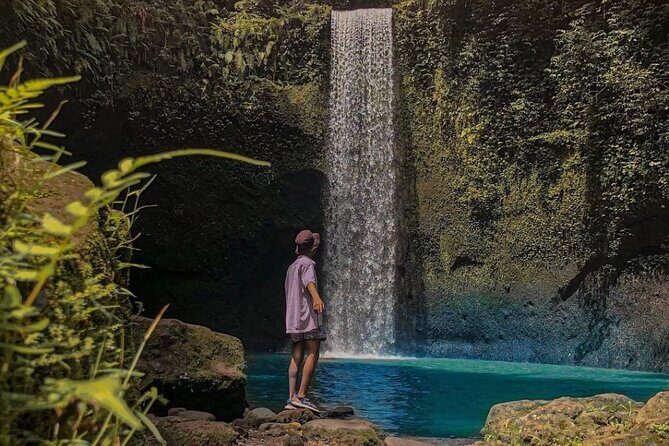
Modular Add-Ons: Build the Day Without Overcomplicating It

Mount Batur Sunrise Jeep Tour - Modular Add-Ons: Build the Day Without Overcomplicating It
This experience is offered as a modular package. The base plan is a sunrise jeep tour with breakfast, and then you can upgrade by adding extras. Options mentioned include:

  • Transfers upgrades
  • A waterfall visit
  • Hot springs time
  • A black lava adventure
  • Other more options in the same upgrade style

If you’re the type who likes a full day and doesn’t want to coordinate separate drivers, upgrades can be worth it. If you prefer a lighter schedule, you can stick closer to the core sunrise experience and only add what fits your energy level.

My advice: choose add-ons based on what you want the day to feel like. If your goal is volcano focus plus recovery, keep it simple and plan on the hot spring time. If you want extra scenery, consider the waterfall or black lava style extension—just remember you’ll add time to your schedule after already committing to an early start.

Who This Tour Fits Best (and Who Should Think Twice)

This tour is a great match if you want a signature Bali Mt. Batur morning without the traditional hike grind. It’s also a strong choice if you’re traveling with parents, older relatives, or anyone who likes the view but not the steep physical effort.

It’s also for you if you value route intelligence. A jeep sunrise that includes stops at lava flows and guides the story of what happened on the mountain feels more complete than a simple viewpoint-only outing.

The main reason to think twice is simple: early mornings and weather dependence. The experience requires good weather, and if conditions are poor the tour can be canceled with a different date or a refund offered. Sunrise plans aren’t guaranteed in bad weather, so don’t plan a tight same-day departure immediately afterward.

Should You Book This Mt. Batur Sunrise Jeep Tour?

I’d book it if you want the Mt. Batur sunrise experience done in a practical way: private jeep access, included breakfast, and an itinerary built around volcano terrain rather than just a single photo stop. The added payoff is that the route is tied to eruption-linked lava fields and includes a calm wind-down at Batur Natural Hot Spring.

I’d skip or reconsider if you hate waking up early, or if your schedule can’t handle weather changes. Also, if you’re trying to keep costs super tight, remember the hot spring entrance ticket isn’t included, and upgrades can add to the final total.

If you can handle the early start, this tour is one of the more efficient ways to get a true Mt. Batur morning experience.

FAQ

What’s included in the breakfast?

The breakfast includes a banana sandwich, a boiled egg, and a hot drink such as coffee, tea, or hot chocolate.

Is the hot spring entrance fee included?

No. The Batur Natural Hot Spring time is included, but the hot spring entrance ticket is not included.

How long does the tour take?

The tour duration is listed as approximately 6 hours.

Do I get hotel pickup and drop-off?

Yes. Hotel transfer with pickup and drop-back to your hotel is included.

Is this tour private?

Yes. It’s described as private, meaning only your group participates.

Where does the tour start and end?

The tour starts at Volcano Valley on Jl. Pengalang No.2, Songan B, Kintamani, Bali, and it ends back at the meeting point.

What happens if weather is bad for the sunrise?

The experience requires good weather. If it’s canceled due to poor weather, you’ll be offered a different date or a full refund.

Bali Private Photographer & Drone

Bali Private Photographer & Drone - Where you meet and how pickup tends to work

Ubud is made for great pictures. A private Bali Private Photographer & Drone session gives you a plan for poses and angles while still letting you steer the vibe, from candid to romantic to funny. I like that you can move around Ubud to chase the best light at rice terraces, swing views, and coffee scenery. One thing to think about: not every spot is included, so entrance fees and swing/dress costs can add up.

Two hours sounds short until you realize it’s a focused sprint with at least 50 high-res edits delivered after. I also like the clear promise of professional photo + drone video, which is the big difference between normal vacation photos and something you’ll actually post. The possible drawback is that drone use can depend on local rules, especially around hotels.

Overall, this is a practical way to get Ubud memories that look like you hired a studio, without spending all day on it. If you’re going to do it, go early, wear shoes you can walk in, and talk through your priorities before you step out.

Key things to know before you book

Bali Private Photographer & Drone - Key things to know before you book

  • You control the vibe: tell the photographer what mood you want, and they’ll handle the posing flow
  • Minimum 50 edited photos: high-resolution edits, not just raw shots
  • Drone photos and video: built for Instagram-worthy angles across Ubud views
  • You move around Ubud: rice terrace, coffee plantation areas, and swing-style viewpoints are typical stops
  • Entrance fees are extra: rice terrace and swing/dress items are not included

Why Ubud is such a good match for drone photos

Bali Private Photographer & Drone - Why Ubud is such a good match for drone photos
Ubud has that rare mix of “every direction looks good” geography. Rice terraces give you repeating patterns, coffee plantations often add layered greens, and open valley views help drones show scale. In practice, that means your photographer isn’t just taking pretty snapshots. They’re positioning you so the shot looks intentional, with background shape doing half the work.

The drone component is what turns a normal family portrait session into something that looks like a cinematic travel video. You’re not only capturing you in front of Bali. You’re capturing you as part of Bali’s layout. If you’re celebrating a birthday, honeymoon, or a special trip moment, that difference matters.

Also, Ubud timing is everything. This is why an early start is strongly suggested here. When you go before the bulk of tour groups arrive, you get cleaner views, calmer foot traffic, and a better chance at that soft morning light that makes edited photos look natural instead of harsh.

What the 2-hour shoot really means for your day

This is designed as a 2-hour private session with pickup offered from Ubud central areas. That timeframe is long enough to do multiple locations and get a variety of poses, but it’s short enough that you don’t lose your whole day.

Here’s how that usually feels on the ground:

  • You arrive at the first scenic area and start with easier shots (standing portraits, angle checks, and natural movement poses).
  • Then you move to a second viewpoint to vary the background and lighting.
  • If your plan includes rice terrace or a coffee plantation-style stop, you’ll likely get more walking, outfit changes, and “hands-on” direction for poses.

One theme that shows up again and again in the better experiences is that the photographer doesn’t just say pose and move on. Names you may hear include Nyoman, Kadek, and Artha. They’re praised for being patient, professional with angles, and good at making people feel comfortable—even if it’s your first photoshoot.

At least one review also points out that the session sometimes runs longer than expected, because the photographer cares about making it feel like an experience, not a rushed checklist.

Where you meet and how pickup tends to work

Bali Private Photographer & Drone - Where you meet and how pickup tends to work
The start point is Pepito Market Andong, on Jl. Raya Andong in Peliatan, Ubud. The activity ends back at the meeting point.

Transportation is part of the deal as free transportation from Ubud central area and pickup is offered. That matters because you don’t want to spend your “photo time” navigating scooters or arguing with traffic.

If you’re staying outside central Ubud, double-check where the meetup will be. One customer issue (a missed meetup) centered on confusion about the exact pickup location and communication timing. So for peace of mind, confirm your exact pickup plan before morning-of, and keep your phone ready for WhatsApp-style messages.

Practical tip: write down your hotel name and address exactly as it appears in your booking, and be ready with a quick message if you need to adjust timing.

Pick your vibe: candid, romantic, or funny

Bali Private Photographer & Drone - Pick your vibe: candid, romantic, or funny
The most useful feature here is that you don’t have to guess how to look good. You tell the photographer the mood you want, and they build the shot plan around it.

You can request:

  • Candid (more natural-looking movement, less stiff posing)
  • Romantic (paired compositions, closer framing, nicer hand/face positioning)
  • Funny / playful (movement cues and comedic direction, so you don’t freeze awkwardly)

In the strongest reviews, photographers are praised for making you feel comfortable while still getting Instagram-level results. Nyoman, Kadek, and Artha are highlighted specifically for patience and good direction, including getting action shots that don’t look overly staged.

If you’re shy in front of a camera, this is actually a relief. You’re not expected to perform. You’re expected to follow cues and trust the person with the lens.

Rice terraces, jungle swing, and coffee plantation stops

Bali Private Photographer & Drone - Rice terraces, jungle swing, and coffee plantation stops
The “big three” backdrops are rice terraces, Ubud jungle swing-type scenery, and coffee plantation areas. The idea is simple: vary the scenery so your photo set doesn’t look like one location copied multiple times.

Rice terrace views

Rice terraces give you instant depth and texture. Your photos tend to look more dramatic because the background has pattern and distance. If you want the iconic Bali look, this is usually the priority stop.
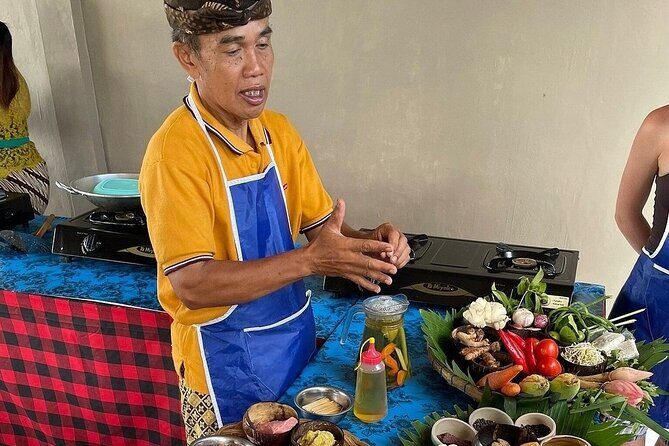
Cost note: the rice terrace entrance fee is not included (listed at IDR 50,000 per person). That means your final budget is not just the $65 price.

Ubud jungle swing-style locations

Swing viewpoints can make photos look higher, wider, and more “wow.” The tradeoff is that they often come with extra ticketing and sometimes dress requirements.

Cost note: swing ticket and dress are not included (listed at IDR 350,000 per person). If you’re trying to keep costs down, you might skip the swing and still get excellent terrace and coffee shots, but you’ll miss the signature action-style images.

Coffee plantation scenery

Coffee plantation backdrops often work well for portraits because they add greenery and layered depth. You’ll typically get a mix of portrait framing and scenic shots where you look like you’re enjoying a moment, not only posing for the camera.

If you like photos that feel a little more “day in the life,” coffee areas are a good compromise between iconic and relaxed.

Your hotel as a starting point

The service often includes pickup from Ubud central and the photographer may also coordinate with your lodging if it’s convenient. One important caution comes from a real-world issue: some hotels may forbid drone use for privacy reasons. In that situation, the drone component might be limited, and you may still do camera photography.

So if you’re hoping for drone shots right from your hotel, check with your hotel rules before you count on it.

Costs that can surprise you: entrance fees and swing dress

Bali Private Photographer & Drone - Costs that can surprise you: entrance fees and swing dress
The base price is $65.00 per person for a 2-hour private photo + drone shoot with 50 edited high-resolution photos. That’s the core value.

But two add-ons are explicitly listed as extra:

  • Rice terrace IDR 50,000 per person
  • Swing ticket & dress IDR 350,000 per person

Also remember: entrance fees are paid on site. Bring some cash just in case, and don’t assume you can pay everything the same way.

What this means for value: if you’re the type who would pay for an attraction anyway, the price works out nicely because the photographer times your visit to maximize photo output. If you’re trying to do terraces or swing only if they’re convenient, this service can still be worth it, but you should choose stops intentionally so you don’t get hit with costs you didn’t plan for.

Drone and photo delivery: what you’ll actually take home

Bali Private Photographer & Drone - Drone and photo delivery: what you’ll actually take home
The promise is clear: you’ll get at least 50 high-resolution edited photos. After the shoot, the edited photos are sent via a G-drive link.

This delivery method is practical. You don’t need to hunt for files or wait for complicated downloads. It also tends to make sharing to friends and printing simpler later.

One more thing I like about this setup: the photographer is directing during the shoot. That leads to better variety in your edited set—faces, angles, and movement—so you don’t end up with 20 nearly identical portraits.

If you’re celebrating something (birthday, honeymoon, mom’s special day), the photo set quality matters more than you think. You’re not just collecting proof you were in Bali. You’re building a story.

The people behind the camera matter: Nyoman, Kadek, and Artha

Bali Private Photographer & Drone - The people behind the camera matter: Nyoman, Kadek, and Artha
The name that comes up most often in the best experiences is Nyoman, praised for being punctual, patient, and able to capture what couples and families want, plus drone footage that looks impressive.

You’ll also see Kadek recognized for making the shoot fun and comfortable, including for first-time photoshoot clients. Artha gets credit for being professional, attentive, and producing polished video and photos.

Even Berto is mentioned as kind and helpful, with great results. That’s a clue that the style is consistent across different photographers: direction, patience, and effort to find good angles and spots.

Why this matters to you: for a photoshoot, comfort changes everything. If the photographer is patient and gives clear posing cues, you’ll look more relaxed in the final edits. If you hate stiff posing, the friendly guidance helps you move without acting.

Booking tips: early morning, phone access, and drone rules

If you only do one thing to improve results, do this: book early morning when possible. The recommendation here is specifically to skip many tourist crowds, enjoy sunrise, and reduce traffic. Even if your final schedule is later, the mindset holds. More time in softer light usually means better edited photos.

Second, keep your messaging available. A couple of the less smooth experiences in the info you provided point to communication problems around timing and pickup location. Simple fix: confirm pickup details the day before, then again the morning of, and keep your phone charged.

Third, ask about drone rules if you’re hoping to shoot near your accommodation. Hotels may restrict drones due to privacy. If you can’t fly there, you’ll want your photographer to shift to permitted areas without losing time.

Fourth, if you’re traveling solo, confirm if the service has any minimums that could affect pricing. One review mentions that solo travelers wanting professional photos may need to pay for two people and there’s no one-person option for certain spots. That may not apply to every booking, so treat it as a “verify first” item.

Who should book this Ubud photoshoot

This experience is a great fit if:

  • You want professional photos and drone video without spending a full day
  • You like being guided (you’ll decide the vibe; the photographer handles the posing flow)
  • You’re celebrating a milestone and want photos that feel meaningful
  • You’re comfortable paying extra for attractions you choose (rice terrace and/or swing)

You might think twice if:

  • You’re on a tight budget and want zero add-on fees
  • Your hotel has strict drone rules and you really want drone footage at your exact location
  • You hate early mornings (because the best results are pushed toward sunrise times)
  • You’re traveling solo and need clarity on any minimums or per-person requirements

Should you book Bali Private Photographer & Drone in Ubud?

If your goal is “better-than-normal photos” with a real plan, I’d book this. The combination of a private 2-hour session, minimum 50 edited high-res photos, and drone video/photos is strong value for Ubud. You’re also not just buying time—you’re buying direction, angles, and the ability to get multiple backdrops in one morning or afternoon.

Book it with smart expectations:

  • Budget for rice terrace IDR 50,000 if you want that stop.
  • Budget for swing ticket and dress IDR 350,000 if swing shots are a must.
  • Go early if you can.
  • Confirm pickup details and keep your phone ready.
  • If drone shots from your hotel matter, check drone permissions first.

Do that, and you’ll leave with a photo set that looks like you planned the whole shoot around the location—because you did, with help.

FAQ

What’s included in the Bali Private Photographer & Drone experience?

You get a professional photographer and drone, free transportation from Ubud central area, and at least 50 high-resolution edited photos. Edited photos are sent through a G-drive link.

How long is the photoshoot?

The duration is about 2 hours.

Where does the experience start and end?

It starts at Pepito Market Andong, Jl. Raya Andong, Peliatan, Kecamatan Ubud, Kabupaten Gianyar, Bali 80571, Indonesia and ends back at the same meeting point.

What extra costs should I expect?

Entrance fees are not included. The provided details list Rice Terrace: IDR 50,000 per person, and Swing ticket & dress: IDR 350,000 per person.

Can I choose the photo style or mood?

Yes. You can tell the photographer the vibe you want, such as candid, romantic, or funny, and they will plan accordingly.

Do I need a ticket or confirmation on my phone?

You’ll receive a mobile ticket, and confirmation is received at booking time.

Is it okay if I’m traveling alone or with mixed needs?

The experience is private, but one piece of feedback notes that solo travelers seeking professional photos may face requirements that effectively price for two people at certain spots. It’s worth confirming before you go.

Is there free cancellation?

Yes. You can cancel for a full refund if you cancel at least 24 hours before the experience start time.

North Bali Tour: Banyumala Waterfall & Wanagiri Hidden Hills

North Bali Tour: Banyumala Waterfall & Wanagiri Hidden Hills - How North Bali sets the tone: nature, temples, and photo stops

This is the kind of day trip that swaps the usual trail for North Bali’s quieter corners. You start from Ubud and head out on a private schedule toward sights most people only see through photos. I like that it’s packed with big-ticket photo stops, but you also get nature and temple time, not just gates and swings.

Two things I’d put at the top: the Banyumala Twin Waterfalls area (locally called Air Terjun Tirta Kuning or Yellow Water Falls) and the mix of viewpoints around Wanagiri Hidden Hills and Handara Gate. One consideration: the day runs long, and places like Banyumala involve a trek, so you’ll want solid shoes and a bit of patience with timing and transit.

Why this itinerary works for real travel days

North Bali Tour: Banyumala Waterfall & Wanagiri Hidden Hills - Why this itinerary works for real travel days
The best part of this tour is how it strings together very different North Bali experiences in one run—waterfalls, a swing viewpoint, classic Balinese gate, and a lake temple. It also includes all entrance tickets, so you’re not stuck making last-minute payments while everyone else is ready to move on.

I also appreciate the practical structure: hotel pickup and drop-off, an English-speaking driver, and start time at 8:00 am for a full day with minimal stress. If I had to flag one drawback, it’s that one highlight can feel overhyped for some people (Handara Gate), and you may wish the tour flow felt a little smoother once you’re at the busy photo spots.

Key Things To Know Before You Go

North Bali Tour: Banyumala Waterfall & Wanagiri Hidden Hills - Key Things To Know Before You Go

  • A private schedule, not a shared bus day: Only your group participates, so you move at your pace.
  • Entrance tickets are included: Banyumala, Wanagiri Hidden Hills/Bali Swing, Handara Gate, Ulun Danu Bratan Temple, and Bayan Ancient Tree are covered.
  • It’s a true North Bali route: You’re going toward Munduk and Buleleng, roughly two hours north of Ubud for parts of the day.
  • There’s trekking at Banyumala: Getting to the falls requires a trek through the area’s paths.
  • You’ll add Banjar Hot Springs relaxation: You get soak-time after a long sightseeing day.
  • You’ll start early: 8:00 am helps you beat the worst crowds and light at photo spots.

How North Bali sets the tone: nature, temples, and photo stops

North Bali Tour: Banyumala Waterfall & Wanagiri Hidden Hills - How North Bali sets the tone: nature, temples, and photo stops
This tour is built around variety, and that’s why it feels good on a first or second visit to Bali. North Bali’s energy is different. It’s less about nonstop shopping streets and more about getting out into valleys, lakes, and quiet roads where the scenery changes every hour.

You’ll also get a clear rhythm: each main stop includes about an hour of time (except Banyumala, which is longer), plus transit between them. That matters because a day like this can easily turn into a “drive-and-wait” marathon. Here, the structure aims to keep you moving while still giving you time to walk, look around, and take photos without feeling rushed every ten minutes.

Price and what you get for $80: worth it if you hate logistics

At $80 per person for roughly a 10-hour day, the value is strongest if you want one operator to handle everything: pickup, an English-speaking driver, admission tickets, and service/taxes. Meals are not included, but you’re not paying extra for entrance fees at each stop, either.

Where this price makes sense:

  • You want private comfort without adding the cost of a separate driver plus tickets plus admin.
  • You plan to hit multiple paid sights in one day.
  • You’d rather spend your time exploring than figuring out transport between distant North Bali locations.

Where it might not be the best deal:

  • If you’re the kind of traveler who only wants one or two major stops, a packed day can feel like you’re chasing highlights instead of enjoying slower moments.

Stop-by-stop: Banyumala Twin Waterfalls and the Yellow Water Falls trek

Banyumala Twin Waterfalls is the first big nature hit, and it’s called Air Terjun Tirta Kuning by locals—Yellow Water Falls. The location is in the green valleys of the Wanagiri village in Buleleng, North Bali. That phrase matters because you’re not strolling through a flat viewpoint. You’re moving through paths in the valley area to reach the falls.

What I like about this stop is the sense of effort-to-reward. The trek is part of the experience, not just a chore. You’re getting away from the tourist-thick zones and into a spot that feels more like a real working landscape—paths, plants, and water sounds instead of ticket booths and queues.

Timing: you get about 1 hour 30 minutes here, and the admission ticket is included. That’s enough time to reach the falls, take photos, and settle in for a bit without feeling like you need to rush.

What to watch:

  • This stop involves quite a trek, so plan for that energy cost.
  • If you’re traveling with knees or balance issues, you’ll want to think carefully. Even if you can reach the falls, the walk might be tiring.

Wanagiri Hidden Hills and the Bali Swing: a viewpoint built for photos

Wanagiri Hidden Hills is paired with the Bali Swing, and it’s the kind of place that shows up on Instagram because it delivers a dramatic backdrop. The area is in Munduk, an out-of-the-way village about two hours north of Ubud. That distance is a clue: you’re leaving the easy zone and heading into North Bali roads.

You’ll get about 1 hour at this stop, with the admission ticket included. For many people, the swing is the headline—but don’t ignore the wider setting. The value of a place like this is that it’s not just one object. You’re getting wide views over the valley and hills, which makes the photos feel more like a moment than just a pose.

A practical tip: bring or wear shoes that won’t slip on wet paths. Swing areas can be muddy when it’s humid or recently rained, and you’ll walk a bit before you’re at the best viewpoints.

Handara Iconic Gate: famous, but manage your expectations

Handara Iconic Gate is one of Bali’s most recognized photo landmarks. It’s described as a Balinese gate, and the idea is the path way to serenity. People come for the iconic look, but you should know something up front: it’s still a photo hotspot.

You’ll spend about 1 hour here, and the admission ticket is included. The best way to handle this stop is to treat it as a quick, well-timed photo moment rather than a sacred calm retreat. You’ll likely get the photos you came for, and then you can move on without spending your whole day waiting around.

Here’s the consideration: if you’re already tired of “Instagram-famous gates,” this stop might feel less meaningful than the North Bali nature and temple parts. One feedback theme that matches real life is that the gate can feel overrated for some people, so I’d personally pair it with the idea that it’s a visual landmark, not the heart of the day.

Ulun Danu Bratan Temple: a lake temple with mirror-like views

North Bali Tour: Banyumala Waterfall & Wanagiri Hidden Hills - Ulun Danu Bratan Temple: a lake temple with mirror-like views
Ulun Danu Bratan Temple (also written as Ulun Danu Beratan) is dedicated as the source temple of Lake Beratan. It shares qualities you’ll recognize from Bali’s other lake-and-sea temple traditions—especially the way the temple relates to water.

This stop is about 1 hour and includes admission. The key experience here is the reflective lake surrounding much of the temple. Even when the sky isn’t perfect, the water gives the whole area structure and atmosphere.

What makes this stop valuable is the balance. After waterfalls and viewpoint platforms, the temple grounds give you a calmer pace and a chance to slow down and actually look at the setting, not just the photo frame.
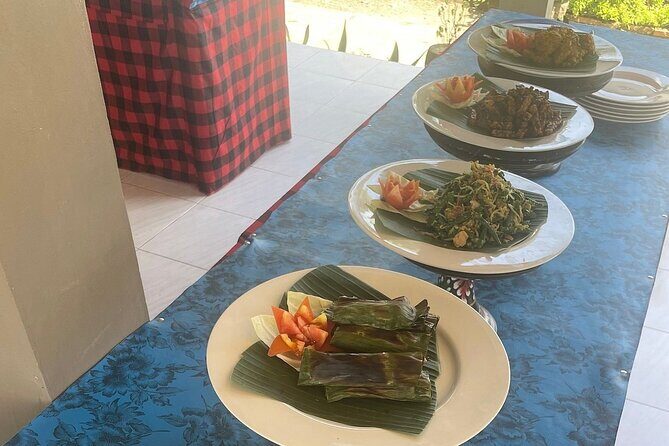
Bayan Ancient Tree (Kayu Putih): the big-tree fairy tale moment

Next you’ll visit Bayan Ancient Tree, known as Kayu Putih—a giant tree in central Bali believed to be among Bali’s oldest and biggest. It’s described as having a fairy tale feel, and that vibe is exactly what you should aim for here: take your time walking around the tree and letting it sink in as a real living landmark, not just a quick snapshot.

You’ll have about 30 minutes for this stop, and admission is included. That’s short, but it’s realistic for a single-object highlight. If you want more time, keep an eye on the day’s overall pacing and use your 30 minutes for a slow walk rather than only posing at one spot.

Banjar Hot Springs: your recovery stop after a long day

The tour also includes Banjar Hot Springs for a relaxing soak after sightseeing. This part is especially useful if your day includes trekking and lots of walking, because your calves and ankles will notice.
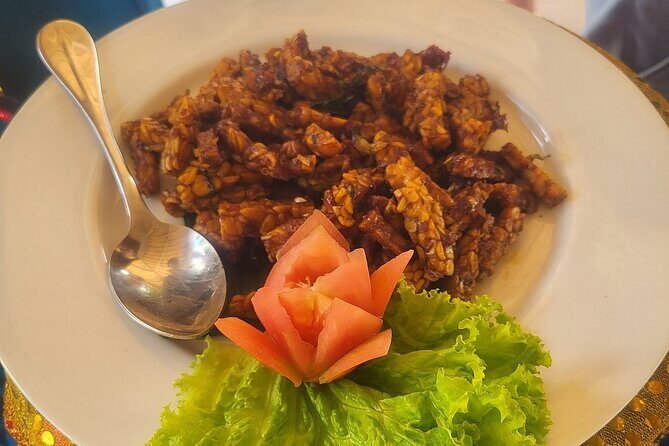
What I like about adding hot springs is that it turns the day from a nonstop “see-see-see” schedule into a more balanced experience. You get time to unwind, cool off, and reset before you head back toward Ubud.
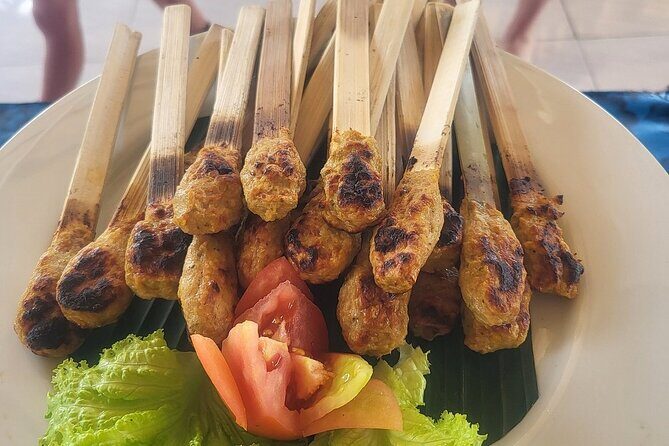

Because meal info isn’t included, this soak can also be a good “mental buffer” between the last sightseeing stop and your evening energy level.

Timing, transit, and how to plan your comfort

A 10-hour day in Bali usually means you’re doing a lot of motion even when each stop is nicely timed. Start at 8:00 am, then you’ll rotate between North Bali locations: valleys for Banyumala, Munduk for Wanagiri Hidden Hills, and classic landmarks like Handara Gate and Bratan Temple.

How to plan so the day feels smooth:

  • Wear shoes you trust on uneven ground, especially for the Banyumala trek.
  • Bring a light layer; early mornings and higher, cooler areas can feel different from Ubud.
  • Bring water. You’re outdoors for long stretches even with guided pacing.
  • Keep your phone charged for the photo stops, but don’t let that make you rush through the quieter areas.

The guide and the private format: where you actually feel the difference

This tour is private, meaning your group is the only one participating. That’s not a small detail. It changes everything about the tone of the day. You’re not squeezed into someone else’s itinerary, and you can spend a little more time where the day feels right.

An English-speaking driver also helps you keep moving without confusion. Clear communication matters most when you’re dealing with multiple paid stops across North Bali.

If you care about value, the private format can be a win when you’re traveling as a couple or a small group. You’re paying for convenience, but you’re also paying for less stress.

Weather matters more than you think

This experience requires good weather. That’s a real point for Bali, because rain can change how comfortable the trekking and photo stops feel, and it can affect visibility around lake areas and viewpoints.

If you’re booking during a season where storms are common, you’ll want to keep an eye on forecasts and be ready for the possibility of rescheduling. This tour is structured to run best when conditions cooperate.

Who should book this North Bali day tour

You’ll likely love it if:

  • You want one full day covering multiple North Bali hits without planning between locations.
  • You like nature stops and temple settings, not just beaches.
  • You’re comfortable with a trek to get to Banyumala.
  • You want a private experience from Ubud with entrance tickets handled for you.

You might not love it if:

  • You strongly dislike crowded photo hotspots, even if the tour gives you an hour.
  • You’re hoping for an unhurried, slow-travel pace with lots of free time.
  • Your schedule is tight and 10 hours feels too long.

Should you book this North Bali Tour?

I’d book this tour if you’re excited by a day that mixes waterfalls, a famous viewpoint swing, a classic Balinese gate, and a lake temple—then ends with hot springs. The price feels fair for what you get: pickup, an English-speaking driver, entrance tickets, and a private schedule that keeps the day from turning chaotic.

If you’re mostly chasing the most famous gate photo and not much else, you might find Handara Gate less satisfying than the rest of the route. But if you’re the kind of traveler who likes variety—green valleys, water sounds, and temple lakes—this is a solid, high-value way to see North Bali in one go.

If you’d like, tell me your travel month and whether you’re okay with trekking, and I can suggest how to best time your day (especially around Banyumala and the hot springs soak).

FAQ

How long is the North Bali Tour?

It runs about 10 hours.

What time does the tour start?

The start time is 8:00 am.

Is hotel pickup and drop-off included?

Yes. Hotel pick up and drop off are included from select area hotels.

Is this a private tour?

Yes. It’s a private tour, and only your group will participate.

Are entrance tickets included?

Yes. All entrance tickets are included in the package.

Are meals included?

No. Meals are not included.

Will I have an English-speaking driver?

Yes. The tour includes an English speaking driver.

What if the weather is bad?

This experience requires good weather. If it’s canceled due to poor weather, you’ll be offered a different date or a full refund.

How far in advance is it usually booked?

On average, it’s booked about 18 days in advance.