Bali ATV Quad Adventure – Ubud Monkey Forest and Waterfall

Bali ATV Quad Adventure Ubud Monkey Forest and Waterfall - Pertiwi Adventure ATV quad biking: trails, rice terraces, and river crossings

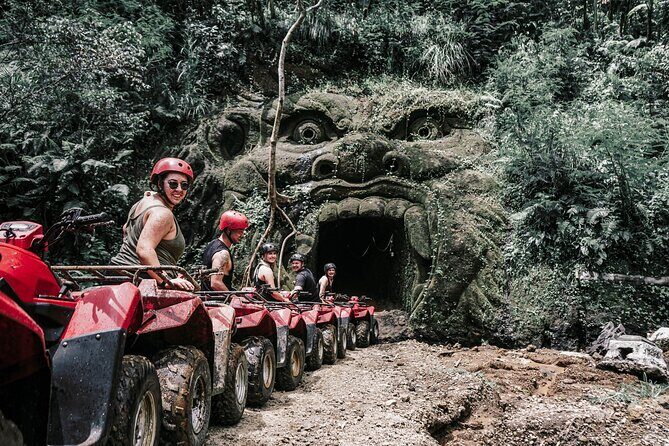
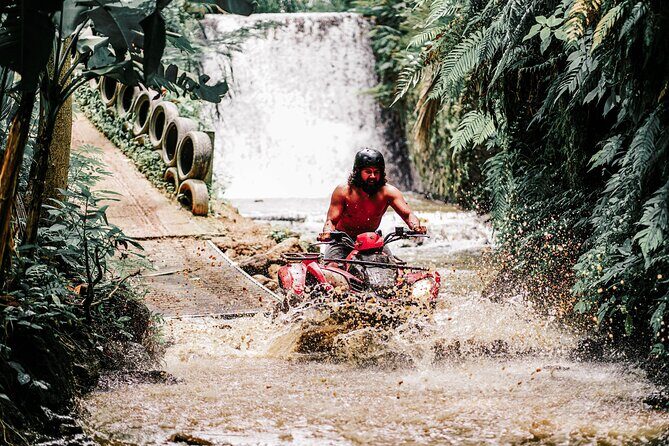
Quad tracks beat daydreaming in Bali. This Ubud ATV day pairs 2 hours of off-road riding with big wildlife energy at Monkey Forest and the classic view at Tegenungan Waterfall. I also love the practical finish: a real shower after you get muddy, plus a buffet lunch to refuel. One heads-up: if weather turns, the waterfall visit can be delayed or skipped.

I like that the day runs with a local, guide-led rhythm. Drivers such as Adi, Win, Dika, Maya, and Ketut are repeatedly praised for clear direction, good English, and keeping everyone on track in traffic. You also get choices that matter, like riding solo or as a passenger, and multiple start times.

Plan to get dirty. You’ll be on uneven tracks cars can’t reach, with plenty of uphill and downhill action, and you’ll want dry clothes ready for later. If you’re rain-sensitive or expecting a carefree waterfall moment, be flexible about how the day plays out.

Key Highlights in Plain Terms

  • Mud-included ATV fun: 2 hours on terrain that feels more like trails than roads
  • Shower after the ride: hot water and clean facilities help you reset fast
  • Monkey Forest first stop: close-up monkeys and great photo moments, with staff guidance
  • Tegenungan Waterfall fit: iconic views, but the return stairs are no joke
  • Guide-led safety: insurance coverage plus international-standard riding gear
  • Private day, just your group: pickup and transfer make it feel easy from the start

Why This Ubud ATV Day Feels Like Bali, Not a Checklist

Bali ATV Quad Adventure - Ubud Monkey Forest and Waterfall - Why This Ubud ATV Day Feels Like Bali, Not a Checklist
This is the kind of day that mixes three sides of Ubud: animals, water, and off-road dirt roads. The quad ride is the main event, but the Monkey Forest and Tegenungan Waterfall stops give you the scenery and culture that make Ubud feel like Ubud.

What makes it work is the balance. The ATV part is high-energy and hands-on, then you slow down with guided sightseeing and a proper lunch stop instead of a quick snack-and-go.

Your guide matters here. People consistently mention drivers such as Adi, Win, Denny, Putu, Wayan, and Bayu for keeping the pace comfortable, explaining what you’re seeing, and preventing the day from turning chaotic.

The 2-Hour ATV Ride: Real Dirt, Real Hills, Real Fun

Bali ATV Quad Adventure - Ubud Monkey Forest and Waterfall - The 2-Hour ATV Ride: Real Dirt, Real Hills, Real Fun
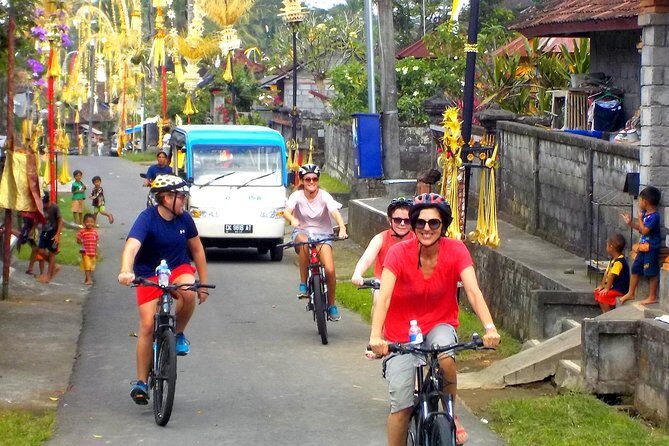
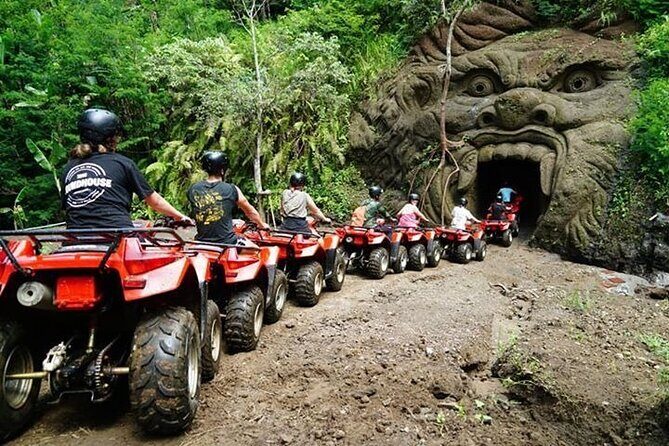
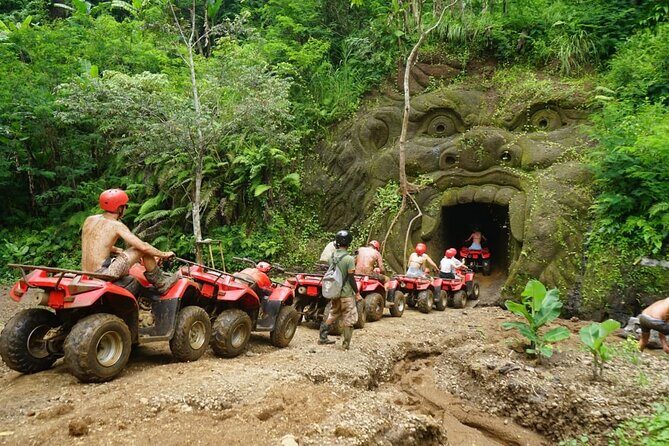
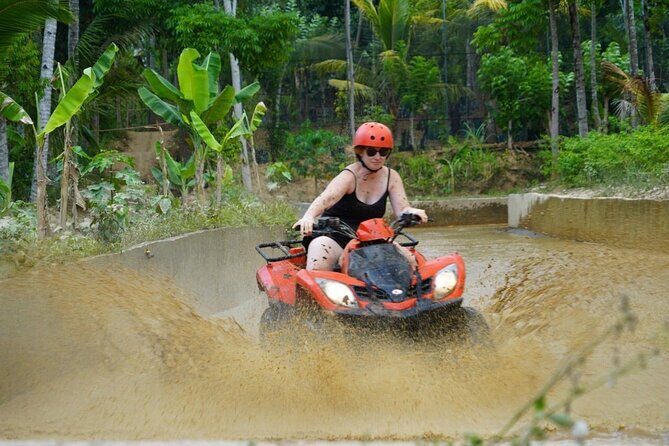
The ATV portion is built around instruction first, adrenaline second. Before you start, you’ll use safety equipment and follow directions from experienced instructors. You should expect helmets and riding gear provided by the operator, plus hands-on guidance on how to handle the bike before you hit the track.

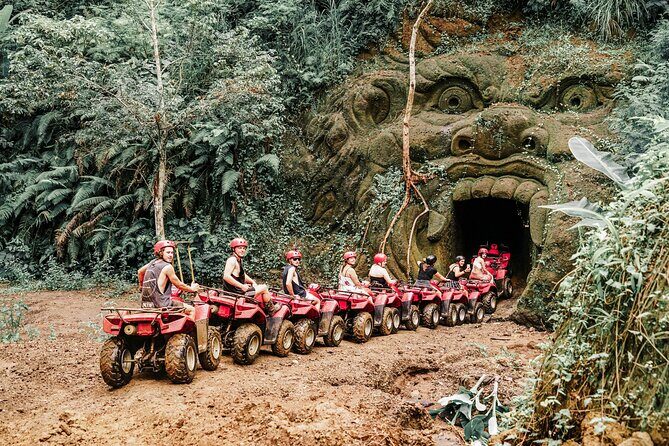
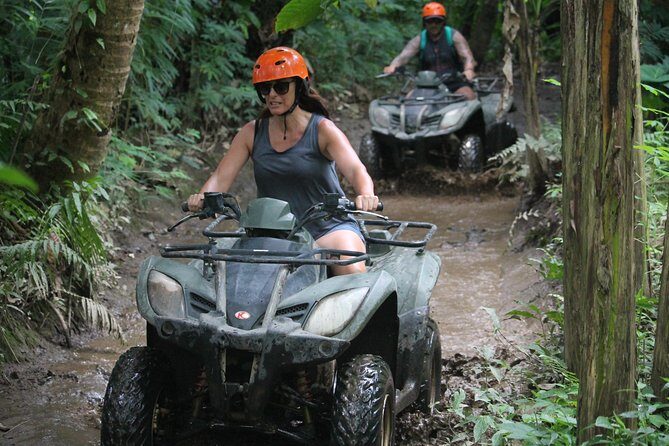
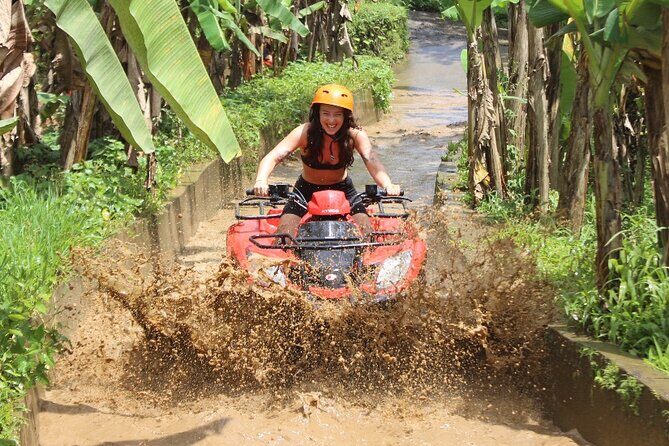
Then the track starts doing its job. You’ll ride a course that includes uphill and downhill sections, with muddy and uneven bits that cars can’t touch. The ride is described as action-heavy for about 2 hours, so it’s not one of those short stunt rides where you barely get started.

If you’ve ridden scooters or cars before, the learning curve is usually manageable, but keep this in mind: the terrain is the point. The fun comes from the traction changes, the puddles, the packed-dirt climbs, and the parts that feel like a jungle route rather than a designed park circuit.

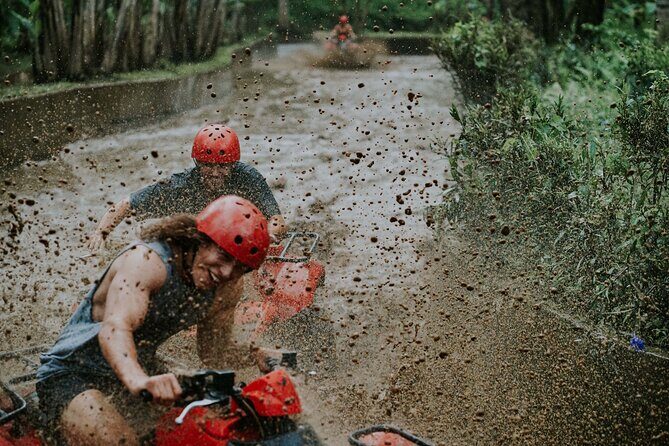
Rain can change the feel in two ways. One option is great: wet trails can turn the ride into extra-thick mud fun. The other option is less fun: if weather makes conditions unsafe, the day may adjust, including skipping or limiting the waterfall stop later.

Safety Gear, Insurance, and Why the Shower Actually Matters

Bali ATV Quad Adventure - Ubud Monkey Forest and Waterfall - Safety Gear, Insurance, and Why the Shower Actually Matters
This operator includes international standard riding equipment, and there’s insurance coverage in case something goes wrong. In practice, that means you’re not just handed a helmet and pointed down a road. You should get a safety briefing and clear rules before moving onto the track.

The part I’m genuinely glad they include is the shower afterward. You’re riding through jungle-style terrain, and your body will end up full of mud. Reviews consistently mention the showers being clean with hot water, which changes the whole day. It’s the difference between feeling grim for the rest of your sightseeing and feeling ready for lunch and photos.

Also pay attention to what you wear. Even with gear provided, you should bring footwear that can handle mud. Expect to use boots or follow their guidance, but your own clothing choices can make a big difference in comfort.

Sacred Monkey Forest Sanctuary: Close-Up Monkeys and Smart Photo Rules

Bali ATV Quad Adventure - Ubud Monkey Forest and Waterfall - Sacred Monkey Forest Sanctuary: Close-Up Monkeys and Smart Photo Rules
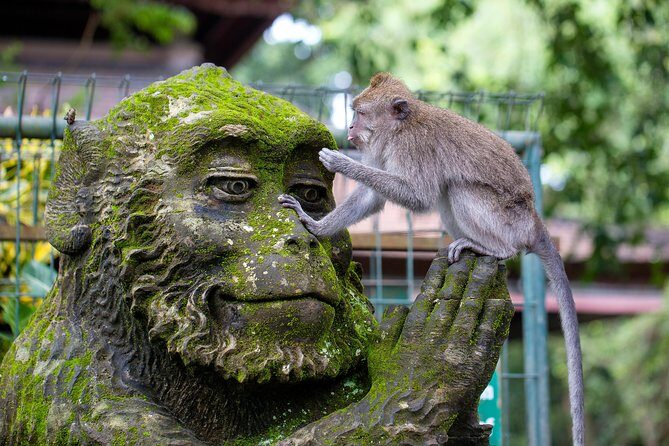
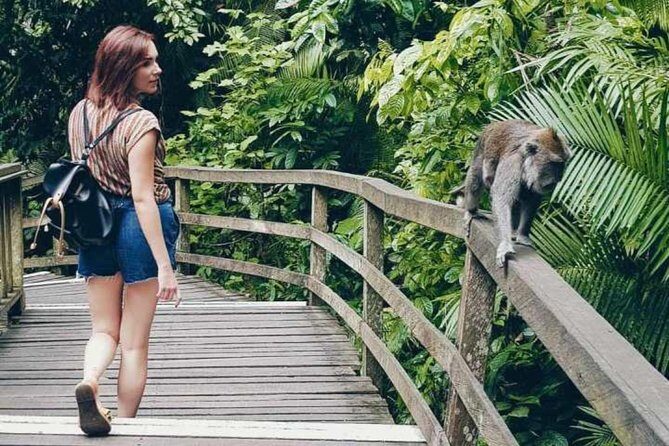
Monkey Forest is one of those stops that’s both fun and a little wild. You’ll get that classic Ubud scene: monkeys moving around freely, people walking carefully, and the sense that you’re sharing space instead of looking at an exhibit.

The best part is that it doesn’t feel staged. You’re in the sanctuary environment, so the atmosphere is lively right away. It’s also a strong photo stop. People mention guides and onsite team support for getting phone photos, which is helpful if you’re traveling as a couple and want shots together without complicated setups.

Here’s your practical strategy: treat this like you’re visiting a place with rules, not like a theme park. Keep snacks and loose items secure, watch where the monkeys are moving, and follow staff directions. If you do that, it stays playful instead of stressful.

If you’re traveling with kids, this stop tends to land well because it’s active and unpredictable. Still, remind kids to stay close and keep hands to themselves.

Tegenungan Waterfall: Iconic Views, Crowds, and Steep Stairs Back
Bali ATV Quad Adventure - Ubud Monkey Forest and Waterfall - Tegenungan Waterfall: Iconic Views, Crowds, and Steep Stairs Back
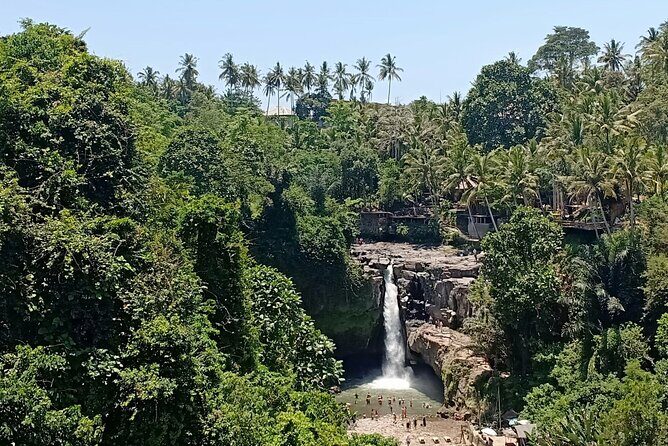
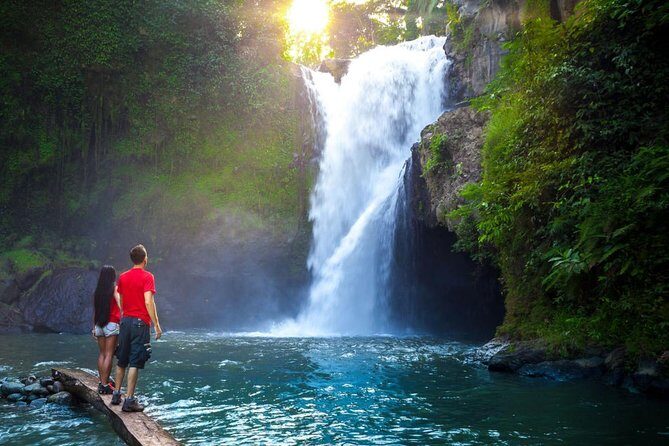
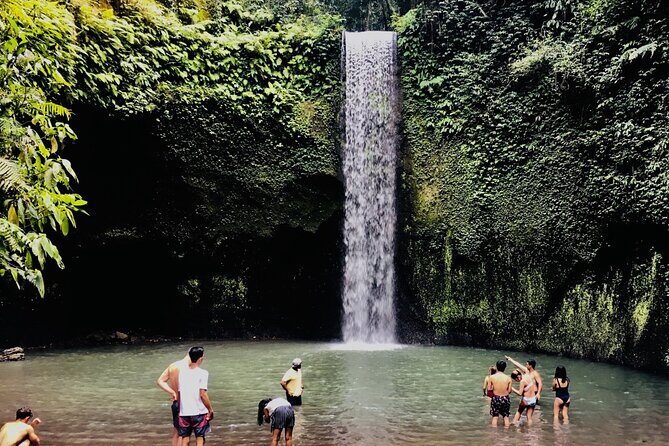
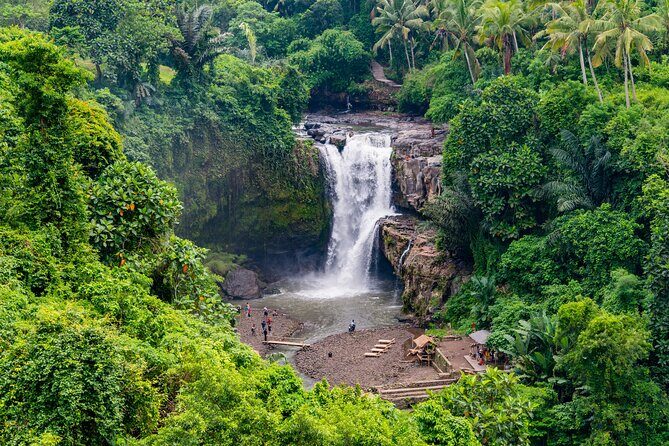
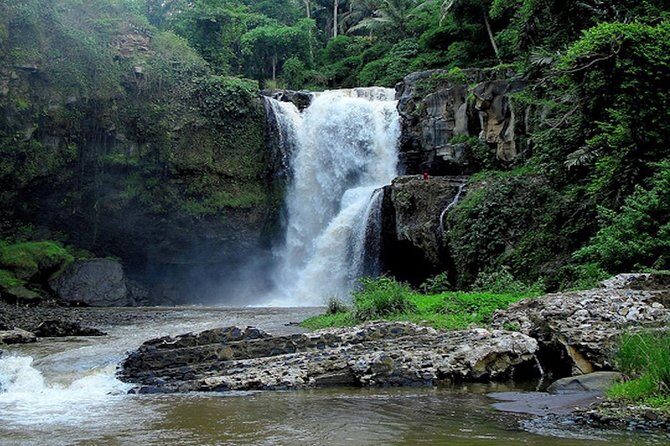
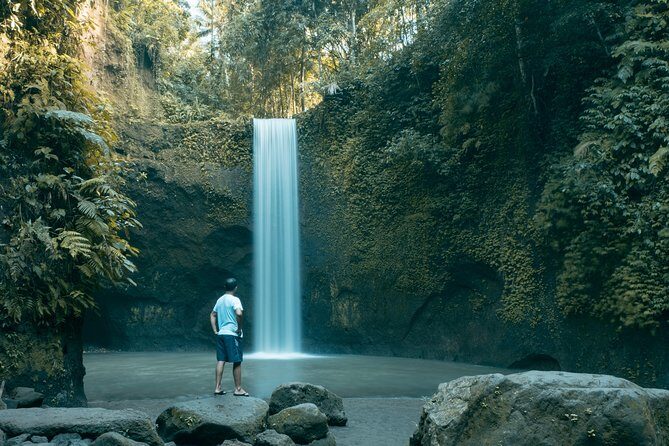
Tegenungan Waterfall is a famous sight for good reason. You’ll have a clear look at the waterfall area, and the walkways around it make for easy viewing points.

But this stop comes with two realities. First, it can be crowded. If you’re the type who hates shoulder-to-shoulder bottlenecks, you may prefer a slower part of the day or extra patience.

Second, the stairs back can be steep. One review specifically points out that the route includes steep stairs with spots to stop for photos. So yes, you’ll want a little stamina, even if you’re not doing a full hike.

Weather also affects this stop. If it’s rainy enough to make conditions poor, you might not get the same waterfall access. One traveler noted that due to rain, the waterfall was not in good condition and the day was adjusted. The good news is that the operator plans around weather, and you won’t be left holding nothing—though you should stay flexible.

And if you’re hoping for a swim: the information doesn’t promise swimming, so don’t plan your day around that. You should assume it’s mainly for viewing.

Ubud Time Between Stops: Culture Without the Slog
Bali ATV Quad Adventure - Ubud Monkey Forest and Waterfall - Ubud Time Between Stops: Culture Without the Slog
After the waterfall, you’ll still have time in Ubud. The day is structured so you’re not just driving in a straight line for 10 hours. The goal is to give you local context, plus an easy rhythm between adrenaline and sightseeing.

Your guide often adds context during transfers and walking time. Several reviews mention guides talking about local culture and pointing out what’s around you, not just announcing the next stop. If you get someone like Ketut, Denny, or Wayan, the day can feel like a guided introduction to Ubud rather than a checklist of attractions.

One extra detail you should be aware of: sometimes guides add a coffee plantation or tasting moment if timing allows. That wasn’t guaranteed for everyone in the information you provided, but it did show up in experiences with certain drivers. If you love coffee and don’t mind an extra detour, it’s a pleasant bonus.

If you want a smooth day, aim to go with the flow. The route mixes places that are different in tempo: Monkey Forest moves fast, ATV is pure activity, and waterfall time is slow but physically demanding.

Price and Value: Why $47.50 Can Still Feel Like a Good Deal

Bali ATV Quad Adventure - Ubud Monkey Forest and Waterfall - Price and Value: Why $47.50 Can Still Feel Like a Good Deal
At $47.50 per person, this isn’t a luxury spa day. But it’s also not just renting a bike and hoping for the best.

You’re paying for a bundle of items that add up quickly:

  • 2 hours of ATV riding
  • Experienced guides
  • International standard riding equipment
  • Insurance coverage
  • Shower facility
  • Buffet lunch
  • Admission ticket components
  • Private transfer (pickup style service)

Then there are the things not included:

  • Additional food and drinks beyond the lunch
  • Photos/VCD packages

So the value comes from reducing your decision fatigue. You don’t have to figure out where to buy gear, how to get transfers lined up, or whether you’ll get a shower after. That matters because Ubud days are often humid and messy, and the operator is clearly built for that reality.

If you’re comparing options, look beyond the headline price. This one is priced like an all-in day because it includes the stuff that normally turns into extra costs and hassle.

Who This Tour Fits Best (And Who Should Reconsider)

Bali ATV Quad Adventure - Ubud Monkey Forest and Waterfall - Who This Tour Fits Best (And Who Should Reconsider)
This ATV-and-sightseeing mix suits people who want action but still want classic Ubud stops. It’s ideal for:

  • Couples who want a day that isn’t only beach or only temple
  • Families who can handle a muddy activity and still enjoy nature sights
  • Travelers who like having a guide handle timing and logistics
  • Anyone comfortable following safety instructions and getting dirty

It may not fit as well if you’re hoping for a calm, clean, low-effort day. You will get muddy. You’ll also need patience with stairs at the waterfall and potential weather changes.

A family note from real-world experiences: kids have joined successfully, including a 7-year-old in one group and a teenager in another. That said, the tour’s overall “most travelers can participate” wording still means you should confirm comfort level with the operator and follow all safety rules.

Practical Tips Before You Go (So You Don’t Hate Your Photos Later)
Bali ATV Quad Adventure - Ubud Monkey Forest and Waterfall - Practical Tips Before You Go (So You Don’t Hate Your Photos Later)
Here’s how to set yourself up for the best version of this day:

  • Wear clothes you don’t mind getting stained. Mud is part of the experience.
  • Bring a small bag for wet items afterward and keep your valuables secured during Monkey Forest.
  • Expect a guide-led pace. Follow their rules on the ATV track instead of forcing your own speed.
  • Pack a change of footwear if you can. Your “after shower” comfort improves a lot.
  • If you’re vegetarian, ask about meal options when you book. The buffet has been reported as accommodating vegetarians.

For photos, plan smart rather than fancy. The day has a lot of motion, so focus on capturing the moment at Monkey Forest and during ride breaks. The shower and hot water can help you feel good enough to take photos without rushing.

Should You Book This Bali ATV Quad Adventure?

Book it if you want a day that hits three buckets at once: off-road ATV fun, Monkey Forest wildlife energy, and Tegenungan Waterfall views. The included shower, insurance coverage, and riding equipment make it feel structured, not risky.

Skip or rethink it if you strongly dislike getting dirty, have mobility limits for steep stairs, or hate weather-driven schedule changes. The waterfall stop can be affected by rain, so don’t lock your entire schedule to a perfect waterfall moment.

If you’re choosing between a simple sightseeing tour and a dirt-track adventure, this one is a strong pick. It’s the kind of Ubud day that gives you stories, not just photos.

FAQ

How long is the ATV ride, and how long is the full tour?

The ATV riding portion is 2 hours. The full day is about 10 hours including sightseeing stops and meals.

Is pickup or a private transfer included?

Yes. Private transfer/pickup service is included, and the tour is private, meaning only your group participates.

What are the main stops during the day?

You’ll visit Sacred Monkey Forest Sanctuary, Tegenungan Waterfall, and Ubud as part of the day.

What’s included in the price?

Included items are the 2-hour ATV ride, experienced guides, international standard riding equipment, insurance coverage, shower facility, buffet lunch, admission ticket, and government tax 10%, plus private transfer.

What is not included?

Additional food and drinks beyond the included buffet lunch are not included. Photos/VCD are also not included.

Do I get a shower after the ATV?

Yes. A shower facility is included after the ride, and it’s meant to help you reset after the mud.

What happens if the weather is poor?

The experience requires good weather. If it’s canceled due to poor weather, you’ll be offered a different date or a full refund.

If you tell me your group details (age range, riding comfort level, and whether you care about waterfall time or coffee add-ons), I can help you decide the best start time and what to prioritize during the day.
Highlights of Ubud & Mount Batur Volcano – Private Day Trip

Highlights of Ubud & Mount Batur Volcano - Private Day Trip - Sacred Monkey Forest Sanctuary: close to the macaques, just keep it respectful

Ubud in one day feels surprisingly doable. This is a private, door-to-door highlights loop with an easy plan: monkeys, rice terraces, a Mt. Batur viewpoint lunch, and a temple water ritual, all in one long day. If you end up with a guide like Hendra or Wayan (both praised for clear explanations and great photo help), the day clicks fast.

What I love most is the small-group feel that comes with being private. It also hits a great balance of nature and culture: you get traditional scenes without racing, plus a buffet lunch with a real volcano-and-lake view.

One thing to plan for is the long day. From parts of south Bali, expect serious time in the car, and at the most famous stops (especially Monkey Forest and Tirta Empul) you may still run into crowds.

Key highlights worth packing for

Highlights of Ubud & Mount Batur Volcano - Private Day Trip - Key highlights worth packing for

  • Private door-to-door pickup from Ubud and much of south Bali keeps your day sane.
  • Sacred Monkey Forest Sanctuary is packed with gray macaques in a large forest setting.
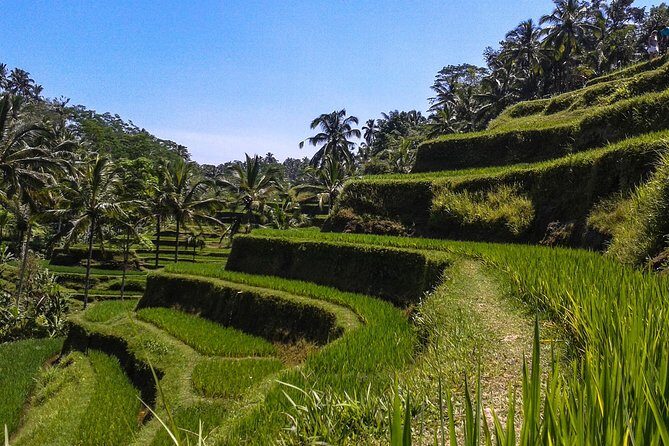
  • Tegalalang rice terraces give you a short walk that feels like farm life, not just a photo stop.
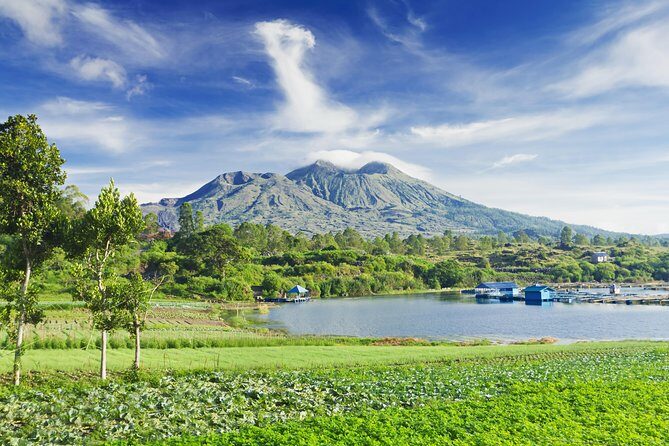
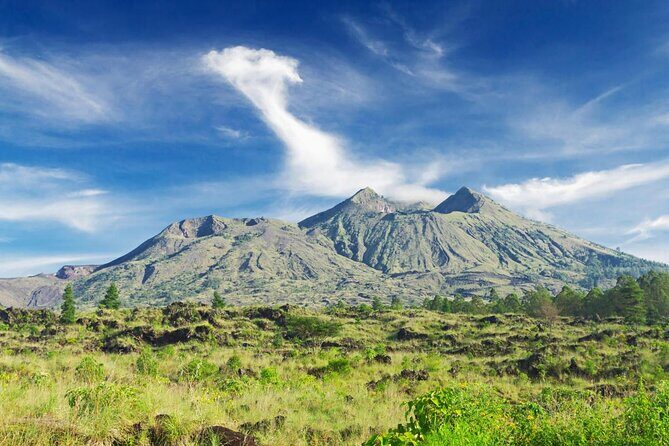
  • Mt. Batur lunch at the Kintamani viewpoint pairs food with one of Bali’s best scenery backdrops.
  • Tirta Empul’s spring-water blessing is a real ritual; you can join if you want.
  • Ubud Market and Palace add culture and craft shopping, plus good chances to watch local performers.

A private Ubud and Mt. Batur day that beats DIY time traps

Highlights of Ubud & Mount Batur Volcano - Private Day Trip - A private Ubud and Mt. Batur day that beats DIY time traps
This trip works because it’s built around your time, not around Google Maps. Ubud and Kintamani are spread out, and Bali traffic can turn a simple day into a stress festival. With an air-conditioned car and hotel pickup/drop-off, you lose less time to logistics and more time to the places themselves.

Also, being private changes the vibe. You’re not stuck watching your schedule get swallowed by a bigger group. The better guides (and you’ll see that pattern in the feedback) keep the day moving with breathing room, and they’ll adjust timing so you can spend time where you actually care.

You’re going to be on the move for about 10 hours, so think of this as a single-day “greatest hits” rather than a slow roam. If that’s your style, you’ll feel rewarded by the range: forest animals, rice farming, volcano views, and temple rites.

Sacred Monkey Forest Sanctuary: close to the macaques, just keep it respectful

Highlights of Ubud & Mount Batur Volcano - Private Day Trip - Sacred Monkey Forest Sanctuary: close to the macaques, just keep it respectful
Your first big stop is Sacred Monkey Forest Sanctuary, where free-roaming gray macaques live in a forest area near central Ubud. The forest covers about 12.5 hectares, and the park is home to roughly 700+ monkeys. That density is why it feels less like a zoo and more like you’re walking through a real habitat.

Here’s the practical part: don’t treat it like a playground. Keep a safe distance, don’t reach for them, and avoid anything that looks like food (or that makes your hands look like snacks). One review nailed the mood: the monkeys can be friendly, but they’re still wild animals. If you’re calm, they tend to ignore you. If you’re grabby, they’ll notice.

Timing matters too. If your guide brings you in with smart pacing, you can enjoy the forest without feeling like you’re shoulder-to-shoulder the whole time. Even then, expect wet-season humidity if rain hit recently—Monkey Forest can feel sticky.

How to enjoy it: wear shoes you don’t mind getting a little muddy, keep your phone secure, and watch how locals and guides move through the space. You’ll get better photo moments and fewer awkward standoffs.

Tegalalang rice terraces: a short walk that shows real farming rhythms

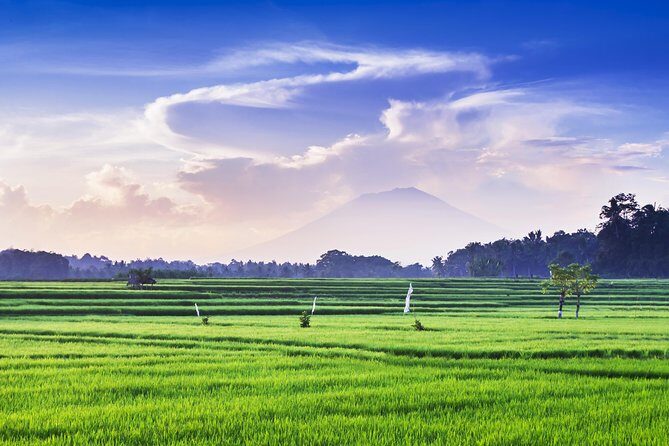
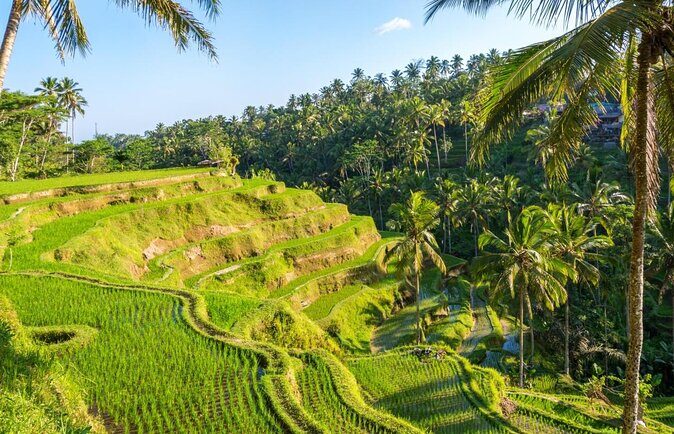
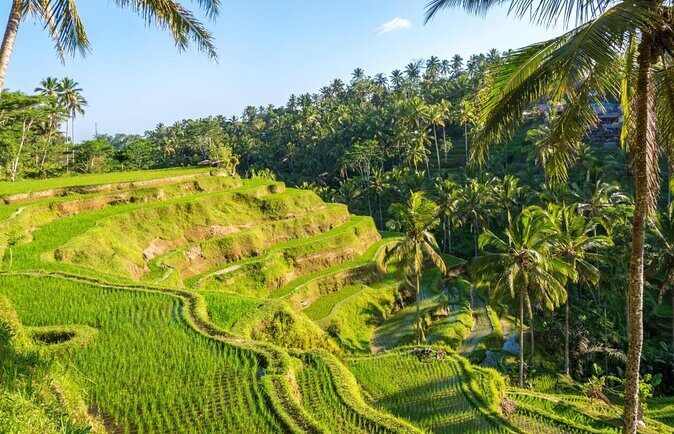
Next comes Tegalalang Rice Terrace, one of the most famous rice-growing landscapes near Ubud. What makes this stop worthwhile on a highlights tour is that you get a short trek—just enough time to feel like you’re walking with the rhythm of the countryside, not just staring from a viewpoint.

You’ll also get context for what you’re seeing. This region is tied to Bali’s UNESCO-listed rice farming system, so it’s not only about postcard terraces. The whole point is how water management, planting cycles, and mountain-fed irrigation shape the landscape.

One consideration: the walking is short, but it still means uneven paths. And if you want “deep look” time (like going down into the fields), this kind of day trip can be tight. You’ll likely get a beautiful scan of the terraces, and then you move on.

Best way to approach it: take your photos early, then slow down for the textures—rice steps, small irrigation channels, and how farmers use the terrain. That’s where the experience becomes more than scenery.

Mt. Batur viewpoint lunch in Kintamani: the view is the main course

Highlights of Ubud & Mount Batur Volcano - Private Day Trip - Mt. Batur viewpoint lunch in Kintamani: the view is the main course
Then you head up toward Mount Batur for lunch at a viewpoint with scenery over the Batur valley and lake. The restaurant stop is set up as a buffet lunch with a clear view, which is a smart choice on a long day: you’re tired, you’re hungry, and you don’t have to choose between food and scenery.

The view is the headline here—fresh air, green mountains, and volcano drama in the background. You’ll feel like you’re finally out of traffic-land and into Bali-land.

Now for the reality check. A buffet is a buffet, and one review specifically called out that the food can come out a bit cool for Western tastes. So if you’re picky about hot food, don’t assume every item will be perfectly hot. Still, lunch is included, and the setting makes it feel like more than a fuel stop.

Bring layers. Even if it’s warm in Ubud, the highlands can feel cooler—especially if clouds roll in. If you get any fog or drizzle, don’t panic. The landscape still looks good, and your guide can help you time photos.

Tirta Empul: sacred spring-water blessing with crowd pressure built in

Highlights of Ubud & Mount Batur Volcano - Private Day Trip - Tirta Empul: sacred spring-water blessing with crowd pressure built in
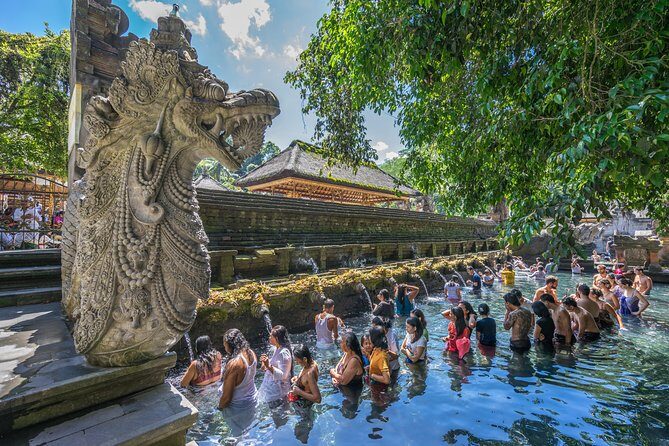
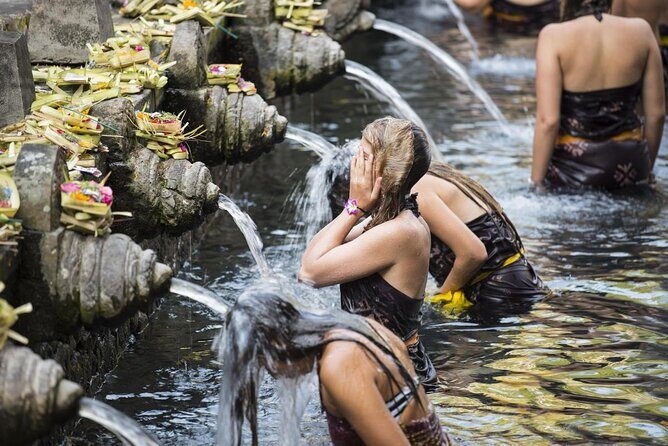
Tirta Empul Temple is where your day turns more spiritual and local. The attraction is the holy spring water from crystal-clear fountains inside the temple complex. The ritual centers on people seeking blessing through the spring water.

You can join the ritual if you wish, which is great if you want to do more than watch from the edges. But be ready to follow etiquette: listen to your guide, keep the experience respectful, and remember this is active religious space, not a theme park.

One heads-up from real-world experience: Tirta Empul can get crowded, and cameras are everywhere. If you’re hoping for total quiet, you might not get it. The ritual itself is still fascinating—seeing the springs and water channels is genuinely striking.

Also, plan for the human side of temple tourism. At exits, there can be ongoing selling. You don’t have to buy anything. If sales energy gets annoying, stick close to your group and focus on moving with purpose.

If you care about getting your moment inside the water area, time your movement. Your guide’s pacing can be the difference between enjoying the ritual and feeling rushed.

Ubud market and Ubud Palace: where craft shopping gets social

Highlights of Ubud & Mount Batur Volcano - Private Day Trip - Ubud market and Ubud Palace: where craft shopping gets social
After the temples, you’re back in Ubud for Ubud Traditional Art Market and Ubud Palace. This part of the day adds variety because it changes the pace: less nature, more local life.

The market experience is a classic Bali move—handicrafts, lots of options, and you should bargain. One of the most useful bits of advice you’ll hear from good guides is to treat bargaining as normal social negotiation, not a confrontation. If you’re friendly, you’ll usually get a better vibe—and better pricing.

If you’d rather not shop hard, you can still enjoy the market as a sensory snapshot: textures of woodwork, textiles, and everyday craft goods. But if you do shop, set a rough budget before you get swept up in choices.

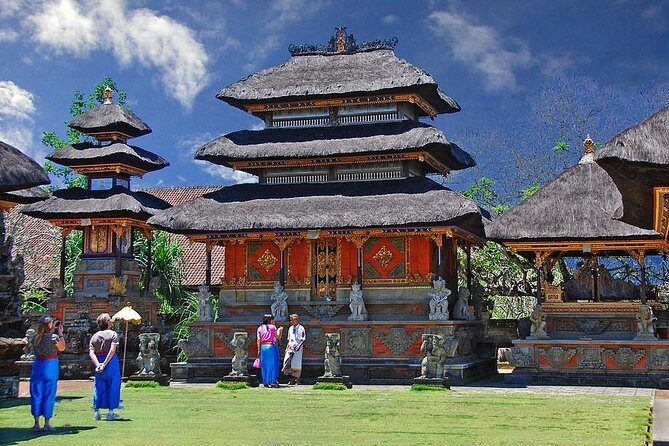
Then there’s Ubud Palace, known for its architecture. You’ll walk around and see how the royal complex is arranged, and sometimes there may be local learning activities—like dance practice or instrumental music. That’s a nice touch because it turns the palace from a museum-like stop into a living cultural space.

A practical tip: markets and palaces are slower when you’re shopping, faster when you’re just browsing. Decide what you want in advance so your day stays balanced.

Jungle swing upgrade: fun photos, optional chaos

Highlights of Ubud & Mount Batur Volcano - Private Day Trip - Jungle swing upgrade: fun photos, optional chaos
There’s an optional upgrade that adds a jungle swing stop. If you like a little adrenaline and you want photos with that jungle-overlook angle, this can be a fun addition to the day’s visual variety.

But keep expectations realistic. It’s an extra stop, so it adds time and can add some waiting. If your day already feels tight (10 hours is a long loop), ask your guide how they’ll fit it without squeezing your temple and lunch time.

The swing won’t replace the cultural stops. Think of it as a photo bonus at the end of the day’s scenery sequence.

Guides that shape the whole day: punctual, patient, and good at photos

Highlights of Ubud & Mount Batur Volcano - Private Day Trip - Guides that shape the whole day: punctual, patient, and good at photos
This is where the experience really earns its high marks. The best guides aren’t just drivers with a map. They explain what you’re seeing, keep you on schedule, and help you avoid common hassle moments like pushy selling.

You’ll see names like Wayan, Hendra, Agung, Dika, Peter, Komang Winata, Surya, Made Wirasa, Panca, Gede, and Rusmun pop up in feedback as standouts. One theme shows up again and again: clear English, calm handling, and smart pacing.

Some practical examples you can benefit from when you book:

  • Guides like Wayan are praised for helping with temple etiquette and even practical help like carrying or assisting with a stroller and stairs.
  • Others, like Hendra, are praised for photography help—helpful if you want better angles without spending half the day figuring out your camera settings.
  • More than one guide is described as arriving early to reduce crowd pain, so you can enjoy Monkey Forest and Tirta Empul with less stress.

If you want the best day possible, pick a guide you’ll actually get along with. In your pre-trip messages, tell them what you care about: animals, photos, culture, or shopping. A good guide will steer the order or pacing to match.

Price and value: is $60 per person a good deal?

At $60 per person for a private day trip, this looks like strong value—mainly because you’re getting more than transportation. You’re getting door-to-door hotel pickup and drop-off, air-conditioned car service, lunch buffet, bottled water, and entrance tickets for several major stops.

Here’s why that matters: Bali days can add up fast once you pay for separate entry fees, taxis, and driver time. Bundling makes the day feel predictable. You also avoid the DIY headache of coordinating timing between Ubud and the Mt. Batur area.

Two quick value notes:

  • If you’re traveling with family or want control over pacing, private tends to pay off fast. Several reviews mention kids and the ability to slow down.
  • The tradeoff is that you’ll still spend a lot of time on the road. You’re paying for comfort and efficiency, not for extra walking.

Also, alcoholic drinks are not included, so if you plan to sip beer or cocktails, factor that into your budget.

Timing, crowds, and comfort: how to make the day feel easier

This route is rewarding, but it’s not a short hop. One review-style warning you should take seriously is traffic time. If you’re picked up from farther south, plan on longer drives—sometimes stretching to 90 to 120 minutes each way.

Crowds are another reality. Monkey Forest and Tirta Empul can feel busy even with early timing. If you’re crowd-sensitive, your best move is to keep your expectations flexible and use your guide’s pacing to get the calm moments first.

Weather matters too. This area can be humid, and rain can affect crowding patterns. One traveler noted that wet conditions can change how many people show up, but it doesn’t erase crowds completely. Bring a light rain layer just in case.

Comfort checklist for this day:

  • Comfortable shoes with grip
  • A light layer for cooler highland air near Mt. Batur
  • Small towel or tissue for humid temple areas
  • A plan for hydration (you’ll get bottled water, but it still helps to stay sensible)

Who this day trip suits best

This tour is a good fit if you want a highlights overview without juggling multiple days. It’s especially appealing if:

  • You want to see the major Ubud landmarks plus Mt. Batur scenery in one go
  • You prefer private pacing over group chaos
  • You like mixing animals and nature with temple and local culture
  • You’re traveling with kids or anyone who benefits from slower, more flexible timing

It’s less ideal if you dislike long car rides or if you expect quiet, crowd-free temples at peak sites.

Should you book this Ubud highlights and Mt. Batur trip?

I think you should book it if your goal is a smart, single-day introduction to Bali’s Ubud side plus Kintamani views. The value is real when you compare private transport, multiple stops, and included lunch and water. And the guide quality trend is strong—people repeatedly mention punctuality, English, and thoughtful pacing.

Skip it only if you’re extremely sensitive to crowds or you don’t want a long day in the car. If that’s you, consider shortening expectations or doing fewer stops over more days.

FAQ

How long is the Ubud & Mount Batur private day trip?

It’s about 10 hours.

Is pickup available?

Yes. Pickup is offered from Ubud and much of south Bali, with hotel pickup and drop-off.

Is this a private tour?

Yes. It’s private, so only your group participates.

What’s included in the price?

Included: bottled water, lunch buffet, private tour, all taxes and fees, hotel pickup and drop-off, and transport by air-conditioned car. Mobile ticket is also mentioned.

What’s not included?

Alcoholic drinks and personal expenses are not included.

Are entrance tickets included?

Admission is included for Sacred Monkey Forest Sanctuary, Tegalalang Rice Terrace, Mount Batur, and Tirta Empul Temple. Ubud Traditional Art Market and Ubud Palace are listed as free.

Can I join the ritual at Tirta Empul?

Yes. You can join the ritual if you wish.

Is there an upgrade option?

Yes. You can upgrade to add a jungle swing for more photo moments.

What happens if weather is poor?

This experience requires good weather. If it’s canceled due to poor weather, you’ll be offered a different date or a full refund.

What is the cancellation window?

Free cancellation is available up to 24 hours in advance for a full refund. If you cancel less than 24 hours before the start time, it isn’t refunded.

Nusa Penida Snorkeling with Manta Bay and Land Tour

A long day, packed with ocean time, can be great—or chaos. This one is both, in the most Penida way: fast boat, multiple snorkeling stops, then a land tour built for big viewpoints. If you like structure and hate planning, you’ll appreciate the run-of-day layout.

I like the included return transfers from Ubud (and nearby Bali areas), because you’re not stuck figuring out which driver to trust at 6:30am. I also like that your day isn’t only snorkeling—there’s time for the classic Penida photo locations, plus a local lunch to keep you going.

One thing to consider: the schedule is tight. With limited time between stops and the possibility of crowds on popular points, the day can feel rushed, and on some days snorkeling can be crowded with lots of boats in the same areas.

Key things to know before you go

Nusa Penida Snorkeling with Manta Bay and Land Tour - Key things to know before you go

  • Early pickup (start around 6:30am): you’re moving while Bali is still waking up
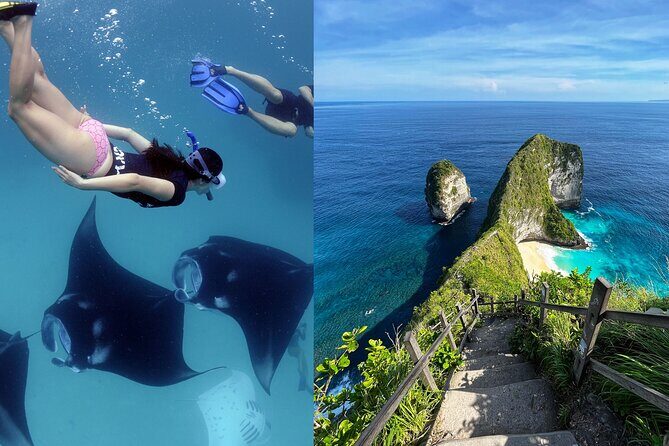
  • Manta Bay snorkeling included: plus additional bays like Crystal Bay and Wall/Gamat areas
  • Shower and lunch: you’ll clean up and fuel up after the water time
  • Land tour time is limited: Kelingking, Broken Beach, and Angel’s Billabong are worth it, but you’ll be moving
  • Group size capped at 28: big enough for energy, small enough to avoid total gridlock

Morning Pickup to Sanur: Getting to Nusa Penida Without the Stress

Nusa Penida Snorkeling with Manta Bay and Land Tour - Morning Pickup to Sanur: Getting to Nusa Penida Without the Stress
Your day starts early, with pickup beginning around 6:30am. The plan is to collect people based on where you’re staying (Kuta, Seminyak, Nusa Dua, Canggu, Sanur, and Ubud are covered), then head toward the port area in Sanur or Serangan. If you’re staying farther out (like Uluwatu/Pecatu/Balangan/Kutuh/Tegalalang/Kedewatan/Payangan), there’s an extra pickup fee of $8 per person.

This is the part that can make or break your mood. When the timing works, it feels easy: you hop in, you get to the port, and you move on. But there are also reports of waiting—people collecting other passengers, slower-than-ideal boarding, or a hot-car pause before you even reach the boat. So if you’re sensitive to delays, I’d mentally budget extra time for the first half of the day.

Fast Boat to Penida and the Reality of a Busy Day

Nusa Penida Snorkeling with Manta Bay and Land Tour - Fast Boat to Penida and the Reality of a Busy Day
Once you arrive at the port around 8:00am, you’ll check in and then board a fast ferry to Nusa Penida. The crossing is about 40 minutes, and the route gets you to Penida port by roughly 9:15am.

Here’s why this matters: Penida is famous for a few specific areas, and those areas are popular. When you go early, you give yourself a better shot at less crowded water. When your start slips, everything else can feel rushed, because the itinerary doesn’t slow down.

One more practical point: the trip is capped at a maximum of 28 travelers. That’s not tiny, but it’s not a huge floating circus either. Still, snorkeling points can get crowded fast because Penida’s marine life spots are shared by many operators using similar routes.

Snorkeling at Manta Bay: What the Day Feels Like in the Water

Nusa Penida Snorkeling with Manta Bay and Land Tour - Snorkeling at Manta Bay: What the Day Feels Like in the Water
Snorkeling starts shortly after you arrive on Penida. The schedule has you set off around 9:45am to begin exploring snorkeling locations in the Penida area.

Your snorkeling route includes Manta Bay and other stops such as Wall Point / Wall Bay Point, Crystal Bay, and Gamat Bay. The idea is simple: you’re not betting everything on one single spot. If one area is less active that day, you’ve got other chances.

What you should expect during snorkeling:

  • Short time at each stop. Each snorkeling segment is built around quick exploration rather than long water hangs.
  • Gear is included if you booked the snorkeling package option: snorkel, fins, and life jacket, plus a towel.
  • Underwater photos may be offered if you selected that add-on.

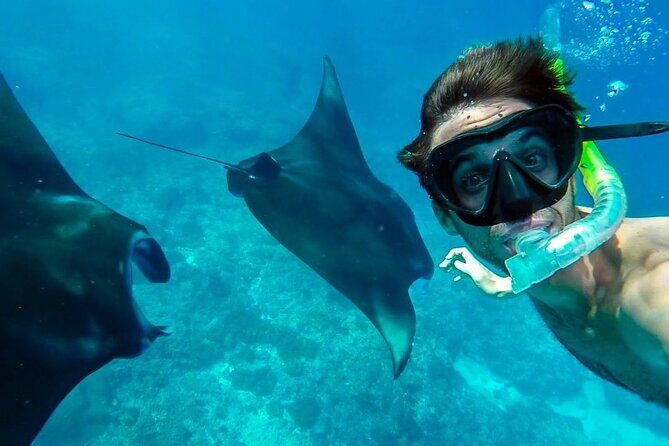
Now, the big question: do you see mantas? Sometimes, but not always. One piece of feedback was straightforward: the day was enjoyable, but manta rays were not seen. That matches reality on islands with changing currents and animal behavior. I’d treat mantas as a bonus, not a guarantee, and I’d still go for the overall snorkeling experience and the variety of bays.

Also watch for the crowd factor. The most negative feedback calls out mass-style snorkeling: too many people, too many boats, and a general feeling of moving through stops. On the flip side, there’s also feedback that the staff and process can feel safe and well handled. Your best bet is to be flexible: expect a fun day, but don’t expect a calm, private reef.

Penida Land Tour: Kelingking, Broken Beach, and Angel’s Billabong

Nusa Penida Snorkeling with Manta Bay and Land Tour - Penida Land Tour: Kelingking, Broken Beach, and Angel’s Billabong
After snorkeling wraps around 11:45am, you’ll finish, grab a shower, then head for lunch around 12:15pm. After you eat, the land tour begins at about 1:00pm. This is where the itinerary turns into a fast sightseeing route.

Your land stops include:

  • Kelingking Beach
  • Broken Beach (listed as Pasih Uug / Broken Beach)
  • Angel’s Billabong

You’ll also see the other context stops tied to the route through Penida, with each stop given limited time (about 30 minutes per stop in the summary). That’s enough to get the view, snap photos, and get your legs moving—but not enough for long wandering or lingering.

Kelingking Beach: the viewpoint that defines Penida

Kelingking Beach is a signature rock hill jutting out toward the ocean. You’re going for the drama: cliffs, drop-offs, and the sense that you’ve arrived at the island everyone posts. The trade-off is crowds and lines. When time is short, the photo-taking process can feel like a queue: you see the view, you wait your turn, then you move on.

Broken Beach (Pasih Uug): the split-rock coastal scene

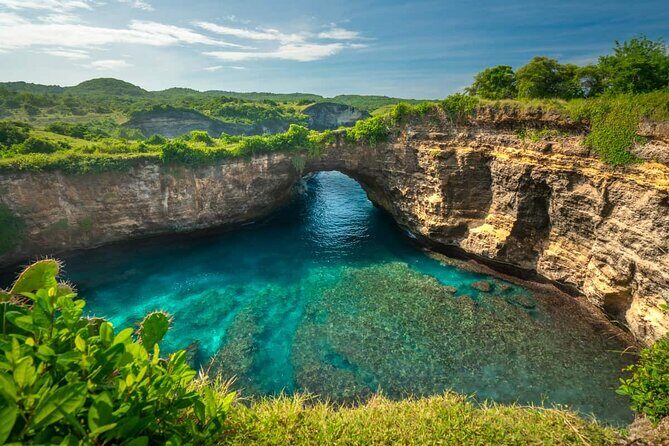
Broken Beach is another classic coastal formation. You’ll get a short window to take it in and walk to the viewpoint areas available at that time. Like Kelingking, it’s built for quick appreciation. If you want slow travel and lots of extra steps, this is the part where you’ll feel constrained by the schedule.

Angel’s Billabong: the sea pool look

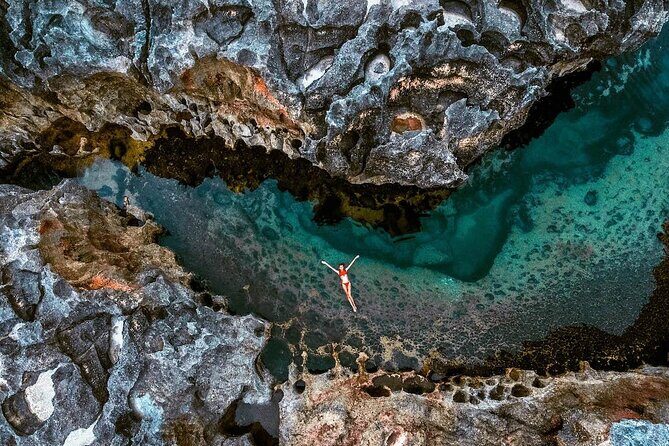
Angel’s Billabong is a sea pool formation right on the coast. The weather and tide can change what it looks like, but the overall idea is consistent: a photogenic pool-like view with ocean right beside it. It’s a good “finish the tour with a wow” stop—if you don’t get stuck in a line and if your timing holds.

Timing, Crowds, and Safety: How to Manage the Long Day

Nusa Penida Snorkeling with Manta Bay and Land Tour - Timing, Crowds, and Safety: How to Manage the Long Day
This tour is built on a strict rhythm: hotel pickup, port check-in, ferry crossing, multiple snorkeling points, lunch, then multiple viewpoint stops. That structure is helpful because you don’t need to plan transport. But it also creates pressure.

Here’s what the schedule implies for you:

  • You’ll spend more time in transit than you expect. The day is about moving between Penida zones and staying on the clock.
  • Snorkeling time is limited per stop. So you’ll want to be ready, organized, and comfortable putting on gear quickly.
  • Land photo stops can feel like a run. Short stays mean you don’t get the luxury of lingering in one spot.

On safety and operations, feedback is mixed. Some notes say pickup/drop-off felt safe. Other notes criticize crowded boats and confusing processes, and even mention an operator refusing to cancel during inclement weather (putting profits ahead of safety, in their view). That doesn’t mean it’s always like that, but it’s a reminder to stay realistic: this is a high-demand route, and you’re working inside that reality.

If you want to reduce stress, come with a calm plan:

  • Arrive at pickup ready to go (water, sunscreen, hat).
  • Keep expectations flexible about mantas.
  • Treat snorkeling like a fun sequence, not a private encounter.

Price and What You’re Really Buying for $55.42

Nusa Penida Snorkeling with Manta Bay and Land Tour - Price and What You’re Really Buying for $55.42
At $55.42 per person, this tour can feel like good value—mainly because so much is rolled in. Included features cover:

  • Return hotel transfer from the listed Bali areas (no separate drop-off to a different hotel)
  • Fast ferry tickets to Penida (described as public boat tickets)
  • Land transportation on Penida
  • Lunch (Indonesian food)
  • All fees and taxes
  • Entry/admission at the destinations
  • Snorkel kit basics (snorkel, fins, life jacket) if you booked the snorkeling package option
  • Towel
  • Underwater photos if you selected that option
  • A shower after snorkeling (part of the flow)

Your cost goes mostly toward transport, the ferry, and the guided movement between Penida hotspots. That’s smart if you don’t want to organize day-of logistics yourself.

When it may not feel like value: if you’re the type who wants uncrowded snorkeling and long stays at each scenic stop. In that case, you might find yourself paying for a “many spots, short time” approach, which isn’t everyone’s style. If your biggest priority is mantas in calm water, you may still want to compare options that offer fewer stops or longer time on the sea.

Who This Tour Fits Best (and Who Should Pick a Different Pace)

Nusa Penida Snorkeling with Manta Bay and Land Tour - Who This Tour Fits Best (and Who Should Pick a Different Pace)
This tour is a good match if you:

  • Want a one-day plan that includes both snorkeling and Penida viewpoints
  • Like the idea of multiple snorkeling locations (so you’re not betting everything on one bay)
  • Prefer transfers and tickets handled for you
  • Are okay with short stops to see the main highlights

It might frustrate you if you:

  • Hate crowds and want quiet water
  • Need lots of time to take photos and walk around slowly
  • Get stressed by tight schedules and repeated transitions

It’s especially well suited for people staying in central Bali like Ubud, Seminyak, Canggu, Nusa Dua, and Kuta—because pickup and drop-off are part of the package. If you’re based in far-flung areas, check whether the extra pickup fee applies to your exact pickup point.

Should You Book This Nusa Penida Snorkeling with Manta Bay and Land Tour?

Nusa Penida Snorkeling with Manta Bay and Land Tour - Should You Book This Nusa Penida Snorkeling with Manta Bay and Land Tour?
I’d book it if your travel style is “see the classics, hit the water, don’t micromanage.” The included transfers, ferry, lunch, admission fees, snorkeling gear (when selected), and shower after snorkeling make it practical. The land tour also saves you from piecing together drivers and routes for Kelingking, Broken Beach, and Angel’s Billabong.

I’d think twice if your top goal is a serene, low-crowd snorkeling day or if you’re very sensitive to delays. There are enough red flags in feedback about crowded boats, confusing boarding flow, and schedule pressure that you should go in prepared.

Quick checklist before you say yes:

  • Bring a positive, flexible mindset for a full day
  • Budget time for early pickup and port check-in
  • Treat manta sightings as possible, not promised
  • Plan for short viewpoint stops, not slow hikes

FAQ

FAQ

What time does the tour start?

The meeting/start time is 6:30am, with hotel pickup starting around that early window.

How long is the full tour?

The duration is listed as about 8 hours.

Where does the boat depart from, and how long is the crossing?

You’ll arrive at the Sanur/Serangan port, check in, then take a fast boat to Penida. The crossing is about 40 minutes.

Which snorkeling spots are included?

The snorkeling portion includes Manta Bay, Wall Point/Wall Bay Point, Crystal Bay, and Gamat Bay.

Is lunch included?

Yes, lunch at a local restaurant is included.

Do I get snorkeling gear and life jacket?

Snorkel, fins, and a life jacket are included if you booked the snorkeling package option.

Are hotel transfers included?

Return transfers are included from Kuta, Seminyak, Nusa Dua, Canggu, Sanur, and Ubud. The package notes it does not include drop-off to a different hotel.

What land-tour stops are visited?

The land tour includes Kelingking Beach, Broken Beach (Pasih Uug), and Angel’s Billabong.

How big is the group?

The tour has a maximum of 28 travelers.

Is there an extra fee for certain areas?

Yes. Extra pickup from Uluwatu/Pecatu/Balangan/Kutuh/Tegalalang/Kedewatan/Payangan costs $8 USD per person.

What happens if the weather is bad or I need to cancel?

The experience requires good weather. If canceled due to poor weather, you’ll be offered a different date or a full refund. It’s listed as non-refundable and cannot be changed for any reason, but weather-related cancellation is handled with the options above.

Electric Bike Tour in Ubud

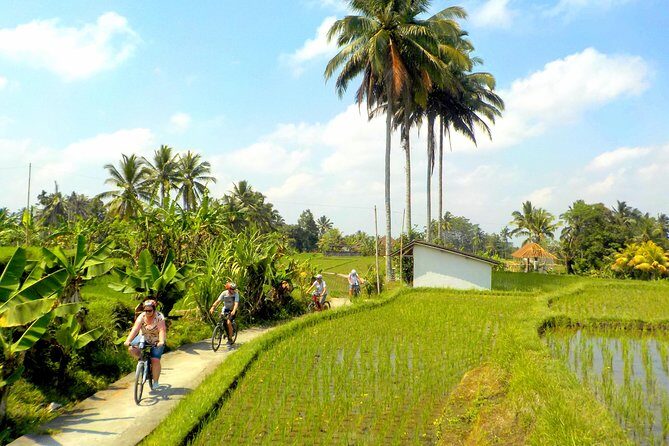
Rice fields, but with zero grind. This fat-tire electric bike tour takes you through Ubud’s countryside at an easy pace, guided by people who know how to turn narrow paths into a story. You’ll pedal when you feel like it, and let the motor do the rest on the Sok Wayah rice route.

Two things I really like about this outing are the local lunch included and the round-trip hotel transfers within Ubud. It’s also built around a simple rhythm: ride, stop for photos, learn a bit about daily life, then eat well before heading back.

One thing to keep in mind: parts of the ride can include traffic near town and tight turns on rice-field lanes, so some bike confidence helps. And even with an e-bike, uphill effort can vary depending on the exact stretch and your comfort level.

Key highlights you’ll care about

Electric Bike Tour in Ubud - Key highlights you’ll care about

  • Fat-tire stability for narrow rice paths and village lanes
  • Local lunch and snacks included, so you’re not hunting food mid-ride
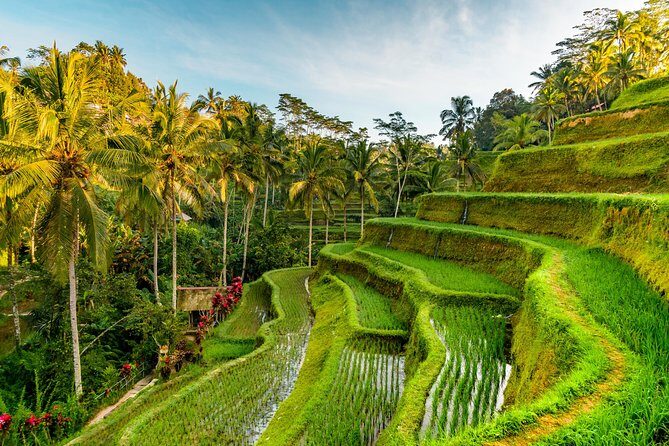
  • Tegalalang Rice Terrace time for photos and village views
  • Traditional house stop for a closer look at Balinese family life
  • Small group limits (max 6 per booking, max 10 overall) for easier guiding
  • Morning or afternoon departures so you can match your Ubud schedule

A fat-tire e-bike that actually changes how Ubud feels

Electric Bike Tour in Ubud - A fat-tire e-bike that actually changes how Ubud feels
Ubud is gorgeous, but getting to the good stuff can mean scooters, traffic stress, or hiring a driver and watching the clock. This tour handles the hard part for you: it swaps that “how do we get there” problem for a guided ride through rice country.

The fat-tire electric bikes matter more than they sound. Wider tires help you stay calm on uneven ground and narrow lanes, especially when the route threads through cottages, walls, and rice paddies. Then the motor makes hills less of a punishment. You still pedal for control and comfort, but you’re not stuck doing a full-on cardio workout just to reach the view.

Guides help set the tone from the start. People such as Wayan, Ketut, and Nyoman are repeatedly noted for keeping riders safe and guiding with plenty of patience, including practical tips when lanes get tight. That matters because Ubud’s roads can move fast, even if your actual rice-path time is slower and calmer.

Price and what $34 buys you in real terms

Electric Bike Tour in Ubud - Price and what $34 buys you in real terms
At $34 for about 3 hours, this is good value if you want a guided culture-and-views combo without extra costs stacking up. Here’s what’s included that normally costs money in Ubud:

  • Bike rental and gear
  • Local guide
  • Hotel pick-up and drop-off within Ubud
  • Air-conditioned vehicle
  • Bottled water, snacks
  • Local lunch
  • A snack stop at a traditional house
  • Admission Ticket Free for the experience portion

In other words, you’re not paying separately for a guide, transport, and a meal. That’s why this feels like a “one ticket, done right” activity rather than a grab-bag. It’s also a smarter use of a short visit: 3 hours is long enough to feel like you escaped the main streets, but short enough that you can still do other Ubud plans after.

Meeting point and how the ride starts in Ubud

Electric Bike Tour in Ubud - Meeting point and how the ride starts in Ubud
The meeting point is at Puri Bebengan, Jl. Kajeng, Ubud. The tour typically begins with you getting picked up from your hotel if you’re within Ubud. After that, you meet your guide and get fitted on the bike with basic instruction.

Small-group limits help here. With a maximum of 6 per booking and up to 10 travelers total, you’re less likely to feel like you’re on a mass ride where the slowest person gets punished. You also tend to get more attention at the beginning, when starting out can be the most intimidating part—especially on narrow rice-field paths.

If you’re arranging your own ride to the meeting point, it’s described as near public transportation, which is useful in Ubud where getting around can be its own mini-adventure.

How the 3-hour route flows (and why the timing works)

Electric Bike Tour in Ubud - How the 3-hour route flows (and why the timing works)
This is a classic half-day style loop: meet, gear up, ride out, stop often, then finish with food and head back.

The itinerary centers on two key ride areas:

1) the Sok Wayah paths, with cottages and rice fields, and

2) the Tegalalang Rice Terrace area for that big-photo moment.

Along the way, you’ll also get a stop at a traditional house for snacks, then finish with a meal at the company shop terrace before returning to Ubud.

The timing works because it keeps the ride from dragging. If you’re in Ubud for a few days and want one countryside activity, 3 hours is a sweet spot. It’s not so short that you mostly drive and barely cycle, and it’s not so long that you feel wrecked before dinner.

Sok Wayah rice paths: the slow magic that needs small confidence

Electric Bike Tour in Ubud - Sok Wayah rice paths: the slow magic that needs small confidence
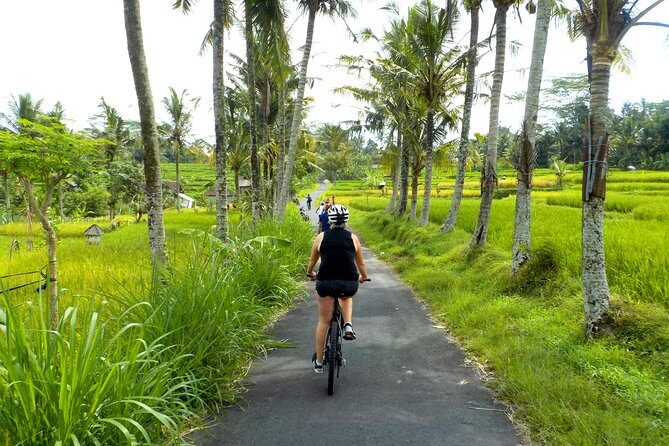
The heart of the experience is riding through the Sok Wayah rice field path, where the route snakes around lush paddies and nearby homes. This is the part that feels most “Bali” in day-to-day terms, not just postcard terms.

What you’ll likely notice fast:

  • narrow lanes where you must pay attention
  • photo stops that break up the ride so you can actually look
  • guide narration that connects what you see to how people live

Sok Wayah is also the area where calm riding habits matter most. Even with the motor assisting, tight turns and uneven edges can feel tricky at first. One key caution: the beginning can be the hardest moment while you get used to balancing on the bike. Once you find a rhythm—slow, steady, watching the line—it gets easier.

Also, you should expect some road time. Guides supervise riding near traffic, and when a group is mixed, having experienced leads helps the ride stay orderly. If you’re the type who gets anxious around motorbikes and cars, arrive with patience and keep your focus on the guide’s pace.

Tegalalang Rice Terrace: the photo stop with built-in context

Electric Bike Tour in Ubud - Tegalalang Rice Terrace: the photo stop with built-in context
At Tegalalang Rice Terrace, you get a break to see the famous terracing and take pictures. The tour includes time here, plus guide storytelling that helps you understand what you’re looking at rather than just snapping and moving on.

There’s also an “admission ticket free” note for the experience portion, which is a nice bonus. You avoid that annoying moment of paying something extra at the last minute for access.

A practical tip: terraced views can tempt you into standing in one spot too long. Instead, use the stops to get a few angles, then shift position and let the guide move you along. That keeps the ride flowing and prevents you from being stuck when the group is ready to continue.

Traditional house visit: snack break plus real daily life talk

Electric Bike Tour in Ubud - Traditional house visit: snack break plus real daily life talk
A standout part of the tour is the stop at a traditional house, paired with snacks. This is where the ride turns from scenery into people.

What’s valuable here is not just walking into a house—it’s the explanation. Guides talk through how a family compound works, and how neighbors and relatives share roles. This kind of stop tends to land well because it’s not abstract. You see the setting, then the guide connects it to how the household functions day to day.

It’s also a breathing moment. After time on the bike, stepping into a traditional space gives your legs a reset. Plus, it’s a chance to ask questions about daily life in Bali in a more relaxed way than on busy streets.

Lunch and the end-of-tour terrace meal

Electric Bike Tour in Ubud - Lunch and the end-of-tour terrace meal
The tour finishes with a meal at the terrace of the company’s shop. You’ll also get local snacks and bottled water during the ride, so the timing makes sense: you’re not arriving hungry, and you’re not cycling forever before you eat.

Based on the descriptions, the food is local and served as part of the fixed plan, which reduces decision fatigue. One person specifically called out that the noodles were their best ever in Bali, which tells me this isn’t just token fuel. Even if your lunch tastes different, the structure is what makes this work: you eat after the big sights, not before, so you don’t feel like you rushed through the best parts.

After the meal, you’re taken back to your Ubud accommodation (within Ubud), wrapping up the whole experience in one smooth flow.

Safety and comfort: what to expect from the guide-led pacing

Safety is a big deal on this tour, and it shows in the way guides handle the group. Many guides named in the feedback—Wayan, Ketut, Gusti, and Suradnya Inyoman among them—are described as careful, friendly, and photo-minded while still prioritizing safety.

You’ll want to watch for a few practical moments:

  • the first minutes while you learn the bike feel
  • narrow rice paths where your line matters
  • road segments where motorbikes and cars are present

If it rains, you might be offered help such as raincoats. That kind of backup matters in Ubud, where weather can change fast. The tour also notes that it needs good weather. If weather conditions are bad enough, you’ll be offered a different date or a full refund.

One more comfort note: the motor helps, but it isn’t a free pass. If a hill feels steep to you, use the motor modes and take your time. Even with e-bikes, riders still need to pedal for balance and control.

Who this tour fits best (and who should think twice)

This tour is designed for moderate physical fitness. “Moderate” here means you don’t need to be a cyclist, but you should be comfortable riding a bike for an extended period and handling some uneven paths.

It tends to suit:

  • couples and friends who want guided countryside time
  • first-timers in e-biking who want instruction and support
  • people who like photos but also want a cultural stop (traditional house snack)

It may not suit you as much if:

  • you dislike riding near traffic and motorbikes
  • you have low comfort with narrow lanes and close turns
  • you expect the motor to do all the work with zero pedaling

Also, note that some people mention an extra coffee-related stop or tasting break. If you’re not a coffee person, plan to treat it as a short diversion rather than a central event.

What to pack and how to ride smart in Ubud

For a ride like this, the goal is to stay comfortable and avoid getting stuck mid-tour. Here’s what I’d plan around based on the tour style and weather notes:

  • wear breathable clothes and closed-toe shoes (you want grip on uneven lanes)
  • bring a light layer for mornings or cooling breezes
  • bring a small towel or wipe if you tend to get sweaty on bikes
  • if rain is possible, be ready for a damp ride and pack accordingly

Most importantly: ride at the pace the guide sets. This isn’t about speed. It’s about seeing the paddies, learning a bit about life around Ubud, and staying safe on narrow paths.

Should you book this electric bike tour in Ubud?

Book it if you want a high-value Ubud experience with fat-tire e-bikes, a guided route through Sok Wayah and Tegalalang, and a real culture stop at a traditional house. The included lunch, snacks, and hotel transfers within Ubud make it feel efficient, not nickel-and-dimed.

I’d think twice if you get anxious around cars and motorbikes or if narrow paths make you nervous. In that case, you’ll still be supervised, but your comfort level matters more than with a flat, closed-course ride.

If your goal is to see more than the main streets and you like the idea of pedaling just enough to feel part of the journey, this is a solid choice for an easy half-day.

FAQ

How long is the electric bike tour?

The tour is about 3 hours.

Is lunch included in the price?

Yes. Local lunch is included in the tour price, along with snacks.

Are hotel pick-up and drop-off included?

Hotel pick-up and drop-off are included within Ubud. If you’re outside Ubud, pickup can be arranged by request.

Where does the tour start?

The start point is Puri Bebengan, Jl. Kajeng, Ubud, Bali 80571, Indonesia.

What is the physical fitness level needed?

Travelers should have a moderate physical fitness level.

How many people are in a group?

There is a maximum of 6 people per booking, and the tour has a maximum of 10 travelers.

What is the cancellation policy?

Free cancellation is available. You can cancel up to 24 hours in advance for a full refund. If it’s canceled due to poor weather, you’ll be offered a different date or a full refund.

Nusa Penida Snorkeling 3 Point with Manta Bay & Land Tour

Nusa Penida Snorkeling 3 Point with Manta Bay & Land Tour - Sanur fast boat reality: timing, crowds, and comfort

A manta-chasing morning on Nusa Penida.

This is a one-day combo built around snorkeling at Penida and then hitting the island’s famous viewpoints by land. You’ll get picked up in Bali (often around 6:30), transfer to Sanur, ride a public fast boat to Penida, snorkel at three spots, then cruise back before evening. The timing is long, but it’s also the whole point: you’re squeezing two very different sides of Penida into one day—sea life and cliff views—without having to organize anything yourself.

I like the straightforward transport: hotel pickup by air-conditioned car, return fast boat tickets, and land transport on Penida. I also love the snorkeling set-up, with a lineup designed for variety—Manta Bay (manta chances), plus Wall Point/Gamat Bay and Crystal Bay for reef and coral time. Even when conditions aren’t perfect, the tour typically keeps the day moving and gets you to real snorkeling water, not just a swim-stop mirage.

My main caution is the pace. This is a long, rushed day, and on rougher sea days or busy seasons the snorkeling and island viewpoints can feel tight—less time to linger than you’d like, plus limited freedom to roam on your own.

Key takeaways before you go

Nusa Penida Snorkeling 3 Point with Manta Bay & Land Tour - Key takeaways before you go

  • Manta Bay is a chance, not a promise: conditions and timing matter, so set expectations for sightings.
  • Crowds happen twice: at Sanur check-in/boarding and also in the water when it’s peak season.
  • Snorkel time can be short: think quick swims, not a slow, exploratory reef day.
  • Land tour is photo-driven: Kelingking, Broken Beach, and Angel’s Billabong get you there fast, with minimal stop time.
  • Facilities are basic: changing, showers, and toilets can be imperfect—pack for practical comfort.
  • Your sea legs matter: breakfast helps, and choppy water days can turn the ride into a test.

Morning kickoff from Ubud to Sanur: the 6:30 plan

Nusa Penida Snorkeling 3 Point with Manta Bay & Land Tour - Morning kickoff from Ubud to Sanur: the 6:30 plan
Your day starts early. Pickup is commonly around 6:15–7:15 depending on your Bali hotel location, and the official start time is listed as 6:30. The goal is simple: get you to Sanur in time for boat check-in without trying to beat traffic at the last second.

This part is genuinely useful. You don’t have to figure out the Sanur route, parking, or ticket queues. The ride is in an air-conditioned car (from areas like Ubud, Kuta, Canggu, Sanur, Nusa Dua, and Jimbaran), and it sets you up for the biggest “unknown” of the day: sea conditions.

One practical note: breakfast is recommended before the snorkeling boat to help with seasickness. If you’re prone to motion sickness, plan to take it seriously. Even if you’re brave on regular car rides, fast boats to Penida can still feel like they’re running on a bumpy track.

Sanur fast boat reality: timing, crowds, and comfort

Nusa Penida Snorkeling 3 Point with Manta Bay & Land Tour - Sanur fast boat reality: timing, crowds, and comfort
The crossing is around 45 minutes on a fast boat, and Sanur is usually busy. Expect lines and clustering because you’re not traveling solo. The tour is capped at a maximum of 28 travelers on the activity side, but the public fast boat crossing can still feel full.

Comfort tips matter here:

  • Bring a waterproof bag for your phone and small gear.
  • Pack light. You’ll be changing clothes quickly after snorkeling, and you don’t want a heavy backpack to manage in a crowded area.
  • If you want to reduce discomfort, wear secure water sandals or shoes.

Also, know that sea conditions can change everything. The tour depends on weather, and on choppier days you may feel more motion, the water may be murkier, and snorkeling time can feel even tighter than usual. The good news: your day is built with a buffer of multiple stops, so if one location under-delivers, the others may still be worthwhile.

Snorkeling at Penida: Manta Bay, Gamat/Wall Point, Crystal Bay

Nusa Penida Snorkeling 3 Point with Manta Bay & Land Tour - Snorkeling at Penida: Manta Bay, Gamat/Wall Point, Crystal Bay
Snorkeling is the heart of this tour. The itinerary is designed for variety across three well-known areas, with the potential to spot mantas at Manta Bay if you’re lucky and conditions line up.

1) Manta Bay: the big-name hope

Manta Bay is where people go for manta rays. The reality is that sightings depend on water movement, visibility, and what the mantas are doing that day. When it goes well, it’s a highlight—majestic and close. When it doesn’t, you still get reef and fish life, but the star attraction may not show.

It’s also the type of place that draws lots of boats. On busy days, you may find multiple groups in the same general water area. That doesn’t automatically ruin it, but it does change the vibe: more busy water, less quiet drifting.

2) Wall Point / Gamat Bay: where the reef often shines

Wall Point (also described alongside Gamat Bay) tends to deliver stronger coral and fish life for many snorkelers. Even when Manta Bay isn’t great, this is often the stop that makes you glad you came.

If you want a practical snorkeling strategy, this is it: focus on staying calm and working your way along whatever reef wall or coral formation is closest rather than chasing every swirl of activity. When visibility is cloudy, steady scanning usually wins.

3) Crystal Bay: coral time and parrot fish vibes

Crystal Bay is a classic for coral and fish, with a reputation for good underwater scenery. It’s often where snorkelers feel the payoff, especially if you got a slower start earlier in the day.

A heads-up from real-world experience: you may only get a short window in each spot. People tend to underestimate how little time you actually spend in the water when you add boat movement, gear, brief entry instructions, and exiting/swapping locations.

Gear, life jackets, and towels

Snorkeling gear is listed as included if you selected the gear/life jacket/towel option. Life jackets are part of the snorkeling set-up, and they matter in rougher conditions. Still, I recommend you confirm you’re comfortable in the provided setup before you enter the water.

Towels and shower logistics can be inconsistent. Some days you’re fine; other days you might be glad you brought a compact quick-dry towel of your own.

The in-between stretch: shower, lunch, and energy reset

Nusa Penida Snorkeling 3 Point with Manta Bay & Land Tour - The in-between stretch: shower, lunch, and energy reset
After snorkeling, you’ll finish around late morning and get a shower. Then lunch kicks in around midday at a local restaurant with Indonesian food. Lunch is included, and in practice it’s usually basic-but-filling rather than fancy.

This is where you should plan like a pro:

  • Hydrate. The day is long and you’re doing sun + sea.
  • Pack a small waterproof snack if you’re the type who gets hungry fast between transfers.
  • If you’re sensitive to heat, wear something light and breathable on the land tour.

Some riders report that changing/shower spaces can be crowded or a bit rough around the edges. You’re dealing with shared facilities, time pressure, and a lot of people all cycling through at once.

Penida land tour at speed: Kelingking, Broken Beach, Angel’s Billabong

After lunch, the island tour begins. You’ll do the big three: Kelingking Beach, Broken Beach, and Angel’s Billabong. The scenic payoff here is real—cliffs, dramatic viewpoints, and Instagram-famous shapes.

The trade-off is time. This is a fast circuit. In many cases, you’re only at each viewpoint briefly, often oriented around getting your photos and then moving on to the next stop. On a long travel day, that can feel more like a checklist than a slow walk with time to breathe.

A bright spot: the guides for the island portion (including named guide Ekka in some groups) can be funny and energetic, and they often manage the schedule carefully. When you get a good guide, the rushed structure feels more tolerable because you’re still hearing little notes and explanations while you move.

Kelingking: the cliff drama

Kelingking is the signature cliff view. It’s stunning from the viewpoint areas, and it’s one of those places where you can understand why people plan their whole trip around it. But it can also be physically demanding if you choose steep paths or stairs—watch your footing and energy.

Broken Beach: the natural cutout

Broken Beach is the classic view of the ocean carving through rock. It’s great for photos, especially when the light is clear. Crowds build here too, so if you’re hoping for a quiet moment, you’ll need patience and good timing.

Angel’s Billabong: the water at the edge

Angel’s Billabong is another cliffside highlight, famous for the natural pool-like look depending on tides and conditions. Expect it to be popular and busy, and plan for short stop time.

Who this tour suits best (and who should rethink it)

This works best if you want one-day efficiency. You’re not trying to live on Penida. You want snorkeling, plus the key viewpoints, and you’re okay with a schedule that feels “go-go-go.”

It’s a good fit for:

  • First-time Penida visitors who want the big hits fast
  • Snorkelers who are comfortable with short water time per stop
  • People who value convenience over freedom

It may be a poor fit if:

  • You want a relaxed beach-day pace
  • You’re easily seasick and hate fast boat motion
  • You love long viewpoint hangs where you can linger for golden light
  • You prefer a more hands-on guide experience with more time in fewer places

If any of the above describes you, you might consider a shorter snorkeling-only option or a private driver once you’re on Penida. The private approach is often where you regain time.

Price and value: what $51.57 is really buying you

At about $51.57 per person, this is positioned as a budget-friendly way to do Penida without planning. That price is meaningful because it bundles:

  • Return hotel transfers by car (from listed Bali areas)
  • Fast boat tickets back and forth (public fast boat)
  • Land transportation on Penida
  • Lunch
  • Snorkeling gear/life jacket/towel only if you selected that option

You’re paying for logistics. Not for unlimited time. Not for private boat comfort. Not for a slow, flexible itinerary.

So is it worth it? Often yes—if you match the tour’s style. If you show up expecting a curated, low-crowd day with lots of freedom, you may feel squeezed. If you come ready for quick hits, the value can feel solid.

Also remember: Penida’s roads and traffic can take longer than you think. Even with good driving, time gets eaten. This tour is built for completing the circuit, not for lingering.

Safety and comfort: how to make a smoother day

From a practical angle, your biggest “risk” isn’t the itinerary—it’s conditions and crowds.

Here’s what I’d do to reduce stress:

  • Take seasickness prevention if you’re sensitive (and eat light before boarding).
  • Wear secure water shoes. Some of these areas involve rocky entry and quick movement.
  • Pack a waterproof phone pouch and a dry change of clothes for after snorkeling.
  • Expect basic shower/changing areas. Bring your own quick-dry towel if you care about comfort.
  • Bring a small amount of cash for small on-island needs you might run into, including toilets.

If sea conditions look rough at check-in, it’s okay to reconsider your snorkel plan. The tour operates as scheduled, and you don’t want to force a choppy-day swim if you’re not feeling steady.

Should you book this Nusa Penida snorkeling and land tour?

Book it if you want a cost-effective, first-try Penida day. You’ll likely appreciate the organization, the chance at mantas, and the way the island tour stitches together the big-name viewpoints efficiently.

Skip it (or go private) if you know you hate long drives, you’re very time-sensitive, or you’re looking for a slow, quiet day underwater and on the cliffs. In those cases, the “schedule-first” structure can make the experience feel rushed.

If you do book, go in with smart expectations:

  • Mantas are a bonus.
  • Snorkeling is short per stop.
  • Viewpoints are quick photo moments.
  • Pack for comfort, not for luxury.

FAQ

FAQ

What time does the pickup usually start?

Pickup starts early in the morning, with the activity starting around 6:30 am. The exact pickup time depends on your Bali hotel location.

How long is the whole tour?

The tour is listed at about 10 hours 30 minutes (approx.), though in real timing it can feel longer due to traffic and schedules.

Where does the fast boat depart from?

You transfer to Sanur port in Bali, then take a fast boat from Sanur to Nusa Penida.

What snorkeling spots are included?

The snorkeling part is planned for three points on Nusa Penida: Manta Bay, Wall Point/Gamat Bay, and Crystal Bay.

Is manta ray viewing guaranteed?

No. The tour offers manta ray chances, but you’re not guaranteed to see them.

What’s included in the price?

Included items are return hotel transfer by air-conditioned car (from listed areas), return fast boat tickets, land transportation on Nusa Penida, lunch, and snorkeling gear/life jacket/towel only if you selected that option.

Does the tour include breakfast?

Breakfast is not included. You’re advised to breakfast before the trip to help with seasickness.

Is this tour crowded?

It’s a shared group day and the fast boat can be busy. The snorkeling activity is capped and organized by group, but you should expect crowds at check-in and during peak snorkeling times.

What happens if the weather is bad?

This experience requires good weather. If it’s canceled due to poor weather, you’ll be offered a different date or a full refund.

What age range can join?

The age limit is 7 to 75 years old.

Is the tour refundable if I cancel?

This experience is non-refundable and cannot be changed for any reason.

Gorilla Cave ATV Bali Ubud, Monkey Forest, Temple, and Lunch

Gorilla Cave ATV Bali Ubud, Monkey Forest, Temple, and Lunch - Alasan Adventures ATV: safety gear, instruction, and the ride you will remember

Quad biking in Ubud with monkeys too.

This is a full-day mix that feels like three Bali vibes in one: adrenaline on a quad bike through the countryside, a walk through the Sacred Monkey Forest Sanctuary under thick shade, and a calmer cultural stop at Puseh Batuan Temple. You also get the practical perks that matter after getting dirty: a shower and changing room are included, plus door-to-door round-trip transfers so you are not doing mental math on local traffic.

What I love most is the combo of a professional ATV setup (instructor, helmet, boots, safety gear) and the way the day still leaves room for real sightseeing. I also like the lunch: it is a substantial buffet, and it is described as having views over rice paddies, which makes the break feel less like a forced stop. One thing to consider is effort and fit, since the ride can be hard work, and dual-seat performance can depend on combined weight on the smaller ATVs.

Key points before you go

Gorilla Cave ATV Bali Ubud, Monkey Forest, Temple, and Lunch - Key points before you go

  • Door-to-door transfers in a private group: your pickup and drop-off are handled, and your party keeps it simpler.
  • ATV training plus real safety gear: helmet, boots, locker, and insurance are part of the package.
  • A muddy, varied ride route: you can expect an adventurous track, including tunnels and cave-style sections mentioned in the ride experience.
  • A shower after the mess: changing rooms and a shower are included, so you can actually feel human again.
  • Monkey Forest on a shaded walk: expect close-up macaques among birds, lizards, and butterflies in the thick forest.
  • Temple time with cultural context: Puseh Batuan Temple is short, but the guide-style explanations help it click.

The right kind of Ubud chaos: ATV, monkeys, and temple culture

I like days that move, but not random days. This one has a clear rhythm: get your adrenaline going first, then slow down for animals and culture. The best part is that the energy shift feels natural, not staged.

Your quad-bike portion is framed as a proper adventure rather than a quick spin around a lot. You race through rice fields, jungle, rivers, and village areas around Ubud, and you learn how to ride with a professional instructor and full safety gear. Then you trade dust for shade at the Sacred Monkey Forest Sanctuary, where the thick canopy makes the whole place feel cooler and more atmospheric.

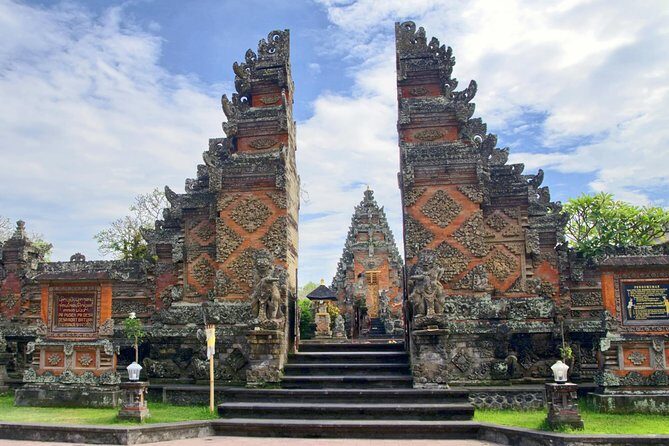
The day also avoids the usual trap of stacking only tourist stops. Puseh Batuan Temple gives you a look at Hindu practice at the village level, and the stories people share there tend to land better when you have already been out in the countryside.

Pickup, timing, and how the day actually feels

Gorilla Cave ATV Bali Ubud, Monkey Forest, Temple, and Lunch - Pickup, timing, and how the day actually feels
The tour runs about 10 hours. That is long, but it is the kind of long that makes sense because you are traveling, riding, and doing two major attraction stops. Door-to-door round-trip transfers are included, which helps a lot in Bali where the ride between places can be the real time-eater.

Most days start early enough that you beat some of the heavier traffic. One guide experience mentioned an 8:00 a.m. start, and starting earlier was tied to feeling like the group experience was less crowded. Since your day includes multiple stops and a ride that can get messy, an early start is often the practical sweet spot.

Also pay attention to the pace: the ATV time itself is about 2 hours, and the rest of the day is filled in by Monkey Forest (about 1 hour) and the temple stop (about 35 minutes), plus the lunch break. You are not rushed between all the big items, but you will still feel like you did a lot when it is over.

Finally, your tickets are handled with a mobile ticket, so you are not stuck hunting for paper tickets while you are sweaty and muddy.

Alasan Adventures ATV: safety gear, instruction, and the ride you will remember

Gorilla Cave ATV Bali Ubud, Monkey Forest, Temple, and Lunch - Alasan Adventures ATV: safety gear, instruction, and the ride you will remember
Your quad bike adventure happens at Alasan Adventures, roughly 20 minutes north of Ubud. The point of choosing this area is that it feels less tour-bus than the most central zones, with more real countryside around you.

Before you go, you get guided instruction and full safety gear. That means you are not guessing your way onto the bike. You are set up with a helmet and boots, plus a locker so you can store what you brought. Insurance is covered as part of the package, and that matters because the day involves dirt, hills, and sudden changes in terrain.

What to expect on the ride itself:

  • You pass through rice fields, jungle sections, rivers, and villages around Ubud.
  • The course can include features like tunnels, waterfalls, cave sections, and muddy or adventure-style tracks, based on the way the ride has been described.
  • There are also breaks and photo moments built into the day flow, which is good because the ride is physically active.

Here is the practical reality: ATV riding in Bali is not just about fun, it is about control. You will feel it in your arms and legs, especially if you lean into the more technical parts. One experience described the route as hard work but worth it, and that matches the typical feel of a countryside circuit with uneven ground.

Dual-seat note for comfort and performance

If you are doing a dual ride (two people on one ATV), take weight seriously. One review noted that with dual seaters, you should watch the combined weight because smaller ATVs may struggle on higher slopes. In plain terms: if you are heavier or your partner is, your ride may feel less powerful in steep sections.

The shower-and-lunch reset: buffalo-barf? no, buffet with views

Gorilla Cave ATV Bali Ubud, Monkey Forest, Temple, and Lunch - The shower-and-lunch reset: buffalo-barf? no, buffet with views
After the ATV, you get a reset that a lot of active tours skip. There is a shower and changing room included, plus you can use the locker area before you move on. That is a big quality-of-life upgrade if you plan to enjoy Monkey Forest right after, because you do not want to spend the day smelling like wet earth.

Lunch is included and described as a substantial buffet. It is also tied to a nice setting, including views over rice paddies. Even if you do not care about scenery, buffet lunch is a good match for this kind of day because it lets you eat at your pace, not the schedule of one fixed meal.

Alcohol is not included, but it is available to purchase. Souvenir photos are also sold if you want them, though you can choose to skip that spend and keep your wallet for better stuff later.

Sacred Monkey Forest Sanctuary: shade, animals, and keeping your cool

Gorilla Cave ATV Bali Ubud, Monkey Forest, Temple, and Lunch - Sacred Monkey Forest Sanctuary: shade, animals, and keeping your cool
The Sacred Monkey Forest Sanctuary stop is about 1 hour, and it is designed as a walking experience. You move along paths under dense shade, and you see more than just monkeys.

The place is described as having lots of wildlife, including:

  • monkeys in the trees
  • birds
  • lizards
  • butterflies

That mix makes the forest feel alive even when monkeys are not in your immediate line of sight. It is also a nice break from the bright outdoor heat you associate with ATV riding.

How to handle the monkey factor

Expect macaques to be curious. You will likely take photos, and some days the monkeys get close enough that you need to be alert about what is in your hands. I recommend keeping your bag secured and your phone ready, but not dangling. The forest is their home, not a theme park ride.

Also, bring a calm attitude. When the day is already full of motion, the monkey stop can feel chaotic if you go in tense. If you treat it like a wildlife walk with a side of comedy, you will enjoy it more.

Puseh Batuan Temple: a short stop with real cultural weight

Gorilla Cave ATV Bali Ubud, Monkey Forest, Temple, and Lunch - Puseh Batuan Temple: a short stop with real cultural weight
Puseh Batuan Temple is about 35 minutes, and it is one of the main temples connected to Batuan village. The focus is on Hindu pride and the temple’s story, which is exactly the kind of context that makes a stop feel more than just a photo corner.

One reason I like temple stops when they are paired with active travel is that it balances your day. After dust and adrenaline, you can slow down and look at the details: offerings, the layout, the atmosphere, and the way people relate to the space.

If you want this stop to land, pay attention to what your guide emphasizes. In several experience accounts, the guide’s explanations about local beliefs were a standout part of the day. With the right storytelling, a temple stop becomes a chapter, not a checkbox.

Guides can make or break the day: names to watch for

Gorilla Cave ATV Bali Ubud, Monkey Forest, Temple, and Lunch - Guides can make or break the day: names to watch for
This tour seems to put a lot of trust in the person driving and guiding you, and the good ones noticeably change your experience. Guides mentioned include Krisda, Radi, Ardy, Desna, Leo, Aaron, Eka, and Kanu.

Here is what those names have in common across different days:

  • They are described as being on time and making pickups and transitions feel smooth.
  • They explain what you are seeing, especially around the temple and Balinese beliefs.
  • They help with the long ride back so the day still ends on a calm note.

If you get one of these guides, your day may feel less like a rushed route and more like a guided story through Ubud’s countryside and culture.

Physical requirements and who this tour suits best

Gorilla Cave ATV Bali Ubud, Monkey Forest, Temple, and Lunch - Physical requirements and who this tour suits best
This is an active day. It asks for moderate physical fitness, and it is not ideal if you have mobility limits that make getting on and off an ATV difficult.

Key limits to plan around:

  • Minimum age for a single ride is 16.
  • Ages 9–15 can ride only with an adult present, typically tandem.
  • Maximum age is 59.
  • Maximum weight is 165 kg.

One more practical thought: you are going to get dirty. The inclusion of a shower helps, but the ride itself is outdoors, so bring the mindset that you are there to do the activity, not just spectate.

Best match for you if:

  • you want an all-in-one day (ATV + wildlife + temple) without juggling multiple tickets
  • you like active travel and do not mind getting a little muddy
  • you appreciate a guide who explains culture, not just drives you between stops

Maybe not the best match if:

  • you want an easy, mostly sitting day
  • you are sensitive to physical strain from riding and uneven terrain
  • you are doing tandem and are worried about slope power (combined weight matters)

Price and value: why $75 can work here

At $75 per person, this price can feel fair because you are buying more than a single activity. You are getting:

  • round-trip door-to-door transfers
  • ATV instruction plus safety gear (helmet, boots, and related support like a locker)
  • admission ticket coverage for major stops
  • lunch (a substantial buffet)
  • shower and changing room after the ride
  • insurance coverage

This is the kind of bundle that usually costs more when you piece it together yourself. Even the value logic is simple: transfers plus guided ATV plus two cultural/wildlife admissions plus lunch adds up fast. If you were planning to do the Monkey Forest and a temple anyway, the ATV day becomes the bonus rather than a separate bill.

Group discounts are mentioned too, and a private setup means you are not stuck in a chaotic crowd.

Should you book Gorilla Cave ATV in Ubud plus Monkey Forest and Batuan Temple?

If you want one high-energy day that still includes culture and nature, I would book it. The ATV portion gives you the standout adventure, and the Sacred Monkey Forest Sanctuary plus Puseh Batuan Temple keep the day from feeling like one long stunt.

I would be extra cautious about expectations if you are booking tandem and concerned about climbing power. Also, plan for the day to be long enough that you will feel it in your legs, then use the shower break to reset.

If you like guided explanations, this is a strong bet because multiple guides highlighted in experiences are described as attentive and great at interpreting Balinese beliefs while handling the practical chaos of getting around.

FAQ

How long is the tour?

It runs for about 10 hours (approximately).

Is hotel pickup and drop-off included?

Yes. Door-to-door round-trip transfers are included.

What ATV support and safety gear are included?

You get a professional quad bike instructor and safety gear including a helmet and boots, plus a locker, shower, and changing room. Insurance is also covered.

Is lunch included, and what type is it?

Yes. Lunch is included and is described as a local buffet.

Which attractions are part of the day?

You visit the Sacred Monkey Forest Sanctuary and Puseh Batuan Temple, along with the ATV adventure at Alasan Adventures.

Are admission tickets included for the stops?

Yes. Admission tickets are included for the Monkey Forest Sanctuary and Puseh Batuan Temple (and the ATV stop is also included).

Are there age, weight, or fitness requirements?

Yes. Minimum age for a single ride is 16. Ages 9–15 can ride tandem with an adult present. Maximum age is 59. Maximum weight is 165 kg. Moderate physical fitness is required.

What is the cancellation policy?

Free cancellation is available up to 24 hours in advance for a full refund. If you cancel less than 24 hours before the start time, there is no refund.

If you tell me your dates and how many people (and whether you want single or tandem rides), I can help you sanity-check fit, timing, and what to prioritize that day.

Mt Batur Sunrise Trekking Tour

Mt Batur Sunrise Trekking Tour - The Climb Plan at Mt. Batur: What the Trek Actually Feels Like

Waking up for a volcano pays off. This Mt. Batur sunrise trekking tour is all about climbing Gunung Batur in the cool morning hours, then enjoying Bali views before the heat hits. I like the convenience of hotel pickup and how the tour includes breakfast cooked with volcanic steam. One thing to factor in: sunrise visibility can change with clouds, and the early start means it can feel properly cold out there.

The climb is paced around you, not around a big crowd. You’ll have a guide who can slow down for photos and breath breaks, and you’ll return to your accommodation the same morning—no awkward meet-up hunt in the dark.

Key Points You’ll Care About

  • Hotel pickup from your lobby/villa so you don’t have to track down a meeting point at 1 a.m.
  • Breakfast cooked using volcanic steam with eggs and other simple comfort foods at the top
  • Your pace with a private guide—use it for steady breathing and better photos
  • Torches, walking sticks, and first-aid included for a safer, easier start
  • An air-conditioned return drive so you’re not stuck in heat after the hike
  • Weather can make or break the view even when the trek goes well

Mt. Batur Sunrise Trek: Why This Bali Volcano Morning Feels Different

Mt Batur Sunrise Trekking Tour - Mt. Batur Sunrise Trek: Why This Bali Volcano Morning Feels Different
Mt. Batur (Gunung Batur) is one of Bali’s most active volcanoes, and that reality is part of the draw. You’re not just hiking for a view—you’re hiking into a living, steaming landscape where breakfast is literally cooked with volcanic heat.

I love that the tour is built around timing. Leaving early means cooler temperatures for the climb and less sweaty misery while you’re working your way upward in the dark or early light. Then, when the sun rises, you’re positioned for that classic Bali-from-above moment that feels both huge and strangely quiet.

This tour is also private, which matters more than you might think. A sunrise trek is easier when the pace feels human. I’m less interested in racing to the top and more interested in getting enough time for photos, slow breaths, and a real look at the morning sky.

Getting to the Trailhead From Ubud: Hotel Pickup and Early Hours

Mt Batur Sunrise Trekking Tour - Getting to the Trailhead From Ubud: Hotel Pickup and Early Hours
You start with hotel pickup in Ubud, and the tour specifically notes pickup from your lobby hotel or villa. That’s a big practical win, especially since sunrise trekking usually means an early departure in the dark. You won’t be juggling directions, waiting points, or getting stuck in someone else’s meeting-time chaos.

Once you’re collected, you’ll drive to the Mt. Batur trekking starting point. The tour description keeps it general—drive safely to the agency start area—so you should expect an early-morning road transfer rather than a quick hop. Either way, the included air-conditioned vehicle helps you arrive with less fatigue and less heat-burn.

A quick reality check: if you’re sensitive to early wake-ups or nighttime driving, plan your day afterward. One review mentioned a driver feeling sleepy, which is a reminder to stay alert and make sure your pickup details are correct and confirmed before the start time. Your best move is simple: double-check your pickup location text details as soon as you book.

The Climb Plan at Mt. Batur: What the Trek Actually Feels Like

Mt Batur Sunrise Trekking Tour - The Climb Plan at Mt. Batur: What the Trek Actually Feels Like
The itinerary is straightforward, and that’s good. After pickup, you arrive at the Mt. Batur trekking agency start point, where you’re welcomed by a professional English-speaking guide. From there, you begin the sunrise trekking with the guide moving at a pace that works for your group.

You’ll climb in the cool early hours. Torches are included, along with walking sticks, which makes the night-to-dawn portion less intimidating. Many people expect a “hard hike” and end up surprised by the moderate feel—still challenging, but not out of reach for most travelers who are willing to take it slow.

Your private guide is where the experience gets better. In real life, that means you can pause for photos without feeling like you’re holding everyone back, and you can adjust your effort if you’re a bit tired. Some guests specifically praised guides like Siska, Ayu, Bagia, Wayan, and Made for adapting to the pace and finding excellent photo spots—so you’re not just buying a ticket to a viewpoint.

What to watch for on the hike? Cold. One review noted it was around 14 degrees Celsius and suggested bringing a jumper; it also mentioned jackets can be hired at the bottom before the hike. That’s useful because a sunrise trek often starts when you’d still rather be asleep and bundled.

Stop 1: Mt. Batur Trekking Agency Start Point (Where You Get Set Up)

This tour’s main “stop” is the agency start point area—basically the launch pad for your climb. It’s where the guide meets you properly and where you get the practical tools that make sunrise treks work.

Here’s what you should expect at the start point:

  • You’ll be met by your guide (English-speaking) and orientated for the climb
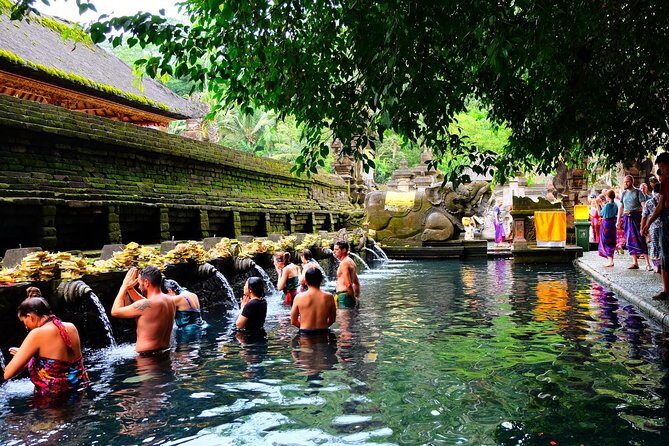
  • You’ll have walking sticks and torches available
  • A first-aid kit is part of the included safety setup
  • You’ll then head out for the sunrise trekking portion

The practical value of this setup is huge. Sunrise trekking is not the time to improvise supplies. By giving you sticks, lights, and basic first-aid, the tour reduces the little stress points that can snowball when it’s dark and cold.

Breakfast on Volcanic Steam: The Food Part I’d Plan Around

Mt Batur Sunrise Trekking Tour - Breakfast on Volcanic Steam: The Food Part I’d Plan Around
The best part of many sunrise treks is not the sunrise—it’s the moment you get warm food after the effort. This tour includes breakfast cooked using volcanic steam, which is the real “Bali volcano” experience.

Your breakfast is described clearly and it’s meant to be energizing without being complicated. You’ll have items like banana or egg sandwiches, hard boiled eggs, fresh fruit selections, plus a chocolate bar and a hot beverage. It’s simple, filling, and designed for people who need calories but don’t want a heavy sit-down meal right before more time outdoors.

You’ll also have coffee and/or tea, plus bottled water included. That combination matters more than it sounds. Cold air makes you feel colder and hungrier, and warm drinks help you reset between “climb mode” and “sunrise viewing.”

One thing I like about this food setup is that it’s not positioned as a luxury brunch. It’s practical and themed to the volcano itself, which makes the meal feel earned instead of random.

Sunrise Views and Photo Moments: How to Get the Most From the Top

Mt Batur Sunrise Trekking Tour - Sunrise Views and Photo Moments: How to Get the Most From the Top
The big promise here is classic: get the best views of Bali from the top of Mt. Batur at sunrise. That’s why you’re up so early, and it’s also why you should calibrate expectations.

Weather is the wild card. One negative review mentioned a cloudy day with not-so-good views, even though the trek itself was good. Translation: even with a great guide, you can’t control clouds. If sunrise is the #1 priority, keep your schedule flexible for the next morning if you can.

How do you improve your odds in real life? You focus on timing and positioning, not luck. Your guide’s role is key: multiple reviews praised guides for taking great photos and pointing out the best spots. I strongly suggest you tell your guide you want photo time, not just “quick snaps.” Sunrise light is short, and having a plan beats rushing.

Also, dress for the top, not for the bottom. The climb might be cool and manageable, but once you stop moving to watch sunrise, the cold can hit. That jumper suggestion from a review is real-world advice, not a fashion idea.

Guides, Drivers, and the Private-Tour Advantage in Real Life

This tour is private, meaning only your group participates. That’s a major quality-of-life upgrade on a sunrise trek. You’re not negotiating with other people’s walking speed, shoe choices, or photo habits.

The reviews do highlight a pattern: great guide + dependable pickup makes the whole morning feel smooth. Some notable names include:

  • Siska (praised for care and friendliness)
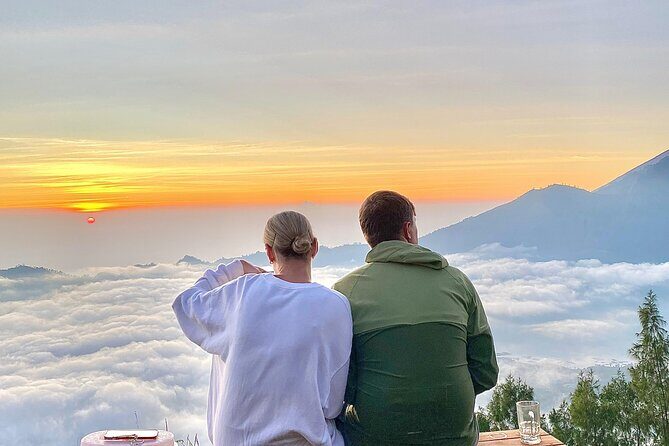
  • Ayu (praised for going above and beyond)
  • Bagia (praised for adjusting to the pace and photo spots)
  • Wayan (praised for knowledge and making the experience feel special)
  • Made (praised for helpfulness and photos)
  • Mawe (praised as a kind, friendly driver who even handled an unscheduled stop)
  • Gede (praised for clear communication around booking)

Of course, you can’t guarantee the exact same person for your date. But you can use the pattern. Choose this tour when you want a guide who’s part of the experience, not just a “local escort.” And choose it when you prefer your pace over a cattle-line climb.

On transportation, the tour includes an air-conditioned vehicle and bottled water. That’s good for comfort, but the bigger value is the “no stress” flow: pickup, drive, trek, then return to your accommodation after you finish.

Gear, Comfort, and Safety: What’s Included vs What You Should Bring

Mt Batur Sunrise Trekking Tour - Gear, Comfort, and Safety: What’s Included vs What You Should Bring
For sunrise trekking, the small extras matter because you’ll use them right away. This tour includes:

  • Walking stick
  • Torches
  • First-aid kit
  • Bottled water
  • Coffee and/or tea
  • Breakfast
  • Air-conditioned vehicle
  • 21% government tax and service

What you might still want to bring (based on the conditions described in reviews and typical sunrise trekking needs):

  • A warm layer or jumper (one review mentioned about 14 degrees Celsius)
  • Good grip shoes for uneven volcanic terrain (not listed, but essential for comfort and stability)
  • A jacket if you don’t bring one, since one review said jackets can be hired at the bottom before the hike

Also, don’t underestimate the “waiting” part of a sunrise. Once you stop to watch the horizon turn, the temperature drop feels real. Plan to be comfortable standing still.

The first-aid kit and guide setup are reassuring. But safety still comes down to common sense: go slow, use the walking stick, and don’t try to outrun your breath just because you can.

Price and Value: Is $49 a Good Deal for Mt. Batur?

At $49 per person, this Mt. Batur sunrise tour sits in a budget-friendly zone for Bali. What makes it feel like better value than some pricier options is what’s bundled.

You’re not paying only for the view. You’re also paying for:

  • Hotel pickup and return by vehicle
  • A private guide experience for your group
  • Torches and walking sticks
  • Breakfast cooked using volcanic steam (eggs and more)
  • Bottled water plus hot drinks
  • A first-aid kit setup and basic safety attention
  • Admission ticket listed as free

If you’ve ever tried to stitch together sunrise trekking on your own, you know the hidden costs: transport, guide fees, and the time wasted figuring out what’s included where. Here, the package keeps the morning simple, which is worth something when your clock starts at something silly like 1:30 a.m.

To judge value fairly, ask yourself what you want most: convenience, timing, and a guide who keeps things smooth. If those are your priorities, $49 can be a solid deal. If you’re the type who loves DIY planning and already knows the route and pickup game, you might compare other options—but this one is built for low friction.

Should You Book This Mt. Batur Private Sunrise Trek?

Book it if you want a true early-morning volcano experience with hotel pickup, a private guide who matches your pace, and a breakfast that actually connects to the mountain. This is also a strong pick if you’re traveling with people who want the comfort of structure but still want space to pause for photos.

Skip or reconsider if your schedule depends 100% on a perfect clear sunrise. Clouds can happen, and a cloudy sunrise can reduce the wow-factor even if the trek itself goes well. Also, if cold mornings feel brutal for you, plan warm layers seriously—one review’s advice about cold around 14 degrees is not optional.

If you do book, do three simple things:

  • Confirm your pickup location details carefully
  • Bring warm gear for standing still at the top
  • Tell your guide you want photo time and pacing that feels comfortable

FAQ

What time does the Mt. Batur sunrise trek run?

It lasts about 8 hours total, and it’s designed around sunrise timing, so expect an early start from Ubud.

Is hotel pickup included?

Yes. Pickup is offered from your lobby hotel or villa, so you don’t have to find a meeting point early in the morning.

Is the tour private?

Yes. It’s listed as private, meaning only your group will participate.

What breakfast do you get?

Breakfast includes volcanic-steam cooked eggs and other items such as banana or egg sandwiches, hard boiled eggs, fresh fruit selections, a chocolate bar, and a hot beverage. Coffee and/or tea are also included.

Are torches and walking sticks provided?

Yes. Walking sticks and torches are included, along with a first-aid kit.

Do I need to pay for admission tickets?

Admission ticket is listed as free.

How much is the tour?

The price is $49 per person.

Can I cancel for a refund?

You can cancel for a full refund up to 24 hours before the experience’s start time. If you cancel less than 24 hours before, you won’t get a refund.

Private Car Charter: Hire Car with English Speaking Driver

Private Car Charter: Hire Car with English Speaking Driver - Building your own 10-hour Bali day without rushing

Bali runs on schedules you don’t control. This private car charter lets you set the pace for your own day. You get air-conditioned comfort, an English-speaking driver, and fuel included, so your time goes to places you choose—not traffic stress.

I especially like the flexibility. You can pick your own tourist destinations and still get route guidance from a driver who can suggest what’s happening right now. And since it’s private transport for up to six, it works well for couples, families, or a small group that wants to travel as one unit.

One thing to consider: the experience depends on clear pickup details and the driver’s real English comfort level. If pickup instructions are fuzzy, that can turn a smooth day into a delay—so plan the meeting point carefully.

Key things to know before you go

Private Car Charter: Hire Car with English Speaking Driver - Key things to know before you go

  • You drive your own plan: choose the destinations you want during the 10-hour window.
  • Fuel is included: your basic transport cost covers petrol, not just the vehicle.
  • Comfort matters: an air-conditioned car helps in Bali heat.
  • Driver support is part of the value: you’ll get safety-focused driving plus recommendations.
  • You pay entry and parking separately: plan for site fees and extras outside the car.
  • Good weather is important: if the day can’t run due to weather, you’ll be offered a different date or a full refund.

Why this private car charter feels better than fixed tours

In Bali, the hardest part isn’t finding things to do. It’s moving between them without burning your whole day in transit. With this charter, you’re not trapped in a fixed route. You get one 10-hour block and use it how you want.

That structure changes everything. You can start earlier if your first stop has long entry lines, or you can shift your timing to match opening hours. If one place runs longer than expected, you’re not stuck watching the clock while everyone else waits.

The car is air-conditioned, which is a big deal in Ubud-area heat and humidity. The goal here is simple: keep you comfortable while you travel so you actually enjoy the time at the destinations.

Price and value: how the $60 per group adds up

Private Car Charter: Hire Car with English Speaking Driver - Price and value: how the $60 per group adds up
The price is $60 per group, and the car can handle up to six people. That means you’re effectively buying private transport, not individual seats.

What you get that usually costs extra on many tours:

  • Private transportation
  • An air-conditioned vehicle
  • An English-speaking driver
  • Fuel surcharge (petrol is included)

What you should budget separately:

  • Entrance fees to tourism sites
  • Parking fees
  • Lunch or dinner
  • Personal expenses

Here’s how to judge value for your specific day. If you’re planning even two or three paid sites plus parking, the included items (driver + car + fuel) often make this cost-competitive compared with multiple separate transfers. If your plan is mostly free areas with short visits, it can still be worth it—because the real savings is time and hassle.

A smart planning tip: when you’re traveling as a group, split the cost in your head. The per-person cost drops fast when four or six people are riding together.

Building your own 10-hour Bali day without rushing

Private Car Charter: Hire Car with English Speaking Driver - Building your own 10-hour Bali day without rushing
The charter is designed for a one-day plan of about 10 hours. That’s long enough to see multiple destinations, but short enough that you need a simple strategy.

I suggest you treat it like a relay, not a marathon:

  • Pick a first stop that benefits from a cooler time of day.
  • Choose one main destination that you’ll linger at.
  • Add one lighter stop that won’t swallow the schedule.
  • Keep a flexible buffer so delays don’t wreck the whole day.

Because the driver can recommend places that are currently happening, you’re not just copying a static checklist. You can adjust based on timing and what fits your mood that day.

Also, remember the built-in limit: if you want to go beyond 10 hours, extra hours are charged. You don’t want surprises, so decide upfront whether your plan truly fits—or whether you’d rather shorten a stop than pay for the extension.

What the English-speaking driver does well (and where you should double-check)

The driver is a major part of your experience. You’re getting a driver who’s intended to be English-speaking, and the service is framed around safe driving and helpful local recommendations.

The practical value is straightforward:

  • You’ll handle less “how do we get there” stress.
  • You can ask for destination ideas that match your interests and timing.
  • You can communicate needs more easily than with a language barrier.

That said, one caution comes up in real-world service: English ability isn’t always consistent. In one instance, the driver had trouble speaking English, even though the service promised English. It wasn’t unsafe—just harder to communicate than expected.

My advice: before the day starts, confirm the basics clearly in writing or on your phone.

  • Send your exact pickup location
  • Share any landmark notes you have (hotel name, street, or the closest clear point)
  • Tell the driver the style of day you want (relaxed, photo stops, cultural stops, etc.)

If you do that, you’ll get far more out of the driver than a rushed conversation would allow.

Getting to the car: pickup planning and the mobile ticket

Pickup is offered, and you’ll receive confirmation at booking time along with a mobile ticket. That’s the good part: you’re not guessing or waiting for paper.

But pickup is where your day can win or lose time. The service includes pickup, yet delays can happen when the meeting point isn’t crystal clear. One reported problem involved confusion around pickup instructions even after confirmation was sent earlier.

So, keep this simple rule: treat pickup like it’s a flight gate.

  • Use the exact address or hotel name tied to your booking
  • Put your meeting point in a single sentence you can show the driver
  • Be at the pickup spot a little early, not just on time

If you’re staying in Ubud, your hotel area may look similar to nearby spots. One small mismatch in location can create a long wait.

The Bali destinations you choose: how to use the car well

You’re not locked into a fixed itinerary. You’ll bring a list of tourist attractions you want, and the driver helps you see the island based on your choices.

Because the specific stops aren’t the same for every person, the smart way to plan is by type:

  • Choose destinations that are close enough to connect during the 10-hour window.
  • Don’t schedule two long “must-see” stops that both require heavy time at the entrance.
  • If one destination needs tickets, build in time for entry lines.

Here’s how to make the day feel worthwhile even if your schedule changes:

  • Keep walking time realistic at each site
  • Leave room for photos, viewpoints, and slower moments
  • Don’t pack the car time so tight that any traffic kills your last stop

Also, the car charter is valuable because it lets you decide. If you arrive somewhere and it’s not the vibe you expected, you can pivot. That freedom is the real reason many people book private transport.

What to expect in the car: comfort, pace, and safety

Private Car Charter: Hire Car with English Speaking Driver - What to expect in the car: comfort, pace, and safety
This is private transportation in an air-conditioned vehicle, with fuel included. That’s not just convenience. It’s how you avoid the “cost creep” that happens when you add rides, taxis, or separate fuel charges during the day.

The driver’s job is also safety-focused driving, which matters in Bali where roads, turns, and traffic patterns can be unpredictable. You’ll feel the benefit most when you’re not stressed about directions while watching the road.

In a perfect world, the day flows like this: short planning moment, comfortable ride between stops, then time on the ground where you actually want to be. When you keep your itinerary realistic, the day usually works exactly like that.

Extras that can change your budget (parking, entry, meals)

Private Car Charter: Hire Car with English Speaking Driver - Extras that can change your budget (parking, entry, meals)
The inclusions are solid, but they don’t cover everything.

You should expect to pay separately for:

  • Entrance fees to tourism sites
  • Parking fees
  • Lunch or dinner
  • Personal expenses

These are common costs, but they can stack up faster than people expect. My suggestion is to set a daily “on-site budget” before you go. Then you’re not doing math while you’re hot, hungry, and trying to decide whether to add another stop.

Also think about meals. Lunch sounds simple, but in practice it can chew time. If you only have 10 hours, even a relaxed lunch can shift your last destination. Plan where you’ll eat, or at least plan how you’ll handle it without losing the day.

Who this is best for in Ubud and the Bali islands

This charter is a strong match when you want control but don’t want to negotiate transport all day. It’s also a good fit if you’re going with a small group.

This works especially well for:

  • Friends or family groups up to six who want to stay together
  • People staying in Ubud who want an island day without organizing multiple transfers
  • Travelers who prefer a custom plan over a fixed schedule
  • Anyone who values driver recommendations for what’s happening that day

It may be less ideal if your main goal is to hop around quickly across far-apart areas without careful timing. In that case, you could end up paying for extra hours—or losing time to distance.

A balanced take: the strongest parts, plus the risk to manage

Based on the service’s strong track record, the biggest positives are recommendation rate and an overall high rating. That usually points to the core experience working for most people: private comfort, smooth transport, and a driver who helps the day feel easy.

But the one notable drawback to watch is pickup clarity and communication expectations. If you want a stress-free day, don’t rely on assumptions about where the car will be waiting.

My “do this and you’ll be fine” checklist:

  • Double-check pickup spot details
  • Confirm your intended destinations before you go (even if plans can flex)
  • Keep the schedule realistic for a 10-hour day
  • Ask directly about English comfort if communication is critical for your group

If you manage those points, you’ll likely feel the value quickly—especially compared with juggling multiple ride options.

Should you book this private car with English-speaking driver?

I’d book it if you want a 10-hour private car with fuel included and the freedom to set your own Bali day from Ubud. It’s a practical way to avoid the stress of navigation, timing, and regrouping.

I wouldn’t book it blindly if your group has strict communication needs or if your pickup details are unclear. The service can be great, but the day depends on clean pickup coordination. Send precise pickup info, show up early, and keep your plan sensible.

If that sounds like your style, this charter is a smart, cost-effective way to see Bali on your terms.

FAQ

How long is the private car charter in Ubud?

The experience is approximately 10 hours.

What is the price for this tour?

It’s priced at $60 per group, up to 6 people.

Is pickup included?

Yes, pickup is offered.

What’s included in the price?

You get private transportation, an air-conditioned vehicle, an English-speaking driver, and fuel surcharge.

What’s not included?

Entrance fees, parking fees, lunch or dinner, and personal expenses are not included.

Do I get a mobile ticket?

Yes, you’ll receive a mobile ticket, and you’ll get confirmation at the time of booking.

What happens if the weather is bad?

This experience requires good weather. If it’s canceled due to poor weather, you’ll be offered a different date or a full refund.

Can I cancel for free?

You can cancel up to 24 hours in advance for a full refund. If you cancel within 24 hours, the amount paid is not refunded.

Best Day Trip in Bali

Best Day Trip in Bali - Sacred Monkey Forest Sanctuary: gray macaques and Hindu temples

This private Ubud tour is built for variety: temples, lush scenery, and a few hands-on culture stops, all in one long day. You’ll start with the Sacred Monkey Forest Sanctuary, then move through the classic Ubud picture stops like Tegalalang Rice Terraces and Tegenungan Waterfall, and round it out with Tirta Empul’s holy springs. I especially like how it pairs famous sights with practical time planning, and I also love the craft contrast of Celuk Village’s silver work. One thing to consider: entrance fees and parking are not included, so your total day cost will depend on what you choose to pay on the ground.

What makes this feel genuinely useful is the private transportation and hotel pickup across much of south Bali. If you’re staying in places like Seminyak, Canggu, Kuta, Sanur, or farther south, you’re not stuck with a long bus transfer. I also appreciate that the driver is English-speaking and your group stays together, so you can move at a pace that works for you. The possible drawback is simple: with 9–10 hours and multiple stops, you’ll want to be realistic about how many you can enjoy without rushing.

Key points before you go

Best Day Trip in Bali - Key points before you go

  • Private tour setup: only your group, plus an English-speaking driver
  • Big-name Ubud highlights: Monkey Forest, Tegalalang, Tegenungan Waterfall, and Tirta Empul
  • Culture and craft stops: Batuan Temple for architecture and Celuk Village for silver jewelry
  • Action photo option: the Terrace River Pool Swing gives you a 30-meter string-swing thrill
  • Hotel convenience: pickup/drop-off included for many areas around Ubud and south Bali
  • Budget for entrances: entrance fees are at your own expense

Ubud in one day: temples, terraces, and craft with hotel pickup

Ubud works like a magnet. You come for the temples and rice scenery, but you end up staying for the details: carvings, offerings, and the way craft and daily life connect. This private day trip is a strong way to see a lot without turning your day into a logistics puzzle. You get private transportation, and pickup is offered from many popular bases across south Bali, not just Ubud itself.

The pacing is what matters. At roughly 9 to 10 hours, this tour hits seven main stops plus a couple of pass-through moments while you travel. That can sound busy, but it’s the kind of busy that makes sense for first-time visitors: each stop is short enough to keep energy up, and varied enough to keep the day from blending together.

Also, the price is reasonable for what you’re getting. At about $29.29 per person, the main value is not just the route—it’s the convenience of hotel pickup, a dedicated driver, and the private, group-only format. Do remember: entrance fees are not included. So if you’re the type who hates surprise costs, budget a little extra for tickets and any parking that applies.

Getting picked up: where this tour fits best

Best Day Trip in Bali - Getting picked up: where this tour fits best
This is where the tour quietly wins. Pickup and drop-off are included for a wide list of areas: Nusa Dua, Jimbaran, Kuta, Legian, Seminyak, Canggu, Denpasar, Sanur, Sukawati, and Ubud. If you’re anywhere in that zone, you’ll likely spend less time on the road and more time where you want to be—walking, looking, and taking photos.

You’ll also start with private transportation and an English-speaking driver. That matters more than it sounds, because Ubud traffic and stop locations can be tricky. Having a driver who can keep the day moving (and help with timing) turns a stressful day into a smooth one.

Tip: bring sunglasses, a hat, and water. This isn’t a hiking tour, but you’re outside for much of the day—near forests, temples, waterfalls, and viewpoints.

Sacred Monkey Forest Sanctuary: gray macaques and Hindu temples

Best Day Trip in Bali - Sacred Monkey Forest Sanctuary: gray macaques and Hindu temples
Stop one is the Sacred Monkey Forest Sanctuary, and you’ll have about 1 hour there. This is one of Bali’s most famous monkey areas, with gray macaques roaming among Hindu temple spaces, jungle paths, and rocky areas.

What I like about starting here is the energy shift. If you begin with temples and then hit nature, it can feel like sensory overload. Starting with the forest lets you ease into the day and gives you time to watch how the monkeys behave in a real, lived-in setting—not just a zoo-like feel.

Practical notes:

  • Admission isn’t included, so plan for a ticket.
  • You’ll want to keep your belongings secure. Monkeys are wild animals, and they’re curious.
  • Dress appropriately for temple areas if you pass through any shrine-like spaces.

A useful detail from real-world experience: different guides can adjust how you experience this stop. One guide approach was to aim for a smaller monkey forest area that’s easier for kids to handle, which can make the whole first stop feel less intense.

Tegalalang Rice Terraces: the classic viewpoint stop

Next comes Tegalalang Rice Terrace, with around 30 minutes. This is the stop most people imagine when they picture Bali: sweeping terrace views, layered greens, and that “one more photo” feeling because every angle looks slightly better.

Why this stop works in a day-trip format: you’re not stuck here for hours. Thirty minutes is enough to walk a bit, look, and get photos while the light is still friendly. Then you move on before the crowds or heat fully drain your energy.

What to watch for:

  • Admission isn’t included, so check what ticketing applies.
  • It can be slippery or uneven in places where people walk for photos, so wear shoes you trust.

If you love photography, this is one of the best ROI stops on the whole itinerary. Quick, high payoff.

Tegenungan Waterfall: cool off with time to swim

Then it’s Tegenungan Waterfall, about 30 minutes. This is now one of the more visited waterfalls around Ubud, and you’ll have time to cool off. The tour description notes you can swim beneath the falls.

This stop is a nice reset from temples and craft. The sound of water and the change in air temperature make the day feel lighter. Still, keep your expectations realistic: with a short time window, you’ll be there to enjoy the moment, not to treat it like a full-day nature trek.

Practical considerations:

  • Admission isn’t included.
  • Water conditions can vary. If it’s crowded or the flow is strong, focus on enjoying the falls from safe spots and follow posted guidance.

Puseh Batuan Temple: black palm roof and temple architecture

Best Day Trip in Bali - Puseh Batuan Temple: black palm roof and temple architecture
Stop four is Puseh Batuan Temple, with around 30 minutes. This is a smaller, more specific kind of stop: you’re there to see how Balinese Hindu architecture expresses itself in real details, including the temple’s unique black palm roof.

I like this mid-day temple placement because it breaks up the more scenic stops. You get a cultural anchor before you shift into craft. And unlike purely scenic photo stops, this one is about paying attention: the layout, the offerings, and the way the architecture guides your eye.

Because entrance fees aren’t included, your final cost depends on what ticketing is required for each site. If you prefer to avoid surprises, it helps to keep small cash aside just in case smaller fees come up on arrival.

Celuk Village: silver jewelry making up close

Best Day Trip in Bali - Celuk Village: silver jewelry making up close
Then you’ll head to Celuk Village, the center of silver art jewelry making. Plan for about 30 minutes here, which is just long enough to see how jewelry is produced and to watch the craft process without losing the rest of your day to shopping.

Why this stop adds value: Bali isn’t just scenery. Craft is a living economy. Silverwork in Celuk gives you something tangible to take home—either an object or at least a better understanding of how the process works.

A quick reality check: since this is short, don’t expect to become a master of jewelry-making by the end. Instead, use it as a chance to look closely, ask questions if your guide encourages it, and decide if anything fits your style.

Terrace River Pool Swing: the 30-meter string swing

Best Day Trip in Bali - Terrace River Pool Swing: the 30-meter string swing
Next comes the wild card: Terrace River Pool Swing, with about 30 minutes. The pitch is simple—you challenge yourself on a swing that uses a around 30 meters string swing to the valley or jungle, and you’ll get lots of pictures.

This is the stop that turns your day from sightseeing into a memory. Even if you don’t swing yourself, standing nearby to watch can be entertaining, and the photo moments are usually the main reason people choose this add-on.

A couple of practical points:

  • This is likely the most physically intense activity on the itinerary.
  • Bring grippy shoes if the ground is uneven.
  • If you’re traveling with kids or someone who’s anxious about heights, you may want to decide early whether you’ll do it or just watch.

One of the nice things about a private tour format is that your group can make these calls without feeling like you’re holding up a bus schedule.

Tirta Empul Temple: sacred springs and holy blessing

The final main temple stop is Tirta Empul Temple, also around 30 minutes. Here you’ll see how Balinese people perform holy blessings before prayer at the main temple. The setting centers on the sacred springs—an important element in how the site functions spiritually.

This is a meaningful ending because it’s less about views and more about how the place is used. You’re not just looking; you’re observing a tradition in action, and that shift helps the whole day feel complete.

What to know:

  • Admission isn’t included.
  • Temple areas can be strict about behavior and clothing, so bring clothing that you can wear comfortably and respectfully.

If you care about cultural context, this is the stop that usually stays in your mind longer than the waterfalls.

Duration and pacing: how to avoid the rushed feeling

The day runs about 9 to 10 hours, which is long enough to see a lot and still short enough to keep moving without collapsing. The key is to treat the stops as sprints, not marathons. Thirty minutes is enough time for one main activity and some photos. A single hour for the monkey forest gives you flexibility to observe and walk at a calmer tempo.

Here’s what I’d do to get the best experience from the schedule:

  • Prioritize photos at the rice terraces and waterfall, because those are time-sensitive and weather-dependent.
  • Slow down for one or two “heart” stops—temples like Batuan and Tirta Empul—so you don’t just do them as checkboxes.
  • If you’re traveling with kids, a slower pace can be a smart move. There’s real evidence that drivers can adapt when a group can’t do every stop as planned.

A guide named Balón was praised for adapting to a slower pace with children, including adjustments that made the monkey area feel less scary. Another guide, Rah, was noted for friendliness and keeping people comfortable. And Luhur earned standout marks for keeping the day on track while still feeling informative—especially for solo travelers who want reassurance and structure.

You’ll probably meet different guide styles depending on your date, but the important part is that a private setup makes adaptation easier than on big group tours.

Price and value: what you’re really paying for

Let’s talk value in plain terms. At about $29.29 per person, you’re not only paying for a list of attractions. You’re paying for:

  • Private transportation (so you avoid other-route crowds and constant transfers)
  • An English-speaking driver
  • A route that combines major Ubud sights with a craft stop (Celuk) and two specific temple experiences (Batuan and Tirta Empul)

The biggest thing that can change your true cost is the fact that entrance fees are not included. That’s common for tours, but it’s still important. Add in parking fees if they apply. If you want a smoother budget, think of the tour price as the transportation and guiding structure, then plan for site tickets separately.

Group discounts are included too, which is helpful if you’re traveling with friends or family. If you can share costs, this can become an even better deal per person.

Finally, mobile ticket and confirmation details are handled at booking time, which usually means less stress when you show up.

Who should book this private Ubud day trip?

This tour is a strong fit if you:

  • Want the “Ubud highlights” route without doing it yourself by scooter or juggling multiple rides
  • Like a mix of nature, temples, and craft
  • Prefer a private format so you can adjust pace—especially useful with kids
  • Value hotel pickup from many south Bali locations

It’s also a good option for solo travelers who don’t want to manage transportation between scattered sights. Having a friendly driver who can keep you on track helps a lot.

Where it may feel less ideal: if you want long, slow temple immersion at each site, the time windows (roughly 30 minutes for most stops) may feel short. This is a “see a lot, see it well” day.

Quick planning tips for a smoother day

A few small moves will help everything run smoother:

  • Bring a change of mindset for the monkey forest: observe first, then move slowly.
  • Expect photo breaks at Tegalalang and Tegenungan—plan to take more than one shot.
  • Wear shoes you trust for temple paths and any wet surfaces near waterfalls.
  • If you’re interested in the swing, decide early so your group isn’t debating at the last second.

Also, because the day is long, snack timing matters. You’ll be outside and moving, so plan to eat before you feel hungry.

Should you book it?

I’d book this private Ubud day trip if you want a clean, efficient way to see Monkey Forest, Tegalalang, Tegenungan Waterfall, Batuan Temple, Celuk’s silver craft, the Terrace River Pool Swing, and Tirta Empul in one organized day with hotel pickup. The value is strongest for visitors who don’t want to wrestle with timing and transport on their own.

Skip or reconsider if you’re looking for ultra-deep temple study, long free time, or a totally off-the-beaten-path route. This one is about hitting the best-known areas around Ubud with a smart sequence.

If you’re flexible and enjoy a full day, it’s a great way to get oriented fast in Bali’s cultural center.

FAQ

Is this tour private?

Yes. This is a private tour/activity, and only your group participates.

How long is the Ubud day trip?

It runs about 9 to 10 hours.

Are entrance fees included?

No. Entrance fees to places of visit are not included.

Do you get hotel pickup and drop-off?

Yes. Pickup and drop-off are included for many areas including Nusa Dua, Jimbaran, Kuta, Legian, Seminyak, Canggu, Denpasar, Sanur, Sukawati, and Ubud.

What’s included in the tour price?

Included items are private transportation, an English-speaking driver, and local tax.

Do you use a mobile ticket?

Yes. A mobile ticket is included.

What’s the cancellation policy?

Free cancellation is offered. You can cancel up to 24 hours in advance for a full refund. If you cancel less than 24 hours before the start time, the amount paid is not refunded.

Half-Day Ubud Electric Cycling Tour to Tirta Empul Water Temple

Half-Day Ubud Electric Cycling Tour to Tirta Empul Water Temple - The ride itself: rice paddies, villages, and planned stops

Two wheels, quiet roads, sacred water.

This Ubud electric cycling tour takes you out of traffic and into real village life, then lands you at Tirta Empul Water Temple to watch pilgrims purify themselves at the holy springs.

I love how the e-bike assist makes the morning hilly work feel doable, even in humid conditions. I also like the practical flow: hotel pickup, a guided ride through rice terraces and small temples, then a sit-down Balinese meal afterward.

One thing to consider: you do need basic bicycle riding experience, and you’ll still be pedaling enough to stay balanced on local paths.

Key moments you’ll remember

Half-Day Ubud Electric Cycling Tour to Tirta Empul Water Temple - Key moments you’ll remember

  • Traffic-free feeling as you slip away from central Ubud and ride rural lanes instead
  • Tirta Empul at a relaxed pace, with admission included for the 45-minute temple visit
  • E-bike help for steep bits, so the tour stays fun instead of exhausting
  • Guides who manage safety in a small-group setting (max 20)
  • Lunch with a view at Pangkon Bali Resto & Agrotourism after the temple stop

Ubud by e-bike: the smart way to beat hills and heat

Half-Day Ubud Electric Cycling Tour to Tirta Empul Water Temple - Ubud by e-bike: the smart way to beat hills and heat
Ubud is gorgeous, but the roads can be a grind. This tour helps you get the good countryside stuff without spending your morning gripping your brakes on busier streets.

The biggest win is the electric assist. You still ride, but it takes the edge off steep climbs that would otherwise turn a “half-day” into a sweat marathon. That matters in Bali’s steamy air, especially if you’re on vacation and want energy left for the rest of the day.

You also get a guided route that aims for local rhythm: emerald rice fields, village lanes, and small temples you’d miss if you only hopped between major points. It’s not just transportation. It’s a guided way to see how people live when the tourist buses aren’t in the picture.

The ride itself: rice paddies, villages, and planned stops

Half-Day Ubud Electric Cycling Tour to Tirta Empul Water Temple - The ride itself: rice paddies, villages, and planned stops
Your day starts around 8:00 am, with pickup available if you’re staying in the Ubud area. After meeting at Warung Lumbung Padi in Petulu, you’ll head out on your e-bike with a helmet and bottled water.

A key detail here: the tour is built for comfort and control. There’s a local guide riding with you, and the experience stays small, with a maximum of 20 riders. That usually makes it easier to keep the group together on narrow paths.

On the route, you can expect the classic Ubud look: rice terraces, quiet village corners, and roadside shrines. You’ll also have moments where you stop and get explanations along the way, which makes the scenery feel less random and more meaningful.

One extra detail I’d plan for: you may get a refreshment stop, like coconut water, and a short look at everyday life around a local home. Even if every route isn’t identical, the vibe stays the same: a real taste of rural Bali, not a drive-by.

Tirta Empul Water Temple: purification springs up close

The tour’s centerpiece is the Tirta Empul Water Temple visit. You’ll have about 45 minutes at the site, and the admission ticket is included.

This is one of Bali’s holiest places, and the focus is the sacred springs. The best part of the visit is seeing pilgrims purify themselves at the water sources, following the ritual’s quiet rhythm.

You don’t need to be an expert to appreciate what’s happening. Just watch the flow: people arrive, move through the ritual space, and return in a calm, focused way. It’s spiritual, but it also feels human—like a tradition that keeps renewing itself every day.

A practical note: temple areas can have specific expectations for visitors. You’ll want to show respect with covered shoes (recommended) and sunscreen protection. If you’re unsure about what’s appropriate for your body and comfort level, ask your guide on-site so you don’t feel awkward at the wrong moment.

The lunch break: Balinese food after the sacred stop

Half-Day Ubud Electric Cycling Tour to Tirta Empul Water Temple - The lunch break: Balinese food after the sacred stop
After Tirta Empul, you’ll eat a Balinese lunch. The ride ends at Pangkon Bali Resto & Agrotourism, and that’s where the meal wraps the experience.

This is more than fuel. The setting pairs well with the morning you just had. You’ve spent the early hours riding past rice paddies and village stops, then you sit down at a place that matches the scenery theme.

In reviews, people often mention the meal as a highlight because it feels like a real warung stop rather than a rushed tourist lunch. Expect a hearty, satisfying balance: something filling after cycling, with the calm feeling of finishing your morning outside the busiest areas of town.

If you’re the type who hates being rushed at restaurants, this is a plus. The tour structure gives you time to land, eat, and reset before moving on later in Ubud.

Guides and safety: how the tour keeps things easy

Half-Day Ubud Electric Cycling Tour to Tirta Empul Water Temple - Guides and safety: how the tour keeps things easy
The tour runs with a local guide, and you’ll feel that guidance most when the road gets narrow or a bit steep. The e-bikes help, but you still need good balance and attention.

The group size is capped at 20, which helps the guides stay organized and keep you from turning into a moving traffic jam. In practice, it means you’re more likely to get clear instructions and quicker help if you hit a tricky stretch.

One safety detail worth noting: when the route gets steep for someone, there’s support available (including a buggy escort mentioned in experience notes). That kind of backup helps prevent the day from turning into a struggle for riders who can ride, but aren’t expecting a “climb.”

You’ll also appreciate the guide’s explanation style. People consistently highlight friendly, helpful instruction and English-speaking clarity. It’s the difference between seeing rice fields and understanding what you’re actually looking at.

Price and value: what $49 gets you in Bali

Half-Day Ubud Electric Cycling Tour to Tirta Empul Water Temple - Price and value: what $49 gets you in Bali
At $49 per person, this is priced like a “real activity,” not a cheap add-on. You’re paying for the whole package: e-bike and helmet use, a local guide, bottled water, hotel pickup and drop-off within Ubud area, air-conditioned minivan transport, and admission to Tirta Empul.

Then there’s the big value multiplier: the tour saves you time and effort. Getting from hotel to a temple like Tirta Empul by your own route takes planning, transport juggling, and the stress of traffic. Here, the tour handles the transitions.

Also, you get a half-day format that’s long enough to feel like an outing, not a quick photo stop. About three hours is a sweet spot for people who want a morning activity and still want a relaxed afternoon in Ubud.

If you’re already planning to see Tirta Empul and you also want a real countryside ride, this price can feel reasonable fast. You’re essentially bundling e-bike time, a guided temple visit, and lunch with practical logistics.

Who this tour fits best (and who should think twice)

Half-Day Ubud Electric Cycling Tour to Tirta Empul Water Temple - Who this tour fits best (and who should think twice)
This is a good match if you:

  • Want to get out of central Ubud traffic and see rice terraces and villages
  • Like guided explanations but don’t want a heavy lecture schedule
  • Have basic bike confidence and want e-bike assistance for hills
  • Want a temple visit without trying to solo-figure out everything

It may be less ideal if you:

  • Don’t feel comfortable pedaling for stretches on uneven paths (remember, bike experience is required)
  • Prefer to avoid any temple setting or ritual viewing
  • Are very sensitive to heat and humidity, even with electric assist (you’ll still be outdoors)

The minimum height is 150 cm, and children must ride with an adult. Weight limit is 120 kg (260 lb). If you’re near either limit, it’s worth checking with the operator before you book so there are no surprises.

What to bring and what to expect on the ground

Half-Day Ubud Electric Cycling Tour to Tirta Empul Water Temple - What to bring and what to expect on the ground
Plan for sun and foot comfort. Covered shoes are recommended, and sunscreen is highly recommended. That’s not just for comfort—it’s practical for temple paths and riding.

You’ll have a helmet and bike provided. Still, you’ll want to wear clothing that dries fast and lets you move easily. A light layer can be helpful if mornings feel breezy, but don’t count on it getting cold—Bali tends to stay warm.

Because the tour depends on weather, you should keep your schedule flexible. The experience requires good weather, and if it can’t operate, you’ll be offered a different date or a full refund.

Finally, be ready for a guided morning with a clear rhythm. You’ll ride, stop for cultural context, reach Tirta Empul for a set visit window, then finish at the lunch spot.

Should you book this Ubud electric cycling tour?

I’d book it if your idea of a great morning includes countryside riding plus a meaningful temple visit, all without the hassle of figuring out transport and timing. The e-bike assist makes it accessible for more fitness levels than a regular bicycle tour, and the route focus keeps you out of the worst of central Ubud traffic.

I’d skip it if you’re looking for a purely laid-back, zero-pedaling experience. Even with electric help, you’re riding and you need basic bike comfort to enjoy the day.

If you’re visiting Ubud and you already have Tirta Empul on your list, this is one of the smarter ways to combine it with an actual ride through rice fields and village life.

FAQ

FAQ

How long is the Half-Day Ubud Electric Cycling Tour to Tirta Empul?

The tour runs for about 3 hours.

Is hotel pickup included?

Yes, hotel pickup and drop-off are included for the Ubud area only.

What’s included with the Tirta Empul visit?

Admission to Tirta Empul Water Temple is included, and the temple stop lasts about 45 minutes.

Do I need bicycle riding experience?

Yes. The tour requires bicycle riding experience.

What’s the maximum group size?

The tour has a maximum of 20 travelers.

What is the cancellation policy if weather is bad?

You can cancel for a full refund up to 24 hours before the experience starts. The experience requires good weather, and if it’s canceled due to poor weather, you’ll be offered a different date or a full refund.

Mount Batur Sunrise Hike, Breakfast & Hot Spring

Mount Batur Sunrise Hike, Breakfast & Hot Spring - Sunrise and breakfast: why the food timing is the point

Pre-dawn trails, big sunrise payoff. I like the guided summit hike with flashlight support, and I like the breakfast timed for sunrise colors that turn the climb into a payoff moment. The only real catch is the early pickup feels brutal, and the trail has steep bits, so you’ll want moderate fitness and a patient pace.

A good guide matters on a volcano trail. You might hike with people like Redita or Agus, who are known for encouragement and keeping the group moving at a pace that actually works. After the descent, you’ll get a natural hot springs soak with towel, locker, and change-room access so your legs can unclench.

This is a private tour, so you’re not shuffled with strangers. Only your group goes, and round-trip transfers help you stay focused on the climb instead of logistics.

Key Things to Know Before You Go

Mount Batur Sunrise Hike, Breakfast & Hot Spring - Key Things to Know Before You Go

  • Flashlight + trekking poles included, so you don’t scramble for gear before pickup
  • Sunrise breakfast on the mountain with water plus coffee and/or tea
  • Natural hot springs included, with towel, locker, and a place to change
  • Hotel pickup and round-trip transfers are part of the ease factor
  • Moderate fitness is the right target, especially for steep, early-morning sections
  • This tour runs on weather, and sunrise days can shift if conditions aren’t right

Mount Batur Sunrise: the whole day starts in the dark

The experience is built around one simple idea: start before sunrise, work your way up while the sky is still black, and earn that first light at the summit of Mount Batur. Your day typically runs about 10 hours, and it all begins with an early pickup from your hotel in the Ubud area.

You’ll transfer to the trail area, then head up by flashlight with a local trekking guide. That matters more than it sounds. Darkness turns even familiar steps into a real workout, and a guide-led rhythm keeps you from rushing, slipping, or burning out too early.

If you’re the type who hates morning alarms, you’ll still understand why people sign up. The hike is early, but the goal is clear: get to the top for sunrise, then come down while your body is still fresh enough to enjoy the hot springs after.

The hike up Mt. Batur: gear, pacing, and what steep means

Mount Batur Sunrise Hike, Breakfast & Hot Spring - The hike up Mt. Batur: gear, pacing, and what steep means
This hike is listed for travelers with moderate physical fitness. In practice, that means you should expect some steep sections and enough uphill that you’ll want to take breaks without feeling guilty about it.

The tour includes trekking poles and a flashlight, which is great value. It also means you’ll hike with proper support instead of trying to improvise with a random stick or shaky grip strength. Your guide sets the pacing, and you can take your time on the climb—this is one of the best ways to keep the hike from feeling harder than it has to be.

Guide style makes a difference on a volcano. In the experience’s world, you may meet guides like Ramon or Putu Nawang, who focus on keeping you steady and safe, and who help with photos during the sunrise moment. Some guides, like Agus, have a reputation for being friendly and caring on the hardest sections. When you’re tired at hour one, that kind of steady encouragement helps.

One more practical detail: sunrise summit photos can be chaotic if everyone tries to pose at once. Having a guide who can help with timing means you spend less time fiddling and more time getting your camera pointed where it belongs.

Sunrise and breakfast: why the food timing is the point

Mount Batur Sunrise Hike, Breakfast & Hot Spring - Sunrise and breakfast: why the food timing is the point
The breakfast is part of the sunrise payoff. You don’t just hike until you’re starving and then hope something appears. Instead, breakfast is served while you’re up high, with sunrise as the backdrop.

What you get is specific:

  • Banana sandwich
  • Boiled egg
  • Snack and fruit
  • Coffee and/or tea, plus a bottle of water

There’s a simple value here: breakfast at the right moment keeps energy up for the descent. It also makes the sunrise experience feel structured, not like a chaotic scramble for the first ray of light.

Also, food is one less thing you need to think about. A $24 price tag is only fair if the essentials are handled, and breakfast plus drinks are handled. You can focus on the views and the climb instead of digging through your daypack.

After the sunrise: hot springs soak with lockers and towels

Once the summit moment is done, you hike back down to the base area. Then it’s straight to the recovery part: natural hot springs.

The hot springs stop is included, including the natural hot spring ticket and access to facilities like:

  • Towel
  • Change room
  • Locker

That may sound like small stuff, but it’s a big deal when your clothes are sweaty and your legs are shaky. A locker and change room mean you can rinse off, stash your stuff safely, and actually enjoy the soak instead of dealing with logistics.

Hot springs are never totally empty—early-morning nature tourism is popular in Bali. Still, the facilities (towel, locker, and a place to change) are what help this stop feel like a real reset, not just a quick dip on the way out.

Transfers and mobile ticket ease: Ubud logistics without the stress

This is a private tour, which usually means fewer surprises. You’re not joining a random group lineup where the slowest person becomes the pace-setter. Only your group participates.

Transportation is also handled. Round-trip transfers are provided for convenience, and hotel pickup is offered depending on the package you select (the tour notes hotel transfer service if that package option is chosen). You’ll also have a mobile ticket, which typically reduces back-and-forth and lets you focus on being ready when the pickup comes.

One helpful detail from real-world experience: drivers have been known to help with quick needs like an ATM stop after the tour. That’s not something to assume as a guarantee, but it’s a sign the transfer crew often stays practical and responsive.

If you’re trying to fit Mt. Batur into a tight Ubud schedule, this ease is part of the value. You’re spending your attention on the mountain, not on finding the next transport step.

Price and value: what $24 includes (and what it doesn’t)

At $24 per person, this tour is competitively priced for the scope: sunrise summit guide, equipment, breakfast, hot springs, and transfers.

Here’s what’s included:

  • Local trekking guide
  • Flashlight + trekking pole
  • Beverages: water, coffee and/or tea
  • Breakfast: banana sandwich, boiled egg, snack, fruit
  • All entrance fees
  • Natural hot spring ticket
  • Hot spring facilities: towel, change room, locker (if selected)
  • Round-trip transfers (with hotel pickup service if your package includes it)

And what’s not included:

  • Personal expenses
  • Tip

So the math is clearer than it looks. A sunrise hike can quickly get expensive once you start paying separately for guide, gear, entry fees, and hot springs access. Here, a lot of those costs are bundled into one straightforward price.

My practical take: if you were going to hire a guide anyway, plus pay for hot springs separately, you’re already close to the same overall spend. This is the kind of tour that’s worth considering when you want one guided morning that ends with a recovery soak.

Weather rule: sunrise tours don’t run on wishful thinking

Sunrise hikes are weather-dependent. The tour notes it requires good weather, and if it’s canceled due to poor conditions, you’ll be offered a different date or receive a full refund.

This matters because Mount Batur sunrise is the whole point. Cloud cover or rough conditions can change safety and viewing quality. If you’re booking, don’t treat it like a guaranteed sunrise show. Treat it like a plan with weather guardrails.

Who this tour fits best (and who should think twice)

Mount Batur Sunrise Hike, Breakfast & Hot Spring - Who this tour fits best (and who should think twice)
This is a strong match if you want:

  • A guided sunrise experience rather than self-navigation
  • Included gear (flashlight and trekking poles)
  • A complete day flow: hike up, breakfast on top, then hot springs recovery
  • A private setup so your group can move at its pace

It might be less ideal if:

  • You’re not comfortable with early mornings. The pickup is early enough that people flat-out call it brutal.
  • You dislike steep sections or need a very low-intensity activity. The hike is labeled as moderate fitness, but it still includes steeper moments.

The flip side is also true: if you can handle moderate effort and you’re okay taking breaks, this is the kind of active day that feels meaningful. You come back down with tired legs and a soak that actually helps.

Should you book this Mount Batur sunrise hike with breakfast and hot springs?

If you want the most “one-and-done” morning in Ubud, I’d say this is worth booking. The value is strong because it bundles the core pieces—guide, summit timing, breakfast, hot springs, and transfers—into one package around $24. That reduces decision fatigue, and it keeps your focus where it belongs: the climb and sunrise.

Book it if you’re ready to wake up early and you can handle moderate fitness effort. Skip it or consider an alternative if you know early mornings crush you, or if steep hiking is not your thing.

FAQ

How long is the Mount Batur sunrise hike and hot springs experience?

It runs about 10 hours (approx.).

Is hotel pickup and drop-off included?

Hotel transfer service is offered if you select the package that includes it, and round-trip transfers are provided for ease.

What is included in breakfast?

Breakfast includes a banana sandwich, boiled egg, snack, and fruit served on the top. Drinks include a bottle of water plus coffee and/or tea.

What hot spring facilities are provided?

You receive entry to the natural hot springs plus facility access such as a towel, change room, and locker.

What fitness level do I need?

The tour is recommended for travelers with moderate physical fitness level.

What happens if the tour is canceled due to weather?

The experience requires good weather. If it’s canceled because of poor weather, you’ll be offered a different date or a full refund.

Bali White Water Rafting with No Steep Access

Bali White Water Rafting with No Steep Access - Getting to the rafts: the stair situation (and why you should plan for it)

Stairs first, then Ayung River fun. This Bali rafting day is all about Ayung River scenery, expert guidance, and a jungle-view buffet lunch that makes the whole effort feel worth it. I especially like how the trip is built around a real outdoor experience, not just a quick photo stop. I also like the organized feel—pickup options, safety gear, and an end-of-activity rinse area so you’re not scrambling to figure things out.

One consideration: even with the no-steep-access style promise, plan for serious stairs down to the water and back up. Several people flag it as a workout for knees and calves, so choose based on your comfort level, not just the river part.

Key things to know before you go

Bali White Water Rafting with No Steep Access - Key things to know before you go

  • Ayung River rafting (about 2 hours on the water) with guide commands so first-timers can paddle confidently
  • Jungle-view buffet lunch + bottled water that turns the day into more than just rafting
  • Stair access is the main test (reports range from hundreds of steps down and up)
  • Safety gear and insurance included, plus a guide who keeps you on track
  • Optional add-ons like ATV, swings, waterfalls, and an Ubud highlights stop
  • Private transfers are available across many popular Bali areas, or you can meet at the venue

Ayung River Rafting in Ubud: what the day is really like

Bali White Water Rafting with No Steep Access - Ayung River Rafting in Ubud: what the day is really like
This is a classic Ubud white-water setup: a guided raft ride along the Ayung River, a planned break for food, and plenty of time to reset afterward. The total day runs roughly 3 to 10 hours depending on whether you pick the pickup option, add upgrades, and how long your group spends at lunch and the end-of-activity facilities.

What makes it interesting is the rhythm. You start with a walk-in, then you get the briefing and gear, then you’re on the river with moments that feel like bouncing and gliding—good for people who want excitement without being thrown around constantly. And the lunch matters. A lot of rafting tours stop being fun once you’re soaked and tired. Here, the buffet lunch with jungle views is part of the payoff.

I also like that the guides are interactive. In the best moments on the river, you’re paddling with instructions, so you feel like you’re doing something, not just being carried. People have even mentioned guides by name—like Marcus, Stinky, Yasa, and Made—so there’s a real human presence behind the operation, not a factory-line feeling.

Getting to the rafts: the stair situation (and why you should plan for it)

Bali White Water Rafting with No Steep Access - Getting to the rafts: the stair situation (and why you should plan for it)
The river part is only half the story here. Access to the water involves a descent to the rafting area and a climb back up. This is where the trip can surprise you.

Even though this experience is titled as having no steep access, multiple participants describe a steep stair workout. Estimates in the feedback include around 300 steps down and 200 steps up, and other reports mention totals closer to 350 steps down and 500 steps up (or even higher). In plain terms: you’re going to be going downstairs and then reversing the motion.

If you’re fit, you’ll likely treat it like a stair-master break in the day and enjoy the sense of earning the river. If you have knee issues, asthma triggered by exertion, or balance concerns, I’d take this seriously. Bring water, move slowly, and don’t be shy about asking staff for a moment before you start climbing.

Also, think footwear. Reviews strongly suggest water shoes and not just flip-flops. You want grip for the stairs and protection once you’re close to the raft.

On the water: rapids you can handle, jungle scenery you’ll remember

The rafting portion is about 2 hours, and it’s guided end-to-end. You’ll get safety gear (including a life vest and helmet) and you’ll paddle as a group. The guide’s job is to tell you when to row and when to rest, which makes a big difference in how confident you feel.

A useful detail: this run is often described as not overly wild. That doesn’t mean it’s calm—there are rapids, and the river can feel thrilling when you’re bouncing through faster sections. But it’s usually framed as a solid first-rafting option: exciting enough to brag about, controlled enough that you’re not constantly panicking.

Scenery is a major reason to do Ayung River. People talk about the jungle setting, waterfall sightings along the route, and green river banks that make you forget you’re doing a wet workout. One participant even described the ride as roughly 10 km with a couple of more noticeable rapids (not every minute). Another noted that the trip includes “amazing waterfalls along the river.”

If you care about photos, plan for water and spray. I’d treat cameras like a delicate passenger: use a waterproof neck pouch or anything that keeps your phone protected. One person mentioned being advised not to carry cameras in pockets, so assume the water isn’t polite.

Lunch with jungle views: the part that changes the whole value

Bali White Water Rafting with No Steep Access - Lunch with jungle views: the part that changes the whole value
After you’re back on land, you’ll get a sit-down buffet lunch with jungle views, plus bottled water. This is one of the most underrated parts of rafting days. You’ll be tired, wet, and hungry—so a buffet that actually tastes good makes the day feel complete instead of like a half-finished activity.

Food seems to be handled with care for different diets. One person reported a vegetarian option that included eggs. Portions were described as more than adequate, so you’re not left searching for a snack later.

There’s also an end-of-activity reset feeling. Reviews mention showers at the end, which can be a big deal if you’re continuing your Bali day afterward. Even if you skip the shower, having lockers and a place to store gear helps you transition from river mode to street mode.

Guides, safety equipment, and the small details that prevent stress

Bali White Water Rafting with No Steep Access - Guides, safety equipment, and the small details that prevent stress
Safety is built into the experience. You’ll get safety equipment, and insurance is included. The guide stays with you and provides instructions so you know what to do in different moments on the water.

People have shared very positive impressions of guides and their style:

  • Marcus: organized, great with paddling cues
  • Stinky: friendly and fun while still staying serious about safety
  • Yasa: professional and helpful, including photo assistance during later stops on some packages
  • Made: praised for keeping the ride enjoyable and safe

A small practical perk: lockers. Several people mention lockers for deposits that get refunded afterward. It’s a simple thing, but it prevents the classic rafting problem—what do I do with my phone and bag while I’m soaked and busy?

Also, bottled water is included. That matters because rafting days can drain energy faster than you expect.

Transfers around Ubud: pickup that helps, and the meet-at-venue option

Bali White Water Rafting with No Steep Access - Transfers around Ubud: pickup that helps, and the meet-at-venue option
You have two ways this can work depending on your booking choice.

Most packages include hotels pickup and drop-off in the area. If you choose the private transfer option, pickup and drop-off are at your hotel location in places like Ubud, Canggu, Seminyak, Legian, Kuta, Tuban, Jimbaran, Denpasar, Sanur, Tanjung Benoa, and Nusa Dua. The idea is simple: you avoid the stress of finding the start point yourself.

If you pick the meet at venue option, you need to get to the rafting starting point on your own. The listed meeting point is Bali Tarantula Adventure – ATV, Rafting and Swing (Bongkasa Pertiwi, Abiansemal, Badung Regency).

Timing can feel straightforward when transfers are included. People describe prompt pickup and smooth coordination. One review even said the vehicle to the starting point was an open flat-bed truck with benches (common in that area), so just know you’re likely not in a luxury coach. You’re in Bali, not an airplane—bring your patience and you’ll be fine.

Upgrades that turn rafting into a full Bali day

Bali White Water Rafting with No Steep Access - Upgrades that turn rafting into a full Bali day
This tour can be “just rafting” or expanded into a bigger checklist of Bali highlights. Upgrades are flexible, and private transfers can be bundled with the extra activities.

Common add-ons include:

  • ATV or quad bike ride
  • Jungle swing and waterfall visit
  • Ubud sights (in some packages, this pairs rafting with art and cultural stops)

If you’re the type who gets bored after a single activity, this is the best way to turn a wet morning (or midday) into a full day with photos, viewpoints, and a bit of variety. It’s also handy if your schedule is tight and you want to minimize the time spent coordinating rides between separate attractions.

On the other hand, if you’re already tired or you know you’ll be challenged by stairs, adding multiple extra activities can turn the day into a leg workout. I’d upgrade only if you still have energy after lunch and the river.

Price and value: why this feels like a good deal at $31.45

Bali White Water Rafting with No Steep Access - Price and value: why this feels like a good deal at $31.45
At $31.45 per person, the value is strong because the core package includes the expensive stuff people forget to price separately: a guided raft ride, lunch, safety equipment, bottled water, and insurance. Many “cheap” rafting options don’t include lunch or treat safety gear like an extra cost. Here it’s part of the bundle.

Also, you can effectively lower your total cost by choosing the right transfer option. If pickup is included for your area, you’re paying less for taxis or last-minute transfers. If you choose meet at venue, you’re saving money but adding work.

Finally, group discounts are listed, which can help if you’re traveling with friends or family. When your group is already paying for shared gear and a single guide system, the savings can show up fast.

Who should book (and who should think twice)

This works best for:

  • First-time rafters who want something thrilling but not out-of-control
  • People who enjoy scenic nature more than constant adrenaline
  • Travelers who want a full day structure: gear, guided paddling, lunch, and optional extras
  • Families with kids—there are positive mentions of doing it with children, as long as everyone can manage the stair access

Think twice if:

  • Your knees or calves don’t handle stairs well. Multiple people describe the stair descent and climb as the toughest part.
  • You’re looking for extreme whitewater chaos. This ride is often described as manageable, with exciting sections rather than relentless punishment.
  • You don’t want to get wet. This is rafting; you should plan on it.

Should you book Bali White Water Rafting on the Ayung River?

If you can handle a stair workout and you want a guided rafting day with jungle scenery plus a real lunch, I’d book it. The mix of safety, included gear, and the fact that the day doesn’t end at the dock makes it good value.

Choose a different style only if stairs are a deal-breaker for you or if you’re chasing maximum, nonstop adrenaline. For most people doing Bali for the first time, this is the kind of outing that delivers a lot of “I can’t believe I did that” moments without turning the day into pure stress.

FAQ

FAQ

How long is the rafting portion on the Ayung River?

The rafting time is about 2 hours.

Is lunch included, and what is it like?

Lunch is included and is described as a buffet with jungle views.

Do I get picked up from my hotel?

Hotels pickup and drop-off are included for packages that include transfers. If you choose the meet at venue option, you’ll need to go to the rafting starting point by yourself.

Where is the meeting point if I choose meet at venue?

The meeting point listed is Bali Tarantula Adventure – ATV, Rafting and Swing at Bongkasa Pertiwi, Abiansemal, Badung Regency, Bali.

What activities can I add to the rafting day?

You can upgrade to add activities like ATV, jungle swings, waterfall visits, and an Ubud sights tour.

What safety equipment is provided?

Safety equipment is included, and the experience includes items like life vests and helmets.

Will I have any insurance coverage during the activity?

Insurance is included.

Should I expect to get wet?

Yes. It’s rafting, and you should plan for soaking and spray.

Can I cancel for a refund?

Yes. You can cancel up to 24 hours in advance for a full refund. If you cancel less than 24 hours before the start time, it isn’t refunded. If it’s canceled due to poor weather, you’ll be offered a different date or a full refund.

Bali Car Hire with Driver

Bali Car Hire with Driver - How the 10-hour window really works (and how to avoid schedule pain)

Bali feels a lot lighter with a driver. This private car hire from Ubud is for days when you want to see real sights without playing taxi roulette or dealing with scooter stress. You get an air-conditioned ride, pickup from your address in Ubud (or much of south Bali), and a driver who helps shape a time-smart plan so you can focus on the day. The big win here is Bali car hire with driver energy: you’re chauffeured, not troubleshooting.

Two things I really like: first, the English-speaking driver part is not just a checkbox. In real examples, drivers like Budi, Gede, Eka, and Santika made communication easy and helped with practical stuff like photo stops and site explanations. Second, the day is genuinely flexible: you can rent the car for up to 10 hours and go wherever you want inside the covered areas, then adjust on the fly.

One drawback to consider is timing in Bali traffic. If you have a strict deadline (think sunset photo timing), plan a buffer and be clear about start and end times, because a late pickup can turn your schedule into a stressful scramble. Also, the info says gas is covered, but tolls/parking may be your responsibility, so it’s smart to confirm what you might need to pay on the day.

Key highlights worth planning around

Bali Car Hire with Driver - Key highlights worth planning around

  • English-speaking drivers who help with navigation and site context
  • Private pickup in Ubud and south Bali, with car size matched to your booking
  • Up to 10 hours of control, with an option to extend for an hourly surcharge
  • Your itinerary drives the day, since you share targets in the remarks field
  • Expanded reach for a surcharge, including east Bali (Karangasem, Klungkung) and north Bali (Buleleng)

Why this Ubud private car hire beats taxis and scooters

If you’re basing yourself in Ubud, you already know the vibe: slow mornings, scenic roads, and then sudden decisions about where to go next. This service is built for that. Instead of hailing taxis or committing to scooter riding, you get a driver waiting for you and an air-conditioned car that moves you from A to B.

It’s also a simple way to handle Bali’s traffic reality. On your own, the hard part isn’t getting to a place once. It’s stitching multiple stops together without losing hours to timing and route confusion. With a private driver, the schedule can be built around the most time-effective path for your day.

And because it’s private, it’s just your group. That matters when you have different pacing. One person wants photos every 10 minutes, another wants quick stops. You can balance it without negotiating with strangers or waiting for a shared tour rhythm.

The driver experience: English, photo help, and real local guidance

Bali Car Hire with Driver - The driver experience: English, photo help, and real local guidance
This is a driver-centered day, and the best part is how much the driver can do without turning it into a lecture. Most of the high marks are about communication and friendliness, with English named again and again as a key reason the day felt easy.

Some examples that show the style you’re likely to get:

  • Budi comes up with strong notes for English, friendliness, and helping with photos.
  • Gede is praised for safe driving, local knowledge, and conversational English that made even long rides feel worth it.
  • Eka is credited with going beyond basic driving, including helpful planning and practical support.
  • Santika is mentioned for honoring requests and adding stops like a turtle sanctuary and coffee/tea tastings.
  • Putu, Polih, Gede, Dhuni, OKA, Adi, Eks all appear in reviews as drivers who were flexible and communicative.

You can also expect the driver to suggest stops. The service explicitly includes tour suggestions, and the day is designed for you to discuss the destination when you meet the driver or via WhatsApp. That’s useful if your plan is “Ubud area, then beach,” because you’ll still get guidance on how to fit it together.

Small but helpful detail: drivers often help with photo timing and angles. A few reviews highlight that drivers didn’t just pull up—they helped take pictures and recommended good spots. If you care about photos, that can be the difference between decent and great.

How the 10-hour window really works (and how to avoid schedule pain)

Bali Car Hire with Driver - How the 10-hour window really works (and how to avoid schedule pain)
The experience is listed as 8 to 10 hours (approx.), with the tour lasting up to 10 hours. There’s also an extension option for a small hourly surcharge if you want to keep going.

Here’s the practical way to think about this: in Bali, the day is not just “visit, visit, visit.” It’s driving + waiting + walking + unpredictable moments. So your real time budget should include:

  • travel between sites (often longer than you expect)
  • time at viewpoints or temples (especially if you want photos)
  • short stops for things like snacks, restrooms, or cash

If you’re planning something time-sensitive like a sunset photo session, don’t treat the pickup time as the only risk. Treat it as the first domino. If a driver texts that they’ll be late close to departure time, you can lose the whole window. This is why I’d build in a cushion if your day has a must-hit moment.

Also, set expectations clearly at the start. The service is private, but your day is still only as good as the plan you communicate. The operator asks you to briefly explain where you plan to visit in the remarks field, so your driver can plan your itinerary and adjust if logistics don’t quite work. Use that space. Even a short list helps.

What your day could look like: Ubud culture plus coastal scenery

Bali Car Hire with Driver - What your day could look like: Ubud culture plus coastal scenery
The service covers Ubud and south/central Bali and also mentions a wider set of areas you can combine, including Canggu, Tanah Lot, Nusa Dua, Sanur, Jimbaran, Seminyak, Kuta. Since it’s private, you’re not locked into one route. You’re choosing a storyline for the day.

Here’s how I’d structure a realistic Ubud-based day using the areas included:

Ubud start: temples, art stops, and that “first Bali” feeling

Starting in Ubud is a smart move because it gives you access to the cultural side first, before you hit traffic toward the coast. If your plan includes cultural sites, expect to pair them with quick photo breaks and short walks rather than long, exhausting hikes (unless you ask for something specific).

One review mentions a driver who accompanied stops and encouraged the experience, taking pictures along the way. That kind of support helps if you’re visiting a temple and want to follow the flow without guessing what’s expected.

A practical tip: if you want a smoother day, group similar stops together. Cultural sites close in theme often cluster in the same general driving direction, so your time gets spent on the visit instead of the steering wheel.

Canggu or Seminyak: beach energy and café-zone pacing

If you add Canggu or Seminyak, you’re switching from “cultural and craft” to “coastal vibe.” These are often good places for a slower mid-day pause: stretch your legs, grab something to drink, and reset before the next driving stretch.

One useful note from the reviews: drivers worked to avoid big crowds when possible. That can be a big deal in these areas because popular spots get packed quickly. If crowds matter to you, tell your driver early in the day. You’ll usually get better routing than if you ask after you’re already stuck in the middle of it.

Tanah Lot: a classic viewpoint day

Tanah Lot is one of those Bali landmarks that makes sense as a “sunset or near-sunset” stop, even if your day isn’t built entirely around golden hour. The drawback is obvious: everyone else thinks the same thing.

So if you want the landmark without the chaos, treat it as an early-evening stop rather than a last-minute scramble. That gives you time to park, walk, and find a viewing spot without burning your whole schedule.

Sanur and Jimbaran: calmer coast time (and easy evening plans)

Sanur and Jimbaran can work well late in the day because they’re often easier to manage for pacing. If you’re trying to hit multiple places, these are good candidates for your “wrap up the day” segment.

In a day like this, your driver’s job is basically to protect your time. They’ll help you avoid unnecessary zig-zag routes and keep the drive-to-walk ratio reasonable.

Beach-to-temple day planning: avoiding wasted hours

Bali Car Hire with Driver - Beach-to-temple day planning: avoiding wasted hours
Bali’s biggest time thief is not distance. It’s stop-start conditions. This is why the driver customization matters so much. The service description emphasizes a time-effective route, and that’s exactly what you should aim for when building your own itinerary.

If you’re mixing Ubud with multiple coastal stops, you’re going to spend a chunk of the day driving. So plan fewer “big moments” and more supportive breaks. For example:

  • pick one anchor viewpoint (a famous landmark or key cultural site)
  • add one flexible zone (a beach area or shopping/art stop)
  • finish with one calmer coastal period

This is also where having an English-speaking driver helps. You can ask quick questions while you’re on the move and adjust the plan before you’re committed. That beats waiting until you reach a crowded entrance and then realizing you could have timed it better.

One more practical point: your driver covers gas, which helps keep the day predictable. But tolls and parking charges may still apply, depending on the situation. I’d keep a little cash or a backup card handy just in case parking fees come up during the day.

Going beyond the core area: East Bali and North Bali surcharges

Bali Car Hire with Driver - Going beyond the core area: East Bali and North Bali surcharges
If you want to push past the core coverage, the service mentions surcharges for:

  • Karangasem and Klungkung in east Bali
  • Buleleng in north Bali

This matters because the travel time increases fast when you go farther out. If you’re thinking about these regions, I’d treat your day as a single-direction mission. Pick a main area to explore and avoid squeezing in extra stops far away from your driving line.

You’ll also likely want to communicate your goal clearly in the remarks field. When the route is longer, your driver can better plan the logistics if they know what “success” looks like for you. It can be a specific temple vibe, a waterfall target, or a scenic viewpoint day.

Price and value: what $31.12 really buys you

Bali Car Hire with Driver - Price and value: what $31.12 really buys you
The price is listed at $31.12 per person, with an average booking window of about 27 days in advance. That’s not just a cost number. It tells you this is designed for planning rather than last-minute improvising.

Here’s what you’re paying for:

  • a private, air-conditioned vehicle
  • an English-speaking driver
  • pickup and drop-off logistics
  • tour suggestions and route planning support

Lunch and entrance tickets are not included. That’s normal for private transport days. Still, it affects value. If you’re doing temple entry fees and paying for activities, your total day cost will rise, so budget accordingly.

The value comparison is simple: if you’d otherwise pay for taxis, waste time coordinating rides, and then lose hours figuring out where to go next, a private driver can be cheaper than it sounds when you factor time. It can also be less stressful than a self-drive setup, especially if you’re not used to driving in busy areas.

If you’re traveling with a group, group discounts are mentioned. That’s where the value tends to jump because you’re spreading the car cost across more people while keeping the benefits of a private driver.

Real-world proof: what the best drivers do on a long day

Bali Car Hire with Driver - Real-world proof: what the best drivers do on a long day
The reviews lean hard toward one idea: the day feels good because the driver treats your schedule like it matters.

Some standout patterns:

  • Punctual pickup shows up a lot. Drivers like Budi, Putu, and others are praised for being early and on time.
  • Flexibility is another theme. Reviews mention accommodating last-minute requests and adjusting the plan without fuss.
  • Safety gets repeated. People explicitly mention safe driving, which matters in Bali traffic.
  • Photo and stop assistance isn’t an afterthought. Several drivers helped with photos and recommended good stops based on your requests.
  • Cultural context helps. Drivers like Gede and Santika are described as informative, sharing background that makes the places feel less random.

There’s also a cautionary note worth respecting. One review complains about time mismatch after a 10-hour booking, and another talks about unreliable timing for a specific sunset plan. That doesn’t mean the service is always unreliable, but it does mean you should treat your booking like a schedule, not a vibe. If time is critical, ask the driver to confirm your plan and include cushion.

If you need accessibility help, one review mentioned a visually impaired wife and that the driver provided support. That’s not something every driver may be able to do in every way, but it’s encouraging that some drivers pay attention to practical needs.

Who should book this Bali car hire with driver

This is a great fit if you:

  • want door-to-door convenience from Ubud or south Bali without dealing with taxis
  • prefer one coordinated plan over assembling transportation puzzle pieces
  • care about good communication and clear directions in English
  • are traveling as a private group and want the day to feel tailored

It’s especially useful for first-time Bali visits. When you’re new, the biggest challenge is not knowing what’s cool. It’s knowing how to fit it into a day without losing hours.

If you’re traveling with kids, elderly family members, or anyone who doesn’t want to scooter, this is also an easier way to keep everyone comfortable. The car is air-conditioned, and you’re not constantly stopping to reorganize rides.

Should you book this Ubud private driver car hire

Book it if you want a day that feels controlled: pickup handled, English guidance available, and a driver who can help shape your route around time. With a service this focused on private transport, the value is strongest when you’re doing more than one stop and you want less stress than self-drive.

Skip or rethink if your itinerary is tightly timed and you can’t tolerate delays. Sunset photo missions and hard appointments need cushion in Bali, and the reviews include at least one unhappy timing story. Also, plan for additional costs like lunch and entrance fees, and be ready to confirm any toll or parking expectations on your exact route.

If your goal is a smooth, flexible Bali day with an English-speaking driver waiting for you, this is a solid way to spend your time. It’s not just transportation. It’s a schedule that runs.

FAQ

How long is the Bali car hire with driver?

The experience is listed as about 8 to 10 hours, with a 10-hour tour noted. You can extend the ride for an hourly surcharge.

Where do you get picked up?

Pickup is offered from your address in Ubud or much of south Bali, depending on the area you’re staying in and the car size you select.

What areas are covered in the main price?

The coverage includes Ubud and south/central Bali, and it also mentions areas such as Canggu, Tanah Lot, Nusa Dua, Sanur, Jimbaran, Seminyak, and Kuta.

Are lunch and entrance fees included?

No. Lunch and entrance fees or attraction tickets are not included.

Does the driver cover costs like gas, tolls, and parking?

Gas is covered by the driver. The information also notes that tolls and parking fees are at your own expense.

Can I cancel for a full refund?

Yes. You can cancel up to 24 hours in advance for a full refund. If you cancel less than 24 hours before the start time, the amount paid is not refunded. The experience also requires a minimum number of travelers, and if it’s canceled for that reason, you’ll be offered another date or a full refund.

Best of Authentic Balinese Tour

Best of Authentic Balinese Tour - Tegenungan Waterfall: When You Can Swim and When You Should Just Gawk

One day, Bali’s big hits, no stress. This private full-day route in and around Ubud blends iconic stops (rice terraces, waterfall, temple) with real craft culture in the art villages. I like the door-to-door pickup and drop-off that lets you skip the hassle of figuring out transport. I also like that the day is built around seeing how Balinese life works, not just collecting photos. One drawback to keep in mind: the art stops can tilt toward specific shop visits, and the waterfall swimming depends on conditions.

You’ll be picked up from your Ubud-area or south Bali accommodation, usually for about 9–10 hours, and the order can shift based on where you start and which upgrade you choose. Lunch is included, and the experience ends with you dropped back where you started—simple, efficient, and easy on your legs.

The Best Parts You’ll Care About

Best of Authentic Balinese Tour - The Best Parts You’ll Care About

  • UNESCO-listed Tegalalang Rice Terrace views plus an explanation of how the subak irrigation system supports rice farming
  • Tegenungan Waterfall with time to cool off if the flow allows, or just admire it safely
  • Batuan Temple’s black palm roof and the spiritual role of this temple complex
  • Art villages focused on wood carving and silver craft (plus other traditional art-style stops)
  • Two optional upgrades: Ubud Monkey Forest or Kintamani and Mt. Batur views
  • Private, English-speaking driver with flexible pacing so you’re not stuck on a rigid group schedule

A Private Day That Hits Ubud, Waterfall, and Temples

Best of Authentic Balinese Tour - A Private Day That Hits Ubud, Waterfall, and Temples
This is the kind of tour you book when you want the classic Bali highlights without turning the day into a logistics project. It’s private, so it’s just you and your group in the car—no herding, no awkward waiting for strangers. Pickup is offered from your Ubud area or south Bali hotel, and you’ll get a local driver who speaks English and can help smooth out timing.

What makes this route work is the mix: you see the engineered beauty of rice farming, the force of the waterfall, and the quiet intensity of temple architecture, then you switch gears to crafts. That back-and-forth is fun, and it also helps the day feel like more than a checklist.

Tegalalang Rice Terrace: UNESCO Views and the Subak Story

Tegalalang is one of Bali’s most photographed stops for a reason. The terraces sit dramatically on a cliffside about 600 meters above sea level, so when you arrive, you immediately understand why people come back again and again. Yes, it can be busy. Still, it’s worth it—especially when someone explains what you’re actually looking at.

The key idea here is subak, the cooperative irrigation system that supports rice cultivation. You’ll get the basic concept while you admire the paddies, and that adds meaning to the view. Instead of just thinking, Wow, pretty green steps, you start to see rice farming as a community system tied to water, timing, and tradition.

Practical tip: bring sunscreen and a little patience for photos. The viewing points are set up for angles and overlooks, so you’ll want to pause, look around, and then take your time—don’t sprint through.

Tegenungan Waterfall: When You Can Swim and When You Should Just Gawk

Best of Authentic Balinese Tour - Tegenungan Waterfall: When You Can Swim and When You Should Just Gawk
Tegenungan Waterfall is one of the most visited waterfalls in Bali, and that fame shows up in the crowds and the energy. The schedule gives you about 30 minutes here, which is just enough for photos and a quick break.

One line matters: cooling off in the pools below the falls is possible when the flow permits. Translation: don’t assume swimming or jumping will be available every day. In practice, water conditions and rules on-site can change with weather and season. Even if you can’t get in, the falls are still impressive—the power is the show.

Safety note that you should take seriously: treat slippery areas like slippery areas. If swimming feels sketchy, step back and enjoy the view from a safe distance.

Batuan Temple and the Black Palm Roof Details

Best of Authentic Balinese Tour - Batuan Temple and the Black Palm Roof Details
Next up is Pura Puseh Desa Batuan, a Hindu temple where you’ll learn about spiritual significance and look closely at the architecture. The most memorable visual detail is the black palm roof, which gives the temple a distinct look compared to some other Balinese temples.

This stop is where the day slows down a bit. It’s not just a photo stop; you’re meant to understand what the temple represents and why this place matters to the community. Even if you’re not a deep religion buff, the architecture and setting help you feel the temple’s atmosphere.

Time here is about 30 minutes, so you’ll want to use it for one thing: look up, then look around. Temples in Bali reward attention to small details, not speed-walking.

Art Villages Around Ubud: Wood, Silver, and the Real-World Craft Demo

Best of Authentic Balinese Tour - Art Villages Around Ubud: Wood, Silver, and the Real-World Craft Demo
After temples and waterfalls, the tour shifts into the art villages around Ubud. Expect traditional craft experiences and introductions to how local artisans work. The route commonly includes stops tied to:

  • Mas for wood carving
  • Celuk for silver arts
  • plus other craft-style visits that can include batik-style painting and related making traditions

This section can be a highlight for the right mood. I like that it connects you to skills and materials, not just souvenirs. You can also pick up ideas for what to look for when you’re shopping later.

One consideration: some stops can feel shop-centered, with limited freedom to choose between many different sellers. If you want to browse widely, go in knowing the day may be guided toward specific demonstrations and sales floors. If you’re not buying, that’s fine—just keep your expectations realistic and use the time to watch the craftsmanship.

Optional Kintamani and Mt. Batur Views

Best of Authentic Balinese Tour - Optional Kintamani and Mt. Batur Views
If you upgrade to the Kintamani package, your day expands beyond Ubud into the highlands for a view of Mt. Batur and Lake Batur. This is the scenic bonus for people who want the volcano viewpoint without booking a separate tour.

You’ll get about an hour here. Entrance to this part can vary depending on the package you select, so keep an eye on what’s included in your booking and plan for any extras.

Weather matters a lot. Clouds and rain can mute the view. Even so, the highland setting still gives you a different Bali perspective from the rice terraces and temples.

Optional Sacred Monkey Forest Sanctuary

Best of Authentic Balinese Tour - Optional Sacred Monkey Forest Sanctuary
Choosing the Ubud Monkey Forest option adds a stop at an atmospheric woodland temple area where macaques roam around Hindu temples. The tour description is clear: expect gray macaques in a forest sanctuary setting.

This is a great add-on if you want a break from temples and viewpoints and you enjoy watching animals in a human-sized, temple-adjacent space. It’s also a nice temperature shift, since tree cover can make the area feel cooler than open-air rice terraces.

One practical note: be smart around monkeys. Don’t tease, don’t reach, and keep your personal belongings secure. The forest has a lively vibe, but you still want to stay in control.

Timing, Door-to-Door Transfers, and How Long the Day Really Takes

Best of Authentic Balinese Tour - Timing, Door-to-Door Transfers, and How Long the Day Really Takes
This tour is designed as a private full day, and the estimate is around 9–10 hours. That said, driving time in Bali isn’t perfectly predictable. Road conditions and traffic can shift how long each stop feels, and some people find their day runs shorter than expected.

The biggest help is that pickup and drop-off are handled for you. You don’t need to figure out transport between widely spaced sights. It’s also a reason the tour works well for first-time visitors: you get your bearings fast.

Good day design also shows up in the pacing. Many guides are careful about how long you spend at each site, and you can often adjust timing a little—especially on private tours where you’re not stuck with a big group schedule.

Price and Value: What You Get for $49.49

At $49.49 per person, this tour can be strong value if you actually use what’s included. Here’s what you’re getting on paper:

  • Private transportation
  • English-speaking driver
  • lunch
  • insurance and local tax
  • entrance fees for visited sites, which can depend on the specific package you book

That matters because Bali days can get expensive once you start stacking tickets, transfers, and separate tours. By combining Tegalalang, Tegenungan, and Batuan Temple with art villages (and optional upgrades), you’re paying for one organized route rather than multiple independent bookings.

Two things to watch for your budget:

  1. Optional upgrades (Kintamani or Monkey Forest) can change what you pay overall.
  2. Some entrance fees aren’t included unless your package covers them, so it’s smart to confirm what’s included before you go.

If you’re traveling solo or as a couple, the “private” part can be the value-maker. You’re not splitting your time with strangers or stuck with a crowded van shuffle.

Who This Tour Fits Best (and Who Should Skip It)

This tour fits best if you:

  • want a one-day Ubud hit list with minimal planning
  • like the combination of temples, nature, and artisan craft stops
  • prefer door-to-door pickup over public transport or scooter juggling
  • want the option to add Monkey Forest or Kintamani for extra variety

It might not be ideal if you:

  • hate shopping-focused craft stops and want totally free browsing time
  • strongly expect waterfall swimming every single day
  • are the type who needs long temple time or long art browsing time (the schedule keeps things moving)

If you’re short on days in Bali, this is exactly the kind of tour that can help you make the most of your time.

Should You Book Best of Authentic Balinese Tour?

I’d book this if you want a structured, private day that covers the big Ubud highlights and still leaves room to breathe. The strongest reasons are the mix of sights (rice terrace, waterfall, Batuan Temple) and the craft stops that explain what you’re seeing rather than just dropping you at a viewpoint.

Book with a little realism: the art village portion may feel shop-forward, and the waterfall experience depends on current conditions. If that doesn’t bother you, this is a practical way to see a lot without turning your holiday into a transport puzzle.

FAQ

How long is the Best of Authentic Balinese Tour?

The tour runs about 9 to 10 hours, though the order of stops can vary based on where you start and what option you choose.

Do I get hotel pickup and drop-off?

Yes. Pickup and drop-off are offered from your Ubud-area or south Bali accommodation, with private 2-way hotel transfers included.

What are the main stops included in the standard route?

You’ll visit Tegalalang Rice Terrace, Tegenungan Waterfall, and Batuan Temple. The tour also includes art village stops around Ubud.

Can I swim at Tegenungan Waterfall?

Cooling off in pools below the falls is possible when the flow permits. If conditions aren’t right, you might not be able to swim and should focus on viewing from a safe distance.

Are entrance fees included?

Entrance fees are included for places of visit, but this depends on the package you book. Tegalalang Rice Terrace, Tegenungan Waterfall, and Batuan Temple list entrance tickets as included, while Kintamani and Monkey Forest can depend on the package.

What craft areas does the tour include?

The tour includes traditional craft-focused visits such as wood carving in Mas and silver arts in Celuk. It may also include batik painting and other traditional art-style stops.

What’s included if I choose the Kintamani upgrade?

The Kintamani option adds a stop in the highlands with views of Mt. Batur and Lake Batur. The duration listed for this stop is about 1 hour.

What’s included if I choose the Ubud Monkey Forest option?

The Monkey Forest option adds a stop at the Sacred Monkey Forest Sanctuary, where gray macaques roam among Hindu temples. The listed time is about 1 hour.

Is the tour really private?

Yes. It’s a private tour/activity, so only your group participates.

FAQ

Can I cancel for free?

Yes, free cancellation is available. You can cancel up to 24 hours in advance for a full refund.

Is this tour suitable for children?

Children 2 years and under are free when accompanied by an adult.

Is the tour in English?

Yes. An English-speaking driver is included.

What if I want to buy extra things during the art stops?

Optional expenses are not included, so any extra shopping or add-ons are at your own cost. The tour includes craft visits, but purchases are optional.

Do I need to bring a printed ticket?

The tour offers mobile ticketing, so you won’t need a printed ticket.

Bali Private Car Charter With English Speaking Driver

Bali Private Car Charter with English Speaking Driver - Free Custom Itinerary: Build a Bali Day That Matches Your Mood

Bali traffic can drain your whole day. This private car charter gives you freedom without the stress of steering, parking, and figuring out where you’re going. You build the day around your tastes, with pickup in and around Ubud and most of south Bali.

What I like most is the straightforward setup: one English-speaking driver who handles navigation and waiting while you do your thing. The other big win is the flexibility to hop between beach time, spa breaks, shopping, and cultural stops without burning your energy on transport logistics.

One thing to consider: if your plan stretches far into east/north/west Bali, or you push beyond the 10-hour limit, there are extra charges (and fuel supplements can apply for longer routes).

Key highlights worth noting

Bali Private Car Charter With English Speaking Driver - Key highlights worth noting

  • Door-to-door pickup from Ubud and a long list of south Bali areas, typically at 8:30 am
  • You choose the itinerary, from beaches and spas to rice terraces and Mount Batur areas (if you book that route)
  • English-speaking drivers who can recommend options and handle the tricky driving mix
  • 10 hours max, with extra hours available at a set rate
  • Extra fees for far-flung regions, including Taman Ujung, Amed, Lempuyang, Lovina, Sekumpul waterfall, and Pemuteran
  • Simple inclusions like bottled water and a private setup for your group

Why a private Bali driver beats scooters and bus chaos

Bali Private Car Charter With English Speaking Driver - Why a private Bali driver beats scooters and bus chaos
Bali is beautiful, but getting around can feel like a full-time job. Between tight lanes, scooters weaving everywhere, and huge vehicles that don’t exactly slow down for your comfort, driving yourself or relying on public transport can turn into stress fast. This charter is built for the opposite: you get a car and driver so your day stays about doing, not figuring out.

The most practical part is that the driver owns the hard stuff: directions, traffic timing, and parking. You get to spend your mental energy on choices that actually matter—like which beach you want next, where you’d like a quiet coffee, or what you want to see in Ubud’s art area before it gets too hot.

There’s also a real value in having someone who can communicate clearly in English. In a place like Bali, that means fewer misunderstandings when you’re trying to explain what you want (or how long you want to linger). You can even ask for suggestions on what fits your style and schedule—shopping stops, cultural points, or beach time.

The vibe is simple: you plan the itinerary, and the driver handles the mechanics. It’s a good match if you want independence without the self-drive risks.

8:30 hotel pickup in Ubud and most of south Bali

Most days start with pickup at 8:30 am. That’s not just a convenient time—it’s a strategy. Morning trips help you beat heat, reduce how long you sit in traffic, and let you fit in more stops before your 10-hour cap.

Pickup coverage is broad for a day charter. At 8:30, pickup is offered from places including Kuta, Sanur, Ubud, Seminyak, Nusa Dua, Jimbaran, Legian, Tanjung Benoa, and Tanah Lot. If you’re staying in Ubud (the base), you’re likely close to the easiest pickup route.

You can also request a different pickup time by mentioning it in special requirements. If your plan depends on a specific schedule—sunrise views, a timed spa slot, or an early temple plan—this flexibility matters.

The booking also caps the group size: up to 5 people per booking. That’s a sweet spot for families and friend groups. It’s private, so you’re not sharing the day with strangers who might want to stop for completely different things.

Once you’re on the road, the driver is there for waiting time at each stop. That matters because it keeps your day from turning into a “meet back here in 20 minutes” scramble.

Building your dream Bali itinerary around your priorities

Bali Private Car Charter With English Speaking Driver - Building your dream Bali itinerary around your priorities
This is not a rigid checklist tour. The core concept is: you tell the driver where you want to go, and you can shape the day around beach, spa, restaurants, or culture. Bali is big, and public transport is limited, so this is the fastest way to string together distant areas in one day without wasting hours.

If you’re into Ubud’s side of Bali, you can build around the art scene, rice farming/rice terrace areas, and viewpoints. If you prefer beach time, you can set aside a chunk for Nusa Dua Beach as a starting point.

If you want more variety, you can plan a day that mixes:

  • Beach breaks and coastal time
  • Shopping and artisan studios in and around Ubud (and nearby areas)
  • Stops that connect to Bali’s daily life, like farming and local culture
  • Optional big-name scenery stops, such as the areas around Mount Batur and rice terraces (when your route allows)

One practical tip: when you’re planning your day, think in “zones.” Your 10 hours go much further when you don’t bounce across the island every single stop. The charter is flexible, but geography still matters.

Also, if you know you want a far-reaching route, plan it early. The service is set up for south and central Bali without fuss; once you jump into certain north/east/west zones, you’ll pay extra.

Nusa Dua Beach as your anchor stop: start relaxing, not rushing

Bali Private Car Charter With English Speaking Driver - Nusa Dua Beach as your anchor stop: start relaxing, not rushing
The itinerary lists Nusa Dua Beach as the first stop. That’s a strong choice for a morning anchor because it gives you an early payoff: you’re out of traffic, you’re at the coast, and you can decide how long you want to stay.

What you can expect here is simple: time at a beach area while the driver waits. The exact feel of your beach time depends on what you choose to do—walk, cool off, take photos, or just sit and reset. Since entrance tickets are not included, your plan should focus on free-to-access portions and what you can do without paid entry.

A tip for using this stop well: don’t lock yourself into a long beach block if you still want a busy afternoon. In a 10-hour day, it’s smarter to treat the beach as a reset, then move on to culture or shopping while the day still has energy.

If you’re the type who wants a day to feel like a real holiday (not a schedule), starting at Nusa Dua can help. Then you can continue with the kind of Bali you actually want—Ubud art stops, spa time, or scenic viewpoints—without the day feeling like one long commute.

South and central Bali coverage, with clear limits for far north/east/west

Bali Private Car Charter With English Speaking Driver - South and central Bali coverage, with clear limits for far north/east/west
This charter is built for exploring south and central Bali efficiently. That’s the region where you can string stops together without constant long-haul driving.

There are also two clear “watch-outs” for anyone planning a long route:

1) Fuel charges may apply for longer journeys.

This isn’t unusual on Bali, and it’s good to budget a bit if your itinerary is ambitious.

2) If you take your tour as far as certain regions, there’s a set extra car fee: $25 USD per car.

That extra applies if your plan includes areas such as Taman Ujung, Amed, Lempuyang, Lovina, Sekumpul waterfall, and Pemuteran (west Bali).

That doesn’t mean you can’t go. It means you should plan those stops carefully so the day still feels balanced. Far north or far east can eat time with driving, especially in peak traffic. If you want those sights, I’d treat them like the main attraction of the day, not a quick side stop.

A smart strategy: keep your “core stops” within south/central Bali, and treat the far regions as optional extensions only if you genuinely want them.

What you get included—and what you’ll pay yourself

Bali Private Car Charter With English Speaking Driver - What you get included—and what you’ll pay yourself
The included items are refreshingly straightforward:

  • A private tour
  • An English-speaking driver
  • Pickup and drop hotel (and drop at another hotel if needed)
  • Bottled water
  • A mobile ticket
  • A driver who waits while you explore each stop

What you should plan to pay separately:

  • Food and drinks
  • Lunch
  • Entrance tickets (depending on where you go)

One note that can confuse people: the itinerary also says Admission Ticket Free. Since the service lists entrance tickets as not included, treat it like this—some places may not charge, but don’t assume every stop is free. Before you commit to a paid entrance, ask the driver what’s required for that specific stop.

This “included vs not included” setup is actually good for travelers. It lets you choose a beach snack, a local warung lunch, or a sit-down meal that matches your budget instead of being forced into a fixed menu.

Drivers you can actually rely on: English fluency and calm control

Bali Private Car Charter With English Speaking Driver - Drivers you can actually rely on: English fluency and calm control
On Bali roads, the best driver is the one who keeps your day moving smoothly. This charter emphasizes English-speaking service, and the results show up in real-world comfort: clear communication, better recommendations, and fewer moments of stress when you’re trying to explain what you want.

Some drivers associated with this service stand out for the way they handle both logistics and conversation. For example:

  • Agung is praised for navigating Bali’s busy streets and making solid recommendations.
  • Gede is noted for fluent English and patience, especially when people want time for shopping and artisan studios.
  • Tedy and Atta are described as friendly, careful, and flexible with itineraries, with good local guidance.

Even if you don’t get the same driver as another group, the pattern matters: you’re not just hiring transportation. You’re hiring a driver who can communicate and who generally drives with care.

A practical takeaway for you: when your driver suggests an option, don’t treat it as a sales pitch. Ask a quick question: how long does it take, what kind of experience is it, and is it a fit for your day? A good driver will be able to answer fast.

Price value: $33 per person for a 10-hour private day

Bali Private Car Charter With English Speaking Driver - Price value: $33 per person for a 10-hour private day
At $33 per person for an approximately 10-hour day, this charter can be a strong value—especially when you’re splitting costs and you actually want multiple stops.

Here’s how the math often works out in Bali:

  • If you try to do a similar route using separate taxis or ad-hoc rides, the time lost and the hassle can add up.
  • If you self-drive, you save money on paper, but you trade it for stress, parking headaches, and the risk factor of navigating unfamiliar roads while avoiding scooter chaos.
  • This charter buys you time and mental energy: you keep your schedule flexible and your navigation problem goes away.

Two pricing details you should factor in:

  • The day is capped at 10 hours. If you go over, extra hours are $5 USD per hour.
  • For certain far regions, you’ll pay $25 USD per car on top of your standard plan.

Booking timing can also matter. On average, this kind of charter is booked about 30 days in advance, so if you have a tight travel window, don’t wait until the last minute.

Group size is capped at 5 people per booking, and group discounts are offered. That usually makes it even better for couples, families, and small groups who want independence without running a car.

Who this charter is best for (and when to choose something else)

This is a great fit if you:

  • Want a full day of flexibility in south and central Bali
  • Plan to mix beach time with Ubud culture, shopping, or spa stops
  • Prefer not to drive in heavy traffic
  • Like the idea of a private setup where you can linger, change your mind, and still make it back on time

It may not be the best fit if:

  • You only want one or two close-by stops (then a simpler option could be cheaper)
  • Your itinerary is extremely long-distance across the island—those far-region fees and driving time can change the feel of the day

The “max 10 hours” structure is key. It encourages you to plan a smart route rather than an unrealistic one.

Should you book this Ubud private car charter?

If your goal is to spend your Bali day doing things—not solving transportation—this is an easy yes. The value is strongest when you plan more than one stop and you want the freedom to change direction without losing half the day to logistics.

Book it if you’re staying in Ubud or nearby and you want a driver who can handle navigation and waits while you shop, relax, or explore. I’d also book it sooner rather than later since it’s often reserved about a month ahead.

The only real caution is itinerary range. If you’re dreaming of Amed, Lovina, Pemuteran, or Sekumpul waterfall in a single day, price in the extra car fee and expect the route to be more driving-heavy. Keep the day anchored in south/central Bali, and your charter turns into the low-stress way to see a lot.

FAQ

What time is pickup?

Normal pickup time is 8:30 am. You can request a different pickup time as a special requirement.

How long is the private car charter?

The day is set for 10 hours (approx.). The maximum is 10 hours, and extra hours cost $5 USD per hour.

Are tickets and entrance fees included?

Entrance tickets are not included. Some stops may have free access, but you should expect to pay for entrance where required.

What areas can the driver pick up from?

Pickup is available around Ubud and most of south Bali, including Kuta, Sanur, Seminyak, Nusa Dua, Jimbaran, Legian, Tanjung Benoa, and Tanah Lot.

Is the driver English-speaking?

Yes. You get a driver with English speaking.

Is this tour private?

Yes. It’s a private tour/activity, so only your group participates. Maximum people per booking is 5.

Can I cancel for a full refund?

Yes. You can cancel up to 24 hours in advance for a full refund. Canceling less than 24 hours before the start time means no refund.