Bali (Padang Bai) to Gili Trawangan – Gili Air – Lombok (Bangsal)

Bali (Padang Bai) to Gili Trawangan - Gili Air - Lombok (Bangsal) - The onboard comfort details that matter (especially in the heat)

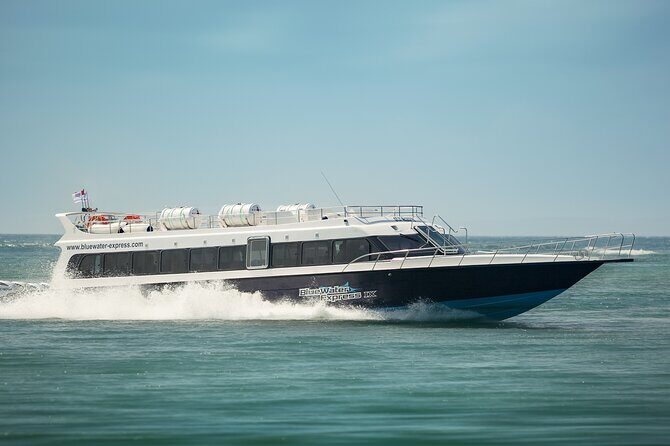
Speed over slog. That’s the whole point of this Bali to Gili crossing. It’s run by BlueWater Express, a long-time operator that’s focused on safety and a more controlled boarding experience, so you spend less energy worrying and more energy getting to island time.

Two things I really like: the ride is built for comfort with air-conditioned seating, a restroom on board, and free bottled water. The other big win is how the process is set up to be clear and efficient, with staff geared toward helping you check in and get moving.

One drawback to plan around: this is a speedboat service that can include precautionary stops mid-journey, and like all fast-boat routes, it’s weather-dependent.

Key points worth clocking before you go
Bali (Padang Bai) to Gili Trawangan - Gili Air - Lombok (Bangsal) - Key points worth clocking before you go

  • Purpose-built fast boat operation: The company pioneered the Bali–Gili fast-boat route back in 2006 and runs it with a safety-first mindset.
  • Comfort items are included: Air-con, bottled water (sealed), and onboard restroom access make the 3 to 3.5 hours feel shorter.
  • Smaller-group feel: This activity caps at a maximum of 70 travelers, which is a nice change from overstuffed big-ferry vibes.
  • You might see brief engine/prop checks: Any stop mid-sea is described as precautionary, to prevent prop issues from line or rope snagging.
  • Weather can change everything: If poor weather cancels the trip, you’ll get a different date or a full refund.
  • Premium price, but for reasons: At $91, it’s not the cheapest option, but you’re paying for a more organized departure and a less chaotic waiting experience.

Why this route is worth paying more for

This crossing is short on paper and long on meaning: you’re jumping off the Bali mainland and landing in the Gili rhythm fast. If you’re trying to maximize beach days (and minimize time lost to slow transport), a well-run speedboat makes a big difference.

I also like that the operator keeps the pitch consistent: safety, professionalism, and guest satisfaction. You feel that in the details you don’t always notice—like how check-in is handled and how the boat experience is set up to keep things moving.

Yes, it costs more than bargain ferry options. But the value is that you’re buying fewer headaches: clearer instructions, less “wait in the sun” chaos, and a smoother ride experience overall. For many people, that’s worth the premium.

Padangbai to the Gili islands: what your 3–3.5 hours actually feels like
Bali (Padang Bai) to Gili Trawangan - Gili Air - Lombok (Bangsal) - Padangbai to the Gili islands: what your 3–3.5 hours actually feels like
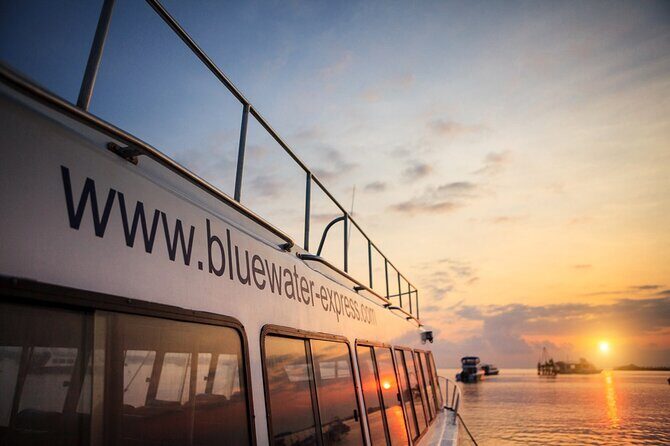
Here’s the practical flow. You start at the BlueWater Express dock in Padangbai, Bali (Jl. Silayukti, Padangbai, Kec. Manggis, Karangasem, Bali 80871). You’ll receive booking confirmation details that include your trip and pick-up time, and the meeting point is near public transportation.

Once you arrive at the port, expect a check-in process designed to be straightforward. Several people note that instructions are clear and staff are helpful, which matters because port logistics can get messy fast when you’re tired or traveling with gear.

Then comes the ride: the crossing time is listed as about 3 hours to 3 hours 30 minutes. Over that window, you’ll have access to onboard basics that make the trip easier—especially the restroom and the included sealed water.

As for arrival, this service is positioned around getting you to the Gili side and onward Lombok (Bangsal). The meeting point provided for the end is at the BlueWater Express area on the Gili side (including Gili Trawangan / Gili Indah area, Kec. Pemenang, Lombok Utara). In plain terms: you choose the right departure for where you want to disembark and then connect from there.

The onboard comfort details that matter (especially in the heat)
Bali (Padang Bai) to Gili Trawangan - Gili Air - Lombok (Bangsal) - The onboard comfort details that matter (especially in the heat)
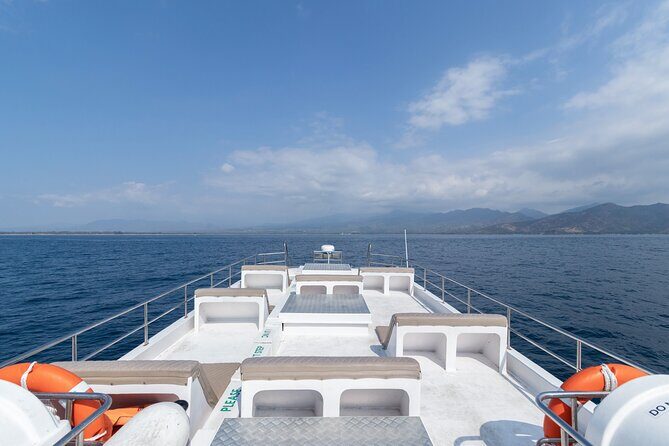
This isn’t a barebones ferry experience. It’s a speedboat ride with comfort included, and that changes how you feel when you step off in the Gili islands.

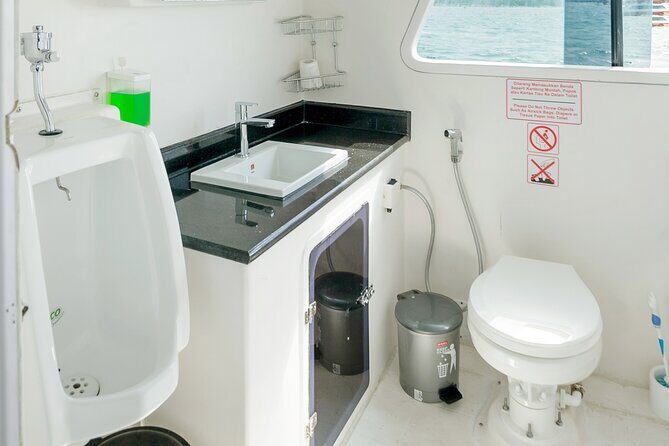
You get air-conditioned cabin comfort, and that helps a lot when Bali heat clings to you the moment you step outside. You also get bottled water on board—plus sweet and water are listed as free flow sealed mineral water and sweet. Small thing, big relief when you’re already running on travel momentum.

And then there’s the restroom. For a trip in the 3–3.5 hour range, onboard restroom access is one of those features you don’t think about until you need it. It also reduces how often you’ll rush around ports.

One note: air-con performance can vary by boat and seating location. I’ve seen comments that air-con could be better, so if you’re heat-sensitive, show up early and pick your seats with a little care during boarding.

Safety focus, plus the reality of a mid-sea check
Bali (Padang Bai) to Gili Trawangan - Gili Air - Lombok (Bangsal) - Safety focus, plus the reality of a mid-sea check
The company emphasizes safety and professionalism, and that shows up in how they explain the occasional mid-journey pause. You might notice a brief stop while the crew checks the engine and prop area.

The stated reason is precautionary: rope or fishing line can snag the prop, and it’s better to check and clear anything before continuing. In other words, these stops aren’t treated like a breakdown; they’re treated like prevention.

A related point: the operator response also notes that their boat type is relatively larger (they reference a 26-meter boat size) and carries a smaller number of passengers than high-capacity operators. They also mention keeping guest counts far below the “hundreds at once” style. That’s exactly what you want on a speedboat: stability and breathing room.

Still, if you’re the type who hates any interruption, be mentally ready for the fact that the sea doesn’t always follow a perfect script.

Check-in and waiting: less chaos, more control

Bali (Padang Bai) to Gili Trawangan - Gili Air - Lombok (Bangsal) - Check-in and waiting: less chaos, more control
Port time is where trips either feel smooth or feel stressful. What I like here is that the service is set up so you aren’t stuck wandering around confused.

The meeting point is clearly identified at the BlueWater Express dock in Padangbai. And people have noted you can wait inside a nearby venue, specifically mentioning Sama-Sama Reggae Bar as a better option than roasting outside.

That’s a real travel advantage. When the departure window is tight and you’re sweaty, being able to sit down, cool off, and follow staff instructions keeps you from spiraling into “am I late?” panic.

Weather rules: how to stay flexible without losing your plans

This experience requires good weather. The cancellation policy is firm: it’s non-refundable and can’t be changed for any reason.

But there’s an important exception: if the boat is canceled due to poor weather, you’ll be offered a different date or a full refund. That’s the part you can plan around.

If you’re traveling around fixed events, I suggest you keep a little buffer time in your schedule and be ready to shift. Weather can be the one unpredictable variable, even when the operator does everything right.

Also, because customer experience depends on communication, I’d keep your booking details handy and watch for updates once your trip gets closer. If they change plans due to conditions, you’ll want to move fast.

Price and value: where the $91 really goes

Bali (Padang Bai) to Gili Trawangan - Gili Air - Lombok (Bangsal) - Price and value: where the $91 really goes
Let’s talk money in plain terms. This transfer costs $91. That’s not budget pricing.

So what are you buying?

  • A more organized departure flow, with clear instructions and staff support
  • Included comfort basics (air-con, water, restroom)
  • An operator with a long-running track record in this specific route
  • A more controlled passenger count (maximum 70 travelers for this activity)

If you’re choosing the cheapest option, you might save money but you risk trading that for comfort, order, or overall smoothness. And on island itineraries, “one annoying transfer moment” can snowball into missed connections or wasted energy later.

For many travelers, paying more here is basically buying time and calm—two things that are hard to measure but easy to feel when you arrive.

Who should book this speedboat (and who might not love it)

Bali (Padang Bai) to Gili Trawangan - Gili Air - Lombok (Bangsal) - Who should book this speedboat (and who might not love it)
This is a great fit if you:

  • Want a faster connection from Bali to the Gili islands without adding extra transfers
  • Care about comfort details like air-con and onboard restroom access
  • Prefer a service that aims for structured check-in and helpful staff

It may be less ideal if you:

  • Get strongly bothered by interruptions (there can be precautionary mid-journey checks)
  • Are extremely sensitive to seat comfort and cabin size—some comments point out that boats can feel cramped depending on what you compare against
  • Have to be ultra-picky about staff communication, since some crew language skills may not meet every expectation

And if you’re traveling with lots of luggage: use a smart packing approach and keep an eye on how bags are handled at loading. There’s at least one situation mentioned where luggage was damaged, and the operator indicates there is a policy to assist or replace damaged bags. The takeaway for you is simple: report issues immediately to the team on the spot.

Should you book BlueWater Express for Padangbai to the Gili and Bangsal?

I’d book it if you want a fast, comfort-forward transfer with a safety-first operator and a less chaotic departure style. The included air-con, restroom, and sealed water make the 3–3.5 hour ride feel practical rather than purely functional.

I wouldn’t book it if you’re trying to squeeze every dollar, or if you’re not okay with weather dependence and the possibility of a brief mid-journey check.

If your priority is getting to the Gili islands quickly and with fewer travel headaches, this is a solid, value-based choice at the price point listed.

FAQ

How long is the boat ride from Padang Bai to the Gili islands?

The crossing is listed as about 3 hours to 3 hours 30 minutes.

Where do I check in and board in Bali?

Your start point is BlueWater Express | Boat Padang Bai (Bali) to Gili Islands / Lombok at Jl. Silayukti, Padangbai, Kec. Manggis, Kabupaten Karangasem, Bali 80871.

Where does the trip end on the Gili/Lombok side?

The end point is BlueWater Express | Boat Gili Trawangan to Bali at Gili Trawangan, Gili Indah, Kec. Pemenang, Kabupaten Lombok Utara, Nusa Tenggara Bar. 83352.

What’s included in the ticket price?

Included items are insurance and medical coverage, an air-conditioned vehicle, free flow sealed mineral water and sweet, and a restroom on board.

Is private transportation included?

No. The listing specifies private transportation is not included.

How many people are on the boat for this activity?

The maximum group size is listed as 70 travelers.

Is the service suitable for most travelers?

It says most travelers can participate.

Do they provide water and refreshments on board?

Yes. You get free flow sealed mineral water and sweet.

What happens if the trip is canceled due to bad weather?

The experience requires good weather. If canceled due to poor weather, you’ll be offered a different date or a full refund.

When will I receive confirmation and pickup timing?

Confirmation is received at the time of booking, and you’ll receive booking confirmation details with trip and pick-up time.

Bali ATV Ride with Jungle Swing and Rice Terrace Tour

Bali ATV Ride with Jungle Swing and Rice Terrace Tour - Balaji Adventure Bali ATV ride: jungle tracks and rice-field views

ATVs in Ubud beat sitting in traffic. This day tour strings together big-scenery moments: door-to-door pickup, an ATV ride through jungle and plantations, a jungle swing at Uma Pakel Agro Tourism, and time at Tegalalang Rice Terrace.

I like that the itinerary is tightly timed, so you’re not wasting half the day just getting around. I also love that lunch is included right after the ATV, with towel, changing room, and shower facilities if you get splashed. One possible drawback: the ATV portion needs real care, so don’t assume it’s just a casual cruise.

Key highlights you’ll feel immediately

Bali ATV Ride with Jungle Swing and Rice Terrace Tour - Key highlights you’ll feel immediately

  • ATV ride through jungle, rivers, and plantations with admission handled
  • Jungle swing at Uma Pakel Agro Tourism (d’Alas Swing) for high-up photo angles
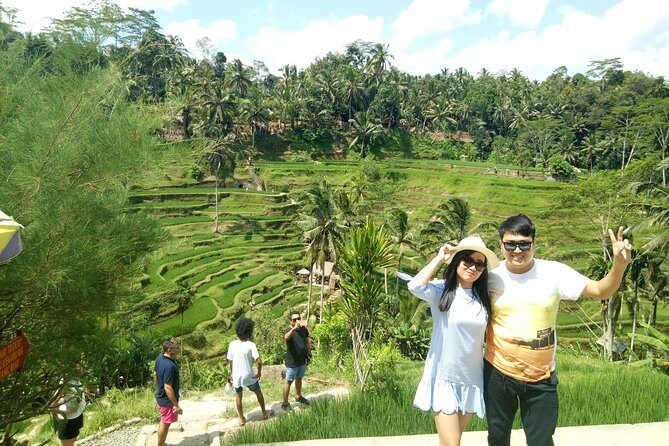
  • Tegalalang Rice Terrace time to sightsee and walk through rice paddies
  • Meet local farmers during the rice-terrace stroll (part of the experience pacing)
  • Hearty local lunch plus bottled water right after the ATV
  • Shower, towel, and changing room support so you don’t end the day soaked and sticky

Door-to-door private transfers: getting to Ubud’s countryside without stress

Bali ATV Ride with Jungle Swing and Rice Terrace Tour - Door-to-door private transfers: getting to Ubud’s countryside without stress
This tour runs out of Ubud with pickup offered, plus an air-conditioned private car for round-trip transfers. You start at 8:00 am, which matters in Bali because you avoid the worst traffic by doing the active stuff early.

What I like about the private setup is the pacing. You’re not juggling multiple stops with random drop-offs, and you’re not stuck waiting on strangers at every turn.

You’ll also get an English-speaking driver or guide, so directions and timing stay clear. If you’re the type who likes a plan you can trust, this format makes the day feel controlled.

Balaji Adventure Bali ATV ride: jungle tracks and rice-field views

Bali ATV Ride with Jungle Swing and Rice Terrace Tour - Balaji Adventure Bali ATV ride: jungle tracks and rice-field views
The ATV portion is the engine of the day. At Balaji Adventure Bali you’ll spend about 2 hours riding through jungle areas and past rice fields with big views, and the admission ticket is included in that time block.

Then you shift into a calmer rhythm: lunch comes after the ATV activities at the finish point. This order is smart because you’re not trying to eat while your gear is still wet or muddy.

Now the practical part: the ATV is also the piece that can catch people off guard. The info you were given includes a caution mindset—go in expecting a real ride, not a gentle stroll. If you’re nervous around bikes or uneven ground, ask your guide for guidance early and take it slow.

One extra detail that’s easy to overlook: you’re provided an ATV guide, plus towel, changing room, and shower facilities. That combination tells you the tour expects some mess from the ride, so plan to rinse up and change before the swing and rice terrace.

Uma Pakel Agro Tourism jungle swing (d’Alas Swing): fast photos, big height

Bali ATV Ride with Jungle Swing and Rice Terrace Tour - Uma Pakel Agro Tourism jungle swing (d’Alas Swing): fast photos, big height
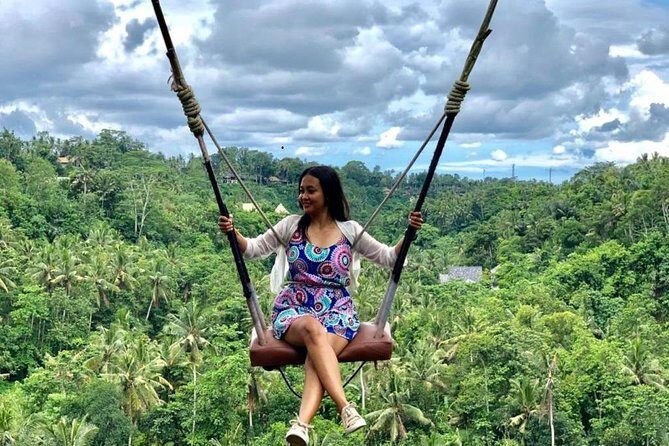
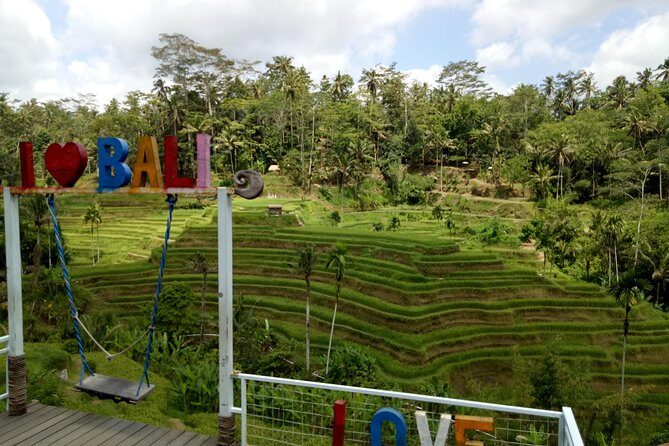
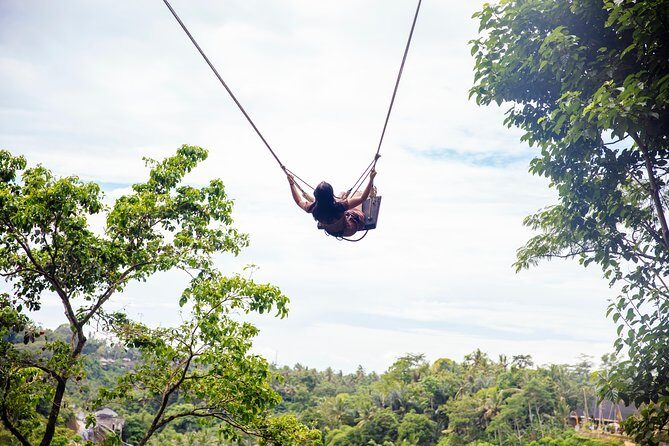
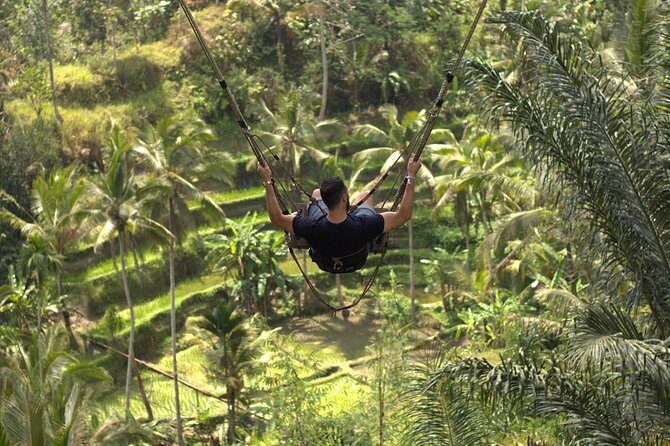
After the ATV, the tour moves to d’Alas Swing. This is where you soar high above the rice paddies and jungle views, and you’ll have time to capture photos from up high.

The swing is about 1 hour in the schedule, which feels right. You get enough time for a few attempts and photos without dragging on all day.

A useful way to think about this stop: it’s a change of pace. You went from engine noise and control to suspended moments where you can just look out and frame shots. If you’re someone who loves perspective—wide views, height, and layered greenery—this is the part that delivers that “wow” factor quickly.

If height makes you uneasy, don’t pretend you’re fine. Take a second to decide at the start of the activity, because once you’re strapped in, you’ll want to be confident in your comfort level.

Tegalalang Rice Terrace: a guided stroll through paddies and farmer life

Bali ATV Ride with Jungle Swing and Rice Terrace Tour - Tegalalang Rice Terrace: a guided stroll through paddies and farmer life
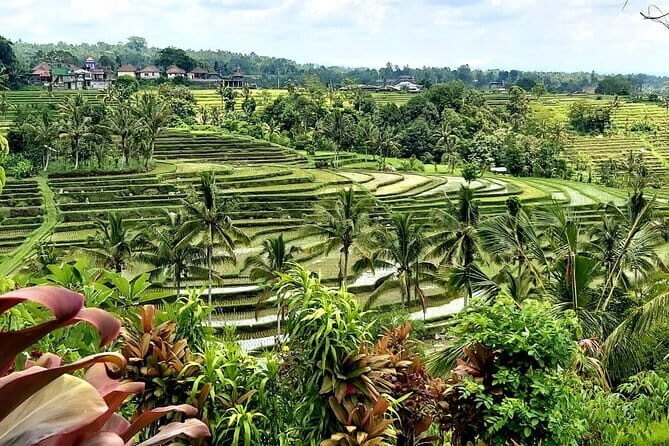
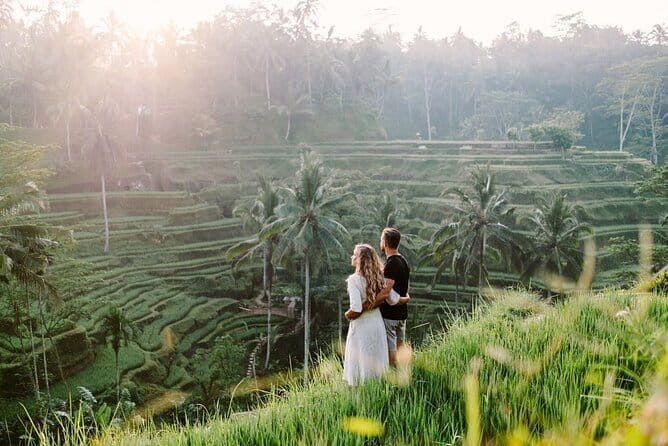
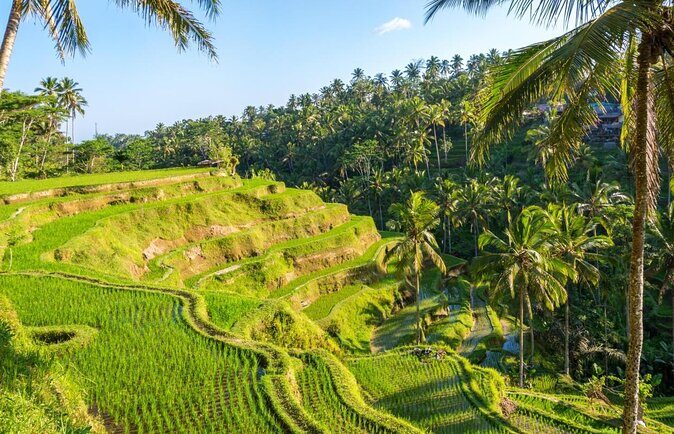
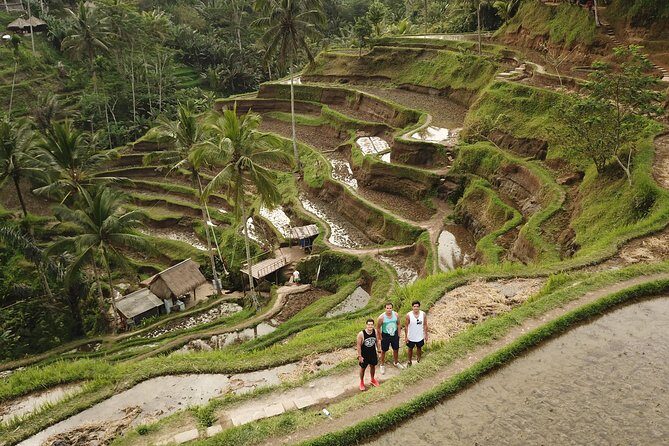
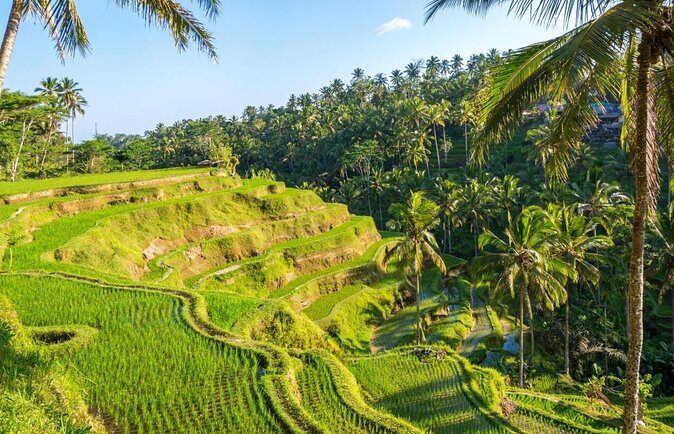
The final sightseeing block is Tegalalang Rice Terrace, also about 1 hour. You’ll get scenic views in the Tegalalang area, plus the chance to walk through rice paddies and meet local farmers as part of the experience.

This stop is valuable for two reasons. First, it’s not just looking from a distance—the walking and farmer interaction turn it into something more personal than a photo-op. Second, it ties back to what you saw earlier from the ATV: you’re moving from “ride past the fields” to “walk inside the working landscape.”

A good expectation to set: the pace here is slower than the ATV. You’ll have time to slow your steps, look around, and absorb how the terraces shape farming life.

Lunch after the ATV: included fuel and real comfort

Bali ATV Ride with Jungle Swing and Rice Terrace Tour - Lunch after the ATV: included fuel and real comfort
Lunch is part of the day, and it’s described as a hearty local lunch served after your ATV ride. That timing matters, because it lines up with the moment your energy needs the most help.

You also get bottled water as part of the included package. In Bali, that small inclusion can save you from chasing drinks mid-activity.

The other comfort win is the set of facilities offered alongside the ATV gear: towel, changing room, and shower facilities. If you get wet, this is the difference between feeling refreshed for the next stop and spending the rest of the day thinking about how you feel sticky.

If you’re planning your clothing, follow the guidance and bring extra clothes. This tour practically asks for it.

Price and what you actually get for $89.52

Bali ATV Ride with Jungle Swing and Rice Terrace Tour - Price and what you actually get for $89.52
At $89.52 per person, the value here is mostly in what’s bundled. You’re not just paying for transportation and a quick ticket.

The included list covers all activity fees, lunch, bottled water, and entrance tickets. You also get an ATV guide, plus towel, changing room, and shower facilities. On top of that, the private AC car includes petrol and parking, and there’s an English-speaking driver or guide for the day.

Why that matters: Bali days can turn expensive when you add up separate line items like entrance fees, food, and transfers. This tour packages those costs into one price, which makes it easier to compare against other “pick a thing, pay extra later” options.

You might see group discounts mentioned too, which can help if you’re traveling with friends or a small group. The tour is also set up as a private activity, meaning only your group participates, so you’re not sharing the experience with random extras.

One thing to keep in mind: personal expenses are not included. That’s normal, but it’s smart to budget for snacks, souvenirs, or anything you grab on the side.

Time on the clock: a 7–8 hour day that stays structured

Bali ATV Ride with Jungle Swing and Rice Terrace Tour - Time on the clock: a 7–8 hour day that stays structured
The total duration is listed at 7 to 8 hours. With a 3-hour block at Balaji Adventure Bali, then 1 hour at the swing, then 1 hour at the rice terrace, the remaining time is how you’d expect it to be spent: transitions, pickup, and the rhythm of moving between sites.

This schedule is built for people who want a full day without a “lost in transit” headache. You get action, then a high-up photo stop, then a cultural walking experience.

Start time is 8:00 am, so you’ll want to be ready early. If your hotel pickup is delayed for any reason, the whole day can feel compressed, so keep your morning plan flexible.

Guide quality and keeping the ATV safe

Bali ATV Ride with Jungle Swing and Rice Terrace Tour - Guide quality and keeping the ATV safe
One theme that really matters on this kind of tour is the guide’s hands-on role. Your included package includes an ATV guide, which is exactly what you want when you’re trying to balance fun with safety.

If you get a driver like Darma, the day can feel extra smooth because he’s described as looking after people well. Even with a good guide, listen closely during the ATV orientation and don’t rush your first few minutes.

The caution note is simple: be careful with the ATVs. That’s not about ruining the fun—it’s about giving yourself margin so you can enjoy the views and the ride instead of being tense the whole time.
Who should book this Bali ATV Swing and Rice Terrace tour

This tour fits best if you want a mix of active and scenic in one day. You’ll get jungle and rice views from the ATV, the high-angle swing moment, and then a terraced rice walk with farmer interaction.

It’s also a good option if you value support and cleanup. With shower facilities, towel, changing room, and shower help included, you can move from muddy adventure to photo and walking without stress.

A few practical notes from the tour details:

  • Minimum age is 10 years.
  • Bring extra clothes.
  • Most people can participate, but the ATV still requires care and coordination.

If you’re only interested in slow sightseeing or you dislike riding on rough paths, you might find the ATV portion the hardest sell. In that case, you’d be better off choosing a tour that’s purely viewing and walking.

Should you book this tour?

Yes, you should book it if you want one day in Ubud that combines ATV fun, a real jungle swing height moment, and a meaningful rice-terrace walk. The price is easier to justify because lunch, entry tickets, and the comfort extras (towel, changing room, shower facilities) are included.

Skip it or rethink your fit if the ATV part sounds stressful to you. The swing and rice terrace are great, but the ATV is the start of the whole day, and it’s the part that needs the most attention.

If you do book, plan your morning around the 8:00 am start, bring extra clothes, and lean on your guide early for ATV confidence. That’s the formula for a fun day that doesn’t end with chaos.

FAQ

What time does the tour start in Ubud?

The start time is 8:00 am.

How long is the Bali ATV ride with swing and rice terrace tour?

It runs about 7 to 8 hours.

Is lunch included?

Yes. Lunch is included and is served after the ATV activities.

What’s included besides the ATV and entrance tickets?

The package includes an ATV guide, towel, changing room, shower facilities, bottled water, and an AC private car with petrol and parking fees. Entrance tickets are also included.

Are there age requirements?

The minimum age is 10 years.

Is pickup and private transportation included?

Pickup is offered, and you’ll have door-to-door round-trip private transfers in an AC private car.

Can I cancel for a full refund?

Yes. You can cancel up to 24 hours in advance for a full refund.

Tanah Lot and Uluwatu Temple Private Guided Tour

Tanah Lot and Uluwatu Temple Private Guided Tour - Tanah Lot Temple: ocean views over volcanic rock and temple gardens

Two temples, one long South Bali day. This private guided route pairs Tanah Lot and Uluwatu Temple with beach time and Balinese food moments, then finishes with the famous Kecak and fire dance. Door-to-door private transfers also matter a lot in Bali, because driving yourself can be stressful and slow.

I really like that you get time with a personal guide/driver, so you can move at a relaxed pace instead of being swept along. I also love the food angle: you’ll hit a coffee plantation stop plus a Balinese warung experience, and your driver/guide is there to explain what you’re seeing and tasting. One possible drawback: the day is packed with driving, and meals and some entrance costs may be extra, so budget for them and don’t expect a full meal plan included in the price.

Key things I’d watch for on this Tanah Lot and Uluwatu day

Tanah Lot and Uluwatu Temple Private Guided Tour - Key things I’d watch for on this Tanah Lot and Uluwatu day

  • Door-to-door private transfer: you avoid the worst of Bali driving stress.
  • Uluwatu’s sunset performance: the Kecak and fire dance happens at the Uluwatu Temple stage.
  • Tanah Lot’s volcanic rock setting: panoramic ocean views and a dramatic rock-hole backdrop.
  • Padang Padang Beach as a break: hidden-in-the-cliffs beach time for sand-and-sea scenery.
  • Food stops with local context: coffee plantation + Balinese warung included in the experience flow.
  • Long hours, real traffic: expect plenty of time in the car, even with a private vehicle.

Why Tanah Lot and Uluwatu make sense in one day

Tanah Lot and Uluwatu Temple Private Guided Tour - Why Tanah Lot and Uluwatu make sense in one day
This tour is built around a simple idea: see two of Bali’s most photogenic temple settings, then stack on a beach break and cultural food experiences. Tanah Lot gives you that iconic offshore rock drama. Uluwatu Temple delivers cliffside ocean views plus the monkey-filled temple area vibe.

Then it gets more interesting. The Kecak and fire dance isn’t just a show you passively watch—you’ll be there for the performance timing at Uluwatu, which is why the route is planned as a full-day loop rather than a quick half-day temple sprint.

Getting from Seminyak: private pickup, long drive hours, and heat strategy

The tour starts around 9:00 am with pickup and drop-off based on your hotel location. It’s a private tour for your group only, with an English-speaking driver/guide, plus mineral water and insurance.

Here’s the practical reality: Bali traffic and coastal roads can turn a “10-hour tour” into a slow-moving day. One of the most honest critiques in the feedback was how much time can be spent in the car. My take: embrace the fact that this is a day-trip tour, not a minimal-effort outing. If you get motion-sick easily, plan for it. If you’re hungry, plan for lunch separately, because meals are not included.

Heat timing also matters, and it can affect your wow-factor at Tanah Lot. One review flagged that arriving there in the early afternoon can make the experience feel less impressive than it would at sunset. The tour’s start time is set, but you can still manage expectations: if you’re a golden-hour person, keep your priorities flexible and don’t assume every stop lands in its best light.

Tanah Lot Temple: ocean views over volcanic rock and temple gardens

Tanah Lot and Uluwatu Temple Private Guided Tour - Tanah Lot Temple: ocean views over volcanic rock and temple gardens
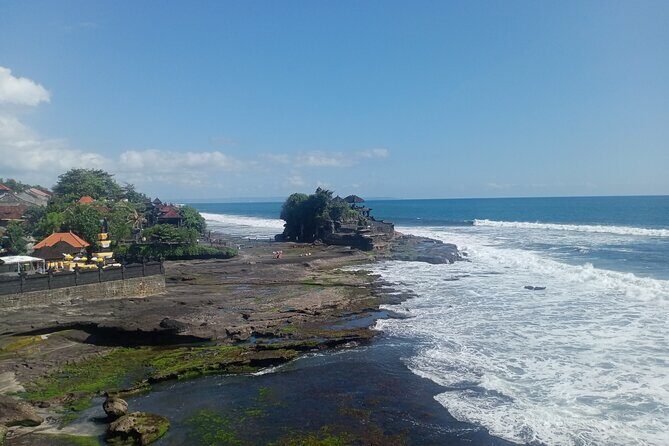
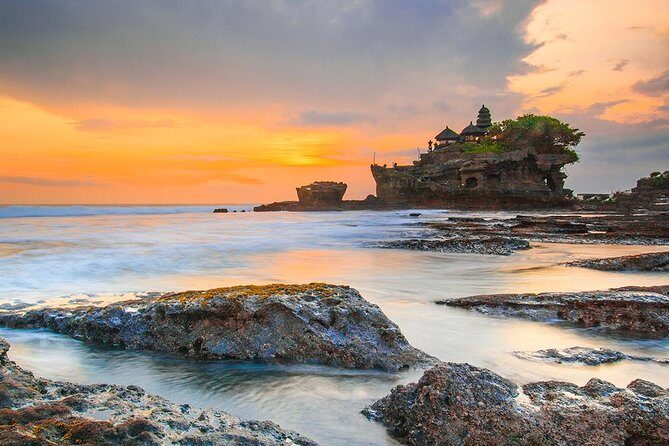
You’ll spend about one hour at Tanah Lot. The setting is the headline: the temple sits on a volcanic rock area with wide Indian Ocean views, and the scene includes tropical garden landscaping. There’s also that dramatic natural rock-hole look (the kind of visual that makes you stop walking and just stare for a minute).

What I like about Tanah Lot on a guided day is that you’re not just taking photos—you’re also getting the story context from your driver/guide. That’s especially helpful if you’re new to Balinese temple culture, where the visuals are familiar but the meaning takes a little guidance.

The main consideration here is pacing versus weather. If you’re sensitive to heat, know that midday sun can take the edge off the experience. That doesn’t ruin it—it just changes how you feel walking around. If the route timing puts Tanah Lot earlier than ideal, shift your mindset from postcard-perfect to “this is the moment, right now.”

Padang Padang Beach: a short escape with calm-wave vibes

Tanah Lot and Uluwatu Temple Private Guided Tour - Padang Padang Beach: a short escape with calm-wave vibes
Next comes Padang Padang Beach for about one hour. This isn’t presented as a long lounge-and-do-nothing beach day. It’s a reset: a hidden-feeling beach tucked around rock formations, with white sand and calm waves on the beach side.

I’d treat this as your “stretch and breathe” stop. You get a change of scenery after temple time, and it helps break up the later rhythm of cliffside Uluwatu views and the evening performance.

A good tip: keep your beach time efficient. Wear comfortable footwear and plan for quick movement—because after Padang Padang, the schedule heads straight toward Uluwatu. In a tour like this, the beach is a chapter, not the whole story.

Uluwatu Temple: cliffside ocean views and monkey-zone awareness

Tanah Lot and Uluwatu Temple Private Guided Tour - Uluwatu Temple: cliffside ocean views and monkey-zone awareness
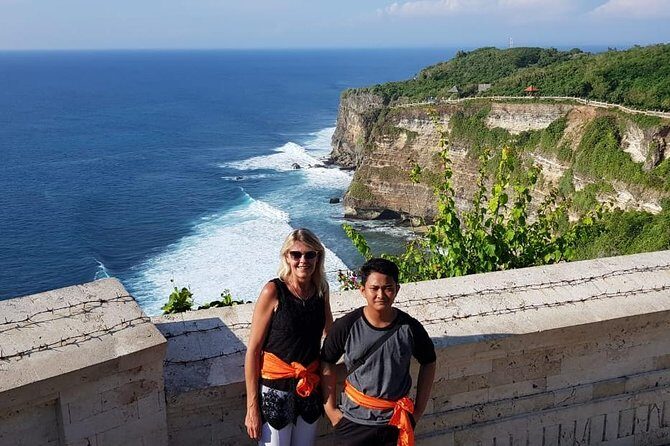
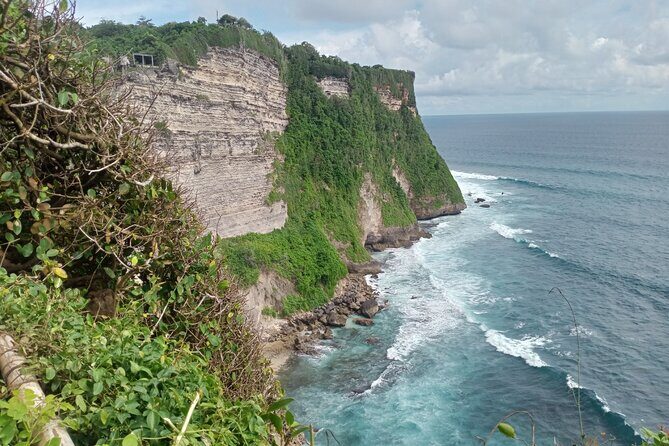
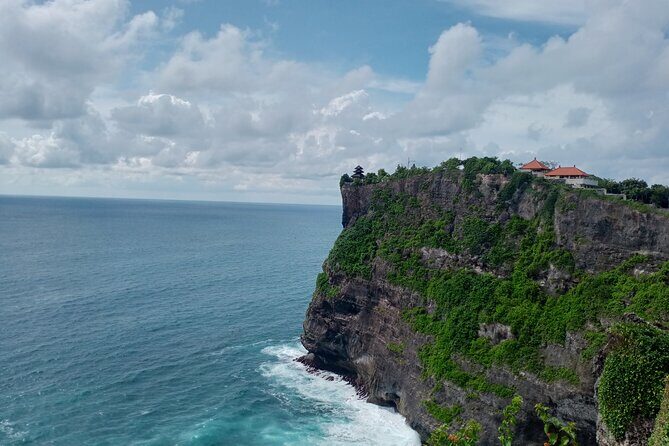
Uluwatu Temple gets about one hour. The description alone tells you what you’re walking into: a temple above a rock cliff at South West Bali, with clear ocean views, surrounded by tropical forest. And yes, there are monkeys in the temple forest area.

This is the stop where the “guided” part really matters. Temples like this can feel overwhelming if you don’t know where to look or what to notice. Having a driver/guide along for navigation and explanation turns the visit from random wandering into something more meaningful.

Also: with monkeys around, keep your hands and bags organized. Don’t carry loose snacks in open pockets. Keep sunglasses and small items secured. It’s not about being scared—it’s about being practical.

If you’re lucky, you’ll get a guide who gives your group room to breathe. One standout review specifically praised a guide named Bagus for letting the group spend as much time as wanted at Uluwatu, focusing on the views and the experience rather than rushing them out.

Kecak and Fire Dance: how to enjoy the show at Uluwatu

Tanah Lot and Uluwatu Temple Private Guided Tour - Kecak and Fire Dance: how to enjoy the show at Uluwatu
The Kecak and fire dance is listed as an additional highlight with about one hour at the Uluwatu Temple stage. The performance combines the Kecak chanting and the fire element, staged at sunset time at Uluwatu Temple.

The other reason this performance belongs on a guided day is that the history framing helps you understand what you’re watching. The tour description references the Ramayana story thread (including the character Dewi Sita). Even if you don’t know the tale, a little context makes the movement and chanting feel less random.

Practical advice: treat this part like a fixed appointment. Once you’re in the sunset zone, you’ll want to be present and settled rather than trying to squeeze in extra stops. If your earlier temple timing runs hot or rushed, the performance is where the day often rewards you for it.

Coffee plantation and a Balinese warung: the food stops that add real value

Tanah Lot and Uluwatu Temple Private Guided Tour - Coffee plantation and a Balinese warung: the food stops that add real value
Food is the secret sauce of this tour. The overview promises three food experiences, and the route includes both a coffee plantation stop and a Balinese warung experience.

The best part about having your driver/guide for these stops is the “what you’re eating and why it’s local” context. One review highlighted how having a local for a full day made the cultural side land better, especially when it came to the food moments. That doesn’t mean you need to be a coffee expert or a spice pro. It means you’ll get helpful explanations instead of just being handed tastings with no thread tying them together.

Vegetarian travelers should note that a vegetarian option is available—just tell the operator when you book, so you aren’t trying to solve food on the fly.

Also, manage expectations about meals. The tour information clearly signals that lunch and dinner are at your own expense, and multiple places list the cost as additional. In other words: this is a tour with food experiences, not a meal-all-inclusive package.

Price and logistics: what you’re paying for at $33.88 per person

Tanah Lot and Uluwatu Temple Private Guided Tour - Price and logistics: what you’re paying for at $33.88 per person
At $33.88 per person, this is priced like a budget-friendly private day. The value comes from combining:

  • private transfers from your hotel area,
  • an English-speaking driver/guide, and
  • a full-day South Bali route that hits Tanah Lot + Uluwatu + Padang Padang plus food stops and the sunset show.

But here’s the key budgeting reality: the tour notes meals and entrance fees as extra, while the included section also references an entrance ticket on a Premium All Inclusive Ticket. That means what you pay in the end can vary depending on the package you booked.

My advice: before you go, scan your voucher for whether entrance tickets are included under your selected package. If entrance fees are not covered, the tour notes an extra estimate of around $18 per person if you visit all attractions. For meals, lunch is estimated around $4 per person, with meals described as optional personal expenses.

So the smartest way to think about the price is this: you’re paying for the driving, scheduling, and guiding. You’re paying extra for food and (possibly) some entries.

Who this tour suits best

This tour fits best if you:

  • want a private day with hotel pickup and no self-driving stress,
  • care about the big-name temples and the Kecak and fire dance at Uluwatu,
  • like having a guide/driver explain what you’re seeing, and
  • are comfortable budgeting for meals and possible entrance costs.

It may be less ideal if you:

  • hate long car hours in Bali traffic,
  • need every stop to land at the best possible time of day (like sunset at Tanah Lot), or
  • expect all-inclusive meals with no decision-making on your part.

If you do book, go in with a “day-trip rhythm” mindset: temples, beach break, then performance. That’s how you’ll feel satisfied by the pacing instead of irritated by it.

Should you book this Tanah Lot and Uluwatu private guided tour?

Yes—with your eyes open.

Book it if you want a guided, private way to see Tanah Lot and Uluwatu without navigating Bali roads yourself, and if you’re excited about the Kecak and fire dance at sunset. The food stops (coffee plantation and warung) add more than a token tasting—they give the day a culture-and-flavor angle, especially with a driver/guide who talks through what you’re experiencing. And when you get a strong guide like Bagus (or an excellent driver like Niorman, who was praised for being great), the day feels relaxed instead of rushed.

Skip or consider alternatives if you strongly dislike:

  • paying extra for meals/entries,
  • spending a big chunk of time on the road, or
  • temple timing that might land Tanah Lot earlier than sunset.

If you’re flexible and practical, this is a solid South Bali day for the money.

FAQ

What time does the tour start?

The tour starts at 9:00 am.

How long is the private tour?

It runs for about 10 hours.

Do I get hotel pickup and drop-off?

Yes. Hotel pick up and drop off are included.

Is this tour private or shared?

It’s private, meaning only your group participates.

Is an English-speaking guide included?

Yes. You get an English-speaking guide as a driver.

Are entrance fees included?

The info indicates entrance can depend on the ticket type. It mentions an entrance ticket on a Premium All Inclusive Ticket, but it also notes that you may need to pay entrance tickets (around $18 per person estimate) if you visit all attractions. Check what your voucher includes.

Are meals included in the price?

Meals are not included. Lunch is described as an additional personal expense (with an estimate around $4 per person), and meals are at your own expense.

Does the tour include vegetarian options?

Yes. Vegetarian option is available—you should advise at booking.

Is airport pickup or drop-off included?

The listing states free airport pick up or drop off for min 3 days tour booking.

Can I cancel for free?

Yes. You can cancel up to 24 hours in advance for a full refund.

If you tell me your travel dates and where you’re staying in/near Seminyak, I can suggest how to think about timing for Tanah Lot and when to plan your food stops during the day.

Mount Batur Trekking & Hot Spring

Mount Batur Trekking & Hot Spring - Night Hiking With Flashlight and a Walking Stick

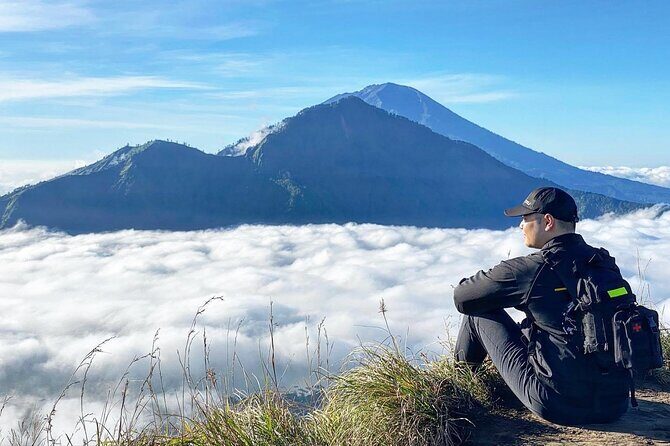
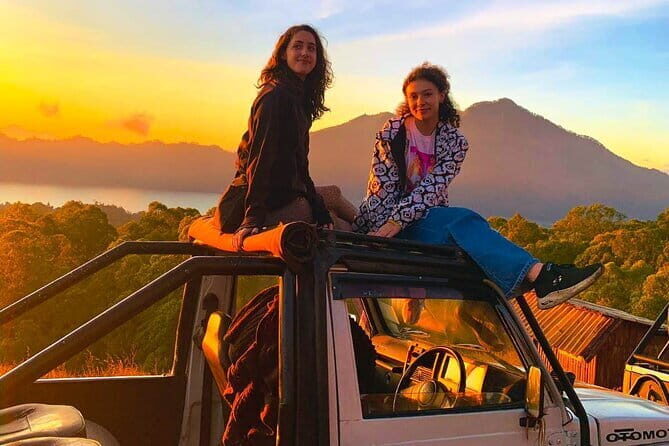
A volcano sunrise is a pretty big deal. This full-day Mt. Batur experience is built around a guided night hike that puts you on the summit for first light, with the payoff coming right after breakfast: a soak in natural hot springs.

I like that it’s organized start-to-finish, not a DIY scramble. You get the gear you actually need for dark steps (a flashlight and walking stick), plus hot coffee or tea to take the chill off before the climb. A small caution: you’ll be leaving extremely early, and the return trail can be slippery, so you’ll want moderate fitness and good footing.

Key Points at a Glance

Mount Batur Trekking & Hot Spring - Key Points at a Glance

  • Sunrise timing built in: you’re aiming to reach the summit around first light, then enjoy breakfast up there
  • Night-hike support: flashlight and walking stick help you move safely in the dark
  • Steam-kitchen breakfast moment: eggs and banana cooked at the active volcano area with a local guide
  • Natural hot springs stop: you cool down after the hike with a soak and warm drinks
  • Coffee plantation visit: you pair your volcano morning with a coffee break before heading back to Ubud area
  • Small group feel: max 30 travelers, so it’s not a cattle-car sunrise rush

Mt. Batur Sunrise Trek: Worth the 2 a.m. Alarm

Mount Batur Trekking & Hot Spring - Mt. Batur Sunrise Trek: Worth the 2 a.m. Alarm

This is one of Bali’s classic early-morning trips for a reason. Mt. Batur is famous for sunrise, and this tour is structured around that exact payoff: you’re climbing in the dark so you can be there when the sky starts to change.

What makes it special for me is the rhythm. You go from nighttime steps, to summit breakfast, to steaming volcanic spots, and then down into warmer water at the hot springs—like the day is paced for your body, not just the clock.

The value part is that the hard work is handled. Pickup is included (air-conditioned vehicle), entrance fees and round-trip transfers are handled, and the guide manages the key transitions—so you spend your energy on the hike, not on logistics.

Pickup Times and How the Day Actually Runs

The itinerary starts before most cities start dreaming. Pickup depends on where you’re staying, with options like:

  • Kintamani: around 03:00
  • Ubud: around 02:30
  • Sanur: around 02:15
  • Denpasar: around 01:30
  • Kuta / Seminyak / Canggu / Badung area: around 01:30

From there, the day keeps moving. You’re picked up roughly between 01:00 and 02:45 depending on hotel location, then you arrive at the starting point (Batur Bamboo Cabin) for coffee or tea and pre-hike prep.

One thing to plan for: you’re not doing a “quick stroll.” You’ll start hiking around 03:30 after you’ve had a drink and met your local guide. That means you’ll want an easy night sleep the day before, and you’ll want to keep expectations realistic for a sunrise climb.

Night Hiking With Flashlight and a Walking Stick

Mount Batur Trekking & Hot Spring - Night Hiking With Flashlight and a Walking Stick

The climb begins in the dark, which changes everything. Your guide leads the way while you follow along by flashlight, and the walking stick is there to help you find stable footing. That matters because the trail conditions can vary and the descent later can feel worse than the ascent if it’s slippery.

This is also where a good guide shows up. In the reviews, Wayan gets called out for being patient and helpful when it got difficult for one person on the way up and slippery on the way down. You’ll feel that kind of support most when your legs start arguing with you.

I like that the tour explicitly expects moderate physical fitness, not extreme athleticism. If you can handle a steep climb for a few hours and you’re comfortable taking your time, you’re in the right zone.

Batur Bamboo Cabin Start: Coffee While You Get Ready

Mount Batur Trekking & Hot Spring - Batur Bamboo Cabin Start: Coffee While You Get Ready

Before you hit the trail, you stop at Batur Bamboo Cabin. This is where the tour turns from sleep mode into climb mode.

You’ll get coffee or tea and get the basics sorted—mineral water for hydration, plus your flashlight and walking stick. You’re also meeting your local guide who will take you up alongside the route.

Even if you’re tempted to treat this like waiting around, it’s worth staying alert here. You’ll be glad you drank something warm and got your pacing straight before the hike starts.

Summit for Sunrise: Breakfast With Real Volcano Views

Mount Batur Trekking & Hot Spring - Summit for Sunrise: Breakfast With Real Volcano Views

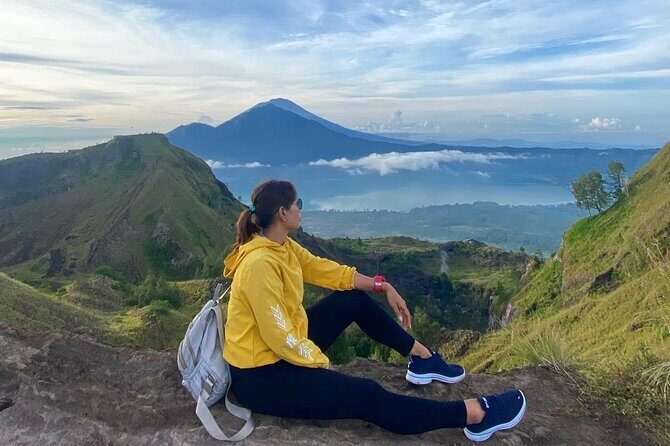
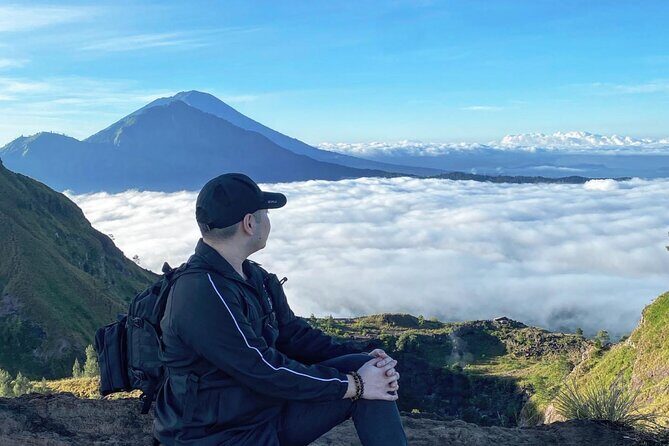
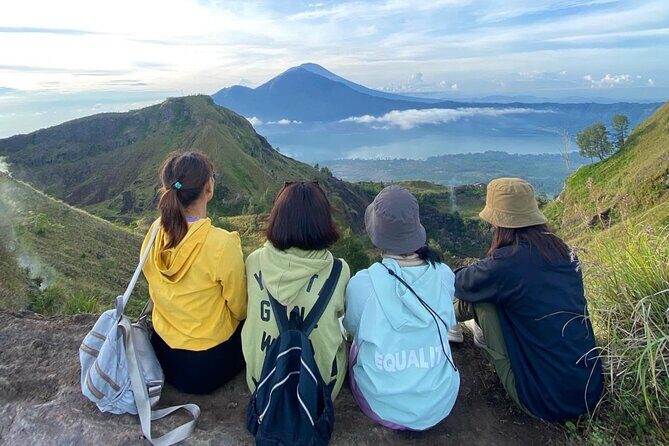
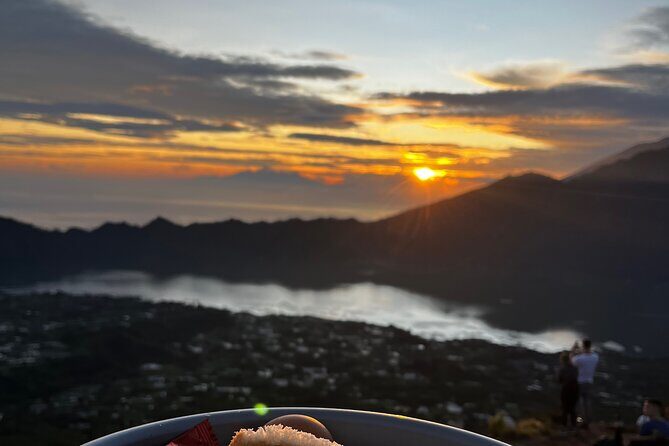
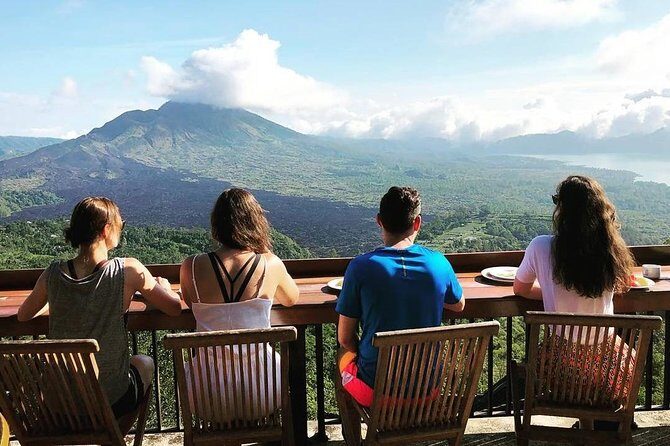
The goal is to reach the summit around 05:50 and then spend time enjoying sunrise and breakfast from about 06:00 to 06:30. Sitting there with the sky changing is the moment most people are chasing, and this tour is designed so you’re not arriving too late.

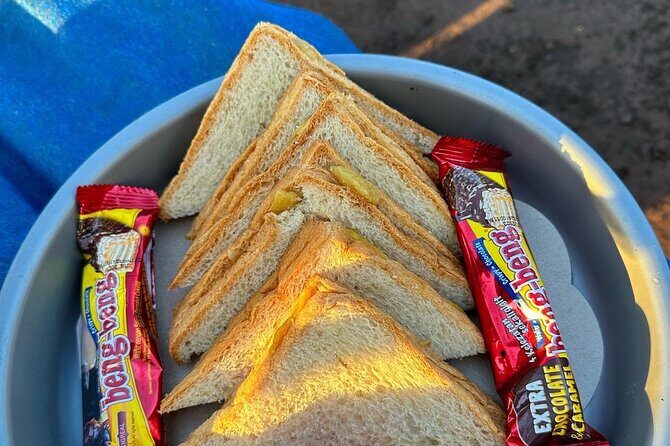
At the summit, breakfast is included. The menu is simple and practical: banana sandwich, egg, a chocolate bar, and mineral water. There’s a reason these choices work at altitude and in cool morning air—easy to carry, quick to eat, and not heavy.

You’ll also likely appreciate the guide’s talk while you’re up there. One review notes the guide’s explanations were interesting and valuable, and you can see why: a sunrise on a volcano is more fun when you understand what you’re looking at.

Active Volcano Steam Stop: Where Breakfast Gets Cooked

Mount Batur Trekking & Hot Spring - Active Volcano Steam Stop: Where Breakfast Gets Cooked

After sunrise breakfast, the itinerary moves to an active volcano area around 07:00. You’ll see hot steam, and the guide cooks eggs and banana there for your breakfast before heading back down.

This part is memorable because it’s not just sightseeing. It’s tied to the mountain’s geothermal energy, and it turns the day’s food into an experience rather than a box lunch you’d forget five minutes later.

There’s also a practical takeaway. If you’ve never been this close to active steam, you’ll understand why the guide matters and why you don’t stray from the group. This is also a good moment to slow down, hydrate, and be ready for the descent.

Hot Springs Soak and the Coffee Plantation Reset

Mount Batur Trekking & Hot Spring - Hot Springs Soak and the Coffee Plantation Reset

By around 08:00 to 09:00, you return to parking and continue the rest of the day. Next up is the natural hot springs, followed by a stop at a coffee plantation.

The hot springs are the counterbalance to the sunrise hike. Your legs have been working hard in cool air; the soak helps you actually feel like you recovered instead of just thinking about recovery. You’ll also get a welcome drink at the hot spring, so you can warm up again without digging into your own budget.

Then comes the coffee plantation visit. It’s not described as a full training course, but it gives you a break from volcano focus and lets you end the morning with something distinctively Bali. Even if coffee isn’t your thing, it’s a nice change of pace after the physical part of the day.

Price and Value: What $53 Covers (and What Doesn’t)

Mount Batur Trekking & Hot Spring - Price and Value: What $53 Covers (and What Doesn’t)

At about $53 for the tour, this is positioned as an affordable guided sunrise experience for Ubud-based travelers. The value comes from what’s included:

  • Air-conditioned vehicle pickup and return transfers
  • Entrance fees and tickets
  • Breakfast and hot beverages (coffee or tea, plus mineral water)
  • Flashlight and walking stick
  • Guide support throughout the hike

You’re also getting the major “time-value” element: a coordinated early departure, so you don’t have to solve transport to the starting point or scramble for a guide at midnight. That’s worth real money in Bali, where the sunrise window doesn’t wait for anyone.

What’s not included is tipping for the guide and driver, plus personal shopping. Also, if you book as a solo traveler, there’s an additional operational fee of $35 cash on arrival, and the tour has a minimum of 2 persons for standard booking. So if you’re solo, do the math before you fall in love with the idea.

Who Should Book This Mt. Batur Day, and Who Might Not

This tour is a strong fit if you:

  • want sunrise from the summit, not sunrise from a viewpoint in town
  • like guided structure and having key gear provided
  • have moderate physical fitness and can walk steep, uneven ground in the dark
  • want a full day package that covers hike + steam area + hot springs + coffee stop

It might not be the best match if you:

  • hate very early starts and get grumpy before coffee
  • have trouble with steep, slippery sections on the way down
  • aren’t comfortable moving on uneven terrain, even with a walking stick

If you’re the type who worries about leg fatigue, set expectations now: you’re climbing and descending under your own steam. The guide can help you through tricky moments, but your body still does the work.

Practical Tips So Your Sunrise Feels Smooth

I can’t change the early alarm, but you can improve how the morning feels.

  • Wear shoes with good grip. The dark plus steep paths can make normal sandals a bad idea.
  • Dress for cold at altitude. Even if Bali is warm in the day, sunrise hikes often feel chilly early.
  • Keep your breakfast simple. The included banana sandwich, egg, and chocolate bar are easy fuel—don’t treat the day like a restaurant.
  • Bring cash for tips and any shopping. Tips aren’t included, and personal spending depends on you.
  • If you’re solo, expect the $35 operational fee cash on arrival, since the minimum booking is 2 people.

What Happens If Weather Turns?

This experience requires good weather. If it gets canceled due to poor conditions, you’ll be offered a different date or a full refund. That’s important for sunrise trips, because clouds and bad conditions can change the whole payoff.

Should You Book This Mt. Batur Trek With Hot Springs?

If you’re in Ubud and you want one “Bali classic” that delivers on a real payoff, I think it’s a good booking. The big reasons are practical: the sunrise summit is the point, the hike is guided with useful equipment, and the day doesn’t end at the view. You get steam activity, then hot springs, then coffee plantation time to balance out the physical effort.

Book it if your body can handle a steep early-morning climb and you’re okay with pickup times that feel slightly illegal. Skip it if you want a relaxed start or if slippery descent is a deal-breaker.

FAQ

FAQ

What time is pickup for this tour from Ubud?

Pickup for Ubud is typically around 02:30. The exact pickup time depends on where your hotel is located.

What’s included in the breakfast and drinks?

Breakfast includes banana sandwich, egg, a chocolate bar, mineral water, and coffee and/or tea. You also get welcome drinks at the starting point and at the hot spring.

Do I get any hiking gear for the sunrise trek?

Yes. You’ll be provided a flashlight and a walking stick for the hike.

Is the tour suitable for someone with only moderate fitness?

The tour is described as suitable for travelers with moderate physical fitness. It’s a hike to the summit and back, so you should be comfortable with steep walking.

Is solo travel allowed?

Booking requires a minimum of 2 persons. If you travel solo, there is an additional $35 operational fee paid in cash on arrival.

What if the weather is bad on the day of the tour?

The experience requires good weather. If it’s canceled due to poor weather, you’ll be offered a different date or a full refund.

Bali Swing Hot Spring And Waterfall Private Guided Tour

Bali Swing Hot Spring And Waterfall Private Guided Tour - Door-to-door pickup from Seminyak and beyond

One day in Bali, no stress. This private, door-to-door tour strings together some of the island’s most famous sights—plus one very practical bonus: a real itinerary run by an English-speaking driver-guide. I like the mix of UNESCO rice terraces and the photo-friendly jungle swing, and I especially like the stop for volcanic hot springs with Mt. Batur in view.

Just keep one thing in mind: the tour’s ticket coverage can be a little confusing on paper. Entrance tickets are described as included (with a possible upgrade), but there’s also a note about paying extra for tickets, and lunch is not included.

Key things I’d bet on

Bali Swing Hot Spring And Waterfall Private Guided Tour - Key things I’d bet on

  • Door-to-door pickup across Kuta, Seminyak, Nusa Dua, Canggu, Ubud, Gianyar, and nearby areas
  • A full day that works like a circuit: Ubud jungle → rice terraces → Tirta Empul → volcano hot springs → waterfall
  • Photo stops built in, including Happy Swing Bali on the Tegalalang terraces
  • Hot spring comfort details: towel and locker are listed as included
  • English-speaking guide plus private AC transport, so you’re not stuck “doing Bali” on your own

Why this tour works as a “Bali highlights” day

This is the kind of itinerary that saves you energy. Instead of renting a scooter or stitching together separate tickets, you get a private air-conditioned vehicle, an English-speaking guide, and pickup/drop-off from multiple bases (Seminyak included, plus parts of south, central, and east Bali). For a first trip, it’s an efficient way to hit the big names—Temples, terraces, volcano heat, and a waterfall—without turning your day into a logistics puzzle.

The other big win is pacing. You get several focused stops (most around 30–60 minutes) rather than one long, tiring wander with no plan. That matters in Bali, where traffic and local schedules can quietly eat time.
And yes, you’ll do a lot of photos—this route practically invites it. Tegalalang is famous for a reason, and Happy Swing Bali is built specifically for the “standing in the right place at the right moment” shot above the terrace.

Price and value: what you’re really paying for at $26.67

Bali Swing Hot Spring And Waterfall Private Guided Tour - Price and value: what you’re really paying for at $26.67
At around $26.67 per person for a roughly 10-hour private guided tour, this looks like strong value on the surface—especially because pickup and drop-off are included across several areas. Where the value math gets tricky is entrance tickets.

The tour description says entrance tickets are included on a premium all-inclusive basis, and it also mentions upgrades to include all attraction tickets. But there’s also a line that says you may pay special entrance tickets if you visit all attractions, listed as about $18 per person. That doesn’t mean the tour is bad; it means you should confirm what’s actually covered for your exact day and your exact list of stops.

My practical advice: before you lock anything in, ask what your ticket total will be if you do every stop listed (including the optional Elephant Cave Temple pass-by). Once you have that, the price becomes easy to judge: you’re paying for transportation, a private guide/driver, and guided entry/timing.

Also budget for lunch. Lunch is listed as an extra personal expense at about $4 per person, and it’s typically purchased during the Mount Batur viewpoint portion.

Door-to-door pickup from Seminyak and beyond

Bali Swing Hot Spring And Waterfall Private Guided Tour - Door-to-door pickup from Seminyak and beyond
If you’re staying around Seminyak (or Canggu, Kuta, Nusa Dua, Ubud, Gianyar), this is designed for you. Pickup and drop-off are included for those areas, and the tour specifically calls out hassle-free two-way transfers from south, central, and east Bali.

That sounds basic, but it changes your day. You don’t lose half the morning hunting for a meeting point, waiting for a driver, or figuring out the easiest way to get to Ubud. You also avoid the mental load of planning which entrance ticket you need before you arrive.

One more detail I appreciate: the tour is described as near public transportation, and it’s offered as a private activity for only your group. That usually means fewer surprises with timing and less waiting around for strangers.

Stop-by-stop: how the day flows (and where you’ll spend your attention)

Bali Swing Hot Spring And Waterfall Private Guided Tour - Stop-by-stop: how the day flows (and where you’ll spend your attention)
This itinerary is built like a Ubud-to-volcano loop with a finale waterfall stop. Expect a steady rhythm of short, guided experiences rather than a long hike with no stops.

Sacred Monkey Forest Sanctuary: your Ubud jungle start

You begin at the Sacred Monkey Forest Sanctuary in Ubud. The time is about 1 hour, and admission is listed as free (at least for this stop).

This is a good opening because it sets the tone: lush forest, temple-like atmosphere, and that unmistakable Ubud vibe. I also like that the guide walks you through what to look for, including photo spots (there’s mention of a dragon-themed photo area). Since your day is packed later, this early stop works as a warm-up—active enough to feel like you’re in Bali, but not so long that you’re exhausted before the rice terraces.

Tegalalang rice terraces: UNESCO scenery with a purpose

Next is Tegalalang rice terraces, about 45 minutes. The point here isn’t only photos; your guide explains working techniques and the irrigation system called Subak, the local association system for managing water.

That small shift—learning the why behind the view—makes the terraces feel more meaningful. It also helps when you’re standing among the viewpoints: you know what you’re looking at and why the farmers manage water in such a structured way.

Happy Swing Bali: swing time, terrace views, and photo planning

Then comes Happy Swing Bali, also around 45 minutes. This is the jungle swing above the terrace, and the whole stop is geared toward getting those iconic perspective shots.

A practical note: this kind of stop can be physically awkward if you’re worried about heights or grip strength. If you’re going to do it, come with the mindset of photos first. Your guide can help you time it, but it’s still a short “activity block,” not a long scenic rest.

Mount Batur viewpoint (Kintamani): volcano energy without the hike

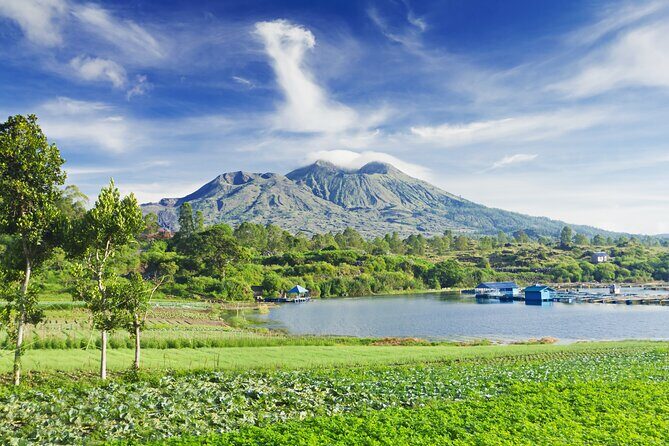
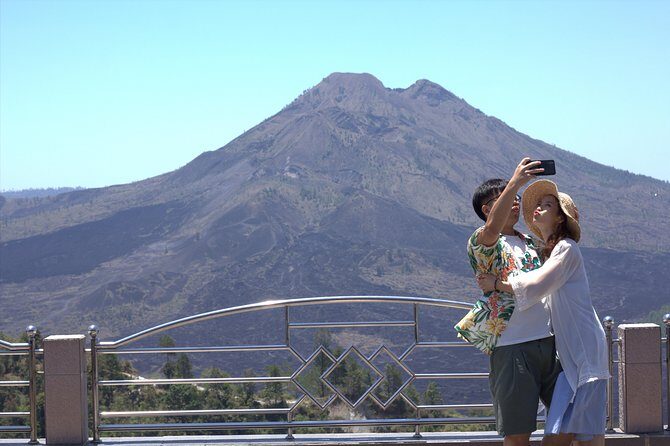
After the terrace world, you shift to the Mount Batur area in Kintamani. The viewpoint portion is about 45 minutes, and the tour mentions dramatic views of the active volcano Batur and Lake Batur, weather permitting.

This is also where the day gets a little more “real Bali” in terms of local life: there’s an opportunity for lunch at a local restaurant with an Indonesian menu. Lunch itself is not included (about $4 per person), so treat it as your day’s fueling point rather than a hidden extra.

Batur Natural Hot Spring: the geothermal reset

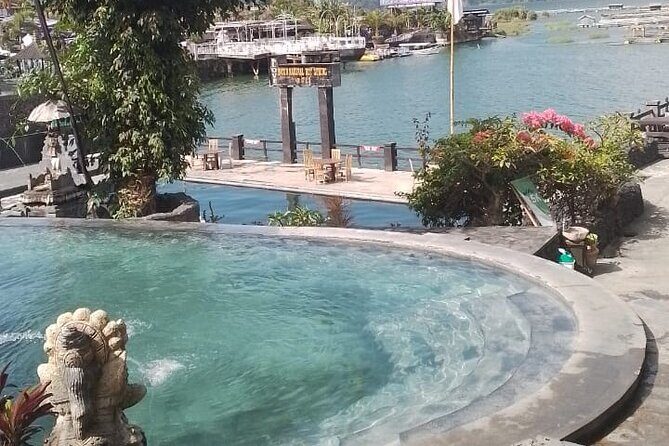
Now for the heat: Batur Natural Hot Spring, about 1 hour. The view is described as overlooking Lake Batur and the volcano, which is the big payoff. The tour also lists towel and locker availability, which is a big comfort win compared to tours that show up and expect you to improvise.

If you plan to swim, bring swimwear and something you can change into afterward. Even if you don’t go fully in, this stop gives your body a reset before the temple and waterfall finale.

Tampaksiring: quick garden stop and an old-building photo break

Next is Tampaksiring with about 30 minutes. The tour describes a flower garden stop plus an antique ancient building area for photos, and your guide helps ensure your photos are saved on your device.

This is a good “breather” between longer cultural stops. It’s not the main event like the terraces or hot spring, but it gives you variety: colors, architecture, and a slower pace before Tirta Empul.

Tirta Empul Temple: holy water and ritual context

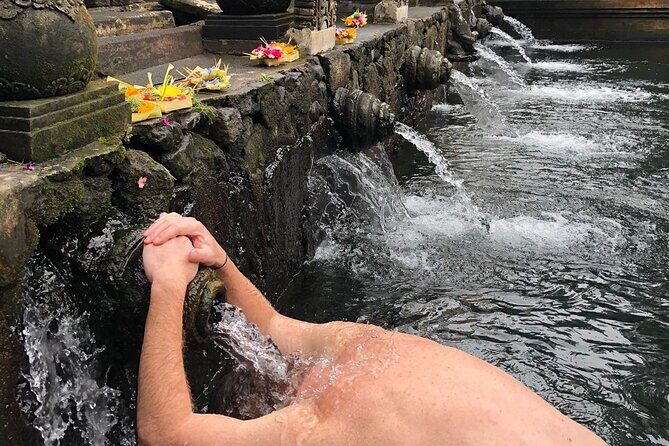
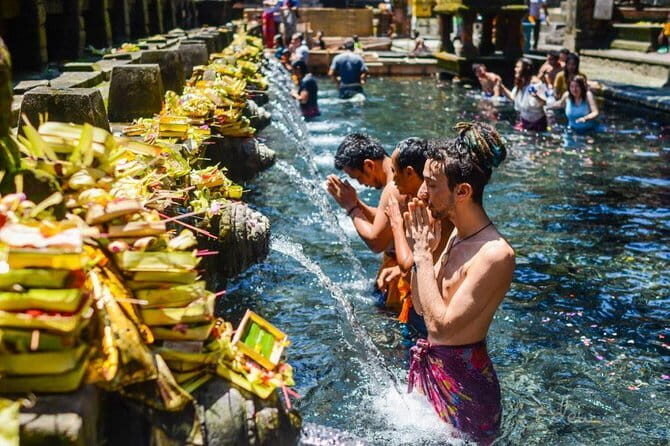
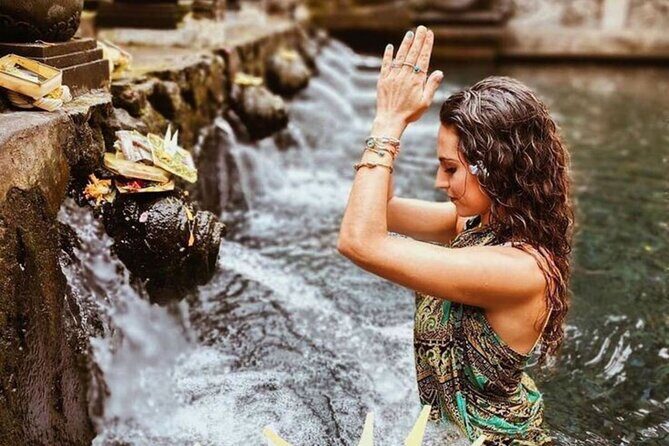
Tirta Empul Temple is about 45 minutes. This is the sacred holy spring temple, and the tour notes you’ll feel the difference after the blessing or touching holy water during the spring temple ritual process.

Here, the value of a private guide is obvious. Even if you know some Bali basics, the guide helps you understand what’s happening and what to expect, so you can participate respectfully rather than just watching. The vibe is spiritual and active, and it fits well after the garden break.

Elephant Cave Temple: pass-by with optional extension

There’s a pass-by of the Elephant Cave Temple. If you want an extra stop, the tour says you can inform your friendly guide and add it. That’s useful if you’re a temple-and-caves person, but don’t feel pressured—this day is already full.

Tegenungan Waterfall: the last burst of scenery

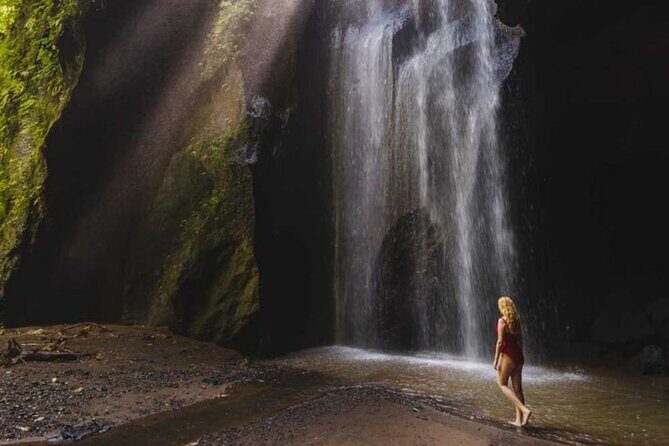
Finally, Tegenungan Waterfall, about 45 minutes. The tour describes a jungle and forest surrounding, plus guided exploration and photo viewing from the top spot.

This is your closing highlight, and it works best if you approach it with two plans: enjoy the falls and keep your energy for photos. After Tirta Empul and hot springs, you’ll appreciate a guided “get to the right viewpoint” moment rather than roaming.

The private guide: where the experience gets better than the checklist

Bali Swing Hot Spring And Waterfall Private Guided Tour - The private guide: where the experience gets better than the checklist
The difference with a private guided day is not that you see more places—it’s that you get context. An English-speaking guide and driver can make the “why” click fast, which is especially helpful for temples and irrigation systems.

Some guides have been specifically noted for local storytelling. For example, Dee and Sandy are highlighted for sharing history and adding thoughtful touches (like fruit detours such as mangosteen for someone in the group). Komang is described as friendly and extremely knowledgeable, with clear explanations about the itinerary and entrance fees at each stop, plus help getting through ticket buying.

And you might even get a guide like Gusti, who has been praised for being personable and sharing lots of anecdotes—sometimes with an assistant/son in the mix. That can be nice if you want more conversational guidance during the day.

If you’re someone who likes simple transparency, this matters. A solid guide doesn’t just point. They tell you what to expect, so you can relax.

Small snag to watch for: tickets, lunch, and the occasional human hiccup

Bali Swing Hot Spring And Waterfall Private Guided Tour - Small snag to watch for: tickets, lunch, and the occasional human hiccup
I’ll be blunt: this day depends on tickets and timing. The tour notes that entrance tickets may require additional payment (around $18 per person if visiting all attractions), even while describing entrance tickets as included through a premium all-inclusive package and upgrades. Before you go, confirm your all-in total for the exact stops you want.

Lunch is also not included—plan on an extra expense (about $4 per person) if you eat during the Mount Batur part.

One more practical note from the real world: although a water bottle is listed as included, I still recommend you bring a small snack or a bit of your own water if you have dietary needs or you’re sensitive to long sit-and-wait transitions. This tour is around 10 hours; even with a good schedule, your body cares about food and hydration.

Who this tour is best for (and who might want something else)

Bali Swing Hot Spring And Waterfall Private Guided Tour - Who this tour is best for (and who might want something else)
This tour fits best if you want a guided highlights day with minimal planning. It’s also a good choice if you’re staying in Seminyak or nearby and you don’t want to worry about getting up into Ubud, then across to the volcano region, and back down to waterfall country.

It also makes sense for families. A guide being flexible with pace (and a route full of shorter timed stops) helps when different people want different levels of activity.

Where it might not fit:

  • If you hate crowds or photo stops, the rice terrace and swing parts may feel like a production.
  • If you’re extremely budget-sensitive, the possible extra entrance ticket amount means you should check your total before booking.
  • If you’re expecting a totally relaxed day, it’s more “busy day, guided order” than slow travel.

Should you book it? My straightforward take

Bali Swing Hot Spring And Waterfall Private Guided Tour - Should you book it? My straightforward take
I’d book this tour if you want a structured, private day that hits Ubud, rice terraces, a swing, temples, Mt. Batur viewpoints, volcanic hot springs, and a major waterfall—all with pickup and AC transport.

The deal-breaker check is simple: confirm what entrance tickets are actually covered for the full set of stops, and budget for lunch. If you do that, the value looks strong for the amount of ground you cover and the fact that you’re not driving or navigating.

FAQ

How long is the Bali Swing Hot Spring And Waterfall private guided tour?

It’s about 10 hours.

Where does pickup and drop-off happen?

Pickup and drop-off are listed for areas including Kuta, Seminyak, Nusa Dua, Canggu, Ubud, Gianyar, and other nearby locations.

Is this tour private or shared?

It’s a private tour, so only your group participates.

Are attraction entrance tickets included in the price?

Entrance tickets are described as included on premium all-inclusive, and there’s also an option to upgrade for all attraction tickets. There’s an additional note that special private guided-only pay entrance tickets may apply (about $18 per person) if you visit all attraction stops.

Does lunch cost extra?

Yes. Lunch is listed as an additional personal expense (about $4 per person).

What’s included for comfort and basics during the day?

Included items list private air-conditioned transportation, an English speaking tour guide and driver, a water bottle, and insurance. The hot spring stop also lists a towel and locker.

Can I cancel for a full refund?

Yes, free cancellation is available. You can cancel up to 24 hours in advance for a full refund.

What if the weather is bad?

The experience requires good weather. If it’s canceled due to poor weather, you’ll be offered a different date or a full refund.

Is the tour appropriate for most people?

It’s described as most people can participate, and it’s labeled as an experience for everyone.

Ubud: Private Customized Highlights Tour

Ubud: Private Customized Highlights Tour - How the custom format works: 4 stops vs 5 stops

Ubud is best when you slow down. This private tour in central Bali lets you string together famous sights and calmer corners with your own licensed guide, instead of getting herded along with strangers. You’ll get hotel pickup and complimentary bottled water, plus a sarong for temple visits.

What I like most is the human part: your guide can explain what you’re looking at in real terms, and in the reviews that standout name is Koman. I also like the flexibility—this isn’t a fixed route; you choose up to a set number of stops, so you can match your day to your energy level.

One thing to keep in mind: some listed places charge extra, and the tour is built around time windows. If you pick a heavy mix of waterfalls and temples, you’ll want good shoes and a little patience for traffic.

Key things to know before you book

Ubud: Private Customized Highlights Tour - Key things to know before you book

  • Choose your own stops: up to 4 for half-day or up to 5 for full-day, picked from a menu of highlights
  • Private, not crowded: only your group, so you can ask questions and move at your pace
  • Koman-style guidance: the guides get called out for clear explanations and friendly, helpful energy
  • Water and sarong included: a practical touch that matters in Bali’s heat and at temples
  • Rainy-season ready: bring an umbrella and rain jacket so occasional showers don’t wreck your plans
  • Some admissions aren’t included: a few specific stops are marked admission not included

Hotel pickup, cold water, and the day that starts on time

The first advantage of a private Ubud highlights tour is also the most basic: you don’t waste your morning figuring out rides. Pickup and drop-off are included for designated Ubud areas, and you’ll start straight from your hotel lobby. In the Bali heat, that matters.

You also get bottled water for staying comfortable between stops. It’s simple, but it changes how you feel walking from one attraction to the next. You’re not constantly thinking about where to buy a drink.

There are a few “nice-to-have” rules that help the trip feel smoother. The car policy includes no smoking and no drinking in the car, and because it’s private, you don’t have to deal with someone else’s schedule or indecision.

The real value in the price: $58.98 and what you avoid paying for

Ubud: Private Customized Highlights Tour - The real value in the price: $58.98 and what you avoid paying for
At $58.98 per person, this is priced like a mid-range day tour that’s trying to balance two things: you’re paying for a private driver-guide, but you’re also getting help covering the on-site costs. The inclusion list says entrance fees and bottled water are part of the experience, and many stops show admission ticket included.

Still, it’s smart to read the stop-by-stop notes in your chosen itinerary. A couple of places are marked as admission ticket not included (like Tibumana Waterfall and Umah Bali Kuno coffee). That doesn’t make the tour “bad,” but it means you should keep a little cash or card ready so you’re not surprised at checkout windows.

Time value is another part of the deal. You’ll have a 6 to 9 hour window depending on whether you pick half-day or full-day. Those hours aren’t “free time.” They’re built around a short visit at each chosen stop, so you’ll want to choose items you truly care about instead of stacking everything.

The other value piece is the guide. In the reviews, Koman is repeatedly praised for being attentive, answering questions, and keeping things fun while explaining culture. A good guide helps you see more than the postcard version.

How the custom format works: 4 stops vs 5 stops

Ubud: Private Customized Highlights Tour - How the custom format works: 4 stops vs 5 stops
This tour is designed as a menu, not a mandatory checklist. For a full-day private tour (up to 9 hours), you choose up to 5 destinations from the list. For a half-day tour (up to 6 hours), you choose up to 4 destinations.

That design is practical. Ubud traffic and the distance between areas can turn a “quick stop” into a long commute. By limiting the number of stops, the tour gives you a fighting chance to enjoy each place rather than just collecting stamps.

A good strategy is to mix categories. For example:

  • One spiritual stop + one viewpoint/walk + one cultural site + one waterfall
  • Or one temple + one rice terrace + a market/craft stop + a temple or cave complex

And if you’re traveling as a couple or small family, the private format gives you control for pacing. You can linger when it’s quiet and speed up when it’s not.

Spiritual Ubud: purification, holy water temples, and cave complexes

Ubud: Private Customized Highlights Tour - Spiritual Ubud: purification, holy water temples, and cave complexes
Ubud has more sacred sites than most people expect. The benefit of having a guide here is that you’ll understand what the place is for, not just what it looks like.

Tirta Empul Temple (admission ticket included)

This is a sacred temple tied to purification rituals. You’ll see the natural purification pools where people traditionally cleanse themselves. Your guide can explain the meaning behind the ritual, which helps you approach the site respectfully instead of treating it like a photo backdrop.

Consideration: if you’re not sure about temple etiquette, a sarong is included, which helps you get sorted quickly.

Mount Kawi (admission ticket included)

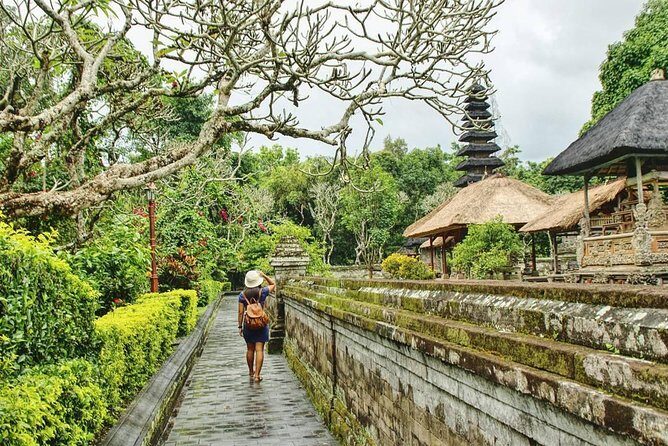
Mount Kawi is an ancient temple complex carved into rock cliffs. The setting feels dramatic, and you’ll be surrounded by greenery and rice fields. It’s a great pick if you like a site with strong “place in the landscape” energy—without needing to do a long trek like some other Bali attractions.

Watch your footing. Stone steps and wet patches happen, especially in rainy season.

Gunung Kawi Sebatu Temple (admission ticket included)

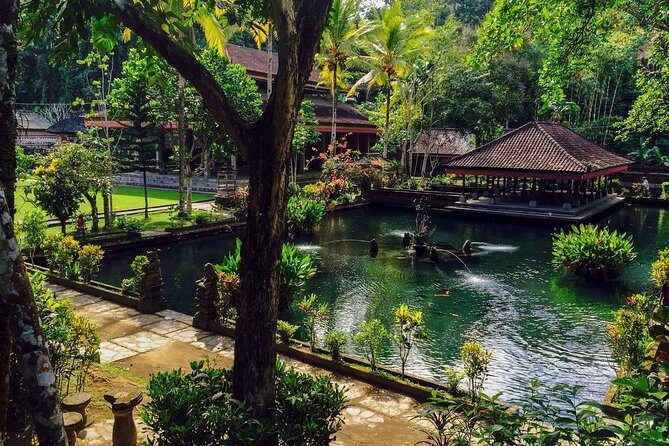
This is one of the calmer holy water temples listed. The focus is spiritual significance and purification rituals, set among gardens and koi ponds. If you want a less frenetic feel than the big-name attractions, this can work well in the mix.

Mengening Temple (admission ticket included)

Mengening Temple is described as a peaceful site with holy springs and lush greenery. It’s another purification-related stop, and having a guide helps you connect what you see to why people come here.

Elephant Cave (admission ticket included)

Elephant Cave is a historic site featuring a carved cave and sacred pools used for meditation. It’s a nice change of pace from the standard “temple with steps” vibe because the cave element creates a different kind of atmosphere.

Practical tip: caves can be cool, but they also mean uneven floors. Wear shoes you trust.

Rice terraces and ridge walks: scenic views without the chaos

Ubud: Private Customized Highlights Tour - Rice terraces and ridge walks: scenic views without the chaos
Ubud’s most famous views are popular for a reason. The trick is choosing the right time and not rushing through the meaning.

Tegalalang Rice Terrace (admission ticket included)

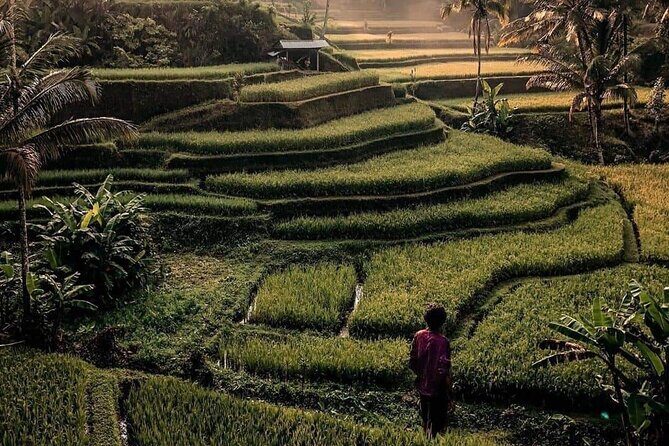
Tegalalang is the stepped rice field that people travel for. You’ll get breathtaking views and a look at traditional farming methods. When you understand what rice farming means in Bali’s culture, the view feels less like scenery and more like a working system.

Drawback to plan around: it’s a high-traffic area in general, so don’t expect solitude. Your guide can still help you position your timing and move efficiently.

Campuhan Ridge Walk (admission ticket included)

This is a scenic walking trail along a ridge. It’s the kind of walk that can fit sunrise or sunset vibes, and it’s a good “stretch your legs” stop between heavier sights.

Bring water (you’ll have some) and a light layer. Even when it’s warm, ridge air can shift.

Monkey Forest and palace-era Ubud: culture you can touch

Ubud: Private Customized Highlights Tour - Monkey Forest and palace-era Ubud: culture you can touch
Ubud is not only nature and waterfalls. It also has old-world cultural centers, and these stops help you see how the island’s arts and beliefs connect.

Sacred Monkey Forest Sanctuary (admission ticket included)

This is a sacred forest home to hundreds of long-tailed monkeys, plus ancient temples and lush pathways. The key word here is sanctuary: it’s not just a zoo.

What to consider: monkeys are monkeys. Keep small items secured and follow your guide’s instructions on behavior. If you want the cultural side, plan to spend your time looking at the temple elements too, not only the animals.

Ubud Palace (admission ticket included)

Ubud Palace is the historical residence of the royal family, with intricate Balinese carvings and performances. It’s a good stop when you want more “Ubud identity” and less nature-only time.

Saraswati Temple (admission ticket included)

Saraswati Temple is in central Ubud and known for its lotus ponds and Balinese architecture. It’s a beautiful contrast to the rice-and-forest areas, and it pairs nicely with Ubud Palace since both are cultural anchors.

Waterfall circuit: choose based on mood and risk

Ubud: Private Customized Highlights Tour - Waterfall circuit: choose based on mood and risk
If you like waterfalls, this tour gives you options across different styles—from strong flow photo spots to quieter, more secluded-feeling falls.

Tegenungan Waterfall (admission ticket included)

Tegenungan is near Ubud and easy to access. It has a strong water flow and good opportunities for sightseeing and photography. If you want the classic “big waterfall” experience, this is usually the straightforward pick.

Kanto Lampo Waterfall (admission ticket included)

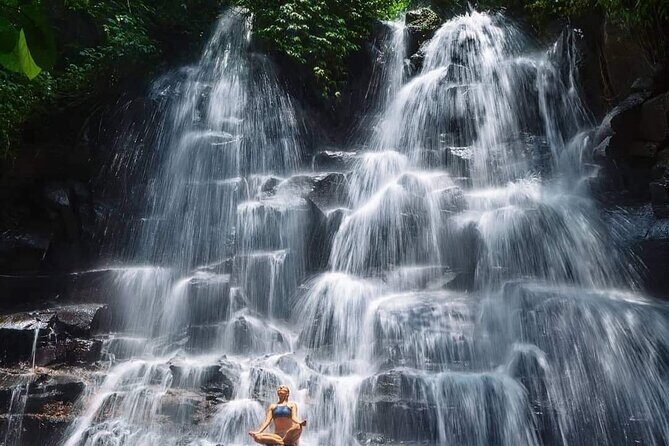
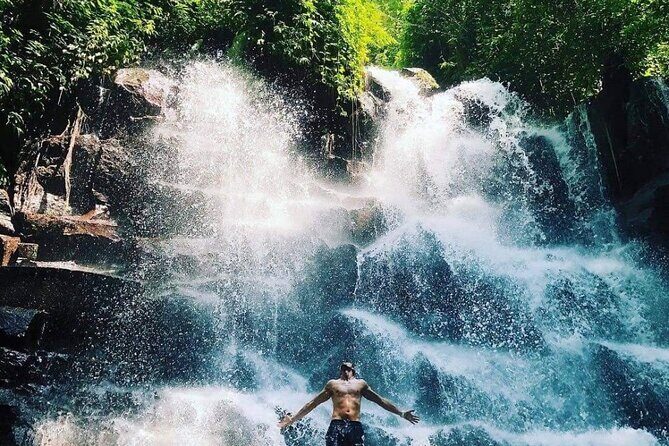
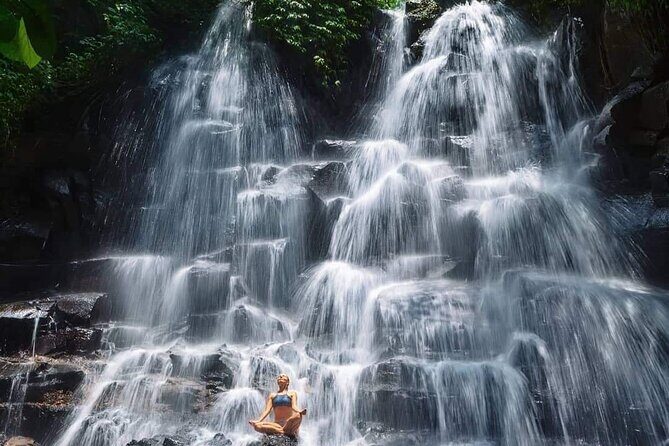
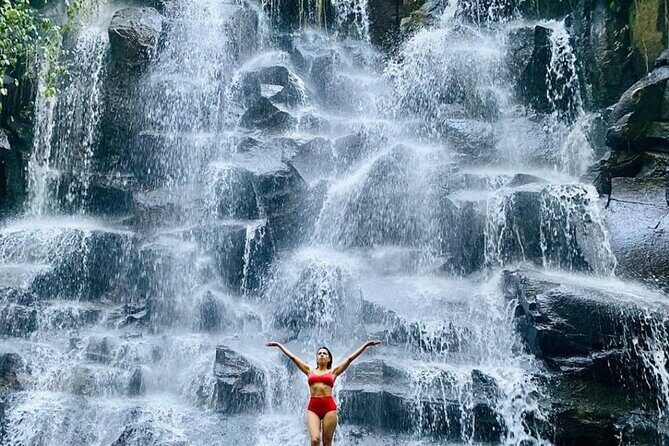
Kanto Lampo is multi-tiered with shallow pools, so it can be ideal for cooling off and photos. It’s a great option if you want a waterfall you can interact with more than just watch from a distance.

Shoes matter here—wet rocks and slippery edges are common.

Suwat Waterfall (admission ticket included)

Suwat is described as more secluded, with crystal-clear water and a tranquil atmosphere. If your day is already loud and packed, this can be a reset.

Taman Sari Waterfall (admission ticket included)

Taman Sari is surrounded by lush vegetation and is meant to be a peaceful escape from crowds. It’s a strong choice if you prefer quieter photo angles and a slower pace.

Goa Raja Waterfall (admission ticket included)

Goa Raja flows through a cave-like rock formation, which gives it a more mystical ambiance. It’s also the sort of place where you’ll appreciate explanations about how the site feels and why visitors treat it with respect.

Tibumana Waterfall (admission ticket not included)

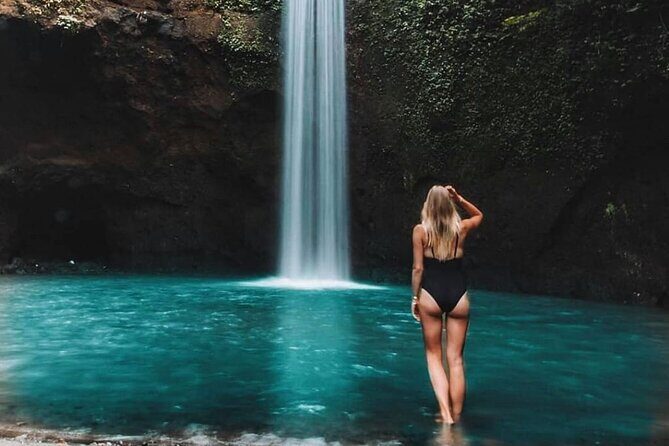
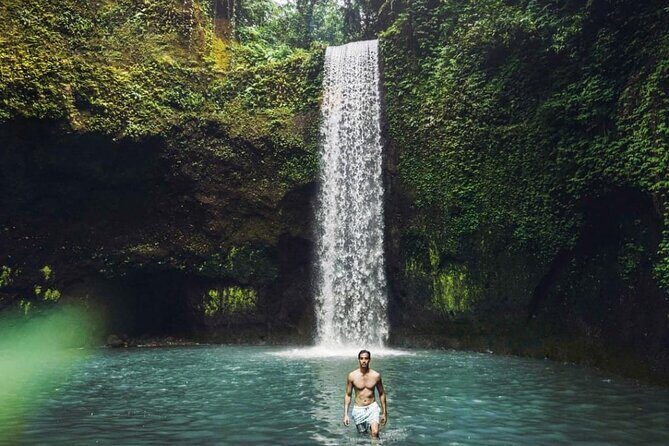
Tibumana is described as a hidden gem with a single cascade into a natural pool and tropical greenery. This is one of the few waterfall picks that’s marked admission ticket not included, so plan for that extra cost.

Ulu Petanu Waterfall (admission ticket included)

Ulu Petanu is described as serene and lesser-known, surrounded by forest and rice fields. It’s another good pick when you want calmer vibes and space to breathe.

Smart approach: if the day includes multiple waterfalls, pick one “easy and popular” stop (like Tegenungan) and one “quieter feel” stop (like Suwat or Ulu Petanu). You’ll be less tired and more impressed.

Art, markets, and craft stops: where culture becomes souvenirs

Ubud: Private Customized Highlights Tour - Art, markets, and craft stops: where culture becomes souvenirs
Ubud is famous for crafts, and this tour includes several ways to see and shop. The advantage of a guide is not just language—it’s knowing what you’re looking at and when it’s worth buying.

Dewa Putu Toris (free admission)

This stop focuses on classic Balinese painting styles, including mythology and daily life. If you’re curious about how Balinese stories show up in art, this can be a thoughtful cultural stop rather than just a quick building visit.

Yana Art Gallery (free admission)

Yana Art Gallery is another art-focused choice, with skilled artisans carving detailed wood sculptures. If you want to understand craft processes, galleries like this can be more meaningful than souvenir browsing.

Ubud Art Market (free admission)

Ubud Art Market is where you’ll find handcrafted souvenirs, textiles, and Balinese art. It’s a good place to browse for gifts, but keep in mind it can be busy. A guide can help you navigate quickly if you’re trying to avoid getting stuck in the same stall loop.

UC Silver Gold (free admission)

This is a stop to discover silversmith craftsmanship and shop for jewelry. If you’re shopping anyway, it’s worth bundling this with other cultural stops so you don’t add extra transport later.

Umah Bali Kuno coffee (admission ticket not included)

This stop is a beautifully designed home showcasing authentic Balinese architecture and family compounds. It’s marked as admission ticket not included, so treat it as a culture-and-coffee add-on rather than a guaranteed “included entry.”

Planning your order: how to avoid wasted time

Because you’re choosing up to 4 or 5 destinations, your itinerary order matters a lot. A practical way to think about it:

  • Start with something relatively straightforward (like a temple or palace).
  • Move toward viewpoints or scenic walks next (rice terraces or ridge walk).
  • Finish with a waterfall if you want your photos at the end and don’t mind getting wet.

Also, Bali mornings can feel different from afternoons in comfort and crowding. A ridge walk (Campuhan) can work well when the air feels cooler. And for places like Monkey Forest, earlier can be more manageable.

Your guide’s job is to manage flow and timing. In the reviews, Koman is credited with attentive planning and handling driving even with traffic. That’s a big deal for a day like this.

Rainy season reality: what to bring so the day stays fun

The tour operates in rainy season, and that changes the “feel” even if the destinations are the same. You’ll still see Bali’s beauty, but you need to arrive ready for occasional showers.

Pack an umbrella and a rain jacket. Also, consider quick-dry clothing and footwear you can trust on wet stone and slick steps. Waterfalls can be amazing after a rain, but the ground can also get dangerous if you’re wearing sandals with no grip.

Who should book this Ubud private customized highlights tour?

This is a great fit if:

  • You want a private guide who can explain culture and answer questions
  • You like tailoring your day instead of following a fixed route
  • You’re balancing big-name stops (rice terraces, monkey forest) with options that can be calmer (certain temple and waterfall picks)
  • You care about practical inclusions like hotel pickup, water, and sarong

It might be less ideal if:

  • You’re trying to do “everything” in one day, because the stop limit is there for a reason
  • You dislike changing plans based on weather or crowds
  • You don’t want to pay additional entrance fees at a couple of specific stops (those marked admission ticket not included)

Should you book it? My straight answer

Yes, you should book this tour if you want an easier, more personal Ubud day with a guide-led experience. The pricing feels fair when you use the private format wisely, and the included water and sarong are the kind of details that make temples and heat less annoying.

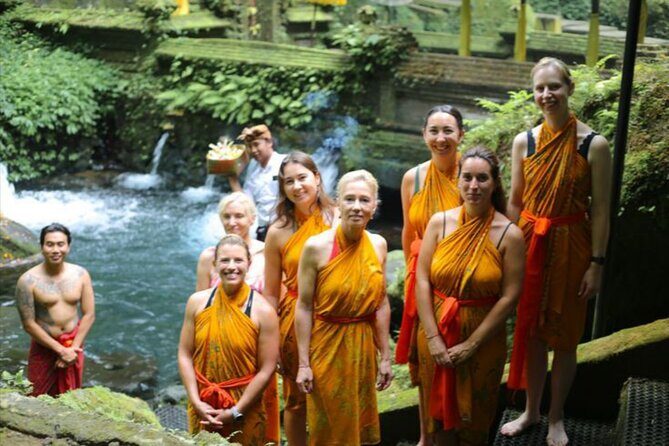
If you book, spend a moment choosing your 4 or 5 stops thoughtfully. Pick a mix of culture, views, and one or two waterfalls—then let your guide help shape the order. That’s when this kind of tour becomes more than a checklist. It becomes your day in Ubud.

FAQ

How long is the Ubud private customized highlights tour?

It runs about 6 to 9 hours, depending on whether you choose the half-day or full-day option.

Is it a private tour or shared group?

It’s private. Only your group participates.

How many destinations can I choose?

For a half-day tour, you choose up to 4 destinations. For a full-day tour, you choose up to 5 destinations.

Are hotel pickup and drop-off included?

Yes, pickup and drop-off are included for certain areas in Ubud.

Are entrance fees included for the attractions?

Entrance fees are listed as included, but some specific stops are marked as admission ticket not included, such as Tibumana Waterfall and Umah Bali Kuno coffee.

Is bottled water included?

Yes. Bottled water is included to help you stay hydrated in Bali’s heat.

Do I need a sarong for temple visits?

Yes, a sarong is included for temple visits.

What should I bring for rainy season?

Bring an umbrella and a rain jacket for occasional showers.

Is there free cancellation?

Yes, free cancellation is available. You can cancel up to 24 hours in advance for a full refund.

Shore Excursion Cruise Ship from Benoa and Celukan Bawang Port

Shore Excursion Cruise Ship from Benoa and Celukan Bawang Port - North Bali Stops: Floating Temple, Twin Lakes Views, and Waterfall Energy

Bali in one long, well-paced day. This shore excursion is built for cruise timing, with a private guide and air-conditioned transport that take you from Benoa or Celukan Bawang toward North Bali, Ubud, and then the South. I like that you get the big Bali sights without the usual scramble, and I also like the hands-on stops people remember most: the Ulun Danu Beratan floating temple, coffee tasting, and a waterfall that can be steep but scenic. One drawback to plan for: the day runs long (about 6 to 8 hours), and road time can eat daylight, so you’ll need to be flexible if traffic or weather slows things down.

You’re paying for convenience, not just sightseeing. The price ($38.51 per person) covers bottled water, a professional guide, private transportation, and travel insurance, while entrance fees and parking are on you. If your main goal is a slow, walk-everywhere day, this format might feel like a lot of moving, even when the stops are excellent.

Key Things to Know Before You Go

Shore Excursion Cruise Ship from Benoa and Celukan Bawang Port - Key Things to Know Before You Go

  • Private, cruise-friendly timing: You’re only with your group, and the focus is getting you back to the ship on schedule.
  • North Bali highlights are the star: Ulun Danu Beratan floating temple plus viewpoints like Twin Lakes show off a calmer side of the island.
  • Coffee tasting is part of the story: It’s not just a photo stop; it’s usually a full tasting experience.
  • Waterfalls can be worth the effort: Expect steep steps or a workout for your legs, depending on the spot.
  • English can vary by guide: Many guides are great, but language/comms quality isn’t uniform across all days.
  • Entrance fees are extra: Bring cash/card habits for temple tickets and similar costs.

Cruise-Port Pickup That Actually Respects Your Schedule

Shore Excursion Cruise Ship from Benoa and Celukan Bawang Port - Cruise-Port Pickup That Actually Respects Your Schedule
This is a shore excursion designed for people who have to be back on the ship, not just out enjoying Bali until they feel like it. Pickup is offered from the cruise ports of Benoa or Celukan Bawang, and you travel in an air-conditioned vehicle with a private driver and guide for your group.

That matters because Bali’s roads can be slow and unpredictable. Several guides in the past feedback were praised for being punctual and for handling traffic and winding roads smoothly, with examples like Made and Jun getting called out for safe, organized driving. If you want a day that feels low-stress, start here.

The private setup also changes the vibe. You’re not waiting around for a big group to argue about photos. You can ask for what you care about that day, and guides like Krisna and Badil were noted for tailoring the route and pace to the group’s preferences and even mobility limits.

North Bali Stops: Floating Temple, Twin Lakes Views, and Waterfall Energy

Shore Excursion Cruise Ship from Benoa and Celukan Bawang Port - North Bali Stops: Floating Temple, Twin Lakes Views, and Waterfall Energy
North Bali is where the itinerary tends to shine. The whole pitch is about a quieter, more authentic feel than South Bali, with natural scenery and cultural landmarks that feel like a real change of pace.

Ulun Danu Beratan floating temple

One stop gets repeated a lot for a reason: Ulun Danu Beratan, often described as a floating temple. Getting there takes time, and one guide experience noted the ride is about 1.5 hours from the port. That gives you a reality check: you’re trading some early time in the car for a landmark that’s very photo-worthy and culturally important.

Practical tip: wear shoes you trust on wet or uneven paths, and give yourself a little buffer for viewing. Even if the temple itself is the headline, the approach areas and viewpoints can be part of what makes the moment.

Twin Lakes viewpoint

North Bali also tends to include a viewpoint stop connected to Twin Lakes. In the feedback, this is paired with the temple day so you get more than one scenery “wow” moment. It’s the kind of place where you can pause, breathe, and look out rather than just sprint between entrances.

If you’re the type who likes geography—how water and valleys shape what you see—this stop helps connect the dots.

Coffee plantation tasting

Coffee is another North Bali centerpiece in the typical flow. You’ll often find a coffee plantation tasting that includes the chance to learn what’s grown and how it’s prepared. In one account, the coffee stop was described as fun, and it also helped make the day feel full without adding too much chaos.

Bring a water habit: tasting is better when you’re hydrated, and the tour includes bottled water, which is helpful for long, active days.

Waterfall stop (where your legs will file a complaint)

Then comes the waterfall. This is where the day can shift from sightseeing to actual effort.

Expect steep steps and a workout-like walk in many cases. In feedback, someone described it as hard work because it’s steep, but also said the view at the top makes the effort worth it. Another note mentioned swimming in a beautiful waterfall, so the option exists to get in—if conditions and safety allow.

Practical tip: keep your balance gear-ready. If you’re prone to slipping, plan lighter footwear and move slowly on the steep bits. Also, don’t plan to rush here. The best waterfall moments come when you slow down long enough to look around.

Ubud: Culture, Temples, Markets, and a Change of Rhythm

Your day also includes Ubud, Bali’s cultural and artistic heart. This is where the itinerary usually feels more grounded: traditional villages, sacred spaces, and local market energy.

Even if you don’t spend hours wandering, Ubud tends to add meaning to the rest of the trip. North Bali shows you scenery and heritage in a quieter setting, then Ubud brings the social and spiritual texture of Bali to the center of the day.

If you enjoy temples beyond the postcard view, Ubud is a good counterbalance. It’s also where you can slow down and look at daily life, not only tourist landmarks.

Practical approach: If you’re short on time, focus your Ubud stop on one or two priorities rather than trying to check everything off. A strong guide can help you pick the right order so you’re not running on empty.

South Bali Highlights: Big Sights Before You Head Back

Shore Excursion Cruise Ship from Benoa and Celukan Bawang Port - South Bali Highlights: Big Sights Before You Head Back
After North Bali and Ubud, South Bali enters the picture. This is the “most popular region” part of the itinerary: beaches, iconic temples, and areas known for shopping and nightlife energy.

For cruise passengers, this often works best as a sampler. You see key sights without pretending you can explore South Bali like a land-based traveler with days to spare. The value is in getting the contrast: quieter North, cultural Ubud rhythm, then South Bali’s recognizable landmarks.

A useful way to think about this section: treat South Bali as your finish-line chapter. If you want a sunset moment, or a last temple photo, prioritize it early in the South Bali segment so it doesn’t get squeezed by time.

The Guides Are the Difference Maker (From Made to Dedy)

Shore Excursion Cruise Ship from Benoa and Celukan Bawang Port - The Guides Are the Difference Maker (From Made to Dedy)
This kind of day lives or dies by the guide. And in the feedback you shared, some guides clearly did the extra work.

Made was praised for punctuality, safe driving, friendliness, and organizing the day so it felt smooth. Dedy received strong notes for friendliness and for sharing Bali culture along the way, which is huge on a day packed with stops. Gede (Bon Bon) was specifically credited with professionalism, friendly handling of the group, lots of photos, and getting everyone back to the ship on time.
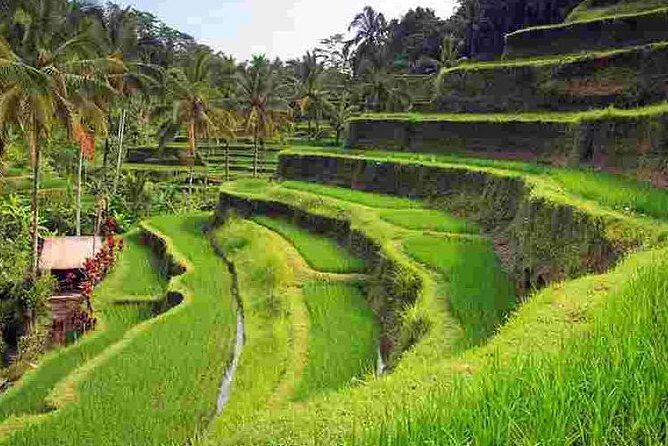
You’ll also see patterns in the best feedback:

  • Guides who manage traffic and timing
  • Guides who explain what you’re seeing (not just drop you off)
  • Guides who help you choose what fits your group’s energy
  • Guides who keep the ship return plan front and center

One fair caution: there’s also at least one note where the guide had very limited English and didn’t provide much commentary. That doesn’t mean every day is like that, but it does mean you should be ready to communicate priorities clearly if you have strict expectations for explanations.

If you care about commentary, you can ask directly what language level and explanation style your guide is comfortable with when you meet them.

What’s Included, What Costs Extra, and How to Plan Smart

Shore Excursion Cruise Ship from Benoa and Celukan Bawang Port - What’s Included, What Costs Extra, and How to Plan Smart
Here’s the practical breakdown of what you’re paying for and what you’ll still need to budget.

Included:

  • Bottled water
  • Air-conditioned vehicle
  • Private transportation
  • Professional tour guide
  • Travel insurance

Not included:

  • Parking fees
  • Entrance fees (you pay those yourself)

That’s decent value for a cruise excursion because transport, guide time, and insurance are often the biggest “hidden costs” when you self-book. The extra entrance fees are normal for temple visits, waterfalls with ticketing, and similar stops, so plan on having some cash ready.

Timing note: some areas can mean bumpy roads and long drives between locations. One feedback comment specifically said roads are bumpy in some areas and drives can be long between stops, so leave your patience at home and bring your snacks for the car ride (even if water is included).

Timing, Comfort, and How to Avoid the Common Cruise-Excursion Pitfalls

Shore Excursion Cruise Ship from Benoa and Celukan Bawang Port - Timing, Comfort, and How to Avoid the Common Cruise-Excursion Pitfalls
A 6 to 8 hour day is workable, but it’s not a “wander and snack” schedule. You’ll want to be ready for:

  • Long car segments between North Bali sights and Ubud/South Bali stops
  • A waterfall walk that may be steep
  • Temples where time is spent standing, walking uneven paths, and waiting for a decent photo angle

Comfort moves that pay off:

  • Dress in layers. Bali weather can change, and temple areas may feel cooler.
  • Bring sun protection and consider a small towel or quick-dry cloth if you plan to swim.
  • Keep a simple plan for lunch timing. Some days include lunch at a local establishment, but the details weren’t consistent across everything you shared, so be flexible and hungry in advance.

If you have mobility limitations, you can still make this work. One account praised a guide (Badil) for tailoring the day to mobility needs and adjusting the timeline, so it’s not automatically “too much walking.” Just communicate early and be honest about what you can handle.

Who This Shore Excursion Fits Best

Shore Excursion Cruise Ship from Benoa and Celukan Bawang Port - Who This Shore Excursion Fits Best
This tour style is ideal if you:

  • Are on a cruise and need a plan that returns you to the ship on time
  • Want a balanced Bali sampler without negotiating rides all day
  • Enjoy a mix of temples, viewpoints, and one active stop like a waterfall
  • Like the idea of North Bali’s quieter pace, then a South Bali finish for the big names

It may not be perfect if you:

  • Want a slow, flexible day with long free time in one place
  • Prefer lots of guided explanations in your chosen language every minute (English support can vary)
  • Hate steep walks and sudden changes in walking surfaces

Should You Book This Bali North + South Cruise Day?

I’d book it if you want a single-day hit list that still feels personal. The private setup, A/C transport, and the fact that many guides focus on smooth timing make this a strong choice for shore days.

I’d skip it or adjust expectations if your heart is set on spending hours in just one area, or if you need lots of commentary in fluent English. In that case, send your priorities before pickup and confirm how the guide plans to handle explanations.

If your goal is to see Ulun Danu Beratan, add Ubud culture, and still squeeze in South Bali without stress, this is a smart use of your port day.

FAQ

How long is the shore excursion?

The tour runs about 6 to 8 hours.

What ports does this shore excursion run from?

It’s described as a shore excursion from Benoa and Celukan Bawang port.

Is pickup included?

Yes, pickup is offered.

Is this a private tour?

Yes. It’s private, and only your group participates.

What is included in the price?

The tour includes bottled water, an air-conditioned vehicle, private transportation, a professional tour guide, and travel insurance.

Are entrance fees included?

No. Entrance fees are not included, and you pay them yourself.

How much does it cost?

The price listed is $38.51 per person.

Does weather affect the tour?

Yes. The experience requires good weather, and if it’s canceled due to poor weather, you’ll be offered another date or a full refund.

If you want, tell me your cruise port (Benoa or Celukan Bawang) and your top 2 priorities (temples, coffee, waterfalls, Ubud shopping/markets), and I’ll suggest a simple strategy for how to spend your limited time inside a 6 to 8 hour day.

Bali: Fishing Charter Private Boat

Bali: Fishing Charter Private Boat - Optional snorkeling at Blue Lagoon: how it changes the day

That first bite of salt air sets the mood. This private fishing charter from Ubud keeps things simple: you get a calm, intimate boat setup, a guide who helps you fish, and big scenic rewards along Bali’s east coast with Mount Agung in view. I especially like the hassle-free hotel pickup plus the fact that fishing gear, bait, and assistance are handled for you.

If you care most about landing giant trevally and tuna, do go in with realistic expectations. Fishing can swing by season, and the day’s catch may vary.

You’ll still finish with a great payoff: after you fish, you barbecue your catch with Balinese spices, then head back to your hotel with no need to sort out logistics on your own.

Key points worth knowing

Bali: Fishing Charter Private Boat - Key points worth knowing

  • Private boat for your group only, so you’re not squeezed into a crowd
  • East Bali fishing around Gili Mimpang, Biaha, and Pekong with island-and-mountain views
  • Gear, reel, and bait included, plus an on-board fishing assistant
  • Optional Blue Lagoon snorkeling (about 2 hours) while keeping the full day near 5 hours
  • BBQ your catch with Balinese spices, plus lunch and drinks on board
  • Dietary needs can be accommodated if you tell them during booking

From Ubud to the coast: what makes this charter work

The best parts of this trip aren’t just what you do on the water. It’s how little you have to plan. The day starts with pickup from your hotel (if you choose that option) and an English-speaking driver who handles the drive from Ubud toward the coast. That matters because fishing days have enough moving parts already. You don’t want to spend your limited vacation time figuring out transport, finding meeting points, and guessing what to bring.

Once you’re at the harbor, you board a comfortable private boat and head out into the Indian Ocean. The rhythm is straightforward: cast, adjust, learn, and fish. There’s no awkward “good luck” handoff. You have staff support on the boat, and they help with the practical side of fishing—gear handling, baiting, and getting your line set right.

The scenery is part of the package. You’re not staring at water all day. You’re also looking at islands and Mount Agung from the sea, which gives the whole thing a calmer, more cinematic feel than many basic fishing trips.

The fishing part: spots, targets, and how guidance helps

Bali: Fishing Charter Private Boat - The fishing part: spots, targets, and how guidance helps
This is set up as an expert-guided experience, not a DIY fishing attempt. With the included fishing equipment (gear, reels, and bait), you’re free to focus on the fun part: feeling the line, watching for bites, and trying different techniques with help.

The charter is designed around fishing in East Bali waters, specifically around the islands of Gili Mimpang, Biaha, and Pekong. Those names might not mean much on land, but out on the water they matter. Islands often create structure—changes in depth and currents—that can affect what fish you’ll see and what’s willing to bite.

The common target species listed for this trip include giant trevally and dogtooth tuna. Those are exactly the kinds of fish people hope for in Bali because they’re exciting, sporty, and not guaranteed on every outing. The key thing: this charter gives you the best chance by matching you with local fishing knowledge and active assistance.

A realistic note on catch size

One downside you should plan for is variability. Even with good guidance, fishing results depend on conditions and season. On at least one past trip, the day focused on smaller fish and didn’t line up with the bigger-tuna-and-trevally expectation. The hooks and tackle matched that smaller bite size, and the catch wasn’t what was hoped for.

So if your top priority is a specific big-species goal, I’d treat that as a possibility, not a guarantee. The trip still shines as an experience—especially if you enjoy the process and don’t need a trophy photo to consider the day a win.

Optional snorkeling at Blue Lagoon: how it changes the day

Bali: Fishing Charter Private Boat - Optional snorkeling at Blue Lagoon: how it changes the day
You can add snorkeling if you want a split day: fish first (or mostly), then get some time in the water for swimming and views. The option is tied to Blue Lagoon, and the timing shifts so the whole experience stays around 5 hours total.

What you should expect when snorkeling is selected:

  • about 2 hours snorkeling
  • about 3 hours fishing (at least)

This is a smart way to balance interests if you’re traveling with mixed-fishing-and-swimming energy. It also works well if you want to stretch your time in East Bali without turning the day into an endurance test.

A practical tip: if you pick snorkeling, go in mentally prepared for a different pace. Fishing rewards patience and focus. Snorkeling is more about comfort, buoyancy control, and enjoying the water view. Either way, the boat day keeps structure, so you’re not improvising between activities.

BBQ and lunch: the payoff after the work

Bali: Fishing Charter Private Boat - BBQ and lunch: the payoff after the work
The moment most people remember is what happens after fishing. Once you’re done casting and hauling in what you catch, you return to shore and eat well. Your catch is prepared as a BBQ with Balinese spices, which turns the day into more than just the thrill of fishing. It’s also a nice cultural touch: local seasoning is the point, not generic barbecued food.

Lunch is included too, with an Indonesian menu served during the day, along with mineral water and soft drinks. If you’re hungry after a few hours at sea, this is exactly what you want—food that doesn’t require you to find a restaurant, wait for service, or worry about what’s open.

And it’s not only fish-eaters. If you have dietary restrictions—vegetarian, vegan, gluten-free, or similar—tell them at booking. The charter notes that they can accommodate dietary needs, which is a big deal on days when you’re also trying to keep logistics easy.

Views from the boat: Mount Agung and island scenery

Bali: Fishing Charter Private Boat - Views from the boat: Mount Agung and island scenery
This is one of the reasons I think people should choose a charter like this even if they’re not hardcore fishers. The area around the islands of Gili Mimpang, Biaha, and Pekong is scenic from the water. You’ll also see Mount Agung, which helps the whole day feel like more than a single activity.

Even on “so-so bite” days, scenery keeps the mood up. The sea views add a sense of place that you just don’t get on urban tours. In practical terms: it’s a good day if you like photos, love quiet ocean time, or just want something calmer than a packed shore program.

Price and value: what $90 covers (and why that can be fair)

Bali: Fishing Charter Private Boat - Price and value: what $90 covers (and why that can be fair)
At $90 per person, this private charter isn’t the cheapest activity in Bali. But it is thoughtfully priced if you value what’s included.

Here’s what you’re getting for that cost:

  • private setup for your group only
  • hotel pickup and drop-off if you select that option
  • an English-speaking driver
  • expert staff fishing assistance
  • fishing equipment and bait (so you don’t rent or buy anything)
  • drinks: mineral water and soft drinks
  • lunch with an Indonesian menu
  • BBQ of your fresh catch with Balinese spices
  • optional snorkeling at Blue Lagoon (if you choose that add-on)

When an activity includes transport, gear, food, and staff time, $90 can make sense—especially compared with the alternative of trying to arrange fishing gear plus a private boat plus meals separately.

Also, there can be group discounts, which helps if you’re traveling as a couple or small group and want to keep the cost per person down.

My advice: price it against a “do it yourself” approach. If you’d otherwise pay for a boat rental, hire someone to help you fish, and then still need lunch and transport, this starts looking more reasonable.

Who this is best for (and who should reconsider)

Bali: Fishing Charter Private Boat - Who this is best for (and who should reconsider)
This charter fits best if you want:

  • a private boat feel without dealing with messy logistics
  • a guided fishing day that works for first-timers and experienced fishers
  • a trip that includes food and drinks, so you can relax
  • the option to add snorkeling at Blue Lagoon if your group wants variety

It can be less ideal if:

  • your entire vacation depends on landing one specific monster fish
  • you hate uncertainty and need guarantees (even the best fishing days don’t promise the same results every time)

If you’re bringing kids, this also tends to work well. The experience is designed so people can enjoy the process, and the trip format supports families who want a memorable day without complicated planning.

Small practical tips before you go

Bali: Fishing Charter Private Boat - Small practical tips before you go
A few things can make the day smoother once you’re on board.

  • Ask about the day’s fishing conditions before you commit to big-species expectations. The charter itself flags that results can vary by season.
  • If you care about snorkeling, confirm the timing: around 2 hours snorkeling plus about 3 hours fishing to keep the total day near 5 hours.
  • If you have dietary restrictions, add them during booking so lunch and BBQ food match your needs.
  • Bring the right mindset: the best fishing days feel like a conversation with the water, not a vending machine. Guidance helps, but the ocean decides how it plays that day.

Should you book this private Bali fishing charter?

If you want an easy, guided fishing day from Ubud with real support on the boat, I think this is a solid choice. The standout value is how much is handled for you: pickup, gear and bait, staff assistance, lunch, drinks, and the BBQ finish. Add the optional Blue Lagoon snorkeling and you get a full, flexible day with good scenery and a clear payoff.

Book it if you’re excited to fish, enjoy ocean views, and like the idea of eating what you catch. Reconsider if your goal is a guaranteed giant-trophy catch. Even then, it can still be worth it for the experience—just go with the right expectations and focus on the process, not just the headline fish.

FAQ

Is hotel pickup and drop-off included?

It’s included if you select the option. The tour notes pickup and drop of if that option is chosen.

How long is the Bali fishing charter?

The duration is about 5 hours.

Does the trip include snorkeling?

Snorkeling is available at Blue Lagoon if you select the option. When selected, snorkeling is about 2 hours and fishing is about 3 hours at least.

What kind of fish are you trying to catch?

The experience describes fishing for species such as giant trevally and dogtooth tuna.

What’s included for food and drinks?

You get lunch with an Indonesian menu, plus mineral water and soft drinks. After fishing, your catch is prepared as a BBQ with Balinese spices.

What is the cancellation policy?

You can cancel for a full refund if you cancel at least 24 hours in advance. If you cancel less than 24 hours before the start time, the amount paid is not refunded.

A Day Retreat In Ubud

A Day Retreat In Ubud - Morning Pickup and the 7–8am Temple Arrival Advantage

Wearing calm is the point here. This Ubud retreat focuses on spiritual purification at Mengening Temple, then slows down with yoga and a spa-style massage instead of cramming in sights.

I love the early start (roughly 7–8am) and the small group size, which makes it feel personal and unhurried. I also like that the day includes the practical stuff—air-conditioned transport, lunch, and the right materials for the ceremony (including a yoga mat and temple offering).

One consideration: this is not a photo-ops itinerary. It’s a traditional water-blessing ritual, and women who are menstruating can’t take part in the temple activity.

Key Highlights Worth Knowing

A Day Retreat In Ubud - Key Highlights Worth Knowing

  • Mengening Temple purification ritual at the sacred springs near Ubud
  • Small group (max 8) for quieter, more guided participation
  • Ceremony support included: Balinese traditional cloths, temple offering, and yoga mat
  • Yoga + yoga meditation timed into the day, not rushed at the end
  • Healthy lunch + pool break, so the spiritual work has room to settle
  • Healing massage at the spa/resort setting used by the experience

Ubud’s Sacred-Springs Focus: What Makes This Day Retreat Work

A Day Retreat In Ubud - Ubud’s Sacred-Springs Focus: What Makes This Day Retreat Work
Ubud is often sold as art, rice terraces, and scootering. This retreat keeps the spotlight on a different side of Bali: ritual, restoration, and being present.

The appeal is that the day is built around one main spiritual moment—water purification at Mengening Temple—then supports it with body care and calm. After the ceremony, you’re not sent straight back into traffic and shopping. You get a healthy lunch, a pool pause, yoga/meditation, and a healing massage.

If you want a packed day of landmarks, this can feel too slow. But if you want a reset, the pacing is the whole design.

Morning Pickup and the 7–8am Temple Arrival Advantage

A Day Retreat In Ubud - Morning Pickup and the 7–8am Temple Arrival Advantage
The day typically starts early, around 7:00–8:00am. That timing matters. It helps you reach Mengening Temple for the purification ritual when the area is less hectic, so you can follow the ceremony without feeling rushed.

You’ll meet at Pranasanti Yoga (Jl. Anak Agung Rai / Raya Silungan, Lodtunduh, Ubud, Gianyar). Pickup is also offered from your Ubud accommodation, and the operator provides an air-conditioned vehicle for getting around.

For planning, expect about 8 hours total. That’s long enough to feel like a real experience, but short enough that you won’t lose an entire travel day.

Mengening Temple Water Purification: The Main Event

A Day Retreat In Ubud - Mengening Temple Water Purification: The Main Event
Mengening Temple is the heart of the retreat. The purpose is water purification at the sacred springs near Ubud, guided as a blessing ritual rather than a quick stop.

Before you go into the temple space, you’re supported with what you need: Balinese traditional cloths and the offering to the temple. You’re also provided a yoga mat as part of the overall day plan (you’ll use it later for yoga).

The ceremony itself is led and explained during the day, and multiple guides are referenced across experiences (for example Putu and Yassa). The consistent theme: you’re walked through what’s happening and what to do, so you’re not just standing there copying hand movements.

A key rule to know (especially for women)

If you’re a woman who is menstruating, you can’t join the temple activity. That’s a firm condition tied to participation in the ritual.

The Ceremony Mood: Traditional, Calm, and Not Built for Distractions

A Day Retreat In Ubud - The Ceremony Mood: Traditional, Calm, and Not Built for Distractions
This retreat works best when you treat it like a practice day, not a sightseeing day. The energy is traditional and peaceful, with a strong focus on receiving the purification rather than racing to collect photos.

Many people describe the day as calming and restorative, and that matches the structure: early ritual, then slower transitions into lunch, yoga, pool time, and massage. If you show up planning to be fully present, you’ll get more out of it.

If you’re the type who likes constant stimulation or you’re trying to optimize your Instagram feed, this may feel like the wrong vibe. It’s intended for self-reflection and culture-first participation.

Healthy Lunch and Pool Time: Let the Day Settle

A Day Retreat In Ubud - Healthy Lunch and Pool Time: Let the Day Settle
After the temple purification, the day shifts from ritual to recovery. You’ll enjoy a healthy lunch (often described as delicious and well presented). It’s part of the balance: you do spiritual work, then you refuel without going heavy.

Then comes free time by the pool. This is more than a break between activities. It’s where the experience can land in your body and mind. You’re not expected to keep moving.

Practical detail: towels and a swimming suit are not included. If you plan to use the pool, bring your own. Also, pack a change of clothes, because temple-and-spa days tend to mean you’ll want to reset your comfort level afterward.

Yoga Meditation: What You’ll Actually Do With That Yoga Mat

A Day Retreat In Ubud - Yoga Meditation: What You’ll Actually Do With That Yoga Mat
Yoga is scheduled after the lunch phase, and it’s designed as both movement and mind quieting. The experience includes a yoga mat, and you’ll also get time for yogic meditation.

Guides and instructors are named in experiences (Nanik is mentioned as a yoga instructor). The common thread is that yoga isn’t treated like a separate fitness class—it’s presented as part of the retreat’s calmer rhythm.

Here’s what I think you’ll like: the yoga portion doesn’t try to turn you into a contortionist. It’s more about joining the day’s intention. You’ll likely leave feeling more centered than you arrived.

A practical note on comfort

You’ll want clothing that feels easy to move in. Also, hydration helps. Even if the day is calm, you’re outside for parts of it and moving through multiple segments.

Healing Massage at the Spa/Resort Stop

A Day Retreat In Ubud - Healing Massage at the Spa/Resort Stop
The retreat includes a healing massage as part of the restorative arc. Massage is repeatedly called out as a highlight, with descriptions like amazing and divine, and at least one mention of an outdoor setting with jungle-like surroundings—while still being comfortable with air-conditioning.

The point isn’t just relaxation. In a day like this, massage helps your body “agree” with what you did at the temple. After the ritual and the yoga, you get that physical release that makes the whole experience feel complete.

If you’re booking this as a couples day in Bali, this is the segment that usually seals it. And if you’re a solo traveler, it gives you a quiet, private-feeling moment within the schedule.

Transport, Group Size, and Why It Feels Personal

A Day Retreat In Ubud - Transport, Group Size, and Why It Feels Personal
This is capped at eight travelers maximum. That small size is a big part of why people rate it so highly. In a group this small, you’re easier to support during the ceremony—especially if you’re not familiar with temple etiquette or what to expect.

Transfers are also part of the value. Two-way transfers direct from your Ubud accommodation reduce friction. You spend less time figuring out logistics and more time actually participating.

Also included: air-conditioned vehicle. In Bali heat, that’s not a luxury; it’s sanity.

Price and Value: Is $85.07 Worth It?

At $85.07 per person for about 8 hours, this pricing sits in the category of a full-day experience, not a cheap add-on. So the real question is what you’re paying for.

You’re getting:

  • Temple purification participation support, including ceremony materials (traditional cloths + temple offering)
  • A healthy lunch
  • Yoga (with a yoga mat provided)
  • A healing massage
  • Air-conditioned transport and two-way transfers from Ubud (when pickup is offered)

If you tried to assemble this yourself, you’d likely spend extra time coordinating temple guidance, food, yoga, and spa services. Plus, you wouldn’t get the exact flow that’s designed to keep the day calm and connected.

The experience also scores very well: 4.9 rating with 98% recommended and 51 reviews reported. That’s not a guarantee, but it’s a strong signal that the day works for most people who book it.

Who This Retreat Is Best For

This retreat fits best if you:

  • Want a spiritual-first day in Ubud, not a checklist of sights
  • Enjoy structured guidance and cultural etiquette support
  • Want yoga + massage in a single day without planning each step
  • Like small groups (max 8) and calmer pacing

It may not be your ideal match if you:

  • Want constant sightseeing stops or very flexible timing
  • Dislike water rituals or any temple participation constraints
  • Are relying on pool time but don’t want to bring a swimsuit and towel (not provided)

For physical comfort, it’s noted that you should have moderate physical fitness. That doesn’t mean athletic training—just enough mobility to move through temple areas and spa transitions comfortably.

What to Bring (Based on What’s Not Included)

This is where I’d keep it simple and practical:

  • A swimsuit and towel (both are not included, even if pool time is part of the day)
  • A light change of clothes, so you can refresh after temple and before massage/lunch comfort
  • Something modest and respectful for the temple environment

You should also remember: it’s weather-dependent. The experience requires good weather, so if conditions are poor, you may be offered another date or a full refund.

Should You Book This Ubud Day Retreat?

If your goal is a quiet reset in Ubud—water purification at Mengening Temple, then yoga and massage—this is an easy yes. The structure is thoughtful: it starts early, builds calm into every transition, and caps the day with true downtime at the pool.

I’d skip it if you’re chasing a fast, high-energy sightseeing day or if temple participation rules won’t work for you. Also, go in knowing it’s not built around nonstop entertainment. It’s a traditional practice day, and that’s the whole point.

If that sounds like your kind of Bali day, book it.

FAQ

What’s the duration of the Ubud retreat?

It runs for about 8 hours.

Is pickup included from Ubud accommodations?

Pickup is offered, with two-way transfers from your Ubud accommodation.

What’s included in the price?

The price includes lunch, air-conditioned vehicle, Balinese traditional cloths, an offering to the temple, and a yoga mat.

What isn’t included?

Towels and a swimming suit are not included. Also, any fees and taxes are not listed as included.

Are there any restrictions for temple participation?

Yes. Women during menstruation can’t join the temple activity.

How many people are in the group?

The group is capped at a maximum of 8 travelers.

What’s the cancellation/refund rule if weather is bad?

You can cancel for free up to 24 hours in advance for a full refund. The experience requires good weather; if it’s canceled due to poor weather, you’ll be offered a different date or a full refund.

Private Full Day Tour: Best UNESCO Sites in Bali

Private Full Day Tour: Best UNESCO Sites in Bali - Taman Ayun Temple: a royal Mengwi temple that feels calmer than you expect

Bali’s best UNESCO stops come in one clean day. This private full-day route strings together temples, rice terraces, and a classic seaside sunset, with a local driver who keeps the pace realistic. You get a morning start, a proper lunch break, and the kind of sightseeing flow that makes western Bali feel both manageable and memorable.

What I like most is the combination of included entrance fees and a lunch you do not have to hunt for. The day also feels guided, not rushed, with time set aside to actually walk through places like Taman Ayun and Jatiluwih instead of just snapping photos at the gate.

One thing to consider: it’s a long 10-hour day with plenty of road time and a full schedule. If you hate car time or you’re prone to motion sickness, you’ll want to plan accordingly.

Key things to know before you go

Private Full Day Tour: Best UNESCO Sites in Bali - Key things to know before you go

  • UNESCO payoff centers on Jatiluwih: you’ll spend about 2 hours at the UNESCO-recognized rice terraces tied to the Subak irrigation system.
  • You’ll time Tanah Lot with tides: the temple area is only accessible at low tide, so timing matters for photos and exploring.
  • A buffet lunch is built in: it helps keep the day from turning into a snack-and-squeeze schedule.
  • All entrance fees are included: Taman Ayun, Ulun Danu Bratan, Jatiluwih, and Tanah Lot are covered.
  • You’re in an air-conditioned minivan with hotel pickup and drop-off from the Ubud area.
  • Guide quality can change the vibe: some drivers are known for flexibility and for helping you get better photos.

Why this UNESCO day tour works from Ubud

Private Full Day Tour: Best UNESCO Sites in Bali - Why this UNESCO day tour works from Ubud
Western Bali can feel like a “parts of Bali” trip unless you’re organized. This is the opposite approach. From Ubud, you get a tight route that hits major cultural sites and the signature rice-terrace scenery people travel here for, without forcing you to piece together transport, tickets, and timing.

The best part is that you’re not just collecting landmarks. The stops fit together thematically. You start with a royal temple complex, move to a water temple on a lake, then shift to the agricultural engine behind Bali’s rice heritage. End with Tanah Lot, where the ocean setting and low-tide access turn the visit into a real sunset ritual.

If your Bali “to-do list” includes UNESCO sites and you want a day that feels complete rather than chaotic, this is a very practical way to do it.

Pickup timing and how to handle a full 10-hour route

The tour starts at 8:00 am, with hotel pickup and drop-off included. The total day is listed as about 10 hours. That means you should think of this as a long day of moving, stopping, walking, and waiting for sunset light, not a casual stroll.

Here’s how to make it comfortable:

  • Wear breathable clothes and good walking shoes. Temple grounds and terrace paths can be uneven.
  • Bring sunscreen and a light layer. Morning weather can shift, and you’ll be outdoors for multiple stops.
  • Hydrate early. Bottled water is included, but you’ll appreciate topping up before you work up a sweat at Jatiluwih.
  • Plan your photo expectations. You’ll get time to explore each stop, but it’s still a schedule. If you like slow travel, focus on a few viewpoints instead of trying to see everything in one pass.

Bali traffic can be unpredictable, and this route covers multiple areas. The upside is that you’re traveling in a private minivan, and you’re not negotiating taxis back and forth all day.

Taman Ayun Temple: a royal Mengwi temple that feels calmer than you expect

Private Full Day Tour: Best UNESCO Sites in Bali - Taman Ayun Temple: a royal Mengwi temple that feels calmer than you expect
Stop one is Taman Ayun Temple, a royal temple of the Mengwi Empire built in 1634. It’s set as a family temple for deified ancestors, and it carries that classic temple layout you’ll recognize across Bali, with courtyards and water features that make the space feel orderly.

You get about 45 minutes here. That’s a good amount of time because it lets you:

  • walk the grounds at an unhurried pace
  • take in the multi-layered structures
  • notice how the temple’s setting and layout shape the experience

The main consideration is that a “temple stop” often means a lot of standing and walking on uneven surfaces. If you go in expecting a quick photo and move on, you’ll miss the calmer atmosphere. If you go in ready to slow down for a bit, it’s a satisfying start.

Ulun Danu Bratan on Lake Beratan: water worship with lake views

Private Full Day Tour: Best UNESCO Sites in Bali - Ulun Danu Bratan on Lake Beratan: water worship with lake views
Next is Ulun Danu Bratan Temple by Lake Beratan. This temple is tied to Balinese water worship, dedicated to Dewi Danu, the goddess associated with water, lakes, and rivers.

You’ll spend about 1 hour here. That hour matters because the setting changes your perspective. You’re not just looking at temple buildings. You’re looking out toward water, and the temple’s position makes it feel connected to the landscape around it, not trapped inside a parking-lot view.

What to keep in mind:

  • Weather can shift around the lake, so if visibility changes, take the opportunity to explore the temple areas you can see clearly rather than waiting for perfect conditions.
  • If you’re sensitive to walking on temple steps, move slowly and keep your footing.

This stop is a nice breather between rice terraces and the ocean finale. It also gives your eyes a different kind of scenery than you get at Jatiluwih.

Jatiluwih rice terraces: the Subak UNESCO stop that actually teaches you something

Private Full Day Tour: Best UNESCO Sites in Bali - Jatiluwih rice terraces: the Subak UNESCO stop that actually teaches you something
This is where the UNESCO story becomes real. Your biggest block of time is Jatiluwih Green Land, about 2 hours. Jatiluwih is acknowledged as UNESCO world cultural heritage through the Subak irrigation system, which is the local traditional cooperative system that manages water for rice cultivation.

In practical terms, that means you’re not just looking at pretty terraces. You’re seeing how the irrigation pattern shapes the farming landscape and the rhythm of village life around it.

If you want to enjoy this stop, do two things:

  • Look at the terracing lines and how water is managed across levels.
  • Pick a viewpoint and give it time. Morning light can make terraces look dramatically different as clouds move and the surface changes.

A drawback: the area can involve walking on paths that are not always flat. Don’t plan to do Jatiluwih in heavy flip-flops. If you want to keep the day enjoyable, bring shoes that grip.

Also, because this is the longest UNESCO-focused part of the itinerary, it’s worth treating it as the main event. After this, you’ll have less mental energy for rushing.

Lunch buffet and the luwet coffee stop: the breaks that keep the day sane

Private Full Day Tour: Best UNESCO Sites in Bali - Lunch buffet and the luwet coffee stop: the breaks that keep the day sane
You get a buffet lunch at a local restaurant, plus bottled water. Alcoholic drinks are not included, so if you enjoy a beer or wine with meals, plan on paying separately.

Lunch is not just about food. It’s the moment you reset for the afternoon. Temple visits can stack up quickly, and the lunch break keeps the schedule from turning into a nonstop parade.

After lunch, you’ll stop to sample Bali’s famous luwet coffee at a nearby plantation. Luwet coffee is a fun, local add-on because it breaks the rhythm from temples and terraces into something sensory and casual. Even if you don’t buy anything, it’s a low-pressure stop that adds flavor to the day.

If you’re someone who likes small “local culture” moments rather than only big sights, this coffee stop is a good match. It helps you remember the day as more than four monuments.

Tanah Lot at sunset: how low tide affects your access

Private Full Day Tour: Best UNESCO Sites in Bali - Tanah Lot at sunset: how low tide affects your access
Finish at Tanah Lot Temple, a traditional temple built atop a seaside rock platform. This is the final visual payoff, and the tour times it for ocean sunset, listed as about 1 hour.

Here’s the practical detail that can make or break your experience: Tanah Lot’s access depends on tide. The temple area can only be accessed when it’s at low tide.

So if you want the full experience (and more room for photos), keep these tips in mind:

  • Don’t assume you’ll get onto the rock area. If tide timing lands you differently, you’ll still get great sunset views from the accessible areas.
  • Go with the mindset that the sunset is the main event, and the tide is what affects how close you can get.

Tanah Lot is one of the most “Bali at a glance” places in the country. At golden hour, it feels like the island turns itself into a postcard. If your day starts to feel long, this stop is exactly what brings it back.

Your guide and driver: why names like Sunarta, Manik, Adi, Lewer, and Wah Ko matter

Private Full Day Tour: Best UNESCO Sites in Bali - Your guide and driver: why names like Sunarta, Manik, Adi, Lewer, and Wah Ko matter
A private tour lives or dies by the person behind the wheel. On this route, the driver/guide often sets the comfort level with pacing, timing, and small course corrections.

From the experiences tied to this tour, you may be assigned a driver such as:

  • Sunarta, who’s been praised for a safe, smooth day and strong guiding.
  • Manik, noted for friendly personality and flexibility, including adding an extra stop if the moment fits.
  • Adi, who helped visitors enjoy temples and rice fields without feeling rushed.
  • Lewer, a guide praised for keeping the day enjoyable even when traffic gets messy.
  • Wah Ko, recognized for being enthusiastic and for helping with photography at the best spots and angles.

Even if you never meet these specific people, the big takeaway is clear: with a private route, you can usually get better explanations and better timing than you would on your own. And when the schedule includes a tide-dependent sunset, driver judgment matters.

Price and value: is $61.54 per person actually a good deal?

The listed price is $61.54 per person for an approximately 10-hour private tour in an air-conditioned minivan. What makes this feel like value is the “no extra bills” structure.

Included items:

  • hotel pickup and drop-off
  • private tour
  • transport by air-conditioned minivan
  • all entrance fees for the stops
  • buffet lunch
  • bottled water
  • all taxes/fees/handling charges

Not included:

  • alcoholic drinks

When you add up a day of entrance fees, a driver, and a full vehicle plus pickup, the price tends to make sense for most visitors who don’t want to micromanage tickets and transport. It also reduces stress. You’re paying to remove decision fatigue, especially on a day packed with major stops.

If you’re traveling as a couple or a small group, this private format often feels like the sweet spot. If you’re a solo traveler with lots of patience and you want flexibility above all, DIY can be cheaper, but it will usually cost you time and planning headaches.

Who this tour fits best (and who should choose differently)

This tour is a strong fit if you:

  • want UNESCO-focused sights without figuring out logistics
  • prefer a private driver over public transport or shared tours
  • like temple viewing plus rice terraces, with a sunset finish
  • care about comfort: pickup, air-conditioning, and a structured meal plan

You might want to choose something else if you:

  • hate long days and lots of car time
  • want a slow, countryside-only experience with minimal scheduling
  • are extremely sensitive to uneven walking surfaces

Should you book this private Bali UNESCO day tour?

Book it if you want one efficient, well-paced day that connects Bali’s cultural sites with the rice heritage that UNESCO recognizes. The included entrance fees, buffet lunch, and hotel pickup make it a low-friction way to get around western Bali, and the sunset at Tanah Lot gives the whole day a satisfying ending.

Skip or consider alternatives if you know you’ll struggle with a 10-hour schedule. This is not a sit-down-and-smell-the-flowers day. It’s a full day designed to cover the highlights you came for, with just enough flexibility through your guide to keep things pleasant.

If you’re the type who likes a plan but still wants human help, this one is hard to beat for the money.

FAQ

What time does the tour start?

The tour start time is 8:00 am.

How long is the private UNESCO tour?

It runs for about 10 hours.

What UNESCO-related stop is included?

Jatiluwih Green Land is the UNESCO-recognized stop tied to the Subak irrigation system.

Which temples and sights are on the itinerary?

You’ll visit Taman Ayun Temple, Ulun Danu Bratan Temple, Jatiluwih Green Land, and Tanah Lot Temple, plus a luwet coffee sampling stop.

Is lunch included?

Yes. A buffet lunch is included.

Are entrance fees included?

Yes. All entrance fees are included.

Do I get hotel pickup and drop-off?

Yes, hotel pickup and drop-off are included.

Is alcohol included with lunch?

No. Alcoholic drinks are not included.

Is Tanah Lot accessible at all times?

Tanah Lot can be accessed only when it is at low tide.

What is the cancellation policy?

You can cancel for a full refund if you cancel up to 24 hours in advance of the experience start time.
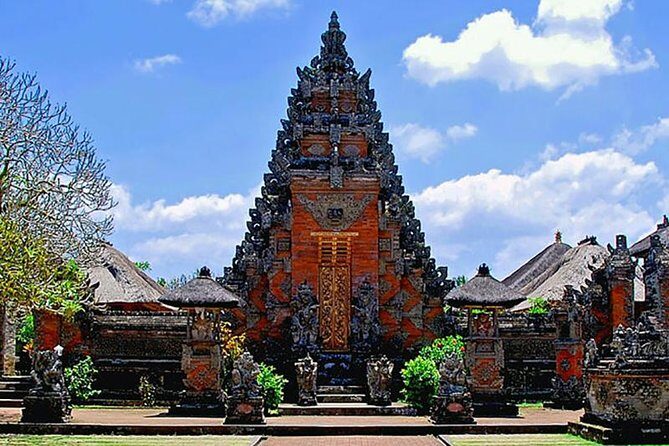
Private Tour: Bali Volcano with Jungle Swing Experience

Private Tour: Bali Volcano with Jungle Swing Experience - Tegalalang rice terrace walk: real fields, not just a viewpoint

Ready for a Bali view-chase day? This private tour strings together Ubud highlights with real scenery time, not just car time. I especially liked the d’Alas Bali Swing above the valley and rice fields, and the buffet lunch with Mount Batur in the background.
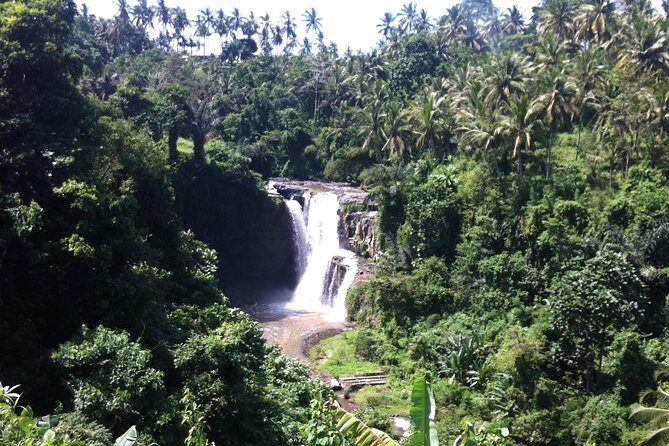

The other win is the human factor: having a guide who can explain what you’re seeing and keep you moving smoothly. In my favorite moments, the driver/guide Made was genuinely kind and went out of his way—like when he helped with steep steps. The only real caution: this is an all-day route with walking and steps, so bring grippy shoes if your knees are picky.

If you want an efficient day that still feels personal, this is a strong bet. You get a private group, air-conditioned transport, and admissions handled for the major stops, which means you spend less time sorting details and more time enjoying Bali.

Key highlights to know before you go

Private Tour: Bali Volcano with Jungle Swing Experience - Key highlights to know before you go

  • Jungle swing over rice fields at d’Alas, built for photos with a valley view
  • Tegalalang rice terrace walk with a short stroll through traditional working fields
  • Gunung Kawi Sebatu Temple on the hill with koi fish ponds and a quieter vibe
  • Mount Batur buffet lunch with views of an active volcano and lake scenery
  • Tegenungan Waterfall time to cool off and snap photos of a big flowing fall
  • Private, door-to-door transfers from South Bali in an air-conditioned minivan

The Ubud-to-Mount-Batur route that saves you time

Private Tour: Bali Volcano with Jungle Swing Experience - The Ubud-to-Mount-Batur route that saves you time
This tour is basically a practical way to cover Bali’s “best of” in one day: rice terraces, a temple setting, a waterfall, and—most importantly—volcano-country scenery around Mount Batur. Since it’s private, you’re not stuck negotiating with a larger group or waiting around while people get pulled in different directions.

I like that pickups and drop-offs are part of the plan, with private round-trip transfers from South Bali. That matters in Bali because traffic can turn a “quick hop” into a long, tiring detour. With an air-conditioned minivan doing the driving, you can focus on the stops instead of doing math on travel time.

You also get admissions included at the main points. That’s a small thing, but it adds up on a full-day schedule. Less ticket hunting means smoother transitions, especially on days when you’re moving through multiple viewpoints.

Tegalalang rice terrace walk: real fields, not just a viewpoint

Private Tour: Bali Volcano with Jungle Swing Experience - Tegalalang rice terrace walk: real fields, not just a viewpoint
Tegalalang Rice Terrace is one of those Bali places that looks postcard-perfect from far away—and then, up close, it turns into something more grounded. You’ll have about 40 minutes here, including a short walk among the rice fields.

What I like about this stop is that it’s not only about the view. The area is tied to daily farming activity, so you’ll see how the terraces fit into everyday work. It gives the whole Ubud area more context than the usual quick photo stop.

Practical tips for this part:

  • Wear comfortable shoes. Even a “short walk” can mean uneven ground.
  • Try to stay flexible with your timing. Midday sun in open areas can be intense, and you’ll feel it more out on the terraces.
  • Keep your camera ready, but slow down for composition. The best shots come from stepping a bit away from the main flow and looking for natural angles toward the terraces.

Downside: this stop can involve walking on paths that aren’t flat-flat. If you’re carrying a lot, consider traveling light so your hands are free.

d’Alas Bali Swing: the photo moment with jungle air

Private Tour: Bali Volcano with Jungle Swing Experience - d’Alas Bali Swing: the photo moment with jungle air
The Bali Swing is the headline, and here it’s at d’Alas Swing. You’ll spend about 30 minutes, and the setting is all about height with depth—jungle surroundings plus rice field views toward the valley.

Why this works (beyond the Instagram factor): it’s one of the few times on this itinerary where you’re not just looking at scenery from the ground. You’re elevated above it, which changes the feeling completely. You get that “Bali from the sky” perspective without needing to handle any risky driving yourself.

A key detail for planning: the minimum age to do the jungle swing is 10 years old. If you’re traveling with kids, this is an easy checkpoint for whether everyone can participate.

What you should consider:

  • If you don’t love heights, you might still enjoy watching or taking photos, but your enjoyment will depend on how you feel about being up there.
  • Bring a plan for what to do with your phone or camera. This isn’t listed as an equipment rule, but wind and movement are real at swing-height, so be cautious.

The best part is that you’re not waiting all day for one quick photo. The schedule gives this its own focused time window, so the swing doesn’t feel rushed.

Gunung Kawi Sebatu Temple: quiet ponds and a slower pace

Private Tour: Bali Volcano with Jungle Swing Experience - Gunung Kawi Sebatu Temple: quiet ponds and a slower pace
Next up is Gunung Kawi Sebatu Temple, a temple set on the hill of Sebatu village. You’ll have about 45 minutes here, and the vibe is different from the terraces and swing.

This stop is known for lush green surroundings and koi fish ponds. The “silent temple” description fits the feeling once you’re there—less performance, more observation. Even if you’re not a temple expert, it’s a strong change of pace in the middle of a long day.

Here’s where my advice becomes practical: this area can involve steps and uneven areas on the route. In the feedback I saw from past visitors, the driver/guide Made specifically helped someone down steep steps. That’s a great reminder to wear shoes with grip and to move at a steady pace rather than rushing for photos.

Respect tip that’s worth following: keep your voice down and give people room if you’re near the ponds or paths. This is one of the stops where calm behavior really pays off in the experience you get back.

Mount Batur lunch: buffet food with an active volcano view

Private Tour: Bali Volcano with Jungle Swing Experience - Mount Batur lunch: buffet food with an active volcano view
Then you reach Mount Batur. You’ll spend about 1.5 hours here, including lunch. The big selling point is the buffet lunch with views over Mount Batur and the lake.

I love this kind of stop because it turns food into part of the sight. Instead of a quick meal between locations, you’re eating while you can see the volcano scenery. Fresh air and that wide-open feeling make it feel like a proper break—not just fuel.

A couple of useful notes:

  • Alcoholic drinks are not included, so if that’s part of your usual lunch routine, plan ahead.
  • Have water handy. Bottled water is included on the tour, but it’s still smart to sip steadily because you’ve been outdoors all day.

Also, don’t expect this to be a closed indoor lunch where you can hide from the scenery. This is a viewpoint meal. If you want photos, use the moment right before you eat or during the quieter time after you’ve settled in.

Tegenungan Waterfall: time to cool off and shoot the action

Private Tour: Bali Volcano with Jungle Swing Experience - Tegenungan Waterfall: time to cool off and shoot the action
Tegenungan Waterfall rounds out the day, with about 1 hour here. The description is clear: there’s a massive flow, and the water is fresh from the mountain.

This stop is about motion. You’ll feel the sound and see the scale, and it’s one of those places where your photos actually benefit from being close. The main thing to plan for is comfort. Waterfalls mean damp surfaces, spray, and slippery stones.

Practical approach:

  • Wear shoes you can trust on wet ground.
  • Expect some stairs or uneven areas as you move toward viewpoints.
  • If you’re sensitive to getting wet, bring a light layer or something to protect your camera.

The good news is the schedule gives you a full hour. That’s enough time to see the main view, take pictures, and still enjoy a moment of just standing there watching the water.

Why the private guide (and Made’s help) makes the day smoother

Private Tour: Bali Volcano with Jungle Swing Experience - Why the private guide (and Made’s help) makes the day smoother
The tour is built as a private experience, so you’re not dealing with random pacing. That means your guide can adjust how you experience each stop—how long you linger, where you stand for photos, and how you move through busier areas.

The standout detail from the feedback I saw: Made wasn’t just informative. He was actively helpful—especially with physically tricky steps. That’s huge on a day like this, because you’re stacking several “wow” locations, and not all of them are flat and easy.

What you’ll get from a good guide here:

  • Clear explanations that make the places feel less random
  • Help with timing, so you’re at stops when the experience feels right
  • A steady hand when terrain gets challenging

If you’ve ever been on Bali itineraries where the driver is basically a taxi, this tour feels different. The day runs like a plan, but the human support is there when you need it.

Duration and pacing: what 10 hours really feels like

Private Tour: Bali Volcano with Jungle Swing Experience - Duration and pacing: what 10 hours really feels like
The itinerary is about 10 hours. That’s a long day, but the stops are spaced in a way that keeps it from feeling like nonstop sprinting. You’re not just driving and eating; each location has a meaningful time block.

A typical flow looks like:

  • Rice terrace for about 40 minutes
  • Swing for about 30 minutes
  • Temple for about 45 minutes
  • Mount Batur lunch break for 1.5 hours
  • Waterfall for about 1 hour

That’s a good structure because it includes a larger meal window at Mount Batur. After terraces and a swing, you’re ready to sit down and catch your breath. Then you end with the waterfall, which is a nice “release” after temples and viewpoints—less standing around, more watching and taking in the spray.

If you’re deciding whether you can handle it, think about this: you’ll be outdoors most of the day and you’ll have to move through steps at at least one location. If you’re traveling with older family members, plan shoe comfort and take breaks when your body asks.

Price and value: $55 per person adds up in tickets and transport

At $55 per person, the best way to judge value here is to look at what’s included.

Included:

  • Hotel pickup and drop-off
  • Private tour with transport in an air-conditioned minivan
  • Bottled water
  • Lunch buffet
  • Jungle swing and admissions for the major stops
  • All taxes, fees, and handling charges

Not included: alcoholic drinks.

So you’re paying for a lot of “hidden costs” that other tours make you deal with separately. Tickets, lunch, and transport can easily turn a cheaper headline price into something less cheap once you add it all up. Here, the price is wrapped around the full route.

Also consider the private factor. In many parts of Bali, going private costs extra, mainly because of driver time and coordination. Here you’re getting a full day with one team managing the route and your pacing.

If you’re a solo traveler, it’s still a fair value if you like having control and you want the guide’s attention. If you’re in a small group, you may also benefit from the mentioned group discount feature.

Who this Bali volcano day is for (and who should think twice)

This is a great fit for:

  • First-timers who want Ubud area highlights plus Mount Batur scenery in one day
  • People who care about photo locations but also want real stops like rice terraces and a temple setting
  • Travelers who don’t want to drive unfamiliar roads and traffic on their own
  • Families with children age 10+ who want the jungle swing experience

You might want to think twice if:

  • You’re not comfortable with walking or steps. Some temple approaches include steep steps, and the tour works better when you can move steadily.
  • You prefer slow travel and long stays at one place. This route is efficient, and you’ll be moving through several different scenes.

Best strategy if you’re unsure: treat it as a “maximum highlights day.” If you want one or two places only, a smaller itinerary could fit better.

Should you book this private Bali volcano tour?

I’d book it if you want a full, satisfying day that mixes iconic Bali moments with practical logistics handled for you. The value stands out because so much is included—transport, lunch, bottled water, and admissions—so you’re not constantly paying extra or searching for tickets.

The experience direction is also clear: you get the Bali Swing at d’Alas, a real walk at Tegalalang Rice Terrace, a quieter temple stop at Gunung Kawi Sebatu, lunch with Mount Batur views, and a finish at Tegenungan Waterfall. That’s a strong spread, and the private guide support (especially the kind, attentive help like what Made provided with steep steps) makes it feel more comfortable than a strict self-guided day.

If your legs are strong and you can handle stairs, this is a smart way to see a lot of Bali without the hassle. If mobility is a concern, ask yourself honestly how you do on uneven ground and steps—because that’s the only part that can change the whole mood.

FAQ

How long is the Bali Volcano with Jungle Swing private tour?

It’s listed as about 10 hours.

What are the main stops on this tour?

The route includes Tegalalang Rice Terrace, d’Alas Swing, Gunung Kawi Sebatu Temple, Mount Batur (with lunch), and Tegenungan Waterfall.

Is the tour private?

Yes. It’s a private tour/activity, and only your group participates.

Is hotel pickup and drop-off included?

Yes. Hotel pickup and drop-off are included, with private round-trip transfers from South Bali.

What is included in the price?

The price includes bottled water, a lunch buffet, jungle swing, admissions at the main stops, air-conditioned minivan transport, and all taxes/fees/handling charges.

Are admissions/tickets included?

Yes. Admission tickets are included for Tegalalang Rice Terrace, d’Alas Swing, Gunung Kawi Sebatu Temple, Mount Batur lunch spot, and Tegenungan Waterfall.

Is lunch included, and what kind is it?

Yes, lunch is included as a buffet lunch.

Are alcoholic drinks included?

No. Alcoholic drinks are not included.

What are the age requirements for the jungle swing?

Children must be at least 10 years old to do the jungle swing.

What is the cancellation policy?

Free cancellation is available up to 24 hours in advance for a full refund. If you cancel less than 24 hours before the start time, the payment is not refunded.

Ubud Customized Full Day Tour – Visit Most favorite In Ubud

Ubud Customized Full Day Tour - Visit Most favorite In Ubud - Tegalalang Rice Terrace: the photo stop you can control

A full day, tailored to your pace.

This Ubud tour is interesting because it’s private and you pick the order and the mix, using an English-speaking local guide to connect the dots between temples, viewpoints, and nature. With hotel pickup and a comfortable private vehicle, you’re not stuck in a rigid bus schedule.

I especially like two things: first, the day is designed to feel flexible, with time built in for travel between stops and for lunch at a local restaurant. Second, the menu of sights fits what most first-timers come for: Tegalalang Rice Terrace, holy spring water at Tirta Empul, and waterfall time (often Kanto Lampo and Tibumana), with options like Monkey Forest, Ubud Central Market, or Jungle Swing.

One thing to consider: the big landmarks are part of the package, but entry tickets and lunch aren’t included, so your final cost will creep up. Also, the experience depends heavily on your guide; most people rave about theirs, but there’s at least one reported hiccup involving a missing guide and wasted time.

Key highlights at a glance

Ubud Customized Full Day Tour - Visit Most favorite In Ubud - Key highlights at a glance

  • Private door-to-door pickup in a dedicated vehicle, so your day starts without the scramble
  • Choose up to six activities so your itinerary matches what you actually want to see
  • Rice terraces + Tirta Empul gives you both Bali’s farming scenery and a more spiritual stop
  • Two waterfall options (often Kanto Lampo and Tibumana) for different feels in one day
  • Guide personalities matter: Abdi, Mangkok, Gusti, and Bram are specifically praised for pacing and explanations

A private Ubud day that you can actually shape

This is built for people who don’t want a standard checklist tour. You’re on a private outing, and you only share the day with your group, which makes it easier to slow down, swap order, or spend a few extra minutes at the places you care about.

The core promise is simple: you’ll use a professional local guide to make history and context click, while still going at your pace. In practice, that means the guide’s job isn’t just driving you around; it’s helping you decide how to spend the day without feeling rushed.

The tour lasts about 10 hours, which is a real full-day block. The operator also notes that extra time covers travel between locations, and there’s a stop off for lunch at a local restaurant, so you’re not purely sprinting from point A to point B.

Choosing Tegalalang, Tirta Empul, and waterfalls without feeling rushed

Ubud Customized Full Day Tour - Visit Most favorite In Ubud - Choosing Tegalalang, Tirta Empul, and waterfalls without feeling rushed
The itinerary is flexible in the way that matters: instead of being trapped in one fixed route, you can structure the day around your interests. The most common core starts with Tegalalang Rice Terrace, then moves into Tirta Empul, and continues into waterfalls, with extra Ubud add-ons as options.

A big part of the value here is pacing. One review specifically praised how Abdi helped an older traveler (age 89) by assisting around flatter areas, which is exactly the kind of practical “we’ll work with your needs” mindset you want in a private tour.

Still, you should be ready for walking. Even when the time on paper is “one or two hours,” some stops involve paths and uneven ground. If you’re bringing someone with mobility limitations, ask your guide how they plan to handle it before you lock in the schedule.

Tegalalang Rice Terrace: the photo stop you can control

Ubud Customized Full Day Tour - Visit Most favorite In Ubud - Tegalalang Rice Terrace: the photo stop you can control
Tegalalang Rice Terrace is often the first “wow” moment in Ubud. On this tour, it’s allocated about 2 hours, which gives you time to look around, grab photos, and not just stand at the first viewpoint and leave.

What I like about including this stop in a customizable day is that you’re not forced to treat it like a theme park. With a private guide, you can spend more time scanning the terraces from different angles, or you can keep it shorter if you’d rather use time elsewhere.

A quick reality check: the rice terrace can feel touristy, and one person did note that it’s a more popular area. If you’re sensitive to crowds, aim to go in with the mindset that you’ll be photographing and walking a bit, then moving on rather than lingering too long.

Tirta Empul Temple: holy spring water and meaningful context

Ubud Customized Full Day Tour - Visit Most favorite In Ubud - Tirta Empul Temple: holy spring water and meaningful context
Tirta Empul Temple is scheduled for about 1 hour, and it’s the kind of place where a guide makes the visit better. The temple is known for its holy spring water, and the value of having a local guide is understanding what you’re seeing while you’re there.

This stop also matters because it slows the day down a little. Water-and-temple sites feel calmer than waterfall chasing, and the guide’s explanations help you connect the reason behind the rituals and layout instead of just ticking off a location.

You’ll also get time for personal photos. If you’re planning your own content, this is a good mid-day checkpoint where you can reset your brain and focus before heading into nature stops.

Kanto Lampo and Tibumana waterfalls: two styles in one full day

Ubud Customized Full Day Tour - Visit Most favorite In Ubud - Kanto Lampo and Tibumana waterfalls: two styles in one full day
The tour includes waterfall time with two main options: Kanto Lampo Waterfall (about 2 hours) and Tibumana Waterfall (about 1 hour). The naming matters here because these stops are distinct experiences, not just two versions of the same “waterfall photo.”

Kanto Lampo is said to be named for the presence of Kanto Lampo trees in the area, and it’s described as having a recognizable waterfall shape. It’s also an easy stop to justify spending time on, because it’s visually memorable and works well even if you’re not trying to do anything extreme.

Tibumana is described as having two twin waterfalls and an estimated height. Even with a shorter time window, this stop gives you that “nature break” that makes the whole day feel like more than a sightseeing circuit.

A practical note: admission tickets aren’t included for these stops, so if you want to enter specific viewing areas, confirm what’s required. Your guide should help you figure out what you’re paying for, since you’re already handling other extras like lunch on your own.

Monkey Forest, Ubud Central Market, and Jungle Swing add-ons

Ubud Customized Full Day Tour - Visit Most favorite In Ubud - Monkey Forest, Ubud Central Market, and Jungle Swing add-ons
Not everyone wants the same Ubud day. That’s why this tour’s add-ons are useful, especially if you want a mix of nature, shopping, and a little fun.

Monkey Forest is listed as a major Ubud attraction that many people don’t skip. If you’re balancing your itinerary, this is a good choice when you want something cultural and active without needing a long hike between stops.

Ubud Central Market is another flexible stop, and it’s described as a place for handicraft items and other essentials. It’s also located in the center of Ubud and close to other attractions, so it can work as a “reset” between bigger sights.

Then there’s Ubud Jungle Swing, described as one of the rides that gives a valuable experience. This is a great option if you want a more playful moment in your day, but remember: it’s an optional attraction in the overall customizable plan, so it can crowd out another sight if you’re not careful with time.

My advice: pick one “fun” stop (like Jungle Swing) and one “browse” stop (like the market). That keeps the day varied without turning it into three different kinds of waiting.

The guides: Abdi, Mangkok, Gusti, Bram, and why English fluency matters

Ubud Customized Full Day Tour - Visit Most favorite In Ubud - The guides: Abdi, Mangkok, Gusti, Bram, and why English fluency matters
This is where the tour can feel excellent or merely fine. When it works well, it’s because your guide is doing more than transporting you.

Abdi is praised for being helpful and informed, and one review called out how he supported an elderly traveler by helping her get around on flatter ground. That kind of practical attention is gold in a place where your schedule moves fast.

Mangkok is described as knowledgeable, communicative, professional, and fun, and the review emphasized crafting a day full of experiences while respecting the fact that each activity needs time to actually happen. This is the guide style that makes a “customized” tour feel real rather than theoretical.

Gusti gets two different kinds of praise: one review focused on fluent English and a safe, pleasant ride, while another highlighted Gusti recommending an alternative temple stop that turned out to be the best part of the day. If you like having your itinerary improved on the spot, that’s the energy you want.

Bram also shows up strongly. One person mentioned Bram pointing out details, and another described Bram helping them add a luwak coffee farm based on his advice. If you’re curious about local coffee culture, this is the kind of informed suggestion that can make a standard stop feel personal.

There is, however, a downside reported by one traveler: a case where the agency forgot to send a guide, causing nearly two hours of waiting at the hotel. If you’re booking late in the day’s schedule or with special language needs (one review mentioned a request for French), double-check expectations in advance so you’re not stuck hoping for the best.

Price and value: what $22.50 includes and what you’ll pay separately

Ubud Customized Full Day Tour - Visit Most favorite In Ubud - Price and value: what $22.50 includes and what you’ll pay separately
At $22.50 per person, the price is hard to beat for a private, full-day Ubud plan. The catch is that this cost covers the experience framework, not every personal expense.

Included items are private transportation, parking fees, and bottled water. Pickup is also offered, which matters because starting centrally and reducing logistics time can be the difference between a good day and a half-day that feels like travel.

Not included: lunch and all entry tickets. That means your final total will depend on which sights you choose—especially if you add attractions with paid admission or rides like Jungle Swing.

Here’s how I’d judge value for your own trip: if you would otherwise pay for separate transfers and hunt down tickets on your own, this private structure often becomes a bargain. If you already planned to do only free areas and skip paid attractions, your money might be better spent on a shorter guided day or a different mix.

What the 10 hours usually feel like in Ubud

The schedule is built around travel time, not just the listed stops. You get allocated time at each location (rice terrace ~2 hours, Tirta Empul ~1 hour, Kanto Lampo ~2 hours, Tibumana ~1 hour), and the remaining time is meant for moving between places and lunch.

That’s useful because Ubud traffic and site spacing can steal hours if you plan poorly. With a private vehicle, you’re less likely to waste time waiting for other people, and your guide can also adjust order if one stop takes longer than expected.

If you tend to get tired quickly in long days, keep your “must-dos” tight: choose the best two or three core sights, then add only one or two extras like Monkey Forest or the market.

Best for who: first-timers, couples, and older travelers with real needs

This tour fits best when you want variety but still want control. It’s a strong choice for people visiting Ubud for the first time and want the famous highlights: rice terraces, Tirta Empul, and waterfalls, without turning the day into a stressful scavenger hunt.

It also makes sense for families or mixed-age groups because it’s private and can adjust. One review specifically praised support for an 89-year-old traveler, which is a reminder that a good guide pays attention to walking comfort and timing.

If you’re a hardcore “specialty guide” person—someone who wants every stop explained at a deep level with zero downtime—there’s one cautionary note. One traveler didn’t feel the guide was a specialty tour guide and didn’t enjoy the sites as much as they expected. To protect yourself, ask your guide what they’ll focus on during the day, and pick a guide style that matches your taste.

Should you book this customized Ubud full-day tour?

I’d book this if you want a private Ubud day with a plan you can actually shape, and you’re happy to pay separate entry fees and lunch. The stop mix is sensible for first-timers, and the guide names people praised—Abdi, Mangkok, Gusti, and Bram—hint that the best days are built around communication, pacing, and good on-the-fly suggestions.

I’d think twice if you’re very cost-sensitive and plan to skip most paid sites, because entry tickets can change the math. I’d also verify guide details if you have specific language requirements or tight timing, since at least one booking issue was reported involving a missing guide and lost time.

If your goal is a smooth, flexible Ubud highlights day—rice terraces, a temple stop, and waterfall nature—this is a strong-value option.

FAQ

How long is the Ubud customized full-day tour?

It’s listed at about 10 hours (approx.).

Is hotel pickup included?

Yes. The tour offers pickup, and it runs in a private vehicle.

What’s included in the price?

Included items are private transportation, parking fees, and bottled water.

Are entry tickets included for the attractions?

No. All entry tickets are not included.

Is lunch included?

No. Lunch is not included, though the tour notes there will be a stop off for lunch at a local restaurant.

Is this tour private or shared with other travelers?

It’s a private tour/activity. Only your group will participate.

Can I cancel for a full refund?

Yes, you can cancel up to 24 hours in advance for a full refund.

Wonderful Of Ubud Tours

Wonderful Of Ubud Tours - Stop 1: Sacred Monkey Forest Sanctuary (Padangtegal) in Real Life

You’ll see a lot of Bali in one day. This Ubud tour strings together wildlife, temples, rice country, and crafts without making you figure out the logistics. It’s built around a smooth, door-to-door route that keeps the day feeling easy even when you’re out for 8 to 10 hours.

Two things I really like: the English-speaking driver who stays calm and doesn’t rush you, and the smart mix of stops that range from famous sights to craft workshops. In one shared day, you get both famous photo spots and the chance to watch artisans working.

One consideration: food and drinks aren’t included, and some entrance tickets depend on the option you choose. If you hate paying add-ons later, confirm up front which tickets are included for your booking.

Key Highlights You’ll Care About

Wonderful Of Ubud Tours - Key Highlights You’ll Care About

  • Door-to-door pickup and drop-off from your hotel, using an air-conditioned vehicle
  • Sacred Monkey Forest Sanctuary with time to walk paved paths under a nutmeg forest canopy
  • Tegalalang Rice Terrace for classic North Ubud rice-terrace views
  • Craft village circuit across wood carving, batik, and silver work (several stops are marked free)
  • Goa Gajah (Elephant Cave) as your historical temple pause
  • Tegenungan Waterfall with the longest time block for photos and a slower soak-in

Booking This Full-Day “Best of Ubud” Route

Wonderful Of Ubud Tours - Booking This Full-Day “Best of Ubud” Route
This tour is priced at $33 per person for an 8 to 10-hour full-day plan in Ubud. That’s not “cheap” in the sense of skipping convenience, though. The value comes from what you’re buying: private transportation with an air-conditioned car, plus an English-speaking driver who handles the driving and timing between multiple major stops.

It also helps that it’s set up as a private activity, meaning it’s only your group. So instead of being stuck waiting on strangers, you typically get a day that feels more like you hired a car and guide for your own route.

One more practical note: the tour uses a mobile ticket, and a “cash money recommended” hint comes with it. If you’re using local ATMs or paying in small amounts during craft stops, I’d keep some cash handy just in case you encounter anything not covered by your package choice.

The Ride Comfort Factor: AC, English Driver, and Patient Timing

A day that includes monkey forest, rice terraces, and a waterfall can turn into a sweat-and-stress workout. Here, the comfort win is the air-conditioned vehicle and the driver who stays out of your way.

From the way the tour is run, you get the best version of “guided but not trapped.” You’re dropped at each stop, told where to start, and then you can explore. When it’s time to leave, the driver returns to collect you rather than hovering in your space.

The driver and guide team is associated with Rio Bali Tours, and a real name that shows up in feedback is Agung Rio. The tone of that kind of guiding matters on a day like this, because the stops vary a lot: some are calm walks, some are crowded photo zones, and one is a waterfall with longer time to linger.

Stop 1: Sacred Monkey Forest Sanctuary (Padangtegal) in Real Life

Wonderful Of Ubud Tours - Stop 1: Sacred Monkey Forest Sanctuary (Padangtegal) in Real Life
Your day kicks off at the Sacred Monkey Forest Sanctuary, also known as the Sacred Monkey Forest of Padangtegal. You’re walking through leafy forest paths with paved routes, and the big draw is that this sanctuary is home to over 700 grey long-tailed macaques.

You’ll usually have about 1 hour here. That’s long enough to do the main loop at a comfortable pace, but not so long that the crowds and animal chaos take over your entire morning.

Practical tips that matter in a monkey forest:

  • Keep your camera and phone secured, especially if you’re carrying anything shiny.
  • Expect monkeys to be curious, and don’t panic if one gets close.
  • Use sunscreen and a hat. You’ll be in sun patches between tree cover.

This stop is less about buying something and more about watching behavior and movement in a protected setting. It’s also a good “energy level” warm-up before you switch gears to quieter temple and landscape scenes.

Stop 2: Tegalalang Rice Terrace Views Without the Rush

Wonderful Of Ubud Tours - Stop 2: Tegalalang Rice Terrace Views Without the Rush
Next comes the Tegalalang Rice Terrace, one of the famous North Ubud rice-terrace areas. You get around 1 hour, which works well because rice terraces are all about timing and light. You’ll want time to find a few angles, not just snap one photo and leave.

The terraces here are famous for a reason: the layered rows and jungle framing create photo-friendly compositions from multiple viewpoints. If you like travel photos that look like you worked for them (even if you didn’t), this is one of those places.

What to watch out for:

  • It can be busy around peak visiting hours.
  • Paths can be uneven, so wear shoes with decent grip.
  • Bring water or plan to buy it later, since food and drinks aren’t included.

This is also a good stop for a short mental reset. After monkey forest, it gives you open-air views and a slower feel.

Stop 3: Goa Gajah (Elephant Cave) for a Temple Moment

Wonderful Of Ubud Tours - Stop 3: Goa Gajah (Elephant Cave) for a Temple Moment
The day continues to Goa Gajah, also called Elephant Cave Temple. This is a historically significant archaeological site and one of Bali’s well-known attractions, so you’re trading “nature viewing” for “cultural landmarks.”

You’ll have about 1 hour. That length is usually perfect for seeing the main features, taking a few photos, and reading enough to connect the place to what you’re seeing.

Why I think this stop is a smart move:

  • It breaks up the day between landscape sightseeing and the later craft village workshops.
  • It gives you a sense of Bali beyond waterfalls and rice terraces.
  • It’s a change of pace without being a long sit-down experience.

You might want a little extra patience here, because stone sites often bring visitors together at the same moments for photos. If you keep your pace steady, you’ll avoid feeling rushed.

Stop 4 and 5: Mas Carving Center and a Woodcarving/Batik Class

Wonderful Of Ubud Tours - Stop 4 and 5: Mas Carving Center and a Woodcarving/Batik Class
Then the tour pivots into crafts. First up is Mas Carving Center (often tied to wood carving artistry around Bali Mas Village). You get about 30 minutes here, and the idea is to watch carving work and see the craft style close-up.

After that comes Bali Simple Wood Carving and Batik Class for another 30 minutes. These stops are marked as admission-free in the schedule you’ll follow, which is a nice way to keep your budget from multiplying.

What’s valuable about craft stops like this isn’t buying something. It’s understanding the workflow:

  • What tools look like up close
  • How design gets transferred to materials
  • How much patience is required for small details

Also, these stops are shorter by design. If you tried to do a full craft workshop in a full-day route, the timing would wreck your waterfall time. Here, the schedule stays balanced.

Stop 6: Celuk Village for Silver Art

Wonderful Of Ubud Tours - Stop 6: Celuk Village for Silver Art
Your next craft stop is Celuk Village, which is described as the center of silver art in Bali. You’ll have about 30 minutes.

Silver centers like this are often less about a showroom and more about seeing how pieces are made and finished. Even if you don’t plan to buy, it’s worth watching the craft because you start to notice how the same “style” can show up in multiple product types.

A helpful approach: look for differences. Ask yourself if you can spot the technique behind what you’re seeing, not just the final shine.

Stop 7: Batubulan for Batik Craft

Wonderful Of Ubud Tours - Stop 7: Batubulan for Batik Craft
After silver work, the route heads to Batubulan, described as the center of batik craft. Again, it’s about 30 minutes, and it’s another admission-free style stop on the schedule.

Batik is especially interesting because it’s both an art and a process. You’ll likely see how patterns come together, and you can connect the dots between craftsmanship and the final look.

If you’re a collector, this is where you’d start thinking about what style you actually like. If you’re not, this stop still helps because it rounds out your craft understanding: wood carving, batik, and silver in one day.

Stop 8: Tegenungan Waterfall with the Time to Enjoy It

Finally, you reach Tegenungan Waterfall, which the tour describes as hidden and beautiful, with an amazing panoramic view. This is your longest stop at about 2 hours, and that time matters.

A waterfall isn’t just a sight; it’s a mood. Two hours lets you:

  • Find a vantage point you like
  • Revisit for photos as the light changes
  • Take a breather before heading back

It’s also one of the stops where you can feel the schedule loosen up a bit. The early part of the day is about moving through points of interest. This last part gives you room to slow down and actually enjoy.

Bring what you’ll need:

  • Sunscreen (you’ll be outside)
  • A camera if you like night-and-day contrast shots
  • Closed shoes, especially if surfaces are slick

What’s Included (and What You’ll Pay for Later)

Here’s where the value math gets real. The tour includes:

  • Private transportation
  • English speaking driver
  • Patrol and parking fees
  • Air-conditioned vehicle
  • Entrance tickets are listed as “included or excluded by your choice”

So the biggest variable cost is entrances. You can end up paying more or less depending on what you choose when booking. If you see an option that includes entrances, that’s usually the simplest way to keep the day predictable.

Also note:

  • Food and drinks are not included.
  • So plan a snack strategy. Even if you don’t get a full lunch, you’ll want water and something small between stops.

Where This Tour Fits Best (And Who Might Skip It)

I think this tour is a great fit if you want a one-day highlight mix and you value having everything handled. You’ll like it if you’re the type who wants to check off major Ubud sights without spending your day coordinating rides, maps, and entrance lines.

It’s also a good match if you like craft work but don’t want a half-day workshop. The craft circuit here is short enough to keep your energy and long enough to feel like more than window shopping.

You might consider a different plan if:

  • You prefer slower days with fewer stops
  • You hate paying multiple entrance fees during a tour
  • You want a food-focused itinerary (since meals aren’t included)

Quick Reality Check: Timing and Energy

An 8 to 10-hour day is still a full day. The good news is that the driver handles routing and pickup, which removes the hardest part of the logistics.

Still, your stamina matters:

  • You’ll do walk time at the monkey forest and rice terraces.
  • You’ll spend more time outside at Tegenungan.
  • You’ll be in and out of the car repeatedly, even with air-conditioning.

If you start early, stay hydrated, and wear shoes that handle uneven ground, this tour feels like a good trade: you get plenty of variety without feeling like you’re sprinting from one site to the next.

Should You Book Wonderful Of Ubud Tours?

If you want maximum Ubud variety in one day, this tour is easy to recommend. The biggest plus is the combination of door-to-door pickup, an English-speaking driver, and the way the schedule gives you time to explore each stop without constant pressure. Add in the mix of nature sights (monkey forest, rice terraces, waterfall) and cultural stops (Goa Gajah and craft villages), and you get a day that feels worth the ticket price.

I’d book it if:

  • You’re okay with a packed schedule
  • You’re willing to plan for snacks and possible entrance fees
  • You want a smooth, private route instead of figuring everything out yourself

Skip it or change your plan if your ideal trip is slow, quiet, and meal-centered. This one is built for momentum, comfort, and seeing a lot.

FAQ

What is the duration of the Wonderful Of Ubud Tours itinerary?

The tour runs about 8 to 10 hours.

Does the tour include hotel pickup and drop-off?

Yes. Door-to-door round-trip transportation from your hotel is included.

Are entrance tickets included?

Entrance tickets are either included or excluded depending on your choice during booking.

Is food provided on the tour?

No. Food and drinks are not included.

Is this a private tour?

Yes. It is private, and only your group participates.

Is there a dress code?

The dress code is smart casual.

Balinese Cooking Class at Organic Farm

Balinese Cooking Class at Organic Farm - Welcome drink and the Mai Organic Farm introduction

Bali cooking classes are easy to find. This one stands out because you start on an organic farm and end eating in a traditional hut after cooking on a wood-fired stove. I like that the group stays small, so you’re not just watching. I also like the farm-to-table rhythm: pick herbs and produce, then turn them into lunch. One thing to consider is that this experience runs outdoors, so you’ll want decent weather and practical shoes.

You’ll also connect the meal to how Bali grows food, with a walk that explains the UNESCO-protected Subak system and how the farm works. It’s 5 hours of hands-on work without the fuss, plus round-trip pickup from central Ubud hotels and rentals.

Key things you’ll remember from Mai Organic Farm

Balinese Cooking Class at Organic Farm - Key things you’ll remember from Mai Organic Farm

  • Wood-fired stove cooking for the dishes you make (real heat, real technique)
  • Pick-and-cook workflow, starting with ingredient harvesting on the community farm
  • UNESCO Subak system context paired with what you can see in the fields
  • Small group size (capped around eight, with a max stated at 10) for a hands-on class
  • Seasonal juices and herbal drinks alongside your main meal

A real farm start, not a cooking demo

Balinese Cooking Class at Organic Farm - A real farm start, not a cooking demo
This class feels built around one idea: food starts long before a kitchen. You begin at Mai Organic Farm Bali in Pejeng (on the Tampaksiring side of Ubud), where the day kicks off with a welcome drink and a relaxed introduction on the grounds. From there, you walk through the community farm area, learning how organic produce is grown and what makes Bali’s irrigation and farming culture special.

The payoff for you is simple. Instead of learning recipes in the abstract, you handle the ingredients first: spices, herbs, fruit, and vegetables from the garden. That changes the way the whole meal tastes and makes it easier to remember what to do later.

Also, because numbers are kept small, you’re more likely to actually cook and ask questions. This isn’t a mass-tour format.

Welcome drink and the Mai Organic Farm introduction

Balinese Cooking Class at Organic Farm - Welcome drink and the Mai Organic Farm introduction
Right when you arrive, you’ll get a welcome drink and a first look at what the farm is doing. You’ll be in a shaded spot on the property while the team shares their community movement and how they grow organic produce.

This part matters because it frames everything that follows. When you understand the farming approach and the community behind it, you’re not just eating food. You’re participating in a system.

A few practical notes to keep your day smooth:

  • Plan to linger a bit here. The class flows from intro to farm walk, not a rushed switch of activities.
  • Bring water-sipping habits with you. The menu includes multiple drinks and teas later, so hydration helps.

The farm walk: organic growing and the Subak system in real life

Balinese Cooking Class at Organic Farm - The farm walk: organic growing and the Subak system in real life
After the welcome drink, you’ll walk along the community farm. This is where you learn about organic farming practices and Bali’s Subak system, which is recognized as UNESCO World Heritage.

What’s nice is that this isn’t only explained with words. You’re moving through the area that supports the growing process. You get the sense of how irrigation and rice-cropping culture shape what ends up on local plates.

If you’ve visited Bali before and seen only temples and terraces, this adds another layer. You’re learning a living food-and-water tradition, not just a scenic place.

Picking ingredients for six Balinese dishes

Balinese Cooking Class at Organic Farm - Picking ingredients for six Balinese dishes
The heart of the experience is the ingredient walk. The team takes you through the farm and you pick what you’ll use in your cooking. You’ll likely notice the herbs and produce more closely than you would at a market, because you’re choosing them for specific uses.

This is where the class becomes truly practical for you:

  • You’ll remember the ingredients because you harvested them.
  • You’ll understand how fresh produce behaves in cooking.
  • Kids and adults alike tend to do well here because there’s movement and discovery built in.

One of the strongest themes from the class experience is that people leave with a sense of freshness and care. A participant even highlighted that the team seemed genuinely invested in the land and the produce they grow. That tone shows up when you’re doing the picking.

Arriving at the main area: fresh juice before you cook

Balinese Cooking Class at Organic Farm - Arriving at the main area: fresh juice before you cook
Once you reach the center of the community at Mai Organic Farm, the day shifts toward lunch-making. You’ll start this phase with a refreshing juice made with vegetables and fruit from local farms.

For your taste buds, this is a smart warm-up. It sets the flavor range before the main dishes. It also signals the class isn’t only about savory cooking. The menu includes drinks and teas designed to complement the meal.

Cooking time on a traditional wood-fired stove

Balinese Cooking Class at Organic Farm - Cooking time on a traditional wood-fired stove
Now you cook. The class focuses on learning six Balinese dishes, including sate lilit kebab. Other dishes you may prepare include tuna sate and corn fritters. During the cooking session, you’ll work in a way that’s hands-on but flexible.

You can participate as much or as little as you want. That’s useful if you’re traveling with friends, family, or kids. You won’t feel forced into full-on chef mode the whole time.

The cooking method is a big part of the value here. You’ll use a traditional wood-fired stove, which changes the feel of cooking compared to a modern gas setup. You can expect real-time adjustments based on heat and technique, and that helps the recipes stick in your head.

Also, small-group class sizes mean more time with the cooks. In one account, a participant mentioned their instructor was a standout for energy and knowledge (they name Korong, though they add that spelling might be slightly off). Another named team member, Kadek, was described as checking in for feedback at the end. That kind of back-and-forth matters because it turns the class from a one-way lesson into a conversation.

More than food: infused water, herbal drinks, and Bali coffee

Balinese Cooking Class at Organic Farm - More than food: infused water, herbal drinks, and Bali coffee
Alongside the main dishes, you’ll make and enjoy drinks that fit the Balinese style of eating. The class includes:

  • Sip juice
  • Infused water
  • Herbal drinks
  • Balinese coffee
  • Lemongrass tea

These aren’t random add-ons. They change how the meal feels. You get something light to start, teas and herbal options during the meal, and coffee that matches the local vibe. If you like cooking classes but sometimes find them focused only on one dish, this one gives you a fuller flavor toolkit.

And because the drinks are part of what you learn, you’ll have more to recreate later than one recipe.

Communal lunch in a gubuk hut

After cooking, you eat together in a tranquil gubuk (hut). This is another quality-of-life detail that many classes skip. Sitting down as a group makes the day feel like a shared meal, not a classroom assignment.

This is also where small numbers pay off. You’re more likely to talk with fellow participants, ask what they did with their ingredients, and compare notes on the dishes you cooked.

You’ll probably leave with a few extra memories beyond the food: the route through the fields, the flavors you picked yourself, and the sense that the meal came from a place with real people behind it.

Why the community mission is part of the experience

This class is tied to supporting Mai Organic Farm and local farmers from Pejeng. The stated goal is to support farmers’ and villagers’ income while providing resources to improve quality of life.

I like when a cooking class does more than teach technique. Here, the farming and community angle is built into the structure:

  • You visit and learn about how produce is grown.
  • You pick ingredients from the farm.
  • You eat what you made, made from those local inputs.

One participant specifically noted a no-plastic effort during the experience. Since that’s not a detail guaranteed in every listing description, treat it as a positive detail you might notice in practice rather than a promise. But it fits with the broader theme of care for land and process.

Price and time: is $40 worth 5 hours?

At $40 per person for about 5 hours, this class lands in the mid-range for Bali cooking experiences. What makes it feel like better value is the combo you get:

  • round-trip transfers from central Ubud areas
  • a full farm walk with ingredient picking
  • small-group cooking with traditional wood-fired stove technique
  • a meal of six Balinese dishes plus multiple drinks and teas

If you’ve done other cooking classes where you only stand around and chop a few items, this one is different. You start on the farm, which is where a lot of the effort and authenticity comes from. Also, the small cap (stated as eight travelers, with an overall max listed at 10) reduces the common “you can’t hear the guide” problem.

So for your money, you’re paying for time and hands-on instruction in a real working setting, not only for the final lunch.

Logistics that actually matter on the day

Because this class includes pickup and drop-off, you avoid the biggest headache in Ubud planning: getting out to the countryside on time. It’s designed for central Ubud hotels and rentals, and you’ll receive a mobile ticket.

Two practical reminders:

  • Wear closed-toe shoes you don’t mind getting a little farm-dust on. You’ll be walking and picking.
  • Bring sun protection. The day includes shade breaks, but the farm walk is still outdoors.

The experience also requires good weather. If it’s canceled due to poor weather, you’ll either get a different date or a full refund. In Bali, weather shifts fast, so keep an eye on your day.

Who should book this class

This fits best if you want more than a cooking lesson. You’ll enjoy it if you like:

  • hands-on food experiences
  • learning where ingredients come from
  • cooking with a small group
  • a day that mixes culture and technique without feeling heavy

It’s also family-friendly in spirit. One review specifically called it a great experience with kids aged 9 and 6 because they could pick ingredients and help cook lunch. If your group enjoys interactive activities, this kind of structure works well.

If you’re someone who only wants a quick hands-off tasting, you might find the farm walk and cooking a bit more effort than expected. But the setup is flexible, and you can participate more or less as you like.

Should you book the Balinese Cooking Class at Mai Organic Farm?

Book it if you want a day that connects food to farming, not just recipes. The best reasons are the ingredient-picking start, the wood-fired stove cooking, and the small-group feel that keeps you involved. At $40 with pickup included and a full 5-hour flow, you’re paying for real time and a full process.

Skip or reconsider if you’re sensitive to outdoor conditions. This experience needs good weather, and you’ll be walking around farm areas. If rain is a big deal for you, you’ll want to plan around flexible dates.

If your goal is to understand Balinese cuisine through what people actually grow and cook, this is an easy yes.

FAQ

Where is the cooking class located?

The experience starts at Mai Organic Farm Bali, Subak Kana, Banjar Panglan, in Pejeng (Kec. Tampaksiring, Kabupaten Gianyar), Bali 80552, Indonesia.

How long does the cooking class last?

It runs for about 5 hours.

How many people are in the group?

It’s a small-group experience. The overview mentions caps of eight travelers, and the additional info lists a maximum of 10 travelers.

Is pickup offered from Ubud?

Yes. Hassle-free round-trip transfers are offered from central Ubud hotels and rentals.

What will I cook and eat?

You’ll learn to cook six different Balinese dishes, including sate lilit kebab. The class also includes enjoying drinks such as sip juice, infused water, herbal drinks, Balinese coffee, and lemongrass tea.

Does it matter what the weather is like?

Yes. The experience requires good weather. If it’s canceled due to poor weather, you’ll be offered a different date or a full refund.

When will I get confirmation after booking?

You should receive confirmation within 48 hours of booking, subject to availability.

Bali : Instagrams Tour Lempuyang Temple, Tirta Gangga- Tukad Cepung , Tibumana Waterfall

Bali : Instagrams Tour Lempuyang Temple, Tirta Gangga- Tukad Cepung , Tibumana Waterfall - Gate of Heaven (Lempuyang Temple): the photo payoff and the reality check

Sunrise photos without the scooter stress. This private Bali run is built for early light and efficient driving, so you can focus on the views instead of navigation. You’ll get hotel pickup and drop-off from the Nusa Dua area and a day plan designed around the island’s most camera-friendly stops.

Two things I really like: first, it starts at 6:30am, which helps you beat the heavier daytime crowds and gives nicer photo conditions. Second, the tour is private, so you’re not stuck behind a slow group while you’re waiting for that exact frame at the famous sites.

One drawback to consider: the “art historian guide” part may not feel like deep storytelling to everyone. Some people expect more religion-and-history explanation at each stop, but the day can come across as mostly stop-and-shoot with a driver/guide handling the logistics.

Key highlights at a glance

Bali : Instagrams Tour Lempuyang Temple, Tirta Gangga- Tukad Cepung , Tibumana Waterfall - Key highlights at a glance

  • 6:30am departure to get you on the road early for better light and less chaos
  • Private tour with only your group, plus hotel pickup and drop-off
  • Gate of Heaven at Lempuyang Temple with time set aside for photos
  • Tirta Gangga’s water gardens tied to Balinese Hindu heritage
  • Tukad Cepung Waterfall with a rock-cliff approach that shapes the photo experience
  • Tibumana Waterfall stop included in a full 11-hour photo day run

Early 6:30am start from Nusa Dua: time savings you can feel

Bali : Instagrams Tour Lempuyang Temple, Tirta Gangga- Tukad Cepung , Tibumana Waterfall - Early 6:30am start from Nusa Dua: time savings you can feel
This is the kind of Bali day that works because it leaves early. With a start time of 6:30am and an 11-hour schedule, the tour is optimized for travel time between sites—especially since these spots aren’t all near each other.

From your pickup in the Nusa Dua area, you’ll be whisked toward the classic East Bali targets: Lempuyang Temple, Tirta Gangga, Tukad Cepung Waterfall, and Tibumana Waterfall. That “get in, get moving, get the shot” rhythm matters. If you’ve tried to DIY these routes, you already know how fast a photo day can become a patience test.

You’re also traveling with fewer moving parts than the average day trip. You’ll have bottled water, a private driver/guide, and mobile tickets. That’s not glamorous, but it keeps the day from turning into admin work. And at temples and water features, those small delays can snowball into missed photo light.

One more thing to keep in mind: the experience is weather-dependent. If conditions are poor, you can be offered another date or a full refund. That doesn’t ruin the plan as long as you stay flexible with your schedule.

Gate of Heaven (Lempuyang Temple): the photo payoff and the reality check

Bali : Instagrams Tour Lempuyang Temple, Tirta Gangga- Tukad Cepung , Tibumana Waterfall - Gate of Heaven (Lempuyang Temple): the photo payoff and the reality check
The headline stop is Lempuyang Temple, often called the Gate of Heaven. It’s a Hindu temple on the slope of Mt. Lempuyang, and it’s on the east side of the island. That combination—religious site plus dramatic mountain backdrop—is exactly why it’s so photo-famous.

You get about 2 hours here, which is a smart allocation. The challenge at Lempuyang isn’t just getting there. It’s getting your photos without rushing. Two hours gives you time to shift positions, wait for lighting to cooperate, and still take breaks when the heat or crowd energy gets to you.

Practical tip: because it’s a temple setting, you should expect rules and respectful behavior. The tour doesn’t spell out dress rules, but you’ll likely see guidance at the site. It’s worth keeping shoulders and knees covered in your mind and planning accordingly, so you don’t get stopped at a bad moment.

About photos: the “Gate of Heaven” look is all framing. You’ll want to walk to your spots, check angles from multiple distances, then shoot. If you do this in a rushed way, you’ll end up with one good picture and a lot of regret. The extra time helps.

Possible expectation mismatch: the tour includes a professional art historian guide—but if your priority is deep, spoken history at each stop, you may find the delivery more minimal than you hoped. I’d treat this as a photo-focused private day first, and then plan to ask questions if you want more context on the Hindu elements you’re seeing.

Tirta Gangga Water Palace: quick history, calmer pacing

Bali : Instagrams Tour Lempuyang Temple, Tirta Gangga- Tukad Cepung , Tibumana Waterfall - Tirta Gangga Water Palace: quick history, calmer pacing
Next comes Tirta Gangga, a place with a name that carries meaning right into the visuals. “Tirta Gangga” translates to water from the Ganges River, and it’s tied to the Balinese Hindu community. The site is known as a water palace built in 1948 by Raja Karangasem, also associated with Anak Agung Anglurah Ketut Karangasem Agung.

This stop is shorter: about 30 minutes. That brevity can be good news. It keeps your day moving and protects you from photo fatigue. If you want more time at waterfalls, keep that in mind: this one is designed as a clean, scenic stop rather than a long wander.

Admission for this stop is listed as included, which is convenient for your budget. With the time limit, you’ll want a simple game plan:

  • Pick the strongest garden/water views first
  • Photograph your wide shots early
  • Then focus on the details (water reflections and pathways) if time allows

I also like Tirta Gangga as a mid-day “breather” between big, high-attention locations. The vibes tend to feel calmer than the most crowded icon spots. Even if you’re chasing Instagram-style images, this stop works well when you slow down for a few minutes and let the water do the work.

Tukad Cepung Waterfall: the rock-cliff route that makes the shot

Bali : Instagrams Tour Lempuyang Temple, Tirta Gangga- Tukad Cepung , Tibumana Waterfall - Tukad Cepung Waterfall: the rock-cliff route that makes the shot
Then you shift gears to Tukad Cepung Waterfall. This one’s described as having a hidden location and access that’s slightly difficult, which is exactly why it feels different from the usual “waterfall viewpoint” setup.

What makes Tukad Cepung special is the surrounding rock-cliff setting. The waterfall is framed by cliffs, and the approach involves moving through narrow areas—described as needing to sneak between cliffs. That matters because it changes how the photo forms. You’re not just photographing from a front platform. You’re part of the corridor. The scene becomes a natural photo box.

You’ll have about 1 hour at the waterfall, and admission is listed as included. For a waterfall stop, one hour is a practical target. It gives enough time to:

  • find the best angle inside the rock setting
  • shoot without sprinting
  • reposition if you need a cleaner frame

Wear shoes that work on uneven, possibly slippery paths. The tour doesn’t list footwear rules, but the description of “slightly difficult access” is a clear signal: don’t plan on flip-flops.

Also, water stops can get weather-sensitive. If conditions are rough, you may lose lighting or even the comfort of movement. That’s another reason the early start helps—if the day stays stable, you’ll get more usable time for photos.

Tibumana Waterfall stop: how to prep for changing conditions

Your final included sightseeing moment is Tibumana Waterfall. The information you have doesn’t give the same detail level here as Tukad Cepung or Lempuyang, but it’s clearly part of the same photo-day structure: classic Bali icons, water views, and a full schedule.

Because Tibumana’s stop is part of a day that already includes multiple sites, treat it as “time plus weather equals results.” If it’s misty or wet, the waterfall scenes can still look great, but your path conditions can change. If it’s hot and dry, you’ll want to plan your pace so you’re not wiped out before the last photo round.

My practical advice: save a little energy for this stop. The day starts early and ramps through major landmarks. By the time Tibumana comes around, your best move is to stay calm, move carefully, and shoot when you have clean footing and a clear view.

What’s included in the $60 private tour (and what isn’t)

Bali : Instagrams Tour Lempuyang Temple, Tirta Gangga- Tukad Cepung , Tibumana Waterfall - What’s included in the $60 private tour (and what isn’t)
At $60 for about 11 hours, the value is mostly about logistics and speed, not luxury. You’re paying for:

  • Private tour service
  • Hotel pickup and drop-off
  • Bottled water
  • A professional art historian guide (as listed)
  • Mobile ticket support

You’re not paying for lunch (it’s not included), and entrance fees are described as not included overall—though the itinerary notes Lempuyang Temple admission free, and admission for Tirta Gangga and Tukad Cepung as included.

So here’s the realistic way to budget based on what’s provided: the main temple admission may be easy to handle, and at least some waterfall/palace admissions are covered. But since the tour also lists entrance fees as generally not included, you should double-check your day-of expectations so you’re not surprised by small add-ons.

Is $60 cheap? It’s fairly accessible for a private, full-day photo run with pickup. The trade-off is that this isn’t marketed as a slow guided lecture tour. It’s a route that prioritizes hitting the places where the photos are made.

How I’d manage expectations if you want more than photos

This is a photography-focused Bali day. That’s great if your goal is to hit the iconic frames without negotiating routes, signage, and timing.

It can be frustrating if you expected the guide to act like a walking textbook at each stop. Some people wanted more educational commentary about religion and history, not just direction to photo spots. That doesn’t mean the guide can’t explain things—it means you should be proactive.

Bring a short list of questions. If you want context on Hindu temples, ask. If you’re curious about the meaning behind a place name like Tirta Gangga, ask. A private setup is actually your advantage: you can steer the conversation toward what you care about.

Also, don’t underestimate how much a tour like this is shaped by your group’s needs. If you want time for discussion, it has to fit the schedule. With a tight 30-minute Tirta Gangga window and longer stops elsewhere, the day naturally leans practical.

Practical tips to make this a smooth 11-hour run

Here’s how to get the best experience from a day like this without turning it stressful.

First, assume early starts are non-negotiable. With a 6:30am start, your photos depend on you being ready on time. That means planning your morning routine the night before, including hydration.

Second, pack for a long day even if the stops sound short. You’ll move through different environments—temple grounds, palace gardens, and waterfall areas. The included bottled water helps, but you’ll still want snacks if you don’t want to think about food until after the tour. Since lunch isn’t included, budget a meal strategy.

Third, accept that this is a “route day.” The value is in not getting lost and not wasting daylight. If you expect spontaneous detours, you might feel constrained. If you stay focused on the listed stops, the schedule will feel logical.

Finally, consider the weather angle. The experience notes it requires good weather. If you’re traveling during a wetter stretch, keep your expectations flexible so you’re not disappointed if plans shift.

Who should book the Instagram Bali day, and who should skip it

Book this if you want:

  • A private day with pickup and a clear route
  • A photo-first plan to Lempuyang, Tirta Gangga, Tukad Cepung, and Tibumana
  • A schedule built for early timing
  • A day that avoids the hassle of sorting transportation between scattered East Bali sights

Skip it or choose carefully if you want:

  • A long, in-depth guided lecture at every stop
  • A slow pace with lots of walking time at each attraction
  • A day with food included and zero extra spending

This is a great fit for couples, friends, and solo travelers who can handle a full day and want the big visual hits without worrying about logistics. If you’re traveling with kids or anyone who tires quickly, you may want to plan snacks and keep an eye on movement-heavy stops like waterfalls with more difficult access.

Should you book this tour? My call

If your main goal is Bali photos from the iconic East Bali circuit, this one makes a lot of sense. For $60, you’re buying a private driver/guide experience with early departure, hotel pickup, and a route that hits four big-name stops. The schedule is built to reduce stress, and the included water helps keep the day manageable.

I’d book it if you’re the type who’s happy to shoot, look around, and learn as you go—then ask questions when you want more detail. I’d hesitate if your top priority is deep, ongoing explanations and you dislike a photo-first pace.

FAQ

What time does the tour start?

The tour starts at 6:30am.

How long is the tour?

The duration is approximately 11 hours.

Does it include pickup and drop-off?

Yes. Hotel pickup and drop-off are included.

Is this a private tour?

Yes. It’s private, meaning only your group participates.

Are admission tickets included?

Admission is listed as free for Lempuyang Temple, and included for Tirta Gangga and Tukad Cepung. The tour also lists entrance fees generally as not included, so it’s smart to confirm what applies to your specific day.

What isn’t included?

Lunch isn’t included, and all entrance fees and taxes are listed as not included (with the specific admissions noted above for some stops).