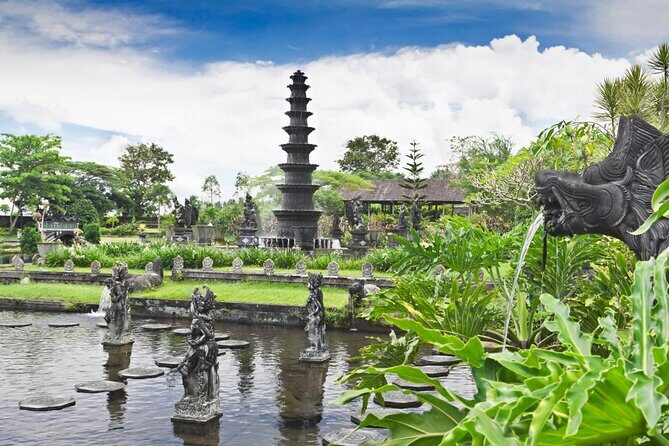
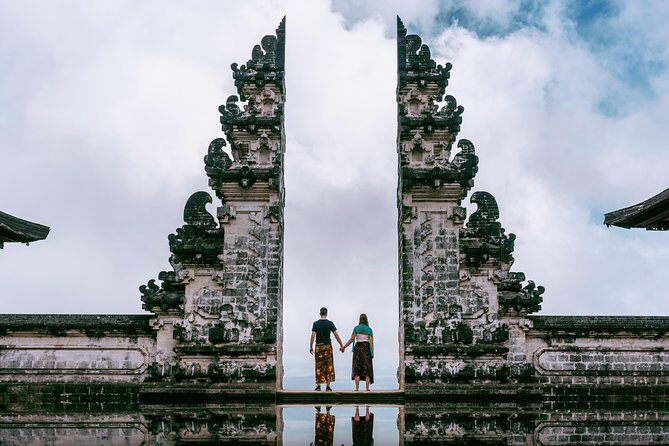
Best of Bali 3-Day Packaged Tour

Best of Bali 3-Day Packaged Tour - Day 2 Waterfall Circuit: Tukad Cepung’s Cave Falls to Kanto Lampo’s Photo Moment

Three days can feel like a sprint in Bali.

Still, this Best of Bali 3-Day Packaged Tour works because it strings together big-name sights with real cultural stops, without you having to plan every turn. I especially like the private driver approach—no big cattle-car chaos—and the tour includes entrance tickets and lunch, so you can focus on what you came to see.

The day-to-day mix is a big draw for me: Ubud temples and rice terraces on Day 1, four waterfalls plus swimming stops on Day 2, and Tanah Lot sunset on Day 3. One thing to consider: it’s a lot of walking and stair-and-path time at the waterfalls, so bring comfortable shoes and expect a busy pace.

Key highlights at a glance
Best of Bali 3-Day Packaged Tour - Key highlights at a glance

  • A private driver for your group means fewer hassles and a more flexible feel than big group tours
  • Five waterfalls plus a jungle swing gives you both action and photos without extra planning
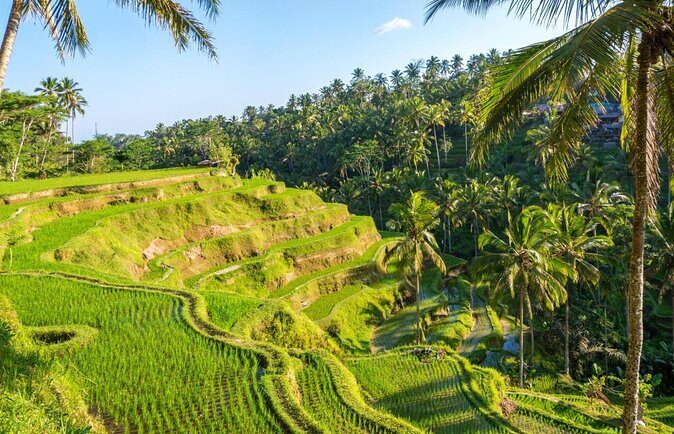
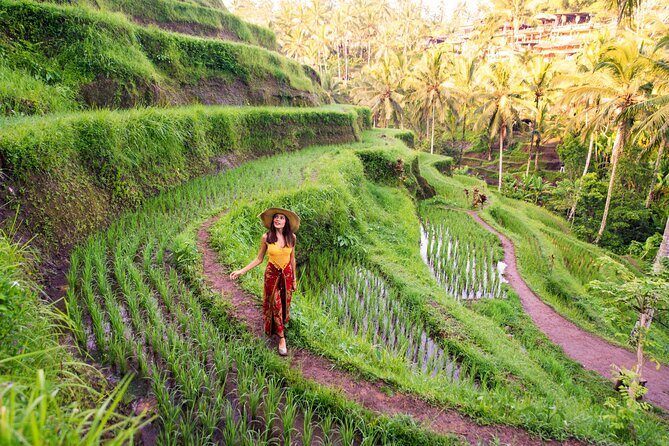
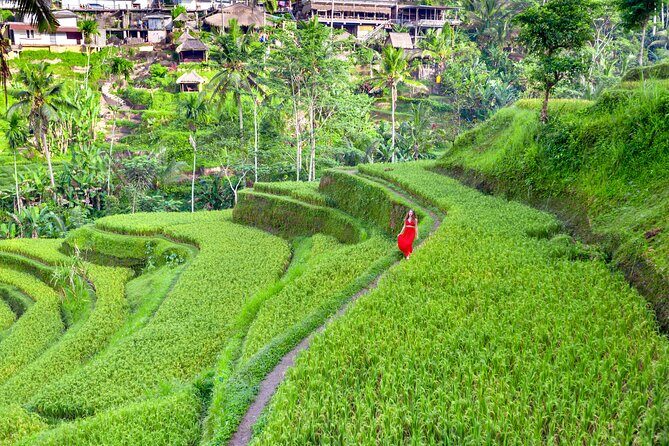
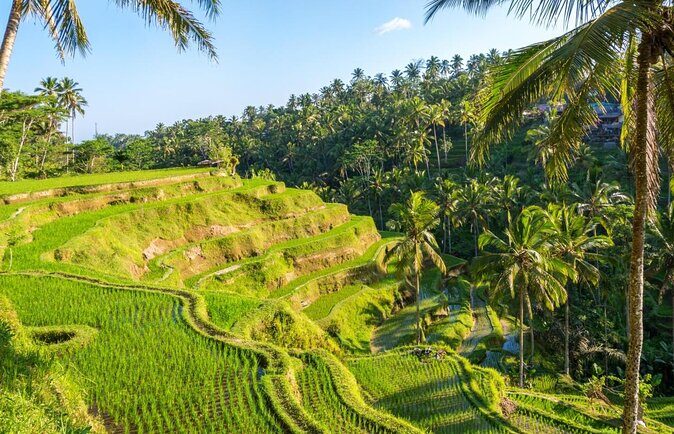
  • Tegallalang rice terraces and Jatiluwih terraces hit two of Bali’s best-known rice landscapes
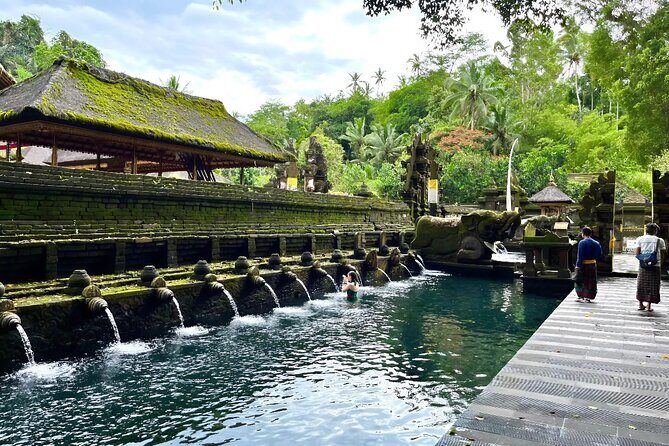
  • Tirta Empul holy spring temple adds a spiritual element beyond just scenery
  • Tanah Lot at low tide sets you up for the classic ocean-temple sunset moment
  • Guides often help with photos and pacing, with names like Komang Pi, Dudy, and Surya showing up repeatedly for attentive service

Why This Ubud-to-Bali Highlights Route Works So Well

If your Bali time is tight, this is the kind of plan that helps you get your bearings fast. You’re based in the Ubud area and then you fan out: rice terraces, sacred water temples, and waterfall hikes, finishing with one of the island’s most famous sunset backdrops at Tanah Lot.

What makes this tour practical is the way it removes friction. With hotel pickup and drop-off, bottled water in the car, and lunch included on all three days, you’re not constantly asking where to eat, where to park, or how to buy the next ticket. The mobile ticket and “all fees and taxes” coverage also reduce the little admin headaches that can pile up during a short trip.

The value isn’t only the headline sights. It’s the logistics. Bali driving takes time, and hopping between Ubud, Bedugul, and the coast without help can turn into a day of stress. Here, the private driver handles the route while you spend your energy on the stops: shady forest paths, stair steps down into hidden valleys, temple courtyards, and that final sunset stage at Tanah Lot.

Day 1 in Ubud: Monkey Forest, Tegalalang, Tirta Empul, and a Jungle Swing
Best of Bali 3-Day Packaged Tour - Day 1 in Ubud: Monkey Forest, Tegalalang, Tirta Empul, and a Jungle Swing
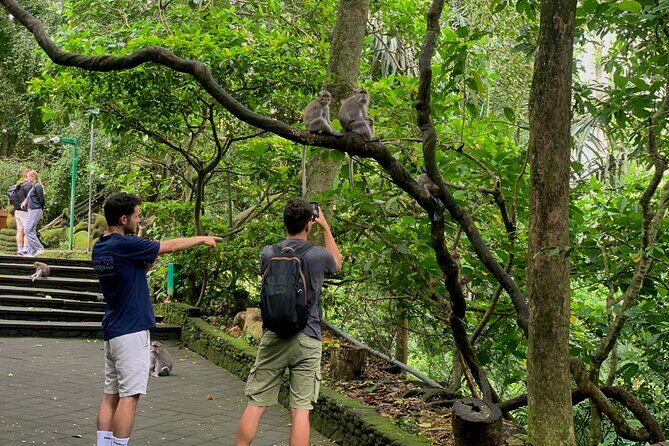
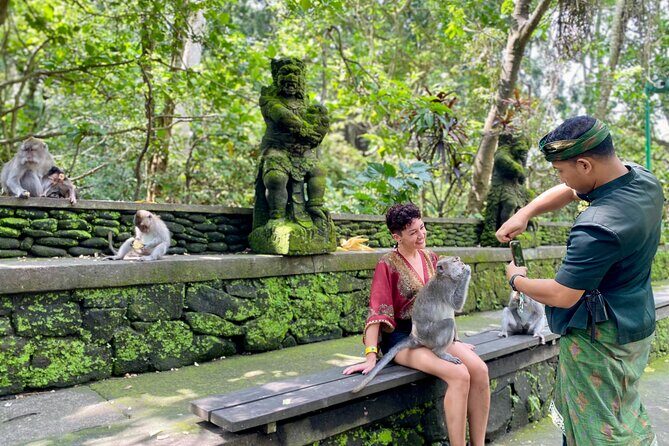
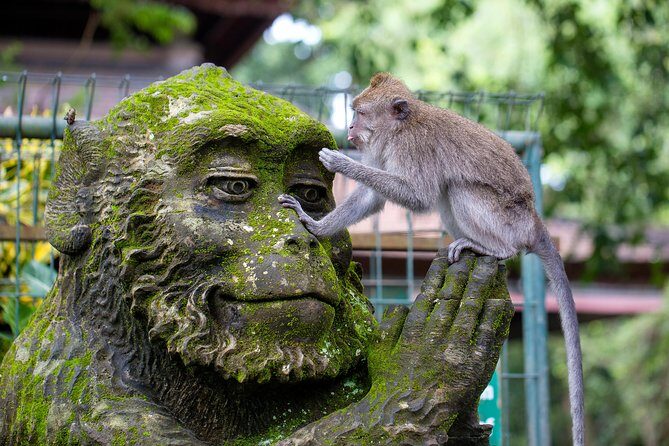
Day 1 is built around classic Ubud icons, but it’s not just a theme park of photo stops. It starts at the Sacred Monkey Forest Sanctuary, where you’ll walk through a thick forest with birds, lizards, butterflies, and monkeys. The walk is scheduled for about an hour, so you’re not rushed through it like a quick drive-by.

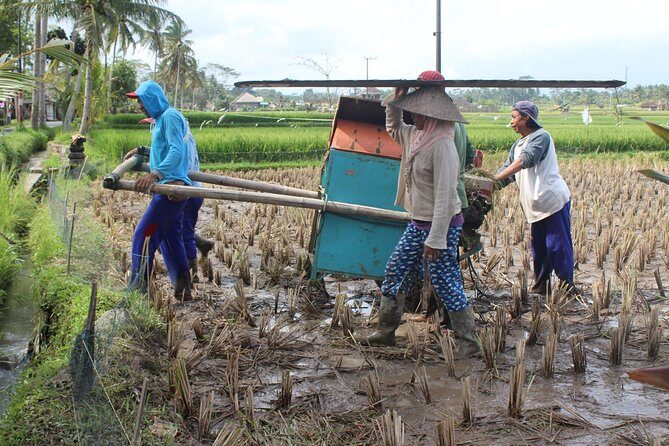
Next comes Tegalalang Rice Terrace north of Ubud. You’ll get a short walk among lush green terraces for about 45 minutes. This isn’t just a viewpoint—you get time to move through the area and see traditional farming activity as part of daily life.

Then you take a proper break at d’Alas Warung Restaurant (included lunch time slot). The setting is part of the point: a jungle restaurant stop that gives you a calmer break before the more energetic sections.

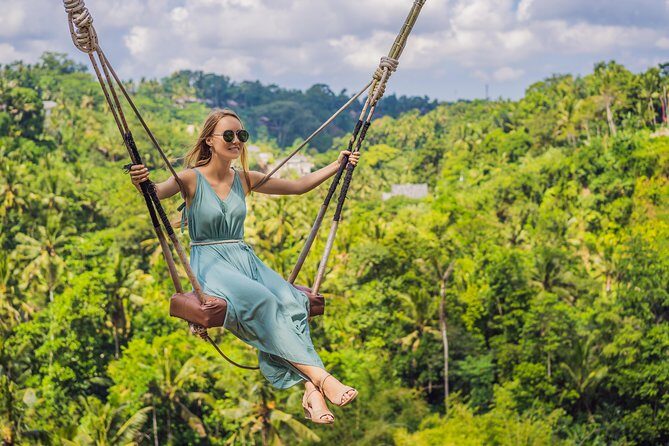
After lunch (or before, depending on how your day flows), you can do the d’Alas Swing for around 30 minutes. This is one of those Bali “yes, it’s touristy” moments that still works because the swing is positioned for views over the jungle. If you want the shot, this is the time to do it.

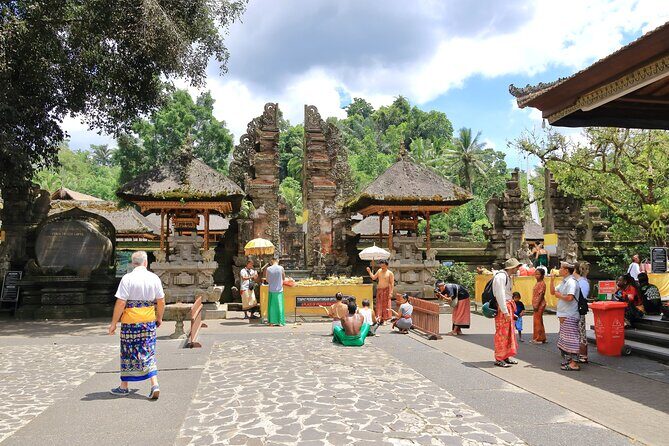
The day shifts from scenery to ritual with Tirta Empul Temple, a holy spring temple where Balinese people perform a blessing ritual before prayer. The stop is about an hour, and it’s one of the more meaningful moments on Day 1 because you’re not just watching—you’re seeing the temple setting where sacred water is part of daily religious practice.

Day 1 ends at Tegenungan Waterfall (about an hour). You can take a short walk closer or view from a higher point. It’s a great finish because it’s refreshing after temples and rice terraces—plus it sets you up nicely for the waterfall-heavy Day 2.

Day 2 Waterfall Circuit: Tukad Cepung’s Cave Falls to Kanto Lampo’s Photo Moment
Best of Bali 3-Day Packaged Tour - Day 2 Waterfall Circuit: Tukad Cepung’s Cave Falls to Kanto Lampo’s Photo Moment
Day 2 is the reason people book this package: waterfalls back-to-back, including at least a couple where swimming is part of the experience.

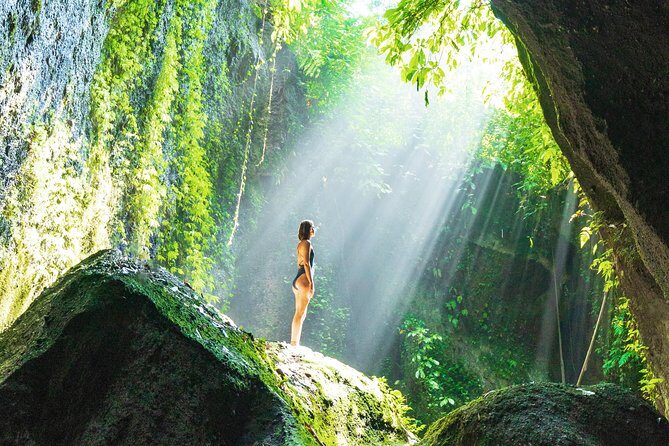
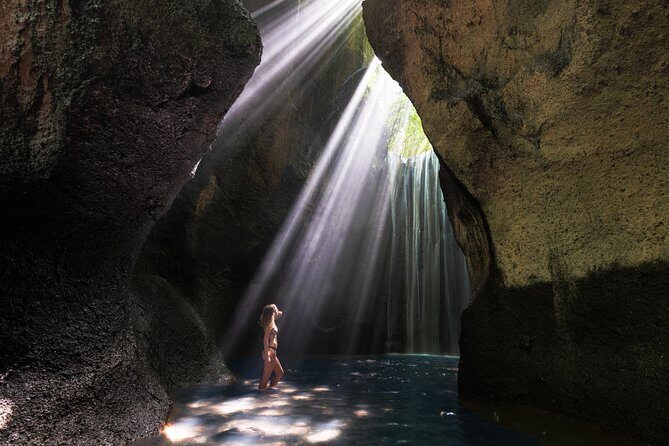
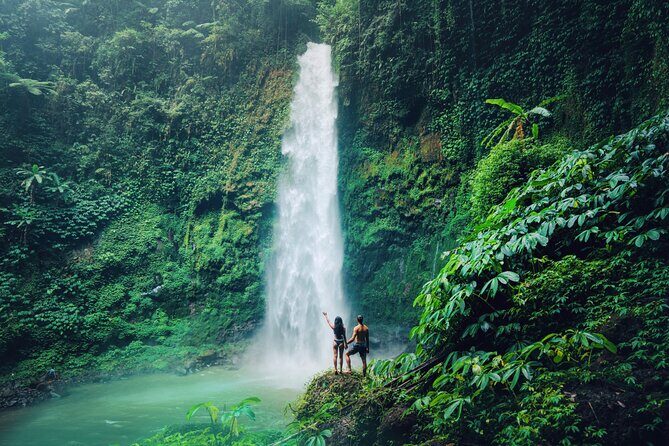
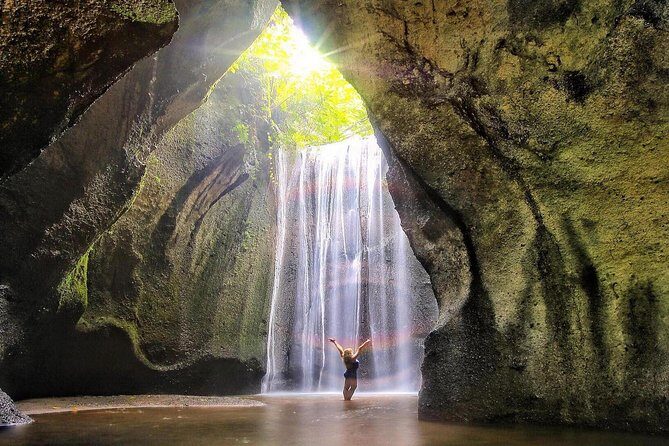
It starts with Tukad Cepung Waterfall, a unique waterfall tucked in a hidden valley of thick jungle. You’ll walk down stairs and through jungle pathways, then continue along the river between rocks until you reach the waterfall under a cave. The schedule gives you about an hour here, which matters because this place rewards slower walking—one wrong step on the path and your timing goes sideways.

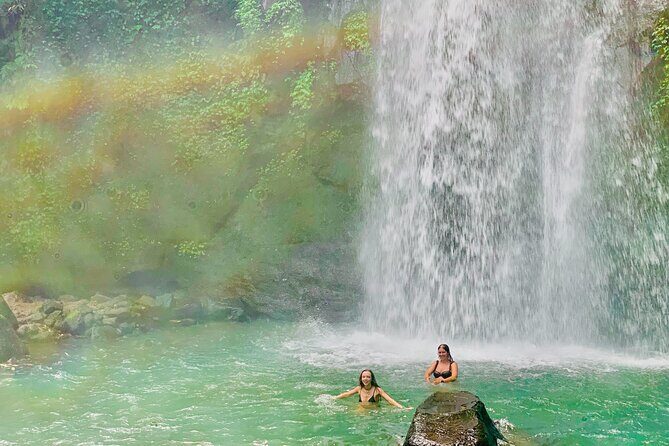
Next is Tibumana Waterfall in the northeast of Ubud. Like Tukad Cepung, you’ll descend stairs and walk pathways to reach it. The big practical perk: you can swim in fresh water from the mountain. The time slot is about an hour, which is useful because it lets you do the hike, enjoy the pool, and still get back up without feeling rushed.

Right after, you’ll move to Taman Sari Waterfall and Natural Pool, described as newly developed and less touristic. That’s a nice change of pace from the busier “everyone is here for the same shot” sites. You’ll also have time to swim in the natural pool area, again for about an hour.

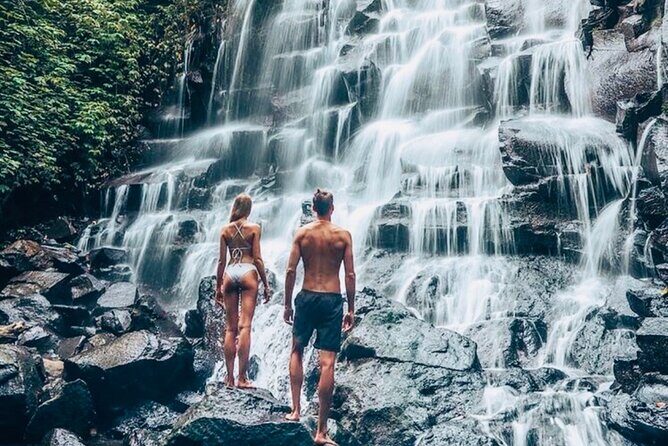
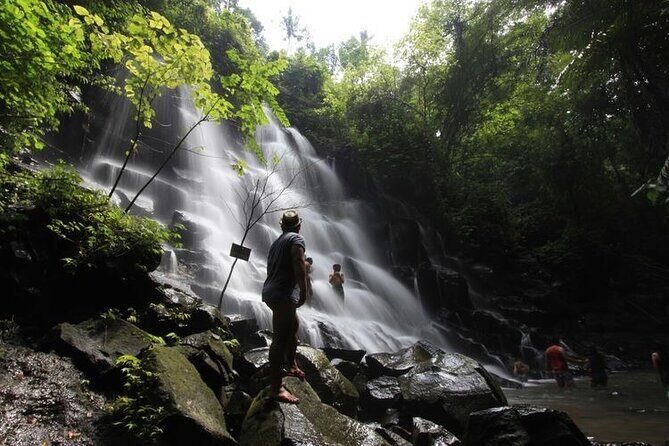
Finally, you’ll hit Kanto Lampo Waterfall. This one is explicitly framed as a photo waterfall where sunlight and splash water can make dramatic images. The trade-off is also honest: it can be crowded. Plan for that, and focus on timing—early in your schedule helps, and your driver can often help you move efficiently.

Physically, Day 2 is the toughest day on the itinerary. There are stair walks, cave-valley paths, and swimming-water logistics. If you want the waterfalls fully—rather than just seeing them from above—bring swimming gear and water shoes. One guide recommendation that stuck with me was to pack water shoes for the waterfall days.

Day 3 in Bedugul and the West Coast: Temples, UNESCO Rice Terraces, and Tanah Lot Sunset
Best of Bali 3-Day Packaged Tour - Day 3 in Bedugul and the West Coast: Temples, UNESCO Rice Terraces, and Tanah Lot Sunset
Day 3 mixes culture with big scenery, and it saves the most iconic sunset moment for the end.

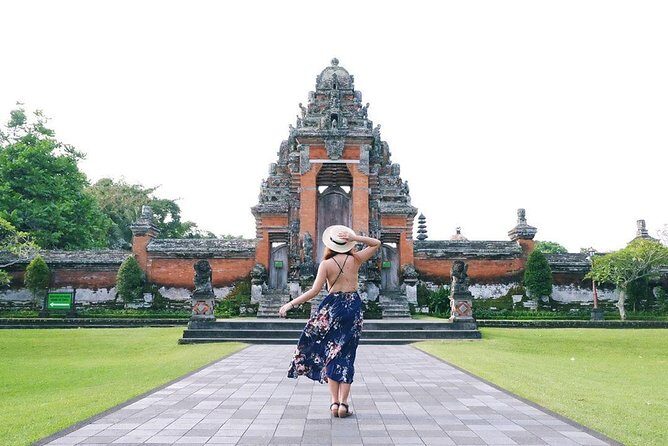
You start at Taman Ayun Temple, the royal temple of Mengwi Empire built in 1634. It’s a family temple tied to a deified ancestor, and it’s surrounded by a large fish pond. You’ll spend about 35 minutes here. It’s a shorter stop, but it works because the temple grounds are visually memorable without needing hours of wandering.

Then you go to Ulun Danu Bratan Temple (also called Ulun Danu Beratan Temple), a temple on the lake of Beratan. The schedule gives you about an hour. The setting matters: it’s tied to worship of the water, lake, and river goddess Dewi Danu, so it feels like a place where the landscape and religion are linked through the water.

After the temple, you head to Wanagiri Hidden Hills for about an hour. This area is built for views of the panoramic Buyan Lake, and it includes photo-friendly spots like a swing, bird nest structure, and a Titanic board-style photo platform. It’s not a “quiet monastery” stop—it’s an energy shift toward fun and views.

Next comes Jatiluwih rice terraces, part of the UNESCO-recognized area for the local irrigation system called Subak. You’ll spend about an hour. In practical terms, this is where you slow down and take in something you can’t fully replicate by just looking at photos online. The terraces are wide, and the cultural irrigation system is part of why the place is protected.

Finally, it’s Tanah Lot Temple for about 1.5 hours, timed around sunset. This temple sits by the ocean and is only accessible when it’s low tide. So you’re not just arriving at a random time—you’re there with the classic timing needed for the ocean access and the sunset atmosphere.

If you care about getting the full effect, this is the day to show up ready for changing light and potential walking on uneven ground.

Private Driver Value: The Real Win Is Time, Not Just Transportation
Best of Bali 3-Day Packaged Tour - Private Driver Value: The Real Win Is Time, Not Just Transportation
A private tour sounds nice on paper. On this kind of route, it becomes a real advantage fast.

First, you’re not losing time coordinating with strangers, and you’re not trapped in a fixed big-group tempo. Your stops are scheduled—monkey forest, rice terrace walk, Tirta Empul ritual viewing, and then the waterfall circuit—but a good driver-guide can help manage the day so you spend more of your energy at the sites and less in transit.

Second, the service quality shows up in the practical details. In the feedback I saw repeatedly, drivers like Yande, Ekok, Dudy, and Komang Pi were praised for being on time and for explaining what you’re seeing in plain language. There’s also a recurring helpful angle: offering to take photos, not making you play “wait while I set your camera.” Some guides also handled weather well—there were mentions of umbrellas when rain popped up and schedule adjustments when the weather didn’t cooperate.

Third, safety and comfort matter on Bali roads. One driver was specifically praised for safe, efficient driving, which you’ll appreciate once you’ve been in a car for hours. Here, bottled water is included, and your driver is handling the route so you can relax.

Price and What You Really Get for $179 Per Person

Best of Bali 3-Day Packaged Tour - Price and What You Really Get for $179 Per Person
At $179 per person, the biggest question is: what costs are already baked in?

This package includes hotel pickup and drop-off, a private tour, three lunches, bottled water in the car, all fees and taxes, and entrance tickets for the scheduled sights. That combination adds up quickly in Bali, especially when you compare it to piecing things together day by day.

The most obvious extra you’ll likely pay for is alcoholic drinks, which aren’t included. The other major “don’t forget this” item: the package doesn’t include accommodation. So you’ll need to budget lodging separately, and you’ll want to confirm the pickup details match your hotel.

If you’re the type who hates wasting your limited vacation hours on logistics, the price makes sense. If you love driving yourself and building a custom route with your own stops, you might pay less by organizing independently. But you’ll pay with time and planning.

What to Bring (and What to Expect) for Waterfalls, Temples, and Swings

Best of Bali 3-Day Packaged Tour - What to Bring (and What to Expect) for Waterfalls, Temples, and Swings
You’ll get a lot of variety here, and the packing list should match.

Bring for the waterfalls

  • Swimming gear for Day 2, since Tibumana Waterfall and the natural pools are described as swim-friendly
  • Water shoes if you plan to go in the water at the natural pool areas
  • A quick-dry towel or something similar if you hate feeling damp

Bring for walking days

  • Comfortable shoes for stair walks and jungle pathways
  • A light layer for temple areas and shaded forest paths

Bring for the swing and photo moments

  • A charging plan for your phone/camera
  • The swing and scenic stops are part of the “get the photo” structure, so plan to make the most of the time window

You should also expect at least some chance of rain. The good news is that some guides handled it by providing umbrellas and adjusting plans, but you shouldn’t count on perfect weather.

Who This Bali 3-Day Tour Best Suits
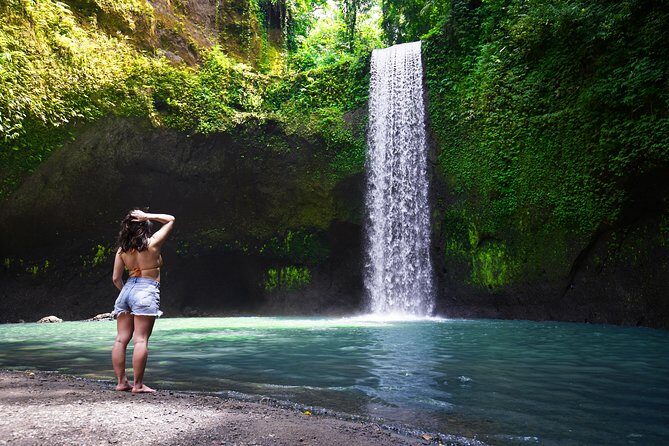
Best of Bali 3-Day Packaged Tour - Who This Bali 3-Day Tour Best Suits
This is a good fit if you want the main Bali highlights without spending your trip on route planning.

It’s especially suited for:

  • People with limited time who still want waterfalls, temples, and rice terraces
  • Anyone who prefers a private driver and a more personal pace
  • Photo-minded visitors who want well-timed stops like the jungle swing and Tanah Lot sunset

It might be less ideal if you want:

  • A slow, do-one-or-two-things-per-day itinerary
  • Lots of free time for wandering, since the schedule is structured around multiple scheduled stops

Should You Book the Best of Bali 3-Day Packaged Tour?

If your checklist includes Ubud highlights, five waterfalls (with swim options), and Tanah Lot sunset—and you want it handled with a private driver, included lunches, and entrance tickets—this is a smart booking. It’s a busy itinerary, but the pace is the point: you get a lot of Bali in three days without the usual planning headache.

Book it if you’re comfortable with stair-and-path days and want the convenience of pickup, bottled water, and meals built in. Pass or consider a slower plan if you’d rather linger at fewer places. For most people trying to do Bali efficiently, this tour earns its name.

FAQ

How long is the Best of Bali 3-Day Packaged Tour?

The tour lasts about 3 days.

Where does the tour take place?

It’s based around Ubud, Indonesia, with Day 3 reaching the Bedugul/Jatiluwih area and the Tanah Lot sunset in the west.

What’s included in the price?

The package includes hotel pickup and drop-off, a private tour, bottled water in the car, entrance fees and taxes, and lunch (3 lunches total).

Are entrance tickets included?

Yes. The scheduled stops list admissions as included.

Is there a jungle swing?

Yes. Day 1 includes the d’Alas Swing.

Can I swim at any waterfalls?

Yes. Tibumana Waterfall includes the option to swim, and Day 2 also includes Taman Sari Waterfall and Natural Pool with swimming time.

What isn’t included?

Alcoholic drinks are not included, and the package does not include accommodation.

Can I cancel for a full refund?

Yes. Free cancellation is available up to 24 hours in advance of the experience start time.
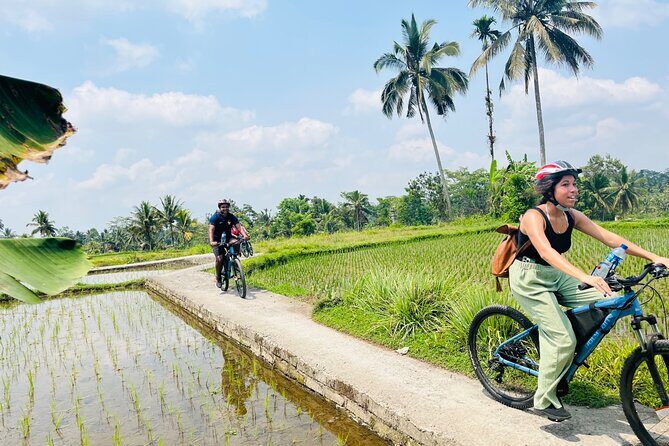
Ubud eBikes Tour to Tegallalang Rice Terrace

Ubud eBikes Tour to Tegallalang Rice Terrace - The meeting point and the 15-minute start you’ll actually use

Rice terraces, with less work.

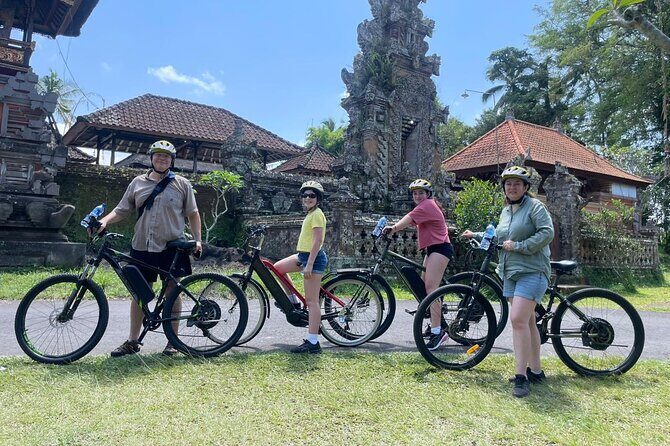
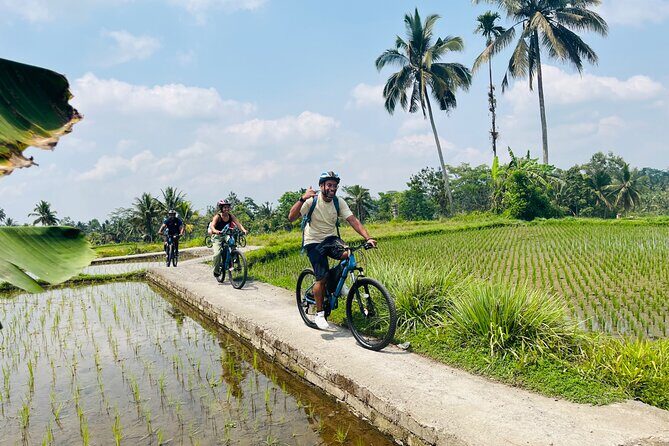
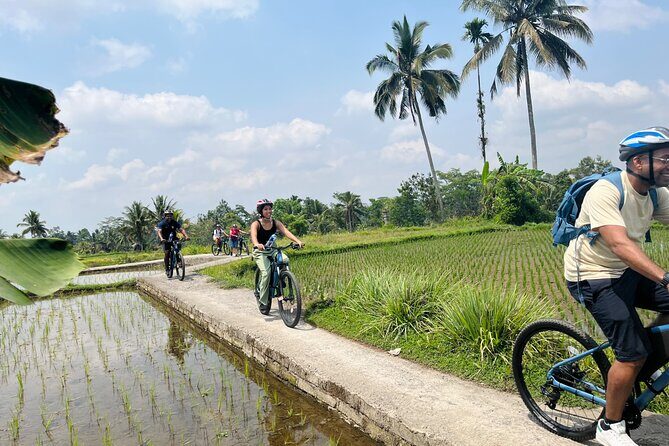
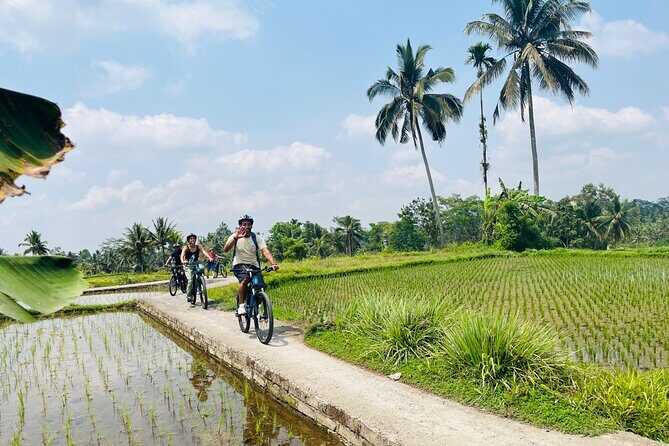
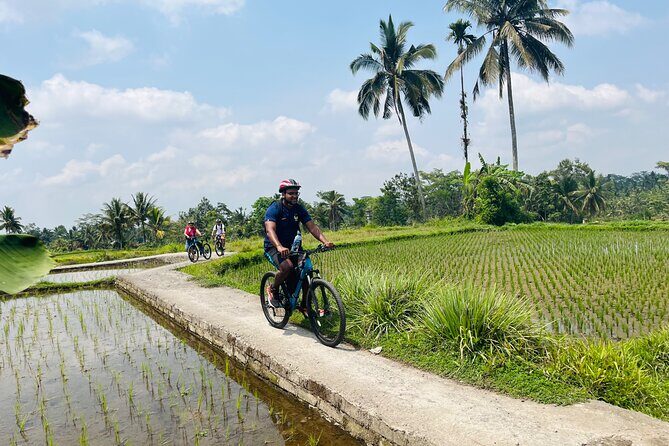
This Ubud e-bike tour is a practical way to see the countryside around Tegallalang without fighting traffic or finding parking, since it goes on routes cars can’t. You also get the UNESCO-backed angle on Bali’s subak irrigation system, plus photo-worthy rice terraces, plantations, and village views along the way.

I especially like the setup: a small group (max 10), a real English local guide, and built-in time for you to slow down for pictures. The second big win is the food-and-culture combo: lunch is served at Tegallalang with Balinese favorites, and the ride often includes a typical compound house, a temple stop, and a coffee/tea tasting. One thing to keep in mind: this is not a hard-core cycling workout, and you’ll get a shorter “look” at Tegallalang rather than a long, in-depth bike loop through every corner of the famous terraces.

Key highlights that matter

Ubud eBikes Tour to Tegallalang Rice Terrace - Key highlights that matter

  • e-Bike assist lets you choose effort on hills, so the ride stays fun for most people
  • Small-group feel (up to 10) helps the pace stay relaxed and questions get answered
  • Lunch at Tegallalang with Balinese dishes plus a view that makes the meal feel special
  • Cultural stops can include a Balinese house compound and a temple (often shared with guide stories)
  • Coffee/tea tasting is part of the day, not just a sales stop
  • Guides take care of details like helmets, water, and safe handling on busy back streets

How an e-bike changes Ubud mornings

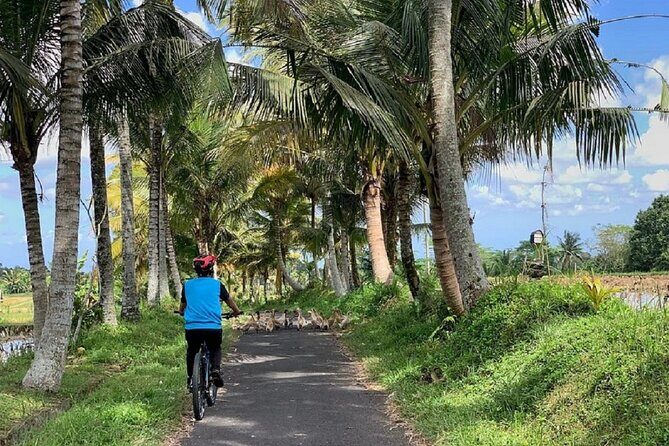
Ubud is great on foot, but lots of the best scenery lives just far enough out that you’d otherwise rely on a driver. With an e-bike tour like this one, you get a mix that’s hard to replicate: you ride into countryside lanes and village areas, then you still end up at the rice terrace areas in time for lunch.

The practical magic is the battery. Reviews consistently describe the ride as easy and adjustable, which matters because Bali hills can be sneaky. If you want a light workout, you can pedal more; if you just want the views, you can lean on the assist and keep the trip comfortable. Helmets and bottled water are included, so the “gear stress” is low.

And since the tour is described as a route where cars can’t go, you get those tighter village roads and farm paths that feel more local than the standard big-road approach.

Price and value: why $30.55 makes sense here

Ubud eBikes Tour to Tegallalang Rice Terrace - Price and value: why $30.55 makes sense here
At $30.55 per person for about three hours, the value comes from what’s bundled. You’re not just paying for “a bike ride.” You also get:

  • Lunch (served at Tegallalang)
  • Use of e-bike and helmet
  • Bottled water
  • Hotel pick-up and drop-off in the Ubud area only
  • An English local guide
  • Air-conditioned vehicle support during parts of the day

In other words, you’re paying for transportation, guidance, and food in one package. That’s usually where budget tours either shine or fall apart. Here, the pricing feels anchored to real inclusions—especially the lunch and guide time.

A small caution on value: while Tegallalang is the headline, the day isn’t framed as a long, full exploration of every terrace viewpoint. You’ll spend around 45 minutes at Tegallalang for lunch and time there, which is great for photos and a proper meal, but it’s not designed to replace a full day in the area.

The meeting point and the 15-minute start you’ll actually use

Ubud eBikes Tour to Tegallalang Rice Terrace - The meeting point and the 15-minute start you’ll actually use
The tour begins at the eBikes Ubud Tour office near Tegallalang (Jl. Raya Sapat, Tegallalang). Before you ride, expect a quick start briefing—about 15 minutes—so you know what the day looks like and how to handle the bike.

This matters more than it sounds. Ubud back streets can be busy, and e-bikes feel different from regular bikes, especially when you’re navigating turns, traffic edges, and uneven roads. Multiple reviews mention guides checking bikes and handling the road with a safe, professional approach. If you want an easy first ride, the early briefing is part of what makes it work.

On top of that, the tour is limited to up to 10 travelers, which often helps the guides keep track of everyone’s comfort level.

The Petulu ride: countryside time that sets the tone

Ubud eBikes Tour to Tegallalang Rice Terrace - The Petulu ride: countryside time that sets the tone
After the briefing, the tour moves into the riding portion that includes Petulu. This stretch is about 2 hours in total, and it’s where the tour earns its “go where cars can’t” promise. You’ll pass rice fields and village areas while your route stays more intimate than the typical bus-and-walk pattern.

What you’re looking for here is momentum plus variety. The ride isn’t just straight-line travel; it’s paced for you to see daily life, farm views, and small local moments. If you’re someone who enjoys photos, this is where you’ll probably collect most of them—before lunch locks in the highlight.

One more practical point: the ride is commonly described as easy pace and not strenuous. That’s a plus for beginners and older travelers, and it’s also a good fit for families with teens who want an active morning without pushing limits.

Tegallalang Rice Terrace: lunch with a view and time to breathe

Ubud eBikes Tour to Tegallalang Rice Terrace - Tegallalang Rice Terrace: lunch with a view and time to breathe
Tegallalang is the moment you’re riding for, and the schedule gives it a dedicated block: you arrive and then spend about 45 minutes around the terrace area. Lunch is served here, with Balinese favorites, so you’re not stuck rushing through a viewpoint and then disappearing.

This is also where the experience turns from “nice scenery” into a full sensory break. Eating at the terraces changes the feel of the rice fields. You’re not just looking at them—you’re pausing in the same space where the daily work happens.

For photos, you’ll have enough time to wander a bit and frame shots without feeling like you’re being herded. For most people, 45 minutes hits the sweet spot: long enough for lunch and a look around, short enough to keep the day easy.

Just know what you’re trading off: some reviews describe that it’s not a complete Tegallalang terrace walkthrough. If what you want is hours of terrace hiking and a deep dive into every viewpoint, you may want to pair this with additional time on your own later. If you want a guided hit of Tegallalang plus culture stops, this timing works.

Culture stops that go beyond the photo moment

Ubud eBikes Tour to Tegallalang Rice Terrace - Culture stops that go beyond the photo moment
A big reason this tour gets such consistent praise is that it treats culture as part of the ride, not an optional add-on. The experience description includes visits to a typical compound house and traditional temple areas, and the reviews back up what that can look like in practice.

Many guests talk about meeting a guide connected to the community and being shown what a home is like inside, then hearing how customs and family routines connect to daily Balinese life. Guides named in reviews include Raika, Agung, Ayu, Putu, and Budi—and the common thread is that they explain what you’re seeing in plain language and stay patient when you have questions.

Temple time is also a real highlight. One review specifically mentions a Shiva Temple stop, and the overall pattern is that you get a chance to understand why these places matter to people locally—not just to tourists with cameras.

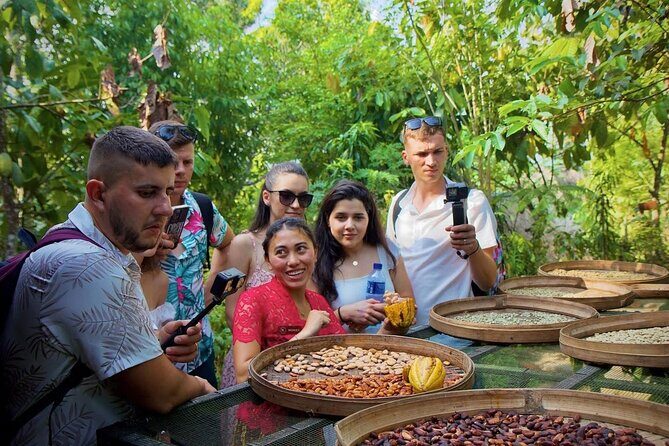
Then there’s coffee and tea. The day can include a coffee place stop for sampling, and the tasting is described as a fun extra rather than a hard sell. If you’re curious, ask questions while you’re there. This is the kind of stop that works better when you engage, not when you just pass through.

One more nice detail from reviews: some guides take photos and share them after the tour using apps like WhatsApp. That’s not something you should plan around as a guarantee, but it’s a common “extra” that makes the morning feel more personal.

Bikes, pace, and safety: what to expect once you mount up

Ubud eBikes Tour to Tegallalang Rice Terrace - Bikes, pace, and safety: what to expect once you mount up
The e-bikes are part of why this tour works for so many ages. Reviews describe the bikes as in great condition and the batteries as having enough power for the whole experience. That’s huge in Bali, where a normal bike ride could turn into a grind.

Pace is another theme you’ll notice. The cycling is repeatedly called gentle, easy, and not strenuous. If you’re coming as a strong cyclist looking for miles of aggressive riding, you might feel it’s slow. One review even puts it in a math-style way (most on road, total distance around the low teens of kilometers). So think of this tour as “guided countryside sightseeing by bike” rather than “training ride.”

Safety and road comfort are handled by the guides, especially through busy back streets and village lanes. Reviews mention guides stopping when needed, checking that everyone is okay, and using a professional, careful approach. If you’re nervous on bikes, that guidance is the difference between a stressful start and a relaxed morning.

Who this tour fits best (and who might want another option)

Ubud eBikes Tour to Tegallalang Rice Terrace - Who this tour fits best (and who might want another option)
This is ideal if you want:

  • Easy active sightseeing with minimal effort
  • A small-group day with time to talk and ask questions
  • A combo of rice terraces, Balinese lunch, and culture stops (house and temple)
  • A guided route that gets you into the countryside without sorting transport

It’s also a solid choice if you’re traveling with teens or you’re in an age range that makes a regular bike ride less appealing. Reviews include travelers in their 50s to mid-60s describing it as very doable.

I’d consider alternatives if you’re a cyclist who wants long distances, frequent steep climbs, or a high-intensity pace. This tour is designed to be comfortable first. Another reason to think twice: if you only care about Tegallalang itself and want a full, slow, detailed terrace exploration, the time at Tegallalang is limited to about 45 minutes.

Should you book the Ubud e-bike tour to Tegallalang?

Book it if you want a smart, low-stress way to see Ubud’s rice-terrace world plus Balinese culture in one morning. The value stack is strong: you get an e-bike, helmet, water, guide help, and lunch at the terrace. The small group size also boosts the quality of the experience, since it keeps the ride calm and the stops more personal.

Skip it if you’re specifically chasing a long terrace hike or a serious cycling workout. This tour aims for relaxed countryside movement, not endurance training.

If you’re deciding between options, use this question: do you want a guided taste of Tegallalang with a real cultural add-on? If yes, this one is a very practical fit.

Mount Batur Jeep Tour and Hot Spring

Mount Batur Jeep Tour and Hot Spring - Tegalalang Rice Terrace: Green Views With Real Footsteps

Mt. Batur at sunrise feels like a cheat code.

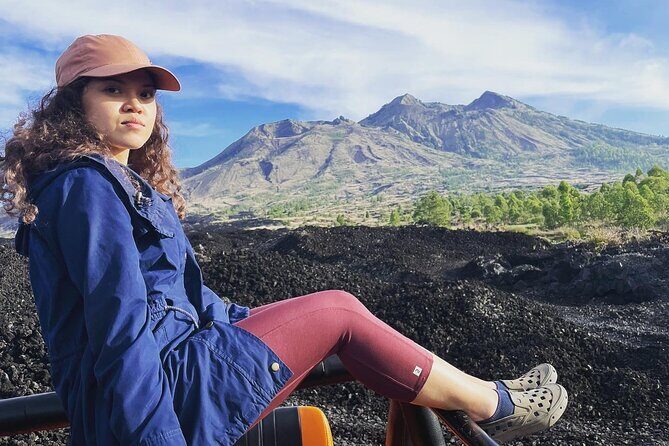
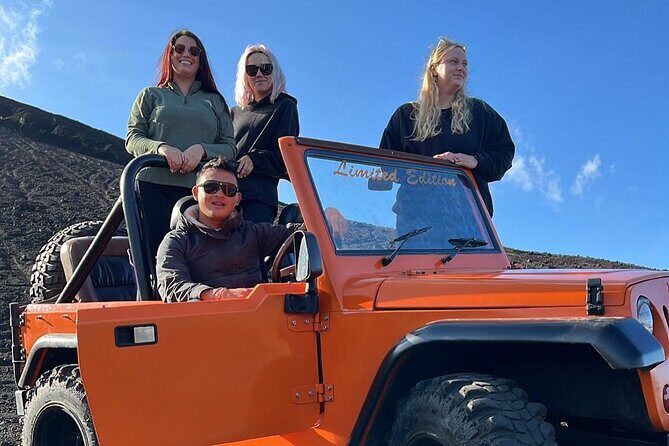
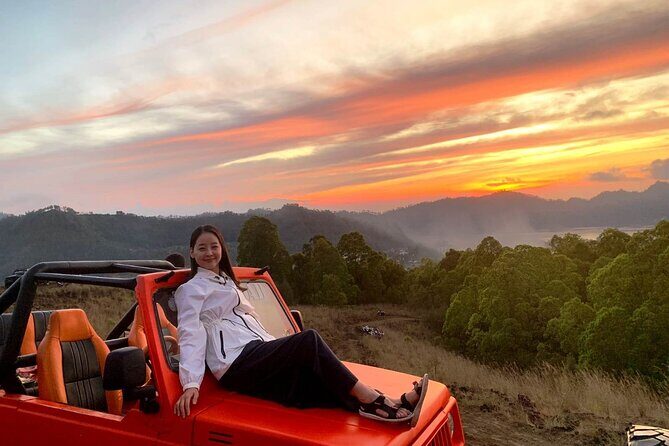
This Jeep tour is a stress-free way to reach the big viewpoint early, with pickup from your Bali hotel and a light breakfast timed for those first rays over the caldera. If you’re not up for a summit hike, you still get the drama of sunrise, plus a warm downshift afterward with natural volcanic hot springs. The experience can be especially smooth when your driver keeps things upbeat and on schedule; I’ve seen praise for drivers like Mang and Wira, with one mention of punctual, security-focused driving.

What I like most is how practical it is for real schedules. You’ll get air-conditioned transport and hot drinks for the cold early hours, and the day can be tailored to your energy level because it’s private and customizable. Another strong win: the big-ticket sights are grouped into one outing (sunrise, hot springs, and often rice terrace and Tegenungan Waterfall), which saves you from piecing together half a dozen bookings.

One thing to plan around: sunrise depends on the weather. If clouds or rain roll in, the sunrise might disappoint, and there’s at least one report of a driver who didn’t explain much during the ride. So if you care about commentary, confirm expectations ahead of time and dress for the weather, not the forecast.

Key things to know before you go

  • Sunrise without hiking to the summit (Jeep 4WD gets you there)
  • Breakfast timed for views, plus hot drinks to take the chill off
  • Hot springs are only included on hot spring package options
  • Rice terrace and waterfall depend on package grade
  • Optional combos in Ubud (jungle swing, plus ATV and rafting)
  • Weather matters, and the operator may reschedule if conditions are poor

Sunrise Jeep Comfort: Early Pickup From Ubud

This tour starts early, the way sunrise should. You’re picked up from many areas of Bali by an air-conditioned vehicle, then brought to the Mt. Batur area in time for first light. The goal is simple: you want the sunrise view, not a steep early-morning battle.

The day is structured in a way that helps you avoid wasting time. Instead of waiting around for other people or losing daylight to transfers, you get a tight morning plan: arrive, get your views, eat something light, then move on while the mountain experience is fresh.

I also like the price point for what you’re doing—$24 per person is low for a 4WD sunrise outing plus a full day of sightseeing options. That said, the day’s exact value depends on which add-ons you choose, because admissions for hot springs, rice terrace, and waterfall can be tied to specific package grades.

Mount Batur at First Light: What the Jeep Ride Really Does

Mount Batur Jeep Tour and Hot Spring - Mount Batur at First Light: What the Jeep Ride Really Does
The centerpiece is the Mount Batur sunrise by Jeep 4WD. The big benefit is that you can watch the sun rise without trekking up to the summit. If you’ve done enough Bali hills to know your knees have opinions, you’ll appreciate that.

You’ll spend about 4 hours at Mount Batur, with the admission included for the sunrise Jeep portion. The practical rhythm is this: early arrival, Jeep ride, then breakfast and hot drinks while you admire the sweeping views. You’ll want layers—Batur mornings can feel colder than you expect—plus something you can move in if the viewpoint area is uneven.

This is also the part where driver style matters. Most reports praise smooth, friendly driving and good organization. One negative story complained that the driver was uninterested and barely spoke about the places visited. That’s not the norm in the overall rating, but it’s a reminder: if you want someone to explain what you’re seeing, you’ll be happier if you set that expectation beforehand.

Breakfast and Timing: Why Cold Starts Can Still Feel Easy

Mount Batur Jeep Tour and Hot Spring - Breakfast and Timing: Why Cold Starts Can Still Feel Easy
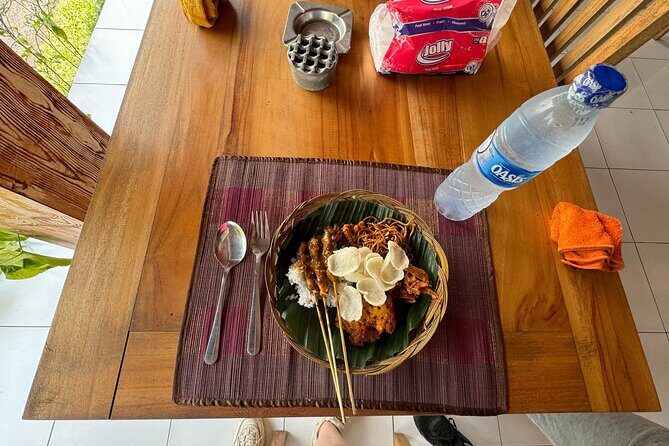
The tour includes light breakfast plus tea, coffee, hot chocolate, and water for the sunrise hours. That small detail matters more than it sounds. Early morning hikes and sunrise plans can turn into a hangry waiting game. Here, you’ve got fuel and warmth while you wait for the sky to do its thing.

You’re also not left figuring things out alone. The day flows from pickup to mountain timing to a next stop afterward. The total duration is listed as about 6 to 10 hours, which fits a full morning-to-afternoon plan without disappearing into a whole-day mystery.

A simple tip: treat this like a sunrise photo session. Give yourself time for layers, camera setup, and a few pauses. With the tour’s schedule, you’ll see the important stuff without sprinting.

Batur Natural Hot Springs: Warm Soak After the Sunrise

After the sunrise portion, you can move on to Batur Natural Hot Spring, typically about 1 hour. This is a classic “cool to warm” payoff: you’ve been up early at elevation, then you soak in natural volcanic heat to reset your body.

Here’s the key detail: the hot spring is included only when you book the hot spring package option. The tour listing also notes towel and locker access as part of the hot spring option. That’s useful because you don’t want to be scrambling for basic comfort items once you’re done with the sunrise.

If you’re comparing experiences in Bali, hot springs can be either touristy or genuinely relaxing. This one is positioned as natural volcanic soaking, and the schedule gives you time to actually enjoy it rather than treating it like a quick photo stop.

If you don’t book the hot spring option, you might still have a long day filled with viewpoints. So make your choice based on what you want most: sunrise, soak, or sightseeing.

Tegalalang Rice Terrace: Green Views With Real Footsteps

Mount Batur Jeep Tour and Hot Spring - Tegalalang Rice Terrace: Green Views With Real Footsteps
For package grades that include it, you’ll explore Tegalalang Rice Terrace, with time around 1 hour. This stop is famous for a reason: terraced rice fields that look good in any weather and from multiple angles.

You’ll likely do some walking and light hiking through viewpoints and paths. The listing wording points to exploring and hiking the terrace area, so wear shoes you don’t mind getting dusty or wet if it has rained earlier in the day.

One practical note: rice terrace admission is tied to the Rice Terrace grade package. If you’re comparing options, double-check what’s included in your specific grade so you’re not surprised when you arrive.

Tegenungan Waterfall: A Scenic Stop That Can Be Weather-Dependent

Next, some package grades add Tegenungan Waterfall, again around 1 hour. This is a straightforward add-on for anyone who wants water views beyond the caldera sunrise.

What to watch for is conditions. Waterfall areas can get slippery, and rain can change how safe and comfortable the paths are. The good news is that this tour keeps the waterfall stop short enough that you won’t feel stuck for hours if it’s not ideal.

As with the rice terrace, waterfall admission is connected to the Waterfall grade package. If you’re trying to maximize value, you’ll probably choose the bundle that matches the places you most want.

Ubud Add-Ons: Jungle Swing, ATV, and Rafting Options

Once you’re in the Ubud stretch, the tour offers optional activities depending on your combo package.

For the jungle swing option, you’ll have about 45 minutes in Ubud, and the tour schedule lists the admission as free when booked as part of that swing package. If you want one of those classic Bali photo-style experiences without turning it into an all-day production, this can work nicely.

For the more adventure-leaning crowd, there’s also an ATV and rafting combo after the Jeep tour area. The time slot shown is about 2 hours, and the tour includes lunch especially for bookings with rafting or ATV. That’s a real value add because it prevents the common problem of spending the whole day moving and then needing to hunt for food mid-adrenaline.

Pick these add-ons based on energy. Sunrise + hot springs is already a lot. Add waterfall + terraces and you’ve got a packed day. Then throw in swing or ATV if you still feel good.

Price and Value: Is $24 Worth It?

At $24 per person, the base idea is strong: one booked Jeep sunrise experience plus transportation and a morning meal. Even with extra add-ons, the structure tends to stay cost-effective because multiple highlights are grouped into one day.

The big value question is package matching. The tour listing ties some inclusions to specific grades: hot springs, rice terrace, and waterfall aren’t automatically included for every booking type. So the real value is: you can buy a simple sunrise + transport day, or you can build a fuller sightseeing itinerary.

Also, the overall rating is extremely high (a 4.9 average across 524 reviews, with 99% recommended). That usually points to consistent organization and a good baseline experience.

Still, the single negative note about a disinterested driver is worth taking seriously. It’s rare in the overall feedback, but it’s a reminder that a private tour’s quality often comes down to the person behind the wheel. Your best move: choose a booking type that gives you flexibility if you want, and communicate your preferences before you meet the driver.

Where You Meet and How the Day Ends

Mount Batur Jeep Tour and Hot Spring - Where You Meet and How the Day Ends
You start at the Mount Batur Jeep Adventure Base Camp by CV Bali Trekking Tour with the location marker listed as Q97V+PMF, Songan A, Kintamani, Bangli Regency, Bali. The tour ends back at the meeting point.

That matters because it keeps things predictable. You’re not dropped at some random spot far from where you began. For a day with early timing, predictability is comfort.

Who This Tour Suits Best (and Who Should Rethink It)

This is a great fit if you want sunrise on Mt. Batur but don’t want the hike. It’s also a strong choice if you’re traveling with mixed comfort levels, because the Jeep format makes it easier for more people to join the sunrise plan.

You’ll also like it if you want a one-day rhythm that includes sightseeing—rice terrace and waterfall—without needing separate half-day tours.

Rethink it if:

  • You’re sensitive to early wakeups and plan carefully around sleep.
  • You want guaranteed sunrise conditions. Even the best planning can’t control clouds.
  • You need a very talkative guide experience; driver communication quality can vary.

Should You Book This Mount Batur Jeep and Hot Spring Tour?

If you’re aiming for the Mt. Batur sunrise look without the full hike, this is one of the more practical ways to do it on a single day. The combination of early Jeep access, light breakfast with hot drinks, and the option for natural hot springs creates a satisfying arc from cold dawn to warm reset.

My call: book it if you choose your package grade based on your must-dos (hot spring, rice terrace, waterfall), and if you’re okay with the weather uncertainty that comes with sunrise. If you’re flexible and dress for chilly morning conditions, you’ll get a memorable Bali morning without turning it into a grueling workout.

FAQ

How long is the Mount Batur Jeep tour and hot spring experience?

The tour is listed as about 6 to 10 hours. The main Mt. Batur sunrise Jeep portion is about 4 hours, and the schedule can add stops like the hot spring (about 1 hour), rice terrace (about 1 hour), and Tegenungan Waterfall (about 1 hour), plus optional Ubud activities.

What’s included with the light breakfast?

The tour includes light breakfast plus tea, coffee or hot chocolate, and water during the morning portion.

Is the hot spring included for every booking?

Hot spring access is included only when you book the hot spring package option. The listing notes that towel and locker are included with the hot spring option.

Does the tour always include Tegalalang Rice Terrace and Tegenungan Waterfall?

Not necessarily. Rice terrace is tied to the Rice Terrace grade packages, and Tegenungan Waterfall is tied to the Waterfall grade packages. The inclusions depend on which package you choose.

What if the sunrise weather is poor?

The experience requires good weather. If it’s canceled due to poor weather, you’ll be offered a different date or a full refund.

What is the cancellation policy?

You can cancel for free up to 24 hours in advance for a full refund. If you cancel less than 24 hours before the start time, the amount you paid is not refunded.

Ubud: Downhill Cycling with Volcano, Rice Terraces and Meal

Ubud: Downhill Cycling with Volcano, Rice Terraces and Meal - Mount Batur Views: The Part You’ll Remember in 10 Seconds

A bike day with real Bali won’t be this easy.

This Ubud experience pairs downhill cycling with volcano views, rice terraces, and hands-on cultural stops. You’ll start with the big Kintamani sights near Mount Batur, then head into countryside backroads where schools, family compounds, and temples shape the day. Guides such as Eddie, Agus, August, Dedy, and Dika help translate what you’re seeing into something you can actually understand.

Two things I really like: the ride is designed for an easy pace (even when you’re not a cyclist), and the small group of four keeps it personal. I also appreciate the practical inclusions—bike setup, bottled water, lunch, and insurance—so you don’t waste time micromanaging the day.

The main thing to consider is that lunch can vary by quality on the day. One person mentioned the buffet was only okay and a bit lukewarm, so I’d plan to treat it as a satisfying end to a long morning, not as a foodie destination.

Key Highlights That Matter

Ubud: Downhill Cycling with Volcano, Rice Terraces and Meal - Key Highlights That Matter

  • Small group (max 4 travelers) for a calmer, more personal day
  • Mostly downhill riding (about 18 km) with very little pedaling
  • Mount Batur/Kintamani views paired with rice-field countryside roads
  • Culture stops like a local school, family compound, and temple
  • Lunch included at the end of the ride
  • Pickup in the Ubud area plus cycling gear and bottled water

From Ubud Pickup to Mount Batur at 8:30

Ubud: Downhill Cycling with Volcano, Rice Terraces and Meal - From Ubud Pickup to Mount Batur at 8:30
Start time is 8:30 am, and you’ll typically begin with pickup from the Ubud area. That matters because Ubud traffic can be chaotic, and you don’t want to burn your energy arguing with a scooter rental before a downhill bike day.

The drive up toward the Mount Batur / Kintamani area can take about an hour each way. If you’re sensitive to cooler morning air up high, bring a light layer—Bali mornings can feel chilly compared to the beach.

This is also one of those tours where the logistics are designed to keep you stress-free: you get a guide, cycling equipment, bottled water, and a plan that doesn’t require map-spotting. In a good way, it turns the day into “show up and ride,” which is exactly what you want on a cycling trip.

Mount Batur Views: The Part You’ll Remember in 10 Seconds

Ubud: Downhill Cycling with Volcano, Rice Terraces and Meal - Mount Batur Views: The Part You’ll Remember in 10 Seconds
The Mount Batur stop is short—around 15 minutes—but it’s a high-impact moment. You’ll be in the Kintamani area looking out over the volcano caldera and the lake, with big sky and wide views that make the rest of the day feel worth it.

If your tour hits this part with clear weather, you’re going to get the “wow” moment people talk about. If it’s foggier, you’ll still get the volcanic setting, but the distance views may soften—so don’t build your hopes only around crisp photos.

Bring your eyes for the scale, not just your phone for the shot. This stop is where your brain clicks into why the rest of the day works: you’re getting a top-down transition from volcanic altitude to farming backroads.

The Downhill Ride Through Rice Fields and Backroads (About 18 km)

This is the core of the tour, and the good news is the word downhill is accurate. Riders describe it as mostly downhill—around 18 km—with very little pedaling, which makes it a realistic “any fitness level” day for many people.

You’ll be on backroads moving past local farms, villages, and rice terraces. That’s not just scenic bragging—it changes the whole vibe. Car days in Bali can blur into traffic and checkpoints. By bike, you move at a human pace and you notice details: small shrines, farm work rhythms, and the way paths connect houses to fields.

Brake quality gets mentioned for a reason. A few people specifically praised the bikes and good brakes, which is smart to care about on a long descent. You’ll want a comfortable grip and stable footing, and the tour includes the cycling equipment so you’re not hunting for the right bike in the last hour.

Manukaya Culture Stops: School, Family Compound, Temple

Ubud: Downhill Cycling with Volcano, Rice Terraces and Meal - Manukaya Culture Stops: School, Family Compound, Temple
After the volcano viewing moment, the day shifts from big views to human-scale life. This is where the tour earns its “more than a bike ride” label.

In the Manukaya segment, you’ll visit a local school and get explanations about education and daily routines. A few guides (Eddie comes up often) are especially good at connecting what you see to how Balinese families think about community and childhood.

You may also stop at a family compound and a temple. One day can include a dramatic community moment like a traditional public cremation, depending on timing and local events. Even when it’s calmer, these stops give you a sense of how spiritual life and daily work overlap.

Here’s the practical tip: treat these as learning moments, not museum tours. Ask your guide what to look for. People who came away happiest were the ones who slowed down—asked questions, listened, and let the guide’s explanations turn random sights into real understanding.

Lunch in Banjar Laplapan: Simple, Included, Usually Satisfying

Ubud: Downhill Cycling with Volcano, Rice Terraces and Meal - Lunch in Banjar Laplapan: Simple, Included, Usually Satisfying
Lunch is built in at the end of the ride, around 1 hour. It’s included, and many people call it delicious, with a buffet-style setup and options for different dietary needs (one review specifically mentioned catered for coeliac).

That said, there’s a small risk lunch quality won’t match the rest of the day. One person noted the buffet tasted okay but was lukewarm. So I’d treat lunch as part of a full-value day, not as a guarantee of restaurant-level perfection.

The good angle: after 18 km of downhill and hours of stops, you’ll likely be ready for anything filling. You’ll also have water and recovery time before the drive back.

Guides and Pace: Why Small Group Size Makes It Work

Ubud: Downhill Cycling with Volcano, Rice Terraces and Meal - Guides and Pace: Why Small Group Size Makes It Work
This tour caps at four travelers, which changes everything. With fewer people, your guide can manage the pace, answer questions without rushing, and adjust stops based on comfort and photo time.

A recurring theme in feedback is that the ride is easy and the guides keep things moving at a good speed. People also mentioned guides being funny and patient with photos. That sounds small, but it’s huge on a day that mixes riding with culture stops—because the best parts are often the tiny moments you don’t want to snap through.

You might ride with guides including Dika (sometimes spelled Dike), Agus, August, Augus, Augustin, or Dedy, depending on your date. Regardless of the name, the tour style stays consistent: explain as you go, keep it understandable, and don’t pretend Bali is one flat script.

What to Pack (So the Day Feels Easy)

Ubud: Downhill Cycling with Volcano, Rice Terraces and Meal - What to Pack (So the Day Feels Easy)
You don’t need a suitcase for this, but a few things make life smoother:

  • Wear comfortable shoes with grip for wet roads and stops.
  • Bring a light rain layer. Heavy rain happened for at least one group, and things continued with adjustments.
  • Sunscreen isn’t included, so pack it if you’re prone to burn.
  • Alcoholic drinks aren’t included, so if you want one, plan to buy it separately when possible.

Also, don’t overthink fitness. The ride is mostly downhill, and people described it as doable even without cycling training. Still, your legs and balance matter—so if you’ve got knee issues or mobility limits, consider whether downhill control feels safe for you.

Price and Value: Why $36.66 Can Feel Like a Steal

Ubud: Downhill Cycling with Volcano, Rice Terraces and Meal - Price and Value: Why $36.66 Can Feel Like a Steal
At $36.66 per person, this tour can feel like strong value for Bali. Here’s why: you’re paying for more than “a bike ride.”

You’re getting an English-speaking professional guide, cycling equipment, bottled water, lunch, pickup from the Ubud area, and personal insurance up to IDR 2,500,000 for ages 5–65. That combination usually costs more when you try to piece it together yourself.

Also, small group size matters. You’re not sharing the day with a huge crowd of strangers, so the time with your guide is real time. The cultural stops get attention, and the ride doesn’t feel like a conveyor belt.

If you’re counting money and time, this is a rare deal: you get volcano views, countryside riding, and education/culture stops in a single half-day format.

Who This Tour Suits Best (and Who Should Rethink)

This tour fits you if you want:

  • Downhill cycling without technical bike skills
  • Volcano views plus rice terraces and village backroads
  • A smaller group day with time for questions and photos
  • A structured schedule that includes lunch and water

It may not be ideal if:

  • You expect a gourmet, high-end meal as the main event
  • You need a very strenuous workout (this is more “ride and explore” than “train and suffer”)
  • You want a long, uninterrupted ride with no cultural stops (this has multiple stops built in)

For families, it’s a strong contender. Ages aren’t listed for participants beyond the insurance range (5–65), but one family with teens described it as easy, fun, and even a highlight when teens weren’t excited at first.

Should You Book This Ubud Downhill Cycling Tour?

If you’re in Ubud and you want a day that feels like Bali, not just Bali on a schedule, I’d book it. The biggest win is the mix: volcano altitude views, then a mostly downhill ride through rice terraces and local backroads, with school/compound/temple stops that give context fast.

Choose it especially if you like your travel active but not punishing, and you want your guide to explain what you’re actually seeing. Just go in knowing lunch is included and usually good, but not always perfect, and pack for rain and sun since those details aren’t handled for you.

FAQ

What time does the tour start?

The start time is 8:30 am.

Is pickup included?

Yes, pickup is offered from hotels in the Ubud area.

How big are the groups?

The tour has a maximum of 4 travelers.

What’s included in the price?

It includes an air-conditioned vehicle, a professional English-speaking guide, cycling equipment, bottled water, lunch, and personal insurance (up to IDR 2,500,000 for ages 5–65).

Is the ride difficult?

It’s a downhill cycling tour and is described as easy, with many people noting very little pedaling.

Is lunch and water provided?

Yes. Lunch is included (with a meal stop at the end), and bottled water is provided. Alcoholic beverages are not included.

Balinese Ubud cooking school (9 Dish Cooking and Market Tour)

Balinese Ubud cooking school (9 Dish Cooking and Market Tour) - Meeting at Ubud Palace and the real flow of the 5-hour experience

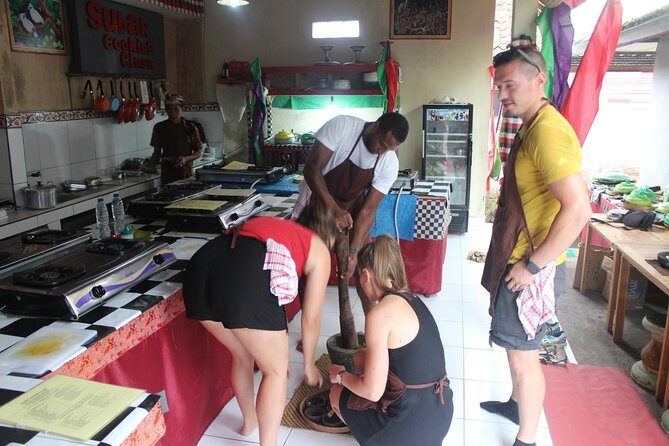
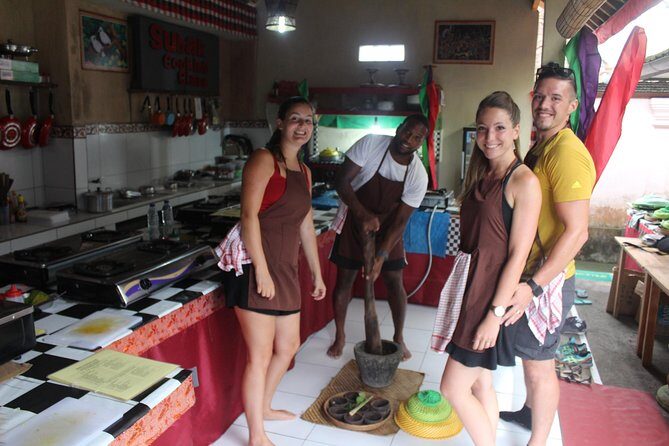
A great day starts with food. This Ubud cooking class takes you from a guided market stop to cooking nine Balinese classics, then eating everything you make. It is a smart way to learn flavor, not just recipes.

Two things I like a lot: you’re not stuck making one or two dishes. You cook a full set, and you leave with a take-home recipe copy. Also, the team is friendly and the vibe is relaxed, and you might cook with instructors known for step-by-step teaching like Chef Yogi.

One consideration: pickup is best if you are already in Ubud. If you’re farther out, you may need to pay extra transport, and it can mean more driving than you expect.

Key highlights you’ll feel right away

Balinese Ubud cooking school (9 Dish Cooking and Market Tour) - Key highlights you’ll feel right away

  • Cook 9 dishes, not a quick demo: soup, mains, sambal, spices paste, and dessert
  • Guided morning market tour: taste fruit and sweets, learn how ingredients are sold
  • Rice paddies visit: see how rice is grown before you eat with white rice on the side
  • Up to 14 people max: small enough for questions while cooking at your own station
  • Regular or vegetarian menu options: the same structure, swapped ingredients

Why an Ubud market-to-kitchen class beats a basic cooking tour

Balinese Ubud cooking school (9 Dish Cooking and Market Tour) - Why an Ubud market-to-kitchen class beats a basic cooking tour
If you’ve done a cooking class before, you might know the pattern: watch a demo, cook one dish, take a photo, go home hungry for the rest of the meal. This one is different because it’s built around Balinese cooking as a full system.

You start by learning how ingredients are chosen and used. That market time matters because Balinese dishes rely on fresh produce, spice blends, and specific textures. Then the kitchen time helps you connect the dots by making nine dishes yourself—so when you try cooking later, you understand what each element is doing.

The other win is pace. With a group that stays under 14 travelers, you’re not just standing around. You get hands-on help, and the staff and guide keep things moving without turning it into a factory line.

Meeting at Ubud Palace and the real flow of the 5-hour experience

Balinese Ubud cooking school (9 Dish Cooking and Market Tour) - Meeting at Ubud Palace and the real flow of the 5-hour experience
Most people meet near Ubud Palace and the activity ends back there. From there, the day is built to feel like a mini food outing, not a long bus ride and a short kitchen session.

Plan for about 5 hours total. Within that time, you’ll do:

  • pickup or group meet-up in the Ubud area (depending on your booking)
  • a market visit (morning option)
  • a rice paddies stop
  • time at a local cooking school where you prepare and cook nine recipes
  • tasting along the way, then eating your finished lunch or dinner buffet

Also, you will want to bring a camera. The stops are visual, and the market is colorful in a way that reads like a real day-to-day place, not a staged attraction.

Morning Market Tour: fruit, spices, and how Balinese shopping works

Balinese Ubud cooking school (9 Dish Cooking and Market Tour) - Morning Market Tour: fruit, spices, and how Balinese shopping works
Choose the morning slot and you get the market experience as part of the program, not just a quick photo stop. You’ll go with a local guide who shows you what people buy and why certain items matter in Balinese cooking.

Here’s what that adds to your class:

  • You learn what ingredients look like when they’re fresh.
  • You pick up names and uses for common items you’ll see again in the kitchen.
  • You get the chance to sample foods so your brain starts mapping flavors before you cook.

It also helps you understand that Balinese cuisine isn’t only about heat. It’s about layering. You’ll see how one ingredient can play multiple roles—base, aroma, acidity, crunch, or sweetness.

If you are the type who likes to know where your food comes from, the market visit is the foundation. If you just want to eat, it’s still worth it because it sets you up to recognize the flavors you’ll be cooking later.

Rice paddies and the local house stop: why it changes how you cook

Balinese Ubud cooking school (9 Dish Cooking and Market Tour) - Rice paddies and the local house stop: why it changes how you cook
After the market, you’ll head to a rice paddies visit and a local Balinese house as part of the experience. This is not random sightseeing. It’s there to give you the context behind the meal.

Rice is the everyday partner for so many dishes in Bali, and seeing the fields helps you understand why rice shows up again and again—especially with the classic sides like white rice included with the main courses you cook.

The Balinese house stop also matters because it nudges you to view food through culture and daily life: offerings, cooking rhythms, and household roles. Even if you don’t consider yourself a culture traveler, it makes the recipes feel grounded instead of imported.

One practical note: the paddies and house visits are outdoors and can be hot. Bring water, and plan to go at a comfortable pace when the group slows down for photos.

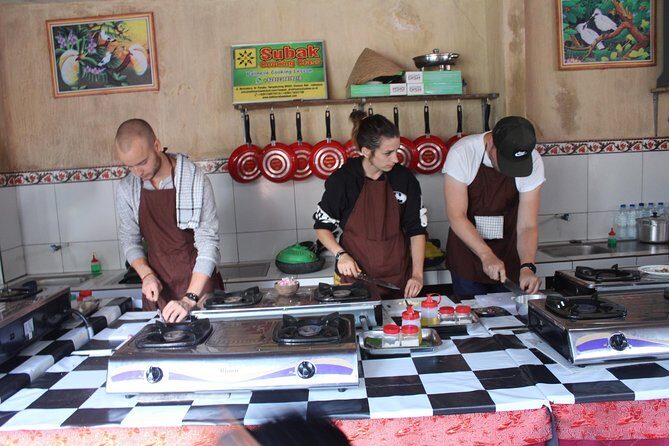
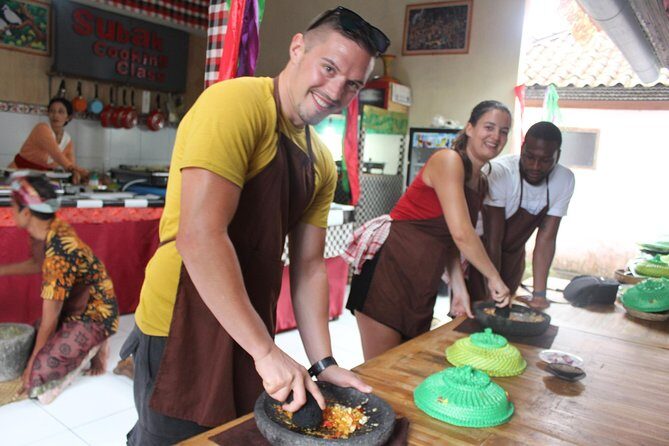
The cooking stations: nine recipes, step-by-step help, and real hands-on work

Balinese Ubud cooking school (9 Dish Cooking and Market Tour) - The cooking stations: nine recipes, step-by-step help, and real hands-on work
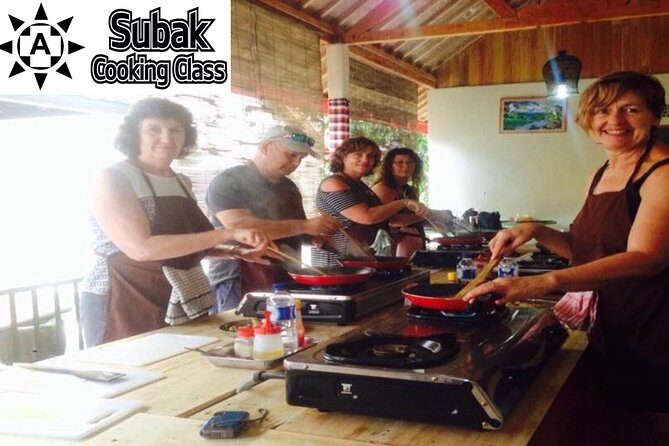
This is the heart of the tour. You’ll cook with a Balinese chef step by step, working through at least 9 Balinese recipes. You’ll have equipment and ingredients provided, including things you might not find easily at home.

A key detail: the teaching style is practical. The goal is that you can recreate the dishes later, not just survive the class meal. You also get copy recipes to take away, which is the difference between having a good day and having a reason to cook again.

The Regular menu dishes (what you cook)

You’ll prepare this set, with the main courses served with white rice:

  • Sayur Bali (Balinese vegetable soup)
  • Ayam santan bumbu Bali (fried chicken with coconut milk)
  • Tempe manis (sweet fried tempe)
  • Sate lilit Bali (chicken satay)
  • Pepes Ayam (grilled/steamed chicken in banana leaf)
  • Lawar Bali (mix vegetable with Balinese spices)
  • Sambal Matah (raw spices with coconut oil)
  • Base Gede (basic spices paste)
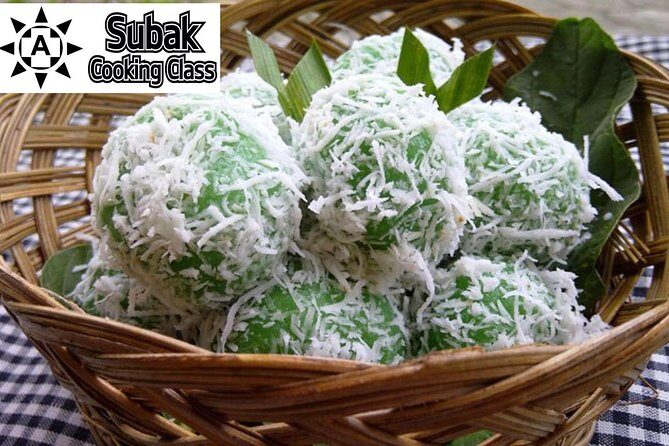
  • Klepon cake (sweet sticky flour dessert)

Vegetarian menu swaps (same structure)

If you choose vegetarian, you’ll still follow the same recipe arc, with plant-based versions:

  • Sayur Bali (Balinese vegetable soup)
  • Tofu bumbu Bali (fried tofu with basic sauce)
  • Tempe manis (sweet fried tempe)
  • Sate tempeh (Balinese soybean cake skewers) with peanut sauce
  • Pepes Tofu (grilled or steamed tofu in banana leaf)
  • Lawar Bali (vegetable mix with Balinese spices)
  • Sambal Matah
  • Base Gede
  • Klepon cake

Plus main courses served with white rice.

If you love cooking, you’ll appreciate that the set covers multiple techniques: frying, pounding or combining spice bases, handling sambal, working with banana leaf, and making dessert. This is why the class feels like more than one lesson.

Lunch or dinner buffet: tasting as you go, then eating the finished plates

Balinese Ubud cooking school (9 Dish Cooking and Market Tour) - Lunch or dinner buffet: tasting as you go, then eating the finished plates
You’ll do food tasting during the process, then you eat a buffet lunch or dinner made from what you cooked.

That matters because you’re not guessing if the recipe worked. You get immediate feedback. You can also see how the different dishes relate on the plate—soup with fried items, sambal as the punch, spiced bases tying everything together, and rice as the neutral partner.

There’s also often food left over, and you can usually take it with you (pack-up is commonly requested by guests). That’s a nice bonus when you’re full but still want tomorrow’s snack.

One tip: go a little hungry. The market samples and the kitchen tasting can add up fast. If you show up with a big breakfast, you may end up fighting your way through the buffet.

What makes the staff style feel different

Balinese Ubud cooking school (9 Dish Cooking and Market Tour) - What makes the staff style feel different
The team approach is part of the value here. People consistently talk about a friendly, welcoming atmosphere and an instructor who keeps things clear and fun. You may meet instructors and guides such as Wayan, Tata, Yogi, Putu, or Gus—not every name will apply to every day, but they reflect the kind of team culture the school is known for.

Practically, that means:

  • you can ask questions without feeling rushed
  • you get explanations in plain English
  • the workstations feel organized enough to keep you cooking

Even better, this is designed for couples and families as well as solo travelers. You’ll be at your own station, so it’s not a lecture with props.

Price and logistics: is $58 a fair value for what you get?

Balinese Ubud cooking school (9 Dish Cooking and Market Tour) - Price and logistics: is $58 a fair value for what you get?
At about $58, you’re paying for a lot of real time: market visit, paddies stop, cooking practice for nine dishes, tasting, and the meal itself. You’re also getting recipe copies and kitchen equipment.

If you price it like this, the value looks solid:

  • You pay for a guided food experience with multiple stops
  • You get multiple cooking lessons in one day
  • You eat what you cook, with a buffet included
  • You leave with recipes, not just memories

Where it can cost you extra is transportation. Pickup is included only for the Ubud area. If you’re staying outside Ubud, additional charges can apply, and the team asks that you bring cash for extra transport. If you’re planning a longer day trip from farther away, factor that into your budget and time.

Tips for booking and doing better than average in class

A few small choices can make your experience smoother.

  • Pick your menu option early: choose regular or vegetarian when booking so the kitchen can prep your set.
  • Bring a camera and expect photos at multiple stages: market, flower offerings in the broader local rhythm, and rice paddies viewpoints.
  • Use the market stop to learn names: don’t just taste. Ask how ingredients are used in the dishes you’ll cook later.
  • If you want a calmer experience, arrive rested: the class is active, and you’ll be cooking continuously through multiple recipes.
  • Wear normal, comfortable clothes suited for a hot day and kitchen work. You’ll be told you need a normal uniform; it’s usually practical, not fancy.

Should you book the Balinese Ubud 9-Dish Cooking and Market Tour?

Book it if you want a real Balinese cooking day where you do the cooking, not just watch it. The combination of market + rice paddies + nine dishes is a strong fit for food lovers who like to understand ingredients before the stove.

Skip it or choose a different option if you are very sensitive to long transfers or if you’re staying far outside Ubud and don’t want extra transport costs. Also, if you expect to start completely from scratch with zero prep for ingredients, this style may feel more guided than you want—most classes like this prioritize getting you to the finished meal safely and on schedule.

If you can be flexible about timing and you come ready to cook, this one is easy to recommend.

FAQ

How long is the Ubud cooking class with 9 dishes and market tour?

It runs about 5 hours (approximately).

Where does the tour start and end?

It starts at Ubud Palace and ends back at the meeting point.

Is pickup offered?

Pickup and drop-off are included only for the Ubud area. If you stay outside Ubud, additional charges may apply.

What is the price?

The price is $58.

How many dishes will I cook?

You will prepare at least 9 Balinese recipes.

Does this experience include a market visit?

Yes. The morning option includes a local market visit with a guide.

Do I have a choice of menu?

Yes. You can choose regular or vegetarian.

What kinds of dishes are on the menu?

The regular menu includes items like Sayur Bali, Ayam santan bumbu Bali, Sate lilit Bali, Lawar Bali, Sambal Matah, and Klepon cake. The vegetarian menu swaps in tofu and tempeh versions while keeping the same overall structure.

What’s included in the price?

Included: pick up/drop off in Ubud, mineral water, kitchen equipment, recipe copy, food tasting, lunch or dinner buffet, local guide/host, market visit (morning), and rice paddies visit.

What should I bring?

Bring your booking reservation (shown on arrival), a camera, and cash for any extra transport costs if you stay outside Ubud.

Blue Lagoon Snorkeling – Lunch – Kantolampo – Tibumana Waterfall

Blue Lagoon Snorkeling - Lunch - Kantolampo - Tibumana Waterfall - Tibumana Waterfall: A 20-Metre Drop and a Clear Pool Pause

A reef-meets-waterfalls day in Bali.

This is a private Blue Lagoon snorkeling outing plus two waterfall stops, timed for a full day of sea life, rice-and-water scenery, and photo moments. I like that it includes round-trip hotel pickup and handles the equipment and safety briefing, so beginners can focus on floating, not logistics. I also like how the plan strings together calmer ocean time with quick, scenic breaks on land.

What I like even more is the built-in pacing. You get 2 hours snorkeling with a professional snorkeling instructor and all snorkeling gear, then you switch gears to Kanto Lampo and Tibumana with tickets included and lunch in the middle. One potential drawback: sea and crowd factors can affect how long you spend in the water and how relaxed waterfall photos feel, especially when wind picks up.

Key things that make this tour work

  • 2 hours snorkeling at Blue Lagoon Beach with safety procedures and all equipment provided
  • Professional snorkeling instructor plus a driver who keeps the day running smoothly
  • Kanto Lampo: a waterfall that’s heavy on scenery and easy-to-enjoy stops
  • Tibumana: 20-metre waterfall with a clear, shallow pool area
  • Lunch, mineral water, and A/C transport so you’re not guessing mid-day
  • Private group setup so your schedule stays calmer and more flexible than big tours

A Full-Day Flow From Ubud (Without the Headache)

Blue Lagoon Snorkeling - Lunch - Kantolampo - Tibumana Waterfall - A Full-Day Flow From Ubud (Without the Headache)
This tour is built for a simple rhythm: get picked up, do the water activity first, then split time between two different waterfall vibes. The total duration is about 10 hours, which is long enough to feel like a real day out, but not so long that you’re exhausted before dinner.

Pickup is one of the big wins. You’ll get hotel pickup and dropoff from a long list of Bali areas, including Ubud, plus places around Sanur, Seminyak, Canggu, Benoa, Nusa Dua, Denpasar, Kuta, and more, depending on your hotel location. It’s also a big plus if you hate waiting around with a map and a scooter battery.

You’ll ride in an air-conditioned car with mineral water, and you’ll use a mobile ticket for your day. That means fewer paper hassles and less time spent trying to find the right office. It also matters in Bali traffic, where a delay can snowball quickly if the start is messy.

Blue Lagoon Beach Snorkeling: Calm Water Setups and Real Wildlife Odds

Blue Lagoon Snorkeling - Lunch - Kantolampo - Tibumana Waterfall - Blue Lagoon Beach Snorkeling: Calm Water Setups and Real Wildlife Odds
Blue Lagoon Beach is the sea stop that kicks everything off, near Padangbai. Before you get in, you’ll meet your snorkeling guide, get all snorkeling equipment, and go over safety procedures. That’s where this tour earns its “beginner-friendly” label: you’re not thrown in without guidance.

Most of the value here is what you get during the swim window. You’re scheduled for about two hours in the water, and you’re not doing it alone. The tour includes a professional snorkeling instructor, and that’s the difference between “we floated around” and actually seeing the reef.

From the wildlife perspective, the odds are genuinely fun. The experience description highlights fish like angelfish and moray eels, and the feedback you’ll see tends to include sightings such as turtles, sea snakes, and sting rays. Not every day guarantees bigger animals, but your chances are better when the guide is actively looking and leading you to good coral areas.

One neat technique that came up in feedback: guides may use bread crumbs to attract fish so you can watch them gather closer to your snorkel zone. If you love that “wait, something moved closer” feeling, this is the kind of detail that makes the water time feel more alive.

When the ocean changes the plan

Here’s the honest consideration: snorkeling conditions can shift. One set of feedback mentions wind picking up and making the water choppier, which can cut into snorkeling time. If you’re not a confident swimmer, I’d plan for the fact that Blue Lagoon can be calm, but it isn’t always calm.

Practical tip from what people reported: go early when you can, because wind tends to build later in the day. Also, bring sunscreen and plan to reapply if you’re in the sun before and after your swim window, since sunburn is real here.

Kanto Lampo Waterfall: Instagram Scenery With a Fun Adventure Feel

After the water time, you head to Kanto (Katolampo) Lampo Waterfall. This stop is described as a “secret waterfall” that mixes adventure with strong photo potential. In plain terms, it’s the type of waterfall that makes you glad you brought a phone with a decent camera, because the viewpoint angles tend to look dramatic fast.

This is also where the tour keeps your energy from crashing. The stop is about one hour, which gives you time for photos and a relaxed look without turning the day into a long hike slog. Waterfall time in Bali often comes with stairs and uneven footing, so aim for steady shoes and a calm pace, especially if it rained earlier.

Crowds can happen here. One piece of feedback called out that Kanto Lampo can feel too crowded on certain days. If that sounds like your personal nightmare, your best defense is to keep expectations realistic and take your best shots early in the visit window.

Tibumana Waterfall: A 20-Metre Drop and a Clear Pool Pause

Blue Lagoon Snorkeling - Lunch - Kantolampo - Tibumana Waterfall - Tibumana Waterfall: A 20-Metre Drop and a Clear Pool Pause
Next up is Tibumana Waterfall, another crowd-friendly highlight with a different mood than Kanto Lampo. It’s listed at around 20 metres, and the setting includes a shallow clear pool area where you can appreciate the waterfall and the water around it.

There’s also a cultural layer to this stop. Locals believe the entrance is a kind of secret gateway connected with the path to Raja Besakih Temple, one of Bali’s Hindu gods. You don’t need to be a mythology expert to enjoy that context. It just adds meaning beyond the photo.

The practical value of this stop is that it’s a chance to cool down after snorkeling without packing up wet gear and rushing again. Expect about one hour here, which fits the day’s rhythm: swim, waterfall photos, waterfall views, then lunch and the ride home.

The “secret gateway” mindset

I like that Tibumana feels less like a theme park stop and more like a sacred-feeling nature break, even though it’s still a tourist destination. It’s the kind of place where you can slow your pace, take a breath, and let your brain switch from fish spotting to waterfall watching.

Lunch and the Ride: Why the Driver Can Make or Break the Day

Blue Lagoon Snorkeling - Lunch - Kantolampo - Tibumana Waterfall - Lunch and the Ride: Why the Driver Can Make or Break the Day
Between sea and waterfalls, you’ll get lunch and a calmer break from the sun. Lunch is included, but the exact restaurant setup can vary. One report mentioned lunch at a spot where you can shower and change, which is a big quality-of-life upgrade if you hate going back to your hotel still smelling like sea water and sunscreen.

Your transport time also matters, because Bali road trips can eat your patience. What stood out in feedback is that the best days were often linked to the driver’s attitude. Names that came up with strong praise include Adi, Made, Esa, Maha, Putu, Pande, and Denia. The pattern isn’t “they were talkative,” it’s more practical: they were on time, they handled traffic, and they helped the day feel smooth.

Also remember the roles. The snorkeling instructor leads the water and safety side. The driver is there for driving and keeping your schedule on track. If you’re hoping for a full-time guide who narrates every building you pass, you might be disappointed depending on who you get. But if you want a friendly, English-speaking driver and a true pro in the water, this setup fits well.

A small but real advantage: several reviews mentioned drivers helping with photos and even taking extra care to get the shot right. That matters when you’re trying to capture turtles underwater or waterfall angles without waving your hands for strangers to photograph you.

Price and Value: What You’re Really Paying For

Blue Lagoon Snorkeling - Lunch - Kantolampo - Tibumana Waterfall - Price and Value: What You’re Really Paying For
At $39.60 per person, this is priced like a “do three major things” day, not like a la carte snacks. You’re paying for a bundle that includes:

  • Hotel pickup and dropoff
  • A/C car and mineral water
  • 2 hours snorkeling with all equipment
  • A professional snorkeling instructor
  • Lunch
  • Waterfall admission tickets
  • English-speaking driver

What makes that value click is the cost of replacing even one of those pieces on your own. If you try to piece this together (transport + instructor + equipment + tickets + a day plan), the price can climb fast. Here, the thinking is: pay once, show up, and let the team handle the timing.

One thing not included: towel. It sounds minor, but it’s one of those details that becomes annoying fast if you didn’t pack one. If you’re doing multiple water moments in a day, bring it.

Also, expect the day to be active. You’re snorkeling and then walking around waterfalls. If you’re traveling with kids, this tour is often praised as a family-friendly option, especially because the snorkeling setup is meant to work for beginners. Just be honest with yourself about water comfort.

Who Should Book This Snorkeling + Waterfalls Day

Blue Lagoon Snorkeling - Lunch - Kantolampo - Tibumana Waterfall - Who Should Book This Snorkeling + Waterfalls Day
This tour is a great fit if you want one organized day that covers:

  • Blue Lagoon snorkeling with gear and instruction
  • Kanto Lampo for dramatic waterfall photos
  • Tibumana for a classic scenic break with a clear pool area
  • Lunch and pickup so you don’t spend your Bali time “working” your itinerary

You’ll likely enjoy it most if you’re traveling with families or beginners who want a guided experience with calm-water planning in mind. It’s also a solid choice if you like variety: fish one part of the day, waterfall scenery the next.

Consider skipping or adjusting if…

If you strongly dislike crowds at viewpoints, know that waterfall stops can get busy. If you’re sensitive to sun, plan to manage it well—one review specifically noted sunburn and the need for sunscreen. If you’re not comfortable with choppy water, remember wind can change sea conditions.

Should You Book This Tour?

Blue Lagoon Snorkeling - Lunch - Kantolampo - Tibumana Waterfall - Should You Book This Tour?
I think this is worth booking if you want a straightforward day where snorkeling, lunch, and two waterfalls are handled in one smooth plan. The included snorkeling time with a professional instructor is the core value, and the waterfall stops give your day a strong “Bali variety” finish.

If your top priority is maximum time in the water no matter what the sea looks like, be aware that weather and wind can affect conditions. If your goal is a balanced, guided day with real chances at wildlife sightings and great photo stops, this hits the right notes.

FAQ

Blue Lagoon Snorkeling - Lunch - Kantolampo - Tibumana Waterfall - FAQ

FAQ

Where is the snorkeling location?

The snorkeling happens at Blue Lagoon Beach, near Padangbai.

How long do I snorkel?

You get about 2 hours of snorkeling.

Is hotel pickup included?

Yes. Pickup and dropoff are included from hotels around multiple Bali areas, including Ubud and nearby zones listed for pickup.

Is lunch included?

Yes. Lunch is included in the tour.

Do I need to buy waterfall tickets?

No. Tickets to visit the waterfalls are included.

What snorkeling gear is provided?

The tour includes all snorkeling equipment and a professional snorkeling instructor.

Is this tour private?

Yes. It’s listed as private, meaning only your group participates.

What should I bring?

A towel is not included. Sunscreen is also a good idea based on feedback about sunburn.

What’s the total time commitment?

The duration is listed as about 10 hours.

What if weather affects snorkeling?

In at least one case, the guide offered alternative options when snorkeling couldn’t be done due to weather, such as other sightseeing stops.

Can I cancel and get a full refund?

Yes, it’s free cancellation up to 24 hours in advance for a full refund.

Mount Batur Sunrise Trekking (Private Tour and Breakfast at Restaurant)

Mount Batur Sunrise Trekking (Private Tour and Breakfast at Restaurant) - Trekking Mount Batur at sunrise: what you need and what they provide

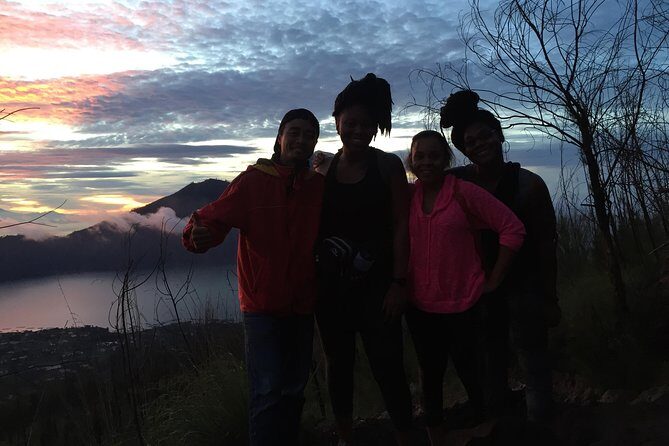
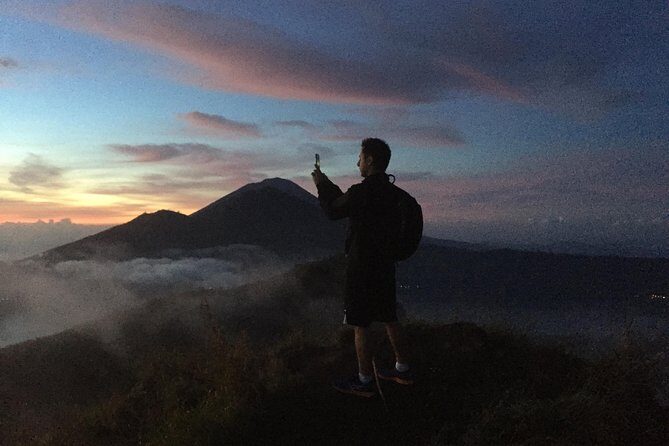
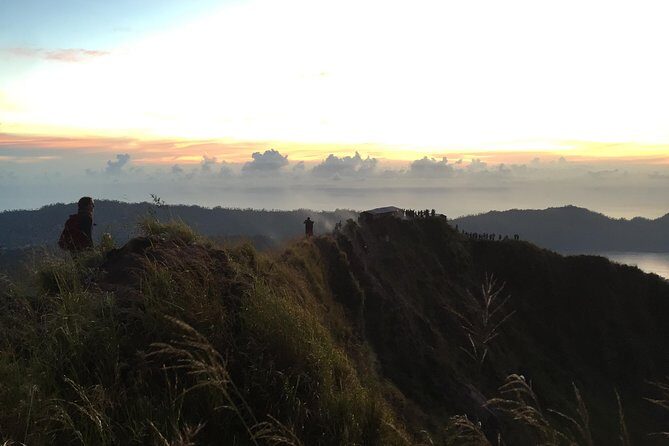
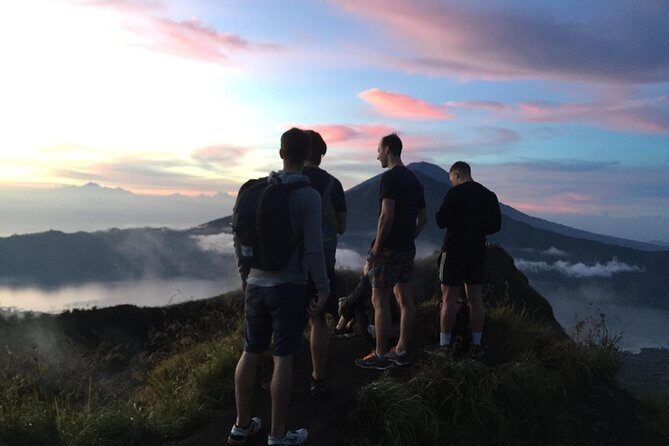
Mount Batur sunrise is a Bali must-do. The best part is how this package turns a scary-sounding night climb into a guided, well-fed morning with door-to-door transport and a private guide. You’ll be up in the dark, but you won’t be guessing your way through it.

What I like most is the way the team handles the setup that usually slows people down: flashlights and ponchos are included, and jackets or walking poles are available on request. The other big win is the reward at the top—eggs cooked in volcanic steam plus hot tea or coffee, then breakfast with volcano-and-lake views.

One consideration: the hike is still genuinely hard and can feel cold at the viewpoint. Even with gear help, you’ll want to dress for chilly early mornings and bring proper shoes (those aren’t included).

Key takeaways before you go

Mount Batur Sunrise Trekking (Private Tour and Breakfast at Restaurant) - Key takeaways before you go

  • Private pickup in an A/C car saves you from driving at night and keeps the timing smooth.
  • Flashlight + poncho support means you don’t have to scramble for basic hike gear last minute.
  • Volcanic-steam eggs and hot drinks make the sunrise stop feel like more than just a photo break.
  • Breakfast with Lake Batur views gives you a real finish to the effort, not just a quick snack.
  • English-speaking guide and driver helps you move at a safe pace and understand what you’re seeing.
  • Cold-weather factor is real; plan for layers even if Ubud feels warm.

Door-to-door private transfers: the real value of this setup

Mount Batur Sunrise Trekking (Private Tour and Breakfast at Restaurant) - Door-to-door private transfers: the real value of this setup
This tour is built around the idea that the climb should feel like an adventure, not a logistics problem. You get a private, air-conditioned car plus an English-speaking driver, so you’re not huddled in traffic planning route turns in the dark. Door-to-door round-trip private transfers also help if you want a calmer start from Ubud without stress.

That private setup matters for sunrise trekking because timing is everything. Mount Batur is active and the experience hinges on getting to the viewpoint early. If your group has to coordinate multiple taxis or a shared van, you lose time and energy before you even start climbing.

Also, being private means your group controls the pace. You don’t have to match the speed of people who are there for a casual stroll, or worry about keeping up with very fast hikers. The guide can work around your comfort level.

Trekking Mount Batur at sunrise: what you need and what they provide

Mount Batur Sunrise Trekking (Private Tour and Breakfast at Restaurant) - Trekking Mount Batur at sunrise: what you need and what they provide
You’ll be hiking in early morning darkness, and that changes what you pack. The good news here is that the basics are covered: flashlights are provided for free, plus simple ponchos just in case. Jackets and walking poles are available on request, which is especially helpful if you travel light.

What’s not included is the stuff you’ll feel most in your legs and lungs: running or hiking shoes, and warm clothing/windbreakers. In practical terms, bring footwear with grip for uneven volcanic paths. You’ll also want layers you can actually move in—morning temps can be chilly up high even when Ubud feels warm.

One detail worth noting from the experience notes: some people end up wanting extra warmth at the top. A blanket can sometimes be available for purchase near the viewpoint (one review mentioned a price in NZD), but don’t count on that. If you run cold, pack your own warm layer so you’re not bargaining with weather.

The climb experience: difficult sections, but guided pacing makes it manageable

Mount Batur trekking is not a flat walk. It’s a climb with darker footing and steeper moments, and the effort ramps up as you move toward the sunrise area. The tour description is honest about this: it’s doable for first-timers, but parts are challenging and tricky without guidance.

The guides make a noticeable difference in how the hike feels. Different guides lead different groups, and the names that show up with standout feedback include Ketut, Gede, Wankie, Made, and Jro (also listed as Jero in another note). You’re not just getting directions; you’re getting coaching for pacing—especially valuable if you’re not super fit.

You can also expect the guide to help you make the hike safer and smoother at night. One review praised how the guide paced the group so people didn’t get stuck behind crowds. Another highlighted patience and encouragement when the hiker was pushing physical limits. That style of guiding is what helps the experience feel like a team sport instead of a struggle.

A small practical tip: if you’re someone who likes to stop and breathe, do it early rather than waiting until you feel wiped. A good guide will help you time breaks so you still arrive with enough energy for the sunrise moment.

Volcanic-steam eggs and hot drinks: the sunrise stop is the reward

Once you reach the viewpoint, the tour shifts from effort to comfort. You’ll get eggs cooked in volcanic steam, plus hot tea or coffee. This isn’t just a cute add-on; it’s fuel at exactly the right time. Cold hands and tired legs need something warm, and hot drinks help you reset fast after the climb.

There’s also a strong focus on where you sit for sunrise. One review called out the guide knowing the best place to sit, which matters because the crowd and viewpoint space can get tight. A good location choice improves the whole experience, even if the clouds or wind aren’t perfect.

Then there’s the little moment of learning. A couple of notes mention guides sharing information and having conversation for people who like to understand what they’re seeing. On Mount Batur, that can turn the sunrise from a bucket-list check into a story you remember.

If sunrise is your main reason for coming, keep your expectations flexible. You’re climbing an active volcano in real weather. Even so, reaching the viewpoint on time and getting warm food and drinks makes the morning feel complete.

Okuta breakfast after the hike: Lake Batur views and a proper finish

After the top, your energy needs a second wave, and the tour handles that with breakfast at a restaurant overlooking the area. The breakfast stop is quick (about 30 minutes), but it’s timed like a finishing line: you’ve worked hard, you’re cold and hungry, and you get food with a view.

The view component is part of the value here. You’re not just eating somewhere nearby—you’re eating with Lake Batur and the volcano in sight. That makes breakfast feel like part of the experience, not a refund for your energy.

One more thing: this is all in the context of a longer day (around 10 hours total). Having breakfast included in that plan helps you avoid the common problem of trekking leaving you starving with nothing organized.

If you’re traveling with people who don’t love long hikes, this breakfast timing can still bring them around. It gives everyone something to look forward to, not only the climb.

How long is the day, and what to expect from the full schedule

The whole outing runs about 10 hours. The Mount Batur segment is listed at around 4 hours, and the breakfast/viewing stop is around 30 minutes, with the rest of the day taken up by pickup, transfer time, the climb rhythm, and getting back.

Plan to be ready for an early wake-up and a long morning-to-midday stretch. Sunrise trekking often feels like two trips in one: the first is the physical effort in the dark, and the second is the reward period where you warm up, eat, and breathe.

Because it’s a private tour, your timing is built around your group. If your pace is slower, the guide can shape the experience so you don’t feel rushed. If your group is comfortable, you may move efficiently with guide-led pacing.

Guide quality: English-speaking leadership and “patient pacing” matters

Mount Batur Sunrise Trekking (Private Tour and Breakfast at Restaurant) - Guide quality: English-speaking leadership and “patient pacing” matters
This is one of those tours where the guide makes the difference between exhausting and memorable. The tour includes a private trekking guide with good English, plus an English-speaking driver. That helps for safety and for context.

In the standout feedback, people specifically mention guides being helpful, friendly, and encouraging. One note calls out a guide being an angel-like support during a night trek that pushed physical limits. Another praises the guide for helpfulness and making sure people knew where to sit for the best views.

It’s easy to treat a sunrise climb like a simple hike. But when the ground is dark and uneven, leadership matters. A guide who knows the route, chooses good spots, and keeps your group moving at a manageable rhythm is what turns a hard climb into a shared win.

Price and value: is $39 per person actually a good deal?

At $39 per person, the price looks low for what’s included. You’re paying for a lot: private transport in an air-conditioned car, a private guide, flashlights and ponchos, bottled water, volcanic-steam eggs, hot tea or coffee, plus breakfast with views.

The value gets even clearer when you compare what you’d otherwise have to arrange. If you tried to do this on your own, you’d likely spend money on transport, hire a guide separately, and then still need to buy gear like flashlights or scramble for warm layers. This package bundles a lot of that friction into one price.

One more value point: this tour is booked about 29 days in advance on average. That suggests solid demand, which can help when you’re picking reliable operators for a sunrise activity where last-minute planning is risky.

Who should book this Mount Batur private sunrise trek?

This works best if you want the sunrise experience but don’t want to handle planning and navigation yourself. The private format is also a plus if you travel as a couple, family, or small group and prefer calm pacing.

It’s a strong fit for:

  • First-timers who want help with timing and footing in the dark
  • People who like structured experiences with a real payoff meal included
  • Anyone who runs cold and wants guided support plus warming food and drinks

If you’re the type who hates any exertion, this might feel too challenging. Even with guidance, it’s a climb and you should expect physical effort.

Practical packing list for a cold, early start

Since shoes and warm layers aren’t included, your packing is the biggest variable in how comfortable you feel. Based on what’s provided and what isn’t, I’d pack for warmth and footing.

Bring:

  • Hiking or running shoes with grip
  • Warm layers you can move in (a hat helps if you get cold easily)
  • Something wind-resistant
  • A small backpack if you like to carry water or a spare layer

You can rely on:

  • Flashlight support
  • Ponchos if the weather shifts

If you plan to request jackets or walking poles, do it early so your group isn’t waiting at pickup.

Frequently Asked Questions

FAQ

Is this a private tour or shared group?

It’s a private tour/activity, so only your group will participate.

How long does the tour take?

It runs about 10 hours on average.

What does the tour include for food and drinks?

You’ll get eggs cooked in volcanic steam and hot tea or coffee at the top, plus breakfast after the hike at a restaurant with volcano and lake views. Bottled water is included during the trip.

Do I get help with hike gear like a flashlight?

Yes. Flashlights are included for free, and simple ponchos are provided. Jackets and walking poles are available on request.

What about transportation—do they pick you up?

Yes. You get a private air-conditioned car and door-to-door round-trip private transfers, starting and ending back at the meeting point.

Where does the tour start?

The meeting point is Pura Jati Batur, Jl. Pendakian Gn. Batur, Batur Tengah, Kec. Kintamani, Kabupaten Bangli, Bali 80652, Indonesia.

Is the hike suitable for first-timers?

Most travelers can participate. The climb is described as doable for first-timers, but some sections are challenging and tricky, so the guide matters.

What should I bring that is not included?

Running or hiking shoes are not included, and warm cloth/jacket/windbreakers are also not included. Camera, wipes, and snacks are not listed as included either.

What is the cancellation policy?

Free cancellation is available up to 24 hours in advance for a full refund. If you cancel less than 24 hours before the start time, the amount paid is not refunded.

Should you book Mount Batur sunrise with breakfast and private transport?

If you want sunrise on Bali’s most famous volcano hike without handling the hard parts yourself—night timing, route stress, gear scrambling—this is a smart choice. The big reason to book is the combination of private guide + door-to-door transport + included warm food that makes the early start feel organized and worth it.

Book it if your group values comfort and structure, and especially if you’re not sure you want to climb in the dark on your own. Skip it only if you know you hate cold mornings and uphill hiking effort.

Bali ATV Quad Bike Through Tunnel, Waterfall, White Water Rafting

Bali ATV Quad Bike Through Tunnel, Waterfall, White Water Rafting - Ayung River whitewater: safety, stairs, and when you get soaked

Adventure comes in two flavors here. This combo day in Ubud mixes Bali whitewater rafting with a quad bike ride through countryside sights you rarely see on foot. It’s built for convenience: hotel pickup, safety gear, and time for showers and changing so you don’t end your day smelling like river mud.

Two things I really like: you get a proper guide setup for both activities, and the route on the ATV includes the dramatic bits—tunnels, waterfalls, and muddy track sections. A lot of the day’s success depends on the guide vibe, and I’ve seen names like Rico and Donking associated with this kind of rafting day, plus ATV captains such as Genting and Made. (So yes, humor and “you’re safe, keep going” energy are often part of the package.)

One drawback to plan around: there’s real physical effort. The rafting includes steep stairs down and back up, and the ATV course can be challenging on steep, rocky segments—so you’ll want reasonable comfort with uneven ground.

Key Things to Know Before You Go

Bali ATV Quad Bike Through Tunnel, Waterfall, White Water Rafting - Key Things to Know Before You Go

  • ATV route hits the big visual stops: rice fields, jungle, river crossings, canyon sections, tunnels, and a waterfall segment
  • Ayung River rafting = a workout in and out of the water: plan for steep stairs and a muddy climb back up
  • Pickup + gear + showers make the day easier: lockers, towels, changing rooms, and shower facilities are included
  • Meals are timed for after the messy parts: buffet lunch after rafting, then sandwich and fries after ATV
  • Tandem ATV has rules: two riders share one bike, and it must be booked in multiples of 2
  • Size limits matter: age/solo-tandem rules and a max weight limit of 150 kg per tandem/single

From Ubud Pickup to Ayung River: how the day actually moves

Bali ATV Quad Bike Through Tunnel, Waterfall, White Water Rafting - From Ubud Pickup to Ayung River: how the day actually moves
This tour is designed as one long adventure loop. You’ll either be picked up from your hotel lobby (if you book pickup) or meet at the Ayung Dewata Rafting location on Jalan Raya Kedewatan in Kedewatan, Ubud. Either way, the schedule revolves around getting you to the river first, then moving you to the ATV track.

Once you arrive at the rafting company, you’ll register, change clothes, and get a short instruction and safety briefing. Then you’ll be fitted with the rafting setup and shuttle to the river starting point. The group size is capped at 15, which helps keep things from turning into a chaotic line shuffle.

After the rafting, you’re not left hanging. You’ll typically have a clear break, then a buffet lunch, and then transportation to the ATV spot (ATV and rafting are at different places). This “two bases, two activities” layout is pretty common in Ubud, but the nice part here is the handoff is built into the plan.

Timing tip: the day is about 6 hours total. That’s long enough that you should treat it like a full outing, not a quick half-day. Bring cash for small extras (and remember the photos/video aren’t included).

Ayung River whitewater: safety, stairs, and when you get soaked

Bali ATV Quad Bike Through Tunnel, Waterfall, White Water Rafting - Ayung River whitewater: safety, stairs, and when you get soaked
The rafting part runs on the Ayung River, and the ride itself is listed at about 2 hours. Some days can run closer to 2–3 hours depending on river conditions and group timing, so I’d plan your hydration and stamina like it’s a longer session.

What makes the Ayung experience feel “real” is how much effort happens before you even hit the water. From the way the day is described, you’ll get down to the river and then climb back out afterward. The stairs are steep, and there may not be railings the whole time, so you’ll want shoes with real grip and stable footing.

What you can expect on the water

You’ll paddle with a guide, in a fresh-water river setting with jungle scenery and waterfalls along the route. You won’t be alone—guides help the boat stay together and they also decide where the more playful moments happen.

If you care about safety and confidence, this is where the guide quality matters most. I’ve seen names like Rico and Donking tied to rafting guides who keep things fun without losing control of the boat. In practice, that means you’ll get clear calls for paddling and more “do this next” guidance than vague instructions.

How wet you’ll get

Expect to get wet. The river rafting is the messier half of the day, and you’ll likely want to keep your valuables sealed and dry during the water portion. If you have any choice in order (some guides ask preferences), do ATV first so you’re already ready to get muddy before rafting turns you into a wet backpack. If not, just plan to enjoy the soak and then use the shower and changing facilities afterward.

ATV quad biking near Ubud: tunnels, waterfall fun, and real driving practice

Bali ATV Quad Bike Through Tunnel, Waterfall, White Water Rafting - ATV quad biking near Ubud: tunnels, waterfall fun, and real driving practice
After lunch, you’ll head to the ATV area for about 90 minutes of riding time. This is where the day shifts gears: from paddling to throttle control.

You’ll get a briefing and you’ll ride with an ATV guide escort. The track is described as taking you through rice fields, jungle sections, river and canyon areas, tunnels, waterfall segments, and muddy “wet rack fun attraction” style parts. It’s not just flat countryside driving. The course has variety, and that variety is the whole point.

Tandem vs solo: choose what fits your comfort

ATVs here can be tandem (2 people on one bike). That’s a fun way to share the experience, especially for families. But the rules matter:

  • Tandem must be booked in multiples of 2
  • The listed age guidance for tandem is ages 6–12 if riding with a parent
  • Solo is listed for ages 13–65

There’s also a max weight limit of 150 kg per tandem/single. If you’re near the limit, you should double-check before booking.

One practical consideration I’d flag: some riders prefer solo for control and comfort. Tandem can mean tighter seating and less freedom to shift weight. If you’re sensitive about comfort, solo may feel better.

What to do if you’re a beginner

Don’t panic if you’ve never driven a quad before. The day is set up with a guide, and the course has a mix of slower and more challenging sections. That said, you should come in with respect for the terrain: there can be steep descents and rocky bits. A little caution early on helps you build confidence fast.

Also, think about clothing. You’ll get muddy. Your job is to arrive ready to get dirty and then enjoy the fact you’ll get showers and clean clothes afterward.

Lunch, lockers, showers, and how to pack for this kind of Bali day

Bali ATV Quad Bike Through Tunnel, Waterfall, White Water Rafting - Lunch, lockers, showers, and how to pack for this kind of Bali day
This tour is one of those rare adventure combos that actually plans for the aftermath. Included are locker storage, towels, changing rooms, and shower facilities. That means you’re not stuck improvising at a parking lot after rafting and ATV.

Meals: what’s included and when

You’ll have:

  • Buffet lunch after rafting
  • Sandwich and fries after the ATV ride

There’s no claim here that it’s a fancy chef menu, but it’s a real food break in the middle of an active day. If you’re vegetarian, you should have options available since meals are described as buffet-style and included.

Deposit you need to plan for

There’s an IDR 100,000 deposit per person for using the locker and towel. You’ll want to have cash or a way to pay that deposit when you arrive. If you forget, it can slow you down, even when everything else is smooth.

What to bring (simple checklist)

Bring:

  • Some cash (for deposits and any optional photos/video)
  • Changing clothes for after the activities
  • Sunblock
  • Casual dress

For footwear, it’s especially practical:

  • For rafting: river sandals or sport shoes (something you can trust on wet, uneven ground)
  • For ATV: you’ll get boots, so focus on secure footwear that works while you walk from place to place

If you want the day to feel easy, bring a small bag for your phone and anything you must keep dry. Even with provided gear, water and mud have a way of finding your pockets.

Value at $26.10: what you really get for the money

Bali ATV Quad Bike Through Tunnel, Waterfall, White Water Rafting - Value at $26.10: what you really get for the money
At $26.10 per person, the appeal is the combo. You’re not paying for two separate stand-alone activities that each require a lot of extra logistics. Here, the value comes from:

  • One pickup/drop-off plan tied to the day
  • Safety equipment included for rafting and an ATV guide system for the ride
  • Two distinct adventure experiences in one outing
  • Included meals, plus showers and changing facilities

Of course, it’s still an adventure day, not a luxury spa. You should expect physical effort, dirt, and water. But if you want maximum thrill for minimum fuss, this is the type of pricing that makes sense.

If you care about photos and videos, remember they’re not included. That can be a separate cost you decide on afterward.

Group size, stress level, and guide impact

Bali ATV Quad Bike Through Tunnel, Waterfall, White Water Rafting - Group size, stress level, and guide impact
This tour runs with a maximum of 15 people, and you’ll be split by activity flow. The biggest difference you’ll notice is whether you get held up at transitions. The way this day is structured—pickup, registration, briefing, then shuttle—aims to minimize waiting.

Guide quality can make or break both halves:

  • On the river, humor and clarity matter because paddling calls have to be understood fast.
  • On the ATV, patience matters because new riders often get stuck in mud or need help with technique.

I’ve seen rafting guides named Rico, Malot, Usman, Jerry, and Donking tied to memorable days. ATV guides show up too—names like Genting, Made, Justin, and captains such as Pawah and Ola are mentioned in connection with the ride. Even without knowing your exact guide ahead of time, the recurring pattern is consistent: you’ll get help with lockers, pictures, and getting sorted.

Who should book this, and who should skip it

Bali ATV Quad Bike Through Tunnel, Waterfall, White Water Rafting - Who should book this, and who should skip it
This combo is a good match for:

  • People who want a full day of action without planning two separate tours
  • Families with active kids (the ATV rules allow tandem setups for children riding with a parent)
  • Riders who like scenic variety: rice fields, jungle, tunnels, and waterfall moments

You should think twice if:

  • You have mobility limits. The rafting includes steep stairs down and up.
  • You’re pregnant, because pregnancy is not allowed for this activity.
  • You dislike uneven terrain and rocky roads. The ATV route includes steeper, rougher segments.
  • You want a calm, dry experience. This day is meant to get you wet and muddy.

If you’re unsure about tandem comfort, consider solo riding when possible. Some riders prefer solo because tandems can feel cramped on a bike built primarily for one.

Final call: should you book this Bali ATV + rafting combo?

Bali ATV Quad Bike Through Tunnel, Waterfall, White Water Rafting - Final call: should you book this Bali ATV + rafting combo?
I’d book it if you want one ticket that delivers two different kinds of adrenaline in Ubud, with pickup, safety gear, and real facilities for washing and changing. The value is strong at $26.10, and the day’s structure is practical: get briefed, get active, eat, ride, then recover.

I wouldn’t book it if you’re expecting an easy, scenic stroll. The stairs and terrain are part of the deal. Also, if you’re sensitive about tandem comfort, plan to ride solo if you can, or at least go into tandem with the expectation that it’s more about sharing the experience than maximum space.

One last decision tip: if your guide asks about order, choose ATV first. You’ll still get wet on the rafting day, but you’ll be less annoyed when your rafting clothes turn into river souvenirs.

Free cancellation is offered up to 24 hours in advance, so you can book now and adjust if weather or timing changes your plans.

FAQ

How long is the full tour?

It runs about 6 hours total, with about 2 hours on the Ayung River rafting and around 90 minutes on the ATV ride.

Is hotel pickup included?

Pickup is offered if you book with pickup. If not, the meeting point is at Ayung Dewata Rafting in Ubud, and the activity ends back at the meeting point.

What’s included with the activities?

You get a tour guide, insurance cover, lockers and changing facilities (including showers), and safety equipment. Rafting includes boots and helmet, and meals are included: buffet lunch after rafting and sandwich and fries after the ATV ride.

Can children ride the ATV?

For tandem ATV, children ages 6–12 can ride with a parent. Solo riding is listed for ages 13–65.

Are pregnant travelers allowed?

No. Pregnant travelers are not allowed for this activity.

What should I bring, and is there a deposit?

Bring some cash, changing clothes, and sunblock. For locker and towel use, there’s a deposit of IDR 100,000 per person.

Private Mount Batur Sunrise Trekking Tour

Private Mount Batur Sunrise Trekking Tour - Summit Views That Make the Cold Morning Worth It

Mount Batur’s sunrise is a early-morning power move. You’ll climb in the dark up an active volcano, then watch Bali wake up from the summit with views over the caldera, Lake Batur, rice terraces, jungle, and villages down to the coast. I also like that the experience is built around a small group (max 15) and a volcano-vent breakfast that feels like real payoff, not a random tour snack. One thing to consider: sunrise depends on conditions up top, so you may need to be flexible if clouds roll in.

The pickup options make this trek much easier to fit into your Bali days, and you’re not just hiking—you get a crater-area window and a proper morning rhythm before heading back. My other favorite: the tour is positioned as private for your group, so the pace can feel more personal even in a small-group format. The possible drawback is that not everything at the top is included—tea or coffee at the summit isn’t part of the package—so plan for a few extra purchases if you want hot drinks beyond what’s served with breakfast.

Key things to know before you go

Private Mount Batur Sunrise Trekking Tour - Key things to know before you go

  • Sunrise over the caldera: you’re climbing for the payoff—Lake Batur, crater areas, and views stretching toward the coast.
  • Breakfast cooked with volcanic steam: it’s part of the fun, and it gives you a warm reason to slow down after the climb.
  • Small-group cap (max 15): easier pacing and a more human feel on a popular trail.
  • Private for your group: you won’t be lumped in with strangers beyond the small-group structure.
  • Pickup from multiple Bali bases: Ubud, Sanur, Canggu, Kuta, Nusa Dua, Jimbaran, or Seminyak.
  • Moderate fitness needed: expect walking and some uphill effort, especially in the early hours.

Entering Mount Batur Sunrise Mode From Ubud and Beyond

This tour works because it’s built for a specific moment: the light rising over Bali. Mount Batur is an active volcano near Kintamani, and the summit area is famous for sunrise views over the caldera and surrounding mountain ranges. Even if you’ve seen Bali photos before, there’s something different about seeing it from above the volcanic basin—your brain takes a second to process how many layers of green and water are stacked across the island.

The logistics are also thoughtfully simple. You get air-conditioned vehicle transport as part of the deal, and pickup is offered from several popular areas: Ubud, Sanur, Canggu, Kuta, Nusa Dua, Jimbaran, or Seminyak. That matters because the early start is the hard part; you don’t want to spend the morning navigating traffic or hunting down a meeting point in the dark.

Duration is listed as about 8 hours, and the main hike time is around 4 hours. That’s a realistic half-day commitment. You’re still able to enjoy the rest of the day after you return for a well-earned rest—one of the smartest ways to structure Bali if you like nature without losing the whole schedule to it.

The 4-Hour Summit Hike: What the Climb Really Means

Private Mount Batur Sunrise Trekking Tour - The 4-Hour Summit Hike: What the Climb Really Means
The trek is described as moderate, and you should plan accordingly. You’ll be walking as you make your way up toward the summit in the early morning, before sunrise. If you’re generally comfortable walking uphill, you’ll probably manage fine. If stairs and sloped terrain drain you quickly at home, prepare for slower progress here.

What makes or breaks your hike is pacing and support. Guides are a big deal on this trail. Several named guides show up in the experience: Ricky, Gunawan, Dyangu, and Adi. The consistent theme is that the guides help you keep your footing, take breaks when you need them, and share context about the volcano and surrounding peaks. If you care about turning a physical activity into something you understand, you’ll likely love that extra layer.

What you should bring into your mental game:

  • You’ll likely start out before it’s fully light, so your world is going to be headlamp/torch-and-breathing focus.
  • The trail is uphill and can feel tricky on uneven sections.
  • Your goal is steady progress, not a sprint. The sunrise is the real finish line.

Summit Views That Make the Cold Morning Worth It

Private Mount Batur Sunrise Trekking Tour - Summit Views That Make the Cold Morning Worth It
Once you reach the top, this is where the tour earns its reputation. The summit is the viewing platform for the whole caldera scene: Lake Batur, the volcano’s crater area, and panoramic views over Bali’s mix of jungle, rice terraces, villages, and coastal directions. It’s a wide, layered view, and it tends to look better the longer you let your eyes adjust.

You’ll typically spend time watching the sunrise and taking in the scenery. One small reality check: weather can affect visibility. If clouds move in, you might not get the full wow-factor you planned for. That doesn’t mean the day is a loss—volcanic mornings still have drama—but it’s the main reason your results can vary.

A practical tip: plan to take photos, but also give yourself a few minutes with no camera. The light changes fast at sunrise, and you’ll get more out of the moment if you let your eyes do the first pass.

Volcano Steam Breakfast: Warm Food With a Story

After the climb, you’re rewarded with breakfast cooked using the volcano’s steam. That’s not just marketing flavor. On Mount Batur, the heat is part of the experience, so your breakfast feels linked to the place in a tangible way.

Breakfast is included, and bottled water is part of the package. You’ll eat at the top area (or around the summit zone timing), and it’s the kind of warm meal that helps your body recover after a chilly hike in the dark. The tour also mentions you’ll have a delicious breakfast before heading back to your hotel for rest.

One note for your budget brain: tea or coffee at the summit isn’t included. So if you’re the type who wants a hot drink while you’re waiting for the light, keep a little extra money aside for that, or come prepared to stick with whatever is included with the meal.

The Car Pickup Reality: Easy Start, Smart Schedule

Private Mount Batur Sunrise Trekking Tour - The Car Pickup Reality: Easy Start, Smart Schedule
Because pickup is offered from many areas, this tour is built to reduce friction. If you’re based around Ubud, it’s especially convenient. Ubud is a hub for Bali activities, but getting to Kintamani early can be a headache if you’re self-driving or relying on uncertain transport times. With air-conditioned vehicle pickup, you avoid that scramble.

That said, there’s one practical road consideration you should know about. Some past experiences have mentioned bumpy conditions on the way due to construction, so don’t be surprised if the ride isn’t perfectly smooth. It’s not a deal-breaker for most people, but if you’re sensitive to motion sickness, it’s worth planning ahead.

Also pay attention to the “end” point. The activity ends back at the meeting point. Depending on your pickup arrangement and where you started, you may want to confirm whether you’re returned directly to your hotel or dropped at/near the meeting location for your area.

Private-For-Your-Group Feel With a Max of 15

Private Mount Batur Sunrise Trekking Tour - Private-For-Your-Group Feel With a Max of 15
The tour is described as a private tour/activity, meaning only your group participates. At the same time, it’s also positioned as a guaranteed small-group tour with a maximum of 15 travelers. In real life, that usually translates to a less crowded trail experience and a more manageable pace than the huge-budget, huge-group options.

Why that matters on a sunrise hike:

  • You’ll have a better chance of moving at a pace that feels right for you.
  • It’s easier for your guide to help you find your rhythm when the footing is uneven.
  • You’re more likely to get time for questions rather than just “go, go, go.”

If you’re traveling as a couple, this kind of structure often feels ideal. You get the togetherness of a private experience, plus the safety net of a guide and a reasonable group size.

What You’ll Learn Along the Way (Even If You’re Not a Volcano Nerd)

You don’t need to be a geology buff to appreciate Mount Batur. But a good guide can make the volcano feel real, not abstract. Guides on this tour have a track record of pointing out things along the hike—other mountain peaks, volcano history, and what eruptions have meant for the region.

That kind of explanation changes how you experience the view. Instead of looking at a pretty sunrise, you start noticing patterns: ridges and slopes, the volcanic basin shape, and how Lake Batur fits into the story of the landscape.

And yes, personality matters on a dark, early trek. Named guides like Gunawan and Adi are described as funny and supportive, and that matters because morale can dip when you’re cold and climbing in the dark. A good guide keeps it practical and keeps you moving without rushing you.

Price and Value: Why This Often Feels Like a Deal

Private Mount Batur Sunrise Trekking Tour - Price and Value: Why This Often Feels Like a Deal
The price listed is $39 per person. That’s unusually competitive for a sunrise trek that includes pickup, air-conditioned transport, breakfast, bottled water, and all fees and taxes. Where you get real value is in the full bundle: transport + early timing + summit experience + breakfast with volcanic steam.

One honest caution: some people feel pricing is too high when they compare against other options. You may also see different totals depending on add-ons or what’s included at checkout. Still, based on what’s included here, the base package has a strong value story if you want convenience and a guided sunrise experience rather than piecing things together yourself.

Also, don’t confuse price with quality. Guides can make the difference between a tired slog and a memorable morning. If you’re booking with the right expectations—good shoes, moderate fitness, willingness to rise early—you’ll usually get a lot for your money.

Should You Book This Mount Batur Sunrise Trek?

I think you should book it if you want one morning in Bali that’s active, scenic, and structured around a payoff you can’t fake. This is a great choice for couples, small groups, and anyone who likes early starts when the reward is views over a volcanic caldera and a warm breakfast cooked with volcanic steam.

You might skip it if:

  • You’re not comfortable with moderate walking and uphill effort.
  • You strongly depend on perfect weather to enjoy a trip. Sunrise outcomes can vary with cloud cover.
  • You’re looking for lots of included drinks beyond breakfast. Tea or coffee at the summit isn’t included.

If you book, do yourself a favor: treat the sunrise trek like the main event of your day. Give yourself time to enjoy the climb and the view. The people who love this tour tend to be the ones who show up ready for the early-morning rhythm and trust the guide to set a steady pace.

FAQ

Where are the pickup locations for this tour?

Pickup is offered from Ubud, Sanur, Canggu, Kuta, Nusa Dua, Jimbaran, or Seminyak.

How long is the Mount Batur sunrise trekking tour?

The tour runs for about 8 hours. The hike portion is listed at around 4 hours.

How strenuous is the trek?

The experience calls for a moderate level of physical fitness, since there will be some walking and uphill effort.

Is this a private tour?

Yes. It’s described as a private tour/activity, and only your group will participate.

What’s included in the price?

Included items are air-conditioned vehicle transport, breakfast, bottled water, and all fees and taxes.

Is tea or coffee included at the summit?

No. Tea or coffee at the summit is not included.

Where does the tour start and end?

It starts at Jalan Bukit Catu (Jl. Bukit Catu, Songan A, Kec. Kintamani, Kabupaten Bangli, Bali) and ends back at the meeting point.

What is the cancellation policy for a full refund?

You can cancel for a full refund if you cancel at least 24 hours before the experience’s start time. If you cancel less than 24 hours before, the amount paid isn’t refunded.
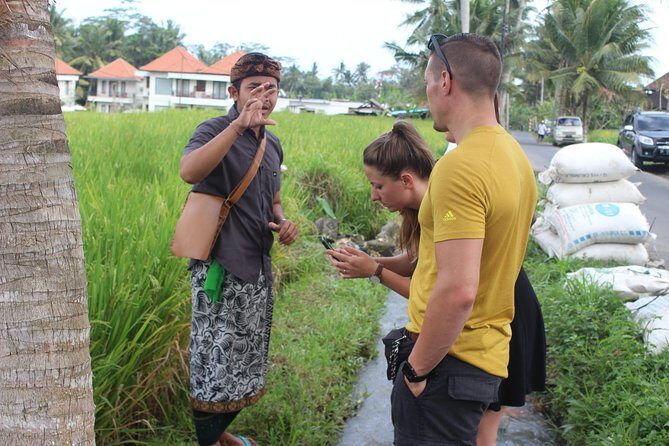
PRIVATE Authentic Balinese Cooking Class in Ubud at Putu’s Home

PRIVATE Authentic Balinese Cooking Class in Ubud at Putu's Home - Price and Logistics: Is $75 Worth It?

Smelling spices is one of the fastest ways to start Bali. In Ubud, you cook in Putu’s family home with her husband, grandparents, and children, not in a classroom. You’ll grind spices, chop on simple boards, and learn why certain ingredients matter before you sit down to eat everything you made.

I especially love the farm-to-table feeling. Many of the ingredients come from Putu’s own gardens and the rice her grandparents grow, so the food tastes like it has a story attached. One small consideration: the kitchen setting is basic and mostly outdoor, and the drive from central Ubud can add time, so plan your day with that buffer.

If you choose lunch or dinner, the experience still runs at an unhurried home rhythm. You’ll finish with a Balinese feast, plus a little local alcohol, and you’ll leave with recipes to try back home. It’s a private setup, so you can ask questions and adjust spice levels as you go.

Key points to know before you go

PRIVATE Authentic Balinese Cooking Class in Ubud at Putu's Home - Key points to know before you go

  • Private and hands-on, not a show: You cook alongside Putu and her family, with guidance at each step.
  • Five dishes, built from scratch: Expect spice work, chopping, grilling/steaming, and assembly like banana-leaf parcels.
  • Farm ingredients and family rice: You’ll taste produce and rice grown by Putu’s household.
  • Culture mixed into cooking: You learn about Balinese Hindu household life, including temple areas, in plain language.
  • Food comes with leftovers: People often leave with extra food packed to take away.
  • Transport is included only from Ubud: Pickup and drop-off are included from Ubud hotels; outside Ubud costs extra.

Why Putu’s Ancestral Compound Feels More Like Family Than Tour Time

PRIVATE Authentic Balinese Cooking Class in Ubud at Putu's Home - Why Putu’s Ancestral Compound Feels More Like Family Than Tour Time
The setting is the first big win. You’re invited into a traditional Balinese compound home, where different spaces have meaning. Putu walks you through the layout—especially the family temple areas—and explains what you’re seeing in everyday terms. It’s not a museum talk. It’s the logic of how people actually live.

This is also a multigenerational household. You’ll meet Putu, her grandparents, her husband, and their children. That matters because the cooking isn’t treated like a performance. It’s treated like daily life—passed down, practiced, corrected, and shared.

In a lot of Bali cooking classes, you learn recipes. Here, you learn context. Putu shares stories behind the food, including the spice choices her family makes and the role of traditional Balinese ingredients. Some of what you hear goes beyond flavor into traditional uses—like the healing properties of certain ingredients—paired with where they come from.

The vibe is warm and funny. Several people mention Putu’s patient, encouraging teaching, which helps a lot if your cooking skills are only average. Also, it’s private—so if you want to go slower, ask questions, or take notes, you can.

Price and Logistics: Is $75 Worth It?

PRIVATE Authentic Balinese Cooking Class in Ubud at Putu's Home - Price and Logistics: Is $75 Worth It?
At $75 per person, the value comes from three places: privacy, instruction, and what’s included with the meal.

You get a private cooking lesson (not a big group classroom), plus a homecooked meal built from the dishes you prepare. You also get:

  • Round-trip transport from your Ubud hotel
  • Local alcohol (typically 1–2 glasses)
  • Non-alcoholic drinks
  • Taxes and fees included
  • Gratuities included
  • A mobile ticket system

That combination is what keeps it from feeling like you’re paying mostly for access. You’re paying for time with Putu’s family kitchen and their food culture.

The one pricing catch is geography. If you’re staying outside Ubud, transport costs extra. If you’re deep in the countryside, make sure you’re comfortable adding that extra ride time and expense.

The other “logistics value” point: you’re not driving yourself through traffic or hunting for a meeting point. Door-to-door pickup and drop-off is included for Ubud hotels, and that alone can make the whole day feel easier.

Timing Reality: Around 3 Hours Total, Not a Long Day

The total block is about 3 hours, but the actual cooking time is roughly 1.5 hours. That’s a good setup for two reasons.

First, you can fit it into your trip without feeling like you lost half a day. Second, the remaining time is what you need: the welcome, the farm/compound walk, and the meal at the end.

A few practical notes from people’s experiences:

  • The class works for both lunch and dinner schedules.
  • If you’re booking at night, the cooking area can be well-lit, so you’re not stuck guessing what you’re doing.
  • The kitchen process includes traditional methods like steaming rice and using hands-on spice prep, so the pace is more “methodical” than “rushed.”

Plan your day with a buffer for driving. One review notes the cooking location is about 40 minutes from central Ubud. That’s not a deal-breaker, but it matters if you booked another reservation right after.

What You’ll Cook: Five Balinese Dishes Built Around Spices

You’ll cook five authentic dishes, and the exact menu can vary by season. That means you should treat it like a rotating menu based on what’s freshest—not a fixed checklist.

Still, you can expect dishes in the range of:

  • Grilled fish
  • Banana leaf parcels
  • Curry-style preparations

What makes the cooking feel real is the process. Putu doesn’t just hand you ingredients. You’ll do the work:

  • Chopping on wood blocks with small cleavers
  • Grinding spices by hand (you may even work it into satay-style prep)
  • Cooking over simple equipment like a basic cooktop, and traditional steaming methods for rice

One of the best moments is when the kitchen starts smelling like the dish you’re making. The spice work is front and center, and Putu explains how she expects flavors to combine. Several people mention she lets you adjust spice level, which is handy if you’re not trying to “eat fire for fun.”

Vegetarian and vegan options

Vegetarian and vegan options are available. If dietary restrictions are important to you, tell Putu at booking. The class isn’t presented as a one-size-fits-all menu.

Allergies and preferences

If someone in your group has allergies or strong preferences, you should advise at booking. This is especially important for spice mixes and ingredients that may vary with the day’s produce.

The Feast: Rice, Garden Produce, and a Small Pour of Local Alcohol

PRIVATE Authentic Balinese Cooking Class in Ubud at Putu's Home - The Feast: Rice, Garden Produce, and a Small Pour of Local Alcohol
After cooking comes the part most people remember: sitting down to a Balinese feast with everything you made.

You’ll eat their homegrown rice, cultivated by Putu’s grandparents. That detail matters because it frames the meal as family agriculture, not just food styling. People also mention tasting fruits from the garden, with one example being mangosteen, which gives you a sense of the orchard life behind the cooking.

The meal is paired with drinks:

  • Local alcohol, typically 1–2 glasses
  • Non-alcoholic beverages

This isn’t a “party” vibe. It’s a simple pairing. Think of it as a small cultural touch—one more reason the meal feels lived-in rather than staged for tourists.

One practical bonus: people often mention there’s enough food for leftovers, and it may be packed to take away. If you’re the type who likes having a tasty breakfast the next day, this can be a nice payoff.

Cultural Lessons You’ll Actually Use in Conversation

PRIVATE Authentic Balinese Cooking Class in Ubud at Putu's Home - Cultural Lessons You’ll Actually Use in Conversation
This is where the class quietly becomes more than cooking.

Putu shares what different spaces in a traditional Balinese home mean, especially around the temple areas. You’ll learn the basic household logic—why certain parts exist and how they’re used—without getting lost in academic terms.

You also hear about the ingredients beyond “this tastes good.” Putu explains:

  • what spices she uses and why
  • traditional Balinese ingredients and their healing properties
  • how much of the food supply comes from the family farm

That kind of explanation sticks because you taste what it’s saying. It’s not just a lecture. You’re building the dish, then you understand why that ingredient was chosen in the first place.

And yes, there’s humor. Multiple reviews highlight Putu’s personality and teaching style—friendly, patient, and relaxed—so the cultural part doesn’t feel heavy.

Comfort, Cleanliness, and the Real Kitchen Setup

Don’t expect a glossy demo kitchen. You’ll likely be working with a simple setup—sometimes outdoor, sometimes in a garden area. People mention the kitchen can be outdoor and clean, with ingredients laid out and ready.

Two practical comfort points show up repeatedly:

  1. The workspace is organized, so you’re not fighting for counter space.
  2. The process is taught clearly enough that even people with moderate cooking skills can keep up.

Also, communication is practical. One review notes Putu uses WhatsApp to communicate, so having it installed helps you coordinate smoothly.

If you get cold easily, bring a light layer. If you hate insects, bring basic repellant. The class is tied to a rural home setting, so you’re stepping into nature more than into a hotel.

Who This Cooking Class Suits Best

This experience fits best if you want real home cooking and a personal connection to Bali beyond souvenir shops.

It’s a strong match for:

  • Food lovers who like learning techniques, not just recipes
  • People who enjoy farm-to-table stories
  • Anyone curious about Balinese Hindu household life
  • Families or mixed-age groups, since the cooking is handled with patience and everyone can participate

It may be less ideal if you’re looking for:

  • A polished “chef show” with quick plating and zero mess
  • A fully indoor, modern kitchen experience
  • A super fast, factory-style workshop

Given the private format, you get more flexibility than most group classes. But it’s still hands-on cooking in a real home setting.

Should You Book Putu’s Private Balinese Cooking Class in Ubud?

Yes, if you want a private lesson that feels like you were invited in, not like you bought a ticket and sat in the back. The mix of five hands-on dishes, farm-grown ingredients, and temple/culture context is the reason this class gets consistently high ratings.

Book it especially if you care about value: private transport from Ubud, meal included, local alcohol included, and recipes to take home. At $75, it’s not just “cheap,” it’s balanced against what you’re actually getting.

Think twice only if you’re staying well outside Ubud and the extra transport charge will make it feel too pricey. Also, if you’re trying to pack every minute of your day, remember that driving time can be around 40 minutes each way from central Ubud.

If you want one meal in Bali that you can explain to people back home, this is it.

FAQ

Where does the cooking class take place?

It’s held at Putu’s home in Ubud, in her traditional compound home and garden area.

How long is the experience?

The class cooking portion is about 1.5 hours, and the overall experience is around 3 hours.

How many dishes will we cook?

You’ll prepare five authentic Balinese dishes.

Is this experience private?

Yes. It’s a private, personalized experience, and only your group participates.

Does the price include transportation?

Transport round-trip from your Ubud hotel is included. If you’re outside Ubud, there’s an extra charge for transportation.

Is lunch or dinner offered?

Yes. You can choose between lunch or dinner based on your schedule.

Are vegetarian or vegan options available?

Yes. Vegetarian and vegan options are available if you advise at the time of booking.

Is local alcohol included?

Local alcohol is included, typically 1–2 glasses, along with non-alcoholic beverages.

Do I get recipes to take home?

Yes. You’ll take home the recipes from the class.

Can I cancel for a full refund?

Free cancellation is offered. You can cancel up to 24 hours in advance of the experience for a full refund.

Bali Instagram: Gate of Heaven Temple Tour

Bali Instagram: Gate of Heaven Temple Tour - Getting from Ubud in an air-conditioned vehicle

Queue at heaven’s gate, then waterfall light. This private 10-hour day in Ubud strings together Bali’s most camera-friendly sites and a few quieter moments, with air-conditioned hotel pickup and drop-off. I love that admission fees are included, and you get sarongs handed to you for the temples. The one thing to keep in mind is the day is long, and Lempuyang’s photo spot can mean serious waiting.

If you’re in decent shape, you’ll enjoy how the route flows from sacred gates to water palaces to a cave waterfall. The only real caution is physical effort: some walking and stairs are part of the plan, especially around Tukad Cepung.

Key highlights to know before you go

Bali Instagram: Gate of Heaven Temple Tour - Key highlights to know before you go

  • Private group comfort with hotel pickup in an air-conditioned vehicle, so you’re not stuck riding around in someone else’s schedule.
  • All entrance fees included, so you can focus on sights instead of budgeting at every stop.
  • Sarongs for temple visits are provided, which saves you from last-minute shopping.
  • Iconic Gate of Heaven photos at Lempuyang Temple with Mt. Agung in the background.
  • Tirta Gangga’s holy spring water gardens and fountains add a calm, scenic break between big photo stops.
  • d’Alas Swing plus Tukad Cepung means you’re getting both the valley waterfall vibe and the swing-over-rice-terraces shot.

The vibe: a Bali photo route with real spiritual stops

Bali Instagram: Gate of Heaven Temple Tour - The vibe: a Bali photo route with real spiritual stops
This tour is built around the most searched-for Bali moments, but it’s not just random sightseeing. You’re starting at Lempuyang Temple, where the Gate of Heaven framing makes Mt. Agung the star of your holiday photos. Then you shift into water and worship spaces, and later you end with Ubud’s rice-terrace scenery and the jungle swing.

You’ll feel the rhythm of the day: mornings tend to be about getting the best temple timing, midday becomes about food and views, and the later hours lean more active with waterfall walking and the swing session. If your idea of a great Bali day includes both spirituality and the classic Instagram angles, this one fits.

Price and what you really get for $85

At $85 per person for a full-day private route, the value comes from what’s bundled. You’re getting round-trip hotel pickup/drop-off, a local buffet lunch, bottled water, and a list of tickets and fees that would normally add up fast on your own.

Here’s what that means for you in practical terms:

  • You’re not paying temple entry one by one. All admission fees are included.
  • You don’t need to bring extra temple clothing. Sarongs are provided.
  • You’re not stuck guessing what costs extra. The d’Alas swing ticket is included, and bottled water is on board.
  • You still get the “day driver” advantage: you spend your time at stops, not on logistics.

The possible trade-off is that you’re committing to a set sequence. You can’t expect unlimited flexibility to swap stops on a whim, because the plan is designed to hit multiple featured locations in one long day.

Getting from Ubud in an air-conditioned vehicle

Bali Instagram: Gate of Heaven Temple Tour - Getting from Ubud in an air-conditioned vehicle
The transport is straightforward and useful: round-trip pickup from your hotel in an air-conditioned car. That matters more than it sounds, because the route covers different sides of Bali’s central areas and you’ll likely be in the car for a good chunk of the day.

A nice bonus in the reviews is how many guides emphasized time, road safety, and smooth driving, especially on longer stretches. That shows up in the experience as fewer stress moments: you arrive ready to work your way through queues and photo setups instead of burning energy on travel problems.

Also note: this is a private tour, so it’s only your group. If you’re traveling with family, friends, or a small group, you’ll get more control over your own pace—within the limits of the itinerary.

Stop 1: Lempuyang Temple and the Gate of Heaven photo reality

Bali Instagram: Gate of Heaven Temple Tour - Stop 1: Lempuyang Temple and the Gate of Heaven photo reality
Lempuyang Temple is the headline. You’ll walk up to the famous gate framing and admire Mt. Agung, Bali’s highest volcano, from the iconic viewpoint. This is the spot that people travel across the island for, and it’s exactly why you should plan your expectations around time at the gate.

What I like about this stop:

  • The view is the whole point. You’re aiming your camera at a composition that puts Mt. Agung and the gate in one frame.
  • You’re given a sarong to meet temple requirements, so you don’t scramble for clothing.
  • You get about an hour here, which is enough for photos and letting the moment soak in.

What to watch out for:

  • Expect more people here. Even on a good day, waiting can eat into your time.
  • One practical tip: if you can choose an early start, it helps. Many people talk about getting there around the early-morning window because it reduces time in line.

And yes, the waiting can feel long. The key is mental planning: bring patience, use the time well, and don’t expect the photo moment to be instant.

Stop 2: Tirta Gangga water palace and the holy spring gardens

Bali Instagram: Gate of Heaven Temple Tour - Stop 2: Tirta Gangga water palace and the holy spring gardens
After the temple, the day shifts to water and gardens at Tirta Gangga, the water palace known for crystal-clear pools and fountains fed by a natural holy spring. You’ll spend about an hour wandering the space and taking in the water features and surrounding sculptures.

This is a smart change of pace. Lempuyang is all about climbing and picture framing. Tirta Gangga gives you something calmer: reflections, open walkways, and a visual break from the stone-and-gate scenery.

A couple of practical notes for your enjoyment:

  • Plan for a lot of photo angles. The water and sculpture layout create repeating compositions.
  • It’s mostly a walking stop. Comfortable shoes will pay off here too.

Lunch at Mahagiri Panoramic Resort: views while you reset

Bali Instagram: Gate of Heaven Temple Tour - Lunch at Mahagiri Panoramic Resort: views while you reset
You’ll stop at Mahagiri Panoramic Resort & Restaurant for lunch. The best part for me is the setting: you’re eating with rice-field views and Mt. Agung in the distance, which keeps the day from feeling like a typical bus-tour meal.

You get a local buffet lunch, and the stop is listed as about an hour with admission free for the lunch location. In a full-day route, this matters because you want a real reset, not just a quick snack between attractions.

My advice: eat what you can, hydrate, and give yourself a couple minutes to enjoy the view before you head back into movement. After Lempuyang and Tirta Gangga, your legs may start reminding you you’re on a schedule.

Stop 3: Tukad Cepung waterfall and the cave-light effect

Bali Instagram: Gate of Heaven Temple Tour - Stop 3: Tukad Cepung waterfall and the cave-light effect
Then comes Tukad Cepung Waterfall, one of Bali’s dramatic spots that feels more “found” than “displayed.” You’ll walk down through a valley along jungle paths and between rocks to reach the waterfall tucked under a cave-like area.

The reason people rave about it is the light. When the sunlight enters the opening, it creates a radiance that makes photos look almost unreal. It’s not just the waterfall; it’s the way the waterfall is framed by the cave.

The drawback is effort. This stop involves a trek down, and the walk can feel daunting depending on your comfort with uneven paths and rock steps. The good news is that you get around an hour here, so you’re not rushing through the best moments.

What to do so you enjoy this stop:

  • Wear shoes with grip and expect some slippery surfaces.
  • Take your time on the path down. Your knees will thank you later.
  • Bring a plan for photos: decide what you want first, then wander for the more “natural” angles.

Stop 4: Tegalalang Rice Terrace and the classic Ubud viewpoint

Bali Instagram: Gate of Heaven Temple Tour - Stop 4: Tegalalang Rice Terrace and the classic Ubud viewpoint
Tegalalang Rice Terrace is the Ubud signature scene, and you’ll have about 45 minutes here. This stop is visually big and very walkable, with layered paddies and classic terrace geometry that works for wide shots and close details.

I like how this stop bridges you from waterfall trekking into the swing portion. After Tukad Cepung, the terrain shifts back toward open landscapes and easier viewing zones.

Since you only get 45 minutes, think about this like a quick circuit:

  • Walk to your preferred viewpoint first.
  • Take wide photos before you get too focused on tiny details.
  • Don’t spend 20 minutes stuck checking your gear if you’re traveling with a group that wants to move.

Stop 5: d’Alas Swing over jungle and rice fields (age matters)

The d’Alas Swing is short but memorable. You’ll spend about 30 minutes here, taking in the jungle-over-rice-terrace view and getting the classic swing shot that shows off Bali’s greenery and depth.

Two practical points from the tour data:

  • There’s a minimum age of 10 years to do the jungle swing.
  • The tour expects moderate physical fitness, and this portion involves climbing and getting in position for the swing setup.

If you’re not doing the swing, you can still enjoy the viewpoints, but the ticket is part of the plan, so ask your guide how the timing works for non-participants. Either way, this is one of the easiest “wow” moments to capture quickly once you’re there.

Who this tour suits best

This is a strong match if you:

  • Want a single private day that covers Lempuyang, Tirta Gangga, Tukad Cepung, Tegalalang, and a swing stop.
  • Like photo-driven planning but still want the spiritual grounding at the temples.
  • Prefer a driver who keeps things moving smoothly, with the vehicle taking the strain off your navigation.

It may be less ideal if you:

  • Don’t like long days. At about 10 hours, your energy budget needs to be real.
  • Have trouble with stairs and rocky paths. Tukad Cepung includes walking down through uneven terrain.
  • Are easily frustrated by crowds or waiting. Lempuyang’s gate photo spot can mean delays.

What I’d do to plan your day well

Here’s how I’d prep if I were doing it again:

  • Wear shoes you trust on uneven ground. It’s the best investment you can make for a cave waterfall day.
  • Bring a light layer. Morning starts and caves can cool things down a bit.
  • Bring patience for Lempuyang. If your photos matter to you, set your expectations and go step by step.
  • Hydrate early. Bottled water is included, but you’ll still want to sip while you wait between stops.

Also, this tour offers group discounts and has a mobile ticket option. If you’re traveling with more than two or three people, group savings can make the $85 feel even better.

Should you book the Bali Instagram Gate of Heaven Temple Tour?

I’d book it if you want the strongest “Bali highlight stack” in one private day, with admissions, sarongs, lunch, and the swing ticket handled for you. The mix of Gate of Heaven framing, Tirta Gangga’s water gardens, Tukad Cepung’s cave-light waterfall, and Tegalalang’s rice terrace views is a very efficient way to see the places that keep popping up in Bali photography.

I wouldn’t book it if you dislike long touring days, aren’t comfortable with stairs and rocky walks, or you truly hate queue time at the temple gate. For everyone else, it’s a solid value-driven day that feels organized and scenic rather than random.

FAQ

How long is the Bali Instagram Gate of Heaven Temple Tour?

It runs about 10 hours.

Where does this tour operate?

The tour takes place in Ubud, Indonesia.

What does it cost per person?

The price is $85.00 per person.

Is hotel pickup and drop-off included?

Yes. Round-trip transport from your hotel is included in an air-conditioned vehicle.

Is this a private tour?

Yes. It’s listed as a private tour/activity, with only your group participating.

Are admission fees included?

Yes. All entrance fees are included in the price.

What about sarongs for temple visits?

Sarongs are provided for wearing in the temples.

Is lunch included?

Yes. Lunch is included as a local buffet lunch.

Is the d’Alas Swing included, and is there an age limit?

Yes. The jungle swing ticket is included, and the minimum age to do the jungle swing is 10 years old.

What cancellation window is offered?

Free cancellation is available, and you can cancel up to 24 hours in advance for a full refund.

How do I know if I’m physically okay for the tour?

The tour notes that travelers should have a moderate physical fitness level due to walking and stairs.

Bali ATV Quad Bike Adventures

Bali ATV Quad Bike Adventures - After the ride: showers, changing rooms, and lunch you can count on

Quad bikes in Bali get you dirty fast. This Ubud ATV ride threads rice fields and jungle tracks with a beginner-friendly guide, then throws in lunch and a shower. I liked two things most: the included safety gear with insurance coverage, and guides like Oka and Pong who keep first-timers comfortable. One drawback: Bali traffic and package add-ons can stretch your day, and the final value may feel different than the first price you see.

Most people book the option with round-trip hotel transfers, so your morning starts with pickup instead of a scooter scramble. At Pertiwi Adventure, you get helmet and boots, learn the simple controls, and then ride a course with puddles, small rivers, and even a tunnel. If you do a tandem ride, you’ll share one ATV and decide up front who drives; solo riders (age 16+) get their own quad.

Key things to know before you go

  • Gear, insurance, and a shower are included so you’re not stuck figuring out logistics after you’re muddy
  • A real off-road loop with puddles, bamboo/river scenery, and a tunnel, not just a flat “theme park” track
  • Tandem vs solo changes the vibe: shared ATV for tandem, one ATV per person for solo
  • Lunch is part of the package, with people reporting vegan-friendly options
  • The day can run long because pickup time, transfers, and traffic can add waiting

Ubud pickup and the Pertiwi Adventure start

Bali ATV Quad Bike Adventures - Ubud pickup and the Pertiwi Adventure start
This is one of those Bali tours where the day works best if you treat it like a full half-day, not a quick errand. If you choose the transfer option, pickup comes from your Ubud or south Bali hotel (you’ll be asked for your accommodation name and address when booking). If you don’t choose transfers, you’ll need to make your own way to the activity site.

The ATV ride itself starts at Pertiwi Adventure (Bali Pertiwi Adventure, Jl. Dewi Saraswati No.2, Bongkasa Pertiwi, Kec. Abiansemal, Kabupaten Badung). You’ll return to the same meeting point when you finish. If you add on Ubud stops like the rice terraces or monkey forest, you’re basically buying a “ride plus sightseeing” day.

One practical note: the tour company runs groups with a maximum of 30 people. That number matters because it usually affects how long you wait to get sorted and how quickly you can move from transfer to briefing to riding.

Helmet-on: tandem and solo rules (and how the day feels)

Bali ATV Quad Bike Adventures - Helmet-on: tandem and solo rules (and how the day feels)
Before you move an inch, you’ll get geared up with a helmet and boots. Then the guide shows you the simple controls—enough to get you rolling without a big learning curve. The ride is described as challenging but beginner-friendly, and the course has the kind of wet, muddy sections that make it feel like you’re doing something real.

Now the important part: how you ride.

  • Solo ride means you get your own ATV. Solo riders must be at least 16 years old.
  • Tandem ride means two people share one ATV (a rider and a passenger). Tandem requires booking in multiples of 2. Minimum age is 5 years old with an adult present (for a tandem passenger).

If you’re doing tandem, you’ll decide who drives. That’s not a small detail—your passenger is going to spend more time holding on and enjoying the view, while the driver does most of the work (and steering through puddles).

A few reviews highlight how guides run a calm, hands-on start. People singled out guides by name, including Oka, Pong, and Pandu, and mentioned that first-time riders felt looked after after the initial instructions.

The 1.5-hour ATV track: puddles, rice views, bamboo/river scenes, and a tunnel

The ATV portion is about 1.5 hours on the quad bike. That time typically covers a loop through wet sections (puddles and small river crossings), plus scenic stretches that go beyond “just ride forward.” You’ll pass a mix of rice fields, bamboo forest, and riverside jungle scenery, and you may even go through a tunnel.

This is the part you’re really paying for: a chance to ride your own all-terrain machine through Bali’s messy, green in-between spaces. Expect your clothes to get dirty. The tour includes lockers and then offers a shower after the ride, so you don’t have to stay in that soggy feeling for long.

The course can also be “treacherous in parts,” based on a review. That’s not meant to scare you—it’s a heads-up to ride smart. If you’re bringing kids, keep their comfort with mud, speed, and bumps in mind.

Timing also matters for expectations. One review said they were told a longer ride, but their actual riding time was shorter. Another review said if you finish the first ride too quickly, they won’t allow an additional lap. So don’t plan on unlimited riding. Plan on the listed track time, and treat any extra time as a bonus.

After the ride: showers, changing rooms, and lunch you can count on

Bali ATV Quad Bike Adventures - After the ride: showers, changing rooms, and lunch you can count on
When you’re done, the tour doesn’t end with you wandering off muddy. You get access to a shower and changing room, which is genuinely helpful in Bali’s humid heat. You’ll also get lunch and mineral water.

Lunch quality can make or break the value of a tour like this. One review specifically called out vegan accommodation, which is a big plus if you have dietary needs. On the other hand, there are complaints about lunch being small or the day becoming slower when the group is waiting. That doesn’t mean lunch will be bad for everyone, but it does mean you should be mentally prepared that the whole day is scheduled like a production (pickup, waiting, riding, then lunch).

Souvenir photos are not included, and you can expect them to be offered for purchase. If you hate surprise costs, decide in advance whether you want photos, because the temptation is built into the flow of these tours.

Optional upgrades: waterfalls, monkey forest, swings, rafting, and real time math

Bali ATV Quad Bike Adventures - Optional upgrades: waterfalls, monkey forest, swings, rafting, and real time math
The base experience is the ATV ride, shower, and lunch. Then you can upgrade the day by adding other activities. The tour is set up so that if you choose an option, your itinerary continues beyond the ride and may include private transfer around Ubud.

Here are the specific add-on combos described:

  • Ubud Tour option: ATV ride with private transfer, plus visits to Ubud art handicrafts, Tegalalang Rice Terraces, and the Ubud Sacred Monkey Forest.
  • Bali Swing option: ATV ride with private transfer, plus the Bali Swing Pioneer Active package.
  • Waterfalls Tour option: ATV ride with private transfer, plus Tibumana and Kanto Lampo Waterfalls, plus Ubud art handicrafts.
  • All rider, Swing, Tegenungan option: ATV ride plus Ubud Swing, Tegenungan Waterfalls, and Ubud art handicrafts.
  • White-water rafting is also mentioned as an upgrade you can add.

This matters for your day planning. The total duration from pickup to drop-off depends on the package, listed as about 5 to 10 hours. Some reviews mention heavy Bali traffic dragging the day out and creating waiting time before you reach the next activity. If you’re only visiting Bali for a short time, this is the kind of day where you should keep your next booking flexible.

Price and value: why the “$39.78” can turn into a different number

Bali ATV Quad Bike Adventures - Price and value: why the “$39.78” can turn into a different number
At about $39.78 per person, the ATV adventure looks like a great deal on paper, especially because you’re getting safety gear, insurance coverage, lunch, a shower, and (in many packages) transfers. For a lot of people, that’s exactly the right kind of Bali value: one ticket that covers the messy parts of organizing an off-road experience.

But there are a couple of price traps to watch for:

  • One review said the listing felt misleading and that the initial price seemed tied to a sharing option, with the final cost coming out about double after selecting the ATV option and other items.
  • Another complaint mentioned being pushed toward more expensive packages through the menu process.

So here’s my advice: before you pay, double-check what your selected package includes. Confirm whether it’s ATV-only or ATV plus transfers plus other attractions. If you see add-ons like monkey forest, waterfalls, or swings, assume your total day cost will climb.

Also remember: ATV photos are sold separately, and a few reviews mention the schedule can feel slower once you factor in waiting.

Safety reality check: insurance, waivers, and how to ride smart

Bali ATV Quad Bike Adventures - Safety reality check: insurance, waivers, and how to ride smart
The tour includes insurance coverage and all safety gear. That’s a real positive. Still, a couple of reviews raise concerns about how insurance and waivers are handled—one person mentioned signing away claims and described insurance limits in detail, and another described a serious injury outcome and no refund.

I can’t rewrite their experiences, but I can point you to the practical takeaway: treat the waiver as a real document. Read what you sign at the office, and don’t assume insurance details will be explained earlier.

On the riding side, you’re helped by the guide’s initial training. Reviews praise guides for keeping riders safe on the route and checking in. People also mention that some vehicles may need repair, so if something feels off with the ATV you’re assigned, speak up before you start.

Finally: ride within your comfort level. If the track looks slick or rough, slow down. The point is to have fun across puddles and muddy sections—not to treat it like a race.

Who should book this ATV tour (and who should pause)

Bali ATV Quad Bike Adventures - Who should book this ATV tour (and who should pause)
This is a strong fit if you want an active Bali day without needing to rent and figure out everything yourself. If you’re traveling with friends, tandem can work because you share the ATV but still get the full experience. If you’re traveling as a teen or adult (age 16+), solo gives you more control and a more personal ride.

It may be less ideal if:

  • You hate long days and aren’t willing to wait around due to pickup time and traffic.
  • You’re extremely price-sensitive and want the final total to match the first price you saw.
  • You’re bringing very young kids and you want minimal roughness; one review called the track treacherous in parts.

Should you book Bali ATV Quad Bike Adventures?

Bali ATV Quad Bike Adventures - Should you book Bali ATV Quad Bike Adventures?
Yes, with a few smart conditions.

Book it if you want a real off-road ATV ride around Ubud’s countryside (rice fields, bamboo/river scenes, puddles, and a tunnel), plus lunch and a shower that make the day practical. If you like the idea of a guide-led route, and you’re okay paying for add-ons if you choose them, it’s likely to feel worth it.

Skip or re-check the plan if you’re trying to squeeze this into a tight schedule, or if you haven’t confirmed what your package includes. The tour can be great value when the transfers and full set of inclusions match what you selected. It can feel overpriced when the final bill shifts after add-ons, sharing options, or photo/extra purchases.

If you do book, I’d go in knowing the key truth: this is a fun dirt-and-views day, not a quiet museum visit.

FAQ

What’s included in the Bali ATV Quad Bike Adventure?

The package includes a professional guide, insurance coverage, an approximately 1.5-hour ATV ride, helmet and boots, lunch and mineral water, and shower facilities with changing room access. If you choose the transfer package, round-trip private hotel transfers are included as well.

Do I need to arrange my own transport in Bali?

You have two options. With the transfer package, you’ll get pickup and drop-off from your hotel location (and pickup/drop-off are at the same hotel/location). Without transfers, you’ll need to come to the ATV ride place on your own.

Can I ride tandem with someone else, and what are the age limits?

Tandem ride means two people ride on one ATV (a rider and a passenger). The minimum age for tandem is 5 years old with an adult present. Tandem must be booked in multiples of 2. Solo ride means one ATV per person, and solo riders must be at least 16 years old.

How long is the ATV ride?

The ATV riding portion is about 1.5 hours. Total time from pickup to drop-off depends on the package you book and is listed as roughly 5 to 10 hours.

Is lunch and a shower included after the ride?

Yes. After the ride, you’ll have access to showers and a changing room, plus lunch and mineral water.

What add-on activities can I include?

You can add options such as white-water rafting, a waterfall tour, an Ubud sightseeing tour, or the Bali swing experience. Specific combos include visits like Tegalalang Rice Terraces and Ubud Sacred Monkey Forest for the Ubud tour option, and Tibumana and Kanto Lampo Waterfalls for the waterfalls tour option.

Can I cancel for free?

Yes. You can cancel up to 24 hours in advance for a full refund. If you cancel less than 24 hours before the experience starts, the amount paid is not refunded.

Mount Batur Sunrise Trekking Private All Inclusive

Mount Batur Sunrise Trekking Private All Inclusive - Night hike on black sand: flashlights, poles, and steady pacing

Cold start, big payoff. This Mount Batur sunrise trek is Bali’s favorite kind of early-morning adventure: you climb in the dark with Balinese guides, reach the summit for breakfast, and watch the island glow from the edge of an active volcano. I like how guide Wali keeps an eye on your pace and wellbeing, and even offers to carry your stuff while he’s managing breakfast. The main drawback is that you start before dawn and the top can feel cold fast, so come ready for a real climb on sand and rock.

I also love the small-group feel (max 5) and the way the itinerary keeps giving you something besides the hike: Lake Batur comes into view from up high, then you stop at OKA Agriculture Bali for coffee tastings on the way back. One more thing to consider: pickup can be very early and in the dark, so you’ll want to confirm your exact pickup point and be on time.

Key things I’d pin on your trip plan

Mount Batur Sunrise Trekking Private All Inclusive - Key things I’d pin on your trip plan

  • Max 5 travelers means the guide can actually manage the pace and you don’t feel packed in.
  • Summit breakfast is simple but comforting when you’re cold, hungry, and waiting for sunrise.
  • Flashlight night hiking is part of the fun; it also means you should wear proper shoes and take it slow on the uneven parts.
  • UNESCO crater area views give you a rare look at an active volcanic setting.
  • Lake Batur sightline is a quick but satisfying payoff on the return.
  • OKA Agriculture Bali coffee stop adds a cultural break that keeps the day from feeling like hike-only tourism.

What a Mount Batur sunrise trek is like in real life

Mount Batur Sunrise Trekking Private All Inclusive - What a Mount Batur sunrise trek is like in real life
Mount Batur is the kind of hike that turns your body into the metronome for the whole experience. The night part is all about rhythm: step, breathe, check your footing. Then the summit moment changes the whole tone. You stop moving, the air cools down, and you watch the sky brighten over Bali.

What makes this trek special isn’t fancy frills. It’s the combo of timing and access. You’re climbing during the hours most people sleep, then you get a summit breakfast and time at the crater area before heading back down. The included morning tea/coffee also helps you feel human again once the initial cold wears off.

And yes, it’s busy on some mornings. But this small-group version keeps it from feeling like a cattle shoot. You can actually talk with your guide, ask questions, and get help when the terrain gets tricky.

The ultra-early pickup and how the day flows from Ubud or Kuta

Your morning starts with pickup from Ubud or Kuta (the exact pickup time is confirmed at booking). Plan on a very early departure. In the real world, many schedules run around 2:30 AM, with some even earlier depending on where you’re staying.

The drive is part of the experience, mostly because you’re going from “resort breakfast” mode to “volcano hike” mode before you can fully register it. The vehicle is described as air-conditioned, and you’re going up toward Mount Batur’s area in the Kintamani region.

Timing matters here. If you’re late to pickup, you’ll feel it immediately because you’re hiking in darkness and the whole plan is built around reaching the summit before sunrise. A common lesson from mountain mornings: set your phone alarm, but also set your feet in motion early—standing around in the dark is not a fun warm-up.

Night hike on black sand: flashlights, poles, and steady pacing

Mount Batur Sunrise Trekking Private All Inclusive - Night hike on black sand: flashlights, poles, and steady pacing
The climb begins at the base around nighttime, using flashlights. That means visibility is limited and the trail is uneven enough that good footing matters. Expect sand and rocky sections where your feet can sink slightly and slip a bit if you rush.

This is also where the guide quality shows up. Multiple guides are praised for support on every stage of the ascent, with special attention to keeping you safe and comfortable. People mention guides offering reminders, chatting to keep spirits up, and adjusting pace for the group.

Some hikers also noted the practical gear: headlamps and walking poles were available and helped a lot, especially for the steep or slippery parts. Even if poles aren’t a main deal on the brochure, treat them as a serious option. Your knees will thank you on the way down.

One practical tip: layer smart. You’ll work hard enough that you’ll feel warm for stretches, then you’ll cool down while waiting or stopping. Keep your warm jacket accessible so you’re not fiddling with it when the light is changing.

Summit time: sunrise, breakfast, and the crater viewpoint

Mount Batur Sunrise Trekking Private All Inclusive - Summit time: sunrise, breakfast, and the crater viewpoint
Reaching the top is the whole point. Sunrise on Mount Batur is a slow reveal: first the glow, then the horizon light, then the full view spreading out across Bali. You’ll also get the chance to explore the UNESCO-recognized crater area.

The breakfast is included and it’s a real morale boost once you’re at summit altitude and the fog or wind hits. One thing I like about this setup: you’re not just eating while rushing for photos. You’re there early enough to actually wait, watch, and enjoy the moment.

Based on what people described, breakfast is typically simple and easy to eat while seated—items like a banana sandwich, boiled egg, fruit, and something sweet like chocolate, plus hot tea or coffee. That’s the right kind of food for a hike: not too heavy, not fussy, and it gives you energy without wrecking your stomach.

Once sunrise clears, the crater and volcanic setting come into focus in a way you usually never see on Bali’s beaches. You can understand the “active volcano” idea with your own eyes instead of just hearing about it.

Lake Batur views and the return route that doesn’t feel like a straight line

Mount Batur Sunrise Trekking Private All Inclusive - Lake Batur views and the return route that doesn’t feel like a straight line
After the summit portion, you trek back down. This is where sturdy shoes pay off. Even when the climb up feels doable, the descent can be more demanding because your legs are tired and the terrain is still uneven.

During the return, there’s a viewpoint stop for Lake Batur (Danau Batur). It’s not a long stop, but it’s a nice one because it gives your brain a new target besides your next step. Seeing the lake from up high helps you connect the hike to the wider geography of the area.

One small “heads up” from the itinerary flow: the plan includes a stop that’s essentially a pass-by rather than a full stop. In plain terms, you may get the scenery but not a long photo break. If you’re the kind of person who wants every moment planned for photos, you’ll still get plenty of chances, but keep expectations realistic.

OKA Agriculture Bali coffee stop: tasting without turning the day into a sales pitch

Mount Batur Sunrise Trekking Private All Inclusive - OKA Agriculture Bali coffee stop: tasting without turning the day into a sales pitch
On the way back, the tour stops at OKA Agriculture Bali, a traditional Balinese coffee plantation visit. The time listed is about 1 hour.

This stop can be a mixed bag on some tours, depending on how pushy the tasting turns. Here, what you can count on is the structure: you visit the plantation and you get coffee and/or tea as part of what’s included. Some people also noted tasting famous varieties like Luwak coffee, which may involve extra cost, so don’t assume every specialty is included.

The value of this stop for me is pacing. After a hard morning, you want something calmer. Plantation visits are usually easier on the legs, and you get to step into a different rhythm: small explanations, tasting cups, and time to sit and warm up.

Guides make or break a sunrise trek, and this one gets high marks

Mount Batur Sunrise Trekking Private All Inclusive - Guides make or break a sunrise trek, and this one gets high marks
This is one of the most consistent themes in the experience feedback: guides are friendly, attentive, and willing to help at the exact moment you need it.

Names you might encounter include Wali, Made, Madi, Jerry, Joe, Adi, Sari, G.D, Gede, Wayan Topa, and Yanika. A recurring praise point is caring behavior on the hike. People talk about guides offering to carry items, taking extra time to check on hikers, and helping you feel safe when the trail turns rocky.

You’ll also notice a photo angle. A lot of guides seem to take personal pride in creative photos, which matters at Mount Batur because the best views come with cold fingers and shaky hands. If someone else handles the camera for you at sunrise, you’ll actually enjoy the moment.

One more detail I appreciate: the guides often share local context about volcano activity and the history of the area. It doesn’t turn into a lecture. It’s conversation, paced around the hike.

Small group size, English-speaking support, and what that changes for you

Mount Batur Sunrise Trekking Private All Inclusive - Small group size, English-speaking support, and what that changes for you
The tour caps the group at 5 travelers, and that size affects everything. It helps the guide keep track of who’s slipping behind, who needs a break, and who can move faster. On a steep volcanic trail at night, that’s not a small advantage.

This version also includes a professional English-speaking guide, plus all fees and taxes. For you, that means fewer line-ups and fewer surprise charges for basic access.

You’re also given a mobile ticket, which usually makes entry and check-in easier. Still, on an early-morning departure, I treat your phone like a backup plan, not the plan. Keep the confirmation handy in case your signal is weak.

Price and value: why a Mount Batur sunrise trek at about $21 can still make sense

At about $21.43 per person, this is priced like a budget-friendly way into a bucket-list morning. That price is only “good value” if the essentials are covered—and in this case, they are.

What’s included:

  • Morning tea and breakfast
  • A professional English-speaking guide
  • All fees and taxes
  • Coffee and/or tea
  • Transportation via pickup service is offered

The real value in this trek is that you’re buying logistics plus timing. Sunrise treks are harder to DIY safely because you need timing, trail knowledge, and a guide to navigate the volcanic terrain at night. When the guide also helps with pacing and photos, the cost starts to look like a bargain rather than a souvenir purchase.

Still, do the honest math. If you hate early starts, this price can’t buy back sleep. If you’re unsteady on your feet, you’ll spend part of the hike focusing on balance. But if you can handle the climb and you want sunrise from an active volcano, this price is hard to beat.

What to pack for cold summit hours and dusty steps

The tour guidance is clear: wear hiking or sport shoes. Add long pants and bring sunblock and a camera. Then plan for temperature swings.

What I’d bring based on how these hikes feel:

  • Warm jacket for the summit and waiting time
  • Long pants
  • A camera (or phone with a backup battery)
  • Sunblock even at sunrise (UV sneaks up once the sun clears)
  • Toilet paper (small but useful on remote outings)
  • A small snack if you tend to get hungry fast, especially if you’re doing a long, low-break morning

Even if you feel warm during the climb, don’t bet on that staying true at the top. People commonly describe the top as cold when you stop moving. Layers solve that without slowing you down.

Common issues to think about: weather and pickup hiccups

This experience requires good weather. If it’s canceled due to poor weather, you’ll be offered a different date or a full refund. That matters because sunrise views can get covered by fog or clouds.

Cloudy mornings are still usually beautiful in their own way, but it’s smart to treat sunrise as a weather-dependent event. If views are your top priority, you’re taking a small gamble with the sky.

Second issue: pickup logistics. The schedule is very early, and some hikers reported delays if a car doesn’t show exactly on time. I’d handle that by confirming your pickup details clearly and being ready early. If a vehicle is late, you’ll want to be proactive rather than wait with no plan.

Who should book this Mount Batur sunrise trek from Ubud

This is a strong fit if you:

  • Want a real sunrise experience over a volcano setting
  • Like guided hikes and want someone local to handle pacing and terrain
  • Prefer small groups over big tour buses
  • Don’t mind cold waiting and early alarms

It’s less ideal if you:

  • Have major mobility issues or struggle on uneven, sandy, rocky paths
  • Want a leisurely morning without physical effort
  • Can’t handle starting in the dark and changing plans at the last minute if weather shifts

The hike is described as challenging but doable for many people with moderate fitness. You don’t need to be an athlete, but you do need to be ready for steep steps and cold wind at the top.

Should you book this Mount Batur sunrise tour

If you’re choosing between staying in Ubud and doing one big Bali morning beyond the obvious, I’d book it. The combination of sunrise, a guided volcanic hike, summit breakfast, crater views, and a coffee-plantation stop creates a full day with clear payoffs.

Book it especially if you value the small-group size and the guide attention you see praised again and again, including names like Wali and Made. The main reason to skip is simple: the early start and cold top are real. If you can handle that, you’ll get the kind of memory you can’t recreate later in the day.

FAQ

What time is pickup for this Mount Batur sunrise trek?

Pickup is very early in the morning, and you’ll receive confirmation of the exact time at booking. Many departures are around 2:30 AM, and pickup can vary depending on whether you’re staying in Ubud or Kuta.

How long does the trek take?

The full experience runs about 7 to 8 hours (approx.).

Is breakfast included, and is it served at the summit?

Yes. The tour includes morning tea and breakfast, and breakfast is served at the summit while you watch the sunrise.

How many people are in the group?

This activity has a maximum of 5 travelers, so it’s a small-group experience.

What coffee stop is included on the way back?

You stop at OKA Agriculture Bali, a traditional Balinese coffee plantation visit (about 1 hour). Coffee and/or tea are included.

What should I wear and bring?

Wear hiking or sport shoes. Bring a warm jacket, long pants, a camera, sunblock, and toilet paper. A moderate fitness level is recommended.

What happens if the tour is canceled due to weather?

This experience requires good weather. If it’s canceled due to poor weather, you’ll be offered a different date or a full refund.

Discover The Best of Ubud: All-Inclusive and Private Guided Tour

Discover The Best of Ubud: All-Inclusive and Private Guided Tour - Tegalalang Rice Terraces: the walk is the point, not just the photos

Ubud is easier when someone else drives. This private, all-day tour strings together the big-name sights and a few calmer stops across the countryside, with a driver-guide who’s strong on phone photography. You get round-trip pickup, plus onboard Wi‑Fi (where available) so you can post as you go instead of waiting until the evening.

What I like most is the pacing. You’re not just dropped at photo spots and sent away—you get time to look around at each place, and your guide helps you frame shots without turning it into a race. I also love that you can upgrade for lunch and entrance fees, which is the difference between a “cheap ticket” day and a smooth, no-math day.

One thing to consider: the “All-Inclusive” add-on matters. If you don’t choose it, entrance tickets are not included, and you may also notice that lunch or the coffee venue can swap depending on what’s available on the day.

Quick hits before you go

Discover The Best of Ubud: All-Inclusive and Private Guided Tour - Quick hits before you go

  • Private driver-guide means flexible time at each stop, not a herd schedule
  • Smartphone photography help so your photos actually look like you tried
  • Wi‑Fi onboard (where available) for quick sharing and maps-free navigation
  • Ulu Petanu Waterfall is a calmer option with fewer stairs than many other waterfalls around Ubud
  • Tirta Empul Temple includes a traditional sarong for the water temple visits
  • Coffee plantation finale gives you a structured end to the day, not a random stop

Private pickup plus phone-friendly guiding: why this tour works

Ubud’s attractions are spread out. The Monkey Forest area, the rice terraces, Tirta Empul, and the waterfall zone don’t sit next to each other like they do in some cities. So the real win here is that you can relax in an air-conditioned vehicle while your driver-guide handles the roads and timing.

I also like how the tour is set up for modern travelers. Onboard Wi‑Fi (where available) means you can share photos and keep track of what you saw, right there. And your guide brings real confidence with smartphone shooting—helping with angles, moments, and short video opportunities. In the past, I’ve heard names like Kadek Jarot and Gede mentioned for this kind of photo-and-story support, and that matches what the experience is designed for.

The other big value piece is “private” in the practical sense. You’re not negotiating crowd crushes while trying to hear your guide over everyone else. You get personal attention, and you can ask questions like what to expect at the next site or how long you should spend where.

Sacred Monkey Forest Sanctuary: go in ready for chaos (the cute kind)

Discover The Best of Ubud: All-Inclusive and Private Guided Tour - Sacred Monkey Forest Sanctuary: go in ready for chaos (the cute kind)
Your day typically starts with pickup, then a scenic drive to the Sacred Monkey Forest Sanctuary. Expect about 1 hour 30 minutes for the forest visit, with admission not included. This is one of Ubud’s most famous stops for a reason: the place feels alive, with long-tailed macaques weaving through temples and paths.

Here’s how I’d approach it. Wear comfortable shoes you don’t mind getting a little dusty. Keep your phone secure and avoid dangling items where monkeys might treat them like snacks. If you want photos, ask your guide to show you safe angles—many guides are used to getting good shots without encouraging risky behavior.

Since this is a private tour, you can often manage the tempo better than a group tour. You can slow down for carvings and temple corners, then speed up when you hit the more crowded lanes. Guides like Kadek Jarot, Gede, and Kojer are frequently praised for taking time and not rushing.

Admission is not included, so budget for that if you’re aiming for the “fast and simple” version of your day. If you pick the all-inclusive option, entrance fees are covered along with lunch.

Tegalalang Rice Terraces: the walk is the point, not just the photos

Discover The Best of Ubud: All-Inclusive and Private Guided Tour - Tegalalang Rice Terraces: the walk is the point, not just the photos
Next up is Tegalalang Rice Terrace, usually around 1 hour. Admission is not included. This is one of those places where everyone takes the same wide shots—but the better experience happens when you actually walk the paths and look closely.

You’ll see traditional rice farming methods and the way the terraces shape the landscape. Even if you’ve seen pictures online, being there gives you better scale: the steps, the irrigation paths, and the way the valley funnels light. It’s also a spot where your guide’s photography skill really pays off. They can help you line up shots that show depth, not just flat greens.

Practical tip: sunscreen and water matter here. The terraces are outdoors, and the sun can hit hard between cloud breaks. Comfortable footwear helps because paths can be uneven, and you’ll want to move at a steady pace without feeling rushed.

Ulu Petanu Waterfall near Tegallalang: calmer stairs, good swim energy

Discover The Best of Ubud: All-Inclusive and Private Guided Tour - Ulu Petanu Waterfall near Tegallalang: calmer stairs, good swim energy
One of the more memorable parts of this itinerary is Ulu Petanu Waterfall in Kedisan Village, near Tegallalang. The stop is around 1 hour, and admission is not included. The tour description highlights that this waterfall tends to be more pristine and has fewer stairs than many other waterfall options around Ubud, which makes it feel more doable for a wider range of people.

You may get time to cool off. The recommended packing list includes a swimsuit, change of clothes, and a towel, which tells you the day isn’t just about looking—it’s about enjoying. If you’re not swimming, still plan on wet conditions near the falls. Slides and rocks get slick.

In real-world guiding stories, people often mention extra care at this stage—like assistance on steeper sections. One guide was praised for helping a sister on steep steps, and that kind of patience is what you want if you’re traveling with anyone who moves more slowly.

Drawback to keep in mind: this stop is still outdoors. So if the weather turns or the footing looks unsafe, your guide may adjust how close you go or how long you stay. That flexibility is one more reason this is worth doing privately instead of joining a fixed group.

Amertha Restaurant lunch with rice-field views: upgrade the day, not just your meal

Discover The Best of Ubud: All-Inclusive and Private Guided Tour - Amertha Restaurant lunch with rice-field views: upgrade the day, not just your meal
Lunch is a bright break in the schedule, planned for about 1 hour at The Amertha Restaurant, and the tour notes it as included (admission free). The view is described as overlooking the rice terraces, which is exactly the kind of payoff that makes a long day feel worthwhile.

You can choose between western or traditional Balinese dishes (the tour notes both options are available). I like this setup because it avoids the common problem of “tour lunch” where you eat fast, then regret it. Here, lunch is timed as a real pause between outdoors-heavy stops.

If you choose the all-inclusive version, this matters even more because it reduces your mental load. You’re not tracking entrance fees and piecing together cash for tickets while hungry. One review specifically praised lunch quality and the rice-field ambience, and that fits the intent: a meal you can actually look forward to.

Small heads-up: in at least one case, the lunch venue was swapped for a similar option and it still worked out fine. So don’t worry if you hear a different restaurant name on the day—you’re still getting the same “sitting with views” idea.

Tirta Empul Temple: sacred water rituals and the sarong step

Discover The Best of Ubud: All-Inclusive and Private Guided Tour - Tirta Empul Temple: sacred water rituals and the sarong step
After lunch, the tour heads to Tirta Empul Holy Water Temple, typically about 1 hour 30 minutes. Admission is not included, but this is one of the places where the tour’s included extras really matter: you receive a traditional Balinese sarong for temple visits.

Tirta Empul is known for its cleansing water. The atmosphere is calm and sacred, and there’s a sense of place even if you’re just observing. If you choose to participate in the purification ritual, follow the local flow and any instructions your guide gives you. The point isn’t performance—it’s respect and quiet attention.

A good driver-guide makes this easier. People mention guides like Kojer and others explaining what’s happening and offering context, especially during the water temple visit. That’s valuable because otherwise it can feel like you’re watching something without understanding the meaning.

Practical tip: bring flip-flops you can manage quickly, or shoes that dry fast. If you do any water activity, you’ll want your feet to be stable and comfortable. Your swimsuit plan from the waterfall can help here too, but you should follow what the temple situation allows.

Pemulan Bali Coffee Plantation: a structured finish, not a random shop stop

Discover The Best of Ubud: All-Inclusive and Private Guided Tour - Pemulan Bali Coffee Plantation: a structured finish, not a random shop stop
The final stop is Pemulan Bali Coffee Plantation, about 1 hour, with admission listed as free. This is a great way to end the day because it shifts you from walking outdoors to something slower and more explainable.

The tour mentions you’ll be welcomed and guided through the coffee plantation experience, including tea and coffee processing details. If you like tasting or learning how coffee becomes coffee, this can be a satisfying wind-down.

This is also where smartphone photos can get good again. The guide can point out which plants and processes are worth photographing, and you’ll likely have a chance to try drinks at the end. Since the tour includes coffee and tea onboard, it’s nice to see the story behind what you already drank on the ride.

One note from real guiding moments: people praised the coffee plantation guide for clear English and solid explanations. So if coffee is one of your interests, this stop is worth leaning into rather than treating it as a quick last checkbox.

Price and value: why $30 can still feel like a full-day deal

Discover The Best of Ubud: All-Inclusive and Private Guided Tour - Price and value: why $30 can still feel like a full-day deal
At $30.24 per person, this tour can be a strong value—especially because it’s private and lasts 8 to 10 hours. The vehicle isn’t a bare-bones scooter ride; it’s described as a comfortable air-conditioned car. Pickup and drop-off remove the hardest part of planning Ubud day trips: the driving and timing between scattered sights.

The key value question is the all-inclusive upgrade. If you pay separately for entrances and add-ons, the total can climb quickly in Bali. The tour’s all-inclusive option is there for a reason: it bundles lunch and all entrance fees and includes items like the sarong for temple visits. If you want predictability, that upgrade turns the day into one clean payment instead of multiple mini-expenses.

Also, the “driver-guide with great mobile photography skills” isn’t a tiny perk. Ubud is visual. If you end up with fewer good photos because you were busy asking others to take them, you lose something intangible. The tour is designed so you can focus on being present while still getting solid pictures.

My balanced take: if you’re traveling on a tight budget and you don’t mind paying entrances separately, you can save by skipping the upgrade. If you want less hassle and more certainty, the all-inclusive option is the better value.

What to bring and how to handle a busy day

The tour recommends a practical kit: comfortable footwear, sunscreen, cash or a credit card, a change of clothes, plus a swimsuit and towel for water activities. That packing list tells you the day is not just sightseeing from a distance.

Here’s how I’d use it:

  • Wear shoes you can walk on for terraces and temple paths.
  • Bring a lightweight layer for the car ride if you get chilly with AC.
  • Pack a small bag for wet items after the waterfall.

Also, keep water and breaks in mind. You’ll be outdoors at Monkey Forest, rice terraces, and the waterfall. Even with good pacing, it’s still an all-day format. The benefit of a private tour is that your guide can help you manage time so you don’t feel dragged or trapped.

Who this Ubud day tour suits best

This fits you if you want an efficient Ubud highlights day without spending hours planning route logistics. It’s also ideal if you care about photography and want someone to help with phone framing, not just drive you around.

It also helps if you want a balanced mix of:

  • major icons (Monkey Forest, Tegalalang, Tirta Empul)
  • nature time (Ulu Petanu Waterfall)
  • a calmer ending (coffee plantation)

If you prefer ultra-spontaneous exploring with no structure, you might feel boxed in. But even then, you’re paying for guidance and timing. This tour is built for people who want to see a lot and still feel taken care of.

Should you book it?

I’d book this tour if your goal is a high-quality Ubud day that covers the big sights plus one of the better waterfall experiences near the rice terraces. The value comes from the private pickup, the air-conditioned transport, the sarong included for Tirta Empul, and the option to make everything simpler with lunch and entrance fees covered.

I’d skip the all-inclusive option only if you’re very comfortable handling entrances yourself and you’re confident your planned budget can handle it. And I’d keep your expectations flexible around lunch or the coffee stop name—because swaps can happen, even when the overall experience stays on track.

If you want one practical Ubud itinerary that doesn’t turn into a stressful scavenger hunt, this one is a strong choice.

FAQ

Is this tour private?

Yes. It’s a private tour/activity, meaning only your group participates.

How long does the tour last?

It runs about 8 to 10 hours.

What’s included in the tour price?

Included items include private pickup and drop-off, an air-conditioned vehicle, a professional English-speaking driver-guide, lunch and entrance fees if you select the all-inclusive option, a traditional Balinese sarong for temple visits, bottled water, coffee and tea, and Wi‑Fi on board where available.

Are entrance fees included?

Entrance fees are not included unless you choose the all-inclusive option, which includes lunch and all entrance fees.

Do I need to pay for lunch?

Lunch is included if you select the all-inclusive option.

Can I get a full refund if I cancel?

Yes. You can cancel up to 24 hours in advance for a full refund. If you cancel less than 24 hours before the start time, the amount paid won’t be refunded.

Ubud Silver Class Jewelry making in bali

Ubud Silver Class Jewelry making in bali - Price and value: Why $36.66 feels fair here

Want a souvenir you can actually wear?

This Ubud silver class sends you out to a real silversmith village, where you shape and finish your own Balinese silver jewelry. I like that you get 7 grams of silver included, so the class feels grounded in a tangible result. I also like the close coaching style, with staff guiding the tiny steps so beginners can make something that looks intentional, not accidental. One consideration: the workshop is a bit of a drive from central Ubud, and being rural means you should expect bugs and plan for pickup if you don’t want the hassle.

You’ll start with tea or coffee and snacks, pick (or sketch) a design, and then work through metalwork tasks like hammering, soldering, engraving, and cutting. The standard class runs about 3 hours, and it caps at 20 people, so it doesn’t feel like a factory line. If you want to turn it into a full day, you can add options like cooking, ATV time, village visits, sightseeing, or a retro Volkswagen Safari.

Key points to know before you go

Ubud Silver Class Jewelry making in bali - Key points to know before you go

  • 7g of silver is included, with help to turn that amount into your best-looking piece
  • Guided design building: sketch your idea or start from a sample
  • Small group size (up to 20 travelers) means you’re not shouting over the process
  • Multiple metalwork techniques are part of the experience, from soldering to engraving
  • Helpful staff names come up often, including instructors like Aldi, WaWan, and Pepi
  • Rural setting details: it’s charming, but bring bug spray as a backup

Ubud Silver Class at Delodsema: What you’re making

Ubud Silver Class Jewelry making in bali - Ubud Silver Class at Delodsema: What you’re making
This is a Balinese silver jewelry making workshop experience centered around a village setting near Ubud, specifically at GBE Silver Class in Delodsema (Taro area, Tegallalang). The core idea is simple: you’re not watching a demonstration. You’re working with a silversmith to build your own piece step by step, then taking it home.

Most people do a ring, but you can usually expect options like a pendant, bangle, or earrings, depending on what you choose and how much silver you use. What matters is that the workshop structure helps you make a design that fits the time and materials. Even if your idea is ambitious, the instructor team will steer you toward what’s realistically possible with the silver provided.

And there’s a practical Balinese-craft angle here. Silver jewelry making is described as an age-old craft that supports local rural life and working skill. You’re in the place where the craft is practiced, not a staged “tour showroom.” That context makes the finished jewelry feel more meaningful.

Price and value: Why $36.66 feels fair here

Ubud Silver Class Jewelry making in bali - Price and value: Why $36.66 feels fair here
At $36.66 per person, this class sits in the sweet spot for hands-on Bali activities that end with a real object. You’re not just paying for instruction. You’re paying for materials and skilled help.

Here’s the value math that matters:

  • You get 7 grams of silver (included). That’s not a token amount. It’s enough for a solid ring or a smaller piece, and you can sometimes make more than one item if time and metal allow.
  • You get an experienced local instructor who guides your design and the hands-on techniques. The staff focus on details, and that shows in how well the ring shape and finish work out.
  • If you want to add stones or use extra silver, there are costs: gemstones cost extra, and additional silver runs at 80k per gram.

So the price makes sense if you plan your design within the included silver and you’re okay with optional extras being optional (especially stones). If you show up already thinking you want heavy gemstone work or multiple large pieces, you’ll likely add on the extra materials fee.

Getting there from Ubud: pickup, timing, and the drive you should expect

Ubud Silver Class Jewelry making in bali - Getting there from Ubud: pickup, timing, and the drive you should expect
The class starts in Delodsema (Taro/Tegallalang area), with the meeting point listed at GBE Silver Class, Jl. Taman Gajah, Taro, Kec. Tegallalang, Gianyar, Bali.

If you book with pickup in the Ubud area, you’re collected and driven to the workshop. If you’re staying outside Ubud, pickup may cost more. The drive is part of the experience vibe: it’s scenic and it keeps the workshop from feeling like it’s right on a main tourist strip.

In real-life terms, I’d strongly consider pickup if you’re not comfortable with local transport. Several people note that it’s a drive that’s worth doing, and the easiest way to get there without stress is to let the service handle the car and timing. Some people also mention drivers by name, like Olen or Budi, and that friendly, knowledgeable transport can set the tone before you even start metalwork.

Class length is about 3 hours, so build your day with a clear block of time. If you plan to stack add-ons (ATV, cooking class, village visit), you’ll want to book them so the travel gaps don’t eat your morning.

Inside the workshop: tea, snacks, and picking your design

Ubud Silver Class Jewelry making in bali - Inside the workshop: tea, snacks, and picking your design
When you arrive, you’re greeted with a welcome drink—tea or coffee—plus Balinese snacks. Then the workshop gets practical fast: you’ll look at sample jewelry pieces for inspiration, and your instructor helps you choose what you’re going to make.

You basically have two paths:

  1. Bring an idea: if you already have a design in mind, your teacher helps you sketch it out and translate it into a metalworking plan.
  2. Start from a sample: if you don’t have a concept yet, you’ll build from a reference piece you like.

This is one of the most valuable parts for first-timers. Silverwork has steps that are hard to “wing” in your head. Having someone translate your idea into workable proportions and a process you can actually follow is the difference between a cool memory and a wearable ring you’re proud of.

Also, you’ll likely work in a small group format with staff close by. People describe the help as detailed and patient, especially for those with no experience. The workshop team isn’t rushing you; the process is hands-on, and they guide you through the steps.

From sketch to shine: the techniques you’ll learn

The teaching focus is on techniques that shape, refine, and finish your piece. During the class, you’ll use methods including:

  • Hammering to shape the metal
  • Soldering to join parts (when your design needs it)
  • Engraving and cutting for details and final form

Even if you’ve never touched jewelry tools before, the experience is set up so you’re not overwhelmed. You’re coached through each step, and the staff help you avoid common mistakes that affect how a ring sits or how evenly a piece finishes.

A pattern I see in the best feedback: people praise the instructors for being careful about the small things that matter, like ring fit and getting the final look right. The staff guidance is described as detail-oriented and patient, with plenty of time spent on getting the piece to match reference designs.

If you’re worried you’ll make something too complicated, don’t be. The workshop helps you adjust. When someone wants a bigger design, you’ll get guidance on whether it’s too ambitious for the silver and time you have. That honesty is good, because it protects the end result.

Making more than one piece: using the 7 grams wisely

The class package includes 7 grams of silver. That amount is the built-in limiter, and how you handle it affects your final outcome.

You can make multiple jewelry pieces if you have enough time and silver left. In some cases, people end up making more than one item because the workflow and remaining metal make it possible. In other cases, you’ll focus on one standout piece, especially if you choose a ring design that needs careful shaping and finishing.

Here’s the practical advice I’d give you:

  • If you want one jewelry item you’ll wear often, prioritize a design you can finish cleanly within the included silver.
  • If you’re open to experimentation, ask your instructor how close you are to the point where you’ll have silver left for a second piece.

This is also where the workshop’s coaching matters. The team helps you implement your design using the techniques above, but they also help you manage materials so your jewelry doesn’t end up looking “half done” just because you tried to do everything.

Optional add-ons: turning your jewelry class into a full Ubud day

This experience can be paired with other activities, either before or after the silver class, depending on your booking choices. Options mentioned include:

  • ATV or quad bike tour
  • Cooking class
  • Village visit
  • Sightseeing tour
  • Retro Volkswagen Safari

If you want a balanced day, my favorite pairings are the ones that don’t overload you. Silverwork is detailed and requires focus, so it pairs better with one more structured activity than with a full list of high-energy plans.

People also describe combining the class with a farm cooking experience as a highlight of their Bali trip, because it gives you both creativity and local food without turning the day into travel fatigue.

If you’re booking add-ons, think about pacing:

  • Choose one “big” activity plus the jewelry class.
  • Leave a little buffer for transport time.

  • Don’t plan a second hands-on workshop right after unless you know the timing works for your schedule.

What to bring, what to expect, and who this class fits best

This workshop is described as suitable for most travelers. It’s aimed at beginners as long as you’re willing to slow down and follow instructions. The “hard part” is not the skill. It’s patience: shaping metal takes time, and it’s easy to move too fast if you’re thinking ahead.

Before you go, keep these points in mind:

  • Out of town means bugs: since it’s in a rural area, you should expect mosquitoes. Some people note bug spray is available, but I’d still bring your own as a backup.
  • Bring a clear idea or a flexible mind: if you come with a design, you’ll get help sketching it. If you don’t, sample-based guidance works well too.
  • Plan for optional costs: gemstones and extra silver cost extra. If you’re set on stone work or larger designs, ask early what the material plan is.
  • Wear comfy clothes: workshop activities can involve fine metal work and some mess. Wear something you don’t mind spending time in.

Who should book this?

  • You want a genuine Bali craft souvenir that’s wearable, not just a photo prop.
  • You enjoy making things and learning processes with your hands.
  • You’re traveling with a partner or friends and want an activity that’s fun but still produces something lasting.

Who might skip?

  • If you hate small details or you’re short on time, you might find the process slower than expected.
  • If you only want a quick purchase experience with zero effort, this isn’t that kind of class.

Should you book this Ubud silver jewelry making class

Book it if you want a hands-on Ubud-area activity where you leave with real silver jewelry, coached through the steps like hammering, soldering, engraving, and cutting. The included 7 grams of silver and the patient, detail-focused instruction make it a strong value, especially compared with buying a mass-produced souvenir.

Don’t book it yet (or be extra clear about your design) if you’re aiming for heavy gemstone work or big multi-piece sets, because the extra materials can add cost quickly. Also, if you’re sensitive to bugs or you dislike longer drives, arrange pickup and pack accordingly.

If you want one practical move to make before you go: think about what you’ll actually wear back home. A ring is the obvious winner for daily use. Then design within the silver you’re given, and let the instructor refine your plan. That’s where this class delivers its best results.
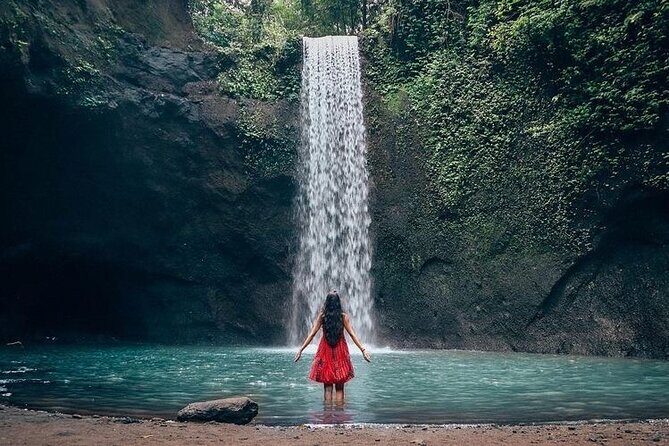
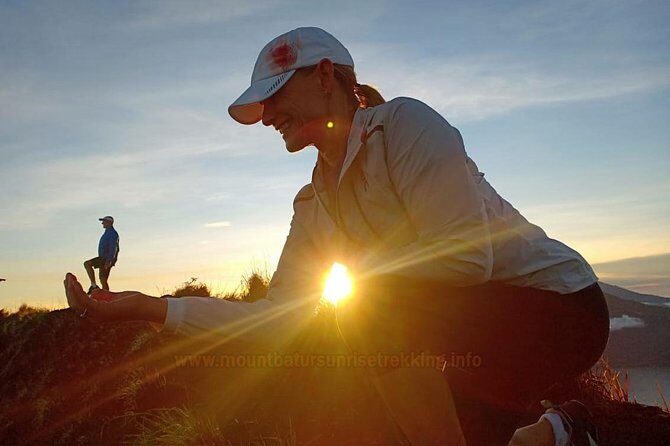
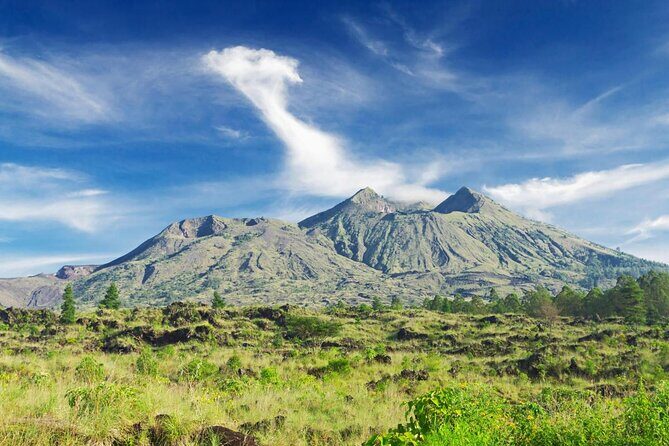
FAQ

Where does the Ubud Silver Class meet and start?

The class starts at GBE Silver Class, Delodsema, Jl. Taman Gajah, Taro, Kec. Tegallalang, Kabupaten Gianyar, Bali 80561, Indonesia.

How long is the silver jewelry making class?

It runs about 3 hours (approx.).

What is included in the price?

You get a welcome drink, 7 grams of silver, an experienced instructor/local expert, and guidance to help you make multiple jewelry items as long as the silver is enough.

Can I choose my own jewelry design?

Yes. You can bring your own idea and the teacher helps sketch it out, or you can start from jewelry samples and build your design from what you like.

Is pickup from Ubud included?

Pickup is offered for the Ubud area, and extra charges apply for pickup from elsewhere.

Is extra silver or gemstones available?

Yes. If you want to use gemstones or need more silver, there is an additional charge. Extra silver is listed at 80k/gram.

Will I make only one piece of jewelry?

You can make multiple pieces if there’s time and enough silver left, but your final number depends on your design and the material.

How big is the group?

This activity has a maximum of 20 travelers.

Can I combine the class with other activities?

Yes. Optional add-ons include ATV/quad bike, a cooking class, a village visit, a sightseeing tour, and a retro Volkswagen Safari. These may happen before or after the silversmithing class.

Is there a cancellation policy for refunds?

Free cancellation is available up to 24 hours in advance for a full refund.