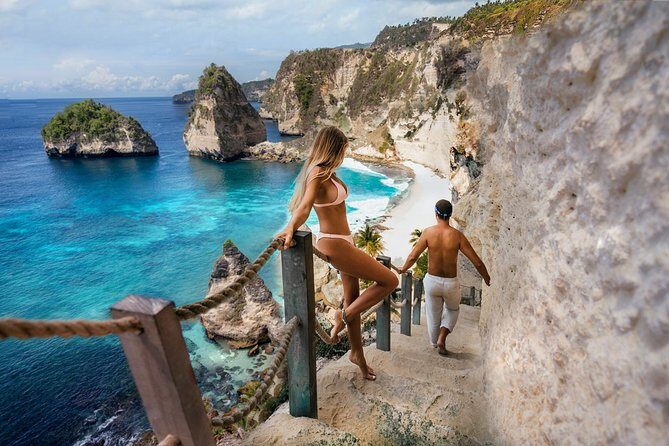
Private Snorkeling in Manta Bay, Gamat Bay & Wall at Nusa Penida

Private Snorkeling in Manta Bay, Gamat Bay & Wall at Nusa Penida - The private boat setup: less stress, more watching

A few hours, a lot of sea time

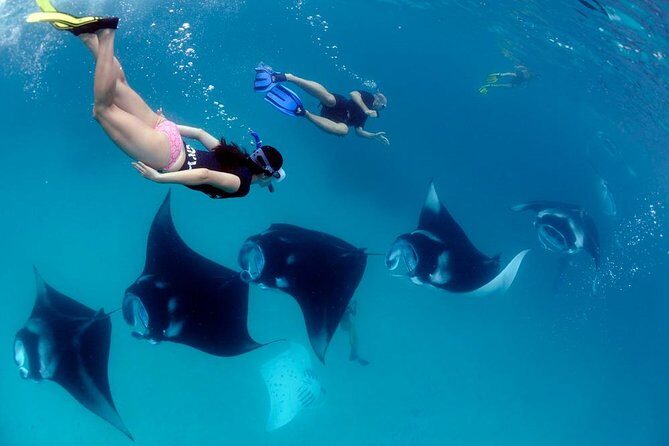
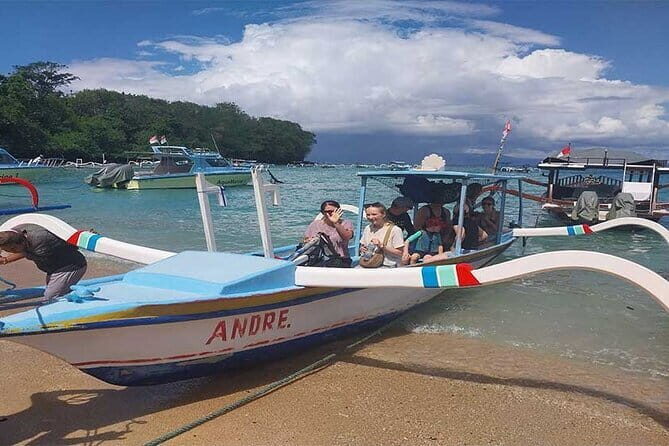
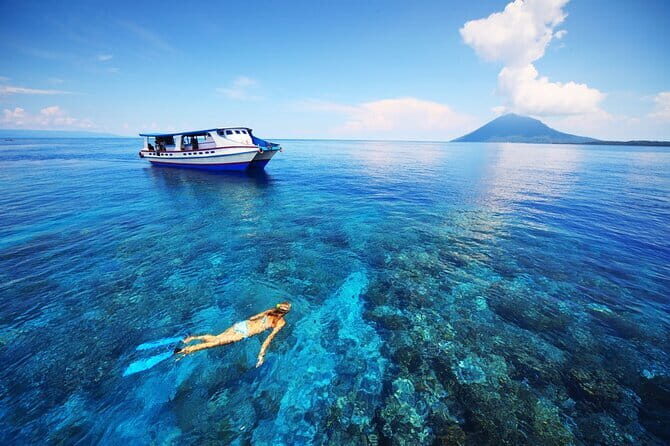
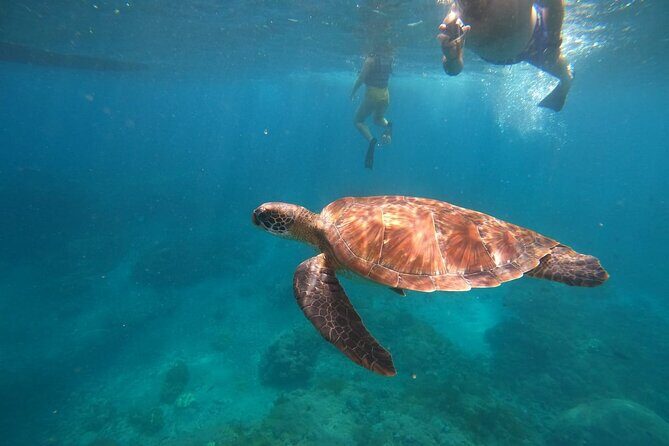
Nusa Penida snorkeling has a reputation for big moments, even when the ocean has other plans. What makes this experience interesting is the private snorkeling boat paired with an on-water instructor, so you spend your time watching fish instead of herding gear and guessing what to do. I also like that the schedule is built around three planned water stops, with a safety-minded backup plan if weather won’t cooperate.

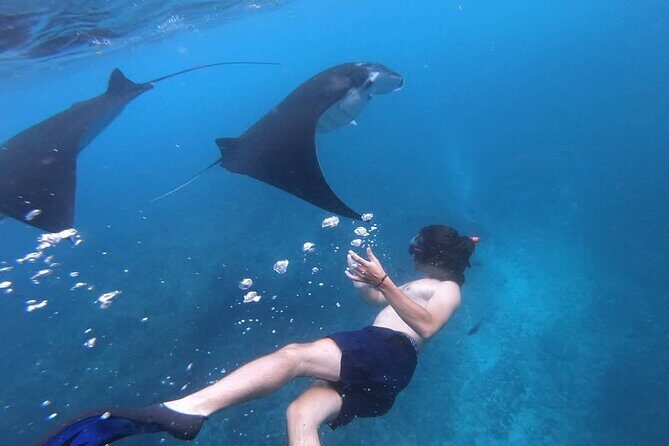
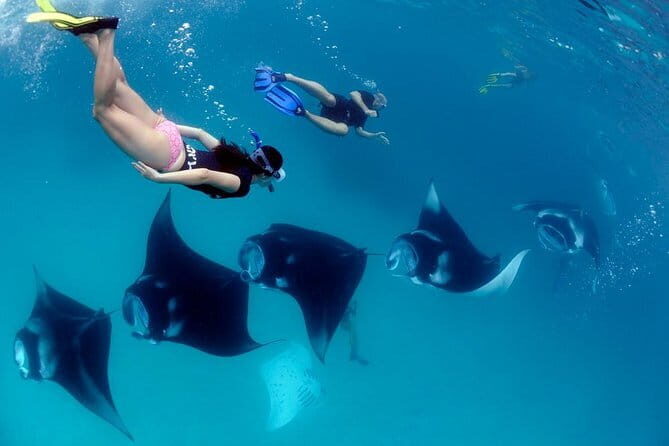
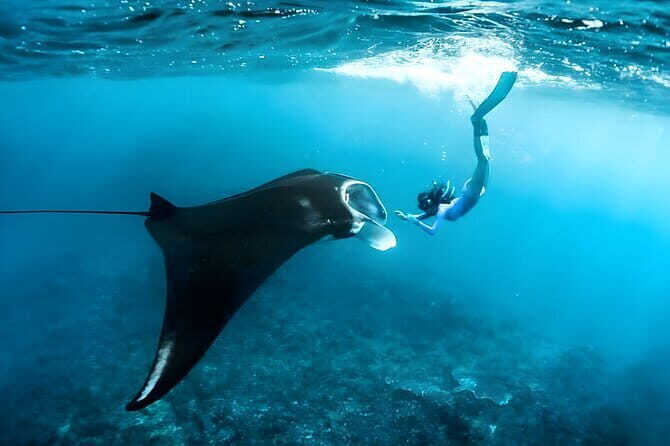
One thing to keep in mind: seeing manta rays at Manta Bay is never guaranteed. It depends on weather, season, and what the wild animals decide to do that day—so you’re going for a real chance, not a promise.

Key highlights you’ll feel right away
Private Snorkeling in Manta Bay, Gamat Bay & Wall at Nusa Penida - Key highlights you’ll feel right away

  • Private boat for your group, which usually means less crowding in the water
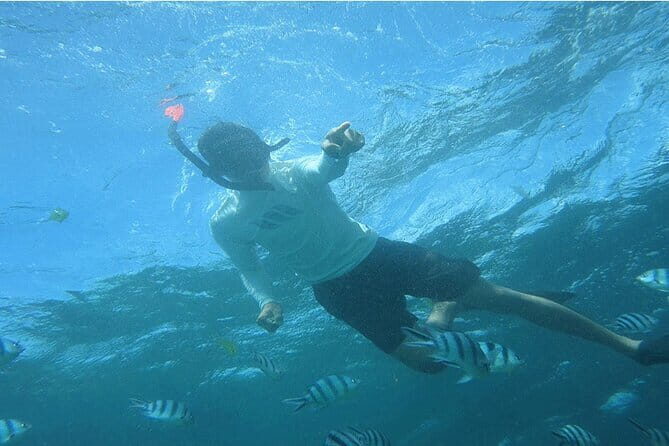
  • Instructor-guided snorkeling with gear like fins, mask, life jacket, and a floating tube
  • Manta Bay as the headline, with manta sightings based on luck
  • Gamat Bay plus Wall/Crystal Bay as strong “Plan B” snorkeling if mantas don’t show
  • Three short snorkel sessions (about 15–20 minutes each) instead of one long, tiring swim
  • Indonesian lunch at the harbor included after the water time

How the timing really works: 6 hours total, about 2 in the water
Private Snorkeling in Manta Bay, Gamat Bay & Wall at Nusa Penida - How the timing really works: 6 hours total, about 2 in the water
This is a half-day outing that starts in the morning, with a 9:30 am start time. The whole experience runs about 6 hours, mainly because you’re traveling by private AC car to Sanur Harbor, taking a round-trip fast boat, then returning for pickup again after lunch.

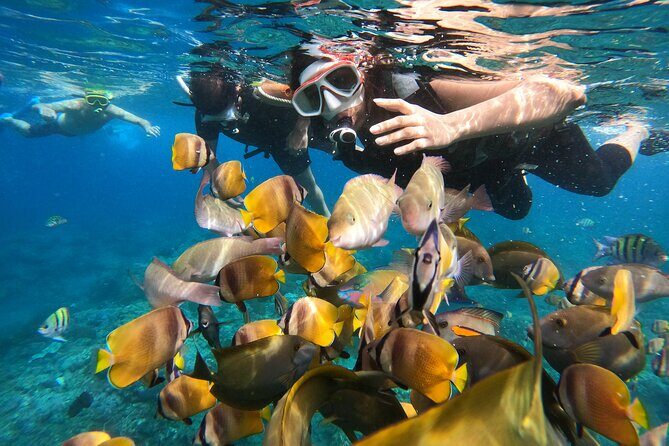
Your actual snorkeling window is shorter but efficient: about 2 hours total including boat travel between spots. Each stop is typically 15–20 minutes in the water. That matters because it keeps the experience fun for most fitness levels—you can enjoy the scenery and marine life without turning it into a long, exhausting swim.

The private boat setup: less stress, more watching
Private Snorkeling in Manta Bay, Gamat Bay & Wall at Nusa Penida - The private boat setup: less stress, more watching
A private snorkeling boat changes the vibe immediately. You’re not sharing limited water time with a pile of strangers, and that makes it easier to stay calm, organized, and focused on what’s in front of you.

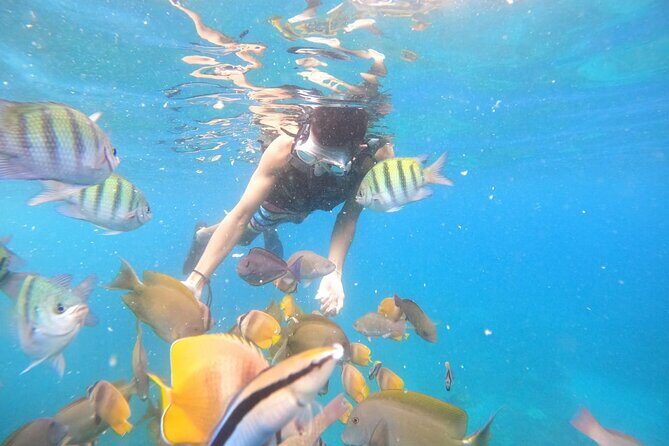
You’ll also go with a snorkeling instructor. That’s a big deal in Nusa Penida because conditions and marine life can shift quickly. The instructor helps you get moving the right way and learn how to spot fish without chasing them. In one of the experiences I heard about, the guide even coached how to find more fish and how to swim alongside them calmly instead of startling everything.

If you’re the kind of person who wants a smoother, more controlled experience, this private format fits that goal well. You’ll get the essential gear too: fins, mask, life jacket, and a floating tube. And yes, you’ll be on a boat designed for snorkeling gear—so you’re not improvising.

Manta Bay: the stop everyone wants, but nature runs the schedule
Private Snorkeling in Manta Bay, Gamat Bay & Wall at Nusa Penida - Manta Bay: the stop everyone wants, but nature runs the schedule
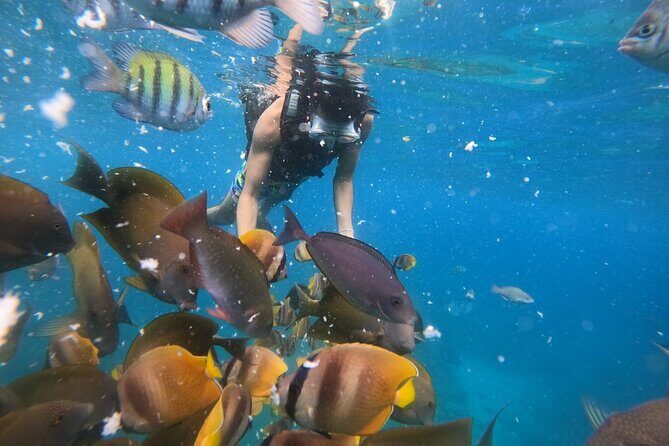
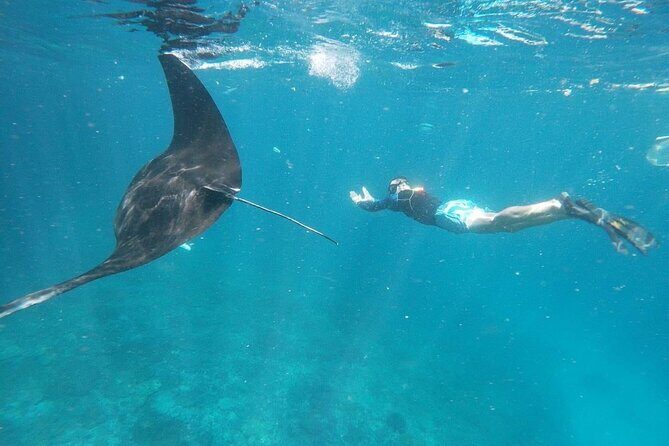
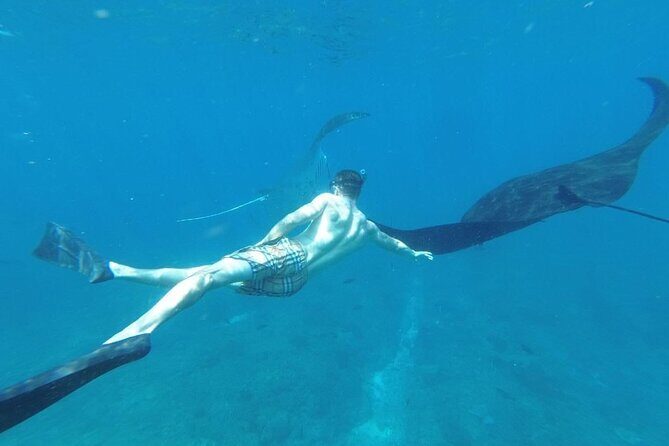
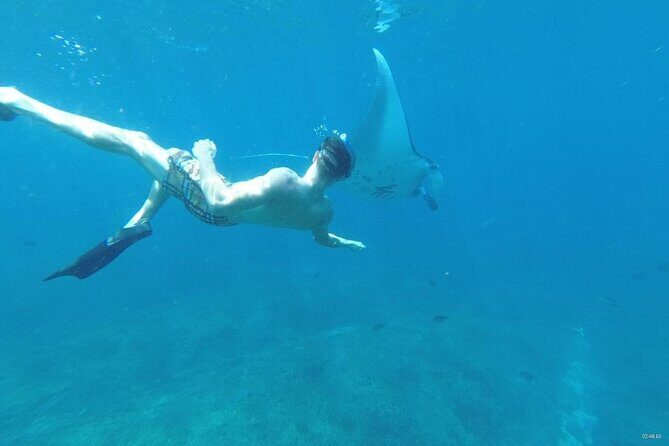
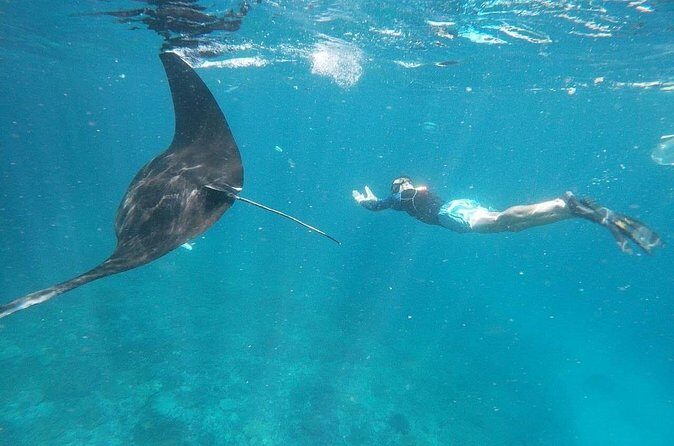
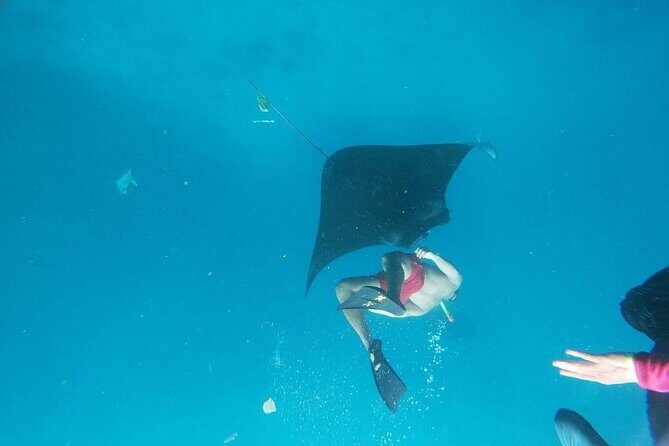
Manta Bay is the headline, and it’s where your luck (and the day’s conditions) matter most. The operator is clear about it: manta life is wild, and you might see them—or you might not.

That doesn’t mean the stop isn’t worth planning for. Manta sightings are the kind of moment that can feel special because you’re not on a guarantee-style experience—you’re watching living animals in their habitat. If you don’t see mantas, you’re not stuck on empty water for long. You still have other stops scheduled, and there’s also a weather-based reroute if the day doesn’t allow the original plan.

If weather is rough, your itinerary adjusts for safety

Weather around this area can change fast, and the tour is designed around that reality. If it isn’t safe or it won’t work to snorkel at Manta Bay (and also the other planned bays), the team will replace the spot(s) with other snorkeling locations for your own safety. This is one of those “look for the operational maturity” details that often separates a smooth day from a frustrating one.

Gamat Bay and Wall/Crystal Bay: where the fish time still shines
Private Snorkeling in Manta Bay, Gamat Bay & Wall at Nusa Penida - Gamat Bay and Wall/Crystal Bay: where the fish time still shines
Even if manta sightings don’t happen, the snorkeling isn’t built only around mantas. The plan typically includes Gamat Bay and a third spot such as Crystal Bay or Wall Point. The exact wording can vary, but the idea is consistent: you’ll get multiple chances for good sea life, not one single make-or-break moment.

This is where you can still have a very satisfying swim. One experience I heard about highlighted marvelous fish in Gamat Bay, and another talked about a surprisingly beautiful snorkel along the shoreline with lots of baby fish in what sounded like a nursery area. That’s a useful reminder: the “wow” isn’t limited to big animals. Often, the smaller things—movement, numbers of fish, calm behavior—create the most memorable underwater moments.

Because each snorkel session is short (around 15–20 minutes), you’ll also be able to reset between stops. The result is a day where you can enjoy the water without feeling like you’re fighting fatigue or long stretches of uncertainty.

The step-by-step flow on the day
Private Snorkeling in Manta Bay, Gamat Bay & Wall at Nusa Penida - The step-by-step flow on the day
Here’s the rhythm you should expect, in plain terms:

  • You’ll start with pickup offered from the Kuta area and transfer by private AC car to Sanur Harbor.
  • You take the public fast boat (round trip included) to reach Nusa Penida waters for your snorkeling day.
  • A private snorkeling boat brings you between the snorkeling spots, with the instructor accompanying you.
  • You snorkel at three spots over about 2 hours total, with 15–20 minutes per stop depending on conditions.
  • After snorkeling, you return to the harbor area and eat Indonesian lunch included with the tour.
  • Then you’re escorted back to your hotel with the included return transfer.

This structure is valuable because it reduces waiting and keeps your day focused. It’s a snorkeling-only experience—there’s no added land tour on Nusa Penida. So if your goal is to spend your time in the water rather than touring on foot, this fits that perfectly.

Lunch at the harbor: included, Indonesian, and well-timed
Private Snorkeling in Manta Bay, Gamat Bay & Wall at Nusa Penida - Lunch at the harbor: included, Indonesian, and well-timed
After time in the sea, you’ll be ready for food—and you don’t have to hunt for it. Lunch Indonesian food is included, served at/near the harbor after snorkeling. There’s also mineral water (one bottle per person) included.

A practical point: because your snorkeling sessions are relatively short and scheduled, lunch lands when you’re actually hungry instead of too early or too late. That timing can make the day feel smoother, especially if you’re traveling with someone who doesn’t want to spend all day on boats.

Price and value from Kuta: what $115 covers
Private Snorkeling in Manta Bay, Gamat Bay & Wall at Nusa Penida - Price and value from Kuta: what $115 covers
At $115 per person, the key question is what’s included versus what you’d normally pay on your own. In this case, you’re not just buying “a snorkeling boat.”

Your price includes:

  • Round-trip hotel transfer to Sanur Harbor by private AC car
  • Round-trip fast boat to Nusa Penida (public boat)
  • Private snorkeling boat
  • Snorkeling equipment (mask, fins, life jacket, floating tube)
  • Snorkeling instructor
  • Lunch Indonesian food
  • Mineral water (1 bottle/person)
  • All fees and taxes

That coverage matters because the biggest hidden costs on island hopping tend to be transport and equipment. Here, those are handled for you.

Two items to note on cost planning: a GoPro is not included, and gratuities aren’t included either. If you want action footage, bring your own device. Some instructors are known for helping with GoPro-style photos, so having your own gear can be useful, but the tour itself doesn’t supply one.

Also, the tour mentions group discounts. If you’re traveling with others, ask about how the discount applies to your group size.

Who should book this (and who might want a different plan)
Private Snorkeling in Manta Bay, Gamat Bay & Wall at Nusa Penida - Who should book this (and who might want a different plan)
This tour makes the most sense if you:

  • Want private time on the water and an instructor guiding you
  • Prefer a focused snorkeling-only day (not a full island land tour)
  • Are okay with short snorkel sessions (about 15–20 minutes) instead of one long continuous swim
  • Care about seeing mantas but understand it’s not guaranteed

It may be less ideal if you:

  • Want a broader Nusa Penida land experience, because this is not a land tour
  • Need a strict guarantee for manta rays. This is explicitly luck- and conditions-dependent

The tour also asks for moderate physical fitness. You’ll be snorkeling with safety gear like a life jacket and floating tube, but you should still feel comfortable being in the water and moving with fins.

Weather swaps: how the tour protects your day

Weather can make or break snorkeling plans, especially around coastal areas with variable conditions. This operator builds in a practical solution: if they can’t safely snorkel at Manta Bay, Gamat Bay, or Crystal Bay, they’ll replace those stops with other snorkeling locations.

That’s a comfort factor. It means you’re less likely to end up with an empty “we tried” day. It also explains why the snorkeling time per stop can vary slightly, because it’s tied to the day’s conditions.

Should you book this private snorkeling on Nusa Penida?

I’d book this if you want a structured, instructor-led private snorkeling experience with solid marine-life chances at multiple bays—and you don’t need a guaranteed manta sighting to have a great day. The value is strongest if you like having transport, gear, and lunch handled for you in one smooth package.

I’d think twice if your top priority is a guaranteed manta experience or if you want to combine snorkeling with a full land tour of Nusa Penida. This is intentionally a snorkeling-focused itinerary, with weather-based changes built in.

If you match that mindset—short, well-guided swims; private boat time; and flexibility for the sea—this is a strong choice for a memorable Nusa Penida day.

FAQ

What is the price per person?

The price is $115.00 per person.

How long is the snorkeling experience?

The full trip is about 6 hours. The snorkeling time is around 2 hours total, including travel time between snorkeling spots, with about 15–20 minutes of snorkeling at each spot.

What time does the tour start?

The start time is 9:30 am.

Which snorkeling spots are included?

The plan includes snorkeling stops such as Manta Bay and Gamat Bay, plus a third spot that can be Crystal Bay or Wall Point, depending on conditions.

Is manta viewing guaranteed at Manta Bay?

No. Manta sightings depend on weather and season, and because manta life is wild, the tour does not promise you will see them.

What happens if the weather is not good?

Because weather is unpredictable, if snorkeling at Manta Bay and/or Gamat Bay and/or Crystal Bay can’t be done safely, the operator will replace those with other snorkeling spots for your safety.

What’s included in the tour price?

Included are round-trip hotel transfer to Sanur Harbor by private AC car, round-trip fast boat tickets, a private snorkeling boat, snorkeling equipment (fins, mask, life jacket, floating tube), a snorkeling instructor, lunch Indonesian food, mineral water (1 bottle/person), and all fees and taxes.

Is a land tour of Nusa Penida included?

No. This activity is only snorkeling and does not include a land tour on the island.
Bali Cooking Class and Ubud Sightseeing Tour

Bali Cooking Class and Ubud Sightseeing Tour - Pejeng Market: start with ingredients, not just photos

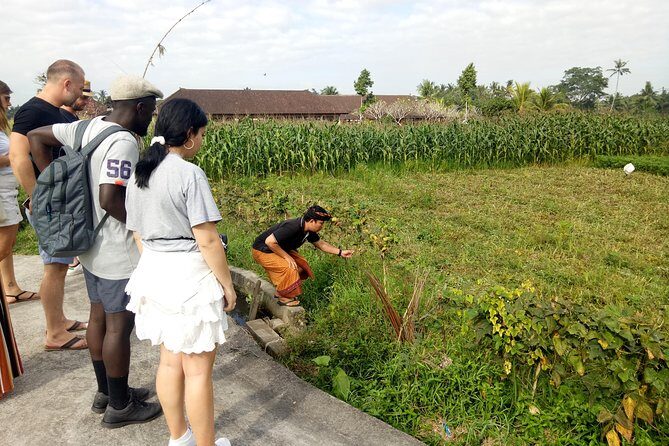
One day, two big reasons to smile. This private Ubud outing mixes a real Balinese cooking class with classic sightseeing stops, without the big-group shuffle. I like that you start with ingredient shopping at Pejeng Market, so your lunch feels earned, not handed to you.

My other favorite part is the hands-on cooking setup at Canting Bali Cooking Class, where you make the menu yourself and then sit down to eat what you cooked. The one thing to consider: it’s about an 8-hour day, and the tour depends on good weather, so plan around that.

Key takeaways before you go

Bali Cooking Class and Ubud Sightseeing Tour - Key takeaways before you go

  • Private feel: Only your group participates, with pickup and air-conditioned round-trip transportation.
  • Market-to-meal flow: You collect cooking ingredients at Pejeng Market before you cook.
  • Hands-on class at Canting Bali: You learn the menu and prepare it yourself for lunch.
  • Vegetarian option available: Choose a vegetarian or non-vegetarian menu.
  • Sightseeing built in: After lunch, you visit Tegalalang Rice Terrace and Sacred Monkey Forest Sanctuary.

Why this private Ubud day works so well

Bali Cooking Class and Ubud Sightseeing Tour - Why this private Ubud day works so well
Ubud can be a lot of things in one trip: temples, markets, food, and those famous rice terraces. What I like about this tour is how it keeps the day practical. You get a smooth ride, a clear flow from market to cooking to sightseeing, and you avoid spending your time figuring out routes.

The “private” part matters more than it sounds. When it’s only your group, you’re not rushed by a larger schedule, and your guide can steer the day around your pace. That’s a big deal for food experiences, where timing and attention really affect how fun it feels.

One more smart touch: it’s designed as a full-day mix, but it doesn’t force you to treat every stop like a race. You can enjoy the cooking class, then shift into sightseeing mode at a comfortable rhythm.

Pejeng Market: start with ingredients, not just photos

Bali Cooking Class and Ubud Sightseeing Tour - Pejeng Market: start with ingredients, not just photos
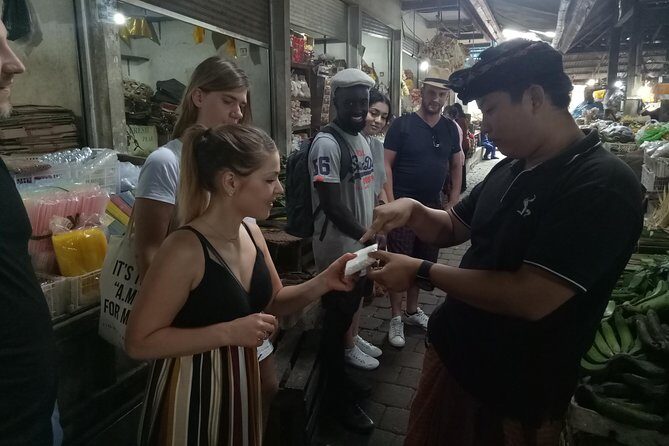
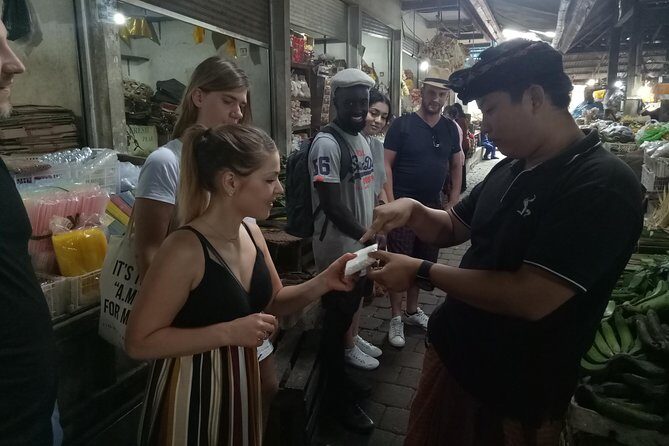
The tour begins with a pickup from your hotel area, then heads to Pejeng Market. This is the part that turns the cooking class into something more meaningful. Instead of only learning techniques in a classroom, you’re gathering ingredients first, with your guide.

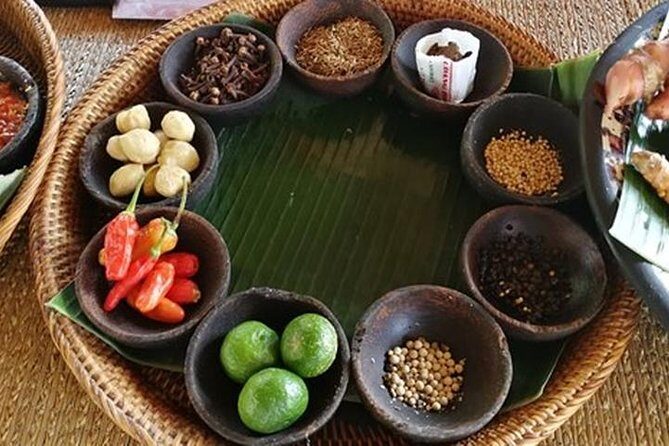
Here’s what that means for your experience. You’ll be paying attention to spices, produce, and the kinds of items that show up in Balinese cooking. And when it’s time to cook, those ingredients are no longer a blur. They have context. You know what you picked and why it likely belongs in the menu.

Practical note: markets can be busy and active. Wear comfortable shoes and keep your expectations flexible. The value is in the process, not in standing still and perfecting a shot.

Canting Bali Cooking Class: learn, cook, and eat what you made

Bali Cooking Class and Ubud Sightseeing Tour - Canting Bali Cooking Class: learn, cook, and eat what you made
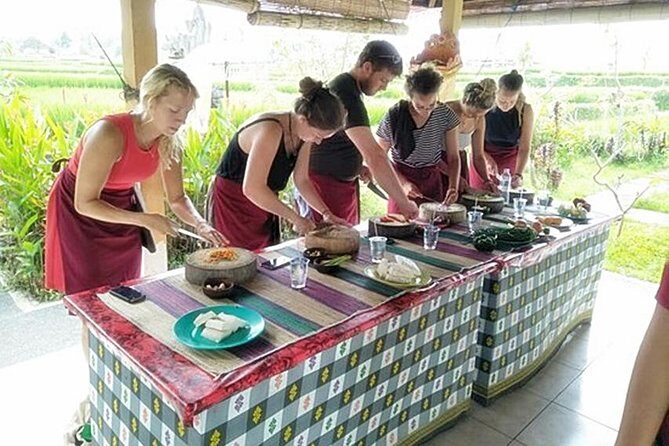
After the market stop, you go to Canting Bali Cooking Class. This is the centerpiece of the day. The format is hands-on: you’ll be guided through making a typical Balinese meal, and all menu items are prepared by you.

Two things I’d highlight if you’re deciding whether this is worth your time:

First, the class is structured around a menu choice. You can go vegetarian or non-vegetarian, so you’re not stuck with a one-size-fits-all meal. That matters in Bali, where many cooking classes focus heavily on meat or seafood by default.

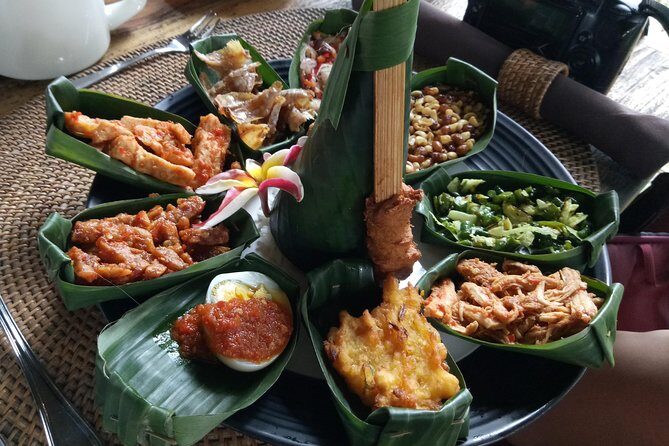
Second, you don’t just taste. You savor a lunch you prepared yourself. That’s the difference between a cooking demo and a real class. Even if you only pick up a few techniques, the lunch part makes it feel complete.

The guide role also looks important here. Based on the strong overall rating and comments about the tour guides being interactive and informative, you’re likely to get a lesson that’s more than a script. You should expect Q and A, plus enough back-and-forth to make the class feel lively.

Tegalalang Rice Terrace: a classic Ubud stop with time to reset

Bali Cooking Class and Ubud Sightseeing Tour - Tegalalang Rice Terrace: a classic Ubud stop with time to reset
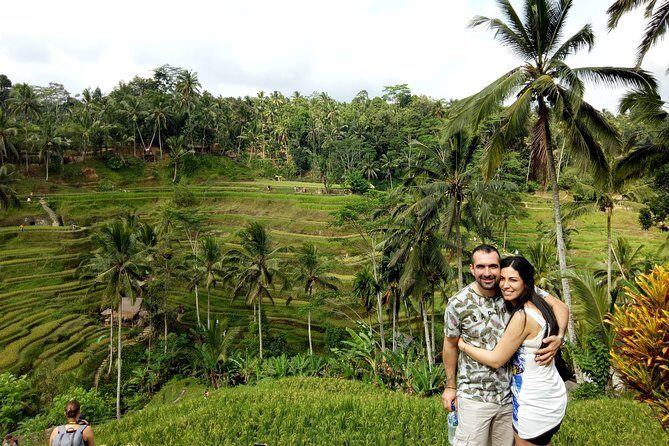
Once lunch is done, you head to Tegalalang Rice Terrace. This stop is a classic for a reason: the terraces are visually striking, and they help break up the day after the intensity of cooking.

I like pairing a food experience with a sightseeing stop like this. Cooking keeps your hands and attention busy. The terraces give you a chance to slow down, look around, and switch gears without needing to think about transportation or navigation.

What to be ready for: rice terrace areas often involve walking on uneven ground and changing elevations. You’ll be happier if you wear shoes that feel stable rather than fancy. Also, bring a light layer if you tend to get cold in the shade, since weather in Ubud can shift.

Even if you’ve seen rice terraces in photos before, seeing them in person tends to feel different. It’s one of those stops where your brain starts taking in the spacing, the steps, and the scale.

Sacred Monkey Forest Sanctuary: cultural scenery after your meal

Bali Cooking Class and Ubud Sightseeing Tour - Sacred Monkey Forest Sanctuary: cultural scenery after your meal
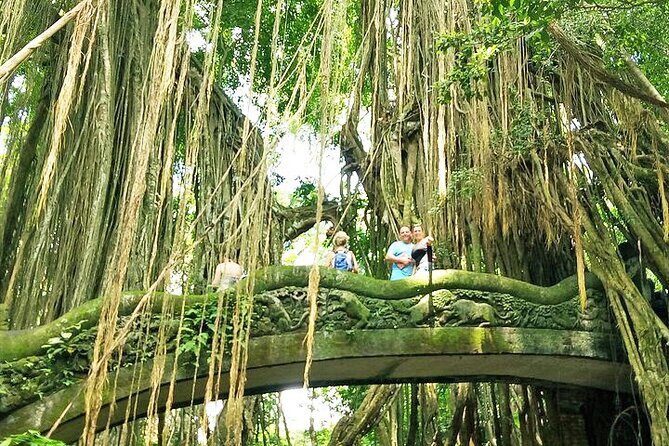
Next up is Sacred Monkey Forest Sanctuary. It’s one of the most popular Ubud attractions, and it fits neatly after lunch. By this point, you’ve already shopped, cooked, and eaten, so you’re not showing up hungry or rushed.

This stop is also a good reminder that Ubud isn’t only about food. It’s about nature-based culture, and the sanctuary setting makes the visit feel like more than just a viewpoint. Try to keep the pacing gentle. People often take longer here than they plan because the area is busy and you naturally slow down while looking around.

A practical tip: keep your phone and small items secure, especially if the area is active. I’m not saying to be paranoid, but it’s smart to treat this as an animal-inhabited sanctuary rather than a quiet garden.

Transportation and timing: air-conditioned comfort and a clean day plan

Bali Cooking Class and Ubud Sightseeing Tour - Transportation and timing: air-conditioned comfort and a clean day plan
A key part of why this tour feels easy is the transport. You’ll travel in an air-conditioned car with a friendly driver, and you’ll get round-trip transportation back to your lodging. Pickup time is based on your hotel area, so the start should feel organized.

This matters in Ubud because locations can be scattered. Without a driver, you’d likely be spending energy negotiating logistics. With this format, your only job is to show up and follow the flow.

The tour runs about 8 hours. That means you should treat it as a real commitment, not a quick add-on. If you’re the type who likes a long dinner and a relaxed evening plan, you’ll probably be able to do that without feeling rushed.

Also, the day’s timing depends on the schedule of your pickup and the order of stops. You’ll want to be ready for a full-day rhythm: eat at the right time (lunch is part of the class), then switch to sightseeing without a long gap.

Price ($46.80) and value: what you actually pay for

Bali Cooking Class and Ubud Sightseeing Tour - Price ($46.80) and value: what you actually pay for
At $46.80 per person, this tour sits in a mid-range price spot for Bali. The real question is what you get for that money, and here the value is pretty clear.

You’re paying for:

  • market ingredient collection at the start
  • a guided cooking class at Canting Bali
  • lunch based on what you cooked
  • air-conditioned round-trip transport
  • visits to Tegalalang Rice Terrace and Sacred Monkey Forest Sanctuary

Many tours in Bali either focus on sightseeing (and food is optional) or focus on cooking (and sightseeing is light). This one links both, so you’re covering two interests in a single organized day.

A couple of added value clues from the tour details:

  • Group discounts may be available, which can lower your cost if you’re booking with more people.
  • It uses a mobile ticket, which reduces hassle once you arrive.
  • It often gets booked about 70 days in advance, so if your dates are firm, reserving earlier can help.

Bottom line: the price makes sense if you want a true market-to-table cooking experience plus two major Ubud sights without arranging everything yourself.

Who this tour fits best

Bali Cooking Class and Ubud Sightseeing Tour - Who this tour fits best
This is a great match if you want:

  • a private day with your own group and less waiting around
  • a hands-on cooking experience with a clear structure
  • a vegetarian-friendly choice if that’s important to you
  • classic Ubud sightseeing wrapped into the same itinerary

I’d especially recommend it for food lovers who don’t want a “watch me cook” session. If you’d rather learn by doing—buying ingredients, preparing dishes, and then eating the results—this format is built for you.

If you’re traveling solo, couples, or a small group, the private setup also helps. It reduces the friction that can come with sharing a schedule with strangers.

The only group I’d hesitate for is anyone who hates long days. At around 8 hours, you’ll want energy for a full stretch, including market time and two sightseeing stops.

Should you book this Bali Cooking Class and Ubud Sightseeing Tour?

If you like food that comes with context, this is an easy yes. The market ingredient start, the hands-on cooking class at Canting Bali, and the fact that you eat what you cooked is the core strength here. Add in Tegalalang Rice Terrace and Sacred Monkey Forest Sanctuary, and you get a complete Ubud day that’s still organized.

I’d book it if:

  • you want a private tour feel
  • you want a vegetarian option
  • you prefer air-conditioned, round-trip transport
  • you want one day that covers both cooking and key Ubud sights

I’d think twice if:

  • you’re trying to keep your day short
  • you don’t handle weather changes well, since the tour requires good weather

Also, consider the booking trend. With about 70 days average advance booking, reserving early is a smart move if your dates are fixed.

FAQ

Where does the tour take place?

The tour takes place in Ubud, Indonesia.

How long is the Bali Cooking Class and Ubud Sightseeing Tour?

It runs for about 8 hours.

What is the price per person?

The price is $46.80 per person.

Is pickup and round-trip transportation included?

Yes. Pickup is offered, and you get round-trip transportation in an air-conditioned car.

Is this a private tour?

Yes. It is a private tour/activity, and only your group will participate.

Do you visit a market before cooking?

Yes. The first stop is Pejeng Market, where you explore and collect ingredients for the cooking class.

Can I choose a vegetarian menu?

Yes. The cooking class offers a vegetarian option (vegetarian or non-vegetarian menu).

What are the main stops during the tour?

The tour includes: Pejeng Market, Canting Bali Cooking Class, Tegalalang Rice Terrace, and Sacred Monkey Forest Sanctuary.

Do you provide a ticket on your phone?

Yes. The tour includes a mobile ticket.

What if weather is bad?

This experience requires good weather. If it’s canceled due to poor weather, you’ll be offered a different date or a full refund.

FAQ

Can I cancel for a full refund?

Yes. You can cancel up to 24 hours in advance for a full refund.

When does the no-refund period start?

If you cancel less than 24 hours before the experience’s start time, the amount you paid will not be refunded.

How early should I book if my schedule is fixed?

The tour is often booked about 70 days in advance, so it’s wise to reserve early if your dates are set.

Mount Batur Sunrise Jeep Expedition

Mount Batur Sunrise Jeep Expedition - Hotel pickup in the dark: logistics that protect your time

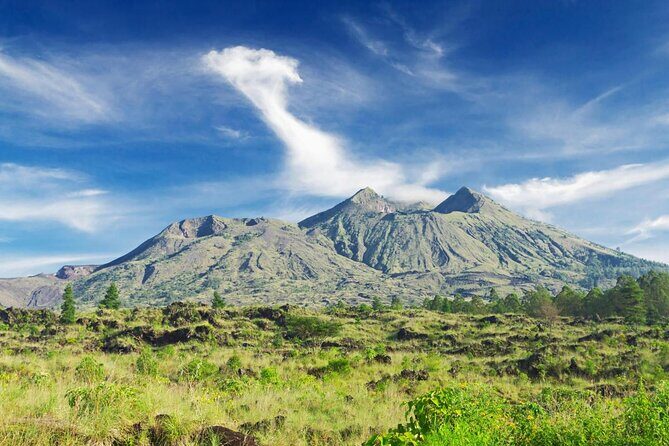
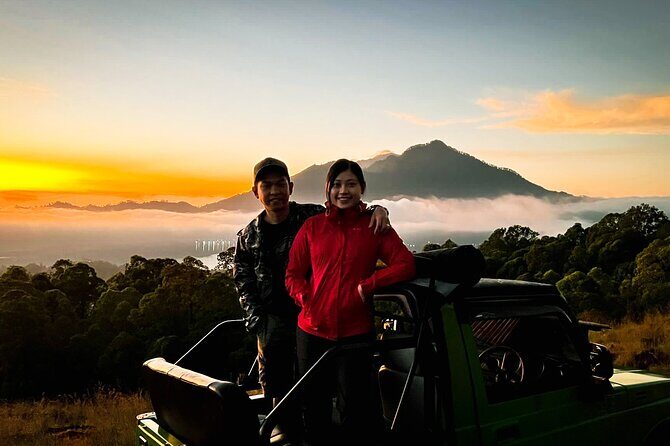
Mount Batur sunrise is one of Bali’s early mornings. You’ll roll out from Ubud in the dark for a sunrise-at-the-crater style morning, then spend the rest of the session cruising the black lava fields by jeep.

Two things I really like about this Mount Batur experience are the included breakfast and water (so you’re fueled before the big views) and the fact that your local guide handles the logistics so you’re not guessing timing at altitude. The main drawback to plan around is the start time. Expect pickup around 2:30–3:30am, and you’ll want a moderate fitness level for the moving parts, especially if you’re not a fan of early wake-ups.

Because this is a private tour/activity, it stays focused on your group instead of funneling you through a crowd. Reviews also highlight friendly, safety-minded driving and photography help from people like Kadek (driver/jeep rider in different trips), Agus (pickup driver), and Jadu (jeep rider), which matters a lot when you’re trying to catch the light without stress.

Key reasons this Mount Batur sunrise jeep tour works

Mount Batur Sunrise Jeep Expedition - Key reasons this Mount Batur sunrise jeep tour works

  • 2:30–3:30am pickup means you reach the viewing area before the sun shows up
  • Breakfast + water included keeps the morning comfortable before and after sunrise
  • Safety procedure at ~5:00am so you know what to expect before the main viewing
  • Jeep time on black lava fields around ~7:00am for the off-road feel and photo angles
  • Private group format helps the day feel less rushed and more personal
  • Around 6 hours total keeps it ambitious but not a full-day grind

Sunrise starts early for a reason: the timing math

Mount Batur Sunrise Jeep Expedition - Sunrise starts early for a reason: the timing math
The big reason people love Mount Batur sunrise tours is also the reason they’re hard to book without planning: the sun. The schedule is built to get you to the starting area around 05:00am, then into position for sunrise at about 06:00am.

That timing is the difference between seeing a volcano rim and actually watching the sky turn into a real show. When you’re there early, you also get fewer crowds around your photo spots and more chances to capture the moment as light spreads across the caldera area.

The early pickup window (around 02:30–03:30am) is not optional if you want the sunrise. The tour runs long enough to be worth it—around 6 hours—but short enough that you’re back at your hotel by roughly 10:00am. That’s a sweet spot: you get a big “Bali bucket list” moment without losing your entire day.

Hotel pickup in the dark: logistics that protect your time

Mount Batur Sunrise Jeep Expedition - Hotel pickup in the dark: logistics that protect your time
Most of your “work” on this tour happens before sunrise: being ready when the driver arrives. The tour uses hotel pickup, with the exact time varying depending on your location in/around Ubud.

Here’s what this means in practice:

  • You’ll be leaving while it’s still dark.
  • You’ll want to be awake before the driver shows up (not just half awake and looking for your shoes).
  • You’ll likely spend the ride climbing toward the mountain’s base and staging point.

From the reviews, pickup drivers are often described as friendly, on-time, and helpful—names like Agus and Kadek come up as people who keep things calm and punctual. That matters because a late start can ruin the whole sunrise plan. The route is steep and the timing is tight, so good driving and organization are part of the experience, not an afterthought.

Also, you’re in a private tour/activity, so you’re not waiting around for strangers to show up and slow the van down. That’s a real quality-of-life upgrade when your alarm is already brutal.

The staging point and safety talk around 05:00am

Once you arrive around 05:00am, you’ll receive an introduction and a safety procedure. This is the part of the morning that feels less glamorous than sunrise, but it sets you up to enjoy the rest.

Why I consider it valuable:

  • You’ll know how things work before you’re standing in low light with cameras in your hands.
  • If you’re not used to off-road vehicles or rough terrain, you’ll get basic expectations.
  • You can plan your posture and gear choices (especially if you’re wearing layers).

Because the tour requires a moderate physical fitness level, this briefing helps you understand what movement looks like on this kind of route. Think of it as the “reduce surprises” step, not just a formality.

Sunrise viewing around 06:00am: what you’re actually aiming for

Mount Batur Sunrise Jeep Expedition - Sunrise viewing around 06:00am: what you’re actually aiming for
At about 06:00am, you reach the sunrise point. This is your main “wow” moment, and it’s also when the tour earns its early wake-up call.

What makes this sunrise experience distinctive is that you’re positioned to see the volcano and the sky at a time when conditions are still cool and contrast is dramatic. Even on mornings when clouds show up, the view can still be unforgettable, because the light changes fast and the volcano shape stays the same while the sky shifts.

This is also where photography matters. Reviews mention guides and jeep drivers who take photos and point out photo-friendly spots—people like Kadek and Putu show up in the feedback as drivers who help capture the moment. You’ll want to show up with your camera settings roughly ready, because sunrise waits for no one.

Practical tip: dress for cold first, warm later. Sunrise is early, and even in tropical Bali, the mountain air can feel cooler than Ubud at the same time of morning.

Breakfast and fueling the climb: included, but timed right

Mount Batur Sunrise Jeep Expedition - Breakfast and fueling the climb: included, but timed right
After you arrive and settle in for the morning, you’ll have an included breakfast and water. The core idea is smart: you eat early enough to keep energy steady, but not so late that you feel heavy or rushed right before the main off-road portion.

The breakfast is part of the reason this tour feels like more than a quick “watch and go” stop. It turns the morning into a full experience: you get warm food, hydration, and then you move on to the lava fields.

From a value standpoint, this is where $79 starts to make sense. If you compare it to doing the same sunrise timing on your own, you’d still need transport, guidance, and you’d likely pay separately for food somewhere near the staging point. Here, it’s bundled in, and that saves both time and hassle.

Jeep exploration of black lava fields around 07:00am

Mount Batur Sunrise Jeep Expedition - Jeep exploration of black lava fields around 07:00am
At roughly 07:00am, the tour moves into jeep time, exploring the black lava fields. This is where the experience shifts from “viewing” to “moving through the setting.”

Why people love this part:

  • Jeeps give you access to terrain you’d never reach comfortably on foot.
  • The lava fields create sharp textures and strong contrasts for photos.
  • You feel the off-road energy without needing technical trekking skills.

And importantly, the drivers here matter. Reviews repeatedly emphasize competent, safe driving and riders who understand how to position vehicles for views and photos. Names that come up include Ketut as a jeep driver in one story, and Jadu in another. Even without knowing the exact driver you’ll get, the pattern is clear: people appreciate that the ride feels controlled, not chaotic.

One consideration: this part isn’t a smooth city drive. It’s off-road, so you should expect bumpy moments. If you’re sensitive to rough terrain, bring a calm mindset (and maybe something to hold onto).

Finish point and back to Ubud by ~10:00am

Mount Batur Sunrise Jeep Expedition - Finish point and back to Ubud by ~10:00am
Around 08:00am, you arrive at the finish point and board back into the car. Then you’ll return to your hotel, with an arrival time around 10:00am (again, varying by your exact location).

This timing is a big deal. A lot of Bali excursions start early and end late. Here, the schedule is compact: you get sunrise + jeep exploration + breakfast, and you’re back before midday gets too hot.

That gives you options after you return:

  • A long brunch.
  • A rest period in your hotel.
  • Planning a second activity without losing your whole day.

Price and value: why $79 feels fair for sunrise + jeep time

Mount Batur Sunrise Jeep Expedition - Price and value: why $79 feels fair for sunrise + jeep time
At $79 per person, this tour isn’t “cheap” in the casual sense. But it also doesn’t read like an overpriced souvenir-style experience.

Here’s the value case I see:

  • Hotel pickup and drop-off are included, which is real labor and time.
  • You’re paying for timed logistics to reach sunrise and to coordinate the off-road jeep segment.
  • Breakfast and water are included, so you’re not hunting for food while you’re already up at dawn.
  • The experience is private for your group, which usually increases comfort and reduces waiting.

Also, it’s booked on average about 51 days in advance, which suggests steady demand. When demand is high, good operators get busier and time slots fill. Booking ahead helps you lock the sunrise timing you want.

So for who is this best value? If you want the full Mount Batur sunrise flow without dealing with arranging transport, timing, and food on your own, this price is easier to justify.

Who should book this Mount Batur sunrise jeep expedition

This is a great match if you:

  • Want a big Bali moment early in the day and still want your afternoon.
  • Prefer a guide-led, logistics-handled experience over planning around sunrise schedules.
  • Like off-road rides but don’t want trekking-level effort.
  • Are okay with a moderate fitness level expectation and early wake-up reality.

It’s also a strong family-friendly option in principle. Reviews include mentions of doing this with kids and even a very young child, with guides described as informative and good with children. That said, you’ll still want to judge it based on your child’s comfort with early morning and bumpy jeep time.

If you’re the type who hates waking up early, this tour will feel like a workout disguised as a sunrise. But if you can handle 2–3am pickup, the payoff is real.

What to bring so the morning feels smooth

Because this is an early climb with a jeep ride over rougher ground, pack smart:

  • Warm layers for the early hours, even if you’re traveling in Bali’s heat later.
  • A flashlight or use your phone light before sunrise (you’ll likely be moving in low light at pickup and staging).
  • Comfortable footwear that won’t slip on uneven terrain.
  • Your camera setup ready, since the tour’s timing is built for photos.

And here’s the simple advice I’d give: plan to be ready before pickup. In a 02:30–03:30am start, “I’ll be ready in five minutes” turns into “we’re late and sunrise is gone.”

Should you book the Mount Batur Sunrise Jeep Expedition?

If you want the full Mount Batur sunrise experience—early pickup, included breakfast, sunrise viewing, and jeep exploration of black lava fields—then this is an easy yes. The schedule is tight, but it’s built to protect the sunrise moment and keep you back by about 10:00am, which is a big win for how you’ll spend the rest of your Bali day.

I’d skip it only if you strongly dislike early mornings, rougher vehicle terrain, or you don’t meet the moderate fitness level expectation. Sunrise is worth it, but only if you can comfortably handle the dawn-to-jeep flow.

FAQ

What time is hotel pickup for the Mount Batur sunrise tour?

Pickup is typically around 2:30–3:30am, though the exact time can vary depending on where you’re staying.

How long does the tour take?

Plan on about 6 hours total, with return to your hotel around 10:00am (exact timing depends on your location).

What’s included with the sunrise experience?

Breakfast and water are included, along with a guide who manages the morning’s logistics and a jeep exploration of the black lava fields.

Do I need to be physically fit?

You should have a moderate physical fitness level for this experience.

Is this tour private?

Yes. It’s described as a private tour/activity, so only your group participates.

Can I cancel for a full refund?

Yes. Free cancellation is available up to 24 hours in advance of the experience start time for a full refund. If you cancel less than 24 hours before, the amount paid is not refunded.

Half Day Uluwatu Temple And Kecak Dance Private Guided Tour

Half Day Uluwatu Temple And Kecak Dance Private Guided Tour - Uluwatu Temple Clifftop Walk: Photos, Prayers, and Monkey Rules

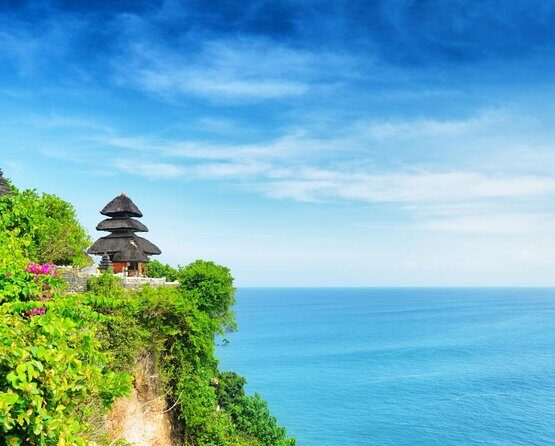
Cliffside Bali, on a tight schedule. This half-day private outing strings together Uluwatu Temple and the Kecak Fire Dance so you still see the best light without getting stuck in traffic for hours. The biggest practical win is that you get door-to-door pickup and onboard Wi‑Fi, which makes the ride feel less like wasted time.

What I like most is the combo: a guided walk around Uluwatu with a helper who steers your photos and keeps the experience moving, then a performance that’s dramatic and very “South Bali.” People also highlight guides like Nyoman and Putu for sharing culture context and making sure you know where to stand for the sunset.

One consideration: timing can get crowded, and Uluwatu’s monkeys are real. The fire-dance seating is often tight, and the temple walk can feel chaotic if you’re not paying attention—so you’ll want to follow your guide’s monkey rules and keep your valuables secure.

Key things to know before you go

Half Day Uluwatu Temple And Kecak Dance Private Guided Tour - Key things to know before you go

  • Half-day pacing that fits a temple plus sunset show without a full-day commitment
  • Onboard Wi‑Fi to stay connected while traffic steals your time
  • Admission tickets included for both the temple and the Kecak show
  • Fire attraction with 20+ dancers for a bigger, more theatrical performance
  • Monkey management with a guide who watches your belongings and your steps
  • Flexible departure times so you can plan around sunset and crowds

A Half-Day Plan That Beats South Bali Traffic

Uluwatu is one of those places that looks simple on a map and then takes longer in real life. The road around southern Bali can be slow, and that’s exactly why a guided half-day format works so well. Instead of losing your whole afternoon, you get a structured route with pickup, then you’re busy during the “waiting time” (Wi‑Fi, comfort, and a clear plan).

I also like that the tour is built around daylight-to-sunset. Even if you choose a departure that feels early for you, the point is to arrive when Uluwatu starts shifting from hot sun to ocean-breeze light. One of the most repeated wins from guests is the view at sunset from the cliffs, and the tour’s timing is clearly designed to put you there.

If you’re the type who hates rushing, you’ll still get a pace that feels respectful. Uluwatu isn’t a slow museum visit; it’s a busy clifftop with people moving in lines. The guide keeps you from wandering off-task, which matters if you’re trying to get photos without getting swept into the crowd flow.

Pickup, Wi‑Fi, and Mobile Tickets: The Practical Stuff That Makes the Trip Feel Easy

Half Day Uluwatu Temple And Kecak Dance Private Guided Tour - Pickup, Wi‑Fi, and Mobile Tickets: The Practical Stuff That Makes the Trip Feel Easy
This is a private tour, meaning only your group is on the schedule. That sounds basic, but it has real value at Uluwatu, where timing is everything. Your guide can adjust where you wait, how quickly you move through the temple, and how you position for the performance.

Two-way hotel pickup is included from Ubud and south Bali hotels. That matters because Uluwatu is not the kind of place you casually “figure out” on your own if you only have one half-day. A clean, air-conditioned car is also mentioned by guests, so you’re not arriving sweaty and cranky.

Then there’s onboard Wi‑Fi. You’ll use it more than you think—checking messages, sharing photos right away, or just killing time while you’re inching along in traffic. It also helps you avoid data-runs that can get expensive when you’re moving between areas.

Finally, the tour uses a mobile ticket. That’s a small detail, but it reduces last-minute stress when you’re dealing with show schedules. Some guests specifically note that the process helped them skip a ticket line, though there can still be some queueing depending on how busy it is.

Uluwatu Temple Clifftop Walk: Photos, Prayers, and Monkey Rules

Half Day Uluwatu Temple And Kecak Dance Private Guided Tour - Uluwatu Temple Clifftop Walk: Photos, Prayers, and Monkey Rules
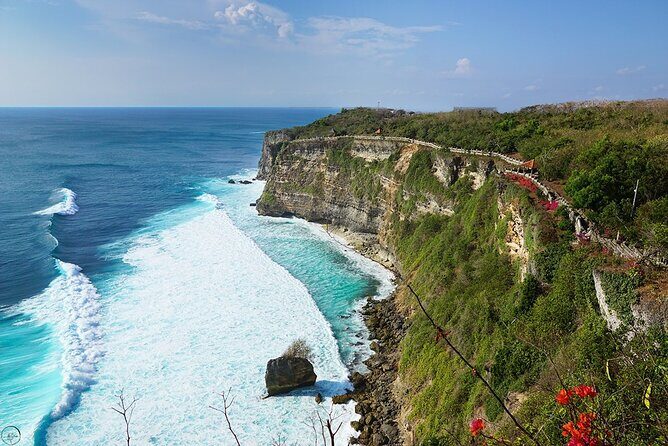
Uluwatu Temple is the star before the show. Expect a cliffside temple visit with a guided walk that includes time to explore and take pictures. The temple admission is included, and the stop runs about an hour—enough time to see the main areas without feeling like you need to master every corridor.

Here’s what you should plan for: it can feel hot. Guests call out heat as a factor, so build in the idea that you’ll want water and to take breaks when the crowd thickens. The good news is that Uluwatu’s clifftop vibe cools down as the evening approaches. You’ll also feel the ocean breeze once you’re closer to the sunset viewing areas.

The monkey reality check (and how your guide helps)

The most practical advice from the experience is about the monkeys. They’re bold, they roam, and they can grab at things like phones and sunglasses. Guests specifically warn about keeping attention on your belongings—monkeys can act fast, and “I’ll hold it for a second” can turn into “my phone is gone.”

The strongest pattern in the feedback is that guides actively protect guests. Several guests mention guides guarding them from monkeys, and one even notes that their guide helped them handle monkey encounters so they could focus on the visit.

So, treat it like a rules-based walk:

  • Keep your valuables secured and within reach
  • Don’t dangle anything tempting
  • Follow your guide’s positioning cues
  • If you’re wearing sunglasses or jewelry, expect the monkeys to notice

Even with a good guide, you still need to be alert. This is one of those places where “walking normally” isn’t the safest plan.

Photos and timing inside the temple

If you want photos with the temple background, you’ll get time, but don’t plan on leisurely studio shoots. The temple gets crowded, and people move quickly in certain paths. The guide’s job isn’t just talking—it’s helping you get your pictures without losing your spot with the group.

Kecak and Fire Dance at Uluwatu: How the Show Works

Half Day Uluwatu Temple And Kecak Dance Private Guided Tour - Kecak and Fire Dance at Uluwatu: How the Show Works
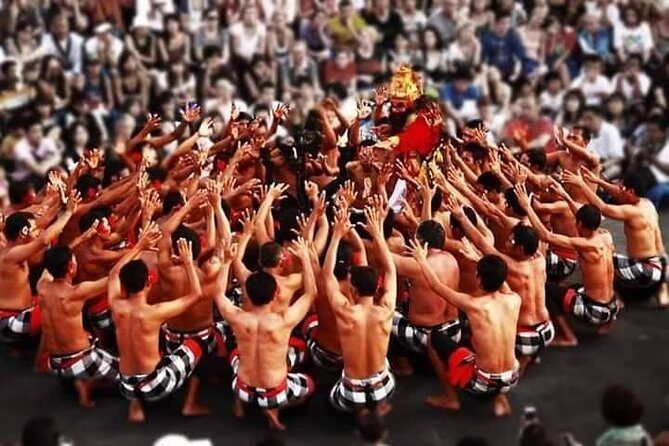
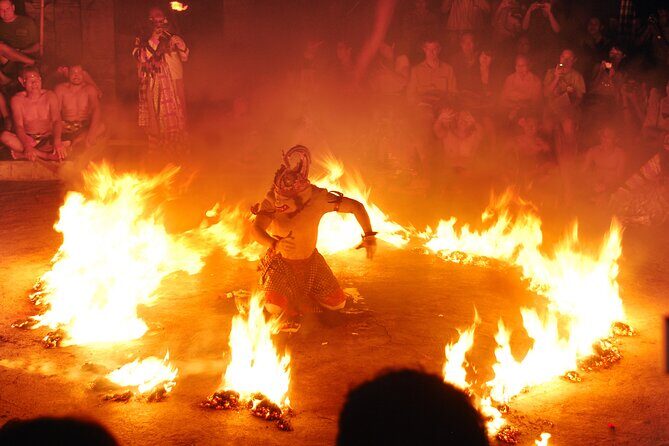
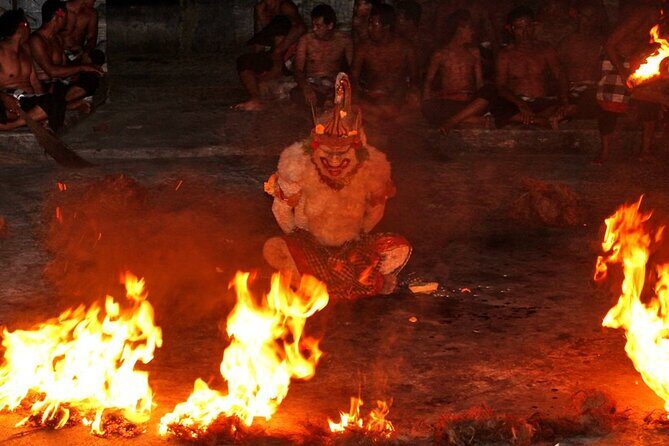
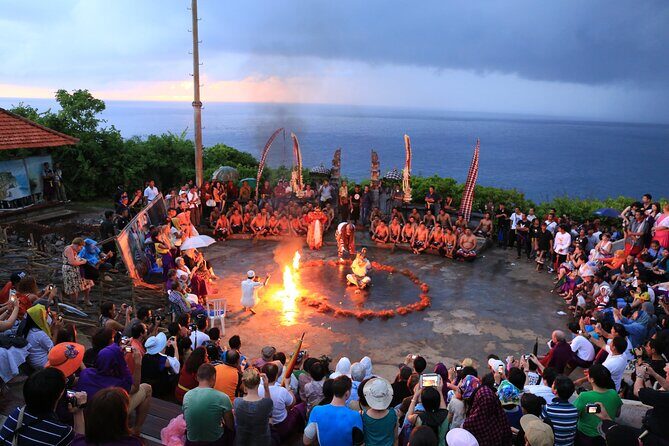
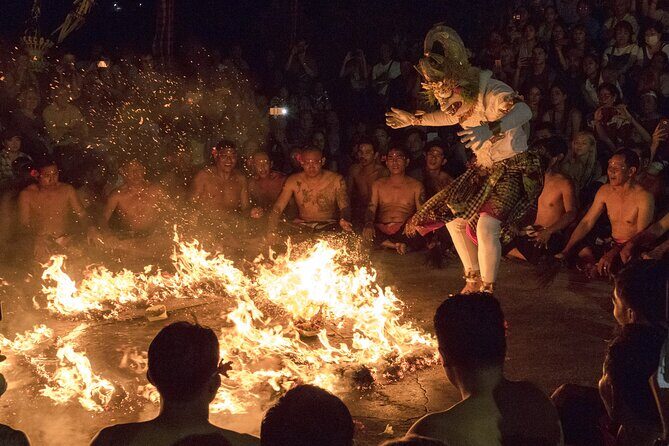
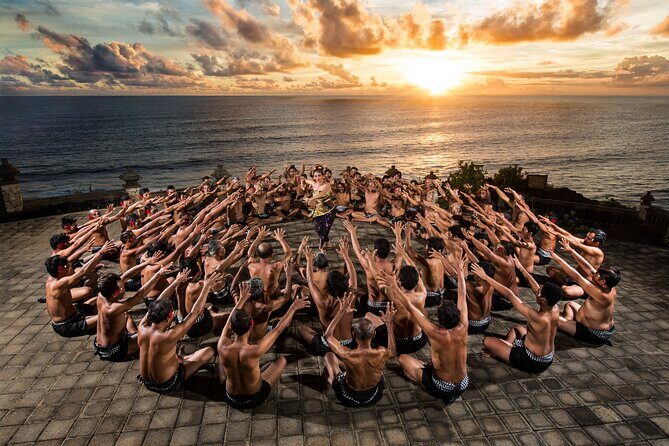
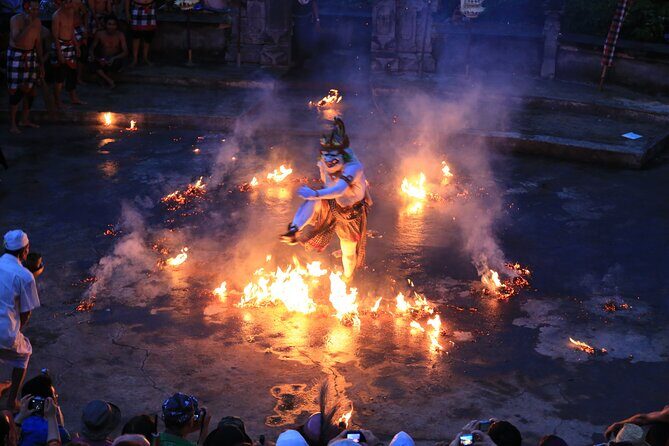
After the temple, you shift into the performance that defines Uluwatu evenings: Kecak Fire Dance. The stop is about an hour, with admission included. The performance includes chanting and movement, and it features fire during the show.

What makes this stop worth your half-day isn’t just the name. It’s the scale. Guests highlight that the dance is performed by more than 20 Balinese dancers, and the fire attraction adds the kind of drama that’s easy to understand even if you know nothing about the story.

Seating and crowd energy

One drawback shows up clearly: the arena can feel packed. One guest describes it as being “like sardines,” and that matches what you’d expect for a popular sunset show at a cliff temple complex. If you hate tight seating, arrive with patience. The upside is that packed crowds also create atmosphere, and the chanting comes through clearly.

You’ll also want to watch the timing of when the fire portion begins. Your guide should help you get to the right viewing spot, and guests consistently praise guides for getting good seats for the sunset and show.

Ticket handling and show entry

The show ticket process runs via voucher, and guests note that the experience can reduce waiting for tickets. Just know that even with a smoother entry, the venue can still be busy. If you’re hoping for an empty arena, this is not that kind of night.

Sunset Timing and the Optional Jimbaran Seafood Dinner

Half Day Uluwatu Temple And Kecak Dance Private Guided Tour - Sunset Timing and the Optional Jimbaran Seafood Dinner
This tour is built around sunset, and departure times are flexible. That flexibility is a gift if you’re trying to structure the rest of your day in Bali. In fact, a practical timing tip that comes through is aiming for an afternoon start around 15:00 so you catch the later show window (often around 7:00–8:00). That tends to mean more time to watch the sunset and less crowding than arriving too early.

If you choose the sunset upgrade, the Kecak Fire Dance aligns with the evening light behind the cliffs. That’s the visual reason Uluwatu sells out. The temple might be impressive by day, but the cliffside sunset is the moment that makes the trip feel worth it.

There’s also an option to stop for dinner at Jimbaran Beach after the show. Some guests describe the meal as romantic and seafood-focused. If you’re the kind of couple-night or “we want one special meal” traveler, this optional add-on can turn the trip into more of an evening out instead of just a show-and-go.

What You’ll Learn from Your Guide (Beyond the Photo Spots)

Half Day Uluwatu Temple And Kecak Dance Private Guided Tour - What You’ll Learn from Your Guide (Beyond the Photo Spots)
This tour is simple on paper, but the best part is how the guide frames what you’re seeing. Guests repeatedly mention guides being strong on cultural and historical context, plus practical help like where to stand and when to move.

Names that come up in the experience include Nyoman, Putu, Komang, Karya, Made Karyana, and others. The pattern isn’t just friendliness. It’s that the guides also act as organizers: steering you through the temple paths, helping with photo angles, and staying watchful for monkey interactions.

If you’ve ever done a Bali tour where you feel like you’re moving through sights without understanding anything, this is the opposite vibe. You get just enough context to appreciate what you’re looking at, and you also get real-time “how to survive this place” help—especially when monkeys and crowds kick in.

Value at $30: What You’re Actually Buying

Half Day Uluwatu Temple And Kecak Dance Private Guided Tour - Value at $30: What You’re Actually Buying
At $30 per person, the value is best understood as a bundle deal. You’re paying for:

  • Door-to-door transfers (from Ubud or south Bali hotels)
  • Two included admissions: the temple and the Kecak show
  • A private guide to manage timing, entry flow, and the experience

If you attempted to recreate this on your own, the biggest costs aren’t only the tickets. It’s the coordination and the transport time, especially if you’re trying to hit sunset. A half-day trip like this basically buys you a reliable schedule so you don’t spend your only afternoon guessing routes and show-entry steps.

You’re also getting onboard Wi‑Fi, which doesn’t sound like a “tour value” item until you’re on a long, slow drive and you realize you can still work, chat, or just scroll in comfort.

Group discounts exist too, so if you’re traveling with friends or family, you may find the per-person cost even sharper.

So who gets the best value? People who want sunset and a cultural evening without stacking five separate logistics tasks. If you only care about the dance and don’t need temple time, you might consider a simpler route. But if you want the full Uluwatu arc, this is a cost-effective way to do it.

Who This Tour Suits Best (And Who Might Want to Adjust)

Half Day Uluwatu Temple And Kecak Dance Private Guided Tour - Who This Tour Suits Best (And Who Might Want to Adjust)
This is a strong fit for:

  • Couples and groups who want a romantic sunset experience
  • First-timers who want temple + a major cultural performance in one go
  • Travelers who prefer private guidance over joining a large bus crowd

It’s also a good match if you hate “wasting” time in traffic. The Wi‑Fi and the tight itinerary make the drive feel less like dead time.

You might want to think twice if:

  • You hate tight seating and crowds, because the performance arena can feel packed
  • You’re extremely nervous around animals, because the monkeys are active around the temple
  • You’re easily overwhelmed by busy tourist sites, because Uluwatu is a popular stop

That said, the monkey issue is exactly where a good guide earns their keep. Multiple guests specifically call out that their guides protected them from monkeys, which is comforting.

Should You Book This Uluwatu Temple and Kecak Tour?

I’d book it if you want a clean half-day plan that delivers both the clifftop temple setting and the Kecak Fire Dance at sunset. The tour’s real strength is practical: pickup from your area, included tickets, a guide who keeps you moving, and onboard Wi‑Fi to make traffic feel less painful.

I’d also book it if you care about doing Uluwatu without stress. Uluwatu is popular, timing is everything, and the monkey factor can turn a casual walk into a scramble. A private guide helps you avoid that scramble and focus on the view, the chanting, and the fire portion.

Skip this only if you’re very sensitive to crowding or you really want a calmer, slower temple experience. For that vibe, you’d likely want a different style of visit.

FAQ

How long is the Uluwatu Temple and Kecak private guided tour?

The tour is about 6 hours (approx.), including the two main stops.

Do I get hotel pickup and drop-off?

Yes. Pickup and drop-off are offered from Ubud and south Bali hotels.

Are admission tickets included?

Yes. Uluwatu Temple admission and Kecak show admission are included.

Is Wi‑Fi available during the tour?

Yes, there is onboard Wi‑Fi included.

Is this tour private or shared?

It’s a private tour/activity, so only your group participates.

Does the Kecak show include fire?

Yes. The Kecak Fire Dance includes a fire attraction during the performance.

What should I do about monkeys at Uluwatu?

You should be alert with your belongings. The experience emphasizes monkey encounters, and guides help protect guests from monkeys.

What happens if the weather is bad for the scheduled day?

The experience requires good weather. If it’s canceled due to poor weather, you’ll be offered a different date or a full refund.

BMW Bali Rafting + Flying Fox at Telaga Waja River (LESS STAIRS)

BMW Bali Rafting + Flying Fox at Telaga Waja River (LESS STAIRS) - Getting there from Seminyak: the day starts early, then runs on rails

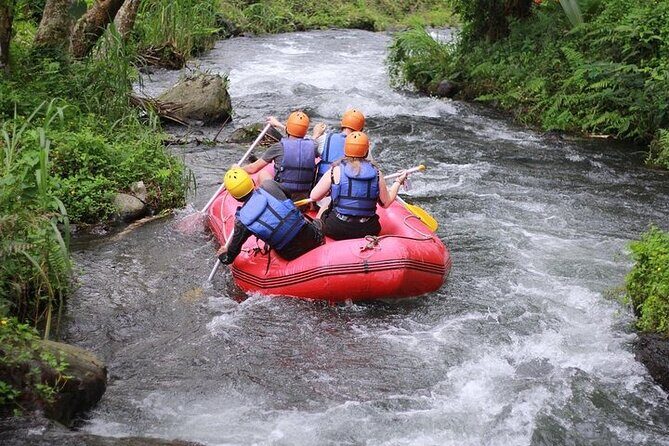
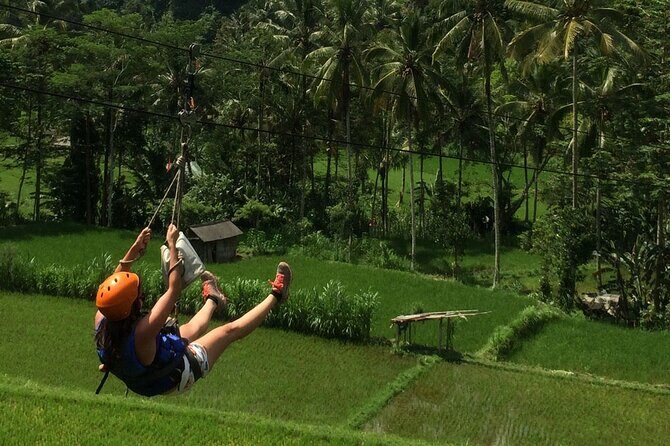
Two hours of rapids, one neat zipline. This Telaga Waja run is built around class 3-4 adventure on Bali’s fast river, with an easy setup that includes safety gear, a quick briefing, and a zipline ride down to the start.

What I like most is that first shot of excitement: you don’t just walk into the river. You fly to it.

The best part of the finish is what happens after the water. You get less walking to the restaurant, then shower time with towels, plus a buffet lunch overlooking the hills and rice fields. One drawback to weigh: it depends on good weather, and this booking is non-changeable and non-refundable for any reason.

Key highlights I’d plan around

BMW Bali Rafting + Flying Fox at Telaga Waja River (LESS STAIRS) - Key highlights I’d plan around

  • Zipline to the rafting start point before you hit the water
  • Class 3-4 rapids on Telaga Waja, designed for beginners and families
  • 16 km total distance, with about 2–2.5 hours on the river
  • 4-meter bajing dam jump during the run
  • Buffet lunch + shower/towels after you dock
  • Small-ish groups (max 50) and guided teamwork on shared rafts

Telaga Waja Rapids: Class 3-4 fun that still feels doable

BMW Bali Rafting + Flying Fox at Telaga Waja River (LESS STAIRS) - Telaga Waja Rapids: Class 3-4 fun that still feels doable
Telaga Waja is known for moving water, and this trip is set up for class 3-4 rapids. That combo usually means real splashes and real adrenaline, not “float on water and take selfies” rafting.

You’re not just dropped in with random people. Each raft is typically shared by 3–4 customers plus 1 professional guide, which matters because the guide controls pace, safety, and how you position the raft in the current. You’ll also be kitted up with safety-approved life jacket, paddle, and helmet before you start.

One practical reason this works for first-timers: the trip is structured as a full-day experience with briefing, equipment, and guide-led teamwork. If you’re traveling with kids or someone who’s new to rafting, that support structure is the difference between exciting and stressful.

Getting there from Seminyak: the day starts early, then runs on rails

BMW Bali Rafting + Flying Fox at Telaga Waja River (LESS STAIRS) - Getting there from Seminyak: the day starts early, then runs on rails
This is a full-day plan: pickup from your hotel is scheduled around 8:00, depending on where you’re staying. The drive gets you to the activity area by about 9:30, where the pace shifts from “traffic time” to “adventure time.”

The day is also designed to stay simple. You’re picked up and dropped back (it ends back at the meeting point), so you’re not left figuring out transfers. A calm driver experience matters here, and people often mention a driver named Yuda for staying professional through the hectic traffic.

You’ll also get coffee or tea on arrival. It’s a small thing, but it helps because the schedule is tight and you’re usually eating later, after you’ve been in the water.

Your first thrill: the flying fox/zipline to the start point

BMW Bali Rafting + Flying Fox at Telaga Waja River (LESS STAIRS) - Your first thrill: the flying fox/zipline to the start point
Right after arrival, you get suited up with your gear and join the group briefing. Then comes the moment that makes this tour feel like a “combo” day instead of plain rafting: you go down with a zipline to the start point.

This is a clever use of time. You’re not waiting around, and you’re not only building anticipation by listening to the guide. You actually get that controlled, guided hit of adrenaline first, so when you push off in the raft, you’re already in the mindset.

A zipline also gives you a different angle on the river area. And if you’re the type who likes video and photos, this is one reason the day can feel cinematic. Some people specifically mention the guide capturing cool footage along the way (including video-style moments).

Rafting on the Telaga Waja River: 16 km of scenery and steady teamwork

Once the rafting starts (around 9:50), you’ll spend about 2–2.5 hours on the river covering roughly 16 km. Expect frequent teamwork: paddling together, following instructions, and bracing for splashes as the current pushes you into the rapids.

The route is also built around standout natural scenery. You’ll cruise past coconut trees, rain forest sections, green hills, rice fields, and waterfalls. For me, that matters because it keeps the trip from feeling like one long workout. Even when the water gets active, you still get breaks where the view calms your brain.

The tour timing also helps. There’s a clear waterfall stop around 11:00 for photos and a rest. Then you continue again at about 11:15. That rhythm is good if you’re tired of “all action, no recovery” tours.

The waterfall stop at about 11:00: photos, rest, and fewer rushed moments

BMW Bali Rafting + Flying Fox at Telaga Waja River (LESS STAIRS) - The waterfall stop at about 11:00: photos, rest, and fewer rushed moments
At around 11:00, you stop near a waterfall. This is your chance to take pictures and reset—waterproof bag or not, your hands and shoulders need a break after paddling.

I like this stop because it’s not hidden behind long delays. It shows up right when you’ve had enough time to get your bearings on the river. You also get to see the kind of jungle-and-water setting Telaga Waja is famous for, not just the rafting chaos.

Then it’s back in the raft about 11:15, so you’re not stuck on the dock for ages. If you’re traveling with family, that pacing helps keep everyone cooperative.

The 4-meter bajing dam jump: adrenaline that you’ll feel later

Around 12:30, the adventure hits a bigger moment: a jump at a 4-meter bajing dam. This is the part of the day that pushes the experience from fun rafting into “I did something” territory.

Because the jump is described as part of the flow, plan your mindset for it. If heights aren’t your thing, or you get tense about going from solid ground into water, it’s worth thinking ahead before you book.

Also remember that this happens roughly halfway-to-late in the day. You’ve already been paddling, and you’re building momentum toward the endpoint. That means your legs and grip are tired, so the guide’s direction is important. This is where being in the right raft group helps—no one wants a chaotic moment when the water is moving and energy is low.

Finishing the river run: dock, less walking, shower time

After completing the 16 km and roughly 2–2.5 hours on the water, you return to the endpoint around 12:50. Then you transition to land time with minimal hassle—there’s less walking to the restaurant.

One of the most practical inclusions here is that you get shower access. Towels are provided, and there are toilet facilities on-site. For a wet activity, this is huge. It means you don’t have to improvise with your own towel while your clothes are still damp from the river.

The schedule also keeps you from waiting forever. Lunch is served shortly after you freshen up, so you’re not left starving in soggy clothes.

Buffet lunch with green views: the part that makes the day feel complete

Around 13:15, you’ll eat a buffet lunch while enjoying the green hills and rice fields. It’s not just “food at the end.” It’s part of how the tour earns its value, because a full-day rafting trip can feel like a long scramble if the meal is poor or late.

Also, drinks are not included, so if you like staying hydrated with something other than what’s offered, budget for that. The tour does include coffee or tea on arrival, which helps earlier in the day, but lunch drinks are extra.

The overall payoff is that you finish feeling clean, full, and ready for the ride back. You head out to the hotel afterward and should reach back around 15:30.

What’s included in the BMW combo (and what costs extra)

This tour is priced at $31.89 per person, and the value is strongest when you compare what you get. Here’s what is included:

  • Hotel transfer pickup and drop-off
  • Coffee or tea on arrival
  • Safety-approved rafting and zipline equipment
  • Towel, shower, and toilet facilities
  • Buffet lunch
  • Waterproof bag (1 bag each boat)

What you should plan to pay separately:

  • Extra drinks
  • CD photos (not included)
  • If your pickup location is Uluwatu, Candidasa, or Sidemen, there’s an extra IDR 250,000 per car, paid on the day
  • If you want a drop-off to a different hotel, that’s not included
  • A private boat can be requested for IDR 150,000 per boat, paid on the day

This pricing structure makes sense for most people staying in Seminyak. You’re basically paying for transport, gear, the river time, the zipline add-on, and the meal/shower wrap-up. That’s why it can feel fair even if the adventure itself takes only a few hours.

Who should book this Telaga Waja rafting + zipline day

This is a strong pick if you want a beginner-friendly rafting option with real thrills, plus a zipline moment that makes the day feel like more than one activity. It’s also a good family fit since the rafting is described as suitable for beginners and families, with guidance and shared rafts.

You’ll probably enjoy it most if:

  • You’re okay doing an early start (pickup around 8:00)
  • You want both rafting and flying fox/zipline in one day
  • You care about the full package (gear + lunch + shower)

You might rethink it if you:

  • Fear heights or don’t like the idea of a 4-meter jump
  • Want a super short outing (this is about 8 hours total)
  • Are sensitive to weather changes, since the activity requires good weather

Should you book BMW Bali Rafting on Telaga Waja?

I’d book if you want class 3-4 rapids, a zipline start, and a clean ending with shower and lunch—without turning the day into a logistics puzzle. The combination of 16 km, about 2–2.5 hours on the river, and that 11:00 waterfall stop creates a well-paced adventure.

But book with clear expectations: this depends on good weather, and the experience is non-refundable and non-changeable once booked. If you’re flexible on timing and you’re excited by real rafting and a jump moment, it’s a great way to spend a Bali day.

If you’re traveling with someone who wants thrills but can’t handle heights, consider that upfront. For the right group, this is one of those “worth the price because it includes everything that matters” kinds of tours.

FAQ

What rapids level is the Telaga Waja rafting?

The rafting is listed as class 3-4 on the Telaga Waja River.

How long are you on the river?

You’ll be on the river for about 2 to 2.5 hours.

What’s the total distance rafted?

The rafting route is about 16 km.

Is the zipline included?

Yes. The equipment package includes zipline equipment, and the schedule includes going down to the start point.

What’s included after rafting?

You get a shower with towels, plus toilet facilities, and then a buffet lunch.

Does the tour include hotel pickup and drop-off?

Yes, hotel transfer pickup and drop-off is included (based on your hotel location).

Where does the tour start and end?

It starts at BMW Rafting Rendang, Karangasem Regency, Bali 80863 and ends back at the same meeting point.

Are private boats available?

Yes, you can request a private boat for an extra IDR 150,000 per boat, paid on the day.

What happens if the weather is bad?

This activity requires good weather. If it’s canceled due to poor weather, you’ll be offered a different date or a full refund.

One Day Snorkeling Trip & West Tour Nusa Penida by Penidago

One Day Snorkeling Trip & West Tour Nusa Penida by Penidago - When the weather turns: backup snorkeling points you’ll still be happy with

Nusa Penida in one packed day.

This door-to-door style tour gives you a boat day at Penida plus a West-side sightseeing loop, and it’s built for people who want variety. I like that snorkeling gear, lunch, and bottled water are included, so you can keep moving without hunting for basics. I also like the small-group feel (max 6 travelers), where guides can actually manage the pacing and help with photos; I’ve even seen guides like Agus and Maddi (spelling may vary) patiently work the moment when you’re solo and want good pictures. One drawback to plan for: you’re up early and spending real time in transit, and traffic can shift timing.

Because the island plan flexes with conditions, you’re not locked into a single route. The schedule can change depending on weather, traffic, and actual sea conditions, so the best way to enjoy this is to treat it as a day with targets, not a rigid checklist. If the water cooperates, you get classic snorkel spots; if it doesn’t, the crew swaps in alternatives.

Key things to know before you go

One Day Snorkeling Trip & West Tour Nusa Penida by Penidago - Key things to know before you go

  • Up to four snorkeling stops in one day on a public boat route around West Penida.
  • Sunny-weather spot options include Manta Bay, Crystal Bay, Gamat Bay, and The Wall/GT Point.
  • Bad-weather backup spots swap in GT Point, The Wall, Tanjungan Point, SD Point, or Mangrove Point.
  • West Penida land highlights cover Angel’s Billabong, Broken Beach (Pasih Uug Beach), and Kelingking Beach.
  • Small group size (max 6) helps with smoother timing and guide attention.
  • Value-heavy inclusions: lunch, water, snorkeling gear, towel, entrance/retribution fees, and parking.

Sanur to West Penida: what your day really looks like

Your morning starts early. Pickup is scheduled around 06:00–06:30. You then check in for the boat at about 07:30, with a 08:00 departure from Sanur to Penida. From there, the day moves fast in two parts: first a multi-stop snorkel window, then a West Penida land circuit.

The tour timing is built around real island distance and sea conditions. After snorkeling begins around 09:00, you’ll return to the harbor around 15:15 and check in for the return boat about an hour later, arriving back in Sanur around 16:30. It’s a lot of movement for one day, but that’s also why it works for people who only have limited time in Bali.

Also note how the day stays flexible. The plan explicitly changes based on weather, traffic, and actual conditions. That means you’ll get the most important stops, but the order of snorkeling points and exact driving routing can shift.

The boat snorkel plan: Manta Bay, Crystal Bay, Gamat Bay, The Wall or GT Point

One Day Snorkeling Trip & West Tour Nusa Penida by Penidago - The boat snorkel plan: Manta Bay, Crystal Bay, Gamat Bay, The Wall or GT Point

The snorkel portion is the main show. If conditions are right (the tour lists this as a sunny weather scenario), you’re looking at four potential snorkeling areas. The planned options are:

  • Manta Bay
  • Crystal Bay
  • Gamat Bay
  • The Wall or GT Point

What I like about this structure is simple: it gives you multiple chances for different kinds of underwater scenery rather than banking the day on one spot. Some areas can be calm; others can be more dramatic. The Wall and GT Point, for example, are mentioned as key alternatives depending on conditions, which hints that the crew aims to match the safest, most workable water to the day’s lineup.

One more detail that matters in practice: you’re on a public boat for the snorkeling trip, so you’ll share the route and schedule with others. That’s not a bad thing, but it does mean you should expect a bit of group coordination and shared pace. The upside is that you’re not paying a private-boat premium just to see a few reefs.

When the weather turns: backup snorkeling points you’ll still be happy with

One Day Snorkeling Trip & West Tour Nusa Penida by Penidago - When the weather turns: backup snorkeling points you’ll still be happy with

Nusa Penida has a reputation for big scenery and big sea days, so it’s smart the tour lists backup points. If conditions aren’t favorable, the snorkeling rotation switches to options including:

  • GT Point
  • The Wall
  • Tanjungan Point
  • SD Point or Mangrove Point

This is the part of the tour that you can’t control, and honestly, the best tours treat it honestly. You’re not promised one view at one time no matter what. Instead, you get a plan that can adapt.

If the conditions are rougher, expect that the goal shifts slightly toward practicality: stable entry, workable currents, and the most reliable spots for that specific day. In other words, you may trade one “perfect” underwater moment for a safer day with still-colorful coral and fish life. That trade is worth it if your priority is actually getting in the water.

West Penida land stops: Angel’s Billabong, Broken Beach (Pasih Uug), and Kelingking Beach

One Day Snorkeling Trip & West Tour Nusa Penida by Penidago - West Penida land stops: Angel’s Billabong, Broken Beach (Pasih Uug), and Kelingking Beach

After snorkeling, your schedule brings you to the West Penida sights. Lunch is slotted for 11:30, then the land circuit begins around 12:30.

Angel’s Billabong

Angel’s Billabong is one of the signature views in this area. Even without getting poetic about it, the point is clear: it’s a photo-stop that people genuinely remember because it looks sculpted by water and time. It also works well after snorkeling, because you’re back on land and can stretch out while you catch your breath.

Broken Beach / Pasih Uug

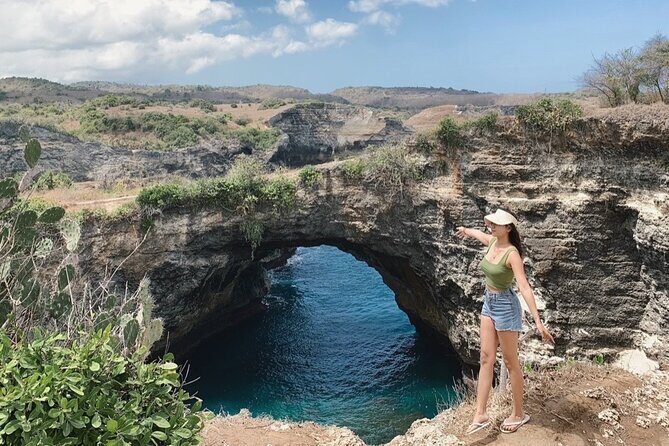
The tour pairs the Broken Beach stop with this segment, often tied to Pasih Uug Beach in how it’s described. This is the kind of place where the scenery is the story. You’ll get that “how did nature do this?” feeling, plus plenty of viewpoint angles for photos.

A practical note: these stops are scenic, but you’re still walking around on natural surfaces. Wear footwear that won’t punish you after a wet boat day. Take your time on the viewpoints.

Kelingking Beach

Kelingking is scheduled for 13:30. This is the showpiece stop on the West route. The cliffs and shape of the coastline are the reason people come, and it’s often the most dramatic part of the land circuit.

One reason I like it in this itinerary: you finish the land stops before the late-afternoon return. That keeps the day from turning into “rush to see everything and feel tired at each one.” You still move quickly, but you’re not stuck in a long sightseeing loop after a snorkel day.

Lunch, water, gear, towels, and the value check

One Day Snorkeling Trip & West Tour Nusa Penida by Penidago - Lunch, water, gear, towels, and the value check

For $25 per person, this tour is priced like a value play, and a big part of that is what’s included. Here’s what you’re getting in the package:

  • Snorkeling equipment
  • Lunch
  • Bottled water
  • Towel during snorkeling
  • Air-conditioned vehicle (for Bali transport)
  • Entrance fees and parking
  • Tourist retribution fee
  • Shuttle service in Bali
  • Public boat ticket return

Breakfast is listed as not included, so you’ll want to eat before you start your morning. That’s one of the only obvious “watch the gaps” items. Everything else essential for the day—gear, food, and the fees that can otherwise add surprise costs—is already handled.

The real value is how the inclusions reduce decision fatigue. You don’t need to price-check snorkeling rentals or worry about whether a fee is missing. You also don’t need to find lunch mid-route. On a day that’s already timed tightly (and can shift with conditions), reducing the number of moving parts makes the whole experience feel easier.

Pickup, shuttles, and timing: early start and traffic are real

One Day Snorkeling Trip & West Tour Nusa Penida by Penidago - Pickup, shuttles, and timing: early start and traffic are real

This is a logistics-heavy day, and the tour’s own notes point to why: destinations can change because of weather and traffic.

You can expect two ways the day connects with you:

  • Pickup is offered (the tour notes a shuttle from Ubud and some south Bali hotels), and
  • The meeting point listed is Circle K Matahari Terbit, Sanur Kaja.

So if you don’t see yourself clearly in the pickup description, treat Circle K Sanur as your anchor. Also, plan to be on time. The schedule is built with check-in and departure windows in mind: ticket check-in around 07:30, boat leaves 08:00.

One more real-world thing: a strong guide can smooth over chaos. In one situation, the company responded that traffic can trap a driver on Penida, so they adjust by using someone already in the harbor to meet the group faster. That tells you something important: timing problems can happen, but there’s a mechanism to fix it rather than pretending it won’t.

Still, the early wake-up and the travel time are the main consideration. If you’re the type who hates long days with frequent handoffs, this might feel like work. If you’re okay with a full day of movement for a big payoff, it’s a strong fit.

Guides and photos: why pacing matters more than you think

One Day Snorkeling Trip & West Tour Nusa Penida by Penidago - Guides and photos: why pacing matters more than you think

Small groups help with more than comfort. They help with attention. The experience is described as having a guide and driver who move you between sights, plus they can be patient when you want photos—especially if you’re traveling solo.

I’ve also seen mentions of guides like Agus who explained sights and took plenty of photos, and Maddi (spelling may vary) who showed the island sights and stayed punctual and friendly. Even if you don’t care about photos much, good guiding affects your day in three ways:

  • You spend less time wondering where to go next.
  • You get a calmer flow at each viewpoint.
  • You’re more likely to hit the stops that matter before the day starts slipping.

Because the itinerary can shift due to conditions, the guide’s role becomes even bigger. They’re the reason the tour still feels organized when the sea or roads force changes.

Who should book this West Penida day (and who should pass)

One Day Snorkeling Trip & West Tour Nusa Penida by Penidago - Who should book this West Penida day (and who should pass)

This tour is a great match if you want:

  • More than one snorkeling stop without extra planning
  • A blend of water time plus West Penida viewpoints
  • A day that’s efficient for a shorter Bali stay
  • A group size that’s small enough for real help and photo time

It’s less ideal if:

  • You hate early starts and long travel days
  • You want a totally fixed schedule no matter the conditions
  • You’re prone to motion sickness and don’t handle boat days well

Given the schedule length (about 8 hours) and the flexible plan, I’d call it a “commit to the day” style tour. You’re trading comfort and leisure for variety and access.

Should you book Penidago’s One Day Snorkeling Trip & West Tour?

If you’re deciding between a few Penida options, I’d book this one when your priority is variety in a single day and you want the “essentials covered” approach. The combination of up to four snorkeling areas, a full West Penida land list, and inclusions like gear, lunch, water, towel, and fees makes the price feel logical.

I’d hesitate only if your schedule is tight and you strongly need the itinerary to be identical day to day. Since the route can shift because of weather and traffic, you should be flexible in your expectations.

If you can handle an early morning and you’re excited by the idea of seeing both underwater and West Penida cliffs in one go, this tour is a solid value play.

FAQ

How long is the Penidago one-day trip to Nusa Penida?

The tour runs about 8 hours. Pickup is around 06:00–06:30, and the day ends back in Sanur around 16:30.

Where does the boat depart from?

The boat departs at about 08:00 from Sanur and returns to Sanur later in the afternoon.

What time do I check in for the boat?

The tour schedule lists 07:30 for checking in the boat ticket.

Which snorkeling spots are included?

In good conditions, the plan includes Manta Bay, Crystal Bay, Gamat Bay, and The Wall or GT Point. If conditions are bad, snorkeling can switch to GT Point, The Wall, Tanjungan Point, SD Point, or Mangrove Point.

What happens if the weather is not good?

The itinerary and snorkeling destinations can change based on weather, traffic, and actual conditions, with backup snorkeling spots listed for bad conditions.

What’s included in the price?

Included items are snorkeling equipment, lunch, bottled water, towel, air-conditioned vehicle, shuttle service in Bali, public boat ticket return, and entrance fee and parking plus the tourist retribution fee.

Is breakfast included?

No. Breakfast is not included in the package.

Is pickup provided from Bali hotels?

The tour notes pickup offered and a round-trip port shuttle from hotels in Ubud and some of south Bali. A meeting point is also listed at Circle K Matahari Terbit in Sanur Kaja.

How many people are in the group?

This tour has a maximum of 6 travelers.

Can I cancel for a full refund?

Yes. You can cancel up to 24 hours in advance for a full refund, and refunds are offered if the experience is canceled due to poor weather.

Early Access to Nusa Penida Full Day Tour

A day on Nusa Penida goes fast. The trick is doing the iconic stops with small-group pacing and an expert guide, so you spend more time watching cliffs and waves and less time sorting logistics. This early-access-style departure (meeting at 8:00 am) also helps you beat some of the midday heat while still hitting the main viewpoints.

I especially like the tight, efficient route through headline spots like Kelingking Beach and Broken Beach, plus the guidance quality—Faisal, for example, was praised for explaining what you’re seeing and helping the group get photos. You also get professional driver + tour guide, with Nusa Penida entrance fees included, so the day feels packaged without feeling mass-tour chaos.

One thing to keep in mind: the schedule can feel a bit rushed at each stop, with less time to linger than you might want—especially if you’re the type who likes long pauses for photos and shade hunting.

Key highlights worth knowing before you go

  • Maximum 5 travelers means more breathing room at viewpoints and easier photo help.
  • Faisal-style guiding: explanation on what you’re seeing and practical picture-finding.
  • Icon stops, one after another: Broken Beach whirlpool, Kelingking T-Rex headland, Angel’s Billabong.
  • Crystal Bay detour: if the road is unsafe due to a landslide, it’s replaced with Virgin Beach.
  • Tides matter at Angel’s Billabong, so the infinity-pool look can vary.
  • Nusa timing hands-off: Bali drivers help with boat check-in, then TripGuru guides take over on the island.
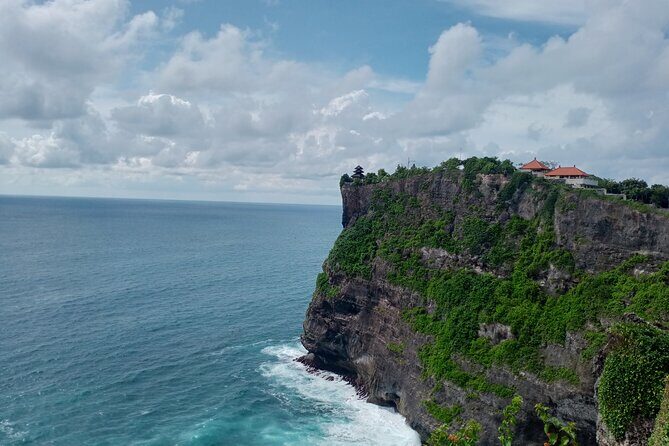
Early 8am Start and Why Small-Group Matters on Nusa Penida

Nusa Penida is beautiful in that slightly unfair way where you instantly want to photograph everything and also instantly start melting in the sun. Starting your day at 8:00 am helps. You’ll still face heat and uneven ground later, but you’re not starting the day when the island feels fully awake and already busy.

The bigger win is group size. This tour runs with a maximum of 5 travelers, and that makes a real difference at the viewpoints. You’re not squeezed into a big line trying to all snap the same angle. It’s also easier for your guide to notice who needs a hand—whether it’s finding a safe spot for a photo or steering the group to the best viewpoint before everyone else clumps in.

This is also one of those days where the “vibe” depends on timing. If you’re too slow, the later stops turn into a scramble. If you’re too fast, you miss the moments where the waves hit and the cliffs look most dramatic. A well-run small group helps strike that balance, and the tour does a good job keeping momentum without turning it into a race.

Price and What You Get for $23.40

At $23.40 per person, this is one of the easier-value ways to see the main sights on Nusa Penida, mainly because several costs are already covered. The price includes professional guide and driver, air-conditioned transportation, insurance, and Nusa Penida entrance fees. That last part matters on this island—viewpoints and attractions often come with separate entry costs, and it’s nice not to piece it all together day-of.

What’s not included is also important for planning. Meals and other drinks are on you. And return speed boat tickets for the shared boat are not included unless you select the hotel pick-up option. So if you’re figuring out your total budget, make sure you’re counting boat travel correctly, not just the tour headline price.

One more practical value point: mobile tickets and early access-style timing reduce friction. Nothing kills island time like hunting for paperwork while you’re already thinking about the next viewpoint.

How the Day Flows: From Bali Transport to Nusa Penida Guide Takeover

Here’s the logistics rhythm that makes this tour work. You start with pickup offered in Bali for many areas (there’s even an upgrade option for hotel transfers or privacy), but regardless, you’ll handle boat check-in with the Bali driver. Then the handoff happens.

The Bali drivers do not accompany you onto Nusa Penida. Instead, once you arrive, you’ll look for TripGuru tour guides wearing green shirts and holding a TripGuru sign. That detail is worth saving mentally because it prevents the classic moment where everyone stands around guessing which group is theirs.

Once you’re on the island, you’re guided from stop to stop with air-conditioned transport earlier on the mainland portion of the day. The schedule is built around a sequence of classic Nusa Penida sites, with short to medium time windows, so you don’t lose half the day waiting or recalculating.

If you’re traveling solo or as a couple and you want a smoother day without hiring a full private driver, this structure is a strong compromise: guided and organized, but still intimate.

Itinerary Breakdown: The Stops That Make Nusa Penida Worth the Trip

This full-day plan is long enough to feel like you did something meaningful, but structured enough that you can hit the big names without losing the day to transit. Total time is about 11 hours, starting at 8:00 am, and the itinerary includes several 1-hour viewpoints plus a couple of quick photo breaks.

Below is what each stop is about—and the main trade-off at each one.

Stop 1: Broken Beach (Swirling whirlpool and dramatic collapse)

Broken Beach used to be an enormous cave, but the collapse changed it into something much more alive: waves pour and swirl around the opening, creating that mesmerizing blue-green motion. This stop runs about 1 hour, which is a good window to watch wave patterns change rather than just snap one photo and move on.

What I like here is that it’s not just a lookout. The whole scene is motion—so even if you come back for one more angle, the water is doing something new. The drawback is that the viewpoint can get hot fast, and the seating/standing areas aren’t about comfort. Bring patience and plan to use your time well.

Stop 2: Korawa Beach (Quick photo op, crystal-clear water vibes)

This is a 15-minute stop designed for a quick break and photos. The goal is the view of crystal-clear water as a backdrop, not a long hangout.

This brief timing is efficient, but it means you can’t expect to chill here like a beach day. Use it as a mental reset, drink some water, grab a few shots, then get back into the flow.

Stop 3: Kelingking Beach (The iconic T-Rex headland)

Kelingking Beach is famous for a reason. The cliff headland shape is often compared to a T-Rex, and even if you don’t see the dinosaur immediately, the scale and drama of the cliffs still hit you. This stop is about 1 hour, with time to look out across the sparkling coast and take photos from the main viewpoints.

Practical reality: Kelingking is a viewpoint experience, not a long stretch of strolling along a comfortable beach. The value is the view itself and the sheer drop-off drama. If you’re someone who needs lots of walking time to get the exact photo you want, you might feel slightly limited by the set time window.

And it’s hot there. If you get overheated quickly, plan your rhythm: sun-safe breaks, water, and fewer “one more angle” loops than you might want.

Stop 4: Crystal Bay Nusa Penida (Sea life stop, with a current detour)

Crystal Bay is known for clear water and colorful sea life, and it’s a top place people love to get into the water. This stop is scheduled for about 1 hour, but there’s an important twist.

A landslide has made the road to Crystal Bay unsafe, so the tour temporarily replaces the attraction with Virgin Beach until the road is fixed. That means you should treat Crystal Bay as “planned, but not guaranteed” during unstable road periods.

The upside of this kind of replacement is that you still get a coastal viewpoint and sea-color time without forcing the group to travel on unsafe routes. The downside is you might end up with a different vibe than what you were picturing from the description. If coastal water visuals are the goal, Virgin Beach can still deliver—but don’t lock your expectations onto Crystal Bay specifically right now.

Stop 5: Angel’s Billabong (Natural infinity pool, tide-dependent)

Angel’s Billabong is the stop people remember for the way it looks like a natural infinity pool. The key detail is that it’s at the mercy of the tide: waves sweep in and sometimes dissolve into gentle foam as visitors look on.

This stop is also about 1 hour. That time matters because wave conditions change. If you only see it for 10 minutes, you might catch it at a calmer moment and miss the best wave action. With a longer window, you get a better chance of seeing the “wow” moment.

The consideration: the scene is stunning, but it’s still an exposed natural setting. Bring sun protection, stay aware of the surroundings, and follow your guide’s instructions on where it’s safe to stand.

The Photo Factor: Guides Who Help You Get the Shot

This tour has a clear strength for photographers and Instagrammers: the guide actively supports your photo efforts. In particular, Faisal was mentioned as especially helpful, both with explaining what you’re seeing and helping the group get photos of the views.

That matters because Nusa Penida isn’t a simple “walk 50 steps, snap, and go” island. Viewpoints are uneven, angles are tricky, and the best spot can be crowded or just slightly out of reach if you’re unsure where to stand. A guide who knows where to move the group saves time and reduces stress.

Also, the driving can be intense on this island’s roads. When drivers are sharp and confident, it reduces the whole-day fatigue. You’re less likely to feel tense in transit, so you can focus on the sights when you arrive.

Heat, Time Windows, and Why You Might Feel Rushed

One downside that shows up is the time feeling tight at each site. The plan includes multiple stops, and while most are around 1 hour, that still means you have less “lingering time” than a slower, private day.

Here’s how to deal with it. Treat each stop as a mini-mission:

  • arrive, get your main shots early
  • then take a slower walk only if you have time
  • save your second photo round for when wave action is good (especially at Broken Beach and Angel’s Billabong)

If you’re traveling in the dry season and you tend to burn quickly, the rushed feeling can get amplified. Pack smart. Sunscreen and water aren’t optional on this kind of itinerary.

Getting Your Boat Plan Right: What’s Included and What Isn’t

Boat travel is part of the Nusa Penida experience, but the tour info matters here. Return speed boat tickets for the shared boat are not included unless you choose the hotel pick-up option. That means your day might require a separate boat booking step depending on which option you select.

Also note the route is weather-sensitive. If conditions are poor and the tour gets canceled due to bad weather, you’ll be offered a different date or a full refund. So keep flexibility in your schedule if you can.

The tour’s running style is built around a full day, so you don’t want a “boat problem” to eat your sightseeing time. When you book, double-check whether boat tickets are handled in your option.

Who This Tour Suits Best (And Who Might Prefer Private)

This is a great fit if you:

  • want to hit the big Nusa Penida viewpoints in one day without planning
  • like small-group energy (max 5 travelers)
  • care about getting good photos with guidance
  • prefer professional transport and included entrance fees

It’s less ideal if you:

  • want long, unhurried beach-style time at each stop
  • hate feeling on a schedule
  • plan to spend a lot of time exploring beyond the main viewpoints

If you’re the type who loves “staying put until the light is perfect,” consider upgrading to private or adding transfers so you can control pacing more tightly. The tour does offer a private option, and for slower travelers that can turn the “rushed” feeling into a better match.

Should You Book This Early Access Nusa Penida Tour?

I’d book it if your priority is seeing the signature Nusa Penida sights—Kelingking, Broken Beach, and Angel’s Billabong—while keeping the day organized and small-group friendly. The value is strong at $23.40, because entrance fees, guide support, and transport are already covered, and the guide help with photos is a real plus.

I’d hesitate if you need lots of downtime at each location or you’re very sensitive to heat and walking/viewpoint constraints. Also pay attention to the Crystal Bay situation: the road may be unsafe at times, and you could end up at Virgin Beach instead.

If you’re flexible, enjoy dramatic scenery, and want the day to feel like it has a plan, this tour is an excellent way to spend one full day on Nusa Penida.

FAQ

What time does the tour start?

It starts at 8:00 am.

Where is the meeting point?

The meeting point is Banjar Nyuh Harbour Ped, Nusa Penida, Klungkung Regency, Bali 80771, Indonesia. The tour ends back at this same meeting point.

How long is the tour?

The duration is about 11 hours.

How many people are in the group?

The tour has a maximum of 5 travelers.

What’s included in the price?

Included are a professional tour guide and driver, air-conditioned transportation, insurance, and Nusa Penida entrance fees.

Are meals included?

No. Meals and other drinks are not included.

Are speed boat tickets included?

Return tickets for a shared speed boat are not included unless you select the hotel pick-up option.

What if the road to Crystal Bay is closed?

If the road is unsafe due to a landslide, Crystal Bay is temporarily replaced with Virgin Beach until the road is fixed.

Ready to travel well?

If you tell me your hotel area in Bali (Ubud, Seminyak, Uluwatu, etc.) and your exact travel dates, I can help you think through whether you’ll want hotel transfer upgrades and how to time your boat day so the island feels fun, not frantic.

Private Tour: Tanah Lot at Sunset

Private Tour: Tanah Lot at Sunset - Taman Ayun Temple: royal grounds, calm gardens, and a fish pond

Sunset on Bali has a way of slowing you down. This private evening tour strings together two of the island’s most photogenic stops, Taman Ayun Temple and Tanah Lot Temple, with an actual local guide to help the experience make sense as the light changes.

I especially liked the private guide attention. You’re not herded through. You can ask questions, get quick fixes (like how to handle small practical issues), and move at a pace that fits your group. The second big win is the Tanah Lot payoff at sunset, where the temple’s setting becomes the main character.

One possible drawback: you’re on the road for much of the evening. Even with air-conditioning and pickup, it’s still a sightseeing drive—so go in expecting transit time, not a quick hop between sites.

Key points at a glance

Private Tour: Tanah Lot at Sunset - Key points at a glance

  • Private guide, hotel pickup, and drop-off make the evening feel easy from start to finish
  • Taman Ayun’s gardens and fish pond give you a calmer, greener counterpoint to Tanah Lot
  • Tanah Lot at sunset is timed for the golden light and the dramatic sea setting
  • Admission tickets and bottled water included, but food isn’t, so plan snacks
  • Guides vary in style, and the best moments come when you ask questions early

Denpasar pickup at 1:30 pm: turning traffic into timing

Private Tour: Tanah Lot at Sunset - Denpasar pickup at 1:30 pm: turning traffic into timing
The day starts at 1:30 pm with pickup from your Denpasar hotel, then you ride in an air-conditioned coach. This matters more than it sounds. In Bali, the order of things can make or break your photos and your mood. Starting early enough gives you time to arrive before the sunset crush starts building.

The tour runs about 6 hours total. That’s a realistic length for two major temples plus transit. You’re not doing a long menu of stops; you’re doing fewer things, done at the moments that count.

Also, this is a private tour—just your group. That usually means you get better flexibility with how long you linger at each spot. If you’re the type who hates rushing, this format helps. If you’re the type who hates sitting in a vehicle, it can feel like you’re still “waiting,” but at least you’re waiting toward a good payoff.

Taman Ayun Temple: royal grounds, calm gardens, and a fish pond

Private Tour: Tanah Lot at Sunset - Taman Ayun Temple: royal grounds, calm gardens, and a fish pond
Your first stop is Taman Ayun Temple, a 17th-century landmark tied to the Mengwi royal family’s ancestors. It’s one of those places where the design looks deliberate and peaceful, not chaotic or purely touristy.

You’ll spend about 45 minutes here, and the admission ticket is included. The best part is how the space feels like it’s built for slow walking: floating garden-style layouts and a fish pond that add life without demanding attention. This is a nice change of pace after a day of beach heat, and it gives you a mental reset before Tanah Lot.

Even if you’re not a temple expert, a good guide makes a difference. Some guides on this route have gone beyond basic directions and helped explain what you’re seeing—how the place works and what to be mindful of while you’re there. That turns your visit from sightseeing into something you actually understand.

Tip from the practical side: bring a little patience. Taman Ayun is calmer than Tanah Lot, so it’s where you can take your time and get your bearings. If your group wants photos, this is the earlier window when the light can still be forgiving.

Tanah Lot at sunset: ocean reflections and tidal drama

Private Tour: Tanah Lot at Sunset - Tanah Lot at sunset: ocean reflections and tidal drama
Next comes Tanah Lot Temple, Bali’s iconic sea-temple scene. Your guide takes you to a good vantage point to watch the sun sink into the water. That’s the whole point of this outing, and it’s why people book it.

You’ll have about 1 hour at Tanah Lot, with admission included. The setting is striking: at high tide, the temple sits in the sea in a way that feels almost cinematic. Even when the tide isn’t perfect, the view still delivers, because the sky and ocean do most of the work once the sun starts dropping.

This hour is where the tour’s pacing matters. A private guide helps you avoid the worst positions and find a spot where you can actually watch the changing colors instead of craning your neck through other people. And since you’re not doing ten stops, you’re more likely to stay present for the full sequence.

One small but helpful expectation: sunsets don’t all arrive on the dot like a bus schedule. Clouds, ocean conditions, and where you’re standing can change the results. The value here is that the tour is built around giving you time to experience the slow transition, not just a quick “there it is” photo.

Private guide value: cultural help and safe, confident driving

Private Tour: Tanah Lot at Sunset - Private guide value: cultural help and safe, confident driving
A private guide isn’t just for narration. It’s for the small things that make the evening smoother.

I’ve seen this tour’s guides praised for two big reasons. First, they handle cultural context in a way that makes visitors feel less clueless. One guide (Oka) was specifically helpful with cultural questions on a first day in Bali, even stepping in to solve a practical issue when a bathroom fee came up and someone didn’t have small bills.

Second, the driving matters. Another guide/driver (Sunarta) was praised for being courteous and respectful, and for handling difficult driving conditions while keeping guests feeling safe. That’s not a detail you want to learn after the fact. If you’re arriving from Denpasar, you’ll appreciate having someone who can read the road and the traffic flow.

Other guide names that have stood out include Lewer (informative, patient, and helpful with a first-time visitor mindset) and Bagus (excellent communication and accommodation with requests). Those are the kinds of strengths that turn this into more than a checklist.

Now, the balanced part: one review included a complaint about a guide who seemed disengaged and spent time on the phone. That’s the outlier, but it’s worth considering. With private tours, you can’t assume every guide will match your preferred style. If your guide seems off-track, it’s totally fair to ask questions early and set expectations right away.

Price and what you truly get for $39 per person

Private Tour: Tanah Lot at Sunset - Price and what you truly get for $39 per person
At $39 per person, this tour is priced like a value add-on, not a luxury splurge. The key is that it includes several items that often cost extra elsewhere.

What’s included:

  • Private tour with a local guide
  • Hotel pickup and drop-off in Denpasar
  • Bottled water
  • All entrance fees
  • Mobile ticket

What’s not included:

  • Food and drinks

That last line is the one to plan around. If you finish in the late afternoon/early evening (as this timing suggests), you might get hungry before or after Tanah Lot. Since food isn’t covered, bring a snack plan—either eat before pickup or budget for something nearby after you’re done.

Value-wise, including entrance fees reduces surprise costs. And bottled water plus a dedicated guide means you’re not constantly stopping to solve problems. If you’ve got limited time in Bali, combining two major temple experiences in one evening with smooth logistics can be a smart use of your hours.

Also, it’s telling that this tour is booked around 74 days in advance on average and has a 4.9 rating with 98% recommendations. That’s usually a sign that the timing and guide quality are hitting the mark for most people.

Staying comfortable: how to enjoy the hour at each temple

Private Tour: Tanah Lot at Sunset - Staying comfortable: how to enjoy the hour at each temple
Comfort is underrated on sunset tours, because you spend time standing and waiting.

At Taman Ayun, you’ll have about 45 minutes. Use that time to take photos early and then slow down for the garden details. It’s easier to enjoy this kind of place when you’re not rushing from one view to the next.

At Tanah Lot, you’ll have about 1 hour. Expect that you might spend a chunk of that time just watching the sea and sky change. Your guide’s job is to get you to a vantage point where you can actually see the sun go down. Your job is to dress for the evening and stay patient during the transition. If you want the best shots, bring a steady mindset—great photos usually come after a bit of waiting.

One extra practical note from guide help: if you’re paying small fees on-site (like a bathroom fee), having small bills can save you stress. One guide on this route has helped with this kind of issue, but you’ll enjoy the evening more if you don’t need rescue.

Who this Bali sunset tour fits best

Private Tour: Tanah Lot at Sunset - Who this Bali sunset tour fits best
This is a great match if:

  • You’re in Bali for a short time and want two temple experiences without building a plan yourself
  • You want private guide attention instead of a long group procession
  • You care about the timed part of Tanah Lot sunset and don’t want to guess when to arrive

It also fits families and most general travelers, since the tour is designed for broad participation.

If you’re the kind of traveler who only wants one big “wow” stop and hates riding in a vehicle, you might find the evening drive a little long. But because it’s private and focused on two major locations, it’s still a tidy way to spend your time.

Should you book this Tanah Lot sunset private tour?

Private Tour: Tanah Lot at Sunset - Should you book this Tanah Lot sunset private tour?
If you want the best chance at seeing Tanah Lot in its full sunset moment, this tour is worth considering. The combination of temple variety (royal temple gardens first, sea temple second), included entrance tickets, and Denpasar hotel pickup/drop-off removes a lot of friction that can steal your energy.

I’d book it if:

  • Your schedule allows a 1:30 pm start
  • You’re okay with a ~6-hour evening
  • You’d rather pay once for logistics than assemble transport and tickets on your own

I might skip or rethink it if:

  • You strongly dislike any driving time and would rather stay in one area
  • You prefer self-guided temple visits with no guide interaction

Bottom line: for most people, the value comes from seeing Tanah Lot the right way—at the right light—with a guide who helps you understand what you’re looking at.

FAQ

Is hotel pickup and drop-off included?

Yes. Pickup and drop-off are included from Denpasar hotels.

What time does the tour start?

The tour starts at 1:30 pm.

How long is the tour?

The duration is about 6 hours.

Are entrance tickets included?

Yes. Entrance fees are included for both stops: Taman Ayun Temple and Tanah Lot Temple.

Is food included?

No. Food and drinks aren’t included. Bottled water is provided.

Is there free cancellation?

Yes. You can cancel for a full refund up to 24 hours before the experience starts.

Bali: Uluwatu Kecak Dance Show, Bali Temple, and Lobster Dinner

Bali: Uluwatu Kecak Dance Show, Bali Temple, and Lobster Dinner - Hotel Pickup and a 3:00 pm Start: How the Timing Shapes Your Experience

Uluwatu at night has real pull. This 3-part Bali evening stacks cliff-top sunset views, the famous Kecak chant-and-dance, and a beach dinner in Jimbaran Bay—so you’re not just watching a show, you’re doing the whole ritual in one loop. The route is built around what makes southern Bali special: ocean light, temple atmosphere, then grilled seafood under the stars.

For me, the strongest reasons to book are the combo of Uluwatu Temple with its dramatic cliff setting and the fact that dinner is an included Jimbaran seafood BBQ with a lobster menu. The show is a major cultural draw too, and the included entry saves you from ticket stress. The one drawback to keep in mind: the Kecak show setup can feel crowded and timing can be a little rushed depending on the group.

Key Highlights You’ll Actually Notice

Bali: Uluwatu Kecak Dance Show, Bali Temple, and Lobster Dinner - Key Highlights You’ll Actually Notice

  • Cliff-top sunset at Uluwatu Temple with ocean views from the Bukit Peninsula
  • Kecak performance with chanting in a circle and a fire-dance element
  • Jimbaran Bay BBQ dinner right on the sand with a seafood platter
  • Hotel pickup and drop-off from key south Bali areas in an air-conditioned vehicle
  • Skip-the-line admission for the Kecak show so you can focus on the sunset

Why This Uluwatu-Kecak-Jimbaran Combo Works (Even on a Short Evening)

Bali: Uluwatu Kecak Dance Show, Bali Temple, and Lobster Dinner - Why This Uluwatu-Kecak-Jimbaran Combo Works (Even on a Short Evening)
This tour is basically a classic Bali evening formula, and that’s why it works: you get a view-driven start, a culture-centered centerpiece, and a food payoff without having to plan or taxi-hop between three different places. The timing is also smart. Starting at 3:00 pm puts you at Uluwatu as daylight is still around, then lets the Kecak show land right at sunset, when the whole Uluwatu scene goes from pretty to memorable.

I like how the day is stitched together. You’re not left wondering how long things will take or how to coordinate tickets. With entrance fees and the Kecak show admission included, you can simply follow the plan and enjoy the pacing.

That said, the tour is built as a group experience. If you prefer slow wandering, private time at the temple, or lots of flexibility to linger, you may feel the edges of schedule—especially around show seating and the drive back to your hotel.

Hotel Pickup and a 3:00 pm Start: How the Timing Shapes Your Experience

Bali: Uluwatu Kecak Dance Show, Bali Temple, and Lobster Dinner - Hotel Pickup and a 3:00 pm Start: How the Timing Shapes Your Experience
The start time is 3:00 pm, and that matters. In southern Bali, traffic and sunset timing both control your evening more than you might expect. A late afternoon pickup usually means you’ll reach Uluwatu with enough light to appreciate the cliff setting and get some photos before the show.

Pickup is offered from major hotel areas including Kuta, Seminyak, Sanur, Jimbaran, and Nusa Dua. You’re traveling in an air-conditioned vehicle, and the tour includes both pickup and drop-off, which is a big value point if you don’t want to coordinate rides yourself.

One practical thing: the itinerary is shared with other guests. That’s not automatically bad, but it often creates small pockets of waiting time. If you’re the type who likes to control every minute, I’d mentally budget for delays around show entry and seating.

Stop 1: Uluwatu Temple on the Cliff—Views First, Then the Real Temple Vibe

Bali: Uluwatu Kecak Dance Show, Bali Temple, and Lobster Dinner - Stop 1: Uluwatu Temple on the Cliff—Views First, Then the Real Temple Vibe
Uluwatu Temple sits on the Bukit Peninsula cliffs at roughly 300 to 330 feet above the coastline. It’s one of Bali’s revered temple sites, dating back to the 10th century, and that age shows in the feeling of the place. You’re not just looking at a temple—you’re looking out from a temple, with ocean and horizon views that frame the entire visit.

What you’ll like here is the arrive-for-scenery payoff. The temple is perched on dramatic coastal rocks lined with stairs and uneven paths, so wear shoes with grip. The views are the headline, especially as the light drops and the ocean starts to look darker and more textured.

A key consideration is access and flow. Even though the tour includes a temple visit with sunset views, evening crowds and show timing can limit how freely you can roam. You may also notice bold monkeys around the area, so keep your valuables secured and don’t feed, touch, or tease them.

If you want authentic temple atmosphere, focus on your visit when you’re there: pause, look outward, and take your time with photos from safe viewing points. Don’t rush just because the group moves on.

Stop 2: The Kecak Fire Dance at Uluwatu—Chants, Costumes, and Crowd Management

Bali: Uluwatu Kecak Dance Show, Bali Temple, and Lobster Dinner - Stop 2: The Kecak Fire Dance at Uluwatu—Chants, Costumes, and Crowd Management
The main event here is the Kecak dance, performed as a circle of dancers and chant-led storytelling. The show uses a torch setting and includes a fire dance element, and the ocean sunset backdrop is the reason this performance feels extra special.

You’ll be watching from an amphitheater-style setup, and this is where your expectations need a little tuning. Some people love Kecak for the hypnotic repetition and the endurance of the chanting circle. Others find the structure slow at the beginning, and the show length can feel long if you’re waiting for constant action.

Crowding is the most common real-world friction point. Seats can be close, and the show area may feel packed once the audience fills in. If you’re a bit claustrophobic, plan your comfort strategy early—arrive with a calm mindset and don’t expect personal space.

A small but helpful tip from how this evening tends to run: seating can fill quickly. When your group is ushered into the show area, don’t treat it like a slow stroll. Get settled, then start scanning for photos and angles.

Guide quality can vary, too. Some guide names come up positively, like Wiyasa, for local insight and care. There are also occasional stories of guides being too rushed about seating or pushing people to move on quickly. If your guide’s pace feels hectic, you can ask (politely) for a moment to grab one last view or photo before the show begins.

Stop 3: Jimbaran Bay Seafood BBQ—What You’re Really Paying For

Bali: Uluwatu Kecak Dance Show, Bali Temple, and Lobster Dinner - Stop 3: Jimbaran Bay Seafood BBQ—What You’re Really Paying For
Jimbaran Bay is the payoff spot: a stretch of golden beach where you eat an alfresco seafood barbecue dinner under the night sky. Dinner is served at a local seaside restaurant, and the meal is described as coming from a lobster menu. The included platter is built around grilled seafood like prawns, fish, squid, and clams, plus rice, spinach, and sambal (spicy Indonesian sauce).

The value here is partly about convenience and partly about setting. You’re getting a full dinner without having to research restaurants, menus, or how to get there. And the experience of eating on the sand is a big part of why people choose this tour instead of DIY.

Food quality can land differently depending on portion size and timing, but the general pattern is that the seafood is fresh and grilled well. Some people specifically rate the dinner as the best part of the evening, and that makes sense. When you’re sitting feet-near-the-water, the whole meal feels like an event.

One practical heads-up: it’s beach dining, so it can be dark. If you’re hungry and want to actually enjoy the meal without squinting, consider bringing your own sense of timing and pace. Start with what you can see easily (rice and the platter items), then let the sauces do their work.

Group Tours, Timing, and That Waiting Feeling: When This Evening Can Feel Tight

Bali: Uluwatu Kecak Dance Show, Bali Temple, and Lobster Dinner - Group Tours, Timing, and That Waiting Feeling: When This Evening Can Feel Tight
This is a scheduled, shared tour. That means it’s optimized for moving groups, not for giving every person maximum freedom. The most common “this isn’t perfect” moments tend to happen around the show transition: getting into the amphitheater, waiting for the performance start, and then moving toward dinner after.

If you’ve done Bali before, you already know how evening traffic and event scheduling can work. Still, you should plan for the possibility of extra waiting time. Even when the itinerary says certain time blocks, real-life timing can shift.

There’s also the possibility of detours on the way back or before the main stop. I can’t guarantee any added stops on every departure, but there are reports of side trips that felt unrelated to the paid experience, including coffee-related stops. If your trip is time-sensitive or you’re trying to protect your energy, it’s smart to ask your guide early what the exact sequence will be.

Price and Value Check: Is $88 a Good Deal for Uluwatu + Kecak + Lobster Dinner?

Bali: Uluwatu Kecak Dance Show, Bali Temple, and Lobster Dinner - Price and Value Check: Is $88 a Good Deal for Uluwatu + Kecak + Lobster Dinner?
At $88 per person, this tour sits in a midrange zone for Bali evening experiences. The value equation is simple: you’re paying for transportation, admission, and a full seafood dinner—not just a show ticket.

Here’s how I think about value for you:

  • The hotel pickup and drop-off saves you time and hassle, especially if you’re not staying close to the action.
  • Skip-the-line admission for the Kecak performance reduces uncertainty.
  • The dinner is included, and the meal is built around a seafood platter with a lobster menu.

Where value can feel weaker is if you mainly care about one piece (like just the sunset views) or if you dislike crowded show seating. In those cases, you might feel like you’re paying for parts you don’t enjoy as much.

Also note that drinks and personal spending aren’t listed as included. If you like soda, cocktails, or extra snacks, you’ll want to budget that on top.

Who Should Book This Tour, and Who Might Skip It

Bali: Uluwatu Kecak Dance Show, Bali Temple, and Lobster Dinner - Who Should Book This Tour, and Who Might Skip It
This tour is a great fit if you want a one-shot evening plan. I’d especially recommend it if you’re short on time, staying in Kuta or nearby south Bali areas, and you want the “temple + chant dance + beach dinner” story without extra planning.

You’ll also like it if you enjoy photo opportunities. The Uluwatu cliffs and ocean sunset views are easy to love, and the Jimbaran dinner setting makes for memorable images too.

You might think twice if:

  • You hate crowds or dislike tight seating for performances.
  • You’re allergic to waiting around (amphitheater arrival and show pacing).
  • You’re expecting lots of free time to wander the temple grounds at leisure.

Families can also consider it, since the child policy is ages 2 to 11. Just remember: temple paths have stairs and uneven surfaces, and the Kecak show is in a seated, crowded setting.

Practical Tips Before You Go: Shoes, Monkeys, and Getting the Best Seat

Comfort matters on this route. Uluwatu Temple involves uneven paths and stairs, so bring comfortable walking shoes with good grip. If you’re going to be in sand and low light at dinner, wear something you’re happy walking in and then standing in while you eat.

For the monkeys, treat them like a safety issue, not a cute distraction. Don’t feed them, and don’t reach for anything they might have. Keep bags zipped and avoid leaving phones or wallets loose where curious hands might wander.

For the show, plan for a crowded amphitheater feel. When your group enters, focus on getting settled quickly. If you’re hoping for a good viewing angle, use the first minutes after you sit to adjust your position.

Finally, bring a flexible mindset. This is an evening with multiple moving parts, and timing can be impacted by traffic and group schedules. If you show up calm, the whole experience lands much better.

Should You Book This Uluwatu Kecak Dance and Lobster BBQ Tour?

I’d book it if you want an efficient, south Bali–friendly evening that includes Uluwatu Temple with sunset views, the Kecak fire dance, and a Jimbaran seafood BBQ all in one plan. At $88, the biggest reason to feel good about the price is that you’re paying for transport, admission, and dinner together rather than buying these pieces separately.

Skip it if your top priority is quiet, uncrowded temple time or if you strongly dislike waiting and tight seating. In that case, you might prefer a more self-paced plan where you control show entry and meal timing.

If you do book, do two things to protect your evening: wear proper shoes for stairs, and go into the Kecak show ready for a packed amphitheater vibe. Get your comfort settled early, then enjoy the sunset setting and the chant circle experience.

FAQ

What time does this tour start?

The tour start time is 3:00 pm.

How long does the tour take?

The duration is listed as 6 to 8 hours approximately.

Where do pickups happen?

Pickup is offered from major hotels in the Kuta, Seminyak, Sanur, Jimbaran, and Nusa Dua areas. For other areas, additional charges may apply, and pickup from other areas is not recommended.

What’s included in the price?

Included are pickup and drop-off, skip-the-line admission to the Kecak fire dance performance, an English-speaking licensed guide, entrance and parking fees, air-conditioned vehicle transport, and a Jimbaran seafood dinner described as a lobster menu.

Is Uluwatu Temple admission included?

Yes, the Uluwatu Temple visit with sunset views is included, and admission is listed as included.

What happens at the Kecak stop?

You watch the Kecak performance with traditional Balinese dancing and chanting in a circle around a torch, including a fire dance element. Admission is included, and the tour indicates it’s skip-the-line.

What’s served at the Jimbaran Bay dinner?

Dinner is a seafood BBQ at a local seaside restaurant, with a platter that includes items such as fish, prawns, squid, and clams, served with rice, spinach, and sambal.

Can I cancel and get a refund?

Yes. Free cancellation is available up to 24 hours in advance for a full refund. If you cancel less than 24 hours before the start time, the amount paid is not refunded.

Mount Batur Sunrise Hike with Sekumpul Waterfalls Tours

Mount Batur Sunrise Hike with Sekumpul Waterfalls Tours - The Drive From Ubud to Batur (and Why It’s Not Wasted Time)

Two Bali moments, same day. That’s the appeal here. You start with a Mount Batur sunrise trek, then switch gears to the Sekumpul Waterfalls area later in the day for a totally different kind of Bali magic. What makes it especially interesting is the way the tour stitches it together with early pickups, private guiding, and a package that covers the big practical items—gear, food, and transport.

I also like that the tour is genuinely hands-on. You get the headlamp and walking poles you’ll actually need for the dark climb, and you’re not left hunting for coffee or snacks once you’re exhausted. And since it’s private transport straight from Ubud (and drop-off back there, plus Kintamani pickups), you lose less time to routing and waiting.

One consideration: it’s a long day with a very early wake-up. You’ll be up around the early morning hours, and the combo of steep steps up Batur plus waterfall walking later means you should bring your best shoes and a calm mindset.

Key Things I’d Focus On

Mount Batur Sunrise Hike with Sekumpul Waterfalls Tours - Key Things I’d Focus On

  • A two-activity Bali day: volcano sunrise climbing, then Sekumpul’s seven-waterfall zone later
  • Actual hiking support included: headlamp and walking poles, plus local guides
  • Meals and hot drinks included: breakfast after you reach Batur’s top, then lunch afterward
  • Waterfall time includes comfort: there’s time to shower and even swim under the falls
  • Optional bonus stop: Lake Beratan temple visit is add-on with your own entrance fee
  • Private means easier pacing: you and your group set the rhythm with your own guide

Mt. Batur Sunrise: Cold Dark Steps, Then Breakfast With a View

Mount Batur Sunrise Hike with Sekumpul Waterfalls Tours - Mt. Batur Sunrise: Cold Dark Steps, Then Breakfast With a View
The day starts before sunrise because that’s when Mount Batur is at its best. The climb is timed so you can reach the top in time to enjoy the morning light and then eat breakfast up there. The tour builds in the basics you need for that pre-dawn scramble: a headlamp (so you’re not doing the toe-tap shuffle in the dark) and walking poles (helpful on uneven volcanic ground and for the descent).

Expect a real workout. Even if you’re reasonably fit, you’re walking uphill in low light, and the air can feel cool before the sun rises. The good news is the guides focus on steady movement. In the experiences shared by people who did this, guides such as Juta and Gede got praised for keeping things organized and helping with photos along the way, which matters when you’re tired and the views keep changing.

If you’re feeling strong, some guides also adapt the vibe. One account mentioned Gerald being great and even making time for trail-running on the way down if the group wanted that. Not everyone will want to run, but it’s a sign you’re not stuck with a one-size-fits-all pace.

The Drive From Ubud to Batur (and Why It’s Not Wasted Time)

Mount Batur Sunrise Hike with Sekumpul Waterfalls Tours - The Drive From Ubud to Batur (and Why It’s Not Wasted Time)
You’re picked up in the early hours from your Ubud or Kintamani hotel area and then ride to the Batur trekking start point. The drive is roughly an hour and a half, but the schedule matters because you’re aiming to start hiking in the dark and arrive at the top around morning.

This is one place where private transport pays off. Instead of figuring out connections and meeting points at 3 a.m., you’re simply in the car and moving. You also get more flexibility with timing because the transfer is directly between your hotel and the key activities, which helps when you’re trying to squeeze volcano sunrise and an afternoon waterfall hike into one full day.

A few driver names popped up in people’s experiences—like Bot, Wayan, and Ari—and they’re described as on-time, smooth, and professional. That’s exactly what you want when you’re waking up early and your first thought shouldn’t be, Where’s the ride?

Getting Ready: What to Pack for a Sunrise-Plus-Waterfall Day

Mount Batur Sunrise Hike with Sekumpul Waterfalls Tours - Getting Ready: What to Pack for a Sunrise-Plus-Waterfall Day
This tour gives you two pieces of hiking equipment, but you still need to show up prepared. The packing list provided is practical, not fussy:

  • Sport shoes: choose something with grip for rocky/uneven volcanic terrain
  • Jacket: mornings can be chilly before the sun climbs
  • Spare clothes and sandals: you’ll want to switch after the waterfall time
  • Mask and hand sanitizer: listed as items to bring, especially useful before food or after misty stops

Also bring a basic layer logic: sunrise hiking usually feels colder at first, then warmer as you climb. At the waterfalls later, you’re dealing with wet surfaces and humidity. Your shoes and clothes will decide how comfortable that second half feels.

If you’re the type who wants to keep your gear tidy, plan around the fact that this is two different environments—dark trekking, then damp waterfall paths. A small dry bag (if you have one) can be a comfort.

The Climb Up Batur: Pace, Poles, and Photography-Friendly Guidance

Mount Batur Sunrise Hike with Sekumpul Waterfalls Tours - The Climb Up Batur: Pace, Poles, and Photography-Friendly Guidance
Once you reach the trek start point, the tour follows a straightforward rhythm: walk up with your guide, then reach the top and eat breakfast. The timing is built so you’re not rushing blindly—you’re hiking toward a specific morning moment, and the guides help you stay safe and moving.

The headlamp and poles are more than “nice extras.” They’re what let you hike with confidence before sunrise. With volcanic terrain, lighting matters because the ground can look uniform until you’re stepping on it. Poles reduce strain on knees and improve balance, especially when you start descending.

One of the most praised aspects in the experiences you shared was the guiding quality. People called out guides like Carik, Oman, Tana, and Gede for different strengths: helpful pacing, friendly professionalism, and good English. There’s also praise for photography support—one account specifically mentioned that Carik delivered expert photos and videos, which is handy if you’re traveling as a couple or want images without stopping every five minutes.

If your goal is sunrise photos, do yourself a favor: keep your hands free where possible, don’t fumble with camera straps in the dark, and listen when your guide tells you the best spots to stop.

Sekumpul Waterfalls Afternoon: Seven Falls, Clean Water, and Time to Get Wet

Mount Batur Sunrise Hike with Sekumpul Waterfalls Tours - Sekumpul Waterfalls Afternoon: Seven Falls, Clean Water, and Time to Get Wet
After you finish Batur, you drive to Sekumpul Village for the afternoon waterfall hike. This is where the day changes character. Instead of uphill effort, you’re moving through a waterfall area known for a set of seven waterfalls spread across two sides of Sekumpul village.

The key practical detail: you’re not just looking from a distance. The tour includes time to shower and even swim under the waterfalls, with the water described as very clean. That turns Sekumpul from a quick photo stop into a refreshing reset—especially helpful after the long sunrise climb.

The tour also includes lunch around early afternoon, which means you’re not stuck trying to make it through waterfall time hungry. You’ll also meet your Sekumpul guide there for exploring the falls. In people’s accounts, guides were praised for friendliness and professionalism—names like Nyoman came up—so you’re not wandering around without context.

Do keep your expectations realistic. Waterfall paths can be slippery and uneven. If you want to swim, wear footwear you can trust for wet rock, and bring those spare clothes so you’re not stuck damp in the car ride back.

Ulun Danu Beratan Temple: Optional, With a Pay-Your-Own Entry Ticket

Mount Batur Sunrise Hike with Sekumpul Waterfalls Tours - Ulun Danu Beratan Temple: Optional, With a Pay-Your-Own Entry Ticket
On the way back, there’s an optional stop at Ulun Danu Beratan Lake Temple. The entrance fee isn’t included, so it’s a simple add-on with your own payment. Why do this? If you want one last cultural contrast to the volcano and waterfalls, this temple stop is an easy “third flavor” to the day.

Because it’s optional, you can decide based on energy. After the early wake-up and the physical effort, you might prefer a quieter finish. Still, if you’re going to spend a day like this, it can be nice to end with a scenic cultural landmark.

Food, Hot Drinks, and Staying Comfortable in the Long Day

Mount Batur Sunrise Hike with Sekumpul Waterfalls Tours - Food, Hot Drinks, and Staying Comfortable in the Long Day
This tour takes care of your main meals. You get breakfast up at Mount Batur and lunch later after Sekumpul time. It also includes bottled water and coffee and/or tea, plus hot drinks.

That matters more than it sounds. Long days have a way of turning into bad days if you’re underfed or dehydrated. With breakfast built into the Batur segment, you’re not waiting until you’re done hiking to finally eat. Then lunch and drinks help you recover before the optional temple stop.

Pack smart for comfort. Even if you’re not a big sweater, you’ll likely feel cold in the early hours and warm after you start moving. Layers and a jacket can keep you from turning the sunrise into a shivering experience.

Private Guides and Safety: What You Actually Get for the Money

Mount Batur Sunrise Hike with Sekumpul Waterfalls Tours - Private Guides and Safety: What You Actually Get for the Money
This is a private tour/activity, meaning your group is the only one participating. That’s not just a marketing phrase—it changes how the day feels. You’re not forced into a fast-moving crowd, and your guide can help you pace based on your group’s needs.

Safety is part of that. Batur trekking at dawn means reduced visibility and tricky footing. Private guidance helps you avoid the common mistake of rushing. In the shared experiences, guides were repeatedly praised as professional and attentive, including people like Gede and Juta on the Batur side.

There’s also a “human help” factor. One account mentioned guides and drivers going out of their way to help, and another praised guides for being accommodating and friendly while customizing the experience to group preferences like being around fewer people and getting great photos.

Private guiding is also where cultural context shows up. Some people described learning about life and culture in Bali through conversation with their local guides, which is one reason this kind of trip can feel more real than just ticking boxes.

Price and Value: Two Big Activities, Meals, Gear, and Hotel Pickup

At $104.76 per person for a full day (about 16 hours), this isn’t a cheap add-on. But it can still feel like good value because it bundles the stuff that usually costs time and money when you arrange separately.

Here’s what’s included that often becomes pricey or stressful if you plan it yourself:

  • Private transportation to and from the main areas (Ubud/Kintamani)
  • Private guides for both Mount Batur and Sekumpul
  • Hiking essentials: headlamp and walking pole
  • Meals: breakfast and lunch, plus coffee/tea
  • Bottled water
  • All fees and taxes (with the one clearly noted exception: Beratan temple entrance)

You’re also getting a timed day that matches the physical reality of Bali’s volcano sunrise. If you’ve ever tried to coordinate transport, meeting points, guides, and food for two separate half-day plans, you know how quickly it becomes a hassle. This tour trades a single scheduled day for a lot of decision fatigue.

One more angle: it’s booked on average about 28 days in advance. That suggests it’s a popular combo, so if this is your top plan, lock it in early enough to pick your preferred date.

Who This Tour Fits Best (and Who Should Skip the Combo)

This experience fits best if you:

  • Are comfortable with moderate physical fitness
  • Don’t mind a very early start and a long day
  • Want to do both a sunrise volcano hike and a major waterfall experience without splitting into two separate bookings
  • Like having a guide who helps with pacing and photos

You might want to skip or adjust the plan if you:

  • Don’t do well with cold early mornings
  • Have knee issues that struggle with steep descents (poles help, but it’s still work)
  • Prefer a lighter day rather than stacking two active segments

Should You Book This Mount Batur + Sekumpul Day?

I’d book it if your priority is seeing Bali’s dramatic variety in one shot: sunrise from a volcano top, then water and mist in the afternoon. The tour’s included headlamp, walking poles, meals, and private guides make it easier to enjoy instead of manage.

I’d hesitate if the idea of getting up in the early hours makes you grumpy, or if you’d rather take your time and move slowly between sites. This is a plan that demands you show up ready—good shoes, jacket, spare clothes, and patience.

FAQ

FAQ

What time do I get picked up?

Pickup is listed between 1:30 and 2:15, early in the morning, followed by a coffee break service before heading to the trekking start point.

How long is the tour?

The total duration is about 16 hours.

What is included for hiking on Mount Batur?

You’ll receive trekking essentials including a headlamp and walking pole, plus a private mount Batur trekking guide.

Do you include food and drinks?

Yes. Breakfast, lunch, bottled water, and coffee and/or tea are included.

Is Sekumpul Waterfalls swimming included?

The tour allows time for shower and swimming under the waterfalls.

Is the Beratan Lake Temple entrance fee included?

No. The entrance ticket for Ulun Danu Beratan Lake Temple is not included and is paid by yourself.

Is this a private tour or a shared group?

It’s private. Only your group participates.

What happens if weather is poor?

This experience requires good weather. If it’s canceled due to poor weather, you’ll be offered a different date or a full refund.

Bali Street Food Tour

Bali Street Food Tour - Bajra Sandhi Monument Stop: A Short History Break That Actually Helps

Food in Denpasar beats any menu. This night tour mixes a short cultural stop at the Bajra Sandhi Monument with serious eating time at Kreneng Market, where you’ll sample Balinese snacks and sweets you can’t really order from hotel kitchens. I especially like the door-to-door pickup and the fact that the food is guided, so you’re not guessing what to try.

The second thing I love is the lineup and how practical it feels once you’re there. You’ll work your way through market plates like Jaja Injin (black glutinous rice with shredded coconut) and Timus (sweet cassava cake), plus other favorites such as babi guling and bakso meatballs, with dinner included.

One consideration: the schedule is built around an afternoon-to-night start (4:00 pm) and a monument stop, so if you’re purely chasing food and hate any “non-food” detours, you may want to go in with the right expectations.

Key things to know before you go

  • Door-to-door pickup and drop-off from your hotel or port means less hassle right at the start
  • Bajra Sandhi Monument gives quick context before you eat your way through Denpasar
  • Kreneng Market cake tasting includes Jaja Injin, Timus, Laklak, Kolak, and Pisang Rai
  • Dinner is included, not just random bites that barely get you started
  • Vegetarian option available if you request it at booking
  • Private tour for your group, with a guide who can adapt to preferences

First Bite Fast: What Makes This Denpasar Street-Food Tour Worth Your Time

Bali Street Food Tour - First Bite Fast: What Makes This Denpasar Street-Food Tour Worth Your Time
This tour is set up like a good night out: pick-up happens, you get dropped back, and you’re fed. Starting at 4:00 pm is a smart move because you hit the market area at the right time for night-market energy without burning your whole day.

It also has a “local life” angle that matters. You’re not just walking past stalls and hoping something looks good. You’re guided through foods and sweets that show up in Balinese daily routines, including cakes that are usually absent from tourist-focused menus. That’s a big part of the value here: the guide turns what could be random sampling into something you actually learn from.

And because it’s private, you’re not squeezed into a mass of people moving at one speed. You can ask questions, adjust for tastes, and keep the pace comfortable.

Price and Logistics: How the $65.03 Works for You

Bali Street Food Tour - Price and Logistics: How the $65.03 Works for You
At $65.03 per person, this is not the cheapest option. But the pricing makes more sense once you see what’s included and what isn’t.

Included value

  • Dinner and food tasting
  • A driver/guide
  • Hotel pickup and drop-off
  • Private tour with transport by private vehicle

That means you’re paying for convenience and guidance, not just food. In Bali, that door-to-door transport can be the difference between a smooth evening and a stressful one—especially once traffic and parking get messy.

Not included value

  • Lunch is not included. You’ll want to eat earlier or plan a light afternoon meal before the 4:00 pm start.
  • Admission for the Bajra Sandhi Monument is not included (the tour lists that separately).
  • Souvenir photos and the optional DVD aren’t included.

Also helpful: you get a mobile ticket and confirmation at booking time. If you decide at the last minute, there’s free cancellation up to 24 hours before the start for a full refund—just enough flexibility to handle changing plans.

Bajra Sandhi Monument Stop: A Short History Break That Actually Helps

Bali Street Food Tour - Bajra Sandhi Monument Stop: A Short History Break That Actually Helps
Your tour begins with a visit to the Bajra Sandhi Monument. The goal isn’t a long museum marathon. It’s more like a quick orientation so the city you’re eating in feels less random.

You’ll see artifacts and displays that help you visualize Bali across different periods of history. The monument is also a clean example of how Denpasar mixes modern development with the island’s traditional roots—useful context when you later walk through a market and start noticing how old food traditions stay alive.

Time note: this stop runs about 1 hour, and monument admission is not included. If you’re the type who dislikes “stand and look” activities, treat it as a brief setup. Then, the real win starts after this.

Kreneng Market Cake Crawl: The Sweets You’ll Want to Memorize

Bali Street Food Tour - Kreneng Market Cake Crawl: The Sweets You’ll Want to Memorize
After the monument, you head to Kreneng Market, and the tour shifts hard toward food. Expect about 2 hours focused on Balinese cake platters and market browsing.

Here’s what’s specifically called out for tasting:

  • Jaja Injin: glutinous black rice topped with shredded coconut
  • Timus: sweet cassava cake
  • Kolak
  • Laklak: made from flour and topped with palm sugar and grated coconut
  • Pisang Rai

What I like about this is that it’s not just “try something sweet.” These are distinct Balinese desserts with different textures and flavors, so you leave with real recall. If you’ve ever had desserts in Bali that all blurred together, this portion helps separate them.

Practical tip for first-timers: eat slowly. Market cakes can be dense, and once you start adding savory items later (like babi guling and bakso), you’ll be glad you didn’t gulp the desserts. Also, keep an eye on what’s served hot versus room-temp—some sweets are best warm.

Where the Night-Market Energy Shows Up (And Why It Matters)

Bali Street Food Tour - Where the Night-Market Energy Shows Up (And Why It Matters)
The tour is designed around a traditional market experience and a local night market vibe. Even if the exact streets and stalls vary with the night, the intent stays the same: you’ll see food happening in the real rhythm of the area, when people are out and the cooking is moving.

This is where the eating becomes more than a checklist. Night markets tend to reward curiosity: you’ll notice which stalls are busy, which foods people line up for, and how families order together. With a guide, you’re less likely to waste time on spots that are either underwhelming or too unfamiliar.

You’ll also get dinner as part of the plan, so you’re not left chasing your next meal after the tour ends. That included dinner is a key piece of value because it makes the tour feel like a complete plan, not an expensive snack stop.

The Food Mix: Babi Guling, Bakso, and Dessert Set-Offs

Bali Street Food Tour - The Food Mix: Babi Guling, Bakso, and Dessert Set-Offs
The tour description calls out savory standouts you’ll want on your radar:

  • babi guling (sucking pig)
  • bakso meatballs
  • Plus Balinese treats like laklak and timus

You’ll also be sampling enough variety that this becomes a real “taste map” of Denpasar-style eating. One important theme across the experience style is that the guide steers you toward foods you can’t find on typical hotel menus—so you’re not just repeating what you’d already order.

If you’re a picky eater, this is one of those tours where it can work well, because the guide can adjust choices to match preferences. And if you want a vegetarian setup, there is a vegetarian option available—but you’ll need to flag that requirement at booking.

Guide Power: Why Names Like Dede, Asta, Yanika, Gede, Adi, and Puthu Matter

Bali Street Food Tour - Guide Power: Why Names Like Dede, Asta, Yanika, Gede, Adi, and Puthu Matter
A food tour lives or dies by the guide. This one leans heavily on that human factor.

You’ll hear strong guide experiences tied to names like:

  • Dede: praised for an awesome tour and food that isn’t the normal tourist route
  • Asta: known for thoughtful food choices and guiding around the night market in a way that keeps you fed
  • Yanika: specifically noted for very strong English and explaining the full spread clearly
  • Gede: described as friendly and helpful in the market, making the night feel memorable
  • Adi: highlighted for pointing out good places and translating chef details when needed
  • Puthu: credited with giving insight into daily Bali life alongside tastings

Even if you can’t choose your guide up front, it’s a good sign that the tour has consistently strong people running it. For you, that means less guesswork, better explanations, and smoother ordering when your table is full of things you don’t recognize.

Timing and Energy: How to Plan Your Afternoon

Start time is 4:00 pm, and the full experience runs about 5 to 7 hours. That’s a long enough window to eat dinner and still have time to walk, but it’s not an all-day commitment.

Plan your day like this:

  • Eat something earlier (since lunch isn’t included)
  • Stay hydrated before pickup
  • Wear comfortable shoes for market walking

One more note: pacing can vary. Some groups report it feeling shorter than the upper end of the window when the stops go smoothly. So don’t plan anything important immediately after the tour returns—give yourself a cushion.

Who This Tour Fits Best (And Who Might Skip It)

This is a great match if you want:

  • Real Balinese food you don’t see on hotel menus
  • A guided market experience (so ordering and choices feel easier)
  • A smooth evening with private transport and door-to-door service
  • Dessert and sweets that go beyond the obvious

It may be less ideal if:

  • You hate any non-food stop and want a pure street-food-only crawl. The Bajra Sandhi Monument is part of the plan for about one hour, so you’ll need to tolerate that brief detour.

Most people can participate, and there’s a vegetarian option when you request it early.

Quick FAQ for Your Bali Street-Food Night

FAQ

What time does the tour start in Jimbaran?

The meeting time is 4:00 pm.

Is pickup from my hotel or port included?

Yes. The tour includes hotel pickup and drop-off with round-trip door-to-door transportation.

How long does the Bali Street Food Tour last?

It runs about 5 to 7 hours.

What food is included?

The tour includes dinner and food tasting.

Is lunch included?

No, lunch is not included.

Do I need to pay admission at the Bajra Sandhi Monument?

Yes. Admission for Bajra Sandhi Monument is not included.

Can the tour be vegetarian?

Yes, a vegetarian option is available. You’ll need to advise the provider at booking.

Is this a private tour?

Yes. It’s private, so it’s only your group.

Final Call: Should You Book This?

If you want a guided Denpasar night where you eat a real mix—savory classics like babi guling and bakso, plus Balinese cakes like Jaja Injin, Timus, and Laklak—this is a solid bet. The biggest value is the combination of transport + guide + dinner + market tastings, all wrapped into one plan that starts at 4:00 pm and gets you back comfortably.

Book it if you’re hungry for food you can’t easily replicate on your own. Skip it if you only want food, zero history stops, and you’re confident navigating markets without help.

Nusa Penida Instagram Tour. West & East. All-inclusive

Nusa Penida Instagram Tour. West & East. All-inclusive - Getting there: early start, fast boat, and hotel-to-island flow

Iconic cliffs, tightly timed, worth it.

This private Nusa Penida Instagram tour is built for people who want the big photo stops on both the west and east sides without giving up a whole day to just one coast. You’ll use a fast-boat roundtrip from Bali, get picked up from your hotel area, and then travel by air-conditioned private car on the island. It’s a 12-hour day aimed at highlights, not slow wandering.
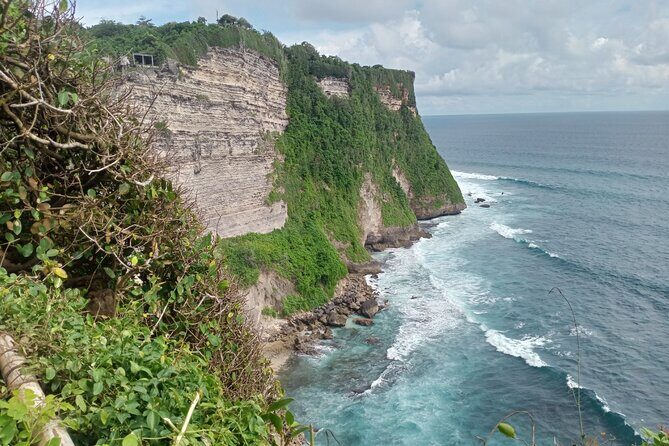
I like how the fast-boat + private car combo keeps the day moving, and how the schedule gives you set time at each viewpoint (about 30 minutes per location). Second, you get an Indonesian lunch included, so you’re not hunting for food between cliff stops.

The main drawback is the pace: the time is tight enough that motion sickness or limited stamina can really get in the way, especially with curvy roads and viewpoints. If you plan to descend toward Kelingking, Diamond, or Atuh beaches, you’ll need to think carefully—this kind of all-in-one day doesn’t leave much room.

Key things that make this tour click

Nusa Penida Instagram Tour. West & East. All-inclusive - Key things that make this tour click

  • Both coasts in one day so you hit multiple iconic viewpoints instead of choosing east or west only
  • Hotel pickup and private, air-conditioned transport on Penida with experienced local driving
  • Timed photo stops (around 30 minutes each) that keep the day on track
  • Kelingking, Diamond, Angel’s Billabong, Pasih Uug, and the Tree House in a single run
  • Indonesian lunch included so you’re not breaking the flow for meals
  • Some extra costs are optional, like the Diamond Beach swing fee (IDR 200,000/person) and tips

Why the West-and-East Nusa Penida combo feels smarter

Nusa Penida Instagram Tour. West & East. All-inclusive - Why the West-and-East Nusa Penida combo feels smarter
Nusa Penida is one of those places where you can spend a week and still feel like you just scratched the surface. But most people don’t have a week. What I like about this tour is that it’s designed for a common reality: you want the signature views from both sides of the island, but you only have one full day.

The big advantage is simple. Many half-day formats focus on either the east coast or the west coast. That means you miss a chunk of the most photographed scenery. This format is about covering those must-see photo locations in one go—Kelingking area viewpoints, Diamond Beach, Pasih Uug/Broken Bay, Angel’s Billabong, and the clifftop Tree House.

That said, the trade-off is time. You’re not arriving, lingering, and doing the full hike-to-everyting version of Nusa Penida. You’re arriving, shooting, posing, and moving on. If you’re the type who likes to take ten deep breaths and watch the sea for an hour, you’ll probably feel the clock. If you’re the type who wants to leave with a folder full of strong photos and a clear checklist, this tour is built for you.

Getting there: early start, fast boat, and hotel-to-island flow

Nusa Penida Instagram Tour. West & East. All-inclusive - Getting there: early start, fast boat, and hotel-to-island flow
This is an all-day plan that starts early. The tour’s start time is listed as 6:30 am, and the total day runs about 12 hours.

On Bali, you’ll get hotel pickup and then fast-boat tickets are included for the roundtrip between Bali and Nusa Penida. Once you’re on the island, you’ll ride in a private, air-conditioned car with a driver/guide.

One thing I appreciate is that the transfer part is not left vague. People doing Nusa Penida day trips can end up with a stressful, self-organized relay—find the port, find the boat, find the driver. Here, the handoffs are part of the package. In examples from the experience, guides like Kadek helped with the hotel-to-port leg, then another driver like Komang handled the Penida driving portion, keeping the ride comfortable and staying on schedule.

If you hate uncertainty and you want your day organized end to end, this structure is a big selling point.

The 12-hour rhythm: how 30 minutes per stop shapes your day

The tour is explicit about timing: you have around 30–35 minutes per site. That matters because Nusa Penida’s roads are slow compared with what most people expect from Bali. You spend time traveling between viewpoints, and you also need a little buffer for heat, photos, and walking from the car to the viewpoint.

This is also why the tour includes a note about beach descents. If you want to descend down toward Kelingking, Diamond, or Atuh beaches, the time pressure becomes real. The schedule is designed around viewpoints and short stops. Planning a descent on top of that can push your day past the intended window.

So here’s the practical way to use this. If your goal is Instagram-style framing—cliff angles, iconic rock shapes, and wide sea views—this is a good time-boxed plan. If your goal is beach time and bottom-of-the-cliff time, consider splitting east and west into separate days or choosing a tour that leaves room for longer beach access.

Diamond Beach: an untouched-feeling coastline, plus a known optional cost

Nusa Penida Instagram Tour. West & East. All-inclusive - Diamond Beach: an untouched-feeling coastline, plus a known optional cost
Diamond Beach is presented as one of the top “wow” stops, and the reason is obvious when you’re standing there: the water color and the way the coastline sits in the cliff shadows can feel like you’ve landed in a natural set. It’s described as newly accessible to visitors, which adds to that early-spotting feeling you get at popular destinations.

In this tour, Diamond Beach is given a dedicated timed visit (about 30 minutes), and admission is included. That’s a meaningful value detail, because entrance and local retribution fees add up quickly when you chain multiple sites.

Two practical notes:

  • Diamond Beach can have extra add-ons. The swing fee is listed as IDR 200,000/person, and it’s not included. If swinging is part of your photo plan, budget for it.
  • Since your time is limited, it’s smart to decide in advance where you want your photos taken so you’re not spending the whole window walking around looking for the best angle.

If you want that “untouched paradise” vibe for photos without sacrificing half your day, Diamond Beach fits the tour’s style perfectly.

Pasih Uug (Broken Bay): the rocky pool that photographs like a swimming hole

Pasih Uug, also called Broken Bay in many guides, is the stop that feels like a secret even when you’re standing in front of it. The description emphasizes the bay looking like a giant pool, with the sea surrounded by tall rocks that limit easy line-of-sight.

In the tour, this stop is included with admission listed as free. That’s a small detail, but it’s good to know because free admissions are one less cost item eating into your day budget.

The bigger thing with Pasih Uug is photo timing. In a short stop, your best results come from arriving, setting up quickly, and using the rock framing for wide shots rather than trying to do a long exploration. The cliffs do a lot of the work for you—take advantage of that.

Also, if you’re sensitive to motion sickness, keep an eye on your breathing and hydration. The bay itself is not the problem; it’s the combination of fast driving and sudden stop-start viewpoint transitions that can get some people.

Angel’s Billabong: emerald water and cliffside stillness

Angel’s Billabong is another viewpoint that’s all about contrast: steep cliffs, and then water that looks unusually bright against the rock. The tour describes the cliffs as steep and silent, with coral reefs visible from the viewpoint.

In other words, this is not just about taking a quick picture. It’s one of the stops where, if the day is clear, you’ll want to slow down for 10–15 seconds and watch how the water color changes with the light. The tour gives you about 30 minutes, so it’s not long, but it’s enough time to get one set of photos and still appreciate the scene.

Admission is included for this stop, which again helps make the all-inclusive value feel real. You’re not constantly scanning for ticket lines and local payments while the island day keeps rolling.

Kelingking Beach from Karang Dawa View Point: the iconic shape, with a big caveat

Kelingking Beach is the headline icon for a reason. Even when you’re only viewing from the best-known viewpoint areas, the rock formation is so distinctive that you instantly recognize it from photos online.

In this tour, you’ll visit Kelingking Beach via Karang Dawa View Point, and the time at the stop is again about 30 minutes with admission included. The description paints it as a moment where time slows down: silence, scale, and that sense of awe you get when you see a rugged coastline drop away beneath you.

Here’s the practical caveat: the tour explicitly warns about descent plans. If you’re hoping to go down toward Kelingking (and also Diamond or Atuh), you should consider booking the east and west tours separately. That’s not just about physical effort—it’s about keeping your day from turning into a rushed scramble where you spend more time managing steps and heat than enjoying views.

Also, based on feedback from people who’ve done this style of day, if you get travel or motion sickness, this specific route may not suit you. Penida roads are winding, and you’ll be switching between viewpoints multiple times.

Molenteng Tree House: the clifftop photo stop you’ll recognize instantly

The Tree House stop is called Rumah Pohon and described as Molenteng Tree House. It’s popular on social media for a reason: it’s a clifftop viewpoint experience that’s visually dramatic, even if you’ve seen it in photos before.

In this tour, entry/admission for the tree house is included. That matters because social-photo sites often charge extra, and adding them into an all-in-one package is a clear value win.

Timing is tight here too (about 30 minutes). So don’t plan on doing a full photo shoot with multiple outfit changes. Instead, treat it like a photo mission: arrive, get your main angles, then linger at the viewpoint for the sea and cliff backdrop.

If the rest of your day feels rushed, this stop is the one that usually makes people feel like the effort was worth it. It’s easy to get that “yes, I came here” feeling fast.

Lunch on Penida: included Indonesian food that keeps the pace moving

You’ll stop for an Indonesian lunch along the way, and it’s included in the tour.

I like included meals on tours like this for one reason: food hunting on Penida can break the flow. When you’re moving between cliff viewpoints with time limits, a meal that’s scheduled into the day keeps everything predictable.

The lunch also functions as the buffer that helps you handle heat and dehydration. Even if the day is “just viewpoints,” you’ll still be outside for long stretches. Eating on schedule makes the timing easier and reduces the chance you’ll feel weak when you hit the last stops.

Guides and driving quality: why the right driver matters on Penida

On an island day like this, the driver isn’t a background detail. Penida roads can be twisty, and the day’s success depends on safe driving and staying on schedule so you don’t lose precious viewpoint minutes.

Examples from the experience include drivers like Kadek and Komang on the overall route and local guide attention once people arrive on Penida. The key takeaway is that the best versions of this tour work when your driver keeps rides comfortable and gets you to each spot on time.

That’s also why the one real problem you can run into matters: if traffic or an early delay happens, the schedule can compress. One account described starting late and then getting very short photo windows. Another account said they had to give up time at a beach stop due to timing.

So if you’re planning this for one specific day you can’t change, I’d go in with realistic expectations. Fast boats and island driving are weather-and-road dependent, so build your day around the tour rather than expecting it to fit neatly into other plans.

Price and value: what you’re really paying for

At $88.63 per person, this tour is priced for people who want an organized, all-in-one day rather than piecing it together themselves.

The value isn’t just the sightseeing. It’s the package elements:

  • roundtrip fast-boat tickets
  • hotel pickup and return
  • a private car with driver on Penida
  • entrance tickets and retribution fees for the included sites
  • Indonesian lunch
  • Tree House entry

When you add those pieces separately, you usually end up spending more time and more money than you expect. This kind of pricing makes sense if you want both coasts and you’re comfortable trading slow travel for a structured highlight circuit.

You also need to compare this with east-only or west-only tours. The biggest “value” win here is that you get more of the iconic shortlist in one day. The biggest “value” trade-off is the time at each place. You’re paying for variety and logistics, not for long beach stays.

Practical tips to make the timed stops work for you

Here’s how to get the most out of a schedule built for about 30 minutes per location.

Plan your photo priorities before you arrive. Diamond, Angel’s Billabong, Kelingking, and the Tree House each have their signature angles. If you wait until you’re standing there to decide, the window slips away.

Wear shoes that handle steep, uneven paths. Even if you’re not descending all the way to beaches, some viewpoints involve walking on rock and dirt. Comfort matters more than looks.

Bring water and sunscreen. A long early start plus cliff viewpoints adds up. Even included lunch doesn’t replace hydration.

If you’re motion-sickness-prone, think twice. The route involves long island driving segments, frequent viewpoint stops, and an early start. If you know you feel sick on winding roads, this is risky.

Go for one or two outfits max. The stops are short. Bring what you can change quickly for at least one standout photo at the Tree House or Kelingking viewpoint.

Who should book this Nusa Penida Instagram tour

This tour is a strong fit for you if:

  • you want west and east Nusa Penida highlights in one day
  • you like structured tours with included transfers and admissions
  • you want photos at the major icon viewpoints and you don’t need hours at the bottom of every cliff
  • you’ll be okay with a timed “visit, shoot, move on” rhythm

You might want to skip it or choose a different format if:

  • you get motion sickness or you’re worried about curvy driving
  • you want relaxed beach time and long descents
  • you want flexibility to linger at a stop until the light is perfect

Should you book it? My honest take

If your goal is a single-day Penida hit list—Kelingking, Diamond, Pasih Uug, Angel’s Billabong, and the Tree House—this tour is worth strong consideration. The included fast-boat roundtrip, hotel pickup/return, private air-conditioned driving, Indonesian lunch, and site admissions make the pricing feel “real,” not like you’ll get to the island and discover a pile of extra fees.

But I’d only book it if you’re comfortable with the day’s reality: it’s a highlight circuit, not a slow exploration. If you’re hoping for beach descents at multiple sites, or you’re sensitive to motion and heat, you’ll likely feel rushed or uncomfortable. In that case, splitting your day into east and west-focused tours (so you can spend more time where you want it) is the smarter move.

FAQ

How long is the Nusa Penida West and East Instagram tour?

It runs about 12 hours.

What time does the tour start?

The listed start time is 6:30 am.

Where does pickup and drop-off happen?

You get pickup from your Bali hotel and return to your Bali hotel at the end.

What’s included in the price?

Fast-boat roundtrip tickets (Bali to Nusa Penida and back), private car with driver (air-conditioned), entrance tickets and retribution fees for the attractions, Indonesian lunch, and Tree House entry are included.

Are the viewpoint entrance fees included?

Yes. Entrance tickets and retribution fees are included for each attraction listed on the tour.

What optional or extra costs should I expect?

Tipping and souvenir photos are not included. The Diamond Beach swing fee is listed as IDR 200,000/person and is not included.

How much time do I get at each stop?

You’re given about 30 minutes at each location (the tour also notes around 30–35 minutes per site).

Is the tour physically demanding?

The tour recommends a moderate physical fitness level, especially if you’re thinking about descending toward beaches.

Is this tour private?

Yes. It’s a private tour/activity, and only your group participates.

Blue Lagoon Snorkeling with Lunch and Private Transport

Blue Lagoon Snorkeling with Lunch and Private Transport - What You’ll See Underwater: Fish, Reefs, and Sea Turtles

Blue Lagoon in the Seminyak area has a rare feel: plenty of space, not a crowd scene. I like that you get that calmer, more relaxed atmosphere where you can float, swim, and even mess around in the sand like it’s your own beach day.

This tour also strings together two snorkeling stops instead of just one, with traditional boat transport between them. I also appreciate the practical setup: you’re not stuck figuring out gear or where to go, and the guides and driver are described as very kind and on time.

One thing to weigh: this is roughly 2 hours, so you’ll want to go in ready to make those short windows count. Also, the experience needs good weather to run as planned.

Key highlights you’ll actually care about

Blue Lagoon Snorkeling with Lunch and Private Transport - Key highlights you’ll actually care about

  • Private group setup: only your group participates, so the water time feels less rushed
  • Two sites in one outing: Blue Lagoon plus Tanjung Jepun
  • Traditional boat transfer: local boats are used to reach the beauty spots
  • Snorkeling gear included: you get what you need for surface snorkeling
  • Sea life mix on both stops: fish plus sea turtles and reef sharks at Tanjung Jepun

Why Blue Lagoon Feels Like Your Own Beach Day

Blue Lagoon Snorkeling with Lunch and Private Transport - Why Blue Lagoon Feels Like Your Own Beach Day
Seminyak is busy. This part of the coast is different. The vibe here is that you won’t have waves of tour groups packed in right next to you. In the Blue Lagoon area, most visitors are foreigners rather than locals, and that often translates to a quieter, slower pace once you’re in the water.

What that means for you is simple: you can move at your own rhythm. Swim out and back. Stay shallow to watch fish. Drift on the surface and just take it in. You’re not fighting for space to put your face in the water, which makes snorkeling far more comfortable, especially if you’re not a confident swimmer.

There’s also a practical reason to like this location: Blue Lagoon sits near other snorkeling areas, including Tanjung Jepun and Bias Tugel. The region is built for sea-life spotting, so even when conditions shift a bit, you’re still in the right zone for reefs and fish-watching.

One more subtle plus: when it’s not packed, it’s easier to enjoy the whole sensory experience. You hear less noise, you see more clearly, and you spend less time waiting your turn for a view.

Two Snorkel Stops: Blue Lagoon and Tanjung Jepun

Your outing is built around two snorkel areas. First you start with the Blue Lagoon spot, then you head to Tanjung Jepun as the second stop. The plan uses a local traditional boat, so you’re not just doing one static swim from shore.

That boat step matters more than it sounds. In Bali’s snorkeling spots, the best viewing often isn’t the spot you can reach by walking. Moving by boat helps you get to areas where reefs and marine life are more concentrated. It also keeps the day from feeling like one long, repetitive swim.

At Tanjung Jepun, you can expect different animals than at Blue Lagoon. The key detail here is that the tour description specifically calls out reef shark and sea turtle sightings as possible at Tanjung Jepun. You’re also likely to see fish like Murray (as listed), plus squid.

Time is the trade-off. With about 2 hours total, you’re not doing an all-day expedition. You’ll want to treat this as a short, efficient snorkel session: brief travel, gear on, then quality water time at two locations.

What You’ll See Underwater: Fish, Reefs, and Sea Turtles

Blue Lagoon Snorkeling with Lunch and Private Transport - What You’ll See Underwater: Fish, Reefs, and Sea Turtles
Snorkeling success is mostly about what you see. This tour leans hard into color and variety. At Blue Lagoon, you can expect a wide range of colorful reef fish, including lionfish, angelfish, butterfly fish, and Moorish idol. That matters because mixed species often means mixed behaviors: some fish hover, some dart, and some follow current edges around coral.

Then at Tanjung Jepun, the experience shifts toward larger, more memorable encounters. The tour information highlights reef shark, sea turtle, and squid. It also mentions Murray fish (listed in the description) as part of the potential lineup.

A quick reality check for expectations: snorkeling is always weather- and visibility-dependent. Even with a great guide and solid sites, water conditions can affect how far you can see and how often you spot animals. But the tour’s strength is that it doesn’t put all its hope in one location. If one spot is a little slow, you still have a second site with a different marine cast.

Also, you’ll be at surface level. That’s great for most people because it keeps things relaxed. You can watch from the surface, breathe normally, and enjoy the reef without the pressure of scuba depth.

Traditional Boat + Private Transport: How the Day Flows

Blue Lagoon Snorkeling with Lunch and Private Transport - Traditional Boat + Private Transport: How the Day Flows
This is a private tour/activity, which means only your group participates. You also have pickup offered from Seminyak. For most people, that’s the difference between a stressful half-day hunt for logistics and a smooth outing where your only job is showing up with the right mindset.

The tour uses private transport plus traditional boat movement between snorkeling spots. In practice, that usually means:

  • You get picked up rather than navigating on your own
  • You arrive at the coast and then move out by boat for the two beauty spots

The mobile ticket detail is also helpful. You don’t have to juggle printed confirmations, and it reduces the chance of a last-minute snag.

Timing-wise, the total experience is about 2 hours. That’s short enough to fit into a busy Bali itinerary, which is a big part of the value. You’re not signing up for a day-long commitment, but you still get two different snorkeling locations.

Gear, Lunch, and What’s Included (and Not)

Blue Lagoon Snorkeling with Lunch and Private Transport - Gear, Lunch, and What’s Included (and Not)
The included items are straightforward: snorkeling equipment. That matters because buying or renting gear in Bali can add both cost and time. Having it provided lets you focus on the water, not on packing and logistics.

One important line in the details: scuba equipment is not included. So if you’re thinking of turning this into a scuba day, you’ll need a different activity.

About lunch: the tour is described as including lunch in its title, and one of the highlighted experiences notes a tasty lunch. Since lunch isn’t listed in the formal included section you were given, I’d treat it as a likely benefit you should feel comfortable expecting, but still worth confirming when you book. Even if the lunch is simple, it’s a nice way to cap a short morning or late-afternoon snorkel.

Here’s how I’d plan around food anyway:

  • Bring a light snack mindset before you go
  • After snorkeling, hydrate and eat soon, since time in sun and salt water can sneak up on you

If you’re sensitive to sun, sunscreen and a hat are your best friends. The materials provided are for snorkeling, not for keeping you comfortable on the beach before and after.

The Value Question: Is $60 Worth It?

Blue Lagoon Snorkeling with Lunch and Private Transport - The Value Question: Is $60 Worth It?
At $60 per person, the value depends on what you care about most: convenience, variety of sites, or privacy.

Here’s what you’re paying for:

  • Private group time rather than shared chaos
  • Pickup offered from Seminyak
  • Snorkeling equipment included
  • Two snorkeling sites in one outing (Blue Lagoon plus Tanjung Jepun)
  • Boat transport between spots

For a short activity, that mix is the sweet spot. You’re not just buying a place to swim. You’re buying a planned route that gets you to two distinct snorkeling locations with equipment taken care of.

If you’re comfortable handling transport and gear on your own, you might find cheaper options. But once you factor in the time saved and the fact that you’re getting guided snorkeling at a private pace, $60 starts to look reasonable—especially if you’ll actually use all the included pieces.

Also, the average booking time is about 36 days in advance. That’s not a rule, but it suggests this is popular enough that booking earlier can help you lock in the schedule you want.

Who This Tour Suits Best

Blue Lagoon Snorkeling with Lunch and Private Transport - Who This Tour Suits Best
This tour fits best if you want a short, easy plan with strong water time and a calmer feel.

It’s especially good for:

  • Couples or friends who want a private outing
  • Snorkelers who want gear handled and don’t want to fuss with logistics
  • People who prefer variety without committing to a full-day trip
  • Travelers who like seeing fish up close and are happy with surface snorkeling

It may not be the best fit if:

  • You’re looking for scuba-specific diving (scuba equipment isn’t included)
  • You want an all-day itinerary with long intervals at each site
  • You strongly need large stretches of downtime between water sessions

If you’re unsure, think about your goal for the day. If your goal is clear: snorkel at two classic spots with a low-stress setup, this is the kind of outing that works.

Practical Tips to Make Your Snorkel Feel Effortless

Blue Lagoon Snorkeling with Lunch and Private Transport - Practical Tips to Make Your Snorkel Feel Effortless
You’ll get the best experience when you treat snorkeling like a simple routine, not a big production.

1) Keep your expectations flexible.

Fish and sea turtles aren’t guaranteed on a schedule. The tour gives you strong chances by visiting two sites, but conditions still matter.

2) Use the gear properly.

Since snorkeling equipment is included, don’t hesitate to adjust it before you enter the water. A comfortable fit means more watching, less fiddling.

3) Plan your swim style.

If you’re new to snorkeling, stay calm and shallow. If you’re more confident, you can range a bit farther, but keep it relaxed. The whole point here is that it feels like fun, not a fitness test.

4) Pay attention to the boat-to-water timing.

With a total duration around 2 hours, you’ll want to be ready when you’re called. The best sightings often happen when you’re quick to get in and ready to look.

5) Don’t forget post-water comfort.

Even if the snorkel itself is quick, sun and salt are real. Have a plan to rinse off and cool down after.

Quick Reality Check: Weather and Comfort

This experience requires good weather. That’s not just fine print. Snorkeling and boat transfers depend on conditions, so if weather is rough, you may be offered a different date or a full refund.

When you book, make sure your schedule can handle a small change. If your trip is tight, pick a day with a bit of wiggle room.

Also, because it’s a short activity, it pairs well with flexible plans before or after. Don’t stack another long tour immediately back-to-back unless you’re okay with minor timing shifts.

Should You Book This Blue Lagoon Snorkeling Tour?

I’d book it if you want a private snorkel day with pickup from Seminyak, included snorkeling gear, and two different snorkeling areas instead of one. The quiet-beach feel and the chance of seeing sea turtles, reef sharks, and lots of reef fish at the two sites make it a smart, time-efficient choice.

I would pause if you need scuba diving or if you’re the type who needs a long, slow itinerary with lots of downtime between activities. Also, if your dates are locked tight and you can’t handle weather-related changes, pick your day carefully.

If your main goal is simple: see colorful fish, swim in clear water, and do it without hassle, this is the kind of outing that delivers value fast.

Purification Holy Bath at Beji Gria Waterfall

Purification Holy Bath at Beji Gria Waterfall - The ceremony flow: what happens from prayer to coconut blessing

Two waterfalls. One mind reset.

At Beji Griya Waterfall near Ubud, a temple-led purification turns a short nature outing into a full ritual sequence: prayer, two water baths, and a closing blessing. You’re not just looking at water. You’re taking part in a structured ceremony with local priests and offerings, in a setting that feels quiet and personal even though it’s popular.

What I like most is the clarity. You get guided steps, incense offerings, and a special sash/cloth, so you know what’s expected instead of guessing in wet confusion. I also appreciate the private hotel pickup and drop-off plus a guide staying with you the whole time, which makes the whole day simpler. One consideration: the experience can feel a bit commercial at the site, and you might get pressured to buy extras if you do not want them.

Key things to know before you go

Purification Holy Bath at Beji Gria Waterfall - Key things to know before you go

  • Priest-led ceremony steps, from prayer and meditation to a final coconut-water blessing
  • Two waterfall moments with different intentions: cleansing the body first, then your aura
  • A guide who walks you through it, plus offerings and a cloth sash included
  • Hotel pickup makes it easy, with the waterfall stop handled for you
  • Plan for cold water and wet clothes, and bring what you need to change fast

A real ritual, not just a photo stop at Beji Griya Waterfall

Purification Holy Bath at Beji Gria Waterfall - A real ritual, not just a photo stop at Beji Griya Waterfall
This is the kind of Bali activity that changes the rhythm of your day. Instead of a random waterfall visit, you follow a set flow led by a local priest and a guide. It’s part spiritual practice, part controlled performance, and part nature experience.

The setting matters. Beji Griya Waterfall is framed by stone, narrow paths, and the sound of water that keeps building as you go. That physical environment makes the ceremony feel more grounded. You’re moving through the space in a deliberate way, and the water moments feel like punctuation marks rather than a single splash-and-go.

It’s also good value for the structure you get. At $59 per person, you’re paying for transport, admission, a guide, and all the ritual items like incense sticks and the cloth you’ll wear during the process. Food and drinks are not included, but that’s normal for short tours like this. The cost mostly covers the “do it properly” parts.

The ceremony flow: what happens from prayer to coconut blessing

Purification Holy Bath at Beji Gria Waterfall - The ceremony flow: what happens from prayer to coconut blessing
Here’s the sequence you should expect, in plain language. This matters because the ritual is the main event.

First, you start with meditation/prayer led by a temple priest. This sets the tone. You’re guided into the mindset of cleansing and release rather than treating it like a scenic walk.

Next, you do the first holy bath. Before you even reach the water, you walk through a narrow canyon area. This is not a wide, easy stroll. It’s more like careful footing through a constrained route, then stepping into the cleansing moment. The purpose is described as balancing your health, so it’s treated as your first reset.

Then comes the second holy bath, at a small well. This one is framed around cleansing your aura, with the intention of attracting happiness and luck. Even if you’re not thinking in those terms, the ceremony gives you something to “do” with your attention. It’s not just water. It’s attention on purpose.

After that, there’s a release moment at the first waterfall. You’re guided to scream/cry as loud as you can to release anxiety, tension, and sadness. It sounds theatrical until you’re there, but it’s clearly part of the design: a physical emotional exhale in front of moving water.

At the second waterfall, the tone shifts. You’re asked to smile and laugh as loud as you can to express happiness. This contrast is one of the most memorable aspects of the whole ritual, because it moves from release to expression instead of ending in silence.

Finally, you receive the last blessing from the priest using holy water taken from green and yellow coconut water. That closing moment is your capstone. It’s also why the tour feels complete when it’s over instead of stopping mid-ceremony.

The walk and timing: why you should plan a “wet but comfortable” day

Purification Holy Bath at Beji Gria Waterfall - The walk and timing: why you should plan a “wet but comfortable” day
The tour is designed to be paced. You’ll typically spend about 2 hours at the waterfall, and the overall day from pickup to drop-off is around 5 hours depending on where you’re staying and traffic.

Transfer time usually runs 30 minutes to 1 hour each way. In Ubud, that can swing based on road congestion. It’s smart to treat this like a half-day outing, not a quick errand.
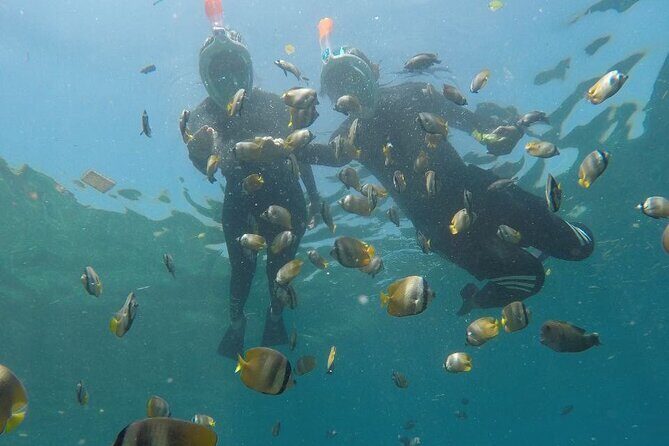
What you feel most during the process is the mix of standing, walking, and getting into water. The path to the first bath includes that narrow canyon section, so you want footwear you’re confident in. The tour advises light, comfortable clothing and a swimsuit, plus a change of clothes. That’s not overkill. It’s the difference between enjoying the ceremony and spending the next hour shivering awkwardly.

Also plan for time to cool down after. The ritual includes cold sensations and wet gear. One review specifically called out that the water felt cold, which is exactly what most people experience in waterfall baths in Bali.

What’s included for $59, and what costs extra

Here’s the value picture, without the marketing fluff.

Included:

  • Private hotel pick-up and drop-off
  • Local authorized guide who stays with you and explains each step
  • Parking fees
  • Admission ticket(s)
  • Offerings for the holy bath, including incense sticks
  • Special sash/cloth for the ceremony

Not included:

  • Food and drinks
  • Other personal expenses

For most people, the biggest “extra” is simply staying fueled. Bring snacks and water. The tour advises water bottle and snacks, which makes sense because you’ll want energy for the walking and the emotional release parts.

If you’re someone who hates sudden costs, this tour is good because the ceremony items are built in. You shouldn’t need to bring your own incense or worry about finding the right cloth. You do still need to bring what you wear and what you’ll change into after.

Your guide and driver: what good service looks like here

This isn’t one of those tours where the staff disappears after arrival. The structure includes a guide accompanying you through the entire purification steps.

You’ll also have pickup and transport arranged by Bali Yowana Tour. Reviews mention driver Vito for being on time, helpful, friendly, and knowledgeable. Another named guide, Pandu, is also praised for walking guests through the experience and even capturing moments with a phone during the ceremony.

Even if you don’t get those exact people, the consistent idea is the same: you want someone who can explain what’s happening before you’re wet, not after. This matters because the ritual involves actions like screaming/crying and laughing/smiling. If you’re unclear on what to do, the whole experience can feel awkward. A good guide keeps it respectful and simple.

Photography: beautiful results, but keep the vibe respectful

You’ll likely want photos. The site is visually photogenic, and people highlight it as a strong spot for pictures.

But do it with the ceremony in mind. The ritual is not a background for your camera. If you can, frame shots that include the ceremony moments without blocking others. If the priest or guide is instructing you, pause and follow first.

A practical tip: bring your camera, but also bring common sense about getting it wet. The tour advises a swimsuit and change of clothes, so you should assume you’ll be close to splashes. If you have a phone, a simple waterproof case can reduce stress.

What to wear and pack: my practical checklist

Purification Holy Bath at Beji Gria Waterfall - What to wear and pack: my practical checklist
The tour gives smart packing advice, and I’d follow it closely.

Wear/bring:

  • Light, comfortable clothing
  • Swimsuit
  • Change of clothes
  • Sunscreen
  • Sunglasses
  • Cap or hat
  • Water bottle
  • Snacks
  • Camera
  • Some petty cash

Why this list matters:

  • Comfort helps during the walk through the narrow areas.
  • A cap and sunscreen matter because you’ll be outside for a while.
  • Change of clothes keeps you comfortable after the cold water.
  • Snacks prevent you from ending the ceremony cranky and hungry.

Who should book, and who should skip the holy bath

This is one of those tours where the fit is personal. You’ll enjoy it most if you like structured experiences and you don’t mind being emotionally expressive during the ritual.

Good fit if you:

  • Want a spiritual, priest-led experience rather than a casual waterfall stop
  • Prefer clear steps guided by a local host
  • Are comfortable doing staged emotional release (scream/cry) and joy expression (smile/laugh) when prompted

Skip or reconsider if:

  • You are a woman who is on period. The tour policy says women on menstruation are not allowed to do the holy bath for safety reasons.
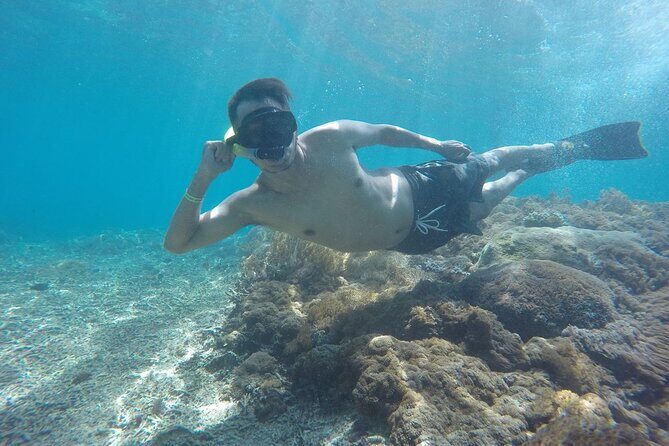
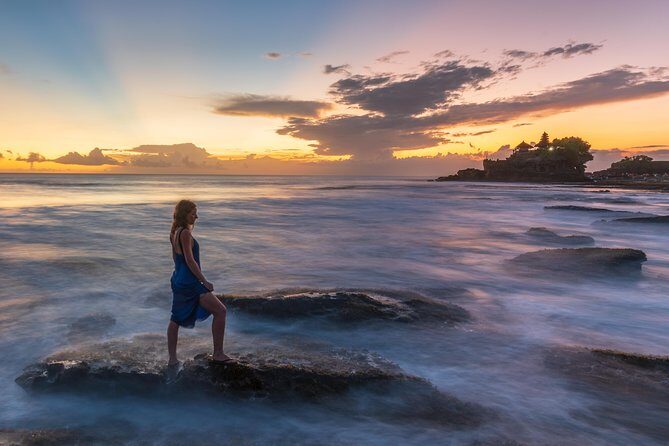
  • You’re outside the age range: minimum age 10, maximum 60.
  • You dislike cold water and wet clothing situations. The water can feel cold once you’re in.

Also think about your physical comfort. The route includes walking through a narrow canyon area. The tour isn’t described as technical climbing, but it does sound more confined than a wide trail.

Timing and planning in Ubud: make it easy on yourself

On average, this activity is booked about 34 days in advance, which tells me it’s not a “wait until tomorrow” kind of plan if you want to lock in your preferred slot.

Plan for a half day:

  • Pickup from your hotel
  • Transfer to the waterfall (30 minutes to 1 hour)
  • Ceremony time at the site (around 2 hours)
  • Return to your hotel (30 minutes to 1 hour)

And don’t schedule anything important right after. You’ll be wet, possibly cold, and you’ll want time to shower and reset.

Also note it’s a private activity for your group only. That’s a big quality-of-life factor if you’re traveling with friends or family who want their own pace and space.

The main drawback: when a sacred site feels a bit commercial

One theme that comes up is that parts of the visit can feel somewhat commercial. That doesn’t mean the purification itself is fake. It means the surrounding area may include people trying to sell extras or packages.

Here’s how to protect your experience:

  • Decide in advance whether you want to buy anything beyond what’s included.
  • If you don’t, be polite but firm.
  • Keep your attention on the ceremony steps and your guide’s instructions.

If you treat the sales angle like background noise and focus on the ritual, the experience can still feel powerful and well organized.

So, should you book Purification Holy Bath at Beji Griya Waterfall?

I think you should book it if you want something more than a waterfall. This is a guided purification sequence with a priest, two water moments tied to different intentions, and a closing blessing with coconut water. You’re not paying just for scenery. You’re paying for a process.

I’d skip it if:

  • You want a quiet, low-effort nature walk
  • You dislike cold water or getting wet for a while
  • You’re not comfortable with the expressive parts of the ritual (scream/cry, smile/laugh)

If you do book, go prepared. Wear what you can get wet in, bring a swimsuit and change of clothes, and expect about 5 hours total from pickup to drop-off. Done right, it’s the kind of Bali experience you remember for how it made you act, not just how it looked.

FAQ

How long does the purification holy bath take?

The activity is about 3 to 4 hours, and the time from hotel pickup to drop-off is around 5 hours depending on your location and traffic.

Do I get hotel pickup and drop-off?

Yes. The tour includes private hotel pick-up and drop-off by Bali Yowana Tour.

What does the ceremony include?

You can expect prayer/meditation with a temple priest, a first holy bath in a canyon area, a second holy bath at a small well, a release moment at the first waterfall, a happiness expression at the second waterfall, and a final blessing using holy water from green and yellow coconut water. Incense and a special cloth/sash are included.

What is included in the $59 price?

The price includes private pickup and drop-off, an authorized local guide, parking fees, admission tickets, offerings (including incense sticks), and the special sash/cloth. Food and drinks are not included.

Who can participate, and who can’t?

The minimum age is 10 and the maximum is 60. Women on period/menstruation are not allowed to do the holy bath for safety reasons.

What should I bring?

Bring light comfortable clothing, a swimsuit, a change of clothes, sunscreen, sunglasses, a cap or hat, a water bottle, snacks, a camera, and some petty cash.

Is there free cancellation?

Yes. You can cancel up to 24 hours in advance for a full refund. If you cancel within 24 hours, the amount paid is not refunded.

Bali Tribal Private Tour – Experience the best of Ubud, Bali

Bali Tribal Private Tour - Experience the best of Ubud, Bali - How the day flows: timing that won’t fry your schedule

A great Bali day starts with the right pace. This private route in and around Ubud mixes Hindu sights, village life, and countryside scenery, with door-to-door private transfers from Seminyak. I like that you get a private car with an English-speaking driver, so you spend less time negotiating and more time looking around. What I love most is the room to shape the day around your interests with a real guide, not a rushed checklist.

Second, I really like the way the itinerary balances famous stops with calmer moments—temples, terraces, and the traditional art market—so it feels like a rounded Ubud experience. The main consideration is that the big headline attractions require their own entrance tickets (listed as USD 10 per person), and lunch is not included.

Key highlights worth your attention

Bali Tribal Private Tour - Experience the best of Ubud, Bali - Key highlights worth your attention

  • Private door-to-door transport from Seminyak, with an English-speaking driver and bottled water
  • Sacred Monkey Forest Sanctuary with gray macaques around Hindu temple and jungle areas
  • Tegenungan Waterfall plus time for a short walk or top-view break
  • Tirta Empul Temple focused on a holy blessing routine before prayer
  • Tegalalang Rice Terrace with a short trek and a village lunch option in the valley area
  • Ubud Art Market and Ubud Palace for crafts, textiles, and a royal family home

Price and logistics: what $35 really buys you

Bali Tribal Private Tour - Experience the best of Ubud, Bali - Price and logistics: what $35 really buys you
This is a private tour priced at $35, with a private car, fuel, and an English-speaking driver included. That matters in Bali, because Ubud-area driving can get slow, and doing it privately saves you from joining random schedules or trying to coordinate transport on your own.

The trade-off is simple: the listed entrances are not included. The tour notes an additional entrance fee of USD 10 per person for all attractions named on the itinerary. Lunch also isn’t included, so you’ll either budget for a meal or plan to eat where the day allows. In return, you get a structured route that still leaves time to breathe—about 4 to 8 hours total depending on traffic and how long you linger at each stop.

One more practical detail: you start at 8:00 am. Earlier mornings usually help with crowd intensity at popular sites, and you’ll also have a smoother shot at finishing before the hottest part of the day.

How the day flows: timing that won’t fry your schedule

Bali Tribal Private Tour - Experience the best of Ubud, Bali - How the day flows: timing that won’t fry your schedule
The itinerary is built from short, focused blocks, which is ideal if you want variety without being exhausted. You move from one place to the next, with the longest activity windows at the waterfall, the temple water ritual site, and the rice terraces.

Here’s the rhythm you can expect:

  • Monkey Forest: about 30 minutes
  • Tegenungan Waterfall: about 45 minutes
  • Tirta Empul Temple: about 45 minutes
  • Tegalalang Rice Terrace: about 45 minutes
  • Ubud Art Market: about 45 minutes
  • Ubud Palace: about 15 minutes

Even if you don’t maximize every minute, that sequence adds up to a full Ubud highlights day. It also creates a natural pattern: nature first, then spiritual sites, then local culture and shopping, and finally the palace finish.

Stop 1: Sacred Monkey Forest Sanctuary and its temple-jungle mix

You start at Sacred Monkey Forest Sanctuary, a 12.5-hectare area where gray macaques move around alongside Hindu temples and jungle scenery. It’s a quick stop by design—about 30 minutes—so it works best if you keep your goals simple: see the temples, watch the animals from a respectful distance, and enjoy the atmosphere.

What makes this stop valuable on a private tour is interpretation. A private guide can point out what you’re looking at—how the space connects to daily beliefs and temple life—without you having to figure everything out from signage. You’re not just visiting a park; you’re getting a sense of how Hindu spaces exist in the middle of greenery.

The one drawback to consider: it’s popular. That means you may see more people than you’d get at quieter spots. If you prefer calm, plan to arrive ready to take quick photos and then move on.

Stop 2: Tegenungan Waterfall for a cool-off and quick views

Next is Tegenungan Waterfall, described as one of the most visited waterfalls in Bali. You get about 45 minutes here, which is enough time to either enjoy the view from higher viewpoints or take a short walk closer to the falls.

This stop is great when you want a break from temples and markets. The waterfall adds a totally different feel—sound, mist, and that green, fresh air vibe you notice the moment you’re near the water. The tour also mentions you can cool off with a swim beneath the falls, so bring swimwear if you want that option.

Possible drawback: the area can be busy, especially mid-morning. If you’re photo-focused, you’ll still get what you need, but you might want to keep your expectations flexible and focus on enjoying the experience rather than fighting for the best angle.

Stop 3: Tirta Empul Temple and the holy blessing before prayer

Then it’s spiritual again at Tirta Empul Temple, with about 45 minutes on the schedule. This stop stands out because it’s not just about buildings. You can see how Balinese people take part in a holy blessing before they pray at the main temple.

That context is what makes the visit feel real. Instead of treating the temple like a backdrop, you’re watching a practice. A private guide helps you understand what you’re observing, and that makes the whole stop more meaningful—especially if you want to learn about Balinese traditions and beliefs, not just collect photos.

The practical part: temple areas can involve walking and standing for periods. You’ll feel better if you wear comfortable shoes and plan for a short amount of time moving through the site.

Stop 4: Tegalalang Rice Terraces, a short trek, and farmers at work

After Tirta Empul, you head to Tegalalang Rice Terrace, also about 45 minutes. The key experience here is a short trek through the terraces in Tegalalang village. You’ll see local farmers doing daily activities, which turns the scene from scenic to alive.

This is the kind of stop where a guide adds value. A private driver can explain what you’re seeing in plain terms—why terraces look the way they do, and how farming is part of village life. Even if you only walk a little, the views and the pace make it feel like a real countryside moment.

The itinerary also includes time for lunch at a small place inside the jungle with a valley and rice field view. That’s a nice setup for travelers who want a meal without breaking the flow of the day. If lunch timing matters, tell your guide early, because you’ll want enough time to eat without rushing.

Possible drawback: terraces can be slippery or uneven depending on recent weather. I’d plan on careful steps and bring footwear you trust.

Stop 5: Ubud Traditional Art Market for crafts, textiles, and local browsing

Next comes the Ubud Traditional Art Market, about 45 minutes. It’s one of the most popular markets on the island, and the tour emphasizes a very straightforward way to explore: you can walk down the middle while vendors sell Balinese handicrafts and textiles.

I like this stop because it gives you an honest feel for what daily commerce looks like in Ubud. It’s also useful for learning how to shop intentionally. You don’t have to buy. You can just compare items, look at quality, and decide what you actually want to carry home.

The only thing to keep in mind: markets can be tiring. Expect noise and lots of eye contact. If you want calm browsing, use your guide as a buffer—ask questions, get product context, and move on when you’re done.

Stop 6: Ubud Palace and the royal family home

You finish with Ubud Palace for about 15 minutes. The tour description highlights that the Royal Family still lives there, so this isn’t a dead museum space. It’s a living cultural site, which helps the day end on something grounded in present-day Bali, not only history.

Because the time is short, keep your expectations realistic. In 15 minutes, you can walk through key areas, appreciate the architecture, and get a feel for the palace’s role in Ubud life. It’s a good closer, especially after the market.

The private guide factor: how the day gets better in real time

One reason this tour earns a strong reputation is the human side. Different guides show up in the stories—Mang, Marco, Ketut, Komong, and Made—and the consistent theme is friendly, accommodating guiding.

Here’s what that typically looks like for you:

  • Your driver helps you keep the day running smoothly, instead of you constantly checking maps and timing.
  • Guides can help you customize the route a bit, including adding experiences you care about when it fits the schedule.
  • People highlight guides as being prompt and communicative, including messages ahead of pickup.

In one example, a driver worked in a stop for coffee and teas, including interest in famous Luwak coffee, and the day felt richer because it wasn’t limited to only the listed stops. In another case, the route included Bali swings along with temple time. These are clues that your guide may be flexible when the timing works and your priorities are clear.

A simple tip: if you have must-dos—like a specific food stop, a viewpoint, or a short extra activity—tell your guide at the start of the day. Private means you should use that advantage.

What’s included vs not included (and how to plan)

Included:

  • Private car and fuel
  • English-speaking driver
  • Bottled water

Not included:

  • Lunch
  • Entrance tickets: USD 10 per person for all attractions listed

This mix is pretty normal for Bali day tours. The good value angle is that you’re paying for transport and guiding, not for a bundled ticket package. If you’re traveling with a small group, you can also treat the car cost as efficient compared with hiring separate rides.

For lunch, consider choosing something simple and local, since the tour already builds in time for it during the rice terrace portion. If you’d rather eat elsewhere, confirm with your guide so you don’t lose time.

Who this tour suits best

This Bali Tribal Private Tour is a strong fit if you want:

  • A high-structure day with smart time blocks
  • A private setup starting in Seminyak
  • A tour that mixes nature, temples, and local culture (instead of only temples or only photo stops)
  • The chance to learn about Balinese traditions and beliefs through a guide’s explanations

It may be less ideal if you prefer long stays in one place. With multiple stops, you’ll see a lot, but each stop is designed to be focused rather than slow.

Should you book? My practical take

If you’re spending limited time in Bali and you want Ubud highlights without the stress of organizing transport and timing, I’d say yes—especially at this price point. The private car from Seminyak, the English-speaking driver, and the fact that the day covers top sights like Monkey Forest, Tegenungan Waterfall, Tirta Empul, Tegalalang Rice Terrace, Ubud Market, and Ubud Palace makes it efficient.

I’d only think twice if entrance tickets and lunch cost would make your budget tight. Since tickets are USD 10 per person and lunch is on you, you should budget for those add-ons up front.

One last planning note: since the tour starts at 8:00 am, you’ll want to be ready early. If you’re usually late on vacations, this is not the day to gamble.

If you want a smooth, well-paced Ubud sampler with a guide who can explain what you’re seeing and keep the day moving, this is a solid choice.

FAQ

FAQ

How long is the Bali Tribal Private Tour?

It runs about 4 to 8 hours.

What time does the tour start?

The start time is 8:00 am.

Where does the tour operate from?

The meeting location is listed as Seminyak, Indonesia, with visits around Ubud.

Is pickup included?

Pickup is offered, and the tour includes door-to-door private transfers.

Is this a private tour or shared tour?

It’s private. Only your group participates.

What’s included in the price?

Included are a private car, fuel, an English-speaking driver, and bottled water.

What is not included?

Lunch and entrance tickets are not included. Entrance tickets are listed as USD 10 per person for all attractions listed.

Do I need entrance tickets for each stop?

Yes. Entrance tickets are required and are listed as USD 10 per person for all the attractions on the itinerary.

Is a mobile ticket provided?

Yes, the tour includes a mobile ticket.

What is the cancellation policy?

You can cancel for a full refund up to 24 hours before the experience’s start time. If you cancel within 24 hours, the amount paid is not refunded.

Is the tour suitable for most travelers?

The information states most travelers can participate.