
Your lunch turns into a lesson. This Ubud cooking class in Bali is hands-on from start to finish, run in English by a Balinese chef, and you cook at your own station. I love that you do not just watch—everything you eat is tied to what you personally prepare, from peanut sauce to banana-leaf grilling.
Two big wins for me: the traditional market stop (Ubud Traditional Art Market, morning trips) and the step-by-step feel of the class so you know what you are actually doing. The one thing to consider is the logistics: pickup is included for hotels in Ubud center only (sharing car), while other areas cost extra.
Key things to look forward to
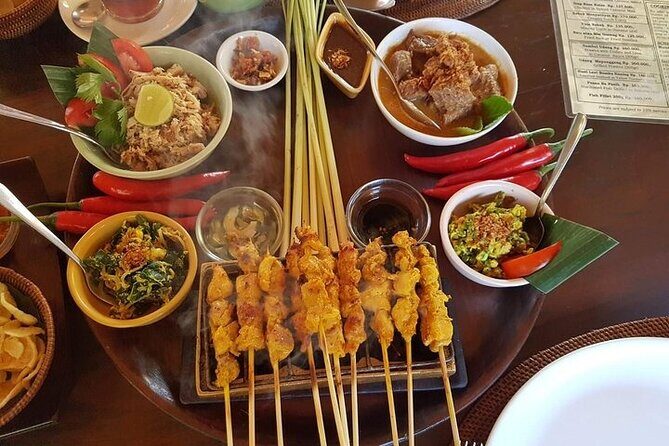
- English-led, hands-on cooking at your own station with utensils and ingredients provided
- Ubud Traditional Art Market for morning departures, with an included ticket and quick guided walk
- 7 dishes in one session, plus the dessert kolak pisang
- Vegetarian and non-vegetarian menus with matching peanut sauces and Balinese spice paste
- Small-group feel with a maximum of 24 travelers
- Ubud-center transfers and a clear return meeting point for afternoon sessions
Hands-on Ubud cooking with a Balinese chef (and a real menu)
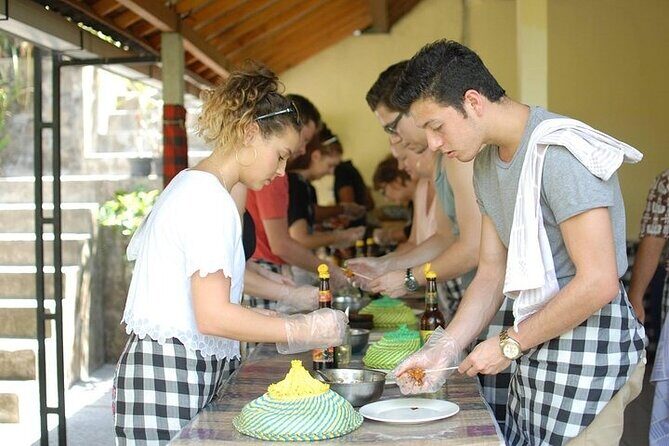
If you want a class that actually changes what you can cook at home, this one is built for that. The format is straightforward: you get your own cooking setup, you make the dishes yourself, and you eat what you cooked for lunch or dinner.
What makes it practical is that the menu is not a vague sampler. It’s a defined set of Balinese favorites for either the vegetarian or non-vegetarian option, including peanut sauce and Balinese spice paste as recurring building blocks. That means you learn flavors you can reuse, not just one-off techniques.
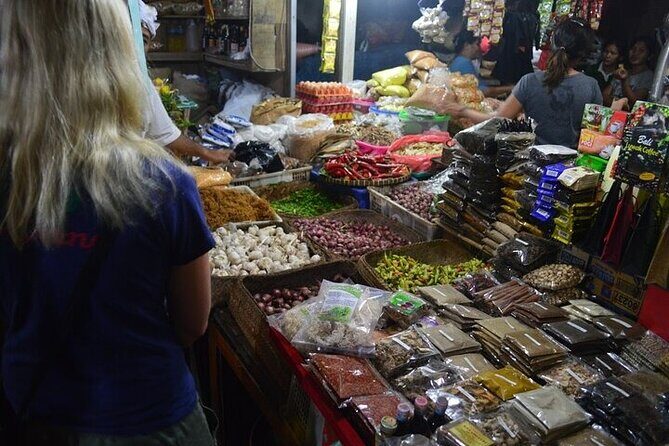
Morning market stop at Ubud Traditional Art Market (30 minutes)
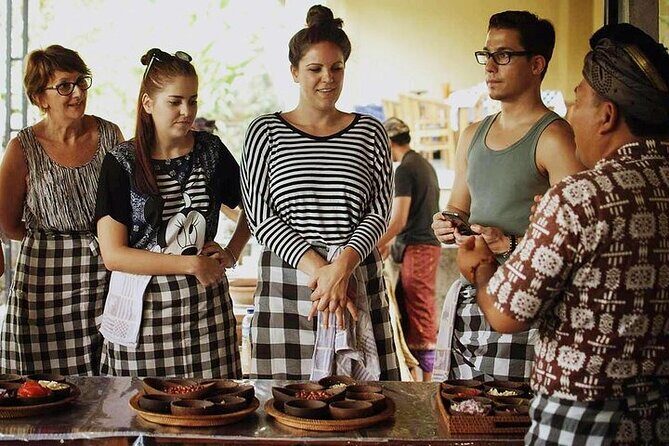
On morning trips, the tour starts with a quick visit to the Ubud Traditional Art Market. You get a short guided look and an included admission ticket, and it’s designed to be useful, not exhausting—30 minutes is just enough time to see ingredients you’ll cook with later.
The upside here is focus. Instead of wandering for an hour, you get a targeted orientation that helps you connect what you see to what shows up in your kitchen. The only possible drawback is time: if you love markets and want to browse slowly, this stop is more like a taste than a shopping trip.
Tip for you: if you want extra snacks, fruit, or souvenirs beyond what’s planned, plan to spend a little personal money at the market since personal expenses there are not included.
Ketuts Bali Cooking Class: your station, your utensils, your dishes (3.5 hours)
The main event happens at Ketuts Bali Cooking Class, where you learn authentic Balinese cuisine from a local instructor. The key detail is that the class is not a demo. You prepare and cook the menu items yourself using the cooking ware and ingredients provided.
You also get a built-in language safety net: the class runs in English. That matters because spice blends and sauce textures are easier to learn when you can follow instructions clearly, not through vague gestures.
One more thing I like: the class pacing feels designed for real learning. There’s plenty of on-hand support, and the teaching style is light and entertaining. People mention the head chef being both skilled and fun, and that kind of energy helps when you’re trying new steps like pounding, mixing spice paste, or grilling in banana leaf.
What you actually cook: vegetarian menu (7 dishes + dessert)
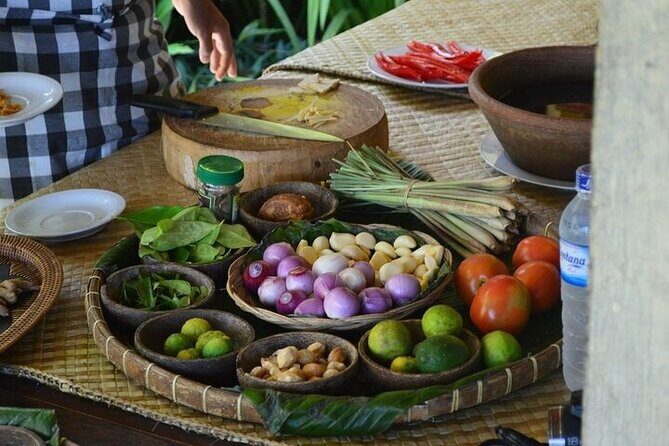
If you choose the vegetarian menu, you still get the core Balinese flavors, just without the meat. The dishes listed are:
- Sauce Kacang (Peanut sauce)
- Bumbu Bali (Balinese spice paste)
- Kare Sayur (Vegetable Curry)
- Tempe, tofu and vegetable sate with peanut sauce
- Pepes Mushroom (Grilled mushroom in banana leaf)
- Mie Goreng (Fried noodle)
- Kolak Pisang (braised banana saba in palm sugar gravy)
I like this menu because it covers several cooking styles in one session. You get a curry (simmering and seasoning), satay-style elements (sauce pairing matters), banana-leaf grilling (aroma and wrapping technique), and a noodle stir-fry. Plus, peanut sauce and bumbu bali show up as anchor flavors you can reuse later.
Practical takeaway for you: when you make peanut sauce at home, you can treat it like a master base for dipping and finishing. And bumbu bali is a shortcut to that Balinese profile, so your other meals stop tasting like they are missing something.
What you actually cook: non-vegetarian menu (7 dishes + dessert)
If you pick the non-vegetarian option, your menu keeps the Balinese backbone and swaps in meat and fish:
- Sauce Kacang (Peanut sauce)
- Bumbu Bali (Balinese spice paste)
- Ayam Bumbu Bali (Balinese fried chicken)
- Sate Ayam with peanut sauce
- Pepes Ikan (Grilled fish in banana leaf)
- Mie Goreng (Fried noodle)
- Kolak Pisang (braised banana saba in palm sugar gravy)
This set is valuable because it teaches you how the same peanut sauce and spice paste can be adapted across chicken, sate, and fish. That is the kind of lesson that sticks, since you see how flavors travel across different proteins and cooking methods.
The food part: taste what you cooked (lunch or dinner)
After cooking, you sit down to eat what you made. This is not just included as a meal; it’s part of the learning process. You taste the sauces, adjust your sense of balance (sweet-salty-spicy), and leave with a clear reference point for what the dishes are supposed to taste like.
The dinner or lunch is also included, and you’ll get a welcome drink and mineral water. If you’re thinking about skipping this class because you do not want to eat a big group meal, don’t. The structure is built around your cooking effort, so the sitting-down part feels earned.
Dessert focus: kolak pisang is the payoff
Kolak pisang is the dessert for both vegetarian and non-vegetarian menus. It’s banana saba braised in palm sugar gravy, which is the kind of comforting sweet that fits Bali’s warm, tropical food logic.
Why it works in a cooking class: dessert is easy to remember. When you get the sweet balance right, it makes the whole meal feel complete, and it gives you one finished dish you can replicate without needing fancy equipment.
Transfers, timing, and where to meet (so you don’t waste time)
This tour is built around simple timing and clear pickup points.
For morning trips, you can get return hotel transfer in Ubud center only (sharing car). If your hotel is outside Ubud center, pickup for the cooking class is extra, with an IDR 600K/car note for that extra pickup area.
For afternoon sessions, the class meets at 2:30pm at the front of Lapangan Desa Ubud, listed as the pickup/return point. The tour also includes the return part for afternoon at that location.
The practical lesson for you: if you’re optimizing your day, plan around the transfer boundaries. This is a good class when you want a focused block of time in Ubud, not a flexible half-day with endless meeting point options.
Price and value: what $35.79 includes that you’d otherwise pay for
At $35.79 per person, the value comes from what’s wrapped into the price:
- English-speaking local chef
- Traditional market tour (morning only) with admission ticket
- Welcome drink and mineral water
- Cooking utensils and ingredients
- 7 dish cooking (either vegetarian or non-vegetarian menu)
- Lunch or dinner, tasting your own dishes
- Group size cap (maximum of 24)
So you are not paying just for food tasting. You are paying for instruction, the full ingredient setup, and the meal tied to what you cooked. If you’ve taken other cooking classes before and ended up watching a lot of people cook while you took photos, this format is the opposite.
One more value angle: the menu repeats key components like peanut sauce and Balinese spice paste. That’s how you get real kitchen “transfer”—you go home with flavor systems, not only recipes you forgot the moment you stepped into your hotel.
Group size and support: why the class feels manageable
The maximum group size is 24 travelers, and the setup is designed for everyone to cook at their own station. That matters because Bali cooking can involve multiple steps—grinding, mixing spice paste, assembling satay, and timing noodles and curry.
On top of that, people highlight that the team is organized and there are plenty of hands to help when needed. If you’re a slower cook, the support helps you keep pace without feeling rushed.
If you like humor in lessons, you may enjoy the instructor style as well. Several participants mention the chef’s entertaining, upbeat approach, which makes the class feel less like homework and more like a good cooking session with a capable guide.
Who this cooking class suits best (and who might want a different plan)
This works especially well if:
- you want a hands-on food lesson instead of a demo
- you’re interested in Balinese staples like peanut sauce and banana-leaf cooking
- you prefer a structured itinerary with included transfers and a clear meeting point
It might be less ideal if:
- you want a long, free-form market wander with lots of shopping time
- your hotel is outside Ubud center and you’d rather avoid extra transfer costs
- you need total schedule inflexibility, since the experience requires good weather and can be adjusted if conditions are poor
Should you book? My practical take
I’d book this if you want one afternoon or early evening in Ubud that turns into a set of dishes you can realistically recreate. The biggest advantage is the learning loop: cook → taste → understand. And the menu structure is smart, because peanut sauce and bumbu bali are taught as repeatable foundations.
If you’re in Ubud center and you’re okay with a set class block, this is a strong value. If you’re outside Ubud center, double-check the pickup situation and costs. And if you’re visiting during a period where weather can be unpredictable, build in flexibility.
FAQ
Do I get picked up from my hotel?
For morning class departures, return hotel transfer is included for hotels in Ubud center only (sharing car). If you’re outside Ubud center, pickup for the cooking class has an extra cost noted at IDR 600K/car.
Is there an English-speaking chef?
Yes. The cooking class is conducted in English with a Balinese chef.
Is the market visit included?
Yes, a short Ubud Traditional Art Market tour is included for the morning trip only, and the admission ticket is included.
How long is the experience?
The duration is listed as about 4 hours.
What dishes will I cook?
You cook 7 dishes plus dessert. The exact set depends on whether you choose vegetarian or non-vegetarian options.
Can I choose vegetarian food?
Yes. There is a vegetarian menu that includes items like vegetable curry, tempe/tofu/vegetable sate with peanut sauce, grilled mushroom in banana leaf, fried noodles, and kolak pisang.
What about non-vegetarian options?
There is a non-vegetarian menu that includes Balinese fried chicken, chicken sate with peanut sauce, grilled fish in banana leaf, fried noodles, and kolak pisang, along with peanut sauce and bumbu bali.
Is the experience refundable if I cancel?
No. It’s listed as non-refundable and cannot be changed for any reason.
What happens if the weather is poor?
The experience requires good weather. If it’s canceled due to poor weather, you’ll be offered a different date or a full refund.



































































.jpg)
.jpg)
.jpg)
.jpg)
.jpg)
.jpg)
.jpg)
.jpg)


















.jpg)
.jpg)
.jpg)
.jpg)
.jpg)
.jpg)
.jpg)
.jpg)