Surfing in Bali feels big. This lesson makes it feel doable.
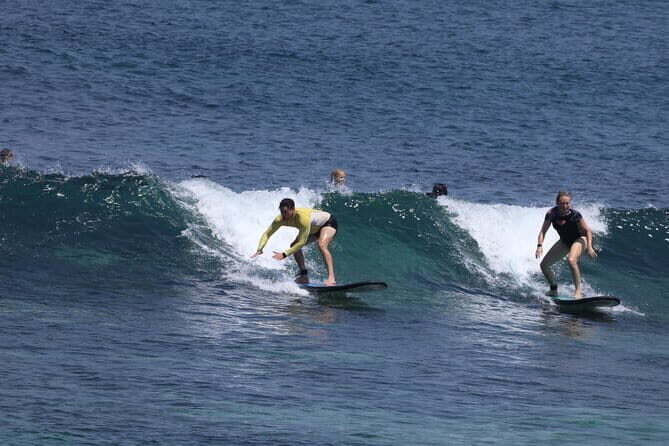
In Jimbaran, you start at Padang Padang Beach and get a guided, safety-first way into surfing, with coaching led by Bintang and his team. What makes it especially interesting is the hands-on structure: you learn wave basics, board skills, and surf etiquette, then you’re in the water for real attempts at riding. Two things I really like: the focus on feeling safe (clear instructions and calm guidance) and the steady progress that can happen fast for first-timers, including riders who’ve been up on multiple waves in a single session.
One drawback to keep in mind: the lesson can route you to different nearby surf areas based on conditions and tide, and there’s also an extra admission fee not included in the main price. So you’ll want to budget for that day, and be ready for the schedule to be tied to ocean conditions (not just a rigid plan).
Key highlights you’ll care about
- WSL partnership since 2019: the program is in partnership with the World Surf League and approved for beginner-to-pro flow in the water.
- Small group (max 8): more attention and faster feedback when you’re learning to paddle and pop up.
- Gear included: surfboard, rashguard, zinc, and reef shoes if needed.
- Tide-aware surf spot choice: you’ll get a tide update so the waves match what you need as a beginner.
- Bintang-led coaching: calm, patient teaching that builds confidence step by step.
Why Padang Padang is a smart place to start
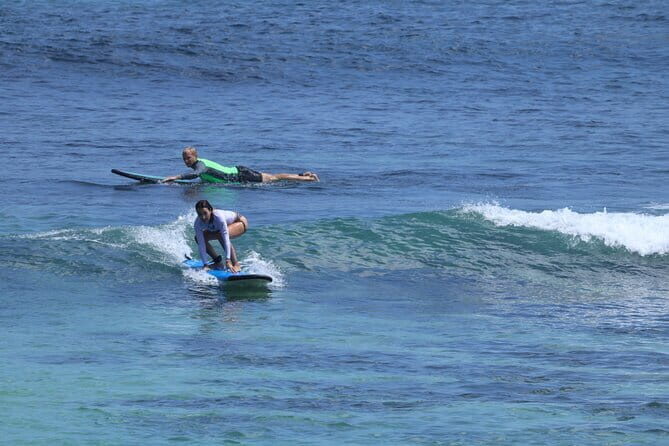
If this is your first time surfing, you want two things: a coach who can explain fast and a spot that gives you a fair shot. Padang Padang is a practical launch point because it’s close to other famous south Bali beaches, and it keeps the logistics simple for a 2-hour intro session.
The bigger win is the lesson format. You’re not just handed a board and sent into waves. You’re taught the basics of how surf works: how to paddle efficiently, what to do when you catch a wave, and how to get yourself positioned without panicking. That turns “scary water” into “I get this.”
What happens during your 2-hour surf lesson
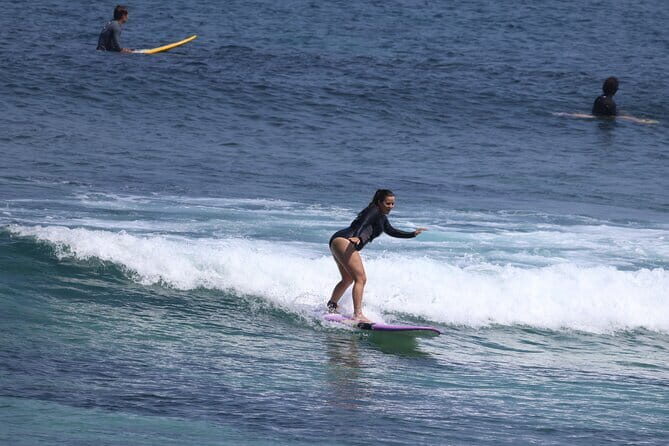
This is an approx. 2-hour beginners/intermediates session. In real terms, that time usually feels like a coaching sprint: learn the basics, then practice them immediately.
Here’s the flow you can expect:
- Arrival and meet-up at Padang Padang: you start and finish at the same meeting point.
- Equipment check and basics: you’ll be introduced to the surf equipment and how to use it properly.
- Safety talk that matters: you’ll cover wave and beach safety, plus ocean awareness before you go out.
- Core surf skills on repeat: paddling, popping up, standing up, and dropping into waves are taught in a sequence that builds on itself.
- Surf etiquette: learning how to share the lineup and move around safely prevents a lot of beginner chaos.
- Getting in and out safely: you’ll be taught how to manage entry/exit so you’re not wrestling the ocean while tired.
- Your first real wave attempts: the session aims for you to catch waves, not just watch from the shore.
A detail worth appreciating: the goal isn’t just standing once. The instruction style is designed to help you catch multiple rides during the session, even if you start feeling clumsy or unsure.
Meet Bintang and the coaching style that builds confidence
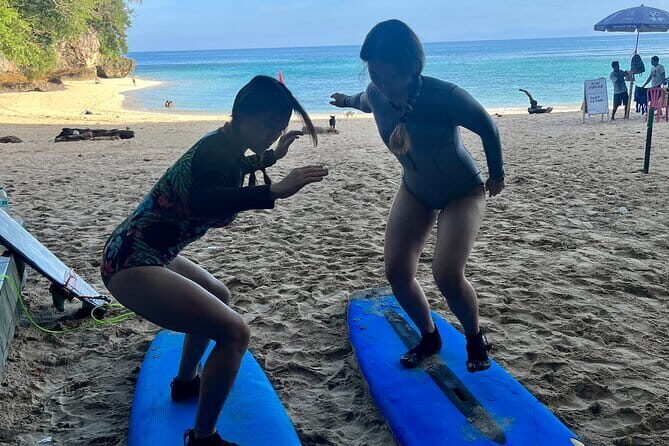
The name that comes up again and again is Bintang. His teaching approach is calm and structured, with instructions that aim to make you comfortable and safe in the water.
From what you can expect on the beach, the coaching tends to include:
- Clear, step-by-step guidance so you know what to do next, not just what you should eventually master.
- Patient corrections. If your paddling is off or your pop-up timing slips, you get feedback instead of getting left behind.
- Encouragement that’s grounded in technique. It’s not hype. It’s “do this, then try again.”
That matters because the hardest part of surfing for many first-timers is fear of the unknown. When someone breaks it down and keeps you oriented—where to look, when to paddle, what to expect—you can focus on the movement, not the panic.
Gear, spots, and tide planning (how they keep you sane)

This lesson includes the surf basics you don’t want to scramble for:
- Surfboard
- Rashguard
- Zinc
- Reef shoes if necessary
What’s not included: bottled water and private transportation. So I’d plan on grabbing water before or after, especially since you’re out in sun and moving constantly.
Now for the part that makes surf lessons work: tide and spot choice. The program tells you the tide chart update, because some surf spots are better at high tide while others are better at low tide. That means your coach can aim for waves that match beginner needs rather than forcing you into conditions you’re not ready for.
You might surf at well-known nearby areas such as Uluwatu, Padang Padang, Dreamland, or Balangan depending on conditions. The practical takeaway: you’re not just “surfing at a random beach.” You’re learning with waves that are meant to be learnable for your level.
Price and what you really get for $33.62
At $33.62 per person for about two hours, the price is competitive for a Bali surf lesson—especially because the core gear is included.
But don’t ignore the small print cost:
- There’s an admission fee of IDR 15,000 per person that isn’t included in the main lesson price.
Also remember what’s not included:
- Private transportation
- Bottled water
So what’s the value equation? You’re paying for coaching time, safety instruction, and gear support. If you’ve ever tried to learn surfing by yourself, you know the real cost isn’t just gear—it’s wasted attempts, wrong conditions, and injuries that come from going in unprepared. A good lesson buys time, technique, and fewer mistakes.
If you can get yourself to the meeting point easily (it’s near public transportation), this is the kind of activity that’s worth it even if you’re on a tighter travel budget.
Timing in Bali: when this lesson runs

You can schedule this lesson from 6:00am to 4:30pm, Monday through Sunday. That sunrise-to-sunset window is useful because it gives you choices if your day changes or if you want to avoid the hottest part of the afternoon.
One practical point: because surfing depends on ocean conditions, the session is weather-aware. If conditions are poor, the experience may be canceled and you’ll be offered a different date or a full refund. Translation: don’t plan it as your one “no matter what” activity.
Who this lesson fits best (and who should skip it)

This is built for beginners and intermediates, and it’s ideal if you want your first session to feel structured rather than random.
It’s also a smart pick if you:
- Want personalized attention (the group size is capped at 8 travelers).
- Prefer a safety-first approach and clear instruction.
- Want to move from theory into water time fast.
It may not be the best fit if you have:
- Dislocation problems (not recommended).
- Very limited mobility or severe limitations, since the lesson expects moderate physical fitness.
If you’re unsure, it’s worth thinking honestly about how you’ll handle paddling, getting up, and getting in and out of the water repeatedly.
Practical tips to get more out of your first session
A surf lesson is short, so your job is to show up ready. Here’s what I’d do:
- Bring a water plan: bottled water isn’t included, so grab it nearby before you meet.
- Arrive a bit early: you’ll want time for gear and a calm start.
- Wear or bring reef-friendly footwear if you have it. Reef shoes are provided if necessary, but it’s good to be prepared.
- Use the instructions word for word: surf is one of those sports where small timing differences matter. If your coach says watch this, do that.
- Don’t overthink the first wipeouts: your early attempts are part of learning. The teaching style here is built to correct you quickly, not to shame you.
One more thing: you’re in an ocean environment. Even when conditions are friendly for beginners, you’ll be moving in waves and current. If you feel off, tell your instructor. That’s part of safety.
Should you book Surfnesia Surf Lesson and Guiding?
If you want a first surf experience that’s structured, safety-focused, and led by a coach who’s known for calm, patient instruction, this is an easy yes. The small group size, included gear, and tide-aware spot planning all point to a lesson designed to get you up and riding without turning the day into guesswork.
Book it if:
- You’re a true beginner or returning with a bit of experience.
- You want to learn surf etiquette and ocean safety, not just “stand on the board.”
- You can get to Padang Padang Beach without hassle.
Skip or reconsider if:
- You have dislocation issues or you’re not comfortable with moderate physical activity in the water.
- You don’t want to pay the extra IDR 15,000 admission fee on the day.
FAQ
How long is the surf lesson?
It’s about 2 hours.
Where do I meet for the lesson?
Meet at Padang Padang Beach, Pecatu, South Kuta, Badung Regency, Bali, Indonesia. It ends back at the meeting point.
Is this lesson for beginners or intermediate surfers?
It’s designed for beginners/intermediates.
What time can I schedule the lesson?
You can book lesson times from 6:00am to 4:30pm, Monday through Sunday.
Do you use different surf spots?
The surf spots can vary based on conditions, and the schedule includes a tide chart update. Nearby well-known spots include Uluwatu, Padang Padang, Dreamland, and Balangan.
What’s included in the price?
Surfboard, rashguard, zinc, and reef shoes if necessary.
What is not included?
Private transportation, bottled water, and an admission fee of IDR 15,000 per person.
What is the group size limit?
Maximum of 8 travelers.
What fitness level do I need?
A moderate physical fitness level is recommended. It’s not recommended for travelers with dislocation problems.
What happens if the weather is bad?
The experience requires good weather. If it’s canceled due to poor weather, you’ll be offered a different date or a full refund.
What is the cancellation policy?
You can cancel for free up to 24 hours in advance for a full refund. If you cancel less than 24 hours before the start time, the amount paid isn’t refunded.