Bali Half Day Photography Tour

Bali Half Day Photography Tour - Sunrise with Mt. Agung and rice fields: what to expect

Morning light does the heavy lifting. This half-day photo tour is built around that magic window, starting at 5:30 am so you can work with softer light over rice fields and toward Mt. Agung. You’ll move through real daily life in Ubud, from a traditional market portrait session to a water temple where purification may be happening, depending on the schedule.

What I like most is the combination of round-trip hotel transfer and practical photo coaching. You’re not just getting taken to pretty places; the guide approach focuses on framing, light, and how to make a camera or smartphone behave in unfamiliar locations.

The main thing to consider is simple: it’s an early start and you’ll be traveling and shooting continuously for about four hours, with no included breakfast. If you’re not a morning person, plan a quick snack from home—your day will feel much easier.

Key points to know before you go
Bali Half Day Photography Tour - Key points to know before you go

  • Tiny group size (max 4) means more direct feedback and less time waiting around.
  • Early pickup and sunrise timing give you better light for Mt. Agung and rice-field scenes.
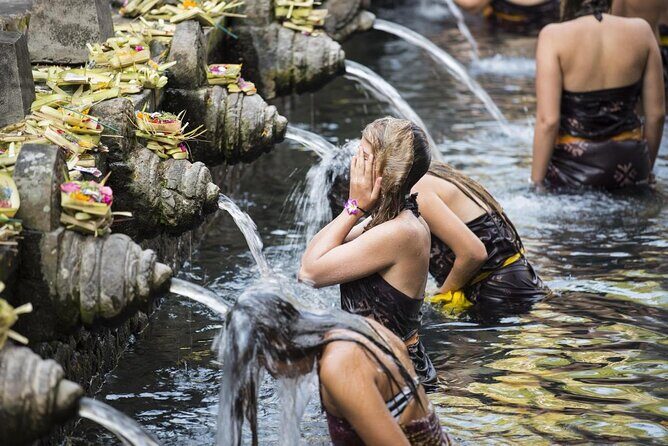
  • Real-world subjects: local portraits at a traditional market, plus Tirta Empul purification (schedule dependent).
  • You get taught, not just shown: framing and light advice for both cameras and smartphones.
  • Transfers + an air-conditioned vehicle keep logistics easy during a busy morning.

Why 5:30 AM in Ubud makes your photos better

This tour starts at 5:30 am, and that’s not just a timing gimmick. Early light changes everything: it softens contrast, helps skin tones look natural, and makes details in temple stone, plants, and fabrics easier to read in your frame.

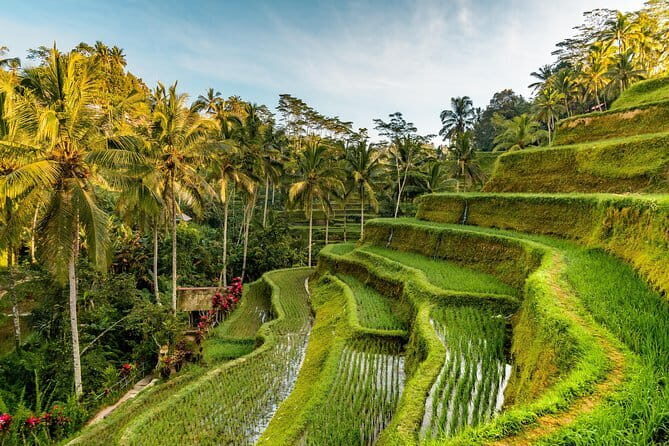
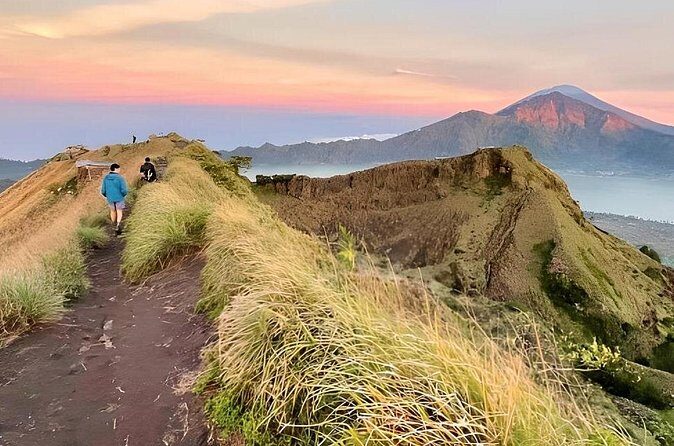
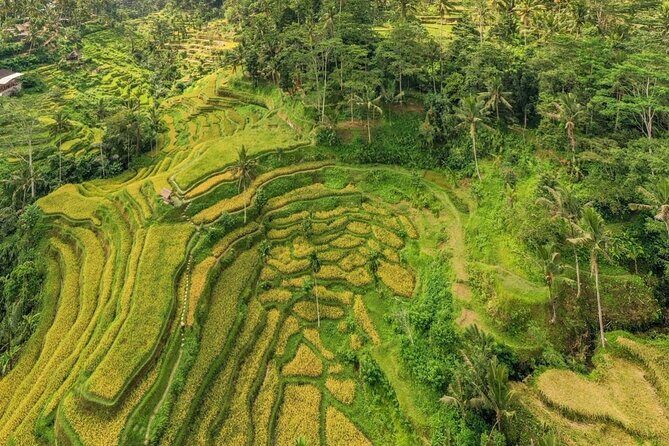
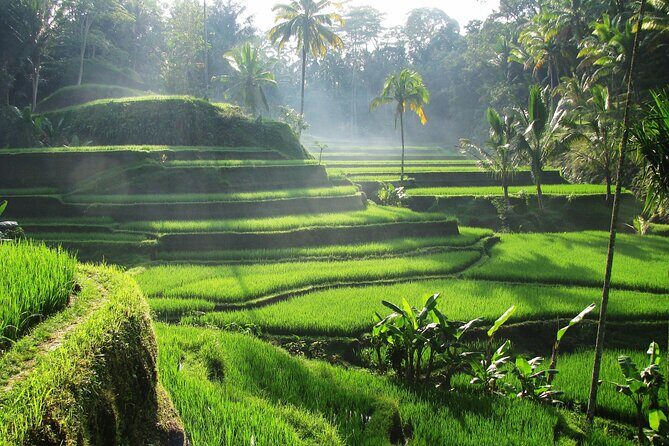
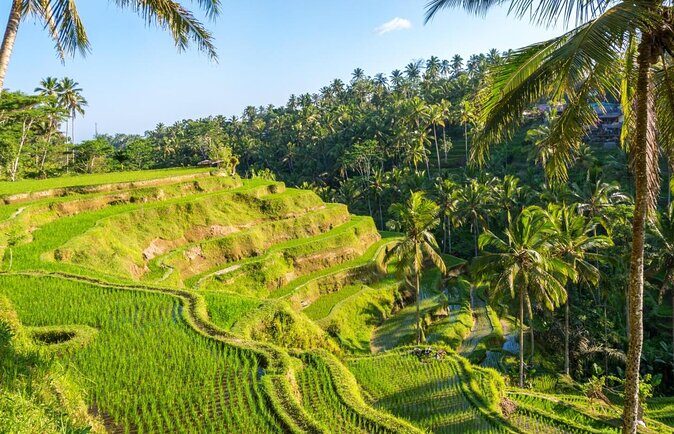
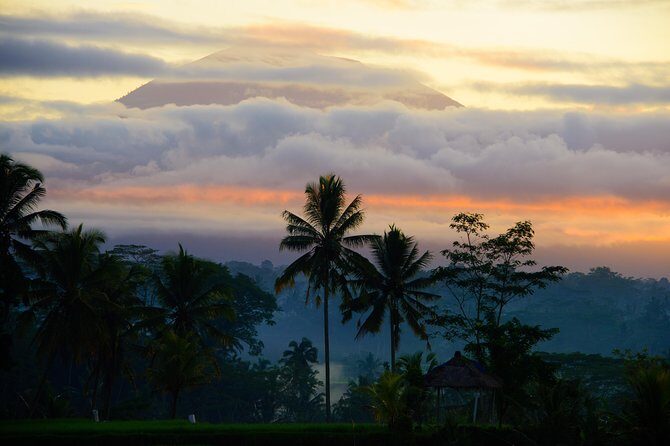
You’ll begin with sunrise-style shooting aimed at the view over Mt. Agung and the rice fields around Ubud. The photo value here is obvious: you’re not hunting for “the best angle” in harsh midday sun. Instead, you’re working with conditions that help your camera (or phone) capture depth and texture without everything looking flat.

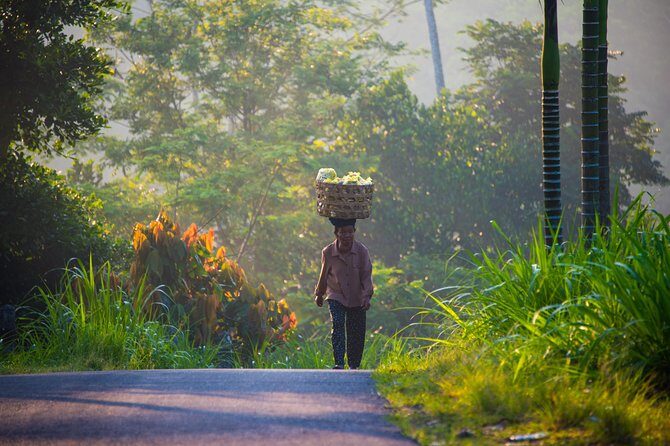
There’s also a second, quieter advantage. Morning in Ubud feels more human. You’re likely to see people and daily routines with a little more calm than later in the day. That matters for photography, because you’re trying to capture Balinese life, not just scenery.

Pickup, max-4 groups, and what you’re paying for
Bali Half Day Photography Tour - Pickup, max-4 groups, and what you’re paying for
At $164.11 per person for about 4 hours, it’s a premium-feeling price—until you look at what’s included and what the small group changes.

You get round-trip transfers from Ubud-area hotels and an air-conditioned vehicle with parking fees covered. That removes the biggest friction factor for photography tours: transport. You’re not stitching together rides, negotiating stops, or losing light because your driver is stuck in traffic.

Then there’s the max of 4 travelers. In a large group, guidance turns into “follow the leader” and you shoot when you can. Here, the tour is designed so you can ask questions and get practical feedback. In past experiences, guides like Nyoman (and the operator David Metcalf Photography, including David Metcalf) have been praised for patient, professional teaching—especially around framing and how to use light.

One more detail that improves value: the tour runs like a “photo plan.” You’re moving from sunrise views to portrait practice to a temple moment. That’s different from a standard sightseeing loop where photography is an afterthought.

Sunrise with Mt. Agung and rice fields: what to expect
Bali Half Day Photography Tour - Sunrise with Mt. Agung and rice fields: what to expect
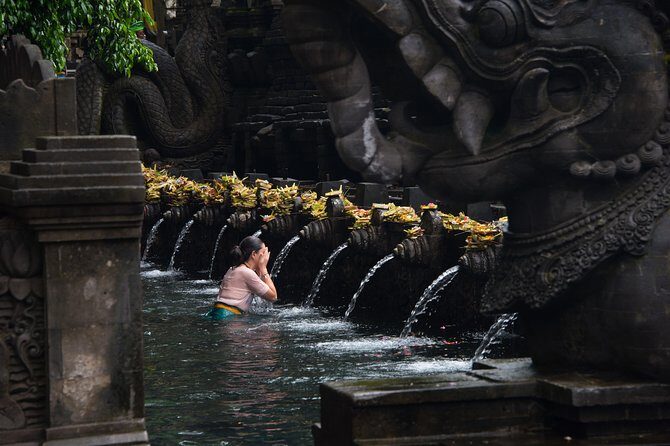
The first phase is focused on sunrise over Mt. Agung and the surrounding rice fields. Expect a structured approach: you’ll be guided to viewpoints, then coached on how to shoot the scene, not just how to stand and click.

Here’s what you should pay attention to during this part:

  • Your framing choices. Rice terraces and mountain views can easily become “postcard wide shots.” The coaching approach you’ll get is meant to help you include foreground interest so your photos look more intentional.
  • Timing discipline. Sunrise light moves fast. The guide’s job is to help you use the light while it lasts, instead of changing settings randomly.
  • How your device handles contrast. If you’re using a smartphone, you’ll likely be prompted on simple adjustments so the brighter sky doesn’t wash out everything.

This is also where the tour’s early-morning logic really pays off. You get to practice before the day gets busy, and you’ll start building a visual rhythm you can carry into the market and temple.

Traditional market portraits: turning everyday life into strong photos

After the sunrise and rice-field phase, you head to a traditional market for local portrait photography. This is where the tour shifts from scenery to people—and that’s a meaningful change for your skills.

Portrait work can be intimidating, especially when you don’t know where to stand or how close to go. A guided market stop is valuable because it reduces the guesswork:

  • You get pointed toward photo opportunities that are practical to approach.
  • You get tips for framing and light, tailored to what you’re seeing right there.
  • You also get a chance to observe how locals move through their morning routines, which helps your timing.

This part of the tour can also include small breaks for the basics. The tour notes that you can have small snacks and coffee at the market area, which is helpful since breakfast isn’t included. If you want your energy stable, bring what you can from your hotel (a breakfast box is specifically suggested), then keep your expectations realistic: the goal is shooting, not lingering.

One small practical note: since this is portrait-focused, be ready to slow down. You’re not trying to capture everything in one burst; you’re trying to get a few strong frames with good composition and natural light.

Tirta Empul and purification: the hardest moment to fake
Bali Half Day Photography Tour - Tirta Empul and purification: the hardest moment to fake
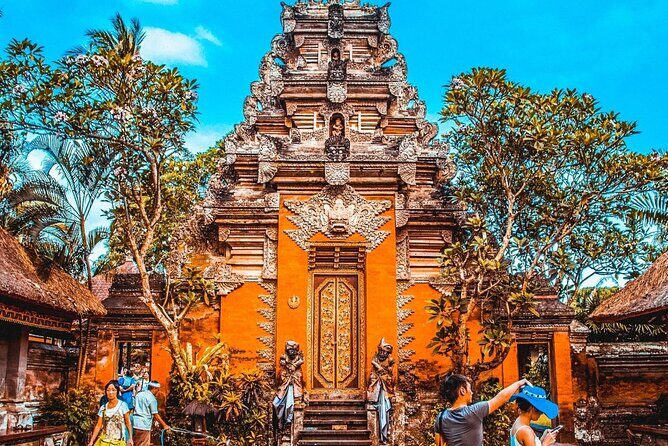
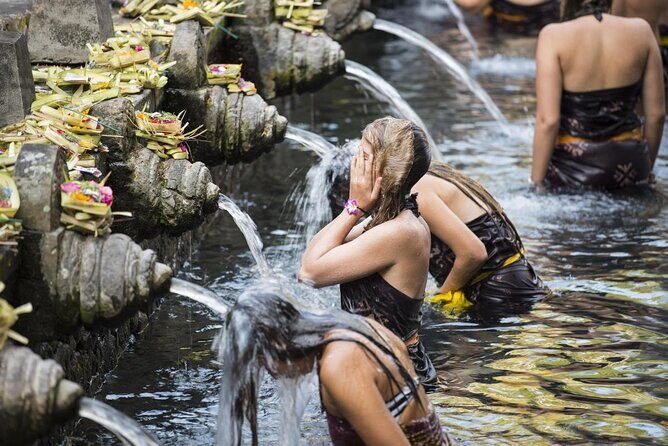
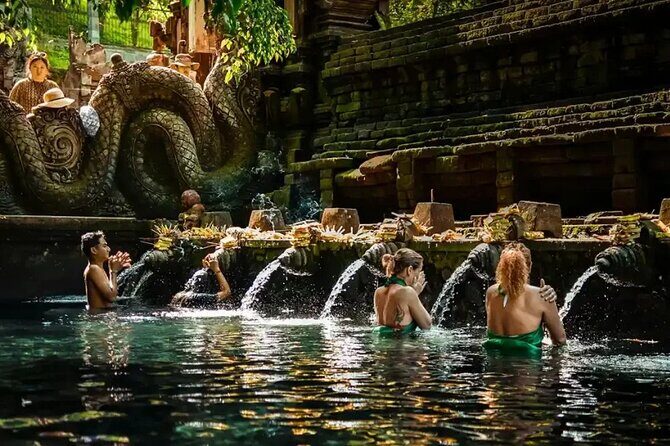
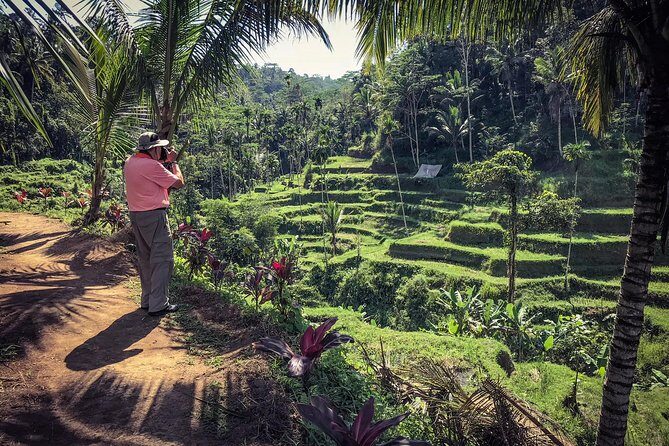
The final major stop is Tirta Empul Temple, a water temple where you may be able to photograph ceremony activity and locals doing purification. The key phrase here is schedule dependent: if ceremonies are happening, you’ll have access to that atmosphere. If not, you’ll still be in a temple environment where the visuals are meaningful.

This is a section where being respectful matters more than chasing the perfect shot. You’re photographing a religious space and people in a ritual context. A good guide helps you balance two things at once: getting your photo while not turning the moment into something rude or disruptive.

You’ll also get a defined window here—about one hour at the temple, with an admission ticket included. That structure helps, because temple visits can drag when you’re unprepared. With a photo schedule, you can move through the space with intention.

What’s the photo payoff?

  • Texture and detail: temple surfaces, water elements, and the way people interact with ritual setups.
  • Story potential: purification scenes naturally tell a narrative, which is harder to do when you’re just photographing landscapes.
  • Emotional contrast: the energy of ceremony in motion can create images that feel alive rather than posed.

Photography coaching that actually changes your results

One of the most praised parts of this tour is the guide’s teaching style—especially patience and humor, plus real advice that sticks.

From the way the tour is described and how guides have been credited in past experiences, you should expect coaching around:

  • Framing: how to position subjects, not just where to stand.
  • Light: how to read shade and brightness so your images look controlled.
  • Camera or smartphone settings: practical tips for whichever device you bring.

This matters because photography tours often fall into two camps: either they’re location-only (good views, limited instruction) or instruction-only (talks, little shooting). This one is trying to be in the middle. You’re shown places and taught what to do with them while you’re there.

A detail worth highlighting: the operator emphasizes choosing spots based on the best light depending on the time of year. That’s the difference between a generic list of photo points and a plan designed for real results.

What to pack for a 4-hour sunrise-to-midday pace
Bali Half Day Photography Tour - What to pack for a 4-hour sunrise-to-midday pace
Because the tour is short but intense, you’ll want to travel light and smart.

Consider packing:

  • A camera strap or a simple way to keep your gear secure during movement.
  • Extra memory space and a charged battery (sunrise shooting can drain devices quickly).
  • Lightweight layers. Early mornings in Ubud can feel cool compared with later in the day.
  • Water and a small snack plan.

Breakfast is not included, but you can bring a breakfast box from your hotel. You’ll also visit the traditional market, where you can grab small snacks and coffee. The best approach is to do both: eat a little before you leave, then top up at the market. That way you can focus on shooting instead of fighting hunger.

Also, think about your footwear. You’ll be walking through temple and market areas, so comfortable shoes matter more than fancy ones.

Who this tour is best for (and who should skip it)
Bali Half Day Photography Tour - Who this tour is best for (and who should skip it)
This half-day photo tour is ideal if you fit one of these profiles:

  • You want Balinese life photos, not just generic sightseeing images.
  • You like learning basics you can use on your next trip—especially framing and light.
  • You want a tour with a small group where you can ask questions and get direct help.
  • You’re traveling solo or as a pair and want your morning plan to feel structured.

It might be less ideal if you want a slow, relaxed cultural day with lots of free time. The 4-hour structure means you’ll be on the move, shooting at each stop rather than taking long breaks.

If you’re a total beginner and nervous about talking to people, the portrait-focused market segment could still work—but go in with a respectful mindset and let the guide lead the rhythm. The tour’s design is meant to make that kind of practice easier.

Should you book this Bali Half Day Photography Tour?

Book it if you want the best chance of strong photos with the least logistics pain. The hotel transfers, max-4 group, early timing, and temple access (with admission included) all support a value-focused morning plan.

Skip it if you hate early wake-ups or if you want a flexible day with lots of downtime. Also, if you’re only interested in shooting at famous temples and don’t care about portrait practice, you may find the market portion less relevant.

My practical take: this tour is a smart choice when you want results. You’ll leave with a stronger sense of how to build a shot—especially in tricky light—plus images that feel like they belong to Bali, not just to your camera roll.

FAQ

What time does the Bali Half Day Photography Tour start?

The start time is 5:30 am.

How long is the tour?

The tour lasts about 4 hours.

Is hotel pickup included?

Yes. Round-trip transfers from Ubud-area hotels are included.

What is included in the price?

The tour includes an air-conditioned vehicle, parking fees, and an admission ticket (including the temple entry). Mobile ticket is also mentioned.

Is breakfast included?

No. Breakfast is not included, but you can bring a breakfast box from your hotel. Small snacks and coffee may be available during the market visit.

Can I cancel and get a full refund?

Yes, you can cancel for free up to 24 hours before the experience’s start time for a full refund. If you cancel less than 24 hours before, you do not get a refund.
Gate of Heaven – Tirta Gangga Royal Water Palace – Tukad Cepung Waterfall

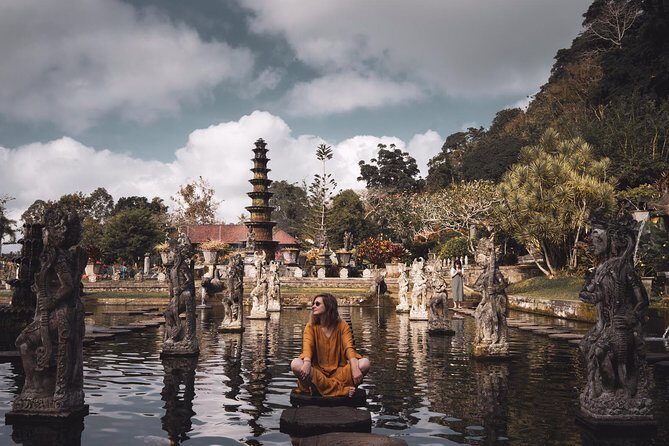
Gate of Heaven - Tirta Gangga Royal Water Palace - Tukad Cepung Waterfall - Tirta Gangga Royal Water Palace: Slow Walking, Koi, and Calm

The day starts before your alarm. This small-group trip strings together three of East Bali’s most famous sights, with a big payoff: you reach the Gates of Heaven at sunrise, before the place turns into a photo circus. I like that the route is efficient without feeling rushed, and I like that you’re traveling in comfort with an air-conditioned vehicle.

My favorite part is the variety: temple views with Mount Agung in the frame, a former royal water palace for slower wandering, and then a waterfall you reach through a cave opening where sunlight does the hard work. One thing to consider is the schedule: sunrise means an early wake-up, and the main temple entry tickets are not included in the tour price.

Key highlights you’ll feel on the ground

  • Sunrise timing at the Gates of Heaven so you get the view before peak crowd energy
  • Small group up to 5 travelers for a calmer pace and more personal attention
  • Tirta Gangga’s royal water palace walking circuit with pools, a Patirthan temple, and koi fish
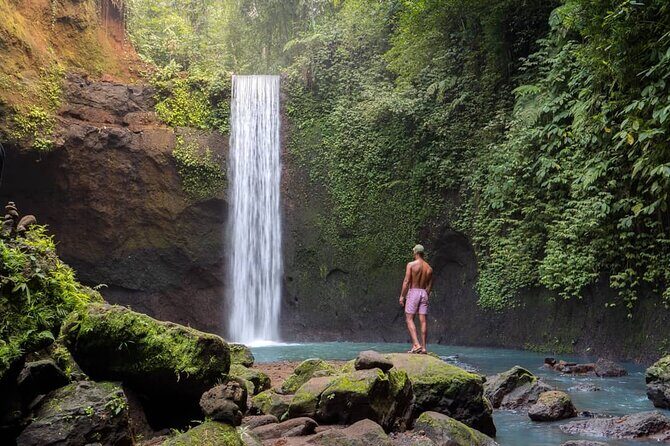
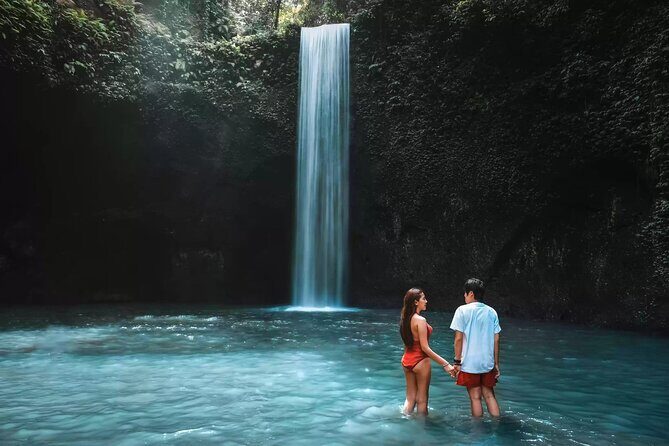
  • Tukad Cepung waterfall in a cave where the sun beams are part of the magic
  • Air-conditioned transport + WiFi onboard plus bottled water for a smoother day

A Small-Group Bali Day That Moves Smart

Gate of Heaven - Tirta Gangga Royal Water Palace - Tukad Cepung Waterfall - A Small-Group Bali Day That Moves Smart
This is the kind of Bali day trip that works because it focuses on “wow” sights in one go, without pretending you can do everything slowly. The tour runs about 8 to 10 hours, starting early and finishing after sunset-ready sightseeing time. With a maximum of 5 travelers, the day feels more like a well-planned outing than a cattle-car sprint.

You’re picked up around Ubud and nearby, and round-trip transportation is included. That matters more than it sounds, because these three stops are spread out and the roads can eat time. The air-conditioned vehicle helps too, especially if you’re arriving already warm, hungry, and slightly grumpy.

Price-wise, it’s listed at $41.03 per person, which is a decent baseline for transport and guiding across three major sites. The key catch: entry tickets are separate, so you’ll want to budget for those fees on top.

Gates of Heaven at Sunrise: Mount Agung, Framed

Gate of Heaven - Tirta Gangga Royal Water Palace - Tukad Cepung Waterfall - Gates of Heaven at Sunrise: Mount Agung, Framed
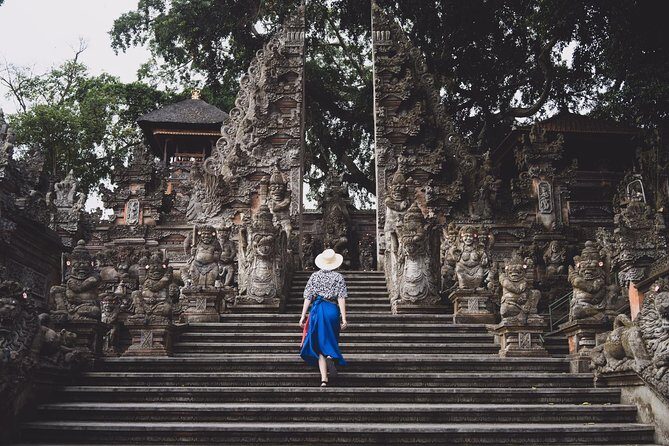
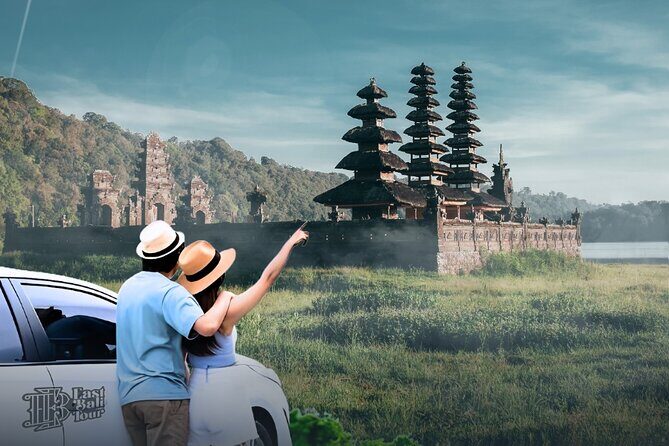
The Gates of Heaven are part of Lempuyang Temple, widely known as Bali’s most photographed temple scene. The famous “gate” gives you that postcard view out toward Mount Agung, and the classic moment is the walk toward the structure that makes it look like you’re stepping on water.

You’ll visit at sunrise, which is the right idea for two reasons. First, light. Sunrise gives the view a softer contrast and that dramatic sky tone that makes the whole shot look real, not just filtered. Second, timing. You’re there before the biggest crush, so you can actually look around and not spend your entire stop being herded.

What I like about this stop is that it’s not just one viewpoint. Even though the gate is the star, the surrounding temple spaces include architectural details and walkable paths. If you’re the type who enjoys reading a place with your eyes, you’ll get more out of it than just the “big photo.”

A practical consideration: this is a temple visit in the early hours. Expect cool air at dawn, then warmth as the sun rises. Wear something comfortable for uneven stone, and plan for a bit of a climb and lots of steps near the main viewing area.

Also important: entry tickets are not included for this stop, and you’ll see a fee of 20,000 when you pay at the site.

Tirta Gangga Royal Water Palace: Slow Walking, Koi, and Calm

Gate of Heaven - Tirta Gangga Royal Water Palace - Tukad Cepung Waterfall - Tirta Gangga Royal Water Palace: Slow Walking, Koi, and Calm
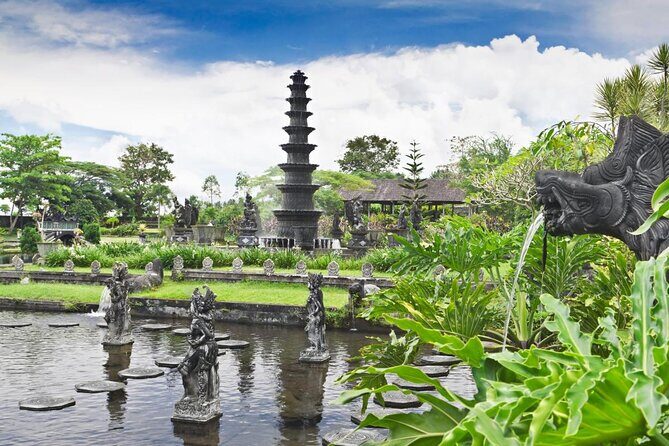
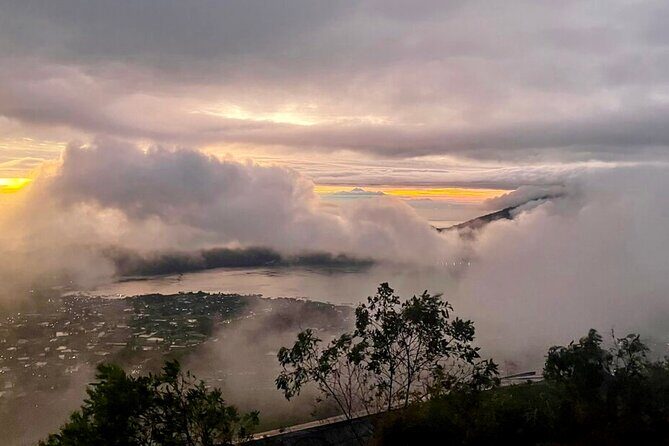
After the sunrise temple moment, you switch gears to Tirta Gangga, a former royal water palace named after the sacred river Ganges in Hindi. This is one of those Bali places where the setting does half the relaxing for you: pools, bathing features, and walkways that make it easy to slow down for photos and a real stroll.

You’ll spend about 1 hour here, which is enough time to walk the main areas and take in the layout without feeling like you’re on a timer the whole time. The palace is also known for its cultural and religious significance, including the Patirthan temple within the complex.

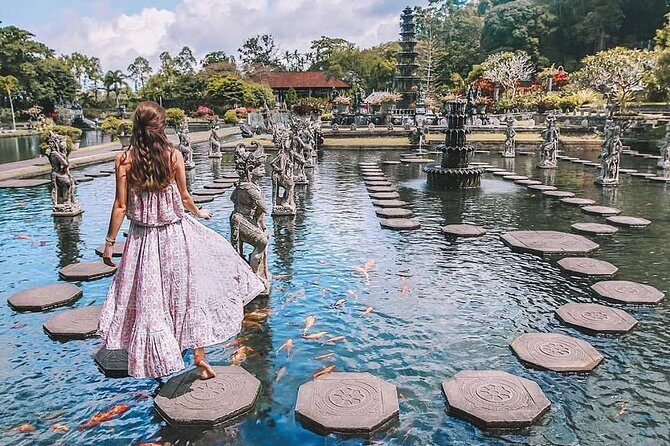
What tends to make Tirta Gangga special is how interactive it can feel. You may be able to feed koi fish, wander the bathing pools, and stop for photos at different angles. The atmosphere is often peaceful because the space is built for walking, not just for queueing at a single point.

If you want a small “pro move,” don’t just head to the first pretty spot. Walk a little deeper into the grounds, because the layout gives you layers—views of water features from different levels. That’s where the place starts to look more like a living palace complex and less like a single photo backdrop.

Admission is not included here either, with a fee listed at 50,000.

Tukad Cepung Waterfall: The Sun-Rays Cave Experience

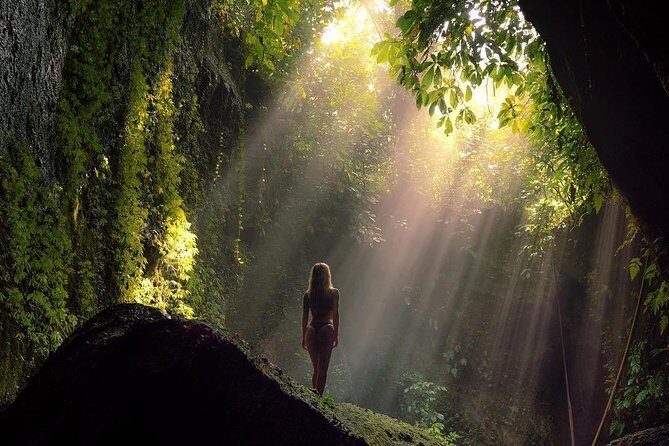
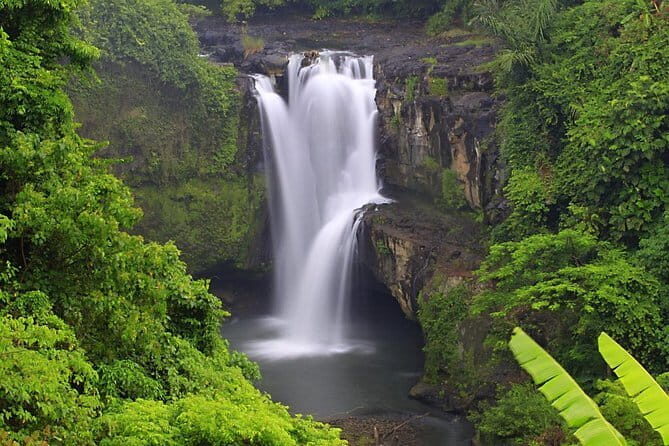
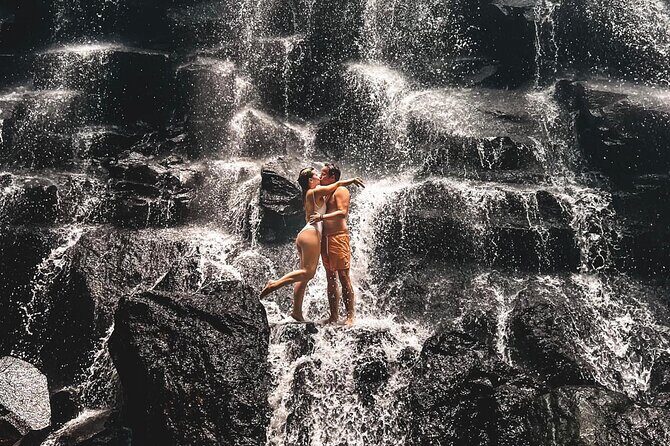
Then you hit Tukad Cepung Waterfall, famous for its unusual setting: the waterfall drops into a narrow gorge and you approach from a cave-like viewpoint. There’s an opening where sunlight can stream in, and that’s what creates the dramatic “rays” effect photographers chase.

You’ll have about 1 hour at this stop, including time to explore and, if you choose, swim. That cave setting changes the vibe a lot. It’s not just a viewpoint from the path. It feels like you’re entering the scene—surrounded by canyon walls, with water sounds getting louder as you get closer.

A real tip: the sun-rays effect depends on timing and weather, so don’t assume you’ll see perfect rays no matter what. But even without a peak light show, the waterfall’s formation and the cave atmosphere still make it memorable. Think of it as a place where nature and architecture-like framing overlap.

Practical note: bring swim-ready clothing if you want to take advantage of the chance to get in the water. If you don’t swim, you still may want quick-dry shoes or sandals you can handle around wet stone.

Entry is not included for this stop, with a fee listed at 20,000.

Cost and Value: What You Pay vs. What You Get

Gate of Heaven - Tirta Gangga Royal Water Palace - Tukad Cepung Waterfall - Cost and Value: What You Pay vs. What You Get
At $41.03 per person, the tour price covers the big stuff: air-conditioned vehicle, bottled water, WiFi onboard, and all fees and taxes for the tour itself. It also includes round-trip transportation from Ubud and surrounding areas, which is often where DIY planning gets annoying.

The separate cost is the entry fees at the three major sites:

  • Gates of Heaven: 20,000
  • Tirta Gangga: 50,000
  • Tukad Cepung: 20,000

That total comes to 90,000 in local entry fees (based on the amounts listed). So your all-in day is the tour price plus those tickets.

Is it worth it? For most people, yes—because you’re buying three guided, high-profile stops with comfortable transport and small-group handling. If you tried to do this alone, you’d spend time figuring out routing, timing, and sunrise logistics, and you’d still likely end up paying entry fees anyway.

Where value can drop slightly is if you don’t care about all three stops. If you only want one highlight, the add-up can feel steep. But if you like variety—temple view, palace pools, and a cave waterfall—this format is efficient.

Timing and Comfort: The Day Plan That Actually Works

This is a long day for 8 to 10 hours, and the flow is built around peak moments:

1) Sunrise at the Gates of Heaven

2) A calmer, walk-around palace stop

3) A waterfall stop where timing affects the lighting

That ordering makes sense. The early temple moment is the one most sensitive to crowds and daylight. The later stops shift into walking and exploring, where you’ll feel less pressure to be in the right place at exactly the right minute.

You’ll also want to think about comfort. You’re on the go for most of the day, so dress in layers. Morning can feel cooler, then the heat picks up. Keep water handy—this tour includes bottled water, which is a small but real win.

One more detail I like: the tour uses a mobile ticket, which can make entry easier and helps you avoid chasing paper. It’s a small thing, but on travel days small things add up.

Photo and Guide Help: Getting the Best Shots Without Stress

A big reason people book sunrise temple tours is photos. That part can be stressful if you’re trying to do everything yourself. The upside here is the small-group setup and the way guides can steer you toward productive spots.

In particular, I’ve heard good things about guides who focus on practical photo angles and pacing. One guide named Jack is mentioned for being patient and helpful, especially for navigating the best Instagram photo spots without losing the calm of the experience.

Even without a named guide, here’s what you can do to help yourself:

  • Plan for a photo-first morning mindset at Gates of Heaven, then loosen up for Tirta Gangga.
  • Don’t sprint through Tirta Gangga. The grounds reward slow wandering.
  • For Tukad Cepung, be ready to move carefully around wet surfaces.

You’ll get more from the day when you treat it like three separate experiences, not one long photo mission.

Who This Tour Suits Best

Gate of Heaven - Tirta Gangga Royal Water Palace - Tukad Cepung Waterfall - Who This Tour Suits Best
This tour is a great fit if you:

  • Want three major East Bali highlights in one day without handling logistics
  • Like sunrise sights and don’t mind an early start
  • Prefer a small group (up to 5 travelers) instead of a large bus scene
  • Enjoy walking around scenic sites with time to explore, not just look from a single spot

It’s also a good option if you want air-conditioned transport and minimal hassle, since the tour includes pickup, bottled water, and WiFi onboard.

If you’re traveling with mobility challenges, note that the sites involve walking and steps, and the tour itself says most travelers can participate. That doesn’t mean it’s fully effortless for everyone, so it’s worth assessing your own comfort level with uneven stone and temple stairs.

Should You Book This Sunrise-to-Waterfall Bali Tour?

If you like variety and you’re chasing the Gates of Heaven sunrise vibe, I’d say this is a solid booking. The tour price is reasonable for the transportation and guidance across a full day, and the small group size keeps things more personal.

I’d only hesitate if you:

  • Hate very early mornings
  • Don’t want to pay separate site entry tickets
  • Want a more relaxed pace with less going between stops

If you do book, treat it like a sunrise plan: get your essentials ready (comfortable shoes, layers for morning, swim gear if you want it), and be organized about your separate entry fees so you’re not scrambling mid-day.

FAQ

Where does pickup happen for this tour?

Pickup is included from Ubud and around.

How long is the tour?

It runs about 8 to 10 hours.

What group size should I expect?

The tour has a maximum of 5 travelers.

Are admission tickets included in the price?

No. Tickets are not included for the Gates of Heaven, Tirta Gangga, or Tukad Cepung.

How much are the entry tickets?

The listed entry fees are 20,000 for the Gates of Heaven, 50,000 for Tirta Gangga, and 20,000 for Tukad Cepung.

What transportation is included?

You get round-trip transportation in an air-conditioned vehicle.

Is WiFi available during the tour?

Yes, WiFi is provided on board.

Will I get a ticket on my phone?

Yes, it’s a mobile ticket.

If I need to cancel, what’s the refund situation?

You can cancel up to 24 hours in advance for a full refund.
Canyoning Bali, Aling Canyon (Adventure, discovery, nature)

Canyoning Bali, Aling Canyon (Adventure, discovery, nature) - Aling Gorge at dawn: volcanic walls, bats, and real outdoor fun

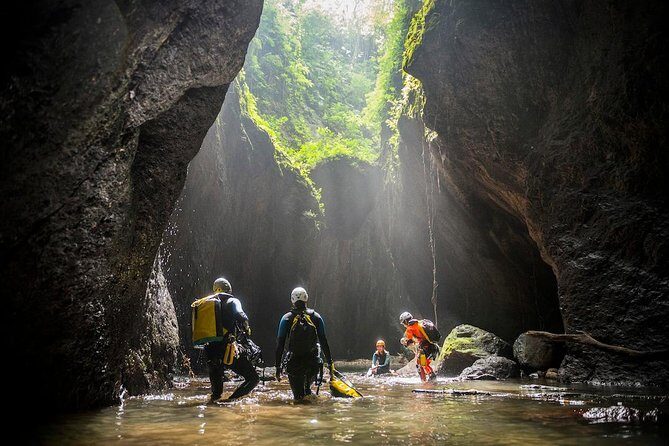
Aling Gorge turns a morning into adrenaline. Aling Gorge in Ubud is a proper canyoneering route through volcanic walls, with swims, slides, jumps, and rappels, plus the eerie Bat Cave where bats fly overhead.

I especially like two things: the ICOpro-standard training and initiation before you enter the canyon, and the fact that the trip comes with everything you need to stay fueled and safe, including meals, snacks, water, and international technical gear.

One thing to consider: this adventure depends on water levels, and the activity is only available when conditions allow, so timing and flexibility help.

Key highlights at a glance

Canyoning Bali, Aling Canyon (Adventure, discovery, nature) - Key highlights at a glance

  • Bat Cave: an eerie canyon stretch with hundreds of bats overhead
  • ICOpro Canyoneer Initiation (CAI) training before you start
  • International-standard safety gear, including branded rope from Korda’s
  • Door-to-door transfers from your Bali address in a specified area
  • Small group limit of 6 travelers, with an ICOpro instructor and assistant team
  • Free photos and video plus a post-canyoning shower setup

Aling Gorge at dawn: volcanic walls, bats, and real outdoor fun

Canyoning Bali, Aling Canyon (Adventure, discovery, nature) - Aling Gorge at dawn: volcanic walls, bats, and real outdoor fun
If you want an outdoors day that feels active from the first hour, this Aling Gorge canyoning trip fits. You start at 5:30am, which means you beat the hotter part of the day and catch the canyon in that early, misty mood.

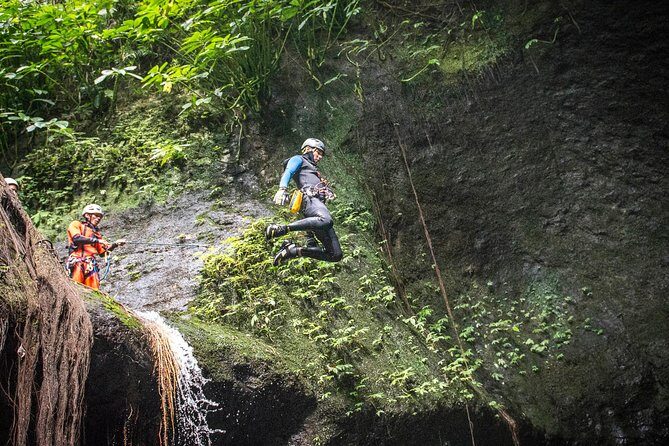
The big draw is the setting: towering volcanic walls, abundant water, and a route that mixes movement styles. You’re not just hiking. You’re jumping, sliding, swimming, and doing rappels down water-smoothed rock. Then there’s the part many people talk about first: the Bat Cave stretch. It’s described as eerie, and you’ll feel the difference once you’re in that section with bats flying above.

One more reality check: this canyoning run only runs when water levels allow. That’s not a bad sign. It’s a safety and quality issue. It also means you should plan this as your active centerpiece, not as a casual filler.

Hotel pickup to basecamp: how your morning gets organized

The day starts with 2-way door-to-door transfers (for addresses in the specified area). If you’re staying in Ubud, this is one of the easiest ways to get to the start of a technical outdoor activity without wrestling with rides and directions.

At the basecamp, your morning gets practical fast:

  • registration
  • coffee/tea and a light breakfast
  • equipping and canyon initiation training at ICOpro standard

That training part matters more than people expect. Canyoning looks simple on video, but in real life you need to know how to move safely, how to secure yourself, and how the team communicates during jumps and rappels. The inclusion of the ICOpro Canyoneer Initiation (CAI) training course helps you get your bearings before you’re committed to the river path.

You also get kitted out with ICOpro and CE-standard canyoning equipment. If you’re the type who likes knowing gear quality upfront, this setup reads as serious, not improvised. They even provide showers afterward with shampoo, soap, and a towel, so you’re not stuck smelling like adventure all afternoon.

The ride and downhill approach: where anticipation turns physical

After basecamp, you drive to the start point for about 10 minutes in a small local truck. Then comes a short hike downhill to reach the river.

This part is a good “temperature check” for your body. Even though the canyon is the main event, the approach walk sets the tone: you’ll be moving over uneven ground, and you need to be comfortable with stairs, slopes, and footing. The info lists the overall fitness level as moderate, and that matches what the day actually demands.

Approach and return walk time can vary from 1 to 15 minutes. That wide range usually means the exact path depends on conditions and routing. Either way, you’ll want sturdy grip and a calm pace. This is one of those days where rushing feels silly because the real work is what happens once you’re in the canyon.

4–5 hours in the canyon: jumps, slides, rappels, and the Bat Cave moment

Once you reach the river, the trip becomes pure action. The descent is listed as 4 to 5 hours, and that’s long enough to feel like a full adventure day, not a quick splash-and-go.

Here’s what to expect during the descent:

  • swimming through canyon pools and sections of moving water
  • sliding natural rock surfaces where water has shaped the route
  • jumping into pools and calmer pockets
  • rappelling waterfalls and down vertical sections
  • scrambling through the volcanic-rock mix of ledges and steps

The route also features that Bat Cave stretch, described as an eerie section with hundreds of bats above. Even if you’re not a “caves are my thing” person, you’ll feel the mood shift there. It’s part of why this canyoning run has a stronger identity than many generic canyon trips.

Safety and guide energy: the difference between fun and fear

Canyoning is safe when you match the team’s instructions and you’re properly equipped. This company emphasizes supervision from an ICOpro Instructor & Assistant team, using international technical equipment and high-performance canyoning rope from Korda’s.

What I like here is that the vibe in the canyon is described as fun without being careless. The guide names that show up in the experiences include Rama and Jess, plus others like Gus and Anjas, and one entry also mentions sunrise as part of the guiding team. Across those notes, the pattern is consistent: guides keep things light, laugh with the group, and still run a controlled safety setup.

That balance is what you want on a day with jumps and rappels. A good guide makes the technical stuff feel understandable fast. You’ll also likely hear quick reminders on how to check your gear and how to move confidently through each obstacle.

Getting clean and getting fed: shower, lunch, and the photo/video you’ll actually want

When the canyoning finishes, you return to basecamp for:

  • shower (plus shampoo, soap, and a towel)
  • lunch
  • photo and video viewing

Free photos and video are included, which is a big deal for a water-based activity. Trying to film your own jumps and rappels is hard on a day when your hands and focus need to be on safety. So it’s worth letting someone else handle the capturing, then spending your effort on enjoying the route.

Meals included include tasty breakfast and lunch, plus fresh fruits, tea/coffee/water, and snacks. Vegetarian or vegan options are available, so it’s easier to plan your food day without calling ahead.

Gear, insurance, and the “real” cost of feeling secure

Let’s talk about the stuff you can’t see in photos.

This trip includes:

  • all canyoning equipment (ICOpro and CE-standard)
  • international-standard technical gear
  • high-performance rope from Korda’s
  • accident insurance up to USD 10,000 per pax

That insurance number matters because canyoning is inherently active and wet and slippery. You’re not skydiving, but you are doing rappels and jumps. Knowing there is accident coverage in place helps you enjoy the day with less worry.

You’ll also want to know the operational details that affect your experience:

  • group size is capped at 6 travelers
  • confirmation is sent within 48 hours of booking (subject to availability)
  • you’ll be asked for your shoe size, height, and weight so the gear can fit correctly

Fit and correct sizing are not small details. A harness or system that fits right makes a huge difference in comfort and safety, especially during long, wet, moving time.

Price and value: is $280 fair for what you get?

$280 can sound steep if you compare it to a basic Bali tour. But canyoning isn’t just a guided walk. You’re paying for:

  • door-to-door transportation
  • a full morning that includes training (ICOpro CAI initiation) before the canyon
  • international-standard equipment and technical rope
  • supervision by an ICOpro instructor and assistant team
  • meals and snacks, plus tea/coffee and water refills
  • accident insurance up to USD 10,000
  • free photos and video
  • a real cleanup setup with shower products and a towel

That combination is the value story here. If you were to price gear rentals, training time, and safe supervision separately, you’d end up paying far more. In other words, the cost makes sense for a guided canyoning day that’s built like a proper technical activity.

What’s not included is also clear:

  • alcoholic beverages
  • personal expenses
  • swimwear, change of clothes, sunscreen
  • camera/USB or memory card for photos and videos

So budget for the small things you’ll need to stay comfortable, especially if you’re coming from a hotel where you didn’t pack for water-and-mud movement.

Who this canyon trip is perfect for (and who should pause)

This is a great choice if you:

  • want a true nature + action day around Ubud
  • like the idea of learning basics before you’re put in the river route
  • enjoy heights and controlled challenges, like rappelling and jumps
  • want a trip with guides who keep the mood fun and the safety tight

One of the review notes highlights that it worked for older kids (ages 21 and 19) and still felt safe and exciting with professional, friendly guidance. Another note says it was a good first canyoning trip with spots that were challenging but not overly hard.

Still, canyoning demands a mindset. If you freeze at the thought of getting in cold water early, scrambling on uneven rocks, or letting someone set you up for a rappel, you might want to pick an easier adventure. The trip is listed for moderate physical fitness, so it’s not a couch-to-canyon event.

Also note the kids rule: children must be accompanied by an adult.

Practical tips so you don’t feel rushed in the canyon

You’ll enjoy this more if you plan your body and your gear for water movement.

Here are the useful, directly stated tips:

  • bring a refillable water bottle (non-glass) for free water refills
  • you may buy a reusable bottle on-site
  • provide shoe size, height, and weight ahead of time
  • bring swimwear and sunscreen (these aren’t included)
  • bring a way to change afterward (change of clothes isn’t included)

Timing tip: since you’re starting at 5:30am, don’t plan a late night the day before. Early starts are fine, but your legs and focus will feel better if you’re not running on exhaustion.

Also, be ready for wet conditions. Even with showers waiting, the canyon itself means wet shoes and damp clothes for part of the day.

Should you book Aling Canyon canyoneering?

If you want an active, guided day that combines training, real technical gear, and unforgettable moments like the Bat Cave, then yes, I’d book it—especially because it’s set up with small-group attention and includes meals, transfers, and photo/video.

I’d hesitate if:

  • you’re very inflexible with early mornings
  • you dislike heights, vertical movement, or sudden water movement
  • you’re uncomfortable with the fact that water levels can determine availability

Otherwise, this is exactly the kind of Bali adventure that feels like more than a sightseeing checkbox. It’s nature, yes, but it’s also a hands-on skill day with a safe, upbeat guiding team and a finish where you can actually clean up, eat lunch, and take home the memories.

FAQ

What time does the canyoning start?

The start time is 5:30am.

How long is the Aling Canyon canyoning experience?

The total duration is about 7 hours (approx.), with the descent lasting 4 to 5 hours.

Is pickup and drop-off included?

Yes. Pick-up and Drop-off from/to accommodation is included in the specified area, with 2-way door-to-door transfers.

Does the tour include training?

Yes. You get ICOpro Canyoneer Initiation (CAI) training plus canyon initiation training at basecamp before you start.

What safety gear is provided?

All equipment is provided, including ICOpro and CE-standard canyoning gear and international technical equipment, with supervision by an ICOpro Instructor & Assistant team. High-performance rope from Korda’s is included.

What’s included in the price besides the activity?

Meals and essentials are included: breakfast, lunch, snacks, tea/coffee, water, plus free photos and video and a shower setup with shampoo, soap, and a towel. Accident insurance up to USD 10,000 per pax is also included.

Is food provided vegetarian or vegan?

Yes. Breakfast and lunch can be vegetarian or vegan.

Do I need a swimwear or change of clothes?

Swimwear and change of clothes are not included, so you should bring them.

What should I bring?

Bring a refillable non-glass water bottle for refills. You’ll also want swimwear, sunscreen, and a change of clothes. You may want to bring your own camera/USB or memory card if you plan to store anything yourself.

Is there a cancellation window?

You can cancel for a full refund up to 24 hours in advance of the experience’s start time. If you cancel less than 24 hours before, it’s not refunded. Cut-off times use local time.

Kintamani Black Lava Sunrise Jeep Adventure with Temple in Bali

Kintamani Black Lava Sunrise Jeep Adventure with Temple in Bali - The Jeep Ride to Kintamani Black Lava at sunrise

Batur sunrise has a way of making you move fast. This Kintamani Black Lava Sunrise Jeep trip pairs an early jeep ride over volcanic terrain with two major cultural stops, so you’re not just chasing photos—you’re stacking experiences in one solid morning-to-midday plan.

I especially like the private transportation setup with bottled water and fees handled, plus the price is unusually low for what you get. I also like that the day includes Tirta Empul for spiritual context and a quick Segara Windhu coffee stop, which keeps the itinerary balanced instead of all driving and waiting.

The main drawback: the start time is 3:30am, and the total day clocks in around 7–9 hours, so you need to be okay with early mornings and some time on the move.

Key highlights worth waking up for

Kintamani Black Lava Sunrise Jeep Adventure with Temple in Bali - Key highlights worth waking up for

  • Black lava + sunrise by jeep: rugged terrain and big early light from the Kintamani area
  • Tirta Empul included: time at the sacred springs site, not just a quick pass-by
  • Segara Windhu coffee stop: a short 1-hour plantation visit with the coffee process
  • Private group format: only your group participates, with pickup offered
  • Budget-friendly pricing: $26 with bottled water and all fees/taxes included

Early 3:30am Start in Ubud: What the day feels like

Kintamani Black Lava Sunrise Jeep Adventure with Temple in Bali - Early 3:30am Start in Ubud: What the day feels like
This tour is built around one thing: catching sunrise in the Kintamani/Batur area without wasting time. The start time is 3:30am, so plan on being ready and waiting rather than hoping to roll in last minute. If you’re the type who needs caffeine before functioning, bring your patience as well as your phone charger.

Pickup is offered from Ubud, and the tour runs long enough (7–9 hours) that you should treat it like a full day—even if the stops are spread out. The good news is you’re not doing this with random transfers. You’re with a private transport plan and bottled water is included, so you’re not scrambling mid-day.

The Jeep Ride to Kintamani Black Lava at sunrise

Kintamani Black Lava Sunrise Jeep Adventure with Temple in Bali - The Jeep Ride to Kintamani Black Lava at sunrise
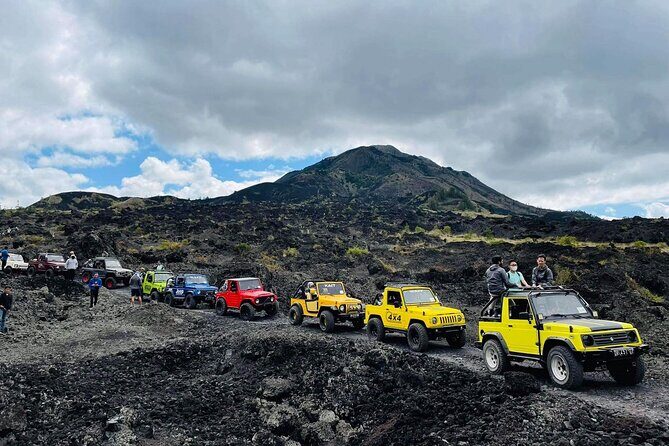
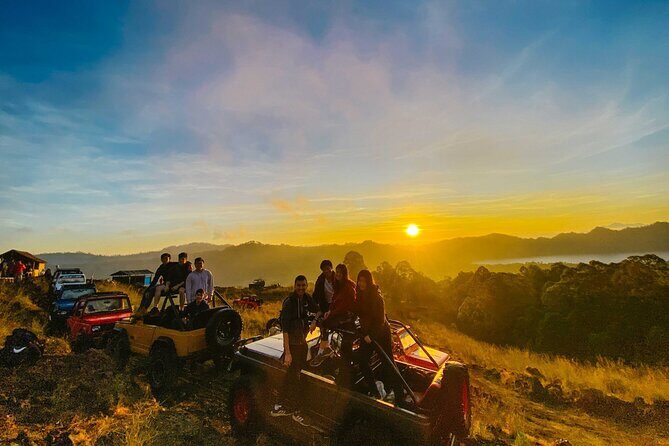
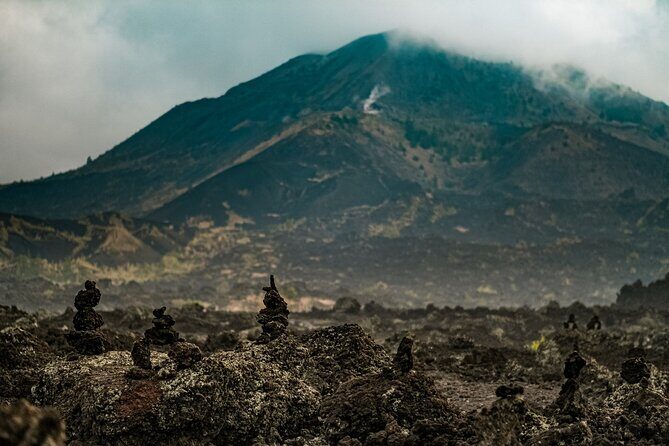
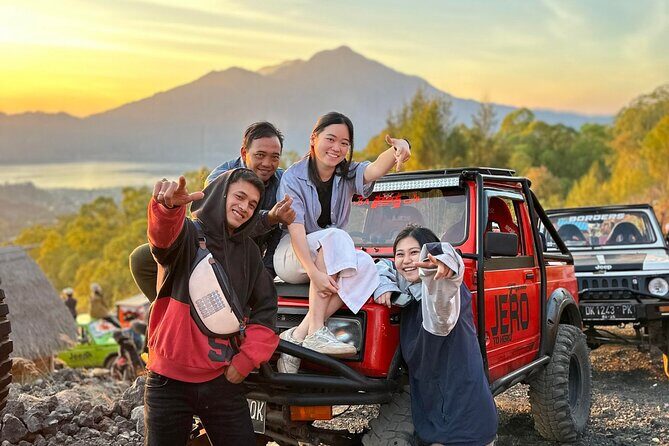
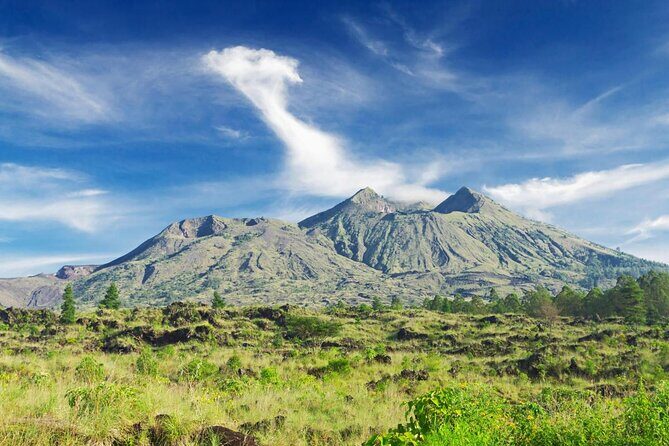
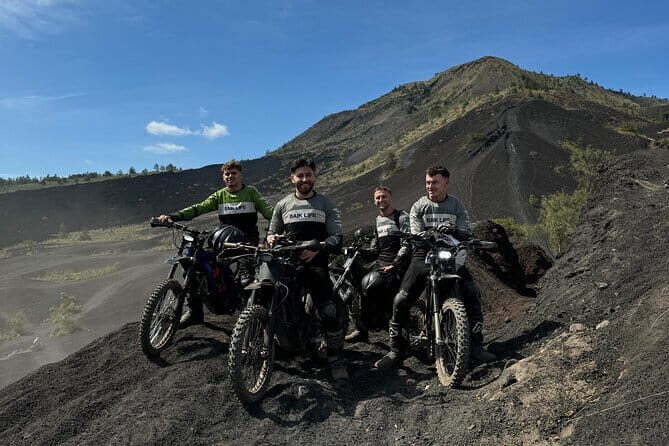
Stop 1 is the core event: a jeep adventure around Kawasan Gunung Batur Kintamani with sunrise timing and black lava terrain. You’ll climb aboard rugged jeeps and traverse volcanic ground shaped by ancient eruptions. It’s not a lazy sightseeing drive. It’s the kind of ride where your seatbelt matters and you’ll feel the bumps.

You get about 4 hours for this segment, and the admission ticket is included. That matters because it signals the cost is wrapped into the experience rather than being a surprise add-on later. It also means you can spend the time where it counts—at viewing areas and on the ride itself—without the tour constantly checking clocks.

Practical tip: plan to dress in layers. Even though Bali is warm in general, sunrise in the Batur region can feel colder than you expect. Closed-toe shoes help too, since you’ll likely do short walks or stand in a viewing spot while the jeep team positions everyone.

Choosing photos without losing the moment

Yes, you’ll want pictures. But this is the kind of sunrise that changes fast, so I’d focus on one or two “must-have” shots and then spend the rest of the time actually watching the sky. The volcanic terrain gives you texture—dark ground, sharp ridges, and a light gradient that looks better in person than on a screen.

Because the jeep segment is timed early, you beat a lot of late-day traffic and that makes the whole experience feel calmer. It’s also why this tour is worth the early wake-up: the timing does real work for you.

One more honest consideration: jeep rides are bumpy by design. If you have back issues or you get motion sick easily, take it seriously. The tour info calls for moderate physical fitness, so consider how you handle uneven ground and long sitting.

Tirta Empul Temple: sacred springs with a real setting

Kintamani Black Lava Sunrise Jeep Adventure with Temple in Bali - Tirta Empul Temple: sacred springs with a real setting
Stop 2 is Tirta Empul Temple, near Tampaksiring. This site is known for its sacred springs and spiritual tradition, with a history stretching back to the 10th century. You’ll have about 2 hours here, and admission is included.

What I like about putting Tirta Empul after the sunrise jeep is pacing. After the rough ride and early light, the temple stop becomes a reset. You shift from volcanic terrain to a spiritual place defined by water and ritual meaning.

A helpful mindset: don’t treat Tirta Empul like just another landmark. The sacred springs are the point, and your time there should be slow enough to notice what’s happening around you. Even if you don’t participate in any rituals, being in the space helps you understand why locals treat it as more than a tourist stop.

Potential drawback: temples can be busy depending on timing. This tour’s schedule gives you morning hours after the jeep segment, but you still may share the space with others. If you hate crowds, decide ahead of time that you’re coming for the springs and atmosphere, not for quiet solitude.

Segara Windhu coffee plantation in 1 hour: quick and worth it

Kintamani Black Lava Sunrise Jeep Adventure with Temple in Bali - Segara Windhu coffee plantation in 1 hour: quick and worth it
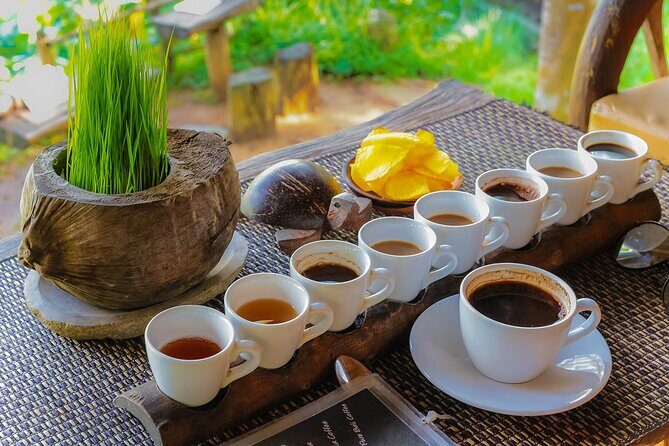
Stop 3 is Segara Windhu Coffee Plantations, with a 1-hour visit. Here, the info says you’ll explore the coffee world with the help of a guide, and you’ll learn about the coffee process. Admission for this stop is listed as free.

This is a good length because coffee plantation visits can turn into long, sales-heavy detours. In 1 hour, you can usually get the highlights: how coffee is handled, what makes it taste the way it does, and what the plantation experience is really about. If you want tasting options, this is often where you’d expect them—but the only firm detail here is the guided plantation walkthrough.

If you’re sensitive to strong scents, remember coffee plants and processing areas can smell intense. Plan to keep water handy (you’ll already have bottled water included for the day), and don’t feel pressured to buy anything. The value here is learning and strolling, not spending.

Private transport, fees included, and the real cost of $26

Kintamani Black Lava Sunrise Jeep Adventure with Temple in Bali - Private transport, fees included, and the real cost of $26
Let’s talk value, because $26 for a Kintamani sunrise jeep + temple + coffee stop is not typical. Part of the reason it works here is the package includes private transportation, bottled water, and all fees and taxes. That’s important because those costs often sneak in later on Bali day tours.

Also, admission tickets are included for the two main paid stops:

  • Stop 1 jeep sunrise experience: admission included
  • Stop 2 Tirta Empul: admission included

Stop 3 coffee plantation has free admission. So the day isn’t built around nickel-and-diming each segment.

What you’ll likely still pay for: the tour lists personal expenses as not included. That usually means snacks, drinks beyond bottled water, souvenirs, and any optional extras you want during the day. If you want a smooth trip, bring a little cash for your own choices.

One more smart angle: group discounts exist, but the tour is also private (only your group participates). If you’re traveling with friends or family, you can often spread the cost without ending up in a chaotic crowd. It’s one reason early-morning tours feel less stressful when you have your own group setup.

Working with Happy Bali Transport (and Happy Coco vibes)

Kintamani Black Lava Sunrise Jeep Adventure with Temple in Bali - Working with Happy Bali Transport (and Happy Coco vibes)
The experience provider is Happy Bali Transport, and the name Happy Coco shows up in customer experiences as the kind of person who helps people get oriented and handled. In practical terms, that means less confusion when plans change, and a smoother day when you need an extra recommendation.

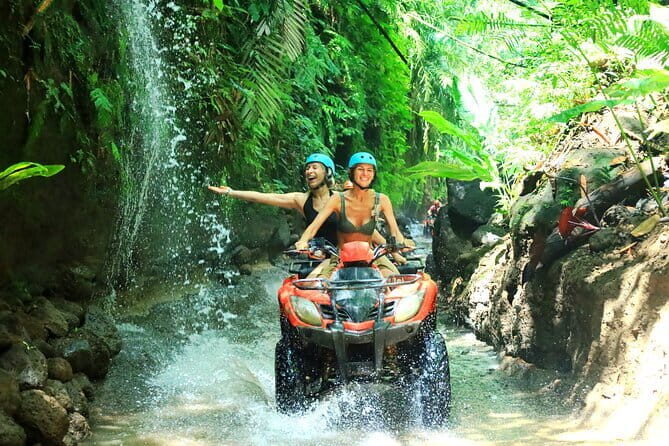
I’d treat the tour as the backbone, then ask for help if you want more Bali time. Some people have added activities like ATV and rafting through the same network, which hints that the team is organized beyond just moving you between stops. If you like having one reliable local contact, that’s a real perk.

Who should book this Kintamani sunrise jeep adventure

Kintamani Black Lava Sunrise Jeep Adventure with Temple in Bali - Who should book this Kintamani sunrise jeep adventure
This tour fits best if you:

  • want an early start for Batur sunrise without planning it yourself
  • like pairing nature (black lava terrain) with culture (Tirta Empul)
  • prefer private transport and a schedule that doesn’t depend on you driving

It may not be ideal if you:

  • hate waking up at 3:30am
  • get motion sick on bumpy roads
  • don’t feel comfortable with moderate physical fitness needs suggested for the day

If you’re traveling solo, this can still be a good deal because private transport keeps it simple. If you’re with a couple or a small group, the value tends to feel even better since you’re not paying full price for a large shared group.

Should you book this Kintamani Black Lava Sunrise Tour?

I’d book it if sunrise in the Kintamani area is on your Bali wish list and you want a practical one-day combo: jeep adventure, temple time, then coffee plantation learning. The pricing looks like it’s built for real people—cheap enough to try, structured enough to feel organized.

I’d think twice if you’re fragile to early wake-ups or you dislike rough rides. In that case, the schedule and jeep portion can feel like too much. But if you can handle an early start, this is a strong way to spend a Bali morning: a fast-moving adventure plus meaningful cultural stops, all for a budget that leaves room for your own spending choices.

FAQ

What time does the tour start?

The tour start time is 3:30am.

How long does the experience take?

It runs about 7 to 9 hours, including transport time, breaks, and the attraction time.

Is pickup available?

Yes, pickup is offered.

Are the main attraction tickets included?

Admission is included for Kawasan Gunung Batur Kintamani and Tirta Empul Temple. Segara Windhu Coffee Plantations has free admission.

Is this tour private?

Yes. This is listed as a private tour/activity, so only your group participates.

What’s included in the price?

Included are bottled water, private transportation, and all fees and taxes.

What is the cancellation policy?

You can cancel for a full refund up to 24 hours before the experience start time. If you cancel less than 24 hours before, the amount paid is not refunded.

authentic Balinese organic cooking class in Ubud

authentic Balinese organic cooking class in Ubud - From Ubud pickup to the farm kitchen: the 4-hour rhythm

Cooking in Bali starts in the soil.

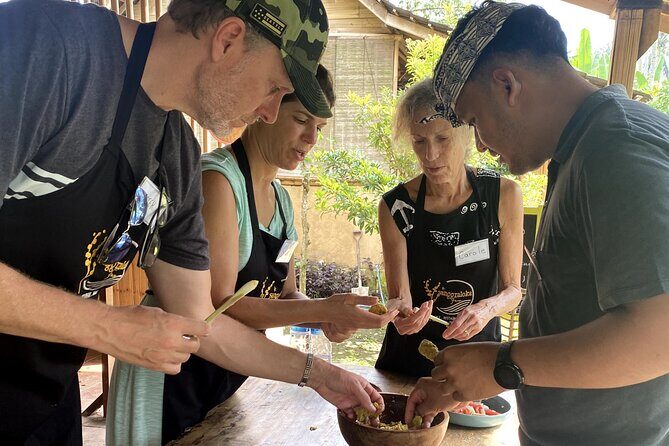
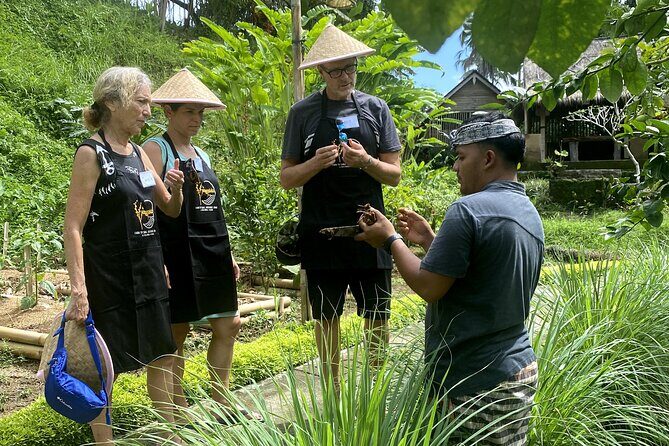
This Ubud class is different because it’s built around organic ingredients you’ll meet first, not just spices you buy later. You’re picked up, welcomed with a drink, and taken to a family farm where your chef explains what the plants are, what they do, and how they show up in Balinese cooking.

I especially like the ingredient-focused teaching and the hands-on pace. I love how the teacher, Ninek, walks you through the functions of herbs and staples, including notes on medicinal uses. I also love that you cook with mostly manual tools and then eat your own lunch on-site, with that classic rice-terrace feel in the background.

One thing to consider: you’ll be spending time outdoors and on the move around the garden/farm area, so go with the mindset of “active class.” The experience also depends on good weather, and it can be changed or refunded if conditions aren’t right.

Quick hits you’ll feel in your hands

authentic Balinese organic cooking class in Ubud - Quick hits you’ll feel in your hands

  • Farm-to-kitchen ingredients: staples are picked directly from the plantation when it’s harvest time
  • Ninek-style teaching: clear explanations of ingredient roles (and some medicinal uses)
  • Manual cooking tools: you’ll work more like a local cook than a kitchen-tourist
  • You eat what you make: lunch is part of the lesson, not an afterthought
  • Small group: up to 10 travelers, so you’re not lost in the crowd
  • Optional extras on site: a swing and a natural waterfall may be available

Organic cooking in Ubud: what makes this class feel real

authentic Balinese organic cooking class in Ubud - Organic cooking in Ubud: what makes this class feel real
If most Bali cooking classes feel like a demo plus a checklist, this one feels more like learning a way of feeding people. The key is that you start with organic ingredients—and you don’t just glance at them. Your chef and crew explain what’s in the garden, how it’s used, and how those flavors work in real Balinese dishes.

You’re also not stuck in a sterile kitchen where everything is prepped for you. The experience is designed around an active loop: see the ingredient in the garden, harvest it when it’s ready, then process it and cook with it. That flow matters because it teaches you what to look for, not just what to copy.

Why the ingredient lesson is the value

The best part is the way ingredients are framed. The class isn’t only about taste—it’s about function. You’ll hear how Balinese cooks use herbs and staples, and you’ll get practical guidance on prep so the dish comes out right, not just fragrant.

It helps that the teaching is hands-on. You’re not watching everything from the sidelines. You’re at the bench, you’re working through steps, and you’re tasting your progress as you go.

From Ubud pickup to the farm kitchen: the 4-hour rhythm

authentic Balinese organic cooking class in Ubud - From Ubud pickup to the farm kitchen: the 4-hour rhythm
The experience is about 4 hours total, and it runs as a full loop. You start in Ubud with pickup from your accommodation, then you head out to the farm. After you arrive, you get a welcome drink and a class briefing before you start cooking.

Then the schedule shifts into “field to garden to kitchen.” You’ll move from where ingredients grow to where they’re processed and cooked, and that’s where you feel the biggest difference from typical cooking classes. When you return to the kitchen after harvesting, you already understand what you’re holding and why it belongs in the dish.

The day ends with drop-off back to your accommodation. Since it’s a tight 4-hour window, it’s a good fit if you want culture without giving up half your day.

Harvesting spices and staple plants in the garden

authentic Balinese organic cooking class in Ubud - Harvesting spices and staple plants in the garden
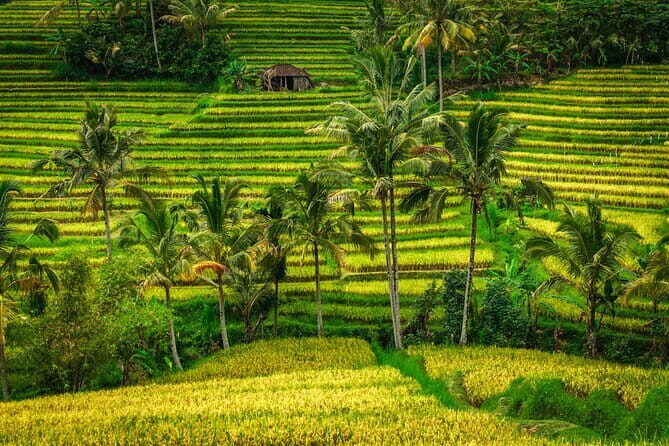
This is the part that makes the class feel grounded. Instead of showing up to a station of pre-bagged herbs, you go to the garden and learn what’s growing for cooking. The farm also plants several types of plants used as spices or staple ingredients.

During harvest time, you’ll see staples picked straight from the plantation and then processed in the kitchen. That matters because you learn the ingredient in its “fresh” state—how it smells, how it behaves when cut or pounded, and what changes when it’s not dried or packaged.

What to expect while you’re out there

Plan for outdoor time. You’ll be walking around the farm/garden area as part of the experience, and you’ll be close to the plants used in cooking. If you’re okay with warm weather and some physical movement, you’ll enjoy this stage a lot.

If you’re the type who prefers strictly indoor activities, you might find this portion a little more active than you expected—but it’s a core part of why the class works.

Cooking with mostly manual tools: guided, not chaotic

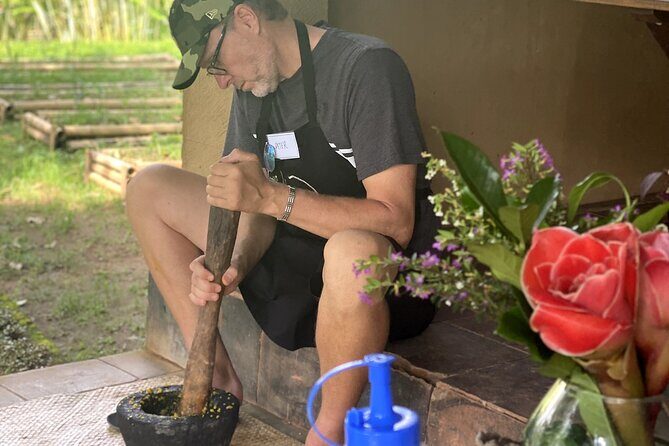
Once you’re in the cooking area, you’ll work with tools that are mostly manual. That means more hands-on prep, more pounding, mixing, and working through texture than you’d see in a modern, fully automated kitchen.

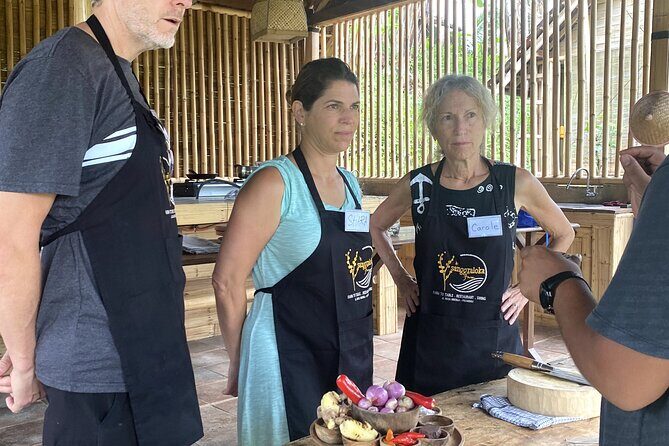
Ninek and the crew guide you step by step, with a focus on Balinese food ingredients from the beginning so you can build a dish that actually makes sense. The teaching style is practical: what the ingredient is, what it contributes, and how to prepare it so it performs in the final dish.

Building skills for dishes, not just one meal

A nice touch here is the range of cooking. You’ll work through creating six different dishes, which gives you more than a single recipe experience. That variety is great if you want to leave with a broader understanding of how flavors and ingredients repeat across Balinese cooking.

You’ll also learn that ingredients can be used in more than one way. Based on what the teacher covers, there’s talk of medicinal uses alongside culinary functions. Even if you don’t plan to use those remedies yourself, it adds context for why certain plants are valued.

Lunch you make: your meal, your reward

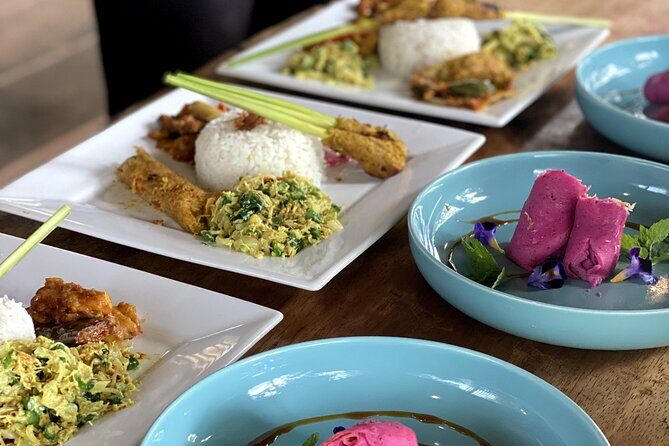
At the end, you eat what you cooked. That’s not just a nice perk—it’s how you know whether the prep advice worked. You’ll get to taste your own Balinese dishes and adjust your understanding of what each ingredient contributes.

There’s also a visual payoff. One of the most enjoyable details is the way the meal connects with the surroundings, including the feel of dining near a rice terrace view. It turns lunch into part of the experience rather than a separate, rushed stop.

What this means for your diet and enjoyment

You’re still in a class setting, so don’t expect restaurant-style customization. But you will get a real sense of Balinese home-cooking approach—layered flavors, fresh herb presence, and a focus on what ingredients can do.

If you’re open to tasting dishes you didn’t plan beforehand, this meal part will feel like a win.

Optional swing and natural waterfall time

On some days, you may have optional extras included at the site, such as a swing and a natural waterfall. These are the kinds of add-ons that can fit well if you want a little extra fun without planning another separate activity.

The key is to treat these as optional, not guaranteed. If your class day includes them, they’re a nice break from the cooking-focused rhythm.

Price and value: is $47 a good deal?

authentic Balinese organic cooking class in Ubud - Price and value: is $47 a good deal?
At $47 per person for about 4 hours, this class prices itself like a small, family-run experience rather than a big, corporate production. That’s exactly what you want with a farm-based lesson.

Here’s why it feels like value:

  • You get pickup and drop-off, which saves hassle in Ubud
  • The group is kept small (up to 10 travelers), so the teaching and attention feel more personal
  • You’re not only cooking—you’re learning ingredient roles and harvesting staples used for the meal
  • Lunch is included as the food you cook, and you’ll work through six dishes
  • Mostly manual cooking tools mean you get real practice, not just watching a chef do everything

If you’re the kind of traveler who buys souvenirs but rarely tries skills, this won’t be your best use of money. But if you want to take something home—better ingredient instincts and repeatable cooking habits—it’s a fair price.

Who should book this Ubud organic class (and who might skip)

I think this class is ideal if you want:

  • A hands-on cooking experience with ingredient education
  • A farm-based, organic-focused day in Ubud that doesn’t feel staged
  • A small-group setting where you can actually ask questions and work at your station
  • A meal that feels earned because you cooked it yourself

You might consider a different style of cooking class if you prefer:

  • A fully indoor experience with minimal outdoor time
  • Fewer dishes and a longer, slower pace (this one moves with the 4-hour format)
  • A class focused mainly on Western adaptations, since this is grounded in Balinese cooking ingredients and functions

Should you book it? My honest take

Book it if you want more than a recipe list. This is the kind of day that improves your taste sense because you meet the ingredient first, then learn how to use it. With a small group, pickup included, and lunch built from your own work, the experience feels efficient and rewarding.

Skip it only if the farm/garden component sounds like work rather than fun. The weather dependence also means you should be flexible with your schedule. But if you’re in Ubud for a short time and want a genuinely different cooking day, this is one of the better ways to spend your morning.

FAQ

How long is the organic cooking class in Ubud?

It’s about 4 hours (approx.).

Is pickup available?

Yes, pickup is offered from your accommodation, and you’re also dropped back after the class.

What’s the group size?

The experience has a maximum of 10 travelers.

What does the class include?

You’ll start with a welcome drink and an introduction to organic ingredients, then you’ll cook Balinese dishes, harvest/pick staples from the farm during harvest time, and enjoy the lunch you prepare. Tools are mostly manual.

Do I need good weather?

Yes. The experience requires good weather. If it’s canceled due to poor weather, you’ll be offered a different date or a full refund.
Can I cancel for a full refund?

You can cancel up to 24 hours in advance of the experience for a full refund. If you cancel less than 24 hours before the start time, the amount paid won’t be refunded.

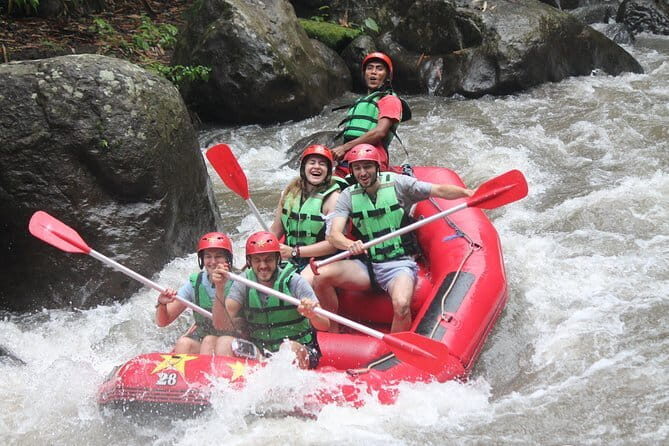
Bali Rafting Adventure + East Bali Tour

Bali Rafting Adventure + East Bali Tour - Optional Zip-Line/Flying Fox Before You Paddle

Water first, temples later.

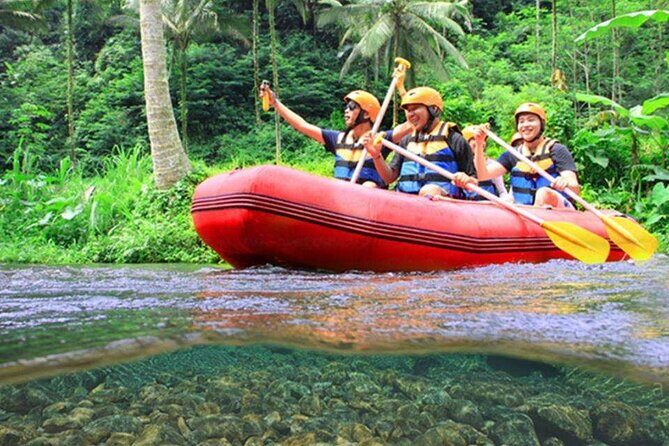
I like that you run Telaga Waja rapids with safety-approved gear, and you stack it with an East Bali sightseeing day so the trip feels like one complete package. You get breakfast to start, then a proper lunch later, plus changing and shower facilities so you’re not stuck in wet clothes.

One thing to plan for: the day starts early, and the $35 price is only the base. You’ll pay extra for Lempuyang Temple, Tirta Gangga, and the Telaga Waja rafting admission fee.

If you’re lucky enough to get guides like Komang or Gusti, the day tends to feel organized and safe, with punctual driving and clear help along the way.

Key Highlights Worth Packing Your Day Around

Bali Rafting Adventure + East Bali Tour - Key Highlights Worth Packing Your Day Around

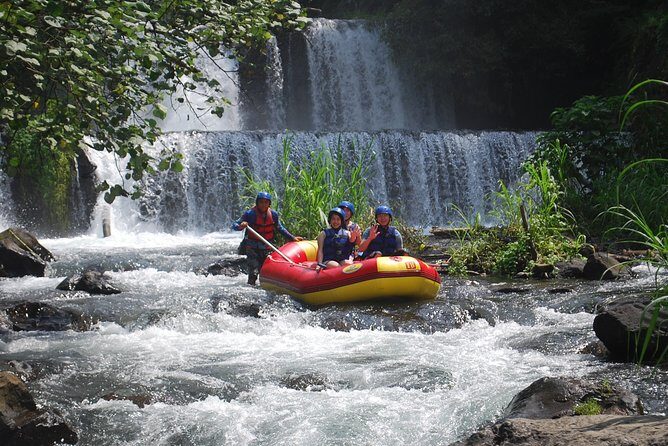
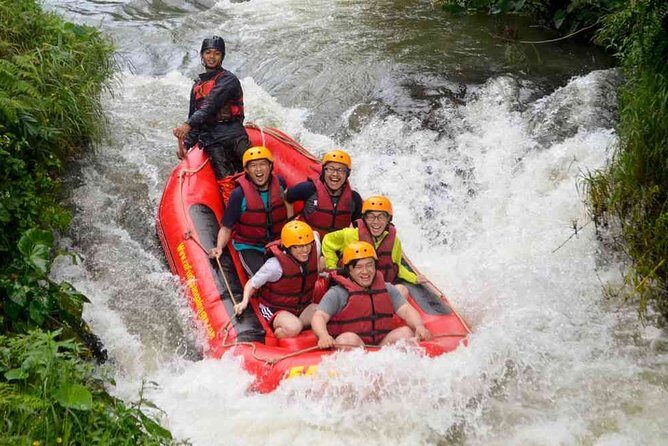
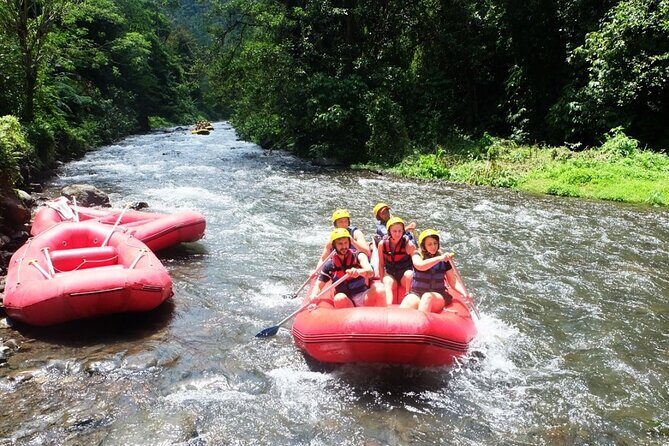
  • Telaga Waja rafting time: about 2.5 to 3 hours on the river through eastern Bali scenery near Sidemen and Karangasem.
  • Safety gear + guidance: helmet, jacket, paddle, plus instructions before you start.
  • Optional zip-line/flying fox shortcut: skip some walking with a quick 5 to 7 minute stroll from the rafting lobby.
  • A real mid-ride fuel stop: you can sip local beer, soda, mineral water, or cup noodles during the trip.
  • East Bali icons without the stress: Lempuyang Temple (Gate of Heaven), Tirta Gangga, then Virgin Beach.
  • Value check: expect to add temple and rafting entry fees on top of the base $35.

From Ubud Pickup to Sidemen Rapids: The 10-Hour Rhythm

Bali Rafting Adventure + East Bali Tour - From Ubud Pickup to Sidemen Rapids: The 10-Hour Rhythm
This is a classic early-start, big-day combo: pickup from your Bali hotel happens between 7:00 a.m. and 8:30 a.m., depending on where you’re staying. You’ll ride in an air-conditioned minivan, then begin moving toward eastern Bali right away.

Before you hit the river, you’ll get a light breakfast. That matters more than you’d think. A long rafting day can turn messy if you’re hungry before you gear up, and the food timing here is set to keep you comfortable for the morning push.

The day is built around momentum. After rafting (2.5 to 3 hours), you get a buffet lunch and a quick shower. Then the itinerary shifts into three sightseeing stops: Lempuyang Temple, Tirta Gangga, and Virgin Beach—all without needing you to book separate drivers or tickets.

Safety-Approved Rafting Gear and Telaga Waja Instructions

Your rafting portion is done on the Telaga Waja River, with a professional team running the operation. Before anyone starts paddling, the guide gives safety instructions, and you’re provided safety-approved equipment: helmet, jacket, and paddle.

This is the kind of setup that keeps your energy focused. Instead of figuring out what to do while you’re trying to get psyched for white water, you’re guided through the plan first, then you go.

A useful reality check: rafting intensity can vary. One past experience noted water levels were a bit low but it still stayed fun. If you’re sensitive to adrenaline level—either expecting huge rapids or fearing a calmer trip—know that river conditions can shift.

Also, there’s personal insurance coverage included. That doesn’t remove risk, but it does add peace of mind for a sporting activity.

Optional Zip-Line/Flying Fox Before You Paddle

Bali Rafting Adventure + East Bali Tour - Optional Zip-Line/Flying Fox Before You Paddle
If you want your adrenaline earlier, there’s an optional add-on before rafting. You can do a zip-line or flying fox through the rice fields as a shortcut from the rafting lobby to the river.

The time for this is short—about a 5 to 7 minute walk involved in getting to the starting area, depending on how they guide you through the flow. It’s not required, but it’s a fun way to break up the day and get moving before you commit to the rapids.

Plan your mindset accordingly. If you do the zip-line/flying fox, you’ll spend more time in gear and then immediately switch into rafting gear. It can be a lot of adrenaline back-to-back, which is great if that’s your style.

Mid-Raft Waterfall Views and Snack Breaks That Keep Energy Up

Bali Rafting Adventure + East Bali Tour - Mid-Raft Waterfall Views and Snack Breaks That Keep Energy Up
The rafting route includes a mid-journey stop where you can recharge. You can sip a can of local beer, soda, mineral water, or even cup noodles, depending on what’s offered on the day.

That snack-and-drink pause is a smart design choice for a long river segment. It helps you recover without waiting until the end, and the itinerary describes it as happening while you enjoy amazing views of waterfalls.

There’s no guarantee you’ll spot the exact same views every day (river light and conditions vary), but you can expect the break to feel like a breather rather than downtime that kills momentum.

Then, when you finish the roughly 2.5 to 3 hours on the water, you’re set up for recovery: buffet lunch first, then a quick shower afterward.

Lempuyang Temple Gate of Heaven: A Famous Stop with Real Practical Load

Bali Rafting Adventure + East Bali Tour - Lempuyang Temple Gate of Heaven: A Famous Stop with Real Practical Load
After rafting, you head to Lempuyang Temple, the well-known Gate of Heaven area. This is one of those stops where the setting is the point, but the experience still depends on how you handle the logistics.

The tour includes admission for what’s listed as Price A items, but the entrance fee for Lempuyang Temple is not included and is listed separately at $8.00 per person. So when you’re budgeting, treat this as an extra cost—not a surprise you can ignore.

What to expect on the ground: it’s a temple viewpoint stop that adds more walking time after a wet, active morning. If your legs feel tired after rafting, pace yourself during the climbs and try to avoid rushing your photos.

This is also where having a steady guide helps. One review highlighted a driver who went above and beyond, and another praised a guide for being very informative and helpful—both qualities matter when you’re doing a photo-heavy temple stop on a tight schedule.

Tirta Gangga Water Palace: Cool Break After the Rapids

Bali Rafting Adventure + East Bali Tour - Tirta Gangga Water Palace: Cool Break After the Rapids
Next up is Tirta Gangga. This is a very different vibe from the river: calmer, garden-like, and focused on water features and palace grounds.

Again, admission is not included in the base amount. The entrance fee for Tirta Gangga is $6.00 per person. Once you factor that in, it’s easier to understand your true day cost.

Position this stop as your “slow down” moment. After paddling and showering, you’ll likely want something less physical—something scenic and walkable. Tirta Gangga fits that role in the itinerary pacing.

Virgin Beach Finish: The Day Ends Near the Coast

Bali Rafting Adventure + East Bali Tour - Virgin Beach Finish: The Day Ends Near the Coast
To wrap up, the tour continues to Virgin Beach. This is the final shift of the day: after temples and a water palace, you get a coastal ending.

This stop can work well because it gives you a different kind of scenery without the intensity of another major walking-heavy attraction. It’s also a good mental transition: your body’s already been through the rapids, so a calmer finish tends to feel refreshing.

The day still lasts about 10 hours total, though. So if you’re prone to feeling “tour-tired,” you’ll want to keep your energy up through the buffet lunch and use the shower time seriously.

Price and What You’ll Pay Extra Beyond $35

Bali Rafting Adventure + East Bali Tour - Price and What You’ll Pay Extra Beyond $35
The base price is $35.00 per person. The tour duration is listed as about 10 hours and you can book it, on average, roughly 28 days in advance.

Here’s the value math that makes or breaks this day: several key items cost extra.

Not included:

  • Telaga Waja rafting admission fee: $15.00 per person
  • Lempuyang Temple entrance: $8.00 per person
  • Tirta Gangga entrance: $6.00 per person

So you should expect a simple add-on total of $29 per person for those listed fees. When you combine that with the $35 base, you’re looking at about $64 per person as a realistic all-in estimate for the core activities.

What you do get for that money:

  • Hotel pickup and return transfers
  • Air-conditioned private transportation
  • Light breakfast before rafting
  • Rafting equipment: jacket, helmet, paddle
  • Buffet lunch and shower facilities afterward
  • Clean towel and changing room access
  • Personal insurance coverage

Also worth noting: the tour is described as private, meaning it’s only your group. Group discounts exist as a feature, so if you can travel with friends, you may be able to reduce the per-person cost (you’ll just want to confirm how the discount works for your exact group size).

If you want to stretch the day, you can extend your travel time within the listed service areas for $5 per extra hour.

For farther pickups or different regions, there’s a surcharge mentioned: travel to Gilimanuk, Lovina, or Amed Karangasem regency is possible with a $30 per area fee.

Weather, Water Levels, and Fitness Notes That Keep Expectations Fair

This experience requires good weather. If weather forces a cancellation, you’ll be offered a different date or a full refund.
So here’s a practical way to think about it: the river and the day plan depend on conditions, and even the best schedule won’t fight bad weather. If you’re booking near the edge of your trip dates, you’ll want flexibility.

On physical requirements, the tour states you should have moderate physical fitness. That makes sense: you’re rafting for a long stretch and then walking around temple and garden areas later.

Also, river conditions can shift the feel of the rapids. One account noted low water levels but still had a fun time. Translation for you: don’t treat any rafting run as identical. The guide, gear, and safety instruction will still matter most.

Should You Book This Bali Rafting + East Bali Tour?

I’d book this if you want one full day that mixes a physical activity with classic eastern Bali sightseeing, without needing to piece together separate transport and tickets on your own. The pacing is built to keep you moving: breakfast, then gear and rafting, then lunch and a shower, then three major stops.

Skip it (or at least rethink it) if:

  • You hate early mornings. Pickup starts between 7:00 a.m. and 8:30 a.m.
  • You’re budgeting tightly. The $35 base price is only part of the real total once you add rafting admission and temple entrances.
  • You’re expecting the exact same rapids every day. Water levels can vary, so adrenaline might not be identical to another trip.

If you do book, do yourself a favor and ask who your driver/guide will be assigned and how the timing is handled for your hotel area. Reviews praised guides like Komang and Gusti for punctuality, safety, and helpful, clear guidance, and that kind of smooth day management makes a long itinerary feel a lot lighter.

FAQ

What time is hotel pickup in Bali?

Pickup is offered from your hotel in Bali between 7:00 a.m. and 8:30 a.m., depending on your hotel location.

How long is the Telaga Waja rafting part?

The rafting adventure lasts about 2.5 to 3 hours.

What’s included in the tour price?

It includes hotel pickup and return transfers, private air-conditioned transportation, personal insurance coverage, clean towel plus changing room and shower facilities, and admission tickets for the included Price A items, plus light breakfast, buffet lunch, and rafting equipment.

What entrance fees are not included?

Entrance fees not included are Lempuyang Temple at $8.00 per person, Tirta Gangga at $6.00 per person, and Telaga Waja rafting admission at $15.00 per person.

Do I need a certain fitness level?

You should have moderate physical fitness.

Is this a private tour?

Yes, it’s a private tour/activity, so only your group participates.

Mount Batur Trekking Admission Ticket with Local Guide

Mount Batur Trekking Admission Ticket with Local Guide - Price and What Your $32 Actually Buys

That 3:30AM start changes everything. You’ll join a local guide for a moonlight climb up Mount Batur to catch sunrise views over Bali, then refuel with breakfast at the top. The one real drawback: it’s a steep early hike, so you’ll want to be comfortable with uphill walking.

I like how practical this trek feels. The price includes a stick and flashlight, plus mineral water and breakfast, so you can travel lighter and focus on the climb. The main logistics snag is that hotel transfer isn’t included, so you’ll need to get yourself to the meeting point on time.

Key Highlights You’ll Actually Care About

Mount Batur Trekking Admission Ticket with Local Guide - Key Highlights You’ll Actually Care About

  • 3:30AM meeting time for a proper sunrise schedule
  • Moonlight climb with a flashlight and walking stick included
  • Breakfast at the top after you reach the viewpoint
  • Crater walking time, not just a quick stop for photos
  • Crossing black sand and a lava hill as part of the route
  • Free cancellation up to 24 hours (and weather-related rescheduling if needed)

Timing and the 3:30AM Reality Check

Mount Batur Trekking Admission Ticket with Local Guide - Timing and the 3:30AM Reality Check
This trek lives and dies by timing. You meet at 3:30AM, then you start climbing in the dark so you can be in position for sunrise. If you’re the type who hates alarms, consider that the climb starts before most of Bali is fully awake.

The good news is that the schedule is built around sunrise viewing, not a slow sightseeing rhythm. That means less waiting around and more actual time moving, breathing in cooler pre-day air, and adjusting to the terrain with your guide.

Also, plan to keep your morning simple. You’ll want to arrive early enough to meet your guide and get set, because once the dark climb begins, there’s no time for delays.

Price and What Your $32 Actually Buys

Mount Batur Trekking Admission Ticket with Local Guide - Price and What Your $32 Actually Buys
At $32 per person, this trek is priced like a focused, guided sunrise experience rather than an all-day tour. The value isn’t just the viewpoint. You’re paying for a trained local guide, admission to Mount Batur, and key extras that would cost you separately.

Here’s what’s included:

  • Breakfast
  • Stick
  • Flashlight
  • Local guide
  • Mineral water

What’s not included:

  • Hotel transfer

So the deal works best if you can reach the meeting area without paying for private pickup. Since the meeting point is near public transportation, you may be able to handle it with minimal extra cost.

And booking timing matters too: it’s common to reserve about 5 days in advance so you can lock in your preferred date.

Meeting at Volcano Side Bali: Stop 1 Before the Climb

Mount Batur Trekking Admission Ticket with Local Guide - Meeting at Volcano Side Bali: Stop 1 Before the Climb
The trek starts with a quick meet-up at Volcano Side Bali at 3:30AM. This is where you’ll connect with your local guide and get the day organized. There’s also a short 15-minute window tied to the admission element.

This step might look minor, but it’s one of the reasons the morning runs smoother. Instead of showing up and trying to figure out logistics while you’re already tired and cold, you get your bearings fast, swap any quick questions with your guide, and fall into pace.

If you’re relying on transit, give yourself a buffer. The trek’s success depends on starting on time, and the schedule assumes you’ll be there when the meeting begins.

The Moonlight Climb to Mount Batur: What the Dark Hike Feels Like

Once you’re at the slope of Mount Batur, the climb turns into the main event. You’re going up at night with your flashlight, guided by someone who knows how to keep the route moving and manageable.

The pace is where a good guide matters. One standout theme from past experiences is how supportive the guides can be—taking breaks without making you feel like you’re holding anyone up. If you need a breather on steep sections, this kind of guided sunrise trek is built for it.

Since this is a moonlight climb, you’ll also spend more time paying attention to footing than scenery at first. That can sound boring, but it’s actually calming. You focus on step-by-step movement, and then the world opens up at the top.

Sunrise at the Highest Viewpoint: The Moment You Came For

Mount Batur Trekking Admission Ticket with Local Guide - Sunrise at the Highest Viewpoint: The Moment You Came For
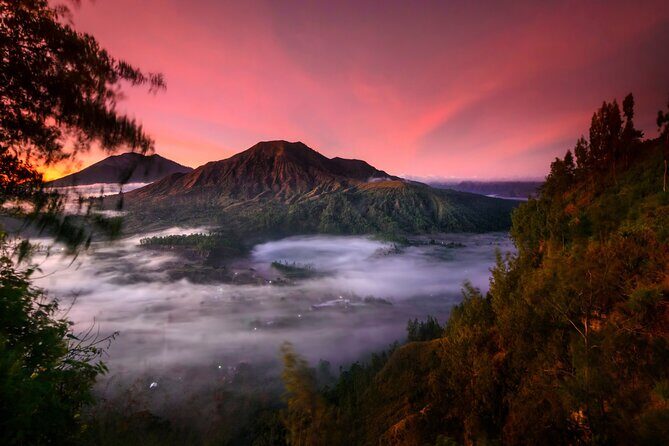
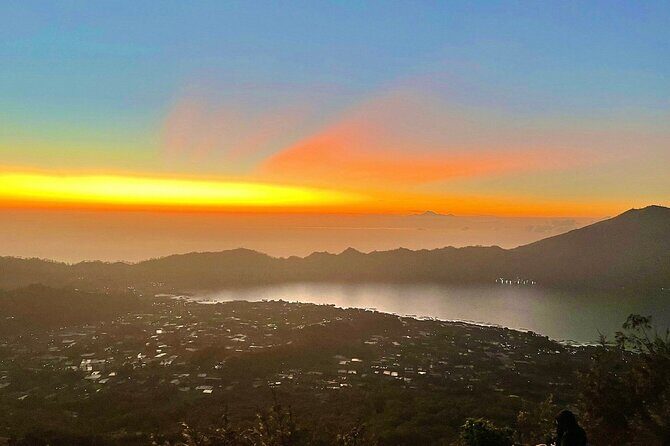
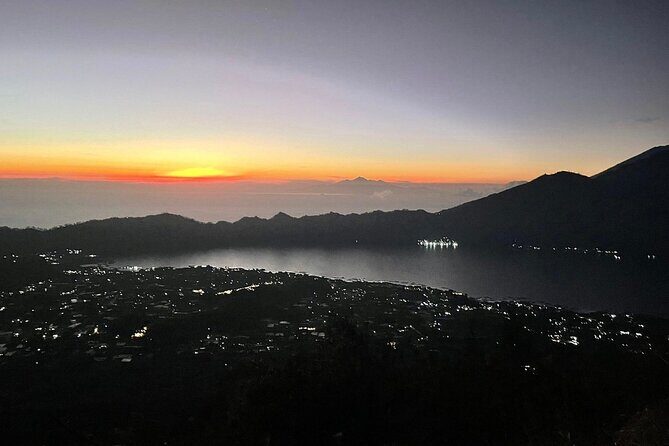
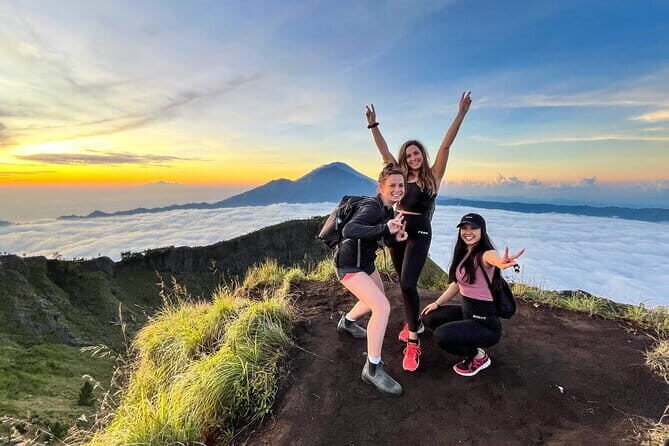
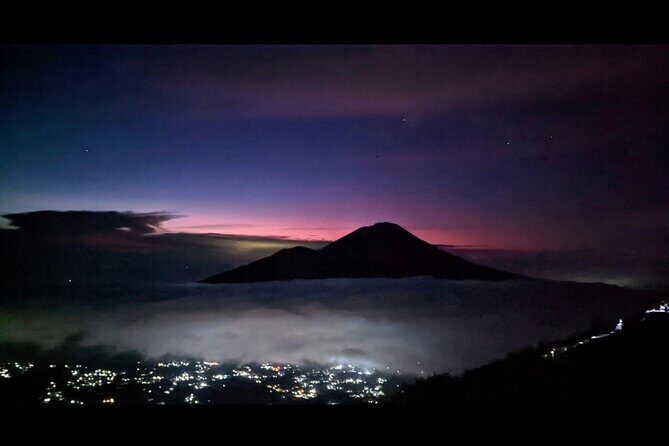
After you reach the top viewpoint, the payoff arrives fast. This is when you’re watching the sunrise over Bali from the volcano. The early hours suddenly feel worth it, because you’re not just looking at the sky—you’re seeing it from a volcanic world with views stretching out around the island.

Right after arriving, you’ll have breakfast. Eating after the climb is more than a perk. It helps you reset your energy, especially if you’ve been moving in cold dark air and waiting for the light.

Then you’ll take in the sunrise and the surrounding scenery before heading deeper into the crater area. The order matters: you get the big moment first, then you transition into more hands-on exploration.

Crater Walking and the Lava–Black Sand Section

This trek includes time to do more than stop at a viewpoint. After breakfast and sunrise viewing, you’ll have time to walk around the crater area. That crater walk is where you start seeing the volcano as a place with textures and shapes, not just a single photo angle.

From there, the route includes crossing a hill of lava and black sand before returning down. This is one of the most distinctive parts of the experience because it’s grounded in real volcanic terrain under your feet.

Two practical notes if you want to enjoy this section:

  • Take it slow and let your guide set safe footing.
  • Expect the ground to feel different than normal trails, especially on black sand.

It’s not just dramatic scenery. It’s also a chance to feel the volcano’s scale in a very physical way—your legs work, and your senses wake up.

Local Guide Energy: Why This Trek Feels Personal

Mount Batur Trekking Admission Ticket with Local Guide - Local Guide Energy: Why This Trek Feels Personal
A big part of why this trek earns strong marks is the human factor. The guides aren’t just pointing out a route; they’re managing the experience from the first 3:30AM handshake to the safe return.

Some mornings run smoother because the guide keeps the group comfortable—encouraging breaks and moving without rushing. That matters on Mount Batur because the climb isn’t about speed. It’s about stamina, steady steps, and handling the dark.

There’s also a social side that you might enjoy. In past experiences tied to this provider, people have connected with their guide and even shared light conversation while keeping the trek moving.

And at least one experience included a driver named Putu, described as fun with good planning. That kind of competent, friendly coordination helps if you’re trying to make the most of a very early morning.

How to Know If This Trek Fits You

This is listed as something most travelers can participate in, but you should still be honest about fitness. Even if you’re not an athlete, you’ll be climbing early in the morning and then walking around the crater.

The best match is:

  • You want sunrise and you can handle early wake-ups
  • You like guided outdoor time more than sitting in a vehicle
  • You enjoy physically exploring a site, not just taking quick photos

If you hate hills, struggle on steep steps, or need frequent rest breaks, you’ll still have a chance—but you should plan for a slower pace and go in with patience. The good guides are the ones who help you keep moving without pressure.

Getting There Without a Hotel Transfer

No hotel transfer is the one cost you may need to add depending on where you’re staying. The good part is that the meeting area is noted as being near public transportation, so you aren’t necessarily locked into expensive pickup.

Before booking, check your location against the meeting area and how you’ll arrive by early morning. This is especially important with a 3:30AM start. If you’re staying far out, you might feel the extra effort.

If you’re already in or near Ubud and familiar with local transit options, this becomes much simpler—and the $32 price starts to look very reasonable for what you get.

Weather Matters on Mount Batur

This experience requires good weather. If it can’t run due to poor conditions, you’ll be offered a different date or a full refund.
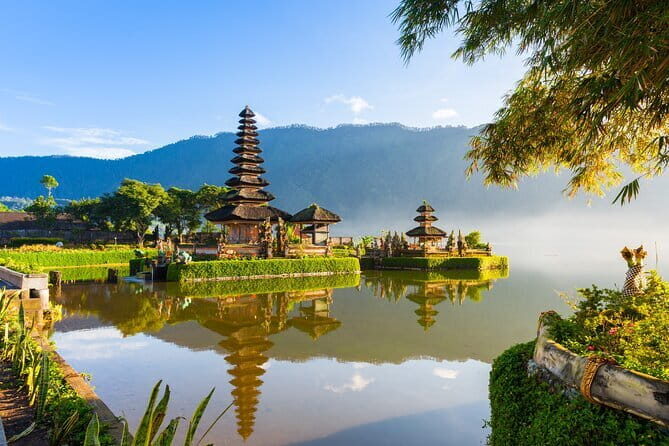
That’s not just fine print—it’s central to how enjoyable the sunrise will be. Fog, heavy cloud, or rain can turn the sunrise into a letdown, and volcanic terrain is less fun when the ground is slick.

When you book, be realistic. Sunrise treks are “worth it” most of the time, but weather can be unpredictable. Your best strategy is to travel with flexibility and be ready to shift dates if needed.

Should You Book This Mount Batur Trek?

I’d book it if you want a structured sunrise hike with a real local guide and included essentials that make the dark climb easier. At $32, you’re getting admission, breakfast, and gear (flashlight and stick), which is strong value if you can handle the meeting point on your own.

I’d think twice if:

  • You need easy, flat walking, because this trek is steep and active
  • You rely on hotel pickup and don’t want to figure out morning transport
  • You’re very sensitive to early wake-ups

For most people who can do uphill walking at dawn, this is a high-reward experience: sunrise from the volcano, crater time, and the lava-and-black-sand walk that makes it feel like you truly visited the place.

FAQ

What time do I need to meet the guide?

You meet at 3:30AM.

How long is the Mount Batur trekking experience?

The duration is listed as about 2 hours.

How much does the tour cost?

The price is $32.00 per person.

What is included in the ticket?

The package includes breakfast, a stick, a flashlight, a local guide, and mineral water.

What is not included?

Hotel transfer is not included.

Will I get a mobile ticket?

Yes, this is a mobile ticket. Confirmation is also received at booking.

What happens if weather is bad or I need to cancel?

The experience requires good weather. If it’s canceled due to poor weather, you’ll be offered a different date or a full refund. You can cancel for a full refund up to 24 hours before the experience’s start time.
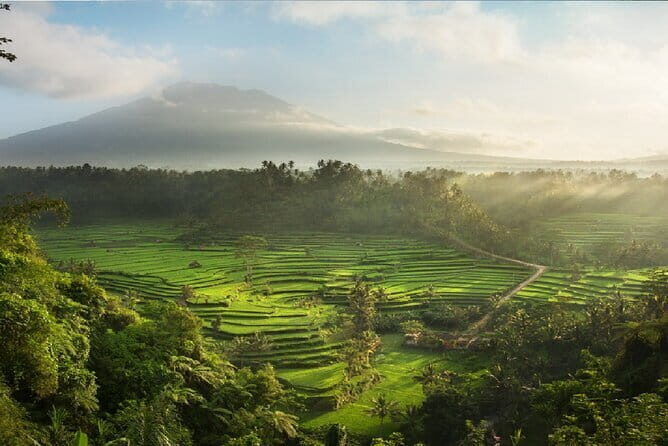
Are service animals allowed and can most people join?

Service animals are allowed, and the experience notes that most travelers can participate.

Full Day Tour to Water Temples UNESCO Rice Terraces in Bali

Full Day Tour to Water Temples UNESCO Rice Terraces in Bali - Pickup from Ubud: private driving that keeps the schedule realistic

Rice terraces and temples—one great Bali day.

This full-day tour links Hindu spirituality with real farming life through Bali’s UNESCO subak irrigation system. You’ll visit Jatiluwih’s giant rice fields, slow down at Luhur Batukaru Temple, chase a signature photo at Handara Iconic Gate, and finish at Ulun Danu Bratan Temple on Lake Bratan.

Two things I really like: the guide work. On the day I went, our guide Awan explained the spiritual side of temple visits and how the irrigation system supports rice farming—so the stops feel connected, not random. Also, the scenery is varied: wide terrace views in Jatiluwih, forested temple grounds at Batukaru, and that classic lake-temple look at Bratan.

One thing to consider: entrance fees and lunch are not included, so your final bill will be higher than the $42 base price. Plan for roughly $25 in entrance costs and add a meal if you don’t upgrade.

Key highlights you’ll feel on the day

Full Day Tour to Water Temples UNESCO Rice Terraces in Bali - Key highlights you’ll feel on the day

  • UNESCO subak context that connects rice farming with temple beliefs
  • Awan-style guiding with clear explanations of how the irrigation system works
  • Jatiluwih Rice Terraces as the main visual show, spread across 600+ hectares
  • Ulun Danu Bratan Temple with that on-the-lake, floating-on-water feel
  • Handara Iconic Gate for an easy, photogenic stop with big-gate drama
  • Door-to-door A/C transport from Ubud with time built in for driving

UNESCO subak, Hindu temples, and why this day tour works

Full Day Tour to Water Temples UNESCO Rice Terraces in Bali - UNESCO subak, Hindu temples, and why this day tour works
Bali’s rice terraces are not just pretty fields. They’re part of a traditional irrigation system called subak, which UNESCO recognizes as World Heritage. What makes this tour interesting is that it treats the terraces like a living system—water management, community cooperation, and religion all tied together.

That’s the payoff of visiting multiple sites in one day. Instead of only photographing temples, you learn how beliefs and daily farm work share the same “why.” Temples like Luhur Batukaru and Ulun Danu Bratan connect to how people care for water, land, and seasons, which is exactly what you see in the terraces.

And yes, you still get the wow-factor. Jatiluwih’s rice terraces are wide and hillside-shaped. Lake Bratan gives you the classic temple-on-water scene. You get variety without feeling like you’re constantly rushing to a new city.
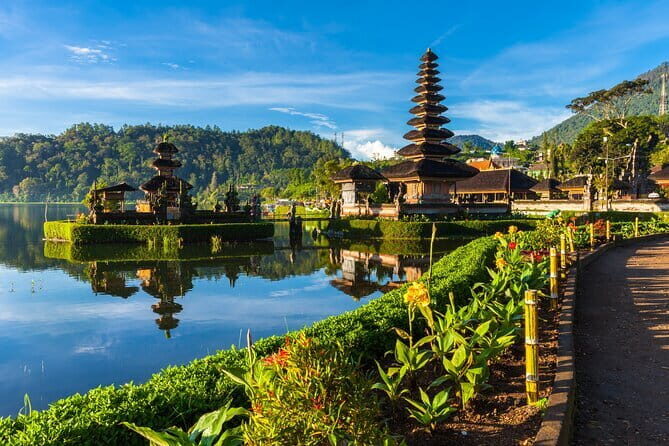
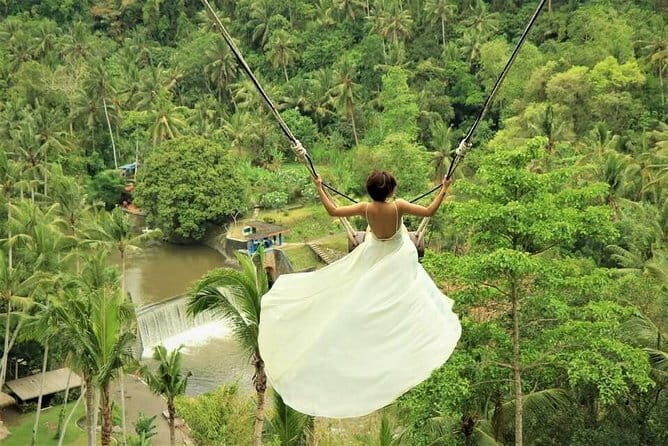
Price and value: what $42 covers, and what costs extra

The tour price is $42 per person, and for that you get door-to-door private transportation in an A/C vehicle plus bottled water and parking fees. Fuel surcharge is included too, which matters because long driving days can quietly add up.

Here’s the part you should budget for: entrance fees are not included (about $25 USD total, based on the tour info). Lunch is also not included unless you upgrade. WiFi on board is not included, so if you need it, plan for offline maps or save your messages for later.

So is $42 worth it? For a full day with pickup, multiple major stops, and A/C transport, it usually is—especially if you’re trying to avoid the hassle of arranging separate rides. The main “value risk” is only this: if you don’t upgrade and you buy entrances and meals separately, your total day cost will rise.

My practical advice: treat $42 as the transport-and-guiding base, then plan your add-ons up front. It keeps the day stress-free.

Pickup from Ubud: private driving that keeps the schedule realistic

Full Day Tour to Water Temples UNESCO Rice Terraces in Bali - Pickup from Ubud: private driving that keeps the schedule realistic
You’ll be picked up in the Ubud area (pickup is offered) and transported by vehicle between stops. The tour runs about 8 hours, and the remaining time is for travel between places. That’s normal in Bali’s traffic and mountain roads, and this schedule is built around it.

This is also a private tour/activity, meaning only your group is participating. That matters if you prefer a slower pace, want photos without shoulder-to-shoulder crowds, or you like asking questions when you see something that sparks curiosity.

One more detail that helps: you’ll get bottled water during the day. On hot days, that small inclusion feels like a quality-of-life upgrade—especially when you’ll be out for hours moving between viewpoints and temple areas.

Jatiluwih Green Land Rice Terraces: big views and real farming scale

Full Day Tour to Water Temples UNESCO Rice Terraces in Bali - Jatiluwih Green Land Rice Terraces: big views and real farming scale
Jatiluwih is where the tour’s visual drama lands first. This is described as Bali’s biggest rice terraces, covering over 600 hectares, built across the hillside topography of the Batukaru mountain range.

What I like about starting here: you get the “size” lesson early. When terrace fields stretch across slopes, you can actually understand the scale of irrigation and labor that goes into growing rice. A good guide makes a difference, and in my experience Awan’s explanation tied the terraces to how subak keeps water working across multiple fields.

Expect a stop built for looking—wide views, layered greenery, and lots of chances to capture the curve of the terraces against the hills. Admission tickets aren’t included, so bring that cost into your day plan.

A practical tip: wear shoes that handle uneven ground. Even if you’re not doing a long hike, terraces and temple approaches can be slippery or uneven. And bring something for sun protection if you’re sensitive—terraces tend to expose you to open sky.

Luhur Batukaru Temple: calm grounds at the foothill of Mount Batukaru

Full Day Tour to Water Temples UNESCO Rice Terraces in Bali - Luhur Batukaru Temple: calm grounds at the foothill of Mount Batukaru
Next is Luhur Batukaru Temple, reached after a drive of roughly 40 to 50 minutes through green hills. The temple sits on the foothill of Mount Batukaru, which is the second highest volcano in Bali. The temple was built in the 11th century, so it has deep roots.

This stop feels different from Jatiluwih. Instead of panoramic rice views, you’re in a temple setting where the focus shifts to belief, ritual space, and how people relate to the mountain and water.

What impressed me most was how the guide connected it all. The temple didn’t feel like a random structure stop. It felt like a spiritual anchor in the broader irrigation story. If you enjoy understanding the “why” behind a place, this is a strong moment in the day.

Entrance tickets are not included here either. Also, remember that temples often have clothing expectations. The tour info doesn’t specify rules, so plan to bring or arrange something that covers shoulders and knees just in case you need it on site.

Handara Iconic Gate: the photo stop with real attitude

Full Day Tour to Water Temples UNESCO Rice Terraces in Bali - Handara Iconic Gate: the photo stop with real attitude
Then comes Handara Iconic Gate, one of Bali’s most photographed traditional-style gates. This is a classic “pause and shoot” stop: you’ll have about an hour here, with time to frame photos against the big gate and the green scenery behind it.

Why this stop makes sense in the middle of the day: after temples and fields, it gives you a simpler, visual reset. You can relax, take photos, and enjoy the dramatic symmetry without needing to interpret rituals or farming systems.

Keep expectations practical. This is famous for images, so you’ll want to be ready to move quickly to your best angles, then enjoy a slower moment before you get back on the road. Entrance tickets aren’t included, so add that cost to your day budget if required at the gate.

If you’re traveling with someone who isn’t as into temples, this is often the stop that still feels satisfying—because everyone wants one great photo from Bali.

Ulun Danu Bratan Temple: Lake Bratan’s iconic water-temple feeling

Full Day Tour to Water Temples UNESCO Rice Terraces in Bali - Ulun Danu Bratan Temple: Lake Bratan’s iconic water-temple feeling
The final major temple is Ulun Danu Bratan Temple (also known as Pura Ulun Danu Bratan). It’s a major Shaivite temple complex built on the shores of Lake Bratan in the mountains near Bedugul.

This is the stop that delivers the signature “temple on water” look. The tour description notes that the temple appears floating on the water, and that’s exactly why it’s so popular for photos.

What I like about ending here: by the time you arrive at Bratan, you’ve already learned how Bali’s water culture and temple belief connect. So the lake setting doesn’t feel like a random scenic finish. It feels like a logical conclusion: water, farming, and spirituality meet in one view.

Plan for walking around temple grounds and viewpoints. Entrance fees aren’t included, so factor the approximate $25 total entrance budget into your spending plan.

Also, if you want the best photos, arrive with a bit of patience. This is one of those locations where small changes in viewpoint can make your photo dramatically better.

Time on the road: how to keep an 8-hour day from feeling exhausting

Full Day Tour to Water Temples UNESCO Rice Terraces in Bali - Time on the road: how to keep an 8-hour day from feeling exhausting
An 8-hour schedule in Bali usually means you’ll spend meaningful time in the car. This tour is transparent about that: most of the remaining time is travel between each object, and the duration includes getting from stop to stop.

To keep it comfortable, I suggest packing for the ride. Bottled water is included, but bring any small personal essentials you use during long days (like sunscreen, tissues, or a light layer if you’re sensitive to air-conditioned vehicles).

The good news is that transport is handled with an A/C vehicle, parking fees are included, and fuel surcharge is included too. In other words, you shouldn’t have the usual “who’s paying for what” stress mid-day.

For pacing, use the natural rhythm: look longer at Jatiluwih, slow down at Batukaru, take a quick photo sprint at Handara, then settle into the lake views at Bratan.

Who this Bali water temples and UNESCO rice terrace tour suits best

This tour fits you if you want a single full day that blends culture and scenery with clear explanations. It’s a good match for:

  • People who like learning what they’re seeing, not just taking pictures
  • Travelers who want UNESCO context for Bali’s irrigation system
  • Anyone staying in Ubud and wanting an organized route without planning traffic and timing alone
  • Groups who enjoy private guiding and ask lots of questions

It may not be the best choice if you want a super relaxed half-day with minimal driving. This is built as a full-day circuit, with driving time included and stops that each take about an hour.

What to pack and how to prepare for temple + terrace stops

Since the itinerary mixes rice terraces and temples, you’ll want to dress and pack for both types of ground.

Practical basics:

  • Comfortable shoes for uneven paths and temple approaches
  • Sun protection if you’re sensitive to heat
  • A plan for entrance fees (the tour estimate is about $25 USD total)
  • If you want lunch, check whether upgrading works for your schedule since lunch isn’t included

Also, if you care about photos, bring your phone/camera accessories and keep your battery charged. A guide can help you find angles, but you still control the moments you capture.

Should you book this full-day Ubud tour of water temples and Jatiluwih terraces?

I’d book it if you want your Bali day to make sense. The big value here is not just four famous stops—it’s the way the guide connects subak and Hindu temple meaning to the rice-growing world you’re standing in.

At $42, the transport, A/C comfort, bottled water, and private setup are strong value. Just don’t get surprised by extra costs: entrance fees and lunch are not included, so plan for them. If you upgrade for entrances and lunch, you’ll likely feel like the day is “all set” from start to finish.

If your priority is straight scenery with zero context, you can still enjoy it. But if you want your photos to come with understanding, this is a smart, rewarding way to spend a full day around Ubud.

FAQ

How long is the Bali tour from Ubud?

It’s approximately 8 hours, including travel time between stops.

Is pickup from Ubud included?

Pickup is offered, and the tour runs as door-to-door transportation.

Is this a private tour?

Yes. Only your group participates.

What’s included in the tour price?

Included are bottled water, an air-conditioned vehicle, private transportation, fuel surcharge, and parking fees.

Are entrance fees included?

No. Entrance fees are not included and are approximately $25 USD.

Is lunch included?

Lunch is not included unless you upgrade your package to add a restaurant lunch.

Which places will you visit?

You’ll visit Jatiluwih Rice Terraces, Luhur Batukaru Temple, Handara Iconic Gate, and Ulun Danu Bratan Temple.

Is WiFi included on the vehicle?

No. WiFi on board is not included.

When should I book if I want good timing?

The tour is on average booked about 17 days in advance.

What is the cancellation policy?

You can cancel for a full refund up to 24 hours before the experience start time.

If you’d like, tell me your travel dates and whether you prefer upgrading for entrances and lunch, and I’ll help you estimate your total day budget.

Camper Van Rental Bali | Explore Bali Freely

Camper Van Rental Bali | Explore Bali Freely - Manual transmission and getting comfortable with “camping-style” logistics

East Bali feels bigger in your own van. This experience starts from Ubud and gives you the freedom to plan a day around rice terraces, temples, beaches, and mountain views without feeling stuck to a hotel schedule. You’re not just sightseeing. You’re setting up camp-style comfort along the way.

I especially like the practical mix of comfort and power: a bed setup with clean linens, plus a 1000 Watt power station with solar panel support. I also like the “we thought about real life” touches like the portable kitchen set and cooler box, so you can keep your day moving without constantly hunting for snacks.

One thing to consider: there’s no shower/toilet included. You’ll use nearby campsites or public facilities, so plan for that like a normal human, not like a five-star hotel guest.

Key things that make this East Bali campervan day worth it

Camper Van Rental Bali | Explore Bali Freely - Key things that make this East Bali campervan day worth it

  • Ubud pickup and a private group setup, so you’re not mixing with strangers
  • Beach-side parking by the sand, making the day feel instantly more fun and less rushed
  • Mount Batur lake views plus cooler mountain air, great for taking breaks and breathing
  • 1000 Watt power + solar, useful for charging devices and running the essentials
  • Portable kitchen + cooler box, which is a big quality-of-life upgrade
  • English-speaking, flexible guide support (you might get guides like Nata, Widi, or Gusti depending on your day)

Why a campervan rental from Ubud changes your East Bali day

East Bali rewards a slow pace. With a campervan, you’re not asking permission from a strict tour timetable every time the road looks interesting. You can time stops around light, crowds, and your own energy level.

The value here is simple: you’re paying to gain freedom. At $29 per person (booked around 40 days ahead on average), you’re not buying luxury. You’re buying the ability to craft your own route between coastal stops, lake views, and countryside walks. That’s a smart trade if you want independence but still like having support.

Because this is designed as a private experience, it also feels more personal. If your group has special requests, a good guide can shape the day around what you actually want to do, not just what fits a standard script.

Inside the van: power, bed setup, and the portable kitchen kit

Camper Van Rental Bali | Explore Bali Freely - Inside the van: power, bed setup, and the portable kitchen kit
The onboard setup is built for practicality. You get a campervan that fits 2–4 people (manual transmission), with a bed setup that includes clean linens and pillows. Even if you’re not sleeping all day, having a real bed setup for a camping-style stop makes a huge difference compared with “sit and wait” tours.

The power system is one of the standout features. You get a 1000 Watt power station plus a solar panel. That’s the kind of detail that helps you keep your phone, camera gear, and small essentials charged without panic. You also get built-in power outlets, so you can actually use your devices instead of treating them like fragile museum objects.

Food setup is another big quality-of-life win. You’ll have a portable kitchen set and cutlery, plus a cooler box. That means you can bring groceries or drinks (you just need to handle your own food purchases) and store them properly. For an East Bali day, this helps you avoid the annoying loop of searching for food every time a stop runs long.

Manual transmission and getting comfortable with “camping-style” logistics

Camper Van Rental Bali | Explore Bali Freely - Manual transmission and getting comfortable with “camping-style” logistics
This campervan is manual transmission, so if your group doesn’t drive stick, you’ll want to think ahead about who’s comfortable taking the wheel. If you’re used to manual cars, it’s no big drama. If you’re not, it can add stress right when you’re trying to enjoy the day.

Parking is where the experience becomes more interesting. One highlight is beach parking by the sand, which can feel very different from normal city parking. The roads and parking areas in East Bali can be narrow or uneven, so go slow, keep your attention up, and don’t rush the final meters.

Also, remember the “camping-style” part. There’s no built-in shower/toilet setup included. That doesn’t ruin the day, but it does change your mindset. Bring what you need for personal comfort, and plan bathroom breaks like you would for any active day out.

Beachfront camping stop: why sand-side parking is such a treat

The beachfront portion is exactly what it sounds like: a beachfront camping experience with parking available by the sand. That setup matters because it turns the beach from a quick photo stop into a real pause. You can take your time, stretch your legs, and let the ocean do its job of calming your brain down.

What you’ll likely enjoy here is the rhythm. Drive in, park close to the sand, and then shift from transit mode into “slow down” mode. You can use the cooler box and portable kit for simple snacks. You can also just hang out for that moment where the breeze hits and you realize you’ve been moving too fast lately.

The trade-off: beach stops are exposed. If wind or rain rolls in, you may need extra layers or a plan for shelter. Your best move is to keep your day flexible and dress in a way that works even when the weather changes its mind.

Lake camping with Mount Batur views: when cooler air makes the day feel longer

One of the more memorable parts is the chance to camp by the lake with stunning Mount Batur views. Even if you’re only there for part of the time, the setting changes the mood fast. Mountain air tends to feel cooler and cleaner, so the day stops feeling like a constant warm grind.

Mount Batur is also one of those places where timing can matter. The experience is designed around freedom, including the idea of waking up for sunrise spots. So if your schedule allows, getting up early can turn this stop from pretty to unforgettable.

Practical tip: bring something warm enough for evenings near mountains. Even on bright days, the air can cool quickly once the sun drops. If you’re relying on just one light layer, you’ll feel it when you slow down.

And again, remember the facilities situation. This is a camping-style moment. You’ll use nearby campsites or public facilities for shower/toilet needs, so don’t plan on a long “get ready like a hotel” routine.

Jungle trekking, waterfalls, and cultural immersion: the active half of the day

After the camping moments, you shift into the active side: jungle trekking, waterfall visits, and cultural immersion. This is where the campervan day feels like more than just driving to scenery. You’re walking, looking up, taking in the surroundings, and spending time in places that feel connected to everyday life.

The big benefit of having guide support here is simple. You’ll get context—what you’re looking at, what to pay attention to, and how to move through stops without getting lost in your own heads-up-map confusion. One of the reviews highlighted how guides made explanations clear and interactive, which is exactly what helps during treks and temple-style stops.

The main consideration is energy management. A 8–10 hour day is not a marathon, but it also isn’t a “no effort required” stroll. If you bring solid shoes and pace yourself, you’ll enjoy it. If you try to do everything at full speed, you’ll burn out before the best views.

Guides who can actually shape the route: Nata, Widi, Gusti, Widi

Camper Van Rental Bali | Explore Bali Freely - Guides who can actually shape the route: Nata, Widi, Gusti, Widi
This kind of day works best when your guide isn’t just transporting you. You want someone who can adjust and explain.

I’ve seen this program’s support described through names like Nata, Widi, Gusti, and Widi again in different write-ups. What stands out across those comments is flexibility—guides asking for requests, adjusting the plan, and staying professional while keeping the day fun.

If you get Nata, you can expect a guide style that emphasizes flexibility and knowledge, especially for English-speaking groups. If you get Widi, the focus may be on making stops understandable as you go, so you’re not just taking photos with no idea what they represent. And if you get Gusti, the day may feel packed with sightseeing plus an explanation thread that keeps things engaging.

Even if you don’t meet these exact guides, the key idea stays the same: ask questions. Tell them what you want more of—sunrise views, waterfalls, temple time, or simpler breaks—and you’ll get a better day.

Price and value: what $29 per person really buys

Camper Van Rental Bali | Explore Bali Freely - Price and value: what $29 per person really buys
At $29 per person, the biggest value isn’t the van alone. It’s the bundle of comfort plus support:

  • a campervan for 2–4 people
  • bed setup with linens and pillows
  • 1000 Watt power + solar
  • portable kitchen plus cooler box
  • local travel tips and a map
  • pickup and drop-off in selected areas (depending on the package)
  • roadside support and trip assistance

What you don’t get is where some people get surprised. Fuel isn’t included, and neither are meals and groceries. Entrance fees to attractions or campsites also aren’t included. And there’s no built-in shower/toilet.

So the math works best when you plan your own food and budget for fuel and entry costs. If you’re the type who buys snacks anyway on the road, the setup becomes a genuine convenience, because you’re already thinking like a camper—only with a comfortable base and power.

What to bring (so you don’t suffer) and what to plan for

Since fuel, meals, and entrance fees aren’t included, you’ll want to treat this like a self-guided adventure with support, not a full all-inclusive package.

Here’s what you should plan for:

  • Bring cash or payment options for entrances and campsites if needed
  • Plan meals yourself since groceries aren’t included
  • Expect to use nearby facilities for shower/toilet needs
  • Don’t forget personal items you’d want in any day of trekking and beach time

Also, this experience is weather dependent. If conditions aren’t good, it can be rescheduled or refunded, so I’d keep an eye on the forecast and avoid booking right before a hard deadline.

Timing a 8–10 hour campervan adventure without feeling rushed

The duration is about 8 to 10 hours, which is long enough to do meaningful stops but short enough that you’ll feel the clock if you overplan. This is why freedom matters: you can choose to linger where the day feels right instead of sprinting everywhere.

A good strategy is to decide your priorities before you start:

  • If you care most about views, build your day around lake and mountain time
  • If you care most about activity, put trekking and waterfall visits earlier so you don’t feel tired later
  • If you’re traveling as a couple or family, schedule simple breaks at the beach stop to keep everyone happy

Keep in mind that this is a private tour/activity, so there’s no pressure to match someone else’s pace. That’s one of the biggest practical perks.

Should you book this East Bali campervan experience?

Book it if you want freedom with real structure. This is a good fit for couples, families, or friends who like the idea of sleeping comfortably during camping-style moments, handling simple meals from your own kit, and being able to adjust your route as the day unfolds.

I’d pass or rethink if you need a full bathroom setup in the van or if no one in your group can drive manual transmission. Also, if you want every attraction entrance and every meal handled for you, the “not included” list here is a mismatch.

If you’re okay planning basic costs like fuel, food, and entry tickets, this looks like a strong value way to experience East Bali at your own pace—especially because you get both the calm (beach and lake views) and the active side (treks and waterfalls) in one day.

FAQ

What is the meeting area for this experience in Bali?

It’s based in Ubud, Indonesia, and pickup and drop-off are offered in selected areas or packages.

How long does the campervan experience last?

The duration is approximately 8 to 10 hours.

How many people can the campervan fit?

The campervan fits 2–4 people.

Is the campervan automatic?

The campervan uses manual transmission.

What’s included with the rental?

Included items can include a bed setup with clean linens and pillows, a 1000 Watt power station with solar panel, portable kitchen set and cutlery, a cooler box, local travel tips and a map, and pickup/drop-off where applicable.

What is not included in the price?

Not included items are fuel, meals and groceries, shower/toilet access (you use nearby campsites or public facilities), and entrance fees to attractions or campsites. A gas canister is also not included.

Is this experience private?

Yes, it’s private, meaning only your group participates.

What happens if weather is bad?

This experience requires good weather. If it’s canceled due to poor weather, you’ll be offered a different date or a full refund.

How does free cancellation work?

You can cancel for a full refund if you cancel at least 24 hours before the start time. If you cancel within 24 hours, the payment is not refunded.

Half day forest & volcano tour with electric or petrol dirtbikes

Half day forest & volcano tour with electric or petrol dirtbikes - Getting There: The 7:00 AM Start in Kedisan (and Why It’s Good)

Bamboo trails meet volcanic power. This half-day dirt bike ride in Kintamani links bamboo forest paths with Mount Batur volcanic terrain, guided start-to-finish and filmed for you with iPhone footage. It’s a great way to pack real off-road scenery into one morning without turning the whole day into logistics.

I like that you can pick an electric or petrol dirt bike, so your ride matches your comfort level and your preferred vibe. I also love that the price includes lunch and bottled water, so you’re not hunting for food halfway through the adventure.

The main drawback to plan for is simple: this is trail riding in variable mountain weather. If conditions aren’t good, the operator may switch dates or refund, so build in some flexibility.

Key highlights

Half day forest & volcano tour with electric or petrol dirtbikes - Key highlights

  • Electric or petrol dirt bikes lets you choose silent power or classic engine thrill
  • Bamboo jungle to volcanic terrain in one half-day route
  • Professional guides who keep the day safe and fun
  • Lunch with Mount Batur views plus bottled water included
  • Electric Ultra Bee option mentioned by riders who chose the quiet bike
  • A lava-area finish where you can drive around freely

Kintamani Dirt Bikes: Bamboo Jungles to Mount Batur Terrain

Half day forest & volcano tour with electric or petrol dirtbikes - Kintamani Dirt Bikes: Bamboo Jungles to Mount Batur Terrain
This tour is basically a fast ticket into the off-road Bali that people talk about. You start in the Kintamani area (near Kedisan), and in a few hours you cycle through three different “worlds”: softer jungle paths, rougher trail sections, and then that volcanic zone around Mount Batur. The guides don’t just point you forward—they pace the ride so you’re not white-knuckling the whole time.

What makes the experience especially appealing is the variety packed into a 4-hour window. You’re not spending the morning only on one type of track. Instead, you get bamboo/green tunnel vibes, then more technical trail riding, then that open volcanic feel where the ground looks and feels different under your tires.

And yes, there’s a practical side here too. The tour includes lunch and bottled water. After a morning on the move, that one included meal can be the difference between “great day” and “fun ride with a crash afterward.”

Electric vs Petrol: Picking the Right Dirt Bike Feel

One of the best parts of this tour is that you’re not forced into one kind of ride. You can choose an electric dirt bike or a petrol bike.

If you go electric, the vibe is silent yet powerful. That matters because the bamboo and jungle sections feel less chaotic when the bike isn’t loud. You tend to notice the environment more—birds, rustling leaves, the guide calling out cues—without the constant engine roar.

If you go petrol, you’re choosing the raw thrill of a traditional dirt bike. It’s the option for riders who want that engine response and classic off-road energy.

A rider feedback mention notes that the electric bike can be the Ultra Bee model. If that matters to you, it’s a good sign the operator isn’t handing out mystery bikes.

Either way, you’re riding with pro guides who lead the way and focus on safety while still pushing for fun. This is not a “tour bus but with bikes” situation—it’s an actual guided ride with real trail time.

Getting There: The 7:00 AM Start in Kedisan (and Why It’s Good)

Half day forest & volcano tour with electric or petrol dirtbikes - Getting There: The 7:00 AM Start in Kedisan (and Why It’s Good)
This experience starts at 7:00 am at Lakeview Hotel & Restaurant on Jl. Raya Penelokan, Kedisan, Kintamani. The activity ends back at the meeting point, so you don’t have to plan a separate return.

If you’re staying around Ubud, that early start is often what makes the tour worth it. Morning hours typically mean calmer trail conditions and more comfortable riding compared with hotter mid-day temperatures. You also get a lot of value out of half a day: you’ll be back early enough to still enjoy the rest of your Bali time.

Pickup is offered, which is helpful if you don’t want to deal with navigating to the exact meeting spot on your own. And you’ll use a mobile ticket, which keeps your morning simple.

How the Morning Actually Flows (4 Hours, No Wasted Time)

Half day forest & volcano tour with electric or petrol dirtbikes - How the Morning Actually Flows (4 Hours, No Wasted Time)
The tour is designed as one continuous adventure, not a sequence of long waits. After you arrive at the meeting point, you’ll connect with the guides, get sorted on your bike choice (electric or petrol), and get the basic setup so you’re not guessing mid-ride.

From there, the day’s structure follows a clear rhythm:

1) Start riding through greener areas like rice fields and bamboo jungle sections

2) Push into dirt trails with more challenge

3) Reach the Mount Batur volcanic zone

4) Stop for the included lunch with views

5) Wrap with a lava-area section where you can drive around freely

6) Return back to the meeting point

That included lunch is a big deal in a half-day schedule. You’re not forced to choose between fueling up and keeping your ride time tight. Instead, the meal becomes part of the day, not a detour.

Bamboo Forest and Rice Fields: The Friendly Start That Still Feels Wild

Half day forest & volcano tour with electric or petrol dirtbikes - Bamboo Forest and Rice Fields: The Friendly Start That Still Feels Wild
The ride often begins with scenery that looks peaceful from the outside, then turns exciting once you’re on the bike. Rice fields and bamboo jungle sections give you that classic Bali sense of being surrounded by plants, narrow paths, and real “track under your wheels” terrain.

This part is especially good for first-timers, because it builds confidence without immediately dropping you into the most technical ground. You still get the off-road feeling—dust, turns, uneven patches—but it’s a gentler entry point into the day’s more serious terrain.

I like that this early stretch doesn’t try to impress you with speed. It impresses you by giving you a sense of place. Bamboo trails can feel like you’re riding through a green tunnel, and that changes your whole mental mood from everyday sightseeing.

Jungle Trails: Where the Guide Makes the Difference

Half day forest & volcano tour with electric or petrol dirtbikes - Jungle Trails: Where the Guide Makes the Difference
Once you’re into the jungle trail sections, the tour shifts from scenery to skill. These paths are the heart of the dirt bike experience: narrow routes, uneven ground, and constant small decisions (where to put the tires, when to slow, when to roll on).

This is also where having pro guides matters. The guides aren’t just there to herd you along. They lead the way, and they help you keep the ride both challenging and controlled. Based on the operator’s track record, you can expect a day that feels well organized, with the guides staying upbeat and engaged.

If you’re nervous, don’t try to fight it alone. When the guide calls out cues or adjusts how you ride a section, listen. On trails like these, confidence comes from doing the basics well.

Mount Batur Volcanic Terrain: The Ground Changes, So Your Ride Changes

Half day forest & volcano tour with electric or petrol dirtbikes - Mount Batur Volcanic Terrain: The Ground Changes, So Your Ride Changes
The Mount Batur area is the dramatic middle of the ride. Volcanic terrain has a different feel under your tires—more open stretches, different texture, and often a wider sense of “space” compared with the tight jungle sections.

This is one of the tour’s biggest selling points. You’re not just riding through greenery; you’re actually getting into the volcanic character that defines Kintamani. That contrast is why the half-day format works. You get multiple “Bali moods” before your energy runs out.

It’s also the area where you’ll understand why the tour offers both electric and petrol options. The electric bike is described as silent yet powerful, which can make the experience feel smooth in open terrain. The petrol bikes bring more classic engine snap for riders who enjoy that feedback.

Lunch With Mount Batur Views: Fueling Up Without Losing the Magic

Half day forest & volcano tour with electric or petrol dirtbikes - Lunch With Mount Batur Views: Fueling Up Without Losing the Magic
Lunch is included, along with bottled water. And the meal comes with Mount Batur views, which turns a typical break into part of the experience.

This is a practical win. On an adventure morning, your body needs real calories and hydration. With lunch taken care of, you can relax instead of squeezing in a restaurant stop and hoping it lines up with the tour timing.

If you care about photographs, this is also a strong moment. Open views + a break after dusty riding makes it easier to catch your breath and reset before the final stretch.

The Lava Area Finish: Free-Ride Time That Feels Like Your Own Playground

One of the most memorable moments is the end-of-tour lava area section. The ride includes a big lava area where you can drive freely around. That’s a rare bonus in guided tours—once you’re in that space, you get some room to explore what your bike can do without constantly staying in a strict single-file line.

Why this matters: after jungle trails and guided sections, that free-driving time gives you a chance to learn the bike’s feel. You notice throttle response, steering behavior, and how the tires handle the ground.

It’s also a good “wrap-up” energy. Instead of ending the day on a tight, exhausting note, this finish can feel like a reward.

Price and Value: Is $158.11 Worth a Half-Day?

At $158.11 per person for about 4 hours, the key question is what you’re buying.

You’re not just paying for transportation or a basic ride. Your price includes:

  • a guided off-road route through multiple terrain types
  • lunch and bottled water
  • all fees and taxes
  • iPhone footage captured by the team
  • use of either an electric or petrol dirt bike
  • a private setup for your group (only your group participates)

That combination is why it can feel like good value. In many parts of Bali, you can rent a vehicle and still be responsible for navigation, timing, and finding safe tracks. Here, the guides handle the whole flow, and the ride is built to deliver a coherent adventure.

Is it budget-level? No. But for the amount you pack into a half-day—especially the mix of bamboo jungle, jungle trails, and volcanic terrain—this is the kind of spending that tends to feel fair.

One practical note: travel insurance is not included, so if you’re the type who likes peace of mind, bring your own coverage.

Who Should Book This Tour (and Who Might Rethink It)

This is a strong fit if you want:

  • an active Bali day that’s more than temples and traffic
  • a guided dirt bike experience with pro instruction
  • the chance to ride electric or petrol depending on your comfort
  • a route that ends in an open-feeling lava area rather than a quick drop-off

It may be less ideal if you’re extremely sensitive to physically active mornings or you’re expecting an easy, flat sightseeing ride. Trail riding is trail riding; it’s bumpy and hands-on. Also, since the experience requires good weather, it’s smart to schedule this when you can handle possible date changes.

If you’re traveling as a couple or small group and want an experience that feels personal (private only your group), this tour checks that box too.

Weather Matters: Planning Around the Mountain

The tour requires good weather. If it’s canceled due to poor weather, you’ll be offered a different date or a full refund.

That’s important because rain and muddy conditions can change how off-road riding feels. So if your schedule is tight with no flexibility, it’s worth keeping an eye on the forecast and staying ready to adjust.

Should You Book Baik Life’s Half-Day Forest and Volcano Dirt Bike Tour?

If you want a half-day that feels like a real adventure—bamboo jungle, jungle trails, and volcanic terrain—this is a smart bet. The combination of electric or petrol bikes, included lunch, and the iPhone footage makes it more than a ride; it becomes something you’ll want to talk about later.

Book it if you can handle an early start and you’re excited to get into the dirt-bike rhythm with pro guides. Skip it (or choose another plan) if you hate schedule uncertainty or you want a more relaxed, low-movement day.

If you’re on the fence, a simple gut-check helps: would you rather spend your morning riding Kintamani trails than sightseeing your way through the same few viewpoints? If yes, this one is worth reserving.

FAQ

How long is the dirt bike tour?

It runs for about 4 hours.

Where does the tour start, and what time does it begin?

It starts at Lakeview Hotel & Restaurant in Kedisan, Kintamani, at 7:00 am. The tour ends back at the meeting point.

Is pickup included?

Pickup is offered.

What’s included in the price?

Lunch, bottled water, and all fees and taxes are included.

Can I choose an electric or petrol dirt bike?

Yes. The tour offers both electric and petrol dirt bikes, depending on what you choose for your ride.

What if the weather is poor?

The experience requires good weather. If it’s canceled due to poor weather, you’ll be offered a different date or a full refund.

Is it refundable if I cancel?

This experience is non-refundable and cannot be changed for any reason.

Bali Snorkeling 2 Spots & ATV Quad Bike with Lunch & Transfer

Bali Snorkeling 2 Spots & ATV Quad Bike with Lunch & Transfer - Blue Lagoon and Tanjung Jepun: Coral, Fish, and a Beginner-Worthy Calm

Two reefs, one ATV ride. This Bali half-day strings together calm-water snorkeling at Blue Lagoon and Tanjung Jepun, then caps it with an ATV quad bike ride through rice fields, rivers, and forest trails. I love that the snorkeling setup is designed to feel safe for beginners, with coral and colorful fish you’ll actually get time to enjoy. I also love the change of pace: after the water, you trade masks for a helmet and ride real countryside on a quad.

One thing to consider: your snorkeling time is about 2 hours total, split between two spots. If you’re the type who wants a long, slow session underwater, this is more “best hits” than a full-on snorkeling day.

Key Highlights You Should Care About

Bali Snorkeling 2 Spots & ATV Quad Bike with Lunch & Transfer - Key Highlights You Should Care About

  • Blue Lagoon snorkeling is beginner-friendly, with very calm water.
  • Tanjung Jepun adds a second reef option, so you’re not stuck with just one scene.
  • ATV riding through rice fields, rivers, and forest trails gives you the Bali “back road” feeling.
  • Lunch and mineral water are included, so you’re not hunting food mid-activity.
  • Guide Arya gets standout praise, especially for making people feel comfortable and answering questions.
  • No ATV license needed, plus safety gear and insurance are included.

A 5-Hour Bali Mix That Feels Like Two Good Days

Bali Snorkeling 2 Spots & ATV Quad Bike with Lunch & Transfer - A 5-Hour Bali Mix That Feels Like Two Good Days
This is the kind of tour that works when you want variety without overthinking your schedule. You get water time in Padang Bai, then you switch to land time with a quad ride that moves through the countryside instead of staying flat and boring. It’s a strong fit for people who like nature and movement, but don’t want to spend an entire day only doing one thing.

The pace matters here. Expect a tight, guided flow: snorkeling first, then food and ATV time, all wrapped into roughly 5 hours. That timing is part of the value. You’re paying for a full “experience bundle,” not just a transfer to one spot.

Blue Lagoon and Tanjung Jepun: Coral, Fish, and a Beginner-Worthy Calm

Bali Snorkeling 2 Spots & ATV Quad Bike with Lunch & Transfer - Blue Lagoon and Tanjung Jepun: Coral, Fish, and a Beginner-Worthy Calm
Snorkeling is the heart of the first half of the day, and it’s built around two named spots: Blue Lagoon and Tanjung Jepun (both near Padang Bai). The biggest selling point is comfort. Blue Lagoon is known for calm water, which makes it a much easier entry for first-timers than rougher sites.

Blue Lagoon is also deeper than many people expect for an easygoing stop. The water depth runs around 7 to 8 meters, and you’ll see a lot of reef life in that range. The coral and tropical fish are the main show. You can also cross your fingers for turtles, since the area is described as a place where turtles may appear.

And yes, people look for Nemo-style fish. The coral reef here supports plenty of bright, small fish, so even if you don’t have a special “goal species,” the snorkel experience still feels alive.

What you’ll like if you’re newer to snorkeling: calm conditions, clear structure, and a straightforward “go see the reef” setup.

What you should know if you’re more experienced: the total time is limited, so you’ll focus on highlights rather than extended time over one specific section of reef.

Tanjung Jepun is your second stop, which helps you keep expectations realistic. Instead of spending the whole snorkel window trying to chase one view, you get a different spot after Blue Lagoon. That makes the day feel fuller, even if your overall water time is just about two hours.

ATV Quad Bike in Bali: Rice Fields, Rivers, and Real Trail Energy

Bali Snorkeling 2 Spots & ATV Quad Bike with Lunch & Transfer - ATV Quad Bike in Bali: Rice Fields, Rivers, and Real Trail Energy
After snorkeling, you trade fins for a helmet and hop onto an ATV quad bike for a countryside ride. This part of the tour is designed around variety: you ride through rice fields, forests, and river scenery, with the chance to use hidden trails rather than only straight paths.

A few reasons this ATV portion feels worth it:

  • It’s not just a ride around a parking area. You’re moving through different environments—open fields, shaded paths, and natural terrain.
  • It gives you a change in senses. Snorkeling is mostly still and visual; ATV riding is physical and hands-on.
  • It’s guided with safety support. Safety gear is included, and insurance is part of the package.

No license is required for the ATV, which removes a common roadblock for casual visitors. You still need to follow the rules of the guide once you’re there, but you won’t be held up by paperwork.

The biggest practical tip: you’ll want to be comfortable riding in an outdoor setting. You should assume you could get splashed or dusty depending on trail conditions. Wear clothes that can handle getting a bit messed up, and keep any valuable items secured.

Lunch and Mineral Water: The Inclusion That Keeps the Day Smooth

Bali Snorkeling 2 Spots & ATV Quad Bike with Lunch & Transfer - Lunch and Mineral Water: The Inclusion That Keeps the Day Smooth
This tour includes lunch plus a mineral bottle of water, which sounds simple until you’re hungry and sweaty halfway through a 5-hour plan. Having food built into the schedule means you don’t have to guess where you’ll eat or rush to find something close by.

The listing also includes snorkeling equipment and ATV safety gear, which matters for value. You’re not paying extra for basics you’d otherwise have to arrange yourself.

One more small detail: all fees and taxes are included. That’s not flashy, but it keeps the math easy when you’re booking.

Why the Guide Matters More Than You Think (Arya Gets It)

Bali Snorkeling 2 Spots & ATV Quad Bike with Lunch & Transfer - Why the Guide Matters More Than You Think (Arya Gets It)
A major standout from the experience is the guide. Arya is repeatedly praised for being friendly, helpful, and making people feel at home during the day. What’s especially helpful is that he’s described as answering questions clearly and making guests comfortable and at ease.

That matters in two places:

  1. Snorkeling comfort: if you’re unsure about gear or where to look, a confident guide helps you relax and enjoy the reef.
  2. ATV confidence: when you’re on a quad, people naturally worry about doing it wrong. A good guide helps you focus on the ride, not panic.

If you’re the type who likes explanations and does better with a calm, steady presence, this guide setup is a big part of the value.

Safety, Age Limits, and Who This Fits Best

Bali Snorkeling 2 Spots & ATV Quad Bike with Lunch & Transfer - Safety, Age Limits, and Who This Fits Best
Safety is built into the package with insurance and safety gear for the ATV. That doesn’t mean you should act reckless—use the gear, listen to instructions, and take it seriously—but it does mean the tour isn’t treating safety as an optional add-on.

The age range is minimum 13, maximum 65. So if you’re outside that range, this isn’t a fit. Also, the snorkeling is described as safe for beginners because the water is calm. If you’re nervous about swimming in open water, that’s a helpful factor.

Fitness-wise, this is an active day. Snorkeling is generally gentle for most people, but you still need to handle water time plus an ATV ride afterward. If you’re dealing with mobility issues or you prefer very low-impact activities, you might want a slower day plan instead.

Price and Value: $48.65 for a Full Activity Day

Bali Snorkeling 2 Spots & ATV Quad Bike with Lunch & Transfer - Price and Value: $48.65 for a Full Activity Day
At $48.65 per person, this tour is positioned as a budget-friendly way to get multiple experiences in one go. What makes the price feel fair is what you don’t have to pay separately:

  • Pickup offered and private transportation
  • Snorkeling equipment
  • Lunch plus mineral water
  • ATV safety gear
  • All fees and taxes
  • Insurance

Personal expenses are not included, but that’s standard. Think of this price as covering the essentials for a guided “snorkel + ATV + food” day.

Where value can be questionable is if you only want one part of the day. If you’re only interested in snorkeling and don’t care about ATV riding, you may feel like you’re paying for something you won’t fully use. The best fit is someone who actually wants both.

The Small-Group Feel: Why Private Can Still Feel Personal

Bali Snorkeling 2 Spots & ATV Quad Bike with Lunch & Transfer - The Small-Group Feel: Why Private Can Still Feel Personal
This is listed as a private tour/activity, meaning it’s just your group. In practice, the vibe you want is not being rushed. The experience is set up to give time for both snorkeling and the ride, with comfort and questions handled by the guide rather than a conveyor belt schedule.

The tour is also described as having a group discount option. If you’re booking with friends or family, ask how that’s handled when you reserve.

Who Should Book This ATV + Snorkeling Combo

I’d aim for this tour if you:

  • want two snorkeling sites without spending all day in the water
  • like the idea of seeing reef life and the possibility of turtles, especially in calm conditions
  • want an ATV ride that takes you through rice fields, forests, and river scenery
  • prefer a guided day where the host helps you feel comfortable
  • are okay with a timed schedule (about 5 hours total)

I’d think twice if you:

  • want a long, slow snorkeling session only focused on one reef
  • don’t want any active riding element after water time
  • are outside the 13 to 65 age range

Should You Book This Bali Snorkeling 2 Spots & ATV Tour?

If you’re building a Bali trip and you want one solid day that mixes sea life with real countryside riding, this is a strong bet. The snorkeling focus on Blue Lagoon’s calm water, plus the second site at Tanjung Jepun, makes the underwater portion feel like more than a quick stop. Then the ATV ride through rice fields and forest trails turns the day into a full-change-of-gear experience.

Book it if you’re flexible and want value: lunch, gear, safety support, and pickup are all folded in. Skip it if you’d rather do snorkeling at a slower pace with hours in the water, or if you’re not interested in ATV riding at all.

FAQ

How long is the tour?

The experience runs about 5 hours.

How many snorkeling spots are included?

You’ll snorkel at 2 spots: Blue Lagoon and Tanjung Jepun.

Is pickup included from Ubud?

Yes, pickup is offered, and private transportation is included.

Is snorkeling equipment provided?

Yes, snorkeling equipment is included.

Is lunch included?

Yes. Lunch and a mineral bottle of water are included.

Do I need an ATV license?

No. You don’t need a license for the ATV.

What’s the minimum and maximum age?

Minimum age is 13 and maximum age is 65.

Is snorkeling suitable for beginners?

It’s described as safe for beginners because the water is calm.

What snorkeling depth is mentioned for Blue Lagoon?

Blue Lagoon is described as having a depth of about 7 to 8 meters.

Is there free cancellation?

Yes. You can cancel up to 24 hours in advance for a full refund.

Ulun Danu Beratan Temple Tanah Lot Tour by UNESCO World Heritage

Three temples, one long day, big views.

This UNESCO World Heritage-style route ties together Lake Bratan temple drama, terraced rice fields, and the cliffside wonder of Tanah Lot. I like that it’s run as a private Full-AC car day trip, so you’re not stuck bouncing around on public transport, and I also like how the timing helps you see each place for its key moment (including the tide-dependent bits at Tanah Lot).

One consideration: you’ll pay an entrance fee for Ulun Danu Beratan Temple (IDR 250,000 per person), and the whole day depends on having decent weather.

Key highlights to know before you go

Ulun Danu Beratan Temple Tanah Lot Tour by UNESCO World Heritage - Key highlights to know before you go

  • Private Full-AC pickup and drop in Ubud for a smoother, less sweaty day
  • Ulun Danu Beratan Temple by Lake Bratan for classic misty-temple photos
  • Taman Ayun Temple built in 1634 with a true garden-temple layout
  • Jatiluwih rice terraces shaped by farming terracing, not flat farmland
  • Tanah Lot and Karang Island tides mean timing matters for what you can see
  • Driver-guide service quality has stood out, with English-speaking names like Wira and Mr Made showing up in feedback

Price and logistics: how this day trip really works

Ulun Danu Beratan Temple Tanah Lot Tour by UNESCO World Heritage - Price and logistics: how this day trip really works
This tour is listed at $25 per person, which is a pretty solid deal for a full day of transport. The biggest value isn’t just the sites—it’s getting them in one shot with pickup and drop and a private car with air-conditioning. On Bali, that matters more than people think, especially if your day starts in Ubud and you’re traveling to cooler highland areas around Bedugul.

You’re looking at about 8 to 10 hours total. That’s long enough to fit four major stops without feeling rushed, but short enough that you won’t have to reorganize plans for the whole day. The tour also offers a mobile ticket, and you should receive booking confirmation when you sign up.

What’s included is clear: private Full-AC car, petrol, driver who also acts as your guide, and the usual add-ons like parking fees and tax. What’s not included is also clear: meals, and the entrance ticket for Ulun Danu Beratan Temple (IDR 250,000 per person). For the other sites, the listing doesn’t give entrance prices, so it’s smart to ask your driver-guide what to expect for tickets at each stop before you leave.

Finally, the day runs best with good weather. If weather turns sour, the experience may be canceled and you’ll be offered a different date or a full refund.

Your private Full-AC car: comfort beats chaos

Ulun Danu Beratan Temple Tanah Lot Tour by UNESCO World Heritage - Your private Full-AC car: comfort beats chaos
I’m a big fan of tours that treat transport like part of the experience. Here, you get a private vehicle with air-conditioning, which is a real win on Bali road time—especially when you’re bouncing between lakeside views, temple entrances, and rice terraces. This also reduces the mental load: you don’t have to figure out routes, schedules, or where to meet.

A private setup also tends to mean your driver can work around your pace. In feedback, drivers have been described as patient and polite, and that’s exactly what you want when you’re doing temple etiquette, waiting for photo moments, and dealing with other visitors in high-traffic spots.

If you’re lucky enough to get a driver-guide like Wira (described as friendly, informative, and helpful) or Mr Made (praised for kindness and politeness), you’ll likely get extra context on Balinese traditions as you move between stops. That kind of storytelling doesn’t replace reading placards, but it helps you understand what you’re seeing while you’re standing there.

Stop 1: Ulun Danu Beratan Temple on Lake Bratan

Ulun Danu Beratan Temple Tanah Lot Tour by UNESCO World Heritage - Stop 1: Ulun Danu Beratan Temple on Lake Bratan
Ulun Danu Beratan Temple is all about atmosphere. It sits by Lake Bratan near Bedugul, so the setting alone gives you those postcard angles—water, temple roofs, and dramatic sky tones. If you want photos that look like they belong in a travel magazine, this is the place to spend your best camera effort.

The temple’s design connects to meaning, too. The information provided describes symbolism tied to soil fertility, human welfare, and environmental protection, and it notes the temple structure has been in place since 1634 A.D. Even if you’re not a religion-history person, that’s the kind of framing that makes temple viewing feel more intentional than just sightseeing.

You’ll have about one hour at this stop, and the listing notes the entrance ticket is not included (IDR 250,000 per person). If you can, wear shoes that handle uneven ground. Also, plan for changeable weather—this area can feel cooler and more damp than Ubud, and that affects how comfortable you’ll be if you end up standing still for long photo moments.

One practical tip: treat this stop like your warm-up. It’s the place to establish your pacing—slow down for temple details, then head onward without trying to “make up time” later.

Stop 2: Taman Ayun Temple (built in 1634) in Mengwi

Ulun Danu Beratan Temple Tanah Lot Tour by UNESCO World Heritage - Stop 2: Taman Ayun Temple (built in 1634) in Mengwi
Next up is Taman Ayun Temple in Mengwi Village. The big hook here is the sense of a planned, garden-like sacred space. The information provided states it was built in 1634, which places it in the same historical ballpark as some of Bali’s most iconic temple complexes.

This is a stop that rewards calm watching. Instead of rushing from photo point to photo point, you’ll get more out of it by taking a moment to understand the layout—temple compounds and pathways tend to feel like they were designed for moving through ritual space, not just for visitors to collect snapshots.

You’ll also have around one hour here. Since tickets aren’t listed as included, and only Ulun Danu Beratan has a stated fee, I’d still be ready for possible entry payments on-site. Your driver-guide can usually help confirm what’s required before you step in.

A small drawback to keep in mind: temple sites are active places, and they can be crowded during peak times. You’ll want to keep your movements respectful and flexible, and that’s easier with a private day where you’re not constrained by a strict group schedule.

Stop 3: Jatiluwih rice terraces and terracing views

Ulun Danu Beratan Temple Tanah Lot Tour by UNESCO World Heritage - Stop 3: Jatiluwih rice terraces and terracing views
Then you’ll head to Jatiluwih Green Land, a rice-terrace area known for how the fields aren’t just flat blocks. The information provided emphasizes terracing as a farming technique, and that matters because it changes everything you see.

Instead of a single view, you get layers. Terraces step down and back up, so the best sightlines often come from walking a little and choosing your angle. With one hour allocated here, you can still get a feel for the scale without turning it into a hike.

Jatiluwih is also a good “breather stop” in the day because it’s less about religious structures and more about land use—how people work and live in the same valleys that tourists come to admire. Even if you’re just there for photos, it’s worth slowing down for a minute and looking at the patterns. That’s how the place stays interesting beyond the first 10 seconds.

Wear sun protection if the weather clears up, and keep water handy. The tour doesn’t include meals, but it also doesn’t mention bottled water—so treat hydration as your responsibility. A private car helps here because it’s easy to adjust and grab supplies between stops.

Stop 4: Tanah Lot cliff temple and Karang Island at low tide

Ulun Danu Beratan Temple Tanah Lot Tour by UNESCO World Heritage - Stop 4: Tanah Lot cliff temple and Karang Island at low tide
Tanah Lot is the star for most people, and the reason is simple: it’s built on a high cliff with that iconic “temple meets ocean” feeling. The information provided also notes repairs and renovation due to wind and waves, which you can often see reflected in the way the site looks maintained and protected.

Here’s the big practical factor: tides change what you can access. The tour info points out that you can reach Karang Island when seawater is receding, but you cannot go at high tide because the island gets covered. That means your viewing experience can vary based on when you arrive.

Plan for that by treating Tanah Lot as two experiences in one:

  • If low tide timing works, you get the added wow factor of seeing Karang Island accessible.
  • If timing is tighter, you’ll still get the cliffside temple views and the sea action, which is still the heart of the place.

You’ll have about one hour here. That’s enough to get good views, walk the main temple areas, and take a breather, but it’s not enough to turn it into a long oceanfront wander. Your driver-guide can usually help you understand when to walk closer and when to step back.

One more reality check from the on-site food situation: there can be an all-you-can-eat option in the complex, and the quality might not match the price expectations. If you get hungry, I’d think of snacks and simple meals as a convenience, not a highlight—eat a proper meal outside the temple areas when you can.

What the $25 covers: value math that actually helps

Ulun Danu Beratan Temple Tanah Lot Tour by UNESCO World Heritage - What the $25 covers: value math that actually helps
At $25 per person, you’re paying for the basics that add up quickly if you do this yourself: long-distance driving, parking, and the convenience of a driver who can guide you through the day. The tour also includes petrol, parking fees, and tax, plus the private Full-AC car.

So your main extra cost is the Ulun Danu Beratan Temple entrance fee (IDR 250,000 per person). The listing doesn’t explicitly say entrance fees for the other stops aren’t required—it just doesn’t list them the same way. That’s why it’s smart to budget for tickets and ask your driver what applies at each stop.

If you’re traveling as a couple or small group, this kind of tour often beats hiring a driver for the full day because it bundles the planning into one package. If you’re solo, it may still be worth it if you want comfort and a straightforward schedule instead of figuring out transport across Bali yourself.

Timing, pacing, and how to get better photos (without wasting time)

Ulun Danu Beratan Temple Tanah Lot Tour by UNESCO World Heritage - Timing, pacing, and how to get better photos (without wasting time)
This day is built around four “big moments”: Lake Bratan temple, a 1634 temple compound in Mengwi, the terraced rice scenery of Jatiluwih, and the cliffside ocean views of Tanah Lot. Each stop gets about one hour, so you’ll want to walk in with a plan for how you’ll spend your time.

My practical photo approach for this route:

  • At Ulun Danu Beratan, aim for wide shots first (temple + water), then zoom into rooflines and details.
  • At Taman Ayun, spend extra time at the layout—finding symmetry and pathways usually beats chasing random angles.
  • At Jatiluwih, pick an angle that shows terracing depth; then take photos as you move only if it improves your view.
  • At Tanah Lot, watch the tide factor; take your key photos early enough that you’re not waiting around with your best camera settings.

Also, keep in mind it’s an 8 to 10 hour day. That’s enough time to feel tired if you dress wrong or forget water. Bring light layers for cooler moments (Lake Bratan can feel different), and keep your patience handy for crowds at temple entrances.

Who this tour fits best

This is a great fit if you want a structured day with the convenience of pickup/drop and a comfortable ride. It’s especially good for:

  • First-time visitors who want a tight introduction to Bali’s temple-and-landscape rhythm
  • Couples who prefer private transport and straightforward planning
  • People who care about photography but don’t want to spend the day navigating

The tour info says most travelers can participate, which is a helpful sign. Still, you’ll be moving between sites and doing typical temple-area walking and standing, so wear practical shoes and don’t plan this as a “sit in a chair all day” outing.

If you like cultural context, you’ll also likely enjoy the driver-guide role. Feedback highlights that drivers can share a lot about Balinese traditions and special things in the area while staying punctual and organized.

Should you book? My straight take

Book it if you want an efficient, comfortable way to see Ulun Danu Beratan, Taman Ayun, Jatiluwih, and Tanah Lot in one long day. The private Full-AC car plus a driver-guide who’s been described as patient and polite is a strong combination for a route that otherwise takes serious planning.

Skip or consider alternatives if:

  • You’re on a tight budget once you factor in the Ulun Danu Beratan entrance fee and possible other site costs.
  • You’re not flexible about weather, since the experience requires good weather and can be rescheduled or refunded if conditions are poor.
  • You’re the kind of traveler who wants a slow pace at just one or two places; this is a multi-stop tour, not a linger-all-day experience.

If you do book, the best move is simple: plan to bring snacks or be ready to buy food thoughtfully at stops, and build your schedule around the tide-dependent parts at Tanah Lot.

FAQ

How long is the Ulun Danu Beratan Temple Tanah Lot tour?

The tour runs about 8 to 10 hours total.

Do you get pickup and drop-off?

Yes. Pickup and drop with a private car is included.

Is the entrance fee included?

The tour listing specifically states that Ulun Danu Beratan Temple entrance tickets are not included. The fee is IDR 250,000 per person.

What stops are included in the day?

You’ll visit Ulun Danu Beratan Temple, Taman Ayun Temple, Jatiluwih Green Land (rice terraces), and Tanah Lot Temple.

Is this a private tour?

Yes. It’s described as private, meaning only your group participates.

What’s included in the price?

Included are private car Full-AC, petrol, a driver-guide, parking fees, and tax. Meals are not included.

What happens if the weather is bad?

The experience requires good weather. If it’s canceled due to poor weather, you’ll be offered a different date or a full refund.

Mount Batur Sunset Trekking

Mount Batur Sunset Trekking - The Hike: Setting Your Own Rhythm Up an Active Volcano

Golden light on Bali starts with a climb.

This Mt. Batur Sunset Trekking experience is built for the big moment when the volcano top fills with glow. You get hotel pickup and drop-off so you skip the stress of meeting points, and you climb with a professional guide who can explain what you’re seeing as you pass through villages, temples, and traditional farm areas. In the operator feedback I read, Ayun and his team were repeatedly praised for keeping the outing smooth and friendly.

I also love the practical extras packed into the tour price: trekking poles, torches, and a first-aid kit, plus coffee/tea and snacks like banana and eggs cooked in volcanic steam. The hike is private, so you set the rhythm instead of getting pulled along. One consideration: this kind of volcano trek depends heavily on weather, and the climb time can feel tougher if you’re not used to uneven ground and early starts or evening conditions.

Key Points You’ll Care About

Mount Batur Sunset Trekking - Key Points You’ll Care About

  • Private pace on Mt. Batur: you’re not stuck waiting for a big group.
  • Pickup included from Ubud: fewer logistics headaches means more time for the climb.
  • Volcanic-steam snacks plus coffee/tea: a fun, edible reward after the grind.
  • Torches and poles provided: helpful for darker paths and steep footing.
  • Guide-led storytelling: you’ll get context on volcano history and the local area.
  • Kintamani-area ticket included: your summit view comes with regional access.

Mount Batur Trekking From Ubud: How Your Day Actually Works

Ubud is your base, but Mt. Batur feels like a totally different world the moment you start heading out. This tour is designed for a long-ish day (about 8 hours) that blends driving, a hike portion, and time at the viewpoint window.

If you’re planning your Bali trip around one standout outdoor moment, this is a strong choice. It’s a volcano hike with built-in structure: guide, gear, tickets, and food. That matters because it lowers the “what if something goes wrong” feeling that can come with DIY sunrise or sunset plans.

The Pickup and Private Car Advantage in Real Life

Mount Batur Sunset Trekking - The Pickup and Private Car Advantage in Real Life
The best part of this setup is that you’re not figuring anything out while your legs are waking up. Pickup and drop-off are included, and the tour uses a private air-conditioned car, so you can keep your routine simple: you get collected, then you come back to your hotel afterward.

That also gives you flexibility. With a private experience, your timing is more under control than it is on larger group schedules. One practical detail: the starting point is listed at Viceroy Bali in Petulu, but in practice you should expect hotel pickup to handle the meet-up for you.

The Hike: Setting Your Own Rhythm Up an Active Volcano

Mount Batur Sunset Trekking - The Hike: Setting Your Own Rhythm Up an Active Volcano
The core of the experience is the ascent. You’ll be accompanied by a professional hiking guide who talks about the history of the volcano while you move. That kind of context turns the climb from just exercise into a story you can follow step by step.

On this private hike, you can move at your own pace. That sounds like marketing, but it’s genuinely important on Mt. Batur because you’re dealing with steep sections, uneven footing, and changing surfaces. A private format also means fewer pauses for the slowest or fastest people, so your energy stays steadier.

The hike section is about 2 hours on the Mount Batur side, and you’ll also be passing through villages, temples, and traditional farm areas during the route. Even if the physical effort is the main event, those human-scale surroundings help break up the climb visually.

Off-road fun, and why it matters

In the feedback I saw, people specifically highlighted that the off-road parts were fun. Even if you’re mainly there for the summit view, the ride style can be a big part of the experience. Off-road travel tends to make the journey feel more adventurous, and it often shortens the mental distance between Ubud and the volcano.

The Summit Moment: Coffee, Snacks, and Volcanic Steam

Mt. Batur is all about timing, and the tour is structured around catching the light from the top. Whether your booking lands in the pre-day or evening window, the goal is the same: get up before the view gets washed out or crowded.

Once you reach the summit area, you’re not just standing there hungry. The tour includes coffee and/or tea and snacks with a standout item: banana or eggs cooked in volcanic steam. This is one of those things that feels like a small detail until you’re actually eating it, then it becomes part of why the day is memorable.

The snack setup also helps your legs. After a steep climb, it’s easier to enjoy the viewpoint when you’re not also trying to figure out where food is nearby. Since lunch or dinner isn’t included as a default, this included summit-time fuel is a real value add.

Villages, Temples, and Traditional Farms: The Human Side of the Climb

Mount Batur Sunset Trekking - Villages, Temples, and Traditional Farms: The Human Side of the Climb
A lot of volcano hikes focus only on the top. This one includes time on the route where you pass through villages, temples, and traditional farm areas. That matters because it helps you see the geography as lived-in, not just scenic.

The guide’s role is key here. You’re not just walking past places; you’re hearing how the area fits together, and you’re getting the volcano context alongside everyday local life. That pairing is what can make the hike feel more than a photo stop.

If you enjoy travel that connects nature and culture, you’ll likely appreciate this route structure more than a purely point-to-point climb.

Kintamani Area Ticket: Why It’s More Than a Viewpoint Pass

Your tickets include entrance to the Mount Batur area and entrance ticket to the Kintamani area. Translation: you’re not only hiking on a mountain trail and then leaving. You’re getting access that ties the outing to the broader region.

Kintamani is known for volcanic terrain and sweeping views, so the ticket helps you feel like you experienced the place rather than just climbed through it. It also supports a smoother schedule because the experience doesn’t rely on you figuring out ticketing once you’re already in the area.

Price and Value: What $29.75 Really Buys You

At $29.75 per person, the big question is what’s included that you would otherwise pay for. Here’s what the tour covers in practical terms:

  • Private air-conditioned car
  • Private driver and tour guide
  • Trekking poles, torches, and first-aid kits
  • Coffee and/or tea
  • Snacks, including banana or eggs cooked in volcanic steam and fresh fruit
  • Entrance ticket(s) for Mount Batur and the Kintamani area

That package is the value. You’re paying for transport, a guide-led experience, and gear that you’d otherwise need to rent or buy. For a volcano hike, trekking poles and torches are not optional luxuries if conditions are dim or the path is uneven.

What’s not included is also clear: soda/pop, alcoholic beverages, dinner, and lunch unless specified. So plan your meal strategy. If you get picked up for a long day, you’ll want to have something ready for after the hike, since you’re not guaranteed a full sit-down food plan.

Private Format and Group Details: Comfort Without the Crowd Pressure

Mount Batur Sunset Trekking - Private Format and Group Details: Comfort Without the Crowd Pressure
This is described as a private tour/activity where only your group participates. That’s a meaningful difference from the typical group sunrise hike vibe.

You’ll still be sharing the environment with other hikers at the mountain, because Mt. Batur is popular. But private pacing helps you avoid the internal crowding of a big bus tour rhythm. In the feedback, people also liked that the evening hike can be less crowded than the morning climb, which makes waiting around at the viewpoint feel more relaxed.

If you hate feeling rushed or boxed into someone else’s tempo, private format is a real advantage.

What to Expect at Each Phase of the Day

Even though the itinerary is short on paper, the day has multiple moving parts. Here’s the realistic flow:

1) Pickup from the Ubud area

You’ll start at or near the listed meet point in Petulu, but hotel pickup is part of the deal. Expect the day to begin early or late depending on whether you booked the sunset-style schedule.

2) Drive out with a guide/driver

You’re going by private air-conditioned car, which helps because the hike itself is where you want your attention.

3) Hike on Mt. Batur (around 2 hours)

This is where you follow the professional guide. You’ll learn about volcano history, and you’ll pass through villages, temples, and traditional farm areas along the way. Trekking poles and torches are part of the kit you’re given.

4) Summit-time refreshments and snacks

Coffee/tea and included snacks come at the time you’re there for the view. The volcanic-steam eggs or banana are a highlight and a fun way to mark the moment.

5) Return to Ubud for drop-off

After the viewpoint window, you head back, and the private car handles the last-mile logistics.

Who This Mt. Batur Trek Is Best For

This is a good match if you want a volcano experience without DIY stress. It’s also better than average if you care about the “story” side of travel, since the guide includes volcano history and route context.

You’ll likely be comfortable here if you’re generally active. The tour notes that most travelers can participate, and one feedback highlight described the evening trek as moderately challenging with a walk time around an hour and a half to reach the view. That points to a hike that’s doable, but not a casual stroll.

This may not be ideal if you:

  • hate early starts or late-night timing
  • dislike uneven, steep terrain
  • expect a full meal plan included (dinner and lunch are not default)

Sunset vs Sunrise on Mt. Batur: Choose the Daylight That Fits You

The tour name centers on sunset trekking, while the standard description leans toward sunrise. The practical takeaway is that you should focus on the lighting window you’re booking and how you like crowds.

Based on the feedback pattern I saw, evening climbs can feel calmer because there are often fewer people compared with early morning departures. If you prefer a more relaxed viewpoint time for photos and a slower hang, evening can be the better fit.

If you love the classic first-light feeling, then the sunrise-style timing will match your vibe. Either way, the summit experience is the same volcano, the same kind of climb, and the same included snacks and drinks waiting for you.

Tips to Make the Most of Your Volcano Morning or Evening

You won’t get a do-it-yourself “figure it out” experience here, and that’s good. Still, you can set yourself up for comfort:

  • Wear sturdy shoes with good grip for steep, uneven ground.
  • Bring layers. Even in Bali, volcano hikes can feel cooler depending on the time window.
  • Use the provided trekking poles. If you’ve never used poles before, take them—your knees will thank you on the descent.

And don’t forget the simplest advice: go slow early. Private pacing is part of the point, so use it to protect your energy for the summit view.

Should You Book This Mt. Batur Sunset Trek?

I’d book this if you want Mt. Batur but you’d rather not manage the tricky parts yourself. The value is strongest in what’s included: private transport, guide support, poles/torches, tickets, and summit-time snacks. At this price, you’re essentially paying for the complete package rather than piecing it together in Bali.

I’d pause if your main goal is a relaxed, low-effort hike or if you’re depending on weather that’s unpredictable for your travel dates. Since the experience requires good weather, you should be ready to adjust.

If you like guided context, appreciate a private pace, and want a memorable volcanic-steam snack at the top, this is a very solid way to do Mt. Batur from Ubud.

FAQ

How long is the Mount Batur sunset trekking experience?

The duration is approximately 8 hours.

Is hotel pickup and drop-off included?

Yes. The tour includes pickup and drop-off, so you don’t need to handle meeting point navigation yourself.

Is the hike private?

Yes. It’s a private tour/activity, and only your group participates.

What trekking gear and safety items are provided?

You’ll receive trekking poles, torches, and a first-aid kit.

What food and drinks are included?

Coffee and/or tea are included, along with snacks and fresh fruit selections. Banana or eggs cooked in volcanic steam are also included.

Are entrance tickets included?

Yes. Entrance tickets to Mount Batur and the Kintamani area are included.

What happens if the weather isn’t good?

This experience requires good weather. If it’s canceled due to poor weather, you’ll be offered a different date or a full refund.

Best of Ubud: Waterfalls, Temple & Rice Terraces Private Day Tour

Best of Ubud: Waterfalls, Temple & Rice Terraces Private Day Tour - Tirta Empul Temple: holy spring water and the sarong step

This is the kind of Ubud tour that keeps moving but never feels chaotic. You’ll bounce between waterfalls, a spiritual temple stop, and the famous rice terraces in a single day, with an English-speaking driver-guide who can help you get better phone photos than you’d manage on your own.

Two things I really like: the tour includes pickup and drop-off, so you’re not planning logistics in the heat, and you get real photo help on your phone without awkward selfie energy.

One thing to consider: the day is packed, with about an hour at each main stop, so if you’re the type who likes to linger, you’ll want to bring patience (and a quick set of priorities).

Key things that make this tour worth your time

Best of Ubud: Waterfalls, Temple & Rice Terraces Private Day Tour - Key things that make this tour worth your time

  • Pickup + air-conditioned private transport means the day starts easy and stays comfortable between stops
  • Phone photo assistance is included, so you’ll spend less time figuring out angles and more time enjoying the sites
  • All entrance tickets are included (plus parking fees and bottled water), which helps keep the budget from creeping
  • Temple entry is easier because a sarong is provided for Tirta Empul
  • A focused day plan hits Kanto Lampo, Tibumana, a coffee plantation, Tirta Empul, and Tegalalang without feeling random

Kanto Lampo and Tibumana: two waterfall moods in one day

Best of Ubud: Waterfalls, Temple & Rice Terraces Private Day Tour - Kanto Lampo and Tibumana: two waterfall moods in one day
Kanto Lampo Waterfall is where the day starts flowing—literally. It’s known for cascading water and distinctive rock formations, so it’s a great place to reset your brain after hotel pickup and just look around. Expect it to be a photo-friendly stop, where even a simple “stand here and watch” turns into a good memory.

Then you head to Tibumana Waterfall, which feels calmer on purpose. This one is described as peaceful and less crowded, with a tall curtain of water dropping into a natural pool. If you want to swim, this is the moment—just remember you’ll be moving on after about an hour, so don’t overpack the day with one activity alone.

A practical note: waterfalls mean uneven footing and slippery spots. Wear shoes you trust on damp ground, and keep your phone secured if you plan to get anywhere near the water line.

OKA Agriculture Bali coffee plantation: a real taste-and-learn stop

This is the one part of the day that adds a different flavor—coffee and tea instead of water and stone. At the plantation, you can walk through the gardens, learn how local coffee and tea are made, and sample varieties during tastings. You’ll also hear about Luwak coffee, which is often a big talking point in Bali coffee culture.

What I like about adding a coffee plantation stop is that it breaks up the physical rhythm of the waterfalls and temple. It’s also one of the easier stops to enjoy even if you’re not trying to do every photo angle under the sun.

Give yourself a few minutes to ask questions. You’re getting an English-speaking guide/driver with you for the day, and this is the kind of stop where a simple explanation helps things click—why certain beans are processed a certain way, and what you’re actually tasting.

Tirta Empul Temple: holy spring water and the sarong step

Best of Ubud: Waterfalls, Temple & Rice Terraces Private Day Tour - Tirta Empul Temple: holy spring water and the sarong step
Tirta Empul Temple is the spiritual anchor of the route. It’s famous for its holy spring water, and the experience here is built around purification rituals that Balinese people have practiced for centuries. You can watch what’s happening, and the setup also allows you to join the ritual if you want to participate.

Temple visits are one of those moments where small details matter more than usual. For this tour, a sarong is provided for entry, which saves you from the usual scramble to rent one or buy something you’ll never wear again. That means you can focus on being respectful and present, instead of tracking down the right fabric at the last second.

Because this is a purification ritual, you’ll want to behave like you’re stepping into a sacred workflow, not a sightseeing show. Keep your voice low, follow any local guidance you’re given, and avoid blocking people who are actively participating.

Tegalalang Rice Terraces: UNESCO views and photo-friendly pacing

Best of Ubud: Waterfalls, Temple & Rice Terraces Private Day Tour - Tegalalang Rice Terraces: UNESCO views and photo-friendly pacing
The day ends at Tegalalang Rice Terrace, famous for its dramatic views and its connection to the UNESCO-recognized Subak irrigation system. This stop is all about green views, wide angles, and slowing your pace just enough to actually see what’s in front of you.

It’s also a place where phone photos can go from flat to impressive if you know what to do. That’s where the tour’s photo help becomes handy: you’re not just photographing a hill—you’re trying to capture layers, terraces, and depth. Even a little guidance on where to stand and where to aim your camera can make a huge difference.

If you’re bringing someone who doesn’t love temples or waterfalls, this is often the easiest sell. The terraces are visually rewarding in a quiet, non-rushed way—perfect for both lingering and getting a few final photos before heading back.

The real advantage: an English guide who also photographs your phone

Best of Ubud: Waterfalls, Temple & Rice Terraces Private Day Tour - The real advantage: an English guide who also photographs your phone
This tour isn’t just transportation between attractions. The driver-guide is English-speaking, and the day includes support as a personal photographer for your phone—at no extra charge. That’s a big deal in Bali, because great shots often depend on timing, angle, and knowing where to stand.

I also like that this is described as hassle-free. Instead of you playing selfie DJ, you get help that’s practical and quick, so you spend less time posing and more time enjoying the setting. If you’ve ever come home with blurry waterfall shots and no temple photos, you’ll appreciate why this matters.

The service-minded tone shows up in the way guides are described: punctual pickups, clean cars, and good communication. Names like Tamara and Adi come up in past experiences, and the consistent theme is simple—good English, good planning, and being accommodating when plans shift.

Price and what you actually get for about $31

Best of Ubud: Waterfalls, Temple & Rice Terraces Private Day Tour - Price and what you actually get for about $31
At $31 per person, the value comes from what’s included, not just the headline cost. Entrance tickets for each stop are included, and you also get parking fees, bottled water, and a sarong for the temple. There’s also pickup and drop-off and private air-conditioned transportation, which can be a real cost saver compared to piecing together separate rides and ticketing.

Two more value signals:

  • You’re doing several major sights in one day, which helps you avoid extra hotel days if your Ubud time is limited.
  • The schedule is structured with roughly an hour at each stop, so you’re not wandering around longer than necessary.

About lunch: it’s included only if you select that option. If you’re watching your budget closely, you can choose accordingly, but make sure you’re not hungry by the time the rice terraces hit—walking and photographing can work up an appetite faster than you expect.

What a packed day feels like (and how to make it easier)

Best of Ubud: Waterfalls, Temple & Rice Terraces Private Day Tour - What a packed day feels like (and how to make it easier)
Even though each stop is timed at about an hour, the total day runs 8 to 10 hours. That means you’re mixing wet footwear moments, temple respect moments, and outdoor view time. The day can feel full, especially if you stop taking photos after only one waterfall.

My advice: set expectations before you go.

  • If you love photography, treat each stop as a “capture window,” not an all-day hangout.
  • If you want calm, focus on one or two short walks at each place and let the rest be quick observations.

Also, bring layers. Waterfall areas and temple areas can feel cooler in the shade, and you’ll be in a vehicle between stops where you might want a light layer.

If you’re tempted to swim at Tibumana, plan for quick drying and a change of socks if you have them. You don’t need to be fancy—just prepared.

Practical tips for waterfalls, temple entry, and rice-terrace photos

Best of Ubud: Waterfalls, Temple & Rice Terraces Private Day Tour - Practical tips for waterfalls, temple entry, and rice-terrace photos
Here’s what you’ll want to have in your bag so nothing slows you down:

  • Water-friendly footwear you can walk in confidently on damp ground
  • A small towel or cloth (optional, but helpful after waterfall time)
  • A dry bag or pouch for your phone if you’ll be near splash zones
  • Temple-appropriate clothing (the sarong is provided, but you’ll still want to dress respectfully)
  • Sunscreen and water (you do get bottled water, but it never hurts to add your own comfort)

One underrated tip: for phone photos, turn your attention to simplicity. Shoot a wide terrace view, then switch to one detail shot. That alone keeps your camera roll from becoming a bunch of near-identical images.

Who this private Ubud tour fits best

This is a strong fit if you want a full Ubud highlights day without decision fatigue. It also works well if you value an English-speaking guide who can explain what you’re seeing and help you get better photos without turning the day into a group-posing exercise.

It’s especially good for couples and small groups who want privacy and a consistent plan. Because it’s a private tour, you can move at the pace of your group rather than getting dragged by a larger schedule.

If you’re the type who hates shopping detours or long, unexplained stops, you’ll probably like the structure here: waterfall, waterfall, coffee/tasting, temple, rice terraces.

Should you book this Best of Ubud day tour?

I’d book it if your goal is clear: see the big Ubud nature + culture highlights in one day, with included tickets and transport. At this price, the inclusion of entrances, parking, bottled water, sarong, and photo help makes the value feel real—not just advertised.

Skip it if you’re looking for a slow, deeply flexible day with lots of time to wander without a timetable. This tour is built for momentum. It’s not about doing one place perfectly for hours—it’s about capturing the best moments across several stops.

If you want a single, well-managed day that turns waterfalls, temple ritual, and rice terraces into a cohesive story, this one is hard to beat.

Bali Countryside Cycling Tours

Bali Countryside Cycling Tours - Stop 2: Undisan countryside start after breakfast

Bikes beat buses in Bali. This Ubud day ride takes you off the road and into the working countryside, with stops at Tegalalang Rice Terrace and the Penglipuran Bamboo Forest. You pedal at a relaxed pace while a guide steers you toward places bigger vehicles can’t reach as easily.

What I like most is the way the day is handled from start to finish: hotel pickup plus an early organized start, so you’re not scrambling in the heat. I also appreciate that the tour wraps in real meals and hydration, including lunch in rice paddies and bottled water at stops.

The main trade-off is time and physical effort. You’re signing up for a 10.5-hour day, so it’s not the kind of outing where you can fully coast and skip the riding.

Key highlights worth planning around

  • Tegalalang Rice Terrace (admission included) with a classic emerald view over the gorge
  • Penglipuran Bamboo Forest (7.5 hectares) plus a look at bamboo craftsmen at work
  • Penglipuran Village visit (45 minutes) for a traditional village snapshot
  • Pura Taman Narmada Bali Raja subak water temple amid rice fields and a small lake
  • Lunch in an authentic restaurant in rice paddies, often with a young coconut drink
  • Small group cap (25 travelers) plus a professional English-speaking cycling guide

Why this Ubud cycling day feels different than a car tour

Ubud is full of tours that mostly shuffle you from one photo stop to another. This one is different because the main travel is by bike. When you’re on two wheels, you slow down naturally. You notice roads that don’t look important until you cycle them, and you pass through neighborhoods that don’t show up on big-vehicle routes.

The route is also built around variety. You get famous scenery, yes, but you also get quieter pockets like the bamboo forest and a traditional village stop. That mix matters. If your goal is to see how people actually live between the big-name attractions, biking makes it easier to feel connected to the place you’re in.

Getting picked up and set for the 8:00 am start

Bali Countryside Cycling Tours - Getting picked up and set for the 8:00 am start
Pickup is offered from your accommodation in Ubud (start point is Ubud, Gianyar Regency). The tour starts at 8:00 am, and the day runs about 10 hours 30 minutes. Practically speaking, that early start helps you beat the mid-day crush at the most popular stops.

You’ll transfer by A/C van for the non-bike segments. That’s not just comfort. It means you arrive at places ready to walk and look around, instead of spending your energy on long overland drives before you even get a bike under you.

On the cycling side, you get the gear: bike, helmet, and a raincoat during rainy season. You also get mineral water at every stop, which is huge in Bali heat. And you’ll use a mobile ticket, which keeps check-in simple.

Group size is capped at 25 travelers. That’s the sweet spot for a guided ride: big enough to feel like an organized tour, small enough for your guide to keep track of pacing and where everyone is.

Stop 1: Tegalalang Rice Terrace with admission included

Bali Countryside Cycling Tours - Stop 1: Tegalalang Rice Terrace with admission included
The day begins with a drive up to Tegalalang Rice Terrace. This stop runs about 35 minutes, and the admission ticket is included.

This is the classic Bali view: rice terraces laid out along a gorge, with emerald tones that look almost too perfect until you stand there and see how many layers the farmers manage. From a cyclist’s perspective, the value here is timing and access. You’re not arriving late with everyone else, and you’re not trying to squeeze a rushed look between other activities.

A practical consideration: terraces are outdoors and exposed. Even if the ride is relaxed, this part can be bright and hot. Wear sun protection, and bring something for your phone/camera if you think rain might pop up.

Stop 2: Undisan countryside start after breakfast

Bali Countryside Cycling Tours - Stop 2: Undisan countryside start after breakfast
After breakfast, you’ll head by van to the place where the bicycles are waiting in Undisan. This is about 30 minutes, and the activity there lists admission as free.

The key idea here is that the starting area is chosen for quiet cycling. The tour doesn’t throw you immediately into the most chaotic traffic. Instead, you get to settle in, find your balance, and get comfortable with the bike before the day gathers momentum.

This stop is also a reminder that this tour is built for motion, not just sightseeing. If you’re the kind of traveler who gets restless sitting still for long stretches, the Undisan start helps keep the day feeling like a true ride.

Stop 3: Penglipuran Bamboo Forest across 7.5 hectares

Bali Countryside Cycling Tours - Stop 3: Penglipuran Bamboo Forest across 7.5 hectares
The real adventure starts when you enter the Penglipuran Bamboo Forest, described as 7.5 hectares of bamboo. You ride through for about 30 minutes, and admission is included.

This isn’t just bamboo as scenery. You also get a chance to see Balinese traditional bamboo craftsmen at work inside the forest. That hands-on connection is what makes the stop more than a photo walk.

One more thing that helps: bamboo areas often feel cooler and shaded compared with open rice terraces. You still need sun protection, but the forest can make the cycling portion feel less punishing.

Potential drawback: even in shade, bamboo paths can be uneven. You’re given a helmet, but it’s still wise to go slow through turns and any bumpy sections. If you have knee or ankle issues, this is the kind of stop where careful pacing matters.

Stop 4: Penglipuran Village for a traditional, beautiful snapshot

Bali Countryside Cycling Tours - Stop 4: Penglipuran Village for a traditional, beautiful snapshot
After bamboo, you visit Penglipuran Village for about 45 minutes. Admission is listed as not included for this stop.

Penglipuran is described as a very traditional village with its own culture and way of life, and it’s known for outstanding beauty. The value here is time. Forty-five minutes is long enough to wander a bit and take in the layout, not just stand at the entrance for a quick look.

What to keep in mind: you’re entering a living community. I’d plan to move respectfully, stay aware of your surroundings, and keep your tone friendly if you talk with locals. Even if no one says anything, rural and traditional settings tend to run on courtesy.

Stop 5: Pura Taman Narmada Bali Raja, a subak water temple stop

Bali Countryside Cycling Tours - Stop 5: Pura Taman Narmada Bali Raja, a subak water temple stop
Next comes a stop called Taman Bali (Pura Tama), featuring Pura Taman Narmada Bali Raja, a subak water temple surrounded by rice paddies and a small lake. This stop runs about 30 minutes, and admission is listed as free.

Subak temples are one of those Bali details that make the whole irrigation-and-farming story feel real instead of abstract. Here, you’ll see the temple’s setting: rice fields, water, and the kind of landscape people work with day to day.

The tour notes that to access the spot, you walk down a short stretch (the description cuts off mid-word, but walking down is clearly part of it). That’s worth planning for. If you’re wearing flip-flops, swap them for something with grip. If it’s rainy, expect slick patches.

Stop 6: Jalan Bukit Batu and lunch in rice paddies

After several kilometers of riding, the day ends with lunch at an authentic Balinese-style restaurant in the middle of rice paddies. This is about 1 hour, and admission is listed as free.

Lunch is a big part of the value here. You’re not just fed once and sent on your way—you get a proper break after cycling. The menu includes a young coconut drink option, and mineral water is provided at stops during the day.

If you’re vegetarian, that’s covered: a vegetarian option is available if you advise at booking.

What you can expect from the setting is exactly what you hope for after a biking day: shade, a view over rice fields, and a chance to sit with your guide and decompress. One practical tip: if you tend to get hungry earlier than the official meal breaks, keep an eye on how you feel during the bike segments so you don’t end the morning running on empty.

Guides make or break the experience

This tour includes a professional English-speaking cycling guide. The guide matters because they’re not only handling directions. They’re also giving context—how the places you’re seeing connect to local life.

In the best examples, guides go beyond reciting facts. I’ve seen reports of guides like Wayan, Ketut, and Sandi sharing stories and even offering tastes like Balinese fruits and foods during the day. That kind of sharing is small, but it’s often the difference between a checklist tour and a day that feels personal.

Also, because the group is capped at 25, you’re more likely to feel cared for if you fall behind or need a quick adjustment to your bike. That’s important on longer rides.

Price and value: why $36 can feel like a deal here

At $36, you’re paying for more than a bike rental. Your included basics cover bike and helmet, a guide, mineral water at stops, and lunch. Several admissions are also included, including the stops at Tegalalang Rice Terrace and the Penglipuran Bamboo Forest.

You’ll notice that Penglipuran Village admission isn’t included, but the tour still gives you time there. In other words, it’s not an all-inclusive price on every line item, but it does cover the bulk of the expensive “add-ons” that can otherwise inflate a day tour.

One more value angle: the tour’s structure uses both van transfer and bike time. That mix helps you see more than a pure walking tour would, and it costs less than many private cycling options. If you want more personalized attention, there’s also an upgrade to a private option.

Practical tips before you go

A few small things can make this day smoother.

  • Wear breathable clothing and something that dries fast. You’ll be outdoors for long stretches.
  • Bring sun protection even on cooler parts of the route.
  • Use closed-toe shoes if you want stable footing at temple access points.
  • Plan for a long day. Even at a relaxed pace, 10.5 hours is still a commitment.
  • Let the team know about vegetarian needs when booking, so your lunch is sorted.

If you’re sensitive to rain, remember the tour provides a raincoat during rainy season. Still, Bali weather can change quickly, so flexible clothing helps.

Should you book Bali Countryside Cycling Tours?

You should book if you want a real countryside day from Ubud—one that’s built around cycling between meaningful stops, not just hopping out for pictures. It fits especially well if you like food breaks, appreciate guided context, and don’t mind a longer itinerary as long as the day stays organized.

Skip or switch plans if you want a very short, low-effort outing, or if you know long hours and uneven paths make you uncomfortable. The ride is set up for most people to participate, but it’s still an all-day active tour.

If you’re deciding, I’d see it like this: for $36, you get a lot of what makes Bali tours costly—guide time, bike gear, transport support, hydration, and lunch, plus key admissions. That combination is hard to beat.

FAQ

What time does the tour start, and how long does it last?

The tour starts at 8:00 am in Ubud and runs for about 10 hours 30 minutes (approx.).

Is pickup from my hotel included?

Yes, pickup at your hotel is offered. The meeting area is in Ubud.

What’s included with the cycling gear?

You receive a bike and helmet. A raincoat is included during rainy season.

Is lunch included?

Yes. You’ll have lunch in an authentic restaurant in the middle of rice paddies, and mineral water is provided at stops.

Are admission tickets included?

Some admissions are included (such as Tegalalang Rice Terrace and Penglipuran Bamboo Forest). Penglipuran Village admission is not included.

Is the tour suitable for vegetarians?

Yes. A vegetarian option is available—just advise at booking if you need it.